As Filed with the Securities and Exchange Commission on August 30, 2013  Registration No.   333-_____

UNITED STATES SECURITIES AND EXCHANGE COMMISSION
WASHINGTON, D.C. 20549

FORM S-1

REGISTRATION STATEMENT UNDER THE SECURITIES ACT OF 1933

GEO JS TECH GROUP CORP.
(Exact name of registrant as specified in its charter)

Texas
1011
27-2359458
(State or jurisdiction of incorporation or organization)
(Primary Standard Industrial Classification Code Number)
(I.R.S. Employer Identification Number)

6360 Corporate Drive, Houston, Texas 77036
(347-341-0731)
(Address, including zip code, and telephone number,
including area code, of registrant’s principal executive offices)

Jimmy Yee
c/o GEO JS Tech Group Corp.
6360 Corporate Drive, Houston, Texas 77036
(347-341-0731)
 (Name, address, including zip code, and telephone number,
including area code, of agent for service)

 Copy to:
Leonard E. Neilson, Esq.
Leonard E. Neilson, P.C.
8160 South Highland Drive, Suite 104
Sandy, Utah 84093
Phone: (801) 733-0800
Fax: (801) 733-0808

Approximate date of commencement of proposed sale to the public: As promptly as practicable after the effective date of this Registration Statement.

If any of the securities being registered on this Form are to be offered on a delay or continuous basis pursuant to Rule 415 under the Securities Act of 1933 check the following box: [X]

If this Form is filed to register additional securities for an offering pursuant to Rule 462(b) under the Securities Act, please check the following box and list the Securities Act registration statement number of the earlier effective registration statement for the same offering: [  ]

If this Form is a post-effective amendment filed pursuant to Rule 462(c) under the Securities Act, check the following box and list the Securities Act registration statement number of the earlier effective registration statement for the same offering: [  ]
 
If this Form is a post-effective amendment filed pursuant to Rule 462(d) under the Securities Act, check the following box and list the Securities Act registration statement number of the earlier effective registration statement for the same offering: [  ]
 
Indicate by check mark whether the registrant is a large accelerated filer, an accelerated filer, a non-accelerated filer, or a smaller reporting company.

 Large accelerated filer
[    ]
Accelerated filer
[    ]
 Non-accelerated filer
[    ]
Smaller reporting company
[ X]
 (Do not check if a smaller reporting company)


CALCULATION OF REGISTRATION FEE
 
Title of Each Class of Securities To Be Registered
 
Amount to
 Be Registered (1)
   
Proposed Maximum
Offering Price per Share
   
Proposed Maximum
Aggregate
Offering Price
   
Amount of
Registration Fee
 
Common stock
    57,930,000     $ 0.10 (2)   $ 5,793,000 (2)   $ 790.17  
 
 
(1)
We are registering the resale by selling stockholders of 57,930,000 shares of common stock that we have previously issued.  In accordance with Rule 416 under the Securities Act of 1933, as amended, common stock offered hereby shall also be deemed to cover additional securities to be offered or issued to prevent dilution resulting from stock splits, stock dividends or similar transactions.
     
 
(2)
Estimated solely for the purpose of calculating the registration fee in accordance with Rule 457 of the Securities Act and based on the most recent closing price.
 
The registrant hereby amends this registration statement on such date or dates as may be necessary to delay its effective date until the registrant shall file a further amendment which specifically states that this registration statement shall thereafter become effective in accordance with Section 8(a) of the Securities Act of 1933 or until the registration statement shall become effective on such date as the Commission, acting pursuant to said Section 8(a), may determine.


The information in this prospectus is not complete and may be changed. The selling security holders will not sell these securities until after the registration statement filed with the Securities and Exchange Commission is declared effective. This prospectus is not an offer to sell these securities and it is not soliciting an offer to buy these securities in any state where the offer or sale is not permitted.

Subject to completion, dated August 30, 2013
 
 
PROSPECTUS
 
GEO JS Tech Group Corp.
 
57,930,000 Shares of Common Stock
 
This prospectus relates to the offer for sale of up to a total of 57,930,000 shares of our common stock that may be sold from time to time by certain existing stockholders named in this prospectus and their successors and assigns.  The selling stockholders may be deemed underwriters of the common shares that they are offering.
 
The shares offered for resale by this prospectus were issued to the applicable selling stockholders in private transactions completed prior to the filing of the registrations statement, of which this prospectus is a part. This offering is not being underwritten. We will not receive any proceeds from the sale of shares in this offering. We have agreed to pay all costs and expenses of registering this offering of securities.
 
Our common stock is not traded on any public market.  We intend to request a market maker to apply to have our common stock quoted on the Over-The-Counter Bulletin Board (“OTCBB”) maintained by the Financial Industry Regulatory Authority (“FINRA”) upon the effectiveness of the registration statement.  However, there can be no assurance that the application will be approved and there is a possibility that our common stock may never trade in any market.

Selling stockholders will initially offer their shares at $0.10 per share until such time as the shares are approved for and quoted on the OTC Bulletin Board.  Thereafter, selling stockholders, to the extent a public market exists at such time, may offer and sell shares through public transactions at prices related to the prevailing market prices, or through private transactions at privately negotiated prices.
  
We are an “emerging growth company” as defined in the Jumpstart Our Business Startups Act (“JOBS Act”) and, as such, will be subject to reduced public company reporting requirements.

Investing in our common stock involves substantial risks. You should carefully consider the matters discussed under “Risk Factors” beginning on page 8 of this prospectus.
 
Neither the Securities and Exchange Commission (“SEC”) nor any state securities commission has approved or disapproved of these securities or determined if this prospectus is truthful or complete. Any representation to the contrary is a criminal offense.


The date of this prospectus is August 30, 2013

 
1


TABLE OF CONTENTS
 
 
Page
   
Prospectus summary
3
   
Summary Financial Information
5
   
Risk factors
6
   
Forward looking statements
12
   
USE OF PROCEEDS
13
   
DETERMINATION OF OFFERING PRICE
13
   
Dilution
13
   
Market for common stock
13
   
Dividend policy
14
   
The Offering - Plan of distribution
15
   
Selling Stockholders
16
   
Capitalization
18
   
Legal proceedings
18
   
Business
19
   
Maps of Properties
24
   
History
28
   
Plan of Operations
28
   
Management's discussion and analysis of Financial Condition and Results of Operations
31
   
Management
35
   
Stock ownership of certain beneficial owners and management
37
   
Description of securities to be Registered
38
   
Disclosure of Commission position of indemnification for securities  act liabilities
39
   
Legal matters
39
   
Experts
39
   
Interests of named experts and counsel
39
   
Where you can find more information
39
   
Financial statements
40
____________

As used in this prospectus, unless otherwise indicated, “we”, “us”, “our”, “GEO Tech” and the “company” refer to GEO JS Tech Group Corp., unless otherwise indicated.
 
This prospectus is part of a registration statement we filed with the Securities and Exchange Commission (the “SEC”). You should rely only on the information provided in this prospectus. We have not authorized anyone to provide you with information different from that contained in this prospectus. This prospectus does not constitute an offer to sell or a solicitation of an offer to buy any securities other than the common stock offered by this prospectus. This prospectus does not constitute an offer to sell or a solicitation of an offer to buy any common stock in any circumstances in which such offer or solicitation is unlawful. The selling stockholders are offering to sell, and seeking offers to buy, shares of common stock only in jurisdictions where offers and sales are permitted.

Neither the delivery of this prospectus nor any sale made in connection with this prospectus shall, under any circumstances, create any implication that there has been no change in our affairs since the date of this prospectus or that the information contained by reference to this prospectus is correct as of any time after its date. The information in this prospectus is accurate only as of the date of this prospectus, regardless of the time of delivery of this prospectus or of any sale of common stock. The rules of the SEC may require us to update this prospectus in the future.

 
2


PROSPECTUS SUMMARY
 
This summary highlights information contained throughout this prospectus and is qualified in its entirety to the more detailed information and financial statements included elsewhere herein. This summary may not contain all the information that may be important to you. We are an “emerging growth company” under the federal securities laws and will therefore be subject to reduced public company reporting requirements. Before making an investment decision, you should read carefully the entire prospectus, including the information under the "Risk Factors" section and our financial statements and related notes.
 
Our Business
 
GEO JS Tech Group Corp., a Texas corporation organized on April 13, 2010, is engage in procuring and delivering commodities in the international market with a primary focus on Mexican-based iron ore mining and mineral ore trading.  We currently hold joint ventures and licensing rights to iron ore mines in the outskirts of Ensenada and Manzanillo, Mexico that we intend to exploit in the future in order to obtain marketable product.  We also have strategic relationships directly with end users in China for delivery of iron ore.  We anticipate fulfilling our business objectives by procuring iron ore product and the future excavation and retrieval of iron ore in the Mexican mines and, in turn, selling the product to Chinese counterparts.

Iron ore is the main source of primary iron minerals required for the global iron and steel industries. It is essential as part of the production process of steel, which is critical to the global economy as steel is used in such items as ships, buildings, cars, appliances and many other products. Management believes that China has a substantial and increasing demand for iron ore to produce steel and that it represents a viable market for the company’s iron ore production.

We expect that we will need approximately $2.5 million in new capital during the next 12 months in order to attain our objectives.

Our principal executive offices are located at 6360 Corporate Drive, Houston, Texas 77036 and our telephone number is (347)-341-0731.
 
Our Strategy
 
Management maintains a strategic plan of procuring iron ore product and acquiring additional mineral rights and developing working business relationships with end users of iron ore.  In addition to acquiring iron ore product in Mexico and reselling the ore in China and elsewhere, we will continue conducting mine evaluations of resources and mine reserves in Mexico and other feasible countries. We have entered into certain joint ventures in connection with the future construction, operation and extraction of iron ore in Ensenada and Colima, Mexico. Management believes that the arrangements will assist in the funding and operations of mines in Mexico.

Our goal is to become a key producer of iron ore in Mexico. To achieve this goal we plan to increase our ability to secure iron ore product and to develop a capacity to extract product through acquisitions, licensing rights and joint venture partnerships. Additionally, we intend to further develop current mine right concessions with joint venture partners.

By acquiring or mining iron ore in Mexico, we believe that we will be able to deliver product to China at a lower cost and shorter delivery time.  We further believe that this make it possible to compete with other larger competing ore producers based in Brazil, Argentina, and Chile.  We also anticipate that we will be able to maintain existing relationships and establish new relationships with major logistics operators to keep operating costs to a minimum without compromising operation. We have applied to the Mexican government for our own export permit that could ultimately reduce our cost of logistics and port costs.

The Offering

Selling Stockholders

As of the date hereof, we have 204,980,000 shares of common stock issued and outstanding. Of those shares, 125,050,000 shares (approximately 61%) are held by affiliates of the company and 79,930,000 shares are held by non-affiliates.  All 58 selling stockholders are considered non-affiliates and the 57,930,000 shares offered hereunder represent approximately 28% of our total issued and outstanding shares.

Selling stockholders will initially offer their shares at $0.10 per share until such time as the shares are approved for and quoted on the OTCBB.  Thereafter, selling stockholders, to the extent a public market exists at such time, are expected to offer and sell shares primarily through public transactions at prices related to the prevailing market prices, or through private transactions at privately negotiated prices.

 
3


For a list of selling stockholders and the number of shares offered by each, please refer to the “Selling Stockholder” section.  Of the 58 selling stockholders, the 13 largest holders are offering an aggregate of 44,650,000 shares, or approximately 77% of the total shares offered.

Shares of common stock offered by the company – None

Shares of common stock outstanding before the offerings – 204,980,000 shares

Shares of common stock outstanding after the offerings – 204,980,000 shares

Shares of common stock, which may be sold by the selling stockholders – 57,930,000 shares

Terms of the offering – The selling shareholders will determine when and how they will sell the securities offered in this prospectus.

Use of proceeds

We will not receive any proceeds from the resale of shares offered by the selling stockholders hereby, all of which proceeds will be paid to the selling stockholders.

Risk factors - The purchase of our common stock involves a high degree of risk. Investor should not purchase our stock if they cannot afford the loss of their entire investment. Also see “Risk Factors” below.

Trading Market – None.
We intend to apply for quotation on the OTC Bulletin Board (“OTCBB”). We will require the assistance of a market-maker to apply for the quotation and there is no guarantee that a market-maker will agree to assist us.

Plan of distribution
 
Selling stockholders will initially offer their shares at $0.10 per share until the shares are approved for and quoted on the OTCBB.  Thereafter, to the extent a public market exists, we expect selling stockholders to offer and sell shares, from time-to-time, through public transactions at prices related to the prevailing market prices they consider appropriate.  Selling stockholders may also sell their shares through private transactions at privately negotiated prices. See "The Offering - Plan of Distribution."

Our Common Stock
 
We currently have an authorized capitalization of 500 million shares of common stock, par value $0.001 per share, of which 204,980,000 shares are issued and outstanding. The shares of common stock outstanding before and after this offering are 204,980,000 and will not have changes.
 
 
4


SUMMARY FINANCIAL INFORMATION
 
The following financial information summarizes the more complete historical financial information, included at the end of this prospectus, as of and for the years ended March 31, 2013 and 2012, and for the three months ended June 2013.
 
Statement of Operations Data
                       
   
For the Year Ended
   
For the Year Ended
   
For the Three Months Ended
   
For the Three Months Ended
 
   
March 31, 2013
   
March 31, 2012
   
June 30, 2013
   
June 30, 2012
 
               
(Unaudited)
   
(Unaudited)
 
                         
Net Revenues
  $ 5,568,172     $ 9,180,832       2,248,936     $ 0  
                                 
Cost of net revenues
    (5,019,636 )     (7,719,386 )     (2,010,643 )     0  
Gross profit
    548,536       1,461,446       283,293       0  
Operating expenses
    (539,924 )     (1,244,261 )     (1,190,603 )     (66,723 )
                                 
Profit (loss) from operations
    8,612       217,185       (952,310 )     (66,723 )
                                 
Interest expense
    0       111,896       0       0  
Income (loss before taxes)
    8,612       105,289       (952,310 )     (66,723 )
Income taxes
    0       0               0  
                                 
Net profit (loss)
    8612       105,289       (952,310 )     (66,723 )
                                 
Basic income (loss) per share
  $ .0001     $ .0011       (.0064 )     (0.0008 )
                                 
Weighted average number of shares outstanding
    87,133,699       95,327,869       149,716,264       85,000,000  


Balance Sheet Data
                 
   
March 31,
 2013
   
March 31, 
2012
   
June 30,
2013
 
                 (Unaudited)  
            ASSETS
                 
Total current assets
  $ 950,047     $ 687       3,259,310  
 
                       
Total long term assets
    1,889,961       2,103,171       1,836,659  
   
                       
Total assets
  $ 2,840,008     $ 2,103,858       5,095,969  
 
LIABILITIES AND STOCKHOLDERS' EQUITY                  
Total current liabilities
  $ 44,101     $ 614,563       602,372  
                         
      Total liabilities
    44,101       614,563       602,372  
                         
STOCKHOLDERS' EQUITY                        
                         
Common Stock
    97,980       85,000       204,980  
Additional paid-in capital
    3,452,520       2,167,500       5,995,520  
Accumulated deficit
    (754,593 )     (763,205 )     (1,706,903 )
                         
Total stockholders’ equity
  $ 2,795,907     $ 1,489,295       4,493,597  
                         
Total liabilities and stockholders’ equity
  $ 2,840,008     $ 2,103,858       5,095,969  
 
 
5


RISK FACTORS

An investment in our common stock involves significant risks, and should not be made by anyone who cannot afford to lose his or her entire investment. You should consider carefully the following risks, together with all other information contained in this prospectus, before deciding to invest in our common stock. If any of the following events or risks should occur, our business, operating results and financial condition would likely suffer materially and you could lose all or part of your investment.
 
Risks Relating to Our Business
 
Our auditors have expressed a going concern modification to their audit report.
 
Our independent auditors include a modification in their report to our financial statements expressing that certain matters regarding the company raise substantial doubt as to our ability to continue as a going concern. Note 8 to the March 31, 2013 financial statements states that we have accumulated significant losses, that we presently have insufficient cash flows from operations and will be required to raise capital to fund operations until we are able to generate sufficient revenue to support future development.  We intend to satisfy future financial needs through the sale of debt and equity securities.  There is also an expectation of further losses during the development of our business, all of which raises substantial doubt about our ability to continue as a going concern. There is no assurance that we will be able to obtain adequate financing, achieve profitability, or to continue as a going concern in the future.

If we fail to maintain an effective system of internal controls over financial reporting, we may not be able to accurately report our financial results, which could have a material adverse effect on our share price.

Effective internal controls are necessary for us to provide accurate financial reports. We are in the process of documenting and testing our internal control procedures to satisfy the requirements of Section 404 of the Sarbanes-Oxley Act of 2002 and related SEC rules. These regulations require, among other things, management to assess annually the effectiveness of our internal control over financial reporting.  During the course of this documentation and testing, we may identify significant deficiencies or material weaknesses that we may be unable to remediate before the deadline for those reports. If our controls fail or management or our independent auditors conclude in their reports that our internal control over financial reporting was not effective, investors could lose confidence in our reported financial information and negatively affect the value of our shares. Also, we could be subject to sanctions or investigations by the SEC or other regulatory authorities, which would require additional financial and management resources.

We have a limited operating history and if we are unable to generate sufficient revenues to pay operating expenses in the future, our business may fail resulting in the loss of any money invested in our common stock.

We have a limited operating history and our revenues have been volatile. We face many of the risks and challenges associated with businesses in their early stages in a competitive environment. Prospective investors have only limited information on which to make an evaluation of our business prospects.

If we are unable to successfully procure, produce and market our ores on a profitable basis, we may not be able to generate sufficient cash flows to meet operating expenses.  Our prospects should be considered in light of the risks, expenses and difficulties frequently encountered in the establishment of any new business in a competitive environment.  There can be no assurance that future operations will be profitable. Future revenues and profits, if any, will depend upon various factors, including our ability to successfully produce ore on in a commercial quantity, fluctuating costs and general economic conditions such as the spot price of minerals. There can be no assurance that we will achieve our projected goals or accomplish our business plans.  Such a failure would have a material adverse effect on us and the value and price of our shares.

Our business involves procuring and exploring for minerals and there is no guarantee that we will be successful in locating and commercially exploiting ores.
 
In addition to acquiring iron ore for resale, we are continually looking for and acquiring new properties in addition those that we presently control.  Although we believe that initial exploratory results and other geologic information concerning these properties are promising, we can give no assurance that a viable mineral deposit of any kind exists on these properties. We anticipate that extensive future exploration will be required before we can make a final evaluation as to the economic and legal feasibility of potential ore deposits. In the event we are unable to procure adequate iron ore product and/or locate a commercially viable mineral deposit, our business could fail and investors in our shares could lose a portion or all of their investment.

 
6


The mineral ore trading business and exploration and mining industry is highly competitive, and we are at a disadvantage since many of our competitors are larger and better funded.

Procuring and marketing iron ore product is very competitive and requires adequate funding to secure and market the product.  Also, discovering, exploring and exploiting a mineral prospect are highly speculative ventures. There are many companies more established in this industry who are better financed and/or who have closer working relationships with productive mining companies. This places our company at a competitive disadvantage. If we are unable to fund our projects internally, we may have to seek a partner such as a larger, more established mining company that could assist in financing our operations. We have entered into joint venture agreements with third parties to produce and market minerals from our property, but there can be no guarantee that the joint ventures or any other future arrangements will be successful.  If we are unable to successfully procure, produce and market minerals, either through our own efforts or through a joint venture, we will most likely be unable to generate sufficient revenues, which could cause us to cease active business operations.

Our business could be adversely affected by economic developments in the mining and minerals industry and/or the economy in general.

Successfully producing and marketing our minerals is highly dependent on volatile commodities prices.  Prices for iron ores and other minerals may fluctuate that could make it difficult for us to sell our ores on a profitable basis.  Accordingly, we are susceptible to the commodities markets as well as possible downturns in the economy in general.  Any significant downturn in the market or in general economic conditions would likely negatively affect our business and your investment in our common stock.

Future operating results are difficult to predict.
 
Our revenues have been volatile in recent years and we will likely experience significant quarter-to-quarter fluctuations in revenues and net income or loss in the near future. Until we are able to evidence a consistent revenue and cash flow from operation, our quarter-to-quarter comparisons of historical operating results will not be a good indication of future performance. It is likely that in some future quarter, operating results may fall below the expectations of securities analysts and investors, which could have negative impact on the price of our common stock.

As we begin to operate our own mines, we will be subject to extensive government laws and regulations particular to mining operations, compliance with which could impose significant costs and limit our ability to produce iron ore or other minerals.
 
Our business is subject to all current and future government regulations generally associated with conducting business. In addition the mineral exploration and mining industry is subject to increasingly strict regulation by federal, state and local authorities in the United States and Mexico.  These regulations include, but are not limited to:

●
limitations on land use;
   
●
mine permitting and licensing requirements;
   
●
reclamation and restoration of properties after mining is completed;
   
●
management of materials generated by mining operations; and
   
●
storage, treatment and disposal of wastes and hazardous materials.
 
The risks and obligations associated with the laws and regulations related to these and other matters, including air emissions, water discharges and other environmental matters, may be costly and time-consuming and may restrict, delay or prevent commencement or continuation of exploration or production operations. If we become engaged in future mining operations, it is possible that we may not be able to comply with all current and future regulations applicable to our business. Although we intend to make all reasonable efforts to comply with applicable laws and regulations, we cannot assure you of our ability to do so. Failure to comply with material regulations may result in the assessment of administrative, civil and criminal penalties, the imposition of cleanup and site restoration costs and liens, the issuance of injunctions to limit or cease operations, suspension or revocation of permits or authorizations and other enforcement measures.  This would have an adverse effect on our ability to conduct business and could result in curtailing or ceasing business operations.  We have not made an assessment nor made a determination as to whether significant site reclamation costs related to our operations will be required in the future.

 
7


Our Mexican operations are subject to additional political, economic and other uncertainties not generally associated with domestic operations.

We are subject to significant risks inherent in exploration and resource extraction by foreign companies in Mexico. Exploration, development, production and closure activities in Mexico are potentially subject to heightened political, economic, regulatory and social risks that are beyond our control. Some of these risks include:

●
possible unilateral cancellation or forced re-negotiation of contracts;
   
●
unfavourable changes in laws and regulations;
   
●
royalty and tax increases;
   
●
claims by governmental entities or indigenous communities;
   
●
expropriation or nationalization of property;
   
●
political instability;
   
●
uncertainty regarding the enforceability of contractual rights and judgments; and
   
●
other risks arising out of foreign governmental sovereignty over areas in which our mineral properties are located.
 
Additionally, the right to export iron ore and other metals may depend on obtaining certain licenses and permits, which could be delayed or denied at the discretion of the relevant regulatory authorities, or meeting certain quotas. Any of these conditions could lead to lower productivity and higher costs, which would adversely affect our financial performance, financial position and results of operations.

Any of these developments could require us to curtail or terminate future operations at our mineral properties in Mexico, incur significant costs to meet newly-imposed environmental or other standards, pay greater royalties or higher prices for labor or services and recognize higher taxes, which could materially and adversely affect our results of operations, cash flows and financial condition.

Because we are conducting business in Mexico, we could be adversely affected by local laws and possible political or economic instability in that country.

Conducting business and mining exploration operations in a foreign country could subject us to certain unique risks not otherwise associated with operating in the United States.  If we do not comply with the operating and environmental standards established by the government, our license may be suspended or cancelled.  Also, Mexico, like many other countries, is currently facing economic and financial difficulties.  Although we believe the political situation to be relatively stable in Mexico, there can be no assurance that the present worldwide economic conditions will not result in added financial risks of doing business in Mexico, or in any other country.  Any significant worsening of economic and financial conditions in Mexico, or in general, would likely hurt our business and operating results.

We are dependent upon our directors, officer and consultants, the loss of any of whom would negatively affect our business.

We are dependent upon the experience and efforts of our directors, officers and consultants to operate our business. If any of these persons leave or otherwise be unable to perform their duties, or should any consultant cease their activities for any reason before qualified replacements could be found, there could be material adverse effects on our business and prospects. We have not entered into employment agreements with any individuals, and do not maintain key-man life insurance. Unless and until additional employees are hired, our attempt to manage our business and projects and meet our obligations with a limited staff could have material adverse consequences, including without limitation, a possible failure to meet a contractual or SEC deadline or other business related obligation.      
 
Our future success depends on our ability to procure iron ore product and to identify and acquire viable mineral deposits and successfully explore these properties.
 
As a mineral exploration company, we must continue to investigate, explore and acquire new mineral reserves, which will involve many factors, including the following:   

●
our ability to exploit those properties upon which we hold concession rights and to acquire new rights on promising properties;
   
●
our ability to secure the necessary funds to continue to operate our current mining properties;
   
●
the presence of viable mineral reserves on our properties;
   
●
our ability to maintain and expand operations as necessary; and
   
●
our ability to attract and retain a qualified work force.

Currently, we are not engaged in direct mining activities. We cannot assure you that if we commence mining operations in the future, we will achieve or maintain any of the foregoing factors or realize profitable operations.

 
8


We may not be able to manage future growth effectively, which could adversely affect our operations and financial performance. 

The ability to manage and operate our business as we execute our business plan will require effective planning. Significant rapid growth and/or possible future acquisitions could strain management and internal resources that could adversely affect financial performance. We anticipate that future growth could place a significant strain on personnel, management systems, infrastructure and other resources. Our ability to manage future growth effectively will also require attracting, training, motivating, retaining and managing new employees and continuing to update and improve operational, financial and management controls and procedures. If we do not manage growth effectively, our operations could be adversely affected resulting in slower growth and a failure to achieve or sustain profitability. 

We anticipate needing additional financing in order to accomplish our business plan.

At August 28, 2013, we had cash on hand of $1,250,000.  Management estimates that we will require approximately an additional $2,500,000 during the next 12 months to fully implement our current business plan.  There is no assurance that we will be able to secure necessary financing, or that any financing available will be available on terms acceptable to us, or at all.  Any additional offerings of our stock will dilute the holdings of our then-current stockholders. If we borrow funds, we would likely be obligated to make periodic interest or other debt service payments and be subject to additional restrictive covenants. If alternative sources of financing are required, but are insufficient or unavailable, we will be required to modify our growth and operating plans in accordance with the extent of available funding. At the present time, we do not intend to obtain any debt financing from a lending institution. If necessary, our board of directors or other stockholders may agree to loan funds to the company, although there are no formal agreements to do so. Failure to secure additional capital, if needed, could force us to curtail our growth strategy, reduce or delay capital expenditures and downsize operations, which would have a material negative effect on our financial condition.

Being a public company involves increased administrative costs, including compliance with SEC reporting requirements, which could result in lower net income and make it more difficult for us to attract and retain key personnel.
 
As a public company subject to the reporting requirements of the Securities Exchange Act of 1934 (the “Exchange Act,”) we incur significant legal, accounting and other expenses.  The Sarbanes-Oxley Act of 2002, as well as new rules subsequently implemented by the SEC, require changes in corporate governance practices of public companies. We expect these new rules and regulations will increase our legal and financial compliance costs and make some activities more time consuming. For example, in connection with being a public company, we may have to create new board committees, implement additional internal controls and disclose controls and procedures, adopt an insider trading policy and incur costs relating to preparing and distributing periodic public reports. These rules and regulations could also make it more difficult for us to attract and retain qualified executive officers and members of our board of directors, particularly to serve on our audit committee.

Management must invest significant time and energy to stay current with public company responsibilities, which limits the time they can apply to other tasks associated with operating our business.  It is possible that the additional burden and expense of operating as a public company could hinder our ability to achieve and maintain profitability, which would cause our business to fail and our investors to lose all their money invested in our stock.

We estimate that being a public company will cost us in excess of $100,000 annually.  This is in addition to all other costs of doing business.  It is important that we maintain adequate cash flow not only to operate our business, but also to pay the cost of remaining public. If we fail to pay public company costs as incurred, we could become delinquent in our reporting obligations and our shares may no longer remain qualified for quotation on a public market. Further, investors may lose confidence in the reliability of our financial statements causing our stock price to decline.

If we cease to be classified as an emerging growth company, we would not be able to take advantage of reduced regulatory reporting and financial requirements and related cost advantages.

The recently enacted JOBS Act reduces certain disclosure requirements for “emerging growth companies,” thereby decreasing related regulatory compliance costs. We qualify as an emerging growth company as of the date of this offering and may continue to qualify as an “emerging growth company” for up to five years. However, we would cease to qualify as an emerging growth company if:
 
●
we have annual gross revenues of $1.0 billion or more in a fiscal year;
   
●
we have, during the previous three-year period, issued more than $1.0 billion in non-convertible debt; or
   
●
we become a “large accelerated filer”, defined by the SEC as a company with a word-wide public float of its common equity of $700 million or more.
 
 
9


Upon the occurrence of any of the above, we would not be able to take advantage of the reduced regulatory requirements and any associated cost savings.

The exploration and mining industry is highly competitive, and we are at a disadvantage since many of our competitors are larger and better funded.
 
Discovering, exploring and exploiting a mineral prospect are highly speculative ventures. There are many companies already established in this industry, who are larger, better financed and/or who have closer working relationships with productive mining companies. This places our company at a competitive disadvantage. A significant portion of our business involves entering into joint venture agreements with strategic partners to operate our mines and market our ores. There are no guarantees that our partnerships will be successful in producing and marketing production grade minerals from our property, in which event our business would be materially and adversely affected. If we are able to generate sufficient revenues from our operations, our business could fail causing us to cease active business operations.
 
Risks Relating to the Offering and Ownership of Our Common Stock

Currently, there is no public market for our common stock and there can be no assurance that any public market will ever develop or that our stock will be quoted for trading.

As of the date of this prospectus, there has not been any established trading market for our common stock and there is currently no public market whatsoever for our shares.  We intend to contact a broker/dealer to make an initial application to FINRA to have our common shares quoted on the OTCBB.  There can be no assurance that FINRA will approve the application or, if approved, that any market for our common stock will develop.  If a trading market does develop, we cannot predict the extent to which investor interest will result in an active, liquid trading market. 

We do not anticipate our common stock to be followed by any market analysts and, most likely, only a few institutions would act as market makers for our shares.  Either of these factors could adversely affect the liquidity and trading price of our common stock.  Until an orderly market develops, if ever, the price at which the shares trade will probably fluctuate significantly.  Share price will likely be determined in the market and may be influenced by many factors including liquidity, business developments, investor perception and general economic and market conditions.  No assurance can be given that an orderly or liquid market for our shares will be developed or maintained.  Because of the anticipated low price of our common stock, many brokerage firms may not be willing to effect transactions in our common stock.

The stock price of our common stock in the public market may be volatile and subject to numerous factors.

There can be no assurance that our common stock will be accepted for quotation on the OTCBB or that an active trading market for our shares will ever develop or be maintained.  Accordingly, even if a market is created it could be difficult for holders of our common stock to liquidate their shares.  Any trading market for our shares will most likely be very volatile and subject to numerous factors, many beyond our control.  Some factors that may influence the price of our shares are:

●
our ability to develop our patents and technology into commercially viable products;
   
●
our ability to achieve and maintain profitability;
   
●
changes in earnings estimates and recommendations by financial analysts;
   
●
actual or anticipated variations in our quarterly and annual results of operations;
   
●
changes in market valuations of similar companies;
   
●
announcements by us or our competitors of significant contracts, new products or drugs, acquisitions, commercial relationships, joint ventures or capital commitments; and
   
●
general market, political and economic conditions.

In the past, following periods of extreme volatility in the market price of a particular company's securities, securities class action litigation has often been instituted. A securities class action suit against us could result in substantial costs and divert management's time and attention, which would otherwise be used to benefit our business.

 
10


Any trading market that may develop could be restricted because of state securities “Blue Sky” laws that prohibit trading absent compliance with individual state laws.

Transfer of our common stock may be restricted under the securities laws promulgated by various states and foreign jurisdictions, commonly referred to as Blue Sky laws. Individual state Blue Sky laws could make it difficult or impossible to sell our common stock in those states. A number of states require that an issuer’s securities be registered in their state, or appropriately exempted from registration, before the securities can trade in that state.  We have no immediate plans to register our securities in any particular state. Absent compliance with such laws, our common stock may not be traded in such jurisdictions.  Whether stockholders may trade their shares in a particular state is subject to various rules and regulations of that state.

Future operating results are difficult to predict.
 
In the past, our revenues have fluctuated significantly and we will likely experience significant quarter-to-quarter fluctuations in revenues and net income (loss) in the future. Accordingly, our quarter-to-quarter comparisons of historical operating results will not be a good indication of future performance. It is likely that in some future quarter, operating results may fall below the expectations of securities analysts and investors, which could have negative impact on the price of our common stock.

Effective voting control of our company is held by directors and certain principal stockholders.

Approximately 71.8% of our outstanding shares of common stock are held by directors and a small number of principal (5%) stockholders. These persons have the ability to exert significant control in matters requiring stockholder vote and may have interests that conflict with other stockholders. As a result, a relatively small number of stockholders acting together, have the ability to control all matters requiring stockholder approval, including the election of directors and approval of other significant corporate transactions. This concentration of ownership may have the effect of delaying, preventing or deterring a change in control of our company. It could also deprive our stockholders of an opportunity to receive a premium for their shares as part of a sale of our company and it may affect the market price of our common stock.
 
We do not expect to pay dividends in the foreseeable future, which could make our stock less attractive to potential investors.
 
We anticipate that we will retain any future earnings and other cash resources for operation and business development and do not intend to declare or pay any cash dividends in the foreseeable future. Any future payment of cash dividends will be at the discretion of our board of directors after taking into account many factors, including operating results, financial condition and capital requirements. Corporations that pay dividends may be viewed as a better investment than corporations that do not.

Future trading in our shares will most likely be subject to certain "penny stock” regulation, which could have a negative effect on the price of our shares in the marketplace.

In the event our common stock is approved for quotation of the OTCBB or other marketplace, of which there can be no assurance, trading will likely be subject to certain provisions and broker-dealer requirements, commonly referred to as penny stock rules, promulgated under the Exchange Act.  A penny stock is generally defined to be any equity security that has a market price less than $5.00 per share, subject to certain exceptions.  These sales practice provisions may require a broker dealer to:

●      make a special suitability determination for purchasers of penny stocks;

●      receive the purchaser's prior written consent to the transaction; and

●      deliver to a prospective purchaser of a penny stock, prior to the first transaction, a risk disclosure document relating to the penny stock market.

Consequently, penny stock rules may restrict the ability of broker-dealers to trade and/or maintain a market in our common stock, which would affect the ability of stockholders to sell their shares.  Broker-dealers may consider these requirements to be too cumbersome and impact their willingness to make a market in our shares.  Also, many prospective investors may not want to get involved with the additional administrative requirements, which may have a material adverse effect on the trading of our shares.
 
Future sales or the potential sale of a substantial number of shares of our common stock could cause our market value to decline.

As of the date of this prospectus, we have 204,980,000 shares of common stock outstanding, of which 57,930,000 shares, or approximately 28% of the total outstanding, are being offered by selling stockholders under this prospectus.  The shares offered by selling stockholders will be freely tradable without restriction upon the effectiveness of our registration statement.
 
 
11


Of the remaining shares outstanding, 147,050,000 shares are considered restricted securities and may be sold only pursuant to a registration statement or the availability of an appropriate exemption from registration, such as Rule 144. Our stockholders may not avail themselves to Rule 144 until 90 after the effective date of the registration statement to which this prospectus relates. Sales of a substantial number of these restricted shares in the public markets, or the perception that these sales may occur, could cause the market price of our common stock to decline and materially impair our ability to raise capital through the sale of additional equity securities.

In the event we issue additional common stock in the future, current stockholders could suffer immediate and significant dilution, which could have a negative effect on the value of their shares.
 
We are authorized to issue 500 million shares of common stock, of which 295,020,000 shares are unissued.  Our board of directors has broad discretion for future issuances of common stock, which may be issued for cash, property, services rendered or to be rendered, or for several other reasons. We also could possibly issue shares to make it more difficult or to discourage an attempt to obtain control of the company by means of a merger, tender offer, proxy contest, or otherwise. For example, if in the due exercise of its fiduciary obligations the board determines that a takeover proposal was not in the company's best interests, unissued shares could be issued by the board without stockholder approval. This might prevent, or render more difficult or costly, completion of an expected takeover transaction.
 
We do not presently contemplate additional issuances of common stock in the immediate future, except to raise addition capital, although we presently do not have an agreement or understanding to sell additional shares. Our board of directors has authority, without action or vote of our stockholders, to issue all or part of the authorized but unissued shares. Any future issuance of shares will dilute the percentage ownership of existing stockholders and likely dilute the book value of the common stock, which could cause the price of our shares to decline and investors in the shares to lose all or a portion of their investment.

The existence of warrants, options, debentures or other convertible securities would likely dilute holdings of current stockholders and new investors.
 
As of the date of this prospectus, there are no options, warrants or other rights outstanding to purchase our common stock.  If management decides to issue convertible securities, such as funding instruments or incentive options to key employees, the existence of these convertibles may hinder future equity offerings. The exercise of outstanding options or convertible securities would further dilute the interests of all of our existing stockholders. Future resale of common shares issuable on the exercise of convertible securities may have an adverse effect on the prevailing market price of our common stock. Furthermore, holders of convertible securities may have the ability to exercise them at a time when we would otherwise be able to obtain additional equity capital on terms more favourable to us.

As an “emerging growth company,” we cannot be certain if the reduced disclosure requirements applicable to emerging growth companies will make our common stock less attractive to investors.

We are an "emerging growth company," as defined in the JOBS Act. Accordingly, we are eligible to take advantage of certain exemptions from various reporting requirements applicable to other public companies that are not emerging growth companies. Additionally, Section 107 of the JOBS Act provides that an emerging growth company can take advantage of the extended transition period provided in Section 7(a)(2)(B) of the Securities Act for complying with new or revised accounting standards. An emerging growth company can therefore delay the adoption of certain accounting standards until those standards would otherwise apply to private companies. We have irrevocably elected not to take advantage of the benefits of this extended transition period and, therefore, will be subject to the same new or revised accounting standards as other public companies that are not emerging growth companies.

As long as we are an emerging growth company, we cannot predict if investors will find our common stock less attractive because we may rely on exemptions provided by the JOBS Act. If some investors find our common stock less attractive as a result, there may be a less active trading market for our common stock and our stock price may be more volatile.

FORWARD-LOOKING INFORMATION
 
This prospectus contains certain forward-looking statements relating to future events or our future financial performance. In some cases, you can identify forward-looking statements by terminology such as “may,” “will” “should," “expect," "intend," "plan," anticipate," "believe," "estimate," "predict," "potential," "continue," or similar terms, variations of such terms or the negative of such terms. These statements are only predictions and involve known and unknown risks, uncertainties and other factors, including those risks discussed in the “Risk Factors” section beginning on page 6. Although forward-looking statements, and any assumptions upon which they are based, are made in good faith and reflect our current judgment, actual results could differ materially from those anticipated in such statements.  Except as required by applicable law, including the securities laws of the United States, we do not intend to update any of the forward-looking statements to conform these statements to actual results.

 
12


USE OF PROCEEDS
 
We will not receive any proceeds from the resale of shares offered by the selling stockholders hereby, all of which proceeds will be paid to the selling stockholders. We have agreed to bear the expenses relating to the registration of the shares for the selling security holders.

DETERMINATION OF OFFERING PRICES
 
Since our common stock is not listed or quoted on any exchange or quotation system, the offering price of the shares of common stock was determined by the price of the common stock that was sold to our security holders pursuant to an exemption under Section 4(2) of the Securities Act or Regulation D or Regulation S promulgated under the Securities Act.

The offering price of the shares of our common stock does not necessarily bear any relationship to our book value, assets, past operating results, financial condition or any other established criteria of value.

Although our common stock is not listed on a public exchange, we will be filing to obtain a quotation on the OTC Bulletin Board concurrently with the filing of this prospectus. In order to be quoted on the OTC Bulletin Board, a market maker must file an application on our behalf in order to make a market for our common stock. There can be no assurance that a market maker will agree to file the necessary documents with FINRA, which operates the OTC Bulletin Board, nor can there be any assurance that such an application for quotation will be approved.

In addition, there is no assurance that our common stock will trade at market prices in excess of the initial offering price as prices for the common stock in any public market which may develop will be determined in the marketplace and may be influenced by many factors, including the depth and liquidity.
 
DILUTION
 
We are not offering or selling any of the shares of common stock in this offering.  All of the offered shares are held by selling stockholders and, accordingly, no dilution will result from the sale of the shares.
 
MARKET FOR OUR COMMON STOCK
 
There is not currently, nor has there ever been, a public trading market for our common stock.  As of the date hereof, there are approximately 43 stockholders of record of our common stock. We are requesting a broker/dealer to make an initial application to FINRA to have our shares quoted on the OTCBB.  The application consists of current corporate information, financial statements and other documents as required by Rule 15c2-11 of the Exchange Act.

Inclusion on the OTCBB will permit price quotations for our shares to be published by that service, although we do not anticipate a public trading market in our shares in the immediate future.  Except for the application to the OTCBB, we have no plans, proposals, arrangements or understandings with any person concerning the development of a trading market in any of our securities. There can be no assurance that our shares will be accepted for quotation and trading on the OTCBB or any other recognized trading market. Also, there can be no assurance that a public trading market will develop following acceptance by the OTCBB or at any other time in the future or, that if such a market does develop, that it can be sustained.

The ability of individual stockholders to trade their shares in a particular state may be subject to various rules and regulations of that state. A number of states require that an issuer's securities be registered in their state or appropriately exempted from registration before the securities are permitted to trade in that state. Presently, we have no plans to register our securities in any particular state.

Penny Stock Rule
 
It is unlikely that our securities will be listed on any national or regional exchange or The NASDAQ Stock Market in the foreseeable future.  Therefore our shares most likely will be subject to the provisions of Section 15(g) and Rule 15g-9 of the Exchange Act, commonly referred to as the "penny stock" rule.  Section 15(g) sets forth certain requirements for broker-dealer transactions in penny stocks and Rule 15g-9(d)(1) incorporates the definition of penny stock as that used in Rule 3a51-1 of the Exchange Act.

 
13


The SEC generally defines a penny stock to be any equity security that has a market price less than $5.00 per share, subject to certain exceptions.  Rule 3a51-1 provides that any equity security is considered to be a penny stock unless that security is:

●
registered and traded on a national securities exchange meeting specified criteria set by the SEC;
   
●
authorized for quotation on the NASDAQ Stock Market;
   
●
issued by a registered investment company;
   
●
excluded from the definition on the basis of price (at least $5.00 per share) or the issuer's net tangible assets; or
   
●
exempted from the definition by the SEC.

Broker-dealers who sell penny stocks to persons other than established customers and accredited investors, are subject to additional sales practice requirements.  An accredited investor is generally defined as a person with assets in excess of $1,000,000, excluding their principal residence, or annual income exceeding $200,000, or $300,000 together with their spouse.

For transactions covered by these rules, broker-dealers must make a special suitability determination for the purchase of such securities and receive the purchaser's written consent to the transaction prior to the purchase.  Additionally, the rules require the delivery, prior to the first transaction, of a risk disclosure document relating to the penny stock market.  A broker-dealer also must disclose the commissions payable to both the broker-dealer and the registered representative and current quotations for the securities.  Finally, monthly statements must be sent to clients disclosing recent price information for the penny stocks held in the account and information on the limited market in penny stocks.  Consequently, these rules may restrict the ability of broker-dealers to trade and/or maintain a market in our common stock and may affect the ability of stockholders to sell their shares.

These requirements may be considered cumbersome by broker-dealers and impact the willingness of a particular broker-dealer to make a market in our shares, or they could affect the value at which our shares trade. Classification of the shares as penny stocks increases the risk of an investment in our shares.

 Rule 144

A total of 147,050,000 shares of our common stock presently outstanding and not being registered for resale under this prospectus, are deemed to be “restricted securities” as defined by Rule 144 under the Securities Act of 1933 (the “Securities Act”). Rule 144 is the common means for a stockholder to resell restricted securities and for affiliates, to sell their securities, either restricted or non-restricted control shares. The SEC amended Rule 144, effective February 15, 2008.
 
Under the amended Rule 144, an affiliate of a company filing reports under the Exchange Act who has held their shares for more than six months, may sell in any three-month period an amount of shares that does not exceed the greater of:

●
the average weekly trading volume in the common stock, as reported through the automated quotation system of a registered securities association, during the four calendar weeks preceding such sale, or
   
● 
1% of the shares then outstanding.

Sales by affiliates under Rule 144 are also subject to certain requirements as to the manner of sale, filing appropriate notice and the availability of current public information about the issuer.

Rule 144 is not available to our stockholders for a period of 90 days after we become subject to the reporting requirements of the Exchange Act. The 90-day period will begin upon the effective date of the registration statement to which this prospectus relates.  A non-affiliate stockholder of a reporting company who has held their shares for more than six months, may make unlimited resale under Rule 144, provided only that the issuer has available current public information about itself.  After a one-year holding period, a non-affiliate may make unlimited sales with no other requirements or limitations.
 
We cannot predict the effect any future sales under Rule 144 may have on the market price of our common stock, if a market for our shares develops, but such sales may have a substantial depressing effect on such market price.

DIVIDEND POLICY
 
We have never declared cash dividends on our common stock, nor do we anticipate paying any dividends on our common stock in the future.

 
14


THE OFFERING – PLAN OF DISTRIBUTION

Commencing the date of this prospectus, selling stockholders identified herein may offer and sell up to 57,930,000 shares of our common stock. Selling stockholders will initially offer their shares at $0.10 per share until such time as the shares are approved for and quoted on the OTCBB. Thereafter, the shares will be offered at market prices, if a market develops, or at privately negotiated prices. There is currently no trading market or quoted price for our stock. The above offering price has been arbitrarily determined without any relation to factors such as a value determination, price earnings ratio, book value, or any other objective criteria.

Contemporaneously with the filing of the registration statement, to which this prospectus relates, we will request that a broker-dealer submit an application to have our shares quoted on the OTCBB.  There can be no assurance that our shares will be accepted by the OTCBB, or that an active market for our shares will be established.

The term "selling stockholders" includes pledges, transferees or other successors-in-interest selling shares received from the selling stockholders as pledges, assignees, and borrowers or in connection with other non-sale-related transfers. This prospectus may also be used by transferees of selling stockholders, including broker-dealers or other transferees who borrow or purchase the shares to settle or close out short sales. Selling stockholders will act independently of the company in making decisions with respect to the timing, manner and size of each sale or non-sale related transfer. We will not receive any of the proceeds from sales by the selling stockholders.
 
At such time when our shares are approved for quotation on the OTCBB, we expect selling stockholders will sell their shares primarily through the over-the-counter at prevailing market prices. Selling stockholders may sell, from time-to-time in, one or more transactions at or on any stock exchange, market or trading facility on which the shares are traded, or in private transactions. Sales may be made at fixed or negotiated prices, and may be affected by means of one or more of the following transactions, which may involve cross or block transactions:

●
Ordinary brokerage transactions and transactions in which the broker-dealer solicits purchasers;
 
●
block trades in which the broker-dealer will attempt to sell the shares as agent, but may position and resell a portion of the block as principal to facilitate the transaction;
 
●
purchases by a broker-dealer as principal and resale by the broker-dealer for its account;
 
●
an exchange distribution in accordance with the rules of the applicable exchange;
 
●
Privately negotiated transactions;
 
●
settlement of short sales;
 
●
transactions in which broker-dealers may agree with one or more selling stockholders to sell a specified number of such shares at a stipulated price per share;

●
through the writing or settlement of options or other hedging transactions, whether through an options exchange or otherwise; or
 
●
 
a combination of any of the above or any other method permitted pursuant to applicable law.

Selling stockholders may also sell shares under existing exemptions under the Securities Act, such as Rule 144 if available, rather than under this prospectus. Each selling stockholder has the sole discretion to not accept any purchase offer or make any sale if they deem the purchase price to be unsatisfactory at a particular time. To the extent required, this prospectus may be amended and supplemented from time to time to describe a specific plan of distribution.
 
Broker-dealers engaged by selling stockholders may arrange for other broker-dealers to participate in sales. Broker-dealers may receive commissions or discounts from the selling stockholders or, if any broker-dealer acts as agent for the purchase of shares, from the purchaser in amounts to be negotiated. Selling stockholders do not expect these commissions and discounts to exceed what is customary in the types of transactions involved.
 
In connection with sales of common stock or interests therein, selling stockholders may enter into hedging transactions with broker-dealers or other financial institutions, which may in turn engage in short sales in the course of hedging the positions they assume. Selling stockholders may engage in short sales, puts and calls or other transactions in our shares or derivatives of our securities, and may sell and deliver shares in connection with these transactions.
 
Selling stockholders and broker-dealers or agents involved in an arrangement to sell any of the offered shares may, under certain circumstances, will be deemed an "underwriter" within the meaning of the Securities Act. Any profit on such sales and any discount, commission, concession or other compensation received by any such underwriter, broker-dealer or agent, may be deemed an underwriting discount and commission under the Exchange Act. No selling stockholder has informed us that they have an agreement or understanding, directly or indirectly, with any person to distribute the common stock. If a selling stockholder notifies us that they have a material arrangement with a broker-dealer for the resale of their shares, we will be required to amend the registration statement, of which this prospectus is a part, and file a prospectus supplement to describe such arrangement.
 
 
15


We have agreed to pay all fees and expenses related to the registration of the common stock, including SEC filing fees. Each selling stockholder will be responsible for all costs and expenses in connection with the sale of their shares, including brokerage commissions or dealer discounts. We will indemnify selling stockholders against certain losses, claims, damages and liabilities, including certain liabilities under the Securities Act.

Common shares sold pursuant to this prospectus will be considered freely tradable in the hands of persons acquiring the shares, other than our affiliates.
 
Selling stockholders will be subject to applicable provisions of the Exchange Act and the rules and regulations thereunder, which provisions may limit the timing of purchases and sales of our common stock by them. The foregoing may affect the marketability of such securities. To comply with the securities laws of certain jurisdictions, if applicable, the common stock will be offered or sold in such jurisdictions only through registered or licensed brokers or dealers.

Selling stockholders and others participating in the sale or distribution of the shares offered hereby, are subject to Regulation M of the Exchange Act. With certain exceptions, Regulation M restricts certain activities of, and limits the timing of purchases and sales of shares by, selling stockholders, affiliated purchasers and any broker-dealer or other person participating in the sale or distribution. Under Regulation M, these persons are precluded from bidding for or purchasing, or attempting to induce any person to bid for or purchase, any security subject to the distribution until the distribution is complete. Regulation M also prohibits any bids or purchases made in order to stabilize the price of a security in connection with the distribution of that security. All of these limitations may affect the marketability of the shares offered by this prospectus.

No selling stockholder is a broker-dealer or an affiliate of a broker-dealer.

SELLING STOCKHOLDERS
 
We are registering the common stock offered for resale pursuant to this prospectus in order to afford stockholders the opportunity to sell their shares in a public transaction. Selling stockholders are offering up to 57,930,000 shares of our common stock. The following table provides information regarding the beneficial ownership of our common stock being offered by selling stockholders. Each selling stockholder’s percentage of ownership depicted below is based on 204,980,000 shares outstanding as of the date of this prospectus. The table includes the number of shares owned beneficially by each selling stockholder, the number of shares that may be offered for resale and the number of shares to be owned beneficially by each selling stockholder after the offering. The table has been prepared on the assumption that all the shares of common stock offered hereby will be sold.

None of the 57,930,000 shares being offered are held by stockholders that are considered affiliates, whether as an officer, director, promoter or principal (10%) stockholders.

In computing the number of shares beneficially owned by a selling stockholder and the percentage ownership of that selling stockholder, we have included all shares of common stock owned or beneficially owned by that selling stockholder. Each selling stockholder may offer shares for sale, from time-to-time, in whole or in part. Except where otherwise noted, each selling stockholder named below has, to the best of our knowledge, sole voting and investment power with respect to the shares beneficially owned by them.

Any or all of the securities listed below may be retained by any of the selling stockholders and, therefore, no accurate forecast can be made as to the number of securities that will be held by the selling stockholders upon termination of this offering. The selling stockholders are not making any representation that any shares covered by this prospectus will be offered for sale.

 
16


Beneficial Ownership
Name
Number of
Shares Owned
Number of Shares
Being Registered
Number of
Shares Owned
After Offering
   Percentage
   After Offering
Roman Avzski
3,000,000
3,000,000
0
0.0000
Janet Banea
100,000
100,000
0
0.0000
Que Bo
460,000
460,000
0
0.0000
Jonathan Brennan
500,000
500,000
0
0.0000
Danny Chen
200,000
200,000
0
0.0000
Anita Cheung
2,200,000
2,200,000
0
0.0000
Bill Cheung
400,000
400,000
0
0.0000
Tat Lim Cheung
500,000
500,000
0
0.0000
Patrick Chew
200,000
200,000
0
0.0000
Henry Chong
100,000
100,000
0
0.0000
Lan Dan
300,000
300,000
0
0.0000
David Eng
500,000
500,000
0
0.0000
Khristine K. Espinoza
200,000
200,000
0
0.0000
Samin Fnu
500,000
500,000
0
0.0000
Elie Adam Goldenberg
100,000
100,000
0
0.0000
Joseph Greco, Jr.
2,500,000
1,000,000
1,500,000
0.073
Joseph Greco, Sr.
2,500,000
1,000,000
1,500,000
0.073
Wei Jun Guan
500,000
500,000
0
0.0000
Bao Ling Huang
200,000
200,000
0
0.0000
Qing Huang
100,000
100,000
0
0.0000
Yin Huang
500,000
500,000
0
0.0000
Yu Lian Huang
500,000
500,000
0
0.0000
Richard Le
200,000
200,000
0
0.0000
Sylvia Cheung Lee
200,000
200,000
0
0.0000
Ting F. Li
7,000,000
7,000,000
0
0.0000
Tung Li
3,000,000
3,000,000
0
0.0000
Wan Hong Li
500,000
500,000
0
0.0000
Yong Liao
500,000
500,000
0
0.0000
Xiang Liao
500,000
500,000
0
0.0000
Jui An Lin
100,000
100,000
0
0.0000
Zhi Min Liu
100,000
100,000
0
0.0000
Chalermchai Losirisup
500,000
500,000
0
0.0000
Ricky Lu
400,000
400,000
0
0.0000
Wen Huo Lu
1,000,000
1,000,000
0
0.0000
Kwon Wing Ng
200,000
200,000
0
0.0000
Nancy Shui Yin Ng
100,000
100,000
0
0.0000
Patrick Ng
10,000,000
10,000,000
0
0.0000
Peter Ng
500,000
500,000
0
0.0000
Vy Nguyen
300,000
300,000
0
0.0000
Michael Palescandolo
500,000
500,000
0
0.0000
Zhenrong Situ
100,000
100,000
0
0.0000
Elliot Tebele
100,000
100,000
0
0.0000
Robert Thomas
500,000
500,000
0
0.0000
Kan  Nam Tong
100,000
100,000
0
0.0000
John Chun Wai Tsang
100,000
100,000
0
0.0000
Philip Tsang
100,000
100,000
0
0.0000
Yefim Vaynshelbaum
200,000
200,000
0
0.0000
Qi Wang
500,000
500,000
0
0.0000
Zhao Feng Wang
500,000
500,000
0
0.0000
You Lian Wen
220,000
220,000
0
0.0000
Kai Pan Wong
200,000
200,000
0
0.0000
Dak Tse Yee
4,650,000
4,650,000
0
0.0000
Sui Yuet Wong Yee
200,000
200,000
0
0.0000
James Yeung
10,000,000
10,000,000
0
0.0000
Ming Sheng Yi
200,000
200,000
0
0.0000
Edward Yu
100,000
100,000
0
0.0000
Wei Xin Zeng
500,000
500,000
0
0.0000
Gui Bin Zhang
500,000
500,000
0
0.0000
RuiQin Zhang
500,000
500,000
0
0.0000
 
 
17

 
CAPITALIZATION

The following table sets forth our actual capitalization at March 31, 2013 and June 30, 2013. This table should be read in conjunction with the financial statements and the notes thereto included elsewhere in this prospectus.

   
March 31,
2013
   
June 30,
2013
 
         
(Unaudited)
 
Common stock: 500,000,000 shares authorized,
           
  Par value of $0.001;  97,980,000 and 204,980,000 shares issued and outstanding   $ 97,980     $ 204,980  
Additional paid-in capital
    3,452,520       5,995,250  
                 
Deficit accumulated during exploration stage
    ( 754,593 )     ( 1,706,903 )
                 
Total stockholders' equity
  $ 2,795,905     $ 4,493,597  
   
LEGAL PROCEEDINGS
 
From time-to-time, we may be involved in various claims, lawsuits, and disputes with third parties incidental to the normal operations of the business. As of the date of this prospectus, we are not aware of any material claims, lawsuits, and disputes with third parties or regulatory proceedings that would have any material effect on our company, except as set forth below

GEO Tech is a party to an action filed on July 6, 2012 in the Harris County, Texas Judicial Court titled GEO JS Tech Group Corp, Inc. vs. Robert L. Cotton, et. al. GEO Tech’s action is based on breach of contract, breach of fiduciary duty and tortuous interference of an existing contract with defendant, Cotton & Western Mining, Inc. The action involves payments claimed to be due under a contract for equipment related to the shipment of iron ore and the return of the equipment. In a related action, the defendants filed an action in September 2012 in the Superior Court of San Diego County, California titled Cotton & Western Mining, Inc. vs. GEO J.S. Tech Group, Inc., et al., in which they allege similar claims against GEO Tech.

On July 19, 2013, the Texas Court ruled that it has subject matter jurisdiction over the matter and has the authority to rule in the case between the parties since the Texas case was filed prior to the California case.  Furthermore, Geo JS Tech Group has currently sought sanctions against all the Defendants for discovery abuse, which have been granted by the Court.   Plaintiff is preparing for trial that is set for October 7, 2013.  The company believes that it has meritorious claims against Robert L. Cotton and Cotton & Western Mining, Inc., although the actions are in the initial stages and no outcome can be determined at this time.
 
 
18


BUSINESS

Current Business
 
GEO Tech is engaged in the business of procuring and delivering commodities in the international market, focusing on iron ore mining and mineral ore trading in Mexico. We currently hold joint ventures and licensing rights to iron ore mining projects in the areas of Baja, California (Baja California, Mexico).  The company presently has mining title rights concessions and options to purchase a total of approximately 2,689 hectares in Mexico.  A hectare is a metric unit of area defined as 10,000 square meters. It is the company’s intention to exploit potential mining operations in the future in order to obtain marketable iron ore product.

Our primary focus is to procure and sell iron ore to buyers in China and elsewhere. We possess certain mining rights and joint ventures that allow us to procure and produce ore to sell to ultimate buyers.  We are also pursing the securing of our own mining operations, initially the advancement of our principal project, El Sara (“IMO”), and the exploration of other project sites located in San Simon, San Quintín, Ensenada, Baja California, Mexico.
 
We are also exploring potential new mines in the Manzanillo, Colima, Mexico region.  Through joint ventures completed in November of 2012, the company holds concession rights for Marías, a property of almost 364 hectares, Pilla Pao 1 of approximately 250 hectares, and Pilla Pao 2 of approximately 1,300 hectares.

For the Marías project, GEO Tech owns fifty percent (50%) of the mining title right concessions and an option to purchase all remaining rights under favorable terms. In June 2013, we exercised the option in consideration for 50 million shares of GEO Tech common stock.  Also in June 2013, GEO Tech exercised the option to pay 40 million shares of our common stock for the assets of Groupo Santander mining, the other 50% mining right for Pilla Pao 1 and Pilla Pao 2.

In order to procure commodities and deliver the requested product in the international market, we must deal with several different third party factors and have strong working relationships throughout several nations.  GEO Tech is one of the relatively few, small to medium sized companies that is engaged in delivering iron ore to China.  In order to accomplish our business plan, we intend to rely on experience of our management team.

Business Strategy

Our current business strategy is to procure iron ore product from existing properties and then to concentrate on the exploration of other mines. We believe we can grow capacity through additional acquisition, exploration and excavation efforts.  Our plan depends on our ability to accomplish two factors as follows:

●
Exploit current iron ore reserves in Mexico and exercise options for additional rights at such time as business conditions warrant and we have sufficient funds available; and
   
●
Maintain strategic, strong and existing working business relationships directly with end users of iron ore in China.

In order to develop our business plan, we anticipate being in a position to excavate and retrieve iron ore and, in turn, sell the product to our Chinese counterparts.  We endeavour to develop business relationships with top Chinese corporations that are purchasers of large commodities.

We are presently pursuing the acquisition of rights to additional mines located in and surrounding Manzanillo, Mexico in the state of Colima. We estimate the cost for acquiring the additional rights to be approximately $650,000.  In addition, we will most likely be obligated to pay the owner of the land a royalty of approximately $5.00 per ton of iron ore that is extracted from the mines. GEO Tech will have no obligation to extract any of the ore reserves from the mine and no penalty or additional costs will be accessed if we decide to abandon the operation or delay for any reason whatsoever.  We may use any means to extract the product from the earth with no responsibility for reparation of the earth following the proposed excavation. We will also retain the ability to sell these rights to another party if desired.  Although no definitive agreement has been reached, we continue to negotiate to acquire the rights.

We have also entered into joint ventures for mining project with:

·
Marías under Geo Iron Resources SA de CV
   
·
Pili Pao 1 under Groupo Santander SA de CV
   
·
Pili Pao 2 under Groupo Santander SA de CV
 
 
19


We believe that holding rights to these mines and the mineral reserves that are found in each would be advantageous to our marketing of iron ore.  There are many reasons that a supplier must control their own supply rather than act in the role of middleman.  Some of these reasons are:

·
Consistency of supply:  Rather than relying on a contract for resale to the end user, the supply will always be available, depending on the production of the mining operation.  This is an important factor in the present state of iron ore procurement in which the largest suppliers generally control a marketplace, which makes it difficult for a small to moderate sized company to thrive.
   
·
Control of price:  We believe that owning our own supply could shelter us from the rise in prices due to speculation and we would be able to gauge price on mining costs and demand, which allows GEO Tech to be more competitive.
   
·
Credibility: We believe that mining and marketing product that is from a GEO Tech mine could result in greater credibility in a highly competitive marketplace.
   
·
Expansion Potential: Management anticipates that our own supply of iron ore product could enhance the probability of future expansion.

As part of this strategy, we will endeavour to continue and develop business relationships with Chinese corporations that are large purchasers of commodities.  Some of the companies that GEO Tech has done business with are as follows:

·
Sino Steel in Beijing China
   
·
Shandong Huaxix (Huaxi) Industry in Qingdao China
   
·
Sino SI international in Beijing
   
·
Zhongchu Development Stock Corp
   
·
Zion International trading Company, China
   
·
Panacore Resources DMCC, Dubai U.A.E
   
·
C.W. Metal, China
   
·
China Best International, China
 
Furthermore, we have entered into an agreement with a Mexican corporation, GEO Tech Group SA de CV, which was set up in 2010 and is 70% owned by one of our principals, Edward Mui.  Mr. Mui also acts as the managing partner for the Mexican operation.  A corporation in Mexico may be owned completely by foreigners without risk of nationalization by the government.  This has allowed us to establish an office in Ensenada in order to maintain a local presence and to more efficiently operate our business. The Mexico office is staffed by a receptionist, two administrative assistants, a house lawyer, an accountant, and an officer, who are responsible for running day-to-day office operations.  Additional support staff in the Mexican operation is provided by a logistics specialist and a geologist.

Joint Ventures

GEO Tech has signed joint venture agreements with Groupo Santander SA DE CV (November 20, 2012) and Geo Iron Resource DE CV (November 28, 2012) for construction, operation and extraction of Iron Ore at or near the Manzanillo, State of Colima, Mexico.  More specifically, these venture partners hold the rights, license, authority, governmental concession and/or requisite mining permit under Mexican Mining Law to extract, mine and sell or transfer the iron ore on the open commodity trade market to foreign investors. These rights apply to ores from indicated parcels of land known as “PILI PAO (1)” and “PILI PAO (2)” (Groupo Santander SA DE CV) and Maria (Geo Iron Resource DE CV) in Manzanillo , Colima , Mexico.

In May 2013, we purchased assets of one processing plant with crusher equipment, two 7-year old CAT 365’s, two 20-foot trucks and two 40-foot trucks, and the mining rights to Maria at Manzillo, Mexico from Geo Iron Resource for 50 million shares of our common stock.

In May 2013, we exercised our option to purchase the assets of mining right in whole Pili Pao 1 and Pili Pao 2 from Groupo Santander for 40 million shares of our common stock.

Industry Background

The Market

Iron ore is the main source of primary iron minerals required for the global iron and steel industries that is essential to produce steel.   It is estimated that the industry will reach US $379 billion, growing at a compounded annual growth rate (“CAGR”) of 9.9% over the next five years. (1) As the second largest commodity market by value, after crude oil, iron ore is critical to the global economy as it is part of the production process of almost anything that requires steel such as ships, buildings, refrigerators and cars.

 
20


Due to rapid development of China’s infrastructure, the world’s demand for iron ore to produce steel has substantially increased. According to the January 2013 U.S. Geological Survey Mineral Commodity Summaries report, a “…decline in supply led to prices increasing by approximately 30% in October 2012.  It was estimated that in 2012, China imported more than 60% of the world’s total iron ore trade.”(2)

Producers

The iron ore industry is dominated by three major producers, Cia Vale do Rio Doce, also known as Vale, of Brazil, and Australian companies Rio Tinto and BHP Billiton. These companies generate approximately 60 to 70% of the world’s supply. (3)  The other 30% of the market is served by small to medium businesses like GEO Tech.

Historically, major producers used to enter into one-year contacts with the largest ore importers, especially in Asia, and establish the “benchmark” price for the contract term.  Recently, China has demanded a favoured pricing structure due to its huge consumption.  This has been resisted by producers and led to a poor relationship between the parties. As a consequence, some producers have decided to abandon the long-term contract model and offer their product at on-the-spot market prices.  The final outcome of this situation remains uncertain, but the spot market prices for iron ore remain at steady level.

GEO Tech Properties

El Sara (IMO)

We presently intend to continue on our initial mining endeavour identified as El Sara (“IMO”), as well as diversify the exploration of other project sites located in San Simon, San Quintín, Ensenada, Baja California, Mexico. The property is located within the Pacific coastal plain of Baja California, Mexico approximately 200 kilometers from the port of Ensenada.  The area of interest is about 270 kilometers to the southeast of the San Ysidro-Tijuana international border.  The Federal trans-peninsula highway (Mex 1) crosses the perimeter of the mining concession on the western and northwestern boundaries.

There are five properties that comprise the IMO Iron Sand Project that total almost 775 hectares.  The Joint Venture for development is split into two equal parts between GEO Tech (50%) and Canaan Mining (50%). Luis Adolfo Barbosa Cordova will receive $12.00 royalty for every ton extract from the IMO project. A map of the Ensenada, Mexico area is set forth below.
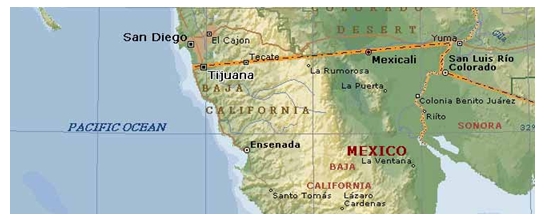


Climate, Infrastructure and Physiography:

The IMO Project area lies within the desert coastal tract of Baja California, Mexico. It is relatively arid with limited vegetation, except in irrigated river valleys. During the summer months, temperatures range from 14-32 °C (60-98 °F). During the winter months the temperatures range from 13-22 °C (55-75 °F). The yearly average rainfall is between 15-30 cm or 6-12 inches and falls mainly in the winter months. During the winter months, the coastal areas are cool, and covered by sea mists.
 
_______________
 
(1) See “Global Iron Ore Mining Industry 2012-2017: Trends, Profits and Forecast Analysis“, Research and Markets published November 2012; available at http://www.researchandmarkets.com/reports/2556243/global_iron_ore_mining_industry_20122017.
(2) U.S. Geological Survey, Mineral Commodity Summaries, January 2013 is available at http://minerals.usgs.gov/minerals/pubs/commodity/iron_ore/mcs-2013-feore.pdf.
(3) As reported by both Mining.com http://www.mining.com/forget-gold-iron-ore-is-the-story-of-the-decade/ and InvestmentU.com http://www.investmentu.com/2012/February/iron-ore-industry-ma.html.

 
21


The San Quintin Valley area is a rural community with a population of approximately 80,000 people. This small farming community becomes an agricultural center, with principle crops including melons, tomatoes, grapes, strawberries, artichokes, cabbage, squash, corn, olives, wheat, and alfalfa.  A great variety of fish and shellfish are easily accessible from the waters of the Bahia.  Commercial industrial activities include fishing co-operatives, canning plants, oyster farming, and the production of soil and fertilizers from the volcanic ash and salt mines.

The town of San Quintin is 23 kilometers north of IMO and has a hospital as well as school facilities, and also offers many local services including taxi, bus, radio, post, fax and a local police force.

Based on the observation of fresh water seepage at low tide, it would appear that underground streams exist near or on the IMO property. The overall area has a large number of drilled shallow wells that would suggest similar wells could be dug on the property. Rainfall and winter runoff from the Sierras to the east provide a fairly consistent water supply to San Quintin. The Mexican government is conducting feasibility studies on damming the Santo Domingo River to accommodate the future needs of the entire region. There are no facilities on the property for waste disposal.  We believe that electricity and telephone services can be brought to the property.

IMO is 2.3 meters, or approximately 7 feet above sea level and is comprised of a relatively flat lying to gently rolling pampa and dune fields. The coastal area is surrounded by seven extinct volcanoes and slopes gently towards the sea with a substantial area of flood plain.  The soil consists of non-consolidated grain-like sediment. This is found in prehistoric marine terraces. The abundance of agriculture in the area suggests fertile and rich soil deposits suitable for the cultivation of flora native to southern California. Significant features are the volcanic configuration of the Bahia, the Palomas, Agua Chiquita, and San Simon Canyons.

Geological Setting:

The Quaternary Pacific coastal plain of Baja California is a dominant geomorphological feature that extends almost 400 kilometers in a north-south direction and ranges between 22 and 50 kilometers in width.  The black, iron sand occurrences are present as beach deposits and raised beaches extending inland as platforms from the coast.  They also possibly occur as regressive sand sequences of Quaternary age of unknown concentrations at the top of the stratigraphic pile of the Tertiary – Mesozoic sedimentary Pacific Basin.

The Quaternary iron sand deposits found within the coastal plain of Baja California have been sourced from the erosion of inland Quaternary andesitic basalts that contain the mineral magnetite.  The volcanic rock fragments are transported via the coastal plain to the coast by rivers where they are accumulated and transformed by the wave action.  During the course of this transportation, accumulation, transformation and combination with the clasts (fragments from larger rocks), the magnetite is largely liberated. Transformation of the settled beach into deposits has probably been continuing for a considerable period of time. The lighter materials would have been naturally eroded by waves and also by onshore winds to produce economically valuable concentrations of magnetite in extensive, and still active, dune fields.

Mineralogically, the principal iron-bearing minerals in the dunes consist of magnetite, titanomagnetite and ilmenite, with minor to trace amounts of hematite, rutile, titanite, ulvospinel and goethite.  Silicate minerals which make up the bulk of the sands are primarily quartz, plagioclase, amphibole, chlorite, mica and pyroxene.

The dune sands are considered to be the product of Aeolian re-distribution of contemporary and ancient beach sands and Quaternary basin sediments derived from erosion of the bedrock, winnowed and re-distributed by onshore winds to produce economically valuable concentrations of magnetite in extensive and partially active dune fields.

History:

In early April 2010, GEO Tech became aware of a property known as El Sara (IMO), located on the west coast of Baja, 10 kilometers from the Pacific Ocean, 23 kilometers south of the town of San Quintin, and approximately 200 kilometers south of the port city of Ensenada.  Although the property does not have rail service, the Transpenninsula Highway, Mexico Hwy 1, borders the property on the northwest and southwest corners, and provides a direct truck route to the Port of Ensenada.

In 2000, the Mexican government issued a mining concession for the property to a group of three miners, known as Mineros El Sara, covering 600 hectares, approximately 1500 acres.  The property contains magnetite, an iron oxide easily separated from the silica sand due to its strong magnetic characteristics.  It is also in demand by Asian steel mills as a feed stock for their blast furnaces.

 
22


‘The government is developing a new deep-water port for container shipping at Porto Colnett, although it will not be operational for five years.  Porto Colnett is much closer to the El Sara (IMO) property, approximately 65 miles and the road between the mine and the new port is relatively flat and straight.  When the port is operational, it will lower the company’s trucking costs dramatically.

GEO Tech has negotiated an option agreement to explore and exploit (government terms) a 200 hectare section of its choosing from the 400 and 200 hectare concessions.  The agreement provides for an up-front payment of $200,000, which grants GEO Tech and joint venture partner a six-month period to conduct its engineering and feasibility studies.  All costs of the studies will be borne by GEO Tech and joint venture partner.  At the end of the six-month period, if we chooses to proceed with commercialization of the project, we will begin payments to Mineros El Sara (IMO) land owner $12.00 per MTS royalty until the mine is in commercial operation and shipping iron ore.  Once commercial shipments commence, the $12.00 per MTS payment will continue for any future shipment.  All royalties will be paid on the tenth day of each month, based upon the total shipped tonnage of the previous month.

Exploration:

The focus of the exploration work, to date, has been on the sampling, trenching and drilling of deposits, combined with significant amounts of metallurgical testing.  This has led to the development of a geological and structural model on which the mineral resource estimation and calculation is based.  Exploration is thus at an advanced stage.  Detailed metallurgical testing has also been completed.

GEO Tech has conducted the exploration program with a set of standard procedures intended to monitor the quality of the sampling and assay results.  The standard procedures include submitting both reference materials to monitor the accuracy of the analyses, as well as the analysis of field and laboratory samples to benchmark the sampling and sample splitting errors as well as the precision and repeatability of the analyses.  The quality control samples are checked before accepting the batch analytical results from the laboratory in order to control the quality of the data accepted in the exploration database.  The quality control samples indicate that there was no bias introduced in the sample splitting process as field duplicates and duplicates from the laboratory show very similar characteristics.  Analysis of the quality control sample results indicates that the analyses have been conducted to a high level of accuracy and precision and are acceptable for us in Mineral Resource Estimation.

Mineralization:

Although the beach iron sand deposits in Guatemala appear to be monotonous at a large scale, observations demonstrate that there is segregation of the magnetite and other materials at the small scale. Millimeter scale banding can be present together with such sedimentary features as cross bedding and ripple marks. The variable intensity of the mineralization, both vertically and horizontally (up to 38.94 Wt% magnetic concentrate) is probably due to differential winnowing of pampa-type and active dune sands by winds of different strengths over different periods and in different locations.

The iron sand at the beach environment varies in grade and composition on a large scale and is influenced by provenance, the dilutive effects of fluviatile deposition on the coastline, the effects of long term reworking of the sediments by waves and the direction of longshore drift.  All these factors affect the degree of liberation of magnetite from the volcanic fragments.  Longshore drift in the coastal areas of Baja California is generally in an easterly direction judging from the outlets of the rivers and, as a consequence, the liberation of magnetite from the volcanic fragments is probably more pronounced in the eastern coastal areas. The liberation of magnetite grains and the resulting iron grade, is therefore expected to increase towards the coastal plains.

The raised beach forms a platform up to 5 meters above sea level and could extend for many kilometers along the coastline and extend inland. The coastal plain is generally flat and there is evidence from drilling and inland excavations that the iron sand deposits persist to at least 9 meters. However, the true depth and grade of these extensive iron sand deposits is unknown at this stage. Similarly, buried iron sand deposits may also occur within the 50 km wide coastal plain as separate old strand lines, but these types of deposits have not yet been recognized and therefore are of unknown size and dimension.

Mineralogical work has shown that the magnetite in the iron sand is fine grained, ranging between 100 to 150 micron in size, and that the -0.6mm fraction is well liberated. However, laboratory test work supported by field observation of the iron sand through a hand lens show that in some locations the magnetite grains are locked up in volcanic fragments and other minerals. In particular, the +0.6mm particles include volcanic rock fragments that may contain magnetite in the magnetic and less magnetic fractions. The percentage of magnetite in rock fragments is as high as 20% in some samples, but averages around 14%.

Sampling and Analysis:

On March 1, 2011, Mineros El Sara (IMO) commissioned a local engineer and geologist, Victor Martin Romero Estrada, to conduct a preliminary study to determine the mineral content of the two concessions.  He began by constructing a topographic map to show the height contours in five-meter increments and the location of the concessions in respect to the topographic curves.  A photogrammetric restitution method was used through the database acquired from Inegi, combined with the interpretation of satellite images (Landstat and Spot series) with the aid of the geospatial information company ERDAS.

 
23


From the topographical plans and geological cartography, the geological plan of the area was constructed.  This information was used to calculate the areas and volumes, based on the thicknesses that were gathered from the cross sectioning, utilizing ARCVIEW technology.  The ARCVIEW technology was also used to calculate the ferric, or iron, tonnage in the mine area.  GEO Tech consulting geologist, Dr. Michael Hitch, also visited the property and confirmed the presence of iron visible to the eye.  Dr. Michael Hitch will be in charge of the planning and implementation of the feasibility and engineering study and will generate a more detailed report and analysis of the property.

Recent business activity

On April of 2011, with assistance of our joint venture partner, GEO Tech shipped iron ore from Ensenada port, Mexico to its China counterpart.  The ship MV Kriton delivered 38,212 MTS to our end manufacturer (buyer).  The goods were certified by CCIC of North America and SGS of Mexico.

On August of 2011, the second shipment on MV Lereto delivered 36,001 MTS to our second manufacturer (buyer).  The goods were certified by CCIC of North America and SGS of Mexico.

On February 25, 2013, the third shipment on MV Pretty delivered 33,282 MTS to our joint venture partner, Panacore Resource DMCC (buyer).  The goods were certified by SGS of Mexico.

On May 9, 2013, the fourth shipment on MV STX Pride delivered 47,955 MTS to our joint venture partner, Zion International trading Company (buyer).  The goods were certified by SGS of Mexico.

In May 2013, the Company purchased assets of one processing plant with crusher equipment, two 7-years old CAT 365’s, two 20 foot trucks and two 40 foot trucks, and the mining right Maria at Manzillo, Mexico from Geo Iron Resource.

In May 2013, the Company exercised its option to purchase the assets of mining right in whole Pili Pao 1 and Pili Pao 2 from Groupo Santander.

Iron Ore Mining and Marketing

The raw commodity iron ore is made up of rocks and minerals from which metallic iron can be economically extracted.  The ores are usually rich in iron oxides and vary in color from dark grey to rusty red.  The iron itself is usually found in the form of magnetite (Fe3O4), hematite (Fe2O3), limonite or siderite.  Hematite is also known as "natural ore".  The name refers to the early years of mining, when certain hematite ores contained 66% iron and could be fed directly into iron making blast furnaces.

Iron ore is the raw material used to make pig iron, which is one of the main raw materials to make steel.  Approximately 98% of the mined iron ore is used to make steel.  Steel is the main product which is used to produce everything from cars and ships, to skyscrapers and other structures.  China is the world’s largest steel producing and steel consuming country in the world as well as being the world’s most populated country, which represents approximately one-fifth of the world’s population.  In recent years, the primary growth in steel production has been in China. The availability of raw materials at competitive prices continues to be one of the biggest concerns of the steel industry.

Currently we need to procure iron ore product in Mexico and to sell it to end users from China and elsewhere.  Presently, we do not operate our own mine and must procure iron ore from other sources.  We believe that developing our own mines and producing our own ore will offer a better position to profitably market the product.

Strategic Relationships

Our management has built GEO Tech based on strong relationships and credible business.  Accordingly, we have been trying to develop long lasting relationships with Chinese buyers. These existing relationships are important in securing a share of the business of the Chinese steel manufacturers. We believe our relationship with the Chinese buyers is good and may possibly evolve to be a partnership in many areas. The Chinese buyers understand this and have assisted GEO Tech with relaxed financial backing as well as logistical and technical support.  GEO Tech regularly has a team member in China and stays in constant communication with their buyers.

MAPS OF PROPERTIES

The following are maps associated with the principal property known as IMO.

 
24
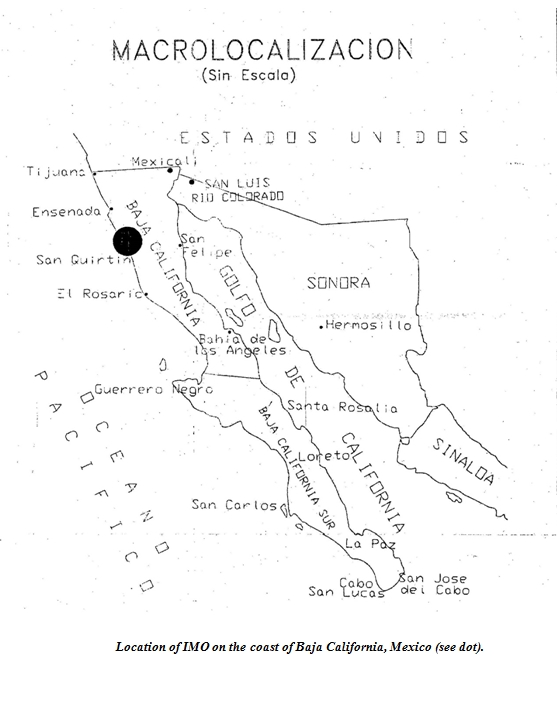


25
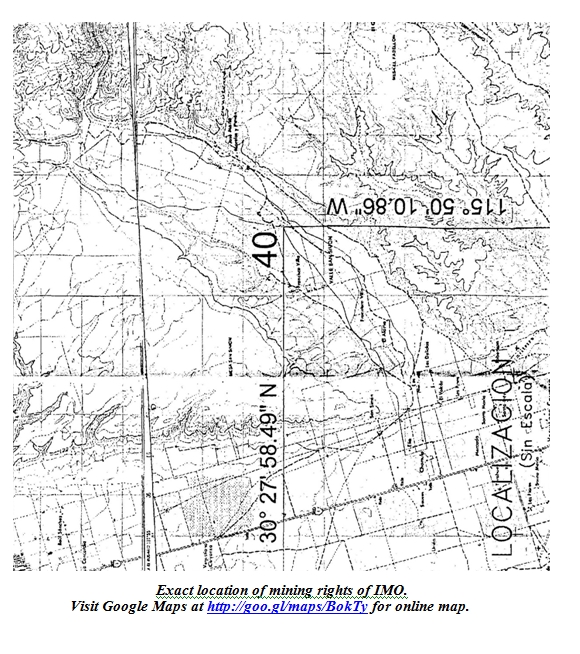
 
 
26
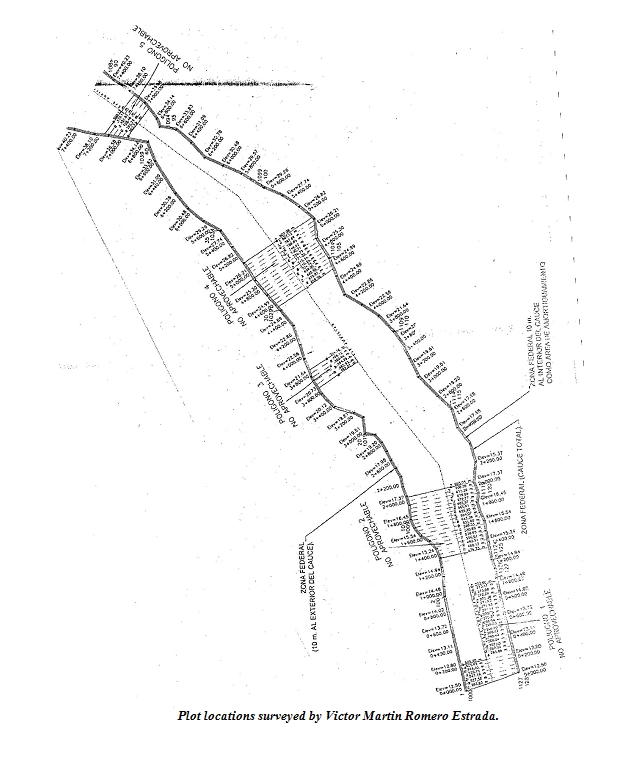


27


History

An earlier company was formed in Colima, Mexico in 2007 under the name TMT Global Corp SA CV.  A number of investments and partnerships were formed during this early period. However, all efforts to commence operations proved unsuccessful. As a result, the current company, GEO Tech was formed in 2010 with some management changes and additions.  By learning from the early mistakes of TMT Global Corp SA CV in 2007 and experience of current management, we are confident that we can avoid future issues of the same nature and have consulted with key individuals who can help navigate dealings in Mexico.

Doing Business in Mexico:

GEO Tech operations and future mining properties are primarily based in Mexico.  As such it is important to note that business practices are very different from that of the United States.  Beyond the nuances of language, the basis of its legal code, for example, has been developed from Spanish law, which, in turn, is based on the Napoleonic Code.  While it is different in many ways from English Common Law, it still provides a competent framework, protecting the rights of people and business entities.  Regardless of the many differences, the rule of law does prevail and we believe that a business entity, such as GEO Tech, can expect fair and equitable treatment under Mexico’s legal system.

The cultural differences between the U.S. and Mexico affect business in a number of ways.  Most serious transactions require a somewhat personal relationship between the parties.  Although many Americans complain about the length of the contractual process in Mexico, in reality, much of this time is devoted to getting to know the other party and determining if they actually want to do business with each other.  Personal contact is far more important to the Mexicans than their American counterparts.

A sense of family is a cornerstone of Mexican business life.  Unlike the U. S. practice, if a Mexican employee survives a probationary period, usually ninety days, that employee is considered a part of the business family.  As a result, it is very difficult, and expensive, to terminate an employee without showing significant cause for dismissal.  Fortunately, a strong work ethic is prominent in the Mexican working class and the employee’s sense of security is seldom abused.

Another major difference for business owners in Mexico is that the government has assumed many of the roles of trade unions in that of America and is believed to be labor-friendly.  In addition to employment security, labor laws in Mexico also mandate many of the perks and benefits an employee receives, such as profit sharing, mandatory vacation time, maternity and disability leave, and retirement accounts.  These regulations are complex, but straightforward, and do not pose a serious threat to business operations in Mexico.

Plan of Operations

Feasibility Tests and Engineering Studies

The company has estimated that it will require approximately $250,000 to undertake an engineering and feasibility study on about 200 hectares of the El Sara (IMO) property.  We intend to contract with a local engineering firm to produce a certified boundary and topographic survey of the mining property.  All property corners will be permanently marked and numerous elevations will be flagged to aid in selection of locations for the drilling phase of the study.  Dr. Hitch has recommended a program of 20 test borings with at least 20 meters deep, or deeper depending on the quality and quantity of the iron reservation.  The drilling equipment would use a fully encased six-inch auger bit.  Samples of the ore will be taken in five-meter increments or less, depending on the ore recovered.  Each sample would consist of one meter’s worth of drilling.  In other words, a sample would be a one-meter long column of ore, six inches in diameter.  As this would generate prohibitive shipping costs to Vancouver, the on-site geologist will split the sample down to five-kilo portions using standardized splitting technology and equipment.  A geologist will be present during all drilling operations.  The drilling program will operate on a 24-hour basis and should be completed in thirty days.

The company will forward samples to the analytical laboratories at the School of Mining, The University of British Columbia in Vancouver, British Columbia, Canada.  Technicians will analyze the samples for both elemental content and molecular form.  Besides, the lab will also look for other materials contained in the processed ore.  Based upon this information, the laboratory will design a magnetic separation system that will maximize the ore’s value to potential customers while minimizing production costs for El Sara.  Due to its highly magnetic nature, magnetite is one of the easier iron oxides to separate from the base ore material.  The iron values will also be tied to other base elements, such as titanium.

A key part of the feasibility study will be to identify potential customers’ needs and specifications.  Several niche markets exist, both domestically and internationally, that will pay a significant premium for high-purity magnetite with a small particle size.  The metallic coal producers will add magnetite to increase the density of the wash water used to separate the coal particles from dirt and other debris material.  The industry in the United States uses almost 200,000 tons per year.  Currently, this material is imported from Chile and Peru.  We believe that a significant portion of El Sara production will meet their particle size and purity criteria and, because of the company’s closer proximity to America’s coal mines, the El Sara product could be competitive.

 
28


The engineering study will also be important as we establish plans for the excavation and exploitation of the property’s mineral.  While the property is approximately 2000 meters (1.24 miles) long and 1000 meters (0.62 miles) wide, it is considered relatively small for a surface mining operation.  As a result, careful planning must be employed to avoid one phase of the mining operation interfering with another.  Logistic arrangement in the mining order and hierarchy can have a significant impact on the mining cost minimization.  Also, a detailed mining plan is required by the Mexican government prior to issuance of an exploitation permit.

The mining plan will project the equipment we will need in the production phase.  The decisions, for example, regarding how far the ore is moved by vehicles, such as wheeled loaders versus high speed conveyor systems, can determine whether GEO Tech and joint venture partner achieve the time table and cost budget.  In addition to the mining operations, the company must also measure the production capabilities and capacities of the mining machinery.  Currently, much of this equipment is manufactured in China and the selection process will require several visits to the plants to monitor and control the quality of the machinery.

As the test data is collected, analyzed and incorporated into the mining plan, GEO Tech will officially submit the application for the “exploitation permit” to the Mexican government.  The company has been advised that this process will take approximately four months.  We also work on the issuance of other permits while the exploitation process moves forward.  These will especially include transportation, shipping and export permits.  This process will require the approval from several government agencies and it is not possible to determine the final cost at this time.

Preliminary Budget For Feasibility And Engineering Studies

The following table sets forth management’s estimated budget for the anticipated feasibility and engineering studies related to the El Sara (IMO) property. We anticipate the studies to begin during the second half of 2013.
 
         
Total
 
Assumes feasibility/engineering studies spread over 5 months
 
Unit cost
   
Est. costs
 
Administrative Costs
           
    Management salaries
           
          Jimmy Yee
 
$5,000/mo
    $ 25,000  
          Edward Mui
 
$5,000/mo
    $ 25,000  
          Jeff Zhou
  $2.500/mo     $ 12,500  
Total
          $ 62,500  
     Administrative expenses
               
          Office salaries
 
$4,500/mo
    $ 22,500  
          Office rental
 
$3,000/mo
    $ 15,000  
          Legal and accounting
          $ 10,500  
          Utilities
 
$1,000/mo
    $ 5,000  
          Travel (marketing & equipment inspection)
          $ 40,000  
Total
          $ 93,000  
          Total administrative costs
          $ 155,500  
                 
Direct Costs
               
     Auger drilling (20X25 meters
          $ 78,700  
     Environmental opinion
          $ 50,000  
     Senior Geo/Engineer oversight
          $ 50,000  
     Supervision & sampling (30 days)
 
$700/day
    $ 21,000  
     Laboratory/chemical costs
 
$250/sample
    $ 20,000  
     Local transportation
          $ 20,000  
     Sample processing (laboratory labor)
 
$30/hour
    $ 15,000  
     Topographic & boundary survey
          $ 10,000  
     Shipping
          $ 5,000  
     Truck rental
 
$150/day
    $ 4,500  
     Report writing
          $ 4,000  
     Sample processing (UBC facility cost)
 
$100/day
    $ 4,000  
     Room and board per diem
 
$75/day
    $ 2,250  
     Sampling supplies
          $ 2,000  
     Travel between site and Vancouver
          $ 2,000  
     Assistant on-site labor
 
$20/day
    $ 600  
          Total direct costs before contingency factor
          $ 289,050  
          Contingency factor
    20 %   $ 57,810  
         Total direct costs
          $ 346,860  
                 
Total costs
          $ 502,360  
 
 
29


The company will begin equipment selection during the last half of its testing program and feasibility study and will initiate financing programs for its production activities, either through debt or additional equity sales.  The rolling stock will be acquired first and will be used to grade and prepare the operating the area for the concentration plant.  Selection of the magnetic separation equipment used in the concentration plant and its acquisition is expected to take six months.  Once the equipment for the plant has been chosen, engineering layouts can be completed and the foundations can be installed.  Work on the required infrastructure, such as the site office, maintenance shop and material storage and loading facilities will also begin during this period.

It is expected that the excavation equipment will be purchased from used construction equipment suppliers, either in Mexico or the United States.  In order to process the projected quantity of material, these machines will be quite large, some weighing over 60 tons.  Fortunately, the mine lies in close proximity to the Pacific Ocean.  Whenever possible this equipment will be delivered by barge and driven to the mine site.

GEO Tech believes the majority of the equipment required for the processing and handling will be purchased in China. The country has developed a number of companies supporting the mining industry that specialize in the processing of magnetic ores.  Most of these companies can ship an order within 60 days from the date of deposit.  Allowing 30 days for ocean transit, these components could be on-site within 90 days from the date of a firm order.  The equipment manufacturers for the concentration plant will provide their engineers for installation and debugging.  Installation and final acceptance of the equipment will require another nine months, making the company’s mining business to be operational approximately 12 months from the date of a firm order.

The rolling stock that we anticipate will be purchased at auction will require a cash payment within ten days from the date of sale.  Plant equipment manufacturers will typically require a 40% down payment when the order is placed, another 30% when the equipment leaves the factory and the final 30% after installation and acceptance.

The company projects that it can process 500,000 tonnes of ore during its first year of operation, generating an estimated 36,000 tonnes of salable concentrate.  We predict that production could increase to 2,000,000 tonnes of ore in the second year with an estimated 144,000 tonnes of concentrate.  Management estimates that it could increase its future processing ability by 5% per year.

We anticipate that our joint venture partner, Jamison Wong who owns Canaan Mining, Hong Kong, China will contributed approximately half of the initial $500,000 capital. We further expect our joint venture partner will receive a 50% undiluted share in El Sara, regardless of whether we use debt or equity financing to acquire the equipment and provide the initial start-up costs. We have funded the first $10,000 for the IMO testing and administration cost.

Competition

The exploration for and exploitation of mineral reserves is highly competitive with many local, national and international companies in the marketplace. We must compete against several established companies in the industry that are better financed and/or who have closer working relationships with productive mining companies. We intend to development strategic relationship with partners that can provide assistance in developing our operations and marketing our minerals.

We believe that supplying iron ore to steel manufacturers is becoming an important industry. This marketplace is dominated by the three world-wide mining companies: BHP Billiton, Vale, and Rio Tinto. If a contemplated takeover bid of Rio Tinto by BHP Billiton is finalized, BHP-Rio would end up holding approximately 34% of the iron ore traded in the marketplace.  This would potentially allow the mining giant to push up the prices of raw materials either unilaterally or with the cooperation of Vale who holds another 36% of the traded iron ore. These companies as well as other long established mining company present serious competition to GEO Tech and have the capacity of possibly controlling the marketplace and pricing.  There can be no assurance that we can successfully compete with the larger, better-financed competitors.

Government Regulations

Because we are engaged in the mineral exploration and mining activities, we are exposed to many governmental and environmental risks associated with our business. Management has not determined whether significant site reclamation costs could be required in the future.
 
Environmental and other government regulations at the federal, state and local level, including foreign regulations, pertaining to our business and properties may include:

●
surface impact;
   
●
water acquisition and treatment;
   
●
site access;
   
●
reclamation;
   
●
wildlife preservation;
   
●
licenses and permits; and
   
●
maintaining the environment.
 
 
30


Regulatory compliance in the mining industry is complex and the failure to meet and satisfy various requirements can result in fines, civil or criminal penalties or other limitations. We must endeavour to comply with all local and national regulations related to our operations to avoid possible penalties and litigation.

Regulations in MEXICO
 
Our Mexican properties are subject to regulation by the Political Constitution of the Mexican United States.  We are subject to various legislation in Mexico, including the Mining Law, the Federal Law of Waters, the Federal Labor Law, the Federal Law of Firearms and Explosives, the General Law on Ecological Balance and Environmental Protection and the Federal Law on Metrology Standards. Operations at our Mexican properties also require us to obtain local authorizations and, under the Agrarian Law, to comply with the uses and customs of communities located within the properties. Mining, environmental and labor authorities may inspect our Mexican operations on a regular basis and issue various citations and orders when they believe a violation has occurred under the relevant statute.

If inspections in the United States or Mexico result in an alleged violation, we may be subject to fines, penalties or sanctions, our mining operations could be subject to temporary or extended closures, and we may be required to incur capital expenditures to re-commence our operations. Any of these actions could have a material adverse effect on our financial performance, financial position and results of operations.

Mine Safety Disclosure

Pursuant to Section 1503(a) of the Dodd-Frank Wall Street Reform and Consumer Protection Act of 2010 (“Dodd-Frank Act”), issuers that are operators, or that have a subsidiary that is an operator, of a coal or other mine in the United States are required to disclose in their periodic reports filed with the SEC information regarding specified health and safety violations, orders and citations, related assessments and legal actions, and mining-related fatalities under the regulation of the Federal Mine Safety and Health Act of 1977.  The Company did not have any mines in the United States during the fiscal year ended December 31, 2012.

Trademarks, Copyrights and Intellectual Property

We do not own any patents, trademarks or copyrights.

Facilities

Our principal corporate offices are located at 6360 Corporate Drive, Houston Texas 77036, and are occupied by three employees. We also maintain offices in Ensenada, Mexico, with five employees.

We also have an office in Ensenada, Mexico in order to maintain a local presence and to efficiently operate business.  That office is staffed by a receptionist, two administrative assistants, a house lawyer, an accountant, and a CEO who are responsible for running day-to-day office operations.  Additional support staff in GEO Tech’s Mexican operation is a logistics specialist and a geologist.

In June 2013, the Company purchased assets of one processing plant with crusher equipment, two 7-year old CAT 365’s, two 20-foot trucks and two 40-foot trucks from Geo Iron Resource.

Employees & Contractors

In addition to our executive officers, we also employ Huang Yi-Lun Kao as sales director in Taiwan, Jeff Bo Zhou as sales director in China and Richard Magniccari as sales director in Brazil. We also have three staff employee in Mexico and our Mexican contractor employs approximately ten persons in connection with our mine operations.

MANAGEMENT’S DISCUSSION AND ANALYSIS OF FINANCIAL CONDITION
AND RESULTS OF OPERATIONS
 
The following discussion and analysis of our financial condition and results of operations should be read in conjunction with the financial statements and notes thereto appearing elsewhere in this prospectus.
 
Results of Operations

For the three months ended June 30, 2013 compared to the three months ended June 30, 2012.

We had a wider loss from operations in the first quarter ended June 30, 2013 compared to the first quarter of 2012.
 
 
31


The following table sets forth the percentage relationship to total revenues of principal items contained in our financial statements of operations for the first quarters ended June 30, 2013 and 2012.  It should be noted that percentages discussed throughout this analysis are stated on an approximate basis.
 
   
June 30
   
2013
 
2012
Revenue
   
100
%
   
0
%
Cost of sales
   
90
%
   
0
%
Gross profit
   
10
%
   
0
%
Total operating expenses
   
53
%
   
(100
%)
Profit from operations before other expenses
   
(53
% )
   
(100
%)
Total other expenses
   
0
%
   
0
%
Net Loss
   
(53
%)
   
(100
%)
 
Total revenues for the first quarter ended June 30, 2013 were $2,248,936, a 100% increase $2,248,936 from revenues of $0 for first quarter ended June 30, 2012.  The increase is attributed to the income generated from sales of iron ores purchase in Mexico.  Cost of sales for the first quarter ended, June 30, 2013 were $2,010,643 compared to $0 for 2012, primarily attributed to the increase in revenues with related purchase of iron ore.  As a percentage of revenues, cost of sales were 90% for 2013 compared to 0% for 2012.
 
Gross profit increased to $238,293 for first quarter ended June 30, 2013 compared to $0 for the first quarter ended June 30, 2012.  The increase is attributed to a higher percentage of cost of sales during 2013 and an increase in sales of lower gross margin products, such as lower grade iron ore. Gross profit for the first quarter ended June 30, 2013 represented 10% of revenues for 2013 compared to 0% for first quarter ended June 30, 2012.
 
Operating expenses for first quarter ended June 30, 2013 were $1,190,603, a 94% increase of $1,123,880 compared to $66,723 for the first quarter ended June 30, 2012.  As a percentage of revenues, operating expenses also increased from 53% in for the first quarter ended June 30, 2013 to (100%) for the first quarter ended June 30, 2012.  The major component of the increase in operating expenses for the first quarter ended June 30, 2013 is primarily attributed to the amortization expense of $425,000 related to professional fees for SEC filing.
 
Net loss for first quarter ended June 30, 2013 was ($952,310) as compared to a net loss of ($66,723) for first quarter ended June 30, 2012. The net loss increase is primary derived from the increase of expenses greater than the increase of revenue and gross profits.

For the fiscal year ended March 31, 2013 compared to the fiscal year ended March 31, 2012.

Generally, we anticipate that our operating costs and expenses will increase in the future to support an anticipated higher level of revenues. Increased costs will likely be attributable to increased personnel, principally sales personnel and support staff for our infrastructure, and increased marketing expenditures to sell our products.  In addition, transforming to be a public reporting entity and compliance with SEC and Sarbanes-Oxley regulations will increase our general and administrative costs in order to meet the higher degree of reporting standard, internal control improvement and corporate governance transparency.
 
We had generated small profits from operations in each of the last two fiscal years.
 
The following table sets forth the percentage relationship to total revenues of principal items contained in our financial statements of operations for the two most recent fiscal years ended March 31, 2013 and 2012.  It should be noted that percentages discussed throughout this analysis are stated on an approximate basis.
 
 
32


Fiscal Years Ended
   
2013
 
2012
Revenue
   
100
%
   
100
%
Cost of sales
   
90
%
   
84
%
Gross profit
   
10
%
   
16
%
Total operating expenses
   
10
%
   
14
%
Profit from operations before other expenses
   
0
%
   
2
%
Total other expenses
   
0
%
   
1
%
Net Profits
   
0
%
   
 
1%
 
Total revenues for the year ended March 31, 2013 were $5,568,172, a 39% decrease $3,612,660 from revenues of $9,180,832 for the year ended March 31, 2012.  The decrease is attributed to the lack of funds to increase iron ores purchase in Mexico and the unfavourable price in iron ore procurement in a smaller quantity.  Cost of sales for the year ended March, 31, 2013 were $$5,019,636, a 35% decrease ($2,699,750) compared to $7,719,386 for 2012, primarily attributed to the decrease in revenues.  As a percentage of revenues, cost of sales were 90% for 2013 compared to 84% for 2012.
 
Gross profits decreased 62% ($912,910) to $548,536 for 2013 compared to $1,461,446 for 2012.  The decrease is attributed to a higher percentage of cost of sales during 2013 and the sales of lower gross margin products. Gross profits for 2013 represented 10% of revenues for 2012 compared to 16% for 2012.
 
Operating expenses for 2013 were $539,924, a 57% decrease of $704,337 compared to $1,244,261 for 2012.  As a percentage of revenues, operating expenses also decreased from 10% in 2013 to 14% in 2012.  The decrease in operating expenses is primarily attributed to the decrease of sales related variable expenses as sales volume decreased, such as professional fees, royalties, transportation and travel.
 
Interest expense for 2012 totalled $111,896 compared to interest expense of $0 for 2013.  The decrease in interest expense in 2013 resulted from increased shareholder investment during the year to reduce the financing cost.
   
Net profits for fiscal year ended March 31, 2013 were $8,612 as compared to a net profits of $105,289 for fiscal year ended March 31, 2012. The reduction of net profits was a consequence of reduced revenue but the cost and expenses did not reduce at the same rate as the revenue reduction because the company was required to pay certain fixed operating expenses.
 
Liquidity and Capital Resources
 
At three months ended June 30, 2013 compared to the three months ended June 30, 2012.

 Net cash used by operating activities for the three months ended June 30, 2013 was ($874,737), and June 30, 2012 was ($13,421).  The June 30, 2013 reduction attribute primarily reflects the net loss of ($952,310), increased in accounts receivable by $650,000, and increased in prepayment of $2,225,000 which off-set by the noncash activities on issuance of common stock for mining assets and professional fees at $2,650,000 and reduction of inventory by $250,000.

There were no changes concerning cash flow in investing activities for both three-month periods ended June 30, 2013 and 2012.

The cash flow from financing activities increased by $545,900 from $13,100 at June 30, 2012 to $559,000 at June 30, 2013. This increase is derived from additional loans from directors to support the operating activities of the company.
 
Working capital at June 30, 2013 was negative as a ($315,737) compared to a ($321) at June 30, 2012. The decrease in working capital had been explained in the above analysis.
 
Not only at June 30, 2013, we had an accumulated deficit of $1,706,903, but also we expect to incur additional losses in the foreseeable future. While we have funded our operations since inception through investor and related party loans and through collection of our accounts receivable, there can be no assurance that adequate financing will continue to be available to us and, if available, on terms that are favourable to us.

To date, the company has incurred substantial losses, and will require financing for working capital to meet its operating obligations.  We anticipate that we will require financing on an ongoing basis for the foreseeable future.  In the past, the company has obtained funds from a stockholder through the form of promissory notes.  Management believes that additional funding will come from existing stockholders, investors and/or management.  However, there are no agreements or understandings with investors or affiliates of the company to provide additional funds in the future and there can be no assurance that these persons will provide any new funds.
 
 
33


Management anticipates that during the next twelve months the company will require approximately $2,500,000 for the next operating budget.  The estimated use of these funds is a follows:
 
Payment on debt obligations
 
$
 250,000
 
Replenish inventory
 
$
2,000,000
 
Marketing expenses
 
$
10,000
 
Professional Fee
 
$
40,000
 
Salaries
 
$
100,000
 
Travel
 
$
50,000
 
Working capital
 
$
50,000
 
 
We believe that the most likely source of funds to satisfy our cash needs will be through the private sale of equity securities, when and if the company’s common stock is trading on the OTCBB or another recognized trading market.  If the company cannot find sources of additional financing to fund its working capital needs, we will be unable to obtain sufficient capital resources to operate our business.  We cannot assure you that we will be able to access any financing in sufficient amounts or at all when needed. Our inability to obtain sufficient working capital funding will have an immediate material adverse effect upon our financial condition and our business.  The company currently has no other significant sources of working capital or cash commitments. However, no assurance can be given that we will raise sufficient funds from such financing arrangements, or that we will ever produce sufficient revenues to sustain operations, or that a market will develop for our common stock for which a significant amount of our financing is dependent upon.
 
At the fiscal year ended March 31, 2013 compared to the fiscal year ended March 31, 2012.
 
Net cash used by operating activities for the year ended March 31, 2013 was $(296,890) compare to $2,017,703 for the year ended March 31, 2012, which primarily reflects the reduction of net profit of $96,677 from $105,289 at March 31, 2012 to $8,612 at March 31, 2013. This result was primary derived from reduction of inventory of $532,750 at March 31, 2013 compare to increase of $397,500 in common stock forfeiture, $1,589,141 in prepayment and $477,500 in other current liabilities at March 31, 2012.

Net investment activities used $100,000 in mining assets acquisition as of March 31, 2013 compare to $1,532,100 in mining machines acquisition and $210,000 in mining assets acquisition as of March 31, 2012.

The cash flow from financing activities increased from $(442,407) at June 30, 2012 to $713,500 at June 30, 2013. This increase is derived from $1,298,000 cash generated from issuance of common stock with use of $584,500 in repaid loans from directors as of March 31, 2013 compared to a $442,407 reduction in loans from directors to support the operating activities of the company.
 
Working capital at March 31, 2013 was a positive $316,610 compared to a ($166,804) at March 31, 2012. The increase in working capital was primarily attributed to the increase investment activities in total common stock and additional paid in capital.  Total investment activities generated cash from ($442,407) at March 31, 2012 to $713,500 at March 31, 2013. The details were explained in the above analysis.

At March 31, 2013 we had total assets of $2,840,008 and a stockholders’ deficit of $754,593, compared to total assets of $2,103,858 and a stockholders' deficit of $763,205 at March 31, 2012.

Not only at March 31, 2013, we had an accumulated deficit of $754,593, but also we expect to incur additional losses in the foreseeable future. While we have funded our operations since inception through investor and related party loans and through collection of our accounts receivable, there can be no assurance that adequate financing will continue to be available to us and, if available, on terms that are favourable to us.
 
 
34


Inflation
 
In the opinion of management, inflation has not and will not have a material effect on our operations in the immediate future. Management will continue to monitor inflation and evaluate the possible future effects of inflation on our business and operations.

Recent Accounting Pronouncements

The company has evaluated recent accounting pronouncements and their adoption has not had nor is not expected to have a material impact on the company’s financial position or statements.

Off-balance Sheet Arrangements

We have no off-balance sheet arrangements.

Critical Accounting Policies

JOBS Act

The JOBS Act provides that, so long as a company qualifies as an “emerging growth company,” it will, among other things:

●
be exempted from the provisions of Section 404(b) of the Sarbanes-Oxley Act requiring that its independent registered public accounting firm provide an attestation report on the effectiveness of its internal control over financial reporting;
   
●
be exempted from the “say on pay” and “say on golden parachute” advisory vote requirements of the Dodd-Frank Wall Street Reform and Customer Protection Act (the “Dodd-Frank Act”), and certain disclosure requirements of the Dodd-Frank Act relating to compensation of its chief executive officer and be permitted to omit the detailed compensation discussion and analysis from proxy statements and reports filed under the Securities Exchange Act of 1934; and
   
●
instead provide a reduced level of disclosure concerning executive compensation and be exempted from any rules that may be adopted by the Public Company Accounting Oversight Board requiring mandatory audit firm rotations or a supplement to the auditor’s report on the financial statements.
 
It should be noted that notwithstanding our status as an emerging growth company, we would be eligible for these exemptions as a result of our status as a “smaller reporting company” as defined by the Securities Exchange Act of 1934.

Section 107 of the JOBS Act provides that an emerging growth company can take advantage of the extended transition period provided in Section 7(a)(2)(B) of the Securities Act for complying with new or revised accounting standards. An emerging growth company can therefore delay the adoption of certain accounting standards until those standards would otherwise apply to private companies. We have irrevocably elected not to take advantage of the benefits of this extended transition period and, therefore, will be subject to the same new or revised accounting standards as other public companies that are not emerging growth companies.


MANAGEMENT
 
Directors and Executive Officers
 
The following table sets forth the name, age and position of our present directors and executive officers.

Name
Age
Position
     
Jimmy Yee
56
Chairman, Chief Financial Officer and Director
Edward Mui
38
Chief Executive Officer and Director
Huang Yi-Lun Kao
37
Secretary / General Director – Taiwan and Director
Jeff Bo Zhou
45
General Director of Commodities - China
Richard Magniccari
51
General Director of Commodities and Director of U.S. Sales
Angela Sung
29
Executive Secretary
 
All directors serve for one-year terms until their successors are elected or they are re-elected at the annual stockholders' meeting.  Officers hold their positions at the pleasure of the board of directors, absent any employment agreement, of which none currently exists or is contemplated.

 
35


 There is no arrangement, agreement or understanding between any of the directors or officers and any other person pursuant to which any director or officer was or is to be selected as a director or officer.  Also, there is no arrangement, agreement or understanding between management and non-management stockholders under which non-management stockholders may directly or indirectly participate in or influence the management of our affairs. There are no agreements or understandings for any officer or director to resign at the request of another person and none of the current offers or directors of are acting on behalf of, or will act at the direction of any other person.

The business experience of each of the persons listed above during the past five years is as follows:

Jimmy Yee serves as our Chairman, Chief Financial Officer and director and manages the company’s daily financial operations and business development. He also assists in obtaining financing for new mine acquisitions and additional equipment. Mr. Yee is a Certified Public Accountant with over twenty years of experience and, since 1998, he has been a sole practitioner in New York City providing business services to small and medium size business clients. He is particularly experienced in managing finances of operation as well as taking part in contract review with the law staff. Mr. Yee graduated from Queens College in 1980 and got his MBA business administration from Long Island University in 1992.    Mr. Yee speaks English and Chinese.

Edward Mui serves as our Chief Executive Officer and director and provides technical advice to the company’s mining contractors pertaining to mining operations. He is also involved in preparing mine plans and design including operating budgets and is the lead partner for GEO Tech’s Mexican operation.

From 2008 to the present, Mr. Mui has conducted exploration works in the Baja Pacific region of Mexico.  He also developed and implemented a mining scheme, a combination of opencast and cut and fill mining methods that increases the monthly production of the company.  He has overseen many aspects of mining, including but not limited to providing technical advice to contractors, conducting mine evaluations of resources and reserves, preparing mine plans and design, preparing operational budgets for the mining plans / operations, and formulating and implementing mining strategies to attain the monthly production requirements.

From 2005 to 2008, Mr. Mui was General Manager of Mineral Resources for TMT Global. Among his duties were mineral resources management, mining engineering, mine planning, geology, geotechnical, contracts management (for mining, hauling, shipping), civil engineering (bridges, tunnels, conveyors, crushers), mechanical & electrical engineering, process engineering, infrastructure projects and other capacity expansion projects (new mines).  Mr. Mui speaks English and Chinese. He attended Hofstra College in New York in 1989, but did not earn a degree.

Huang Yi-Lun Kao serves as Secretary / General Director Taiwan Sales servicing existing accounts, obtaining orders, and establishing new accounts. He also keeps management informed by submitting activity and results reports and monitoring competition and recommending changes in products and services.  Previously he served as President of Winfast International Corporation where he was in charge of all matters related to mineral ore trading between the Philippines and China including market pricing, new products, logistics and merchandising.  He has a Master’s of Business Administration degree.

Jeff Bo Zhou serves as our General Director of Commodities in China.  Mr. Zhou has over twenty years of experience in the logistics specialist and commodities industry. He is responsible for handling all logistics for delivery of Iron ore to China and is responsible the logistics in Mexico and China. Mr. Zhou speaks English and Chinese. He graduated from Glendale University, Sante Fe, New Mexico (May 2001) with a Master Degree in Math.

Richard Magniccari serves as our General Director of Commodities and Director of Sales in the U.S. and Brazil.  Mr. Magniccari has over twenty years of experience in the commodities industry selling and trading a variety of commodities such as oil, coffee, sugar and wheat.  Furthermore, since 1990 he has held a position on the floor of the New York commodities exchange and owned his own trading firm.

Angela Sung, since 2007, has served as our Executive Secretary.  Ms. Sung manages the operations of our Mexican office and oversees operations in the absence of managing partners.  Ms. Sung attended University of New Orleans, Louisiana for three years. Ms. Sung speaks English, Chinese, and Spanish.

 
36


During the past ten years, none of our officers, directors, promoters or control persons has had any of the following events occur:

●
any bankruptcy petition filed by or against any business of which such person was a general partner or executive officer, either at the time of the bankruptcy or within two years prior to that time;
     
●
any conviction in a criminal proceeding or being subject to a pending criminal proceeding, excluding traffic violations and other minor offenses;
     
●
being subject to any order, judgment or decree, not substantially reversed, suspended or vacated, of any court of competent jurisdiction, permanently enjoining, barring, suspending or otherwise limiting his involvement in any type of business, securities or banking business;
   
●
being found by a court of competent jurisdiction in a civil action, the SEC or the Commodity Futures Trading Commission to have violated a federal or state securities or commodities law, and the judgment has not been reversed, suspended or vacated; or
     
●
been the subject of, or a party to, any Federal or State judicial or administrative order, judgment, decree, or finding, not subsequently reversed, suspended or vacated, relating to an alleged violation of:
     
 
(i)
any Federal or State securities or commodities law or regulation; or
     
 
(ii)
any law or regulation respecting financial institutions or insurance companies including, but not limited to, a temporary or permanent injunction, order of disgorgement or restitution, civil money penalty or temporary or permanent cease-and-desist order, or removal or prohibition order; or
     
 
(iii)
any judicial or administrative proceeding resulting from involvement in mail or wire fraud or fraud in connection with any business entity.
 
Committees of the Board of Directors
 
No director is deemed to be an independent director. Currently we do not have any standing committees of the board of directors. Until formal committees are established, our board of directors will perform some of the functions associated with a nominating committee and a compensation committee, including reviewing all forms of compensation provided to our executive officers, directors, consultants and employees, including stock compensation. The board will also perform the functions of an audit committee until we establish a formal committee.

Code of Ethics

We currently do not have a code of ethics.  It is our intention during the coming year to adopt a code of ethics that applies to our principal executive officer, principal financial officer, principal accounting officer or controller or persons performing similar functions.
 
Relationships and Related Party Transactions

Except as set forth below, we have not entered into any other material transactions with any officer, director, nominee for election as director, or any stockholder owning greater than five percent (5%) of our outstanding shares, nor any member of the above referenced individuals' immediate family.
 
In November 2012 Geo Tech entered into two joint venture agreements for construction, operation and extraction of Iron Ore in Mexico.  Pursuant to the agreement with Groupo Santander SA DE CV, the company issued 40,000,000 shares of common stock.  Those receiving share included two GEO Tech directors, Jimmy Yee (6,000,000 shares) and Edward Mui (6,000,000 shares), and a principal stockholder, Jeff Bo Zhou (19,000,000 shares).  The shares were valued at $0.0105 per share.
 
Pursuant to the agreement with Geo Iron Resources SA DE CV, we issued 50,000,000 shares.  Those receiving shares included Mr. Zhou (5,250,000 shares), Mr. Yee (10,000,000 shares ), Mr. Mui (10,000,000 shares), and Huang Yi-Lun Kao (3,000,000 shares), also a GEO Tech director.  The shares were valued at $0.0105 per share.
 
For the purpose of better local control of operations, we have an agreement with a Mexican corporation, GEO Tech Group SA de CV, which was set up in 2010 and is 70% owned by one of our principals Edward Mui who is also the managing partner for the Mexican operation.
 
Executive Compensation

We do not have a bonus, profit sharing, or deferred compensation plan for the benefit of employees, officers or directors. During the three most recent fiscal years ended March 31, 2013, 2012 and 2011, the following compensation was awarded to our Chief Executive Officer and Chief Financial Officer:

 Name and Position
 
Year
 
Salary
   
Bonus
   
Other
Compensation
   
Total
 
                                   
Jimmy Yee
2013
  $ 50,000     $ 0     $ 0     $ 50,000  
 C.F.O. 2012   $ 50,000     $ 0     $ 0     $ 50,000  
  2011   $ 50,000     $ 0     $ 0     $ 50,000  
                                   
 Edward Mui 2013   $ 50,000     $ 0     $ 0     $ 50,000  
 C.E.O. 2012   $ 50,000     $ 0     $ 0     $ 50,000  
 
2011
  $ 50,000     $ 0  $ 0     $  0     $ 50,000  
 
STOCK OWNERSHIP OF CERTAIN BENEFICIAL OWNERS AND MANAGEMENT
 
The following table sets forth information as of November 19, 2012, to the best of our knowledge, with respect to each person believed to be the beneficial owner of more than 5% of our outstanding common stock, each director and executive officer and by all directors and executive officers as a group. For purposes of disclosure, a person is deemed to be the beneficial owner of any shares of common stock (i) over which the person has or shares, directly or indirectly, voting or investment power, or (ii) of which the person has a right to acquire beneficial ownership at any time within 60 days after the date of this prospectus. “Voting power” is the power to vote or direct the voting of shares and “investment power” includes the power to dispose or direct the disposition of shares.
 
 
37


Amount and Nature of
       
Name and Address(1)
 
 Beneficial Ownership(2)
   
 Percent of Class(3)
 
Directors and Officers
           
                 
Jimmy Yee
    42,700,000       20.83 %
Edward Mui
    42,300,000       20.63 %
Huang Yi-Lun Kao
    15,000,000       7.32 %
                 
All directors and officers
    100,000,000       48.78 %
 as a group (3 persons)
               
                 
Other Beneficial Owners
               
Jeff Bo Zhou
    25,050,000       12.22 %
 
________________

(1)
Unless otherwise indicated, the address for each person listed above is c/o GEO JS Tech Group Corp., 6360 Corporate Drive, Houston Texas 77036.
(2)
Unless otherwise indicated, we have been advised that each person named above is the beneficially owner and has voting power over the shares indicated.
(3)
Percentage ownership is based on 204,980,000 shares of common stock outstanding as of August 28, 2013.

DESCRIPTION OF SECURITIES TO BE REGISTERED

This description of our securities is a summary only of certain provisions contained in our Articles of Incorporation and is qualified in its entirety by reference to the complete terms contained therein.

Common Stock
 
Authorized and Outstanding
 
We are authorized to issue up to 500 million shares of common stock, par value $0.001 per share, of which 204,980,000 shares are outstanding as of the date of this prospectus.

Voting Rights

Each holders of our common stock has the right to cast one vote for each share of stock in their name on the books of our company, whether represented in person or by proxy, on all matters submitted to a vote of holders of common stock, including election of directors. There is no right to cumulative voting in election of directors. Except where a greater requirement is provided by statute, by our articles of incorporation or bylaws, the presence, in person or by proxy duly authorized, of one or more holders of a majority of the outstanding shares of our common stock constitutes a quorum for the transaction of business. The vote by the holders of a majority of outstanding shares is required to effect certain fundamental corporate changes such as liquidation, merger, or amendment of our articles of incorporation.

Dividends

Our common stockholders are entitled to share in all dividends that our board of directors, in its discretion, declares from legally available funds. There are no restrictions in our articles of incorporation or bylaws that prevent us from declaring dividends. We have not declared any dividends and we do not plan to declare any dividends in the foreseeable future.
 
Preemptive Rights

Holders of our common stock are not entitled to preemptive rights and no redemption or sinking fund provisions are applicable to our common stock.

Transfer Agent

We have designated as our transfer agent Island Stock Transfer Company, 15500 Roosevelt Boulevard, Suite 301, Clearwater, Florida 33760.

 
38


DISCLOSURE OF COMMISSION POSITION OF INDEMNIFICATION FOR SECURITIES ACT LIABILITIES

Our bylaws provide that directors, officers and persons acting at our request as an officer or director, will be indemnified by us to the fullest extent authorized by the general corporate laws of Texas.  This indemnification applies to all expenses and liabilities reasonably incurred in connection with services for us or on our behalf if:

●
such person acted in good faith with a view to our best interests; and
   
●
in the case of a monetary penalty in connection with a criminal or administrative action or proceeding, such person had reasonable grounds to believe that his or her conduct was lawful.
 
Insofar as indemnification for liabilities arising under the Securities Act might be permitted to directors, officers or persons controlling our company under the provisions described above, we have been informed that in the opinion of the SEC such indemnification is against public policy as expressed in the Securities Act and is therefore unenforceable.

LEGAL MATTERS
 
Leonard E. Neilson, Attorney at Law, 8160 South Highland Drive, Suite 104, Sandy, Utah 84093, telephone (801) 733-0800, has acted as our special legal counsel.
 
EXPERTS
 
Our financial statements for the fiscal years ended March 31, 2013 and 2012 appearing in this prospectus have been audited by Albert Wong & Co., LLP, independent certified public accountants, New York, New York.  Their report is given upon their authority as experts in accounting and auditing.

INTEREST OF NAMED EXPERTS AND COUNSEL
 
No expert or counsel named in this prospectus was hired on a contingent basis, will receive a direct or indirect interest in GEO Tech, or has acted or will act as a promoter, underwriter, voting trustee, director, officer, or employee of our company.
 
WHERE YOU CAN FIND MORE INFORMATION
 
This prospectus is part of a registration statement that we filed with the SEC in accordance with its rules and regulations. This prospectus does not contain all of the information in the registration statement. For further information regarding both our company and the securities in this offering, we refer you to the registration statement, including all exhibits and schedules. You may inspect our registration statement, without charge, at the public reference facilities of the SEC’s Washington, D.C. office, 100 F Street, NE, Washington, D.C. 20549 and on its Internet site at http://www.sec.gov.  Please call the SEC at 1-800-SEC-0330 for further information about the public reference room.

You also may request a copy of the registration statement and these filings by contacting us electronically at jimmy@geotechusgroup.com
 
We are subject to the informational requirements of the Securities Exchange Act of 1934 and required to file annual, quarterly and current reports and other information with the SEC. These reports and other information may also be inspected and copied at the SEC’s public reference facilities or its web site.

 
39


GEO JS TECH GROUP CORP.
 
FINANCIAL STATEMENTS
 
March 31, 2013 and 2012


F - 1


GEO JS Tech Group Corp.
Index to Financial Statements


Report of Independent Registered Public Accounting Firm
F-3
   
Balance Sheets as at March 31, 2013 and 2012
F-4
   
Statements of Income and Comprehensive Income for the Years Ended March 31, 2013 and 2012
F-5
   
Statements of Stockholders’ Equity
F-6
   
Statements of Cash Flows
F-7
   
Notes to Financial Statements
F-8
 
 
F - 2


ALBERT WONG & CO., LLP
CERTIFIED PUBILC ACCOUNTANTS
139 Fulton Street, Suite 818B,
New York, NY 10038-2532
Tel : 212-226-9088
Fax: 212-437-2193

To:
The board of directors and stockholders of
 
Geo JS Tech Group Corp.

Report of Independent Registered Public Accounting Firm

We have audited the accompanying balance sheet of Geo JS Tech Group Corp. as of March 31, 2013 and 2012, and the related statements of income, stockholders' equity and cash flows for the year then ended. These financial statements are the responsibility of the Company's management. Our responsibility is to express an opinion on these financial statements based on our audit.

We conducted our audit in accordance with standards of the Public Company Accounting Oversight Board (United States). Those standards require that we plan and perform the audit to obtain reasonable assurance about whether the financial statements are free of material misstatement. The Company is not required to have, nor were we engaged to perform, an audit of its internal control over financial reporting. Our audit included consideration of internal control over financial reporting as a basis for designing audit procedures that are appropriate in the circumstances, but not for the purposes of expressing an opinion on the effectiveness of the Company’s internal control over financial reporting. Accordingly, we express no such opinion. An audit includes examining, on a test basis, evidence supporting the amounts and disclosures in the financial statements. An audit also includes assessing the accounting principles used and significant estimates made by management, as well as evaluating the overall financial statement presentation. We believe that our audits provide a reasonable basis for our opinion.

In our opinion, the financial statements referred to above present fairly, in all material respects, the financial position of Geo JS Tech Group Corp. as of March 31, 2013 and 2012, and the results of its operations and its cash flows for the years then ended in conformity with accounting principles generally accepted in the United States of America.

The accompanying financial statements have been prepared assuming that the Company will continue as a going concern. As discussed in Note 8 to the financial statements, the Company has suffered losses from operations and has a significant accumulated deficit. In addition, the Company continues to experience insufficient cash flows from operations and for development. These factors raise substantial doubt about the Company's ability to continue as a going concern. These financial statements do not include any adjustments that might result from the outcome of this uncertainty.


New York, New York
Albert Wong & Co., LLP.
August 8, 2013
Certified Public Accountants
 
 
F - 3


GEO JS TECH GROUP CORP.
BALANCE SHEETS
AS AT MARCH 31, 2013 AND 2012
(Stated in US Dollars)
 
ASSETS
 
Notes
   
2013
   
2012
 
Current assets
                 
Cash and cash equivalents
    2(d)     $ 317,297     $ 687  
Prepayment
    3       100,000       0  
Inventory
            532,750       0  
Total current assets
          $ 950,047     $ 687  
                         
Machinery, equipment and other depreciable assets, net
    4     $ 1,679,961       1,893,171  
Mining assets
    2(g)       210,000       210,000  
Total long term assets
          $ 1,889,961     $ 2,103,171  
                         
TOTAL ASSETS
          $ 2,840,008     $ 2,103,858  
                         
LIABILITIES AND STOCKHOLDERS’ EQUITY
                       
Current liabilities
                       
Accounts payable
          $ 43,240     $ 30,063  
Loans from shareholders
    5       0       584,500  
Payroll tax payable
            861       0  
Total current liabilities
          $ 44,101     $ 614,563  
TOTAL LIABILITIES
          $ 44,101     $ 614,563  
 
COMMITMENT AND CONTINGENCIES
9
           
STOCKHOLDERS’ EQUITY
             
Common stock at $0.001 par value,500,000,000 shares authorized, 97,980,000 and 85,000,000 shares issued and outstanding at March 31, 2013 and 2012
10
 
$
97,980
   
$
85,000
 
Additional paid-in capital
10
   
3,452,520
     
2,167,500
 
Accumulated deficit
     
(754,593)
     
(763,205)
 
     
$
2,795,907
   
$
1,489,295
 
                   
TOTAL LIABILITIES AND STOCKHOLDERS’ EQUITY
   
$
2,840,008
   
$
2,103,858
 
 
See accompanying notes to financial statements

 
F - 4


GEO JS TECH GROUPCORP.
STATEMENTS OF INCOME AND COMPREHENSIVE INCOME
FOR THE YEARS ENDED MARCH 31, 2013 AND 2012
(Stated in US Dollars)
 
 
Notes
 
2013
   
2012
 
               
Net revenues
2(j)
 
$
5,568,172
   
$
9,180,832
 
                   
Cost of net revenues
     
(5,019,636)
     
(7,719,386)
 
                   
Gross profit
   
$
548,536
   
$
1,461,446
 
                   
Operating expenses
   
$
(539,924)
   
$
(1,244,261)
 
                   
Profits/(Loss) from operations
   
$
8,612
   
$
217,185
 
                   
Interest income
     
0
     
0
 
                   
Interest expense
     
0
     
(111,896)
 
                   
Income/(Loss) before income taxes
   
$
8,612
   
$
105,289
 
                   
Income taxes
7
   
0
     
0
 
                   
Net profits/(loss)
   
$
8,612
   
$
105,289
 
                   
Net earnings/(loss) per share - Basic and diluted
   
$
0.0001
   
$
0.0011
 
                   
Weighted average no. of common stock - Basic and diluted
12
   
87,133,699
     
95,327,869
 
 
See accompanying notes to financial statements

 
F - 5


GEO JS TECH GROUP CORP.
STATEMENTS OF STOCKHOLDERS’ DEFICIT
FOR THE YEARS ENDED MARCH 31, 2013 AND 2012
(Stated in US Dollars)

   
No.
         
Additional
             
   
Shares
   
Common
   
Paid-In
   
Accumulated
       
   
outstanding
   
Stock
   
capital
   
deficit
   
Total
 
                                         
Balance, April 1, 2011
   
100,000,000
   
$
100,000
   
$
2,550,000
   
$
(868,494
)   
$
1,781,506
 
                                         
Forfeiture of common stock        (15,000,000 )        (15,000 )        (382,500 )       -          (397,500 ) 
                                                                                                                                          -          
Net incomes
   
-
     
-
     
-
     
105,289
     
105,289
 
                                         
Balance, March 31, 2012
   
85,000,000
   
$
85,000
   
$
2,167,500
   
$
(763,205
)   
$
1,489,295
 
                                         
Balance, April 1, 2012
   
85,000,000
   
$
85,000
   
$
2,167,500
   
$
(763,205
)   
$
1,489,295
 
                                         
Issuance of common stock
   
12,980,000
     
12,980
     
1,285,020
     
-
     
1,298,000
 
                                         
Net incomes
   
-
     
-
     
-
     
8,612
     
8,612
 
                                         
Balance, March 31, 2013
   
97,980,000
   
$
97,980
   
$
3,452,520
   
$
(754,593
)   
$
2,795,907
 
 
See accompanying notes to financial statements
 
 
F - 6


GEO JS TECH GROUP CORP.
STATEMENTS OF CASH FLOWS
FOR THE YEARS ENDED MARCH 31, 2013 AND 2012
(Stated in US Dollars)

 
Note
 
2013
 
2012
 
Cash flows from operating activities
                 
Net income/(loss)
   
$
8,612
   
$
105,289
 
Depreciation
4
   
213,210
     
213,210
 
Forfeiture of common stock
     
0
     
(397,500
)
                   
Adjustments to reconcile net loss to net cash provided by operating activities:
                 
Prepayment
     
0
     
1,589,141
 
Inventory
     
(532,750)
     
0
 
Accounts payable
     
13,177
     
30,063
 
Other current liabilities
     
0
     
477,500
 
Other payables
     
861
     
0
 
Net cash (used in)/provided by operating activities
   
$
(296,890
)
 
$
2,017,703
 
                   
Cash flows from investing activities:
                 
Purchase of mining machinery and equipment
   
$
0
   
$
(1,532,100
)
Acquisition of mining assets
     
(100,000
)
   
(210,000
)
Net cash (used in)/provided by investing activities
   
$
(100,000
)
 
$
(1,742,100
)
                   
Cash flows from financing activities:
                 
Issuance of common stock
   
$
1,298,000
   
$
0
 
                   
Loans from shareholders
     
(584,500
)
   
(442,407
)
Net cash (used in)/provided by investing activities
   
$
713,500
   
$
(442,407
)
                   
Net increase/(decrease) in cash and cash equivalents
   
$
316,610
   
$
 (166,804
)
                   
Cash and cash equivalents – beginning of year
     
687
     
167,491
 
                   
Cash and cash equivalents – end of year
   
$
317,297
   
$
687
 
                   
Supplementary cash flow information:
                 
Interest received
   
$
0
   
$
0
 
Interest paid
   
$
0
   
$
111,896
 

See accompanying notes to financial statements

 
F - 7


GEO JS TECH GROUP CORP.
NOTES TO FINANCIAL STATEMENTS
FOR THE YEARS ENDED MARCH 31, 2013 AND 2012
(Stated in US Dollars)
 

1.
ORGANIZATION AND PRINCIPAL ACTIVITIES

Geo JS Tech Group Corp. (hereinafter referred to as the “Company”) was incorporated in the State of Texas on April 13, 2010. The Company is engaged in sand, stone and iron ore mine exploration in Mexico. The Company's fiscal year-end is March 31.

2.
SUMMARY OF SIGNIFICANT ACCOUNTING POLICIES

(a)
Method of Accounting

The Company maintains its general ledger and journals with the accrual method accounting for financial reporting purposes. The financial statements and notes are representations of management. Accounting policies adopted by the Company conform to generally accepted accounting principles in the United States of America and have been consistently applied in the presentation of financial statements, which are compiled on the accrual basis of accounting.

(b)
Use of estimates

The preparation of the financial statements in conformity with generally accepted accounting principles in the United States of America requires management to make estimates and assumptions that affect the reported amounts of assets and liabilities and disclosure of contingent assets and liabilities at the date of the consolidated financial statements and the reported amounts of revenues and expenses during the reporting periods. Management makes these estimates using the best information available at the time the estimates are made; however actual results could differ materially from those estimates.

(c)
Economic and political risks

The Company’s operations are mainly conducting mine exploration in the Mexico and selling to People’s Republic of China (“PRC”). Accordingly, the Company’s business, financial condition and results of operations in the Mexico and PRC may be influenced by the political, economic and legal environment in the Mexico and PRC, and by the general state of the Mexico and PRC economy.
 
The Company’s major mining operations in the Mexico and selling in PRC are subject to special considerations and significant risks not typically associated with companies in North America. These include risks associated with, among others, the political, economic and legal environment and foreign currency exchange. The Company’s results may be adversely affected by changes in the political and social conditions in the Mexico and PRC, and by changes in government administration, governmental policies with respect to laws and regulations, anti-inflationary measures, currency conversion, remittances abroad, and rates and methods of taxation, among other things.

 
F - 8


GEO JS TECH GROUP CORP.
NOTES TO FINANCIAL STATEMENTS
FOR THE YEARS ENDED MARCH 31, 2013 AND 2012
(Stated in US Dollars)
 
 
2.
SUMMARY OF SIGNIFICANT ACCOUNTING POLICIES (continued)

(d)
Cash and cash equivalents
 
The Company considers all highly liquid investments purchased with original maturities of three months or less to be cash equivalents. The Company maintains bank accounts in the United States of America and is under $250,000 deposit insurance coverage per account from Federal Deposit Insurance Corporation.

(e)
Account receivable
 
Accounts receivable is carried at the net invoiced value charged to customer. The Company records an allowance for doubtful accounts to cover estimated credit losses. Management reviews and adjusts this allowance periodically based on historical experience and its evaluation of the collectability of outstanding accounts receivable. The Company evaluates the credit risk of its customers utilizing historical data and estimates of future performance.

(f)
Machinery, equipment and other depreciable assets
Machinery and equipment are carried at cost less accumulated depreciation. Depreciation is provided over their estimated useful lives, using the straight-line method. Estimated useful lives of the, machinery and equipment, are as follows:

Machinery
10 years
Equipment
10 years

The cost and related accumulated depreciation of assets sold or otherwise retired are eliminated from the accounts and any gain or loss is included in the statement of income/operation. The cost of maintenance and repairs is charged to income as incurred, whereas significant renewals and betterments are capitalized.

(g)
Mining assets, Exploration and Stripping Costs
 
Mining assets include mineral properties and rights, their acquisition costs are initially capitalized as tangible assets when purchased. The Company assesses the carrying costs for impairment when indicators of impairment exist, such as the carrying cost is below the fair value. When determining on the fair value of the asset, the company will include value beyond proven and probable reserves and anticipated future price fluctuations, which include marketplace assumptions with consideration of the company’s operating plans with respect to developing and producing minerals. If proven and probable reserves are established for a mining assets and they have been determined that certain mineral properties can be economically developed and produced, costs will be amortized using the units-of-production method over the estimated life of the proven and probable reserve or duration of mining rights, whichever is practicable.
 
Exploration costs are expensed as incurred until the establishment of economically viable reserves.
 
Stripping costs are classified as production costs and are included in the cost of inventory produced.
 
 
F - 9


GEO JS TECH GROUP CORP.
NOTES TO FINANCIAL STATEMENTS
FOR THE YEARS ENDED MARCH 31, 2013 AND 2012
(Stated in US Dollars)
 
 
2.
SUMMARY OF SIGNIFICANT ACCOUNTING POLICIES (continued)

(h)
Goodwill

Goodwill represents the excess of the purchase price over the fair value of the net tangible and identifiable intangible assets acquired in a business combination. In accordance with Accounting Standards Codification ASC 350 “Intangibles - Goodwill and Other”, goodwill is no longer subject to amortization. Rather, goodwill is subject to at least an annual assessment for impairment, applying a fair-value based test. Fair value is generally determined using a discounted cash flow analysis.
 
(i)
Accounting for the impairment of long-lived assets

Impairment of Long-Lived Assets is evaluated for impairment at a minimum on an annual basis whenever events or changes in circumstances indicate that the carrying amount of an asset may not be recoverable in accordance with ASC 360-10 “Impairments of Long-Lived Assets”. An asset is considered impaired if its carrying amount exceeds the future net cash flow the asset is expected to generate. If an asset is considered to be impaired, the impairment to be recognized is measured by the amount by which the carrying amount of the asset exceeds its fair market value. The recoverability of long-lived assets is assessed by determining whether the unamortized balances can be recovered through undiscounted future net cash flows of the related assets. The amount of impairment, if any, is measured based on projected discounted future net cash flows using a discount rate reflecting the Company's average cost of capital.

(j)
Revenue recognition

The Company recognizes revenue in accordance with ASC 605 “Revenue Recognition”. The Company recognizes revenue when the significant risks and rewards of ownership have been transferred to the customer pursuant to PRC law, including factors such as when persuasive evidence of an arrangement exists, delivery has occurred, the sales price is fixed or determinable, sales and value-added tax laws have been complied with, and collectability is probable.

Revenue represents the invoiced value of goods sold recognized upon the delivery of goods to customers. Revenue is recognized when all of the following criteria are met:

- Persuasive evidence of an arrangement exists;
 
- Delivery has occurred or services have been rendered;
 
- The seller’s price to the buyer is fixed or determinable; and
 
- Collection is reasonably assured.


F - 10


GEO JS TECH GROUP CORP.
NOTES TO FINANCIAL STATEMENTS
FOR THE YEARS ENDED MARCH 31, 2013 AND 2012
(Stated in US Dollars)
 
 
2.
SUMMARY OF SIGNIFICANT ACCOUNTING POLICIES (continued)

(k)
Stock compensation

The Company may periodically issue shares of common stock for services rendered or for financing costs. Such shares are valued based on the market price of the shares on the transaction date.

The Company may periodically issue stock options to employees and stock options or warrants to non-employees in non-capital raising transactions for services and for financing costs.

ASC 718 "Compensation - Stock Compensation" prescribes accounting and reporting standards for all stock-based compensation plans, including employee stock options, restricted stock, employee stock purchase plans and stock appreciation rights may be classified as either equity or liabilities. The Company should determine if a present obligation to settle the share-based payment transaction in cash or other assets exists. A present obligation to settle in cash or other assets exists if: (a) the option to settle by issuing equity instruments lacks commercial substance or (b) the present obligation is implied because of an entity's past practices or stated policies. If a present obligation exists, the transaction should be recognized as a liability; otherwise, the transaction should be recognized as equity.

The Company accounts for stock-based compensation issued to non-employees and consultants in accordance with the provisions of ASC 505-50 "Equity -Based Payments to Non-Employees". Measurement of share-based payment transactions with non-employees shall be based on the fair value of whichever is more reliably measurable: (a) the goods or services received; or (b) the equity instruments issued. The fair value of the share-based payment transaction should be determined at the earlier of performance commitment date or performance completion date.

In accordance with ASC 718, the cost of stock options and warrants issued to non-employees is measured at the grant date based on the fair value of the award. The fair value of the stock-based award is determined using the Black-Scholes option-pricing model. The resulting amount is charged to expense on the straight-line basis over the period in which the Company expects to receive benefit, which is generally the vesting period.

Stock options issued to non-employee directors at fair market value will be accounted for under the intrinsic value method.

The Company did not have any stock options outstanding during the year ended March 31, 2013 and 2012. Accordingly, no pro forma financial disclosure is provided herein.

 
F - 11


GEO JS TECH GROUP CORP.
NOTES TO FINANCIAL STATEMENTS
FOR THE YEARS ENDED MARCH 31, 2013 AND 2012
(Stated in US Dollars)
 
 
2.
SUMMARY OF SIGNIFICANT ACCOUNTING POLICIES (continued)

(l)
Issuance of shares for service

The Company accounts for the issuance of equity instruments to acquire goods and services based on the fair value of the goods and services or the fair value of the equity instrument at the time of issuance, whichever is more reliably measurable.

(m)
Advertising

The Company expensed all advertising costs as incurred. Advertising expenses included in selling expenses were $nil and $nil for the years ended March 31, 2013 and 2012 respectively.

(n)
Income taxes

The Company uses the accrual method of accounting to determine and report its taxable income and tax credit in the year in which they are available. The Company has implemented ASC 740 “Income Taxes”.

Income tax liabilities computed according to the United States tax laws are provided for the tax effects of transactions reported in the financial statements and consists of taxes currently due plus deferred taxes related primarily to differences between the basis of fixed assets and intangible assets for financial and tax reporting. The deferred tax assets and liabilities represent the future tax return consequences of those differences, which will either be taxable or deductible when the assets and liabilities are recovered or settled. Deferred taxes also are recognized for operating losses that are available to offset future income taxes. A valuation allowance is created to evaluate deferred tax assets if it is more likely than not that these items will either expire before the Company is able to realize that tax benefit, or that future realization is uncertain.

(o)
Comprehensive income

Comprehensive income is defined to include all changes in equity except those resulting from investments by owners and distributions to owners. Among other disclosures, all items that are required to be recognized under current accounting standards as components of comprehensive income are required to be reported in a financial statement that is presented with the same prominence as other consolidated financial statements. The Company’s has no components of other comprehensive income.
 
 
F - 12


GEO JS TECH GROUP CORP.
NOTES TO FINANCIAL STATEMENTS
FOR THE YEARS ENDED MARCH 31, 2013 AND 2012
(Stated in US Dollars)
 
 
2.
SUMMARY OF SIGNIFICANT ACCOUNTING POLICIES (continued)

(p)
Recent accounting pronouncements

In January 2013, FASB has issued Accounting Standards Update (ASU) No. 2013-01, Balance Sheet (Topic 210): Clarifying the Scope of Disclosures about Offsetting Assets and Liabilities. This ASU clarifies that ordinary trade receivables and receivables are not in the scope of ASU No. 2011-11, Balance Sheet (Topic 210): Disclosures about Offsetting Assets and Liabilities. Specifically, ASU 2011-11 applies only to derivatives, repurchase agreements and reverse purchase agreements, and securities borrowing and securities lending transactions that are either offset in accordance with specific criteria contained in the FASB Accounting Standards Codification™ (Codification) or subject to a master netting arrangement or similar agreement. The FASB undertook this clarification project in response to concerns expressed by U.S. stakeholders about the standard’s broad definition of financial instruments. After the standard was finalized, companies realized that many contracts have standard commercial provisions that would equate to a master netting arrangement, significantly increasing the cost of compliance at minimal value to financial statement users. An entity is required to apply the amendments in ASU 2013-01 for fiscal years beginning on or after January 1, 2013, and interim periods within those annual periods. An entity should provide the required disclosures retrospectively for all comparative periods presented. The effective date is the same as the effective date of ASU 2011-11.
 
In February 2013, FASB has issued Accounting Standards Update (ASU) No. 2013-02, Comprehensive Income (Topic 220): Reporting of Amounts Reclassified Out of Accumulated Other Comprehensive Income. This ASU improves the transparency of reporting these reclassifications. Other comprehensive income includes gains and losses that are initially excluded from net income for an accounting period. Those gains and losses are later reclassified out of accumulated other comprehensive income into net income. The amendments in this ASU do not change the current requirements for reporting net income or other comprehensive income in financial statements. All of the information that this ASU requires already is required to be disclosed elsewhere in the financial statements under U.S. GAAP.
 
The new amendments will require an organization to:
 
-Present (either on the face of the statement where net income is presented or in the notes) the effects on the line items of net income of significant amounts reclassified out of accumulated other comprehensive income - but only if the item reclassified is required under U.S. GAAP to be reclassified to net income in its entirety in the same reporting period.
 
-Cross-reference to other disclosures currently required under U.S. GAAP for other reclassification items (that are not required under U.S. GAAP) to be reclassified directly to net income in their entirety in the same reporting period. This would be the case when a portion of the amount reclassified out of accumulated other comprehensive income is initially transferred to a balance sheet account (e.g., inventory for pension-related amounts) instead of directly to income or expense.
 
 
F - 13


GEO JS TECH GROUP CORP.
NOTES TO FINANCIAL STATEMENTS
FOR THE YEARS ENDED MARCH 31, 2013 AND 2012
(Stated in US Dollars)
 
 
2.
SUMMARY OF SIGNIFICANT ACCOUNTING POLICIES (Continued)

(p)
Recent accounting pronouncements (continued)
 
The amendments apply to all public and private companies that report items of other comprehensive income. Public companies are required to comply with these amendments for all reporting periods (interim and annual). A private company is required to meet the reporting requirements of the amended paragraphs about the roll forward of accumulated other comprehensive income for both interim and annual reporting periods. However, private companies are only required to provide the information about the effect of reclassifications on line items of net income for annual reporting periods, not for interim reporting periods. The amendments are effective for reporting periods beginning after December 15, 2012, for public companies and are effective for reporting periods beginning after December 15, 2013, for private companies. Early adoption is permitted.

In February 2013, FASB issued Accounting Standards Update (ASU) No. 2013-03, Financial Instruments (Topic 825). This ASU clarifies the scope and applicability of a disclosure exemption that resulted from the issuance of Accounting Standards Update No. 2011-04, Fair Value Measurement (Topic 820): Amendments to Achieve Common Fair Value Measurement and Disclosure Requirements in U.S. GAAP and IFRSs. The amendment clarifies that the requirement to disclose "the level of the fair value hierarchy within which the fair value measurements are categorized in their entirety (Level 1, 2, or 3)" does not apply to nonpublic entities for items that are not measured at fair value in the statement of financial position, but for which fair value is disclosed. This ASU is the final version of Proposed Accounting Standards Update 2013-200—Financial Instruments (Topic 825) which has been deleted. The amendments are effective upon issuance.
 
In February 2013, FASB has issued Accounting Standards Update (ASU) No. 2013-04, Liabilities (Topic 405): Obligations Resulting from Joint and Several Liability Arrangements for Which the Total Amount of the Obligation Is Fixed at the Reporting Date. This ASU provides guidance for the recognition, measurement, and disclosure of obligations resulting from joint and several liability arrangements for which the total amount of the obligation within the scope of this ASU is fixed at the reporting date, except for obligations addressed within existing guidance in U.S. GAAP. The guidance requires an entity to measure those obligations as the sum of the amount the reporting entity agreed to pay on the basis of its arrangement among its co-obligors and any additional amount the reporting entity expects to pay on behalf of its co-obligors. The guidance in this ASU also requires an entity to disclose the nature and amount of the obligation as well as other information about those obligations. The amendments in this ASU are effective for fiscal years, and interim periods within those years, beginning after December 15, 2013. For nonpublic entities, the amendments are effective for fiscal years ending after December 15, 2014, and interim periods and annual periods thereafter. The amendments in this ASU should be applied retrospectively to all prior periods presented for those obligations resulting from joint and several liability arrangements within the ASU’s scope that exist at the beginning of an entity’s fiscal year of adoption. An entity may elect to use hindsight for the comparative periods (if it changed its accounting as a result of adopting the amendments in this ASU) and should disclose that fact. Early adoption is permitted.
 
 
F - 14


GEO JS TECH GROUP CORP.
NOTES TO FINANCIAL STATEMENTS
FOR THE YEARS ENDED MARCH 31, 2013 AND 2012
(Stated in US Dollars)

 
2.
SUMMARY OF SIGNIFICANT ACCOUNTING POLICIES (Continued)

(p)
Recent accounting pronouncements (continued)
 
In March 2013, FASB has issued Accounting Standards Update (ASU) No. 2013-05, Foreign Currency Matters (Topic 830). This ASU resolve the diversity in practice about whether Subtopic 810-10, Consolidation—Overall, or Subtopic 830-30, Foreign Currency Matters—Translation of Financial Statements, applies to the release of the cumulative translation adjustment into net income when a parent either sells a part or all of its investment in a foreign entity or no longer holds a controlling financial interest in a subsidiary or group of assets that is a nonprofit activity or a business (other than a sale of in substance real estate or conveyance of oil and gas mineral rights)within a foreign entity. In addition, the amendments in this Update resolve the diversity in practice for the treatment of business combinations achieved in stages (sometimes also referred to as step acquisitions) involving a foreign entity. This ASU is the final version of Proposed Accounting Standards Update EITF11Ar—Foreign Currency Matters (Topic 830), which has been deleted. The amendments in this Update are effective prospectively for fiscal years (and interim reporting periods within those years) beginning after December 15, 2013. For nonpublic entities the amendments in this Update are effective prospectively for the first annual period beginning after December 15, 2014, and interim and annual periods thereafter. The amendments should be applied prospectively to derecognition events occurring after the effective date. Prior periods should not be adjusted. Early adoption is permitted. If an entity elects to early adopt the amendments, it should apply them as of the beginning of the entity’s fiscal year of adoption.
 
3.
PREPAYMENTS

Prepayments are made for mining assets to a joint venture partner and summarized as follow:

   
2013
   
2012
 
             
Beginning balance, April 1
 
$
0
   
$
0
 
                 
Add: Prepayment incurred during the year
   
100,000
     
0
 
                 
Less: Transferred to mining assets
   
0
     
0
 
                 
Ending balance, March 31
 
$
100,000
   
$
0


F - 15


GEO JS TECH GROUP CORP.
NOTES TO FINANCIAL STATEMENTS
FOR THE YEARS ENDED MARCH 31, 2013 AND 2012
(Stated in US Dollars)
 
 
4.
MACHINERY AND EQUIPMENT, NET

Machinery and equipment comprise the followings:
 
       2013        2012  
At cost
               
Machinery
 
$
600,100
   
$
600,100
 
Equipment
   
1,532,000
     
1,532,000
 
Total assets at cost
 
$
2,132,100
   
$
2,132,100
 
                 
Less: Accumulated depreciation
   
(452,139
)
   
(238,929)
 
Net assets
 
$
1,679,961
   
$
1,893,171
 

Depreciation expenses were $213,210 and $213,210 for the years ended March 31, 2013 and 2012 respectively.

5.
LOANS FROM SHAREHOLDERS

Loans from shareholders are unsecured, interest free and repayable on demand.

6.
RELATED PARTY TRANSACTIONS

During the years ended March 31, 2013 and 2012, the Company has the following related party transactions:

During the fiscal year March 31, 2012, the Company paid $318,429 management fees to Geo Tech S.A. DE Mexico which was majority owned by one of the shareholder of the Company.

During the fiscal year March 31, 2012, the Company paid $4,553,553 production cost, $318,429 management fees and $218,959 royalty fees to Pan American Mineral Ventures, S.A. DE C.V., Baja California, Mexico, which was a 50% equal share joint venture partner for Mexico mineral exploration projects since September 26, 2010.

During the fiscal year March 31, 2012 the Company paid $49,345 production cost to Geotech S.A. DE C.V., which was 70% owned by one of the shareholder of the Company.

During the fiscal year March 31, 2013, the Company paid $4,062,000 production cost to Geo Iron Resource S.A., which was 51% owned by one of the shareholder of the Company.
 
 
F - 16


GEO JS TECH GROUP CORP.
NOTES TO FINANCIAL STATEMENTS
FOR THE YEARS ENDED MARCH 31, 2013 AND 2012
(Stated in US Dollars)
 

7.
INCOME TAXES

The Company is subject to federal corporation income taxes at a maximum rate of 33% in the United States, the tax jurisdiction in which they are operating. Texas State is not required to file the corporation income tax returns and no corporation income tax is levied.

Deferred tax assets and liabilities are recognized for the future tax consequences attributable to differences between the financial statement carrying amounts of existing assets and liabilities and their respective tax bases. Deferred tax assets, including tax loss and credit carry forwards, and liabilities are measured using enacted tax rates expected to apply to taxable income in the years in which those temporary differences are expected to be recovered or settled. The effect on deferred tax assets and liabilities of a change in tax rates is recognized in income of the period that includes the enactment date. Deferred income tax expense represents the change during the period in the deferred tax assets and deferred tax liabilities. The components of the deferred tax assets and liabilities are individually classified as current and non-current based on their characteristics. Realization of the deferred tax asset is dependent on generating sufficient taxable income in future years. Deferred tax assets are reduced by a valuation allowance when, in the opinion of management, it is more likely than not that some portion or all of the deferred tax assets will not be realized.

The Company did not have any interest or penalty recognized in the income statements for the period ended March 31, 2013 and 2012 or balance sheet as of March 31, 2013 and 2012. The Company did not have uncertain tax positions or events leading to uncertain tax position within the next 12 months. The Company’s 2012 and 2011 U.S. Corporation Income Tax Return are subject to Internal Revenue Service examination.

8.
GOING CONCERN

As shown in the accompanying financial statements, the Company has an accumulated deficit of $754,593 as of March 31, 2013. The Company also experience insufficient cash flows from operations and will be required to raise capital to fund its operations until it is able to generate sufficient revenue to support the future development. Moreover, the Company may be continuously raising capital through the sale of debt and equity securities. These factors have raised substantial doubt about the Company’s ability to continue as a going concern. There can be no assurances that the Company will be able to obtain adequate financing or achieve profitability. These financial statements do not include any adjustments that might result from the outcome of this uncertainty.
 
 
F - 17


GEO JS TECH GROUP CORP.
NOTES TO FINANCIAL STATEMENTS
FOR THE YEARS ENDED MARCH 31, 2013 AND 2012
(Stated in US Dollars)

 
9.
COMMITMENT AND CONTINGENCIES

Operating Leases - The Company has operating lease agreements for office premises, which expiring through March 2014. Future minimum rental payments under agreements classified as operating leases with non-cancelable terms for the next one year and thereafter are as follows:
 
March 31, 2014
  $ 3,600  
2015 and thereafter
    0  
Total
  $ 3,600  

Rental expense paid for the years ended March 31, 2013 and 2012 were $3,600 and $3,600 respectively.

The Company is a plaintiff in a motion filed in the Harris County, Texas. The defendant filed counter-claim. Based on the information from the legal counsel, the Company has meritorious claims against the defendant. The case is in the initial stages and no outcome can be determined.

10.
COMMON STOCK

On April 17, 2010, the Company has issued 100,000,000 shares of ordinary common stock at par value $0.001 per share for $2,650,000.

On December 8, 2011, the Company has forfeited 15,000,000 shares of ordinary common stock for two shareholders as they did not intend to pay cash on them. Accordingly, the common stock was reduced by $15,000 and the paid in capital was reduced by $382,500. Total capital was reduced by $397,500.

On January 31, 2013, the company has re-issued 12,980,000 shares of ordinary common stock at par value $0.001 per share to various accredit investors for $1,298,000.

11.
SEGMENT INFORMATION

Segment information is not required as the Company has one product and generates income in one geographic region.
 
 
F - 18


GEO JS TECH GROUP CORP.
NOTES TO FINANCIAL STATEMENTS
FOR THE YEARS ENDED MARCH 31, 2013 AND 2012
(Stated in US Dollars)

 
12.
EARNINGS PER SHARE
 
The Company calculates earnings per share in accordance with ASC 260, “Earnings Per Share”, which requires a dual presentation of basic and diluted earnings per share. Basic earnings per share are computed using the weighted average number of shares outstanding during the fiscal year. Potentially dilutive common shares consist of convertible preferred stock (using the if-converted method) and exercisable warrants and stock options outstanding (using the treasury method). Holder of convertible preferred stock participate in dividends of the Company on the same basis as holders of the Company’s common stock and is therefore included in the calculation of basic earnings per share using the two class method.

The following table sets forth the computation of basic and diluted net income per common share:

Years Ended March 31,
  2013    
2012
 
             
Net income for computing basic net income(loss) per share
 
$
8,612
   
$
105,289
 
                 
Adjusted net income(loss) for computing diluted net income(loss) per share
   
-
     
-
 
                 
Net income(loss) attributable to ordinary shareholders for computing basic net income
 
$
8,612
   
$
105,289
 
                 
Weighted-average shares of common stock outstanding in computing net income (loss) per common stock
               
Basic
   
87,133,699
     
95,327,869
 
Diluted
   
87,133,699
     
95,327,869
 
                 
Basic (loss) earnings per share of common stock
 
$
0.0001
   
$
0.0011
 
Diluted (loss) earnings per share
 
$
0.0001
   
$
0.0011
 
 
13.
SUBSEQUENT EVENT

The Company has evaluated all other subsequent events through August 8, 2013 the date these financial statements were issued, and determined that there were no other subsequent events or transactions that require recognition or disclosures in the financial statements except on May 18, 2013, issuance 90,000,000 shares of common stock to acquire three mining rights, mining machinery and equipment, and issuance common stock for miscellaneous professional services that 17,000,000 shares of common stock were issued to prepay for related legal and professional services.
 
 
F - 19


GEO JS Tech Group Corp.
Index to Financial Statements

Balance Sheets as at June 30, 2013 and March 31, 2013
F-1
   
Statements of Income and Comprehensive Income for the Period Ended June 30, 2013 and 2012
F-2
   
Statements of Stockholders’ Equity
F-3
   
Statements of Cash Flows
F-4
   
Notes to Financial Statements
F-5 – F-16
 
 
F - 1


GEO JS TECH GROUP CORP.
BALANCE SHEETS
AS AT JUNE 30, 2013 AND MARCH 31, 2013
(Stated in US Dollars)

ASSETS
Notes
 
June 30,
2013
   
March 31,
 2013
 
Current assets
   
(Unaudited)
   
(Audited)
 
Cash and cash equivalents
2(d)
 
$
1,560
   
$
317,297
 
Prepayment
3
   
2,325,000
     
100,000
 
Accounts receivable
     
650,000
     
0
 
                   
Inventory
 
   
282,750
     
532,750
 
Total current assets
   
$
3,259,310
   
$
950,047
 
                   
Machinery, equipment and other depreciable assets, net
4
 
$
1,626,659
     
1,679,961
 
Mining assets
2(g)
   
210,000
     
210,000
 
Total long term assets
   
$
1,836,659
   
$
1,889,961
 
                   
TOTAL ASSETS
   
$
5,095,969
   
$
2,840,008
 
                   
LIABILITIES AND STOCKHOLDERS’ EQUITY
                 
Current liabilities
                 
Accounts payable
   
$
43,240
   
$
43,240
 
Loans from shareholders
5
   
559,000
     
0
 
Payroll tax payable
     
132
     
861
 
Total current liabilities
   
$
602,372
   
$
44,101
 
TOTAL LIABILITIES
   
$
602,372
   
$
44,101
 
 
COMMITMENT AND CONTINGENCIES
8
           
               
STOCKHOLDERS’ EQUITY
             
Common stock at $0.001 par value,500,000,000 shares authorized, 204,980,000 and 97,980,000 shares issued and outstanding at June 30, 2013 and March 31, 2013
9
 
$
204,980
   
$
97,980
 
Additional paid-in capital
9
   
5,995,520
     
3,452,520
 
Accumulated deficit
     
(1,706,903)
     
(754,593)
 
     
$
4,493,597
   
$
2,795,907
 
                   
TOTAL LIABILITIES AND STOCKHOLDERS’ EQUITY
   
$
5,095,969
   
$
2,840,008
 
 
See accompanying notes to financial statements

 
F - 2


GEO JS TECH GROUPCORP.
STATEMENTS OF INCOME AND COMPREHENSIVE INCOME
FOR THE THREE MONTHS ENDED JUNE 30, 2013 AND 2012
(Stated in US Dollars)
 
    Notes     2012     2012  
         
(Unaudited)
   
(Unaudited)
 
                   
Net revenues
    2(j)     $ 2,248,936     $ 0  
                         
Cost of net revenues
            (2,010,643 )     0  
                         
Gross profit
          $ 238,293     $ 0  
                         
Operating expenses
          $ (1,190,603 )   $ (66,723 )
                         
Profits/(Loss) from operations
          $ (952,310 )   $ (66,723 )
                         
Interest income
            0       0  
                         
Interest expense
            0       0  
                         
Income/(Loss) before income taxes
          $ (952,310 )   $ (66,723 )
                         
Income taxes
    7       0       0  
                         
Net profits/(loss)
          $ (952,310 )   $ (66,723 )
                         
Net earnings/(loss) per share - Basic and diluted
          $ (0.0064 )   $ (0.0008 )
                         
Weighted average no. of common stock - Basic and diluted
    11       149,716,264       85,000,000  

See accompanying notes to financial statements

 
F - 3


GEO JS TECH GROUP CORP.
STATEMENTS OF STOCKHOLDERS’ DEFICIT
FOR THE PERIOD ENDED JUNE 30, 2013 AND YEAR ENDED MARCH 31, 2013
(Stated in US Dollars)
 
   
No.
         
Additional
             
   
Shares
   
Common
   
Paid-In
   
Accumulated
       
   
outstanding
   
Stock
   
capital
   
deficit
   
Total
 
                                         
Balance, April 1, 2012
   
85,000,000
   
$
85,000
   
$
2,167,500
   
$
(763,205)
   
$
1,489,295
 
                                         
Issuance of common stock        12,980,000          12,980          1,285,000         -          1,298,000  
                                                                                                                  -        
Net incomes
   
-
     
-
     
-
     
8,612
     
8,612
 
                                         
Balance, March 31, 2013
   
97,980,000
   
$
97,980
   
$
3,452,520
   
$
(754,593)
   
$
2,795,907
 
                                         
Balance, April 1, 2013
   
97,980,000
   
$
97,980
   
$
3,452,520
   
$
(754,593)
   
$
2,795,907
 
                                         
Issuance of common stock
   
107,000,000
     
107,000
     
2,543,000
     
-
     
2,650,000
 
                                         
Net incomes
   
-
     
-
     
-
     
(952,310)
     
(952,310)
 
                                         
Balance, June 30, 2013
   
204,980,000
   
$
204,980
   
$
5,995,520
   
$
(1,706,903)
   
$
4,493,597
 
 
See accompanying notes to financial statements

 
F - 4


GEO JS TECH GROUP CORP.
STATEMENTS OF CASH FLOWS
FOR THE THREE MONTHS ENDED JUNE 30, 2013 AND 2012
(Stated in US Dollars)

 
Note
 
2013
 
2012
 
Cash flows from operating activities
                 
Net income/(loss)
   
$
(952,310)
   
$
(66,723)
 
Depreciation
4
   
53,302
     
53,302
 
Common stock for mine assets and services
     
2,650,000
     
0
 
Adjustments to reconcile net loss to net cash provided by operating activities:
                 
Accounts receivable
     
(650,000
)
   
0
 
Inventory
     
250,000
     
0
 
Accounts payable
     
0
     
0
 
Prepayment
     
(2,225,000)
     
0
 
Payroll tax
     
(729)
     
0
 
Net cash (used in)/provided by operating activities
   
$
(874,737
)
 
$
(13,421)
 
                   
Cash flows from investing activities:
                 
Purchase of mining machinery and equipment
   
$
0
   
$
0
 
Acquisition of mining assets
     
0
     
0
 
Net cash (used in)/provided by investing activities
   
$
0
   
$
0
 
                   
Cash flows from financing activities:
                 
Issuance of common stock
   
$
0
   
$
    0
 
Forfeiture of common stock
     
0
     
0
 
Loans from shareholders
     
559,000
     
13,100
 
Net cash (used in)/provided by investing activities
   
$
559,000
   
$
   
                   
Net increase/(decrease) in cash and cash equivalents
   
$
(315,737)
   
$
(321)
 
                   
Cash and cash equivalents – beginning of year
     
317,297
     
687
 
                   
Cash and cash equivalents – end of year
   
$
1,560
   
$
366
 
                   
Supplementary cash flow information:
                 
Interest received
   
$
0
   
$
0
 
Interest paid
   
$
0
   
$
0
 

See accompanying notes to financial statements
 
 
F - 5


GEO JS TECH GROUP CORP.
NOTES TO FINANCIAL STATEMENTS
FOR THE PERIOD ENDED JUNE 30, 2013 AND 2012
(Stated in US Dollars)
 

1.
ORGANIZATION AND PRINCIPAL ACTIVITIES

Geo JS Tech Group Corp. (hereinafter referred to as the “Company”) was incorporated in the State of Texas on April 13, 2010. The Company is engaged in sand, stone and iron ore mine exploration in Mexico. The Company's fiscal year-end is March 31.

2.
SUMMARY OF SIGNIFICANT ACCOUNTING POLICIES

(a)
Method of Accounting

The Company maintains its general ledger and journals with the accrual method accounting for financial reporting purposes. The financial statements and notes are representations of management. Accounting policies adopted by the Company conform to generally accepted accounting principles in the United States of America and have been consistently applied in the presentation of financial statements, which are compiled on the accrual basis of accounting.

(b)
Use of estimates

The preparation of the financial statements in conformity with generally accepted accounting principles in the United States of America requires management to make estimates and assumptions that affect the reported amounts of assets and liabilities and disclosure of contingent assets and liabilities at the date of the consolidated financial statements and the reported amounts of revenues and expenses during the reporting periods. Management makes these estimates using the best information available at the time the estimates are made; however actual results could differ materially from those estimates.

(c)
Economic and political risks

The Company’s operations are mainly conducting mine exploration in the Mexico and selling to People’s Republic of China (“PRC”). Accordingly, the Company’s business, financial condition and results of operations in the Mexico and PRC may be influenced by the political, economic and legal environment in the Mexico and PRC, and by the general state of the Mexico and PRC economy.
 
The Company’s major mining operations in the Mexico and selling in PRC are subject to special considerations and significant risks not typically associated with companies in North America. These include risks associated with, among others, the political, economic and legal environment and foreign currency exchange. The Company’s results may be adversely affected by changes in the political and social conditions in the Mexico and PRC, and by changes in government administration, governmental policies with respect to laws and regulations, anti-inflationary measures, currency conversion, remittances abroad, and rates and methods of taxation, among other things.
 
F - 6


GEO JS TECH GROUP CORP.
NOTES TO FINANCIAL STATEMENTS
FOR THE PERIOD ENDED JUNE 30, 2013 AND 2012
(Stated in US Dollars)
 

2.
SUMMARY OF SIGNIFICANT ACCOUNTING POLICIES (continued)

(d)
Cash and cash equivalents
 
The Company considers all highly liquid investments purchased with original maturities of three months or less to be cash equivalents. The Company maintains bank accounts in the United States of America and is under $250,000 deposit insurance coverage per account from Federal Deposit Insurance Corporation.

(e)
Account receivable
 
Accounts receivable is carried at the net invoiced value charged to customer. The Company records an allowance for doubtful accounts to cover estimated credit losses. Management reviews and adjusts this allowance periodically based on historical experience and its evaluation of the collectability of outstanding accounts receivable. The Company evaluates the credit risk of its customers utilizing historical data and estimates of future performance.

(f)
Machinery, equipment and other depreciable assets
 
Machinery and equipment are carried at cost less accumulated depreciation. Depreciation is provided over their estimated useful lives, using the straight-line method. Estimated useful lives of the, machinery and equipment, are as follows:

Machinery
10 years
Equipment
10 years

The cost and related accumulated depreciation of assets sold or otherwise retired are eliminated from the accounts and any gain or loss is included in the statement of income/operation. The cost of maintenance and repairs is charged to income as incurred, whereas significant renewals and betterments are capitalized.

(g)
Mining assets, Exploration and Stripping Costs
 
Mining assets include mineral properties and rights, their acquisition costs are initially capitalized as tangible assets when purchased. The Company assesses the carrying costs for impairment when indicators of impairment exist, such as the carrying cost is below the fair value. When determining on the fair value of the asset, the company will include value beyond proven and probable reserves and anticipated future price fluctuations, which include marketplace assumptions with consideration of the company’s operating plans with respect to developing and producing minerals. If proven and probable reserves are established for a mining assets and they have been determined that certain mineral properties can be economically developed and produced, costs will be amortized using the units-of-production method over the estimated life of the proven and probable reserve or duration of mining rights, whichever is practicable.
 
Exploration costs are expensed as incurred until the establishment of economically viable reserves.
 
Stripping costs are classified as production costs and are included in the cost of inventory produced.

 
F - 7


GEO JS TECH GROUP CORP.
NOTES TO FINANCIAL STATEMENTS
FOR THE PERIOD ENDED JUNE 30, 2013 AND 2012
(Stated in US Dollars)
 

2.
SUMMARY OF SIGNIFICANT ACCOUNTING POLICIES (continued)

(h)
Goodwill

Goodwill represents the excess of the purchase price over the fair value of the net tangible and identifiable intangible assets acquired in a business combination. In accordance with Accounting Standards Codification ASC 350 “Intangibles - Goodwill and Other”, goodwill is no longer subject to amortization. Rather, goodwill is subject to at least an annual assessment for impairment, applying a fair-value based test. Fair value is generally determined using a discounted cash flow analysis.
 
(i)
Accounting for the impairment of long-lived assets

Impairment of Long-Lived Assets is evaluated for impairment at a minimum on an annual basis whenever events or changes in circumstances indicate that the carrying amount of an asset may not be recoverable in accordance with ASC 360-10 “Impairments of Long-Lived Assets”. An asset is considered impaired if its carrying amount exceeds the future net cash flow the asset is expected to generate. If an asset is considered to be impaired, the impairment to be recognized is measured by the amount by which the carrying amount of the asset exceeds its fair market value. The recoverability of long-lived assets is assessed by determining whether the unamortized balances can be recovered through undiscounted future net cash flows of the related assets. The amount of impairment, if any, is measured based on projected discounted future net cash flows using a discount rate reflecting the Company's average cost of capital.

(j)
Revenue recognition

The Company recognizes revenue in accordance with ASC 605 “Revenue Recognition”. The Company recognizes revenue when the significant risks and rewards of ownership have been transferred to the customer pursuant to PRC law, including factors such as when persuasive evidence of an arrangement exists, delivery has occurred, the sales price is fixed or determinable, sales and value-added tax laws have been complied with, and collectability is probable.

Revenue represents the invoiced value of goods sold recognized upon the delivery of goods to customers. Revenue is recognized when all of the following criteria are met:

- Persuasive evidence of an arrangement exists;
 
- Delivery has occurred or services have been rendered;
 
- The seller’s price to the buyer is fixed or determinable; and
 
- Collection is reasonably assured.

 
F - 8


GEO JS TECH GROUP CORP.
NOTES TO FINANCIAL STATEMENTS
FOR THE PERIOD ENDED JUNE 30, 2013 AND 2012
(Stated in US Dollars)
 

2.
SUMMARY OF SIGNIFICANT ACCOUNTING POLICIES (continued)

(k)
Stock compensation

The Company may periodically issue shares of common stock for services rendered or for financing costs. Such shares are valued based on the market price of the shares on the transaction date.

The Company may periodically issue stock options to employees and stock options or warrants to non-employees in non-capital raising transactions for services and for financing costs.

ASC 718 "Compensation - Stock Compensation" prescribes accounting and reporting standards for all stock-based compensation plans, including employee stock options, restricted stock, employee stock purchase plans and stock appreciation rights may be classified as either equity or liabilities. The Company should determine if a present obligation to settle the share-based payment transaction in cash or other assets exists. A present obligation to settle in cash or other assets exists if: (a) the option to settle by issuing equity instruments lacks commercial substance or (b) the present obligation is implied because of an entity's past practices or stated policies. If a present obligation exists, the transaction should be recognized as a liability; otherwise, the transaction should be recognized as equity.

The Company accounts for stock-based compensation issued to non-employees and consultants in accordance with the provisions of ASC 505-50 "Equity -Based Payments to Non-Employees". Measurement of share-based payment transactions with non-employees shall be based on the fair value of whichever is more reliably measurable: (a) the goods or services received; or (b) the equity instruments issued. The fair value of the share-based payment transaction should be determined at the earlier of performance commitment date or performance completion date.

In accordance with ASC 718, the cost of stock options and warrants issued to non-employees is measured at the grant date based on the fair value of the award. The fair value of the stock-based award is determined using the Black-Scholes option-pricing model. The resulting amount is charged to expense on the straight-line basis over the period in which the Company expects to receive benefit, which is generally the vesting period.

Stock options issued to non-employee directors at fair market value will be accounted for under the intrinsic value method.

The Company did not have any stock options outstanding during the year ended March 31, 2013 and 2012. Accordingly, no pro forma financial disclosure is provided herein.
 
 
F - 9


GEO JS TECH GROUP CORP.
NOTES TO FINANCIAL STATEMENTS
FOR THE PERIOD ENDED JUNE 30, 2013 AND 2012
(Stated in US Dollars)
 

2.
SUMMARY OF SIGNIFICANT ACCOUNTING POLICIES (continued)

(l)
Issuance of shares for service

The Company accounts for the issuance of equity instruments to acquire goods and services based on the fair value of the goods and services or the fair value of the equity instrument at the time of issuance, whichever is more reliably measurable.

(m)
Advertising

The Company expensed all advertising costs as incurred. Advertising expenses included in selling expenses were $nil and $nil for the three months ended June 30, 2013 and 2012 respectively.

(n)
Income taxes

The Company uses the accrual method of accounting to determine and report its taxable income and tax credit in the year in which they are available. The Company has implemented ASC 740 “Income Taxes”.

Income tax liabilities computed according to the United States tax laws are provided for the tax effects of transactions reported in the financial statements and consists of taxes currently due plus deferred taxes related primarily to differences between the basis of fixed assets and intangible assets for financial and tax reporting. The deferred tax assets and liabilities represent the future tax return consequences of those differences, which will either be taxable or deductible when the assets and liabilities are recovered or settled. Deferred taxes also are recognized for operating losses that are available to offset future income taxes. A valuation allowance is created to evaluate deferred tax assets if it is more likely than not that these items will either expire before the Company is able to realize that tax benefit, or that future realization is uncertain.

(o)
Comprehensive income

Comprehensive income is defined to include all changes in equity except those resulting from investments by owners and distributions to owners. Among other disclosures, all items that are required to be recognized under current accounting standards as components of comprehensive income are required to be reported in a financial statement that is presented with the same prominence as other consolidated financial statements. The Company’s has no components of other comprehensive income.
 
 
F - 10


GEO JS TECH GROUP CORP.
NOTES TO FINANCIAL STATEMENTS
FOR THE PERIOD ENDED JUNE 30, 2013 AND 2012
(Stated in US Dollars)
 
 
2.
SUMMARY OF SIGNIFICANT ACCOUNTING POLICIES (continued)

(p)
Recent accounting pronouncements

In January 2013, FASB has issued Accounting Standards Update (ASU) No. 2013-01, Balance Sheet (Topic 210): Clarifying the Scope of Disclosures about Offsetting Assets and Liabilities. This ASU clarifies that ordinary trade receivables and receivables are not in the scope of ASU No. 2011-11, Balance Sheet (Topic 210): Disclosures about Offsetting Assets and Liabilities. Specifically, ASU 2011-11 applies only to derivatives, repurchase agreements and reverse purchase agreements, and securities borrowing and securities lending transactions that are either offset in accordance with specific criteria contained in the FASB Accounting Standards Codification™ (Codification) or subject to a master netting arrangement or similar agreement. The FASB undertook this clarification project in response to concerns expressed by U.S. stakeholders about the standard’s broad definition of financial instruments. After the standard was finalized, companies realized that many contracts have standard commercial provisions that would equate to a master netting arrangement, significantly increasing the cost of compliance at minimal value to financial statement users. An entity is required to apply the amendments in ASU 2013-01 for fiscal years beginning on or after January 1, 2013, and interim periods within those annual periods. An entity should provide the required disclosures retrospectively for all comparative periods presented. The effective date is the same as the effective date of ASU 2011-11.
 
In February 2013, FASB has issued Accounting Standards Update (ASU) No. 2013-02, Comprehensive Income (Topic 220): Reporting of Amounts Reclassified Out of Accumulated Other Comprehensive Income. This ASU improves the transparency of reporting these reclassifications. Other comprehensive income includes gains and losses that are initially excluded from net income for an accounting period. Those gains and losses are later reclassified out of accumulated other comprehensive income into net income. The amendments in this ASU do not change the current requirements for reporting net income or other comprehensive income in financial statements. All of the information that this ASU requires already is required to be disclosed elsewhere in the financial statements under U.S. GAAP.
 
The new amendments will require an organization to:
 
-Present (either on the face of the statement where net income is presented or in the notes) the effects on the line items of net income of significant amounts reclassified out of accumulated other comprehensive income - but only if the item reclassified is required under U.S. GAAP to be reclassified to net income in its entirety in the same reporting period.
 
-Cross-reference to other disclosures currently required under U.S. GAAP for other reclassification items (that are not required under U.S. GAAP) to be reclassified directly to net income in their entirety in the same reporting period. This would be the case when a portion of the amount reclassified out of accumulated other comprehensive income is initially transferred to a balance sheet account (e.g., inventory for pension-related amounts) instead of directly to income or expense.
  
 
F - 11


GEO JS TECH GROUP CORP.
NOTES TO FINANCIAL STATEMENTS
FOR THE PERIOD ENDED JUNE 30, 2013 AND 2012
(Stated in US Dollars)
 

2.
SUMMARY OF SIGNIFICANT ACCOUNTING POLICIES (Continued)

(p)
Recent accounting pronouncements (continued)
 
The amendments apply to all public and private companies that report items of other comprehensive income. Public companies are required to comply with these amendments for all reporting periods (interim and annual). A private company is required to meet the reporting requirements of the amended paragraphs about the roll forward of accumulated other comprehensive income for both interim and annual reporting periods. However, private companies are only required to provide the information about the effect of reclassifications on line items of net income for annual reporting periods, not for interim reporting periods. The amendments are effective for reporting periods beginning after December 15, 2012, for public companies and are effective for reporting periods beginning after December 15, 2013, for private companies. Early adoption is permitted.

In February 2013, FASB issued Accounting Standards Update (ASU) No. 2013-03, Financial Instruments (Topic 825). This ASU clarifies the scope and applicability of a disclosure exemption that resulted from the issuance of Accounting Standards Update No. 2011-04, Fair Value Measurement (Topic 820): Amendments to Achieve Common Fair Value Measurement and Disclosure Requirements in U.S. GAAP and IFRSs. The amendment clarifies that the requirement to disclose "the level of the fair value hierarchy within which the fair value measurements are categorized in their entirety (Level 1, 2, or 3)" does not apply to nonpublic entities for items that are not measured at fair value in the statement of financial position, but for which fair value is disclosed. This ASU is the final version of Proposed Accounting Standards Update 2013-200—Financial Instruments (Topic 825) which has been deleted. The amendments are effective upon issuance.
 
In February 2013, FASB has issued Accounting Standards Update (ASU) No. 2013-04, Liabilities (Topic 405): Obligations Resulting from Joint and Several Liability Arrangements for Which the Total Amount of the Obligation Is Fixed at the Reporting Date. This ASU provides guidance for the recognition, measurement, and disclosure of obligations resulting from joint and several liability arrangements for which the total amount of the obligation within the scope of this ASU is fixed at the reporting date, except for obligations addressed within existing guidance in U.S. GAAP. The guidance requires an entity to measure those obligations as the sum of the amount the reporting entity agreed to pay on the basis of its arrangement among its co-obligors and any additional amount the reporting entity expects to pay on behalf of its co-obligors. The guidance in this ASU also requires an entity to disclose the nature and amount of the obligation as well as other information about those obligations. The amendments in this ASU are effective for fiscal years, and interim periods within those years, beginning after December 15, 2013. For nonpublic entities, the amendments are effective for fiscal years ending after December 15, 2014, and interim periods and annual periods thereafter. The amendments in this ASU should be applied retrospectively to all prior periods presented for those obligations resulting from joint and several liability arrangements within the ASU’s scope that exist at the beginning of an entity’s fiscal year of adoption. An entity may elect to use hindsight for the comparative periods (if it changed its accounting as a result of adopting the amendments in this ASU) and should disclose that fact. Early adoption is permitted.

 
F - 12


GEO JS TECH GROUP CORP.
NOTES TO FINANCIAL STATEMENTS
FOR THE PERIOD ENDED JUNE 30, 2013 AND 2012
(Stated in US Dollars)
 

2.
SUMMARY OF SIGNIFICANT ACCOUNTING POLICIES (Continued)
   
(p)
Recent accounting pronouncements (continued)
 
In March 2013, FASB has issued Accounting Standards Update (ASU) No. 2013-05, Foreign Currency Matters (Topic 830). This ASU resolve the diversity in practice about whether Subtopic 810-10, Consolidation—Overall, or Subtopic 830-30, Foreign Currency Matters—Translation of Financial Statements, applies to the release of the cumulative translation adjustment into net income when a parent either sells a part or all of its investment in a foreign entity or no longer holds a controlling financial interest in a subsidiary or group of assets that is a nonprofit activity or a business (other than a sale of in substance real estate or conveyance of oil and gas mineral rights)within a foreign entity. In addition, the amendments in this Update resolve the diversity in practice for the treatment of business combinations achieved in stages (sometimes also referred to as step acquisitions) involving a foreign entity. This ASU is the final version of Proposed Accounting Standards Update EITF11Ar—Foreign Currency Matters (Topic 830), which has been deleted. The amendments in this Update are effective prospectively for fiscal years (and interim reporting periods within those years) beginning after December 15, 2013. For nonpublic entities the amendments in this Update are effective prospectively for the first annual period beginning after December 15, 2014, and interim and annual periods thereafter. The amendments should be applied prospectively to derecognition events occurring after the effective date. Prior periods should not be adjusted. Early adoption is permitted. If an entity elects to early adopt the amendments, it should apply them as of the beginning of the entity’s fiscal year of adoption.

3.
PREPAYMENTS

Prepayments are made for mining assets to a joint venture partner and third party professional and are summarized as follow:
 
   
June 30,
2013
   
March 31,
2013
 
             
Beginning balance
 
$
0
   
$
0
 
                 
Add: Prepayment for mining assets
   
1,050,000
     
100,000
 
                 
     Prepayment for professional fees
   
1,700,000
     
0
 
                 
Less: Transferred to mining assets
   
0
     
0
 
                 
     Transferred to expenses
   
(425,000)
     
0
 
                 
Ending balance
 
$
2,325,000
   
$
100,000


F - 13


GEO JS TECH GROUP CORP.
NOTES TO FINANCIAL STATEMENTS
FOR THE PERIOD ENDED JUNE 30, 2013 AND 2012
(Stated in US Dollars)
 

4.
MACHINERY AND EQUIPMENT, NET

Machinery and equipment comprise the followings:
 
    June 30,
2013
    March 31,
2013
 
At cost
           
Machinery
  $ 600,100     $ 600,100  
Equipment
    1,532,000       1,532,000  
Total assets at cost
  $ 2,132,100     $ 2,132,100  
                 
Less: Accumulated depreciation
    (505,441 )     (452,139 )
Net assets
  $ 1,626,659     $ 1,679,961  
 
Depreciation expenses were $53,302 and $53,302 for the three months ended June 30, 2013 and 2012 respectively.

5.
LOANS FROM SHAREHOLDERS

Loans from shareholders are unsecured, interest free and repayable on demand.

6.
RELATED PARTY TRANSACTIONS

During the period ended June 30, 2013 and fiscal year ended March 31, 2013 the Company has the following related party transactions:

During the period ended June 30, 2013 and fiscal year ended March 31, 2013, the Company paid $0 and $0 management fees to Geo Tech S.A. DE Mexico which was majority owned by one of the shareholder of the Company.

During the period ended June 30, 2013 and fiscal year ended March 31, 2013, the Company paid $0 and $0 production cost;  and $0 management fees and $0 royalty fees to Pan American Mineral Ventures, S.A. DE C.V., Baja California, Mexico, which was a 50% equal share joint venture partner for Mexico mineral exploration projects since September 26, 2010.

During the period ended June 30, 2013 and fiscal year ended March 31, 2013, the Company paid $0 and $0 production cost to Geotech S.A. DE C.V., which was 70% owned by one of the shareholder of the Company.

During the period ended June 30, 2013 and fiscal year ended March 31, 2013, the Company paid $976,000 and $4,062,000 production cost to Geo Iron Resource S.A., which was 51% owned by one of the shareholder of the Company.

 
F - 14


GEO JS TECH GROUP CORP.
NOTES TO FINANCIAL STATEMENTS
FOR THE PERIOD ENDED JUNE 30, 2013 AND 2012
(Stated in US Dollars)
 

7.
INCOME TAXES

The Company is subject to federal corporation income taxes at a maximum rate of 33% in the United States, the tax jurisdiction in which they are operating. Texas State is not required to file the corporation income tax returns and no corporation income tax is levied.

Deferred tax assets and liabilities are recognized for the future tax consequences attributable to differences between the financial statement carrying amounts of existing assets and liabilities and their respective tax bases. Deferred tax assets, including tax loss and credit carry forwards, and liabilities are measured using enacted tax rates expected to apply to taxable income in the years in which those temporary differences are expected to be recovered or settled. The effect on deferred tax assets and liabilities of a change in tax rates is recognized in income of the period that includes the enactment date. Deferred income tax expense represents the change during the period in the deferred tax assets and deferred tax liabilities. The components of the deferred tax assets and liabilities are individually classified as current and non-current based on their characteristics. Realization of the deferred tax asset is dependent on generating sufficient taxable income in future years. Deferred tax assets are reduced by a valuation allowance when, in the opinion of management, it is more likely than not that some portion or all of the deferred tax assets will not be realized.

The Company did not have any interest or penalty recognized in the income statements for the period ended June 30, 2013 and 2012 or balance sheet as of June 30, 2013 and March 31, 2013. The Company did not have uncertain tax positions or events leading to uncertain tax position within the next 12 months. The Company’s 2012 and 2011 U.S. Corporation Income Tax Return are subject to Internal Revenue Service examination.

 
F - 15


GEO JS TECH GROUP CORP.
NOTES TO FINANCIAL STATEMENTS
FOR THE PERIOD ENDED JUNE 30, 2013 AND 2012
(Stated in US Dollars)

 
8.
COMMITMENT AND CONTINGENCIES

Operating Leases - The Company has operating lease agreements for office premises, which expiring through June 2014. Future minimum rental payments under agreements classified as operating leases with non-cancelable terms for the next one year and thereafter are as follows:
 
June 30, 2014
  $ 2,700  
2015 and thereafter
    0  
Total
  $ 2,700  

Rental expense paid for the three ended June 30, 2013 and 2012 were $900 and $900 respectively.

The Company is a plaintiff in a motion filed in the Harris County, Texas. The defendant filed counter-claim. Based on the information from the legal counsel, the Company has meritorious claims against the defendant. The case is in the initial stages and no outcome can be determined.

9.
COMMON STOCK

On April 17, 2010, the Company has issued 100,000,000 shares of ordinary common stock at par value $0.001 per share for $2,650,000.

On December 8, 2011, the Company has forfeited 15,000,000 shares of ordinary common stock for two shareholders as they did not intend to pay cash on them. Accordingly, the common stock was reduced by $15,000 and the paid in capital was reduced by $382,500. Total capital was reduced by $397,500.

On January 31, 2013, the Company has re-issued 12,980,000 shares of ordinary common stock at par value $0.001 per share to various accredit investors for $1,298,000.

During September to October 2012, the Company had negotiated and agreed to acquire mining rights for three lots of mines, mining machinery and equipment located in Mexico with equivalent amount of book and fair value $950,000 by issuance of 90,000,000 shares of its common stock. On May 18, 2013, 90,000,000 shares of common stock were issued to effect this transaction. In the same day, the Company issued 17,000,000 share of common stock to exchange legal and professional services with equivalent amount of book and fair value $1,700,000.
 
 
F - 16


GEO JS TECH GROUP CORP.
NOTES TO FINANCIAL STATEMENTS
FOR THE PERIOD ENDED JUNE 30, 2013 AND 2012
(Stated in US Dollars)


10.
SEGMENT INFORMATION

Segment information is not required as the Company has one product and generates income in one geographic region.

11.
EARNINGS (LOSS) PER SHARE
 
The Company calculates earnings per share in accordance with ASC 260, “Earnings Per Share”, which requires a dual presentation of basic and diluted earnings per share. Basic earnings per share are computed using the weighted average number of shares outstanding during the fiscal year. Potentially dilutive common shares consist of convertible preferred stock (using the if-converted method) and exercisable warrants and stock options outstanding (using the treasury method). Holder of convertible preferred stock participate in dividends of the Company on the same basis as holders of the Company’s common stock and is therefore included in the calculation of basic earnings per share using the two class method.

The following table sets forth the computation of basic and diluted net income per common share:

Period Ended
 
June 30,
2013
   
June 30,
2012
 
             
Net income for computing basic net income(loss) per share
 
$
(952,310)
   
$
(66,723)
 
                 
Adjusted net income(loss) for computing diluted net income(loss) per share
   
-
     
-
 
                 
Net income(loss) attributable to ordinary shareholders for computing basic net income
 
$
(952,310)
   
$
(66,723)
 
                 
Weighted-average shares of common stock outstanding in computing net income (loss) per common stock
               
Basic
   
149,716,264
     
85,000,000
 
Diluted
   
149,716,264
     
85,000,000
 
                 
Basic (loss) earnings per share of common stock
 
$
(0.0064)
   
$
(0.0008)
 
Diluted (loss) earnings per share
 
$
(0.0064)
   
$
(0.0008)
 
 
12.
SUBSEQUENT EVENT

The Company has evaluated all other subsequent events through August 20, 2013 the date these financial statements were issued, and determined that there were no other subsequent events or transactions that require recognition or disclosures in the financial statements.
 
 
F - 17


GEO JS Tech Group Corp.

PART II – INFORMATION NOT REQUIRED IN PROSPECTUS


Item 13.                    Other Expenses of Issuance and Distribution

The estimated expenses of the offering, all of which are to be paid by us, are as follows:
 
Filing fee under the Securities Act of 1933
  $ 800  
Accountants’ fees and expenses
    15,000  
Legal fees and related expenses
    25,000  
Blue Sky fees and expenses
    1,000  
Printing and Edgar expenses
    5,000  
Transfer agent fees
    1,000  
Miscellaneous
    5,000  
     Total
  $ 52,800  
 
Item 14.                    Indemnification of Directors and Officers

Under the provisions of Chapter 8 of the Texas Business Organizations Code (the “TBOC”), the Company may indemnify its directors, officers, employees and agents and maintain liability insurance for those persons. Section 8.101 of the TBOC provides that a corporation may indemnify a governing person, or delegate, who was, is or is threatened to be made a named defendant or respondent in a proceeding if it is determined that the person: (i) conducted himself in good faith; (ii) reasonably believed that (a) in the case of conduct in his official capacity that his conduct was in the corporation’s best interest and (b) in all other cases, that his conduct was at least not opposed to the corporation’s best interest; and (iii) in the case of any criminal proceeding, had no reasonable cause to believe his conduct was unlawful. However, if the person is found liable to the corporation, or if the person is found liable on the basis that he received an improper personal benefit, indemnification under Texas law is limited to the reimbursement of reasonable expenses actually incurred by the person in connection with the proceedings and does not include a judgment, penalty, fine, and an excise or similar tax.  No indemnification will be available if the person is found liable for willful or intentional misconduct, breach of the person’s duty of loyalty, or an act or omission not committed in good faith that constitutes a breach of a duty owed by the person to the corporation. Under Texas law, indemnification by the corporation is mandatory if the person is wholly successful on the merits or otherwise, in the defense of the proceeding.

Pursuant to Article VII of the Company’s Amended Bylaws, the Company has the full power to indemnify and advance or reimburse expenses pursuant to the provisions of the Texas Business Organizations Code to any person:  (i) who is or was a director of the Company; (2) who, while a director, is or was serving at the request of the Company as a director, officer, partner, venturer, proprietor, trustee, employee, agent, or similar functionary of another foreign or domestic corporation, employee benefit plan, other enterprise, or other entity; (iii) who is or was an officer of the Company; (iv) who is or was an employee of the Company; (v) who is or was an agent of the Company; and (vi) who is not or was not an officer, employee, or agent of the Company, but who is or was serving at the request of the Company as a director, officer, partner, venturer, proprietor, trustee, employee, agent, or similar functionary of another foreign or domestic corporation, employee benefit plan, other enterprise, or other entity.

The Company also may purchase and maintain insurance or other arrangement on behalf of any person who is or was a director, officer, employee or agent of the Company, or who is or was serving at the request of the Company in a like capacity as a director, officer, partner, venturer, proprietor, trustee, employee, agent or similar position of another foreign or domestic corporation or other entity, against any liability asserted against and incurred by him or her in such a capacity, or arising out of his or her status as such a person, whether or not the Company would have the power to indemnify him or her against that liability.

The foregoing indemnification right shall not be exclusive of any other right which an indemnified person may have or hereafter acquire by statute, certificate of formation, bylaws, agreement, vote of stockholder or other means.

Item 15.                    Recent Sales of Unregistered Securities

From May 7, 2010 to February 28, 2011, the Company sold for cash an aggregate of 85,000,000 shares of common stock to a total of nine persons for price ranging from $0.015 to $0.10 per share.

On May 18, 2013, the Company issued an aggregate of 90,000,000 shares of common stock to 15 persons in exchange for certain assets and property located in Mexico.  The shares were valued at $0.0105 per share.

During the three-month period ended June 30, 2013, the company issued an aggregate of 17,000,000 shares of common stock to a total of eight persons in consideration for services rendered to the Company.  The shares were valued at $0.10 per share.

 
S - 1


From October 18, 2012 to January 31, 2013, the Company sold an aggregate of 12,980,000 shares to a total of 45 persons in a private offering pursuant to exemptions from registration by Sections 4(2) and 4(5) of the Securities Act of 1933 and Rule 506 promulgated under that Act.  The shares were sold for the cash price of $0.10 per share for a total of $1,298,000.  The offering was made pursuant to a Confidential Offering Memorandum to accredited investors only.

The securities sold pursuant to the private offering were issued in a private transaction pursuant to a Confidential Offering Memorandum that provided prospective investors with necessary business information about the company.  The offering was made in reliance on an exemption from registration with the Securities and Exchange Commission provided by Sections 4(2) and 4(5) of the Securities Act of 1933 and/or Rule 506 promulgated thereunder. The Company believes that persons acquiring the securities set forth above, received a copy of the Confidential Offering Memorandum and/or possessed adequate information concerning the company and the requisite level of knowledge and sophistication to evaluate the merits of the company.  The shares of common stock issued pursuant to the offering are considered restricted securities and certificates representing the shares must contain a legend restricting further transfer unless the shares are first registered or qualify for an appropriate exemption.

Item 16.                    Exhibits and Financial Statement Schedules

(a)  
The following exhibits are filed with this Registration Statement:
                   
 Exhibit No.  Exhibit Description
   
  3.1
Certificate of Formation (Texas)
   
  3.2
Certificate of Amendment
   
  3.3
Bylaws
   
  4.1
Instrument defining security holder rights – Specimen Stock Certificate
   
  5.1
Opinion of Leonard E. Neilson, Attorney at Law, regarding legality of securities being registered
   
10.1
Joint Venture Agreement with Groupo Santander SA DE CV dated November 20, 2012
   
10.2
Joint Venture Agreement with Geo Iron Resources DE CV dated November 28, 2012
   
10.3
General Contract for Service Agreement with Geo Tech S.A. DE CV dated May 7, 2012
   
23.1
Consent of Albert Wong & Co., LLP, Independent Certified Public Accountants
   
23.2
Consent of Leonard E. Neilson, Attorney at Law (Included as part of Exhibit 5.1)

Item 17.                    Undertakings

We hereby undertake:

1.      To file, during any period in which offers or sales are being made, a post-effective amendment to this registration statement:

(i)      To include any prospectus required by Section 10(a)(3) of the Securities Act of 1933;

(ii)      To reflect in the prospectus any facts or events arising after the effective date of the Registration Statement (or the most recent post-effective amendment thereof) which, individually or in the aggregate, represent a fundamental change in the information in the Registration Statement. Notwithstanding the foregoing, any increase or decrease in volume of securities offered (if the total dollar value of securities offered would not exceed that which was registered) and any deviation from the low or high end of the estimated maximum offering range may be reflected in the form of prospectus filed with the Commission pursuant to Rule 424(b) if, in the aggregate, the changes in volume and price represent no more than a 20 percent change in the maximum aggregate offering price set forth in the "Calculation of Registration Fee" table in the effective Registration Statement; and

(iii)           To include any additional or changed material information on the plan of distribution.

2.      That, for the purpose of determining any liability under the Securities Act, each such post-effective amendment shall be deemed to be a new registration statement relating to the securities offered therein, and the offering of such securities at that time to be the initial bona fide offering thereof.
 
3.     To remove from registration by means of a post-effective amendment any of the securities being registered which remain unsold at the termination of the offering.
 
S - 2


4.      That, for the purpose of determining liability under the Securities Act of 1933 to any purchaser, if the registrant is subject to Rule 430C, each prospectus filed pursuant to Rule 424(b) as part of a registration statement relating to an offering, other than registration statements relying on Rule 430B or other than prospectuses filed in reliance on Rule 430A, shall be deemed to be part of and included in the registration statement as of the date it is first used after effectiveness. Provided, however, that no statement made in a registration statement or prospectus that is part of the registration statement or made in a document incorporated or deemed incorporated by reference into the registration statement or prospectus that is part of the registration statement will, as to a purchaser with a time of contract of sale prior to such first use, supersede or modify any statement that was made in the registration statement or prospectus that was part of the registration statement or made in any such document immediately prior to such date of first use.
 
Insofar as indemnification for liabilities arising under the Securities Act may be permitted to directors, officers and controlling persons of the registrant pursuant to the foregoing provisions, or otherwise, we have been advised that in the opinion of the Securities and Exchange Commission such indemnification is against public policy as expressed in the Securities Act and is, therefore, unenforceable. In the event that a claim for indemnification against such liabilities (other than the payment by the Registrant of expenses incurred or paid by a director, officer or controlling person of the registrant in the successful defense of any action, suit or proceeding) is asserted by such director, officer or controlling person in connection with the securities being registered, we will, unless in the opinion of its counsel the matter has been settled by controlling precedent, submit to a court of appropriate jurisdiction the question whether such indemnification by it is against public policy as expressed in the Securities Act and will be governed by the final adjudication of such issue.
 
 
S - 3


SIGNATURES

Pursuant to the requirements of the Securities Act of 1933, the Registrant has duly caused this registration statement to be signed on its behalf by the undersigned, thereunto duly authorized in the City of Houston, State of Texas, on this 30th day of August 2013.


GEO Tech JS Group Corp.
 
 (Registrant)


 /S/     Jimmy Yee
 
Jimmy Yee
 
Chief Financial Officer
 
Pursuant to the requirements of the Securities Act of 1933, this registration statement has been signed by the following persons in the capacities and on the dates stated.

Signature
Title
Date
     
     
/S/     Jimmy Yee
Chief Financial Officer and Director
August 30, 2013
Jimmy Yee
 (Principal Accounting Officer)


 /S/     Edward Mui
Chief Executive Officer and Director
August 30, 2013
Edward Mui
(Principal Executive Officer)  


/S/     Huang Yi-Lun Kao
Secretary and Director
August 30, 2013
Huang Yi-Lun Kao


S - 4


geojsexh31.htm
Exhibit 3.1


Filed as a PDF reference.


geojsexh31.pdf
Attachment: PDF REFERENCE


geojsexh32.htm
Exhibir 3.2


Filed as a PDF reference.


geojsexh32.pdf
Attachment: PDF REFERENCE


geojsexh33.htm
Exhibit 3.3


AMENDED BYLAWS
OF
GEO JS TECH GROUP, INC.

ARTICLE I - OFFICES

1.           REGISTERED OFFICE AND AGENT

The registered office and registered agent of the Corporation shall be as set forth in the Corporation's Certificate of Formation.  The registered office or the registered agent may be changed by resolution of the Board of Directors, upon making the appropriate filing with the Secretary of State.

2.           PRINCIPAL OFFICE

The principal office of the Corporation shall be at the Law Office of Vy Nguyen, 5177 Richmond Ave. Suite 775 Houston, Texas 77056, provided that the Board of Directors shall have the power to change the location of the principal office.

3.           OTHER OFFICES

The Corporation may also have other offices at such places, within or without the State of Texas, as the Board of Directors may designate, or as the business of the Corporation may require or as may be desirable.

ARTICLE II - SHAREHOLDERS

1.           PLACE OF MEETING

Meetings of the shareholders shall be held either at the registered office of the Corporation or at such other place, either within or without the State of Texas, as shall be designated in the notice of the meeting or executed waiver of notice.  The Board of Directors may, in its discretion, determine that the meeting may be held solely by means of remote communication.  If authorized by the Board of Directors, and subject to any guidelines and procedures adopted by the Board of Directors, shareholders not physically present at a meeting of shareholders, by means of remote communication may participate in a meeting of shareholders; and, may be considered present in person and may vote at a meeting of shareholders held at a designated place or held solely by means of remote communication, subject to the conditions imposed by section 6.002(b) of the Texas Business Organizations Code.

 
1


2.           ANNUAL MEETING

The annual meeting of shareholders shall be held on the date and time set by the Board of Directors.

The annual meeting may be called by resolution of the Board of Directors or by a writing filed with the Secretary signed either by a majority of the directors or by shareholders owning a majority in amount of the entire capital stock of the Corporation issued and outstanding and entitled to vote at any such meeting.

3.           NOTICE OF SHAREHOLDERS' MEETING

Written or printed notice stating the place, day and hour of the meeting, the means of any remote communications by which shareholders may be considered present and may vote at the meeting, and, in case of a special meeting, the purpose or purposes for which the meeting is called, shall be given not less than ten (10) days nor more than sixty (60) days before the date of the meeting, personally, by electronic transmission, or by mail, by or at the direction of the President, the Secretary, or the officer or person calling the meeting, to each shareholder entitled to vote at such meeting.  If mailed, such notice shall be deemed to be given when deposited in the United States mail addressed to the shareholder at the shareholder's address as it appears on the share transfer records of the Corporation, with postage thereon prepaid.

The Corporation shall notify each shareholder, whether or not entitled to vote, of any meeting of shareholders at which a plan of merger or exchange is to be submitted for approval in accordance with section 6.051 of the Texas Business Organizations Code.  The notice shall be given at least twenty (20) days before the meeting and shall state that the purpose, or one of the purposes, of the meeting is to consider the plan of merger or exchange and shall contain or be accompanied by a copy or summary of the plan.

Written or printed notice setting forth any proposed amendment to the Certificate of Formation or a summary of the changes to be effected thereby shall be given to each shareholder of record entitled to vote thereon within the time and in the manner provided in the Texas Business Organizations Code for the giving of notice of meetings of shareholders.  If the meeting be an annual meeting, the proposed amendment or such summary may be included in the notice of such annual meeting.

Any notice required to be given to any shareholder, under any provision of the Texas Business Organizations Code or the Certificate of Formation or these Bylaws, need not be given to the shareholder if (1) notice of two consecutive annual meetings and all notices of meetings held during the period between those annual meetings, if any, or (2) all (but in no event less than two) payments (if sent by first class mail) of distributions or interest on securities during a 12 month period have been mailed to that person, addressed at the shareholder's address as shown on the share transfer records of the Corporation, and have been returned undeliverable.  Any action or meeting taken or held without notice to such a person shall have the same force and effect as if the notice had been duly given.  If such a person delivers to the Corporation a written notice setting forth the shareholder's then current address, the requirement that notice be given to that person shall be reinstated.

 
2


Notice by Electronic Transmission:  On consent of a shareholder, notice from the Corporation under any provision of the Texas Business Organizations Code, the Certificate of Formation, or these Bylaws may be given to the shareholder by electronic transmission.  The shareholder may specify the form of electronic transmission to be used to communicate notice.  The shareholder may revoke this consent by written notice to the Corporation.  The shareholder's consent is deemed to be revoked if the Corporation is unable to deliver by electronic transmission two consecutive notices, and the secretary, assistant secretary, or transfer agent of the Corporation, or another person responsible for delivering notice on behalf of the Corporation knows that delivery of these two electronic transmissions was unsuccessful.  The inadvertent failure to treat the unsuccessful transmissions as a revocation of shareholder consent does not invalidate a meeting or other action.

Notice by electronic transmission is deemed given when the notice is:  (1) transmitted to a facsimile number provided by the shareholder for the purpose of receiving notice; (2) transmitted to an electronic mail address provided by the shareholder for the purpose of receiving notice; (3) posted on an electronic network and a message is sent to the shareholder at the address provided by the shareholder for the purpose of alerting the shareholder of a posting; or (4) communicated to the shareholder by any other form of electronic transmission consented to by the shareholder.

An affidavit of the Secretary, Assistant Secretary, transfer agent, or other agent of the Corporation that notice has been given by electronic transmission is, in the absence of fraud, prima facie evidence that the notice was given.

4.           SPECIAL SHAREHOLDERS' MEETINGS

Special meetings of the shareholders may be called (1) by the President, any Vice President, the Board of Directors, or (2) by the holders of at least ten (10) percent of all the shares entitled to vote at the proposed special meeting, unless the Corporation's Certificate of Formation provides for a number of shares greater than or less than ten (10) percent, in which event special meetings of the shareholders may be called by the holders of at least the percentage of shares so specified in the Certificate of Formation, but in no event shall the Certificate of Formation provide for a number of shares greater than fifty (50) percent.  The record date for determining shareholders entitled to call a special meeting is the date the first shareholder signs the notice of that meeting.

 
3


Only business within the purpose or purposes described in the notice or executed waiver of notice may be conducted at a special meeting of the shareholders.

Any person or persons entitled hereunder to call a special meeting of shareholders may do so only by written request sent by certified mail or delivered in person to the President or Secretary.  The officer receiving the written request shall within ten (10) days from the date of its receipt cause notice of the meeting to be given in the manner provided by these Bylaws to all shareholders entitled to vote at the meeting.  If the officer does not give notice of the meeting within ten (10) days after the date of receipt of the written request, the person or persons calling the meeting may fix the time of meeting and give the notice in the manner provided in these Bylaws.  Nothing contained in this section shall be construed as limiting, fixing, or affecting the time or date when a meeting of shareholders called by action of the Board of Directors may be held.

5.           VOTING OF SHARES

Each outstanding share, regardless of class, shall be entitled to one vote on each matter submitted to a vote at a meeting of shareholders, except:  (a) to the extent that the Certificate of Formation of the Corporation provides for more or less than one vote per share or (if and to the extent permitted by the Texas Business Organizations Code) limit or deny voting rights to the holders of the shares of any class or series, or (b) as otherwise provided by the Texas Business Organizations Code.

Shares of its own stock owned by the Corporation or by another domestic or foreign corporation or other entity, if a majority of the voting stock or voting interest of the other corporation or other entity is owned or controlled by the Corporation, shall not be voted, directly or indirectly, at any meeting, and shall not be counted in determining the total number of outstanding shares at any given time.  Nothing in this section shall be construed as limiting the right of the Corporation or any domestic or foreign corporation or other entity to vote stock, held or controlled by it in a fiduciary capacity, or with respect to which it otherwise exercises voting power in a fiduciary capacity.

Any shareholder may vote either in person or by proxy executed in writing by the shareholder.  A telegram, telex, cablegram, or other form of electronic transmission, including telephone transmission, by the shareholder, or a photographic, photostatic, facsimile, or similar reproduction of a writing executed by the shareholder, shall be treated as an execution in writing for purposes of this section.  Any electronic transmission must contain or be accompanied by information from which it can be determined that the transmission was authorized by the shareholder.  No proxy shall be valid after eleven (11) months from the date of its execution unless otherwise provided in the proxy.  A proxy shall be revocable unless the proxy form conspicuously states that the proxy is irrevocable and the proxy is coupled with an interest.  Proxies coupled with an interest include the appointment as proxy of:  (1) a pledgee; (2) a person who purchased or agreed to purchase, or owns or holds an option to purchase, the shares; (3) a creditor of the Corporation who extended it credit under terms requiring the appointment; (4) an employee of the Corporation whose employment contract requires the appointment; or (5) a party to a voting agreement created under section 6.252 of the Texas Business Organizations Code.

 
4


An irrevocable proxy, if noted conspicuously on the certificate representing the shares that are subject to the irrevocable proxy or, in the case of uncertificated shares, if notation of the irrevocable proxy is contained in the notice sent pursuant to section 3.205 of the Texas Business Organizations Code with respect to the shares that are subject to the irrevocable proxy, shall be specifically enforceable against the holder of those shares or any successor or transferee of the holder.  Unless noted conspicuously on the certificate representing the shares that are subject to the irrevocable proxy or, in the case of uncertificated shares, unless notation of the irrevocable proxy is contained in the notice sent pursuant to section 3.205 of the Texas Business Organizations Code with respect to the shares that are subject to the irrevocable proxy, an irrevocable proxy, even though otherwise enforceable, is ineffective against a transferee for value without actual knowledge of the existence of the irrevocable proxy at the time of the transfer or against any subsequent transferee (whether or not for value), but such an irrevocable proxy shall be specifically enforceable against any other person who is not a transferee for value from and after the time that the person acquires actual knowledge of the existence of the irrevocable proxy.

Shareholders are prohibited from cumulating their votes in any election of directors of the Corporation.

Shares standing in the name of another corporation, domestic or foreign, may be voted by such officer, agent, or proxy as the Bylaws of such corporation may authorize or, in the absence of such authorization, as the Board of Directors of such corporation may determine; provided, however, that when any foreign corporation without a permit to do business in this State lawfully owns or may lawfully own or acquire stock in a Texas corporation, it shall not be unlawful for such foreign corporation to vote said stock and participate in the management and control of the business and affairs of the Corporation, as other stockholders, subject to all laws, rules and regulations governing Texas corporations and especially subject to the provisions of the Anti-Trust laws of the State of Texas.

Shares held by an administrator, executor, guardian, or conservator may be voted by him or her so long as such shares forming a part of an estate are in the possession and forming a part of the estate being served by him or her, either in person or by proxy, without a transfer of such shares into his or her name.  Shares standing in the name of a trustee may be voted by him or her, either in person or by proxy, but no trustee shall be entitled to vote shares held by him or her without a transfer of such shares into his or her name as trustee.

 
5


Shares standing in the name of a receiver may be voted by such a receiver, and shares held by or under the control of a receiver may be voted by such receiver without the transfer thereof into his or her name if authority so to do be contained in an appropriate order of the court by which such receiver was appointed.

A shareholder whose shares are pledged shall be entitled to vote such shares until the shares have been transferred into the name of the pledgee, and thereafter the pledgee shall be entitled to vote the shares so transferred, subject to any agreements containing restrictions on the hypothecation, assignment, pledge or voluntary or involuntary transfer of shares.

With respect to any matter, other than the election of directors or a matter for which the affirmative vote of the holders of a specified portion of the shares entitled to vote is required by the Texas Business Organizations Code, the affirmative vote of the holders of a majority of the shares entitled to vote on, and that voted for or against or expressly abstained with respect to, that matter at a meeting of shareholders at which a quorum is present shall be the act of the shareholders, unless otherwise provided in the Certificate of Formation or these Bylaws.

Unless otherwise provided in the Certificate of Formation or these Bylaws, directors shall be elected by a plurality of the votes cast by the holders of shares entitled to vote in the election of directors at a meeting of shareholders at which a quorum is present.

Any vote may be taken by voice or show of hands unless a shareholder entitled to vote, either in person or by proxy objects, in which case written ballots shall be used.

6.           RECOGNITION OF BENEFICIAL OWNERS AS SHAREHOLDERS

The Board of Directors may establish a procedure by which the Corporation recognizes as a shareholder a beneficial owner of shares registered in the name of a nominee.  The nominee shall file a statement with the Corporation containing the information that all or a portion of the shares registered in the name of the nominee as a stockholder are held for the account of the specified beneficial owner or owners.  This procedure shall determine the extent of the Corporation's recognition of the beneficial owner as the shareholder and may set forth (i) the types of nominees to which the procedure applies, (ii) the rights or privileges that the Corporation will recognize in a beneficial owner, to the extent that the rights or privileges are not inconsistent with those set forth in the Texas Business Organizations Code, (iii) the manner in which the procedure is selected by the nominee, (iv) the information that must be provided when the procedure is selected, (v) the period for which the selection of the procedure is effective, and (vi) any other aspect of the rights and duties to be established under the procedure deemed necessary by the Board of Directors.

 
6


7.           QUORUM OF SHAREHOLDERS

With respect to any meeting of shareholders, a quorum shall be present for any matter to be presented at that meeting if the holders of a majority of the shares entitled to vote at the meeting are represented at the meeting in person or by proxy, unless otherwise provided by law or the Certificate of Formation.  Notwithstanding anything to the contrary in these Bylaws or the Certificate of Formation, in no event shall a quorum of the shareholders consist of less than one-third (1/3) of the shares entitled to vote.

Unless otherwise provided in the Certificate of Formation or these Bylaws, once a quorum is present at a meeting of shareholders, the shareholders represented in person or by proxy at the meeting may conduct such business as may be properly brought before the meeting until it is adjourned, and the subsequent withdrawal from the meeting of any shareholder or the refusal of any shareholder represented in person or by proxy to vote shall not affect the presence of a quorum at the meeting.  Unless otherwise provided in the Certificate of Formation or these Bylaws, the shareholders represented in person or by proxy at a meeting of shareholders at which a quorum is not present may adjourn the meeting until such time and to such place as may be determined by a vote of the holders of a majority of the shares represented in person or by proxy at that meeting.

8.           FIXING RECORD DATES FOR MATTERS OTHER THAN CONSENTS TO ACTION

For the purpose of determining shareholders entitled to notice of or to vote at any meeting of shareholders or any adjournment thereof, or entitled to receive a distribution by the Corporation (other than a distribution involving a purchase or redemption by the Corporation of any of its own shares) or a share dividend, or in order to make a determination of shareholders for any other proper purpose (other than determining shareholders entitled to consent to action by shareholders proposed to be taken without a meeting of shareholders), the Board of Directors of the Corporation may provide that the share transfer records shall be closed for a stated period but not to exceed, in any case, sixty (60) days.  If the share transfer records shall be closed for the purpose of determining shareholders entitled to notice of or to vote at a meeting of shareholders, such records shall be closed for at least ten (10) days immediately preceding such meeting.  In lieu of closing the share transfer records, the Bylaws, or in the absence of an applicable bylaw the Board of Directors, may fix in advance a date as the record date for any such determination of shareholders, such date in any case shall not be earlier than the 60th day before the date the action requiring the determination of shareholders is originally to be taken.  If the share transfer records are not closed and no record date is fixed for the determination of shareholders entitled to notice of or to vote at a meeting of shareholders, or shareholders entitled to receive a distribution (other than a distribution involving a purchase or redemption by the Corporation of any of its own shares) or a share dividend, the date on which notice of the meeting is mailed or the date on which the resolution of the Board of Directors declaring such distribution or share dividend is adopted, as the case may be, shall be the record date for such determination of shareholders.  When a determination of shareholders entitled to vote at any meeting of shareholders has been made as provided in this section, such determination shall apply to any adjournment thereof except where the determination has been made through the closing of the share transfer records and the stated period of closing has expired.

 
7


9.           FIXING RECORD DATES CONSENTS TO ACTION

Unless a record date shall have previously been fixed or determined pursuant to this section, whenever action by shareholders is proposed to be taken by consent in writing without a meeting of shareholders, the Board of Directors may fix a record date for the purpose of determining shareholders entitled to consent to that action, which record date shall not precede, and shall not be more than ten (10) days after, the date upon which the resolution fixing the record date is adopted by the Board of Directors.  If no record date has been fixed by the Board of Directors and the prior action of the Board of Directors is not required by the Texas Business Organizations Code, the record date for determining shareholders entitled to consent to action in writing without a meeting shall be the first date on which a signed written consent setting forth the action taken or proposed to be taken is delivered to the Corporation as provided in sections 6.202-6.204 of the Texas Business Organizations Code.  Delivery shall be by hand or by certified or registered mail, return receipt requested.  Delivery to the Corporation's principal place of business shall be addressed to the President or the principal executive officer of the Corporation.  If no record date shall have been fixed by the Board of Directors and prior action of the Board of Directors is required by the Texas Business Organizations Code, the record date for determining shareholders entitled to consent to action in writing without a meeting shall be at the close of business on the date on which the Board of Directors adopts a resolution taking such prior action.

10.           VOTING LISTS

The officer or agent having charge of the share transfer records for shares of the Corporation shall make, at least ten (10) days before each meeting of shareholders, a complete list of the shareholders entitled to vote at such meeting or any adjournment thereof, arranged in alphabetical order, with the address of and the number of shares held by each, which list, for a period of ten (10) days prior to such meeting, shall be kept on file at the registered office or principal place of business of the Corporation and shall be subject to inspection by any shareholder at any time during usual business hours.  Alternatively, the list of the shareholders may be kept on a reasonably accessible electronic network, if the information required to gain access to the list is provided with the notice of the meeting.  This does not require the Corporation to include any electronic contact information of any shareholder on the list.  If the Corporation elects to make the list available on an electronic network, the Corporation shall take reasonable steps to ensure that the information is available only to shareholders of the Corporation.  Such list shall also be produced and kept open at the time and place of the meeting and shall be subject to the inspection of any shareholder during the whole time of the meeting.  If the meeting is held by means of remote communication, the list must be open to the examination of any shareholder for the duration of the meeting on a reasonably accessible electronic network, and the information required to access the list must be provided to shareholders with the notice of the meeting.  The original share transfer records shall be prima-facie evidence as to who are the shareholders entitled to examine such list or transfer records or to vote at any meeting of shareholders.  However failure to prepare and make the list available in the manner provided above shall not affect the validity of any action taken at the meeting.

 
8


11.           ACTION BY SHAREHOLDERS WITHOUT MEETING

Any action required by the Texas Business Organizations Code to be taken at any annual or special meeting of shareholders, or any action which may be taken at any annual or special meeting of shareholders, may be taken without a meeting, without prior notice, and without a vote, if a consent or consents in writing, setting forth the action so taken, shall have been signed by the holder or holders of all the shares entitled to vote with respect to the action that is the subject of the consent.

If the Corporation's Certificate of Formation so provides, any action required by the Texas Business Organizations Code to be taken at any annual or special meeting of shareholders, or any action which may be taken at any annual or special meeting of shareholders, may be taken without a meeting, without prior notice, and without a vote, if a consent or consents in writing, setting forth the action so taken, shall be signed by the holder or holders of shares having not less than the minimum number of votes that would be necessary to take such action at a meeting at which holders of all shares entitled to vote on the action were present and voted.

Every written consent signed by the holders of less than all the shares entitled to vote with respect to the action that is the subject of the consent shall bear the date of signature of each shareholder who signs the consent.  No written consent signed by the holder of less than all the shares entitled to vote with respect to the action that is the subject of the consent shall be effective to take the action that is the subject of the consent unless, within sixty (60) days after the date of the earliest dated consent delivered to the Corporation in a manner required by these Bylaws, a consent or consents signed by the holder or holders of shares having not less than the minimum number of votes that would be necessary to take the action that is the subject of the consent are delivered to the Corporation by delivery to its registered office, registered agent, principal place of business, transfer agent, registrar, exchange agent or an officer or agent of the Corporation having custody of the books in which proceedings of meetings of shareholders are recorded.  Delivery shall be by hand or certified or registered mail, return receipt requested.  Delivery to the Corporation's principal place of business shall be addressed to the President or principal executive officer of the Corporation.

 
9


A telegram, telex, cablegram, or other electronic transmission by a shareholder consenting to an action to be taken is considered to be written, signed, and dated for the purposes of this section if the transmission sets forth or is delivered with information from which the Corporation can determine that the transmission was transmitted by the shareholder and the date on which the shareholder transmitted the transmission.  The date of transmission is the date on which the consent was signed.  Consent given by telegram, telex, cablegram, or other electronic transmission may not be considered delivered until the consent is reproduced in paper form and the paper form is delivered to the Corporation at its registered office in this state or its principal place of business, or to an officer or agent of the Corporation having custody of the book in which proceedings of shareholder meetings are recorded.  Notwithstanding the preceding paragraph of this section, consent given by telegram, telex, cablegram, or other electronic transmission may be delivered to the principal place of business of the Corporation or to an officer or agent of the Corporation having custody of the book in which proceedings of shareholder meetings are recorded to the extent and in the manner provided by resolution of the Board of Directors of the Corporation.

Any photographic, photostatic, facsimile, or similarly reliable reproduction of a consent in writing signed by a shareholder may be substituted or used instead of the original writing for any purpose for which the original writing could be used.

Prompt notice of the taking of any action by shareholders without a meeting by less than unanimous written consent shall be given to those shareholders who did not consent in writing to the action.

ARTICLE III - DIRECTORS

1.           BOARD OF DIRECTORS

To the extent not limited or prohibited by law, the Certificate of Formation or these Bylaws, the powers of the Corporation shall be exercised by or under the authority of, and the business and affairs of the Corporation shall be managed under the direction of the Board of Directors of the Corporation.  Directors need not be residents of the State of Texas or shareholders of the Corporation unless the Certificate of Formation or these Bylaws so require.

 
10


In the discharge of any duty imposed or power conferred upon a director, including as a member of a committee, a director, may in good faith and with ordinary care, rely on information referred to in section 21.314 of the Texas Business Organizations Code or information, opinions, reports, or statements, including financial statements and other financial data, concerning the Corporation or another person, that were prepared or presented by:  (1) one or more officers or employees of the Corporation; (2) legal counsel, public accountants, investment bankers, or other persons as to matters the director reasonably believes are within the person's professional or expert competence; or (3) a committee of the Board of Directors of which the director is not a member.

A director is not relying in good faith within the meaning of this section if the director has knowledge concerning the matter in question that makes reliance otherwise permitted by this section unwarranted.

2.           NUMBER AND ELECTION OF DIRECTORS

The number of directors shall be four (4) provided that the number may be increased or decreased from time to time by an amendment to these Bylaws or resolution adopted by the Board of Directors or by the shareholders.  No decrease in the number of Directors shall have the effect of shortening the term of any incumbent director.

At the first annual meeting of shareholders and at each annual meeting thereafter, the holders of shares entitled to vote in the election of directors shall elect directors to hold office until the next succeeding annual meeting.

3.           REMOVAL

Except as otherwise provided by the Texas Business Organizations Code, these Bylaws or the Certificate of Formation, at any meeting of shareholders called expressly for that purpose any director or the entire Board of Directors may be removed, with or without cause, by a vote of the holders of a majority, of the shares then entitled to vote at an election of directors, subject to any further restrictions on removal that may be contained in the Bylaws.  Whenever the holders of any class or series of shares or any such group are entitled to elect one or more directors by the provisions of the Certificate of Formation, only the holders of shares of that class or series or group shall be entitled to vote for or against the removal of any director elected by the holders of shares of that class or series or group.  If the Certificate of Formation allows cumulative voting and if less than the entire board is to be removed, no one of the directors may be removed if the votes cast against his or her removal would be sufficient to elect him if then cumulatively voted at an election of the entire Board of Directors, or if there be classes of directors, at an election of the class of directors of which he or she is a part.  If the directors have been classified as permitted by the Texas Business Organizations Code, unless the Certificate of Formation otherwise provides, a director may not be removed except for cause.

 
11


4.           RESIGNATION

A director may resign by providing notice in writing or by electronic transmission of such resignation to the Corporation.  The resignation shall be effective upon the date of receipt of the notice of resignation or the date specified in such notice.  Acceptance of the resignation shall not be required to make the resignation effective.

5.           VACANCIES AND INCREASE IN NUMBER OF DIRECTORS

Any vacancy occurring in the Board of Directors may be filled by election at an annual or special meeting of shareholders called for that purpose or may be filled by the affirmative vote of a majority of the remaining directors though less than a quorum of the Board of Directors.  A director elected to fill a vacancy shall be elected for the unexpired term of his or her predecessor in office.

A directorship to be filled by reason of an increase in the number of directors may be filled by election at an annual or special meeting of shareholders called for that purpose or may be filled by the Board of Directors for a term of office continuing only until the next election of one or more directors by the shareholders; provided that the Board of Directors may not fill more than two such directorships during the period between any two successive annual meetings of shareholders.

Notwithstanding the above, whenever the holders of any class or series of shares or group of classes or series of shares are entitled to elect one or more directors by the provisions of the Certificate of Formation, any vacancies in such directorships and any newly created directorships of such class or series to be filled by reason of an increase in the number of such directors may be filled by the affirmative vote of a majority of the directors elected by such class or series, or by such group, then in office, or by a sole remaining director so elected, or by the vote of the holders of the outstanding shares of such class or series or of such group, and such directorships shall not in any case be filled by the vote of the remaining directors or the holders of the outstanding shares as a whole unless otherwise provided in the Certificate of Formation.

6.           ANNUAL MEETING OF DIRECTORS

Immediately following each annual meeting of shareholders, the Board of Directors elected at such meeting shall hold an annual meeting at which they shall elect officers and transact such other business as shall come before the meeting.  The time and place of the annual meeting of the Board of Directors may be changed by resolution of the Board of Directors.

 
12


7.           REGULAR MEETING OF DIRECTORS

Regular meetings of the Board of Directors may be held with or without notice at such time and place as may be from time to time determined by the Board of Directors.

8.           SPECIAL MEETINGS OF DIRECTORS

The Secretary shall call a special meeting of the Board of Directors whenever requested to do so by the President or by three (3) or more directors.  Such special meeting shall be held at the date and time specified in the notice of meeting.

9.           PLACE OF DIRECTORS' MEETINGS

All meetings of the Board of Directors shall be held either at the principal office of the Corporation or at such other place, either within or without the State of Texas, as shall be specified in the notice of meeting or executed waiver of notice.

10.           NOTICE OF DIRECTORS' MEETINGS

All special meetings of the Board of Directors shall be held upon not less than one day's written notice stating the date, place and hour of meeting given to each director either personally or by mail or at the direction of the President or the Secretary or the officer or person calling the meeting.  Annual and regular meetings of the Board of Directors may be held with or without notice.

In any case where all of the directors execute a waiver of notice of the time and place of meeting, no notice thereof shall be required, and any such meeting shall be held at the time and at the place specified in the waiver of notice.  Attendance of a director at any meeting shall constitute a waiver of notice of such meeting, except where the directors attend a meeting for the express purpose of objecting to the transaction of any business on the grounds that the meeting is not lawfully called or convened.

Neither the business to be transacted at, nor the purpose of, any meeting of the Board of Directors need be specified in the notice or waiver of notice of such meeting.

On consent of a director, notice of the date, time, place, or purpose of a regular or special meeting of the Board of Directors may be given to the director by electronic transmission.  The director may specify the form of electronic transmission to be used to communicate notice.  The director may revoke this consent by written notice to the Corporation.  The director's consent is deemed to be revoked if the Corporation is unable to deliver by electronic transmission two consecutive notices and the Secretary of the Corporation or other person responsible for delivering the notice on behalf of the Corporation knows that the delivery of these two electronic transmissions was unsuccessful.  The inadvertent failure to treat the unsuccessful transmissions as a revocation of the director's consent does not invalidate a meeting or other action.  An affidavit of the Secretary or other agent of the Corporation that notice has been given by electronic transmission is, in the absence of fraud, prima facie evidence that the notice was given.  Notice under this section is deemed given when the notice is:  (1) transmitted to a facsimile number provided by the director for the purpose of receiving notice; (2) transmitted to an electronic mail address provided by the director for the purpose of receiving notice; (3) posted on an electronic network and a message is sent to the director at the address provided by the director for the purpose of alerting the director of a posting; or (4) communicated to the director by any other form of electronic transmission consented to by the director.

 
13


11.           QUORUM OF DIRECTORS

A majority of the number of directors fixed by, or in the manner provided in, the Certificate of Formation or these Bylaws shall constitute a quorum for the transaction of business unless a different number or portion is required by law or the Certificate of Formation or these Bylaws.  In no case may the Corporation's Certificate of Formation or these Bylaws provide that less than one-third of the number of directors so fixed constitute a quorum.  The act of the majority of the directors present at a meeting at which a quorum is present at the time of the act shall be the act of the Board of Directors, unless the act of a greater number is required by law or the Certificate of Formation or these Bylaws.

12.           COMPENSATION

Directors, as such, shall not receive any stated salary for their services, but by resolution of the Board of Directors a fixed sum and expenses of attendance, if any, may be allowed for attendance at any meeting of the Board or Directors.  A director shall not be precluded from serving the Corporation in any other capacity and receiving compensation for such services.  Member of committees may be allowed similar compensation and reimbursement of expenses for attending committee meetings.

13.           UNANIMOUS WRITTEN CONSENT OF DIRECTORS OR COMMITTEE MEMBERS

Unless otherwise restricted by the Certificate of Formation or these Bylaws, any action required or permitted to be taken at a meeting of the Board of Directors or any committee may be taken without a meeting if a consent in writing, setting forth the action so taken, is signed by all the members of the Board of Directors or committee, as the case may be.  A telegram, telex, cablegram, or other electronic transmission by a director consenting to an action to be taken and transmitted by a director is considered written, signed, and dated for the purposes of this section if the transmission sets forth or is delivered with information from which the Corporation can determine that the transmission was transmitted by the director and the date on which the director transmitted the transmission.  Such consent shall have the same force and effect as a unanimous vote at a meeting.

 
14


14.           COMMITTEES OF THE BOARD OF DIRECTORS

The Board of Directors may designate from among its members one or more committees, each of which shall be comprised of one or more of its members, and may designate one or more of its members as alternate members of any committee, who may, subject to any limitations imposed by the Board of Directors, replace absent or disqualified members at any meeting of that committee.  Any such committee, to the extent provided in the resolution of the Board of Directors or in the Certificate of Formation or the Bylaws, shall have and may exercise all of the authority of the Board of Directors, subject to the limitations set forth in the Texas Business Organizations Code.

No committee of the Board of Directors shall have the authority of the Board of Directors in reference to:

(1) amending the Certificate of Formation, except that a committee may, to the extent provided in the resolution designating that committee or in the Certificate of Formation or the Bylaws, exercise the authority of the Board of Directors vested in it in accordance with section 21.416(c)(1) of the Texas Business Organizations Code;

(2) proposing a reduction of the stated capital of the Corporation in the manner permitted by section 21.253 of the Texas Business Organizations Code;

(3) approving a plan of merger, share exchange, or conversion of the Corporation;

(4) recommending to the shareholders the sale, lease, or exchange of all or substantially all of the property and assets of the Corporation otherwise than in the usual and regular course of its business;

(5) recommending to the shareholders a voluntary dissolution of the Corporation or a revocation thereof;

(6) amending, altering, or repealing the Bylaws of the Corporation or adopting new Bylaws of the Corporation;

(7) filling vacancies in the Board of Directors;

(8) filling vacancies in or designating alternate members of any such committee;

(9) filling any directorship to be filled by reason of an increase in the number of directors;

 
15


(10) electing or removing officers of the Corporation or members or alternate members of any such committee;

(11) fixing the compensation of any member or alternate members of such committee; or

(12) altering or repealing any resolution of the Board of Directors that by its terms provides that it shall not be so amendable or repealable.

Unless the resolution designating a particular committee, the Certificate of Formation, or the Bylaws expressly so provide, no committee of the Board of Directors shall have the authority to authorize a distribution or to authorize the issuance of shares of the Corporation.

The designation of a committee of the Board of Directors and the delegation thereto of authority shall not operate to relieve the Board of Directors, or any member thereof, of any responsibility imposed by law.

ARTICLE IV - OFFICERS

1.           NUMBER OF OFFICERS

The officers of the Corporation shall consist of a President and a Secretary, each of whom shall be elected by the Board of Directors at such time and in such manner as may be prescribed by the Bylaws.  Such other officers, including assistant officers, and agents as may be deemed necessary may be elected or appointed by the Board of Directors or chosen in such other manner as may be prescribed by these Bylaws.  Any two (2) or more offices may be held by the same person.

2.           ELECTION OF OFFICERS

All officers shall be elected at the annual meeting of the Board of Directors.  If any office is not filled at such annual meeting, it may be filled at any subsequent regular or special meeting of the board.  The Board of Directors at such annual meeting, or at any subsequent regular or special meeting may also elect or appoint such other officers and assistant officers and agents as may be deemed necessary.

All officers and assistant officers shall be elected to serve until the next annual meeting of directors (following the next annual meeting of shareholders) or until their successors are elected; provided, that any officer or assistant officer elected or appointed by the Board of Directors may be removed with or without cause at any regular or special meeting of the Board of Directors whenever in the judgment of the Board of Directors the best interests of the Corporation will be served thereby, but such removal shall be without prejudice to the contract rights, if any, of the person so removed.  Any agent appointed shall serve for such term, not longer than the next annual meeting of the Board of Directors, as shall be specified, subject to like right of removal by the Board of Directors.  If any office becomes vacant for any reason, the vacancy may be filled by the Board of Directors.

 
16


3.           POWERS OF OFFICERS

Each officer shall have, subject to these Bylaws, in addition to the duties and powers specifically set forth herein, such powers and duties as are commonly incident to that office and such duties and powers as the Board of Directors shall from time to time designate.  All officers shall perform their duties subject to the directions and under the supervision of the Board of Directors.  The President may secure the fidelity of any and all officers by bond or otherwise.

All officers and agents of the Corporation, as between themselves and the Corporation, shall have such authority and perform such duties in the management of the Corporation as may be provided in these Bylaws, or as may be determined by resolution of the Board of Directors not inconsistent with these Bylaws.

In the discharge of any duty imposed or power conferred upon an officer of the Corporation, the officer may in good faith and ordinary care rely on information, opinions, reports, or statements, including financial statements and other financial data, concerning the Corporation or another person, that were prepared or presented by:  (1) one or more other officers or employees of the Corporation including members of the Board of Directors; or (2) legal counsel, public accountants, investment bankers, or other persons as to matters the officer reasonably believes are within the person's professional or expert competence.

An officer is not relying in good faith within the meaning of this section if the officer has knowledge concerning the matter in question that makes reliance otherwise permitted by this subsection unwarranted.

4.           PRESIDENT

The President shall be the chief executive officer of the Corporation and shall preside at all meetings of all directors and shareholders.  Such officer shall see that all orders and resolutions of the board are carried out, subject however, to the right of the directors to delegate specific powers, except such as may be by statute exclusively conferred on the President, or on any other officers of the Corporation.

The President or any Vice-President shall execute bonds, mortgages and other instruments requiring a seal, in the name of the Corporation.  When authorized by the board, the President or any Vice-President may affix the seal to any instrument requiring the same, and the seal when so affixed shall be attested by the signature of either the Secretary or an Assistant Secretary.  The President or any Vice-President shall sign certificates of stock.

The President shall be ex-officio a member of all standing committees.

 
17


The President shall submit a report of the operations of the Corporation for the year to the directors at their meeting next preceding the annual meeting of the shareholders and to the shareholders at their annual meeting.

5.           VICE-PRESIDENTS

The Vice-President, or Vice-Presidents in order of their rank as fixed by the Board of Directors, shall, in the absence or disability of the President, perform the duties and exercise the powers of the President, and they shall perform such other duties as the Board of Directors shall prescribe.

6.           THE SECRETARY AND ASSISTANT SECRETARIES

The Secretary shall attend all meetings of the Board of Directors and all meetings of the shareholders and shall record all votes and the minutes of all proceedings and shall perform like duties for the standing committees when required.  The Secretary shall give or cause to be given notice of all meetings of the shareholders and all meetings of the Board of Directors and shall perform such other duties as may be prescribed by the Board of Directors.  The Secretary shall keep in safe custody the seal of the Corporation, and when authorized by the Board of Directors, affix the same to any instrument requiring it, and when so affixed, it shall be attested by the Secretary's signature or by the signature of an Assistant Secretary.

The Assistant Secretaries shall in order of their rank as fixed by the Board of Directors, in the absence or disability of the Secretary, perform the duties and exercise the powers of the Secretary, and they shall perform such other duties as the Board of Directors shall prescribe.

In the absence of the Secretary or an Assistant Secretary, the minutes of all meetings of the board and shareholders shall be recorded by such person as shall be designated by the President or by the Board of Directors.

7.           THE TREASURER AND ASSISTANT TREASURERS

The Treasurer shall have the custody of the corporate funds and securities and shall keep full and accurate accounts of receipts and disbursements in books belonging to the Corporation and shall deposit all moneys and other valuable effects in the name and to the credit of the Corporation in such depositories as may be designated by the Board of Directors.

 
18


The Treasurer shall disburse the funds of the Corporation as may be ordered by the Board of Directors, taking proper vouchers for such disbursements.  The Treasurer shall keep and maintain the Corporation's books of account and shall render to the President and directors an account of all of his or her transactions as Treasurer and of the financial condition of the Corporation and exhibit the books, records and accounts to the President or directors at any time.  The Treasurer shall disburse funds for capital expenditures as authorized by the Board of Directors and in accordance with the orders of the President, and present to the President for his or her attention any requests for disbursing funds if in the judgment of the Treasurer any such request is not properly authorized.  The Treasurer shall perform such other duties as may be directed by the Board of Directors or by the President.

If required by the Board of Directors, the Treasurer shall give the Corporation a bond in such sum and with such surety or sureties as shall be satisfactory to the Board of Directors for the faithful performance of the duties of the office and for the restoration to the Corporation, in case of death, resignation, retirement or removal from office, of all books, papers, vouchers, money and other property of whatever kind in the incumbent's possession or under the incumbent's control belonging to the Corporation.

The Assistant Treasurers in the order of their seniority shall, in the absence or disability of the Treasurer, perform the duties and exercise the powers of the Treasurer, and they shall perform such other duties as the Board of Directors shall prescribe.

ARTICLE V - SHARES:  STOCK CERTIFICATES, ISSUANCE, TRANSFER, ETC.

1.           CERTIFICATES OF STOCK

The Corporation shall deliver certificates representing shares to which shareholders are entitled, or the shares of the Corporation may be uncertificated shares.  Unless otherwise provided by the Certificate of Formation or these Bylaws, the Board of Directors of the Corporation may provide by resolution that some or all of any or all classes and series of its shares shall be uncertificated shares, provided that such resolution shall not apply to shares represented by a certificate until such certificate is surrendered to the Corporation.  Certificates representing shares shall be signed by such officer or officers as these Bylaws shall prescribe, and may be sealed with the seal of the Corporation or a facsimile thereof.  The signatures of such officer or officers as these Bylaws shall prescribe upon a certificate may be facsimiles.  In case any officer who has signed or whose facsimile signature has been placed upon such certificate shall have ceased to be such officer before such certificate is issued, it may be issued by the Corporation with the same effect as if he or she were such officer at the date of its issuance.

 
19


In the event the Corporation is authorized to issue shares of more than one class or series, each certificate representing shares issued by the Corporation (1) shall conspicuously set forth on the face or back of the certificate a full statement of all the designations, preferences, limitations, and relative rights of the shares of each class or series to the extent they have been fixed and determined and the authority of the Board of Directors to fix and determine the designations, preferences, limitations, and relative rights of subsequent series; or (2) shall conspicuously state on the face or back of the certificate that (a) such a statement is set forth in the Certificate of Formation on file in the office of the Secretary of State and (b) the Corporation will furnish a copy of such statement to the record holder of the certificate without charge on written request to the Corporation at its principal place of business or registered office.

Each certificate representing shares of the Corporation shall state upon the face thereof:

(1) That the Corporation is organized under the laws of this State.

(2) The name of the person to whom issued.

(3) The number and class of shares and the designation of the series, if any, which such certificate represents.

(4) The par value of each share represented by such certificate, or a statement that the shares are without par value.

In accordance with Chapter 8, Business & Commerce Code, the Corporation shall, after the issuance or transfer of uncertificated shares, send to the registered owner of uncertificated shares a written notice containing the information required to be set forth or stated on certificates pursuant to the Texas Business Organizations Code.  Except as otherwise expressly provided by law, the rights and obligations of the holders of uncertificated shares and the rights and obligations of the holders of certificates representing shares of the same class and series shall be identical.  No share shall be issued until the consideration therefor, fixed as provided by law, has been fully paid.

No requirement of the Texas Business Organizations Code with respect to matters to be set forth on certificates representing shares of the Corporation shall apply to or affect certificates outstanding, when such requirement first becomes applicable to such certificates; but such requirements shall apply to all certificates thereafter issued whether in connection with an original issue of shares, a transfer of shares or otherwise.

 
20


In the event any restriction on the transfer, or registration of the transfer, of shares shall be imposed or agreed to by the Corporation, as permitted by the Texas Business Organizations Code, each certificate representing shares so restricted (1) shall conspicuously set forth a full or summary statement of the restriction on the face of the certificate, or (2) shall set forth such statement on the back of the certificate and conspicuously refer to the same on the face of the certificate, or (3) shall conspicuously state on the face or back of the certificate that such a restriction exists pursuant to a specified document and (a) that the Corporation will furnish to the record holder of the certificate without charge upon written request to the Corporation at its principal place of business or registered office a copy of the specified document, or (b) if such document is one required or permitted to be and has been filed under the Texas Business Organizations Code, that such specified document is on file in the office of the Secretary of State and contains a full statement of such restriction.  Unless such document was on file in the office of the Secretary of State at the time of the request, the Corporation which fails within a reasonable time to furnish the record holder of a certificate upon such request and without charge a copy of the specified document shall not be permitted thereafter to enforce its rights under the restriction imposed on the shares represented by such certificate.

2.           TRANSFERS OF SHARES

Upon surrender to the Corporation or the transfer agent of the Corporation of a certificate for shares duly endorsed or accompanied by proper evidence of succession, assignment or authority to transfer, it shall be the duty of the Corporation to issue a new certificate to the person entitled thereto, cancel the old certificate, and record the transaction upon its books.

3.           REGISTERED SHAREHOLDERS

Unless otherwise provided in the Texas Business Organizations Code, and subject to the provisions of Chapter 8-Investment Securities of the Business & Commerce Code:

(1) The Corporation may regard the person in whose name any shares issued by the Corporation are registered in the share transfer records of the Corporation at any particular time (including, without limitation, as of a record date fixed pursuant to these Bylaws) as the owner of those shares at that time for purposes of voting those shares, receiving distributions thereon or notices in respect thereof, transferring those shares, exercising rights of dissent with respect to those shares, exercising or waiving any preemptive right with respect to those shares, entering into agreements with respect to those shares in accordance with sections 21.210-21.213 or 6.251-6.252 of the Texas Business Organizations Code, or giving proxies with respect to those shares; and

(2) Neither the Corporation nor any of its officers, directors, employees, or agents shall be liable for regarding that person as the owner of those shares at that time for those purposes, regardless of whether that person does not possess a certificate for those shares

 
21


4.           LOST CERTIFICATES

The Board of Directors may direct a new certificate or certificates to be issued in place of any certificate or certificates theretofore issued by the Corporation alleged to have been lost or destroyed, upon the making of an affidavit of that fact by the person claiming the certificate to be lost.  When authorizing such issue of a new certificate or certificates, the Board of Directors in its discretion and as a condition precedent to the issuance thereof, may require the owner of such lost or destroyed certificate or certificates or his or her legal representative to advertise the same in such manner as it shall require or to give the Corporation a bond with surety and inform satisfactory to the Corporation (which bond shall also name the Corporation's transfer agents and registrars, if any, as obligees) in such sum as it may direct as indemnity against any claim that may be made against the Corporation or other obligees with respect to the certificate alleged to have been lost or destroyed, or to advertise and also give such bond.
 
ARTICLE VI - DIVIDEND AND DISTRIBUTIONS

1.           DECLARATION

The Board of Directors may declare at any annual, regular or special meeting of the Board of Directors and the Corporation may pay, dividends on the outstanding shares in cash, property or in the shares of the Corporation to the extent permitted by, and subject to the provisions of, the laws of the State of Texas.

2.           RESERVES

The Board of Directors may by resolution, create a reserve or reserves out of the Corporation's surplus or designate or allocate any part or all of the Corporation's surplus in any manner for any proper purpose or purposes, including but not limited to creating a reserve fund to meet contingencies or for equalizing dividends or for repairing or maintaining any property of the Corporation, and may increase, decrease, or abolish any such reserve, designation, or allocation in the same manner.

ARTICLE VII - INDEMNIFICATION AND INSURANCE

1.           INDEMNIFICATION

The Corporation shall have the full power to indemnify and advance or reimburse expenses pursuant to the provisions of the Texas Business Organizations Code to any person:  (1) who is or was a director of the Corporation; (2) who, while a director of the Corporation, is or was serving at the request of the Corporation as a director, officer, partner, venturer, proprietor, trustee, employee, agent, or similar functionary of another foreign or domestic corporation, employee benefit plan, other enterprise, or other entity; (3) who is or was an officer of the Corporation; (4) who is or was an employee of the Corporation; (5) who is or was an agent of the Corporation; and (6) who is not or was not an officer, employee, or agent of the Corporation but who is or was serving at the request of the Corporation as a director, officer, partner, venturer, proprietor, trustee, employee, agent, or similar functionary of another foreign or domestic corporation, employee benefit plan, other enterprise, or other entity.

 
22


2.           INSURANCE

The Corporation may purchase and maintain insurance or another arrangement on behalf of any person who is or was a director, officer, employee, or agent of the Corporation or who is or was serving at the request of the Corporation as a director, officer, partner, venturer, proprietor, trustee, employee, agent, or similar functionary of another foreign or domestic corporation, employee benefit plan, other enterprise, or other entity, against any liability asserted against him or her and incurred by him or her in such a capacity or arising out of his or her status as such a person, whether or not the Corporation would have the power to indemnify him or her against that liability.  If the insurance or other arrangement is with a person or entity that is not regularly engaged in the business of providing insurance coverage, the insurance or arrangement may provide for payment of a liability with respect to which the Corporation would not have the power to indemnify the person only if including coverage for the additional liability has been approved by the shareholders of the Corporation.  Without limiting the power of the Corporation to procure or maintain any kind of insurance or other arrangement, the Corporation may, for the benefit of persons indemnified by the Corporation, (1) create a trust fund; (2) establish any form of self-insurance; (3) secure its indemnity obligation by grant of a security interest or other lien on the assets of the Corporation; or (4) establish a letter of credit, guaranty, or surety arrangement.  The insurance or other arrangement may be procured, maintained, or established within the Corporation or with any insurer or other person deemed appropriate by the Board of Directors regardless of whether all or part of the stock or other securities of the insurer or other person are owned in whole or part by the Corporation.  In the absence of fraud, the judgment of the Board of Directors as to the terms and conditions of the insurance or other arrangement and the identity of the insurer or other person participating in an arrangement shall be conclusive and the insurance or arrangement shall not be voidable and shall not subject the directors approving the insurance or arrangement to liability, on any ground, regardless of whether directors participating in the approval are beneficiaries of the insurance or arrangement.

 
23


ARTICLE VIII - EMERGENCY MANAGEMENT OF THE CORPORATION

In the event of an emergency, to the extent not limited or prohibited by law, the Certificate of Formation or these Bylaws, the following provisions regarding the management of the Corporation shall take effect immediately.  Pursuant to The Texas Business Organizations Code, an emergency exists if a majority of the Corporation's governing persons cannot readily participate in a meeting because of the occurrence of a catastrophic event.

(1) Procedures for calling a meeting of the Board of Directors are as follows:  In the event of an emergency, a meeting of the Board of Directors may be called following the attempt of not less than two hours notice to each director.  Said notice may be given by electronic transmission as defined in the Texas Business Organizations Code, including facsimile transmission, transmission to an electronic mail address provided by the director, as well as by telephone.
 
(2) The minimum requirements for participation at the meeting of the Board of Directors are as follows:  In the event of an emergency, a meeting of the Board of Directors may be called following the attempt of not less than two hours notice to each director.  Said notice may be given by electronic transmission as defined in the Texas Business Organizations Code, including facsimile transmission, transmission to an electronic mail address provided by the director, as well as by telephone.

These emergency provisions take effect only in the event of an emergency as defined hereinabove, and will no longer be effective after the emergency ends.  Any and all provisions of the Certificate of Formation or these Bylaws that are consistent with these emergency provisions remain in effect during an emergency.  Any or all of these actions of the Corporation taken in good faith in accordance with these provisions are binding upon this Corporation and may not be used to impose liability on a managerial official, employee, or agent of the Corporation.

ARTICLE IX - MISCELLANEOUS

1.           INFORMAL ACTION

Any action required to be taken or which may be taken at a meeting of the shareholders, directors or members of a Board of Directors' committee, may be taken without a meeting if a consent in writing setting forth the action so taken shall be signed by all of the shareholders, directors, or members of a Board of Directors' committee, as the case may be, entitled to vote with respect to the subject matter thereof.

 
24


A telegram, telex, cablegram, or other electronic transmission by a shareholder, director or member of a Board of Directors' committee consenting to an action to be taken and transmitted by a shareholder, director or member of a Board of Directors' committee is considered written, signed, and dated for the purposes of this article if the transmission sets forth or is delivered with information from which the Corporation can determine that the transmission was transmitted by the shareholder, director or member of a Board of Directors' committee and the date on which the shareholder, director or member of a Board of Directors' committee transmitted the transmission. Such consent shall have the same force and effect as a unanimous vote at a meeting, and may be stated as such in any document or instrument filed with the Secretary of State.

2.           WAIVER OF NOTICE

Whenever any notice is required to be given to any shareholder or director of the Corporation under the provisions of the Texas Business Organizations Code or under the provisions of the Certificate of Formation or these Bylaws, a waiver thereof in writing signed by the person or persons entitled to such notice, or a waiver by electronic transmission by the person entitled to notice, whether before or after the time stated therein, shall be equivalent to the giving of such notice.

3.           USE OF ELECTRONIC TRANSMISSION

The Corporation is authorized to use "electronic transmissions" as defined in the Texas Business Organizations Code and to the full extent thereby permitted, including, but not limited to the purposes of notices, proxies, waivers, resignations and any other purpose for which electronic transmissions are permitted.

"Electronic transmission" means a form of communication that:  (a) does not directly involve the physical transmission of paper; (b) creates a record that may be retained, retrieved, and reviewed by the recipient; and (c) may be directly reproduced in paper form by the recipient through an automated process.

4.           MEETINGS BY TELEPHONE CONFERENCE, OR BY ELECTRONIC OR OTHER REMOTE COMMUNICATIONS TECHNOLOGY

Subject to the provisions for notice required by these Bylaws and the Texas Business Organizations Code for notice of meetings, directors and shareholders may participate in and hold a meeting by means of conference telephone or similar communications equipment, the Internet, or any combination thereof, by which all persons participating in the meeting can communicate with each other.  Or, another suitable electronic communications system may be used including videoconferencing technology, but only if, each director or shareholder entitled to participate in the meeting consents to the meeting being held by means of that system and the system provides access to the meeting in a manner or using a method by which each director and shareholder participating in the meeting can communicate concurrently with each other participant.  Participation in such meeting shall constitute attendance and presence in person at such meeting, except where a person participates in the meeting for the express purpose of objecting to the transaction of any business on the ground that the meeting is not lawfully called or convened.

 
25


5.           SEAL

The Corporation may adopt a corporate seal in such form as the Board of Directors may determine.  The Corporation shall not be required to use the corporate seal and the lack of the corporate seal shall not affect an otherwise valid contract or other instrument executed by the Corporation.

6.           CHECKS, DRAFTS, ETC.

All checks, drafts or other instruments for payment of money or notes of the Corporation shall be signed by such officer or officers or such other person or persons as shall be determined from time to time by Resolution of the Board of Directors.

7.           FISCAL YEAR

The fiscal year of the Corporation shall be as determined by the Board of Directors.
 
ARTICLE X - CONSTRUCTION

1.           PRONOUNS AND HEADINGS

All personal pronouns used in these Bylaws shall include the other gender whether used in masculine or feminine or neuter gender, and the singular shall include the plural whenever and as often as may be appropriate.  All headings herein are for the parties' convenience only and neither limit nor amplify the provisions of this Agreement.

2.           INVALID PROVISIONS

If any one or more of the provisions of these Bylaws, or the applicability of any such provision to a specific situation, shall be held invalid or unenforceable, such provision shall be modified to the minimum extent necessary to make it or its application valid and enforceable, and the validity and enforceability of all other provisions of these Bylaws and all other applications of any such provision shall not be affected thereby.

 
26


ARTICLE XI - AMENDMENT OF BYLAWS

The shareholders shall have the exclusive power to amend or repeal these Bylaws, or adopt new Bylaws.

Adopted by the Board of Directors on April 28, 2013


/S/ Jimmy Yee                                
Chairman

ATTEST
 
___________________________________
 
 
___________________________________
 
 
___________________________________
 
 
___________________________________


27


geojsexh41.htm
Exhibit 4.1


Filed as a PDF reference.


geojsexh41.pdf
Attachment: PDF REFERENCE


geojsexh51.htm
Exhibit 5.1


Leonard  E. Neilson
A  PROFESSIONAL  CORPORATION
 
LEONARD  E.  NEILSON
8160  South  Highland  Drive,  Suite 104
          Attorney  at  Law
Sandy,  Utah  84093
 
Telephone:  (801)  733-0800
 
Fax:  (801)  733-0808
 
E-mail:  LNeilsonLaw@aol.com
 
August 30, 2013


GEO JS Tech Group Corp.
6360 Corporate Drive
Houston, Texas 77036

 
Re:
GEO JS Tech Group Corp.
   
Registration Statement on Form S-1

Ladies and Gentlemen:

I have acted as special counsel to GEO JS Tech Group Corp., a Texas corporation (the "Corporation"), in connection with its registration statement on Form S-1 filed with the Securities and Exchange Commission (the “Commission”) pursuant to the Securities Act of 1933, as amended (the “Securities Act”).  The registration statement relates to the registration of 57,930,000 shares of the Corporation’s common stock, par value $0.001 per share  (the “Common Stock”), to be offered for resale by the selling securityholders identified in the registration statement.

This letter is being furnished at your request and in accordance with Item 601(b)(5) of Regulation S-K, promulgated under the Securities Act, for filing as Exhibit 5.1 to the above referenced registration statement.

In connection with the registration statement and, for the purpose of rendering this opinion, I have examined the Corporation’s Certificate of Formation, Amended Bylaws and pertinent minutes and resolutions of the Corporation’s Board of Directors.  I have also examined such other documents, certificates, instruments and corporate records and such statutes, decisions and questions of law as I have deemed necessary or appropriate for the purpose of this opinion.

I have been furnished with originals or copies of such corporate or other records of the Corporation.  In addition, I have made such other legal and factual examinations and inquiries as I have considered necessary as a basis for the opinion expressed herein.  In my examination of the Corporation’s corporate records, I have presumed, without independent investigation, the authenticity of all documents submitted to me as originals, the conformity to original documents of all documents submitted to me as copies thereof, the genuineness of all signatures and the veracity, accuracy and completeness of all records made available to me by the Corporation.

As to the question of facts material to this opinion letter, I have relied upon the representations and warranties, certificates of and conversations and correspondences with representatives of the Corporation.

My opinion is expressly limited to those matters set forth herein and I make no opinion, expressed or implied, as to any other matters relating to the Corporation or its securities.


GEO JS Tech Group Corp.
August 30, 2013
Page


Based upon and subject to the foregoing, I am of the opinion that the shares of Common Stock being offered and sold pursuant to the registration statement are duly authorized, legally and validly issued, fully paid and non-assessable.

The opinion expressed herein is limited to the laws of the State of Texas, including the Texas Business Organizations Code, all applicable provisions of the statutory provisions, and reported judicial decisions interpreting those laws.

I hereby consent to the filing of this opinion as an Exhibit to the registration statement and to the reference to my name in the Prospectus constituting a part thereof under the caption “Legal Matters.”  In giving this consent, I do not admit that I am within the category of persons whose consent is required under the Securities Act, including Section 7 thereof, or rules and regulations promulgated thereunder.

This opinion is furnished to you in connection with the filing of the registration statement and is not to be used, circulated, quoted or otherwise relied upon for any other purpose.

Yours truly,

/S/  Leonard E. Neilson

Leonard E. Neilson, Attorney at Law, P.C.


geojsexh101.htm
Exhibit 10.1


JOINT VENTURE AGREEMENT


THIS JOINT VENTURE AGREEMENT (the “Agreement”) made and entered into this 20 day of November, 2012 (the “Execution Date”)

BETWEEN the following parties:

GROUPO SANTANDER SA DE CV, MANZANILLO, MEXICO (HEREIN AFTER GROUPO) and GEO J.S. TECH GROUP (HEREIN AFTER KNOWN AS U.S. INVESTORS)
 

(individually the “Member” and collectively the “Members”).

BACKGROUND:

 
A.
The Members wish to enter into an association of mutual benefit and agree to jointly invest and set up a joint venture enterprise.

 
B.
The terms and conditions of this Agreement sets out the terms and conditions governing this association.

IN CONSIDERATION OF and as a condition of the Members entering into this Agreement and other valuable consideration, the receipt and sufficiency of which consideration is acknowledged, the parties to this Agreement agree as follows:

Formation

 
1.
By this Agreement the Members enter into a joint venture (the “Venture”) in accordance with the laws of the State of TEXAS. The rights and obligations of the Members will be as stated in the applicable legislation of the State of TEXAS (the “Act”) except as otherwise provided here.
 
Purpose, Commitments and Duties

 
2.
The exclusive purpose of the Venture will be: construction, operation and extraction of Iron Ore at or near the Manzanillo, State of Colima, Mexico.

U.S. INVESTORS DUTIES AND COMMITMENTS

 
3.
U.S. INVESTORS shall contribute an initial $100,000.00 USD (one hundred thousand  U.S. Dollars) as and for the financial support for the business general mining operations and non-operational costs.

 
1


4.
Additional, the following equipments to the Joint Venture:  Yuchai Engineering Machinery Co., China, Three (3) used units model YC225LC-8 excavator Tier II Cummins engine; Yuchai Engineering Machinery Co., China.  One (1) used owned unit model YC225LC-8 rock breaker; Lugong Machinery, Co., China. Power Screen pre-owned Jaw and Cone Crusher.  All this equipments is process of litigation with Cotton and Western in United States.

 
5.
U.S. INVESTORS shall additionally invest capital not less than $500,000.00 USD (five hundred thousand in U.S. Dollars) as necessary and proper, to maintain the continuity of the Joint Venture and business mining operations.

 
6.
U.S. INVESTORS immediately own 50 percentage of the mining title right concession of Pila Pao (1) and Pila Pao (2), after the signing of this agreement on November 20, 2012; furthermore, U.S. INVESTOR have the option within for the next five year to acquire GROUPO SANTANDER SA DE CV assets, such as other 50% of the mining right in the future for 30,000,000 million share which was price in at $.10 per PPM dated on October 18, 2012.  Additional, Mr. Bo Zhou will get additional 10,000,000 share of Geo JS Tech Group for execution of the buyout contract.
 
 
7.
At its sole discretion, U.S. INVESTORS can make further capital contributions in the forms of monetary support, labor or workforce engineering, equipment or otherwise aid, assist, and participate in the effectuation of any operational duties in compliance with all relevant regulations, laws, or treaties.

 
8.
The MEMBERS both agree to create a Financial Management Committee (FMC) solely controlled by U.S. INVESTORS and its member to supervise, control, maintain, direct, supervise all financial activities and the following duties and responsibilities on behalf of the Joint Venture.

 
9.
FMC shall be fully responsible for the sales of finished product to various countries as agreed upon by the parties.

 
10.
FMC will be the sole party responsible for the management of all DLC and banking transactions for the Joint Venture.

 
11.
FMC will manage all accounts payable and accounts receivable related to all projects of the Joint Venture.

 
12.
FMC shall provide both administration and supporting staffs for the Joint Venture.

 
13.
At reasonable notice and manner, FMC shall produce and provide full access and copies of all banking statements, transactions, accounting records, and any/all relevant financial documents pertaining to the Joint Venture.
 
 
2

 
GROUPO DUTIES AND COMMITMENTS

 
14.
GROUPO holds the rights, license, authority, governmental concession and/or requisite mining permit under Mexican Mining Law to extract, mine and sell or transfer said IRON ORE for valuable consideration on the open commodity trade market to foreign investors without impediment, restriction or otherwise from indicated parcels of land known as “PILI PAO (1)” and “PILI PAO (2)” in Manzanillo , Colima , Mexico.

 
15.
Said right, license, authority, governmental concession and/or mining permit has been duly registered with the Public Registry and all due and regulatory fees have been paid thereby allowing operations to be conducted in compliance with the same, including but not limited complying with technical safety and  environmental standards, provide the Ministry with statistic, technical and accounting reports, and file checking reports before the Ministry every May and refer to works carried out from January to December of the proceeding year so as to execute its duties under the mining concession.

 
16.
Its right or concession to mine “PILI PAO (1) and PILI PAO (2) ” will generate a minimum of *1,000,000 Metric tons of IRON ORE via extraction by employing standard mining methods with that degree of care, skill and safety as used in the mining community abroad. (*Stated as the minimum)

 
17.
Said extraction of the pre-determined weight stated above, will be of the following geologically Decipherable quality of FE 60% and up and size 0.mm to 10mm at a rate of minimum 10,000 metric tons per month, delivered to port load for exportation.  The IRON ORE extracted for sale or use in International commerce carries with it the implied warranty of merchantability or fitness for a particular purpose, as required by Article 35(2)(b) of the United Nations Convention on Contracts for the International Sale of Goods.

 
18.
Procure and produce a commercial general liability policy to protect Pili Pao (1) and Pili Pao (2) Mining operations, workers, equipment, and extractable and/or extracted IRON ORE or such other assets Integral to business operations and its merchantable good or products and to indemnify and hold harmless the U.S. INVESTORS by naming them as additional insured and/or loss payees on the policy and that said policy will remain in force and effect throughout the duration of operations.

 
19.
Reasonably procure and/or produce a title insurance policy showing that the concessionaire has the requisite mineral mining rights to the Guadalupe and Tepustete parcel, and will name the U.S. INVESTORS as additional insured and/or loss payees on the policy and that said policy will remain in force and effect throughout the duration of operations.
 
 
3


20.
At the time of the execution of this agreement, GROUPO represents that it has fully acquired mining concession and rights to the Pili Pao (1) and Pili Pao (2) parcel for extraction of IRON ORE.

 
21.
GROUPO agrees to provide at its own costs all geological analysis for mining operations acceptable to U.S. INVESTORS and that the latter shall detrimentally relied upon.

 
22.
The MEMBERS herein agree to create or form an Operational Management Committee (OMC) controlled, supervised, directed by GROUPO for all mining operational activities such as but not limited to (1) conducting all exploration and mining operations, (2) conducting all quality and production control consistent with normal to higher industry standards, (3) coordinate and provide all inland freight logistics in an expeditious and reasonable manner, (4) providing all the necessary labor forces, workers for mining and equipments operations.

 
23.
GROUPO covenants and promises that it shall lawfully operate the concession/mine to comply with all local, state, federal and treatise laws of Mexico.  In the event that a warning or violation has occurred, GROUPO shall reasonably take all precautionary actions to mitigate or eliminate U.S. INVESTORS’ risks and involvement in said violation and hereby agree to indemnify, protect and hold harmless all members, directors, officers, affiliates, employees of U.S. INVESTORS and to reimburse the latter with all legal costs, expenses incurred from said violation.

 
24.
GROUPO consents that from time to time without advance notice but under a reasonable manner that U.S. INVESTORS has the right to conduct inspection of the concession to ensure that all local, state, federal and treatise laws and regulations are complied with.  In the event of any violation, U.S. INVESTORS shall immediately notify GROUPO and afford the latter a reasonable amount of time to correct said violation.  If after the notice and GROUPO fails to remedy the indicated violations, U.S. INVESTORS shall on its own initiative correct said violations and associated costs shall be the responsibility of GROUPO plus an administrative fee of ten percent (10%).

 
25.
GROUPO covenants that it shall maintain all the equipments within the concession according to maintenance schedule or recommendations provided by the equipment manufacturer.  Said responsibilities shall include any and all machines contributed or provided by U.S. INVESTORS.

 
26.
After all the IRON ORE or minerals have been exhausted from the concession/mine, GROUPO agrees that it will restore the concession parcel to comply with all environmental restoration laws/regulations according to local, state and federal laws of Mexico.
 
 
4

 
Term

 
27.
The venture commenced on the date that this agreement was executed November 20, 2012. This Joint Venture Agreement shall supersede any other prior agreements or contracts and will continue to be effective and in full force for a minimum of ten (10) years or until terminated as provided in this Agreement.
 
Place of Business

 
28.
The principal office and legal address of the business of the Venture will be located at Manzanillo, State of Colima, Mexico or such other place as the Members may from time to time designate.
 
Business Management

 
29.
The venture will be directed, controlled and managed by the management committees created by the Members herein the Financial Management Committee and the Operational Management Committee aforementioned in paragraph 6 and paragraph 20. Within the limits of the Purpose of the Venture and the terms of this Agreement, the Management Committee will have full authority to bind the Members in all matters relating to the direction, control and management of the Venture. Authority to bind the Venture in contract or in any third party business relation lies exclusively with Management Committee, or its delegate.

 
30.
Each Member will have a vote in the Joint Venture as defined in the Voting section of this Agreement. The Management Committee will consist of one representative (the “Representative”) of each Member unless otherwise agreed by all the Members. Each Representative will have the authority to bind their respective Member in decisions relating to the Venture. Each Member may replace its Representative or appoint a temporary alternate at its own discretion on reasonable notice to the remaining Members.

 
31.
To prevent any potential deadlock on voting issues, the parties hereby covenant and agreed that U.S. INVESTORS shall have the tie breaking vote in the first three year commencing from the execution date, GROUPO shall have the tie breaking vote for the following three year.  The parties’ vote tie breaking right shall alternate with each successive year.

 
32.
All actions and decisions respecting the appointment of an accounting firm for the Venture require the unanimous consent and agreement of the Management Committee.

 
33.
A General Manager may be appointed where necessary or desirable. Duties of the General Manager will be determined by the Management Committee.

 
5


Capital Contributions

 
34.
Each of the Members has contributed to the capital of the Venture, in cash or property in agreed upon value, as follows (the “Capital Contribution”):


Member
Contribution Description
Agreed Value
     
GROUPO SANTANDER
All Iron Ore extraction rights for two geographical areas: Pili Pao (1) and Pili Pao (2).
Non determinable due to fluctuation of value
     
U.S. INVESTORS
Financial and equipment contributions.
Minimum of $100,000 million U.S. Dollars
 
 
35.
Each Member will contribute its respective capital contributions fully and on time according to the following schedule:
 
Member
Contribution Schedule Description
   
GROUPO SANTANDER SA DE CS
Pili Pao (1) and (2) project pursuant to procurement of mineral right and license.
   
U.S INVESTORS
Will contribute $100,000 after mineral right and license approve by Mexican Government.
 
 
6


Duties of Members
 
 
36.
Duties of Members may be amended, from time to time, by decision of the Management Committee, provided that the Members’ Interest is not affected except with the unanimous consent of the Members.
 
Withdrawal of Capital and Member Compensations

 
37.
No Member will have the right to demand or withdraw any portion of their capital contribution without the express written consent of the remaining Members.

 
38.
The Members will not be personally liable for the return of all or part of the capital contributions of a Member, except as otherwise provided in this Agreement.

 
39.
The Members agree to distribute net profit from the Joint Venture according to the following formula:  Profit will distribute by percent (10%) to U.S. INVESTORS as return on investments.  The remaining balance shall be divided equally between U.S INVESTORS and GROUPO unless otherwise agreed to by the MEMBERS to reinvest or utilization of said balance.
 
Additional Capital

 
40.
Capital Contributions may be amended from time to time, according to the requirements of the Joint Venture, by decision of the Management Committee, provided that the Members’ Interests are not affected, except with the unanimous consent of the Members.

 
41.
Any advance of money to the Venture by any Member in excess of the amounts provided for in this Agreement or subsequently agreed to as an Additional Capital Contribution will be deemed a debt due from the Venture rather than an increase in Capital Contribution of the Member. This liability will be repaid with interest at such rates and times to be reasonably determined by a majority of the Members. This liability will not entitle the lending Member to a greater voting power. Such debts may have preference or priority over any other payments to Members as may be determined by a majority of the Members.
 
 
7


Capital Accounts

 
42.
An individual capital account will be maintained for each Member and their initial capital Contribution will be credited to this account. Any additional, approved contributions to the Venture’s capital made by a Member will be credited to that Member’s individual Capital Account.

Interest on Capital

 
43.
No borrowing charge or loan interest will be due or payable to any Member on any Capital Contribution or on their Capital Account despite any disproportion that may from time to time arise among the Capital Accounts of the Members.

Books of Accounts

 
44.
Accurate and complete books of account of the transactions of the Venture will be kept and at all reasonable times are available and open to inspection and examination by any Member.

 
45.
The Books of Account will be kept on the accrual basis method of accounting.

Fiscal Year

 
46.
The Fiscal Year will end on December 31 of each year.
 
Bank Accounts

 
47.
The funds of the Venture will be placed in such investments and banking accounts as will be designated by the Members. Venture funds will be held in the name of the Venture and will not be commingled with those of any other person or entity.
 
Management Duties

 
48.
Duties and obligations of the Management Committee in relation to the Venture will include the following:

a.
Establishing policy with regard to achieving the purpose and objectives of the Venture.
b.
Managing the day to day business of the Venture.
c.
Monitoring, controlling and directing the financial, business and operational affairs of the Venture.
d.
Proper maintenance of books of account and financial records according to accepted accounting practices.
e.
Monitoring, analyzing and acting on all issues over which it would have express or implied authority according to this Agreement.
f.
All responsibilities attached to hiring of production and administration staff including any required labor negotiations. All responsibilities attached to hiring of third party contractors.
 
 
8


Meetings

 
49.
Regular management meetings will be held MONTHLY. Minutes of the meeting will be maintained on file.

 
50.
Any Member can call a special meeting to resolve issues that require a vote, as indicated by this Agreement, by providing all Members with reasonable notice. Where a special meeting has been called, the meeting will be restricted to the specific purpose for which the meeting was held.

 
51.
All meetings will be held at a time and in a location that is reasonable, convenient and practical considering the situation of all Members.

Amendments

 
52.
The Venture may, at any time, amend this Agreement by vote of the Members.
 
Admitting a New Member

 
53.
New Members may be admitted into the Venture only with the unanimous consent of the existing Members. The new Member agrees to be bound by all the covenants, terms, and conditions of this Agreement, inclusive of all current and future amendments. Further, a new Member will execute such documents as are needed or required for this admission. Any new Member will receive a business interest in the Venture as determined by all other Members.

Dissociation of a Member

 
54.
Where a Member is in breach of this Agreement and said Member has not remedied the breach on notice from the Venture and after a reasonable period then the remaining Members will have the right to terminate this Agreement with regard to the individual defaulting Member (an “Involuntary Withdrawal”) and take whatever action necessary to protect the interest of the Venture.

 
55.
If a Venture is harmed as the result of an act or failure to act of an individual Member then the said Member alone will be liable for said harm. If more than one Member is at fault then they will be jointly and severally liable for said harm.
 
 
9


56.
Each Member will indemnify the other Members against all losses, costs and claims that may arise against them in the event of the Venture being terminated as a result of breach of the Agreement by the said Member.

 
57.
If a Member is placed in bankruptcy, or withdraws voluntarily from the Venture, or if there is an Operation of Law against a Member, the other Member will be entitled to proceed as if the Member had breached this Agreement.

 
58.
Distribution of any amount owing to a dissociated Member will be made according to the percentage of ownership as described in the Valuation of Interest or as otherwise may be agreed in writing.
 
Dissolution of the Joint Venture

 
59.
The Venture will be dissolved and its assets liquidated in the event of any of the following:

a.
The Term of the Venture expires and is not extended.
b.
A 100 percent vote by the Members to dissolve the Venture.
c.
On satisfaction of the exclusive purpose of the Venture.
d.
Loss or incapacity through any means of substantially all of the Venture’s assets.
e.
Where, on the dissociation of a Member, only one Member remains in the Venture.
f.
On the liquidation of the Venture assets, distribution of any amounts to Members will be made according to the percentage of ownership as described in the Valuation of Interest or as otherwise may be agreed in writing.
 
Liquidation

 
60.
The Venture will be liquidated promptly and within a reasonable time on dissolution of the Venture.
 
Valuation of Interest

 
61.
In the absence of a written agreement setting a value, the value of the Venture will be determined based on the fair market value appraisal of all Venture assets (less liabilities) in accordance with generally accepted accounting procedures by an independent accounting firm agreed to by all Members. An appraiser will be appointed within a reasonable period of the date of withdrawal or dissolution. The results of the appraisal will be binding on all Members. A withdrawing Member’s interest will be based on the proportion of their respective Capital Accounts less any outstanding liabilities a Member may have to the Venture. The intent of this section is to ensure the survival of the Venture despite the withdrawal of any individual Member.

 
62.
No allowance will be made for goodwill, trade name, patents or other tangible assets, except where those assets have been reflected on the Venture books immediately prior to valuation.

 
10


Transfer of Venture Interest

 
63.
A Member will not in any way alienate their interest in the Venture or its assets. Any such prohibited transfer, if attempted, will be void and without force or effect.

Voting

 
64.
Any vote required by the Members will be determined such that each Member, through their Representative, receives one vote carrying equal weight.

Force Majeure

 
65.
A Member will be free of liability to the Venture where the Member is prevented from executing their obligations under this Agreement in whole or in part due to force majeure where the Member has communicated the circumstance of said event to any and all other Members and taken any and all appropriate action to mitigate said event. Force Majeure will include, but not be limited to earthquake, typhoon, flood, fire, and war or any other unforeseen and uncontrollable event.

Duty of Loyalty

 
66.
No Member will engage in any business, venture or transaction, whether directly or indirectly, that might be competitive with the business of the Venture or that would be in direct conflict of interest to the Venture. Any potential conflicts of interest will be deemed an Involuntary Withdrawal by the offending Member and may be treated accordingly by the remaining Members. A withdrawing Member will not carry on a similar business to the business of the Venture within any established or contemplated market regions of the Venture for a period of at least two (2) years.

Confidentiality

 
67.
All matters relating to this Agreement and the Venture will be treated by the Members as confidential and no Member will disclose or allow to be disclosed any said matter or matters, directly or indirectly, to any third party without the prior written approval of all Members except where the information properly comes into the public domain.

 
68.
This section will survive for two (2) years after the expiration or termination of this Agreement or dissolution of the Venture.
 
 
11


Language

 
69.
This Agreement and all other notices and agreements required by the Venture will be written and interpreted exclusively in English.

Insurance

 
70.
The Venture will insure all its assets against loss where reasonable and standard practice in the industry.

Indemnification

 
71.
Each Member will be indemnified and held harmless by the Venture from any and all harm or damages of any nature relating to the Member’s participation in Venture affairs except where the said harm or damages results from gross negligence or willful misconduct on the part of the Member.

Liability

 
72.
The Member will not be liable to the Venture or to any other Member for any error in judgment or any act or failure to act where made in good faith. The Member will be liable only for any and all acts or failures to act resulting from gross negligence or willful misconduct.

Liability Insurance

 
73.
The Venture may acquire insurance on behalf of any Member, employee, agent or other person engaged in the business interest of the Venture against any liability asserted against them or incurred by them while acting in good faith on behalf of the Venture.

Covenant of Good Faith

 
74.
Members will use their best efforts, fairly and in good faith to facilitate the success of the Venture.

Full Disclosure

 
75.
It is acknowledge that each Member is a distinct business entity and may from time to time have financial and business interest outside the Venture. Each Member will fully disclose to the Venture the extent of all its financial and business interests prior to the formation of this Joint Venture and for the duration of the Term of the Venture.

Joint Venture Property

 
76.
Where allowed by statute, title to all Joint Venture property, including intellectual property, will remain in the name of the Joint Venture. Where joint ventures are not recognized by statute as separate legal entities, Joint Venture property, including intellectual property, will be held in the name of one or more Members. In all cases Joint Venture property will be applied by the Members exclusively for the benefit and purposes of the Joint Venture and in accordance with this Agreement.

 
12


Jurisdiction

 
77.
The Members submit to the jurisdiction of the courts of the State of Texas for the enforcement of this Agreement or any arbitration award or decision arising from this Agreement.

Assignment of Interest

 
78.
The rights and obligations of a Member are not unique to the Joint Venture and may be assigned without the consent of the remaining Members

Mediation and Arbitration

 
79.
In the event a dispute arises out of or in connection with this Agreement the parties will attempt to resolve the dispute through friendly channel of dispute resolution.

 
80.
If the dispute is not resolved within a reasonable period then any or all outstanding issues may be submitted to mediation in accordance with any statutory rules of mediation. If mediation is not successful in resolving the entire dispute or is unavailable, any outstanding issues will be submitted to final and binding arbitration in accordance with the laws of the State of Texas. The arbitrator’s award will be final, and judgment may be entered upon it by any court having jurisdiction within the State of Texas.  In the alternative, the parties may submit the dispute to the Jurisdictional tribunal procedures under NAFTA via the gateway of Article 1101 for resolution since Article 1139 of the North American Free Trade Agreement (NAFTA) insofar as the capital contribution is being provided by U.S. Investors in exchange for extraction of IRON ORE in Manzanillo, Colima, Mexico from GROUPO SANTANDER  which qualifies as good, product or “other property, tangible or intangible, acquired in expectation or used for the purpose of economic benefit or other business purposes or international commerce.

Warranties

 
81.
All Members represent and warrant that they have all authority, licenses and permits to execute and perform this Agreement and their obligations under this Agreement and that the representative of each Member has been fully authorized to execute this Agreement.

 
82.
Each Member represents and warrants that this Agreement is not in violation of any and all agreements and constitutional documents of the individual Member.
 
 
13


Definitions

 
83.
For  the purpose of this Agreement, the following terms are defined as follows:
 
a.
“Capital Contributions” The capital contribution to the Joint Venture actually made by the parties, including property, cash and any additional capital contributions made.
b.
“Majority Vote” A majority Vote is any amount greater than one-half of the authorized votes.
c.
“Operation of Law” The Operation of Law means rights or duties that are cast upon a party by the law, without any act agreement on the part of the individual including but not limited to an assignment for the benefit of creditors, a divorce, or a bankruptcy.

Miscellaneous

 
84.
This Venture is termed a contractual joint venture and will not constitute a Partnership. Members will provide services to one another on an arms’ length basis while remaining independent business entities. There will be no pooling of profits and losses. Each Member is responsible only for its own actions and will not be jointly or severally liable for the actions of the other Members.

 
85.
Time is of the essence in this Agreement.

 
86.
This Agreement may be executed in counterparts. Facsimile signatures are binding and are considered to be original signatures.

 
87.
Headings are inserted for the convenience of the parties only and are not to be considered when interpreting this Agreement. Words in the singular mean and include the plural and vice versa. Words in the masculine gender include the feminine gender and vice versa. Words in the neuter gender include the masculine gender and feminine gender and vice versa.

 
88.
Each term, covenant, condition, and provision of this Agreement will be interpreted in such a manner as to be effective and valid under applicable law but if any term, covenant, condition or provision of this Agreement is held by a court of competent jurisdiction to be invalid, void or unenforceable, it is the parties’ intent that such provision be reduced in scope by the court only to the extent deemed necessary by that court to render the provision reasonable and enforceable and the remainder of the provisions of this Agreement will in no way be affected, impaired or invalidated as a result.

 
89.
This Agreement contains the entire agreement between the parties. All negotiations and understandings have been included in this Agreement. Statements or representations which may have been made by any party to this Agreement in the negotiation stages of this Agreement may in some way be inconsistent with this final written Agreement. All such statements are declared to be no value in this Agreement. Only the written terms of this Agreement will bind the parties.

 
14


90.
This Agreement and the terms and conditions contained in this Agreement apply
to and are binding upon the Member’s successors, assigns, executors, administrators, beneficiaries, and representatives.

 
91.
Any notices or delivery required here will be deemed completed when hand-delivered, delivered by agent, or seven (7) days after being placed in the post, postage prepaid, to the parties at the addresses contained in this Agreement or as the parties may later designate in writing.

 
92.
Unless expressly provided to the contrary in this Agreement, each and every one of the rights, remedies and benefits provided by this Agreement will be cumulative and will not be exclusive of any other rights, remedies and benefits allowed by law.
 
IN WITNESS WHEREOF the Members has duly affixed their signatures under hand and seal on this 20 day of November , 2012.
 
GROUPO SANTANDER SA DE CV MANZANILLO, STATE OF COLIMA, MEXICO

 
SIGNATURE OF LEGAL REPRESENTATIVE
BY:  /S/  Bo Zhou
GROUPO SANTANDER SA DE CV
Bo Zhou


SIGNATURE OF LEGAL REPRESENTATIVE
 
GEO JS TECH  GROUP
BY: /S/ Jimmy Yee
 
Jimmy Yee


__________________________ Per: __________________ (Seal) DATE:
Witness


15


geojsexh102.htm
Exhibit 10.2


JOINT VENTURE AGREEMENT


THIS JOINT VENTURE AGREEMENT (the “Agreement”) made and entered into this 28 day of November, 2012 (the “Execution Date”)

BETWEEN the following parties:

GEO IRON RESOURCE DE CV, MANZANILLO, MEXICO (HEREIN AFTER GROUPO) and GEO J.S. TECH GROUP (HEREIN AFTER KNOWN AS U.S. INVESTORS)


(individually the “Member” and collectively the “Members”).

BACKGROUND:

 
A.
The Members wish to enter into an association of mutual benefit and agree to jointly invest and set up a joint venture enterprise.

 
B.
The terms and conditions of this Agreement sets out the terms and conditions governing this association.

IN CONSIDERATION OF and as a condition of the Members entering into this Agreement and other valuable consideration, the receipt and sufficiency of which consideration is acknowledged, the parties to this Agreement agree as follows:

Formation
 
 
1.
By this Agreement the Members enter into a joint venture (the “Venture”) in accordance with the laws of the State of TEXAS. The rights and obligations of the Members will be as stated in the applicable legislation of the State of TEXAS (the “Act”) except as otherwise provided here.
 
Purpose, Commitments and Duties
 
 
2.
The exclusive purpose of the Venture will be: construction, operation and extraction of Iron Ore at or near the Manzanillo, State of Colima, Mexico.
 
U.S. INVESTORS DUTIES AND COMMITMENTS
 
 
3.
U.S. INVESTORS shall contribute an initial $100,000.00 USD (one hundred thousand  U.S. Dollars) as and for the financial support for the business general mining operations and non-operational costs.
 
 
1


4.
Additional, the following equipments to the Joint Venture:  Yuchai Engineering Machinery Co., China, Three (3) used units model YC225LC-8 excavator Tier II Cummins engine; Yuchai Engineering Machinery Co., China.  One (1) used owned unit model YC225LC-8 rock breaker; Lugong Machinery, Co., China. Power Screen pre-owned Jaw and Cone Crusher.  All this equipments is process of litigation with Cotton and Western in United States.
 
 
5.
U.S. INVESTORS shall additionally invest capital not less than $500,000.00 USD (five hundred thousand in U.S. Dollars) as necessary and proper, to maintain the continuity of the Joint Venture and business mining operations.
 
 
6.
U.S. INVESTORS immediately own 50 percentage of the mining title right concession of Maria, after the signing of this agreement on November 20, 2012; furthermore, U.S. INVESTOR have the option within for the next five year to acquire GEO IRON RESOURC SA DE CV assets consider two excavators, three trucks, rock crusher processing equipment and other 50% of the mining right in the future for 50,000,000 million share which was price in at $.10 per PPM dated on October 18, 2012.
 
 
7.
At its sole discretion, U.S. INVESTORS can make further capital contributions in the forms of monetary support, labor or workforce engineering, equipment or otherwise aid, assist, and participate in the effectuation of any operational duties in compliance with all relevant regulations, laws, or treaties.
 
 
8.
The MEMBERS both agree to create a Financial Management Committee (FMC) solely controlled by U.S. INVESTORS and its member to supervise, control, maintain, direct, supervise all financial activities and the following duties and responsibilities on behalf of the Joint Venture.
 
 
9.
FMC shall be fully responsible for the sales of finished product to various countries as agreed upon by the parties.
 
 
10.
FMC will be the sole party responsible for the management of all DLC and banking transactions for the Joint Venture.
 
 
11.
FMC will manage all accounts payable and accounts receivable related to all projects of the Joint Venture.
 
 
12.
FMC shall provide both administration and supporting staffs for the Joint Venture.

 
13.
At reasonable notice and manner, FMC shall produce and provide full access and copies of all banking statements, transactions, accounting records, and any/all relevant financial documents pertaining to the Joint Venture.
 
 
2


GEO IRON RESOURCE DUTIES AND COMMITMENTS
 
 
14.
GEO IRON RESOURCE holds the rights, license, authority, governmental concession and/or requisite mining permit under Mexican Mining Law to extract, mine and sell or transfer said IRON ORE for valuable consideration on the open commodity trade market to foreign investors without impediment, restriction or otherwise from indicated parcels of land known as “MARIA” in Manzanillo , Colima, Mexico.
 
 
15.
Said right, license, authority, governmental concession and/or mining permit has been duly registered with the Public Registry and all due and regulatory fees have been paid thereby allowing operations to be conducted in compliance with the same, including but not limited complying with technical safety and  environmental standards, provide the Ministry with statistic, technical and accounting reports, and file checking reports before the Ministry every May and refer to works carried out from January to December of the proceeding year so as to execute its duties under the mining concession.
 
 
16.
Its right or concession to mine “MARIA ” will generate a minimum of *1,000,000 Metric tons of IRON ORE via extraction by employing standard mining methods with that degree of care, skill and safety as used in the mining community abroad. (*Stated as the minimum)
 
 
17.
Said extraction of the pre-determined weight stated above, will be of the following geologically Decipherable quality of FE 60% and up and size 0.mm to 10mm at a rate of minimum 10,000 metric tons per month, delivered to port load for exportation.  The IRON ORE extracted for sale or use in International commerce carries with it the implied warranty of merchantability or fitness for a particular purpose, as required by Article 35(2)(b) of the United Nations Convention on Contracts for the International Sale of Goods.
 
 
18.
Procure and produce a commercial general liability policy to protect Maria Mining operations, workers, equipment, and extractable and/or extracted IRON ORE or such other assets Integral to business operations and its merchantable good or products and to indemnify and hold harmless the U.S. INVESTORS by naming them as additional insured and/or loss payees on the policy and that said policy will remain in force and effect throughout the duration of operations.
 
 
19.
Reasonably procure and/or produce a title insurance policy showing that the concessionaire has the requisite mineral mining rights to the Maria parcel, and will name the U.S. INVESTORS as additional insured and/or loss payees on the policy and that said policy will remain in force and effect throughout the duration of operations.
 
 
3


20.
At the time of the execution of this agreement, GEO IRON RESOURCE represents that it has fully acquired mining concession and rights to the Maria parcel for extraction of IRON ORE.
 
 
21.
GEO IRON RESOURCE agrees to provide at its own costs all geological analysis for mining operations acceptable to U.S. INVESTORS and that the latter shall detrimentally relied upon.
 
 
22.
The MEMBERS herein agree to create or form an Operational Management Committee (OMC) controlled, supervised, directed by GEO IRON RESOURCE  for all mining operational activities such as but not limited to (1) conducting all exploration and mining operations, (2) conducting all quality and production control consistent with normal to higher industry standards, (3) coordinate and provide all inland freight logistics in an expeditious and reasonable manner, (4) providing all the necessary labor forces, workers for mining and equipments operations.
 
 
23.
GEO IRON RESOURCE covenants and promises that it shall lawfully operate the concession/mine to comply with all local, state, federal and treatise laws of Mexico.  In the event that a warning or violation has occurred, GEO IRON RESOURCE shall reasonably take all precautionary actions to mitigate or eliminate U.S. INVESTORS’ risks and involvement in said violation and hereby agree to indemnify, protect and hold harmless all members, directors, officers, affiliates, employees of U.S. INVESTORS and to reimburse the latter with all legal costs, expenses incurred from said violation.
 
 
24.
GEO IRON RESOURCE consents that from time to time without advance notice but under a reasonable manner that U.S. INVESTORS has the right to conduct inspection of the concession to ensure that all local, state, federal and treatise laws and regulations are complied with.  In the event of any violation, U.S. INVESTORS shall immediately notify GEO IRON RESOURCE and afford the latter a reasonable amount of time to correct said violation.  If after the notice and GEO IRON RESOURCE fails to remedy the indicated violations, U.S. INVESTORS shall on its own initiative correct said violations and associated costs shall be the responsibility of GROUPO plus an administrative fee of ten percent (10%).
 
 
25.
GEO IRON RESOURCE covenants that it shall maintain all the equipments within the concession according to maintenance schedule or recommendations provided by the equipment manufacturer.  Said responsibilities shall include any and all machines contributed or provided by U.S. INVESTORS.
 
 
26.
After all the IRON ORE or minerals have been exhausted from the concession/mine, GEO IRON RESOURCE agrees that it will restore the concession parcel to comply with all environmental restoration laws/regulations according to local, state and federal laws of Mexico.
 
 
4


Term
 
 
27.
The venture commenced on the date that this agreement was executed November 20, 2012. This Joint Venture Agreement shall supersede any other prior agreements or contracts and will continue to be effective and in full force for a minimum of ten (10) years or until terminated as provided in this Agreement.
 
Place of Business
 
 
28.
The principal office and legal address of the business of the Venture will be located at Manzanillo, State of Colima, Mexico or such other place as the Members may from time to time designate.
 
Business Management
 
 
29.
The venture will be directed, controlled and managed by the management committees created by the Members herein the Financial Management Committee and the Operational Management Committee aforementioned in paragraph 6 and paragraph 20. Within the limits of the Purpose of the Venture and the terms of this Agreement, the Management Committee will have full authority to bind the Members in all matters relating to the direction, control and management of the Venture. Authority to bind the Venture in contract or in any third party business relation lies exclusively with Management Committee, or its delegate.
 
 
30.
Each Member will have a vote in the Joint Venture as defined in the Voting section of this Agreement. The Management Committee will consist of one representative (the “Representative”) of each Member unless otherwise agreed by all the Members. Each Representative will have the authority to bind their respective Member in decisions relating to the Venture. Each Member may replace its Representative or appoint a temporary alternate at its own discretion on reasonable notice to the remaining Members.
 
 
31.
To prevent any potential deadlock on voting issues, the parties hereby covenant and agreed that U.S. INVESTORS shall have the tie breaking vote in the first three year commencing from the execution date, GEO IRON RESOURCE shall have the tie breaking vote for the following three year.  The parties’ vote tie breaking right shall alternate with each successive year.
 
 
5


32.
All actions and decisions respecting the appointment of an accounting firm for the Venture require the unanimous consent and agreement of the Management Committee.
 
 
33.
A General Manager may be appointed where necessary or desirable. Duties of the General Manager will be determined by the Management Committee.
 
Capital Contributions
 
 
34.
Each of the Members has contributed to the capital of the Venture, in cash or property in agreed upon value, as follows (the “Capital Contribution”):


Member
Contribution Description
Agreed Value
     
 IRON RESOURCE
All Iron Ore extraction rights for two geographical areas: Pili Pao (1) and Pili Pao (2).
Non determinable due to fluctuation of value
U.S. INVESTORS
Financial and equipment contributions.
Minimum of $100,000 million U.S. Dollars
 
 
35.
Each Member will contribute its respective capital contributions fully and on time according to the following schedule:


Member
Contribution Schedule Description
GEO IRON RESOURCE
MARIA project pursuant to procurement of mineral right and license.
   
U.S INVESTORS
Will contribute $100,000 after mineral right and license approve by Mexican Government.


6


Duties of Members
 
 
36.
Duties of Members may be amended, from time to time, by decision of the Management Committee, provided that the Members’ Interest is not affected except with the unanimous consent of the Members.
 
Withdrawal of Capital and Member Compensations
 
 
37.
No Member will have the right to demand or withdraw any portion of their capital contribution without the express written consent of the remaining Members.
 
 
38.
The Members will not be personally liable for the return of all or part of the capital contributions of a Member, except as otherwise provided in this Agreement.
 
 
39.
The Members agree to distribute net profit from the Joint Venture according to the following formula:  Profit will distribute by percent (10%) to U.S. INVESTORS as return on investments.  The remaining balance shall be divided equally between U.S INVESTORS and GEO IRON RESOURCE unless otherwise agreed to by the MEMBERS to reinvest or utilization of said balance.
 
Additional Capital
 
 
40.
Capital Contributions may be amended from time to time, according to the requirements of the Joint Venture, by decision of the Management Committee, provided that the Members’ Interests are not affected, except with the unanimous consent of the Members.
 
 
41.
Any advance of money to the Venture by any Member in excess of the amounts provided for in this Agreement or subsequently agreed to as an Additional Capital Contribution will be deemed a debt due from the Venture rather than an increase in Capital Contribution of the Member. This liability will be repaid with interest at such rates and times to be reasonably determined by a majority of the Members. This liability will not entitle the lending Member to a greater voting power. Such debts may have preference or priority over any other payments to Members as may be determined by a majority of the Members.
 
 
7


Capital Accounts

 
42.
An individual capital account will be maintained for each Member and their initial capital Contribution will be credited to this account. Any additional, approved contributions to the Venture’s capital made by a Member will be credited to that Member’s individual Capital Account.
 
Interest on Capital
 
 
43.
No borrowing charge or loan interest will be due or payable to any Member on any Capital Contribution or on their Capital Account despite any disproportion that may from time to time arise among the Capital Accounts of the Members.
 
Books of Accounts
 
 
44.
Accurate and complete books of account of the transactions of the Venture will be kept and at all reasonable times are available and open to inspection and examination by any Member.
 
 
45.
The Books of Account will be kept on the accrual basis method of accounting.
 
Fiscal Year
 
 
46.
The Fiscal Year will end on December 31 of each year.
 
Bank Accounts
 
 
47.
The funds of the Venture will be placed in such investments and banking accounts as will be designated by the Members. Venture funds will be held in the name of the Venture and will not be commingled with those of any other person or entity.
 
Management Duties
 
 
48.
Duties and obligations of the Management Committee in relation to the Venture will include the following:

a.
Establishing policy with regard to achieving the purpose and objectives of the Venture.
b.
Managing the day to day business of the Venture.
c.
Monitoring, controlling and directing the financial, business and operational affairs of the Venture.
d.
Proper maintenance of books of account and financial records according to accepted accounting practices.
e.
Monitoring, analyzing and acting on all issues over which it would have express or implied authority according to this Agreement.
f.
All responsibilities attached to hiring of production and administration staff including any required labor negotiations. All responsibilities attached to hiring of third party contractors.
 
 
8


Meetings

 
49.
Regular management meetings will be held MONTHLY. Minutes of the meeting will be maintained on file.
 
 
50.
Any Member can call a special meeting to resolve issues that require a vote, as indicated by this Agreement, by providing all Members with reasonable notice. Where a special meeting has been called, the meeting will be restricted to the specific purpose for which the meeting was held.
 
 
51.
All meetings will be held at a time and in a location that is reasonable, convenient and practical considering the situation of all Members.
 
Amendments
 
 
52.
The Venture may, at any time, amend this Agreement by vote of the Members.
 
Admitting a New Member
 
 
53.
New Members may be admitted into the Venture only with the unanimous consent of the existing Members. The new Member agrees to be bound by all the covenants, terms, and conditions of this Agreement, inclusive of all current and future amendments. Further, a new Member will execute such documents as are needed or required for this admission. Any new Member will receive a business interest in the Venture as determined by all other Members.
 
Dissociation of a Member
 
 
54.
Where a Member is in breach of this Agreement and said Member has not remedied the breach on notice from the Venture and after a reasonable period then the remaining Members will have the right to terminate this Agreement with regard to the individual defaulting Member (an “Involuntary Withdrawal”) and take whatever action necessary to protect the interest of the Venture.
 
 
55.
If a Venture is harmed as the result of an act or failure to act of an individual Member then the said Member alone will be liable for said harm. If more than one Member is at fault then they will be jointly and severally liable for said harm.
 
 
9


56.
Each Member will indemnify the other Members against all losses, costs and claims that may arise against them in the event of the Venture being terminated as a result of breach of the Agreement by the said Member.
 
 
57.
If a Member is placed in bankruptcy, or withdraws voluntarily from the Venture, or if there is an Operation of Law against a Member, the other Member will be entitled to proceed as if the Member had breached this Agreement.
 
 
58.
Distribution of any amount owing to a dissociated Member will be made according to the percentage of ownership as described in the Valuation of Interest or as otherwise may be agreed in writing.
 
Dissolution of the Joint Venture
 
 
59.
The Venture will be dissolved and its assets liquidated in the event of any of the following:
 
a.
The Term of the Venture expires and is not extended.
b.
A 100 percent vote by the Members to dissolve the Venture.
c.
On satisfaction of the exclusive purpose of the Venture.
d.
Loss or incapacity through any means of substantially all of the Venture’s assets.
e.
Where, on the dissociation of a Member, only one Member remains in the Venture.
f.
On the liquidation of the Venture assets, distribution of any amounts to Members will be made according to the percentage of ownership as described in the Valuation of Interest or as otherwise may be agreed in writing.
 
Liquidation
 
 
60.
The Venture will be liquidated promptly and within a reasonable time on dissolution of the Venture.
 
Valuation of Interest
 
 
61.
In the absence of a written agreement setting a value, the value of the Venture will be determined based on the fair market value appraisal of all Venture assets (less liabilities) in accordance with generally accepted accounting procedures by an independent accounting firm agreed to by all Members. An appraiser will be appointed within a reasonable period of the date of withdrawal or dissolution. The results of the appraisal will be binding on all Members. A withdrawing Member’s interest will be based on the proportion of their respective Capital Accounts less any outstanding liabilities a Member may have to the Venture. The intent of this section is to ensure the survival of the Venture despite the withdrawal of any individual Member.
 
 
10


62.
No allowance will be made for goodwill, trade name, patents or other tangible assets, except where those assets have been reflected on the Venture books immediately prior to valuation.
 
Transfer of Venture Interest
 
 
63.
A Member will not in any way alienate their interest in the Venture or its assets. Any such prohibited transfer, if attempted, will be void and without force or effect.
 
Voting
 
 
64.
Any vote required by the Members will be determined such that each Member, through their Representative, receives one vote carrying equal weight.
 
Force Majeure
 
 
65.
A Member will be free of liability to the Venture where the Member is prevented from executing their obligations under this Agreement in whole or in part due to force majeure where the Member has communicated the circumstance of said event to any and all other Members and taken any and all appropriate action to mitigate said event. Force Majeure will include, but not be limited to earthquake, typhoon, flood, fire, and war or any other unforeseen and uncontrollable event.
 
Duty of Loyalty
 
 
66.
No Member will engage in any business, venture or transaction, whether directly or indirectly, that might be competitive with the business of the Venture or that would be in direct conflict of interest to the Venture. Any potential conflicts of interest will be deemed an Involuntary Withdrawal by the offending Member and may be treated accordingly by the remaining Members. A withdrawing Member will not carry on a similar business to the business of the Venture within any established or contemplated market regions of the Venture for a period of at least two (2) years.
 
Confidentiality
 
 
67.
All matters relating to this Agreement and the Venture will be treated by the Members as confidential and no Member will disclose or allow to be disclosed any said matter or matters, directly or indirectly, to any third party without the prior written approval of all Members except where the information properly comes into the public domain.
 
 
68.
This section will survive for two (2) years after the expiration or termination of this Agreement or dissolution of the Venture.
 
 
11


Language
 
 
69.
This Agreement and all other notices and agreements required by the Venture will be written and interpreted exclusively in English.
 
Insurance
 
 
70.
The Venture will insure all its assets against loss where reasonable and standard practice in the industry.
 
Indemnification
 
 
71.
Each Member will be indemnified and held harmless by the Venture from any and all harm or damages of any nature relating to the Member’s participation in Venture affairs except where the said harm or damages results from gross negligence or willful misconduct on the part of the Member.
 
Liability
 
 
72.
The Member will not be liable to the Venture or to any other Member for any error in judgment or any act or failure to act where made in good faith. The Member will be liable only for any and all acts or failures to act resulting from gross negligence or willful misconduct.
 
Liability Insurance
 
 
73.
The Venture may acquire insurance on behalf of any Member, employee, agent or other person engaged in the business interest of the Venture against any liability asserted against them or incurred by them while acting in good faith on behalf of the Venture.
 
Covenant of Good Faith
 
 
74.
Members will use their best efforts, fairly and in good faith to facilitate the success of the Venture.
 
Full Disclosure
 
 
75.
It is acknowledge that each Member is a distinct business entity and may from time to time have financial and business interest outside the Venture. Each Member will fully disclose to the Venture the extent of all its financial and business interests prior to the formation of this Joint Venture and for the duration of the Term of the Venture.

 
12


Joint Venture Property
 
 
76.
Where allowed by statute, title to all Joint Venture property, including intellectual property, will remain in the name of the Joint Venture. Where joint ventures are not recognized by statute as separate legal entities, Joint Venture property, including intellectual property, will be held in the name of one or more Members. In all cases Joint Venture property will be applied by the Members exclusively for the benefit and purposes of the Joint Venture and in accordance with this Agreement.
 
Jurisdiction
 
 
77.
The Members submit to the jurisdiction of the courts of the State of Texas for the enforcement of this Agreement or any arbitration award or decision arising from this Agreement.
 
Assignment of Interest
 
 
78.
The rights and obligations of a Member are not unique to the Joint Venture and may be assigned without the consent of the remaining Members
 
Mediation and Arbitration
 
 
79.
In the event a dispute arises out of or in connection with this Agreement the parties will attempt to resolve the dispute through friendly channel of dispute resolution.
 
 
80.
If the dispute is not resolved within a reasonable period then any or all outstanding issues may be submitted to mediation in accordance with any statutory rules of mediation. If mediation is not successful in resolving the entire dispute or is unavailable, any outstanding issues will be submitted to final and binding arbitration in accordance with the laws of the State of Texas. The arbitrator’s award will be final, and judgment may be entered upon it by any court having jurisdiction within the State of Texas.  In the alternative, the parties may submit the dispute to the Jurisdictional tribunal procedures under NAFTA via the gateway of Article 1101 for resolution since Article 1139 of the North American Free Trade Agreement (NAFTA) insofar as the capital contribution is being provided by U.S. Investors in exchange for extraction of IRON ORE in Manzanzillo, Colima, Mexico from GEO IRON RESOURCE which qualifies as good, product or “other property, tangible or intangible, acquired in expectation or used for the purpose of economic benefit or other business purposes or international commerce.
 
 
13


Warranties

 
81.
All Members represent and warrant that they have all authority, licenses and permits to execute and perform this Agreement and their obligations under this Agreement and that the representative of each Member has been fully authorized to execute this Agreement.
 
 
82.
Each Member represents and warrants that this Agreement is not in violation of any and all agreements and constitutional documents of the individual Member.
 
Definitions
 
 
83.
For  the purpose of this Agreement, the following terms are defined as follows:
 
a.
“Capital Contributions” The capital contribution to the Joint Venture actually made by the parties, including property, cash and any additional capital contributions made.
b.
“Majority Vote” A majority Vote is any amount greater than one-half of the authorized votes.
c.
“Operation of Law” The Operation of Law means rights or duties that are cast upon a party by the law, without any act agreement on the part of the individual including but not limited to an assignment for the benefit of creditors, a divorce, or a bankruptcy.
 
Miscellaneous
 
 
84.
This Venture is termed a contractual joint venture and will not constitute a Partnership. Members will provide services to one another on an arms’ length basis while remaining independent business entities. There will be no pooling of profits and losses. Each Member is responsible only for its own actions and will not be jointly or severally liable for the actions of the other Members.
 
 
85.
Time is of the essence in this Agreement.
 
 
86.
This Agreement may be executed in counterparts. Facsimile signatures are binding and are considered to be original signatures.
 
 
14


87.
Headings are inserted for the convenience of the parties only and are not to be considered when interpreting this Agreement. Words in the singular mean and include the plural and vice versa. Words in the masculine gender include the feminine gender and vice versa. Words in the neuter gender include the masculine gender and feminine gender and vice versa.
 
 
88.
Each term, covenant, condition, and provision of this Agreement will be interpreted in such a manner as to be effective and valid under applicable law but if any term, covenant, condition or provision of this Agreement is held by a court of competent jurisdiction to be invalid, void or unenforceable, it is the parties’ intent that such provision be reduced in scope by the court only to the extent deemed necessary by that court to render the provision reasonable and enforceable and the remainder of the provisions of this Agreement will in no way be affected, impaired or invalidated as a result.
 
 
89.
This Agreement contains the entire agreement between the parties. All negotiations and understandings have been included in this Agreement. Statements or representations which may have been made by any party to this Agreement in the negotiation stages of this Agreement may in some way be inconsistent with this final written Agreement. All such statements are declared to be no value in this Agreement. Only the written terms of this Agreement will bind the parties.
 
 
90.
This Agreement and the terms and conditions contained in this Agreement apply
to and are binding upon the Member’s successors, assigns, executors, administrators, beneficiaries, and representatives.
 
 
91.
Any notices or delivery required here will be deemed completed when hand-delivered, delivered by agent, or seven (7) days after being placed in the post, postage prepaid, to the parties at the addresses contained in this Agreement or as the parties may later designate in writing.
 
 
92.
Unless expressly provided to the contrary in this Agreement, each and every one of the rights, remedies and benefits provided by this Agreement will be cumulative and will not be exclusive of any other rights, remedies and benefits allowed by law.


IN WITNESS WHEREOF the Members has duly affixed their signatures under hand and seal on this 28 day of November , 2012.
 
GEO IRON RESOURCE SA DE CV MANZANILLO, STATE OF COLIMA, MEXICO

 
SIGNATURE OF LEGAL REPRESENTATIVE
BY:  /S/ Bo Zhou
GEO IRON RESOURCE SA DE CV
Bo Zhou


SIGNATURE OF LEGAL REPRESENTATIVE
 
GEO JS TECH  GROUP
BY: /S/ Jimmy Yee
 
Jimmy Yee


__________________________ Per:  __________________ (Seal)          DATE:
Witness
 
15


geojsexh103.htm
Exhibit 10.3


Filed as a PDF Reference


geojsexh103.pdf
Attachment: PDF REFERENCE


geojsexh231.htm
Exhibit 23.1