1933 Act Registration No. 002-74747
1940 Act Registration No. 811-03313
As filed with the Securities and Exchange Commission on October 30, 2019
FORM N-1A
REGISTRATION STATEMENT UNDER THE SECURITIES ACT OF 1933
| Pre-Effective Amendment No. | [ ] |
| Post-Effective Amendment No. 102 | [X] |
and/or
REGISTRATION STATEMENT UNDER THE INVESTMENT
COMPANY
ACT OF 1940
| Amendment No. 102 | [X] |
FIRST AMERICAN FUNDS, INC.
(Exact Name of Registrant as Specified in Charter)
800 Nicollet Mall
Minneapolis, Minnesota 55402
(Address of Principal Executive Offices) (Zip Code)
(612) 303-7987
(Registrant’s Telephone Number, including Area Code)
Richard J. Ertel
U.S. Bancorp Asset Management, Inc.
800 Nicollet Mall, BC-MN-H04N
Minneapolis, Minnesota 55402-7020
(Name and Address of Agent for Service)
It is proposed that this filing will become effective (check appropriate box):
[X] immediately upon filing pursuant
to paragraph (b) of Rule 485
[ ] on (date) pursuant to paragraph (b) of Rule 485
[ ] 60 days after filing pursuant to paragraph (a)(1) of Rule 485
[ ] on (date) pursuant to paragraph (a)(1) of Rule 485
[ ] 75 days after filing pursuant to paragraph (a)(2) of Rule 485
[ ] on (date) pursuant to paragraph (a)(2) of Rule 485
Class A Shares
|
FUND |
TICKER SYMBOLS |
|
|
|
Government Obligations Fund |
FAAXX |
|
|
|
Retail Prime Obligations Fund |
FAPXX |
|
|
|
Retail Tax Free Obligations Fund |
FTAXX |
|
|
|
Treasury Obligations Fund |
FATXX |
|
|
|
U.S. Treasury Money Market Fund |
FOEXX |
Beginning on January 1, 2021, as permitted by regulations adopted by the U.S. Securities and Exchange Commission, paper copies of the funds’ shareholder reports will no longer be sent by mail, unless you specifically request paper copies of the reports from the funds (or from your financial intermediary, such as a broker-dealer or bank). Instead, the reports will be made available on a website, and you will be notified by mail each time a report is posted and provided with a website link to access the report.
If you already elected to receive shareholder reports electronically, you will not be affected by this change and you need not take any action. You may elect to receive shareholder reports and other communications from the funds electronically anytime by contacting the financial intermediary (such as a broker-dealer or bank) through which you hold your fund shares or, if you are a direct shareholder, by calling 1-800-677-3863.
You may elect to receive all future reports in paper free of charge. If you invest through a financial intermediary, you can contact your financial intermediary to request that you continue to receive paper copies of your shareholder reports. If you invest directly with the funds, you can call 1-800-677-3863 to let the funds know you wish to continue receiving paper copies of your shareholder reports. Your election to receive reports in paper will apply to all funds held in your account if you invest through your financial intermediary or all funds held with the fund complex if you invest directly with the funds.
As with all mutual funds, the Securities and Exchange Commission has not approved or disapproved the shares of these funds, or determined if the information in this prospectus is accurate or complete. Any statement to the contrary is a criminal offense.
Table of
Contents
|
1 |
|
|
1 |
|
|
4 |
|
|
8 |
|
|
12 |
|
|
15 |
|
|
18 |
|
|
19 |
|
|
19 |
|
|
19 |
|
|
22 |
|
|
23 |
|
|
24 |
|
|
26 |
|
|
27 |
|
|
27 |
|
|
28 |
Please find First American Funds’ Privacy Policy inside the back cover of this Prospectus.
|
29 |
|
|
29 |
|
|
29 |
|
|
30 |
|
|
30 |
|
|
31 |
|
|
31 |
|
|
31 |
|
|
33 |
|
|
35 |
|
|
Additional Information on Purchasing, |
36 |
|
40 |
|
|
40 |
|
|
41 |
|
|
42 |
|
|
43 |
This prospectus and the related Statement of Additional Information (SAI) do not constitute an offer to sell or a solicitation of an offer to buy shares in the funds, nor shall any such shares be offered or sold to any person in any jurisdiction in which an offer, solicitation, purchase, or sale would be unlawful under the securities laws of such jurisdiction.
Investment Objective
Government Obligations Fund’s objective is to seek maximum current income to the extent consistent with the preservation of capital and maintenance of liquidity.
Fees and Expenses
The following tables describe the fees and expenses that you may pay if you buy and hold shares of the fund.
|
|
|
|
Shareholder Fees |
Class A |
|
Maximum Sales Charge (Load) |
None |
|
Maximum Deferred Sales Charge (Load) |
None |
|
Annual Low Balance Account Fee (for accounts under $2,500) |
$15 |
|
Annual Fund Operating Expenses |
|
|
Management Fees |
0.10% |
|
Distribution and/or Service (12b-1) Fees |
0.25% |
|
Other Expenses: |
|
|
Shareholder Servicing Fee |
0.25% |
|
Miscellaneous |
0.17% |
|
Total Annual Fund Operating Expenses |
0.77% |
|
Less Fee Waivers1 |
(0.02)% |
|
Net Expenses1 |
0.75% |
|
|
1 |
The advisor has contractually agreed to waive fees and reimburse other fund expenses through October 31, 2020, so that total annual fund operating expenses, after waivers, do not exceed 0.75%. These fee waivers and expense reimbursements may be terminated at any time after October 31, 2020 at the discretion of the advisor. Prior to that time, such waivers and reimbursements may not be terminated without the approval of the fund’s board of directors. |
Example: This example is intended to help you compare the cost of investing in the fund with the cost of investing in other mutual funds. The example assumes that you invest $10,000 in the fund for the time periods indicated and then redeem your shares at the end of those periods. The example also assumes that your investment has a 5% return each year and the fund’s operating expenses remain the same (except that the example incorporates the fund’s expense limitation arrangements for only the first year of each period presented). You would incur these hypothetical expenses whether or not you redeem your investment at the end of the given period. Although your actual costs may be higher or lower, based on these assumptions your costs would be:
|
Class A |
1 year |
$ 77 |
3 years |
$244 |
5 years |
$426 |
10 years |
$952 |
|
1 |
Prospectus – |
First
American Money Market Funds |
Fund Summaries
Government Obligations Fund continued
Principal Investment Strategies
Government Obligations Fund invests exclusively in short-term U.S. government securities, including repurchase agreements secured by U.S. government securities. U.S. government securities are bonds or other debt obligations issued or guaranteed as to principal and interest by the U.S. government or one of its agencies or instrumentalities. U.S. Treasury securities and some obligations of U.S. government agencies and instrumentalities are supported by the full faith and credit of the U.S. government. Other U.S. government securities are backed by the right of the issuer to borrow from the U.S. Treasury. Still others are supported only by the credit of the issuer or instrumentality.
Principal Risks
You could lose money by investing in the fund. Although the fund seeks to preserve the value of your investment at $1.00 per share, it cannot guarantee it will do so. An investment in the fund is not a deposit of U.S. Bank National Association and is not insured or guaranteed by the Federal Deposit Insurance Corporation or any other government agency. The fund’s sponsor has no legal obligation to provide financial support to the fund, and you should not expect that the sponsor will provide financial support to the fund at any time.
The principal risks are presented in alphabetical order to facilitate finding particular risks and comparing them with other funds. Each risk summarized below is considered a “principal risk” of investing in the fund, regardless of the order in which it appears.
Principal risks of investing in this fund include:
Credit Risk — The value of your investment might decline if the issuer of an obligation held by the fund defaults on the obligation or has its credit rating downgraded.
Cybersecurity Risk — The fund may be subject to operational and informational security risks resulting from breaches in cybersecurity at the fund, the fund’s affiliates or service providers. A cybersecurity breach at an issuer of securities in which the fund invests may cause such securities to lose value.
Income Risk — The level of income you receive from the fund will be affected by movements in short-term interest rates.
Interest Rate Risk — The value of your investment might decline because of a sharp rise in interest rates that causes the value of the fund’s portfolio holdings to fall.
Liquidity Risk — The fund may not be able to sell a security in a timely manner or at a desired price, or may be unable to sell the security at all, because of a lack of demand in the market for the security.
Redemption Risk — If there are unexpectedly high redemptions of fund shares, the fund might have to sell portfolio securities prior to their maturity, possibly at a loss.
Regulatory Risk — Changes to monetary policy by the Federal Reserve or other regulatory actions may impact the fund’s operations, universe of potential investment options, and return potential.
Repurchase Agreement Risk — If the seller of a repurchase agreement defaults on its obligation to repurchase securities from the fund, the fund may incur costs in disposing of the collateral and may experience losses if there is any delay in its ability to do so.
|
2 |
Prospectus – |
First
American Money Market Funds |
Fund Summaries
Government Obligations Fund continued
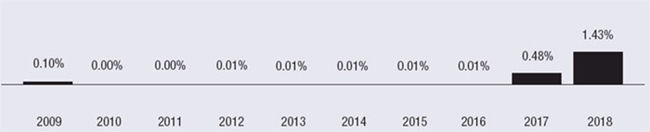
Fund Performance
The following bar chart and table provide some indication of the potential risks of investing in the fund. The fund’s past performance is not necessarily an indication of how the fund will perform in the future. Updated performance information is available online at www.firstamericanfunds.com or by calling 800 677-3863.
The bar chart shows you the variability of the fund’s performance from year to year. The table illustrates the fund’s average annual total returns over the time periods indicated.
|
|
|
|
|
ANNUAL TOTAL RETURNS AS OF 12/31 EACH YEAR1 |
||
|
|
||
|
|
||
|
|
||
Best Quarter: |
Quarter ended December 31, 2018 |
0.38% |
|
|
|
|
Worst Quarter: |
Quarter ended March 31, 2017* |
0.00% |
|
|
|
|
|
*Most recent quarter with this return during the period of the chart. |
||
|
|
||
|
AVERAGE ANNUAL TOTAL RETURNS |
Inception |
|
|
|
|
AS OF 12/31/18 |
Date |
One Year |
Five Years |
Ten Years |
|
Government Obligations Fund |
9/24/01 |
1.12% |
0.27% |
0.14% |
1 |
Total return for the period 1/1/19 through 9/30/19 was 1.24%. |
Investment Advisor
U.S. Bancorp Asset Management, Inc. (the “advisor”)
Other Information
For important information about the purchase and sale of fund shares, tax information, and financial intermediary compensation, please see “Additional Summary Information” on page 18 of the prospectus.
|
3 |
Prospectus – |
First
American Money Market Funds |
Fund Summaries
Investment Objective
Retail Prime Obligations Fund’s objective is to seek maximum current income to the extent consistent with the preservation of capital and maintenance of liquidity.
Fees and Expenses
The following tables describe the fees and expenses that you may pay if you buy and hold shares of the fund.
|
|
|
|
Shareholder
Fees |
Class A |
|
Maximum Sales Charge (Load) |
None |
|
Maximum Deferred Sales Charge (Load) |
None |
|
Annual Low Balance Account Fee (for accounts under $2,500) |
$15 |
Annual
Fund Operating Expenses |
|
|
Management Fees |
0.10% |
|
Distribution and/or Service (12b-1) Fees |
0.25% |
|
Other Expenses: |
|
|
Shareholder Servicing Fee |
0.25% |
|
Miscellaneous |
0.20% |
|
Total Annual Fund Operating Expenses |
0.80% |
|
Less Fee Waivers1 |
(0.05)% |
|
Net Expenses1 |
0.75% |
|
1 |
The advisor has contractually agreed to waive fees and reimburse other fund expenses through October 31, 2020, so that total annual fund operating expenses, after waivers, do not exceed 0.75%. These fee waivers and expense reimbursements may be terminated at any time after October 31, 2020 at the discretion of the advisor. Prior to that time, such waivers and reimbursements may not be terminated without the approval of the fund’s board of directors. |
Example: This example is intended to help you compare the cost of investing in the fund with the cost of investing in other mutual funds. The example assumes that you invest $10,000 in the fund for the time periods indicated and then redeem all of your shares at the end of those periods. The example also assumes that your investment has a 5% return each year and the fund’s operating expenses remain the same (except that the example incorporates the fund’s expense limitation arrangements for only the first year of each period presented). You would incur these hypothetical expenses whether or not you redeem your investment at the end of the given period. Although your actual costs may be higher or lower, based on these assumptions your costs would be:
|
Class A |
1 year |
$ 77 |
3 years |
$250 |
5 years |
$439 |
10 years |
$985 |
|
4 |
Prospectus – |
First
American Money Market Funds |
Fund Summaries
Retail Prime Obligations Fund continued
Principal Investment Strategies
Retail Prime Obligations Fund invests in high-quality short-term debt obligations, including:
|
● |
commercial paper; |
|
● |
U.S. dollar-denominated obligations of domestic and foreign banks with total assets of at least $500 million (including fixed and variable rate certificates of deposit, time deposits, and bankers’ acceptances); |
|
● |
non-convertible corporate debt securities; |
|
● |
securities issued by the U.S. government or one of its agencies or instrumentalities; |
|
● |
municipal securities, including variable rate demand notes, commercial paper, and municipal notes and other short-term municipal obligations; |
|
● |
loan participation interests; and |
|
● |
repurchase agreements. |
The fund concentrates its investments in the banking industry. Therefore, under normal market conditions, the fund will invest more than 25% of its total assets in securities issued by companies in the banking industry. The fund may, however, invest 25% or less of its total assets in this industry as a temporary defensive measure.
The advisor will only purchase (and hold) securities that it determines present minimal credit risk. If a security is no longer determined to present minimal credit risk, the advisor will make every attempt to sell the security, unless it has determined that it would not be in the best interest of the fund to dispose of the security at that time and, where necessary, has obtained the approval of the fund’s board of directors to continue to hold the security.
Principal Risks
You could lose money by investing in the fund. Although the fund seeks to preserve the value of your investment at $1.00 per share, it cannot guarantee it will do so. The fund may impose a fee upon sale of your shares or may temporarily suspend your ability to sell shares if the fund’s liquidity falls below required minimums because of market conditions or other factors. An investment in the fund is not a deposit of U.S. Bank National Association and is not insured or guaranteed by the Federal Deposit Insurance Corporation or any other government agency. The fund’s sponsor has no legal obligation to provide financial support to the fund, and you should not expect that the sponsor will provide financial support to the fund at any time.
The principal risks are presented in alphabetical order to facilitate finding particular risks and comparing them with other funds. Each risk summarized below is considered a “principal risk” of investing in the fund, regardless of the order in which it appears.
Principal risks of investing in this fund include:
Banking Industry Risk — An adverse development in the banking industry (domestic or foreign) may affect the value of the fund’s investments more than if the fund were not invested to such a degree in the banking industry. Banks may be particularly susceptible to certain economic factors such as interest rate changes, adverse developments in the real estate market, fiscal, regulatory and monetary policy and general economic cycles.
Credit Risk — The value of your investment might decline if the issuer of an obligation held by the fund defaults on the obligation or has its credit rating downgraded.
|
5 |
Prospectus – |
First
American Money Market Funds |
Fund Summaries
Retail Prime Obligations Fund continued
Cybersecurity Risk — The fund may be subject to operational and informational security risks resulting from breaches in cybersecurity at the fund, the fund’s affiliates or service providers. A cybersecurity breach at an issuer of securities in which the fund invests may cause such securities to lose value.
Foreign Security Risk — Securities of foreign issuers, even when dollar denominated and publicly traded in the United States, may involve risks not associated with the securities of domestic issuers. Uncertainty surrounding the sovereign debt of several European Union countries, as well as the continued existence of the European Union itself, has disrupted and may continue to disrupt markets in the United States and around the world. If a country changes its currency or leaves the European Union or if the European Union dissolves, the world’s securities markets likely will be significantly disrupted.
Income Risk — The level of income you receive from the fund will be affected by movements in short-term interest rates.
Interest Rate Risk — The value of your investment might decline because of a sharp rise in interest rates that causes the value of the fund’s portfolio holdings to fall.
Liquidity Risk — The fund may not be able to sell a security in a timely manner or at a desired price, or may be unable to sell the security at all, because of a lack of demand in the market for the security, or a liquidity provider defaults on its obligation to purchase the security when properly tendered by the fund.
Municipal Security Risk — The value of municipal securities owned by the fund may be adversely affected by future changes in federal income tax laws, including rate reductions or the imposition of a flat tax, and adverse changes in the financial conditions of municipal securities issuers.
Redemption Risk — If there are unexpectedly high redemptions of fund shares, the fund might have to sell portfolio securities prior to their maturity, possibly at a loss.
Regulatory Risk — Changes to monetary policy by the Federal Reserve or other regulatory actions may impact the fund’s operations, universe of potential investment options, and return potential.
Repurchase Agreement Risk — If the seller of a repurchase agreement defaults on its obligation to repurchase securities from the fund, the fund may incur costs in disposing of the securities purchased and may experience losses if the proceeds from the sale of the securities are less than the full repurchase price.
Variable Rate Demand Note (VRDN) Risk — Investments in VRDNs involve credit risk with respect to the issuer or financial institution providing the fund with the credit and liquidity support for the unconditional put option.
|
6 |
Prospectus – |
First
American Money Market Funds |
Fund Summaries
Retail Prime Obligations Fund continued
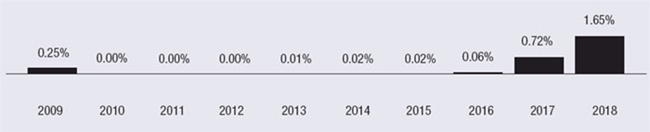
Fund Performance
The following bar chart and table provide some indication of the potential risks of investing in the fund. The fund’s past performance is not necessarily an indication of how the fund will perform in the future. Updated performance information is available online at www.firstamericanfunds.com or by calling 800 677-3863.
The bar chart shows you the variability of the fund’s performance from year to year. The table illustrates the fund’s average annual total returns over the time periods indicated.
|
|
|
|
|
ANNUAL TOTAL RETURNS AS OF 12/31 EACH YEAR1 |
||
|
|
||
|
|
||
|
|
||
Best Quarter: |
Quarter ended December 31, 2018 |
0.47% |
|
|
|
|
Worst Quarter: |
Quarter ended December 31, 2016 |
0.01% |
|
|
|
|
AVERAGE ANNUAL TOTAL RETURNS |
Inception |
|
Since |
AS OF 12/31/18 |
Date |
One Year |
Inception |
Retail Prime Obligations Fund |
7/18/16 |
1.41% |
0.77% |
| 1 | Total return for the period 1/1/19 through 9/30/19 was 1.49%. |
Investment Advisor
U.S. Bancorp Asset Management, Inc.
Other Information
For important information about the purchase and sale of fund shares, tax information, and financial intermediary compensation, please see “Additional Summary Information” on page 18 of the prospectus.
|
7 |
Prospectus – |
First
American Money Market Funds |
Fund Summaries
Retail Tax Free Obligations Fund
Investment Objective
Retail Tax Free Obligations Fund’s objective is to seek maximum current income exempt from federal income taxes consistent with the preservation of capital and maintenance of liquidity.
Fees and Expenses
The following tables describe the fees and expenses that you may pay if you buy and hold shares of the fund.
Shareholder
Fees |
Class A |
Maximum Sales Charge (Load) |
None |
Maximum Deferred Sales Charge (Load) |
None |
Annual Low Balance Account Fee (for accounts under $2,500) |
$15 |
Annual
Fund Operating Expenses |
|
Management Fees |
0.10% |
Distribution and/or Service (12b-1) Fees |
0.25% |
Other Expenses: |
|
Shareholder Servicing Fee |
0.25% |
Miscellaneous |
0.28% |
Total Annual Fund Operating Expenses |
0.88% |
Less Fee Waivers1 |
(0.13)% |
Net Expenses1 |
0.75% |
1 |
The advisor has contractually agreed to waive fees and reimburse other fund expenses through October 31, 2020, so that total annual fund operating expenses, after waivers, do not exceed 0.75%. These fee waivers and expense reimbursements may be terminated at any time after October 31, 2020 at the discretion of the advisor. Prior to that time, such waivers and reimbursements may not be terminated without the approval of the fund’s board of directors. |
Example: This example is intended to help you compare the cost of investing in the fund with the cost of investing in other mutual funds. The example assumes that you invest $10,000 in the fund for the time periods indicated and then redeem all of your shares at the end of those periods. The example also assumes that your investment has a 5% return each year and the fund’s operating expenses remain the same (except that the example incorporates the fund’s expense limitation arrangements for only the first year of each period presented). You would incur these hypothetical expenses whether or not you redeem your investment at the end of the given period. Although your actual costs may be higher or lower, based on these assumptions your costs would be:
|
Class A |
|
1 year |
$ 77 |
|
3 years |
$ 268 |
|
5 years |
$ 475 |
|
10 years |
$1,072 |
|
8 |
Prospectus – |
First
American Money Market Funds |
Fund Summaries
Retail Tax Free Obligations Fund continued
Principal Investment Strategies
Under normal market conditions, Retail Tax Free Obligations Fund invests at least 80% of its total assets in high-quality, short-term municipal securities that pay interest that is exempt from federal income tax, including the federal alternative minimum tax. The municipal securities in which the fund invests include variable rate demand notes (VRDNs) and tender option bonds (TOBs), which are floating rate instruments that provide the fund with the option to put or tender the VRDN or TOB back to the issuer at par. VRDNs and TOBs typically have some form of external credit or liquidity support. The fund also may invest in other municipal securities, including commercial paper, municipal notes and other short-term municipal obligations.
Municipal securities are issued by state and local governments, and certain U.S. territorial possessions, to finance public infrastructure projects such as streets and highways, schools, water and sewer systems, hospitals, and airports. They also may be issued to refinance outstanding obligations as well as to obtain funds for general operating expenses and for loans to other public institutions and facilities. There are two principal classifications of municipal securities:
| ● | general obligation bonds, which are backed by the full faith, credit, and taxing power of the issuer; and |
| ● | revenue bonds, which are payable only from the revenues generated by a specific project or from another specific revenue source. |
Under normal market conditions, up to 20% of the fund’s total assets may be invested in taxable money market securities and municipal securities subject to the alternative minimum tax, although the fund does not currently intend to invest in municipal securities subject to the alternative minimum tax. Under abnormal market conditions, the fund may invest more than 20% of its total assets in such taxable securities, as conditions dictate. This may prevent the fund from achieving its goal of providing maximum current income exempt from federal income taxes.
Because the fund refers to tax-free investments in its name, it has a fundamental investment policy that it will normally invest its assets so that at least 80% of the income that it distributes will be exempt from federal regular income tax, including the federal alternative minimum tax. This policy may not be changed without shareholder approval.
Principal Risks
You could lose money by investing in the fund. Although the fund seeks to preserve the value of your investment at $1.00 per share, it cannot guarantee it will do so. The fund may impose a fee upon sale of your shares or may temporarily suspend your ability to sell shares if the fund’s liquidity falls below required minimums because of market conditions or other factors. An investment in the fund is not a deposit of U.S. Bank National Association and is not insured or guaranteed by the Federal Deposit Insurance Corporation or any other government agency. The fund’s sponsor has no legal obligation to provide financial support to the fund, and you should not expect that the sponsor will provide financial support to the fund at any time.
The principal risks are presented in alphabetical order to facilitate finding particular risks and comparing them with other funds. Each risk summarized below is considered a “principal risk” of investing in the fund, regardless of the order in which it appears.
|
9 |
Prospectus – |
First
American Money Market Funds |
Fund Summaries
Retail Tax Free Obligations Fund continued
Principal risks of investing in this fund include:
Credit Risk — The value of your investment might decline if the issuer of an obligation held by the fund defaults on the obligation or has its credit rating downgraded.
Cybersecurity Risk — The fund may be subject to operational and informational security risks resulting from breaches in cybersecurity at the fund, the fund’s affiliates or service providers. A cybersecurity breach at an issuer of securities in which the fund invests may cause such securities to lose value.
Income Risk — The level of income you receive from the fund will be affected by movements in short-term interest rates.
Interest Rate Risk — The value of your investment might decline because of a sharp rise in interest rates that causes the value of the fund’s portfolio holdings to fall.
Liquidity Risk — The fund may not be able to sell a security in a timely manner or at a desired price, or may be unable to sell the security at all, because of a lack of demand in the market for the security, or a liquidity provider defaults on its obligation to purchase the security when properly tendered by the fund.
Municipal Security Risk — The value of municipal securities owned by the fund may be adversely affected by future changes in federal income tax laws, including rate reductions or the imposition of a flat tax, and adverse changes in the financial conditions of municipal securities issuers.
Redemption Risk — If there are unexpectedly high redemptions of fund shares, the fund might have to sell portfolio securities prior to their maturity, possibly at a loss.
Regulatory Risk — Changes to monetary policy by the Federal Reserve or other regulatory actions may impact the fund’s operations, universe of potential investment options, and return potential.
Tax Risk — In order to be tax-exempt, municipal securities generally must meet certain regulatory requirements. If a municipal security fails to meet these requirements, the interest received by the fund from its investment in the security and distributed to shareholders may be taxable.
Variable Rate Demand Note (VRDN) and Tender Option Bond (TOB) Risk — Investments in VRDNs and TOBs involve credit risk with respect to the issuer or financial institution providing the fund with the credit and liquidity support for the put or tender option.
|
10 |
Prospectus – |
First
American Money Market Funds |
Fund Summaries
Retail Tax Free Obligations Fund continued
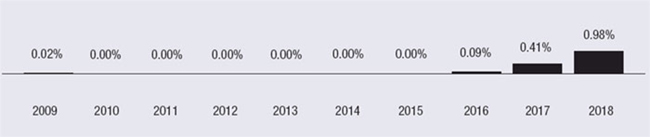
Fund Performance
The following bar chart and table provide some indication of the potential risks of investing in the fund. The fund’s past performance is not necessarily an indication of how the fund will perform in the future. Updated performance information is available online at www.firstamericanfunds.com or by calling 800 677-3863.
The bar chart shows you the variability of the fund’s performance from year to year. The table illustrates the fund’s average annual total returns over the time periods indicated.
|
ANNUAL TOTAL RETURNS AS OF 12/31 EACH YEAR1 |
||
|
|
|
|
|
|
||
|
|
|
|
|
|
|
|
|
Best Quarter: |
Quarter ended December 31, 2018 |
0.23% |
|
Worst Quarter: |
Quarter ended March 31, 2017* |
0.00% |
|
*Most recent quarter with this return during the period of the chart. |
||
|
AVERAGE ANNUAL TOTAL RETURNS |
Inception |
|
|
|
|
AS OF 12/31/18 |
Date |
One Year |
Five Years |
Ten Years |
|
Retail Tax Free Obligations Fund2 |
9/24/01 |
0.68% |
0.16% |
0.08% |
|
1 |
Total return for the period 1/1/19 through 9/30/19 was 0.62%. |
2 |
Prior to October 14, 2016, the fund was named Tax Free Obligations Fund. |
Investment Advisor
U.S. Bancorp Asset Management, Inc.
Other Information
For important information about the purchase and sale of fund shares, tax information, and financial intermediary compensation, please see “Additional Summary Information” on page 18 of the prospectus.
|
11 |
Prospectus – |
First
American Money Market Funds |
Fund Summaries
Investment Objective
Treasury Obligations Fund’s objective is to seek maximum current income consistent with the preservation of capital and maintenance of liquidity.
Fees and Expenses
The following tables describe the fees and expenses that you may pay if you buy and hold shares of the fund.
Shareholder
Fees |
Class A |
Maximum Sales Charge (Load) |
None |
Maximum Deferred Sales Charge (Load) |
None |
Annual Low Balance Account Fee (for accounts under $2,500) |
$15 |
Annual
Fund Operating Expenses |
|
Management Fees |
0.10% |
Distribution and/or Service (12b-1) Fees |
0.25% |
Other Expenses: |
|
Shareholder Servicing Fee |
0.25% |
Miscellaneous |
0.18% |
Total Annual Fund Operating Expenses |
0.78% |
Less Fee Waivers1 |
(0.03)% |
Net Expenses1 |
0.75% |
1 |
The advisor has contractually agreed to waive fees and reimburse other fund expenses through October 31, 2020, so that total annual fund operating expenses, after waivers, do not exceed 0.75%. These fee waivers and expense reimbursements may be terminated at any time after October 31, 2020 at the discretion of the advisor. Prior to that time, such waivers and reimbursements may not be terminated without the approval of the fund’s board of directors. |
Example: This example is intended to help you compare the cost of investing in the fund with the cost of investing in other mutual funds. The example assumes that you invest $10,000 in the fund for the time periods indicated and then redeem all of your shares at the end of those periods. The example also assumes that your investment has a 5% return each year and the fund’s operating expenses remain the same (except that the example incorporates the fund’s expense limitation arrangements for only the first year of each period presented). You would incur these hypothetical expenses whether or not you redeem your investment at the end of the given period. Although your actual costs may be higher or lower, based on these assumptions your costs would be:
|
Class A |
|
1 year |
$ 77 |
|
3 years |
$246 |
|
5 years |
$430 |
|
10 years |
$963 |
|
12 |
Prospectus – |
First
American Money Market Funds |
Fund Summaries
Treasury Obligations Fund continued
Principal Investment Strategies
Under normal market conditions, Treasury Obligations Fund invests exclusively in short-term U.S. Treasury obligations, including repurchase agreements secured by U.S. Treasury obligations. The U.S. Treasury obligations in which the fund invests include U.S. Treasury bonds, notes, and bills. These types of Treasury securities are essentially the same except for differences in interest rates, maturities, and dates of issuance. U.S. Treasury obligations are backed by the full faith and credit of the U.S. government.
Principal Risks
You could lose money by investing in the fund. Although the fund seeks to preserve the value of your investment at $1.00 per share, it cannot guarantee it will do so. An investment in the fund is not a deposit of U.S. Bank National Association and is not insured or guaranteed by the Federal Deposit Insurance Corporation or any other government agency. The fund’s sponsor has no legal obligation to provide financial support to the fund, and you should not expect that the sponsor will provide financial support to the fund at any time.
The principal risks are presented in alphabetical order to facilitate finding particular risks and comparing them with other funds. Each risk summarized below is considered a “principal risk” of investing in the fund, regardless of the order in which it appears.
Principal risks of investing in this fund include:
Credit Risk — The value of your investment might decline if the issuer of an obligation held by the fund defaults on the obligation or has its credit rating downgraded.
Cybersecurity Risk — The fund may be subject to operational and informational security risks resulting from breaches in cybersecurity at the fund, the fund’s affiliates or service providers. A cybersecurity breach at an issuer of securities in which the fund invests may cause such securities to lose value.
Income Risk — The level of income you receive from the fund will be affected by movements in short-term interest rates.
Interest Rate Risk — The value of your investment might decline because of a sharp rise in interest rates that causes the value of the fund’s portfolio holdings to fall.
Liquidity Risk — The fund may not be able to sell a security in a timely manner or at a desired price, or may be unable to sell the security at all, because of a lack of demand in the market for the security.
Redemption Risk — If there are unexpectedly high redemptions of fund shares, the fund might have to sell portfolio securities prior to their maturity, possibly at a loss.
Regulatory Risk — Changes to monetary policy by the Federal Reserve or other regulatory actions may impact the fund’s operations, universe of potential investment options, and return potential.
Repurchase Agreement Risk — If the seller of a repurchase agreement defaults on its obligation to repurchase securities from the fund, the fund may incur costs in disposing of the collateral and may experience losses if there is any delay in its ability to do so.
|
13 |
Prospectus – |
First
American Money Market Funds |
Fund Summaries
Treasury Obligations Fund continued
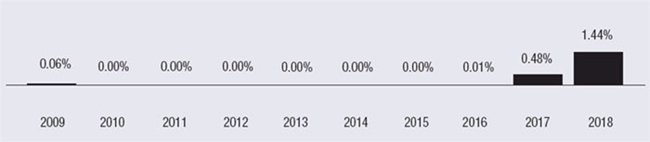
Fund Performance
The following bar chart and table provide some indication of the potential risks of investing in the fund. The fund’s past performance is not necessarily an indication of how the fund will perform in the future. Updated performance information is available online at www.firstamericanfunds.com or by calling 800 677-3863.
The bar chart shows you the variability of the fund’s performance from year to year. The table illustrates the fund’s average annual total returns over the time periods indicated.
|
ANNUAL TOTAL RETURNS AS OF 12/31 EACH YEAR1 |
||
|
|
|
|
|
|
||
|
|
|
|
|
Best Quarter: |
Quarter ended December 31, 2018 |
0.39% |
|
Worst Quarter: |
Quarter ended March 31, 2017* |
0.00% |
|
*Most recent quarter with this return during the period of the chart. |
||
|
AVERAGE ANNUAL TOTAL RETURNS |
Inception |
|
|
|
|
AS OF 12/31/18 |
Date |
One Year |
Five Years |
Ten Years |
|
Treasury Obligations Fund |
9/24/01 |
1.13% |
0.27% |
0.13% |
1 Total return for the period 1/1/19 through 9/30/19 was 1.23%.
Investment Advisor
U.S. Bancorp Asset Management, Inc.
Other Information
For important information about the purchase and sale of fund shares, tax information, and financial intermediary compensation, please see “Additional Summary Information” on page 18 of the prospectus.
|
14 |
Prospectus – |
First
American Money Market Funds |
U.S. Treasury Money Market Fund
Investment Objective
U.S. Treasury Money Market Fund’s objective is to seek maximum current income consistent with the preservation of capital and maintenance of liquidity.
Fees and Expenses
The following tables describe the fees and expenses that you may pay if you buy and hold shares of the fund.
Shareholder Fees (fees paid directly from your investment) |
Class A |
Maximum Sales Charge (Load) |
None |
Maximum Deferred Sales Charge (Load) |
None |
Annual Low Balance Account Fee (for accounts under $2,500) |
$15 |
Annual Fund Operating Expenses (expenses that you pay each year as a percentage of the value of your investment) |
|
Management Fees |
0.10% |
Distribution and/or Service (12b-1) Fees |
0.25% |
Other Expenses: |
|
Shareholder Servicing Fee |
0.25% |
Miscellaneous |
0.21% |
Total Annual Fund Operating Expenses |
0.81% |
Less Fee Waivers1 |
(0.06)% |
Net Expenses1 |
0.75% |
1 |
The advisor has contractually agreed to waive fees and reimburse other fund expenses through October 31, 2020, so that total annual fund operating expenses, after waivers, do not exceed 0.75%. These fee waivers and expense reimbursements may be terminated at any time after October 31, 2020 at the discretion of the advisor. Prior to that time, such waivers and reimbursements may not be terminated without the approval of the fund’s board of directors. |
Example: This example is intended to help you compare the cost of investing in the fund with the cost of investing in other mutual funds. The example assumes that you invest $10,000 in the fund for the time periods indicated and then redeem all of your shares at the end of those periods. The example also assumes that your investment has a 5% return each year and the fund’s operating expenses remain the same (except that the example incorporates the fund’s expense limitation arrangements for only the first year of each period presented). You would incur these hypothetical expenses whether or not you redeem your investment at the end of the given period. Although your actual costs may be higher or lower, based on these assumptions your costs would be:
|
Class A |
1 year |
$ 77 |
3 years |
$253 |
5 years |
$444 |
10 years |
$996 |
|
15 |
Prospectus – |
First
American Money Market Funds |
Fund Summaries
U.S. Treasury Money Market Fund continued
Principal Investment Strategies
U.S. Treasury Money Market Fund invests exclusively in direct obligations of the U.S. Treasury. The U.S. Treasury obligations in which the fund invests include U.S. Treasury bonds, notes, and bills. These types of Treasury securities are essentially the same except for differences in interest rates, maturities, and dates of issuance. U.S. Treasury obligations are backed by the full faith and credit of the U.S. government.
Principal Risks
You could lose money by investing in the fund. Although the fund seeks to preserve the value of your investment at $1.00 per share, it cannot guarantee it will do so. An investment in the fund is not a deposit of U.S. Bank National Association and is not insured or guaranteed by the Federal Deposit Insurance Corporation or any other government agency. The fund’s sponsor has no legal obligation to provide financial support to the fund, and you should not expect that the sponsor will provide financial support to the fund at any time.
The principal risks are presented in alphabetical order to facilitate finding particular risks and comparing them with other funds. Each risk summarized below is considered a “principal risk” of investing in the fund, regardless of the order in which it appears.
Principal risks of investing in this fund include:
Credit Risk — The value of your investment might decline if the issuer of an obligation held by the fund defaults on the obligation or has its credit rating downgraded.
Cybersecurity Risk — The fund may be subject to operational and informational security risks resulting from breaches in cybersecurity at the fund, the fund’s affiliates or service providers. A cybersecurity breach at an issuer of securities in which the fund invests may cause such securities to lose value.
Income Risk — The level of income you receive from the fund will be affected by movements in short-term interest rates.
Interest Rate Risk — The value of your investment might decline because of a sharp rise in interest rates that causes the value of the fund’s portfolio holdings to fall.
Liquidity Risk — The fund may not be able to sell a security in a timely manner or at a desired price, or may be unable to sell the security at all, because of a lack of demand in the market for the security.
Redemption Risk — If there are unexpectedly high redemptions of fund shares, the fund might have to sell portfolio securities prior to their maturity, possibly at a loss.
Regulatory Risk — Changes to monetary policy by the Federal Reserve or other regulatory actions may impact the fund’s operations, universe of potential investment options, and return potential.
|
16 |
Prospectus – |
First
American Money Market Funds |
Fund Summaries
U.S. Treasury Money Market Fund continued
Fund Performance
The following bar chart and table provide some indication of the potential risks of investing in the fund. The fund’s past performance is not necessarily an indication of how the fund will perform in the future. Updated performance information is available online at www.firstamericanfunds.com or by calling 800 677-3863.
The bar chart shows you the variability of the fund’s performance from year to year. The table illustrates the fund’s average annual total returns over the time periods indicated.
ANNUAL TOTAL RETURNS AS OF 12/31 EACH YEAR1 |
||
|
||

|
||
|
||
Best Quarter: |
Quarter ended December 31, 2018 |
0.38% |
Worst Quarter: |
Quarter ended March 31, 2017* |
0.00% |
*Most recent quarter with this return during the period of the chart. |
||
AVERAGE ANNUAL TOTAL RETURNS |
Inception |
|
|
|
AS OF 12/31/18 |
Date |
One Year |
Five Years |
Ten Years |
U.S. Treasury Money Market Fund |
10/25/04 |
1.11% |
0.26% |
0.13% |
1 Total return for the period 1/1/19 through 9/30/19 was 1.19%.
Investment Advisor
U.S. Bancorp Asset Management, Inc.
Other Information
For important information about the purchase and sale of fund shares, tax information, and financial intermediary compensation, please see “Additional Summary Information” on page 18 of the prospectus.
|
17 |
Prospectus – |
First
American Money Market Funds |
Additional Summary Information
Purchase and Sale of Fund Shares
You may purchase or redeem shares of the funds on any business day. You can become a shareholder in any of the funds by making a minimum initial investment of $1,000. The funds reserve the right to waive or lower purchase minimums under certain circumstances. Additionally, the funds reserve the right to reject any purchase order and to close a shareholder’s account at any time. Investments in Retail Prime Obligations Fund and Retail Tax Free Obligations Fund are limited to accounts beneficially owned by natural persons.
You can redeem shares through your financial intermediary or by contacting the funds at:
Phone |
|
Regular Mail |
|
Overnight Express Mail |
800-677-3863 |
|
First American Funds |
|
First American Funds |
|
|
P.O. Box 701 |
|
615 East Michigan Street |
|
|
Milwaukee, WI 53201-0701 |
|
Milwaukee, WI 53202 |
Tax Information
For Government Obligations Fund, Retail Prime Obligations Fund, Treasury Obligations Fund, and U.S. Treasury Money Market Fund, dividends you receive from the funds are generally taxable as ordinary income. Dividends attributable to income from U.S. government securities may be exempt from state personal income taxes.
Retail Tax Free Obligations Fund intends to pay interest that is exempt from federal income tax, including the federal alternative minimum tax, although a portion of the fund’s distributions may not be tax-exempt.
Payments to Broker-Dealers and Other Financial Intermediaries
If you purchase a fund through a broker-dealer or other financial intermediary (such as a bank), the fund and its related companies may pay the intermediary for the sale of fund shares and related services. These payments may create a conflict of interest by influencing the broker-dealer or other intermediary and your salesperson to recommend the fund over another investment. Ask your salesperson or visit your financial intermediary’s website for more information.
|
18 |
Prospectus – |
First
American Money Market Funds |
The investment objective of each fund is to seek maximum current income to the extent consistent with the preservation of capital and maintenance of liquidity. Each fund’s investment objective may be changed without shareholder approval. Please remember, there is no guarantee that any fund will achieve its objective.
Principal Investment Strategies
The funds’ principal investment strategies are discussed below. These are the strategies that the funds’ investment advisor believes are most likely to be important in trying to achieve the funds’ objectives. You should be aware that each fund may also use strategies and invest in securities that are not described in this prospectus, but that are described in the SAI. For a copy of the SAI, call Investor Services at 800 677-3863.
Principal Investment Strategies Applicable to Each Fund
Each fund complies with Securities and Exchange Commission (SEC) regulations that apply to money market funds. These regulations require that each fund’s investments mature within 397 days from the date of purchase and that each fund maintain a weighted average maturity of 60 days or less and a weighted average life of 120 days or less. The funds may invest in securities with variable or floating interest rates and securities with demand features. The maturities of these securities are determined according to regulations which allow the funds to consider some of these securities as having maturities shorter than their stated maturity dates. All of the funds’ investments must be in U.S. dollar-denominated high quality securities which have been determined by the funds’ advisor to present minimal credit risk, which determination must include an analysis of the capacity of the security’s issuer or guarantor (including the provider of a conditional demand feature, when applicable) to meet its financial obligations. With limited exceptions, a fund may not invest more than 5% of its total assets in securities issued by the same issuer. Each fund must comply with weekly liquidity standards that require a fund to hold at least 30% of its total assets in cash, direct obligations of the U.S. Government, agency discount notes with remaining maturities of 60 days or less, or securities convertible into cash within five business days. Each fund must also comply with daily liquidity standards that require a fund to hold at least 10% of its total assets in cash, direct obligations of the U.S. Government, or securities convertible into cash within one business day. Each fund is limited to investing no more than 5% of its total assets in illiquid securities.
When selecting securities for each fund, the portfolio managers first consider general economic factors, market conditions, and the short-term interest rate environment in determining what types of short-term instruments to purchase. The portfolio managers then select the specific instruments to be purchased. Generally, the portfolio managers buy and hold securities until their maturities. However, the portfolio managers may sell securities for a variety of reasons, such as to adjust the portfolio’s average maturity, credit, liquidity or yield metrics.
For liquidity and to respond to unusual market conditions, the funds may hold all or a significant portion of their total assets in cash for temporary defensive purposes. This may result in a lower yield and prevent the funds from meeting their investment objectives.
|
19 |
Prospectus – |
First
American Money Market Funds |
More about the Funds
Principal Investment Strategies continued
Government Obligations Fund
Government Obligations Fund pursues its objective by investing exclusively in short-term U.S. government securities, including repurchase agreements secured by U.S. government securities. U.S. government securities are bonds or other debt obligations issued or guaranteed as to principal and interest by the U.S. government or one of its agencies or instrumentalities. U.S. Treasury securities and some obligations of U.S. government agencies and instrumentalities are supported by the full faith and credit of the U.S. government. Other U.S. government securities are backed by the right of the issuer to borrow from the U.S. Treasury. Still others are supported only by the credit of the issuer or instrumentality.
U.S. government securities issued by the Federal National Mortgage Association (Fannie Mae), Federal Home Loan Mortgage Corporation (Freddie Mac) and the Federal Home Loan Banks (FHLB) are neither issued nor guaranteed by the U.S. Treasury and are not backed by the full faith and credit of the United States. These entities, however, were chartered or supported by Acts of Congress and are supported by federal subsidies, loans or other benefits. The Government National Mortgage Association (Ginnie Mae) is a wholly-owned U.S. corporation that is authorized to guarantee timely payment and interest of its securities. U.S. government securities issued by Ginnie Mae are guaranteed by the full faith and credit of the United States. Other U.S. government securities do not have an explicit guarantee but support is implied due to the government sponsorship of their mandated activities, including securities issued by the Tennessee Valley Authority and Federal Farm Credit Banks.
Retail Prime Obligations Fund
Retail Prime Obligations Fund pursues its objective by investing in high-quality short-term debt obligations, including:
● |
commercial paper; |
● |
U.S. dollar-denominated obligations of domestic and foreign banks with total assets of at least $500 million (including fixed and variable rate certificates of deposit, time deposits, and bankers’ acceptances); |
● |
non-convertible corporate debt securities; |
● |
securities issued by the U.S. government or one of its agencies or instrumentalities; |
● |
municipal securities, including variable rate demand notes, commercial paper, and municipal notes and other short-term municipal obligations; |
● |
loan participation interests; and |
● |
repurchase agreements. |
The fund concentrates its investments in the banking industry. Therefore, under normal market conditions, the fund will invest more than 25% of its total assets in securities issued by companies in the banking industry. The fund may, however, invest 25% or less of its total assets in this industry as a temporary defensive measure.
The advisor will only purchase (and hold) securities that it determines present minimal credit risk. If a security is no longer determined to present minimal credit risk, the advisor will make every attempt to sell the security, unless it has determined that it would not be in the best interest of the fund to dispose of the security at that time and, where necessary, has obtained the approval of the fund’s board of directors to continue to hold the security.
|
20 |
Prospectus – |
First
American Money Market Funds |
More about the Funds
Principal Investment Strategies continued
U.S. government securities issued by the Federal National Mortgage Association (Fannie Mae), Federal Home Loan Mortgage Corporation (Freddie Mac) and the Federal Home Loan Banks (FHLB) are neither issued nor guaranteed by the U.S. Treasury and are not backed by the full faith and credit of the United States. These entities, however, were chartered or supported by Acts of Congress and are supported by federal subsidies, loans or other benefits. The Government National Mortgage Association (Ginnie Mae) is a wholly-owned U.S. corporation that is authorized to guarantee timely payment and interest of its securities. U.S. government securities issued by Ginnie Mae are guaranteed by the full faith and credit of the United States. Other U.S. government securities do not have an explicit guarantee but support is implied due to the government sponsorship of their mandated activities, including securities issued by the Tennessee Valley Authority and Federal Farm Credit Banks.
Retail Tax Free Obligations Fund
Under normal market conditions, Retail Tax Free Obligations Fund pursues its objective by investing at least 80% of its total assets in high-quality, short-term municipal securities that pay interest that is exempt from federal income tax, including the federal alternative minimum tax. The municipal securities in which the fund invests include variable rate demand notes (VRDNs) and tender option bonds (TOBs), which are floating rate instruments that provide the fund with the option to put or tender the VRDN or TOB back to the issuer at par. VRDNs and TOBs typically have some form of external credit or liquidity support. The fund also may invest in other municipal securities, including commercial paper, municipal notes and other short-term municipal obligations.
Municipal securities are issued by state and local governments, and certain U.S. territorial possessions, to finance public infrastructure projects such as streets and highways, schools, water and sewer systems, hospitals, and airports. They also may be issued to refinance outstanding obligations as well as to obtain funds for general operating expenses and for loans to other public institutions and facilities. There are two principal classifications of municipal securities:
● |
general obligation bonds, which are backed by the full faith, credit, and taxing power of the issuer; and |
● |
revenue bonds, which are payable only from the revenues generated by a specific project or from another specific revenue source. |
Under normal market conditions, up to 20% of the fund’s total assets may be invested in taxable money market securities and municipal securities subject to the alternative minimum tax, although the fund does not currently intend to invest in municipal securities subject to the alternative minimum tax. Under abnormal market conditions, the fund may invest more than 20% of its total assets in such taxable securities, as conditions dictate. This may prevent the fund from achieving its goal of providing maximum current income exempt from federal income taxes.
Because the fund refers to tax-free investments in its name, it has a fundamental investment policy that it will normally invest its assets so that at least 80% of the income that it distributes will be exempt from federal regular income tax, including the federal alternative minimum tax. This policy may not be changed without shareholder approval.
|
21 |
Prospectus – |
First
American Money Market Funds |
More about the Funds
Principal Investment Strategies continued
Treasury Obligations Fund
Under normal market conditions, Treasury Obligations Fund pursues its objective by investing exclusively in short-term U.S. Treasury obligations, including repurchase agreements secured by U.S. Treasury obligations. The U.S. Treasury obligations in which the fund invests include U.S. Treasury bonds, notes, and bills. These types of Treasury securities are essentially the same except for differences in interest rates, maturities, and dates of issuance. U.S. Treasury obligations are backed by the full faith and credit of the U.S. government.
U.S. Treasury Money Market Fund
U.S. Treasury Money Market Fund pursues its objective by investing exclusively in direct obligations of the U.S. Treasury. The U.S. Treasury obligations in which the fund invests include U.S. Treasury bonds, notes, and bills. These types of Treasury securities are essentially the same except for differences in interest rates, maturities, and dates of issuance. U.S. Treasury obligations are backed by the full faith and credit of the U.S. government.
Other Money Market Funds
Each fund may invest in other money market funds that invest in the same types of securities as the respective fund, as a non-principal investment strategy, including the other money market funds advised by the funds’ investment advisor. To avoid duplicative investment advisory fees, when a fund invests in another money market fund advised by the fund’s investment advisor, the investment advisor reimburses the fund an amount equal to the fund’s proportionate share of the investment advisory fee paid by the other money market fund to the investment advisor. If the fund invests in money market funds advised by another investment advisor, you will bear both your proportionate share of the expenses in the fund (including management and advisory fees) and, indirectly, the expenses of such other money market fund.
Securities Lending
To generate additional income, and as a non-principal investment strategy, each fund, other than U.S. Treasury Money Market Fund, may lend securities representing up to one-third of the value of its total assets to broker-dealers, banks, and other institutions. When a fund loans its portfolio securities, it will receive, at the inception of each loan, cash collateral equal to at least 102% of the value of the loaned securities, which is invested consistent with the fund’s investment strategies. If the borrower fails to return the loaned securities, the fund could suffer a loss if the value of the invested collateral is insufficient to purchase replacement securities.
|
22 |
Prospectus – |
First
American Money Market Funds |
More about the Funds
The principal risks of investing in each fund are identified and further discussed below.
Government Obligations Fund |
|||
● |
Credit Risk |
● |
Liquidity Risk |
● |
Cybersecurity Risk |
● |
Redemption Risk |
● |
Income Risk |
● |
Regulatory Risk |
● |
Interest Rate Risk |
● |
Repurchase Agreement Risk |
|
|
|
|
Retail Prime Obligations Fund |
|||
● |
Banking Industry Risk |
● |
Liquidity Risk |
● |
Credit Risk |
● |
Municipal Security Risk |
● |
Cybersecurity Risk |
● |
Redemption Risk |
● |
Foreign Security Risk |
● |
Regulatory Risk |
● |
Income Risk |
● |
Repurchase Agreement Risk |
● |
Interest Rate Risk |
● |
Variable Rate Demand Note (VRDN) Risk |
|
|
|
|
Retail Tax Free Obligations Fund |
|||
● |
Credit Risk |
● |
Municipal Security Risk |
● |
Cybersecurity Risk |
● |
Redemption Risk |
● |
Income Risk |
● |
Regulatory Risk |
● |
Interest Rate Risk |
● |
Tax Risk |
● |
Liquidity Risk |
● |
Variable Rate Demand Note (VRDN) |
|
|
|
and Tender Option Bond (TOB) Risk |
|
|
|
|
Treasury Obligations Fund |
|||
● |
Credit Risk |
● |
Liquidity Risk |
● |
Cybersecurity Risk |
● |
Redemption Risk |
● |
Income Risk |
● |
Regulatory Risk |
● |
Interest Rate Risk |
● |
Repurchase Agreement Risk |
|
|
|
|
U.S. Treasury Money Market Fund |
|||
● |
Credit Risk |
● |
Liquidity Risk |
● |
Cybersecurity Risk |
● |
Redemption Risk |
● |
Income Risk |
● |
Regulatory Risk |
● |
Interest Rate Risk |
|
|
|
23 |
Prospectus – |
First
American Money Market Funds |
More about the Funds
Description of Principal Investment Risks
Banking Industry Risk. An adverse development in the banking industry (domestic or foreign) may affect the value of Retail Prime Obligations Fund’s investments more than if the fund was not invested to such a degree in the banking industry. Banks may be particularly susceptible to certain economic factors such as interest rate changes, adverse developments in the real estate market, fiscal and monetary policy and general economic cycles. For example, deteriorating economic and business conditions can disproportionately impact companies in the banking industry due to increased defaults on payments by borrowers. Moreover, political and regulatory changes can affect the operations and financial results of companies in the banking industry, potentially imposing additional costs and expenses or restricting the types of business activities of these companies.
Credit Risk. The value of your investment might decline if the issuer of an obligation held by the fund defaults on the obligation or has its credit rating downgraded.
Cybersecurity Risk. With the increased use of technologies such as the Internet and the dependence on computer systems to perform necessary business functions, a fund may be subject to operational and informational security risks resulting from breaches in cybersecurity (“cyber-attacks”). A cyber-attack refers to both intentional and unintentional events that may cause a fund to lose proprietary information, suffer data corruption, or lose operational capacity. Cyber-attacks include, but are not limited to, infection by computer viruses or other malicious software code, gaining unauthorized access to systems, networks, or devices that are used to service the fund’s operations through “hacking” or other means for the purpose of misappropriating assets or sensitive information, corrupting data, or causing operational disruption.
Cybersecurity failures or breaches by the funds’ affiliates or service providers, may cause disruptions and impact the business operations, potentially resulting in financial losses to both a fund and its shareholders, the inability of fund shareholders to transact business, inability to calculate a fund’s net asset value, impediments to trading, violations of applicable privacy and other laws (including the release of private shareholder information), regulatory fines, penalties, reputational damage, reimbursement or other compensation costs, and/or additional compliance costs. In addition, substantial costs may be incurred in order to prevent any cyber incidents in the future. While the advisor has risk management systems designed to prevent or reduce the impact of such cyber-attacks, there are inherent limitations in such controls, systems and protocols, including the possibility that certain risks have not been identified, as well as the rapid development of new threats. These cybersecurity risks are also present for issuers of securities in which a fund invests, which could result in material adverse consequences for such issuers, and may cause a fund’s investment in such securities to lose value and may result in financial loss for fund shareholders.
Foreign Security Risk. The foreign securities in which Retail Prime Obligations Fund may invest, even when dollar denominated and publicly traded in the United States, may involve risks not associated with the securities of domestic issuers. Political or social instability or diplomatic developments could adversely affect the securities. There is also the risk of possible withholding taxes, seizure of foreign deposits, currency controls, interest limitations, or other governmental restrictions which might affect the payment of principal or interest on securities owned by the
|
24 |
Prospectus – |
First
American Money Market Funds |
More about the Funds
Description of Principal Investment Risks continued
fund. In addition, there may be less public information available about foreign corporations and foreign banks and their branches. Uncertainty surrounding the sovereign debt of several European Union countries, as well as the continued existence of the European Union itself, has disrupted and may continue to disrupt markets in the United States and around the world. If a country changes its currency or leaves the European Union or if the European Union dissolves, the world’s securities markets likely will be significantly disrupted.
Income Risk. The level of income you receive from the fund will be affected by movements in short-term interest rates. Because Government Obligations Fund, Treasury Obligations Fund, and U.S. Treasury Money Market Fund invest solely in U.S. government securities, U.S. Treasury obligations, or repurchase agreements secured by those securities, these funds may offer less income than money market funds investing in other high-quality money market securities.
Interest Rate Risk. The value of your investment might decline because of a sharp rise in interest rates that causes the value of the fund’s portfolio holdings to fall. Many financial instruments use or may use a floating rate based on LIBOR, which is the offered rate for short-term Eurodollar deposits between major international banks. On July 27, 2017, the head of the United Kingdom’s Financial Conduct Authority announced a desire to phase out the use of LIBOR by the end of 2021. There remains uncertainty regarding the future utilization of LIBOR and the nature of any replacement rate. As such, the potential effect of a transition away from LIBOR on a fund or the financial instruments in which a fund invests cannot yet be determined.
Liquidity Risk. The fund may not be able to sell a security in a timely manner or at a desired price, or may be unable to sell the security at all, because of a lack of demand in the market for the security or, additionally for Retail Prime Obligations Fund and Retail Tax Free Obligations Fund, because a liquidity provider defaults on its obligation to purchase the security when properly tendered by the fund.
Municipal Security Risk. The value of municipal securities owned by Retail Prime Obligations Fund and Retail Tax Free Obligations Fund may be adversely affected by future changes in federal income tax laws, including rate reductions or the imposition of a flat tax, and adverse changes in the financial conditions of municipal securities issuers.
Redemption Risk. If there are unexpectedly high redemptions of fund shares, the fund might have to sell portfolio securities prior to their maturity, possibly at a loss.
Regulatory Risk. Changes to monetary policy by the Federal Reserve or other regulatory actions could expose fixed income and related markets to heightened volatility, interest rate sensitivity and reduced liquidity, which may impact the funds’ operations, universe of potential investment options, and return potential.
Repurchase Agreement Risk. If the seller of a repurchase agreement defaults on its obligation to repurchase securities from Government Obligations Fund or Treasury Obligations Fund, the fund may incur costs in disposing of the collateral and may experience losses if there is any delay in its ability to do so.
For Retail Prime Obligations Fund, if the seller of a repurchase agreement defaults on its obligation to repurchase securities from the fund, the fund may incur costs in disposing of the securities purchased and may experience losses if the proceeds from the sale of the securities are less than the full repurchase price. Securities purchased by the fund under a repurchase agreement may include securities that the fund is not otherwise permitted to purchase directly,
|
25 |
Prospectus – |
First
American Money Market Funds |
More about the Funds
Description of Principal Investment Risks continued
such as long-term government bonds, investment and non-investment grade corporate bonds, asset- and mortgage-backed securities, collateralized mortgage obligations, agency real estate mortgage investment conduits, and equity securities. The value of these securities may be more volatile or less liquid than the securities the fund is permitted to purchase directly, which increases the risk that the fund will be unable to recover fully in the event of the seller’s default.
Tax Risk. In order to be tax-exempt, municipal securities generally must meet certain regulatory requirements. If a municipal security fails to meet these requirements, the interest received by the fund from its investment in the security and distributed to shareholders may be taxable.
Variable Rate Demand Note (VRDN) and Tender Option Bond (TOB) Risk. Investments in VRDNs and TOBs involve credit risk with respect to the issuer or financial institution providing the fund with the credit and liquidity support for the put or tender option. While the funds invest only in VRDNs and TOBs of high quality issuers, or which are supported by high quality financial institutions, it is still possible that an issuer or financial institution could default on its obligations.
Disclosure of Portfolio Holdings
Information concerning the funds’ portfolio holdings as of the last business day of each month, as well as their weighted average maturity and weighted average life, is available on the funds’ website (www.firstamericanfunds.com) under “Portfolio Holdings.” This information is typically available five business days after the end of each month and remains posted on the website for at least six months thereafter. Each fund’s portfolio holdings are also posted on this same page on a weekly basis, typically on the first business day of the week. This weekly information generally reflects holdings as of the previous Thursday and remains posted on the website until the next publication date.
On each business day, each fund will post its levels of daily and weekly liquid assets and information on net inflows/outflows on the fund’s web page under “Our Funds.” This information is typically as of the end of the preceding business day and remains posted on the website until the next publication date. This information is also included for typically a 30-day rolling period in the enhanced disclosure report found on this same page.
A description of the funds’ policies and procedures with respect to the disclosure of the funds’ portfolio securities is available in the funds’ SAI.
|
26 |
Prospectus – |
First
American Money Market Funds |
U.S. Bancorp Asset Management, Inc.
800 Nicollet Mall
Minneapolis, MN 55402
U.S. Bancorp Asset Management provides investment management services to individuals and institutions, which may include corporations, foundations, pensions, and retirement plans. As of September 30, 2019, U.S. Bancorp Asset Management had more than $97.5 billion in assets under management, including investment company assets of more than $73.5 billion. As investment advisor, U.S. Bancorp Asset Management manages the funds’ business and investment activities, subject to the authority of the funds’ board of directors.
Each fund pays the investment advisor a monthly management fee for providing investment advisory services. The table below reflects management fees paid to the investment advisor, after taking into account any fee waivers, for the funds’ most recently completed fiscal year.
|
Management fee |
|
as a % of average |
|
daily net assets |
|
Government Obligations Fund |
0.10% |
|
Retail Prime Obligations Fund |
0.10% |
|
Retail Tax Free Obligations Fund |
0.09% |
|
Treasury Obligations Fund |
0.10% |
|
U.S. Treasury Money Market Fund |
0.10% |
U.S. Bancorp Asset Management may voluntarily waive or reimburse certain fees and expenses of a fund to the extent necessary to avoid a negative yield, or a yield below a specified level, which may vary from time to time in U.S. Bancorp Asset Management’s sole discretion. These waivers and reimbursements may be terminated at any time by U.S. Bancorp Asset Management.
A discussion regarding the basis for the board’s approval of the funds’ investment advisory agreement appears in the funds’ annual report to shareholders for the fiscal year ended August 31, 2019.
Additional Compensation
U.S. Bancorp Asset Management, U.S. Bank National Association (U.S. Bank) and other affiliates of U.S. Bancorp may act as fiduciary with respect to plans subject to the Employee Retirement Income Security Act of 1974 (ERISA) and other trust and agency accounts that invest in the First American funds. As described above, U.S. Bancorp Asset Management receives compensation for acting as the funds’ investment advisor. U.S. Bancorp Asset Management, U.S. Bank and their affiliates also receive compensation from the funds as set forth below.
Administration Services. U.S. Bancorp Asset Management and its affiliate, U.S. Bancorp Fund Services, LLC (Fund Services), act as the funds’ administrator and sub-administrator, respectively, providing administration services that include general administrative and accounting services, blue sky services and shareholder services. For such services, each fund pays U.S. Bancorp Asset Management the fund’s pro rata portion of up to 0.20%, on an annual basis, of the aggregate average daily net assets attributable to Class A shares of all First
|
27 |
Prospectus – |
First
American Money Market Funds |
Fund Management
Investment Advisor continued
American money market funds. U.S. Bancorp Asset Management pays Fund Services a portion of its fee, as agreed to from time to time. In addition to these fees, the funds may reimburse U.S. Bancorp Asset Management for any out-of-pocket expenses incurred in providing administration services.
Custody Services. U.S. Bank provides custody services to each fund. U.S. Bank is paid monthly fees equal, on an annual basis, to 0.0045% of the aggregate average daily market value of all securities and cash held in the funds up to $25 billion, 0.0040% of the aggregate average daily market value of all securities and cash held in the funds for the next $25 billion, and 0.0035% of the aggregate average daily market value of all securities and cash held in the funds in excess of $50 billion.
Distribution Services. Each fund pays Quasar Distributors, LLC, an affiliate of U.S. Bancorp Asset Management, distribution and shareholder servicing fees for acting as the funds’ distributor. These fees are used by Quasar for the primary purpose of compensating broker-dealers for their sale of fund shares. U.S. Bancorp Asset Management also pays fees to Quasar for certain distribution-related and other services provided by Quasar.
Securities Lending Services. In connection with lending their portfolio securities, the funds pay fees to U.S. Bank of 20% of each fund’s net income from securities lending transactions and U.S. Bank may pay up to half of such fees to U.S. Bancorp Asset Management for certain securities lending services provided by U.S. Bancorp Asset Management.
Shareholder Servicing Fees. Each fund pays U.S. Bancorp Asset Management a shareholder servicing fee at an annual rate of 0.25% of its average daily net assets attributable to Class A shares for providing or arranging for the provision of shareholder services to the holders of its Class A shares.
Transfer Agency Services. Fund Services provides transfer agency and dividend disbursing services, as well as certain shareholder services, to the funds. Fund Services receives fees for transfer agency and dividend disbursing services on a per shareholder account basis, subject to a minimum fee per share class. In addition, the funds may reimburse Fund Services for any out-of-pocket expenses incurred in providing transfer agency services.
Other Compensation. To the extent that fund shares are held through U.S. Bank or its broker-dealer affiliate, U.S. Bancorp Investments, Inc., those entities may receive distribution and/or shareholder servicing fees from the funds’ distributor as well as other payments from the funds’ distributor and/or advisor as described below under “Shareholder Information — Additional Payments to Institutions.”
The funds are managed by a team of persons who are employed by U.S. Bancorp Asset Management.
|
28 |
Prospectus – |
First
American Money Market Funds |
Retail Prime Obligations Fund and Retail Tax Free Obligations Fund are “retail” money market funds as defined under Rule 2a-7 of the Investment Company Act of 1940, as amended (the “Investment Company Act”). As retail money market funds, shareholders must be “natural persons.” Natural persons are permitted to invest in the Retail Prime Obligations Fund and Retail Tax Free Obligations Fund through certain tax-advantaged savings accounts, trusts and other retirement and investment accounts, including, for example: (1) participant-directed defined contribution plans; (2) individual retirement accounts; (3) simplified employee pension arrangements; (4) SIMPLE retirement accounts; (5) custodial accounts; (6) deferred compensation plans for government or tax-exempt organization employees; (7) Archer medical savings accounts; (8) college savings plans; (9) health savings account plans; (10) ordinary trusts and estates of natural persons; or (11) certain other retirement and investment accounts having an institutional decision maker (e.g., a plan sponsor in certain retirement arrangements or an investment adviser managing discretionary investment accounts).
In order to make an initial investment in the Retail Prime Obligations Fund or Retail Tax Free Obligations Fund, you must furnish to the fund, or your financial intermediary, if any, an account application that provides certain information (e.g., Social Security Number or government-issued identification, such as a driver’s license or passport) that confirms your eligibility to invest in the fund. The fund will refuse to open an account or require a financial intermediary to refuse to open an account if you fail to (1) provide a Social Security Number or other government-issued identification (e.g., a driver’s license or passport); or (2) certify that such number or other information is correct (if required to do so under applicable law).
The funds utilize the amortized cost method of valuation to transact at a $1.00 share price. The net asset value per share of each share class of a fund is calculated at the times listed below under “Calculating Net Asset Value.” If a purchase order is received on a business day by the deadline listed below under “Calculating Net Asset Value” and payment in federal funds is received by the fund by the close of the Federal Reserve wire transfer system (normally, 5:00 p.m. Central time), then dividends will begin to accrue on the same business day that the wire purchase order is received. If a purchase order is received on a business day after the deadline specified above, you will begin to accrue dividends the next business day. Also, in the event a wire purchase order is placed by the deadline specified above but an anticipated wire payment is not received by a fund by the close of the Federal Reserve wire transfer system that same day, your purchase may be cancelled and you may be liable for any resulting losses or fees incurred by the fund, the transfer agent, or the fund’s custodian. For purchase orders accompanied by check, dividends will normally begin to accrue on the first business day after the fund receives your check.
Redemption proceeds to be paid by wire will normally be paid to the domestic bank account designated in the current records of the fund’s transfer agent on the same day of the redemption order, if the redemption order is accepted in proper form by the transfer agent or a financial intermediary that has been authorized to accept orders on behalf of the fund, as described herein, by the deadline listed below under “Calculating Net Asset Value.” Redemption proceeds will normally be paid by the close of the Federal Reserve wire system (normally, 5:00 p.m. Central time). Redemption proceeds to be paid by check will normally be sent to the address of record designated in the current records of the fund’s transfer agent on the next
|
29 |
Prospectus – |
First
American Money Market Funds |
Shareholder Information
Pricing of Fund Shares continued
business day, but in no event more than seven days, after the redemption order is accepted in proper form by the transfer agent or a financial intermediary that has been authorized to accept orders on behalf of the fund, as described herein, by the deadline listed below under “Calculating Net Asset Value.” You will not earn a dividend on the day a redemption order is accepted, except for redemption proceeds paid by check, which earn a dividend on the day a redemption order is accepted.
You may purchase or redeem shares of the funds on any business day that the Federal Reserve Bank of New York (Federal Reserve) is open, except as noted below. In addition to weekends, the Federal Reserve is closed on the following Federal holidays: New Year’s Day, Martin Luther King, Jr. Day, Presidents’ Day, Memorial Day, Independence Day, Labor Day, Columbus Day, Veterans Day, Thanksgiving Day, and Christmas Day. A fund may close when the Federal Reserve is open and the New York Stock Exchange (NYSE) is closed, such as Good Friday. On any business day when the Securities Industry Financial Markets Association recommends that the bond markets close trading early, a fund may also close trading early.
Your purchase or redemption price will be based on that day’s net asset value (NAV) per share if your order is received by the funds in proper form prior to the time the fund calculates its NAV. See “Additional Information on Purchasing, Redeeming, and Exchanging Fund Shares — Calculating Net Asset Value” below. Contact your financial intermediary to determine the time by which it must receive your order to be assured same day processing. To make sure your order is in proper form, you must follow the instructions set forth below under “Purchasing Fund Shares” and “Redeeming Fund Shares.”
Some financial intermediaries may charge a fee for helping you purchase, redeem, or exchange shares. Contact your financial intermediary for more information. No such fee will be imposed if you purchase shares directly from the funds.
The funds issue their shares in multiple classes. This prospectus offers Class A shares.
Class A shares are offered at net asset value with no front-end or contingent deferred sales charge, but with an annual distribution (12b-1) fee of 0.25% and an annual shareholder servicing fee of 0.25%.
Each fund has adopted a plan pursuant to Rule 12b-1 under the Investment Company Act that allows the fund to pay its distributor an annual fee for the distribution and sale of its shares and/or for services provided to shareholders. The 12b-1 fees are equal to 0.25% of the average daily net assets of Class A shares.
Because these fees are paid out of a fund’s assets on an ongoing basis, over time these fees will increase the cost of your investment and may cost you more than paying other types of sales charges.
The Class A share 12b-1 fee is a distribution fee. The funds’ distributor uses the distribution fee to reimburse financial intermediaries for providing distribution-related services to the funds.
Your financial intermediary will continue to receive Rule 12b-1 fees relating to your shares for as long as you hold those shares.
|
30 |
Prospectus – |
First
American Money Market Funds |
Shareholder Information
Each fund also has adopted a non-Rule 12b-1 shareholder servicing plan and agreement with respect to the Class A shares. Under this plan and agreement, each fund pays U.S. Bancorp Asset Management a shareholder servicing fee at an annual rate of 0.25% of average daily Class A share net assets for providing or arranging for the provision of shareholder services to the holders of Class A shares. No distribution-related services are provided under this plan and agreement.
Because the current prospectus and SAI are available on First American Funds’ website free of charge, we do not disclose the following information separately on the website.
Your purchase or redemption price for Class A shares is the fund’s next determined net asset value after the fund, or its designated agent, receives your order in proper form. To understand how the funds calculate their net asset value, see “Additional Information on Purchasing, Redeeming, and Exchanging Funds Shares — Calculating Net Asset Value” below.
To help the government fight the funding of terrorism and money laundering activities, Federal law requires all financial institutions to obtain, verify, and record information that identifies each person who opens an account. As a result, when you open an account, we will ask for your name, permanent street address, date of birth, and social security or taxpayer identification number. If you are opening the account in the name of a legal entity (e.g., partnership, limited liability company, business trust, corporation, etc.), you must also supply the identity of the beneficial owners. Addresses containing a P.O. Box only will not be accepted. We may also ask for other identifying documents or information. If you do not provide the information, we will not be able to open your account. In the rare event that we are unable to verify your identity as required by law, we reserve the right to redeem your account at the current NAV of fund shares. You will be responsible for any losses, taxes, expenses, fees, or other results of such a redemption.
You may purchase shares of the funds on any business day through your financial intermediary or by contacting the funds. Additional information on purchasing shares through your financial intermediary can be found below under “Transactions through Financial Intermediaries.”
Shares of the funds are generally offered to persons in the United States and are also available for purchase in certain foreign jurisdictions through qualifying financial intermediaries.
You may become a shareholder in any of the funds by making a minimum initial investment of $1,000. The funds reserve the right to waive or lower purchase minimums under certain circumstances. Additionally, the funds reserve the right to reject any purchase order and to close a shareholder’s account at any time.
By Phone. You may purchase shares by calling your financial intermediary, if they have a sales agreement with the funds’ distributor.
You may also purchase shares by calling Investor Services and making a wire transfer or, if your account has been open for at least 7 business days, an Automated Clearing House (ACH) transaction from your bank. Before making an initial investment by wire or ACH, you must submit a new account form to the funds and select this option. Be sure to include a cancelled check or pre-printed deposit slip with the form. Once the account is established, you may request the account number and wiring instructions from Investor Services by calling 800 677-3863. The account number assigned will be required as part of the instruction that
|
31 |
Prospectus – |
First
American Money Market Funds |
Shareholder Information
Purchasing Fund Shares continued
should be provided to your bank to send the wire. Your bank must include the name of the fund you are purchasing, the account number, and your name so that monies can be correctly applied. The fund and U.S. Bank, N.A. are not responsible for the consequences of delays resulting from the banking or Federal Reserve wire system, or from incomplete wiring instructions. Purchases may then be made by wire transfer or ACH by calling the same number. All information will be taken over the telephone, and your order will be priced at the next NAV calculated after the funds’ custodian receives your payment by wire or ACH.
You cannot purchase shares by wire or ACH on days when federally chartered banks are closed.
By Mail. To purchase shares by mail, simply complete and sign a new account form, enclose a check made payable to the fund you wish to invest in, and mail both to:
|
Regular U.S. Mail: |
|
Overnight Express Mail: |
|
First American Funds |
|
First American Funds |
|
P.O. Box 701 |
|
615 East Michigan Street |
|
Milwaukee, WI 53201-0701 |
|
Milwaukee, WI 53202 |
First American Funds does not consider the U.S. Postal Service or other independent delivery services to be its agents. Therefore, deposit in the mail or with such other services, or receipt at Fund Services’ P.O. Box, of purchase orders does not constitute receipt by the funds’ transfer agent. Receipt of purchase orders is based on when the order is received at the transfer agent’s offices.
To make additional investments once you have opened your account, write your account number on the check and send it together with the Invest by Mail form from your recent confirmation statement received from the transfer agent. If you do not have the Invest by Mail form, include the fund name, your name, address, and account number on a separate piece of paper along with your check.
Please note the following:
|
● |
All purchases must be drawn on a bank located within the United States and payable in U.S. dollars to First American Funds. |
|
● |
Cash, money orders, third-party checks, Treasury checks, credit card checks, traveler’s checks, starter checks, and credit cards will not be accepted. We are unable to accept postdated checks or any conditional order as payment. |
|
● |
If a check or ACH transaction does not clear your bank, the funds reserve the right to cancel the purchase, and you may be charged a fee of $25 per check or transaction. You could be liable for any losses or fees incurred by the fund as a result of your check or ACH transaction failing to clear. |
By Systematic Investment Plan. To purchase shares as part of a savings discipline, you may add to your investment on a regular basis by having $100 or more automatically withdrawn from your bank account, if your financial institution is a member of the ACH network, on a periodic basis and invested in fund shares. You may apply for participation in this program through your financial intermediary or by calling Investor Services at 800 677-3863. Any request to change or terminate your systematic investment plan should be submitted to the transfer agent five days prior to the effective date.
Purchases In-Kind. Generally, all purchases will be in cash. However, the funds reserve the right to permit you to purchase shares through the exchange of other securities that you own if consistent with a fund’s investment objective, policies, and operations. The market value of any securities exchanged, plus any cash, must be at least $25 million. Please contact your financial intermediary or Investor Services at 800 677-3863 for instructions.
|
32 |
Prospectus – |
First
American Money Market Funds |
Shareholder Information
You may redeem shares of the funds on any business day through your financial intermediary or by contacting the funds. Additional information on redeeming shares through your financial intermediary can be found below under “Transactions through Financial Intermediaries.”
Redemption proceeds to be paid by wire will normally be paid on the same day that your redemption request is accepted in proper form by the funds. Redemption proceeds to be paid by check will normally be sent on the next business day, but in no event more than seven days, after your redemption request is accepted in proper form by the funds. Redemption proceeds to be paid by electronic funds transfer through the ACH network will normally be sent on the next business day after your redemption request is accepted in proper form; however, credit may not be available in your bank account for two to three days.
By Phone. If you purchased shares through a financial intermediary, simply call them to redeem your shares.
If you did not purchase shares through a financial intermediary, you may redeem your shares by calling Investor Services at 800 677-3863. Proceeds can be wired to your bank account (if you have previously supplied your bank account information to the fund) or sent to you by check. The funds charge a $15 fee for wire redemptions, but have the right to waive this fee for shares redeemed through certain financial intermediaries and by certain accounts. Proceeds also can be sent directly to your bank or brokerage account via electronic funds transfer if your bank or brokerage firm is a member of the ACH network. The funds reserve the right to limit telephone redemptions to $50,000 per account per day.
If you recently purchased your shares by check or through the ACH network, proceeds from the sale of those shares may not be available until your check or ACH payment has cleared, which may take up to 15 calendar days from the date of purchase. This delay will not apply if you purchased your shares via wire payment.
By Mail. To redeem shares by mail, send a written request to your financial intermediary, or to the fund at the following address:
|
Regular U.S. Mail: |
|
Overnight Express Mail: |
|
First American Funds |
|
First American Funds |
|
P.O. Box 701 |
|
615 East Michigan Street |
|
Milwaukee, WI 53201-0701 |
|
Milwaukee, WI 53202 |
Your request should include the following information:
|
● |
name of the fund; |
|
● |
account number; |
|
● |
dollar amount or number of shares redeemed; |
|
● |
name on the account; and |
|
● |
signatures of all registered account owners. |
First American Funds does not consider the U.S. Postal Service or other independent delivery services to be its agents. Therefore, deposit in the mail or with such other services, or receipt at Fund Services’ P.O. Box, of redemption requests does not constitute receipt by the funds’ transfer agent. Receipt of redemption requests is based on when the order is received at the transfer agent’s offices.
|
33 |
Prospectus – |
First
American Money Market Funds |
Shareholder Information
Redeeming Fund Shares continued
After you have established your account, signatures on a written request must be guaranteed, whether by a Medallion Program member or a non-Medallion program member, if:
|
● |
you would like redemption proceeds to be paid or mailed to any person, address, or bank account other than that on record; |
|
● |
you have changed the address on the fund’s records within the last 30 calendar days and submitted a redemption request to this address; |
|
● |
your redemption request is in excess of $50,000; or |
|
● |
you intend to change legal ownership of your account. |
The fund may waive any of the above requirements in certain instances. In addition to the situations described above, the fund(s) and/or the transfer agent reserve the right to require a signature guarantee in other instances based on the circumstances relative to the particular situation.
Non-financial transactions, including establishing or modifying certain services on an account, may require a signature guarantee, signature verification from a Signature Validation Program member, or other acceptable form of authentication from a financial institution source.
A signature guarantee assures that a signature is genuine and protects shareholders from unauthorized account transfers. Banks, savings and loan associations, trust companies, credit unions, broker-dealers, and member firms of a national securities exchange may guarantee signatures. Call your financial intermediary to determine if it has this capability. A notary public is not an acceptable signature guarantor.
Proceeds from a written redemption request will be sent to you by check unless another form of payment is requested.
By Checking Account. You may sign up for check writing privileges when you complete a new account form, or by calling your financial intermediary or the funds. With a fund checking account, you may redeem shares simply by writing a check for $100 or more, unless your financial intermediary requires a higher minimum. The funds may charge a $25 fee for draft checks written against insufficient funds and requests to stop payment on a check. Call Investor Services at 800 677-3863 for more information.
Please note that you may not use a check to close your account.
By Systematic Withdrawal Plan. If your account has a value of $5,000 or more, you may redeem a specific dollar amount from your account on a regular basis. If you elect this method of redemption, the fund will send a check to your address of record or will send the payment via electronic funds transfer through the ACH network directly to your bank account. For payment through the ACH network, your bank must be an ACH member and your bank account information must be maintained on your fund account. You may set up a systematic withdrawal when you complete a new account form or by calling your financial intermediary. You may elect to modify or terminate your participation in this plan at any time by contacting the transfer agent at least five days prior to the next scheduled withdrawal.
Suspension or Postponement of Redemptions. Each fund reserves the right to suspend the right of shareholder redemption, or postpone the date of payment:
|
● |
if emergency conditions should exist, as specified in the Investment Company Act, or as determined by the SEC, as a result of which disposal of portfolio securities or determination of the NAV of the fund is not reasonably practicable; |
|
● |
for any period during which trading on the NYSE is restricted as determined by the SEC or the NYSE is closed (other than customary weekend and holiday closings); |
|
34 |
Prospectus – |
First
American Money Market Funds |
Shareholder Information
Redeeming Fund Shares continued
|
● |
for any period during which the SEC has, by rule or regulation, deemed that (1) trading shall be restricted or (2) an emergency exists; or |
|
● |
for such other periods as the SEC may by order permit for the protection of shareholders of the fund. |
In addition, in the unlikely event that the funds’ board of directors were to determine pursuant to SEC regulations that the extent of the deviation between a fund’s amortized cost per share and its market-based NAV per share may result in material dilution or other unfair results to shareholders, the board will cause the fund to take such action as it deems appropriate to eliminate or reduce to the extent practicable such dilution or unfair results, including suspending redemption of shares and liquidating the fund under Rule 22e-3 of the Investment Company Act.
As discussed below under “Additional Information on Purchasing, Redeeming, and Exchanging Fund Shares – Liquidity Fees and Redemption Gates,” with respect to Retail Prime Obligations Fund and Retail Tax Free Obligations Fund, each fund’s board of directors will be permitted to temporarily suspend the right of shareholder redemption if the fund’s weekly liquid assets fall below certain thresholds.
Redemptions In-Kind. Generally, all redemptions will be for cash. However, the funds reserve the right to pay all or part of your redemption proceeds in readily marketable securities instead of cash. If payment by a fund is made in securities, the fund will value the securities selected in the same manner in which it computes its NAV. This process minimizes the effect of large redemptions on the fund and its remaining shareholders. If you receive redemption proceeds in-kind, you should expect to incur transaction costs upon disposition of those securities. In addition, if you receive redemption proceeds in-kind, you will be subject to market gains or losses upon the disposition of those securities.
Exchanges may be made only on days when the Federal Reserve is open. There is no fee to exchange shares.
Generally, you may exchange your shares only for the same class of shares of the other fund in an identically registered account. Exchanges are made based on the net asset value per share of each fund at the time of the exchange.
Before exchanging into any fund, be sure to read its prospectus carefully. A fund may change or cancel its exchange policies at any time upon notice to shareholders, which may be given by means of a new or supplemented prospectus.
The First American money market funds also are offered as money market exchange vehicles for certain other mutual fund families that have entered into agreements with the funds’ distributor. If you are using one of the funds as such an exchange vehicle, you may exchange your shares only for shares of the funds in that other mutual fund family; you may not exchange your shares for shares of another First American fund. You may be assessed certain transactional or service fees by your original mutual fund family in connection with any such exchange. If you have any questions regarding the amount of fees assessed per transaction, please call the toll-free number on your statement.
By Phone. If both funds have identical shareholder registrations, you may exchange shares by calling your financial intermediary, or by calling the funds directly at 800 677-3863.
|
35 |
Prospectus – |
First
American Money Market Funds |
Shareholder Information
Exchanging Fund Shares continued
By Mail. To exchange shares by written request, please follow the procedures under “Redeeming Fund Shares” above. Be sure to include the names of both funds involved in the exchange.
By Systematic Exchange Plan. You may make automatic exchanges on a regular basis of your Class A shares for the same class of shares of another First American fund. You may apply for participation in this program through your financial intermediary, or by calling Investor Services at 800 677-3863 for information.
Additional Information on Purchasing, Redeeming, and Exchanging Fund Shares
Calculating Net Asset Value
The funds generally calculate their NAV per share as of the time specified in the table below on each business day that the funds are open, except that the NAV for Government Obligations Fund, Retail Prime Obligations Fund and Treasury Obligations Fund is generally calculated at 1:00 p.m. Central time on days on which the bond markets close early (typically on the business day preceding a Federal holiday) (an “Early Close”). Purchase and redemption orders received after closing time, including an Early Close, will be processed the next business day.
|
Deadline for orders to be |
|
received in order to receive |
|
the current day’s NAV |
|
Government Obligations Fund |
3:45 p.m. Central time |
|
Retail Prime Obligations Fund |
3:45 p.m. Central time |
|
Retail Tax Free Obligations Fund |
11:30 a.m. Central time |
|
Treasury Obligations Fund |
3:45 p.m. Central time |
|
U.S. Treasury Money Market Fund |
12:30 p.m. Central time |
A fund’s NAV is equal to the market value of its investments and other assets, less any liabilities, divided by the number of fund shares. The securities held by the funds are valued on the basis of amortized cost. This involves valuing an instrument at its cost and thereafter assuming a constant amortization of any discount or premium until the instrument’s maturity, rather than looking at actual changes in the market value of the instrument. Each fund’s net asset value is normally expected to be $1 per share.
Frequent Trading of Fund Shares
The funds are designed to offer investors a liquid cash option and it is anticipated that shareholders will purchase and redeem fund shares on a frequent basis. Frequent trading by shareholders may disrupt the management of the funds and increase fund expenses. However, given the short-term nature of the funds’ investments and their use of the amortized cost method for calculating the NAV of fund shares, the funds do not anticipate that in the normal case frequent or short-term trading into and out of the funds will have significant adverse consequences for the funds and their shareholders. Accordingly, the funds’ board of directors has not adopted policies or procedures to monitor or discourage frequent or short-term trading of the funds’ shares.
|
36 |
Prospectus – |
First
American Money Market Funds |
Shareholder Information
Additional Information on Purchasing,
Redeeming, and Exchanging Fund Shares continued
Telephone Transactions
You may purchase, redeem, or exchange shares by telephone, unless you elected on your new account form to restrict this privilege. If you wish to reinstate this option on an existing account, please call Investor Services at 800 677-3863 to request the appropriate form. The funds and their agents will not be responsible for any losses that may result from acting on wire or telephone instructions that they reasonably believe to be genuine.
The funds and their agents will each follow reasonable procedures to confirm that instructions received by telephone are genuine, which may include recording telephone conversations. If an account has more than one owner or authorized person, the funds will accept telephone instructions from any one owner or authorized person.
Telephone trades must be received by or prior to market close. Once a telephone transaction has been placed, it generally cannot be canceled or modified after market close.
Please allow sufficient time to place your telephone transaction. It may be difficult to reach the funds by telephone during periods of unusual market activity. If you are unable to reach the funds or their agents by telephone, please consider sending written instructions.
Transactions through Financial Intermediaries
Each fund has authorized one or more financial intermediaries to accept purchase and redemption orders on the fund’s behalf. Financial intermediaries may include financial advisors, investment advisers, brokers, financial planners, banks, insurance companies, retirement or 401(k) plan administrators and others, including various affiliates of the funds’ advisor, that have entered into agreements with the funds’ distributor, advisor, and/or transfer agent. Such financial intermediaries may be authorized to designate other intermediaries to accept purchase and redemption orders on the fund’s behalf. The fund will be deemed to have received a purchase or redemption order when such financial intermediary or, if applicable, such financial intermediary’s authorized designee, accepts the order. Such orders will be priced at the fund’s NAV next calculated after it is accepted by the financial intermediary. In such cases, if requested by a fund, a financial intermediary will be responsible for providing information with regard to the time that such order for purchase or redemption was received. Orders submitted through a financial intermediary that has not received such authorization to accept orders on the fund’s behalf will be priced at the fund’s NAV next calculated after the fund receives and accepts the order from the financial intermediary, which may not occur on the day you submitted the order to the financial intermediary. Since not all financial intermediaries have received such authorization, you may wish to contact your financial intermediary to determine if it has received such authorization.
Financial intermediaries are required to adopt and implement policies, procedures and internal controls reasonably designed to limit all beneficial owners of Retail Prime Obligations Fund and Retail Tax Free Obligations Fund to natural persons and, upon request, provide satisfactory evidence that they have such policies, procedures and internal controls in place. In addition, a financial intermediary is required to involuntarily redeem its customers that do not satisfy the eligibility requirements as set forth above. The funds reserve the right to redeem shares in any account that they cannot confirm to their satisfaction is beneficially owned by natural persons, after providing advance notice.
|
37 |
Prospectus – |
First
American Money Market Funds |
Shareholder Information
Additional Information on Purchasing,
Redeeming, and Exchanging Fund Shares continued
Accounts with Low Balances
Each fund reserves the right to liquidate or assess a low balance fee to any account holding a balance that is less than the account balance minimum of $2,500 for any reason.
If a fund elects to liquidate or assess a low balance fee, the fund will assess a $15 low balance account fee to certain retirement accounts, education savings plans, and UGMA/UTMA accounts that have balances under the account balance minimum. At the same time, other accounts with balances under the account balance minimum will be liquidated, with proceeds being mailed to the address of record. Prior to the assessment of any low balance fee or liquidation of low balance accounts, affected shareholders will receive a communication reminding them of the pending action, thereby providing time to ensure that balances are at or above the account balance minimum prior to any fee assessment or account liquidation.
An intermediary may apply its own procedures in attempting to comply with the funds’ low balance account policy.
Escheatment
If your account is held directly with the funds and is later deemed “abandoned” or “unclaimed” under state law, the funds may be required to “escheat” or transfer the assets in your account to the applicable state’s unclaimed property administration. The state may sell escheated shares and, if you subsequently seek to reclaim your proceeds of liquidation from the state, you may only be able to recover the amount received when the shares were sold. It is your responsibility to ensure that you maintain a correct address for your account, keep your account active by contacting the fund’s transfer agent or distributor by mail or telephone, and promptly cash all checks for dividends, capital gains and redemptions. The fund, the fund’s transfer agent and U.S. Bancorp Asset Management and its affiliates will not be liable to shareholders or their representatives for good faith compliance with state escheatment laws.
Liquidity Fees and Redemption Gates
With respect to Retail Prime Obligations Fund and Retail Tax Free Obligations Fund, the board of directors is permitted to impose a liquidity fee on redemptions (up to 2%) or temporarily restrict redemptions from the fund for up to 10 business days during a 90 day period (a “redemption gate”), in the event that a fund’s weekly liquid assets fall below the following thresholds:
|
● |
30% weekly liquid assets—If the weekly liquid assets of the fund falls below 30% of the fund’s total assets at any time, and the board determines it is in the best interests of the fund, the board may impose a liquidity fee of no more than 2% of the amount redeemed and/or a redemption gate that temporarily suspends the right of redemption. Such liquidity fee or redemption gate may be imposed as early as the same day on which the fund’s weekly liquid assets fall below 30% of its total assets and may occur before the end of the business day. |
|
● |
10% weekly liquid assets— If the weekly liquid assets of the fund falls below 10% of the fund’s total assets as of the end of a business day, the fund will impose, at the beginning of the next business day, a liquidity fee of 1% of the amount redeemed, unless the board determines that imposing such a fee would not be in the best interests of the fund or determines that a lower or higher fee (not to exceed 2%) would be in the best interests of the fund. |
|
38 |
Prospectus – |
First
American Money Market Funds |
Shareholder Information
Additional Information on Purchasing,
Redeeming, and Exchanging Fund Shares continued
Liquidity fees and redemptions gates may be terminated at any time in the discretion of the board. Liquidity fees and redemptions gates will also terminate at the beginning of the next business day once the fund has invested 30% or more of its total assets in weekly liquid assets as of the end of a business day. The fund may only suspend redemptions for up to 10 business days in any 90-day period. If a fund’s weekly liquid assets fall below 10% of its total assets, the fund’s board may consider liquidating the fund.
Weekly liquid assets generally include: (a) cash; (b) direct obligations of the U.S. Government; (c) certain U.S. Government agency discount notes with remaining maturities of 60 days or less; (d) securities that will mature or are subject to a demand feature that is exercisable and payable within five business days; or (e) amounts receivable and due unconditionally within five business days on pending sales of portfolio securities. For these purposes, weekly liquid assets are calculated as of the end of each business day.
If a fund imposes a redemption gate, the fund and your financial intermediary will not accept redemption or exchange orders until the fund has notified shareholders that the redemption gate has been lifted. Any redemption or exchange orders submitted while a redemption gate is in effect will be cancelled without further notice. If you still wish to redeem or exchange shares once the redemption gate has been lifted, you will need to submit a new redemption or exchange request to the fund or your financial intermediary. Unprocessed purchase orders that the fund received prior to notification of the imposition of a liquidity fee or redemption gate will be cancelled unless re-confirmed. Under certain circumstances, the fund may honor redemption or exchange orders (or pay redemptions without adding a liquidity fee to the redemption amount) if the fund can verify that the redemption or exchange order was submitted to the fund’s agent before the fund imposed liquidity fees or suspended redemptions. Once a liquidity fee or a redemption gate is in place, shareholders will not be permitted to exchange into or out of a fund until the fee or gate is terminated.
The board generally expects that a liquidity fee or redemption gate would be imposed, if at all, during periods of extraordinary market stress. The board generally expects that a liquidity fee or redemption gate would be imposed only after the fund has notified financial intermediaries and shareholders that a liquidity fee or redemption gate will be imposed.
Announcements regarding the imposition of liquidity fees or redemption gates, or the termination of liquidity fees or redemption gates, will be filed with the SEC on Form N-CR and will be available on the website of the fund (http://www.firstamericanfunds.com). In addition, the fund will make such announcements through a supplement to its prospectuses and may make such announcements through a press release or by other means.
Liquidity fees are designed to transfer the costs of liquidating fund securities from shareholders who remain in the fund to those who leave the fund during periods when liquidity is scarce. Liquidity fees imposed by a fund will reduce the amount you will receive upon the redemption of your shares, and each fund generally expects such fees will generally decrease the amount of any capital gain or increase the amount of any capital loss you will recognize with respect to such redemption. Proceeds to a fund from liquidity fees may take the form of a return to shareholders as a distribution.
Financial intermediaries will be required to promptly take such actions reasonably requested by a fund, the transfer agent or USBAM to implement, modify or remove, or to assist the fund in implementing, modifying or removing, a liquidity fee or redemption gate established by the fund.
|
39 |
Prospectus – |
First
American Money Market Funds |
Shareholder Information
Each fund earns interest, dividends and other income from its investments, and distributes this income (less fund expenses) to you as dividends. Dividends from a fund’s net investment income are declared daily and paid monthly. A fund may take into account capital gains and losses (other than net long-term capital gains) in its daily dividend declarations. A fund may also make additional distributions for tax purposes if necessary.
If a fund receives your wire transfer payment for fund shares by the time the fund determines its NAV, you will begin to accrue dividends on that day. If you place an exchange order for fund shares by the time the fund determines its NAV, you will begin to accrue dividends on the next business day. In the case of shares purchased by check, because money market instruments must be purchased with federal funds and it takes a money market mutual fund one business day to convert check proceeds into federal funds, you will begin to accrue dividends on the first business day after the fund receives your check (provided your check is received by the time the fund determines its NAV). If you redeem shares and your request is received by the time the fund determines its NAV, you will receive a dividend on the day of your redemption request if the fund pays your redemption proceeds by check, but you will not receive a dividend on the day of your redemption request if the fund pays your redemption proceeds by wire.
Dividends will be reinvested in additional shares of the same fund, unless you request that distributions be reinvested in another First American fund or paid in cash. This request may be made on your new account form, by contacting your financial intermediary, or by calling Investor Services at 800 677-3863. You may change your election by writing or calling the transfer agent at least five days prior to the record date of the next distribution. Cash distributions will be paid on or about the first business day of each month. If you request that your distributions be paid in cash but those distributions cannot be delivered because of an incorrect mailing address, or if a distribution check remains uncashed for six months, the undelivered or uncashed distributions and all future distributions will be reinvested in fund shares at the current NAV.
Some of the tax consequences of investing in the funds are discussed below. More information about taxes is provided in the SAI. However, because everyone’s tax situation is unique, always consult your tax professional about federal, state, and local tax consequences.
For Government Obligations Fund, Retail Prime Obligations Fund, Treasury Obligations Fund, and U.S. Treasury Money Market Fund, dividends you receive from the funds are generally taxable as ordinary income, whether you reinvest them or take them in cash. Dividends from the funds will not be eligible for the reduced rate of tax that applies to “qualified dividend income.”
Retail Tax Free Obligations Fund intends to meet certain federal tax requirements so that distributions of tax-exempt interest income may be treated as “exempt-interest dividends.” These dividends are not subject to regular federal tax. However, although it has no current intention of investing in municipal securities subject to the alternative minimum tax, the fund may invest up to 20% of its net assets in municipal securities the interest on which is subject to the federal alternative minimum tax. Any portion of exempt-interest dividends attributable to interest on these securities may increase some shareholders’ alternative minimum tax.
|
40 |
Prospectus – |
First
American Money Market Funds |
Shareholder Information
Taxes continued
If a fund were not able to maintain a stable NAV, or were to impose a liquidity fee, redeeming shares of that fund would likely cause you to recognize a capital gain or loss. If you elect to adopt the NAV method of accounting, rather than compute gain or loss on every taxable disposition of fund shares, you will determine your gain or loss based on the change in the aggregate value of your fund shares during a computation period (such as your taxable year), reduced by your net investment (purchases minus sales) in those shares during that period. Under the NAV method, any resulting net capital gain or loss will be treated as short-term capital gain or loss. If you do not adopt the simplified “NAV method” of accounting, this capital loss will be long-term or short-term depending on whether your holding period in the shares sold exceeds one year. Any liquidity fees you incur on shares redeemed will generally decrease the amount of any capital gain (or increase the amount of any capital loss) you recognize with respect to such redemption.
Additional Payments to Institutions
The advisor and/or the distributor may pay additional compensation to investment professionals, participating institutions and “one-stop” mutual fund networks (each an “institution” and, collectively, “institutions”) out of their own resources in connection with the sale or retention of fund shares and/or in exchange for sales and/or administrative services performed on behalf of the institution’s customers. The amounts of these payments may be significant, and may create an incentive for the institution or its employees or associated persons to recommend or sell shares of the funds to you. These payments are not reflected in the fees and expenses listed in the “Fund Summaries” section of the prospectus because they are not paid by the funds.
These payments are negotiated and may be based on such factors as the number or value of First American money market fund shares that the institution sells or may sell; the value of the assets invested in the First American money market funds by the institution’s customers; reimbursement of ticket or operational charges (fees that an institution charges its representatives for effecting transactions in fund shares); lump sum payment for services provided; the type and nature of services or support furnished by the institution; and/or other measures as determined from time to time by the advisor and/or distributor.
The advisor and/or distributor may make other payments or allow other promotional incentives to institutions to the extent permitted by SEC and FINRA rules and by other applicable laws and regulations. Certain institutions may also receive payments in recognition of sub-accounting or other services they provide to shareholders or plan participants who invest in the funds through their employee benefit or retirement plan.
You can ask your institution for information about any payments it receives from the advisor and/or the distributor and from the funds, and any services your institution provides, as well as about fees and/or commissions your institution charges. You can also find more details about payments made by the advisor and/or the distributor in the funds’ SAI.
|
41 |
Prospectus – |
First
American Money Market Funds |
Shareholder Information
Shareholder Reports
Shareholder reports are mailed twice a year, in October and April. They include financial statements and performance information, and, on an annual basis, the report of independent registered public accounting firm.
In an attempt to reduce shareholder costs and help eliminate duplication, the funds will try to limit their mailings to one report for each address that lists one or more shareholders with the same last name. If you would like additional copies, please call Investor Services at 800 677-3863.
Statements and Confirmations
Statements summarizing activity in accounts held directly with the funds are mailed quarterly. Confirmations generally are mailed following each non-systematic purchase or sale of fund shares. Generally, the funds do not send statements for shares held in a brokerage account. Please review your statements and confirmations as soon as you receive them and promptly report any discrepancies to your financial intermediary or to Investor Services at 800 677-3863.
|
42 |
Prospectus – |
First
American Money Market Funds |
The tables that follow present performance information about the Class3A shares of each fund. This information is intended to help you understand each fund’s financial performance for the past five years or, if shorter, the period of operations for the fund. Some of this information reflects financial results for a single fund share held throughout the period. Total returns in the tables represent the rate that you would have earned or lost on an investment in the fund, assuming you reinvested all of your dividends and distributions.
The information below has been derived from the financial statements audited by Ernst3& Young LLP, an independent registered public accounting firm, whose report, along with the funds’ financial statements, is included in the funds’ annual report, which is available upon request.
|
43 |
Prospectus – |
First
American Money Market Funds |
Financial Highlights
Government Obligations Fund
| Fiscal year ended August 31, | ||||||||||||||||||||
| 2019 | 2018 | 2017 | 2016 | 2015 | ||||||||||||||||
| Per Share Data | ||||||||||||||||||||
| Net Asset Value, Beginning of Period | $ | 1.00 | $ | 1.00 | $ | 1.00 | $ | 1.00 | $ | 1.00 | ||||||||||
| Net Investment Income | 0.016 | 0.008 | 0.001 | 0.000 | 1 | 0.000 | 1 | |||||||||||||
| Distributions (from net investment income) | (0.016 | ) | (0.008 | ) | (0.001 | ) | (0.000 | )1 | (0.000 | )1 | ||||||||||
| Distributions (for net realized gains on investments) | — | — | (0.000 | )1 | — | — | ||||||||||||||
| Net Asset Value, End of Period | $ | 1.00 | $ | 1.00 | $ | 1.00 | $ | 1.00 | $ | 1.00 | ||||||||||
Total Return2 | 1.62 | % | 0.76 | % | 0.08 | % | 0.01 | % | 0.01 | % | ||||||||||
| Ratios/Supplemental Data | ||||||||||||||||||||
| Net Assets, End of Period (000) | $ | 238,531 | $ | 354,127 | $ | 313,106 | $ | 199,472 | $ | 315,649 | ||||||||||
| Ratio of Expenses to Average Net Assets | 0.75 | % | 0.75 | % | 0.62 | % | 0.29 | % | 0.11 | % | ||||||||||
| Ratio of Net Investment Income to Average Net Assets | 1.58 | % | 0.76 | % | 0.07 | % | 0.01 | % | 0.01 | % | ||||||||||
| Ratio of Expenses to Average Net Assets (excluding waivers) | 0.77 | % | 0.77 | % | 0.79 | % | 0.80 | % | 0.80 | % | ||||||||||
| Ratio of Net Investment Income (Loss) to Average Net Assets (excluding waivers) | 1.56 | % | 0.74 | % | (0.10 | )% | (0.50 | )% | (0.68 | )% | ||||||||||
1 Rounds to zero.
2 Total return would have been lower had certain expenses not been waived.
|
44 |
Prospectus – |
First
American Money Market Funds |
Financial Highlights
Retail Prime Obligations Fund
| Fiscal year ended August 31, | ||||||||||||||||
| 2019 | 2018 | 2017 | 20161 | |||||||||||||
| Per Share Data | ||||||||||||||||
| Net Asset Value, Beginning of Period | $ | 1.00 | $ | 1.00 | $ | 1.00 | $ | 1.00 | ||||||||
| Net Investment Income | 0.019 | 0.010 | 0.003 | 0.000 | 2 | |||||||||||
| Distributions (from net investment income) | (0.019 | ) | (0.010 | ) | (0.003 | ) | (0.000 | )2 | ||||||||
| Net Asset Value, End of Period | $ | 1.00 | $ | 1.00 | $ | 1.00 | $ | 1.00 | ||||||||
| Total Return3 | 1.95 | % | 1.03 | % | 0.26 | % | 0.00 | % | ||||||||
| Ratios/Supplemental Data | ||||||||||||||||
| Net Assets, End of Period (000) | $ | 507,092 | $ | 1,151,807 | $ | 1,142,089 | $ | 831,019 | ||||||||
| Ratio of Expenses to Average Net Assets | 0.61 | % | 0.75 | % | 0.74 | % | 0.60 | % | ||||||||
| Ratio of Net Investment Income to Average Net Assets | 1.85 | % | 1.03 | % | 0.27 | % | 0.02 | % | ||||||||
| Ratio of Expenses to Average Net Assets (excluding waivers) | 0.80 | % | 0.80 | % | 0.82 | % | 0.84 | % | ||||||||
| Ratio of Net Investment Income (Loss) to Average Net Assets (excluding waivers) | 1.66 | % | 0.98 | % | 0.19 | % | (0.22 | )% | ||||||||
1 Commenced operations on July 18, 2016.
2 Rounds to zero.
3 Total return would have been lower had certain expenses not been waived.
|
45 |
Prospectus – |
First
American Money Market Funds |
Financial Highlights
Retail Tax Free Obligations Fund*
| Fiscal year ended August 31, | ||||||||||||||||||||
| 2019 | 2018 | 2017 | 2016 | 2015 | ||||||||||||||||
| Per Share Data | ||||||||||||||||||||
| Net Asset Value, Beginning of Period | $ | 1.00 | $ | 1.00 | $ | 1.00 | $ | 1.00 | $ | 1.00 | ||||||||||
| Net Investment Income | 0.009 | 0.005 | 0.0001 | — | — | |||||||||||||||
| Distributions (from net investment income) | (0.009 | ) | (0.005 | ) | (0.000 | )1 | — | — | ||||||||||||
| Net Asset Value, End of Period | $ | 1.00 | $ | 1.00 | $ | 1.00 | $ | 1.00 | $ | 1.00 | ||||||||||
Total Return2 | 0.85 | % | 0.47 | % | 0.05 | % | 0.00 | % | 0.00 | % | ||||||||||
| Ratios/Supplemental Data | ||||||||||||||||||||
| Net Assets, End of Period (000) | $ | 31,081 | $ | 33,861 | $ | 32,171 | $ | 42,974 | $ | 49,660 | ||||||||||
| Ratio of Expenses to Average Net Assets | 0.75 | % | 0.75 | % | 0.71 | % | 0.20 | % | 0.06 | % | ||||||||||
| Ratio of Net Investment Income to Average Net Assets | 0.85 | % | 0.47 | % | 0.04 | % | 0.00 | % | 0.00 | % | ||||||||||
| Ratio of Expenses to Average Net Assets (excluding waivers) | 0.88 | % | 0.87 | % | 0.92 | % | 0.86 | % | 0.85 | % | ||||||||||
| Ratio of Net Investment Income (Loss) to Average Net Assets (excluding waivers) | 0.72 | % | 0.35 | % | (0.17 | )% | (0.66 | )% | (0.79 | )% | ||||||||||
* Prior to October 14, 2016, the fund was named Tax Free Obligations Fund.
1 Rounds to zero.
2 Total return would have been lower had certain expenses not been waived.
|
46 |
Prospectus – |
First
American Money Market Funds |
Financial Highlights
Treasury Obligations Fund
| Fiscal year ended August 31, | ||||||||||||||||||||
| 2019 | 2018 | 2017 | 2016 | 2015 | ||||||||||||||||
| Per Share Data | ||||||||||||||||||||
| Net Asset Value, Beginning of Period | $ | 1.00 | $ | 1.00 | $ | 1.00 | $ | 1.00 | $ | 1.00 | ||||||||||
| Net Investment Income | 0.016 | 0.008 | 0.001 | 0.000 | 1 | — | ||||||||||||||
| Distributions (from net investment income) | (0.016 | ) | (0.008 | ) | (0.001 | ) | (0.000 | )1 | — | |||||||||||
| Distribution (for net realized gains on investments) | — | — | (0.000 | )1 | (0.000 | )1 | — | |||||||||||||
| Net Asset Value, End of Period | $ | 1.00 | $ | 1.00 | $ | 1.00 | $ | 1.00 | $ | 1.00 | ||||||||||
Total Return2 | 1.61 | % | 0.77 | % | 0.08 | % | 0.00 | % | 0.00 | % | ||||||||||
| Ratios/Supplemental Data | ||||||||||||||||||||
| Net Assets, End of Period (000) | $ | 246,012 | $ | 185,799 | $ | 239,773 | $ | 274,237 | $ | 315,631 | ||||||||||
| Ratio of Expenses to Average Net Assets | 0.75 | % | 0.75 | % | 0.60 | % | 0.30 | % | 0.09 | % | ||||||||||
| Ratio of Net Investment Income to Average Net Assets | 1.60 | % | 0.75 | % | 0.07 | % | 0.00 | % | 0.00 | % | ||||||||||
| Ratio of Expenses to Average Net Assets (excluding waivers) | 0.78 | % | 0.79 | % | 0.80 | % | 0.80 | % | 0.80 | % | ||||||||||
| Ratio of Net Investment Income (Loss) to Average Net Assets (excluding waivers) | 1.57 | % | 0.71 | % | (0.13 | )% | (0.50 | )% | (0.71 | )% | ||||||||||
1 Rounds to zero.
2 Total return would have been lower had certain expenses not been waived.
|
47 |
Prospectus – |
First
American Money Market Funds |
Financial Highlights
U.S. Treasury Money Market Fund
| Fiscal year ended August 31, | ||||||||||||||||||||
| 2019 | 2018 | 2017 | 2016 | 2015 | ||||||||||||||||
| Per Share Data | ||||||||||||||||||||
| Net Asset Value, Beginning of Period | $ | 1.00 | $ | 1.00 | $ | 1.00 | $ | 1.00 | $ | 1.00 | ||||||||||
| Net Investment Income | 0.016 | 0.007 | 0.001 | — | — | |||||||||||||||
| Distributions (from net investment income) | (0.016 | ) | (0.007 | ) | (0.001 | ) | — | — | ||||||||||||
| Distributions (from net realized gains on investments) | — | — | (0.000 | )1 | — | |||||||||||||||
| Net Asset Value, End of Period | $ | 1.00 | $ | 1.00 | $ | 1.00 | $ | 1.00 | $ | 1.00 | ||||||||||
Total Return2 | 1.57 | % | 0.74 | % | 0.06 | % | 0.00 | % | 0.00 | % | ||||||||||
| Ratios/Supplemental Data | ||||||||||||||||||||
| Net Assets, End of Period (000) | $ | 45,660 | $ | 43,845 | $ | 33,310 | $ | 90,779 | $ | 38,346 | ||||||||||
| Ratio of Expenses to Average Net Assets | 0.75 | % | 0.75 | % | 0.56 | % | 0.26 | % | 0.05 | % | ||||||||||
| Ratio of Net Investment Income to Average Net Assets | 1.57 | % | 0.75 | % | 0.04 | % | 0.00 | % | 0.00 | % | ||||||||||
| Ratio of Expenses to Average Net Assets (excluding waivers) | 0.81 | % | 0.82 | % | 0.83 | % | 0.84 | % | 0.84 | % | ||||||||||
| Ratio of Net Investment Income (Loss) to Average Net Assets (excluding waivers) | 1.51 | % | 0.68 | % | (0.23 | )% | (0.58 | )% | (0.79 | )% | ||||||||||
1 Rounds to zero.
2 Total return would have been lower had certain expenses not been waived.
|
48 |
Prospectus – |
First
American Money Market Funds |
(This page intentionally left blank.)
(This page intentionally left blank.)
(This page intentionally left blank.)
First American Funds’ Privacy Policy
We want to provide an explanation to Consumers of what nonpublic personal information is and how it’s collected and used.
A “Consumer” is considered an individual investor who invests or has invested in our products for personal, family or household purposes.
“Nonpublic personal information” is nonpublic information that we obtain while providing financial products or services to you.
How we collect your information
We obtain nonpublic information about you during the account opening process from the applications and other forms you are asked to complete and from the transactions you make with us. We may also receive nonpublic information about you from companies affiliated with us or from other companies that provide services to you.
The types of information we collect
We may collect the following nonpublic personal information about you:
● Information about your identity, such as your name, address, and social security number.
● Information about your transactions with us.
● Information you provide on applications, such as your beneficiaries and banking information, if provided to us.
Why we collect your information
We gather nonpublic personal information about you and your accounts so that we can:
● Know who you are and prevent unauthorized access to your information.
● Comply with the laws and regulations that govern us.
What information we disclose
We may share some or all of the nonpublic personal information that we collect about you with our affiliated providers of financial services, including our family of funds and their advisor, and with companies that perform shareholder services on our behalf. We do not use nonpublic information received from our affiliates for marketing purposes.
We’re permitted by law to disclose nonpublic personal information about you to other third parties in certain circumstances. For example, we may disclose nonpublic personal information about you to affiliated and nonaffiliated third parties to assist us in servicing your account (e.g., mailing of fund-related materials) and to government entities (e.g., IRS for tax purposes).
We’ll continue to adhere to the privacy policies and practices described here even after your account is closed or becomes inactive.
Confidentiality and security
To protect nonpublic personal information about you, we restrict access to such information to only those employees and authorized agents who need to use the information. We maintain physical, electronic, and procedural safeguards to maintain the confidentiality and security of nonpublic information about you. In addition, we require our service providers to restrict access to nonpublic personal information about you to those employees who need that information in order to provide products or services to you. We also require them to maintain physical, electronic, and procedural safeguards that comply with applicable federal standards and regulations to guard your information.
Additional rights and protections
You may have other privacy protections under applicable state laws. To the extent that these state laws apply, we will comply with them when we share information about you. This privacy policy does not apply to your relationship with other financial service providers, such as broker-dealers. We may amend this privacy notice at any time, and we will inform you of changes as required by law.
Our pledge applies to products and services offered by the
First American Family of Funds
|
NOT FDIC INSURED NO BANK GUARANTEE MAY LOSE VALUE |
THIS PAGE IS NOT PART OF THE PROSPECTUS
First American Funds
P.O. Box 1330
Minneapolis, MN 55440-1330

The Statement of Additional Information (SAI) provides more details about the funds and their policies and is incorporated into this prospectus by reference (which means that it is legally part of this prospectus).
Additional information about the funds’ investments is available in the funds’ annual and semi-annual reports to shareholders.
You can obtain a free copy of the funds’ most recent annual or semi-annual reports or the SAI, request other information about the funds, or make other shareholder inquiries by calling Investor Services at 800 677-3863 or by contacting the funds at the address above. Annual or semi-annual reports and the SAI are also available on the funds’ Internet site at www.firstamericanfunds.com.
|
SEC file number: 811-03313 |
PROMMA 10/19 |
FUND |
TICKER SYMBOLS |
|
|
Government Obligations Fund |
FGDXX |
|
|
Treasury Obligations Fund |
FTDXX |
|
|
U.S. Treasury Money Market Fund |
FODXX |
Beginning on January 1, 2021, as permitted by regulations adopted by the U.S. Securities and Exchange Commission, paper copies of the funds’ shareholder reports will no longer be sent by mail, unless you specifically request paper copies of the reports from the funds (or from your financial intermediary, such as a broker-dealer or bank). Instead, the reports will be made available on a website, and you will be notified by mail each time a report is posted and provided with a website link to access the report.
If you already elected to receive shareholder reports electronically, you will not be affected by this change and you need not take any action. You may elect to receive shareholder reports and other communications from the funds electronically anytime by contacting the financial intermediary (such as a broker-dealer or bank) through which you hold your fund shares or, if you are a direct shareholder, by calling 1-800-677-3863.
You may elect to receive all future reports in paper free of charge. If you invest through a financial intermediary, you can contact your financial intermediary to request that you continue to receive paper copies of your shareholder reports. If you invest directly with the funds, you can call 1-800-677-3863 to let the funds know you wish to continue receiving paper copies of your shareholder reports. Your election to receive reports in paper will apply to all funds held in your account if you invest through your financial intermediary or all funds held with the fund complex if you invest directly with the funds.
As with all mutual funds, the Securities and Exchange Commission has not approved or disapproved the shares of these funds, or determined if the information in this prospectus is accurate or complete. Any statement to the contrary is a criminal offense.
Table of
Contents
Please find First American Funds’ Privacy Policy inside the back cover of this Prospectus.
This prospectus and the related Statement of Additional Information (SAI) do not constitute an offer to sell or a solicitation of an offer to buy shares in the funds, nor shall any such shares be offered or sold to any person in any jurisdiction in which an offer, solicitation, purchase, or sale would be unlawful under the securities laws of such jurisdiction.
Investment Objective
Government Obligations Fund’s objective is to seek maximum current income to the extent consistent with the preservation of capital and maintenance of liquidity.
Fees and Expenses
The following tables describe the fees and expenses that you may pay if you buy and hold shares of the fund.
Shareholder
Fees |
Class D |
Maximum Sales Charge (Load) |
None |
Maximum Deferred Sales Charge (Load) |
None |
Annual
Fund Operating Expenses |
|
Management Fees |
0.10% |
Distribution and/or Service (12b-1) Fees |
0.15% |
Other Expenses: |
|
Shareholder Servicing Fee |
0.25% |
Miscellaneous |
0.13% |
Total Annual Fund Operating Expenses |
0.63% |
Less Fee Waivers1 |
(0.03)% |
Net Expenses1 |
0.60% |
| 1 | The advisor has contractually agreed to waive fees and reimburse other fund expenses through October 31, 2020, so that total annual fund operating expenses, after waivers, do not exceed 0.60%. These fee waivers and expense reimbursements may be terminated at any time after October 31, 2020 at the discretion of the advisor. Prior to that time, such waivers and reimbursements may not be terminated without the approval of the fund’s board of directors. |
Example: This example is intended to help you compare the cost of investing in the fund with the cost of investing in other mutual funds. The example assumes that you invest $10,000 in the fund for the time periods indicated and then redeem all of your shares at the end of those periods. The example also assumes that your investment has a 5% return each year and the fund’s operating expenses remain the same (except that the example incorporates the fund’s expense limitation arrangements for only the first year of each period presented). You would incur these hypothetical expenses whether or not you redeem your investment at the end of the given period. Although your actual costs may be higher or lower, based on these assumptions your costs would be:
|
|
Class D |
|
1 year |
$ 61 |
|
3 years |
$199 |
|
5 years |
$348 |
|
10 years |
$783 |
|
1 |
Prospectus – |
First American Money Market Funds Class D Shares |
Fund Summaries
Government Obligations Fund continued
Principal Investment Strategies
Government Obligations Fund invests exclusively in short-term U.S. government securities, including repurchase agreements secured by U.S. government securities. U.S. government securities are bonds or other debt obligations issued or guaranteed as to principal and interest by the U.S. government or one of its agencies or instrumentalities. U.S. Treasury securities and some obligations of U.S. government agencies and instrumentalities are supported by the full faith and credit of the U.S. government. Other U.S. government securities are backed by the right of the issuer to borrow from the U.S. Treasury. Still others are supported only by the credit of the issuer or instrumentality.
Principal Risks
You could lose money by investing in the fund. Although the fund seeks to preserve the value of your investment at $1.00 per share, it cannot guarantee it will do so. An investment in the fund is not a deposit of U.S. Bank National Association and is not insured or guaranteed by the Federal Deposit Insurance Corporation or any other government agency. The fund’s sponsor has no legal obligation to provide financial support to the fund, and you should not expect that the sponsor will provide financial support to the fund at any time.
The principal risks are presented in alphabetical order to facilitate finding particular risks and comparing them with other funds. Each risk summarized below is considered a “principal risk” of investing in the fund, regardless of the order in which it appears.
Principal risks of investing in this fund include:
Credit Risk — The value of your investment might decline if the issuer of an obligation held by the fund defaults on the obligation or has its credit rating downgraded.
Cybersecurity Risk — The fund may be subject to operational and informational security risks resulting from breaches in cybersecurity at the fund, the fund’s affiliates or service providers. A cybersecurity breach at an issuer of securities in which the fund invests may cause such securities to lose value.
Income Risk — The level of income you receive from the fund will be affected by movements in short-term interest rates.
Interest Rate Risk — The value of your investment might decline because of a sharp rise in interest rates that causes the value of the fund’s portfolio holdings to fall.
Liquidity Risk — The fund may not be able to sell a security in a timely manner or at a desired price, or may be unable to sell the security at all, because of a lack of demand in the market for the security.
Redemption Risk — If there are unexpectedly high redemptions of fund shares, the fund might have to sell portfolio securities prior to their maturity, possibly at a loss.
Regulatory Risk — Changes to monetary policy by the Federal Reserve or other regulatory actions may impact the fund’s operations, universe of potential investment options, and return potential.
Repurchase Agreement Risk — If the seller of a repurchase agreement defaults on its obligation to repurchase securities from the fund, the fund may incur costs in disposing of the collateral and may experience losses if there is any delay in its ability to do so.
|
2 |
Prospectus – |
First American Money Market Funds Class D Shares |
Fund Summaries
Government Obligations Fund continued
Fund Performance
The following bar chart and table provide some indication of the potential risks of investing in the fund. The fund’s past performance is not necessarily an indication of how the fund will perform in the future. Updated performance information is available online at www.firstamericanfunds.com or by calling 800 677-3863.
The bar chart shows you the variability of the fund’s performance from year to year. The table illustrates the fund’s average annual total returns over the time periods indicated.
ANNUAL TOTAL RETURNS AS OF 12/31 EACH YEAR1 |
||
|
|
|
|
||
|
|
|
Best Quarter: |
Quarter ended December 31, 2018 |
0.42% |
Worst Quarter: |
Quarter ended December 31, 2016* |
0.00% |
|
*Most recent quarter with this return during the period of the chart. |
||
AVERAGE ANNUAL TOTAL RETURNS |
Inception |
|
|
|
AS OF 12/31/18 |
Date |
One Year |
Five Years |
Ten Years |
Government Obligations Fund |
1/21/95 |
1.28% |
0.32% |
0.17% |
1Total return for the period 1/1/19 through 9/30/19 was 1.35%.
Investment Advisor
U.S. Bancorp Asset Management, Inc. (the “advisor”)
Other Information
For important information about the purchase and sale of fund shares, tax information, and financial intermediary compensation, please see “Additional Summary Information” on page 10 of the prospectus.
|
3 |
Prospectus – |
First American Money Market Funds Class D Shares |
Fund Summaries
Investment Objective
Treasury Obligations Fund’s objective is to seek maximum current income consistent with the preservation of capital and maintenance of liquidity.
Fees and Expenses
The following tables describe the fees and expenses that you may pay if you buy and hold shares of the fund.
| Shareholder
Fees (fees paid directly from your investment) |
Class D |
Maximum Sales Charge (Load) |
None |
Maximum Deferred Sales Charge (Load) |
None |
Annual
Fund Operating Expenses |
|
Management Fees |
0.10% |
Distribution and/or Service (12b-1) Fees |
0.15% |
Other Expenses: |
|
Shareholder Servicing Fee |
0.25% |
Miscellaneous |
0.14% |
Total Annual Fund Operating Expenses |
0.64% |
Less Fee Waivers1 |
(0.04)% |
Net Expenses1 |
0.60% |
| 1 | The advisor has contractually agreed to waive fees and reimburse other fund expenses through October 31, 2020, so that total annual fund operating expenses, after waivers, do not exceed 0.60%. These fee waivers and expense reimbursements may be terminated at any time after October 31, 2020 at the discretion of the advisor. Prior to that time, such waivers and reimbursements may not be terminated without the approval of the fund’s board of directors. |
Example: This example is intended to help you compare the cost of investing in the fund with the cost of investing in other mutual funds. The example assumes that you invest $10,000 in the fund for the time periods indicated and then redeem all of your shares at the end of those periods. The example also assumes that your investment has a 5% return each year and the fund’s operating expenses remain the same (except that the example incorporates the fund’s expense limitation arrangements for only the first year of each period presented). You would incur these hypothetical expenses whether or not you redeem your investment at the end of the given period. Although your actual costs may be higher or lower, based on these assumptions your costs would be:
|
Class D |
1 year |
$ 61 |
3 years |
$201 |
5 years |
$353 |
10 years |
$795 |
|
4 |
Prospectus – |
First American Money Market Funds Class D Shares |
Fund Summaries
Treasury Obligations Fund continued
Principal Investment Strategies
Under normal market conditions, Treasury Obligations Fund invests exclusively in short-term U.S. Treasury obligations, including repurchase agreements secured by U.S. Treasury obligations. The U.S. Treasury obligations in which the fund invests include U.S. Treasury bonds, notes, and bills. These types of Treasury securities are essentially the same except for differences in interest rates, maturities, and dates of issuance. U.S. Treasury obligations are backed by the full faith and credit of the U.S. government.
Principal Risks
You could lose money by investing in the fund. Although the fund seeks to preserve the value of your investment at $1.00 per share, it cannot guarantee it will do so. An investment in the fund is not a deposit of U.S. Bank National Association and is not insured or guaranteed by the Federal Deposit Insurance Corporation or any other government agency. The fund’s sponsor has no legal obligation to provide financial support to the fund, and you should not expect that the sponsor will provide financial support to the fund at any time.
The principal risks are presented in alphabetical order to facilitate finding particular risks and comparing them with other funds. Each risk summarized below is considered a “principal risk” of investing in the fund, regardless of the order in which it appears.
Principal risks of investing in this fund include:
Credit Risk — The value of your investment might decline if the issuer of an obligation held by the fund defaults on the obligation or has its credit rating downgraded.
Cybersecurity Risk — The fund may be subject to operational and informational security risks resulting from breaches in cybersecurity at the fund, the fund’s affiliates or service providers. A cybersecurity breach at an issuer of securities in which the fund invests may cause such securities to lose value.
Income Risk — The level of income you receive from the fund will be affected by movements in short-term interest rates.
Interest Rate Risk — The value of your investment might decline because of a sharp rise in interest rates that causes the value of the fund’s portfolio holdings to fall.
Liquidity Risk — The fund may not be able to sell a security in a timely manner or at a desired price, or may be unable to sell the security at all, because of a lack of demand in the market for the security.
Redemption Risk — If there are unexpectedly high redemptions of fund shares, the fund might have to sell portfolio securities prior to their maturity, possibly at a loss.
Regulatory Risk — Changes to monetary policy by the Federal Reserve or other regulatory actions may impact the fund’s operations, universe of potential investment options, and return potential.
Repurchase Agreement Risk — If the seller of a repurchase agreement defaults on its obligation to repurchase securities from the fund, the fund may incur costs in disposing of the collateral and may experience losses if there is any delay in its ability to do so.
|
5 |
Prospectus – |
First American Money Market Funds Class D Shares |
Fund Summaries
Treasury Obligations Fund continued
Fund Performance
The following bar chart and table provide some indication of the potential risks of investing in the fund. The fund’s past performance is not necessarily an indication of how the fund will perform in the future. Updated performance information is available online at www.firstamericanfunds.com or by calling 800 677-3863.
The bar chart shows you the variability of the fund’s performance from year to year. The table illustrates the fund’s average annual total returns over the time periods indicated.
AVERAGE ANNUAL TOTAL RETURNS AS OF 12/31 EACH YEAR1 |
||
|
|
|
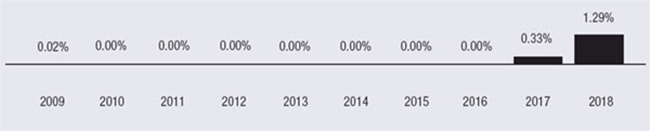
|
||
|
|
|
Best Quarter: |
Quarter ended December 31, 2018 |
0.43% |
Worst Quarter: |
Quarter ended December 31, 2016* |
0.00% |
*Most recent quarter with this return during the period of the chart. |
||
AVERAGE
ANNUAL TOTAL RETURNS |
Inception
|
One Year |
Five Years |
Ten Years |
Treasury Obligations Fund |
10/4/93 |
1.29% |
0.32% |
0.16% |
1 Total return for the period 1/1/19 through 9/30/19 was 1.34%.
Investment Advisor
U.S. Bancorp Asset Management, Inc.
Other Information
For important information about the purchase and sale of fund shares, tax information, and financial intermediary compensation, please see “Additional Summary Information” on page 10 of the prospectus.
|
6 |
Prospectus – |
First American Money Market Funds Class D Shares |
Fund Summaries
U.S. Treasury Money Market Fund
Investment Objective
U.S. Treasury Money Market Fund’s objective is to seek maximum current income consistent with the preservation of capital and maintenance of liquidity.
Fees and Expenses
The following tables describe the fees and expenses that you may pay if you buy and hold shares of the fund.
|
Shareholder Fees (fees paid directly from your investment) |
Class D |
| Maximum Sales Charge (Load) | None |
|
Maximum Deferred Sales Charge (Load) |
None |
Annual
Fund Operating Expenses (expenses that you pay each year as a percentage of the value of your investment) |
|
| Management Fees | 0.10% |
|
Distribution and/or Service (12b-1) Fees |
0.15% |
| Other Expenses: | |
|
Shareholder Servicing Fee |
0.25% |
| Miscellaneous | 0.16% |
| Total Annual Fund Operating Expenses | 0.66% |
| Less Fee Waiver1 | 0.66% |
Net Expenses1 |
0.60% |
| 1 | The advisor has contractually agreed to waive fees and reimburse other fund expenses through October 31, 2020, so that total annual fund operating expenses, after waivers, do not exceed 0.60%. These fee waivers and expense reimbursements may be terminated at any time after October 31, 2020 at the discretion of the advisor. Prior to that time, such waivers and reimbursements may not be terminated without the approval of the fund’s board of directors. |
Example: This example is intended to help you compare the cost of investing in the fund with the cost of investing in other mutual funds. The example assumes that you invest $10,000 in the fund for the time periods indicated and then redeem all of your shares at the end of those periods. The example also assumes that your investment has a 5% return each year and the fund’s operating expenses remain the same (except that the example incorporates the fund’s expense limitation arrangements for only the first year of each period presented). You would incur these hypothetical expenses whether or not you redeem your investment at the end of the given period. Although your actual costs may be higher or lower, based on these assumptions your costs would be:
| Class D | |
| 1 year | $ 61 |
| 3 years | $205 |
| 5 years | $362 |
| 10 years | $817 |
|
7 |
Prospectus – |
First American Money Market Funds Class D Shares |
Fund Summaries
U.S. Treasury Money Market Fund continued
Principal Investment Strategies
U.S. Treasury Money Market Fund invests exclusively in direct obligations of the U.S. Treasury. The U.S. Treasury obligations in which the fund invests include U.S. Treasury bonds, notes, and bills. These types of Treasury securities are essentially the same except for differences in interest rates, maturities, and dates of issuance. U.S. Treasury obligations are backed by the full faith and credit of the U.S. government.
Principal Risks
You could lose money by investing in the fund. Although the fund seeks to preserve the value of your investment at $1.00 per share, it cannot guarantee it will do so. An investment in the fund is not a deposit of U.S. Bank National Association and is not insured or guaranteed by the Federal Deposit Insurance Corporation or any other government agency. The fund’s sponsor has no legal obligation to provide financial support to the fund, and you should not expect that the sponsor will provide financial support to the fund at any time.
The principal risks are presented in alphabetical order to facilitate finding particular risks and comparing them with other funds. Each risk summarized below is considered a “principal risk” of investing in the fund, regardless of the order in which it appears.
Principal risks of investing in this fund include:
Credit Risk — The value of your investment might decline if the issuer of an obligation held by the fund defaults on the obligation or has its credit rating downgraded.
Cybersecurity Risk — The fund may be subject to operational and informational security risks resulting from breaches in cybersecurity at the fund, the fund’s affiliates or service providers. A cybersecurity breach at an issuer of securities in which the fund invests may cause such securities to lose value.
Income Risk — The level of income you receive from the fund will be affected by movements in short-term interest rates.
Interest Rate Risk — The value of your investment might decline because of a sharp rise in interest rates that causes the value of the fund’s portfolio holdings to fall.
Liquidity Risk — The fund may not be able to sell a security in a timely manner or at a desired price, or may be unable to sell the security at all, because of a lack of demand in the market for the security.
Redemption Risk — If there are unexpectedly high redemptions of fund shares, the fund might have to sell portfolio securities prior to their maturity, possibly at a loss.
Regulatory Risk — Changes to monetary policy by the Federal Reserve or other regulatory actions may impact the fund’s operations, universe of potential investment options, and return potential.
|
8 |
Prospectus – |
First American Money Market Funds Class D Shares |
Fund Summaries
U.S. Treasury Money Market Fund continued
Fund Performance
The following bar chart and table provide some indication of the potential risks of investing in the fund. The fund’s past performance is not necessarily an indication of how the fund will perform in the future. Updated performance information is available online at www.firstamericanfunds.com or by calling 800 677-3863.
The bar chart shows you the variability of the fund’s performance from year to year. The table illustrates the fund’s average annual total returns over the time periods indicated.
| AVERAGE ANNUAL TOTAL RETURNS AS OF 12/31 EACH YEAR1 |
 |
| Best Quarter: | Quarter ended December 31, 2018 | 0.42% |
| Worst Quarter: | Quarter ended March 31, 2017* | 0.00% |
| *Most recent quarter with this return during the period of the chart. | ||
| AVERAGE ANNUAL TOTAL RETURNS | Inception | |||
| AS OF 12/31/18 | Date | One Year | Five Years | Ten Years |
| U.S. Treasury Money Market Fund | 10/25/04 | 1.26% | 0.31% | 0.15% |
1 Total return for the period 1/1/19 through 9/30/19 was 1.30%.
Investment Advisor
U.S. Bancorp Asset Management, Inc.
Other Information
For important information about the purchase and sale of fund shares, tax information, and financial intermediary compensation, please see “Additional Summary Information” on page 10 of the prospectus.
|
9 |
Prospectus – |
First American Money Market Funds Class D Shares |
Additional Summary Information
Purchase and Sale of Fund Shares
You may purchase or redeem shares of the funds on any business day by calling your financial intermediary. The funds reserve the right to reject any purchase order and to close a shareholder’s account at any time. You can redeem shares through your financial intermediary.
Tax Information
Dividends you receive from the funds are generally taxable as ordinary income. Dividends attributable to income from U.S. government securities may be exempt from state personal income taxes.
Payments to Broker-Dealers and Other Financial Intermediaries
If you purchase a fund through a broker-dealer or other financial intermediary (such as a bank), the fund and its related companies may pay the intermediary for the sale of fund shares and related services. These payments may create a conflict of interest by influencing the broker-dealer or other intermediary and your salesperson to recommend the fund over another investment. Ask your salesperson or visit your financial intermediary’s website for more information.
|
10 |
Prospectus – |
First American Money Market Funds Class D Shares |
The investment objective of each fund is to seek maximum current income to the extent consistent with the preservation of capital and maintenance of liquidity. Each fund’s investment objective may be changed without shareholder approval. Please remember, there is no guarantee that any fund will achieve its objective.
Principal Investment Strategies
The funds’ principal investment strategies are discussed below. These are the strategies that the funds’ investment advisor believes are most likely to be important in trying to achieve the funds’ objectives. You should be aware that each fund may also use strategies and invest in securities that are not described in this prospectus, but that are described in the SAI. For a copy of the SAI, call Investor Services at 800 677-3863.
Principal Investment Strategies Applicable to Each Fund
Each fund complies with Securities and Exchange Commission (SEC) regulations that apply to money market funds. These regulations require that each fund’s investments mature within 397 days from the date of purchase and that each fund maintain a weighted average maturity of 60 days or less and a weighted average life of 120 days or less. The funds may invest in securities with variable or floating interest rates and securities with demand features. The maturities of these securities are determined according to regulations which allow the funds to consider some of these securities as having maturities shorter than their stated maturity dates. All of the funds’ investments must be in U.S. dollar-denominated high quality securities which have been determined by the funds’ advisor to present minimal credit risk, which determination must include an analysis of the capacity of the security’s issuer or guarantor (including the provider of a conditional demand feature, when applicable) to meet its financial obligations. With limited exceptions, a fund may not invest more than 5% of its total assets in securities issued by the same issuer. Each fund must comply with weekly liquidity standards that require a fund to hold at least 30% of its total assets in cash, direct obligations of the U.S. Government, agency discount notes with remaining maturities of 60 days or less, or securities convertible into cash within five business days. Each fund must also comply with daily liquidity standards that require a fund to hold at least 10% of its total assets in cash, direct obligations of the U.S. Government, or securities convertible into cash within one business day. Each fund is limited to investing no more than 5% of its total assets in illiquid securities.
When selecting securities for each fund, the portfolio managers first consider general economic factors, market conditions, and the short-term interest rate environment in determining what types of short-term instruments to purchase. The portfolio managers then select the specific instruments to be purchased. Generally, the portfolio managers buy and hold securities until their maturities. However, the portfolio managers may sell securities for a variety of reasons, such as to adjust the portfolio’s average maturity, credit, liquidity or yield metrics.
For liquidity and to respond to unusual market conditions, the funds may hold all or a significant portion of their total assets in cash for temporary defensive purposes. This may result in a lower yield and prevent the funds from meeting their investment objectives.
|
11 |
Prospectus – |
First American Money Market Funds Class D Shares |
More about the Funds
Principal Investment Strategies continued
Government Obligations Fund
Government Obligations Fund pursues its objective by investing exclusively in short-term U.S. government securities, including repurchase agreements secured by U.S. government securities. U.S. government securities are bonds or other debt obligations issued or guaranteed as to principal and interest by the U.S. government or one of its agencies or instrumentalities. U.S. Treasury securities and some obligations of U.S. government agencies and instrumentalities are supported by the full faith and credit of the U.S. government. Other U.S. government securities are backed by the right of the issuer to borrow from the U.S. Treasury. Still others are supported only by the credit of the issuer or instrumentality.
U.S. government securities issued by the Federal National Mortgage Association (Fannie Mae), Federal Home Loan Mortgage Corporation (Freddie Mac) and the Federal Home Loan Banks (FHLB) are neither issued nor guaranteed by the U.S. Treasury and are not backed by the full faith and credit of the United States. These entities, however, were chartered or supported by Acts of Congress and are supported by federal subsidies, loans or other benefits. The Government National Mortgage Association (Ginnie Mae) is a wholly-owned U.S. corporation that is authorized to guarantee timely payment and interest of its securities. U.S. government securities issued by Ginnie Mae are guaranteed by the full faith and credit of the United States. Other U.S. government securities do not have an explicit guarantee but support is implied due to the government sponsorship of their mandated activities, including securities issued by the Tennessee Valley Authority and Federal Farm Credit Banks.
Treasury Obligations Fund
Under normal market conditions, Treasury Obligations Fund pursues its objective by investing exclusively in short-term U.S. Treasury obligations, including repurchase agreements secured by U.S. Treasury obligations. The U.S. Treasury obligations in which the fund invests include U.S. Treasury bonds, notes, and bills. These types of Treasury securities are essentially the same except for differences in interest rates, maturities, and dates of issuance. U.S. Treasury obligations are backed by the full faith and credit of the U.S. government.
U.S. Treasury Money Market Fund
U.S. Treasury Money Market Fund pursues its objective by investing exclusively in direct obligations of the U.S. Treasury. The U.S. Treasury obligations in which the fund invests include U.S. Treasury bonds, notes, and bills. These types of Treasury securities are essentially the same except for differences in interest rates, maturities, and dates of issuance. U.S. Treasury obligations are backed by the full faith and credit of the U.S. government.
Other Money Market Funds
Each fund may invest in other money market funds that invest in the same types of securities as the respective fund, as a non-principal investment strategy, including the other money market funds advised by the funds’ investment advisor. To avoid duplicative investment advisory fees, when a fund invests in another money market fund advised by the fund’s investment advisor, the
|
12 |
Prospectus – |
First
American Money Market Funds |
More about the Funds
Other Investment Strategies continued
investment advisor reimburses the fund an amount equal to the fund’s proportionate share of the investment advisory fee paid by the other money market fund to the investment advisor. If the fund invests in money market funds advised by another investment advisor, you will bear both your proportionate share of the expenses in the fund (including management and advisory fees) and, indirectly, the expenses of such other money market fund.
Securities Lending
To generate additional income, and as a non-principal investment strategy, each fund, other than U.S. Treasury Money Market Fund, may lend securities representing up to one-third of the value of its total assets to broker-dealers, banks, and other institutions. When a fund loans its portfolio securities, it will receive, at the inception of each loan, cash collateral equal to at least 102% of the value of the loaned securities, which is invested consistent with the fund’s investment strategies. If the borrower fails to return the loaned securities, the fund could suffer a loss if the value of the invested collateral is insufficient to purchase replacement securities.
The principal risks of investing in each fund are identified and further discussed below.
| Government Obligations Fund | |||
| ● | Credit Risk | ● | Liquidity Risk |
| ● | Cybersecurity Risk | ● | Redemption Risk |
| ● | Income Risk | ● | Regulatory Risk |
| ● | Interest Rate Risk | ● | Repurchase Agreement Risk |
| Treasury Obligations Fund | |||
| ● | Credit Risk | ● | Liquidity Risk |
| ● | Cybersecurity Risk | ● | Redemption Risk |
| ● | Income Risk | ● | Regulatory Risk |
| ● | Interest Rate Risk | ● | Repurchase Agreement Risk |
| U.S. Treasury Money Market Fund | |||
| ● | Credit Risk | ● | Liquidity Risk |
| ● | Cybersecurity Risk | ● | Redemption Risk |
| ● | Income Risk | ● | Regulatory Risk |
| ● | Interest Rate Risk | ||
|
13 |
Prospectus – |
First
American Money Market Funds |
More about the Funds
Description of Principal Investment Risks
Credit Risk. The value of your investment might decline if the issuer of an obligation held by the fund defaults on the obligation or has its credit rating downgraded.
Cybersecurity Risk. With the increased use of technologies such as the Internet and the dependence on computer systems to perform necessary business functions, a fund may be subject to operational and informational security risks resulting from breaches in cybersecurity (“cyber-attacks”). A cyber-attack refers to both intentional and unintentional events that may cause a fund to lose proprietary information, suffer data corruption, or lose operational capacity. Cyber-attacks include, but are not limited to, infection by computer viruses or other malicious software code, gaining unauthorized access to systems, networks, or devices that are used to service the fund’s operations through “hacking” or other means for the purpose of misappropriating assets or sensitive information, corrupting data, or causing operational disruption.
Cybersecurity failures or breaches by the funds’ affiliates or service providers, may cause disruptions and impact the business operations, potentially resulting in financial losses to both a fund and its shareholders, the inability of fund shareholders to transact business, inability to calculate a fund’s net asset value, impediments to trading, violations of applicable privacy and other laws (including the release of private shareholder information), regulatory fines, penalties, reputational damage, reimbursement or other compensation costs, and/or additional compliance costs. In addition, substantial costs may be incurred in order to prevent any cyber incidents in the future. While the advisor has risk management systems designed to prevent or reduce the impact of such cyber-attacks, there are inherent limitations in such controls, systems and protocols, including the possibility that certain risks have not been identified, as well as the rapid development of new threats. These cybersecurity risks are also present for issuers of securities in which a fund invests, which could result in material adverse consequences for such issuers, and may cause a fund’s investment in such securities to lose value and may result in financial loss for fund shareholders.
Income Risk. The level of income you receive from the fund will be affected by movements in short-term interest rates. Because the funds invest solely in U.S. government securities, U.S. Treasury obligations, or repurchase agreements secured by those securities, these funds may offer less income than money market funds investing in other high-quality money market securities.
Interest Rate Risk. The value of your investment might decline because of a sharp rise in interest rates that causes the value of the fund’s portfolio holdings to fall. Many financial instruments use or may use a floating rate based on LIBOR, which is the offered rate for short- term Eurodollar deposits between major international banks. On July 27, 2017, the head of the United Kingdom’s Financial Conduct Authority announced a desire to phase out the use of LIBOR by the end of 2021. There remains uncertainty regarding the future utilization of LIBOR and the nature of any replacement rate. As such, the potential effect of a transition away from LIBOR on a fund or the financial instruments in which a fund invests cannot yet be determined.
Liquidity Risk. The fund may not be able to sell a security in a timely manner or at a desired price, or may be unable to sell the security at all, because of a lack of demand in the market for the security.
Redemption Risk. If there are unexpectedly high redemptions of fund shares, the fund might have to sell portfolio securities prior to their maturity, possibly at a loss.
|
14 |
Prospectus – |
First
American Money Market Funds |
More about the Funds
Description of Principal Investment Risks continued
Regulatory Risk. Changes to monetary policy by the Federal Reserve or other regulatory actions could expose fixed income and related markets to heightened volatility, interest rate sensitivity and reduced liquidity, which may impact the funds’ operations, universe of potential investment options, and return potential.
Repurchase Agreement Risk. If the seller of a repurchase agreement defaults on its obligation to repurchase securities from Government Obligations Fund or Treasury Obligations Fund, the fund may incur costs in disposing of the collateral and may experience losses if there is any delay in its ability to do so.
Disclosure of Portfolio Holdings
Information concerning the funds’ portfolio holdings as of the last business day of each month, as well as their weighted average maturity and weighted average life, is available on the funds’ website (www.firstamericanfunds.com) under “Portfolio Holdings.” This information is typically available five business days after the end of each month and remains posted on the website for at least six months thereafter. Each fund’s portfolio holdings are also posted on this same page on a weekly basis, typically on the first business day of the week. This weekly information generally reflects holdings as of the previous Thursday and remains posted on the website until the next publication date.
On each business day, each fund will post its levels of daily and weekly liquid assets and information on net inflows/outflows on the fund’s web page under “Our Funds.” This information is typically as of the end of the preceding business day and remains posted on the website until the next publication date. This information is also included for typically a 30-day rolling period in the enhanced disclosure report found on this same page.
A description of the funds’ policies and procedures with respect to the disclosure of the funds’ portfolio securities is available in the funds’ SAI.
|
15 |
Prospectus – |
First
American Money Market Funds |
U.S. Bancorp Asset Management, Inc.
800 Nicollet Mall
Minneapolis, MN 55402
U.S. Bancorp Asset Management provides investment management services to individuals and institutions, which may include corporations, foundations, pensions, and retirement plans. As of September 30, 2019, U.S. Bancorp Asset Management had more than $97.5 billion in assets under management, including investment company assets of more than $73.5 billion. As investment advisor, U.S. Bancorp Asset Management manages the funds’ business and investment activities, subject to the authority of the funds’ board of directors.
Each fund pays the investment advisor a monthly management fee for providing investment advisory services. The table below reflects management fees paid to the investment advisor, after taking into account any fee waivers, for the funds’ most recently completed fiscal year.
Management fee as a% of average daily net assets | |
| Government Obligations Fund | 0.10% |
| Treasury Obligations Fund | 0.10% |
|
U.S. Treasury Money Market Fund |
0.10% |
U.S. Bancorp Asset Management may voluntarily waive or reimburse certain fees and expenses of a fund to the extent necessary to avoid a negative yield, or a yield below a specified level, which may vary from time to time in U.S. Bancorp Asset Management’s sole discretion. These waivers and reimbursements may be terminated at any time by U.S. Bancorp Asset Management.
A discussion regarding the basis for the board’s approval of the funds’ investment advisory agreement appears in the funds’ annual report to shareholders for the fiscal year ended August 31, 2019.
Additional Compensation
U.S. Bancorp Asset Management, U.S. Bank National Association (U.S. Bank) and other affiliates of U.S. Bancorp may act as fiduciary with respect to plans subject to the Employee Retirement Income Security Act of 1974 (ERISA) and other trust and agency accounts that invest in the First American funds. As described above, U.S. Bancorp Asset Management receives compensation for acting as the funds’ investment advisor. U.S. Bancorp Asset Management, U.S. Bank and their affiliates also receive compensation from the funds as set forth below.
Administration Services. U.S. Bancorp Asset Management and its affiliate, U.S. Bancorp Fund Services LLC (Fund Services), act as the funds’ administrator and sub-administrator, respectively, providing administration services that include general administrative and accounting services, blue sky services and shareholder services. For such services, each fund pays U.S. Bancorp Asset Management the fund’s pro rata portion of up to 0.15%, on an annual basis, of the aggregate average daily net assets attributable to Class D shares of all First American money market funds. U.S. Bancorp Asset Management pays Fund Services a portion of its fee, as agreed to from time to time. In addition to these fees, the funds may reimburse U.S. Bancorp Asset Management for any out-of-pocket expenses incurred in providing administration services.
|
16 |
Prospectus – |
First
American Money Market Funds |
Fund Management
Investment Advisor continued
Custody Services. U.S. Bank provides custody services to each fund. U.S. Bank is paid monthly fees equal, on an annual basis, to 0.0045% of the aggregate average daily market value of all securities and cash held in the funds up to $25 billion, 0.0040% of the aggregate average daily market value of all securities and cash held in the funds for the next $25 billion, and 0.0035% of the aggregate average daily market value of all securities and cash held in the funds in excess of $50 billion.
Distribution Services. Each fund pays Quasar Distributors, LLC, an affiliate of U.S. Bancorp Asset Management, distribution and shareholder servicing fees for acting as the funds’ distributor. These fees are used by Quasar for the primary purpose of compensating broker-dealers for their sale of fund shares. U.S. Bancorp Asset Management also pays fees to Quasar for certain distribution-related and other services provided by Quasar.
Securities Lending Services. In connection with lending their portfolio securities, the funds pay fees to U.S. Bank of 20% of each fund’s net income from securities lending transactions and U.S. Bank may pay up to half of such fees to U.S. Bancorp Asset Management for certain securities lending services provided by U.S. Bancorp Asset Management.
Shareholder Servicing Fees. Each fund pays U.S. Bancorp Asset Management a shareholder servicing fee at an annual rate of 0.25% of its average daily net assets attributable to Class D shares for providing or arranging for the provision of shareholder services to the holders of its Class D shares.
Transfer Agency Services. Fund Services provides transfer agency and dividend disbursing services, as well as certain shareholder services, to the funds. Fund Services receives fees for transfer agency and dividend disbursing services on a per shareholder account basis, subject to a minimum fee per share class. In addition, the funds may reimburse Fund Services for any out-of-pocket expenses incurred in providing transfer agency services.
Other Compensation. To the extent that fund shares are held through U.S. Bank or its broker-dealer affiliate, U.S. Bancorp Investments, Inc., those entities may receive distribution and/or shareholder servicing fees from the funds’ distributor as well as other payments from the funds’ distributor and/or advisor as described below under “Shareholder Information — Additional Payments to Institutions.”
The funds are managed by a team of persons who are employed by U.S. Bancorp Asset Management.
|
17 |
Prospectus – |
First
American Money Market Funds |
The funds utilize the amortized cost method of valuation to transact at a $1.00 share price. A fund’s net asset value (NAV) is equal to the market value of its investments and other assets, less any liabilities, divided by the number of fund shares. The securities held by the funds are valued on the basis of amortized cost. This involves valuing an instrument at its cost and thereafter assuming a constant amortization of any discount or premium until the instrument’s maturity, rather than looking at actual changes in the market value of the instrument. Each fund’s net asset value is normally expected to be $1 per share.
The NAV per share of each share class of a fund is calculated at the times listed below under “Calculating Net Asset Value.” If a purchase order is received on a business day by the deadline listed below under “Calculating Net Asset Value” and payment in federal funds is received by the fund by the close of the Federal Reserve wire transfer system (normally, 5:00 p.m. Central time), then dividends will begin to accrue on the same business day that the wire purchase order is received. If a purchase order is received on a business day after the deadline specified above, you will begin to accrue dividends the next business day. Also, in the event a wire purchase order is placed by the deadline specified above but an anticipated wire payment is not received by a fund by the close of the Federal Reserve wire transfer system that same day, your purchase may be cancelled and you may be liable for any resulting losses or fees incurred by the fund, the transfer agent, or the fund’s custodian.
Redemption proceeds to be paid by wire will normally be paid to the domestic bank account designated in the current records of the fund’s transfer agent on the same day of the redemption order, if the redemption order is accepted in proper form by the transfer agent or a financial intermediary that has been authorized to accept orders on behalf of the fund, as described herein, by the deadline listed below under “Calculating Net Asset Value.” Redemption proceeds will normally be paid by the close of the Federal Reserve wire system (normally, 5:00 p.m. Central time). You will not earn a dividend on the day a redemption order is accepted.
You may purchase or redeem shares of the funds on any business day that the Federal Reserve Bank of New York (Federal Reserve) is open, except as noted below. In addition to weekends, the Federal Reserve is closed on the following Federal holidays: New Year’s Day, Martin Luther King, Jr. Day, Presidents’ Day, Memorial Day, Independence Day, Labor Day, Columbus Day, Veterans Day, Thanksgiving Day, and Christmas Day. A fund may close when the Federal Reserve is open and the New York Stock Exchange (NYSE) is closed, such as Good Friday. On any business day when the Securities Industry Financial Markets Association recommends that the bond markets close trading early, a fund may also close trading early.
Your purchase or redemption price will be based on that day’s NAV per share if your order is received by the funds in proper form prior to the time the fund calculates its NAV. See “Additional Information on Purchasing and Redeeming Fund Shares — Calculating Net Asset Value” below. Contact your financial intermediary to determine the time by which it must receive your order to be assured same day processing. To make sure your order is in proper form, you must follow the instructions set forth below under “Purchasing and Redeeming Fund Shares.”
The funds issue their shares in multiple classes. This prospectus offers Class D shares. Class D shares are offered at net asset value, with no front-end or contingent deferred sales charge, but with an annual distribution (12b-1) fee of 0.15% and an annual shareholder servicing fee of 0.25%.
Class D shares are only available to certain accounts for which a financial intermediary acts in a fiduciary, agency, custodial, or other service capacity.
|
18 |
Prospectus – |
First
American Money Market Funds |
Shareholder Information
Each fund has adopted a plan pursuant to Rule 12b-1 under the Investment Company Act of 1940, as amended (the “Investment Company Act”) that allows the fund to pay its distributor an annual fee for the distribution and sale of its shares and for services provided to shareholders. Each fund pays a Rule 12b-1 distribution fee equal to 0.15% of its Class D share average daily net assets.
Because these fees are paid out of a fund’s assets on an ongoing basis, over time these fees will increase the cost of your investment and may cost you more than paying other types of sales charges.
The funds’ distributor uses the distribution fee to reimburse financial intermediaries for providing distribution-related services to the funds. Financial intermediaries receive annual fees equal to 0.15% of each fund’s Class D average daily net assets attributable to shares sold through them. Financial intermediaries will continue to receive Rule 12b-1 distribution fees relating to your Class D shares for as long as you hold those shares.
Each fund also has adopted a non-Rule 12b-1 shareholder servicing plan and agreement with respect to its Class D shares. Under this plan and agreement, each fund pays U.S. Bancorp Asset Management a shareholder servicing fee at an annual rate of 0.25% of average daily Class D share net assets for providing or arranging for the provision of shareholder services to the holders of Class D shares. No distribution-related services are provided under this plan and agreement.
Because the current prospectus and SAI are available on First American Funds’ website free of charge, we do not disclose the following information separately on the website. Your purchase or redemption price for Class D shares is the fund’s next determined NAV after the fund, or its designated agent, receives your order in proper form. To understand how the funds calculate their NAV, see “Additional Information on Purchasing, Redeeming, and Exchanging Funds Shares — Calculating Net Asset Value” below.
Purchasing and Redeeming Fund Shares
To help the government fight the funding of terrorism and money laundering activities, Federal law requires all financial institutions to obtain, verify, and record information that identifies each person who opens an account. As a result, when you open an account, we will ask for your name, permanent street address, date of birth, and social security or taxpayer identification number. If you are opening the account in the name of a legal entity (e.g., partnership, limited liability company, business trust, corporation, etc.), you must also supply the identity of the beneficial owners. Addresses containing a P.O. Box only will not be accepted. We may also ask for other identifying documents or information. If you do not provide the information, we will not be able to open your account. In the rare event that we are unable to verify your identity as required by law, we reserve the right to redeem your account at the current NAV of fund shares. You will be responsible for any losses, taxes, expenses, fees, or other results of such a redemption.
|
19 |
Prospectus – |
First
American Money Market Funds |
Shareholder Information
Purchasing and Redeeming Fund Shares continued
You may purchase or redeem shares of the funds on any business day through your financial intermediary. Additional information on purchasing or redeeming shares through your financial intermediary can be found below under “Transactions through Financial Intermediaries.”
Shares of the funds are generally offered to persons in the United States and are also available for purchase in certain foreign jurisdictions through qualifying financial intermediaries.
The funds reserve the right to reject any purchase order and to close a shareholder’s account at any time.
When purchasing shares, payment must be made by wire transfer, which can be arranged by your financial intermediary. You cannot purchase shares by wire on days when federally chartered banks are closed.
If a fund receives a redemption request by the time the fund calculates its NAV, as specified below, payment will be made the same day by transfer of federal funds if the Fedwire transfer system is available for use that day. Otherwise, payment will be made on the next business day.
Suspension or Postponement of Redemptions. Each fund reserves the right to suspend the right of shareholder redemption, or postpone the date of payment:
| ● | if emergency conditions should exist, as specified in the Investment Company Act, or as determined by the SEC, as a result of which disposal of portfolio securities or determination of the NAV of the fund is not reasonably practicable; |
| ● | for any period during which trading on the NYSE is restricted as determined by the SEC or the NYSE is closed (other than customary weekend and holiday closings); |
| ● | for any period during which the SEC has, by rule or regulation, deemed that (1) trading shall be restricted or (2) an emergency exists; or |
| ● | for such other periods as the SEC may by order permit for the protection of shareholders of the fund. |
In addition, in the unlikely event that the funds’ board of directors were to determine pursuant to SEC regulations that the extent of the deviation between a fund’s amortized cost per share and its market-based NAV per share may result in material dilution or other unfair results to shareholders, the board will cause the fund to take such action as it deems appropriate to eliminate or reduce to the extent practicable such dilution or unfair results, including suspending redemption of shares and liquidating the fund under Rule 22e-3 of the Investment Company Act.
Purchases In-Kind. Generally, all purchases will be in cash. However, the funds reserve the right to permit you to purchase shares through the exchange of other securities that you own if consistent with a fund’s investment objective, policies, and operations. The market value of any securities exchanged, plus any cash, must be at least $25 million. Please contact your financial intermediary.
Redemptions In-Kind. Generally, all redemptions will be for cash. However, the funds reserve the right to pay all or part of your redemption proceeds in readily marketable securities instead of cash. If payment by a fund is made in securities, the fund will value the securities selected in the same manner in which it computes its NAV. This process minimizes the effect of large redemptions on the fund and its remaining shareholders. If you receive redemption proceeds in-kind, you should expect to incur transaction costs upon disposition of those securities. In addition, if you receive redemption proceeds in-kind, you will be subject to market gains or losses upon the disposition of those securities.
|
20 |
Prospectus – |
First
American Money Market Funds |
Shareholder Information
Additional Information on Purchasing and Redeeming Fund Shares
Calculating Net Asset Value
The funds generally calculate their NAV per share as of the time specified in the table below on each business day that the funds are open, except that the NAV for Government Obligations Fund and Treasury Obligations Fund is generally calculated at 1:00 p.m. Central time on days on which the bond markets close early (typically on the business day preceding a Federal holiday) (an “Early Close”). Purchase and redemption orders received after closing time, including an Early Close, will be processed the next business day.
Deadline for orders to be received in order to receive the current day’s NAV | |
| Government Obligations Fund | 3:45 p.m. Central time |
| Treasury Obligations Fund | 3:45 p.m. Central time |
|
U.S. Treasury Money Market Fund |
12:30 p.m. Central time |
Frequent Trading of Fund Shares
The funds are designed to offer investors a liquid cash option and it is anticipated that shareholders will purchase and redeem fund shares on a frequent basis. Frequent trading by shareholders may disrupt the management of the funds and increase fund expenses. However, given the short-term nature of the funds’ investments and their use of the amortized cost method for calculating the NAV of fund shares, the funds do not anticipate that in the normal case frequent or short-term trading into and out of the funds will have significant adverse consequences for the funds and their shareholders. Accordingly, the funds’ board of directors has not adopted policies or procedures to monitor or discourage frequent or short-term trading of the funds’ shares.
Transactions through Financial Intermediaries
Each fund has authorized one or more financial intermediaries to accept purchase and redemption orders on the fund’s behalf. Financial intermediaries may include financial advisors, investment advisers, brokers, financial planners, banks, insurance companies, retirement or 401(k) plan administrators and others, including various affiliates of the funds’ advisor, that have entered into agreements with the funds’ distributor, advisor, and/or transfer agent. Such financial intermediaries may be authorized to designate other intermediaries to accept purchase and redemption orders on the fund’s behalf. The fund will be deemed to have received a purchase or redemption order when such financial intermediary or, if applicable, such financial intermediary’s authorized designee, accepts the order. Such orders will be priced at the fund’s NAV next calculated after it is accepted by the financial intermediary. In such cases, if requested by a fund, a financial intermediary will be responsible for providing information with regard to the time that such order for purchase or redemption was received. Orders submitted through a financial intermediary that has not received such authorization to accept orders on the fund’s behalf will be priced at the fund’s NAV next calculated after the fund receives and accepts the order from the financial intermediary, which may not occur on the day you submitted the order to the financial intermediary. Since not all financial intermediaries have received such authorization, you may wish to contact your financial intermediary to determine if it has received such authorization.
|
21 |
Prospectus – |
First
American Money Market Funds |
Shareholder Information
Additional Information on Purchasing and Redeeming Fund Shares continued
Escheatment
If your account is held directly with the funds and is later deemed “abandoned” or “unclaimed” under state law, the funds may be required to “escheat” or transfer the assets in your account to the applicable state’s unclaimed property administration. The state may sell escheated shares and, if you subsequently seek to reclaim your proceeds of liquidation from the state, you may only be able to recover the amount received when the shares were sold. It is your responsibility to ensure that you maintain a correct address for your account, keep your account active by contacting the fund’s transfer agent or distributor by mail or telephone, and promptly cash all checks for dividends, capital gains and redemptions. The fund, the fund’s transfer agent and U.S. Bancorp Asset Management and its affiliates will not be liable to shareholders or their representatives for good faith compliance with state escheatment laws.
Each fund earns interest, dividends and other income from its investments, and distributes this income (less fund expenses) to you as dividends. Dividends from a fund’s net investment income are declared daily and paid monthly. A fund may take into account capital gains and losses (other than net long-term capital gains) in its daily dividend declarations. A fund may also make additional distributions for tax purposes if necessary.
If a fund receives your wire transfer payment for fund shares by the time the fund determines its NAV, you will begin to accrue dividends on that day. If you redeem shares, you will not receive a dividend on the day of your redemption request if your request is received by the time the fund determines its NAV.
Dividends will be reinvested in additional shares of the same fund, unless you request that distributions be reinvested in another First American fund or paid in cash. This request may be made on your new account form, by contacting your financial intermediary, or by calling Investor Services at 800 677-3863. You may change your election by writing or calling the transfer agent at least five days prior to the record date of the next distribution. Cash distributions will be paid on or about the first business day of each month. If you request that your distributions be paid in cash but those distributions cannot be delivered because of an incorrect mailing address, or if a distribution check remains uncashed for six months, the undelivered or uncashed distributions and all future distributions will be reinvested in fund shares at the current NAV.
Some of the tax consequences of investing in the funds are discussed below. More information about taxes is provided in the SAI. However, because everyone’s tax situation is unique, always consult your tax professional about federal, state, and local tax consequences.
Dividends you receive from the funds are generally taxable as ordinary income, whether you reinvest them or take them in cash. Dividends from the funds will not be eligible for the reduced rate of tax that applies to “qualified dividend income.”
|
22 |
Prospectus – |
First
American Money Market Funds |
Shareholder Information
Additional Payments to Institutions
The advisor and/or the distributor may pay additional compensation to participating institutions (each an “institution” and, collectively, “institutions”) out of their own resources in connection with the sale or retention of fund shares and/or in exchange for sales and/or administrative services performed on behalf of the institution’s customers. The amounts of these payments may be significant, and may create an incentive for the institution or its employees or associated persons to recommend or sell shares of the funds to you. These payments are not reflected in the fees and expenses listed in the “Fund Summaries” section of the prospectus because they are not paid by the funds.
These payments are negotiated and may be based on such factors as the number or value of First American money market fund shares that the institution sells or may sell; the value of the assets invested in the First American money market funds by the institution’s customers; lump sum payment for services provided; the type and nature of services or support furnished by the institution; and/or other measures as determined from time to time by the advisor and/or distributor.
The advisor and/or distributor may make other payments or allow other promotional incentives to institutions to the extent permitted by SEC and FINRA rules and by other applicable laws and regulations. Certain institutions may also receive payments in recognition of sub-accounting or other services they provide to shareholders or plan participants who invest in the funds through their employee benefit or retirement plan.
You can ask your institution for information about any payments it receives from the advisor and/or the distributor and from the funds, and any services your institution provides, as well as about fees and/or commissions your institution charges. You can also find more details about payments made by the advisor and/or the distributor in the funds’ SAI.
Shareholder Reports
Shareholder reports are mailed twice a year, in October and April. They include financial statements and performance information, and, on an annual basis, the report of independent registered public accounting firm.
In an attempt to reduce shareholder costs and help eliminate duplication, the funds will try to limit their mailings to one report for each address that lists one or more shareholders with the same last name. If you would like additional copies, please call Investor Services at 800 677-3863.
Statements and Confirmations
Statements summarizing activity in your account are mailed quarterly. Confirmations generally are mailed following each purchase or sale of fund shares. Generally, the funds do not send statements to individuals who have their shares held in an omnibus account.
|
23 |
Prospectus – |
First
American Money Market Funds |
The tables that follow present performance information about the Class D shares of each fund. This information is intended to help you understand each fund’s financial performance for the past five years. Some of this information reflects financial results for a single fund share held throughout the period. Total returns in the tables represent the rate that you would have earned or lost on an investment in the fund, assuming you reinvested all of your dividends and distributions.
The information below has been derived from the financial statements audited by Ernst & Young LLP, an independent registered public accounting firm, whose report, along with the funds’ financial statements, is included in the funds’ annual report, which is available upon request.
|
24 |
Prospectus – |
First
American Money Market Funds |
Financial Highlights
Government Obligations Fund
| Fiscal year ended August 31, | ||||||||||||||||||||
| 2019 | 2018 | 2017 | 2016 | 2015 | ||||||||||||||||
| Per Share Data | ||||||||||||||||||||
| Net Asset Value, Beginning of Period | $ | 1.00 | $ | 1.00 | $ | 1.00 | $ | 1.00 | $ | 1.00 | ||||||||||
| Net Investment Income | 0.018 | 0.009 | 0.002 | 0.000 | 1 | 0.000 | 1 | |||||||||||||
| Distributions (from net investment income) | (0.018 | ) | (0.009 | ) | (0.002 | ) | (0.000 | )1 | (0.000 | )1 | ||||||||||
| Distributions (from net realized gains on investments) | — | — | (0.000 | )1 | — | — | ||||||||||||||
| Net Asset Value, End of Period | $ | 1.00 | $ | 1.00 | $ | 1.00 | $ | 1.00 | $ | 1.00 | ||||||||||
| Total Return2 | 1.77 | % | 0.91 | % | 0.16 | % | 0.01 | % | 0.01 | % | ||||||||||
| Ratios/Supplemental Data | ||||||||||||||||||||
| Net Assets, End of Period (000) | $ | 3,555,685 | $ | 4,106,912 | $ | 3,195,441 | $ | 4,020,897 | $ | 4,185,832 | ||||||||||
| Ratio of Expenses to Average Net Assets | 0.60 | % | 0.60 | % | 0.54 | % | 0.31 | % | 0.11 | % | ||||||||||
| Ratio of Net Investment Income to Average Net Assets | 1.75 | % | 0.92 | % | 0.15 | % | 0.01 | % | 0.01 | % | ||||||||||
| Ratio of Expenses to Average Net Assets (excluding waivers) | 0.63 | % | 0.64 | % | 0.64 | % | 0.65 | % | 0.66 | % | ||||||||||
| Ratio of Net Investment Income (Loss) to Average Net Assets (excluding waivers) | 1.72 | % | 0.88 | % | 0.05 | % | (0.33 | )% | (0.54 | )% | ||||||||||
1 Rounds to zero.
2 Total return would have been lower had certain expenses not been waived.
|
25 |
Prospectus – |
First
American Money Market Funds |
Financial Highlights
Treasury Obligations Fund
| Fiscal year ended August 31, | ||||||||||||||||||||
| 2019 | 2018 | 2017 | 2016 | 2015 | ||||||||||||||||
| Per Share Data | ||||||||||||||||||||
| Net Asset Value, Beginning of Period | $ | 1.00 | $ | 1.00 | $ | 1.00 | $ | 1.00 | $ | 1.00 | ||||||||||
| Net Investment Income | 0.018 | 0.009 | 0.001 | 0.000 | 1 | — | ||||||||||||||
| Distributions (from net investment income) | (0.018 | ) | (0.009 | ) | (0.001 | ) | (0.000 | )1 | — | |||||||||||
| Distributions (from net realized gains on investments) | — | — | (0.000 | )1 | (0.000 | )1 | — | |||||||||||||
| Net Asset Value, End of Period | $ | 1.00 | $ | 1.00 | $ | 1.00 | $ | 1.00 | $ | 1.00 | ||||||||||
| Total Return2 | 1.77 | % | 0.92 | % | 0.15 | % | 0.00 | % | 0.00 | % | ||||||||||
| Ratios/Supplemental Data | ||||||||||||||||||||
| Net Assets, End of Period (000) | $ | 1,367,671 | $ | 1,461,918 | $ | 1,521,672 | $ | 1,970,955 | $ | 1,947,705 | ||||||||||
| Ratio of Expenses to Average Net Assets | 0.60 | % | 0.60 | % | 0.53 | % | 0.30 | % | 0.09 | % | ||||||||||
| Ratio of Net Investment Income to Average Net Assets | 1.75 | % | 0.92 | % | 0.14 | % | 0.00 | % | 0.00 | % | ||||||||||
| Ratio of Expenses to Average Net Assets (excluding waivers) | 0.64 | % | 0.64 | % | 0.64 | % | 0.64 | % | 0.65 | % | ||||||||||
| Ratio of Net Investment Income (Loss) to Average Net Assets (excluding waivers) | 1.71 | % | 0.88 | % | 0.03 | % | (0.34 | )% | (0.56 | )% | ||||||||||
1 Rounds to zero.
2 Total return would have been lower had certain expenses not been waived.
|
26 |
Prospectus – |
First
American Money Market Funds |
Financial Highlights
U.S. Treasury Money Market Fund
| Fiscal year ended August 31, | ||||||||||||||||||||
| 2019 | 2018 | 2017 | 2016 | 2015 | ||||||||||||||||
| Per Share Data | ||||||||||||||||||||
| Net Asset Value, Beginning of Period | $ | 1.00 | $ | 1.00 | $ | 1.00 | $ | 1.00 | $ | 1.00 | ||||||||||
| Net Investment Income | 0.017 | 0.009 | 0.001 | — | — | |||||||||||||||
| Distributions (from net investment income) | (0.017 | ) | (0.009 | ) | (0.001 | ) | — | — | ||||||||||||
| Distributions (from net realized gains on investments) | — | — | (0.000 | )1 | — | — | ||||||||||||||
| Net Asset Value, End of Period | $ | 1.00 | $ | 1.00 | $ | 1.00 | $ | 1.00 | $ | 1.00 | ||||||||||
| Total Return2 | 1.72 | % | 0.89 | % | 0.12 | % | 0.00 | % | 0.00 | % | ||||||||||
| Ratios/Supplemental Data | ||||||||||||||||||||
| Net Assets, End of Period (000) | $ | 32,349 | $ | 49,769 | $ | 73,968 | $ | 94,275 | $ | 137,129 | ||||||||||
| Ratio of Expenses to Average Net Assets | 0.60 | % | 0.60 | % | 0.51 | % | 0.23 | % | 0.05 | % | ||||||||||
| Ratio of Net Investment Income to Average Net Assets | 1.70 | % | 0.85 | % | 0.10 | % | 0.00 | % | 0.00 | % | ||||||||||
| Ratio of Expenses to Average Net Assets (excluding waivers) | 0.66 | % | 0.67 | % | 0.68 | % | 0.69 | % | 0.69 | % | ||||||||||
| Ratio of Net Investment Income (Loss) to Average Net Assets (excluding waivers) | 1.64 | % | 0.78 | % | (0.07 | )% | (0.46 | )% | (0.64 | )% | ||||||||||
1 Rounds to zero.
2 Total return would have been lower had certain expenses not been waived.
|
27 |
Prospectus – |
First
American Money Market Funds |
First American Funds’ Privacy Policy
We want to provide an explanation to Consumers of what nonpublic personal information is and how it’s collected and used.
A “Consumer“ is considered an individual investor who invests or has invested in our products for personal, family or household purposes.
“Nonpublic personal information” is nonpublic information that we obtain while providing financial products or services to you.
How we collect your information
We obtain nonpublic information about you during the account opening process from the applications and other forms you are asked to complete and from the transactions you make with us. We may also receive nonpublic information about you from companies affiliated with us or from other companies that provide services to you.
The types of information we collect
We may collect the following nonpublic personal information about you:
| ● | Information about your identity, such as your name, address, and social security number. |
| ● | Information about your transactions with us. |
| ● | Information you provide on applications, such as your beneficiaries and banking information, if provided to us. |
Why we collect your information
We gather nonpublic personal information about you and your accounts so that we can:
| ● | Know who you are and prevent unauthorized access to your information. |
| ● | Comply with the laws and regulations that govern us. |
What information we disclose
We may share some or all of the nonpublic personal information that we collect about you with our affiliated providers of financial services, including our family of funds and their advisor, and with companies that perform shareholder services on our behalf. We do not use nonpublic information received from our affiliates for marketing purposes.
We’re permitted by law to disclose nonpublic personal information about you to other third parties in certain circumstances. For example, we may disclose nonpublic personal information about you to affiliated and nonaffiliated third parties to assist us in servicing your account (e.g., mailing of fund-related materials) and to government entities (e.g., IRS for tax purposes).
We’ll continue to adhere to the privacy policies and practices described here even after your account is closed or becomes inactive.
Confidentiality and security
To protect nonpublic personal information about you, we restrict access to such information to only those employees and authorized agents who need to use the information. We maintain physical, electronic, and procedural safeguards to maintain the confidentiality and security of nonpublic information about you. In addition, we require our service providers to restrict access to nonpublic personal information about you to those employees who need that information in order to provide products or services to you. We also require them to maintain physical, electronic, and procedural safeguards that comply with applicable federal standards and regulations to guard your information.
Additional rights and protections
You may have other privacy protections under applicable state laws. To the extent that these state laws apply, we will comply with them when we share information about you. This privacy policy does not apply to your relationship with other financial service providers, such as broker- dealers. We may amend this privacy notice at any time, and we will inform you of changes as required by law.
Our pledge applies to products and services offered by the
First American Family of Funds
| NOT FDIC INSURED NO BANK GUARANTEE MAY LOSE VALUE |
THIS PAGE IS NOT PART OF THE PROSPECTUS
First American Funds
P.O. Box 1330
Minneapolis, MN 55440-1330
The Statement of Additional Information (SAI) provides more details about the funds and their policies and is incorporated into this prospectus by reference (which means that it is legally part of this prospectus).
Additional information about the funds’ investments is available in the funds’ annual and semi-annual reports to shareholders.
You can obtain a free copy of the funds’ most recent annual or semi-annual reports or the SAI, request other information about the funds, or make other shareholder inquiries by calling Investor Services at 800 677-3863 or by contacting the funds at the address above. Annual or semi-annual reports and the SAI are also available on the funds’ Internet site at www.firstamericanfunds.com.
| SEC file number: 811-03313 | PROMMD 10/19 |
Class P Shares
| FUND | TICKER SYMBOLS |
| Government Obligations Fund | FPPXX |
| Treasury Obligations Fund | FUPXX |
Beginning on January 1, 2021, as permitted by regulations adopted by the U.S. Securities and Exchange Commission, paper copies of the funds’ shareholder reports will no longer be sent by mail, unless you specifically request paper copies of the reports from the funds (or from your financial intermediary, such as a broker-dealer or bank). Instead, the reports will be made available on a website, and you will be notified by mail each time a report is posted and provided with a website link to access the report.
If you already elected to receive shareholder reports electronically, you will not be affected by this change and you need not take any action. You may elect to receive shareholder reports and other communications from the funds electronically anytime by contacting the financial intermediary (such as a broker-dealer or bank) through which you hold your fund shares or, if you are a direct shareholder, by calling 1-800-677-3863.
You may elect to receive all future reports in paper free of charge. If you invest through a financial intermediary, you can contact your financial intermediary to request that you continue to receive paper copies of your shareholder reports. If you invest directly with the funds, you can call 1-800-677-3863 to let the funds know you wish to continue receiving paper copies of your shareholder reports. Your election to receive reports in paper will apply to all funds held in your account if you invest through your financial intermediary or all funds held with the fund complex if you invest directly with the funds.
As with all mutual funds, the Securities and Exchange Commission has not approved or disapproved the shares of these funds, or determined if the information in this prospectus is accurate or complete. Any statement to the contrary is a criminal offense.
Table of
Contents
Please find First American Funds’ Privacy Policy inside the back cover of this Prospectus.
This prospectus and the related Statement of Additional Information (SAI) do not constitute an offer to sell or a solicitation of an offer to buy shares in the funds, nor shall any such shares be offered or sold to any person in any jurisdiction in which an offer, solicitation, purchase, or sale would be unlawful under the securities laws of such jurisdiction.
Investment Objective
Government Obligations Fund’s objective is to seek maximum current income to the extent consistent with the preservation of capital and maintenance of liquidity.
Fees and Expenses
The following tables describe the fees and expenses that you may pay if you buy and hold shares of the fund.
| Shareholder
Fees (fees paid directly from your investment) |
Class P |
| Maximum Sales Charge (Load) | None |
| Maximum Deferred Sales Charge (Load) | None |
| Annual Fund Operating
Expenses (expenses that you pay each year as a percentage of the value of your investment) |
|
| Management Fees | 0.10% |
| Distribution and/or Service (12b-1) Fees | None |
| Other Expenses | 0.13% |
| Total Annual Fund Operating Expenses | 0.23% |
| Less Fee Waivers1 | (0.05)% |
| Net Expenses1 | 0.18% |
| 1 | The advisor has contractually agreed to waive fees and reimburse other fund expenses through October 31, 2020, so that total annual fund operating expenses, after waivers, do not exceed 0.18%. These fee waivers and expense reimbursements may be terminated at any time after October 31, 2020 at the discretion of the advisor. Prior to that time, such waivers and reimbursements may not be terminated without the approval of the fund’s board of directors. |
Example: This example is intended to help you compare the cost of investing in the fund with the cost of investing in other mutual funds. The example assumes that you invest $10,000 in the fund for the time periods indicated and then redeem all of your shares at the end of those periods. The example also assumes that your investment has a 5% return each year and the fund’s operating expenses remain the same (except that the example incorporates the fund’s expense limitation arrangements for only the first year of each period presented). You would incur these hypothetical expenses whether or not you redeem your investment at the end of the given period. Although your actual costs may be higher or lower, based on these assumptions your costs would be:
| Class P | |
| 1 year | $ 18 |
| 3 years | $ 69 |
| 5 years | $124 |
| 10 years | $288 |
|
1 |
Prospectus – |
First American Money Market Funds Class P Shares |
Fund Summaries
Government Obligations Fund continued
Principal Investment Strategies
Government Obligations Fund invests exclusively in short-term U.S. government securities, including repurchase agreements secured by U.S. government securities. U.S. government securities are bonds or other debt obligations issued or guaranteed as to principal and interest by the U.S. government or one of its agencies or instrumentalities. U.S. Treasury securities and some obligations of U.S. government agencies and instrumentalities are supported by the full faith and credit of the U.S. government. Other U.S. government securities are backed by the right of the issuer to borrow from the U.S. Treasury. Still others are supported only by the credit of the issuer or instrumentality.
Principal Risks
You could lose money by investing in the fund. Although the fund seeks to preserve the value of your investment at $1.00 per share, it cannot guarantee it will do so. An investment in the fund is not a deposit of U.S. Bank National Association and is not insured or guaranteed by the Federal Deposit Insurance Corporation or any other government agency. The fund’s sponsor has no legal obligation to provide financial support to the fund, and you should not expect that the sponsor will provide financial support to the fund at any time.
The principal risks are presented in alphabetical order to facilitate finding particular risks and comparing them with other funds. Each risk summarized below is considered a “principal risk” of investing in the fund, regardless of the order in which it appears.
Principal risks of investing in this fund include:
Credit Risk — The value of your investment might decline if the issuer of an obligation held by the fund defaults on the obligation or has its credit rating downgraded.
Cybersecurity Risk — The fund may be subject to operational and informational security risks resulting from breaches in cybersecurity at the fund, the fund’s affiliates or service providers. A cybersecurity breach at an issuer of securities in which the fund invests may cause such securities to lose value.
Income Risk — The level of income you receive from the fund will be affected by movements in short-term interest rates.
Interest Rate Risk — The value of your investment might decline because of a sharp rise in interest rates that causes the value of the fund’s portfolio holdings to fall.
Liquidity Risk — The fund may not be able to sell a security in a timely manner or at a desired price, or may be unable to sell the security at all, because of a lack of demand in the market for the security.
Redemption Risk — If there are unexpectedly high redemptions of fund shares, the fund might have to sell portfolio securities prior to their maturity, possibly at a loss.
Regulatory Risk — Changes to monetary policy by the Federal Reserve or other regulatory actions may impact the fund’s operations, universe of potential investment options, and return potential.
Repurchase Agreement Risk — If the seller of a repurchase agreement defaults on its obligation to repurchase securities from the fund, the fund may incur costs in disposing of the collateral and may experience losses if there is any delay in its ability to do so.
|
2 |
Prospectus – |
First American Money Market Funds Class P Shares |
Fund Summaries
Government Obligations Fund continued
Fund Performance
The following bar chart and table provide some indication of the potential risks of investing in the fund. The fund’s past performance is not necessarily an indication of how the fund will perform in the future. Updated performance information is available online at www.firstamericanfunds.com or by calling 800 677-3863.
The bar chart shows you the variability of the fund’s performance from year to year. The table illustrates the fund’s average annual total returns over the time periods indicated.
ANNUAL TOTAL RETURNS AS OF 12/31 EACH YEAR1 |
|
|
|
|
|

|
||
|
|
|
Best Quarter: |
Quarter ended December 31, 2018 |
0.54% |
Worst Quarter: |
Quarter ended March 31, 2018 |
0.31% |
|
|
|
AVERAGE
ANNUAL TOTAL RETURNS |
Inception |
One Year |
Since |
Government Obligations Fund – Class P |
12/18/17 |
1.73% |
1.71% |
| 1 | Total return for the period 1/1/19 through 9/30/19 was 1.69%. |
Investment Advisor
U.S. Bancorp Asset Management, Inc. (the “advisor”)
Other Information
For important information about the purchase and sale of fund shares, tax information, and financial intermediary compensation, please see “Additional Summary Information” on page 7 of the prospectus.
|
3 |
Prospectus – |
First American Money Market Funds Class P Shares |
Fund Summaries
Investment Objective
Treasury Obligations Fund’s objective is to seek maximum current income consistent with the preservation of capital and maintenance of liquidity.
Fees and Expenses
The following tables describe the fees and expenses that you may pay if you buy and hold shares of the fund.
|
Shareholder
Fees |
Class P |
| Maximum Sales Charge (Load) | None |
| Maximum Deferred Sales Charge (Load) | None |
Annual
Fund Operating Expenses |
|
| Management Fees | 0.10% |
| Distribution and/or Service (12b-1) Fees | None |
| Other Expenses | 0.13% |
| Total Annual Fund Operating Expenses | 0.23% |
| Less Fee Waivers1 | (0.05)% |
| Net Expenses1 | 0.18% |
| 1 | The advisor has contractually agreed to waive fees and reimburse other fund expenses through October 31, 2020, so that total annual fund operating expenses, after waivers, do not exceed 0.18%. These fee waivers and expense reimbursements may be terminated at any time after October 31, 2020, at the discretion of the advisor. Prior to that time, such waivers and reimbursements may not be terminated without the approval of the fund’s board of directors. |
Example: This example is intended to help you compare the cost of investing in the fund with the cost of investing in other mutual funds. The example assumes that you invest $10,000 in the fund for the time periods indicated and then redeem all of your shares at the end of those periods. The example also assumes that your investment has a 5% return each year and the fund’s operating expenses remain the same (except that the example incorporates the fund’s expense limitation arrangements for only the first year of each period presented). You would incur these hypothetical expenses whether or not you redeem your investment at the end of the given period. Although your actual costs may be higher or lower, based on these assumptions your costs would be:
| Class P | |
| 1 year | $ 18 |
| 3 years | $ 69 |
| 5 years | $124 |
| 10 years | $288 |
|
4 |
Prospectus – |
First American Money Market Funds Class P Shares |
Fund Summaries
Treasury Obligations Fund continued
Principal Investment Strategies
Under normal market conditions, Treasury Obligations Fund invests exclusively in short-term U.S. Treasury obligations, including repurchase agreements secured by U.S. Treasury obligations. The U.S. Treasury obligations in which the fund invests include U.S. Treasury bonds, notes, and bills. These types of Treasury securities are essentially the same except for differences in interest rates, maturities, and dates of issuance. U.S. Treasury obligations are backed by the full faith and credit of the U.S. government.
Principal Risks
You could lose money by investing in the fund. Although the fund seeks to preserve the value of your investment at $1.00 per share, it cannot guarantee it will do so. An investment in the fund is not a deposit of U.S. Bank National Association and is not insured or guaranteed by the Federal Deposit Insurance Corporation or any other government agency. The fund’s sponsor has no legal obligation to provide financial support to the fund, and you should not expect that the sponsor will provide financial support to the fund at any time.
The principal risks are presented in alphabetical order to facilitate finding particular risks and comparing them with other funds. Each risk summarized below is considered a “principal risk” of investing in the fund, regardless of the order in which it appears.
Principal risks of investing in this fund include:
Credit Risk — The value of your investment might decline if the issuer of an obligation held by the fund defaults on the obligation or has its credit rating downgraded.
Cybersecurity Risk — The fund may be subject to operational and informational security risks resulting from breaches in cybersecurity at the fund, the fund’s affiliates or service providers. A cybersecurity breach at an issuer of securities in which the fund invests may cause such securities to lose value.
Income Risk — The level of income you receive from the fund will be affected by movements in short-term interest rates.
Interest Rate Risk — The value of your investment might decline because of a sharp rise in interest rates that causes the value of the fund’s portfolio holdings to fall.
Liquidity Risk — The fund may not be able to sell a security in a timely manner or at a desired price, or may be unable to sell the security at all, because of a lack of demand in the market for the security.
Redemption Risk — If there are unexpectedly high redemptions of fund shares, the fund might have to sell portfolio securities prior to their maturity, possibly at a loss.
Regulatory Risk — Changes to monetary policy by the Federal Reserve or other regulatory actions may impact the fund’s operations, universe of potential investment options, and return potential.
Repurchase Agreement Risk — If the seller of a repurchase agreement defaults on its obligation to repurchase securities from the fund, the fund may incur costs in disposing of the collateral and may experience losses if there is any delay in its ability to do so.
|
5 |
Prospectus – |
First American Money Market Funds Class P Shares |
Fund Summaries
Treasury Obligations Fund continued
Fund Performance
The following bar chart and table provide some indication of the potential risks of investing in the fund. The fund’s past performance is not necessarily an indication of how the fund will perform in the future. Updated performance information is available online at www.firstamericanfunds.com or by calling 800 677-3863.
The bar chart shows you the variability of the fund’s performance from year to year. The table illustrates the fund’s average annual total returns over the time periods indicated.
ANNUAL TOTAL RETURNS AS OF 12/31 EACH YEAR1 |
|
|
|
|
|
|
||
|
|
|
Best Quarter: |
Quarter ended December 31, 2018 |
0.54% |
Worst Quarter: |
Quarter ended March 31, 2018 |
0.31% |
|
Inception |
One Year |
Since |
Treasury Obligations Fund – Class P |
12/18/17 |
1.74% |
1.72% |
| 1 | Total return for the period 1/1/19 through 9/30/19 was 1.68%. |
Investment Advisor
U.S. Bancorp Asset Management, Inc.
Other Information
For important information about the purchase and sale of fund shares, tax information, and financial intermediary compensation, please see “Additional Summary Information” on page 7 of the prospectus.
|
6 |
Prospectus – |
First American Money Market Funds Class P Shares |
Additional Summary Information
Purchase and Sale of Fund Shares
You may purchase or redeem shares of the funds on any business day through various financial intermediaries authorized to offer Class P shares on their investment platforms or portals. A financial intermediary may require a minimum initial and/or additional investment amount. Class P shares are not available for purchase directly from the funds.
The funds reserve the right to reject any purchase order and to close a shareholder’s account at any time.
Tax Information
Dividends you receive from the funds are generally taxable as ordinary income. Dividends attributable to income from U.S. government securities may be exempt from state personal income taxes.
Payments to Broker-Dealers and Other Financial Intermediaries
If you purchase a fund through a broker-dealer or other financial intermediary (such as a bank), the fund and its related companies may pay the intermediary for the sale of fund shares and related services. These payments may create a conflict of interest by influencing the broker-dealer or other intermediary and your salesperson to recommend the fund over another investment. Ask your salesperson or visit your financial intermediary’s website for more information.
|
7 |
Prospectus – |
First American Money Market Funds Class P Shares |
The investment objective of each fund is to seek maximum current income to the extent consistent with the preservation of capital and maintenance of liquidity. Each fund’s investment objective may be changed without shareholder approval. Please remember, there is no guarantee that any fund will achieve its objective.
Principal Investment Strategies
The funds’ principal investment strategies are discussed below. These are the strategies that the funds’ investment advisor believes are most likely to be important in trying to achieve the funds’ objectives. You should be aware that each fund may also use strategies and invest in securities that are not described in this prospectus, but that are described in the SAI. For a copy of the SAI, call Investor Services at 800 677-3863.
Principal Investment Strategies Applicable to Each Fund
Each fund complies with Securities and Exchange Commission (SEC) regulations that apply to money market funds. These regulations require that each fund’s investments mature within 397 days from the date of purchase and that each fund maintain a weighted average maturity of 60 days or less and a weighted average life of 120 days or less. The funds may invest in securities with variable or floating interest rates and securities with demand features. The maturities of these securities are determined according to regulations which allow the funds to consider some of these securities as having maturities shorter than their stated maturity dates. All of the funds’ investments must be in U.S. dollar-denominated high quality securities which have been determined by the funds’ advisor to present minimal credit risk, which determination must include an analysis of the capacity of the security’s issuer or guarantor (including the provider of a conditional demand feature, when applicable) to meet its financial obligations. With limited exceptions, a fund may not invest more than 5% of its total assets in securities issued by the same issuer. Each fund must comply with weekly liquidity standards that require a fund to hold at least 30% of its total assets in cash, direct obligations of the U.S. Government, agency discount notes with remaining maturities of 60 days or less, or securities convertible into cash within five business days. Each fund must also comply with daily liquidity standards that require a fund to hold at least 10% of its total assets in cash, direct obligations of the U.S. Government, or securities convertible into cash within one business day. Each fund is limited to investing no more than 5% of its total assets in illiquid securities.
When selecting securities for each fund, the portfolio managers first consider general economic factors, market conditions, and the short-term interest rate environment in determining what types of short-term instruments to purchase. The portfolio managers then select the specific instruments to be purchased. Generally, the portfolio managers buy and hold securities until their maturities. However, the portfolio managers may sell securities for a variety of reasons, such as to adjust the portfolio’s average maturity, credit, liquidity or yield metrics.
For liquidity and to respond to unusual market conditions, the funds may hold all or a significant portion of their total assets in cash for temporary defensive purposes. This may result in a lower yield and prevent the funds from meeting their investment objectives.
|
8 |
Prospectus – |
First American Money Market Funds Class P Shares |
More about the Funds
Principal Investment Strategies continued
Government Obligations Fund
Government Obligations Fund pursues its objective by investing exclusively in short-term U.S. government securities, including repurchase agreements secured by U.S. government securities. U.S. government securities are bonds or other debt obligations issued or guaranteed as to principal and interest by the U.S. government or one of its agencies or instrumentalities. U.S. Treasury securities and some obligations of U.S. government agencies and instrumentalities are supported by the full faith and credit of the U.S. government. Other U.S. government securities are backed by the right of the issuer to borrow from the U.S. Treasury. Still others are supported only by the credit of the issuer or instrumentality.
U.S. government securities issued by the Federal National Mortgage Association (Fannie Mae), Federal Home Loan Mortgage Corporation (Freddie Mac) and the Federal Home Loan Banks (FHLB) are neither issued nor guaranteed by the U.S. Treasury and are not backed by the full faith and credit of the United States. These entities, however, were chartered or supported by Acts of Congress and are supported by federal subsidies, loans or other benefits. The Government National Mortgage Association (Ginnie Mae) is a wholly-owned U.S. corporation that is authorized to guarantee timely payment and interest of its securities. U.S. government securities issued by Ginnie Mae are guaranteed by the full faith and credit of the United States. Other U.S. government securities do not have an explicit guarantee but support is implied due to the government sponsorship of their mandated activities, including securities issued by the Tennessee Valley Authority and Federal Farm Credit Banks.
Treasury Obligations Fund
Under normal market conditions, Treasury Obligations Fund pursues its objective by investing exclusively in short-term U.S. Treasury obligations, including repurchase agreements secured by U.S. Treasury obligations. The U.S. Treasury obligations in which the fund invests include U.S. Treasury bonds, notes, and bills. These types of Treasury securities are essentially the same except for differences in interest rates, maturities, and dates of issuance. U.S. Treasury obligations are backed by the full faith and credit of the U.S. government.
Other Money Market Funds
Each fund may invest in other money market funds that invest in the same types of securities as the respective fund, as a non-principal investment strategy, including the other money market funds advised by the funds’ investment advisor. To avoid duplicative investment advisory fees, when a fund invests in another money market fund advised by the fund’s investment advisor, the investment advisor reimburses the fund an amount equal to the fund’s proportionate share of the investment advisory fee paid by the other money market fund to the investment advisor. If the fund invests in money market funds advised by another investment advisor, you will bear both your proportionate share of the expenses in the fund (including management and advisory fees) and, indirectly, the expenses of such other money market fund.
|
9 |
Prospectus – |
First American Money Market Funds Class P Shares |
More about the Funds
Other Investment Strategies continued
Securities Lending
To generate additional income, and as a non-principal investment strategy, each fund may lend securities representing up to one-third of the value of its total assets to broker-dealers, banks, and other institutions deemed by the fund’s advisor to present minimal credit risk. When a fund loans its portfolio securities, it will receive, at the inception of each loan, cash collateral equal to at least 102% of the value of the loaned securities, which is invested consistent with the fund’s investment strategies. If the borrower fails to return the loaned securities, the fund could suffer a loss if the value of the invested collateral is insufficient to purchase replacement securities.
The principal risks of investing in each fund are identified and further discussed below.
| Government Obligations Fund | |||
| ● | Credit Risk | ● | Liquidity Risk |
| ● | Cybersecurity Risk | ● | Redemption Risk |
| ● | Income Risk | ● | Regulatory Risk |
| ● | Interest Rate Risk | ● | Repurchase Agreement Risk |
| Treasury Obligations Fund | |||
| ● | Credit Risk | ● | Liquidity Risk |
| ● | Cybersecurity Risk | ● | Redemption Risk |
| ● | Income Risk | ● | Regulatory Risk |
| ● | Interest Rate Risk | ● | Repurchase Agreement Risk |
Description of Principal Investment Risks
Credit Risk. The value of your investment might decline if the issuer of an obligation held by the fund defaults on the obligation or has its credit rating downgraded.
Cybersecurity Risk. With the increased use of technologies such as the Internet and the dependence on computer systems to perform necessary business functions, a fund may be subject to operational and informational security risks resulting from breaches in cybersecurity (“cyber-attacks”). A cyber-attack refers to both intentional and unintentional events that may cause a fund to lose proprietary information, suffer data corruption, or lose operational capacity. Cyber-attacks include, but are not limited to, infection by computer viruses or other malicious software code, gaining unauthorized access to systems, networks, or devices that are used to service the fund’s operations through “hacking” or other means for the purpose of misappropriating assets or sensitive information, corrupting data, or causing operational disruption.
Cybersecurity failures or breaches by the funds’ affiliates or service providers, may cause disruptions and impact the business operations, potentially resulting in financial losses to both a fund and its shareholders, the inability of fund shareholders to transact business, inability to calculate a fund’s net asset value, impediments to trading, violations of applicable privacy and other laws (including the release of private shareholder information), regulatory fines, penalties, reputational damage, reimbursement or other compensation costs, and/or additional compliance
|
10 |
Prospectus – |
First American Money Market Funds Class P Shares |
More about the Funds
Description of Principal Investment Risks continued
costs. In addition, substantial costs may be incurred in order to prevent any cyber incidents in the future. While the advisor has risk management systems designed to prevent or reduce the impact of such cyber-attacks, there are inherent limitations in such controls, systems and protocols, including the possibility that certain risks have not been identified, as well as the rapid development of new threats. These cybersecurity risks are also present for issuers of securities in which a fund invests, which could result in material adverse consequences for such issuers, and may cause a fund’s investment in such securities to lose value and may result in financial loss for fund shareholders.
Income Risk. The level of income you receive from the fund will be affected by movements in short-term interest rates. Because the funds invest solely in U.S. government securities, U.S. Treasury obligations, or repurchase agreements secured by those securities, these funds may offer less income than money market funds investing in other high-quality money market securities.
Interest Rate Risk. The value of your investment might decline because of a sharp rise in interest rates that causes the value of the fund’s portfolio holdings to fall. Many financial instruments use or may use a floating rate based on LIBOR, which is the offered rate for short-term Eurodollar deposits between major international banks. On July 27, 2017, the head of the United Kingdom’s Financial Conduct Authority announced a desire to phase out the use of LIBOR by the end of 2021. There remains uncertainty regarding the future utilization of LIBOR and the nature of any replacement rate. As such, the potential effect of a transition away from LIBOR on a fund or the financial instruments in which a fund invests cannot yet be determined.
Liquidity Risk. The fund may not be able to sell a security in a timely manner or at a desired price, or may be unable to sell the security at all, because of a lack of demand in the market for the security.
Redemption Risk. If there are unexpectedly high redemptions of fund shares, the fund might have to sell portfolio securities prior to their maturity, possibly at a loss.
Regulatory Risk. Changes to monetary policy by the Federal Reserve or other regulatory actions could expose fixed income and related markets to heightened volatility, interest rate sensitivity and reduced liquidity, which may impact the funds’ operations, universe of potential investment options, and return potential.
Repurchase Agreement Risk. If the seller of a repurchase agreement defaults on its obligation to repurchase securities from the fund, the fund may incur costs in disposing of the collateral and may experience losses if there is any delay in its ability to do so.
Disclosure of Portfolio Holdings
Information concerning the funds’ portfolio holdings as of the last business day of each month, as well as their weighted average maturity and weighted average life, is available on the funds’ website (www.firstamericanfunds.com) under “Portfolio Holdings.” This information is typically available five business days after the end of each month and remains posted on the website for at least six months thereafter. Each fund’s portfolio holdings are also posted on this same page on a weekly basis, typically on the first business day of the week. This weekly information generally reflects holdings as of the previous Thursday and remains posted on the website until the next publication date.
|
11 |
Prospectus – |
First American Money Market Funds Class P Shares |
More about the Funds
Disclosure of Portfolio Holdings continued
On each business day, each fund will post its levels of daily and weekly liquid assets and information on net inflows/outflows on the fund’s web page under “Our Funds.” This information is typically as of the end of the preceding business day and remains posted on the website until the next publication date. This information is also included for typically a 30-day rolling period in the enhanced disclosure report found on this same page.
A description of the funds’ policies and procedures with respect to the disclosure of the funds’ portfolio securities is available in the funds’ SAI.
|
12 |
Prospectus – |
First American Money Market Funds Class P Shares |
U.S. Bancorp Asset Management,
Inc.
800 Nicollet Mall
Minneapolis, MN 55402
U.S. Bancorp Asset Management provides investment management services to individuals and institutions, which may include corporations, foundations, pensions, and retirement plans. As of September 30, 2019, U.S. Bancorp Asset Management had more than $97.5 billion in assets under management, including investment company assets of more than $73.5 billion. As investment advisor, U.S. Bancorp Asset Management manages the funds’ business and investment activities, subject to the authority of the funds’ board of directors.
Each fund pays the investment advisor a monthly management fee for providing investment advisory services. The table below reflects management fees paid to the investment advisor, after taking into account any fee waivers, for the funds’ most recently completed fiscal year.
| Management fee as a % of average daily net assets | |
| Government Obligations Fund | 0.10% |
| Treasury Obligations Fund | 0.10% |
U.S. Bancorp Asset Management may voluntarily waive or reimburse certain fees and expenses of a fund to the extent necessary to avoid a negative yield, or a yield below a specified level, which may vary from time to time in U.S. Bancorp Asset Management’s sole discretion. These waivers and reimbursements may be terminated at any time by U.S. Bancorp Asset Management.
A discussion regarding the basis for the board’s approval of the funds’ investment advisory agreement appears in the funds’ annual report to shareholders for the fiscal year ended August 31, 2019.
Additional Compensation
U.S. Bancorp Asset Management, U.S. Bank National Association (U.S. Bank) and other affiliates of U.S. Bancorp may act as fiduciary with respect to plans subject to the Employee Retirement Income Security Act of 1974 (ERISA) and other trust and agency accounts that invest in the First American funds. As described above, U.S. Bancorp Asset Management receives compensation for acting as the funds’ investment advisor. U.S. Bancorp Asset Management, U.S. Bank and their affiliates also receive compensation from the funds as set forth below.
Administration Services. U.S. Bancorp Asset Management and its affiliate, U.S. Bancorp Fund Services, LLC (Fund Services), act as the funds’ administrator and sub-administrator, respectively, providing administration services that include general administrative and accounting services, blue sky services and shareholder services. For such services, each fund pays U.S. Bancorp Asset Management the fund’s pro rata portion of up to 0.15%, on an annual basis, of the aggregate average daily net assets attributable to Class P shares of all First American money market funds. U.S. Bancorp Asset Management pays Fund Services a portion of its fee, as agreed to from time to time. In addition to these fees, the funds may reimburse U.S. Bancorp Asset Management for any out-of-pocket expenses incurred in providing administration services.
|
13 |
Prospectus – |
First American Money Market Funds Class P Shares |
Fund Management
Investment Advisor continued
Custody Services. U.S. Bank provides custody services to each fund. U.S. Bank is paid monthly fees equal, on an annual basis, to 0.0045% of the aggregate average daily market value of all securities and cash held in the funds up to $25 billion, 0.0040% of the aggregate average daily market value of all securities and cash held in the funds for the next $25 billion, and 0.0035% of the aggregate average daily market value of all securities and cash held in the funds in excess of $50 billion.
Distribution Services. Quasar Distributors, LLC, an affiliate of U.S. Bancorp Asset Management, serves as the funds’ distributor. U.S. Bancorp Asset Management pays fees to Quasar for certain distribution-related and other services provided by Quasar.
Securities Lending Services. In connection with lending their portfolio securities, the funds pay fees to U.S. Bank of 20% of each fund’s net income from securities lending transactions and U.S. Bank may pay up to half of such fees to U.S. Bancorp Asset Management for certain securities lending services provided by U.S. Bancorp Asset Management.
Transfer Agency Services. Fund Services provides transfer agency and dividend disbursing services, as well as certain shareholder services, to the funds. Fund Services receives fees for transfer agency and dividend disbursing services on a per shareholder account basis, subject to a minimum fee per share class. In addition, the funds may reimburse Fund Services for any out-of-pocket expenses incurred in providing transfer agency services.
Other Compensation. To the extent that fund shares are held through U.S. Bank or its broker-dealer affiliate, U.S. Bancorp Investments, Inc., those entities may receive distribution and/or shareholder servicing fees from the funds’ distributor as well as other payments from the funds’ distributor and/or advisor as described below under “Shareholder Information — Additional Payments to Institutions.”
The funds are managed by a team of persons who are employed by U.S. Bancorp Asset Management.
|
14 |
Prospectus – |
First American Money Market Funds Class P Shares |
The funds utilize the amortized cost method of valuation to transact at a $1.00 share price. A fund’s net asset value (NAV) is equal to the market value of its investments and other assets, less any liabilities, divided by the number of fund shares. The securities held by the funds are valued on the basis of amortized cost. This involves valuing an instrument at its cost and thereafter assuming a constant amortization of any discount or premium until the instrument’s maturity, rather than looking at actual changes in the market value of the instrument. Each fund’s NAV is normally expected to be $1 per share.
The NAV per share of each share class of a fund is calculated at the times listed below under “Calculating Net Asset Value.” If a purchase order is received on a business day by the deadline listed below under “Calculating Net Asset Value” and payment in federal funds is received by the fund by the close of the Federal Reserve wire transfer system (normally, 5:00 p.m. Central time), then dividends will begin to accrue on the same business day that the wire purchase order is received. If a purchase order is received on a business day after the deadline specified above, you will begin to accrue dividends the next business day. Also, in the event a wire purchase order is placed by the deadline specified above but an anticipated wire payment is not received by a fund by the close of the Federal Reserve wire transfer system that same day, your purchase may be cancelled and you may be liable for any resulting losses or fees incurred by the fund, the transfer agent, or the fund’s custodian.
Redemption proceeds to be paid by wire will normally be paid to the domestic bank account designated in the current records of the fund’s transfer agent on the same day of the redemption order, if the redemption order is accepted in proper form by the transfer agent or a financial intermediary that has been authorized to accept orders on behalf of the fund, as described herein, by the deadline listed below under “Calculating Net Asset Value.” Redemption proceeds will normally be paid by the close of the Federal Reserve wire system (normally, 5:00 p.m. Central time). You will not earn a dividend on the day a redemption order is accepted.
You may purchase or redeem shares of the funds on any business day that the Federal Reserve Bank of New York (Federal Reserve) is open, except as noted below. In addition to weekends, the Federal Reserve is closed on the following Federal holidays: New Year’s Day, Martin Luther King, Jr. Day, Presidents’ Day, Memorial Day, Independence Day, Labor Day, Columbus Day, Veterans Day, Thanksgiving Day, and Christmas Day. A fund may close when the Federal Reserve is open and the New York Stock Exchange (NYSE) is closed, such as Good Friday. On any business day when the Securities Industry Financial Markets Association recommends that the bond markets close trading early, a fund may also close trading early.
Your purchase or redemption price will be based on that day’s NAV per share if your order is received by the funds in proper form prior to the time the fund calculates its NAV. See “Additional Information on Purchasing and Redeeming Fund Shares — Calculating Net Asset Value” below. Contact your financial intermediary to determine the time by which it must receive your order to be assured same day processing. To make sure your order is in proper form, you must follow the instructions set forth below under “Purchasing and Redeeming Fund Shares.”
The funds issue their shares in multiple classes. This prospectus offers Class P shares. Class P shares are offered at NAV, with no front-end or contingent deferred sales charge and no distribution (12b-1) or shareholder servicing fee.
|
15 |
Prospectus – |
First American Money Market Funds Class P Shares |
Shareholder Information
Share Classes continued
You may only become a shareholder in Class P shares through various financial intermediaries authorized to offer Class P shares on their investment platforms or portals. Class P shares are not available for purchase directly from the funds.
A financial intermediary may require a minimum initial and/or additional investment amount. Some financial intermediaries may charge a transaction-based fee for helping you purchase or redeem shares or an asset-based fee. Contact your financial intermediary for more information.
Because the current prospectus and SAI are available on First American Funds’ website free of charge, we do not disclose the following information separately on the website. Your purchase or redemption price for Class P shares is the fund’s next determined net asset value after the fund, or its designated agent, receives your order in proper form. To understand how the funds calculate their net asset value, see “Additional Information on Purchasing, Redeeming, and Exchanging Funds Shares — Calculating Net Asset Value” below.
Purchasing and Redeeming Fund Shares
To help the government fight the funding of terrorism and money laundering activities, Federal law requires all financial institutions to obtain, verify, and record information that identifies each person who opens an account. As a result, when you open an account, we will ask for your name, permanent street address, date of birth, and social security or taxpayer identification number. If you are opening the account in the name of a legal entity (e.g., partnership, limited liability company, business trust, corporation, etc.), you must also supply the identity of the beneficial owners. Addresses containing a P.O. Box only will not be accepted. We may also ask for other identifying documents or information. You may purchase or redeem shares by calling your financial institution. If you do not provide the information, we will not be able to open your account. In the rare event that we are unable to verify your identity as required by law, we reserve the right to redeem your account at the current NAV of fund shares. You will be responsible for any losses, taxes, expenses, fees, or other results of such a redemption.
You may purchase or redeem shares of the funds on any business day through your financial intermediary. Additional information on redeeming shares through your financial intermediary can be found below under “Transactions through Financial Intermediaries.”
Shares of the funds are generally offered to persons in the United States and are also available for purchase in certain foreign jurisdictions through qualifying financial intermediaries.
The funds reserve the right to reject any purchase order and to close a shareholder’s account at any time.
When purchasing shares, payment must be made by wire transfer, which can be arranged by your financial intermediary. You cannot purchase shares by wire on days when federally chartered banks are closed.
If a fund receives a redemption request by the time the fund calculates its NAV, as specified below, payment will be made the same day by transfer of federal funds if the Fedwire transfer system is available for use that day. Otherwise, payment will be made on the next business day.
|
16 |
Prospectus – |
First American Money Market Funds Class P Shares |
Shareholder Information
Purchasing and Redeeming Fund Shares continued
Suspension or Postponement of Redemptions. Each fund reserves the right to suspend the right of shareholder redemption, or postpone the date of payment:
| ● | if emergency conditions should exist, as specified in the Investment Company Act, or as determined by the SEC, as a result of which disposal of portfolio securities or determination of the NAV of the fund is not reasonably practicable; |
| ● | for any period during which trading on the NYSE is restricted as determined by the SEC or the NYSE is closed (other than customary weekend and holiday closings); |
| ● | for any period during which the SEC has, by rule or regulation, deemed that (1) trading shall be restricted or (2) an emergency exists; or |
| ● | for such other periods as the SEC may by order permit for the protection of shareholders of the fund. |
In addition, in the unlikely event that the funds’ board of directors were to determine pursuant to SEC regulations that the extent of the deviation between a fund’s amortized cost per share and its market-based NAV per share may result in material dilution or other unfair results to shareholders, the board will cause the fund to take such action as it deems appropriate to eliminate or reduce to the extent practicable such dilution or unfair results, including suspending redemption of shares and liquidating the fund under Rule 22e-3 of the Investment Company Act.
Purchases In-Kind. Generally, all purchases will be in cash. However, the funds reserve the right to permit you to purchase shares through the exchange of other securities that you own if consistent with a fund’s investment objective, policies, and operations. The market value of any securities exchanged, plus any cash, must be at least $25 million. Please contact your financial intermediary or Investor Services at 800 677-3863.
Redemptions In-Kind. Generally, all redemptions will be for cash. However, the funds reserve the right to pay all or part of your redemption proceeds in readily marketable securities instead of cash. If payment by a fund is made in securities, the fund will typically select a representative basket of securities and will value the securities selected in the same manner in which it computes its NAV. This process minimizes the effect of large redemptions on the fund and its remaining shareholders. If you receive redemption proceeds in-kind, you should expect to incur transaction costs upon disposition of those securities. In addition, if you receive redemption proceeds in-kind, you will be subject to market gains or losses upon the disposition of those securities.
|
17 |
Prospectus – |
First American Money Market Funds Class P Shares |
Shareholder Information
Additional Information on Purchasing
and
Redeeming Fund Shares
Calculating Net Asset Value
The funds generally calculate their NAV per share as of the time specified in the table below on each business day that the funds are open, except that the NAV is generally calculated at 1:00 p.m. Central time on days on which the bond markets have an “Early Close” (typically on the business day preceding a Federal holiday). Purchase and redemption orders received after closing time, including an Early Close, will be processed the next business day.
| Deadline for orders to be received in order to receive the current day’s NAV | |
| Government Obligations Fund | 3:45 p.m. Central time |
| Treasury Obligations Fund | 3:45 p.m. Central time |
Frequent Trading of Fund Shares
The funds are designed to offer investors a liquid cash option and it is anticipated that shareholders will purchase and redeem fund shares on a frequent basis. Frequent trading by shareholders may disrupt the management of the funds and increase fund expenses. However, given the short-term nature of the funds’ investments and their use of the amortized cost method for calculating the NAV of fund shares, the funds do not anticipate that in the normal case frequent or short-term trading into and out of the funds will have significant adverse consequences for the funds and their shareholders. Accordingly, the funds’ board of directors has not adopted policies or procedures to monitor or discourage frequent or short-term trading of the funds’ shares.
Transactions through Financial Intermediaries
Each fund has authorized one or more financial intermediaries to accept purchase and redemption orders on the fund’s behalf. Financial intermediaries may include financial advisors, investment advisers, brokers, financial planners, banks, insurance companies, retirement or 401(k) plan administrators and others, including various affiliates of the funds’ advisor, that have entered into agreements with the funds’ distributor, advisor, and/or transfer agent. Such financial intermediaries may be authorized to designate other intermediaries to accept purchase and redemption orders on the fund’s behalf. The fund will be deemed to have received a purchase or redemption order when such financial intermediary or, if applicable, such financial intermediary’s authorized designee, accepts the order. Such orders will be priced at the fund’s NAV next calculated after it is accepted by the financial intermediary. In such cases, if requested by a fund, a financial intermediary will be responsible for providing information with regard to the time that such order for purchase or redemption was received. Orders submitted through a financial intermediary that has not received such authorization to accept orders on the fund’s behalf will be priced at the fund’s NAV next calculated after the fund receives and accepts the order from the financial intermediary, which may not occur on the day you submitted the order to the financial intermediary. Since not all financial intermediaries have received such authorization, you may wish to contact your financial intermediary to determine if it has received such authorization.
|
18 |
Prospectus – |
First American Money Market Funds Class P Shares |
Shareholder Information
Each fund earns interest, dividends and other income from its investments, and distributes this income (less fund expenses) to you as dividends. Dividends from a fund’s net investment income are declared daily and paid monthly. A fund may take into account capital gains and losses (other than net long-term capital gains) in its daily dividend declarations. A fund may also make additional distributions for tax purposes if necessary.
If a fund receives your wire transfer payment for fund shares by the time the fund determines its NAV, you will begin to accrue dividends on that day. If you redeem shares, you will not receive a dividend on the day of your redemption request if your request is received by the time the fund determines its NAV.
Dividends will be reinvested in additional shares of the same fund, unless you request that distributions be reinvested in another First American fund or paid in cash. This request may be made on your new account form, by contacting your financial intermediary, or by calling Investor Services at 800 677-3863. You may change your election by writing or calling the transfer agent at least five days prior to the record date of the next distribution. Cash distributions will be paid on or about the first business day of each month. If you request that your distributions be paid in cash but those distributions cannot be delivered because of an incorrect mailing address, or if a distribution check remains uncashed for six months, the undelivered or uncashed distributions and all future distributions will be reinvested in fund shares at the current NAV.
Some of the tax consequences of investing in the funds are discussed below. More information about taxes is provided in the SAI. However, because everyone’s tax situation is unique, always consult your tax professional about federal, state, and local tax consequences.
Dividends you receive from the funds are generally taxable as ordinary income, whether you reinvest them or take them in cash. Dividends from the funds will not be eligible for the reduced rate of tax that applies to “qualified dividend income.”
Additional Payments to Institutions
The advisor and/or the distributor may pay additional compensation to investment professionals, participating institutions and “one-stop” mutual fund networks (each an “institution” and, collectively, “institutions”) out of their own resources in connection with the sale or retention of fund shares and/or in exchange for sales and/or administrative services performed on behalf of the institution’s customers. The amounts of these payments may be significant, and may create an incentive for the institution or its employees or associated persons to recommend or sell shares of the funds to you. These payments are not reflected in the fees and expenses listed in the “Fund Summaries” section of the prospectus because they are not paid by the funds.
These payments are negotiated and may be based on such factors as the number or value of First American money market fund shares that the institution sells or may sell; the value of the assets invested in the First American money market funds by the institution’s customers; reimbursement of ticket or operational charges (fees that an institution charges its representatives for effecting transactions in fund shares); lump sum payment for services provided; the type and nature of services or support furnished by the institution; and/or other measures as determined from time to time by the advisor and/or distributor.
|
19 |
Prospectus – |
First American Money Market Funds Class P Shares |
Shareholder Information
Additional Payments to Institutions continued
The advisor and/or distributor may make other payments or allow other promotional incentives to institutions to the extent permitted by SEC and FINRA rules and by other applicable laws and regulations. Certain institutions may also receive payments in recognition of sub-accounting or other services they provide to shareholders or plan participants who invest in the funds through their employee benefit or retirement plan.
You can ask your institution for information about any payments it receives from the advisor and/or the distributor and from the funds, and any services your institution provides, as well as about fees and/or commissions your institution charges. You can also find more details about payments made by the advisor and/or the distributor in the funds’ SAI.
Shareholder Reports
Shareholder reports are mailed twice a year, in October and April. They include financial statements and performance information, and, on an annual basis, the report of independent registered public accounting firm.
In an attempt to reduce shareholder costs and help eliminate duplication, the funds will try to limit their mailings to one report for each address that lists one or more shareholders with the same last name. If you would like additional copies, please call Investor Services at 800 677-3863.
Statements and Confirmations
Statements summarizing activity in your account are mailed quarterly. Confirmations generally are mailed following each purchase or sale of fund shares. Generally, the funds do not send statements to individuals who have their shares held in an omnibus account.
|
20 |
Prospectus – |
First American Money Market Funds Class P Shares |
The tables that follow present performance information about the Class P shares and Class A shares of each fund. Class A shares are offered through another prospectus. Class P shares and Class A shares of each fund are invested in the same portfolio of securities; however Class P shares are expected to have lower operating expenses than Class A shares. This information is intended to help you understand each fund’s financial performance for the past five years. Some of this information reflects financial results for a single fund share held throughout the period. Total returns in the tables represent the rate that you would have earned or lost on an investment in the fund, assuming you reinvested all of your dividends and distributions.
This information has been derived from the financial statements audited by Ernst & Young LLP, an independent registered public accounting firm, whose report, along with the funds’ financial statements, is included in the funds’ annual report, which is available upon request.
|
21 |
Prospectus – |
First American Money Market Funds Class P Shares |
Financial Highlights
Government Obligations Fund
| Fiscal year ended August 31, | ||||||||
| Class P Shares | 2019 | 20181 | ||||||
| Per Share Data | ||||||||
| Net Asset Value, Beginning of Period | $ | 1.00 | $ | 1.00 | ||||
| Net Investment Income | 0.022 | 0.011 | ||||||
| Distributions (from net investment income) | (0.022 | ) | (0.011 | ) | ||||
| Distributions (for net realized gains on investments) | — | — | ||||||
| Net Asset Value, End of Period | $ | 1.00 | $ | 1.00 | ||||
| Total Return2 | 2.23 | % | 1.08 | % | ||||
| Ratios/Supplemental Data | ||||||||
| Net Assets, End of Period (000) | $ | 2,085,704 | $ | 20 | ||||
| Ratio of Expenses to Average Net Assets | 0.15 | % | 0.16 | % | ||||
| Ratio of Net Investment Income to Average Net Assets | 2.19 | % | 1.52 | % | ||||
| Ratio of Expenses to Average Net Assets (excluding waivers) | 0.23 | % | 0.23 | % | ||||
| Ratio of Net Investment Income (Loss) to Average Net Assets (excluding waivers) | 2.11 | % | 1.45 | % | ||||
| 1 | Commenced operations on December 18, 2017. |
| 2 | Total return would have been lower had certain expenses not been waived. |
|
22 |
Prospectus – |
First American Money Market Funds Class P Shares |
Financial Highlights
Government Obligations Fund
| Fiscal year ended August 31, | ||||||||||||||||||||
| Class A Shares | 2019 | 2018 | 2017 | 2016 | 2015 | |||||||||||||||
| Per Share Data | ||||||||||||||||||||
| Net Asset Value, Beginning of Period | $ | 1.00 | $ | 1.00 | $ | 1.00 | $ | 1.00 | $ | 1.00 | ||||||||||
| Net Investment Income | 0.016 | 0.008 | 0.001 | 0.000 | 1 | 0.000 | 1 | |||||||||||||
| Distributions (from net investment income) | (0.016 | ) | (0.008 | ) | (0.001 | ) | (0.000 | )1 | (0.000 | )1 | ||||||||||
| Distributions (for net realized gains on investments) | — | — | (0.000 | )1 | — | — | ||||||||||||||
| Net Asset Value, End of Period | $ | 1.00 | $ | 1.00 | $ | 1.00 | $ | 1.00 | $ | 1.00 | ||||||||||
| Total Return2 | 1.62 | % | 0.76 | % | 0.08 | % | 0.01 | % | 0.01 | % | ||||||||||
| Ratios/Supplemental Data | ||||||||||||||||||||
| Net Assets, End of Period (000) | $ | 238,531 | $ | 354,127 | $ | 313,106 | $ | 199,472 | $ | 315,649 | ||||||||||
| Ratio of Expenses to Average Net Assets | 0.75 | % | 0.75 | % | 0.62 | % | 0.29 | % | 0.11 | % | ||||||||||
| Ratio of Net Investment Income to Average Net Assets | 1.58 | % | 0.76 | % | 0.07 | % | 0.01 | % | 0.01 | % | ||||||||||
| Ratio of Expenses to Average Net Assets (excluding waivers) | 0.77 | % | 0.77 | % | 0.79 | % | 0.80 | % | 0.80 | % | ||||||||||
| Ratio of Net Investment Income (Loss) to Average Net Assets (excluding waivers) | 1.56 | % | 0.74 | % | (0.10 | )% | (0.50 | )% | (0.68 | )% | ||||||||||
1 Rounds to zero.
2 Total return would have been lower had certain expenses not been waived.
|
23 |
Prospectus – |
First American Money Market Funds Class P Shares |
Financial Highlights
Treasury Obligations Fund
| Fiscal year ended August 31, | ||||||||
| Class P Shares | 2019 | 20181 | ||||||
| Per Share Data | ||||||||
| Net Asset Value, Beginning of Period | $ | 1.00 | $ | 1.00 | ||||
| Net Investment Income | 0.022 | 0.011 | ||||||
| Distributions (from net investment income) | (0.022 | ) | (0.011 | ) | ||||
| Distributions (for net realized gains on investments) | — | — | ||||||
| Net Asset Value, End of Period | $ | 1.00 | $ | 1.00 | ||||
| Total Return2 | 2.23 | % | 1.07 | % | ||||
| Ratios/Supplemental Data | ||||||||
| Net Assets, End of Period (000) | $ | 921,110 | $ | 20 | ||||
| Ratio of Expenses to Average Net Assets | 0.15 | % | 0.16 | % | ||||
| Ratio of Net Investment Income to Average Net Assets | 2.16 | % | 1.52 | % | ||||
| Ratio of Expenses to Average Net Assets (excluding waivers) | 0.23 | % | 0.23 | % | ||||
| Ratio of Net Investment Income (Loss) to Average Net Assets (excluding waivers) | 2.08 | % | 1.45 | % | ||||
| 1 | Commenced operations on December 18, 2017. |
| 2 | Total return would have been lower had certain expenses not been waived. |
|
24 |
Prospectus – |
First American Money Market Funds Class P Shares |
Financial Highlights
Treasury Obligations Fund
| Fiscal year ended August 31, | ||||||||||||||||||||
| Class A Shares | 2019 | 2018 | 2017 | 2016 | 2015 | |||||||||||||||
| Per Share Data | ||||||||||||||||||||
| Net Asset Value, Beginning of Period | $ | 1.00 | $ | 1.00 | $ | 1.00 | $ | 1.00 | $ | 1.00 | ||||||||||
| Net Investment Income | 0.016 | 0.008 | 0.001 | 0.000 | 1 | — | ||||||||||||||
| Distributions (from net investment income) | (0.016 | ) | (0.008 | ) | (0.001 | ) | (0.000 | )1 | — | |||||||||||
| Distribution (for net realized gains on investments) | — | — | (0.000 | )1 | (0.000 | )1 | — | |||||||||||||
| Net Asset Value, End of Period | $ | 1.00 | $ | 1.00 | $ | 1.00 | $ | 1.00 | $ | 1.00 | ||||||||||
| Total Return2 | 1.61 | % | 0.77 | % | 0.08 | % | 0.00 | % | 0.00 | % | ||||||||||
| Ratios/Supplemental Data | ||||||||||||||||||||
| Net Assets, End of Period (000) | $ | 246,012 | $ | 185,799 | $ | 239,773 | $ | 274,237 | $ | 315,631 | ||||||||||
| Ratio of Expenses to Average Net Assets | 0.75 | % | 0.75 | % | 0.60 | % | 0.30 | % | 0.09 | % | ||||||||||
| Ratio of Net Investment Income to Average Net Assets | 1.60 | % | 0.75 | % | 0.07 | % | 0.00 | % | 0.00 | % | ||||||||||
| Ratio of Expenses to Average Net Assets (excluding waivers) | 0.78 | % | 0.79 | % | 0.80 | % | 0.80 | % | 0.80 | % | ||||||||||
| Ratio of Net Investment Income (Loss) to Average Net Assets (excluding waivers) | 1.57 | % | 0.71 | % | (0.13 | )% | (0.50 | )% | (0.71 | )% | ||||||||||
| 1 | Rounds to zero. |
| 2 | Total return would have been lower had certain expenses not been waived. |
|
25 |
Prospectus – |
First American Money Market Funds Class P Shares |
(This page intentionally left blank.)
(This page intentionally left blank.)
First American Funds’ Privacy Policy
We want to provide an explanation to Consumers of what nonpublic personal information is and how it’s collected and used.
A “Consumer” is considered an individual investor who invests or has invested in our products for personal, family or household purposes.
“Nonpublic personal information” is nonpublic information that we obtain while providing financial products or services to you.
How we collect your information
We obtain nonpublic information about you during the account opening process from the applications and other forms you are asked to complete and from the transactions you make with us. We may also receive nonpublic information about you from companies affiliated with us or from other companies that provide services to you.
The types of information we collect
We may collect the following nonpublic personal information about you:
| ● | Information about your identity, such as your name, address, and social security number. |
| ● | Information about your transactions with us. |
| ● | Information you provide on applications, such as your beneficiaries and banking information, if provided to us. |
Why we collect your information
We gather nonpublic personal information about you and your accounts so that we can:
| ● | Know who you are and prevent unauthorized access to your information. |
| ● | Comply with the laws and regulations that govern us. |
What information we disclose
We may share some or all of the nonpublic personal information that we collect about you with our affiliated providers of financial services, including our family of funds and their advisor, and with companies that perform shareholder services on our behalf. We do not use nonpublic information received from our affiliates for marketing purposes.
We’re permitted by law to disclose nonpublic personal information about you to other third parties in certain circumstances. For example, we may disclose nonpublic personal information about you to affiliated and nonaffiliated third parties to assist us in servicing your account (e.g., mailing of fund-related materials) and to government entities (e.g., IRS for tax purposes).
We’ll continue to adhere to the privacy policies and practices described here even after your account is closed or becomes inactive.
Confidentiality and security
To protect nonpublic personal information about you, we restrict access to such information to only those employees and authorized agents who need to use the information. We maintain physical, electronic, and procedural safeguards to maintain the confidentiality and security of nonpublic information about you. In addition, we require our service providers to restrict access to nonpublic personal information about you to those employees who need that information in order to provide products or services to you. We also require them to maintain physical, electronic, and procedural safeguards that comply with applicable federal standards and regulations to guard your information.
Additional rights and protections
You may have other privacy protections under applicable state laws. To the extent that these state laws apply, we will comply with them when we share information about you. This privacy policy does not apply to your relationship with other financial service providers, such as broker-dealers. We may amend this privacy notice at any time, and we will inform you of changes as required by law.
Our pledge applies to products
and services offered by the
First American Family of Funds
| NOT FDIC INSURED NO BANK GUARANTEE MAY LOSE VALUE |
THIS PAGE IS NOT PART OF THE PROSPECTUS
First American Funds
P.O. Box 1330
Minneapolis, MN 55440-1330
The Statement of Additional Information (SAI) provides more details about the funds and their policies and is incorporated into this prospectus by reference (which means that it is legally part of this prospectus).
Additional information about the funds’ investments is available in the funds’ annual and semi-annual reports to shareholders.
You can obtain a free copy of the funds’ most recent annual or semi-annual reports or the SAI, request other information about the funds, or make other shareholder inquiries by calling Investor Services at 800 677-3863 or by contacting the funds at the address above. Annual or semi-annual reports and the SAI are also available on the funds’ Internet site at www.firstamericanfunds.com.
| SEC file number: 811 - 03313 | PROMMP 10/19 |
Class T Shares
| FUND | TICKER SYMBOLS |
| Institutional Prime Obligations Fund | FIUXX |
| Retail Prime Obligations Fund | FEIXX |
Beginning on January 1, 2021, as permitted by regulations adopted by the U.S. Securities and Exchange Commission, paper copies of the funds’ shareholder reports will no longer be sent by mail, unless you specifically request paper copies of the reports from the funds (or from your financial intermediary, such as a broker-dealer or bank). Instead, the reports will be made available on a website, and you will be notified by mail each time a report is posted and provided with a website link to access the report.
If you already elected to receive shareholder reports electronically, you will not be affected by this change and you need not take any action. You may elect to receive shareholder reports and other communications from the funds electronically anytime by contacting the financial intermediary (such as a broker-dealer or bank) through which you hold your fund shares or if you are a direct shareholder, by calling 1-800-677-3863.
You may elect to receive all future reports in paper free of charge. If you invest through a financial intermediary, you can contact your financial intermediary to request that you continue to receive paper copies of your shareholder reports. If you invest directly with the funds, you can call 1-800-677-3863 to let the funds know you wish to continue receiving paper copies of your shareholder reports. Your election to receive reports in paper will apply to all funds held in your account if you invest through your financial intermediary or all funds held with the fund complex if you invest directly with the funds.
As with all mutual funds, the Securities and Exchange Commission has not approved or disapproved the shares of these funds, or determined if the information in this prospectus is accurate or complete. Any statement to the contrary is a criminal offense.
Table of
Contents
Please
find First American Funds’ Privacy Policy inside the back cover of this Prospectus.
This prospectus and the related Statement of Additional Information (SAI) do not constitute an offer to sell or a solicitation of an offer to buy shares in the funds, nor shall any such shares be offered or sold to any person in any jurisdiction in which an offer, solicitation, purchase, or sale would be unlawful under the securities laws of such jurisdiction.
Institutional Prime Obligations Fund
Investment Objective
Institutional Prime Obligations Fund’s objective is to seek maximum current income to the extent consistent with the preservation of capital and maintenance of liquidity.
Fees and Expenses
The following tables describe the fees and expenses that you may pay if you buy and hold shares of the fund.
| Shareholder
Fees (fees paid directly from your investment) |
Class T |
| Maximum Sales Charge (Load) | None |
| Maximum Deferred Sales Charge (Load) | None |
| Annual
Fund Operating Expenses (expenses that you pay each year as a percentage of the value of your investment) |
|
| Management Fees | 0.10% |
| Distribution and/or Service (12b-1) Fees | None |
| Other Expenses: | |
| Shareholder Servicing Fee | 0.20% |
| Miscellaneous | 0.18% |
| Total Annual Fund Operating Expenses | 0.48% |
| Less Fee Waivers1 | (0.08)% |
| Net Expenses1 | 0.40% |
| 1 | The advisor has contractually agreed to waive fees and reimburse other fund expenses through October 31, 2020, so that total annual fund operating expenses, after waivers, do not exceed 0.40%. These fee waivers and expense reimbursements may be terminated at any time after October 31, 2020 at the discretion of the advisor. Prior to that time, such waivers and reimbursements may not be terminated without the approval of the fund’s board of directors. |
Example: This example is intended to help you compare the cost of investing in the fund with the cost of investing in other mutual funds. The example assumes that you invest $10,000 in the fund for the time periods indicated and then redeem all of your shares at the end of those periods. The example also assumes that your investment has a 5% return each year and the fund’s operating expenses remain the same (except that the example incorporates the fund’s expense limitation arrangements for only the first year of each period presented). You would incur these hypothetical expenses whether or not you redeem your investment at the end of the given period. Although your actual costs may be higher or lower, based on these assumptions your costs would be:
| Class T | |
| 1 year | $ 41 |
| 3 years | $146 |
| 5 years | $261 |
| 10 years | $596 |
|
1 |
Prospectus – |
First American Money Market Funds |
Fund Summaries
Institutional Prime Obligations Fund continued
Principal Investment Strategies
Institutional Prime Obligations Fund invests in high-quality short-term debt obligations, including:
| ● | commercial paper; |
| ● | U.S. dollar-denominated obligations of domestic and foreign banks with total assets of at least $500 million (including fixed and variable rate certificates of deposit, time deposits, and bankers’ acceptances); |
| ● | non-convertible corporate debt securities; |
| ● | securities issued by the U.S. government or one of its agencies or instrumentalities; |
| ● | municipal securities, including variable rate demand notes, commercial paper, and municipal notes and other short-term municipal obligations; |
| ● | loan participation interests; and |
| ● | repurchase agreements. |
The fund concentrates its investments in the banking industry. Therefore, under normal market conditions, the fund will invest more than 25% of its total assets in securities issued by companies in the banking industry. The fund may, however, invest 25% or less of its total assets in this industry as a temporary defensive measure.
The advisor will only purchase (and hold) securities that it determines present minimal credit risk. If a security is no longer determined to present minimal credit risk, the advisor will make every attempt to sell the security, unless it has determined that it would not be in the best interest of the fund to dispose of the security at that time and, where necessary, has obtained the approval of the fund’s board of directors to continue to hold the security.
Principal Risks
You could lose money by investing in the fund. Because the share price of the fund will fluctuate, when you sell your shares they may be worth more or less than what you originally paid for them. The fund may impose a fee upon sale of your shares or may temporarily suspend your ability to sell shares if the fund’s liquidity falls below required minimums because of market conditions or other factors. An investment in the fund is not a deposit of U.S. Bank National Association and is not insured or guaranteed by the Federal Deposit Insurance Corporation or any other government agency. The fund’s sponsor has no legal obligation to provide financial support to the fund, and you should not expect that the sponsor will provide financial support to the fund at any time.
The principal risks are presented in alphabetical order to facilitate finding particular risks and comparing them with other funds. Each risk summarized below is considered a “principal risk” of investing in the fund, regardless of the order in which it appears.
Principal risks of investing in this fund include:
Banking Industry Risk — An adverse development in the banking industry (domestic or foreign) may affect the value of the fund’s investments more than if the fund were not invested to such a degree in the banking industry. Banks may be particularly susceptible to certain economic factors such as interest rate changes, adverse developments in the real estate market, fiscal, regulatory and monetary policy and general economic cycles.
Credit Risk — The value of your investment might decline if the issuer of an obligation held by the fund defaults on the obligation or has its credit rating downgraded.
|
2 |
Prospectus – |
First American Money Market Funds |
Fund Summaries
Institutional Prime Obligations Fund continued
Cybersecurity Risk — The fund may be subject to operational and informational security risks resulting from breaches in cybersecurity at the fund, the fund’s affiliates or service providers. A cybersecurity breach at an issuer of securities in which the fund invests may cause such securities to lose value.
Foreign Security Risk — Securities of foreign issuers, even when dollar denominated and publicly traded in the United States, may involve risks not associated with the securities of domestic issuers. Uncertainty surrounding the sovereign debt of several European Union countries, as well as the continued existence of the European Union itself, has disrupted and may continue to disrupt markets in the United States and around the world. If a country changes its currency or leaves the European Union or if the European Union dissolves, the world’s securities markets likely will be significantly disrupted.
Income Risk — The level of income you receive from the fund will be affected by movements in short-term interest rates.
Interest Rate Risk — The value of your investment might decline because of a sharp rise in interest rates that causes the value of the fund’s portfolio holdings to fall.
Liquidity Risk — The fund may not be able to sell a security in a timely manner or at a desired price, or may be unable to sell the security at all, because of a lack of demand in the market for the security, or a liquidity provider defaults on its obligation to purchase the security when properly tendered by the fund.
Municipal Security Risk — The value of municipal securities owned by the fund may be adversely affected by future changes in federal income tax laws, including rate reductions or the imposition of a flat tax, and adverse changes in the financial conditions of municipal securities issuers.
Redemption Risk — If there are unexpectedly high redemptions of fund shares, the fund might have to sell portfolio securities prior to their maturity, possibly at a loss.
Regulatory Risk — Changes to monetary policy by the Federal Reserve or other regulatory actions may impact the fund’s operations, universe of potential investment options, and return potential.
Repurchase Agreement Risk — If the seller of a repurchase agreement defaults on its obligation to repurchase securities from the fund, the fund may incur costs in disposing of the securities purchased and may experience losses if the proceeds from the sale of the securities are less than the full repurchase price.
Variable Rate Demand Note (VRDN) Risk — Investments in VRDNs involve credit risk with respect to the issuer or financial institution providing the fund with the credit and liquidity support for the unconditional put option.
|
3 |
Prospectus – |
First American Money Market Funds |
Fund Summaries
Institutional Prime Obligations Fund continued
Fund Performance
The following bar chart and table provide some indication of the potential risks of investing in the fund. The fund’s past performance is not necessarily an indication of how the fund will perform in the future. Updated performance information is available online at www.firstamericanfunds.com or by calling 800 677-3863.
The bar chart shows you the variability of the fund’s performance from year to year. The table illustrates the fund’s average annual total returns over the time periods indicated.
ANNUAL TOTAL RETURNS AS OF 12/31 EACH YEAR1 |
||
|
|
|

|
||
|
|
|
Best Quarter: |
Quarter ended December 31, 2018 |
0.51% |
Worst Quarter: |
Quarter ended December 31, 2015* |
0.00% |
|
*Most recent quarter with this return during the period of the chart. |
||
AVERAGE ANNUAL TOTAL RETURNS |
Inception |
|
|
|
AS OF 12/31/18 |
Date |
One Year |
Five Years |
Ten Years |
Institutional Prime Obligations Fund2 |
9/24/01 |
1.70% |
0.52% |
0.29% |
1 Total return for the period 1/1/19 through 9/30/19 was 1.61%.
2 Prior to October 14, 2016, the fund was named Prime Obligations Fund.
Investment Advisor
U.S. Bancorp Asset Management, Inc. (the “advisor”)
Other Information
For important information about the purchase and sale of fund shares, tax information, and financial intermediary compensation, please see “Additional Summary Information” on page 9 of the prospectus.
|
4 |
Prospectus – |
First American Money Market Funds |
Fund Summaries
Investment Objective
Retail Prime Obligations Fund’s objective is to seek maximum current income to the extent consistent with the preservation of capital and maintenance of liquidity.
Fees and Expenses
The following tables describe the fees and expenses that you may pay if you buy and hold shares of the fund.
| Shareholder
Fees (fees paid directly from your investment) |
Class T |
Maximum Sales Charge (Load) |
None |
Maximum Deferred Sales Charge (Load) |
None |
Annual
Fund Operating Expenses |
|
Management Fees |
0.10% |
Distribution and/or Service (12b-1) Fees |
None |
Other Expenses: |
|
Shareholder Servicing Fee |
0.20% |
Miscellaneous |
0.15% |
Total Annual Fund Operating Expenses |
0.45% |
Less Fee Waivers1 |
(0.05)% |
Net Expenses1 |
0.40% |
| 1 | The advisor has contractually agreed to waive fees and reimburse other fund expenses through October 31, 2020, so that total annual fund operating expenses, after waivers, do not exceed 0.40%. These fee waivers and expense reimbursements may be terminated at any time after October 31, 2020 at the discretion of the advisor. Prior to that time, such waivers and reimbursements may not be terminated without the approval of the fund’s board of directors. |
Example: This example is intended to help you compare the cost of investing in the fund with the cost of investing in other mutual funds. The example assumes that you invest $10,000 in the fund for the time periods indicated and then redeem all of your shares at the end of those periods. The example also assumes that your investment has a 5% return each year and the fund’s operating expenses remain the same (except that the example incorporates the fund’s expense limitation arrangements for only the first year of each period presented). You would incur these hypothetical expenses whether or not you redeem your investment at the end of the given period. Although your actual costs may be higher or lower, based on these assumptions your costs would be:
|
Class T |
1 year |
$ 41 |
3 years |
$139 |
5 years |
$247 |
10 years |
$562 |
|
5 |
Prospectus – |
First American Money Market Funds |
Fund Summaries
Retail Prime Obligations Fund continued
Principal Investment Strategies
Retail Prime Obligations Fund invests in high-quality short-term debt obligations, including:
| ● | commercial paper; |
| ● | U.S. dollar-denominated obligations of domestic and foreign banks with total assets of at least $500 million (including fixed and variable rate certificates of deposit, time deposits, and bankers’ acceptances); |
| ● | non-convertible corporate debt securities; |
| ● | securities issued by the U.S. government or one of its agencies or instrumentalities; |
| ● | municipal securities, including variable rate demand notes, commercial paper, and municipal notes and other short-term municipal obligations; |
| ● | loan participation interests; and |
| ● | repurchase agreements. |
The fund concentrates its investments in the banking industry. Therefore, under normal market conditions, the fund will invest more than 25% of its total assets in securities issued by companies in the banking industry. The fund may, however, invest 25% or less of its total assets in this industry as a temporary defensive measure.
The advisor will only purchase (and hold) securities that it determines present minimal credit risk. If a security is no longer determined to present minimal credit risk, the advisor will make every attempt to sell the security, unless it has determined that it would not be in the best interest of the fund to dispose of the security at that time and, where necessary, has obtained the approval of the fund’s board of directors to continue to hold the security.
Principal Risks
You could lose money by investing in the fund. Although the fund seeks to preserve the value of your investment at $1.00 per share, it cannot guarantee it will do so. The fund may impose a fee upon sale of your shares or may temporarily suspend your ability to sell shares if the fund’s liquidity falls below required minimums because of market conditions or other factors. An investment in the fund is not a deposit of U.S. Bank National Association and is not insured or guaranteed by the Federal Deposit Insurance Corporation or any other government agency.
The fund’s sponsor has no legal obligation to provide financial support to the fund, and you should not expect that the sponsor will provide financial support to the fund at any time.
The principal risks are presented in alphabetical order to facilitate finding particular risks and comparing them with other funds. Each risk summarized below is considered a “principal risk” of investing in the fund, regardless of the order in which it appears.
Principal risks of investing in this fund include:
Banking Industry Risk — An adverse development in the banking industry (domestic or foreign) may affect the value of the fund’s investments more than if the fund was not invested to such a degree in the banking industry. Banks may be particularly susceptible to certain economic factors such as interest rate changes, adverse developments in the real estate market, fiscal, regulatory and monetary policy and general economic cycles.
Credit Risk — The value of your investment might decline if the issuer of an obligation held by the fund defaults on the obligation or has its credit rating downgraded.
|
6 |
Prospectus – |
First American Money Market Funds |
Fund Summaries
Retail Prime Obligations Fund continued
Cybersecurity Risk — The fund may be subject to operational and informational security risks resulting from breaches in cybersecurity at the fund, the fund’s affiliates or service providers. A cybersecurity breach at an issuer of securities in which the fund invests may cause such securities to lose value.
Foreign Security Risk — Securities of foreign issuers, even when dollar denominated and publicly traded in the United States, may involve risks not associated with the securities of domestic issuers. Uncertainty surrounding the sovereign debt of several European Union countries, as well as the continued existence of the European Union itself, has disrupted and may continue to disrupt markets in the United States and around the world. If a country changes its currency or leaves the European Union or if the European Union dissolves, the world’s securities markets likely will be significantly disrupted.
Income Risk — The level of income you receive from the fund will be affected by movements in short-term interest rates.
Interest Rate Risk — The value of your investment might decline because of a sharp rise in interest rates that causes the value of the fund’s portfolio holdings to fall.
Liquidity Risk — The fund may not be able to sell a security in a timely manner or at a desired price, or may be unable to sell the security at all, because of a lack of demand in the market for the security, or a liquidity provider defaults on its obligation to purchase the security when properly tendered by the fund.
Municipal Security Risk — The value of municipal securities owned by the fund may be adversely affected by future changes in federal income tax laws, including rate reductions or the imposition of a flat tax, and adverse changes in the financial conditions of municipal securities issuers.
Redemption Risk — If there are unexpectedly high redemptions of fund shares, the fund might have to sell portfolio securities prior to their maturity, possibly at a loss.
Regulatory Risk — Changes to monetary policy by the Federal Reserve or other regulatory actions may impact the fund’s operations, universe of potential investment options, and return potential.
Repurchase Agreement Risk — If the seller of a repurchase agreement defaults on its obligation to repurchase securities from the fund, the fund may incur costs in disposing of the securities purchased and may experience losses if the proceeds from the sale of the securities are less than the full repurchase price.
Variable Rate Demand Note (VRDN) Risk — Investments in VRDNs involve credit risk with respect to the issuer or financial institution providing the fund with the credit and liquidity support for the unconditional put option.
|
7 |
Prospectus – |
First American Money Market Funds |
Fund Summaries
Retail Prime Obligations Fund continued
Fund Performance
The following bar chart and table provide some indication of the potential risks of investing in the fund. The fund’s past performance is not necessarily an indication of how the fund will perform in the future. Updated performance information is available online at www.firstamericanfunds.com or by calling 800 677-3863.
The bar chart shows you the variability of the fund’s performance from year to year. The table illustrates the fund’s average annual total returns over the time periods indicated.
ANNUAL TOTAL RETURNS AS OF 12/31 EACH YEAR1 |
||
|
|
|

|
||
|
|
|
Best Quarter: |
Quarter ended December 31, 2018 |
0.51% |
Worst Quarter: |
Quarter ended December 31, 2016 |
0.09% |
AVERAGE
ANNUAL TOTAL RETURNS |
Inception
|
One Year |
Since Inception |
Retail Prime Obligations Fund |
7/18/16 |
1.73% |
0.09% |
1 Total return for the period 1/1/19 through 9/30/19 was 1.62%.
Investment Advisor
U.S. Bancorp Asset Management, Inc.
Other Information
For important information about the purchase and sale of fund shares, tax information, and financial intermediary compensation, please see “Additional Summary Information” on page 9 of the prospectus.
|
8 |
Prospectus – |
First American Money Market Funds |
Additional Summary Information
Purchase and Sale of Fund Shares
You may purchase or redeem Class T shares of the funds on any business day. If you have an account directly with the funds, you can purchase or redeem shares by contacting Investor Services at 800 677-3863. You may also become a shareholder by establishing an account through various financial intermediaries authorized to offer Class T shares. Investments in Retail Prime Obligations Fund are limited to accounts beneficially owned by natural persons.
Class T shares are only available to corporations; private banks and trust companies; endowments and foundations; defined contribution, defined benefit and other employer- sponsored plans; wrap or advisory accounts of broker-dealers and registered investment advisers that charge an asset-based fee; institutional retirement plan platforms; insurance companies; bank trusts; 529 college savings plans; family offices; other registered investment companies and pooled investment vehicles; and certain investors and related accounts as detailed in the fund’s SAI.
A financial intermediary may impose a minimum initial and/or additional investment amount based on household assets under management held with the financial intermediary or with the funds, or the capability to reach a higher level of investment than the initial amount invested, among other possible criteria.
The funds reserve the right to reject any purchase order and to close a shareholder’s account at any time.
Tax Information
Dividends you receive from the funds are generally taxable as ordinary income. Dividends attributable to income from U.S. government securities may be exempt from state personal income taxes.
Payments to Broker-Dealers and Other Financial Intermediaries
If you purchase a fund through a broker-dealer or other financial intermediary (such as a bank), the fund and its related companies may pay the intermediary for the sale of fund shares and related services. These payments may create a conflict of interest by influencing the broker-dealer or other intermediary and your salesperson to recommend the fund over another investment. Ask your salesperson or visit your financial intermediary’s website for more information.
|
9 |
Prospectus – |
First American Money Market Funds |
The investment objective of each fund is to seek maximum current income to the extent consistent with the preservation of capital and maintenance of liquidity. Each fund’s investment objective may be changed without shareholder approval. Please remember, there is no guarantee that any fund will achieve its objective.
Principal Investment Strategies
The funds’ principal investment strategies are discussed below. These are the strategies that the funds’ investment advisor believes are most likely to be important in trying to achieve the funds’ objectives. You should be aware that each fund may also use strategies and invest in securities that are not described in this prospectus, but that are described in the SAI. For a copy of the SAI, call Investor Services at 800 677-3863.
Principal Investment Strategies Applicable to the Funds
Each fund complies with Securities and Exchange Commission (SEC) regulations that apply to money market funds. These regulations require that each fund’s investments mature within 397 days from the date of purchase and that each fund maintain a weighted average maturity of 60 days or less and a weighted average life of 120 days or less. The funds may invest in securities with variable or floating interest rates and securities with demand features. The maturities of these securities are determined according to regulations which allow the funds to consider some of these securities as having maturities shorter than their stated maturity dates. All of the funds’ investments must be in U.S. dollar-denominated high quality securities which have been determined by the funds’ advisor to present minimal credit risk, which determination must include an analysis of the capacity of the security’s issuer or guarantor (including the provider of a conditional demand feature, when applicable) to meet its financial obligations. With limited exceptions, a fund may not invest more than 5% of its total assets in securities issued by the same issuer. Each fund must comply with weekly liquidity standards that require a fund to hold at least 30% of its total assets in cash, direct obligations of the U.S. Government, agency discount notes with remaining maturities of 60 days or less, or securities convertible into cash within five business days. Each fund must also comply with daily liquidity standards that require a fund to hold at least 10% of its total assets in cash, direct obligations of the U.S. Government, or securities convertible into cash within one business day. Each fund is limited to investing no more than 5% of its total assets in illiquid securities.
When selecting securities for each fund, the portfolio managers first consider general economic factors, market conditions, and the short-term interest rate environment in determining what types of short-term instruments to purchase. The portfolio managers then select the specific instruments to be purchased. Generally, the portfolio managers buy and hold securities until their maturities. However, the portfolio managers may sell securities for a variety of reasons, such as to adjust the portfolio’s average maturity, credit, liquidity or yield metrics.
For liquidity and to respond to unusual market conditions, the funds may hold all or a significant portion of their total assets in cash for temporary defensive purposes. This may result in a lower yield and prevent the funds from meeting their investment objectives.
|
10 |
Prospectus – |
First American Money Market Funds |
More about the Funds
Principal Investment Strategies continued
Institutional Prime Obligations Fund
Institutional Prime Obligations Fund pursues its objective by investing in high-quality short-term debt obligations, including:
| ● | commercial paper; |
| ● | U.S. dollar-denominated obligations of domestic and foreign banks with total assets of at least $500 million (including fixed and variable rate certificates of deposit, time deposits, and bankers’ acceptances); |
| ● | non-convertible corporate debt securities; |
| ● | securities issued by the U.S. government or one of its agencies or instrumentalities; |
| ● | municipal securities, including variable rate demand notes, commercial paper, and municipal notes and other short-term municipal obligations; |
| ● | loan participation interests; and |
| ● | repurchase agreements. |
The fund concentrates its investments in the banking industry. Therefore, under normal market conditions, the fund will invest more than 25% of its total assets in securities issued by companies in the banking industry. The fund may, however, invest 25% or less of its total assets in this industry as a temporary defensive measure.
The advisor will only purchase (and hold) securities that it determines present minimal credit risk. If a security is no longer determined to present minimal credit risk, the advisor will make every attempt to sell the security, unless it has determined that it would not be in the best interest of the fund to dispose of the security at that time and, where necessary, have obtained the approval of the fund’s board of directors to continue to hold the security.
U.S. government securities issued by the Federal National Mortgage Association (Fannie Mae), Federal Home Loan Mortgage Corporation (Freddie Mac) and the Federal Home Loan Banks (FHLB) are neither issued nor guaranteed by the U.S. Treasury and are not backed by the full faith and credit of the United States. These entities, however, were chartered or supported by Acts of Congress and are supported by federal subsidies, loans or other benefits. The Government National Mortgage Association (Ginnie Mae) is a wholly-owned U.S. corporation that is authorized to guarantee timely payment and interest of its securities. U.S. government securities issued by Ginnie Mae are guaranteed by the full faith and credit of the United States.
Other U.S. government securities do not have an explicit guarantee but support is implied due to the government sponsorship of their mandated activities, including securities issued by the Tennessee Valley Authority and Federal Farm Credit Banks.
Retail Prime Obligations Fund
Retail Prime Obligations Fund pursues its objective by investing in high-quality short-term debt obligations, including:
| ● | commercial paper; |
| ● | U.S. dollar-denominated obligations of domestic and foreign banks with total assets of at least $500 million (including fixed and variable rate certificates of deposit, time deposits, and bankers’ acceptances); |
| ● | non-convertible corporate debt securities; |
| ● | securities issued by the U.S. government or one of its agencies or instrumentalities; |
| ● | municipal securities, including variable rate demand notes, commercial paper, and municipal notes and other short-term municipal obligations; |
|
11 |
Prospectus – |
First American Money Market Funds |
More about the Funds
Principal Investment Strategies continued
| ● | loan participation interests; and |
| ● | repurchase agreements. |
The fund concentrates its investments in the banking industry. Therefore, under normal market conditions, the fund will invest more than 25% of its total assets in securities issued by companies in the banking industry. The fund may, however, invest 25% or less of its total assets in this industry as a temporary defensive measure.
The advisor will only purchase (and hold) securities that it determines present minimal credit risk. If a security is no longer determined to present minimal credit risk, the advisor will make every attempt to sell the security, unless it has determined that it would not be in the best interest of the fund to dispose of the security at that time and, where necessary, has obtained the approval of the fund’s board of directors to continue to hold the security.
U.S. government securities issued by the Federal National Mortgage Association (Fannie Mae), Federal Home Loan Mortgage Corporation (Freddie Mac) and the Federal Home Loan Banks (FHLB) are neither issued nor guaranteed by the U.S. Treasury and are not backed by the full faith and credit of the United States. These entities, however, were chartered or supported by Acts of Congress and are supported by federal subsidies, loans or other benefits. The Government National Mortgage Association (Ginnie Mae) is a wholly-owned U.S. corporation that is authorized to guarantee timely payment and interest of its securities. U.S. government securities issued by Ginnie Mae are guaranteed by the full faith and credit of the United States. Other U.S. government securities do not have an explicit guarantee but support is implied due to the government sponsorship of their mandated activities, including securities issued by the Tennessee Valley Authority and Federal Farm Credit Banks.
Other Money Market Funds
Each fund may invest in other money market funds that invest in the same types of securities as the respective fund, as a non-principal investment strategy, including the other money market funds advised by the funds’ investment advisor. To avoid duplicative investment advisory fees, when a fund invests in another money market fund advised by the fund’s investment advisor, the investment advisor reimburses the fund an amount equal to the fund’s proportionate share of the investment advisory fee paid by the other money market fund to the investment advisor. If a fund invests in money market funds advised by another investment advisor, you will bear both your proportionate share of the expenses in the fund (including management and advisory fees) and, indirectly, the expenses of such other money market fund.
Securities Lending
To generate additional income, and as a non-principal investment strategy, each fund may lend securities representing up to one-third of the value of its total assets to broker-dealers, banks, and other institutions. When a fund loans its portfolio securities, it will receive, at the inception of each loan, cash collateral equal to at least 102% of the value of the loaned securities, which is invested consistent with the fund’s investment strategies. If the borrower fails to return the loaned securities, the fund could suffer a loss if the value of the invested collateral is insufficient to purchase replacement securities.
|
12 |
Prospectus – |
First American Money Market Funds |
More about the Funds
The principal risks of investing in each fund are identified and further discussed below.
Institutional Prime Obligations Fund
| ● | Banking Industry Risk | ● | Liquidity Risk |
| ● | Credit Risk | ● | Municipal Security Risk |
| ● | Cybersecurity Risk | ● | Redemption Risk |
| ● | Foreign Security Risk | ● | Regulatory Risk |
| ● | Income Risk | ● | Repurchase Agreement Risk |
| ● | Interest Rate Risk | ● | Variable Rate Demand Note (VRDN) Risk |
| Retail Prime Obligations Fund | |||
| ● | Banking Industry Risk | ● | Liquidity Risk |
| ● | Credit Risk | ● | Municipal Security Risk |
| ● | Cybersecurity Risk | ● | Redemption Risk |
| ● | Foreign Security Risk | ● | Regulatory Risk |
| ● | Income Risk | ● | Repurchase Agreement Risk |
| ● | Interest Rate Risk | ● | Variable Rate Demand Note (VRDN) Risk |
Description of Principal Investment Risks
Banking Industry Risk. An adverse development in the banking industry (domestic or foreign) may affect the value of a fund’s investments more than if the fund was not invested to such a degree in the banking industry. Banks may be particularly susceptible to certain economic factors such as interest rate changes, adverse developments in the real estate market, fiscal and monetary policy and general economic cycles. For example, deteriorating economic and business conditions can disproportionately impact companies in the banking industry due to increased defaults on payments by borrowers. Moreover, political and regulatory changes can affect the operations and financial results of companies in the banking industry, potentially imposing additional costs and expenses or restricting the types of business activities of these companies.
Credit Risk. The value of your investment might decline if the issuer of an obligation held by the fund defaults on the obligation or has its credit rating downgraded.
Cybersecurity Risk. With the increased use of technologies such as the Internet and the dependence on computer systems to perform necessary business functions, a fund may be subject to operational and informational security risks resulting from breaches in cybersecurity (“cyber-attacks”). A cyber-attack refers to both intentional and unintentional events that may cause a fund to lose proprietary information, suffer data corruption, or lose operational capacity. Cyber-attacks include, but are not limited to, infection by computer viruses or other malicious software code, gaining unauthorized access to systems, networks, or devices that are used to service the fund’s operations through “hacking” or other means for the purpose of misappropriating assets or sensitive information, corrupting data, or causing operational disruption.
|
13 |
Prospectus – |
First American Money Market Funds |
More about the Funds
Description of Principal Investment Risks continued
Cybersecurity failures or breaches by the funds’ affiliates or service providers, may cause disruptions and impact the business operations, potentially resulting in financial losses to both a fund and its shareholders, the inability of fund shareholders to transact business, inability to calculate a fund’s net asset value (NAV), impediments to trading, violations of applicable privacy and other laws (including the release of private shareholder information), regulatory fines, penalties, reputational damage, reimbursement or other compensation costs, and/or additional compliance costs. In addition, substantial costs may be incurred in order to prevent any cyber incidents in the future. While the advisor has risk management systems designed to prevent or reduce the impact of such cyber-attacks, there are inherent limitations in such controls, systems and protocols, including the possibility that certain risks have not been identified, as well as the rapid development of new threats. These cybersecurity risks are also present for issuers of securities in which a fund invests, which could result in material adverse consequences for such issuers, and may cause a fund’s investment in such securities to lose value and may result in financial loss for fund shareholders.
Foreign Security Risk. The foreign securities in which the fund may invest, even when dollar denominated and publicly traded in the United States, may involve risks not associated with the securities of domestic issuers. Political or social instability or diplomatic developments could adversely affect the securities. There is also the risk of possible withholding taxes, seizure of foreign deposits, currency controls, interest limitations, or other governmental restrictions which might affect the payment of principal or interest on securities owned by the fund. In addition, there may be less public information available about foreign corporations and foreign banks and their branches. Uncertainty surrounding the sovereign debt of several European Union countries, as well as the continued existence of the European Union itself, has disrupted and may continue to disrupt markets in the United States and around the world. If a country changes its currency or leaves the European Union or if the European Union dissolves, the world’s securities markets likely will be significantly disrupted.
Income Risk. The level of income you receive from the fund will be affected by movements in short-term interest rates.
Interest Rate Risk. The value of your investment might decline because of a sharp rise in interest rates that causes the value of the fund’s portfolio holdings to fall. Many financial instruments use or may use a floating rate based on LIBOR, which is the offered rate for short- term Eurodollar deposits between major international banks. On July 27, 2017, the head of the United Kingdom’s Financial Conduct Authority announced a desire to phase out the use of LIBOR by the end of 2021. There remains uncertainty regarding the future utilization of LIBOR and the nature of any replacement rate. As such, the potential effect of a transition away from LIBOR on a fund or the financial instruments in which a fund invests cannot yet be determined.
Liquidity Risk. The fund may not be able to sell a security in a timely manner or at a desired price, or may be unable to sell the security at all, because of a lack of demand in the market for the security or because a liquidity provider defaults on its obligation to purchase the security when properly tendered by the fund.
Municipal Security Risk. The value of municipal securities owned by the fund may be adversely affected by future changes in federal income tax laws, including rate reductions or the imposition of a flat tax, and adverse changes in the financial conditions of municipal securities issuers.
|
14 |
Prospectus – |
First American Money Market Funds |
More about the Funds
Description of Principal Investment Risks continued
Redemption Risk. If there are unexpectedly high redemptions of fund shares, the fund might have to sell portfolio securities prior to their maturity, possibly at a loss.
Regulatory Risk. Changes to monetary policy by the Federal Reserve or other regulatory actions could expose fixed income and related markets to heightened volatility, interest rate sensitivity and reduced liquidity, which may impact the funds’ operations, universe of potential investment options, and return potential.
Repurchase Agreement Risk. If the seller of a repurchase agreement defaults on its obligation to repurchase securities from a fund, the fund may incur costs in disposing of the securities purchased and may experience losses if the proceeds from the sale of the securities are less than the full repurchase price. Securities purchased by a fund under a repurchase agreement may include securities that the fund is not otherwise permitted to purchase directly, such as long-term government bonds, investment and non-investment grade corporate bonds, asset- and mortgage-backed securities, collateralized mortgage obligations, agency real estate mortgage investment conduits, and equity securities. The value of these securities may be more volatile or less liquid than the securities the funds are permitted to purchase directly, which increases the risk that a fund will be unable to recover fully in the event of the seller’s default.
Variable Rate Demand Note (VRDN) Risk. Investments in VRDNs involve credit risk with respect to the issuer or financial institution providing the funds with the credit and liquidity support for the unconditional put option. While the funds invest only in VRDNs of high quality issuers, or which are supported by high quality financial institutions, it is still possible that an issuer or financial institution could default on its obligations.
Disclosure of Portfolio Holdings
Information concerning the funds’ portfolio holdings as of the last business day of each month, as well as their weighted average maturity and weighted average life, is available on the funds’ website (www.firstamericanfunds.com) under “Portfolio Holdings.” This information is typically available five business days after the end of each month and remains posted on the website for at least six months thereafter. Each fund’s portfolio holdings are also posted on this same page on a weekly basis, typically on the first business day of the week. This weekly information generally reflects holdings as of the previous Thursday and remains posted on the website until the next publication date.
On each business day, each fund will post its levels of daily and weekly liquid assets and information on net inflows/outflows on the fund’s web page under “Our Funds.” This information is typically as of the end of the preceding business day and remains posted on the website until the next publication date. This information is also included for typically a 30-day rolling period in the enhanced disclosure report found on this same page.
A description of the funds’ policies and procedures with respect to the disclosure of the funds’ portfolio securities is available in the funds’ SAI.
|
15 |
Prospectus – |
First American Money Market Funds |
U.S. Bancorp Asset Management, Inc.
800 Nicollet Mall
Minneapolis, MN 55402
U.S. Bancorp Asset Management provides investment management services to individuals and institutions, which may include corporations, foundations, pensions, and retirement plans. As of September 30, 2019, U.S. Bancorp Asset Management had more than $97.5 billion in assets under management, including investment company assets of more than $73.5 billion. As investment advisor, U.S. Bancorp Asset Management manages the funds’ business and investment activities, subject to the authority of the funds’ board of directors.
Each fund pays the investment advisor a monthly management fee for providing investment advisory services. The table below reflects management fees paid to the investment advisor, after taking into account any fee waivers, for the funds’ most recently completed fiscal year.
| Management fee | |
| as a % of average | |
| daily net assets | |
| Institutional Prime Obligations Fund | 0.08% |
| Retail Prime Obligations Fund | 0.10% |
U.S. Bancorp Asset Management may voluntarily waive or reimburse certain fees and expenses of a fund to the extent necessary to avoid a negative yield, or a yield below a specified level, which may vary from time to time in U.S. Bancorp Asset Management’s sole discretion. These waivers and reimbursements may be terminated at any time by U.S. Bancorp Asset Management.
A discussion regarding the basis for the board’s approval of the funds’ investment advisory agreement appears in the funds’ annual report to shareholders for the fiscal year ended August 31, 2019.
Additional Compensation
U.S. Bancorp Asset Management, U.S. Bank National Association (U.S. Bank) and other affiliates of U.S. Bancorp may act as fiduciary with respect to plans subject to the Employee Retirement Income Security Act of 1974 (ERISA) and other trust and agency accounts that invest in the First American funds. As described above, U.S. Bancorp Asset Management receives compensation for acting as the funds’ investment advisor. U.S. Bancorp Asset Management, U.S. Bank and their affiliates also receive compensation from the funds as set forth below.
Administration Services. U.S. Bancorp Asset Management and its affiliate, U.S. Bancorp Fund Services, LLC (Fund Services), act as the funds’ administrator and sub-administrator, respectively, providing administration services that include general administrative and accounting services, blue sky services and shareholder services. For such services, each fund pays U.S. Bancorp Asset Management the fund’s pro rata portion of up to 0.15%, on an annual basis, of the average daily net assets attributable to Class T shares of all First American Money Market funds. U.S. Bancorp Asset Management pays Fund Services a portion of its fee, as agreed to from time to time. In addition to these fees, the funds may reimburse U.S. Bancorp Asset Management for any out-of-pocket expenses incurred in providing administration services.
|
16 |
Prospectus – |
First American Money Market Funds |
Fund Management
Investment Advisor continued
Custody Services. U.S. Bank provides custody services to each fund. U.S. Bank is paid monthly fees equal, on an annual basis, to 0.0045% of the aggregate average daily market value of all securities and cash held in the funds up to $25 billion, 0.0040% of the aggregate average daily market value of all securities and cash held in the funds for the next $25 billion, and 0.0035% of the aggregate average daily market value of all securities and cash held in the funds in excess of $50 billion.
Distribution Services. Quasar Distributors, LLC, an affiliate of U.S. Bancorp Asset Management, serves as the funds’ distributor. U.S. Bancorp Asset Management pays fees to Quasar for certain distribution-related and other services provided by Quasar.
Securities Lending Services. In connection with lending their portfolio securities, the funds pay a fee to U.S. Bank of 20% of each fund’s net income from securities lending transactions and U.S. Bank may pay up to half of such fees to U.S. Bancorp Asset Management for certain securities lending services provided by U.S. Bancorp Asset Management.
Shareholder Servicing Fees. Each fund pays U.S. Bancorp Asset Management a shareholder servicing fee at an annual rate of 0.20% of its average daily net assets attributable to Class T shares for providing or arranging for the provision of shareholder services to the holders of its Class T shares.
Transfer Agency Services. Fund Services provides transfer agency and dividend disbursing services, as well as certain shareholder services, to the funds. Fund Services receives fees for transfer agency and dividend disbursing services on a per shareholder account basis, subject to a minimum fee per share class. In addition, the funds may reimburse Fund Services for any out-of-pocket expenses incurred in providing transfer agency services.
Other Compensation. To the extent that fund shares are held through U.S. Bank or its broker-dealer affiliate, U.S. Bancorp Investments, Inc., those entities may receive distribution and/or shareholder servicing fees from the funds’ distributor as well as other payments from the funds’ distributor and/or advisor as described below under “Shareholder Information — Additional Payments to Institutions.”
The funds are managed by a team of persons who are employed by U.S. Bancorp Asset Management.
|
17 |
Prospectus – |
First American Money Market Funds |
Retail Prime Obligations Fund is a “retail” money market fund as defined under Rule 2a-7 of the Investment Company Act of 1940, as amended (the “Investment Company Act”). As a retail money market fund, shareholders must be “natural persons.” Natural persons are permitted to invest in the Retail Prime Obligations Fund through certain tax-advantaged savings accounts, trusts and other retirement and investment accounts, including, for example: (1) participant- directed defined contribution plans; (2) individual retirement accounts; (3) simplified employee pension arrangements; (4) SIMPLE retirement accounts; (5) custodial accounts; (6) deferred compensation plans for government or tax-exempt organization employees; (7) Archer medical savings accounts; (8) college savings plans; (9) health savings account plans; (10) ordinary trusts and estates of natural persons; or (11) certain other retirement and investment accounts having an institutional decision maker (e.g., a plan sponsor in certain retirement arrangements or an investment adviser managing discretionary investment accounts).
In order to make an initial investment in the Retail Prime Obligations Fund, you must furnish to the fund, or your financial intermediary, if any, an account application that provides certain information (e.g., Social Security Number or government-issued identification, such as a driver’s license or passport) that confirms your eligibility to invest in the fund. The fund will refuse to open an account or require a financial intermediary to refuse to open an account if you fail to (1) provide a Social Security Number or other government-issued identification (e.g., a driver’s license or passport); or (2) certify that such number or other information is correct (if required to do so under applicable law).
Retail Prime Obligations Fund
Retail Prime Obligations Fund utilizes the amortized cost method of valuation to transact at a $1.00 share price. The fund’s net asset value (NAV) is equal to the market value of its investments and other assets, less any liabilities, divided by the number of fund shares. The securities held by the fund are valued on the basis of amortized cost. This involves valuing an instrument at its cost and thereafter assuming a constant amortization of any discount or premium until the instrument’s maturity, rather than looking at actual changes in the market value of the instrument. The fund’s NAV is normally expected to be $1 per share.
The NAV per share of each share class of a fund is calculated at the times listed below under “Calculating Net Asset Value.” If a purchase order is received on a business day by the deadline listed below under “Calculating Net Asset Value” and payment in federal funds is received by the fund by the close of the Federal Reserve wire transfer system (normally, 5:00 p.m. Central time), then dividends will begin to accrue on the same business day that the wire purchase order is received. If a purchase order is received on a business day after the deadline specified above, you will begin to accrue dividends the next business day. Also, in the event a wire purchase order is placed by the deadline specified above but an anticipated wire payment is not received by a fund by the close of the Federal Reserve wire transfer system that same day, your purchase may be cancelled and you may be liable for any resulting losses or fees incurred by the fund, the transfer agent, or the fund’s custodian.
Redemption proceeds to be paid by wire will normally be paid to the domestic bank account designated in the current records of the fund’s transfer agent on the same day of the redemption order, if the redemption order is accepted in proper form by the transfer agent or
|
18 |
Prospectus – |
First American Money Market Funds |
Shareholder Information
Pricing of Fund Shares continued
a financial intermediary that has been authorized to accept orders on behalf of the fund, as described herein, by the deadline listed below under “Calculating Net Asset Value.” Redemption proceeds will normally be paid by the close of the Federal Reserve wire system (normally, 5:00 p.m. Central time). You will not earn a dividend on the day a redemption order is accepted.
Your purchase or redemption price will be based on that day’s NAV per share if your order is received by the fund in proper form prior to the time the fund calculates its NAV. See “Calculating the Net Asset Value” below. Contact your financial intermediary to determine the time by which it must receive your order to be assured same day processing. To make sure your order is in proper form, you must follow the instructions set forth below under “Purchasing and Redeeming Fund Shares.”
Institutional Prime Obligations Fund
Institutional Prime Obligations Fund prices and transacts in its shares at a floating NAV, rounded to the fourth decimal place (i.e., $1.0000). The fund’s NAV is equal to the market value of its investments and other assets, less any liabilities, divided by the number of fund shares. The fund’s investments for which market quotations are readily available will be valued at market value on the basis of quotations furnished by a pricing service or provided by securities dealers. If market quotations are not readily available, or if the advisor believes that such quotations do not accurately reflect market prices, the fair value of the fund’s investments will be determined in good faith based upon valuation procedures established by the board. Short-term debt obligations maturing in sixty days or less may be valued at amortized cost where the advisor believes that it approximates market value.
The NAV per share of each share class of the fund is calculated at 8:00 a.m., 11:00 a.m. and 2:00 p.m. Central time (each an “NAV calculation time”) on each business day that the fund is open. If a purchase order is received on a business day by 2:00 p.m. Central time and payment in federal funds is received by the fund by the close of the Federal Reserve wire transfer system (normally, 5:00 p.m. Central time), then dividends will begin to accrue on the same business day that the wire purchase order is received. If a purchase order is received on a business day after 2:00 p.m. Central time, you will begin to accrue dividends the next business day. Also, in the event a wire purchase order is placed by 2:00 p.m. Central time but an anticipated wire payment is not received by the fund by the close of the Federal Reserve wire transfer system that same day (normally, 5:00 p.m. Central time), your purchase may be cancelled and you may be liable for any resulting losses or fees incurred by the fund, or by the fund’s transfer agent or custodian.
Redemption proceeds to be paid by wire will normally be paid to the domestic bank account designated in the current records of the fund’s transfer agent on the same day of the redemption order, if the redemption order is accepted in proper form by the transfer agent by one of the NAV calculation times listed above. Redemption proceeds will normally be paid by the close of the Federal Reserve wire system (normally, 5:00 p.m. Central time). You will not earn a dividend on the day a redemption order is accepted.
Your purchase or redemption price will be based on the NAV per share next calculated after your order is received by the fund in proper form. Purchase and redemption orders received after an NAV calculation time specified above, including an Early Close (as such term is defined under “Other Pricing Information” below), will be processed at the next NAV calculation time.
|
19 |
Prospectus – |
First American Money Market Funds |
Shareholder Information
Pricing of Fund Shares continued
Other Pricing Information
You may purchase or redeem shares of the funds on any business day that the Federal Reserve Bank of New York (Federal Reserve) is open, except as noted below. In addition to weekends, the Federal Reserve is closed on the following Federal holidays: New Year’s Day, Martin Luther King, Jr. Day, Presidents’ Day, Memorial Day, Independence Day, Labor Day, Columbus Day, Veterans Day, Thanksgiving Day, and Christmas Day. A fund may close when the Federal Reserve is open and the New York Stock Exchange (NYSE) is closed, such as Good Friday. On any business day when the Securities Industry Financial Markets Association recommends that the bond markets close trading early (an “Early Close”), a fund may also close trading early.
The funds issue their shares in multiple classes. This prospectus offers Class T shares. Class T shares are offered at NAV, with no front-end or contingent deferred sales charge, but with an annual shareholder servicing fee of 0.20%.
Class T shares are only available to corporations; private banks and trust companies; endowments and foundations; defined contribution, defined benefit and other employer- sponsored plans; wrap or advisory accounts of broker-dealers and registered investment advisers that charge an asset-based fee; institutional retirement plan platforms; insurance companies; bank trusts; 529 college savings plans; family offices; other registered investment companies and pooled investment vehicles; and certain investors and related accounts as detailed in the fund’s SAI.
A financial intermediary may impose a minimum initial and/or additional investment amount based on household assets under management held with the financial intermediary or with the funds, or the capability to reach a higher level of investment than the initial amount invested, among other possible criteria.
Each fund also has adopted a non-Rule 12b-1 shareholder servicing plan and agreement with respect to its Class T shares. Under this plan and agreement, each fund pays U.S. Bancorp Asset Management, Inc. a shareholder servicing fee at an annual rate of 0.20% of average daily Class T share net assets for providing or arranging for the provision of shareholder services to the holders of Class T shares. No distribution-related services are provided under this plan and agreement.
Because the current prospectus and SAI are available on First American Funds’ website free of charge, we do not disclose the following information separately on the website.
Your purchase or redemption price for Class T shares is the fund’s next determined NAV after the fund, or its designated agent, receives your order in proper form. To understand how the fund calculates its NAV, see “Additional Information on Purchasing and Redeeming Fund Shares – Calculating Net Asset Value” below.
|
20 |
Prospectus – |
First American Money Market Funds |
Shareholder Information
Purchasing and Redeeming Fund Shares
To help the government fight the funding of terrorism and money laundering activities, Federal law requires all financial institutions to obtain, verify, and record information that identifies each person who opens an account. As a result, when you open an account, we will ask for your name, permanent street address, date of birth, and social security or taxpayer identification number. If you are opening the account in the name of a legal entity (e.g., partnership, limited liability company, business trust, corporation, etc.), you must also supply the identity of the beneficial owners. Addresses containing a P.O. Box only will not be accepted. We may also ask for other identifying documents or information. If you do not provide the information, we will not be able to open your account. In the rare event that we are unable to verify your identity as required by law, we reserve the right to redeem your account at the current NAV of fund shares. You will be responsible for any losses, taxes, expenses, fees, or other results of such a redemption.
You may purchase or redeem shares of the funds on any business day by calling your financial intermediary. Additional information on purchasing or redeeming shares through your financial intermediary can be found below under “Transactions through Financial Intermediaries.”
Shares of the funds are generally offered to persons in the United States and are also available for purchase in certain foreign jurisdictions through qualifying financial intermediaries.
The funds reserve the right to reject any purchase order and to close a shareholder’s account at any time.
When purchasing shares, payment must be made by wire transfer, which can be arranged by your financial intermediary. You cannot purchase shares by wire on days when federally chartered banks are closed.
If a fund receives a redemption request by the time the fund calculates its NAV, as specified below, payment will be made the same day by transfer of federal funds if the Fedwire transfer system is available for use that day. Otherwise, payment will be made on the next business day.
Suspension or Postponement of Redemptions. Each fund reserves the right to suspend the right of shareholder redemption, or postpone the date of payment:
| ● | if emergency conditions should exist, as specified in the Investment Company Act, or as determined by the SEC, as a result of which disposal of portfolio securities or determination of the NAV of the fund is not reasonably practicable; |
| ● | for any period during which trading on the NYSE is restricted as determined by the SEC or the NYSE is closed (other than customary weekend and holiday closings); |
| ● | for any period during which the SEC has, by rule or regulation, deemed that (1) trading shall be restricted or (2) an emergency exists; or |
| ● | for such other periods as the SEC may by order permit for the protection of shareholders of the fund. |
As discussed below under “Additional Information on Purchasing and Redeeming Fund Shares – Liquidity Fees and Redemption Gates,” each fund’s board of directors will be permitted to temporarily suspend the right of shareholder redemption if the fund’s weekly liquid assets fall below certain thresholds.
|
21 |
Prospectus – |
First American Money Market Funds |
Shareholder Information
Purchasing and Redeeming Fund Shares continued
In addition, for Retail Prime Obligations Fund, in the unlikely event that the fund’s board of directors were to determine pursuant to SEC regulations that the extent of the deviation between the fund’s amortized cost per share and its market-based NAV per share may result in material dilution or other unfair results to shareholders, the board will cause the fund to take such action as it deems appropriate to eliminate or reduce to the extent practicable such dilution or unfair results, including suspending redemption of shares and liquidating the fund under Rule 22e-3 of the Investment Company Act.
Purchases In-Kind. Generally, all purchases will be in cash. However, the funds reserve the right to permit you to purchase shares through the exchange of other securities that you own if consistent with a fund’s investment objective, policies, and operations. The market value of any securities exchanged, plus any cash, must be at least $25 million. Please contact your financial intermediary.
Redemptions In-Kind. Generally, all redemptions will be for cash. However, the funds reserve the right to pay all or part of your redemption proceeds in readily marketable securities instead of cash. If payment by a fund is made in securities, the fund will value the securities selected in the same manner in which it computes its NAV. This process minimizes the effect of large redemptions on the fund and its remaining shareholders. If you receive redemption proceeds in-kind, you should expect to incur transaction costs upon disposition of those securities. In addition, if you receive redemption proceeds in-kind, you will be subject to market gains or losses upon the disposition of those securities.
Additional
Information on Purchasing and
Redeeming Fund Shares
Calculating Net Asset Value
The funds generally calculate their NAV per share as of the times specified in the table below on each business day that the funds are open, except that the NAV for Retail Prime Obligations Fund is generally calculated at 1:00 p.m. Central time on days on which the bond markets have an “Early Close” (typically on the business day preceding a Federal holiday). Purchase and redemption orders received after closing time, including an Early Close, will be processed the next business day.
| Deadline for orders to be | ||
| received in order to receive | ||
| the current day’s NAV | ||
| Institutional Prime Obligations Fund | 8:00 a.m., 11:00 a.m., and 2:00 p.m. Central time | |
| Retail Prime Obligations Fund | 3:45 p.m. Central time | |
Frequent Trading of Fund Shares
The funds are designed to offer investors a liquid cash option and it is anticipated that shareholders will purchase and redeem fund shares on a frequent basis. Frequent trading by shareholders may disrupt the management of the funds and increase fund expenses. However, given the short-term nature of the funds’ investments and their use of the amortized cost method for calculating the NAV of fund shares, the funds do not anticipate that in the normal case frequent or short-term trading into and out of the fund will have significant
|
22 |
Prospectus – |
First American Money Market Funds |
Shareholder Information
Additional Information
on Purchasing
and Redeeming Fund Shares continued
adverse consequences for the funds and their shareholders. Accordingly, the funds’ board of directors has not adopted policies or procedures to monitor or discourage frequent or short-term trading of the funds’ shares.
Transactions through Financial Intermediaries
Retail Prime Obligations Fund has authorized one or more financial intermediaries to accept purchase and redemption orders on the fund’s behalf. Financial intermediaries may include financial advisors, investment advisers, brokers, financial planners, banks, insurance companies, retirement or 401(k) plan administrators and others, including various affiliates of the funds’ advisor, that have entered into agreements with the funds’ distributor, advisor, and/or transfer agent. Such financial intermediaries may be authorized to designate other intermediaries to accept purchase and redemption orders on the fund’s behalf. The fund will be deemed to have received a purchase or redemption order when such financial intermediary or, if applicable, such financial intermediary’s authorized designee, accepts the order. Such orders will be priced at the fund’s NAV next calculated after it is accepted by the financial intermediary. In such cases, if requested by a fund, a financial intermediary will be responsible for providing information with regard to the time that such order for purchase or redemption was received. Orders submitted through a financial intermediary that has not received such authorization to accept orders on the fund’s behalf will be priced at the fund’s NAV next calculated after the fund receives and accepts the order from the financial intermediary, which may not occur on the day you submitted the order to the financial intermediary. Since not all financial intermediaries have received such authorization, you may wish to contact your financial intermediary to determine if it has received such authorization.
Financial intermediaries are required to adopt and implement policies, procedures and internal controls reasonably designed to limit all beneficial owners of Retail Prime Obligations Fund to natural persons and, upon request, provide satisfactory evidence that they have such policies, procedures and internal controls in place. In addition, a financial intermediary is required to involuntarily redeem its customers that do not satisfy the eligibility requirements as set forth above. The fund reserves the right to redeem shares in any account that it cannot confirm to its satisfaction is beneficially owned by natural persons, after providing advance notice.
For Institutional Prime Obligations Fund, financial intermediaries may transmit purchase and redemption orders to the fund’s transfer agent on your behalf. Financial intermediaries are not permitted to serve as the fund’s agent for the receipt of purchase and redemption orders. The fund will be deemed to have received a purchase or redemption order once the order is accepted in proper form by the fund’s transfer agent, which may not occur on the day you submitted the order to your financial intermediary. Your purchase or redemption order will be priced at the fund’s current NAV next determined after it is accepted by the fund’s transfer agent. Financial intermediaries are not able to buy and sell shares of the fund through the National Securities Clearing Corporation. The fund, the advisor and their affiliates will not be responsible for any loss for orders that are not transmitted to the transfer agent by financial intermediaries on a timely basis.
|
23 |
Prospectus – |
First American Money Market Funds |
Shareholder Information
Additional
Information on Purchasing
and Redeeming Fund Shares continued
Escheatment
If your account is held directly with the funds and is later deemed “abandoned” or “unclaimed” under state law, the funds may be required to “escheat” or transfer the assets in your account to the applicable state’s unclaimed property administration. The state may sell escheated shares and, if you subsequently seek to reclaim your proceeds of liquidation from the state, you may only be able to recover the amount received when the shares were sold. It is your responsibility to ensure that you maintain a correct address for your account, keep your account active by contacting the fund’s transfer agent or distributor by mail or telephone, and promptly cash all checks for dividends, capital gains and redemptions. The fund, the fund’s transfer agent and U.S. Bancorp Asset Management and its affiliates will not be liable to shareholders or their representatives for good faith compliance with state escheatment laws.
Liquidity Fees and Redemption Gates
The board of directors is permitted to impose a liquidity fee on redemptions (up to 2%) or temporarily restrict redemptions from a fund for up to 10 business days during a 90 day period (a “redemption gate”), in the event that a fund’s weekly liquid assets fall below the following thresholds:
| ● | 30% weekly liquid assets—If the weekly liquid assets of the fund falls below 30% of the fund’s total assets at any time, and the board determines it is in the best interests of the fund, the board may impose a liquidity fee of no more than 2% of the amount redeemed and/or a redemption gate that temporarily suspends the right of redemption. Such liquidity fee or redemption gate may be imposed as early as the same day on which the fund’s weekly liquid assets fall below 30% of its total assets and may occur before the end of the business day. |
| ● | 10% weekly liquid assets—If the weekly liquid assets of the fund falls below 10% of the fund’s total assets as of the end of a business day, the fund will impose, at the beginning of the next business day, a liquidity fee of 1% of the amount redeemed, unless the board determines that imposing such a fee would not be in the best interests of the fund or determines that a lower or higher fee (not to exceed 2%) would be in the best interests of the fund. |
Liquidity fees and redemptions gates may be terminated at any time in the discretion of the board. Liquidity fees and redemptions gates will also terminate at the beginning of the next business day once the fund has invested 30% or more of its total assets in weekly liquid assets as of the end of a business day. The fund may only suspend redemptions for up to 10 business days in any 90-day period. If a fund’s weekly liquid assets fall below 10% of its total assets, the fund’s board may consider liquidating the fund.
Weekly liquid assets generally include: (a) cash; (b) direct obligations of the U.S. Government; (c) certain U.S. Government agency discount notes with remaining maturities of 60 days or less; (d) securities that will mature or are subject to a demand feature that is exercisable and payable within five business days; or (e) amounts receivable and due unconditionally within five business days on pending sales of portfolio securities. For these purposes, weekly liquid assets are calculated as of the end of each business day.
|
24 |
Prospectus – |
First American Money Market Funds |
Shareholder Information
Additional
Information on Purchasing
and Redeeming Fund Shares continued
If a fund imposes a redemption gate, the fund and your financial intermediary will not accept redemption orders until the fund has notified shareholders that the redemption gate has been lifted. Any redemption orders submitted while a redemption gate is in effect will be cancelled without further notice. If you still wish to redeem shares once the redemption gate has been lifted, you will need to submit a new redemption request to the fund or your financial intermediary. Unprocessed purchase orders that the fund received prior to notification of the imposition of a liquidity fee or redemption gate will be cancelled unless re-confirmed. Under certain circumstances, the fund may honor redemption orders (or pay redemptions without adding a liquidity fee to the redemption amount) if the fund can verify that the as submitted to the fund’s agent before the fund imposed liquidity fees or suspended redemptions.
The board generally expects that a liquidity fee or redemption gate would be imposed, if at all, during periods of extraordinary market stress. The board generally expects that a liquidity fee or redemption gate would be imposed only after the fund has notified financial intermediaries and shareholders that a liquidity fee or redemption gate will be imposed.
Announcements regarding the imposition of liquidity fees or redemption gates, or the termination of liquidity fees or redemption gates, will be filed with the SEC on Form N-CR and will be available on the website of the fund (http://www.firstamericanfunds.com). In addition, the fund will make such announcements through a supplement to its prospectuses and may make such announcements through a press release or by other means.
Liquidity fees are designed to transfer the costs of liquidating fund securities from shareholders who remain in a fund to those who leave the fund during periods when liquidity is scarce. Liquidity fees imposed by a fund will reduce the amount you will receive upon the redemption of your shares, and each fund generally expects such fees will generally decrease the amount of any capital gain or increase the amount of any capital loss you will recognize with respect to such redemption. Proceeds to a fund from liquidity fees may take the form of a return to shareholders as a distribution.
Financial intermediaries will be required to promptly take such actions reasonably requested by a fund, the transfer agent or USBAM to implement, modify or remove, or to assist the fund in implementing, modifying or removing, a liquidity fee or redemption gate established by the fund.
Each fund earns interest, dividends and other income from its investments, and distributes this income (less fund expenses) to you as dividends. Dividends from a fund’s net investment income are declared daily and paid monthly. A fund may take into account capital gains and losses (other than net long-term capital gains) in its daily dividend declarations. A fund may also make additional distributions for tax purposes if necessary.
If a fund receives your wire transfer payment for fund shares by the time the fund determines its NAV, you will begin to accrue dividends on that day. If you redeem shares, you will not receive a dividend on the day of your redemption request if your request is received by the time the fund determines its NAV.
|
25 |
Prospectus – |
First American Money Market Funds |
Shareholder Information
Dividends and Distributions continued
Dividends will be reinvested in additional shares of the same fund, unless you request that distributions be reinvested in another First American fund or paid in cash. This request may be made on your new account form, by contacting your financial intermediary, or by calling Investor Services at 800 677-3863. You may change your election by writing or calling the transfer agent at least five days prior to the record date of the next distribution. Cash distributions will be paid on or about the first business day of each month. If you request that your distributions be paid in cash but those distributions cannot be delivered because of an incorrect mailing address, or if a distribution check remains uncashed for six months, the undelivered or uncashed distributions and all future distributions will be reinvested in fund shares at the current NAV.
Some of the tax consequences of investing in the funds are discussed below. More information about taxes is provided in the SAI. However, because everyone’s tax situation is unique, always consult your tax professional about federal, state, and local tax consequences.
Dividends you receive from the funds are generally taxable as ordinary income, whether you reinvest them or take them in cash. Dividends from the funds will not be eligible for the reduced rate of tax that applies to “qualified dividend income.”
Because Institutional Prime Obligations Fund is subject to a floating NAV, a sale of shares of that fund may result in a capital gain or loss for you. When you sell your shares of that fund, you will generally recognize a capital gain or loss in an amount equal to the difference between your adjusted tax basis in the shares and the amount received. If you elect to adopt the NAV method of accounting, rather than compute gain or loss on every taxable disposition of fund shares, you will determine your gain or loss based on the change in the aggregate value of your fund shares during a computation period (such as your taxable year), reduced by your net investment (purchases minus sales) in those shares during that period. Under the NAV method, any resulting net capital gain or loss will be treated as short-term capital gain or loss. If you choose not to adopt a simplified “NAV method” of accounting, any such capital gain or loss is long-term or short-term depending on whether your holding period in the shares sold exceeds one year. Capital losses in any year are deductible only to the extent of capital gains, plus, in the case of a non-corporate taxpayer, generally $3,000 of income. Certain other special tax rules may apply to your capital gains or losses on fund shares.
Any liquidity fees you incur on shares redeemed will generally decrease the amount of any capital gain (or increase the amount of any capital loss) you recognize with respect to such redemption.
Additional Payments to Institutions
The advisor and/or the distributor may pay additional compensation to participating institutions (each an “institution” and, collectively, “institutions”) out of their own resources in connection with the sale or retention of fund shares and/or in exchange for sales and/or administrative services performed on behalf of the institution’s customers. The amounts of these payments may be significant, and may create an incentive for the institution or its employees or associated persons to recommend or sell shares of the funds to you. These payments are not reflected in the fees and expenses listed in the “Fund Summary” section of the prospectus because they are not paid by the funds.
|
26 |
Prospectus – |
First American Money Market Funds |
Shareholder Information
Additional Payments to Institutions continued
These payments are negotiated and may be based on such factors as the number or value of First American money market fund shares that the institution sells or may sell; the value of the assets invested in the First American money market funds by the institution’s customers; lump sum payment for services provided; the type and nature of services or support furnished by the institution; and/or other measures as determined from time to time by the advisor and/or distributor.
The advisor and/or distributor may make other payments or allow other promotional incentives to institutions to the extent permitted by SEC and FINRA rules and by other applicable laws and regulations. Certain institutions may also receive payments in recognition of sub-accounting or other services they provide to shareholders or plan participants who invest in the funds or other First American money market funds through their employee benefit or retirement plan.
You can ask your institution for information about any payments it receives from the advisor and/or the distributor and from the funds, and any services your institution provides, as well as about fees and/or commissions your institution charges. You can also find more details about payments made by the advisor and/or the distributor in the funds’ SAI.
Shareholder Reports
Shareholder reports are mailed twice a year, in October and April. They include financial statements and performance information, and, on an annual basis, the report of independent registered public accounting firm.
In an attempt to reduce shareholder costs and help eliminate duplication, the funds will try to limit their mailings to one report for each address that lists one or more shareholders with the same last name. If you would like additional copies, please call Investor Services at 800 677-3863.
Statements and Confirmations
Statements summarizing activity in your account are mailed quarterly. Confirmations generally are mailed following each purchase or sale of fund shares. Generally, the funds do not send statements to individuals who have their shares held in an omnibus account.
|
27 |
Prospectus – |
First American Money Market Funds |
The tables that follow present performance information about the Class T shares of each fund. This information is intended to help you understand each fund’s financial information for the past five years or, if shorter, the period of operations of the fund. Some of this information reflects financial results for a single fund share held throughout the period. Total returns in the tables represent the rate that you would have earned or lost on an investment in the fund, assuming you reinvested all of your dividends and distributions.
The information below has been derived from the financial statements audited by Ernst & Young LLP, an independent registered public accounting firm, whose report, along with the funds’ financial statements, is included in the funds’ annual report which is available upon request.
|
28 |
Prospectus – |
First American Money Market Funds |
Financial Highlights
Institutional Prime Obligations Fund*
| Fiscal year ended August 31, | ||||||||||||||||||||
| 2019 | 2018 | 2017 | 2016 | 2015 | ||||||||||||||||
| Per Share Data | ||||||||||||||||||||
| Net Asset Value, Beginning of Period | $ | 1.0001 | $ | 1.0000 | $ | 1.0000 | $ | 1.00 | $ | 1.00 | ||||||||||
| Net Investment Income | 0.0211 | 0.0134 | 0.0049 | 0.001 | 0.000 | 1 | ||||||||||||||
| Distributions (from net investment income) | (0.0211 | ) | (0.0134 | ) | (0.0049 | ) | (0.001 | ) | (0.000 | )1 | ||||||||||
| Realized and unrealized (losses) on investments | (0.0001 | ) | 0.0001 | 0.0000 | 1 | — | — | |||||||||||||
| Distributions (from net realized gains on investments) | — | — | (0.0000 | )1 | — | — | ||||||||||||||
| Net Asset Value, End of Period | $ | 1.0000 | $ | 1.0001 | $ | 1.0000 | $ | 1.00 | $ | 1.00 | ||||||||||
| Total Return2 | 2.12 | % | 1.36 | % | 0.51 | % | 0.05 | % | 0.02 | % | ||||||||||
| Ratios/Supplemental Data | ||||||||||||||||||||
| Net Assets, End of Period (000) | $ | 82,423 | $ | 77,695 | $ | 72,643 | $ | 431,632 | $ | 670,064 | ||||||||||
| Ratio of Expenses to Average Net Assets | 0.40 | % | 0.40 | % | 0.40 | % | 0.35 | % | 0.19 | % | ||||||||||
| Ratio of Net Investment Income to Average Net Assets | 2.11 | % | 1.36 | % | 0.38 | % | 0.05 | % | 0.02 | % | ||||||||||
| Ratio of Expenses to Average Net Assets (excluding waivers) | 0.48 | % | 0.50 | % | 0.53 | % | 0.44 | % | 0.45 | % | ||||||||||
| Ratio of Net Investment Income (Loss) to Average Net Assets (excluding waivers) | 2.03 | % | 1.26 | % | 0.25 | % | (0.04 | )% | (0.24 | )% | ||||||||||
* Prior to October 14, 2016, the fund was named Prime Obligations Fund.
1 Rounds to zero.
2 Total return would have been lower had certain expenses not been waived.
|
29 |
Prospectus – |
First American Money Market Funds |
Financial Highlights
Retail Prime Obligations Fund
| Fiscal year ended August 31, | ||||||||||||||||
| 2019 | 2018 | 2017 | 20161 | |||||||||||||
| Per Share Data | ||||||||||||||||
| Net Asset Value, Beginning of Period | $ | 1.00 | $ | 1.00 | $ | 1.00 | $ | 1.00 | ||||||||
| Net Investment Income | 0.021 | 0.014 | 0.006 | 0.000 | 2 | |||||||||||
| Distributions (from net investment income) | (0.021 | ) | (0.014 | ) | (0.006 | ) | (0.000 | )2 | ||||||||
| Net Asset Value, End of Period | $ | 1.00 | $ | 1.00 | $ | 1.00 | $ | 1.00 | ||||||||
| Total Return3 | 2.14 | % | 1.39 | % | 0.60 | % | 0.03 | % | ||||||||
| Ratios/Supplemental Data | ||||||||||||||||
| Net Assets, End of Period (000) | $ | 7 | $ | 984 | $ | 162 | $ | 7 | ||||||||
| Ratio of Expenses to Average Net Assets | 0.40 | % | 0.40 | % | 0.40 | % | 0.39 | % | ||||||||
| Ratio of Net Investment Income to Average Net Assets | 1.96 | % | 1.60 | % | 0.68 | % | 0.23 | % | ||||||||
| Ratio of Expenses to Average Net Assets (excluding waivers) | 0.45 | % | 0.47 | % | 0.46 | % | 0.45 | % | ||||||||
| Ratio of Net Investment Income (Loss) to Average Net Assets (excluding waivers) | 1.91 | % | 1.53 | % | 0.62 | % | 0.17 | % | ||||||||
1 Commenced operations on July 18, 2016. All ratios for the period ended August 31, 2016 have been annualized, except total return.
2 Rounds to zero.
3 Total return would have been lower had certain expenses not been waived.
|
30 |
Prospectus – |
First American Money Market Funds |
(This page intentionally left blank.)
(This page intentionally left blank.)
(This page intentionally left blank.)
(This page intentionally left blank.)
(This page intentionally left blank.)
First American Funds’ Privacy Policy
We want to provide an explanation to Consumers of what nonpublic personal information is and how it’s collected and used.
A “Consumer” is considered an individual investor who invests or has invested in our products for personal, family or household purposes.
“Nonpublic personal information” is nonpublic information that we obtain while providing financial products or services to you.
How we collect your information
We obtain nonpublic information about you during the account opening process from the applications and other forms you are asked to complete and from the transactions you make with us. We may also receive nonpublic information about you from companies affiliated with us or from other companies that provide services to you.
The types of information we collect
We may collect the following nonpublic personal information about you:
| ● | Information about your identity, such as your name, address, and social security number. |
| ● | Information about your transactions with us. |
| ● | Information you provide on applications, such as your beneficiaries and banking information, if provided to us. |
Why we collect your information
We gather nonpublic personal information about you and your accounts so that we can:
| ● | Know who you are and prevent unauthorized access to your information. |
| ● | Comply with the laws and regulations that govern us. |
What information we disclose
We may share some or all of the nonpublic personal information that we collect about you with our affiliated providers of financial services, including our family of funds and their advisor, and with companies that perform shareholder services on our behalf. We do not use nonpublic information received from our affiliates for marketing purposes.
We’re permitted by law to disclose nonpublic personal information about you to other third parties in certain circumstances. For example, we may disclose nonpublic personal information about you to affiliated and nonaffiliated third parties to assist us in servicing your account (e.g., mailing of fund-related materials) and to government entities (e.g., IRS for tax purposes). We’ll continue to adhere to the privacy policies and practices described here even after your account is closed or becomes inactive.
Confidentiality and security
To protect nonpublic personal information about you, we restrict access to such information to only those employees and authorized agents who need to use the information. We maintain physical, electronic, and procedural safeguards to maintain the confidentiality and security of nonpublic information about you. In addition, we require our service providers to restrict access to nonpublic personal information about you to those employees who need that information in order to provide products or services to you. We also require them to maintain physical, electronic, and procedural safeguards that comply with applicable federal standards and regulations to guard your information.
Additional rights and protections
You may have other privacy protections under applicable state laws. To the extent that these state laws apply, we will comply with them when we share information about you. This privacy policy does not apply to your relationship with other financial service providers, such as broker- dealers. We may amend this privacy notice at any time, and we will inform you of changes as required by law.
Our pledge applies to products and services offered by the First American Family of Funds
| NOT FDIC INSURED NO BANK GUARANTEE MAY LOSE VALUE |
THIS PAGE IS NOT PART OF THE PROSPECTUS
First American Funds
P.O. Box 1330
Minneapolis, MN 55440-1330
The Statement of Additional Information (SAI) provides more details about the funds and their policies and is incorporated into this prospectus by reference (which means that it is legally part of this prospectus).
Additional information about the funds’ investments is available in the funds’ annual and semi-annual reports to shareholders.
You can obtain a free copy of the funds’ most recent annual or semi-annual reports or the SAI, request other information about the funds, or make other shareholder inquiries by calling Investor Services at 800 677-3863 or by contacting the funds at the address above. Annual or semi-annual reports and the SAI are also available on the funds’ Internet site at www.firstamericanfunds.com.
| SEC file number: 811-03313 | PROPRIMET 10/19 |
Class U Shares
| FUND | TICKER SYMBOLS |
| Government Obligations Fund | FGUXX |
Beginning on January 1, 2021, as permitted by regulations adopted by the U.S. Securities and Exchange Commission, paper copies of the funds’ shareholder reports will no longer be sent by mail, unless you specifically request paper copies of the reports from the funds (or from your financial intermediary, such as a broker-dealer or bank). Instead, the reports will be made available on a website, and you will be notified by mail each time a report is posted and provided with a website link to access the report.
If you already elected to receive shareholder reports electronically, you will not be affected by this change and you need not take any action. You may elect to receive shareholder reports and other communications from the funds electronically anytime by contacting the financial intermediary (such as a broker-dealer or bank) through which you hold your fund shares or, if you are a direct shareholder, by calling 1-800-677-3863.
You may elect to receive all future reports in paper free of charge. If you invest through a financial intermediary, you can contact your financial intermediary to request that you continue to receive paper copies of your shareholder reports. If you invest directly with the funds, you can call 1-800-677-3863 to let the funds know you wish to continue receiving paper copies of your shareholder reports. Your election to receive reports in paper will apply to all funds held in your account if you invest through your financial intermediary or all funds held with the fund complex if you invest directly with the funds.
As with all mutual funds, the Securities and Exchange Commission has not approved or disapproved the shares of these funds, or determined if the information in this prospectus is accurate or complete. Any statement to the contrary is a criminal offense.
Table of
Contents
Please find First American Funds’ Privacy Policy inside the back cover of this Prospectus.
This prospectus and the related Statement of Additional Information (SAI) do not constitute an offer to sell or a solicitation of an offer to buy shares in the funds, nor shall any such shares be offered or sold to any person in any jurisdiction in which an offer, solicitation, purchase, or sale would be unlawful under the securities laws of such jurisdiction.
Investment Objective
Government Obligations Fund’s objective is to seek maximum current income to the extent consistent with the preservation of capital and maintenance of liquidity.
Fees and Expenses
The following tables describe the fees and expenses that you may pay if you buy and hold shares of the fund.
| Shareholder Fees | |
| (fees paid directly from your investment) | Class U |
| Maximum Sales Charge (Load) | None |
| Maximum Deferred Sales Charge (Load) | None |
| Annual Fund Operating Expenses | |
| (expenses that you pay each year as a percentage of the value of your investment) | |
| Management Fees | 0.10% |
| Distribution and/or Service (12b-1) Fees | None |
| Other Expenses | 0.13 % |
| Total Annual Fund Operating Expenses | 0.23% |
| Less Fee Waivers1 | (0.11)% |
| Net Expenses1 | 0.12% |
| 1 | The advisor has contractually agreed to waive fees and reimburse other fund expenses through October 31, 2020, so that the total annual fund operating expenses, after waivers, do not exceed 0.12%. These fee waivers and expense reimbursements may be terminated at any time after October 31, 2020 at the discretion of the advisor. Prior to that time, such waivers and reimbursements may not be terminated without the approval of the fund’s board of directors. |
Example: This example is intended to help you compare the cost of investing in the fund with the cost of investing in other mutual funds. The example assumes that you invest $10,000 in the fund for the time periods indicated and then redeem all of your shares at the end of those periods. The example also assumes that your investment has a 5% return each year and the fund’s operating expenses remain the same (except that the example incorporates the fund’s expense limitation arrangements for only the first year of each period presented). You would incur these hypothetical expenses whether or not you redeem your investment at the end of the given period. Although your actual costs may be higher or lower, based on these assumptions your costs would be:
| Class U | |
| 1 year | $ 12 |
| 3 years | $ 63 |
| 5 years | $118 |
| 10 years | $282 |
|
1 |
Prospectus – |
First American Money Market Funds Class U Shares |
Fund Summary
Government Obligations Fund continued
Principal Investment Strategies
Government Obligations Fund invests exclusively in short-term U.S. government securities, including repurchase agreements secured by U.S. government securities. U.S. government securities are bonds or other debt obligations issued or guaranteed as to principal and interest by the U.S. government or one of its agencies or instrumentalities. U.S. Treasury securities and some obligations of U.S. government agencies and instrumentalities are supported by the full faith and credit of the U.S. government. Other U.S. government securities are backed by the right of the issuer to borrow from the U.S. Treasury. Still others are supported only by the credit of the issuer or instrumentality.
Principal Risks
You could lose money by investing in the fund. Although the fund seeks to preserve the value of your investment at $1.00 per share, it cannot guarantee it will do so. An investment in the fund is not a deposit of U.S. Bank National Association and is not insured or guaranteed by the Federal Deposit Insurance Corporation or any other government agency. The fund’s sponsor has no legal obligation to provide financial support to the fund, and you should not expect that the sponsor will provide financial support to the fund at any time.
The principal risks are presented in alphabetical order to facilitate finding particular risks and comparing them with other funds. Each risk summarized below is considered a “principal risk” of investing in the fund, regardless of the order in which it appears.
Principal risks of investing in this fund include:
Credit Risk — The value of your investment might decline if the issuer of an obligation held by the fund defaults on the obligation or has its credit rating downgraded.
Cybersecurity Risk — The fund may be subject to operational and informational security risks resulting from breaches in cybersecurity at the fund, the fund’s affiliates or service providers. A cybersecurity breach at an issuer of securities in which the fund invests may cause such securities to lose value.
Income Risk — The level of income you receive from the fund will be affected by movements in short-term interest rates.
Interest Rate Risk — The value of your investment might decline because of a sharp rise in interest rates that causes the value of the fund’s portfolio holdings to fall.
Liquidity Risk — The fund may not be able to sell a security in a timely manner or at a desired price, or may be unable to sell the security at all, because of a lack of demand in the market for the security.
Redemption Risk — If there are unexpectedly high redemptions of fund shares, the fund might have to sell portfolio securities prior to their maturity, possibly at a loss.
Regulatory Risk — Changes to monetary policy by the Federal Reserve or other regulatory actions may impact the fund’s operations, universe of potential investment options, and return potential.
Repurchase Agreement Risk — If the seller of a repurchase agreement defaults on its obligation to repurchase securities from the fund, the fund may incur costs in disposing of the collateral and may experience losses if there is any delay in its ability to do so.
|
2 |
Prospectus – |
First American Money Market Funds Class U Shares |
Fund Summary
Government Obligations Fund continued
Fund Performance
The following bar chart and table provide some indication of the potential risks of investing in the fund by showing changes in the fund’s performance (for Class A shares). The fund’s past performance is not necessarily an indication of how the fund will perform in the future. Updated performance information is available online at www.firstamericanfunds.com or by calling 800 677-3863.
The bar chart shows you the variability of the fund’s Class A share performance from year to year. The table illustrates the fund’s average annual total returns over the time periods indicated. The bar chart does not reflect sales loads as none are applicable to Class U shares. Performance information for Class U shares will be provided after such shares have one full calendar year of performance.
| ANNUAL TOTAL RETURNS AS OF 12/31 EACH YEAR1 | ||
 | ||
| Best Quarter: | Quarter ended December 31, 2018 | 0.38% |
| Worst Quarter: | Quarter ended March 31, 2017* | 0.00% |
| *Most recent quarter with this return during the period of the chart. | ||
| AVERAGE ANNUAL TOTAL RETURNS2 | Inception | |||
| AS OF 12/31/18 | Date | One Year | Five Years | Ten Years |
| Government Obligations Fund – Class A | 9/24/01 | 1.12% | 0.27% | 0.14% |
| 1 | Total return for the period 1/1/19 through 9/30/19 was 1.24%. |
| 2 | This table shows the average annual total returns of the fund’s Class A shares. Although Class A and Class U shares would have similar average annual total returns (because all the fund’s shares represent interests in the same portfolio of securities), Class A and Class U average annual total returns would differ to the extent that Class A and Class U are subject to different expenses. |
Investment Advisor
U.S. Bancorp Asset Management, Inc. (the “advisor”)
|
3 |
Prospectus – |
First American Money Market Funds Class U Shares |
Fund Summary
Purchase and Sale of Fund Shares
Class U shares of the fund are only available for purchase or redemption by pension plan and other retirement or welfare benefit accounts established for the benefit of current or former employees of U.S. Bancorp and its subsidiaries. Shares are also available to mutual fund families and other registered investment companies for which U.S. Bank N.A. or U.S. Bank Global Fund Services provides fund servicing and which, in the aggregate, initially invest $250 million or greater in the fund. The fund reserves the right to reject any purchase order and to close a shareholder’s account at any time.
Tax Information
Dividends you receive from the fund are generally taxable as ordinary income. Dividends attributable to income from U.S. government securities may be exempt from state personal income taxes.
Payments to Broker-Dealers and Other Financial Intermediaries
If you purchase the fund through a broker-dealer or other financial intermediary (such as a bank), the fund and its related companies may pay the intermediary for the sale of fund shares and related services. These payments may create a conflict of interest by influencing the broker-dealer or other intermediary and your salesperson to recommend the fund over another investment. Ask your salesperson or visit your financial intermediary’s website for more information.
|
4 |
Prospectus – |
First American Money Market Funds Class U Shares |
The investment objective of the fund is to seek maximum current income to the extent consistent with the preservation of capital and maintenance of liquidity. The fund’s investment objective may be changed without shareholder approval. Please remember, there is no guarantee that the fund will achieve its objective.
Principal Investment Strategies
The fund’s principal investment strategies are discussed below. These are the strategies that the fund’s investment advisor believes are most likely to be important in trying to achieve the fund’s objective. You should be aware that the fund may also use strategies and invest in securities that are not described in this prospectus, but that are described in the SAI. For a copy of the SAI, call Investor Services at 800 677-3863.
Principal Investment Strategies Applicable to the Fund
The fund complies with Securities and Exchange Commission (SEC) regulations that apply to money market funds. These regulations require that the fund’s investments mature within 397 days from the date of purchase and that the fund maintain a weighted average maturity of 60 days or less and a weighted average life of 120 days or less. The fund may invest in securities with variable or floating interest rates and securities with demand features. The maturities of these securities are determined according to regulations which allows the fund to consider some of these securities as having maturities shorter than their stated maturity dates. All of the fund’s investments must be in U.S. dollar-denominated high quality securities which have been determined by the fund’s advisor to present minimal credit risk, which determination must include an analysis of the capacity of the security’s issuer or guarantor (including the provider of a conditional demand feature, when applicable) to meet its financial obligations. With limited exceptions, the fund may not invest more than 5% of its total assets in securities issued by the same issuer. The fund must comply with weekly liquidity standards that require the fund to hold at least 30% of its total assets in cash, direct obligations of the U.S. Government, agency discount notes with remaining maturities of 60 days or less, or securities convertible into cash within five business days. The fund must also comply with daily liquidity standards that require the fund to hold at least 10% of its total assets in cash, direct obligations of the U.S. Government, or securities convertible into cash within one business day. The fund is limited to investing no more than 5% of its total assets in illiquid securities.
When selecting securities for the fund, the portfolio managers first consider general economic factors, market conditions, and the short-term interest rate environment in determining what types of short-term instruments to purchase. The portfolio managers then select the specific instruments to be purchased. Generally, the portfolio managers buy and hold securities until their maturities. However, the portfolio managers may sell securities for a variety of reasons, such as to adjust the portfolio’s average maturity, credit, liquidity or yield metrics.
For liquidity and to respond to unusual market conditions, the fund may hold all or a significant portion of its total assets in cash for temporary defensive purposes. This may result in a lower yield and prevent the fund from meeting its investment objective.
|
5 |
Prospectus – |
First American Money Market Funds Class U Shares |
More about the Fund
Principal Investment Strategies continued
Government Obligations Fund
Government Obligations Fund pursues its objective by investing exclusively in short-term U.S. government securities, including repurchase agreements secured by U.S. government securities. U.S. government securities are bonds or other debt obligations issued or guaranteed as to principal and interest by the U.S. government or one of its agencies or instrumentalities. U.S. Treasury securities and some obligations of U.S. government agencies and instrumentalities are supported by the full faith and credit of the U.S. government. Other U.S. government securities are backed by the right of the issuer to borrow from the U.S. Treasury. Still others are supported only by the credit of the issuer or instrumentality.
U.S. government securities issued by the Federal National Mortgage Association (Fannie Mae), Federal Home Loan Mortgage Corporation (Freddie Mac) and the Federal Home Loan Banks (FHLB) are neither issued nor guaranteed by the U.S. Treasury and are not backed by the full faith and credit of the United States. These entities, however, were chartered or supported by Acts of Congress and are supported by federal subsidies, loans or other benefits. The Government National Mortgage Association (Ginnie Mae) is a wholly-owned U.S. corporation that is authorized to guarantee timely payment and interest of its securities. U.S. government securities issued by Ginnie Mae are guaranteed by the full faith and credit of the United States. Other U.S. government securities do not have an explicit guarantee but support is implied due to the government sponsorship of their mandated activities, including securities issued by the Tennessee Valley Authority and Federal Farm Credit Banks.
Other Money Market Funds
The fund may invest in other money market funds that invest in the same types of securities as the fund, as a non-principal investment strategy, including the other money market funds advised by the fund’s investment advisor. To avoid duplicative investment advisory fees, when the fund invests in another money market fund advised by the fund’s investment advisor, the investment advisor reimburses the fund an amount equal to the fund’s proportionate share of the investment advisory fee paid by the other money market fund to the investment advisor. If the fund invests in money market funds advised by another investment advisor, you will bear both your proportionate share of the expenses in the fund (including management and advisory fees) and, indirectly, the expenses of such other money market fund.
Securities Lending
To generate additional income, and as a non-principal investment strategy, the fund may lend securities representing up to one-third of the value of its total assets to broker-dealers, banks, and other institutions deemed by the fund’s advisor to present minimal credit risk. When the fund loans its portfolio securities, it will receive, at the inception of each loan, cash collateral equal to at least 102% of the value of the loaned securities, which is invested consistent with the fund’s investment strategies. If the borrower fails to return the loaned securities, the fund could suffer a loss if the value of the invested collateral is insufficient to purchase replacement securities.
|
6 |
Prospectus – |
First American Money Market Funds Class U Shares |
More about the Fund
The principal risks of investing in the fund are identified and further discussed below.
| ● | Credit Risk | ● | Liquidity Risk |
| ● | Cybersecurity Risk | ● | Redemption Risk |
| ● | Income Risk | ● | Regulatory Risk |
| ● | Interest Rate Risk | ● | Repurchase Agreement Risk |
Description of Principal Investment Risks
Credit Risk. The value of your investment might decline if the issuer of an obligation held by the fund defaults on the obligation or has its credit rating downgraded.
Cybersecurity Risk. With the increased use of technologies such as the Internet and the dependence on computer systems to perform necessary business functions, the fund may be subject to operational and informational security risks resulting from breaches in cybersecurity (“cyber-attacks”). A cyber-attack refers to both intentional and unintentional events that may cause the fund to lose proprietary information, suffer data corruption, or lose operational capacity. Cyber-attacks include, but are not limited to, infection by computer viruses or other malicious software code, gaining unauthorized access to systems, networks, or devices that are used to service the fund’s operations through “hacking” or other means for the purpose of misappropriating assets or sensitive information, corrupting data, or causing operational disruption.
Cybersecurity failures or breaches by the fund’s affiliates or service providers, may cause disruptions and impact the business operations, potentially resulting in financial losses to both the fund and its shareholders, the inability of fund shareholders to transact business, inability to calculate the fund’s net asset value, impediments to trading, violations of applicable privacy and other laws (including the release of private shareholder information), regulatory fines, penalties, reputational damage, reimbursement or other compensation costs, and/or additional compliance costs. In addition, substantial costs may be incurred in order to prevent any cyber incidents in the future. While the advisor has risk management systems designed to prevent or reduce the impact of such cyber-attacks, there are inherent limitations in such controls, systems and protocols, including the possibility that certain risks have not been identified, as well as the rapid development of new threats. These cybersecurity risks are also present for issuers of securities in which the fund invests, which could result in material adverse consequences for such issuers, and may cause the fund’s investment in such securities to lose value and may result in financial loss for fund shareholders.
Income Risk. The level of income you receive from the fund will be affected by movements in short-term interest rates. Because the fund invests solely in U.S. government securities, U.S. Treasury obligations, or repurchase agreements secured by those securities, the fund may offer less income than money market funds investing in other high-quality money market securities.
Interest Rate Risk. The value of your investment might decline because of a sharp rise in interest rates that causes the value of the fund’s portfolio holdings to fall. Many financial instruments use or may use a floating rate based on LIBOR, which is the offered rate for short- term Eurodollar deposits between major international banks. On July 27, 2017, the head of the United Kingdom’s Financial Conduct Authority announced a desire to phase out the use of LIBOR by the end of 2021. There remains uncertainty regarding the future utilization of LIBOR and the
|
7 |
Prospectus – |
First American Money Market Funds Class U Shares |
More about the Fund
Description of Principal Investment Risks continued
nature of any replacement rate. As such, the potential effect of a transition away from LIBOR on the fund or the financial instruments in which the fund invests cannot yet be determined.
Liquidity Risk. The fund may not be able to sell a security in a timely manner or at a desired price, or may be unable to sell the security at all, because of a lack of demand in the market for the security.
Redemption Risk. If there are unexpectedly high redemptions of fund shares, the fund might have to sell portfolio securities prior to their maturity, possibly at a loss.
Regulatory Risk. Changes to monetary policy by the Federal Reserve or other regulatory actions could expose fixed income and related markets to heightened volatility, interest rate sensitivity and reduced liquidity, which may impact the fund’s operations, universe of potential investment options, and return potential.
Repurchase Agreement Risk. If the seller of a repurchase agreement defaults on its obligation to repurchase securities from the fund, the fund may incur costs in disposing of the collateral and may experience losses if there is any delay in its ability to do so.
Disclosure of Portfolio Holdings
Information concerning the fund’s portfolio holdings as of the last business day of each month, as well as their weighted average maturity and weighted average life, is available on the fund’s website (www.firstamericanfunds.com) under “Portfolio Holdings.” This information is typically available five business days after the end of each month and remains posted on the website for at least six months thereafter. The fund’s portfolio holdings are also posted on this same page on a weekly basis, typically on the first business day of the week. This weekly information generally reflects holdings as of the previous Thursday and remains posted on the website until the next publication date.
On each business day, the fund will post its levels of daily and weekly liquid assets and information on net inflows/outflows on the fund’s web page under “Our Funds.” This information is typically as of the end of the preceding business day and remains posted on the website until the next publication date. This information is also included for typically a 30-day rolling period in the enhanced disclosure report found on this same page.
A description of the fund’s policies and procedures with respect to the disclosure of the fund’s portfolio securities is available in the fund’s SAI.
|
8 |
Prospectus – |
First American Money Market Funds Class U Shares |
U.S.
Bancorp Asset Management, Inc.
800 Nicollet Mall
Minneapolis, MN 55402
U.S. Bancorp Asset Management provides investment management services to individuals and institutions, which may include corporations, foundations, pensions, and retirement plans. As of September 30, 2019, U.S. Bancorp Asset Management had more than $97.5 billion in assets under management, including investment company assets of more than $73.5 billion. As investment advisor, U.S. Bancorp Asset Management manages the fund’s business and investment activities, subject to the authority of the fund’s board of directors.
For the fund’s most recently completed fiscal year, the fund paid the investment advisor a monthly management fee equal to an annual rate of 0.10% of average daily net assets, after taking into account fee waivers, for providing investment advisory services to the fund.
U.S. Bancorp Asset Management may voluntarily waive or reimburse certain fees and expenses of a fund to the extent necessary to avoid a negative yield, or a yield below a specified level, which may vary from time to time in U.S. Bancorp Asset Management’s sole discretion. These waivers and reimbursements may be terminated at any time by U.S. Bancorp Asset Management.
A discussion regarding the basis for the board’s approval of the fund’s investment advisory agreement appears in the fund’s annual report to shareholders for the fiscal year ended August 31, 2019.
Additional Compensation
U.S. Bancorp Asset Management, U.S. Bank National Association (U.S. Bank) and other affiliates of U.S. Bancorp may act as fiduciary with respect to plans subject to the Employee Retirement Income Security Act of 1974 (ERISA) and other trust and agency accounts that invest in the First American funds. As described above, U.S. Bancorp Asset Management receives compensation for acting as the fund’s investment advisor. U.S. Bancorp Asset Management, U.S. Bank and their affiliates also receive compensation from the fund as set forth below.
Administration Services. U.S. Bancorp Asset Management and its affiliate, U.S. Bancorp Fund Services, LLC (Fund Services), act as the fund’s administrator and sub-administrator, respectively, providing administration services that include general administrative and accounting services, blue sky services and shareholder services. For such services, the fund pays U.S. Bancorp Asset Management the fund’s pro rata portion of up to 0.15%, on an annual basis, of the aggregate average daily net assets attributable to Class U shares of all First American money market funds. U.S. Bancorp Asset Management pays Fund Services a portion of its fee, as agreed to from time to time. In addition to these fees, the fund may reimburse U.S. Bancorp Asset Management for any out-of-pocket expenses incurred in providing administration services.
Custody Services. U.S. Bank provides custody services to the fund. U.S. Bank is paid monthly fees equal, on an annual basis, to 0.0045% of the aggregate average daily market value of all securities and cash held in the fund up to $25 billion, 0.0040% of the aggregate average daily market value of all securities and cash held in the fund for the next $25 billion, and 0.0035% of the aggregate average daily market value of all securities and cash held in the fund in excess of $50 billion.
|
9 |
Prospectus – |
First American Money Market Funds Class U Shares |
Fund Management
Investment Advisor continued
Distribution Services. Quasar Distributors, LLC, an affiliate of U.S. Bancorp Asset Management, serves as the fund’s distributor. U.S. Bancorp Asset Management pays fees to Quasar for certain distribution-related and other services provided by Quasar.
Securities Lending Services. In connection with lending its portfolio securities, the fund pays fees to U.S. Bank of 20% of the fund’s net income from securities lending transactions and U.S. Bank may pay up to half of such fees to U.S. Bancorp Asset Management for certain securities lending services provided by U.S. Bancorp Asset Management.
Transfer Agency Services. Fund Services provides transfer agency and dividend disbursing services, as well as certain shareholder services, to the fund. Fund Services receives fees for transfer agency and dividend disbursing services on a per shareholder account basis, subject to a minimum fee per share class. In addition, the fund may reimburse Fund Services for any out-of-pocket expenses incurred in providing transfer agency services.
Other Compensation. To the extent that fund shares are held through U.S. Bank or its broker-dealer affiliate, U.S. Bancorp Investments, Inc., those entities may receive distribution and/or shareholder servicing fees from the fund’s distributor as well as other payments from the fund’s distributor and/or advisor as described below under “Shareholder Information — Additional Payments to Institutions.”
The fund is managed by a team of persons who are employed by U.S. Bancorp Asset Management.
|
10 |
Prospectus – |
First American Money Market Funds Class U Shares |
The fund utilizes the amortized cost method of valuation to transact at a $1.00 share price. The fund’s net asset value (NAV) is equal to the market value of its investments and other assets, less any liabilities, divided by the number of fund shares. The securities held by the fund are valued on the basis of amortized cost. This involves valuing an instrument at its cost and thereafter assuming a constant amortization of any discount or premium until the instrument’s maturity, rather than looking at actual changes in the market value of the instrument. The fund’s NAV is normally expected to be $1 per share.
The NAV per share of each share class of the fund is calculated at the times listed below under “Calculating Net Asset Value.” If a purchase order is received on a business day by the deadline listed below under “Calculating Net Asset Value” and payment in federal funds is received by the fund by the close of the Federal Reserve wire transfer system (normally, 5:00 p.m. Central time), then dividends will begin to accrue on the same business day that the wire purchase order is received. If a purchase order is received on a business day after the deadline specified above, you will begin to accrue dividends the next business day. Also, in the event a wire purchase order is placed by the deadline specified above but an anticipated wire payment is not received by the fund by the close of the Federal Reserve wire transfer system that same day, your purchase may be cancelled and you may be liable for any resulting losses or fees incurred by the fund, the transfer agent, or the fund’s custodian.
Redemption proceeds to be paid by wire will normally be paid to the domestic bank account designated in the current records of the fund’s transfer agent on the same day of the redemption order, if the redemption order is accepted in proper form by the transfer agent or a financial intermediary that has been authorized to accept orders on behalf of the fund, as described herein, by the deadline listed below under “Calculating Net Asset Value.” Redemption proceeds will normally be paid by the close of the Federal Reserve wire system (normally, 5:00 p.m. Central time). You will not earn a dividend on the day a redemption order is accepted.
You may purchase or redeem shares of the fund on any business day that the Federal Reserve Bank of New York (Federal Reserve) is open, except as noted below. In addition to weekends, the Federal Reserve is closed on the following Federal holidays: New Year’s Day, Martin Luther King, Jr. Day, Presidents’ Day, Memorial Day, Independence Day, Labor Day, Columbus Day, Veterans Day, Thanksgiving Day, and Christmas Day. The fund may close when the Federal Reserve is open and the New York Stock Exchange (NYSE) is closed, such as Good Friday. On any business day when the Securities Industry Financial Markets Association recommends that the bond markets close trading early, the fund may also close trading early.
Your purchase or redemption price will be based on that day’s NAV per share if your order is received by the fund in proper form prior to the time the fund calculates its NAV. See “Additional Information on Purchasing and Redeeming Fund Shares — Calculating Net Asset Value” below. Contact your financial intermediary to determine the time by which it must receive your order to be assured same day processing. To make sure your order is in proper form, you must follow the instructions set forth below under “Purchasing and Redeeming Fund Shares.”
|
11 |
Prospectus – |
First American Money Market Funds Class U Shares |
Shareholder Information
The fund issues its shares in multiple classes. This prospectus offers Class U shares. Class U shares are offered at NAV, with no front-end or contingent deferred sales charge and no distribution (12b-1) or shareholder servicing fee.
Class U shares of the fund are only available for purchase or redemption by pension plan and other retirement or welfare benefit accounts established for the benefit of current or former employees of U.S. Bancorp and its subsidiaries. Shares are also available to mutual fund families and other registered investment companies for which U.S. Bank N.A. or U.S. Bank Global Fund Services provides fund servicing and which, in the aggregate, initially invest $250 million or greater in the fund.
Because the current prospectus and SAI are available on First American Funds’ website free of charge, we do not disclose the following information separately on the website. Your purchase or redemption price for Class U shares is the fund’s next determined net asset value after the fund, or its designated agent, receives your order in proper form. To understand how the fund calculates its net asset value, see “Additional Information on Purchasing, Redeeming, and Exchanging Funds Shares — Calculating Net Asset Value” below.
Purchasing and Redeeming Fund Shares
To help the government fight the funding of terrorism and money laundering activities, Federal law requires all financial institutions to obtain, verify, and record information that identifies each person who opens an account. As a result, when you open an account, we will ask for your name, permanent street address, date of birth, and social security or taxpayer identification number. If you are opening the account in the name of a legal entity (e.g., partnership, limited liability company, business trust, corporation, etc.), you must also supply the identity of the beneficial owners. Addresses containing a P.O. Box only will not be accepted. We may also ask for other identifying documents or information. You may purchase or redeem shares by calling your financial institution. If you do not provide the information, we will not be able to open your account. In the rare event that we are unable to verify your identity as required by law, we reserve the right to redeem your account at the current NAV of fund shares. You will be responsible for any losses, taxes, expenses, fees, or other results of such a redemption.
You may purchase or redeem shares of the fund on any business day through your financial intermediary. Additional information on redeeming shares through your financial intermediary can be found below under “Transactions through Financial Intermediaries.”
Shares of the funds are generally offered to persons in the United States and are also available for purchase in certain foreign jurisdictions through qualifying financial intermediaries.
The fund reserves the right to reject any purchase order and to close a shareholder’s account at any time.
When purchasing shares, payment must be made by wire transfer, which can be arranged by your financial intermediary. You cannot purchase shares by wire on days when federally chartered banks are closed.
If the fund receives a redemption request by the time the fund calculates its NAV, as specified below, payment will be made the same day by transfer of federal funds if the Fedwire transfer system is available for use that day. Otherwise, payment will be made on the next business day.
|
12 |
Prospectus – |
First American Money Market Funds Class U Shares |
Shareholder Information
Purchasing and Redeeming Fund Shares continued
Suspension or Postponement of Redemptions. The fund reserves the right to suspend the right of shareholder redemption, or postpone the date of payment:
| ● | if emergency conditions should exist, as specified in the Investment Company Act, or as determined by the SEC, as a result of which disposal of portfolio securities or determination of the NAV of the fund is not reasonably practicable; |
| ● | for any period during which trading on the NYSE is restricted as determined by the SEC or the NYSE is closed (other than customary weekend and holiday closings); |
| ● | for any period during which the SEC has, by rule or regulation, deemed that (1) trading shall be restricted or (2) an emergency exists; or |
| ● | for such other periods as the SEC may by order permit for the protection of shareholders of the fund. |
In addition, in the unlikely event that the fund’s board of directors were to determine pursuant to SEC regulations that the extent of the deviation between the fund’s amortized cost per share and its market-based NAV per share may result in material dilution or other unfair results to shareholders, the board will cause the fund to take such action as it deems appropriate to eliminate or reduce to the extent practicable such dilution or unfair results, including suspending redemption of shares and liquidating the fund under Rule 22e-3 of the Investment Company Act.
Purchases In-Kind. Generally, all purchases will be in cash. However, the fund reserves the right to permit you to purchase shares through the exchange of other securities that you own if consistent with the fund’s investment objective, policies, and operations. The market value of any securities exchanged, plus any cash, must be at least $25 million. Please contact your financial intermediary or Investor Services at 800 677-3863.
Redemptions In-Kind. Generally, all redemptions will be for cash. However, the fund reserves the right to pay all or part of your redemption proceeds in readily marketable securities instead of cash. If payment by the fund is made in securities, the fund will typically select a representative basket of securities and will value the securities selected in the same manner in which it computes its NAV. This process minimizes the effect of large redemptions on the fund and its remaining shareholders. If you receive redemption proceeds in-kind, you should expect to incur transaction costs upon disposition of those securities. In addition, if you receive redemption proceeds in-kind, you will be subject to market gains or losses upon the disposition of those securities.
Calculating Net Asset Value
The fund generally calculates its NAV per share as of 3:45 p.m. Central time on each business day that the fund is open, except that the NAV is generally calculated at 1:00 p.m. Central time on days on which the bond markets have an “Early Close” (typically on the business day preceding a Federal holiday). Purchase and redemption orders received after closing time, including an Early Close, will be processed the next business day.
|
13 |
Prospectus – |
First American Money Market Funds Class U Shares |
Shareholder Information
Additional Information on Purchasing and Redeeming Fund Shares
Frequent Trading of Fund Shares
The fund is designed to offer investors a liquid cash option and it is anticipated that shareholders will purchase and redeem fund shares on a frequent basis. Frequent trading by shareholders may disrupt the management of the fund and increase fund expenses. However, given the short-term nature of the fund’s investments and its use of the amortized cost method for calculating the NAV of fund shares, the fund does not anticipate that in the normal case frequent or short-term trading into and out of the fund will have significant adverse consequences for the fund and its shareholders. Accordingly, the fund’s board of directors has not adopted policies or procedures to monitor or discourage frequent or short-term trading of the fund’s shares.
Transactions through Financial Intermediaries
The fund has authorized one or more financial intermediaries to accept purchase and redemption orders on the fund’s behalf. Financial intermediaries may include financial advisors, investment advisers, brokers, financial planners, banks, insurance companies, retirement or 401(k) plan administrators and others, including various affiliates of the fund’s advisor, that have entered into agreements with the fund’s distributor, advisor, and/or transfer agent. Such financial intermediaries may be authorized to designate other intermediaries to accept purchase and redemption orders on the fund’s behalf. The fund will be deemed to have received a purchase or redemption order when such financial intermediary or, if applicable, such financial intermediary’s authorized designee, accepts the order. Such orders will be priced at the fund’s NAV next calculated after it is accepted by the financial intermediary. In such cases, if requested by the fund, a financial intermediary will be responsible for providing information with regard to the time that such order for purchase or redemption was received. Orders submitted through a financial intermediary that has not received such authorization to accept orders on the fund’s behalf will be priced at the fund’s NAV next calculated after the fund receives and accepts the order from the financial intermediary, which may not occur on the day you submitted the order to the financial intermediary. Since not all financial intermediaries have received such authorization, you may wish to contact your financial intermediary to determine if it has received such authorization.
Escheatment
If your account is held directly with the fund and is later deemed “abandoned” or “unclaimed” under state law, the fund may be required to “escheat” or transfer the assets in your account to the applicable state’s unclaimed property administration. The state may sell escheated shares and, if you subsequently seek to reclaim your proceeds of liquidation from the state, you may only be able to recover the amount received when the shares were sold. It is your responsibility to ensure that you maintain a correct address for your account, keep your account active by contacting the fund’s transfer agent or distributor by mail or telephone, and promptly cash all checks for dividends, capital gains and redemptions. The fund, the fund’s transfer agent and U.S. Bancorp Asset Management and its affiliates will not be liable to shareholders or their representatives for good faith compliance with state escheatment laws.
|
14 |
Prospectus – |
First American Money Market Funds Class U Shares |
Shareholder Information
The fund earns interest, dividends and other income from its investments, and distributes this income (less fund expenses) to you as dividends. Dividends from the fund’s net investment income are declared daily and paid monthly. The fund may take into account capital gains and losses (other than net long-term capital gains) in its daily dividend declarations. The fund may also make additional distributions for tax purposes if necessary.
If the fund receives your wire transfer payment for fund shares by the time the fund determines its NAV, you will begin to accrue dividends on that day. If you redeem shares, you will not receive a dividend on the day of your redemption request if your request is received by the time the fund determines its NAV.
Dividends will be reinvested in additional shares of the same fund, unless you request that distributions be reinvested in another First American fund or paid in cash. This request may be made on your new account form, by contacting your financial intermediary, or by calling Investor Services at 800 677-3863. You may change your election by writing or calling the transfer agent at least five days prior to the record date of the next distribution. Cash distributions will be paid on or about the first business day of each month. If you request that your distributions be paid in cash but those distributions cannot be delivered because of an incorrect mailing address, or if a distribution check remains uncashed for six months, the undelivered or uncashed distributions and all future distributions will be reinvested in fund shares at the current NAV.
Some of the tax consequences of investing in the fund are discussed below. More information about taxes is provided in the SAI. However, because everyone’s tax situation is unique, always consult your tax professional about federal, state, and local tax consequences.
Dividends you receive from the fund are generally taxable as ordinary income, whether you reinvest them or take them in cash. Dividends from the fund will not be eligible for the reduced rate of tax that applies to “qualified dividend income.”
Additional Payments to Institutions
The advisor and/or the distributor may pay additional compensation to investment professionals, participating institutions and “one-stop” mutual fund networks (each an “institution” and, collectively, “institutions”) out of their own resources in connection with the sale or retention of fund shares and/or in exchange for sales and/or administrative services performed on behalf of the institution’s customers. The amounts of these payments may be significant, and may create an incentive for the institution or its employees or associated persons to recommend or sell shares of the funds to you. These payments are not reflected in the fees and expenses listed in the “Fund Summary” section of the prospectus because they are not paid by the fund.
These payments are negotiated and may be based on such factors as the number or value of First American money market fund shares that the institution sells or may sell; the value of the assets invested in the First American money market funds by the institution’s customers; reimbursement of ticket or operational charges (fees that an institution charges its representatives for effecting transactions in fund shares); lump sum payment for services provided; the type and nature of services or support furnished by the institution; and/or other measures as determined from time to time by the advisor and/or distributor.
|
15 |
Prospectus – |
First American Money Market Funds Class U Shares |
Shareholder Information
Additional Payments to Institutions continued
The advisor and/or distributor may make other payments or allow other promotional incentives to institutions to the extent permitted by SEC and FINRA rules and by other applicable laws and regulations. Certain institutions may also receive payments in recognition of sub-accounting or other services they provide to shareholders or plan participants who invest in the fund through their employee benefit or retirement plan.
You can ask your institution for information about any payments it receives from the advisor and/or the distributor and from the fund, and any services your institution provides, as well as about fees and/or commissions your institution charges. You can also find more details about payments made by the advisor and/or the distributor in the fund’s SAI.
Shareholder Reports
Shareholder reports are mailed twice a year, in October and April. They include financial statements and performance information, and, on an annual basis, the report of independent registered public accounting firm.
In an attempt to reduce shareholder costs and help eliminate duplication, the fund will try to limit their mailings to one report for each address that lists one or more shareholders with the same last name. If you would like additional copies, please call Investor Services at 800 677-3863.
Statements and Confirmations
Statements summarizing activity in your account are mailed quarterly. Confirmations generally are mailed following each purchase or sale of fund shares. Generally, the fund does not send statements to individuals who have their shares held in an omnibus account.
|
16 |
Prospectus – |
First American Money Market Funds Class U Shares |
The tables that follow present performance information about the Class U shares and Class A shares of the fund. Class A shares are offered through another prospectus. Class U shares and Class A shares of the fund are invested in the same portfolio of securities; however Class U shares are expected to have lower operating expenses than Class A shares. This information is intended to help you understand the fund’s financial performance for the past five years. Some of this information reflects financial results for a single fund share held throughout the period. Total returns in the table represent the rate that you would have earned or lost on an investment in the fund, assuming you reinvested all of your dividends and distributions.
This information has been derived from the financial statements audited by Ernst & Young LLP, an independent registered public accounting firm, whose report, along with the fund’s financial statements, is included in the fund’s annual report, which is available upon request.
|
17 |
Prospectus – |
First American Money Market Funds Class U Shares |
Financial Highlights
Government Obligations Fund
| Fiscal year ended August 31, | ||||||||
| Class U Shares | 2019 | 20181 | ||||||
| Per Share Data | ||||||||
| Net Asset Value, Beginning of Period | $ | 1.00 | $ | 1.00 | ||||
| Net Investment Income | 0.022 | 0.009 | ||||||
| Distributions (from net investment income) | (0.022 | ) | (0.009 | ) | ||||
| Distributions (for net realized gains on investments) | — | — | ||||||
| Net Asset Value, End of Period | $ | 1.00 | $ | 1.00 | ||||
| Total Return2 | 2.26 | % | 0.86 | % | ||||
| Ratios/Supplemental Data | ||||||||
| Net Assets, End of Period (000) | $ | 3,540,435 | $ | 125,744 | ||||
| Ratio of Expenses to Average Net Assets | 0.12 | % | 0.12 | % | ||||
| Ratio of Net Investment Income to Average Net Assets | 2.28 | % | 1.72 | % | ||||
| Ratio of Expenses to Average Net Assets (excluding waivers) | 0.23 | % | 0.24 | % | ||||
| Ratio of Net Investment Income (Loss) to Average Net Assets (excluding waivers) | 2.17 | % | 1.60 | % | ||||
1 Commenced operations on February 26, 2018.
2 Total return would have been lower had certain expenses not been waived.
|
18 |
Prospectus – |
First American Money Market Funds Class U Shares |
Financial Highlights
Government Obligations Fund
| Fiscal year ended August 31, | ||||||||||||||||||||
| Class A Shares | 2019 | 2018 | 2017 | 2016 | 2015 | |||||||||||||||
| Per Share Data | ||||||||||||||||||||
| Net Asset Value, Beginning of Period | $ | 1.00 | $ | 1.00 | $ | 1.00 | $ | 1.00 | $ | 1.00 | ||||||||||
| Net Investment Income | 0.016 | 0.008 | 0.001 | 0.000 | 1 | 0.000 | 1 | |||||||||||||
| Distributions (from net investment income) | (0.016 | ) | (0.008 | ) | (0.001 | ) | (0.000 | )1 | (0.000 | )1 | ||||||||||
| Distributions (for net realized gains on investments) | — | — | (0.000 | )1 | — | — | ||||||||||||||
| Net Asset Value, End of Period | $ | 1.00 | $ | 1.00 | $ | 1.00 | $ | 1.00 | $ | 1.00 | ||||||||||
| Total Return2 | 1.62 | % | 0.76 | % | 0.08 | % | 0.01 | % | 0.01 | % | ||||||||||
| Ratios/Supplemental Data | ||||||||||||||||||||
| Net Assets, End of Period (000) | $ | 238,531 | $ | 354,127 | $ | 313,106 | $ | 199,472 | $ | 315,649 | ||||||||||
| Ratio of Expenses to Average Net Assets | 0.75 | % | 0.75 | % | 0.62 | % | 0.29 | % | 0.11 | % | ||||||||||
| Ratio of Net Investment Income to Average Net Assets | 1.58 | % | 0.76 | % | 0.07 | % | 0.01 | % | 0.01 | % | ||||||||||
| Ratio of Expenses to Average Net Assets (excluding waivers) | 0.77 | % | 0.77 | % | 0.79 | % | 0.80 | % | 0.80 | % | ||||||||||
| Ratio of Net Investment Income (Loss) to Average Net Assets (excluding waivers) | 1.56 | % | 0.74 | % | (0.10 | )% | (0.50 | )% | (0.68 | )% | ||||||||||
1 Rounds to zero.
2 Total return would have been lower had certain expenses not been waived.
|
19 |
Prospectus – |
First American Money Market Funds Class U Shares |
First American Funds’ Privacy Policy
We want to provide an explanation to Consumers of what nonpublic personal information is and how it’s collected and used.
A “Consumer“ is considered an individual investor who invests or has invested in our products for personal, family or household purposes.
“Nonpublic personal information” is nonpublic information that we obtain while providing financial products or services to you.
How we collect your information
We obtain nonpublic information about you during the account opening process from the applications and other forms you are asked to complete and from the transactions you make with us. We may also receive nonpublic information about you from companies affiliated with us or from other companies that provide services to you.
The types of information we collect
We may collect the following nonpublic personal information about you:
● Information about your identity, such as your name, address, and social security number.
● Information about your transactions with us.
● Information you provide on applications, such as your beneficiaries and banking information, if provided to us.
Why we collect your information
We gather nonpublic personal information about you and your accounts so that we can:
● Know who you are and prevent unauthorized access to your information.
● Comply with the laws and regulations that govern us.
What information we disclose
We may share some or all of the nonpublic personal information that we collect about you with our affiliated providers of financial services, including our family of funds and their advisor, and with companies that perform shareholder services on our behalf. We do not use nonpublic information received from our affiliates for marketing purposes.
We’re permitted by law to disclose nonpublic personal information about you to other third parties in certain circumstances. For example, we may disclose nonpublic personal information about you to affiliated and nonaffiliated third parties to assist us in servicing your account (e.g., mailing of fund-related materials) and to government entities (e.g., IRS for tax purposes).
We’ll continue to adhere to the privacy policies and practices described here even after your account is closed or becomes inactive.
Confidentiality and security
To protect nonpublic personal information about you, we restrict access to such information to only those employees and authorized agents who need to use the information. We maintain physical, electronic, and procedural safeguards to maintain the confidentiality and security of nonpublic information about you. In addition, we require our service providers to restrict access to nonpublic personal information about you to those employees who need that information in order to provide products or services to you. We also require them to maintain physical, electronic, and procedural safeguards that comply with applicable federal standards and regulations to guard your information.
Additional rights and protections
You may have other privacy protections under applicable state laws. To the extent that these state laws apply, we will comply with them when we share information about you. This privacy policy does not apply to your relationship with other financial service providers, such as broker- dealers. We may amend this privacy notice at any time, and we will inform you of changes as required by law.
Our pledge applies to products and services offered by the First American Family of Funds
| NOT FDIC INSURED NO BANK GUARANTEE MAY LOSE VALUE |
THIS PAGE IS NOT PART OF THE PROSPECTUS
First American Funds
P.O. Box 1330
Minneapolis, MN 55440-1330
The Statement of Additional Information (SAI) provides more details about the funds and their policies and is incorporated into this prospectus by reference (which means that it is legally part of this prospectus).
Additional information about the funds’ investments is available in the funds’ annual and semi-annual reports to shareholders.
You can obtain a free copy of the funds’ most recent annual or semi-annual reports or the SAI, request other information about the funds, or make other shareholder inquiries by calling Investor Services at 800 677-3863 or by contacting the funds at the address above. Annual or semi-annual reports and the SAI are also available on the funds’ Internet site at www.firstamericanfunds.com.
| SEC file number: 811-03313 | PROMMU 10/19 |
Class V Shares
| FUND | TICKER SYMBOLS |
| Government Obligations Fund | FVIXX |
| Institutional Prime Obligations Fund | FPIXX |
| Retail Prime Obligations Fund | FPUXX |
| Retail Tax Free Obligations Fund | FHIXX |
| Treasury Obligations Fund | FLIXX |
| U.S. Treasury Money Market Fund | FUIXX |
Beginning on January 1, 2021, as permitted by regulations adopted by the U.S. Securities and Exchange Commission, paper copies of the funds’ shareholder reports will no longer be sent by mail, unless you specifically request paper copies of the reports from the funds (or from your financial intermediary, such as a broker-dealer or bank). Instead, the reports will be made available on a website, and you will be notified by mail each time a report is posted and provided with a website link to access the report.
If you already elected to receive shareholder reports electronically, you will not be affected by this change and you need not take any action. You may elect to receive shareholder reports and other communications from the funds electronically anytime by contacting the financial intermediary (such as a broker-dealer or bank) through which you hold your fund shares or, if you are a direct shareholder, by calling 1-800-677-3863.
You may elect to receive all future reports in paper free of charge. If you invest through a financial intermediary, you can contact your financial intermediary to request that you continue to receive paper copies of your shareholder reports. If you invest directly with the funds, you can call 1-800-677-3863 to let the funds know you wish to continue receiving paper copies of your shareholder reports. Your election to receive reports in paper will apply to all funds held in your account if you invest through your financial intermediary or all funds held with the fund complex if you invest directly with the funds.
As with all mutual funds, the Securities and Exchange Commission has not approved or disapproved the shares of these funds, or determined if the information in this prospectus is accurate or complete. Any statement to the contrary is a criminal offense.
Table of
Contents
Please find First American Funds’ Privacy Policy inside the back cover of this Prospectus.
This prospectus and the related Statement of Additional Information (SAI) do not constitute an offer to sell or a solicitation of an offer to buy shares in the funds, nor shall any such shares be offered or sold to any person in any jurisdiction in which an offer, solicitation, purchase, or sale would be unlawful under the securities laws of such jurisdiction.
Investment Objective
Government Obligations Fund’s objective is to seek maximum current income to the extent consistent with the preservation of capital and maintenance of liquidity.
Fees and Expenses
The following tables describe the fees and expenses that you may pay if you buy and hold shares of the fund.
|
Shareholder
Fees |
Class V |
| Maximum Sales Charge (Load) | None |
|
Maximum Deferred Sales Charge (Load) |
None |
|
Annual Fund Operating Expenses (expenses that you pay each year as a percentage of the value of your investment) |
|
| Management Fees | 0.10% |
|
Distribution and/or Service (12b-1) Fees |
None |
| Other Expenses: | |
|
Shareholder Servicing Fee |
0.10% |
| Miscellaneous | 0.13% |
|
Total Annual Fund Operating Expenses |
0.33% |
| Less Fee Waivers1 | (0.03)% |
|
Net Expenses1 |
0.30% |
| 1 | The advisor has contractually agreed to waive fees and reimburse other fund expenses through October 31, 2020, so that total annual fund operating expenses, after waivers, do not exceed 0.30%. These fee waivers and expense reimbursements may be terminated at any time after October 31, 2020 at the discretion of the advisor. Prior to that time, such waivers and reimbursements may not be terminated without the approval of the fund’s board of directors. |
Example: This example is intended to help you compare the cost of investing in the fund with the cost of investing in other mutual funds. The example assumes that you invest $10,000 in the fund for the time periods indicated and then redeem all of your shares at the end of those periods. The example also assumes that your investment has a 5% return each year and the fund’s operating expenses remain the same (except that the example incorporates the fund’s expense limitation arrangements for only the first year of each period presented). You would incur these hypothetical expenses whether or not you redeem your investment at the end of the given period. Although your actual costs may be higher or lower, based on these assumptions your costs would be:
| Class V | |
| 1 year | $ 31 |
| 3 years | $103 |
| 5 years | $182 |
| 10 years | $415 |
|
1 |
Prospectus – |
First American Money Market Funds Class V Shares |
Fund Summaries
Government Obligations Fund continued
Principal Investment Strategies
Government Obligations Fund invests exclusively in short-term U.S. government securities, including repurchase agreements secured by U.S. government securities. U.S. government securities are bonds or other debt obligations issued or guaranteed as to principal and interest by the U.S. government or one of its agencies or instrumentalities. U.S. Treasury securities and some obligations of U.S. government agencies and instrumentalities are supported by the full faith and credit of the U.S. government. Other U.S. government securities are backed by the right of the issuer to borrow from the U.S. Treasury. Still others are supported only by the credit of the issuer or instrumentality.
Principal Risks
You could lose money by investing in the fund. Although the fund seeks to preserve the value of your investment at $1.00 per share, it cannot guarantee it will do so. An investment in the fund is not a deposit of U.S. Bank National Association and is not insured or guaranteed by the Federal Deposit Insurance Corporation or any other government agency. The fund’s sponsor has no legal obligation to provide financial support to the fund, and you should not expect that the sponsor will provide financial support to the fund at any time.
The principal risks are presented in alphabetical order to facilitate finding particular risks and comparing them with other funds. Each risk summarized below is considered a “principal risk” of investing in the fund, regardless of the order in which it appears.
Principal risks of investing in this fund include:
Credit Risk — The value of your investment might decline if the issuer of an obligation held by the fund defaults on the obligation or has its credit rating downgraded.
Cybersecurity Risk — The fund may be subject to operational and informational security risks resulting from breaches in cybersecurity at the fund, the fund’s affiliates or service providers. A cybersecurity breach at an issuer of securities in which the fund invests may cause such securities to lose value.
Income Risk — The level of income you receive from the fund will be affected by movements in short-term interest rates.
Interest Rate Risk — The value of your investment might decline because of a sharp rise in interest rates that causes the value of the fund’s portfolio holdings to fall.
Liquidity Risk — The fund may not be able to sell a security in a timely manner or at a desired price, or may be unable to sell the security at all, because of a lack of demand in the market for the security.
Redemption Risk — If there are unexpectedly high redemptions of fund shares, the fund might have to sell portfolio securities prior to their maturity, possibly at a loss.
Regulatory Risk — Changes to monetary policy by the Federal Reserve or other regulatory actions may impact the fund’s operations, universe of potential investment options, and return potential.
Repurchase Agreement Risk — If the seller of a repurchase agreement defaults on its obligation to repurchase securities from the fund, the fund may incur costs in disposing of the collateral and may experience losses if there is any delay in its ability to do so.
|
2 |
Prospectus – |
First American Money Market Funds Class V Shares |
Fund Summaries
Government Obligations Fund continued
Fund Performance
The following bar chart and table provide some indication of the potential risks of investing in the fund. The fund’s past performance is not necessarily an indication of how the fund will perform in the future. Updated performance information is available online at www.firstamericanfunds.com or by calling 800 677-3863.
The bar chart shows you the variability of the fund’s performance from year to year. The table illustrates the fund’s average annual total returns over the time periods indicated.
ANNUAL TOTAL RETURNS AS OF 12/31 EACH YEAR1 |
 |
| Best Quarter: | Quarter ended December 31, 2018 | 0.50% |
| Worst Quarter: | Quarter ended December 31, 2015* | 0.00% |
| *Most recent quarter with this return during the period of the chart. | ||
| AVERAGE ANNUAL TOTAL RETURNS | Inception | |||
| AS OF 12/31/18 | Date | One Year | Five Years | Ten Years |
| Government Obligations Fund | 3/31/06 | 1.58% | 0.46% | 0.25% |
1 Total return for the period 1/1/19 through 9/30/19 was 1.58%.
Investment Advisor
U.S. Bancorp Asset Management, Inc. (the “advisor”)
Other Information
For important information about the purchase and sale of fund shares, tax information, and financial intermediary compensation, please see “Additional Summary Information” on page 22 of the prospectus.
|
3 |
Prospectus – |
First American Money Market Funds Class V Shares |
Fund Summaries
Institutional Prime Obligations Fund
Investment Objective
Institutional Prime Obligations Fund’s objective is to seek maximum current income to the extent consistent with the preservation of capital and maintenance of liquidity.
Fees and Expenses
The following tables describe the fees and expenses that you may pay if you buy and hold shares of the fund.
Shareholder Fees (fees paid directly from your investment) |
Class V |
| Maximum Sales Charge (Load) | None |
| Maximum Deferred Sales Charge (Load) | None |
| Annual
Fund Operating Expenses (expenses that you pay each year as a percentage of the value of your investment) |
|
| Management Fees | 0.10% |
| Distribution and/or Service (12b-1) Fees | None |
| Other Expenses: | |
| Shareholder Servicing Fee | 0.10% |
| Miscellaneous | 0.18% |
| Total Annual Fund Operating Expenses | 0.38% |
| Less Fee Waivers1 | (0.08)% |
| Net Expenses1 | 0.30% |
| 1 | The advisor has contractually agreed to waive fees and reimburse other fund expenses through October 31, 2020, so that total annual fund operating expenses, after waivers, do not exceed 0.30%. These fee waivers and expense reimbursements may be terminated at any time after October 31, 2020 at the discretion of the advisor. Prior to that time, such waivers and reimbursements may not be terminated without the approval of the fund’s board of directors. |
Example: This example is intended to help you compare the cost of investing in the fund with the cost of investing in other mutual funds. The example assumes that you invest $10,000 in the fund for the time periods indicated and then redeem all of your shares at the end of those periods. The example also assumes that your investment has a 5% return each year and the fund’s operating expenses remain the same (except that the example incorporates the fund’s expense limitation arrangements for only the first year of each period presented). You would incur these hypothetical expenses whether or not you redeem your investment at the end of the given period. Although your actual costs may be higher or lower, based on these assumptions your costs would be:
| Class V | |
| 1 year | $ 31 |
| 3 years | $114 |
| 5 years | $205 |
| 10 years | $473 |
|
4 |
Prospectus – |
First American Money Market Funds Class V Shares |
Fund Summaries
Institutional Prime Obligations Fund continued
Principal Investment Strategies
Institutional Prime Obligations Fund invests in high-quality short-term debt obligations, including:
| ● | commercial paper; |
| ● | U.S. dollar-denominated obligations of domestic and foreign banks with total assets of at least $500 million (including fixed and variable rate certificates of deposit, time deposits, and bankers’ acceptances); |
| ● | non-convertible corporate debt securities; |
| ● | securities issued by the U.S. government or one of its agencies or instrumentalities; |
| ● | municipal securities, including variable rate demand notes, commercial paper, and municipal notes and other short-term municipal obligations; |
| ● | loan participation interests; and |
| ● | repurchase agreements. |
The fund concentrates its investments in the banking industry. Therefore, under normal market conditions, the fund will invest more than 25% of its total assets in securities issued by companies in the banking industry. The fund may, however, invest 25% or less of its total assets in this industry as a temporary defensive measure.
The advisor will only purchase (and hold) securities that it determines present minimal credit risk. If a security is no longer determined to present minimal credit risk, the advisor will make every attempt to sell the security, unless it has determined that it would not be in the best interest of the fund to dispose of the security at that time and, where necessary, has obtained the approval of the fund’s board of directors to continue to hold the security.
Principal Risks
You could lose money by investing in the fund. Because the share price of the fund will fluctuate, when you sell your shares they may be worth more or less than what you originally paid for them. The fund may impose a fee upon sale of your shares or may temporarily suspend your ability to sell shares if the fund’s liquidity falls below required minimums because of market conditions or other factors. An investment in the fund is not a deposit of U.S. Bank National Association and is not insured or guaranteed by the Federal Deposit Insurance Corporation or any other government agency. The fund’s sponsor has no legal obligation to provide financial support to the fund, and you should not expect that the sponsor will provide financial support to the fund at any time.
The principal risks are presented in alphabetical order to facilitate finding particular risks and comparing them with other funds. Each risk summarized below is considered a “principal risk” of investing in the fund, regardless of the order in which it appears.
Principal risks of investing in this fund include:
Banking Industry Risk — An adverse development in the banking industry (domestic or foreign) may affect the value of the fund’s investments more than if the fund were not invested to such a degree in the banking industry. Banks may be particularly susceptible to certain economic factors such as interest rate changes, adverse developments in the real estate market, fiscal, regulatory and monetary policy and general economic cycles.
|
5 |
Prospectus – |
First American Money Market Funds Class V Shares |
Fund Summaries
Institutional Prime Obligations Fund continued
Credit Risk — The value of your investment might decline if the issuer of an obligation held by the fund defaults on the obligation or has its credit rating downgraded.
Cybersecurity Risk — The fund may be subject to operational and informational security risks resulting from breaches in cybersecurity at the fund, the fund’s affiliates or service providers. A cybersecurity breach at an issuer of securities in which the fund invests may cause such securities to lose value.
Foreign Security Risk — Securities of foreign issuers, even when dollar denominated and publicly traded in the United States, may involve risks not associated with the securities of domestic issuers. Uncertainty surrounding the sovereign debt of several European Union countries, as well as the continued existence of the European Union itself, has disrupted and may continue to disrupt markets in the United States and around the world. If a country changes its currency or leaves the European Union or if the European Union dissolves, the world’s securities markets likely will be significantly disrupted.
Income Risk — The level of income you receive from the fund will be affected by movements in short-term interest rates.
Interest Rate Risk — The value of your investment might decline because of a sharp rise in interest rates that causes the value of the fund’s portfolio holdings to fall.
Liquidity Risk — The fund may not be able to sell a security in a timely manner or at a desired price, or may be unable to sell the security at all, because of a lack of demand in the market for the security, or a liquidity provider defaults on its obligation to purchase the security when properly tendered by the fund.
Municipal Security Risk — The value of municipal securities owned by the fund may be adversely affected by future changes in federal income tax laws, including rate reductions or the imposition of a flat tax, and adverse changes in the financial conditions of municipal securities issuers.
Redemption Risk — If there are unexpectedly high redemptions of fund shares, the fund might have to sell portfolio securities prior to their maturity, possibly at a loss.
Regulatory Risk — Changes to monetary policy by the Federal Reserve or other regulatory actions may impact the fund’s operations, universe of potential investment options, and return potential.
Repurchase Agreement Risk — If the seller of a repurchase agreement defaults on its obligation to repurchase securities from the fund, the fund may incur costs in disposing of the securities purchased and may experience losses if the proceeds from the sale of the securities are less than the full repurchase price.
Variable Rate Demand Note (VRDN) Risk — Investments in VRDNs involve credit risk with respect to the issuer or financial institution providing the fund with the credit and liquidity support for the unconditional put option.
|
6 |
Prospectus – |
First American Money Market Funds Class V Shares |
Fund Summaries
Institutional Prime Obligations Fund continued
Fund Performance
The following bar chart and table provide some indication of the potential risks of investing in the fund. The fund’s past performance is not necessarily an indication of how the fund will perform in the future. Updated performance information is available online at www.firstamericanfunds.com or by calling 800 677-3863.
The bar chart shows you the variability of the fund’s performance from year to year. The table illustrates the fund’s average annual total returns over the time periods indicated.
| ANNUAL TOTAL RETURNS AS OF 12/31 EACH YEAR1 |
 |
| Best Quarter: | Quarter ended December 31, 2018 | 0.53% |
| Worst Quarter: | Quarter ended September 30, 2015* | 0.00% |
| *Most recent quarter with this return during the period of the chart. | ||
| AVERAGE ANNUAL TOTAL RETURNS | Inception | |||
| AS OF 12/31/18 | Date | One Year | Five Years | Ten Years |
| Institutional Prime Obligations Fund2 | 3/31/06 | 1.81% | 0.58% | 0.33% |
1 Total return for the period 1/1/19 through 9/30/19 was 1.69%.
2 Prior to October 14, 2016, the fund was named Prime Obligations Fund.
Investment Advisor
U.S. Bancorp Asset Management, Inc.
Other Information
For important information about the purchase and sale of fund shares, tax information, and financial intermediary compensation, please see “Additional Summary Information” on page 22 of the prospectus.
|
7 |
Prospectus – |
First American Money Market Funds Class V Shares |
Fund Summaries
Investment Objective
Retail Prime Obligations Fund’s objective is to seek maximum current income to the extent consistent with the preservation of capital and maintenance of liquidity.
Fees and Expenses
The following tables describe the fees and expenses that you may pay if you buy and hold shares of the fund.
Shareholder Fees (fees paid directly from your investment) |
Class V |
| Maximum Sales Charge (Load) | None |
| Maximum Deferred Sales Charge (Load) | None |
Annual Fund Operating Expenses (expenses that you pay each year as a percentage of the value of your investment) |
|
| Management Fees | 0.10% |
| Distribution and/or Service (12b-1) Fees | None |
| Other Expenses: | |
| Shareholder Servicing Fee | 0.10% |
| Miscellaneous | 0.15% |
| Total Annual Fund Operating Expenses | 0.35% |
| Less Fee Waivers1 | (0.05)% |
| Net Expenses1 | 0.30% |
| 1 | The advisor has contractually agreed to waive fees and reimburse other fund expenses through October 31, 2020, so that total annual fund operating expenses, after waivers, do not exceed 0.30%. These fee waivers and expense reimbursements may be terminated at any time after October 31, 2020 at the discretion of the advisor. Prior to that time, such waivers and reimbursements may not be terminated without the approval of the fund’s board of directors. |
Example: This example is intended to help you compare the cost of investing in the fund with the cost of investing in other mutual funds. The example assumes that you invest $10,000 in the fund for the time periods indicated and then redeem all of your shares at the end of those periods. The example also assumes that your investment has a 5% return each year and the fund’s operating expenses remain the same (except that the example incorporates the fund’s expense limitation arrangements for only the first year of each period presented). You would incur these hypothetical expenses whether or not you redeem your investment at the end of the given period. Although your actual costs may be higher or lower, based on these assumptions your costs would be:
| Class V | |
| 1 year | $ 31 |
| 3 years | $107 |
| 5 years | $191 |
| 10 years | $438 |
|
8 |
Prospectus – |
First American Money Market Funds Class V Shares |
Fund Summaries
Retail Prime Obligations Fund continued
Principal Investment Strategies
Retail Prime Obligations Fund invests in high-quality short-term debt obligations, including:
| ● | commercial paper; |
| ● | U.S. dollar-denominated obligations of domestic and foreign banks with total assets of at least $500 million (including fixed and variable rate certificates of deposit, time deposits, and bankers’ acceptances); |
| ● | non-convertible corporate debt securities; |
| ● | securities issued by the U.S. government or one of its agencies or instrumentalities; |
| ● | municipal securities, including variable rate demand notes, commercial paper, and municipal notes and other short-term municipal obligations; |
| ● | loan participation interests; and |
| ● | repurchase agreements. |
The fund concentrates its investments in the banking industry. Therefore, under normal market conditions, the fund will invest more than 25% of its total assets in securities issued by companies in the banking industry. The fund may, however, invest 25% or less of its total assets in this industry as a temporary defensive measure.
The advisor will only purchase (and hold) securities that it determines present minimal credit risk. If a security is no longer determined to present minimal credit risk, the advisor will make every attempt to sell the security, unless it has determined that it would not be in the best interest of the fund to dispose of the security at that time and, where necessary, has obtained the approval of the fund’s board of directors to continue to hold the security.
Principal Risks
You could lose money by investing in the fund. Although the fund seeks to preserve the value of your investment at $1.00 per share, it cannot guarantee it will do so. The fund may impose a fee upon sale of your shares or may temporarily suspend your ability to sell shares if the fund’s liquidity falls below required minimums because of market conditions or other factors. An investment in the fund is not a deposit of U.S. Bank National Association and is not insured or guaranteed by the Federal Deposit Insurance Corporation or any other government agency. The fund’s sponsor has no legal obligation to provide financial support to the fund, and you should not expect that the sponsor will provide financial support to the fund at any time.
The principal risks are presented in alphabetical order to facilitate finding particular risks and comparing them with other funds. Each risk summarized below is considered a “principal risk” of investing in the fund, regardless of the order in which it appears.
Principal risks of investing in this fund include:
Banking Industry Risk — An adverse development in the banking industry (domestic or foreign) may affect the value of the fund’s investments more than if the fund were not invested to such a degree in the banking industry. Banks may be particularly susceptible to certain economic factors such as interest rate changes, adverse developments in the real estate market, fiscal, regulatory and monetary policy and general economic cycles.
Credit Risk — The value of your investment might decline if the issuer of an obligation held by the fund defaults on the obligation or has its credit rating downgraded.
|
9 |
Prospectus – |
First American Money Market Funds Class V Shares |
Fund Summaries
Retail Prime Obligations Fund continued
Cybersecurity Risk — The fund may be subject to operational and informational security risks resulting from breaches in cybersecurity at the fund, the fund’s affiliates or service providers. A cybersecurity breach at an issuer of securities in which the fund invests may cause such securities to lose value.
Foreign Security Risk — Securities of foreign issuers, even when dollar denominated and publicly traded in the United States, may involve risks not associated with the securities of domestic issuers. Uncertainty surrounding the sovereign debt of several European Union countries, as well as the continued existence of the European Union itself, has disrupted and may continue to disrupt markets in the United States and around the world. If a country changes its currency or leaves the European Union or if the European Union dissolves, the world’s securities markets likely will be significantly disrupted.
Income Risk — The level of income you receive from the fund will be affected by movements in short-term interest rates.
Interest Rate Risk — The value of your investment might decline because of a sharp rise in interest rates that causes the value of the fund’s portfolio holdings to fall.
Liquidity Risk — The fund may not be able to sell a security in a timely manner or at a desired price, or may be unable to sell the security at all, because of a lack of demand in the market for the security, or a liquidity provider defaults on its obligation to purchase the security when properly tendered by the fund.
Municipal Security Risk — The value of municipal securities owned by the fund may be adversely affected by future changes in federal income tax laws, including rate reductions or the imposition of a flat tax, and adverse changes in the financial conditions of municipal securities issuers.
Redemption Risk — If there are unexpectedly high redemptions of fund shares, the fund might have to sell portfolio securities prior to their maturity, possibly at a loss.
Regulatory Risk — Changes to monetary policy by the Federal Reserve or other regulatory actions may impact the fund’s operations, universe of potential investment options, and return potential.
Repurchase Agreement Risk — If the seller of a repurchase agreement defaults on its obligation to repurchase securities from the fund, the fund may incur costs in disposing of the securities purchased and may experience losses if the proceeds from the sale of the securities are less than the full repurchase price.
Variable Rate Demand Note (VRDN) Risk — Investments in VRDNs involve credit risk with respect to the issuer or financial institution providing the fund with the credit and liquidity support for the unconditional put option.
|
10 |
Prospectus – |
First American Money Market Funds Class V Shares |
Fund Summaries
Retail Prime Obligations Fund continued
Fund Performance
The following bar chart and table provide some indication of the potential risks of investing in the fund. The fund’s past performance is not necessarily an indication of how the fund will perform in the future. Updated performance information is available online at www.firstamericanfunds.com or by calling 800 677-3863.
The bar chart shows you the variability of the fund’s performance from year to year. The table illustrates the fund’s average annual total returns over the time periods indicated.
| ANNUAL TOTAL RETURNS AS OF 12/31 EACH YEAR1 |
 |
| Best Quarter: | Quarter ended December 31, 2018 | 0.54% |
| Worst Quarter: | Quarter ended December 31, 2016 | 0.12% |
| AVERAGE ANNUAL TOTAL RETURNS | Inception | Since | |
| AS OF 12/31/18 | Date | One Year | Inception |
| Retail Prime Obligations Fund | 7/18/16 | 1.83% | 1.19% |
1 Total return for the period 1/1/19 through 9/30/19 was 1.69%.
Investment Advisor
U.S. Bancorp Asset Management, Inc.
Other Information
For important information about the purchase and sale of fund shares, tax information, and financial intermediary compensation, please see “Additional Summary Information” on page 22 of the prospectus.
|
11 |
Prospectus – |
First American Money Market Funds Class V Shares |
Fund Summaries
Retail Tax Free Obligations Fund
Investment Objective
Retail Tax Free Obligations Fund’s objective is to seek maximum current income exempt from federal income taxes consistent with the preservation of capital and maintenance of liquidity.
Fees and Expenses
The following tables describe the fees and expenses that you may pay if you buy and hold shares of the fund.
| Shareholder
Fees (fees paid directly from your investment) |
Class V |
| Maximum Sales Charge (Load) | None |
| Maximum Deferred Sales Charge (Load) | None |
| Annual
Fund Operating Expenses (expenses that you pay each year as a percentage of the value of your investment) |
|
| Management Fees | 0.10% |
| Distribution and/or Service (12b-1) Fees | None |
| Other Expenses: | |
| Shareholder Servicing Fee | 0.10% |
| Miscellaneous | 0.22% |
| Total Annual Fund Operating Expenses | 0.42% |
| Less Fee Waivers1 | (0.12)% |
| Net Expenses1 | 0.30% |
| 1 | The advisor has contractually agreed to waive fees and reimburse other fund expenses through October 31, 2020, so that total annual fund operating expenses, after waivers, do not exceed 0.30%. These fee waivers and expense reimbursements may be terminated at any time after October 31, 2020 at the discretion of the advisor. Prior to that time, such waivers and reimbursements may not be terminated without the approval of the fund’s board of directors. |
Example: This example is intended to help you compare the cost of investing in the fund with the cost of investing in other mutual funds. The example assumes that you invest $10,000 in the fund for the time periods indicated and then redeem all of your shares at the end of those periods. The example also assumes that your investment has a 5% return each year and the fund’s operating expenses remain the same (except that the example incorporates the fund’s expense limitation arrangements for only the first year of each period presented). You would incur these hypothetical expenses whether or not you redeem your investment at the end of the given period. Although your actual costs may be higher or lower, based on these assumptions your costs would be:
| Class V | |
| 1 year | $ 31 |
| 3 years | $123 |
| 5 years | $223 |
| 10 years | $518 |
|
12 |
Prospectus – |
First American Money Market Funds Class V Shares |
Fund Summaries
Retail Tax Free Obligations Fund continued
Principal Investment Strategies
Under normal market conditions, Retail Tax Free Obligations Fund invests at least 80% of its total assets in high-quality, short-term municipal securities that pay interest that is exempt from federal income tax, including the federal alternative minimum tax. The municipal securities in which the fund invests include variable rate demand notes (VRDNs) and tender option bonds (TOBs), which are floating rate instruments that provide the fund with the option to put or tender the VRDN or TOB back to the issuer at par. VRDNs and TOBs typically have some form of external credit or liquidity support. The fund also may invest in other municipal securities, including commercial paper, municipal notes and other short-term municipal obligations.
Municipal securities are issued by state and local governments, and certain U.S. territorial possessions, to finance public infrastructure projects such as streets and highways, schools, water and sewer systems, hospitals, and airports. They also may be issued to refinance outstanding obligations as well as to obtain funds for general operating expenses and for loans to other public institutions and facilities. There are two principal classifications of municipal securities:
| ● | general obligation bonds, which are backed by the full faith, credit, and taxing power of the issuer; and |
| ● | revenue bonds, which are payable only from the revenues generated by a specific project or from another specific revenue source. |
Under normal market conditions, up to 20% of the fund’s total assets may be invested in taxable money market securities and municipal securities subject to the alternative minimum tax, although the fund does not currently intend to invest in municipal securities subject to the alternative minimum tax. Under abnormal market conditions, the fund may invest more than 20% of its total assets in such taxable securities, as conditions dictate. This may prevent the fund from achieving its goal of providing maximum current income exempt from federal income taxes.
Because the fund refers to tax-free investments in its name, it has a fundamental investment policy that it will normally invest its assets so that at least 80% of the income that it distributes will be exempt from federal regular income tax, including the federal alternative minimum tax. This policy may not be changed without shareholder approval.
Principal Risks
You could lose money by investing in the fund. Although the fund seeks to preserve the value of your investment at $1.00 per share, it cannot guarantee it will do so. The fund may impose a fee upon sale of your shares or may temporarily suspend your ability to sell shares if the fund’s liquidity falls below required minimums because of market conditions or other factors. An investment in the fund is not a deposit of U.S. Bank National Association and is not insured or guaranteed by the Federal Deposit Insurance Corporation or any other government agency. The fund’s sponsor has no legal obligation to provide financial support to the fund, and you should not expect that the sponsor will provide financial support to the fund at any time.
The principal risks are presented in alphabetical order to facilitate finding particular risks and comparing them with other funds. Each risk summarized below is considered a “principal risk” of investing in the fund, regardless of the order in which it appears.
|
13 |
Prospectus – |
First American Money Market Funds Class V Shares |
Fund Summaries
Retail Tax Free Obligations Fund continued
Principal risks of investing in this fund include:
Credit Risk — The value of your investment might decline if the issuer of an obligation held by the fund defaults on the obligation or has its credit rating downgraded.
Cybersecurity Risk — The fund may be subject to operational and informational security risks resulting from breaches in cybersecurity at the fund, the fund’s affiliates or service providers. A cybersecurity breach at an issuer of securities in which the fund invests may cause such securities to lose value.
Income Risk — The level of income you receive from the fund will be affected by movements in short-term interest rates.
Interest Rate Risk — The value of your investment might decline because of a sharp rise in interest rates that causes the value of the fund’s portfolio holdings to fall.
Liquidity Risk — The fund may not be able to sell a security in a timely manner or at a desired price, or may be unable to sell the security at all, because of a lack of demand in the market for the security, or a liquidity provider defaults on its obligation to purchase the security when properly tendered by the fund.
Municipal Security Risk — The value of municipal securities owned by the fund may be adversely affected by future changes in federal income tax laws, including rate reductions or the imposition of a flat tax, and adverse changes in the financial conditions of municipal securities issuers.
Redemption Risk — If there are unexpectedly high redemptions of fund shares, the fund might have to sell portfolio securities prior to their maturity, possibly at a loss.
Regulatory Risk — Changes to monetary policy by the Federal Reserve or other regulatory actions may impact the fund’s operations, universe of potential investment options, and return potential.
Tax Risk — In order to be tax-exempt, municipal securities generally must meet certain regulatory requirements. If a municipal security fails to meet these requirements, the interest received by the fund from its investment in the security and distributed to shareholders may be taxable.
Variable Rate Demand Note (VRDN) and Tender Option Bond (TOB) Risk — Investments in VRDNs and TOBs involve credit risk with respect to the issuer or financial institution providing the fund with the credit and liquidity support for the put or tender option.
|
14 |
Prospectus – |
First American Money Market Funds Class V Shares |
Fund Summaries
Retail Tax Free Obligations Fund continued
Fund Performance
The following bar chart and table provide some indication of the potential risks of investing in the fund. The fund’s past performance is not necessarily an indication of how the fund will perform in the future. Updated performance information is available online at www.firstamericanfunds.com or by calling 800 677-3863.
The bar chart shows you the variability of the fund’s performance from year to year. The table illustrates the fund’s average annual total returns over the time periods indicated.
| ANNUAL TOTAL RETURNS AS OF 12/31 EACH YEAR1 |
 |
| Best Quarter: | Quarter ended December 31, 2018 | 0.34% |
| Worst Quarter: | Quarter ended March 31, 2016* | 0.00% |
| *Most recent quarter with this return during the period of the chart. | ||
| AVERAGE ANNUAL TOTAL RETURNS | Inception | |||
| AS OF 12/31/18 | Date | One Year | Five Years | Ten Years |
| Retail Tax Free Obligations Fund2 | 3/31/06 | 1.14% | 0.37% | 0.20% |
1 Total return for the period 1/1/19 through 9/30/19 was 0.96%.
2 Prior to October 14, 2016, the fund was named Tax Free Obligations Fund.
Investment Advisor
U.S. Bancorp Asset Management, Inc.
Other Information
For important information about the purchase and sale of fund shares, tax information, and financial intermediary compensation, please see “Additional Summary Information” on page 22 of the prospectus.
|
15 |
Prospectus – |
First American Money Market Funds Class V Shares |
Fund Summaries
Investment Objective
Treasury Obligations Fund’s objective is to seek maximum current income consistent with the preservation of capital and maintenance of liquidity.
Fees and Expenses
The following tables describe the fees and expenses that you may pay if you buy and hold shares of the fund.
| Shareholder
Fees (fees paid directly from your investment) |
Class V |
| Maximum Sales Charge (Load) | None |
| Maximum Deferred Sales Charge (Load) | None |
| Annual
Fund Operating Expenses (expenses that you pay each year as a percentage of the value of your investment) |
|
| Management Fees | 0.10% |
| Distribution and/or Service (12b-1) Fees | None |
| Other Expenses: | |
| Shareholder Servicing Fee | 0.10% |
| Miscellaneous | 0.14% |
| Total Annual Fund Operating Expenses | 0.34% |
| Less Fee Waivers1 | (0.04)% |
| Net Expenses1 | 0.30% |
| 1 | The advisor has contractually agreed to waive fees and reimburse other fund expenses through October 31, 2020, so that total annual fund operating expenses, after waivers, do not exceed 0.30%. These fee waivers and expense reimbursements may be terminated at any time after October 31, 2020 at the discretion of the advisor. Prior to that time, such waivers and reimbursements may not be terminated without the approval of the fund’s board of directors. |
Example: This example is intended to help you compare the cost of investing in the fund with the cost of investing in other mutual funds. The example assumes that you invest $10,000 in the fund for the time periods indicated and then redeem all of your shares at the end of those periods. The example also assumes that your investment has a 5% return each year and the fund’s operating expenses remain the same (except that the example incorporates the fund’s expense limitation arrangements for only the first year of each period presented). You would incur these hypothetical expenses whether or not you redeem your investment at the end of the given period. Although your actual costs may be higher or lower, based on these assumptions your costs would be:
| Class V | |
| 1 year | $ 31 |
| 3 years | $105 |
| 5 years | $187 |
| 10 years | $427 |
|
16 |
Prospectus – |
First American Money Market Funds Class V Shares |
Fund Summaries
Treasury Obligations Fund continued
Principal Investment Strategies
Under normal market conditions, Treasury Obligations Fund invests exclusively in short-term U.S. Treasury obligations, including repurchase agreements secured by U.S. Treasury obligations. The U.S. Treasury obligations in which the fund invests include U.S. Treasury bonds, notes, and bills. These types of Treasury securities are essentially the same except for differences in interest rates, maturities, and dates of issuance. U.S. Treasury obligations are backed by the full faith and credit of the U.S. government.
Principal Risks
You could lose money by investing in the fund. Although the fund seeks to preserve the value of your investment at $1.00 per share, it cannot guarantee it will do so. An investment in the fund is not a deposit of U.S. Bank National Association and is not insured or guaranteed by the Federal Deposit Insurance Corporation or any other government agency. The fund’s sponsor has no legal obligation to provide financial support to the fund, and you should not expect that the sponsor will provide financial support to the fund at any time.
The principal risks are presented in alphabetical order to facilitate finding particular risks and comparing them with other funds. Each risk summarized below is considered a “principal risk” of investing in the fund, regardless of the order in which it appears.
Principal risks of investing in this fund include:
Credit Risk — The value of your investment might decline if the issuer of an obligation held by the fund defaults on the obligation or has its credit rating downgraded.
Cybersecurity Risk — The fund may be subject to operational and informational security risks resulting from breaches in cybersecurity at the fund, the fund’s affiliates or service providers. A cybersecurity breach at an issuer of securities in which the fund invests may cause such securities to lose value.
Income Risk — The level of income you receive from the fund will be affected by movements in short-term interest rates.
Interest Rate Risk — The value of your investment might decline because of a sharp rise in interest rates that causes the value of the fund’s portfolio holdings to fall.
Liquidity Risk — The fund may not be able to sell a security in a timely manner or at a desired price, or may be unable to sell the security at all, because of a lack of demand in the market for the security.
Redemption Risk — If there are unexpectedly high redemptions of fund shares, the fund might have to sell portfolio securities prior to their maturity, possibly at a loss.
Regulatory Risk — Changes to monetary policy by the Federal Reserve or other regulatory actions may impact the fund’s operations, universe of potential investment options, and return potential.
Repurchase Agreement Risk — If the seller of a repurchase agreement defaults on its obligation to repurchase securities from the fund, the fund may incur costs in disposing of the collateral and may experience losses if there is any delay in its ability to do so.
|
17 |
Prospectus – |
First American Money Market Funds Class V Shares |
Fund Summaries
Treasury Obligations Fund continued
Fund Performance
The following bar chart and table provide some indication of the potential risks of investing in the fund. The fund’s past performance is not necessarily an indication of how the fund will perform in the future. Updated performance information is available online at www.firstamericanfunds.com or by calling 800 677-3863.
The bar chart shows you the variability of the fund’s performance from year to year. The table illustrates the fund’s average annual total returns over the time periods indicated.
| ANNUAL TOTAL RETURNS AS OF 12/31 EACH YEAR1 |
 |
| Best Quarter: | Quarter ended December 31, 2018 | 0.50% |
| Worst Quarter: | Quarter ended December 31, 2015* | 0.00% |
| *Most recent quarter with this return during the period of the chart. | ||
| AVERAGE ANNUAL TOTAL RETURNS | Inception | |||
| AS OF 12/31/18 | Date | One Year | Five Years | Ten Years |
| Treasury Obligations Fund | 3/31/06 | 1.59% | 0.46% | 0.24% |
1 Total return for the period 1/1/19 through 9/30/19 was 1.57%.
Investment Advisor
U.S. Bancorp Asset Management, Inc.
Other Information
For important information about the purchase and sale of fund shares, tax information, and financial intermediary compensation, please see “Additional Summary Information” on page 22 of the prospectus.
|
18 |
Prospectus – |
First American Money Market Funds Class V Shares |
Fund Summaries
U.S. Treasury Money Market Fund
Investment Objective
U.S. Treasury Money Market Fund’s objective is to seek maximum current income consistent with the preservation of capital and maintenance of liquidity.
Fees and Expenses
The following tables describe the fees and expenses that you may pay if you buy and hold shares of the fund.
| Shareholder
Fees (fees paid directly from your investment) |
Class V |
| Maximum Sales Charge (Load) | None |
| Maximum Deferred Sales Charge (Load) | None |
| Annual
Fund Operating Expenses (expenses that you pay each year as a percentage of the value of your investment) |
|
| Management Fees | 0.10% |
| Distribution and/or Service (12b-1) Fees | None |
| Other Expenses: | |
| Shareholder Servicing Fee | 0.10% |
| Miscellaneous | 0.16% |
| Total Annual Fund Operating Expenses | 0.36% |
| Less Fee Waivers1 | (0.06)% |
| Net Expenses1 | 0.30% |
| 1 | The advisor has contractually agreed to waive fees and reimburse other fund expenses through October 31, 2020, so that total annual fund operating expenses, after waivers, do not exceed 0.30%. These fee waivers and expense reimbursements may be terminated at any time after October 31, 2020 at the discretion of the advisor. Prior to that time, such waivers and reimbursements may not be terminated without the approval of the fund’s board of directors. |
Example: This example is intended to help you compare the cost of investing in the fund with the cost of investing in other mutual funds. The example assumes that you invest $10,000 in the fund for the time periods indicated and then redeem all of your shares at the end of those periods. The example also assumes that your investment has a 5% return each year and the fund’s operating expenses remain the same (except that the example incorporates the fund’s expense limitation arrangements for only the first year of each period presented). You would incur these hypothetical expenses whether or not you redeem your investment at the end of the given period. Although your actual costs may be higher or lower, based on these assumptions your costs would be:
| Class V | |
| 1 year | $ 31 |
| 3 years | $110 |
| 5 years | $196 |
| 10 years | $450 |
|
19 |
Prospectus – |
First American Money Market Funds Class V Shares |
Fund Summaries
U.S. Treasury Money Market Fund continued
Principal Investment Strategies
U.S. Treasury Money Market Fund invests exclusively in direct obligations of the U.S. Treasury. The U.S. Treasury obligations in which the fund invests include U.S. Treasury bonds, notes, and bills. These types of Treasury securities are essentially the same except for differences in interest rates, maturities, and dates of issuance. U.S. Treasury obligations are backed by the full faith and credit of the U.S. government.
Principal Risks
You could lose money by investing in the fund. Although the fund seeks to preserve the value of your investment at $1.00 per share, it cannot guarantee it will do so. An investment in the fund is not a deposit of U.S. Bank National Association and is not insured or guaranteed by the Federal Deposit Insurance Corporation or any other government agency. The fund’s sponsor has no legal obligation to provide financial support to the fund, and you should not expect that the sponsor will provide financial support to the fund at any time.
The principal risks are presented in alphabetical order to facilitate finding particular risks and comparing them with other funds. Each risk summarized below is considered a “principal risk” of investing in the fund, regardless of the order in which it appears.
Principal risks of investing in this fund include:
Credit Risk — The value of your investment might decline if the issuer of an obligation held by the fund defaults on the obligation or has its credit rating downgraded.
Cybersecurity Risk — The fund may be subject to operational and informational security risks resulting from breaches in cybersecurity at the fund, the fund’s affiliates or service providers. A cybersecurity breach at an issuer of securities in which the fund invests may cause such securities to lose value.
Income Risk — The level of income you receive from the fund will be affected by movements in short-term interest rates.
Interest Rate Risk — The value of your investment might decline because of a sharp rise in interest rates that causes the value of the fund’s portfolio holdings to fall.
Liquidity Risk — The fund may not be able to sell a security in a timely manner or at a desired price, or may be unable to sell the security at all, because of a lack of demand in the market for the security.
Redemption Risk — If there are unexpectedly high redemptions of fund shares, the fund might have to sell portfolio securities prior to their maturity, possibly at a loss.
Regulatory Risk — Changes to monetary policy by the Federal Reserve or other regulatory actions may impact the fund’s operations, universe of potential investment options, and return potential.
|
20 |
Prospectus – |
First American Money Market Funds Class V Shares |
Fund Summaries
U.S. Treasury Money Market Fund continued
Fund Performance
The following bar chart and table provide some indication of the potential risks of investing in the fund. The fund’s past performance is not necessarily an indication of how the fund will perform in the future. Updated performance information is available online at www.firstamericanfunds.com or by calling 800 677-3863.
The bar chart shows you the variability of the fund’s performance from year to year. The table illustrates the fund’s average annual total returns over the time periods indicated.
| ANNUAL TOTAL RETURNS AS OF 12/31 EACH YEAR1 |
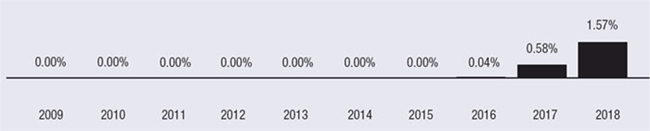 |
| Best Quarter: | Quarter ended December 31, 2018 | 0.49% |
| Worst Quarter: | Quarter ended June 30, 2016* | 0.00% |
| *Most recent quarter with this return during the period of the chart. | ||
| AVERAGE ANNUAL TOTAL RETURNS | Inception | |||
| AS OF 12/31/18 | Date | One Year | Five Years | Ten Years |
| U.S. Treasury Money Market Fund | 3/31/06 | 1.57% | 0.43% | 0.22% |
1 Total return for the period 1/1/19 through 9/30/19 was 1.53%.
Investment Advisor
U.S. Bancorp Asset Management, Inc.
Other Information
For important information about the purchase and sale of fund shares, tax information, and financial intermediary compensation, please see “Additional Summary Information” on page 22 of the prospectus.
|
21 |
Prospectus – |
First American Money Market Funds Class V Shares |
Additional Summary Information
Purchase and Sale of Fund Shares
You may purchase or redeem Class V shares of the funds on any business day. If you have an account directly with the funds, you can purchase or redeem shares by contacting Investor Services at 800 677-3863. You may also become a shareholder by establishing an account through various financial intermediaries authorized to offer Class V shares. Investments in Retail Prime Obligations Fund and Retail Tax Free Obligations Fund are limited to accounts beneficially owned by natural persons.
Class V shares are only available to corporations; private banks and trust companies; endowments and foundations; defined contribution, defined benefit and other employer-sponsored plans; wrap or advisory accounts of broker-dealers and registered investment advisers that charge an asset-based fee; institutional retirement plan platforms; insurance companies; bank trusts; 529 college savings plans; family offices; other registered investment companies and pooled investment vehicles; and certain investors and related accounts as detailed in the fund’s SAI.
A financial intermediary may impose a minimum initial and/or additional investment amount based on household assets under management held with the financial intermediary or with the funds, or the capability to reach a higher level of investment than the initial amount invested, among other possible criteria.
The funds reserve the right to reject any purchase order and to close a shareholder’s account at any time.
Tax Information
For Government Obligations Fund, Institutional Prime Obligations Fund, Retail Prime Obligations Fund, Treasury Obligations Fund, and U.S. Treasury Money Market Fund, dividends you receive from the funds are generally taxable as ordinary income. Dividends attributable to income from U.S. government securities may be exempt from state personal income taxes.
Retail Tax Free Obligations Fund intends to pay interest that is exempt from federal income tax, including the federal alternative minimum tax, although a portion of the fund’s distributions may not be tax-exempt.
Payments to Broker-Dealers and Other Financial Intermediaries
If you purchase a fund through a broker-dealer or other financial intermediary (such as a bank), the fund and its related companies may pay the intermediary for the sale of fund shares and related services. These payments may create a conflict of interest by influencing the broker-dealer or other intermediary and your salesperson to recommend the fund over another investment. Ask your salesperson or visit your financial intermediary’s website for more information.
|
22 |
Prospectus – |
First American Money Market Funds Class V Shares |
The investment objective of each fund is to seek maximum current income to the extent consistent with the preservation of capital and maintenance of liquidity. Each fund’s investment objective may be changed without shareholder approval. Please remember, there is no guarantee that any fund will achieve its objective.
Principal Investment Strategies
The funds’ principal investment strategies are discussed below. These are the strategies that the funds’ investment advisor believes are most likely to be important in trying to achieve the funds’ objectives. You should be aware that each fund may also use strategies and invest in securities that are not described in this prospectus, but that are described in the SAI. For a copy of the SAI, call Investor Services at 800 677-3863.
Principal Investment Strategies Applicable to Each Fund
Each fund complies with Securities and Exchange Commission (SEC) regulations that apply to money market funds. These regulations require that each fund’s investments mature within 397 days from the date of purchase and that each fund maintain a weighted average maturity of 60 days or less and a weighted average life of 120 days or less. The funds may invest in securities with variable or floating interest rates and securities with demand features. The maturities of these securities are determined according to regulations which allow the funds to consider some of these securities as having maturities shorter than their stated maturity dates. All of the funds’ investments must be in U.S. dollar-denominated high quality securities which have been determined by the funds’ advisor to present minimal credit risk, which determination must include an analysis of the capacity of the security’s issuer or guarantor (including the provider of a conditional demand feature, when applicable) to meet its financial obligations. With limited exceptions, a fund may not invest more than 5% of its total assets in securities issued by the same issuer. Each fund must comply with weekly liquidity standards that require a fund to hold at least 30% of its total assets in cash, direct obligations of the U.S. Government, agency discount notes with remaining maturities of 60 days or less, or securities convertible into cash within five business days. Each fund must also comply with daily liquidity standards that require a fund to hold at least 10% of its total assets in cash, direct obligations of the U.S. Government, or securities convertible into cash within one business day. Each fund is limited to investing no more than 5% of its total assets in illiquid securities.
When selecting securities for each fund, the portfolio managers first consider general economic factors, market conditions, and the short-term interest rate environment in determining what types of short-term instruments to purchase. The portfolio managers then select the specific instruments to be purchased. Generally, the portfolio managers buy and hold securities until their maturities. However, the portfolio managers may sell securities for a variety of reasons, such as to adjust the portfolio’s average maturity, credit, liquidity or yield metrics.
For liquidity and to respond to unusual market conditions, the funds may hold all or a significant portion of their total assets in cash for temporary defensive purposes. This may result in a lower yield and prevent the funds from meeting their investment objectives.
|
23 |
Prospectus – |
First American Money Market Funds Class V Shares |
More about the Funds
Principal Investment Strategies continued
Government Obligations Fund
Government Obligations Fund pursues its objective by investing exclusively in short-term U.S. government securities, including repurchase agreements secured by U.S. government securities. U.S. government securities are bonds or other debt obligations issued or guaranteed as to principal and interest by the U.S. government or one of its agencies or instrumentalities. U.S. Treasury securities and some obligations of U.S. government agencies and instrumentalities are supported by the full faith and credit of the U.S. government. Other U.S. government securities are backed by the right of the issuer to borrow from the U.S. Treasury. Still others are supported only by the credit of the issuer or instrumentality.
U.S. government securities issued by the Federal National Mortgage Association (Fannie Mae), Federal Home Loan Mortgage Corporation (Freddie Mac) and the Federal Home Loan Banks (FHLB) are neither issued nor guaranteed by the U.S. Treasury and are not backed by the full faith and credit of the United States. These entities, however, were chartered or supported by Acts of Congress and are supported by federal subsidies, loans or other benefits. The Government National Mortgage Association (Ginnie Mae) is a wholly-owned U.S. corporation that is authorized to guarantee timely payment and interest of its securities. U.S. government securities issued by Ginnie Mae are guaranteed by the full faith and credit of the United States. Other U.S. government securities do not have an explicit guarantee but support is implied due to the government sponsorship of their mandated activities, including securities issued by the Tennessee Valley Authority and Federal Farm Credit Banks.
Institutional Prime Obligations Fund
Institutional Prime Obligations Fund pursues its objective by investing in high-quality short-term debt obligations, including:
| ● | commercial paper; |
| ● | U.S. dollar-denominated obligations of domestic and foreign banks with total assets of at least $500 million (including fixed and variable rate certificates of deposit, time deposits, and bankers’ acceptances); |
| ● | non-convertible corporate debt securities; |
| ● | securities issued by the U.S. government or one of its agencies or instrumentalities; |
| ● | municipal securities, including variable rate demand notes, commercial paper, and municipal notes and other short-term municipal obligations; |
| ● | loan participation interests; and |
| ● | repurchase agreements. |
The fund concentrates its investments in the banking industry. Therefore, under normal market conditions, the fund will invest more than 25% of its total assets in securities issued by companies in the banking industry. The fund may, however, invest 25% or less of its total assets in this industry as a temporary defensive measure.
The advisor will only purchase (and hold) securities that it determines present minimal credit risk. If a security is no longer determined to present minimal credit risk, the advisor will make every attempt to sell the security, unless it has determined that it would not be in the best interest of the fund to dispose of the security at that time and, where necessary, have obtained the approval of the fund’s board of directors to continue to hold the security.
|
24 |
Prospectus – |
First American Money Market Funds Class V Shares |
More about the Funds
Principal Investment Strategies continued
U.S. government securities issued by the Federal National Mortgage Association (Fannie Mae), Federal Home Loan Mortgage Corporation (Freddie Mac) and the Federal Home Loan Banks (FHLB) are neither issued nor guaranteed by the U.S. Treasury and are not backed by the full faith and credit of the United States. These entities, however, were chartered or supported by Acts of Congress and are supported by federal subsidies, loans or other benefits. The Government National Mortgage Association (Ginnie Mae) is a wholly-owned U.S. corporation that is authorized to guarantee timely payment and interest of its securities. U.S. government securities issued by Ginnie Mae are guaranteed by the full faith and credit of the United States. Other U.S. government securities do not have an explicit guarantee but support is implied due to the government sponsorship of their mandated activities, including securities issued by the Tennessee Valley Authority and Federal Farm Credit Banks.
Retail Prime Obligations Fund
Retail Prime Obligations Fund pursues its objective by investing in high-quality short-term debt obligations, including:
| ● | commercial paper; |
| ● | U.S. dollar-denominated obligations of domestic and foreign banks with total assets of at least $500 million (including fixed and variable rate certificates of deposit, time deposits, and bankers’ acceptances); |
| ● | non-convertible corporate debt securities; |
| ● | securities issued by the U.S. government or one of its agencies or instrumentalities; |
| ● | municipal securities, including variable rate demand notes, commercial paper, and municipal notes and other short-term municipal obligations; |
| ● | loan participation interests; and |
| ● | repurchase agreements. |
The fund concentrates its investments in the banking industry. Therefore, under normal market conditions, the fund will invest more than 25% of its total assets in securities issued by companies in the banking industry. The fund may, however, invest 25% or less of its total assets in this industry as a temporary defensive measure.
The advisor will only purchase (and hold) securities that it determines present minimal credit risk. If a security is no longer determined to present minimal credit risk, the advisor will make every attempt to sell the security, unless it has determined that it would not be in the best interest of the fund to dispose of the security at that time and, where necessary, has obtained the approval of the fund’s board of directors to continue to hold the security.
U.S. government securities issued by the Federal National Mortgage Association (Fannie Mae), Federal Home Loan Mortgage Corporation (Freddie Mac) and the Federal Home Loan Banks (FHLB) are neither issued nor guaranteed by the U.S. Treasury and are not backed by the full faith and credit of the United States. These entities, however, were chartered or supported by Acts of Congress and are supported by federal subsidies, loans or other benefits. The Government National Mortgage Association (Ginnie Mae) is a wholly-owned U.S. corporation that is authorized to guarantee timely payment and interest of its securities. U.S. government securities issued by Ginnie Mae are guaranteed by the full faith and credit of the United States. Other U.S. government securities do not have an explicit guarantee but support is implied due to the government sponsorship of their mandated activities, including securities issued by the Tennessee Valley Authority and Federal Farm Credit Banks.
|
25 |
Prospectus – |
First American Money Market Funds Class V Shares |
More about the Funds
Principal Investment Strategies continued
Retail Tax Free Obligations Fund
Under normal market conditions, Retail Tax Free Obligations Fund pursues its objective by investing at least 80% of its total assets in high-quality, short-term municipal securities that pay interest that is exempt from federal income tax, including the federal alternative minimum tax. The municipal securities in which the fund invests include variable rate demand notes (VRDNs) and tender option bonds (TOBs), which are floating rate instruments that provide the fund with the option to put or tender the VRDN or TOB back to the issuer at par. VRDNs and TOBs typically have some form of external credit or liquidity support. The fund also may invest in other municipal securities, including commercial paper, municipal notes and other short-term municipal obligations.
Municipal securities are issued by state and local governments, and certain U.S. territorial possessions, to finance public infrastructure projects such as streets and highways, schools, water and sewer systems, hospitals, and airports. They also may be issued to refinance outstanding obligations as well as to obtain funds for general operating expenses and for loans to other public institutions and facilities. There are two principal classifications of municipal securities:
| ● | general obligation bonds, which are backed by the full faith, credit, and taxing power of the issuer; and |
| ● | revenue bonds, which are payable only from the revenues generated by a specific project or from another specific revenue source. |
Under normal market conditions, up to 20% of the fund’s total assets may be invested in taxable money market securities and municipal securities subject to the alternative minimum tax, although the fund does not currently intend to invest in municipal securities subject to the alternative minimum tax. Under abnormal market conditions, the fund may invest more than 20% of its total assets in such taxable securities, as conditions dictate. This may prevent the fund from achieving its goal of providing maximum current income exempt from federal income taxes.
Because the fund refers to tax-free investments in its name, it has a fundamental investment policy that it will normally invest its assets so that at least 80% of the income that it distributes will be exempt from federal regular income tax, including the federal alternative mimum tax. This policy may not be changed without shareholder approval.
Treasury Obligations Fund
Under normal market conditions, Treasury Obligations Fund pursues its objective by investing exclusively in short-term U.S. Treasury obligations, including repurchase agreements secured by U.S. Treasury obligations. The U.S. Treasury obligations in which the fund invests include U.S. Treasury bonds, notes, and bills. These types of Treasury securities are essentially the same except for differences in interest rates, maturities, and dates of issuance. U.S. Treasury obligations are backed by the full faith and credit of the U.S. government.
|
26 |
Prospectus – |
First American Money Market Funds Class V Shares |
More about the Funds
Principal Investment Strategies continued
U.S. Treasury Money Market Fund
U.S. Treasury Money Market Fund pursues its objective by investing exclusively in direct obligations of the U.S. Treasury. The U.S. Treasury obligations in which the fund invests include U.S. Treasury bonds, notes, and bills. These types of Treasury securities are essentially the same except for differences in interest rates, maturities, and dates of issuance. U.S. Treasury obligations are backed by the full faith and credit of the U.S. government.
Other Money Market Funds
Each fund may invest in other money market funds that invest in the same types of securities as the respective fund, as a non-principal investment strategy, including the other money market funds advised by the funds’ investment advisor. To avoid duplicative investment advisory fees, when a fund invests in another money market fund advised by the fund’s investment advisor, the investment advisor reimburses the fund an amount equal to the fund’s proportionate share of the investment advisory fee paid by the other money market fund to the investment advisor. If the fund invests in money market funds advised by another investment advisor, you will bear both your proportionate share of the expenses in the fund (including management and advisory fees) and, indirectly, the expenses of such other money market fund.
Securities Lending
To generate additional income, and as a non-principal investment strategy, each fund, other than U.S. Treasury Money Market Fund, may lend securities representing up to one-third of the value of its total assets to broker-dealers, banks, and other institutions. When a fund loans its portfolio securities, it will receive, at the inception of each loan, cash collateral equal to at least 102% of the value of the loaned securities, which is invested consistent with the fund’s investment strategies. If the borrower fails to return the loaned securities, the fund could suffer a loss if the value of the invested collateral is insufficient to purchase replacement securities.
|
27 |
Prospectus – |
First American Money Market Funds Class V Shares |
More about the Funds
The principal risks of investing in each fund are identified and further discussed below.
| Government Obligations Fund | |||
| ● | Credit Risk | ● | Liquidity Risk |
| ● | Cybersecurity Risk | ● | Redemption Risk |
| ● | Income Risk | ● | Regulatory Risk |
| ● | Interest Rate Risk | ● | Repurchase Agreement Risk |
| Institutional Prime Obligations Fund | |||
| ● | Banking Industry Risk | ● | Liquidity Risk |
| ● | Credit Risk | ● | Municipal Security Risk |
| ● | Cybersecurity Risk | ● | Redemption Risk |
| ● | Foreign Security Risk | ● | Regulatory Risk |
| ● | Income Risk | ● | Repurchase Agreement Risk |
| ● | Interest Rate Risk | ● | Variable Rate Demand Note (VRDN) Risk |
| Retail Prime Obligations Fund | |||
| ● | Banking Industry Risk | ● | Liquidity Risk |
| ● | Credit Risk | ● | Municipal Security Risk |
| ● | Cybersecurity Risk | ● | Redemption Risk |
| ● | Foreign Security Risk | ● | Regulatory Risk |
| ● | Income Risk | ● | Repurchase Agreement Risk |
| ● | Interest Rate Risk | ● | Variable Rate Demand Note (VRDN) Risk |
| Retail Tax Free Obligations Fund | |||
| ● | Credit Risk | ● | Municipal Security Risk |
| ● | Cybersecurity Risk | ● | Redemption Risk |
| ● | Income Risk | ● | Regulatory Risk |
| ● | Interest Rate Risk | ● | Tax Risk |
| ● | Liquidity Risk | ● | Variable Rate Demand Note (VRDN) |
| and Tender Option Bond (TOB) Risk | |||
| Treasury Obligations Fund | |||
| ● | Credit Risk | ● | Liquidity Risk |
| ● | Cybersecurity Risk | ● | Redemption Risk |
| ● | Income Risk | ● | Regulatory Risk |
| ● | Interest Rate Risk | ● | Repurchase Agreement Risk |
| U.S. Treasury Money Market Fund | |||
| ● | Credit Risk | ● | Liquidity Risk |
| ● | Cybersecurity Risk | ● | Redemption Risk |
| ● | Income Risk | ● | Regulatory Risk |
| ● | Interest Rate Risk | ||
|
28 |
Prospectus – |
First American Money Market Funds Class V Shares |
More about the Funds
Description of Principal Investment Risks
Banking Industry Risk. An adverse development in the banking industry (domestic or foreign) may affect the value of Institutional Prime Obligations Fund’s and Retail Prime Obligations Fund’s investments more than if the fund was not invested to such a degree in the banking industry. Banks may be particularly susceptible to certain economic factors such as interest rate changes, adverse developments in the real estate market, fiscal and monetary policy and general economic cycles. For example, deteriorating economic and business conditions can disproportionately impact companies in the banking industry due to increased defaults on payments by borrowers. Moreover, political and regulatory changes can affect the operations and financial results of companies in the banking industry, potentially imposing additional costs and expenses or restricting the types of business activities of these companies.
Credit Risk. The value of your investment might decline if the issuer of an obligation held by the fund defaults on the obligation or has its credit rating downgraded.
Cybersecurity Risk. With the increased use of technologies such as the Internet and the dependence on computer systems to perform necessary business functions, a fund may be subject to operational and informational security risks resulting from breaches in cybersecurity (“cyber-attacks”). A cyber-attack refers to both intentional and unintentional events that may cause a fund to lose proprietary information, suffer data corruption, or lose operational capacity. Cyber-attacks include, but are not limited to, infection by computer viruses or other malicious software code, gaining unauthorized access to systems, networks, or devices that are used to service the fund’s operations through “hacking” or other means for the purpose of misappropriating assets or sensitive information, corrupting data, or causing operational disruption.
Cybersecurity failures or breaches by the funds’ affiliates or service providers, may cause disruptions and impact the business operations, potentially resulting in financial losses to both a fund and its shareholders, the inability of fund shareholders to transact business, inability to calculate a fund’s net asset value, impediments to trading, violations of applicable privacy and other laws (including the release of private shareholder information), regulatory fines, penalties, reputational damage, reimbursement or other compensation costs, and/or additional compliance costs. In addition, substantial costs may be incurred in order to prevent any cyber incidents in the future. While the advisor has risk management systems designed to prevent or reduce the impact of such cyber-attacks, there are inherent limitations in such controls, systems and protocols, including the possibility that certain risks have not been identified, as well as the rapid development of new threats. These cybersecurity risks are also present for issuers of securities in which a fund invests, which could result in material adverse consequences for such issuers, and may cause a fund’s investment in such securities to lose value and may result in financial loss for fund shareholders.
Foreign Security Risk. The foreign securities in which Institutional Prime Obligations Fund and Retail Prime Obligations Fund may invest, even when dollar denominated and publicly traded in the United States, may involve risks not associated with the securities of domestic issuers. Political or social instability or diplomatic developments could adversely affect the securities. There is also the risk of possible withholding taxes, seizure of foreign deposits, currency controls, interest limitations, or other governmental restrictions which might affect the
|
29 |
Prospectus – |
First American Money Market Funds Class V Shares |
More about the Funds
Description of Principal Investment Risks continued
payment of principal or interest on securities owned by the fund. In addition, there may be less public information available about foreign corporations and foreign banks and their branches. Uncertainty surrounding the sovereign debt of several European Union countries, as well as the continued existence of the European Union itself, has disrupted and may continue to disrupt markets in the United States and around the world. If a country changes its currency or leaves the European Union or if the European Union dissolves, the world’s securities markets likely will be significantly disrupted.
Income Risk. The level of income you receive from the fund will be affected by movements in short-term interest rates. Because Government Obligations Fund, Treasury Obligations Fund, and U.S. Treasury Money Market Fund invest solely in, U.S. government securities, U.S. Treasury obligations, or repurchase agreements secured by those securities, these funds may offer less income than money market funds investing in other high-quality money market securities.
Interest Rate Risk. The value of your investment might decline because of a sharp rise in interest rates that causes the value of the fund’s portfolio holdings to fall. Many financial instruments use or may use a floating rate based on LIBOR, which is the offered rate for short-term Eurodollar deposits between major international banks. On July 27, 2017, the head of the United Kingdom’s Financial Conduct Authority announced a desire to phase out the use of LIBOR by the end of 2021. There remains uncertainty regarding the future utilization of LIBOR and the nature of any replacement rate. As such, the potential effect of a transition away from LIBOR on a fund or the financial instruments in which a fund invests cannot yet be determined.
Liquidity Risk. The fund may not be able to sell a security in a timely manner or at a desired price, or may be unable to sell the security at all, because of a lack of demand in the market for the security or, additionally for Institutional Prime Obligations Fund, Retail Prime Obligations Fund and Retail Tax Free Obligations Fund, because a liquidity provider defaults on its obligation to purchase the security when properly tendered by the fund.
Municipal Security Risk. The value of municipal securities owned by Institutional Prime Obligations Fund, Retail Prime Obligations Fund and Retail Tax Free Obligations Fund may be adversely affected by future changes in federal income tax laws, including rate reductions or the imposition of a flat tax, and adverse changes in the financial conditions of municipal securities issuers.
Redemption Risk. If there are unexpectedly high redemptions of fund shares, the fund might have to sell portfolio securities prior to their maturity, possibly at a loss.
Regulatory Risk. Changes to monetary policy by the Federal Reserve or other regulatory actions could expose fixed income and related markets to heightened volatility, interest rate sensitivity and reduced liquidity, which may impact the funds’ operations, universe of potential investment options, and return potential.
Repurchase Agreement Risk. If the seller of a repurchase agreement defaults on its obligation to repurchase securities from Government Obligations Fund or Treasury Obligations Fund, the fund may incur costs in disposing of the collateral and may experience losses if there is any delay in its ability to do so.
For Institutional Prime Obligations Fund and Retail Prime Obligations Fund, if the seller of a repurchase agreement defaults on its obligation to repurchase securities from the fund, the fund may incur costs in disposing of the securities purchased and may experience losses if the proceeds from the sale of the securities are less than the full repurchase price. Securities
|
30 |
Prospectus – |
First American Money Market Funds Class V Shares |
More about the Funds
Description of Principal Investment Risks continued
purchased by the fund under a repurchase agreement may include securities that the fund is not otherwise permitted to purchase directly, such as long-term government bonds, investment and non-investment grade corporate bonds, asset- and mortgage-backed securities, collateralized mortgage obligations, agency real estate mortgage investment conduits, and equity securities. The value of these securities may be more volatile or less liquid than the securities the fund is permitted to purchase directly, which increases the risk that the fund will be unable to recover fully in the event of the seller’s default.
Tax Risk. In order to be tax-exempt, municipal securities generally must meet certain regulatory requirements. If a municipal security fails to meet these requirements, the interest received by the fund from its investment in the security and distributed to shareholders may be taxable.
Variable Rate Demand Note (VRDN) and Tender Option Bond (TOB) Risk. Investments in VRDNs and TOBs involve credit risk with respect to the issuer or financial institution providing the fund with the credit and liquidity support for the put or tender option. While the funds invest only in VRDNs and TOBs of high quality issuers, or which are supported by high quality financial institutions, it is still possible that an issuer or financial institution could default on its obligations.
Disclosure of Portfolio Holdings
Information concerning the funds’ portfolio holdings as of the last business day of each month, as well as their weighted average maturity and weighted average life, is available on the funds’ website (www.firstamericanfunds.com) under “Portfolio Holdings.” This information is typically available five business days after the end of each month and remains posted on the website for at least six months thereafter. Each fund’s portfolio holdings are also posted on this same page on a weekly basis, typically on the first business day of the week. This weekly information generally reflects holdings as of the previous Thursday and remains posted on the website until the next publication date.
On each business day, each fund will post its levels of daily and weekly liquid assets and information on net inflows/outflows on the fund’s web page under “Our Funds.” This information is typically as of the end of the preceding business day and remains posted on the website until the next publication date. This information is also included for typically a 30-day rolling period in the enhanced disclosure report found on this same page.
A description of the funds’ policies and procedures with respect to the disclosure of the funds’ portfolio securities is available in the funds’ SAI.
|
31 |
Prospectus – |
First American Money Market Funds Class V Shares |
U.S. Bancorp Asset Management, Inc.
800 Nicollet Mall
Minneapolis, MN 55402
U.S. Bancorp Asset Management provides investment management services to individuals and institutions, which may include corporations, foundations, pensions, and retirement plans. As of September 30, 2019, U.S. Bancorp Asset Management had more than $97.5 billion in assets under management, including investment company assets of more than $73.5 billion. As investment advisor, U.S. Bancorp Asset Management manages the funds’ business and investment activities, subject to the authority of the funds’ board of directors.
Each fund pays the investment advisor a monthly management fee for providing investment advisory services. The table below reflects management fees paid to the investment advisor, after taking into account any fee waivers, for the funds’ most recently completed fiscal year.
| Management
fee as a % of average daily net assets | |
| Government Obligations Fund | 0.10% |
| Institutional Prime Obligations Fund | 0.08% |
| Retail Prime Obligations Fund | 0.10% |
| Retail Tax Free Obligations Fund | 0.09% |
| Treasury Obligations Fund | 0.10% |
| U.S. Treasury Money Market Fund | 0.10% |
U.S. Bancorp Asset Management may voluntarily waive or reimburse certain fees and expenses of a fund to the extent necessary to avoid a negative yield, or a yield below a specified level, which may vary from time to time in U.S. Bancorp Asset Management’s sole discretion. These waivers and reimbursements may be terminated at any time by U.S. Bancorp Asset Management.
A discussion regarding the basis for the board’s approval of the funds’ investment advisory agreement appears in the funds’ annual report to shareholders for the fiscal year ended August 31, 2019.
Additional Compensation
U.S. Bancorp Asset Management, U.S. Bank National Association (U.S. Bank) and other affiliates of U.S. Bancorp may act as fiduciary with respect to plans subject to the Employee Retirement Income Security Act of 1974 (ERISA) and other trust and agency accounts that invest in the First American funds. As described above, U.S. Bancorp Asset Management receives compensation for acting as the funds’ investment advisor. U.S. Bancorp Asset Management, U.S. Bank and their affiliates also receive compensation from the funds as set forth below.
Administration Services. U.S. Bancorp Asset Management and its affiliate, U.S. Bancorp Fund Services, LLC (Fund Services), act as the funds’ administrator and sub-administrator, respectively, providing administration services that include general administrative and accounting services, blue sky services and shareholder services. For such services, each fund pays U.S. Bancorp Asset Management the fund’s pro rata portion of up to 0.15%, on an annual basis, of the aggregate average daily net assets attributable to Class V shares of all First American money market funds. U.S. Bancorp Asset Management pays Fund Services a portion
|
32 |
Prospectus – |
First American Money Market Funds Class V Shares |
Fund Management
Investment Advisor continued
of its fee, as agreed to from time to time. In addition to these fees, the funds may reimburse U.S. Bancorp Asset Management for any out-of-pocket expenses incurred in providing administration services.
Custody Services. U.S. Bank provides custody services to each fund. U.S. Bank is paid monthly fees equal, on an annual basis, to 0.0045% of the aggregate average daily market value of all securities and cash held in the funds up to $25 billion, 0.0040% of the aggregate average daily market value of all securities and cash held in the funds for the next $25 billion, and 0.0035% of the aggregate average daily market value of all securities and cash held in the funds in excess of $50 billion.
Distribution Services. Quasar Distributors, LLC, an affiliate of U.S. Bancorp Asset Management, serves as the funds’ distributor. U.S. Bancorp Asset Management pays fees to Quasar for certain distribution-related and other services provided by Quasar.
Securities Lending Services. In connection with lending their portfolio securities, the funds pay fees to U.S. Bank of 20% of each fund’s net income from securities lending transactions and U.S. Bank may pay up to half of such fees to U.S. Bancorp Asset Management for certain securities lending services provided by U.S. Bancorp Asset Management.
Shareholder Servicing Fees. Each fund pays U.S. Bancorp Asset Management a shareholder servicing fee at an annual rate of 0.10% of its average daily net assets attributable to Class V shares for providing or arranging for the provision of shareholder services to the holders of its Class V shares.
Transfer Agency Services. Fund Services provides transfer agency and dividend disbursing services, as well as certain shareholder services, to the funds. Fund Services receives fees for transfer agency and dividend disbursing services on a per shareholder account basis, subject to a minimum fee per share class. In addition, the funds may reimburse Fund Services for any out-of-pocket expenses incurred in providing transfer agency services.
Other Compensation. To the extent that fund shares are held through U.S. Bank or its broker-dealer affiliate, U.S. Bancorp Investments, Inc., those entities may receive distribution and/or shareholder servicing fees from the funds’ distributor as well as other payments from the funds’ distributor and/or advisor as described below under “Shareholder Information — Additional Payments to Institutions.”
The funds are managed by a team of persons who are employed by U.S. Bancorp Asset Management.
|
33 |
Prospectus – |
First American Money Market Funds Class V Shares |
Retail Prime Obligations Fund and Retail Tax Free Obligations Fund are “retail” money market funds as defined under Rule 2a-7 of the Investment Company Act of 1940, as amended (the “Investment Company Act”). As retail money market funds, shareholders must be “natural persons.” Natural persons are permitted to invest in the Retail Prime Obligations Fund and Retail Tax Free Obligations Fund through certain tax-advantaged savings accounts, trusts and other retirement and investment accounts, including, for example: (1) participant-directed defined contribution plans; (2) individual retirement accounts; (3) simplified employee pension arrangements; (4) SIMPLE retirement accounts; (5) custodial accounts; (6) deferred compensation plans for government or tax-exempt organization employees; (7) Archer medical savings accounts; (8) college savings plans; (9) health savings account plans; (10) ordinary trusts and estates of natural persons; or (11) certain other retirement and investment accounts having an institutional decision maker (e.g., a plan sponsor in certain retirement arrangements or an investment adviser managing discretionary investment accounts).
In order to make an initial investment in the Retail Prime Obligations Fund or Retail Tax Free Obligations Fund, you must furnish to the fund, or your financial intermediary, if any, an account application that provides certain information (e.g., Social Security Number or government-issued identification, such as a driver’s license or passport) that confirms your eligibility to invest in the fund. The fund will refuse to open an account or require a financial intermediary to refuse to open an account if you fail to (1) provide a Social Security Number or other government-issued identification (e.g., a driver’s license or passport); or (2) certify that such number or other information is correct (if required to do so under applicable law).
Each Fund other than Institutional Prime Obligations Fund
Each fund other than Institutional Prime Obligations Fund utilizes the amortized cost method of valuation to transact at a $1.00 share price. A fund’s net asset value (NAV) is equal to the market value of its investments and other assets, less any liabilities, divided by the number of fund shares. The securities held by the funds are valued on the basis of amortized cost. This involves valuing an instrument at its cost and thereafter assuming a constant amortization of any discount or premium until the instrument’s maturity, rather than looking at actual changes in the market value of the instrument. Each fund’s NAV is normally expected to be $1 per share.
The NAV per share of each share class of a fund is calculated at the times listed below under “Calculating Net Asset Value.” If a purchase order is received on a business day by the deadline listed below under “Calculating Net Asset Value” and payment in federal funds is received by the fund by the close of the Federal Reserve wire transfer system (normally, 5:00 p.m. Central time), then dividends will begin to accrue on the same business day that the wire purchase order is received. If a purchase order is received on a business day after the deadline specified above, you will begin to accrue dividends the next business day. Also, in the event a wire purchase order is placed by the deadline specified above but an anticipated wire payment is not received by a fund by the close of the Federal Reserve wire transfer system that same day, your purchase may be cancelled and you may be liable for any resulting losses or fees incurred by the fund, the transfer agent, or the fund’s custodian.
|
34 |
Prospectus – |
First American Money Market Funds Class V Shares |
Shareholder Information
Pricing of Fund Shares continued
Redemption proceeds to be paid by wire will normally be paid to the domestic bank account designated in the current records of the fund’s transfer agent on the same day of the redemption order, if the redemption order is accepted in proper form by the transfer agent or a financial intermediary that has been authorized to accept orders on behalf of the fund, as described herein, by the deadline listed below under “Calculating Net Asset Value.” Redemption proceeds will normally be paid by the close of the Federal Reserve wire system (normally, 5:00 p.m. Central time). You will not earn a dividend on the day a redemption order is accepted.
Your purchase or redemption price will be based on that day’s NAV per share if your order is received by the funds in proper form prior to the time the fund calculates its NAV. See “Calculating the Net Asset Value” below. Contact your financial intermediary to determine the time by which it must receive your order to be assured same day processing. To make sure your order is in proper form, you must follow the instructions set forth below under “Purchasing and Redeeming Fund Shares.”
Institutional Prime Obligations Fund
Institutional Prime Obligations Fund prices and transacts in its shares at a floating NAV, rounded to the fourth decimal place (i.e., $1.0000). The fund’s NAV is equal to the market value of its investments and other assets, less any liabilities, divided by the number of fund shares. The fund’s investments for which market quotations are readily available will be valued at market value on the basis of quotations furnished by a pricing service or provided by securities dealers. If market quotations are not readily available, or if the advisor believes that such quotations do not accurately reflect market prices, the fair value of the fund’s investments will be determined in good faith based upon valuation procedures established by the board. Short-term debt obligations maturing in sixty days or less may be valued at amortized cost where the advisor believes that it approximates market value.
The NAV per share of each share class of the fund is calculated at 8:00 a.m., 11:00 a.m. and 2:00 p.m. Central time (each an “NAV calculation time”) on each business day that the fund is open. If a purchase order is received on a business day by 2:00 p.m. Central time and payment in federal funds is received by the fund by the close of the Federal Reserve wire transfer system (normally, 5:00 p.m. Central time), then dividends will begin to accrue on the same business day that the wire purchase order is received. If a purchase order is received on a business day after 2:00 p.m. Central time, you will begin to accrue dividends the next business day. Also, in the event a wire purchase order is placed by 2:00 p.m. Central time but an anticipated wire payment is not received by the fund by the close of the Federal Reserve wire transfer system that same day (normally, 5:00 p.m. Central time), your purchase may be cancelled and you may be liable for any resulting losses or fees incurred by the fund, or by the fund’s transfer agent or custodian.
Redemption proceeds to be paid by wire will normally be paid to the domestic bank account designated in the current records of the fund’s transfer agent on the same day of the redemption order, if the redemption order is accepted in proper form by the transfer agent by one of the NAV calculation times listed above. Redemption proceeds will normally be paid by the close of the Federal Reserve wire system (normally, 5:00 p.m. Central time). You will not earn a dividend on the day a redemption order is accepted.
|
35 |
Prospectus – |
First American Money Market Funds Class V Shares |
Shareholder Information
Pricing of Fund Shares continued
Your purchase or redemption price will be based on the NAV per share next calculated after your order is received by the fund in proper form. Purchase and redemption orders received after an NAV calculation time specified above, including an Early Close (as such term is defined under “Other Pricing Information” below), will be processed at the next NAV calculation time.
Other Pricing Information
You may purchase or redeem shares of the funds on any business day that the Federal Reserve Bank of New York (Federal Reserve) is open, except as noted below. In addition to weekends, the Federal Reserve is closed on the following Federal holidays: New Year’s Day, Martin Luther King, Jr. Day, Presidents’ Day, Memorial Day, Independence Day, Labor Day, Columbus Day, Veterans Day, Thanksgiving Day, and Christmas Day. A fund may close when the Federal Reserve is open and the New York Stock Exchange (NYSE) is closed, such as Good Friday. On any business day when the Securities Industry Financial Markets Association recommends that the bond markets close trading early (an “Early Close”), a fund may also close trading early.
Some financial intermediaries may charge a transaction-based fee for helping you purchase or redeem shares or an asset-based fee. Contact your financial intermediary for more information.
The funds issue their shares in multiple classes. This prospectus offers Class V shares. Class V shares are offered at NAV, with no front-end or contingent deferred sales charge, but with an annual shareholder servicing fee of 0.10%.
Class V shares are only available to corporations; private banks and trust companies; endowments and foundations; defined contribution, defined benefit and other employer-sponsored plans; wrap or advisory accounts of broker-dealers and registered investment advisers that charge an asset-based fee; institutional retirement plan platforms; insurance companies; bank trusts; 529 college savings plans; family offices; other registered investment companies and pooled investment vehicles; and certain investors and related accounts as detailed in the fund’s SAI.
A financial intermediary may impose a minimum initial and/or additional investment amount based on household assets under management held with the financial intermediary or with the funds, or the capability to reach a higher level of investment than the initial amount invested, among other possible criteria.
Each fund also has adopted a non-Rule 12b-1 shareholder servicing plan and agreement with respect to its Class V shares. Under this plan and agreement, each fund pays U.S. Bancorp Asset Management a shareholder servicing fee at an annual rate of 0.10% of average daily Class V share net assets for providing or arranging for the provision of shareholder services to the holders of Class V shares. No distribution-related services are provided under this plan and agreement.
|
36 |
Prospectus – |
First American Money Market Funds Class V Shares |
Shareholder Information
Because the current prospectus and SAI are available on First American Funds’ website free of charge, we do not disclose the following information separately on the website. Your purchase or redemption price for Class V shares is the fund’s next determined net asset value after the fund, or its designated agent, receives your order in proper form. To understand how the funds calculate their net asset value, see “Additional Information on Purchasing, Redeeming, and Exchanging Funds Shares — Calculating Net Asset Value” below.
Purchasing and Redeeming Fund Shares
To help the government fight the funding of terrorism and money laundering activities, Federal law requires all financial institutions to obtain, verify, and record information that identifies each person who opens an account. As a result, when you open an account, we will ask for your name, permanent street address, date of birth, and social security or taxpayer identification number. If you are opening the account in the name of a legal entity (e.g., partnership, limited liability company, business trust, corporation, etc.), you must also supply the identity of the beneficial owners. Addresses containing a P.O. Box only will not be accepted. We may also ask for other identifying documents or information. If you do not provide the information, we will not be able to open your account. In the rare event that we are unable to verify your identity as required by law, we reserve the right to redeem your account at the current NAV of fund shares. You will be responsible for any losses, taxes, expenses, fees, or other results of such a redemption.
You may purchase or redeem shares of the funds on any business day by calling your financial intermediary. Additional information on purchasing or redeeming shares through your financial intermediary can be found below under “Transactions through Financial Intermediaries.”
Shares of the funds are generally offered to persons in the United States and are also available for purchase in certain foreign jurisdictions through qualifying financial intermediaries.
The funds reserve the right to reject any purchase order and to close a shareholder’s account at any time.
When purchasing shares, payment must be made by wire transfer, which can be arranged by your financial intermediary. You cannot purchase shares by wire on days when federally chartered banks are closed.
If a fund receives a redemption request by the time the fund calculates its NAV, as specified below, payment will be made the same day by transfer of federal funds if the Fedwire transfer system is available for use that day. Otherwise, payment will be made on the next business day.
|
37 |
Prospectus – |
First American Money Market Funds Class V Shares |
Shareholder Information
Purchasing and Redeeming Fund Shares continued
Suspension or Postponement of Redemptions. Each fund reserves the right to suspend the right of shareholder redemption, or postpone the date of payment:
| ● | if emergency conditions should exist, as specified in the Investment Company Act, or as determined by the SEC, as a result of which disposal of portfolio securities or determination of the NAV of the fund is not reasonably practicable; |
| ● | for any period during which trading on the NYSE is restricted as determined by the SEC or the NYSE is closed (other than customary weekend and holiday closings); |
| ● | for any period during which the SEC has, by rule or regulation, deemed that (1) trading shall be restricted or (2) an emergency exists; or |
| ● | for such other periods as the SEC may by order permit for the protection of shareholders of the fund. |
In addition, for each fund other than Institutional Prime Obligations Fund, in the unlikely event that the funds’ board of directors were to determine pursuant to SEC regulations that the extent of the deviation between a fund’s amortized cost per share and its market-based NAV per share may result in material dilution or other unfair results to shareholders, the board will cause the fund to take such action as it deems appropriate to eliminate or reduce to the extent practicable such dilution or unfair results, including suspending redemption of shares and liquidating the fund under Rule 22e-3 of the Investment Company Act.
As discussed below under “Additional Information on Purchasing and Redeeming Fund Shares – Liquidity Fees and Redemption Gates,” with respect to Institutional Prime Obligations Fund, Retail Prime Obligations Fund and Retail Tax Free Obligations Fund, each fund’s board of directors will be permitted to temporarily suspend the right of shareholder redemption if the fund’s weekly liquid assets fall below certain thresholds.
Purchases In-Kind. Generally, all purchases will be in cash. However, the funds reserve the right to permit you to purchase shares through the exchange of other securities that you own if consistent with a fund’s investment objective, policies, and operations. The market value of any securities exchanged, plus any cash, must be at least $25 million. Please contact your financial intermediary.
Redemptions In-Kind. Generally, all redemptions will be for cash. However, the funds reserve the right to pay all or part of your redemption proceeds in readily marketable securities instead of cash. If payment by a fund is made in securities, the fund will value the securities selected in the same manner in which it computes its NAV. This process minimizes the effect of large redemptions on the fund and its remaining shareholders. If you receive redemption proceeds in-kind, you should expect to incur transaction costs upon disposition of those securities. In addition, if you receive redemption proceeds in-kind, you will be subject to market gains or losses upon the disposition of those securities.
Additional Information on Purchasing and Redeeming Fund Shares
Calculating Net Asset Value
The funds generally calculate their NAV per share as of the times specified in the table below on each business day that the funds are open, except that the NAV for Government Obligations Fund, Retail Prime Obligations Fund and Treasury Obligations Funds is generally calculated at
|
38 |
Prospectus – |
First American Money Market Funds Class V Shares |
Shareholder Information
Additional Information on Purchasing and Redeeming Fund Shares continued
1:00 p.m. Central time on days on which the bond markets have an “Early Close” (typically on the business day preceding a Federal holiday). Purchase and redemption orders received after closing time, including an Early Close, will be processed the next business day.
| Deadline for orders to be received in order to receive the current day’s NAV | |
| Government Obligations Fund | 3:45 p.m. Central time |
| Institutional Prime Obligations Fund | 8:00 a.m., 11:00 a.m. and 2:00 p.m. Central time |
| Retail Prime Obligations Fund | 3:45 p.m. Central time |
| Retail Tax Free Obligations Fund | 11:30 a.m. Central time |
| Treasury Obligations Fund | 3:45 p.m. Central time |
| U.S. Treasury Money Market Fund | 12:30 p.m. Central time |
Frequent Trading of Fund Shares
The funds are designed to offer investors a liquid cash option and it is anticipated that shareholders will purchase and redeem fund shares on a frequent basis. Frequent trading by shareholders may disrupt the management of the funds and increase fund expenses. However, given the short-term nature of the funds’ investments and their use of the amortized cost method for calculating the NAV of fund shares, the funds do not anticipate that in the normal case frequent or short-term trading into and out of the funds will have significant adverse consequences for the funds and their shareholders. Accordingly, the funds’ board of directors has not adopted policies or procedures to monitor or discourage frequent or short-term trading of the funds’ shares.
Escheatment
If your account is held directly with the funds and is later deemed “abandoned” or “unclaimed” under state law, the funds may be required to “escheat” or transfer the assets in your account to the applicable state’s unclaimed property administration. The state may sell escheated shares and, if you subsequently seek to reclaim your proceeds of liquidation from the state, you may only be able to recover the amount received when the shares were sold. It is your responsibility to ensure that you maintain a correct address for your account, keep your account active by contacting the fund’s transfer agent or distributor by mail or telephone, and promptly cash all checks for dividends, capital gains and redemptions. The fund, the fund’s transfer agent and U.S. Bancorp Asset Management and its affiliates will not be liable to shareholders or their representatives for good faith compliance with state escheatment laws.
Transactions through Financial Intermediaries and Timing of Orders
Each fund other than Institutional Prime Obligations Fund has authorized one or more financial intermediaries to accept purchase and redemption orders on the fund’s behalf. Financial intermediaries may include financial advisors, investment advisers, brokers, financial planners, banks, insurance companies, retirement or 401(k) plan administrators and others, including various affiliates of the funds’ advisor, that have entered into agreements with the funds’ distributor, advisor, and/or transfer agent. Such financial intermediaries may be authorized to
|
39 |
Prospectus – |
First American Money Market Funds Class V Shares |
Shareholder Information
Additional Information on Purchasing and Redeeming Fund Shares continued
designate other intermediaries to accept purchase and redemption orders on the fund’s behalf. The fund will be deemed to have received a purchase or redemption order when such financial intermediary or, if applicable, such financial intermediary’s authorized designee, accepts the order. Such orders will be priced at the fund’s NAV next calculated after it is accepted by the financial intermediary. In such cases, if requested by a fund, a financial intermediary will be responsible for providing information with regard to the time that such order for purchase or redemption was received. Orders submitted through a financial intermediary that has not received such authorization to accept orders on the fund’s behalf will be priced at the fund’s NAV next calculated after the fund receives and accepts the order from the financial intermediary, which may not occur on the day you submitted the order to the financial intermediary. Since not all financial intermediaries have received such authorization, you may wish to contact your financial intermediary to determine if it has received such authorization.
Financial intermediaries are required to adopt and implement policies, procedures and internal controls reasonably designed to limit all beneficial owners of Retail Prime Obligations Fund and Retail Tax Free Obligations Fund to natural persons and, upon request, provide satisfactory evidence that they have such policies, procedures and internal controls in place. In addition, a financial intermediary is required to involuntarily redeem its customers that do not satisfy the eligibility requirements as set forth above. The funds reserve the right to redeem shares in any account that they cannot confirm to their satisfaction is beneficially owned by natural persons, after providing advance notice.
For Institutional Prime Obligations Fund, financial intermediaries may transmit purchase and redemption orders to the fund’s transfer agent on your behalf. Financial intermediaries are not permitted to serve as the fund’s agent for the receipt of purchase and redemption orders. The fund will be deemed to have received a purchase or redemption order once the order is accepted in proper form by the fund’s transfer agent, which may not occur on the day you submitted the order to your financial intermediary. Your purchase or redemption order will be priced at the fund’s current NAV next determined after it is accepted by the fund’s transfer agent. Financial intermediaries are not able to buy and sell shares of the fund through the National Securities Clearing Corporation. The fund, the advisor and their affiliates will not be responsible for any loss for orders that are not transmitted to the transfer agent by financial intermediaries on a timely basis.
Liquidity Fees and Redemption Gates
With respect to Institutional Prime Obligations Fund, Retail Prime Obligations Fund and Retail Tax Free Obligations Fund, the board of directors is permitted to impose a liquidity fee on redemptions (up to 2%) or temporarily restrict redemptions from the fund for up to 10 business days during a 90 day period (a “redemption gate”), in the event that a fund’s weekly liquid assets fall below the following thresholds:
| ● | 30% weekly liquid assets—If the weekly liquid assets of the fund falls below 30% of the fund’s total assets as at any time, and the board determines it is in the best interests of the fund, the board may impose a liquidity fee of no more than 2% of the amount redeemed and/or a redemption gate that temporarily suspends the right of redemption. Such liquidity fee or redemption gate may be imposed as early as the same day on which the fund’s weekly liquid assets fall below 30% of its total assets and may occur before the end of the business day. |
|
40 |
Prospectus – |
First American Money Market Funds Class V Shares |
Shareholder Information
Additional Information on Purchasing and Redeeming Fund Shares continued
| ● | 10% weekly liquid assets— If the weekly liquid assets of the fund falls below 10% of the fund’s total assets as of the end of a business day, the fund will impose, at the beginning of the next business day, a liquidity fee of 1% of the amount redeemed, unless the board determines that imposing such a fee would not be in the best interests of the fund or determines that a lower or higher fee (not to exceed 2%) would be in the best interests of the fund. |
Liquidity fees and redemptions gates may be terminated at any time in the discretion of the board. Liquidity fees and redemptions gates will also terminate at the beginning of the next business day once the fund has invested 30% or more of its total assets in weekly liquid assets as of the end of a business day. The fund may only suspend redemptions for up to 10 business days in any 90-day period. If a fund’s weekly liquid assets fall below 10% of its total assets, the fund’s board may consider liquidating the fund.
Weekly liquid assets generally include: (a) cash; (b) direct obligations of the U.S. Government; (c) certain U.S. Government agency discount notes with remaining maturities of 60 days or less; (d) securities that will mature or are subject to a demand feature that is exercisable and payable within five business days; or (e) amounts receivable and due unconditionally within five business days on pending sales of portfolio securities. For these purposes, weekly liquid assets are calculated as of the end of each business day.
If a fund imposes a redemption gate, the fund and your financial intermediary will not accept redemption orders until the fund has notified shareholders that the redemption gate has been lifted. Any redemption orders submitted while a redemption gate is in effect will be cancelled without further notice. If you still wish to redeem shares once the redemption gate has been lifted, you will need to submit a new redemption request to the fund or your financial intermediary. Unprocessed purchase orders that the fund received prior to notification of the imposition of a liquidity fee or redemption gate will be cancelled unless re-confirmed. Under certain circumstances, the fund may honor redemption orders (or pay redemptions without adding a liquidity fee to the redemption amount) if the fund can verify that the redemption order was submitted to the fund’s agent before the fund imposed liquidity fees or suspended redemptions.
The board generally expects that a liquidity fee or redemption gate would be imposed, if at all, during periods of extraordinary market stress. The board generally expects that a liquidity fee or redemption gate would be imposed only after the fund has notified financial intermediaries and shareholders that a liquidity fee or redemption gate will be imposed.
Announcements regarding the imposition of liquidity fees or redemption gates, or the termination of liquidity fees or redemption gates, will be filed with the SEC on Form N-CR and will be available on the website of the fund (http://www.firstamericanfunds.com). In addition, the fund will make such announcements through a supplement to its prospectuses and may make such announcements through a press release or by other means.
Liquidity fees are designed to transfer the costs of liquidating fund securities from shareholders who remain in the fund to those who leave the fund during periods when liquidity is scarce. Liquidity fees imposed by a fund will reduce the amount you will receive upon the redemption of your shares, and each fund generally expects such fees will generally decrease the amount of any capital gain or increase the amount of any capital loss you will recognize with respect to such redemption. Proceeds to a fund from liquidity fees may take the form of a return to shareholders as a distribution.
|
41 |
Prospectus – |
First American Money Market Funds Class V Shares |
Shareholder Information
Additional Information on Purchasing and Redeeming Fund Shares continued
Financial intermediaries will be required to promptly take such actions reasonably requested by a fund, the transfer agent or USBAM to implement, modify or remove, or to assist the fund in implementing, modifying or removing, a liquidity fee or redemption gate established by the fund.
Each fund earns interest, dividends and other income from its investments, and distributes this income (less fund expenses) to you as dividends. Dividends from a fund’s net investment income are declared daily and paid monthly. A fund may take into account capital gains and losses (other than net long-term capital gains) in its daily dividend declarations. A fund may also make additional distributions for tax purposes if necessary.
If a fund receives your wire transfer payment for fund shares by the time the fund determines its NAV, you will begin to accrue dividends on that day. If you redeem shares, you will not receive a dividend on the day of your redemption request if your request is received by the time the fund determines its NAV.
Dividends will be reinvested in additional shares of the same fund, unless you request that distributions be reinvested in another First American fund or paid in cash. This request may be made on your new account form, by contacting your financial intermediary, or by calling Investor Services at 800 677-3863. You may change your election by writing or calling the transfer agent at least five days prior to the record date of the next distribution. Cash distributions will be paid on or about the first business day of each month. If you request that your distributions be paid in cash but those distributions cannot be delivered because of an incorrect mailing address, or if a distribution check remains uncashed for six months, the undelivered or uncashed distributions and all future distributions will be reinvested in fund shares at the current NAV.
Some of the tax consequences of investing in the funds are discussed below. More information about taxes is provided in the SAI. However, because everyone’s tax situation is unique, always consult your tax professional about federal, state, and local tax consequences.
For Government Obligations Fund, Institutional Prime Obligations Fund, Retail Prime Obligations Fund, Treasury Obligations Fund, and U.S. Treasury Money Market Fund, dividends you receive from the funds are generally taxable as ordinary income, whether you reinvest them or take them in cash. Dividends from the funds will not be eligible for the reduced rate of tax that applies to “qualified dividend income.”
Retail Tax Free Obligations Fund intends to meet certain federal tax requirements so that distributions of tax-exempt interest income may be treated as “exempt-interest dividends.” These dividends are not subject to regular federal tax. However, although it has no current intention of investing in municipal securities subject to the alternative minimum tax, the fund may invest up to 20% of its net assets in municipal securities the interest on which is subject to the federal alternative minimum tax. Any portion of exempt-interest dividends attributable to interest on these securities may increase some shareholders’ alternative minimum tax.
Because Institutional Prime Obligations Fund is subject to a floating NAV, a sale of shares of that fund may result in a capital gain or loss for you. When you sell your shares of that fund, you will
|
42 |
Prospectus – |
First American Money Market Funds Class V Shares |
Shareholder Information
Taxes continued
generally recognize a capital gain or loss in an amount equal to the difference between your adjusted tax basis in the shares and the amount received. If you elect to adopt the NAV method of accounting, rather than compute gain or loss on every taxable disposition of fund shares, you will determine your gain or loss based on the change in the aggregate value of your fund shares during a computation period (such as your taxable year), reduced by your net investment (purchases minus sales) in those shares during that period. Under the NAV method, any resulting net capital gain or loss will be treated as short-term capital gain or loss. If you choose not to adopt a simplified “NAV method” of accounting, any such capital gain or loss is long-term or short-term depending on whether your holding period in the shares sold exceeds one year. Capital losses in any year are deductible only to the extent of capital gains, plus, in the case of a non-corporate taxpayer, generally $3,000 of income. Certain other special tax rules may apply to your capital gains or losses on fund shares.
Any liquidity fees you incur on shares redeemed will generally decrease the amount of any capital gain (or increase the amount of any capital loss) you recognize with respect to such redemption.
Additional Payments to Institutions
The advisor and/or the distributor may pay additional compensation to participating institutions (each an “institution” and, collectively, “institutions”) out of their own resources in connection with the sale or retention of fund shares and/or in exchange for sales and/or administrative services performed on behalf of the institution’s customers. The amounts of these payments may be significant, and may create an incentive for the institution or its employees or associated persons to recommend or sell shares of the funds to you. These payments are not reflected in the fees and expenses listed in the “Fund Summaries” section of the prospectus because they are not paid by the funds.
These payments are negotiated and may be based on such factors as the number or value of First American money market fund shares that the institution sells or may sell; the value of the assets invested in the First American money market funds by the institution’s customers; lump sum payment for services provided; the type and nature of services or support furnished by the institution; and/or other measures as determined from time to time by the advisor and/or distributor.
The advisor and/or distributor may make other payments or allow other promotional incentives to institutions to the extent permitted by SEC and FINRA rules and by other applicable laws and regulations. Certain institutions may also receive payments in recognition of sub-accounting or other services they provide to shareholders or plan participants who invest in the funds through their employee benefit or retirement plan.
You can ask your institution for information about any payments it receives from the advisor and/or the distributor and from the funds, and any services your institution provides, as well as about fees and/or commissions your institution charges. You can also find more details about payments made by the advisor and/or the distributor in the funds’ SAI.
|
43 |
Prospectus – |
First American Money Market Funds Class V Shares |
Shareholder Information
Shareholder Reports
Shareholder reports are mailed twice a year, in October and April. They include financial statements and performance information, and, on an annual basis, the report of independent registered public accounting firm.
In an attempt to reduce shareholder costs and help eliminate duplication, the funds will try to limit their mailings to one report for each address that lists one or more shareholders with the same last name. If you would like additional copies, please call Investor Services at 800 677-3863.
Statements and Confirmations
Statements summarizing activity in your account are mailed quarterly. Confirmations generally are mailed following each purchase or sale of fund shares. Generally, the funds do not send statements to individuals who have their shares held in an omnibus account.
|
44 |
Prospectus – |
First American Money Market Funds Class V Shares |
The tables that follow present performance information about the Class V shares (formerly, Institutional Investor Shares) of each fund. This information is intended to help you understand each fund’s financial performance for the past five years or, if shorter, the period of operations for the fund. Some of this information reflects financial results for a single fund share held throughout the period. Total returns in the tables represent the rate that you would have earned or lost on an investment in the fund, assuming you reinvested all of your dividends and distributions.
The information below has been derived from the financial statements audited by Ernst & Young LLP, an independent registered public accounting firm, whose report, along with the funds’ financial statements, is included in the funds’ annual report, which is available upon request.
|
45 |
Prospectus – |
First American Money Market Funds Class V Shares |
Financial Highlights
Government Obligations Fund
| Fiscal year ended August 31, | ||||||||||||||||||||
| 2019 | 2018 | 2017 | 2016 | 2015 | ||||||||||||||||
| Per Share Data | ||||||||||||||||||||
| Net Asset Value, Beginning of Period | $ | 1.00 | $ | 1.00 | $ | 1.00 | $ | 1.00 | $ | 1.00 | ||||||||||
| Net Investment Income | 0.021 | 0.012 | 0.004 | 0.001 | 0.000 | 1 | ||||||||||||||
| Distributions (from net investment income) | (0.021 | ) | (0.012 | ) | (0.004 | ) | (0.001 | ) | (0.000 | )1 | ||||||||||
| Distributions (from net realized gains on investments) | — | — | (0.000 | )1 | — | — | ||||||||||||||
| Net Asset Value, End of Period | $ | 1.00 | $ | 1.00 | $ | 1.00 | $ | 1.00 | $ | 1.00 | ||||||||||
| Total Return2 | 2.07 | % | 1.21 | % | 0.41 | % | 0.06 | % | 0.01 | % | ||||||||||
| Ratios/Supplemental Data | ||||||||||||||||||||
| Net Assets, End of Period (000) | $ | 2,314,446 | $ | 1,786,350 | $ | 1,995,445 | $ | 1,202,026 | $ | 1,517,038 | ||||||||||
| Ratio of Expenses to Average Net Assets | 0.30 | % | 0.30 | % | 0.30 | % | 0.25 | % | 0.11 | % | ||||||||||
| Ratio of Net Investment Income to Average Net Assets | 2.06 | % | 1.20 | % | 0.41 | % | 0.05 | % | 0.01 | % | ||||||||||
| Ratio of Expenses to Average Net Assets (excluding waivers) | 0.33 | % | 0.34 | % | 0.34 | % | 0.34 | % | 0.35 | % | ||||||||||
| Ratio of Net Investment Income (Loss) to Average Net Assets (excluding waivers) | 2.03 | % | 1.16 | % | 0.37 | % | (0.04 | )% | (0.23 | )% | ||||||||||
1 Rounds to zero.
2 Total return would have been lower had certain expenses not been waived.
|
46 |
Prospectus – |
First American Money Market Funds Class V Shares |
Financial Highlights
Institutional Prime Obligations Fund*
| Fiscal year ended August 31, | ||||||||||||||||||||
| 2019 | 2018 | 2017 | 2016 | 2015 | ||||||||||||||||
| Per Share Data | ||||||||||||||||||||
| Net Asset Value, Beginning of Period | $ | 1.0001 | $ | 1.0000 | $ | 1.0000 | $ | 1.00 | $ | 1.00 | ||||||||||
| Net Investment Income | 0.0221 | 0.0144 | 0.0059 | 0.001 | 0.000 | 1 | ||||||||||||||
| Distributions (from net investment income) | (0.0221 | ) | (0.0144 | ) | (0.0059 | ) | (0.001 | ) | (0.000 | )1 | ||||||||||
| Realized and unrealized (losses) on investments | (0.0001 | ) | 0.0001 | 0.0000 | 1 | — | — | |||||||||||||
| Distributions (from net realized gains on investments) | — | — | (0.0000 | )1 | — | — | ||||||||||||||
| Net Asset Value, End of Period | $ | 1.0000 | $ | 1.0001 | $ | 1.0000 | $ | 1.00 | $ | 1.00 | ||||||||||
| Total Return2 | 2.23 | % | 1.46 | % | 0.60 | % | 0.12 | % | 0.02 | % | ||||||||||
| Ratios/Supplemental Data | ||||||||||||||||||||
| Net Assets, End of Period (000) | $ | 105,642 | $ | 148,228 | $ | 58,575 | $ | 184,678 | $ | 251,838 | ||||||||||
| Ratio of Expenses to Average Net Assets | 0.30 | % | 0.30 | % | 0.30 | % | 0.28 | % | 0.19 | % | ||||||||||
| Ratio of Net Investment Income to Average Net Assets | 2.23 | % | 1.51 | % | 0.51 | % | 0.12 | % | 0.02 | % | ||||||||||
| Ratio of Expenses to Average Net Assets (excluding waivers) | 0.38 | % | 0.40 | % | 0.43 | % | 0.34 | % | 0.35 | % | ||||||||||
| Ratio of Net Investment Income (Loss) to Average Net Assets (excluding waivers) | 2.15 | % | 1.41 | % | 0.38 | % | 0.06 | % | (0.14 | )% | ||||||||||
* Prior to October 14, 2016, the fund was named Prime Obligations Fund.
1 Rounds to zero.
2 Total return would have been lower had certain expenses not been waived.
|
47 |
Prospectus – |
First American Money Market Funds Class V Shares |
Financial Highlights
Retail Prime Obligations Fund
| Fiscal year ended August 31, | ||||||||||||||||
| 2019 | 2018 | 2017 | 20161 | |||||||||||||
| Per Share Data | ||||||||||||||||
| Net Asset Value, Beginning of Period | $ | 1.00 | $ | 1.00 | $ | 1.00 | $ | 1.00 | ||||||||
| Net Investment Income | 0.022 | 0.015 | 0.007 | 0.000 | 2 | |||||||||||
| Distributions (from net investment income) | (0.022 | ) | (0.015 | ) | (0.007 | ) | (0.000 | )2 | ||||||||
| Net Asset Value, End of Period | $ | 1.00 | $ | 1.00 | $ | 1.00 | $ | 1.00 | ||||||||
| Total Return3 | 2.24 | % | 1.49 | % | 0.70 | % | 0.04 | % | ||||||||
| Ratios/Supplemental Data | ||||||||||||||||
| Net Assets, End of Period (000) | $ | 45,810 | $ | 40,102 | $ | 27,939 | $ | 10 | ||||||||
| Ratio of Expenses to Average Net Assets | 0.30 | % | 0.30 | % | 0.30 | % | 0.30 | % | ||||||||
| Ratio of Net Investment Income to Average Net Assets | 2.21 | % | 1.49 | % | 0.75 | % | 0.33 | % | ||||||||
| Ratio of Expenses to Average Net Assets (excluding waivers) | 0.35 | % | 0.36 | % | 0.36 | % | 0.42 | % | ||||||||
| Ratio of Net Investment Income (Loss) to Average Net Assets (excluding waivers) | 2.16 | % | 1.43 | % | 0.69 | % | 0.21 | % | ||||||||
1 Commenced operations on July 18, 2016. All ratios for the period ended August 31, 2016 have been annualized, except total return.
2 Rounds to zero.
3 Total return would have been lower had certain expenses not been waived.
|
48 |
Prospectus – |
First American Money Market Funds Class V Shares |
Financial Highlights
Retail Tax Free Obligations Fund*
| Fiscal year ended August 31, | ||||||||||||||||||||
| 2019 | 2018 | 2017 | 2016 | 2015 | ||||||||||||||||
| Per Share Data | ||||||||||||||||||||
| Net Asset Value, Beginning of Period | $ | 1.00 | $ | 1.00 | $ | 1.00 | $ | 1.00 | $ | 1.00 | ||||||||||
| Net Investment Income | 0.013 | 0.009 | 0.005 | 0.001 | — | |||||||||||||||
| Distributions (from net investment income) | (0.013 | ) | (0.009 | ) | (0.005 | ) | (0.001 | ) | — | |||||||||||
| Net Asset Value, End of Period | $ | 1.00 | $ | 1.00 | $ | 1.00 | $ | 1.00 | $ | 1.00 | ||||||||||
| Total Return1 | 1.31 | % | 0.92 | % | 0.46 | % | 0.05 | % | 0.00 | % | ||||||||||
| Ratios/Supplemental Data | ||||||||||||||||||||
| Net Assets, End of Period (000) | $ | 783 | $ | 536 | $ | 1,872 | $ | 1,702 | $ | 9,204 | ||||||||||
| Ratio of Expenses to Average Net Assets | 0.30 | % | 0.30 | % | 0.30 | % | 0.14 | % | 0.06 | % | ||||||||||
| Ratio of Net Investment Income to Average Net Assets | 1.28 | % | 0.89 | % | 0.45 | % | 0.03 | % | 0.00 | % | ||||||||||
| Ratio of Expenses to Average Net Assets (excluding waivers) | 0.42 | % | 0.42 | % | 0.47 | % | 0.41 | % | 0.40 | % | ||||||||||
| Ratio of Net Investment Income (Loss) to Average Net Assets (excluding waivers) | 1.16 | % | 0.77 | % | 0.28 | % | (0.24 | )% | (0.34 | )% | ||||||||||
* Prior to October 14, 2016, the fund was named Tax Free Obligations Fund.
1 Total return would have been lower had certain expenses not been waived.
|
49 |
Prospectus – |
First American Money Market Funds Class V Shares |
Financial Highlights
Treasury Obligations Fund
| Fiscal year ended August 31, | ||||||||||||||||||||
| 2019 | 2018 | 2017 | 2016 | 2015 | ||||||||||||||||
| Per Share Data | ||||||||||||||||||||
| Net Asset Value, Beginning of Period | $ | 1.00 | $ | 1.00 | $ | 1.00 | $ | 1.00 | $ | 1.00 | ||||||||||
| Net Investment Income | 0.021 | 0.012 | 0.004 | 0.001 | — | |||||||||||||||
| Distributions (from net investment income) | (0.021 | ) | (0.012 | ) | (0.004 | ) | (0.001 | ) | — | |||||||||||
| Distributions (from net realized gains on investments) | — | — | (0.000 | )1 | (0.000 | )1 | — | |||||||||||||
| Net Asset Value, End of Period | $ | 1.00 | $ | 1.00 | $ | 1.00 | $ | 1.00 | $ | 1.00 | ||||||||||
| Total Return2 | 2.07 | % | 1.22 | % | 0.39 | % | 0.05 | % | 0.00 | % | ||||||||||
| Ratios/Supplemental Data | ||||||||||||||||||||
| Net Assets, End of Period (000) | $ | 476,759 | $ | 416,145 | $ | 491,220 | $ | 556,817 | $ | 1,126,241 | ||||||||||
| Ratio of Expenses to Average Net Assets | 0.30 | % | 0.30 | % | 0.30 | % | 0.24 | % | 0.09 | % | ||||||||||
| Ratio of Net Investment Income to Average Net Assets | 2.07 | % | 1.19 | % | 0.38 | % | 0.04 | % | 0.00 | % | ||||||||||
| Ratio of Expenses to Average Net Assets (excluding waivers) | 0.34 | % | 0.34 | % | 0.34 | % | 0.35 | % | 0.35 | % | ||||||||||
| Ratio of Net Investment Income (Loss) to Average Net Assets (excluding waivers) | 2.03 | % | 1.15 | % | 0.34 | % | (0.07 | )% | (0.26 | )% | ||||||||||
1 Rounds to zero.
2 Total return would have been lower had certain expenses not been waived.
|
50 |
Prospectus – |
First American Money Market Funds Class V Shares |
Financial Highlights
U.S. Treasury Money Market Fund
| Fiscal year ended August 31, | ||||||||||||||||||||
| 2019 | 2018 | 2017 | 2016 | 2015 | ||||||||||||||||
| Per Share Data | ||||||||||||||||||||
| Net Asset Value, Beginning of Period | $ | 1.00 | $ | 1.00 | $ | 1.00 | $ | 1.00 | $ | 1.00 | ||||||||||
| Net Investment Income | 0.020 | 0.012 | 0.003 | 0.0001 | — | |||||||||||||||
| Distributions (from net investment income) | (0.020 | ) | (0.012 | ) | (0.003 | ) | (0.000 | )1 | — | |||||||||||
| Distributions (from net realized gains on investments) | — | — | (0.000 | )1 | — | — | ||||||||||||||
| Net Asset Value, End of Period | $ | 1.00 | $ | 1.00 | $ | 1.00 | $ | 1.00 | $ | 1.00 | ||||||||||
| Total Return2 | 2.03 | % | 1.20 | % | 0.34 | % | 0.01 | % | 0.00 | % | ||||||||||
| Ratios/Supplemental Data | ||||||||||||||||||||
| Net Assets, End of Period (000) | $ | 106,254 | $ | 57,661 | $ | 43,810 | $ | 32,435 | $ | 82,900 | ||||||||||
| Ratio of Expenses to Average Net Assets | 0.30 | % | 0.30 | % | 0.30 | % | 0.21 | % | 0.05 | % | ||||||||||
| Ratio of Net Investment Income to Average Net Assets | 2.03 | % | 1.20 | % | 0.36 | % | 0.01 | % | 0.00 | % | ||||||||||
| Ratio of Expenses to Average Net Assets (excluding waivers) | 0.36 | % | 0.37 | % | 0.38 | % | 0.39 | % | 0.39 | % | ||||||||||
| Ratio of Net Investment Income (Loss) to Average Net Assets (excluding waivers) | 1.97 | % | 1.13 | % | 0.28 | % | (0.17 | )% | (0.34 | )% | ||||||||||
1 Rounds to zero.
2 Total return would have been lower had certain expenses not been waived.
|
51 |
Prospectus – |
First American Money Market Funds Class V Shares |
First American Funds’ Privacy Policy
We want to provide an explanation to Consumers of what nonpublic personal information is and how it’s collected and used.
A “Consumer“ is considered an individual investor who invests or has invested in our products for personal, family or household purposes.
“Nonpublic personal information” is nonpublic information that we obtain while providing financial products or services to you.
How we collect your information
We obtain nonpublic information about you during the account opening process from the applications and other forms you are asked to complete and from the transactions you make with us. We may also receive nonpublic information about you from companies affiliated with us or from other companies that provide services to you.
The types of information we collect
We may collect the following nonpublic personal information about you:
● Information about your identity, such as your name, address, and social security number.
● Information about your transactions with us.
● Information you provide on applications, such as your beneficiaries and banking information, if provided to us.
Why we collect your information
We gather nonpublic personal information about you and your accounts so that we can:
● Know who you are and prevent unauthorized access to your information.
● Comply with the laws and regulations that govern us.
What information we disclose
We may share some or all of the nonpublic personal information that we collect about you with our affiliated providers of financial services, including our family of funds and their advisor, and with companies that perform shareholder services on our behalf. We do not use nonpublic information received from our affiliates for marketing purposes.
We’re permitted by law to disclose nonpublic personal information about you to other third parties in certain circumstances. For example, we may disclose nonpublic personal information about you to affiliated and nonaffiliated third parties to assist us in servicing your account (e.g., mailing of fund-related materials) and to government entities (e.g., IRS for tax purposes).
We’ll continue to adhere to the privacy policies and practices described here even after your account is closed or becomes inactive.
Confidentiality and security
To protect nonpublic personal information about you, we restrict access to such information to only those employees and authorized agents who need to use the information. We maintain physical, electronic, and procedural safeguards to maintain the confidentiality and security of nonpublic information about you. In addition, we require our service providers to restrict access to nonpublic personal information about you to those employees who need that information in order to provide products or services to you. We also require them to maintain physical, electronic, and procedural safeguards that comply with applicable federal standards and regulations to guard your information.
Additional rights and protections
You may have other privacy protections under applicable state laws. To the extent that these state laws apply, we will comply with them when we share information about you. This privacy policy does not apply to your relationship with other financial service providers, such as broker-dealers. We may amend this privacy notice at any time, and we will inform you of changes as required by law.
Our
pledge applies to products and services offered by the
First American Family of Funds
NOT FDIC INSURED NO BANK GUARANTEE MAY LOSE VALUE |
THIS PAGE IS NOT PART OF THE PROSPECTUS
First American Funds
P.O. Box 1330
Minneapolis, MN 55440-1330

The Statement of Additional Information (SAI) provides more details about the funds and their policies and is incorporated into this prospectus by reference (which means that it is legally part of this prospectus).
Additional information about the funds’ investments is available in the funds’ annual and semi-annual reports to shareholders.
You can obtain a free copy of the funds’ most recent annual or semi-annual reports or the SAI, request other information about the funds, or make other shareholder inquiries by calling Investor Services at 800 677-3863 or by contacting the funds at the address above. Annual or semi-annual reports and the SAI are also available on the funds’ Internet site at www.firstamericanfunds.com.
Reports and other information about the funds are also available on the EDGAR Database on the SEC’s Internet site at www.sec.gov, or you can obtain copies of this information, after paying a duplicating fee, by electronic request at the following e-mail address: publicinfo@sec.gov.
| SEC file number: 811-03313 | PROMMV 10/19 |
Class X Shares
| FUND | TICKER SYMBOLS |
| Government Obligations Fund | FGXXX |
| Retail Prime Obligations Fund | FXRXX |
| Treasury Obligations Fund | FXFXX |
Beginning on January 1, 2021, as permitted by regulations adopted by the U.S. Securities and Exchange Commission, paper copies of the funds’ shareholder reports will no longer be sent by mail, unless you specifically request paper copies of the reports from the funds (or from your financial intermediary, such as a broker-dealer or bank). Instead, the reports will be made available on a website, and you will be notified by mail each time a report is posted and provided with a website link to access the report.
If you already elected to receive shareholder reports electronically, you will not be affected by this change and you need not take any action. You may elect to receive shareholder reports and other communications from the funds electronically anytime by contacting the financial intermediary (such as a broker-dealer or bank) through which you hold your fund shares or, if you are a direct shareholder, by calling 1-800-677-3863.
You may elect to receive all future reports in paper free of charge. If you invest through a financial intermediary, you can contact your financial intermediary to request that you continue to receive paper copies of your shareholder reports. If you invest directly with the funds, you can call 1-800-677-3863 to let the funds know you wish to continue receiving paper copies of your shareholder reports. Your election to receive reports in paper will apply to all funds held in your account if you invest through your financial intermediary or all funds held with the fund complex if you invest directly with the funds.
As with all mutual funds, the Securities and Exchange Commission has not approved or disapproved the shares of these funds, or determined if the information in this prospectus is accurate or complete. Any statement to the contrary is a criminal offense.
Table of
Contents
Please find First American Funds’ Privacy Policy inside the back cover of this Prospectus.
This prospectus and the related Statement of Additional Information (SAI) do not constitute an offer to sell or a solicitation of an offer to buy shares in the funds, nor shall any such shares be offered or sold to any person in any jurisdiction in which an offer, solicitation, purchase, or sale would be unlawful under the securities laws of such jurisdiction.
Investment Objective
Government Obligations Fund’s objective is to seek maximum current income to the extent consistent with the preservation of capital and maintenance of liquidity.
Fees and Expenses
The following tables describe the fees and expenses that you may pay if you buy and hold shares of the fund.
| Shareholder Fees | |
| (fees paid directly from your investment) | Class X |
| Maximum Sales Charge (Load) | None |
| Maximum Deferred Sales Charge (Load) | None |
| Annual
Fund Operating Expenses (expenses that you pay each year as a percentage of the value of your investment) |
|
| Management Fees | 0.10% |
| Distribution and/or Service (12b-1) Fees | None |
| Other Expenses | 0.13% |
| Total Annual Fund Operating Expenses | 0.23% |
| Less Fee Waivers1 | (0.09)% |
| Net Expenses1 | 0.14% |
| 1 | The advisor has contractually agreed to waive fees and reimburse other fund expenses through October 31, 2020, so that total annual fund operating expenses, after waivers, do not exceed 0.14%. These fee waivers and expense reimbursements may be terminated at any time after October 31, 2020 at the discretion of the advisor. Prior to that time, such waivers and reimbursements may not be terminated without the approval of the fund’s board of directors. |
Example: This example is intended to help you compare the cost of investing in the fund with the cost of investing in other mutual funds. The example assumes that you invest $10,000 in the fund for the time periods indicated and then redeem all of your shares at the end of those periods. The example also assumes that your investment has a 5% return each year and the fund’s operating expenses remain the same (except that the example incorporates the fund’s expense limitation arrangements for only the first year of each period presented). You would incur these hypothetical expenses whether or not you redeem your investment at the end of the given period. Although your actual costs may be higher or lower, based on these assumptions your costs would be:
| Class X | |
| 1 year | $ 14 |
| 3 years | $ 65 |
| 5 years | $120 |
| 10 years | $284 |
|
1 |
Prospectus – |
First American Money Market
Funds |
Fund Summaries
Government Obligations Fund continued
Principal Investment Strategies
Government Obligations Fund invests exclusively in short-term U.S. government securities, including repurchase agreements secured by U.S. government securities. U.S. government securities are bonds or other debt obligations issued or guaranteed as to principal and interest by the U.S. government or one of its agencies or instrumentalities. U.S. Treasury securities and some obligations of U.S. government agencies and instrumentalities are supported by the full faith and credit of the U.S. government. Other U.S. government securities are backed by the right of the issuer to borrow from the U.S. Treasury. Still others are supported only by the credit of the issuer or instrumentality.
Principal Risks
You could lose money by investing in the fund. Although the fund seeks to preserve the value of your investment at $1.00 per share, it cannot guarantee it will do so. An investment in the fund is not a deposit of U.S. Bank National Association and is not insured or guaranteed by the Federal Deposit Insurance Corporation or any other government agency. The fund’s sponsor has no legal obligation to provide financial support to the fund, and you should not expect that the sponsor will provide financial support to the fund at any time.
The principal risks are presented in alphabetical order to facilitate finding particular risks and comparing them with other funds. Each risk summarized below is considered a “principal risk” of investing in the fund, regardless of the order in which it appears.
Principal risks of investing in this fund include:
Credit Risk — The value of your investment might decline if the issuer of an obligation held by the fund defaults on the obligation or has its credit rating downgraded.
Cybersecurity Risk — The fund may be subject to operational and informational security risks resulting from breaches in cybersecurity at the fund, the fund’s affiliates or service providers. A cybersecurity breach at an issuer of securities in which the fund invests may cause such securities to lose value.
Income Risk — The level of income you receive from the fund will be affected by movements in short-term interest rates.
Interest Rate Risk — The value of your investment might decline because of a sharp rise in interest rates that causes the value of the fund’s portfolio holdings to fall.
Liquidity Risk — The fund may not be able to sell a security in a timely manner or at a desired price, or may be unable to sell the security at all, because of a lack of demand in the market for the security.
Redemption Risk — If there are unexpectedly high redemptions of fund shares, the fund might have to sell portfolio securities prior to their maturity, possibly at a loss.
Regulatory Risk — Changes to monetary policy by the Federal Reserve or other regulatory actions may impact the fund’s operations, universe of potential investment options, and return potential.
Repurchase Agreement Risk — If the seller of a repurchase agreement defaults on its obligation to repurchase securities from the fund, the fund may incur costs in disposing of the collateral and may experience losses if there is any delay in its ability to do so.
|
2 |
Prospectus – |
First American Money Market
Funds |
Fund Summaries
Government Obligations Fund continued
Fund Performance
The following bar chart and table provide some indication of the potential risks of investing in the fund. The fund’s past performance is not necessarily an indication of how the fund will perform in the future. Updated performance information is available online at www.firstamericanfunds.com or by calling 800 677-3863.
The bar chart and the table show the fund’s performance for the most recent calendar year.
| ANNUAL TOTAL RETURNS AS OF 12/31 EACH YEAR1 | ||
 | ||
| Best Quarter: | Quarter ended December 31, 2018 | 0.54% |
| Worst Quarter: | Quarter ended September 30, 2016 | 0.07% |
| AVERAGE ANNUAL TOTAL RETURNS | Inception | Since | |
| AS OF 12/31/18 | Date | One Year | Inception |
| Government Obligations Fund | 4/5/16 | 1.74% | 1.00% |
1 Total return for the period 1/1/19 through 9/30/19 was 1.70%.
Investment Advisor
U.S. Bancorp Asset Management, Inc. (the “advisor”)
Other Information
For important information about the purchase and sale of fund shares, tax information, and financial intermediary compensation, please see “Additional Summary Information” on page 11 of the prospectus.
|
3 |
Prospectus – |
First American Money Market
Funds |
Fund Summaries
Investment Objective
Retail Prime Obligations Fund’s objective is to seek maximum current income to the extent consistent with the preservation of capital and maintenance of liquidity.
Fees and Expenses
The following tables describe the fees and expenses that you may pay if you buy and hold shares of the fund.
Shareholder Fees (fees paid directly from your investment) |
Class X |
| Maximum Sales Charge (Load) | None |
| Maximum Deferred Sales Charge (Load) | None |
Annual Fund Operating Expenses (expenses that you pay each year as a percentage of the value of your investment) |
|
| Management Fees | 0.10% |
| Distribution and/or Service (12b-1) Fees | None |
| Other Expenses | 0.15% |
| Total Annual Fund Operating Expenses | 0.25% |
| Less Fee Waivers1 | (0.11)% |
| Net Expenses1 | 0.14% |
| 1 | The advisor has contractually agreed to waive fees and reimburse other fund expenses through October 31, 2020, so that total annual fund operating expenses, after waivers, do not exceed 0.14%. These fee waivers and expense reimbursements may be terminated at any time after October 31, 2020 at the discretion of the advisor. Prior to that time, such waivers and reimbursements may not be terminated without the approval of the fund’s board of directors. |
Example: This example is intended to help you compare the cost of investing in the fund with the cost of investing in other mutual funds. The example assumes that you invest $10,000 in the fund for the time periods indicated and then redeem all of your shares at the end of those periods. The example also assumes that your investment has a 5% return each year and the fund’s operating expenses remain the same (except that the example incorporates the fund’s expense limitation arrangements for only the first year of each period presented). You would incur these hypothetical expenses whether or not you redeem your investment at the end of the given period. Although your actual costs may be higher or lower, based on these assumptions your costs would be:
| Class X | |
| 1 year | $ 14 |
| 3 years | $ 69 |
| 5 years | $130 |
| 10 years | $307 |
|
4 |
Prospectus – |
First American Money Market
Funds |
Fund Summaries
Retail Prime Obligations Fund continued
Principal Investment Strategies
Retail Prime Obligations Fund invests in high-quality short-term debt obligations, including:
| ● | commercial paper; |
| ● | U.S. dollar-denominated obligations of domestic and foreign banks with total assets of at least $500 million (including fixed and variable rate certificates of deposit, time deposits, and bankers’ acceptances); |
| ● | non-convertible corporate debt securities; |
| ● | securities issued by the U.S. government or one of its agencies or instrumentalities; |
| ● | municipal securities, including variable rate demand notes, commercial paper, and municipal notes and other short-term municipal obligations; |
| ● | loan participation interests; and |
| ● | repurchase agreements. |
The fund concentrates its investments in the banking industry. Therefore, under normal market conditions, the fund will invest more than 25% of its total assets in securities issued by companies in the banking industry. The fund may, however, invest 25% or less of its total assets in this industry as a temporary defensive measure.
The advisor will only purchase (and hold) securities that it determines present minimal credit risk. If a security is no longer determined to present minimal credit risk, the advisor will make every attempt to sell the security, unless it has determined that it would not be in the best interest of the fund to dispose of the security at that time and, where necessary, has obtained the approval of the fund’s board of directors to continue to hold the security.
Principal Risks
You could lose money by investing in the fund. Although the fund seeks to preserve the value of your investment at $1.00 per share, it cannot guarantee it will do so. The fund may impose a fee upon sale of your shares or may temporarily suspend your ability to sell shares if the fund’s liquidity falls below required minimums because of market conditions or other factors. An investment in the fund is not a deposit of U.S. Bank National Association and is not insured or guaranteed by the Federal Deposit Insurance Corporation or any other government agency. The fund’s sponsor has no legal obligation to provide financial support to the fund, and you should not expect that the sponsor will provide financial support to the fund at any time.
The principal risks are presented in alphabetical order to facilitate finding particular risks and comparing them with other funds. Each risk summarized below is considered a “principal risk” of investing in the fund, regardless of the order in which it appears.
Principal risks of investing in this fund include:
Banking Industry Risk — An adverse development in the banking industry (domestic or foreign) may affect the value of the fund’s investments more than if the fund were not invested to such a degree in the banking industry. Banks may be particularly susceptible to certain economic factors such as interest rate changes, adverse developments in the real estate market, fiscal, regulatory and monetary policy and general economic cycles.
Credit Risk — The value of your investment might decline if the issuer of an obligation held by the fund defaults on the obligation or has its credit rating downgraded.
|
5 |
Prospectus – |
First American Money Market
Funds |
Fund Summaries
Retail Prime Obligations Fund continued
Cybersecurity Risk — The fund may be subject to operational and informational security risks resulting from breaches in cybersecurity at the fund, the fund’s affiliates or service providers. A cybersecurity breach at an issuer of securities in which the fund invests may cause such securities to lose value.
Foreign Security Risk — Securities of foreign issuers, even when dollar denominated and publicly traded in the United States, may involve risks not associated with the securities of domestic issuers. Uncertainty surrounding the sovereign debt of several European Union countries, as well as the continued existence of the European Union itself, has disrupted and may continue to disrupt markets in the United States and around the world. If a country changes its currency or leaves the European Union or if the European Union dissolves, the world’s securities markets likely will be significantly disrupted.
Income Risk — The level of income you receive from the fund will be affected by movements in short-term interest rates.
Interest Rate Risk — The value of your investment might decline because of a sharp rise in interest rates that causes the value of the fund’s portfolio holdings to fall.
Liquidity Risk — The fund may not be able to sell a security in a timely manner or at a desired price, or may be unable to sell the security at all, because of a lack of demand in the market for the security, or a liquidity provider defaults on its obligation to purchase the security when properly tendered by the fund.
Municipal Security Risk — The value of municipal securities owned by the fund may be adversely affected by future changes in federal income tax laws, including rate reductions or the imposition of a flat tax, and adverse changes in the financial conditions of municipal securities issuers.
Redemption Risk — If there are unexpectedly high redemptions of fund shares, the fund might have to sell portfolio securities prior to their maturity, possibly at a loss.
Regulatory Risk — Changes to monetary policy by the Federal Reserve or other regulatory actions may impact the fund’s operations, universe of potential investment options, and return potential.
Repurchase Agreement Risk — If the seller of a repurchase agreement defaults on its obligation to repurchase securities from the fund, the fund may incur costs in disposing of the securities purchased and may experience losses if the proceeds from the sale of the securities are less than the full repurchase price.
Variable Rate Demand Note (VRDN) Risk — Investments in VRDNs involve credit risk with respect to the issuer or financial institution providing the fund with the credit and liquidity support for the unconditional put option.
|
6 |
Prospectus – |
First American Money Market
Funds |
Fund Summaries
Retail Prime Obligations Fund continued
Fund Performance
The following bar chart and table provide some indication of the potential risks of investing in the fund. The fund’s past performance is not necessarily an indication of how the fund will perform in the future. Updated performance information is available online at www.firstamericanfunds.com or by calling 800 677-3863.
The bar chart shows you the variability of the fund’s performance from year to year. The table illustrates the fund’s average annual total returns over the time periods indicated.
| ANNUAL TOTAL RETURNS AS OF 12/31 EACH YEAR1 | ||
 | ||
| Best Quarter: | Quarter ended December 31, 2018 | 0.58% |
| Worst Quarter: | Quarter ended December 31, 2016 | 0.16% |
| AVERAGE ANNUAL TOTAL RETURNS | Inception | Since | |
| AS OF 12/31/18 | Date | One Year | Inception |
| Retail Prime Obligations Fund | 9/8/16 | 1.99% | 1.41% |
1 Total return for the period 1/1/19 through 9/30/19 was 1.82%.
Investment Advisor
U.S. Bancorp Asset Management, Inc.
Other Information
For important information about the purchase and sale of fund shares, tax information, and financial intermediary compensation, please see “Additional Summary Information” on page 11 of the prospectus.
|
7 |
Prospectus – |
First American Money Market
Funds |
Fund Summaries
Investment Objective
Treasury Obligations Fund’s objective is to seek maximum current income consistent with the preservation of capital and maintenance of liquidity.
Fees and Expenses
The following tables describe the fees and expenses that you may pay if you buy and hold shares of the fund.
Shareholder Fees (fees paid directly from your investment) |
Class X |
| Maximum Sales Charge (Load) | None |
| Maximum Deferred Sales Charge (Load) | None |
Annual Fund Operating Expenses (expenses that you pay each year as a percentage of the value of your investment) |
|
| Management Fees | 0.10% |
| Distribution and/or Service (12b-1) Fees | None |
| Other Expenses | 0.14% |
| Total Annual Fund Operating Expenses | 0.24% |
| Less Fee Waivers1 | (0.10)% |
| Net Expenses1 | 0.14% |
| 1 | The advisor has contractually agreed to waive fees and reimburse other fund expenses through October 31, 2020, so that total annual fund operating expenses, after waivers, do not exceed 0.14%. These fee waivers and expense reimbursements may be terminated at any time after October 31, 2020 at the discretion of the advisor. Prior to that time, such waivers and reimbursements may not be terminated without the approval of the fund’s board of directors. |
Example: This example is intended to help you compare the cost of investing in the fund with the cost of investing in other mutual funds. The example assumes that you invest $10,000 in the fund for the time periods indicated and then redeem all of your shares at the end of those periods. The example also assumes that your investment has a 5% return each year and the fund’s operating expenses remain the same (except that the example incorporates the fund’s expense limitation arrangements for only the first year of each period presented). You would incur these hypothetical expenses whether or not you redeem your investment at the end of the given period. Although your actual costs may be higher or lower, based on these assumptions your costs would be:
| Class X | |
| 1 year | $ 14 |
| 3 years | $ 67 |
| 5 years | $125 |
| 10 years | $296 |
|
8 |
Prospectus – |
First American Money Market
Funds |
Fund Summaries
Treasury Obligations Fund continued
Principal Investment Strategies
Under normal market conditions, Treasury Obligations Fund invests exclusively in short-term U.S. Treasury obligations, including repurchase agreements secured by U.S. Treasury obligations. The U.S. Treasury obligations in which the fund invests include U.S. Treasury bonds, notes, and bills. These types of Treasury securities are essentially the same except for differences in interest rates, maturities, and dates of issuance. U.S. Treasury obligations are backed by the full faith and credit of the U.S. government.
Principal Risks
You could lose money by investing in the fund. Although the fund seeks to preserve the value of your investment at $1.00 per share, it cannot guarantee it will do so. An investment in the fund is not a deposit of U.S. Bank National Association and is not insured or guaranteed by the Federal Deposit Insurance Corporation or any other government agency. The fund’s sponsor has no legal obligation to provide financial support to the fund, and you should not expect that the sponsor will provide financial support to the fund at any time.
The principal risks are presented in alphabetical order to facilitate finding particular risks and comparing them with other funds. Each risk summarized below is considered a “principal risk” of investing in the fund, regardless of the order in which it appears.
Principal risks of investing in this fund include:
Credit Risk — The value of your investment might decline if the issuer of an obligation held by the fund defaults on the obligation or has its credit rating downgraded.
Cybersecurity Risk — The fund may be subject to operational and informational security risks resulting from breaches in cybersecurity at the fund, the fund’s affiliates or service providers. A cybersecurity breach at an issuer of securities in which the fund invests may cause such securities to lose value.
Income Risk — The level of income you receive from the fund will be affected by movements in short-term interest rates.
Interest Rate Risk — The value of your investment might decline because of a sharp rise in interest rates that causes the value of the fund’s portfolio holdings to fall.
Liquidity Risk — The fund may not be able to sell a security in a timely manner or at a desired price, or may be unable to sell the security at all, because of a lack of demand in the market for the security.
Redemption Risk — If there are unexpectedly high redemptions of fund shares, the fund might have to sell portfolio securities prior to their maturity, possibly at a loss.
Regulatory Risk — Changes to monetary policy by the Federal Reserve or other regulatory actions may impact the fund’s operations, universe of potential investment options, and return potential.
Repurchase Agreement Risk — If the seller of a repurchase agreement defaults on its obligation to repurchase securities from the fund, the fund may incur costs in disposing of the collateral and may experience losses if there is any delay in its ability to do so.
|
9 |
Prospectus – |
First American Money Market
Funds |
Fund Summaries
Treasury Obligations Fund continued
Fund Performance
The following bar chart and table provide some indication of the potential risks of investing in the fund by showing changes in the fund’s performance. The fund’s past performance is not necessarily an indication of how the fund will perform in the future. Updated performance information is available online at www.firstamericanfunds.com or by calling 800 677-3863.
The bar chart shows you the variability of the fund’s performance from year to year. The table illustrates the fund’s average annual total returns over the time periods indicated.
| ANNUAL TOTAL RETURNS AS OF 12/31 EACH YEAR1 | ||
| ||
| Best Quarter: | Quarter ended December 31, 2018 | 0.54% |
| Worst Quarter: | Quarter ended September 30, 2016 | 0.06% |
| AVERAGE ANNUAL TOTAL RETURNS | Inception | Since | |
| AS OF 12/31/18 | Date | One Year | Inception |
| Treasury Obligations Fund | 4/5/16 | 1.75% | 1.00% |
1 Total return for the period 1/1/19 through 9/30/19 was 1.69%.
Investment Advisor
U.S. Bancorp Asset Management, Inc.
Other Information
For important information about the purchase and sale of fund shares, tax information, and financial intermediary compensation, please see “Additional Summary Information” on page 11 of the prospectus.
|
10 |
Prospectus – |
First American Money Market
Funds |
Additional Summary Information
Purchase and Sale of Fund Shares
You may purchase or redeem Class X shares of the funds on any business day. If you have an account directly with the funds, you can purchase or redeem shares by contacting Investor Services at 800 677-3863. You may also become a shareholder by establishing an account through various financial intermediaries authorized to offer Class X shares. Investments in Retail Prime Obligations Fund are limited to accounts beneficially owned by natural persons.
Class X shares are only available to corporations; private banks and trust companies; endowments and foundations; defined contribution, defined benefit and other employer-sponsored plans; institutional retirement plan platforms; insurance companies; bank trusts; 529 college savings plans; family offices; other registered investment companies and pooled investment vehicles; any other institution or customers of financial intermediaries who invest a minimum initial investment amount of $50 million in a fund; any other individual investors who invest a minimum initial investment amount of $50 million directly with a fund; and certain investors and related accounts as detailed in the fund’s SAI.
A financial intermediary may impose a minimum initial and/or additional investment amount different than the above-referenced minimums, based on household assets under management held with the financial intermediary or with the funds, or the capability to reach a higher level of investment than the initial amount invested, among other possible criteria.
The funds reserve the right to waive or lower purchase minimums under certain circumstances. Additionally, the funds reserve the right to reject any purchase order and to close a shareholder’s account at any time.
Tax Information
Any dividends you receive from the funds are generally taxable as ordinary income. Dividends attributable to income from U.S. government securities may be exempt from state personal income taxes.
Payments to Broker-Dealers and Other Financial Intermediaries
If you purchase a fund through a broker-dealer or other financial intermediary (such as a bank), the fund and its related companies may pay the intermediary for the sale of fund shares and related services. These payments may create a conflict of interest by influencing the broker-dealer or other intermediary and your salesperson to recommend the fund over another investment. Ask your salesperson or visit your financial intermediary’s website for more information.
|
11 |
Prospectus – |
First American Money Market
Funds |
The investment objective of each fund is to seek maximum current income to the extent consistent with the preservation of capital and maintenance of liquidity. Each fund’s investment objective may be changed without shareholder approval. Please remember, there is no guarantee that any fund will achieve its objective.
Principal Investment Strategies
The funds’ principal investment strategies are discussed below. These are the strategies that the funds’ investment advisor believes are most likely to be important in trying to achieve the funds’ objectives. You should be aware that each fund may also use strategies and invest in securities that are not described in this prospectus, but that are described in the SAI. For a copy of the SAI, call Investor Services at 800 677-3863.
Principal Investment Strategies Applicable to Each Fund
Each fund complies with Securities and Exchange Commission (SEC) regulations that apply to money market funds. These regulations require that each fund’s investments mature within 397 days from the date of purchase and that each fund maintain a weighted average maturity of 60 days or less and a weighted average life of 120 days or less. The funds may invest in securities with variable or floating interest rates and securities with demand features. The maturities of these securities are determined according to regulations which allow the funds to consider some of these securities as having maturities shorter than their stated maturity dates. All of the funds’ investments must be in U.S. dollar-denominated high quality securities which have been determined by the funds’ advisor to present minimal credit risk, which determination must include an analysis of the capacity of the security’s issuer or guarantor (including the provider of a conditional demand feature, when applicable) to meet its financial obligations. With limited exceptions, a fund may not invest more than 5% of its total assets in securities issued by the same issuer. Each fund must comply with weekly liquidity standards that require a fund to hold at least 30% of its total assets in cash, direct obligations of the U.S. Government, agency discount notes with remaining maturities of 60 days or less, or securities convertible into cash within five business days. Each fund must also comply with daily liquidity standards that require a fund to hold at least 10% of its total assets in cash, direct obligations of the U.S. Government, or securities convertible into cash within one business day. Each fund is limited to investing no more than 5% of its total assets in illiquid securities.
When selecting securities for each fund, the portfolio managers first consider general economic factors, market conditions, and the short-term interest rate environment in determining what types of short-term instruments to purchase. The portfolio managers then select the specific instruments to be purchased. Generally, the portfolio managers buy and hold securities until their maturities. However, the portfolio managers may sell securities for a variety of reasons, such as to adjust the portfolio’s average maturity, credit, liquidity or yield metrics.
For liquidity and to respond to unusual market conditions, the funds may hold all or a significant portion of their total assets in cash for temporary defensive purposes. This may result in a lower yield and prevent the funds from meeting their investment objectives.
|
12 |
Prospectus – |
First American Money Market
Funds |
More about the Funds
Principal Investment Strategies continued
Government Obligations Fund
Government Obligations Fund pursues its objective by investing exclusively in short-term U.S. government securities, including repurchase agreements secured by U.S. government securities. U.S. government securities are bonds or other debt obligations issued or guaranteed as to principal and interest by the U.S. government or one of its agencies or instrumentalities. U.S. Treasury securities and some obligations of U.S. government agencies and instrumentalities are supported by the full faith and credit of the U.S. government. Other U.S. government securities are backed by the right of the issuer to borrow from the U.S. Treasury. Still others are supported only by the credit of the issuer or instrumentality.
U.S. government securities issued by the Federal National Mortgage Association (Fannie Mae), Federal Home Loan Mortgage Corporation (Freddie Mac) and the Federal Home Loan Banks (FHLB) are neither issued nor guaranteed by the U.S. Treasury and are not backed by the full faith and credit of the United States. These entities, however, were chartered or supported by Acts of Congress and are supported by federal subsidies, loans or other benefits. The Government National Mortgage Association (Ginnie Mae) is a wholly-owned U.S. corporation that is authorized to guarantee timely payment and interest of its securities. U.S. government securities issued by Ginnie Mae are guaranteed by the full faith and credit of the United States. Other U.S. government securities do not have an explicit guarantee but support is implied due to the government sponsorship of their mandated activities, including securities issued by the Tennessee Valley Authority and Federal Farm Credit Banks.
Retail Prime Obligations Fund
Retail Prime Obligations Fund pursues its objective by investing in high-quality short-term debt obligations, including:
| ● | commercial paper; |
| ● | U.S. dollar-denominated obligations of domestic and foreign banks with total assets of at least $500 million (including fixed and variable rate certificates of deposit, time deposits, and bankers’ acceptances); |
| ● | non-convertible corporate debt securities; |
| ● | securities issued by the U.S. government or one of its agencies or instrumentalities; |
| ● | municipal securities, including variable rate demand notes, commercial paper, and municipal notes and other short-term municipal obligations; |
| ● | loan participation interests; and |
| ● | repurchase agreements. |
The fund concentrates its investments in the banking industry. Therefore, under normal market conditions, the fund will invest more than 25% of its total assets in securities issued by companies in the banking industry. The fund may, however, invest 25% or less of its total assets in this industry as a temporary defensive measure.
The advisor will only purchase (and hold) securities that it determines present minimal credit risk. If a security is no longer determined to present minimal credit risk, the advisor will make every attempt to sell the security, unless it has determined that it would not be in the best interest of the fund to dispose of the security at that time and, where necessary, has obtained the approval of the fund’s board of directors to continue to hold the security.
U.S. government securities issued by the Federal National Mortgage Association (Fannie Mae), Federal Home Loan Mortgage Corporation (Freddie Mac) and the Federal Home Loan Banks (FHLB) are neither issued nor guaranteed by the U.S. Treasury and are not backed by the full
|
13 |
Prospectus – |
First American Money Market
Funds |
More about the Funds
Principal Investment Strategies continued
faith and credit of the United States. These entities, however, were chartered or supported by Acts of Congress and are supported by federal subsidies, loans or other benefits. The Government National Mortgage Association (Ginnie Mae) is a wholly-owned U.S. corporation that is authorized to guarantee timely payment and interest of its securities. U.S. government securities issued by Ginnie Mae are guaranteed by the full faith and credit of the United States. Other U.S. government securities do not have an explicit guarantee but support is implied due to the government sponsorship of their mandated activities, including securities issued by the Tennessee Valley Authority and Federal Farm Credit Banks.
Treasury Obligations Fund
Under normal market conditions, Treasury Obligations Fund pursues its objective by investing exclusively in short-term U.S. Treasury obligations, including repurchase agreements secured by U.S. Treasury obligations. The U.S. Treasury obligations in which the fund invests include U.S. Treasury bonds, notes, and bills. These types of Treasury securities are essentially the same except for differences in interest rates, maturities, and dates of issuance. U.S. Treasury obligations are backed by the full faith and credit of the U.S. government. Other Investment Strategies
Other Money Market Funds
Each fund may invest in other money market funds that invest in the same types of securities as the respective fund, as a non-principal investment strategy, including the other money market funds advised by the funds’ investment advisor. To avoid duplicative investment advisory fees, when a fund invests in another money market fund advised by the fund’s investment advisor, the investment advisor reimburses the fund an amount equal to the fund’s proportionate share of the investment advisory fee paid by the other money market fund to the investment advisor. If the fund invests in money market funds advised by another investment advisor, you will bear both your proportionate share of the expenses in the fund (including management and advisory fees) and, indirectly, the expenses of such other money market fund.
Securities Lending
To generate additional income, and as a non-principal investment strategy, each fund may lend securities representing up to one-third of the value of its total assets to broker-dealers, banks, and other institutions. When a fund loans its portfolio securities, it will receive, at the inception of each loan, cash collateral equal to at least 102% of the value of the loaned securities, which is invested consistent with the fund’s investment strategies. If the borrower fails to return the loaned securities, the fund could suffer a loss if the value of the invested collateral is insufficient to purchase replacement securities.
|
14 |
Prospectus – |
First American Money Market
Funds |
More about the Funds
The principal risks of investing in each fund are identified and further discussed below.
| Government Obligations Fund | |||
| ● | Credit Risk | ● | Liquidity Risk |
| ● | Cybersecurity Risk | ● | Redemption Risk |
| ● | Income Risk | ● | Regulatory Risk |
| ● | Interest Rate Risk | ● | Repurchase Agreement Risk |
| Retail Prime Obligations Fund | |||
| ● | Banking Industry Risk | ● | Liquidity Risk |
| ● | Credit Risk | ● | Municipal Security Risk |
| ● | Cybersecurity Risk | ● | Redemption Risk |
| ● | Foreign Security Risk | ● | Regulatory Risk |
| ● | Income Risk | ● | Repurchase Agreement Risk |
| ● | Interest Rate Risk | ● | Variable Rate Demand Note (VRDN) Risk |
| Treasury Obligations Fund | |||
| ● | Credit Risk | ● | Liquidity Risk |
| ● | Cybersecurity Risk | ● | Redemption Risk |
| ● | Income Risk | ● | Regulatory Risk |
| ● | Interest Rate Risk | ● | Repurchase Agreement Risk |
Description of Principal Investment Risks
Banking Industry Risk. An adverse development in the banking industry (domestic or foreign) may affect the value of Retail Prime Obligations Fund’s investments more than if the fund was not invested to such a degree in the banking industry. Banks may be particularly susceptible to certain economic factors such as interest rate changes, adverse developments in the real estate market, fiscal and monetary policy and general economic cycles. For example, deteriorating economic and business conditions can disproportionately impact companies in the banking industry due to increased defaults on payments by borrowers. Moreover, political and regulatory changes can affect the operations and financial results of companies in the banking industry, potentially imposing additional costs and expenses or restricting the types of business activities of these companies.
Credit Risk. The value of your investment might decline if the issuer of an obligation held by the fund defaults on the obligation or has its credit rating downgraded.
Cybersecurity Risk. With the increased use of technologies such as the Internet and the dependence on computer systems to perform necessary business functions, a fund may be subject to operational and informational security risks resulting from breaches in cybersecurity (“cyber-attacks”). A cyber-attack refers to both intentional and unintentional events that may cause a fund to lose proprietary information, suffer data corruption, or lose operational capacity. Cyber-attacks include, but are not limited to, infection by computer viruses or other malicious software code, gaining unauthorized access to systems, networks, or devices that are used to service the fund’s operations through “hacking” or other means for the purpose of misappropriating assets or sensitive information, corrupting data, or causing operational disruption.
|
15 |
Prospectus – |
First American Money Market
Funds |
More about the Funds
Description of Principal Investment Risks continued
Cybersecurity failures or breaches by the funds’ affiliates or service providers, may cause disruptions and impact the business operations, potentially resulting in financial losses to both a fund and its shareholders, the inability of fund shareholders to transact business, inability to calculate a fund’s net asset value, impediments to trading, violations of applicable privacy and other laws (including the release of private shareholder information), regulatory fines, penalties, reputational damage, reimbursement or other compensation costs, and/or additional compliance costs. In addition, substantial costs may be incurred in order to prevent any cyber incidents in the future. While the advisor has risk management systems designed to prevent or reduce the impact of such cyber-attacks, there are inherent limitations in such controls, systems and protocols, including the possibility that certain risks have not been identified, as well as the rapid development of new threats. These cybersecurity risks are also present for issuers of securities in which a fund invests, which could result in material adverse consequences for such issuers, and may cause a fund’s investment in such securities to lose value and may result in financial loss for fund shareholders.
Foreign Security Risk. The foreign securities in which Retail Prime Obligations Fund may invest, even when dollar denominated and publicly traded in the United States, may involve risks not associated with the securities of domestic issuers. Political or social instability or diplomatic developments could adversely affect the securities. There is also the risk of possible withholding taxes, seizure of foreign deposits, currency controls, interest limitations, or other governmental restrictions which might affect the payment of principal or interest on securities owned by the fund. In addition, there may be less public information available about foreign corporations and foreign banks and their branches. Uncertainty surrounding the sovereign debt of several European Union countries, as well as the continued existence of the European Union itself, has disrupted and may continue to disrupt markets in the United States and around the world. If a country changes its currency or leaves the European Union or if the European Union dissolves, the world’s securities markets likely will be significantly disrupted.
Income Risk. The level of income you receive from the fund will be affected by movements in short-term interest rates. Because Government Obligations Fund and Treasury Obligations Fund invest solely in, respectively, U.S. government securities and U.S. Treasury obligations, and repurchase agreements secured by those securities, these funds may offer less income than money market funds investing in other high-quality money market securities.
Interest Rate Risk. The value of your investment might decline because of a sharp rise in interest rates that causes the value of the fund’s portfolio holdings to fall. Many financial instruments use or may use a floating rate based on LIBOR, which is the offered rate for short- term Eurodollar deposits between major international banks. On July 27, 2017, the head of the United Kingdom’s Financial Conduct Authority announced a desire to phase out the use of LIBOR by the end of 2021. There remains uncertainty regarding the future utilization of LIBOR and the nature of any replacement rate. As such, the potential effect of a transition away from LIBOR on a fund or the financial instruments in which a fund invests cannot yet be determined.
Liquidity Risk. The fund may not be able to sell a security in a timely manner or at a desired price, or may be unable to sell the security at all, because of a lack of demand in the market for the security or, additionally for Retail Prime Obligations Fund, because a liquidity provider defaults on its obligation to purchase the security when properly tendered by the fund.
Municipal Security Risk. The value of municipal securities owned by Retail Prime Obligations Fund may be adversely affected by future changes in federal income tax laws,
|
16 |
Prospectus – |
First American Money Market
Funds |
More about the Funds
Description of Principal Investment Risks continued
including rate reductions or the imposition of a flat tax, and adverse changes in the financial conditions of municipal securities issuers.
Redemption Risk. If there are unexpectedly high redemptions of fund shares, the fund might have to sell portfolio securities prior to their maturity, possibly at a loss.
Regulatory Risk. Changes to monetary policy by the Federal Reserve or other regulatory actions could expose fixed income and related markets to heightened volatility, interest rate sensitivity and reduced liquidity, which may impact the funds’ operations, universe of potential investment options, and return potential.
Repurchase Agreement Risk. If the seller of a repurchase agreement defaults on its obligation to repurchase securities from Government Obligations Fund or Treasury Obligations Fund, the fund may incur costs in disposing of the collateral and may experience losses if there is any delay in its ability to do so.
For Retail Prime Obligations Fund, if the seller of a repurchase agreement defaults on its obligation to repurchase securities from the fund, the fund may incur costs in disposing of the securities purchased and may experience losses if the proceeds from the sale of the securities are less than the full repurchase price. Securities purchased by the fund under a repurchase agreement may include securities that the fund is not otherwise permitted to purchase directly, such as long-term government bonds, investment and non-investment grade corporate bonds, asset- and mortgage-backed securities, collateralized mortgage obligations, agency real estate mortgage investment conduits, and equity securities. The value of these securities may be more volatile or less liquid than the securities the fund is permitted to purchase directly, which increases the risk that the fund will be unable to recover fully in the event of the seller’s default.
Variable Rate Demand Note (VRDN) Risk. Investments in VRDNs involve credit risk with respect to the issuer or financial institution providing the fund with the credit and liquidity support for the unconditional put option. While the fund invests only in VRDNs of high quality issuers, or which are supported by high quality financial institutions, it is still possible that an issuer or financial institution could default on its obligations.
Disclosure of Portfolio Holdings
Information concerning the funds’ portfolio holdings as of the last business day of each month, as well as their weighted average maturity and weighted average life, is available on the funds’ website (www.firstamericanfunds.com) under “Portfolio Holdings.” This information is typically available five business days after the end of each month and remains posted on the website for at least six months thereafter. Each fund’s portfolio holdings are also posted on this same page on a weekly basis, typically on the first business day of the week. This weekly information generally reflects holdings as of the previous Thursday and remains posted on the website until the next publication date.
On each business day, each fund will post its levels of daily and weekly liquid assets and information on net inflows/outflows on the fund’s web page under “Our Funds.” This information is typically as of the end of the preceding business day and remains posted on the website until the next publication date. This information is also included for typically a 30-day rolling period in the enhanced disclosure report found on this same page.
A description of the funds’ policies and procedures with respect to the disclosure of the funds’ portfolio securities is available in the funds’ SAI.
|
17 |
Prospectus – |
First American Money Market
Funds |
U.S. Bancorp Asset Management, Inc.
800 Nicollet Mall
Minneapolis, MN 55402
U.S. Bancorp Asset Management provides investment management services to individuals and institutions, which may include corporations, foundations, pensions, and retirement plans. As of September 30, 2019, U.S. Bancorp Asset Management had more than $97.5 billion in assets under management, including investment company assets of more than $73.5 billion. As investment advisor, U.S. Bancorp Asset Management manages the funds’ business and investment activities, subject to the authority of the funds’ board of directors.
Each fund pays the investment advisor a monthly management fee for providing investment advisory services. The table below reflects management fees paid to the investment advisor, after taking into account any fee waivers, for the funds’ most recently completed fiscal year.
Management fee as a % of average daily net assets | |
| Government Obligations Fund | 0.10% |
| Retail Prime Obligations Fund | 0.10% |
| Treasury Obligations Fund | 0.10% |
U.S. Bancorp Asset Management may voluntarily waive or reimburse certain fees and expenses of a fund to the extent necessary to avoid a negative yield, or a yield below a specified level, which may vary from time to time in U.S. Bancorp Asset Management’s sole discretion. These waivers and reimbursements may be terminated at any time by U.S. Bancorp Asset Management.
A discussion regarding the basis for the board’s approval of the funds’ investment advisory agreement appears in the funds’ annual report to shareholders for the fiscal year ended August 31, 2019.
Additional Compensation
U.S. Bancorp Asset Management, U.S. Bank National Association (U.S. Bank) and other affiliates of U.S. Bancorp may act as fiduciary with respect to plans subject to the Employee Retirement Income Security Act of 1974 (ERISA) and other trust and agency accounts that invest in the First American funds. As described above, U.S. Bancorp Asset Management receives compensation for acting as the funds’ investment advisor. U.S. Bancorp Asset Management, U.S. Bank and their affiliates also receive compensation from the funds as set forth below.
Administration Services. U.S. Bancorp Asset Management and its affiliate, U.S. Bancorp Fund Services, LLC (Fund Services), act as the funds’ administrator and sub-administrator, respectively, providing administration services that include general administrative and accounting services, blue sky services and shareholder services. For such services, each fund pays U.S. Bancorp Asset Management the fund’s pro rata portion of up to 0.15%, on an annual basis, of the aggregate average daily net assets attributable to Class X shares of all First American money market funds. U.S. Bancorp Asset Management pays Fund Services a portion of its fee, as agreed to from time to time. In addition to these fees, the funds may reimburse U.S. Bancorp Asset Management for any out-of-pocket expenses incurred in providing administration services.
|
18 |
Prospectus – |
First American Money Market
Funds |
Fund Management
Investment Advisor continued
Custody Services. U.S. Bank provides custody services to each fund. U.S. Bank is paid monthly fees equal, on an annual basis, to 0.0045% of the aggregate average daily market value of all securities and cash held in the funds up to $25 billion, 0.0040% of the aggregate average daily market value of all securities and cash held in the funds for the next $25 billion, and 0.0035% of the aggregate average daily market value of all securities and cash held in the funds in excess of $50 billion.
Distribution Services. Quasar Distributors, LLC, an affiliate of U.S. Bancorp Asset Management, serves as the funds’ distributor. U.S. Bancorp Asset Management pays fees to Quasar for certain distribution-related and other services provided by Quasar.
Securities Lending Services. In connection with lending their portfolio securities, the funds pay fees to U.S. Bank of 20% of each fund’s net income from securities lending transactions and U.S. Bank may pay up to half of such fees to U.S. Bancorp Asset Management for certain securities lending services provided by U.S. Bancorp Asset Management.
Transfer Agency Services. Fund Services provides transfer agency and dividend disbursing services, as well as certain shareholder services, to the funds. Fund Services receives fees for transfer agency and dividend disbursing services on a per shareholder account basis, subject to a minimum fee per share class. In addition, the funds may reimburse Fund Services for any out-of-pocket expenses incurred in providing transfer agency services.
Other Compensation. To the extent that fund shares are held through U.S. Bank or its broker-dealer affiliate, U.S. Bancorp Investments, Inc., those entities may receive distribution and/or shareholder servicing fees from the funds’ distributor as well as other payments from the funds’ distributor and/or advisor as described below under “Shareholder Information — Additional Payments to Institutions.”
The funds are managed by a team of persons who are employed by U.S. Bancorp Asset Management.
|
19 |
Prospectus – |
First American Money Market
Funds |
Retail Prime Obligations Fund is a “retail” money market fund as defined under Rule 2a-7 of the Investment Company Act of 1940, as amended (the “Investment Company Act”). As a retail money market fund, shareholders must be “natural persons.” Natural persons are permitted to invest in the Retail Prime Obligations Fund through certain tax-advantaged savings accounts, trusts and other retirement and investment accounts, including, for example: (1) participant- directed defined contribution plans; (2) individual retirement accounts; (3) simplified employee pension arrangements; (4) SIMPLE retirement accounts; (5) custodial accounts; (6) deferred compensation plans for government or tax-exempt organization employees; (7) Archer medical savings accounts; (8) college savings plans; (9) health savings account plans; (10) ordinary trusts and estates of natural persons; or (11) certain other retirement and investment accounts having an institutional decision maker (e.g., a plan sponsor in certain retirement arrangements or an investment adviser managing discretionary investment accounts).
In order to make an initial investment in the Retail Prime Obligations Fund, you must furnish to the fund, or your financial intermediary, if any, an account application that provides certain information (e.g., Social Security Number or government-issued identification, such as a driver’s license or passport) that confirms your eligibility to invest in the fund. The fund will refuse to open an account or require a financial intermediary to refuse to open an account if you fail to (1) provide a Social Security Number or other government-issued identification (e.g., a driver’s license or passport); or (2) certify that such number or other information is correct (if required to do so under applicable law).
The funds utilize the amortized cost method of valuation to transact at a $1.00 share price. A fund’s net asset value (NAV) is equal to the market value of its investments and other assets, less any liabilities, divided by the number of fund shares. The securities held by the funds are valued on the basis of amortized cost. This involves valuing an instrument at its cost and thereafter assuming a constant amortization of any discount or premium until the instrument’s maturity, rather than looking at actual changes in the market value of the instrument. Each fund’s NAV is normally expected to be $1 per share.
The NAV per share of each share class of a fund is calculated at the times listed below under “Calculating Net Asset Value.” If a purchase order is received on a business day by the deadline listed below under “Calculating Net Asset Value” and payment in federal funds is received by the fund by the close of the Federal Reserve wire transfer system (normally, 5:00 p.m. Central time), then dividends will begin to accrue on the same business day that the wire purchase order is received. If a purchase order is received on a business day after the deadline specified above, you will not earn dividends on the day the purchase order is received. Also, in the event a wire purchase order is placed by the deadline specified above but an anticipated wire payment is not received by a fund by the close of the Federal Reserve wire transfer system that same day, your purchase may be cancelled and you may be liable for any resulting losses or fees incurred by the fund, the transfer agent, or the fund’s custodian.
|
20 |
Prospectus – |
First American Money Market
Funds |
Shareholder Information
Pricing of Fund Shares continued
Redemption proceeds to be paid by wire will normally be paid to the domestic bank account designated in the current records of the fund’s transfer agent on the same day of the redemption order, if the redemption order is accepted in proper form by the transfer agent or a financial intermediary that has been authorized to accept orders on behalf of the fund, as described herein, by the deadline listed below under “Calculating Net Asset Value.” Redemption proceeds will normally be paid by the close of the Federal Reserve wire system (normally, 5:00 p.m. Central time). You will not earn a dividend on the day a redemption order is accepted.
Your purchase or redemption price will be based on that day’s NAV per share if your order is received by the funds in proper form prior to the time the fund calculates its NAV. See “Calculating the Net Asset Value” below. Contact your financial intermediary to determine the time by which it must receive your order to be assured same day processing. To make sure your order is in proper form, you must follow the instructions set forth below under “Purchasing and Redeeming Fund Shares.”
Other Pricing Information
You may purchase or redeem shares of the funds on any business day that the Federal Reserve Bank of New York (Federal Reserve) is open, except as noted below. In addition to weekends, the Federal Reserve is closed on the following Federal holidays: New Year’s Day, Martin Luther King, Jr. Day, Presidents’ Day, Memorial Day, Independence Day, Labor Day, Columbus Day, Veterans Day, Thanksgiving Day, and Christmas Day. A fund may close when the Federal Reserve is open and the New York Stock Exchange (NYSE) is closed, such as Good Friday. On any business day when the Securities Industry Financial Markets Association recommends that the bond markets close trading early (an “Early Close”), a fund may also close trading early.
Your purchase or redemption price will be based on that day’s NAV per share if your order is received by the funds in proper form prior to the time the fund calculates its NAV. See “Calculating Net Asset Value” below. Contact your financial intermediary to determine the time by which it must receive your order to be assured same day processing. To make sure your order is in proper form, you must follow the instructions set forth below under “Purchasing and Redeeming Fund Shares.”
Some financial intermediaries may charge a transaction-based fee for helping you purchase or redeem shares or an asset-based fee. Contact your financial intermediary for more information.
The funds issue their shares in multiple classes. This prospectus offers Class X shares. Class X shares are offered at NAV, with no front-end or contingent deferred sales charge and no distribution (12b-1) or shareholder servicing fee.
Class X shares are only available to corporations; private banks and trust companies; endowments and foundations; defined contribution, defined benefit and other employer- sponsored plans; institutional retirement plan platforms; insurance companies; bank trusts; 529 college savings plans; family offices; other registered investment companies and pooled investment vehicles; any other institution or customers of financial intermediaries who invest a minimum initial investment amount of $50 million in a fund; any other individual investors who invest a minimum initial investment amount of $50 million directly with a fund; and certain investors and related accounts as detailed in the fund’s SAI.
|
21 |
Prospectus – |
First American Money Market
Funds |
Shareholder Information
Share Classes continued
A financial intermediary may impose a minimum initial and/or additional investment amount different than the above-referenced minimums, based on household assets under management held with the financial intermediary or with the funds, or the capability to reach a higher level of investment than the initial amount invested, among other possible criteria.
Because the current prospectus and SAI are available on First American Funds’ website free of charge, we do not disclose the following information separately on the website. Your purchase or redemption price for Class X shares is the fund’s next determined net asset value after the fund, or its designated agent, receives your order in proper form. To understand how the funds calculate their net asset value, see “Additional Information on Purchasing, Redeeming, and Exchanging Funds Shares — Calculating Net Asset Value” below.
Purchasing and Redeeming Fund Shares
To help the government fight the funding of terrorism and money laundering activities, Federal law requires all financial institutions to obtain, verify, and record information that identifies each person who opens an account. As a result, when you open an account, we will ask for your name, permanent street address, date of birth, and social security or taxpayer identification number. If you are opening the account in the name of a legal entity (e.g., partnership, limited liability company, business trust, corporation, etc.), you must also supply the identity of the beneficial owners. Addresses containing a P.O. Box only will not be accepted. We may also ask for other identifying documents or information. You may purchase or redeem shares by calling your financial institution. If you do not provide the information, we will not be able to open your account. In the rare event that we are unable to verify your identity as required by law, we reserve the right to redeem your account at the current NAV of fund shares. You will be responsible for any losses, taxes, expenses, fees, or other results of such a redemption.
You may purchase or redeem shares of the funds on any business day by calling your financial intermediary. Additional information on purchasing or redeeming shares through your financial intermediary can be found below under “Transactions through Financial Intermediaries.”
Shares of the funds are generally offered to persons in the United States and are also available for purchase in certain foreign jurisdictions through qualifying financial intermediaries.
The funds reserve the right to reject any purchase order and to close a shareholder’s account at any time.
When purchasing shares, payment must be made by wire transfer, which can be arranged by your financial intermediary. You cannot purchase shares by wire on days when federally chartered banks are closed.
If a fund receives a redemption request by the time the fund calculates its NAV, as specified below, payment will be made the same day by transfer of federal funds if the Fedwire transfer system is available for use that day. Otherwise, payment will be made on the next business day.
|
22 |
Prospectus – |
First American Money Market
Funds |
Shareholder Information
Purchasing and Redeeming Fund Shares continued
Suspension or Postponement of Redemptions. Each fund reserves the right to suspend the right of shareholder redemption, or postpone the date of payment:
| ● | if emergency conditions should exist, as specified in the Investment Company Act, or as determined by the SEC, as a result of which disposal of portfolio securities or determination of the NAV of the fund is not reasonably practicable; |
| ● | for any period during which trading on the NYSE is restricted as determined by the SEC or the NYSE is closed (other than customary weekend and holiday closings); |
| ● | for any period during which the SEC has, by rule or regulation, deemed that (1) trading shall be restricted or (2) an emergency exists; or |
| ● | for such other periods as the SEC may by order permit for the protection of shareholders of the fund. |
In addition, in the unlikely event that the funds’ board of directors were to determine pursuant to SEC regulations that the extent of the deviation between a fund’s amortized cost per share and its market-based NAV per share may result in material dilution or other unfair results to shareholders, the board will cause the fund to take such action as it deems appropriate to eliminate or reduce to the extent practicable such dilution or unfair results, including suspending redemption of shares and liquidating the fund under Rule 22e-3 of the Investment Company Act.
As discussed below under “Additional Information on Purchasing and Redeeming Fund Shares – Liquidity Fees and Redemption Gates,” with respect to Retail Prime Obligations Fund, the fund’s board of directors will be permitted to temporarily suspend the right of shareholder redemption if the fund’s weekly liquid assets fall below certain thresholds.
Purchases In-Kind. Generally, all purchases will be in cash. However, the funds reserve the right to permit you to purchase shares through the exchange of other securities that you own if consistent with a fund’s investment objective, policies, and operations. The market value of any securities exchanged, plus any cash, must be at least $25 million. Please contact your financial intermediary or Investor Services at 800 677-3863.
Redemptions In-Kind. Generally, all redemptions will be for cash. However, the funds reserve the right to pay all or part of your redemption proceeds in readily marketable securities instead of cash. If payment by a fund is made in securities, the fund will value the securities selected in the same manner in which it computes its NAV. This process minimizes the effect of large redemptions on the fund and its remaining shareholders. If you receive redemption proceeds in-kind, you should expect to incur transaction costs upon disposition of those securities. In addition, if you receive redemption proceeds in-kind, you will be subject to market gains or losses upon the disposition of those securities.
|
23 |
Prospectus – |
First American Money Market
Funds |
Shareholder Information
Additional Information on Purchasing and Redeeming Fund Shares
Calculating Net Asset Value
The funds generally calculate their NAV per share as of the times specified in the table below on each business day that the funds are open, except that the NAV for the funds is generally calculated at 1:00 p.m. Central time on days on which the bond markets have an “Early Close” (typically on the business day preceding a Federal holiday). Purchase and redemption orders received after closing time, including an Early Close, will be processed the next business day.
Deadline for orders to be received in order to receive the current day’s NAV | |
| Government Obligations Fund | 3:45 p.m. Central time |
| Retail Prime Obligations Fund | 3:45 p.m. Central time |
|
Treasury Obligations Fund |
3:45 p.m. Central time |
Frequent Trading of Fund Shares
The funds are designed to offer investors a liquid cash option and it is anticipated that shareholders will purchase and redeem fund shares on a frequent basis. Frequent trading by shareholders may disrupt the management of the funds and increase fund expenses. However, given the short-term nature of the funds’ investments and their use of the amortized cost method for calculating the NAV of fund shares, the funds do not anticipate that in the normal case frequent or short-term trading into and out of the funds will have significant adverse consequences for the funds and their shareholders. Accordingly, the funds’ board of directors has not adopted policies or procedures to monitor or discourage frequent or short-term trading of the funds’ shares.
Transactions through Financial Intermediaries and Timing of Orders
Each fund has authorized one or more financial intermediaries to accept purchase and redemption orders on the fund’s behalf. Financial intermediaries may include financial advisors, investment advisers, brokers, financial planners, banks, insurance companies, retirement or 401(k) plan administrators and others, including various affiliates of the funds’ advisor, that have entered into agreements with the funds’ distributor, advisor, and/or transfer agent. Such financial intermediaries may be authorized to designate other intermediaries to accept purchase and redemption orders on the fund’s behalf. The fund will be deemed to have received a purchase or redemption order when such financial intermediary or, if applicable, such financial intermediary’s authorized designee, accepts the order. Such orders will be priced at the fund’s NAV next calculated after it is accepted by the financial intermediary. In such cases, if requested by a fund, a financial intermediary will be responsible for providing information with regard to the time that such order for purchase or redemption was received. Orders submitted through a financial intermediary that has not received such authorization to accept orders on the fund’s behalf will be priced at the fund’s NAV next calculated after the fund receives and accepts the order from the financial intermediary, which may not occur on the day you submitted the order to the financial intermediary. Since not all financial intermediaries have received such authorization, you may wish to contact your financial intermediary to determine if it has received such authorization.
|
24 |
Prospectus – |
First American Money Market
Funds |
Shareholder Information
Additional Information on Purchasing and Redeeming Fund Shares continued
Financial intermediaries are required to adopt and implement policies, procedures and internal controls reasonably designed to limit all beneficial owners of the Retail Prime Obligations Fund to natural persons and, upon request, provide satisfactory evidence that they have such policies, procedures and internal controls in place. In addition, a financial intermediary is required to involuntarily redeem its customers that do not satisfy the eligibility requirements as set forth above. The fund reserves the right to redeem shares in any account that it cannot confirm to its satisfaction is beneficially owned by natural persons, after providing advance notice.
Escheatment
If your account is held directly with the funds and is later deemed “abandoned” or “unclaimed” under state law, the funds may be required to “escheat” or transfer the assets in your account to the applicable state’s unclaimed property administration. The state may sell escheated shares and, if you subsequently seek to reclaim your proceeds of liquidation from the state, you may only be able to recover the amount received when the shares were sold. It is your responsibility to ensure that you maintain a correct address for your account, keep your account active by contacting the fund’s transfer agent or distributor by mail or telephone, and promptly cash all checks for dividends, capital gains and redemptions. The fund, the fund’s transfer agent and U.S. Bancorp Asset Management and its affiliates will not be liable to shareholders or their representatives for good faith compliance with state escheatment laws.
Liquidity Fees and Redemption Gates
With respect to Retail Prime Obligations Fund, the board of directors is permitted to impose a liquidity fee on redemptions (up to 2%) or temporarily restrict redemptions from the fund for up to 10 business days during a 90 day period (a “redemption gate”), in the event that the fund’s weekly liquid assets fall below the following thresholds:
| ● | 30% weekly liquid assets—If the weekly liquid assets of the fund falls below 30% of the fund’s total assets at any time, and the board determines it is in the best interests of the fund, the board may impose a liquidity fee of no more than 2% of the amount redeemed and/or a redemption gate that temporarily suspends the right of redemption. Such liquidity fee or redemption gate may be imposed as early as the same day on which the fund’s weekly liquid assets fall below 30% of its total assets and may occur before the end of the business day. |
| ● | 10% weekly liquid assets—If the weekly liquid assets of the fund falls below 10% of the fund’s total assets as of the end of a business day, the fund will impose, at the beginning of the next business day, a liquidity fee of 1% of the amount redeemed, unless the board determines that imposing such a fee would not be in the best interests of the fund or determines that a lower or higher fee (not to exceed 2%) would be in the best interests of the fund. |
Liquidity fees and redemptions gates may be terminated at any time in the discretion of the board. Liquidity fees and redemptions gates will also terminate at the beginning of the next business day once the fund has invested 30% or more of its total assets in weekly liquid assets as of the end of a business day. The fund may only suspend redemptions for up to 10 business days in any 90-day period. If a fund’s weekly liquid assets fall below 10% of its total assets, the fund’s board may consider liquidating the fund.
|
25 |
Prospectus – |
First American Money Market
Funds |
Shareholder Information
Additional Information on Purchasing and Redeeming Fund Shares continued
Weekly liquid assets generally include: (a) cash; (b) direct obligations of the U.S. Government; (c) certain U.S. Government agency discount notes with remaining maturities of 60 days or less; (d) securities that will mature or are subject to a demand feature that is exercisable and payable within five business days; or (e) amounts receivable and due unconditionally within five business days on pending sales of portfolio securities. For these purposes, weekly liquid assets are calculated as of the end of each business day.
If a fund imposes a redemption gate, the fund and your financial intermediary will not accept redemption orders until the fund has notified shareholders that the redemption gate has been lifted. Any redemption orders submitted while a redemption gate is in effect will be cancelled without further notice. If you still wish to redeem shares once the redemption gate has been lifted, you will need to submit a new redemption request to the fund or your financial intermediary. Unprocessed purchase orders that the fund received prior to notification of the imposition of a liquidity fee or redemption gate will be cancelled unless re-confirmed. Under certain circumstances, the fund may honor redemption orders (or pay redemptions without adding a liquidity fee to the redemption amount) if the fund can verify that the redemption order was submitted to the fund’s agent before the fund imposed liquidity fees or suspended redemptions.
The board generally expects that a liquidity fee or redemption gate would be imposed, if at all, during periods of extraordinary market stress. The board generally expects that a liquidity fee or redemption gate would be imposed only after the fund has notified financial intermediaries and shareholders that a liquidity fee or redemption gate will be imposed.
Announcements regarding the imposition of liquidity fees or redemption gates, or the termination of liquidity fees or redemption gates, will be filed with the SEC on Form N-CR and will be available on the website of the fund (http://www.firstamericanfunds.com). In addition, the fund will make such announcements through a supplement to its prospectuses and may make such announcements through a press release or by other means.
Liquidity fees are designed to transfer the costs of liquidating fund securities from shareholders who remain in the fund to those who leave the fund during periods when liquidity is scarce. Liquidity fees imposed by a fund will reduce the amount you will receive upon the redemption of your shares, and Retail Prime Obligations Fund generally expects such fees will generally decrease the amount of any capital gain or increase the amount of any capital loss you will recognize with respect to such redemption. Proceeds to a fund from liquidity fees may take the form of a return to shareholders as a distribution.
Financial intermediaries will be required to promptly take such actions reasonably requested by a fund, the transfer agent or USBAM to implement, modify or remove, or to assist the fund in implementing, modifying or removing, a liquidity fee or redemption gate established by the fund.
Each fund earns interest, dividends and other income from its investments, and distributes this income (less fund expenses) to you as dividends. Dividends from a fund’s net investment income are declared daily and paid monthly. A fund may take into account capital gains and losses (other than net long-term capital gains) in its daily dividend declarations. A fund may also make additional distributions for tax purposes if necessary.
|
26 |
Prospectus – |
First American Money Market
Funds |
Shareholder Information
Dividends and Distributions continued
If a fund receives your wire transfer payment for fund shares by the time the fund determines its NAV, you will begin to accrue dividends on that day. If you redeem shares, you will not receive a dividend on the day of your redemption request if your request is received by the time the fund determines its NAV.
Dividends will be reinvested in additional shares of the same fund, unless you request that distributions be reinvested in another First American fund or paid in cash. This request may be made on your new account form, by contacting your financial intermediary, or by calling Investor Services at 800 677-3863. You may change your election by writing or calling the transfer agent at least five days prior to the record date of the next distribution. Cash distributions will be paid on or about the first business day of each month. If you request that your distributions be paid in cash but those distributions cannot be delivered because of an incorrect mailing address, or if a distribution check remains uncashed for six months, the undelivered or uncashed distributions and all future distributions will be reinvested in fund shares at the current NAV.
Some of the tax consequences of investing in the funds are discussed below. More information about taxes is provided in the SAI. However, because everyone’s tax situation is unique, always consult your tax professional about federal, state, and local tax consequences.
Dividends you receive from the funds are generally taxable as ordinary income, whether you reinvest them or take them in cash. Dividends from the funds will not be eligible for the reduced rate of tax that applies to “qualified dividend income.”
If you elect to adopt the NAV method of accounting, rather than compute gain or loss on every taxable disposition of fund shares as described above, you will determine your gain or loss based on the change in the aggregate value of your fund shares during a computation period (such as your taxable year), reduced by your net investment (purchases minus sales) in those shares during that period. Under the NAV method, any resulting net capital gain or loss will be treated as short-term capital gain or loss. If you choose not to adopt a simplified “NAV method” of accounting, any such capital gain or loss is long-term or short-term depending on whether your holding period in the shares sold exceeds one year. Capital losses in any year are deductible only to the extent of capital gains, plus, in the case of a non-corporate taxpayer, generally $3,000 of income. Certain other special tax rules may apply to your capital gains or losses on fund shares.
Any liquidity fees you incur on shares redeemed will generally decrease the amount of any capital gain (or increase the amount of any capital loss) you recognize with respect to such redemption.
Additional Payments to Institutions
The advisor and/or the distributor may pay additional compensation to investment professionals, participating institutions and “one-stop” mutual fund networks (each an “institution” and, collectively, “institutions”) out of their own resources in connection with the sale or retention of fund shares and/or in exchange for sales and/or administrative services performed on behalf of the institution’s customers. The amounts of these payments may be significant, and may create an incentive for the institution or its employees or associated persons to recommend or sell shares of the funds to you. These payments are not reflected in the fees and expenses listed in the “Fund Summaries” section of the prospectus because they are not paid by the funds.
|
27 |
Prospectus – |
First American Money Market
Funds |
Shareholder Information
Additional Payments to Institutions continued
These payments are negotiated and may be based on such factors as the number or value of First American money market fund shares that the institution sells or may sell; the value of the assets invested in the First American money market funds by the institution’s customers; reimbursement of ticket or operational charges (fees that an institution charges its representatives for effecting transactions in fund shares); lump sum payment for services provided; the type and nature of services or support furnished by the institution; and/or other measures as determined from time to time by the advisor and/or distributor.
The advisor and/or distributor may make other payments or allow other promotional incentives to institutions to the extent permitted by SEC and FINRA rules and by other applicable laws and regulations. Certain institutions may also receive payments in recognition of sub-accounting or other services they provide to shareholders or plan participants who invest in the funds through their employee benefit or retirement plan.
You can ask your institution for information about any payments it receives from the advisor and/or the distributor and from the funds, and any services your institution provides, as well as about fees and/or commissions your institution charges. You can also find more details about payments made by the advisor and/or the distributor in the funds’ SAI.
Shareholder Reports
Shareholder reports are mailed twice a year, in October and April. They include financial statements and performance information, and, on an annual basis, the report of independent registered public accounting firm.
In an attempt to reduce shareholder costs and help eliminate duplication, the funds will try to limit their mailings to one report for each address that lists one or more shareholders with the same last name. If you would like additional copies, please call Investor Services at 800 677-3863.
Statements and Confirmations
Statements summarizing activity in your account are mailed quarterly. Confirmations generally are mailed following each purchase or sale of fund shares. Generally, the funds do not send statements to individuals who have their shares held in an omnibus account.
|
28 |
Prospectus – |
First American Money Market
Funds |
The tables that follow present performance information about the Class X shares of each fund and Class A shares of each fund. Class A shares are offered through another prospectus. Class X shares and Class A shares of each fund are invested in the same portfolio of securities; however, Class X shares are expected to have lower operating expenses than Class A shares. This information is intended to help you understand each fund’s financial performance for the past five years or, if shorter, the period of operations for the fund. Some of this information reflects financial results for a single fund share held throughout the period. Total returns in the table represent the rate that you would have earned or lost on an investment in the fund, assuming you reinvested all of your dividends and distributions.
This information has been derived from the financial statements audited by Ernst & Young LLP, an independent registered public accounting firm, whose report, along with the funds’ financial statements, is included in the funds’ annual report, which is available upon request.
|
29 |
Prospectus – |
First American Money Market
Funds |
Financial Highlights
Government Obligations Fund
| Fiscal year ended August 31, | ||||||||||||||||
| Class X Shares | 2019 | 2018 | 2017 | 20161 | ||||||||||||
| Per Share Data | ||||||||||||||||
| Net Asset Value, Beginning of Period | $ | 1.00 | $ | 1.00 | $ | 1.00 | $ | 1.00 | ||||||||
| Net Investment Income | 0.022 | 0.014 | 0.006 | 0.001 | ||||||||||||
| Distributions (from net investment income) | (0.022 | ) | (0.014 | ) | (0.006 | ) | (0.001 | ) | ||||||||
| Distributions (from net realized gains on investments) | — | — | (0.000 | )2 | — | |||||||||||
| Net Asset Value, End of Period | $ | 1.00 | 1.00 | $ | 1.00 | $ | 1.00 | |||||||||
| Total Return3 | 2.24 | % | 1.37 | % | 0.57 | % | 0.11 | % | ||||||||
| Ratios/Supplemental Data | ||||||||||||||||
| Net Assets, End of Period (000) | $ | 9,868,300 | $ | 5,859,028 | $ | 3,553,517 | $ | 678,224 | ||||||||
| Ratio of Expenses to Average Net Assets | 0.14 | % | 0.14 | % | 0.14 | % | 0.14 | % | ||||||||
| Ratio of Net Investment Income to Average Net Assets | 2.21 | % | 1.39 | % | 0.61 | % | 0.28 | % | ||||||||
| Ratio of Expenses to Average Net Assets (excluding waivers) | 0.23 | % | 0.24 | % | 0.24 | % | 0.24 | % | ||||||||
| Ratio of Net Investment Income (Loss) to Average Net Assets (excluding waivers) | 2.12 | % | 1.29 | % | 0.51 | % | 0.18 | % | ||||||||
| 1 | Commenced operations on April 5, 2016. All ratios for the period ended August 31, 2016 have been annualized, except total return. |
| 2 | Rounds to zero |
| 3 | Total return would have been lowered had certain expenses not been waived. |
|
30 |
Prospectus – |
First American Money Market
Funds |
Financial Highlights
Government Obligations Fund
| Fiscal year ended August 31, | ||||||||||||||||||||
| Class A Shares | 2019 | 2018 | 2017 | 2016 | 2015 | |||||||||||||||
| Per Share Data | ||||||||||||||||||||
| Net Asset Value, Beginning of Period | $ | 1.00 | $ | 1.00 | $ | 1.00 | $ | 1.00 | $ | 1.00 | ||||||||||
| Net Investment Income | 0.016 | 0.008 | 0.001 | 0.000 | 1 | 0.000 | 11 | |||||||||||||
| Distributions (from net investment income) | (0.016 | ) | (0.008 | ) | (0.001 | ) | (0.000 | )1 | (0.000 | )1 | ||||||||||
| Distributions (from net realized gains on investments) | — | — | (0.000 | )1 | — | — | ||||||||||||||
| Net Asset Value, End of Period | $ | 1.00 | $ | 1.00 | $ | 1.00 | $ | 1.00 | $ | 1.00 | ||||||||||
| Total Return2 | 1.62 | % | 0.76 | % | 0.08 | % | 0.01 | % | 0.01 | % | ||||||||||
| Ratios/Supplemental Data | ||||||||||||||||||||
| Net Assets, End of Period (000) | $ | 238,531 | $ | 354,127 | $ | 313,106 | $ | 199,472 | $ | 315,649 | ||||||||||
| Ratio of Expenses to Average Net Assets | 0.75 | % | 0.75 | % | 0.62 | % | 0.29 | % | 0.11 | % | ||||||||||
| Ratio of Net Investment Income to Average Net Assets | 1.58 | % | 0.76 | % | 0.07 | % | 0.01 | % | 0.01 | % | ||||||||||
| Ratio of Expenses to Average Net Assets (excluding waivers) | 0.77 | % | 0.77 | % | 0.79 | % | 0.80 | % | 0.80 | % | ||||||||||
| Ratio of Net Investment Income (Loss) to Average Net Assets (excluding waivers) | 1.56 | % | 0.74 | % | (0.10 | )% | (0.50 | )% | (0.68 | )% | ||||||||||
| 1 | Rounds to zero. |
| 2 | Total return would have been lower had certain expenses not been waived. |
|
31 |
Prospectus – |
First American Money Market
Funds |
Financial Highlights
Retail Prime Obligations Fund
| Fiscal year ended August 31, | ||||||||||||
| Class X Shares | 2019 | 2018 | 20171 | |||||||||
| Per Share Data | ||||||||||||
| Net Asset Value, Beginning of Period | $ | 1.00 | $ | 1.00 | $ | 1.00 | ||||||
| Net Investment Income | 0.024 | 0.016 | 0.008 | |||||||||
| Distributions (from net investment income) | (0.024 | ) | (0.016 | ) | (0.008 | ) | ||||||
| Net Asset Value, End of Period | $ | 1.00 | $ | 1.00 | $ | 1.00 | ||||||
| Total Return2 | 2.40 | % | 1.65 | % | 0.85 | % | ||||||
| Ratios/Supplemental Data | ||||||||||||
| Net Assets, End of Period (000) | $ | 212,871 | $ | 18,748 | $ | 29,731 | ||||||
| Ratio of Expenses to Average Net Assets | 0.14 | % | 0.14 | % | 0.14 | % | ||||||
| Ratio of Net Investment Income to Average Net Assets | 2.41 | % | 1.63 | % | 0.95 | % | ||||||
| Ratio of Expenses to Average Net Assets (excluding waivers) | 0.25 | % | 0.26 | % | 0.26 | % | ||||||
| Ratio of Net Investment Income (Loss) to Average Net Assets (excluding waivers) | 2.30 | % | 1.51 | % | 0.83 | % | ||||||
| 1 | Commenced operations on September 8, 2016. |
| 2 | Total return would have been lower had certain expenses not been waived. |
|
32 |
Prospectus – |
First American Money Market
Funds |
Financial Highlights
Retail Prime Obligations Fund
| Fiscal year ended August 31, | ||||||||||||||||
| Class A Shares | 2019 | 2018 | 2017 | 20161 | ||||||||||||
| Per Share Data | ||||||||||||||||
| Net Asset Value, Beginning of Period | $ | 1.00 | $ | 1.00 | $ | 1.00 | $ | 1.00 | ||||||||
| Net Investment Income | 0.019 | 0.010 | 0.003 | 0.000 | 2 | |||||||||||
| Distributions (from net investment income) | (0.019 | ) | (0.010 | ) | (0.003 | ) | (0.000) | 2 | ||||||||
| Net Asset Value, End of Period | $ | 1.00 | 1.00 | $ | 1.00 | $ | 1.00 | |||||||||
| Total Return3 | 1.95 | % | 1.03 | % | 0.26 | % | 0.00 | % | ||||||||
| Ratios/Supplemental Data | ||||||||||||||||
| Net Assets, End of Period (000) | $ | 507,092 | $ | 1,151,807 | $ | 1,142,089 | $ | 831,019 | ||||||||
| Ratio of Expenses to Average Net Assets | 0.61 | % | 0.75 | % | 0.74 | % | 0.60 | % | ||||||||
| Ratio of Net Investment Income to Average Net Assets | 1.85 | % | 1.03 | % | 0.27 | % | 0.02 | % | ||||||||
| Ratio of Expenses to Average Net Assets (excluding waivers) | 0.80 | % | 0.80 | % | 0.82 | % | 0.84 | % | ||||||||
| Ratio of Net Investment Income (Loss) to Average Net Assets (excluding waivers) | 1.66 | % | 0.98 | % | 0.19 | % | (0.22 | )% | ||||||||
| 1 | Commenced operations on July 18, 2016. |
| 2 | Rounds to zero. |
| 3 | Total return would have been lower had certain expenses not been waived. |
|
33 |
Prospectus – |
First American Money Market
Funds |
Financial Highlights
Treasury Obligations Fund
| Fiscal year ended August 31, | ||||||||||||||||
| Class X Shares | 2019 | 2018 | 2017 | 20161 | ||||||||||||
| Per Share Data | ||||||||||||||||
| Net Asset Value, Beginning of Period | $ | 1.00 | $ | 1.00 | $ | 1.00 | $ | 1.00 | ||||||||
| Net Investment Income | 0.022 | 0.014 | 0.005 | 0.001 | ||||||||||||
| Distributions (from net investment income) | (0.022 | ) | (0.014 | ) | (0.005 | ) | (0.001 | ) | ||||||||
| Distributions (from net realized gains on investments) | — | — | (0.000 | )2 | — | |||||||||||
| Net Asset Value, End of Period | $ | 1.00 | $ | 1.00 | $ | 1.00 | $ | 1.00 | ||||||||
| Total Return3 | 2.23 | % | 1.38 | % | 0.55 | % | 0.10 | % | ||||||||
| Ratios/Supplemental Data | ||||||||||||||||
| Net Assets, End of Period (000) | $ | 2,890,818 | $ | 1,989,132 | $ | 107,165 | $ | 67,258 | ||||||||
| Ratio of Expenses to Average Net Assets | 0.14 | % | 0.14 | % | 0.14 | % | 0.14 | % | ||||||||
| Ratio of Net Investment Income to Average Net Assets | 2.22 | % | 1.59 | % | 0.55 | % | 0.26 | % | ||||||||
| Ratio of Expenses to Average Net Assets (excluding waivers) | 0.24 | % | 0.24 | % | 0.24 | % | 0.25 | % | ||||||||
| Ratio of Net Investment Income (Loss) to Average Net Assets (excluding waivers) | 2.12 | % | 1.49 | % | 0.45 | % | 0.15 | % | ||||||||
| 1 | Commenced operations on April 5, 2016. All ratios for the period ended August 31, 2016 have been annualized, except total return. |
| 2 | Rounds to zero |
| 3 | Total return would have been lower had certain expenses not been waived. |
|
34 |
Prospectus – |
First American Money Market
Funds |
Financial Highlights
Treasury Obligations Fund
| Fiscal year ended August 31, | ||||||||||||||||||||
| Class A Shares | 2019 | 2018 | 2017 | 2016 | 2015 | |||||||||||||||
| Per Share Data | ||||||||||||||||||||
| Net Asset Value, Beginning of Period | $ | 1.00 | $ | 1.00 | $ | 1.00 | $ | 1.00 | $ | 1.00 | ||||||||||
| Net Investment Income | 0.016 | 0.008 | 0.001 | 0.000 | 1 | — | ||||||||||||||
| Distributions (from net investment income) | (0.016 | ) | (0.008 | ) | (0.001 | ) | (0.000 | )1 | — | |||||||||||
| Distribution (for net realized gains on investments) | — | — | (0.000 | )1 | (0.000 | )1 | — | |||||||||||||
| Net Asset Value, End of Period | $ | 1.00 | $ | 1.00 | $ | 1.00 | $ | 1.00 | $ | 1.00 | ||||||||||
| Total Return2 | 1.61 | % | 0.77 | % | 0.08 | % | 0.00 | % | 0.00 | % | ||||||||||
| Ratios/Supplemental Data | ||||||||||||||||||||
| Net Assets, End of Period (000) | $ | 246,012 | $ | 185,799 | $ | 239,773 | $ | 274,237 | $ | 315,631 | ||||||||||
| Ratio of Expenses to Average Net Assets | 0.75 | % | 0.75 | % | 0.60 | % | 0.30 | % | 0.09 | % | ||||||||||
| Ratio of Net Investment Income to Average Net Assets | 1.60 | % | 0.75 | % | 0.07 | % | 0.00 | % | 0.00 | % | ||||||||||
| Ratio of Expenses to Average Net Assets (excluding waivers) | 0.78 | % | 0.79 | % | 0.80 | % | 0.80 | % | 0.80 | % | ||||||||||
| Ratio of Net Investment Income (Loss) to Average Net Assets (excluding waivers) | 1.57 | % | 0.71 | % | (0.13 | )% | (0.50 | )% | (0.71 | )% | ||||||||||
| 1 | Rounds to zero. |
| 2 | Total return would have been lower had certain expenses not been waived. |
|
35 |
Prospectus – |
First American Money Market
Funds |
First American Funds’ Privacy Policy
We want to provide an explanation to Consumers of what nonpublic personal information is and how it’s collected and used.
A “Consumer“ is considered an individual investor who invests or has invested in our products for personal, family or household purposes.
“Nonpublic personal information” is nonpublic information that we obtain while providing financial products or services to you.
How we collect your information
We obtain nonpublic information about you during the account opening process from the applications and other forms you are asked to complete and from the transactions you make with us. We may also receive nonpublic information about you from companies affiliated with us or from other companies that provide services to you.
The types of information we collect
We may collect the following nonpublic personal information about you:
| ● | Information about your identity, such as your name, address, and social security number. |
| ● | Information about your transactions with us. |
| ● | Information you provide on applications, such as your beneficiaries and banking information, if provided to us. |
Why we collect your information
We gather nonpublic personal information about you and your accounts so that we can:
| ● | Know who you are and prevent unauthorized access to your information. |
| ● | Comply with the laws and regulations that govern us. |
What information we disclose
We may share some or all of the nonpublic personal information that we collect about you with our affiliated providers of financial services, including our family of funds and their advisor, and with companies that perform shareholder services on our behalf. We do not use nonpublic information received from our affiliates for marketing purposes.
We’re permitted by law to disclose nonpublic personal information about you to other third parties in certain circumstances. For example, we may disclose nonpublic personal information about you to affiliated and nonaffiliated third parties to assist us in servicing your account (e.g., mailing of fund-related materials) and to government entities (e.g., IRS for tax purposes).
We’ll continue to adhere to the privacy policies and practices described here even after your account is closed or becomes inactive.
Confidentiality and security
To protect nonpublic personal information about you, we restrict access to such information to only those employees and authorized agents who need to use the information. We maintain physical, electronic, and procedural safeguards to maintain the confidentiality and security of nonpublic information about you. In addition, we require our service providers to restrict access to nonpublic personal information about you to those employees who need that information in order to provide products or services to you. We also require them to maintain physical, electronic, and procedural safeguards that comply with applicable federal standards and regulations to guard your information.
Additional rights and protections
You may have other privacy protections under applicable state laws. To the extent that these state laws apply, we will comply with them when we share information about you. This privacy policy does not apply to your relationship with other financial service providers, such as broker-dealers. We may amend this privacy notice at any time, and we will inform you of changes as required by law.
Our pledge applies to products and services offered by the
First American Family of Funds
| NOT FDIC INSURED NO BANK GUARANTEE MAY LOSE VALUE |
THIS PAGES NOT PART OF THE PROSPECTUS
First American Funds
P.O. Box 1330
Minneapolis, MN 55440-1330
The Statement of Additional Information (SAI) provides more details about the funds and their policies and is incorporated into this prospectus by reference (which means that it is legally part of this prospectus).
Additional information about the funds’ investments is available in the funds’ annual and semi-annual reports to shareholders.
You can obtain a free copy of the funds’ most recent annual or semi-annual reports or the SAI, request other information about the funds, or make other shareholder inquiries by calling Investor Services at 800 677-3863 or by contacting the funds at the address above. Annual or semi-annual reports and the SAI are also available on the funds’ Internet site at www.firstamericanfunds.com.
| SEC file number: 811-03313 | PROMMX 10/19 |
Class Y Shares
| FUND | TICKER SYMBOLS |
| Government Obligations Fund | FGVXX |
| Institutional Prime Obligations Fund | FAIXX |
| Retail Prime Obligations Fund | FYRXX |
| Retail Tax Free Obligations Fund | FFCXX |
| Treasury Obligations Fund | FOCXX |
| U.S. Treasury Money Market Fund | FOYXX |
Beginning on January 1, 2021, as permitted by regulations adopted by the U.S. Securities and Exchange Commission, paper copies of the funds’ shareholder reports will no longer be sent by mail, unless you specifically request paper copies of the reports from the funds (or from your financial intermediary, such as a broker-dealer or bank). Instead, the reports will be made available on a website, and you will be notified by mail each time a report is posted and provided with a website link to access the report.
If you already elected to receive shareholder reports electronically, you will not be affected by this change and you need not take any action. You may elect to receive shareholder reports and other communications from the funds electronically anytime by contacting the financial intermediary (such as a broker-dealer or bank) through which you hold your fund shares or, if you are a direct shareholder, by calling 1-800-677-3863.
You may elect to receive all future reports in paper free of charge. If you invest through a financial intermediary, you can contact your financial intermediary to request that you continue to receive paper copies of your shareholder reports. If you invest directly with the funds, you can call 1-800-677-3863 to let the funds know you wish to continue receiving paper copies of your shareholder reports. Your election to receive reports in paper will apply to all funds held in your account if you invest through your financial intermediary or all funds held with the fund complex if you invest directly with the funds.
As with all mutual funds, the Securities and Exchange Commission has not approved or disapproved the shares of these funds, or determined if the information in this prospectus is accurate or complete. Any statement to the contrary is a criminal offense.
Table of
Contents
Please find First American Funds’ Privacy Policy inside the back cover of this Prospectus.
This prospectus and the related Statement of Additional Information (SAI) do not constitute an offer to sell or a solicitation of an offer to buy shares in the funds, nor shall any such shares be offered or sold to any person in any jurisdiction in which an offer, solicitation, purchase, or sale would be unlawful under the securities laws of such jurisdiction.
Investment Objective
Government Obligations Fund’s objective is to seek maximum current income to the extent consistent with the preservation of capital and maintenance of liquidity.
Fees and Expenses
The following tables describe the fees and expenses that you may pay if you buy and hold shares of the fund.
| Shareholder
Fees (fees paid directly from your investment) |
Class Y |
| Maximum Sales Charge (Load) | None |
| Maximum Deferred Sales Charge (Load) | None |
| Annual
Fund Operating Expenses (expenses that you pay each year as a percentage of the value of your investment) |
|
| Management Fees | 0.10% |
| Distribution and/or Service (12b-1) Fees | None |
| Other Expenses: | |
| Shareholder Servicing Fee | 0.25% |
| Miscellaneous | 0.13% |
| Total Annual Fund Operating Expenses | 0.48% |
| Less Fee Waivers1 | (0.03)% |
| Net Expenses1 | 0.45% |
| 1 | The advisor has contractually agreed to waive fees and reimburse other fund expenses through October 31, 2020, so that total annual fund operating expenses, after waivers, do not exceed 0.45%. These fee waivers and expense reimbursements may be terminated at any time after October 31, 2020 at the discretion of the advisor. Prior to that time, such waivers and reimbursements may not be terminated without the approval of the fund’s board of directors. |
Example: This example is intended to help you compare the cost of investing in the fund with the cost of investing in other mutual funds. The example assumes that you invest $10,000 in the fund for the time periods indicated and then redeem all of your shares at the end of those periods. The example also assumes that your investment has a 5% return each year and the fund’s operating expenses remain the same (except that the example incorporates the fund’s expense limitation arrangements for only the first year of each period presented). You would incur these hypothetical expenses whether or not you redeem your investment at the end of the given period. Although your actual costs may be higher or lower, based on these assumptions your costs would be:
| Class Y | |
| 1 year | $ 46 |
| 3 years | $ 151 |
| 5 years | $ 266 |
| 10 years | $ 601 |
|
1 |
Prospectus – |
First American Money Market
Funds |
Fund Summaries
Government Obligations Fund continued
Principal Investment Strategies
Government Obligations Fund invests exclusively in short-term U.S. government securities, including repurchase agreements secured by U.S. government securities. U.S. government securities are bonds or other debt obligations issued or guaranteed as to principal and interest by the U.S. government or one of its agencies or instrumentalities. U.S. Treasury securities and some obligations of U.S. government agencies and instrumentalities are supported by the full faith and credit of the U.S. government. Other U.S. government securities are backed by the right of the issuer to borrow from the U.S. Treasury. Still others are supported only by the credit of the issuer or instrumentality.
Principal Risks
You could lose money by investing in the fund. Although the fund seeks to preserve the value of your investment at $1.00 per share, it cannot guarantee it will do so. An investment in the fund is not a deposit of U.S. Bank National Association and is not insured or guaranteed by the Federal Deposit Insurance Corporation or any other government agency. The fund’s sponsor has no legal obligation to provide financial support to the fund, and you should not expect that the sponsor will provide financial support to the fund at any time.
The principal risks are presented in alphabetical order to facilitate finding particular risks and comparing them with other funds. Each risk summarized below is considered a “principal risk” of investing in the fund, regardless of the order in which it appears.
Principal risks of investing in this fund include:
Credit Risk — The value of your investment might decline if the issuer of an obligation held by the fund defaults on the obligation or has its credit rating downgraded.
Cybersecurity Risk — The fund may be subject to operational and informational security risks resulting from breaches in cybersecurity at the fund, the fund’s affiliates or service providers. A cybersecurity breach at an issuer of securities in which the fund invests may cause such securities to lose value.
Income Risk — The level of income you receive from the fund will be affected by movements in short-term interest rates.
Interest Rate Risk — The value of your investment might decline because of a sharp rise in interest rates that causes the value of the fund’s portfolio holdings to fall.
Liquidity Risk — The fund may not be able to sell a security in a timely manner or at a desired price, or may be unable to sell the security at all, because of a lack of demand in the market for the security.
Redemption Risk — If there are unexpectedly high redemptions of fund shares, the fund might have to sell portfolio securities prior to their maturity, possibly at a loss.
Regulatory Risk — Changes to monetary policy by the Federal Reserve or other regulatory actions may impact the fund’s operations, universe of potential investment options, and return potential.
Repurchase Agreement Risk — If the seller of a repurchase agreement defaults on its obligation to repurchase securities from the fund, the fund may incur costs in disposing of the collateral and may experience losses if there is any delay in its ability to do so.
|
2 |
Prospectus – |
First American Money Market
Funds |
Fund Summaries
Government Obligations Fund continued
Fund Performance
The following bar chart and table provide some indication of the potential risks of investing in the fund. The fund’s past performance is not necessarily an indication of how the fund will perform in the future. Updated performance information is available online at www.firstamericanfunds.com or by calling 800 677-3863.
The bar chart shows you the variability of the fund’s performance from year to year. The table illustrates the fund’s average annual total returns over the time periods indicated.
ANNUAL TOTAL RETURNS AS OF 12/31 EACH YEAR1 |
|
|
|
|
|
|
||
|
|
|
Best Quarter: |
Quarter ended December 31, 2018 |
0.46% |
|
|
|
Worst Quarter: |
Quarter ended September 30, 2016* |
0.00% |
|
|
|
*Most recent quarter with this return during the period of the chart. |
||
AVERAGE ANNUAL TOTAL RETURNS |
Inception |
|
|
|
AS OF 12/31/18 |
Date |
One Year |
Five Years |
Ten Years |
Government Obligations Fund |
3/1/90 |
1.43% |
0.39% |
0.20% |
| 1 | Total return for the period 1/1/19 through 9/30/19 was 1.47%. |
Investment Advisor
U.S. Bancorp Asset Management, Inc. (the “advisor”)
Other Information
For important information about the purchase and sale of fund shares, tax information, and financial intermediary compensation, please see “Additional Summary Information” on page 22 of the prospectus.
|
3 |
Prospectus – |
First American Money Market
Funds |
Fund Summaries
Institutional Prime Obligations Fund
Investment Objective
Institutional Prime Obligations Fund’s objective is to seek maximum current income to the extent consistent with the preservation of capital and maintenance of liquidity.
Fees and Expenses
The following tables describe the fees and expenses that you may pay if you buy and hold shares of the fund.
| Shareholder
Fees (fees paid directly from your investment) |
Class Y |
| Maximum Sales Charge (Load) | None |
| Maximum Deferred Sales Charge (Load) | None |
| Annual
Fund Operating Expenses (expenses that you pay each year as a percentage of the value of your investment) |
|
| Management Fees | 0.10% |
| Distribution and/or Service (12b-1) Fees | None |
| Other Expenses: | |
| Shareholder Servicing Fee | 0.25% |
| Miscellaneous | 0.18% |
| Total Annual Fund Operating Expenses | 0.53% |
| Less Fee Waivers1 | (0.08)% |
| Net Expenses1 | 0.45% |
| 1 | The advisor has contractually agreed to waive fees and reimburse other fund expenses through October 31, 2020, so that total annual fund operating expenses, after waivers, do not exceed 0.45%. These fee waivers and expense reimbursements may be terminated at any time after October 31, 2020 at the discretion of the advisor. Prior to that time, such waivers and reimbursements may not be terminated without the approval of the fund’s board of directors. |
Example: This example is intended to help you compare the cost of investing in the fund with the cost of investing in other mutual funds. The example assumes that you invest $10,000 in the fund for the time periods indicated and then redeem all of your shares at the end of those periods. The example also assumes that your investment has a 5% return each year and the fund’s operating expenses remain the same (except that the example incorporates the fund’s expense limitation arrangements for only the first year of each period presented). You would incur these hypothetical expenses whether or not you redeem your investment at the end of the given period. Although your actual costs may be higher or lower, based on these assumptions your costs would be:
| Class Y | |
| 1 year | $ 46 |
| 3 years | $162 |
| 5 years | $288 |
| 10 years | $657 |
|
4 |
Prospectus – |
First American Money Market
Funds |
Fund Summaries
Institutional Prime Obligations Fund continued
Principal Investment Strategies
Institutional Prime Obligations Fund invests in high-quality short-term debt obligations, including:
| ● | commercial paper; |
| ● | U.S. dollar-denominated obligations of domestic and foreign banks with total assets of at least $500 million (including fixed and variable rate certificates of deposit, time deposits, and bankers’ acceptances); |
| ● | non-convertible corporate debt securities; |
| ● | securities issued by the U.S. government or one of its agencies or instrumentalities; |
| ● | municipal securities, including variable rate demand notes, commercial paper, and municipal notes and other short-term municipal obligations; |
| ● | loan participation interests; and |
| ● | repurchase agreements. |
The fund concentrates its investments in the banking industry. Therefore, under normal market conditions, the fund will invest more than 25% of its total assets in securities issued by companies in the banking industry. The fund may, however, invest 25% or less of its total assets in this industry as a temporary defensive measure.
The advisor will only purchase (and hold) securities that it determines present minimal credit risk. If a security is no longer determined to present minimal credit risk, the advisor will make every attempt to sell the security, unless it has determined that it would not be in the best interest of the fund to dispose of the security at that time and, where necessary, has obtained the approval of the fund’s board of directors to continue to hold the security.
Principal Risks
You could lose money by investing in the fund. Because the share price of the fund will fluctuate, when you sell your shares they may be worth more or less than what you originally paid for them. The fund may impose a fee upon sale of your shares or may temporarily suspend your ability to sell shares if the fund’s liquidity falls below required minimums because of market conditions or other factors. An investment in the fund is not a deposit of U.S. Bank National Association and is not insured or guaranteed by the Federal Deposit Insurance Corporation or any other government agency. The fund’s sponsor has no legal obligation to provide financial support to the fund, and you should not expect that the sponsor will provide financial support to the fund at any time.
The principal risks are presented in alphabetical order to facilitate finding particular risks and comparing them with other funds. Each risk summarized below is considered a “principal risk” of investing in the fund, regardless of the order in which it appears.
Principal risks of investing in this fund include:
Banking Industry Risk — An adverse development in the banking industry (domestic or foreign) may affect the value of the fund’s investments more than if the fund were not invested to such a degree in the banking industry. Banks may be particularly susceptible to certain economic factors such as interest rate changes, adverse developments in the real estate market, fiscal, regulatory and monetary policy and general economic cycles.
Credit Risk — The value of your investment might decline if the issuer of an obligation held by the fund defaults on the obligation or has its credit rating downgraded.
|
5 |
Prospectus – |
First American Money Market
Funds |
Fund Summaries
Institutional Prime Obligations Fund continued
Cybersecurity Risk — The fund may be subject to operational and informational security risks resulting from breaches in cybersecurity at the fund, the fund’s affiliates or service providers. A cybersecurity breach at an issuer of securities in which the fund invests may cause such securities to lose value.
Foreign Security Risk — Securities of foreign issuers, even when dollar denominated and publicly traded in the United States, may involve risks not associated with the securities of domestic issuers. Uncertainty surrounding the sovereign debt of several European Union countries, as well as the continued existence of the European Union itself, has disrupted and may continue to disrupt markets in the United States and around the world. If a country changes its currency or leaves the European Union or if the European Union dissolves, the world’s securities markets likely will be significantly disrupted.
Income Risk — The level of income you receive from the fund will be affected by movements in short-term interest rates.
Interest Rate Risk — The value of your investment might decline because of a sharp rise in interest rates that causes the value of the fund’s portfolio holdings to fall.
Liquidity Risk — The fund may not be able to sell a security in a timely manner or at a desired price, or may be unable to sell the security at all, because of a lack of demand in the market for the security, or a liquidity provider defaults on its obligation to purchase the security when properly tendered by the fund.
Municipal Security Risk — The value of municipal securities owned by the fund may be adversely affected by future changes in federal income tax laws, including rate reductions or the imposition of a flat tax, and adverse changes in the financial conditions of municipal securities issuers.
Redemption Risk — If there are unexpectedly high redemptions of fund shares, the fund might have to sell portfolio securities prior to their maturity, possibly at a loss.
Regulatory Risk — Changes to monetary policy by the Federal Reserve or other regulatory actions may impact the fund’s operations, universe of potential investment options, and return potential.
Repurchase Agreement Risk — If the seller of a repurchase agreement defaults on its obligation to repurchase securities from the fund, the fund may incur costs in disposing of the securities purchased and may experience losses if the proceeds from the sale of the securities are less than the full repurchase price.
Variable Rate Demand Note (VRDN) Risk — Investments in VRDNs involve credit risk with respect to the issuer or financial institution providing the fund with the credit and liquidity support for the unconditional put option.
|
6 |
Prospectus – |
First American Money Market
Funds |
Fund Summaries
Institutional Prime Obligations Fund continued
Fund Performance
The following bar chart and table provide some indication of the potential risks of investing in the fund. The fund’s past performance is not necessarily an indication of how the fund will perform in the future. Updated performance information is available online at www.firstamericanfunds.com or by calling 800 677-3863.
The bar chart shows you the variability of the fund’s performance from year to year. The table illustrates the fund’s average annual total returns over the time periods indicated.
ANNUAL TOTAL RETURNS AS OF 12/31 EACH YEAR1 |
|
|
|
|
|
|
||
|
|
|
Best Quarter: |
Quarter ended December 31, 2018 |
0.49% |
|
|
|
Worst Quarter: |
Quarter ended December 31, 2015* |
0.00% |
|
|
|
*Most recent quarter with this return during the period of the chart. |
||
AVERAGE ANNUAL TOTAL RETURNS |
Inception |
|
|
|
AS OF 12/31/18 |
Date |
One Year |
Five Years |
Ten Years |
Institutional Prime Obligations Fund2 |
3/1/90 |
1.65% |
0.49% |
0.27% |
| 1 | Total return for the period 1/1/19 through 9/30/19 was 1.58%. |
| 2 | Prior to October 14, 2016, the fund was named Prime Obligations Fund. |
Investment Advisor
U.S. Bancorp Asset Management, Inc.
Other Information
For important information about the purchase and sale of fund shares, tax information, and financial intermediary compensation, please see “Additional Summary Information” on page 22 of the prospectus.
|
7 |
Prospectus – |
First American Money Market
Funds |
Fund Summaries
Investment Objective
Retail Prime Obligations Fund’s objective is to seek maximum current income to the extent consistent with the preservation of capital and maintenance of liquidity.
Fees and Expenses
The following tables describe the fees and expenses that you may pay if you buy and hold shares of the fund.
| Shareholder
Fees (fees paid directly from your investment) |
Class Y |
| Maximum Sales Charge (Load) | None |
| Maximum Deferred Sales Charge (Load) | None |
| Annual
Fund Operating Expenses (expenses that you pay each year as a percentage of the value of your investment) |
|
| Management Fees | 0.10% |
| Distribution and/or Service (12b-1) Fees | None |
| Other Expenses: | |
| Shareholder Servicing Fee | 0.25% |
| Miscellaneous | 0.15% |
| Total Annual Fund Operating Expenses | 0.50% |
| Less Fee Waivers1 | (0.05)% |
| Net Expenses1 | 0.45% |
| 1 | The advisor has contractually agreed to waive fees and reimburse other fund expenses through October 31, 2020, so that total annual fund operating expenses, after waivers, do not exceed 0.45%. These fee waivers and expense reimbursements may be terminated at any time after October 31, 2020 at the discretion of the advisor. Prior to that time, such waivers and reimbursements may not be terminated without the approval of the fund’s board of directors. |
Example: This example is intended to help you compare the cost of investing in the fund with the cost of investing in other mutual funds. The example assumes that you invest $10,000 in the fund for the time periods indicated and then redeem all of your shares at the end of those periods. The example also assumes that your investment has a 5% return each year and the fund’s operating expenses remain the same (except that the example incorporates the fund’s expense limitation arrangements for only the first year of each period presented). You would incur these hypothetical expenses whether or not you redeem your investment at the end of the given period. Although your actual costs may be higher or lower, based on these assumptions your costs would be:
| Class Y | |
| 1 year | $ 46 |
| 3 years | $155 |
| 5 years | $275 |
| 10 years | $623 |
|
8 |
Prospectus – |
First American Money Market
Funds |
Fund Summaries
Retail Prime Obligations Fund continued
Principal Investment Strategies
Retail Prime Obligations Fund invests in high-quality short-term debt obligations, including:
| ● | commercial paper; |
| ● | U.S. dollar-denominated obligations of domestic and foreign banks with total assets of at least $500 million (including fixed and variable rate certificates of deposit, time deposits, and bankers’ acceptances); |
| ● | non-convertible corporate debt securities; |
| ● | securities issued by the U.S. government or one of its agencies or instrumentalities; |
| ● | municipal securities, including variable rate demand notes, commercial paper, and municipal notes and other short-term municipal obligations; |
| ● | loan participation interests; and |
| ● | repurchase agreements. |
The fund concentrates its investments in the banking industry. Therefore, under normal market conditions, the fund will invest more than 25% of its total assets in securities issued by companies in the banking industry. The fund may, however, invest 25% or less of its total assets in this industry as a temporary defensive measure.
The advisor will only purchase (and hold) securities that it determines present minimal credit risk. If a security is no longer determined to present minimal credit risk, the advisor will make every attempt to sell the security, unless it has determined that it would not be in the best interest of the fund to dispose of the security at that time and, where necessary, has obtained the approval of the fund’s board of directors to continue to hold the security.
Principal Risks
You could lose money by investing in the fund. Although the fund seeks to preserve the value of your investment at $1.00 per share, it cannot guarantee it will do so. The fund may impose a fee upon sale of your shares or may temporarily suspend your ability to sell shares if the fund’s liquidity falls below required minimums because of market conditions or other factors. An investment in the fund is not a deposit of U.S. Bank National Association and is not insured or guaranteed by the Federal Deposit Insurance Corporation or any other government agency. The fund’s sponsor has no legal obligation to provide financial support to the fund, and you should not expect that the sponsor will provide financial support to the fund at any time.
The principal risks are presented in alphabetical order to facilitate finding particular risks and comparing them with other funds. Each risk summarized below is considered a “principal risk” of investing in the fund, regardless of the order in which it appears.
Principal risks of investing in this fund include:
Banking Industry Risk — An adverse development in the banking industry (domestic or foreign) may affect the value of the fund’s investments more than if the fund were not invested to such a degree in the banking industry. Banks may be particularly susceptible to certain economic factors such as interest rate changes, adverse developments in the real estate market, fiscal, regulatory and monetary policy and general economic cycles.
Credit Risk — The value of your investment might decline if the issuer of an obligation held by the fund defaults on the obligation or has its credit rating downgraded.
|
9 |
Prospectus – |
First American Money Market
Funds |
Fund Summaries
Retail Prime Obligations Fund continued
Cybersecurity Risk — The fund may be subject to operational and informational security risks resulting from breaches in cybersecurity at the fund, the fund’s affiliates or service providers. A cybersecurity breach at an issuer of securities in which the fund invests may cause such securities to lose value.
Foreign Security Risk — Securities of foreign issuers, even when dollar denominated and publicly traded in the United States, may involve risks not associated with the securities of domestic issuers. Uncertainty surrounding the sovereign debt of several European Union countries, as well as the continued existence of the European Union itself, has disrupted and may continue to disrupt markets in the United States and around the world. If a country changes its currency or leaves the European Union or if the European Union dissolves, the world’s securities markets likely will be significantly disrupted.
Income Risk — The level of income you receive from the fund will be affected by movements in short-term interest rates.
Interest Rate Risk — The value of your investment might decline because of a sharp rise in interest rates that causes the value of the fund’s portfolio holdings to fall.
Liquidity Risk — The fund may not be able to sell a security in a timely manner or at a desired price, or may be unable to sell the security at all, because of a lack of demand in the market for the security, or a liquidity provider defaults on its obligation to purchase the security when properly tendered by the fund.
Municipal Security Risk — The value of municipal securities owned by the fund may be adversely affected by future changes in federal income tax laws, including rate reductions or the imposition of a flat tax, and adverse changes in the financial conditions of municipal securities issuers.
Redemption Risk — If there are unexpectedly high redemptions of fund shares, the fund might have to sell portfolio securities prior to their maturity, possibly at a loss. Regulatory Risk — Changes to monetary policy by the Federal Reserve or other regulatory actions may impact the fund’s operations, universe of potential investment options, and return potential.
Repurchase Agreement Risk — If the seller of a repurchase agreement defaults on its obligation to repurchase securities from the fund, the fund may incur costs in disposing of the securities purchased and may experience losses if the proceeds from the sale of the securities are less than the full repurchase price.
Variable Rate Demand Note (VRDN) Risk — Investments in VRDNs involve credit risk with respect to the issuer or financial institution providing the fund with the credit and liquidity support for the unconditional put option.
|
10 |
Prospectus – |
First American Money Market
Funds |
Fund Summaries
Retail Prime Obligations Fund continued
Fund Performance
The following bar chart and table provide some indication of the potential risks of investing in the fund. The fund’s past performance is not necessarily an indication of how the fund will perform in the future. Updated performance information is available online at www.firstamericanfunds.com or by calling 800 677-3863.
The bar chart shows you the variability of the fund’s performance from year to year. The table illustrates the fund’s average annual total returns over the time periods indicated.
ANNUAL TOTAL RETURNS AS OF 12/31 EACH YEAR1 |
|
|
|
|
|
|
||
|
|
|
Best Quarter: |
Quarter ended December 31, 2018 |
0.50% |
|
|
|
Worst Quarter: |
Quarter ended December 31, 2016 |
0.08% |
|
|
|
AVERAGE
ANNUAL TOTAL RETURNS |
Inception |
One Year |
Since |
Retail Prime Obligations Fund |
7/18/16 |
1.67% |
1.04% |
| 1 | Total return for the period 1/1/19 through 9/30/19 was 1.58%. |
Investment Advisor
U.S. Bancorp Asset Management, Inc.
Other Information
For important information about the purchase and sale of fund shares, tax information, and financial intermediary compensation, please see “Additional Summary Information” on page 22 of the prospectus.
|
11 |
Prospectus – |
First American Money Market
Funds |
Fund Summaries
Retail Tax Free Obligations Fund
Investment Objective
Retail Tax Free Obligations Fund’s objective is to seek maximum current income exempt from federal income taxes consistent with the preservation of capital and maintenance of liquidity.
Fees and Expenses
The following tables describe the fees and expenses that you may pay if you buy and hold shares of the fund.
| Shareholder
Fees (fees paid directly from your investment) |
Class Y |
| Maximum Sales Charge (Load) | None |
| Maximum Deferred Sales Charge (Load) | None |
| Annual
Fund Operating Expenses (expenses that you pay each year as a percentage of the value of your investment) |
|
| Management Fees | 0.10% |
| Distribution and/or Service (12b-1) Fees | None |
| Other Expenses: | |
| Shareholder Servicing Fee | 0.25% |
| Miscellaneous | 0.23% |
| Total Annual Fund Operating Expenses | 0.58% |
| Less Fee Waivers1 | (0.13)% |
| Net Expenses1 | 0.45% |
| 1 | The advisor has contractually agreed to waive fees and reimburse other fund expenses through October 31, 2020, so that total annual fund operating expenses, after waivers, do not exceed 0.45%. These fee waivers and expense reimbursements may be terminated at any time after October 31, 2020 at the discretion of the advisor. Prior to that time, such waivers and reimbursements may not be terminated without the approval of the fund’s board of directors. |
Example: This example is intended to help you compare the cost of investing in the fund with the cost of investing in other mutual funds. The example assumes that you invest $10,000 in the fund for the time periods indicated and then redeem all of your shares at the end of those periods. The example also assumes that your investment has a 5% return each year and the fund’s operating expenses remain the same (except that the example incorporates the fund’s expense limitation arrangements for only the first year of each period presented). You would incur these hypothetical expenses whether or not you redeem your investment at the end of the given period. Although your actual costs may be higher or lower, based on these assumptions your costs would be:
| Class Y | |
| 1 year | $ 46 |
| 3 years | $173 |
| 5 years | $311 |
| 10 years | $713 |
|
12 |
Prospectus – |
First American Money Market
Funds |
Fund Summaries
Retail Tax Free Obligations Fund continued
Principal Investment Strategies
Under normal market conditions, Retail Tax Free Obligations Fund invests at least 80% of its total assets in high-quality, short-term municipal securities that pay interest that is exempt from federal income tax, including the federal alternative minimum tax. The municipal securities in which the fund invests include variable rate demand notes (VRDNs) and tender option bonds (TOBs), which are floating rate instruments that provide the fund with the option to put or tender the VRDN or TOB back to the issuer at par. VRDNs and TOBs typically have some form of external credit or liquidity support. The fund also may invest in other municipal securities, including commercial paper, municipal notes and other short-term municipal obligations.
Municipal securities are issued by state and local governments, and certain U.S. territorial possessions, to finance public infrastructure projects such as streets and highways, schools, water and sewer systems, hospitals, and airports. They also may be issued to refinance outstanding obligations as well as to obtain funds for general operating expenses and for loans to other public institutions and facilities. There are two principal classifications of municipal securities:
| ● | general obligation bonds, which are backed by the full faith, credit, and taxing power of the issuer; and |
| ● | revenue bonds, which are payable only from the revenues generated by a specific project or from another specific revenue source. |
Under normal market conditions, up to 20% of the fund’s total assets may be invested in taxable money market securities and municipal securities subject to the alternative minimum tax, although the fund does not currently intend to invest in municipal securities subject to the alternative minimum tax. Under abnormal market conditions, the fund may invest more than 20% of its total assets in such taxable securities, as conditions dictate. This may prevent the fund from achieving its goal of providing maximum current income exempt from federal income taxes.
Because the fund refers to tax-free investments in its name, it has a fundamental investment policy that it will normally invest its assets so that at least 80% of the income that it distributes will be exempt from federal regular income tax, including the federal alternative minimum tax. This policy may not be changed without shareholder approval.
Principal Risks
You could lose money by investing in the fund. Although the fund seeks to preserve the value of your investment at $1.00 per share, it cannot guarantee it will do so. The fund may impose a fee upon sale of your shares or may temporarily suspend your ability to sell shares if the fund’s liquidity falls below required minimums because of market conditions or other factors. An investment in the fund is not a deposit of U.S. Bank National Association and is not insured or guaranteed by the Federal Deposit Insurance Corporation or any other government agency. The fund’s sponsor has no legal obligation to provide financial support to the fund, and you should not expect that the sponsor will provide financial support to the fund at any time.
The principal risks are presented in alphabetical order to facilitate finding particular risks and comparing them with other funds. Each risk summarized below is considered a “principal risk” of investing in the fund, regardless of the order in which it appears.
|
13 |
Prospectus – |
First American Money Market
Funds |
Fund Summaries
Retail Tax Free Obligations Fund continued
Principal risks of investing in this fund include:
Credit Risk — The value of your investment might decline if the issuer of an obligation held by the fund defaults on the obligation or has its credit rating downgraded.
Cybersecurity Risk — The fund may be subject to operational and informational security risks resulting from breaches in cybersecurity at the fund, the fund’s affiliates or service providers. A cybersecurity breach at an issuer of securities in which the fund invests may cause such securities to lose value.
Income Risk — The level of income you receive from the fund will be affected by movements in short-term interest rates.
Interest Rate Risk — The value of your investment might decline because of a sharp rise in interest rates that causes the value of the fund’s portfolio holdings to fall.
Liquidity Risk — The fund may not be able to sell a security in a timely manner or at a desired price, or may be unable to sell the security at all, because of a lack of demand in the market for the security, or a liquidity provider defaults on its obligation to purchase the security when properly tendered by the fund.
Municipal Security Risk — The value of municipal securities owned by the fund may be adversely affected by future changes in federal income tax laws, including rate reductions or the imposition of a flat tax, and adverse changes in the financial conditions of municipal securities issuers.
Redemption Risk — If there are unexpectedly high redemptions of fund shares, the fund might have to sell portfolio securities prior to their maturity, possibly at a loss. Regulatory Risk — Changes to monetary policy by the Federal Reserve or other regulatory actions may impact the fund’s operations, universe of potential investment options, and return potential.
Tax Risk — In order to be tax-exempt, municipal securities generally must meet certain regulatory requirements. If a municipal security fails to meet these requirements, the interest received by the fund from its investment in the security and distributed to shareholders may be taxable.
Variable Rate Demand Note (VRDN) and Tender Option Bond (TOB) Risk — Investments in VRDNs and TOBs involve credit risk with respect to the issuer or financial institution providing the fund with the credit and liquidity support for the put or tender option.
|
14 |
Prospectus – |
First American Money Market
Funds |
Fund Summaries
Retail Tax Free Obligations Fund continued
Fund Performance
The following bar chart and table provide some indication of the potential risks of investing in the fund. The fund’s past performance is not necessarily an indication of how the fund will perform in the future. Updated performance information is available online at www.firstamericanfunds.com or by calling 800 677-3863.
The bar chart shows you the variability of the fund’s performance from year to year. The table illustrates the fund’s average annual total returns over the time periods indicated.
ANNUAL TOTAL RETURNS AS OF 12/31 EACH YEAR1 |
|
|
|
|
|
|
||
|
|
|
Best Quarter: |
Quarter ended December 31, 2018 |
0.30% |
|
|
|
Worst Quarter: |
Quarter ended June 30, 2016* |
0.00% |
|
|
|
*Most recent quarter with this return during the period of the chart. |
||
AVERAGE ANNUAL TOTAL RETURNS |
Inception |
|
|
|
AS OF 12/31/18 |
Date |
One Year |
Five Years |
Ten Years |
Retail Tax Free Obligations Fund2 |
1/9/95 |
0.98% |
0.30% |
0.15% |
| 1 | Total return for the period 1/1/19 through 9/30/19 was 0.84%. |
| 2 | Prior to October 14, 2016, the fund was named Tax Free Obligations Fund. |
Investment Advisor
U.S. Bancorp Asset Management, Inc.
Other Information
For important information about the purchase and sale of fund shares, tax information, and financial intermediary compensation, please see “Additional Summary Information” on page 22 of the prospectus.
|
15 |
Prospectus – |
First American Money Market
Funds |
Fund Summaries
Investment Objective
Treasury Obligations Fund’s objective is to seek maximum current income consistent with the preservation of capital and maintenance of liquidity.
Fees and Expenses
The following tables describe the fees and expenses that you may pay if you buy and hold shares of the fund.
| Shareholder
Fees (fees paid directly from your investment) |
Class Y |
| Maximum Sales Charge (Load) | None |
| Maximum Deferred Sales Charge (Load) | None |
| Annual
Fund Operating Expenses (expenses that you pay each year as a percentage of the value of your investment) |
|
| Management Fees | 0.10% |
| Distribution and/or Service (12b-1) Fees | None |
| Other Expenses: | |
| Shareholder Servicing Fee | 0.25% |
| Miscellaneous | 0.14% |
| Total Annual Fund Operating Expenses | 0.49% |
| Less Fee Waivers1 | (0.04)% |
| Net Expenses1 | 0.45% |
| 1 | The advisor has contractually agreed to waive fees and reimburse other fund expenses through October 31, 2020, so that total annual fund operating expenses, after waivers, do not exceed 0.45%. These fee waivers and expense reimbursements may be terminated at any time after October 31, 2020 at the discretion of the advisor. Prior to that time, such waivers and reimbursements may not be terminated without the approval of the fund’s board of directors. |
Example: This example is intended to help you compare the cost of investing in the fund with the cost of investing in other mutual funds. The example assumes that you invest $10,000 in the fund for the time periods indicated and then redeem all of your shares at the end of those periods. The example also assumes that your investment has a 5% return each year and the fund’s operating expenses remain the same (except that the example incorporates the fund’s expense limitation arrangements for only the first year of each period presented). You would incur these hypothetical expenses whether or not you redeem your investment at the end of the given period. Although your actual costs may be higher or lower, based on these assumptions your costs would be:
| Class Y | |
| 1 year | $ 46 |
| 3 years | $153 |
| 5 years | $270 |
| 10 years | $612 |
|
16 |
Prospectus – |
First American Money Market
Funds |
Fund Summaries
Treasury Obligations Fund continued
Principal Investment Strategies
Under normal market conditions, Treasury Obligations Fund invests exclusively in short-term U.S. Treasury obligations, including repurchase agreements secured by U.S. Treasury obligations. The U.S. Treasury obligations in which the fund invests include U.S. Treasury bonds, notes, and bills. These types of Treasury securities are essentially the same except for differences in interest rates, maturities, and dates of issuance. U.S. Treasury obligations are backed by the full faith and credit of the U.S. government.
Principal Risks
You could lose money by investing in the fund. Although the fund seeks to preserve the value of your investment at $1.00 per share, it cannot guarantee it will do so. An investment in the fund is not a deposit of U.S. Bank National Association and is not insured or guaranteed by the Federal Deposit Insurance Corporation or any other government agency. The fund’s sponsor has no legal obligation to provide financial support to the fund, and you should not expect that the sponsor will provide financial support to the fund at any time.
The principal risks are presented in alphabetical order to facilitate finding particular risks and comparing them with other funds. Each risk summarized below is considered a “principal risk” of investing in the fund, regardless of the order in which it appears.
Principal risks of investing in this fund include:
Credit Risk — The value of your investment might decline if the issuer of an obligation held by the fund defaults on the obligation or has its credit rating downgraded.
Cybersecurity Risk — The fund may be subject to operational and informational security risks resulting from breaches in cybersecurity at the fund, the fund’s affiliates or service providers. A cybersecurity breach at an issuer of securities in which the fund invests may cause such securities to lose value.
Income Risk — The level of income you receive from the fund will be affected by movements in short-term interest rates.
Interest Rate Risk — The value of your investment might decline because of a sharp rise in interest rates that causes the value of the fund’s portfolio holdings to fall.
Liquidity Risk — The fund may not be able to sell a security in a timely manner or at a desired price, or may be unable to sell the security at all, because of a lack of demand in the market for the security.
Redemption Risk — If there are unexpectedly high redemptions of fund shares, the fund might have to sell portfolio securities prior to their maturity, possibly at a loss.
Regulatory Risk — Changes to monetary policy by the Federal Reserve or other regulatory actions may impact the fund’s operations, universe of potential investment options, and return potential.
Repurchase Agreement Risk — If the seller of a repurchase agreement defaults on its obligation to repurchase securities from the fund, the fund may incur costs in disposing of the collateral and may experience losses if there is any delay in its ability to do so.
|
17 |
Prospectus – |
First American Money Market
Funds |
Fund Summaries
Treasury Obligations Fund continued
Fund Performance
The following bar chart and table provide some indication of the potential risks of investing in the fund. The fund’s past performance is not necessarily an indication of how the fund will perform in the future. Updated performance information is available online at www.firstamericanfunds.com or by calling 800 677-3863.
The bar chart shows you the variability of the fund’s performance from year to year. The table illustrates the fund’s average annual total returns over the time periods indicated.
ANNUAL TOTAL RETURNS AS OF 12/31 EACH YEAR1 |
|
|
|
|
|
|
||
|
|
|
Best Quarter: |
Quarter ended December 31, 2018 |
0.47% |
|
|
|
Worst Quarter: |
Quarter ended September 30, 2016* |
0.00% |
|
|
|
*Most recent quarter with this return during the period of the chart. |
||
AVERAGE ANNUAL TOTAL RETURNS |
Inception |
|
|
|
AS OF 12/31/18 |
Date |
One Year |
Five Years |
Ten Years |
Treasury Obligations Fund |
1/24/95 |
1.44% |
0.38% |
0.20% |
| 1 | Total return for the period 1/1/19 through 9/30/19 was 1.45%. |
Investment Advisor
U.S. Bancorp Asset Management, Inc.
Other Information
For important information about the purchase and sale of fund shares, tax information, and financial intermediary compensation, please see “Additional Summary Information” on page 22 of the prospectus.
|
18 |
Prospectus – |
First American Money Market
Funds |
Fund Summaries
U.S. Treasury Money Market Fund
Investment Objective
U.S. Treasury Money Market Fund’s objective is to seek maximum current income consistent with the preservation of capital and maintenance of liquidity.
Fees and Expenses
The following tables describe the fees and expenses that you may pay if you buy and hold shares of the fund.
| Shareholder
Fees (fees paid directly from your investment) |
Class Y |
| Maximum Sales Charge (Load) | None |
| Maximum Deferred Sales Charge (Load) | None |
| Annual
Fund Operating Expenses (expenses that you pay each year as a percentage of the value of your investment) |
|
| Management Fees | 0.10% |
| Distribution and/or Service (12b-1) Fees | None |
| Other Expenses: | |
| Shareholder Servicing Fee | 0.25% |
| Miscellaneous | 0.16% |
| Total Annual Fund Operating Expenses | 0.51% |
| Less Fee Waivers1 | (0.06)% |
| Net Expenses1 | 0.45% |
| 1 | The advisor has contractually agreed to waive fees and reimburse other fund expenses through October 31, 2020, so that total annual fund operating expenses, after waivers, do not exceed 0.45%. These fee waivers and expense reimbursements may be terminated at any time after October 31, 2020 at the discretion of the advisor. Prior to that time, such waivers and reimbursements may not be terminated without the approval of the fund’s board of directors. |
Example: This example is intended to help you compare the cost of investing in the fund with the cost of investing in other mutual funds. The example assumes that you invest $10,000 in the fund for the time periods indicated and then redeem all of your shares at the end of those periods. The example also assumes that your investment has a 5% return each year and the fund’s operating expenses remain the same (except that the example incorporates the fund’s expense limitation arrangements for only the first year of each period presented). You would incur these hypothetical expenses whether or not you redeem your investment at the end of the given period. Although your actual costs may be higher or lower, based on these assumptions your costs would be:
| Class Y | |
| 1 year | $ 46 |
| 3 years | $158 |
| 5 years | $279 |
| 10 years | $635 |
|
19 |
Prospectus – |
First American Money Market
Funds |
Fund Summaries
U.S. Treasury Money Market Fund continued
Principal Investment Strategies
U.S. Treasury Money Market Fund invests exclusively in direct obligations of the U.S. Treasury. The U.S. Treasury obligations in which the fund invests include U.S. Treasury bonds, notes, and bills. These types of Treasury securities are essentially the same except for differences in interest rates, maturities, and dates of issuance. U.S. Treasury obligations are backed by the full faith and credit of the U.S. government.
Principal Risks
You could lose money by investing in the fund. Although the fund seeks to preserve the value of your investment at $1.00 per share, it cannot guarantee it will do so. An investment in the fund is not a deposit of U.S. Bank National Association and is not insured or guaranteed by the Federal Deposit Insurance Corporation or any other government agency. The fund’s sponsor has no legal obligation to provide financial support to the fund, and you should not expect that the sponsor will provide financial support to the fund at any time.
The principal risks are presented in alphabetical order to facilitate finding particular risks and comparing them with other funds. Each risk summarized below is considered a “principal risk” of investing in the fund, regardless of the order in which it appears.
Principal risks of investing in this fund include:
Credit Risk — The value of your investment might decline if the issuer of an obligation held by the fund defaults on the obligation or has its credit rating downgraded.
Cybersecurity Risk — The fund may be subject to operational and informational security risks resulting from breaches in cybersecurity at the fund, the fund’s affiliates or service providers. A cybersecurity breach at an issuer of securities in which the fund invests may cause such securities to lose value.
Income Risk — The level of income you receive from the fund will be affected by movements in short-term interest rates. Interest Rate Risk — The value of your investment might decline because of a sharp rise in interest rates that causes the value of the fund’s portfolio holdings to fall.
Liquidity Risk — The fund may not be able to sell a security in a timely manner or at a desired price, or may be unable to sell the security at all, because of a lack of demand in the market for the security.
Redemption Risk — If there are unexpectedly high redemptions of fund shares, the fund might have to sell portfolio securities prior to their maturity, possibly at a loss.
Regulatory Risk — Changes to monetary policy by the Federal Reserve or other regulatory actions may impact the fund’s operations, universe of potential investment options, and return potential.
|
20 |
Prospectus – |
First American Money Market
Funds |
Fund Summaries
U.S. Treasury Money Market Fund continued
Fund Performance
The following bar chart and table provide some indication of the potential risks of investing in the fund. The fund’s past performance is not necessarily an indication of how the fund will perform in the future. Updated performance information is available online at www.firstamericanfunds.com or by calling 800 677-3863.
The bar chart shows you the variability of the fund’s performance from year to year. The table illustrates the fund’s average annual total returns over the time periods indicated.
ANNUAL TOTAL RETURNS AS OF 12/31 EACH YEAR1 |
|
|
|
|
|
|
||
|
|
|
Best Quarter: |
Quarter ended December 31, 2018 |
0.46% |
|
|
|
Worst Quarter: |
Quarter ended December 31, 2016* |
0.00% |
|
|
|
*Most recent quarter with this return during the period of the chart. |
||
AVERAGE ANNUAL TOTAL RETURNS |
Inception |
|
|
|
AS OF 12/31/18 |
Date |
One Year |
Five Years |
Ten Years |
U.S. Treasury Money Market Fund |
10/25/04 |
1.42% |
0.37% |
0.18% |
| 1 | Total return for the period 1/1/19 through 9/30/19 was 1.41%. |
Investment Advisor
U.S. Bancorp Asset Management, Inc.
Other Information
For important information about the purchase and sale of fund shares, tax information, and financial intermediary compensation, please see “Additional Summary Information” on page 22 of the prospectus.
|
21 |
Prospectus – |
First American Money Market
Funds |
Additional Summary Information
Purchase and Sale of Fund Shares
You may purchase or redeem shares of the funds on any business day by calling your financial intermediary. The funds reserve the right to reject any purchase order and to close a shareholder’s account at any time. Investments in Retail Prime Obligations Fund and Retail Tax Free Obligations Fund are limited to accounts beneficially owned by natural persons.
Tax Information
For Government Obligations Fund, Institutional Prime Obligations Fund, Retail Prime Obligations Fund, Treasury Obligations Fund, and U.S. Treasury Money Market Fund, dividends you receive from the funds are generally taxable as ordinary income. Dividends attributable to income from U.S. government securities may be exempt from state personal income taxes. Retail Tax Free Obligations Fund intends to pay interest that is exempt from federal income tax, including the federal alternative minimum tax, although a portion of the fund’s distributions may not be tax-exempt.
Payments to Broker-Dealers and Other Financial Intermediaries
If you purchase a fund through a broker-dealer or other financial intermediary (such as a bank), the fund and its related companies may pay the intermediary for the sale of fund shares and related services. These payments may create a conflict of interest by influencing the broker-dealer or other intermediary and your salesperson to recommend the fund over another investment. Ask your salesperson or visit your financial intermediary’s website for more information.
|
22 |
Prospectus – |
First American Money Market
Funds |
The investment objective of each fund is to seek maximum current income to the extent consistent with the preservation of capital and maintenance of liquidity. Each fund’s investment objective may be changed without shareholder approval. Please remember, there is no guarantee that any fund will achieve its objective.
Principal Investment Strategies
The funds’ principal investment strategies are discussed below. These are the strategies that the funds’ investment advisor believes are most likely to be important in trying to achieve the funds’ objectives. You should be aware that each fund may also use strategies and invest in securities that are not described in this prospectus, but that are described in the SAI. For a copy of the SAI, call Investor Services at 800 677-3863.
Principal Investment Strategies Applicable to Each Fund
Each fund complies with Securities and Exchange Commission (SEC) regulations that apply to money market funds. These regulations require that each fund’s investments mature within 397 days from the date of purchase and that each fund maintain a weighted average maturity of 60 days or less and a weighted average life of 120 days or less. The funds may invest in securities with variable or floating interest rates and securities with demand features. The maturities of these securities are determined according to regulations which allow the funds to consider some of these securities as having maturities shorter than their stated maturity dates. All of the funds’ investments must be in U.S. dollar-denominated high quality securities which have been determined by the funds’ advisor to present minimal credit risk, which determination must include an analysis of the capacity of the security’s issuer or guarantor (including the provider of a conditional demand feature, when applicable) to meet its financial obligations. With limited exceptions, a fund may not invest more than 5% of its total assets in securities issued by the same issuer. Each fund must comply with weekly liquidity standards that require a fund to hold at least 30% of its total assets in cash, direct obligations of the U.S. Government, agency discount notes with remaining maturities of 60 days or less, or securities convertible into cash within five business days. Each fund must also comply with daily liquidity standards that require a fund to hold at least 10% of its total assets in cash, direct obligations of the U.S. Government, or securities convertible into cash within one business day. Each fund is limited to investing no more than 5% of its total assets in illiquid securities.
When selecting securities for each fund, the portfolio managers first consider general economic factors, market conditions, and the short-term interest rate environment in determining what types of short-term instruments to purchase. The portfolio managers then select the specific instruments to be purchased. Generally, the portfolio managers buy and hold securities until their maturities. However, the portfolio managers may sell securities for a variety of reasons, such as to adjust the portfolio’s average maturity, credit, liquidity or yield metrics.
For liquidity and to respond to unusual market conditions, the funds may hold all or a significant portion of their total assets in cash for temporary defensive purposes. This may result in a lower yield and prevent the funds from meeting their investment objectives.
|
23 |
Prospectus – |
First American Money Market
Funds |
More about the Funds
Principal Investment Strategies continued
Government Obligations Fund
Government Obligations Fund pursues its objective by investing exclusively in short-term U.S. government securities, including repurchase agreements secured by U.S. government securities. U.S. government securities are bonds or other debt obligations issued or guaranteed as to principal and interest by the U.S. government or one of its agencies or instrumentalities. U.S. Treasury securities and some obligations of U.S. government agencies and instrumentalities are supported by the full faith and credit of the U.S. government. Other U.S. government securities are backed by the right of the issuer to borrow from the U.S. Treasury. Still others are supported only by the credit of the issuer or instrumentality.
U.S. government securities issued by the Federal National Mortgage Association (Fannie Mae), Federal Home Loan Mortgage Corporation (Freddie Mac) and the Federal Home Loan Banks (FHLB) are neither issued nor guaranteed by the U.S. Treasury and are not backed by the full faith and credit of the United States. These entities, however, were chartered or supported by Acts of Congress and are supported by federal subsidies, loans or other benefits. The Government National Mortgage Association (Ginnie Mae) is a wholly-owned U.S. corporation that is authorized to guarantee timely payment and interest of its securities. U.S. government securities issued by Ginnie Mae are guaranteed by the full faith and credit of the United States. Other U.S. government securities do not have an explicit guarantee but support is implied due to the government sponsorship of their mandated activities, including securities issued by the Tennessee Valley Authority and Federal Farm Credit Banks.
Institutional Prime Obligations Fund
Institutional Prime Obligations Fund pursues its objective by investing in high-quality short-term debt obligations, including:
| ● | commercial paper; |
| ● | U.S. dollar-denominated obligations of domestic and foreign banks with total assets of at least $500 million (including fixed and variable rate certificates of deposit, time deposits, and bankers’ acceptances); |
| ● | non-convertible corporate debt securities; |
| ● | securities issued by the U.S. government or one of its agencies or instrumentalities; |
| ● | municipal securities, including variable rate demand notes, commercial paper, and municipal notes and other short-term municipal obligations; |
| ● | loan participation interests; and |
| ● | repurchase agreements. |
The fund concentrates its investments in the banking industry. Therefore, under normal market conditions, the fund will invest more than 25% of its total assets in securities issued by companies in the banking industry. The fund may, however, invest 25% or less of its total assets in this industry as a temporary defensive measure.
The advisor will only purchase (and hold) securities that it determines present minimal credit risk. If a security is no longer determined to present minimal credit risk, the advisor will make every attempt to sell the security, unless it has determined that it would not be in the best interest of the fund to dispose of the security at that time and, where necessary, have obtained the approval of the fund’s board of directors to continue to hold the security.
|
24 |
Prospectus – |
First American Money Market
Funds |
More about the Funds
Principal Investment Strategies continued
U.S. government securities issued by the Federal National Mortgage Association (Fannie Mae), Federal Home Loan Mortgage Corporation (Freddie Mac) and the Federal Home Loan Banks (FHLB) are neither issued nor guaranteed by the U.S. Treasury and are not backed by the full faith and credit of the United States. These entities, however, were chartered or supported by Acts of Congress and are supported by federal subsidies, loans or other benefits. The Government National Mortgage Association (Ginnie Mae) is a wholly-owned U.S. corporation that is authorized to guarantee timely payment and interest of its securities. U.S. government securities issued by Ginnie Mae are guaranteed by the full faith and credit of the United States. Other U.S. government securities do not have an explicit guarantee but support is implied due to the government sponsorship of their mandated activities, including securities issued by the Tennessee Valley Authority and Federal Farm Credit Banks.
Retail Prime Obligations Fund
Retail Prime Obligations Fund pursues its objective by investing in high-quality short-term debt obligations, including:
| ● | commercial paper; |
| ● | U.S. dollar-denominated obligations of domestic and foreign banks with total assets of at least $500 million (including fixed and variable rate certificates of deposit, time deposits, and bankers’ acceptances); |
| ● | non-convertible corporate debt securities; |
| ● | securities issued by the U.S. government or one of its agencies or instrumentalities; |
| ● | municipal securities, including variable rate demand notes, commercial paper, and municipal notes and other short-term municipal obligations; |
| ● | loan participation interests; and |
| ● | repurchase agreements. |
The fund concentrates its investments in the banking industry. Therefore, under normal market conditions, the fund will invest more than 25% of its total assets in securities issued by companies in the banking industry. The fund may, however, invest 25% or less of its total assets in this industry as a temporary defensive measure.
The advisor will only purchase (and hold) securities that it determines present minimal credit risk. If a security is no longer determined to present minimal credit risk, the advisor will make every attempt to sell the security, unless it has determined that it would not be in the best interest of the fund to dispose of the security at that time and, where necessary, has obtained the approval of the fund’s board of directors to continue to hold the security.
U.S. government securities issued by the Federal National Mortgage Association (Fannie Mae), Federal Home Loan Mortgage Corporation (Freddie Mac) and the Federal Home Loan Banks (FHLB) are neither issued nor guaranteed by the U.S. Treasury and are not backed by the full faith and credit of the United States. These entities, however, were chartered or supported by Acts of Congress and are supported by federal subsidies, loans or other benefits. The Government National Mortgage Association (Ginnie Mae) is a wholly-owned U.S. corporation that is authorized to guarantee timely payment and interest of its securities. U.S. government securities issued by Ginnie Mae are guaranteed by the full faith and credit of the United States. Other U.S. government securities do not have an explicit guarantee but support is implied due to the government sponsorship of their mandated activities, including securities issued by the Tennessee Valley Authority and Federal Farm Credit Banks.
|
25 |
Prospectus – |
First American Money Market
Funds |
More about the Funds
Principal Investment Strategies continued
Retail Tax Free Obligations Fund
Under normal market conditions, Retail Tax Free Obligations Fund pursues its objective by investing at least 80% of its total assets in high-quality, short-term municipal securities that pay interest that is exempt from federal income tax, including the federal alternative minimum tax. The municipal securities in which the fund invests include variable rate demand notes (VRDNs) and tender option bonds (TOBs), which are floating rate instruments that provide the fund with the option to put or tender the VRDN or TOB back to the issuer at par. VRDNs and TOBs typically have some form of external credit or liquidity support. The fund also may invest in other municipal securities, including commercial paper, municipal notes and other short-term municipal obligations.
Municipal securities are issued by state and local governments, and certain U.S. territorial possessions, to finance public infrastructure projects such as streets and highways, schools, water and sewer systems, hospitals, and airports. They also may be issued to refinance outstanding obligations as well as to obtain funds for general operating expenses and for loans to other public institutions and facilities. There are two principal classifications of municipal securities:
| ● | general obligation bonds, which are backed by the full faith, credit, and taxing power of the issuer; and |
| ● | revenue bonds, which are payable only from the revenues generated by a specific project or from another specific revenue source. |
Under normal market conditions, up to 20% of the fund’s total assets may be invested in taxable money market securities and municipal securities subject to the alternative minimum tax, although the fund does not currently intend to invest in municipal securities subject to the alternative minimum tax. Under abnormal market conditions, the fund may invest more than 20% of its total assets in such taxable securities, as conditions dictate. This may prevent the fund from achieving its goal of providing maximum current income exempt from federal income taxes.
Because the fund refers to tax-free investments in its name, it has a fundamental investment policy that it will normally invest its assets so that at least 80% of the income that it distributes will be exempt from federal regular income tax, including the federal alternative minimum tax. This policy may not be changed without shareholder approval.
Treasury Obligations Fund
Under normal market conditions, Treasury Obligations Fund pursues its objective by investing exclusively in short-term U.S. Treasury obligations, including repurchase agreements secured by U.S. Treasury obligations. The U.S. Treasury obligations in which the fund invests include U.S. Treasury bonds, notes, and bills. These types of Treasury securities are essentially the same except for differences in interest rates, maturities, and dates of issuance. U.S. Treasury obligations are backed by the full faith and credit of the U.S. government.
|
26 |
Prospectus – |
First American Money Market
Funds |
More about the Funds
Principal Investment Strategies continued
U.S. Treasury Money Market Fund
U.S. Treasury Money Market Fund pursues its objective by investing exclusively in direct obligations of the U.S. Treasury. The U.S. Treasury obligations in which the fund invests include U.S. Treasury bonds, notes, and bills. These types of Treasury securities are essentially the same except for differences in interest rates, maturities, and dates of issuance. U.S. Treasury obligations are backed by the full faith and credit of the U.S. government.
Other Money Market Funds
Each fund may invest in other money market funds that invest in the same types of securities as the respective fund, as a non-principal investment strategy, including the other money market funds advised by the funds’ investment advisor. To avoid duplicative investment advisory fees, when a fund invests in another money market fund advised by the fund’s investment advisor, the investment advisor reimburses the fund an amount equal to the fund’s proportionate share of the investment advisory fee paid by the other money market fund to the investment advisor. If the fund invests in money market funds advised by another investment advisor, you will bear both your proportionate share of the expenses in the fund (including management and advisory fees) and, indirectly, the expenses of such other money market fund.
Securities Lending
To generate additional income, and as a non-principal investment strategy, each fund, other than U.S. Treasury Money Market Fund, may lend securities representing up to one-third of the value of its total assets to broker-dealers, banks, and other institutions. When a fund loans its portfolio securities, it will receive, at the inception of each loan, cash collateral equal to at least 102% of the value of the loaned securities, which is invested consistent with the fund’s investment strategies. If the borrower fails to return the loaned securities, the fund could suffer a loss if the value of the invested collateral is insufficient to purchase replacement securities.
|
27 |
Prospectus – |
First American Money Market
Funds |
More about the Funds
The principal risks of investing in each fund are identified and further discussed below.
Government Obligations Fund
| ● | Credit Risk |
| ● | Cybersecurity Risk |
| ● | Income Risk |
| ● | Interest Rate Risk |
Institutional Prime Obligations Fund
| ● | Banking Industry Risk |
| ● | Credit Risk |
| ● | Cybersecurity Risk |
| ● | Foreign Security Risk |
| ● | Income Risk |
| ● | Interest Rate Risk |
Retail Prime Obligations Fund
| ● | Banking Industry Risk |
| ● | Credit Risk |
| ● | Cybersecurity Risk |
| ● | Foreign Security Risk |
| ● | Income Risk |
| ● | Interest Rate Risk |
Retail Tax Free Obligations Fund
| ● | Credit Risk |
| ● | Cybersecurity Risk |
| ● | Income Risk |
| ● | Interest Rate Risk |
| ● | Liquidity Risk |
Treasury Obligations Fund
| ● | Credit Risk |
| ● | Cybersecurity Risk |
| ● | Income Risk |
| ● | Interest Rate Risk |
U.S. Treasury Money Market Fund
| ● | Credit Risk |
| ● | Cybersecurity Risk |
| ● | Income Risk |
| ● | Interest Rate Risk |
| ● | Liquidity Risk |
| ● | Redemption Risk |
| ● | Regulatory Risk |
| ● | Repurchase Agreement Risk |
| ● | Liquidity Risk |
| ● | Municipal Security Risk |
| ● | Redemption Risk |
| ● | Regulatory Risk |
| ● | Repurchase Agreement Risk |
| ● | Variable Rate Demand Note (VRDN) Risk |
| ● | Liquidity Risk |
| ● | Municipal Security Risk |
| ● | Redemption Risk |
| ● | Regulatory Risk |
| ● | Repurchase Agreement Risk |
| ● | Variable Rate Demand Note (VRDN) Risk |
| ● | Municipal Security Risk |
| ● | Redemption Risk |
| ● | Regulatory Risk |
| ● | Tax Risk |
| ● | Variable Rate Demand Note (VRDN) and Tender Option Bond (TOB) Risk |
| ● | Liquidity Risk |
| ● | Redemption Risk |
| ● | Regulatory Risk |
| ● | Repurchase Agreement Risk |
| ● | Liquidity Risk |
| ● | Redemption Risk |
| ● | Regulatory Risk |
|
28 |
Prospectus – |
First American Money Market
Funds |
More about the Funds
Description of Principal Investment Risks
Banking Industry Risk. An adverse development in the banking industry (domestic or foreign) may affect the value of Institutional Prime Obligations Fund’s and Retail Prime Obligations Fund’s investments more than if the fund was not invested to such a degree in the banking industry. Banks may be particularly susceptible to certain economic factors such as interest rate changes, adverse developments in the real estate market, fiscal and monetary policy and general economic cycles. For example, deteriorating economic and business conditions can disproportionately impact companies in the banking industry due to increased defaults on payments by borrowers. Moreover, political and regulatory changes can affect the operations and financial results of companies in the banking industry, potentially imposing additional costs and expenses or restricting the types of business activities of these companies.
Credit Risk. The value of your investment might decline if the issuer of an obligation held by the fund defaults on the obligation or has its credit rating downgraded.
Cybersecurity Risk. With the increased use of technologies such as the Internet and the dependence on computer systems to perform necessary business functions, a fund may be subject to operational and informational security risks resulting from breaches in cybersecurity (“cyber-attacks”). A cyber-attack refers to both intentional and unintentional events that may cause a fund to lose proprietary information, suffer data corruption, or lose operational capacity. Cyber-attacks include, but are not limited to, infection by computer viruses or other malicious software code, gaining unauthorized access to systems, networks, or devices that are used to service the fund’s operations through “hacking” or other means for the purpose of misappropriating assets or sensitive information, corrupting data, or causing operational disruption.
Cybersecurity failures or breaches by the funds’ affiliates or service providers, may cause disruptions and impact the business operations, potentially resulting in financial losses to both a fund and its shareholders, the inability of fund shareholders to transact business, inability to calculate a fund’s net asset value, impediments to trading, violations of applicable privacy and other laws (including the release of private shareholder information), regulatory fines, penalties, reputational damage, reimbursement or other compensation costs, and/or additional compliance costs. In addition, substantial costs may be incurred in order to prevent any cyber incidents in the future. While the advisor has risk management systems designed to prevent or reduce the impact of such cyber-attacks, there are inherent limitations in such controls, systems and protocols, including the possibility that certain risks have not been identified, as well as the rapid development of new threats. These cybersecurity risks are also present for issuers of securities in which a fund invests, which could result in material adverse consequences for such issuers, and may cause a fund’s investment in such securities to lose value and may result in financial loss for fund shareholders.
Foreign Security Risk. The foreign securities in which Institutional Prime Obligations Fund and Retail Prime Obligations Fund may invest, even when dollar denominated and publicly traded in the United States, may involve risks not associated with the securities of domestic issuers. Political or social instability or diplomatic developments could adversely affect the securities. There is also the risk of possible withholding taxes, seizure of foreign deposits, currency controls, interest limitations, or other governmental restrictions which might affect the
|
29 |
Prospectus – |
First American Money Market
Funds |
More about the Funds
Description of Principal Investment Risks continued
payment of principal or interest on securities owned by the fund. In addition, there may be less public information available about foreign corporations and foreign banks and their branches. Uncertainty surrounding the sovereign debt of several European Union countries, as well as the continued existence of the European Union itself, has disrupted and may continue to disrupt markets in the United States and around the world. If a country changes its currency or leaves the European Union or if the European Union dissolves, the world’s securities markets likely will be significantly disrupted.
Income Risk. The level of income you receive from the fund will be affected by movements in short-term interest rates. Because Government Obligations Fund, Treasury Obligations Fund, and U.S. Treasury Money Market Fund invest solely in U.S. government securities, U.S. Treasury obligations, or repurchase agreements secured by those securities, these funds may offer less income than money market funds investing in other high-quality money market securities.
Interest Rate Risk. The value of your investment might decline because of a sharp rise in interest rates that causes the value of the fund’s portfolio holdings to fall. Many financial instruments use or may use a floating rate based on LIBOR, which is the offered rate for short-term Eurodollar deposits between major international banks. On July 27, 2017, the head of the United Kingdom’s Financial Conduct Authority announced a desire to phase out the use of LIBOR by the end of 2021. There remains uncertainty regarding the future utilization of LIBOR and the nature of any replacement rate. As such, the potential effect of a transition away from LIBOR on a fund or the financial instruments in which a fund invests cannot yet be determined.
Liquidity Risk. The fund may not be able to sell a security in a timely manner or at a desired price, or may be unable to sell the security at all, because of a lack of demand in the market for the security or, additionally for Institutional Prime Obligations Fund, Retail Prime Obligations Fund and Retail Tax Free Obligations Fund, because a liquidity provider defaults on its obligation to purchase the security when properly tendered by the fund.
Municipal Security Risk. The value of municipal securities owned by Institutional Prime Obligations Fund, Retail Prime Obligations Fund and Retail Tax Free Obligations Fund may be adversely affected by future changes in federal income tax laws, including rate reductions or the imposition of a flat tax, and adverse changes in the financial conditions of municipal securities issuers.
Redemption Risk. If there are unexpectedly high redemptions of fund shares, the fund might have to sell portfolio securities prior to their maturity, possibly at a loss.
Regulatory Risk. Changes to monetary policy by the Federal Reserve or other regulatory actions could expose fixed income and related markets to heightened volatility, interest rate sensitivity and reduced liquidity, which may impact the funds’ operations, universe of potential investment options, and return potential.
Repurchase Agreement Risk. If the seller of a repurchase agreement defaults on its obligation to repurchase securities from Government Obligations Fund or Treasury Obligations Fund, the fund may incur costs in disposing of the collateral and may experience losses if there is any delay in its ability to do so.
For Institutional Prime Obligations Fund and Retail Prime Obligations Fund, if the seller of a repurchase agreement defaults on its obligation to repurchase securities from the fund, the fund may incur costs in disposing of the securities purchased and may experience losses if the proceeds from the sale of the securities are less than the full repurchase price. Securities
|
30 |
Prospectus – |
First American Money Market
Funds |
More about the Funds
Description of Principal Investment Risks continued
purchased by the fund under a repurchase agreement may include securities that the fund is not otherwise permitted to purchase directly, such as long-term government bonds, investment and non-investment grade corporate bonds, asset- and mortgage-backed securities, collateralized mortgage obligations, agency real estate mortgage investment conduits, and equity securities. The value of these securities may be more volatile or less liquid than the securities the fund is permitted to purchase directly, which increases the risk that the fund will be unable to recover fully in the event of the seller’s default.
Tax Risk. In order to be tax-exempt, municipal securities generally must meet certain regulatory requirements. If a municipal security fails to meet these requirements, the interest received by the fund from its investment in the security and distributed to shareholders may be taxable.
Variable Rate Demand Note (VRDN) and Tender Option Bond (TOB) Risk. Investments in VRDNs and TOBs involve credit risk with respect to the issuer or financial institution providing the fund with the credit and liquidity support for the put or tender option. While the funds invest only in VRDNs and TOBs of high quality issuers, or which are supported by high quality financial institutions, it is still possible that an issuer or financial institution could default on its obligations.
Disclosure of Portfolio Holdings
Information concerning the funds’ portfolio holdings as of the last business day of each month, as well as their weighted average maturity and weighted average life, is available on the funds’ website (www.firstamericanfunds.com) under “Portfolio Holdings.” This information is typically available five business days after the end of each month and remains posted on the website for at least six months thereafter. Each fund’s portfolio holdings are also posted on this same page on a weekly basis, typically on the first business day of the week. This weekly information generally reflects holdings as of the previous Thursday and remains posted on the website until the next publication date.
On each business day, each fund will post its levels of daily and weekly liquid assets and information on net inflows/outflows on the fund’s web page under “Our Funds.” This information is typically as of the end of the preceding business day and remains posted on the website until the next publication date. This information is also included for typically a 30-day rolling period in the enhanced disclosure report found on this same page.
A description of the funds’ policies and procedures with respect to the disclosure of the funds’ portfolio securities is available in the funds’ SAI.
|
31 |
Prospectus – |
First American Money Market
Funds |
U.S.
Bancorp Asset Management, Inc.
800 Nicollet Mall
Minneapolis, MN 55402
U.S. Bancorp Asset Management provides investment management services to individuals and institutions, which may include corporations, foundations, pensions, and retirement plans. As of September 30, 2019, U.S. Bancorp Asset Management had more than $97.5 billion in assets under management, including investment company assets of more than $73.5 billion. As investment advisor, U.S. Bancorp Asset Management manages the funds’ business and investment activities, subject to the authority of the funds’ board of directors.
Each fund pays the investment advisor a monthly management fee for providing investment advisory services. The table below reflects management fees paid to the investment advisor, after taking into account any fee waivers, for the funds’ most recently completed fiscal year.
| Management
fee as a % of average daily net assets | |
| Government Obligations Fund | 0.10% |
| Institutional Prime Obligations Fund | 0.08% |
| Retail Prime Obligations Fund | 0.10% |
| Retail Tax Free Obligations Fund | 0.09% |
| Treasury Obligations Fund | 0.10% |
| U.S. Treasury Money Market Fund | 0.10% |
U.S. Bancorp Asset Management may voluntarily waive or reimburse certain fees and expenses of a fund to the extent necessary to avoid a negative yield, or a yield below a specified level, which may vary from time to time in U.S. Bancorp Asset Management’s sole discretion. These waivers and reimbursements may be terminated at any time by U.S. Bancorp Asset Management.
A discussion regarding the basis for the board’s approval of the funds’ investment advisory agreement appears in the funds’ annual report to shareholders for the fiscal year ended August 31, 2019.
Additional Compensation
U.S. Bancorp Asset Management, U.S. Bank National Association (U.S. Bank) and other affiliates of U.S. Bancorp may act as fiduciary with respect to plans subject to the Employee Retirement Income Security Act of 1974 (ERISA) and other trust and agency accounts that invest in the First American funds. As described above, U.S. Bancorp Asset Management receives compensation for acting as the funds’ investment advisor. U.S. Bancorp Asset Management, U.S. Bank and their affiliates also receive compensation from the funds as set forth below.
Administration Services. U.S. Bancorp Asset Management and its affiliate, U.S. Bancorp Fund Services LLC (Fund Services), act as the funds’ administrator and sub-administrator, respectively, providing administration services that include general administrative and accounting services, blue sky services and shareholder services. For such services, each fund pays U.S. Bancorp Asset Management the fund’s pro rata portion of up to 0.15%, on an annual basis, of the aggregate average daily net assets attributable to Class Y shares of all First American money market funds. U.S. Bancorp Asset Management pays Fund Services a portion of its fee, as agreed to from time to time. In addition to these fees, the funds may reimburse U.S. Bancorp Asset Management for any out-of-pocket expenses incurred in providing administration services.
|
32 |
Prospectus – |
First American Money Market
Funds |
Fund Management
Investment Advisor continued
Custody Services. U.S. Bank provides custody services to each fund. U.S. Bank is paid monthly fees equal, on an annual basis, to 0.0045% of the aggregate average daily market value of all securities and cash held in the funds up to $25 billion, 0.0040% of the aggregate average daily market value of all securities and cash held in the funds for the next $25 billion, and 0.0035% of the aggregate average daily market value of all securities and cash held in the funds in excess of $50 billion.
Distribution Services. Quasar Distributors, LLC, an affiliate of U.S. Bancorp Asset Management, serves as the funds’ distributor. U.S. Bancorp Asset Management pays fees to Quasar for certain distribution-related and other services provided by Quasar.
Securities Lending Services. In connection with lending their portfolio securities, the funds pay fees to U.S. Bank of 20% of each fund’s net income from securities lending transactions and U.S. Bank may pay up to half of such fees to U.S. Bancorp Asset Management for certain securities lending services provided by U.S. Bancorp Asset Management.
Shareholder Servicing Fees. Each fund pays U.S. Bancorp Asset Management a shareholder servicing fee at an annual rate of 0.25% of its average daily net assets attributable to Class Y shares for providing or arranging for the provision of shareholder services to the holders of its Class Y shares.
Transfer Agency Services. Fund Services provides transfer agency and dividend disbursing services, as well as certain shareholder services, to the funds. Fund Services receives fees for transfer agency and dividend disbursing services on a per shareholder account basis, subject to a minimum fee per share class. In addition, the funds may reimburse Fund Services for any out-of-pocket expenses incurred in providing transfer agency services.
Other Compensation. To the extent that fund shares are held through U.S. Bank or its broker-dealer affiliate, U.S. Bancorp Investments, Inc., those entities may receive distribution and/or shareholder servicing fees from the funds’ distributor as well as other payments from the funds’ distributor and/or advisor as described below under “Shareholder Information — Additional Payments to Institutions.”
The funds are managed by a team of persons who are employed by U.S. Bancorp Asset Management.
|
33 |
Prospectus – |
First American Money Market
Funds |
Retail Prime Obligations Fund and Retail Tax Free Obligations Fund are “retail” money market funds as defined under Rule 2a-7 of the Investment Company Act of 1940, as amended (the “Investment Company Act”). As retail money market funds, shareholders must be “natural persons.” Natural persons are permitted to invest in the Retail Prime Obligations Fund and Retail Tax Free Obligations Fund through certain tax-advantaged savings accounts, trusts and other retirement and investment accounts, including, for example: (1) participant-directed defined contribution plans; (2) individual retirement accounts; (3) simplified employee pension arrangements; (4) SIMPLE retirement accounts; (5) custodial accounts; (6) deferred compensation plans for government or tax-exempt organization employees; (7) Archer medical savings accounts; (8) college savings plans; (9) health savings account plans; (10) ordinary trusts and estates of natural persons; or (11) certain other retirement and investment accounts having an institutional decision maker (e.g., a plan sponsor in certain retirement arrangements or an investment adviser managing discretionary investment accounts).
In order to make an initial investment in the Retail Prime Obligations Fund or Retail Tax Free Obligations Fund, you must furnish to the fund, or your financial intermediary, if any, an account application that provides certain information (e.g., Social Security Number or government-issued identification, such as a driver’s license or passport) that confirms your eligibility to invest in the fund. The fund will refuse to open an account or require a financial intermediary to refuse to open an account if you fail to (1) provide a Social Security Number or other government-issued identification (e.g., a driver’s license or passport); or (2) certify that such number or other information is correct (if required to do so under applicable law).
Each Fund other than Institutional Prime Obligations Fund
Each fund other than Institutional Prime Obligations Fund utilizes the amortized cost method of valuation to transact at a $1.00 share price. A fund’s net asset value (NAV) is equal to the market value of its investments and other assets, less any liabilities, divided by the number of fund shares. The securities held by the funds are valued on the basis of amortized cost. This involves valuing an instrument at its cost and thereafter assuming a constant amortization of any discount or premium until the instrument’s maturity, rather than looking at actual changes in the market value of the instrument. Each fund’s NAV is normally expected to be $1 per share.
The NAV per share of each share class of a fund is calculated at the times listed below under “Calculating Net Asset Value.” If a purchase order is received on a business day by the deadline listed below under “Calculating Net Asset Value” and payment in federal funds is received by the fund by the close of the Federal Reserve wire transfer system (normally, 5:00 p.m. Central time), then dividends will begin to accrue on the same business day that the wire purchase order is received. If a purchase order is received on a business day after the deadline specified above, you will begin to accrue dividends the next business day. Also, in the event a wire purchase order is placed by the deadline specified above but an anticipated wire payment is not received by a fund by the close of the Federal Reserve wire transfer system that same day, your purchase may be cancelled and you may be liable for any resulting losses or fees incurred by the fund, the transfer agent, or the fund’s custodian.
|
34 |
Prospectus – |
First American Money Market
Funds |
Shareholder Information
Pricing of Fund Shares Continued
Redemption proceeds to be paid by wire will normally be paid to the domestic bank account designated in the current records of the fund’s transfer agent on the same day of the redemption order, if the redemption order is accepted in proper form by the transfer agent or a financial intermediary that has been authorized to accept orders on behalf of the fund, as described herein, by the deadline listed below under “Calculating Net Asset Value.” Redemption proceeds will normally be paid by the close of the Federal Reserve wire system (normally, 5:00 p.m. Central time). You will not earn a dividend on the day a redemption order is accepted.
Your purchase or redemption price will be based on that day’s NAV per share if your order is received by the funds in proper form prior to the time the fund calculates its NAV. See “Calculating Net Asset Value” below. Contact your financial intermediary to determine the time by which it must receive your order to be assured same day processing. To make sure your order is in proper form, you must follow the instructions set forth below under “Purchasing and Redeeming Fund Shares.”
Institutional Prime Obligations Fund
Institutional Prime Obligations Fund prices and transacts in its shares at a floating NAV, rounded to the fourth decimal place (i.e., $1.0000). The fund’s NAV is equal to the market value of its investments and other assets, less any liabilities, divided by the number of fund shares. The fund’s investments for which market quotations are readily available will be valued at market value on the basis of quotations furnished by a pricing service or provided by securities dealers. If market quotations are not readily available, or if the advisor believes that such quotations do not accurately reflect market prices, the fair value of the fund’s investments will be determined in good faith based upon valuation procedures established by the board. Short-term debt obligations maturing in sixty days or less may be valued at amortized cost where the advisor believes that it approximates market value.
The NAV per share of each share class of the fund is calculated at 8:00 a.m., 11:00 a.m. and 2:00 p.m. Central time (each an “NAV calculation time”) on each business day that the fund is open. If a purchase order is received on a business day by 2:00 p.m. Central time and payment in federal funds is received by the fund by the close of the Federal Reserve wire transfer system (normally, 5:00 p.m. Central time), then dividends will begin to accrue on the same business day that the wire purchase order is received. If a purchase order is received on a business day after 2:00 p.m. Central time, you will begin to accrue dividends the next business day. Also, in the event a wire purchase order is placed by 2:00 p.m. Central time but an anticipated wire payment is not received by the fund by the close of the Federal Reserve wire transfer system that same day (normally, 5:00 p.m. Central time), your purchase may be cancelled and you may be liable for any resulting losses or fees incurred by the fund, or by the fund’s transfer agent or custodian.
Redemption proceeds to be paid by wire will normally be paid to the domestic bank account designated in the current records of the fund’s transfer agent on the same day of the redemption order, if the redemption order is accepted in proper form by the transfer agent by one of the NAV calculation times listed above. Redemption proceeds will normally be paid by the close of the Federal Reserve wire system (normally, 5:00 p.m. Central time). You will not earn a dividend on the day a redemption order is accepted.
|
35 |
Prospectus – |
First American Money Market
Funds |
Shareholder Information
Pricing of Fund Shares Continued
Your purchase or redemption price will be based on the NAV per share next calculated after your order is received by the fund in proper form. Purchase and redemption orders received after an NAV calculation time specified above, including an Early Close (as such term is defined under “Other Pricing Information” below), will be processed at the next NAV calculation time.
Other Pricing Information
You may purchase or redeem shares of the funds on any business day that the Federal Reserve Bank of New York (Federal Reserve) is open, except as noted below. In addition to weekends, the Federal Reserve is closed on the following Federal holidays: New Year’s Day, Martin Luther King, Jr. Day, Presidents’ Day, Memorial Day, Independence Day, Labor Day, Columbus Day, Veterans Day, Thanksgiving Day, and Christmas Day. A fund may close when the Federal Reserve is open and the New York Stock Exchange (NYSE) is closed, such as Good Friday. On any business day when the Securities Industry Financial Markets Association recommends that the bond markets close trading early (an “Early Close”), a fund may also close trading early.
Some financial intermediaries may charge a transaction-based fee for helping you purchase or redeem shares or an asset-based fee. Contact your financial intermediary for more information.
The funds issue their shares in multiple classes. This prospectus offers Class Y shares. Class Y shares are offered at NAV, with no front-end or contingent deferred sales charge, but with an annual shareholder servicing fee of 0.25%.
Class Y shares are only available to certain accounts for which a financial intermediary acts in a fiduciary, agency, custodial, or other service capacity, and through certain investment portals.
Each fund also has adopted a non-Rule 12b-1 shareholder servicing plan and agreement with respect to its Class Y shares. Under this plan and agreement, each fund pays U.S. Bancorp Asset Management a shareholder servicing fee at an annual rate of 0.25% of average daily Class Y share net assets for providing or arranging for the provision of shareholder services to the holders of Class Y shares. No distribution-related services are provided under this plan and agreement.
Because the current prospectus and SAI are available on First American Funds’ website free of charge, we do not disclose the following information separately on the website. Your purchase or redemption price for Class Y shares is the fund’s next determined net asset value after the fund, or its designated agent, receives your order in proper form. To understand how the funds calculate their net asset value, see “Additional Information on Purchasing, Redeeming, and Exchanging Funds Shares — Calculating Net Asset Value” below.
|
36 |
Prospectus – |
First American Money Market
Funds |
Shareholder Information
Purchasing and Redeeming Fund Shares
To help the government fight the funding of terrorism and money laundering activities, Federal law requires all financial institutions to obtain, verify, and record information that identifies each person who opens an account. As a result, when you open an account, we will ask for your name, permanent street address, date of birth, and social security or taxpayer identification number. If you are opening the account in the name of a legal entity (e.g., partnership, limited liability company, business trust, corporation, etc.), you must also supply the identity of the beneficial owners. Addresses containing a P.O. Box only will not be accepted. We may also ask for other identifying documents or information. If you do not provide the information, we will not be able to open your account. In the rare event that we are unable to verify your identity as required by law, we reserve the right to redeem your account at the current NAV of fund shares. You will be responsible for any losses, taxes, expenses, fees, or other results of such a redemption.
You may purchase or redeem shares of the funds on any business day by calling your financial intermediary. Additional information on purchasing or redeeming shares through your financial intermediary can be found below under “Transactions through Financial Intermediaries.”
Shares of the funds are generally offered to persons in the United States and are also available for purchase in certain foreign jurisdictions through qualifying financial intermediaries.
The funds reserve the right to reject any purchase order and to close a shareholder’s account at any time.
When purchasing shares, payment must be made by wire transfer, which can be arranged by your financial intermediary. You cannot purchase shares by wire on days when federally chartered banks are closed.
If a fund receives a redemption request by the time the fund calculates its NAV, as specified below, payment will be made the same day by transfer of federal funds if the Fedwire transfer system is available for use that day. Otherwise, payment will be made on the next business day.
Suspension or Postponement of Redemptions. Each fund reserves the right to suspend the right of shareholder redemption, or postpone the date of payment:
| ● | if emergency conditions should exist, as specified in the Investment Company Act, or as determined by the SEC, as a result of which disposal of portfolio securities or determination of the NAV of the fund is not reasonably practicable; |
| ● | for any period during which trading on the NYSE is restricted as determined by the SEC or the NYSE is closed (other than customary weekend and holiday closings); |
| ● | for any period during which the SEC has, by rule or regulation, deemed that (1) trading shall be restricted or (2) an emergency exists; or |
| ● | for such other periods as the SEC may by order permit for the protection of shareholders of the fund. |
In addition, for each fund other than Institutional Prime Obligations Fund, in the unlikely event that the funds’ board of directors were to determine pursuant to SEC regulations that the extent of the deviation between a fund’s amortized cost per share and its market-based NAV per share may result in material dilution or other unfair results to shareholders, the board will cause the fund to take such action as it deems appropriate to eliminate or reduce to the extent practicable such dilution or unfair results, including suspending redemption of shares and liquidating the fund under Rule 22e-3 of the Investment Company Act.
|
37 |
Prospectus – |
First American Money Market
Funds |
Shareholder Information
Purchasing and Redeeming Fund Shares continued
As discussed below under “Additional Information on Purchasing and Redeeming Fund Shares – Liquidity Fees and Redemption Gates,” with respect to Institutional Prime Obligations Fund, Retail Prime Obligations Fund and Retail Tax Free Obligations Fund, each fund’s board of directors will be permitted to temporarily suspend the right of shareholder redemption if the fund’s weekly liquid assets fall below certain thresholds.
Purchases In-Kind. Generally, all purchases will be in cash. However, the funds reserve the right to permit you to purchase shares through the exchange of other securities that you own if consistent with a fund’s investment objective, policies, and operations. The market value of any securities exchanged, plus any cash, must be at least $25 million. Please contact your financial intermediary or Investor Services at 800 677-3863.
Redemptions In-Kind. Generally, all redemptions will be for cash. However, the funds reserve the right to pay all or part of your redemption proceeds in readily marketable securities instead of cash. If payment by a fund is made in securities, the fund will value the securities selected in the same manner in which it computes its NAV. This process minimizes the effect of large redemptions on the fund and its remaining shareholders. If you receive redemption proceeds in-kind, you should expect to incur transaction costs upon disposition of those securities. In addition, if you receive redemption proceeds in-kind, you will be subject to market gains or losses upon the disposition of those securities.
Additional Information on Purchasing and Redeeming Fund Shares
Calculating Net Asset Value
The funds generally calculate their NAV per share as of the times specified in the table below on each business day that the funds are open, except that the NAV for Government Obligations Fund, Retail Prime Obligations Fund and Treasury Obligations Funds is generally calculated at 1:00 p.m. Central time on days on which the bond markets have an “Early Close” (typically on the business day preceding a Federal holiday). Purchase and redemption orders received after closing time, including an Early Close, will be processed the next business day.
| Deadline
for orders to be received in order to receive the current day’s NAV | |
| Government Obligations Fund | 3:45 p.m. Central time |
| Institutional Prime Obligations Fund | 8:00 a.m., 11:00 a.m. and 2:00 p.m. Central time |
| Retail Prime Obligations Fund | 3:45 p.m. Central time |
| Retail Tax Free Obligations Fund | 11:30 a.m. Central time |
| Treasury Obligations Fund | 3:45 p.m. Central time |
| U.S. Treasury Money Market Fund | 12:30 p.m. Central time |
Frequent Trading of Fund Shares
The funds are designed to offer investors a liquid cash option and it is anticipated that shareholders will purchase and redeem fund shares on a frequent basis. Frequent trading by shareholders may disrupt the management of the funds and increase fund expenses. However, given the short-term nature of the funds’ investments and their use of the amortized cost
|
38 |
Prospectus – |
First American Money Market
Funds |
Shareholder Information
Additional Information on Purchasing and Redeeming Fund Shares continued
method for calculating the NAV of fund shares, the funds do not anticipate that in the normal case frequent or short-term trading into and out of the funds will have significant adverse consequences for the funds and their shareholders. Accordingly, the funds’ board of directors has not adopted policies or procedures to monitor or discourage frequent or short-term trading of the funds’ shares.
Transactions through Financial Intermediaries and Timing of Orders
Each fund other than Institutional Prime Obligations Fund has authorized one or more financial intermediaries to accept purchase and redemption orders on the fund’s behalf. Financial intermediaries may include financial advisors, investment advisers, brokers, financial planners, banks, insurance companies, retirement or 401(k) plan administrators and others, including various affiliates of the funds’ advisor, that have entered into agreements with the funds’ distributor, advisor, and/or transfer agent. Such financial intermediaries may be authorized to designate other intermediaries to accept purchase and redemption orders on the fund’s behalf. The fund will be deemed to have received a purchase or redemption order when such financial intermediary or, if applicable, such financial intermediary’s authorized designee, accepts the order. Such orders will be priced at the fund’s NAV next calculated after it is accepted by the financial intermediary. In such cases, if requested by a fund, a financial intermediary will be responsible for providing information with regard to the time that such order for purchase or redemption was received. Orders submitted through a financial intermediary that has not received such authorization to accept orders on the fund’s behalf will be priced at the fund’s NAV next calculated after the fund receives and accepts the order from the financial intermediary, which may not occur on the day you submitted the order to the financial intermediary. Since not all financial intermediaries have received such authorization, you may wish to contact your financial intermediary to determine if it has received such authorization.
Financial intermediaries are required to adopt and implement policies, procedures and internal controls reasonably designed to limit all beneficial owners of Retail Prime Obligations Fund and Retail Tax Free Obligations Fund to natural persons and, upon request, provide satisfactory evidence that they have such policies, procedures and internal controls in place. In addition, a financial intermediary is required to involuntarily redeem its customers that do not satisfy the eligibility requirements as set forth above. The funds reserve the right to redeem shares in any account that they cannot confirm to their satisfaction is beneficially owned by natural persons, after providing advance notice.
For Institutional Prime Obligations Fund, financial intermediaries may transmit purchase and redemption orders to the fund’s transfer agent on your behalf. Financial intermediaries are not permitted to serve as the fund’s agent for the receipt of purchase and redemption orders. The fund will be deemed to have received a purchase or redemption order once the order is accepted in proper form by the fund’s transfer agent, which may not occur on the day you submitted the order to your financial intermediary. Your purchase or redemption order will be priced at the fund’s current NAV next determined after it is accepted by the fund’s transfer agent. Financial intermediaries are not able to buy and sell shares of the fund through the National Securities Clearing Corporation. The fund, the advisor and their affiliates will not be responsible for any loss for orders that are not transmitted to the transfer agent by financial intermediaries on a timely basis.
|
39 |
Prospectus – |
First American Money Market
Funds |
Shareholder Information
Additional Information on Purchasing and Redeeming Fund Shares continued
Escheatment
If your account is held directly with the funds and is later deemed “abandoned” or “unclaimed” under state law, the funds may be required to “escheat” or transfer the assets in your account to the applicable state’s unclaimed property administration. The state may sell escheated shares and, if you subsequently seek to reclaim your proceeds of liquidation from the state, you may only be able to recover the amount received when the shares were sold. It is your responsibility to ensure that you maintain a correct address for your account, keep your account active by contacting the fund’s transfer agent or distributor by mail or telephone, and promptly cash all checks for dividends, capital gains and redemptions. The fund, the fund’s transfer agent and U.S. Bancorp Asset Management and its affiliates will not be liable to shareholders or their representatives for good faith compliance with state escheatment laws.
Liquidity Fees and Redemption Gates
With respect to Institutional Prime Obligations Fund, Retail Prime Obligations Fund and Retail Tax Free Obligations Fund, the board of directors is permitted to impose a liquidity fee on redemptions (up to 2%) or temporarily restrict redemptions from the fund for up to 10 business days during a 90 day period (a “redemption gate”), in the event that a fund’s weekly liquid assets fall below the following thresholds:
| ● | 30% weekly liquid assets—If the weekly liquid assets of the fund falls below 30% of the fund’s total assets at any time, and the board determines it is in the best interests of the fund, the board may impose a liquidity fee of no more than 2% of the amount redeemed and/or a redemption gate that temporarily suspends the right of redemption. Such liquidity fee or redemption gate may be imposed as early as the same day on which the fund’s weekly liquid assets fall below 30% of its total assets and may occur before the end of the business day. |
| ● | 10% weekly liquid assets— If the weekly liquid assets of the fund falls below 10% of the fund’s total assets as of the end of a business day, the fund will impose, at the beginning of the next business day, a liquidity fee of 1% of the amount redeemed, unless the board determines that imposing such a fee would not be in the best interests of the fund or determines that a lower or higher fee (not to exceed 2%) would be in the best interests of the fund. |
Liquidity fees and redemptions gates may be terminated at any time in the discretion of the board. Liquidity fees and redemptions gates will also terminate at the beginning of the next business day once the fund has invested 30% or more of its total assets in weekly liquid assets as of the end of a business day. The fund may only suspend redemptions for up to 10 business days in any 90-day period. If a fund’s weekly liquid assets fall below 10% of its total assets, the fund’s board may consider liquidating the fund.
Weekly liquid assets generally include: (a) cash; (b) direct obligations of the U.S. Government; (c) certain U.S. Government agency discount notes with remaining maturities of 60 days or less; (d) securities that will mature or are subject to a demand feature that is exercisable and payable within five business days; or (e) amounts receivable and due unconditionally within five business days on pending sales of portfolio securities. For these purposes, weekly liquid assets are calculated as of the end of each business day.
|
40 |
Prospectus – |
First American Money Market
Funds |
Shareholder Information
Additional Information on Purchasing and Redeeming Fund Shares continued
If a fund imposes a redemption gate, the fund and your financial intermediary will not accept redemption orders until the fund has notified shareholders that the redemption gate has been lifted. Any redemption orders submitted while a redemption gate is in effect will be cancelled without further notice. If you still wish to redeem shares once the redemption gate has been lifted, you will need to submit a new redemption request to the fund or your financial intermediary. Unprocessed purchase orders that the fund received prior to notification of the imposition of a liquidity fee or redemption gate will be cancelled unless re-confirmed. Under certain circumstances, the fund may honor redemption orders (or pay redemptions without adding a liquidity fee to the redemption amount) if the fund can verify that the redemption order was submitted to the fund’s agent before the fund imposed liquidity fees or suspended redemptions.
The board generally expects that a liquidity fee or redemption gate would be imposed, if at all, during periods of extraordinary market stress. The board generally expects that a liquidity fee or redemption gate would be imposed only after the fund has notified financial intermediaries and shareholders that a liquidity fee or redemption gate will be imposed.
Announcements regarding the imposition of liquidity fees or redemption gates, or the termination of liquidity fees or redemption gates, will be filed with the SEC on Form N-CR and will be available on the website of the fund (http://www.firstamericanfunds.com). In addition, the fund will make such announcements through a supplement to its prospectuses and may make such announcements through a press release or by other means.
Liquidity fees are designed to transfer the costs of liquidating fund securities from shareholders who remain in the fund to those who leave the fund during periods when liquidity is scarce. Liquidity fees imposed by a fund will reduce the amount you will receive upon the redemption of your shares, and each fund generally expects such fees will generally decrease the amount of any capital gain or increase the amount of any capital loss you will recognize with respect to such redemption. Proceeds to a fund from liquidity fees may take the form of a return to shareholders as a distribution.
Financial intermediaries will be required to promptly take such actions reasonably requested by a fund, the transfer agent or USBAM to implement, modify or remove, or to assist the fund in implementing, modifying or removing, a liquidity fee or redemption gate established by the fund.
Each fund earns interest, dividends and other income from its investments, and distributes this income (less fund expenses) to you as dividends. Dividends from a fund’s net investment income are declared daily and paid monthly. A fund may take into account capital gains and losses (other than net long-term capital gains) in its daily dividend declarations. A fund may also make additional distributions for tax purposes if necessary.
If a fund receives your wire transfer payment for fund shares by the time the fund determines its NAV, you will begin to accrue dividends on that day. If you redeem shares, you will not receive a dividend on the day of your redemption request if your request is received by the time the fund determines its NAV.
Dividends will be reinvested in additional shares of the same fund, unless you request that distributions be reinvested in another First American fund or paid in cash. This request may be made on your new account form, by contacting your financial intermediary, or by calling Investor
|
41 |
Prospectus – |
First American Money Market
Funds |
Shareholder Information
Dividends and Distributions continued
Services at 800 677-3863. You may change your election by writing or calling the transfer agent at least five days prior to the record date of the next distribution. Cash distributions will be paid on or about the first business day of each month. If you request that your distributions be paid in cash but those distributions cannot be delivered because of an incorrect mailing address, or if a distribution check remains uncashed for six months, the undelivered or uncashed distributions and all future distributions will be reinvested in fund shares at the current NAV.
Some of the tax consequences of investing in the funds are discussed below. More information about taxes is provided in the SAI. However, because everyone’s tax situation is unique, always consult your tax professional about federal, state, and local tax consequences. For Government Obligations Fund, Institutional Prime Obligations Fund, Retail Prime Obligations Fund, Treasury Obligations Fund, and U.S. Treasury Money Market Fund, dividends you receive from the funds are generally taxable as ordinary income, whether you reinvest them or take them in cash. Dividends from the funds will not be eligible for the reduced rate of tax that applies to “qualified dividend income.”
Retail Tax Free Obligations Fund intends to meet certain federal tax requirements so that distributions of tax-exempt interest income may be treated as “exempt-interest dividends.” These dividends are not subject to regular federal tax. However, although it has no current intention of investing in municipal securities subject to the alternative minimum tax, the fund may invest up to 20% of its net assets in municipal securities the interest on which is subject to the federal alternative minimum tax. Any portion of exempt-interest dividends attributable to interest on these securities may increase some shareholders’ alternative minimum tax.
Because Institutional Prime Obligations Fund is subject to a floating NAV, a sale of shares of that fund may result in a capital gain or loss for you. When you sell your shares of that fund, you will generally recognize a capital gain or loss in an amount equal to the difference between your adjusted tax basis in the shares and the amount received. If you elect to adopt the NAV method of accounting, rather than compute gain or loss on every taxable disposition of fund shares as described above, you will determine your gain or loss based on the change in the aggregate value of your fund shares during a computation period (such as your taxable year), reduced by your net investment (purchases minus sales) in those shares during that period. Under the NAV method, any resulting net capital gain or loss will be treated as short-term capital gain or loss. If you choose not to adopt a simplified “NAV method” of accounting, any such capital gain or loss is long-term or short-term depending on whether your holding period in the shares sold exceeds one year. Capital losses in any year are deductible only to the extent of capital gains, plus, in the case of a non-corporate taxpayer, generally $3,000 of income. Certain other special tax rules may apply to your capital gains or losses on fund shares.
Any liquidity fees you incur on shares redeemed will generally decrease the amount of any capital gain (or increase the amount of any capital loss) you recognize with respect to such redemption.
|
42 |
Prospectus – |
First American Money Market
Funds |
Shareholder Information
Additional Payments to Institutions
The advisor and/or the distributor may pay additional compensation to investment professionals, participating institutions and “one-stop” mutual fund networks (each an “institution” and, collectively, “institutions”) out of their own resources in connection with the sale or retention of fund shares and/or in exchange for sales and/or administrative services performed on behalf of the institution’s customers. The amounts of these payments may be significant, and may create an incentive for the institution or its employees or associated persons to recommend or sell shares of the funds to you. These payments are not reflected in the fees and expenses listed in the “Fund Summaries” section of the prospectus because they are not paid by the funds.
These payments are negotiated and may be based on such factors as the number or value of First American money market fund shares that the institution sells or may sell; the value of the assets invested in the First American money market funds by the institution’s customers; reimbursement of ticket or operational charges (fees that an institution charges its representatives for effecting transactions in fund shares); lump sum payment for services provided; the type and nature of services or support furnished by the institution; and/or other measures as determined from time to time by the advisor and/or distributor.
The advisor and/or distributor may make other payments or allow other promotional incentives to institutions to the extent permitted by SEC and FINRA rules and by other applicable laws and regulations. Certain institutions may also receive payments in recognition of sub-accounting or other services they provide to shareholders or plan participants who invest in the funds through their employee benefit or retirement plan.
You can ask your institution for information about any payments it receives from the advisor and/or the distributor and from the funds, and any services your institution provides, as well as about fees and/or commissions your institution charges. You can also find more details about payments made by the advisor and/or the distributor in the funds’ SAI.
Shareholder Reports
Shareholder reports are mailed twice a year, in October and April. They include financial statements and performance information, and, on an annual basis, the report of independent registered public accounting firm.
In an attempt to reduce shareholder costs and help eliminate duplication, the funds will try to limit their mailings to one report for each address that lists one or more shareholders with the same last name. If you would like additional copies, please call Investor Services at 800 677-3863.
Statements and Confirmations
Statements summarizing activity in your account are mailed quarterly. Confirmations generally are mailed following each purchase or sale of fund shares. Generally, the funds do not send statements to individuals who have their shares held in an omnibus account.
|
43 |
Prospectus – |
First American Money Market
Funds |
The tables that follow present performance information about the Class Y shares of each fund. This information is intended to help you understand each fund’s financial performance for the past five years or, if shorter, the period of operations for the fund. Some of this information reflects financial results for a single fund share held throughout the period. Total returns in the tables represent the rate that you would have earned or lost on an investment in the fund, assuming you reinvested all of your dividends and distributions.
The information below has been derived from the financial statements audited by Ernst & Young LLP, an independent registered public accounting firm, whose report, along with the funds’ financial statements, is included in the funds’ annual report, which is available upon request.
|
44 |
Prospectus – |
First American Money Market
Funds |
Financial Highlights
Government Obligations Fund
| Fiscal year ended August 31, | ||||||||||||||||||||
| 2019 | 2018 | 2017 | 2016 | 2015 | ||||||||||||||||
| Per Share Data | ||||||||||||||||||||
| Net Asset Value, Beginning of Period | $ | 1.00 | $ | 1.00 | $ | 1.00 | $ | 1.00 | $ | 1.00 | ||||||||||
| Net Investment Income | 0.019 | 0.011 | 0.003 | 0.000 | 1 | 0.000 | 1 | |||||||||||||
| Distributions (from net investment income) | (0.019 | ) | (0.011 | ) | (0.003 | ) | (0.000 | )1 | (0.000 | )1 | ||||||||||
| Distributions (from net realized gains on investments) | — | — | (0.000 | )1 | — | — | ||||||||||||||
| Net Asset Value, End of Period | $ | 1.00 | $ | 1.00 | $ | 1.00 | $ | 1.00 | $ | 1.00 | ||||||||||
| Total Return2 | 1.92 | % | 1.06 | % | 0.26 | % | 0.01 | % | 0.01 | % | ||||||||||
| Ratios/Supplemental Data | ||||||||||||||||||||
| Net Assets, End of Period (000) | $ | 9,961,713 | $ | 9,440,721 | $ | 8,694,560 | $ | 7,393,766 | $ | 5,935,721 | ||||||||||
| Ratio of Expenses to Average Net Assets | 0.45 | % | 0.45 | % | 0.44 | % | 0.31 | % | 0.11 | % | ||||||||||
| Ratio of Net Investment Income to Average Net Assets | 1.91 | % | 1.06 | % | 0.28 | % | 0.01 | % | 0.01 | % | ||||||||||
| Ratio of Expenses to Average Net Assets (excluding waivers) | 0.48 | % | 0.49 | % | 0.49 | % | 0.49 | % | 0.50 | % | ||||||||||
| Ratio of Net Investment Income (Loss) to Average Net Assets (excluding waivers) | 1.88 | % | 1.02 | % | 0.23 | % | (0.17 | )% | (0.38 | )% | ||||||||||
1 Rounds to zero.
2 Total return would have been lower had certain expenses not been waived.
|
45 |
Prospectus – |
First American Money Market
Funds |
Financial Highlights
Institutional Prime Obligations Fund*
| Fiscal year ended August 31, | ||||||||||||||||||||
| 2019 | 2018 | 2017 | 2016 | 2015 | ||||||||||||||||
| Per Share Data | ||||||||||||||||||||
| Net Asset Value, Beginning of Period | $ | 1.0001 | $ | 1.0000 | $ | 1.0000 | $ | 1.00 | $ | 1.00 | ||||||||||
| Net Investment Income | 0.0206 | 0.0129 | 0.0044 | 0.000 | 1 | 0.000 | 1 | |||||||||||||
| Distributions (from net investment income) | (0.0206 | ) | (0.0129 | ) | (0.0044 | ) | (0.000 | )1 | (0.000 | )1 | ||||||||||
| Realized and unrealized (losses) on investments | (0.0000 | )2 | 0.0001 | 0.0000 | 1 | — | — | |||||||||||||
| Distributions (from net realized gains on investments) | — | — | (0.0000 | )1 | — | — | ||||||||||||||
| Net Asset Value, End of Period | $ | 1.0001 | $ | 1.0001 | $ | 1.0000 | $ | 1.00 | $ | 1.00 | ||||||||||
| Total Return2 | 2.08 | % | 1.30 | % | 0.46 | % | 0.03 | % | 0.02 | % | ||||||||||
| Ratios/Supplemental Data | ||||||||||||||||||||
| Net Assets, End of Period (000) | $ | 337,078 | $ | 509,603 | $ | 333,617 | $ | 1,120,546 | $ | 3,711,698 | ||||||||||
| Ratio of Expenses to Average Net Assets | 0.45 | % | 0.45 | % | 0.45 | % | 0.37 | % | 0.19 | % | ||||||||||
| Ratio of Net Investment Income to Average Net Assets | 2.06 | % | 1.32 | % | 0.41 | % | 0.03 | % | 0.02 | % | ||||||||||
| Ratio of Expenses to Average Net Assets (excluding waivers) | 0.53 | % | 0.55 | % | 0.59 | % | 0.50 | % | 0.50 | % | ||||||||||
| Ratio of Net Investment Income (Loss) to Average Net Assets (excluding waivers) | 1.98 | % | 1.22 | % | 0.27 | % | (0.10 | )% | (0.29 | ) | ||||||||||
* Prior to October 14, 2016, the fund was named Prime Obligations Fund.
1 Rounds to zero.
2 Total return would have been lower had certain expenses not been waived.
|
46 |
Prospectus – |
First American Money Market
Funds |
Financial Highlights
Retail Prime Obligations Fund
| Fiscal year ended August 31, | ||||||||||||||||
| 2019 | 2018 | 2017 | 20161 | |||||||||||||
| Per Share Data | ||||||||||||||||
| Net Asset Value, Beginning of Period | $ | 1.00 | $ | 1.00 | $ | 1.00 | $ | 1.00 | ||||||||
| Net Investment Income | 0.021 | 0.013 | 0.006 | 0.000 | 2 | |||||||||||
| Distributions (from net investment income) | (0.021 | ) | (0.013 | ) | (0.006 | ) | (0.000 | )2 | ||||||||
| Net Asset Value, End of Period | $ | 1.00 | $ | 1.00 | $ | 1.00 | $ | 1.00 | ||||||||
| Total Return3 | 2.09 | % | 1.34 | % | 0.55 | % | 0.02 | % | ||||||||
| Ratios/Supplemental Data | ||||||||||||||||
| Net Assets, End of Period (000) | $ | 1,350,240 | $ | 1,301,030 | $ | 1,142,900 | $ | 925,567 | ||||||||
| Ratio of Expenses to Average Net Assets | 0.45 | % | 0.45 | % | 0.45 | % | 0.45 | % | ||||||||
| Ratio of Net Investment Income to Average Net Assets | 2.07 | % | 1.34 | % | 0.56 | % | 0.17 | % | ||||||||
| Ratio of Expenses to Average Net Assets (excluding waivers) | 0.50 | % | 0.51 | % | 0.52 | % | 0.54 | % | ||||||||
| Ratio of Net Investment Income (Loss) to Average Net Assets (excluding waivers) | 2.02 | % | 1.28 | % | 0.49 | % | 0.08 | % | ||||||||
1 Commenced operations on July 18, 2016. All ratios for the period ended August 31, 2016 have been annualized, except total return.
2 Rounds to zero.
3 Total return would have been lower had certain expenses not been waived.
|
47 |
Prospectus – |
First American Money Market
Funds |
Financial Highlights
Retail Tax Free Obligations Fund*
| Fiscal year ended August 31, | ||||||||||||||||||||
| 2019 | 2018 | 2017 | 2016 | 2015 | ||||||||||||||||
| Per Share Data | ||||||||||||||||||||
| Net Asset Value, Beginning of Period | $ | 1.00 | $ | 1.00 | $ | 1.00 | $ | 1.00 | $ | 1.00 | ||||||||||
| Net Investment Income | 0.012 | 0.008 | 0.003 | 0.000 | 1 | — | ||||||||||||||
| Distributions (from net investment income) | (0.012 | ) | (0.008 | ) | (0.003 | ) | (0.000 | )1 | — | |||||||||||
| Net Asset Value, End of Period | $ | 1.00 | $ | 1.00 | $ | 1.00 | $ | 1.00 | $ | 1.00 | ||||||||||
| Total Return2 | 1.16 | % | 0.77 | % | 0.31 | % | 0.00 | % | 0.00 | % | ||||||||||
| Ratios/Supplemental Data | ||||||||||||||||||||
| Net Assets, End of Period (000) | $ | 333,668 | $ | 316,973 | $ | 260,044 | $ | 289,274 | $ | 460,299 | ||||||||||
| Ratio of Expenses to Average Net Assets | 0.45 | % | 0.45 | % | 0.45 | % | 0.19 | % | 0.06 | % | ||||||||||
| Ratio of Net Investment Income to Average Net Assets | 1.15 | % | 0.79 | % | 0.31 | % | 0.00 | % | 0.00 | % | ||||||||||
| Ratio of Expenses to Average Net Assets (excluding waivers) | 0.58 | % | 0.57 | % | 0.62 | % | 0.56 | % | 0.55 | % | ||||||||||
| Ratio of Net Investment Income (Loss) to Average Net Assets (excluding waivers) | 1.02 | % | 0.67 | % | 0.14 | % | (0.37 | )% | (0.49 | )% | ||||||||||
* Prior to October 14, 2016, the fund was named Tax Free Obligations Fund.
1 Rounds to zero.
2 Total return would have been lower had certain expenses not been waived.
|
48 |
Prospectus – |
First American Money Market
Funds |
Financial Highlights
Treasury Obligations Fund
| Fiscal year ended August 31, | ||||||||||||||||||||
| 2019 | 2018 | 2017 | 2016 | 2015 | ||||||||||||||||
| Per Share Data | ||||||||||||||||||||
| Net Asset Value, Beginning of Period | $ | 1.00 | $ | 1.00 | $ | 1.00 | $ | 1.00 | $ | 1.00 | ||||||||||
| Net Investment Income | 0.019 | 0.011 | 0.003 | 0.000 | 1 | — | ||||||||||||||
| Distributions (from net investment income) | (0.019 | ) | (0.011 | ) | (0.003 | ) | (0.000 | ) | — | |||||||||||
| Distributions (from net realized gains on investments) | — | — | (0.000 | )1 | (0.000 | )1 | — | |||||||||||||
| Net Asset Value, End of Period | $ | 1.00 | $ | 1.00 | $ | 1.00 | $ | 1.00 | $ | 1.00 | ||||||||||
| Total Return2 | 1.92 | % | 1.07 | % | 0.25 | % | 0.00 | % | 0.00 | % | ||||||||||
| Ratios/Supplemental Data | ||||||||||||||||||||
| Net Assets, End of Period (000) | $ | 2,439,178 | $ | 2,692,690 | $ | 2,577,051 | $ | 2,559,849 | $ | 2,335,205 | ||||||||||
| Ratio of Expenses to Average Net Assets | 0.45 | % | 0.45 | % | 0.44 | % | 0.29 | % | 0.09 | % | ||||||||||
| Ratio of Net Investment Income to Average Net Assets | 1.90 | % | 1.08 | % | 0.25 | % | 0.00 | % | 0.00 | % | ||||||||||
| Ratio of Expenses to Average Net Assets (excluding waivers) | 0.49 | % | 0.49 | % | 0.50 | % | 0.49 | % | 0.50 | % | ||||||||||
| Ratio of Net Investment Income (Loss) to Average Net Assets (excluding waivers) | 1.86 | % | 1.04 | % | 0.19 | % | (0.20 | )% | (0.41 | )% | ||||||||||
1 Rounds to zero.
2 Total return would have been lower had certain expenses not been waived.
|
49 |
Prospectus – |
First American Money Market
Funds |
Financial Highlights
U.S. Treasury Money Market Fund
| Fiscal year ended August 31, | ||||||||||||||||||||
| 2019 | 2018 | 2017 | 2016 | 2015 | ||||||||||||||||
| Per Share Data | ||||||||||||||||||||
| Net Asset Value, Beginning of Period | $ | 1.00 | $ | 1.00 | $ | 1.00 | $ | 1.00 | $ | 1.00 | ||||||||||
| Net Investment Income | 0.019 | 0.010 | 0.002 | — | — | |||||||||||||||
| Distributions (from net investment income) | (0.019 | ) | (0.010 | ) | (0.002 | ) | — | — | ||||||||||||
| Distributions (from net realized gains on investments) | — | — | (0.000 | )1 | — | — | ||||||||||||||
| Net Asset Value, End of Period | $ | 1.00 | $ | 1.00 | $ | 1.00 | $ | 1.00 | $ | 1.00 | ||||||||||
| Total Return2 | 1.87 | % | 1.04 | % | 0.21 | % | 0.00 | % | 0.00 | % | ||||||||||
| Ratios/Supplemental Data | ||||||||||||||||||||
| Net Assets, End of Period (000) | $ | 598,298 | $ | 684,906 | $ | 696,466 | $ | 612,984 | $ | 614,128 | ||||||||||
| Ratio of Expenses to Average Net Assets | 0.45 | % | 0.45 | % | 0.43 | % | 0.24 | % | 0.05 | % | ||||||||||
| Ratio of Net Investment Income to Average Net Assets | 1.87 | % | 1.04 | % | 0.21 | % | 0.00 | % | 0.00 | % | ||||||||||
| Ratio of Expenses to Average Net Assets (excluding waivers) | 0.51 | % | 0.52 | % | 0.53 | % | 0.54 | % | 0.54 | % | ||||||||||
| Ratio of Net Investment Income (Loss) to Average Net Assets (excluding waivers) | 1.81 | % | 0.97 | % | 0.11 | % | (0.30 | )% | (0.49 | )% | ||||||||||
1 Rounds to zero.
2 Total return would have been lower had certain expenses not been waived.
|
50 |
Prospectus – |
First American Money Market
Funds |
(This page intentionally left blank.)
First American Funds’ Privacy Policy
We want to provide an explanation to Consumers of what nonpublic personal information is and how it’s collected and used.
A “Consumer“ is considered an individual investor who invests or has invested in our products for personal, family or household purposes.
“Nonpublic personal information” is nonpublic information that we obtain while providing financial products or services to you.
How we collect your information
We obtain nonpublic information about you during the account opening process from the applications and other forms you are asked to complete and from the transactions you make with us. We may also receive nonpublic information about you from companies affiliated with us or from other companies that provide services to you.
The types of information we collect
We may collect the following nonpublic personal information about you:
| ● | Information about your identity, such as your name, address, and social security number. |
| ● | Information about your transactions with us. |
| ● | Information you provide on applications, such as your beneficiaries and banking information, if provided to us. |
Why we collect your information
We gather nonpublic personal information about you and your accounts so that we can:
| ● | Know who you are and prevent unauthorized access to your information. |
| ● | Comply with the laws and regulations that govern us. |
What information we disclose
We may share some or all of the nonpublic personal information that we collect about you with our affiliated providers of financial services, including our family of funds and their advisor, and with companies that perform shareholder services on our behalf. We do not use nonpublic information received from our affiliates for marketing purposes.
We’re permitted by law to disclose nonpublic personal information about you to other third parties in certain circumstances. For example, we may disclose nonpublic personal information about you to affiliated and nonaffiliated third parties to assist us in servicing your account (e.g., mailing of fund-related materials) and to government entities (e.g., IRS for tax purposes).
We’ll continue to adhere to the privacy policies and practices described here even after your account is closed or becomes inactive.
Confidentiality and security
To protect nonpublic personal information about you, we restrict access to such information to only those employees and authorized agents who need to use the information. We maintain physical, electronic, and procedural safeguards to maintain the confidentiality and security of nonpublic information about you. In addition, we require our service providers to restrict access to nonpublic personal information about you to those employees who need that information in order to provide products or services to you. We also require them to maintain physical, electronic, and procedural safeguards that comply with applicable federal standards and regulations to guard your information.
Additional rights and protections
You may have other privacy protections under applicable state laws. To the extent that these state laws apply, we will comply with them when we share information about you. This privacy policy does not apply to your relationship with other financial service providers, such as broker-dealers. We may amend this privacy notice at any time, and we will inform you of changes as required by law.
Our pledge applies to products and services offered by the
First American Family of Funds
NOT FDIC INSURED NO BANK GUARANTEE MAY LOSE VALUE |
THIS PAGE IS NOT PART OF THE PROSPECTUS
First American Funds
P.O. Box 1330
Minneapolis, MN 55440-1330
The Statement of Additional Information (SAI) provides more details about the funds and their policies and is incorporated into this prospectus by reference (which means that it is legally part of this prospectus).
Additional information about the funds’ investments is available in the funds’ annual and semi-annual reports to shareholders.
You can obtain a free copy of the funds’ most recent annual or semi-annual reports or the SAI, request other information about the funds, or make other shareholder inquiries by calling Investor Services at 800 677-3863 or by contacting the funds at the address above. Annual or semi-annual reports and the SAI are also available on the funds’ Internet site at www.firstamericanfunds.com.
| SEC file number: 811-03313 | PROMMY 10/19 |
Class Z Shares
| FUND | TICKER SYMBOLS |
| Government Obligations Fund | FGZXX |
| Institutional Prime Obligations Fund | FPZXX |
| Retail Prime Obligations Fund | FZRXX |
| Retail Tax Free Obligations Fund | FTZXX |
| Treasury Obligations Fund | FUZXX |
| U.S. Treasury Money Market Fund | FOZXX |
Beginning on January 1, 2021, as permitted by regulations adopted by the U.S. Securities and Exchange Commission, paper copies of the funds’ shareholder reports will no longer be sent by mail, unless you specifically request paper copies of the reports from the funds (or from your financial intermediary, such as a broker-dealer or bank). Instead, the reports will be made available on a website, and you will be notified by mail each time a report is posted and provided with a website link to access the report.
If you already elected to receive shareholder reports electronically, you will not be affected by this change and you need not take any action. You may elect to receive shareholder reports and other communications from the funds electronically anytime by contacting the financial intermediary (such as a broker-dealer or bank) through which you hold your fund shares or, if you are a direct shareholder, by calling 1-800-677-3863.
You may elect to receive all future reports in paper free of charge. If you invest through a financial intermediary, you can contact your financial intermediary to request that you continue to receive paper copies of your shareholder reports. If you invest directly with the funds, you can call 1-800-677-3863 to let the funds know you wish to continue receiving paper copies of your shareholder reports. Your election to receive reports in paper will apply to all funds held in your account if you invest through your financial intermediary or all funds held with the fund complex if you invest directly with the funds.
As with all mutual funds, the Securities and Exchange Commission has not approved or disapproved the shares of these funds, or determined if the information in this prospectus is accurate or complete. Any statement to the contrary is a criminal offense.
Table of
Contents
Please find First American Funds’ Privacy Policy inside the back cover of this Prospectus.
This prospectus and the related Statement of Additional Information (SAI) do not constitute an offer to sell or a solicitation of an offer to buy shares in the funds, nor shall any such shares be offered or sold to any person in any jurisdiction in which an offer, solicitation, purchase, or sale would be unlawful under the securities laws of such jurisdiction.
Investment Objective
Government Obligations Fund’s objective is to seek maximum current income to the extent consistent with the preservation of capital and maintenance of liquidity.
Fees and Expenses
The following tables describe the fees and expenses that you may pay if you buy and hold shares of the fund.
| Shareholder
Fees (fees paid directly from your investment) |
Class Z |
| Maximum Sales Charge (Load) | None |
| Maximum Deferred Sales Charge (Load) | None |
| Annual
Fund Operating Expenses (expenses that you pay each year as a percentage of the value of your investment) |
|
| Management Fees | 0.10% |
| Distribution and/or Service (12b-1) Fees | None |
| Other Expenses | 0.13% |
| Total Annual Fund Operating Expenses | 0.23% |
| Less Fee Waivers1 | (0.05)% |
| Net Expenses1 | 0.18% |
| 1 | The advisor has contractually agreed to waive fees and reimburse other fund expenses through October 31, 2020, so that total annual fund operating expenses, after waivers, do not exceed 0.18%. These fee waivers and expense reimbursements may be terminated at any time after October 31, 2020 at the discretion of the advisor. Prior to that time, such waivers and reimbursements may not be terminated without the approval of the fund’s board of directors. |
Example: This example is intended to help you compare the cost of investing in the fund with the cost of investing in other mutual funds. The example assumes that you invest $10,000 in the fund for the time periods indicated and then redeem all of your shares at the end of those periods. The example also assumes that your investment has a 5% return each year and the fund’s operating expenses remain the same (except that the example incorporates the fund’s expense limitation arrangements for only the first year of each period presented). You would incur these hypothetical expenses whether or not you redeem your investment at the end of the given period. Although your actual costs may be higher or lower, based on these assumptions your costs would be:
| Class Z | |
| 1 year | $ 18 |
| 3 years | $ 69 |
| 5 years | $ 124 |
| 10 years | $ 288 |
|
1 |
Prospectus – |
First American Money Market Funds Class Z Shares |
Fund Summaries
Government Obligations Fund continued
Principal Investment Strategies
Government Obligations Fund invests exclusively in short-term U.S. government securities, including repurchase agreements secured by U.S. government securities. U.S. government securities are bonds or other debt obligations issued or guaranteed as to principal and interest by the U.S. government or one of its agencies or instrumentalities. U.S. Treasury securities and some obligations of U.S. government agencies and instrumentalities are supported by the full faith and credit of the U.S. government. Other U.S. government securities are backed by the right of the issuer to borrow from the U.S. Treasury. Still others are supported only by the credit of the issuer or instrumentality.
Principal Risks
You could lose money by investing in the fund. Although the fund seeks to preserve the value of your investment at $1.00 per share, it cannot guarantee it will do so. An investment in the fund is not a deposit of U.S. Bank National Association and is not insured or guaranteed by the Federal Deposit Insurance Corporation or any other government agency. The fund’s sponsor has no legal obligation to provide financial support to the fund, and you should not expect that the sponsor will provide financial support to the fund at any time.
The principal risks are presented in alphabetical order to facilitate finding particular risks and comparing them with other funds. Each risk summarized below is considered a “principal risk” of investing in the fund, regardless of the order in which it appears.
Principal risks of investing in this fund include:
Credit Risk — The value of your investment might decline if the issuer of an obligation held by the fund defaults on the obligation or has its credit rating downgraded.
Cybersecurity Risk — The fund may be subject to operational and informational security risks resulting from breaches in cybersecurity at the fund, the fund’s affiliates or service providers. A cybersecurity breach at an issuer of securities in which the fund invests may cause such securities to lose value.
Income Risk — The level of income you receive from the fund will be affected by movements in short-term interest rates.
Interest Rate Risk — The value of your investment might decline because of a sharp rise in interest rates that causes the value of the fund’s portfolio holdings to fall.
Liquidity Risk — The fund may not be able to sell a security in a timely manner or at a desired price, or may be unable to sell the security at all, because of a lack of demand in the market for the security.
Redemption Risk — If there are unexpectedly high redemptions of fund shares, the fund might have to sell portfolio securities prior to their maturity, possibly at a loss.
Regulatory Risk — Changes to monetary policy by the Federal Reserve or other regulatory actions may impact the fund’s operations, universe of potential investment options, and return potential.
Repurchase Agreement Risk — If the seller of a repurchase agreement defaults on its obligation to repurchase securities from the fund, the fund may incur costs in disposing of the collateral and may experience losses if there is any delay in its ability to do so.
|
2 |
Prospectus – |
First American Money Market Funds Class Z Shares |
Fund Summaries
Government Obligations Fund continued
Fund Performance
The following bar chart and table provide some indication of the potential risks of investing in the fund. The fund’s past performance is not necessarily an indication of how the fund will perform in the future. Updated performance information is available online at www.firstamericanfunds.com or by calling 800 677-3863.
The bar chart shows you the variability of the fund’s performance from year to year. The table illustrates the fund’s average annual total returns over the time periods indicated.
| ANNUAL TOTAL RETURNS AS OF 12/31 EACH YEAR1 |
 |
| Best Quarter: | Quarter ended December 31, 2018 | 0.53% |
| Worst Quarter: | Quarter ended December 31, 2015* | 0.00% |
| *Most recent quarter with this return during the period of the chart. | ||
| AVERAGE ANNUAL TOTAL RETURNS | Inception | |||
| AS OF 12/31/18 | Date | One Year | Five Years | Ten Years |
| Government Obligations Fund | 12/1/03 | 1.70% | 0.54% | 0.30% |
1 Total return for the period 1/1/19 through 9/30/19 was 1.67%.
Investment Advisor
U.S. Bancorp Asset Management, Inc. (the “advisor”)
Other Information
For important information about the purchase and sale of fund shares, tax information, and financial intermediary compensation, please see “Additional Summary Information” on page 22 of the prospectus.
|
3 |
Prospectus – |
First American Money Market Funds Class Z Shares |
Fund Summaries
Institutional Prime Obligations Fund
Investment Objective
Institutional Prime Obligations Fund’s objective is to seek maximum current income to the extent consistent with the preservation of capital and maintenance of liquidity.
Fees and Expenses
The following tables describe the fees and expenses that you may pay if you buy and hold shares of the fund.
| Shareholder
Fees (fees paid directly from your investment) |
Class Z |
| Maximum Sales Charge (Load) | None |
| Maximum Deferred Sales Charge (Load) | None |
| Annual
Fund Operating Expenses (expenses that you pay each year as a percentage of the value of your investment) |
|
| Management Fees | 0.10% |
| Distribution and/or Service (12b-1) Fees | None |
| Other Expenses | 0.18% |
| Total Annual Fund Operating Expenses | 0.28% |
| Less Fee Waivers1 | (0.08)% |
| Net Expenses1 | 0.20% |
1 The advisor has contractually agreed to waive fees and reimburse other fund expenses through October 31, 2020, so that total annual fund operating expenses, after waivers, do not exceed 0.20%. These fee waivers and expense reimbursements may be terminated at any time after October 31, 2020, at the discretion of the advisor. Prior to that time, such waivers and reimbursements may not be terminated without the approval of the fund’s board of directors.
Example: This example is intended to help you compare the cost of investing in the fund with the cost of investing in other mutual funds. The example assumes that you invest $10,000 in the fund for the time periods indicated and then redeem all of your shares at the end of those periods. The example also assumes that your investment has a 5% return each year and the fund’s operating expenses remain the same (except that the example incorporates the fund’s expense limitation arrangements for only the first year of each period presented). You would incur these hypothetical expenses whether or not you redeem your investment at the end of the given period. Although your actual costs may be higher or lower, based on these assumptions your costs would be:
| Class Z | |
| 1 year | $ 20 |
| 3 years | $ 82 |
| 5 years | $ 149 |
| 10 years | $ 348 |
|
4 |
Prospectus – |
First American Money Market Funds Class Z Shares |
Fund Summaries
Institutional Prime Obligations Fund continued
Principal Investment Strategies
Institutional Prime Obligations Fund invests in high-quality short-term debt obligations, including:
| ● | commercial paper; |
| ● | U.S. dollar-denominated obligations of domestic and foreign banks with total assets of at least $500 million (including fixed and variable rate certificates of deposit, time deposits, and bankers’ acceptances); |
| ● | non-convertible corporate debt securities; |
| ● | securities issued by the U.S. government or one of its agencies or instrumentalities; |
| ● | municipal securities, including variable rate demand notes, commercial paper, and municipal notes and other short-term municipal obligations; |
| ● | loan participation interests; and |
| ● | repurchase agreements. |
The fund concentrates its investments in the banking industry. Therefore, under normal market conditions, the fund will invest more than 25% of its total assets in securities issued by companies in the banking industry. The fund may, however, invest 25% or less of its total assets in this industry as a temporary defensive measure.
The advisor will only purchase (and hold) securities that it determines present minimal credit risk. If a security is no longer determined to present minimal credit risk, the advisor will make every attempt to sell the security, unless it has determined that it would not be in the best interest of the fund to dispose of the security at that time and, where necessary, has obtained the approval of the fund’s board of directors to continue to hold the security.
Principal Risks
You could lose money by investing in the fund. Because the share price of the fund will fluctuate, when you sell your shares they may be worth more or less than what you originally paid for them. The fund may impose a fee upon sale of your shares or may temporarily suspend your ability to sell shares if the fund’s liquidity falls below required minimums because of market conditions or other factors. An investment in the fund is not a deposit of U.S. Bank National Association and is not insured or guaranteed by the Federal Deposit Insurance Corporation or any other government agency. The fund’s sponsor has no legal obligation to provide financial support to the fund, and you should not expect that the sponsor will provide financial support to the fund at any time.
The principal risks are presented in alphabetical order to facilitate finding particular risks and comparing them with other funds. Each risk summarized below is considered a “principal risk” of investing in the fund, regardless of the order in which it appears.
Principal risks of investing in this fund include:
Banking Industry Risk — An adverse development in the banking industry (domestic or foreign) may affect the value of the fund’s investments more than if the fund were not invested to such a degree in the banking industry. Banks may be particularly susceptible to certain economic factors such as interest rate changes, adverse developments in the real estate market, fiscal, regulatory and monetary policy and general economic cycles.
Credit Risk — The value of your investment might decline if the issuer of an obligation held by the fund defaults on the obligation or has its credit rating downgraded.
|
5 |
Prospectus – |
First American Money Market Funds Class Z Shares |
Fund Summaries
Institutional Prime Obligations Fund continued
Cybersecurity Risk — The fund may be subject to operational and informational security risks resulting from breaches in cybersecurity at the fund, the fund’s affiliates or service providers. A cybersecurity breach at an issuer of securities in which the fund invests may cause such securities to lose value.
Foreign Security Risk — Securities of foreign issuers, even when dollar denominated and publicly traded in the United States, may involve risks not associated with the securities of domestic issuers. Uncertainty surrounding the sovereign debt of several European Union countries, as well as the continued existence of the European Union itself, has disrupted and may continue to disrupt markets in the United States and around the world. If a country changes its currency or leaves the European Union or if the European Union dissolves, the world’s securities markets likely will be significantly disrupted.
Income Risk — The level of income you receive from the fund will be affected by movements in short-term interest rates.
Interest Rate Risk — The value of your investment might decline because of a sharp rise in interest rates that causes the value of the fund’s portfolio holdings to fall.
Liquidity Risk — The fund may not be able to sell a security in a timely manner or at a desired price, or may be unable to sell the security at all, because of a lack of demand in the market for the security, or a liquidity provider defaults on its obligation to purchase the security when properly tendered by the fund.
Municipal Security Risk — The value of municipal securities owned by the fund may be adversely affected by future changes in federal income tax laws, including rate reductions or the imposition of a flat tax, and adverse changes in the financial conditions of municipal securities issuers.
Redemption Risk — If there are unexpectedly high redemptions of fund shares, the fund might have to sell portfolio securities prior to their maturity, possibly at a loss.
Regulatory Risk — Changes to monetary policy by the Federal Reserve or other regulatory actions may impact the fund’s operations, universe of potential investment options, and return potential.
Repurchase Agreement Risk — If the seller of a repurchase agreement defaults on its obligation to repurchase securities from the fund, the fund may incur costs in disposing of the securities purchased and may experience losses if the proceeds from the sale of the securities are less than the full repurchase price.
Variable Rate Demand Note (VRDN) Risk — Investments in VRDNs involve credit risk with respect to the issuer or financial institution providing the fund with the credit and liquidity support for the unconditional put option.
|
6 |
Prospectus – |
First American Money Market Funds Class Z Shares |
Fund Summaries
Institutional Prime Obligations Fund continued
Fund Performance
The following bar chart and table provide some indication of the potential risks of investing in the fund. The fund’s past performance is not necessarily an indication of how the fund will perform in the future. Updated performance information is available online at www.firstamericanfunds.com or by calling 800 677-3863.
The bar chart shows you the variability of the fund’s performance from year to year. The table illustrates the fund’s average annual total returns over the time periods indicated.
| ANNUAL TOTAL RETURNS AS OF 12/31 EACH YEAR1 |
 |
| Best Quarter: | Quarter ended December 31, 2018 | 0.58% |
| Worst Quarter: | Quarter ended March 31, 2015* | 0.00% |
| *Most recent quarter with this return during the period of the chart. | ||
| AVERAGE ANNUAL TOTAL RETURNS | Inception | |||
| AS OF 12/31/18 | Date | One Year | Five Years | Ten Years |
| Institutional Prime Obligations Fund2 | 8/1/03 | 1.97% | 0.66% | 0.40% |
1 Total return for the period 1/1/19 through 9/30/19 was 1.81%.
2 Prior to October 14, 2016, the fund was named Prime Obligations Fund.
Investment Advisor
U.S. Bancorp Asset Management, Inc.
Other Information
For important information about the purchase and sale of fund shares, tax information, and financial intermediary compensation, please see “Additional Summary Information” on page 22 of the prospectus.
|
7 |
Prospectus – |
First American Money Market Funds Class Z Shares |
Fund Summaries
Investment Objective
Retail Prime Obligations Fund’s objective is to seek maximum current income to the extent consistent with the preservation of capital and maintenance of liquidity.
Fees and Expenses
The following tables describe the fees and expenses that you may pay if you buy and hold shares of the fund.
| Shareholder
Fees (fees paid directly from your investment) |
Class Z |
| Maximum Sales Charge (Load) | None |
| Maximum Deferred Sales Charge (Load) | None |
| Annual
Fund Operating Expenses (expenses that you pay each year as a percentage of the value of your investment) |
|
| Management Fees | 0.10% |
| Distribution and/or Service (12b-1) Fees | None |
| Other Expenses | 0.15% |
| Total Annual Fund Operating Expenses | 0.25% |
| Less Fee Waivers1 | (0.05)% |
| Net Expenses1 | 0.20% |
| 1 | The advisor has contractually agreed to waive fees and reimburse other fund expenses through October 31, 2020, so that total annual fund operating expenses, after waivers, do not exceed 0.20%. These fee waivers and expense reimbursements may be terminated at any time after October 31, 2020, at the discretion of the advisor. Prior to that time, such waivers and reimbursements may not be terminated without the approval of the fund’s board of directors. |
Example: This example is intended to help you compare the cost of investing in the fund with the cost of investing in other mutual funds. The example assumes that you invest $10,000 in the fund for the time periods indicated and then redeem all of your shares at the end of those periods. The example also assumes that your investment has a 5% return each year and the fund’s operating expenses remain the same (except that the example incorporates the fund’s expense limitation arrangements for only the first year of each period presented). You would incur these hypothetical expenses whether or not you redeem your investment at the end of the given period. Although your actual costs may be higher or lower, based on these assumptions your costs would be:
| Class Z | |
| 1 year | $ 20 |
| 3 years | $ 75 |
| 5 years | $ 136 |
| 10 years | $ 313 |
|
8 |
Prospectus – |
First American Money Market Funds Class Z Shares |
Fund Summaries
Retail Prime Obligations Fund continued
Principal Investment Strategies
Retail Prime Obligations Fund invests in high-quality short-term debt obligations, including:
| ● | commercial paper; |
| ● | U.S. dollar-denominated obligations of domestic and foreign banks with total assets of at least $500 million (including fixed and variable rate certificates of deposit, time deposits, and bankers’ acceptances); |
| ● | non-convertible corporate debt securities; |
| ● | securities issued by the U.S. government or one of its agencies or instrumentalities; |
| ● | municipal securities, including variable rate demand notes, commercial paper, and municipal notes and other short-term municipal obligations; |
| ● | loan participation interests; and |
| ● | repurchase agreements. |
The fund concentrates its investments in the banking industry. Therefore, under normal market conditions, the fund will invest more than 25% of its total assets in securities issued by companies in the banking industry. The fund may, however, invest 25% or less of its total assets in this industry as a temporary defensive measure.
The advisor will only purchase (and hold) securities that it determines present minimal credit risk. If a security is no longer determined to present minimal credit risk, the advisor will make every attempt to sell the security, unless it has determined that it would not be in the best interest of the fund to dispose of the security at that time and, where necessary, has obtained the approval of the fund’s board of directors to continue to hold the security.
Principal Risks
You could lose money by investing in the fund. Although the fund seeks to preserve the value of your investment at $1.00 per share, it cannot guarantee it will do so. The fund may impose a fee upon sale of your shares or may temporarily suspend your ability to sell shares if the fund’s liquidity falls below required minimums because of market conditions or other factors. An investment in the fund is not a deposit of U.S. Bank National Association and is not insured or guaranteed by the Federal Deposit Insurance Corporation or any other government agency. The fund’s sponsor has no legal obligation to provide financial support to the fund, and you should not expect that the sponsor will provide financial support to the fund at any time.
The principal risks are presented in alphabetical order to facilitate finding particular risks and comparing them with other funds. Each risk summarized below is considered a “principal risk” of investing in the fund, regardless of the order in which it appears.
Principal risks of investing in this fund include:
Banking Industry Risk — An adverse development in the banking industry (domestic or foreign) may affect the value of the fund’s investments more than if the fund were not invested to such a degree in the banking industry. Banks may be particularly susceptible to certain economic factors such as interest rate changes, adverse developments in the real estate market, fiscal, regulatory and monetary policy and general economic cycles.
Credit Risk — The value of your investment might decline if the issuer of an obligation held by the fund defaults on the obligation or has its credit rating downgraded.
|
9 |
Prospectus – |
First American Money Market Funds Class Z Shares |
Fund Summaries
Retail Prime Obligations Fund continued
Cybersecurity Risk — The fund may be subject to operational and informational security risks resulting from breaches in cybersecurity at the fund, the fund’s affiliates or service providers. A cybersecurity breach at an issuer of securities in which the fund invests may cause such securities to lose value.
Foreign Security Risk — Securities of foreign issuers, even when dollar denominated and publicly traded in the United States, may involve risks not associated with the securities of domestic issuers. Uncertainty surrounding the sovereign debt of several European Union countries, as well as the continued existence of the European Union itself, has disrupted and may continue to disrupt markets in the United States and around the world. If a country changes its currency or leaves the European Union or if the European Union dissolves, the world’s securities markets likely will be significantly disrupted.
Income Risk — The level of income you receive from the fund will be affected by movements in short-term interest rates.
Interest Rate Risk — The value of your investment might decline because of a sharp rise in interest rates that causes the value of the fund’s portfolio holdings to fall.
Liquidity Risk — The fund may not be able to sell a security in a timely manner or at a desired price, or may be unable to sell the security at all, because of a lack of demand in the market for the security, or a liquidity provider defaults on its obligation to purchase the security when properly tendered by the fund.
Municipal Security Risk — The value of municipal securities owned by the fund may be adversely affected by future changes in federal income tax laws, including rate reductions or the imposition of a flat tax, and adverse changes in the financial conditions of municipal securities issuers.
Redemption Risk — If there are unexpectedly high redemptions of fund shares, the fund might have to sell portfolio securities prior to their maturity, possibly at a loss.
Regulatory Risk — Changes to monetary policy by the Federal Reserve or other regulatory actions may impact the fund’s operations, universe of potential investment options, and return potential.
Repurchase Agreement Risk — If the seller of a repurchase agreement defaults on its obligation to repurchase securities from the fund, the fund may incur costs in disposing of the securities purchased and may experience losses if the proceeds from the sale of the securities are less than the full repurchase price.
Variable Rate Demand Note (VRDN) Risk — Investments in VRDNs involve credit risk with respect to the issuer or financial institution providing the fund with the credit and liquidity support for the unconditional put option.
|
10 |
Prospectus – |
First American Money Market Funds Class Z Shares |
Fund Summaries
Retail Prime Obligations Fund continued
Fund Performance
The following bar chart and table provide some indication of the potential risks of investing in the fund. The fund’s past performance is not necessarily an indication of how the fund will perform in the future. Updated performance information is available online at www.firstamericanfunds.com or by calling 800 677-3863.
The bar chart shows you the variability of the fund’s performance from year to year. The table illustrates the fund’s average annual total returns over the time periods indicated.
| ANNUAL TOTAL RETURNS AS OF 12/31 EACH YEAR1 |
 |
| Best Quarter: | Quarter ended December 31, 2018 | 0.56% |
| Worst Quarter: | Quarter ended December 31, 2016 | 0.14% |
| AVERAGE ANNUAL TOTAL RETURNS | Inception | Since | |
| AS OF 12/31/18 | Date | One Year | Inception |
| Retail Prime Obligations Fund | 7/18/16 | 1.93% | 1.29% |
1 Total return for the period 1/1/19 through 9/30/19 was 1.77%.
Investment Advisor
U.S. Bancorp Asset Management, Inc.
Other Information
For important information about the purchase and sale of fund shares, tax information, and financial intermediary compensation, please see “Additional Summary Information” on page 22 of the prospectus.
|
11 |
Prospectus – |
First American Money Market Funds Class Z Shares |
Fund Summaries
Retail Tax Free Obligations Fund
Investment Objective
Retail Tax Free Obligations Fund’s objective is to seek maximum current income exempt from federal income taxes consistent with the preservation of capital and maintenance of liquidity.
Fees and Expenses
The following tables describe the fees and expenses that you may pay if you buy and hold shares of the fund.
| Shareholder
Fees (fees paid directly from your investment) |
Class Z |
| Maximum Sales Charge (Load) | None |
| Maximum Deferred Sales Charge (Load) | None |
| Annual
Fund Operating Expenses (expenses that you pay each year as a percentage of the value of your investment) |
|
| Management Fees | 0.10% |
| Distribution and/or Service (12b-1) Fees | None |
| Other Expenses | 0.22% |
| Total Annual Fund Operating Expenses | 0.32% |
| Less Fee Waivers1 | (0.12)% |
| Net Expenses1 | 0.20% |
| 1 | The advisor has contractually agreed to waive fees and reimburse other fund expenses through October 31, 2020, so that total annual fund operating expenses, after waivers, do not exceed 0.20%. These fee waivers and expense reimbursements may be terminated at any time after October 31, 2020, at the discretion of the advisor. Prior to that time, such waivers and reimbursements may not be terminated without the approval of the fund’s board of directors. |
Example: This example is intended to help you compare the cost of investing in the fund with the cost of investing in other mutual funds. The example assumes that you invest $10,000 in the fund for the time periods indicated and then redeem all of your shares at the end of those periods. The example also assumes that your investment has a 5% return each year and the fund’s operating expenses remain the same (except that the example incorporates the fund’s expense limitation arrangements for only the first year of each period presented). You would incur these hypothetical expenses whether or not you redeem your investment at the end of the given period. Although your actual costs may be higher or lower, based on these assumptions your costs would be:
| Class Z | |
| 1 year | $ 20 |
| 3 years | $ 91 |
| 5 years | $168 |
| 10 years | $394 |
|
12 |
Prospectus – |
First American Money Market Funds Class Z Shares |
Fund Summaries
Retail Tax Free Obligations Fund continued
Principal Investment Strategies
Under normal market conditions, Retail Tax Free Obligations Fund invests at least 80% of its total assets in high-quality, short-term municipal securities that pay interest that is exempt from federal income tax, including the federal alternative minimum tax. The municipal securities in which the fund invests include variable rate demand notes (VRDNs) and tender option bonds (TOBs), which are floating rate instruments that provide the fund with the option to put or tender the VRDN or TOB back to the issuer at par. VRDNs and TOBs typically have some form of external credit or liquidity support. The fund also may invest in other municipal securities, including commercial paper, municipal notes and other short-term municipal obligations.
Municipal securities are issued by state and local governments, and certain U.S. territorial possessions, to finance public infrastructure projects such as streets and highways, schools, water and sewer systems, hospitals, and airports. They also may be issued to refinance outstanding obligations as well as to obtain funds for general operating expenses and for loans to other public institutions and facilities. There are two principal classifications of municipal securities:
| ● | general obligation bonds, which are backed by the full faith, credit, and taxing power of the issuer; and |
| ● | revenue bonds, which are payable only from the revenues generated by a specific project or from another specific revenue source. |
Under normal market conditions, up to 20% of the fund’s total assets may be invested in taxable money market securities and municipal securities subject to the alternative minimum tax, although the fund does not currently intend to invest in municipal securities subject to the alternative minimum tax. Under abnormal market conditions, the fund may invest more than 20% of its total assets in such taxable securities, as conditions dictate. This may prevent the fund from achieving its goal of providing maximum current income exempt from federal income taxes.
Because the fund refers to tax-free investments in its name, it has a fundamental investment policy that it will normally invest its assets so that at least 80% of the income that it distributes will be exempt from federal regular income tax, including the federal alternative minimum tax. This policy may not be changed without shareholder approval.
Principal Risks
You could lose money by investing in the fund. Although the fund seeks to preserve the value of your investment at $1.00 per share, it cannot guarantee it will do so. The fund may impose a fee upon sale of your shares or may temporarily suspend your ability to sell shares if the fund’s liquidity falls below required minimums because of market conditions or other factors. An investment in the fund is not a deposit of U.S. Bank National Association and is not insured or guaranteed by the Federal Deposit Insurance Corporation or any other government agency. The fund’s sponsor has no legal obligation to provide financial support to the fund, and you should not expect that the sponsor will provide financial support to the fund at any time.
The principal risks are presented in alphabetical order to facilitate finding particular risks and comparing them with other funds. Each risk summarized below is considered a “principal risk” of investing in the fund, regardless of the order in which it appears.
|
13 |
Prospectus – |
First American Money Market Funds Class Z Shares |
Fund Summaries
Retail Tax Free Obligations Fund continued
Principal risks of investing in this fund include:
Credit Risk — The value of your investment might decline if the issuer of an obligation held by the fund defaults on the obligation or has its credit rating downgraded.
Cybersecurity Risk — The fund may be subject to operational and informational security risks resulting from breaches in cybersecurity at the fund, the fund’s affiliates or service providers. A cybersecurity breach at an issuer of securities in which the fund invests may cause such securities to lose value.
Income Risk — The level of income you receive from the fund will be affected by movements in short-term interest rates.
Interest Rate Risk — The value of your investment might decline because of a sharp rise in interest rates that causes the value of the fund’s portfolio holdings to fall.
Liquidity Risk — The fund may not be able to sell a security in a timely manner or at a desired price, or may be unable to sell the security at all, because of a lack of demand in the market for the security, or a liquidity provider defaults on its obligation to purchase the security when properly tendered by the fund.
Municipal Security Risk — The value of municipal securities owned by the fund may be adversely affected by future changes in federal income tax laws, including rate reductions or the imposition of a flat tax, and adverse changes in the financial conditions of municipal securities issuers.
Redemption Risk — If there are unexpectedly high redemptions of fund shares, the fund might have to sell portfolio securities prior to their maturity, possibly at a loss.
Regulatory Risk — Changes to monetary policy by the Federal Reserve or other regulatory actions may impact the fund’s operations, universe of potential investment options, and return potential.
Tax Risk — In order to be tax-exempt, municipal securities generally must meet certain regulatory requirements. If a municipal security fails to meet these requirements, the interest received by the fund from its investment in the security and distributed to shareholders may be taxable.
Variable Rate Demand Note (VRDN) and Tender Option Bond (TOB) Risk — Investments in VRDNs and TOBs involve credit risk with respect to the issuer or financial institution providing the fund with the credit and liquidity support for the put or tender option.
|
14 |
Prospectus – |
First American Money Market Funds Class Z Shares |
Fund Summaries
Retail Tax Free Obligations Fund continued
Fund Performance
The following bar chart and table provide some indication of the potential risks of investing in the fund. The fund’s past performance is not necessarily an indication of how the fund will perform in the future. Updated performance information is available online at www.firstamericanfunds.com or by calling 800 677-3863.
The bar chart shows you the variability of the fund’s performance from year to year. The table illustrates the fund’s average annual total returns over the time periods indicated.
| ANNUAL TOTAL RETURNS AS OF 12/31 EACH YEAR1 |
 |
| Best Quarter: | Quarter ended December 31, 2018 | 0.37% |
| Worst Quarter: | Quarter ended March 31, 2016* | 0.00% |
| *Most recent quarter with this return during the period of the chart. | ||
| AVERAGE ANNUAL TOTAL RETURNS | Inception | |||
| AS OF 12/31/18 | Date | One Year | Five Years | Ten Years |
| Retail Tax Free Obligations Fund2 | 12/1/03 | 1.24% | 0.43% | 0.23% |
1 Total return for the period 1/1/19 through 9/30/19 was 1.03%.
2 Prior to October 14, 2016, the fund was named Tax Free Obligations Fund.
Investment Advisor
U.S. Bancorp Asset Management, Inc.
Other Information
For important information about the purchase and sale of fund shares, tax information, and financial intermediary compensation, please see “Additional Summary Information” on page 22 of the prospectus.
|
15 |
Prospectus – |
First American Money Market Funds Class Z Shares |
Fund Summaries
Investment Objective
Treasury Obligations Fund’s objective is to seek maximum current income consistent with the preservation of capital and maintenance of liquidity.
Fees and Expenses
The following tables describe the fees and expenses that you may pay if you buy and hold shares of the fund.
| Shareholder
Fees (fees paid directly from your investment) |
Class Z |
| Maximum Sales Charge (Load) | None |
| Maximum Deferred Sales Charge (Load) | None |
| Annual
Fund Operating Expenses (expenses that you pay each year as a percentage of the value of your investment) |
|
| Management Fees | 0.10% |
| Distribution and/or Service (12b-1) Fees | None |
| Other Expenses | 0.14% |
| Total Annual Fund Operating Expenses | 0.24% |
| Less Fee Waivers1 | (0.06)% |
| Net Expenses1 | 0.18% |
| 1 | The advisor has contractually agreed to waive fees and reimburse other fund expenses through October 31, 2020, so that total annual fund operating expenses, after waivers, do not exceed 0.18%. These fee waivers and expense reimbursements may be terminated at any time after October 31, 2020, at the discretion of the advisor. Prior to that time, such waivers and reimbursements may not be terminated without the approval of the fund’s board of directors. |
Example: This example is intended to help you compare the cost of investing in the fund with the cost of investing in other mutual funds. The example assumes that you invest $10,000 in the fund for the time periods indicated and then redeem all of your shares at the end of those periods. The example also assumes that your investment has a 5% return each year and the fund’s operating expenses remain the same (except that the example incorporates the fund’s expense limitation arrangements for only the first year of each period presented). You would incur these hypothetical expenses whether or not you redeem your investment at the end of the given period. Although your actual costs may be higher or lower, based on these assumptions your costs would be:
| Class Z | |
| 1 year | $ 18 |
| 3 years | $ 71 |
| 5 years | $129 |
| 10 years | $300 |
|
16 |
Prospectus – |
First American Money Market Funds Class Z Shares |
Fund Summaries
Treasury Obligations Fund continued
Principal Investment Strategies
Under normal market conditions, Treasury Obligations Fund invests exclusively in short-term U.S. Treasury obligations, including repurchase agreements secured by U.S. Treasury obligations. The U.S. Treasury obligations in which the fund invests include U.S. Treasury bonds, notes, and bills. These types of Treasury securities are essentially the same except for differences in interest rates, maturities, and dates of issuance. U.S. Treasury obligations are backed by the full faith and credit of the U.S. government.
Principal Risks
You could lose money by investing in the fund. Although the fund seeks to preserve the value of your investment at $1.00 per share, it cannot guarantee it will do so. An investment in the fund is not a deposit of U.S. Bank National Association and is not insured or guaranteed by the Federal Deposit Insurance Corporation or any other government agency. The fund’s sponsor has no legal obligation to provide financial support to the fund, and you should not expect that the sponsor will provide financial support to the fund at any time.
The principal risks are presented in alphabetical order to facilitate finding particular risks and comparing them with other funds. Each risk summarized below is considered a “principal risk” of investing in the fund, regardless of the order in which it appears.
Principal risks of investing in this fund include:
Credit Risk — The value of your investment might decline if the issuer of an obligation held by the fund defaults on the obligation or has its credit rating downgraded.
Cybersecurity Risk — The fund may be subject to operational and informational security risks resulting from breaches in cybersecurity at the fund, the fund’s affiliates or service providers. A cybersecurity breach at an issuer of securities in which the fund invests may cause such securities to lose value.
Income Risk — The level of income you receive from the fund will be affected by movements in short-term interest rates.
Interest Rate Risk — The value of your investment might decline because of a sharp rise in interest rates that causes the value of the fund’s portfolio holdings to fall.
Liquidity Risk — The fund may not be able to sell a security in a timely manner or at a desired price, or may be unable to sell the security at all, because of a lack of demand in the market for the security.
Redemption Risk — If there are unexpectedly high redemptions of fund shares, the fund might have to sell portfolio securities prior to their maturity, possibly at a loss.
Regulatory Risk — Changes to monetary policy by the Federal Reserve or other regulatory actions may impact the fund’s operations, universe of potential investment options, and return potential.
Repurchase Agreement Risk — If the seller of a repurchase agreement defaults on its obligation to repurchase securities from the fund, the fund may incur costs in disposing of the collateral and may experience losses if there is any delay in its ability to do so.
|
17 |
Prospectus – |
First
American Money Market Funds |
Fund Summaries
Treasury Obligations Fund continued
Fund Performance
The following bar chart and table provide some indication of the potential risks of investing in the fund. The fund’s past performance is not necessarily an indication of how the fund will perform in the future. Updated performance information is available online at www.firstamericanfunds.com or by calling 800 677-3863.
The bar chart shows you the variability of the fund’s performance from year to year. The table illustrates the fund’s average annual total returns over the time periods indicated.
|
ANNUAL TOTAL RETURNS AS OF 12/31 EACH YEAR1 |
||
|
|
||
|
|
|
|
Best Quarter: |
Quarter ended December 31, 2018 |
0.53% |
Worst Quarter: |
Quarter ended December 31, 2015* |
0.00% |
|
*Most recent quarter with this return during the period of the chart. |
||
| AVERAGE ANNUAL TOTAL RETURNS | Inception | |||
| AS OF 12/31/18 | Date | One Year | Five Years | Ten Years |
| Treasury Obligations Fund | 12/1/03 | 1.71% | 0.53% | 0.28% |
1 Total return for the period 1/1/19 through 9/30/19 was 1.66%.
Investment Advisor
U.S. Bancorp Asset Management, Inc.
Other Information
For important information about the purchase and sale of fund shares, tax information, and financial intermediary compensation, please see “Additional Summary Information” on page 22 of the prospectus.
|
18 |
Prospectus – |
First
American Money Market Funds |
Fund Summaries
U.S. Treasury Money Market Fund
Investment Objective
U.S. Treasury Money Market Fund’s objective is to seek maximum current income consistent with the preservation of capital and maintenance of liquidity.
Fees and Expenses
The following tables describe the fees and expenses that you may pay if you buy and hold shares of the fund.
|
|
Shareholder Fees (fees paid directly from your investment) |
Class Z |
Maximum Sales Charge (Load) |
None |
Maximum Deferred Sales Charge (Load) |
None |
Annual Fund Operating Expenses (expenses that you pay each year as a percentage of the value of your investment) |
|
Management Fees |
0.10% |
Distribution and/or Service (12b-1) Fees |
None |
Other Expenses |
0.16% |
Total Annual Fund Operating Expenses |
0.26% |
Less Fee Waivers1 |
(0.06)% |
Net Expenses1 |
0.20% |
1 |
The advisor has contractually agreed to waive fees and reimburse other fund expenses through October 31, 2020, so that total annual fund operating expenses, after waivers, do not exceed 0.20%. These fee waivers and expense reimbursements may be terminated at any time after October 31, 2020, at the discretion of the advisor. Prior to that time, such waivers and reimbursements may not be terminated without the approval of the fund’s board of directors. |
Example: This example is intended to help you compare the cost of investing in the fund with the cost of investing in other mutual funds. The example assumes that you invest $10,000 in the fund for the time periods indicated and then redeem all of your shares at the end of those periods. The example also assumes that your investment has a 5% return each year and the fund’s operating expenses remain the same (except that the example incorporates the fund’s expense limitation arrangements for only the first year of each period presented). You would incur these hypothetical expenses whether or not you redeem your investment at the end of the given period. Although your actual costs may be higher or lower, based on these assumptions your costs would be:
|
Class Z |
1 year |
$ 20 |
3 years |
$ 78 |
5 years |
$140 |
10 years |
$325 |
|
19 |
Prospectus – |
First
American Money Market Funds |
Fund Summaries
U.S. Treasury Money Market Fund continued
Principal Investment Strategies
U.S. Treasury Money Market Fund invests exclusively in direct obligations of the U.S. Treasury. The U.S. Treasury obligations in which the fund invests include U.S. Treasury bonds, notes, and bills. These types of Treasury securities are essentially the same except for differences in interest rates, maturities, and dates of issuance. U.S. Treasury obligations are backed by the full faith and credit of the U.S. government.
Principal Risks
You could lose money by investing in the fund. Although the fund seeks to preserve the value of your investment at $1.00 per share, it cannot guarantee it will do so. An investment in the fund is not a deposit of U.S. Bank National Association and is not insured or guaranteed by the Federal Deposit Insurance Corporation or any other government agency. The fund’s sponsor has no legal obligation to provide financial support to the fund, and you should not expect that the sponsor will provide financial support to the fund at any time.
The principal risks are presented in alphabetical order to facilitate finding particular risks and comparing them with other funds. Each risk summarized below is considered a “principal risk” of investing in the fund, regardless of the order in which it appears.
Principal risks of investing in this fund include:
Credit Risk — The value of your investment might decline if the issuer of an obligation held by the fund defaults on the obligation or has its credit rating downgraded.
Cybersecurity Risk — The fund may be subject to operational and informational security risks resulting from breaches in cybersecurity at the fund, the fund’s affiliates or service providers. A cybersecurity breach at an issuer of securities in which the fund invests may cause such securities to lose value.
Income Risk — The level of income you receive from the fund will be affected by movements in short-term interest rates.
Interest Rate Risk — The value of your investment might decline because of a sharp rise in interest rates that causes the value of the fund’s portfolio holdings to fall.
Liquidity Risk — The fund may not be able to sell a security in a timely manner or at a desired price, or may be unable to sell the security at all, because of a lack of demand in the market for the security.
Redemption Risk — If there are unexpectedly high redemptions of fund shares, the fund might have to sell portfolio securities prior to their maturity, possibly at a loss.
Regulatory Risk — Changes to monetary policy by the Federal Reserve or other regulatory actions may impact the fund’s operations, universe of potential investment options, and return potential.
|
20 |
Prospectus – |
First
American Money Market Funds |
Fund Summaries
U.S. Treasury Money Market Fund continued
Fund Performance
The following bar chart and table provide some indication of the potential risks of investing in the fund. The fund’s past performance is not necessarily an indication of how the fund will perform in the future. Updated performance information is available online at www.firstamericanfunds.com or by calling 800 677-3863.
The bar chart shows you the variability of the fund’s performance from year to year. The table illustrates the fund’s average annual total returns over the time periods indicated.
|
ANNUAL TOTAL RETURNS AS OF 12/31 EACH YEAR1 |
||
|
|
||
|
|
|
|
Best Quarter: |
Quarter ended December 31, 2018 |
0.52% |
Worst Quarter: |
Quarter ended December 31, 2015* |
0.00% |
|
*Most recent quarter with this return during the period of the chart. |
||
| AVERAGE ANNUAL TOTAL RETURNS | Inception | |||
| AS OF 12/31/18 | Date | One Year | Five Years | Ten Years |
| U.S. Treasury Money Market Fund | 10/25/04 | 1.67% | 0.49% | 0.25% |
1 Total return for the period 1/1/19 through 9/30/19 was 1.60%.
Investment Advisor
U.S. Bancorp Asset Management, Inc.
Other Information
For important information about the purchase and sale of fund shares, tax information, and financial intermediary compensation, please see “Additional Summary Information” on page 22 of the prospectus.
|
21 |
Prospectus – |
First
American Money Market Funds |
Additional Summary Information
Purchase and Sale of Fund Shares
You may purchase or redeem Class Z shares of the funds on any business day. If you have an account directly with the funds, you can purchase or redeem shares by contacting Investor Services at 800 677-3863. You may also become a shareholder by establishing an account through various financial intermediaries authorized to offer Class Z shares. Investments in Retail Prime Obligations Fund and Retail Tax Free Obligations Fund are limited to accounts beneficially owned by natural persons.
Class Z shares are only available to corporations; private banks and trust companies; endowments and foundations; defined contribution, defined benefit and other employer-sponsored plans; wrap or advisory accounts of broker-dealers and registered investment advisers that charge an asset-based fee; institutional retirement plan platforms; insurance companies; bank trusts; 529 college savings plans; family offices; other registered investment companies and pooled investment vehicles; any other institution or customers of financial intermediaries who invest a minimum initial investment amount of $10 million ($1 million for Institutional Prime Obligations Fund) in a fund; any other individual investors who invest a minimum initial investment amount of $10 million ($1 million for Institutional Prime Obligations Fund) directly with a fund; and certain investors and related accounts as detailed in the fund’s SAI.
A financial intermediary may impose a minimum initial and/or additional investment amount different than the above-referenced minimums, based on household assets under management held with the financial intermediary or with the funds, or the capability to reach a higher level of investment than the initial amount invested, among other possible criteria.
The funds reserve the right to waive or lower purchase minimums under certain circumstances. Additionally, the funds reserve the right to reject any purchase order and to close a shareholder’s account at any time.
Tax Information
For Government Obligations Fund, Institutional Prime Obligations Fund, Retail Prime Obligations Fund, Treasury Obligations Fund, and U.S. Treasury Money Market Fund, dividends you receive from the funds are generally taxable as ordinary income. Dividends attributable to income from U.S. government securities may be exempt from state personal income taxes.
Retail Tax Free Obligations Fund intends to pay interest that is exempt from federal income tax, including the federal alternative minimum tax, although a portion of the fund’s distributions may not be tax-exempt.
Payments to Broker-Dealers and Other Financial Intermediaries
If you purchase a fund through a broker-dealer or other financial intermediary (such as a bank), the fund and its related companies may pay the intermediary for the sale of fund shares and related services. These payments may create a conflict of interest by influencing the broker-dealer or other intermediary and your salesperson to recommend the fund over another investment. Ask your salesperson or visit your financial intermediary’s website for more information.
|
22 |
Prospectus – |
First
American Money Market Funds |
The investment objective of each fund is to seek maximum current income to the extent consistent with the preservation of capital and maintenance of liquidity. Each fund’s investment objective may be changed without shareholder approval. Please remember, there is no guarantee that any fund will achieve its objective.
Principal Investment Strategies
The funds’ principal investment strategies are discussed below. These are the strategies that the funds’ investment advisor believes are most likely to be important in trying to achieve the funds’ objectives. You should be aware that each fund may also use strategies and invest in securities that are not described in this prospectus, but that are described in the SAI. For a copy of the SAI, call Investor Services at 800 677-3863.
Principal Investment Strategies Applicable to Each Fund
Each fund complies with Securities and Exchange Commission (SEC) regulations that apply to money market funds. These regulations require that each fund’s investments mature within 397 days from the date of purchase and that each fund maintain a weighted average maturity of 60 days or less and a weighted average life of 120 days or less. The funds may invest in securities with variable or floating interest rates and securities with demand features. The maturities of these securities are determined according to regulations which allow the funds to consider some of these securities as having maturities shorter than their stated maturity dates. All of the funds’ investments must be in U.S. dollar-denominated high quality securities which have been determined by the funds’ advisor to present minimal credit risk, which determination must include an analysis of the capacity of the security’s issuer or guarantor (including the provider of a conditional demand feature, when applicable) to meet its financial obligations. With limited exceptions, a fund may not invest more than 5% of its total assets in securities issued by the same issuer. Each fund must comply with weekly liquidity standards that require a fund to hold at least 30% of its total assets in cash, direct obligations of the U.S. Government, agency discount notes with remaining maturities of 60 days or less, or securities convertible into cash within five business days. Each fund must also comply with daily liquidity standards that require a fund to hold at least 10% of its total assets in cash, direct obligations of the U.S. Government, or securities convertible into cash within one business day. Each fund is limited to investing no more than 5% of its total assets in illiquid securities.
When selecting securities for each fund, the portfolio managers first consider general economic factors, market conditions, and the short-term interest rate environment in determining what types of short-term instruments to purchase. The portfolio managers then select the specific instruments to be purchased. Generally, the portfolio managers buy and hold securities until their maturities. However, the portfolio managers may sell securities for a variety of reasons, such as to adjust the portfolio’s average maturity, credit, liquidity or yield metrics.
For liquidity and to respond to unusual market conditions, the funds may hold all or a significant portion of their total assets in cash for temporary defensive purposes. This may result in a lower yield and prevent the funds from meeting their investment objectives.
|
23 |
Prospectus – |
First
American Money Market Funds |
More about the Funds
Principal Investment Strategies continued
Government Obligations Fund
Government Obligations Fund pursues its objective by investing exclusively in short-term U.S. government securities, including repurchase agreements secured by U.S. government securities. U.S. government securities are bonds or other debt obligations issued or guaranteed as to principal and interest by the U.S. government or one of its agencies or instrumentalities. U.S. Treasury securities and some obligations of U.S. government agencies and instrumentalities are supported by the full faith and credit of the U.S. government. Other U.S. government securities are backed by the right of the issuer to borrow from the U.S. Treasury. Still others are supported only by the credit of the issuer or instrumentality.
U.S. government securities issued by the Federal National Mortgage Association (Fannie Mae), Federal Home Loan Mortgage Corporation (Freddie Mac) and the Federal Home Loan Banks (FHLB) are neither issued nor guaranteed by the U.S. Treasury and are not backed by the full faith and credit of the United States. These entities, however, were chartered or supported by Acts of Congress and are supported by federal subsidies, loans or other benefits. The Government National Mortgage Association (Ginnie Mae) is a wholly-owned U.S. corporation that is authorized to guarantee timely payment and interest of its securities. U.S. government securities issued by Ginnie Mae are guaranteed by the full faith and credit of the United States. Other U.S. government securities do not have an explicit guarantee but support is implied due to the government sponsorship of their mandated activities, including securities issued by the Tennessee Valley Authority and Federal Farm Credit Banks.
Institutional Prime Obligations Fund
Institutional Prime Obligations Fund pursues its objective by investing in high-quality short-term debt obligations, including:
● |
commercial paper; |
● |
U.S. dollar-denominated obligations of domestic and foreign banks with total assets of at least $500 million (including fixed and variable rate certificates of deposit, time deposits, and bankers’ acceptances); |
● |
non-convertible corporate debt securities; |
● |
securities issued by the U.S. government or one of its agencies or instrumentalities; |
● |
municipal securities, including variable rate demand notes, commercial paper, and municipal notes and other short-term municipal obligations; |
● |
loan participation interests; and |
● |
repurchase agreements. |
The fund concentrates its investments in the banking industry. Therefore, under normal market conditions, the fund will invest more than 25% of its total assets in securities issued by companies in the banking industry. The fund may, however, invest 25% or less of its total assets in this industry as a temporary defensive measure.
The advisor will only purchase (and hold) securities that it determines present minimal credit risk. If a security is no longer determined to present minimal credit risk, the advisor will make every attempt to sell the security, unless it has determined that it would not be in the best interest of the fund to dispose of the security at that time and, where necessary, have obtained the approval of the fund’s board of directors to continue to hold the security.
|
24 |
Prospectus – |
First
American Money Market Funds |
More about the Funds
Principal Investment Strategies continued
U.S. government securities issued by the Federal National Mortgage Association (Fannie Mae), Federal Home Loan Mortgage Corporation (Freddie Mac) and the Federal Home Loan Banks (FHLB) are neither issued nor guaranteed by the U.S. Treasury and are not backed by the full faith and credit of the United States. These entities, however, were chartered or supported by Acts of Congress and are supported by federal subsidies, loans or other benefits. The Government National Mortgage Association (Ginnie Mae) is a wholly-owned U.S. corporation that is authorized to guarantee timely payment and interest of its securities. U.S. government securities issued by Ginnie Mae are guaranteed by the full faith and credit of the United States. Other U.S. government securities do not have an explicit guarantee but support is implied due to the government sponsorship of their mandated activities, including securities issued by the Tennessee Valley Authority and Federal Farm Credit Banks.
Retail Prime Obligations Fund
Retail Prime Obligations Fund pursues its objective by investing in high-quality short-term debt obligations, including:
● |
commercial paper; |
● |
U.S. dollar-denominated obligations of domestic and foreign banks with total assets of at least $500 million (including fixed and variable rate certificates of deposit, time deposits, and bankers’ acceptances); |
● |
non-convertible corporate debt securities; |
● |
securities issued by the U.S. government or one of its agencies or instrumentalities; |
● |
municipal securities, including variable rate demand notes, commercial paper, and municipal notes and other short-term municipal obligations; |
● |
loan participation interests; and |
● |
repurchase agreements. |
The fund concentrates its investments in the banking industry. Therefore, under normal market conditions, the fund will invest more than 25% of its total assets in securities issued by companies in the banking industry. The fund may, however, invest 25% or less of its total assets in this industry as a temporary defensive measure.
The advisor will only purchase (and hold) securities that it determines present minimal credit risk. If a security is no longer determined to present minimal credit risk, the advisor will make every attempt to sell the security, unless it has determined that it would not be in the best interest of the fund to dispose of the security at that time and, where necessary, has obtained the approval of the fund’s board of directors to continue to hold the security.
U.S. government securities issued by the Federal National Mortgage Association (Fannie Mae), Federal Home Loan Mortgage Corporation (Freddie Mac) and the Federal Home Loan Banks (FHLB) are neither issued nor guaranteed by the U.S. Treasury and are not backed by the full faith and credit of the United States. These entities, however, were chartered or supported by Acts of Congress and are supported by federal subsidies, loans or other benefits. The Government National Mortgage Association (Ginnie Mae) is a wholly-owned U.S. corporation that is authorized to guarantee timely payment and interest of its securities. U.S. government securities issued by Ginnie Mae are guaranteed by the full faith and credit of the United States. Other U.S. government securities do not have an explicit guarantee but support is implied due to the government sponsorship of their mandated activities, including securities issued by the Tennessee Valley Authority and Federal Farm Credit Banks.
|
25 |
Prospectus – |
First
American Money Market Funds |
More about the Funds
Principal Investment Strategies continued
Retail Tax Free Obligations Fund
Under normal market conditions, Retail Tax Free Obligations Fund pursues its objective by investing at least 80% of its total assets in high-quality, short-term municipal securities that pay interest that is exempt from federal income tax, including the federal alternative minimum tax. The municipal securities in which the fund invests include variable rate demand notes (VRDNs) and tender option bonds (TOBs), which are floating rate instruments that provide the fund with the option to put or tender the VRDN or TOB back to the issuer at par. VRDNs and TOBs typically have some form of external credit or liquidity support. The fund also may invest in other municipal securities, including commercial paper, municipal notes and other short-term municipal obligations.
Municipal securities are issued by state and local governments, and certain U.S. territorial possessions, to finance public infrastructure projects such as streets and highways, schools, water and sewer systems, hospitals, and airports. They also may be issued to refinance outstanding obligations as well as to obtain funds for general operating expenses and for loans to other public institutions and facilities. There are two principal classifications of municipal securities:
● |
general obligation bonds, which are backed by the full faith, credit, and taxing power of the issuer; and |
● |
revenue bonds, which are payable only from the revenues generated by a specific project or from another specific revenue source. |
Under normal market conditions, up to 20% of the fund’s total assets may be invested in taxable money market securities and municipal securities subject to the alternative minimum tax, although the fund does not currently intend to invest in municipal securities subject to the alternative minimum tax. Under abnormal market conditions, the fund may invest more than 20% of its total assets in such taxable securities, as conditions dictate. This may prevent the fund from achieving its goal of providing maximum current income exempt from federal income taxes.
Because the fund refers to tax-free investments in its name, it has a fundamental investment policy that it will normally invest its assets so that at least 80% of the income that it distributes will be exempt from federal regular income tax, including the federal alternative minimum tax. This policy may not be changed without shareholder approval.
Treasury Obligations Fund
Under normal market conditions, Treasury Obligations Fund pursues its objective by investing exclusively in short-term U.S. Treasury obligations, including repurchase agreements secured by U.S. Treasury obligations. The U.S. Treasury obligations in which the fund invests include U.S. Treasury bonds, notes, and bills. These types of Treasury securities are essentially the same except for differences in interest rates, maturities, and dates of issuance. U.S. Treasury obligations are backed by the full faith and credit of the U.S. government.
|
26 |
Prospectus – |
First
American Money Market Funds |
More about the Funds
Principal Investment Strategies continued
U.S. Treasury Money Market Fund
U.S. Treasury Money Market Fund pursues its objective by investing exclusively in direct obligations of the U.S. Treasury. The U.S. Treasury obligations in which the fund invests include U.S. Treasury bonds, notes, and bills. These types of Treasury securities are essentially the same except for differences in interest rates, maturities, and dates of issuance. U.S. Treasury obligations are backed by the full faith and credit of the U.S. government.
Other Money Market Funds
Each fund may invest in other money market funds that invest in the same types of securities as the respective fund, as a non-principal investment strategy, including the other money market funds advised by the funds’ investment advisor. To avoid duplicative investment advisory fees, when a fund invests in another money market fund advised by the fund’s investment advisor, the investment advisor reimburses the fund an amount equal to the fund’s proportionate share of the investment advisory fee paid by the other money market fund to the investment advisor. If the fund invests in money market funds advised by another investment advisor, you will bear both your proportionate share of the expenses in the fund (including management and advisory fees) and, indirectly, the expenses of such other money market fund.
Securities Lending
To generate additional income, and as a non-principal investment strategy, each fund, other than U.S. Treasury Money Market Fund, may lend securities representing up to one-third of the value of its total assets to broker-dealers, banks, and other institutions. When a fund loans its portfolio securities, it will receive, at the inception of each loan, cash collateral equal to at least 102% of the value of the loaned securities, which is invested consistent with the fund’s investment strategies. If the borrower fails to return the loaned securities, the fund could suffer a loss if the value of the invested collateral is insufficient to purchase replacement securities.
|
27 |
Prospectus – |
First
American Money Market Funds |
More about the Funds
The principal risks of investing in each fund are identified and further discussed below.
Government Obligations Fund |
|
|
|
● |
Credit Risk |
● |
Liquidity Risk |
● |
Cybersecurity Risk |
● |
Redemption Risk |
● |
Income Risk |
● |
Regulatory Risk |
● |
Interest Rate Risk |
● |
Repurchase Agreement Risk |
|
|
|
|
Institutional Prime Obligations Fund |
|
|
|
● |
Banking Industry Risk |
● |
Liquidity Risk |
● |
Credit Risk |
● |
Municipal Security Risk |
● |
Cybersecurity Risk |
● |
Redemption Risk |
● |
Foreign Security Risk |
● |
Regulatory Risk |
● |
Income Risk |
● |
Repurchase Agreement Risk |
● |
Interest Rate Risk |
● |
Variable Rate Demand Note (VRDN) Risk |
|
|
|
|
Retail Prime Obligations Fund |
|
|
|
● |
Banking Industry Risk |
● |
Liquidity Risk |
● |
Credit Risk |
● |
Municipal Security Risk |
● |
Cybersecurity Risk |
● |
Redemption Risk |
● |
Foreign Security Risk |
● |
Regulatory Risk |
● |
Income Risk |
● |
Repurchase Agreement Risk |
● |
Interest Rate Risk |
● |
Variable Rate Demand Note (VRDN) Risk |
|
|
|
|
Retail Tax Free Obligations Fund |
|
|
|
● |
Credit Risk |
● |
Municipal Security Risk |
● |
Cybersecurity Risk |
● |
Redemption Risk |
● |
Income Risk |
● |
Regulatory Risk |
● |
Interest Rate Risk |
● |
Tax Risk |
● |
Liquidity Risk |
● |
Variable Rate Demand Note (VRDN) |
|
|
|
and Tender Option Bond (TOB) Risk |
|
|
|
|
Treasury Obligations Fund |
|
|
|
● |
Credit Risk |
● |
Liquidity Risk |
● |
Cybersecurity Risk |
● |
Redemption Risk |
● |
Income Risk |
● |
Regulatory Risk |
● |
Interest Rate Risk |
● |
Repurchase Agreement Risk |
|
|
|
|
U.S. Treasury Money Market Fund |
|
|
|
● |
Credit Risk |
● |
Liquidity Risk |
● |
Cybersecurity Risk |
● |
Redemption Risk |
● |
Income Risk |
● |
Regulatory Risk |
|
● |
Interest Rate Risk |
|
|
|
28 |
Prospectus – |
First
American Money Market Funds |
More about the Funds
Description of Principal Investment Risks
Banking Industry Risk. An adverse development in the banking industry (domestic or foreign) may affect the value of Institutional Prime Obligations Fund’s and Retail Prime Obligations Fund’s investments more than if the fund was not invested to such a degree in the banking industry. Banks may be particularly susceptible to certain economic factors such as interest rate changes, adverse developments in the real estate market, fiscal and monetary policy and general economic cycles. For example, deteriorating economic and business conditions can disproportionately impact companies in the banking industry due to increased defaults on payments by borrowers. Moreover, political and regulatory changes can affect the operations and financial results of companies in the banking industry, potentially imposing additional costs and expenses or restricting the types of business activities of these companies.
Credit Risk. The value of your investment might decline if the issuer of an obligation held by the fund defaults on the obligation or has its credit rating downgraded.
Cybersecurity Risk. With the increased use of technologies such as the Internet and the dependence on computer systems to perform necessary business functions, a fund may be subject to operational and informational security risks resulting from breaches in cybersecurity (“cyber-attacks”). A cyber-attack refers to both intentional and unintentional events that may cause a fund to lose proprietary information, suffer data corruption, or lose operational capacity. Cyber-attacks include, but are not limited to, infection by computer viruses or other malicious software code, gaining unauthorized access to systems, networks, or devices that are used to service the fund’s operations through “hacking” or other means for the purpose of misappropriating assets or sensitive information, corrupting data, or causing operational disruption.
Cybersecurity failures or breaches by the funds’ affiliates or service providers, may cause disruptions and impact the business operations, potentially resulting in financial losses to both a fund and its shareholders, the inability of fund shareholders to transact business, inability to calculate a fund’s net asset value, impediments to trading, violations of applicable privacy and other laws (including the release of private shareholder information), regulatory fines, penalties, reputational damage, reimbursement or other compensation costs, and/or additional compliance costs. In addition, substantial costs may be incurred in order to prevent any cyber incidents in the future. While the advisor has risk management systems designed to prevent or reduce the impact of such cyber-attacks, there are inherent limitations in such controls, systems and protocols, including the possibility that certain risks have not been identified, as well as the rapid development of new threats. These cybersecurity risks are also present for issuers of securities in which a fund invests, which could result in material adverse consequences for such issuers, and may cause a fund’s investment in such securities to lose value and may result in financial loss for fund shareholders.
Foreign Security Risk. The foreign securities in which Institutional Prime Obligations Fund and Retail Prime Obligations Fund may invest, even when dollar denominated and publicly traded in the United States, may involve risks not associated with the securities of domestic issuers. Political or social instability or diplomatic developments could adversely affect the securities. There is also the risk of possible withholding taxes, seizure of foreign deposits, currency controls, interest limitations, or other governmental restrictions which might affect the
|
29 |
Prospectus – |
First American
Money Market Funds |
More about the Funds
Description of Principal Investment Risks continued
payment of principal or interest on securities owned by the fund. In addition, there may be less public information available about foreign corporations and foreign banks and their branches. Uncertainty surrounding the sovereign debt of several European Union countries, as well as the continued existence of the European Union itself, has disrupted and may continue to disrupt markets in the United States and around the world. If a country changes its currency or leaves the European Union or if the European Union dissolves, the world’s securities markets likely will be significantly disrupted.
Income Risk. The level of income you receive from the fund will be affected by movements in short-term interest rates. Because Government Obligations Fund, Treasury Obligations Fund, and U.S. Treasury Money Market Fund invest solely in U.S. government securities, U.S. Treasury obligations, or repurchase agreements secured by those securities, these funds may offer less income than money market funds investing in other high-quality money market securities.
Interest Rate Risk. The value of your investment might decline because of a sharp rise in interest rates that causes the value of the fund’s portfolio holdings to fall. Many financial instruments use or may use a floating rate based on LIBOR, which is the offered rate for short-term Eurodollar deposits between major international banks. On July 27, 2017, the head of the United Kingdom’s Financial Conduct Authority announced a desire to phase out the use of LIBOR by the end of 2021. There remains uncertainty regarding the future utilization of LIBOR and the nature of any replacement rate. As such, the potential effect of a transition away from LIBOR on a fund or the financial instruments in which a fund invests cannot yet be determined.
Liquidity Risk. The fund may not be able to sell a security in a timely manner or at a desired price, or may be unable to sell the security at all, because of a lack of demand in the market for the security or, additionally, for Institutional Prime Obligations Fund, Retail Prime Obligations Fund and Retail Tax Free Obligations Fund, because a liquidity provider defaults on its obligation to purchase the security when properly tendered by the fund.
Municipal Security Risk. The value of municipal securities owned by Institutional Prime Obligations Fund, Retail Prime Obligations Fund and Retail Tax Free Obligations Fund may be adversely affected by future changes in federal income tax laws, including rate reductions or the imposition of a flat tax, and adverse changes in the financial conditions of municipal securities issuers.
Redemption Risk. If there are unexpectedly high redemptions of fund shares, the fund might have to sell portfolio securities prior to their maturity, possibly at a loss.
Regulatory Risk. Changes to monetary policy by the Federal Reserve or other regulatory actions could expose fixed income and related markets to heightened volatility, interest rate sensitivity and reduced liquidity, which may impact the funds’ operations, universe of potential investment options, and return potential.
Repurchase Agreement Risk. If the seller of a repurchase agreement defaults on its obligation to repurchase securities from Government Obligations Fund or Treasury Obligations Fund, the fund may incur costs in disposing of the collateral and may experience losses if there is any delay in its ability to do so.
For Institutional Prime Obligations Fund and Retail Prime Obligations Fund, if the seller of a repurchase agreement defaults on its obligation to repurchase securities from the fund, the fund may incur costs in disposing of the securities purchased and may experience losses if the
|
30 |
Prospectus – |
First American
Money Market Funds |
More about the Funds
Description of Principal Investment Risks continued
proceeds from the sale of the securities are less than the full repurchase price. Securities purchased by the fund under a repurchase agreement may include securities that the fund is not otherwise permitted to purchase directly, such as long-term government bonds, investment and non-investment grade corporate bonds, asset- and mortgage-backed securities, collateralized mortgage obligations, agency real estate mortgage investment conduits, and equity securities. The value of these securities may be more volatile or less liquid than the securities the fund is permitted to purchase directly, which increases the risk that the fund will be unable to recover fully in the event of the seller’s default.
Tax Risk. In order to be tax-exempt, municipal securities generally must meet certain regulatory requirements. If a municipal security fails to meet these requirements, the interest received by the fund from its investment in the security and distributed to shareholders may be taxable.
Variable Rate Demand Note (VRDN) and Tender Option Bond (TOB) Risk. Investments in VRDNs and TOBs involve credit risk with respect to the issuer or financial institution providing the fund with the credit and liquidity support for the put or tender option. While the funds invest only in VRDNs and TOBs of high quality issuers, or which are supported by high quality financial institutions, it is still possible that an issuer or financial institution could default on its obligations.
Disclosure of Portfolio Holdings
Information concerning the funds’ portfolio holdings as of the last business day of each month, as well as their weighted average maturity and weighted average life, is available on the funds’ website (www.firstamericanfunds.com) under “Portfolio Holdings.” This information is typically available five business days after the end of each month and remains posted on the website for at least six months thereafter. Each fund’s portfolio holdings are also posted on this same page on a weekly basis, typically on the first business day of the week. This weekly information generally reflects holdings as of the previous Thursday and remains posted on the website until the next publication date.
On each business day, each fund will post its levels of daily and weekly liquid assets and information on net inflows/outflows on the fund’s web page under “Our Funds.” This information is typically as of the end of the preceding business day and remains posted on the website until the next publication date. This information is also included for typically a 30-day rolling period in the enhanced disclosure report found on this same page.
A description of the funds’ policies and procedures with respect to the disclosure of the funds’ portfolio securities is available in the funds’ SAI.
|
31 |
Prospectus – |
First
American Money Market Funds |
U.S. Bancorp Asset Management, Inc.
800 Nicollet Mall
Minneapolis, MN 55402
U.S. Bancorp Asset Management provides investment management services to individuals and institutions, which may include corporations, foundations, pensions, and retirement plans. As of September 30, 2019, U.S. Bancorp Asset Management had more than $97.5 billion in assets under management, including investment company assets of more than $73.5 billion. As investment advisor, U.S. Bancorp Asset Management manages the funds’ business and investment activities, subject to the authority of the funds’ board of directors.
Each fund pays the investment advisor a monthly management fee for providing investment advisory services. The table below reflects management fees paid to the investment advisor, after taking into account any fee waivers, for the funds’ most recently completed fiscal year.
|
Management fee as a % of average daily net assets | |
| Government Obligations Fund | 0.10% |
| Institutional Prime Obligations Fund | 0.08% |
| Retail Prime Obligations Fund | 0.10% |
| Retail Tax Free Obligations Fund | 0.09% |
| Treasury Obligations Fund | 0.10% |
| U.S. Treasury Money Market Fund | 0.10% |
U.S. Bancorp Asset Management may voluntarily waive or reimburse certain fees and expenses of a fund to the extent necessary to avoid a negative yield, or a yield below a specified level, which may vary from time to time in U.S. Bancorp Asset Management’s sole discretion. These waivers and reimbursements may be terminated at any time by U.S. Bancorp Asset Management.
A discussion regarding the basis for the board’s approval of the funds’ investment advisory agreement appears in the funds’ annual report to shareholders for the fiscal year ended August 31, 2019.
Additional Compensation
U.S. Bancorp Asset Management, U.S. Bank National Association (U.S. Bank) and other affiliates of U.S. Bancorp may act as fiduciary with respect to plans subject to the Employee Retirement Income Security Act of 1974 (ERISA) and other trust and agency accounts that invest in the First American funds. As described above, U.S. Bancorp Asset Management receives compensation for acting as the funds’ investment advisor. U.S. Bancorp Asset Management, U.S. Bank and their affiliates also receive compensation from the funds as set forth below.
Administration Services. U.S. Bancorp Asset Management and its affiliate, U.S. Bancorp Fund Services, LLC (Fund Services), act as the funds’ administrator and sub-administrator, respectively, providing administration services that include general administrative and accounting services, blue sky services and shareholder services. For such services, each fund pays U.S. Bancorp Asset Management the fund’s pro rata portion of up to 0.15%, on an annual basis, of the aggregate average daily net assets attributable to Class Z shares of all First American money market funds. U.S. Bancorp Asset Management pays Fund Services a portion of its fee, as agreed to from time to time. In addition to these fees, the funds may reimburse U.S. Bancorp Asset Management for any out-of-pocket expenses incurred in providing administration services.
|
32 |
Prospectus – |
First American Money Market Funds Class Z Shares |
Fund Management
Investment Advisor continued
Custody Services. U.S. Bank provides custody services to each fund. U.S. Bank is paid monthly fees equal, on an annual basis, to 0.0045% of the aggregate average daily market value of all securities and cash held in the funds up to $25 billion, 0.0040% of the aggregate average daily market value of all securities and cash held in the funds for the next $25 billion, and 0.0035% of the aggregate average daily market value of all securities and cash held in the funds in excess of $50 billion.
Distribution Services. Quasar Distributors, LLC, an affiliate of U.S. Bancorp Asset Management, serves as the funds’ distributor. U.S. Bancorp Asset Management pays fees to Quasar for certain distribution-related and other services provided by Quasar.
Securities Lending Services. In connection with lending their portfolio securities, the funds pay fees to U.S. Bank of 20% of each fund’s net income from securities lending transactions and U.S. Bank may pay up to half of such fees to U.S. Bancorp Asset Management for certain securities lending services provided by U.S. Bancorp Asset Management.
Transfer Agency Services. Fund Services provides transfer agency and dividend disbursing services, as well as certain shareholder services, to the funds. Fund Services receives fees for transfer agency and dividend disbursing services on a per shareholder account basis, subject to a minimum fee per share class. In addition, the funds may reimburse Fund Services for any out-of-pocket expenses incurred in providing transfer agency services.
Other Compensation. To the extent that fund shares are held through U.S. Bank or its broker-dealer affiliate, U.S. Bancorp Investments, Inc., those entities may receive distribution and/or shareholder servicing fees from the funds’ distributor as well as other payments from the funds’ distributor and/or advisor as described below under “Shareholder Information — Additional Payments to Institutions.”
The funds are managed by a team of persons who are employed by U.S. Bancorp Asset Management.
|
33 |
Prospectus – |
First American Money Market Funds Class Z Shares |
Retail Prime Obligations Fund and Retail Tax Free Obligations Fund are “retail” money market funds as defined under Rule 2a-7 of the Investment Company Act of 1940, as amended (the “Investment Company Act”). As retail money market funds, shareholders must be “natural persons.” Natural persons are permitted to invest in the Retail Prime Obligations Fund and Retail Tax Free Obligations Fund through certain tax-advantaged savings accounts, trusts and other retirement and investment accounts, including, for example: (1) participant-directed defined contribution plans; (2) individual retirement accounts; (3) simplified employee pension arrangements; (4) SIMPLE retirement accounts; (5) custodial accounts; (6) deferred compensation plans for government or tax-exempt organization employees; (7) Archer medical savings accounts; (8) college savings plans; (9) health savings account plans; (10) ordinary trusts and estates of natural persons; or (11) certain other retirement and investment accounts having an institutional decision maker (e.g., a plan sponsor in certain retirement arrangements or an investment adviser managing discretionary investment accounts).
In order to make an initial investment in the Retail Prime Obligations Fund or Retail Tax Free Obligations Fund, you must furnish to the fund, or your financial intermediary, if any, an account application that provides certain information (e.g., Social Security Number or government-issued identification, such as a driver’s license or passport) that confirms your eligibility to invest in the fund. The fund will refuse to open an account or require a financial intermediary to refuse to open an account if you fail to (1) provide a Social Security Number or other government-issued identification (e.g., a driver’s license or passport); or (2) certify that such number or other information is correct (if required to do so under applicable law).
Each Fund other than Institutional Prime Obligations Fund
Each fund other than Institutional Prime Obligations Fund utilizes the amortized cost method of valuation to transact at a $1.00 share price. A fund’s net asset value (NAV) is equal to the market value of its investments and other assets, less any liabilities, divided by the number of fund shares. The securities held by the funds are valued on the basis of amortized cost. This involves valuing an instrument at its cost and thereafter assuming a constant amortization of any discount or premium until the instrument’s maturity, rather than looking at actual changes in the market value of the instrument. Each fund’s NAV is normally expected to be $1 per share.
The NAV per share of each share class of a fund is calculated at the times listed below under “Calculating Net Asset Value.” If a purchase order is received on a business day by the deadline listed below under “Calculating Net Asset Value” and payment in federal funds is received by the fund by the close of the Federal Reserve wire transfer system (normally, 5:00 p.m. Central time), then dividends will begin to accrue on the same business day that the wire purchase order is received. If a purchase order is received on a business day after the deadline specified above, you will begin to accrue dividends the next business day. Also, in the event a wire purchase order is placed by the deadline specified above but an anticipated wire payment is not received by a fund by the close of the Federal Reserve wire transfer system that same day, your purchase may be cancelled and you may be liable for any resulting losses or fees incurred by the fund, the transfer agent, or the fund’s custodian.
|
34
|
Prospectus – |
First American Money Market Funds Class Z Shares |
Shareholder Information
Pricing of Fund Shares continued
Redemption proceeds to be paid by wire will normally be paid to the domestic bank account designated in the current records of the fund’s transfer agent on the same day of the redemption order, if the redemption order is accepted in proper form by the transfer agent or a financial intermediary that has been authorized to accept orders on behalf of the fund, as described herein, by the deadline listed below under “Calculating Net Asset Value.” Redemption proceeds will normally be paid by the close of the Federal Reserve wire system (normally, 5:00 p.m. Central time). You will not earn a dividend on the day a redemption order is accepted.
Your purchase or redemption price will be based on that day’s NAV per share if your order is received by the funds in proper form prior to the time the fund calculates its NAV. See “Calculating the Net Asset Value” below. Contact your financial intermediary to determine the time by which it must receive your order to be assured same day processing. To make sure your order is in proper form, you must follow the instructions set forth below under “Purchasing and Redeeming Fund Shares.”
Institutional Prime Obligations Fund
Institutional Prime Obligations Fund prices and transacts in its shares at a floating NAV, rounded to the fourth decimal place (i.e., $1.0000). The fund’s NAV is equal to the market value of its investments and other assets, less any liabilities, divided by the number of fund shares. The fund’s investments for which market quotations are readily available will be valued at market value on the basis of quotations furnished by a pricing service or provided by securities dealers. If market quotations are not readily available, or if the advisor believes that such quotations do not accurately reflect market prices, the fair value of the fund’s investments will be determined in good faith based upon valuation procedures established by the board. Short-term debt obligations maturing in sixty days or less may be valued at amortized cost where the advisor believes that it approximates market value.
The NAV per share of each share class of the fund is calculated at 8:00 a.m., 11:00 a.m. and 2:00 p.m. Central time (each an “NAV calculation time”) on each business day that the fund is open. If a purchase order is received on a business day by 2:00 p.m. Central time and payment in federal funds is received by the fund by the close of the Federal Reserve wire transfer system (normally, 5:00 p.m. Central time), then dividends will begin to accrue on the same business day that the wire purchase order is received. If a purchase order is received on a business day after 2:00 p.m. Central time, you will begin to accrue dividends the next business day. Also, in the event a wire purchase order is placed by 2:00 p.m. Central time but an anticipated wire payment is not received by the fund by the close of the Federal Reserve wire transfer system that same day (normally, 5:00 p.m. Central time), your purchase may be cancelled and you may be liable for any resulting losses or fees incurred by the fund, or by the fund’s transfer agent or custodian.
Redemption proceeds to be paid by wire will normally be paid to the domestic bank account designated in the current records of the fund’s transfer agent on the same day of the redemption order, if the redemption order is accepted in proper form by the transfer agent by one of the NAV calculation times listed above. Redemption proceeds will normally be paid by the close of the Federal Reserve wire system (normally, 5:00 p.m. Central time). You will not earn a dividend on the day a redemption order is accepted.
|
35 |
Prospectus – |
First American Money Market Funds Class Z Shares |
Shareholder Information
Pricing of Fund Shares continued
Your purchase or redemption price will be based on the NAV per share next calculated after your order is received by the fund in proper form. Purchase and redemption orders received after an NAV calculation time specified above, including an Early Close (as such term is defined under “Other Pricing Information” below), will be processed at the next NAV calculation time.
Other Pricing Information
You may purchase or redeem shares of the funds on any business day that the Federal Reserve Bank of New York (Federal Reserve) is open, except as noted below. In addition to weekends, the Federal Reserve is closed on the following Federal holidays: New Year’s Day, Martin Luther King, Jr. Day, Presidents’ Day, Memorial Day, Independence Day, Labor Day, Columbus Day, Veterans Day, Thanksgiving Day, and Christmas Day. A fund may close when the Federal Reserve is open and the New York Stock Exchange (NYSE) is closed, such as Good Friday. On any business day when the Securities Industry Financial Markets Association recommends that the bond markets close trading early (an “Early Close”), a fund may also close trading early.
Some financial intermediaries may charge a transaction-based fee for helping you purchase or redeem shares or an asset-based fee. Contact your financial intermediary for more information.
The funds issue their shares in multiple classes. This prospectus offers Class Z shares. Class Z shares are offered at NAV, with no front-end or contingent deferred sales charge and no distribution (12b-1) or shareholder servicing fee.
Class Z shares are only available to corporations; private banks and trust companies; endowments and foundations; defined contribution, defined benefit and other employer-sponsored plans; wrap or advisory accounts of broker-dealers and registered investment advisers that charge an asset-based fee; institutional retirement plan platforms; insurance companies; bank trusts; 529 college savings plans; family offices; other registered investment companies and pooled investment vehicles; any other institution or customers of financial intermediaries who invest a minimum initial investment amount of $10 million ($1 million for Institutional Prime Obligations Fund) in a fund; any other individual investors who invest a minimum initial investment amount of $10 million ($1 million for Institutional Prime Obligations Fund) directly with a fund; and certain investors and related accounts as detailed in the fund’s SAI.
A financial intermediary may impose a minimum initial and/or additional investment amount different than the above-referenced minimums, based on household assets under management held with the financial intermediary or with the funds, or the capability to reach a higher level of investment than the initial amount invested, among other possible criteria.
|
36
|
Prospectus – |
First American Money Market Funds Class Z Shares |
Shareholder Information
Because the current prospectus and SAI are available on First American Funds’ website free of charge, we do not disclose the following information separately on the website. Your purchase or redemption price for Class Z shares is the fund’s next determined net asset value after the fund, or its designated agent, receives your order in proper form. To understand how the funds calculate their net asset value, see “Additional Information on Purchasing, Redeeming, and Exchanging Funds Shares — Calculating Net Asset Value” below.
Purchasing and Redeeming Fund Shares
To help the government fight the funding of terrorism and money laundering activities, Federal law requires all financial institutions to obtain, verify, and record information that identifies each person who opens an account. As a result, when you open an account, we will ask for your name, permanent street address, date of birth, and social security or taxpayer identification number. If you are opening the account in the name of a legal entity (e.g., partnership, limited liability company, business trust, corporation, etc.), you must also supply the identity of the beneficial owners. Addresses containing a P.O. Box only will not be accepted. We may also ask for other identifying documents or information. You may purchase or redeem shares by calling your financial institution. If you do not provide the information, we will not be able to open your account. In the rare event that we are unable to verify your identity as required by law, we reserve the right to redeem your account at the current NAV of fund shares. You will be responsible for any losses, taxes, expenses, fees, or other results of such a redemption.
You may purchase or redeem shares of the funds on any business day through your financial intermediary. Additional information on redeeming shares through your financial intermediary can be found below under “Transactions through Financial Intermediaries.”
Shares of the funds are generally offered to persons in the United States and are also available for purchase in certain foreign jurisdictions through qualifying financial intermediaries.
The funds reserve the right to reject any purchase order and to close a shareholder’s account at any time.
When purchasing shares, payment must be made by wire transfer, which can be arranged by your financial intermediary. You cannot purchase shares by wire on days when federally chartered banks are closed.
If a fund receives a redemption request by the time the fund calculates its NAV, as specified below, payment will be made the same day by transfer of federal funds if the Fedwire transfer system is available for use that day. Otherwise, payment will be made on the next business day.
Suspension or Postponement of Redemptions. Each fund reserves the right to suspend the right of shareholder redemption, or postpone the date of payment:
| ● | if emergency conditions should exist, as specified in the Investment Company Act, or as determined by the SEC, as a result of which disposal of portfolio securities or determination of the NAV of the fund is not reasonably practicable; |
| ● | for any period during which trading on the NYSE is restricted as determined by the SEC or the NYSE is closed (other than customary weekend and holiday closings); |
| ● | for any period during which the SEC has, by rule or regulation, deemed that (1) trading shall be restricted or (2) an emergency exists; or |
| ● | for such other periods as the SEC may by order permit for the protection of shareholders of the fund. |
|
37 |
Prospectus – |
First American Money Market Funds Class Z Shares |
Shareholder Information
Purchasing and Redeeming Fund Shares continued
In addition, for each fund other than Institutional Prime Obligations Fund, in the unlikely event that the funds’ board of directors were to determine pursuant to SEC regulations that the extent of the deviation between a fund’s amortized cost per share and its market-based NAV per share may result in material dilution or other unfair results to shareholders, the board will cause the fund to take such action as it deems appropriate to eliminate or reduce to the extent practicable such dilution or unfair results, including suspending redemption of shares and liquidating the fund under Rule 22e-3 of the Investment Company Act.
As discussed below under “Additional Information on Purchasing and Redeeming Fund Shares – Liquidity Fees and Redemption Gates,” with respect to Institutional Prime Obligations Fund, Retail Prime Obligations Fund and Retail Tax Free Obligations Fund, each fund’s board of directors will be permitted to temporarily suspend the right of shareholder redemption if the fund’s weekly liquid assets fall below certain thresholds.
Purchases In-Kind. Generally, all purchases will be in cash. However, the funds reserve the right to permit you to purchase shares through the exchange of other securities that you own if consistent with a fund’s investment objective, policies, and operations. The market value of any securities exchanged, plus any cash, must be at least $25 million. Please contact your financial intermediary or Investor Services at 800 677-3863.
Redemptions In-Kind. Generally, all redemptions will be for cash. However, the funds reserve the right to pay all or part of your redemption proceeds in readily marketable securities instead of cash. If payment by a fund is made in securities, the fund will value the securities selected in the same manner in which it computes its NAV. This process minimizes the effect of large redemptions on the fund and its remaining shareholders. If you receive redemption proceeds in-kind, you should expect to incur transaction costs upon disposition of those securities. In addition, if you receive redemption proceeds in-kind, you will be subject to market gains or losses upon the disposition of those securities.
Additional Information on Purchasing and Redeeming Fund Shares
Calculating Net Asset Value
The funds generally calculate their NAV per share as of the times specified in the table below on each business day that the funds are open, except that the NAV for Government Obligations Fund, Retail Prime Obligations Fund and Treasury Obligations Funds is generally calculated at 1:00 p.m. Central time on days on which the bond markets have an “Early Close” (typically on the business day preceding a Federal holiday). Purchase and redemption orders received after closing time, including an Early Close, will be processed the next business day.
|
|
Deadline for orders to be received in order to receive the current day’s NAV | |
| Government Obligations Fund | 3:45 p.m. Central time | |
| Institutional Prime Obligations Fund | 8:00 a.m., 11:00 a.m., and 2:00 p.m. Central time | |
| Retail Prime Obligations Fund | 3:45 p.m. Central time | |
| Retail Tax Free Obligations Fund | 11:30 a.m. Central time | |
| Treasury Obligations Fund | 3:45 p.m. Central time | |
| U.S. Treasury Money Market Fund | 12:30 p.m. Central time | |
|
38 |
Prospectus – |
First American Money Market Funds Class Z Shares |
Shareholder Information
Additional Information on Purchasing and Redeeming Fund Shares continued
Frequent Trading of Fund Shares
The funds are designed to offer investors a liquid cash option and it is anticipated that shareholders will purchase and redeem fund shares on a frequent basis. Frequent trading by shareholders may disrupt the management of the funds and increase fund expenses. However, given the short-term nature of the funds’ investments and their use of the amortized cost method for calculating the NAV of fund shares, the funds do not anticipate that in the normal case frequent or short-term trading into and out of the funds will have significant adverse consequences for the funds and their shareholders. Accordingly, the funds’ board of directors has not adopted policies or procedures to monitor or discourage frequent or short-term trading of the funds’ shares.
Transactions through Financial Intermediaries and Timing of Orders
Each fund other than Institutional Prime Obligations Fund has authorized one or more financial intermediaries to accept purchase and redemption orders on the fund’s behalf. Financial intermediaries may include financial advisors, investment advisers, brokers, financial planners, banks, insurance companies, retirement or 401(k) plan administrators and others, including various affiliates of the funds’ advisor, that have entered into agreements with the funds’ distributor, advisor, and/or transfer agent. Such financial intermediaries may be authorized to designate other intermediaries to accept purchase and redemption orders on the fund’s behalf. The fund will be deemed to have received a purchase or redemption order when such financial intermediary or, if applicable, such financial intermediary’s authorized designee, accepts the order. Such orders will be priced at the fund’s NAV next calculated after it is accepted by the financial intermediary. In such cases, if requested by a fund, a financial intermediary will be responsible for providing information with regard to the time that such order for purchase or redemption was received. Orders submitted through a financial intermediary that has not received such authorization to accept orders on the fund’s behalf will be priced at the fund’s NAV next calculated after the fund receives and accepts the order from the financial intermediary, which may not occur on the day you submitted the order to the financial intermediary. Since not all financial intermediaries have received such authorization, you may wish to contact your financial intermediary to determine if it has received such authorization.
Financial intermediaries are required to adopt and implement policies, procedures and internal controls reasonably designed to limit all beneficial owners of Retail Prime Obligations Fund and Retail Tax Free Obligations Fund to natural persons and, upon request, provide satisfactory evidence that they have such policies, procedures and internal controls in place. In addition, a financial intermediary is required to involuntarily redeem its customers that do not satisfy the eligibility requirements as set forth above. The funds reserve the right to redeem shares in any account that they cannot confirm to their satisfaction is beneficially owned by natural persons, after providing advance notice.
For Institutional Prime Obligations Fund, financial intermediaries may transmit purchase and redemption orders to the fund’s transfer agent on your behalf. Financial intermediaries are not permitted to serve as the fund’s agent for the receipt of purchase and redemption orders. The fund will be deemed to have received a purchase or redemption order once the order is accepted in proper form by the fund’s transfer agent, which may not occur on the day you submitted the order to your financial intermediary. Your purchase or redemption order will be priced at the fund’s current NAV next determined after it is accepted by the fund’s transfer agent. Financial intermediaries are not able to buy and sell shares of the fund through the National Securities Clearing Corporation. The fund, the advisor and their affiliates will not be responsible for any loss for orders that are not transmitted to the transfer agent by financial intermediaries on a timely basis.
|
39 |
Prospectus – |
First American Money Market Funds Class Z Shares |
Shareholder Information
Additional Information on Purchasing and Redeeming Fund Shares continued
Escheatment
If your account is held directly with the funds and is later deemed “abandoned” or “unclaimed” under state law, the funds may be required to “escheat” or transfer the assets in your account to the applicable state’s unclaimed property administration. The state may sell escheated shares and, if you subsequently seek to reclaim your proceeds of liquidation from the state, you may only be able to recover the amount received when the shares were sold. It is your responsibility to ensure that you maintain a correct address for your account, keep your account active by contacting the fund’s transfer agent or distributor by mail or telephone, and promptly cash all checks for dividends, capital gains and redemptions. The fund, the fund’s transfer agent and U.S. Bancorp Asset Management and its affiliates will not be liable to shareholders or their representatives for good faith compliance with state escheatment laws.
Liquidity Fees and Redemption Gates
With respect to Institutional Prime Obligations Fund, Retail Prime Obligations Fund and Retail Tax Free Obligations Fund, the board of directors is permitted to impose a liquidity fee on redemptions (up to 2%) or temporarily restrict redemptions from the fund for up to 10 business days during a 90 day period (a “redemption gate”), in the event that a fund’s weekly liquid assets fall below the following thresholds:
| ● | 30% weekly liquid assets—If the weekly liquid assets of the fund falls below 30% of the fund’s total assets at any time, and the board determines it is in the best interests of the fund, the board may impose a liquidity fee of no more than 2% of the amount redeemed and/or a redemption gate that temporarily suspends the right of redemption. Such liquidity fee or redemption gate may be imposed as early as the same day on which the fund’s weekly liquid assets fall below 30% of its total assets and may occur before the end of the business day. |
| ● | 10% weekly liquid assets— If the weekly liquid assets of the fund falls below 10% of the fund’s total assets as of the end of a business day, the fund will impose, at the beginning of the next business day, a liquidity fee of 1% of the amount redeemed, unless the board determines that imposing such a fee would not be in the best interests of the fund or determines that a lower or higher fee (not to exceed 2%) would be in the best interests of the fund. |
Liquidity fees and redemptions gates may be terminated at any time in the discretion of the board. Liquidity fees and redemptions gates will also terminate at the beginning of the next business day once the fund has invested 30% or more of its total assets in weekly liquid assets as of the end of a business day. The fund may only suspend redemptions for up to 10 business days in any 90-day period. If a fund’s weekly liquid assets fall below 10% of its total assets, the fund’s board may consider liquidating the fund.
Weekly liquid assets generally include: (a) cash; (b) direct obligations of the U.S. Government; (c) certain U.S. Government agency discount notes with remaining maturities of 60 days or less; (d) securities that will mature or are subject to a demand feature that is exercisable and payable within five business days; or (e) amounts receivable and due unconditionally within five business days on pending sales of portfolio securities. For these purposes, weekly liquid assets are calculated as of the end of each business day.
If a fund imposes a redemption gate, the fund and your financial intermediary will not accept redemption orders until the fund has notified shareholders that the redemption gate has been lifted. Any redemption orders submitted while a redemption gate is in effect will be
|
40 |
Prospectus – |
First American Money Market Funds Class Z Shares |
Shareholder Information
Additional Information on Purchasing and Redeeming Fund Shares continued
cancelled without further notice. If you still wish to redeem shares once the redemption gate has been lifted, you will need to submit a new redemption request to the fund or your financial intermediary. Unprocessed purchase orders that the fund received prior to notification of the imposition of a liquidity fee or redemption gate will be cancelled unless re-confirmed. Under certain circumstances, the fund may honor redemption orders (or pay redemptions without adding a liquidity fee to the redemption amount) if the fund can verify that the redemption order was submitted to the fund’s agent before the fund imposed liquidity fees or suspended redemptions.
The board generally expects that a liquidity fee or redemption gate would be imposed, if at all, during periods of extraordinary market stress. The board generally expects that a liquidity fee or redemption gate would be imposed only after the fund has notified financial intermediaries and shareholders that a liquidity fee or redemption gate will be imposed.
Announcements regarding the imposition of liquidity fees or redemption gates, or the termination of liquidity fees or redemption gates, will be filed with the SEC on Form N-CR and will be available on the website of the fund (http://www.firstamericanfunds.com). In addition, the fund will make such announcements through a supplement to its prospectuses and may make such announcements through a press release or by other means.
Liquidity fees are designed to transfer the costs of liquidating fund securities from shareholders who remain in the fund to those who leave the fund during periods when liquidity is scarce. Liquidity fees imposed by a fund will reduce the amount you will receive upon the redemption of your shares, and each fund generally expects such fees will generally decrease the amount of any capital gain or increase the amount of any capital loss you will recognize with respect to such redemption. Proceeds to a fund from liquidity fees may take the form of a return to shareholders as a distribution.
Financial intermediaries will be required to promptly take such actions reasonably requested by a fund, the transfer agent or USBAM to implement, modify or remove, or to assist the fund in implementing, modifying or removing, a liquidity fee or redemption gate established by the fund.
Each fund earns interest, dividends and other income from its investments, and distributes this income (less fund expenses) to you as dividends. Dividends from a fund’s net investment income are declared daily and paid monthly. A fund may take into account capital gains and losses (other than net long-term capital gains) in its daily dividend declarations. A fund may also make additional distributions for tax purposes if necessary.
If a fund receives your wire transfer payment for fund shares by the time the fund determines its NAV, you will begin to accrue dividends on that day. If you redeem shares, you will not receive a dividend on the day of your redemption request if your request is received by the time the fund determines its NAV.
Dividends will be reinvested in additional shares of the same fund, unless you request that distributions be reinvested in another First American fund or paid in cash. This request may be made on your new account form, by contacting your financial intermediary, or by calling Investor Services at 800 677-3863. You may change your election by writing or calling the transfer agent at least five days prior to the record date of the next distribution. Cash distributions will be paid on or about the first business day of each month. If you request that your distributions be paid in
|
41 |
Prospectus – |
First American Money Market Funds Class Z Shares |
Shareholder Information
Dividends and Distributions continued
cash but those distributions cannot be delivered because of an incorrect mailing address, or if a distribution check remains uncashed for six months, the undelivered or uncashed distributions and all future distributions will be reinvested in fund shares at the current NAV.
Some of the tax consequences of investing in the funds are discussed below. More information about taxes is provided in the SAI. However, because everyone’s tax situation is unique, always consult your tax professional about federal, state, and local tax consequences.
For Government Obligations Fund, Institutional Prime Obligations Fund, Retail Prime Obligations Fund, Treasury Obligations Fund, and U.S. Treasury Money Market Fund, dividends you receive from the funds are generally taxable as ordinary income, whether you reinvest them or take them in cash. Dividends from the funds will not be eligible for the reduced rate of tax that applies to “qualified dividend income.”
Retail Tax Free Obligations Fund intends to meet certain federal tax requirements so that distributions of tax-exempt interest income may be treated as “exempt-interest dividends.” These dividends are not subject to regular federal tax. However, although it has no current intention of investing in municipal securities subject to the alternative minimum tax, the fund may invest up to 20% of its net assets in municipal securities the interest on which is subject to the federal alternative minimum tax. Any portion of exempt-interest dividends attributable to interest on these securities may increase some shareholders’ alternative minimum tax.
Because Institutional Prime Obligations Fund is subject to a floating NAV, a sale of shares of that fund may result in a capital gain or loss for you. When you sell your shares of that fund, you will generally recognize a capital gain or loss in an amount equal to the difference between your adjusted tax basis in the shares and the amount received. If you elect to adopt the NAV method of accounting, rather than compute gain or loss on every taxable disposition of fund shares, you will determine your gain or loss based on the change in the aggregate value of your fund shares during a computation period (such as your taxable year), reduced by your net investment (purchases minus sales) in those shares during that period. Under the NAV method, any resulting net capital gain or loss will be treated as short-term capital gain or loss. If you choose not to adopt a simplified “NAV method” of accounting, any such capital gain or loss is long-term or short-term depending on whether your holding period in the shares sold exceeds one year. Capital losses in any year are deductible only to the extent of capital gains, plus, in the case of a non-corporate taxpayer, generally $3,000 of income. Certain other special tax rules may apply to your capital gains or losses on fund shares.
Any liquidity fees you incur on shares redeemed will generally decrease the amount of any capital gain (or increase the amount of any capital loss) you recognize with respect to such redemption.
Additional Payments to Institutions
The advisor and/or the distributor may pay additional compensation to investment professionals, participating institutions and “one-stop” mutual fund networks (each an “institution” and, collectively, “institutions”) out of their own resources in connection with the sale or retention of fund shares and/or in exchange for sales and/or administrative services performed on behalf of the institution’s customers. The amounts of these payments may be significant, and may create
|
42 |
Prospectus – |
First American Money Market Funds Class Z Shares |
Shareholder Information
Additional Payments to Institutions continued
an incentive for the institution or its employees or associated persons to recommend or sell shares of the funds to you. These payments are not reflected in the fees and expenses listed in the “Fund Summaries” section of the prospectus because they are not paid by the funds.
These payments are negotiated and may be based on such factors as the number or value of First American money market fund shares that the institution sells or may sell; the value of the assets invested in the First American money market funds by the institution’s customers; reimbursement of ticket or operational charges (fees that an institution charges its representatives for effecting transactions in fund shares); lump sum payment for services provided; the type and nature of services or support furnished by the institution; and/or other measures as determined from time to time by the advisor and/or distributor.
The advisor and/or distributor may make other payments or allow other promotional incentives to institutions to the extent permitted by SEC and FINRA rules and by other applicable laws and regulations. Certain institutions may also receive payments in recognition of sub-accounting or other services they provide to shareholders or plan participants who invest in the funds through their employee benefit or retirement plan.
You can ask your institution for information about any payments it receives from the advisor and/or the distributor and from the funds, and any services your institution provides, as well as about fees and/or commissions your institution charges. You can also find more details about payments made by the advisor and/or the distributor in the funds’ SAI.
Shareholder Reports
Shareholder reports are mailed twice a year, in October and April. They include financial statements and performance information, and, on an annual basis, the report of independent registered public accounting firm.
In an attempt to reduce shareholder costs and help eliminate duplication, the funds will try to limit their mailings to one report for each address that lists one or more shareholders with the same last name. If you would like additional copies, please call Investor Services at 800 677- 3863.
Statements and Confirmations
Statements summarizing activity in your account are mailed quarterly. Confirmations generally are mailed following each purchase or sale of fund shares. Generally, the funds do not send statements to individuals who have their shares held in an omnibus account.
|
43 |
Prospectus – |
First American Money Market Funds Class Z Shares |
The tables that follow present performance information about the Class Z shares of each fund. This information is intended to help you understand each fund’s financial performance for the past five years or, if shorter, the period of operations for the fund. Some of this information reflects financial results for a single fund share held throughout the period. Total returns in the tables represent the rate that you would have earned or lost on an investment in the fund, assuming you reinvested all of your dividends and distributions.
The information below has been derived from the financial statements audited by Ernst & Young LLP, an independent registered public accounting firm, whose report, along with the funds’ financial statements, is included in the funds’ annual report, which is available upon request.
|
44 |
Prospectus – |
First American Money Market Funds Class Z Shares |
Financial Highlights
Government Obligations Fund
| Fiscal year ended August 31, | ||||||||||||||||||||
| 2019 | 2018 | 2017 | 2016 | 2015 | ||||||||||||||||
| Per Share Data | ||||||||||||||||||||
| Net Asset Value, Beginning of Period | $ | 1.00 | $ | 1.00 | $ | 1.00 | $ | 1.00 | $ | 1.00 | ||||||||||
| Net Investment Income | 0.022 | 0.013 | 0.005 | 0.001 | 0.000 | 1 | ||||||||||||||
| Distributions (from net investment income) | (0.022 | ) | (0.013 | ) | (0.005 | ) | (0.001 | ) | (0.000 | )1 | ||||||||||
| Distributions (from net realized gains on investments) | — | — | (0.000 | )1 | — | — | ||||||||||||||
| Net Asset Value, End of Period | $ | 1.00 | $ | 1.00 | $ | 1.00 | $ | 1.00 | $ | 1.00 | ||||||||||
| Total Return2 | 2.20 | % | 1.33 | % | 0.53 | % | 0.14 | % | 0.01 | % | ||||||||||
| Ratios/Supplemental Data | ||||||||||||||||||||
| Net Assets, End of Period (000) | $ | 18,335,731 | $ | 14,681,577 | $ | 16,442,191 | $ | 11,097,264 | $ | 8,310,936 | ||||||||||
| Ratio of Expenses to Average Net Assets | 0.18 | % | 0.18 | % | 0.18 | % | 0.17 | % | 0.11 | % | ||||||||||
| Ratio of Net Investment Income to Average Net Assets | 2.17 | % | 1.32 | % | 0.54 | % | 0.14 | % | 0.01 | % | ||||||||||
| Ratio of Expenses to Average Net Assets (excluding waivers) | 0.23 | % | 0.24 | % | 0.24 | % | 0.24 | % | 0.25 | % | ||||||||||
| Ratio of Net Investment Income (Loss) to Average Net Assets (excluding waivers) | 2.12 | % | 1.26 | % | 0.48 | % | 0.07 | % | (0.13 | )% | ||||||||||
1 Rounds to zero.
2 Total return would have been lower had certain expenses not been waived.
| 45 | Prospectus – | First American Money Market
Funds Class Z Shares |
Financial Highlights
Institutional Prime Obligations Fund*
| Fiscal year ended August 31, | ||||||||||||||||||||
| 2019 | 2018 | 2017 | 2016 | 2015 | ||||||||||||||||
| Per Share Data | ||||||||||||||||||||
| Net Asset Value, Beginning of Period | $ | 1.0001 | $ | 1.0000 | $ | 1.0000 | $ | 1.00 | $ | 1.00 | ||||||||||
| Net Investment Income | 0.0238 | 0.0159 | 0.0069 | 0.002 | 0.000 | 1 | ||||||||||||||
| Distributions (from net investment income) | (0.0238 | ) | (0.0159 | ) | (0.0069 | ) | (0.002 | ) | (0.000 | )1 | ||||||||||
| Realized and unrealized (losses) on investments | (0.0001 | )1 | 0.0001 | 0.0000 | 1 | — | — | |||||||||||||
| Distributions (from net realized gains on investments) | — | — | (0.0000 | )1 | — | — | ||||||||||||||
| Net Asset Value, End of Period | $ | 1.0000 | $ | 1.0001 | $ | 1.0000 | $ | 1.00 | $ | 1.00 | ||||||||||
| Total Return2 | 2.39 | % | 1.61 | % | 0.70 | % | 0.21 | % | 0.02 | % | ||||||||||
| Ratios/Supplemental Data | ||||||||||||||||||||
| Net Assets, End of Period (000) | $ | 746,330 | $ | 562,601 | $ | 309,545 | $ | 3,012,020 | $ | 4,104,706 | ||||||||||
| Ratio of Expenses to Average Net Assets | 0.14 | % | 0.15 | % | 0.20 | % | 0.20 | % | 0.18 | % | ||||||||||
| Ratio of Net Investment Income to Average Net Assets | 2.37 | % | 1.67 | % | 0.52 | % | 0.21 | % | 0.02 | % | ||||||||||
| Ratio of Expenses to Average Net Assets (excluding waivers) | 0.28 | % | 0.30 | % | 0.31 | % | 0.25 | % | 0.24 | % | ||||||||||
| Ratio of Net Investment Income to Average Net Assets (excluding waivers) | 2.23 | % | 1.52 | % | 0.41 | % | 0.16 | % | (0.04 | )% | ||||||||||
* Prior to October 14, 2016, the fund was named Prime Obligations Fund.
1 Rounds to zero.
2 Total return would have been lower had certain expenses not been waived.
| 46 | Prospectus – | First American Money Market
Funds Class Z Shares |
Financial Highlights
Retail Prime Obligations Fund
| Fiscal year ended August 31, | ||||||||||||||||
| 2019 | 2018 | 2017 | 20161 | |||||||||||||
| Per Share Data | ||||||||||||||||
| Net Asset Value, Beginning of Period | $ | 1.00 | $ | 1.00 | $ | 1.00 | $ | 1.00 | ||||||||
| Net Investment Income | 0.023 | 0.016 | 0.008 | 0.001 | ||||||||||||
| Distributions (from net investment income) | (0.023 | ) | (0.016 | ) | (0.008 | ) | (0.001 | ) | ||||||||
| Net Asset Value, End of Period | $ | 1.00 | $ | 1.00 | $ | 1.00 | $ | 1.00 | ||||||||
| Total Return2 | 2.34 | % | 1.59 | % | 0.80 | % | 0.05 | % | ||||||||
| Ratios/Supplemental Data | ||||||||||||||||
| Net Assets, End of Period (000) | $ | 574,552 | $ | 346,523 | $ | 278,460 | $ | 48,335 | ||||||||
| Ratio of Expenses to Average Net Assets | 0.20 | % | 0.20 | % | 0.20 | % | 0.20 | % | ||||||||
| Ratio of Net Investment Income to Average Net Assets | 2.34 | % | 1.59 | % | 0.82 | % | 0.41 | % | ||||||||
| Ratio of Expenses to Average Net Assets (excluding waivers) | 0.25 | % | 0.26 | % | 0.26 | % | 0.29 | % | ||||||||
| Ratio of Net Investment Income to Average Net Assets (excluding waivers) | 2.29 | % | 1.53 | % | 0.76 | % | 0.32 | % | ||||||||
1 Commenced operations on July 18, 2016. All ratios for the period ended August 31, 2016 have been annualized, except total return.
2 Total return would have been lower had certain expenses not been waived.
| 47 | Prospectus – | First American Money Market
Funds Class Z Shares |
Financial Highlights
Retail Tax Free Obligations Fund*
| Fiscal year ended August 31, | ||||||||||||||||||||
| 2019 | 2018 | 2017 | 2016 | 2015 | ||||||||||||||||
| Per Share Data | ||||||||||||||||||||
| Net Asset Value, Beginning of Period | $ | 1.00 | $ | 1.00 | $ | 1.00 | $ | 1.00 | $ | 1.00 | ||||||||||
| Net Investment Income | 0.014 | 0.010 | 0.006 | 0.001 | — | |||||||||||||||
| Distributions (from net investment income) | (0.014 | ) | (0.010 | ) | (0.006 | ) | (0.001 | ) | — | |||||||||||
| Net Asset Value, End of Period | $ | 1.00 | $ | 1.00 | $ | 1.00 | $ | 1.00 | $ | 1.00 | ||||||||||
| Total Return1 | 1.41 | % | 1.02 | % | 0.56 | % | 0.09 | % | 0.00 | % | ||||||||||
| Ratios/Supplemental Data | ||||||||||||||||||||
| Net Assets, End of Period (000) | $ | 49,645 | $ | 20,631 | $ | 32,401 | $ | 62,763 | $ | 148,163 | ||||||||||
| Ratio of Expenses to Average Net Assets | 0.20 | % | 0.20 | % | 0.20 | % | 0.12 | % | 0.06 | % | ||||||||||
| Ratio of Net Investment Income to Average Net Assets | 1.38 | % | 1.03 | % | 0.55 | % | 0.09 | % | 0.00 | % | ||||||||||
| Ratio of Expenses to Average Net Assets (excluding waivers) | 0.32 | % | 0.32 | % | 0.37 | % | 0.32 | % | 0.30 | % | ||||||||||
| Ratio of Net Investment Income (Loss) to Average Net Assets (excluding waivers) | 1.26 | % | 0.91 | % | 0.38 | % | (0.11 | )% | (0.24 | )% | ||||||||||
* Prior to October 14, 2016, the fund was named Tax Free Obligations Fund.
1 Total return would have been lower had certain expenses not been waived.
| 48 | Prospectus – | First American Money Market
Funds Class Z Shares |
Financial Highlights
Treasury Obligations Fund
| Fiscal year ended August 31, | ||||||||||||||||||||
| 2019 | 2018 | 2017 | 2016 | 2015 | ||||||||||||||||
| Per Share Data | ||||||||||||||||||||
| Net Asset Value, Beginning of Period | $ | 1.00 | $ | 1.00 | $ | 1.00 | $ | 1.00 | $ | 1.00 | ||||||||||
| Net Investment Income | 0.022 | 0.013 | 0.005 | 0.001 | — | |||||||||||||||
| Distributions (from net investment income) | (0.022 | ) | (0.013 | ) | (0.005 | ) | (0.001 | ) | — | |||||||||||
| Distributions (from net realized gains on investments) | — | — | (0.000 | )1 | (0.000 | )1 | — | |||||||||||||
| Net Asset Value, End of Period | $ | 1.00 | $ | 1.00 | $ | 1.00 | $ | _1.00 | $ | 1.00 | ||||||||||
| Total Return2 | 2.19 | % | 1.34 | % | 0.51 | % | 0.13 | % | 0.00 | % | ||||||||||
| Ratios/Supplemental Data | ||||||||||||||||||||
| Net Assets, End of Period (000) | $ | 6,646,073 | $ | 5,934,233 | $ | 4,655,060 | $ | 4,152,252 | $ | 2,655,440 | ||||||||||
| Ratio of Expenses to Average Net Assets | 0.18 | % | 0.18 | % | 0.18 | % | 0.17 | % | 0.09 | % | ||||||||||
| Ratio of Net Investment Income to Average Net Assets | 2.18 | % | 1.34 | % | 0.51 | % | 0.14 | % | 0.00 | % | ||||||||||
| Ratio of Expenses to Average Net Assets (excluding waivers) | 0.24 | % | 0.24 | % | 0.24 | % | 0.24 | % | 0.25 | % | ||||||||||
| Ratio of Net Investment Income (Loss) to Average Net Assets (excluding waivers) | 2.12 | % | 1.28 | % | 0.45 | % | 0.07 | % | (0.16 | )% | ||||||||||
1 Rounds to zero.
2 Total return would have been lower had certain expenses not been waived.
| 49 | Prospectus – | First American Money Market
Funds Class Z Shares |
Financial Highlights
U.S. Treasury Money Market Fund
| Fiscal year ended August 31, | ||||||||||||||||||||
| 2019 | 2018 | 2017 | 2016 | 2015 | ||||||||||||||||
| Per Share Data | ||||||||||||||||||||
| Net Asset Value, Beginning of Period | $ | 1.00 | $ | 1.00 | $ | 1.00 | $ | 1.00 | $ | 1.00 | ||||||||||
| Net Investment Income | 0.021 | 0.013 | 0.004 | 0.001 | — | |||||||||||||||
| Distributions (from net investment income) | (0.021 | ) | (0.013 | ) | (0.004 | ) | (0.001 | ) | — | |||||||||||
| Distributions (from net realized gains on investments) | — | — | (0.000 | )1 | — | — | ||||||||||||||
| Net Asset Value, End of Period | $ | 1.00 | $ | 1.00 | $ | 1.00 | $ | 1.00 | $ | 1.00 | ||||||||||
| Total Return2 | 2.13 | % | 1.30 | % | 0.44 | % | 0.07 | % | 0.00 | % | ||||||||||
| Ratios/Supplemental Data | ||||||||||||||||||||
| Net Assets, End of Period (000) | $ | 781,354 | $ | 434,331 | $ | 392,662 | $ | 409,806 | $ | 309,280 | ||||||||||
| Ratio of Expenses to Average Net Assets | 0.20 | % | 0.20 | % | 0.20 | % | 0.17 | % | 0.05 | % | ||||||||||
| Ratio of Net Investment Income to Average Net Assets | 2.10 | % | 1.27 | % | 0.42 | % | 0.07 | % | 0.00 | % | ||||||||||
| Ratio of Expenses to Average Net Assets (excluding waivers) | 0.26 | % | 0.27 | % | 0.28 | % | 0.28 | % | 0.29 | % | ||||||||||
| Ratio of Net Investment Income (Loss) to Average Net Assets (excluding waivers) | 2.04 | % | 1.20 | % | 0.34 | % | (0.04 | )% | (0.24 | )% | ||||||||||
1 Rounds to zero.
2 Total return would have been lower had certain expenses not been waived.
| 50 | Prospectus – | First American Money Market
Funds Class Z Shares |
(This page intentionally left blank.)
First American Funds’ Privacy Policy
We want to provide an explanation to Consumers of what nonpublic personal information is and how it’s collected and used.
A “Consumer“ is considered an individual investor who invests or has invested in our products for personal, family or household purposes.
“Nonpublic personal information” is nonpublic information that we obtain while providing financial products or services to you.
How we collect your information
We obtain nonpublic information about you during the account opening process from the applications and other forms you are asked to complete and from the transactions you make with us. We may also receive nonpublic information about you from companies affiliated with us or from other companies that provide services to you.
The types of information we collect
We may collect the following nonpublic personal information about you:
| ● | Information about your identity, such as your name, address, and social security number. |
| ● | Information about your transactions with us. |
| ● | Information you provide on applications, such as your beneficiaries and banking information, if provided to us. |
Why we collect your information
We gather nonpublic personal information about you and your accounts so that we can:
| ● | Know who you are and prevent unauthorized access to your information. |
| ● | Comply with the laws and regulations that govern us. |
What information we disclose
We may share some or all of the nonpublic personal information that we collect about you with our affiliated providers of financial services, including our family of funds and their advisor, and with companies that perform shareholder services on our behalf. We do not use nonpublic information received from our affiliates for marketing purposes.
We’re permitted by law to disclose nonpublic personal information about you to other third parties in certain circumstances. For example, we may disclose nonpublic personal information about you to affiliated and nonaffiliated third parties to assist us in servicing your account (e.g., mailing of fund-related materials) and to government entities (e.g., IRS for tax purposes).
We’ll continue to adhere to the privacy policies and practices described here even after your account is closed or becomes inactive.
Confidentiality and security
To protect nonpublic personal information about you, we restrict access to such information to only those employees and authorized agents who need to use the information. We maintain physical, electronic, and procedural safeguards to maintain the confidentiality and security of nonpublic information about you. In addition, we require our service providers to restrict access to nonpublic personal information about you to those employees who need that information in order to provide products or services to you. We also require them to maintain physical, electronic, and procedural safeguards that comply with applicable federal standards and regulations to guard your information.
Additional rights and protections
You may have other privacy protections under applicable state laws. To the extent that these state laws apply, we will comply with them when we share information about you. This privacy policy does not apply to your relationship with other financial service providers, such as broker-dealers. We may amend this privacy notice at any time, and we will inform you of changes as required by law.
Our pledge applies to products and services offered by the First American Family of Funds
|
NOT FDIC INSURED NO BANK GUARANTEE MAY LOSE VALUE |
THIS PAGE IS NOT PART OF THE PROSPECTUS
First American Funds
P.O. Box 1330
Minneapolis, MN 55440-1330
The Statement of Additional Information (SAI) provides more details about the funds and their policies and is incorporated into this prospectus by reference (which means that it is legally part of this prospectus).
Additional information about the funds’ investments is available in the funds’ annual and semi-annual reports to shareholders.
You can obtain a free copy of the funds’ most recent annual or semi-annual reports or the SAI, request other information about the funds, or make other shareholder inquiries by calling Investor Services at 800 677-3863 or by contacting the funds at the address above. Annual or semi-annual reports and the SAI are also available on the funds’ Internet site at www.firstamericanfunds.com.
| SEC file number: 811-03313 | PROMMZ 10/19 |
FIRST AMERICAN FUNDS, INC.
Statement of Additional Information
October 30, 2019
Money Market Funds
|
|
Share Classes/Ticker Symbols |
||||||||
|
Fund |
Class A |
Class D |
Class P |
Class T |
Class U |
Class V |
Class X |
Class Y |
Class Z |
|
Government Obligations Fund |
FAAXX |
FGDXX |
FPPXX |
-- |
FGUXX |
FVIXX |
FGXXX |
FGVXX |
FGZXX |
|
Institutional Prime Obligations Fund |
-- |
-- |
-- |
FIUXX |
-- |
FPIXX |
-- |
FAIXX |
FPZXX |
|
Retail Prime Obligations Fund |
FAPXX |
-- |
-- |
FEIXX |
-- |
FPUXX |
FXRXX |
FYRXX |
FZRXX |
|
Retail Tax Free Obligations Fund |
FTAXX |
-- |
-- |
-- |
-- |
FHIXX |
-- |
FFCXX |
FTZXX |
|
Treasury Obligations Fund |
FATXX |
FTDXX |
FUPXX |
-- |
-- |
FLIXX |
FXFXX |
FOCXX |
FUZXX |
|
U.S. Treasury Money Market Fund |
FOEXX |
FODXX |
-- |
-- |
-- |
FUIXX |
-- |
FOYXX |
FOZXX |
This Statement of Additional Information (“SAI”) relates to Government Obligations Fund, Institutional Prime Obligations Fund, Retail Prime Obligations Fund, Retail Tax Free Obligations Fund, Treasury Obligations Fund, and U.S. Treasury Money Market Fund (each a “Fund” and collectively, the “Funds”), each of which is a series of First American Funds, Inc. (“FAF”). This SAI is not a prospectus, but should be read in conjunction with the Funds’ current Prospectuses dated October 30, 2019. The financial statements included as part of the Funds’ Annual Report to shareholders for the fiscal year ended August 31, 2019 are incorporated by reference into this SAI. This SAI is incorporated into the Funds’ Prospectuses by reference. To obtain copies of Prospectuses or the Funds’ Annual Report at no charge, write the Funds’ distributor, Quasar Distributors, LLC (the “Distributor”), 777 East Wisconsin Avenue, Milwaukee, WI 53202, call Investor Services at 800 677-3863, or visit the Funds’ website at www.firstamericanfunds.com. Please retain this SAI for future reference.
Table of Contents
|
|
|
Page |
|
|
|
|
|
1 |
||
|
|
|
|
|
1 |
||
|
|
2 |
|
|
|
3 |
|
|
|
4 |
|
|
|
|
|
|
5 |
||
|
|
5 |
|
|
|
5 |
|
|
|
6 |
|
|
|
6 |
|
|
|
7 |
|
|
|
7 |
|
|
|
7 |
|
|
|
8 |
|
|
|
8 |
|
|
|
8 |
|
|
|
9 |
|
|
|
9 |
|
|
|
10 |
|
|
|
10 |
|
|
|
11 |
|
|
|
11 |
|
|
|
12 |
|
|
|
12 |
|
|
|
12 |
|
|
|
12 |
|
|
|
|
|
|
13 |
||
|
|
|
|
|
13 |
||
|
|
13 |
|
|
|
13 |
|
|
|
|
|
|
15 |
||
|
|
15 |
|
|
|
19 |
|
|
|
20 |
|
|
|
20 |
|
|
|
22 |
|
|
|
22 |
|
|
|
23 |
|
|
|
|
|
|
23 |
||
|
|
|
|
|
24 |
||
|
|
24 |
|
i
|
|
25 |
|
|
|
28 |
|
|
|
29 |
|
|
|
30 |
|
|
|
32 |
|
|
|
|
|
|
32 |
||
|
|
|
|
|
32 |
||
|
|
|
|
|
34 |
||
|
|
|
|
|
40 |
||
|
|
|
|
|
41 |
||
|
|
|
|
|
41 |
||
|
|
42 |
|
|
|
|
|
|
Additional Information about Purchasing and Redeeming Shares |
42 |
|
|
|
42 |
|
|
|
43 |
|
|
|
43 |
|
|
|
43 |
|
|
|
44 |
|
|
|
44 |
|
|
|
44 |
|
|
|
44 |
|
|
|
|
|
|
44 |
||
|
|
|
|
|
45 |
||
ii
FAF was incorporated in the State of Minnesota under the name “First American Money Fund, Inc.” on October 29, 1981. FAF’s board of directors (the “Board,” comprised of “Directors”) and shareholders, at meetings held December 6, 1989 and January 18, 1990, respectively, approved amendments to the Articles of Incorporation providing that the name “First American Money Fund, Inc.” be changed to “First American Funds, Inc.”
As set forth in the Prospectuses, FAF is organized as a series fund, and currently issues its shares in six series. Each series of shares represents a separate investment portfolio with its own investment objectives and policies (in essence, a separate mutual fund). The series of FAF to which this SAI relates are named on the cover.
Shareholders may purchase shares of each Fund through separate classes. Government Obligations Fund offers its shares in eight classes: Class A, Class D, Class P, Class U, Class V, Class X, Class Y, and Class Z shares. Institutional Prime Obligations offers its shares in four classes: Class T, Class V, Class Y, and Class Z shares. Retail Prime Obligations Fund offers its shares in six classes: Class A, Class T, Class V, Class X, Class Y, and Class Z shares. Retail Tax Free Obligations Fund offers its shares in four classes: Class A, Class V, Class Y, and Class Z shares. Treasury Obligations Fund offers its shares in seven classes: Class A, Class D, Class P, Class V, Class X, Class Y, and Class Z shares. U.S. Treasury Money Market Fund offers its shares in five classes: Class A, Class D, Class V, Class Y, and Class Z shares. Prior to October 14, 2016, Institutional Prime Obligations Fund was named “Prime Obligations Fund”, Retail Tax Free Obligations Fund was named “Tax Free Obligations Fund”, the Class T shares were named “Class I” shares, and the Class V shares were named “Institutional Investor” shares. The different classes provide for variations in distribution costs, voting rights and dividends. To the extent permitted under the Investment Company Act of 1940, as amended (the “1940 Act”), the Funds may also provide for variations in other costs among the classes. Except for differences among the classes pertaining to such costs, each share of each Fund represents an equal proportionate interest in that Fund. Each of the Funds is an open-end diversified management investment company.
FAF has prepared and will provide a separate Prospectus relating to the Class A shares, the Class D shares, the Class P shares, the Class T shares, the Class U shares, the Class V shares, the Class X shares, the Class Y shares, and the Class Z shares of the Funds. These Prospectuses can be obtained at no charge by writing Quasar Distributors, LLC at 777 East Wisconsin Avenue, Milwaukee, WI 53202, by calling First American Funds Investor Services at 800 677-3863, or by visiting the Funds’ website at www.firstamericanfunds.com.
The Bylaws of FAF provide that meetings of shareholders be held only with such frequency as required under Minnesota law and the 1940 Act. Minnesota corporation law requires only that the Board convene shareholders’ meetings when it deems appropriate. In addition, Minnesota law provides that if a regular meeting of shareholders has not been held during the immediately preceding 15 months, a shareholder or shareholders holding 3% or more of the voting shares of FAF may demand a regular meeting of shareholders by written notice given to the President or Treasurer of FAF. Within 30 days after receipt of the demand, the Board shall cause a regular meeting of shareholders to be called, which meeting shall be held no later than 90 days after receipt of the demand, all at the expense of FAF. In addition, the 1940 Act requires a shareholder vote for, among other things, all amendments to fundamental investment policies and restrictions, for approval of all investment advisory contracts and amendments thereto, and for all amendments to Rule 12b-1 distribution plans.
Each Fund is classified under the 1940 Act as a diversified series of an open-end management investment company. This classification cannot be changed with respect to a Fund without approval by the holders of a majority of the outstanding shares of the Fund as defined in the 1940 Act, i.e., by the lesser of the vote of (a) 67% of the shares of the Fund present at a meeting where more than 50% of the outstanding shares are present in person or by proxy, or (b) more than 50% of the outstanding shares of the Fund.
In addition to the investment objective and policies set forth in the Prospectuses and under the caption “Additional Information Concerning Fund Investments” below, the Funds are subject to the investment restrictions set
1
forth below. The investment restrictions set forth in paragraphs 1 through 8 below are fundamental and cannot be changed with respect to a Fund without approval by the holders of a majority of the outstanding shares of the Fund as defined in the 1940 Act.
Fundamental Investment Restrictions
None of the Funds will:
|
|
1. |
Concentrate its investments in a particular industry, except that there shall be no limitation on the purchase of obligations of domestic commercial banks, excluding for this purpose, foreign branches of domestic commercial banks. For purposes of this limitation, the U.S. Government and its political subdivisions are not considered members of any industry. Whether a Fund is concentrating in an industry shall be determined in accordance with the 1940 Act, as interpreted or modified from time to time by any regulatory authority having jurisdiction. |
|
|
2. |
Borrow money or issue senior securities, except as permitted under the 1940 Act, as interpreted or modified from time to time by any regulatory authority having jurisdiction. |
|
|
3. |
With respect to 75% of its total assets, purchase securities of an issuer (other than the U.S. Government, its agencies, instrumentalities or authorities or repurchase agreements fully collateralized by U.S. Government securities and other investment companies) if (a) such purchase would, at the time, cause more than 5% of the Fund’s total assets taken at market value to be invested in the securities of such issuer; or (b) such purchase would, at the time, result in more than 10% of the outstanding voting securities of such issuer being held by the Fund. |
|
|
4. |
Invest for the primary purpose of control or management. |
|
|
5. |
Purchase physical commodities or contracts relating to physical commodities. |
|
|
6. |
Purchase or sell real estate unless as a result of ownership of securities or other instruments, but this shall not prevent the Funds from investing in securities or other instruments backed by real estate or interests therein or in securities of companies that deal in real estate or mortgages. |
|
|
7. |
Act as an underwriter of securities of other issuers, except to the extent that, in connection with the disposition of portfolio securities, it may be deemed an underwriter under applicable laws. |
|
|
8. |
Make loans except as permitted under the 1940 Act, as interpreted or modified from time to time by any regulatory authority having jurisdiction. |
For purposes of applying the limitation set forth in number 1 above, according to the current interpretation by the U.S. Securities and Exchange Commission (“SEC”), a Fund would be concentrated in an industry if 25% or more of its total assets, based on market value at the time of purchase, were invested in that industry. The Funds’ concentration policy permits investment, without limit, in obligations of domestic commercial banks issued by (i) U.S. banks and (ii) U.S. branches of foreign banks (in circumstances in which the U.S. branches of foreign banks are subject to the same regulation as U.S. banks). For purposes of applying the limitation set forth in number 1 above, obligations of domestic commercial banks include fixed and variable rate certificates of deposit, time deposits, bankers’ acceptances, and other short-term obligations issued by such domestic commercial banks (not including commercial paper issued by such banks), as described under “Additional Information Concerning Fund Investments – Obligations of Banks and Other Financial Services Companies.” To the extent that such investments are consistent with a Fund’s investment objective and policies, the Fund may concentrate in such instruments when, in the opinion of the Advisor, the yield, marketability and availability of investments meeting the Fund’s quality standards in the banking industry justify any additional risks associated with the concentration of the Fund’s assets in such industry. As of the date of this SAI, it is anticipated that only Institutional Prime Obligations Fund and Retail Prime Obligations Fund will rely on this provision with respect to each such Fund’s respective policy to concentrate its investments, under normal market
2
conditions, in the banking industry.Institutional Prime Obligations Fund and Retail Prime Obligations Fund each have a fundamental investment policy to concentrate their investments in the banking industry. Therefore, under normal market conditions, each Fund will invest more than 25% of its total assets in securities issued by companies in the banking industry. Each Fund may, however, invest 25% or less of its total assets in this industry as a temporary defensive measure. This fundamental investment policy may not be changed with respect to either Fund without approval of a majority of the outstanding shares of such Fund as defined in the 1940 Act. Because Government Obligations Fund, Treasury Obligations Fund, and U.S. Treasury Money Market Fund invest solely in U.S. government securities, U.S. Treasury obligations, or repurchase agreements secured by such securities, these funds will not invest in any industry. Because Retail Tax Free Obligations Fund invests at least 80% of its total assets in municipal securities, the fund will not have its investments concentrated in any industry. Retail Tax Free Obligations Fund’s policy to invest at least 80% of its total assets in municipal securities is a fundamental investment policy and may not be changed without approval of a majority of the outstanding shares of the Fund as defined in the 1940 Act. For purposes of each Fund’s concentration limitation discussed above, with respect to any investment in another money market fund, the Fund looks through to the holdings of such underlying money market fund.
For purposes of applying the limitation set forth in number 2 above, under the 1940 Act as currently in effect, the Funds are not permitted to issue senior securities, except that a Fund may borrow from any bank if immediately after such borrowing the value of such Fund’s total assets is at least 300% of the principal amount of all of the Fund’s borrowings (i.e., the principal amount of the borrowings may not exceed 33 1/3% of the Fund’s total assets). In the event that such asset coverage shall at any time fall below 300% the Fund shall, within three days thereafter (not including Sundays and holidays), reduce the amount of its borrowings to an extent that the asset coverage of such borrowings shall be at least 300%.
For purposes of applying the limitation set forth in number 8 above, there are no limitations with respect to unsecured loans made by a Fund to an unaffiliated party. However, when a Fund loans its portfolio securities, the obligation on the part of the Fund to return collateral upon termination of the loan could be deemed to involve the issuance of a senior security within the meaning of Section 18(f) of the 1940 Act. In order to avoid a violation of Section 18(f), a Fund may not make a loan of portfolio securities if, as a result, more than one-third of its total asset value (at market value computed at the time of making a loan) would be on loan. The Funds currently do not intend to make loans, unsecured or otherwise, except to the extent that investments in debt securities in accordance with Rule 2a-7 of the 1940 Act (“Rule 2a-7”) (as discussed below under “Additional Restrictions”) would be deemed to be loans.
Non-Fundamental Investment Restrictions
The following restrictions are non-fundamental and may be changed by the Board without a shareholder vote.
The Funds will not:
|
|
1. |
Sell securities short. |
|
|
2. |
Borrow money in an amount exceeding 10% of a Fund’s total assets. The Funds will not borrow money for leverage purposes. For the purpose of this investment restriction, the purchase of securities on a when-issued or delayed delivery basis shall not be deemed the borrowing of money. A Fund will not make additional investments while its borrowings exceed 5% of total assets. |
|
|
3. |
Invest more than 5% of their total assets in illiquid securities. |
3
The Funds may not invest in obligations of any affiliate of U.S. Bancorp, including U.S. Bank National Association (“U.S. Bank”).
FAF has received an exemptive order (Investment Company Act Release No. 22589 dated March 28, 1997) from the SEC under which short-term investments and repurchase agreements may be entered into on a joint basis by the Funds and other funds advised by U.S. Bancorp Asset Management, Inc. (“USBAM” or the “Advisor”). U.S. Treasury Money Market Fund will not invest in repurchase agreements.
FAF has also received an exemptive order (Investment Company Act Release No. 25526 dated April 15, 2002) from the SEC which permits the Funds to participate in an interfund lending program pursuant to which the Funds and other funds advised by the Advisor may lend money directly to each other for emergency or temporary purposes. The program is subject to a number of conditions designed to ensure fair and equitable treatment of all participating funds, including the following: (1) no Fund may borrow money through the program unless it receives a more favorable interest rate than a rate approximating the lowest interest rate at which bank loans would be available to any of the participating funds under a loan agreement; and (2) no Fund may lend money through the program unless it receives a more favorable return than that available from an investment in repurchase agreements and, to the extent applicable, money market cash sweep arrangements. In addition, a Fund may participate in the program only if and to the extent that such participation is consistent with the Fund’s investment objectives and policies (for instance, money market funds would normally participate only as lenders because they rarely need to borrow cash to meet redemptions). The duration of any loans made under the interfund lending program will be limited to the time required to receive payment for the securities sold, but in no event more than 7 days. All loans will be callable by the lending Fund on one business day’s notice. A Fund may have to borrow from a bank at a higher interest rate if an interfund loan is called or not renewed. Any delay in repayment to a lending Fund could result in a lost investment opportunity or additional costs. The program is subject to the oversight and periodic review of the Board of the participating Funds.
The Funds are subject to the investment restrictions of Rule 2a-7 in addition to other policies and restrictions discussed herein. Pursuant to Rule 2a-7, each Fund is required to invest exclusively in securities that mature within 397 calendar days from the date of purchase and to maintain a weighted average maturity of not more than 60 calendar days and a weighted average life of not more than 120 calendar days. Under Rule 2a-7, securities that are subject to specified types of demand or put features may be deemed to mature at the next demand or put date although they have a longer stated maturity. Rule 2a-7 also requires that all investments by each Fund be limited to U.S. dollar-denominated investments that (a) present “minimal credit risk” and (b) are at the time of acquisition “Eligible Securities.” Eligible Securities are securities (i) with remaining maturities of 397 calendar days or less that the Board or its delegee determines presents minimal credit risks to the Fund, which determination must include an analysis of the capacity of a security’s issuer or guarantor (including the provider of a conditional demand feature, when applicable) to meet its financial obligations. Such analysis must include, to the extent appropriate, consideration of the following factors with respect to the security’s issuer or guarantor: (a) financial condition, (b) sources of liquidity, (c) ability to react to future market-wide and issuer- or guarantor- specific events, including the ability to repay debt in highly adverse situations; and (d) strength of the issuer or guarantor’s industry within the economy and relative to economic trends, and the issuer or guarantor’s competitive position within its industry; (ii) that are issued by a registered investment company that is a money market fund; or (iii) that is a government security. The Advisor, pursuant to delegation by the Board, is responsible for determining that the Funds’ investments present only “minimal credit risk” and are Eligible Securities. Such determinations are subject to the oversight of, and are made pursuant to written guidelines and procedures established by, the Board.
Rule 2a-7 requires, among other things, that each Fund may not invest, other than in U.S. “Government Securities” (as defined in the 1940 Act), more than 5% of its total assets in securities issued by the issuer of the security. Each Fund must comply with weekly liquidity standards that require a Fund to hold at least 30% of its total assets in cash, direct obligations of the U.S. Government, agency discount notes with remaining maturities of 60 days or less, or securities convertible into cash within five business days. Each Fund, other than Retail Tax Free Obligations Fund, must also comply with daily liquidity standards that require a Fund to hold at least 10% of its total assets in cash,
4
direct obligations of the U.S. Government, or securities convertible into cash within one business day. Each Fund is limited to investing no more than 5% of its total assets in illiquid securities.
As required by current SEC regulations, under normal market conditions, Government Obligations Fund invests at least 80% of its net assets (plus any borrowings for investment purposes) in U.S. government securities, including repurchase agreements secured by U.S. government securities; Treasury Obligations Fund invests at least 80% of its net assets (plus any borrowings for investment purposes) in U.S. Treasury obligations, including repurchase agreements secured by U.S. Treasury obligations; U.S. Treasury Money Market Fund invests at least 80% of its net assets (plus any borrowings for investment purposes) in U.S. Treasury obligations; and Retail Tax Free Obligations Fund invests at least 80% of its net assets (plus any borrowings for investment purposes) in municipal securities that pay interest that is exempt from federal income tax, including the federal alternative minimum tax. Government Obligations Fund, Treasury Obligations Fund and U.S. Treasury Money Market Fund will each provide shareholders with at least 60 days advance notice before changing these policies. Retail Tax Free Obligations Fund also has a fundamental investment policy to invest at least 80% of its total assets in municipal securities, which may not be changed without approval of a majority of the outstanding shares of the Fund as defined in the 1940 Act. For purposes of each Fund’s policy, with respect to any investment in another money market fund, the Fund looks through to the holdings of such underlying money market fund.
Additional Information Concerning Fund Investments
The principal investment strategies of the Funds are set forth in the Funds’ current Prospectuses under “Fund Summaries.” This section describes in additional detail certain of the Funds’ principal investment strategies and other non-principal investment strategies. The Funds have attempted to identify investment strategies that will be employed in pursuing their investment objectives. Additional information concerning the Funds’ investment restrictions is set forth above under “Investment Restrictions.”
If a percentage limitation referred to in this SAI or in the Prospectuses is adhered to at the time of an investment, a later increase or decrease in percentage resulting from changes in values of assets will not constitute a violation of such limitation except in the case of the limitations on illiquid investments and borrowing from banks.
The securities in which the Funds invest may not yield as high a level of current income as longer term or lower grade securities. These other securities may have less stability of principal, be less liquid, and fluctuate more in value than the securities in which the Funds invest. All securities in each Fund’s portfolio are purchased with and payable in U.S. dollars.
Institutional Prime Obligations Fund and Retail Prime Obligations Fund may invest in asset-backed securities, including asset-backed commercial paper, as a non-principal investment strategy. Asset-backed securities generally constitute interests in, or obligations secured by, a pool of receivables other than mortgage loans, such as automobile loans and leases, credit card receivables, home equity loans and trade receivables. Asset-backed securities generally are issued by a private special-purpose entity. Their ratings and creditworthiness typically depend on the legal insulation of the issuer and transaction from the consequences of a sponsoring entity’s bankruptcy, as well as on the credit quality of the underlying receivables and the amount and credit quality of any third-party credit enhancement supporting the underlying receivables or the asset-backed securities. Asset-backed securities and their underlying receivables generally are not issued or guaranteed by any governmental entity.
Commercial Paper and Rule 144A Securities
Institutional Prime Obligations Fund, Retail Prime Obligations Fund and Retail Tax Free Obligations Fund may invest in commercial paper as a principal investment strategy. Commercial paper refers to short-term, unsecured promissory notes issued by corporations or other entities to finance short-term credit needs. Institutional Prime Obligations Fund and Retail Prime Obligations Fund may also purchase asset-backed commercial paper (“ABCP”),
5
which is a form of commercial paper that is backed by assets such as real estate, trade receivables, credit card loans, auto loans and other commercial assets. ABCP is typically sponsored by a commercial bank or other financial institution. Commercial paper is usually sold on a discount basis and typically has a maturity at the time of issuance not exceeding nine months. Such securities, if they meet the criteria for liquidity established by the Board, will be considered liquid. Consequently, Institutional Prime Obligations Fund, Retail Prime Obligations Fund and Retail Tax Free Obligations Fund do not intend to subject such securities to the 5% limitation applicable to investments in illiquid securities.
The commercial paper in which Institutional Prime Obligations Fund and Retail Prime Obligations Fund may invest includes commercial paper issued in reliance on the exemption from registration afforded by Section 4(a)(2) of the Securities Act of 1933 and corporate obligations qualifying for resale to certain “qualified institutional buyers” pursuant to Rule 144A under the Securities Act of 1933. Because the secondary market for Rule 144A securities is generally limited to qualified institutional buyers, there may be times when the trading market for a particular Rule 144A security held by a Fund may be limited and will be considered illiquid. In such event, the Advisor will consider appropriate remedies to minimize the effect on the Fund’s liquidity.
Government Obligations Fund, Institutional Prime Obligations Fund, Retail Prime Obligations Fund, and Retail Tax Free Obligations Fund, as a non-principal investment strategy, may separately arrange for guarantees, letters of credit, or other forms of credit enhancement agreements (collectively, “Guarantees”) for the purpose of further securing the payment of principal and/or interest on such Funds’ investment securities. Although each investment security, at the time it is purchased, must meet such Funds’ creditworthiness criteria, Guarantees sometimes are purchased from banks and other institutions (collectively, “Guarantors”) when the Advisor, through yield and credit analysis, deems that credit enhancement of certain securities is advisable. As a non-fundamental policy, under normal market conditions, Institutional Prime Obligations Fund, Retail Prime Obligations Fund and Retail Tax Free Obligations Fund will limit the value of all investment securities issued or guaranteed by each Guarantor to not more than 10% of the value of such Fund’s total assets.
Institutional Prime Obligations Fund and Retail Prime Obligations Fund may invest as a principal investment strategy in dollar-denominated obligations of U.S. branches of foreign banks, foreign branches of domestic banks, foreign banks, and foreign corporations. In addition, the obligations in which Retail Tax Free Obligations Fund invests may be guaranteed by, or backed by letters of credit issued by, foreign banks or corporations.
Investment in foreign securities is subject to special investment risks that differ in some respects from those related to investments in securities of U.S. domestic issuers. These risks include political, social or economic instability in the country of the issuer, the difficulty of predicting international trade patterns, the possibility of the imposition of exchange controls, expropriation, limits on removal of currency or other assets, nationalization of assets, foreign withholding and income taxation, and foreign trading practices (including higher trading commissions, custodial charges and delayed settlements). Foreign securities also may be subject to greater fluctuations in price than securities issued by U.S. corporations. The principal markets on which these securities trade may have less volume and liquidity, and may be more volatile, than securities markets in the United States.
In addition, there may be less publicly available information about a foreign bank or company than about a U.S. domiciled bank or company. Foreign banks and companies generally are not subject to uniform accounting, auditing and financial reporting standards comparable to those applicable to U.S. domestic banks and companies. There is also generally less government regulation of securities exchanges, brokers and listed companies abroad than in the United States. Confiscatory taxation or diplomatic developments could also affect investment in those countries. Various provisions of federal law governing the establishment and operation of domestic branches of foreign banks do not apply to foreign branches of domestic banks. Obligations of U.S. branches of foreign banks may be general obligations of the parent bank in addition to the issuing branch, or may be limited by the terms of a specific
6
obligation and by federal and state regulation as well as by governmental action in the country in which the foreign bank has its head office.
Institutional Prime Obligations Fund and Retail Prime Obligations Fund may invest in funding agreements as a non-principal investment strategy. Funding agreements are contracts issued by insurance companies that guarantee a return of principal plus some amount of interest. Funding agreements purchased by Institutional Prime Obligations Fund and Retail Prime Obligations Fund will typically be short-term and provide an adjustable rate of interest. Funding agreements may or may not allow the Fund to demand repayment of principal after an agreed upon waiting period or upon certain other conditions. The insurance company may also have a corresponding right to prepay the principal with accrued interest upon a specified number of days’ notice to the Fund. The maturity date of some funding agreements may be extended upon the mutual agreement and consent of the insurance company and the Fund. Generally, there is no active secondary market in short-term funding agreements. Consequently, short-term funding agreements may be considered by the Fund to be illiquid investments and therefore subject to the Fund’s non-fundamental policy limiting investments in illiquid securities to not more than 5% of total assets.
Lending of Portfolio Securities
In order to generate additional income, each of the Funds, other than U.S. Treasury Money Market Fund, may lend portfolio securities representing up to one-third of the value of its total assets to broker-dealers, banks or other institutional borrowers of securities. Only Government Obligations Fund, Institutional Prime Obligations Fund, Retail Prime Obligations Fund, and Treasury Obligations Fund may do so as a principal investment strategy. If the Funds engage in securities lending, distributions paid to shareholders from the resulting income will not be excludable from a shareholder’s gross income for income tax purposes. As with other extensions of credit, there may be risks of delay in recovery of the securities or even loss of rights in the collateral should the borrower of the securities fail financially. In these loan arrangements, the Funds will receive collateral in the form of cash, U.S. Government securities or other high-grade debt obligations equal to at least 102% of the value of the securities loaned at the inception of each loan. Collateral is marked to market daily. When a Fund lends portfolio securities, it continues to be entitled to the interest payable on the loaned securities and, in addition, receives interest on the amount of the loan at a rate negotiated with the borrower. The Funds will pay a portion of the income earned on the lending transaction to the placing broker and may pay administrative and custodial fees (including fees to U.S. Bank) in connection with these loans.
U.S. Bank acts as securities lending agent for the Funds and receives separate compensation for such services, subject to compliance with conditions contained in an SEC exemptive order permitting U.S. Bank to provide such services and receive such compensation. U.S. Bank receives fees up to 20% of each Fund’s net income from securities lending transactions and may pay up to half of such fees to USBAM for certain securities lending services provided by USBAM. This may create a financial incentive for U.S. Bank to increase its securities lending revenue by lending out as many portfolio securities as possible. To safeguard against this potential conflict of interest, the Board has adopted procedures designed to ensure that the fee arrangement and the other terms governing the relationship between each Fund and U.S. Bank, acting as securities lending agent for the Fund, are fair. The Funds did not enter into any lending transactions during the fiscal year ended August 31, 2019.
Certain of the debt obligations (including certificates of participation, variable rate demand notes, commercial paper and other short-term obligations) which the Funds may purchase may be backed by an unconditional and irrevocable letter of credit, or other form of credit or liquidity support, of a bank, savings and loan association or insurance company which assumes the obligation for payment and interest in the event of default by the issuer. Only banks, savings and loan associations, and insurance companies which, in the opinion of the Advisor, are of comparable quality to issuers of other permitted investments of the Funds, may be used for letter of credit-backed investments.
7
Institutional Prime Obligations Fund and Retail Prime Obligations Fund may invest in loan participation interests as a principal investment strategy. A loan participation interest represents a pro rata undivided interest in an underlying bank loan. Participation interests, like the underlying loans, may have fixed, floating, or variable rates of interest. The bank selling a participation interest generally acts as a mere conduit between its borrower and the purchasers of interests in the loan. The purchaser of an interest (for example, the Fund) generally does not have recourse against the bank in the event of a default on the underlying loan. Therefore, the credit risk associated with such instruments is governed by the creditworthiness of the underlying borrowers and not by the banks selling the interests. If Institutional Prime Obligations Fund or Retail Prime Obligations Fund invests in loan participation interests that can be sold within a seven-day period, the interests are deemed by the Advisor to be liquid investments. If Institutional Prime Obligations Fund or Retail Prime Obligations Fund invests in loan participation interests that are restricted from being sold within a seven-day period, the interests are deemed by the Advisor to be illiquid investments and therefore subject to the Fund’s 5% limitation on investments in illiquid securities.
Each of the Funds may invest, to the extent permitted by the 1940 Act, in securities issued by other money market funds, provided that the permitted investments of such other money market funds constitute permitted investments of the investing Fund. Each Fund may do so as a non-principal investment strategy. As a shareholder of another investment company, a Fund would bear, along with other shareholders, its pro rata portion of that company’s expenses, including advisory fees. These expenses would be in addition to the expenses that the Fund bears directly in connection with its own operations. Investment companies in which the Funds may invest may also impose a sales or distribution charge in connection with the purchase or redemption of their shares and other types of commissions or charges. Such charges will be payable by the Funds and, therefore, will be borne indirectly by their shareholders. The money market funds in which the Funds may invest include other money market funds advised by the Advisor.
Retail Tax Free Obligations Fund invests primarily in municipal securities. Institutional Prime Obligations Fund and Retail Prime Obligations Fund may also invest in municipal securities as a principal investment strategy. Municipal securities include municipal bonds and other debt securities issued by the states and by their local and special-purpose political subdivisions. The term “municipal bond” as used in this Section includes short-term municipal notes and other commercial paper issued by the states and their political subdivisions.
Two general classifications of municipal bonds are “general obligation” bonds and “revenue” bonds. General obligation bonds are secured by the governmental issuer’s pledge of its faith, credit and taxing power for the payment of principal and interest upon a default by the issuer of its principal and interest payment obligation. They are usually paid from general revenues of the issuing governmental entity. Revenue bonds, on the other hand, are usually payable only out of a specific revenue source rather than from general revenues. Revenue bonds ordinarily are not backed by the faith, credit or general taxing power of the issuing governmental entity. The principal and interest on revenue bonds for private facilities are typically paid solely out of rents or other specified payments made to the issuing governmental entity by a private company which uses or operates the facilities. Examples of these types of obligations are industrial revenue bonds and pollution control revenue bonds. Industrial revenue bonds are issued by governmental entities to provide financing aid to community facilities such as hospitals, hotels, business or residential complexes, convention halls and sport complexes. Pollution control revenue bonds are issued to finance air, water and solids pollution control systems for privately operated industrial or commercial facilities. Revenue bonds which are not backed by the credit of the issuing governmental entity frequently provide a higher rate of return than other municipal obligations, but they entail greater risk than obligations which are guaranteed by a governmental unit with taxing power. Federal income tax laws place substantial limitations on industrial revenue bonds, and particularly certain specified private activity bonds issued after August 7, 1986. In the future, legislation could be introduced in
8
Congress which could further restrict or eliminate the income tax exemption for interest on debt obligations in which the Funds may invest.
The Funds’ investments in municipal bonds and other debt obligations that are purchased from financial institutions such as commercial and investment banks, savings associations and insurance companies may take the form of participations, beneficial interests in a trust, partnership interests or any other form of indirect ownership that allows the Funds to treat the income from the investment as exempt from federal income tax.
In addition, the Funds may invest in other federal income tax-free securities such as (i) tax anticipation notes (“TANs”) and revenue anticipation notes (“RANs”) issued to finance working capital needs in anticipation of receiving taxes or other revenues, (ii) bond anticipation notes (“BANs”) that are intended to be refinanced through a later issuance of longer-term bonds, (iii) variable and floating rate obligations including variable rate demand notes, described below under “—Variable and Floating Rate Instruments,” (iv) tender option bonds, described below under “—Tender Option Bonds,” and (v) participation, trust and partnership interests in any of the foregoing obligations. The obligations of TANs, RANs, and BANs are generally secured by the anticipated revenues from taxes, grants or bond financing. An investment in such instruments, however, presents a risk that the anticipated revenues will not be received or that such revenues will be insufficient to satisfy the issuer’s payment obligations under the notes or that refinancing will be otherwise unavailable.
Retail Tax Free Obligations Fund may also invest up to 20% of its total assets in municipal securities, the interest on which is treated as an item of tax preference that is included in alternative minimum taxable income for purposes of calculating the alternative minimum tax.
Obligations of Banks and Other Financial Services Companies
As noted in the Prospectuses, Institutional Prime Obligations Fund and Retail Prime Obligations Fund invest as a principal investment strategy in U.S. dollar-denominated obligations of domestic and foreign banks with total assets of at least $500 million, including fixed and variable rate certificates of deposit, time deposits, bankers’ acceptances, and other short-term obligations. Certificates of deposit are negotiable certificates evidencing the obligation of a bank to repay funds deposited with it for a specified period of time. Time deposits are non-negotiable deposits maintained in a banking institution for a specified period of time at a stated interest rate. Time deposits that may be held by a Fund will not benefit from insurance from the Deposit Insurance Fund administered by the Federal Deposit Insurance Corporation (“FDIC”). Bankers’ acceptances are credit instruments evidencing the obligation of a bank to pay a draft drawn on it by a customer. These instruments reflect the obligation both of the bank and of the drawer to pay the face amount of the instrument upon maturity. Bank obligations in which each Fund invests may include uninsured, direct obligations, bearing fixed, floating or variable interest rates. Each Fund may also invest in securities issued by other financial services companies in various industries as a principal investment strategy. To the extent each Fund invests in securities issued by domestic and foreign banks and other financial services companies, the Fund’s performance will be susceptible to the risks associated with the banking and financial services sectors. These sectors are highly dependent on the supply of short-term financing. The value of securities of issuers in the banking and financial services sectors can be sensitive to changes in government regulation and interest rates and to economic downturns in the United States and abroad.
Institutional Prime Obligations Fund, Retail Prime Obligations Fund and Retail Tax Free Obligations Fund, as a non-principal investment strategy, may purchase securities that provide for the right to resell them to the issuer, a bank or a broker-dealer at a specified price within a specified period of time prior to the maturity date of such obligations. Such a right to resell, which is commonly known as a “put,” may be sold, transferred or assigned only with the underlying security or securities. A Fund may pay a higher price for a security with a put than would be paid for the same security without a put. The primary purpose of purchasing such securities with puts is to permit the Funds to be as fully invested as practicable in securities while at the same time providing the Funds with appropriate liquidity.
9
Each Fund other than U.S. Treasury Money Market Fund may engage in repurchase agreement transactions as a principal investment strategy. A repurchase agreement transaction involves the purchase by a Fund of securities with the agreement that, after a stated period of time, the original seller (the “counterparty”) will buy back the same securities (“collateral”) at a predetermined price or yield. Under normal market conditions, repurchase agreements permit the Funds to maintain liquidity and earn income over periods of time as short as overnight. Each Fund may enter into repurchase agreement transactions that are collateralized by U.S. government securities, which are deemed to be “collateralized fully,” as defined in Rule 5b-3(c)(1) of the 1940 Act. Transactions that are collateralized fully enable a Fund to look to the collateral, rather than the counterparty, for determining whether its assets are “diversified” for 1940 Act purposes. In addition, for Institutional Prime Obligations Fund and Retail Prime Obligations Fund, collateral may include securities that the Funds are not otherwise permitted to purchase directly, such as investment and non-investment grade corporate bonds, asset- and mortgage-backed securities, collateralized mortgage obligations, agency real estate mortgage investment conduits, and equity securities. Irrespective of the type of collateral underlying a repurchase agreement, a Fund must determine that a repurchase obligation with a particular counterparty involves minimal credit risk to the Fund and otherwise satisfies the credit quality standards applicable to the acquisition of an instrument issued by such counterparty in compliance with Rule 2a-7.
Securities purchased in direct repurchase agreement transactions are held by the custodian bank until the respective agreements mature. The Funds may also invest in tri-party repurchase agreements. Securities purchased in tri-party repurchase agreement transactions are maintained in a segregated account by an unaffiliated third-party custodian bank until the maturity of the repurchase agreement transaction. The market value of the collateral underlying the repurchase agreement transaction will be determined on each business day. If at any time the market value of the collateral falls below the repurchase price under the repurchase agreement transaction (including any accrued interest), the appropriate Fund will promptly receive additional collateral (so the total collateral is an amount at least equal to the repurchase price plus accrued interest).
Repurchase agreements involve certain risks not associated with direct investments in securities. If the counterparty defaults on its obligation to repurchase as a result of its bankruptcy or otherwise, the purchasing Fund will seek to sell the collateral, which could involve costs or delays. Although collateral will at all times be maintained in an amount at least equal to the repurchase price under the agreement (including accrued interest), a Fund would suffer a loss if the proceeds from the sale of the collateral were less than the agreed-upon repurchase price. As noted above, Institutional Prime Obligations Fund and Retail Prime Obligations Fund may engage in repurchase agreement transactions that are collateralized by securities that the Fund is not otherwise directly permitted to purchase, such as investment grade corporate bonds and equity securities. These collateral securities may be less liquid or more volatile than others or less liquid and more volatile than the securities that the Fund is permitted to purchase directly, thereby increasing the risk that the Fund will be unable to recover fully in the event of a counterparty’s default and potentially resulting in the Fund owning securities that it is not otherwise permitted to purchase. The Advisor will monitor the creditworthiness of the firms with which the Funds enter into repurchase agreement transactions.
Retail Tax Free Obligations Fund may invest in trust certificates issued in tender option bond (TOB) programs as a principal investment strategy. Institutional Prime Obligations Fund and Retail Prime Obligations Fund may invest in TOBs as a non-principal investment strategy. In a TOB transaction, a trust issues short-term floating rate certificates (“Short-Term Floaters”) and residual interest certificates (“Residual Interests”) and utilizes the proceeds of such issuance to purchase fixed-rate municipal bonds or instruments such as depository receipts representing such bonds (“Fixed Rate Bonds”). Short-Term Floaters are generally issued to money market funds such as the Funds, and Residual Interests are generally issued to other third-party investors. The interest rates payable on the Residual Interests typically bear an inverse relationship to the interest rates on the Short-Term Floaters. The interest rates on the Short-Term Floaters are reset by a remarketing process typically every 7 to 35 days. After income is applied to scheduled payments on the Short-Term Floaters at prevailing short-term, tax-exempt rates, the residual income from the Fixed Rate Bonds are generally applied to the Residual Interests. Typically, a third party, such as a bank, broker-dealer or
10
other financial institution, grants the holders of the Short-Term Floaters the option, at periodic intervals, to tender their securities to the institution and receive the face value thereof. As consideration for providing the option, the financial institution receives periodic fees. The holders of Short-Term Floaters effectively hold demand obligations that bear interest at prevailing short-term, tax-exempt rates. However, the institution granting the tender option will not be obligated to accept tendered Short-Term Floaters in the event of certain defaults or a significant downgrade in the credit rating assigned to an issuer of Fixed Rate Bonds. In selecting TOB programs, the Advisor may consider the creditworthiness of the issuer of the Fixed Rate Bond deposited in the TOB trust, the experience of the custodian, and the quality of the sponsor providing the tender option, among other factors.
Each Fund may invest in securities issued or guaranteed as to principal or interest by the U.S. Government, or agencies or instrumentalities of the U.S. Government. Making such investments is a principal investment strategy for each Fund other than Retail Tax Free Obligations Fund. These investments include direct obligations of the U.S. Treasury, such as U.S. Treasury bonds, notes, and bills. These Treasury securities are essentially the same except for differences in interest rates, maturities, and dates of issuance. In addition to Treasury securities, Government Obligations Fund, Institutional Prime Obligations Fund, Retail Prime Obligations Fund and Retail Tax Free Obligations Fund may invest in securities, such as notes, bonds, and discount notes, which are issued or guaranteed by agencies of the U.S. Government and various instrumentalities which have been established or sponsored by the U.S. Government. Except for U.S. Treasury securities, these U.S. Government obligations, even those which are guaranteed by federal agencies or instrumentalities, may or may not be backed by the “full faith and credit” of the United States. In the case of securities not backed by the full faith and credit of the United States, the investor must look principally to the agency issuing or guaranteeing the obligation for ultimate repayment and may not be able to assert a claim against the United States itself in the event the agency or instrumentality does not meet its commitment. The Advisor considers securities guaranteed by an irrevocable letter of credit issued by a government agency to be guaranteed by that agency.
U.S. Treasury obligations include bills, notes and bonds issued by the U.S. Treasury and separately traded interest and principal component parts of such obligations that are transferable through the Federal book-entry system, which are known as Separately Traded Registered Interest and Principal Securities (“STRIPS”). STRIPS are sold as zero coupon securities, which means that they are sold at a substantial discount and redeemed at face value at their maturity date without interim cash payments of interest or principal. This discount is accreted over the life of the security, and such accretion will constitute the income earned on the security for both accounting and tax purposes. Because of these features, such securities may be subject to greater interest rate volatility than interest paying U.S. Treasury obligations. A Fund’s investments in STRIPS will be limited to components with maturities less than or equal to 397 days and the Funds will not actively trade such components.
Variable and Floating Rate Instruments
Certain of the obligations in which the Funds may invest may be variable or floating rate obligations in which the interest rate is adjusted either at predesignated periodic intervals (variable rate) or when there is a change in the index rate of interest on which the interest rate payable on the obligation is based (floating rate). Interest rates on these securities are ordinarily tied to, and represent a percentage of, a widely recognized interest rate, such as the yield on 90-day U.S. Treasury bills or the prime rate of a specified bank. These rates may change as often as twice daily. Generally, changes in interest rates will have a smaller effect on the market value of variable and floating rate securities than on the market value of comparable fixed-income obligations. Thus, investing in variable and floating rate securities generally affords less opportunity for capital appreciation and depreciation than investing in comparable fixed-income securities. Variable or floating rate obligations may be combined with a put or demand feature (e.g., variable rate demand obligations or notes) that entitles the holder to the right to demand repayment in full or to resell at a specific price and/or time. Variable or floating rate obligations with a demand feature enable the Funds to purchase instruments with a stated maturity in excess of 397 calendar days in accordance with Rule 2a-7, which allows the Funds to consider certain of such instruments as having maturities that are less than the maturity date on the face of the instrument.
11
Variable and floating rate instruments may include variable amount master demand notes that permit the indebtedness thereunder to vary in addition to providing for periodic adjustments in the interest rate. There may be no active secondary market with respect to a particular variable or floating rate instrument. Nevertheless, the periodic readjustments of their interest rates tend to assure that their value to a Fund will approximate their par value. Illiquid variable and floating rate instruments (instruments that are not payable upon seven days’ notice and do not have an active trading market) that are acquired by a Fund are subject to the Fund’s percentage limitations regarding securities that are illiquid or not readily marketable. USBAM will continuously monitor the creditworthiness of issuers of variable and floating rate instruments in which the Funds invest and the ability of issuers to repay principal and interest.
When-Issued and Delayed Delivery Securities
Each Fund may purchase securities on a when-issued or delayed delivery basis, although none of the Funds do so as a principal investment strategy. The settlement dates for these types of transactions are determined by mutual agreement of the parties and may occur a month or more after the parties have agreed to the transaction. Securities purchased on a when-issued or delayed delivery basis are subject to market fluctuation and no interest accrues to the Fund during the period prior to settlement. At the time a Fund commits to purchase securities on a when-issued or delayed delivery basis, it will record the transaction and thereafter reflect the value, each day, of such security in determining its net asset value. At the time of delivery of the securities, the value may be more or less than the purchase price. The Funds do not receive income from these securities until such securities are delivered. Each Fund will maintain cash or cash equivalents or other portfolio securities equal in value to commitments for such when-issued or delayed delivery securities. A Fund will not purchase securities on a when issued or delayed delivery basis if, as a result thereof, more than 15% of that Fund’s net assets would be so invested.
Zero-Coupon and Step-Up Coupon Securities
Government Obligations Fund, Institutional Prime Obligations Fund, Retail Prime Obligations Fund, and Retail Tax Free Obligations Fund may invest in zero-coupon securities and step-up coupon securities as a non-principal investment strategy. These securities are debt securities that do not make regular cash interest payments. Zero-coupon securities are securities that make no periodic interest payments, but are instead sold at discounts from face value. Step-up coupon bonds are debt securities that may not pay interest for a specified period of time and then, after the initial period, may pay interest at a series of different rates. If these securities do not pay current cash income, the market prices of these securities would generally be more volatile and likely to respond to a greater degree to changes in interest rates than the market prices of securities having similar maturities and credit qualities that pay cash interest periodically.
For liquidity and to respond to unusual market conditions, each Fund may hold all or a significant portion of their total assets in cash for temporary defensive purposes. This may result in a lower yield and prevent the Funds from meeting their investment objectives.
Money Market Fund Material Events
On October 14, 2016, USBAM made a capital contribution to Institutional Prime Obligations Fund in the amount of $17,408.52. The contribution was made by USBAM in order to offset the Fund’s historical capital losses. The Fund was required to disclose additional information about this event on Form N-CR and to file this form with the U.S. Securities and Exchange Commission (the “Commission”). Any Form N-CR filing submitted by FAF is available on the EDGAR Database on the Commission’s Internet site at http://www.sec.gov.
12
The Funds generally intend to hold their portfolio securities to maturity. In certain instances, however, a Fund may dispose of its portfolio securities prior to maturity when it appears such action will be in the best interest of the Fund because of changing money market conditions, redemption requests, or otherwise. A Fund may attempt to maximize the total return on its portfolio by trading to take advantage of changing money market conditions and trends or to take advantage of what are believed to be disparities in yield relationships between different money market instruments. Because each Fund invests in short-term securities and manages its portfolio as described above in “Investment Restrictions” and “Additional Information Concerning Fund Investments” and, as set forth in the “Fund Summaries” sections of the Funds’ Prospectuses, each Fund’s portfolio will turn over several times a year. Because brokerage commissions as such are not usually paid in connection with the purchase or sale of the securities in which the Funds invest and because the transactional costs are small, the high turnover is not expected to materially affect net asset values or yields. Securities with maturities of less than one year are excluded from required portfolio turnover rate calculations.
Disclosure of Portfolio Holdings
Information concerning the Funds’ portfolio holdings as of the last business day of each month, as well as their weighted average maturity and weighted average life, is available on the Funds’ website (www.firstamericanfunds.com). This information is typically available five business days after the end of each month and remains posted on the website for at least six months thereafter. In addition, each Fund files more detailed portfolio information with the SEC on Form N-MFP no later than five business days after the end of each month, which becomes publicly available on the SEC’s website (www.sec.gov) 60 days after the end of the month to which the information pertains. Each Fund is also required to file its portfolio holdings schedule with the SEC on a quarterly basis. This schedule is filed with each Fund’s annual and semi-annual reports on Form N-CSR for the second and fourth fiscal quarters. These filings are generally available within 60 days of the end of the relevant Fund’s fiscal quarter. A Fund may publish complete portfolio holdings information more frequently if it has a legitimate business purpose for doing so.
Each Fund’s portfolio holdings are also posted on the Funds’ website on a weekly basis, typically on the first business day of the week. This weekly information generally reflects holdings as of the previous Thursday and remains posted on the website until the next publication date. Until such time as it is posted, it will be Undisclosed Holdings Information, as defined below, and subject to the Funds’ procedures regarding the disclosure of Undisclosed Holdings Information.
The Board has adopted policies and procedures (the “Disclosure Policies”), which generally prohibit the release of information concerning portfolio holdings, or information derived therefrom (“Undisclosed Holdings Information”), that has not been made public through SEC filings or the Funds’ website. Different exceptions to this prohibition may apply depending on the type of third party that receives the Undisclosed Holdings Information. The Disclosure Policies are designed to prevent the use of portfolio holdings information to trade against the Funds, or otherwise use the information in a way that would harm the Funds, and to prevent selected investors from having nonpublic information that will allow them to make advantageous decisions with respect to purchasing and selling Fund shares.
Disclosure within the Advisor and Its Affiliates and to Fund Directors
Undisclosed Holdings Information is provided, or otherwise made available, on a daily basis (a) without prior approval, to individuals who are employed by the Advisor and who have a need to know the information, such as investment, compliance and treasury personnel, and (b) to individuals employed by affiliates of the Advisor who are
13
not otherwise entitled to receive such information under “Disclosure to Fund Service Providers and Prospective Service Providers,” below, if (1) such individuals are subject to the Advisor’s Code of Ethics, or that of an affiliate, which imposes a duty not to trade on such information; and (2) the Funds’ Chief Compliance Officer (“CCO”) has determined that improper use of such information by such individuals is not likely to affect the Funds in any material respect.
Undisclosed Holdings Information also may be provided without prior approval to the Board and its service providers, such as counsel, as part of the materials for regular or special Board meetings.
Disclosure to Fund Service Providers and Prospective Service Providers
The Funds’ officers may authorize disclosure of Undisclosed Holdings Information to eligible service providers and prospective service providers where such service providers require the information in the normal course of business in order to provide services to the Funds, or in anticipation of providing such services in the future. Undisclosed Holdings Information may be provided, or otherwise made available, to the Advisor (as described above), custodians, auditors, accounting service providers, administrators, transfer agents, securities lending agents, outside accountants, outside counsel, financial printers, pricing services, companies that provide analytical or statistical information, ratings and ranking agencies, entities that provide trading, research and other investment-related services, information aggregators, and financial intermediaries that include the Funds in their investment programs. The Undisclosed Holdings Information may be provided to eligible service providers as it is required, with any frequency and without any delay, provided that such organization has entered into a written agreement with the Funds, or the Funds’ authorized service providers, to maintain the information in confidence and to not use the information for any purpose other than the performance of its contractual responsibilities and duties.
Disclosure to Investors, Prospective Investors, and Investor Consultants
The Disclosure Policies provide that Undisclosed Holdings Information may be provided to individual and institutional investors, prospective investors, or investor consultants with the prior approval of the CCO in the specific instance. The CCO will only approve such disclosure after concluding that it is in the best interests of the Fund in question and its shareholders and if the recipient has agreed in writing to maintain the information in confidence and not to trade on the basis of any such information that is material nonpublic information. In considering a request for such approval, the CCO also shall identify and consider any conflict of interest between the Fund and its shareholders, on the one hand, and the Advisor and its affiliates, on the other, which is presented by the request. If the CCO determines that there is a conflict of interest, he or she will approve such disclosure only if he or she determines that such conflict is materially mitigated by the execution of a confidentiality agreement and that, despite such conflict of interest, disclosure is in the best interests of the relevant Fund and its shareholders. The CCO is responsible for the creation of a written record that states the basis for the conclusion that the disclosure is in the best interests of the relevant Fund and its shareholders.
Disclosure as Required by Applicable Law
Undisclosed Holdings Information may be disclosed to any person as required by applicable laws, rules and regulations. For example, such information may be disclosed in response to regulatory requests for information or in response to legal process in litigation matters.
Disclosure of Limited Holdings
Designated spokespersons of the Funds may discuss portfolio information in interviews with members of the media, or in due diligence or similar meetings with clients or prospective purchasers of Fund shares or their representatives. In no case will a material number of portfolio holdings be provided that have not yet been posted on the Funds’ website or filed with the SEC unless the recipient has entered into a written agreement with the Funds to maintain the confidentiality of such information and not to trade on the basis of any such information that is material nonpublic information. In addition, brokers and dealers may be provided with individual portfolio holdings in order to
14
obtain bids or bid and asked prices (if securities held by a Fund are not priced by the Fund’s regular pricing services) or in connection with portfolio transactions.
No Compensation or Consideration
Neither the Funds, nor the Advisor or any affiliate, including the CCO or his or her designee, will solicit or accept any compensation or other consideration in connection with the disclosure of Undisclosed Holdings Information or information derived therefrom.
Chief Compliance Officer Reports to Fund Board
The CCO must provide a quarterly report to the Board addressing exceptions to these policies and procedures during the preceding quarter, if any.
Detective and Corrective Action
Employees report unauthorized release of Undisclosed Holdings Information to the CCO. The CCO will recommend an appropriate course of action in the event of an unauthorized release of Undisclosed Holdings Information.
Designee of Chief Compliance Officer
In the event of the absence or unavailability of the CCO, all of the obligations of the CCO may be performed by the Advisor’s Chief Counsel.
*****
The following is a list of persons, other than the Advisor and its affiliates, that have been approved to receive Undisclosed Holdings Information concerning the Funds:
FactSet Research Systems Inc.
Directors and Executive Officers
Set forth below is information about the Directors and the officers of FAF. The Board consists entirely of Directors who are not “interested persons” of FAF, as that term is defined in the 1940 Act (“Independent Directors”).
|
Name, Address* and |
Position |
Term of Office and |
Principal Occupation During |
Number of |
Other |
|
David K. Baumgardner |
Director |
Term expiring earlier of death, resignation, removal, disqualification, or successor duly elected and qualified; Director of FAF since January 2016 |
CFO, Smyth Companies, LLC (commercial package printing) (1990 to present). Formerly, Certified Public Accountant at a large regional CPA firm (1978-1986). Independent Director, First American Fund Complex since 2016. |
First American Funds Complex: 1 registered investment company, including 6 portfolios |
None |
15
|
Name, Address* and |
Position |
Term of Office and |
Principal Occupation During |
Number of |
Other |
|
Mark E. Gaumond |
Director |
Term expiring earlier of death, resignation, removal, disqualification, or successor duly elected and qualified; Director of FAF since January 2016 |
Retired. Formerly, Senior Vice Chair (Americas), Ernst & Young LLP (2006-2010). Certified Public Accountant (Inactive) and member of the American Institute of Certified Public Accountants. Director, Walsh Park Benevolent Corporation. Former Director, Cleveland-Cliffs, Inc. (formerly, Cliffs Natural Resources) (a producer of iron ore pellets), The California Academy of Sciences and Rayonier, Inc. Independent Director, First American Fund Complex since 2016. |
First American Funds Complex: 1 registered investment company, including 6 portfolios |
Director, Booz Allen Hamilton Holding Corporation (management and technology consulting); Director, Rayonier Advanced Materials, Inc. (materials manufacturer) |
|
|
|
|
|
|
|
|
Roger A. Gibson |
Director |
Term expiring earlier of death, resignation, removal, disqualification, or successor duly elected and qualified; Director of FAF since October 1997 |
Advisor/Consultant, Future Freight™, a logistics/supply chain company. Former Director, Diversified Real Asset Income Fund (investment company). Former Director, Charterhouse Group, Inc., a private equity firm. Non-profit board member. Prior to retirement in 2005, served in several executive positions for United Airlines, including Vice President and Chief Operating Officer – Cargo. Independent Director, First American Fund Complex since 1997. |
First American Funds Complex: 1 registered investment company, including 6 portfolios |
None |
|
|
|
|
|
|
|
|
Jennifer J. McPeek |
Director |
Term expiring earlier of death, resignation, removal, disqualification, or successor duly elected and qualified; Director of FAF since September 2019 |
Independent advisor/consultant. Formerly, Chief Financial Officer, Russell Investments (2018-2019). Prior thereto, Chief Operating and Strategy Officer, Janus Henderson Group plc (2016-2017). Prior thereto, Executive Vice President and Chief Financial Officer, Janus Capital Group Inc. (2013-2016). Prior thereto, Ms. McPeek served in several other executive positions at Janus Capital Group Inc., including Senior Vice President of Corporate Finance and Treasurer overseeing the Financial Planning, Investor Relations, Treasury and Corporate Development functions, between 2009 and 2013. Prior thereto, Senior Vice president of Strategic Planning, ING Investment Management – Americas Region (2005-2009); Prior thereto, Associate |
First American Funds Complex: 1 registered investment company, including 6 portfolios |
None |
16
|
Name, Address* and |
Position |
Term of Office and |
Principal Occupation During |
Number of |
Other |
|
|
|
|
Principal and co-leader of North American Capital Markets – Corporate Strategy and Finance, McKinsey and Company (1995-2001). Ms. McPeek has also held directorships on four investment advisor and/or trust entities and holds the Chartered Financial Analyst designation. Independent Director, First American Fund Complex since 2019. |
|
|
|
|
|
|
|
|
|
|
C. David Myers |
Director |
Term expiring earlier of death, resignation, removal, disqualification, or successor duly elected and qualified; Director of FAF since September 2019 |
Operating Director of AE Industrial Partners LLC and Chairman of the Industrial HVAC-R portfolio, a subset of AE Industrial Partners (2017 – present). Director, The Boler Group (operating as Hendrickson International) (manufacturing for the global commercial transportation industry) (2017 – present). Formerly, President, Building Efficiency of Johnson Controls, Inc., a global diversified technology and industrial company (2005-2014). Prior thereto, President, Chief Executive Officer and Director of York International Corporation (a provider of heating, ventilating, air conditioning, and refrigeration products and services) (2004-2005). Prior thereto, Mr. Myers served in several other executive positions at York International Corporation, including Executive Vice President, Chief Financial Officer, Finance Director – Engineered Systems Group and Corporate Controller, between 1998 and 2004; and Senior Manager, KPMG LLP (1986-1994). Independent Director, First American Fund Complex since 2019. |
First American Funds Complex: 1 registered investment company, including 6 portfolios |
Director, The Manitowoc Company, Inc. (a global diversified technology and industrial company) |
|
|
|
|
|
|
|
|
Richard K. Riederer |
Chair; Director |
Chair term three years; Director term expiring earlier of death, resignation, removal, disqualification, or successor duly elected and qualified; Chair of FAF’s Board since January 2017; Director of FAF |
Owner and Chief Executive Officer, RKR Consultants, Inc., a consulting company providing advice on business strategy, mergers and acquisitions. Director, The Boler Group (operating as Hendrickson International) (manufacturing for the global |
First American Funds Complex: 1 registered investment company, including 6 portfolios |
None |
17
|
Name, Address* and |
Position |
Term of Office and |
Principal Occupation During |
Number of |
Other |
|
|
|
since August 2001 |
commercial transportation industry) (2004 – present). Director, NSF International (2006 – Present). Former Director, Diversified Real Asset Income Fund (investment company). Former Director, Cleveland-Cliffs, Inc. (formerly, Cliffs Natural Resources, Inc.) (a producer of iron ore pellets). Certified Financial Analyst. Non-profit board member. Former Chief Executive Officer and President, Weirton Steel Corporation. Former Vice President and Treasurer, Harnischfeger Industries, a capital machinery manufacturer. Former Treasurer and Director of Planning, Allis Chalmers Corporation, an equipment manufacturing company. Former Chairman, American Iron & Steel Institute, a North American steel industry trade association. Independent Director, First American Fund Complex since 2001 and Firstar Funds 1988-2001. |
|
|
|
|
|
|
|
|
|
|
P. Kelly Tompkins |
Director |
Term expiring earlier of death, resignation, removal, disqualification, or successor duly elected and qualified; Director of FAF since September 2019 |
Senior Advisor, Dix & Eaton (investor relations) (2018-present). Leader-in-Residence, Cleveland-Marshall College of Law (2018-present). Formerly, Executive Vice President (2010-2017), Chief Operating Officer (2017), Chief Financial Officer (2015-2016), Cleveland-Cliffs, Inc. (formerly, Cliffs Natural Resources, Inc.) (a producer of iron ore pellets). Prior thereto, Executive Vice President and Chief Financial Officer, RPM International, Inc. (2008-2010) (multinational manufacturing company). Independent Director, First American Fund Complex since 2019. |
First American Funds Complex: 1 registered investment company, including 6 portfolios |
None |
|
* |
The address of each of the directors is P.O. Box 1329, Minneapolis, Minnesota, 55440-1329 unless otherwise noted. |
|
1 |
Includes each Director’s principal occupation during the last five years and other information relating to the experience, attributes, and skills relevant to each Director’s qualifications to serve as a Director, which contributed to the conclusion that each Director should serve as a Director for FAF. |
|
2 |
Includes only directorships in a company with a class of securities registered pursuant to Section 12 of the Securities Exchange Act of 1934 (the “Exchange Act”) or subject to the requirements of Section 15(d) of the Exchange Act, or any company registered as an investment company under the 1940 Act. |
18
Name, Address, and Year of Birth |
Position(s)
|
Term
of Office and |
Principal Occupation(s) During Past Five Years |
|
|
|
|
Eric J. Thole U.S. Bancorp Asset Management, Inc. 800 Nicollet Mall Minneapolis, MN 55402 (1972) 1 |
President |
Re-elected by the Board annually; President of FAF since June 2014; Vice President of FAF from January 2011 through June 2014 |
Chief Executive Officer and President, U.S. Bancorp Asset Management, Inc. |
|
|
|
|
James D. Palmer U.S. Bancorp Asset Management, Inc. 800 Nicollet Mall Minneapolis, MN 55402 (1964) 1 |
Vice President |
Re-elected by the Board annually; Vice President of FAF since June 2014 |
Chief Investment Officer, U.S. Bancorp Asset Management, Inc. |
|
|
|
|
Jill M. Stevenson U.S. Bancorp Asset Management, Inc. 800 Nicollet Mall Minneapolis, MN 55402 (1965) 1 |
Treasurer |
Re-elected by the Board annually; Treasurer of FAF since January 2011; Assistant Treasurer of FAF from September 2005 through December 2010 |
Head of Operations and Mutual Funds Treasurer, U.S. Bancorp Asset Management, Inc. |
|
|
|
|
Brent G. Smith U.S. Bancorp Asset Management, Inc. 800 Nicollet Mall Minneapolis, MN 55402 (1981) 1 |
Assistant Treasurer |
Re-elected by the Board annually; Assistant Treasurer of FAF since September 2014 |
Assistant Mutual Funds Treasurer, U.S. Bancorp Asset Management, Inc. |
|
|
|
|
Ruth M. Mayr U.S. Bancorp Asset Management, Inc. 800 Nicollet Mall Minneapolis, MN 55402 (1959) 1 |
Chief Compliance Officer |
Re-elected by the Board annually; Chief Compliance Officer of FAF since January 2011 |
Chief Compliance Officer, U.S. Bancorp Asset Management, Inc. |
|
|
|
|
Alyssa A.
Bentz 800 Nicollet Mall Minneapolis, MN 55402 (1981) 1 |
Anti-Money Laundering Officer |
Re-elected by the Board annually; Anti-Money Laundering Officer of FAF since September 2019 |
Compliance Manager, U.S. Bancorp Asset Management, Inc. since December 2015; prior thereto, Managing Director of Operations, U.S. Bancorp Asset Management, Inc. from January 2011 through December 2015 |
|
|
|
|
Richard J. Ertel U.S. Bancorp Asset Management, Inc. 800 Nicollet Mall Minneapolis, MN 55402 (1967) 1 |
Secretary |
Re-elected by the Board annually; Secretary of FAF since January 2011; Assistant Secretary of FAF from June 2006 through December 2010 and from June 2003 through August 2004 |
Chief Counsel, U.S. Bancorp Asset Management, Inc. |
|
|
|
|
Scott F. Cloutier U.S. Bancorp Asset Management, Inc. 800 Nicollet Mall Minneapolis, MN 55402 (1973) 1 |
Assistant Secretary |
Re-elected by the Board annually; Assistant Secretary of FAF since September 2012 |
Senior Corporate Counsel, U.S. Bancorp Asset Management, Inc. |
1 |
Messrs. Thole, Palmer, Smith, Ertel and Cloutier and Mses. Stevenson, Mayr and Bentz are each officers and/or employees of U.S. Bancorp Asset Management, Inc., which serves as investment advisor and administrator for FAF. |
19
The Board is responsible for overseeing generally the operation of the Funds. The Board has approved an investment advisory agreement with USBAM, as well as other contracts with USBAM, its affiliates, and other service providers.
As noted above, the Board consists entirely of Independent Directors. Taking into account the number, the diversity and the complexity of the funds overseen by the Directors and the aggregate amount of assets under management in FAF, the Board has determined that the efficient conduct of its affairs makes it desirable to delegate responsibility for certain matters to committees of the Board. These committees, which are described in more detail below, review and evaluate matters specified in their charters and make recommendations to the Board as they deem appropriate. Each committee may use the resources of the Funds’ counsel and auditors, counsel to the Independent Directors, if any, as well as other experts. The committees meet as often as necessary, either in conjunction with regular meetings of the Board or otherwise.
The Funds are subject to a number of risks, including, among others, investment, compliance, operational, and valuation risks. The Board’s role in risk oversight of the Funds reflects its responsibility to oversee generally, rather than to manage, the operations of the Funds. The actual day-to-day risk management with respect to the Funds resides with USBAM and the other service providers to the Funds. In line with the Board’s oversight responsibility, the Board receives reports and makes inquiries at its regular meetings or otherwise regarding various risks. However, the Board relies upon the Funds’ Chief Compliance Officer, who reports directly to the Board, and USBAM (including its Senior Business Line Risk Manager and other members of its management team) to assist the Board in identifying and understanding the nature and extent of such risks and determining whether, and to what extent, such risks may be eliminated or mitigated. Although the risk management policies of USBAM and the other service providers are designed to be effective, those policies and their implementation vary among service providers and over time, and there is no guarantee that they will be effective. Not all risks that may affect the Funds can be identified or processes and controls developed to eliminate or mitigate their occurrence or effects, and some risks are simply beyond any control of the Funds or USBAM, its affiliates or other service providers.
Standing Committees of the Board of Directors
There are currently two standing committees of the Board: Audit Committee and Governance Committee. References to the “Funds” in the committee descriptions below are to FAF. All committee members are Independent Directors.
|
Committee Function |
Committee Members |
Number
of FAF |
|
|
|
|
Audit |
The purposes of the Committee are (1) to oversee the Funds’ accounting and financial reporting policies and practices, their internal controls and, as appropriate, the internal controls of certain service providers; (2) to oversee the quality of the Funds’ financial statements and the independent audit thereof; (3) to assist Board oversight of the Funds’ compliance with legal and regulatory requirements; and (4) to act as a liaison between the Funds’ independent auditors and the full Board. The Audit Committee, together with the Board, has the ultimate authority and responsibility to select, evaluate and, where appropriate, replace the outside auditor (or to nominate the outside auditor to be proposed for shareholder approval in any proxy statement). |
David
K. Baumgardner (Chair) Jennifer J. McPeek1 C. David Myers1 Richard K. Riederer P. Kelly Tompkins1
|
2 |
|
|
|
|
Governance
|
The Committee has responsibilities relating to (1) Board and Committee composition (including interviewing and recommending to the Board nominees for election as directors; reviewing the
|
Roger A. Gibson (Chair) David
K. Baumgardner |
4 |
20
|
Committee Function |
Committee Members |
Number
of FAF |
|
independence of all independent directors; reviewing Board composition to determine the appropriateness of adding individuals with different backgrounds or skills; reporting to the Board on which current and potential members of the Audit Committee qualify as Audit Committee Financial Experts; recommending a successor to the Board Chair when a vacancy occurs; consulting with the Board Chair on Committee assignments; and in anticipation of the Board’s request for shareholder approval of a slate of directors, recommending to the Board the slate of directors to be presented for Board and shareholder approval); (2) Committee structure (including, at least annually, reviewing each Committee’s structure and membership and reviewing each Committee’s charter and suggesting changes thereto); (3) director education (including developing an annual education calendar; monitoring independent director attendance at educational seminars and conferences; developing and conducting orientation sessions for new independent directors; and managing the Board’s education program in a cost-effective manner); and (4) governance practices (including reviewing and making recommendations regarding director compensation and director expenses; monitoring director investments in the Funds; monitoring compliance with director retirement policies; reviewing compliance with the prohibition from serving on the board of directors of mutual funds that are not part of FAF; if requested, assisting the Board Chair in overseeing self-evaluation process; in collaboration with outside counsel, developing policies and procedures addressing matters which should come before the Committee in the proper exercise of its duties; reviewing applicable new industry reports and “best practices” as they are published; reviewing and recommending changes in Board governance policies, procedures and practices; reporting the Committee’s activities to the Board and making such recommendations; reviewing and, as appropriate, recommending that the Board make changes to the Committee’s charter). |
Jennifer J. McPeek1 C. David Myers1 Richard K. Riederer P. Kelly Tompkins1
|
|
1 Ms. McPeek and Messrs. Myers and Tompkins were elected to the Board effective September 1, 2019.
The Governance Committee will consider shareholder recommendations for director nominees in the event there is a vacancy on the Board or in connection with any special shareholders meeting which is called for the purpose of electing directors. FAF does not hold regularly scheduled annual shareholders meetings. There are no differences in the manner in which the Governance Committee evaluates nominees for director based on whether the nominee is recommended by a shareholder.
A shareholder who wishes to recommend a director nominee should submit his or her recommendation in writing to the Chair of the Board (Mr. Riederer) or the Chair of the Governance Committee (Mr. Gibson), in either case at First American Funds, P.O. Box 1329, Minneapolis, Minnesota 55440-1329. At a minimum, the recommendation should include:
|
● |
the name, address, and business, educational, and/or other pertinent background of the person being recommended; |
|
● |
a statement concerning whether the person is “independent” within the meaning of New York Stock Exchange and NYSE MKT listing standards and is not an “interested person” as defined in the 1940 Act; |
|
● |
any other information that the Funds would be required to include in a proxy statement concerning the person if he or she was nominated; and |
21
|
● |
the name and address of the person submitting the recommendation, together with the number of Fund shares held by such person and the period for which the shares have been held. |
The recommendation also can include any additional information that the person submitting it believes would assist the Governance Committee in evaluating the recommendation. Shareholder recommendations for nominations to the Board will be accepted on an ongoing basis and will be kept on file for consideration when there is a vacancy on the Board or prior to a shareholders meeting called for the purpose of electing directors.
Director Ownership of Securities of the Funds or Advisor
The information in the table below discloses the dollar ranges of (i) each Director’s beneficial ownership in FAF, and (ii) each Director’s aggregate beneficial ownership in all funds within FAF, including in each case the value of fund shares elected by Directors in the Directors’ deferred compensation plan. The dollar range disclosed is based on the value of the securities as of December 31, 2018.
|
|
|
|
|
|
||
|
Baumgardner |
Gaumond |
Gibson |
McPeek1 |
Myers1 |
Riederer |
Tompkins1 |
Aggregate Holdings – FAF |
— |
— |
— |
— |
— |
— |
— |
Government Obligations Fund |
— |
— |
— |
— |
— |
— |
— |
Institutional Prime Obligations Fund |
— |
— |
— |
— |
— |
— |
— |
Retail Prime Obligations Fund |
— |
— |
— |
— |
— |
— |
— |
Retail Tax Free Obligations Fund |
— |
— |
— |
— |
— |
— |
— |
Treasury Obligations Fund |
— |
— |
— |
— |
— |
— |
— |
U.S. Treasury Money Market Fund |
— |
— |
— |
— |
— |
— |
— |
1 Ms. McPeek and Messrs. Myers and Tompkins were elected to the Board effective September 1, 2019.
As of September 30, 2019, none of the Independent Directors or their immediate family members owned, beneficially, or of record, any securities in (i) an investment advisor or principal underwriter of the Funds or (ii) a person (other than a registered investment company) directly or indirectly controlling, controlled by, or under common control with an investment advisor or principal underwriter of the Funds.
The Board has determined that each Director should continue to serve as such based on several factors (none of which alone is decisive). Each of Messrs. Baumgardner, Gaumond, Gibson and Riederer has served in their role as Director of the Funds since at least January 2016. Each Director is knowledgeable or will become knowledgeable regarding the Funds’ business and service provider arrangements.
Among the factors the Board considered when concluding that an individual should serve on the Board were the following: (i) the individual’s business and professional experience and accomplishments; (ii) the individual’s ability to work effectively with other members of the Board; (iii) the individual’s prior experience, if any, serving on the boards of public companies and other complex enterprises and organizations; and (iv) how the individual’s skills, experiences and attributes would contribute to an appropriate mix of relevant skills, diversity and experience on the Board. The Board believes that, collectively, the Directors have balanced and diverse qualifications, skills, experiences, and attributes, which allow the Board to operate effectively in governing the Funds and protecting the interests of shareholders. Information about the specific qualifications, skills, experiences, and attributes of each Director, which in each case contributed to the Board’s conclusion that the Director should serve (or continue to serve) as a director of the Funds, is provided in the “Independent Directors” table above.
22
Effective January 1, 2016, FAF pays Directors who are not paid employees or affiliates of the Funds an annual retainer of $165,000 ($250,000 in the case of the Chair). The Audit Committee Chair receives an additional annual retainer of $15,000 and the Governance Committee Chair receives an additional annual retainer of $12,000.
Directors also receive $3,500 per day when traveling, on behalf of a Fund, out of town on Fund business which does not involve a Board or committee meeting. In addition, Directors are reimbursed for their out-of-pocket expenses in traveling from their primary or secondary residence to Board and committee meetings, on Fund business and to attend mutual fund industry conferences or seminars. The amounts specified above are allocated evenly among the funds in FAF.
Prior to January 1, 2011, the Directors could elect to defer payment of up to 100% of the fees they received in accordance with a Deferred Compensation Plan (the “Plan”). Under the Plan, a Director could elect to have his or her deferred fees treated as if they had been invested in shares of one or more funds and the amount paid to the Director under the Plan would be determined based on the performance of such investments. Effective January 1, 2011, the Directors may no longer defer payments under the Plan. The prior deferral of fees in accordance with the Plan will have a negligible impact on Fund assets and liabilities and will not obligate the Funds to retain any Director or pay any particular level of compensation. The Funds do not provide any other pension or retirement benefits to Directors.
The following table sets forth information concerning aggregate compensation paid to each Director of FAF (i) by FAF (column 2), and (ii) by FAF (column 5) during the fiscal year ended August 31, 2019. No executive officer or affiliated person of FAF received any compensation from FAF in excess of $60,000 during such fiscal period.
Compensation during Fiscal Year Ended August 31, 2019
Name of Person, Position |
Aggregate
Registrant |
Pension
or Retirement |
Estimated
Annual |
Total
Compensation from |
|
|
|
|
|
David K. Baumgardner, Director |
$ 181,712 |
-0- |
-0- |
$ 181,712 |
Mark E. Gaumond, Director |
171,685 |
-0- |
-0- |
171,685 |
Roger A. Gibson, Director |
185,679 |
-0- |
-0- |
185,679 |
Victoria J. Herget, Director1 |
98,451 |
-0- |
-0- |
98,451 |
Jennifer J. McPeek, Director2 |
-0- |
-0- |
-0- |
-0- |
C. David Myers, Director2 |
-0- |
-0- |
-0- |
-0- |
Richard K. Riederer, Chair |
256,685 |
-0- |
-0- |
256,685 |
P. Kelly Tompkins, Director2 |
-0- |
-0- |
-0- |
-0- |
James M. Wade, Director3 |
146,179 |
-0- |
-0- |
146,179 |
|
|
|
|
|
1 Ms. Herget joined the Board effective July 1, 2018 and retired from the Board effective January 30, 2019.
2 Ms. McPeek and Messrs. Myers and Tompkins were elected to the Board effective September 1, 2019.
3 Mr. Wade retired from the Board effective June 30, 2019.
FAF, USBAM, and Quasar Distributors, LLC have each adopted a Code of Ethics pursuant to Rule 17j-1 of the 1940 Act. Each of these Codes of Ethics permits personnel to invest in securities for their own accounts, including securities that may be purchased or held by the Fund. These Codes of Ethics are on public file with, and are available from, the SEC.
23
Investment Advisory and Other Services for the Funds
USBAM, 800 Nicollet Mall, Minneapolis, Minnesota 55402, serves as the investment advisor and manager of the Funds. The Advisor is a wholly owned subsidiary of U.S. Bank, 800 Nicollet Mall, Minneapolis, Minnesota 55402, the nation’s fifth-largest commercial bank. U.S. Bank is, in turn, a wholly-owned subsidiary of U.S. Bancorp, 800 Nicollet Mall, Minneapolis, Minnesota 55402, which is a regional multi-state bank holding company headquartered in Minneapolis, Minnesota. U.S. Bancorp provides a wide range of financial services for consumers, businesses, government entities and other financial institutions. At June 30, 2019, U.S. Bancorp and its subsidiaries had consolidated assets of $482 billion, consolidated deposits of $353.2 billion and shareholders’ equity of $53.5 billion.
Pursuant to an Investment Advisory Agreement, dated January 20, 1995 (the “Advisory Agreement”), the Funds engaged U.S. Bank, through its First American Asset Management division (“FAAM”), to act as investment advisor for, and to manage the investment of, the series of FAF then in existence. The Advisory Agreement was assigned to the Advisor on May 2, 2001. Under the terms of the Advisory Agreement, each Fund has agreed to pay the Advisor monthly fees calculated on an annual basis equal to 0.10% of the Fund’s average daily net assets (before any waivers).
The Advisory Agreement requires the Advisor to arrange, if requested by FAF, for officers or employees of the Advisor to serve without compensation from the Funds as Directors, officers, or employees of FAF if duly elected to such positions by the shareholders or Directors of FAF. The Advisor has the authority and responsibility to make and execute investment decisions for the Funds within the framework of the Funds’ investment policies, subject to review by the Board. The Advisor is also responsible for monitoring the performance of the various organizations providing services to the Funds, including the Funds’ distributor, shareholder services agent, custodian, and accounting agent, and for periodically reporting to the Board on the performance of such organizations. The Advisor will, at its own expense, furnish the Funds with the necessary personnel, office facilities, and equipment to service the Funds’ investments and to discharge its duties as investment advisor of the Funds.
In addition to the investment advisory fee, each Fund pays all of its expenses that are not expressly assumed by the Advisor or any other organization with which the Fund may enter into an agreement for the performance of services. Each Fund is liable for such nonrecurring expenses as may arise, including litigation to which the Fund may be a party. FAF may have an obligation to indemnify its Directors and officers with respect to such litigation. The Advisor will be liable to the Funds under the Advisory Agreement for any negligence or willful misconduct by the Advisor other than liability for investments made by the Advisor in accordance with the explicit direction of the Board or the investment objectives and policies of the Funds. The Advisor has agreed to indemnify the Funds with respect to any loss, liability, judgment, cost or penalty that a Fund may suffer due to a breach of the Advisory Agreement by the Advisor.
The Advisor has contractually agreed to limit fund expenses for each share class, so that total fund operating expenses, as a percentage of average daily net assets, do not exceed certain amounts through October 31, 2020. The Advisor may voluntarily waive or reimburse certain fees and expenses of a fund to the extent necessary to avoid a negative yield, or a yield below a specified level, which may vary from time to time in the Advisor’s sole discretion. These voluntary waivers and reimbursements may be terminated at any time by the Advisor. In addition, with respect to such voluntary waivers or reimbursements, the Advisor may retain the ability to be reimbursed by the Funds for such amounts prior to the end of the fiscal year. This practice would have the effect of lowering a Fund’s overall expense ratio and of increasing yield to investors, or the converse, at the time such amounts are absorbed or reimbursed, as the case may be.
The following table sets forth total advisory fees before and after contractual and/or voluntary waivers for the Funds for the fiscal years ended August 31, 2017, August 31, 2018 and August 31, 2019.
24
|
Fiscal Year Ended August 31, 2017 |
Fiscal Year Ended August 31, 2018 |
Fiscal Year Ended August 31, 2019 |
|||
Fund |
Advisory
Fee |
Advisory
Fee |
Advisory
Fee |
Advisory
Fee |
Advisory
Fee |
Advisory
Fee |
|
|
|
|
|
||
Government Obligations Fund |
$ 31,069,743 |
$ 31,069,743 |
$ 34,444,238 |
$ 34,444,238 |
$41,572,243 |
$41,572,243 |
Institutional Prime Obligations Fund |
1,168,668 |
1,168,688 |
906,484 |
601,023 |
1,189,379 |
946,050 |
Retail Prime Obligations Fund |
2,530,352 |
2,530,252 |
2,793,162 |
2,793,162 |
2,718,073 |
2,718,073 |
Retail Tax Free Obligations Fund |
373,883 |
215,273 |
428,994 |
416,855 |
382,929 |
342,812 |
Treasury Obligations Fund |
9,766,361 |
9,766,361 |
10,954,560 |
10,954,560 |
13,232,567 |
13,232,567 |
U.S. Treasury Money Market Fund |
1,158,235 |
1,158,235 |
1,318,090 |
1,318,090 |
1,444,012 |
1,444,012 |
Additional Payments to Financial Intermediaries
In addition to the sales charge payments and the distribution, service and transfer agency fees described in the Prospectuses and elsewhere in this SAI, the Advisor and/or the Distributor may make additional payments out of its own assets to selected intermediaries that attract assets to the Funds (such as brokers, dealers, banks, registered investment advisors, retirement plan administrators and other intermediaries; hereinafter, individually, “Intermediary,” and collectively, “Intermediaries”) pursuant to arrangements involving sales, distribution, shelf space, sub-accounting, administrative or shareholder processing services.
The amounts of these payments could be significant and may create an incentive for an Intermediary or its representatives to recommend or offer shares of the Funds to its customers. The Intermediary may elevate the prominence or profile of the Funds within the Intermediary’s organization by, for example, placing a Fund on a list of preferred or recommended funds, and/or granting the Advisor and/or the Distributor preferential or enhanced opportunities to promote the Funds in various ways within the Intermediary’s organization.
These payments are made pursuant to negotiated agreements with Intermediaries. The payments do not change the price paid by investors for the purchase of a share or the amount a Fund will receive as proceeds from such sales. Furthermore, these payments are not reflected in the fees and expenses listed in the fee table section of the Funds’ Prospectuses and described above because they are not paid by the Funds.
The categories of payments described below are not mutually exclusive, and a single Intermediary may receive payments under all categories.
Marketing Support Payments and Program Servicing Payments
The Advisor and/or the Distributor may make payments for marketing support and/or program servicing to selected Intermediaries that are registered as holders or dealers of record for accounts invested in one or more of the First American Funds or that make First American Fund shares available through employee benefit plans or fee-based advisory programs to compensate them for the variety of services they provide.
Marketing Support Payments. Services for which an Intermediary receives marketing support payments may include business planning assistance, advertising, educating the Intermediary’s personnel about the First American Funds in connection with shareholder financial planning needs, placement on the Intermediary’s preferred or recommended fund company list, and access to sales meetings, sales representatives and management representatives of the Intermediary. In addition, Intermediaries may be compensated for enabling Fund representatives to participate in and/or present at conferences or seminars, sales or training programs for invited
25
registered representatives and other employees, client and investor events and other events sponsored by the Intermediary.
The Advisor and/or the Distributor compensates Intermediaries differently depending upon, among other factors, the number or value of Fund shares that the Intermediary sells or may sell, the value of the assets invested in the Funds by the Intermediary’s customers, redemption rates, ability to attract and retain assets, reputation in the industry and the level and/or type of marketing assistance and educational activities provided by the Intermediary. Such payments are generally asset based but also may include the payment of a lump sum.
Program Servicing Payments. Services for which an Intermediary receives program servicing payments typically include recordkeeping, reporting, or transaction processing, but may also include services rendered in connection with Fund/investment selection and monitoring, employee enrollment and education, plan balance rollover or separation, or other similar services. An Intermediary may perform program services itself or may arrange with a third party to perform program services.
Program servicing payments typically apply to employee benefit plans, such as retirement plans, or fee-based advisory programs, but may apply to retail sales and assets in certain situations. The payments are based on such factors as the type and nature of services or support furnished by the Intermediary and are generally asset based.
Marketing Support and Program Servicing Payment Guidelines. In the case of any one Intermediary, marketing support and program servicing payments are not expected, with certain limited exceptions, to exceed, in the aggregate, 0.47% of the average net assets of Fund shares attributable to that Intermediary on an annual basis. U.S. Bank, N.A. and its affiliates are eligible to receive payments that exceed 0.47% of the average net assets of Fund shares attributable to U.S. Bank, N.A. or its affiliates on an annual basis.
Other Payments
From time to time, the Advisor and/or the Distributor, at its expense, may provide other compensation to Intermediaries that sell or arrange for the sale of shares of the Fund(s), which may be in addition to marketing support and program servicing payments described above. For example, the Advisor and/or the Distributor may: (i) compensate Intermediaries for National Securities Clearing Corporation networking system services (e.g., shareholder communication, account statements, trade confirmations, and tax reporting) on an asset based or per account basis; (ii) compensate Intermediaries for providing Fund shareholder trading information; (iii) make one-time or periodic payments to reimburse selected Intermediaries for items such as ticket charges (i.e., fees that an Intermediary charges its representatives for effecting transactions in Fund shares) of up to $25 per purchase or exchange order, operational charges (e.g., fees that an Intermediary charges for establishing a Fund on its trading system), and literature printing and/or distribution costs; and (iv) at the direction of a retirement plan’s sponsor, reimburse or pay direct expenses of an employee benefit plan that would otherwise be payable by the plan.
When not provided for in a marketing support or program servicing agreement, the Advisor and/or the Distributor may pay Intermediaries for enabling the Advisor and/or the Distributor to participate in and/or present at conferences or seminars, sales or training programs for invited registered representatives and other Intermediary employees, client and investor events and other Intermediary-sponsored events, and for travel expenses, including lodging incurred by registered representatives and other employees in connection with prospecting, asset retention and due diligence trips. These payments may vary depending upon the nature of the event. The Advisor and/or the Distributor makes payments for such events as it deems appropriate, subject to its internal guidelines and applicable law.
The Advisor and/or the Distributor occasionally sponsors due diligence meetings for registered representatives during which they receive updates on the Funds and are afforded the opportunity to speak with portfolio managers. Invitations to these meetings are not conditioned on selling a specific number of shares. Those who have shown an interest in the Funds, however, are more likely to be considered. To the extent permitted by their firm’s policies and procedures, all or a portion of registered representatives’ expenses in attending these meetings may be covered by the Advisor and/or the Distributor.
26
Certain affiliates of the Advisor and employees of the Advisor may receive cash compensation from the Advisor and/or the Distributor in connection with establishing new client relationships with the First American Funds. Total compensation of employees of the Advisor and/or the Distributor with marketing and/or sales responsibilities is based in part on their generation of new client relationships, including new client relationships with the First American Funds.
Other compensation may be offered to the extent not prohibited by state laws or any self-regulatory agency, such as FINRA. Investors can ask their Intermediary for information about any payments it receives from the Advisor and/or the Distributor and the services it provides for those payments.
Investors may wish to take Intermediary payment arrangements into account when considering and evaluating any recommendations relating to Fund shares.
Intermediaries Receiving Additional Payments
The following is a list of Intermediaries eligible to receive one or more of the types of payments discussed above as of September 30, 2019:
ADP Broker-Dealer, Inc.
American Enterprise Investment Services, Inc.
Ameriprise Financial Services, Inc.
Bank of New York Mellon (The)
BofA Securities Inc.
BrokerTec Europe Limited
Brown Advisory Incorporated
Charles Schwab & Co., Inc.
Chicago Mercantile Exchange, Inc.
Comerica Bank
Copper River Advisors LLC
Fidelity Brokerage Services LLC / National Financial Services LLC / Fidelity Investments Institutional Operations Company, Inc.
Fifth Third Securities, Inc.
FIS Brokerage & Securities Services LLC
Fort Pitt Capital Group LLC
Goldman Sachs & Co. LLC
GWFS Equities, Inc.
HazelTree Fund Services Inc.
Hennessy Advisors Inc.
ING Life Insurance and Annuity Company / ING Institutional Plan Services LLC
Institutional Bond Network
Institutional Cash Distributors LLC
Intrepid Capital Management, Inc.
J.M. Lummis Securities, Inc.
J.P. Morgan Chase Bank N.A.
J.P. Morgan Securities, LLC
Janney Montgomery Scott LLC
Leuthold Group LLC (The)
Lincoln Retirement Services Company LLC / AMG Service Corp.
LPL Financial LLC
Massachusetts Mutual Life Insurance Company
Mid Atlantic Capital Corporation
Moreton Capital Markets LLC
MSCS Financial Services, LLC
27
MUFG Union Bank N.A.
Nationwide Financial Services, Inc.
Pershing LLC
Piper Jaffray & Company
Principal Life Insurance Company
Quasar Distributors, LLC
RBC Dain Rauscher, Inc.
Reliance Trust Company
Robert W. Baird & Co., Inc.
State Street Global Markets LLC
SVB Asset Management
TIAA-CREF Individual & Institutional Services, LLC
Treasury Brokerage, LLC
U.S. Bancorp Fund Services, LLC
U.S. Bancorp Investments, Inc.
U.S. Bank, N.A.
VALIC Retirement Services Company
Any additions, modification or deletions to the list of Intermediaries identified above that have occurred since September 30, 2019, are not reflected.
U.S. Bancorp Asset Management, Inc. (the “Administrator”) serves as administrator pursuant to an Administration Agreement between the Administrator and the Funds, dated as of July 1, 2006. Under the Administration Agreement, the Administrator provides, or compensates others to provide, services to the Funds. These services include various oversight and legal services, accounting services and shareholder services. The Funds pay the Administrator fees which are calculated daily and paid monthly. Such fees are equal to each Fund’s pro rata share of an amount equal, on an annual basis, to 0.20% of the aggregate average daily Class A share net assets and 0.15% of the aggregate average daily net assets for all other share classes of the Funds up to $8 billion, 0.185% for Class A shares and 0.135% for all other share classes on the next $17 billion of aggregate average daily net assets, 0.17% for Class A shares and 0.12% for all other classes on the next $25 billion of aggregate average daily net assets, and 0.15% for Class A shares and 0.10% for all other classes of the aggregate average daily net assets in excess of $50 billion. The Administrator pays a portion of such fees to U.S. Bancorp Fund Services, LLC, doing business as U.S. Bank Global Fund Services (“Fund Services”), 777 East Wisconsin Avenue, Milwaukee, WI 53202, pursuant to a Sub-Administration Agreement dated July 1, 2005 whereby Fund Services provides various sub-administration services. Fund Services is a wholly-owned subsidiary of U.S. Bancorp.
The following table sets forth total administrative fees, after waivers, paid by each of the Funds listed below to the Administrator for the fiscal years ended August 31, 2017, August 31, 2018 and August 31, 2019:
Fund |
Fiscal
Year Ended |
Fiscal
Year Ended |
Fiscal
Year Ended |
|
|
|
|
Government Obligations Fund |
$ 25,378,491 |
$ 25,687,970 |
$29,175,130 |
Institutional Prime Obligations Fund |
376,612 |
376,110 |
420,482 |
Retail Prime Obligations Fund |
2,371,036 |
2,630,986 |
1,695,188 |
Retail Tax Free Obligations Fund |
46,341 |
64,007 |
45,640 |
Treasury Obligations Fund |
8,496,358 |
8,128,701 |
9,111,061 |
U.S. Treasury Money Market Fund |
834,442 |
846,372 |
964,110 |
28
Effective July 1, 2005, FAF entered into a Shareholder Service Plan and Agreement with USBAM, under which USBAM agreed to provide FAF, or enter into written agreements with other service providers pursuant to which the service providers will provide FAF, with non-distribution-related services to shareholders of Class A, Class D, Class T, and Class Y shares. The Shareholder Service Plan and Agreement was amended effective February 22, 2006, to add Class V shares, and amended effective June 13, 2017 to incorporate share class name changes.
In the Shareholder Services Plan and Agreement, USBAM agreed that the services provided thereunder will in no event be primarily intended to result in the sale of Fund shares. Pursuant to the Shareholder Service Plan and Agreement, the Funds have agreed to pay USBAM a fee at an annual rate of 0.25% of the average net asset value of the Class A, Class D, and Class Y shares, a fee at an annual rate of 0.20% of the average net asset value of the Class T shares, and a fee at an annual rate of 0.10% of the average net asset value of the Class V shares computed daily and paid monthly. During the fiscal years ended August 31, 2017, August 31, 2018 and August 31, 2019, the Funds paid to USBAM shareholder servicing fees, after waivers, in the following amounts:
Fiscal Year Ended August 31, 2017
|
|
Class A |
Class D |
Class T |
Class Y |
Class G |
Class V |
|
Government Obligations Fund |
$ 790,729 |
$ 8,112,138 |
N/A |
$ 18,367,339 |
N/A |
$ 1,660,593 |
|
Institutional Prime Obligations Fund1 |
109,153 |
92,421 |
$ 229,577 |
839,254 |
N/A |
67,710 |
|
Retail Prime Obligations Fund |
2,821,698 |
N/A |
83 |
2,711,893 |
N/A |
14,840 |
|
Retail Tax Free Obligations Fund |
86,653 |
N/A |
N/A |
724,682 |
N/A |
1,405 |
|
Treasury Obligations Fund2 |
548,026 |
3,534,293 |
N/A |
5,575,815 |
$ 235,258 |
538,610 |
|
U.S. Treasury Money Market Fund |
73,479 |
173,808 |
N/A |
1,297,806 |
N/A |
29,275 |
Fiscal Year Ended August 31, 2018
|
|
Class A |
Class D |
Class T |
Class Y |
Class G |
Class V |
|
Government Obligations Fund |
$ 805,571 |
$ 8,252,690 |
N/A |
$ 22,286,839 |
N/A |
$ 2,062,994 |
|
Institutional Prime Obligations Fund1 |
N/A |
N/A |
$ 147,263 |
923,972 |
N/A |
86,362 |
|
Retail Prime Obligations Fund |
2,886,714 |
N/A |
645 |
3,240,209 |
N/A |
46,085 |
|
Retail Tax Free Obligations Fund |
89,843 |
N/A |
N/A |
868,368 |
N/A |
851 |
|
Treasury Obligations Fund2 |
458,348 |
3,611,529 |
N/A |
6,639,849 |
$ 283,453 |
519,621 |
|
U.S. Treasury Money Market Fund |
105,092 |
195,188 |
N/A |
1,853,177 |
N/A |
61,692 |
Fiscal Year Ended August 31, 2019
|
|
Class A |
Class D |
Class T |
Class Y |
Class G |
Class V |
|
Government Obligations Fund |
$ 693,478 |
$ 8,356,804 |
N/A |
$24,114,252 |
N/A |
$ 2,166,830 |
|
Institutional Prime Obligations Fund1 |
N/A |
N/A |
$ 148,469 |
864,336 |
N/A |
146,852 |
|
Retail Prime Obligations Fund |
1,263,896 |
N/A |
574 |
3,597,418 |
N/A |
43,031 |
|
Retail Tax Free Obligations Fund |
68,499 |
N/A |
N/A |
818,615 |
N/A |
1,060 |
|
Treasury Obligations Fund2 |
544,731 |
3,572,659 |
N/A |
6,136,815 |
$30,296 |
627,192 |
|
U.S. Treasury Money Market Fund |
123,232 |
109,281 |
N/A |
1,806,332 |
N/A |
112,125 |
1Class A and Class D closed on December 8, 2016.
2Class G closed on October 26, 2018.
Fund Services serves as the Funds’ transfer agent pursuant to a Transfer Agency and Shareholder Servicing Agreement between Fund Services and the Funds dated June 30, 2016. Pursuant to the Transfer Agency and Shareholder Servicing Agreement, the Funds are charged transfer agent fees on a per shareholder account basis, subject to a minimum per share class fee. These fees are charged to each Fund based on the number of accounts within the Fund. The Fund reimburses Fund Services for out-of-pocket expenses incurred in providing transfer agent services.
During the fiscal years ended August 31, 2017, August 31, 2018 and August 31, 2019, the Funds paid to Fund Services transfer agent fees in the following amounts:
29
|
|
Fiscal Year Ended August 31, 2017 |
Fiscal Year Ended August 31, 2018 |
Fiscal Year Ended August 31, 2019 |
|
Government Obligations Fund |
$ 126,000 |
$ 147,000 |
$ 190,829 |
|
Institutional Prime Obligations Fund |
117,000 |
108,000 |
79,469 |
|
Retail Prime Obligations Fund |
75,000 |
90,000 |
80,907 |
|
Retail Tax Free Obligations Fund |
93,000 |
90,000 |
75,459 |
|
Treasury Obligations Fund |
144,000 |
156,000 |
140,107 |
|
U.S. Treasury Money Market Fund |
108,000 |
108,000 |
91,603 |
Quasar Distributors, LLC serves as the distributor for the Funds’ shares pursuant to a distribution agreement applicable to the various share classes (the “Distribution Agreement”). The Distributor is a wholly owned subsidiary of U.S. Bancorp.
Fund shares and other securities distributed by the Distributor are not deposits or obligations of, or endorsed or guaranteed by, U.S. Bank or its affiliates, and are not insured by the Deposit Insurance Fund, which is administered by the FDIC.
Under the Distribution Agreement, the Distributor has agreed to perform all distribution services and functions of the Funds to the extent such services and functions are not provided to the Funds pursuant to another agreement. The shares of the Funds are distributed through the Distributor and through securities firms, financial institutions (including, without limitation, banks) and other industry professionals (the “Participating Institutions”) which enter into sales agreements with the Distributor to perform share distribution or shareholder support services.
Under the Distribution Agreement, the Funds pay the Distributor distribution and/or shareholder servicing fees in connection with Class A and Class D shares. The Distributor receives no compensation from the Funds for distribution or shareholder servicing of the Class P, Class T, Class U, Class V, Class X, Class Y, and Class Z shares.
The Distribution Agreement provides that they will continue in effect for a period of more than one year from the date of their execution only so long as such continuance is specifically approved at least annually by the vote of a majority of the Board and by the vote of the majority of those Board members who are not interested persons of FAF and who have no direct or indirect financial interest in the operation of FAF’s Rule 12b-1 Plan or in any agreement related to such plans.
The Distributor received the following compensation from the Funds during the Funds’ most recent fiscal year ended August 31, 2019:
Fiscal Year Ended August 31, 2019
|
Fund |
Net Underwriting |
Compensation on |
Brokerage |
Other |
|
Government Obligations Fund |
None |
None |
None |
$ 5,712,565 |
|
Institutional Prime Obligations Fund |
None |
None |
None |
None |
|
Retail Prime Obligations Fund |
None |
None |
None |
2,809,165 |
|
Retail Tax Free Obligations Fund |
None |
None |
None |
89,411 |
|
Treasury Obligations Fund |
None |
None |
None |
3,189,798 |
|
U.S. Treasury Money Market Fund |
None |
None |
None |
222,178 |
|
|
|
30
|
|
1 |
Primarily represents Rule 12b-1 fees paid to the Distributor as dealer of record on certain shareholder accounts under FAF’s Rule 12b-1 Distribution and Service Plan. Total fees paid by the Funds under FAF’s Rule 12b-1 Distribution and Service Plan are provided below. |
FAF has also adopted Plans of Distribution with respect to the Class A and Class D shares of the Funds pursuant to Rule 12b-1 under the 1940 Act (collectively, the “Plans”). Rule 12b-1 provides in substance that a mutual fund may not engage directly or indirectly in financing any activity which is primarily intended to result in the sale of shares, except pursuant to a plan adopted under Rule 12b-1. Each of the Plans is a “reimbursement-type” plan under which the Distributor is entitled to receive the fees payable only to the extent of its actual distribution expenses. The distribution fees under the Plans are used for the primary purpose of compensating broker-dealers for their sale of fund shares. The shareholder servicing fees payable under the Plans, if any, are used for the primary purpose of compensating third parties for their provision of services to Fund shareholders.
The Class A shares pay to the Distributor a distribution fee at an annual rate of up to 0.25% of the average daily net assets of the Class A shares. The fee may be used by the Distributor to compensate brokers for providing distribution-related services with respect to the Class A shares. This fee is calculated and paid each month based on the Distributor’s actual distribution expenses for that month.
The Class D shares of each Fund pay a distribution fee to the Distributor monthly at the annual rate of up to 0.15% of each Fund’s Class D share average daily net assets. The fee may be used by the Distributor to compensate brokers for providing distribution-related services with respect to the Class D shares. This fee is calculated and paid each month based on the Distributor’s actual distribution expenses for that month.
The Plan recognizes that the Distributor, any Participating Institution, the Administrator, and the Advisor, in their discretion, may from time to time use their own assets to pay for certain additional costs in connection with the distribution or shareholder servicing of Class A and Class D shares of the Funds, in addition to payments made by such entities for costs associated with the distribution of the other share classes of the Funds that are not subject to the Plan. Any such arrangements to pay such additional costs may be commenced or discontinued by the Distributor, any Participating Institution, the Administrator, or the Advisor at any time.
As reflected in the following table, the Funds paid the following 12b-1 fees to the Distributor with respect to the Class A shares and Class D shares of the Funds during the fiscal year ended August 31, 2019. The table also describes the activities for which such payments, when made, are used. As noted above, no 12b-1 fees are paid with respect to Class P shares, Class T shares, Class U shares, Class V shares, Class X shares, Class Y shares, and Class Z shares.
|
Fund |
Total 12b-1 |
Amount |
Compensation Paid |
Other |
|
|
|
|
|
|
|
Government Obligations Fund |
|
|
|
|
|
Class A |
$ -- |
$ -- |
$ 631,066 |
$ -- |
|
Class D |
-- |
-- |
5,314,023 |
-- |
|
|
|
|
|
|
|
Retail Prime Obligations Fund |
|
|
|
|
|
Class A |
- |
- |
1,586,390 |
-- |
|
|
|
|
|
|
|
Retail Tax Free Obligations Fund |
|
|
|
|
|
Class A |
-- |
-- |
68,096 |
-- |
|
|
|
|
|
|
|
Treasury Obligations Fund |
|
|
|
|
|
Class A |
-- |
-- |
544,617 |
-- |
|
Class D |
-- |
-- |
2,143,614 |
-- |
|
Class G2 |
-- |
-- |
57,881 |
-- |
|
|
|
|
|
|
|
U.S. Treasury Money Market Fund |
|
|
|
|
|
Class A |
-- |
-- |
123,403 |
-- |
|
Class D |
-- |
-- |
65.558 |
-- |
|
|
|
|
|
1 |
The amounts retained by the Distributor are used to pay for various distribution and shareholder servicing expenses, including advertising, marketing, wholesaler support, and printing prospectuses. |
|
|
2 |
Class G closed on October 26, 2018. |
31
Custodian and Independent Registered Public Accounting Firm
Custodian
U.S. Bank (the “Custodian”), 1555 N. Rivercenter Drive, Suite 302, Milwaukee, WI 53212, acts as custodian of the Funds’ assets and portfolio securities pursuant to a Custodian Agreement between First Trust National Association (“First Trust”) and the Funds. First Trust’s rights and obligations under the Custodian Agreement were assigned to U.S. Bank pursuant to an Assignment and Assumption Agreement between First Trust and U.S. Bank. The Custodian takes no part in determining the investment policies of the Funds or in deciding which securities are purchased or sold by the Funds. The duties of the Custodian are limited to receiving and safeguarding the assets and securities of the Funds and to delivering or disposing of them pursuant to the Funds’ order.
Prior to July 1, 2019, as compensation for its services as custodian to the Funds, the Custodian was paid a monthly fee calculated on an annual basis equal to 0.0050% of each such Fund’s average daily net assets. Beginning July 1, 2019, each Fund pays the Custodian its pro rata share of an amount equal, on an annual basis, to 0.0045% of the aggregate average daily market value of all securities and cash held in the Funds up to $25 billion, 0.0040% of the aggregate average daily market value of all securities and cash held in the Funds for the next $25 billion, and 0.0035% of the aggregate average daily market value of all securities and cash held in the Funds in excess of $50 billion. In addition, the Custodian is reimbursed for its out-of-pocket expenses incurred while providing services to the Funds. The Custodian continues to serve so long as its appointment is approved at least annually by the Board including a majority of the Directors who are not “interested persons” of FAF, as that term is defined in the 1940 Act.
Independent Registered Public Accounting Firm
Ernst & Young LLP, 220 South Sixth Street, Suite 1400, Minneapolis, Minnesota, 55402, serves as the Funds’ independent registered public accounting firm, providing audit services, including audits of the annual financial statements.
Because the Funds invest primarily in short-term debt obligations, the probability of the Funds or USBAM receiving a proxy request on behalf of the Funds is remote. Nonetheless, the Funds have adopted Proxy Voting Policies and Procedures that delegate the responsibility of voting proxies to USBAM. The Proxy Voting Policies and Procedures of the Funds are attached as Appendix A.
Information regarding how the Funds voted proxies relating to portfolio securities during the most recent 12-month period ended June 30, 2019 is available, without charge and upon request, by calling 800 677-3863 and on the SEC’s website at www.sec.gov.
The Funds’ portfolios are almost exclusively composed of fixed income securities and most of the portfolio transactions are made directly with the issuer of the securities or with broker-dealers acting for their own account or as agents. A Fund does not usually pay brokerage commissions on purchases and sales of fixed income securities, although the price of the securities generally includes compensation, in the form of a spread or mark-up or mark-down, which is not disclosed separately.
The Advisor determines the broker-dealers with or through which the Funds’ securities transactions are executed. The primary consideration in placing a portfolio transaction with a particular broker-dealer is efficiency in executing orders and obtaining the most favorable net prices for the Fund under the circumstances of each particular transaction. More specifically, the Advisor considers the full range and quality of the services offered by a broker-dealer. The determination may include the competitiveness of price; access to desirable securities; willingness and ability to execute difficult or large transactions; value, nature, and quality of any brokerage and research products and
32
services provided; financial responsibility (including willingness to commit capital) of the broker-dealer; ability to minimize market impact; maintenance of the confidentiality of orders; responsiveness of the broker-dealer to the Advisor; and ability to settle trades. For transactions where competitiveness of price is the determining factor, all other factors being equal, the Advisor will seek to obtain cover quotes or supporting market information on fixed income security transactions to the extent they are available. The Advisor may, however, select a dealer to effect a particular transaction without communicating with all dealers who might be able to effect such transaction because of the volatility of the market and the Advisor’s desire to accept a particular price for a security because the price offered by the dealer meets the Advisor’s guidelines for profit, yield, or both. While it is the Advisor’s policy to seek the most advantageous price on each transaction, there is no assurance it will be successful in doing so on every transaction.
When consistent with the best execution objectives described above, business may be placed with broker-dealers who furnish brokerage and research products and services to the Advisor. Such brokerage and research products and services would include advice, both directly and in writing, as to the value of securities, the advisability of investing in, purchasing, or selling securities, and the availability of securities or purchasers or sellers of securities, as well as analyses and reports concerning issues, industries, securities, economic factors and trends and portfolio strategy. The research products and services may allow the Advisor to supplement its own investment research activities and enable it to obtain the views and information of individuals and research staffs of many different securities firms prior to making investment decisions for the Funds. To the extent portfolio transactions are effected with broker-dealers who furnish research services, the Advisor would receive a benefit, which is not capable of evaluation in dollar amounts, without providing any direct monetary benefit to the Funds from these transactions. As a general matter, the brokerage and research products and services that the Advisor receives from broker-dealers are used to service all of the Advisor’s accounts. However, any particular brokerage and research product or service may not be used to service each and every account, and may not benefit the particular accounts that generated the brokerage commissions used to acquire the product or service.
The Advisor has not entered into any formal or informal agreements with any broker-dealers, and does not maintain any “formula” that must be followed in connection with the placement of the Funds’ portfolio transactions in exchange for brokerage and research products and services provided to the Advisor. The Advisor may, from time to time, maintain an informal list of broker-dealers that will be used as a general guide in the placement of Fund business in order to encourage certain broker-dealers to provide the Advisor with brokerage and research products and services, which the Advisor anticipates will be useful to it. Any list, if maintained, would be merely a general guide, which would be used only after the primary criteria for the selection of broker-dealers (discussed above) has been met, and, accordingly, substantial deviations from the list could occur. While it is not expected that any Fund will pay brokerage commissions, if it does, the Advisor would authorize the Fund to pay an amount of commission for effecting a securities transaction in excess of the amount of commission another broker-dealer would have charged only if the Advisor determined in good faith that such amount of commission was reasonable in relation to the value of the brokerage and research services provided by such broker-dealer, viewed in terms of either that particular transaction or the Advisor’s overall responsibilities with respect to the Funds.
Generally, the Advisor does not aggregate or “bunch” fixed income securities orders. The Advisor may, however, bunch orders in the same fixed income securities for all accounts, provided that no account is favored over any other participating account, in an effort to obtain best execution at the best price available. In some cases, this system could have a detrimental effect on the price or volume of the security as far as each account is concerned. In other cases, however, the ability of the accounts to participate in volume transactions will produce better executions for each account. It is the Advisor’s policy to allocate investment opportunities among all accounts in a fair and equitable manner that does not systematically favor one account over any other, by providing buy and sell opportunities to all accounts.
No Fund effects brokerage transactions in its portfolio securities with any broker-dealer affiliated directly or indirectly with the Advisor or the Distributor unless such transactions, including the frequency thereof, the receipt of commissions payable in connection therewith, and the selection of the affiliated broker-dealer effecting such transactions, are not unfair or unreasonable to the shareholders of the Fund, as determined by the Board. Any transactions with an affiliated broker-dealer must be on terms that are both at least as favorable to the Fund as such Fund can obtain elsewhere and at least as favorable as such affiliated broker-dealer normally gives to others.
33
During their three most recent fiscal years ended August 31, the Funds paid no brokerage commissions to any brokers, including affiliated brokers. At August 31, 2019, the following Funds held securities of broker-dealers which are deemed to be “regular brokers or dealers” of the Funds under the 1940 Act (or of such broker-dealers’ parent companies) in the following amounts (in thousands) (Government Obligations Fund, Treasury Obligations Fund, Retail Tax Free Obligations Fund and U.S. Treasury Money Market Fund held no such securities):
|
|
INSTITUTIONAL |
RETAIL PRIME |
|
Bank of America (other instruments) |
15,002 |
35,000 |
|
BNP Paribas (certificates of deposit) |
9,000 |
15,000 |
|
Credit Suisse (certificates of deposit) |
10,002 |
40,000 |
|
JP Morgan Chase (financial company commercial paper) |
9,999 |
15,000 |
|
Royal Bank of Canada (certificates of deposit) |
- |
25,000 |
Each share of the Funds’ $0.01 par value common stock is fully paid, non-assessable, and transferable. Shares may be issued as either full or fractional shares. Fractional shares have pro rata the same rights and privileges as full shares. Shares of the Funds have no preemptive or conversion rights.
Each share of the Funds has one vote. On some issues, such as the election of Directors, all shares of the Funds vote together as one series. The shares do not have cumulative voting rights. Consequently, the holders of more than 50% of the shares voting for the election of Directors are able to elect all of the Directors if they choose to do so. On issues affecting only a particular Fund or class, the shares of that Fund or class will vote as a separate series. Examples of such issues would be proposals to alter a fundamental investment restriction pertaining to a Fund or to approve, disapprove or alter a distribution plan pertaining to a class.
The Bylaws of FAF provide that annual shareholders’ meetings are not required and that meetings of shareholders need be held only with such frequency as required under Minnesota law and the 1940 Act.
As of September 30, 2019, the Directors and officers of FAF as a group owned less than one percent of each Fund’s outstanding shares and the Funds were aware that the persons set forth in the following table owned of record five percent or more of the outstanding shares of each class of stock of the Funds.
|
|
Class A |
Class D |
Class P |
Class T |
Class U |
Class V |
Class X |
Class Y |
Class Z |
|
GOVERNMENT OBLIGATIONS FUND |
|
|
|
|
|
|
|
|
|
|
|
|
|
|
|
|
|
|
|
|
|
BAND & CO C/O US BANK ATTN ACM DEPT PO BOX 1787 MILWAUKEE WI 53201-1787 |
82.31% |
|
|
|
|
|
|
|
|
|
|
|
|
|
|
|
|
|
|
|
|
CHARLES SCHWAB & CO INC SPECIAL CUSTODY A/C FBO CUSTOMERS ATTN MUTUAL FUNDS 211 MAIN STREET SAN FRANCISCO CA 94105-1951 |
8.66% |
|
|
|
|
|
|
|
|
|
|
|
|
|
|
|
|
|
|
|
|
QUASAR DISTRIBUTORS LLC FBO ITS CLIENTS ATTN TERESA COWAN 777 E WISONSIN AVE FL 6 MILWAUKEE WI 53202-5300 |
6.70% |
|
|
|
|
|
|
|
|
34
|
|
Class A |
Class D |
Class P |
Class T |
Class U |
Class V |
Class X |
Class Y |
Class Z |
|
BAND & CO C/O US BANK ATTN ACM DEPT PO BOX 1787 MILWAUKEE WI 53201-1787 |
|
100.00% |
|
|
|
|
|
|
|
|
|
|
|
|
|
|
|
|
|
|
|
HARE & CO #2 ATTN V MICHAEL PATTON 111 SANDERS CREEK PKWY RM 130-0280 EAST SYRACUSE NY 13057-1787 |
|
|
100.00% |
|
|
|
|
|
|
|
|
|
|
|
|
|
|
|
|
|
|
BAND & CO C/O US BANK ATTN ACM DEPT PO BOX 1787 MILWAUKEE WI 53201-1787 |
|
|
|
|
100.00% |
|
|
|
|
|
|
|
|
|
|
|
|
|
|
|
|
BAND & CO C/O US BANK ATTN ACM DEPT PO BOX 1787 MILWAUKEE WI 53201-1787 |
|
|
|
|
|
95.54% |
|
|
|
|
|
|
|
|
|
|
|
|
|
|
|
BAND & CO C/O US BANK ATTN ACM DEPT PO BOX 1787 MILWAUKEE WI 53201-1787 |
|
|
|
|
|
|
67.44% |
|
|
|
|
|
|
|
|
|
|
|
|
|
|
US BANK NA MONEY CENTER CUST OMNIBUS REINVEST FBO CUSTOMERS ATTN: SHANE D KITZAN 777 E WISCONSIN AVE FL 4 MILWAUKEE WI 53202-5300 |
|
|
|
|
|
|
9.71% |
|
|
|
|
|
|
|
|
|
|
|
|
|
|
NVIDIA CORPORATION ATTN TREASURY DEPARTMENT 2701 SAN TOMAS EXPY SANTA CLARA CA 95050-2519 |
|
|
|
|
|
|
7.66% |
|
|
|
|
|
|
|
|
|
|
|
|
|
|
BAND & CO C/O US BANK ATTN ACM DEPT PO BOX 1787 MILWAUKEE WI 53201-1787 |
|
|
|
|
|
|
|
91.79% |
|
|
|
|
|
|
|
|
|
|
|
|
|
US BANK NA – MONEY CENTER FBO INVESTMENT SWEEP CUSTOMERS ATTN: TINA EUMURIAN 800 NICOLLET MALL MINNEAPOLIS MN 55402-7000 |
|
|
|
|
|
|
|
7.83% |
|
|
|
|
|
|
|
|
|
|
|
|
|
BAND & CO C/O US BANK ATTN ACM DEPT PO BOX 1787 MILWAUKEE WI 53201-1787 |
|
|
|
|
|
|
|
|
83.04% |
|
|
|
|
|
|
|
|
|
|
|
|
US BANK NA FBO FIRST AMERICAN C/C ATTN WILLY BLOOM 1555 N RIVERCENTER DR STE 302 MILWAUKEE WI 53212-3958 |
|
|
|
|
|
|
|
|
5.95% |
|
|
|
|
|
|
|
|
|
|
|
35
|
|
Class A |
Class D |
Class P |
Class T |
Class U |
Class V |
Class X |
Class Y |
Class Z |
|
HARE & CO #2 ATTN V MICHAEL PATTON 111 SANDERS CREEK PKWY RM 130-0280 EAST SYRACUSE NY 13057-1382 |
|
|
|
|
|
|
|
|
5.19% |
|
|
|
|
|
|
|
|
|
|
|
|
INSTITUTIONAL PRIME OBLIGATIONS FUND |
|
|
|
|
|
|
|
|
|
|
|
|
|
|
|
|
|
|
|
|
|
BAND & CO C/O US BANK ATTN ACM DEPT PO BOX 1787 MILWAUKEE WI 53201-1787 |
|
|
|
99.38% |
|
|
|
|
|
|
|
|
|
|
|
|
|
|
|
|
|
BAND & CO C/O US BANK ATTN ACM DEPT PO BOX 1787 MILWAUKEE WI 53201-1787 |
|
|
|
|
|
97.53% |
|
|
|
|
|
|
|
|
|
|
|
|
|
|
|
BAND & CO C/O US BANK ATTN ACM DEPT PO BOX 1787 MILWAUKEE WI 53201-1787 |
|
|
|
|
|
|
|
99.36% |
|
|
|
|
|
|
|
|
|
|
|
|
|
BAND & CO C/O US BANK ATTN ACM DEPT PO BOX 1787 MILWAUKEE WI 53201-1787 |
|
|
|
|
|
|
|
|
95.10% |
|
|
|
|
|
|
|
|
|
|
|
|
RETAIL PRIME OBLIGATIONS FUND |
|
|
|
|
|
|
|
|
|
|
|
|
|
|
|
|
|
|
|
|
|
US BANCORP INVESTMENTS INC 60 LIVINGSTON AVE SAINT PAUL MN 55107-2292 |
80.72% |
|
|
|
|
|
|
|
|
|
|
|
|
|
|
|
|
|
|
|
|
BAND & CO C/O US BANK ATTN ACM DEPT PO BOX 1787 MILWAUKEE WI 53201-1787 |
15.39% |
|
|
|
|
|
|
|
|
|
|
|
|
|
|
|
|
|
|
|
|
US BANCORP ASSET MANAGEMENT INC USBAM SEED MONEY ATTN USBAM ACCOUNTING 800 NICOLLET MALL FL 4 MINNEAPOLIS MN 55402-7000 |
|
|
|
100.00% |
|
|
|
|
|
|
|
|
|
|
|
|
|
|
|
|
|
BAND & CO C/O US BANK ATTN ACM DEPT PO BOX 1787 MILWAUKEE WI 53201-1787 |
|
|
|
|
|
100.00% |
|
|
|
|
|
|
|
|
|
|
|
|
|
|
|
BAND & CO C/O US BANK ATTN ACM DEPT PO BOX 1787 MILWAUKEE WI 53201-1787 |
|
|
|
|
|
|
98.82% |
|
|
36
|
|
Class A |
Class D |
Class P |
Class T |
Class U |
Class V |
Class X |
Class Y |
Class Z |
|
BAND & CO C/O US BANK ATTN ACM DEPT PO BOX 1787 MILWAUKEE WI 53201-1787 |
|
|
|
|
|
|
|
100.00% |
|
|
|
|
|
|
|
|
|
|
|
|
|
BAND & CO C/O US BANK ATTN ACM DEPT PO BOX 1787 MILWAUKEE WI 53201-1787 |
|
|
|
|
|
|
|
|
85.45% |
|
|
|
|
|
|
|
|
|
|
|
|
FBS INVESTMENT SERVICES INC FOR THE EXCLUSIVE BENEFIT OF ITS CUSTOMERS ATTN MONEY FUNDS UNIT R/R 60 LIVINGSTON AVE SAINT PAUL MN 55107-2292 |
|
|
|
|
|
|
|
|
14.55% |
|
|
|
|
|
|
|
|
|
|
|
|
RETAIL TAX FREE OBLIGATIONS FUND |
|
|
|
|
|
|
|
|
|
|
|
|
|
|
|
|
|
|
|
|
|
BAND & CO C/O US BANK ATTN ACM DEPT PO BOX 1787 MILWAUKEE WI 53201-1787 |
93.40% |
|
|
|
|
|
|
|
|
|
|
|
|
|
|
|
|
|
|
|
|
FBS INVESTMENT SERVICES INC FOR THE EXCLUSIVE BENEFIT OF ITS CUSTOMERS ATTN MONEY FUNDS UNIT R/R 60 LIVINGSTON AVE SAINT PAUL MN 55107-2292 |
5.98% |
|
|
|
|
|
|
|
|
|
|
|
|
|
|
|
|
|
|
|
|
BAND & CO C/O US BANK ATTN ACM DEPT PO BOX 1787 MILWAUKEE WI 53201-1787 |
|
|
|
|
|
100.00% |
|
|
|
|
|
|
|
|
|
|
|
|
|
|
|
BAND & CO C/O US BANK ATTN ACM DEPT PO BOX 1787 MILWAUKEE WI 53201-1787 |
|
|
|
|
|
|
|
100.00% |
|
|
|
|
|
|
|
|
|
|
|
|
|
BAND & CO C/O US BANK ATTN ACM DEPT PO BOX 1787 MILWAUKEE WI 53201-1787 |
|
|
|
|
|
|
|
|
81.59% |
|
|
|
|
|
|
|
|
|
|
|
|
FANDL & CO C/O FOLEY & LARDNER TRUST ACCOUNTING 777 E WISCONSIN AVE STE 3200 MILWAUKEE WI 53202-5367 |
|
|
|
|
|
|
|
|
18.29% |
|
|
|
|
|
|
|
|
|
|
|
|
TREASURY OBLIGATIONS FUND |
|
|
|
|
|
|
|
|
|
37
|
|
Class A |
Class D |
Class P |
Class T |
Class U |
Class V |
Class X |
Class Y |
Class Z |
|
BAND & CO C/O US BANK ATTN ACM DEPT PO BOX 1787 |
89.31% |
|
|
|
|
|
|
|
|
|
|
|
|
|
|
|
|
|
|
|
|
CHARLES SCHWAB & CO INC SPECIAL CUSTODY A/C FBO CUSTOMERS ATTN MUTUAL FUNDS 211 MAIN STREET SAN FRANCISCO CA 94105-1905 |
9.87% |
|
|
|
|
|
|
|
|
|
|
|
|
|
|
|
|
|
|
|
|
BAND & CO C/O US BANK ATTN ACM DEPT PO BOX 1787 MILWAUKEE WI 53201-1787 |
|
100.00% |
|
|
|
|
|
|
|
|
|
|
|
|
|
|
|
|
|
|
|
HARE & CO #2 ATTN V MICHAEL PATTON 111 SANDERS CREEK PKWY RM 130-0280 EAST SYRACUSE NY 13057-1382 |
|
|
99.99% |
|
|
|
|
|
|
|
|
|
|
|
|
|
|
|
|
|
|
BAND & CO C/O US BANK ATTN ACM DEPT PO BOX 1787 MILWAUKEE WI 53201-1787 |
|
|
|
|
|
97.46% |
|
|
|
|
|
|
|
|
|
|
|
|
|
|
|
BAND & CO C/O US BANK ATTN ACM DEPT PO BOX 1787 MILWAUKEE WI 53201-1787 |
|
|
|
|
|
|
74.26% |
|
|
|
|
|
|
|
|
|
|
|
|
|
|
US BANK NA MONEY CENTER CUST OMNIBUS REINVEST FBO CUSTOMERS ATTN SHANE D KITZAN 777 E WISCONSIN AVE FL 4 MILWAUKEE WI 53202-5300 |
|
|
|
|
|
|
17.62% |
|
|
|
|
|
|
|
|
|
|
|
|
|
|
BAND & CO C/O US BANK ATTN ACM DEPT PO BOX 1787 MILWAUKEE WI 53201-1787 |
|
|
|
|
|
|
|
86.14% |
|
|
|
|
|
|
|
|
|
|
|
|
|
US BANK NA FBO INVESTMENT SWEEP CUSTOMERS ATTN: TINA EUMURIAN 800 NICOLLET MALL MINNEAPOLIS MN 55402-7000 |
|
|
|
|
|
|
|
13.73% |
|
|
|
|
|
|
|
|
|
|
|
|
|
BAND & CO C/O US BANK ATTN ACM DEPT PO BOX 1787 MILWAUKEE WI 53201-1787 |
|
|
|
|
|
|
|
|
56.27% |
38
|
|
Class A |
Class D |
Class P |
Class T |
Class U |
Class V |
Class X |
Class Y |
Class Z |
|
GS GLOBAL CASH SVCS OMNIBUS ACCT FBO GOLDMAN SACHS & CO LLC ATTN FINANCIAL CONTROL 71 S WACKER DR STE 500 CHICAGO IL 60606-4673 |
|
|
|
|
|
|
|
|
14.25% |
|
|
|
|
|
|
|
|
|
|
|
|
US BANK NA MONEY CENTER CUST OMNIBUS REINVEST FBO CUSTOMERS ATTN SHANE D KITZAN 777 E WISCONSIN AVE FL 4 MILWAUKEE WI 53202-5300 |
|
|
|
|
|
|
|
|
12.65% |
|
|
|
|
|
|
|
|
|
|
|
|
US BANK NA FBO INVESTMENT SWEEP CUSTOMERS ATTN TINA EUMURIAN 800 NICOLLET MALL MINNEAPOLIS MN 55402-7000 |
|
|
|
|
|
|
|
|
9.61% |
|
|
|
|
|
|
|
|
|
|
|
|
U.S. TREASURY MONEY MARKET FUND |
|
|
|
|
|
|
|
|
|
|
|
|
|
|
|
|
|
|
|
|
|
BAND & CO C/O US BANK ATTN ACM DEPT PO BOX 1787 MILWAUKEE WI 53201-1787 |
87.11% |
|
|
|
|
|
|
|
|
|
|
|
|
|
|
|
|
|
|
|
|
US BANCORP INVESTMENTS INC 60 LIVINGSTON AVENUE SAINT PAUL MN 55107-2292 |
12.87% |
|
|
|
|
|
|
|
|
|
|
|
|
|
|
|
|
|
|
|
|
BAND & CO C/O US BANK ATTN ACM DEPT PO BOX 1787 MILWAUKEE WI 53201-1787 |
|
100.00% |
|
|
|
|
|
|
|
|
|
|
|
|
|
|
|
|
|
|
|
BAND & CO C/O US BANK ATTN ACM DEPT PO BOX 1787 MILWAUKEE WI 53201-1787 |
|
|
|
|
|
66.53% |
|
|
|
|
|
|
|
|
|
|
|
|
|
|
|
US BANK NA MONEY CENTER CUST OMNIBUS REINVEST FBO CUSTOMERS ATTN SHANE D KITZAN 777 E WISCONSIN AVE FL 4 MILWAUKEE WI 53202-5300 |
|
|
|
|
|
33.47% |
|
|
|
|
|
|
|
|
|
|
|
|
|
|
|
BAND & CO C/O US BANK ATTN ACM DEPT PO BOX 1787 MILWAUKEE WI 53201-1787 |
|
|
|
|
|
|
|
96.80% |
|
|
|
|
|
|
|
|
|
|
|
|
|
BAND & CO C/O US BANK ATTN ACM DEPT PO BOX 1787 MILWAUKEE WI 53201-1787 |
|
|
|
|
|
|
|
|
95.48% |
|
|
|
|
|
|
|
|
|
|
|
39
Net Asset Value and Public Offering Price
The public offering price of the shares of a Fund generally equals the Fund’s net asset value. The net asset value per share of a Fund is calculated on each day the Fund is open for business at the time or times indicated in the Fund’s Prospectus. The net asset value may be calculated early on any business day when the bond markets close early (typically on the business day preceding a Federal holiday). The Funds are generally open for business each day that the Federal Reserve Bank of New York (the “Federal Reserve”) is open, except as noted below. In addition to weekends, the Federal Reserve is closed on the following Federal holidays: New Year’s Day, Martin Luther King, Jr. Day, Presidents’ Day, Memorial Day, Independence Day, Labor Day, Columbus Day, Veterans Day, Thanksgiving Day, and Christmas Day. A Fund may close when the Federal Reserve is open and the NYSE is closed, such as Good Friday. On August 31, 2019, the net asset value per share for each Fund was calculated as set forth below.
|
Fund |
|
Net Assets |
|
Shares Outstanding |
|
Net Asset Value Per Share |
|
|
|
|
|
|
|
|
|
Government Obligations Fund |
|
|
|
|
|
|
|
Class A |
|
$ 238,531,542 |
|
238,527,351 |
|
$1.00 |
|
Class D |
|
3,555,684,730 |
|
3,555,625,979 |
|
1.00 |
|
Class P |
|
2,085,703,604 |
|
2,085,695,190 |
|
1.00 |
|
Class U |
|
3,540,435,477 |
|
3,540,414,657 |
|
1.00 |
|
Class V |
|
2,314,446,548 |
|
2,314,415,770 |
|
1.00 |
|
Class X |
|
9,868,299,850 |
|
9,868,210,478 |
|
1.00 |
|
Class Y |
|
9,961,712,926 |
|
9,961,575,682 |
|
1.00 |
|
Class Z |
|
18,335,730,668 |
|
18,335,486,545 |
|
1.00 |
|
|
|
|
|
|
|
|
|
Institutional Prime Obligations Fund |
|
|
|
|
|
|
|
Class T |
|
82,422,685 |
|
82,418,624 |
|
1.0000 |
|
Class V |
|
105,642,519 |
|
105,642,547 |
|
1.0000 |
|
Class Y |
|
337,078,548 |
|
337,060,630 |
|
1.0001 |
|
Class Z |
|
746,329,610 |
|
746,334,142 |
|
1.0000 |
|
|
|
|
|
|
|
|
|
Retail Prime Obligations Fund |
|
|
|
|
|
|
|
Class A |
|
507,091,552 |
|
507,091,457 |
|
1.00 |
|
Class T |
|
7,178 |
|
7,178 |
|
1.00 |
|
Class V |
|
45,810,009 |
|
45,810,003 |
|
1.00 |
|
Class X |
|
212,871,305 |
|
212,871,326 |
|
1.00 |
|
Class Y |
|
1,350,240,313 |
|
1,350,240,126 |
|
1.00 |
|
Class Z |
|
574,551,975 |
|
574,551,971 |
|
1.00 |
|
|
|
|
|
|
|
|
|
Retail Tax Free Obligations Fund |
|
|
|
|
|
|
|
Class A |
|
31,081,140 |
|
31,079,675 |
|
1.00 |
|
Class V |
|
782,441 |
|
782,345 |
|
1.00 |
|
Class Y |
|
333,667,976 |
|
333,659,637 |
|
1.00 |
|
Class Z |
|
49,645,156 |
|
49,642,550 |
|
1.00 |
|
|
|
|
|
|
|
|
|
Treasury Obligations Fund |
|
|
|
|
|
|
|
Class A |
|
246,011,950 |
|
246,015,090 |
|
1.00 |
|
Class D |
|
1,367,670,728 |
|
1,367,683,401 |
|
1.00 |
|
Class P |
|
921,110,378 |
|
921,109,920 |
|
1.00 |
|
Class V |
|
476,759,137 |
|
476,763,234 |
|
1.00 |
|
Class X |
|
2,890,817,669 |
|
2,890,816,073 |
|
1.00 |
|
Class Y |
|
2,439,177,855 |
|
2,439,197,169 |
|
1.00 |
|
Class Z |
|
6,646,073,339 |
|
6,646,107,561 |
|
1.00 |
|
|
|
|
|
|
|
|
|
U.S. Treasury Money Market Fund |
|
|
|
|
|
|
|
Class A |
|
$ 45,659,666 |
|
45,651,190 |
|
1.00 |
|
Class D |
|
32,348,663 |
|
32,341,257 |
|
1.00 |
|
Class V |
|
106,254,647 |
|
106,249,569 |
|
1.00 |
|
Class Y |
|
598,297,824 |
|
598,240,633 |
|
1.00 |
|
Class Z |
|
781,354,195 |
|
781,309,326 |
|
1.00 |
40
Valuation of Portfolio Securities
With the exception of Institutional Prime Obligations Fund, the Funds’ portfolio securities are valued on the basis of the amortized cost method of valuation. This involves valuing an instrument at its cost and thereafter assuming a constant amortization to maturity of any discount or premium, regardless of the impact of fluctuating interest rates on the market value of the instrument. While this method provides certainty in valuation, it may result in periods during which value, as determined by amortized cost, is higher or lower than the price a Fund would receive if it sold the instrument. During periods of declining interest rates, the daily yield on shares of a Fund computed as described above may tend to be higher than a like computation made by a fund with identical investments utilizing a method of valuation based upon market prices and estimates of market prices for all of its portfolio instruments. Thus, if the use of amortized cost by a Fund resulted in a lower aggregate portfolio value on a particular day, a prospective investor in the Fund would be able to obtain a somewhat higher yield than would result from investment in a fund utilizing solely market values, and existing investors in the Fund would receive less investment income. The converse would apply in a period of rising interest rates.
With the exception of Institutional Prime Obligations Fund, the valuation of the Funds’ portfolio instruments based upon their amortized cost and the concomitant maintenance of each Fund’s per share net asset value of $1.00 is permitted in accordance with Rule 2a-7, under which each Fund must adhere to certain conditions, including the conditions described above under “Investment Restrictions – Additional Restrictions.” With the exception of Institutional Prime Obligations Fund, it is the normal practice of the Funds to hold portfolio securities to maturity and realize par unless such sale or other disposition is mandated by redemption requirements or other extraordinary circumstances. The Board must establish procedures designed to stabilize, to the extent reasonably possible, each Fund’s price per share as computed for the purpose of sales and redemptions at a single value. It is the intention of each Fund other than Institutional Prime Obligations Fund to maintain a per share net asset value of $1.00. Such procedures will include review of each Fund’s portfolio holdings at such intervals as the Board may deem appropriate, to determine whether the Fund’s net asset value calculated by using available market quotations deviates from $1.00 per share and, if so, whether such deviation may result in material dilution or is otherwise unfair to existing shareholders. In the event the Board determines that a deviation which may have such a result exists, they will take such corrective action as they regard as necessary and appropriate.
Each Fund intends to qualify and to elect to be treated each year as a regulated investment company under Subchapter M of the Internal Revenue Code (the “Code”). If so qualified, each Fund will not be liable for federal income taxes to the extent it distributes its taxable income to its shareholders.
Each Fund expects to distribute net realized capital gains (if any) once each year, although it may distribute them more frequently if, for each Fund other than Institutional Prime Obligations Fund, it is necessary in order to maintain a Fund’s net asset value at $1.00 per share. Distributions of net investment income and net short-term capital gains are taxable to investors as ordinary income.
In the case of the Institutional Prime Obligations Fund, because the Fund has a floating NAV, a sale of Fund shares may result in a capital gain or loss for you. When you sell your shares, you will generally recognize a capital gain or loss in an amount equal to the difference between your adjusted tax basis in the shares and the amount received. Capital losses in any year are deductible only to the extent of capital gains, plus, in the case of a non-corporate taxpayer, generally $3,000 of income. Certain other special tax rules may apply to your capital gains or losses on Fund shares.
The IRS has issued final regulations that permit a simplified method of accounting for gains and losses realized upon the disposition of shares of a regulated investment company that is a money market fund, including as a result of the imposition of a liquidity fee. Very generally, rather than realizing gain or loss upon each redemption of a share, a shareholder of a money market fund using such method of accounting will recognize gain or loss with respect to such a Fund’s shares for a given computation period (the shareholder’s taxable year or shorter period selected by
41
the shareholder) equal to the value of all the Fund shares held by the shareholder on the last day of the computation period, less the value of all Fund shares held by the shareholder on the last day of the preceding computation period, less the shareholder’s net investment in the Fund (generally, purchases minus redemptions) made during the computation period.
Under the Code, each Fund is required to withhold a percentage of reportable payments (including dividends, capital gain distributions, if any, and redemptions) paid to certain shareholders who have not certified that (i) the social security number or taxpayer identification number supplied by them is correct and (ii) they are not subject to backup withholding because of previous under reporting to the IRS. These backup withholding requirements generally do not apply to shareholders that are corporations or governmental units or certain tax-exempt organizations.
Shareholders of a Fund are urged to consult their own tax advisors regarding their investment in the Fund.
Special Considerations for Retail Tax Free Obligations Fund
Under the Code, interest on indebtedness incurred by shareholders to purchase or carry shares of an investment company paying exempt-interest dividends, such as Retail Tax Free Obligations Fund, will not be deductible for federal income tax purposes. Indebtedness may be allocated to shares of Retail Tax Free Obligations Fund even though not directly traceable to the purchase of such shares. Federal tax law also restricts the deductibility of other expenses allocable to shares of Retail Tax Free Obligations Fund.
For shareholders who are or may become recipients of Social Security benefits, exempt-interest dividends are includable in computing “modified adjusted gross income” for purposes of determining the amount of Social Security benefits, if any, that is required to be included in gross income. The maximum amount of Social Security benefits includable in gross income is 85%.
The Code imposes requirements on certain tax-exempt bonds which, if not satisfied, could result in loss of tax-exemption for interest on such bonds, even retroactively to the date of issuance of the bonds. Proposals may be introduced before Congress in the future, the purpose of which will be to further restrict or eliminate the federal income tax exemption for certain tax-exempt securities. Retail Tax Free Obligations Fund cannot predict what additional legislation may be enacted that may affect shareholders. The Fund will avoid investment in such tax-exempt securities which, in the opinion of the Advisor, pose a material risk of the loss of tax exemption. Further, if such tax-exempt security in the Fund’s portfolio loses its exempt status, the Fund will make every effort to dispose of such investment on terms that are not detrimental to the Fund.
Additional Information about Purchasing and Redeeming Shares
Under certain circumstances, if no activity occurs in an account within a time period specified by state law, your shares in the funds may be transferred to that state.
Investment professionals or financial institutions may charge their customers a processing or service fee in connection with the purchase or redemption of Fund shares. The amount and applicability of such a fee is determined and disclosed to its customers by each individual investment professional or financial institution. Processing or service fees typically are fixed, nominal dollar amounts and are in addition to the sales and other charges described in the Prospectuses and this SAI. Your investment professional or financial institution will provide you with specific information about any processing or service fee you will be charged.
42
Receipt of Orders by Financial Intermediaries
The Funds, other than Institutional Prime Obligations Fund, have authorized one or more Intermediaries to receive purchase and redemption orders on the Funds’ behalf. Intermediaries are authorized to designate other intermediaries to receive purchase and redemption orders on the Funds’ behalf. Except for Institutional Prime Obligations Fund, a Fund will be deemed to have received a purchase or redemption order when an authorized Intermediary or, if applicable, an Intermediary’s authorized designee, receives the order.
For Institutional Prime Obligations Fund, the Fund will be deemed to have received a purchase or redemption order once the order is accepted in proper form by the Fund’s transfer agent and the order will be priced at the Fund’s current NAV next determined after it is accepted by the transfer agent.
A shareholder may redeem shares of a Fund, if he or she elects the privilege on the initial shareholder application, by calling his or her financial institution to request the redemption. Pursuant to instructions received from the financial institution, redemptions will be made by check, by wire transfer or, if available, by ACH transaction.
Shareholders who did not purchase their shares through a financial institution may redeem Fund shares by telephoning 800 677-3863. At the shareholder’s request, redemption proceeds will be paid by check and mailed to the shareholder’s address of record, or ACH (if available) or wire transferred to the shareholder’s account at a domestic commercial bank that is a member of the Federal Reserve System, normally within one business day, but in no event longer than seven days after the request. ACH and wire instructions must be previously established in the account or provided in writing. The minimum amount for a wire transfer is $1,000. If at any time a Fund determines it necessary to terminate or modify this method of redemption, shareholders will be promptly notified.
In the event of drastic economic or market changes, a shareholder may experience difficulty in redeeming shares by telephone. If this should occur, another method of redemption should be considered. Neither the Administrator nor any Fund will be responsible for any loss, liability, cost or expense for acting upon wire transfer instructions or telephone instructions that they reasonably believe to be genuine. The Administrator and the Funds will each employ reasonable procedures to confirm that instructions communicated are genuine. These procedures may include recording of telephone conversations. To ensure authenticity of redemption or exchange instructions received by telephone, the Administrator examines each shareholder request by verifying the account number and/or tax identification number at the time such request is made. The Administrator subsequently sends confirmation of both exchange sales and exchange purchases to the shareholder for verification. If reasonable procedures are not employed, the Administrator and the Funds may be liable for any losses due to unauthorized or fraudulent telephone transactions.
Shareholders may redeem Fund shares by sending a written request to their investment professional, their financial institution, or the Funds. The written request should include the shareholder’s name, the Fund name, the account number, and the share or dollar amount requested to be redeemed, and should be signed exactly as the shares are registered. Shareholders should call the Funds, shareholder servicing agent or financial institution for assistance in redeeming by mail. A check for redemption proceeds normally is mailed within one business day, but in no event more than seven business days, after receipt of a proper written redemption request.
Shareholders requesting a redemption of $50,000 or more, a redemption of any amount to be sent to an address other than that on record with the Funds, or a redemption payable other than to the shareholder of record, must have signatures on written redemption requests guaranteed by:
|
|
● |
a trust company or commercial bank, the deposits of which are insured by the Deposit Insurance Fund, which is administered by the FDIC; |
43
|
|
● |
a member firm of the New York, NYSE MKT, Boston, Midwest, or Pacific Stock Exchanges or the Financial Industry Regulatory Authority; |
|
|
● |
a savings bank or savings and loan association the deposits of which are insured by the Deposit Insurance Fund, which is administered by the FDIC; or |
|
|
● |
any other “eligible guarantor institution,” as defined in the Securities Exchange Act of 1934. |
The Funds do not accept signatures guaranteed by a notary public.
The Funds and the Transfer Agent have adopted standards for accepting signature guarantees from the above institutions. The Funds may elect in the future to limit eligible signature guarantees to institutions that are members of a signature guarantee program. The Funds and the Transfer Agent reserve the right to amend these standards at any time without notice.
Redeeming Shares by Checking Account – Class A Shares Only
At the shareholder’s request, the Transfer Agent will establish a checking account for redeeming Fund shares for Government Obligations Fund, Treasury Obligations Fund, Retail Prime Obligations Fund, Retail Tax Free Obligations Fund and U.S. Treasury Money Market Fund. With a Fund checking account, shares may be redeemed simply by writing a check for $100 or more, unless your investment professional or financial institution requires a higher minimum. The redemption will be made at the net asset value next calculated after the Transfer Agent receives the request for payment on the check. A check may not be written to close an account. Checks should never be sent to the Transfer Agent to redeem shares. Copies of canceled checks are available upon request. A fee is charged for this service. For further information, contact the Funds.
Redemption before Purchase Instruments Clear
When shares are purchased by check or with funds transferred through the Automated Clearing House, the proceeds of redemption of those shares are not available until the Transfer Agent is reasonably certain that the purchase payment has cleared, which could take up to 15 calendar days from the purchase date.
Exchanging Shares among Fund Families
The Funds are offered as money market exchange vehicles for certain other mutual fund families that have entered into agreements with the Funds’ distributor or transfer agent. If you are using one of the Funds as such an exchange vehicle, you may exchange your shares only for shares of the funds in that other mutual fund family; you may not exchange your shares for shares of another Fund. You may be assessed certain transactional or service fees by your original mutual fund family in connection with any such exchange. In addition, you may be subject to the CDSC schedules, if any, of such fund family.
The Funds reserve the right, upon notice, to charge you a fee to cover the costs of special requests for information that require extensive research or employee resources. Such requests could include a request for historical account transcripts or the retrieval of a significant number of documents.
The financial statements of FAF included in its Annual Report to shareholders for the fiscal period ended August 31, 2019, are incorporated herein by reference.
44
First American Funds
Effective Date: 10/4/2016
Regulatory Highlights
Registered investment management companies are required to provide disclosure about how they vote proxies relating to portfolio securities they hold and to disclose the policies and procedures that they use to determine how to vote proxies relating to portfolio securities. They are also required to file with the SEC and to make available to shareholders the specific proxy votes that they cast in shareholder meetings of issuers of portfolio securities.
An investment adviser voting proxies on behalf of a fund must do so in a manner consistent with the best interests of the fund and its shareholders.
Regulatory Requirements
|
|
● |
Release Nos. 33-8188, 34-47304, IC-25922: Disclosure of Proxy Voting Policies and Proxy Voting Records by Registered Management Investment Companies |
|
|
● |
Company Act: Rule 30b1-4 |
Entities Affected
First American Funds
Policy Specific Terms (Refer to glossary for standard terms used)
|
Institutional Advisory Clients |
All clients other than the Money Market Funds whose portfolios are managed by USBAM pursuant to an investment management agreement. |
Policy Objective Statement
The objective of this policy is to ensure that proxies voted on behalf of the Funds were voted in a manner consistent with the best interests of the Funds and their shareholders.
Compliance Control Procedures
Conflicts of Interest
As an affiliate of U.S. Bancorp, a large multi-service financial institution, USBAM recognizes that there are circumstances wherein it may have a perceived or real conflict of interest in voting the proxies of issuers or proxy proponents (e.g., a special interest group) who are clients or potential clients of some part of the U.S. Bancorp enterprise. Directors and officers of such companies may have personal or familial relationships with the U.S. Bancorp enterprise and/or its employees that could give rise to potential conflicts of interest.
Proxy Voting
|
● |
When a Fund proxy is received, the vote will be directed by the Chief Investment Officer. |
45
Preventative Control Procedures
|
● |
USBAM will vote proxies in the best interest of the Funds regardless of real or perceived conflicts of interest. To minimize this risk, the IPC will discuss conflict avoidance at least annually to ensure that appropriate parties understand the actual and perceived conflicts of interest proxy voting may face. |
|
● |
If any member of the IPC becomes aware of a material conflict for USBAM, they will bring the matter to the Chief Counsel to convene a meeting of the IPC which will determine a course of action designed to address the conflict. Such actions could include, but are not limited to: |
|
|
- |
Abstaining from voting; or |
|
|
- |
Voting in proportion to the other shareholders to the extent this can be determined. |
|
|
- |
Recusing an IPC member from all discussion or consideration of the matter, if the material conflict is due to such person’s actual or potential conflict of interest. |
Detective Control Procedures
|
● |
Employees must notify the CCO of any direct, indirect or perceived improper influence exerted by any employee, officer or director within the U.S. Bancorp enterprise or First American Fund complex with regard to how USBAM should vote proxies. |
|
● |
The CCO, or their designee, will investigate allegations of improper influence and will report the findings to the Chief Executive Officer and the Chief Counsel. |
|
● |
To ensure USBAM has met its fiduciary duty to the Funds, the Chief Investment Officer will certify quarterly that: |
|
|
- |
There were no proxies received for the Funds during the quarter; or, |
|
|
- |
If proxies were voted, that either no material conflict(s) of interest existed in connection with a proxy voted for any security held in the Funds, or if a material conflict of interest occurred in connection with a proxy voted for a security held in the Funds, the certification will require a description of the material conflict of interest, and a statement that any advice received regarding a proxy was not unduly influenced by an individual or group that may have an economic interest in the outcome of the proxy vote; and, |
|
|
- |
If proxies were received and voted against management recommendation, then the certification will require documentation of the reasons for voting against management recommendation. |
|
● |
Compliance reviews the Quarterly Proxy Voting Certification for material conflicts and undue influence. |
Corrective Control Procedures
|
● |
If it is determined that improper influence was attempted, appropriate action shall be taken. Such appropriate action may include disciplinary action, notification of the appropriate senior managers within the U.S. Bancorp enterprise, or notification of the appropriate regulatory authorities. In all cases, the IPC shall not consider any improper influence in determining how to vote proxies. |
46
Proxy Voting for Funds Participating in Securities Lending
Certain Funds participate in U.S. Bank’s securities lending program. If a portfolio security is on loan as of the shareholder meeting record date, then the Funds will not have the right to vote the proxies.
Preventative Control Procedures
|
● |
Portfolio managers and/or credit analysts, who become aware of upcoming proxy issues relating to any securities in portfolios they manage, or issuers they follow, will consider the desirability of recalling the affected securities that are on loan or restricting lending of the affected securities prior to the record date for the matter. |
|
● |
If the proxy issue is determined to be material, and the determination is made prior to the shareholder meeting record date the portfolio manager(s) will contact the Securities Lending Department to recall securities on loan or restrict the loaning of any security held in any portfolio they manage, if they determine that it is in the best interest of shareholders to do so. |
Review and Reports
Detective Control Procedures
|
● |
The Chief Counsel will review votes cast on behalf of portfolio securities held by the Funds, report on the results of such review to the Board at each of their regularly scheduled meetings. |
Disclosure to Shareholders
Preventative Control Procedures
|
● |
USBAM’s Legal Department will cause Form N-PX to be filed with the SEC, and ensure that any other proxy voting-related filings as required by regulation or contract are timely made. |
|
● |
USBAM shall make available the proxy voting record of the Funds to shareholders upon request. Additionally, USBAM shall disclose in the Funds’ registration statement that shareholders can receive, on request, the voting records for the Funds by calling a toll free number. |
|
● |
The Funds’ proxy voting policy and procedures will also be made available to the public in the Funds’ registration statement which is available to the public on the SEC website. Additionally, shareholders can receive, on request, the proxy voting policies for the Funds by calling a toll free number. |
Policy Owner
|
|
● |
Compliance Manager |
Responsible Parties
|
|
● |
Operations |
|
|
● |
IPC |
|
|
● |
Compliance |
|
|
● |
Investments |
|
|
● |
Legal |
47
Related Policies
|
|
● |
Recordkeeping & Retention |
Related Disclosures
|
|
● |
Form N-PX |
|
|
● |
Registration Statement |
48
Glossary of Standard Terms
|
Advisor or USBAM |
U.S. Bancorp Asset Management, Inc. |
|
Board |
First American Funds, Inc. Board of Directors |
|
CCO |
Chief Compliance Officer |
|
Company Act |
Investment Company Act of 1940 |
|
Compliance |
USBAM Compliance |
|
CRIMS |
Charles River Investment Management System |
|
Employee(s) |
Includes USBAM permanent employees and temporary or contract employees whose assignments exceed four weeks in a 12 month period. |
|
Exchange Act |
Securities Exchange Act of 1934 |
|
FINRA |
Financial Industry Regulatory Authority |
|
First American Funds, Funds or Money Market Funds |
Each series of First American Funds, Inc. whether now existing or organized in the future. |
|
ICCC |
Internal Compliance Controls Committee |
|
IPC |
Investment Practices Committee |
|
Legal or Legal Department |
USBAM Legal |
|
NAV |
Net asset value |
|
Quasar |
Quasar Distributors, LLC – First American Funds, Inc. FINRA member distributor |
|
SAI |
Statement of Additional Information |
|
SEC or Commission |
U.S. Securities and Exchange Commission |
|
Securities Act |
Securities Act of 1933 |
|
USBFS |
U.S. Bancorp Fund Services, LLC |
|
USBI or USBII |
U.S. Bancorp Investments, Inc. |
49
FIRST AMERICAN FUNDS, INC.
PART C: OTHER INFORMATION
Item 28. Exhibits
(a)(1) Amended and Restated Articles of Incorporation, as amended through January 20, 1995 (Incorporated by reference to Exhibit (1) to Post-Effective Amendment No. 22, filed on January 22, 1996 (File Nos. 002-74747 and 811-03313)).
(a)(2) Certificate of Designation dated October 2, 1997, designating Class A, B, C and D shares for Tax Free Obligations Fund and Class A shares for Treasury Obligations Fund (Incorporated by reference to Exhibit (1)(b) to Post-Effective Amendment No. 25, filed on October 7, 1997 (File Nos. 002-74747 and 811-03313)).
(a)(3) Certificate of Designation dated March 2, 1998, designating Class A or Retail shares for Government Obligations Fund (Incorporated by reference to Exhibit (1)(b) to Post-Effective Amendment No. 28, filed on March 3, 1998 (File Nos. 002-74747 and 811-03313)).
(a)(4) Certificate of Designation dated June 1, 2001, designating Class A, Y and S shares of Ohio Tax Free Obligations Fund; Class I and S shares of Prime Obligations Fund; Class S shares of Government Obligations Fund; Class S shares of Treasury Obligations Fund; and Class S shares of Tax Free Obligations Fund (Incorporated by reference to Exhibit (a)(2) to Post-Effective Amendment No. 36, filed on June 27, 2001 (File Nos. 002-74747, 811-03313)).
(a)(5) Articles of Amendment to Articles of Incorporation dated November 26, 2001 (Incorporated by reference to Exhibit (a)(3) to Post-Effective Amendment No. 40, filed on November 30, 2001 (File Nos. 002-74747, 811-03313)).
(a)(6) Certificate of Designation dated June 5, 2003, designating Class Z shares of Prime Obligations Fund (Incorporated by reference to Exhibit (a)(4) to Post-Effective Amendment No. 44, filed on June 6, 2003 (File Nos. 002-74747, 811-03313)).
(a)(7) Certificate of Designation dated December 2003, designating Class Z shares of Government Obligations Fund, Tax Free Obligations Fund, and Treasury Obligations Fund (Incorporated by reference to Exhibit (a)(5) to Post-Effective Amendment No. 47, filed on December 1, 2003 (File Nos. 002-74747, 811-03313)).
(a)(8) Certificate of Designation dated September 20, 2004, designating Class A, D, Y and Z shares of U.S. Treasury Money Market Fund (Incorporated by reference to Exhibit (a)(6) to Post-Effective Amendment No. 50, filed on October 15, 2004 (File Nos. 002-74747, 811-03313)).
(a)(9) Certificate of Designation dated May 5, 2005, designating Reserve shares of Treasury Obligations Fund (Incorporated by reference to Exhibit (1)(i) to the initial registration statement on Form N-14, filed on May 20, 2005 (File Nos. 333-125098, 811-03313)).
(a)(10) Articles of Amendment to Articles of Incorporation dated August 30, 2005 (Incorporated by reference to Exhibit (a)(10) to Post-Effective Amendment No. 55, filed on October 28, 2005 (File Nos. 002-74747, 811-03313)).
(a)(11) Certificate of Designation filed February 23, 2006, designating Institutional Investor shares of Prime Obligations Fund, Government Obligations Fund, Treasury Obligations Fund, Tax Free Obligations Fund, and U.S. Treasury Money Market Fund (Incorporated by reference to Exhibit (b) to Post-Effective Amendment No. 58, filed on October 31, 2006 (File Nos. 002-74747, 811-03313)).
(a)(12) Articles of Correction to Certificate of Designation filed February 23, 2006 (Incorporated by reference to Exhibit (b) to Post-Effective Amendment No. 58, filed on October 31, 2006 (File Nos. 002-74747, 811-03313)).
(a)(13) Certificate of Designation dated February 5, 2016 designating Class X shares of Government Obligations Fund, Prime Obligations Fund and Treasury Obligations Fund, filed on February 5, 2016 (Incorporated by reference to Exhibit (a)(13) to Post-Effective Amendment No. 75, filed on February 5, 2016 (File Nos. 002-74747, 811-03313)).
(a)(14) Certificate of Designation dated July 15, 2016 designating Class A, T, V, X, Y and Z shares of Retail Prime Obligations Fund, filed on July 18, 2016 (Incorporated by reference to Exhibit (a)(14) to Post-Effective Amendment No. 84, filed on July 18, 2016 (File Nos. 002-74747, 811-03313)).
(a)(15) Certificate of Designation dated October 11, 2016 renaming certain series and classes, filed on October 12, 2016 (Incorporated by reference to Exhibit (a)(15) to Post-Effective Amendment No. 90, filed on October 14, 2016 (File Nos. 002-74747, 811-03313)).
(a)(16) Certificate of Designation dated September 28, 2017 designating Class P shares of Government Obligations Fund and Treasury Obligations Fund, filed on September 28, 2017 (Incorporated by reference to Exhibit (a)(16) to Post-Effective Amendment No. 92, filed on October 13, 2017 (File Nos. 002-74747, 811-03313)).
(a)(17) Certificate of Designation dated December 6, 2017 designating Class U shares of Government Obligations Fund, filed on December 6, 2017 (Incorporated by reference to Exhibit (a)(17) to Post-Effective Amendment No. 97, filed on December 21, 2017 (File Nos. 002-74747, 811-03313)).
(b) Bylaws, as amended December 5, 2017 (Incorporated by reference to Exhibit (b) to Post-Effective Amendment No. 97, filed on December 21, 2017 (File Nos. 002-74747, 811-03313)).
(c) Not applicable.
(d)(1) Investment Advisory Agreement, dated January 20, 1995, between the Registrant and First Bank National Association (Incorporated by reference to Exhibit (5) to Post-Effective Amendment No. 22, filed on January 22, 1996 (File Nos. 002-74747, 811-03313)).
2
(d)(2) Assignment and Assumption Agreement, dated May 2, 2001, relating to assignment of Investment Advisory Agreement to U.S. Bancorp Piper Jaffray Asset Management, Inc. (Incorporated by reference to Exhibit (d)(2) to Post-Effective Amendment No. 51, filed on November 30, 2004 (File Nos. 002-74747, 811-03313)).
(d)(3) Amendment to Exhibit A to Investment Advisory Agreement effective October 25, 2004 (series and fees) (Incorporated by reference to Exhibit (d)(2) to Post-Effective Amendment No. 50, filed on October 15, 2004 (File Nos. 002-74747, 811-03313)).
(d)(4) Amendment to Investment Advisory Agreement dated as of June 21, 2005, permitting First American Funds, Inc. to purchase securities from Piper Jaffray & Co. (Incorporated by reference to Exhibit (d)(5) to Post-Effective Amendment No. 54, filed on August 16, 2005 (File Nos. 002-74747, 811-03313)).
(d)(5) Amendment to Exhibit A to Investment Advisory Agreement effective June 30, 2015 (Incorporated by reference to Exhibit (d)(5) to Post-Effective Amendment No. 76, filed on February 19, 2016 (File Nos. 002-74747, 811-03313)).
(d)(6) Expense Limitation Agreement effective October 30, 2019, between the Registrant and U.S. Bancorp Asset Management, Inc.*
(e)(1) Distribution Agreement dated October 30, 2018, between Registrant, Quasar Distributors, LLC and U.S. Bancorp Asset Management, Inc. (Incorporated by reference to Exhibit (e)(1) to Post-Effective Amendment No. 100, filed on October 31, 2018 (File Nos. 002-74747, 811-03313)).
(e)(2) Form of Dealer Agreement (Incorporated by reference to Exhibit (e)(2) to Post-Effective Amendment No. 98, filed on February 26, 2018 (File Nos. 002-74747, 811-03313)).
(f) Not applicable.
(g)(1) Custody Agreement dated July 1, 2006, between Registrant and U.S. Bank National Association (Incorporated by reference to Exhibit (g) to Post-Effective Amendment No. 58, filed on October 31, 2006 (File Nos. 002-74747, 811-03313)).
(g)(2) Amendment to Custody Agreement dated July 1, 2007 (Incorporated by reference to Exhibit (g)(2) to Post-Effective Amendment No. 59, filed on October 31, 2007 (File Nos. 002-74747, 811-03313)).
(g)(3) Amendment to Custody Agreement dated February 19, 2009 (Incorporated by reference to Exhibit (g)(3) to Post-Effective Amendment No. 62, filed on October 30, 2009 (File Nos. 002-74747, 811-03313)).
(g)(4) Amendment to Custody Agreement dated June 9, 2016 (Incorporated by reference to Exhibit (g)(4) to Post-Effective Amendment No. 81, filed on June 10, 2016 (File Nos. 002-74747, 811-03313)).
(g)(5) Amendment to Custody Agreement dated July 1, 2019.*
3
(h)(1) Administration Agreement dated as of July 1, 2006, by and between Registrant and U.S. Bancorp Asset Management, Inc. (formerly known as FAF Advisors, Inc.) (Incorporated by reference to Exhibit (h)(1) to Post-Effective Amendment No. 58, filed on October 31, 2006 (File Nos. 002-74747, 811-03313)).
(h)(2) Amended Schedule A to Administration Agreement, dated July 1, 2011, between Registrant and U.S. Bancorp Asset Management, Inc. (Incorporated by reference to Exhibit (h)(2) to Post-Effective Amendment No. 65, filed on October 28, 2011 (File Nos. 002-74747, 811-03313)).
(h)(3) Sub-Administration Agreement effective as of July 1, 2005, by and between U.S. Bancorp Asset Management Inc. and U.S. Bancorp Fund Services, LLC (Incorporated by reference to Exhibit (h)(2) to Post-Effective Amendment No. 54, filed on August 16, 2005 (File Nos. 002-74747, 811-03313)).
(h)(4) Amendment to Sub-Administration Agreement effective as of January 1, 2017 by and between U.S. Bancorp Asset Management, Inc. and U.S. Bancorp Fund Services, LLC (Incorporated by reference to Exhibit (h)(4) to Post-Effective Amendment No. 92, filed on October 13, 2017 (File Nos. 002-74747, 811-03313)).
(h)(5) Amendment to Sub-Administration Agreement effective as of August 15, 2018 by and between U.S. Bancorp Asset Management, Inc. and U.S. Bancorp Fund Services, LLC. (Incorporated by reference to Exhibit (h)(5) to Post-Effective Amendment No. 100, filed on October 31, 2018 (File Nos. 002-74747, 811-03313)).
(h)(6) Third Amendment to Sub-Administration Agreement effective as of October 30, 2018 by and between U.S. Bancorp Asset Management, Inc. and U.S. Bancorp Fund Services, LLC. (Incorporated by reference to Exhibit (h)(6) to Post-Effective Amendment No. 100, filed on October 31, 2018 (File Nos. 002-74747, 811-03313)).
(h)(7) Amended and Restated Transfer Agent and Shareholder Servicing Agreement dated as of June 30, 2016, by and among Registrant, U.S. Bancorp Fund Services, LLC, and U.S. Bancorp Asset Management, Inc. (Incorporated by reference to Exhibit (h)(4) to Post-Effective Amendment No. 84, filed on July 18, 2016 (File Nos. 002-74747, 811-03313)).
(h)(8) Amendment to Transfer Agent and Shareholder Servicing Agreement dated as of September 18, 2018, by and among Registrant, U.S. Bancorp Fund Services, LLC, and U.S. Bancorp Asset Management, Inc. (Incorporated by reference to Exhibit (h)(8) to Post-Effective Amendment No. 100, filed on October 31, 2018 (File Nos. 002-74747, 811-03313)).
(h)(9) Amended Shareholder Service Plan and Agreement effective July 1, 2005, as further amended effective February 22, 2006 and June 13, 2017 between Registrant and U.S. Bancorp Asset Management, Inc. for Class A, Class D, Class G, Class T, Class V and Class Y shares (Incorporated by reference to Exhibit (h)(6) to Post-Effective Amendment No. 92, filed on October 13, 2017 (File Nos. 002-74747, 811-03313)).
(h)(10) Securities Lending Agreement dated January 1, 2007, by and between First American Funds, Inc. - Government Obligations Fund and U.S. Bank National Association (Incorporated
4
by reference to Exhibit (h)(8) to Post-Effective Amendment No. 60, filed on October 31, 2008 (File Nos. 002-74747, 811-03313)).
(h)(11) Amendment to Securities Lending Agreement effective January 1, 2011, by and between First American Funds, Inc. – Government Obligations Fund and U.S. Bank National Association (Incorporated by reference to Exhibit (h)(8) to Post-Effective Amendment No. 67, filed on October 30, 2012 (File Nos. 002-74747, 811-03313)).
(h)(12) Securities Lending Agreement dated January 1, 2007, by and between First American Funds, Inc. - Treasury Obligations Fund and U.S. Bank National Association (Incorporated by reference to Exhibit (h)(9) to Post-Effective Amendment No. 60, filed on October 31, 2008 (File Nos. 002-74747, 811-03313)).
(h)(13) Amendment to Securities Lending Agreement effective January 1, 2011, by and between First American Funds, Inc. – Treasury Obligations Fund and U.S. Bank National Association (Incorporated by reference to Exhibit (h)(10) to Post-Effective Amendment No. 67, filed on October 30, 2012 (File Nos. 002-74747, 811-03313)).
(h)(14) Securities Lending Agreement dated October 1, 2011, by and between First American Funds, Inc. – Institutional Prime Obligations Fund and U.S. Bank National Association (Incorporated by reference to Exhibit (h)(9) to Post-Effective Amendment No. 65, filed on October 28, 2011 (File Nos. 002-74747, 811-03313)).
(i) Opinion and Consent of Dorsey & Whitney LLP.*
(j) Consent of Ernst & Young LLP.*
(k) Not applicable.
(l) Not applicable.
(m)(1) Amended and Restated Distribution and Service Plan effective October 26, 2018, for Class A and Class D shares.(Incorporated by reference to Exhibit (m)(1) to Post-Effective Amendment No. 100, filed on October 31, 2018 (File Nos. 002-74747, 811-03313)).
(m)(2) Form of Rule 12b-1 Fee Agreement (Incorporated by reference to Exhibit (m)(2) to Post-Effective Amendment No. 67, filed on October 30, 2012 (File Nos. 002-74747, 811-03313)).
(n) Amended and Restated Multiple Class Plan Pursuant to Rule 18f-3, effective December 5, 2017 (Incorporated by reference to Exhibit (n) to Post-Effective Amendment No. 97, filed on December 21, 2017 (File Nos. 002-74747, 811-03313)).
(o) Reserved.
(p)(1) First American Funds Code of Ethics adopted under Rule 17j-1 of the Investment Company Act of 1940 and Section 406 of the Sarbanes-Oxley Act.*
5
(p)(2) U.S. Bancorp Asset Management, Inc. Code of Ethics adopted under Rule 17j-1 of the Investment Company Act of 1940.*
(p)(3) Quasar Distributors, LLC Code of Ethics adopted under Rule 17j-1 of the Investment Company Act of 1940.*
(q) Power of Attorney dated September 18, 2019.*
* Filed herewith.
Item 29. Persons Controlled by or Under Common Control with the Fund
Not applicable.
Item 30. Indemnification
The Registrant's Articles of Incorporation and Bylaws provide that the Registrant shall indemnify such persons for such expenses and liabilities, in such manner, under such circumstances, and to the full extent as permitted by Section 302A.521 of the Minnesota Statutes, as now enacted or hereafter amended; provided, however, that no such indemnification may be made if it would be in violation of Section 17(h) of the Investment Company Act of 1940, as now enacted or hereafter amended, and any rules, regulations, or releases promulgated thereunder. Section 302A.521 of the Minnesota Statutes, as now enacted, provides that a corporation shall indemnify a person made or threatened to be made a party to a proceeding by reason of the former or present official capacity of the person against judgments, penalties, fines, settlements and reasonable expenses, including attorneys' fees and disbursements, incurred by the person in connection with the proceeding if, with respect to the acts or omissions of the person complained of in the proceeding, the person has not been indemnified by another organization for the same judgments, penalties, fines, settlements, and reasonable expenses incurred by the person in connection with the proceeding with respect to the same acts or omissions; acted in good faith, received no improper personal benefit, and the Minnesota Statutes dealing with directors’ conflicts of interest, if applicable, have been satisfied; in the case of a criminal proceeding, had no reasonable cause to believe that the conduct was unlawful; and reasonably believed that the conduct was in the best interests of the corporation or, in certain circumstances, reasonably believed that the conduct was not opposed to the best interests of the corporation. The Registrant undertakes that no indemnification or advance will be made unless it is consistent with Sections 17(h) or 17(i) of the Investment Company Act of 1940, as now enacted or hereafter amended, and Securities and Exchange Commission rules, regulations, and releases (including, without limitation, Investment Company Act of 1940 Release No. 11330, September 2, 1980). Insofar as the indemnification for liability arising under the Securities Act of 1933, as amended, may be permitted to directors, officers, and controlling persons of the Registrant pursuant to the foregoing provisions, or otherwise, the Registrant has been advised that in the opinion of the Securities and Exchange Commission such indemnification is against public policy as expressed in such Act and is, therefore, unenforceable. In the event that a claim for indemnification against such liabilities (other than the payment by the Registrant of expenses incurred or paid by a director, officer, or controlling person of the Registrant in the successful defense of any action, suit, or proceeding) is asserted by such director, officer, or controlling
6
person in connection with the securities being registered, the Registrant will, unless in the opinion of its counsel the matter has been settled by controlling precedent, submit to a court of appropriate jurisdiction the question whether such indemnification by it is against public policy as expressed in the Securities Act of 1933, as amended, and will be governed by the final adjudication of such issue.
Item 31. Business and Other Connections of the Investment Adviser
Information on the business of the Registrant's investment adviser, U.S. Bancorp Asset Management, Inc. (the "Manager"), is described in the section of each series' Statement of Additional Information, filed as part of this Registration Statement, entitled "Investment Advisory and Other Services." The directors and officers of the Manager are listed below, together with their principal occupation or other positions of a substantial nature during the past two fiscal years.
| Name and Address |
Principal Occupation(s) During the Past Two Years
|
|
Eric J. Thole U.S. Bancorp Asset Management, Inc. 800 Nicollet Mall Minneapolis, MN 55402 |
Chief Executive Officer and President, U.S. Bancorp Asset Management, Inc.; Director, U.S. Bancorp Asset Management, Inc.; President, FAF |
|
James D. Palmer U.S. Bancorp Asset Management, Inc. 800 Nicollet Mall Minneapolis, MN 55402 |
Chief Investment Officer, U.S. Bancorp Asset Management, Inc.; Director, U.S. Bancorp Asset Management, Inc.; Vice President, FAF |
|
Richard J. Ertel U.S. Bancorp Asset Management, Inc. 800 Nicollet Mall Minneapolis, MN 55402 |
Director, Chief Counsel and Secretary, U.S. Bancorp Asset Management, Inc.; Secretary, FAF |
|
Jill M. Stevenson U.S. Bancorp Asset Management, Inc. 800 Nicollet Mall Minneapolis, MN 55402 |
Head of Operations and Mutual Funds Treasurer, U.S. Bancorp Asset Management, Inc.; Treasurer, FAF |
|
Kenneth L. Delecki U.S. Bancorp Asset Management, Inc. 800 Nicollet Mall Minneapolis, MN 55402 |
Head of Securities Lending, U.S. Bancorp Asset Management, Inc. |
|
Scott F. Cloutier U.S. Bancorp Asset Management, Inc. 800 Nicollet Mall Minneapolis, MN 55402 |
Senior Corporate Counsel, U.S. Bancorp Asset Management, Inc.; Assistant Secretary, FAF |
|
Ruth M. Mayr U.S. Bancorp Asset Management, Inc. 800 Nicollet Mall Minneapolis, MN 55402 |
Chief Compliance Officer, U.S. Bancorp Asset Management, Inc.; Chief Compliance Officer, FAF |
| Brett E. Scribner | Senior Vice President, U.S. Bancorp Asset Management, Inc.; Corporate |
7
| Name and Address | Principal Occupation(s) During the Past Two Years |
|
U.S. Bank National Association 800 Nicollet Mall Minneapolis, MN 55402 |
Tax Director, U.S. Bank National Association |
Item 32. Principal Underwriters
Registrant's distributor, Quasar Distributors, LLC (the "Distributor") acts as principal underwriter and distributor for the following investment companies:
| 1919 Funds | Fiera Capital Funds | Otter Creek Funds |
| Abbey Capital Futures Strategy Fund | First American Funds, Inc. | Palm Valley Funds |
| AC One China Fund | First State Investments Funds | Pension Partners Funds |
| Acquirers Funds | Fort Pitt Capital Group, Inc. | Permanent Portfolio Funds |
| Advantus Mutual Funds | Fulcrum Funds | Pemberwick Funds |
| Advisors Asset Management Funds | Fund X Funds | Perritt Funds, Inc. |
| Aegis Funds | Gerstein Fisher Funds | PIA Funds |
| Akre Funds | Glenmede Fund, Inc. | Poplar Forest Funds |
| Allied Asset Advisors Funds | Glenmede Portfolios | Port Street Funds |
| Alpha Architect Funds | GoodHaven Funds | Premise Capital ETFs |
| AlphaClone ETF Fund | Great Lakes Funds | Primecap Odyssey Funds |
| AlphaMark ETFs | Greenspring Fund | ProcureAM ETFs |
| Altair Funds | Green Square | Prospector Funds |
| American Trust | Harding Loevner Funds | Provident Mutual Funds, Inc. |
| Angel Oak Funds | Heitman Funds | Pzena Funds |
| Aptus ETF | Hennessy Funds Trust | Rareview Funds |
| Argent Capital Funds | Hodges Mutual Funds | RBC Funds Trust |
| Barrett Growth Fund | Hood River Funds | Reinhart Funds |
| Barrett Opportunity Fund | Horizon Investment Funds | Rockefeller Funds |
| Becker Value Equity Fund | Hotchkis & Wiley Funds | RYZZ ETF |
| Beyond Advisors ETF | Hoya ETFs | Scharf Funds |
| BMT Investment Funds | Huber Funds | Schneider Funds |
| Bogle Investment Management | IM Global Partner Funds | Securian AM Funds |
| Boston Common Funds | Infinity Q Funds | Semper Funds |
| Boston Partners Fund | Intrepid Capital Management | Shenkman Funds |
| Bramshill Funds | Jackson Square Partners | SL Advisors ETF |
| Bridges Investment Fund, Inc. | Jacob Funds, Inc. | Smith Group Funds |
| Bright Rock Funds | Jensen Funds | Snow Capital Family of Funds |
| Brookfield Investment Funds | Kirr Marbach Partners Funds, Inc | Soundwatch Fund |
| Buffalo Funds | Lawson Kroeker Funds | Spyglass Funds |
| Campbell Funds | LHA Funds | Summit Global Funds |
| CAN SLIM Select Growth Fund | LKCM Funds | Thomas White Funds |
| Capital Advisors Funds | LoCorr Investment Trust | Thompson IM Funds, Inc. |
| CBOE Vest Financial ETFs | Logan Capital Funds | Tiedemann Funds |
| CG Funds Trust | Loncar ETFs | TigerShares Trust |
| Change Finance, Inc. | MainGate MLP Funds | TorrayResolute Funds |
| Chase Funds | Marketfield Fund | Tortoise Funds |
| ClearShares ETF | Marmont Funds | Trillium Funds |
| Coho Partners | Matrix Asset Advisors, Inc. | TrimTabs ETF |
| Coldstream Funds | Matson Money Funds | Tygh Capital Management |
| Congress Funds | M-CAM ETFs | US Global ETFs |
| Convergence Funds | MD Sass | USCA Shield Fund |
| Cove Street Capital Funds | Monetta Trust | USQ Funds |
| CrossingBridge Funds | Morgan Dempsey Funds | Validea Funds |
| Cushing ETFs | Motley Fool | Vert Global REITs |
| Cushing Mutual Funds | Muhlenkamp Fund | Vident Funds |
| Davidson Funds | Muzinich Funds | Villere & Co. |
| Dearborn Funds | Nationwide Funds | Wahed ETF |
8
| Defiance Global ETFs | NETLease Corporate Real Estate ETF | Volshares Large Cap ETF |
| Distilliate Capital ETF | Nicholas Funds | Wasmer Schroeder Funds |
| DoubleLine Funds | Nuance Funds | Weiss Multi-Strategy Funds |
| Edgar Lomax Value Fund | Oakhurst Funds | Wisconsin Capital Funds, Inc. |
| Equbot ETF | Orinda Funds | YCG Funds |
| Evercore Equity Fund | O’Shaughnessy Funds | Zevenbergen Capital Investment |
| Evermore Global Investors Trust | Osterweis Funds | Funds |
The board members and officers of Quasar Distributors, LLC and their positions or offices with the Registrant are identified in
the following table. Unless otherwise noted, the business address for each board member or officer is Quasar Distributors, LLC,
777 East Wisconsin Avenue, Milwaukee, WI 53202.
| Name |
Position and Offices with Underwriter |
Position and Offices with Registrant |
| Teresa Cowan | President, Board Member, General Securities Principal and FINRA Executive Officer | None |
| Stephanie Parise | Board Member | None |
| Joseph Neuberger | Board Member | None |
Anita Zagrodnik 622 Cass Street Milwaukee, WI 53202 |
Board Member | None |
| Peter Hovel | Chief Financial Officer | None |
| Susan L. LaFond | Vice President, Treasurer and Co-Chief Compliance Officer | None |
|
Brett E. Scribner 800 Nicollet Mall Minneapolis, MN 55402
|
Assistant Treasurer | None |
|
Thomas Wolden Minneapolis, MN 55402
|
Assistant Treasurer | None |
|
Andrew M. Strnad 6602 E. 75th Street Indianapolis, IN 46250
|
Vice President and Secretary | None |
| Jennifer Brunner | Vice President and Co-Chief Compliance Officer | None |
Item 33. Location of Accounts and Records
All accounts, books, and other documents required to be maintained by Section 31(a) of the Investment Company Act of 1940 and the rules promulgated thereunder are maintained by U.S. Bancorp Asset Management, Inc., 800 Nicollet Mall, Minneapolis, Minnesota, 55402, and U.S. Bancorp Fund Services, LLC, 615 E. Michigan Street, Milwaukee, Wisconsin 53202.
Item 34. Management Services
Not applicable.
9
Item 35. Undertakings
Not applicable.
10
SIGNATURES
Pursuant to the requirements of the Securities Act of 1933, as amended, and the Investment Company Act of 1940, as amended, the Registrant certifies that it meets all of the requirements for effectiveness of this registration statement under Rule 485(b) and has duly caused this Post-Effective Amendment to its Registration Statement Nos. 002-74747 and 811-03313 to be signed on its behalf by the undersigned, thereunto duly authorized, in the City of Minneapolis, State of Minnesota, on the 30th day of October, 2019.
| FIRST AMERICAN FUNDS, INC. | ||
| By: | /s/ Eric J. Thole | |
| Eric J. Thole, President | ||
Pursuant to the requirements of the Securities Act of 1933, as amended, this Amendment to the Registration Statement has been signed below by the following persons in the capacities indicated and on October 30, 2019.
| SIGNATURE | TITLE |
| /s/ Eric J. Thole | President |
| Eric J. Thole | |
| /s/ Jill M. Stevenson | Treasurer (principal financial/accounting officer) |
| Jill M. Stevenson | |
| * | Director |
| David K. Baumgardner | |
| * | Director |
| Mark E. Gaumond | |
| * | Director |
| Roger A. Gibson | |
| * | Director |
| Jennifer J. McPeek | |
| * | Director |
| C. David Myers | |
| * | Chair |
| Richard K. Riederer | |
| * | Director |
| P. Kelly Tompkins | |
|
* Richard J. Ertel, by signing his name hereto, does hereby sign this document on behalf of each of the above-named Directors of First American Funds, Inc. pursuant to the powers of attorney duly executed by such persons.
| |
| By: /s/ Richard J. Ertel | Attorney-in-Fact |
|
Richard J. Ertel
| |
Index to Exhibits
12