Total |
|---|
| Government Obligations Fund | Class A Shares
|
| Government
Obligations Fund
|
| Investment
Objective
|
Government
Obligations Fund’s objective is to seek maximum current income to the extent consistent with the preservation of capital
and maintenance of liquidity.
|
| Fees
and Expenses
|
The
following tables describe the fees and expenses that you may pay if you buy, hold, and sell shares of the fund. You may pay other fees,
such as brokerage commissions and other fees to financial intermediaries, which are not reflected in the tables and examples below.
|
| Shareholder
Fees
(fees paid directly from your investment)
|
| Annual
Fund Operating Expenses
(expenses that you pay each year as a percentage of the value of your
investment)
|
Example:
This example is intended to help you compare the cost of investing in the fund with the cost of investing in other mutual
funds. The example assumes that you invest $10,000 in the fund for the time periods indicated and then redeem your shares at the
end of those periods. The example also assumes that your investment has a 5% return each year and the fund’s operating expenses
remain the same (except that the example incorporates the fund’s expense limitation arrangements for only the first year
of each period presented). You would incur these hypothetical expenses whether or not you redeem your investment at the end of
the given period. Although your actual costs may be higher or lower, based on these assumptions your costs would be:
|
| Principal
Investment Strategies
|
Government
Obligations Fund invests exclusively in short-term U.S. government securities, including repurchase agreements secured by U.S.
government securities. U.S. government securities are bonds or other debt obligations issued or guaranteed as to principal and
interest by the U.S. government or one of its agencies or instrumentalities. U.S. Treasury securities and some obligations of
U.S. government agencies and instrumentalities are supported by the full faith and credit of the U.S. government. Other U.S. government
securities are backed by the right of the issuer to borrow from the U.S. Treasury. Still others are supported only by the credit
of the issuer or instrumentality.
|
| Principal
Risks
|
| Fund
Performance
|
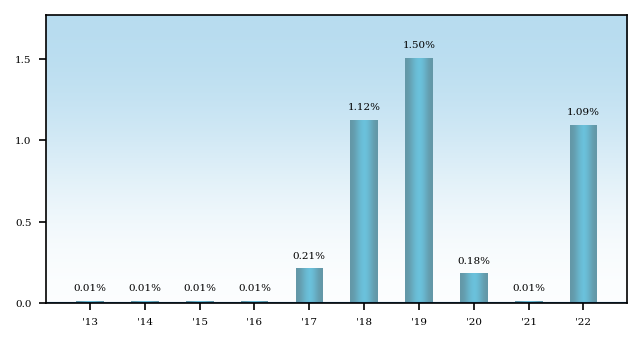
The
following bar chart and table provide some indication of the potential risks of investing in the fund. The fund’s past performance
is not necessarily an indication of how the fund will perform in the future. Updated performance information is available online
at www.firstamericanfunds.com or by calling 800 677-3863.
The
bar chart shows you the variability of the fund’s performance from year to year. The table illustrates the fund’s
average annual total returns over the time periods indicated.
The performance shown in the bar chart and performance table is the performance of the fund’s
predecessor entity, Government Obligations Fund, a series of First American Funds, Inc. (the
“Predecessor Fund”), prior to the commencement of the fund’s operations. On December 22,
2023 the fund acquired all of the assets, subject to the liabilities, of the Predecessor Fund
through a tax-free reorganization (the “Reorganization”). As a result of the Reorganization, the
fund adopted the performance and financial history of the Predecessor Fund. The fund has the
same investment objective, strategy, risks and investment adviser as the Predecessor Fund.
As a result, the performance of the fund would have been substantially similar to that of the
Predecessor Fund.
The
bar chart shows the performance of the Predecessor Fund’s Class A shares which was adopted by the Class A shares of the fund for
periods prior to the Reorganization. If the Predecessor Fund’s investment adviser had not waived or reimbursed certain Predecessor
Fund expenses during these periods, the Predecessor Fund’s returns would have been lower.
|
| ANNUAL TOTAL RETURNS AS OF 12/31 EACH YEAR
|
|
| Best Quarter: |
Quarter
ended December 31, 2022 |
0.72% |
| |
|
|
| Worst Quarter: |
Quarter
ended March
31, 2022* |
0.00% |
| |
|
|
| * |
|
Most recent quarter
with this return during the period of the chart. |
|
| AVERAGE
ANNUAL TOTAL RETURNS
AS OF 12/31/22
|
| Government Obligations Fund | Class A Shares | Risk Lose Money [Member]
|
| You
could lose money by investing in the fund.
|
| Government Obligations Fund | Class A Shares | Credit Risk [Member]
|
Credit
Risk — The value of your investment might decline if the issuer of an obligation held by the fund defaults on the obligation
or has its credit rating downgraded.
|
| Government Obligations Fund | Class A Shares | Interest Rate Risk [Member]
|
Interest
Rate Risk — The value of your investment might decline because of a sharp rise in interest rates that causes the value
of the fund’s portfolio holdings to fall. During periods when interest rates are low or there are negative interest rates,
the fund’s yield (and total return) also may be low or the fund may be unable to maintain positive returns.
|
| Government Obligations Fund | Class A Shares | Market Risk [Member]
|
Market
Risk — Market volatility, dramatic changes to interest rates, and otherwise unfavorable
economic conditions resulting from major cybersecurity events, geopolitical events (including
wars, such as Russia’s invasion of Ukraine, tensions in the Middle East, terror attacks, and
disruptions to foreign economic and trade relationships), public health emergencies, among
other events, may negatively impact the fund’s performance or impair the fund’s ability to
achieve its investment objective.
|
| Government Obligations Fund | Class A Shares | Liquidity Risk [Member]
|
Liquidity
Risk — The fund may not be able to sell a security in a timely manner or at a desired price, or may be unable to sell
the security at all, because of a lack of demand in the market for the security.
|
| Government Obligations Fund | Class A Shares | Redemption Risk [Member]
|
Redemption
Risk — If there are unexpectedly high redemptions of fund shares, the fund might have to sell portfolio securities prior
to their maturity, possibly at a loss.
|
| Government Obligations Fund | Class A Shares | Repurchase Agreement Risk [Member]
|
Repurchase
Agreement Risk — If the seller of a repurchase agreement defaults on its obligation to repurchase securities from the
fund, the fund may incur costs in disposing of the collateral and may experience losses if there is any delay in its ability to
do so.
|
| Government Obligations Fund | Class A Shares | Income Risk [Member]
|
Income
Risk — The level of income you receive from the fund will be affected by movements in short-term interest rates.
|
| Government Obligations Fund | Class A Shares | Cybersecurity Risk [Member]
|
Cybersecurity
Risk — The fund may be subject to operational and informational security risks resulting from breaches in cybersecurity
at the fund, the fund’s affiliates or service providers. A cybersecurity breach at an issuer of securities in which the
fund invests may cause such securities to lose value.
|
| Government Obligations Fund | Class A Shares | Regulatory Risk [Member]
|
Regulatory
Risk — Changes to monetary policy by the Federal Reserve or other regulatory actions may impact the fund’s operations,
universe of potential investment options, and return potential.
|
| Government Obligations Fund | Class D Shares
|
| Government
Obligations Fund
|
| Investment
Objective
|
Government
Obligations Fund’s objective is to seek maximum current income to the extent consistent with the preservation of capital
and maintenance of liquidity.
|
| Fees
and Expenses
|
The
following tables describe the fees and expenses that you may pay if you buy, hold, and sell shares of the fund. You may pay other fees,
such as brokerage commissions and other fees to financial intermediaries, which are not reflected in the tables and examples below.
|
| Shareholder
Fees (fees
paid directly from your investment)
|
| Annual
Fund Operating Expenses (expenses
that you pay each year as a percentage of the value of your investment)
|
Example:
This example is intended to help you compare the cost of investing in the fund with the cost of investing in other mutual funds.
The example assumes that you invest $10,000 in the fund for the time periods indicated and then redeem all of your shares at the
end of those periods. The example also assumes that your investment has a 5% return each year and the fund’s operating expenses
remain the same (except that the example incorporates the fund’s expense limitation arrangements for only the first year
of each period presented). You would incur these hypothetical expenses whether or not you redeem your investment at the end of
the given period. Although your actual costs may be higher or lower, based on these assumptions your costs would be:
|
| Principal
Investment Strategies
|
Government
Obligations Fund invests exclusively in short-term U.S. government securities, including repurchase agreements secured by U.S.
government securities. U.S. government securities are bonds or other debt obligations issued or guaranteed as to principal and
interest by the U.S. government or one of its agencies or instrumentalities. U.S. Treasury securities and some obligations of
U.S. government agencies and instrumentalities are supported by the full faith and credit of the U.S. government. Other U.S. government
securities are backed by the right of the issuer to borrow from the U.S. Treasury. Still others are supported only by the credit
of the issuer or instrumentality.
|
| Principal
Risks
|
| Fund
Performance
|
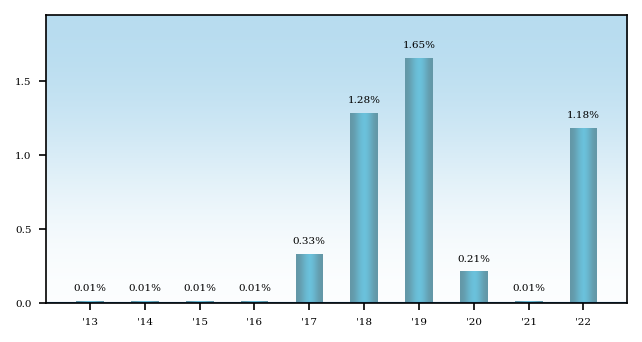
The
following bar chart and table provide some indication of the potential risks of investing in the fund. The fund’s past performance
is not necessarily an indication of how the fund will perform in the future. Updated performance information is available online
at www.firstamericanfunds.com or by calling 800 677-3863.
The
bar chart shows you the variability of the fund’s performance from year to year. The table illustrates the fund’s
average annual total returns over the time periods indicated.
The performance shown in the bar chart and performance table is the performance of the fund’s
predecessor entity, Government Obligations Fund, a series of First American Funds, Inc. (the
“Predecessor Fund”), prior to the commencement of the fund’s operations. On December 22,
2023 the fund acquired all of the assets, subject to the liabilities, of the Predecessor Fund
through a tax-free reorganization (the “Reorganization”). As a result of the Reorganization, the
fund adopted the performance and financial history of the Predecessor Fund. The fund has the
same investment objective, strategy, risks and investment adviser as the Predecessor Fund.
As a result, the performance of the fund would have been substantially similar to that of the
Predecessor Fund.
The bar
chart shows the performance of the Predecessor Fund’s Class D shares which was adopted by the Class D shares of the fund
for periods prior to the Reorganization. If the Predecessor Fund’s investment adviser had not waived or reimbursed certain
Predecessor Fund expenses during these periods, the Predecessor Fund’s returns would have been lower.
|
| ANNUAL TOTAL RETURNS AS OF 12/31 EACH YEAR
|
|
| Best
Quarter: |
Quarter ended
December 31, 2022 |
0.75% |
| Worst Quarter: |
Quarter ended March
31, 2022* |
0.00% |
| * |
|
Most
recent quarter with this return during the period of the chart. |
|
| AVERAGE ANNUAL TOTAL RETURNS AS OF 12/31/22
|
| Government Obligations Fund | Class D Shares | Risk Lose Money [Member]
|
| You
could lose money by investing in the fund.
|
| Government Obligations Fund | Class D Shares | Credit Risk [Member]
|
Credit
Risk — The value of your investment might decline if the issuer of an obligation held by the fund defaults on the obligation
or has its credit rating downgraded.
|
| Government Obligations Fund | Class D Shares | Interest Rate Risk [Member]
|
Interest
Rate Risk — The value of your investment might decline because of a sharp rise in interest rates that causes the value
of the fund’s portfolio holdings to fall. During periods when interest rates are low or there are negative interest rates,
the fund’s yield (and total return) also may be low or the fund may be unable to maintain positive returns.
|
| Government Obligations Fund | Class D Shares | Market Risk [Member]
|
Market
Risk — Market volatility, dramatic changes to interest rates, and otherwise unfavorable
economic conditions resulting from major cybersecurity events, geopolitical events (including
wars, such as Russia’s invasion of Ukraine, tensions in the Middle East, terror attacks, and
disruptions to foreign economic and trade relationships), public health emergencies, among
other events, may negatively impact the fund’s performance or impair the fund’s ability to
achieve its investment objective.
|
| Government Obligations Fund | Class D Shares | Liquidity Risk [Member]
|
Liquidity
Risk — The fund may not be able to sell a security in a timely manner or at a desired price, or may be unable to sell
the security at all, because of a lack of demand in the market for the security.
|
| Government Obligations Fund | Class D Shares | Redemption Risk [Member]
|
Redemption
Risk — If there are unexpectedly high redemptions of fund shares, the fund might have to sell portfolio securities prior
to their maturity, possibly at a loss.
|
| Government Obligations Fund | Class D Shares | Repurchase Agreement Risk [Member]
|
Repurchase
Agreement Risk — If the seller of a repurchase agreement defaults on its obligation to repurchase securities from the
fund, the fund may incur costs in disposing of the collateral and may experience losses if there is any delay in its ability to
do so.
|
| Government Obligations Fund | Class D Shares | Income Risk [Member]
|
Income
Risk — The level of income you receive from the fund will be affected by movements in short-term interest rates.
|
| Government Obligations Fund | Class D Shares | Cybersecurity Risk [Member]
|
Cybersecurity
Risk — The fund may be subject to operational and informational security risks resulting from breaches in cybersecurity
at the fund, the fund’s affiliates or service providers. A cybersecurity breach at an issuer of securities in which the
fund invests may cause such securities to lose value.
|
| Government Obligations Fund | Class D Shares | Regulatory Risk [Member]
|
Regulatory
Risk — Changes to monetary policy by the Federal Reserve or other regulatory actions may impact the fund’s operations,
universe of potential investment options, and return potential.
|
| Government Obligations Fund | Class P Shares
|
| Government
Obligations Fund
|
| Investment
Objective
|
Government
Obligations Fund’s objective is to seek maximum current income to the extent consistent with the preservation of capital
and maintenance of liquidity.
|
| Fees
and Expenses
|
The
following tables describe the fees and expenses that you may pay if you buy, hold, and sell shares of the fund. You may pay other fees,
such as brokerage commissions and other fees to financial intermediaries, which are not reflected in the tables and examples below.
|
| Shareholder
Fees
(fees paid directly from your investment)
|
| Annual Fund Operating
Expenses
(expenses that you pay each year as a percentage of the value of your investment)
|
Example:
This example is intended to help you compare the cost of investing in the fund with the cost of investing in other mutual
funds. The example assumes that you invest $10,000 in the fund for the time periods indicated and then redeem all of your shares
at the end of those periods. The example also assumes that your investment has a 5% return each year and the fund’s operating
expenses remain the same (except that the example incorporates the fund’s expense limitation arrangements for only the first
year of each period presented). You would incur these hypothetical expenses whether or not you redeem your investment at the end
of the given period. Although your actual costs may be higher or lower, based on these assumptions your costs would be:
|
| Principal
Investment Strategies
|
Government
Obligations Fund invests exclusively in short-term U.S. government securities, including repurchase agreements secured by U.S.
government securities. U.S. government securities are bonds or other debt obligations issued or guaranteed as to principal and
interest by the U.S. government or one of its agencies or instrumentalities. U.S. Treasury securities and some obligations of
U.S. government agencies and instrumentalities are supported by the full faith and credit of the U.S. government. Other U.S. government
securities are backed by the right of the issuer to borrow from the U.S. Treasury. Still others are supported only by the credit
of the issuer or instrumentality.
|
| Principal
Risks
|
| Fund
Performance
|
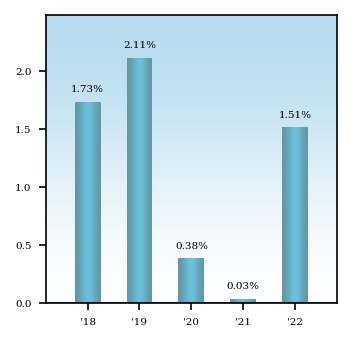
The
following bar chart and table provide some indication of the potential risks of investing in the fund. The fund’s past performance
is not necessarily an indication of how the fund will perform in the future. Updated performance information is available online
at www.firstamericanfunds.com or by calling 800 677-3863.
The
bar chart shows you the variability of the fund’s performance from year to year. The table illustrates the fund’s
average annual total returns over the time periods indicated.
The performance shown in the bar chart and performance table is the performance of the fund's
predecessor entity, Government Obligations Fund, a series of First American Funds, Inc. (the
“Predecessor Fund”), prior to the commencement of the fund’s operations. On December 22,
2023 the fund acquired all of the assets, subject to the liabilities, of the Predecessor Fund
through a tax-free reorganization (the “Reorganization”). As a result of the Reorganization, the
fund adopted the performance and financial history of the Predecessor Fund. The fund has the
same investment objective, strategy, risks and investment adviser as the Predecessor Fund. As a
result, the performance of the fund would have been substantially similar to that of the
Predecessor Fund.
The
bar chart shows the performance of the Predecessor Fund’s Class P shares which was adopted by the Class P shares of the
fund for periods prior to the Reorganization. If the Predecessor Fund’s investment adviser had not waived or reimbursed
certain Predecessor Fund expenses during these periods, the Predecessor Fund’s returns would have been lower.
|
| ANNUAL TOTAL RETURNS AS OF 12/31 EACH YEAR
|
|
| Best
Quarter: |
Quarter
ended December 31, 2022 |
0.87% |
| Worst
Quarter: |
Quarter ended
March
31, 2022* |
0.00% |
| * |
|
Most recent quarter with this return
during the period of the chart. |
|
| AVERAGE
ANNUAL TOTAL RETURNS
AS OF 12/31/22
|
| Government Obligations Fund | Class P Shares | Risk Lose Money [Member]
|
| You
could lose money by investing in the fund.
|
| Government Obligations Fund | Class P Shares | Credit Risk [Member]
|
Credit Risk
— The value of your investment might decline if the issuer of an obligation held by the fund defaults on the obligation
or has its credit rating downgraded.
|
| Government Obligations Fund | Class P Shares | Interest Rate Risk [Member]
|
Interest
Rate Risk — The value of your investment might decline because of a sharp rise in interest rates that causes the value
of the fund’s portfolio holdings to fall. During periods when interest rates are low or there are negative interest rates,
the fund’s yield (and total return) also may be low or the fund may be unable to maintain positive returns.
|
| Government Obligations Fund | Class P Shares | Market Risk [Member]
|
Market Risk
— Market volatility, dramatic changes to interest rates, and otherwise unfavorable
economic conditions resulting from major cybersecurity events, geopolitical events (including
wars, such as Russia's invasion of Ukraine, tensions in the Middle East, terror attacks, and
disruptions to foreign economic and trade relationships), public health emergencies, among
other events, may negatively impact the fund's performance or impair the fund's ability to
achieve its investment objective.
|
| Government Obligations Fund | Class P Shares | Liquidity Risk [Member]
|
Liquidity
Risk — The fund may not be able to sell a security in a timely manner or at a desired price, or may be unable to sell
the security at all, because of a lack of demand in the market for the security.
|
| Government Obligations Fund | Class P Shares | Redemption Risk [Member]
|
Redemption
Risk — If there are unexpectedly high redemptions of fund shares, the fund might have to sell portfolio securities prior
to their maturity, possibly at a loss.
|
| Government Obligations Fund | Class P Shares | Repurchase Agreement Risk [Member]
|
Repurchase
Agreement Risk — If the seller of a repurchase agreement defaults on its obligation to repurchase securities from the
fund, the fund may incur costs in disposing of the collateral and may experience losses if there is any delay in its ability to
do so.
|
| Government Obligations Fund | Class P Shares | Income Risk [Member]
|
Income Risk
— The level of income you receive from the fund will be affected by movements in short-term interest rates.
|
| Government Obligations Fund | Class P Shares | Cybersecurity Risk [Member]
|
Cybersecurity
Risk — The fund may be subject to operational and informational security risks resulting from breaches in cybersecurity
at the fund, the fund’s affiliates or service providers. A cybersecurity breach at an issuer of securities in which the
fund invests may cause such securities to lose value.
|
| Government Obligations Fund | Class P Shares | Regulatory Risk [Member]
|
Regulatory
Risk — Changes to monetary policy by the Federal Reserve or other regulatory actions may impact the fund’s operations,
universe of potential investment options, and return potential.
|
| Government Obligations Fund | Class T Shares
|
| Government
Obligations Fund
|
| Investment
Objective
|
Government
Obligations Fund’s objective is to seek maximum current income to the extent consistent with the preservation of capital
and maintenance of liquidity.
|
| Fees
and Expenses
|
The
following tables describe the fees and expenses that you may pay if you buy, hold, and sell shares of the fund. You may pay other fees,
such as brokerage commissions and other fees to financial intermediaries, which are not reflected in the tables and examples below.
|
| Shareholder Fees
(fees paid directly from your investment)
|
| Annual Fund Operating Expenses
(expenses that you pay each year as a percentage of the value of your investment)
|
Example:
This example is intended to help you compare the cost of investing in the fund with the cost of investing in other mutual
funds. The example assumes that you invest $10,000 in the fund for the time periods indicated and then redeem all of your shares
at the end of those periods. The example also assumes that your investment has a 5% return each year and the fund’s operating
expenses remain the same (except that the example incorporates the fund’s expense limitation arrangements for only the first
year of each period presented). You would incur these hypothetical expenses whether or not you redeem your investment at the end
of the given period. Although your actual costs may be higher or lower, based on these assumptions your costs would be:
|
| Principal
Investment Strategies
|
Government
Obligations Fund invests exclusively in short-term U.S. government securities, including repurchase agreements secured by U.S.
government securities. U.S. government securities are bonds or other debt obligations issued or guaranteed as to principal and
interest by the U.S. government or one of its agencies or instrumentalities. U.S. Treasury securities and some obligations of
U.S. government agencies and instrumentalities are supported by the full faith and credit of the U.S. government. Other U.S. government
securities are backed by the right of the issuer to borrow from the U.S. Treasury. Still others are supported only by the credit
of the issuer or instrumentality.
|
| Principal
Risks
|
| Fund
Performance
|
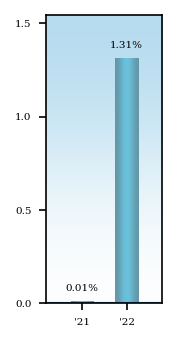
The
following bar chart and table provide some indication of the potential risks of investing in the fund. The fund’s past performance
is not necessarily an indication of how the fund will perform in the future. Updated performance information is available online
at firstamericanfunds.com or by calling 800 677-3863.
The
bar chart shows the fund’s Class T performance for the period indicated. The table illustrates the fund’s average
annual total returns over the time periods indicated. The bar chart does not reflect sales loads as none are applicable to Class
T shares.
The performance shown in the bar chart and performance table is the performance of the fund’s
predecessor entity, Government Obligations Fund, a series of First American Funds, Inc. (the
“Predecessor Fund”), prior to the commencement of the fund’s operations. On December 22,
2023 the fund acquired all of the assets, subject to the liabilities, of the Predecessor Fund
through a tax-free reorganization (the “Reorganization”). As a result of the Reorganization, the
fund adopted the performance and financial history of the Predecessor Fund. The fund has the
same investment objective, strategy, risks and investment adviser as the Predecessor Fund.
As a result, the performance of the fund would have been substantially similar to that of the
Predecessor Fund.
The bar chart shows the performance
of the Predecessor Fund’s Class T shares which was adopted by the Class T shares of the fund for periods prior to the Reorganization.
If the Predecessor Fund’s investment adviser had not waived or reimbursed certain Predecessor Fund expenses during these
periods, the Predecessor Fund’s returns would have been lower.
|
| ANNUAL TOTAL RETURNS AS OF 12/31 EACH YEAR
|
|
| Best Quarter: |
Quarter ended
December
31, 2022 |
0.80% |
| Worst Quarter: |
Quarter ended March
31, 2022* |
0.00% |
| * |
|
Most recent quarter with this return during the period of the chart. |
|
| AVERAGE
ANNUAL TOTAL RETURNS
AS OF 12/31/22
|
| Government Obligations Fund | Class T Shares | Risk Lose Money [Member]
|
| You
could lose money by investing in the fund.
|
| Government Obligations Fund | Class T Shares | Credit Risk [Member]
|
Credit
Risk — The value of your investment might decline if the issuer of an obligation held by the fund defaults on the obligation
or has its credit rating downgraded.
|
| Government Obligations Fund | Class T Shares | Interest Rate Risk [Member]
|
Interest
Rate Risk — The value of your investment might decline because of a sharp rise in interest rates that causes the value
of the fund’s portfolio holdings to fall. During periods when interest rates are low or there are negative interest rates,
the fund’s yield (and total return) also may be low or the fund may be unable to maintain positive returns.
|
| Government Obligations Fund | Class T Shares | Market Risk [Member]
|
Market
Risk — Market volatility, dramatic changes to interest rates, and otherwise unfavorable
economic conditions resulting from major cybersecurity events, geopolitical events (including
wars, such as Russia’s invasion of Ukraine, tensions in the Middle East, terror attacks, and
disruptions to foreign economic and trade relationships), public health emergencies, among
other events, may negatively impact the fund’s performance or impair the fund’s ability to
achieve its investment objective.
|
| Government Obligations Fund | Class T Shares | Liquidity Risk [Member]
|
Liquidity
Risk — The fund may not be able to sell a security in a timely manner or at a desired price, or may be unable to sell
the security at all, because of a lack of demand in the market for the security.
|
| Government Obligations Fund | Class T Shares | Redemption Risk [Member]
|
Redemption
Risk — If there are unexpectedly high redemptions of fund shares, the fund might have to sell portfolio securities prior
to their maturity, possibly at a loss.
|
| Government Obligations Fund | Class T Shares | Repurchase Agreement Risk [Member]
|
Repurchase
Agreement Risk — If the seller of a repurchase agreement defaults on its obligation to repurchase securities from the
fund, the fund may incur costs in disposing of the collateral and may experience losses if there is any delay in its ability to
do so.
|
| Government Obligations Fund | Class T Shares | Income Risk [Member]
|
Income
Risk — The level of income you receive from the fund will be affected by movements in short-term interest rates.
|
| Government Obligations Fund | Class T Shares | Cybersecurity Risk [Member]
|
Cybersecurity
Risk — The fund may be subject to operational and informational security risks resulting from breaches in cybersecurity
at the fund, the fund’s affiliates or service providers. A cybersecurity breach at an issuer of securities in which the
fund invests may cause such securities to lose value.
|
| Government Obligations Fund | Class T Shares | Regulatory Risk [Member]
|
Regulatory
Risk — Changes to monetary policy by the Federal Reserve or other regulatory actions may impact the fund’s operations,
universe of potential investment options, and return potential.
|
| Government Obligations Fund | Class U Shares
|
| Government Obligations Fund
|
| Investment Objective
|
Government Obligations Fund’s objective
is to seek maximum current income to the extent consistent with the preservation of capital and maintenance of liquidity.
|
| Fees and Expenses
|
The
following tables describe the fees and expenses that you may pay if you buy, hold, and sell shares of the fund. You may pay other fees,
such as brokerage commissions and other fees to financial intermediaries, which are not reflected in the tables and examples below.
|
| Shareholder Fees (fees paid directly from your investment)
|
| Annual Fund Operating Expenses (expenses that you pay each year as a percentage of the value of your investment)
|
Example: This example
is intended to help you compare the cost of investing in the fund with the cost of investing in other mutual funds. The example
assumes that you invest $10,000 in the fund for the time periods indicated and then redeem all of your shares at the end of those
periods. The example also assumes that your investment has a 5% return each year and the fund’s operating expenses remain
the same (except that the example incorporates the fund’s expense limitation arrangements for only the first year of each
period presented). You would incur these hypothetical expenses whether or not you redeem your investment at the end of the given
period. Although your actual costs may be higher or lower, based on these assumptions your costs would be:
|
| Principal Investment Strategies
|
Government Obligations Fund invests exclusively
in short-term U.S. government securities, including repurchase agreements secured by U.S. government securities. U.S. government
securities are bonds or other debt obligations issued or guaranteed as to principal and interest by the U.S. government or one
of its agencies or instrumentalities. U.S. Treasury securities and some obligations of U.S. government agencies and instrumentalities
are supported by the full faith and credit of the U.S. government. Other U.S. government securities are backed by the right of
the issuer to borrow from the U.S. Treasury. Still others are supported only by the credit of the issuer or instrumentality.
|
| Principal Risks
|
| Fund Performance
|
The following bar chart and table provide some
indication of the potential risks of investing in the fund. The fund’s past performance is not necessarily an indication
of how the fund will perform in the future. Updated performance information is available online at www.firstamericanfunds.com or
by calling 800 677-3863.
The bar chart shows you the variability of the fund’s
performance from year to year. The table illustrates the fund’s average annual total returns over the time periods indicated.
The performance shown in the bar chart and performance table is the performance of the fund’s
predecessor entity, Government Obligations Fund, a series of First American Funds, Inc. (the
“Predecessor Fund”), prior to the commencement of the fund’s operations. On December 22,
2023 the fund acquired all of the assets, subject to the liabilities, of the Predecessor Fund
through a tax-free reorganization (the “Reorganization”). As a result of the Reorganization, the
fund adopted the performance and financial history of the Predecessor Fund. The fund has the
same investment objective, strategy, risks and investment adviser as the Predecessor Fund.
As a result, the performance of the fund would have been substantially similar to that of the
Predecessor Fund.
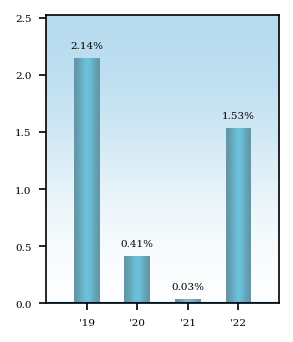
The bar chart shows the performance
of the Predecessor Fund’s Class U shares which was adopted by the Class U shares of the fund for periods prior to the Reorganization.
If the Predecessor Fund’s investment adviser had not waived or reimbursed certain Predecessor Fund expenses during these
periods, the Predecessor Fund’s returns would have been lower.
|
| ANNUAL TOTAL RETURNS AS OF 12/31 EACH YEAR
|
|
| Best Quarter: |
Quarter
ended December 31, 2022 |
0.88% |
| |
|
|
| Worst Quarter: |
Quarter
ended March
31, 2022* |
0.01% |
| |
|
|
| * |
|
Most recent quarter with this return during the period of the chart. |
|
| AVERAGE
ANNUAL TOTAL RETURNS
AS OF 12/31/22
|
| Government Obligations Fund | Class U Shares | Risk Lose Money [Member]
|
| You could lose money by investing in the fund.
|
| Government Obligations Fund | Class U Shares | Credit Risk [Member]
|
Credit Risk — The value of your investment
might decline if the issuer of an obligation held by the fund defaults on the obligation or has its credit rating downgraded.
|
| Government Obligations Fund | Class U Shares | Interest Rate Risk [Member]
|
Interest Rate Risk — The value of
your investment might decline because of a sharp rise in interest rates that causes the value of the fund’s portfolio holdings
to fall. During periods when interest rates are low or there are negative interest rates, the fund’s yield (and total return)
also may be low or the fund may be unable to maintain positive returns.
|
| Government Obligations Fund | Class U Shares | Market Risk [Member]
|
Market Risk — Market volatility, dramatic changes to interest rates, and otherwise unfavorable
economic conditions resulting from major cybersecurity events, geopolitical events (including
wars, such as Russia's invasion of Ukraine, tensions in the Middle East, terror attacks, and
disruptions to foreign economic and trade relationships), public health emergencies, among
other events, may negatively impact the fund's performance or impair the fund's ability to
achieve its investment objective.
|
| Government Obligations Fund | Class U Shares | Liquidity Risk [Member]
|
Liquidity Risk — The fund may not
be able to sell a security in a timely manner or at a desired price, or may be unable to sell the security at all, because of a
lack of demand in the market for the security.
|
| Government Obligations Fund | Class U Shares | Redemption Risk [Member]
|
Redemption Risk — If there are unexpectedly
high redemptions of fund shares, the fund might have to sell portfolio securities prior to their maturity, possibly at a loss.
|
| Government Obligations Fund | Class U Shares | Repurchase Agreement Risk [Member]
|
Repurchase Agreement Risk — If the
seller of a repurchase agreement defaults on its obligation to repurchase securities from the fund, the fund may incur costs in
disposing of the collateral and may experience losses if there is any delay in its ability to do so.
|
| Government Obligations Fund | Class U Shares | Income Risk [Member]
|
Income Risk — The level of income you
receive from the fund will be affected by movements in short-term interest rates.
|
| Government Obligations Fund | Class U Shares | Cybersecurity Risk [Member]
|
Cybersecurity Risk —
The fund may be subject to operational and informational security risks resulting from breaches in cybersecurity at the fund, the
fund’s affiliates or service providers. A cybersecurity breach at an issuer of securities in which the fund invests may cause
such securities to lose value.
|
| Government Obligations Fund | Class U Shares | Regulatory Risk [Member]
|
Regulatory Risk — Changes to monetary
policy by the Federal Reserve or other regulatory actions may impact the fund’s operations, universe of potential investment
options, and return potential.
|
| Government Obligations Fund | Class V Shares
|
| Government
Obligations Fund
|
| Investment
Objective
|
Government
Obligations Fund’s objective is to seek maximum current income to the extent consistent with the preservation of capital
and maintenance of liquidity.
|
| Fees
and Expenses
|
The
following tables describe the fees and expenses that you may pay if you buy, hold, and sell shares of the fund. You may pay other fees,
such as brokerage commissions and other fees to financial intermediaries, which are not reflected in the tables and examples below.
|
| Shareholder Fees (fees paid directly from your investment)
|
| Annual Fund Operating Expenses (expenses that you pay each year as a percentage of the value of your investment)
|
Example:
This example is intended to help you compare the cost of investing in the fund with the cost of investing in other mutual
funds. The example assumes that you invest $10,000 in the fund for the time periods indicated and then redeem all of your shares
at the end of those periods. The example also assumes that your investment has a 5% return each year and the fund’s operating
expenses remain the same (except that the example incorporates the fund’s expense limitation arrangements for only the first
year of each period presented). You would incur these hypothetical expenses whether or not you redeem your investment at the end
of the given period. Although your actual costs may be higher or lower, based on these assumptions your costs would be:
|
| Principal
Investment Strategies
|
Government
Obligations Fund invests exclusively in short-term U.S. government securities, including repurchase agreements secured by U.S.
government securities. U.S. government securities are bonds or other debt obligations issued or guaranteed as to principal and
interest by the U.S. government or one of its agencies or instrumentalities. U.S. Treasury securities and some obligations of
U.S. government agencies and instrumentalities are supported by the full faith and credit of the U.S. government. Other U.S. government
securities are backed by the right of the issuer to borrow from the U.S. Treasury. Still others are supported only by the credit
of the issuer or instrumentality.
|
| Principal
Risks
|
| Fund
Performance
|
The
following bar chart and table provide some indication of the potential risks of investing in the fund. The fund’s past performance
is not necessarily an indication of how the fund will perform in the future. Updated performance information is available online
at www.firstamericanfunds.com or by calling 800 677-3863.
The
bar chart shows you the variability of the fund’s performance from year to year. The table illustrates the fund’s
average annual total returns over the time periods indicated.
The performance shown in the bar chart and performance table is the performance of the fund’s
predecessor entity, Government Obligations Fund, a series of First American Funds, Inc. (the
“Predecessor Fund”), prior to the commencement of the fund’s operations. On December 22,
2023 the fund acquired all of the assets, subject to the liabilities, of the Predecessor Fund
through a tax-free reorganization (the “Reorganization”). As a result of the Reorganization, the
fund adopted the performance and financial history of the Predecessor Fund. The fund has the
same investment objective, strategy, risks and investment adviser as the Predecessor Fund.
As a result, the performance of the fund would have been substantially similar to that of the
Predecessor Fund.
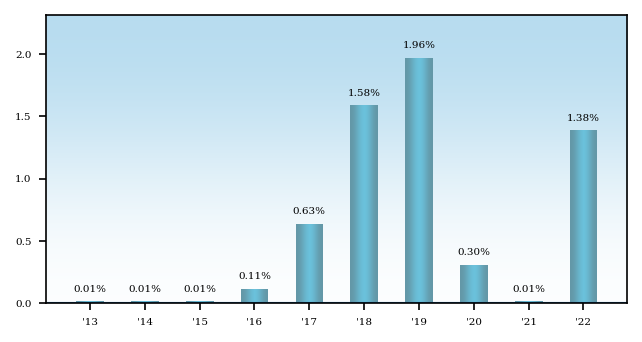
The bar chart shows the performance
of the Predecessor Fund’s Class V shares which was adopted by the Class V shares of the fund for periods prior to the Reorganization.
If the Predecessor Fund’s investment adviser had not waived or reimbursed certain Predecessor Fund expenses during these
periods, the Predecessor Fund’s returns would have been lower.
|
| ANNUAL TOTAL RETURNS AS OF 12/31 EACH YEAR
|
|
| Best Quarter: |
Quarter ended
December 31, 2022 |
0.83% |
| Worst Quarter: |
Quarter ended March
31, 2022* |
0.00% |
| * |
|
Most recent quarter with this return during the period of the chart. |
|
| AVERAGE
ANNUAL TOTAL RETURNS
AS OF 12/31/22
|
| Government Obligations Fund | Class V Shares | Risk Lose Money [Member]
|
| You
could lose money by investing in the fund.
|
| Government Obligations Fund | Class V Shares | Credit Risk [Member]
|
Credit
Risk — The value of your investment might decline if the issuer of an obligation held by the fund defaults on the obligation
or has its credit rating downgraded.
|
| Government Obligations Fund | Class V Shares | Interest Rate Risk [Member]
|
Interest
Rate Risk — The value of your investment might decline because of a sharp rise in interest rates that causes the value
of the fund’s portfolio holdings to fall. During periods when interest rates are low or there are negative interest rates,
the fund’s yield (and total return) also may be low or the fund may be unable to maintain positive returns.
|
| Government Obligations Fund | Class V Shares | Market Risk [Member]
|
Market
Risk — Market volatility, dramatic changes to interest rates, and otherwise unfavorable
economic conditions resulting from major cybersecurity events, geopolitical events (including
wars, such as Russia’s invasion of Ukraine, tensions in the Middle East, terror attacks, and
disruptions to foreign economic and trade relationships), public health emergencies, among
other events, may negatively impact the fund’s performance or impair the fund’s ability to
achieve its investment objective.
|
| Government Obligations Fund | Class V Shares | Liquidity Risk [Member]
|
Liquidity
Risk — The fund may not be able to sell a security in a timely manner or at a desired price, or may be unable to sell
the security at all, because of a lack of demand in the market for the security.
|
| Government Obligations Fund | Class V Shares | Redemption Risk [Member]
|
Redemption
Risk — If there are unexpectedly high redemptions of fund shares, the fund might have to sell portfolio securities prior
to their maturity, possibly at a loss.
|
| Government Obligations Fund | Class V Shares | Repurchase Agreement Risk [Member]
|
Repurchase
Agreement Risk — If the seller of a repurchase agreement defaults on its obligation to repurchase securities from the
fund, the fund may incur costs in disposing of the collateral and may experience losses if there is any delay in its ability to
do so.
|
| Government Obligations Fund | Class V Shares | Income Risk [Member]
|
Income
Risk — The level of income you receive from the fund will be affected by movements in short-term interest rates.
|
| Government Obligations Fund | Class V Shares | Cybersecurity Risk [Member]
|
Cybersecurity
Risk — The fund may be subject to operational and informational security risks resulting from breaches in cybersecurity
at the fund, the fund’s affiliates or service providers. A cybersecurity breach at an issuer of securities in which the
fund invests may cause such securities to lose value.
|
| Government Obligations Fund | Class V Shares | Regulatory Risk [Member]
|
Regulatory
Risk — Changes to monetary policy by the Federal Reserve or other regulatory actions may impact the fund’s operations,
universe of potential investment options, and return potential.
|
| Government Obligations Fund | Class X Shares
|
| Government
Obligations Fund
|
| Investment Objective
|
Government Obligations Fund’s objective is
to seek maximum current income to the extent consistent with the preservation of capital and maintenance of liquidity.
|
| Fees and Expenses
|
The
following tables describe the fees and expenses that you may pay if you buy, hold, and sell shares of the fund. You may pay other fees,
such as brokerage commissions and other fees to financial intermediaries, which are not reflected in the tables and examples below.
|
| Shareholder Fees
(fees paid directly from your investment)
|
| Annual Fund Operating Expenses
(expenses that you pay each year as a percentage of the value of your investment)
|
Example: This example is intended to help
you compare the cost of investing in the fund with the cost of investing in other mutual funds. The example assumes that you invest
$10,000 in the fund for the time periods indicated and then redeem all of your shares at the end of those periods. The example
also assumes that your investment has a 5% return each year and the fund’s operating expenses remain the same (except that
the example incorporates the fund’s expense limitation arrangements for only the first year of each period presented). You
would incur these hypothetical expenses whether or not you redeem your investment at the end of the given period. Although your
actual costs may be higher or lower, based on these assumptions your costs would be:
|
| Principal Investment Strategies
|
Government Obligations Fund invests exclusively
in short-term U.S. government securities, including repurchase agreements secured by U.S. government securities. U.S. government
securities are bonds or other debt obligations issued or guaranteed as to principal and interest by the U.S. government or one
of its agencies or instrumentalities. U.S. Treasury securities and some obligations of U.S. government agencies and instrumentalities
are supported by the full faith and credit of the U.S. government. Other U.S. government securities are backed by the right of
the issuer to borrow from the U.S. Treasury. Still others are supported only by the credit of the issuer or instrumentality.
|
| Principal Risks
|
| Fund Performance
|
The following bar chart and table provide some indication
of the potential risks of investing in the fund. The fund’s past performance is not necessarily an indication of how the
fund will perform in the future. Updated performance information is available online at www.firstamericanfunds.com or by calling
800 677-3863.
The bar chart shows you the variability of the fund’s
performance from year to year. The table illustrates the fund’s average annual returns over the time periods indicated.
The performance shown in the bar chart and performance table is the performance of the fund’s
predecessor entity, Government Obligations Fund, a series of First American Funds, Inc. (the
“Predecessor Fund”), prior to the commencement of the fund’s operations. On December 22,
2023 the fund acquired all of the assets, subject to the liabilities, of the Predecessor Fund
through a tax-free reorganization (the “Reorganization”). As a result of the Reorganization, the
fund adopted the performance and financial history of the Predecessor Fund. The fund has the
same investment objective, strategy, risks and investment adviser as the Predecessor Fund.
As a result, the performance of the fund would have been substantially similar to that of the
Predecessor Fund.
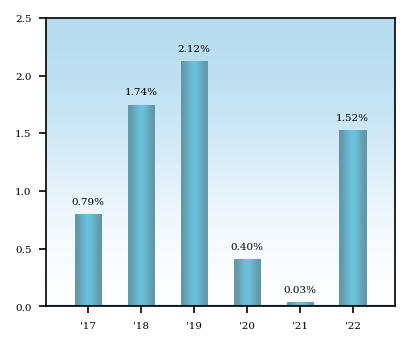
The bar chart shows
the performance of the Predecessor Fund’s Class X shares which was adopted by the Class X shares of the fund for periods
prior to the Reorganization. If the Predecessor Fund’s investment adviser had not waived or reimbursed certain Predecessor
Fund expenses during these periods, the Predecessor Fund’s returns would have been lower.
|
| ANNUAL TOTAL RETURNS AS OF 12/31 EACH YEAR
|
|
| Best
Quarter: |
Quarter ended
December 31, 2022 |
0.87% |
| Worst Quarter: |
Quarter ended March
31, 2022* |
0.01% |
| * |
|
Most recent quarter with this return during the period of the chart. |
|
| AVERAGE
ANNUAL TOTAL RETURNS
AS OF 12/31/22
|
| Government Obligations Fund | Class X Shares | Risk Lose Money [Member]
|
| You could lose money by investing in the fund.
|
| Government Obligations Fund | Class X Shares | Credit Risk [Member]
|
Credit Risk — The value of your investment
might decline if the issuer of an obligation held by the fund defaults on the obligation or has its credit rating downgraded.
|
| Government Obligations Fund | Class X Shares | Interest Rate Risk [Member]
|
Interest Rate Risk — The value of your
investment might decline because of a sharp rise in interest rates that causes the value of the fund’s portfolio holdings
to fall. During periods when interest rates are low or there are negative interest rates, the fund’s yield (and total return)
also may be low or the fund may be unable to maintain positive returns.
|
| Government Obligations Fund | Class X Shares | Market Risk [Member]
|
Market Risk — Market volatility, dramatic changes to interest rates, and otherwise unfavorable
economic conditions resulting from major cybersecurity events, geopolitical events (including
wars, such as Russia’s invasion of Ukraine, tensions in the Middle East, terror attacks, and
disruptions to foreign economic and trade relationships), public health emergencies, among
other events, may negatively impact the fund’s performance or impair the fund’s ability to
achieve its investment objective.
|
| Government Obligations Fund | Class X Shares | Liquidity Risk [Member]
|
Liquidity Risk — The fund may not be
able to sell a security in a timely manner or at a desired price, or may be unable to sell the security at all, because of a lack
of demand in the market for the security.
|
| Government Obligations Fund | Class X Shares | Redemption Risk [Member]
|
Redemption Risk — If there are unexpectedly
high redemptions of fund shares, the fund might have to sell portfolio securities prior to their maturity, possibly at a loss.
|
| Government Obligations Fund | Class X Shares | Repurchase Agreement Risk [Member]
|
Repurchase Agreement Risk — If the
seller of a repurchase agreement defaults on its obligation to repurchase securities from the fund, the fund may incur costs in
disposing of the collateral and may experience losses if there is any delay in its ability to do so.
|
| Government Obligations Fund | Class X Shares | Income Risk [Member]
|
Income Risk — The level of income you
receive from the fund will be affected by movements in short-term interest rates.
|
| Government Obligations Fund | Class X Shares | Cybersecurity Risk [Member]
|
Cybersecurity Risk — The fund may be
subject to operational and informational security risks resulting from breaches in cybersecurity at the fund, the fund’s
affiliates or service providers. A cybersecurity breach at an issuer of securities in which the fund invests may cause such securities
to lose value.
|
| Government Obligations Fund | Class X Shares | Regulatory Risk [Member]
|
Regulatory Risk — Changes to monetary
policy by the Federal Reserve or other regulatory actions may impact the fund’s operations, universe of potential investment
options, and return potential.
|
| Government Obligations Fund | Class Y Shares
|
| Government Obligations Fund
|
| Investment Objective
|
Government Obligations Fund’s objective
is to seek maximum current income to the extent consistent with the preservation of capital and maintenance of liquidity.
|
| Fees and Expenses
|
The following tables describe the fees and expenses that you may pay if you buy, hold and sell shares of the fund. You may pay other fees, such as brokerage commissions and other fees to financial intermediaries, which are not reflected in the tables and examples below.
|
| Shareholder
Fees
(fees paid directly from your investment)
|
| Annual
Fund Operating Expenses
(expenses that you pay each year as a percentage of the value of your investment)
|
Example: This example
is intended to help you compare the cost of investing in the fund with the cost of investing in other mutual funds. The example
assumes that you invest $10,000 in the fund for the time periods indicated and then redeem all of your shares at the end of those
periods. The example also assumes that your investment has a 5% return each year and the fund’s operating expenses remain
the same (except that the example incorporates the fund’s expense limitation arrangements for only the first year of each
period presented). You would incur these hypothetical expenses whether or not you redeem your investment at the end of the given
period. Although your actual costs may be higher or lower, based on these assumptions your costs would be:
|
| Principal Investment Strategies
|
Government Obligations Fund invests exclusively
in short-term U.S. government securities, including repurchase agreements secured by U.S. government securities. U.S. government
securities are bonds or other debt obligations issued or guaranteed as to principal and interest by the U.S. government or one
of its agencies or instrumentalities. U.S. Treasury securities and some obligations of U.S. government agencies and instrumentalities
are supported by the full faith and credit of the U.S. government. Other U.S. government securities are backed by the right of
the issuer to borrow from the U.S. Treasury. Still others are supported only by the credit of the issuer or instrumentality.
|
| Principal Risks
|
| Fund Performance
|
The following bar chart and table provide some
indication of the potential risks of investing in the fund. The fund’s past performance is not necessarily an indication
of how the fund will perform in the future. Updated performance information is available online at www.firstamericanfunds.com or
by calling 800 677-3863.
The bar chart shows you the variability of the fund’s
performance from year to year. The table illustrates the fund’s average annual total returns over the time periods indicated.
The performance shown in the bar chart and performance table is the performance of the fund’s
predecessor entity, Government Obligations Fund, a series of First American Funds, Inc. (the
“Predecessor Fund”), prior to the commencement of the fund’s operations. On December 22,
2023 the fund acquired all of the assets, subject to the liabilities, of the Predecessor Fund
through a tax-free reorganization (the “Reorganization”). As a result of the Reorganization, the
fund adopted the performance and financial history of the Predecessor Fund. The fund has the
same investment objective, strategy, risks and investment adviser as the Predecessor Fund.
As a result, the performance of the fund would have been substantially similar to that of the
Predecessor Fund.
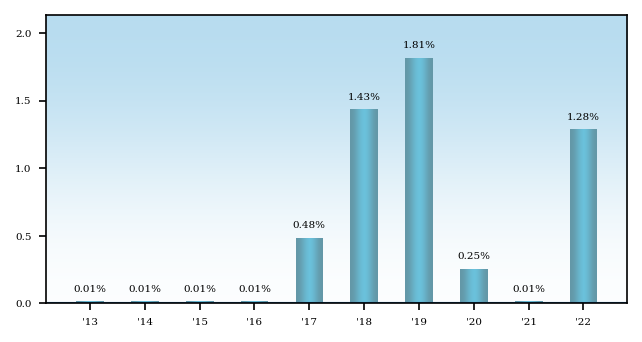
The bar chart shows the performance of the Predecessor
Fund’s Class Y shares which was adopted by the Class Y shares of the fund for periods prior to the Reorganization. If the
Predecessor Fund’s investment adviser had not waived or reimbursed certain Predecessor Fund expenses during these periods,
the Predecessor Fund’s returns would have been lower.
|
| ANNUAL TOTAL RETURNS AS OF 12/31 EACH YEAR
|
|
| Best Quarter: |
Quarter
ended December 31, 2022 |
0.87% |
| |
|
|
| Worst Quarter: |
Quarter
ended March
31, 2022* |
0.01% |
| |
|
|
| * |
|
Most recent quarter with this return during the period of the chart. |
|
| AVERAGE
ANNUAL TOTAL RETURNS
AS OF 12/31/22
|
| Government Obligations Fund | Class Y Shares | Risk Lose Money [Member]
|
| You could lose money by investing in the fund.
|
| Government Obligations Fund | Class Y Shares | Credit Risk [Member]
|
Credit Risk — The value of your investment
might decline if the issuer of an obligation held by the fund defaults on the obligation or has its credit rating downgraded.
|
| Government Obligations Fund | Class Y Shares | Interest Rate Risk [Member]
|
Interest Rate Risk — The value of
your investment might decline because of a sharp rise in interest rates that causes the value of the fund’s portfolio holdings
to fall. During periods when interest rates are low or there are negative interest rates, the fund’s yield (and total return)
also may be low or the fund may be unable to maintain positive returns.
|
| Government Obligations Fund | Class Y Shares | Market Risk [Member]
|
Market Risk — Market volatility, dramatic changes to interest rates, and otherwise unfavorable
economic conditions resulting from major cybersecurity events, geopolitical events (including
wars, such as Russia’s invasion of Ukraine, tensions in the Middle East, terror attacks, and
disruptions to foreign economic and trade relationships), public health emergencies, among
other events, may negatively impact the fund’s performance or impair the fund’s ability to
achieve its investment objective.
|
| Government Obligations Fund | Class Y Shares | Liquidity Risk [Member]
|
Liquidity Risk — The fund may not
be able to sell a security in a timely manner or at a desired price, or may be unable to sell the security at all, because of a
lack of demand in the market for the security.
|
| Government Obligations Fund | Class Y Shares | Redemption Risk [Member]
|
Redemption Risk — If there are unexpectedly
high redemptions of fund shares, the fund might have to sell portfolio securities prior to their maturity, possibly at a loss.
|
| Government Obligations Fund | Class Y Shares | Repurchase Agreement Risk [Member]
|
Repurchase Agreement Risk — If the
seller of a repurchase agreement defaults on its obligation to repurchase securities from the fund, the fund may incur costs in
disposing of the collateral and may experience losses if there is any delay in its ability to do so.
|
| Government Obligations Fund | Class Y Shares | Income Risk [Member]
|
Income Risk — The level of income you
receive from the fund will be affected by movements in short-term interest rates.
|
| Government Obligations Fund | Class Y Shares | Cybersecurity Risk [Member]
|
Cybersecurity Risk —
The fund may be subject to operational and informational security risks resulting from breaches in cybersecurity at the fund, the
fund’s affiliates or service providers. A cybersecurity breach at an issuer of securities in which the fund invests may cause
such securities to lose value.
|
| Government Obligations Fund | Class Y Shares | Regulatory Risk [Member]
|
Regulatory Risk — Changes to monetary
policy by the Federal Reserve or other regulatory actions may impact the fund’s operations, universe of potential investment
options, and return potential.
|
| Government Obligations Fund | Class Z Shares
|
| Government
Obligations Fund
|
| Investment
Objective
|
Government
Obligations Fund’s objective is to seek maximum current income to the extent consistent with the preservation of capital
and maintenance of liquidity.
|
| Fees
and Expenses
|
The
following tables describe the fees and expenses that you may pay if you buy, hold, and sell shares of the fund. You may pay other fees,
such as brokerage commissions and other fees to financial intermediaries, which are not reflected in the tables and examples below.
|
| Shareholder
Fees
(fees paid directly from your investment)
|
| Annual
Fund Operating Expenses
(expenses that you pay each year as a percentage of the value of your investment)
|
Example:
This example is intended to help you compare the cost of investing in the fund with the cost of investing in other mutual
funds. The example assumes that you invest $10,000 in the fund for the time periods indicated and then redeem all of your shares
at the end of those periods. The example also assumes that your investment has a 5% return each year and the fund’s operating
expenses remain the same (except that the example incorporates the fund’s expense limitation arrangements for only the first
year of each period presented). You would incur these hypothetical expenses whether or not you redeem your investment at the end
of the given period. Although your actual costs may be higher or lower, based on these assumptions your costs would be:
|
| Principal
Investment Strategies
|
Government
Obligations Fund invests exclusively in short-term U.S. government securities, including repurchase agreements secured by U.S.
government securities. U.S. government securities are bonds or other debt obligations issued or guaranteed as to principal and
interest by the U.S. government or one of its agencies or instrumentalities. U.S. Treasury securities and some obligations of
U.S. government agencies and instrumentalities are supported by the full faith and credit of the U.S. government. Other U.S. government
securities are backed by the right of the issuer to borrow from the U.S. Treasury. Still others are supported only by the credit
of the issuer or instrumentality.
|
| Principal
Risks
|
| Fund
Performance
|
The
following bar chart and table provide some indication of the potential risks of investing in the fund. The fund’s past performance
is not necessarily an indication of how the fund will perform in the future. Updated performance information is available online
at www.firstamericanfunds.com or by calling 800 677-3863.
The
bar chart shows you the variability of the fund’s performance from year to year. The table illustrates the fund’s
average annual total returns over the time periods indicated.
The performance shown in the bar chart and performance table is the performance of the fund’s
predecessor entity, Government Obligations Fund, a series of First American Funds, Inc. (the
“Predecessor Fund”), prior to the commencement of the fund’s operations. On December 22,
2023 the fund acquired all of the assets, subject to the liabilities, of the Predecessor Fund
through a tax-free reorganization (the “Reorganization”). As a result of the Reorganization, the
fund adopted the performance and financial history of the Predecessor Fund. The fund has the
same investment objective, strategy, risks and investment adviser as the Predecessor Fund.
As a result, the performance of the fund would have been substantially similar to that of the
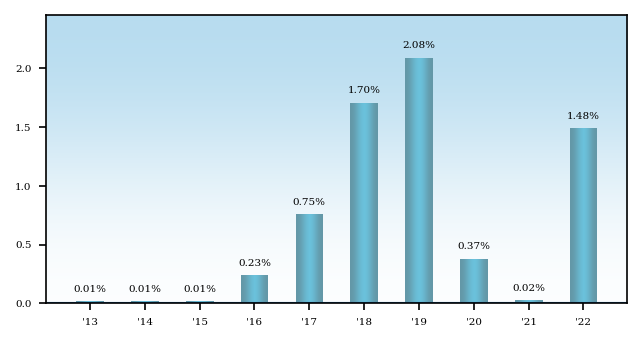
Predecessor Fund.
The bar chart shows the performance
of the Predecessor Fund’s Class Z shares which was adopted by the Class Z shares of the fund for periods prior to the Reorganization.
If the Predecessor Fund’s investment adviser had not waived or reimbursed certain Predecessor Fund expenses during these
periods, the Predecessor Fund’s returns would have been lower.
|
| ANNUAL TOTAL RETURNS AS OF 12/31 EACH YEAR
|
|
|
| Best
Quarter: |
Quarter ended
December 31, 2022 |
0.86% |
| Worst Quarter: |
Quarter ended December
31, 2021* |
0.00% |
| * |
|
Most recent quarter with this return during the period of the chart. |
|
| AVERAGE
ANNUAL TOTAL RETURNS
AS OF 12/31/22
|
| Government Obligations Fund | Class Z Shares | Risk Lose Money [Member]
|
| You
could lose money by investing in the fund.
|
| Government Obligations Fund | Class Z Shares | Credit Risk [Member]
|
Credit
Risk — The value of your investment might decline if the issuer of an obligation held by the fund defaults on the obligation
or has its credit rating downgraded.
|
| Government Obligations Fund | Class Z Shares | Interest Rate Risk [Member]
|
Interest
Rate Risk — The value of your investment might decline because of a sharp rise in interest rates that causes the value
of the fund’s portfolio holdings to fall. During periods when interest rates are low or there are negative interest rates,
the fund’s yield (and total return) also may be low or the fund may be unable to maintain positive returns.
|
| Government Obligations Fund | Class Z Shares | Market Risk [Member]
|
Market
Risk — Market volatility, dramatic changes to interest rates, and otherwise unfavorable
economic conditions resulting from major cybersecurity events, geopolitical events (including
wars, such as Russia’s invasion of Ukraine, tensions in the Middle East, terror attacks, and
disruptions to foreign economic and trade relationships), public health emergencies, among
other events, may negatively impact the fund’s performance or impair the fund’s ability to
achieve its investment objective.
|
| Government Obligations Fund | Class Z Shares | Liquidity Risk [Member]
|
Liquidity
Risk — The fund may not be able to sell a security in a timely manner or at a desired price, or may be unable to sell
the security at all, because of a lack of demand in the market for the security.
|
| Government Obligations Fund | Class Z Shares | Redemption Risk [Member]
|
Redemption
Risk — If there are unexpectedly high redemptions of fund shares, the fund might have to sell portfolio securities prior
to their maturity, possibly at a loss.
|
| Government Obligations Fund | Class Z Shares | Repurchase Agreement Risk [Member]
|
Repurchase
Agreement Risk — If the seller of a repurchase agreement defaults on its obligation to repurchase securities from the
fund, the fund may incur costs in disposing of the collateral and may experience losses if there is any delay in its ability to
do so.
|
| Government Obligations Fund | Class Z Shares | Income Risk [Member]
|
Income
Risk — The level of income you receive from the fund will be affected by movements in short-term interest rates.
|
| Government Obligations Fund | Class Z Shares | Cybersecurity Risk [Member]
|
Cybersecurity
Risk — The fund may be subject to operational and informational security risks resulting from breaches in cybersecurity
at the fund, the fund’s affiliates or service providers. A cybersecurity breach at an issuer of securities in which the
fund invests may cause such securities to lose value.
|
| Government Obligations Fund | Class Z Shares | Regulatory Risk [Member]
|
Regulatory
Risk — Changes to monetary policy by the Federal Reserve or other regulatory actions may impact the fund’s operations,
universe of potential investment options, and return potential.
|
| Government Obligations Fund
|
|
|
|
|
|
|
Average Annual Total Returns - Government Obligations Fund
|
1 Year |
5 Years |
10 Years |
Bar Chart, Year to Date Return |
Since Inception |
Inception Date |
| Class A Shares |
1.09%
|
[1] |
0.78%
|
[1] |
0.41%
|
[1] |
3.17%
|
|
|
Sep. 24, 2001
|
[1] |
| Class D Shares |
1.18%
|
[2] |
0.86%
|
[2] |
0.47%
|
[2] |
3.28%
|
|
|
Jan. 21, 1995
|
[2] |
| Class P Shares |
1.51%
|
[3] |
1.15%
|
[3] |
1.15%
|
[3] |
3.62%
|
|
|
Dec. 18, 2017
|
[3] |
| Class T Shares |
1.31%
|
[4] |
|
|
|
|
3.44%
|
0.58%
|
[4] |
Sep. 18, 2020
|
[4] |
| Class U Shares |
1.53%
|
[5] |
|
|
|
|
3.65%
|
1.17%
|
[5] |
Feb. 26, 2018
|
[5] |
| Class V Shares |
1.38%
|
[6] |
1.04%
|
[6] |
0.60%
|
[6] |
3.52%
|
|
|
Mar. 31, 2006
|
[6] |
| Class X Shares |
1.52%
|
[7] |
1.16%
|
[7] |
1.01%
|
[7] |
3.64%
|
|
|
Apr. 05, 2016
|
[7] |
| Class Y Shares |
1.52%
|
[8] |
1.16%
|
[8] |
1.01%
|
[8] |
3.40%
|
|
|
Mar. 01, 1990
|
[8] |
| Class Z Shares |
1.48%
|
[9] |
1.13%
|
[9] |
0.66%
|
[9] |
3.61%
|
|
|
Dec. 01, 2003
|
[9] |
|
| Retail Prime Obligations Fund | Class A Shares
|
| Retail
Prime Obligations Fund
|
| Investment
Objective
|
Retail
Prime Obligations Fund’s objective is to seek maximum current income to the extent consistent with the preservation of capital
and maintenance of liquidity.
|
| Fees
and Expenses
|
The
following tables describe the fees and expenses that you may pay if you buy, hold, and sell shares of the fund. You may pay other fees,
such as brokerage commissions and other fees to financial intermediaries, which are not reflected in the tables and examples below.
|
| Shareholder Fees (fees paid directly from your investment)
|
| Annual Fund Operating Expenses (expenses that you pay each year as a percentage of the value of your investment)
|
Example:
This example is intended to help you compare the cost of investing in the fund with the cost of investing in other mutual
funds. The example assumes that you invest $10,000 in the fund for the time periods indicated and then redeem all of your shares
at the end of those periods. The example also assumes that your investment has a 5% return each year and the fund’s operating
expenses remain the same (except that the example incorporates the fund’s expense limitation arrangements for only the first
year of each period presented). You would incur these hypothetical expenses whether or not you redeem your investment at the end
of the given period. Although your actual costs may be higher or lower, based on these assumptions your costs would be:
|
| Principal
Investment Strategies
|
Retail
Prime Obligations Fund invests in high-quality short-term debt obligations, including:
| ● | U.S.
dollar-denominated obligations of domestic and foreign banks with total assets of at least $500 million (including fixed and variable
rate certificates of deposit, time deposits, and bankers’ acceptances); |
| ● | non-convertible
corporate debt securities; |
| ● | securities
issued by the U.S. government or one of its agencies or instrumentalities; |
| ● | municipal
securities, including variable rate demand notes, commercial paper, and municipal notes and other short-term municipal obligations; |
| ● | loan
participation interests; and |
The fund concentrates its investments in the banking industry. Therefore, under normal market
conditions, the fund will invest more than 25% of its total assets in obligations issued by
companies in the banking industry. The fund may, however, invest 25% or less of its total assets
in this industry as a temporary defensive measure.
The
adviser will only purchase (and hold) securities that it determines present minimal credit risk. If a security is no longer determined
to present minimal credit risk, the adviser will make every attempt to sell the security, unless it has determined that it would
not be in the best interest of the fund to dispose of the security at that time and, where necessary, has obtained the approval
of the fund’s board of trustees to continue to hold the security.
|
| Principal
Risks
|
| Fund
Performance
|
The
following bar chart and table provide some indication of the potential risks of investing in the fund. The fund’s past performance
is not necessarily an indication of how the fund will perform in the future. Updated performance information is available online
at www.firstamericanfunds.com or by calling 800 677-3863.
The
bar chart shows you the variability of the fund’s performance from year to year. The table illustrates the fund’s
average annual total returns over the time periods indicated.
The performance shown in the bar chart and performance table is the performance of the fund’s
predecessor entity, Retail Prime Obligations Fund, a series of First American Funds, Inc. (the
“Predecessor Fund”), prior to the commencement of the fund’s operations. On December 22,
2023 the fund acquired all of the assets, subject to the liabilities, of the Predecessor Fund
through a tax-free reorganization (the “Reorganization”). As a result of the Reorganization, the
fund adopted the performance and financial history of the Predecessor Fund. The fund has the
same investment objective, strategy, risks and investment adviser as the Predecessor Fund.
As a result, the performance of the fund would have been substantially similar to that of the
Predecessor Fund.
The
bar chart shows the performance of the Predecessor Fund’s Class A shares which was adopted by the Class A shares of the
fund for periods prior to the Reorganization. If the Predecessor Fund’s investment adviser had not waived or reimbursed
certain Predecessor Fund expenses during these periods, the Predecessor Fund’s returns would have been lower.
|
| ANNUAL TOTAL RETURNS AS OF 12/31 EACH YEAR
|
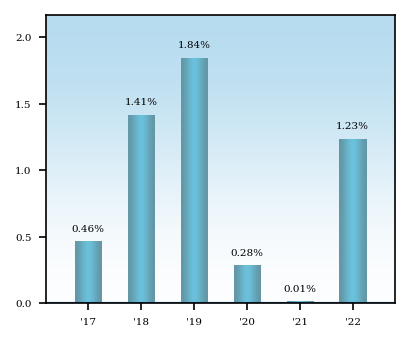
|
| Best Quarter: |
Quarter
ended December 31, 2022 |
0.78% |
| |
|
|
| Worst Quarter: |
Quarter
ended March
31, 2022* |
0.00% |
| |
|
|
| * |
|
Most recent quarter
with this return during the period of the chart. |
|
| AVERAGE
ANNUAL TOTAL RETURNS
AS OF 12/31/22
|
| Retail Prime Obligations Fund | Class A Shares | Risk Lose Money [Member]
|
| You
could lose money by investing in the fund.
|
| Retail Prime Obligations Fund | Class A Shares | Credit Risk [Member]
|
Credit
Risk — The value of your investment might decline if the issuer of an obligation held by the fund defaults on the obligation
or has its credit rating downgraded.
|
| Retail Prime Obligations Fund | Class A Shares | Interest Rate Risk [Member]
|
Interest
Rate Risk — The value of your investment might decline because of a sharp rise in interest rates that causes the value
of the fund’s portfolio holdings to fall. During periods when interest rates are low or there are negative interest rates,
the fund’s yield (and total return) also may be low or the fund may be unable to maintain positive returns.
|
| Retail Prime Obligations Fund | Class A Shares | Market Risk [Member]
|
Market
Risk — Market volatility, dramatic changes to interest rates, and otherwise unfavorable
economic conditions resulting from major cybersecurity events, geopolitical events (including
wars, such as Russia’s invasion of Ukraine, tensions in the Middle East, terror attacks, and
disruptions to foreign economic and trade relationships), public health emergencies, among
other events, may negatively impact the fund’s performance or impair the fund’s ability to
achieve its investment objective.
|
| Retail Prime Obligations Fund | Class A Shares | Liquidity Risk [Member]
|
Liquidity
Risk — The fund may not be able to sell a security in a timely manner or at a desired price, or may be unable to sell
the security at all, because of a lack of demand in the market for the security, or a liquidity provider defaults on its obligation
to purchase the security when properly tendered by the fund.
|
| Retail Prime Obligations Fund | Class A Shares | Redemption Risk [Member]
|
Redemption
Risk — If there are unexpectedly high redemptions of fund shares, the fund might have to sell portfolio securities prior
to their maturity, possibly at a loss.
|
| Retail Prime Obligations Fund | Class A Shares | Repurchase Agreement Risk [Member]
|
Repurchase
Agreement Risk — If the seller of a repurchase agreement defaults on its obligation to repurchase securities from the
fund, the fund may incur costs in disposing of the securities purchased and may experience losses if the proceeds from the sale
of the securities are less than the full repurchase price.
|
| Retail Prime Obligations Fund | Class A Shares | Income Risk [Member]
|
Income
Risk — The level of income you receive from the fund will be affected by movements in short-term interest rates.
|
| Retail Prime Obligations Fund | Class A Shares | Cybersecurity Risk [Member]
|
Cybersecurity
Risk — The fund may be subject to operational and informational security risks resulting from breaches in cybersecurity
at the fund, the fund’s affiliates or service providers. A cybersecurity breach at an issuer of securities in which the
fund invests may cause such securities to lose value.
|
| Retail Prime Obligations Fund | Class A Shares | Regulatory Risk [Member]
|
Regulatory
Risk — Changes to monetary policy by the Federal Reserve or other regulatory actions may impact the fund’s operations,
universe of potential investment options, and return potential.
|
| Retail Prime Obligations Fund | Class A Shares | Banking Industry Risk [Member]
|
Banking
Industry Risk — An adverse development in the banking industry (domestic or foreign) may affect the value of the fund’s
investments more than if the fund were not invested to such a degree in the banking industry. Banks may be particularly susceptible
to certain economic factors such as interest rate changes, adverse developments in the real estate market, fiscal, regulatory
and monetary policy and general economic cycles.
|
| Retail Prime Obligations Fund | Class A Shares | Foreign Security Risk [Member]
|
Foreign
Security Risk — Securities of foreign issuers, even when dollar denominated and publicly traded in the United States,
may involve risks not associated with the securities of domestic issuers. Uncertainty surrounding the sovereign debt of several
European Union countries, as well as the continued existence of the European Union itself, has disrupted and may continue to disrupt
markets in the United States and around the world. If a country changes its currency or leaves the European Union or if the European
Union dissolves, the world’s securities markets likely will be significantly disrupted.
|
| Retail Prime Obligations Fund | Class A Shares | Variable Rate Demand Note V R D N Risk [Member]
|
Variable
Rate Demand Note (VRDN) Risk — Investments in VRDNs involve credit risk with respect to the issuer or financial institution
providing the fund with the credit and liquidity support for the unconditional put option. While the fund invests only in VRDNs
of high quality issuers, or which are supported by high quality financial institutions, it is still possible that an issuer or
financial institution could default on its obligations.
|
| Retail Prime Obligations Fund | Class A Shares | Municipal Security Risk [Member]
|
Municipal
Security Risk — The value of municipal securities owned by the fund may be adversely affected by future changes in federal
income tax laws, including rate reductions or the imposition of a flat tax, and adverse changes in the financial conditions of
municipal securities issuers.
|
| Retail Prime Obligations Fund | Class T Shares
|
| Retail
Prime Obligations Fund
|
| Investment
Objective
|
Retail
Prime Obligations Fund’s objective is to seek maximum current income to the extent consistent with the preservation of capital
and maintenance of liquidity.
|
| Fees
and Expenses
|
The
following tables describe the fees and expenses that you may pay if you buy, hold, and sell shares of the fund. You may pay other fees,
such as brokerage commissions and other fees to financial intermediaries, which are not reflected in the tables and examples below.
|
| Shareholder Fees
(fees paid directly from your investment)
|
| Annual Fund Operating Expenses
(expenses that you pay each year as a percentage of the value of your investment)
|
Example:
This example is intended to help you compare the cost of investing in the fund with the cost of investing in other mutual
funds. The example assumes that you invest $10,000 in the fund for the time periods indicated and then redeem all of your shares
at the end of those periods. The example also assumes that your investment has a 5% return each year and the fund’s operating
expenses remain the same (except that the example incorporates the fund’s expense limitation arrangements for only the first
year of each period presented). You would incur these hypothetical expenses whether or not you redeem your investment at the end
of the given period. Although your actual costs may be higher or lower, based on these assumptions your costs would be:
|
| Principal
Investment Strategies
|
Retail
Prime Obligations Fund invests in high-quality short-term debt obligations, including:
| ● | U.S.
dollar-denominated obligations of domestic and foreign banks with total assets of at
least $500 million (including fixed and variable rate certificates of deposit, time deposits,
and bankers’ acceptances); |
| ● | non-convertible
corporate debt securities; |
| ● | securities
issued by the U.S. government or one of its agencies or instrumentalities; |
| ● | municipal
securities, including variable rate demand notes, commercial paper, and municipal notes
and other short-term municipal obligations; |
| ● | loan
participation interests; and |
The fund concentrates its investments in the banking industry. Therefore, under normal market
conditions, the fund will invest more than 25% of its total assets in obligations issued by
companies in the banking industry. The fund may, however, invest 25% or less of its total assets
in this industry as a temporary defensive measure.
The
adviser will only purchase (and hold) securities that it determines present minimal credit risk. If a security is no longer determined
to present minimal credit risk, the adviser will make every attempt to sell the security, unless it has determined that it would
not be in the best interest of the fund to dispose of the security at that time and, where necessary, has obtained the approval
of the fund’s board of trustees to continue to hold the security.
|
| Principal
Risks
|
| Fund
Performance
|
The
following bar chart and table provide some indication of the potential risks of investing in the fund. The fund’s past performance
is not necessarily an indication of how the fund will perform in the future. Updated performance information is available online
at www.firstamericanfunds.com or by calling 800 677-3863.
The
bar chart shows you the variability of the fund’s performance from year to year. The table illustrates the fund’s
average annual total returns over the time periods indicated.
The performance shown in the bar chart and performance table is the performance of the fund’s
predecessor entity, Retail Prime Obligations Fund, a series of First American Funds, Inc. (the
“Predecessor Fund”), prior to the commencement of the fund’s operations. On December 22,
2023 the fund acquired all of the assets, subject to the liabilities, of the Predecessor Fund
through a tax-free reorganization (the “Reorganization”). As a result of the Reorganization, the
fund adopted the performance and financial history of the Predecessor Fund. The fund has the
same investment objective, strategy, risks and investment adviser as the Predecessor Fund.
As a result, the performance of the fund would have been substantially similar to that of the
Predecessor Fund.
The bar chart shows the performance
of the Predecessor Fund’s Class T shares which was adopted by the Class T shares of the fund for periods prior to the Reorganization.
If the Predecessor Fund’s investment adviser had not waived or reimbursed certain Predecessor Fund expenses during these
periods, the Predecessor Fund’s returns would have been lower.
|
| ANNUAL TOTAL RETURNS AS OF 12/31 EACH YEAR
|
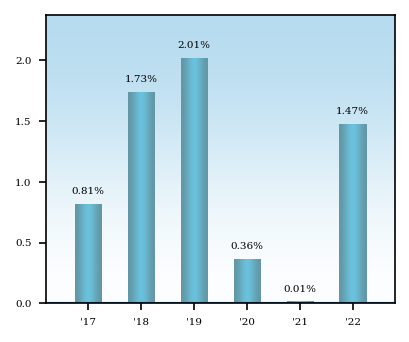
|
| Best Quarter: |
Quarter ended
December 31, 2022 |
0.87% |
| Worst Quarter: |
Quarter ended March
31, 2022* |
0.00% |
| * |
|
Most recent quarter with this return during the period of the chart. |
|
| AVERAGE
ANNUAL TOTAL RETURNS
AS OF 12/31/22
|
| Retail Prime Obligations Fund | Class T Shares | Risk Lose Money [Member]
|
| You
could lose money by investing in the fund.
|
| Retail Prime Obligations Fund | Class T Shares | Credit Risk [Member]
|
Credit
Risk — The value of your investment might decline if the issuer of an obligation held by the fund defaults on the obligation
or has its credit rating downgraded.
|
| Retail Prime Obligations Fund | Class T Shares | Interest Rate Risk [Member]
|
Interest
Rate Risk — The value of your investment might decline because of a sharp rise in interest rates that causes the value
of the fund’s portfolio holdings to fall. During periods when interest rates are low or there are negative interest rates,
the fund’s yield (and total return) also may be low or the fund may be unable to maintain positive returns.
|
| Retail Prime Obligations Fund | Class T Shares | Market Risk [Member]
|
Market
Risk — Market volatility, dramatic changes to interest rates, and otherwise unfavorable
economic conditions resulting from major cybersecurity events, geopolitical events (including
wars, such as Russia’s invasion of Ukraine, tensions in the Middle East, terror attacks, and
disruptions to foreign economic and trade relationships), public health emergencies, among
other events, may negatively impact the fund’s performance or impair the fund’s ability to
achieve its investment objective.
|
| Retail Prime Obligations Fund | Class T Shares | Liquidity Risk [Member]
|
Liquidity
Risk — The fund may not be able to sell a security in a timely manner or at a desired price, or may be unable to sell
the security at all, because of a lack of demand in the market for the security, or a liquidity provider defaults on its obligation
to purchase the security when properly tendered by the fund.
|
| Retail Prime Obligations Fund | Class T Shares | Redemption Risk [Member]
|
Redemption
Risk — If there are unexpectedly high redemptions of fund shares, the fund might have to sell portfolio securities prior
to their maturity, possibly at a loss.
|
| Retail Prime Obligations Fund | Class T Shares | Repurchase Agreement Risk [Member]
|
Repurchase
Agreement Risk — If the seller of a repurchase agreement defaults on its obligation to repurchase securities from the
fund, the fund may incur costs in disposing of the securities purchased and may experience losses if the proceeds from the sale
of the securities are less than the full repurchase price.
|
| Retail Prime Obligations Fund | Class T Shares | Income Risk [Member]
|
Income
Risk — The level of income you receive from the fund will be affected by movements in short-term interest rates.
|
| Retail Prime Obligations Fund | Class T Shares | Cybersecurity Risk [Member]
|
Cybersecurity
Risk — The fund may be subject to operational and informational security risks resulting from breaches in cybersecurity
at the fund, the fund’s affiliates or service providers. A cybersecurity breach at an issuer of securities in which the
fund invests may cause such securities to lose value.
|
| Retail Prime Obligations Fund | Class T Shares | Regulatory Risk [Member]
|
Regulatory
Risk — Changes to monetary policy by the Federal Reserve or other regulatory actions may impact the fund’s operations,
universe of potential investment options, and return potential.
|
| Retail Prime Obligations Fund | Class T Shares | Banking Industry Risk [Member]
|
Banking
Industry Risk — An adverse development in the banking industry (domestic or foreign) may affect the value of the fund’s
investments more than if the fund were not invested to such a degree in the banking industry. Banks may be particularly susceptible
to certain economic factors such as interest rate changes, adverse developments in the real estate market, fiscal, regulatory
and monetary policy and general economic cycles.
|
| Retail Prime Obligations Fund | Class T Shares | Foreign Security Risk [Member]
|
Foreign
Security Risk — Securities of foreign issuers, even when dollar denominated and publicly traded in the United States,
may involve risks not associated with the securities of domestic issuers. Uncertainty surrounding the sovereign debt of several
European Union countries, as well as the continued existence of the European Union itself, has disrupted and may continue to disrupt
markets in the United States and around the world. If a country changes its currency or leaves the European Union or if the European
Union dissolves, the world’s securities markets likely will be significantly disrupted.
|
| Retail Prime Obligations Fund | Class T Shares | Variable Rate Demand Note V R D N Risk [Member]
|
Variable
Rate Demand Note (VRDN) Risk — Investments in VRDNs involve credit risk with respect to the issuer or financial institution
providing the fund with the credit and liquidity support for the unconditional put option.
|
| Retail Prime Obligations Fund | Class T Shares | Municipal Security Risk [Member]
|
Municipal
Security Risk — The value of municipal securities owned by the fund may be adversely affected by future changes in federal
income tax laws, including rate reductions or the imposition of a flat tax, and adverse changes in the financial conditions of
municipal securities issuers.
|
| Retail Prime Obligations Fund | Class V Shares
|
| Retail
Prime Obligations Fund
|
| Investment
Objective
|
Retail
Prime Obligations Fund’s objective is to seek maximum current income to the extent consistent with the preservation of capital
and maintenance of liquidity.
|
| Fees
and Expenses
|
The
following tables describe the fees and expenses that you may pay if you buy, hold, and sell shares of the fund. You may pay other fees,
such as brokerage commissions and other fees to financial intermediaries, which are not reflected in the tables and examples below.
|
| Shareholder Fees (fees paid directly from your investment)
|
| Annual Fund Operating Expenses (expenses that you pay each year as a percentage of the value of your investment)
|
Example:
This example is intended to help you compare the cost of investing in the fund with the cost of investing in other mutual
funds. The example assumes that you invest $10,000 in the fund for the time periods indicated and then redeem all of your shares
at the end of those periods. The example also assumes that your investment has a 5% return each year and the fund’s operating
expenses remain the same (except that the example incorporates the fund’s expense limitation arrangements for only the first
year of each period presented). You would incur these hypothetical expenses whether or not you redeem your investment at the end
of the given period. Although your actual costs may be higher or lower, based on these assumptions your costs would be:
|
| Principal
Investment Strategies
|
Retail
Prime Obligations Fund invests in high-quality short-term debt obligations, including:
| ● | U.S.
dollar-denominated obligations of domestic and foreign banks with total assets of at
least $500 million (including fixed and variable rate certificates of deposit, time deposits,
and bankers’ acceptances); |
| ● | non-convertible
corporate debt securities; |
| ● | securities
issued by the U.S. government or one of its agencies or instrumentalities; |
| ● | municipal
securities, including variable rate demand notes, commercial paper, and municipal notes
and other short-term municipal obligations; |
| ● | loan
participation interests; and |
The fund concentrates its investments in the banking industry. Therefore, under normal market
conditions, the fund will invest more than 25% of its total assets in obligations issued by
companies in the banking industry. The fund may, however, invest 25% or less of its total assets
in this industry as a temporary defensive measure.
The
adviser will only purchase (and hold) securities that it determines present minimal credit risk. If a security is no longer determined
to present minimal credit risk, the adviser will make every attempt to sell the security, unless it has determined that it would
not be in the best interest of the fund to dispose of the security at that time and, where necessary, has obtained the approval
of the fund’s board of trustees to continue to hold the security.
|
| Principal
Risks
|
| Fund
Performance
|
The
following bar chart and table provide some indication of the potential risks of investing in the fund. The fund’s past performance
is not necessarily an indication of how the fund will perform in the future. Updated performance information is available online
at www.firstamericanfunds.com or by calling 800 677-3863.
The
bar chart shows you the variability of the fund’s performance from year to year. The table illustrates the fund’s
average annual total returns over the time periods indicated.
The performance shown in the bar chart and performance table is the performance of the fund’s
predecessor entity, Retail Prime Obligations Fund, a series of First American Funds, Inc. (the
“Predecessor Fund”), prior to the commencement of the fund’s operations. On December 22,
2023 the fund acquired all of the assets, subject to the liabilities, of the Predecessor Fund
through a tax-free reorganization (the “Reorganization”). As a result of the Reorganization, the
fund adopted the performance and financial history of the Predecessor Fund. The fund has the
same investment objective, strategy, risks and investment adviser as the Predecessor Fund. As a
result, the performance of the fund would have been substantially similar to that of the
Predecessor Fund.
The
bar chart shows the performance of the Predecessor Fund’s Class V shares which was adopted by the Class V shares of the
fund for periods prior to the Reorganization. If the Predecessor Fund’s investment adviser had not waived or reimbursed
certain Predecessor Fund expenses during these periods, the Predecessor Fund’s returns would have been lower.
|
| ANNUAL TOTAL RETURNS AS OF 12/31 EACH YEAR
|
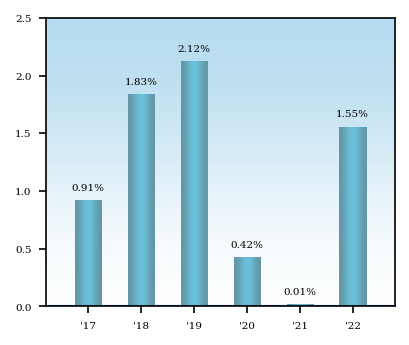
|
| Best Quarter: |
Quarter ended
December 31, 2022 |
0.89% |
| Worst Quarter: |
Quarter ended December
31, 2021* |
0.00% |
| * |
Most recent quarter with this return during the period of the chart. |
|
| AVERAGE
ANNUAL TOTAL RETURNS
AS OF 12/31/22
|
| Retail Prime Obligations Fund | Class V Shares | Risk Lose Money [Member]
|
| You
could lose money by investing in the fund.
|
| Retail Prime Obligations Fund | Class V Shares | Credit Risk [Member]
|
Credit
Risk — The value of your investment might decline if the issuer of an obligation held by the fund defaults on the obligation
or has its credit rating downgraded.
|
| Retail Prime Obligations Fund | Class V Shares | Interest Rate Risk [Member]
|
Interest
Rate Risk — The value of your investment might decline because of a sharp rise in interest rates that causes the value
of the fund’s portfolio holdings to fall. During periods when interest rates are low or there are negative interest rates,
the fund’s yield (and total return) also may be low or the fund may be unable to maintain positive returns.
|
| Retail Prime Obligations Fund | Class V Shares | Market Risk [Member]
|
Market
Risk — Market volatility, dramatic changes to interest rates, and otherwise unfavorable
economic conditions resulting from major cybersecurity events, geopolitical events (including
wars, such as Russia’s invasion of Ukraine, tensions in the Middle East, terror attacks, and
disruptions to foreign economic and trade relationships), public health emergencies, among
other events, may negatively impact the fund’s performance or impair the fund’s ability to
achieve its investment objective.
|
| Retail Prime Obligations Fund | Class V Shares | Liquidity Risk [Member]
|
Liquidity
Risk — The fund may not be able to sell a security in a timely manner or at a desired price, or may be unable to sell
the security at all, because of a lack of demand in the market for the security, or a liquidity provider defaults on its obligation
to purchase the security when properly tendered by the fund.
|
| Retail Prime Obligations Fund | Class V Shares | Redemption Risk [Member]
|
Redemption
Risk — If there are unexpectedly high redemptions of fund shares, the fund might have to sell portfolio securities prior
to their maturity, possibly at a loss.
|
| Retail Prime Obligations Fund | Class V Shares | Repurchase Agreement Risk [Member]
|
Repurchase
Agreement Risk — If the seller of a repurchase agreement defaults on its obligation to repurchase securities from the
fund, the fund may incur costs in disposing of the securities purchased and may experience losses if the proceeds from the sale
of the securities are less than the full repurchase price.
|
| Retail Prime Obligations Fund | Class V Shares | Income Risk [Member]
|
Income
Risk — The level of income you receive from the fund will be affected by movements in short-term interest rates.
|
| Retail Prime Obligations Fund | Class V Shares | Cybersecurity Risk [Member]
|
Cybersecurity
Risk — The fund may be subject to operational and informational security risks resulting from breaches in cybersecurity
at the fund, the fund’s affiliates or service providers. A cybersecurity breach at an issuer of securities in which the
fund invests may cause such securities to lose value.
|
| Retail Prime Obligations Fund | Class V Shares | Regulatory Risk [Member]
|
Regulatory
Risk — Changes to monetary policy by the Federal Reserve or other regulatory actions may impact the fund’s operations,
universe of potential investment options, and return potential.
|
| Retail Prime Obligations Fund | Class V Shares | Banking Industry Risk [Member]
|
Banking
Industry Risk — An adverse development in the banking industry (domestic or foreign) may affect the value of the fund’s
investments more than if the fund were not invested to such a degree in the banking industry. Banks may be particularly susceptible
to certain economic factors such as interest rate changes, adverse developments in the real estate market, fiscal, regulatory
and monetary policy and general economic cycles.
|
| Retail Prime Obligations Fund | Class V Shares | Foreign Security Risk [Member]
|
Foreign
Security Risk — Securities of foreign issuers, even when dollar denominated and publicly traded in the United States,
may involve risks not associated with the securities of domestic issuers. Uncertainty surrounding the sovereign debt of several
European Union countries, as well as the continued existence of the European Union itself, has disrupted and may continue to disrupt
markets in the United States and around the world. If a country changes its currency or leaves the European Union or if the European
Union dissolves, the world’s securities markets likely will be significantly disrupted.
|
| Retail Prime Obligations Fund | Class V Shares | Variable Rate Demand Note V R D N Risk [Member]
|
Variable
Rate Demand Note (VRDN) Risk — Investments in VRDNs involve credit risk with
respect to the issuer or financial institution providing the fund with the credit and liquidity
support for the unconditional put option.
|
| Retail Prime Obligations Fund | Class V Shares | Municipal Security Risk [Member]
|
Municipal
Security Risk — The value of municipal securities owned by the fund may be adversely affected by future changes in federal
income tax laws, including rate reductions or the imposition of a flat tax, and adverse changes in the financial conditions of
municipal securities issuers.
|
| Retail Prime Obligations Fund | Class X Shares
|
| Retail
Prime Obligations Fund
|
| Investment Objective
|
Retail Prime Obligations Fund’s objective
is to seek maximum current income to the extent consistent with the preservation of capital and maintenance of liquidity.
|
| Fees and Expenses
|
The
following tables describe the fees and expenses that you may pay if you buy, hold, and sell shares of the fund. You may pay other fees,
such as brokerage commissions and other fees to financial intermediaries, which are not reflected in the tables and examples below.
|
| Shareholder Fees
(fees paid directly from your investment)
|
| Annual Fund Operating Expenses
(expenses that you pay each year as a percentage of the value of your investment)
|
Example: This example is intended to help
you compare the cost of investing in the fund with the cost of investing in other mutual funds. The example assumes that you invest
$10,000 in the fund for the time periods indicated and then redeem all of your shares at the end of those periods. The example
also assumes that your investment has a 5% return each year and the fund’s operating expenses remain the same (except that
the example incorporates the fund’s expense limitation arrangements for only the first year of each period presented). You
would incur these hypothetical expenses whether or not you redeem your investment at the end of the given period. Although your
actual costs may be higher or lower, based on these assumptions your costs would be:
|
| Principal Investment Strategies
|
Retail Prime Obligations Fund invests in high-quality
short-term debt obligations, including:
| ● | U.S.
dollar-denominated obligations of domestic and foreign banks with total assets of at
least $500 million (including fixed and variable rate certificates of deposit, time deposits,
and bankers’ acceptances); |
| ● | non-convertible
corporate debt securities; |
| ● | securities
issued by the U.S. government or one of its agencies or instrumentalities; |
| ● | municipal
securities, including variable rate demand notes, commercial paper, and municipal notes
and other short-term municipal obligations; |
| ● | loan
participation interests; and |
The fund concentrates its investments in the banking industry. Therefore, under normal market
conditions, the fund will invest more than 25% of its total assets in obligations issued by
companies in the banking industry. The fund may, however, invest 25% or less of its total assets
in this industry as a temporary defensive measure.
The adviser will only purchase (and hold) securities
that it determines present minimal credit risk. If a security is no longer determined to present minimal credit risk, the adviser
will make every attempt to sell the security, unless it has determined that it would not be in the best interest of the fund to
dispose of the security at that time and, where necessary, has obtained the approval of the fund’s board of trustees to
continue to hold the security.
|
| Principal Risks
|
| Fund Performance
|
The following bar chart and table provide some indication
of the potential risks of investing in the fund. The fund’s past performance is not necessarily an indication of how the
fund will perform in the future. Updated performance information is available online at www.firstamericanfunds.com or by calling
800 677-3863.
The bar chart shows you the variability of the fund’s
performance from year to year. The table illustrates the fund’s average annual total returns over the time periods indicated.
The performance shown in the bar chart and performance table is the performance of the fund’s
predecessor entity, Retail Prime Obligations Fund, a series of First American Funds, Inc. (the
“Predecessor Fund”), prior to the commencement of the fund’s operations. On December 22,
2023 the fund acquired all of the assets, subject to the liabilities, of the Predecessor Fund
through a tax-free reorganization (the “Reorganization”). As a result of the Reorganization, the
fund adopted the performance and financial history of the Predecessor Fund. The fund has the
same investment objective, strategy, risks and investment adviser as the Predecessor Fund. As a
result, the performance of the fund would have been substantially similar to that of the
Predecessor Fund.
The bar chart shows
the performance of the Predecessor Fund’s Class X shares which was adopted by the Class X shares of the fund for periods
prior to the Reorganization. If the Predecessor Fund’s investment adviser had not waived or reimbursed certain Predecessor
Fund expenses during these periods, the Predecessor Fund’s returns would have been lower.
|
| ANNUAL TOTAL RETURNS AS OF 12/31 EACH YEAR
|
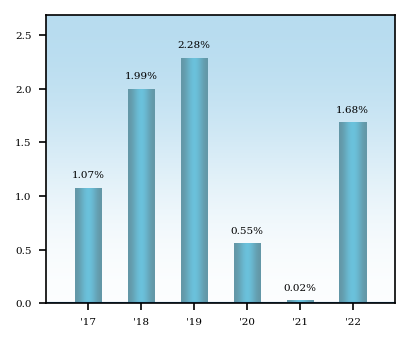
|
| Best
Quarter: |
Quarter ended
December 31, 2022 |
0.93% |
| Worst Quarter: |
Quarter ended December
31, 2021* |
0.00% |
| * |
|
Most recent quarter with this return during the period of the chart. |
|
| AVERAGE
ANNUAL TOTAL RETURNS
AS OF 12/31/22
|
| Retail Prime Obligations Fund | Class X Shares | Risk Lose Money [Member]
|
| You could lose money by investing in the fund.
|
| Retail Prime Obligations Fund | Class X Shares | Credit Risk [Member]
|
Credit Risk — The value of your investment
might decline if the issuer of an obligation held by the fund defaults on the obligation or has its credit rating downgraded.
|
| Retail Prime Obligations Fund | Class X Shares | Interest Rate Risk [Member]
|
Interest Rate Risk — The value of your
investment might decline because of a sharp rise in interest rates that causes the value of the fund’s portfolio holdings
to fall. During periods when interest rates are low or there are negative interest rates, the fund’s yield (and total return)
also may be low or the fund may be unable to maintain positive returns.
|
| Retail Prime Obligations Fund | Class X Shares | Market Risk [Member]
|
Market Risk — Market volatility, dramatic changes to interest rates, and otherwise unfavorable
economic conditions resulting from major cybersecurity events, geopolitical events (including
wars, such as Russia’s invasion of Ukraine, tensions in the Middle East, terror attacks, and
disruptions to foreign economic and trade relationships), public health emergencies, among
other events, may negatively impact the fund’s performance or impair the fund’s ability to
achieve its investment objective.
|
| Retail Prime Obligations Fund | Class X Shares | Liquidity Risk [Member]
|
Liquidity Risk —
The fund may not be able to sell a security in a timely manner or at a desired price, or may be unable to sell the security at
all, because of a lack of demand in the market for the security, or a liquidity provider defaults on its obligation to purchase
the security when properly tendered by the fund.
|
| Retail Prime Obligations Fund | Class X Shares | Redemption Risk [Member]
|
Redemption Risk — If there are unexpectedly
high redemptions of fund shares, the fund might have to sell portfolio securities prior to their maturity, possibly at a loss.
|
| Retail Prime Obligations Fund | Class X Shares | Repurchase Agreement Risk [Member]
|
Repurchase Agreement Risk — If the
seller of a repurchase agreement defaults on its obligation to repurchase securities from the fund, the fund may incur costs in
disposing of the securities purchased and may experience losses if the proceeds from the sale of the securities are less than
the full repurchase price.
|
| Retail Prime Obligations Fund | Class X Shares | Income Risk [Member]
|
Income Risk —
The level of income you receive from the fund will be affected by movements in short-term interest rates.
|
| Retail Prime Obligations Fund | Class X Shares | Cybersecurity Risk [Member]
|
Cybersecurity Risk —
The fund may be subject to operational and informational security risks resulting from breaches in cybersecurity at the fund,
the fund’s affiliates or service providers. A cybersecurity breach at an issuer of securities in which the fund invests
may cause such securities to lose value.
|
| Retail Prime Obligations Fund | Class X Shares | Regulatory Risk [Member]
|
Regulatory Risk — Changes to monetary
policy by the Federal Reserve or other regulatory actions may impact the fund’s operations, universe of potential investment
options, and return potential.
|
| Retail Prime Obligations Fund | Class X Shares | Banking Industry Risk [Member]
|
Banking Industry Risk — An adverse
development in the banking industry (domestic or foreign) may affect the value of the fund’s investments more than if the
fund were not invested to such a degree in the banking industry. Banks may be particularly susceptible to certain economic factors
such as interest rate changes, adverse developments in the real estate market, fiscal, regulatory and monetary policy and general
economic cycles.
|
| Retail Prime Obligations Fund | Class X Shares | Foreign Security Risk [Member]
|
Foreign Security Risk — Securities
of foreign issuers, even when dollar denominated and publicly traded in the United States, may involve risks not associated with
the securities of domestic issuers. Uncertainty surrounding the sovereign debt of several European Union countries, as well as
the continued existence of the European Union itself, has disrupted and may continue to disrupt markets in the United States and
around the world. If a country changes its currency or leaves the European Union or if the European Union dissolves, the world’s
securities markets likely will be significantly disrupted.
|
| Retail Prime Obligations Fund | Class X Shares | Variable Rate Demand Note V R D N Risk [Member]
|
Variable Rate Demand Note
(VRDN) Risk — Investments in VRDNs involve credit risk with
respect to the issuer or financial institution providing the fund with the credit and liquidity
support for the unconditional put option.
|
| Retail Prime Obligations Fund | Class X Shares | Municipal Security Risk [Member]
|
Municipal Security Risk
— The value of municipal securities owned by the fund may be adversely affected by future changes in federal income
tax laws, including rate reductions or the imposition of a flat tax, and adverse changes in the financial conditions of municipal
securities issuers.
|
| Retail Prime Obligations Fund | Class Y Shares
|
| Retail Prime
Obligations Fund continued
|
| Investment Objective
|
Retail Prime Obligations Fund’s objective
is to seek maximum current income to the extent consistent with the preservation of capital and maintenance of liquidity.
|
| Fees and Expenses
|
The
following tables describe the fees and expenses that you may pay if you buy, hold, and sell shares of the fund. You may pay other fees,
such as brokerage commissions and other fees to financial intermediaries, which are not reflected in the tables and examples below.
|
| Shareholder
Fees
(fees paid directly from your investment)
|
| Annual
Fund Operating Expenses
(expenses that you pay each year as a percentage of the value of your investment)
|
Example: This example
is intended to help you compare the cost of investing in the fund with the cost of investing in other mutual funds. The example
assumes that you invest $10,000 in the fund for the time periods indicated and then redeem all of your shares at the end of those
periods. The example also assumes that your investment has a 5% return each year and the fund’s operating expenses remain
the same (except that the example incorporates the fund’s expense limitation arrangements for only the first year of each
period presented). You would incur these hypothetical expenses whether or not you redeem your investment at the end of the given
period. Although your actual costs may be higher or lower, based on these assumptions your costs would be:
|
| Principal Investment Strategies
|
Retail Prime Obligations Fund invests in high-quality
short-term debt obligations, including:
| • | U.S. dollar-denominated obligations of domestic and foreign
banks with total assets of at least $500 million (including fixed and variable rate certificates of deposit, time deposits, and
bankers’ acceptances); |
| • | non-convertible corporate debt securities; |
| • | securities issued by the U.S. government or one of its
agencies or instrumentalities; |
| • | municipal securities, including variable rate demand
notes, commercial paper, and municipal notes and other short-term municipal obligations; |
| • | loan participation interests; and |
The fund concentrates its investments in the banking industry. Therefore, under normal market
conditions, the fund will invest more than 25% of its total assets in obligations issued by
companies in the banking industry. The fund may, however, invest 25% or less of its total assets
in this industry as a temporary defensive measure.
The adviser will only purchase (and hold) securities
that it determines present minimal credit risk. If a security is no longer determined to present minimal credit risk, the adviser
will make every attempt to sell the security, unless it has determined that it would not be in the best interest of the fund to
dispose of the security at that time and, where necessary, has obtained the approval of the fund’s board of trustees to continue
to hold the security.
|
| Principal Risks
|
| Fund Performance
|
The following bar chart and table provide some
indication of the potential risks of investing in the fund. The fund’s past performance is not necessarily an indication
of how the fund will perform in the future. Updated performance information is available online at www.firstamericanfunds.com or
by calling 800 677-3863.
The bar chart shows you the variability of the fund’s
performance from year to year. The table illustrates the fund’s average annual total returns over the time periods indicated.
The performance shown in the bar chart and performance table is the performance of the fund’s
predecessor entity, Retail Prime Obligations Fund, a series of First American Funds, Inc. (the
“Predecessor Fund”), prior to the commencement of the fund’s operations. On December 22,
2023 the fund acquired all of the assets, subject to the liabilities, of the Predecessor Fund
through a tax-free reorganization (the “Reorganization”). As a result of the Reorganization, the
fund adopted the performance and financial history of the Predecessor Fund. The fund has the
same investment objective, strategy, risks and investment adviser as the Predecessor Fund.
As a result, the performance of the fund would have been substantially similar to that of the
Predecessor Fund.
The bar chart shows the performance
of the Predecessor Fund’s Class Y shares which was adopted by the Class Y shares of the fund for periods prior to the Reorganization.
If the Predecessor Fund’s investment adviser had not waived or reimbursed certain Predecessor Fund expenses during these
periods, the Predecessor Fund’s returns would have been lower.
|
| ANNUAL TOTAL RETURNS AS OF 12/31 EACH YEAR
|
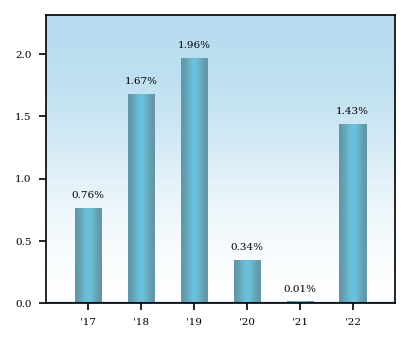
|
| Best Quarter: |
Quarter
ended December 31, 2022 |
0.86% |
| |
|
|
| Worst Quarter: |
Quarter
ended March
31, 2022* |
0.00% |
| |
|
|
| * |
Most recent quarter with this return during the period of the chart. |
|
| AVERAGE
ANNUAL TOTAL RETURNS
AS OF 12/31/22
|
| Retail Prime Obligations Fund | Class Y Shares | Risk Lose Money [Member]
|
| You could lose money by investing in the fund.
|
| Retail Prime Obligations Fund | Class Y Shares | Credit Risk [Member]
|
Credit Risk — The value of your investment
might decline if the issuer of an obligation held by the fund defaults on the obligation or has its credit rating downgraded.
|
| Retail Prime Obligations Fund | Class Y Shares | Interest Rate Risk [Member]
|
Interest Rate Risk — The value of
your investment might decline because of a sharp rise in interest rates that causes the value of the fund’s portfolio holdings
to fall. During periods when interest rates are low or there are negative interest rates, the fund’s yield (and total return)
also may be low or the fund may be unable to maintain positive returns.
|
| Retail Prime Obligations Fund | Class Y Shares | Market Risk [Member]
|
Market Risk — Market volatility, dramatic changes to interest rates, and otherwise unfavorable
economic conditions resulting from major cybersecurity events, geopolitical events (including
wars, such as Russia’s invasion of Ukraine, tensions in the Middle East, terror attacks, and
disruptions to foreign economic and trade relationships), public health emergencies, among
other events, may negatively impact the fund’s performance or impair the fund’s ability to
achieve its investment objective.
|
| Retail Prime Obligations Fund | Class Y Shares | Liquidity Risk [Member]
|
Liquidity Risk —
The fund may not be able to sell a security in a timely manner or at a desired price, or may be unable to sell the security at
all, because of a lack of demand in the market for the security, or a liquidity provider defaults on its obligation to purchase
the security when properly tendered by the fund.
|
| Retail Prime Obligations Fund | Class Y Shares | Redemption Risk [Member]
|
Redemption Risk — If there are unexpectedly
high redemptions of fund shares, the fund might have to sell portfolio securities prior to their maturity, possibly at a loss.
|
| Retail Prime Obligations Fund | Class Y Shares | Repurchase Agreement Risk [Member]
|
Repurchase Agreement Risk — If the
seller of a repurchase agreement defaults on its obligation to repurchase securities from the fund, the fund may incur costs in
disposing of the securities purchased and may experience losses if the proceeds from the sale of the securities are less than the
full repurchase price.
|
| Retail Prime Obligations Fund | Class Y Shares | Income Risk [Member]
|
Income Risk — The
level of income you receive from the fund will be affected by movements in short-term interest rates.
|
| Retail Prime Obligations Fund | Class Y Shares | Cybersecurity Risk [Member]
|
Cybersecurity
Risk — The fund may be subject to operational and informational security risks resulting from breaches in cybersecurity
at the fund, the fund’s affiliates or service providers. A cybersecurity breach at an issuer of securities in which the fund
invests may cause such securities to lose value.
|
| Retail Prime Obligations Fund | Class Y Shares | Regulatory Risk [Member]
|
Regulatory Risk — Changes to monetary
policy by the Federal Reserve or other regulatory actions may impact the fund’s operations, universe of potential investment
options, and return potential.
|
| Retail Prime Obligations Fund | Class Y Shares | Banking Industry Risk [Member]
|
Banking Industry Risk — An adverse
development in the banking industry (domestic or foreign) may affect the value of the fund’s investments more than if the
fund were not invested to such a degree in the banking industry. Banks may be particularly susceptible to certain economic factors
such as interest rate changes, adverse developments in the real estate market, fiscal, regulatory and monetary policy and general
economic cycles.
|
| Retail Prime Obligations Fund | Class Y Shares | Foreign Security Risk [Member]
|
Foreign Security Risk — Securities of
foreign issuers, even when dollar denominated and publicly traded in the United States, may involve risks not associated with the
securities of domestic issuers. Uncertainty surrounding the sovereign debt of several European Union countries, as well as the
continued existence of the European Union itself, has disrupted and may continue to disrupt markets in the United States and around
the world. If a country changes its currency or leaves the European Union or if the European Union dissolves, the world’s
securities markets likely will be significantly disrupted.
|
| Retail Prime Obligations Fund | Class Y Shares | Variable Rate Demand Note V R D N Risk [Member]
|
Variable Rate Demand
Note (VRDN) Risk — Investments in VRDNs involve credit risk with
respect to the issuer or financial institution providing the fund with the credit and liquidity
support for the unconditional put option.
|
| Retail Prime Obligations Fund | Class Y Shares | Municipal Security Risk [Member]
|
Municipal Security Risk
— The value of municipal securities owned by the fund may be adversely affected by future changes in federal income tax laws,
including rate reductions or the imposition of a flat tax, and adverse changes in the financial conditions of municipal securities
issuers.
|
| Retail Prime Obligations Fund | Class Z Shares
|
| Retail
Prime Obligations Fund
|
| Investment
Objective
|
Retail
Prime Obligations Fund’s objective is to seek maximum current income to the extent consistent with the preservation of capital
and maintenance of liquidity.
|
| Fees
and Expenses
|
The
following tables describe the fees and expenses that you may pay if you buy, hold, and sell shares of the fund. You may pay other fees,
such as brokerage commissions and other fees to financial intermediaries, which are not reflected in the tables and examples below.
|
| Shareholder
Fees
(fees paid directly from your
investment)
|
| Annual
Fund Operating Expenses
(expenses that you pay each year as a percentage of the value of your investment)
|
Example:
This example is intended to help you compare the cost of investing in the fund with the cost of investing in other mutual
funds. The example assumes that you invest $10,000 in the fund for the time periods indicated and then redeem all of your shares
at the end of those periods. The example also assumes that your investment has a 5% return each year and the fund’s operating
expenses remain the same (except that the example incorporates the fund’s expense limitation arrangements for only the first
year of each period presented). You would incur these hypothetical expenses whether or not you redeem your investment at the end
of the given period. Although your actual costs may be higher or lower, based on these assumptions your costs would be:
|
| Principal
Investment Strategies
|
Retail
Prime Obligations Fund invests in high-quality short-term debt obligations, including:
| ● | U.S.
dollar-denominated obligations of domestic and foreign banks with total assets of at
least $500 million (including fixed and variable rate certificates of deposit, time deposits,
and bankers’ acceptances); |
| ● | non-convertible
corporate debt securities; |
| ● | securities
issued by the U.S. government or one of its agencies or instrumentalities; |
| ● | municipal
securities, including variable rate demand notes, commercial paper, and municipal notes
and other short-term municipal obligations; |
| ● | loan
participation interests; and |
The fund concentrates its investments in the banking industry. Therefore, under normal market
conditions, the fund will invest more than 25% of its total assets in obligations issued by
companies in the banking industry. The fund may, however, invest 25% or less of its total assets
in this industry as a temporary defensive measure.
The
adviser will only purchase (and hold) securities that it determines present minimal credit risk. If a security is no longer determined
to present minimal credit risk, the adviser will make every attempt to sell the security, unless it has determined that it would
not be in the best interest of the fund to dispose of the security at that time and, where necessary, has obtained the approval
of the fund’s board of trustees to continue to hold the security.
|
| Principal
Risks
|
| Fund
Performance
|
The
following bar chart and table provide some indication of the potential risks of investing in the fund. The fund’s past performance
is not necessarily an indication of how the fund will perform in the future. Updated performance information is available online
at www.firstamericanfunds.com or by calling 800 677-3863.
The
bar chart shows you the variability of the fund’s performance from year to year. The table illustrates the fund’s
average annual total returns over the time periods indicated.
The performance shown in the bar chart and performance table is the performance of the fund’s
predecessor entity, Retail Prime Obligations Fund, a series of First American Funds, Inc. (the
“Predecessor Fund”), prior to the commencement of the fund’s operations. On December 22,
2023 the fund acquired all of the assets, subject to the liabilities, of the Predecessor Fund
through a tax-free reorganization (the “Reorganization”). As a result of the Reorganization, the
fund adopted the performance and financial history of the Predecessor Fund. The fund has the
same investment objective, strategy, risks and investment adviser as the Predecessor Fund.
As a result, the performance of the fund would have been substantially similar to that of the
Predecessor Fund.
The bar chart shows the performance
of the Predecessor Fund’s Class Z shares which was adopted by the Class Z shares of the fund for periods prior to the Reorganization.
If the Predecessor Fund’s investment adviser had not waived or reimbursed certain Predecessor Fund expenses during these
periods, the Predecessor Fund’s returns would have been lower.
|
| ANNUAL TOTAL RETURNS AS OF 12/31 EACH YEAR
|
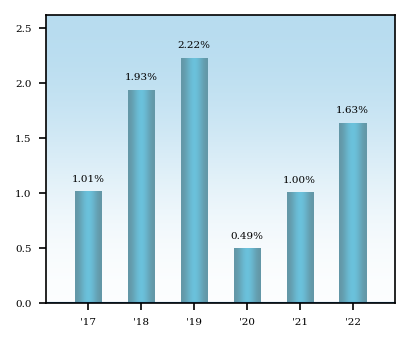
|
|
| Best
Quarter: |
Quarter ended
December 31, 2022 |
0.92% |
| Worst Quarter: |
Quarter ended December
31, 2021* |
0.00% |
| * |
|
Most recent quarter with this return during the period of the chart. |
|
| AVERAGE
ANNUAL TOTAL RETURNS
AS OF 12/31/22
|
| Retail Prime Obligations Fund | Class Z Shares | Risk Lose Money [Member]
|
| You
could lose money by investing in the fund.
|
| Retail Prime Obligations Fund | Class Z Shares | Credit Risk [Member]
|
Credit
Risk — The value of your investment might decline if the issuer of an obligation held by the fund defaults on the obligation
or has its credit rating downgraded.
|
| Retail Prime Obligations Fund | Class Z Shares | Interest Rate Risk [Member]
|
Interest
Rate Risk — The value of your investment might decline because of a sharp rise in interest rates that causes the value
of the fund’s portfolio holdings to fall. During periods when interest rates are low or there are negative interest rates,
the fund’s yield (and total return) also may be low or the fund may be unable to maintain positive returns.
|
| Retail Prime Obligations Fund | Class Z Shares | Market Risk [Member]
|
Market
Risk — Market volatility, dramatic changes to interest rates, and otherwise unfavorable
economic conditions resulting from major cybersecurity events, geopolitical events (including
wars, such as Russia’s invasion of Ukraine, tensions in the Middle East, terror attacks, and
disruptions to foreign economic and trade relationships), public health emergencies, among
other events, may negatively impact the fund’s performance or impair the fund’s ability to
achieve its investment objective.
|
| Retail Prime Obligations Fund | Class Z Shares | Liquidity Risk [Member]
|
Liquidity
Risk — The fund may not be able to sell a security in a timely manner or at a desired price, or may be unable to sell
the security at all, because of a lack of demand in the market for the security, or a liquidity provider defaults on its obligation
to purchase the security when properly tendered by the fund.
|
| Retail Prime Obligations Fund | Class Z Shares | Redemption Risk [Member]
|
Redemption
Risk — If there are unexpectedly high redemptions of fund shares, the fund might have to sell portfolio securities prior
to their maturity, possibly at a loss.
|
| Retail Prime Obligations Fund | Class Z Shares | Repurchase Agreement Risk [Member]
|
Repurchase
Agreement Risk — If the seller of a repurchase agreement defaults on its obligation to repurchase securities from the
fund, the fund may incur costs in disposing of the securities purchased and may experience losses if the proceeds from the sale
of the securities are less than the full repurchase price.
|
| Retail Prime Obligations Fund | Class Z Shares | Income Risk [Member]
|
Income
Risk — The level of income you receive from the fund will be affected by movements in short-term interest rates.
|
| Retail Prime Obligations Fund | Class Z Shares | Cybersecurity Risk [Member]
|
Cybersecurity
Risk — The fund may be subject to operational and informational security risks resulting from breaches in cybersecurity
at the fund, the fund’s affiliates or service providers. A cybersecurity breach at an issuer of securities in which the
fund invests may cause such securities to lose value.
|
| Retail Prime Obligations Fund | Class Z Shares | Regulatory Risk [Member]
|
Regulatory
Risk — Changes to monetary policy by the Federal Reserve or other regulatory actions may impact the fund’s operations,
universe of potential investment options, and return potential.
|
| Retail Prime Obligations Fund | Class Z Shares | Banking Industry Risk [Member]
|
Banking
Industry Risk — An adverse development in the banking industry (domestic or foreign) may affect the value of the fund’s
investments more than if the fund were not invested to such a degree in the banking industry. Banks may be particularly susceptible
to certain economic factors such as interest rate changes, adverse developments in the real estate market, fiscal, regulatory
and monetary policy and general economic cycles.
|
| Retail Prime Obligations Fund | Class Z Shares | Foreign Security Risk [Member]
|
Foreign
Security Risk — Securities of foreign issuers, even when dollar denominated and publicly traded in the United States,
may involve risks not associated with the securities of domestic issuers. Uncertainty surrounding the sovereign debt of several
European Union countries, as well as the continued existence of the European Union itself, has disrupted and may continue to disrupt
markets in the United States and around the world. If a country changes its currency or leaves the European Union or if the European
Union dissolves, the world’s securities markets likely will be significantly disrupted.
|
| Retail Prime Obligations Fund | Class Z Shares | Variable Rate Demand Note V R D N Risk [Member]
|
Variable
Rate Demand Note (VRDN) Risk — Investments in VRDNs involve credit risk with
respect to the issuer or financial institution providing the fund with the credit and liquidity
support for the unconditional put option.
|
| Retail Prime Obligations Fund | Class Z Shares | Municipal Security Risk [Member]
|
Municipal
Security Risk — The value of municipal securities owned by the fund may be adversely affected by future changes in federal
income tax laws, including rate reductions or the imposition of a flat tax, and adverse changes in the financial conditions of
municipal securities issuers.
|
| Retail Prime Obligations Fund
|
|
|
|
|
|
|
Average Annual Total Returns - Retail Prime Obligations Fund
|
1 Year |
5 Years |
10 Years |
Bar Chart, Year to Date Return |
Since Inception |
Inception Date |
| Class A Shares |
1.23%
|
[1] |
0.95%
|
[1] |
0.81%
|
[1] |
3.32%
|
|
|
Jul. 18, 2016
|
[1] |
| Class T Shares |
1.47%
|
[2] |
1.11%
|
[2] |
|
|
3.59%
|
1.01%
|
[2] |
Jul. 18, 2016
|
[2] |
| Class V Shares |
1.55%
|
[3] |
1.18%
|
[3] |
|
|
3.66%
|
1.09%
|
[3] |
Jul. 18, 2016
|
[3] |
| Class X Shares |
1.68%
|
[4] |
1.30%
|
[4] |
1.23%
|
[4] |
3.79%
|
|
|
Sep. 18, 2016
|
[4] |
| Class Y Shares |
1.43%
|
[5] |
1.08%
|
[5] |
|
|
3.55%
|
0.97%
|
[5] |
Jul. 18, 2016
|
[5] |
| Class Z Shares |
1.63%
|
[6] |
1.25%
|
[6] |
1.16%
|
[6] |
3.74%
|
|
|
Jul. 18, 2016
|
[6] |
|
| Retail Tax Free Obligations Fund | Class A Shares
|
| Retail
Tax Free Obligations Fund
|
| Investment
Objective
|
Retail
Tax Free Obligations Fund’s objective is to seek maximum current income exempt from federal income taxes consistent with
the preservation of capital and maintenance of liquidity.
|
| Fees
and Expenses
|
The
following tables describe the fees and expenses that you may pay if you buy, hold, and sell shares of the fund. You may pay other fees,
such as brokerage commissions and other fees to financial intermediaries, which are not reflected in the tables and examples below.
|
| Shareholder Fees (fees paid directly from your investment)
|
| Annual Fund Operating Expenses (expenses that you pay each year as a percentage of the value of your investment)
|
Example:
This example is intended to help you compare the cost of investing in the fund with the cost of investing in other mutual
funds. The example assumes that you invest $10,000 in the fund for the time periods indicated and then redeem all of your shares
at the end of those periods. The example also assumes that your investment has a 5% return each year and the fund’s operating
expenses remain the same (except that the example incorporates the fund’s expense limitation arrangements for only the first
year of each period presented). You would incur these hypothetical expenses whether or not you redeem your investment at the end
of the given period. Although your actual costs may be higher or lower, based on these assumptions your costs would be:
|
| Principal
Investment Strategies
|
Under
normal market conditions, Retail Tax Free Obligations Fund invests at least 80% of its total assets in high-quality, short-term
municipal securities that pay interest that is exempt from federal income tax, including the federal alternative minimum tax.
The municipal securities in which the fund invests include variable rate demand notes (VRDNs) and tender option bonds (TOBs),
which are floating rate instruments that provide the fund with the option to put or tender the VRDN or TOB back to the issuer
at par. VRDNs and TOBs typically have some form of external credit or liquidity support. The fund also may invest in other municipal
securities, including commercial paper, municipal notes and other short-term municipal obligations.
Municipal
securities are issued by state and local governments, and certain U.S. territorial possessions, to finance public infrastructure
projects such as streets and highways, schools, water and sewer systems, hospitals, and airports. They also may be issued to refinance
outstanding obligations as well as to obtain funds for general operating expenses and for loans to other public institutions and
facilities. There are two principal classifications of municipal securities:
| ● | general
obligation bonds, which are backed by the full faith, credit, and taxing power of the issuer; and |
| ● | revenue
bonds, which are payable only from the revenues generated by a specific project or from another specific revenue source. |
Under
normal market conditions, up to 20% of the fund’s total assets may be invested in taxable money market securities and municipal
securities subject to the alternative minimum tax, although the fund does not currently intend to invest in municipal securities
subject to the alternative minimum tax.
Because
the fund refers to tax-free investments in its name, it has a fundamental investment policy that it will normally invest its assets
so that at least 80% of the income that it distributes will be exempt from federal regular income tax, including the federal alternative
minimum tax. This policy may not be changed without shareholder approval.
|
| Principal
Risks
|
| Fund
Performance
|
The
following bar chart and table provide some indication of the potential risks of investing in the fund. The fund’s past performance
is not necessarily an indication of how the fund will perform in the future. Updated performance information is available online
at www.firstamericanfunds.com or by calling 800 677-3863.
The
bar chart shows you the variability of the fund’s performance from year to year. The table illustrates the fund’s
average annual total returns over the time periods indicated.
The performance shown in the bar chart and performance table is the performance of the fund’s
predecessor entity, Retail Tax Free Obligations Fund, a series of First American Funds, Inc. (the
“Predecessor Fund”), prior to the commencement of the fund’s operations. On December 22,
2023 the fund acquired all of the assets, subject to the liabilities, of the Predecessor Fund
through a tax-free reorganization (the “Reorganization”). As a result of the Reorganization, the
fund adopted the performance and financial history of the Predecessor Fund. The fund has the
same investment objective, strategy, risks and investment adviser as the Predecessor Fund.
As a result, the performance of the fund would have been substantially similar to that of the
Predecessor Fund.
The
bar chart shows the performance of the Predecessor Fund’s Class A shares which was adopted by the Class A shares of the
fund for periods prior to the Reorganization. If the Predecessor Fund’s investment adviser had not waived or reimbursed
certain Predecessor Fund expenses during these periods, the Predecessor Fund’s returns would have been lower.
|
| ANNUAL TOTAL RETURNS AS OF 12/31 EACH YEAR
|
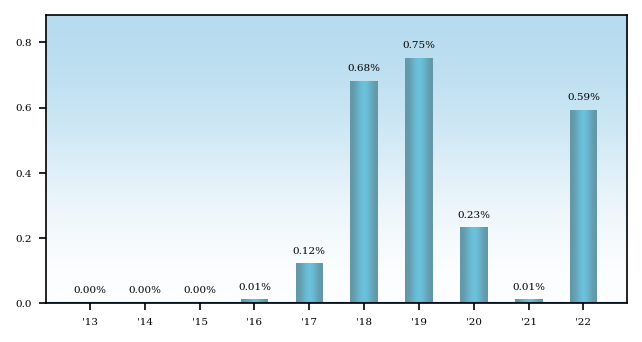
|
| Best Quarter: |
Quarter
ended December 31, 2022 |
0.44% |
| |
|
|
| Worst Quarter: |
Quarter
ended March
31, 2022* |
0.00% |
| |
|
|
| * |
|
Most recent quarter
with this return during the period of the chart. |
|
| AVERAGE
ANNUAL TOTAL RETURNS
AS OF 12/31/22
|
| Retail Tax Free Obligations Fund | Class A Shares | Risk Lose Money [Member]
|
| You
could lose money by investing in the fund.
|
| Retail Tax Free Obligations Fund | Class A Shares | Credit Risk [Member]
|
Credit
Risk — The value of your investment might decline if the issuer of an obligation held by the fund defaults on the obligation
or has its credit rating downgraded.
|
| Retail Tax Free Obligations Fund | Class A Shares | Interest Rate Risk [Member]
|
Interest
Rate Risk — The value of your investment might decline because of a sharp rise in interest rates that causes the value
of the fund’s portfolio holdings to fall. During periods when interest rates are low or there are negative interest rates,
the fund’s yield (and total return) also may be low or the fund may be unable to maintain positive returns.
|
| Retail Tax Free Obligations Fund | Class A Shares | Market Risk [Member]
|
Market
Risk — Market volatility, dramatic changes to interest rates, and otherwise unfavorable
economic conditions resulting from major cybersecurity events, geopolitical events(including
wars, such as Russia’s invasion of Ukraine, tensions in the Middle East, terror attacks, and
disruptions to foreign economic and trade relationships), public health emergencies, among
other events, may negatively impact the fund’s performance or impair the fund’s ability to
achieve its investment objective.
|
| Retail Tax Free Obligations Fund | Class A Shares | Liquidity Risk [Member]
|
Liquidity
Risk — The fund may not be able to sell a security in a timely manner or at a desired price, or may be unable to sell
the security at all, because of a lack of demand in the market for the security, or a liquidity provider defaults on its obligation
to purchase the security when properly tendered by the fund.
|
| Retail Tax Free Obligations Fund | Class A Shares | Redemption Risk [Member]
|
Redemption
Risk — If there are unexpectedly high redemptions of fund shares, the fund might have to sell portfolio securities prior
to their maturity, possibly at a loss.
|
| Retail Tax Free Obligations Fund | Class A Shares | Income Risk [Member]
|
Income
Risk — The level of income you receive from the fund will be affected by movements in short-term interest rates.
|
| Retail Tax Free Obligations Fund | Class A Shares | Cybersecurity Risk [Member]
|
Cybersecurity
Risk — The fund may be subject to operational and informational security risks resulting from breaches in cybersecurity
at the fund, the fund’s affiliates or service providers. A cybersecurity breach at an issuer of securities in which the
fund invests may cause such securities to lose value.
|
| Retail Tax Free Obligations Fund | Class A Shares | Regulatory Risk [Member]
|
Regulatory
Risk — Changes to monetary policy by the Federal Reserve or other regulatory actions may impact the fund’s operations,
universe of potential investment options, and return potential.
|
| Retail Tax Free Obligations Fund | Class A Shares | Variable Rate Demand Note V R D N Risk [Member]
|
Variable Rate Demand Note (VRDN) and Tender Option Bond (TOB) Risk — Investments in VRDNs
and TOBs involve credit risk with respect to the issuer or financial institutional providing the
fund with the credit and liquidity support for the put or tender option.
|
| Retail Tax Free Obligations Fund | Class A Shares | Municipal Security Risk [Member]
|
Municipal
Security Risk — The value of municipal securities owned by the fund may be adversely affected by future changes in federal
income tax laws, including rate reductions or the imposition of a flat tax, and adverse changes in the financial conditions of
municipal securities issuers.
|
| Retail Tax Free Obligations Fund | Class A Shares | Tax Risk [Member]
|
Tax
Risk — In order to be tax-exempt, municipal securities generally must meet certain regulatory requirements. If a municipal
security fails to meet these requirements, the interest received by the fund from its investment in the security and distributed
to shareholders may be taxable.
|
| Retail Tax Free Obligations Fund | Class T Shares
|
| Retail
Tax Free Obligations Fund
|
| Investment
Objective
|
Retail
Tax Free Obligations Fund’s objective is to seek maximum current income exempt from federal income taxes consistent with
the preservation of capital and maintenance of liquidity.
|
| Fees
and Expenses
|
The
following tables describe the fees and expenses that you may pay if you buy, hold, and sell shares of the fund. You may pay other fees,
such as brokerage commissions and other fees to financial intermediaries, which are not reflected in the tables and examples below.
|
| Shareholder Fees (fees paid directly from your investment)
|
| Annual Fund Operating Expenses (expenses that you pay each year as a percentage of the value of your investment)
|
Example:
This example is intended to help you compare the cost of investing in the fund with the cost of investing in other mutual
funds. The example assumes that you invest $10,000 in the fund for the time periods indicated and then redeem all of your shares
at the end of those periods. The example also assumes that your investment has a 5% return each year and the fund’s operating
expenses remain the same (except that the example incorporates the fund’s expense limitation arrangements for only the first
year of each period presented). You would incur these hypothetical expenses whether or not you redeem your investment at the end
of the given period. Although your actual costs may be higher or lower, based on these assumptions your costs would be:
|
| Principal
Investment Strategies
|
Under
normal market conditions, Retail Tax Free Obligations Fund invests at least 80% of its total assets in high-quality, short-term
municipal securities that pay interest that is exempt from federal income tax, including the federal alternative minimum tax.
The municipal securities in which the fund invests include variable rate demand notes (VRDNs) and tender option bonds (TOBs),
which are floating rate instruments that provide the fund with the option to put or tender the VRDN or TOB back to the issuer
at par. VRDNs and TOBs typically have some form of external credit or liquidity support. The fund also may invest in other municipal
securities, including commercial paper, municipal notes and other short-term municipal obligations.
Municipal
securities are issued by state and local governments, and certain U.S. territorial possessions, to finance public infrastructure
projects such as streets and highways, schools, water and sewer systems, hospitals, and airports. They also may be issued to refinance
outstanding obligations as well as to obtain funds for general operating expenses and for loans to other public institutions and
facilities. There are two principal classifications of municipal securities:
| ● | general
obligation bonds, which are backed by the full faith, credit, and taxing power of the
issuer; and |
| ● | revenue
bonds, which are payable only from the revenues generated by a specific project or from
another specific revenue source. |
Under
normal market conditions, up to 20% of the fund’s total assets may be invested in taxable money market securities and municipal
securities subject to the alternative minimum tax, although the fund does not currently intend to invest in municipal securities
subject to the alternative minimum tax.
Because
the fund refers to tax-free investments in its name, it has a fundamental investment policy that it will normally invest its assets
so that at least 80% of the income that it distributes will be exempt from federal regular income tax, including the federal alternative
minimum tax. This policy may not be changed without shareholder approval.
|
| Principal
Risks
|
| Fund
Performance
|
The
following bar chart and table provide some indication of the potential risks of investing in the fund. The fund’s past performance
is not necessarily an indication of how the fund will perform in the future. Updated performance information is available online
at firstamericanfunds.com or by calling 800 677-3863.
The
bar chart shows the fund’s Class T performance for the period indicated. The table illustrates the fund’s average
annual total returns over the time periods indicated. The bar chart does not reflect sales loads as none are applicable to Class
T shares.
The performance shown in the bar chart and performance table is the performance of the fund’s
predecessor entity, Retail Tax Free Obligations Fund, a series of First American Funds, Inc. (the
“Predecessor Fund”), prior to the commencement of the fund’s operations. On December 22,
2023 the fund acquired all of the assets, subject to the liabilities, of the Predecessor Fund
through a tax-free reorganization (the “Reorganization”). As a result of the Reorganization, the
fund adopted the performance and financial history of the Predecessor Fund. The fund has the
same investment objective, strategy, risks and investment adviser as the Predecessor Fund.
As a result, the performance of the fund would have been substantially similar to that of the
Predecessor Fund.
The
bar chart shows the performance of the Predecessor Fund’s Class T shares which was adopted by the Class T shares of the
fund for periods prior to the Reorganization. If the Predecessor Fund’s investment adviser had not waived or reimbursed
certain Predecessor Fund expenses during these periods, the Predecessor Fund’s returns would have been lower.
|
| ANNUAL TOTAL RETURNS AS OF 12/31 EACH YEAR
|
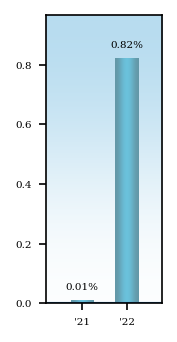
|
| Best Quarter: |
Quarter ended
December 31, 2022 |
0.52% |
| Worst Quarter: |
Quarter ended March
31, 2022* |
0.00% |
| * |
|
Most recent quarter with this return during the period of the chart. |
|
| AVERAGE ANNUAL TOTAL RETURNS AS OF 12/31/22
|
| Retail Tax Free Obligations Fund | Class T Shares | Risk Lose Money [Member]
|
| You
could lose money by investing in the fund.
|
| Retail Tax Free Obligations Fund | Class T Shares | Credit Risk [Member]
|
Credit
Risk — The value of your investment might decline if the issuer of an obligation held by the fund defaults on the obligation
or has its credit rating downgraded.
|
| Retail Tax Free Obligations Fund | Class T Shares | Interest Rate Risk [Member]
|
Interest
Rate Risk — The value of your investment might decline because of a sharp rise in interest rates that causes the value
of the fund’s portfolio holdings to fall. During periods when interest rates are low or there are negative interest rates,
the fund’s yield (and total return) also may be low or the fund may be unable to maintain positive returns.
|
| Retail Tax Free Obligations Fund | Class T Shares | Market Risk [Member]
|
Market
Risk — Market volatility, dramatic changes to interest rates, and otherwise unfavorable
economic conditions resulting from major cybersecurity events, geopolitical events (including
wars, such as Russia’s invasion of Ukraine, tensions in the Middle East, terror attacks, and
disruptions to foreign economic and trade relationships), public health emergencies, among
other events, may negatively impact the fund’s performance or impair the fund’s ability to
achieve its investment objective.
|
| Retail Tax Free Obligations Fund | Class T Shares | Liquidity Risk [Member]
|
Liquidity
Risk — The fund may not be able to sell a security in a timely manner or at a desired price, or may be unable to sell
the security at all, because of a lack of demand in the market for the security, or a liquidity provider defaults on its obligation
to purchase the security when properly tendered by the fund.
|
| Retail Tax Free Obligations Fund | Class T Shares | Redemption Risk [Member]
|
Redemption
Risk — If there are unexpectedly high redemptions of fund shares, the fund might have to sell portfolio securities prior
to their maturity, possibly at a loss.
|
| Retail Tax Free Obligations Fund | Class T Shares | Income Risk [Member]
|
Income
Risk — The level of income you receive from the fund will be affected by movements in short-term interest rates.
|
| Retail Tax Free Obligations Fund | Class T Shares | Cybersecurity Risk [Member]
|
Cybersecurity
Risk — The fund may be subject to operational and informational security risks resulting from breaches in cybersecurity
at the fund, the fund’s affiliates or service providers. A cybersecurity breach at an issuer of securities in which the
fund invests may cause such securities to lose value.
|
| Retail Tax Free Obligations Fund | Class T Shares | Regulatory Risk [Member]
|
Regulatory
Risk — Changes to monetary policy by the Federal Reserve or other regulatory actions may impact the fund’s operations,
universe of potential investment options, and return potential.
|
| Retail Tax Free Obligations Fund | Class T Shares | Variable Rate Demand Note V R D N Risk [Member]
|
Variable Rate Demand Note (VRDN) and Tender Option Bond (TOB) Risk — Investments in VRDNs
and TOBs involve credit risk with respect to the issuer or financial institutional providing the
fund with the credit and liquidity support for the put or tender option.
|
| Retail Tax Free Obligations Fund | Class T Shares | Municipal Security Risk [Member]
|
Municipal
Security Risk — The value of municipal securities owned by the fund may be adversely affected by future changes in federal
income tax laws, including rate reductions or the imposition of a flat tax, and adverse changes in the financial conditions of
municipal securities issuers.
|
| Retail Tax Free Obligations Fund | Class T Shares | Tax Risk [Member]
|
Tax
Risk — In order to be tax-exempt, municipal securities generally must meet certain regulatory requirements. If a municipal
security fails to meet these requirements, the interest received by the fund from its investment in the security and distributed
to shareholders may be taxable.
|
| Retail Tax Free Obligations Fund | Class V Shares
|
| Retail
Tax Free Obligations Fund
|
| Investment
Objective
|
Retail
Tax Free Obligations Fund’s objective is to seek maximum current income exempt from federal income taxes consistent with
the preservation of capital and maintenance of liquidity.
|
| Fees
and Expenses
|
The
following tables describe the fees and expenses that you may pay if you buy, hold, and sell shares of the fund. You may pay other fees,
such as brokerage commissions and other fees to financial intermediaries, which are not reflected in the tables and examples below.
|
| Shareholder
Fees (fees paid directly from your investment)
|
| Annual Fund Operating Expenses
(expenses that you pay each year as a percentage of the value of your investment)
|
Example:
This example is intended to help you compare the cost of investing in the fund with the cost of investing in other mutual
funds. The example assumes that you invest $10,000 in the fund for the time periods indicated and then redeem all of your shares
at the end of those periods. The example also assumes that your investment has a 5% return each year and the fund’s operating
expenses remain the same (except that the example incorporates the fund’s expense limitation arrangements for only the first
year of each period presented). You would incur these hypothetical expenses whether or not you redeem your investment at the end
of the given period. Although your actual costs may be higher or lower, based on these assumptions your costs would be:
|
| Principal
Investment Strategies
|
Under
normal market conditions, Retail Tax Free Obligations Fund invests at least 80% of its total assets in high-quality, short-term
municipal securities that pay interest that is exempt from federal income tax, including the federal alternative minimum tax.
The municipal securities in which the fund invests include variable rate demand notes (VRDNs) and tender option bonds (TOBs),
which are floating rate instruments that provide the fund with the option to put or tender the VRDN or TOB back to the issuer
at par. VRDNs and TOBs typically have some form of external credit or liquidity support. The fund also may invest in other municipal
securities, including commercial paper, municipal notes and other short-term municipal obligations.
Municipal
securities are issued by state and local governments, and certain U.S. territorial possessions, to finance public infrastructure
projects such as streets and highways, schools, water and sewer systems, hospitals, and airports. They also may be issued to refinance
outstanding obligations as well as to obtain funds for general operating expenses and for loans to other public institutions and
facilities. There are two principal classifications of municipal securities:
| ● | general
obligation bonds, which are backed by the full faith, credit, and taxing power of the
issuer; and |
| ● | revenue
bonds, which are payable only from the revenues generated by a specific project or from
another specific revenue source. |
Under
normal market conditions, up to 20% of the fund’s total assets may be invested in taxable money market securities and municipal
securities subject to the alternative minimum tax, although the fund does not currently intend to invest in municipal securities
subject to the alternative minimum tax.
Because
the fund refers to tax-free investments in its name, it has a fundamental investment policy that it will normally invest its assets
so that at least 80% of the income that it distributes will be exempt from federal regular income tax, including the federal alternative
minimum tax. This policy may not be changed without shareholder approval.
|
| Principal
Risks
|
| Fund
Performance
|
The
following bar chart and table provide some indication of the potential risks of investing in the fund. The fund’s past performance
is not necessarily an indication of how the fund will perform in the future. Updated performance information is available online
at www.firstamericanfunds.com or by calling 800 677-3863.
The
bar chart shows you the variability of the fund’s performance from year to year. The table illustrates the fund’s
average annual total returns over the time periods indicated.
The performance shown in the bar chart and performance table is the performance of the fund’s
predecessor entity, Retail Tax Free Obligations Fund, a series of First American Funds, Inc. (the
“Predecessor Fund”), prior to the commencement of the fund’s operations. On December 22,
2023 the fund acquired all of the assets, subject to the liabilities, of the Predecessor Fund
through a tax-free reorganization (the “Reorganization”). As a result of the Reorganization, the
fund adopted the performance and financial history of the Predecessor Fund. The fund has the
same investment objective, strategy, risks and investment adviser as the Predecessor Fund.
As a result, the performance of the fund would have been substantially similar to that of the
Predecessor Fund.
The bar chart shows the performance
of the Predecessor Fund’s Class V shares which was adopted by the Class V shares of the fund for periods prior to the Reorganization.
If the Predecessor Fund’s investment adviser had not waived or reimbursed certain Predecessor Fund expenses during these
periods, the Predecessor Fund’s returns would have been lower.
|
| ANNUAL TOTAL RETURNS AS OF 12/31 EACH YEAR
|
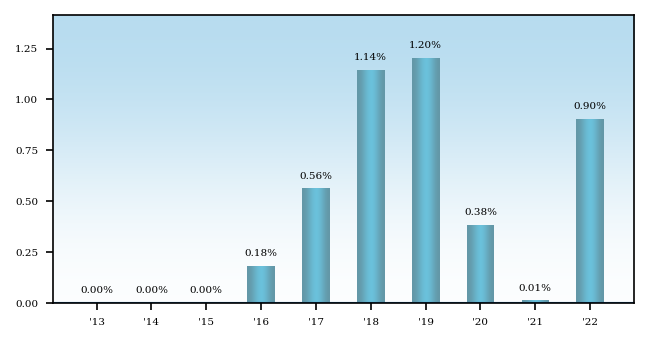
|
| Best Quarter: |
Quarter ended
December 31, 2022 |
0.55% |
| Worst Quarter: |
Quarter ended December
31, 2021* |
0.00% |
| * |
|
Most recent quarter with this return during the period of the chart. |
|
| AVERAGE
ANNUAL TOTAL RETURNS
AS OF 12/31/22
|
| Retail Tax Free Obligations Fund | Class V Shares | Risk Lose Money [Member]
|
| You
could lose money by investing in the fund.
|
| Retail Tax Free Obligations Fund | Class V Shares | Credit Risk [Member]
|
Credit
Risk — The value of your investment might decline if the issuer of an obligation held by the fund defaults on the obligation
or has its credit rating downgraded.
|
| Retail Tax Free Obligations Fund | Class V Shares | Interest Rate Risk [Member]
|
Interest
Rate Risk — The value of your investment might decline because of a sharp rise in interest rates that causes the value
of the fund’s portfolio holdings to fall. During periods when interest rates are low or there are negative interest rates,
the fund’s yield (and total return) also may be low or the fund may be unable to maintain positive returns.
|
| Retail Tax Free Obligations Fund | Class V Shares | Market Risk [Member]
|
Market
Risk — Market volatility, dramatic changes to interest rates, and otherwise unfavorable
economic conditions resulting from major cybersecurity events, geopolitical events (including
wars, such as Russia’s invasion of Ukraine, tensions in the Middle East, terror attacks, and
disruptions to foreign economic and trade relationships), public health emergencies, among
other events, may negatively impact the fund’s performance or impair the fund’s ability to
achieve its investment objective.
|
| Retail Tax Free Obligations Fund | Class V Shares | Liquidity Risk [Member]
|
Liquidity
Risk — The fund may not be able to sell a security in a timely manner or at a desired price, or may be unable to sell
the security at all, because of a lack of demand in the market for the security, or a liquidity provider defaults on its obligation
to purchase the security when properly tendered by the fund.
|
| Retail Tax Free Obligations Fund | Class V Shares | Redemption Risk [Member]
|
Redemption
Risk — If there are unexpectedly high redemptions of fund shares, the fund might have to sell portfolio securities prior
to their maturity, possibly at a loss.
|
| Retail Tax Free Obligations Fund | Class V Shares | Income Risk [Member]
|
Income
Risk — The level of income you receive from the fund will be affected by movements in short-term interest rates.
|
| Retail Tax Free Obligations Fund | Class V Shares | Cybersecurity Risk [Member]
|
Cybersecurity
Risk — The fund may be subject to operational and informational security risks resulting from breaches in cybersecurity
at the fund, the fund’s affiliates or service providers. A cybersecurity breach at an issuer of securities in which the
fund invests may cause such securities to lose value.
|
| Retail Tax Free Obligations Fund | Class V Shares | Regulatory Risk [Member]
|
Regulatory
Risk — Changes to monetary policy by the Federal Reserve or other regulatory actions may impact the fund’s operations,
universe of potential investment options, and return potential.
|
| Retail Tax Free Obligations Fund | Class V Shares | Variable Rate Demand Note V R D N Risk [Member]
|
Variable Rate Demand Note (VRDN) and Tender Option Bond (TOB) Risk — Investments in VRDNs
and TOBs involve credit risk with respect to the issuer or financial institutional providing the
fund with the credit and liquidity support for the put or tender option.
|
| Retail Tax Free Obligations Fund | Class V Shares | Municipal Security Risk [Member]
|
Municipal
Security Risk — The value of municipal securities owned by the fund may be adversely affected by future changes in federal
income tax laws, including rate reductions or the imposition of a flat tax, and adverse changes in the financial conditions of
municipal securities issuers.
|
| Retail Tax Free Obligations Fund | Class V Shares | Tax Risk [Member]
|
Tax
Risk — In order to be tax-exempt, municipal securities generally must meet certain regulatory requirements. If a municipal
security fails to meet these requirements, the interest received by the fund from its investment in the security and distributed
to shareholders may be taxable.
|
| Retail Tax Free Obligations Fund | Class Y Shares
|
| Retail Tax Free Obligations Fund
|
| Investment Objective
|
Retail Tax Free Obligations Fund’s objective
is to seek maximum current income exempt from federal income taxes consistent with the preservation of capital and maintenance
of liquidity.
|
| Fees and Expenses
|
The
following tables describe the fees and expenses that you may pay if you buy, hold, and sell shares of the fund. You may pay other fees,
such as brokerage commissions and other fees to financial intermediaries, which are not reflected in the tables and examples below.
|
| Shareholder
Fees
(fees paid directly from your investment)
|
| Annual
Fund Operating Expenses
(expenses that you pay each year as a percentage of the value of your investment)
|
Example: This example
is intended to help you compare the cost of investing in the fund with the cost of investing in other mutual funds. The example
assumes that you invest $10,000 in the fund for the time periods indicated and then redeem all of your shares at the end of those
periods. The example also assumes that your investment has a 5% return each year and the fund’s operating expenses remain
the same (except that the example incorporates the fund’s expense limitation arrangements for only the first year of each
period presented). You would incur these hypothetical expenses whether or not you redeem your investment at the end of the given
period. Although your actual costs may be higher or lower, based on these assumptions your costs would be:
|
| Principal Investment Strategies
|
Under normal market conditions, Retail Tax Free
Obligations Fund invests at least 80% of its total assets in high-quality, short-term municipal securities that pay interest that
is exempt from federal income tax, including the federal alternative minimum tax. The municipal securities in which the fund invests
include variable rate demand notes (VRDNs) and tender option bonds (TOBs), which are floating rate instruments that provide the
fund with the option to put or tender the VRDN or TOB back to the issuer at par. VRDNs and TOBs typically have some form of external
credit or liquidity support. The fund also may invest in other municipal securities, including commercial paper, municipal notes
and other short-term municipal obligations.
Municipal securities are issued by state and
local governments, and certain U.S. territorial possessions, to finance public infrastructure projects such as streets and highways,
schools, water and sewer systems, hospitals, and airports. They also may be issued to refinance outstanding obligations as well
as to obtain funds for general operating expenses and for loans to other public institutions and facilities. There are two principal
classifications of municipal securities:
| • | general obligation bonds, which are backed by the full
faith, credit, and taxing power of the issuer; and |
| • | revenue bonds, which are payable only from the revenues
generated by a specific project or from another specific revenue source. |
Under normal market conditions, up to 20% of
the fund’s total assets may be invested in taxable money market securities and municipal securities subject to the alternative
minimum tax, although the fund does not currently intend to invest in municipal securities subject to the alternative minimum tax.
Because the fund refers
to tax-free investments in its name, it has a fundamental investment policy that it will normally invest its assets so that at
least 80% of the income that it distributes will be exempt from federal regular income tax, including the federal alternative minimum
tax. This policy may not be changed without shareholder approval.
|
| Principal Risks
|
| Fund Performance
|
The following bar chart and table provide some
indication of the potential risks of investing in the fund. The fund’s past performance is not necessarily an indication
of how the fund will perform in the future. Updated performance information is available online at www.firstamericanfunds.com or
by calling 800 677-3863.
The bar chart shows you the variability of the fund’s
performance from year to year. The table illustrates the fund’s average annual total returns over the time periods indicated.
The performance shown in the bar chart and performance table is the performance of the fund’s
predecessor entity, Retail Tax Free Obligations Fund, a series of First American Funds, Inc. (the
“Predecessor Fund”), prior to the commencement of the fund’s operations. On December 22,
2023 the fund acquired all of the assets, subject to the liabilities, of the Predecessor Fund
through a tax-free reorganization (the “Reorganization”). As a result of the Reorganization, the
fund adopted the performance and financial history of the Predecessor Fund. The fund has the
same investment objective, strategy, risks and investment adviser as the Predecessor Fund.
As a result, the performance of the fund would have been substantially similar to that of the
Predecessor Fund.
The bar chart shows the performance of the Predecessor
Fund’s Class Y shares which was adopted by the Class Y shares of the fund for periods prior to the Reorganization. If the
Predecessor Fund’s investment adviser had not waived or reimbursed certain Predecessor Fund expenses during these periods,
the Predecessor Fund’s returns would have been lower.
|
| ANNUAL TOTAL RETURNS AS OF 12/31 EACH YEAR
|
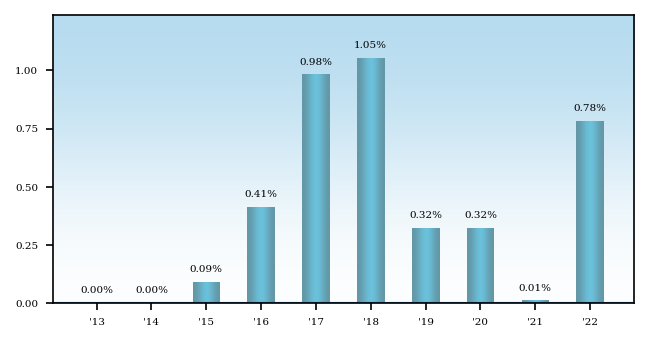
|
| Best Quarter: |
Quarter
ended December 31, 2022 |
0.51% |
| |
|
|
| Worst Quarter: |
Quarter
ended March
31, 2022* |
0.00% |
| |
|
|
| * |
|
Most recent quarter with this return during the period of the chart. |
|
| AVERAGE
ANNUAL TOTAL RETURNS
AS OF 12/31/22
|
| Retail Tax Free Obligations Fund | Class Y Shares | Risk Lose Money [Member]
|
| You could lose money by investing in the fund.
|
| Retail Tax Free Obligations Fund | Class Y Shares | Credit Risk [Member]
|
Credit Risk — The value of your investment
might decline if the issuer of an obligation held by the fund defaults on the obligation or has its credit rating downgraded.
|
| Retail Tax Free Obligations Fund | Class Y Shares | Interest Rate Risk [Member]
|
Interest Rate Risk — The value of
your investment might decline because of a sharp rise in interest rates that causes the value of the fund’s portfolio holdings
to fall. During periods when interest rates are low or there are negative interest rates, the fund’s yield (and total return)
also may be low or the fund may be unable to maintain positive returns.
|
| Retail Tax Free Obligations Fund | Class Y Shares | Market Risk [Member]
|
Market Risk — Market volatility, dramatic changes to interest rates, and otherwise unfavorable
economic conditions resulting from major cybersecurity events, geopolitical events (including
wars, such as Russia’s invasion of Ukraine, tensions in the Middle East, terror attacks, and
disruptions to foreign economic and trade relationships), public health emergencies, among
other events, may negatively impact the fund’s performance or impair the fund’s ability to
achieve its investment objective.
|
| Retail Tax Free Obligations Fund | Class Y Shares | Liquidity Risk [Member]
|
Liquidity Risk —
The fund may not be able to sell a security in a timely manner or at a desired price, or may be unable to sell the security at
all, because of a lack of demand in the market for the security, or a liquidity provider defaults on its obligation to purchase
the security when properly tendered by the fund.
|
| Retail Tax Free Obligations Fund | Class Y Shares | Redemption Risk [Member]
|
Redemption Risk — If there are unexpectedly
high redemptions of fund shares, the fund might have to sell portfolio securities prior to their maturity, possibly at a loss.
|
| Retail Tax Free Obligations Fund | Class Y Shares | Income Risk [Member]
|
Income Risk — The
level of income you receive from the fund will be affected by movements in short-term interest rates.
|
| Retail Tax Free Obligations Fund | Class Y Shares | Cybersecurity Risk [Member]
|
Cybersecurity
Risk — The fund may be subject to operational and informational security risks resulting from breaches in cybersecurity
at the fund, the fund’s affiliates or service providers. A cybersecurity breach at an issuer of securities in which the fund
invests may cause such securities to lose value.
|
| Retail Tax Free Obligations Fund | Class Y Shares | Regulatory Risk [Member]
|
Regulatory Risk — Changes to monetary
policy by the Federal Reserve or other regulatory actions may impact the fund’s operations, universe of potential investment
options, and return potential.
|
| Retail Tax Free Obligations Fund | Class Y Shares | Variable Rate Demand Note V R D N Risk [Member]
|
Variable Rate Demand Note (VRDN) and Tender Option Bond (TOB) Risk — Investments in VRDNs
and TOBs involve credit risk with respect to the issuer or financial institutional providing the
fund with the credit and liquidity support for the put or tender option.
|
| Retail Tax Free Obligations Fund | Class Y Shares | Municipal Security Risk [Member]
|
Municipal Security Risk
— The value of municipal securities owned by the fund may be adversely affected by future changes in federal income tax laws,
including rate reductions or the imposition of a flat tax, and adverse changes in the financial conditions of municipal securities
issuers.
|
| Retail Tax Free Obligations Fund | Class Y Shares | Tax Risk [Member]
|
Tax Risk —
In order to be tax-exempt, municipal securities generally must meet certain regulatory requirements. If a municipal security fails
to meet these requirements, the interest received by the fund from its investment in the security and distributed to shareholders
may be taxable.
|
| Retail Tax Free Obligations Fund | Class Z Shares
|
| Retail
Tax Free Obligations Fund
|
| Investment
Objective
|
Retail
Tax Free Obligations Fund’s objective is to seek maximum current income exempt from federal income taxes consistent with
the preservation of capital and maintenance of liquidity.
|
| Fees
and Expenses
|
The
following tables describe the fees and expenses that you may pay if you buy, hold, and sell shares of the fund. You may pay other fees,
such as brokerage commissions and other fees to financial intermediaries, which are not reflected in the tables and examples below.
|
| Shareholder
Fees
(fees paid directly from your investment)
|
| Annual
Fund Operating Expenses
(expenses that you pay each year as a percentage of the value of your investment)
|
Example:
This example is intended to help you compare the cost of investing in the fund with the cost of investing in other mutual
funds. The example assumes that you invest $10,000 in the fund for the time periods indicated and then redeem all of your shares
at the end of those periods. The example also assumes that your investment has a 5% return each year and the fund’s operating
expenses remain the same (except that the example incorporates the fund’s expense limitation arrangements for only the first
year of each period presented). You would incur these hypothetical expenses whether or not you redeem your investment at the end
of the given period. Although your actual costs may be higher or lower, based on these assumptions your costs would be:
|
| Principal
Investment Strategies
|
Under
normal market conditions, Retail Tax Free Obligations Fund invests at least 80% of its total assets in high-quality, short-term
municipal securities that pay interest that is exempt from federal income tax, including the federal alternative minimum tax.
The municipal securities in which the fund invests include variable rate demand notes (VRDNs) and tender option bonds (TOBs),
which are floating rate instruments that provide the fund with the option to put or tender the VRDN or TOB back to the issuer
at par. VRDNs and TOBs typically have some form of external credit or liquidity support. The fund also may invest in other municipal
securities, including commercial paper, municipal notes and other short-term municipal obligations.
Municipal
securities are issued by state and local governments, and certain U.S. territorial possessions, to finance public infrastructure
projects such as streets and highways, schools, water and sewer systems, hospitals, and airports. They also may be issued to refinance
outstanding obligations as well as to obtain funds for general operating expenses and for loans to other public institutions and
facilities. There are two principal classifications of municipal securities:
| ● | general
obligation bonds, which are backed by the full faith, credit, and taxing power of the
issuer; and |
| ● | revenue
bonds, which are payable only from the revenues generated by a specific project or from
another specific revenue source. |
Under
normal market conditions, up to 20% of the fund’s total assets may be invested in taxable money market securities and municipal
securities subject to the alternative minimum tax, although the fund does not currently intend to invest in municipal securities
subject to the alternative minimum tax.
Because
the fund refers to tax-free investments in its name, it has a fundamental investment policy that it will normally invest its assets
so that at least 80% of the income that it distributes will be exempt from federal regular income tax, including the federal alternative
minimum tax. This policy may not be changed without shareholder approval.
|
| Principal
Risks
|
| Fund
Performance
|
The
following bar chart and table provide some indication of the potential risks of investing in the fund. The fund’s past performance
is not necessarily an indication of how the fund will perform in the future. Updated performance information is available online
at www.firstamericanfunds.com or by calling 800 677-3863.
The
bar chart shows you the variability of the fund’s performance from year to year. The table illustrates the fund’s
average annual total returns over the time periods indicated.
The performance shown in the bar chart and performance table is the performance of the fund’s
predecessor entity, Retail Tax Free Obligations Fund, a series of First American Funds, Inc. (the
“Predecessor Fund”), prior to the commencement of the fund’s operations. On December 22,
2023 the fund acquired all of the assets, subject to the liabilities, of the Predecessor Fund
through a tax-free reorganization (the “Reorganization”). As a result of the Reorganization, the
fund adopted the performance and financial history of the Predecessor Fund. The fund has the
same investment objective, strategy, risks and investment adviser as the Predecessor Fund.
As a result, the performance of the fund would have been substantially similar to that of the
Predecessor Fund.
The bar chart shows the performance
of the Predecessor Fund’s Class Z shares which was adopted by the Class Z shares of the fund for periods prior to the Reorganization.
If the Predecessor Fund’s investment adviser had not waived or reimbursed certain Predecessor Fund expenses during these
periods, the Predecessor Fund’s returns would have been lower.
|
| ANNUAL TOTAL RETURNS AS OF 12/31 EACH YEAR
|
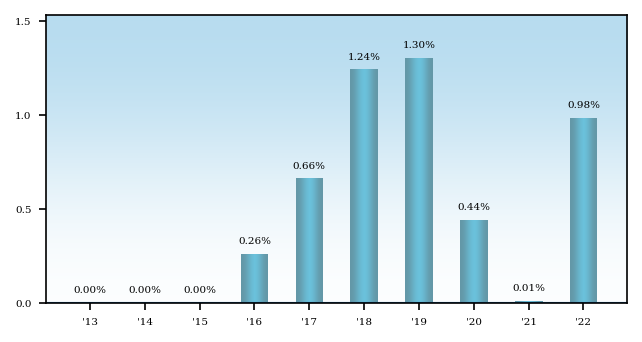
|
| Best Quarter: |
Quarter ended
December 31, 2022 |
0.58% |
| Worst Quarter: |
Quarter ended December
31, 2021* |
0.00% |
| * |
|
Most recent quarter with this return during the period of the chart. |
|
| AVERAGE
ANNUAL TOTAL RETURNS
AS OF 12/31/22
|
| Retail Tax Free Obligations Fund | Class Z Shares | Risk Lose Money [Member]
|
| You
could lose money by investing in the fund.
|
| Retail Tax Free Obligations Fund | Class Z Shares | Credit Risk [Member]
|
Credit
Risk — The value of your investment might decline if the issuer of an obligation held by the fund defaults on the obligation
or has its credit rating downgraded.
|
| Retail Tax Free Obligations Fund | Class Z Shares | Interest Rate Risk [Member]
|
Interest
Rate Risk — The value of your investment might decline because of a sharp rise in interest rates that causes the value
of the fund’s portfolio holdings to fall. During periods when interest rates are low or there are negative interest rates,
the fund’s yield (and total return) also may be low or the fund may be unable to maintain positive returns.
|
| Retail Tax Free Obligations Fund | Class Z Shares | Market Risk [Member]
|
Market
Risk — Market volatility, dramatic changes to interest rates, and otherwise unfavorable
economic conditions resulting from major cybersecurity events, geopolitical events (including
wars, such as Russia’s invasion of Ukraine, tensions in the Middle East, terror attacks, and
disruptions to foreign economic and trade relationships), public health emergencies, among
other events, may negatively impact the fund’s performance or impair the fund’s ability to
achieve its investment objective.
|
| Retail Tax Free Obligations Fund | Class Z Shares | Liquidity Risk [Member]
|
Liquidity
Risk — The fund may not be able to sell a security in a timely manner or at a desired price, or may be unable to sell
the security at all, because of a lack of demand in the market for the security, or a liquidity provider defaults on its obligation
to purchase the security when properly tendered by the fund.
|
| Retail Tax Free Obligations Fund | Class Z Shares | Redemption Risk [Member]
|
Redemption
Risk — If there are unexpectedly high redemptions of fund shares, the fund might have to sell portfolio securities prior
to their maturity, possibly at a loss.
|
| Retail Tax Free Obligations Fund | Class Z Shares | Income Risk [Member]
|
Income
Risk — The level of income you receive from the fund will be affected by movements in short-term interest rates.
|
| Retail Tax Free Obligations Fund | Class Z Shares | Cybersecurity Risk [Member]
|
Cybersecurity
Risk — The fund may be subject to operational and informational security risks resulting from breaches in cybersecurity
at the fund, the fund’s affiliates or service providers. A cybersecurity breach at an issuer of securities in which the
fund invests may cause such securities to lose value.
|
| Retail Tax Free Obligations Fund | Class Z Shares | Regulatory Risk [Member]
|
Regulatory
Risk — Changes to monetary policy by the Federal Reserve or other regulatory actions may impact the fund’s operations,
universe of potential investment options, and return potential.
|
| Retail Tax Free Obligations Fund | Class Z Shares | Variable Rate Demand Note V R D N Risk [Member]
|
Variable Rate Demand Note (VRDN) and Tender Option Bond (TOB) Risk — Investments in VRDNs
and TOBs involve credit risk with respect to the issuer or financial institutional providing the
fund with the credit and liquidity support for the put or tender option.
|
| Retail Tax Free Obligations Fund | Class Z Shares | Municipal Security Risk [Member]
|
Municipal
Security Risk — The value of municipal securities owned by the fund may be adversely affected by future changes in federal
income tax laws, including rate reductions or the imposition of a flat tax, and adverse changes in the financial conditions of
municipal securities issuers.
|
| Retail Tax Free Obligations Fund | Class Z Shares | Tax Risk [Member]
|
Tax
Risk — In order to be tax-exempt, municipal securities generally must meet certain regulatory requirements. If a municipal
security fails to meet these requirements, the interest received by the fund from its investment in the security and distributed
to shareholders may be taxable.
|
| Retail Tax Free Obligations Fund
|
|
|
|
|
|
|
Average Annual Total Returns - Retail Tax Free Obligations Fund
|
1 Year |
5 Years |
10 Years |
Bar Chart, Year to Date Return |
Since Inception |
[3] |
Inception Date |
| Class A Shares |
0.59%
|
[1],[2] |
0.45%
|
[1],[2] |
0.24%
|
[1],[2] |
1.85%
|
|
Sep. 24, 2001
|
[1],[2] |
| Class T Shares |
0.82%
|
[3] |
|
|
|
|
2.12%
|
0.36%
|
Sep. 18, 2020
|
[3] |
| Class V Shares |
0.90%
|
[4],[5] |
0.72%
|
[4],[5] |
0.44%
|
[4],[5] |
2.20%
|
|
Mar. 31, 2006
|
[4],[5] |
| Class Y Shares |
0.78%
|
[6],[7] |
0.63%
|
[6],[7] |
0.36%
|
[6],[7] |
2.08%
|
|
Jan. 09, 1995
|
[6],[7] |
| Class Z Shares |
0.98%
|
[8],[9] |
0.79%
|
[8],[9] |
0.49%
|
[8],[9] |
2.27%
|
|
Dec. 01, 2003
|
[8],[9] |
|
| Treasury Obligations Fund | Class A Shares
|
| Treasury
Obligations Fund
|
| Investment
Objective
|
Treasury
Obligations Fund’s objective is to seek maximum current income consistent with the preservation of capital and maintenance
of liquidity.
|
| Fees
and Expenses
|
The
following tables describe the fees and expenses that you may pay if you buy, hold, and sell shares of the fund. You may pay other fees,
such as brokerage commissions and other fees to financial intermediaries, which are not reflected in the tables and examples below.
|
| Shareholder Fees (fees paid directly from your investment)
|
| Annual Fund Operating Expenses (expenses that you pay each year as a percentage of the value of your investment)
|
Example:
This example is intended to help you compare the cost of investing in the fund with the cost of investing in other mutual
funds. The example assumes that you invest $10,000 in the fund for the time periods indicated and then redeem all of your shares
at the end of those periods. The example also assumes that your investment has a 5% return each year and the fund’s operating
expenses remain the same (except that the example incorporates the fund’s expense limitation arrangements for only the first
year of each period presented). You would incur these hypothetical expenses whether or not you redeem your investment at the end
of the given period. Although your actual costs may be higher or lower, based on these assumptions your costs would be:
|
| Principal
Investment Strategies
|
Under
normal market conditions, Treasury Obligations Fund invests exclusively in short-term U.S. Treasury obligations, including repurchase
agreements secured by U.S. Treasury obligations. The U.S. Treasury obligations in which the fund invests include U.S. Treasury
bonds, notes, and bills. These types of Treasury securities are essentially the same except for differences in interest rates,
maturities, and dates of issuance. U.S. Treasury obligations are backed by the full faith and credit of the U.S. government.
|
| Principal
Risks
|
| Fund
Performance
|
The
following bar chart and table provide some indication of the potential risks of investing in the fund. The fund’s past performance
is not necessarily an indication of how the fund will perform in the future. Updated performance information is available online
at www.firstamericanfunds.com or by calling 800 677-3863.
The
bar chart shows you the variability of the fund’s performance from year to year. The table illustrates the fund’s
average annual total returns over the time periods indicated.
The performance shown in the bar chart and performance table is the performance of the
fund’s predecessor entity, Treasury Obligations Fund, a series of First American Funds, Inc. (the
“Predecessor Fund”), prior to the commencement of the fund’s operations. On December 22,
2023 the fund acquired all of the assets, subject to the liabilities, of the Predecessor Fund
through a tax-free reorganization (the “Reorganization”). As a result of the Reorganization, the
fund adopted the performance and financial history of the Predecessor Fund. The fund has the
same investment objective, strategy, risks and investment adviser as the Predecessor Fund.
As a result, the performance of the fund would have been substantially similar to that of the
Predecessor Fund.
The
bar chart shows the performance of the Predecessor Fund’s Class A shares which was adopted by the Class A shares of the
fund for periods prior to the Reorganization. If the Predecessor Fund’s investment adviser had not waived or reimbursed
certain Predecessor Fund expenses during these periods, the Predecessor Fund’s returns would have been lower.
|
| ANNUAL TOTAL RETURNS AS OF 12/31 EACH YEAR
|
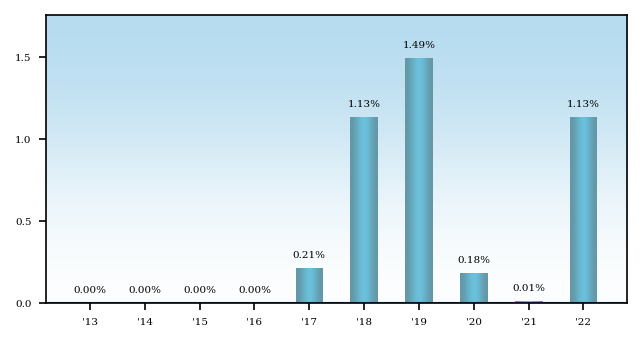
|
| Best Quarter: |
Quarter
ended December 31, 2022 |
0.74% |
| |
|
|
| Worst Quarter: |
Quarter
ended March
31, 2022* |
0.00% |
| |
|
|
| * |
|
Most recent quarter
with this return during the period of the chart. |
|
| AVERAGE
ANNUAL TOTAL RETURNS
AS OF 12/31/22
|
| Treasury Obligations Fund | Class A Shares | Risk Lose Money [Member]
|
| You
could lose money by investing in the fund.
|
| Treasury Obligations Fund | Class A Shares | Credit Risk [Member]
|
Credit
Risk — The value of your investment might decline if the issuer of an obligation held by the fund defaults on the obligation
or has its credit rating downgraded.
|
| Treasury Obligations Fund | Class A Shares | Interest Rate Risk [Member]
|
Interest
Rate Risk — The value of your investment might decline because of a sharp rise in interest rates that causes the value
of the fund’s portfolio holdings to fall. During periods when interest rates are low or there are negative interest rates,
the fund’s yield (and total return) also may be low or the fund may be unable to maintain positive returns.
|
| Treasury Obligations Fund | Class A Shares | Market Risk [Member]
|
Market
Risk — Market volatility, dramatic changes to interest rates, and otherwise unfavorable
economic conditions resulting from major cybersecurity events, geopolitical events (including
wars, such as Russia’s invasion of Ukraine, tensions in the Middle East, terror attacks, and
disruptions to foreign economic and trade relationships), public health emergencies, among
other events, may negatively impact the fund’s performance or impair the fund’s ability to
achieve its investment objective.
|
| Treasury Obligations Fund | Class A Shares | Liquidity Risk [Member]
|
Liquidity
Risk — The fund may not be able to sell a security in a timely manner or at a desired price, or may be unable to sell
the security at all, because of a lack of demand in the market for the security.
|
| Treasury Obligations Fund | Class A Shares | Redemption Risk [Member]
|
Redemption
Risk — If there are unexpectedly high redemptions of fund shares, the fund might have to sell portfolio securities prior
to their maturity, possibly at a loss.
|
| Treasury Obligations Fund | Class A Shares | Repurchase Agreement Risk [Member]
|
Repurchase
Agreement Risk — If the seller of a repurchase agreement defaults on its obligation to repurchase securities from the
fund, the fund may incur costs in disposing of the collateral and may experience losses if there is any delay in its ability to
do so.
|
| Treasury Obligations Fund | Class A Shares | Income Risk [Member]
|
Income
Risk — The level of income you receive from the fund will be affected by movements in short-term interest rates.
|
| Treasury Obligations Fund | Class A Shares | Cybersecurity Risk [Member]
|
Cybersecurity
Risk — The fund may be subject to operational and informational security risks resulting from breaches in cybersecurity
at the fund, the fund’s affiliates or service providers. A cybersecurity breach at an issuer of securities in which the
fund invests may cause such securities to lose value.
|
| Treasury Obligations Fund | Class A Shares | Regulatory Risk [Member]
|
Regulatory
Risk — Changes to monetary policy by the Federal Reserve or other regulatory actions may impact the fund’s operations,
universe of potential investment options, and return potential.
|
| Treasury Obligations Fund | Class D Shares
|
| Treasury
Obligations Fund
|
| Investment
Objective
|
Treasury
Obligations Fund’s objective is to seek maximum current income consistent with the preservation of capital and maintenance
of liquidity.
|
| Fees
and Expenses
|
The
following tables describe the fees and expenses that you may pay if you buy, hold, and sell shares of the fund. You may pay other fees,
such as brokerage commissions and other fees to financial intermediaries, which are not reflected in the tables and examples below.
|
| Shareholder
Fees (fees paid directly from your investment)
|
| Annual
Fund Operating Expenses (expenses that you pay each year as a percentage of the
value of your investment)
|
Example:
This example is intended to help you compare the cost of investing in the fund with the cost of investing in other mutual
funds. The example assumes that you invest $10,000 in the fund for the time periods indicated and then redeem all of your shares
at the end of those periods. The example also assumes that your investment has a 5% return each year and the fund’s operating
expenses remain the same (except that the example incorporates the fund’s expense limitation arrangements for only the first
year of each period presented). You would incur these hypothetical expenses whether or not you redeem your investment at the end
of the given period. Although your actual costs may be higher or lower, based on these assumptions your costs would be:
|
| Principal
Investment Strategies
|
Under
normal market conditions, Treasury Obligations Fund invests exclusively in short-term U.S. Treasury obligations, including repurchase
agreements secured by U.S. Treasury obligations. The U.S. Treasury obligations in which the fund invests include U.S. Treasury
bonds, notes, and bills. These types of Treasury securities are essentially the same except for differences in interest rates,
maturities, and dates of issuance. U.S. Treasury obligations are backed by the full faith and credit of the U.S. government.
|
| Principal
Risks
|
| Fund
Performance
|
The
following bar chart and table provide some indication of the potential risks of investing in the fund. The fund’s past performance
is not necessarily an indication of how the fund will perform in the future. Updated performance information is available online
at www.firstamericanfunds.com or by calling 800 677-3863.
The
bar chart shows you the variability of the fund’s performance from year to year. The table illustrates the fund’s
average annual total returns over the time periods indicated.
The performance shown in the bar chart and performance table is the performance of the fund’s
predecessor entity, Treasury Obligations Fund, a series of First American Funds, Inc. (the
“Predecessor Fund”), prior to the commencement of the fund’s operations. As of December 22,
2023 the fund acquired all of the assets, subject to the liabilities, of the Predecessor Fund
through a tax-free reorganization (the “Reorganization”). As a result of the Reorganization, the
fund adopted the performance and financial history of the Predecessor Fund. The fund has the
same investment objective, strategy, risks and investment adviser as the Predecessor Fund.
As a result, the performance of the fund would have been substantially similar to that of the
Predecessor Fund.
The bar
chart shows the performance of the Predecessor Fund’s Class D shares which was adopted by the Class D shares of the fund
for periods prior to the Reorganization. If the Predecessor Fund’s investment adviser had not waived or reimbursed certain
Predecessor Fund expenses during these periods, the Predecessor Fund’s returns would have been lower.
|
| ANNUAL TOTAL RETURNS AS OF 12/31 EACH YEAR
|
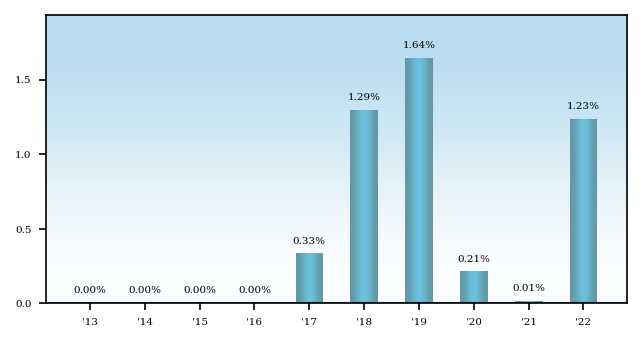
|
| Best
Quarter: |
Quarter ended
December 31, 2022 |
0.78% |
| Worst Quarter: |
Quarter ended March
31, 2022* |
0.00% |
| * |
|
Most
recent quarter with this return during the period of the chart. |
|
| AVERAGE ANNUAL TOTAL RETURNS AS OF 12/31/22
|
| Treasury Obligations Fund | Class D Shares | Risk Lose Money [Member]
|
| You
could lose money by investing in the fund.
|
| Treasury Obligations Fund | Class D Shares | Credit Risk [Member]
|
Credit
Risk — The value of your investment might decline if the issuer of an obligation held by the fund defaults on the obligation
or has its credit rating downgraded.
|
| Treasury Obligations Fund | Class D Shares | Interest Rate Risk [Member]
|
Interest
Rate Risk — The value of your investment might decline because of a sharp rise in interest rates that causes the value
of the fund’s portfolio holdings to fall. During periods when interest rates are low or there are negative interest rates,
the fund’s yield (and total return) also may be low or the fund may be unable to maintain positive returns.
|
| Treasury Obligations Fund | Class D Shares | Market Risk [Member]
|
Market
Risk — Market volatility, dramatic changes to interest rates, and otherwise unfavorable
economic conditions resulting from major cybersecurity events, geopolitical events (including
wars, such as Russia’s invasion of Ukraine, tensions in the Middle East, terror attacks, and
disruptions to foreign economic and trade relationships), public health emergencies, among
other events, may negatively impact the fund’s performance or impair the fund’s ability to
achieve its investment objective.
|
| Treasury Obligations Fund | Class D Shares | Liquidity Risk [Member]
|
Liquidity
Risk — The fund may not be able to sell a security in a timely manner or at a desired price, or may be unable to sell
the security at all, because of a lack of demand in the market for the security.
|
| Treasury Obligations Fund | Class D Shares | Redemption Risk [Member]
|
Redemption
Risk — If there are unexpectedly high redemptions of fund shares, the fund might have to sell portfolio securities prior
to their maturity, possibly at a loss.
|
| Treasury Obligations Fund | Class D Shares | Repurchase Agreement Risk [Member]
|
Repurchase
Agreement Risk — If the seller of a repurchase agreement defaults on its obligation to repurchase securities from the
fund, the fund may incur costs in disposing of the collateral and may experience losses if there is any delay in its ability to
do so.
|
| Treasury Obligations Fund | Class D Shares | Income Risk [Member]
|
Income
Risk — The level of income you receive from the fund will be affected by movements in short-term interest rates.
|
| Treasury Obligations Fund | Class D Shares | Cybersecurity Risk [Member]
|
Cybersecurity
Risk — The fund may be subject to operational and informational security risks resulting from breaches in cybersecurity
at the fund, the fund’s affiliates or service providers. A cybersecurity breach at an issuer of securities in which the
fund invests may cause such securities to lose value.
|
| Treasury Obligations Fund | Class D Shares | Regulatory Risk [Member]
|
Regulatory
Risk — Changes to monetary policy by the Federal Reserve or other regulatory actions may impact the fund’s operations,
universe of potential investment options, and return potential.
|
| Treasury Obligations Fund | Class P Shares
|
| Treasury
Obligations Fund
|
| Investment
Objective
|
Treasury
Obligations Fund’s objective is to seek maximum current income consistent with the preservation of capital and maintenance
of liquidity.
|
| Fees
and Expenses
|
The
following tables describe the fees and expenses that you may pay if you buy, hold, and sell shares of the fund. You may pay other fees,
such as brokerage commissions and other fees to financial intermediaries, which are not reflected in the tables and examples below.
|
| Shareholder
Fees
(fees paid directly from your investment)
|
| Annual
Fund Operating Expenses
(expenses that you pay each year as a percentage of the value of your investment)
|
Example:
This example is intended to help you compare the cost of investing in the fund with the cost of investing in other mutual
funds. The example assumes that you invest $10,000 in the fund for the time periods indicated and then redeem all of your shares
at the end of those periods. The example also assumes that your investment has a 5% return each year and the fund’s operating
expenses remain the same (except that the example incorporates the fund’s expense limitation arrangements for only the first
year of each period presented). You would incur these hypothetical expenses whether or not you redeem your investment at the end
of the given period. Although your actual costs may be higher or lower, based on these assumptions your costs would be:
|
| Principal
Investment Strategies
|
Under
normal market conditions, Treasury Obligations Fund invests exclusively in short-term U.S. Treasury obligations, including repurchase
agreements secured by U.S. Treasury obligations. The U.S. Treasury obligations in which the fund invests include U.S. Treasury
bonds, notes, and bills. These types of Treasury securities are essentially the same except for differences in interest rates,
maturities, and dates of issuance. U.S. Treasury obligations are backed by the full faith and credit of the U.S. government.
|
| Principal
Risks
|
| Fund
Performance
|
The
following bar chart and table provide some indication of the potential risks of investing in the fund. The fund’s past performance
is not necessarily an indication of how the fund will perform in the future. Updated performance information is available online
at www.firstamericanfunds.com or by calling 800 677-3863.
The
bar chart shows you the variability of the fund’s performance from year to year. The table illustrates the fund’s
average annual total returns over the time periods indicated.
The performance shown in the bar chart and performance table is the performance of the fund’s
predecessor entity, Treasury Obligations Fund, a series of First American Funds, Inc. (the
“Predecessor Fund”), prior to the commencement of the fund’s operations. On December 22,
2023 the fund acquired all of the assets, subject to the liabilities, of the Predecessor Fund
through a tax-free reorganization (the “Reorganization”). As a result of the Reorganization, the
fund adopted the performance and financial history of the Predecessor Fund. The fund has the
same investment objective, strategy, risks and investment adviser as the Predecessor Fund. As a
result, the performance of the fund would have been substantially similar to that of the
Predecessor Fund.
The
bar chart shows the performance of the Predecessor Fund’s Class P shares which was adopted by the Class P shares of the
fund for periods prior to the Reorganization. If the Predecessor Fund’s investment adviser had not waived or reimbursed
certain Predecessor Fund expenses during these periods, the Predecessor Fund’s returns would have been lower.
|
| ANNUAL TOTAL RETURNS AS OF 12/31 EACH YEAR
|
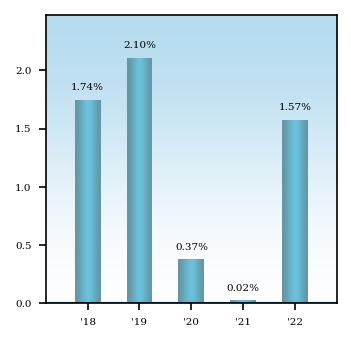
|
| Best
Quarter: |
Quarter
ended December 31, 2022 |
0.89% |
| Worst
Quarter: |
Quarter ended
December
31, 2021* |
0.00% |
| * |
|
Most recent quarter with this return during the period of the chart. |
|
| AVERAGE
ANNUAL TOTAL RETURNS
AS OF 12/31/22
|
| Treasury Obligations Fund | Class P Shares | Risk Lose Money [Member]
|
| You
could lose money by investing in the fund.
|
| Treasury Obligations Fund | Class P Shares | Credit Risk [Member]
|
Credit Risk
— The value of your investment might decline if the issuer of an obligation held by the fund defaults on the obligation
or has its credit rating downgraded.
|
| Treasury Obligations Fund | Class P Shares | Interest Rate Risk [Member]
|
Interest
Rate Risk — The value of your investment might decline because of a sharp rise in interest rates that causes the value
of the fund’s portfolio holdings to fall. During periods when interest rates are low or there are negative interest rates,
the fund’s yield (and total return) also may be low or the fund may be unable to maintain positive returns.
|
| Treasury Obligations Fund | Class P Shares | Market Risk [Member]
|
Market Risk
— Market volatility, dramatic changes to interest rates, and otherwise unfavorable
economic conditions resulting from major cybersecurity events, geopolitical events (including
wars, such as Russia’s invasion of Ukraine, tensions in the Middle East, terror attacks, and
disruptions to foreign economic and trade relationships), public health emergencies, among
other events, may negatively impact the fund’s performance or impair the fund’s ability to
achieve its investment objective.
|
| Treasury Obligations Fund | Class P Shares | Liquidity Risk [Member]
|
Liquidity
Risk — The fund may not be able to sell a security in a timely manner or at a desired price, or may be unable to sell
the security at all, because of a lack of demand in the market for the security.
|
| Treasury Obligations Fund | Class P Shares | Redemption Risk [Member]
|
Redemption
Risk — If there are unexpectedly high redemptions of fund shares, the fund might have to sell portfolio securities prior
to their maturity, possibly at a loss.
|
| Treasury Obligations Fund | Class P Shares | Repurchase Agreement Risk [Member]
|
Repurchase
Agreement Risk — If the seller of a repurchase agreement defaults on its obligation to repurchase securities from the
fund, the fund may incur costs in disposing of the collateral and may experience losses if there is any delay in its ability to
do so.
|
| Treasury Obligations Fund | Class P Shares | Income Risk [Member]
|
Income Risk
— The level of income you receive from the fund will be affected by movements in short-term interest rates.
|
| Treasury Obligations Fund | Class P Shares | Cybersecurity Risk [Member]
|
Cybersecurity
Risk — The fund may be subject to operational and informational security risks resulting from breaches in cybersecurity
at the fund, the fund’s affiliates or service providers. A cybersecurity breach at an issuer of securities in which the
fund invests may cause such securities to lose value.
|
| Treasury Obligations Fund | Class P Shares | Regulatory Risk [Member]
|
Regulatory
Risk — Changes to monetary policy by the Federal Reserve or other regulatory actions may impact the fund’s operations,
universe of potential investment options, and return potential.
|
| Treasury Obligations Fund | Class T Shares
|
| Treasury
Obligations Fund
|
| Investment
Objective
|
Treasury
Obligations Fund’s objective is to seek maximum current income consistent with the preservation of capital and maintenance
of liquidity.
|
| Fees
and Expenses
|
The
following tables describe the fees and expenses that you may pay if you buy, hold, and sell shares of the fund. You may pay other fees,
such as brokerage commissions and other fees to financial intermediaries, which are not reflected in the tables and examples below.
|
| Shareholder Fees (fees paid directly from your investment)
|
| Annual Fund Operating Expenses (expenses that you pay each year as a percentage of the value of your investment)
|
Example:
This example is intended to help you compare the cost of investing in the fund with the cost of investing in other mutual
funds. The example assumes that you invest $10,000 in the fund for the time periods indicated and then redeem all of your shares
at the end of those periods. The example also assumes that your investment has a 5% return each year and the fund’s operating
expenses remain the same (except that the example incorporates the fund’s expense limitation arrangements for only the first
year of each period presented). You would incur these hypothetical expenses whether or not you redeem your investment at the end
of the given period. Although your actual costs may be higher or lower, based on these assumptions your costs would be:
|
| Principal
Investment Strategies
|
Under
normal market conditions, Treasury Obligations Fund invests exclusively in short-term U.S. Treasury obligations, including repurchase
agreements secured by U.S. Treasury obligations. The U.S. Treasury obligations in which the fund invests include U.S. Treasury
bonds, notes, and bills. These types of Treasury securities are essentially the same except for differences in interest rates,
maturities, and dates of issuance. U.S. Treasury obligations are backed by the full faith and credit of the U.S. government.
|
| Principal
Risks
|
| Fund
Performance
|
The
following bar chart and table provide some indication of the potential risks of investing in the fund. The fund’s past performance
is not necessarily an indication of how the fund will perform in the future. Updated performance information is available online
at firstamericanfunds.com or by calling 800 677-3863.
The
bar chart shows the fund’s Class T performance for the period indicated. The table illustrates the fund’s average
annual total returns over the time periods indicated. The bar chart does not reflect sales loads as none are applicable to Class
T shares.
The performance shown in the bar chart and performance table is the performance of the fund’s
predecessor entity, Treasury Obligations Fund, a series of First American Funds, Inc. (the
“Predecessor Fund”), prior to the commencement of the fund’s operations. On December 22,
2023 the fund acquired all of the assets, subject to the liabilities, of the Predecessor Fund
through a tax-free reorganization (the “Reorganization”). As a result of the Reorganization, the
fund adopted the performance and financial history of the Predecessor Fund. The fund has the
same investment objective, strategy, risks and investment adviser as the Predecessor Fund.
As a result, the performance of the fund would have been substantially similar to that of the
Predecessor Fund.
The bar chart shows the performance
of the Predecessor Fund’s Class T shares which was adopted by the Class T shares of the fund for periods prior to the Reorganization.
If the Predecessor Fund’s investment adviser had not waived or reimbursed certain Predecessor Fund expenses during these
periods, the Predecessor Fund’s returns would have been lower.
|
| ANNUAL TOTAL RETURNS AS OF 12/31 EACH YEAR
|
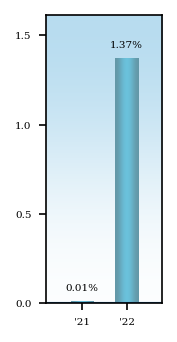
|
| Best Quarter: |
Quarter ended
December 31, 2022 |
0.83% |
| Worst Quarter: |
Quarter ended March
31, 2022* |
0.00% |
| * |
|
Most recent quarter with this return during the period of the chart. |
|
| AVERAGE
ANNUAL TOTAL RETURNS
AS OF 12/31/22
|
| Treasury Obligations Fund | Class T Shares | Risk Lose Money [Member]
|
| You
could lose money by investing in the fund.
|
| Treasury Obligations Fund | Class T Shares | Credit Risk [Member]
|
Credit
Risk — The value of your investment might decline if the issuer of an obligation held by the fund defaults on the obligation
or has its credit rating downgraded.
|
| Treasury Obligations Fund | Class T Shares | Interest Rate Risk [Member]
|
Interest
Rate Risk — The value of your investment might decline because of a sharp rise in interest rates that causes the value
of the fund’s portfolio holdings to fall. During periods when interest rates are low or there are negative interest rates,
the fund’s yield (and total return) also may be low or the fund may be unable to maintain positive returns.
|
| Treasury Obligations Fund | Class T Shares | Market Risk [Member]
|
Market
Risk — Market volatility, dramatic changes to interest rates, and otherwise unfavorable
economic conditions resulting from major cybersecurity events, geopolitical events (including
wars, such as Russia’s invasion of Ukraine, tensions in the Middle East, terror attacks, and
disruptions to foreign economic and trade relationships), public health emergencies, among
other events, may negatively impact the fund’s performance or impair the fund’s ability to
achieve its investment objective.
|
| Treasury Obligations Fund | Class T Shares | Liquidity Risk [Member]
|
Liquidity
Risk — The fund may not be able to sell a security in a timely manner or at a desired price, or may be unable to sell
the security at all, because of a lack of demand in the market for the security.
|
| Treasury Obligations Fund | Class T Shares | Redemption Risk [Member]
|
Redemption
Risk — If there are unexpectedly high redemptions of fund shares, the fund might have to sell portfolio securities prior
to their maturity, possibly at a loss.
|
| Treasury Obligations Fund | Class T Shares | Repurchase Agreement Risk [Member]
|
Repurchase
Agreement Risk — If the seller of a repurchase agreement defaults on its obligation to repurchase securities from the
fund, the fund may incur costs in disposing of the collateral and may experience losses if there is any delay in its ability to
do so.
|
| Treasury Obligations Fund | Class T Shares | Income Risk [Member]
|
Income
Risk — The level of income you receive from the fund will be affected by movements in short-term interest rates.
|
| Treasury Obligations Fund | Class T Shares | Cybersecurity Risk [Member]
|
Cybersecurity
Risk — The fund may be subject to operational and informational security risks resulting from breaches in cybersecurity
at the fund, the fund’s affiliates or service providers. A cybersecurity breach at an issuer of securities in which the
fund invests may cause such securities to lose value.
|
| Treasury Obligations Fund | Class T Shares | Regulatory Risk [Member]
|
Regulatory
Risk — Changes to monetary policy by the Federal Reserve or other regulatory actions may impact the fund’s operations,
universe of potential investment options, and return potential.
|
| Treasury Obligations Fund | Class V Shares
|
| Treasury
Obligations Fund
|
| Investment
Objective
|
Treasury
Obligations Fund’s objective is to seek maximum current income consistent with the preservation of capital and maintenance
of liquidity.
|
| Fees
and Expenses
|
The
following tables describe the fees and expenses that you may pay if you buy, hold, and sell shares of the fund. You may pay other fees,
such as brokerage commissions and other fees to financial intermediaries, which are not reflected in the tables and examples below.
|
| Shareholder
Fees (fees paid directly from your investment)
|
| Annual
Fund Operating Expenses (expenses that you pay each year as a percentage of the value of your investment)
|
Example:
This example is intended to help you compare the cost of investing in the fund with the cost of investing in other mutual
funds. The example assumes that you invest $10,000 in the fund for the time periods indicated and then redeem all of your shares
at the end of those periods. The example also assumes that your investment has a 5% return each year and the fund’s operating
expenses remain the same (except that the example incorporates the fund’s expense limitation arrangements for only the first
year of each period presented). You would incur these hypothetical expenses whether or not you redeem your investment at the end
of the given period. Although your actual costs may be higher or lower, based on these assumptions your costs would be:
|
| Principal
Investment Strategies
|
Under
normal market conditions, Treasury Obligations Fund invests exclusively in short-term U.S. Treasury obligations, including repurchase
agreements secured by U.S. Treasury obligations. The U.S. Treasury obligations in which the fund invests include U.S. Treasury
bonds, notes, and bills. These types of Treasury securities are essentially the same except for differences in interest rates,
maturities, and dates of issuance. U.S. Treasury obligations are backed by the full faith and credit of the U.S. government.
|
| Principal
Risks
|
| Fund
Performance
|
The
following bar chart and table provide some indication of the potential risks of investing in the fund. The fund’s past performance
is not necessarily an indication of how the fund will perform in the future. Updated performance information is available online
at www.firstamericanfunds.com or by calling 800 677-3863.
The
bar chart shows you the variability of the fund’s performance from year to year. The table illustrates the fund’s
average annual total returns over the time periods indicated.
The performance shown in the bar chart and performance table is the performance of the fund’s
predecessor entity, Treasury Obligations Fund, a series of First American Funds, Inc. (the
“Predecessor Fund”), prior to the commencement of the fund’s operations. On December 22,
2023 the fund acquired all of the assets, subject to the liabilities, of the Predecessor Fund
through a tax-free reorganization (the “Reorganization”). As a result of the Reorganization, the
fund adopted the performance and financial history of the Predecessor Fund. The fund has the
same investment objective, strategy, risks and investment adviser as the Predecessor Fund.
As a result, the performance of the fund would have been substantially similar to that of the
Predecessor Fund.
The bar chart shows the performance
of the Predecessor Fund’s Class V shares which was adopted by the Class V shares of the fund for periods prior to the Reorganization.
If the Predecessor Fund’s investment adviser had not waived or reimbursed certain Predecessor Fund expenses during these
periods, the Predecessor Fund’s returns would have been lower.
|
| ANNUAL TOTAL RETURNS AS OF 12/31 EACH YEAR
|
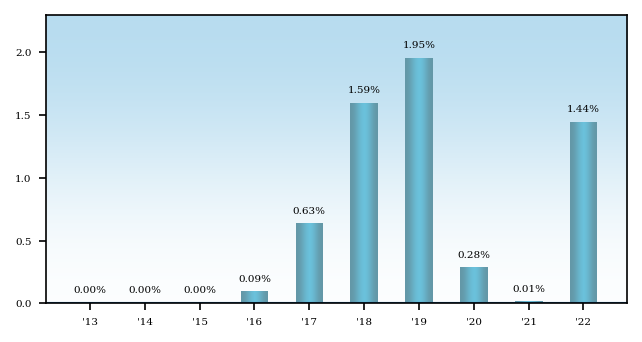
|
| Best Quarter: |
Quarter ended
December 31, 2022 |
0.85% |
| Worst Quarter: |
Quarter ended December
31, 2021* |
0.00% |
| * |
|
Most recent quarter with this return during the period of the chart. |
|
| AVERAGE
ANNUAL TOTAL RETURNS
AS OF 12/31/22
|
| Treasury Obligations Fund | Class V Shares | Risk Lose Money [Member]
|
| You
could lose money by investing in the fund.
|
| Treasury Obligations Fund | Class V Shares | Credit Risk [Member]
|
Credit
Risk — The value of your investment might decline if the issuer of an obligation held by the fund defaults on the obligation
or has its credit rating downgraded.
|
| Treasury Obligations Fund | Class V Shares | Interest Rate Risk [Member]
|
Interest
Rate Risk — The value of your investment might decline because of a sharp rise in interest rates that causes the value
of the fund’s portfolio holdings to fall. During periods when interest rates are low or there are negative interest rates,
the fund’s yield (and total return) also may be low or the fund may be unable to maintain positive returns.
|
| Treasury Obligations Fund | Class V Shares | Market Risk [Member]
|
Market
Risk — Market volatility, dramatic changes to interest rates, and otherwise unfavorable
economic conditions resulting from major cybersecurity events, geopolitical events (including
wars, such as Russia’s invasion of Ukraine, tensions in the Middle East, terror attacks, and
disruptions to foreign economic and trade relationships), public health emergencies, among
other events, may negatively impact the fund’s performance or impair the fund’s ability to
achieve its investment objective.
|
| Treasury Obligations Fund | Class V Shares | Liquidity Risk [Member]
|
Liquidity
Risk — The fund may not be able to sell a security in a timely manner or at a desired price, or may be unable to sell
the security at all, because of a lack of demand in the market for the security.
|
| Treasury Obligations Fund | Class V Shares | Redemption Risk [Member]
|
Redemption
Risk — If there are unexpectedly high redemptions of fund shares, the fund might have to sell portfolio securities prior
to their maturity, possibly at a loss.
|
| Treasury Obligations Fund | Class V Shares | Repurchase Agreement Risk [Member]
|
Repurchase
Agreement Risk — If the seller of a repurchase agreement defaults on its obligation to repurchase securities from the
fund, the fund may incur costs in disposing of the collateral and may experience losses if there is any delay in its ability to
do so.
|
| Treasury Obligations Fund | Class V Shares | Income Risk [Member]
|
Income
Risk — The level of income you receive from the fund will be affected by movements in short-term interest rates.
|
| Treasury Obligations Fund | Class V Shares | Cybersecurity Risk [Member]
|
Cybersecurity
Risk — The fund may be subject to operational and informational security risks resulting from breaches in cybersecurity
at the fund, the fund’s affiliates or service providers.
A cybersecurity breach at an issuer of securities in which the
fund invests may cause such securities to lose value.
|
| Treasury Obligations Fund | Class V Shares | Regulatory Risk [Member]
|
Regulatory
Risk — Changes to monetary policy by the Federal Reserve or other regulatory actions may impact the fund’s operations,
universe of potential investment options, and return potential.
|
| Treasury Obligations Fund | Class X Shares
|
| Treasury Obligations
Fund
|
| Investment Objective
|
Treasury Obligations Fund’s objective is to
seek maximum current income consistent with the preservation of capital and maintenance of liquidity.
|
| Fees and Expenses
|
The
following tables describe the fees and expenses that you may pay if you buy, hold, and sell shares of the fund. You may pay other fees,
such as brokerage commissions and other fees to financial intermediaries, which are not reflected in the tables and examples below.
|
| Shareholder Fees
(fees paid directly from your investment)
|
| Annual Fund Operating Expenses
(expenses that you pay each year as a percentage of the value of your investment)
|
Example: This example is intended to help
you compare the cost of investing in the fund with the cost of investing in other mutual funds. The example assumes that you invest
$10,000 in the fund for the time periods indicated and then redeem all of your shares at the end of those periods. The example
also assumes that your investment has a 5% return each year and the fund’s operating expenses remain the same (except that
the example incorporates the fund’s expense limitation arrangements for only the first year of each period presented). You
would incur these hypothetical expenses whether or not you redeem your investment at the end of the given period. Although your
actual costs may be higher or lower, based on these assumptions your costs would be:
|
| Principal Investment Strategies
|
Under normal market conditions, Treasury Obligations
Fund invests exclusively in short-term U.S. Treasury obligations, including repurchase agreements secured by U.S. Treasury obligations.
The U.S. Treasury obligations in which the fund invests include U.S. Treasury bonds, notes, and bills. These types of Treasury
securities are essentially the same except for differences in interest rates, maturities, and dates of issuance. U.S. Treasury
obligations are backed by the full faith and credit of the U.S. government.
|
| Principal Risks
|
| Fund Performance
|
The following bar chart and table provide some indication
of the potential risks of investing in the fund. The fund’s past performance is not necessarily an indication of how the
fund will perform in the future. Updated performance information is available online at www.firstamericanfunds.com or by calling
800 677-3863.
The bar chart shows you the variability of the fund’s
performance from year to year. The table illustrates the fund’s average annual total returns over the time periods indicated.
The performance shown in the bar chart and performance table is the performance of the
fund’s predecessor entity, Treasury Obligations Fund, a series of First American Funds, Inc. (the
“Predecessor Fund”), prior to the commencement of the fund’s operations. On December 22,
2023 the fund acquired all of the assets, subject to the liabilities, of the Predecessor Fund
through a tax-free reorganization (the “Reorganization”). As a result of the Reorganization, the
fund adopted the performance and financial history of the Predecessor Fund. The fund has the
same investment objective, strategy, risks and investment adviser as the Predecessor Fund.
As a result, the performance of the fund would have been substantially similar to that of the
Predecessor Fund.
The bar chart shows
the performance of the Predecessor Fund’s Class X shares which was adopted by the Class X shares of the fund for periods
prior to the Reorganization. If the Predecessor Fund’s investment adviser had not waived or reimbursed certain Predecessor
Fund expenses during these periods, the Predecessor Fund’s returns would have been lower.
|
| ANNUAL TOTAL RETURNS AS OF 12/31 EACH YEAR
|
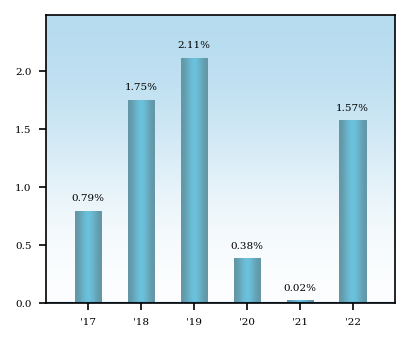
|
| Best
Quarter: |
Quarter ended
December 31, 2022 |
0.90% |
| Worst Quarter: |
Quarter ended December
31, 2021* |
0.00% |
| * |
|
Most recent quarter with this return during the period of the chart. |
|
| AVERAGE
ANNUAL TOTAL RETURNS
AS OF 12/31/22
|
| Treasury Obligations Fund | Class X Shares | Risk Lose Money [Member]
|
| You could lose money by investing in the fund.
|
| Treasury Obligations Fund | Class X Shares | Credit Risk [Member]
|
Credit Risk — The value of your investment
might decline if the issuer of an obligation held by the fund defaults on the obligation or has its credit rating downgraded.
|
| Treasury Obligations Fund | Class X Shares | Interest Rate Risk [Member]
|
Interest Rate Risk — The value of your
investment might decline because of a sharp rise in interest rates that causes the value of the fund’s portfolio holdings
to fall. During periods when interest rates are low or there are negative interest rates, the fund’s yield (and total return)
also may be low or the fund may be unable to maintain positive returns.
|
| Treasury Obligations Fund | Class X Shares | Market Risk [Member]
|
Market Risk — Market volatility, dramatic changes to interest rates, and otherwise unfavorable
economic conditions resulting from major cybersecurity events, geopolitical events (including
wars, such as Russia’s invasion of Ukraine, tensions in the Middle East, terror attacks, and
disruptions to foreign economic and trade relationships), public health emergencies, among
other events, may negatively impact the fund’s performance or impair the fund’s ability to
achieve its investment objective.
|
| Treasury Obligations Fund | Class X Shares | Liquidity Risk [Member]
|
Liquidity Risk — The fund may not be
able to sell a security in a timely manner or at a desired price, or may be unable to sell the security at all, because of a lack
of demand in the market for the security.
|
| Treasury Obligations Fund | Class X Shares | Redemption Risk [Member]
|
Redemption Risk — If there are unexpectedly
high redemptions of fund shares, the fund might have to sell portfolio securities prior to their maturity, possibly at a loss.
|
| Treasury Obligations Fund | Class X Shares | Repurchase Agreement Risk [Member]
|
Repurchase Agreement Risk — If the
seller of a repurchase agreement defaults on its obligation to repurchase securities from the fund, the fund may incur costs in
disposing of the collateral and may experience losses if there is any delay in its ability to do so.
|
| Treasury Obligations Fund | Class X Shares | Income Risk [Member]
|
Income Risk — The level of income you
receive from the fund will be affected by movements in short-term interest rates.
|
| Treasury Obligations Fund | Class X Shares | Cybersecurity Risk [Member]
|
Cybersecurity Risk — The fund may be subject to operational and informational security risks
resulting from breaches in cybersecurity at the fund, the fund’s affiliates or service providers.
A cybersecurity breach at an issuer of securities in which the fund invests may cause such
securities to lose value.
|
| Treasury Obligations Fund | Class X Shares | Regulatory Risk [Member]
|
Regulatory Risk — Changes to monetary
policy by the Federal Reserve or other regulatory actions may impact the fund’s operations, universe of potential investment
options, and return potential.
|
| Treasury Obligations Fund | Class Y Shares
|
| Treasury Obligations Fund
|
| Investment Objective
|
Treasury Obligations Fund’s objective is to
seek maximum current income consistent with the preservation of capital and maintenance of liquidity.
|
| Fees and Expenses
|
The
following tables describe the fees and expenses that you may pay if you buy, hold, and sell shares of the fund. You may pay other fees,
such as brokerage commissions and other fees to financial intermediaries, which are not reflected in the tables and examples below.
|
| Shareholder
Fees
(fees paid directly from your investment)
|
| Annual
Fund Operating Expenses
(expenses that you pay each year as a percentage of the value of your investment)
|
Example: This example
is intended to help you compare the cost of investing in the fund with the cost of investing in other mutual funds. The example
assumes that you invest $10,000 in the fund for the time periods indicated and then redeem all of your shares at the end of those
periods. The example also assumes that your investment has a 5% return each year and the fund’s operating expenses remain
the same (except that the example incorporates the fund’s expense limitation arrangements for only the first year of each
period presented). You would incur these hypothetical expenses whether or not you redeem your investment at the end of the given
period. Although your actual costs may be higher or lower, based on these assumptions your costs would be:
|
| Principal Investment Strategies
|
Under normal market conditions, Treasury Obligations
Fund invests exclusively in short-term U.S. Treasury obligations, including repurchase agreements secured by U.S. Treasury obligations.
The U.S. Treasury obligations in which the fund invests include U.S. Treasury bonds, notes, and bills. These types of Treasury
securities are essentially the same except for differences in interest rates, maturities, and dates of issuance. U.S. Treasury
obligations are backed by the full faith and credit of the U.S. government.
|
| Principal Risks
|
| Fund Performance
|
The following bar chart and table provide some
indication of the potential risks of investing in the fund. The fund’s past performance is not necessarily an indication
of how the fund will perform in the future. Updated performance information is available online at www.firstamericanfunds.com or
by calling 800 677-3863.
The bar chart shows you the variability of the fund’s
performance from year to year. The table illustrates the fund’s average annual total returns over the time periods indicated.
The performance shown in the bar chart and performance table is the performance of the fund’s
predecessor entity, Treasury Obligations Fund, a series of First American Funds, Inc. (the
“Predecessor Fund”), prior to the commencement of the fund’s operations. On December 22,
2023 the fund acquired all of the assets, subject to the liabilities, of the Predecessor Fund
through a tax-free reorganization (the “Reorganization”). As a result of the Reorganization, the
fund adopted the performance and financial history of the Predecessor Fund. The fund has the
same investment objective, strategy, risks and investment adviser as the Predecessor Fund.
As a result, the performance of the fund would have been substantially similar to that of the
Predecessor Fund.
The bar chart shows the performance
of the Predecessor Fund’s Class Y shares which was adopted by the Class Y shares of the fund for periods prior to the Reorganization.
If the Predecessor Fund’s investment adviser had not waived or reimbursed certain Predecessor Fund expenses during these
periods, the Predecessor Fund’s returns would have been lower.
|
| ANNUAL TOTAL RETURNS AS OF 12/31 EACH YEAR
|
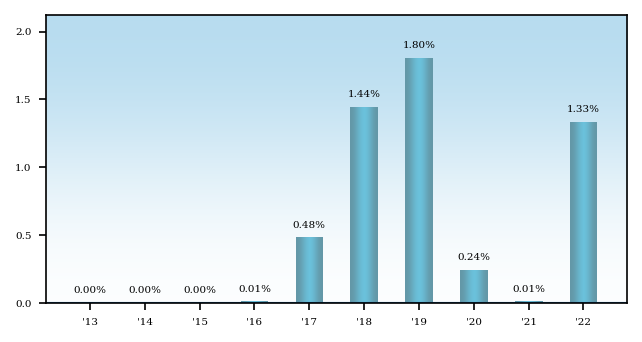
|
| Best Quarter: |
Quarter
ended December 31, 2022 |
0.82% |
| |
|
|
| Worst Quarter: |
Quarter
ended March
31, 2022* |
0.00% |
| |
|
|
| * |
Most recent quarter with this return during the period of the chart. |
|
| AVERAGE
ANNUAL TOTAL RETURNS
AS OF 12/31/22
|
| Treasury Obligations Fund | Class Y Shares | Risk Lose Money [Member]
|
| You could lose money by investing in the fund.
|
| Treasury Obligations Fund | Class Y Shares | Credit Risk [Member]
|
Credit Risk — The value of your investment
might decline if the issuer of an obligation held by the fund defaults on the obligation or has its credit rating downgraded.
|
| Treasury Obligations Fund | Class Y Shares | Interest Rate Risk [Member]
|
Interest Rate Risk — The value of
your investment might decline because of a sharp rise in interest rates that causes the value of the fund’s portfolio holdings
to fall. During periods when interest rates are low or there are negative interest rates, the fund’s yield (and total return)
also may be low or the fund may be unable to maintain positive returns.
|
| Treasury Obligations Fund | Class Y Shares | Market Risk [Member]
|
Market Risk — Market volatility, dramatic changes to interest rates, and otherwise unfavorable
economic conditions resulting from major cybersecurity events, geopolitical events (including
wars, such as Russia’s invasion of Ukraine, tensions in the Middle East, terror attacks, and
disruptions to foreign economic and trade relationships), public health emergencies, among
other events, may negatively impact the fund’s performance or impair the fund’s ability to
achieve its investment objective.
|
| Treasury Obligations Fund | Class Y Shares | Liquidity Risk [Member]
|
Liquidity Risk — The fund may not
be able to sell a security in a timely manner or at a desired price, or may be unable to sell the security at all, because of a
lack of demand in the market for the security.
|
| Treasury Obligations Fund | Class Y Shares | Redemption Risk [Member]
|
Redemption Risk — If there are unexpectedly
high redemptions of fund shares, the fund might have to sell portfolio securities prior to their maturity, possibly at a loss.
|
| Treasury Obligations Fund | Class Y Shares | Repurchase Agreement Risk [Member]
|
Repurchase Agreement Risk — If the
seller of a repurchase agreement defaults on its obligation to repurchase securities from the fund, the fund may incur costs in
disposing of the collateral and may experience losses if there is any delay in its ability to do so.
|
| Treasury Obligations Fund | Class Y Shares | Income Risk [Member]
|
Income Risk — The level of income you
receive from the fund will be affected by movements in short-term interest rates.
|
| Treasury Obligations Fund | Class Y Shares | Cybersecurity Risk [Member]
|
Cybersecurity Risk —
The fund may be subject to operational and informational security risks resulting from breaches in cybersecurity at the fund, the
fund’s affiliates or service providers. A cybersecurity breach at an issuer of securities in which the fund invests may cause
such securities to lose value.
|
| Treasury Obligations Fund | Class Y Shares | Regulatory Risk [Member]
|
Regulatory Risk — Changes to monetary
policy by the Federal Reserve or other regulatory actions may impact the fund’s operations, universe of potential investment
options, and return potential.
|
| Treasury Obligations Fund | Class Z Shares
|
| Treasury
Obligations Fund
|
| Investment
Objective
|
Treasury
Obligations Fund’s objective is to seek maximum current income consistent with the preservation of capital and maintenance
of liquidity.
|
| Fees
and Expenses
|
The
following tables describe the fees and expenses that you may pay if you buy, hold, and sell shares of the fund. You may pay other fees,
such as brokerage commissions and other fees to financial intermediaries, which are not reflected in the tables and examples below.
|
| Shareholder
Fees
(fees paid directly from your investment)
|
| Annual
Fund Operating Expenses
(expenses that you pay each year as a percentage of the value of your investment)
|
Example:
This example is intended to help you compare the cost of investing in the fund with the cost of investing in other mutual
funds. The example assumes that you invest $10,000 in the fund for the time periods indicated and then redeem all of your shares
at the end of those periods. The example also assumes that your investment has a 5% return each year and the fund’s operating
expenses remain the same (except that the example incorporates the fund’s expense limitation arrangements for only the first
year of each period presented). You would incur these hypothetical expenses whether or not you redeem your investment at the end
of the given period. Although your actual costs may be higher or lower, based on these assumptions your costs would be:
|
| Principal
Investment Strategies
|
Under
normal market conditions, Treasury Obligations Fund invests exclusively in short-term U.S. Treasury obligations, including repurchase
agreements secured by U.S. Treasury obligations. The U.S. Treasury obligations in which the fund invests include U.S. Treasury
bonds, notes, and bills. These types of Treasury securities are essentially the same except for differences in interest rates,
maturities, and dates of issuance. U.S. Treasury obligations are backed by the full faith and credit of the U.S. government.
|
| Principal
Risks
|
| Fund
Performance
|
The
following bar chart and table provide some indication of the potential risks of investing in the fund. The fund’s past performance
is not necessarily an indication of how the fund will perform in the future. Updated performance information is available online
at www.firstamericanfunds.com or by calling 800 677-3863.
The
bar chart shows you the variability of the fund’s performance from year to year. The table illustrates the fund’s
average annual total returns over the time periods indicated.
The performance shown in the bar chart and performance table is the performance of the fund’s
predecessor entity, Treasury Obligations Fund, a series of First American Funds, Inc. (the
“Predecessor Fund”), prior to the commencement of the fund’s operations. On December 22,
2023 the fund acquired all of the assets, subject to the liabilities, of the Predecessor Fund
through a tax-free reorganization (the “Reorganization”). As a result of the Reorganization, the
fund adopted the performance and financial history of the Predecessor Fund. The fund has the
same investment objective, strategy, risks and investment adviser as the Predecessor Fund.
As a result, the performance of the fund would have been substantially similar to that of the
Predecessor Fund.
The bar chart shows the performance
of the Predecessor Fund’s Class Z shares which was adopted by the Class Z shares of the fund for periods prior to the Reorganization.
If the Predecessor Fund’s investment adviser had not waived or reimbursed certain Predecessor Fund expenses during these
periods, the Predecessor Fund’s returns would have been lower.
|
| ANNUAL TOTAL RETURNS AS OF 12/31 EACH YEAR
|
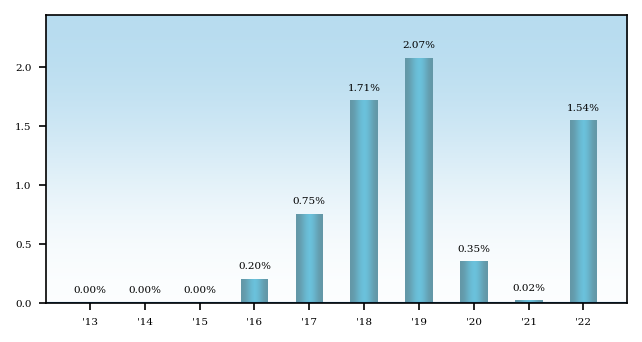
|
| Best Quarter: |
Quarter ended
December 31, 2022 |
0.89% |
| Worst Quarter: |
Quarter ended December
31, 2021* |
0.00% |
| * |
|
Most recent quarter with this return during the period of the chart. |
|
| AVERAGE
ANNUAL TOTAL RETURNS
AS OF 12/31/22
|
| Treasury Obligations Fund | Class Z Shares | Risk Lose Money [Member]
|
| You
could lose money by investing in the fund.
|
| Treasury Obligations Fund | Class Z Shares | Credit Risk [Member]
|
Credit
Risk — The value of your investment might decline if the issuer of an obligation held by the fund defaults on the obligation
or has its credit rating downgraded.
|
| Treasury Obligations Fund | Class Z Shares | Interest Rate Risk [Member]
|
Interest
Rate Risk — The value of your investment might decline because of a sharp rise in interest rates that causes the value
of the fund’s portfolio holdings to fall. During periods when interest rates are low or there are negative interest rates,
the fund’s yield (and total return) also may be low or the fund may be unable to maintain positive returns.
|
| Treasury Obligations Fund | Class Z Shares | Market Risk [Member]
|
Market
Risk — Market volatility, dramatic changes to interest rates, and otherwise unfavorable
economic conditions resulting from major cybersecurity events, geopolitical events (including
wars, such as Russia’s invasion of Ukraine, tensions in the Middle East, terror attacks, and
disruptions to foreign economic and trade relationships), public health emergencies, among
other events, may negatively impact the fund’s performance or impair the fund’s ability to
achieve its investment objective.
|
| Treasury Obligations Fund | Class Z Shares | Liquidity Risk [Member]
|
Liquidity
Risk — The fund may not be able to sell a security in a timely manner or at a desired price, or may be unable to sell
the security at all, because of a lack of demand in the market for the security.
|
| Treasury Obligations Fund | Class Z Shares | Redemption Risk [Member]
|
Redemption
Risk — If there are unexpectedly high redemptions of fund shares, the fund might have to sell portfolio securities prior
to their maturity, possibly at a loss.
|
| Treasury Obligations Fund | Class Z Shares | Repurchase Agreement Risk [Member]
|
Repurchase
Agreement Risk — If the seller of a repurchase agreement defaults on its obligation to repurchase securities from the
fund, the fund may incur costs in disposing of the collateral and may experience losses if there is any delay in its ability to
do so.
|
| Treasury Obligations Fund | Class Z Shares | Income Risk [Member]
|
Income
Risk — The level of income you receive from the fund will be affected by movements in short-term interest rates.
|
| Treasury Obligations Fund | Class Z Shares | Cybersecurity Risk [Member]
|
Cybersecurity
Risk — The fund may be subject to operational and informational security risks resulting from breaches in cybersecurity
at the fund, the fund’s affiliates or service providers. A cybersecurity breach at an issuer of securities in which the
fund invests may cause such securities to lose value.
|
| Treasury Obligations Fund | Class Z Shares | Regulatory Risk [Member]
|
Regulatory
Risk — Changes to monetary policy by the Federal Reserve or other regulatory actions may impact the fund’s operations,
universe of potential investment options, and return potential.
|
| Treasury Obligations Fund
|
|
|
|
|
|
|
Average Annual Total Returns - Treasury Obligations Fund
|
1 Year |
5 Years |
10 Years |
Bar Chart, Year to Date Return |
Since Inception |
Inception Date |
| Class A Shares |
1.13%
|
[1] |
0.79%
|
[1] |
0.41%
|
[1] |
3.21%
|
|
|
Sep. 24, 2001
|
[1] |
| Class D Shares |
1.23%
|
[2] |
0.87%
|
[2] |
0.47%
|
[2] |
3.32%
|
|
|
Oct. 04, 1993
|
[2] |
| Class P Shares |
1.57%
|
[3] |
1.16%
|
[3] |
|
|
3.67%
|
1.16%
|
[3] |
Dec. 18, 2017
|
[3] |
| Class T Shares |
1.37%
|
[4] |
|
|
|
|
3.48%
|
0.60%
|
[4] |
Sep. 18, 2020
|
[4] |
| Class V Shares |
1.44%
|
[5] |
1.05%
|
[5] |
0.60%
|
[5] |
3.55%
|
|
|
Mar. 31, 2006
|
[5] |
| Class X Shares |
1.57%
|
[6] |
1.16%
|
[6] |
1.01%
|
[6] |
3.68%
|
|
|
Apr. 05, 2016
|
[6] |
| Class Y Shares |
1.33%
|
[7] |
0.91%
|
[7] |
0.53%
|
[7] |
3.44%
|
|
|
Jan. 24, 1995
|
[7] |
| Class Z Shares |
1.54%
|
[8] |
1.13%
|
[8] |
0.66%
|
[8] |
3.65%
|
|
|
Dec. 01, 2003
|
[8] |
|
| U.S. Treasury Money Market Fund | Class A Shares
|
| U.S.
Treasury Money Market Fund
|
| Investment
Objective
|
U.S.
Treasury Money Market Fund’s objective is to seek maximum current income consistent with the preservation of capital and
maintenance of liquidity.
|
| Fees
and Expenses
|
The
following tables describe the fees and expenses that you may pay if you buy, hold, and sell shares of the fund. You may pay other fees,
such as brokerage commissions and other fees to financial intermediaries, which are not reflected in the tables and examples below.
|
| Shareholder Fees (fees paid directly from your investment)
|
| Annual Fund Operating Expenses (expenses that you pay each year as a percentage of the value of your investment)
|
Example:
This example is intended to help you compare the cost of investing in the fund with the cost of investing in other mutual
funds. The example assumes that you invest $10,000 in the fund for the time periods indicated and then redeem all of your shares
at the end of those periods. The example also assumes that your investment has a 5% return each year and the fund’s operating
expenses remain the same (except that the example incorporates the fund’s expense limitation arrangements for only the first
year of each period presented). You would incur these hypothetical expenses whether or not you redeem your investment at the end
of the given period. Although your actual costs may be higher or lower, based on these assumptions your costs would be:
|
| Principal
Investment Strategies
|
U.S.
Treasury Money Market Fund invests exclusively in direct obligations of the U.S. Treasury. The U.S. Treasury obligations in which
the fund invests include U.S. Treasury bonds, notes, and bills. These types of Treasury securities are essentially the same except
for differences in interest rates, maturities, and dates of issuance. U.S. Treasury obligations are backed by the full faith and
credit of the U.S. government.
|
| Principal
Risks
|
| Fund
Performance
|
The
following bar chart and table provide some indication of the potential risks of investing in the fund. The fund’s past performance
is not necessarily an indication of how the fund will perform in the future. Updated performance information is available online
at www.firstamericanfunds.com or by calling 800 677-3863.
The
bar chart shows you the variability of the fund’s performance from year to year. The table illustrates the fund’s
average annual total returns over the time periods indicated.
The performance shown in the bar chart and performance table is the performance of the fund’s
predecessor entity, U.S. Treasury Money Market Fund, a series of First American Funds, Inc. (the
“Predecessor Fund”), prior to the commencement of the fund’s operations. On December 22,
2023 the fund acquired all of the assets, subject to the liabilities, of the Predecessor Fund
through a tax-free reorganization (the “Reorganization”). As a result of the Reorganization, the
fund adopted the performance and financial history of the Predecessor Fund. The fund has the
same investment objective, strategy, risks and investment adviser as the Predecessor Fund.
As a result, the performance of the fund would have been substantially similar to that of the
Predecessor Fund.
The
bar chart shows the performance of the Predecessor Fund’s Class A shares which was adopted by the Class A shares of the
fund for periods prior to the Reorganization. If the Predecessor Fund’s investment adviser had not waived or reimbursed
certain Predecessor Fund expenses during these periods, the Predecessor Fund’s returns would have been lower.
|
| ANNUAL TOTAL RETURNS AS OF 12/31 EACH YEAR
|
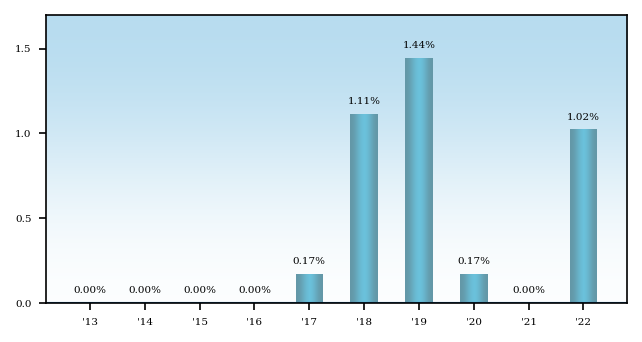
|
| Best Quarter: |
Quarter
ended December 31, 2022 |
0.71% |
| |
|
|
| Worst Quarter: |
Quarter
ended March
31, 2022* |
0.00% |
| |
|
|
| * |
|
Most recent quarter
with this return during the period of the chart. |
|
| AVERAGE
ANNUAL TOTAL RETURNS
AS OF 12/31/22
|
| U.S. Treasury Money Market Fund | Class A Shares | Risk Lose Money [Member]
|
| You
could lose money by investing in the fund.
|
| U.S. Treasury Money Market Fund | Class A Shares | Credit Risk [Member]
|
Credit
Risk — The value of your investment might decline if the issuer of an obligation held by the fund defaults on the obligation
or has its credit rating downgraded.
|
| U.S. Treasury Money Market Fund | Class A Shares | Interest Rate Risk [Member]
|
Interest
Rate Risk — The value of your investment might decline because of a sharp rise in interest rates that causes the value
of the fund’s portfolio holdings to fall. During periods when interest rates are low or there are negative interest rates,
the fund’s yield (and total return) also may be low or the fund may be unable to maintain positive returns.
|
| U.S. Treasury Money Market Fund | Class A Shares | Market Risk [Member]
|
Market
Risk — Market volatility, dramatic changes to interest rates, and otherwise unfavorable
economic conditions resulting from major cybersecurity events, geopolitical events (including
wars, such as Russia’s invasion of Ukraine, tensions in the Middle East, terror attacks, and
disruptions to foreign economic and trade relationships), public health emergencies, among
other events, may negatively impact the fund’s performance or impair the fund’s ability to
achieve its investment objective.
|
| U.S. Treasury Money Market Fund | Class A Shares | Liquidity Risk [Member]
|
Liquidity
Risk — The fund may not be able to sell a security in a timely manner or at a desired price, or may be unable to sell
the security at all, because of a lack of demand in the market for the security.
|
| U.S. Treasury Money Market Fund | Class A Shares | Redemption Risk [Member]
|
Redemption
Risk — If there are unexpectedly high redemptions of fund shares, the fund might have to sell portfolio securities prior
to their maturity, possibly at a loss.
|
| U.S. Treasury Money Market Fund | Class A Shares | Income Risk [Member]
|
Income
Risk — The level of income you receive from the fund will be affected by movements in short-term interest rates.
|
| U.S. Treasury Money Market Fund | Class A Shares | Cybersecurity Risk [Member]
|
Cybersecurity
Risk — The fund may be subject to operational and informational security risks resulting from breaches in cybersecurity
at the fund, the fund’s affiliates or service providers. A cybersecurity breach at an issuer of securities in which the
fund invests may cause such securities to lose value.
|
| U.S. Treasury Money Market Fund | Class A Shares | Regulatory Risk [Member]
|
Regulatory
Risk — Changes to monetary policy by the Federal Reserve or other regulatory actions may impact the fund’s operations,
universe of potential investment options, and return potential.
|
| U.S. Treasury Money Market Fund | Class D Shares
|
| U.S.
Treasury Money Market Fund
|
| Investment
Objective
|
U.S.
Treasury Money Market Fund’s objective is to seek maximum current income consistent with the preservation of capital and
maintenance of liquidity.
|
| Fees
and Expenses
|
The
following tables describe the fees and expenses that you may pay if you buy, hold, and sell shares of the fund. You may pay other fees,
such as brokerage commissions and other fees to financial intermediaries, which are not reflected in the tables and examples below.
|
| Shareholder
Fees (fees
paid directly from your investment)
|
| Annual
Fund Operating Expenses
(expenses that you pay each year as a percentage of the value of your investment)
|
Example:
This example is intended to help you compare the cost of investing in the fund with the cost of investing in other mutual
funds. The example assumes that you invest $10,000 in the fund for the time periods indicated and then redeem all of your shares
at the end of those periods. The example also assumes that your investment has a 5% return each year and the fund’s operating
expenses remain the same (except that the example incorporates the fund’s expense limitation arrangements for only the first
year of each period presented). You would incur these hypothetical expenses whether or not you redeem your investment at the end
of the given period. Although your actual costs may be higher or lower, based on these assumptions your costs would be:
|
| Principal
Investment Strategies
|
U.S.
Treasury Money Market Fund invests exclusively in direct obligations of the U.S. Treasury. The U.S. Treasury obligations in which
the fund invests include U.S. Treasury bonds, notes, and bills. These types of Treasury securities are essentially the same except
for differences in interest rates, maturities, and dates of issuance. U.S. Treasury obligations are backed by the full faith and
credit of the U.S. government.
|
| Principal
Risks
|
| Fund
Performance
|
The
following bar chart and table provide some indication of the potential risks of investing in the fund. The fund’s past performance
is not necessarily an indication of how the fund will perform in the future. Updated performance information is available online
at www.firstamericanfunds.com or by calling 800 677-3863.
The
bar chart shows you the variability of the fund’s performance from year to year. The table illustrates the fund’s
average annual total returns over the time periods indicated.
The performance shown in the bar chart and performance table is the performance of the fund’s
predecessor entity, U.S. Treasury Money Market Fund, a series of First American Funds, Inc. (the
“Predecessor Fund”), prior to the commencement of the fund’s operations. On December 22,
2023 the fund acquired all of the assets, subject to the liabilities, of the Predecessor Fund
through a tax-free reorganization (the “Reorganization”). As a result of the Reorganization, the
fund adopted the performance and financial history of the Predecessor Fund. The fund has the
same investment objective, strategy, risks and investment adviser as the Predecessor Fund. As a
result, the performance of the fund would have been substantially similar to that of the
Predecessor Fund.
The bar
chart shows the performance of the Predecessor Fund’s Class D shares which was adopted by the Class D shares of the fund
for periods prior to the Reorganization. If the Predecessor Fund’s investment adviser had not waived or reimbursed certain
Predecessor Fund expenses during these periods, the Predecessor Fund’s returns would have been lower.
|
| ANNUAL TOTAL RETURNS AS OF 12/31 EACH YEAR
|
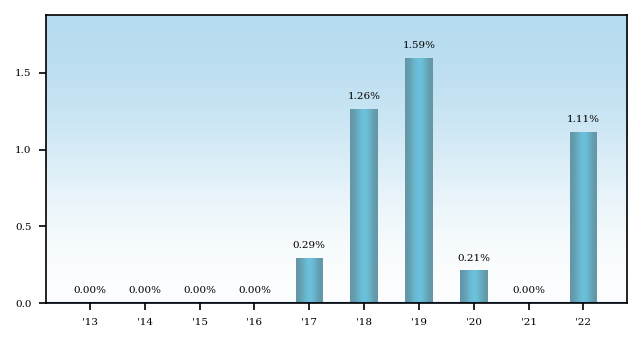
|
| Best
Quarter: |
Quarter ended
December 31, 2022 |
0.75% |
| Worst Quarter: |
Quarter ended March
31, 2022* |
0.00% |
| * |
|
Most
recent quarter with this return during the period of the chart. |
|
| AVERAGE ANNUAL TOTAL RETURNS AS OF 12/31/22
|
| U.S. Treasury Money Market Fund | Class D Shares | Risk Lose Money [Member]
|
| You
could lose money by investing in the fund.
|
| U.S. Treasury Money Market Fund | Class D Shares | Credit Risk [Member]
|
Credit
Risk — The value of your investment might decline if the issuer of an obligation held by the fund defaults on the obligation
or has its credit rating downgraded.
|
| U.S. Treasury Money Market Fund | Class D Shares | Interest Rate Risk [Member]
|
Interest
Rate Risk — The value of your investment might decline because of a sharp rise in interest rates that causes the value
of the fund’s portfolio holdings to fall. During periods when interest rates are low or there are negative interest rates,
the fund’s yield (and total return) also may be low or the fund may be unable to maintain positive returns.
|
| U.S. Treasury Money Market Fund | Class D Shares | Market Risk [Member]
|
Market
Risk — Market volatility, dramatic changes to interest rates, and otherwise unfavorable
economic conditions resulting from major cybersecurity events, geopolitical events (including
wars, such as Russia’s invasion of Ukraine, tensions in the Middle East, terror attacks, and
disruptions to foreign economic and trade relationships), public health emergencies, among
other events, may negatively impact the fund’s performance or impair the fund’s ability to
achieve its investment objective.
|
| U.S. Treasury Money Market Fund | Class D Shares | Liquidity Risk [Member]
|
Liquidity
Risk — The fund may not be able to sell a security in a timely manner or at a desired price, or may be unable to sell
the security at all, because of a lack of demand in the market for the security.
|
| U.S. Treasury Money Market Fund | Class D Shares | Redemption Risk [Member]
|
Redemption
Risk — If there are unexpectedly high redemptions of fund shares, the fund might have to sell portfolio securities prior
to their maturity, possibly at a loss.
|
| U.S. Treasury Money Market Fund | Class D Shares | Income Risk [Member]
|
Income
Risk — The level of income you receive from the fund will be affected by movements in short-term interest rates.
|
| U.S. Treasury Money Market Fund | Class D Shares | Cybersecurity Risk [Member]
|
Cybersecurity
Risk — The fund may be subject to operational and informational security risks resulting from breaches in cybersecurity
at the fund, the fund’s affiliates or service providers. A cybersecurity breach at an issuer of securities in which the
fund invests may cause such securities to lose value.
|
| U.S. Treasury Money Market Fund | Class D Shares | Regulatory Risk [Member]
|
Regulatory
Risk — Changes to monetary policy by the Federal Reserve or other regulatory actions may impact the fund’s operations,
universe of potential investment options, and return potential.
|
| U.S. Treasury Money Market Fund | Class T Shares
|
| U.S.
Treasury Money Market Fund
|
| Investment
Objective
|
U.S.
Treasury Money Market Fund’s objective is to seek maximum current income consistent with the preservation of capital and
maintenance of liquidity.
|
| Fees
and Expenses
|
The
following tables describe the fees and expenses that you may pay if you buy, hold and sell shares of the fund. You may pay other fees,
such as brokerage commissions and other fees to financial intermediaries, which are not reflected in the tables and examples below.
|
| Shareholder Fees (fees paid directly from your investment)
|
| Annual Fund Operating Expenses (expenses that you pay each year as a percentage of the value of your investment)
|
Example:
This example is intended to help you compare the cost of investing in the fund with the cost of investing in other mutual
funds. The example assumes that you invest $10,000 in the fund for the time periods indicated and then redeem all of your shares
at the end of those periods. The example also assumes that your investment has a 5% return each year and the fund’s operating
expenses remain the same (except that the example incorporates the fund’s expense limitation arrangements for only the first
year of each period presented). You would incur these hypothetical expenses whether or not you redeem your investment at the end
of the given period. Although your actual costs may be higher or lower, based on these assumptions your costs would be:
|
| Principal
Investment Strategies
|
U.S.
Treasury Money Market Fund invests exclusively in direct obligations of the U.S. Treasury. The U.S. Treasury obligations in which
the fund invests include U.S. Treasury bonds, notes, and bills. These types of Treasury securities are essentially the same except
for differences in interest rates, maturities, and dates of issuance. U.S. Treasury obligations are backed by the full faith and
credit of the U.S. government.
|
| Principal
Risks
|
| Fund
Performance
|
The
following bar chart and table provide some indication of the potential risks of investing in the fund. The fund’s past performance
is not necessarily an indication of how the fund will perform in the future. Updated performance information is available online
at firstamericanfunds.com or by calling 800 677-3863.
The
bar chart shows the fund’s Class T performance for the period indicated. The table illustrates the fund’s average
annual total returns over the time periods indicated. The bar chart does not reflect sales loads as none are applicable to Class
T shares.
The performance shown in the bar chart and performance table is the performance of the fund’s
predecessor entity, U.S. Treasury Money Market Fund, a series of First American Funds, Inc. (the
“Predecessor Fund”), prior to the commencement of the fund’s operations. On December 22,
2023 the fund acquired all of the assets, subject to the liabilities, of the Predecessor Fund
through a tax-free reorganization (the “Reorganization”). As a result of the Reorganization, the
fund adopted the performance and financial history of the Predecessor Fund. The fund has the
same investment objective, strategy, risks and investment adviser as the Predecessor Fund.
As a result, the performance of the fund would have been substantially similar to that of the
Predecessor Fund.
The bar chart shows the performance
of the Predecessor Fund’s Class T shares which was adopted by the Class T shares of the fund for periods prior to the Reorganization.
If the Predecessor Fund’s investment adviser had not waived or reimbursed certain Predecessor Fund expenses during these
periods, the Predecessor Fund’s returns would have been lower.
|
| ANNUAL TOTAL RETURNS AS OF 12/31 EACH YEAR
|
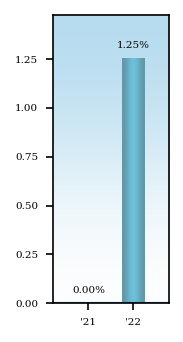
|
| Best Quarter: |
Quarter ended
December 31, 2022 |
0.80% |
| Worst Quarter: |
Quarter ended March
31, 2022* |
0.00% |
| * |
|
Most recent quarter with this return during the period of the chart. |
|
| AVERAGE
ANNUAL TOTAL RETURNS
AS OF 12/31/22
|
| U.S. Treasury Money Market Fund | Class T Shares | Risk Lose Money [Member]
|
| You
could lose money by investing in the fund.
|
| U.S. Treasury Money Market Fund | Class T Shares | Credit Risk [Member]
|
Credit
Risk — The value of your investment might decline if the issuer of an obligation held by the fund defaults on the obligation
or has its credit rating downgraded.
|
| U.S. Treasury Money Market Fund | Class T Shares | Interest Rate Risk [Member]
|
Interest
Rate Risk — The value of your investment might decline because of a sharp rise in interest rates that causes the value
of the fund’s portfolio holdings to fall. During periods when interest rates are low or there are negative interest rates,
the fund’s yield (and total return) also may be low or the fund may be unable to maintain positive returns.
|
| U.S. Treasury Money Market Fund | Class T Shares | Market Risk [Member]
|
Market
Risk — Market volatility, dramatic changes to interest rates, and otherwise unfavorable
economic conditions resulting from major cybersecurity events, geopolitical events (including
wars, such as Russia’s invasion of Ukraine, tensions in the Middle East, terror attacks, and
disruptions to foreign economic and trade relationships), public health emergencies, among
other events, may negatively impact the fund’s performance or impair the fund’s ability to
achieve its investment objective.
|
| U.S. Treasury Money Market Fund | Class T Shares | Liquidity Risk [Member]
|
Liquidity
Risk — The fund may not be able to sell a security in a timely manner or at a desired price, or may be unable to sell
the security at all, because of a lack of demand in the market for the security.
|
| U.S. Treasury Money Market Fund | Class T Shares | Redemption Risk [Member]
|
Redemption
Risk — If there are unexpectedly high redemptions of fund shares, the fund might have to sell portfolio securities prior
to their maturity, possibly at a loss.
|
| U.S. Treasury Money Market Fund | Class T Shares | Income Risk [Member]
|
Income
Risk — The level of income you receive from the fund will be affected by movements in short-term interest rates.
|
| U.S. Treasury Money Market Fund | Class T Shares | Cybersecurity Risk [Member]
|
Cybersecurity
Risk — The fund may be subject to operational and informational security risks resulting from breaches in cybersecurity
at the fund, the fund’s affiliates or service providers. A cybersecurity breach at an issuer of securities in which the
fund invests may cause such securities to lose value.
|
| U.S. Treasury Money Market Fund | Class T Shares | Regulatory Risk [Member]
|
Regulatory
Risk — Changes to monetary policy by the Federal Reserve or other regulatory actions may impact the fund’s operations,
universe of potential investment options, and return potential.
|
| U.S. Treasury Money Market Fund | Class V Shares
|
| U.S.
Treasury Money Market Fund
|
| Investment
Objective
|
U.S.
Treasury Money Market Fund’s objective is to seek maximum current income consistent with the preservation of capital and
maintenance of liquidity.
|
| Fees
and Expenses
|
The
following tables describe the fees and expenses that you may pay if you buy, hold, and sell shares of the fund. You may pay other fees,
such as brokerage commissions and other fees to financial intermediaries, which are not reflected in the tables and examples below.
|
| Shareholder
Fees (fees paid directly from your investment)
|
| Annual Fund Operating Expenses
(expenses that you pay each year as a percentage of the value of your investment)
|
Example:
This example is intended to help you compare the cost of investing in the fund with the cost of investing in other mutual
funds. The example assumes that you invest $10,000 in the fund for the time periods indicated and then redeem all of your shares
at the end of those periods. The example also assumes that your investment has a 5% return each year and the fund’s operating
expenses remain the same (except that the example incorporates the fund’s expense limitation arrangements for only the first
year of each period presented). You would incur these hypothetical expenses whether or not you redeem your investment at the end
of the given period. Although your actual costs may be higher or lower, based on these assumptions your costs would be:
|
| Principal
Investment Strategies
|
U.S.
Treasury Money Market Fund invests exclusively in direct obligations of the U.S. Treasury. The U.S. Treasury obligations in which
the fund invests include U.S. Treasury bonds, notes, and bills. These types of Treasury securities are essentially the same except
for differences in interest rates, maturities, and dates of issuance. U.S. Treasury obligations are backed by the full faith and
credit of the U.S. government.
|
| Principal
Risks
|
| Fund
Performance
|
The
following bar chart and table provide some indication of the potential risks of investing in the fund. The fund’s past performance
is not necessarily an indication of how the fund will perform in the future. Updated performance information is available online
at www.firstamericanfunds.com or by calling 800 677-3863.
The
bar chart shows you the variability of the fund’s performance from year to year. The table illustrates the fund’s
average annual total returns over the time periods indicated.
The performance shown in the bar chart and performance table is the performance of the fund’s
predecessor entity, U.S. Treasury Money Market Fund, a series of First American Funds, Inc. (the
“Predecessor Fund”), prior to the commencement of the fund’s operations. On December 22,
2023 the fund acquired all of the assets, subject to the liabilities, of the Predecessor Fund
through a tax-free reorganization (the “Reorganization”). As a result of the Reorganization, the
fund adopted the performance and financial history of the Predecessor Fund. The fund has the
same investment objective, strategy, risks and investment adviser as the Predecessor Fund.
As a result, the performance of the fund would have been substantially similar to that of the
Predecessor Fund.
The
bar chart shows the performance of the Predecessor Fund’s Class V shares which was adopted by the Class V shares of the
fund for periods prior to the Reorganization. If the Predecessor Fund’s investment adviser had not waived or reimbursed
certain Predecessor Fund expenses during these periods, the Predecessor Fund’s returns would have been lower.
|
| ANNUAL TOTAL RETURNS AS OF 12/31 EACH YEAR
|
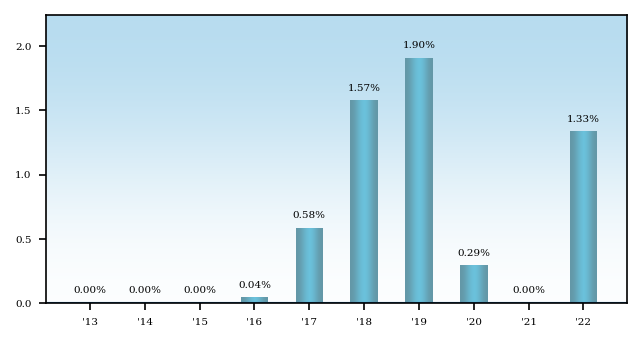
|
| Best Quarter: |
Quarter ended
December 31, 2022 |
0.83% |
| Worst Quarter: |
Quarter ended March
31, 2022* |
0.00% |
| * |
|
Most recent quarter with this return during the period of the chart. |
|
| AVERAGE
ANNUAL TOTAL RETURNS
AS OF 12/31/22
|
| U.S. Treasury Money Market Fund | Class V Shares | Risk Lose Money [Member]
|
| You
could lose money by investing in the fund.
|
| U.S. Treasury Money Market Fund | Class V Shares | Credit Risk [Member]
|
Credit
Risk — The value of your investment might decline if the issuer of an obligation held by the fund defaults on the obligation
or has its credit rating downgraded.
|
| U.S. Treasury Money Market Fund | Class V Shares | Interest Rate Risk [Member]
|
Interest
Rate Risk — The value of your investment might decline because of a sharp rise in interest rates that causes the value
of the fund’s portfolio holdings to fall. During periods when interest rates are low or there are negative interest rates,
the fund’s yield (and total return) also may be low or the fund may be unable to maintain positive returns.
|
| U.S. Treasury Money Market Fund | Class V Shares | Market Risk [Member]
|
Market
Risk — Market volatility, dramatic changes to interest rates, and otherwise unfavorable
economic conditions resulting from major cybersecurity events, geopolitical events (including
wars, such as Russia’s invasion of Ukraine, tensions in the Middle East, terror attacks, and
disruptions to foreign economic and trade relationships), public health emergencies, among
other events, may negatively impact the fund’s performance or impair the fund’s ability to
achieve its investment objective.
|
| U.S. Treasury Money Market Fund | Class V Shares | Liquidity Risk [Member]
|
Liquidity
Risk — The fund may not be able to sell a security in a timely manner or at a desired price, or may be unable to sell
the security at all, because of a lack of demand in the market for the security.
|
| U.S. Treasury Money Market Fund | Class V Shares | Redemption Risk [Member]
|
Redemption
Risk — If there are unexpectedly high redemptions of fund shares, the fund might have to sell portfolio securities prior
to their maturity, possibly at a loss.
|
| U.S. Treasury Money Market Fund | Class V Shares | Income Risk [Member]
|
Income
Risk — The level of income you receive from the fund will be affected by movements in short-term interest rates.
|
| U.S. Treasury Money Market Fund | Class V Shares | Cybersecurity Risk [Member]
|
Cybersecurity
Risk — The fund may be subject to operational and informational security risks resulting from breaches in cybersecurity
at the fund, the fund’s affiliates or service providers. A cybersecurity breach at an issuer of securities in which the
fund invests may cause such securities to lose value.
|
| U.S. Treasury Money Market Fund | Class V Shares | Regulatory Risk [Member]
|
Regulatory
Risk — Changes to monetary policy by the Federal Reserve or other regulatory actions may impact the fund’s operations,
universe of potential investment options, and return potential.
|
| U.S. Treasury Money Market Fund | Class Y Shares
|
| U.S. Treasury Money Market Fund
|
| Investment Objective
|
U.S. Treasury Money Market Fund’s objective
is to seek maximum current income consistent with the preservation of capital and maintenance of liquidity.
|
| Fees and Expenses
|
The
following tables describe the fees and expenses that you may pay if you buy, hold, and sell shares of the fund. You may pay other fees,
such as brokerage commissions and other fees to financial intermediaries, which are not reflected in the tables and examples below.
|
| Shareholder
Fees
(fees paid directly from your investment)
|
| Annual
Fund Operating Expenses
(expenses that you pay each year as a percentage
of the value of your investment)
|
Example: This example
is intended to help you compare the cost of investing in the fund with the cost of investing in other mutual funds. The example
assumes that you invest $10,000 in the fund for the time periods indicated and then redeem all of your shares at the end of those
periods. The example also assumes that your investment has a 5% return each year and the fund’s operating expenses remain
the same (except that the example incorporates the fund’s expense limitation arrangements for only the first year of each
period presented). You would incur these hypothetical expenses whether or not you redeem your investment at the end of the given
period. Although your actual costs may be higher or lower, based on these assumptions your costs would be:
|
| Principal Investment Strategies
|
U.S. Treasury Money Market Fund invests exclusively
in direct obligations of the U.S. Treasury. The U.S. Treasury obligations in which the fund invests include U.S. Treasury bonds,
notes, and bills. These types of Treasury securities are essentially the same except for differences in interest rates, maturities,
and dates of issuance. U.S. Treasury obligations are backed by the full faith and credit of the U.S. government.
|
| Principal Risks
|
| Fund Performance
|
The following bar chart and table provide some
indication of the potential risks of investing in the fund. The fund’s past performance is not necessarily an indication
of how the fund will perform in the future. Updated performance information is available online at www.firstamericanfunds.com or
by calling 800 677-3863.
The bar chart shows you the variability of the fund’s
performance from year to year. The table illustrates the fund’s average annual total returns over the time periods indicated.
The performance shown in the bar chart and performance table is the performance of the fund’s
predecessor entity, U.S. Treasury Money Market Fund, a series of First American Funds, Inc. (the
“Predecessor Fund”), prior to the commencement of the fund’s operations. On December 22,
2023 the fund acquired all of the assets, subject to the liabilities, of the Predecessor Fund
through a tax-free reorganization (the “Reorganization”). As a result of the Reorganization, the
fund adopted the performance and financial history of the Predecessor Fund. The fund has the
same investment objective, strategy, risks and investment adviser as the Predecessor Fund.
As a result, the performance of the fund would have been substantially similar to that of the
Predecessor Fund.
The bar chart shows the performance
of the Predecessor Fund’s Class Y shares which was adopted by the Class Y shares of the fund for periods prior to the Reorganization.
If the Predecessor Fund’s investment adviser had not waived or reimbursed certain Predecessor Fund expenses during these
periods, the Predecessor Fund’s returns would have been lower.
|
| ANNUAL TOTAL RETURNS AS OF 12/31 EACH YEAR
|
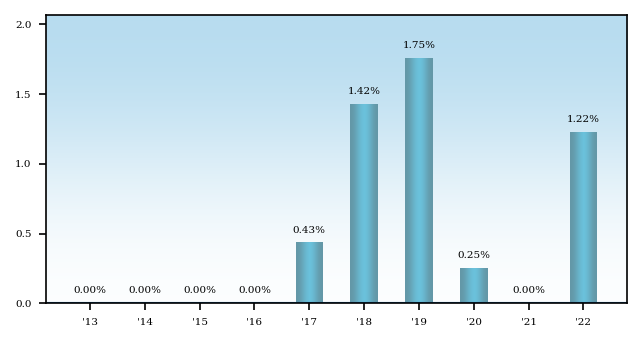
|
| Best Quarter: |
Quarter
ended December 31, 2022 |
0.79% |
| |
|
|
| Worst Quarter: |
Quarter
ended March
31, 2022* |
0.00% |
| |
|
|
| * |
Most recent quarter with this return during the period of the chart. |
|
| AVERAGE
ANNUAL TOTAL RETURNS
AS OF 12/31/22
|
| U.S. Treasury Money Market Fund | Class Y Shares | Risk Lose Money [Member]
|
| You could lose money by investing in the fund.
|
| U.S. Treasury Money Market Fund | Class Y Shares | Credit Risk [Member]
|
Credit Risk — The value of your investment
might decline if the issuer of an obligation held by the fund defaults on the obligation or has its credit rating downgraded.
|
| U.S. Treasury Money Market Fund | Class Y Shares | Interest Rate Risk [Member]
|
Interest Rate Risk — The value of
your investment might decline because of a sharp rise in interest rates that causes the value of the fund’s portfolio holdings
to fall. During periods when interest rates are low or there are negative interest rates, the fund’s yield (and total return)
also may be low or the fund may be unable to maintain positive returns.
|
| U.S. Treasury Money Market Fund | Class Y Shares | Market Risk [Member]
|
Market Risk — Market volatility, dramatic changes to interest rates, and otherwise unfavorable
economic conditions resulting from major cybersecurity events, geopolitical events (including
wars, such as Russia’s invasion of Ukraine, tensions in the Middle East, terror attacks, and
disruptions to foreign economic and trade relationships), public health emergencies, among
other events, may negatively impact the fund’s performance or impair the fund’s ability to
achieve its investment objective.
|
| U.S. Treasury Money Market Fund | Class Y Shares | Liquidity Risk [Member]
|
Liquidity Risk — The fund may not
be able to sell a security in a timely manner or at a desired price, or may be unable to sell the security at all, because of a
lack of demand in the market for the security.
|
| U.S. Treasury Money Market Fund | Class Y Shares | Redemption Risk [Member]
|
Redemption Risk — If there are unexpectedly
high redemptions of fund shares, the fund might have to sell portfolio securities prior to their maturity, possibly at a loss.
|
| U.S. Treasury Money Market Fund | Class Y Shares | Income Risk [Member]
|
Income Risk — The level of income you
receive from the fund will be affected by movements in short-term interest rates.
|
| U.S. Treasury Money Market Fund | Class Y Shares | Cybersecurity Risk [Member]
|
Cybersecurity Risk —
The fund may be subject to operational and informational security risks resulting from breaches in cybersecurity at the fund, the
fund’s affiliates or service providers. A cybersecurity breach at an issuer of securities in which the fund invests may cause
such securities to lose value.
|
| U.S. Treasury Money Market Fund | Class Y Shares | Regulatory Risk [Member]
|
Regulatory Risk — Changes to monetary
policy by the Federal Reserve or other regulatory actions may impact the fund’s operations, universe of potential investment
options, and return potential.
|
| U.S. Treasury Money Market Fund | Class Z Shares
|
| U.S.
Treasury Money Market Fund
|
| Investment
Objective
|
U.S.
Treasury Money Market Fund’s objective is to seek maximum current income consistent with the preservation of capital and
maintenance of liquidity.
|
| Fees
and Expenses
|
The
following tables describe the fees and expenses that you may pay if you buy, hold, and sell shares of the fund. You may pay other fees,
such as brokerage commissions and other fees to financial intermediaries, which are not reflected in the tables and examples below.
|
| Shareholder
Fees
(fees paid directly from your investment)
|
| Annual
Fund Operating Expenses
(expenses that you pay each year as a percentage of the value of your investment)
|
Example:
This example is intended to help you compare the cost of investing in the fund with the cost of investing in other mutual
funds. The example assumes that you invest $10,000 in the fund for the time periods indicated and then redeem all of your shares
at the end of those periods. The example also assumes that your investment has a 5% return each year and the fund’s operating
expenses remain the same (except that the example incorporates the fund’s expense limitation arrangements for only the first
year of each period presented). You would incur these hypothetical expenses whether or not you redeem your investment at the end
of the given period. Although your actual costs may be higher or lower, based on these assumptions your costs would be:
|
| Principal
Investment Strategies
|
U.S.
Treasury Money Market Fund invests exclusively in direct obligations of the U.S. Treasury. The U.S. Treasury obligations in which
the fund invests include U.S. Treasury bonds, notes, and bills. These types of Treasury securities are essentially the same except
for differences in interest rates, maturities, and dates of issuance. U.S. Treasury obligations are backed by the full faith and
credit of the U.S. government.
|
| Principal
Risks
|
| Fund
Performance
|
The
following bar chart and table provide some indication of the potential risks of investing in the fund. The fund’s past performance
is not necessarily an indication of how the fund will perform in the future. Updated performance information is available online
at www.firstamericanfunds.com or by calling 800 677-3863.
The
bar chart shows you the variability of the fund’s performance from year to year. The table illustrates the fund’s
average annual total returns over the time periods indicated.
The performance shown in the bar chart and performance table is the performance of the fund’s
predecessor entity, U.S. Treasury Money Market Fund, a series of First American Funds, Inc. (the
“Predecessor Fund”), prior to the commencement of the fund’s operations. On December 22,
2023 the fund acquired all of the assets, subject to the liabilities, of the Predecessor Fund
through a tax-free reorganization (the “Reorganization”). As a result of the Reorganization, the
fund adopted the performance and financial history of the Predecessor Fund. The fund has the
same investment objective, strategy, risks and investment adviser as the Predecessor Fund.
As a result, the performance of the fund would have been substantially similar to that of the
Predecessor Fund.
The bar chart shows the performance
of the Predecessor Fund’s Class Z shares which was adopted by the Class Z shares of the fund for periods prior to the Reorganization.
If the Predecessor Fund’s investment adviser had not waived or reimbursed certain Predecessor Fund expenses during these
periods, the Predecessor Fund’s returns would have been lower.
|
| ANNUAL TOTAL RETURNS AS OF 12/31 EACH YEAR
|
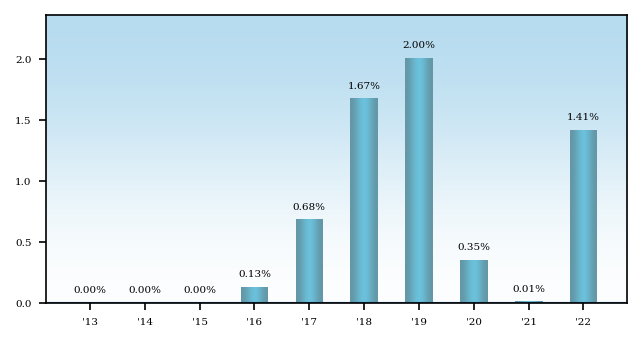
|
| Best Quarter: |
Quarter ended
December 31, 2022 |
0.85% |
| Worst Quarter: |
Quarter ended December
31, 2021* |
0.00% |
| * |
|
Most recent quarter with this return during the period of the chart. |
|
| AVERAGE ANNUAL TOTAL RETURNS AS OF 12/31/22
|
| U.S. Treasury Money Market Fund | Class Z Shares | Risk Lose Money [Member]
|
| You
could lose money by investing in the fund.
|
| U.S. Treasury Money Market Fund | Class Z Shares | Credit Risk [Member]
|
Credit
Risk — The value of your investment might decline if the issuer of an obligation held by the fund defaults on the obligation
or has its credit rating downgraded.
|
| U.S. Treasury Money Market Fund | Class Z Shares | Interest Rate Risk [Member]
|
Interest
Rate Risk — The value of your investment might decline because of a sharp rise in interest rates that causes the value
of the fund’s portfolio holdings to fall. During periods when interest rates are low or there are negative interest rates,
the fund’s yield (and total return) also may be low or the fund may be unable to maintain positive returns.
|
| U.S. Treasury Money Market Fund | Class Z Shares | Market Risk [Member]
|
Market
Risk — Market volatility, dramatic changes to interest rates, and otherwise unfavorable
economic conditions resulting from major cybersecurity events, geopolitical events (including
wars, such as Russia’s invasion of Ukraine, tensions in the Middle East, terror attacks, and
disruptions to foreign economic and trade relationships), public health emergencies, among
other events, may negatively impact the fund’s performance or impair the fund’s ability to
achieve its investment objective.
|
| U.S. Treasury Money Market Fund | Class Z Shares | Liquidity Risk [Member]
|
Liquidity
Risk — The fund may not be able to sell a security in a timely manner or at a desired price, or may be unable to sell
the security at all, because of a lack of demand in the market for the security.
|
| U.S. Treasury Money Market Fund | Class Z Shares | Redemption Risk [Member]
|
Redemption
Risk — If there are unexpectedly high redemptions of fund shares, the fund might have to sell portfolio securities prior
to their maturity, possibly at a loss.
|
| U.S. Treasury Money Market Fund | Class Z Shares | Income Risk [Member]
|
Income
Risk — The level of income you receive from the fund will be affected by movements in short-term interest rates.
|
| U.S. Treasury Money Market Fund | Class Z Shares | Cybersecurity Risk [Member]
|
Cybersecurity
Risk — The fund may be subject to operational and informational security risks resulting from breaches in cybersecurity
at the fund, the fund’s affiliates or service providers. A cybersecurity breach at an issuer of securities in which the
fund invests may cause such securities to lose value.
|
| U.S. Treasury Money Market Fund | Class Z Shares | Regulatory Risk [Member]
|
Regulatory
Risk — Changes to monetary policy by the Federal Reserve or other regulatory actions may impact the fund’s operations,
universe of potential investment options, and return potential.
|
| U.S. Treasury Money Market Fund
|
|
|
|
|
|
|
Average Annual Total Returns - U.S. Treasury Money Market Fund
|
1 Year |
5 Years |
10 Years |
Bar Chart, Year to Date Return |
Since Inception |
[3] |
Inception Date |
| Class A Shares |
1.02%
|
[1] |
0.75%
|
[1] |
0.39%
|
[1] |
3.11%
|
|
Oct. 25, 2004
|
[1] |
| Class D Shares |
1.11%
|
[2] |
0.83%
|
[2] |
0.44%
|
[2] |
3.23%
|
|
Oct. 25, 2004
|
[2] |
| Class T Shares |
1.25%
|
[3] |
|
|
|
|
3.38%
|
0.55%
|
Sep. 18, 2020
|
[3] |
| Class V Shares |
1.33%
|
[4] |
1.01%
|
[4] |
0.57%
|
[4] |
3.46%
|
|
Mar. 31, 2006
|
[4] |
| Class Y Shares |
1.22%
|
[5] |
0.92%
|
[5] |
0.50%
|
[5] |
3.34%
|
|
Oct. 25, 2004
|
[5] |
| Class Z Shares |
1.41%
|
[6] |
1.08%
|
[6] |
0.62%
|
[6] |
3.53%
|
|
Oct. 25, 2004
|
[6] |
|
| Institutional Prime Obligations Fund | Class T Shares
|
| Institutional
Prime Obligations Fund
|
| Investment
Objective
|
Institutional
Prime Obligations Fund’s objective is to seek maximum current income to the extent consistent with the preservation of capital
and maintenance of liquidity.
|
| Fees
and Expenses
|
The
following tables describe the fees and expenses that you may pay if you buy, hold, and sell shares of the fund. You may pay other fees,
such as brokerage commissions and other fees to financial intermediaries, which are not reflected in the tables and examples below.
|
| Shareholder Fees
(fees paid directly from your investment)
|
| Annual Fund Operating Expenses
(expenses that you pay each year as a percentage of the value of your investment)
|
Example:
This example is intended to help you compare the cost of investing in the fund with the cost of investing in other mutual
funds. The example assumes that you invest $10,000 in the fund for the time periods indicated and then redeem all of your shares
at the end of those periods. The example also assumes that your investment has a 5% return each year and the fund’s operating
expenses remain the same (except that the example incorporates the fund’s expense limitation arrangements for only the first
year of each period presented). You would incur these hypothetical expenses whether or not you redeem your investment at the end
of the given period. Although your actual costs may be higher or lower, based on these assumptions your costs would be:
|
| Principal
Investment Strategies
|
Institutional
Prime Obligations Fund invests in high-quality short-term debt obligations, including:
| ● | U.S.
dollar-denominated obligations of domestic and foreign banks with total assets of at
least $500 million (including fixed and variable rate certificates of deposit, time deposits,
and bankers’ acceptances); |
| ● | non-convertible
corporate debt securities; |
| ● | securities
issued by the U.S. government or one of its agencies or instrumentalities; |
| ● | municipal
securities, including variable rate demand notes, commercial paper, and municipal notes
and other short-term municipal obligations; |
| ● | loan
participation interests; and |
The fund concentrates its investments in the banking industry. Therefore, under normal market
conditions, the fund will invest more than 25% of its total assets in obligations issued by
companies in the banking industry. The fund may, however, invest 25% or less of its total assets
in this industry as a temporary defensive measure.
The
adviser will only purchase (and hold) securities that it determines present minimal credit risk. If a security is no longer determined
to present minimal credit risk, the adviser will make every attempt to sell the security, unless it has determined that it would
not be in the best interest of the fund to dispose of the security at that time and, where necessary, has obtained the approval
of the fund’s board of trustees to continue to hold the security.
|
| Principal
Risks
|
| Fund
Performance
|
The
following bar chart and table provide some indication of the potential risks of investing in the fund. The fund’s past performance
is not necessarily an indication of how the fund will perform in the future. Updated performance information is available online
at www.firstamericanfunds.com or by calling 800 677-3863.
The
bar chart shows you the variability of the fund’s performance from year to year. The table illustrates the fund’s
average annual total returns over the time periods indicated.
The performance shown in the bar chart and performance table is the performance of the
fund’s predecessor entity, Institutional Prime Obligations Fund, a series of First American
Funds, Inc. (the “Predecessor Fund”), prior to the commencement of the fund’s operations. On
December 22, 2023 the fund acquired all of the assets, subject to the liabilities, of the
Predecessor Fund through a tax-free reorganization (the “Reorganization”). As a result of the
Reorganization, the fund adopted the performance and financial history of the Predecessor Fund.
The fund has the same investment objective, strategy, risks and investment adviser as the
Predecessor Fund. As a result, the performance of the fund would have been substantially
similar to that of the Predecessor Fund.
The bar chart shows the performance
of the Predecessor Fund’s Class T shares which was adopted by the Class T shares of the fund for periods prior to the Reorganization.
If the Predecessor Fund’s investment adviser had not waived or reimbursed certain Predecessor Fund expenses during these
periods, the Predecessor Fund’s returns would have been lower.
|
| ANNUAL TOTAL RETURNS AS OF 12/31 EACH YEAR
|
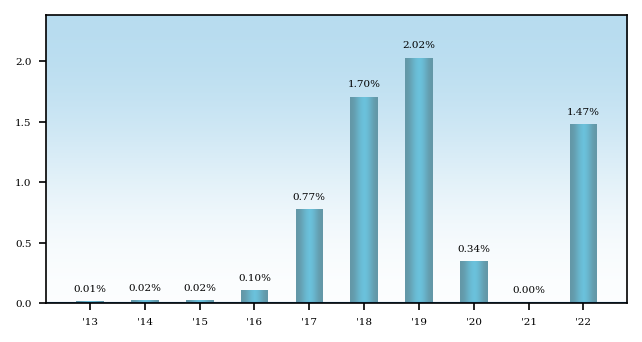
|
| Best
Quarter: |
Quarter ended
December 31, 2022 |
0.88% |
| Worst Quarter: |
Quarter ended March
31, 2022* |
(0.01)% |
| * |
|
Most
recent quarter with this return during the period of the chart. |
|
| AVERAGE ANNUAL TOTAL RETURNS AS OF 12/31/22
|
| Institutional Prime Obligations Fund | Class T Shares | Risk Lose Money [Member]
|
| You
could lose money by investing in the fund.
|
| Institutional Prime Obligations Fund | Class T Shares | Credit Risk [Member]
|
Credit
Risk — The value of your investment might decline if the issuer of an obligation held by the fund defaults on the obligation
or has its credit rating downgraded.
|
| Institutional Prime Obligations Fund | Class T Shares | Interest Rate Risk [Member]
|
Interest
Rate Risk — The value of your investment might decline because of a sharp rise in interest rates that causes the value
of the fund’s portfolio holdings to fall. During periods when interest rates are low or there are negative interest rates,
the fund’s yield (and total return) also may be low or the fund may be unable to maintain positive returns.
|
| Institutional Prime Obligations Fund | Class T Shares | Market Risk [Member]
|
Market
Risk — Market volatility, dramatic changes to interest rates, and otherwise unfavorable
economic conditions resulting from major cybersecurity events, geopolitical events (including
wars, such as Russia’s invasion of Ukraine, tensions in the Middle East, terror attacks, and
disruptions to foreign economic and trade relationships), public health emergencies, among
other events, may negatively impact the fund’s performance or impair the fund’s ability to
achieve its investment objective.
|
| Institutional Prime Obligations Fund | Class T Shares | Liquidity Risk [Member]
|
Liquidity
Risk — The fund may not be able to sell a security in a timely manner or at a desired price, or may be unable to sell
the security at all, because of a lack of demand in the market for the security, or a liquidity provider defaults on its obligation
to purchase the security when properly tendered by the fund.
|
| Institutional Prime Obligations Fund | Class T Shares | Redemption Risk [Member]
|
Redemption
Risk — If there are unexpectedly high redemptions of fund shares, the fund might have to sell portfolio securities prior
to their maturity, possibly at a loss.
|
| Institutional Prime Obligations Fund | Class T Shares | Repurchase Agreement Risk [Member]
|
Repurchase
Agreement Risk — If the seller of a repurchase agreement defaults on its obligation to repurchase securities from the
fund, the fund may incur costs in disposing of the securities purchased and may experience losses if the proceeds from the sale
of the securities are less than the full repurchase price.
|
| Institutional Prime Obligations Fund | Class T Shares | Income Risk [Member]
|
Income
Risk — The level of income you receive from the fund will be affected by movements in short-term interest rates.
|
| Institutional Prime Obligations Fund | Class T Shares | Cybersecurity Risk [Member]
|
Cybersecurity
Risk — The fund may be subject to operational and informational security risks resulting from breaches in cybersecurity
at the fund, the fund’s affiliates or service providers. A cybersecurity breach at an issuer of securities in which the
fund invests may cause such securities to lose value.
|
| Institutional Prime Obligations Fund | Class T Shares | Regulatory Risk [Member]
|
Regulatory
Risk — Changes to monetary policy by the Federal Reserve or other regulatory actions may impact the fund’s operations,
universe of potential investment options, and return potential.
|
| Institutional Prime Obligations Fund | Class T Shares | Banking Industry Risk [Member]
|
Banking
Industry Risk — An adverse development in the banking industry (domestic or foreign) may affect the value of the fund’s
investments more than if the fund were not invested to such a degree in the banking industry. Banks may be particularly susceptible
to certain economic factors such as interest rate changes, adverse developments in the real estate market, fiscal, regulatory
and monetary policy and general economic cycles.
|
| Institutional Prime Obligations Fund | Class T Shares | Foreign Security Risk [Member]
|
Foreign
Security Risk — Securities of foreign issuers, even when dollar denominated and publicly traded in the United States,
may involve risks not associated with the securities of domestic issuers. Uncertainty surrounding the sovereign debt of several
European Union countries, as well as the continued existence of the European Union itself, has disrupted and may continue to disrupt
markets in the United States and around the world. If a country changes its currency or leaves the European Union or if the European
Union dissolves, the world’s securities markets likely will be significantly disrupted.
|
| Institutional Prime Obligations Fund | Class T Shares | Variable Rate Demand Note V R D N Risk [Member]
|
Variable
Rate Demand Note (VRDN) Risk — Investments in VRDNs involve credit risk with respect to the issuer or financial institution
providing the fund with the credit and liquidity support for the unconditional put option. While the fund invests only in VRDNs
of high quality issuers, or which are supported by high quality financial institutions, it is still possible that an issuer or
financial institution could default on its obligations.
|
| Institutional Prime Obligations Fund | Class T Shares | Municipal Security Risk [Member]
|
Municipal
Security Risk — The value of municipal securities owned by the fund may be adversely affected by future changes in federal
income tax laws, including rate reductions or the imposition of a flat tax, and adverse changes in the financial conditions of
municipal securities issuers.
|
| Institutional Prime Obligations Fund | Class V Shares
|
| Institutional
Prime Obligations Fund
|
| Investment
Objective
|
Institutional
Prime Obligations Fund’s objective is to seek maximum current income to the extent consistent with the preservation of capital
and maintenance of liquidity.
|
| Fees
and Expenses
|
The
following tables describe the fees and expenses that you may pay if you buy, hold, and sell shares of the fund. You may pay other fees,
such as brokerage commissions and other fees to financial intermediaries, which are not reflected in the tables and examples below.
|
| Shareholder
Fees
(fees paid directly from your investment)
|
| Annual Fund Operating Expenses
(expenses that you pay each year as a percentage of the value of your investment)
|
Example:
This example is intended to help you compare the cost of investing in the fund with the cost of investing in other mutual
funds. The example assumes that you invest $10,000 in the fund for the time periods indicated and then redeem all of your shares
at the end of those periods. The example also assumes that your investment has a 5% return each year and the fund’s operating
expenses remain the same (except that the example incorporates the fund’s expense limitation arrangements for only the first
year of each period presented). You would incur these hypothetical expenses whether or not you redeem your investment at the end
of the given period. Although your actual costs may be higher or lower, based on these assumptions your costs would be:
|
| Principal
Investment Strategies
|
Institutional
Prime Obligations Fund invests in high-quality short-term debt obligations, including:
| ● | U.S.
dollar-denominated obligations of domestic and foreign banks with total assets of at
least $500 million (including fixed and variable rate certificates of deposit, time deposits,
and bankers’ acceptances); |
| ● | non-convertible
corporate debt securities; |
| ● | securities
issued by the U.S. government or one of its agencies or instrumentalities; |
| ● | municipal
securities, including variable rate demand notes, commercial paper, and municipal notes
and other short-term municipal obligations; |
| ● | loan
participation interests; and |
The fund concentrates its investments in the banking industry. Therefore, under normal market
conditions, the fund will invest more than 25% of its total assets in obligations issued by
companies in the banking industry. The fund may, however, invest 25% or less of its total assets
in this industry as a temporary defensive measure.
The
adviser will only purchase (and hold) securities that it determines present minimal credit risk. If a security is no longer determined
to present minimal credit risk, the adviser will make every attempt to sell the security, unless it has determined that it would
not be in the best interest of the fund to dispose of the security at that time and, where necessary, has obtained the approval
of the fund’s board of trustees to continue to hold the security.
|
| Principal
Risks
|
| Fund
Performance
|
The
following bar chart and table provide some indication of the potential risks of investing in the fund. The fund’s past performance
is not necessarily an indication of how the fund will perform in the future. Updated performance information is available online
at www.firstamericanfunds.com or by calling 800 677-3863.
The
bar chart shows you the variability of the fund’s performance from year to year. The table illustrates the fund’s
average annual total returns over the time periods indicated.
The performance shown in the bar chart and performance table is the performance of the fund’s
predecessor entity, Institutional Prime Obligations Fund, a series of First American Funds, Inc.
(the “Predecessor Fund”), prior to the commencement of the fund’s operations. On December
22, 2023 the fund acquired all of the assets, subject to the liabilities, of the Predecessor Fund
through a tax-free reorganization (the “Reorganization”). As a result of the Reorganization, the
fund adopted the performance and financial history of the Predecessor Fund. The fund has the
same investment objective, strategy, risks and investment adviser as the Predecessor Fund. As a
result, the performance of the fund would have been substantially similar to that of the
Predecessor Fund.
The
bar chart shows the performance of the Predecessor Fund’s Class V shares which was adopted by the Class V shares of the
fund for periods prior to the Reorganization. If the Predecessor Fund’s investment adviser had not waived or reimbursed
certain Predecessor Fund expenses during these periods, the Predecessor Fund’s returns would have been lower.
|
| ANNUAL TOTAL RETURNS AS OF 12/31 EACH YEAR
|
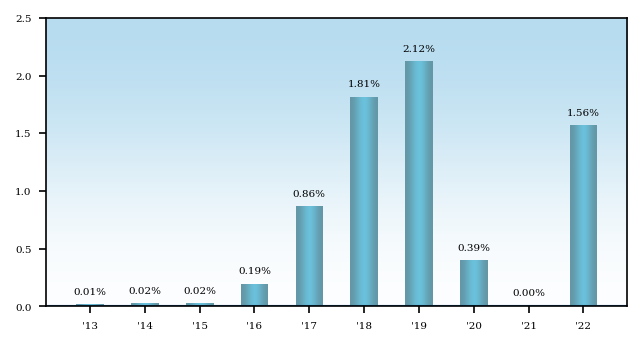
|
| Best Quarter: |
Quarter ended
December 31, 2022 |
0.91% |
| Worst Quarter: |
Quarter ended March
31, 2022* |
(0.01)% |
| * |
|
Most recent quarter with this return during the period of the chart. |
|
| AVERAGE
ANNUAL TOTAL RETURNS
AS OF 12/31/22
|
| Institutional Prime Obligations Fund | Class V Shares | Risk Lose Money [Member]
|
| You
could lose money by investing in the fund.
|
| Institutional Prime Obligations Fund | Class V Shares | Credit Risk [Member]
|
Credit
Risk — The value of your investment might decline if the issuer of an obligation held by the fund defaults on the obligation
or has its credit rating downgraded.
|
| Institutional Prime Obligations Fund | Class V Shares | Interest Rate Risk [Member]
|
Interest
Rate Risk — The value of your investment might decline because of a sharp rise in interest rates that causes the value
of the fund’s portfolio holdings to fall. During periods when interest rates are low or there are negative interest rates,
the fund’s yield (and total return) also may be low or the fund may be unable to maintain positive returns.
|
| Institutional Prime Obligations Fund | Class V Shares | Market Risk [Member]
|
Market
Risk — Market volatility, dramatic changes to interest rates, and otherwise unfavorable
economic conditions resulting from major cybersecurity events, geopolitical events (including
wars, such as Russia’s invasion of Ukraine, tensions in the Middle East, terror attacks, and
disruptions to foreign economic and trade relationships), public health emergencies, among
other events, may negatively impact the fund’s performance or impair the fund’s ability to
achieve its investment objective.
|
| Institutional Prime Obligations Fund | Class V Shares | Liquidity Risk [Member]
|
Liquidity
Risk — The fund may not be able to sell a security in a timely manner or at a desired price, or may be unable to sell
the security at all, because of a lack of demand in the market for the security, or a liquidity provider defaults on its obligation
to purchase the security when properly tendered by the fund.
|
| Institutional Prime Obligations Fund | Class V Shares | Redemption Risk [Member]
|
Redemption
Risk — If there are unexpectedly high redemptions of fund shares, the fund might have to sell portfolio securities prior
to their maturity, possibly at a loss.
|
| Institutional Prime Obligations Fund | Class V Shares | Repurchase Agreement Risk [Member]
|
Repurchase
Agreement Risk — If the seller of a repurchase agreement defaults on its obligation to repurchase securities from the
fund, the fund may incur costs in disposing of the securities purchased and may experience losses if the proceeds from the sale
of the securities are less than the full repurchase price.
|
| Institutional Prime Obligations Fund | Class V Shares | Income Risk [Member]
|
Income
Risk — The level of income you receive from the fund will be affected by movements in short-term interest rates.
|
| Institutional Prime Obligations Fund | Class V Shares | Cybersecurity Risk [Member]
|
Cybersecurity
Risk — The fund may be subject to operational and informational security risks resulting from breaches in cybersecurity
at the fund, the fund’s affiliates or service providers. A cybersecurity breach at an issuer of securities in which the
fund invests may cause such securities to lose value.
|
| Institutional Prime Obligations Fund | Class V Shares | Regulatory Risk [Member]
|
Regulatory
Risk — Changes to monetary policy by the Federal Reserve or other regulatory actions may impact the fund’s operations,
universe of potential investment options, and return potential.
|
| Institutional Prime Obligations Fund | Class V Shares | Banking Industry Risk [Member]
|
Banking
Industry Risk — An adverse development in the banking industry (domestic or foreign) may affect the value of the fund’s
investments more than if the fund were not invested to such a degree in the banking industry. Banks may be particularly susceptible
to certain economic factors such as interest rate changes, adverse developments in the real estate market, fiscal, regulatory
and monetary policy and general economic cycles.
|
| Institutional Prime Obligations Fund | Class V Shares | Foreign Security Risk [Member]
|
Foreign
Security Risk — Securities of foreign issuers, even when dollar denominated and publicly traded in the United States,
may involve risks not associated with the securities of domestic issuers. Uncertainty surrounding the sovereign debt of several
European Union countries, as well as the continued existence of the European Union itself, has disrupted and may continue to disrupt
markets in the United States and around the world. If a country changes its currency or leaves the European Union or if the European
Union dissolves, the world’s securities markets likely will be significantly disrupted.
|
| Institutional Prime Obligations Fund | Class V Shares | Variable Rate Demand Note V R D N Risk [Member]
|
Variable
Rate Demand Note (VRDN) Risk — Investments in VRDNs involve credit risk with
respect to the issuer or financial institution providing the fund with the credit and liquidity
support for the unconditional put option.
|
| Institutional Prime Obligations Fund | Class V Shares | Municipal Security Risk [Member]
|
Municipal
Security Risk — The value of municipal securities owned by the fund may be adversely affected by future changes in federal
income tax laws, including rate reductions or the imposition of a flat tax, and adverse changes in the financial conditions of
municipal securities issuers.
|
| Institutional Prime Obligations Fund | Class Y Shares
|
| Institutional Prime Obligations Fund
|
| Investment Objective
|
Institutional Prime Obligations Fund’s objective
is to seek maximum current income to the extent consistent with the preservation of capital and maintenance of liquidity.
|
| Fees and Expenses
|
The
following tables describe the fees and expenses that you may pay if you buy, hold, and sell shares of the fund. You may pay other fees,
such as brokerage commissions and other fees to financial intermediaries, which are not reflected in the tables and examples below.
|
| Shareholder
Fees
(fees paid directly from your investment)
|
| Annual
Fund Operating Expenses
(expenses that you pay each year as a percentage of the value of your investment)
|
Example: This example
is intended to help you compare the cost of investing in the fund with the cost of investing in other mutual funds. The example
assumes that you invest $10,000 in the fund for the time periods indicated and then redeem all of your shares at the end of those
periods. The example also assumes that your investment has a 5% return each year and the fund’s operating expenses remain
the same (except that the example incorporates the fund’s expense limitation arrangements for only the first year of each
period presented). You would incur these hypothetical expenses whether or not you redeem your investment at the end of the given
period. Although your actual costs may be higher or lower, based on these assumptions your costs would be:
|
| Principal Investment Strategies
|
Institutional Prime Obligations Fund invests in high-quality
short-term debt obligations, including:
| • | U.S. dollar-denominated obligations of domestic and foreign
banks with total assets of at least $500 million (including fixed and variable rate certificates of deposit, time deposits, and
bankers’ acceptances); |
| • | non-convertible corporate debt securities; |
| • | securities issued by the U.S. government or one of its
agencies or instrumentalities; |
| • | municipal securities, including variable rate demand
notes, commercial paper, and municipal notes and other short-term municipal obligations; |
| • | loan participation interests; and |
The fund concentrates its investments in the banking industry. Therefore, under normal market
conditions, the fund will invest more than 25% of its total assets in obligations issued by
companies in the banking industry. The fund may, however, invest 25% or less of its total assets
in this industry as a temporary defensive measure.
The adviser will only purchase (and hold) securities
that it determines present minimal credit risk. If a security is no longer determined to present minimal credit risk, the adviser
will make every attempt to sell the security, unless it has determined that it would not be in the best interest of the fund to
dispose of the security at that time and, where necessary, has obtained the approval of the fund’s board of trustees to continue
to hold the security.
|
| Principal Risks
|
| Fund Performance
|
The following bar chart and table provide some
indication of the potential risks of investing in the fund. The fund’s past performance is not necessarily an indication
of how the fund will perform in the future. Updated performance information is available online at www.firstamericanfunds.com or
by calling 800 677-3863.
The bar chart shows you the variability of the fund’s
performance from year to year. The table illustrates the fund’s average annual total returns over the time periods indicated.
The performance shown in the bar chart and performance table is the performance of the
fund’s predecessor entity, Institutional Prime Obligations Fund, a series of First American
Funds, Inc. (the “Predecessor Fund”), prior to the commencement of the fund’s operations. On
December 22, 2023 the fund acquired all of the assets, subject to the liabilities, of the
Predecessor Fund through a tax-free reorganization (the “Reorganization”). As a result of the
Reorganization, the fund adopted the performance and financial history of the Predecessor Fund.
The fund has the same investment objective, strategy, risks and investment adviser as the
Predecessor Fund. As a result, the performance of the fund would have been substantially
similar to that of the Predecessor Fund.
The bar chart shows the performance of the Predecessor
Fund’s Class Y shares which was adopted by the Class Y shares of the fund for periods prior to the Reorganization. If the
Predecessor Fund’s investment adviser had not waived or reimbursed certain Predecessor Fund expenses during these periods,
the Predecessor Fund’s returns would have been lower.
|
| ANNUAL TOTAL RETURNS AS OF 12/31 EACH YEAR
|
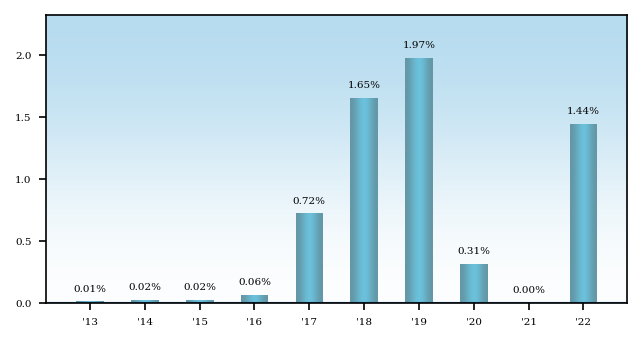
|
| Best Quarter: |
Quarter
ended December 31, 2022 |
0.79% |
| |
|
|
| Worst Quarter: |
Quarter
ended March
31, 2022* |
0.00% |
| |
|
|
| * |
Most recent quarter with this return during the period of the chart. |
|
| AVERAGE
ANNUAL TOTAL RETURNS
AS OF 12/31/22
|
| Institutional Prime Obligations Fund | Class Y Shares | Risk Lose Money [Member]
|
| You could lose money by investing in the fund.
|
| Institutional Prime Obligations Fund | Class Y Shares | Credit Risk [Member]
|
Credit Risk — The value of your investment
might decline if the issuer of an obligation held by the fund defaults on the obligation or has its credit rating downgraded.
|
| Institutional Prime Obligations Fund | Class Y Shares | Interest Rate Risk [Member]
|
Interest Rate Risk — The value of
your investment might decline because of a sharp rise in interest rates that causes the value of the fund’s portfolio holdings
to fall. During periods when interest rates are low or there are negative interest rates, the fund’s yield (and total return)
also may be low or the fund may be unable to maintain positive returns.
|
| Institutional Prime Obligations Fund | Class Y Shares | Market Risk [Member]
|
Market Risk — Market volatility, dramatic changes to interest rates, and otherwise unfavorable
economic conditions resulting from major cybersecurity events, geopolitical events (including
wars, such as Russia’s invasion of Ukraine, tensions in the Middle East, terror attacks, and
disruptions to foreign economic and trade relationships), public health emergencies, among
other events, may negatively impact the fund’s performance or impair the fund’s ability to
achieve its investment objective.
|
| Institutional Prime Obligations Fund | Class Y Shares | Liquidity Risk [Member]
|
Liquidity Risk —
The fund may not be able to sell a security in a timely manner or at a desired price, or may be unable to sell the security at
all, because of a lack of demand in the market for the security, or a liquidity provider defaults on its obligation to purchase
the security when properly tendered by the fund.
|
| Institutional Prime Obligations Fund | Class Y Shares | Redemption Risk [Member]
|
Redemption Risk — If there are unexpectedly
high redemptions of fund shares, the fund might have to sell portfolio securities prior to their maturity, possibly at a loss.
|
| Institutional Prime Obligations Fund | Class Y Shares | Repurchase Agreement Risk [Member]
|
Repurchase Agreement Risk — If the
seller of a repurchase agreement defaults on its obligation to repurchase securities from the fund, the fund may incur costs in
disposing of the securities purchased and may experience losses if the proceeds from the sale of the securities are less than the
full repurchase price.
|
| Institutional Prime Obligations Fund | Class Y Shares | Income Risk [Member]
|
Income Risk — The
level of income you receive from the fund will be affected by movements in short-term interest rates.
|
| Institutional Prime Obligations Fund | Class Y Shares | Cybersecurity Risk [Member]
|
Cybersecurity
Risk — The fund may be subject to operational and informational security risks resulting from breaches in cybersecurity
at the fund, the fund’s affiliates or service providers. A cybersecurity breach at an issuer of securities in which the fund
invests may cause such securities to lose value.
|
| Institutional Prime Obligations Fund | Class Y Shares | Regulatory Risk [Member]
|
Regulatory Risk — Changes to monetary
policy by the Federal Reserve or other regulatory actions may impact the fund’s operations, universe of potential investment
options, and return potential.
|
| Institutional Prime Obligations Fund | Class Y Shares | Banking Industry Risk [Member]
|
Banking Industry Risk — An adverse
development in the banking industry (domestic or foreign) may affect the value of the fund’s investments more than if the
fund were not invested to such a degree in the banking industry. Banks may be particularly susceptible to certain economic factors
such as interest rate changes, adverse developments in the real estate market, fiscal, regulatory and monetary policy and general
economic cycles.
|
| Institutional Prime Obligations Fund | Class Y Shares | Foreign Security Risk [Member]
|
Foreign Security Risk — Securities of
foreign issuers, even when dollar denominated and publicly traded in the United States, may involve risks not associated with the
securities of domestic issuers. Uncertainty surrounding the sovereign debt of several European Union countries, as well as the
continued existence of the European Union itself, has disrupted and may continue to disrupt markets in the United States and around
the world. If a country changes its currency or leaves the European Union or if the European Union dissolves, the world’s
securities markets likely will be significantly disrupted.
|
| Institutional Prime Obligations Fund | Class Y Shares | Variable Rate Demand Note V R D N Risk [Member]
|
Variable Rate Demand
Note (VRDN) Risk — Investments in VRDNs involve credit risk with
respect to the issuer or financial institution providing the fund with the credit and liquidity
support for the unconditional put option.
|
| Institutional Prime Obligations Fund | Class Y Shares | Municipal Security Risk [Member]
|
Municipal Security Risk
— The value of municipal securities owned by the fund may be adversely affected by future changes in federal income tax laws,
including rate reductions or the imposition of a flat tax, and adverse changes in the financial conditions of municipal securities
issuers.
|
| Institutional Prime Obligations Fund | Class Z Shares
|
| Institutional
Prime Obligations Fund
|
| Investment
Objective
|
Institutional
Prime Obligations Fund’s objective is to seek maximum current income to the extent consistent with the preservation of capital
and maintenance of liquidity.
|
| Fees
and Expenses
|
The
following tables describe the fees and expenses that you may pay if you buy, hold, and sell shares of the fund. You may pay other fees,
such as brokerage commissions and other fees to financial intermediaries, which are not reflected in the tables and examples below.
|
| Shareholder
Fees
(fees paid directly from your
investment)
|
| Annual
Fund Operating Expenses
(expenses that you pay each year as a percentage of the value of your investment)
|
Example:
This example is intended to help you compare the cost of investing in the fund with the cost of investing in other mutual
funds. The example assumes that you invest $10,000 in the fund for the time periods indicated and then redeem all of your shares
at the end of those periods. The example also assumes that your investment has a 5% return each year and the fund’s operating
expenses remain the same (except that the example incorporates the fund’s expense limitation arrangements for only the first
year of each period presented). You would incur these hypothetical expenses whether or not you redeem your investment at the end
of the given period. Although your actual costs may be higher or lower, based on these assumptions your costs would be:
|
| Principal
Investment Strategies
|
Institutional
Prime Obligations Fund invests in high-quality short-term debt obligations, including:
| ● | U.S.
dollar-denominated obligations of domestic and foreign banks with total assets of at
least $500 million (including fixed and variable rate certificates of deposit, time deposits,
and bankers’ acceptances); |
| ● | non-convertible
corporate debt securities; |
| ● | securities
issued by the U.S. government or one of its agencies or instrumentalities; |
| ● | municipal
securities, including variable rate demand notes, commercial paper, and municipal notes
and other short-term municipal obligations; |
| ● | loan
participation interests; and |
The fund concentrates its investments in the banking industry. Therefore, under normal market
conditions, the fund will invest more than 25% of its total assets in obligations issued by
companies in the banking industry. The fund may, however, invest 25% or less of its total assets
in this industry as a temporary defensive measure.
The
adviser will only purchase (and hold) securities that it determines present minimal credit risk. If a security is no longer determined
to present minimal credit risk, the adviser will make every attempt to sell the security, unless it has determined that it would
not be in the best interest of the fund to dispose of the security at that time and, where necessary, has obtained the approval
of the fund’s board of trustees to continue to hold the security.
|
| Principal
Risks
|
| Fund
Performance
|
The
following bar chart and table provide some indication of the potential risks of investing in the fund. The fund’s past performance
is not necessarily an indication of how the fund will perform in the future. Updated performance information is available online
at www.firstamericanfunds.com or by calling 800 677-3863.
The
bar chart shows you the variability of the fund’s performance from year to year. The table illustrates the fund’s
average annual total returns over the time periods indicated.
The performance shown in the bar chart and performance table is the performance of the
fund’s predecessor entity, Institutional Prime Obligations Fund, a series of First American
Funds, Inc. (the “Predecessor Fund”), prior to the commencement of the fund’s operations. On
December 22, 2023 the fund acquired all of the assets, subject to the liabilities, of the
Predecessor Fund through a tax-free reorganization (the “Reorganization”). As a result of the
Reorganization, the fund adopted the performance and financial history of the Predecessor Fund.
The fund has the same investment objective, strategy, risks and investment adviser as the
Predecessor Fund. As a result, the performance of the fund would have been substantially
similar to that of the Predecessor Fund.
The
bar chart shows the performance of the Predecessor Fund’s Class Z shares which was adopted by the Class Z shares of the
fund for periods prior to the Reorganization. If the Predecessor Fund’s investment adviser had not waived or reimbursed
certain Predecessor Fund expenses during these periods, the Predecessor Fund’s returns would have been lower.
|
| ANNUAL TOTAL RETURNS AS OF 12/31 EACH YEAR
|
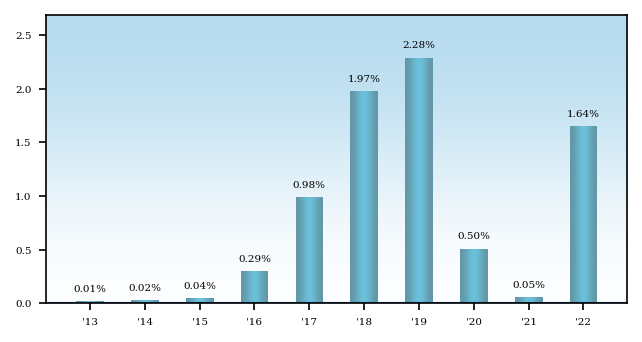
|
|
| Best
Quarter: |
Quarter ended
December 31, 2022 |
0.94% |
| Worst Quarter: |
Quarter ended December
31, 2020* |
0.00% |
| * |
|
Most recent quarter with this return during the period of the chart. |
|
| AVERAGE
ANNUAL TOTAL RETURNS
AS OF 12/31/22
|
| Institutional Prime Obligations Fund | Class Z Shares | Risk Lose Money [Member]
|
| You
could lose money by investing in the fund.
|
| Institutional Prime Obligations Fund | Class Z Shares | Credit Risk [Member]
|
Credit
Risk — The value of your investment might decline if the issuer of an obligation held by the fund defaults on the obligation
or has its credit rating downgraded.
|
| Institutional Prime Obligations Fund | Class Z Shares | Interest Rate Risk [Member]
|
Interest
Rate Risk — The value of your investment might decline because of a sharp rise in interest rates that causes the value
of the fund’s portfolio holdings to fall. During periods when interest rates are low or there are negative interest rates,
the fund’s yield (and total return) also may be low or the fund may be unable to maintain positive returns.
|
| Institutional Prime Obligations Fund | Class Z Shares | Market Risk [Member]
|
Market
Risk — Market volatility, dramatic changes to interest rates, and otherwise unfavorable
economic conditions resulting from major cybersecurity events, geopolitical events (including
wars, such as Russia’s invasion of Ukraine, tensions in the Middle East, terror attacks, and
disruptions to foreign economic and trade relationships), public health emergencies, among
other events, may negatively impact the fund’s performance or impair the fund’s ability to
achieve its investment objective.
|
| Institutional Prime Obligations Fund | Class Z Shares | Liquidity Risk [Member]
|
Liquidity
Risk — The fund may not be able to sell a security in a timely manner or at a desired price, or may be unable to sell
the security at all, because of a lack of demand in the market for the security, or a liquidity provider defaults on its obligation
to purchase the security when properly tendered by the fund.
|
| Institutional Prime Obligations Fund | Class Z Shares | Redemption Risk [Member]
|
Redemption
Risk — If there are unexpectedly high redemptions of fund shares, the fund might have to sell portfolio securities prior
to their maturity, possibly at a loss.
|
| Institutional Prime Obligations Fund | Class Z Shares | Repurchase Agreement Risk [Member]
|
Repurchase
Agreement Risk — If the seller of a repurchase agreement defaults on its obligation to repurchase securities from the
fund, the fund may incur costs in disposing of the securities purchased and may experience losses if the proceeds from the sale
of the securities are less than the full repurchase price.
|
| Institutional Prime Obligations Fund | Class Z Shares | Income Risk [Member]
|
Income
Risk — The level of income you receive from the fund will be affected by movements in short-term interest rates.
|
| Institutional Prime Obligations Fund | Class Z Shares | Cybersecurity Risk [Member]
|
Cybersecurity
Risk — The fund may be subject to operational and informational security risks resulting from breaches in cybersecurity
at the fund, the fund’s affiliates or service providers. A cybersecurity breach at an issuer of securities in which the
fund invests may cause such securities to lose value.
|
| Institutional Prime Obligations Fund | Class Z Shares | Regulatory Risk [Member]
|
Regulatory
Risk — Changes to monetary policy by the Federal Reserve or other regulatory actions may impact the fund’s operations,
universe of potential investment options, and return potential.
|
| Institutional Prime Obligations Fund | Class Z Shares | Banking Industry Risk [Member]
|
Banking
Industry Risk — An adverse development in the banking industry (domestic or foreign) may affect the value of the fund’s
investments more than if the fund were not invested to such a degree in the banking industry. Banks may be particularly susceptible
to certain economic factors such as interest rate changes, adverse developments in the real estate market, fiscal, regulatory
and monetary policy and general economic cycles.
|
| Institutional Prime Obligations Fund | Class Z Shares | Foreign Security Risk [Member]
|
Foreign
Security Risk — Securities of foreign issuers, even when dollar denominated and publicly traded in the United States,
may involve risks not associated with the securities of domestic issuers. Uncertainty surrounding the sovereign debt of several
European Union countries, as well as the continued existence of the European Union itself, has disrupted and may continue to disrupt
markets in the United States and around the world. If a country changes its currency or leaves the European Union or if the European
Union dissolves, the world’s securities markets likely will be significantly disrupted.
|
| Institutional Prime Obligations Fund | Class Z Shares | Variable Rate Demand Note V R D N Risk [Member]
|
Variable
Rate Demand Note (VRDN) Risk — Investments in VRDNs involve credit risk with
respect to the issuer or financial institution providing the fund with the credit and liquidity
support for the unconditional put option.
|
| Institutional Prime Obligations Fund | Class Z Shares | Municipal Security Risk [Member]
|
Municipal
Security Risk — The value of municipal securities owned by the fund may be adversely affected by future changes in federal
income tax laws, including rate reductions or the imposition of a flat tax, and adverse changes in the financial conditions of
municipal securities issuers.
|
| Institutional Prime Obligations Fund
|
|
|
|
|
|
|
Average Annual Total Returns - Institutional Prime Obligations Fund
|
1 Year |
5 Years |
10 Years |
Bar Chart, Year to Date Return |
Inception Date |
| Class T Shares |
1.47%
|
[1],[2] |
1.10%
|
[1],[2] |
0.64%
|
[1],[2] |
3.59%
|
Sep. 24, 2001
|
[1],[2] |
| Class V Shares |
1.56%
|
[3],[4] |
1.17%
|
[3],[4] |
0.69%
|
[3],[4] |
3.65%
|
Mar. 31, 2006
|
[3],[4] |
| Class Y Shares |
1.28%
|
[5],[6] |
0.95%
|
[5],[6] |
0.53%
|
[5],[6] |
3.54%
|
Mar. 01, 1990
|
[5],[6] |
| Class Z Shares |
1.64%
|
[7],[8] |
1.28%
|
[7],[8] |
0.77%
|
[7],[8] |
3.73%
|
Aug. 01, 2003
|
[7],[8] |
|