Putnam BDC Income ETF seeks current income.
The following tables describe the fees and expenses you may pay if you buy, hold and sell shares of the fund. You may pay other fees, such as brokerage commissions and other fees to financial intermediaries, which are not reflected in the tables and examples below.
Annual Fund Operating Expenses |
Putnam BDC Income ETF
C000237307
|
|---|---|
| Management fees | 0.75% |
| Distribution and Service (12b-1) Fees | none |
| Other Expenses (as a percentage of Assets): | none |
| Acquired Fund Fees and Expenses | 13.19% |
| Expenses (as a percentage of Assets) | 13.94% |
The following hypothetical example is intended to help you compare the cost of investing in the fund with the cost of investing in other funds. It assumes that you invest $10,000 in the fund for the time periods indicated and then, except as indicated, redeem all your shares at the end of those periods. It assumes a 5% return on your investment each year and that the fund’s operating expenses remain the same. Your actual costs may be higher or lower.
Expense Example |
Expense Example, with Redemption, 1 Year |
Expense Example, with Redemption, 3 Years |
Expense Example, with Redemption, 5 Years |
Expense Example, with Redemption, 10 Years |
|---|---|---|---|---|
| Putnam BDC Income ETF | C000237307 | USD ($) | 1,332 | 3,649 | 5,570 | 9,057 |
The fund pays transaction-related costs, such as commissions, when it buys and sells securities (or “turns over” its portfolio). A higher turnover rate may indicate higher transaction costs and may result in higher taxes when the fund’s shares are held in a taxable account. These costs, which are not reflected in annual fund operating expenses or the above example, affect fund performance. The fund’s turnover rate in the most recent fiscal year was 38%.
The fund invests mainly in exchange-traded business development companies (“BDCs”). To qualify as a BDC, a company must be organized under the laws of, and have its principal place of business in, the United States, be registered with the Securities and Exchange Commission (the “SEC”) and have elected to be regulated as a BDC under the Investment Company Act of 1940, as amended (the “1940 Act”). BDCs are vehicles whose principal business is to invest in, lend capital to or provide services to privately-held U.S. companies or thinly traded U.S. public
companies. Putnam Investment Management, LLC (“Putnam Management”), the fund’s investment manager, will seek BDC investments that contribute to stability of dividend income and return potential. In selecting investments, Putnam Management expects to evaluate a BDC’s credit performance and risk level, potential changes in earnings and dividend levels, the impact of changes in interest rates on the BDC, and differences among BDCs in leverage and balance sheet structures. Given that the fund will invest primarily in BDCs and a significant portion of BDCs have exposure to the financials sector, a significant portion of the fund’s assets will have exposure to the financials sector.
Putnam Management may consider, among other factors, a BDC’s valuation, financial strength, growth potential, competitive position in its industry, projected future earnings, cash flows and dividends, and capital policies, as well as overall market conditions, when deciding whether to buy or sell investments.
Under normal circumstances, the fund invests at least 80% of the value of its net assets in BDCs. This policy is non-fundamental and may be changed only after 60 days’ notice to shareholders.
The fund may invest up to 20% of its assets in real estate investment trusts (REITs), including mortgage REITs. A REIT pools investors’ funds for investment primarily in income-producing real estate properties or real estate-related loans (such as mortgages). The real estate properties in which REITs invest typically include properties such as office buildings, retail and industrial facilities, hotels, apartment buildings and healthcare facilities. The fund will limit its investments in REITs to publicly-traded REITs listed on national securities exchanges.
The fund is “non-diversified,” which means it may invest a greater percentage of its assets in fewer issuers than a “diversified” fund.
- Risk of investing in BDCs. BDCs generally invest in less mature U.S. private companies or thinly traded U.S. public companies which involve greater risk than well-established publicly-traded companies. While the BDCs in which the fund invests are expected to generate income in the form of dividends, certain BDCs during certain periods of time may not generate dividend income. The fund will indirectly bear its proportionate share of any management fees and other operating expenses incurred by the BDCs and of any performance-based or incentive fees payable by the BDCs in which it invests, in addition to the fund’s management fee and any other expenses paid by the fund. A BDC’s incentive fee may be very high, vary from year to year and be payable even if the value of the BDC’s portfolio declines in a given time period. The use of leverage by BDCs magnifies gains and losses on amounts invested and increases the risks associated with investing in BDCs. A BDC may make investments with a larger amount of risk of volatility and loss of principal than other investment options and may also be highly speculative and aggressive. Certain BDCs may also be difficult to value since many of the assets of BDCs do not have readily ascertainable market values. Therefore, such assets are most often recorded at fair value in
accordance with valuation procedures adopted by such companies, which may potentially result in material differences between a BDC’s net asset value (“NAV”) per share and its market value.
- Risk of fund of funds restrictions. The fund intends to rely on Section 12(d)(1)(F) of the 1940 Act in making investments in BDCs. A fund relying on Section 12(d)(1)(F) may acquire shares of a BDC provided that, immediately after purchase, not more than 3% of the outstanding voting securities of the BDC are owned by the fund and all affiliated persons of the fund, subject to certain conditions. The 3% limit could constrain the fund from investing in a particular BDC in an amount that would be considered desirable from an investment standpoint. Section 12(d)(1)(F)’s conditions include a requirement either to seek instructions from the fund’s security holders with regard to the voting of all proxies with respect to the BDC and to vote such proxies only in accordance with such instructions, or to vote the shares held by the fund in the same proportion as the vote of all other holders of the BDC. This requirement could limit the fund’s ability to support or oppose BDC shareholder voting matters. If the fund seeks to invest in a BDC above the 3% limit in Section 12(d)(1)(F), the fund would need to rely on Rule 12d1-4 under the 1940 Act, the SEC’s fund of funds rule.
- Risk of investing in the financials sector. The fund will be sensitive to, and its performance will depend to a greater extent on, the overall condition of the financials sector. Companies in the financials sector may be subject to extensive government regulation that affects the scope of their activities. The profitability of companies in the financials sector may be adversely affected by increases in interest rates, by loan losses, which usually increase in economic downturns, and by credit rating downgrades. In addition, the financials sector is undergoing numerous changes, including continuing consolidations, development of new products and structures and changes to its regulatory framework.
- Fluctuation of NAV and share price risk. Shares may trade at a larger premium or discount to NAV than shares of other ETFs. The NAV of the fund will generally fluctuate with changes in the market value of the fund’s holdings. The fund’s shares can be bought and sold in the secondary market at market prices. Disruptions to creations and redemptions, the existence of extreme market volatility or potential lack of an active trading market for the fund’s shares may result in the fund’s shares trading significantly above (at a premium) or below (at a discount) to NAV or to the intraday value of the fund’s holdings. In addition, in stressed market conditions or periods of market disruption or volatility, the market for shares may become less liquid in response to deteriorating liquidity in the markets for the fund’s underlying portfolio holdings.
- Trading issues risk. The fund, which began trading publicly in September 2022, has a limited public trading history. There can be no assurance that an active trading market will develop or be maintained or that the market for fund shares will operate as intended, which could lead to the fund’s shares trading at wider spreads and larger premiums and discounts to NAV than other actively managed ETFs. As a result, it may cost investors more to trade fund shares than shares of other ETFs. There is no guarantee that the fund will be able to attract market makers and authorized
participants. Market makers and authorized participants are not obligated to make a market in the fund’s shares or to submit purchase and redemption orders for creation units. The market prices of the fund’s shares are expected to fluctuate, in some cases materially, in response to changes in the fund’s NAV, the intraday value of the Fund’s holdings and supply and demand for the fund’s shares. Putnam Management cannot predict whether the fund’s shares will trade above, below or at their NAV or to the intraday value of the fund’s holdings. During such periods, investors may incur significant losses if they sell shares.
The securities held by the fund may be traded in markets that close at a different time than the exchange on which the fund’s shares are listed. Liquidity in those securities may be reduced after the applicable closing times. Accordingly, during the time when the exchange is open but after the applicable market closing, fixing or settlement times, bid-ask spreads on the exchange and the corresponding premium or discount to the shares’ NAV may widen.
- Large shareholder risk. The fund may be an investment option for mutual funds that are managed by Franklin Resources, Inc. (Franklin Templeton) and its affiliates as “funds of funds.” Additionally, other investors from time to time may make substantial investments in the fund. Such shareholders may at times be considered to control the fund. Dispositions of a large number of shares by these shareholders may adversely affect the fund’s liquidity and net assets to the extent such transactions are executed directly with the fund in the form of redemptions through an authorized participant, rather than executed in the secondary market. These redemptions may also force the fund to sell securities, which may increase the fund’s brokerage costs. In addition, fund returns may be adversely affected if the fund holds a portion of its assets in liquid, cash-like investments in connection with or in anticipation of shareholder redemptions. To the extent these large shareholders transact in shares of the fund on the secondary market, such transactions may account for a large percentage of the trading volume on the exchange and may, therefore, have a material effect (upward or downward) on the market price of the fund’s shares.
- Authorized participant concentration risk. Only an authorized participant may engage in creation and redemption transactions directly with the fund. The fund may have a limited number of financial institutions that act as authorized participants, none of which are obligated to engage in creation and/ or redemption transactions. To the extent that those authorized participants do not engage in creation and redemption orders, there may be a significantly diminished trading market for fund shares or fund shares may trade at a discount (or premium) to NAV and possibly face trading halts and/or de-listing.
- Cash transactions risk. Unlike certain ETFs, the fund may effect creations and redemptions in cash or partially in cash. Therefore, it may be required to sell portfolio securities and subsequently recognize gains on such sales that the fund might not have recognized if it were to distribute portfolio securities in-kind. As such, investments in the fund’s shares may be less tax-efficient than an investment in an ETF that distributes portfolio securities entirely in-kind.
- Market risk. The value of investments in the fund’s portfolio may fall or fail to rise over extended periods of time for a variety of reasons, including general economic, political or financial market conditions, investor sentiment and market perceptions, government actions, geopolitical events or changes, outbreaks of infectious illnesses or other widespread public health issues, and factors related to a specific issuer, geography, industry or sector. These and other factors may lead to increased volatility and reduced liquidity in the fund’s portfolio holdings, may negatively impact the fund’s performance, and may exacerbate other risks to which the fund is subject.
- Common stock risk. The fund will invest in common stocks issued by BDCs. Common stock represents an ownership interest in a company. The value of a company’s stock, including a BDC, may fall or fail to rise as a result of factors directly relating to that company, such as decisions made by its management or lower demand for the company’s products or services. A stock’s value may also fall because of factors affecting not just the company, but also other companies in the same industry or in a number of different industries, such as increases in production costs.
- Small and midsize companies risk. Stocks of small and midsize companies often trade in smaller volumes, and their prices may fluctuate more than stocks of larger companies. Stocks of these companies may therefore be more vulnerable to adverse developments than those of larger companies.
- Industry or sector concentration risk. From time to time, the fund may invest a significant portion of its assets in companies in one or more related industries or sectors, which would make the fund more vulnerable to adverse developments affecting those industries or sectors. BDCs, as financial services companies, may be affected by the availability and cost of capital; changes in interest rates; insurance claims activity; industry consolidation; reduced profitability from limitations on loans; proprietary trading; interest rates and fees charged as a result of extensive government regulations; and general market conditions.
- Non-diversified risk. As a non-diversified fund, the fund invests in fewer issuers and is more vulnerable than a more broadly diversified fund to fluctuations in the values of the securities it holds. Moreover, the gains and losses on a single investment may have a greater impact on the fund’s NAV and may make the fund more volatile than more diversified funds.
- REIT risk. Investments in REITs are subject to the risks associated with direct ownership in real estate, including economic downturns that have an adverse effect on real estate markets. Mortgage REITs may be affected by the risk of borrower default, the likelihood of which is increased for mortgage REITs that invest in sub-prime mortgages. REITs, and mortgage REITs in particular, are also subject to interest rate risk. In addition, since REITs depend on payment under their mortgage loans and leases to generate cash to make distributions to their shareholders, investments in REITs may be adversely affected by defaults on such mortgage loans or leases.
- Management and operational risk. There is no guarantee that the investment techniques, analyses, or judgments that Putnam Management applies in making investment decisions for the fund will produce the intended outcome or that the
investments Putnam Management selects for the fund will perform as well as other securities that were not selected for the fund. Putnam Management, or the fund’s other service providers, may experience disruptions or operating errors that could negatively impact the fund. The fund may not achieve its goal, and it is not intended to be a complete investment program.
An investment in the fund is not insured or guaranteed by the Federal Deposit Insurance Corporation or any other government agency. It is important to understand that you can lose money by investing in the fund.
The performance information below gives some indication of the risks associated with an investment in the fund by showing the fund’s performance year to year and over time. Please remember that past performance is not necessarily an indication of future results. Monthly performance figures for the fund are available at franklintempleton.com.
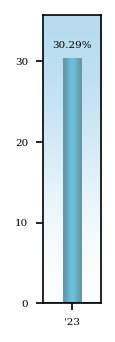
Average Annual Total Returns - Putnam BDC Income ETF |
1 Year |
Since Inception |
Inception Date |
||
|---|---|---|---|---|---|
| C000237307 | 30.29% | 34.56% | Sep. 29, 2022 | ||
| C000237307 | After Taxes on Distributions | 24.90% | 28.72% | Sep. 29, 2022 | ||
| C000237307 | After Taxes on Distributions and Sales | 17.61% | 23.76% | Sep. 29, 2022 | ||
| Russell 3000 Index (no deduction for fees, expenses or taxes) | 25.96% | [1] | 25.63% | [1] | Sep. 29, 2022 |
| S&P BDC Index (no deduction for fees, expenses or taxes) | 27.58% | [1] | 33.10% | [1] | Sep. 29, 2022 |
| [1] | The table above compares the fund’s returns to the performance of two indexes: (i) a broad measure of market performance and (ii) an additional index that Putnam Management believes more closely reflects the fund’s principal investment objective and strategies. |
| Frank Russell Company is the source and owner of the trademarks, service marks and copyrights related to the Russell Indexes. Russell® is a trademark of Frank Russell Company. |
| After-tax returns reflect the historical highest individual federal marginal income tax rates and do not reflect state and local taxes. Actual after-tax returns depend on an investor’s tax situation and may differ from those shown. These after-tax returns do not apply if you hold your fund shares through a 401(k) plan, an IRA, or another tax-advantaged arrangement. |
Putnam BioRevolutionTM ETF seeks long term capital appreciation.
The following tables describe the fees and expenses you may pay if you buy, hold and sell shares of the fund. You may pay other fees, such as brokerage commissions and other fees to financial intermediaries, which are not reflected in the tables and examples below.
Annual Fund Operating Expenses |
Putnam BioRevolution ETF
C000237308
|
|---|---|
| Management fees | 0.70% |
| Distribution and Service (12b-1) Fees | none |
| Other Expenses (as a percentage of Assets): | none |
| Acquired Fund Fees and Expenses | 0.01% |
| Expenses (as a percentage of Assets) | 0.71% |
The following hypothetical example is intended to help you compare the cost of investing in the fund with the cost of investing in other funds. It assumes that you invest $10,000 in the fund for the time periods indicated and then, except as indicated, redeem all your shares at the end of those periods. It assumes a 5% return on your investment each year and that the fund’s operating expenses remain the same. Your actual costs may be higher or lower.
Expense Example |
Expense Example, with Redemption, 1 Year |
Expense Example, with Redemption, 3 Years |
Expense Example, with Redemption, 5 Years |
Expense Example, with Redemption, 10 Years |
|---|---|---|---|---|
| Putnam BioRevolution ETF | C000237308 | USD ($) | 72 | 227 | 395 | 884 |
The fund pays transaction-related costs, such as commissions, when it buys and sells securities (or “turns over” its portfolio). A higher turnover rate may indicate higher transaction costs and may result in higher taxes when the fund’s shares are held in a taxable account. These costs, which are not reflected in annual fund operating expenses or the above example, affect fund performance. The fund’s turnover rate in the most recent fiscal year was 49%.
The fund invests mainly in common stocks (growth or value stocks or both) of companies worldwide of any size with a focus on “biology revolution” companies. Biology revolution companies are companies that the fund’s investment manager, Putnam Investment Management, LLC (“Putnam Management”) believes offer the opportunity to capitalize on a convergence of technological developments in the life sciences sector that change the ability to understand and design biology to scale and include technology-enabling companies, biotechnology or “synthetic
biology companies”, and existing companies that may benefit from the biology revolution in certain cases by reducing operational risks (i.e., providing supply chain redundancy or sourcing of new or rare materials), mitigating environmental risks (i.e., reducing greenhouse gas emissions), and/or fostering consumer demand for the company’s products.
Technology-enabling companies have products that contribute to the research, development, production, diagnosis, and treatment of biology. Examples of these products include instruments like DNA sequencers, mass spectrometers, electron microscopes and PCR technology that have helped enable advances in the fields of genomics, proteomic, and cell research. Putnam Management believes that technology-enabling companies have the potential for increased demand for their products from companies engaged in biological research or development of biological products. “Synthetic biology companies” are companies that manufacture products made from biological materials, including companies that are engaged in redesigning organisms for useful purposes by engineering them to have new abilities to solve problems in medicine, manufacturing, and agriculture. Examples would include companies in the plant-based or alternative meat industries.
Stocks of biology revolution companies are typically, but not always, considered to be growth stocks. Growth stocks are stocks of companies whose revenues, earnings, or cash flows are expected to grow faster than those of similar firms, and whose business growth and other characteristics may lead to an increase in stock price.
Under normal circumstances, the fund invests at least 80% of the fund’s net assets in equity securities of biology revolution companies. This policy is non-fundamental and may be changed only after 60 days’ notice to shareholders. From time to time, the fund may invest a significant portion of its assets in companies in one or more related industries or sectors, including the health care, consumer discretionary, consumer staples, biotechnology and materials sectors.
Putnam Management may consider, among other factors, a company’s valuation, financial strength, growth potential, competitive position in its industry, projected future earnings, cash flows and dividends when deciding whether to buy or sell investments. Putnam Management may also consider other factors that it believes will cause the stock price to rise.
The fund is “non-diversified,” which means it may invest a greater percentage of its assets in fewer issuers than a “diversified” fund.
- Risk of investing in biology revolution companies. Biology revolution companies face intense competition and potentially rapid product obsolescence. Biology revolution companies may be adversely affected by the loss or impairment of intellectual property rights and other proprietary information or changes in government regulations. The potential for an increased amount of required disclosure or lack of access to proprietary scientific information could negatively impact the performance
of these companies. The fund may invest in companies that operate in industries that are likely to be impacted by the biology revolution over time. However, certain of these companies do not currently derive a substantial portion of their current revenues from biology revolution activities and there is no assurance that any company will do so in the future, which may adversely affect the ability of the fund to achieve its investment objective.
- Fluctuation of NAV and share price risk. Shares may trade at a larger premium or discount to the fund’s net asset value (“NAV”) than shares of other ETFs. The NAV of the fund will generally fluctuate with changes in the market value of the fund’s holdings. The fund’s shares can be bought and sold in the secondary market at market prices. Disruptions to creations and redemptions, the existence of extreme market volatility or potential lack of an active trading market for the fund’s shares may result in the fund’s shares trading significantly above (at a premium) or below (at a discount) to NAV or to the intraday value of the fund’s holdings. In addition, in stressed market conditions or periods of market disruption or volatility, the market for shares may become less liquid in response to deteriorating liquidity in the markets for the fund’s underlying portfolio holdings.
- Trading issues risk. The fund, which began trading publicly in September 2022, has a limited public trading history. There can be no assurance that an active trading market will develop or be maintained or that the market for fund shares will operate as intended, which could lead to the fund’s shares trading at wider spreads and larger premiums and discounts to NAV than other actively managed ETFs. As a result, it may cost investors more to trade fund shares than shares of other ETFs. There is no guarantee that the fund will be able to attract market makers and authorized participants. Market makers and authorized participants are not obligated to make a market in the fund’s shares or to submit purchase and redemption orders for creation units. The market prices of the fund’s shares are expected to fluctuate, in some cases materially, in response to changes in the fund’s NAV, the intraday value of the Fund’s holdings and supply and demand for the fund’s shares. Putnam Management cannot predict whether the fund’s shares will trade above, below or at their NAV or to the intraday value of the fund’s holdings. During such periods, investors may incur significant losses if they sell shares.
The securities held by the fund may be traded in markets that close at a different time than the exchange on which the fund’s shares are listed. Liquidity in those securities may be reduced after the applicable closing times. Accordingly, during the time when the exchange is open but after the applicable market closing, fixing or settlement times, bid-ask spreads on the exchange and the corresponding premium or discount to the shares’ NAV may widen.
- Large shareholder risk. The fund may be an investment option for mutual funds that are managed by Franklin Resources, Inc. (Franklin Templeton) and its affiliates as “funds of funds.” Additionally, other investors from time to time may make substantial investments in the fund, including affiliates of Franklin Templeton through seed capital arrangements. Such shareholders may at times be considered to control the
fund. Dispositions of a large number of shares by these shareholders may adversely affect the fund’s liquidity and net assets to the extent such transactions are executed directly with the fund in the form of redemptions through an authorized participant, rather than executed in the secondary market. These redemptions may also force the fund to sell securities, which may increase the fund’s brokerage costs. In addition, fund returns may be adversely affected if the fund holds a portion of its assets in liquid, cash-like investments in connection with or in anticipation of shareholder redemptions. To the extent these large shareholders transact in shares of the fund on the secondary market, such transactions may account for a large percentage of the trading volume on the exchange and may, therefore, have a material effect (upward or downward), on the market price of the fund’s shares.
- Authorized participant concentration risk. Only an authorized participant may engage in creation and redemption transactions directly with the fund. The fund may have a limited number of financial institutions that act as authorized participants, none of which are obligated to engage in creation and/ or redemption transactions. To the extent that those authorized participants do not engage in creation and redemption orders, there may be a significantly diminished trading market for fund shares or fund shares may trade at a discount (or premium) to NAV and possibly face trading halts and/or de-listing.
- Cash transactions risk. Unlike certain ETFs, the fund may effect creations and redemptions in cash or partially in cash. Therefore, it may be required to sell portfolio securities and subsequently recognize gains on such sales that the fund might not have recognized if it were to distribute portfolio securities in-kind. As such, investments in the fund’s shares may be less tax-efficient than an investment in an ETF that distributes portfolio securities entirely in-kind.
- Market risk. The value of investments in the fund’s portfolio may fall or fail to rise over extended periods of time for a variety of reasons, including general economic, political or financial market conditions, investor sentiment and market perceptions, government actions, geopolitical events or changes, outbreaks of infectious illnesses or other widespread public health issues, and factors related to a specific issuer, geography, industry or sector. These and other factors may lead to increased volatility and reduced liquidity in the fund’s portfolio holdings, may negatively impact the fund’s performance, and may exacerbate other risks to which the fund is subject.
- Common stock risk. Common stock represents an ownership interest in a company. The value of a company’s stock may fall or fail to rise as a result of factors directly relating to that company, such as decisions made by its management or lower demand for the company’s products or services. A stock’s value may also fall because of factors affecting not just the company, but also other companies in the same industry or in a number of different industries, such as increases in production costs. Growth stocks may be more susceptible to earnings disappointments, and value stocks may fail to rebound. These risks are generally greater for small and midsize companies.
- Foreign investment risk. The value of international investments traded in foreign currencies may be adversely impacted by fluctuations in exchange rates. International investments, particularly investments in emerging markets, may carry risks associated with potentially less stable economies or governments (such as the risk of seizure by a foreign government, the imposition of currency or other restrictions, or high levels of inflation), and may be or become illiquid.
- Small and midsize companies risk. Stocks of small and midsize companies often trade in smaller volumes, and their prices may fluctuate more than stocks of larger companies. Stocks of these companies may therefore be more vulnerable to adverse developments than those of larger companies.
- Industry or sector concentration risk. From time to time, the fund may invest a significant portion of its assets in companies in one or more related industries or sectors, including the health care, consumer discretionary, consumer staples, biotechnology and materials sectors which would make the fund more vulnerable to adverse developments affecting those industries or sectors.
- Non-diversified risk. As a non-diversified fund, the fund invests in fewer issuers and is more vulnerable than a more broadly diversified fund to fluctuations in the values of the securities it holds. Moreover, the gains and losses on a single investment may have a greater impact on the fund’s NAV and may make the fund more volatile than more diversified funds.
- Management and operational risk. There is no guarantee that the investment techniques, analyses, or judgments that Putnam Management applies in making investment decisions for the fund will produce the intended outcome or that the investments Putnam Management selects for the fund will perform as well as other securities that were not selected for the fund. Putnam Management, or the fund’s other service providers, may experience disruptions or operating errors that could negatively impact the fund. The fund may not achieve its goal, and it is not intended to be a complete investment program.
An investment in the fund is not insured or guaranteed by the Federal Deposit Insurance Corporation or any other government agency. It is important to understand that you can lose money by investing in the fund.
The performance information below gives some indication of the risks associated with an investment in the fund by showing the fund’s performance year to year and over time. Please remember that past performance is not necessarily an indication of future results. Monthly performance figures for the fund are available at franklintempleton.com.
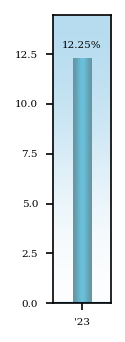
Average Annual Total Returns - Putnam BioRevolution ETF |
1 Year |
Since Inception |
Inception Date |
||
|---|---|---|---|---|---|
| C000237308 | 12.25% | 12.97% | Sep. 29, 2022 | ||
| C000237308 | After Taxes on Distributions | 12.22% | 12.94% | Sep. 29, 2022 | ||
| C000237308 | After Taxes on Distributions and Sales | 7.25% | 9.90% | Sep. 29, 2022 | ||
| Russell 3000 Index (no deduction for fees, expenses or taxes) | 25.96% | [1] | 25.63% | [1] | Sep. 29, 2022 |
| S&P 500 Index (no deduction for fees, expenses or taxes) | 26.29% | [1] | 26.10% | [1] | Sep. 29, 2022 |
| [1] | The table above compares the fund’s returns to the performance of two indexes: (i) a broad measure of market performance and (ii) an additional index that Putnam Management believes more closely reflects the fund’s principal investment objective and strategies. |
| After-tax returns reflect the historical highest individual federal marginal income tax rates and do not reflect state and local taxes. Actual after-tax returns depend on an investor’s tax situation and may differ from those shown. After-tax returns are shown for class A shares only and will vary for other classes. These after-tax returns do not apply if you hold your fund shares through a 401(k) plan, an IRA, or another tax-advantaged arrangement. |
Putnam Emerging Markets ex-China ETF seeks long term capital appreciation.
The following tables describe the fees and expenses you may pay if you buy, hold and sell shares of the fund. You may pay other fees, such as brokerage commissions and other fees to financial intermediaries, which are not reflected in the tables and examples below.
Annual Fund Operating Expenses |
Putnam Emerging Markets ex-China ETF
C000237309
|
|---|---|
| Management fees | 0.85% |
| Distribution and Service (12b-1) Fees | none |
| Other Expenses (as a percentage of Assets): | none |
| Expenses (as a percentage of Assets) | 0.85% |
The following hypothetical example is intended to help you compare the cost of investing in the fund with the cost of investing in other funds. It assumes that you invest $10,000 in the fund for the time periods indicated and then, except as indicated, redeem all your shares at the end of those periods. It assumes a 5% return on your investment each year and that the fund’s operating expenses remain the same. Your actual costs may be higher or lower.
Expense Example |
Expense Example, with Redemption, 1 Year |
Expense Example, with Redemption, 3 Years |
Expense Example, with Redemption, 5 Years |
Expense Example, with Redemption, 10 Years |
|---|---|---|---|---|
| Putnam Emerging Markets ex-China ETF | C000237309 | USD ($) | 87 | 271 | 471 | 1,049 |
The fund pays transaction-related costs, such as commissions, when it buys and sells securities (or “turns over” its portfolio). A higher turnover rate may indicate higher transaction costs and may result in higher taxes when the fund’s shares are held in a taxable account. These costs, which are not reflected in annual fund operating expenses or the above example, affect fund performance. The fund’s turnover rate for the period May 15, 2023 (commencement of operations) to April 30, 2024 was 35%.
The fund invests mainly in common stocks (growth or value stocks or both) of emerging market companies of any size that the fund’s investment manager, Putnam Investment Management, LLC (“Putnam Management”) believes have favorable investment potential. Growth stocks are stocks of companies whose earnings are expected to grow faster than those of similar firms, and whose business growth and other characteristics may lead to an increase in stock price. Value stocks are issued by companies that Putnam Management believes are currently undervalued by the
market. If Putnam Management is correct and other investors ultimately recognize the value of the company, the price of its stock may rise.
Under normal circumstances, the fund invests at least 80% of the fund’s net assets in securities of emerging market companies excluding companies domiciled, or whose stock is listed for trading on an exchange, in China, as well as companies domiciled in Hong Kong. This policy is non-fundamental and may be changed only after 60 days’ notice to shareholders. Emerging markets include countries in the MSCI Emerging Market ex-China Index or that Putnam Management considers to be emerging markets based on its evaluation of their level of economic development or the size and experience of their securities markets. Putnam Management invests significantly in small and mid-size companies. In evaluating potential investments, Putnam Management seeks high-quality companies with mispriced earnings growth that can potentially deliver excess return over the fund’s benchmark. Putnam Management focuses on companies that it believes to have a durable competitive advantage, strong balance sheets and a potential for above-average profitability. From time to time, the fund may invest a significant portion of its assets in companies in one or more related industries or sectors, including the information technology and financials sectors.
Putnam Management may consider, among other factors, a company’s valuation, financial strength, growth potential, competitive position in its industry, projected future earnings, cash flows and dividends when deciding whether to buy or sell investments.
The fund is “non-diversified,” which means it may invest a greater percentage of its assets in fewer issuers than a “diversified” fund.
- Fluctuation of NAV and share price risk. Shares may trade at a larger premium or discount to the fund’s net asset value (“NAV “) than shares of other ETFs. The NAV of the fund will generally fluctuate with changes in the market value of the fund’s holdings. The fund’s shares can be bought and sold in the secondary market at market prices. Disruptions to creations and redemptions, the existence of extreme market volatility or potential lack of an active trading market for the fund’s shares may result in the fund’s shares trading significantly above (at a premium) or below (at a discount) to NAV or to the intraday value of the fund’s holdings. In addition, in stressed market conditions or periods of market disruption or volatility, the market for shares may become less liquid in response to deteriorating liquidity in the markets for the fund’s underlying portfolio holdings.
- Trading issues risk. The fund, which began publicly trading in May 2023, has a limited public trading history. There can be no assurance that an active trading market will develop or be maintained or that the market for fund shares will operate as intended, which could lead to the fund’s shares trading at wider spreads and larger premiums and discounts to NAV than other actively managed ETFs. As a result, it may cost investors more to trade fund shares than shares of other ETFs. There is no guarantee
that the fund will be able to attract market makers and authorized participants. Market makers and authorized participants are not obligated to make a market in the fund’s shares or to submit purchase and redemption orders for creation units. The market prices of the fund’s shares are expected to fluctuate, in some cases materially, in response to changes in the fund’s NAV, the intraday value of the Fund’s holdings and supply and demand for the fund’s shares. Putnam Management cannot predict whether the fund’s shares will trade above, below or at their NAV or to the intraday value of the fund’s holdings. During such periods, investors may incur significant losses if they sell shares.
The securities held by the fund may be traded in markets that close at a different time than the exchange on which the fund’s shares are listed. Liquidity in those securities may be reduced after the applicable closing times. Accordingly, during the time when the exchange is open but after the applicable market closing, fixing or settlement times, bid-ask spreads on the exchange and the corresponding premium or discount to the shares’ NAV may widen.
- Large shareholder risk. The fund may be an investment option for mutual funds that are managed by Franklin Resources, Inc. (Franklin Templeton) and its affiliates as “funds of funds.” Additionally, other investors from time to time may make substantial investments in the fund, including affiliates of Franklin Templeton through seed capital arrangements. Such shareholders may at times be considered to control the fund. Dispositions of a large number of shares by these shareholders may adversely affect the fund’s liquidity and net assets to the extent such transactions are executed directly with the fund in the form of redemptions through an authorized participant, rather than executed in the secondary market. These redemptions may also force the fund to sell securities, which may increase the fund’s brokerage costs. In addition, fund returns may be adversely affected if the fund holds a portion of its assets in liquid, cash-like investments in connection with or in anticipation of shareholder redemptions. To the extent these large shareholders transact in shares of the fund on the secondary market, such transactions may account for a large percentage of the trading volume on the exchange and may, therefore, have a material effect (upward or downward), on the market price of the fund’s shares.
- Authorized participant concentration risk. Only an authorized participant may engage in creation and redemption transactions directly with the fund. The fund may have a limited number of financial institutions that act as authorized participants, none of which are obligated to engage in creation and/ or redemption transactions. To the extent that those authorized participants do not engage in creation and redemption orders, there may be a significantly diminished trading market for fund shares or fund shares may trade at a discount (or premium) to NAV and possibly face trading halts and/or de-listing.
- Cash transactions risk. Unlike certain ETFs, the fund may effect creations and redemptions in cash or partially in cash. Therefore, it may be required to sell portfolio securities and subsequently recognize gains on such sales that the fund might not have recognized if it were to distribute portfolio securities in-kind. As such,
investments in the fund’s shares may be less tax-efficient than an investment in an ETF that distributes portfolio securities entirely in-kind.
- Market risk. The value of investments in the fund’s portfolio may fall or fail to rise over extended periods of time for a variety of reasons, including general economic, political or financial market conditions, investor sentiment and market perceptions, government actions, geopolitical events or changes, outbreaks of infectious illness or other widespread public health issues, and factors related to a specific issuer, geography, industry or sector. These and other factors may lead to increased volatility and reduced liquidity in the fund’s portfolio holdings, may negatively impact the fund’s performance, and may exacerbate other risks to which the fund is subject.
- Common stock risk. Common stock represents an ownership interest in a company. The value of a company’s stock may fall or fail to rise as a result of factors directly relating to that company, such as decisions made by its management or lower demand for the company’s products or services. A stock’s value may also fall because of factors affecting not just the company, but also other companies in the same industry or in a number of different industries, such as increases in production costs. Growth stocks may be more susceptible to earnings disappointments, and value stocks may fail to rebound. These risks are generally greater for small and midsize companies.
- Foreign investment risk. The value of international investments traded in foreign currencies may be adversely impacted by fluctuations in exchange rates. International investments, particularly investments in emerging markets, may carry risks associated with potentially less stable economies or governments (such as the risk of seizure by a foreign government, the imposition of currency or other restrictions, or high levels of inflation), and may be or become illiquid.
- Geographic focus risk. From time to time, the fund may invest a significant portion of its assets in companies in one or more related geographic regions, such as Asian or Pacific Basin countries (other than China and Hong Kong), which would make the fund more vulnerable to adverse developments affecting those regions. On March 9, 2022, MSCI Inc. removed Russian securities from the MSCI Emerging Markets ex China Index and other MSCI emerging markets indices and reclassified Russia from emerging markets to “standalone markets” status. Given the economic and political important of China in the overall global economy and, in particular, the Asian and Pacific Basin regions, the fund’s performance may be impacted indirectly by financial, political, or other risks and developments relating to China, the Chinese economy, or Chinese companies. Many emerging markets countries are heavily dependent on China, including with respect to trade flows, global supply chains and travel. In addition, the fund may invest in Taiwan, which may be subject to heightened geopolitical risks relating to China.
- Small and midsize companies risk. Stocks of small and midsize companies often trade in smaller volumes, and their prices may fluctuate more than stocks of larger companies. Stocks of these companies may therefore be more vulnerable to adverse developments than those of larger companies.
| Prospectus 5 |
- Industry or sector concentration risk. From time to time, the fund may invest a significant portion of its assets in companies in one or more related industries or sectors, including the information technology and financials sectors which would make the fund more vulnerable to adverse developments affecting those industries or sectors.
- Non-diversified risk. As a non-diversified fund, the fund invests in fewer issuers and is more vulnerable than a more broadly diversified fund to fluctuations in the values of the securities it holds. Moreover, the gains and losses on a single investment may have a greater impact on the fund’s NAV and may make the fund more volatile than more diversified funds.
- Management and operational risk. There is no guarantee that the investment techniques, analyses, or judgments that Putnam Management applies in making investment decisions for the fund will produce the intended outcome or that the investments Putnam Management selects for the fund will perform as well as other securities that were not selected for the fund. Putnam Management, or the fund’s other service providers, may experience disruptions or operating errors that could negatively impact the fund. The fund may not achieve its goal, and it is not intended to be a complete investment program.
An investment in the fund is not insured or guaranteed by the Federal Deposit Insurance Corporation or any other government agency. It is important to understand that you can lose money by investing in the fund.
Performance information will be available after the fund completes a full calendar year of operation.