The Frost Growth Equity Fund (the “Fund”) seeks to achieve long-term capital appreciation.
The table below describes the fees and expenses that you may pay if you buy and hold shares of the Fund. You may be required to pay commissions and/or other forms of compensation to a broker for transactions in Institutional Class Shares, which are not reflected in the table or the example below.
Annual Fund Operating Expenses - FROST GROWTH EQUITY FUND |
Institutional Class Shares |
Investor Class Shares |
|---|---|---|
| Management Fees | 0.50% | 0.50% |
| Distribution (12b-1) Fees | none | 0.25% |
| Other Expenses | 0.17% | 0.16% |
| Total Annual Fund Operating Expenses | 0.67% | 0.91% |
This Example is intended to help you compare the cost of investing in the Fund with the cost of investing in other mutual funds.
The Example assumes that you invest $10,000 in the Fund for the time periods indicated and then redeem all of your shares at the end of those periods. The Example also assumes that your investment has a 5% return each year and that the Fund’s operating expenses remain the same. Although your actual costs may be higher or lower, based on these assumptions your costs would be:
Expense Example - FROST GROWTH EQUITY FUND - USD ($) |
Expense Example, with Redemption, 1 Year |
Expense Example, with Redemption, 3 Years |
Expense Example, with Redemption, 5 Years |
Expense Example, with Redemption, 10 Years |
|---|---|---|---|---|
| Institutional Class Shares | 68 | 214 | 373 | 835 |
| Investor Class Shares | 93 | 290 | 504 | 1,120 |
The Fund pays transaction costs, such as commissions, when it buys and sells securities (or “turns over” its portfolio). A higher portfolio turnover rate may indicate higher transaction costs and may result in higher taxes when Fund shares are held in a taxable account. These costs, which are not reflected in Total Annual Fund Operating Expenses or in the Example, affect the Fund’s performance. During its most recent fiscal year, the Fund’s portfolio turnover rate was 17% of the average value of its portfolio.
Under normal market conditions, the Fund invests at least 80% of its net assets, plus any borrowings for investment purposes, in equity securities. This investment policy may be changed by the Fund upon 60 days’ prior written notice to shareholders. The Fund intends to invest in companies of any market capitalization that Frost Investment Advisors, LLC (the “Adviser” or “Frost”) believes will have growing revenues and earnings. The Fund will generally invest in equity securities of domestic companies, but may also invest in equity securities of foreign companies and American Depositary Receipts (“ADRs”). The Adviser performs in-depth analyses of company fundamentals and factors affecting industries to identify companies displaying strong earnings and revenue growth relative to the overall market or relative to their peer group, improving returns on equity and a sustainable competitive advantage.
The Adviser focuses on a number of factors to assess the growth potential of individual companies, such as:
|
● |
Historical and expected organic revenue growth rates; |
|
● |
Historical and expected earnings growth rates; |
|
● |
Signs of accelerating growth potential; |
|
● |
Positive earnings revisions; |
|
● |
Earnings momentum; |
|
● |
Improving margin and return on equity trends; and |
|
● |
Positive price momentum. |
When an attractive growth opportunity is identified, the Adviser seeks to independently develop an intrinsic valuation for the stock. The Adviser believes that the value of a company is determined by discounting the company’s future cash flows or earnings. Valuation factors considered in identifying securities for the Fund’s portfolio include:
|
● |
Price/earnings ratio; |
|
● |
Price/sales ratio; |
|
● |
Price/earnings to growth ratio; |
|
● |
Enterprise value/earnings before interest, taxes, depreciation and amortization; |
|
● |
Enterprise value/sales; |
|
● |
Price/cash flow; |
|
● |
Balance sheet strength; and |
|
● |
Returns on equity and returns on invested capital. |
The Adviser also seeks to understand a firm’s competitive position and the industry dynamics in which the firm operates. The Adviser assesses industry growth potential, market share opportunities, cyclicality and pricing power. Further analysis focuses on corporate governance and management’s ability to create value for shareholders.
The Adviser augments its independent fundamental research process with quantitative screens and models. The models are derived from proprietary research or securities industry research studies and score companies based upon a number of fundamental factors. The Adviser uses quantitative analysis to provide an additional layer of objectivity, discipline and consistency to its equity research process. This quantitative analysis complements the fundamental analyses that the Adviser conducts on companies during its stock selection process.
The Fund seeks to buy and hold securities for the long term and seeks to keep portfolio turnover to a minimum. However, the Adviser may sell a security if its price exceeds the Adviser’s assessment of its fair value or in response to a negative company event, a change in management, poor relative price performance, achieved fair valuation, or a deterioration in a company’s business prospects, performance or financial strength.
The Fund is classified as “non-diversified,” which means that it may invest a larger percentage of its assets in a smaller number of issuers than a diversified fund.
The bar chart and the performance table below illustrate the risks and volatility of an investment in the Fund by showing changes in the Fund’s Institutional Class Shares’ performance from year to year and by showing how the Fund’s average annual total returns for 1, 5 and 10 years and since inception compare with those of a broad measure of market performance.
The Fund operated as the Frost Growth Equity Fund (the “Predecessor Growth Equity Fund”), a series of The Advisors’ Inner Circle Fund II, prior to the Fund’s acquisition of the assets and liabilities of the Predecessor Growth Equity Fund on June 24, 2019 (the “Growth Equity Fund Reorganization”). As a result of the Growth Equity Fund Reorganization, the Fund assumed the performance and accounting history of the Predecessor Growth Equity Fund. Accordingly, performance figures for periods prior to the date of the Growth Equity Fund Reorganization represent the performance of the Predecessor Growth Equity Fund.
Of course, the Fund’s past performance (before and after taxes) does not necessarily indicate how the Fund will perform in the future. Updated performance information is available on the Fund’s website at www.frostinv.com or by calling 1-877-71-FROST.
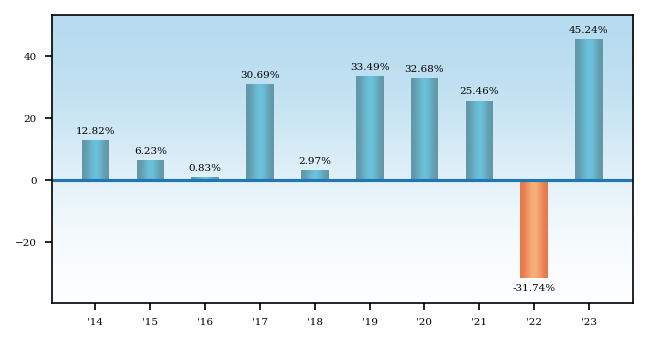
The performance information shown above is based on a calendar year. (non-annualized and before taxes) as of : .
This table compares the Fund’s average annual total returns for the periods ended December 31, 2023 to those of an appropriate broad-based index and an additional index with characteristics relevant to the Fund’s investment strategies.
Prior to March 31, 2015, Investor Class Shares of the Predecessor Growth Equity Fund were called “Class A Shares,” and shareholders were charged a sales charge on certain purchases of Class A Shares. The Investor Class Shares performance information provided in the table below for the period prior to March 31, 2015 represents the performance of the Predecessor Growth Equity Fund’s Investor Class Shares when they were called Class A Shares, but does not include the Maximum Sales Charge (Load) that was applicable to Class A Shares. If sales charges were included, the returns would be lower.
After-tax returns are calculated using the historical highest individual federal marginal income tax rates and do not reflect the impact of state and local taxes. Actual after-tax returns will depend on an investor’s tax situation and may differ from those shown. After-tax returns shown are not relevant to investors who hold their Fund shares through tax-deferred arrangements, such as 401(k) plans or individual retirement accounts (“IRAs”). After-tax returns are shown for Institutional Class Shares only. After-tax returns for Investor Class Shares will vary.
Average Annual Total Returns - FROST GROWTH EQUITY FUND |
1 Year |
5 Years |
10 Years |
Since Inception |
[1] | |
|---|---|---|---|---|---|---|
| Institutional Class Shares | 45.24% | 17.11% | 13.61% | 10.97% | ||
| Institutional Class Shares | After Taxes on Distributions | 40.28% | 14.31% | 10.56% | 8.99% | ||
| Institutional Class Shares | After Taxes on Distributions and Sales | 30.10% | 13.45% | 10.38% | 8.72% | ||
| Investor Class Shares | 44.87% | 16.82% | 13.34% | 11.09% | ||
| Russell 1000 Index (reflects no deduction for fees, expenses, or taxes) | [2] | 26.53% | 15.52% | 11.80% | 10.30% | |
| Russell 1000 Growth Index (reflects no deduction for fees, expenses, or taxes) | [2] | 42.68% | 19.50% | 14.86% | 12.69% | |
| [1] | Institutional Class Shares were offered beginning April 25, 2008. Investor Class Shares were offered beginning June 30, 2008. Index comparison begins April 25, 2008. |
| [2] | Effective July 24, 2024, pursuant to new regulatory requirements, the Fund’s broad-based securities market index changed from the Russell 1000 Growth Index to the Russell 1000 Index. |
Management Risk – The risk that the investment techniques and risk analyses applied by the Adviser will not produce the desired results and that legislative, regulatory, or tax developments may affect the investment techniques available to the Adviser and the individual portfolio managers in connection with managing the Fund. There is no guarantee that the investment objective of the Fund will be achieved.
Equity Risk – Since it purchases equity securities, the Fund is subject to the risk that stock prices will fall over short or extended periods of time. Historically, the equity markets have moved in cycles, and the value of the Fund’s equity securities may fluctuate drastically from day to day. Individual companies may report poor results or be negatively affected by industry and/or economic trends and developments. The prices of securities issued by such companies may suffer a decline in response. In addition, the impact of any epidemic, pandemic or natural disaster, or widespread fear that such events may occur, could negatively affect the global economy, as well as the economies
of individual countries, the financial performance of individual companies and sectors, and the markets in general in significant and unforeseen ways. Any such impact could adversely affect the prices and liquidity of the securities and other instruments in which the Fund invests, which in turn could negatively impact the Fund’s performance and cause losses on your investment in the Fund. These factors contribute to price volatility, which is the principal risk of investing in the Fund.
Growth Style Risk – The price of equity securities rises and falls in response to many factors, including the historical and prospective earnings of the issuer of the stock, the value of its assets, general economic conditions, interest rates, investor perceptions, and market liquidity. The Fund may invest in securities of companies that the Adviser believes have superior prospects for robust and sustainable growth of revenues and earnings. These may be companies with new, limited or cyclical product lines, markets or financial resources, and the management of such companies may be dependent upon one or a few key people. The stocks of such companies can therefore be subject to more abrupt or erratic market movements than stocks of larger, more established companies or the stock market in general.
Sector Focus Risk – Because the Fund may, from time to time, be more heavily invested in particular sectors, the value of its shares may be especially sensitive to factors and economic risks that specifically affect those sectors. As a result, the Fund’s share price may fluctuate more widely than the value of shares of a mutual fund that invests in a broader range of sectors.
Foreign Company Risk – Investing in foreign companies, whether through investments made in foreign markets or made through the purchase of ADRs, which are traded on U.S. exchanges and represent an ownership in a foreign security, poses additional risks since political and economic events unique to a country or region will affect those markets and their issuers. These risks will not necessarily affect the U.S. economy or similar issuers located in the United States. In addition, investments in foreign companies are generally denominated in a foreign currency. As a result, changes in the value of those currencies compared to the U.S. dollar may affect (positively or negatively) the value of the Fund’s investments. These currency movements may occur separately from, and in response to, events that do not otherwise affect the value of the security in the issuer’s home country. Securities of foreign companies may not be registered with the U.S. Securities and Exchange Commission (“SEC”) and foreign companies are generally not subject to the regulatory controls imposed on U.S. issuers and, as a consequence, there is generally less publicly available information about foreign securities than is available about domestic securities. Income from foreign securities owned by the Fund may be reduced by a withholding tax at the source, which tax would reduce income received from the securities comprising the Fund’s portfolio. Foreign securities may also be more difficult to value than securities of U.S. issuers. In addition, periodic U.S. Government restrictions on investments in issuers from certain foreign countries may require the Fund to sell such investments at inopportune times, which could result in losses to the Fund. While ADRs provide an alternative to directly purchasing the underlying foreign securities in their respective national markets and currencies, investments in ADRs continue to be subject to many of the risks associated with investing directly in foreign securities.
Small- and Mid-Capitalization Company Risk – The small- and mid-capitalization companies in which the Fund may invest may be more vulnerable to adverse business or economic events than larger, more established companies. In particular, investments in these small- and mid-sized companies may pose additional risks, including liquidity risk, because these companies tend to have limited product lines, markets and financial resources, and may depend upon a relatively small management group. Therefore, small- and mid- capitalization stocks may be more volatile than those of larger companies. These securities may be traded over-the-counter or listed on an exchange.
The Frost Total Return Bond Fund (the “Fund”) seeks to maximize total return, consisting of income and capital appreciation, consistent with the preservation of principal.
These tables describe the fees and expenses that you may pay if you buy and hold shares of the Fund. You may qualify for sales charge discounts if you and your family invest, or agree to invest in the future, at least $100,000 in A Class Shares of the Frost Funds. More information about these and other discounts is available from your financial professional and in the section “Sales Charges” on page 41 of this Prospectus. Investors investing in the Fund through an intermediary should consult Appendix A - Intermediary Specific Sales Charge Discounts and Waivers, which includes information regarding broker-defined sales charges and related discount and/or waiver policies that apply to purchases through certain intermediaries. You may be required to pay commissions and/or other forms of compensation to a broker for transactions in Institutional Class Shares, which are not reflected in the “Annual Fund Operating Expenses” table or the example below.
Shareholder Fees |
FROST TOTAL RETURN BOND FUND
A Class Shares
|
|
|---|---|---|
| Maximum Sales Charge (Load) Imposed on Purchases (as a percentage of offering price) | 2.50% | |
| Maximum Deferred Sales Charge (Load) (as a percentage of net asset value) | none | [1] |
| Maximum Sales Charge (Load) Imposed on Reinvested Dividends and Other Distributions (as a percentage of offering price) | none | |
| Redemption Fee (as a percentage of amount redeemed, if applicable) | none | |
| [1] | A Class Shares purchased without an initial sales charge may be subject to a 1.00% contingent deferred sales charge (“CDSC”) if redeemed within 12 months of purchase. |
Annual Fund Operating Expenses - FROST TOTAL RETURN BOND FUND |
Institutional Class Shares |
Investor Class Shares |
A Class Shares |
|---|---|---|---|
| Management Fees | 0.35% | 0.35% | 0.35% |
| Distribution (12b-1) Fees | none | 0.25% | 0.25% |
| Shareholder Servicing Fees | none | none | 0.10% |
| Other Operating Expenses | 0.11% | 0.11% | 0.11% |
| Other Expenses | 0.11% | 0.11% | 0.21% |
| Total Annual Fund Operating Expenses | 0.46% | 0.71% | 0.81% |
This Example is intended to help you compare the cost of investing in the Fund with the cost of investing in other mutual funds.
The Example assumes that you invest $10,000 in the Fund for the time periods indicated and then redeem all of your shares at the end of those periods. The Example also assumes that your investment has a 5% return each year and that the Fund’s operating expenses remain the same. Although your actual costs may be higher or lower, based on these assumptions your costs would be:
Expense Example - FROST TOTAL RETURN BOND FUND - USD ($) |
Expense Example, with Redemption, 1 Year |
Expense Example, with Redemption, 3 Years |
Expense Example, with Redemption, 5 Years |
Expense Example, with Redemption, 10 Years |
|---|---|---|---|---|
| Institutional Class Shares | 47 | 148 | 258 | 579 |
| Investor Class Shares | 73 | 227 | 395 | 883 |
| A Class Shares | 331 | 502 | 688 | 1,227 |
The Fund pays transaction costs, such as commissions, when it buys and sells securities (or “turns over” its portfolio). A higher portfolio turnover rate may indicate higher transaction costs and may result in higher taxes when Fund shares are held in a taxable account. These costs, which are not reflected in Total Annual Fund Operating Expenses or in the Example, affect the Fund’s performance. During its most recent fiscal year, the Fund’s portfolio turnover rate was 48% of the average value of its portfolio.
Under normal circumstances, the Fund invests at least 80% of its net assets, plus any borrowings for investment purposes, in fixed income securities. This investment policy may be changed by the Fund upon 60 days’ prior written notice to shareholders.
Frost Investment Advisors, LLC (the “Adviser” or “Frost”) actively manages the duration of the Fund and purchases securities such that the average weighted duration of the Fund’s portfolio will typically range within plus or minus four years of the duration of the Bloomberg U.S. Aggregate Bond Index, the Fund’s benchmark. As of October 31, 2024, the duration of the Fund’s benchmark was 6.14 years. Accordingly, the average weighted duration of the Fund’s portfolio would have been expected to range from 2.14 to 10.14 years as of such date. The concept of duration is useful in assessing the sensitivity of a fixed income fund to interest rate movements, which are usually the main source of risk for most fixed income funds. Duration measures price volatility by estimating the change in price of a debt security for a 1% change in its yield. For example, a duration of five years means the price of a debt security will change about 5% for every 1% change in its yield. Thus, the higher the duration, the more volatile the security.
The Adviser, in constructing and maintaining the Fund’s portfolio, employs the following five primary strategies to varying degrees depending on its views of economic growth prospects, interest rate predictions and relative value assessments: determining an average interest rate target for the Fund based off analysis of duration and the yield curve; determining a best estimate of asset category allocations for the Fund; determining a balance of asset classes that offer the best potential performance given the Adviser’s estimates of economic growth, interest rate direction and relative value; determining the best credit sector allocation for the Fund, given those same inputs, defined by security ratings sourced from the national ratings agencies; and individual security selection. The “total return” sought by the Fund consists of income earned on the Fund’s investments, plus capital appreciation, if any, which generally arises from decreases in interest rates or improving credit fundamentals for a particular sector or security.
The Fund typically invests in the following U.S. dollar-denominated fixed income securities: U.S. Treasury securities; governmental agency debt; corporate debt; asset-backed securities; taxable municipal bonds; collateralized loan obligations; collateralized mortgage obligations and residential and commercial mortgage-backed securities. The Fund’s fixed income investments focus primarily on investment grade securities (rated in one of the four highest rating categories by a rating agency), but may at times include securities rated below investment grade (high yield or “junk” bonds). In addition, the Fund’s fixed income securities may include unrated securities, if deemed by the Adviser to be of comparable quality to investment grade. The Fund may also enter into repurchase agreements. While not a primary focus, the Fund may at times have some allocation or exposure to distressed fixed income opportunities.
The bar chart and the performance table below illustrate the risks and volatility of an investment in the Fund by showing changes in the Fund’s Institutional Class Shares’ performance from year to year and by showing how the Fund’s average annual total returns for 1, 5 and 10 years and since inception compare with those of a broad measure of market performance.
The Fund operated as the Frost Total Return Bond Fund (the “Predecessor Total Return Bond Fund”), a series of The Advisors’ Inner Circle Fund II, prior to the Fund’s acquisition of the assets and liabilities of the Predecessor Total Return Bond Fund on June 24, 2019 (the “Total Return Bond Fund Reorganization”). As a result of the Total Return Bond Fund Reorganization, the Fund assumed the performance and accounting history of the Predecessor Total Return Bond Fund. Accordingly, performance figures for periods prior to the date of the Total Return Bond Fund Reorganization represent the performance of the Predecessor Total Return Bond Fund.
Of course, the Fund’s past performance (before and after taxes) does not necessarily indicate how the Fund will perform in the future. Updated performance information is available on the Fund’s website at www.frostinv.com or by calling 1-877-71-FROST.
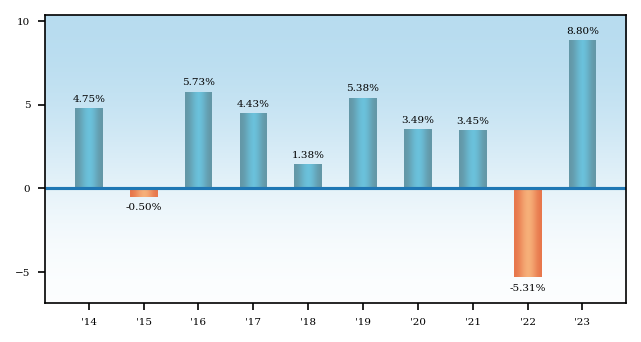
The performance information shown above is based on a calendar year. (non-annualized and before taxes) as of : .
This table compares the Fund’s average annual total returns (after applicable sales charges) for the periods ended December 31, 2023 to those of an appropriate broad-based index.
Prior to March 31, 2015, Investor Class Shares of the Predecessor Total Return Bond Fund were called “Class A Shares,” and shareholders were charged a sales charge on certain purchases of Class A Shares. The Investor Class Shares performance information provided in the table below for the period prior to March 31, 2015 represents the performance of the Predecessor Total Return Bond Fund’s Investor Class Shares when they were called Class A Shares, but does not include the Maximum Sales Charge (Load) that was applicable to Class A Shares. If sales charges were included, the returns would be lower.
After-tax returns are calculated using the historical highest individual federal marginal income tax rates and do not reflect the impact of state and local taxes. Actual after-tax returns will depend on an investor’s tax situation and may differ from those shown. After-tax returns shown are not relevant to investors who hold their Fund shares through tax-deferred arrangements, such as 401(k) plans or individual retirement accounts (“IRAs”). After-tax returns are shown for Institutional Class Shares only. After-tax returns for Investor Class Shares and A Class Shares will vary.
Average Annual Total Returns - FROST TOTAL RETURN BOND FUND |
1 Year |
5 Years |
10 Years |
Since Inception |
[1] |
|---|---|---|---|---|---|
| Institutional Class Shares | 8.64% | 3.02% | 3.08% | 4.78% | |
| Institutional Class Shares | After Taxes on Distributions | 6.17% | 1.26% | 1.34% | 2.88% | |
| Institutional Class Shares | After Taxes on Distributions and Sales | 5.05% | 1.55% | 1.59% | 2.97% | |
| Investor Class Shares | 8.37% | 2.77% | 2.82% | 4.56% | |
| A Class Shares | 8.27% | 2.72% | 2.60% | ||
| Bloomberg U.S. Aggregate Bond Index (reflects no deduction for fees, expenses, or taxes) | 5.53% | 1.10% | 1.81% | 2.82% | |
| [1] | Institutional Class Shares were offered beginning April 25, 2008. Investor Class Shares were offered beginning June 30, 2008. A Class Shares were offered beginning June 1, 2018. Index comparison begins April 25, 2008. |
Management Risk – The risk that the investment techniques and risk analyses applied by the Adviser will not produce the desired results and that legislative, regulatory, or tax developments may affect the investment techniques available to the Adviser and the individual portfolio manager in connection with managing the Fund. There is no guarantee that the investment objective of the Fund will be achieved.
Sector Focus Risk – Because the Fund may, from time to time, be more heavily invested in particular sectors, the value of its shares may be especially sensitive to factors and economic risks that specifically affect those sectors. As a result, the Fund’s share price may fluctuate more widely than the value of shares of a mutual fund that invests in a broader range of sectors.
Interest Rate Risk – As with most funds that invest in debt securities, changes in interest rates are one of the most important factors that could affect the value of your investment. Rising interest rates tend to cause the prices of debt securities (especially those with longer maturities) and the Fund’s share price to fall.
The concept of duration is useful in assessing the sensitivity of a fixed income fund to interest rate movements, which are usually the main source of risk for most fixed income funds. Duration measures price volatility by estimating the change in price of a debt security for a 1% change in its yield. For example, a duration of five years means the price of a debt security will change about 5% for every 1% change in its yield. Thus, the higher the duration, the more volatile the security.
Credit Risk – The credit rating or financial condition of an issuer may affect the value of a debt security. Generally, the lower the quality rating of a security, the greater the risk that the issuer will fail to pay interest fully and return principal in a timely manner. If an issuer defaults or becomes unable to honor its financial obligations, the security may lose some or all of its value. The issuer of an investment-grade security is more likely to pay interest and repay principal than an issuer of a lower rated bond. Adverse economic conditions or changing circumstances, however, may weaken the capacity of the issuer to pay interest and repay principal.
U.S. government securities are not guaranteed against price movements due to changing interest rates. Obligations issued by some U.S. government agencies are backed by the U.S. Treasury, while others are backed solely by the ability of the agency to borrow from the U.S. Treasury or by the government sponsored agency’s own resources. As a result, investments in securities issued by government sponsored agencies that are not backed by the U.S. Treasury are subject to higher credit risk than those that are.
High Yield Bond Risk – High yield, or “junk,” bonds are highly speculative securities that are usually issued by smaller less credit worthy and/or highly leveraged (indebted) companies. Compared with investment-grade bonds, high yield bonds carry a greater degree of risk and are less likely to make payments of interest and principal. Market developments and the financial and business conditions of the corporation issuing these securities influences their price and liquidity more than changes in interest rates, when compared to investment-grade debt securities. Insufficient liquidity in the junk bond market may make it more difficult to dispose of junk bonds and may cause the Fund to experience sudden and substantial price declines. A lack of reliable, objective data or market quotations may make it more difficult to value junk bonds accurately.
Collateralized Loan Obligations Risk – Collateralized loan obligations are investment vehicles typically collateralized by a pool of loans, which may include, among others, senior secured loans, senior unsecured loans, and subordinate corporate loans, including loans that may be rated below investment grade or equivalent unrated loans. Collateralized loan obligations are subject to the risks of substantial losses due to actual defaults by borrowers of the loans underlying the collateralized loan obligations, which will be greater during periods of economic or financial stress. Collateralized loan obligations may also lose value due to collateral defaults and disappearance of subordinate tranches, market anticipation of defaults, and investor aversion to collateralized loan obligation securities as a class. The Fund may invest in collateralized loan obligations that hold loans of non-creditworthy borrowers or in subordinate tranches of a collateralized loan obligation, which may absorb losses from underlying borrower defaults before senior tranches. Investments in such collateralized loan obligations present a greater risk of loss. In addition, collateralized loan obligations are subject to interest rate risk and credit risk.
Asset-Backed and Mortgage-Backed Securities Risk – Payment of principal and interest on asset-backed securities is dependent largely on the cash flows generated by the assets backing the securities, and asset-backed securities may not have the benefit of any security interest in the related assets, which raises the possibility that recoveries on repossessed collateral may not be available to support payments on these securities. Asset-backed securities are also subject to the risk that underlying borrowers will be unable to meet their obligations. To lessen the effect of failures by obligors on underlying assets to make payments, the entity administering the pool of assets may agree to ensure the receipt of payments on the underlying pool occurs in a timely fashion (“liquidity protection”). In addition, asset-backed securities may obtain insurance, such as guarantees, policies or letters of credit obtained by the issuer or sponsor from third parties, for some or all of the assets in the pool (“credit support”). Delinquency or loss more than that anticipated or failure of the credit support could adversely affect the return on an investment in such a security.
In addition, certain asset-backed securities may not have the benefit of any security interest in the related assets, which raises the possibility that recoveries on repossessed collateral may not be available to support payments on these securities. For example, credit card receivables are generally unsecured and the debtors are entitled to the protection of a number of state and federal consumer credit laws, many of which allow debtors to reduce their balances by offsetting certain amounts owed on the credit cards. Most issuers of asset-backed securities backed by automobile receivables permit the servicers of such receivables to retain possession of the underlying obligations. If the servicer were to sell these obligations to another party, there is a risk that the purchaser would acquire an interest superior to that of the holders of the related asset-backed securities. Due to the quantity of vehicles involved and requirements under state laws, asset-backed securities backed by automobile receivables may not have a proper security interest in all of the obligations backing such receivables.
Mortgage-backed securities are affected by, among other things, interest rate changes and the possibility of prepayment of the underlying mortgage loans. Mortgage-backed securities are also subject to the risk that underlying borrowers will be unable to meet their obligations. In addition, a variety of economic, geographic, social and other factors, such as the sale of the underlying property, refinancing or foreclosure, can cause investors to repay the loans underlying a mortgage-backed security sooner than expected. If the prepayment rates increase, the Fund may have to reinvest its principal at a rate of interest that is lower than the rate on existing mortgage-backed securities.
Prepayment and Extension Risk – Prepayment and extension risk is the risk that a loan, bond or other security might be called or otherwise converted, prepaid or redeemed before maturity. This risk is primarily associated with corporate-backed, mortgage-backed and asset-backed securities. If a security is converted, prepaid or redeemed before maturity, particularly during a time of declining interest rates or spreads, the Fund may not be able to invest the proceeds in securities providing as high a level of income, resulting in a reduced yield to the Fund. Conversely, as interest rates rise or spreads widen, the likelihood of prepayment decreases. The Fund may be unable to capitalize on securities with higher interest rates or wider spreads because the Fund’s investments are locked in at a lower rate for a longer period of time.
Issuer Risk – The risk that the value of a security may decline for a reason directly related to the issuer, such as management performance, financial leverage and reduced demand for the issuer’s goods or services.
Municipal Issuers Risk – There may be economic or political changes that impact the ability of municipal issuers to repay principal and to make interest payments on municipal securities. Changes in the financial condition or credit rating of municipal issuers also may adversely affect the value of the Fund’s municipal securities. Constitutional or legislative limits on borrowing by municipal issuers may result in reduced supplies of municipal securities. Moreover, certain municipal securities are backed only by a municipal issuer’s ability to levy and collect taxes.
Market Risk – The risk that the value of securities owned by the Fund may go up or down, sometimes rapidly or unpredictably, due to factors affecting securities markets generally or particular industries. In addition, the impact of any epidemic, pandemic or natural disaster, or widespread fear that such events may occur, could negatively affect the global economy, as well as the economies of individual countries, the financial performance of individual companies and sectors, and the markets in general in significant and unforeseen ways. Any such impact could adversely affect the prices and liquidity of the securities and other instruments in which the Fund invests, which in turn could negatively impact the Fund’s performance and cause losses on your investment in the Fund.
Liquidity Risk – The risk that certain securities may be difficult or impossible to sell at the time and the price that the Fund would like. The Fund may have to accept a lower price to sell a security, sell other securities to raise cash, or give up an investment opportunity, any of which could have a negative effect on Fund management or performance.
Repurchase Agreements Risk – Under a repurchase agreement, the seller of a security to the Fund agrees to repurchase the security at a mutually agreed-upon time and price. If the seller in a repurchase agreement transaction defaults on its obligation under the agreement, the Fund may suffer delays and incur costs or lose money in exercising its rights under the agreement.
Distressed Securities Risk – Distressed securities are speculative and involve substantial risks in addition to the risks of investing in junk bonds. The Fund will generally not receive interest payments on the distressed securities and may incur costs to protect its investment. In addition, distressed securities involve the substantial risk that principal will not be repaid. These securities may present a substantial risk of default or may be in default at the time of investment. The Fund may incur additional expenses to the extent it is required to seek recovery upon a default in the payment of principal of or interest on its portfolio holdings. In any reorganization or liquidation proceeding relating to a company in the Fund’s portfolio, the Fund may lose its entire investment or may be required to accept cash or securities with a value less than its original investment. Distressed securities and any securities received in an exchange for such securities may be subject to restrictions on resale.
The Frost Credit Fund (the “Fund”) seeks to maximize total return, consisting of income and capital appreciation.
These tables describe the fees and expenses that you may pay if you buy and hold shares of the Fund. You may qualify for sales charge discounts if you and your family invest, or agree to invest in the future, at least $100,000 in A Class Shares of the Frost Funds. More information about these and other discounts is available from your financial professional and in the section “Sales Charges” on page 41 of this Prospectus. Investors investing in the Fund through an intermediary should consult Appendix A - Intermediary Specific Sales Charge Discounts and Waivers, which includes information regarding broker-defined sales charges and related discount and/or waiver policies that apply to purchases through certain intermediaries. You may be required to pay commissions and/or other forms of compensation to a broker for transactions in Institutional Class Shares, which are not reflected in the “Annual Fund Operating Expenses” table or the example below.
| [1] | A Class Shares purchased without an initial sales charge may be subject to a 1.00% contingent deferred sales charge (“CDSC”) if redeemed within 12 months of purchase. |
Annual Fund Operating Expenses - FROST CREDIT FUND |
Institutional Class Shares |
Investor Class Shares |
A Class Shares |
|---|---|---|---|
| Management Fees | 0.50% | 0.50% | 0.50% |
| Distribution (12b-1) Fees | none | 0.25% | 0.25% |
| Shareholder Servicing Fees | none | none | none |
| Other Operating Expenses | 0.20% | 0.20% | 0.20% |
| Other Expenses | 0.20% | 0.20% | 0.20% |
| Total Annual Fund Operating Expenses | 0.70% | 0.95% | 0.95% |
This Example is intended to help you compare the cost of investing in the Fund with the cost of investing in other mutual funds.
The Example assumes that you invest $10,000 in the Fund for the time periods indicated and then redeem all of your shares at the end of those periods. The Example also assumes that your investment has a 5% return each year and that the Fund’s operating expenses remain the same. Although your actual costs may be higher or lower, based on these assumptions your costs would be:
Expense Example - FROST CREDIT FUND - USD ($) |
Expense Example, with Redemption, 1 Year |
Expense Example, with Redemption, 3 Years |
Expense Example, with Redemption, 5 Years |
Expense Example, with Redemption, 10 Years |
|---|---|---|---|---|
| Institutional Class Shares | 72 | 224 | 390 | 871 |
| Investor Class Shares | 97 | 303 | 525 | 1,166 |
| A Class Shares | 345 | 545 | 762 | 1,387 |
The Fund pays transaction costs, such as commissions, when it buys and sells securities (or “turns over” its portfolio). A higher portfolio turnover rate may indicate higher transaction costs and may result in higher taxes when Fund shares are held in a taxable account. These costs, which are not reflected in Total Annual Fund Operating Expenses or in the Example, affect the Fund’s performance. During its most recent fiscal year, the Fund’s portfolio turnover rate was 26% of the average value of its portfolio.
Under normal circumstances, the Fund invests at least 80% of its net assets, plus any borrowings for investment purposes, in fixed income securities of U.S. and foreign corporate issuers, which will include corporate bonds, collateralized loan obligations and mortgage-backed and other asset-backed securities, and structured notes with economic characteristics similar to fixed income securities. This investment policy may be changed by the Fund upon 60 days’ prior written notice to shareholders. The Fund will invest in callable bonds, as well as fixed income securities that pay a fixed or floating interest rate or interest that is payable in-kind or payable at maturity. The Fund will invest in high yield fixed income securities, also referred to as “junk” bonds, which are generally rated below BBB- by Standard & Poor’s Ratings Services or Fitch, Inc. or Baa3 by Moody’s Investor Service at the time of purchase or are unrated but judged to be of comparable quality by Frost Investment Advisors, LLC (the “Adviser” or “Frost”). The Fund may also enter into repurchase agreements. All securities in which the Fund invests will be denominated in U.S. dollars. While not a primary focus, the Fund may at times have some allocation or exposure to distressed fixed income opportunities.
The Fund seeks to achieve its objective through a combination of active portfolio management, sector weightings and individual asset selection with a focus on relative value opportunities. In selecting assets for the Fund, the Adviser uses a top-down approach to analyze industry fundamentals and select individual securities based on its view of their relative value and sensitivity to anticipated interest rate movement. The Adviser will also consider its view of the yield curve and the potential for individual securities to produce consistent income. The Adviser expects that a substantial portion of the Fund’s returns will be derived from credit risk, rather than interest rate risk. The Adviser will manage the Fund balancing the emphasis between interest rate and credit risk dependent on its view of economic growth prospects, interest rate predictions and relative value assessments. The Adviser expects the Fund to own assets that represent a range of credit quality from investment grade to below investment grade in varying degrees dependent on expected market conditions.
The bar chart and the performance table below illustrate the risks and volatility of an investment in the Fund by showing changes in the Fund’s Institutional Class Shares’ performance from year to year and by showing how the Fund’s average annual total returns for 1, 5 and 10 years and since inception compare with those of a broad measure of market performance.
The Fund operated as the Frost Credit Fund (the “Predecessor Credit Fund”), a series of The Advisors’ Inner Circle Fund II, prior to the Fund’s acquisition of the assets and liabilities of the Predecessor Credit Fund on June 24, 2019 (the “Credit Fund Reorganization”). As a result of the Credit Fund Reorganization, the Fund assumed the performance and accounting history of the Predecessor Credit Fund. Accordingly, performance figures for periods prior to the date of the Credit Fund Reorganization represent the performance of the Predecessor Credit Fund.
Of course, the Fund’s past performance (before and after taxes) does not necessarily indicate how the Fund will perform in the future. Updated performance information is available on the Fund’s website at www.frostinv.com or by calling 1-877-71-FROST.
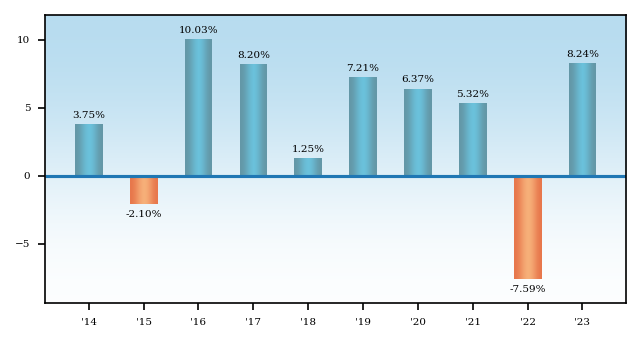
The performance information shown above is based on a calendar year. (non-annualized and before taxes) as of : .
This table compares the Fund’s average annual total returns (after applicable sales charges) for the periods ended December 31, 2023 to those of an appropriate broad-based index and additional indices with characteristics relevant to the Fund’s investment strategies.
Prior to March 31, 2015, Investor Class Shares of the Predecessor Credit Fund were called “Class A Shares,” and shareholders were charged a sales charge on certain purchases of Class A Shares. The Investor Class Shares performance information provided in the table below for the period prior to March 31, 2015 represents the performance of the Predecessor Credit Fund’s Investor Class Shares when they were called Class A Shares, but does not include the Maximum Sales Charge (Load) that was applicable to Class A Shares. If sales charges were included, the returns would be lower.
After-tax returns are calculated using the historical highest individual federal marginal income tax rates and do not reflect the impact of state and local taxes. Actual after-tax returns will depend on an investor’s tax situation and may differ from those shown. After-tax returns shown are not relevant to investors who hold their Fund shares through tax-deferred arrangements, such as 401(k) plans or individual retirement accounts (“IRAs”). After-tax returns are shown for Institutional Class Shares only. After-tax returns for Investor Class Shares and A Class Shares will vary.
Average Annual Total Returns - FROST CREDIT FUND |
1 Year |
5 Years |
10 Years |
Since Inception |
[1] | |
|---|---|---|---|---|---|---|
| Institutional Class Shares | 11.60% | 4.37% | 4.25% | 4.35% | ||
| Institutional Class Shares | After Taxes on Distributions | 8.76% | 2.33% | 2.09% | 2.23% | ||
| Institutional Class Shares | After Taxes on Distributions and Sales | 6.77% | 2.46% | 2.29% | 2.39% | ||
| Investor Class Shares | 11.22% | 4.12% | 3.99% | 4.08% | ||
| A Class Shares | 11.35% | 4.11% | 3.63% | |||
| Bloomberg U.S. Aggregate Bond Index (reflects no deduction for fees, expenses, or taxes) | [2] | 5.53% | 1.10% | 1.81% | 1.43% | |
| Bloomberg U.S. Credit Index (“Credit Index”) (reflects no deduction for fees, expenses, or taxes) | [2] | 8.18% | 2.45% | 2.83% | 2.36% | |
| Bloomberg U.S. Corporate High Yield Bond Index (“Bond Index”) (reflects no deduction for fees, expenses, or taxes) | 13.44% | 5.37% | 4.60% | 4.95% | ||
| Blended 50/50 Credit Index/Bond Index (reflects no deduction for fees, expenses, or taxes) | 10.80% | 3.94% | 3.75% | 3.68% | ||
| [1] | Institutional Class Shares and Investor Class Shares were offered beginning December 3, 2012. A Class Shares were offered beginning June 1, 2018. Index comparison begins December 3, 2012. |
| [2] | Effective July 24, 2024, pursuant to new regulatory requirements, the Fund’s broad-based securities market index changed from the Bloomberg U.S. Credit Index to the Bloomberg U.S. Aggregate Bond Index. |
Management Risk – The risk that the investment techniques and risk analyses applied by the Adviser will not produce the desired results and that legislative, regulatory, or tax developments may affect the investment techniques available to the Adviser and the individual portfolio managers in connection with managing the Fund. There is no guarantee that the investment objective of the Fund will be achieved.
Sector Focus Risk – Because the Fund may, from time to time, be more heavily invested in particular sectors, the value of its shares may be especially sensitive to factors and economic risks that specifically affect those sectors. As a result, the Fund’s share price may fluctuate more widely than the value of shares of a mutual fund that invests in a broader range of sectors.
Foreign Company Risk – Investing in foreign companies poses additional risks since political and economic events unique to a country or region will affect those markets and their issuers. These risks will not necessarily affect the U.S. economy or similar issuers located in the United States. In addition, investments in foreign companies are generally denominated in a foreign currency. As a result, changes in the value of those currencies compared to the U.S. dollar may affect (positively or negatively) the value of the Fund’s investments. These currency movements may occur separately from, and in response to, events that do not otherwise affect the value of the security in the issuer’s home country. Securities of foreign companies may not be registered with the U.S. Securities and Exchange Commission (“SEC”) and foreign companies are generally not subject to the regulatory controls imposed on U.S. issuers and, as a consequence, there is generally less publicly available information about foreign securities than is available about domestic securities. Income from foreign securities owned by the Fund may be reduced by a withholding tax at the source, which tax would reduce income received from the securities comprising the Fund’s portfolio. Foreign securities may also be more difficult to value than securities of U.S. issuers. In addition, periodic U.S. Government restrictions on investments in issuers from certain foreign countries may require the Fund to sell such investments at inopportune times, which could result in losses to the Fund.
Interest Rate Risk – As with most funds that invest in debt securities, changes in interest rates are one of the most important factors that could affect the value of your investment. Rising interest rates tend to cause the prices of debt securities (especially those with longer maturities) and the Fund’s share price to fall.
The concept of duration is useful in assessing the sensitivity of a fixed income fund to interest rate movements, which are usually the main source of risk for most fixed income funds. Duration measures price volatility by estimating the change in price of a debt security for a 1% change in its yield. For example, a duration of five years means the price of a debt security will change about 5% for every 1% change in its yield. Thus, the higher the duration, the more volatile the security.
Credit Risk – The credit rating or financial condition of an issuer may affect the value of a debt security. Generally, the lower the quality rating of a security, the greater the risk that the issuer will fail to pay interest fully and return principal in a timely manner. If an issuer defaults or becomes unable to honor its financial obligations, the security may lose some or all of its value. The issuer of an investment-grade security is more likely to pay interest and repay principal than an issuer of a lower rated bond. Adverse economic conditions or changing circumstances, however, may weaken the capacity of the issuer to pay interest and repay principal. For a Fund of this type, credit risk is an important contributing factor over time to the performance of the Fund.
High Yield Bond Risk – High yield, or “junk,” bonds are highly speculative securities that are usually issued by smaller less credit worthy and/or highly leveraged (indebted) companies. Compared with investment-grade bonds, high yield bonds carry a greater degree of risk and are less likely to make payments of interest and principal. Market developments and the financial and business conditions of the corporation issuing these securities influences their price and liquidity more than changes in interest rates, when compared to investment-grade debt securities. Insufficient liquidity in the junk bond market may make it more difficult to dispose of junk bonds and may cause the Fund to experience sudden and substantial price declines. A lack of reliable, objective data or market quotations may make it more difficult to value junk bonds accurately.
Collateralized Loan Obligations Risk – Collateralized loan obligations are investment vehicles typically collateralized by a pool of loans, which may include, among others, senior secured loans, senior unsecured loans, and subordinate corporate loans, including loans that may be rated below investment grade or equivalent unrated loans. Collateralized loan obligations are subject to the risks of substantial losses due to actual defaults by borrowers of the loans underlying the collateralized loan obligations, which will be greater during periods of economic or financial stress. Collateralized loan obligations may also lose value due to collateral defaults and disappearance of subordinate tranches, market anticipation of defaults, and investor aversion to collateralized loan obligation securities as a class. The Fund may invest in collateralized loan obligations that hold loans of non-creditworthy borrowers or in subordinate tranches of a collateralized loan obligation, which may absorb losses from underlying borrower defaults before senior tranches. Investments in such collateralized loan obligations present a greater risk of loss. In addition, collateralized loan obligations are subject to interest rate risk and credit risk.
Asset-Backed and Mortgage-Backed Securities Risk – Payment of principal and interest on asset-backed securities is dependent largely on the cash flows generated by the assets backing the securities, and asset-backed securities may not have the benefit of any security interest in the related assets, which raises the possibility that recoveries on repossessed collateral may not be available to support payments on these securities. Asset-backed securities are also subject to the risk that underlying borrowers will be unable to meet their obligations. To lessen the effect of failures by obligors on underlying assets to make payments, the entity administering the pool of assets may agree to ensure the receipt of payments on the underlying pool occurs in a timely fashion (“liquidity protection”). In addition, asset-backed securities may obtain insurance, such as guarantees, policies or letters of credit obtained by the issuer or sponsor from third parties, for some or all of the assets in the pool (“credit support”). Delinquency or loss more than that anticipated or failure of the credit support could adversely affect the return on an investment in such a security.
In addition, certain asset-backed securities may not have the benefit of any security interest in the related assets, which raises the possibility that recoveries on repossessed collateral may not be available to support payments on these securities. For example, credit card receivables are generally unsecured and the debtors are entitled to the protection of a number of state and federal consumer credit laws, many of which allow debtors to reduce their balances by offsetting certain amounts owed on the credit cards. Most issuers of asset-backed securities backed by automobile receivables permit the servicers of such receivables to retain possession of the underlying obligations. If the servicer were to sell these obligations to another party, there is a risk that the purchaser would acquire an interest superior to that of the holders of the related asset-backed securities. Due to the quantity of vehicles involved and requirements under state laws, asset-backed securities backed by automobile receivables may not have a proper security interest in all of the obligations backing such receivables.
Mortgage-backed securities are affected by, among other things, interest rate changes and the possibility of prepayment of the underlying mortgage loans. Mortgage-backed securities are also subject to the risk that underlying borrowers will be unable to meet their obligations. In addition, a variety of economic, geographic, social and other factors, such as the sale of the underlying property, refinancing or foreclosure, can cause investors to repay the loans underlying a mortgage-backed security sooner than expected. If the prepayment rates increase, the Fund may have to reinvest its principal at a rate of interest that is lower than the rate on existing mortgage-backed securities.
Prepayment and Extension Risk – Prepayment and extension risk is the risk that a loan, bond or other security might be called or otherwise converted, prepaid or redeemed before maturity. This risk is primarily associated with corporate-backed, mortgage-backed and asset-backed securities. If a security is converted, prepaid or redeemed before maturity, particularly during a time of declining interest rates or spreads, the Fund may not be able to invest the proceeds in securities providing as high a level of income, resulting in a reduced yield to the Fund. Conversely, as interest rates rise or spreads widen, the likelihood of prepayment decreases. The Fund may be unable to capitalize on securities with higher interest rates or wider spreads because the Fund’s investments are locked in at a lower rate for a longer period of time.
Issuer Risk – The risk that the value of a security may decline for a reason directly related to the issuer, such as management performance, financial leverage and reduced demand for the issuer’s goods or services.
Market Risk – The risk that the value of securities owned by the Fund may go up or down, sometimes rapidly or unpredictably, due to factors affecting securities markets generally or particular industries. In addition, the impact of any epidemic, pandemic or natural disaster, or widespread fear that such events may occur, could negatively affect the global economy, as well as the economies of individual countries, the financial performance of individual companies and sectors, and the markets in general in significant and unforeseen ways. Any such impact could adversely affect the prices and liquidity of the securities and other instruments in which the Fund invests, which in turn could negatively impact the Fund’s performance and cause losses on your investment in the Fund.
Liquidity Risk – The risk that certain securities may be difficult or impossible to sell at the time and the price that the Fund would like. The Fund may have to accept a lower price to sell a security, sell other securities to raise cash, or give up an investment opportunity, any of which could have a negative effect on Fund management or performance.
Repurchase Agreements Risk – Under a repurchase agreement, the seller of a security to the Fund agrees to repurchase the security at a mutually agreed-upon time and price. If the seller in a repurchase agreement transaction defaults on its obligation under the agreement, the Fund may suffer delays and incur costs or lose money in exercising its rights under the agreement.
Distressed Securities Risk – Distressed securities are speculative and involve substantial risks in addition to the risks of investing in junk bonds. The Fund will generally not receive interest payments on the distressed securities and may incur costs to protect its investment. In addition, distressed securities involve the substantial risk that principal will not be repaid. These securities may present a substantial risk of default or may be in default at the time of investment. The Fund may incur additional expenses to the extent it is required to seek recovery upon a default in the payment of principal of or interest on its portfolio holdings. In any reorganization or liquidation proceeding relating to a company in the Fund’s portfolio, the Fund may lose its entire investment or may be required to accept cash or securities with a value less than its original investment. Distressed securities and any securities received in an exchange for such securities may be subject to restrictions on resale.
Zero Coupon, Deferred Interest and Pay-In-Kind Bond Risk – These bonds are issued at a discount from their face value because interest payments are typically postponed until maturity. Pay-in-kind (“PIK”) securities are securities that have interest payable by the delivery of additional securities. The market prices of these securities generally are more volatile than the market prices of interest-bearing securities and are likely to respond to a greater degree to changes in interest rates than interest-bearing securities having similar maturities and credit quality. In addition, (1) the higher yields and interest rates on certain PIK securities reflect the payment deferral and increased credit risk associated with such instruments and such investments may represent a significantly higher credit risk than coupon loans; (2) PIK securities may be difficult to value accurately because their continuing accruals require continuing judgments about the collectability of the deferred payments and the value of any associated collateral; and (3) the deferral of PIK interest increases the loan-to-value ratio at a compounding rate.
Structured Note Risk – The Fund may invest in fixed income linked structured notes. Structured notes are typically privately negotiated transactions between two or more parties. The fees associated with a structured note may lead to increased tracking error. The Fund also bears the risk that the issuer of the structured note will default. The Fund bears the risk of loss of its principal investment and periodic payments expected to be received for the duration of its investment. In addition, a liquid market may not exist for the structured notes. The lack of a liquid market may make it difficult to sell the structured notes at an acceptable price or to accurately value them.
The Frost Low Duration Bond Fund (the “Fund”) seeks to maximize total return, consisting of income and capital appreciation, consistent with the preservation of principal.
The table below describes the fees and expenses that you may pay if you buy and hold shares of the Fund. You may be required to pay commissions and/or other forms of compensation to a broker for transactions in Institutional Class Shares, which are not reflected in the table or the example below.
Annual Fund Operating Expenses - FROST LOW DURATION BOND FUND |
Institutional Class Shares |
Investor Class Shares |
|---|---|---|
| Management Fees | 0.30% | 0.30% |
| Distribution (12b-1) Fees | none | 0.25% |
| Other Expenses | 0.15% | 0.14% |
| Total Annual Fund Operating Expenses | 0.45% | 0.69% |
This Example is intended to help you compare the cost of investing in the Fund with the cost of investing in other mutual funds.
The Example assumes that you invest $10,000 in the Fund for the time periods indicated and then redeem all of your shares at the end of those periods. The Example also assumes that your investment has a 5% return each year and that the Fund’s operating expenses remain the same. Although your actual costs may be higher or lower, based on these assumptions your costs would be:
Expense Example - FROST LOW DURATION BOND FUND - USD ($) |
Expense Example, with Redemption, 1 Year |
Expense Example, with Redemption, 3 Years |
Expense Example, with Redemption, 5 Years |
Expense Example, with Redemption, 10 Years |
|---|---|---|---|---|
| Institutional Class Shares | 46 | 144 | 252 | 567 |
| Investor Class Shares | 70 | 221 | 384 | 859 |
The Fund pays transaction costs, such as commissions, when it buys and sells securities (or “turns over” its portfolio). A higher portfolio turnover rate may indicate higher transaction costs and may result in higher taxes when Fund shares are held in a taxable account. These costs, which are not reflected in Total Annual Fund Operating Expenses or in the Example, affect the Fund’s performance. During its most recent fiscal year, the Fund’s portfolio turnover rate was 72% of the average value of its portfolio.
Under normal market conditions, the Fund invests at least 80% of its net assets, plus any borrowings for investment purposes, in fixed income securities. This investment policy may be changed by the Fund upon 60 days’ prior written notice to shareholders. The Fund’s emphasis is on total return with low volatility by investing primarily in shorter-term investment grade securities. Short-term bonds are considered more stable than longer-maturity bonds, but less stable than money market securities.
To achieve its objective, the Fund invests in a diversified mix of taxable fixed income securities. Frost Investment Advisors, LLC (the “Adviser” or “Frost”) actively manages the maturity of the Fund and purchases securities which will, on average, mature in less than 5 years. The Adviser actively manages the duration of the Fund and purchases securities such that the average weighted duration of the Fund’s portfolio will typically range within plus or minus one year of the Bloomberg U.S. 1-5 Year Government Credit Index duration. The Fund seeks to maintain a low duration but may lengthen or shorten its duration within that range to reflect changes in the overall composition of the short-term investment-grade debt markets. Duration is a measure of a bond price’s sensitivity to a given change in interest rates. Generally, the longer a bond’s duration, the greater its price sensitivity to a change in interest rates. For example, the price of a bond with a duration of five years would be expected to fall approximately 5% if rates were to rise by one percentage point. Thus, the higher the duration, the more volatile the security. The Adviser, in constructing and maintaining the Fund’s portfolio, employs the following four primary strategies to varying degrees depending on its views of economic growth prospects, interest rate predictions and relative value assessments: interest rate positioning based on duration and yield curve position; asset category allocations; credit sector allocations relating to security ratings by the national ratings agencies; and individual security selection.
The Fund typically invests in the following U.S. dollar-denominated fixed income securities: U.S. Treasury securities; governmental agency debt; corporate debt; collateralized loan obligations; asset-backed securities; taxable municipal bonds; and, to a lesser extent, residential and commercial mortgage-backed securities. The Fund’s fixed income investments are primarily of investment grade (rated in one of the four highest rating categories by at least one rating agency), but may at times include securities rated below investment grade (high yield or “junk” bonds). In addition, the Fund’s fixed income securities may include unrated securities, if deemed by the Adviser to be of comparable quality to investment grade. The Fund may also enter into repurchase agreements.
The bar chart and the performance table below illustrate the risks and volatility of an investment in the Fund by showing changes in the Fund’s Institutional Class Shares’ performance from year to year and by showing how the Fund’s average annual total returns for 1, 5 and 10 years and since inception compare with those of a broad measure of market performance.
The Fund operated as the Frost Low Duration Bond Fund (the “Predecessor Low Duration Bond Fund”), a series of The Advisors’ Inner Circle Fund II, prior to the Fund’s acquisition of the assets and liabilities of the Predecessor Low Duration Bond Fund on June 24, 2019 (the “Low Duration Bond Fund Reorganization”). As a result of the Low Duration Bond Fund Reorganization, the Fund assumed the performance and accounting history of the Predecessor Low Duration Bond Fund. Accordingly, performance figures for periods prior to the date of the Low Duration Bond Fund Reorganization represent the performance of the Predecessor Low Duration Bond Fund.
Of course, the Fund’s past performance (before and after taxes) does not necessarily indicate how the Fund will perform in the future. Updated performance information is available on the Fund’s website at www.frostinv.com or by calling 1-877-71-FROST.
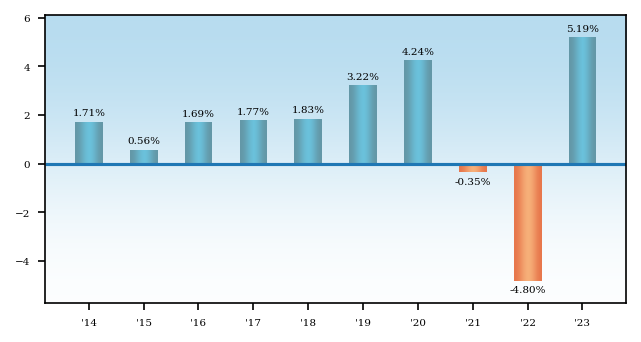
The performance information shown above is based on a calendar year. (non-annualized and before taxes) as of : .
This table compares the Fund’s average annual total returns for the periods ended December 31, 2023 to those of an appropriate broad-based index and an additional index with characteristics relevant to the Fund’s investment strategies.
Prior to March 31, 2015, Investor Class Shares of the Predecessor Low Duration Bond Fund were called “Class A Shares,” and shareholders were charged a sales charge on certain purchases of Class A Shares. The Investor Class Shares performance information provided in the table below for the period prior to March 31, 2015 represents the performance of the Predecessor Low Duration Bond Fund’s Investor Class Shares when they were called Class A Shares, but does not include the Maximum Sales Charge (Load) that was applicable to Class A Shares. If sales charges were included, the returns would be lower.
After-tax returns are calculated using the historical highest individual federal marginal income tax rates and do not reflect the impact of state and local taxes. Actual after-tax returns will depend on an investor’s tax situation and may differ from those shown. After-tax returns shown are not relevant to investors who hold their Fund shares through tax-deferred arrangements, such as 401(k) plans or individual retirement accounts (“IRAs”). After-tax returns are shown for Institutional Class Shares only. After-tax returns for Investor Class Shares will vary.
Average Annual Total Returns - FROST LOW DURATION BOND FUND |
1 Year |
5 Years |
10 Years |
Since Inception |
[1] | |
|---|---|---|---|---|---|---|
| Institutional Class Shares | 5.71% | 1.53% | 1.52% | 2.45% | ||
| Institutional Class Shares | After Taxes on Distributions | 4.13% | 0.59% | 0.70% | 1.49% | ||
| Institutional Class Shares | After Taxes on Distributions and Sales | 3.35% | 0.79% | 0.81% | 1.53% | ||
| Investor Class Shares | 5.42% | 1.27% | 1.27% | 2.15% | ||
| Bloomberg U.S. Aggregate Bond Index (reflects no deduction for fees, expenses, or taxes) | [2] | 5.53% | 1.10% | 1.81% | 2.82% | |
| Bloomberg U.S. 1-5 Year Government/Credit Index (reflects no deduction for fees, expenses, or taxes) | [2] | 4.89% | 1.54% | 1.43% | 2.04% | |
| [1] | Institutional Class Shares were offered beginning April 25, 2008. Investor Class Shares were offered beginning June 30, 2008. Index comparison begins April 25, 2008. |
| [2] | Effective July 24, 2024, pursuant to new regulatory requirements, the Fund’s broad-based securities market index changed from the Bloomberg U.S. 1-5 Year Government/Credit Index to the Bloomberg U.S. Aggregate Bond Index. |
Management Risk – The risk that the investment techniques and risk analyses applied by the Adviser will not produce the desired results and that legislative, regulatory, or tax developments may affect the investment techniques available to the Adviser and the individual portfolio managers in connection with managing the Fund. There is no guarantee that the investment objective of the Fund will be achieved.
Sector Focus Risk – Because the Fund may, from time to time, be more heavily invested in particular sectors, the value of its shares may be especially sensitive to factors and economic risks that specifically affect those sectors. As a result, the Fund’s share price may fluctuate more widely than the value of shares of a mutual fund that invests in a broader range of sectors.
Interest Rate Risk – As with most funds that invest in debt securities, changes in interest rates are one of the most important factors that could affect the value of your investment. Rising interest rates tend to cause the prices of debt securities (especially those with longer maturities) and the Fund’s share price to fall.
The concept of duration is useful in assessing the sensitivity of a fixed income fund to interest rate movements, which are usually the main source of risk for most fixed income funds. Duration measures price volatility by estimating the change in price of a debt security for a 1% change in its yield. For example, a duration of five years means the price of a debt security will change about 5% for every 1% change in its yield. Thus, the higher the duration, the more volatile the security.
Credit Risk – The credit rating or financial condition of an issuer may affect the value of a debt security. Generally, the lower the quality rating of a security, the greater the risk that the issuer will fail to pay interest fully and return principal in a timely manner. If an issuer defaults or becomes unable to honor its financial obligations, the security may lose some or all of its value. The issuer of an investment-grade security is more likely to pay interest and repay principal than an issuer of a lower rated bond. Adverse economic conditions or changing circumstances, however, may weaken the capacity of the issuer to pay interest and repay principal.
The Fund’s U.S. government securities are not guaranteed against price movements due to changing interest rates. Obligations issued by some U.S. government agencies are backed by the U.S. Treasury, while others are backed solely by the ability of the agency to borrow from the U.S. Treasury or by the government sponsored agency’s own resources. As a result, investments in securities issued by government sponsored agencies that are not backed by the U.S. Treasury are subject to higher credit risk than those that are.
High Yield Bond Risk – High yield, or “junk,” bonds are highly speculative securities that are usually issued by smaller less credit worthy and/or highly leveraged (indebted) companies. Compared with investment-grade bonds, high yield bonds carry a greater degree of risk and are less likely to make payments of interest and principal. Market developments and the financial and business conditions of the corporation issuing these securities influences their price and liquidity more than changes in interest rates, when compared to investment-
grade debt securities. Insufficient liquidity in the junk bond market may make it more difficult to dispose of junk bonds and may cause the Fund to experience sudden and substantial price declines. A lack of reliable, objective data or market quotations may make it more difficult to value junk bonds accurately.
Collateralized Loan Obligations Risk – Collateralized loan obligations are subject to the risks of substantial losses due to actual defaults by underlying borrowers, which will be greater during periods of economic or financial stress. Collateralized loan obligations are investment vehicles typically collateralized by a pool of loans, which may include, among others, senior secured loans, senior unsecured loans, and subordinate corporate loans, including loans that may be rated below investment grade or equivalent unrated loans. Collateralized loan obligations are subject to the risks of substantial losses due to actual defaults by borrowers of the loans underlying the collateralized loan obligations, which will be greater during periods of economic or financial stress. Collateralized loan obligations may also lose value due to collateral defaults and disappearance of subordinate tranches, market anticipation of defaults, and investor aversion to collateralized loan obligation securities as a class. The Fund may invest in collateralized loan obligations that hold loans of non-creditworthy borrowers or in subordinate tranches of a collateralized loan obligation, which may absorb losses from underlying borrower defaults before senior tranches. Investments in such collateralized loan obligations present a greater risk of loss. In addition, collateralized loan obligations are subject to interest rate risk and credit risk.
Asset-Backed and Mortgage-Backed Securities Risk – Payment of principal and interest on asset-backed securities is dependent largely on the cash flows generated by the assets backing the securities, and asset-backed securities may not have the benefit of any security interest in the related assets, which raises the possibility that recoveries on repossessed collateral may not be available to support payments on these securities. Asset-backed securities are also subject to the risk that underlying borrowers will be unable to meet their obligations. To lessen the effect of failures by obligors on underlying assets to make payments, the entity administering the pool of assets may agree to ensure the receipt of payments on the underlying pool occurs in a timely fashion (“liquidity protection”). In addition, asset-backed securities may obtain insurance, such as guarantees, policies or letters of credit obtained by the issuer or sponsor from third parties, for some or all of the assets in the pool (“credit support”). Delinquency or loss more than that anticipated or failure of the credit support could adversely affect the return on an investment in such a security.
In addition, certain asset-backed securities may not have the benefit of any security interest in the related assets, which raises the possibility that recoveries on repossessed collateral may not be available to support payments on these securities. For example, credit card receivables are generally unsecured and the debtors are entitled to the protection of a number of state and federal consumer credit laws, many of which allow debtors to reduce their balances by offsetting certain amounts owed on the credit cards. Most issuers of asset-backed securities backed by automobile receivables permit the servicers of such receivables to retain possession of the underlying obligations. If the servicer were to sell these obligations to another party, there is a risk that the purchaser would acquire an interest superior to that of the holders of the related asset-backed securities. Due to the quantity of vehicles involved and requirements under state laws, asset-backed securities backed by automobile receivables may not have a proper security interest in all of the obligations backing such receivables.
Mortgage-backed securities are affected by, among other things, interest rate changes and the possibility of prepayment of the underlying mortgage loans. Mortgage-backed securities are also subject to the risk that underlying borrowers will be unable to meet their obligations. In addition, a variety of economic, geographic, social and other factors, such as the sale of the underlying property, refinancing or foreclosure, can cause investors to repay the loans underlying a mortgage-backed security sooner than expected. If the prepayment rates increase, the Fund may have to reinvest its principal at a rate of interest that is lower than the rate on existing mortgage-backed securities.
Prepayment and Extension Risk – Prepayment and extension risk is the risk that a loan, bond or other security might be called or otherwise converted, prepaid or redeemed before maturity. This risk is primarily associated with corporate-backed, mortgage-backed and asset-backed securities. If a security is converted, prepaid or redeemed before maturity, particularly during a time of declining interest rates or spreads, the Fund may not be able to invest the proceeds in securities providing as high a level of income, resulting in a reduced yield to the Fund. Conversely, as interest rates rise or spreads widen, the likelihood of prepayment decreases. The Fund may be unable to capitalize on securities with higher interest rates or wider spreads because the Fund’s investments are locked in at a lower rate for a longer period of time.
Issuer Risk – The risk that the value of a security may decline for a reason directly related to the issuer, such as management performance, financial leverage and reduced demand for the issuer’s goods or services.
Municipal Issuers Risk – There may be economic or political changes that impact the ability of municipal issuers to repay principal and to make interest payments on municipal securities. Changes in the financial condition or credit rating of municipal issuers also may adversely affect the value of the Fund’s municipal securities. Constitutional or legislative limits on borrowing by municipal issuers may result in reduced supplies of municipal securities. Moreover, certain municipal securities are backed only by a municipal issuer’s ability to levy and collect taxes.
Market Risk – The risk that the value of securities owned by the Fund may go up or down, sometimes rapidly or unpredictably, due to factors affecting securities markets generally or particular industries. In addition, the impact of any epidemic, pandemic or natural disaster, or widespread fear that such events may occur, could negatively affect the global economy, as well as the economies of individual countries, the financial performance of individual companies and sectors, and the markets in general in significant and unforeseen ways. Any such impact could adversely affect the prices and liquidity of the securities and other instruments in which the Fund invests, which in turn could negatively impact the Fund’s performance and cause losses on your investment in the Fund.
Liquidity Risk – The risk that certain securities may be difficult or impossible to sell at the time and the price that the Fund would like. The Fund may have to accept a lower price to sell a security, sell other securities to raise cash, or give up an investment opportunity, any of which could have a negative effect on Fund management or performance.
Repurchase Agreements Risk – Under a repurchase agreement, the seller of a security to the Fund agrees to repurchase the security at a mutually agreed-upon time and price. If the seller in a repurchase agreement transaction defaults on its obligation under the agreement, the Fund may suffer delays and incur costs or lose money in exercising its rights under the agreement.