The Fund seeks to provide long-term growth of capital while providing current income.
This table describes the fees and expenses that you may pay if you buy, sell and hold shares of the Fund. You may pay other fees, such as brokerage commissions and other fees to financial intermediaries, which are not reflected in the tables and examples below. More information about these fees and expenses is available from your financial intermediary and under the heading How to Purchase Shares on page 24 of the Fund’s Prospectus.
Shareholder Fees |
Advisor Class Shares [Member]
Anchor Risk Managed Income Strategies Fund
Anchor Risk Managed Income Strategies Fund Advisor Class Shares
|
|---|---|
| Maximum Sales Charge (Load) Imposed on Purchases (as a percentage of offering price) | none |
| Maximum Deferred Sales Charge (Load) (as a percentage of offering price) | none |
| Maximum Sales Charge (Load) Imposed on Reinvested Dividends and other Distributions (as a percentage of offering price) | none |
| Redemption Fee (as a % of amount redeemed on shares held less than 60 days) | (2.00%) |
Annual Fund Operating Expenses |
Advisor Class Shares [Member]
Anchor Risk Managed Income Strategies Fund
Anchor Risk Managed Income Strategies Fund Advisor Class Shares
|
|
|---|---|---|
| Management Fees | 1.60% | |
| Distribution and Service (12b-1) Fees | none | |
| Other Expenses | 1.37% | |
| Interest Expense and Dividend Expenses on Short sales | 0.01% | |
| Acquired Fund Fees and Expenses | 0.58% | [1] |
| Total Annual Fund Operating Expenses | 3.56% | |
| Fee Waiver and/or Expense Reimbursement | (0.97%) | [2] |
| Total Annual Fund Operating Expenses After Fee Waiver and/or Expense Reimbursement | 2.59% | |
| [1] | Acquired Fund Fees and Expenses are the indirect costs of investing in other investment companies. |
| [2] | The Fund’s adviser has contractually agreed to reduce its fees and/or absorb expenses of the Fund, until at least to ensure that total annual fund operating expenses after fee waiver and/or reimbursement (exclusive of any (i) front-end or contingent deferred loads, (ii) brokerage fees and commissions, (iii) acquired fund fees and expenses (iv) fees and expenses associated with investments in other collective investment vehicles or derivative instruments (including for example option and swap fees and expenses), (v) borrowing costs (such as interest and dividend expense on securities sold short), (vi) taxes, and (vii) extraordinary expenses, such as litigation expenses (which may include indemnification of Fund officers and Trustees, contractual indemnification of Fund service providers (other than the adviser)), will not exceed 2.00% of the Fund’s average daily net assets attributable to Advisor Class shares. These fee waivers and expense reimbursements are subject to possible recoupment from the Fund in future years (within the three years from the date the fees have been waived or reimbursed) if such recoupment can be achieved within the lesser of the foregoing expense limits or those in place at the time of recapture after the recoupment is taken into account. This agreement may be terminated by the Trust’s Board of Trustees only on 60 days’ written notice to the Fund’s adviser. |
This Example is intended to help you compare the cost of investing in the Fund with the cost of investing in other mutual funds.
Expense Example |
Expense Example, with Redemption, 1 Year |
Expense Example, with Redemption, 3 Years |
Expense Example, with Redemption, 5 Years |
Expense Example, with Redemption, 10 Years |
|---|---|---|---|---|
| Advisor Class Shares [Member] | Anchor Risk Managed Income Strategies Fund | Anchor Risk Managed Income Strategies Fund Advisor Class Shares | USD ($) | 262 | 1,002 | 1,763 | 3,764 |
The Fund pays transaction costs, such as commissions, when it buys and sells securities (or “turns over” its portfolio). A higher portfolio turnover rate may indicate higher transaction costs and may result in higher taxes when Fund shares are held in a taxable account. These costs, which are not reflected in annual fund operating expenses or in the Example, affect the Fund’s performance. During the most recent fiscal year the Fund’s portfolio turnover rate was .
The Fund seeks to achieve its investment objective, utilizing a “fund of funds structure”, by allocating assets among worldwide market segments based on the adviser’s research and analysis regarding market trends. A market trend is the movement of a financial market in a particular direction over time. “Worldwide” means developed and emerging markets, as those terms are defined below.
The Fund invests its assets (plus the amount of borrowings, if any) in long and short positions in unaffiliated exchange-traded funds (“ETFs”), open-end and closed-end mutual funds (together with ETFs, the “Underlying Funds”) and derivative instruments. The Fund primarily takes long and short positions in Underlying Funds and derivatives instruments in domestic and worldwide markets. The Fund takes a long position by buying shares of Underlying Funds or derivative instruments when the Adviser believes those assets will increase in value. The Fund takes a short position by selling those assets when the Adviser believes they will decrease in value.
The Fund invests primarily in:
| (1) | Underlying Funds that invest in or are otherwise exposed to developed and emerging markets, which are countries listed on the MSCI All World Country Index and MSCI Emerging Markets Index; |
| (2) | derivative instruments, either directly or indirectly, including options and futures, designed to substitute for or replicate some or all of the features of the Underlying Funds; and |
| (3) | U.S. or foreign cash equivalents, without limitation, as collateral for derivative instruments or as a temporary defensive measure during periods of market volatility. |
The adviser seeks to manage risk by hedging the Fund’s investment portfolio when it believes security prices will decline. The adviser hedges the Fund’s portfolio by:
| (i) | increasing allocations to cash equivalents or U.S. Treasury securities; and |
| (ii) | selling short Underlying Funds or derivative instruments the adviser believes have a high correlation to the Fund’s core holdings. Correlation is the measure of the similarity between two assets. |
Generally, the adviser does not attempt to evaluate individual securities held by the Underlying Funds.
As with all mutual funds, there is a risk that you could lose money through your investment in the Fund. The Fund is not intended to be a complete investment program. Many factors affect the Fund’s net asset value (“NAV”) and performance.
The following describes the risks the Fund bears directly or indirectly through investments in Underlying Funds. As with any mutual fund, there is no guarantee that the Fund will achieve its goal.
Cash or Cash Equivalents Risk. The Fund may have significant investments in cash or cash equivalents. When a substantial portion of a portfolio is held in cash or cash equivalents, there is the risk that the value of the cash account, including interest, will not keep pace with inflation, thus reducing purchasing power over time.
Counterparty Risk. A counterparty (the other party to a transaction or an agreement or the party with whom the Fund executes transactions) may be unable or unwilling to make timely principal, interest or settlement payments, or otherwise honor its obligations.
Derivatives Risk. The use of derivative instruments involves risks different from, or possibly greater than, the risks associated with investing directly in securities and other traditional investments. These risks include (i) counterparty risk; (ii) the risk of mispricing or improper valuation; and (iii) the risk that changes in the value of the derivative may not correlate perfectly with the underlying asset, rate or index. Derivative prices are highly volatile and may fluctuate substantially during a short period of time. Such prices are influenced by numerous factors that affect the markets, including, but not limited to: changing supply and demand relationships; government programs and policies; national and international political and economic events, changes in interest rates, inflation and deflation and changes in supply and demand relationships.
Emerging Markets Risk. Investing in emerging markets, including frontier markets, involves not only the risks described below with respect to foreign investments, but also other risks, including exposure to economic structures that are generally less diverse and mature, limited availability and reliability of information material to an investment decision, and to political systems that can be expected to have less stability than those of developed countries. The typically small size of the securities markets in emerging markets and the possibility of a low or nonexistent volume of trading in those securities may also result in a lack of liquidity and price volatility.
Exchange Traded Funds Risk. ETFs may be actively or passively managed. ETFs may not exactly replicate exactly the performance of the indices they track and may result in a loss. The market price of an ETF may deviate from the price of the underlying assets in various situations, including market stress which will result in the Fund paying significantly more or receiving significantly less than the net asset value. An active trading market may not develop or be maintained at times of market stress, and market makers and authorized participants may step away from their respective roles in making a market for shares and executing purchase or redemption orders. To the extent all or a portion of an ETF’s underlying holdings are traded on foreign markets that are closed when the market on which the ETF is traded is open, there may be a change in last close price on the foreign market and the price of the ETF which is traded daily domestically. In addition, shareholders bear both their proportionate share of the Fund’s expenses and similar expenses of the ETF when the Fund invests in an ETF.
Foreign Investment Risk. Investing in foreign (non-U.S.) securities either directly or indirectly may result in the Fund experiencing more rapid and extreme changes in value than if the Fund invests exclusively in securities of U.S. companies, due to smaller markets, differing reporting, accounting and auditing standards, nationalization, expropriation or confiscatory taxation, currency blockages and political changes or diplomatic developments. The costs of investing in many foreign markets are higher than the U.S. and investments may be less liquid. Foreign markets may be closed when U.S. markets are open which may impact Fund pricing.
Fund of Funds Risk. The ability of the Fund to meet its investment objective is directly related to the ability of the Underlying Funds and their respective investment managers to meet their investment objectives. Certain investment managers may be dependent upon a single individual or small group of individuals, the loss of which could adversely affect their success. There can be no assurance that any Underlying Fund will achieve its investment objectives.
Futures Risk. Futures are contracts that derive value from the price performance of an underlying entity, such as an asset, index, or interest rate. In addition to all the risks associated with the underlying entity, futures have additional risks, such as counterparty risk and liquidity risk, because they are financial contracts rather than securities. Where futures are used for hedging, lack of the desired or expected correlation between the future and the underlying entity, known as basis risk, reduces the effectiveness of the hedging instrument.
Hedging Risk. Although intended to limit or reduce investment risk, hedging strategies may also limit or reduce the potential for profit. There is no assurance that hedging strategies will be successful.
Management Risk. The adviser may be incorrect in its assessment of the intrinsic value of the securities the Fund holds which may result in a decline in the value of Fund shares and failure to achieve its investment objective. The Fund’s portfolio manager uses technical analysis and/or trend models. Any imperfections or limitations in such analyses and models could affect the ability of the portfolio manager to implement the Fund’s investment strategies.
Market and Geopolitical Risk. The increasing interconnectivity between global economies and financial markets increases the likelihood that events or conditions in one region or financial market may adversely impact issuers in a different country, region or financial market. Securities in the Fund’s portfolio may underperform due to inflation (or expectations for inflation), interest rates, global demand for particular products or resources, natural disasters, climate-change and climate related events, pandemics, epidemics, terrorism, international conflicts, regulatory events and governmental or quasi-governmental actions. The occurrence of global events similar to those in recent years may result in market volatility and may have long-term effects on both the U.S. and global financial markets.
Options Risk. There are risks associated with the sale and purchase of call and put options. As a seller (writer) of a put option, the Fund will tend to lose money if the value of the reference index or security falls below the strike price. As the seller (writer) of a call option, the Fund may experience lower returns if the value of the reference index or security rises above the strike price.
Portfolio Turnover Risk. The Fund’s high portfolio turnover will increase transaction costs and may result in increased realization of net short-term capital gains (which are taxable to shareholders as ordinary income when distributed to them), higher taxable distributions and lower after-tax performance.
Securities Market Risk. The value of securities owned by the Fund may go up or down, sometimes rapidly or unpredictably, due to factors affecting particular companies or the securities markets generally. A general downturn in the securities market may cause multiple asset classes to decline in value simultaneously.
Short Sales Risk. The loss associated with the appreciation of the price of a security borrowed in connection with a short sale may be significant. The Fund may engage in short sales that are not made “against-the-box,” which means that the Fund may sell short securities even when they are not actually owned or otherwise covered at all times during the period the short position is open. Short sales that are not made “against-the-box” theoretically involve unlimited loss potential since the market price of securities sold short may continuously increase.
Small and Medium Capitalization Companies Risk. The earnings and prospects of small and medium sized companies are more volatile than larger companies and may experience higher failure rates than larger companies. Small and medium sized companies normally have a lower trading volume than larger companies, which may tend to make their market price fall more disproportionately than larger companies in response to selling pressures and may have limited markets, product lines, or financial resources and lack management experience.
Although the Fund commenced operations in 2015, the bar chart shows performance of the Fund’s Advisor Class shares for each calendar year since the Advisor Class’s inception. The performance table compares the performance of the Fund over time to the performance of a broad-based securities market index and a supplemental index. Updated performance information is available at no cost by visiting or by calling .
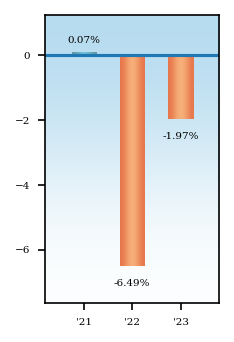
| Best Quarter: | 12/31/2023 | 3.18% |
| Worst Quarter: | 6/30/2022 | (3.49)% |
as of was .
Average Annual Total Returns - Advisor Class Shares [Member] - Anchor Risk Managed Income Strategies Fund |
Label |
1 Year |
Since Inception |
Inception Date |
|
|---|---|---|---|---|---|
| Anchor Risk Managed Income Strategies Fund Advisor Class Shares | Return before taxes | (1.97%) | (1.54%) | Sep. 11, 2020 | |
| Anchor Risk Managed Income Strategies Fund Advisor Class Shares | Return after taxes on distributions | (3.37%) | (2.36%) | |||
| Anchor Risk Managed Income Strategies Fund Advisor Class Shares | Return after taxes on distributions and sale of Fund shares | (1.18%) | (1.43%) | |||
| HFRX Absolute Return Index | [1] | 2.97% | 2.58% | ||
| Bloomberg U.S. Aggregate Bond Index | [2] | 5.53% | (2.88%) | ||
| [1] | The HFRX Absolute Return Index is designed to be representative of the overall composition of the Hedge Fund Universe. It is comprised of all eligible hedge fund strategies including, but not limited to, convertible arbitrage, distressed securities, equity hedge, equity market neutral, event driven, macro, merger arbitrage, and relative value arbitrage. As a component of the optimization process, the index selects constituents which characteristically exhibit lower volatilities and lower correlations to standard directional benchmarks of equity market and hedge fund industry performance. Hedge Fund Research, Inc. (HFR) utilizes a UCITSIII compliant methodology to construct the HFRX Hedge Fund Indices. The methodology is based on defined and predetermined rules and objective criteria to select and rebalance components to maximize representation of the Hedge Fund Universe. HFRX Indices utilize state-of-the-art quantitative techniques and analysis, multi-level screening, cluster analysis, Monte-Carlo simulations and optimization techniques to ensure that each index is a pure representation of its corresponding investment focus. Investors cannot invest directly in an index, and unlike the Fund, . |
| [2] | The Bloomberg U.S. Aggregate Bond Index is a broad based, market capitalization-weighted bond market index representing intermediate term investment grade bonds traded in the United States. Investors frequently use the index as a stand-in for measuring the performance of the U.S. bond market. Investors cannot invest directly in an index, and unlike the Fund, . |
Cash or Cash Equivalents Risk. The Fund may have significant investments in cash or cash equivalents. When a substantial portion of a portfolio is held in cash or cash equivalents, there is the risk that the value of the cash account, including interest, will not keep pace with inflation, thus reducing purchasing power over time.
Counterparty Risk. A counterparty (the other party to a transaction or an agreement or the party with whom the Fund executes transactions) may be unable or unwilling to make timely principal, interest or settlement payments, or otherwise honor its obligations.
Derivatives Risk. The use of derivative instruments involves risks different from, or possibly greater than, the risks associated with investing directly in securities and other traditional investments. These risks include (i) counterparty risk; (ii) the risk of mispricing or improper valuation; and (iii) the risk that changes in the value of the derivative may not correlate perfectly with the underlying asset, rate or index. Derivative prices are highly volatile and may fluctuate substantially during a short period of time. Such prices are influenced by numerous factors that affect the markets, including, but not limited to: changing supply and demand relationships; government programs and policies; national and international political and economic events, changes in interest rates, inflation and deflation and changes in supply and demand relationships.
Emerging Markets Risk. Investing in emerging markets, including frontier markets, involves not only the risks described below with respect to foreign investments, but also other risks, including exposure to economic structures that are generally less diverse and mature, limited availability and reliability of information material to an investment decision, and to political systems that can be expected to have less stability than those of developed countries. The typically small size of the securities markets in emerging markets and the possibility of a low or nonexistent volume of trading in those securities may also result in a lack of liquidity and price volatility.
Exchange Traded Funds Risk. ETFs may be actively or passively managed. ETFs may not exactly replicate exactly the performance of the indices they track and may result in a loss. The market price of an ETF may deviate from the price of the underlying assets in various situations, including market stress which will result in the Fund paying significantly more or receiving significantly less than the net asset value. An active trading market may not develop or be maintained at times of market stress, and market makers and authorized participants may step away from their respective roles in making a market for shares and executing purchase or redemption orders. To the extent all or a portion of an ETF’s underlying holdings are traded on foreign markets that are closed when the market on which the ETF is traded is open, there may be a change in last close price on the foreign market and the price of the ETF which is traded daily domestically. In addition, shareholders bear both their proportionate share of the Fund’s expenses and similar expenses of the ETF when the Fund invests in an ETF.
Foreign Investment Risk. Investing in foreign (non-U.S.) securities either directly or indirectly may result in the Fund experiencing more rapid and extreme changes in value than if the Fund invests exclusively in securities of U.S. companies, due to smaller markets, differing reporting, accounting and auditing standards, nationalization, expropriation or confiscatory taxation, currency blockages and political changes or diplomatic developments. The costs of investing in many foreign markets are higher than the U.S. and investments may be less liquid. Foreign markets may be closed when U.S. markets are open which may impact Fund pricing.
Fund of Funds Risk. The ability of the Fund to meet its investment objective is directly related to the ability of the Underlying Funds and their respective investment managers to meet their investment objectives. Certain investment managers may be dependent upon a single individual or small group of individuals, the loss of which could adversely affect their success. There can be no assurance that any Underlying Fund will achieve its investment objectives.
Futures Risk. Futures are contracts that derive value from the price performance of an underlying entity, such as an asset, index, or interest rate. In addition to all the risks associated with the underlying entity, futures have additional risks, such as counterparty risk and liquidity risk, because they are financial contracts rather than securities. Where futures are used for hedging, lack of the desired or expected correlation between the future and the underlying entity, known as basis risk, reduces the effectiveness of the hedging instrument.
Hedging Risk. Although intended to limit or reduce investment risk, hedging strategies may also limit or reduce the potential for profit. There is no assurance that hedging strategies will be successful.
Management Risk. The adviser may be incorrect in its assessment of the intrinsic value of the securities the Fund holds which may result in a decline in the value of Fund shares and failure to achieve its investment objective. The Fund’s portfolio manager uses technical analysis and/or trend models. Any imperfections or limitations in such analyses and models could affect the ability of the portfolio manager to implement the Fund’s investment strategies.
Market and Geopolitical Risk. The increasing interconnectivity between global economies and financial markets increases the likelihood that events or conditions in one region or financial market may adversely impact issuers in a different country, region or financial market. Securities in the Fund’s portfolio may underperform due to inflation (or expectations for inflation), interest rates, global demand for particular products or resources, natural disasters, climate-change and climate related events, pandemics, epidemics, terrorism, international conflicts, regulatory events and governmental or quasi-governmental actions. The occurrence of global events similar to those in recent years may result in market volatility and may have long-term effects on both the U.S. and global financial markets.
Options Risk. There are risks associated with the sale and purchase of call and put options. As a seller (writer) of a put option, the Fund will tend to lose money if the value of the reference index or security falls below the strike price. As the seller (writer) of a call option, the Fund may experience lower returns if the value of the reference index or security rises above the strike price.
Portfolio Turnover Risk. The Fund’s high portfolio turnover will increase transaction costs and may result in increased realization of net short-term capital gains (which are taxable to shareholders as ordinary income when distributed to them), higher taxable distributions and lower after-tax performance.
Securities Market Risk. The value of securities owned by the Fund may go up or down, sometimes rapidly or unpredictably, due to factors affecting particular companies or the securities markets generally. A general downturn in the securities market may cause multiple asset classes to decline in value simultaneously.
Short Sales Risk. The loss associated with the appreciation of the price of a security borrowed in connection with a short sale may be significant. The Fund may engage in short sales that are not made “against-the-box,” which means that the Fund may sell short securities even when they are not actually owned or otherwise covered at all times during the period the short position is open. Short sales that are not made “against-the-box” theoretically involve unlimited loss potential since the market price of securities sold short may continuously increase.
Small and Medium Capitalization Companies Risk. The earnings and prospects of small and medium sized companies are more volatile than larger companies and may experience higher failure rates than larger companies. Small and medium sized companies normally have a lower trading volume than larger companies, which may tend to make their market price fall more disproportionately than larger companies in response to selling pressures and may have limited markets, product lines, or financial resources and lack management experience.
The Fund seeks to provide total return from income and capital appreciation
with a secondary objective of limiting risk during unfavorable market conditions.
This table describes the fees and expenses that you may pay if you buy, sell and hold shares of the Fund. You may pay other fees, such as brokerage commissions and other fees to financial intermediaries, which are not reflected in the tables and examples below. More information about these fees and expenses is available from your financial intermediary and under the heading How to Purchase Shares on page 24 of the Fund’s Prospectus.
Shareholder Fees |
Advisor Class Shares [Member]
Anchor Risk Managed Equity Strategies Fund
Anchor Risk Managed Equity Strategies Fund Advisor Class
|
|---|---|
| Maximum Sales Charge (Load) Imposed on Purchases (as a percentage of offering price) | none |
| Maximum Deferred Sales Charge (Load) (as a percentage of offering price) | none |
| Maximum Sales Charge (Load) Imposed on Reinvested Dividends and other Distributions (as a percentage of offering price) | none |
| Redemption Fee (as a % of amount redeemed on shares held less than 60 days) | none |
Annual Fund Operating Expenses |
Advisor Class Shares [Member]
Anchor Risk Managed Equity Strategies Fund
Anchor Risk Managed Equity Strategies Fund Advisor Class
|
|
|---|---|---|
| Management Fees | 1.60% | |
| Distribution and Service (12b-1) Fees | none | |
| Other Expenses | 0.35% | |
| Acquired Fund Fees and Expenses | 0.14% | [1] |
| Total Annual Fund Operating Expenses | 2.09% | |
| [1] | Acquired Fund Fees and Expenses are the indirect costs of investing in other investment companies. |
This Example is intended to help you compare the cost of investing in the Fund with the cost of investing in other mutual funds.
Expense Example |
Expense Example, with Redemption, 1 Year |
Expense Example, with Redemption, 3 Years |
Expense Example, with Redemption, 5 Years |
Expense Example, with Redemption, 10 Years |
|---|---|---|---|---|
| Advisor Class Shares [Member] | Anchor Risk Managed Equity Strategies Fund | Anchor Risk Managed Equity Strategies Fund Advisor Class | USD ($) | 212 | 655 | 1,124 | 2,421 |
The Fund pays transaction costs, such as commissions, when it buys and sells securities (or “turns over” its portfolio). A higher portfolio turnover rate may indicate higher transaction costs and may result in higher taxes when Fund shares are held in a taxable account. These costs, which are not reflected in annual fund operating expenses or in the Example, affect the Fund’s performance. During the most recent fiscal year the Fund’s portfolio turnover rate was .
The Fund seeks to achieve its investment objective, utilizing a “fund of funds” structure, by allocating assets among various strategies based on the adviser’s research and analysis regarding market trends. A market trend is the movement of a financial market in a particular direction over time. Under normal market conditions, the Fund invests, directly or indirectly through unaffiliated exchange traded funds (“ETFs”) and mutual funds (together with ETFs, “Underlying Funds”), at least 80% of its net assets (plus the amount of borrowings, if any) in long and short positions in equity securities. The Fund takes a long position, or purchases shares of a security, when the adviser believes a security will increase in value, and a short position, or sells shares of borrowed stock, when the adviser believes the value of a security will decrease. The Fund takes long and short positions in securities that are highly correlated to major U.S. equity indices based on long, intermediate, and short-term trends.
At least 80% of the Fund’s assets is invested in:
| (1) | U.S. or foreign equity securities of any market capitalization including Underlying Funds that primarily invest in or are otherwise exposed to domestic and foreign equity securities; and |
| (2) | derivative instruments, including options, futures, and total return swaps, designed to replicate some or all of the features of an underlying portfolio of equity securities. |
The Fund may also invest in U.S. or foreign cash equivalents including money market funds and treasuries.
The adviser seeks to achieve the Fund’s secondary objective by managing risk through hedging the Fund’s investment portfolio when it believes security prices will decline. The adviser hedges the Fund’s portfolio by:
| (i) | increasing allocations to cash equivalents or U.S. Treasury securities; |
| (ii) | purchasing inverse mutual funds or inverse ETFs; and |
| (iii) | selling short ETFs or securities the adviser believes have demonstrated a high correlation to the broader equity indices. |
The Fund may invest in inverse funds linked to equity securities or indices when the adviser believes this strategy will provide an effective hedge to manage risk for the Fund’s equity investments.
Generally, the adviser does not attempt to evaluate individual securities. The adviser uses technical analysis, including monitoring price movements and price trends, of equity markets in an effort to achieve the Fund’s objective through proper allocation of the Fund’s portfolio securities. The adviser’s decisions to buy or sell a Fund holding are made based on adviser-developed trend and risk models that evaluate current market conditions, and this analysis guides the adviser’s determination of the appropriate exposure level to the equity market. The adviser buys and sells securities and derivatives to increase or decrease the Fund’s exposure to the equity market.
As with all mutual funds, there is a risk that you could lose money through your investment in the Fund. The Fund is not intended to be a complete investment program. Many factors affect the Fund’s net asset value (“NAV”) and performance.
The following describes the risks the Fund bears directly or indirectly through investments in Underlying Funds. As with any mutual fund, there is no guarantee that the Fund will achieve its goal.
Cash or Cash Equivalents Risk. The Fund may have significant investments in cash or cash equivalents. When a substantial portion of a portfolio is held in cash or cash equivalents, there is the risk that the value of the cash account, including interest, will not keep pace with inflation, thus reducing purchasing power over time.
Counterparty Risk. A counterparty (the other party to a transaction or an agreement or the party with whom the Fund executes transactions) may be unable or unwilling to make timely principal, interest or settlement payments, or otherwise honor its obligations.
Derivatives Risk. The use of derivative instruments involves risks different from, or possibly greater than, the risks associated with investing directly in securities and other traditional investments. These risks include (i) counterparty risk; (ii) the risk of mispricing or improper valuation; and (iii) the risk that changes in the value of the derivative may not correlate perfectly with the underlying asset, rate or index. Derivative prices are highly volatile and may fluctuate substantially during a short period of time. Such prices are influenced by numerous factors that affect the markets, including, but not limited to: changing supply and demand relationships; government programs and policies; national and international political and economic events, changes in interest rates, inflation and deflation and changes in supply and demand relationships.
Equity Securities Risk. Fluctuations in the value of equity securities held by the Fund will cause the NAV of the Fund and the price of its shares to fluctuate. Common stock of an issuer in the Fund’s portfolio may decline in price if the issuer fails to make anticipated dividend payments. Common stock will be subject to greater dividend risk than preferred stocks or debt instruments of the same issuer. In addition, common stocks have experienced significantly more volatility in returns than other asset classes.
Exchange-Traded Funds Risk. ETFs may be actively or passively managed. ETFs may not exactly replicate the performance of the indices they track and may result in a loss. The market price of an ETF may deviate from the price of the underlying assets in various situations, including market stress which will result in the Fund paying significantly more or receiving significantly less than the net asset value. An active trading market may not develop or be maintained at times of market stress, and market makers and authorized participants may step away from their respective roles in making a market for shares and executing purchase or redemption orders. To the extent all or a portion of an ETF’s underlying holdings are traded on foreign markets that are closed when the market on which the ETF is traded is open, there may be a change in last close price on the foreign market and the price of the ETF which is traded daily domestically. In addition, shareholders bear both their proportionate share of the Fund’s expenses and similar expenses of the ETF when the Fund invests in an ETF.
Foreign Investment Risk. Investing in foreign (non-U.S.) securities either directly or indirectly may result in the Fund experiencing more rapid and extreme changes in value than if the Fund invests exclusively in securities of U.S. companies, due to smaller markets, differing reporting, accounting and auditing standards, nationalization, expropriation or confiscatory taxation, currency blockages and political changes or diplomatic developments. The costs of investing in many foreign markets are higher than the U.S. and investments may be less liquid.
Fund of Funds Risk. The ability of the Fund to meet its investment objective is directly related to the ability of the Underlying Funds and their respective investment managers, to meet their investment objectives. Certain investment managers may be dependent upon a single individual or small group of individuals, the loss of which could adversely affect their success. There can be no assurance that any Underlying Fund will achieve its investment objectives.
Futures Risk. Futures are contracts that derive value from the price performance of an underlying entity, such as an asset, index, or interest rate. In addition to all the risks associated with the underlying entity, futures have additional risks, such as counterparty risk and liquidity risk, because they are financial contracts rather than securities. Where futures are used for hedging, lack of the desired or expected correlation between the future and the underlying entity, known as basis risk, reduces the effectiveness of the hedging instrument.
Hedging Risk. Although intended to limit or reduce investment risk, hedging strategies may also limit or reduce the potential for profit. There is no assurance that hedging strategies will be successful.
Inverse ETF Risk. Inverse ETFs seek to provide investment results that will match a certain percentage of the inverse of the performance of a specific benchmark on a daily basis. Because they reset daily, there may be significant volatility associated with inverse ETFs. Inverse ETFs may not be able to replicate exactly the inverse of the performance of the indices they track. Inverse ETFs fall in price when stock prices are rising. Additionally, inverse ETFs may employ leverage which magnifies the changes in the underlying stock index upon which they are based. Investments in inverse ETFs will prevent the Fund from participating in market-wide or sector-wide gains and may not prove to be an effective hedge. During periods of increased volatility, inverse ETFs may not perform in the manner they are designed. Investments in inverse funds are intended to be short-term in nature and may, therefore, lead to increased turnover and transaction costs to the Fund.
Inverse Funds Risk. Inverse funds typically lose value as the index or security tracked by the fund increases in value; a result that is the opposite from traditional funds. Because they reset daily there may be significant volatility associated with inverse funds. Inverse funds may not be able to replicate exactly the inverse of the performance of the benchmark they track. Inverse funds fall in price when its benchmark prices are rising. Additionally, inverse funds may employ leverage which magnifies the changes in the underlying benchmark upon which they are based. Investments in inverse funds will prevent the Fund from participating in market-wide or sector-wide gains and may not prove to be an effective hedge. During periods of increased volatility, inverse funds may not perform in the manner they are designed. Investments in inverse funds are intended to be short-term in nature and may, therefore, lead to increased turnover and transaction costs to the Fund.
Large Market Capitalization Companies Risk. The value of investments in larger companies may not rise as much as smaller companies, or larger companies may be unable to respond quickly to competitive challenges, such as changes in technology and consumer tastes.
Management Risk. The adviser may be incorrect in its assessment of the intrinsic value of the securities the Fund holds which may result in a decline in the value of Fund shares and failure to achieve its investment objective. The Fund’s portfolio manager uses technical analysis and/or trend models. Any imperfections or limitations in such analyses and models could affect the ability of the portfolio manager to implement the Fund’s investment strategies.
Market and Geopolitical Risk. The increasing interconnectivity between global economies and financial markets increases the likelihood that events or conditions in one region or financial market may adversely impact issuers in a different country, region or financial market. Securities in the Fund’s portfolio may underperform due to inflation (or expectations for inflation), interest rates, global demand for particular products or resources, natural disasters, climate-change and climate related events, pandemics, epidemics, terrorism, international conflicts, regulatory events and governmental or quasi-governmental actions. The occurrence of global events similar to those in recent years may result in market volatility and may have long-term effects on both the U.S. and global financial markets.
Options Risk. There are risks associated with the sale and purchase of call and put options. As a seller (writer) of a put option, the Fund will tend to lose money if the value of the reference index or security falls below the strike price. As the seller (writer) of a call option, the Fund may experience lower returns if the value of the reference index or security rises above the strike price.
Securities Market Risk. The value of securities owned by the Fund may go up or down, sometimes rapidly or unpredictably, due to factors affecting particular companies or the securities markets generally. A general downturn in the securities market may cause multiple asset classes to decline in value simultaneously.
Short Sales Risk. The loss associated with the appreciation of the price of a security borrowed in connection with a short sale may be significant. The Fund may engage in short sales that are not made “against-the-box,” which means that the Fund may sell short securities even when they are not actually owned or otherwise covered at all times during the period the short position is open. Short sales that are not made “against-the-box” theoretically involve unlimited loss potential since the market price of securities sold short may continuously increase.
Small and Medium Capitalization Companies Risk. The earnings and prospects of small and medium sized companies are more volatile than larger companies and may experience higher failure rates than larger companies. Small and medium sized companies normally have a lower trading volume than larger companies, which may tend to make their market price fall more disproportionately than larger companies in response to selling pressures and may have limited markets, product lines, or financial resources and lack management experience.
Total Return Swap Risk. In a total return swap, the buyer receives a periodic return equal to the total return of a specified security, securities or index, for a specified period of time. In return, the buyer pays the counterparty a variable stream of payments, typically based upon short-term interest rates, possibly plus or minus an agreed upon spread. For example, if the Fund enters into a swap where it agrees to exchange a floating rate of interest for a fixed rate of interest, the Fund may have to pay more money than it receives. Total return swaps entered into in which payments are not netted may entail greater risk than a swap entered into a net basis. There is a risk that adverse price movements in an instrument can result in a loss substantially greater than the Fund’s initial investment in that instrument (in some cases, the potential loss is unlimited). If there is a default by the other party to such a transaction, the Fund will have contractual remedies pursuant to the agreements related to the transaction. However, particularly in the case of privately negotiated instruments, there is a risk that the counterparty will not perform its obligations, which could leave the Fund worse off than if it had not entered into the position. These instruments are subject to high levels of volatility, in some cases due to the high levels of leverage the Fund may achieve with them.
Although the Fund commenced operations in 2016, the bar chart shows performance of the Fund’s Advisor Class shares for each calendar year since the Advisor Class’s inception. The performance table compares the performance of the Fund over time to the performance of a broad-based securities market index. Updated performance information is available at no cost by visiting or by calling .
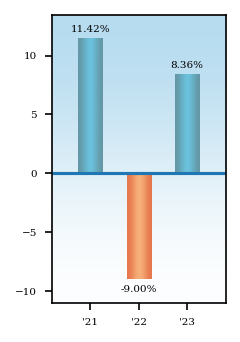
| Best Quarter: | 6/30/2021 | 7.25% |
| Worst Quarter: | 12/31/22 | (7.10)% |
as of was .
Average Annual Total Returns - Advisor Class Shares [Member] - Anchor Risk Managed Equity Strategies Fund |
Label |
1 Year |
Since Inception |
Inception Date |
|
|---|---|---|---|---|---|
| Anchor Risk Managed Equity Strategies Fund Advisor Class | Return before taxes | 8.36% | 8.45% | Apr. 30, 2020 | |
| Anchor Risk Managed Equity Strategies Fund Advisor Class | Return after taxes on distributions | 7.91% | 7.70% | |||
| Anchor Risk Managed Equity Strategies Fund Advisor Class | Return after taxes on distributions and sale of Fund shares | 5.05% | 6.39% | |||
| S&P 500 Total Return Index | [1] | 26.29% | 16.24% | ||
| [1] | The S&P 500 Total Return Index is an unmanaged market capitalization-weighted index which is comprised of 500 of the largest U.S. domiciled companies and includes the reinvestment of all dividends. Investors cannot invest directly in an index , and unlike the Fund, . |
Cash or Cash Equivalents Risk. The Fund may have significant investments in cash or cash equivalents. When a substantial portion of a portfolio is held in cash or cash equivalents, there is the risk that the value of the cash account, including interest, will not keep pace with inflation, thus reducing purchasing power over time.
Counterparty Risk. A counterparty (the other party to a transaction or an agreement or the party with whom the Fund executes transactions) may be unable or unwilling to make timely principal, interest or settlement payments, or otherwise honor its obligations.
Derivatives Risk. The use of derivative instruments involves risks different from, or possibly greater than, the risks associated with investing directly in securities and other traditional investments. These risks include (i) counterparty risk; (ii) the risk of mispricing or improper valuation; and (iii) the risk that changes in the value of the derivative may not correlate perfectly with the underlying asset, rate or index. Derivative prices are highly volatile and may fluctuate substantially during a short period of time. Such prices are influenced by numerous factors that affect the markets, including, but not limited to: changing supply and demand relationships; government programs and policies; national and international political and economic events, changes in interest rates, inflation and deflation and changes in supply and demand relationships.
Exchange-Traded Funds Risk. ETFs may be actively or passively managed. ETFs may not exactly replicate the performance of the indices they track and may result in a loss. The market price of an ETF may deviate from the price of the underlying assets in various situations, including market stress which will result in the Fund paying significantly more or receiving significantly less than the net asset value. An active trading market may not develop or be maintained at times of market stress, and market makers and authorized participants may step away from their respective roles in making a market for shares and executing purchase or redemption orders. To the extent all or a portion of an ETF’s underlying holdings are traded on foreign markets that are closed when the market on which the ETF is traded is open, there may be a change in last close price on the foreign market and the price of the ETF which is traded daily domestically. In addition, shareholders bear both their proportionate share of the Fund’s expenses and similar expenses of the ETF when the Fund invests in an ETF.
Foreign Investment Risk. Investing in foreign (non-U.S.) securities either directly or indirectly may result in the Fund experiencing more rapid and extreme changes in value than if the Fund invests exclusively in securities of U.S. companies, due to smaller markets, differing reporting, accounting and auditing standards, nationalization, expropriation or confiscatory taxation, currency blockages and political changes or diplomatic developments. The costs of investing in many foreign markets are higher than the U.S. and investments may be less liquid.
Fund of Funds Risk. The ability of the Fund to meet its investment objective is directly related to the ability of the Underlying Funds and their respective investment managers, to meet their investment objectives. Certain investment managers may be dependent upon a single individual or small group of individuals, the loss of which could adversely affect their success. There can be no assurance that any Underlying Fund will achieve its investment objectives.
Futures Risk. Futures are contracts that derive value from the price performance of an underlying entity, such as an asset, index, or interest rate. In addition to all the risks associated with the underlying entity, futures have additional risks, such as counterparty risk and liquidity risk, because they are financial contracts rather than securities. Where futures are used for hedging, lack of the desired or expected correlation between the future and the underlying entity, known as basis risk, reduces the effectiveness of the hedging instrument.
Hedging Risk. Although intended to limit or reduce investment risk, hedging strategies may also limit or reduce the potential for profit. There is no assurance that hedging strategies will be successful.
Management Risk. The adviser may be incorrect in its assessment of the intrinsic value of the securities the Fund holds which may result in a decline in the value of Fund shares and failure to achieve its investment objective. The Fund’s portfolio manager uses technical analysis and/or trend models. Any imperfections or limitations in such analyses and models could affect the ability of the portfolio manager to implement the Fund’s investment strategies.
Market and Geopolitical Risk. The increasing interconnectivity between global economies and financial markets increases the likelihood that events or conditions in one region or financial market may adversely impact issuers in a different country, region or financial market. Securities in the Fund’s portfolio may underperform due to inflation (or expectations for inflation), interest rates, global demand for particular products or resources, natural disasters, climate-change and climate related events, pandemics, epidemics, terrorism, international conflicts, regulatory events and governmental or quasi-governmental actions. The occurrence of global events similar to those in recent years may result in market volatility and may have long-term effects on both the U.S. and global financial markets.
Options Risk. There are risks associated with the sale and purchase of call and put options. As a seller (writer) of a put option, the Fund will tend to lose money if the value of the reference index or security falls below the strike price. As the seller (writer) of a call option, the Fund may experience lower returns if the value of the reference index or security rises above the strike price.
Securities Market Risk. The value of securities owned by the Fund may go up or down, sometimes rapidly or unpredictably, due to factors affecting particular companies or the securities markets generally. A general downturn in the securities market may cause multiple asset classes to decline in value simultaneously.
Short Sales Risk. The loss associated with the appreciation of the price of a security borrowed in connection with a short sale may be significant. The Fund may engage in short sales that are not made “against-the-box,” which means that the Fund may sell short securities even when they are not actually owned or otherwise covered at all times during the period the short position is open. Short sales that are not made “against-the-box” theoretically involve unlimited loss potential since the market price of securities sold short may continuously increase.
Small and Medium Capitalization Companies Risk. The earnings and prospects of small and medium sized companies are more volatile than larger companies and may experience higher failure rates than larger companies. Small and medium sized companies normally have a lower trading volume than larger companies, which may tend to make their market price fall more disproportionately than larger companies in response to selling pressures and may have limited markets, product lines, or financial resources and lack management experience.
Equity Securities Risk. Fluctuations in the value of equity securities held by the Fund will cause the NAV of the Fund and the price of its shares to fluctuate. Common stock of an issuer in the Fund’s portfolio may decline in price if the issuer fails to make anticipated dividend payments. Common stock will be subject to greater dividend risk than preferred stocks or debt instruments of the same issuer. In addition, common stocks have experienced significantly more volatility in returns than other asset classes.
Inverse ETF Risk. Inverse ETFs seek to provide investment results that will match a certain percentage of the inverse of the performance of a specific benchmark on a daily basis. Because they reset daily, there may be significant volatility associated with inverse ETFs. Inverse ETFs may not be able to replicate exactly the inverse of the performance of the indices they track. Inverse ETFs fall in price when stock prices are rising. Additionally, inverse ETFs may employ leverage which magnifies the changes in the underlying stock index upon which they are based. Investments in inverse ETFs will prevent the Fund from participating in market-wide or sector-wide gains and may not prove to be an effective hedge. During periods of increased volatility, inverse ETFs may not perform in the manner they are designed. Investments in inverse funds are intended to be short-term in nature and may, therefore, lead to increased turnover and transaction costs to the Fund.
Inverse Funds Risk. Inverse funds typically lose value as the index or security tracked by the fund increases in value; a result that is the opposite from traditional funds. Because they reset daily there may be significant volatility associated with inverse funds. Inverse funds may not be able to replicate exactly the inverse of the performance of the benchmark they track. Inverse funds fall in price when its benchmark prices are rising. Additionally, inverse funds may employ leverage which magnifies the changes in the underlying benchmark upon which they are based. Investments in inverse funds will prevent the Fund from participating in market-wide or sector-wide gains and may not prove to be an effective hedge. During periods of increased volatility, inverse funds may not perform in the manner they are designed. Investments in inverse funds are intended to be short-term in nature and may, therefore, lead to increased turnover and transaction costs to the Fund.
Large Market Capitalization Companies Risk. The value of investments in larger companies may not rise as much as smaller companies, or larger companies may be unable to respond quickly to competitive challenges, such as changes in technology and consumer tastes.
Total Return Swap Risk. In a total return swap, the buyer receives a periodic return equal to the total return of a specified security, securities or index, for a specified period of time. In return, the buyer pays the counterparty a variable stream of payments, typically based upon short-term interest rates, possibly plus or minus an agreed upon spread. For example, if the Fund enters into a swap where it agrees to exchange a floating rate of interest for a fixed rate of interest, the Fund may have to pay more money than it receives. Total return swaps entered into in which payments are not netted may entail greater risk than a swap entered into a net basis. There is a risk that adverse price movements in an instrument can result in a loss substantially greater than the Fund’s initial investment in that instrument (in some cases, the potential loss is unlimited). If there is a default by the other party to such a transaction, the Fund will have contractual remedies pursuant to the agreements related to the transaction. However, particularly in the case of privately negotiated instruments, there is a risk that the counterparty will not perform its obligations, which could leave the Fund worse off than if it had not entered into the position. These instruments are subject to high levels of volatility, in some cases due to the high levels of leverage the Fund may achieve with them.
The Fund seeks to achieve above average total returns over a full market cycle with lower correlation and reduced risk when compared to traditional world indices.
This table describes the fees and expenses that you may pay if you buy, sell and hold shares of the Fund. You may pay other fees, such as brokerage commissions and other fees to financial intermediaries, which are not reflected in the tables and examples below. More information about these fees and expenses is available from your financial intermediary and under the heading How to Purchase Shares on page 24 of the Fund’s Prospectus.
Shareholder Fees |
Advisor Class Shares [Member]
Anchor Risk Managed Global Strategies Fund
Anchor Risk Managed Global Strategies Fund Advisor Class
|
|---|---|
| Maximum Sales Charge (Load) Imposed on Purchases (as a percentage of offering price) | none |
| Maximum Deferred Sales Charge (Load) (as a percentage of offering price) | none |
| Maximum Sales Charge (Load) Imposed on Reinvested Dividends and other Distributions (as a percentage of offering price) | none |
| Redemption Fee (as a % of amount redeemed on shares held less than 60 days) | none |
Annual Fund Operating Expenses |
Advisor Class Shares [Member]
Anchor Risk Managed Global Strategies Fund
Anchor Risk Managed Global Strategies Fund Advisor Class
|
|
|---|---|---|
| Management Fees | 1.60% | |
| Distribution and Service (12b-1) Fees | none | |
| Other Expenses | 0.93% | |
| Acquired Fund Fees and Expenses | 0.20% | [1] |
| Total Annual Fund Operating Expenses | 2.73% | |
| Fee Waiver and/or Expense Reimbursement | (0.53%) | [2] |
| Total Annual Fund Operating Expenses After Fee Waiver and/or Expense Reimbursement | 2.20% | |
| [1] | Acquired Fund Fees and Expenses are the indirect costs of investing in other investment companies. |
| [2] | The Fund’s adviser has contractually agreed to reduce its fees and/or absorb expenses of the Fund, until at least to ensure that total annual fund operating expenses after fee waiver and/or reimbursement (exclusive of any (i) front-end or contingent deferred loads, (ii) brokerage fees and commissions, (iii) acquired fund fees and expenses (iv) fees and expenses associated with investments in other collective investment vehicles or derivative instruments (including for example option and swap fees and expenses), (v) borrowing costs (such as interest and dividend expense on securities sold short), (vi) taxes, and (vii) extraordinary expenses, such as litigation expenses (which may include indemnification of Fund officers and Trustees, contractual indemnification of Fund service providers (other than the adviser)), will not exceed 2.00% of the Fund’s average daily net assets attributable to Advisor Class shares. These fee waivers and expense reimbursements are subject to possible recoupment from the Fund in future years (within the three years from the date the fees have been waived or reimbursed) if such recoupment can be achieved within the lesser of the foregoing expense limits or those in place at the time of recapture after the recoupment is taken into account. This agreement may be terminated by the Trust’s Board of Trustees only on 60 days’ written notice to the Fund’s adviser. |
This Example is intended to help you compare the cost of investing in the Fund with the cost of investing in other mutual funds.
Expense Example |
Expense Example, with Redemption, 1 Year |
Expense Example, with Redemption, 3 Years |
Expense Example, with Redemption, 5 Years |
Expense Example, with Redemption, 10 Years |
|---|---|---|---|---|
| Advisor Class Shares [Member] | Anchor Risk Managed Global Strategies Fund | Anchor Risk Managed Global Strategies Fund Advisor Class | USD ($) | 223 | 797 | 1,398 | 3,022 |
The Fund pays transaction costs, such as commissions, when it buys and sells securities (or “turns over” its portfolio). A higher portfolio turnover rate may indicate higher transaction costs and may result in higher taxes when Fund shares are held in a taxable account. These costs, which are not reflected in annual fund operating expenses or in the Example, affect the Fund’s performance. During the most recent fiscal year the Fund’s portfolio turnover rate was .
The Fund seeks to achieve its investment objective, utilizing a “fund of funds” structure, by allocating assets among various strategies based on the adviser’s research and analysis regarding market trends. A market trend is the movement of a financial market in a particular direction over time. Under normal market conditions, the Fund invests at least 40% of its assets (plus the amount of borrowings, if any) in long and short positions in exchange-traded funds (“ETFs”) and mutual funds (collectively, “Underlying Funds”) and derivative instruments registered and offered in the U.S with underlying holdings in non-U.S. companies. The Fund primarily takes long and short positions in ETFs that are highly correlated to regional and country specific indices based on the adviser’s long, intermediate, and short-term price trends analysis.
The Fund is invested primarily in:
| (1) | Underlying Funds that primarily invest in or are otherwise exposed to domestic and worldwide markets; |
| (2) | derivative instruments, including options, futures, and total return swaps, designed to replicate some or all of the features of an underlying portfolio of equity securities; |
| (3) | Underlying Funds that are other U.S. or foreign equity securities of any market capitalization; and |
| (4) | U.S. or foreign cash equivalents. |
The adviser seeks to achieve the Fund’s objective by managing risk through hedging the Fund’s investment portfolio when it believes security prices will decline. The adviser hedges the Fund’s portfolio by:
| (i) | increasing allocations to cash equivalents or U.S. Treasury securities; |
| (ii) | selling short ETFs or securities the adviser believes have demonstrated a high correlation to the broader global equity indices; and |
| (iii) | purchasing inverse mutual funds or inverse ETFs. The Fund may invest in inverse funds linked to equity securities or indices when the adviser believes this strategy will provide an effective hedge to manage risk offer the Fund’s equity investments. |
Generally, the adviser does not attempt to evaluate individual securities. The adviser uses technical analysis, including monitoring price movements and price trends, of equity markets in an effort to achieve the Fund’s objective through proper allocation of the Fund’s portfolio securities. The adviser’s decisions to buy or sell a Fund holding are made based on adviser developed trend and risk models that evaluate current market conditions, and this analysis guides the adviser’s determination of the appropriate exposure level to the equity market. The adviser buys and sells securities and derivatives to increase or decrease the Fund’s exposure to the equity market.
As with all mutual funds, there is a risk that you could lose money through your investment in the Fund. The Fund is not intended to be a complete investment program. Many factors affect the Fund’s net asset value (“NAV”) and performance.
The following describes the risks the Fund bears directly or indirectly through investments in Underlying Funds. As with any mutual fund, there is no guarantee that the Fund will achieve its goal.
Cash or Cash Equivalents Risk. The Fund may have significant investments in cash or cash equivalents. When a substantial portion of a portfolio is held in cash or cash equivalents, there is the risk that the value of the cash account, including interest, will not keep pace with inflation, thus reducing purchasing power over time.
Counterparty Risk. A counterparty (the other party to a transaction or an agreement or the party with whom the Fund executes transactions) may be unable or unwilling to make timely principal, interest or settlement payments, or otherwise honor its obligations.
Derivatives Risk. The use of derivative instruments involves risks different from, or possibly greater than, the risks associated with investing directly in securities and other traditional investments. These risks include (i) counterparty risk; (ii) the risk of mispricing or improper valuation; and (iii) the risk that changes in the value of the derivative may not correlate perfectly with the underlying asset, rate or index. Derivative prices are highly volatile and may fluctuate substantially during a short period of time. Such prices are influenced by numerous factors that affect the markets, including, but not limited to: changing supply and demand relationships; government programs and policies; national and international political and economic events, changes in interest rates, inflation and deflation and changes in supply and demand relationships.
Equity Securities Risk. Fluctuations in the value of equity securities held by the Fund will cause the NAV of the Fund and the price of its shares to fluctuate. Common stock of an issuer in the Fund’s portfolio may decline in price if the issuer fails to make anticipated dividend payments. Common stock will be subject to greater dividend risk than preferred stocks or debt instruments of the same issuer. In addition, common stocks have experienced significantly more volatility in returns than other asset classes.
Exchange-Traded Funds Risk. ETFs may be actively or passively managed. ETFs may not be able to replicate exactly the performance of the indices they track and may result in a loss. The market price of an ETF may deviate from the price of the underlying assets in various situations, including market stress which will result in the Fund paying significantly more or receiving significantly less than the net asset value. An active trading market may not develop or be maintained at times of market stress, and market makers and authorized participants may step away from their respective roles in making a market for shares and executing purchase or redemption orders. To the extent all or a portion of an ETF’s underlying holdings are traded on foreign markets that are closed when the market on which the ETF is traded is open, there may be a change in last close price on the foreign market and the price of the ETF which is traded daily domestically. In addition, shareholders bear both their proportionate share of the Fund’s expenses and similar expenses of the ETF when the Fund invests in shares of an ETF.
Foreign Investment Risk. Investing in foreign (non-U.S.) securities either directly or indirectly may result in the Fund experiencing more rapid and extreme changes in value than if the Fund invests exclusively in securities of U.S. companies, due to smaller markets, differing reporting, accounting and auditing standards, nationalization, expropriation or confiscatory taxation, currency blockages and political changes or diplomatic developments. The costs of investing in many foreign markets are higher than the U.S. and investments may be less liquid.
Fund of Funds Risk. The ability of the Fund to meet its investment objective is directly related to the ability of the Underlying Funds and their respective investment managers, to meet their investment objectives. Certain investment managers may be dependent upon a single individual or small group of individuals, the loss of which could adversely affect their success. There can be no assurance that any Underlying Fund will achieve its investment objectives.
Futures Risk. Futures are contracts that derive value from the price performance of an underlying entity, such as an asset, index, or interest rate. In addition to all the risks associated with the underlying entity, futures have additional risks, such as counterparty risk and liquidity risk, because they are financial contracts rather than securities. Where futures are used for hedging, lack of the desired or expected correlation between the future and the underlying entity, known as basis risk, reduces the effectiveness of the hedging instrument.
Hedging Risk. Although intended to limit or reduce investment risk, hedging strategies may also limit or reduce the potential for profit. There is no assurance that hedging strategies will be successful.
Inverse ETF Risk. Inverse ETFs seek to provide investment results that will match a certain percentage of the inverse of the performance of a specific benchmark on a daily basis. Because they reset daily there may be significant volatility associated with inverse ETFs. Inverse ETFs may not be able to replicate exactly the inverse of the performance of the indices they track. Inverse ETFs fall in price when stock prices are rising. Additionally, inverse ETFs may employ leverage which magnifies the changes in the underlying stock index upon which they are based. Investments in inverse ETFs will prevent the Fund from participating in market-wide or sector-wide gains and may not prove to be an effective hedge. During periods of increased volatility, inverse ETFs may not perform in the manner they are designed. Investments in inverse funds are intended to be short-term in nature and may, therefore, lead to increased turnover and transaction costs to the Fund.
Inverse Funds Risk. Inverse funds typically lose value as the index or security tracked by the fund increases in value; a result that is the opposite from traditional funds. Because they reset daily there may be significant volatility associated with inverse funds. Inverse funds may not be able to replicate exactly the inverse of the performance of the benchmark they track. Inverse funds fall in price when its benchmark prices are rising. Additionally, inverse funds may employ leverage which magnifies the changes in the underlying benchmark upon which they are based. Investments in inverse funds will prevent the Fund from participating in market-wide or sector-wide gains and may not prove to be an effective hedge. During periods of increased volatility, inverse funds may not perform in the manner they are designed. Investments in inverse funds are intended to be short-term in nature and may, therefore, lead to increased turnover and transaction costs to the Fund.
Large Market Capitalization Companies Risk. The value of investments in larger companies may not rise as much as smaller companies, or larger companies may be unable to respond quickly to competitive challenges, such as changes in technology and consumer tastes.
Management Risk. The adviser may be incorrect in its assessment of the intrinsic value of the securities the Fund holds which may result in a decline in the value of Fund shares and failure to achieve its investment objective. The Fund’s portfolio manager uses technical analysis and/or trend models. Any imperfections or limitations in such analyses and models could affect the ability of the portfolio manager to implement the Fund’s investment strategies.
Market and Geopolitical Risk. The increasing interconnectivity between global economies and financial markets increases the likelihood that events or conditions in one region or financial market may adversely impact issuers in a different country, region or financial market. Securities in the Fund’s portfolio may underperform due to inflation (or expectations for inflation), interest rates, global demand for particular products or resources, natural disasters, climate-change and climate related events, pandemics, epidemics, terrorism, international conflicts, regulatory events and governmental or quasi-governmental actions. The occurrence of global events similar to those in recent years may result in market volatility and may have long-term effects on both the U.S. and global financial markets.
Options Risk. There are risks associated with the sale and purchase of call and put options. As a seller (writer) of a put option, the Fund will tend to lose money if the value of the reference index or security falls below the strike price. As the seller (writer) of a call option, the Fund may experience lower returns if the value of the reference index or security rises above the strike price.
Securities Market Risk. The value of securities owned by the Fund may go up or down, sometimes rapidly or unpredictably, due to factors affecting particular companies or the securities markets generally. A general downturn in the securities market may cause multiple asset classes to decline in value simultaneously.
Short Sales Risk. The loss associated with the appreciation of the price of a security borrowed in connection with a short sale may be significant. The Fund may engage in short sales that are not made “against-the-box,” which means that the Fund may sell short securities even when they are not actually owned or otherwise covered at all times during the period the short position is open. Short sales that are not made “against-the-box” theoretically involve unlimited loss potential since the market price of securities sold short may continuously increase.
Small and Medium Capitalization Companies Risk. The earnings and prospects of small and medium sized companies are more volatile than larger companies and may experience higher failure rates than larger companies. Small and medium sized companies normally have a lower trading volume than larger companies, which may tend to make their market price fall more disproportionately than larger companies in response to selling pressures and may have limited markets, product lines, or financial resources and lack management experience.
Total Return Swap Risk. In a total return swap, the buyer receives a periodic return equal to the total return of a specified security, securities or index, for a specified period of time. In return, the buyer pays the counterparty a variable stream of payments, typically based upon short-term interest rates, possibly plus or minus an agreed upon spread. For example, if the Fund enters into a swap where it agrees to exchange a floating rate of interest for a fixed rate of interest, the Fund may have to pay more money than it receives. Total return swaps entered into in which payments are not netted may entail greater risk than a swap entered into a net basis. There is a risk that adverse price movements in an instrument can result in a loss substantially greater than the Fund’s initial investment in that instrument (in some cases, the potential loss is unlimited). If there is a default by the other party to such a transaction, the Fund will have contractual remedies pursuant to the agreements related to the transaction. However, particularly in the case of privately negotiated instruments, there is a risk that the counterparty will not perform its obligations, which could leave the Fund worse off than if it had not entered into the position. These instruments are subject to high levels of volatility, in some cases due to the high levels of leverage the Fund may achieve with them.
Although the Fund commenced operations in 2019,and the bar chart shows performance of the Fund’s Advisor Class shares for each calendar year since the Advisor Class’s inception. The performance table compares the performance of the Fund over time to the performance of a broad-based securities market index and a supplemental index. Updated performance information will be available at no cost by visiting or by calling .
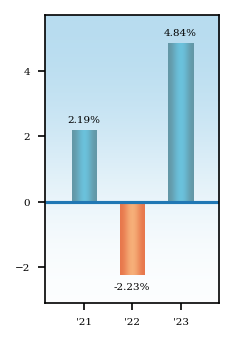
| Best Quarter: | 9/30/2022 | 5.36% |
| Worst Quarter: | 12/31/2022 | (3.26)% |
as of was .
Average Annual Total Returns - Advisor Class Shares [Member] - Anchor Risk Managed Global Strategies Fund |
Label |
1 Year |
Since Inception |
Inception Date |
|
|---|---|---|---|---|---|
| Anchor Risk Managed Global Strategies Fund Advisor Class | Return before taxes | 4.84% | 2.50% | Jul. 15, 2020 | |
| Anchor Risk Managed Global Strategies Fund Advisor Class | Return after taxes on distributions | 4.49% | 1.41% | |||
| Anchor Risk Managed Global Strategies Fund Advisor Class | Return after taxes on distributions and sale of Fund shares | 3.00% | 1.77% | |||
| MSCI All Country World Index | [1] | 22.20% | 10.17% | ||
| MSCI EAFE Index (USD) | [2] | 18.24% | 8.02% | ||
| [1] | The MSCI All Country World Index is composed of large and mid-capitalization developed and emerging market equities. Investors cannot invest directly in an index, and unlike the Fund, . |
| [2] | The MSCI EAFE Index is an equity index which captures large and mid-capitalization representation across 21 developed markets countries around the world, excluding the U.S. and Canada. The index covers approximately 85% of the free float-adjusted market capitalization in each country. Investors cannot invest directly in an index, and unlike the Fund, . |
Cash or Cash Equivalents Risk. The Fund may have significant investments in cash or cash equivalents. When a substantial portion of a portfolio is held in cash or cash equivalents, there is the risk that the value of the cash account, including interest, will not keep pace with inflation, thus reducing purchasing power over time.
Counterparty Risk. A counterparty (the other party to a transaction or an agreement or the party with whom the Fund executes transactions) may be unable or unwilling to make timely principal, interest or settlement payments, or otherwise honor its obligations.
Derivatives Risk. The use of derivative instruments involves risks different from, or possibly greater than, the risks associated with investing directly in securities and other traditional investments. These risks include (i) counterparty risk; (ii) the risk of mispricing or improper valuation; and (iii) the risk that changes in the value of the derivative may not correlate perfectly with the underlying asset, rate or index. Derivative prices are highly volatile and may fluctuate substantially during a short period of time. Such prices are influenced by numerous factors that affect the markets, including, but not limited to: changing supply and demand relationships; government programs and policies; national and international political and economic events, changes in interest rates, inflation and deflation and changes in supply and demand relationships.
Exchange-Traded Funds Risk. ETFs may be actively or passively managed. ETFs may not be able to replicate exactly the performance of the indices they track and may result in a loss. The market price of an ETF may deviate from the price of the underlying assets in various situations, including market stress which will result in the Fund paying significantly more or receiving significantly less than the net asset value. An active trading market may not develop or be maintained at times of market stress, and market makers and authorized participants may step away from their respective roles in making a market for shares and executing purchase or redemption orders. To the extent all or a portion of an ETF’s underlying holdings are traded on foreign markets that are closed when the market on which the ETF is traded is open, there may be a change in last close price on the foreign market and the price of the ETF which is traded daily domestically. In addition, shareholders bear both their proportionate share of the Fund’s expenses and similar expenses of the ETF when the Fund invests in shares of an ETF.
Foreign Investment Risk. Investing in foreign (non-U.S.) securities either directly or indirectly may result in the Fund experiencing more rapid and extreme changes in value than if the Fund invests exclusively in securities of U.S. companies, due to smaller markets, differing reporting, accounting and auditing standards, nationalization, expropriation or confiscatory taxation, currency blockages and political changes or diplomatic developments. The costs of investing in many foreign markets are higher than the U.S. and investments may be less liquid.
Fund of Funds Risk. The ability of the Fund to meet its investment objective is directly related to the ability of the Underlying Funds and their respective investment managers, to meet their investment objectives. Certain investment managers may be dependent upon a single individual or small group of individuals, the loss of which could adversely affect their success. There can be no assurance that any Underlying Fund will achieve its investment objectives.
Futures Risk. Futures are contracts that derive value from the price performance of an underlying entity, such as an asset, index, or interest rate. In addition to all the risks associated with the underlying entity, futures have additional risks, such as counterparty risk and liquidity risk, because they are financial contracts rather than securities. Where futures are used for hedging, lack of the desired or expected correlation between the future and the underlying entity, known as basis risk, reduces the effectiveness of the hedging instrument.
Hedging Risk. Although intended to limit or reduce investment risk, hedging strategies may also limit or reduce the potential for profit. There is no assurance that hedging strategies will be successful.
Management Risk. The adviser may be incorrect in its assessment of the intrinsic value of the securities the Fund holds which may result in a decline in the value of Fund shares and failure to achieve its investment objective. The Fund’s portfolio manager uses technical analysis and/or trend models. Any imperfections or limitations in such analyses and models could affect the ability of the portfolio manager to implement the Fund’s investment strategies.
Market and Geopolitical Risk. The increasing interconnectivity between global economies and financial markets increases the likelihood that events or conditions in one region or financial market may adversely impact issuers in a different country, region or financial market. Securities in the Fund’s portfolio may underperform due to inflation (or expectations for inflation), interest rates, global demand for particular products or resources, natural disasters, climate-change and climate related events, pandemics, epidemics, terrorism, international conflicts, regulatory events and governmental or quasi-governmental actions. The occurrence of global events similar to those in recent years may result in market volatility and may have long-term effects on both the U.S. and global financial markets.
Options Risk. There are risks associated with the sale and purchase of call and put options. As a seller (writer) of a put option, the Fund will tend to lose money if the value of the reference index or security falls below the strike price. As the seller (writer) of a call option, the Fund may experience lower returns if the value of the reference index or security rises above the strike price.
Securities Market Risk. The value of securities owned by the Fund may go up or down, sometimes rapidly or unpredictably, due to factors affecting particular companies or the securities markets generally. A general downturn in the securities market may cause multiple asset classes to decline in value simultaneously.
Short Sales Risk. The loss associated with the appreciation of the price of a security borrowed in connection with a short sale may be significant. The Fund may engage in short sales that are not made “against-the-box,” which means that the Fund may sell short securities even when they are not actually owned or otherwise covered at all times during the period the short position is open. Short sales that are not made “against-the-box” theoretically involve unlimited loss potential since the market price of securities sold short may continuously increase.
Small and Medium Capitalization Companies Risk. The earnings and prospects of small and medium sized companies are more volatile than larger companies and may experience higher failure rates than larger companies. Small and medium sized companies normally have a lower trading volume than larger companies, which may tend to make their market price fall more disproportionately than larger companies in response to selling pressures and may have limited markets, product lines, or financial resources and lack management experience.
Equity Securities Risk. Fluctuations in the value of equity securities held by the Fund will cause the NAV of the Fund and the price of its shares to fluctuate. Common stock of an issuer in the Fund’s portfolio may decline in price if the issuer fails to make anticipated dividend payments. Common stock will be subject to greater dividend risk than preferred stocks or debt instruments of the same issuer. In addition, common stocks have experienced significantly more volatility in returns than other asset classes.
Inverse ETF Risk. Inverse ETFs seek to provide investment results that will match a certain percentage of the inverse of the performance of a specific benchmark on a daily basis. Because they reset daily there may be significant volatility associated with inverse ETFs. Inverse ETFs may not be able to replicate exactly the inverse of the performance of the indices they track. Inverse ETFs fall in price when stock prices are rising. Additionally, inverse ETFs may employ leverage which magnifies the changes in the underlying stock index upon which they are based. Investments in inverse ETFs will prevent the Fund from participating in market-wide or sector-wide gains and may not prove to be an effective hedge. During periods of increased volatility, inverse ETFs may not perform in the manner they are designed. Investments in inverse funds are intended to be short-term in nature and may, therefore, lead to increased turnover and transaction costs to the Fund.
Inverse Funds Risk. Inverse funds typically lose value as the index or security tracked by the fund increases in value; a result that is the opposite from traditional funds. Because they reset daily there may be significant volatility associated with inverse funds. Inverse funds may not be able to replicate exactly the inverse of the performance of the benchmark they track. Inverse funds fall in price when its benchmark prices are rising. Additionally, inverse funds may employ leverage which magnifies the changes in the underlying benchmark upon which they are based. Investments in inverse funds will prevent the Fund from participating in market-wide or sector-wide gains and may not prove to be an effective hedge. During periods of increased volatility, inverse funds may not perform in the manner they are designed. Investments in inverse funds are intended to be short-term in nature and may, therefore, lead to increased turnover and transaction costs to the Fund.
Large Market Capitalization Companies Risk. The value of investments in larger companies may not rise as much as smaller companies, or larger companies may be unable to respond quickly to competitive challenges, such as changes in technology and consumer tastes.
Total Return Swap Risk. In a total return swap, the buyer receives a periodic return equal to the total return of a specified security, securities or index, for a specified period of time. In return, the buyer pays the counterparty a variable stream of payments, typically based upon short-term interest rates, possibly plus or minus an agreed upon spread. For example, if the Fund enters into a swap where it agrees to exchange a floating rate of interest for a fixed rate of interest, the Fund may have to pay more money than it receives. Total return swaps entered into in which payments are not netted may entail greater risk than a swap entered into a net basis. There is a risk that adverse price movements in an instrument can result in a loss substantially greater than the Fund’s initial investment in that instrument (in some cases, the potential loss is unlimited). If there is a default by the other party to such a transaction, the Fund will have contractual remedies pursuant to the agreements related to the transaction. However, particularly in the case of privately negotiated instruments, there is a risk that the counterparty will not perform its obligations, which could leave the Fund worse off than if it had not entered into the position. These instruments are subject to high levels of volatility, in some cases due to the high levels of leverage the Fund may achieve with them.
The Fund seeks to provide long-term growth of capital while providing current income.
This table describes the fees and expenses that you may pay if you buy, sell and hold shares of the Fund. You may pay other fees, such as brokerage commissions and other fees to financial intermediaries, which are not reflected in the tables and examples below. More information about these fees and expenses is available from your financial intermediary and under the heading How to Purchase Shares on page 23 of the Fund’s Prospectus.
Shareholder Fees |
Institutional Class Shares [Member]
Anchor Risk Managed Income Strategies Fund
Anchor Risk Managed Income Strategies Fund Institutional Class Shares
|
|---|---|
| Maximum Sales Charge (Load) Imposed on Purchases (as a percentage of offering price) | none |
| Maximum Deferred Sales Charge (Load) (as a percentage of offering price) | none |
| Maximum Sales Charge (Load) Imposed on Reinvested Dividends and other Distributions (as a percentage of offering price) | none |
| Redemption Fee (as a % of amount redeemed on shares held less than 60 days) | (2.00%) |
Annual Fund Operating Expenses |
Institutional Class Shares [Member]
Anchor Risk Managed Income Strategies Fund
Anchor Risk Managed Income Strategies Fund Institutional Class Shares
|
|
|---|---|---|
| Management Fees | 1.60% | |
| Distribution and Service (12b-1) Fees | 0.25% | |
| Other Expenses | 1.39% | |
| Interest Expense and Dividend Expenses on Short sales | 0.01% | |
| Acquired Fund Fees and Expenses | 0.58% | [1] |
| Total Annual Fund Operating Expenses | 3.83% | |
| Fee Waiver and/or Expense Reimbursement | (0.99%) | [2] |
| Total Annual Fund Operating Expenses After Fee Waiver and/or Expense Reimbursement | 2.84% | |
| [1] | Acquired Fund Fees and Expenses are the indirect costs of investing in other investment companies. . |
| [2] | The Fund’s adviser has contractually agreed to reduce its fees and/or absorb expenses of the Fund, until at least to ensure that total annual fund operating expenses after fee waiver and/or reimbursement (exclusive of any (i) front-end or contingent deferred loads, (ii) brokerage fees and commissions, (iii) acquired fund fees and expenses, (iv) fees and expenses associated with investments in other collective investment vehicles or derivative instruments (including for example option and swap fees and expenses), (v) borrowing costs (such as interest and dividend expense on securities sold short), (vi) taxes and (vii) extraordinary expenses, such as litigation expenses (which may include indemnification of Fund officers and Trustees, contractual indemnification of Fund service providers (other than the adviser)), will not exceed 2.25% of the Fund’s average daily net assets attributable to Institutional Class shares. These fee waivers and expense reimbursements are subject to possible recoupment from the Fund in future years (within the three years from the date the fees have been waived or reimbursed) if such recoupment can be achieved within the lesser of the foregoing expense limits or those in place at the time of recapture after the recoupment is taken into account. This agreement may be terminated by the Trust’s Board of Trustees only on 60 days’ written notice to the Fund’s adviser. |
This Example is intended to help you compare the cost of investing in the Fund with the cost of investing in other mutual funds.
Expense Example |
Expense Example, with Redemption, 1 Year |
Expense Example, with Redemption, 3 Years |
Expense Example, with Redemption, 5 Years |
Expense Example, with Redemption, 10 Years |
|---|---|---|---|---|
| Institutional Class Shares [Member] | Anchor Risk Managed Income Strategies Fund | Anchor Risk Managed Income Strategies Fund Institutional Class Shares | USD ($) | 287 | 1,079 | 1,889 | 3,999 |
The Fund pays transaction costs, such as commissions, when it buys and sells securities (or “turns over” its portfolio). A higher portfolio turnover rate may indicate higher transaction costs and may result in higher taxes when Fund shares are held in a taxable account. These costs, which are not reflected in annual fund operating expenses or in the Example, affect the Fund’s performance. During the most recent fiscal year, the Fund’s portfolio turnover rate was .
The Fund seeks to achieve its investment objective, utilizing a “fund of funds structure”, by allocating assets among worldwide market segments based on the adviser’s research and analysis regarding market trends. A market trend is the movement of a financial market in a particular direction over time. “Worldwide” means developed and emerging markets, as those terms are defined below.
The Fund invests its assets (plus the amount of borrowings, if any) in long and short positions in unaffiliated exchange-traded funds (“ETFs”), open-end and closed-end mutual funds (together with ETFs, the “Underlying Funds”) and derivative instruments. The Fund primarily takes long and short positions in Underlying Funds and derivatives instruments, in domestic and worldwide markets. The Fund takes a long position by buying shares of Underlying Funds, or derivative instruments, when the Adviser believes those assets will increase in value. The Fund takes a short position by selling those assets when the Adviser believes they will decrease in value.
The Fund invests primarily in:
| (1) | Underlying Funds that invest in or are otherwise exposed to developed and emerging markets, which are countries listed on the MSCI All World Country Index and MSCI Emerging Markets Index; |
| (2) | derivative instruments, either directly or indirectly, including options and futures, designed to substitute for or replicate some or all of the features of the Underlying Funds; and |
| (3) | U.S. or foreign cash equivalents, without limitation, as collateral for derivative instruments or as a temporary defensive measure during periods of market volatility. |
The adviser seeks to manage risk by hedging the Fund’s investment portfolio when it believes security prices will decline. The adviser hedges the Fund’s portfolio by:
| (i) | increasing allocations to cash equivalents or U.S. Treasury securities; and |
| (ii) | selling short Underlying Funds or derivative instruments the adviser believes have a high correlation to the Fund’s core holdings. Correlation is the measure of the similarity between two assets. |
Generally, the adviser does not attempt to evaluate individual securities held by the Underlying Funds.
As with all mutual funds, there is a risk that you could lose money through your investment in the Fund. The Fund is not intended to be a complete investment program. Many factors affect the Fund’s net asset value (“NAV”) and performance.
The following describes the risks the Fund bears directly or indirectly through investments in Underlying Funds. As with any mutual fund, there is no guarantee that the Fund will achieve its goal.
Cash or Cash Equivalents Risk. The Fund may have significant investments in cash or cash equivalents. When a substantial portion of a portfolio is held in cash or cash equivalents, there is the risk that the value of the cash account, including interest, will not keep pace with inflation, thus reducing purchasing power over time.
Counterparty Risk. A counterparty (the other party to a transaction or an agreement or the party with whom the Fund executes transactions) may be unable or unwilling to make timely principal, interest or settlement payments, or otherwise honor its obligations.
Derivatives Risk. The use of derivative instruments involves risks different from, or possibly greater than, the risks associated with investing directly in securities and other traditional investments. These risks include (i) counterparty risk; (ii) the risk of mispricing or improper valuation; and (iii) the risk that changes in the value of the derivative may not correlate perfectly with the underlying asset, rate or index. Derivative prices are highly volatile and may fluctuate substantially during a short period of time. Such prices are influenced by numerous factors that affect the markets, including, but not limited to: changing supply and demand relationships; government programs and policies; national and international political and economic events, changes in interest rates, inflation and deflation and changes in supply and demand relationships.
Emerging Markets Risk. Investing in emerging markets, including frontier markets, involves not only the risks described below with respect to foreign investments, but also other risks, including exposure to economic structures that are generally less diverse and mature, limited availability and reliability of information material to an investment decision, and to political systems that can be expected to have less stability, than those of developed countries. The typically small size of the securities markets in emerging markets and the possibility of a low or nonexistent volume of trading in those securities may also result in a lack of liquidity and price volatility.
Exchange-Traded Funds Risk. ETFs may be actively or passively managed. ETFs may not exactly replicate the performance of the indices they track and may result in a loss. The market price of an ETF may deviate from the price of the underlying assets in various situations, including market stress which will result in the Fund paying significantly more or receiving significantly less than the net asset value. An active trading market may not develop or be maintained at times of market stress, and market makers and authorized participants may step away from their respective roles in making a market for shares and executing purchase or redemption orders. To the extent all or a portion of an ETF’s underlying holdings are traded on foreign markets that are closed when the market on which the ETF is traded is open, there may be a change in last close price on the foreign market and the price of the ETF which is traded daily domestically. In addition, shareholders bear both their proportionate share of the Fund’s expenses and similar expenses of the ETF when the Fund invests in an ETF.
Foreign Investment Risk. Investing in foreign (non-U.S.) securities either directly or indirectly may result in the Fund experiencing more rapid and extreme changes in value than if Fund invests exclusively in securities of U.S. companies, due to smaller markets, differing reporting, accounting and auditing standards, nationalization, expropriation or confiscatory taxation, currency blockages and political changes or diplomatic developments. The costs of investing in many foreign markets are higher than the U.S. and investments may be less liquid. Foreign markets may be closed when U.S. markets are open which may impact Fund pricing.
Fund of Funds Risk. The ability of the Fund to meet its investment objective is directly related to the ability of the Underlying Funds and their respective investment managers, to meet their investment objectives. Certain investment managers may be dependent upon a single individual or small group of individuals, the loss of which could adversely affect their success. There can be no assurance that any Underlying Fund will achieve its investment objectives.
Futures Risk. Futures are contracts that derivevalue from the price performance of an underlying entity, such as an asset, index, or interest rate. In addition to all the risks associated with the underlying entity, futures have additional risks because they are financial contracts rather than a securities. Where futures are used for hedging, lack of the desired or expected correlation between the future and the underlying entity, known as basis risk, reduces the effectiveness of the hedging instrument.
Hedging Risk. Although intended to limit or reduce investment risk, hedging strategies may also limit or reduce the potential for profit. There is no assurance that hedging strategies will be successful.
Management Risk. The adviser may be incorrect in its assessment of the intrinsic value of the securities the Fund holds which may result in a decline in the value of Fund shares and failure to achieve its investment objective. The Fund’s portfolio manager uses technical analysis and/or trend models. Any imperfections or limitations in such analyses and models could affect the ability of the portfolio manager to implement the Fund’s investment strategies.
Market and Geopolitical Risk. The increasing interconnectivity between global economies and financial markets increases the likelihood that events or conditions in one region or financial market may adversely impact issuers in a different country, region or financial market. Securities in the Fund’s portfolio may underperform due to inflation (or expectations for inflation), interest rates, global demand for particular products or resources, natural disasters, climate-change and climate related events, pandemics, epidemics, terrorism, international conflicts, regulatory events and governmental or quasi-governmental actions. The occurrence of global events similar to those in recent years may result in market volatility and may have long-term effects on both the U.S. and global financial markets.
Options Risk. There are risks associated with the sale and purchase of call and put options. As a seller (writer) of a put option, the Fund will tend to lose money if the value of the reference index or security falls below the strike price. As the seller (writer) of a call option, the Fund may experience lower returns if the value of the reference index or security rises above the strike price.
Portfolio Turnover Risk. The Fund’s high portfolio turnover will increase transaction costs and may result in increased realization of net short-term capital gains (which are taxable to shareholders as ordinary income when distributed to them), higher taxable distributions and lower after-tax performance.
Securities Market Risk. The value of securities owned by the Fund may go up or down, sometimes rapidly or unpredictably, due to factors affecting particular companies or the securities markets generally. A general downturn in the securities market may cause multiple asset classes to decline in value simultaneously.
Short Sales Risk. The loss associated with the appreciation of the price of a security borrowed in connection with a short sale may be significant. The Fund may engage in short sales that are not made “against-the-box,” which means that the Fund may sell short securities even when they are not actually owned or otherwise covered at all times during the period the short position is open. Short sales that are not made “against-the-box” theoretically involve unlimited loss potential since the market price of securities sold short may continuously increase.
Small and Medium Capitalization Companies Risk. The earnings and prospects of small and medium sized companies are more volatile than larger companies and may experience higher failure rates than larger companies. Small and medium sized companies normally have a lower trading volume than larger companies, which may tend to make their market price fall more disproportionately than larger companies in response to selling pressures and may have limited markets, product lines, or financial resources and lack management experience.
The bar chart shows performance of the Fund’s Institutional Class shares for each calendar year since the Fund’s inception. The performance table compares the performance of the Fund over time to the performance of a broad-based securities market index and a supplemental index. Updated performance information is available at no cost by visiting or by calling .
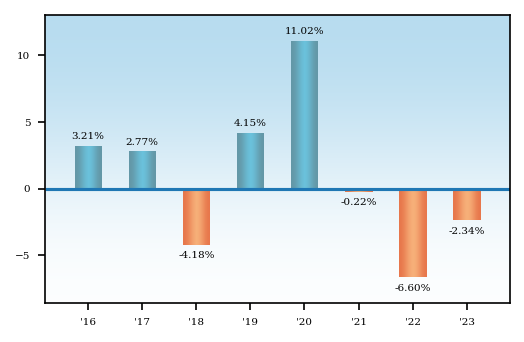
| Best Quarter: | 6/30/2020 | 4.21% |
| Worst Quarter: | 6/30/2022 | (3.60)% |
as of was .
Average Annual Total Returns - Institutional Class Shares [Member] - Anchor Risk Managed Income Strategies Fund |
Label |
1 Year |
5 Years |
Since Inception |
Inception Date |
|
|---|---|---|---|---|---|---|
| Anchor Risk Managed Income Strategies Fund Institutional Class Shares | Return before taxes | (2.34%) | 1.03% | 0.78% | Sep. 29, 2015 | |
| Anchor Risk Managed Income Strategies Fund Institutional Class Shares | Return after taxes on distributions | (3.60%) | 0.34% | 0.03% | |||
| Anchor Risk Managed Income Strategies Fund Institutional Class Shares | Return after taxes on distributions and sale of Fund shares | (1.40%) | 0.55% | 0.31% | |||
| HFRX Absolute Return Index | [1] | 2.97% | 2.60% | 2.05% | ||
| Bloomberg U.S. Aggregate Bond Index | [2] | 5.53% | 1.10% | 1.34% | ||
| [1] | The HFRX Absolute Return Index is designed to be representative of the overall composition of the Hedge Fund Universe. It is comprised of all eligible hedge fund strategies including, but not limited to, convertible arbitrage, distressed securities, equity hedge, equity market neutral, event driven, macro, merger arbitrage, and relative value arbitrage. As a component of the optimization process, the index selects constituents which characteristically exhibit lower volatilities and lower correlations to standard directional benchmarks of equity market and hedge fund industry performance. Hedge Fund Research, Inc. (HFR) utilizes a UCITSIII compliant methodology to construct the HFRX Hedge Fund Indices. The methodology is based on defined and predetermined rules and objective criteria to select and rebalance components to maximize representation of the Hedge Fund Universe. HFRX Indices utilize state-of-the-art quantitative techniques and analysis, multi-level screening, cluster analysis, Monte-Carlo simulations and optimization techniques to ensure that each index is a pure representation of its corresponding investment focus. Investors cannot invest directly in an index, and unlike the Fund, . |
| [2] | The Bloomberg U.S. Aggregate Bond Index is a broad-based, market capitalization-weighted bond market index representing intermediate term investment grade bonds traded in the United States. Investors frequently use the index as a stand-in for measuring the performance of the U.S. bond market. Investors cannot invest directly in an index, and unlike the Fund, . |
Cash or Cash Equivalents Risk. The Fund may have significant investments in cash or cash equivalents. When a substantial portion of a portfolio is held in cash or cash equivalents, there is the risk that the value of the cash account, including interest, will not keep pace with inflation, thus reducing purchasing power over time.
Counterparty Risk. A counterparty (the other party to a transaction or an agreement or the party with whom the Fund executes transactions) may be unable or unwilling to make timely principal, interest or settlement payments, or otherwise honor its obligations.
Derivatives Risk. The use of derivative instruments involves risks different from, or possibly greater than, the risks associated with investing directly in securities and other traditional investments. These risks include (i) counterparty risk; (ii) the risk of mispricing or improper valuation; and (iii) the risk that changes in the value of the derivative may not correlate perfectly with the underlying asset, rate or index. Derivative prices are highly volatile and may fluctuate substantially during a short period of time. Such prices are influenced by numerous factors that affect the markets, including, but not limited to: changing supply and demand relationships; government programs and policies; national and international political and economic events, changes in interest rates, inflation and deflation and changes in supply and demand relationships.
Emerging Markets Risk. Investing in emerging markets, including frontier markets, involves not only the risks described below with respect to foreign investments, but also other risks, including exposure to economic structures that are generally less diverse and mature, limited availability and reliability of information material to an investment decision, and to political systems that can be expected to have less stability, than those of developed countries. The typically small size of the securities markets in emerging markets and the possibility of a low or nonexistent volume of trading in those securities may also result in a lack of liquidity and price volatility.
Exchange-Traded Funds Risk. ETFs may be actively or passively managed. ETFs may not exactly replicate the performance of the indices they track and may result in a loss. The market price of an ETF may deviate from the price of the underlying assets in various situations, including market stress which will result in the Fund paying significantly more or receiving significantly less than the net asset value. An active trading market may not develop or be maintained at times of market stress, and market makers and authorized participants may step away from their respective roles in making a market for shares and executing purchase or redemption orders. To the extent all or a portion of an ETF’s underlying holdings are traded on foreign markets that are closed when the market on which the ETF is traded is open, there may be a change in last close price on the foreign market and the price of the ETF which is traded daily domestically. In addition, shareholders bear both their proportionate share of the Fund’s expenses and similar expenses of the ETF when the Fund invests in an ETF.
Foreign Investment Risk. Investing in foreign (non-U.S.) securities either directly or indirectly may result in the Fund experiencing more rapid and extreme changes in value than if Fund invests exclusively in securities of U.S. companies, due to smaller markets, differing reporting, accounting and auditing standards, nationalization, expropriation or confiscatory taxation, currency blockages and political changes or diplomatic developments. The costs of investing in many foreign markets are higher than the U.S. and investments may be less liquid. Foreign markets may be closed when U.S. markets are open which may impact Fund pricing.
Fund of Funds Risk. The ability of the Fund to meet its investment objective is directly related to the ability of the Underlying Funds and their respective investment managers, to meet their investment objectives. Certain investment managers may be dependent upon a single individual or small group of individuals, the loss of which could adversely affect their success. There can be no assurance that any Underlying Fund will achieve its investment objectives.
Futures Risk. Futures are contracts that derivevalue from the price performance of an underlying entity, such as an asset, index, or interest rate. In addition to all the risks associated with the underlying entity, futures have additional risks because they are financial contracts rather than a securities. Where futures are used for hedging, lack of the desired or expected correlation between the future and the underlying entity, known as basis risk, reduces the effectiveness of the hedging instrument.
Hedging Risk. Although intended to limit or reduce investment risk, hedging strategies may also limit or reduce the potential for profit. There is no assurance that hedging strategies will be successful.
Management Risk. The adviser may be incorrect in its assessment of the intrinsic value of the securities the Fund holds which may result in a decline in the value of Fund shares and failure to achieve its investment objective. The Fund’s portfolio manager uses technical analysis and/or trend models. Any imperfections or limitations in such analyses and models could affect the ability of the portfolio manager to implement the Fund’s investment strategies.
Market and Geopolitical Risk. The increasing interconnectivity between global economies and financial markets increases the likelihood that events or conditions in one region or financial market may adversely impact issuers in a different country, region or financial market. Securities in the Fund’s portfolio may underperform due to inflation (or expectations for inflation), interest rates, global demand for particular products or resources, natural disasters, climate-change and climate related events, pandemics, epidemics, terrorism, international conflicts, regulatory events and governmental or quasi-governmental actions. The occurrence of global events similar to those in recent years may result in market volatility and may have long-term effects on both the U.S. and global financial markets.
Options Risk. There are risks associated with the sale and purchase of call and put options. As a seller (writer) of a put option, the Fund will tend to lose money if the value of the reference index or security falls below the strike price. As the seller (writer) of a call option, the Fund may experience lower returns if the value of the reference index or security rises above the strike price.
Portfolio Turnover Risk. The Fund’s high portfolio turnover will increase transaction costs and may result in increased realization of net short-term capital gains (which are taxable to shareholders as ordinary income when distributed to them), higher taxable distributions and lower after-tax performance.
Securities Market Risk. The value of securities owned by the Fund may go up or down, sometimes rapidly or unpredictably, due to factors affecting particular companies or the securities markets generally. A general downturn in the securities market may cause multiple asset classes to decline in value simultaneously.
Short Sales Risk. The loss associated with the appreciation of the price of a security borrowed in connection with a short sale may be significant. The Fund may engage in short sales that are not made “against-the-box,” which means that the Fund may sell short securities even when they are not actually owned or otherwise covered at all times during the period the short position is open. Short sales that are not made “against-the-box” theoretically involve unlimited loss potential since the market price of securities sold short may continuously increase.
Small and Medium Capitalization Companies Risk. The earnings and prospects of small and medium sized companies are more volatile than larger companies and may experience higher failure rates than larger companies. Small and medium sized companies normally have a lower trading volume than larger companies, which may tend to make their market price fall more disproportionately than larger companies in response to selling pressures and may have limited markets, product lines, or financial resources and lack management experience.
The Fund seeks to provide total return from income and capital appreciation
with a secondary objective of limiting risk during unfavorable market conditions.
This table describes the fees and expenses that you may pay if you buy, sell and hold shares of the Fund. You may pay other fees, such as brokerage commissions and other fees to financial intermediaries, which are not reflected in the tables and examples below. More information about these fees and expenses is available from your financial intermediary and under the heading How to Purchase Shares on page 23 of the Fund’s Prospectus.
Shareholder Fees |
Institutional Class Shares [Member]
Anchor Risk Managed Equity Strategies Fund
Anchor Risk Managed Equity Strategies Fund Institutional Class
|
|---|---|
| Maximum Sales Charge (Load) Imposed on Purchases (as a percentage of offering price) | none |
| Maximum Deferred Sales Charge (Load) (as a percentage of offering price) | none |
| Maximum Sales Charge (Load) Imposed on Reinvested Dividends and other Distributions (as a percentage of offering price) | none |
| Redemption Fee (as a % of amount redeemed on shares held less than 60 days) | none |
Annual Fund Operating Expenses |
Institutional Class Shares [Member]
Anchor Risk Managed Equity Strategies Fund
Anchor Risk Managed Equity Strategies Fund Institutional Class
|
|
|---|---|---|
| Management Fees | 1.60% | |
| Distribution and Service (12b-1) Fees | 0.25% | |
| Other Expenses | 0.35% | |
| Acquired Fund Fees and Expenses | 0.14% | [1] |
| Total Annual Fund Operating Expenses | 2.34% | |
| [1] | Acquired Fund Fees and Expenses are the indirect costs of investing in other investment companies. |
This Example is intended to help you compare the cost of investing in the Fund with the cost of investing in other mutual funds.
Expense Example |
Expense Example, with Redemption, 1 Year |
Expense Example, with Redemption, 3 Years |
Expense Example, with Redemption, 5 Years |
Expense Example, with Redemption, 10 Years |
|---|---|---|---|---|
| Institutional Class Shares [Member] | Anchor Risk Managed Equity Strategies Fund | Anchor Risk Managed Equity Strategies Fund Institutional Class | USD ($) | 237 | 730 | 1,250 | 2,676 |
The Fund pays transaction costs, such as commissions, when it buys and sells securities (or “turns over” its portfolio). A higher portfolio turnover rate may indicate higher transaction costs and may result in higher taxes when Fund shares are held in a taxable account. These costs, which are not reflected in annual fund operating expenses or in the Example, affect the Fund’s performance. During the most recent fiscal year the Fund’s portfolio turnover rate was .
The Fund seeks to achieve its investment objective, utilizing a “fund of funds” structure, by allocating assets among various strategies based on the adviser’s research and analysis regarding market trends. A market trend is the movement of a financial market in a particular direction over time. Under normal market conditions, the Fund invests, directly or indirectly through unaffiliated exchange traded funds (“ETFs”) and mutual funds (together with ETFs, “Underlying Funds”), at least 80% of its net assets (plus the amount of borrowings, if any) in long and short positions in equity securities. The Fund takes a long position, or purchases shares of a security, when the adviser believes a security will increase in value, and a short position, or sells shares of borrowed stock, when the adviser believes the value of a security will decrease. The Fund takes long and short positions in securities that are highly correlated to major U.S. equity indices based on long, intermediate, and short-term trends.
At least 80% of the Fund’s assets is invested in:
| (1) | U.S. or foreign equity securities of any market capitalization including Underlying Funds that primarily invest in or are otherwise exposed to domestic and foreign equity securities; and |
| (2) | derivative instruments, including options, futures, and total return swaps, designed to replicate some or all of the features of an underlying portfolio of equity securities. |
The Fund may also invest in U.S. or foreign cash equivalents including money market funds and treasuries.
The adviser seeks to achieve the Fund’s secondary objective by managing risk through hedging the Fund’s investment portfolio when it believes security prices will decline. The adviser hedges the Fund’s portfolio by:
| (i) | increasing allocations to cash equivalents or U.S. Treasury securities; |
| (ii) | purchasing inverse mutual funds or inverse ETFs; and |
| (iii) | selling short ETFs or securities the adviser believes have demonstrated a high correlation to the broader equity indices. |
The Fund may invest in inverse funds linked to equity securities or indices when the adviser believes this strategy will provide an effective hedge to manage risk for the Fund’s equity investments.
Generally, the adviser does not attempt to evaluate individual securities. The adviser uses technical analysis, including monitoring price movements and price trends, of equity markets in an effort to achieve the Fund’s objective through proper allocation of the Fund’s portfolio securities. The adviser’s decision to buy or sell a Fund holding are made based on adviser-developed trend and risk models that evaluate current market conditions, and this analysis guides the adviser’s determination of the appropriate exposure level to the equity market. The adviser buys and sells securities and derivatives to increase or decrease the Fund’s exposure to the equity market.
As with all mutual funds, there is a risk that you could lose money through your investment in the Fund. The Fund is not intended to be a complete investment program. Many factors affect the Fund’s net asset value (“NAV”) and performance.
The following describes the risks the Fund bears directly or indirectly through investments in Underlying Funds. As with any mutual fund, there is no guarantee that the Fund will achieve its goal.
Cash or Cash Equivalents Risk. The Fund may have significant investments in cash or cash equivalents. When a substantial portion of a portfolio is held in cash or cash equivalents, there is the risk that the value of the cash account, including interest, will not keep pace with inflation, thus reducing purchasing power over time.
Counterparty Risk. A counterparty (the other party to a transaction or an agreement or the party with whom the Fund executes transactions) may be unable or unwilling to make timely principal, interest or settlement payments, or otherwise honor its obligations.
Derivatives Risk. The use of derivative instruments involves risks different from, or possibly greater than, the risks associated with investing directly in securities and other traditional investments. These risks include (i) counterparty risk; (ii) the risk of mispricing or improper valuation; and (iii) the risk that changes in the value of the derivative may not correlate perfectly with the underlying asset, rate or index. Derivative prices are highly volatile and may fluctuate substantially during a short period of time. Such prices are influenced by numerous factors that affect the markets, including, but not limited to: changing supply and demand relationships; government programs and policies; national and international political and economic events, changes in interest rates, inflation and deflation and changes in supply and demand relationships.
Equity Securities Risk. Fluctuations in the value of equity securities held by the Fund will cause the NAV of the Fund and the price of its shares to fluctuate. Common stock of an issuer in the Fund’s portfolio may decline in price if the issuer fails to make anticipated dividend payments. Common stock will be subject to greater dividend risk than preferred stocks or debt instruments of the same issuer. In addition, common stocks have experienced significantly more volatility in returns than other asset classes.
Exchange-Traded Funds Risk. ETFs may be actively or passively managed. ETFs may not exactly replicate the performance of the indices they track and may result in a loss. The market price of an ETF may deviate from the price of the underlying assets in various situations, including market stress which will result in the Fund paying significantly more or receiving significantly less than the net asset value. An active trading market may not develop or be maintained at times of market stress, and market makers and authorized participants may step away from their respective roles in making a market for shares and executing purchase or redemption orders. To the extent all or a portion of an ETF’s underlying holdings are traded on foreign markets that are closed when the market on which the ETF is traded is open, there may be a change in last close price on the foreign market and the price of the ETF which is traded daily domestically. In addition, shareholders bear both their proportionate share of the Fund’s expenses and similar expenses of the ETF when the Fund invests in an ETF.
Foreign Investment Risk. Investing in foreign (non-U.S.) securities either directly or indirectly may result in the Fund experiencing more rapid and extreme changes in value than if the Fund invests exclusively in securities of U.S. companies, due to smaller markets, differing reporting, accounting and auditing standards, nationalization, expropriation or confiscatory taxation, currency blockages and political changes or diplomatic developments. The costs of investing in many foreign markets are higher than the U.S. and investments may be less liquid.
Fund of Funds Risk. The ability of the Fund to meet its investment objective is directly related to the ability of the Underlying Funds and their respective investment managers, to meet their investment objectives. Certain investment managers may be dependent upon a single individual or small group of individuals, the loss of which could adversely affect their success. There can be no assurance that any Underlying Fund will achieve its investment objectives.
Futures Risk. Futures are contracts that derive value from the price performance of an underlying entity, such as an asset, index, or interest rate. In addition to all the risks associated with the underlying entity, futures have additional risks because they are financial contracts rather than securities. Where futures are used for hedging, lack of the desired or expected correlation between the future and the underlying entity, known as basis risk, reduces the effectiveness of the hedging instrument.
Hedging Risk. Although intended to limit or reduce investment risk, hedging strategies may also limit or reduce the potential for profit. There is no assurance that hedging strategies will be successful.
Inverse ETF Risk. Inverse ETFs seek to provide investment results that will match a certain percentage of the inverse of the performance of a specific benchmark on a daily basis. Because they reset daily there may be significant volatility associated with inverse ETFs. Inverse ETFs may not be able to replicate exactly the inverse of the performance of the indices they track. Inverse ETFs fall in price when stock prices are rising. Additionally, inverse ETFs may employ leverage which magnifies the changes in the underlying stock index upon which they are based. Investments in inverse ETFs will prevent the Fund from participating in market-wide or sector-wide gains and may not prove to be an effective hedge. During periods of increased volatility, inverse ETFs may not perform in the manner they are designed. Investments in inverse funds are intended to be short-term in nature and may, therefore, lead to increased turnover and transaction costs to the Fund.
Inverse Funds Risk. Inverse funds typically lose value as the index or security tracked by the fund increases in value; a result that is the opposite from traditional funds. Because they reset daily there may be significant volatility associated with inverse funds. Inverse funds may not be able to replicate exactly the inverse of the performance of the benchmark they track. Inverse funds fall in price when its benchmark prices are rising. Additionally, inverse funds may employ leverage which magnifies the changes in the underlying benchmark upon which they are based. Investments in inverse funds will prevent the Fund from participating in market-wide or sector-wide gains and may not prove to be an effective hedge. During periods of increased volatility, inverse funds may not perform in the manner they are designed. Investments in inverse funds are intended to be short-term in nature and may, therefore, lead to increased turnover and transaction costs to the Fund.
Large Market Capitalization Companies Risk. The value of investments in larger companies may not rise as much as smaller companies, or larger companies may be unable to respond quickly to competitive challenges, such as changes in technology and consumer tastes.
Management Risk. The adviser may be incorrect in its assessment of the intrinsic value of the securities the Fund holds which may result in a decline in the value of Fund shares and failure to achieve its investment objective. The Fund’s portfolio manager uses technical analysis and/or trend models. Any imperfections or limitations in such analyses and models could affect the ability of the portfolio manager to implement the Fund’s investment strategies.
Market and Geopolitical Risk. The increasing interconnectivity between global economies and financial markets increases the likelihood that events or conditions in one region or financial market may adversely impact issuers in a different country, region or financial market. Securities in the Fund’s portfolio may underperform due to inflation (or expectations for inflation), interest rates, global demand for particular products or resources, natural disasters, climate-change and climate related events, pandemics, epidemics, terrorism, international conflicts, regulatory events and governmental or quasi-governmental actions. The occurrence of global events similar to those in recent years may result in market volatility and may have long-term effects on both the U.S. and global financial markets.
Options Risk. There are risks associated with the sale and purchase of call and put options. As a seller (writer) of a put option, the Fund will tend to lose money if the value of the reference index or security falls below the strike price. As the seller (writer) of a call option, the Fund may experience lower returns if the value of the reference index or security rises above the strike price.
Securities Market Risk. The value of securities owned by the Fund may go up or down, sometimes rapidly or unpredictably, due to factors affecting particular companies or the securities markets generally. A general downturn in the securities market may cause multiple asset classes to decline in value simultaneously.
Short Sales Risk. The loss associated with the appreciation of the price of a security borrowed in connection with a short sale may be significant. The Fund may engage in short sales that are not made “against-the-box,” which means that the Fund may sell short securities even when they are not actually owned or otherwise covered at all times during the period the short position is open. Short sales that are not made “against-the-box” theoretically involve unlimited loss potential since the market price of securities sold short may continuously increase.
Small and Medium Capitalization Companies Risk. The earnings and prospects of small and medium sized companies are more volatile than larger companies and may experience higher failure rates than larger companies. Small and medium sized companies normally have a lower trading volume than larger companies, which may tend to make their market price fall more disproportionately than larger companies in response to selling pressures and may have limited markets, product lines, or financial resources and lack management experience.
Total Return Swap Risk. In a total return swap, the buyer receives a periodic return equal to the total return of a specified security, securities or index, for a specified period of time. In return, the buyer pays the counterparty a variable stream of payments, typically based upon short-term interest rates, possibly plus or minus an agreed upon spread. For example, if the Fund enters into a swap where it agrees to exchange a floating rate of interest for a fixed rate of interest, the Fund may have to pay more money than it receives. Total return swaps entered into in which payments are not netted may entail greater risk than a swap entered into a net basis. There is a risk that adverse price movements in an instrument can result in a loss substantially greater than the Fund’s initial investment in that instrument (in some cases, the potential loss is unlimited). If there is a default by the other party to such a transaction, the Fund will have contractual remedies pursuant to the agreements related to the transaction. However, particularly in the case of privately negotiated instruments, there is a risk that the counterparty will not perform its obligations, which could leave the Fund worse off than if it had not entered into the position. These instruments are subject to high levels of volatility, in some cases due to the high levels of leverage the Fund may achieve with them.
The bar chart shows performance of the Fund’s Institutional Class shares for each calendar year since the Fund’s inception. The performance table compares the performance of the Fund over time to the performance of a broad-based securities market index. Updated performance information is available at no cost by visiting or by calling .
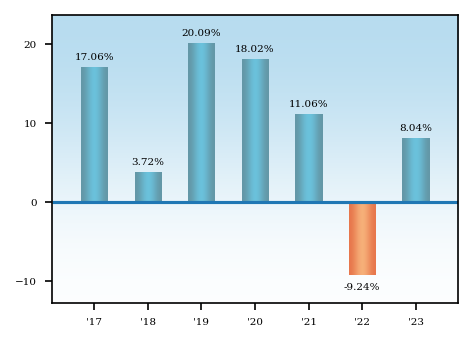
| Best Quarter: | 12/31/2020 | 9.00% |
| Worst Quarter: | 12/31/2022 | (7.14)% |
as of was .
Average Annual Total Returns - Institutional Class Shares [Member] - Anchor Risk Managed Equity Strategies Fund |
Label |
1 Year |
5 Years |
Since Inception |
Inception Date |
|
|---|---|---|---|---|---|---|
| Anchor Risk Managed Equity Strategies Fund Institutional Class | Return before taxes | 8.04% | 9.11% | 9.18% | Sep. 06, 2016 | |
| Anchor Risk Managed Equity Strategies Fund Institutional Class | Return after taxes on distributions | 7.66% | 7.67% | 7.38% | |||
| Anchor Risk Managed Equity Strategies Fund Institutional Class | Return after taxes on distributions and sale of Fund shares | 4.84% | 6.61% | 6.51% | |||
| S&P 500 Total Return Index | [1] | 26.29% | 15.69% | 13.27% | ||
| [1] | The S&P 500 Total Return Index is an unmanaged market capitalization-weighted index which is comprised of 500 of the largest U.S. domiciled companies and includes the reinvestment of all dividends. Investors cannot invest directly in an index, and unlike the Fund, . |
Cash or Cash Equivalents Risk. The Fund may have significant investments in cash or cash equivalents. When a substantial portion of a portfolio is held in cash or cash equivalents, there is the risk that the value of the cash account, including interest, will not keep pace with inflation, thus reducing purchasing power over time.
Counterparty Risk. A counterparty (the other party to a transaction or an agreement or the party with whom the Fund executes transactions) may be unable or unwilling to make timely principal, interest or settlement payments, or otherwise honor its obligations.
Derivatives Risk. The use of derivative instruments involves risks different from, or possibly greater than, the risks associated with investing directly in securities and other traditional investments. These risks include (i) counterparty risk; (ii) the risk of mispricing or improper valuation; and (iii) the risk that changes in the value of the derivative may not correlate perfectly with the underlying asset, rate or index. Derivative prices are highly volatile and may fluctuate substantially during a short period of time. Such prices are influenced by numerous factors that affect the markets, including, but not limited to: changing supply and demand relationships; government programs and policies; national and international political and economic events, changes in interest rates, inflation and deflation and changes in supply and demand relationships.
Exchange-Traded Funds Risk. ETFs may be actively or passively managed. ETFs may not exactly replicate the performance of the indices they track and may result in a loss. The market price of an ETF may deviate from the price of the underlying assets in various situations, including market stress which will result in the Fund paying significantly more or receiving significantly less than the net asset value. An active trading market may not develop or be maintained at times of market stress, and market makers and authorized participants may step away from their respective roles in making a market for shares and executing purchase or redemption orders. To the extent all or a portion of an ETF’s underlying holdings are traded on foreign markets that are closed when the market on which the ETF is traded is open, there may be a change in last close price on the foreign market and the price of the ETF which is traded daily domestically. In addition, shareholders bear both their proportionate share of the Fund’s expenses and similar expenses of the ETF when the Fund invests in an ETF.
Foreign Investment Risk. Investing in foreign (non-U.S.) securities either directly or indirectly may result in the Fund experiencing more rapid and extreme changes in value than if the Fund invests exclusively in securities of U.S. companies, due to smaller markets, differing reporting, accounting and auditing standards, nationalization, expropriation or confiscatory taxation, currency blockages and political changes or diplomatic developments. The costs of investing in many foreign markets are higher than the U.S. and investments may be less liquid.
Fund of Funds Risk. The ability of the Fund to meet its investment objective is directly related to the ability of the Underlying Funds and their respective investment managers, to meet their investment objectives. Certain investment managers may be dependent upon a single individual or small group of individuals, the loss of which could adversely affect their success. There can be no assurance that any Underlying Fund will achieve its investment objectives.
Futures Risk. Futures are contracts that derive value from the price performance of an underlying entity, such as an asset, index, or interest rate. In addition to all the risks associated with the underlying entity, futures have additional risks because they are financial contracts rather than securities. Where futures are used for hedging, lack of the desired or expected correlation between the future and the underlying entity, known as basis risk, reduces the effectiveness of the hedging instrument.
Hedging Risk. Although intended to limit or reduce investment risk, hedging strategies may also limit or reduce the potential for profit. There is no assurance that hedging strategies will be successful.
Management Risk. The adviser may be incorrect in its assessment of the intrinsic value of the securities the Fund holds which may result in a decline in the value of Fund shares and failure to achieve its investment objective. The Fund’s portfolio manager uses technical analysis and/or trend models. Any imperfections or limitations in such analyses and models could affect the ability of the portfolio manager to implement the Fund’s investment strategies.
Market and Geopolitical Risk. The increasing interconnectivity between global economies and financial markets increases the likelihood that events or conditions in one region or financial market may adversely impact issuers in a different country, region or financial market. Securities in the Fund’s portfolio may underperform due to inflation (or expectations for inflation), interest rates, global demand for particular products or resources, natural disasters, climate-change and climate related events, pandemics, epidemics, terrorism, international conflicts, regulatory events and governmental or quasi-governmental actions. The occurrence of global events similar to those in recent years may result in market volatility and may have long-term effects on both the U.S. and global financial markets.
Options Risk. There are risks associated with the sale and purchase of call and put options. As a seller (writer) of a put option, the Fund will tend to lose money if the value of the reference index or security falls below the strike price. As the seller (writer) of a call option, the Fund may experience lower returns if the value of the reference index or security rises above the strike price.
Securities Market Risk. The value of securities owned by the Fund may go up or down, sometimes rapidly or unpredictably, due to factors affecting particular companies or the securities markets generally. A general downturn in the securities market may cause multiple asset classes to decline in value simultaneously.
Short Sales Risk. The loss associated with the appreciation of the price of a security borrowed in connection with a short sale may be significant. The Fund may engage in short sales that are not made “against-the-box,” which means that the Fund may sell short securities even when they are not actually owned or otherwise covered at all times during the period the short position is open. Short sales that are not made “against-the-box” theoretically involve unlimited loss potential since the market price of securities sold short may continuously increase.
Small and Medium Capitalization Companies Risk. The earnings and prospects of small and medium sized companies are more volatile than larger companies and may experience higher failure rates than larger companies. Small and medium sized companies normally have a lower trading volume than larger companies, which may tend to make their market price fall more disproportionately than larger companies in response to selling pressures and may have limited markets, product lines, or financial resources and lack management experience.
Equity Securities Risk. Fluctuations in the value of equity securities held by the Fund will cause the NAV of the Fund and the price of its shares to fluctuate. Common stock of an issuer in the Fund’s portfolio may decline in price if the issuer fails to make anticipated dividend payments. Common stock will be subject to greater dividend risk than preferred stocks or debt instruments of the same issuer. In addition, common stocks have experienced significantly more volatility in returns than other asset classes.
Inverse ETF Risk. Inverse ETFs seek to provide investment results that will match a certain percentage of the inverse of the performance of a specific benchmark on a daily basis. Because they reset daily there may be significant volatility associated with inverse ETFs. Inverse ETFs may not be able to replicate exactly the inverse of the performance of the indices they track. Inverse ETFs fall in price when stock prices are rising. Additionally, inverse ETFs may employ leverage which magnifies the changes in the underlying stock index upon which they are based. Investments in inverse ETFs will prevent the Fund from participating in market-wide or sector-wide gains and may not prove to be an effective hedge. During periods of increased volatility, inverse ETFs may not perform in the manner they are designed. Investments in inverse funds are intended to be short-term in nature and may, therefore, lead to increased turnover and transaction costs to the Fund.
Inverse Funds Risk. Inverse funds typically lose value as the index or security tracked by the fund increases in value; a result that is the opposite from traditional funds. Because they reset daily there may be significant volatility associated with inverse funds. Inverse funds may not be able to replicate exactly the inverse of the performance of the benchmark they track. Inverse funds fall in price when its benchmark prices are rising. Additionally, inverse funds may employ leverage which magnifies the changes in the underlying benchmark upon which they are based. Investments in inverse funds will prevent the Fund from participating in market-wide or sector-wide gains and may not prove to be an effective hedge. During periods of increased volatility, inverse funds may not perform in the manner they are designed. Investments in inverse funds are intended to be short-term in nature and may, therefore, lead to increased turnover and transaction costs to the Fund.
Large Market Capitalization Companies Risk. The value of investments in larger companies may not rise as much as smaller companies, or larger companies may be unable to respond quickly to competitive challenges, such as changes in technology and consumer tastes.
Total Return Swap Risk. In a total return swap, the buyer receives a periodic return equal to the total return of a specified security, securities or index, for a specified period of time. In return, the buyer pays the counterparty a variable stream of payments, typically based upon short-term interest rates, possibly plus or minus an agreed upon spread. For example, if the Fund enters into a swap where it agrees to exchange a floating rate of interest for a fixed rate of interest, the Fund may have to pay more money than it receives. Total return swaps entered into in which payments are not netted may entail greater risk than a swap entered into a net basis. There is a risk that adverse price movements in an instrument can result in a loss substantially greater than the Fund’s initial investment in that instrument (in some cases, the potential loss is unlimited). If there is a default by the other party to such a transaction, the Fund will have contractual remedies pursuant to the agreements related to the transaction. However, particularly in the case of privately negotiated instruments, there is a risk that the counterparty will not perform its obligations, which could leave the Fund worse off than if it had not entered into the position. These instruments are subject to high levels of volatility, in some cases due to the high levels of leverage the Fund may achieve with them.
The Fund seeks to achieve above average total returns over a full market cycle with lower correlation and reduced risk when compared to traditional world indices.
This table describes the fees and expenses that you may pay if you buy, sell and hold shares of the Fund. You may pay other fees, such as brokerage commissions and other fees to financial intermediaries, which are not reflected in the tables and examples below. More information about these fees and expenses is available from your financial intermediary and under the heading How to Purchase Shares on page 23 of the Fund’s Prospectus.
Shareholder Fees |
Institutional Class Shares [Member]
Anchor Risk Managed Global Strategies Fund
Anchor Risk Managed Global Strategies Fund Institutional Class Shares
|
|---|---|
| Maximum Sales Charge (Load) Imposed on Purchases (as a percentage of offering price) | none |
| Maximum Deferred Sales Charge (Load) (as a percentage of offering price) | none |
| Maximum Sales Charge (Load) Imposed on Reinvested Dividends and other Distributions (as a percentage of offering price) | none |
| Redemption Fee (as a % of amount redeemed on shares held less than 60 days) | none |
Annual Fund Operating Expenses |
Institutional Class Shares [Member]
Anchor Risk Managed Global Strategies Fund
Anchor Risk Managed Global Strategies Fund Institutional Class Shares
|
|
|---|---|---|
| Management Fees | 1.60% | |
| Distribution and Service (12b-1) Fees | 0.25% | |
| Other Expenses | 1.02% | |
| Acquired Fund Fees and Expenses | 0.20% | [1] |
| Total Annual Fund Operating Expenses | 3.07% | |
| Fee Waiver and/or Expense Reimbursement | (0.62%) | [2] |
| Total Annual Fund Operating Expenses After Fee Waiver and/or Expense Reimbursement | 2.45% | |
| [1] | Acquired Fund Fees and Expenses are the indirect costs of investing in other investment companies. |
| [2] | The Fund’s adviser has contractually agreed to reduce its fees and/or absorb expenses of the Fund, until at least to ensure that total annual fund operating expenses after fee waiver and/or reimbursement (exclusive of any (i) front-end or contingent deferred loads, (ii) brokerage fees and commissions, (iii) acquired fund fees and expenses, (iv) fees and expenses associated with investments in other collective investment vehicles or derivative instruments (including for example option and swap fees and expenses), (v) borrowing costs (such as interest and dividend expense on securities sold short), (vi) taxes and (vii) extraordinary expenses, such as litigation expenses (which may include indemnification of Fund officers and Trustees, contractual indemnification of Fund service providers (other than the adviser)), will not exceed 2.25% of the Fund’s average daily net assets attributable to Institutional Class shares. These fee waivers and expense reimbursements are subject to possible recoupment from the Fund in future years (within the three years from the date the fees have been waived or reimbursed) if such recoupment can be achieved within the lesser of the foregoing expense limits or those in place at the time of recapture after the recoupment is taken into account. This agreement may be terminated by the Trust’s Board of Trustees only on 60 days’ written notice to the Fund’s adviser. |
This Example is intended to help you compare the cost of investing in the Fund with the cost of investing in other mutual funds.
Expense Example |
Expense Example, with Redemption, 1 Year |
Expense Example, with Redemption, 3 Years |
Expense Example, with Redemption, 5 Years |
Expense Example, with Redemption, 10 Years |
|---|---|---|---|---|
| Institutional Class Shares [Member] | Anchor Risk Managed Global Strategies Fund | Anchor Risk Managed Global Strategies Fund Institutional Class Shares | USD ($) | 248 | 890 | 1,557 | 3,340 |
The Fund pays transaction costs, such as commissions, when it buys and sells securities (or “turns over” its portfolio). A higher portfolio turnover rate may indicate higher transaction costs and may result in higher taxes when Fund shares are held in a taxable account. These costs, which are not reflected in annual fund operating expenses or in the Example, affect the Fund’s performance. During the most recent fiscal year the Fund’s portfolio turnover rate was .
The Fund seeks to achieve its investment objective, utilizing a “fund of funds” structure, by allocating assets among various strategies based on the adviser’s research and analysis regarding market trends. A market trend is the movement of a financial market in a particular direction over time. Under normal market conditions, the Fund invests at least 40% of its assets (plus the amount of borrowings, if any) in long and short positions in exchange-traded funds (“ETFs”) and mutual funds (collectively, “Underlying Funds”) and derivative instruments registered and offered in the U.S with underlying holdings in non-U.S. companies. The Fund primarily takes long and short positions in ETFs that are highly correlated to regional and country specific indices based on the adviser’s long, intermediate, and short-term price trends analysis
The Fund is invested primarily in:
| (1) | Underlying Funds that primarily invest in or are otherwise exposed to domestic and worldwide markets; |
| (2) | derivative instruments, including options, futures, and total return swaps, designed to replicate some or all of the features of an underlying portfolio of equity securities; |
| (3) | Underlying Funds that are other U.S. or foreign equity securities of any market capitalization; and |
| (4) | U.S. or foreign cash equivalents. |
The adviser seeks to achieve the Fund’s objective by managing risk through hedging the Fund’s investment portfolio when it believes security prices will decline. The adviser hedges the Fund’s portfolio by:
| (i) | increasing allocations to cash equivalents or U.S. Treasury securities; |
| (ii) | selling short ETFs or securities the adviser believes have demonstrated a high correlation to the broader global equity indices; and |
| (iii) | purchasing inverse mutual funds or inverse ETFs. The Fund may invest in inverse funds linked to equity securities or indices when the adviser believes this strategy will provide an effective hedge to manage risk offer the Fund’s equity investments. |
Generally, the adviser does not attempt to evaluate individual securities. The adviser uses technical analysis, including monitoring price movements and price trends, of equity markets in an effort to achieve the Fund’s objective through proper allocation of the Fund’s portfolio securities. The adviser’s decisions to buy or sell a Fund holding are made based on adviser developed trend and risk models that evaluate current market conditions, and this analysis guides the adviser’s determination of the appropriate exposure level to the equity market. The adviser buys and sells securities and derivatives to increase or decrease the Fund’s exposure to the equity market.
As with all mutual funds, there is a risk that you could lose money through your investment in the Fund. The Fund is not intended to be a complete investment program. Many factors affect the Fund’s net asset value (“NAV”) and performance.
The following describes the risks the Fund bears directly or indirectly through investments in Underlying Funds. As with any mutual fund, there is no guarantee that the Fund will achieve its goal.
Cash or Cash Equivalents Risk. The Fund may have significant investments in cash or cash equivalents. When a substantial portion of a portfolio is held in cash or cash equivalents, there is the risk that the value of the cash account, including interest, will not keep pace with inflation, thus reducing purchasing power over time.
Counterparty Risk. A counterparty (the other party to a transaction or an agreement or the party with whom the Fund executes transactions) may be unable or unwilling to make timely principal, interest or settlement payments, or otherwise honor its obligations.
Derivatives Risk. The use of derivative instruments involves risks different from, or possibly greater than, the risks associated with investing directly in securities and other traditional investments. These risks include (i) counterparty risk; (ii) the risk of mispricing or improper valuation; and (iii) the risk that changes in the value of the derivative may not correlate perfectly with the underlying asset, rate or index. Derivative prices are highly volatile and may fluctuate substantially during a short period of time. Such prices are influenced by numerous factors that affect the markets, including, but not limited to: changing supply and demand relationships; government programs and policies; national and international political and economic events, changes in interest rates, inflation and deflation and changes in supply and demand relationships.
Equity Securities Risk. Fluctuations in the value of equity securities held by the Fund will cause the NAV of the Fund and the price of its shares to fluctuate. Common stock of an issuer in the Fund’s portfolio may decline in price if the issuer fails to make anticipated dividend payments. Common stock will be subject to greater dividend risk than preferred stocks or debt instruments of the same issuer. In addition, common stocks have experienced significantly more volatility in returns than other asset classes.
Exchange-Traded Funds Risk. ETFs may be actively or passively managed. ETFs may not be able to replicate exactly the performance of the indices they track and may result in a loss. The market price of an ETF may deviate from the price of the underlying assets in various situations, including market stress which will result in the Fund paying significantly more or receiving significantly less than the net asset value. An active trading market may not develop or be maintained at times of market stress, and market makers and authorized participants may step away from their respective roles in making a market for shares and executing purchase or redemption orders. To the extent all or a portion of an ETF’s underlying holdings are traded on foreign markets that are closed when the market on which the ETF is traded is open, there may be a change in last close price on the foreign market and the price of the ETF which is traded daily domestically. In addition, shareholders bear both their proportionate share of the Fund’s expenses and similar expenses of the ETF when the Fund invests in an ETF.
Foreign Investment Risk. Investing in foreign (non-U.S.) securities either directly or indirectly may result in the Fund experiencing more rapid and extreme changes in value than if the Fund invests exclusively in securities of U.S. companies, due to smaller markets, differing reporting, accounting and auditing standards, nationalization, expropriation or confiscatory taxation, currency blockages and political changes or diplomatic developments. The costs of investing in many foreign markets are higher than the U.S. and investments may be less liquid.
Fund of Funds Risk. The ability of the Fund to meet its investment objective is directly related to the ability of the Underlying Funds and their respective investment managers, to meet their investment objectives. Certain investment managers may be dependent upon a single individual or small group of individuals, the loss of which could adversely affect their success. There can be no assurance that any Underlying Fund will achieve its investment objectives.
Futures Risk. Futures are contracts that derive value from the price performance of an underlying entity, such as an asset, index, or interest rate. In addition to all the risks associated with the underlying entity, futures have additional risks, such as counterparty risk and liquidity risk, because they are financial contracts rather than securities. Where futures are used for hedging, lack of the desired or expected correlation between the future and the underlying entity, known as basis risk, reduces the effectiveness of the hedging instrument.
Hedging Risk. Although intended to limit or reduce investment risk, hedging strategies may also limit or reduce the potential for profit. There is no assurance that hedging strategies will be successful.
Inverse ETF Risk. Inverse ETFs seek to provide investment results that will match a certain percentage of the inverse of the performance of a specific benchmark on a daily basis. Because they reset daily there may be significant volatility associated with inverse ETFs. Inverse ETFs may not be able to replicate exactly the inverse of the performance of the indices they track. Inverse ETFs fall in price when stock prices are rising. Additionally, inverse ETFs may employ leverage which magnifies the changes in the underlying stock index upon which they are based. Investments in inverse ETFs will prevent the Fund from participating in market-wide or sector-wide gains and may not prove to be an effective hedge. During periods of increased volatility, inverse ETFs may not perform in the manner they are designed. Investments in inverse funds are intended to be short-term in nature and may, therefore, lead to increased turnover and transaction costs to the Fund.
Inverse Funds Risk. Inverse funds typically lose value as the index or security tracked by the fund increases in value; a result that is the opposite from traditional funds. Because they reset daily there may be significant volatility associated with inverse funds. Inverse funds may not be able to replicate exactly the inverse of the performance of the benchmark they track. Inverse funds fall in price when its benchmark prices are rising. Additionally, inverse funds may employ leverage which magnifies the changes in the underlying benchmark upon which they are based. Investments in inverse funds will prevent the Fund from participating in market-wide or sector-wide gains and may not prove to be an effective hedge. During periods of increased volatility, inverse funds may not perform in the manner they are designed. Investments in inverse funds are intended to be short-term in nature and may, therefore, lead to increased turnover and transaction costs to the Fund.
Large Market Capitalization Companies Risk. The value of investments in larger companies may not rise as much as smaller companies, or larger companies may be unable to respond quickly to competitive challenges, such as changes in technology and consumer tastes.
Management Risk. The adviser may be incorrect in its assessment of the intrinsic value of the securities the Fund holds which may result in a decline in the value of Fund shares and failure to achieve its investment objective. The Fund’s portfolio manager uses technical analysis and/or trend models. Any imperfections or limitations in such analyses and models could affect the ability of the portfolio manager to implement the Fund’s investment strategies.
Market and Geopolitical Risk. The increasing interconnectivity between global economies and financial markets increases the likelihood that events or conditions in one region or financial market may adversely impact issuers in a different country, region or financial market. Securities in the Fund’s portfolio may underperform due to inflation (or expectations for inflation), interest rates, global demand for particular products or resources, natural disasters, climate-change and climate related events, pandemics, epidemics, terrorism, international conflicts, regulatory events and governmental or quasi-governmental actions. The occurrence of global events similar to those in recent years may result in market volatility and may have long-term effects on both the U.S. and global financial markets.
Options Risk. There are risks associated with the sale and purchase of call and put options. As a seller (writer) of a put option, the Fund will tend to lose money if the value of the reference index or security falls below the strike price. As the seller (writer) of a call option, the Fund may experience lower returns if the value of the reference index or security rises above the strike price.
Securities Market Risk. The value of securities owned by the Fund may go up or down, sometimes rapidly or unpredictably, due to factors affecting particular companies or the securities markets generally. A general downturn in the securities market may cause multiple asset classes to decline in value simultaneously.
Short Sales Risk. The loss associated with any appreciation of the price of a security borrowed in connection with a short sale may be significant. The Fund may engage in short sales that are not made “against-the-box,” which means that the Fund may sell short securities even when they are not actually owned or otherwise covered at all times during the period the short position is open. Short sales that are not made “against-the-box” theoretically involve unlimited loss potential since the market price of securities sold short may continuously increase.
Small and Medium Capitalization Companies Risk. The earnings and prospects of small and medium sized companies are more volatile than larger companies and may experience higher failure rates than larger companies. Small and medium sized companies normally have a lower trading volume than larger companies, which may tend to make their market price fall more disproportionately than larger companies in response to selling pressures and may have limited markets, product lines, or financial resources and lack management experience.
Total Return Swap Risk. In a total return swap, the buyer receives a periodic return equal to the total return of a specified security, securities or index, for a specified period of time. In return, the buyer pays the counterparty a variable stream of payments, typically based upon short-term interest rates, possibly plus or minus an agreed upon spread. For example, if the Fund enters into a swap where it agrees to exchange a floating rate of interest for a fixed rate of interest, the Fund may have to pay more money than it receives. Total return swaps entered into in which payments are not netted may entail greater risk than a swap entered into a net basis. There is a risk that adverse price movements in an instrument can result in a loss substantially greater than the Fund’s initial investment in that instrument (in some cases, the potential loss is unlimited). If there is a default by the other party to such a transaction, the Fund will have contractual remedies pursuant to the agreements related to the transaction. However, particularly in the case of privately negotiated instruments, there is a risk that the counterparty will not perform its obligations, which could leave the Fund worse off than if it had not entered into the position. These instruments are subject to high levels of volatility, in some cases due to the high levels of leverage the Fund may achieve with them.
The bar chart shows performance of the Fund’s Institutional Class shares for each calendar year since the Fund’s inception. The performance table compares the performance of the Fund over time to the performance of a broad-based securities market index and a supplemental index. Updated performance information will be available at no cost by visiting or by calling .
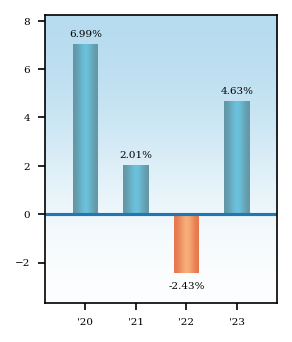
| Best Quarter: | 9/30/2022 | 5.28% |
| Worst Quarter: | 12/31/2022 | (3.28)% |
as of was .
Average Annual Total Returns - Institutional Class Shares [Member] - Anchor Risk Managed Global Strategies Fund |
Label |
1 Year |
Since Inception |
Inception Date |
|
|---|---|---|---|---|---|
| Anchor Risk Managed Global Strategies Fund Institutional Class Shares | Return before taxes | 4.63% | 5.12% | Jan. 15, 2019 | |
| Anchor Risk Managed Global Strategies Fund Institutional Class Shares | Return after taxes on distributions | 4.35% | 3.80% | |||
| Anchor Risk Managed Global Strategies Fund Institutional Class Shares | Return after taxes on distributions and sale of Fund shares | 2.85% | 3.64% | |||
| MSCI All Country World Index | [1] | 22.20% | 10.88% | ||
| MSCI EAFE Index (USD) | [2] | 18.24% | 7.41% | ||
| [1] | The MSCI All Country World Index is composed of large and mid-capitalization developed and emerging market equities. Investors cannot invest directly in an index, and unlike the Fund, . |
| [2] | The MSCI EAFE Index is an equity index which captures large and mid-capitalization representation across 21 developed markets countries around the world, excluding the U.S. and Canada. The index covers approximately 85% of the free float-adjusted market capitalization in each country. Investors cannot invest directly in an index, and unlike the Fund, . |
Cash or Cash Equivalents Risk. The Fund may have significant investments in cash or cash equivalents. When a substantial portion of a portfolio is held in cash or cash equivalents, there is the risk that the value of the cash account, including interest, will not keep pace with inflation, thus reducing purchasing power over time.
Counterparty Risk. A counterparty (the other party to a transaction or an agreement or the party with whom the Fund executes transactions) may be unable or unwilling to make timely principal, interest or settlement payments, or otherwise honor its obligations.
Derivatives Risk. The use of derivative instruments involves risks different from, or possibly greater than, the risks associated with investing directly in securities and other traditional investments. These risks include (i) counterparty risk; (ii) the risk of mispricing or improper valuation; and (iii) the risk that changes in the value of the derivative may not correlate perfectly with the underlying asset, rate or index. Derivative prices are highly volatile and may fluctuate substantially during a short period of time. Such prices are influenced by numerous factors that affect the markets, including, but not limited to: changing supply and demand relationships; government programs and policies; national and international political and economic events, changes in interest rates, inflation and deflation and changes in supply and demand relationships.
Exchange-Traded Funds Risk. ETFs may be actively or passively managed. ETFs may not be able to replicate exactly the performance of the indices they track and may result in a loss. The market price of an ETF may deviate from the price of the underlying assets in various situations, including market stress which will result in the Fund paying significantly more or receiving significantly less than the net asset value. An active trading market may not develop or be maintained at times of market stress, and market makers and authorized participants may step away from their respective roles in making a market for shares and executing purchase or redemption orders. To the extent all or a portion of an ETF’s underlying holdings are traded on foreign markets that are closed when the market on which the ETF is traded is open, there may be a change in last close price on the foreign market and the price of the ETF which is traded daily domestically. In addition, shareholders bear both their proportionate share of the Fund’s expenses and similar expenses of the ETF when the Fund invests in an ETF.
Foreign Investment Risk. Investing in foreign (non-U.S.) securities either directly or indirectly may result in the Fund experiencing more rapid and extreme changes in value than if the Fund invests exclusively in securities of U.S. companies, due to smaller markets, differing reporting, accounting and auditing standards, nationalization, expropriation or confiscatory taxation, currency blockages and political changes or diplomatic developments. The costs of investing in many foreign markets are higher than the U.S. and investments may be less liquid.
Fund of Funds Risk. The ability of the Fund to meet its investment objective is directly related to the ability of the Underlying Funds and their respective investment managers, to meet their investment objectives. Certain investment managers may be dependent upon a single individual or small group of individuals, the loss of which could adversely affect their success. There can be no assurance that any Underlying Fund will achieve its investment objectives.
Futures Risk. Futures are contracts that derive value from the price performance of an underlying entity, such as an asset, index, or interest rate. In addition to all the risks associated with the underlying entity, futures have additional risks, such as counterparty risk and liquidity risk, because they are financial contracts rather than securities. Where futures are used for hedging, lack of the desired or expected correlation between the future and the underlying entity, known as basis risk, reduces the effectiveness of the hedging instrument.
Hedging Risk. Although intended to limit or reduce investment risk, hedging strategies may also limit or reduce the potential for profit. There is no assurance that hedging strategies will be successful.
Management Risk. The adviser may be incorrect in its assessment of the intrinsic value of the securities the Fund holds which may result in a decline in the value of Fund shares and failure to achieve its investment objective. The Fund’s portfolio manager uses technical analysis and/or trend models. Any imperfections or limitations in such analyses and models could affect the ability of the portfolio manager to implement the Fund’s investment strategies.
Market and Geopolitical Risk. The increasing interconnectivity between global economies and financial markets increases the likelihood that events or conditions in one region or financial market may adversely impact issuers in a different country, region or financial market. Securities in the Fund’s portfolio may underperform due to inflation (or expectations for inflation), interest rates, global demand for particular products or resources, natural disasters, climate-change and climate related events, pandemics, epidemics, terrorism, international conflicts, regulatory events and governmental or quasi-governmental actions. The occurrence of global events similar to those in recent years may result in market volatility and may have long-term effects on both the U.S. and global financial markets.
Options Risk. There are risks associated with the sale and purchase of call and put options. As a seller (writer) of a put option, the Fund will tend to lose money if the value of the reference index or security falls below the strike price. As the seller (writer) of a call option, the Fund may experience lower returns if the value of the reference index or security rises above the strike price.
Securities Market Risk. The value of securities owned by the Fund may go up or down, sometimes rapidly or unpredictably, due to factors affecting particular companies or the securities markets generally. A general downturn in the securities market may cause multiple asset classes to decline in value simultaneously.
Short Sales Risk. The loss associated with any appreciation of the price of a security borrowed in connection with a short sale may be significant. The Fund may engage in short sales that are not made “against-the-box,” which means that the Fund may sell short securities even when they are not actually owned or otherwise covered at all times during the period the short position is open. Short sales that are not made “against-the-box” theoretically involve unlimited loss potential since the market price of securities sold short may continuously increase.
Small and Medium Capitalization Companies Risk. The earnings and prospects of small and medium sized companies are more volatile than larger companies and may experience higher failure rates than larger companies. Small and medium sized companies normally have a lower trading volume than larger companies, which may tend to make their market price fall more disproportionately than larger companies in response to selling pressures and may have limited markets, product lines, or financial resources and lack management experience.
Equity Securities Risk. Fluctuations in the value of equity securities held by the Fund will cause the NAV of the Fund and the price of its shares to fluctuate. Common stock of an issuer in the Fund’s portfolio may decline in price if the issuer fails to make anticipated dividend payments. Common stock will be subject to greater dividend risk than preferred stocks or debt instruments of the same issuer. In addition, common stocks have experienced significantly more volatility in returns than other asset classes.
Inverse ETF Risk. Inverse ETFs seek to provide investment results that will match a certain percentage of the inverse of the performance of a specific benchmark on a daily basis. Because they reset daily there may be significant volatility associated with inverse ETFs. Inverse ETFs may not be able to replicate exactly the inverse of the performance of the indices they track. Inverse ETFs fall in price when stock prices are rising. Additionally, inverse ETFs may employ leverage which magnifies the changes in the underlying stock index upon which they are based. Investments in inverse ETFs will prevent the Fund from participating in market-wide or sector-wide gains and may not prove to be an effective hedge. During periods of increased volatility, inverse ETFs may not perform in the manner they are designed. Investments in inverse funds are intended to be short-term in nature and may, therefore, lead to increased turnover and transaction costs to the Fund.
Inverse Funds Risk. Inverse funds typically lose value as the index or security tracked by the fund increases in value; a result that is the opposite from traditional funds. Because they reset daily there may be significant volatility associated with inverse funds. Inverse funds may not be able to replicate exactly the inverse of the performance of the benchmark they track. Inverse funds fall in price when its benchmark prices are rising. Additionally, inverse funds may employ leverage which magnifies the changes in the underlying benchmark upon which they are based. Investments in inverse funds will prevent the Fund from participating in market-wide or sector-wide gains and may not prove to be an effective hedge. During periods of increased volatility, inverse funds may not perform in the manner they are designed. Investments in inverse funds are intended to be short-term in nature and may, therefore, lead to increased turnover and transaction costs to the Fund.
Large Market Capitalization Companies Risk. The value of investments in larger companies may not rise as much as smaller companies, or larger companies may be unable to respond quickly to competitive challenges, such as changes in technology and consumer tastes.
Total Return Swap Risk. In a total return swap, the buyer receives a periodic return equal to the total return of a specified security, securities or index, for a specified period of time. In return, the buyer pays the counterparty a variable stream of payments, typically based upon short-term interest rates, possibly plus or minus an agreed upon spread. For example, if the Fund enters into a swap where it agrees to exchange a floating rate of interest for a fixed rate of interest, the Fund may have to pay more money than it receives. Total return swaps entered into in which payments are not netted may entail greater risk than a swap entered into a net basis. There is a risk that adverse price movements in an instrument can result in a loss substantially greater than the Fund’s initial investment in that instrument (in some cases, the potential loss is unlimited). If there is a default by the other party to such a transaction, the Fund will have contractual remedies pursuant to the agreements related to the transaction. However, particularly in the case of privately negotiated instruments, there is a risk that the counterparty will not perform its obligations, which could leave the Fund worse off than if it had not entered into the position. These instruments are subject to high levels of volatility, in some cases due to the high levels of leverage the Fund may achieve with them.