The Unlimited HFND Multi-Strategy Return Tracker ETF (the “Fund”) seeks capital appreciation.
This table describes the fees and expenses you may pay if you buy, hold, and sell shares of the Fund (“Shares”). You may pay other fees, such as brokerage commissions and other fees to financial intermediaries, which are not reflected in the table and Example below.
Annual Fund Operating Expenses |
Unlimited HFND Multi-Strategy Return Tracker ETF
Unlimited HFND Multi-Strategy Return Tracker ETF
|
[1] |
|---|---|---|
| Management Fees | 0.95% | |
| Distribution and/or Service (12b-1) Fees | none | |
| Other Expenses | none | |
| Dividends and Interest Expense on Short Positions | none | |
| Acquired Fund Fees and Expenses | 0.12% | [2] |
| Total Annual Fund Operating Expenses | 1.07% | [2] |
| [1] | The Fund’s investment adviser, Tidal Investments LLC (“Tidal” or the “Adviser”), a Tidal Financial Group company, will pay, or require a sub-adviser to pay, all expenses incurred by the Fund (except for advisory fees and sub-advisory fees, as the case may be) excluding interest charges on any borrowings, dividends and other expenses on securities sold short, taxes, brokerage commissions and other expenses incurred in placing orders for the purchase and sale of securities and other investment instruments, acquired fund fees and expenses, accrued deferred tax liability, distribution fees and expenses paid by the Fund under any distribution plan adopted pursuant to Rule 12b-1 under the Investment Company Act of 1940, as amended, (the “1940 Act”), and litigation expenses, and other non-routine or extraordinary expenses. |
| [2] | Acquired Fund Fees and Expenses (“AFFE”) are the indirect costs of investing in other investment companies. |
This Example is intended to help you compare the cost of investing in the Fund with the cost of investing in other funds. The Example assumes that you invest $10,000 in the Fund for the time periods indicated and then hold or redeem all of your Shares at the end of those periods. The Example also assumes that your investment has a 5% return each year and that the Fund’s operating expenses remain the same. The Example does not take into account brokerage commissions that you may pay on your purchases and sales of Shares. Although your actual costs may be higher or lower, based on these assumptions your costs would be:
Expense Example |
Expense Example, with Redemption, 1 Year |
Expense Example, with Redemption, 3 Years |
Expense Example, with Redemption, 5 Years |
Expense Example, with Redemption, 10 Years |
|---|---|---|---|---|
| Unlimited HFND Multi-Strategy Return Tracker ETF | Unlimited HFND Multi-Strategy Return Tracker ETF | USD ($) | 109 | 340 | 590 | 1,306 |
The Fund pays transaction costs, such as commissions, when it buys and sells securities (or “turns over” its portfolio). A higher portfolio turnover rate may indicate higher transaction costs and may result in higher taxes when Shares are held in a taxable account. These costs, which are not reflected in total annual fund operating expenses or in the expense example above, affect the Fund’s performance. For the fiscal year ended August 31, 2024, the Fund’s portfolio turnover rate was 340% of the average value of its portfolio.
The Fund is an actively-managed exchange-traded fund (“ETF”) that seeks capital appreciation.
The Fund seeks to create an investment portfolio that has similar return characteristics as the hedge fund industry gross of fees returns. By creating an investment portfolio for the Fund with similar return characteristics as the hedge fund industry’s gross of fees returns, the Fund’s sub-adviser, Unlimited Funds, Inc. (“Unlimited” or the “Sub-Adviser”), believes that the Fund’s net of fees returns may outperform the hedge fund industry’s net of fees returns due to the relatively high fees and expenses charged by hedge funds versus the comparatively lower operating expenses of the Fund.
The Sub-Adviser obtains publicly reported returns and fee data for the hedge fund industry from various sources. The Sub-Adviser then seeks to create an investment portfolio with similar return characteristics (return, volatility, and correlation with other asset classes) as the hedge fund industry gross of fees returns primarily by investing in broad-based exchange-traded funds (“Underlying ETFs”) and futures contracts.
The Investment Process
The Sub-Adviser first determines the most recent month’s gross of fees returns of the hedge fund industry as a whole and of several individual hedge fund sectors that comprise the hedge fund industry (such as long/short equity, global macro, event-driven, fixed income arbitrage, emerging markets, managed futures, and multi-strategy) by reviewing publicly reported returns and fee information for the sector.
Next, for each of the hedge fund sectors, the Sub-Adviser determines an investment portfolio of roughly 10-20 Underlying ETFs and futures contracts which best match the hedge fund sector’s most recent publicly reported month’s gross of fees returns by using a proprietary machine learning algorithm (each, a “Sector Portfolio”). The selection of Underlying ETFs and futures contracts used as algorithm inputs is determined by the Sub-Adviser’s portfolio managers based upon their belief of what assets best capture the positioning (e.g., stock sectors, stocks vs. bonds) and factors (e.g., liquidity conditions, borrowing costs) driving the returns of each hedge fund sector. The proprietary machine learning algorithm analyzes the historical pattern of returns over several time frames to determine the Sector Portfolio that best matches the most recently publicly reported month’s hedge fund sector gross of fees returns, as well portfolio returns over various prior periods (as determined appropriate by the Sub-Adviser).
The Sub-Adviser then aggregates each of the Sector Portfolio’s positions, which results in a total hedge fund industry model – and, in turn, determines the Fund’s investment portfolio. The Sector Portfolios are weighted based upon the relative asset levels in each hedge fund sector (based on publicly reported data). The Fund’s investment portfolio will generally consist of 30 to 50 Underlying ETFs and futures contracts. Over time, through the use of this proprietary machine learning process, the Sub-Adviser expects the Fund to have similar return characteristics as the hedge fund industry gross of fees returns.
The Sub-Adviser performs the foregoing analyses on an ongoing basis because hedge fund performance data for different indices (the “Indices”) is available at different times. The Sub-Adviser will frequently trade all or a significant portion of the holdings in the Fund’s investment portfolio as a result.
What the Fund invests in: The Fund’s portfolio will generally consist of positions in 30 to 50 Underlying ETFs and futures contracts. In addition, the Fund may invest in swap agreements. Please see the heading titled “Portfolio Construction,” below, for more information about the Fund’s portfolio holdings.
What the Fund will NOT do: The Fund is not a hedge fund, nor will it invest in hedge fund strategies or positions. For the avoidance of doubt:
| ● | The Fund will not invest in hedge funds. |
| ● | The Fund will not seek to replicate the direct underlying holdings of hedge funds. | |
| ● | The Fund will not engage in certain types of investment activities that are permissible for hedge funds. For example, hedge funds may use more leverage than the Fund, and hedge funds may invest a greater percentage of their assets in illiquid investments as compared to the Fund. |
Portfolio Construction
The Fund invests primarily in Underlying ETFs and exchange-listed futures contracts. The Fund’s initial universe of ETF investments includes a broad range of primarily passively-managed ETFs. The initial universe may include, among others:
| ● | Commodity ETFs that invest in commodities like oil and gold. |
| ● | Factor ETFs that invest primarily based on one of several investment factor categories, such as value and momentum. |
| ● | Fixed Income ETFs that invest in fixed income categories, such as treasuries, corporate bonds, municipal bonds, and high-yield bonds. |
| ● | Domestic, Global, and Foreign ETFs that invest in the U.S., developed markets, and/or emerging markets, as well as country-specific ETFs. |
| ● | Sector ETFs that invest primarily in one of several economic sectors, such as information technology and consumer discretionary. |
If there are several potential candidates for inclusion in the Fund’s portfolio, the Sub-Adviser’s selection criteria favor lower cost Underlying ETFs.
In addition, the Fund’s portfolio will hold futures contracts to express long and short exposures if futures contracts are either lower cost or more accurately reflect the Sub-Adviser’s desired positioning for the Fund’s overall portfolio than investments in Underlying ETFs. The Fund can also invest in swap agreements for similar purposes. Please see the section of the Fund’s prospectus titled “Additional Information about the Fund” for a description of futures contracts and swap agreements.
The Sub-Adviser adjusts the Fund’s portfolio on a frequent basis in light of its ongoing analysis of the Indices. As a result, the Fund will frequently trade all or a significant portion of the holdings in the Fund’s investment portfolio.
The Fund is deemed to be non-diversified under the Investment Company Act of 1940, as amended (the “1940 Act”), which means that it may invest a greater percentage of its assets in the securities of a single issuer or a smaller number of issuers than if it was a diversified fund.
Cayman Subsidiary
The Fund intends to gain exposure to futures contracts and swap agreements either directly or indirectly by investing through a wholly-owned Cayman Islands subsidiary (the “Subsidiary”) that is advised by the Adviser. The Fund may invest up to 25% of its total assets in the Subsidiary. The Subsidiary will comply with the same 1940 Act requirements that are applicable to the Fund’s transactions in derivatives. In addition, the Subsidiary will be subject to the same fundamental investment restrictions and will follow the same compliance policies and procedures as the Fund. Unlike the Fund, the Subsidiary will not seek to qualify as a regulated investment company (“RIC”) under Subchapter M of the Internal Revenue Code of 1986, as amended (the “Code”). The Fund is the sole investor in the Subsidiary. The Adviser selects the Subsidiary’s investments.
The following performance information provides some indication of the risks of investing in the Fund by showing changes in the Fund’s performance. The bar chart shows the annual returns for the Fund. The table illustrates how the Fund’s average annual returns for the 1-year and since inception periods compare with those of two broad measures of market performance. The Fund’s past performance, before and after taxes, does not necessarily indicate how it will perform in the future. Updated performance information is available on the Fund’s website at www.unlimitedetfs.com.
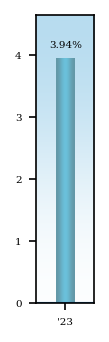
During the period of time shown in the bar chart, the Fund’s was % for the quarter ended and the was % for the quarter ended .
Average Annual Total Returns - Unlimited HFND Multi-Strategy Return Tracker ETF |
1 Year |
Since Inception |
Inception Date |
||
|---|---|---|---|---|---|
| Unlimited HFND Multi-Strategy Return Tracker ETF | 3.94% | 4.95% | Oct. 10, 2022 | ||
| Unlimited HFND Multi-Strategy Return Tracker ETF | After Taxes on Distributions | 3.47% | 4.44% | Oct. 10, 2022 | ||
| Unlimited HFND Multi-Strategy Return Tracker ETF | After Taxes on Distributions and Sales | 2.46% | 3.63% | Oct. 10, 2022 | ||
| S&P 500 Total Return Index (reflects no deduction for fees, expenses, or taxes) | 26.29% | [1] | 27.59% | [1] | Oct. 10, 2022 |
| Bloomberg U.S. Aggregate Bond Index (reflects no deduction for fees, expenses or taxes) | 5.53% | [2] | 6.31% | [2] | Oct. 10, 2022 |
| [1] | The S&P 500® Total Return Index is a widely recognized unmanaged index of 500 common stocks, which are generally representative of the U.S. stock market as a whole. The returns provided for the S&P 500® Total Return Index include the reinvestment of dividends. |
| [2] | The Bloomberg U.S. Aggregate Bond Index is a broad-based fixed-income index that represents intermediate-term investment-grade bonds traded in the U.S. and tracks over $50 trillion worth of fixed-income securities. The Fund is changing its broad-based benchmark from the S&P 500 Total Return Index to the Bloomberg U.S. Aggregate Bond Index. |
After-tax returns are calculated using the historical highest individual federal marginal income tax rates during the period covered by the table above and do not reflect the impact of state and local taxes. Actual after-tax returns depend on an investor’s tax situation and may differ from those shown. After-tax returns shown are not relevant to investors who hold their Shares through tax-deferred or other tax-advantaged arrangements such as an individual retirement account (“IRA”).
Underlying ETFs Risks. The Fund will incur higher and duplicative expenses because it invests in Underlying ETFs. There is also the risk that the Fund may suffer losses due to the investment practices of the Underlying ETFs. The Fund will be subject to substantially the same risks as those associated with the direct ownership of securities held by the Underlying ETFs. Additionally, Underlying ETFs are also subject to the “ETF Risks” described above.
Newer Sub-Adviser Risk. Unlimited is a recently registered investment adviser with a limited track record serving as an adviser or sub-adviser to an investment company. As a result, there is no long-term track record against which an investor may judge Unlimited and it is possible Unlimited may not achieve the Fund’s intended investment objective. In addition, Unlimited currently has limited personnel and resources, which may prevent it from being able to continue to provide sub-advisory services if one of the principals becomes incapacitated. Over time, Unlimited will augment its resources as market conditions permit. In addition, Unlimited regularly evaluates its business continuity plan with the Adviser to ensure continuity of operations and portfolio management should a disruption to operations occur.
Management Risk. The Fund and the Subsidiary are actively-managed and may not meet its investment objective based on the Sub-Adviser’s or Adviser’s success or failure to implement investment strategies for the Fund or the Subsidiary, as the case may be. In addition, the Fund’s principal investment strategies are dependent upon the Sub-Adviser’s use of a machine learning security selection process and, as a result, the Sub-Adviser’s skill in understanding and utilizing such process.
Machine Learning, Model and Data Risk. The Fund relies heavily on proprietary “machine learning” selection processes. In addition, the composition of the Fund’s portfolio is heavily dependent on proprietary quantitative models as well as information and data supplied by third parties (“Models and Data”). To the extent the machine learning process does not perform as designed or as intended, the Fund’s strategy may not be successfully implemented, and the Fund may lose value. Similarly, when Models and Data prove to be incorrect or incomplete, any decisions made in reliance thereon may lead to portfolio management decisions for the Fund that would not have been made had the Models and Data been correct and complete.
Data Lag Risk. The Sub-Adviser’s approach has limitations because the Models are derived using past returns Data, and therefore the investment strategy is structurally time lagged. The delays between when particular hedge funds’ returns occur and when they are reported creates additional lag. The Sub-Adviser expects that these structural lags will create divergence between returns for the Fund’s investments in each hedge fund sector and the corresponding hedge fund sector’s returns. In turn, the Fund’s performance may diverge from that of the total hedge fund industry portfolio.
Cayman Subsidiary Risk. By investing in the Subsidiary, the Fund is indirectly exposed to the risks associated with the Subsidiary’s investments. Futures contracts and swap agreements held by the Subsidiary are subject to the same economic risks that apply to similar investments if held directly by the Fund. The Subsidiary is not registered under the 1940 Act, and, unless otherwise noted in this Prospectus, is not subject to all the investor protections of the 1940 Act. Changes in the laws of the United States and the Cayman Islands could result in the inability of the Fund and/or the Subsidiary to continue to operate as it does currently and could adversely affect the Fund.
Commodity Risk. Underlying ETFs that invest in the commodities markets may be subject to greater volatility than investments in traditional securities. Commodity prices may be influenced by unfavorable weather, animal and plant disease, geologic and environmental factors as well as changes in government regulation such as tariffs, embargoes or burdensome production rules and restrictions.
Derivatives Risk. The Fund’s, the Subsidiary’s, or an Underlying ETF’s derivative investments have risks, including the imperfect correlation between the value of such instruments and the underlying assets or index; the loss of principal, including the potential loss of amounts greater than the initial amount invested in the derivative instrument; the possible default of the other party to the transaction; and illiquidity of the derivative investments. If a counterparty becomes bankrupt or otherwise fails to perform its obligations under a derivative contract due to financial difficulties, the Fund, the Subsidiary, or an Underlying ETF, as applicable, may experience significant delays in obtaining any recovery under the derivative contract in a bankruptcy or other reorganization proceeding. Derivative instruments may give rise to a form of leverage. Leverage magnifies the potential for gain and the risk of loss. Certain derivative investments could also affect the amount, timing, and character of distributions to shareholders, which may result in the Fund realizing more short-term capital gain and ordinary income subject to tax at ordinary income tax rates than it would if it did not engage in such transactions, which may adversely impact the Fund’s after-tax returns.
Emerging Markets Risk. The Fund may invest in Underlying ETFs that invest in securities issued by companies domiciled or headquartered in emerging market nations. Investments in securities traded in developing or emerging markets, or that provide exposure to such securities or markets, can involve additional risks relating to political, economic, currency, or regulatory conditions not associated with investments in U.S. securities and investments in more developed international markets. Such conditions may impact the ability of the Fund to buy, sell or otherwise transfer securities, adversely affect the trading market and price for Fund Shares and cause the Fund to decline in value.
Equity Market Risk. The equity securities held by the Underlying ETFs in which the Fund invests may experience sudden, unpredictable drops in value or long periods of decline in value. This may occur because of factors that affect securities markets generally or factors affecting specific issuers, industries, or sectors in which an Underlying ETF invests. Common stocks are generally exposed to greater risk than other types of securities, such as preferred stock and debt obligations, because common stockholders generally have inferior rights to receive payment from issuers. Securities in an Underlying ETF’s portfolio may underperform in comparison to securities in the general securities markets, a particular financial market, or other asset classes, due to a number of factors, including inflation (or expectations for inflation), interest rates, global demand for particular products or resources, natural disasters or events, pandemic diseases, terrorism, regulatory events, or government controls.
ETF Risk. The Fund (and each Underlying ETF) is an ETF, and, as a result of an ETF’s structure, it is exposed to the following risks:
| ○ | Authorized Participants, Market Makers, and Liquidity Providers Concentration Risk. The Fund has a limited number of financial institutions that are authorized to purchase and redeem Shares directly from the Fund (known as “Authorized Participants” or “APs”). In addition, there may be a limited number of market makers and/or liquidity providers in the marketplace. To the extent either of the following events occur, Shares may trade at a material discount to NAV and possibly face delisting: (i) APs exit the business or otherwise become unable to process creation and/or redemption orders and no other APs step forward to perform these services, or (ii) market makers and/or liquidity providers exit the business or significantly reduce their business activities and no other entities step forward to perform their functions. |
| ○ | Cash Redemption Risk. The Fund’s investment strategy may require it to redeem Shares for cash or to otherwise include cash as part of its redemption proceeds. For example, the Fund may not be able to redeem in-kind certain securities held by the Fund (e.g., derivative instruments that cannot be broken up beyond certain minimum sizes needed for transfer and settlement). In such a case, the Fund may be required to sell or unwind portfolio investments to obtain the cash needed to distribute redemption proceeds. This may cause the Fund to recognize a capital gain that it might not have recognized if it had made a redemption in-kind. As a result, the Fund may have less cash efficiency and pay out higher annual capital gain distributions to shareholders than if the in-kind redemption process was used. In addition, cash redemption costs could include brokerage costs or taxable gains or losses, which might not have otherwise been incurred if the redemption was fully in-kind. |
| ○ | Costs of Buying or Selling Shares. Due to the costs of buying or selling Shares, including brokerage commissions imposed by brokers and bid-ask spreads, frequent trading of Shares may significantly reduce investment results and an investment in Shares may not be advisable for investors who anticipate regularly making small investments. |
| ○ | Shares May Trade at Prices Other Than NAV. As with all ETFs, Shares may be bought and sold in the secondary market at market prices. Although it is expected that the market price of Shares will approximate the Fund’s NAV, there may be times when the market price of Shares is more than the NAV intra-day (premium) or less than the NAV intra-day (discount) due to supply and demand of Shares or during periods of market volatility. This risk is heightened in times of market volatility, periods of steep market declines, and periods when there is limited trading activity for Shares in the secondary market, in which case such premiums or discounts may be significant. |
| ○ | Trading. Although Shares are listed for trading on a national securities exchange, such as NYSE Arca, Inc. (the “Exchange”) and may be traded on U.S. exchanges other than the Exchange, there can be no assurance that Shares will trade with any volume, or at all, on any stock exchange. In stressed market conditions, the liquidity of Shares may begin to mirror the liquidity of the Fund’s underlying portfolio holdings, which can be significantly less liquid than Shares. Also, in stressed market conditions, the market for Shares may become less liquid in response to deteriorating liquidity in the market for the Fund’s underlying portfolio holdings. These adverse effects on liquidity for Shares, in turn, could lead to wider bid/ask spreads and differences between the market price of Shares and the underlying value of those underlying portfolio holdings, which can be significantly less liquid than Shares. |
Factor Risk. The market may reward certain factors (such as value, momentum) for a period of time and not others. The average level of volatility for a specific risk factor may vary significantly relative to other risk factors and may increase or decrease significantly during different phases of an economic cycle.
Fixed Income Securities Risk. The Fund may invest in Underlying ETFs that invest in fixed income securities. The prices of fixed income securities may be affected by changes in interest rates, the creditworthiness and financial strength of the issuer and other factors. An increase in prevailing interest rates typically causes the value of existing fixed income securities to fall and often has a greater impact on longer-duration and/or higher quality fixed income securities. Falling interest rates will cause an Underlying ETF to reinvest the proceeds of fixed income securities that have been repaid by the issuer at lower interest rates and may also reduce such Underlying ETF’s distributable income because interest payments on floating rate fixed income instruments held by the Underlying ETF will decline. The Fund could lose money on indirect investments in fixed income securities if the issuer or borrower fails to meet its obligations to make interest payments and/or to repay principal in a timely manner.
Foreign Securities Risk. Foreign securities held by Underlying ETFs in which the Fund invests involve certain risks not involved in domestic investments and may experience more rapid and extreme changes in value than investments in securities of U.S. companies. Financial markets in foreign countries often are not as developed, efficient or liquid as financial markets in the United States, and therefore, the prices of non-U.S. securities can be more volatile. In addition, the Fund will be subject to risks associated with adverse political and economic developments in foreign countries, which may include the imposition of economic sanctions. Generally, there is less readily available and reliable information about non-U.S. issuers due to less rigorous disclosure or accounting standards and regulatory practices.
Futures Contracts Risk. The Fund, the Subsidiary, or Underlying ETFs may invest in futures contracts. Risks of futures contracts include: (i) an imperfect correlation between the value of the futures contract and the underlying asset; (ii) possible lack of a liquid secondary market; (iii) the inability to close a futures contract when desired; (iv) losses caused by unanticipated market movements, which may be unlimited; (v) an obligation for the Fund, the Subsidiary, or an Underlying ETF, as applicable, to make daily cash payments to maintain its required margin, particularly at times when the Fund, the Subsidiary, or Underlying ETF may have insufficient cash; and (vi) unfavorable execution prices from rapid selling. Unlike equity securities, which typically entitle the holder to a continuing stake in a corporation, futures contracts normally specify a certain date for settlement in cash based on the reference asset. As the futures contracts approach expiration, they may be replaced by similar contracts that have a later expiration. This process is referred to as “rolling.” If the market for these contracts is in “contango,” meaning that the prices of futures contracts in the nearer months are lower than the price of contracts in the distant months, the sale of the near-term month contract would be at a lower price than the longer-term contract, resulting in a cost to “roll” the futures contract. The actual realization of a potential roll cost will be dependent upon the difference in price of the near and distant contract.
General Market Risk. Economies and financial markets throughout the world are becoming increasingly interconnected, which increases the likelihood that events or conditions in one country or region will adversely impact markets or issuers in other countries or regions. The market value of a security in the Fund’s portfolio may move up or down, sometimes rapidly and unpredictably. These fluctuations may cause a security to be worth less than the price the Fund originally paid for it, or less than it was worth at an earlier time. Securities in the Underlying ETFs’ portfolios may underperform in comparison to securities in the general financial markets, a particular financial market, or other asset classes, due to a number of factors, including inflation (or expectations for inflation), interest rates, global demand for particular products or resources, natural disasters or events, pandemic diseases, terrorism, regulatory events, and government controls.
High Portfolio Turnover Risk. The Indices have historically had high portfolio turnover rates. As a result, the Fund is likewise expected to frequently trade all or a significant portion of the securities in its portfolio. A high portfolio turnover rate increases transaction costs, which may increase the Fund’s expenses. Frequent trading may also cause adverse tax consequences for investors in the Fund due to an increase in short-term capital gains.
Market Capitalization Risk. These risks apply to the extent the Underlying ETFs in which the Fund invests hold securities of large-, mid- and small-capitalization companies.
| ○ | Large-Capitalization Investing. The securities of large-capitalization companies may be relatively mature compared to smaller companies and therefore subject to slower growth during times of economic expansion. Large-capitalization companies may also be unable to respond quickly to new competitive challenges, such as changes in technology and consumer tastes. |
| ○ | Mid-Capitalization Investing. The securities of mid-capitalization companies may be more vulnerable to adverse issuer, market, political, or economic developments than securities of large-capitalization companies. The securities of mid-capitalization companies generally trade in lower volumes and are subject to greater and more unpredictable price changes than large capitalization stocks or the stock market as a whole. |
| ○ | Small-Capitalization Investing. The securities of small-capitalization companies may be more vulnerable to adverse issuer, market, political, or economic developments than securities of large- or mid-capitalization companies. The securities of small-capitalization companies generally trade in lower volumes and are subject to greater and more unpredictable price changes than large- or mid-capitalization stocks or the stock market as a whole. There is typically less publicly available information concerning smaller-capitalization companies than for larger, more established companies. |
Newer Fund Risk. The Fund is newer with a limited operating history. As a result, prospective investors have a limited track record or history on which to base their investment decisions. While the total operating expenses of the Fund will be limited by the Fund’s unitary management fee, there can be no assurance that the Fund will grow to or maintain an economically viable size. If the Fund fails to maintain an economically viable size, it may cease operations, and investors may be required to liquidate or transfer their investments at inopportune times.
Non-Diversification Risk. Because the Fund is “non-diversified,” it may invest a greater percentage of its assets in the securities of a single issuer or a smaller number of issuers than if it was a diversified fund. As a result, a decline in the value of an investment in a single issuer or a smaller number of issuers could cause the Fund’s overall value to decline to a greater degree than if the Fund held a more diversified portfolio.
Recent Market Events Risk. U.S. and international markets have experienced and may continue to experience significant periods of volatility in recent years and months due to a number of economic, political and global macro factors including uncertainty regarding inflation and central banks’ interest rate increases, the possibility of a national or global recession, trade tensions, political events, the war between Russia and Ukraine and significant conflict between Israel and Hamas in the Middle East. As a result of continuing political tensions and armed conflicts, including the war between Ukraine and Russia, the U.S. and the European Union imposed sanctions on certain Russian individuals and companies, including certain financial institutions, and have limited certain exports and imports to and from Russia. The war has contributed to recent market volatility and may continue to do so.
Sector Risk. To the extent an Underlying ETF invests more heavily in particular sectors of the economy, its performance will be especially sensitive to developments that significantly affect those sectors.
Shorting Risk. The Fund may also seek short exposure through the use of futures contracts or swap agreements, which will expose the Fund to certain risks such as a potential increase in volatility and the risks inherent to the underlying reference instrument. A short position in a derivative instrument also involves transaction costs and the risk of an increase in the value of the underlying reference instrument. These risks may cause the Fund’s return to be lower.
Swap Agreement Risk. The Fund, the Subsidiary, or an Underlying ETF may invest in swap agreements. Swap agreements are entered into primarily with major global financial institutions for a specified period, which may range from one day to more than six months. The swap agreements in which the Fund, the Subsidiary, or an Underlying ETF, as applicable, invests are generally traded in the over-the-counter market, which generally has less transparency than exchange-traded derivatives instruments. In a standard swap transaction, two parties agree to exchange the return (or differentials in rates of return) earned or realized on particular predetermined reference assets or underlying securities or instruments. The gross return to be exchanged or swapped between the parties is calculated based on a notional amount or the return on or change in value of a particular dollar amount invested in a basket of securities representing a particular sector or index.
Tax Risk. The federal income tax treatment of the Fund’s income from the Subsidiary may be negatively affected by future legislation, Treasury Regulations (proposed or final), and/or other Internal Revenue Service (“IRS”) guidance or authorities that could affect the character, timing of recognition, and/or amount of the Fund’s investment company taxable income and/or net capital gains and, therefore, the distributions it makes. If the Fund failed the source of income test for any taxable year but was eligible to and did cure the failure, it could incur potentially significant additional federal income tax expenses. If, on the other hand, the Fund failed to qualify as a RIC for any taxable year and was ineligible to or otherwise did not cure the failure, it would be subject to federal income tax at the fund-level on its taxable income at the regular corporate tax rate (without reduction for distributions to shareholders), with the consequence that its income available for distribution to shareholders would be reduced and distributions from its current or accumulated earnings and profits would generally be taxable to its shareholders as dividend income.