The Fund seeks to provide total return, from current income and gains from long-term capital appreciation.
This table describes the fees and expenses that you may pay if you buy, hold and sell shares of the Fund. You may pay other fees, such as brokerage commissions and other fees to financial intermediaries, which are not reflected in the table and example below.
Annual Fund Operating Expenses |
Main BuyWrite ETF
Main BuyWrite ETF
|
|
|---|---|---|
| Management Fees | 0.90% | |
| Distribution and Service (12b-1) Fees | none | |
| Other Expenses | 0.12% | |
| Acquired Fund Fees and Expenses | 0.18% | [1] |
| Total Annual Fund Operating Expenses | 1.20% | |
| Fee Waiver and/or Expense Reimbursement | (0.07%) | [2] |
| Total Annual Fund Operating Expenses After Fee Waiver and/or Expense Reimbursement | 1.13% | |
| [1] | Acquired Fund Fees and Expenses are the indirect costs of investing in other investment companies. |
| [2] | The Fund’s adviser, Main Management Fund Advisors, LLC (the “Adviser”), has contractually agreed to reduce its fees and/or absorb expenses of the Fund, until at least February 28, 2026, to insure that total annual fund operating expenses after fee waiver and/or reimbursement (exclusive of (i) any front-end or contingent deferred loads; (ii) brokerage fees and commissions; (iii) acquired fund fees and expenses; (iv) fees and expenses associated with investments in other collective investment vehicles or derivative instruments (including for example option and swap fees and expenses); (v) borrowing costs (such as interest and dividend expense on securities sold short); (vi) taxes; and (vii) extraordinary expenses, such as litigation expenses (which may include indemnification of Fund officers and Trustees, contractual indemnification of Fund service providers (other than the Adviser))) will not exceed 0.95% of the Fund’s average daily net assets. These fee waivers and expense reimbursements are subject to possible recoupment from the Fund in future years (within the three years from the time the fees were waived or reimbursed), if, after such recoupment is taken into account, the expense ratio does not exceed the lesser of the expense limits in place at the time of the waiver or those in place at the time of recapture. This agreement may be terminated by the Board of Trustees only on 60 days’ written notice to the Adviser. |
This Example is intended to help you compare the cost of investing in the Fund with the cost of investing in other mutual funds.
Expense Example |
Expense Example, with Redemption, 1 Year |
Expense Example, with Redemption, 3 Years |
Expense Example, with Redemption, 5 Years |
Expense Example, with Redemption, 10 Years |
|---|---|---|---|---|
| Main BuyWrite ETF | Main BuyWrite ETF | USD ($) | 115 | 374 | 653 | 1,448 |
The Fund pays transaction costs, such as commissions, when it buys and sells securities (or “turns over” its portfolio). A higher portfolio turnover may indicate higher transaction costs and may result in higher taxes when Fund shares are held in a taxable account. These costs, which are not reflected in annual fund operating expenses or in the Example, affect the Fund’s performance. During the fiscal year ended October 31, 2024, the Fund’s portfolio turnover rate was 31% of the average value of its portfolio.
The Fund invests in domestic and international exchange-traded funds (ETFs) to provide investors with sustained exposure to domestic and foreign equity markets over time. The Fund also uses the Adviser’s “BuyWrite” strategy, an investment strategy of writing (selling) call options on a security owned by the Fund to generate additional returns from the option premium. The Fund also seeks returns by writing (selling) secured put options. A “put option” is an option contract that gives the owner the right to sell the underlying security at a specified price (the strike price) until its expiration at a fixed date in the future. The Fund seeks to achieve risk-adjusted returns through targeted allocations by analyzing interest and currency rates, inflation trends, economic growth forecasts, and other global and capital market fundamentals. The Fund’s option strategy may also have the benefit of reducing the volatility of the Fund’s portfolio in comparison to that of broad equity market indexes.
The Fund is an actively managed ETF and does not seek to replicate the performance of a specified index. In selecting investments for the Fund’s portfolio, the Adviser adheres to the investment process described below.
Equity Strategy
The Adviser believes that, over time, asset allocation is more determinative than individual security selection in limiting the variability inherent in equity security investing. Accordingly, the Adviser, when investing in ETFs, focuses its research primarily on asset allocation to identify undervalued asset classes and catalysts that could lead to near-term price appreciation by carefully reviewing:
| ● | the sector (industries sharing common characteristics; e.g., financials), |
| ● | sub-sector (a more specialized, narrow category within a sector; e.g., financials), and |
| ● | capitalization (the measure of a company’s size as determined by its current share price multiplied by the number of shares of the company’s outstanding stock) in the Fund’s portfolio. |
The Adviser seeks to create a diversified portfolio to avoid allocations of more than 50% to any one particular market segment.
Developing Strategic Targets. The Adviser determines the Fund’s target allocations by:
| ● | analyzing global macroeconomic and capital market fundamentals over a 12-18 month time horizon and |
| ● | formulating strategic targets for allocations. |
Identifying the Appropriate ETFs. After developing the strategic targets, the Adviser uses a combination of bottom-up fundamental valuations (e.g., price to book, price to earnings, and price to sales ratios) and top-down macroeconomic data points to identify the most appropriate fixed income and equity ETFs, without restriction as to geography or market capitalization, to implement strategic asset allocation and express sector views by evaluating various factors in the respective ETFs. The Fund will generally hold between 4-10 ETFs, but that number will change in different market conditions. Based on the Adviser’s analysis, the ETFs held by the Fund may, at certain times, be in one particular sector, but the ETF will not concentrate in any one particular industry.
Option Strategy
The Fund pursues its objective by employing an option strategy of writing (selling) covered call or index based options on an amount from 0% to 100% of the value of the ETF shares in the Fund’s portfolio. The Fund seeks to earn income and gains both from dividends paid on the ETFs owned by the Fund and cash premiums received from writing or “selling”:
| ● | covered call options or index based options on equity based ETFs held in the Fund’s portfolio and |
| ● | cash secured put options against cash balances in the Fund. |
The Fund may not sell “naked” put or call options, i.e., equity options representing more shares of an ETF than the Fund has cash on hand and available to purchase index options greater than the value of the underlying security. The Fund may buy a call option and sell a put option at the same specified exercise or “strike” price, creating a synthetic long position. A call option will not be deemed “naked” if there is an offsetting synthetic long position in the underlying security.
Stock index options are put options and call options on various stock indices. The primary difference between stock options and index options occurs when index options are exercised. In the case of stock options, the underlying security, common stock, is delivered. However, upon the exercise of an index option, settlement does not occur by delivery of the securities comprising the index.
The option holder exercising the index option receives an amount of cash if the closing level of the stock index upon which the option is based is greater than, in the case of a call, or less than, in the case of a put, the exercise price of the option. This amount of cash is equal to the difference between the closing price of the stock index and the exercise price of the option expressed in dollars times a specified multiple.
A stock index fluctuates with changes in the market value of the stocks included in the index. A call option on a security is a contract that gives the holder of the option, in return for a premium, the right, but not the obligation, to buy from the writer of the option the security underlying the option at a specified exercise price by or before the contract’s expiration. A put option on a security is a contract that gives the holder of the option, in return for a premium, the right to sell to the writer of the option the security underlying the option at a specified exercise price. The writer of an option on a security has the obligation upon exercise of the option to purchase the underlying security at the exercise price. The Adviser’s option strategy typically targets one-month options. Options of any exercise price or maturity may be utilized.
The Fund may seek investment exposure to shares of bitcoin ETFs that are registered with the SEC. Under normal circumstances, no more than 15% of the Fund’s assets may be invested directly in bitcoin ETFs.
As with all funds, there is a risk that you could lose money through your investment in the Fund. The Fund is not intended to be a complete investment program. Many factors affect the Fund’s net asset value (“NAV”) and performance.
The following describes the risks the Fund bears directly or indirectly through investments in the underlying ETFs in its investment portfolio. As with any ETF, there is no guarantee that the Fund will achieve its goal.
Allocation Risk. If the Fund’s strategy for allocating assets among different assets classes does not work as intended, the Fund may not achieve its objective or may underperform other funds with the same or similar investment strategy.
Authorized Participant Risk. Only an Authorized Participant that has entered into a contractual arrangement with the Fund’s distributor may engage in creation or redemption transactions directly with the Fund. The Fund’s distributor has entered into contracts with only a limited number of institutions that may act as Authorized Participants on an agency basis (i.e., on behalf of other market participants). To the extent that Authorized Participants exit the business or are unable to proceed with creation or redemption orders with respect to the Fund and no other Authorized Participant is able to step forward to create or redeem large blocks of Shares known as “Creation Units,” Shares may be more likely to trade at a premium or discount to NAV and possibly face trading halts or delisting. Authorized Participant concentration risk may be heightened for ETFs that invest in non-U.S. securities or other securities or instruments that have lower trading volumes.
Covered Call Risk. The writer of a covered call option forgoes any profit from increases in the market value of the underlying security covering the call option above the sum of the premium and the strike price of the call but retains the risk of loss if the underlying security declines in value. The Fund has no control over the exercise of the option by the option holder and may lose the benefit from any capital appreciation on the underlying security.
Derivatives Risk. The Fund’s use of options involves risks different from, or possibly greater than, the risks associated with investing directly in securities and other traditional investments. These risks include (i) the risk that the counterparty to a derivative transaction may not fulfill its contractual obligations; (ii) risk of mispricing or improper valuation; and (iii) the risk that changes in the value of the derivative may not correlate perfectly with the underlying asset, rate or index. Derivative prices are highly volatile and may fluctuate substantially during a short period of time.
| ○ | Options Risk. There are risks associated with the sale and purchase of call and put options. As a seller (writer) of a put option, the Fund will tend to lose money if the value of the refence index or security falls below the strike price. As the seller (writer) of a call option, the Fund may experience lower returns if the value of the reference index or security rises above the strike price. |
| ○ | Put Option Risk. Options may be subject to volatile swings in price influenced by changes in the value of the underlying instrument. Although the Fund collects premiums on the options it writes, the Fund’s risk of loss if its options expire in-the-money (i.e., the Fund, as the seller of puts, owes the buyer of the puts) may outweigh the gains to the Fund from the receipt of such options premiums. The potential return to the Fund is limited to the amount of option premiums it receives; however, the Fund can potentially lose up to the entire strike price of each option it sells. The puts sold by the Fund may not perfectly correlate with the returns of their underlying stocks. |
Exchange-Traded Funds Risk. ETFs in which the Fund invests are subject to investment advisory and other expenses, which will be indirectly paid by the Fund. As a result, the cost of investing in the Fund will be higher than the cost of investing directly in an ETF and may be higher than other mutual funds that invest directly in stocks and bonds. ETFs may also trade at a discount or premium to their net asset value.
ETF Structure Risk. The Fund is structured as an ETF and as a result is subject to special risks, including:
| ● | Not Individually Redeemable. Shares are not individually redeemable to retail investors and may be redeemed by the Fund only to Authorized Participants at NAV in Creation Units. An Authorized Participant may incur brokerage costs purchasing enough Shares to constitute a Creation Unit. |
| ● | Trading Issues. An active trading market for the Shares may not be developed or maintained. Trading in Shares on the Exchange may be halted due to market conditions or for reasons that, in the view of the Exchange, make trading in Shares inadvisable, such as extraordinary market volatility. |
| ● | Market Price Variance Risk. The market prices of Shares will fluctuate in response to changes in NAV and supply and demand for Shares and will include a “bid-ask spread” charged by the exchange specialists, market makers or other participants that trade the particular security. There may be times when the market price and the NAV vary significantly. This means that Shares may trade at a discount to NAV. |
| ○ | The market price for Shares may deviate from the Fund’s NAV, particularly during times of market stress, with the result that investors may pay significantly more or significantly less for Shares than the Fund’s NAV, which is reflected in the bid and ask price for Shares or in the closing price. |
Fluctuation of Net Asset Value Risk. The NAV of Shares generally fluctuates with changes in the market value of the Fund’s holdings. The market prices of Shares generally fluctuate in accordance with changes in NAV as well as the relative supply of and demand for the shares on the Exchange. The Adviser cannot predict whether Shares will trade below, at or above their NAV. Price differences may be due, in large part, to the fact that supply and demand forces at work in the secondary trading market for the shares will be closely related to, but not identical to, the same forces influencing the prices of the Fund’s holdings trading individually or in the aggregate at any point in time. In addition, unlike conventional ETFs, the Fund is not an index fund. The Fund is actively managed and does not seek to replicate the performance of a specified index. Index based ETFs have generally traded at prices which closely correspond to NAV per share. Actively managed ETFs have a limited trading history and, therefore, there can be no assurance as to whether and/or the extent to which Shares will trade at premiums or discounts to NAV.
Foreign Investment Risk. Since the Fund’s investments may include foreign securities, the Fund is subject to risks beyond those associated with investing in domestic securities. Foreign companies are generally not subject to the same regulatory requirements of U.S. companies thereby resulting in less publicly available information about these companies. In addition, foreign accounting, auditing and financial reporting standards generally differ from those applicable to U.S. companies.
Management Risk. The portfolio managers’ judgments about the attractiveness, value and potential appreciation of particular stocks or other securities in which the Fund invests or sells short may prove to be incorrect and there is no guarantee that the portfolio managers’ judgment will produce the desired results.
Market and Geopolitical Risk. The increasing interconnectivity between global economies and financial markets increases the likelihood that events or conditions in one region or financial market may adversely impact issuers in a different country, region or financial market. Securities in the Fund’s portfolio may underperform due to inflation (or expectations for inflation), interest rates, global demand for particular products or resources, natural disasters, climate-change and climate-related events pandemics, epidemics, terrorism, international conflicts, regulatory events and governmental or quasi-governmental actions. The occurrence of global events similar to those in recent years may result in market volatility and may have long term effects on both the U.S. and global financial markets.
Sector Risk. The Fund may have significant exposure to a limited number of issuers conducting business in the same sector or group of sectors and may invest a significant amount of the Fund’s assets in a small number of sectors. Market conditions, interest rates, and economic, regulatory, or financial developments could significantly affect a single sector or a group of sectors, and the securities of companies in that sector or group of sectors could react similarly to these or other developments.
Small and Medium Capitalization Stock Risk. The earnings and prospects of small and medium sized companies are more volatile than larger companies and may experience higher failure rates than larger companies. Small and medium sized companies normally have a lower trading volume than larger companies, which may tend to make their market price fall more disproportionately than larger companies in response to selling pressures and may have limited markets, product lines, or financial resources and lack management experience.
The Fund adopted the accounting history and performance of the predecessor mutual fund, the Main BuyWrite Fund (the “Predecessor Fund”) as the result of a reorganization of the Predecessor Fund into the Fund (the “Reorganization”). Prior to the Reorganization, the Fund had not yet commenced operations. The bar chart and performance table below show the variability of the Fund’s and its Predecessor Fund’s returns, which is some indication of the risks of investing in the Fund. The bar chart shows performance of the Fund’s shares and its Predecessor Fund’s Class I shares for each calendar year since the Predecessor Fund’s inception. The performance table compares the performance of the Fund over time to the performance of a broad-based securities market index and a supplemental index. You should be aware that the Fund’s past performance (before and after taxes) is not necessarily an indication of how the Fund will perform in the future. Updated performance information is available at no cost by visiting www.mainmgtetfs.com or by calling 1-866-ETF-XPRT (1-866-383-9778).
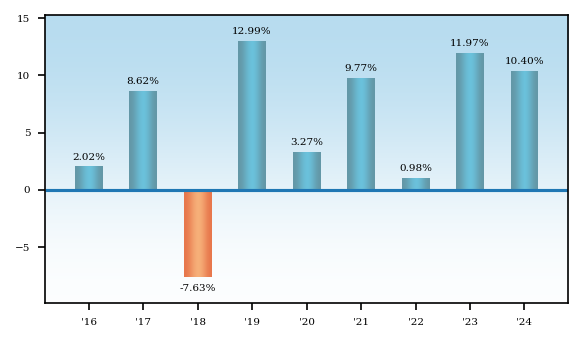
| Best Quarter: | 4th Quarter 2020 | 10.38% |
| Worst Quarter: | 1st Quarter 2020 | (18.91)% |
Average Annual Total Returns - Main BuyWrite ETF |
Label |
1 Year |
5 Years |
[1] | Since Inception |
[1] | Inception Date |
|
|---|---|---|---|---|---|---|---|---|
| Main BuyWrite ETF | Return before taxes | 10.40% | 7.19% | 5.53% | Dec. 29, 2015 | |||
| Main BuyWrite ETF | After Taxes on Distributions | 7.98% | 6.25% | 4.94% | |||||
| Main BuyWrite ETF | After Taxes on Distributions and Sales | 6.34% | 5.28% | 4.17% | |||||
| S&P 500 Total Return Index | [2] | 25.02% | 14.53% | 14.26% | ||||
| HFRl Equity Hedged Index | [3] | 11.87% | 8.07% | 7.13% | ||||
| [1] | Performance returns include the performance of the Predecessor Fund’s Class I Shares. |
| [2] | The S&P 500 Total Return Index (the “Index”) is an unmanaged free-float capitalization-weighted index which measures the performance of 500 large-cap common stocks actively traded in the United States. Index returns assume reinvestment of dividends. Investors may not invest in the Index directly; unlike the Fund’s returns, the Index does not reflect any fees or expenses. |
| [3] | The HFRI Equity Hedged Index returns are reported with a start date of 12/31/15. Equity Hedge (“EH”) managers are investment managers who maintain positions both long and short in primarily equity and equity derivative securities. A wide variety of investment processes can be employed to arrive at an investment decision, including both quantitative and fundamental techniques; strategies can be broadly diversified or narrowly focused on specific sectors and can range broadly in terms of levels of net exposure, leverage employed, holding period, concentrations of market capitalizations and valuation ranges of typical portfolios. EH managers would typically maintain at least 50% exposure to, and may in some cases be entirely invested in, equities, both long and short. Index returns assume reinvestment of dividends. Investors may not invest in the indexes directly; unlike the Fund’s returns, the indexes do not reflect any fees or expenses. Source: Hedge Fund Research. |
Allocation Risk. If the Fund’s strategy for allocating assets among different assets classes does not work as intended, the Fund may not achieve its objective or may underperform other funds with the same or similar investment strategy.
Authorized Participant Risk. Only an Authorized Participant that has entered into a contractual arrangement with the Fund’s distributor may engage in creation or redemption transactions directly with the Fund. The Fund’s distributor has entered into contracts with only a limited number of institutions that may act as Authorized Participants on an agency basis (i.e., on behalf of other market participants). To the extent that Authorized Participants exit the business or are unable to proceed with creation or redemption orders with respect to the Fund and no other Authorized Participant is able to step forward to create or redeem large blocks of Shares known as “Creation Units,” Shares may be more likely to trade at a premium or discount to NAV and possibly face trading halts or delisting. Authorized Participant concentration risk may be heightened for ETFs that invest in non-U.S. securities or other securities or instruments that have lower trading volumes.
Covered Call Risk. The writer of a covered call option forgoes any profit from increases in the market value of the underlying security covering the call option above the sum of the premium and the strike price of the call but retains the risk of loss if the underlying security declines in value. The Fund has no control over the exercise of the option by the option holder and may lose the benefit from any capital appreciation on the underlying security.
Derivatives Risk. The Fund’s use of options involves risks different from, or possibly greater than, the risks associated with investing directly in securities and other traditional investments. These risks include (i) the risk that the counterparty to a derivative transaction may not fulfill its contractual obligations; (ii) risk of mispricing or improper valuation; and (iii) the risk that changes in the value of the derivative may not correlate perfectly with the underlying asset, rate or index. Derivative prices are highly volatile and may fluctuate substantially during a short period of time.
| ○ | Options Risk. There are risks associated with the sale and purchase of call and put options. As a seller (writer) of a put option, the Fund will tend to lose money if the value of the refence index or security falls below the strike price. As the seller (writer) of a call option, the Fund may experience lower returns if the value of the reference index or security rises above the strike price. |
| ○ | Put Option Risk. Options may be subject to volatile swings in price influenced by changes in the value of the underlying instrument. Although the Fund collects premiums on the options it writes, the Fund’s risk of loss if its options expire in-the-money (i.e., the Fund, as the seller of puts, owes the buyer of the puts) may outweigh the gains to the Fund from the receipt of such options premiums. The potential return to the Fund is limited to the amount of option premiums it receives; however, the Fund can potentially lose up to the entire strike price of each option it sells. The puts sold by the Fund may not perfectly correlate with the returns of their underlying stocks. |
| ○ | Options Risk. There are risks associated with the sale and purchase of call and put options. As a seller (writer) of a put option, the Fund will tend to lose money if the value of the refence index or security falls below the strike price. As the seller (writer) of a call option, the Fund may experience lower returns if the value of the reference index or security rises above the strike price. |
| ○ | Put Option Risk. Options may be subject to volatile swings in price influenced by changes in the value of the underlying instrument. Although the Fund collects premiums on the options it writes, the Fund’s risk of loss if its options expire in-the-money (i.e., the Fund, as the seller of puts, owes the buyer of the puts) may outweigh the gains to the Fund from the receipt of such options premiums. The potential return to the Fund is limited to the amount of option premiums it receives; however, the Fund can potentially lose up to the entire strike price of each option it sells. The puts sold by the Fund may not perfectly correlate with the returns of their underlying stocks. |
Exchange-Traded Funds Risk. ETFs in which the Fund invests are subject to investment advisory and other expenses, which will be indirectly paid by the Fund. As a result, the cost of investing in the Fund will be higher than the cost of investing directly in an ETF and may be higher than other mutual funds that invest directly in stocks and bonds. ETFs may also trade at a discount or premium to their net asset value.
ETF Structure Risk. The Fund is structured as an ETF and as a result is subject to special risks, including:
| ● | Not Individually Redeemable. Shares are not individually redeemable to retail investors and may be redeemed by the Fund only to Authorized Participants at NAV in Creation Units. An Authorized Participant may incur brokerage costs purchasing enough Shares to constitute a Creation Unit. |
| ● | Trading Issues. An active trading market for the Shares may not be developed or maintained. Trading in Shares on the Exchange may be halted due to market conditions or for reasons that, in the view of the Exchange, make trading in Shares inadvisable, such as extraordinary market volatility. |
| ● | Market Price Variance Risk. The market prices of Shares will fluctuate in response to changes in NAV and supply and demand for Shares and will include a “bid-ask spread” charged by the exchange specialists, market makers or other participants that trade the particular security. There may be times when the market price and the NAV vary significantly. This means that Shares may trade at a discount to NAV. |
| ○ | The market price for Shares may deviate from the Fund’s NAV, particularly during times of market stress, with the result that investors may pay significantly more or significantly less for Shares than the Fund’s NAV, which is reflected in the bid and ask price for Shares or in the closing price. |
| ● | Not Individually Redeemable. Shares are not individually redeemable to retail investors and may be redeemed by the Fund only to Authorized Participants at NAV in Creation Units. An Authorized Participant may incur brokerage costs purchasing enough Shares to constitute a Creation Unit. |
| ● | Trading Issues. An active trading market for the Shares may not be developed or maintained. Trading in Shares on the Exchange may be halted due to market conditions or for reasons that, in the view of the Exchange, make trading in Shares inadvisable, such as extraordinary market volatility. |
| ● | Market Price Variance Risk. The market prices of Shares will fluctuate in response to changes in NAV and supply and demand for Shares and will include a “bid-ask spread” charged by the exchange specialists, market makers or other participants that trade the particular security. There may be times when the market price and the NAV vary significantly. This means that Shares may trade at a discount to NAV. |
| ○ | The market price for Shares may deviate from the Fund’s NAV, particularly during times of market stress, with the result that investors may pay significantly more or significantly less for Shares than the Fund’s NAV, which is reflected in the bid and ask price for Shares or in the closing price. |
Fluctuation of Net Asset Value Risk. The NAV of Shares generally fluctuates with changes in the market value of the Fund’s holdings. The market prices of Shares generally fluctuate in accordance with changes in NAV as well as the relative supply of and demand for the shares on the Exchange. The Adviser cannot predict whether Shares will trade below, at or above their NAV. Price differences may be due, in large part, to the fact that supply and demand forces at work in the secondary trading market for the shares will be closely related to, but not identical to, the same forces influencing the prices of the Fund’s holdings trading individually or in the aggregate at any point in time. In addition, unlike conventional ETFs, the Fund is not an index fund. The Fund is actively managed and does not seek to replicate the performance of a specified index. Index based ETFs have generally traded at prices which closely correspond to NAV per share. Actively managed ETFs have a limited trading history and, therefore, there can be no assurance as to whether and/or the extent to which Shares will trade at premiums or discounts to NAV.
Foreign Investment Risk. Since the Fund’s investments may include foreign securities, the Fund is subject to risks beyond those associated with investing in domestic securities. Foreign companies are generally not subject to the same regulatory requirements of U.S. companies thereby resulting in less publicly available information about these companies. In addition, foreign accounting, auditing and financial reporting standards generally differ from those applicable to U.S. companies.
Management Risk. The portfolio managers’ judgments about the attractiveness, value and potential appreciation of particular stocks or other securities in which the Fund invests or sells short may prove to be incorrect and there is no guarantee that the portfolio managers’ judgment will produce the desired results.
Market and Geopolitical Risk. The increasing interconnectivity between global economies and financial markets increases the likelihood that events or conditions in one region or financial market may adversely impact issuers in a different country, region or financial market. Securities in the Fund’s portfolio may underperform due to inflation (or expectations for inflation), interest rates, global demand for particular products or resources, natural disasters, climate-change and climate-related events pandemics, epidemics, terrorism, international conflicts, regulatory events and governmental or quasi-governmental actions. The occurrence of global events similar to those in recent years may result in market volatility and may have long term effects on both the U.S. and global financial markets.
Sector Risk. The Fund may have significant exposure to a limited number of issuers conducting business in the same sector or group of sectors and may invest a significant amount of the Fund’s assets in a small number of sectors. Market conditions, interest rates, and economic, regulatory, or financial developments could significantly affect a single sector or a group of sectors, and the securities of companies in that sector or group of sectors could react similarly to these or other developments.
Small and Medium Capitalization Stock Risk. The earnings and prospects of small and medium sized companies are more volatile than larger companies and may experience higher failure rates than larger companies. Small and medium sized companies normally have a lower trading volume than larger companies, which may tend to make their market price fall more disproportionately than larger companies in response to selling pressures and may have limited markets, product lines, or financial resources and lack management experience.
Main Sector Rotation ETF (“the Fund”) seeks to outperform the S&P 500 in rising markets while limiting losses during periods of decline.
This table describes the fees and expenses that you may pay if you buy, hold and sell shares of the Fund (“Shares”). You may pay other fees, such as brokerage commissions and other fees to financial intermediaries, which are not reflected in the table and example below.
Annual Fund Operating Expenses |
Main Sector Rotation ETF
Main Sector Rotation ETF
|
|
|---|---|---|
| Management Fees | 0.50% | |
| Distribution and Service (12b-1) Fees | none | |
| Other Expenses | 0.07% | |
| Interest and Dividend Expense | none | [1] |
| Acquired Fund Fees and Expenses | 0.21% | [2] |
| Total Annual Fund Operating Expenses | 0.78% | |
| [1] | Restated to reflect expenses for the current fiscal year. |
| [2] | Acquired Fund Fees and Expenses are the indirect costs of investing in other investment companies. |
This Example is intended to help you compare the cost of investing in the Fund with the cost of investing in other mutual funds.
Expense Example |
Expense Example, with Redemption, 1 Year |
Expense Example, with Redemption, 3 Years |
Expense Example, with Redemption, 5 Years |
Expense Example, with Redemption, 10 Years |
|---|---|---|---|---|
| Main Sector Rotation ETF | Main Sector Rotation ETF | USD ($) | 80 | 249 | 433 | 966 |
The Fund pays transaction costs, such as commissions, when it buys and sells securities (or “turns over” its portfolio). A higher portfolio turnover may indicate higher transaction costs and may result in higher taxes when Fund shares are held in a taxable account. These costs, which are not reflected in annual fund operating expenses or in the Example, affect the Fund’s performance. During the fiscal year ended October 31, 2024, the Fund’s portfolio turnover rate was 22% of the average value of its portfolio.
The Fund utilizes a “fund of funds” structure to invest in sector-based equity exchange traded funds (“ETFs”). The Fund seeks to achieve its objective through dynamic sector rotation. The Fund’s adviser, Main Management ETF Advisors, LLC (the “Adviser”), focuses its research primarily on sector selection by carefully reviewing the sectors, industries, and sub-industries in the Fund’s portfolio. The Adviser chooses sectors it believes are undervalued and poised to respond favorably to financial market catalysts. The Fund sells a security when it achieves its target price and is, in the opinion of the Adviser, no longer undervalued. The Fund may overweight or underweight a sector or sectors relative to the Fund’s benchmark based on valuation. The Fund may invest in securities of any market capitalization or country and denominated in any currency.
The Fund is an actively managed ETF and does not seek to replicate the performance of a specified index. In selecting investments for the Fund’s portfolio, the Adviser adheres to the investment process described below.
Assessing Market Conditions. The Adviser determines the Fund’s target sector allocations by analyzing market sectors and their underlying industries and sub-industries. The Adviser uses the Global Industry Classification Standard (“GICS”) in its sector analysis. GICS sectors include: energy, materials, industrials, consumer discretionary, consumer staples, healthcare, financials, information technology, communication services, utilities, and real estate. The Adviser analyzes economic growth forecasts, inflation trends, and other macroeconomic and capital market fundamentals over a 6-18 month time horizon. The Adviser identifies opportunities for near-term growth in value that are facilitated by events or changes within sectors that its research has identified as “undervalued.”
Identifying the Appropriate ETFs. The Adviser then seeks to identify the most appropriate U.S. sector ETFs to implement its strategic asset allocation and sector views by evaluating various factors in the respective ETFs including their respective underlying indexes and portfolio holdings, sector exposure and weightings, liquidity profiles, and tracking error.
Option Strategy. The Fund may from time to time incorporate a covered call option writing strategy. Covered call option writing is an investment strategy of writing (selling) call options against securities owned by the Fund to generate additional returns from the option premium. The Fund may also seek returns by writing (selling) secured put options. A “put option” is an option contract that gives the owner the right to sell the underlying security at a specified price (the strike price) until its expiration at a fixed date in the future. The Fund seeks to achieve risk-adjusted returns through targeted allocations by analyzing interest and currency rates, inflation trends, economic growth forecasts, and other global and capital market fundamentals. The Fund’s option strategy may also have the benefit of reducing the volatility of the Fund’s portfolio in comparison to that of broad equity market indexes.
The Fund pursues its options strategy by writing (selling) covered call or index-based options on an amount from 0% to 100% of the value of the ETF shares in the Fund’s portfolio. The Fund seeks to earn income and gains both from dividends paid on the ETFs owned by the Fund and cash premiums received from writing or “selling”:
| ● | covered call options or index-based options on equity-based ETFs held in the Fund’s portfolio; and |
| ● | cash secured put options against cash balances in the Fund. |
The Fund may not sell “naked” put or call options, i.e., equity options representing more shares of an ETF than the Fund has cash on hand and available to purchase or index options greater than the value of the underlying security. Stock index options are put options and call options on various stock indices. The primary difference between stock options and index options occurs when index options are exercised. In the case of stock options, the underlying security, common stock, is delivered. However, upon the exercise of an index option, settlement does not occur by delivery of the securities comprising the index. The option holder exercising the index option receives an amount of cash if the closing level of the stock index upon which the option is based is greater than, in the case of a call, or less than, in the case of a put, the exercise price of the option. This amount of cash is equal to the difference between the closing price of the stock index and the exercise price of the option expressed in dollars times a specified multiple. A stock index fluctuates with changes in the market value of the stocks included in the index. A call option on a security is a contract that gives the holder of the option, in return for a premium, the right, but not the obligation, to buy from the writer of the option the security underlying the option at a specified exercise or “strike” price by or before the contract’s expiration. A put option on a security is a contract that gives the holder of the option, in return for a premium, the right to sell to the writer of the option the security underlying the option at a specified exercise or “strike” price. The writer of an option on a security has the obligation upon exercise of the option to purchase the underlying security at the exercise price.
The Fund may seek investment exposure to shares of bitcoin ETFs that are registered with the SEC. Under normal circumstances, no more than 15% of the Fund’s assets may be invested directly in bitcoin ETFs.
As with all funds, there is a risk that you could lose money through your investment in the Fund. Many factors affect the Fund’s net asset value and price of shares and performance.
The following describes the risks of investing in the Fund. As with any ETF, there is no guarantee that the Fund will achieve its goal.
Allocation Risk. If the Fund’s strategy for allocating assets among different sectors and sub sectors does not work as intended, the Fund may not achieve its objective or may underperform other funds with the same or similar investment strategy.
Authorized Participant Risk. Only an Authorized Participant that has entered into a contractual arrangement with the Fund’s distributor may engage in creation or redemption transactions directly with the Fund. The Fund’s distributor has entered into contracts with only a limited number of institutions that may act as Authorized Participants on an agency basis (i.e., on behalf of other market participants). To the extent that Authorized Participants exit the business or are unable to proceed with creation or redemption orders with respect to the Fund and no other Authorized Participant is able to step forward to create or redeem large blocks of Shares known as “Creation Units,” Shares may be more likely to trade at a premium or discount to net asset value (“NAV”) and possibly face trading halts or delisting. Authorized Participant concentration risk may be heightened for ETFs that invest in non-U.S. securities or other securities or instruments that have lower trading volumes.
Covered Call Risk. The writer of a covered call option forgoes any profit from increases in the market value of the underlying security covering the call option above the sum of the premium and the strike price of the call but retains the risk of loss if the underlying security declines in value. The Fund has no control over the exercise of the option by the option holder and may lose the benefit from any capital appreciation on the underlying security.
Currency Risk. Investments in foreign currencies are subject to political and economic risks, civil conflicts and war and greater volatility. Currency rates in foreign countries may fluctuate significantly over short periods of time for a number of reasons, including changes in interest rates, imposition of currency controls and economic or political developments in the U.S. or abroad.
Derivatives Risk. The Fund’s use of options involves risks different from, or possibly greater than, the risks associated with investing directly in securities and other traditional investments. These risks include (i) the risk that the counterparty to a derivative transaction may not fulfill its contractual obligations; (ii) risk of mispricing or improper valuation; and (iii) the risk that changes in the value of the derivative may not correlate perfectly with the underlying asset, rate or index. Derivative prices are highly volatile and may fluctuate substantially during a short period of time.
| ● | Options Risk. There are risks associated with the sale and purchase of call and put options. As a seller (writer) of a put option, the Fund will tend to lose money if the value of the refence index or security falls below the strike price. As the seller (writer) of a call option, the Fund may experience lower returns if the value of the reference index or security rises above the strike price. |
| ● | Put Option Risk. Options may be subject to volatile swings in price influenced by changes in the value of the underlying instrument. Although the Fund collects premiums on the options it writes, the Fund’s risk of loss if its options expire in-the-money (i.e., the Fund, as the seller of puts, owes the buyer of the puts) may outweigh the gains to the Fund from the receipt of such options premiums. The potential return to the Fund is limited to the amount of option premiums it receives; however, the Fund can potentially lose up to the entire strike price of each option it sells. The puts sold by the Fund may not perfectly correlate with the returns of their underlying stocks. |
Exchange-Traded Fund Risk. The ETFs in which the Fund invests will not be able to replicate exactly the performance of the indices they track because the total return generated by the securities will be reduced by transaction costs incurred in adjusting the actual balance of the securities. This may result in a loss. Certain securities comprising the indices tracked by the ETFs may, from time to time, temporarily be unavailable, which may further impede the ETFs’ ability to track their applicable indices. ETFs in which the Fund invests are subject to investment advisory and other expenses, which will be indirectly paid by the Fund. As a result, the cost of investing in the ETFs will be higher than the cost of investing directly in the ETFs underlying investments and may be higher than other mutual funds that invest directly in stocks and bonds. ETFs may also trade at a discount or premium to their net asset value.
ETF Structure Risk. The Fund is structured as an ETF and as a result is subject to special risks, including:
| ● | Not Individually Redeemable. Shares are not individually redeemable to retail investors and may be redeemed by the Fund only to Authorized Participants at NAV in Creation Units. An Authorized Participant may incur brokerage costs purchasing enough Shares to constitute a Creation Unit. |
| ● | Trading Issues. An active trading market for the Shares may not be developed or maintained. Trading in Shares on the Exchange may be halted due to market conditions or for reasons that, in the view of the Exchange, make trading in Shares inadvisable, such as extraordinary market volatility. |
| ● | Market Price Variance Risk. The market prices of Shares will fluctuate in response to changes in NAV and supply and demand for Shares and will include a “bid-ask spread” charged by the exchange specialists, market makers or other participants that trade the particular security. There may be times when the market price and the NAV vary significantly. This means that Shares may trade at a discount to NAV. |
| ○ | The market price for Shares may deviate from the Fund’s NAV, particularly during times of market stress, with the result that investors may pay significantly more or significantly less for Shares than the Fund’s NAV, which is reflected in the bid and ask price for Shares or in the closing price. |
Equity Risk. Equity securities are susceptible to general stock market fluctuations and to volatile increases and decreases in value. The equity securities held by the Fund may experience sudden, unpredictable drops in value or long periods of decline in value. This may occur because of factors affecting securities markets generally, the equity securities of a particular sector, or a particular company.
Fluctuation of Net Asset Value Risk. The NAV of Shares generally fluctuates with changes in the market value of the Fund’s holdings. The market prices of Shares generally fluctuate in accordance with changes in NAV as well as the relative supply of and demand for the shares on the Exchange. The Adviser cannot predict whether Shares will trade below, at or above their NAV. Price differences may be due, in large part, to the fact that supply and demand forces at work in the secondary trading market for the shares will be closely related to, but not identical to, the same forces influencing the prices of the Fund’s holdings trading individually or in the aggregate at any point in time. In addition, unlike conventional ETFs, the Fund is not an index fund. The Fund is actively managed and does not seek to replicate the performance of a specified index. Index based ETFs have generally traded at prices which closely correspond to NAV per share. Actively managed ETFs have a limited trading history and, therefore, there can be no assurance as to whether and/or the extent to which Shares will trade at premiums or discounts to NAV.
Foreign Securities Risk. Foreign companies are generally not subject to the same regulatory requirements of U.S. companies thereby resulting in less publicly available information about these companies. In addition, foreign accounting, auditing and financial reporting standards generally differ from those applicable to U.S. companies.
Fund of Funds Risk. The ability of the Fund to meet its investment objective is directly related to the ability of the underlying funds in which it invests and their respective investment managers, to meet their investment objectives. Certain investment managers may be dependent upon a single individual or small group of individuals, the loss of which could adversely affect their success. There can be no assurance that any underlying fund will achieve its investment objectives.
Index Call Option Risk. Because the exercise of index options is settled in cash, sellers of index call options, such as the Fund, cannot provide in advance for their potential settlement obligations by acquiring and holding the underlying securities. The Fund bears a risk that the value of the securities held by the Fund will vary from the value of the index and relative to the written index call option positions. Accordingly, the Fund may incur losses on the index call options that it has sold that exceed gains on other securities in its portfolio. The value of index options written by the Fund, which are priced daily, are affected by changes in the value of and dividend rates of the underlying common stocks in the index, changes in the actual or perceived volatility of the stock market and the remaining time to the options’ expiration. The value of the index options also may be adversely affected if the market for the index options becomes less liquid or smaller.
Large Capitalization Securities Risk. The value of investments in larger companies may not rise as much as smaller companies, or larger companies may be unable to respond quickly to competitive challenges, such as changes in technology and consumer tastes.
Management Risk. The portfolio managers’ judgments about the attractiveness, value and potential appreciation of particular stocks or other securities in which the Fund invests may prove to be incorrect and there is no guarantee that the portfolio managers’ judgment will produce the desired results.
Market and Geopolitical Risk. The increasing interconnectivity between global economies and financial markets increases the likelihood that events or conditions in one region or financial market may adversely impact issuers in a different country, region or financial market. Securities in the Fund’s portfolio may underperform due to inflation (or expectations for inflation), interest rates, global demand for particular products or resources, natural disasters, climate-change and climate-related events, pandemics, epidemics, terrorism, international conflicts, regulatory events and governmental or quasi-governmental actions. The occurrence of global events similar to those in recent years may result in market volatility and may have long term effects on both the U.S. and global financial markets.
Sector Risk. The Fund may have significant exposure to a limited number of issuers conducting business in the same sector or group of sectors. Market conditions, interest rates, and economic, regulatory, or financial developments could significantly affect a single sector or a group of sectors, and the securities of companies in that sector or group of sectors could react similarly to these or other developments. If the Fund invests more heavily in a particular sector, the value of Shares may be especially sensitive to factors and economic risks that specifically affect that sector. As a result, Share price may fluctuate more widely than the value of shares of a fund that invests in a broader range of sectors. Additionally, some sectors could be subject to greater government regulation than other sectors. Therefore, changes in regulatory policies for those sectors may have a material effect on the value of securities issued by companies in those sectors.
Small and Medium Capitalization Securities Risk. The earnings and prospects of small and medium sized companies are more volatile than larger companies and may experience higher failure rates than larger companies. Small and medium sized companies normally have a lower trading volume than larger companies, which may tend to make their market price fall more disproportionately than larger companies in response to selling pressures and may have limited markets, product lines, or financial resources and lack management experience.
The bar chart and performance table below show the variability of the Fund’s returns, which is some indication of the risks of investing in the Fund. The bar chart shows performance of the Fund’s shares for each calendar year since the Fund’s inception. The performance table compares the performance of the Fund over time to the performance of a broad-based securities market index. You should be aware that the Fund’s past performance (before and after taxes) is not necessarily an indication of how the Fund will perform in the future. Updated performance information is available at no cost by visiting www.mainmgtetfs.com or by calling 1-866-ETF-XPRT (1-866-383-9778).
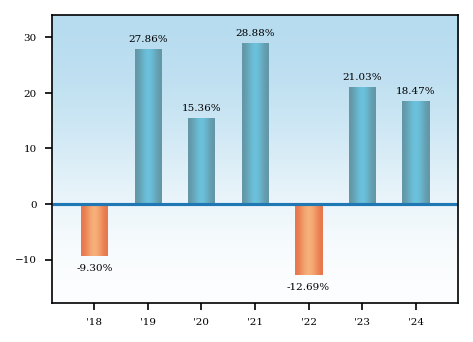
| Best Quarter: | 2nd Quarter 2020 | 21.40% |
| Worst Quarter: | 1st Quarter 2020 | (23.32%) |
Average Annual Total Returns - Main Sector Rotation ETF |
Label |
1 Year |
5 Years |
Since Inception |
Inception Date |
|
|---|---|---|---|---|---|---|
| Main Sector Rotation ETF | Return before taxes | 18.47% | 13.23% | 12.52% | Sep. 05, 2017 | |
| Main Sector Rotation ETF | After Taxes on Distributions | 18.35% | 12.98% | 12.21% | |||
| Main Sector Rotation ETF | After Taxes on Distributions and Sales | 11.03% | 10.54% | 10.13% | |||
| S&P 500 Total Return Index | [1] | 25.02% | 14.53% | 14.60% | ||
| [1] | The S&P 500 Total Return Index (the “Index”) is an unmanaged free-float capitalization-weighted index which measures the performance of 500 large-cap common stocks actively traded in the United States. Index returns assume reinvestment of dividends. Investors may not invest in the Index directly; unlike the Fund’s returns, the Index does not reflect any fees or expenses. |
Allocation Risk. If the Fund’s strategy for allocating assets among different sectors and sub sectors does not work as intended, the Fund may not achieve its objective or may underperform other funds with the same or similar investment strategy.
Authorized Participant Risk. Only an Authorized Participant that has entered into a contractual arrangement with the Fund’s distributor may engage in creation or redemption transactions directly with the Fund. The Fund’s distributor has entered into contracts with only a limited number of institutions that may act as Authorized Participants on an agency basis (i.e., on behalf of other market participants). To the extent that Authorized Participants exit the business or are unable to proceed with creation or redemption orders with respect to the Fund and no other Authorized Participant is able to step forward to create or redeem large blocks of Shares known as “Creation Units,” Shares may be more likely to trade at a premium or discount to net asset value (“NAV”) and possibly face trading halts or delisting. Authorized Participant concentration risk may be heightened for ETFs that invest in non-U.S. securities or other securities or instruments that have lower trading volumes.
Covered Call Risk. The writer of a covered call option forgoes any profit from increases in the market value of the underlying security covering the call option above the sum of the premium and the strike price of the call but retains the risk of loss if the underlying security declines in value. The Fund has no control over the exercise of the option by the option holder and may lose the benefit from any capital appreciation on the underlying security.
Derivatives Risk. The Fund’s use of options involves risks different from, or possibly greater than, the risks associated with investing directly in securities and other traditional investments. These risks include (i) the risk that the counterparty to a derivative transaction may not fulfill its contractual obligations; (ii) risk of mispricing or improper valuation; and (iii) the risk that changes in the value of the derivative may not correlate perfectly with the underlying asset, rate or index. Derivative prices are highly volatile and may fluctuate substantially during a short period of time.
| ● | Options Risk. There are risks associated with the sale and purchase of call and put options. As a seller (writer) of a put option, the Fund will tend to lose money if the value of the refence index or security falls below the strike price. As the seller (writer) of a call option, the Fund may experience lower returns if the value of the reference index or security rises above the strike price. |
| ● | Put Option Risk. Options may be subject to volatile swings in price influenced by changes in the value of the underlying instrument. Although the Fund collects premiums on the options it writes, the Fund’s risk of loss if its options expire in-the-money (i.e., the Fund, as the seller of puts, owes the buyer of the puts) may outweigh the gains to the Fund from the receipt of such options premiums. The potential return to the Fund is limited to the amount of option premiums it receives; however, the Fund can potentially lose up to the entire strike price of each option it sells. The puts sold by the Fund may not perfectly correlate with the returns of their underlying stocks. |
| ● | Options Risk. There are risks associated with the sale and purchase of call and put options. As a seller (writer) of a put option, the Fund will tend to lose money if the value of the refence index or security falls below the strike price. As the seller (writer) of a call option, the Fund may experience lower returns if the value of the reference index or security rises above the strike price. |
| ● | Put Option Risk. Options may be subject to volatile swings in price influenced by changes in the value of the underlying instrument. Although the Fund collects premiums on the options it writes, the Fund’s risk of loss if its options expire in-the-money (i.e., the Fund, as the seller of puts, owes the buyer of the puts) may outweigh the gains to the Fund from the receipt of such options premiums. The potential return to the Fund is limited to the amount of option premiums it receives; however, the Fund can potentially lose up to the entire strike price of each option it sells. The puts sold by the Fund may not perfectly correlate with the returns of their underlying stocks. |
Exchange-Traded Fund Risk. The ETFs in which the Fund invests will not be able to replicate exactly the performance of the indices they track because the total return generated by the securities will be reduced by transaction costs incurred in adjusting the actual balance of the securities. This may result in a loss. Certain securities comprising the indices tracked by the ETFs may, from time to time, temporarily be unavailable, which may further impede the ETFs’ ability to track their applicable indices. ETFs in which the Fund invests are subject to investment advisory and other expenses, which will be indirectly paid by the Fund. As a result, the cost of investing in the ETFs will be higher than the cost of investing directly in the ETFs underlying investments and may be higher than other mutual funds that invest directly in stocks and bonds. ETFs may also trade at a discount or premium to their net asset value.
ETF Structure Risk. The Fund is structured as an ETF and as a result is subject to special risks, including:
| ● | Not Individually Redeemable. Shares are not individually redeemable to retail investors and may be redeemed by the Fund only to Authorized Participants at NAV in Creation Units. An Authorized Participant may incur brokerage costs purchasing enough Shares to constitute a Creation Unit. |
| ● | Trading Issues. An active trading market for the Shares may not be developed or maintained. Trading in Shares on the Exchange may be halted due to market conditions or for reasons that, in the view of the Exchange, make trading in Shares inadvisable, such as extraordinary market volatility. |
| ● | Market Price Variance Risk. The market prices of Shares will fluctuate in response to changes in NAV and supply and demand for Shares and will include a “bid-ask spread” charged by the exchange specialists, market makers or other participants that trade the particular security. There may be times when the market price and the NAV vary significantly. This means that Shares may trade at a discount to NAV. |
| ○ | The market price for Shares may deviate from the Fund’s NAV, particularly during times of market stress, with the result that investors may pay significantly more or significantly less for Shares than the Fund’s NAV, which is reflected in the bid and ask price for Shares or in the closing price. |
| ● | Not Individually Redeemable. Shares are not individually redeemable to retail investors and may be redeemed by the Fund only to Authorized Participants at NAV in Creation Units. An Authorized Participant may incur brokerage costs purchasing enough Shares to constitute a Creation Unit. |
| ● | Trading Issues. An active trading market for the Shares may not be developed or maintained. Trading in Shares on the Exchange may be halted due to market conditions or for reasons that, in the view of the Exchange, make trading in Shares inadvisable, such as extraordinary market volatility. |
| ● | Market Price Variance Risk. The market prices of Shares will fluctuate in response to changes in NAV and supply and demand for Shares and will include a “bid-ask spread” charged by the exchange specialists, market makers or other participants that trade the particular security. There may be times when the market price and the NAV vary significantly. This means that Shares may trade at a discount to NAV. |
| ○ | The market price for Shares may deviate from the Fund’s NAV, particularly during times of market stress, with the result that investors may pay significantly more or significantly less for Shares than the Fund’s NAV, which is reflected in the bid and ask price for Shares or in the closing price. |
Fluctuation of Net Asset Value Risk. The NAV of Shares generally fluctuates with changes in the market value of the Fund’s holdings. The market prices of Shares generally fluctuate in accordance with changes in NAV as well as the relative supply of and demand for the shares on the Exchange. The Adviser cannot predict whether Shares will trade below, at or above their NAV. Price differences may be due, in large part, to the fact that supply and demand forces at work in the secondary trading market for the shares will be closely related to, but not identical to, the same forces influencing the prices of the Fund’s holdings trading individually or in the aggregate at any point in time. In addition, unlike conventional ETFs, the Fund is not an index fund. The Fund is actively managed and does not seek to replicate the performance of a specified index. Index based ETFs have generally traded at prices which closely correspond to NAV per share. Actively managed ETFs have a limited trading history and, therefore, there can be no assurance as to whether and/or the extent to which Shares will trade at premiums or discounts to NAV.
Management Risk. The portfolio managers’ judgments about the attractiveness, value and potential appreciation of particular stocks or other securities in which the Fund invests may prove to be incorrect and there is no guarantee that the portfolio managers’ judgment will produce the desired results.
Market and Geopolitical Risk. The increasing interconnectivity between global economies and financial markets increases the likelihood that events or conditions in one region or financial market may adversely impact issuers in a different country, region or financial market. Securities in the Fund’s portfolio may underperform due to inflation (or expectations for inflation), interest rates, global demand for particular products or resources, natural disasters, climate-change and climate-related events, pandemics, epidemics, terrorism, international conflicts, regulatory events and governmental or quasi-governmental actions. The occurrence of global events similar to those in recent years may result in market volatility and may have long term effects on both the U.S. and global financial markets.
Sector Risk. The Fund may have significant exposure to a limited number of issuers conducting business in the same sector or group of sectors. Market conditions, interest rates, and economic, regulatory, or financial developments could significantly affect a single sector or a group of sectors, and the securities of companies in that sector or group of sectors could react similarly to these or other developments. If the Fund invests more heavily in a particular sector, the value of Shares may be especially sensitive to factors and economic risks that specifically affect that sector. As a result, Share price may fluctuate more widely than the value of shares of a fund that invests in a broader range of sectors. Additionally, some sectors could be subject to greater government regulation than other sectors. Therefore, changes in regulatory policies for those sectors may have a material effect on the value of securities issued by companies in those sectors.
Small and Medium Capitalization Securities Risk. The earnings and prospects of small and medium sized companies are more volatile than larger companies and may experience higher failure rates than larger companies. Small and medium sized companies normally have a lower trading volume than larger companies, which may tend to make their market price fall more disproportionately than larger companies in response to selling pressures and may have limited markets, product lines, or financial resources and lack management experience.
Currency Risk. Investments in foreign currencies are subject to political and economic risks, civil conflicts and war and greater volatility. Currency rates in foreign countries may fluctuate significantly over short periods of time for a number of reasons, including changes in interest rates, imposition of currency controls and economic or political developments in the U.S. or abroad.
Equity Risk. Equity securities are susceptible to general stock market fluctuations and to volatile increases and decreases in value. The equity securities held by the Fund may experience sudden, unpredictable drops in value or long periods of decline in value. This may occur because of factors affecting securities markets generally, the equity securities of a particular sector, or a particular company.
Foreign Securities Risk. Foreign companies are generally not subject to the same regulatory requirements of U.S. companies thereby resulting in less publicly available information about these companies. In addition, foreign accounting, auditing and financial reporting standards generally differ from those applicable to U.S. companies.
Fund of Funds Risk. The ability of the Fund to meet its investment objective is directly related to the ability of the underlying funds in which it invests and their respective investment managers, to meet their investment objectives. Certain investment managers may be dependent upon a single individual or small group of individuals, the loss of which could adversely affect their success. There can be no assurance that any underlying fund will achieve its investment objectives.
Index Call Option Risk. Because the exercise of index options is settled in cash, sellers of index call options, such as the Fund, cannot provide in advance for their potential settlement obligations by acquiring and holding the underlying securities. The Fund bears a risk that the value of the securities held by the Fund will vary from the value of the index and relative to the written index call option positions. Accordingly, the Fund may incur losses on the index call options that it has sold that exceed gains on other securities in its portfolio. The value of index options written by the Fund, which are priced daily, are affected by changes in the value of and dividend rates of the underlying common stocks in the index, changes in the actual or perceived volatility of the stock market and the remaining time to the options’ expiration. The value of the index options also may be adversely affected if the market for the index options becomes less liquid or smaller.
Large Capitalization Securities Risk. The value of investments in larger companies may not rise as much as smaller companies, or larger companies may be unable to respond quickly to competitive challenges, such as changes in technology and consumer tastes.
Main Thematic Innovation ETF (“the Fund”) seeks to outperform the MSCI ACWI Index® in rising markets while limiting losses during periods of decline.
This table describes the fees and expenses that you may pay if you buy, hold, and sell shares of the Fund (“Shares”). You may pay other fees, such as brokerage commissions and other fees to financial intermediaries, which are not reflected in the table and example below.
Annual Fund Operating Expenses |
Main Thematic Innovation ETF
Main Thematic Innovation ETF
|
|---|---|
| Management Fees | 0.65% |
| Distribution and Service (12b-1) Fees | none |
| Other Expenses | 0.20% |
| Total Annual Fund Operating Expenses | 0.85% |
This Example is intended to help you compare the cost of investing in the Fund with the cost of investing in other funds.
Expense Example |
Expense Example, with Redemption, 1 Year |
Expense Example, with Redemption, 3 Years |
Expense Example, with Redemption, 5 Years |
Expense Example, with Redemption, 10 Years |
|---|---|---|---|---|
| Main Thematic Innovation ETF | Main Thematic Innovation ETF | USD ($) | 87 | 271 | 471 | 1,049 |
The Fund pays transaction costs, such as commissions, when it buys and sells securities (or “turns over” its portfolio). A higher portfolio turnover may indicate higher transaction costs and may result in higher taxes when Fund shares are held in a taxable account. These costs, which are not reflected in annual fund operating expenses or in the Example, affect the Fund’s performance. During the fiscal year ended October 31, 2024, the Fund’s portfolio turnover rate was 39% of the average value of its portfolio.
The Fund invests in theme-based domestic equity securities of any market capitalization. The Fund seeks to achieve its objective through dynamic thematic rotation. The Fund’s adviser, Main Management ETF Advisors, LLC (the “Adviser”), focuses its research primarily on identifying emerging, disruptive, and innovative themes that have an “addressable market”, i.e., a large market demand. These themes may include genomics, fintech, e-commerce, robotics, artificial intelligence, cyber security, clean energy, cloud computing, autonomous tech, gaming & e-sports, and pet care. The Adviser rotates among themes with large addressable markets which may range from nascent technologies to those on the cusp of widespread adoption and buys securities of companies representing those themes.
The portfolio managers set price targets for each position and revisit a position when the price target is met, revising upwards when deemed appropriate or selling when the investment committee concludes the theme has either run its course or is no longer likely to provide further exposure to growth, disruption, or innovation. Looking for themes with large market demand may mean price targets are revised upwards multiple times. The holding period is long-term as it may take years or even decades for themes to realize their full potential.
The Adviser rebalances the Fund’s portfolio when the investment committee deems appropriate given the longer-term nature of thematic development and the Fund’s objective of seeking maximum return. From time to time, the Fund may use a covered call or covered put option strategy in an attempt to dampen volatility and generate additional returns.
The Fund is an actively managed exchange-traded fund (“ETF”) and does not seek to replicate the performance of a specified index. In selecting investments for the Fund’s portfolio, the Adviser adheres to the investment process described below.
Assessing Market Conditions. The Adviser determines the Fund’s target allocations by analyzing developing and ongoing technological and behavioral themes and their underlying addressable markets. The Adviser identifies themes consisting of securities in the aggregate that are poised for significant growth, disruption, or innovation. To identify such themes, the Adviser analyzes economic growth forecasts, changes in the factors driving growth, behavioral patterns among consumers, as well as other macroeconomic fundamentals. In addition, the Adviser considers fundamental factors such as Price to Growth, Price to Earnings, Price to Book, and Price to Sales. The growth rate and size of the addressable market are the primary metrics of consideration.
Identifying the Appropriate Investments. The Adviser then seeks to identify over 100 equity securities representing these themes to implement its strategic asset allocation and thematic views. At any given time, the Fund may have a significant percentage of its assets invested in one or more sectors than other sectors.
Option Strategy. The Fund may from time to time incorporate a covered call option writing strategy. Covered call option writing is an investment strategy of writing (selling) call options against securities owned by the Fund to generate additional returns from the option premium. The Fund may also seek returns by writing (selling) secured put options. The Fund may seek to hedge downside risk by purchasing protective puts. A “put option” is an option contract that gives the owner the right to sell the underlying security at a specified price (the strike price) until its expiration at a fixed date in the future. The Fund seeks to achieve risk-adjusted returns through targeted allocations by analyzing interest and currency rates, inflation trends, economic growth forecasts, and other global and capital market fundamentals. The Fund’s option strategy may also have the benefit of reducing the volatility of the Fund’s portfolio in comparison to that of broad equity market indexes.
As with all funds, there is a risk that you could lose money through your investment in the Fund. Many factors affect the Fund’s net asset value and price of shares and performance.
The following describes the risks of investing in the Fund. As with any ETF, there is no guarantee that the Fund will achieve its goal.
Allocation Risk. If the Fund’s strategy for allocating assets among different sectors and sub sectors does not work as intended, the Fund may not achieve its objective or may underperform other funds with the same or similar investment strategy.
Authorized Participant Risk. Only an Authorized Participant that has entered into a contractual arrangement with the Fund’s distributor may engage in creation or redemption transactions directly with the Fund. The Fund’s distributor has entered into contracts with only a limited number of institutions that may act as Authorized Participants on an agency basis (i.e., on behalf of other market participants). To the extent that Authorized Participants exit the business or are unable to proceed with creation or redemption orders with respect to the Fund and no other Authorized Participant is able to step forward to create or redeem large blocks of Shares known as “Creation Units,” Shares may be more likely to trade at a premium or discount to net asset value (“NAV”) and possibly face trading halts or delisting. Authorized Participant concentration risk may be heightened for ETFs that invest in non-U.S. securities or other securities or instruments that have lower trading volumes.
Covered Call Risk. The writer of a covered call option forgoes any profit from increases in the market value of the underlying security covering the call option above the sum of the premium and the strike price of the call but retains the risk of loss if the underlying security declines in value. The Fund has no control over the exercise of the option by the option holder and may lose the benefit from any capital appreciation on the underlying security.
Derivatives Risk. The Fund’s use of options involves risks different from, or possibly greater than, the risks associated with investing directly in securities and other traditional investments. These risks include (i) the risk that the counterparty to a derivative transaction may not fulfill its contractual obligations; (ii) the risk of mispricing or improper valuation; and (iii) the risk that changes in the value of an option may not correlate perfectly with the underlying asset, rate or index. Derivative prices may be highly volatile at times and may fluctuate substantially during a short period of time.
| ● | Options Risk. There are risks associated with the sale and purchase of call and put options. As a seller (writer) of a put option, the Fund will tend to lose money if the value of the reference index or security falls below the strike price. As the seller (writer) of a call option, the Fund may experience lower returns if the value of the reference index or security rises above the strike price. |
| ● | Put Option Risk. Options may be subject to volatile swings in price influenced by changes in the value of the underlying instrument. Although the Fund collects premiums on the options it writes, the Fund’s risk of loss if its options expire in-the-money (i.e., the Fund, as the seller of puts, owes the buyer of the puts) may outweigh the gains to the Fund from the receipt of such option premiums. The potential return to the Fund is limited to the amount of option premiums it receives; however, the Fund can potentially lose up to the entire strike price of each option it sells. The puts sold by the Fund may not perfectly correlate with the returns of their underlying stocks. |
ETF Structure Risk. The Fund is structured as an ETF and as a result is subject to special risks, including:
| ● | Not Individually Redeemable. Shares are not individually redeemable to retail investors and may be redeemed by the Fund only to Authorized Participants at NAV in Creation Units. An Authorized Participant may incur brokerage costs purchasing enough Shares to constitute a Creation Unit. |
| ● | Trading Issues. An active trading market for Shares may not be developed or maintained. Trading in Shares on the Exchange may be halted due to market conditions or for reasons that, in the view of the Exchange, make trading in Shares inadvisable, such as extraordinary market volatility. |
| ● | Market Price Variance Risk. The market prices of Shares will fluctuate in response to changes in NAV and supply and demand for Shares and will include a “bid-ask spread” charged by the exchange specialists, market makers or other participants that trade the particular security. There may be times when the market price and the NAV vary significantly. This means that Shares may trade at a discount to NAV. |
| ○ | The market price for Shares may deviate from the Fund’s NAV, particularly during times of market stress, with the result that investors may pay significantly more or significantly less for Shares than the Fund’s NAV, which is reflected in the bid and ask price for Shares or in the closing price. |
Equity Risk. Equity securities are susceptible to general stock market fluctuations and to volatile increases and decreases in value. The equity securities held by the Fund may experience sudden, unpredictable drops in value or long periods of decline in value. This may occur because of factors affecting securities markets generally, the equity securities of a particular sector, or a particular company.
Fluctuation of Net Asset Value Risk. The NAV of Shares generally fluctuates with changes in the market value of the Fund’s holdings. The market prices of Shares generally fluctuate in accordance with changes in NAV as well as the relative supply of and demand for the shares on the Exchange. The Adviser cannot predict whether Shares will trade below, at or above their NAV. Price differences may be due, in large part, to the fact that supply and demand forces at work in the secondary trading market for the shares will be closely related to, but not identical to, the same forces influencing the prices of the Fund’s holdings trading individually or in the aggregate at any point in time. In addition, unlike conventional ETFs, the Fund is not an index fund. The Fund is actively managed and does not seek to replicate the performance of a specified index. Index based ETFs have generally traded at prices which closely correspond to NAV per share. Actively managed ETFs have a limited trading history and, therefore, there can be no assurance as to whether and/or the extent to which Shares will trade at premiums or discounts to NAV.
Index Call Option Risk. Because the exercise of index options is settled in cash, sellers of index call options, such as the Fund, cannot provide in advance for their potential settlement obligations by acquiring and holding the underlying securities. The Fund bears a risk that the value of the securities held by the Fund will vary from the value of the index and relative to the written index call option positions. Accordingly, the Fund may incur losses on the index call options that it has sold that exceed gains on other securities in its portfolio. The value of index options written by the Fund, which are priced daily, are affected by changes in the value of and dividend rates of the underlying common stocks in the index, changes in the actual or perceived volatility of the stock market and the remaining time to the options’ expiration. The value of the index options also may be adversely affected if the market for the index options becomes less liquid or smaller.
Large Capitalization Securities Risk. The value of investments in larger companies may not rise as much as smaller companies, or larger companies may be unable to respond quickly to competitive challenges, such as changes in technology and consumer tastes.
Management Risk. The portfolio managers’ judgments about the attractiveness, value and potential appreciation of particular stocks or other securities in which the Fund invests may prove to be incorrect and there is no guarantee that the portfolio managers’ judgment will produce the desired results.
Market and Geopolitical Risk. The increasing interconnectivity between global economies and financial markets increases the likelihood that events or conditions in one region or financial market may adversely impact issuers in a different country, region or financial market. Securities in the Fund’s portfolio may underperform due to inflation (or expectations for inflation), interest rates, global demand for particular products or resources, natural disasters, climate-change and climate-related events, pandemics, epidemics, terrorism, international conflicts, regulatory events and governmental or quasi-governmental actions. The occurrence of global events similar to those in recent years may result in market volatility and may have long term effects on both the U.S. and global financial markets.
Sector Risk. The Fund may have significant exposure to a limited number of issuers conducting business in the same sector or group of sectors. Market conditions, interest rates, and economic, regulatory, or financial developments could significantly affect a single sector or a group of sectors, and the securities of companies in that sector or group of sectors could react similarly to these or other developments. If the Fund invests more heavily in a particular sector, the value Shares may be especially sensitive to factors and economic risks that specifically affect that sector. As a result, Share price may fluctuate more widely than the value of shares of a fund that invests in a broader range of sectors. Additionally, some sectors could be subject to greater government regulation than other sectors. Therefore, changes in regulatory policies for those sectors may have a material effect on the value of securities issued by companies in those sectors.
| ● | Information Technology Sector Risk. Technology companies face intense competition, both domestically and internationally, which may have an adverse effect on profit margins. Technology companies may have limited product lines, markets, financial resources or personnel. The products of technology companies may face obsolescence due to rapid technological developments and frequent new product introduction, unpredictable changes in growth rates and competition for the services of qualified personnel. Companies in the technology sector are heavily dependent on patent and intellectual property rights. The loss or impairment of these rights may adversely affect the profitability of these companies. |
Small and Medium Capitalization Securities Risk. The earnings and prospects of small and medium sized companies are more volatile than larger companies and may experience higher failure rates than larger companies. Small and medium sized companies normally have a lower trading volume than larger companies, which may tend to make their market price fall more disproportionately than larger companies in response to selling pressures and may have limited markets, product lines, or financial resources and lack management experience.
The bar chart and performance table below show the variability of the Fund’s returns, which is some indication of the risks of investing in the Fund. The bar chart shows performance of the Fund’s shares for each calendar year since the Fund’s inception. The performance table compares the performance of the Fund over time to the performance of a broad-based securities market index. You should be aware that the Fund’s past performance (before and after taxes) is not necessarily an indication of how the Fund will perform in the future. Updated performance information is available at no cost by visiting www.mainmgtetfs.com or by calling 1-866-ETF-XPRT (1-866- 383-9778).
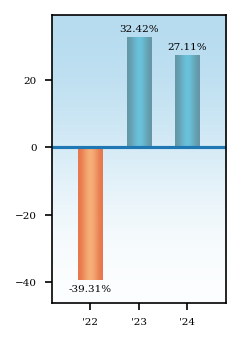
| Best Quarter: | 4th Quarter 2023 | 20.62% |
| Worst Quarter: | 2nd Quarter 2022 | (23.21%) |
Average Annual Total Returns - Main Thematic Innovation ETF |
Label |
1 Year |
Since Inception |
Inception Date |
|
|---|---|---|---|---|---|
| Main Thematic Innovation ETF | Return before taxes | 27.11% | (4.43%) | Jan. 28, 2021 | |
| Main Thematic Innovation ETF | After Taxes on Distributions | 27.11% | (4.47%) | |||
| Main Thematic Innovation ETF | After Taxes on Distributions and Sales | 16.05% | (3.34%) | |||
| MSCI AC World Index | [1] | 17.49% | 8.38% | ||
| [1] | The MSCI AC World Index (the “Index”) is designed to represent performance of the full opportunity set of large- and mid-cap stocks across 23 developed and 27 emerging markets. Index returns assume reinvestment of dividends. Investors may not invest in the Index directly; unlike the Fund’s returns, the Index does not reflect any fees or expenses. |
Allocation Risk. If the Fund’s strategy for allocating assets among different sectors and sub sectors does not work as intended, the Fund may not achieve its objective or may underperform other funds with the same or similar investment strategy.
Authorized Participant Risk. Only an Authorized Participant that has entered into a contractual arrangement with the Fund’s distributor may engage in creation or redemption transactions directly with the Fund. The Fund’s distributor has entered into contracts with only a limited number of institutions that may act as Authorized Participants on an agency basis (i.e., on behalf of other market participants). To the extent that Authorized Participants exit the business or are unable to proceed with creation or redemption orders with respect to the Fund and no other Authorized Participant is able to step forward to create or redeem large blocks of Shares known as “Creation Units,” Shares may be more likely to trade at a premium or discount to net asset value (“NAV”) and possibly face trading halts or delisting. Authorized Participant concentration risk may be heightened for ETFs that invest in non-U.S. securities or other securities or instruments that have lower trading volumes.
Covered Call Risk. The writer of a covered call option forgoes any profit from increases in the market value of the underlying security covering the call option above the sum of the premium and the strike price of the call but retains the risk of loss if the underlying security declines in value. The Fund has no control over the exercise of the option by the option holder and may lose the benefit from any capital appreciation on the underlying security.
Derivatives Risk. The Fund’s use of options involves risks different from, or possibly greater than, the risks associated with investing directly in securities and other traditional investments. These risks include (i) the risk that the counterparty to a derivative transaction may not fulfill its contractual obligations; (ii) the risk of mispricing or improper valuation; and (iii) the risk that changes in the value of an option may not correlate perfectly with the underlying asset, rate or index. Derivative prices may be highly volatile at times and may fluctuate substantially during a short period of time.
| ● | Options Risk. There are risks associated with the sale and purchase of call and put options. As a seller (writer) of a put option, the Fund will tend to lose money if the value of the reference index or security falls below the strike price. As the seller (writer) of a call option, the Fund may experience lower returns if the value of the reference index or security rises above the strike price. |
| ● | Put Option Risk. Options may be subject to volatile swings in price influenced by changes in the value of the underlying instrument. Although the Fund collects premiums on the options it writes, the Fund’s risk of loss if its options expire in-the-money (i.e., the Fund, as the seller of puts, owes the buyer of the puts) may outweigh the gains to the Fund from the receipt of such option premiums. The potential return to the Fund is limited to the amount of option premiums it receives; however, the Fund can potentially lose up to the entire strike price of each option it sells. The puts sold by the Fund may not perfectly correlate with the returns of their underlying stocks. |
| ● | Options Risk. There are risks associated with the sale and purchase of call and put options. As a seller (writer) of a put option, the Fund will tend to lose money if the value of the reference index or security falls below the strike price. As the seller (writer) of a call option, the Fund may experience lower returns if the value of the reference index or security rises above the strike price. |
| ● | Put Option Risk. Options may be subject to volatile swings in price influenced by changes in the value of the underlying instrument. Although the Fund collects premiums on the options it writes, the Fund’s risk of loss if its options expire in-the-money (i.e., the Fund, as the seller of puts, owes the buyer of the puts) may outweigh the gains to the Fund from the receipt of such option premiums. The potential return to the Fund is limited to the amount of option premiums it receives; however, the Fund can potentially lose up to the entire strike price of each option it sells. The puts sold by the Fund may not perfectly correlate with the returns of their underlying stocks. |
ETF Structure Risk. The Fund is structured as an ETF and as a result is subject to special risks, including:
| ● | Not Individually Redeemable. Shares are not individually redeemable to retail investors and may be redeemed by the Fund only to Authorized Participants at NAV in Creation Units. An Authorized Participant may incur brokerage costs purchasing enough Shares to constitute a Creation Unit. |
| ● | Trading Issues. An active trading market for Shares may not be developed or maintained. Trading in Shares on the Exchange may be halted due to market conditions or for reasons that, in the view of the Exchange, make trading in Shares inadvisable, such as extraordinary market volatility. |
| ● | Market Price Variance Risk. The market prices of Shares will fluctuate in response to changes in NAV and supply and demand for Shares and will include a “bid-ask spread” charged by the exchange specialists, market makers or other participants that trade the particular security. There may be times when the market price and the NAV vary significantly. This means that Shares may trade at a discount to NAV. |
| ○ | The market price for Shares may deviate from the Fund’s NAV, particularly during times of market stress, with the result that investors may pay significantly more or significantly less for Shares than the Fund’s NAV, which is reflected in the bid and ask price for Shares or in the closing price. |
| ● | Not Individually Redeemable. Shares are not individually redeemable to retail investors and may be redeemed by the Fund only to Authorized Participants at NAV in Creation Units. An Authorized Participant may incur brokerage costs purchasing enough Shares to constitute a Creation Unit. |
| ● | Trading Issues. An active trading market for Shares may not be developed or maintained. Trading in Shares on the Exchange may be halted due to market conditions or for reasons that, in the view of the Exchange, make trading in Shares inadvisable, such as extraordinary market volatility. |
| ● | Market Price Variance Risk. The market prices of Shares will fluctuate in response to changes in NAV and supply and demand for Shares and will include a “bid-ask spread” charged by the exchange specialists, market makers or other participants that trade the particular security. There may be times when the market price and the NAV vary significantly. This means that Shares may trade at a discount to NAV. |
| ○ | The market price for Shares may deviate from the Fund’s NAV, particularly during times of market stress, with the result that investors may pay significantly more or significantly less for Shares than the Fund’s NAV, which is reflected in the bid and ask price for Shares or in the closing price. |
Fluctuation of Net Asset Value Risk. The NAV of Shares generally fluctuates with changes in the market value of the Fund’s holdings. The market prices of Shares generally fluctuate in accordance with changes in NAV as well as the relative supply of and demand for the shares on the Exchange. The Adviser cannot predict whether Shares will trade below, at or above their NAV. Price differences may be due, in large part, to the fact that supply and demand forces at work in the secondary trading market for the shares will be closely related to, but not identical to, the same forces influencing the prices of the Fund’s holdings trading individually or in the aggregate at any point in time. In addition, unlike conventional ETFs, the Fund is not an index fund. The Fund is actively managed and does not seek to replicate the performance of a specified index. Index based ETFs have generally traded at prices which closely correspond to NAV per share. Actively managed ETFs have a limited trading history and, therefore, there can be no assurance as to whether and/or the extent to which Shares will trade at premiums or discounts to NAV.
Management Risk. The portfolio managers’ judgments about the attractiveness, value and potential appreciation of particular stocks or other securities in which the Fund invests may prove to be incorrect and there is no guarantee that the portfolio managers’ judgment will produce the desired results.
Market and Geopolitical Risk. The increasing interconnectivity between global economies and financial markets increases the likelihood that events or conditions in one region or financial market may adversely impact issuers in a different country, region or financial market. Securities in the Fund’s portfolio may underperform due to inflation (or expectations for inflation), interest rates, global demand for particular products or resources, natural disasters, climate-change and climate-related events, pandemics, epidemics, terrorism, international conflicts, regulatory events and governmental or quasi-governmental actions. The occurrence of global events similar to those in recent years may result in market volatility and may have long term effects on both the U.S. and global financial markets.
Sector Risk. The Fund may have significant exposure to a limited number of issuers conducting business in the same sector or group of sectors. Market conditions, interest rates, and economic, regulatory, or financial developments could significantly affect a single sector or a group of sectors, and the securities of companies in that sector or group of sectors could react similarly to these or other developments. If the Fund invests more heavily in a particular sector, the value Shares may be especially sensitive to factors and economic risks that specifically affect that sector. As a result, Share price may fluctuate more widely than the value of shares of a fund that invests in a broader range of sectors. Additionally, some sectors could be subject to greater government regulation than other sectors. Therefore, changes in regulatory policies for those sectors may have a material effect on the value of securities issued by companies in those sectors.
| ● | Information Technology Sector Risk. Technology companies face intense competition, both domestically and internationally, which may have an adverse effect on profit margins. Technology companies may have limited product lines, markets, financial resources or personnel. The products of technology companies may face obsolescence due to rapid technological developments and frequent new product introduction, unpredictable changes in growth rates and competition for the services of qualified personnel. Companies in the technology sector are heavily dependent on patent and intellectual property rights. The loss or impairment of these rights may adversely affect the profitability of these companies. |
Equity Risk. Equity securities are susceptible to general stock market fluctuations and to volatile increases and decreases in value. The equity securities held by the Fund may experience sudden, unpredictable drops in value or long periods of decline in value. This may occur because of factors affecting securities markets generally, the equity securities of a particular sector, or a particular company.
Index Call Option Risk. Because the exercise of index options is settled in cash, sellers of index call options, such as the Fund, cannot provide in advance for their potential settlement obligations by acquiring and holding the underlying securities. The Fund bears a risk that the value of the securities held by the Fund will vary from the value of the index and relative to the written index call option positions. Accordingly, the Fund may incur losses on the index call options that it has sold that exceed gains on other securities in its portfolio. The value of index options written by the Fund, which are priced daily, are affected by changes in the value of and dividend rates of the underlying common stocks in the index, changes in the actual or perceived volatility of the stock market and the remaining time to the options’ expiration. The value of the index options also may be adversely affected if the market for the index options becomes less liquid or smaller.
Large Capitalization Securities Risk. The value of investments in larger companies may not rise as much as smaller companies, or larger companies may be unable to respond quickly to competitive challenges, such as changes in technology and consumer tastes.
| ● | Information Technology Sector Risk. Technology companies face intense competition, both domestically and internationally, which may have an adverse effect on profit margins. Technology companies may have limited product lines, markets, financial resources or personnel. The products of technology companies may face obsolescence due to rapid technological developments and frequent new product introduction, unpredictable changes in growth rates and competition for the services of qualified personnel. Companies in the technology sector are heavily dependent on patent and intellectual property rights. The loss or impairment of these rights may adversely affect the profitability of these companies. |
Small and Medium Capitalization Securities Risk. The earnings and prospects of small and medium sized companies are more volatile than larger companies and may experience higher failure rates than larger companies. Small and medium sized companies normally have a lower trading volume than larger companies, which may tend to make their market price fall more disproportionately than larger companies in response to selling pressures and may have limited markets, product lines, or financial resources and lack management experience.
The Fund seeks to outperform the MSCI All Country World ex-USA Index® (the “Index”) over a full market cycle while maintaining below-benchmark risk.
This table describes the fees and expenses that you may pay if you buy, hold and sell shares of the Fund (“Shares”). You may pay other fees, such as brokerage commissions and other fees to financial intermediaries, which are not reflected in the table and Example below.
Annual Fund Operating Expenses |
Main International ETF
Main International ETF
|
|
|---|---|---|
| Management Fees | 0.55% | |
| Distribution and Service (12b-1) Fees | none | |
| Other Expenses | 0.18% | |
| Acquired Fund Fees and Expenses | 0.30% | [1] |
| Total Annual Fund Operating Expenses | 1.03% | |
| [1] | Acquired Fund Fees and Expenses are the indirect costs of investing in other investment companies. |
This Example is intended to help you compare the cost of investing in the Fund with the cost of investing in other funds. The Example reflects the fee waiver and expense reimbursements for the duration of the waiver/reimbursement period only.
Expense Example |
Expense Example, with Redemption, 1 Year |
Expense Example, with Redemption, 3 Years |
Expense Example, with Redemption, 5 Years |
Expense Example, with Redemption, 10 Years |
|---|---|---|---|---|
| Main International ETF | Main International ETF | USD ($) | 105 | 328 | 569 | 1,259 |
The Fund pays transaction costs, such as commissions, when it buys and sells securities (or “turns over” its portfolio). A higher portfolio turnover may indicate higher transaction costs and may result in higher taxes when Fund shares are held in a taxable account. These costs, which are not reflected in annual fund operating expenses or in the Example, affect the Fund’s performance. The Fund has only recently commenced operations. During the fiscal year ended October 31, 2024, the Fund’s portfolio turnover rate was 37% of the average value of its portfolio.
The Fund utilizes a “fund of funds” structure to invest in exchange traded funds (“ETFs”) that primarily provide exposure to non-U.S. equity securities of companies of any capitalization representing sectors and geographic regions that appear undervalued in comparison to their historical average price. The Adviser focuses its research on global macro-economic factors (relevant to the economy in general), micro-economic factors (relevant to individual companies) and fundamental factors (financial information that impacts the price or perceived value of a stock) to assess whether a sector or geographic region is expected to undergo a transformative change that could lead to near-term price appreciation of companies within that sector or region. Under normal circumstances, the Fund invests at least 50% of its total assets in funds that invest at least 50% of their respective total assets in securities of non-U.S. issuers organized or having their principal place of business outside the U.S.
The portfolio managers set price targets for each position and revisit a position when the price target is met, revising upwards when deemed appropriate or selling when the portfolio managers conclude the position no longer provides exposure to undervalued companies on the brink of a transformative change.
The Adviser rebalances the Fund’s portfolio when the portfolio managers deem appropriate. Given the longer-term nature of the Fund, an automatic monthly or quarterly rebalancing policy could be counterproductive to the Fund’s objective of seeking maximum return. From time to time, the Fund may use a covered call or covered put option strategy in an attempt to dampen volatility and generate additional returns.
The Fund is an actively managed ETF and does not seek to replicate the performance of a specified index. In selecting investments for the Fund’s portfolio, the Adviser adheres to the following investment process:
Assessing Market Conditions: The Adviser determines the Fund’s target allocations by identifying sectors (and their underlying industries and sub-industries) countries and regions it believes are poised for significant economic growth. To identify such sectors, countries and regions, the Adviser analyzes economic growth forecasts, changes in the factors driving growth, behavioral patterns among consumers, as well as other macroeconomic fundamentals over a 6- to 18-month horizon. The Adviser uses the Global Industry Classification Standard (“GICS”) in its sector analysis and may invest in country-specific sector funds. GICS sectors include: energy, materials, industrials, consumer discretionary, consumer staples, healthcare, financials, information technology, communication services, utilities and real estate.
Identifying the Appropriate ETFs: The Adviser then seeks to identify 5-20 index or actively managed ETFs to implement its strategic asset allocation by evaluating various factors in the respective ETFs including the respective underlying indexes they seek to track and portfolio holdings, sector exposure and weightings, liquidity profiles, and tracking error. At any given time, the Fund may have a significant percentage of its assets invested in one or more sectors or in one or more countries or geographic regions.
Option Strategy: The Fund pursues its objective by employing an option strategy of writing (selling) covered call or index based options on an amount from 0% to 100% of the value of the ETF shares in the Fund’s portfolio. The Fund seeks to earn income and gains both from dividends paid on the ETFs owned by the Fund and cash premiums received from writing or “selling”:
| ● | covered call options or index based options on equity based ETFs held in the Fund’s portfolio and |
| ● | cash secured put options against cash balances in the Fund. |
The Fund may not sell “naked” put or call options, i.e., equity options representing more shares of an ETF than the Fund has cash on hand and available to purchase or index options greater than the value of the underlying security.
Stock index options are put options and call options on various stock indices. The primary difference between stock options and index options occurs when index options are exercised. In the case of stock options, the underlying security, common stock, is delivered. However, upon the exercise of an index option, settlement does not occur by delivery of the securities comprising the index.
The option holder exercising the index option receives an amount of cash if the closing level of the stock index upon which the option is based is greater than, in the case of a call, or less than, in the case of a put, the exercise price of the option. This amount of cash is equal to the difference between the closing price of the stock index and the exercise price of the option expressed in dollars time a specified multiple.
A stock index fluctuates with changes in the market value of the stocks included in the index. A call option on a security is a contract that gives the holder of the option, in return for a premium, the right, but not the obligation, to buy from the writer of the option the security underlying the option at a specified exercise or “strike” price by or before the contract’s expiration. A put option on a security is a contract that gives the holder of the option, in return for a premium, the right to sell to the writer of the option the security underlying the option at a specified exercise or “strike” price. The writer of an option on a security has the obligation upon exercise of the option to purchase the underlying security at the exercise price. The Adviser’s option strategy typically targets one-month to three-month options. Options of any exercise price or maturity may be utilized.
The Fund may seek investment exposure to shares of bitcoin ETFs that are registered with the SEC. Under normal circumstances, no more than 15% of the Fund’s assets may be invested directly in bitcoin ETFs.
As with all funds, there is the risk that you could lose money through your investment in the Fund. Many factors affect the Fund’s net asset value and price of shares and performance.
The following describes the risks the Fund bears directly or indirectly through investments in underlying ETFs. As with any ETF, there is no guarantee that the Fund will achieve its goal.
Allocation Risk. If the Fund’s strategy for allocating assets among different sectors and countries does not work as intended, the Fund may not achieve its objective or may underperform other funds with the same or similar investment strategy.
Authorized Participant Risk. Only an Authorized Participant that has entered into a contractual arrangement with the Fund’s distributor may engage in creation or redemption transactions directly with the Fund. The Fund’s distributor has entered into contracts with only a limited number of institutions that may act as Authorized Participants on an agency basis (i.e., on behalf of other market participants). To the extent that Authorized Participants exit the business or are unable to proceed with creation or redemption orders with respect to the Fund and no other Authorized Participant is able to step forward to create or redeem large blocks of shares known as “Creation Units,” Fund shares may be more likely to trade at a premium or discount to net asset value and possibly face trading halts or delisting. Authorized Participant concentration risk may be heightened for ETFs that invest in non-U.S. securities or other securities or instruments that have lower trading volumes.
Covered Call Risk. The writer of a covered call option forgoes any profit from increases in the market value of the underlying security covering the call option above the sum of the premium and the strike price of the call but retains the risk of loss if the underlying security declines in value. The Fund has no control over the exercise of the option by the option holder and may lose the benefit from any capital appreciation on the underlying security.
Currency Risk. Investments in foreign currencies are subject to political and economic risks, civil conflicts and war and greater volatility. Currency rates in foreign countries may fluctuate significantly over short periods of time for a number of reasons, including changes in interest rates, imposition of currency controls and economic or political developments in the U.S. or abroad.
Derivatives Risk. The Fund’s use of options involves risks different from, or possibly greater than, the risks associated with investing directly in securities and other traditional investments. These risks include (i) the risk that the counterparty to a derivative transaction may not fulfill its contractual obligations; (ii) the risk of mispricing or improper valuation; and (iii) the risk that changes in the value of an option may not correlate perfectly with the underlying asset, rate or index. Derivative prices may be highly volatile at times and may fluctuate substantially during a short period of time.
| ● | Leverage and Volatility Risk. Derivative contracts ordinarily have leverage inherent in their terms. The low margin deposits normally required in trading derivatives, including futures contracts, permit a high degree of leverage. Accordingly, a relatively small price movement may result in an immediate and substantial loss to the Fund. The use of leveraged derivatives can amplify the effects of market volatility on the Fund’s share price. |
| ● | Options Risk. There are risks associated with the sale and purchase of call and put options. As a seller (writer) of a put option, the Fund will tend to lose money if the value of the underlying security falls below a specified price. As the seller (writer) of a call option, the Fund may experience lower returns if the value of the underlying security rises above a specified price. |
| ● | Put Option Risk. Options may be subject to volatile swings in price influenced by changes in the value of the underlying instrument. Although the Fund collects premiums on the options it writes, the Fund’s risk of loss if its options expire in-the-money (i.e., the Fund, as the seller of puts, owes the buyer of the puts) may outweigh the gains to the Fund from the receipt of such option premiums. The potential return to the Fund is limited to the amount of option premiums it receives; however, the Fund can potentially lose up to the entire strike price of each option it sells. The puts sold by the Fund may not perfectly correlate with the returns of their underlying stocks. |
Emerging Markets Risk. Investing in emerging market nations involves not only the risks described below with respect to foreign investments, but also other risks, including exposure to economic structures that are generally less diverse and mature, limited availability and reliability of information material to an investment decision, and exposure to political systems that can be expected to have less stability than those of developed countries. The typically small size of the securities markets in emerging markets and the possibility of a low or nonexistent volume of trading in those securities may also result in a lack of liquidity and price volatility.
Exchange-Traded Fund Risk. The ETFs in which the Fund invests will not be able to replicate exactly the performance of the indices they track because the total return generated by the securities will be reduced by transaction costs incurred in adjusting the actual balance of the securities. This may result in a loss. Certain securities comprising the indices tracked by the ETFs may, from time to time, temporarily be unavailable, which may further impede the ETFs’ ability to track their applicable indices. ETFs in which the Fund invests are subject to investment advisory and other expenses, which will be indirectly paid by the Fund. As a result, the cost of investing in the ETFs will be higher than the cost of investing directly in the ETFs underlying investments and may be higher than other mutual funds that invest directly in stocks and bonds. ETFs may also trade at a discount or premium to their net asset value.
ETF Structure Risk. The Fund is structured as an ETF and as a result is subject to the special risks, including:
| ● | Not Individually Redeemable. Shares are not individually redeemable to retail investors and may be redeemed by the ETF only to Authorized Participants at NAV in large blocks known as “Creation Units.” An Authorized Participant may incur brokerage costs purchasing enough Shares to constitute a Creation Unit. |
| ● | Trading Issues. An active trading market for the Shares may not be developed or maintained. Trading in Shares on the Exchange may be halted due to market conditions or for reasons that, in the view of the Exchange, make trading in Shares inadvisable, such as extraordinary market volatility. |
| ● | Market Price Variance Risk. The market prices of Shares will fluctuate in response to changes in NAV and supply and demand for Shares and will include a “bid-ask spread” charged by the exchange specialists, market makers or other participants that trade the particular security. There may be times when the market price and the NAV vary significantly. This means that Shares may trade at a discount to NAV. |
| ○ | The market price for the Shares may deviate from an ETF’s NAV, particularly during times of market stress, with the result that investors may pay significantly more or significantly less for Shares than an ETF’s NAV, which is reflected in the bid and ask price for Shares or in the closing price. |
Equity Risk. Equity securities are susceptible to general stock market fluctuations and to volatile increases and decreases in value. The equity securities held by the Fund may experience sudden, unpredictable drops in value or long periods of decline in value. This may occur because of factors affecting securities markets generally, the equity securities of a particular sector, or a particular company.
Fluctuation of Net Asset Value Risk. The NAV of the Shares will generally fluctuate with changes in the market value of the Fund’s holdings. The market prices of the Shares will generally fluctuate in accordance with changes in NAV as well as the relative supply of and demand for the shares on the Exchange. The Adviser cannot predict whether the Shares will trade below, at or above their NAV. Price differences may be due, in large part, to the fact that supply and demand forces at work in the secondary trading market for the shares will be closely related to, but not identical to, the same forces influencing the prices of the Fund’s holdings trading individually or in the aggregate at any point in time. In addition, unlike conventional ETFs, the Fund is not an index fund. The Fund is actively managed and does not seek to replicate the performance of a specified index. Index based ETFs have generally traded at prices which closely correspond to NAV per share. Actively managed ETFs have a limited trading history and, therefore, there can be no assurance as to whether and/or the extent to which the Shares will trade at premiums or discounts to NAV.
Foreign Securities Risk. Foreign companies are generally not subject to the same regulatory requirements of U.S. companies thereby resulting in less publicly available information about these companies. In addition, foreign accounting, auditing and financial reporting standards generally differ from those applicable to U.S. companies.
Fund of Funds Risk. The ability of the Fund to meet its investment objective is directly related to the ability of the underlying funds in which it invests and their respective investment managers, to meet their investment objectives. Certain investment managers may be dependent upon a single individual or small group of individuals, the loss of which could adversely affect their success. There can be no assurance that any Underlying Fund will achieve its investment objectives.
Index Call Option Risk. Because the exercise of index options is settled in cash, sellers of index call options, such as the Fund, cannot provide in advance for their potential settlement obligations by acquiring and holding the underlying securities. The Fund bears a risk that the value of the securities held by the Fund will vary from the value of the index and relative to the written index call option positions. Accordingly, the Fund may incur losses on the index call options that it has sold that exceed gains on other securities in its portfolio. The value of index options written by the Fund, which will be priced daily, will be affected by changes in the value of and dividend rates of the underlying common stocks in the index, changes in the actual or perceived volatility of the stock market and the remaining time to the options’ expiration. The value of the index options also may be adversely affected if the market for the index options becomes less liquid or smaller.
Large Capitalization Company Risk. Large-capitalization companies may be less able than smaller capitalization companies to adapt to changing market conditions. Large-capitalization companies may be more mature and subject to more limited growth potential compared with smaller capitalization companies. During different market cycles, the performance of large capitalization companies has trailed the overall performance of the broader securities markets.
Management Risk. The portfolio managers’ judgments about the attractiveness, value and potential appreciation of particular stocks or other securities in which the Fund invests may prove to be incorrect and there is no guarantee that the portfolio manager’s judgment will produce the desired results.
Market and Geopolitical Risk. The increasing interconnectivity between global economies and financial markets increases the likelihood that events or conditions in one region or financial market may adversely impact issuers in a different country, region or financial market. Securities in the Fund’s portfolio may underperform due to inflation (or expectations for inflation), interest rates, global demand for particular products or resources, natural disasters, climate-change and climate-related events, pandemics, epidemics, terrorism, international conflicts, regulatory events and governmental or quasi-governmental actions. The occurrence of global events similar to those in recent years may result in market volatility and may have long term effects on both the U.S. and global financial markets.
Sector Risk. The Fund may have significant exposure to a limited number of issuers conducting business in the same sector or group of sectors. Market conditions, interest rates, and economic, regulatory, or financial developments could significantly affect a single sector or a group of sectors, and the securities of companies in that sector or group of sectors could react similarly to these or other developments. If the Fund invests more heavily in a particular sector, the value of its shares may be especially sensitive to factors and economic risks that specifically affect that sector. As a result, the Fund’s share price may fluctuate more widely than the value of shares of a fund that invests in a broader range of sectors. Additionally, some sectors could be subject to greater government regulation than other sectors. Therefore, changes in regulatory policies for those sectors may have a material effect on the value of securities issued by companies in those sectors.
The bar chart and performance table below show the variability of the Fund’s returns, which is some indication of the risks of investing in the Fund. The bar chart shows performance of the Fund’s shares for each calendar year since the Fund’s inception. The performance table compares the performance of the Fund over time to the performance of a broad-based securities market index. You should be aware that the Fund’s past performance (before and after taxes) is not necessarily an indication of how the Fund will perform in the future. Updated performance information is available at no cost by visiting www.mainmgtetfs.com or by calling 1-866-ETF-XPRT (1-866- 383-9778).
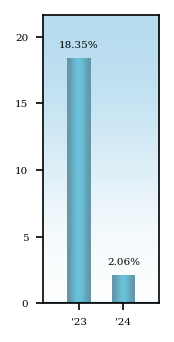
| Best Quarter: | 4th Quarter 2023 | 12.65% |
| Worst Quarter: | 4th Quarter 2024 | (5.27%) |
Average Annual Total Returns - Main International ETF |
Label |
1 Year |
Since Inception |
Inception Date |
|
|---|---|---|---|---|---|
| Main International ETF | Return before taxes | 2.06% | 8.50% | Dec. 01, 2022 | |
| Main International ETF | After Taxes on Distributions | 1.22% | 7.33% | |||
| Main International ETF | After Taxes on Distributions and Sales | 1.48% | 6.19% | |||
| MSCI ACWI ex USA Net (USD) | [1] | 5.54% | 8.60% | ||
| [1] | The MSCI ACWI ex USA Net Index captures large and mid-cap representation across 22 of 23 Developed Markets (DM) countries (excluding the US) and 24 Emerging Markets (EM) countries. With 2,322 constituents, the index covers approximately 85% of the global equity opportunity set outside the U.S. Investors may not invest in the index directly; unlike the Fund’s returns, the index does not reflect any fees or expenses. |
Allocation Risk. If the Fund’s strategy for allocating assets among different sectors and countries does not work as intended, the Fund may not achieve its objective or may underperform other funds with the same or similar investment strategy.
Authorized Participant Risk. Only an Authorized Participant that has entered into a contractual arrangement with the Fund’s distributor may engage in creation or redemption transactions directly with the Fund. The Fund’s distributor has entered into contracts with only a limited number of institutions that may act as Authorized Participants on an agency basis (i.e., on behalf of other market participants). To the extent that Authorized Participants exit the business or are unable to proceed with creation or redemption orders with respect to the Fund and no other Authorized Participant is able to step forward to create or redeem large blocks of shares known as “Creation Units,” Fund shares may be more likely to trade at a premium or discount to net asset value and possibly face trading halts or delisting. Authorized Participant concentration risk may be heightened for ETFs that invest in non-U.S. securities or other securities or instruments that have lower trading volumes.
Covered Call Risk. The writer of a covered call option forgoes any profit from increases in the market value of the underlying security covering the call option above the sum of the premium and the strike price of the call but retains the risk of loss if the underlying security declines in value. The Fund has no control over the exercise of the option by the option holder and may lose the benefit from any capital appreciation on the underlying security.
Derivatives Risk. The Fund’s use of options involves risks different from, or possibly greater than, the risks associated with investing directly in securities and other traditional investments. These risks include (i) the risk that the counterparty to a derivative transaction may not fulfill its contractual obligations; (ii) the risk of mispricing or improper valuation; and (iii) the risk that changes in the value of an option may not correlate perfectly with the underlying asset, rate or index. Derivative prices may be highly volatile at times and may fluctuate substantially during a short period of time.
| ● | Leverage and Volatility Risk. Derivative contracts ordinarily have leverage inherent in their terms. The low margin deposits normally required in trading derivatives, including futures contracts, permit a high degree of leverage. Accordingly, a relatively small price movement may result in an immediate and substantial loss to the Fund. The use of leveraged derivatives can amplify the effects of market volatility on the Fund’s share price. |
| ● | Options Risk. There are risks associated with the sale and purchase of call and put options. As a seller (writer) of a put option, the Fund will tend to lose money if the value of the underlying security falls below a specified price. As the seller (writer) of a call option, the Fund may experience lower returns if the value of the underlying security rises above a specified price. |
| ● | Put Option Risk. Options may be subject to volatile swings in price influenced by changes in the value of the underlying instrument. Although the Fund collects premiums on the options it writes, the Fund’s risk of loss if its options expire in-the-money (i.e., the Fund, as the seller of puts, owes the buyer of the puts) may outweigh the gains to the Fund from the receipt of such option premiums. The potential return to the Fund is limited to the amount of option premiums it receives; however, the Fund can potentially lose up to the entire strike price of each option it sells. The puts sold by the Fund may not perfectly correlate with the returns of their underlying stocks. |
| ● | Options Risk. There are risks associated with the sale and purchase of call and put options. As a seller (writer) of a put option, the Fund will tend to lose money if the value of the underlying security falls below a specified price. As the seller (writer) of a call option, the Fund may experience lower returns if the value of the underlying security rises above a specified price. |
| ● | Put Option Risk. Options may be subject to volatile swings in price influenced by changes in the value of the underlying instrument. Although the Fund collects premiums on the options it writes, the Fund’s risk of loss if its options expire in-the-money (i.e., the Fund, as the seller of puts, owes the buyer of the puts) may outweigh the gains to the Fund from the receipt of such option premiums. The potential return to the Fund is limited to the amount of option premiums it receives; however, the Fund can potentially lose up to the entire strike price of each option it sells. The puts sold by the Fund may not perfectly correlate with the returns of their underlying stocks. |
ETF Structure Risk. The Fund is structured as an ETF and as a result is subject to the special risks, including:
| ● | Not Individually Redeemable. Shares are not individually redeemable to retail investors and may be redeemed by the ETF only to Authorized Participants at NAV in large blocks known as “Creation Units.” An Authorized Participant may incur brokerage costs purchasing enough Shares to constitute a Creation Unit. |
| ● | Trading Issues. An active trading market for the Shares may not be developed or maintained. Trading in Shares on the Exchange may be halted due to market conditions or for reasons that, in the view of the Exchange, make trading in Shares inadvisable, such as extraordinary market volatility. |
| ● | Market Price Variance Risk. The market prices of Shares will fluctuate in response to changes in NAV and supply and demand for Shares and will include a “bid-ask spread” charged by the exchange specialists, market makers or other participants that trade the particular security. There may be times when the market price and the NAV vary significantly. This means that Shares may trade at a discount to NAV. |
| ○ | The market price for the Shares may deviate from an ETF’s NAV, particularly during times of market stress, with the result that investors may pay significantly more or significantly less for Shares than an ETF’s NAV, which is reflected in the bid and ask price for Shares or in the closing price. |
| ● | Not Individually Redeemable. Shares are not individually redeemable to retail investors and may be redeemed by the ETF only to Authorized Participants at NAV in large blocks known as “Creation Units.” An Authorized Participant may incur brokerage costs purchasing enough Shares to constitute a Creation Unit. |
| ● | Trading Issues. An active trading market for the Shares may not be developed or maintained. Trading in Shares on the Exchange may be halted due to market conditions or for reasons that, in the view of the Exchange, make trading in Shares inadvisable, such as extraordinary market volatility. |
| ● | Market Price Variance Risk. The market prices of Shares will fluctuate in response to changes in NAV and supply and demand for Shares and will include a “bid-ask spread” charged by the exchange specialists, market makers or other participants that trade the particular security. There may be times when the market price and the NAV vary significantly. This means that Shares may trade at a discount to NAV. |
| ○ | The market price for the Shares may deviate from an ETF’s NAV, particularly during times of market stress, with the result that investors may pay significantly more or significantly less for Shares than an ETF’s NAV, which is reflected in the bid and ask price for Shares or in the closing price. |
Fluctuation of Net Asset Value Risk. The NAV of the Shares will generally fluctuate with changes in the market value of the Fund’s holdings. The market prices of the Shares will generally fluctuate in accordance with changes in NAV as well as the relative supply of and demand for the shares on the Exchange. The Adviser cannot predict whether the Shares will trade below, at or above their NAV. Price differences may be due, in large part, to the fact that supply and demand forces at work in the secondary trading market for the shares will be closely related to, but not identical to, the same forces influencing the prices of the Fund’s holdings trading individually or in the aggregate at any point in time. In addition, unlike conventional ETFs, the Fund is not an index fund. The Fund is actively managed and does not seek to replicate the performance of a specified index. Index based ETFs have generally traded at prices which closely correspond to NAV per share. Actively managed ETFs have a limited trading history and, therefore, there can be no assurance as to whether and/or the extent to which the Shares will trade at premiums or discounts to NAV.
Management Risk. The portfolio managers’ judgments about the attractiveness, value and potential appreciation of particular stocks or other securities in which the Fund invests may prove to be incorrect and there is no guarantee that the portfolio manager’s judgment will produce the desired results.
Market and Geopolitical Risk. The increasing interconnectivity between global economies and financial markets increases the likelihood that events or conditions in one region or financial market may adversely impact issuers in a different country, region or financial market. Securities in the Fund’s portfolio may underperform due to inflation (or expectations for inflation), interest rates, global demand for particular products or resources, natural disasters, climate-change and climate-related events, pandemics, epidemics, terrorism, international conflicts, regulatory events and governmental or quasi-governmental actions. The occurrence of global events similar to those in recent years may result in market volatility and may have long term effects on both the U.S. and global financial markets.
Sector Risk. The Fund may have significant exposure to a limited number of issuers conducting business in the same sector or group of sectors. Market conditions, interest rates, and economic, regulatory, or financial developments could significantly affect a single sector or a group of sectors, and the securities of companies in that sector or group of sectors could react similarly to these or other developments. If the Fund invests more heavily in a particular sector, the value of its shares may be especially sensitive to factors and economic risks that specifically affect that sector. As a result, the Fund’s share price may fluctuate more widely than the value of shares of a fund that invests in a broader range of sectors. Additionally, some sectors could be subject to greater government regulation than other sectors. Therefore, changes in regulatory policies for those sectors may have a material effect on the value of securities issued by companies in those sectors.
Currency Risk. Investments in foreign currencies are subject to political and economic risks, civil conflicts and war and greater volatility. Currency rates in foreign countries may fluctuate significantly over short periods of time for a number of reasons, including changes in interest rates, imposition of currency controls and economic or political developments in the U.S. or abroad.
Equity Risk. Equity securities are susceptible to general stock market fluctuations and to volatile increases and decreases in value. The equity securities held by the Fund may experience sudden, unpredictable drops in value or long periods of decline in value. This may occur because of factors affecting securities markets generally, the equity securities of a particular sector, or a particular company.
Foreign Securities Risk. Foreign companies are generally not subject to the same regulatory requirements of U.S. companies thereby resulting in less publicly available information about these companies. In addition, foreign accounting, auditing and financial reporting standards generally differ from those applicable to U.S. companies.
Fund of Funds Risk. The ability of the Fund to meet its investment objective is directly related to the ability of the underlying funds in which it invests and their respective investment managers, to meet their investment objectives. Certain investment managers may be dependent upon a single individual or small group of individuals, the loss of which could adversely affect their success. There can be no assurance that any Underlying Fund will achieve its investment objectives.
Index Call Option Risk. Because the exercise of index options is settled in cash, sellers of index call options, such as the Fund, cannot provide in advance for their potential settlement obligations by acquiring and holding the underlying securities. The Fund bears a risk that the value of the securities held by the Fund will vary from the value of the index and relative to the written index call option positions. Accordingly, the Fund may incur losses on the index call options that it has sold that exceed gains on other securities in its portfolio. The value of index options written by the Fund, which will be priced daily, will be affected by changes in the value of and dividend rates of the underlying common stocks in the index, changes in the actual or perceived volatility of the stock market and the remaining time to the options’ expiration. The value of the index options also may be adversely affected if the market for the index options becomes less liquid or smaller.
| ● | Leverage and Volatility Risk. Derivative contracts ordinarily have leverage inherent in their terms. The low margin deposits normally required in trading derivatives, including futures contracts, permit a high degree of leverage. Accordingly, a relatively small price movement may result in an immediate and substantial loss to the Fund. The use of leveraged derivatives can amplify the effects of market volatility on the Fund’s share price. |
Emerging Markets Risk. Investing in emerging market nations involves not only the risks described below with respect to foreign investments, but also other risks, including exposure to economic structures that are generally less diverse and mature, limited availability and reliability of information material to an investment decision, and exposure to political systems that can be expected to have less stability than those of developed countries. The typically small size of the securities markets in emerging markets and the possibility of a low or nonexistent volume of trading in those securities may also result in a lack of liquidity and price volatility.
Exchange-Traded Fund Risk. The ETFs in which the Fund invests will not be able to replicate exactly the performance of the indices they track because the total return generated by the securities will be reduced by transaction costs incurred in adjusting the actual balance of the securities. This may result in a loss. Certain securities comprising the indices tracked by the ETFs may, from time to time, temporarily be unavailable, which may further impede the ETFs’ ability to track their applicable indices. ETFs in which the Fund invests are subject to investment advisory and other expenses, which will be indirectly paid by the Fund. As a result, the cost of investing in the ETFs will be higher than the cost of investing directly in the ETFs underlying investments and may be higher than other mutual funds that invest directly in stocks and bonds. ETFs may also trade at a discount or premium to their net asset value.
Large Capitalization Company Risk. Large-capitalization companies may be less able than smaller capitalization companies to adapt to changing market conditions. Large-capitalization companies may be more mature and subject to more limited growth potential compared with smaller capitalization companies. During different market cycles, the performance of large capitalization companies has trailed the overall performance of the broader securities markets.