| FILED PURSUANT TO RULE 424(b)(2) | ||
| REGISTRATION FILE NO.: 333-282944-01 | ||
PROSPECTUS
$834,138,000
(Approximate)
Morgan Stanley Bank of America Merrill Lynch Trust
2025-5C1
(Central Index Key Number 0002056713)
as Issuing Entity
Morgan Stanley Capital I Inc.
(Central Index Key Number 0001547361)
as Depositor
Morgan Stanley Mortgage Capital Holdings
LLC
(Central Index Key Number 0001541557)
Argentic Real Estate Finance 2 LLC
(Central Index Key Number 0001968416)
Bank of America, National Association
(Central Index Key Number 0001102113)
Starwood Mortgage Capital LLC
(Central Index Key Number 0001548405)
as Sponsors and Mortgage Loan Sellers
Commercial Mortgage Pass-Through Certificates, Series 2025-5C1
Morgan Stanley Capital I Inc. is offering certain classes of the Commercial Mortgage Pass-Through Certificates, Series 2025-5C1 consisting of the certificate classes identified in the table below. The certificates being offered by this prospectus (and the non-offered Class X-D, Class X-F, Class D, Class E, Class F, Class G-RR, Class H-RR, Class V and Class R certificates) represent the beneficial ownership interests in the issuing entity, which will be a New York common law trust named Morgan Stanley Bank of America Merrill Lynch Trust 2025-5C1. The assets of the issuing entity will primarily consist of a pool of fixed rate commercial mortgage loans, which are generally the sole source of payments on the certificates. Credit enhancement will be provided solely by certain classes of subordinate certificates that will be subordinate to certain classes of senior certificates as described under “Description of the Certificates—Subordination; Allocation of Realized Losses”. Each class of certificates will be entitled to receive monthly distributions of interest and/or principal on the 4th business day following the 11th day of each month (or if the 11th day is not a business day, the next business day), commencing in April 2025. The rated final distribution date for the certificates is the distribution date in March 2058.
Class |
Approximate Initial Certificate Balance or Notional Amount(1) |
Approximate Initial Available Certificate Balance or Notional Amount(1)(2) |
Approximate Initial Retained Certificate Balance or Notional Amount(1)(2) |
Approximate Initial Pass-Through Rate |
Pass-Through Rate Description |
Class |
Approximate Initial Certificate Balance or Notional Amount(1) |
Approximate Initial Available Certificate Balance or Notional Amount(1)(2) |
Approximate Initial Retained Certificate Balance or Notional Amount(1)(2) |
Approximate Initial Pass-Through Rate |
Pass-Through Rate Description |
| Class A-1 | $430,000 | $418,000 | $12,000 | 4.91600% | Fixed(6) | Class A-S-1(7) | $0(7) | $0(7) | $0(7) | 5.51100% | WAC Cap(7) |
| Class A-2(7) | $138,675,000(7) | $135,000,000(7) | $3,675,000(7) | 4.91300% | Fixed(6)(7) | Class A-S-2(7) | $0(7) | $0(7) | $0(7) | 5.01100% | WAC Cap(7) |
| Class A-2-1(7) | $0(7) | $0(7) | $0(7) | 4.41300% | Fixed(7) | Class A-S-X1(7) | $0(7) | $0(7) | $0(7) | 0.50000% | Fixed IO(7) |
| Class A-2-2(7) | $0(7) | $0(7) | $0(7) | 3.91300% | Fixed(7) | Class A-S-X2(7) | $0(7) | $0(7) | $0(7) | 1.00000% | Fixed IO(7) |
| Class A-2-X1(7) | $0(7) | $0(7) | $0(7) | 0.50000% | Fixed IO(7) | Class B(7) | $47,898,000 (7) | $46,628,000 (7) | $1,270,000 (7) | 6.51300% | WAC Cap(6)(7) |
| Class A-2-X2(7) | $0(7) | $0(7) | $0(7) | 1.00000% | Fixed IO(7) | Class B-1(7) | $0(7) | $0(7) | $0(7) | 6.01300% | WAC Cap(7) |
| Class A-3(7) | $515,121,000(7) | $501,469,000(7) | $13,652,000(7) | 5.63500% | Fixed(6)(7) | Class B-2(7) | $0(7) | $0(7) | $0(7) | 5.51300% | WAC Cap(7) |
| Class A-3-1(7) | $0(7) | $0(7) | $0(7) | 5.13500% | Fixed(7) | Class B-X1(7) | $0(7) | $0(7) | $0(7) | 0.50000% | Fixed IO(7) |
| Class A-3-2(7) | $0(7) | $0(7) | $0(7) | 4.63500% | Fixed(7) | Class B-X2(7) | $0(7) | $0(7) | $0(7) | 1.00000% | Fixed IO(7) |
| Class A-3-X1(7) | $0(7) | $0(7) | $0(7) | 0.50000% | Fixed IO(7) | Class C(7) | $35,048,000 (7) | $34,119,000 (7) | $929,000(7) | 6.85876% | WAC(6)(7) |
| Class A-3-X2(7) | $0(7) | $0(7) | $0(7) | 1.00000% | Fixed IO(7) | Class C-1(7) | $0(7) | $0(7) | $0(7) | 6.35876% | WAC – 0.50000%(7) |
| Class X-A | $654,226,000(8) | $636,887,000(8) | $17,339,000(8) | 1.37727% | Variable(9) | Class C-2(7) | $0(7) | $0(7) | $0(7) | 5.85876% | WAC – 1.00000%(7) |
| Class X-B | $179,912,000(10) | $175,143,000(10) | $4,769,000(10) | 0.54896% | Variable(11) | Class C-X1(7) | $0(7) | $0(7) | $0(7) | 0.50000% | Fixed IO(7) |
| Class A-S(7) | $96,966,000(7) | $94,396,000(7) | $2,570,000(7) | 6.01100% | WAC Cap(6)(7) | Class C-X2(7) | $0(7) | $0(7) | $0(7) | 1.00000% | Fixed IO(7) |
(Footnotes to this table begin on page 3)
You should carefully consider the summary of risk factors and the risk factors beginning on page 63 and page 65, respectively, of this prospectus.
Neither the certificates nor the mortgage loans are insured or guaranteed by any governmental agency, instrumentality or private issuer or any other person or entity.
The certificates will represent interests in the issuing entity only. They will not represent interests in or obligations of the sponsors, depositor, any of their affiliates or any other entity.
The United States Securities and Exchange Commission and state regulators have not approved or disapproved of the offered certificates or passed upon the adequacy or accuracy of this prospectus. Any representation to the contrary is a criminal offense. Morgan Stanley Capital I Inc. will not list the offered certificates on any securities exchange or on any automated quotation system of any securities association.
The issuing entity will be relying on an exclusion or exemption from the definition of “investment company” under the Investment Company Act of 1940, as amended, contained in Section 3(c)(5) of the Investment Company Act or Rule 3a-7 under the Investment Company Act, although there may be additional exclusions or exemptions available to the issuing entity. The issuing entity will not be relying upon Section 3(c)(1) or Section 3(c)(7) of the Investment Company Act as a basis for not registering under the Investment Company Act. The issuing entity is being structured so as not to constitute a “covered fund” for purposes of the Volcker Rule under the Dodd-Frank Act (both as defined in this prospectus).
The underwriters, Morgan Stanley & Co. LLC, BofA Securities, Inc., Academy Securities, Inc. and AmeriVet Securities, Inc., will purchase the offered certificates from Morgan Stanley Capital I Inc. and will offer them to the public at negotiated prices, plus, in certain cases, accrued interest, determined at the time of sale. Morgan Stanley & Co. LLC and BofA Securities, Inc. are acting as co-lead managers and joint bookrunners in the following manner: Morgan Stanley & Co. LLC is acting as sole bookrunning manager with respect to approximately 69.6% of each class of offered certificates, and BofA Securities, Inc. is acting as sole bookrunning manager with respect to approximately 30.4% of each class of offered certificates. Academy Securities, Inc. and AmeriVet Securities, Inc. are acting as co-managers.
The underwriters expect to deliver the offered certificates to purchasers in book-entry form only through the facilities of The Depository Trust Company in the United States and Clearstream Banking, Luxembourg and Euroclear Bank, as operator of the Euroclear System, in Europe, against payment in New York, New York on or about March 20, 2025. Morgan Stanley Capital I Inc. expects to receive from this offering approximately 106.7% of the aggregate certificate balance of the offered certificates, plus accrued interest from March 1, 2025, before deducting expenses payable by the depositor.
| Morgan Stanley | BofA Securities | |
| Co-Lead Manager and Joint Bookrunner | Co-Lead Manager and Joint Bookrunner |
|
Academy Securities, Inc. Co-Manager |
AmeriVet Securities Co-Manager |
March 12, 2025
Summary of Certificates
|
Class |
Approx. |
Approx. Initial Available Certificate Balance or Notional Amount(1)(2) |
Approx. Initial Retained Certificate Balance or Notional Amount(1)(2) |
Approx. Initial Credit Support(3) |
Approx. Initial Pass-Through Rate |
Pass-Through Rate Description |
Assumed |
Weighted Average Life (Years)(5) |
Expected Principal Window (Months)(5) |
| Offered Certificates | |||||||||
| Class A-1 | $430,000 | $418,000 | $12,000 | 30.000% | 4.91600% | Fixed(6) | July 2029 | 2.29 | 1 – 52 |
| Class A-2(7) | $138,675,000(7) | $135,000,000(7) | $3,675,000(7) | 30.000% | 4.91300% | Fixed(6)(7) | January 2030 | 4.70 | 52 – 58 |
| Class A-3(7) | $515,121,000(7) | $501,469,000(7) | $13,652,000(7) | 30.000% | 5.63500% | Fixed(6)(7) | March 2030 | 4.91 | 58 – 60 |
| Class X-A | $654,226,000(8) | $636,887,000(8) | $17,339,000(8) | NAP | 1.37727% | Variable(9) | NAP | NAP | NAP |
| Class X-B | $179,912,000(10) | $175,143,000(10) | $4,769,000(10) | NAP | 0.54896% | Variable(11) | NAP | NAP | NAP |
| Class A-S(7) | $96,966,000(7) | $94,396,000(7) | $2,570,000(7) | 19.625% | 6.01100% | WAC Cap(6)(7) | March 2030 | 4.99 | 60 – 60 |
| Class B(7) | $47,898,000(7) | $46,628,000(7) | $1,270,000(7) | 14.500% | 6.51300% | WAC Cap(6)(7) | March 2030 | 4.99 | 60 – 60 |
| Class C(7) | $35,048,000(7) | $34,119,000(7) | $929,000(7) | 10.750% | 6.85876% | WAC(6)(7) | March 2030 | 4.99 | 60 – 60 |
| Non-Offered Certificates | |||||||||
| Class X-D | $29,207,000(12) | $28,432,000(12) | $775,000(12) | NAP | 2.85876% | Variable(13) | NAP | NAP | NAP |
| Class X-F | $19,860,000(12) | $19,333,000(12) | $527,000(12) | NAP | 2.85876% | Variable(13) | NAP | NAP | NAP |
| Class D | $19,861,000 | $19,334,000 | $527,000 | 8.625% | 4.00000% | Fixed(6) | March 2030 | 4.99 | 60 – 60 |
| Class E | $9,346,000 | $9,098,000 | $248,000 | 7.625% | 4.00000% | Fixed(6) | March 2030 | 4.99 | 60 – 60 |
| Class F | $19,860,000 | $19,333,000 | $527,000 | 5.500% | 4.00000% | Fixed(6) | March 2030 | 4.99 | 60 – 60 |
| Class G-RR | $11,683,000 | $11,373,400 | $309,600 | 4.250% | 6.85876% | WAC(6) | March 2030 | 4.99 | 60 – 60 |
| Class H-RR | $39,721,352 | $38,668,736 | $1,052,616 | 0.000% | 6.85876% | WAC(6) | March 2030 | 4.99 | 60 – 60 |
| Class V(14) | NAP | NAP | NAP | NAP | NAP | NAP | NAP | NAP | NAP |
| Class R(15) | NAP | NAP | NAP | NAP | NAP | NAP | NAP | NAP | NAP |
| (1) | Approximate, subject to a permitted variance of plus or minus 5%. |
| (2) | On the closing date, Argentic Real Estate Finance 2 LLC, as “retaining sponsor” (as defined in Regulation RR) for the securitization constituted by the issuance of the certificates, is expected to cause a “majority-owned affiliate” (as defined in Regulation RR) to purchase (i) an “eligible vertical interest” (as defined in Regulation RR) in the form of certificates representing approximately 2.6500% of the initial certificate balance, notional amount or percentage interest, as applicable, of each class of certificates other than the Class R certificates (collectively, the “VRR Interest”), as set forth in the table above under “Approx. Initial Retained Certificate Balance or Notional Amount,” and (ii) an “eligible horizontal residual interest” (as defined in Regulation RR) in the form of the Class G-RR and Class H-RR certificates (in each case, excluding the portion thereof that comprises a part of the VRR Interest) (collectively referred to herein as the “HRR Interest”), representing approximately 2.4182% of the aggregate fair value of the certificates (other than the Class R certificates). See “Credit Risk Retention”. The entity purchasing the VRR Interest is expected to purchase slightly more than 2.6500% of some or all of the classes of certificates, which excess over 2.6500% (with respect to all classes except the Class G-RR and Class H-RR certificates) is included in the amounts set forth under “Approx. Initial Retained Certificate Balance or Notional Amount” but does not constitute part of the VRR Interest. |
| (3) | The approximate initial credit support percentages set forth for the certificates are approximate and, for the Class A-1, Class A-2 and Class A-3 certificates, are presented in the aggregate, taking into account the certificate balances of the Class A-2 and Class A-3 trust components. The approximate initial credit support percentages set forth for the Class A-S, Class B and Class C certificates represent the approximate credit support for the underlying Class A-S, Class B and Class C trust components, respectively. |
| (4) | The assumed final distribution dates set forth in this prospectus have been determined on the basis of the assumptions described in “Description of the Certificates—Assumed Final Distribution Date; Rated Final Distribution Date”. |
| (5) | The weighted average life and expected principal window during which distributions of principal would be received as set forth in the foregoing table with respect to each class of certificates having a certificate balance are based on the assumptions set forth under “Yield and Maturity Considerations—Weighted Average Life” and on the assumptions that there are no prepayments, modifications or losses in respect of the mortgage loans and that there are no extensions or forbearances of maturity dates or anticipated repayment dates of the mortgage loans. |
| (6) | The pass-through rate for each class of the Class A-1, Class A-2, Class A-3, Class D, Class E and Class F Certificates for any distribution date will be a fixed per annum rate equal to the pass-through rate set forth opposite such class of certificates in the table. The pass-through rate for each class of the Class A-S and Class B for any distribution date will a variable rate per annum equal to the lesser of (a) the pass-through rate set forth opposite such class of certificates in the table and (b) the weighted average of the net mortgage interest rates on the mortgage loans for the related distribution date. The pass-through rate for each class of the Class C, Class G-RR and Class H-RR certificates for any distribution date will be a variable rate equal to the weighted average of the net mortgage interest rates on the mortgage loans for the related distribution date. For purposes of the calculation of the weighted average of the net mortgage interest rates on the mortgage loans for each distribution date, the mortgage interest rates will be adjusted as necessary to a 30/360 basis. |
| (7) | The Class A-2-1, Class A-2-2, Class A-2-X1, Class A-2-X2, Class A-3-1, Class A-3-2, Class A-3-X1, Class A-3-X2, Class A-S-1, Class A-S-2, Class A-S-X1, Class A-S-X2, Class B-1, Class B-2, Class B-X1, Class B-X2, Class C-1, Class C-2, Class C-X1 and Class C-X2 certificates are also offered certificates. Such classes of certificates, together with the Class A-2, Class A-3, Class A-S, Class B and Class C certificates, constitute the “Exchangeable Certificates”. The Class A-1, Class D, Class E, Class F, Class G-RR and Class H-RR certificates, together with the Exchangeable Certificates with a certificate balance, are referred to as the “principal balance certificates”. Each class of Exchangeable Certificates will have the certificate |
| 3 |
balance or notional amount and pass-through rate described under “Description of the Certificates—Distributions—Exchangeable Certificates”.
| (8) | The Class X-A certificates are notional amount certificates. The notional amount of the Class X-A certificates will be equal to the aggregate certificate balance of the Class A-1 certificates and the Class A-2 and Class A-3 trust components outstanding from time to time. The Class X-A certificates will not be entitled to distributions of principal. |
| (9) | The pass-through rate for the Class X-A certificates for any distribution date will be a per annum rate equal to the excess, if any, of (a) the weighted average of the net mortgage interest rates on the mortgage loans for the related distribution date, over (b) the weighted average of the pass-through rates on the Class A-1 certificates and the Class A-2, Class A-2-X1, Class A-2-X2, Class A-3, Class A-3-X1 and Class A-3-X2 trust components for the related distribution date, weighted on the basis of their respective aggregate certificate balances or notional amounts outstanding immediately prior to that distribution date (but excluding trust components with a notional amount in the denominator of such weighted average calculation). For purposes of the calculation of the weighted average of the net mortgage interest rates on the mortgage loans for each distribution date, the mortgage interest rates will be adjusted as necessary to a 30/360 basis. |
| (10) | The Class X-B certificates are notional amount certificates. The notional amount of the Class X-B certificates will be equal to the aggregate certificate balance of the Class A-S, Class B and Class C trust components outstanding from time to time. The Class X-B certificates will not be entitled to distributions of principal. |
| (11) | The pass-through rate for the Class X-B certificates for any distribution date will be a per annum rate equal to the excess, if any, of (a) the weighted average of the net mortgage interest rates on the mortgage loans for the related distribution date, over (b) the weighted average of the pass-through rates on the Class A-S, Class A-S-X1, Class A-S-X2, Class B, Class B-X1, Class B-X2, Class C, Class C-X1 and Class C-X2 trust components for the related distribution date, weighted on the basis of their respective aggregate certificate balances or notional amounts outstanding immediately prior to that distribution date (but excluding trust components with a notional amount in the denominator of such weighted average calculation). For purposes of the calculation of the weighted average of the net mortgage interest rates on the mortgage loans for each distribution date, the mortgage interest rates will be adjusted as necessary to a 30/360 basis. |
| (12) | The Class X-D and Class X-F certificates are notional amount certificates and will not be entitled to distributions of principal. The notional amount of the Class X-D certificates will be equal to the aggregate certificate balance of the Class D and Class E certificates outstanding from time to time. The notional amount of the Class X-F certificates will be equal to the certificate balance of the Class F certificates outstanding from time to time. |
| (13) | The pass-through rate for the Class X-D certificates for any distribution date will be a per annum rate equal to the excess, if any, of (a) the weighted average of the net mortgage interest rates on the mortgage loans for the related distribution date, over (b) the weighted average of the pass-through rates on the Class D and Class E certificates for the related distribution date, weighted on the basis of their respective aggregate certificate balances outstanding immediately prior to that distribution date. The pass-through rate for the Class X-F certificates for any distribution date will be a per annum rate equal to the excess, if any, of (a) the weighted average of the net mortgage interest rates on the mortgage loans for the related distribution date, over (b) the pass-through rate for the related distribution date on the Class F certificates. For purposes of the calculation of the weighted average of the net mortgage interest rates on the mortgage loans for each distribution date, the mortgage interest rates will be adjusted as necessary to a 30/360 basis. |
| (14) | The Class V certificates will not have a certificate balance, notional amount, credit support, pass-through rate, assumed final distribution date, rated final distribution date or rating. The Class V certificates will only be entitled to distributions of excess interest accrued on the mortgage loans with an anticipated repayment date. As of the closing date, there are no mortgage loans with an anticipated repayment date included in the trust, and consequently there will be no excess interest payable on the Class V certificates. See “Description of the Mortgage Pool—Certain Terms of the Mortgage Loans—ARD Loans” in this prospectus. |
| (15) | The Class R certificates will not have a certificate balance, notional amount, credit support, pass-through rate, assumed final distribution date, rated final distribution date or rating. The Class R certificates represent the residual interest in each Trust REMIC as further described in this prospectus. The Class R certificates will not be entitled to distributions of principal or interest. |
The Class X-D, Class X-F, Class D, Class E, Class F, Class G-RR, Class H-RR, Class V and Class R certificates are not offered by this prospectus. Any information in this prospectus concerning these certificates is presented solely to enhance your understanding of the offered certificates.
| 4 |
TABLE OF CONTENTS
| Summary of Certificates | 3 |
| Important Notice Regarding the Offered Certificates | 14 |
| Important Notice About Information Presented in this Prospectus | 15 |
| Summary of Terms | 23 |
| Summary of Risk Factors | 63 |
| Risk Factors | 65 |
| Risks Related to Market Conditions and Other External Factors | 65 |
| Cyberattacks or Other Security Breaches Could Have a Material Adverse Effect on the Business of the Transaction Parties | 65 |
| Risks Relating to the Mortgage Loans | 66 |
| Mortgage Loans Are Non-Recourse and Are Not Insured or Guaranteed | 66 |
| Risks of Commercial and Multifamily Lending Generally | 67 |
| Performance of the Mortgage Loans Will Be Highly Dependent on the Performance of Tenants and Tenant Leases | 69 |
| Multifamily Properties Have Special Risks | 74 |
| Retail Properties Have Special Risks | 78 |
| Office Properties Have Special Risks | 81 |
| Industrial Properties Have Special Risks | 82 |
| Mixed Use Properties Have Special Risks | 84 |
| Hospitality Properties Have Special Risks | 84 |
| Risks Relating to Affiliation with a Franchise or Hotel Management Company | 86 |
| Manufactured Housing Properties Have Special Risks | 87 |
| Self Storage and RV/Boat Storage Properties Have Special Risks | 89 |
| Healthcare-Related Properties Have Special Risks | 89 |
| Sale-Leaseback Transactions Have Special Risks | 91 |
| Leased Fee and Operating Lease Properties Have Special Risks | 92 |
| Mortgaged Properties Leased to Startup Companies Have Special Risks | 93 |
| Mortgaged Properties Leased to Government Tenants Have Special Risks | 93 |
| Condominium Ownership May Limit Use and Improvements | 94 |
| Operation of a Mortgaged Property Depends on the Property Manager’s Performance | 96 |
| Concentrations Based on Property Type, Geography, Related Borrowers and Other Factors May Disproportionately Increase Losses | 96 |
| Adverse Environmental Conditions at or Near Mortgaged Properties May Result in Losses | 98 |
| Risks Related to Redevelopment, Expansion and Renovation at Mortgaged Properties | 99 |
| Some Mortgaged Properties May Not Be Readily Convertible to Alternative Uses | 100 |
| Risks Related to Zoning Non-Compliance and Use Restrictions | 103 |
| Risks Relating to Inspections of Properties | 104 |
| Risks Relating to Costs of Compliance with Applicable Laws and Regulations | 105 |
| Insurance May Not Be Available or Adequate | 105 |
| Inadequacy of Title Insurers May Adversely Affect Distributions on Your Certificates | 106 |
| Terrorism Insurance May Not Be Available for All Mortgaged Properties | 107 |
| Risks Associated with Blanket Insurance Policies or Self-Insurance | 108 |
| Condemnation of a Mortgaged Property May Adversely Affect Distributions on Certificates | 109 |
| Limited Information Causes Uncertainty | 109 |
| 5 |
| Underwritten Net Cash Flow Could Be Based On Incorrect or Flawed Assumptions | 110 |
| Frequent and Early Occurrence of Borrower Delinquencies and Defaults May Adversely Affect Your Investment | 111 |
| The Mortgage Loans Have Not Been Reviewed or Re-Underwritten by Us; Some Mortgage Loans May Not Have Complied With Another Originator’s Underwriting Criteria | 111 |
| Static Pool Data Would Not Be Indicative of the Performance of this Pool | 112 |
| Appraisals May Not Reflect Current or Future Market Value of Each Property | 113 |
| The Performance of a Mortgage Loan and Its Related Mortgaged Property Depends in Part on Who Controls the Borrower and Mortgaged Property | 114 |
| The Borrower’s Form of Entity May Cause Special Risks | 114 |
| A Bankruptcy Proceeding May Result in Losses and Delays in Realizing on the Mortgage Loans | 117 |
| Litigation Regarding the Mortgaged Properties or Borrowers May Impair Your Distributions | 118 |
| Other Financings or Ability to Incur Other Indebtedness Entails Risk | 119 |
| Tenancies-in-Common May Hinder Recovery | 121 |
| Risks Relating to Enforceability of Cross-Collateralization | 121 |
| Risks Relating to Enforceability of Yield Maintenance Charges, Prepayment Premiums or Defeasance Provisions | 122 |
| Risks Associated with One Action Rules | 122 |
| State Law Limitations on Assignments of Leases and Rents May Entail Risks | 122 |
| Various Other Laws Could Affect the Exercise of Lender’s Rights | 123 |
| The Absence of Lockboxes Entails Risks That Could Adversely Affect Distributions on Your Certificates | 123 |
| Borrower May Be Unable To Repay Remaining Principal Balance on Maturity Date or Anticipated Repayment Date; Longer Amortization Schedules and Interest-Only Provisions Increase Risk | 124 |
| Climate Change May Directly or Indirectly Have an Adverse Effect on the Mortgage Pool | 126 |
| Risks Related to Ground Leases and Other Leasehold Interests | 127 |
| Increases in Real Estate Taxes May Reduce Available Funds | 128 |
| State and Local Mortgage Recording Taxes May Apply Upon a Foreclosure or Deed-in-Lieu of Foreclosure and Reduce Net Proceeds | 129 |
| Risks Related to Conflicting Interests | 129 |
| Interests and Incentives of the Originators, the Sponsors and Their Affiliates May Not Be Aligned With Your Interests | 129 |
| The Servicing of Servicing Shift Whole Loans Will Shift to Other Servicers | 132 |
| Interests and Incentives of the Underwriter Entities May Not Be Aligned With Your Interests | 132 |
| Potential Conflicting Interests of Each Applicable Master Servicer and Special Servicer | 134 |
| Potential Conflicting Interests of the Operating Advisor | 136 |
| Potential Conflicting Interests of the Asset Representations Reviewer | 137 |
| Potential Conflicting Interests of the Directing Certificateholder and the Companion Holders | 138 |
| Potential Conflicting Interests in the Selection of the Underlying Mortgage Loans | 141 |
| Conflicting Interests May Occur as a Result of the Rights of the Applicable Directing Certificateholder to Terminate the Applicable Special Servicer of the Applicable Whole Loan | 142 |
| Other Potential Conflicting Interests May Affect Your Investment | 142 |
| 6 |
| Other Risks Relating to the Certificates | 143 |
| EU Securitization Rules and UK Securitization Rules | 143 |
| Recent Developments Concerning the Proposed Japanese Retention Requirements | 145 |
| Nationally Recognized Statistical Rating Organizations May Assign Different Ratings to the Certificates; Ratings of the Certificates Reflect Only the Views of the Applicable Rating Agencies as of the Dates Such Ratings Were Issued; Ratings May Affect ERISA Eligibility; Ratings May Be Downgraded | 146 |
| Your Yield May Be Affected by Defaults, Prepayments and Other Factors | 150 |
| Subordination of the Subordinated Certificates Will Affect the Timing of Distributions and the Application of Losses on the Subordinated Certificates | 154 |
| Your Lack of Control Over the Issuing Entity and the Mortgage Loans Can Impact Your Investment | 154 |
| Risks Relating to Modifications of the Mortgage Loans | 161 |
| Sponsors May Not Make Required Repurchases or Substitutions of Defective Mortgage Loans or Pay Any Loss of Value Payment Sufficient to Cover All Losses on a Defective Mortgage Loan | 162 |
| Pro Rata Allocation of Principal Between and Among the Subordinate Companion Loans and the Related Mortgage Loan Prior to a Material Mortgage Loan Event of Default | 163 |
| Risks Relating to Interest on Advances and Special Servicing Compensation | 163 |
| Bankruptcy of a Servicer May Adversely Affect Collections on the Mortgage Loans and the Ability to Replace the Servicer | 163 |
| The Sponsors, the Depositor and the Issuing Entity Are Subject to Bankruptcy or Insolvency Laws That May Affect the Issuing Entity’s Ownership of the Mortgage Loans | 164 |
| The Requirement of Each Applicable Special Servicer to Obtain FIRREA-Compliant Appraisals May Result in an Increased Cost to the Issuing Entity | 165 |
| Each applicable Master Servicer, any Sub-Servicer or each applicable Special Servicer May Have Difficulty Performing Under the Pooling and Servicing Agreement or a Related Sub-Servicing Agreement | 166 |
| Tax Matters and Changes in Tax Law May Adversely Impact the Mortgage Loans or Your Investment | 166 |
| General | 171 |
| The Certificates May Not Be a Suitable Investment for You | 171 |
| Combination or “Layering” of Multiple Risks May Significantly Increase Risk of Loss | 171 |
| The Volatile Economy, Credit Crisis and Downturn in the Real Estate Market Have Adversely Affected and May Continue To Adversely Affect the Value of CMBS | 171 |
| Other Events May Affect the Value and Liquidity of Your Investment | 172 |
| The Certificates Are Limited Obligations | 172 |
| The Certificates May Have Limited Liquidity and the Market Value of the Certificates May Decline | 173 |
| Legal and Regulatory Provisions Affecting Investors Could Adversely Affect the Liquidity of the Offered Certificates | 173 |
| Description of the Mortgage Pool | 175 |
| General | 175 |
| Co-Originated Whole Loans and Third-Party Originated Mortgage Loans | 177 |
| Certain Calculations and Definitions | 177 |
| 7 |
| Definitions | 178 |
| Mortgage Pool Characteristics | 194 |
| Overview | 194 |
| Property Types | 196 |
| Significant Obligors | 202 |
| Mortgage Loan Concentrations | 202 |
| Cross-Collateralized Mortgage Loans; Multi-Property Mortgage Loans and Related Borrower Mortgage Loans | 203 |
| Geographic Concentrations | 204 |
| Mortgaged Properties With Limited Prior Operating History | 205 |
| Tenancies-in-Common or Diversified Ownership | 205 |
| Condominium and Other Shared Interests | 206 |
| Fee & Leasehold Estates; Ground Leases | 208 |
| Environmental Considerations | 211 |
| Redevelopment, Renovation and Expansion | 217 |
| Assessment of Property Value and Condition | 218 |
| Litigation and Other Considerations | 219 |
| Condemnations | 220 |
| Loan Purpose; Default History, Bankruptcy Issues and Other Proceedings | 220 |
| Tenant Issues | 223 |
| Tenant Concentrations | 223 |
| Lease Expirations and Terminations | 223 |
| Purchase Options and Rights of First Refusal | 227 |
| Affiliated Leases | 229 |
| Competition from Certain Nearby Properties | 230 |
| Insurance Considerations | 230 |
| Use Restrictions | 232 |
| Appraised Value | 233 |
| Non-Recourse Carveout Limitations | 234 |
| Real Estate and Other Tax Considerations | 235 |
| Delinquency Information | 238 |
| Certain Terms of the Mortgage Loans | 239 |
| Amortization of Principal | 239 |
| Due Dates; Mortgage Rates; Calculations of Interest | 239 |
| ARD Loans | 240 |
| Single-Purpose Entity Covenants | 241 |
| Prepayment Protections and Certain Involuntary Prepayments | 242 |
| “Due-On-Sale” and “Due-On-Encumbrance” Provisions | 244 |
| Defeasance | 245 |
| Releases; Partial Releases; Property Additions | 246 |
| Escrows | 250 |
| Mortgaged Property Accounts | 251 |
| Exceptions to Underwriting Guidelines | 253 |
| Additional Indebtedness | 253 |
| General | 253 |
| Whole Loans | 253 |
| Mezzanine Indebtedness | 254 |
| Other Secured Indebtedness | 255 |
| Preferred Equity | 256 |
| Other Unsecured Indebtedness | 256 |
| The Whole Loans | 257 |
| General | 257 |
| The Serviced Pari Passu Whole Loans | 262 |
| 8 |
| The Non-Serviced Pari Passu Whole Loans | 265 |
| The Project Midway Pari Passu-A/B Whole Loan | 269 |
| The Spiral Pari Passu-A/B Whole Loan | 279 |
| Additional Information | 284 |
| Transaction Parties | 284 |
| The Sponsors and Mortgage Loan Sellers | 284 |
| Morgan Stanley Mortgage Capital Holdings LLC | 285 |
| Argentic Real Estate Finance 2 LLC | 298 |
| Bank of America, National Association | 306 |
| Starwood Mortgage Capital LLC | 321 |
| The Depositor | 328 |
| The Issuing Entity | 329 |
| The Certificate Administrator and Trustee | 330 |
| The Master Servicer | 333 |
| Midland Loan Services, a Division of PNC Bank, National Association | 333 |
| The Special Servicer | 337 |
| Argentic Services Company LP | 337 |
| The Outside Special Servicer | 341 |
| The Operating Advisor and Asset Representations Reviewer | 345 |
| Credit Risk Retention | 347 |
| General | 347 |
| Qualifying CRE Loans; Required Credit Risk Retention Percentage | 348 |
| The VRR Interest | 350 |
| Material Terms of the VRR Interest | 350 |
| The HRR Interest | 350 |
| Material Terms of the HRR Interest | 350 |
| Hedging, Transfer and Financing Restrictions | 350 |
| Operating Advisor | 351 |
| Representations and Warranties | 352 |
| Description of the Certificates | 354 |
| General | 354 |
| Distributions | 357 |
| Method, Timing and Amount | 357 |
| Available Funds | 358 |
| Priority of Distributions | 359 |
| Pass-Through Rates | 362 |
| Exchangeable Certificates | 365 |
| Interest Distribution Amount | 368 |
| Principal Distribution Amount | 369 |
| Certain Calculations with Respect to Individual Mortgage Loans | 371 |
| Excess Interest | 372 |
| Application Priority of Mortgage Loan Collections or Whole Loan Collections | 373 |
| Allocation of Yield Maintenance Charges and Prepayment Premiums | 376 |
| Assumed Final Distribution Date; Rated Final Distribution Date | 380 |
| Prepayment Interest Shortfalls | 381 |
| Subordination; Allocation of Realized Losses | 383 |
| Reports to Certificateholders; Certain Available Information | 385 |
| Certificate Administrator Reports | 385 |
| Information Available Electronically | 392 |
| Voting Rights | 398 |
| Delivery, Form, Transfer and Denomination | 398 |
| Book-Entry Registration | 398 |
| Definitive Certificates | 402 |
| 9 |
| Certificateholder Communication | 402 |
| Access to Certificateholders’ Names and Addresses | 402 |
| Requests to Communicate | 402 |
| List of Certificateholders | 403 |
| Description of the Mortgage Loan Purchase Agreements | 403 |
| General | 403 |
| Dispute Resolution Provisions | 416 |
| Asset Review Obligations | 416 |
| Pooling and Servicing Agreement | 416 |
| General | 416 |
| Assignment of the Mortgage Loans | 417 |
| Servicing Standard | 417 |
| Subservicing | 419 |
| Advances | 420 |
| P&I Advances | 420 |
| Servicing Advances | 421 |
| Nonrecoverable Advances | 422 |
| Recovery of Advances | 423 |
| Accounts | 425 |
| Withdrawals from the Collection Account | 427 |
| Servicing and Other Compensation and Payment of Expenses | 430 |
| General | 430 |
| Master Servicing Compensation | 437 |
| Special Servicing Compensation | 441 |
| Disclosable Special Servicer Fees | 445 |
| Certificate Administrator and Trustee Compensation | 446 |
| Operating Advisor Compensation | 446 |
| Asset Representations Reviewer Compensation | 447 |
| CREFC® Intellectual Property Royalty License Fee | 448 |
| Appraisal Reduction Amounts | 449 |
| Maintenance of Insurance | 456 |
| Modifications, Waivers and Amendments | 460 |
| Enforcement of “Due-on-Sale” and “Due-on-Encumbrance” Provisions | 466 |
| Inspections | 468 |
| Collection of Operating Information | 469 |
| Special Servicing Transfer Event | 469 |
| Asset Status Report | 473 |
| Realization Upon Mortgage Loans | 477 |
| Sale of Defaulted Loans and REO Properties | 480 |
| The Directing Certificateholder | 483 |
| General | 483 |
| Major Decisions | 486 |
| Asset Status Report | 491 |
| Replacement of a Special Servicer | 491 |
| Control Termination Event, Consultation Termination Event and Operating Advisor Consultation Event | 492 |
| Servicing Override | 494 |
| Rights of the Directing Certificateholder with respect to Non-Serviced Mortgage Loans or Servicing Shift Whole Loans | 495 |
| Rights of the Holders of Serviced Pari Passu Companion Loans | 496 |
| Limitation on Liability of Directing Certificateholder | 496 |
| The Risk Retention Consultation Party | 497 |
| General | 497 |
| 10 |
| Limitation on Liability of Risk Retention Consultation Party | 497 |
| The Operating Advisor | 498 |
| General | 498 |
| Duties of Operating Advisor at All Times | 499 |
| Additional Duties of the Operating Advisor While an Operating Advisor Consultation Event Has Occurred and Is Continuing | 502 |
| Recommendation of the Replacement of a Special Servicer | 502 |
| Eligibility of Operating Advisor | 502 |
| Other Obligations of Operating Advisor | 503 |
| Delegation of Operating Advisor’s Duties | 504 |
| Termination of the Operating Advisor With Cause | 504 |
| Rights Upon Operating Advisor Termination Event | 505 |
| Waiver of Operating Advisor Termination Event | 506 |
| Termination of the Operating Advisor Without Cause | 506 |
| Resignation of the Operating Advisor | 506 |
| Operating Advisor Compensation | 507 |
| The Asset Representations Reviewer | 507 |
| Asset Review | 507 |
| Eligibility of Asset Representations Reviewer | 513 |
| Other Obligations of Asset Representations Reviewer | 513 |
| Delegation of Asset Representations Reviewer’s Duties | 514 |
| Asset Representations Reviewer Termination Events | 514 |
| Rights Upon Asset Representations Reviewer Termination Event | 515 |
| Termination of the Asset Representations Reviewer Without Cause | 516 |
| Resignation of Asset Representations Reviewer | 516 |
| Asset Representations Reviewer Compensation | 516 |
| Replacement of a Special Servicer Without Cause | 516 |
| Replacement of a Special Servicer After Operating Advisor Recommendation and Certificateholder Vote | 519 |
| Termination of a Master Servicer or Special Servicer for Cause | 521 |
| Servicer Termination Events | 521 |
| Rights Upon Servicer Termination Event | 522 |
| Waiver of Servicer Termination Event | 524 |
| Resignation of a Master Servicer or Special Servicer | 524 |
| Resignation of Master Servicer, Trustee, Certificate Administrator, Operating Advisor or Asset Representations Reviewer Upon Prohibited Risk Retention Affiliation | 525 |
| Limitation on Liability; Indemnification | 526 |
| Enforcement of Mortgage Loan Seller’s Obligations Under the MLPA | 529 |
| Dispute Resolution Provisions | 530 |
| Certificateholder’s Rights When a Repurchase Request Is Initially Delivered by a Certificateholder | 530 |
| Repurchase Request Delivered by a Party to the PSA | 530 |
| Resolution of a Repurchase Request | 531 |
| Mediation and Arbitration Provisions | 534 |
| Servicing of the Non-Serviced Mortgage Loans | 535 |
| General | 535 |
| Servicing of the Project Midway Mortgage Loan | 538 |
| Servicing of the Gateway Center North Mortgage Loan | 539 |
| Servicing of the Wilshire Office Portfolio Mortgage Loan | 540 |
| Servicing of The Spiral Mortgage Loan | 540 |
| Servicing of the Tops & Kroger Portfolio Mortgage Loan | 541 |
| 11 |
| Servicing of the Servicing Shift Mortgage Loans and Other Specified Mortgage Loans | 541 |
| Rating Agency Confirmations | 543 |
| Evidence as to Compliance | 545 |
| Limitation on Rights of Certificateholders to Institute a Proceeding | 546 |
| Termination; Retirement of Certificates | 547 |
| Amendment | 548 |
| Resignation and Removal of the Trustee and the Certificate Administrator | 551 |
| Governing Law; Waiver of Jury Trial; and Consent to Jurisdiction | 552 |
| Certain Legal Aspects of Mortgage Loans | 553 |
| General | 555 |
| Types of Mortgage Instruments | 556 |
| Leases and Rents | 556 |
| Personalty | 557 |
| Foreclosure | 557 |
| General | 557 |
| Foreclosure Procedures Vary from State to State | 557 |
| Judicial Foreclosure | 558 |
| Equitable and Other Limitations on Enforceability of Certain Provisions | 558 |
| Nonjudicial Foreclosure/Power of Sale | 558 |
| Public Sale | 559 |
| Rights of Redemption | 560 |
| Anti-Deficiency Legislation | 560 |
| Leasehold Considerations | 561 |
| Cooperative Shares | 561 |
| Bankruptcy Laws | 562 |
| Environmental Considerations | 569 |
| General | 569 |
| Superlien Laws | 570 |
| CERCLA | 570 |
| Certain Other Federal and State Laws | 570 |
| Additional Considerations | 571 |
| Due-on-Sale and Due-on-Encumbrance Provisions | 571 |
| Subordinate Financing | 572 |
| Default Interest and Limitations on Prepayments | 572 |
| Applicability of Usury Laws | 572 |
| Americans with Disabilities Act | 573 |
| Servicemembers Civil Relief Act | 573 |
| Anti-Money Laundering, Economic Sanctions and Bribery | 573 |
| Potential Forfeiture of Assets | 574 |
| Certain Affiliations, Relationships and Related Transactions Involving Transaction Parties | 574 |
| Pending Legal Proceedings Involving Transaction Parties | 576 |
| Use of Proceeds | 576 |
| Yield and Maturity Considerations | 576 |
| Yield Considerations | 576 |
| General | 576 |
| Rate and Timing of Principal Payments | 577 |
| Losses and Shortfalls | 578 |
| Certain Relevant Factors Affecting Loan Payments and Defaults | 579 |
| Delay in Payment of Distributions | 580 |
| Yield on the Certificates with Notional Amounts | 580 |
| Weighted Average Life | 581 |
| 12 |
| Pre-Tax Yield to Maturity Tables | 585 |
| Material Federal Income Tax Considerations | 594 |
| General | 594 |
| Qualification as a REMIC | 595 |
| Exchangeable Certificates | 597 |
| Taxation of Regular Interests Underlying an Exchangeable Certificate | 597 |
| Status of Offered Certificates | 598 |
| Taxation of Regular Interests | 598 |
| General | 598 |
| Original Issue Discount | 598 |
| Acquisition Premium | 601 |
| Market Discount | 601 |
| Premium | 602 |
| Election To Treat All Interest Under the Constant Yield Method | 602 |
| Treatment of Losses | 603 |
| Yield Maintenance Charges and Prepayment Premiums | 604 |
| Sale or Exchange of Regular Interests | 604 |
| 3.8% Medicare Tax on “Net Investment Income” | 605 |
| Backup Withholding | 605 |
| Information Reporting | 605 |
| Taxation of Certain Foreign Investors | 605 |
| FATCA | 606 |
| Backup Withholding | 607 |
| Taxes That May Be Imposed on a REMIC | 607 |
| Prohibited Transactions | 607 |
| Contributions to a REMIC After the Startup Day | 607 |
| Net Income from Foreclosure Property | 608 |
| Administrative Matters | 608 |
| REMIC Partnership Representative | 608 |
| Reporting Requirements | 608 |
| Certain State and Local Tax Considerations | 610 |
| Plan of Distribution (Conflicts of Interest) | 610 |
| Incorporation of Certain Information by Reference | 614 |
| Where You Can Find More Information | 614 |
| Financial Information | 614 |
| Certain ERISA Considerations | 615 |
| General | 615 |
| Plan Asset Regulations | 616 |
| Administrative Exemptions | 616 |
| Insurance Company General Accounts | 618 |
| Legal Investment | 619 |
| Legal Matters | 620 |
| Ratings | 620 |
| Index of Defined Terms | 623 |
| Annex A-1: | Certain Characteristics of the Mortgage Loans and Mortgaged Properties | A-1-1 |
| Annex A-2: | Mortgage Pool Information (Tables) | A-2-1 |
| Annex A-3: | Summaries of the Fifteen Largest Mortgage Loans or Groups of Cross-Collateralized Mortgage Loans | A-3-1 |
| Annex B: | Form of Distribution Date Statement | B-1 |
| Annex C: | Form of Operating Advisor Annual Report | C-1 |
| Annex D-1: | Mortgage Loan Representations and Warranties | D-1-1 |
| Annex D-2: | Exceptions to Mortgage Loan Representations and Warranties | D-2-1 |
| 13 |
Important Notice Regarding the Offered Certificates
WE HAVE FILED WITH THE SECURITIES AND EXCHANGE COMMISSION A REGISTRATION STATEMENT UNDER THE SECURITIES ACT OF 1933, AS AMENDED, WITH RESPECT TO THE CERTIFICATES OFFERED IN THIS PROSPECTUS; HOWEVER, THIS PROSPECTUS DOES NOT CONTAIN ALL OF THE INFORMATION CONTAINED IN OUR REGISTRATION STATEMENT. FOR FURTHER INFORMATION REGARDING THE DOCUMENTS REFERRED TO IN THIS PROSPECTUS, YOU SHOULD REFER TO OUR REGISTRATION STATEMENT AND THE EXHIBITS TO IT. OUR REGISTRATION STATEMENT AND THE EXHIBITS TO IT CAN BE OBTAINED ELECTRONICALLY THROUGH THE SECURITIES AND EXCHANGE COMMISSION’S INTERNET WEBSITE (HTTP://WWW.SEC.GOV).
THIS PROSPECTUS IS NOT AN OFFER TO SELL OR A SOLICITATION OF AN OFFER TO BUY THESE SECURITIES IN ANY STATE OR OTHER JURISDICTION WHERE SUCH OFFER, SOLICITATION OR SALE IS NOT PERMITTED.
THE OFFERED CERTIFICATES REFERRED TO IN THIS PROSPECTUS ARE OFFERED ON A “WHEN, AS AND IF ISSUED” BASIS.
THE UNDERWRITERS DESCRIBED IN THESE MATERIALS MAY FROM TIME TO TIME PERFORM INVESTMENT BANKING SERVICES FOR, OR SOLICIT INVESTMENT BANKING BUSINESS FROM, ANY COMPANY NAMED IN THESE MATERIALS. THE UNDERWRITERS AND/OR THEIR RESPECTIVE EMPLOYEES MAY FROM TIME TO TIME HAVE A LONG OR SHORT POSITION IN ANY CONTRACT OR CERTIFICATE DISCUSSED IN THESE MATERIALS.
THE INFORMATION CONTAINED IN THIS PROSPECTUS SUPERSEDES ANY PREVIOUS SUCH INFORMATION DELIVERED TO ANY PROSPECTIVE INVESTOR.
THE OFFERED CERTIFICATES DO NOT REPRESENT AN INTEREST IN OR OBLIGATION OF THE DEPOSITOR, THE SPONSORS, THE MORTGAGE LOAN SELLERS, ANY MASTER SERVICER, ANY SPECIAL SERVICER, THE TRUSTEE, THE OPERATING ADVISOR, THE ASSET REPRESENTATIONS REVIEWER, THE CERTIFICATE ADMINISTRATOR, THE DIRECTING CERTIFICATEHOLDER, THE RISK RETENTION CONSULTATION PARTY, THE UNDERWRITERS OR ANY OF THEIR RESPECTIVE AFFILIATES. NEITHER THE OFFERED CERTIFICATES NOR THE MORTGAGE LOANS ARE INSURED OR GUARANTEED BY ANY GOVERNMENTAL AGENCY OR INSTRUMENTALITY OR PRIVATE INSURER.
THERE IS CURRENTLY NO SECONDARY MARKET FOR THE OFFERED CERTIFICATES. THE OFFERED CERTIFICATES ARE A NEW ISSUE OF SECURITIES WITH NO ESTABLISHED TRADING MARKET AND WE CANNOT ASSURE YOU THAT A SECONDARY MARKET FOR THE OFFERED CERTIFICATES WILL DEVELOP. THE UNDERWRITERS ARE UNDER NO OBLIGATION TO MAKE A MARKET IN THE OFFERED CERTIFICATES AND MAY DISCONTINUE ANY MARKET MAKING ACTIVITIES AT ANY TIME WITHOUT NOTICE. IN ADDITION, THE ABILITY OF THE UNDERWRITERS TO MAKE A MARKET IN THE OFFERED CERTIFICATES MAY BE IMPACTED BY CHANGES IN REGULATORY REQUIREMENTS APPLICABLE TO MARKETING, HOLDING AND SELLING OF, OR ISSUING QUOTATIONS WITH RESPECT TO, ASSET-BACKED SECURITIES GENERALLY. IF A SECONDARY MARKET DOES DEVELOP, WE CANNOT ASSURE YOU THAT IT WILL PROVIDE HOLDERS OF THE OFFERED CERTIFICATES WITH LIQUIDITY OF INVESTMENT OR THAT IT WILL CONTINUE FOR THE LIFE OF THE OFFERED CERTIFICATES. ACCORDINGLY, PURCHASERS MUST BE PREPARED TO BEAR THE RISKS OF THEIR INVESTMENTS FOR AN INDEFINITE PERIOD. SEE “RISK FACTORS—GENERAL—The Certificates May Have Limited Liquidity and the Market Value of the Certificates May Decline” IN THIS PROSPECTUS.
| 14 |
Important Notice About Information Presented in this Prospectus
You should rely only on the information contained in this prospectus. We have not authorized anyone to provide you with information that is different from that contained in this prospectus. The information contained in this prospectus is accurate only as of the date of this prospectus.
This prospectus begins with several introductory sections describing the certificates and the issuing entity in abbreviated form:
| ● | Summary of Certificates, which sets forth important statistical information relating to the certificates; |
| ● | Summary of Terms, which gives a brief introduction of the key features of the certificates and a description of the mortgage loans; and |
| ● | Summary of Risk Factors and Risk Factors, which describe risks that apply to the certificates. |
This prospectus includes cross references to sections in this prospectus where you can find further related discussions. The table of contents in this prospectus identifies the pages where these sections are located.
Certain capitalized terms are defined and used in this prospectus to assist you in understanding the terms of the offered certificates and this offering. The capitalized terms used in this prospectus are defined on the pages indicated under the caption “Index of Defined Terms”.
All annexes and schedules attached to this prospectus are a part of this prospectus.
In this prospectus:
| ● | the terms “depositor”, “we”, “us” and “our” refer to Morgan Stanley Capital I Inc.; |
| ● | references to any specified mortgaged property (or portfolio of mortgaged properties) refer to the mortgaged property (or portfolio of mortgaged properties) with the same name identified on Annex A-1; |
| ● | references to any specified mortgage loan should be construed to refer to the mortgage loan secured by the mortgaged property (or portfolio of mortgaged properties) with the same name identified on Annex A-1, representing the approximate percentage of the initial pool balance set forth on Annex A-1; |
| ● | any parenthetical with a percentage next to a mortgage loan name or a group of mortgage loans indicates the approximate percentage (or approximate aggregate percentage) of the initial pool balance that the outstanding principal balance of such mortgage loan (or the aggregate outstanding principal balance of such group of mortgage loans) represents, as set forth on Annex A-1; |
| ● | any parenthetical with a percentage next to a mortgaged property (or portfolio of mortgaged properties) indicates the approximate percentage (or approximate aggregate percentage) of the initial pool balance that the outstanding principal balance of the related mortgage loan (or, if applicable, the allocated loan amount or aggregate allocated loan amount with respect to such mortgaged property or mortgaged properties) represents, as set forth on Annex A-1; |
| 15 |
| ● | references to a “pooling and servicing agreement” (other than the Morgan Stanley Bank of America Merrill Lynch Trust 2025-5C1 pooling and servicing agreement) governing the servicing of any mortgage loan should be construed to refer to any relevant pooling and servicing agreement, trust and servicing agreement or other primary transaction agreement governing the servicing of such mortgage loan; and |
| ● | references to “lender” or “mortgage lender” with respect to a mortgage loan generally should be construed to mean, from and after the date of initial issuance of the offered certificates, the trustee on behalf of the issuing entity as the holder of record title to the mortgage loans or the applicable master servicer or special servicer, as applicable, with respect to the obligations and rights of the lender as described under “Pooling and Servicing Agreement”. |
Until ninety days after the date of this prospectus, all dealers that buy, sell or trade the offered certificates, whether or not participating in this offering, may be required to deliver a prospectus. This is in addition to the dealers’ obligation to deliver a prospectus when acting as underwriters and with respect to their unsold allotments or subscriptions.
NON-GAAP FINANCIAL MEASURES
This prospectus presents a number of non-GAAP financial measures, including Underwritten Net Cash Flow as well as other terms used to measure and present information relating to operation and performance of the Mortgaged Properties that are commonly used in the commercial real estate and real estate finance industries. In addition, the presentation of Net Operating Income includes adjustments that reflect various non-GAAP measures.
As presented in this prospectus, these terms are measures that are not presented in accordance with generally accepted accounting principles (“GAAP”). They are not measurements of financial performance under GAAP and should not be considered as alternatives to performance measures derived in accordance with GAAP or as alternatives to net income or cash flows from operating activities or as illustrative measures of liquidity. While some of these terms are widely-used within the commercial real estate and real estate finance industries, these terms have limitations as analytical tools, and investors should not consider them in isolation or as substitutes for analysis of results as if reported under GAAP.
The non-GAAP financial measures presented are not intended as alternatives to any measures of performance in conformity with GAAP. Investors should therefore not place undue reliance on non-GAAP financial measures or ratios calculated using those measures.
The SEC has adopted rules to regulate the use in filings with the SEC and public disclosures and press releases of non-GAAP financial measures that are derived on the basis of methodologies other than in accordance with GAAP. The non-GAAP financial measures presented in this prospectus may not comply with these rules.
NOTICE TO INVESTORS: EUROPEAN ECONOMIC AREA
PROHIBITION ON SALES TO EU RETAIL INVESTORS
THE OFFERED CERTIFICATES ARE NOT INTENDED TO BE OFFERED, SOLD OR OTHERWISE MADE AVAILABLE TO, AND SHOULD NOT BE OFFERED, SOLD OR OTHERWISE MADE AVAILABLE TO, ANY EU RETAIL INVESTOR IN THE EUROPEAN ECONOMIC AREA (THE “EEA”). FOR THESE PURPOSES (AND FOR THE PURPOSES OF THE FOLLOWING SECTION OF THIS PROSPECTUS), AN “EU RETAIL INVESTOR” MEANS A PERSON WHO IS ONE (OR MORE) OF THE FOLLOWING: (I) A RETAIL CLIENT AS DEFINED IN POINT (11) OF ARTICLE 4(1) OF DIRECTIVE
| 16 |
2014/65/EU (AS AMENDED, “MIFID II”); OR (II) A CUSTOMER WITHIN THE MEANING OF DIRECTIVE (EU) 2016/97 (AS AMENDED), WHERE THAT CUSTOMER WOULD NOT QUALIFY AS A PROFESSIONAL CLIENT AS DEFINED IN POINT (10) OF ARTICLE 4(1) OF MIFID II; OR (III) NOT A QUALIFIED INVESTOR (AN “EU QUALIFIED INVESTOR”) AS DEFINED IN ARTICLE 2 OF REGULATION (EU) 2017/1129 (AS AMENDED, THE “EU PROSPECTUS REGULATION”). CONSEQUENTLY NO KEY INFORMATION DOCUMENT REQUIRED BY REGULATION (EU) NO 1286/2014 (AS AMENDED, THE “EU PRIIPS REGULATION”) FOR OFFERING OR SELLING THE OFFERED CERTIFICATES OR OTHERWISE MAKING THEM AVAILABLE TO EU RETAIL INVESTORS IN THE EEA HAS BEEN PREPARED AND THEREFORE OFFERING OR SELLING THE OFFERED CERTIFICATES OR OTHERWISE MAKING THEM AVAILABLE TO ANY EU RETAIL INVESTOR IN THE EEA MAY BE UNLAWFUL UNDER THE EU PRIIPS REGULATION.
OTHER EEA OFFERING RESTRICTIONS
THIS PROSPECTUS IS NOT A PROSPECTUS FOR PURPOSES OF THE EU PROSPECTUS REGULATION. THIS PROSPECTUS HAS BEEN PREPARED ON THE BASIS THAT ANY OFFER OF OFFERED CERTIFICATES IN THE EEA WILL BE MADE ONLY TO A LEGAL ENTITY WHICH IS AN EU QUALIFIED INVESTOR. ACCORDINGLY, ANY PERSON MAKING OR INTENDING TO MAKE AN OFFER IN THE EEA OF OFFERED CERTIFICATES WHICH ARE THE SUBJECT OF THE OFFERING CONTEMPLATED IN THIS PROSPECTUS MAY ONLY DO SO WITH RESPECT TO EU QUALIFIED INVESTORS. NEITHER THE ISSUING ENTITY, THE DEPOSITOR NOR ANY UNDERWRITER HAVE AUTHORIZED, NOR DO THEY AUTHORIZE, THE MAKING OF ANY OFFER OF OFFERED CERTIFICATES IN THE EEA OTHER THAN TO EU QUALIFIED INVESTORS.
MIFID II PRODUCT GOVERNANCE
ANY PERSON OFFERING, SELLING OR RECOMMENDING THE OFFERED CERTIFICATES (A “DISTRIBUTOR”) SUBJECT TO MIFID II IS RESPONSIBLE FOR UNDERTAKING ITS OWN TARGET MARKET ASSESSMENT IN RESPECT OF THE OFFERED CERTIFICATES AND DETERMINING APPROPRIATE DISTRIBUTION CHANNELS FOR THE PURPOSES OF THE MIFID II PRODUCT GOVERNANCE RULES UNDER COMMISSION DELEGATED DIRECTIVE (EU) 2017/593 (AS AMENDED, THE “DELEGATED DIRECTIVE”). NEITHER THE ISSUING ENTITY, THE DEPOSITOR NOR (EXCEPT AS REGARDS ITSELF OR AGENTS ACTING ON ITS BEHALF, TO THE EXTENT RELEVANT) ANY UNDERWRITER MAKES ANY REPRESENTATIONS OR WARRANTIES AS TO A DISTRIBUTOR’S COMPLIANCE WITH THE DELEGATED DIRECTIVE.
NOTICE TO INVESTORS: UNITED KINGDOM
PROHIBITION ON SALES TO UK RETAIL INVESTORS
THE OFFERED CERTIFICATES ARE NOT INTENDED TO BE OFFERED, SOLD OR OTHERWISE MADE AVAILABLE TO, AND SHOULD NOT BE OFFERED, SOLD OR OTHERWISE MADE AVAILABLE TO, ANY UK RETAIL INVESTOR IN THE UNITED KINGDOM (THE “UK”). FOR THESE PURPOSES, A “UK RETAIL INVESTOR” MEANS A PERSON WHO IS ONE (OR MORE) OF THE FOLLOWING: (I) A RETAIL CLIENT, AS DEFINED IN POINT (8) OF ARTICLE 2 OF COMMISSION DELEGATED REGULATION (EU) 2017/565, AS IT FORMS PART OF UK DOMESTIC LAW BY VIRTUE OF THE EUROPEAN UNION (WITHDRAWAL) ACT 2018 (AS AMENDED, THE “EUWA”) AND AS AMENDED; OR (II) A CUSTOMER WITHIN THE MEANING OF THE PROVISIONS OF THE FINANCIAL SERVICES AND MARKETS ACT 2000 (AS AMENDED, THE “FSMA”) AND ANY RULES OR REGULATIONS MADE UNDER THE FSMA (SUCH RULES AND REGULATIONS AS AMENDED) TO IMPLEMENT DIRECTIVE (EU) 2016/97, WHERE THAT CUSTOMER WOULD NOT QUALIFY AS A PROFESSIONAL CLIENT, AS DEFINED IN POINT (8) OF ARTICLE 2(1) OF REGULATION (EU) NO 600/2014, AS IT FORMS PART OF UK DOMESTIC LAW BY VIRTUE OF THE EUWA AND AS AMENDED; OR (III) NOT A QUALIFIED INVESTOR (A “UK QUALIFIED INVESTOR”), AS DEFINED
| 17 |
IN ARTICLE 2 OF REGULATION (EU) 2017/1129, AS IT FORMS PART OF UK DOMESTIC LAW BY VIRTUE OF THE EUWA AND AS AMENDED (THE “UK PROSPECTUS REGULATION”). CONSEQUENTLY NO KEY INFORMATION DOCUMENT REQUIRED BY REGULATION (EU) NO 1286/2014, AS IT FORMS PART OF UK DOMESTIC LAW BY VIRTUE OF THE EUWA AND AS AMENDED (THE “UK PRIIPS REGULATION”) FOR OFFERING OR SELLING THE OFFERED CERTIFICATES OR OTHERWISE MAKING THEM AVAILABLE TO UK RETAIL INVESTORS IN THE UK HAS BEEN PREPARED; AND THEREFORE OFFERING OR SELLING THE OFFERED CERTIFICATES OR OTHERWISE MAKING THEM AVAILABLE TO ANY UK RETAIL INVESTOR IN THE UK MAY BE UNLAWFUL UNDER THE UK PRIIPS REGULATION.
OTHER UK OFFERING RESTRICTIONS
THIS PROSPECTUS IS NOT A PROSPECTUS FOR PURPOSES OF THE UK PROSPECTUS REGULATION. THIS PROSPECTUS HAS BEEN PREPARED ON THE BASIS THAT ANY OFFER OF OFFERED CERTIFICATES IN THE UK WILL BE MADE ONLY TO A LEGAL ENTITY WHICH IS A UK QUALIFIED INVESTOR. ACCORDINGLY, ANY PERSON MAKING OR INTENDING TO MAKE AN OFFER IN THE UK OF OFFERED CERTIFICATES WHICH ARE THE SUBJECT OF THE OFFERING CONTEMPLATED IN THIS PROSPECTUS MAY ONLY DO SO WITH RESPECT TO UK QUALIFIED INVESTORS. NEITHER THE ISSUING ENTITY, THE DEPOSITOR NOR ANY UNDERWRITER HAVE AUTHORIZED, NOR DO THEY AUTHORIZE, THE MAKING OF ANY OFFER OF OFFERED CERTIFICATES IN THE UK OTHER THAN TO UK QUALIFIED INVESTORS.
UK MIFIR PRODUCT GOVERNANCE
ANY PERSON OFFERING, SELLING OR RECOMMENDING THE OFFERED CERTIFICATES (A “DISTRIBUTOR”) THAT IS SUBJECT TO THE FCA HANDBOOK PRODUCT INTERVENTION AND PRODUCT GOVERNANCE SOURCEBOOK (THE “UK MIFIR PRODUCT GOVERNANCE RULES”) IS RESPONSIBLE FOR UNDERTAKING ITS OWN TARGET MARKET ASSESSMENT IN RESPECT OF THE OFFERED CERTIFICATES AND DETERMINING APPROPRIATE DISTRIBUTION CHANNELS. NONE OF THE ISSUING ENTITY, THE DEPOSITOR NOR (EXCEPT AS REGARDS ITSELF OR AGENTS ACTING ON ITS BEHALF, TO THE EXTENT RELEVANT) ANY UNDERWRITER MAKES ANY REPRESENTATIONS OR WARRANTIES AS TO A DISTRIBUTOR’S COMPLIANCE WITH THE UK MIFIR PRODUCT GOVERNANCE RULES.
OTHER UK REGULATORY RESTRICTIONS
THE ISSUING ENTITY MAY CONSTITUTE A “COLLECTIVE INVESTMENT SCHEME” AS DEFINED BY SECTION 235 OF THE FSMA THAT IS NOT A “RECOGNIZED COLLECTIVE INVESTMENT SCHEME” FOR THE PURPOSES OF THE FSMA AND THAT HAS NOT BEEN AUTHORIZED, REGULATED OR OTHERWISE RECOGNIZED OR APPROVED. AS AN UNREGULATED SCHEME, THE OFFERED CERTIFICATES CANNOT BE MARKETED IN THE UK TO THE GENERAL PUBLIC, EXCEPT IN ACCORDANCE WITH THE FSMA.
THE DISTRIBUTION OF THIS PROSPECTUS (A) IF MADE BY A PERSON WHO IS NOT AN AUTHORIZED PERSON UNDER THE FSMA, IS BEING MADE ONLY TO, OR DIRECTED ONLY AT, PERSONS WHO (I) ARE OUTSIDE THE UK, OR (II) HAVE PROFESSIONAL EXPERIENCE IN MATTERS RELATING TO INVESTMENTS AND QUALIFY AS INVESTMENT PROFESSIONALS IN ACCORDANCE WITH ARTICLE 19(5) OF THE FINANCIAL SERVICES AND MARKETS ACT 2000 (FINANCIAL PROMOTION) ORDER 2005 (AS AMENDED, THE “FINANCIAL PROMOTION ORDER”), OR (III) ARE PERSONS FALLING WITHIN ARTICLE 49(2)(A) THROUGH (D) (“HIGH NET WORTH COMPANIES, UNINCORPORATED ASSOCIATIONS, ETC.”) OF THE FINANCIAL PROMOTION ORDER, OR (IV) ARE PERSONS TO WHOM THIS PROSPECTUS MAY OTHERWISE LAWFULLY BE COMMUNICATED OR DIRECTED (ALL SUCH PERSONS TOGETHER BEING REFERRED TO AS “FPO PERSONS”); AND (B) IF MADE BY A PERSON WHO IS AN AUTHORIZED
| 18 |
PERSON UNDER THE FSMA, IS BEING MADE ONLY TO, OR DIRECTED ONLY AT, PERSONS WHO (I) ARE OUTSIDE THE UK, OR (II) HAVE PROFESSIONAL EXPERIENCE OF PARTICIPATING IN UNREGULATED SCHEMES (AS DEFINED FOR PURPOSES OF THE FINANCIAL SERVICES AND MARKETS ACT 2000 (PROMOTION OF COLLECTIVE INVESTMENT SCHEMES) (EXEMPTIONS) ORDER 2001 (AS AMENDED, THE “PROMOTION OF COLLECTIVE INVESTMENT SCHEMES EXEMPTIONS ORDER”)) AND QUALIFY AS INVESTMENT PROFESSIONALS IN ACCORDANCE WITH ARTICLE 14(5) OF THE PROMOTION OF COLLECTIVE INVESTMENT SCHEMES EXEMPTIONS ORDER, OR (III) ARE PERSONS FALLING WITHIN ARTICLE 22(2)(A) THROUGH (D) (HIGH NET WORTH COMPANIES, UNINCORPORATED ASSOCIATIONS, ETC.) OF THE PROMOTION OF COLLECTIVE INVESTMENT SCHEMES EXEMPTIONS ORDER, OR (IV) ARE PERSONS TO WHOM THE ISSUING ENTITY MAY LAWFULLY BE PROMOTED IN ACCORDANCE WITH SECTION 4.12B OF THE FCA HANDBOOK CONDUCT OF BUSINESS SOURCEBOOK (ALL SUCH PERSONS, TOGETHER WITH THE FPO PERSONS, THE “RELEVANT PERSONS”).
THIS PROSPECTUS MUST NOT BE ACTED ON OR RELIED ON BY PERSONS WHO ARE NOT RELEVANT PERSONS. ANY INVESTMENT OR INVESTMENT ACTIVITY TO WHICH THIS PROSPECTUS RELATES, INCLUDING THE OFFERED CERTIFICATES, IS AVAILABLE ONLY TO RELEVANT PERSONS AND WILL BE ENGAGED IN ONLY WITH RELEVANT PERSONS.
POTENTIAL INVESTORS IN THE UK ARE ADVISED THAT ALL, OR MOST, OF THE PROTECTIONS AFFORDED BY THE UK REGULATORY SYSTEM WILL NOT APPLY TO AN INVESTMENT IN THE OFFERED CERTIFICATES AND THAT COMPENSATION WILL NOT BE AVAILABLE UNDER THE UK FINANCIAL SERVICES COMPENSATION SCHEME.
EU SECURITIZATION RULES AND UK SECURITIZATION RULES
No party intends to take any action with regard to this transaction in a manner prescribed or contemplated by the EU Securitization Rules or the UK Securitization RULES. SEE “RISK FACTORS—OTHER RISKS RELATING TO THE CERTIFICATES—EU SECURITIZATION RULES AND UK SECURITIZATION RULES”.
PEOPLE’S REPUBLIC OF CHINA
THE OFFERED CERTIFICATES WILL NOT BE OFFERED OR SOLD IN THE PEOPLE’S REPUBLIC OF CHINA (EXCLUDING HONG KONG, MACAU AND TAIWAN, THE “PRC”) AS PART OF THE INITIAL DISTRIBUTION OF THE OFFERED CERTIFICATES BUT MAY BE AVAILABLE FOR PURCHASE BY INVESTORS RESIDENT IN THE PRC FROM OUTSIDE THE PRC.
THIS PROSPECTUS DOES NOT CONSTITUTE AN OFFER TO SELL OR THE SOLICITATION OF AN OFFER TO BUY ANY SECURITIES IN THE PRC TO ANY PERSON TO WHOM IT IS UNLAWFUL TO MAKE THE OFFER OR SOLICITATION IN THE PRC.
THE DEPOSITOR DOES NOT REPRESENT THAT THIS PROSPECTUS MAY BE LAWFULLY DISTRIBUTED, OR THAT ANY OFFERED CERTIFICATES MAY BE LAWFULLY OFFERED, IN COMPLIANCE WITH ANY APPLICABLE REGISTRATION OR OTHER REQUIREMENTS IN THE PRC, OR PURSUANT TO AN EXEMPTION AVAILABLE THEREUNDER, OR ASSUME ANY RESPONSIBILITY FOR FACILITATING ANY SUCH DISTRIBUTION OR OFFERING. IN PARTICULAR, NO ACTION HAS BEEN TAKEN BY THE DEPOSITOR WHICH WOULD PERMIT AN OFFERING OF ANY OFFERED CERTIFICATES OR THE DISTRIBUTION OF THIS PROSPECTUS IN THE PRC. ACCORDINGLY, THE OFFERED CERTIFICATES ARE NOT BEING OFFERED OR SOLD WITHIN THE PRC BY MEANS OF THIS PROSPECTUS OR ANY OTHER DOCUMENT. NEITHER THIS PROSPECTUS NOR ANY ADVERTISEMENT OR OTHER OFFERING MATERIAL MAY BE DISTRIBUTED OR PUBLISHED IN THE PRC, EXCEPT UNDER CIRCUMSTANCES THAT WILL RESULT IN COMPLIANCE WITH ANY APPLICABLE LAWS AND REGULATIONS.
| 19 |
HONG KONG
THIS PROSPECTUS HAS NOT BEEN DELIVERED FOR REGISTRATION TO THE REGISTRAR OF COMPANIES IN HONG KONG AND THE CONTENTS OF THIS PROSPECTUS HAVE NOT BEEN REVIEWED OR APPROVED BY ANY REGULATORY AUTHORITY IN HONG KONG. THIS PROSPECTUS DOES NOT CONSTITUTE NOR INTEND TO BE AN OFFER OR INVITATION TO THE PUBLIC IN HONG KONG TO ACQUIRE THE OFFERED CERTIFICATES.
EACH UNDERWRITER HAS REPRESENTED, WARRANTED AND AGREED THAT: (1) IT HAS NOT OFFERED OR SOLD AND WILL NOT OFFER OR SELL IN HONG KONG, BY MEANS OF ANY DOCUMENT, ANY OFFERED CERTIFICATES (EXCEPT FOR CERTIFICATES WHICH ARE A “STRUCTURED PRODUCT” AS DEFINED IN THE SECURITIES AND FUTURES ORDINANCE (CAP. 571) (THE “SFO”) OF HONG KONG) OTHER THAN (A) TO “PROFESSIONAL INVESTORS” AS DEFINED IN THE SFO AND ANY RULES OR REGULATIONS MADE UNDER THE SFO; OR (B) IN OTHER CIRCUMSTANCES WHICH DO NOT RESULT IN THE DOCUMENT BEING A “PROSPECTUS” AS DEFINED IN THE COMPANIES (WINDING UP AND MISCELLANEOUS PROVISIONS) ORDINANCE (CAP. 32) (THE “C(WUMP)O”) OF HONG KONG OR WHICH DO NOT CONSTITUTE AN OFFER TO THE PUBLIC WITHIN THE MEANING OF THE C(WUMP)O; AND (2) IT HAS NOT ISSUED OR HAD IN ITS POSSESSION FOR THE PURPOSES OF ISSUE, AND WILL NOT ISSUE OR HAVE IN ITS POSSESSION FOR THE PURPOSES OF ISSUE, WHETHER IN HONG KONG OR ELSEWHERE, ANY ADVERTISEMENT, INVITATION OR DOCUMENT RELATING TO THE OFFERED CERTIFICATES, WHICH IS DIRECTED AT, OR THE CONTENTS OF WHICH ARE LIKELY TO BE ACCESSED OR READ BY, THE PUBLIC OF HONG KONG (EXCEPT IF PERMITTED TO DO SO UNDER THE SECURITIES LAWS OF HONG KONG) OTHER THAN WITH RESPECT TO OFFERED CERTIFICATES WHICH ARE OR ARE INTENDED TO BE DISPOSED OF ONLY TO PERSONS OUTSIDE HONG KONG OR ONLY TO “PROFESSIONAL INVESTORS” AS DEFINED IN THE SFO AND ANY RULES MADE UNDER THE SFO.
W A R N I N G
THE CONTENTS OF THIS PROSPECTUS HAVE NOT BEEN REVIEWED OR APPROVED BY ANY REGULATORY AUTHORITY IN HONG KONG. YOU ARE ADVISED TO EXERCISE CAUTION IN RELATION TO THE OFFER. IF YOU ARE IN ANY DOUBT ABOUT ANY OF THE CONTENTS OF THIS PROSPECTUS, YOU SHOULD OBTAIN INDEPENDENT PROFESSIONAL ADVICE.
SINGAPORE
NEITHER THIS PROSPECTUS NOR ANY OTHER DOCUMENT OR MATERIAL IN CONNECTION WITH ANY OFFER OF THE OFFERED CERTIFICATES HAS BEEN OR WILL BE REGISTERED AS A PROSPECTUS WITH THE MONETARY AUTHORITY OF SINGAPORE (“MAS”) UNDER THE SECURITIES AND FUTURES ACT (CAP. 289) OF SINGAPORE (THE “SFA”). ACCORDINGLY, MAS ASSUMES NO RESPONSIBILITY FOR THE CONTENTS OF THIS PROSPECTUS. THIS PROSPECTUS IS NOT A PROSPECTUS AS DEFINED IN THE SFA AND STATUTORY LIABILITY UNDER THE SFA IN RELATION TO THE CONTENTS OF PROSPECTUSES WOULD NOT APPLY. ANY PROSPECTIVE INVESTOR SHOULD CONSIDER CAREFULLY WHETHER THE INVESTMENT IS SUITABLE FOR IT. THIS PROSPECTUS AND ANY OTHER DOCUMENTS OR MATERIALS IN CONNECTION WITH THE OFFER OR SALE, OR INVITATION FOR SUBSCRIPTION OR PURCHASE, OF THE OFFERED CERTIFICATES MAY NOT BE DIRECTLY OR INDIRECTLY ISSUED, CIRCULATED OR DISTRIBUTED, NOR MAY THE OFFERED CERTIFICATES BE OFFERED OR SOLD, OR BE MADE THE SUBJECT OF AN INVITATION FOR SUBSCRIPTION OR PURCHASE, WHETHER DIRECTLY OR INDIRECTLY, TO PERSONS IN SINGAPORE OTHER THAN TO AN INSTITUTIONAL INVESTOR (AS DEFINED IN SECTION 4A(1)(C) OF THE SFA) (“INSTITUTIONAL INVESTOR”) PURSUANT TO SECTION 304 OF THE SFA. UNLESS SUCH OFFERED CERTIFICATES ARE OF THE SAME CLASS AS OTHER OFFERED CERTIFICATES OF THE ISSUING ENTITY THAT
| 20 |
ARE LISTED FOR QUOTATION ON AN APPROVED EXCHANGE (AS DEFINED IN SECTION 2(1) OF THE SFA) (“APPROVED EXCHANGE”) AND IN RESPECT OF WHICH ANY OFFER INFORMATION STATEMENT, INTRODUCTORY DOCUMENT, SHAREHOLDERS’ CIRCULAR FOR A REVERSE TAKE-OVER, DOCUMENT ISSUED FOR THE PURPOSES OF A TRUST SCHEME, OR ANY OTHER SIMILAR DOCUMENT APPROVED BY AN APPROVED EXCHANGE, WAS ISSUED IN CONNECTION WITH AN OFFER, OR THE LISTING FOR QUOTATION, OF THOSE OFFERED CERTIFICATES, ANY SUBSEQUENT OFFERS IN SINGAPORE OF OFFERED CERTIFICATES ACQUIRED PURSUANT TO AN INITIAL OFFER MADE HEREUNDER MAY ONLY BE MADE, PURSUANT TO THE REQUIREMENTS OF SECTION 304A, TO PERSONS WHO ARE INSTITUTIONAL INVESTORS.
AS THE OFFERED CERTIFICATES ARE ONLY OFFERED TO PERSONS IN SINGAPORE WHO QUALIFY AS AN INSTITUTIONAL INVESTOR, THE ISSUING ENTITY IS NOT REQUIRED TO DETERMINE THE CLASSIFICATION OF THE OFFERED CERTIFICATES PURSUANT TO SECTION 309B OF THE SFA.
NOTHING SET OUT IN THIS NOTICE SHALL BE CONSTRUED AS LEGAL ADVICE AND EACH PROSPECTIVE INVESTOR SHOULD CONSULT ITS OWN LEGAL COUNSEL. THIS NOTICE IS FURTHER SUBJECT TO THE PROVISIONS OF THE SFA AND ITS REGULATIONS, AS THE SAME MAY BE AMENDED OR CONSOLIDATED FROM TIME TO TIME, AND DOES NOT PURPORT TO BE EXHAUSTIVE IN ANY RESPECT.
THE REPUBLIC OF KOREA
THESE CERTIFICATES HAVE NOT BEEN REGISTERED WITH THE FINANCIAL SERVICES COMMISSION OF THE REPUBLIC OF KOREA FOR A PUBLIC OFFERING IN THE REPUBLIC OF KOREA. THE UNDERWRITERS HAVE THEREFORE REPRESENTED AND AGREED THAT THE CERTIFICATES HAVE NOT BEEN AND WILL NOT BE OFFERED, SOLD OR DELIVERED DIRECTLY OR INDIRECTLY, OR OFFERED, SOLD OR DELIVERED TO ANY PERSON FOR RE-OFFERING OR RESALE, DIRECTLY OR INDIRECTLY, IN THE REPUBLIC OF KOREA OR TO ANY RESIDENT OF THE REPUBLIC OF KOREA, EXCEPT AS OTHERWISE PERMITTED UNDER APPLICABLE LAWS AND REGULATIONS OF THE REPUBLIC OF KOREA, INCLUDING THE FINANCIAL INVESTMENT SERVICES AND CAPITAL MARKETS ACT AND THE FOREIGN EXCHANGE TRANSACTIONS LAW AND THE DECREES AND REGULATIONS THEREUNDER.
JAPAN
THE OFFERED CERTIFICATES HAVE NOT BEEN AND WILL NOT BE REGISTERED UNDER THE FINANCIAL INSTRUMENTS AND EXCHANGE LAW OF JAPAN, AS AMENDED (THE “FIEL”), AND DISCLOSURE UNDER THE FIEL HAS NOT BEEN AND WILL NOT BE MADE WITH RESPECT TO THE OFFERED CERTIFICATES. ACCORDINGLY, EACH UNDERWRITER HAS REPRESENTED AND AGREED THAT IT HAS NOT, DIRECTLY OR INDIRECTLY, OFFERED OR SOLD AND WILL NOT, DIRECTLY OR INDIRECTLY, OFFER OR SELL ANY OFFERED CERTIFICATES IN JAPAN OR TO, OR FOR THE BENEFIT OF, ANY RESIDENT OF JAPAN (WHICH TERM AS USED IN THIS PROSPECTUS MEANS ANY PERSON RESIDENT IN JAPAN, INCLUDING ANY CORPORATION OR OTHER ENTITY ORGANIZED UNDER THE LAWS OF JAPAN) OR TO OTHERS FOR REOFFERING OR RE-SALE, DIRECTLY OR INDIRECTLY, IN JAPAN OR TO, OR FOR THE BENEFIT OF, ANY RESIDENT OF JAPAN EXCEPT PURSUANT TO AN EXEMPTION FROM THE REGISTRATION REQUIREMENTS OF, AND OTHERWISE IN COMPLIANCE WITH, THE FIEL AND OTHER RELEVANT LAWS, REGULATIONS AND MINISTERIAL GUIDELINES OF JAPAN. AS PART OF THIS OFFERING OF THE OFFERED CERTIFICATES, THE UNDERWRITERS MAY OFFER THE OFFERED CERTIFICATES IN JAPAN TO UP TO 49 OFFEREES IN ACCORDANCE WITH THE ABOVE PROVISIONS.
| 21 |
JAPANESE RISK RETENTION REQUIREMENTS
NO REPRESENTATION IS MADE AS TO WHETHER THE TRANSACTION DESCRIBED HEREIN WOULD COMPLY WITH THE JAPANESE FINANCIAL SERVICES AGENCY (“JFSA”) RISK RETENTION RULE (AS MORE FULLY DESCRIBED UNDER “RISK FACTORS—OTHER RISKS RELATING TO THE CERTIFICATES—RECENT DEVELOPMENTS CONCERNING THE PROPOSED JAPANESE RETENTION REQUIREMENTS” BELOW) AND NO PARTY TO THE TRANSACTION DESCRIBED HEREIN HAS COMMITTED TO RETAIN A NET ECONOMIC INTEREST IN THE SECURITIZATION CALCULATED FOR THE PURPOSE OF COMPLYING WITH SUCH REQUIREMENTS.
NOTICE TO RESIDENTS OF CANADA
THE OFFERED CERTIFICATES MAY BE SOLD IN CANADA ONLY TO PURCHASERS PURCHASING, OR DEEMED TO BE PURCHASING, AS PRINCIPAL THAT ARE ACCREDITED INVESTORS, AS DEFINED IN NATIONAL INSTRUMENT 45-106 PROSPECTUS EXEMPTIONS OR SUBSECTION 73.3(1) OF THE SECURITIES ACT (ONTARIO), AND ARE PERMITTED CLIENTS, AS DEFINED IN NATIONAL INSTRUMENT 31-103 REGISTRATION REQUIREMENTS, EXEMPTIONS AND ONGOING REGISTRANT OBLIGATIONS. ANY RESALE OF THE OFFERED CERTIFICATES MUST BE MADE IN ACCORDANCE WITH AN EXEMPTION FROM, OR IN A TRANSACTION NOT SUBJECT TO, THE PROSPECTUS REQUIREMENTS OF APPLICABLE SECURITIES LAWS.
SECURITIES LEGISLATION IN CERTAIN PROVINCES OR TERRITORIES OF CANADA MAY PROVIDE A PURCHASER WITH REMEDIES FOR RESCISSION OR DAMAGES IF THIS PROSPECTUS (INCLUDING ANY AMENDMENT HERETO) CONTAINS A MISREPRESENTATION, PROVIDED THAT THE REMEDIES FOR RESCISSION OR DAMAGES ARE EXERCISED BY THE PURCHASER WITHIN THE TIME LIMIT PRESCRIBED BY THE SECURITIES LEGISLATION OF THE PURCHASER’S PROVINCE OR TERRITORY. THE PURCHASER SHOULD REFER TO ANY APPLICABLE PROVISIONS OF THE SECURITIES LEGISLATION OF THE PURCHASER’S PROVINCE OR TERRITORY FOR PARTICULARS OF THESE RIGHTS OR CONSULT WITH A LEGAL ADVISOR.
PURSUANT TO SECTION 3A.3 OF NATIONAL INSTRUMENT 33-105 UNDERWRITING CONFLICTS (“NI 33-105”), THE UNDERWRITERS ARE NOT REQUIRED TO COMPLY WITH THE DISCLOSURE REQUIREMENTS OF NI 33-105 REGARDING UNDERWRITER CONFLICTS OF INTEREST IN CONNECTION WITH THIS OFFERING.
NOTICE TO INVESTORS: FLORIDA
SALES IN FLORIDA WILL BE MADE ONLY TO (A) PERSONS THAT ARE “QUALIFIED INSTITUTIONAL BUYERS” WITHIN THE MEANING OF RULE 144A UNDER THE SECURITIES ACT AND (B) PERSONS THAT ARE A BANK, TRUST COMPANY, SAVINGS INSTITUTION, INSURANCE COMPANY, DEALER, INVESTMENT COMPANY (AS DEFINED IN THE INVESTMENT COMPANY ACT OF 1940, AS AMENDED) OR PENSION OR PROFIT-SHARING TRUST WITHIN THE MEANING OF SECTION 517.061(9) OF THE FLORIDA SECURITIES AND INVESTOR PROTECTION ACT.
| 22 |
Summary of Terms
This summary highlights selected information from this prospectus. It does not contain all of the information you need to consider in making your investment decision. To understand all of the terms of the offering of the offered certificates, read this entire document carefully.
Relevant Parties
| Title of Certificates | Commercial Mortgage Pass-Through Certificates, Series 2025-5C1. |
| Depositor | Morgan Stanley Capital I Inc., a Delaware corporation. The principal executive offices of Morgan Stanley Capital I Inc. are located at 1585 Broadway, New York, New York 10036, and its telephone number is (212) 761-4000. See “Transaction Parties—The Depositor”. |
| Issuing Entity | Morgan Stanley Bank of America Merrill Lynch Trust 2025-5C1, a New York common law trust, to be established on the closing date under the pooling and servicing agreement. For more detailed information, see “Transaction Parties—The Issuing Entity”. |
| Sponsors and Originators | The sponsors of this transaction are: |
| ● | Morgan Stanley Mortgage Capital Holdings LLC, a New York limited liability company |
| ● | Argentic Real Estate Finance 2 LLC, a Delaware limited liability company |
| ● | Bank of America, National Association, a national banking association |
| ● | Starwood Mortgage Capital LLC, a Delaware limited liability company |
These entities are sometimes also referred to in this prospectus as the “mortgage loan sellers”.
The originators of this transaction are:
| ● | Morgan Stanley Bank, N.A., a national banking association |
| ● | Argentic Real Estate Finance 2 LLC, a Delaware limited liability company |
| ● | Bank of America, National Association, a national banking association |
| ● | Starwood Mortgage Capital LLC, a Delaware limited liability company |
| 23 |
The sponsors originated, co-originated or acquired and will transfer to the depositor the mortgage loans set forth in the following chart:
Sellers of the Mortgage Loans
|
Mortgage Loan Seller |
Originator(1) |
Number of Mortgage Loans |
Aggregate Cut-off Date Balance of Mortgage Loans |
Approx. % of Initial Pool Balance |
|
| Morgan Stanley Mortgage Capital Holdings LLC | Morgan Stanley Bank, N.A. | 22 | $472,736,200 | 50.6% | |
| Argentic Real Estate Finance 2 LLC | Argentic Real Estate Finance 2 LLC | 6 | 210,050,000 | 22.5 | |
| Bank of America, National Association | Bank of America, National Association | 8 | 206,743,152 | 22.1 | |
| Starwood Mortgage Capital LLC | Starwood Mortgage Capital LLC |
4 |
45,080,000 |
4.8 |
|
| Total |
40 |
$934,609,352 |
100.0% | ||
| (1) | Certain of the mortgage loans were co-originated or are part of whole loans that were co-originated by the related mortgage loan seller (or one of its affiliates) and another entity or were originated by another entity that is not affiliated with the mortgage loan seller and transferred to the mortgage loan seller. See “Description of the Mortgage Pool—Co-Originated Whole Loans and Third-Party Originated Mortgage Loans”. |
See “Transaction Parties—The Sponsors and Mortgage Loan Sellers”.
| Master Servicer | Midland Loan Services, a Division of PNC Bank, National Association, a national banking association, will be the master servicer for the mortgage loans. The master servicer will be responsible for the master servicing and administration of the applicable mortgage loans and any related companion loan serviced pursuant to the pooling and servicing agreement. The principal commercial mortgage master servicing offices of the master servicer are located at 10851 Mastin Street, Building 82, Suite 300, Overland Park, Kansas 66210, and its telephone number is (913) 253-9000. See “Transaction Parties—The Master Servicer” and “Pooling and Servicing Agreement”. |
Prior to the applicable servicing shift securitization date, any servicing shift whole loan will be serviced by the applicable master servicer under the pooling and servicing agreement. From and after the related servicing shift securitization date, any such servicing shift whole loan will be serviced under, and by the master servicer designated in, the related servicing shift pooling and servicing agreement. See “Description of the Mortgage Pool—The Whole Loans” and “Pooling and
| 24 |
Servicing Agreement—Servicing of the Servicing Shift Mortgage Loans and Other Specified Mortgage Loans”.
Certain mortgage loans will be serviced by the applicable servicer or master servicer under another pooling and servicing agreement as set forth in the table below under the heading “Non-Serviced Whole Loans” under “—The Mortgage Pool—Whole Loans”. See “Pooling and Servicing Agreement—Servicing of the Non-Serviced Mortgage Loans”.
| Special Servicer | Argentic Services Company LP, a Delaware limited partnership, is expected to act as the initial special servicer with respect to the applicable mortgage loans and REO properties (other than any excluded special servicer loans) and any related companion loan other than with respect to the non-serviced mortgage loans and related companion loan(s) set forth in the table entitled “Non-Serviced Whole Loans” under “—The Mortgage Pool—Whole Loans” below. The applicable special servicer will be primarily responsible for (i) making decisions and performing certain servicing functions with respect to such mortgage loans and related companion loans as to which a special servicing transfer event (such as a default or an imminent default) has occurred and (ii) in certain circumstances, reviewing, evaluating, processing and/or providing or withholding consent as to certain major decisions and other actions of the master servicer relating to such mortgage loans and related companion loans as to which a special servicing transfer event has not occurred, in each case pursuant to the pooling and servicing agreement for this transaction. Argentic Services Company LP was selected to be the special servicer by Argentic Securities Income USA 2 LLC or an affiliate thereof, which, on the closing date, is expected to be appointed as the initial directing certificateholder. See “Pooling and Servicing Agreement—The Directing Certificateholder”. The principal servicing office of Argentic Services Company LP is located at 500 North Central Expressway, Suite 261, Plano, Texas 75074, and its telephone number is (469) 609-2000. See “Transaction Parties—The Special Servicer” and “Pooling and Servicing Agreement”. |
If the applicable special servicer obtains knowledge that it has become a borrower party with respect to any mortgage loan (such mortgage loan referred to herein as an “excluded special servicer loan”), the applicable special servicer will be required to resign as special servicer of that excluded special servicer loan. Prior to the occurrence and continuance of a control termination event under the pooling and servicing agreement, the
| 25 |
directing certificateholder will be required to use reasonable efforts to select a separate special servicer that is not a borrower party (referred to herein as an “excluded special servicer”) with respect to any excluded special servicer loan, unless such excluded special servicer loan is also an excluded loan (as to the directing certificateholder or the holder of the majority of the controlling class of certificates). At any time after the occurrence and during the continuance of a control termination event, or if the applicable excluded special servicer loan is also an excluded loan (as to the directing certificateholder or the holder of the majority of the controlling class of certificates) or if the directing certificateholder is entitled to appoint the excluded special servicer but does not select a replacement special servicer within 30 days of notice of resignation (provided that the conditions required to be satisfied for the appointment of the replacement special servicer to be effective are not required to be completed within such 30 day period but in any event are to be completed within 120 days), the resigning special servicer will be required to use reasonable efforts to select the related excluded special servicer. See “—Directing Certificateholder” below and “Pooling and Servicing Agreement—Termination of a Master Servicer or Special Servicer for Cause”. Any excluded special servicer will be required to perform all of the obligations of the applicable special servicer and will be entitled to all special servicing compensation with respect to such excluded special servicer loan earned during such time as the related mortgage loan is an excluded special servicer loan.
Prior to the applicable servicing shift securitization date, any servicing shift whole loan, if necessary, will be specially serviced by the applicable special servicer under the pooling and servicing agreement. From and after the related servicing shift securitization date, any such servicing shift whole loan will be specially serviced, if necessary, under, and by the special servicer designated in, the related servicing shift pooling and servicing agreement. See “Description of the Mortgage Pool—The Whole Loans” and “Pooling and Servicing Agreement—Servicing of the Servicing Shift Mortgage Loans and Other Specified Mortgage Loans”.
Certain mortgage loans will be specially serviced, if necessary, by the special servicer under another pooling and servicing agreement as set forth in the table below entitled “Non-Serviced Whole Loans” under “—The Mortgage Pool—Whole Loans”. See “Pooling and Servicing Agreement—Servicing of the Non-Serviced Mortgage Loans”.
| 26 |
| Outside Special Servicer | LNR Partners, LLC, a Florida limited liability company, is the special servicer of certain of the non-serviced mortgage loans and the related companion loans pursuant to the pooling and servicing agreement identified in the table below titled “Non-Serviced Whole Loans”. The principal executive offices of LNR Partners are located at 2340 Collins Avenue, Suite 700, Miami Beach, Florida 33139 and its telephone number is (305) 695-5600. See “Transaction Parties—The Outside Special Servicer” and “Pooling and Servicing Agreement—Servicing of the Non-Serviced Mortgage Loans”. |
| Trustee | Computershare Trust Company, National Association, a national banking association, will act as trustee. The corporate trust office of the trustee is located at 9062 Old Annapolis Road, Columbia, Maryland 21045 (among other offices). Following the transfer of the mortgage loans, the trustee, on behalf of the issuing entity, will become the mortgagee of record for each mortgage loan (other than a non-serviced mortgage loan) and any related companion loan. See “Transaction Parties—The Certificate Administrator and Trustee” and “Pooling and Servicing Agreement”. |
The trustee under the pooling and servicing agreement will become the mortgagee of record with respect to any servicing shift mortgage loans if the related whole loan becomes a specially serviced loan prior to the related servicing shift securitization date. From and after the related servicing shift securitization date, the mortgagee of record with respect to any servicing shift mortgage loan will be the trustee designated in the related servicing shift pooling and servicing agreement.
With respect to each non-serviced mortgage loan, the entity set forth in the table entitled “Non-Serviced Whole Loans” under “—The Mortgage Pool—Whole Loans” below, in its capacity as trustee under the pooling and servicing agreement for the indicated transaction, is the mortgagee of record for that non-serviced mortgage loan and any related companion loan. See “Pooling and Servicing Agreement—Servicing of the Non-Serviced Mortgage Loans”.
| Certificate Administrator | Computershare Trust Company, National Association, a national banking association will act as certificate administrator. The certificate administrator will also be required to act as custodian, certificate registrar, REMIC administrator, 17g-5 information provider and authenticating agent. The corporate trust offices of Computershare Trust Company, National Association are located at 9062 Old Annapolis Road, Columbia, Maryland 21045, and for certificate transfer purposes are located |
| 27 |
at 1505 Energy Park Drive, St. Paul, Minnesota 55108. See “Transaction Parties—The Certificate Administrator and Trustee” and “Pooling and Servicing Agreement”.
The custodian with respect to any servicing shift mortgage loans will be the certificate administrator, in its capacity as custodian under the pooling and servicing agreement. After the related servicing shift securitization date, the custodian of the mortgage file for a servicing shift mortgage loan (other than the promissory note evidencing the related servicing shift mortgage loan) will be the custodian under the related servicing shift pooling and servicing agreement. See “Description of the Mortgage Pool—Whole Loans” and “Pooling and Servicing Agreement—Servicing of the Non-Serviced Mortgage Loans”.
The custodian with respect to any non-serviced mortgage loan will be the entity set forth in the table below entitled “Non-Serviced Whole Loans” under “—The Mortgage Pool—Whole Loans”. See “Pooling and Servicing Agreement—Servicing of the Non-Serviced Mortgage Loans”.
| Operating Advisor | BellOak, LLC, a Delaware limited liability company, will be the operating advisor. The operating advisor will have certain review and reporting responsibilities with respect to the performance of each applicable special servicer, and in certain circumstances may recommend to the certificateholders that a special servicer be replaced. The operating advisor will generally have no obligations or consultation rights as operating advisor under the pooling and servicing agreement for this transaction with respect to a non-serviced whole loan or servicing shift whole loan or any related REO property. See “Transaction Parties—The Operating Advisor and Asset Representations Reviewer” and “Pooling and Servicing Agreement—The Operating Advisor”. |
Asset Representations
| Reviewer | BellOak, LLC, a Delaware limited liability company, will be the asset representations reviewer. The asset representations reviewer will be required to review certain delinquent mortgage loans after a specified delinquency threshold has been exceeded and the required percentage of certificateholders vote to direct a review of such delinquent mortgage loans. See “Transaction Parties—The Operating Advisor and Asset Representations Reviewer” and “Pooling and Servicing Agreement—The Asset Representations Reviewer”. |
| Directing Certificateholder | Subject to the rights of the holders of subordinate companion loans solely with respect to any serviced A/B whole loan described under “Description of the Mortgage |
| 28 |
Pool—The Whole Loans”, the directing certificateholder will have certain consent and consultation rights in certain circumstances with respect to the mortgage loans (other than (i) any servicing shift mortgage loan and (ii) any excluded loans as described in the next paragraph), as further described in this prospectus. The directing certificateholder will generally be the controlling class certificateholder (or its representative) selected by more than a specified percentage (by certificate balance) of the controlling class certificateholders. In certain circumstances (such as when no directing certificateholder has been appointed and no one holder owns the largest aggregate certificate balance of the controlling class) there may be no directing certificateholder even though there is a controlling class. See “Pooling and Servicing Agreement—The Directing Certificateholder”.
With respect to the directing certificateholder or the holder of the majority of the controlling class certificates, an “excluded loan” is a mortgage loan or whole loan with respect to which such party is a borrower, a mortgagor, a manager of a mortgaged property, the holder of a mezzanine loan that has been accelerated or as to which foreclosure or enforcement proceedings have been commenced against the equity collateral pledged to secure the related mezzanine loan, or certain affiliates thereof.
The controlling class will be the most subordinate class of the Class G-RR and Class H-RR certificates then-outstanding that has an aggregate certificate balance, as notionally reduced by any cumulative appraisal reduction amounts allocable to such class, at least equal to 25% of the initial certificate balance of that class; provided, however, that if at any time the certificate balances of the principal balance certificates other than the control eligible certificates have been reduced to zero as a result of principal payments on the mortgage loans, then the controlling class will be the most subordinate class of control eligible certificates that has a certificate balance greater than zero without regard to any cumulative appraisal reduction amounts. No class of certificates, other than as described above, will be eligible to act as the controlling class or appoint a directing certificateholder. As of the closing date, the controlling class will be the Class H-RR certificates.
It is anticipated that (i) Argentic Securities Holdings 2 Cayman Limited or its affiliate will purchase the VRR Interest, the HRR Interest and the Class V certificates and, on the closing date, will appoint Argentic Securities Income USA 2 LLC, its affiliate, as the initial directing
| 29 |
certificateholder, and (ii) Argentic CMBS Holdings II Limited will purchase a portion of the Class F and Class X-F certificates (in each case, other than the portion of each such class of certificates that constitutes a part of the “VRR Interest” as described in “Credit Risk Retention” in this prospectus).
With respect to a servicing shift whole loan, the holder of the related companion loan identified in the related intercreditor agreement as the controlling note will be the controlling noteholder with respect to such servicing shift whole loan, and will be entitled to certain consent and consultation rights with respect to such servicing shift whole loan, which are substantially similar, but not identical, to those of the directing certificateholder under the pooling and servicing agreement for this securitization. From and after the servicing shift securitization date, the rights of the controlling noteholder of the related servicing shift whole loan (if the related control note is included in the related future securitization) are expected to be exercisable by the directing certificateholder under the related servicing shift pooling and servicing agreement. The directing certificateholder of this securitization will generally only have limited consultation rights with respect to certain servicing matters or mortgage loan modifications affecting a servicing shift mortgage loan. See “Description of the Mortgage Pool—The Whole Loans”.
With respect to any serviced subordinate companion loan described under “Description of the Mortgage Pool—The Whole Loans”, during such time as the holder of such subordinate companion loan is no longer permitted to exercise control or consultation rights under the related intercreditor agreement, the directing certificateholder will have generally similar (although not necessarily identical) consent and consultation rights with respect to the related mortgage loan as it does for the other mortgage loans in the pool. See “Description of the Mortgage Pool—The Whole Loans”.
With respect to any non-serviced whole loan, the entity identified in the table entitled “Non-Serviced Whole Loans” under “—The Mortgage Pool—Whole Loans” below is the initial directing certificateholder (or the equivalent) under the pooling and servicing agreement for the indicated transaction (or other indicated party) and will have certain consent and consultation rights with respect to such whole loan, which are substantially similar, but not identical, to those of the directing certificateholder under the pooling and servicing agreement for this securitization, subject to similar appraisal mechanics. See “Description of the Mortgage
| 30 |
Pool—The Whole Loans” and “Pooling and Servicing Agreement—Servicing of the Non-Serviced Mortgage Loans”.
As of the closing date, there will be no servicing shift whole loans or serviced A/B whole loans. Accordingly, all references in this prospectus to any servicing shift whole loans, serviced A/B whole loan and any related terms should be disregarded.
Risk Retention
| Consultation Party | The risk retention consultation party will have certain non-binding consultation rights in certain circumstances with respect to the mortgage loans (other than certain excluded loans as described in the next paragraph), as further described in this prospectus. The “risk retention consultation party” will be the party selected by the holder or holders of more than 50% of the VRR Interest; provided that if Argentic Services Company LP or an affiliate thereof is appointed as the risk retention consultation party and Argentic Services Company LP, as a special servicer, is processing any action that requires consultation with the risk retention consultation party, Argentic Services Company LP, as a special servicer, will not be required to consult with the risk retention consultation party. Argentic Real Estate Finance 2 LLC will retain the right to appoint a risk retention consultation party but will not be appointing a risk retention consultation party on the closing date. For the avoidance of doubt, as of the closing date there will be no risk retention consultation party. See “Pooling and Servicing Agreement—The Risk Retention Consultation Party”. |
With respect to the risk retention consultation party or the holder of the VRR Interest by whom such risk retention consultation party was appointed, an “excluded loan” is a mortgage loan or whole loan with respect to which such party is a borrower, a mortgagor, a manager of a mortgaged property, the holder of a related mezzanine loan that has been accelerated or as to which foreclosure or enforcement proceedings have been commenced against the equity collateral pledged to secure the related mezzanine loan, or certain affiliates thereof.
Certain Affiliations
| and Relationships | The originators, the sponsors, the underwriters, and parties to the pooling and servicing agreement have various roles in this transaction as well as certain relationships with parties to this transaction and certain of their affiliates. These roles and other potential relationships may give rise to conflicting interests as |
| 31 |
further described in this prospectus under “Risk Factors—Risks Related to Conflicting Interests” and “Certain Affiliations, Relationships and Related Transactions Involving Transaction Parties”.
| Significant Obligor | There are no significant obligors related to the issuing entity. |
Relevant Dates And Periods
| Cut-off Date | The mortgage loans will be considered part of the trust fund as of their respective cut-off dates. The cut-off date with respect to each mortgage loan is the respective due date for the monthly debt service payment that is due in March 2025 (or, in the case of any mortgage loan that has its first due date after March 2025, the date that would have been its due date in March 2025 under the terms of that mortgage loan if a monthly debt service payment were scheduled to be due in that month). |
| Closing Date | On or about March 20, 2025. |
| Distribution Date | The 4th business day following each determination date. The first distribution date will be in April 2025. |
| Determination Date | The 11th day of each month or, if the 11th day is not a business day, then the business day immediately following such 11th day. |
| Record Date | With respect to any distribution date, the last business day of the month preceding the month in which that distribution date occurs. |
| Business Day | Under the pooling and servicing agreement, a business day will be any day other than a Saturday, a Sunday or a day on which banking institutions in California, Kansas, Texas, Pennsylvania, New York, North Carolina or any of the jurisdictions in which the respective primary servicing offices of any master servicer or special servicer or the corporate trust offices of either the certificate administrator or the trustee are located, or the New York Stock Exchange or the Federal Reserve System of the United States of America, are authorized or obligated by law or executive order to remain closed. |
| Interest Accrual Period | The interest accrual period for each class of offered certificates for each distribution date will be the calendar month immediately preceding the month in which that distribution date occurs. |
| Collection Period | For any mortgage loan and any distribution date, the collection period will be the period beginning with the day after the determination date in the month preceding |
| 32 |
the month in which such distribution date occurs (or, in the case of the first distribution date, commencing immediately following the cut-off date) and ending with the determination date occurring in the month in which such distribution date occurs.
Assumed Final
Distribution Date; Rated
| Final Distribution Date | The assumed final distribution dates set forth below for each class have been determined on the basis of the assumptions described in “Description of the Certificates—Assumed Final Distribution Date; Rated Final Distribution Date”: |
|
Class |
Assumed | |
| Class A-1 | July 2029 | |
| Class A-2 | January 2030(1) | |
| Class A-3 | March 2030(1) | |
| Class X-A | NAP | |
| Class X-B | NAP | |
| Class A-S | March 2030(1) | |
| Class B | March 2030(1) | |
| Class C | March 2030(1) |
| (1) | Each class of Class A-2 Exchangeable Certificates, Class A-3 Exchangeable Certificates, Class A-S Exchangeable Certificates, Class B Exchangeable Certificates and Class C Exchangeable Certificates that are principal balance certificates will have the same assumed final distribution date as the Class A-2, Class A-3, Class A-S, Class B or Class C certificates, respectively, shown in the table. |
The rated final distribution date will be the distribution date in March 2058.
Transaction Overview
On the closing date, each sponsor will sell its respective mortgage loans to the depositor, which will in turn deposit the mortgage loans into the issuing entity, a common law trust created on the closing date. The issuing entity will be formed by a pooling and servicing agreement to be entered into by the depositor, each applicable master servicer, each applicable special servicer, the certificate administrator, the trustee, the operating advisor and the asset representations reviewer.
| 33 |
The transfers of the mortgage loans from the sponsors to the depositor and from the depositor to the issuing entity in exchange for the offered certificates are illustrated below:
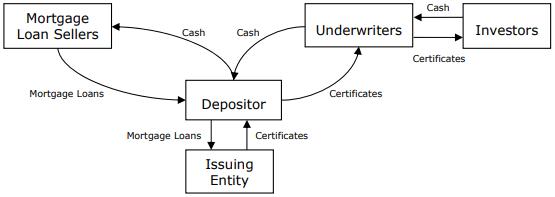
Offered Certificates
| General | We are offering the following classes of commercial mortgage pass-through certificates as part of Series 2025-5C1: Class A-1, Class A-2, Class A-2-1, Class A-2-2, Class A-2-X1, Class A-2-X2, Class A-3, Class A-3-1, Class A-3-2, Class A-3-X1, Class A-3-X2, Class X-A, Class X-B, Class A-S, Class A-S-1, Class A-S-2, Class A-S-X1, Class A-S-X2, Class B, Class B-1, Class B-2, Class B-X1, Class B-X2, Class C, Class C-1, Class C-2, Class C-X1 and Class C-X2. |
The certificates of this Series will consist of the above classes and the following classes that are not being offered by this prospectus: Class X-D, Class X-F, Class D, Class E, Class F, Class G-RR, Class H-RR, Class V and Class R.
Certificate Balances and
| Notional Amounts | Your certificates will have the approximate aggregate initial certificate balance or notional amount set forth below, subject to a variance of plus or minus 5%: |
|
Class |
Approx. Initial Aggregate Certificate Balance or Notional Amount |
Approx. % of Initial Pool Balance |
Approx.
Initial Credit | ||||
| Class A-1 | $ | 430,000 | 0.05% | 30.000% | |||
| Class A-2 | $ | 138,675,000 | (2) | 14.84% | (2) | 30.000% | |
| Class A-3 | $ | 515,121,000 | (2) | 55.12% | (2) | 30.000% | |
| Class X-A | $ | 654,226,000 | NAP | NAP | |||
| Class X-B | $ | 179,912,000 | NAP | NAP | |||
| Class A-S | $ | 96,966,000 | (2) | 10.38% | (2) | 19.625% | |
| Class B | $ | 47,898,000 | (2) | 5.12% | (2) | 14.500% | |
| Class C | $ | 35,048,000 | (2) | 3.75% | (2) | 10.750% | |
| (1) | The approximate initial credit support percentages with respect to the Class A-1, Class A-2 and Class A-3 certificates are presented in the aggregate, taking into account the certificate balances of the Class A-2 and Class A-3 trust components. The approximate initial credit |
| 34 |
support percentage set forth for the Class A-S certificates represents the approximate credit support for the underlying Class A-S trust component. The approximate initial credit support percentage set forth for the Class B certificates represents the approximate credit support for the underlying Class B trust component. The approximate initial credit support percentage set forth for the Class C certificates represents the approximate credit support for the underlying Class C trust component. See “Credit Risk Retention”.
| (2) | Each class of Exchangeable Certificates will have the certificate balance or notional amount described under “Description of the Certificates—Distributions—Exchangeable Certificates”. |
Pass-Through Rates
| A. Offered Certificates | Your certificates will accrue interest at an annual rate called a pass-through rate. The initial approximate pass-through rate is set forth below for each class of certificates: |
|
Class |
Approx.
Initial | |
| Class A-1 | 4.91600% | |
| Class A-2(2) | 4.91300% | |
| Class A-3(2) | 5.63500% | |
| Class X-A | 1.37727% | |
| Class X-B | 0.54896% | |
| Class A-S(2) | 6.01100% | |
| Class B(2) | 6.51300% | |
| Class C(2) | 6.85876% |
| (1) | The pass-through rate for each class of the Class A-1, Class A-2 and Class A-3 certificates for any distribution date will be a fixed per annum rate equal to the pass-through rate set forth opposite such class of certificates in the table. The pass-through rate for each class of the Class A-S and Class B for any distribution date will a variable rate per annum equal to the lesser of (a) the pass-through rate set forth opposite such class of certificates in the table and (b) the weighted average of the net mortgage interest rates on the mortgage loans for the related distribution date. The pass-through rate for the Class C certificates for any distribution date will be a variable rate equal to the weighted average of the net mortgage interest rates on the mortgage loans for the related distribution date. The pass-through rate for the Class X-A certificates for any distribution date will be a per annum rate equal to the excess, if any, of (a) the weighted average of the net mortgage interest rates on the mortgage loans for the related distribution date, over (b) the weighted average of the pass-through rates on the Class A-1 certificates and the Class A-2, Class A-2-X1, Class A-2-X2, Class A-3, Class A-3-X1 and Class A-3-X2 trust components for the related distribution date, weighted on the basis of their respective aggregate certificate balances or notional amounts outstanding immediately prior to that distribution date (but excluding trust components with a notional amount in the denominator of such weighted average calculation). The pass-through rate for the Class X-B certificates for any distribution date will be a per annum rate equal to the excess, if any, of (a) the weighted average of the net mortgage interest rates on the mortgage loans for the related distribution date, over (b) the weighted average of the pass-through rates on the Class A-S, Class A-S-X1, Class A-S-X2, Class B, Class B-X1, Class B-X2, Class C, Class C-X1 and Class C-X2 trust components for the related distribution date, weighted on the basis of their respective aggregate certificate balances or notional amounts outstanding |
| 35 |
immediately prior to that distribution date (but excluding trust components with a notional amount in the denominator of such weighted average calculation). For purposes of the calculation of the weighted average of the net mortgage interest rates on the mortgage loans for each distribution date, the mortgage interest rates will be adjusted as necessary to a 30/360 basis.
| (2) | Each class of Exchangeable Certificates will have the pass-through rate described under “Description of the Certificates—Distributions—Exchangeable Certificates”. |
B. Interest Rate
| Calculation Convention | Interest on the offered certificates at their applicable pass-through rates will be calculated based on a 360-day year consisting of twelve 30-day months, or a “30/360 basis”. |
For purposes of calculating the pass-through rates on the Class X-A and Class X-B certificates and any other class of certificates that has a pass-through rate limited by, equal to or based on the weighted average net mortgage interest rate, the mortgage loan interest rates will not reflect any default interest rate, any loan term modifications agreed to by any special servicer or any modifications resulting from a borrower’s bankruptcy or insolvency.
For purposes of calculating the pass-through rates on the offered certificates, the interest rate for each mortgage loan that accrues interest based on the actual number of days in each month and assuming a 360-day year, or an “actual/360 basis”, will be recalculated, if necessary, so that the amount of interest that would accrue at that recalculated rate in the applicable month, calculated on a 30/360 basis, will equal the amount of interest that is required to be paid on that mortgage loan in that month, subject to certain adjustments as described in “Description of the Certificates—Distributions—Pass-Through Rates” and “—Interest Distribution Amount”.
C. Servicing and
| Administration Fees | Each applicable master servicer and special servicer is entitled to a servicing fee or special servicing fee, as the case may be, from the interest payments on each mortgage loan (other than any non-serviced mortgage loan with respect to the special servicing fee only), any related serviced companion loan and any related REO loans and, with respect to the special servicing fees, if the related mortgage loan interest payments (or other collections in respect of the related mortgage loan or mortgaged property) are insufficient, then from general collections on all mortgage loans. |
The servicing fee for each distribution date, including the master servicing fee and the portion of the servicing fee
| 36 |
payable to any primary servicer or subservicer, is calculated on the outstanding principal amount of each mortgage loan (including any non-serviced mortgage loan) and each serviced companion loan at a servicing fee rate equal to (1) with respect to each serviced mortgage loan, a per annum rate equal to the sum of a master servicing fee rate equal to 0.00250% per annum and a primary servicing fee rate equal to 0.00250% per annum (or, with respect to (i) the Abington & Cypress, 754 Grand Street, 2316 Grand Avenue and 845 Crotona Park North mortgage loans, 0.00125% per annum, and (ii) the Woodgate Village MHC and High Plains Ranch mortgage loans, 0.06000% per annum) (2) with respect to each non-serviced mortgage loan, a master servicing fee rate equal to 0.00250% per annum, plus the primary servicing fee rate set forth in the chart entitled “Non-Serviced Mortgage Loans” in the “Summary of Terms—Offered Certificates,” and (3) with respect to each serviced companion loan, a primary servicing fee rate equal to 0.00250% per annum (or, with respect to the Abington & Cypress serviced companion loan, 0.00125% per annum).
The special servicing fee for each distribution date is calculated based on the outstanding principal amount of each serviced mortgage loan and any related serviced companion loan as to which a special servicing transfer event has occurred (including any REO loans), on a loan-by-loan basis at the special servicing fee rate equal to the greater of a per annum rate of 0.25% and the per annum rate that would result in a special servicing fee for the related month of $5,000. No special servicer will be entitled to a special servicing fee with respect to any non-serviced mortgage loan.
Each applicable master servicer and special servicer is also entitled to additional fees and amounts, including income on the amounts held in certain accounts and certain permitted investments, liquidation fees and workout fees. See “Pooling and Servicing Agreement—Servicing and Other Compensation and Payment of Expenses”.
The certificate administrator fee for each distribution date is calculated on the outstanding principal amount of each mortgage loan (including any REO loan and any non-serviced mortgage loan) at a per annum rate equal to 0.01008%. The trustee fee is payable by the certificate administrator from the certificate administrator fee.
The operating advisor will be entitled to an upfront fee of $5,000 on the closing date. As compensation for the performance of its routine duties, the operating advisor
| 37 |
will be entitled to a fee on each distribution date calculated on the outstanding principal amount of each mortgage loan and any successor REO loan (excluding any related companion loans) at a per annum rate equal to 0.00145%. The operating advisor will also be entitled under certain circumstances to a consulting fee.
The asset representations reviewer will be entitled to an upfront fee of $5,000 on the closing date. As compensation for the performance of its routine duties, the asset representations reviewer will be entitled to a fee on each distribution date calculated on the outstanding principal amount of each mortgage loan and any successor REO loan (excluding any related companion loans) at a per annum rate equal to 0.00028%. Upon the completion of any asset review with respect to each delinquent loan, the asset representations reviewer will be entitled to a per loan fee in an amount described in “Pooling and Servicing Agreement—Servicing and Other Compensation and Payment of Expenses—Asset Representations Reviewer Compensation”.
Each party to the pooling and servicing agreement will also be entitled to be reimbursed by the issuing entity for costs, expenses and liabilities borne by them in certain circumstances.
Additionally, with respect to each distribution date, an amount equal to the product of 0.00050% per annum multiplied by the outstanding principal amount of each mortgage loan and any successor REO loan will be payable to CRE Finance Council® as a license fee for use of their names and trademarks, including an investor reporting package.
Payment of the fees and reimbursement of the costs and expenses described above will generally have priority over the distribution of amounts payable to the certificateholders. See “Pooling and Servicing Agreement—Servicing and Other Compensation and Payment of Expenses” and “—Limitation on Liability; Indemnification”.
With respect to each non-serviced mortgage loan set forth in the table below, the master servicer under the related pooling and servicing agreement governing the servicing of that mortgage loan will be entitled to a primary servicing fee at a per annum rate set forth in the table below, and the special servicer under the related pooling and servicing agreement will be entitled to a special servicing fee at the per annum rate set forth below. In addition, each party to the pooling and servicing agreement governing the servicing of a non-
| 38 |
serviced mortgage loan will be entitled to receive other fees and reimbursements with respect to such non-serviced mortgage loan in amounts, from sources, and at frequencies, that are similar, but not necessarily identical, to those described above and, in certain cases (for example, with respect to unreimbursed special servicing fees and servicing advances with respect to the related non-serviced whole loan), such amounts will be reimbursable from general collections on the mortgage loans to the extent not recoverable from the related non-serviced whole loan and to the extent allocable to such non-serviced mortgage loan pursuant to the related intercreditor agreement. See “Description of the Mortgage Pool—The Whole Loans—The Non-Serviced Pari Passu Whole Loans” and “Pooling and Servicing Agreement—Servicing of the Non-Serviced Mortgage Loans”.
NON-SERVICED MORTGAGE LOANS
|
Non-Serviced Mortgage Loan |
Primary Servicing Fee Rate(1) |
Special
Servicing | |
| Project Midway |
0.00063% per annum |
0.15% | |
| Gateway Center North | 0.00250% per annum | 0.25%(2) | |
| Wilshire Office Portfolio | 0.00250% per annum | 0.25%(3) | |
| The Spiral | 0.00020% per annum | 0.25% | |
| Tops & Kroger Portfolio | 0.00125% per annum | 0.25%(3) |
| (1) | Included as part of the servicing fee rate. |
| (2) | Such fee rate is subject to a monthly minimum amount equal to $3,500 for any month in which such fee is payable. |
| (3) | Such fee rate is subject to a monthly minimum amount equal to $5,000 for any month in which such fee is payable. |
Distributions
A. Amount and Order of
Distributions on
Certificates
On each distribution date, funds available for distribution from the mortgage loans (which are net of specified expenses of the issuing entity, including fees payable to, and costs and expenses reimbursable to, each applicable master servicer, each applicable special servicer, the certificate administrator, the trustee, the operating advisor and the asset representations reviewer and CREFC®) other than (i) any yield maintenance charges and prepayment premiums and (ii) any excess interest) will be distributed in the following amounts and order of priority:
| 39 |
First, to the Class A-1, Class X-A, Class X-B, Class X-D and Class X-F certificates and the Class A-2, Class A-2-X1, Class A-2-X2, Class A-3, Class A-3-X1 and Class A-3-X2 trust components, in respect of interest, up to an amount equal to, and pro rata in accordance with, the interest entitlements for those classes of certificates and trust components;
Second, to the Class A-1 certificates and the Class A-2 and Class A-3 trust components as follows: (i) to the extent of funds allocated to principal and available for distribution: (a) first, to principal on the Class A-1 certificates, until the certificate balance of the Class A-1 certificates has been reduced to zero, (b) second, to principal on the Class A-2 trust component, until the certificate balance of the Class A-2 trust component has been reduced to zero, and (c) third, to principal on the Class A-3 trust component, until the certificate balance of the Class A-3 trust component has been reduced to zero, or (ii) if the certificate balance of each class of certificates and trust components other than the Class A-1 certificates and the Class A-2 and Class A-3 trust components has been reduced to zero as a result of the allocation of mortgage loan losses to those certificates or trust components, applicable funds available for distributions of principal will be distributed to the Class A-1 certificates and the Class A-2 and Class A-3 trust components, pro rata, without regard to the distribution priorities described above;
Third, to the Class A-1 and the Class A-2 and Class A-3 trust components, to reimburse the Class A-1 certificates and the Class A-2 and Class A-3 trust components, first, up to an amount equal to, and pro rata based on, any previously unreimbursed losses on the mortgage loans allocable to principal that were previously borne by those classes or trust components, and then, in an amount equal to, and pro rata based on, interest on that amount at the pass-through rate for such class or trust component compounded monthly from the date the related realized loss was allocated to such class or trust component;
Fourth, to the Class A-S, Class A-S-X1 and Class A-S-X2 trust components, as follows: (a) to each such trust component in respect of interest, up to an amount equal to, and pro rata in accordance with, the interest entitlements for those trust components; (b) to the extent of funds allocable to principal remaining after distributions in respect of principal to each class of certificates or trust component with a higher priority (as set forth in prior enumerated clauses set forth above), to principal on the Class A-S trust component until its
| 40 |
certificate balance has been reduced to zero; and (c) to reimburse the Class A-S trust component, first up to an amount equal to any previously unreimbursed losses on the mortgage loans that were previously allocated thereto, and then in an amount equal to interest on that amount at the related pass-through rate for such trust component;
Fifth, to the Class B, Class B-X1 and Class B-X2 trust components, as follows: (a) to each such trust component in respect of interest, up to an amount equal to, and pro rata in accordance with, the interest entitlements for those trust components; (b) to the extent of funds allocable to principal remaining after distributions in respect of principal to each class of certificates or trust component with a higher priority (as set forth in prior enumerated clauses set forth above), to principal on the Class B trust component until its certificate balance has been reduced to zero; and (c) to reimburse the Class B trust component, first up to an amount equal to any previously unreimbursed losses on the mortgage loans that were previously allocated thereto, and then in an amount equal to interest on that amount at the related pass-through rate for such trust component;
Sixth, to the Class C, Class C-X1 and Class C-X2 trust components, as follows: (a) to each such trust component in respect of interest, up to an amount equal to, and pro rata in accordance with, the interest entitlements for those trust components; (b) to the extent of funds allocable to principal remaining after distributions in respect of principal to each class of certificates or trust component with a higher priority (as set forth in prior enumerated clauses set forth above), to principal on the Class C trust component until its certificate balance has been reduced to zero; and (c) to reimburse the Class C trust component, first up to an amount equal to any previously unreimbursed losses on the mortgage loans that were previously allocated thereto, and then in an amount equal to interest on that amount at the related pass-through rate for such trust component;
Seventh, to the non-offered certificates (other than the Class X-D, Class X-F, Class V and Class R certificates) in the amounts and order of priority described in “Description of the Certificates—Distributions”; and
Eighth, to the Class R certificates, any remaining amounts.
Principal and interest payable to the trust components will be distributed pro rata to the corresponding classes
| 41 |
of exchangeable certificates representing interests therein in accordance with their class percentage interests therein as described under “Description of the Certificates—Distributions—Exchangeable Certificates”.
For more detailed information regarding distributions on the certificates, see “Description of the Certificates—Distributions—Priority of Distributions”.
B. Interest and Principal
| Entitlements | A description of the interest entitlement of each class of certificates (other than the Class V and Class R certificates) can be found in “Description of the Certificates—Distributions—Interest Distribution Amount”. As described in that section, there are circumstances in which your interest entitlement for a distribution date could be less than one full month’s interest at the pass-through rate on your certificate’s balance or notional amount. |
A description of the amount of principal required to be distributed to each class of certificates entitled to principal on a particular distribution date can be found in “Description of the Certificates—Distributions—Principal Distribution Amount”.
C. Yield Maintenance
Charges, Prepayment
| Premiums | Yield maintenance charges and prepayment premiums with respect to the mortgage loans will be allocated to the offered certificates as and to the extent described in “Description of the Certificates—Allocation of Yield Maintenance Charges and Prepayment Premiums”. |
For an explanation of the calculation of yield maintenance charges, see “Description of the Mortgage Pool—Certain Terms of the Mortgage Loans”.
D. Subordination,
Allocation of Losses
| and Certain Expenses | The chart below describes the manner in which the payment rights of certain classes of certificates will be senior or subordinate, as the case may be, to the payment rights of other classes of certificates. The chart also shows the entitlement to receive principal and/or interest of certain classes of certificates (other than excess interest that accrues on each mortgage loan that has an anticipated repayment date) on any distribution date in descending order. It also shows the manner in which mortgage loan losses are allocated to certain classes of certificates in ascending order (beginning with the non-offered certificates, other than the Class X-D, Class X-F, Class V and Class R |
| 42 |
certificates) to reduce the certificate balance of each such class to zero; provided that no principal payments or mortgage loan losses will be allocated to the Class X-A, Class X-B, Class X-D, Class X-F, Class V or Class R certificates or any class of Exchangeable Certificates with an “X” suffix, although principal payments and mortgage loan losses may reduce the notional amounts of the Class X-A, Class X-B, Class X-D and Class X-F certificates and any class of Exchangeable Certificates with an “X” suffix and, therefore, the amount of interest they accrue.
| Class A-1, Class A-2(1), Class A-3(1), Class X-A(2), Class X-B(2), Class X-D(2)(3), Class X-F(2)(3) | ||||
| Class A-S(1) | ||||
| Class B(1) | ||||
| Class C(1) | ||||
| Non-offered certificates(4) | ||||
| (1) | The maximum certificate balances of Class A-2, Class A-3, Class A-S, Class B and Class C certificates will be issued on the closing date, and the certificate balance or notional amount of each other class of Exchangeable Certificates will be equal to zero on the closing date. The relative priorities of the Exchangeable Certificates are described more fully under “Description of the Certificates—Distribution”. |
| (2) | The Class X-A, Class X-B, Class X-D and Class X-F certificates are interest-only certificates. |
| (3) | The Class X-D and Class X-F certificates are non-offered certificates. |
| (4) | Other than the Class X-D, Class X-F, Class V and Class R certificates. |
Other than the subordination of certain classes of certificates, as described above, no other form of credit enhancement will be available for the benefit of the holders of the offered certificates.
Principal losses and principal payments, if any, on mortgage loans that are allocated to a class of certificates with a certificate balance will reduce the certificate balance of that class of certificates.
The notional amount of the Class X-A certificates will be reduced by the amount of principal losses or principal payments, if any, allocated to the Class A-1 certificates and the Class A-2 and Class A-3 trust components. The notional amount of the Class X-B certificates will be reduced by the amount of principal losses or principal payments, if any, allocated to the Class A-S, Class B and Class C trust components.
To the extent funds are available on a subsequent distribution date for distribution on your offered
| 43 |
certificates, you will be reimbursed for any losses allocated to your offered certificates with interest at the pass-through rate on those offered certificates in accordance with the distribution priorities.
See “Description of the Certificates—Subordination; Allocation of Realized Losses” for more detailed information regarding the subordination provisions applicable to the certificates and the allocation of losses to the certificates.
E. Shortfalls in Available
| Funds | Shortfalls will reduce the available funds and will correspondingly reduce distributions to the classes of certificates with the lowest payment priorities. |
Shortfalls may occur as a result of:
| ● | the payment of special servicing fees and other additional compensation that any special servicer is entitled to receive; |
| ● | interest on advances made by any master servicer, any special servicer or the trustee (to the extent not covered by late payment charges or default interest paid by the related borrower); |
| ● | the application of appraisal reductions to reduce interest advances; |
| ● | extraordinary expenses of the issuing entity including indemnification payments payable to the parties to the pooling and servicing agreement; |
| ● | a modification of a mortgage loan’s interest rate or principal balance; and |
| ● | other unanticipated or default-related expenses of the issuing entity. |
In addition, prepayment interest shortfalls on the mortgage loans that are not covered by certain compensating interest payments made by any master servicer are required to be allocated among all of the classes of certificates (other than the Exchangeable Certificates) and all trust components entitled to interest, on a pro rata basis based on their respective amounts of accrued interest for the related distribution date, to reduce the amount of interest payable on each such class of certificates to the extent described in this prospectus. For any distribution date, prepayment interest shortfalls allocated to a trust component will be allocated among the related classes of Exchangeable Certificates, pro rata, in accordance with their respective
| 44 |
class percentage interests for that distribution date. See “Description of the Certificates—Prepayment Interest Shortfalls”.
| F. Excess Interest | On each distribution date, any excess interest in respect of the increase in the interest rate on any mortgage loan with an anticipated repayment date after the related anticipated repayment date to the extent actually collected and applied as interest during a collection period will be distributed to the holders of the Class V certificates on the related distribution date as set forth in “Description of the Certificates—Distributions—Excess Interest”. This excess interest will not be available to make distributions to any other class of certificates or to provide credit support for other classes of certificates or offset any interest shortfalls or to pay any other amounts to any other party under the pooling and servicing agreement. |
Advances
| A. P&I Advances | Each master servicer is required to advance a delinquent periodic payment on each mortgage loan (including any non-serviced mortgage loan) or any successor REO loan (excluding any portion of an REO loan related to a companion loan) serviced by such master servicer, unless in each case, such master servicer or the applicable special servicer determines that the advance would be non-recoverable. Neither any master servicer nor the trustee will be required to advance balloon payments due at maturity or outstanding on the related anticipated repayment date in excess of the regular periodic payment, interest in excess of a mortgage loan’s regular interest rate, default interest, late payment charges, prepayment premiums or yield maintenance charges. |
The amount of the interest portion of any advance will be subject to reduction to the extent that an appraisal reduction of the related mortgage loan has occurred (and with respect to any mortgage loan that is part of a whole loan, to the extent such appraisal reduction amount is allocated to the related mortgage loan). There may be other circumstances in which a master servicer will not be required to advance a full month of principal and/or interest. If the applicable master servicer fails to make a required advance, the trustee will be required to make the advance, unless the trustee or the special servicer determines that the advance would be non-recoverable. If an interest advance is made by the applicable master servicer, such master servicer will not advance the portion of interest that constitutes its servicing fee, but will advance the portion
| 45 |
of interest that constitutes the monthly fees payable to the certificate administrator, the trustee, the operating advisor and the asset representations reviewer and the CREFC® license fee.
No master servicer or special servicer or the trustee will make, or be permitted to make, any principal or interest advance with respect to any companion loan. The special servicer will have no obligation to make any P&I Advances.
See “Pooling and Servicing Agreement—Advances”.
B. Property Protection
| Advances | Each master servicer may be required to make advances with respect to the serviced mortgage loans and any related companion loan that it is required to service to pay delinquent real estate taxes, assessments and hazard insurance premiums and similar expenses necessary to: |
| ● | protect and maintain (and in the case of REO properties, lease and manage) the related mortgaged property; |
| ● | maintain the lien on the related mortgaged property; and/or |
| ● | enforce the related mortgage loan documents. |
No special servicer will have an obligation to make any property protection advances (although they may elect to make them in an emergency circumstance in their sole discretion). If any special servicer makes a property protection advance, the applicable master servicer will be required to reimburse such special servicer for that advance (unless the applicable master servicer determines that the advance would be non-recoverable, in which case the advance will be reimbursed out of the related collection account) and such master servicer will be deemed to have made that advance as of the date made by the applicable special servicer.
If the applicable master servicer fails to make a required advance of this type, the trustee will be required to make this advance. No master servicer or special servicer or the trustee is required to advance amounts determined by such party to be non-recoverable.
See “Pooling and Servicing Agreement—Advances”.
With respect to any non-serviced mortgage loan, the applicable master servicer (and the trustee, as applicable) under the pooling and servicing agreement
| 46 |
governing the servicing of that non-serviced whole loan will be required to make similar advances with respect to delinquent real estate taxes, assessments and hazard insurance premiums as described above.
| C. Interest on Advances | Each applicable master servicer, special servicer and the trustee, as applicable, will be entitled to interest on the above described advances at the “Prime Rate” as published in The Wall Street Journal, as described in this prospectus (subject to a floor of 2.00%), compounded annually. Interest accrued on outstanding advances may result in reductions in amounts otherwise payable on the certificates. Neither the applicable master servicer nor the trustee will be entitled to interest on advances made with respect to principal and interest due on a mortgage loan until the related due date has passed and any grace period for late payments applicable to the mortgage loan has expired. See “Pooling and Servicing Agreement—Advances”. |
With respect to any non-serviced mortgage loan, the applicable makers of advances under the related pooling and servicing agreement governing the servicing of the non-serviced whole loan will similarly be entitled to interest on advances, and any accrued and unpaid interest on property protection advances made in respect of such non-serviced mortgage loan may be reimbursed from general collections on the other mortgage loans included in the issuing entity to the extent not recoverable from such non-serviced whole loan and to the extent allocable to such non-serviced mortgage loan in accordance with the related intercreditor agreement.
The Mortgage Pool
| The Mortgage Pool | The issuing entity’s primary assets will be 40 commercial mortgage loans, each evidenced by one or more promissory notes secured by, generally, first mortgages, deeds of trust, deeds to secure debt or similar security instruments on the fee and/or leasehold estate of the related borrower in 67 commercial, multifamily and/or manufactured housing community properties. See “Description of the Mortgage Pool—General”. |
The aggregate principal balance of the mortgage loans as of the cut-off date will be approximately $934,609,352.
Whole Loans
Unless otherwise expressly stated in this prospectus, the term “mortgage loan” refers to each of the commercial mortgage loans to be held by the issuing entity. Of the
| 47 |
mortgage loans, each mortgage loan in the table below is part of a larger “whole loan”, which is comprised of the related mortgage loan and one or more loans that are pari passu in right of payment to the related mortgage loan (each referred to in this prospectus as a “pari passu companion loan” or a “companion loan”) and, in certain cases, one or more loans that are subordinate in right of payment to the related mortgage loan (each referred to in this prospectus as a “subordinate companion loan” or a “companion loan”). For further information regarding the whole loans, see “Description of the Mortgage Pool—The Whole Loans”.
Whole Loan Summary
|
Mortgage Loan Name |
Mortgage Loan Cut-off Date Balance |
% of Initial Pool Balance |
Pari Passu Companion Loan Cut-off Date Balance |
Subordinate Companion Loan Cut-off Date Balance |
Mortgage |
Whole |
Mortgage Loan Underwritten NCF DSCR(1) |
Whole Loan Underwritten NCF DSCR(2) |
| Grand Plaza | $93,000,000 | 9.95% | $67,000,000 | NAP | 66.3% | 66.3% | 1.36x | 1.36x |
| Logan Cargo Park | $90,000,000 | 9.6% | $30,000,000 | NAP | 56.2% | 56.2% | 1.26x | 1.26x |
| Project Midway | $69,000,000 | 7.4% | $461,000,000 | $235,000,000 | 41.1% | 59.3% | 2.23x | 1.51x |
| Gateway Center North | $59,500,000 | 6.4% | $240,500,000 | NAP | 67.7% | 67.7% | 1.20x | 1.20x |
| Prosper South Bend Apartments | $43,000,000 | 4.6% | $22,000,000 | NAP | 69.1% | 69.1% | 1.28x | 1.28x |
| Wilshire Office Portfolio | $30,000,000 | 3.2% | $75,000,000 | NAP | 51.9% | 51.9% | 1.73x | 1.73x |
| Abington & Cypress | $30,000,000 | 3.2% | $15,650,000 | NAP | 69.6% | 69.6% | 1.32x | 1.32x |
| The Spiral | $25,500,000 | 2.7% | $2,051,200,000 | $773,300,000 | 45.1% | 62.0% | 1.99x | 1.39x |
| Tops & Kroger Portfolio | $22,000,000 | 2.4% | $78,500,000 | NAP | 62.1% | 62.1% | 1.56x | 1.56x |
| (1) | Calculated including any related pari passu companion loans, but excluding any related subordinate companion loans or mezzanine debt. With respect to the Project Midway mortgage loan, calculated based on the weighted average interest rate of such mortgage loan and pari passu companion loans of 6.512978886792450%. With respect to The Spiral mortgage loan, calculated based on the weighted average interest rate of such mortgage loan and pari passu companion loans of 5.499691075%. |
| (2) | Calculated including any related pari passu companion loans and any related subordinate companion loans, but excluding any related mezzanine debt. With respect to the Project Midway whole loan, calculated using the weighted average interest rate of the whole loan of 6.65459975163399%. With respect to The Spiral whole loan, calculated based on the weighted average interest rate of such whole loan of 5.73551255157895%. |
Each of the Grand Plaza whole loan, the Logan Cargo Park whole loan, the Prosper South Bend Apartments whole loan and the Abington & Cypress whole loan will be serviced by the applicable master servicer and the applicable special servicer pursuant to the pooling and servicing agreement for this transaction and is referred to in this prospectus as a “serviced whole loan”, and each related companion loan is referred to in this prospectus as a “serviced companion loan”.
Each servicing shift whole loan (a “servicing shift whole loan”, and the related mortgage loan, a “servicing shift mortgage loan”) will initially be serviced by the applicable master servicer and the applicable special servicer pursuant to the pooling and servicing agreement for this transaction. From and after the date on which the related controlling companion loan is securitized (each, a “servicing shift securitization date”), it is anticipated that the related servicing shift whole
| 48 |
loan will be serviced under, and by the applicable master servicer (a “servicing shift master servicer”) and the applicable special servicer (a “servicing shift special servicer”) designated in, the related pooling and servicing agreement entered into in connection with such securitization (a “servicing shift pooling and servicing agreement”).
Prior to the applicable servicing shift securitization date, each servicing shift whole loan will be a “serviced whole loan”, the related mortgage loan will be a “serviced mortgage loan” and the related companion loans will be “serviced companion loans”. On and after the applicable servicing shift securitization date, each servicing shift whole loan will be a “non-serviced whole loan”, the related mortgage loan will be a “non-serviced mortgage loan” and the related companion loans will be “non-serviced companion loans”. As of the Closing Date, there are no servicing shift whole loans.
Each whole loan identified in the table below will not be serviced under the pooling and servicing agreement for this transaction and instead will be serviced under a separate pooling and servicing agreement identified in the table below entered into in connection with the securitization of one or more related companion loan(s) and is referred to in this prospectus as a “non-serviced whole loan”. The related mortgage loan is referred to as a “non-serviced mortgage loan” and the related companion loans are each referred to in this prospectus as a “non-serviced companion loan” or collectively, as the “non-serviced companion loans”. See “Pooling and Servicing Agreement—Servicing of the Non-Serviced Mortgage Loans”.
Non-Serviced Whole Loans(1)(2)
|
Whole Loan Name |
Transaction/Pooling Agreement |
% of Initial Pool Balance |
Master Servicer |
Special Servicer |
Trustee |
| Project Midway | BX 2025-BIO3 | 7.4% | KeyBank National Association | CWCapital Asset Management LLC | Computershare Trust Company, National Association |
| Gateway Center North | BANK5 2024-5YR11 | 6.4% | Trimont LLC | Midland Loan Services, a Division of PNC Bank, National Association | Computershare Trust Company, National Association |
| Wilshire Office Portfolio | WFCM 2025-5C3 | 3.2% | Trimont LLC | Argentic Services Company LP | Computershare Trust Company, National Association |
| The Spiral | Hudson Yards 2025-SPRL TSA | 2.7% | Trimont LLC | Midland Loan Services, a Division of PNC Bank, National Association | Computershare Trust Company, National Association |
| Tops & Kroger Portfolio | BBCMS 2024-5C31 | 2.4% | Midland Loan Services, a Division of PNC Bank, National Association | LNR Partners, LLC | Computershare Trust Company, National Association |
| 49 |
|
Whole Loan Name |
Certificate Administrator |
Custodian |
Operating Advisor |
Directing Holder |
| Project Midway | Deutsche Bank National Trust Company | Deutsche Bank National Trust Company | Park Bridge Lender Services LLC | 2647462 Ontario Inc. |
| Gateway Center North | Computershare Trust Company, National Association | Computershare Trust Company, National Association | Pentalpha Surveillance LLC | Eightfold Real Estate Capital, L.P. or an affiliate |
| Wilshire Office Portfolio | Computershare Trust Company, National Association | Computershare Trust Company, National Association | BellOak, LLC | Argentic Securities Income USA 2 LLC |
| The Spiral | Computershare Trust Company, National Association | Computershare Trust Company, National Association | N/A(3) | N/A(4) |
| Tops & Kroger Portfolio | Computershare Trust Company, National Association | Computershare Trust Company, National Association | Pentalpha Surveillance LLC | LNR Securities Holdings, LLC |
| (1) | Information in this table is presented as of the closing date of the related securitization or, if such securitization has not yet closed, reflects information regarding the expected parties to such securitization. |
| (2) | With respect to each servicing shift whole loan, the right to remove the related special servicer and other control rights will be exercisable by the holder of the related control note designated under the related co-lender agreement. If such control note is included in a securitization trust, the party designated under the related pooling and servicing agreement will be entitled to exercise the rights of the control note holder. |
| (3) | The Hudson Yards 2025-SPRL TSA does not provide for any operating advisor or similar entity. |
| (4) | No controlling class representative was appointed as of the closing date of Hudson Yards 2025-SPRL. |
Mortgage Loan Characteristics
The following tables set forth certain anticipated characteristics of the mortgage loans as of the cut-off date (unless otherwise indicated). Except as specifically provided in this prospectus, various information presented in this prospectus (including loan-to-value ratios, debt service coverage ratios, debt yields and cut-off date balances per net rentable square foot, pad, room or unit, as applicable) with respect to any mortgage loan with a pari passu companion loan or subordinate companion loan is calculated including the principal balance and debt service payment of the related pari passu companion loan(s), but is calculated excluding the principal balance and debt service payment of any related subordinate companion loan (or any subordinate debt encumbering the related mortgaged property or any related mezzanine debt or preferred equity).
In addition, investors should be aware that the appraisals for the mortgaged properties were prepared prior to origination and have not been updated. Similarly, net operating income and occupancy information used in underwriting the mortgage loans may not reflect current conditions. As a result, appraised values, net operating income, occupancy, and related metrics, such as loan-to-value ratios, debt service coverage ratios and debt yields, may not accurately reflect the current conditions at the mortgaged properties.
| 50 |
The sum of the numerical data in any column may not equal the indicated total due to rounding. Unless otherwise indicated, all figures and percentages presented in this “Summary of Terms” are calculated as described under “Description of the Mortgage Pool—Certain Calculations and Definitions” and, unless otherwise indicated, such figures and percentages are approximate and in each case, represent the indicated figure or percentage of the aggregate principal balance of the pool of mortgage loans as of the cut-off date. The principal balance of each mortgage loan as of the cut-off date assumes the timely receipt of principal scheduled to be paid on or before the cut-off date and no defaults, delinquencies or prepayments on, or modifications of, any mortgage loan on or prior to the cut-off date. Whenever percentages and other information in this prospectus are presented on the mortgaged property level rather than the mortgage loan level, the information for mortgage loans secured by more than one mortgaged property (or part of a group of more than one cross-collateralized mortgage loan) is based on allocated loan amounts as stated in Annex A-1.
The mortgage loans will have the following approximate characteristics as of the cut-off date:
| 51 |
Cut-off Date Mortgage Loan Characteristics
|
All Mortgage Loans | ||
| Initial Pool Balance(1) | $934,609,352 | |
| Number of mortgage loans | 40 | |
| Number of mortgaged properties | 67 | |
| Number of crossed loans | 0 | |
| Crossed loans as a percentage | 0.0% | |
| Range of Cut-off Date Balances | $3,171,000 to $93,000,000 | |
| Average Cut-off Date Balance | $23,365,234 | |
| Range of Mortgage Rates | 5.4997% to 7.7300% | |
| Weighted average Mortgage Rate | 6.6557% | |
| Range of original terms to maturity(2) | 60 months to 60 months | |
| Weighted average original term to maturity(2) | 60 months | |
| Range of remaining terms to maturity(2) | 52 months to 60 months | |
| Weighted average remaining term to maturity(2) | 59 months | |
| Range of original amortization terms(3) | 360 months to 360 months | |
| Weighted average original amortization term(3) | 360 months | |
| Range of remaining amortization terms(3) | 352 months to 352 months | |
| Weighted average remaining amortization term(3) | 352 months | |
| Range of Cut-off Date LTV Ratios(4)(5)(6) | 41.1% to 74.3% | |
| Weighted average Cut-off Date LTV Ratio(4)(5)(6) | 60.1% | |
| Range of LTV Ratios as of the maturity date or anticipated repayment date(2)(4)(5)(6) | 41.1% to 74.3% | |
| Weighted average LTV Ratio as of the maturity date or anticipated repayment date(2)(4)(5)(6) | 60.0% | |
| Range of U/W NCF DSCRs(5)(6)(7) | 1.20x to 2.23x | |
| Weighted average U/W NCF DSCR(5)(6)(7) | 1.56x | |
| Range of U/W NOI Debt Yields(5)(6) | 7.8% to 17.4% | |
| Weighted average U/W NOI Debt Yield(5)(6) | 11.1% | |
| Percentage of Initial Pool Balance consisting of: | ||
| Interest-Only | 99.0% | |
| Amortizing Balloon | 1.0% |
| (1) | Subject to a permitted variance of plus or minus 5%. |
| (2) | With respect to any mortgage loan with an anticipated repayment date, if any, calculated as of the related anticipated repayment date. |
| (3) | Excludes 39 mortgage loans (99.0%) identified on Annex A-1, which are interest-only for the entire term or until the anticipated repayment date, as applicable. |
| (4) | Loan-to-value ratios (such as, for example, the loan-to-value ratios as of the cut-off date and the loan-to-value ratios at the maturity date) with respect to the mortgage loans were generally calculated using “as-is” values (or any equivalent term) as described under “Description of the Mortgage Pool—Certain Calculations |
| 52 |
| and Definitions”; provided, that with respect to certain mortgage loans, the related loan-to-value ratios have been calculated using “as-complete”, “as-stabilized” or similar hypothetical values. In addition, with respect to certain mortgage loans secured by multiple mortgaged properties, the appraised value may be an “as portfolio” value that assigns a premium to the value of the mortgaged properties as a whole, which value exceeds the sum of their individual appraised values. Such mortgage loans are identified under the definition of “Appraised Value” set forth under “Description of the Mortgage Pool—Certain Calculations and Definitions—Definitions”. See “Risk Factors—Risks Relating to the Mortgage Loans—Appraisals May Not Reflect Current or Future Market Value of Each Property”. |
| (5) | In the case of mortgage loans that have one or more pari passu companion loans and/or subordinate companion loans that are not included in the issuing entity, the debt service coverage ratio, loan-to-value ratio and debt yield have been calculated including the related pari passu companion loan(s) but excluding any related subordinate companion loan. With respect to the Project Midway mortgage loan (7.4%), (a) the loan-to-value ratio, debt yield and debt service coverage ratio include any pari passu companion loan(s), as applicable, but exclude the related subordinate companion loan(s), (b) the related mortgage loan and pari passu companion loans have varying interest rates and the debt service coverage ratio is calculated using the weighted average interest rate of such mortgage loan and pari passu companion loans of 6.512978886792450% and (c) the loan-to-value ratio as of the cut-off date, loan-to-value ratio as of the maturity date, underwritten net cash flow debt service coverage ratio and underwritten net operating income debt yield including the related subordinate companion loans (and with respect to the debt service coverage ratio, calculated using the weighted average interest rate of the whole loan of 6.65459975163399%) are, 59.3%, 59.3%, 1.51x and 10.3%, respectively. With respect to The Spiral mortgage loan (2.7%), (a) the loan-to-value ratio, debt yield and debt service coverage ratio include any pari passu companion loan(s), as applicable, but exclude the related subordinate companion loan(s), (b) the related mortgage loan and pari passu companion loans have varying interest rates and the debt service coverage ratio is calculated using the weighted average interest rate of such mortgage loan and pari passu companion loans of 5.499691075% per annum and (c) the Cut-off Date LTV Ratio, LTV Ratio at Maturity, U/W NCF DSCR and U/W NOI Debt Yield including the related subordinate companion loans (and with respect to the debt service coverage ratio, calculated using the weighted average interest rate of the whole loan of 5.73551255157895% per annum) are 62.0%, 62.0%, 1.39x and 8.3%, respectively. |
| (6) | In the case of cross-collateralized and cross-defaulted mortgage loans, the debt service coverage ratios, loan-to-value ratios and debt yields have been calculated on an aggregate basis, as described in this prospectus. On an individual basis, without regard to cross-collateralization, any mortgage loan that is part of a cross-collateralized group of mortgage loans may have a higher loan-to-value ratio, lower debt service coverage ratio and/or lower debt yield than is presented in this prospectus. |
| (7) | Debt service coverage ratios (such as, for example, underwritten net cash flow debt service coverage ratios or underwritten net operating income debt service coverage ratios) are calculated based on “Annual Debt Service”, as defined under “Description of the Mortgage Pool—Certain Calculations and Definitions—Definitions”. |
All of the mortgage loans accrue interest on an actual/360 basis.
For further information regarding the mortgage loans, see “Description of the Mortgage Pool”.
| 53 |
Modified and Refinanced
| Loans | With respect to the Abington & Cypress mortgage loan (3.2%), the borrower sponsor requested that the prior loan, the security for which included an additional property in the portfolio along with the Cypress Village Apartments and The Abington mortgaged properties, be transferred into special servicing following a major flood in July 2022 that caused such additional property to close due to the related municipality issuing a vacate order. The flood-damaged property has remained closed and is not collateral for the mortgage loan. Proceeds from the mortgage loan were used to repay the prior loan in full on February 25, 2025. |
With respect to the Palmdale Gateway Center mortgage loan (2.0%), the prior loan secured by the mortgaged property was originally scheduled to mature on October 1, 2022, but the prior borrower, the current sole member of the borrower, and the servicer entered into a forbearance agreement through October 1, 2024. Thereafter, the maturity date of the prior loan was extended to January 3, 2025, at which time the borrower sponsor refinanced the prior loan with the mortgage loan. Proceeds from the mortgage loan were used to repay the prior loan in full.
With respect to the Mi Place at Vineyard II mortgage loan (1.5%), prior to origination of the current mortgage loan, the mortgaged property secured two floating rate loans with an aggregate principal balance of approximately $15.5 million, which matured in July and November 2024. Accordingly such mortgage loans were in maturity default at the time of the origination of the current mortgage loan. Such prior mortgage loans were repaid in full upon the origination of the current mortgage loan.
With respect to the 25 West 36th Street mortgage loan (0.9%), the prior mortgage loan secured by the mortgaged property, which was originated in 2017 with an original principal balance of $16,000,000, and had been subject to prior modifications, was repaid in a discounted payoff in the amount of $12,500,000 concurrently with the origination of the current mortgage loan.
With respect to the 754 Grand Street mortgage loan (0.7%), the prior loan secured by the mortgaged property was originally scheduled to mature on July 31, 2024 but was granted a maturity extension. Proceeds from the mortgage loan were used to repay the prior loan in full on February 13, 2025.
| 54 |
With respect to the 8414 4th Avenue mortgage loan (0.4%), the prior mortgage loan secured by the mortgaged property, in the original principal amount of $2,500,000, had a maturity date on January 10, 2025, for which the borrower negotiated a short-term extension to April 10, 2025. The prior mortgage loan was repaid in full upon the origination of the current mortgage loan on February 10, 2025.
None of the other mortgage loans were modified due to a delinquency or were refinancings of loans in default at the time of refinancing and/or otherwise involved discounted payoffs in connection with the origination of the mortgage loan. See “Description of the Mortgage Pool—Loan Purpose; Default History, Bankruptcy Issues and Other Proceedings”.
Properties with Limited
| Operating History | 5 of the mortgaged properties (4.2%) (i) were constructed or the subject of a major renovation that was completed within 12 calendar months prior to the cut-off date or are leased fee properties and, therefore, the related mortgaged property has no or limited prior operating history, (ii) have a borrower or an affiliate under the related mortgage loan that acquired the related mortgaged property within 12 calendar months prior to the cut-off date and such borrower or affiliate was unable to provide the related mortgage loan seller with historical financial information for such acquired mortgaged property or (iii) are single tenant properties subject to triple-net leases with the related tenant where the related borrower did not provide the related mortgage loan seller with historical financial information for the related mortgaged property. |
See “Description of the Mortgage Pool—Certain Calculations and Definitions” and “Description of the Mortgage Pool—Mortgage Pool Characteristics—Mortgaged Properties With Limited Prior Operating History”.
Certain Variances from
| Underwriting Standards | Each sponsor maintains its own set of underwriting guidelines, which typically relate to credit and collateral analysis, loan approval, debt service coverage ratio and loan-to-value ratio analysis, assessment of property condition, escrow requirements and requirements regarding title insurance policy and property insurance. Certain of the mortgage loans may vary from the related mortgage loan seller’s underwriting guidelines described under “Transaction Parties—The Sponsors and Mortgage Loan Sellers”. |
| 55 |
See “Description of the Mortgage Pool—Exceptions to Underwriting Guidelines”.
Additional Aspects of Certificates
| Denominations | The offered certificates with certificate balances and the exchangeable certificates with notional amounts that are initially offered and sold to purchasers will be issued in minimum denominations of $10,000 and integral multiples of $1 in excess of $10,000. The certificates with notional amounts (other than any exchangeable certificates) will be issued, maintained and transferred only in minimum denominations of authorized initial notional amounts of not less than $1,000,000 and in integral multiples of $1 in excess of $1,000,000. |
Registration, Clearance
| and Settlement | Each class of offered certificates will initially be registered in the name of Cede & Co., as nominee of The Depository Trust Company, or DTC. |
You may hold offered certificates through: (1) DTC in the United States; or (2) Clearstream Banking, Luxembourg or Euroclear Bank, as operator of the Euroclear System. Transfers within DTC, Clearstream Banking, Luxembourg or Euroclear Bank, as operator of the Euroclear System, will be made in accordance with the usual rules and operating procedures of those systems.
We may elect to terminate the book-entry system through DTC (with the consent of the DTC participants), Clearstream Banking, Luxembourg or Euroclear Bank, as operator of the Euroclear System, with respect to all or any portion of any class of the offered certificates.
See “Description of the Certificates—Delivery, Form, Transfer and Denomination—Book-Entry Registration”.
| Credit Risk Retention | Regulation RR implementing the risk retention requirements of Section 15G of the Securities Exchange Act of 1934, as amended, will apply to this securitization. An economic interest in the credit risk of the mortgage loans in this securitization is expected to be retained by Argentic Securities Holdings 2 Cayman Limited, a “majority-owned affiliate” (as defined under Regulation RR) of Argentic Real Estate Finance 2 LLC, as “retaining sponsor” (as defined under Regulation RR), in the form of a combination of (i) an “eligible vertical interest” comprised of the percentage of each class of certificates (other than the Class R certificates) retained as described under “Credit Risk Retention” (collectively, the “VRR Interest”) and (ii) an “eligible horizontal residual interest” in the form of the Class G-RR and |
| 56 |
Class H-RR certificates (in each case, excluding the portion thereof that comprises a part of the VRR Interest) (collectively referred to herein as the “HRR Interest”).
The retaining sponsor is permitted under Regulation RR to transfer the HRR Interest to a “third-party purchaser” (as defined in Regulation RR) on and after the date that is 5 years after the Closing Date and in accordance with the Credit Risk Retention Rules.
For a further discussion of the manner in which the credit risk retention requirements are expected to be satisfied, see “Credit Risk Retention” and “Risk Factors—Other Risks Relating to the Certificates—The Repurchase Finance Facility Could Cause the Retaining Sponsor to Fail to Satisfy the Credit Risk Retention Rules” in this prospectus.
EU Securitization Rules
and UK Securitization
| Rules | None of the sponsors, the depositor or the underwriters or their respective affiliates, or any other person, intends to retain a material net economic interest in the securitization constituted by the issue of the certificates, or to take any other action in respect of such securitization, in a manner prescribed or contemplated by the EU Securitization Rules or the UK Securitization Rules (as each such term is defined under “Risk Factors—Other Risks Relating to the Certificates—EU Securitization Rules and UK Securitization Rules”). In particular, no such person undertakes to take any action, or refrain from taking any action, for purposes of, or in connection with, compliance by any person with any applicable requirement of the EU Securitization Rules or the UK Securitization Rules. In addition, the arrangements described under “Credit Risk Retention” in this prospectus have not been structured with the objective of ensuring compliance by any person with any applicable requirement of the EU Securitization Rules or the UK Securitization Rules. Consequently, the offered certificates may not be a suitable investment for any person that is subject to the EU Securitization Rules or the UK Securitization Rules; and this may, amongst other things, have a negative impact on the value and liquidity of the offered certificates, and otherwise affect the secondary market for the offered certificates. See “Risk Factors—Other Risks Relating to the Certificates—EU Securitization Rules and UK Securitization Rules”. |
Information Available to
| Certificateholders | On each distribution date, the certificate administrator will prepare and make available to each certificateholder of record, initially expected to be Cede & Co., a |
| 57 |
statement as to the distributions being made on that date. Additionally, under certain circumstances, certificateholders of record may be entitled to certain other information regarding the issuing entity. See “Description of the Certificates—Reports to Certificateholders; Certain Available Information”.
| Deal Information/Analytics | Certain information concerning the mortgage loans and the certificates will be available to certificateholders through: |
| ● | the certificate administrator’s website initially located at www.ctslink.com; and |
may be available to certificateholders through:
| ● | the master servicer’s website initially located at www.pnc.com/midland. |
| Optional Termination | On any distribution date on which the aggregate principal balance of the pool of mortgage loans is less than 1.0% of the aggregate principal balance of the mortgage loans as of the cut-off date, certain entities specified in this prospectus will have the option to purchase all of the remaining mortgage loans (and all property acquired through exercise of remedies in respect of any mortgage loan) at the price specified in this prospectus. |
The issuing entity may also be terminated in connection with a voluntary exchange of all of the then-outstanding certificates (other than the Class V and Class R certificates) and deemed payment of a price specified in this prospectus for the mortgage loans then held by the issuing entity, provided that (i) the Class A-1, Class D and Class E certificates and the Class A-2, Class A-3, Class A-S, Class B and Class C trust components are no longer outstanding, (ii) there is only one holder (or multiple holders acting unanimously) of the outstanding certificates (other than the Class V and Class R certificates), and (iii) each applicable master servicer consents to the exchange.
See “Pooling and Servicing Agreement—Termination; Retirement of Certificates”.
Required Repurchases or
Substitutions of Mortgage
Loans; Loss of Value
| Payment | Under certain circumstances, the related mortgage loan seller may be obligated to (i) repurchase (without payment of any yield maintenance charge or prepayment premium) or substitute an affected mortgage loan from the issuing entity or (ii) make a |
| 58 |
cash payment that would be deemed sufficient to compensate the issuing entity in the event of a document defect or a breach of a representation and warranty made by the related mortgage loan seller with respect to the mortgage loan in the related mortgage loan purchase agreement that materially and adversely affects the value of the mortgage loan, the value of the related mortgaged property or the interests of any certificateholders in the mortgage loan or mortgaged property or causes the mortgage loan to be other than a “qualified mortgage” within the meaning of Section 860G(a)(3) of the Internal Revenue Code of 1986, as amended (but without regard to the rule of Treasury Regulations Section 1.860G-2(f)(2) that causes a defective loan to be treated as a “qualified mortgage”); provided that, with respect to any joint mortgage loan, each related mortgage loan seller will be obligated to take the above remedial actions only with respect to the related promissory note(s) sold by it to the depositor as if the note(s) contributed by such mortgage loan seller and evidencing such mortgage loan were a separate mortgage loan. See “Description of the Mortgage Loan Purchase Agreements—General”.
| Sale of Defaulted Loans | Pursuant to the pooling and servicing agreement, under certain circumstances the applicable special servicer is required to use reasonable efforts to solicit offers for defaulted serviced mortgage loans (or a defaulted serviced whole loan and/or related REO properties) and, in the absence of a cash offer at least equal to its outstanding principal balance plus all accrued and unpaid interest and outstanding costs and expenses and certain other amounts under the pooling and servicing agreement, may accept the first (and, if multiple offers are received, the highest) cash offer from any person that constitutes a fair price for the defaulted serviced mortgage loan (or defaulted serviced whole loan) or related REO property, determined as described in “Pooling and Servicing Agreement—Realization Upon Mortgage Loans” and “—Sale of Defaulted Loans and REO Properties”, unless the applicable special servicer determines, in accordance with the servicing standard (and subject to the requirements of any related intercreditor agreement), that rejection of such offer would be in the best interests of the certificateholders and any related companion loan holder (as a collective whole as if such certificateholders and such companion loan holder constituted a single lender). |
With respect to any non-serviced mortgage loan, if a related pari passu companion loan becomes a defaulted mortgage loan under the pooling and servicing agreement for the related pari passu companion loan
| 59 |
and the special servicer under the related pooling and servicing agreement for the related pari passu companion loan(s) determines to sell such pari passu companion loan(s), then that special servicer will be required to sell such non-serviced mortgage loan together with the related pari passu companion loan(s) and, in certain cases, any related subordinate companion loan(s) in a manner similar to that described above. See “Description of the Mortgage Pool—The Whole Loans”.
| Tax Status | Elections will be made to treat designated portions of the issuing entity (exclusive of any entitlement to interest that is deferred after the anticipated repayment date of each mortgage loan with an anticipated repayment date and amounts in the excess interest distribution account) as two separate REMICs – the lower-tier REMIC and the upper-tier REMIC – for federal income tax purposes. |
In addition, the portion of the issuing entity consisting of entitlement to the excess interest (if any) accrued on any mortgage loan with an anticipated repayment date will be classified as a trust, the beneficial owners of which will be the holders of the Class V certificates (a “grantor trust”). The upper-tier REMIC will issue several classes of uncertificated REMIC regular interests, some of which will be held by the grantor trust. The grantor trust will issue the Exchangeable Certificates, all of which will represent beneficial ownership of one or more of REMIC “regular interests” issued by the upper-tier REMIC.
Pertinent federal income tax consequences of an investment in the offered certificates include:
| ● | Each class of offered certificates will represent beneficial ownership of one or more REMIC “regular interests”. |
| ● | The offered certificates will be treated as newly originated debt instruments for federal income tax purposes. |
| ● | You will be required to report income on your offered certificates using the accrual method of accounting. |
| ● | It is anticipated that the Class X-A and Class X-B certificates will represent regular interests issued with original issue discount, no Class of certificates will represent regular interests issued with de minimis original issue discount, and the Class A-1 certificates will represent regular interests issued at a premium for federal income tax purposes. |
| 60 |
See “Material Federal Income Tax Considerations”.
Certain ERISA
| Considerations | Subject to important considerations described under “Certain ERISA Considerations”, the offered certificates are eligible for purchase by persons investing assets of employee benefit plans or individual retirement accounts. |
| Legal Investment | None of the certificates will constitute “mortgage related securities” for purposes of the Secondary Mortgage Market Enhancement Act of 1984, as amended. |
If your investment activities are subject to legal investment laws and regulations, regulatory capital requirements, or review by regulatory authorities, then you may be subject to restrictions on investment in the certificates. You should consult your own legal advisors for assistance in determining the suitability of and consequences to you of the purchase, ownership, and sale of the certificates.
The issuing entity will not be registered under the Investment Company Act of 1940, as amended. The issuing entity will be relying on an exclusion or exemption from the definition of “investment company” under the Investment Company Act of 1940, as amended, contained in Section 3(c)(5) of the Investment Company Act of 1940, as amended, or Rule 3a-7 under the Investment Company Act of 1940, as amended, although there may be additional exclusions or exemptions available to the issuing entity. The issuing entity will not be relying upon Section 3(c)(1) or Section 3(c)(7) of the Investment Company Act of 1940, as amended, as a basis for not registering under the Investment Company Act of 1940, as amended. The issuing entity is being structured so as not to constitute a “covered fund” for purposes of the Volcker Rule under the Dodd-Frank Act (both as defined in this prospectus).
See “Legal Investment”.
| Ratings | The offered certificates will not be issued unless each of the offered classes receives a credit rating from one or more of the nationally recognized statistical rating organizations engaged by the depositor to rate the offered certificates. The decision not to engage one or more other rating agencies in the rating of certain classes of certificates to be issued in connection with this transaction may negatively impact the liquidity, market value and regulatory characteristics of those classes of certificates. Neither the depositor nor any other person or entity will have any duty to notify you if |
| 61 |
any other nationally recognized statistical rating organization issues, or delivers notice of its intention to issue, unsolicited ratings on one or more classes of certificates after the date of this prospectus.
See “Risk Factors—Other Risks Relating to the Certificates—Nationally Recognized Statistical Rating Organizations May Assign Different Ratings to the Certificates; Ratings of the Certificates Reflect Only the Views of the Applicable Rating Agencies as of the Dates Such Ratings Were Issued; Ratings May Affect ERISA Eligibility; Ratings May Be Downgraded” and “Ratings”.
| 62 |
Summary of Risk Factors
Investing in the certificates involves risks. Any of the risks set forth in this prospectus under the heading “Risk Factors” may have a material adverse effect on the cash flow on one or more mortgaged properties, the related borrowers’ ability to meet their respective payment obligations under the mortgage loans, and/or on your certificates. As a result, the market price of the certificates could decline significantly and you could lose a part or all of your investment. You should carefully consider all the information set forth in this prospectus and, in particular, evaluate the risks set forth in this prospectus under the heading “Risk Factors” before deciding to invest in the certificates. The following is a summary of some of the principal risks associated with an investment in the certificates:
Risks Relating to the Mortgage Loans
| ● | Non-Recourse Loans: The mortgage loans are non-recourse loans, and in the event of a default on a mortgage loan, recourse generally may only be had against the specific mortgaged property(ies) and other assets that have been pledged to secure the mortgage loan. Consequently, payment on the certificates is dependent primarily on the sufficiency of the net operating income or market value of the mortgaged properties, each of which may be volatile. |
| ● | Borrowers: Borrower delinquencies and defaults may adversely affect your investment. Bankruptcy proceedings involving borrowers, borrower organizational structures and additional debt incurred by a borrower or its sponsors may increase risk of loss. In addition, borrowers may be unable to refinance or repay their mortgage loans at the maturity date or anticipated repayment date, which may result in non-payment of the mortgage loans. |
| ● | Property Performance: Certificateholders are exposed to risks associated with the performance of the mortgaged properties, including location, competition, condition (including environmental conditions), maintenance, ownership, management, and litigation. Property values may decrease even when current operating income does not. The property type (e.g., multifamily, retail, office, industrial, mixed use, hospitality, and manufactured housing) may present additional risks. |
| ● | Loan Concentration: Certain of the mortgage loans represent significant concentrations of the mortgage pool as of the cut-off date. A default on one or more of such mortgage loans may have a disproportionate impact on the performance of the certificates. |
| ● | Property Type Concentration: Certain property types represent significant concentrations of the mortgaged properties securing the mortgage pool as of the cut-off date, based on allocated loan amounts. Adverse developments with respect to those property types or related industries may have a disproportionate impact on the performance of the certificates. |
| ● | Other Concentrations: Losses on loans to related borrowers or cross-collateralized and cross-defaulted loan groups, geographical concentration of the mortgaged properties, and concentration of tenants among the mortgaged properties, may disproportionately affect distributions on the offered certificates. |
| ● | Tenant Performance: The repayment of a commercial or multifamily mortgage loan is typically dependent upon the ability of the related mortgaged property to produce cash flow through the collection of rents. Therefore, the performance of the mortgage loans will be highly dependent on the performance of tenants and tenant leases. |
| ● | Significant Tenants: Properties that are leased to a single tenant or a tenant that comprises a significant portion of the rental income are disproportionately susceptible to interruptions of cash flow in the event of a lease expiration or termination or a downturn in the tenant’s business. |
| 63 |
| ● | Underwritten Net Cash Flow: Underwritten net cash flow for the mortgaged properties could be based on incorrect or flawed assumptions. |
| ● | Appraisals: Appraisals may not reflect the current or future market value of the mortgaged properties. |
| ● | Inspections: Property inspections may not identify all conditions requiring repair or replacement. |
| ● | Insurance: The absence or inadequacy of terrorism, fire, flood, earthquake and other insurance may adversely affect payment on the certificates. |
| ● | Zoning: Changes in zoning laws may affect the ability to repair or restore a mortgaged property. Properties or structures considered to be “legal non-conforming” may not be able to be restored or rebuilt “as-is” following a casualty or loss. |
Risks Relating to Conflicting Interests
| ● | Transaction Parties: Conflicting interests may arise from the transaction parties’ relationships with each other or their economic interests in the transaction. |
| ● | Directing Holder and Companion Holders: Certain certificateholders and companion loan holders have control and/or consent rights regarding the servicing of the mortgage loans and related whole loans. Such rights include rights to remove and replace the special servicer without cause and/or to direct or recommend the applicable special servicer or non-serviced special servicer to take actions that conflict with the interests of holders of certain classes of certificates. The right to remove and replace the special servicer may give the directing holder the ability to influence the special servicer’s servicing actions in a manner that may be more favorable to the directing holder relative to other certificateholders. |
Other Risks Relating to the Certificates
| ● | Limited Obligations: The certificates will only represent ownership interests in the issuing entity, and will not be guaranteed by the sponsors, the depositor or any other person. The issuing entity’s assets may be insufficient to repay the offered certificates in full. |
| ● | Uncertain Yields to Maturity: The offered certificates have uncertain yields to maturity. Prepayments on the underlying mortgage loans will affect the average lives of the certificates; and the rate and timing of prepayments may be highly unpredictable. Optional early termination of the issuing entity may also adversely impact your yield or may result in a loss. |
| ● | Ratings: Future events could adversely impact the credit ratings and value of your certificates. |
| ● | Limited Credit Support: Credit support provided by subordination of certain certificates is limited and may not be sufficient to prevent loss on the offered certificates. |
| 64 |
Risk Factors
You should carefully consider the following risks before making an investment decision. In particular, distributions on your certificates will depend on payments received on, and other recoveries with respect to the mortgage loans. Therefore, you should carefully consider the risk factors relating to the mortgage loans and the mortgaged properties.
If any of the following events or circumstances identified as risks actually occur or materialize, your investment could be materially and adversely affected. We note that additional risks and uncertainties not presently known to us may also impair your investment.
This prospectus also contains forward-looking statements that involve risks and uncertainties. Actual results could differ materially from those anticipated in these forward-looking statements as a result of certain factors, including the risks described below and elsewhere in this prospectus.
If you are considering an investment in a class of exchangeable certificates, you should carefully consider the risks that are specifically applicable to the related class(es) of certificates exchangeable therefor, since they would generally apply to your certificates if you make an exchange.
Risks Related to Market Conditions and Other External Factors
Cyberattacks or Other Security Breaches Could Have a Material Adverse Effect on the Business of the Transaction Parties
In the normal course of business, the sponsors, the master servicers, the special servicers, the borrowers and the other transaction parties may collect, process and retain confidential or sensitive information regarding their customers (including mortgage loan borrowers and applicants). The sharing, use, disclosure and protection of this information is governed by the privacy and data security policies of such parties. Moreover, there are federal, state and international laws regarding privacy and the storing, sharing, use, disclosure and protection of personally identifiable information and user data. Although the transaction parties may devote significant resources and management focus to ensuring the integrity of their systems through information security and business continuity programs, their facilities and systems, and those of their third-party service providers, may be subject to external or internal security breaches, acts of vandalism, computer viruses, misplaced or lost data, programming or human errors, or other similar events. The access by unauthorized persons to, or the improper disclosure by the sponsors, the master servicer, the special servicer, the borrowers or any other transaction party of, confidential information regarding their customers or their own proprietary information, software, methodologies and business secrets could result in business disruptions, legal or regulatory proceedings, reputational damage, or other adverse consequences, any of which could materially adversely affect their financial condition or results of operations (including the servicing of the mortgage loans). Cybersecurity risks for organizations like the sponsors, the master servicers, the special servicers, the borrowers and the other transaction parties have increased recently in part because of new technologies, the use of the internet and telecommunications technologies (including mobile and other connected devices) to conduct financial and other business transactions, the increased sophistication and activities of organized crime, perpetrators of fraud, hackers, terrorists and others, and the evolving nature of these threats. Hackers engage in attacks against organizations from time to time that are designed to disrupt key business services. There can be no assurance that the sponsors, the master servicer, the special servicer, the borrowers or the other transaction
| 65 |
parties will not be subject to such attacks. Any such attacks may impair such parties’ abilities to perform their obligations under the transaction documents.
Cyberattacks or other breaches, whether affecting the sponsors, the master servicer, the special servicer, the borrowers or other transaction parties, could result in heightened consumer concern and regulatory focus and increased costs, which could have a material adverse effect on the sponsors’, the master servicer’s, the special servicer’s, a borrower’s or another transaction party’s businesses. If the business of the sponsors or any of their affiliates is materially adversely affected by such events, the sponsors may not be able to fulfill their remedy obligations with respect to a mortgage loan.
Risks Relating to the Mortgage Loans
Mortgage Loans Are Non-Recourse and Are Not Insured or Guaranteed
The mortgage loans are not insured or guaranteed by any person or entity, governmental or otherwise.
Investors should treat each mortgage loan as a non-recourse loan. If a default occurs on a non-recourse loan, recourse generally may be had only against the specific mortgaged properties and other assets that have been pledged to secure the mortgage loan. Consequently, payment prior to maturity is dependent primarily on the sufficiency of the net operating income of the mortgaged property. Payment at maturity or anticipated repayment date is primarily dependent upon the market value of the mortgaged property or the borrower’s ability to refinance or sell the mortgaged property.
Although the mortgage loans generally are non-recourse in nature, certain mortgage loans contain non-recourse carveouts for liabilities such as liabilities as a result of fraud by the borrower, certain voluntary insolvency proceedings or other matters. Certain mortgage loans set forth under “Description of the Mortgage Pool—Non-Recourse Carveout Limitations” either do not contain non-recourse carveouts or contain material limitations to non-recourse carveouts. Often these obligations are guaranteed by an affiliate of the related borrower, although liability under any such guaranty may be capped or otherwise limited in amount or scope. Furthermore, certain guarantors may be foreign entities or individuals which, while subject to the domestic governing law provisions in the guaranty and related mortgage loan documents, could nevertheless require enforcement of any judgment in relation to a guaranty in a foreign jurisdiction, which could, in turn, cause a significant time delay or result in the inability to enforce the guaranty under foreign law. Certain of the Mortgage Loans may have “sunset” clauses that provide that recourse liability (including for environmental matters) terminates following repayment or defeasance in full. Additionally, the guarantor’s net worth and liquidity may be less (and in some cases, materially and substantially less) than amounts due under the related mortgage loan or the guarantor’s sole asset may be its interest in the related borrower. Moreover, certain mortgage loans may permit the replacement of the guarantor subject to the requirements set forth in the related mortgage loan documents. Certain mortgage loans may have the benefit of a general payment guaranty of a portion of the indebtedness under the mortgage loan. In addition, certain mortgage loans may provide for recourse to a guarantor for all or a portion of the indebtedness or for any loss or costs that may be incurred by the borrower or the lender with respect to certain borrower obligations under the related mortgage loan documents. In such cases, we cannot assure you any recovery from such guarantor will be made or that such guarantor will have assets sufficient to pay any otherwise recoverable claim under a guaranty. In all cases, however, the mortgage loans should be considered to be non-recourse obligations because neither the depositor nor the sponsors make any representation or warranty as to the obligation or ability of any borrower or guarantor to
| 66 |
pay any deficiencies between any foreclosure proceeds and the mortgage loan indebtedness.
With respect to certain of the mortgage loans the related guaranty and/or environmental indemnity contains provisions to the effect that, provided certain conditions are satisfied, the recourse liability of the guarantor will not apply to any action, event or condition arising after the foreclosure, delivery of a deed-in-lieu of foreclosure, or appointment of a receiver, of the mortgaged property, pursuant to such mortgage loan and/or after the foreclosure, acceptance of a transfer in lieu of foreclosure or appointment of a receiver by a mezzanine lender under any related mezzanine loan.
The non-recourse carveout provisions contained in certain of the mortgage loan documents may also limit the liability of the non-recourse carveout guarantor for certain monetary obligations or covenants related to the use and operation of the mortgaged property to the extent that there is sufficient cash flow generated by the mortgaged property and made available to the related borrower and/or non-recourse carveout guarantor to take or prevent such required action.
Risks of Commercial and Multifamily Lending Generally
The mortgage loans will be secured by various income-producing commercial and multifamily properties. The repayment of a commercial or multifamily loan is typically dependent upon the ability of the related mortgaged property to produce cash flow through the collection of rents. Even the liquidation value of a commercial property is determined, in substantial part, by the capitalization of the property’s ability to produce cash flow. However, net operating income can be volatile and may be insufficient to cover debt service on the loan at any given time.
The net operating incomes and property values of the mortgaged properties may be adversely affected by a large number of factors. Some of these factors relate to the properties themselves, such as:
| ● | the age, design and construction quality of the properties; |
| ● | perceptions regarding the safety, convenience and attractiveness of the properties, including perceptions as to, or incidences of, crime, risk of terrorism or other factors; |
| ● | the characteristics and desirability of the area where the property is located; |
| ● | the strength and nature of the local economy, including labor costs and quality, tax environment and quality of life for employees; |
| ● | the proximity and attractiveness of competing properties; |
| ● | the adequacy of the property’s management and maintenance; |
| ● | increases in interest rates, real estate taxes and operating expenses at the property and in relation to competing properties; |
| ● | an increase in the capital expenditures needed to maintain the properties or make improvements; |
| ● | the dependence upon a single tenant or concentration of tenants in a particular business or industry; |
| 67 |
| ● | a decline in the businesses operated by tenants or in their financial condition; |
| ● | an increase in vacancy rates; and |
| ● | a decline in rental rates as leases are renewed or entered into with new tenants. |
Other factors are more general in nature, such as:
| ● | national or regional economic conditions, including plant closings, military base closings, industry slowdowns, oil and/or gas drilling facility slowdowns or closings and unemployment rates; |
| ● | local real estate conditions, such as an oversupply of competing properties, retail space, office space, multifamily housing or hotel capacity; |
| ● | demographic factors; |
| ● | consumer confidence; |
| ● | consumer tastes and preferences; |
| ● | political factors; |
| ● | environmental factors; |
| ● | seismic activity risk; |
| ● | retroactive changes in building codes; |
| ● | changes or continued weakness in specific industry segments; |
| ● | location of certain mortgaged properties in less densely populated or less affluent areas; and |
| ● | the public perception of safety for customers and clients. |
The volatility of net operating income will be influenced by many of the foregoing factors, as well as by:
| ● | the length of tenant leases (including that in certain cases, all or substantially all of the tenants, or one or more sole, anchor or other major tenants, at a particular mortgaged property may have leases that expire or permit the tenant(s) to terminate its lease during the term of the loan); |
| ● | the quality and creditworthiness of tenants; |
| ● | tenant defaults; |
| ● | in the case of rental properties, the rate at which new rentals occur; and |
| ● | the property’s “operating leverage”, which is generally the percentage of total property expenses in relation to revenue, the ratio of fixed operating expenses to those that vary with revenues, and the level of capital expenditures required to maintain the property and to retain or replace tenants. |
| 68 |
Further, changes to tax laws as they relate to property ownership, depreciation schedules and interest and mortgage deductibility could affect the value of the mortgaged properties.
A decline in the real estate market or in the financial condition of a major tenant will tend to have a more immediate effect on the net operating income of properties with relatively higher operating leverage or short term revenue sources, such as short term or month-to-month leases, and may lead to higher rates of delinquency or defaults.
Most of the mortgage loans have 5 year terms to maturity. Rapid technological advances and changes in consumer tastes over the course of those 5 years may impact the use, occupancy and demand for the products or services related to the mortgaged properties securing such mortgage loans. In addition, tenant needs may change due to such factors and the related property may not be able to quickly adapt to such changes. We cannot assure you that any such changes will not impact the performance of the related mortgaged properties, the ability of the related mortgagors to continue to make payments of debt service on the related mortgage loans or to secure refinancing of the mortgage loans or to pay the principal balance of their mortgage loans at maturity.
In addition, certain mortgaged properties may be located in an area that is primarily dependent on a single company or industry. In that case, any change that adversely affects that company or industry could reduce occupancy at the related mortgaged properties.
Performance of the Mortgage Loans Will Be Highly Dependent on the Performance of Tenants and Tenant Leases
General
Any tenant may, from time to time, experience a downturn in its business, which may weaken its financial condition and result in a reduction or failure to make rental payments when due. Tenants under certain leases included in the underwritten net cash flow, underwritten net operating income or occupancy including tenants that are the sole tenant or significant tenants at the related Mortgaged Properties, may nonetheless be operating at a loss or be in financial distress, may be in danger of closing (or being closed by a parent entity) or may have filed for bankruptcy. If tenants’ sales were to decline, percentage rents may decline and, further, tenants may be unable to pay their base rent or other occupancy costs. Factors unrelated to a tenant’s operations at a particular mortgaged property may also result in the tenant’s failure to make payments under its lease (including, for example, economic sanctions imposed on the tenant’s parent company or other financial distress experienced by affiliates of the tenant). If a tenant defaults in its obligations to a property owner, that property owner may experience delays in enforcing its rights as lessor and may incur substantial costs and experience significant delays associated with protecting its investment, including costs incurred in renovating and reletting the property.
Additionally, the income from, and market value of, the mortgaged properties leased to various tenants would be adversely affected if:
| ● | space in the mortgaged properties could not be leased or re-leased or substantial re-leasing costs were required and/or the cost of performing landlord obligations under existing leases materially increased; |
| ● | leasing or re-leasing is restricted by exclusive rights of tenants to lease the mortgaged properties or other covenants not to lease space for certain uses or activities, or covenants limiting the types of tenants to which space may be leased; |
| 69 |
| ● | a significant tenant were to become a debtor in a bankruptcy case; |
| ● | rental payments could not be collected for any other reason; or |
| ● | a borrower fails to perform its obligations under a lease resulting in the related tenant having a right to terminate such lease. |
In addition, certain tenants may be part of a chain or corporate group that is in financial distress as a whole, or the tenant’s parent company may have implemented or expressed an intent to implement a plan to consolidate or reorganize its operations, close a number of stores, offices or locations in the chain or corporate group, reduce exposure, relocate stores, offices or locations or otherwise reorganize its business to cut costs. Furthermore, commercial tenants having multiple leases may experience adverse business conditions that result in their deciding to close under-performing or redundant stores, offices or locations, which may involve a tenant at one of the mortgaged properties.
There may be (and there may exist from time to time) pending or threatened legal proceedings against, or disputes with, certain tenants and/or their parent companies that may have a material adverse effect on the related tenant’s ability to pay rent or remain open for business. We cannot assure you that any such litigation or dispute will not result in a material decline in net operating income at the related mortgaged property.
Certain tenants currently may be in a rent abatement period. We cannot assure you that such tenants will be in a position to pay full rent when the abatement period expires. We cannot assure you that the net operating income contributed by the mortgaged properties will remain at its current or past levels.
Certain tenants may have the right to assign their leases (and be released from their lease obligations) without landlord consent, either to other tenants meeting specific criteria, or more generally. In such event, the credit of the replacement tenant may be weaker than that of the assigning tenant.
A Tenant Concentration May Result in Increased Losses
Mortgaged properties that are owner-occupied or leased to a single tenant, or a tenant that makes up a significant portion of the rental income, also are more susceptible to interruptions of cash flow if that tenant’s business operations are negatively impacted or if such tenant fails to renew its lease. This is so because:
| ● | the financial effect of the absence of rental income may be severe; |
| ● | more time may be required to re-lease the space; and |
| ● | substantial capital costs may be incurred to make the space appropriate for replacement tenants. |
In the event of a default by that tenant, if the related lease expires prior to the mortgage loan maturity date and the related tenant fails to renew its lease or if such tenant exercises an early termination option, there would likely be an interruption of rental payments under the lease and, accordingly, insufficient funds available to the borrower to pay the debt service on the mortgage loan. In certain cases where the tenant owns the improvements on the mortgaged property, the related borrower may be required to purchase such improvements in connection with the exercise of its remedies.
| 70 |
With respect to certain of these mortgaged properties that are leased to a single tenant, the related leases may expire prior to, or soon after, the maturity dates of the mortgage loans or the related tenant may have the right to terminate the lease prior to the maturity date of the mortgage loan. If the current tenant does not renew its lease on comparable economic terms to the expired lease, if a single tenant terminates its lease or if a suitable replacement tenant does not enter into a new lease on similar economic terms, there could be a negative impact on the payments on the related mortgage loan.
A deterioration in the financial condition of a tenant, the failure of a tenant to renew its lease or the exercise by a tenant of an early termination right can be particularly significant if a mortgaged property is owner-occupied, leased to a single tenant, or if any tenant makes up a significant portion of the rental income at the mortgaged property.
Concentrations of particular tenants among the mortgaged properties or within a particular business or industry at one or multiple mortgaged properties increase the possibility that financial problems with such tenants or such business or industry sectors could affect the mortgage loans. In addition, the mortgage loans may be adversely affected if a tenant at the mortgaged property is highly specialized, or dependent on a single industry or only a few customers for its revenue. See “—Tenant Bankruptcy Could Result in a Rejection of the Related Lease” below, and “Description of the Mortgage Pool—Tenant Issues—Tenant Concentrations” for information on tenant concentrations in the mortgage pool.
Mortgaged Properties Leased to Multiple Tenants Also Have Risks
If a mortgaged property has multiple tenants, re-leasing expenditures may be more frequent than in the case of mortgaged properties with fewer tenants, thereby reducing the cash flow available for payments on the related mortgage loan. Multi-tenant mortgaged properties also may experience higher continuing vacancy rates and greater volatility in rental income and expenses. See Annex A-1 for tenant lease expiration dates for the 5 largest tenants at each mortgaged property.
Mortgaged Properties Leased to Borrowers or Borrower Affiliated Entities Also Have Risks
If a mortgaged property is leased in whole or substantial part to the borrower under the mortgage loan or to an affiliate of the borrower, there may be conflicting interests. For instance, it is more likely a landlord will waive lease conditions for an affiliated tenant than it would for an unaffiliated tenant. We cannot assure you that the conflicting interests arising where a borrower is affiliated with a tenant at a mortgaged property will not adversely impact the value of the related mortgage loan.
In certain cases, an affiliated lessee may be a tenant under a master lease with the related borrower, under which the tenant is obligated to make rent payments but does not occupy any space at the mortgaged property. Master leases in these circumstances may be used to bring occupancy to a “stabilized” level with the intent of finding additional tenants to occupy some or all of the master leased space, but may not provide additional economic support for the mortgage loan. In addition, in certain circumstances lease payments of affiliated tenants may be higher relative to those of non-affiliated tenants and/or market rents, resulting in higher net operating income at the property. If a mortgaged property is leased in whole or substantial part to the borrower or to an affiliate of the borrower, a deterioration in the financial condition of the borrower or its affiliate could significantly affect the borrower’s ability to perform under the mortgage loan as it would directly interrupt the cash flow from the mortgaged property if the borrower’s or its affiliate’s financial condition
| 71 |
worsens. We cannot assure you that any space leased by a borrower or an affiliate of the borrower will eventually be occupied by third party tenants.
Tenant Bankruptcy Could Result in a Rejection of the Related Lease
The bankruptcy or insolvency of a major tenant or a number of smaller tenants, such as in retail properties, may have an adverse impact on the mortgaged properties affected and the income produced by such mortgaged properties. Under the federal bankruptcy code, a tenant has the option of assuming or rejecting or, subject to certain conditions, assuming and assigning to a third party, any unexpired lease. If the tenant rejects the lease, the landlord’s claim for breach of the lease would (absent collateral securing the claim) be treated as a general unsecured claim against the tenant and a lessor’s damages for lease rejection are generally subject to certain limitations. We cannot assure you that tenants of the mortgaged properties will continue making payments under their leases or that tenants will not file for bankruptcy protection in the future or, if any tenants do file, that they will continue to make rental payments in a timely manner. See “Certain Legal Aspects of Mortgage Loans—Bankruptcy Laws” and “Description of the Mortgage Pool—Tenant Issues—Affiliated Leases”. See “Description of the Mortgage Pool—Loan Purpose; Default History, Bankruptcy Issues and Other Proceedings” for information regarding bankruptcy issues with respect to certain mortgage loans.
In the case of certain mortgage loans included in the mortgage pool, it may be possible that the related master lease could be construed in a bankruptcy as a financing lease or other arrangement under which the related master lessee (and/or its affiliates) would be deemed as effectively the owner of the related mortgaged property, rather than a tenant, which could result in potentially adverse consequences for the trust, as the holder of such mortgage loan, including a potentially greater risk of an unfavorable plan of reorganization and competing claims of creditors of the related master lessee and/or its affiliates. See “Description of the Mortgage Pool—Tenant Issues—Affiliated Leases”.
Leases That Are Not Subordinated to the Lien of the Mortgage or Do Not Contain Attornment Provisions May Have an Adverse Impact at Foreclosure
In certain jurisdictions, if tenant leases are subordinated to the liens created by the mortgage but do not contain attornment provisions that require the tenant to recognize a successor owner, the tenants may terminate their leases upon the transfer of the property to a foreclosing lender or purchaser at foreclosure. Accordingly, if a mortgaged property is located in such a jurisdiction and is leased to one or more desirable tenants under leases that are subordinate to the mortgage and do not contain attornment provisions, such mortgaged property could experience a further decline in value if such tenants’ leases were terminated. This is particularly likely if those tenants were paying above-market rents or could not be replaced. If a lease is not subordinate to a mortgage, the issuing entity will not possess the right to dispossess the tenant upon foreclosure of the mortgaged property (unless otherwise agreed to with the tenant). Also, if the lease contains provisions inconsistent with the mortgage (e.g., provisions relating to application of insurance proceeds or condemnation awards) or which could affect the enforcement of the lender’s rights (e.g., a right of first refusal to purchase the property), the provisions of the lease will take precedence over the provisions of the mortgage. Not all leases were reviewed to ascertain the existence of attornment or subordination provisions.
With respect to certain of the mortgage loans, the related borrower may have given to certain tenants or others an option to purchase, a right of first refusal and/or a right of first offer to purchase all or a portion of the mortgaged property in the event a sale is contemplated, and such right is not subordinate to the related mortgage. This may impede
| 72 |
the mortgagee’s ability to sell the related mortgaged property at foreclosure, or, upon foreclosure, this may affect the value and/or marketability of the related mortgaged property. See “Description of the Mortgage Pool—Tenant Issues—Purchase Options and Rights of First Refusal” for information regarding material purchase options and/or rights of first refusal, if any, with respect to mortgaged properties securing certain mortgage loans.
Early Lease Termination Options May Reduce Cash Flow
Leases often give tenants the right to terminate the related lease, abate or reduce the related rent, and/or exercise certain remedies against the related borrower for various reasons or upon various conditions, including:
| ● | if the borrower for the applicable mortgaged property allows uses at the mortgaged property in violation of use restrictions in current tenant leases, |
| ● | if the borrower or any of its affiliates owns other properties within a certain radius of the mortgaged property and allows uses at those properties in violation of use restrictions, |
| ● | if the related borrower fails to provide a designated number of parking spaces, |
| ● | if there is construction at the related mortgaged property or an adjacent property (whether or not such adjacent property is owned or controlled by the borrower or any of its affiliates) that may interfere with visibility of, access to or a tenant’s use of the mortgaged property or otherwise violate the terms of a tenant’s lease, |
| ● | upon casualty or condemnation with respect to all or a portion of the mortgaged property that renders such mortgaged property unsuitable for a tenant’s use or if the borrower fails to rebuild such mortgaged property within a certain time, |
| ● | if a tenant’s use is not permitted by zoning or applicable law, |
| ● | if the tenant is unable to exercise an expansion right, |
| ● | if the landlord defaults on its obligations under the lease, |
| ● | if a landlord leases space at the mortgaged property or within a certain radius of the mortgaged property to a competitor, |
| ● | if the tenant fails to meet certain sales targets or other business objectives for a specified period of time, |
| ● | if significant tenants at the subject property go dark or terminate their leases, or if a specified percentage of the mortgaged property is unoccupied, |
| ● | if the landlord violates the tenant’s exclusive use rights for a specified period of time, |
| ● | if the related borrower violates covenants under the related lease or if third parties take certain actions that adversely affect such tenants’ business or operations, |
| ● | in the case of government sponsored tenants, at any time or for lack of appropriations, or |
| ● | if the related borrower violates covenants under the related lease or if third parties take certain actions that adversely affect such tenants’ business or operations. |
| 73 |
With respect to tenants that constitute United States government agencies or entities, generally if the related Mortgaged Property is transferred, the leases require the United States and the transferee to enter into novation agreements; however, if the United States determines that recognizing the transferee as landlord is not in its interest, it may continue to hold the transferor liable for performance of obligations under the lease. The United States’ obligation to pay rent to the transferee would be suspended until government transfer procedures are completed, and the United States has determined that recognizing the transferee is in its interest. The foregoing provisions may delay or impede the ability of the lender to realize on the related Mortgaged Properties following a default. In addition, the borrowers may be subject to certain requirements regarding management of the Mortgaged Property and the borrowers required by certain United States agencies.
In certain cases, compliance or satisfaction of landlord covenants may be the responsibility of a third party affiliated with the borrower or, in the event that partial releases of the applicable mortgaged property are permitted, an unaffiliated or affiliated third party.
Any exercise of a termination right by a tenant at a mortgaged property could result in vacant space at the related mortgaged property, renegotiation of the lease with the related tenant or re-letting of the space. Any such vacated space may not be re-let. Furthermore, such foregoing termination and/or abatement rights may arise in the future or materially adversely affect the related borrower’s ability to meet its obligations under the related mortgage loan documents. See “Description of the Mortgage Pool—Tenant Issues—Lease Expirations and Terminations” for information on material tenant lease expirations and early termination options.
Mortgaged Properties Leased to Not-for-Profit Tenants Also Have Risks
Certain mortgaged properties may have tenants that are charitable institutions that generally rely on contributions from individuals and government grants or other subsidies to pay rent on office space and other operating expenses. We cannot assure you that the rate, frequency and level of individual contributions or governmental grants and subsidies will continue with respect to any such institution. A reduction in contributions or grants may impact the ability of the related institution to pay rent, and we cannot assure you that the related borrower will be in a position to meet its obligations under the related mortgage loan documents if such tenant fails to pay its rent.
Multifamily Properties Have Special Risks
In addition to the factors discussed in “—Risks of Commercial and Multifamily Lending Generally” and “—Performance of the Mortgage Loans Will Be Highly Dependent on the Performance of Tenants and Tenant Leases” above, other factors may adversely affect the financial performance and value of multifamily properties, including:
| ● | the quality of property management; |
| ● | the ability of management to provide adequate maintenance and insurance; |
| ● | the types of services or amenities that the property provides; |
| ● | the property’s reputation; |
| ● | the level of mortgage interest rates, which may encourage tenants to purchase rather than lease housing; |
| 74 |
| ● | the generally short terms of residential leases and the need for continued reletting; |
| ● | rent concessions and month-to-month leases, which may impact cash flow at the property; |
| ● | the tenant mix, such as the tenant population being predominantly students or being heavily dependent on workers from a particular business or industry or personnel from or workers related to a local military base or oil and/or gas drilling industries; |
| ● | in the case of student housing facilities or properties leased primarily to students, which may be more susceptible to damage or wear and tear than other types of multifamily housing, the reliance on the financial well-being of the college or university to which it relates, competition from on campus housing units, which may adversely affect occupancy, the physical layout of the housing, which may not be readily convertible to traditional multifamily use, and that student tenants have a higher turnover rate than other types of multifamily tenants, which in certain cases is compounded by the fact that student leases are available for periods of less than 12 months; |
| ● | that certain multifamily properties may be considered to be “flexible apartment properties”, which properties have a significant percentage of units leased to tenants under short-term leases (less than one year in term), which creates a higher turnover rate than for other types of multifamily properties; |
| ● | restrictions on the age or income of tenants who may reside at the property; |
| ● | dependence upon governmental programs that provide rent subsidies to tenants pursuant to tenant voucher programs, which vouchers may be used at other properties and influence tenant mobility; |
| ● | adverse local, regional or national economic conditions, which may limit the amount of rent that may be charged and may result in a reduction of timely rent payments or a reduction in occupancy levels; |
| ● | state and local regulations, which may affect the building owner’s ability to increase rent to market rent for an equivalent apartment; and |
| ● | the existence of government assistance/rent subsidy programs, and whether or not they continue and provide the same level of assistance or subsidies. |
Certain of the mortgage loans are secured by multifamily properties that have been the site of criminal activities. Perceptions by prospective tenants of the safety and reputation of the mortgaged property may influence the cash flow produced by these mortgaged properties, particularly in the case of student housing facilities or properties leased primarily to students. In addition, litigation may be brought against a borrower in connection with any criminal activities that occur at the related mortgaged property.
Certain states regulate the relationship between an owner and its tenants. Commonly, these laws require a written lease, good cause for eviction, disclosure of fees, and notification to residents of changed land use, while prohibiting unreasonable rules, retaliatory evictions, and restrictions on a resident’s choice of unit vendors. Apartment building owners have been the subject of suits under state “Unfair and Deceptive Practices Acts” and other general consumer protection statutes for coercive, abusive or unconscionable leasing and sales practices. A few states offer more significant protection.
| 75 |
For example, in some states, there are provisions that limit the bases on which a landlord may terminate a tenancy or increase a tenant’s rent or prohibit a landlord from terminating a tenancy solely by reason of the sale of the owner’s building.
In addition to state regulation of the landlord tenant relationship generally, numerous counties and municipalities, or state law as applicable in designated counties and municipalities, impose rent control or rent stabilization on apartment buildings. These laws and ordinances generally impose limitations on rent increases, with such increases limited to fixed percentages, to percentages of increases in the consumer price index, to increases set or approved by a governmental agency, or to increases determined through mediation or binding arbitration. Any limitations on a borrower’s ability to raise property rents may impair such borrower’s ability to repay its multifamily loan from its net operating income or the proceeds of a sale or refinancing of the related multifamily property. In addition, prospective investors should assume that these laws and ordinances generally entitle existing tenants at rent-controlled and rent-stabilized units to a lease renewal upon the expiration of their existing lease; entitle certain family members of a tenant the right to a rent stabilized or rent controlled renewal lease notwithstanding the absence of the original tenant upon lease expiration; empower a court or a designated government agency, following a tenant complaint and fact-finding, to order a reduction in rent and impose penalties on the landlord if the tenant’s rights are violated or certain services are not maintained; and, for the purposes of any prohibitions on retaliatory evictions, establish presumptions of landlord retaliation in cases of recent tenant complaints or other prescribed circumstances. These provisions may result in rents that are lower, or operating costs that are higher, than would otherwise be the case, thereby impairing the borrower’s ability to repay its multifamily loan from its net operating income or the proceeds of a sale or refinancing of the related multifamily property.
We cannot assure you that the rent stabilization laws or regulations will not cause a reduction in rental income or the appraised value of mortgage real properties. If rents are reduced, we cannot assure you that any such mortgaged property will be able to generate sufficient cash flow to satisfy debt service payments and operating expenses.
Certain of the mortgage loans may be secured in the future by mortgaged properties that are subject to certain affordable housing covenants and other covenants and restrictions with respect to various tax credit, city, state and federal housing subsidies, rent stabilization or similar programs, in respect of various units within the mortgaged properties. The limitations and restrictions imposed by these programs could result in losses on the mortgage loans. In addition, in the event that the program is cancelled, it could result in less income for the project. Furthermore, changes to such programs may impose additional limits on rent increases that were not contemplated when the related mortgage loans were originated. These programs may include, among others:
| ● | rent limitations that would adversely affect the ability of borrowers to increase rents to maintain the condition of their mortgaged properties and satisfy operating expenses; and |
| ● | tenant income restrictions that may reduce the number of eligible tenants in those mortgaged properties and result in a reduction in occupancy rates. |
The difference in rents between subsidized or supported properties and other multifamily rental properties in the same area may not be a sufficient economic incentive for some eligible tenants to reside at a subsidized or supported property that may have fewer amenities or be less attractive as a residence. As a result, occupancy levels at a subsidized
| 76 |
or supported property may decline, which may adversely affect the value and successful operation of such property.
In addition, certain mortgaged properties in New York City may have tenants that benefit from the New York City Family Homelessness and Eviction Supplement (“CityFHEPS”), a rental assistance program administered by the New York City Department of Social Services. Eligible families can participate in the CityFHEPS program for up to five years, and they must reapply annually. If families still need help after the initial five-year period, they can apply for an extension. Families may lose eligibility for the CityFHEPS program for various reasons, including, among other reasons, the household no longer has a child under 18 years of age (or under 19 years of age who is a full time student), changes in the income of household members, or changes in a cash assistance case of household members. The CityFHEPS program is subject to the availability of funding. Rents paid by the CityFHEPS may be above market. The related mortgaged property may lose significant income if tenants are unable to continue to qualify for such program, or the borrower is unable to continue leasing units to tenants who qualify for such program or if the program is changed or terminated.
Moreover, legislative or judicial actions concerning the status of rent-stabilized properties may adversely affect existing market rent units and a borrower’s ability to convert rent-stabilized units to market rent units in the future and may give rise to liability in connection with previously converted units.
Certain of the mortgage loans may be subject to New York’s Section 421-a (16) Program, which provides, among other things, that a market rate residential unit will be subject to rent stabilization unless the owner would be entitled to remove such market rate residential unit from rent stabilization upon vacancy of such unit by reason of the monthly rent exceeding any limit established under the rent stabilization laws. In general, in Section 421-a (16) Program buildings, apartments initially rented at a rent amount in excess of the high rent threshold qualify for permanent exemption from the rent regulations. Rent concessions given to a particular tenant may be relevant in determining whether a unit has been initially rented at a rent that is at or above the high rent threshold. However, there is currently no governing statute, judicial decision, or governmental authority regulatory guidance as to whether rent concessions such as free rent, should be included or excluded in determining whether a unit has been initially rented at a rent that is at or above the high rent threshold. Accordingly, if the lower net effective rent (taking any rent concessions into consideration) is used as the relevant rent (rather than the higher contractual stated rent), more units at such property could be subject to rent stabilization.
Some counties and municipalities may later impose stricter rent control regulations on apartment buildings. For example, on June 14, 2019, the New York State Senate passed the Housing Stability and Tenant Protection Act of 2019 (the “HSTP Act”), which, among other things, limits the ability of landlords to increase rents in rent stabilized apartments at the time of lease renewal and after a vacancy. The HSTP Act also limits potential rent increases for major capital improvements and for individual apartment improvements. In addition, the HSTP Act permits certain qualified localities in the State of New York to implement the rent stabilization system. In particular, the impact of the HSTP Act on the appraised value of mortgaged real properties located in the City of New York that have significant numbers of rent stabilized units is uncertain.
Moreover, legislative or judicial actions concerning rent-stabilized properties may adversely affect, among other things, existing market rent units and a borrower’s ability to convert rent-stabilized units to market rent units in the future or may give rise to liability in
| 77 |
connection with previously converted units, which may adversely impact the net operating income or the appraised value of the property and/or the value of the property.
See “Description of the Mortgage Pool—Mortgage Pool Characteristics—Property Types—Multifamily Properties”.
Retail Properties Have Special Risks
Certain of the mortgage loans are secured by
retail properties. See “Description of the Mortgage Pool—Mortgage Pool Characteristics—Property Types—Retail
Properties”. The value of retail properties is significantly affected by the quality of the tenants as well as fundamental aspects
of real estate, such as location and market demographics, as well as changes in shopping methods and choices. Some of the risks related
to these matters are further described in “—Risks of Commercial and Multifamily Lending Generally” and
“—Performance of the Mortgage Loans Will Be Highly Dependent on the Performance of Tenants and Tenant Leases”
above, “—Changes in the Retail Sector, Such as Online Shopping and Other Uses of Technology, Could Affect the Business
Models and Viability of Retailers”, “—The Performance of the Retail Properties is Subject to Conditions Affecting
the Retail Sector” and “—Some Retail Properties Depend on Anchor Stores or Major Tenants to Attract Shoppers
and Could be Materially Adversely Affected by the Loss of, or a Store Closure by, One or More of These Anchor Stores or Major Tenants”
below.
Rental payments from tenants of retail properties typically comprise the largest portion of the net operating income of those mortgaged properties. The correlation between success of tenant business and a retail property’s value may be more direct with respect to retail properties than other types of commercial property because a component of the total rent paid by certain retail tenants is often tied to a percentage of gross sales. To the extent that a tenant changes the manner in which its gross sales are reported it could result in lower rent paid by that tenant. For example, if a tenant takes into account customer returns of merchandise purchased online and reduces the gross sales, this could result in lower gross sales relative to gross sales previously reported at that location even if the actual performance of the store remained unchanged. We cannot assure you that the net operating income contributed by the retail mortgaged properties or the rates of occupancy at the retail stores will remain at the levels specified in this prospectus or remain consistent with past performance.
Changes in the Retail Sector, Such as Online Shopping and Other Uses of Technology, Could Affect the Business Models and Viability of Retailers.
Online shopping and the use of technology, such as smartphone shopping applications, to transact purchases or to aid purchasing decisions have increased in recent years and are expected to continue to increase in the future. This trend is affecting business models, sales and profitability of some retailers and could adversely affect the demand for retail real estate and occupancy at retail properties securing the mortgage loans. Any resulting decreases in rental revenue could have a material adverse effect on the value of retail properties securing the mortgage loans.
Some of these developments in the retail sector have led to retail companies, including several national retailers, filing for bankruptcy and/or voluntarily closing certain of their stores. Borrowers may be unable to re-lease such space or to re-lease it on comparable or more favorable terms. As a result, the bankruptcy or closure of a national tenant may adversely affect a retail borrower’s revenues. In addition, such closings may allow other tenants to modify their leases to terms that are less favorable for borrowers or to terminate their leases, also adversely impacting their revenues. A number of retailers, including
| 78 |
retailers that have stores located at the mortgaged properties, have announced ongoing store closures or are in financial distress, and other tenants at the mortgaged properties have co-tenancy clauses related to such retailers. See also “—Some Retail Properties Depend on Anchor Stores or Major Tenants to Attract Shoppers and Could be Materially Adversely Affected by the Loss of, or a Store Closure by, One or More of These Anchor Stores or Major Tenants” below.
In addition to competition from online shopping, retail properties face competition from sources outside a specific geographical real estate market. For example, all of the following compete with more traditional retail properties for consumers: factory outlet centers, discount shopping centers and clubs, catalog retailers, home shopping networks and telemarketing. Continued growth of these alternative retail outlets (which often have lower operating costs) could adversely affect the rents collectible at the retail properties included in the pool of mortgage loans, as well as the income from, and market value of, the mortgaged properties and the related borrower’s ability to refinance such property. Moreover, additional competing retail properties may be built in the areas where the retail properties are located.
Additionally, the grocery store industry is highly competitive and is characterized by intense price competition, narrow margins, increasing fragmentation of retail and online formats, entry of non-traditional competitors and market consolidation. In addition, evolving customer preferences and the advancement of online, delivery, ship to home, and mobile channels in the industry enhance the competitive environment. Grocery stores may be undercut by competition that have greater financial resources to take measures such as altering product mixes, reducing prices, providing home/in-store fulfillment, or online ordering.
We cannot assure you that these developments in the retail sector will not adversely affect the performance of retail properties securing the mortgage loans.
The Performance of the Retail Properties is Subject to Conditions Affecting the Retail Sector.
Retail properties are also subject to conditions that could negatively affect the retail sector, such as increased unemployment, increased federal income and payroll taxes, increased health care costs, increased state and local taxes, increased real estate taxes, industry slowdowns, lack of availability of consumer credit, weak income growth, increased levels of consumer debt, poor housing market conditions, adverse weather conditions, natural disasters, plant closings, and other factors. Similarly, local real estate conditions, such as an oversupply of, or a reduction in demand for, retail space or retail goods, and the supply and creditworthiness of current and prospective tenants may negatively impact those retail properties.
In addition, the limited adaptability of certain shopping malls or strip centers that have proven unprofitable may result in high (and possibly extremely high) loss severities on mortgage loans secured by those shopping malls or strip centers. For example, it is possible that a significant amount of advances made by the applicable servicer(s) of a mortgage loan secured by a shopping mall or strip center property, combined with low liquidation proceeds in respect of that property, may result in a loss severity exceeding 100% of the outstanding principal balance of that mortgage loan.
| 79 |
Some Retail Properties Depend on Anchor Stores or Major Tenants to Attract Shoppers and Could be Materially Adversely Affected by the Loss of, or a Store Closure by, One or More of These Anchor Stores or Major Tenants.
The presence or absence of an “anchor tenant” or a “shadow anchor tenant” in or near a retail property also can be important to the performance of a retail property because anchors play a key role in generating customer traffic and making a retail property desirable for other tenants. Retail properties may also have shadow anchor tenants. An “anchor tenant” is located on the related mortgaged property, usually proportionately larger in size than most or all other tenants at the mortgaged property, and is vital in attracting customers to a retail property. A “shadow anchor tenant” is usually proportionally larger in size than most tenants at the mortgaged property, is important in attracting customers to a retail property and is located sufficiently close and convenient to the mortgaged property so as to influence and attract potential customers, but is not located on the mortgaged property.
If anchor stores in a mortgaged property were to close, the related borrower may be unable to replace those anchors in a timely manner or without suffering adverse economic consequences. In addition, anchor tenants and non-anchor tenants at anchored or shadow anchored retail centers may have co-tenancy clauses and/or operating covenants in their leases or operating agreements that permit those tenants or anchor stores to cease operating, reduce rent or terminate their leases if the anchor tenant, shadow anchor tenant or another major tenant goes dark, a specified percentage of the property is vacant or if the subject store is not meeting the minimum sales requirement under its lease. Even if non-anchor tenants do not have termination or rent abatement rights, the loss of an anchor tenant or a shadow anchor tenant may have a material adverse impact on the non-anchor tenant’s ability to operate because the anchor or shadow anchor tenant plays a key role in generating customer traffic and making a center desirable for other tenants. This, in turn, may adversely impact the borrower’s ability to meet its obligations under the related mortgage loan. In addition, in the event that a “shadow anchor” fails to renew its lease, terminates its lease or otherwise ceases to conduct business within a close proximity to the mortgaged property, customer traffic at the mortgaged property may be substantially reduced. If an anchor tenant goes dark, generally the borrower’s only remedy may be to terminate that lease after the anchor tenant has been dark for a specified amount of time.
Certain anchor tenants may have the right to demolish and rebuild, or substantially alter, their premises. Exercise of such rights may result in disruptions at the mortgaged property or reduce traffic to the mortgaged property, may trigger co-tenancy clauses if such activities result in the anchor tenants being dark for the period specified in the co-tenancy clause, and may result in reduced value of the structure or in loss of the structure if the tenant fails to rebuild.
Certain anchor tenant and tenant estoppels will have been obtained in connection with the origination of the mortgage loans. These estoppels may identify disputes between the related borrower and the applicable anchor tenant or tenant, or alleged defaults or potential defaults by the applicable property owner under the lease or a reciprocal easement and/or operating agreement (each, an “REA”). Such disputes, defaults or potential defaults, could lead to a termination or attempted termination of the applicable lease or REA by the anchor tenant or tenant or to the tenant withholding some or all of its rental payments or to litigation against the related borrower. We cannot assure you that the anchor tenant or tenant estoppels obtained identify all potential disputes that may arise with respect to the mortgaged retail properties, or that anchor tenant or tenant disputes will not have a material adverse effect on the ability of borrowers to repay their mortgage loans.
| 80 |
Certain retail properties may have specialty use tenants. See “—Some Mortgaged Properties May Not Be Readily Convertible to Alternative Uses” below. See also “Description of the Mortgage Pool—Mortgage Pool Characteristics—Property Types—Retail Properties” and “—Mortgage Pool Characteristics—Property Types—Specialty Use Concentrations”.
Certain retail or other properties may have one or more tenants that sell hemp derived cannabidiol-based products. The legality of certain cannabidiol-based products under federal, state and local laws is uncertain, and, as to state and local laws, may vary based on jurisdiction. Retail leases typically require the tenant to comply with applicable law, however, so any governmental action or definitive legal guidance restricting the possession or distribution of some or all cannabidiol-based products would require the affected tenants to cease possessing and/or distributing such products or otherwise be in breach of their respective leases. In addition, certain properties may have one or more tenants that operate a medical marijuana dispensary. Although such operations may comply with applicable state law, the possession and sale of marijuana for medicinal purposes remains illegal under applicable federal law.
Office Properties Have Special Risks
In addition to the factors discussed in “—Risks of Commercial and Multifamily Lending Generally” and “—Performance of the Mortgage Loans Will Be Highly Dependent on the Performance of Tenants and Tenant Leases” above, other factors may adversely affect the financial performance and value of office properties, including:
| ● | the physical attributes of the building in relation to competing buildings (e.g., age, condition, design, appearance, access to transportation and ability to offer certain amenities, such as sophisticated building systems and/or business wiring requirements); |
| ● | the adaptability of the building to changes in the technological needs of the tenants; |
| ● | an adverse change in population, patterns of telecommuting or sharing of office space, and employment growth (which creates demand for office space); and |
| ● | in the case of a medical office property, (a) the proximity of such property to a hospital or other healthcare establishment, (b) reimbursements for patient fees from private or government sponsored insurers, (c) its ability to attract doctors and nurses to be on staff, and (d) its ability to afford and acquire the latest medical equipment. Issues related to reimbursement (ranging from nonpayment to delays in payment) from such insurers could adversely impact cash flow at such mortgaged property. |
Moreover, the cost of refitting office space for a new tenant is often higher than the cost of refitting other types of properties for new tenants.
Certain of the mortgaged properties contain life science laboratory and office buildings, leased to a tenant engaged in the life science industry. Properties with life science tenants have unique risk factors that may affect their performance, revenues and/or value. Life science tenants are subject to a number of risks unique to the life science industry, including (but not limited to): (i) high levels of regulation; (ii) failures in the safety and efficacy of their products; (iii) significant funding requirements for product research and development; and (iv) changes in technology, patent expiration, and intellectual property protection. Risks associated with life science laboratory buildings may affect the business,
| 81 |
financial condition and results of operations of the related mortgaged property and such risks may adversely affect a life science tenant’s ability to make payments under its lease, and consequently, may materially adversely affect a borrower’s ability to make payments on the related mortgage loan.
In addition, as a result of the COVID-19 pandemic office properties have been experiencing lower than normal utilization levels and it is uncertain whether utilization levels return to levels experienced prior to the COVID-19 pandemic. In the event that office tenants continue to utilize partial “work from home” or other remote work policies, the overall demand for office space may be adversely affected for a significant time, which may impact the ability of the borrowers to lease their properties, and may impact the operation and cash flow of the properties and/or the borrowers’ ability to refinance the mortgage loans at maturity.
In addition, in the case of tenants that offer co-working or office-sharing space designed for multiple, unaffiliated space users, licenses or subleases of space to users are generally of shorter-term duration, and user turnover is generally greater than with typical office leases. Co-working tenants may experience higher operating costs than typical office tenants, and revenues may lag expenses until the co-working space is filled out. Shorter-term space leases and users may be more impacted by economic fluctuations compared to traditional long term office leases. Further, if office rents decrease, shorter-term space users may move to properties with lower rent, while co-working tenants would be left with longer-term lease obligations. Additionally, if there is a concentration of subleases of the co-working space to a single tenant or affiliated tenants, expiration or termination of such subleases may leave a large block of the co-working space unoccupied. The business model for co-working tenants is evolving, and in markets where co-working tenants represent significant market share, deteriorating performance at any one location may create disruption across other co-working locations and affect the broader office market as well. The foregoing factors may subject the related mortgage loan to increased risk of default and loss.
If one or more major tenants at a particular office property were to close or remain vacant, we cannot assure you that such tenants would be replaced in a timely manner or without incurring material additional costs to the related borrower and resulting in an adverse effect on the financial performance of the property.
See “Description of the Mortgage Pool—Mortgage Pool Characteristics—Property Types—Office Properties”.
Industrial Properties Have Special Risks
In addition to the factors discussed in “—Risks of Commercial and Multifamily Lending Generally” and “—Performance of the Mortgage Loans Will Be Highly Dependent on the Performance of Tenants and Tenant Leases” above, other factors may adversely affect the financial performance and value of industrial properties, including:
| ● | reduced demand for industrial space because of a decline in a particular industry segment; |
| ● | the property becoming functionally obsolete; |
| ● | building design and adaptability; |
| ● | unavailability of labor sources; |
| 82 |
| ● | supply chain disruptions; |
| ● | changes in access, energy prices, strikes, relocation of highways, the construction of additional highways or other factors; |
| ● | changes in proximity of supply sources; |
| ● | the expenses of converting a previously adapted space to general use; and |
| ● | the location of the property. |
Industrial properties may be adversely affected by reduced demand for industrial space occasioned by a decline in a particular industry segment in which the related tenants conduct their businesses (for example, a decline in consumer demand for products sold by a tenant using the property as a distribution center). In addition, a particular industrial or warehouse property that suited the needs of its original tenant may be difficult to relet to another tenant or may become functionally obsolete relative to newer properties. Furthermore, lease terms with respect to industrial properties are generally for shorter periods of time and may result in a substantial percentage of leases expiring in the same year at any particular industrial property. In addition, mortgaged properties used for many industrial purposes are more prone to environmental concerns than other property types.
Aspects of building site design and adaptability affect the value of an industrial property. Site characteristics that are generally desirable to a warehouse/industrial property include high clear ceiling heights, wide column spacing, a large number of bays (loading docks) and large bay depths, divisibility, a layout that can accommodate large truck minimum turning radii and overall functionality and accessibility.
In addition, because of unique construction requirements of many industrial properties, any vacant industrial property space may not be easily converted to other uses. Thus, if the operation of any of the industrial properties becomes unprofitable due to competition, age of the improvements or other factors such that the borrower becomes unable to meet its obligations on the related mortgage loan, the liquidation value of that industrial property may be substantially less, relative to the amount owing on the related mortgage loan, than would be the case if the industrial property were readily adaptable to other uses.
Location is also important because an industrial property requires the availability of labor sources, proximity to supply sources and customers and accessibility to rail lines, major roadways and other distribution channels.
Further, certain of the industrial properties may have tenants that are subject to risks unique to their business, such as cold storage facilities. Cold storage facilities may have unique risks such as short lease terms due to seasonal use, making income potentially more volatile than for properties with longer term leases, and customized refrigeration design, rendering such facilities less readily convertible to alternative uses. Because of seasonal use, leases at such facilities are customarily for shorter terms, making income potentially more volatile than for properties with longer term leases. In addition, such facilities require customized refrigeration design, rendering them less readily convertible to alternative uses.
See “Description of the Mortgage Pool—Mortgage Pool Characteristics—Property Types—Industrial Properties”.
| 83 |
Mixed Use Properties Have Special Risks
Certain properties are mixed use properties. Such mortgaged properties are subject to the risks relating to the property types described in “—Multifamily Properties Have Special Risks”, “—Retail Properties Have Special Risks”, “—Office Properties Have Special Risks” and “—Industrial Properties Have Special Risks”, as applicable. See Annex A-1 for the 5 largest tenants (by net rentable area leased) at the mixed use property. A mixed use property may be subject to additional risks, including the property manager’s inexperience in managing the different property types that comprise such mixed use property.
Hospitality Properties Have Special Risks
In addition to the factors discussed in “—Risks of Commercial and Multifamily Lending Generally” above, various other factors may adversely affect the financial performance and value of hospitality properties, including:
| ● | adverse economic and social conditions, either local, regional or national (which may limit the amount that can be charged for a room and reduce occupancy levels); |
| ● | continuing expenditures for modernizing, refurbishing and maintaining existing facilities prior to the expiration of their anticipated useful lives; |
| ● | ability to convert to alternative uses which may not be readily made; |
| ● | a deterioration in the financial strength or managerial capabilities of the owner or operator of a hospitality property; |
| ● | changes in travel patterns caused by general adverse economic conditions, fear of terrorist attacks, adverse weather conditions, pandemics and changes in access, energy prices, strikes, travel costs, relocation of highways, the construction of additional highways, concerns about travel safety or other factors; and |
| ● | relative illiquidity of hospitality investments which limits the ability of the borrowers and property managers to respond to changes in economic or other conditions. |
Because hotel rooms are generally rented for short periods of time, the financial performance of hospitality properties tends to be affected by adverse economic conditions and competition more quickly than other commercial properties. Additionally, as a result of high operating costs, relatively small decreases in revenue can cause significant stress on a property’s cash flow.
Moreover, the hospitality and lodging industry is generally seasonal in nature and different seasons affect different hospitality properties differently depending on type and location. This seasonality can be expected to cause periodic fluctuations in a hospitality property’s room and restaurant revenues, occupancy levels, room rates and operating expenses. We cannot assure you that cash flow will be sufficient to offset any shortfalls that occur at the mortgaged property during slower periods or that the related mortgage loans provide for seasonality reserves, or if seasonality reserves are provided for, that such reserves will be funded or will be sufficient or available to fund such shortfalls.
In addition, certain hospitality properties are limited-service, select service or extended stay hotels. Hospitality properties that are limited-service, select service or extended stay hotels may subject a lender to more risk than full-service hospitality properties as they generally require less capital for construction than full-service hospitality properties. In
| 84 |
addition, as limited-service, select service or extended stay hotels generally offer fewer amenities than full-service hospitality properties, they are less distinguishable from each other. As a result, it is easier for limited-service, select service or extended stay hotels to experience increased or unforeseen competition.
In addition to hotel operations, some hospitality properties also operate entertainment complexes that include restaurants, lounges, nightclubs, banquet and meeting spaces and/or waterparks and may derive a significant portion of the related property’s revenue from such operations. Consumer demand for entertainment resorts is particularly sensitive to downturns in the economy and the corresponding impact on discretionary spending on leisure activities. Changes in discretionary consumer spending or consumer preferences could be driven by factors such as perceived or actual general economic conditions, high energy, fuel and food costs, the increased cost of travel, the weakened job market, perceived or actual disposable consumer income and wealth, fears of recession and changes in consumer confidence in the economy, or fears of war and future acts of terrorism. These factors could reduce consumer demand for the leisure activities that the property offers, thus imposing practical limits on pricing and harming operations. Restaurants and nightclubs are particularly vulnerable to changes in consumer preferences. In addition, a nightclub’s, restaurant’s, bar’s or waterpark’s revenue is extremely dependent on its popularity and perception. These characteristics are subject to change rapidly and we cannot assure you that any of a hospitality property’s restaurants, theaters, lounges, bars, nightclubs or waterparks will maintain their current level of popularity or perception in the market. With respect to mortgaged properties that operate entertainment venues, the entertainment industry’s brand perception of the mortgaged property’s entertainment venue may have a significant impact on the ability to book talent and sell shows at the property. Any such change could have a material adverse effect on the net cash flow of the property. Any change in perception of entertainment venues by consumers or by the entertainment industry could have a material adverse effect on the net cash flow of the property. Furthermore, because of the unique construction requirements of restaurants, theaters, lounges, bars or nightclubs, the space at those hospitality properties would not easily be converted to other uses. See “—Some Mortgaged Properties May Not Be Readily Convertible to Alternative Uses”.
Some of the hospitality properties have liquor licenses associated with the mortgaged property. The liquor licenses for these mortgaged properties are generally held by affiliates of the related borrowers, unaffiliated managers or operating lessees. The laws and regulations relating to liquor licenses generally prohibit the transfer of such licenses to any person, or condition such transfer on the prior approval of the governmental authority that issued the license. In the event of a foreclosure of a hospitality property that holds a liquor license, the special servicer on behalf of the issuing entity or a purchaser in a foreclosure sale would likely have to apply for a new license, which might not be granted or might be granted only after a delay that could be significant. We cannot assure you that a new license could be obtained promptly or at all. The lack of a liquor license in a hospitality property could have an adverse impact on the revenue from the related mortgaged property or on the hospitality property’s occupancy rate. In addition, certain state laws prohibit the assignment of liquor revenues. In such case, the lender may not be able to obtain a security interest in such revenues, which may constitute a material portion of the revenues at the related hospitality property. As a result, the lender may lose its ability to obtain such revenues in a foreclosure in certain scenarios, including if there is a bankruptcy of the liquor license holder. In certain cases, the liquor license holder may not be a single purpose entity.
| 85 |
Further, liquor licenses are subject to extensive regulation. A revocation of the liquor license at a hospitality property, particularly a property with significant revenues from nightclubs, casinos, other entertainment venues, restaurants and lounges, could have a material adverse effect on revenues from such property.
In addition, there may be risks associated with hospitality properties that have not entered into or become a party to any franchise agreement, license agreement or other “flag”. Hospitality properties often enter into these types of agreements in order to align the hospitality property with a certain public perception or to benefit from a centralized reservation system. We cannot assure you that hospitality properties that lack such benefits will be able to operate successfully on an independent basis.
Some of the hospitality properties may operate family entertainment resorts that include waterparks, pools and/or swimming facilities. There are inherent risks of accidents or injuries at family entertainment resorts, including accidents or injuries at waterparks, particularly for young children. Potential waterpark accidents and injuries include falls, cuts or other abrasions, concussions and other head injuries, sickness from contaminated water, chlorine-related irritation, injuries resulting from equipment malfunctions and drownings. One or more accidents, injuries or incidents of sicknesses at any of the waterparks at the mortgaged properties or at other similar facilities could adversely affect the related borrower’s safety reputation among potential customers, decrease overall occupancy rates, increase the cost of or make unavailable the appropriate liability insurance policies and increase operating costs by requiring additional measures to make safety precautions even more visible and effective.
In addition, such hospitality properties are subject to the potential risks associated with concentration of the resorts under the same brand. A negative public image or other adverse event that becomes associated with such brand could adversely affect the related borrowers’ business and revenues.
If accidents, injuries or sicknesses occur at any such hospitality properties, the related borrowers may be held liable for costs related to the injuries or face litigation proceedings relating to such accidents and sicknesses. There can be no assurance that any liability insurance maintained by the related borrowers against such risks will be adequate or available at all times and in all circumstances to cover any liability for these costs. In addition, many jurisdictions do not insure against punitive damages, and the related borrowers would not be covered if they experienced a judgment including punitive damages. Such borrowers’ business, financial condition and results of operations would be adversely affected to the extent claims and associated expenses resulting from accidents or injuries exceed insurance recoveries. See “—Insurance May Not Be Available or Adequate” and “—Litigation Regarding the Mortgaged Properties or Borrowers May Impair Your Distributions”.
See “Description of the Mortgage Pool—Mortgage Pool Characteristics—Property Types—Hospitality Properties”.
Risks Relating to Affiliation with a Franchise or Hotel Management Company
The performance of a hospitality property affiliated with a franchise or hotel management company depends in part on:
| ● | the continued existence and financial strength of the franchisor or hotel management company; |
| ● | the public perception of the franchise or hotel chain service mark; and |
| 86 |
| ● | the duration of the franchise licensing or management agreements. |
The continuation of a franchise agreement, license agreement or management agreement is subject to specified operating standards and other terms and conditions set forth in such agreements. The failure of a borrower to maintain such standards or adhere to other applicable terms and conditions, such as property improvement plans, could result in the loss or cancellation of their rights under the franchise, license or hotel management agreement. We cannot assure you that a replacement franchise affiliation (either through a franchise, license or management agreement, as the case may be) could be obtained in the event of termination or that such replacement franchise affiliation would be of equal quality to the terminated franchise affiliation. In addition, a replacement franchise, license and/or hospitality property manager may require significantly higher fees as well as the investment of capital to bring the hospitality property into compliance with the requirements of the replacement franchisor, licensor and/or hospitality property manager. Any provision in a franchise agreement, license agreement or management agreement providing for termination because of a bankruptcy of a franchisor, licensor or manager generally will not be enforceable.
The transferability of franchise agreements, license agreements and property management agreements may be restricted. In the event of a foreclosure, the lender may not have the right to use the franchise license without the franchisor’s consent or the manager might be able to terminate the management agreement. Conversely, in the case of certain mortgage loans, the lender may be unable to remove a franchisor/licensor or a hotel management company that it desires to replace following a foreclosure and, further, may be limited as regards the pool of potential transferees for a foreclosure or real estate owned property.
In some cases where a hospitality property is subject to a license, franchise or management agreement, the licensor, franchisor or manager has required or may in the future require the completion of various repairs and/or renovations pursuant to a property improvement plan issued by the licensor, franchisor or manager. Failure to complete those repairs and/or renovations in accordance with the plan could result in the hospitality property losing its license or franchise or in the termination of the management agreement. Annex A-1 and the related footnotes set forth the amount of reserves, if any, established under the related mortgage loans in connection with any of those repairs and/or renovations. We cannot assure you that any amounts reserved will be sufficient to complete the repairs and/or renovations required with respect to any affected hospitality property. In addition, in some cases, those reserves will be maintained by the franchisor, licensor or property manager. Furthermore, the lender may not require a reserve for repairs and/or renovations in all instances.
See “Description of the Mortgage Pool—Mortgage Pool Characteristics—Property Types—Hospitality Properties”.
Manufactured Housing Properties Have Special Risks
In addition to the factors discussed in “—Risks of Commercial and Multifamily Lending Generally” and “—Performance of the Mortgage Loans Will Be Highly Dependent on the Performance of Tenants and Tenant Leases” above, other factors may adversely affect the financial performance and value of manufactured housing community properties, including:
| ● | the number of competing residential developments in the local market, such as: other manufactured housing community properties, apartment buildings and site-built single family homes; |
| 87 |
| ● | the physical attributes of the community, including its age and appearance; |
| ● | the location of the manufactured housing property; |
| ● | the presence and/or continued presence of sufficient manufactured homes at the manufactured housing property (manufactured homes are not generally part of the collateral for a mortgage loan secured by a manufactured housing property; rather, the pads upon which manufactured homes are located are leased to the owners of such manufactured homes; accordingly, manufactured homes may be moved from a manufactured housing property); |
| ● | the type of services or amenities it provides; |
| ● | any age restrictions; |
| ● | the property’s reputation; and |
| ● | state and local regulations, including rent control and rent stabilization, and tenant association rights. |
The manufactured housing community properties have few improvements (which are highly specialized) and are “single-purpose” properties that could not be readily converted to general residential, retail or office use. Thus, if the operation of any of the manufactured housing community properties becomes unprofitable due to competition, age of the improvements or other factors such that the borrower becomes unable to meet its obligations on the related mortgage loan, the liquidation value of that manufactured housing community property may be substantially less, relative to the amount owing on the related mortgage loan, than would be the case if the manufactured housing community property were readily adaptable to other uses.
Manufactured housing and recreational vehicle communities have few or no insurable buildings or improvements and thus do not have casualty insurance or have very low limits of casualty insurance in comparison with the related mortgage loan balances. In the event that a manufactured housing or recreational vehicle community property constitutes a nonconforming use or has other zoning non-conformities, and a casualty or other event occurs with respect to which the applicable zoning ordinance does not permit continuance of the manufactured housing community use, or requires the community to operate with a lower number of tenants, it is anticipated that the insurance proceeds, if any, in connection with such event would be substantially lower than the principal balance of the related mortgage loan or the allocated loan balance of the related property. Further, since many manufactured housing communities are located in areas with low land value, the lender would generally not be able to recover the shortfall by foreclosing on the land. Accordingly, the issuing entity could experience a substantial loss.
Some manufactured housing community properties are either recreational vehicle resorts or have a significant portion of the properties that are intended to accommodate short-term occupancy by recreational vehicles, and tenancy of these communities may vary significantly by season. This seasonality may cause periodic fluctuations in revenues, tenancy levels, rental rates and operating expenses for these properties.
Some of the manufactured housing community mortgaged properties securing the mortgage loans in the trust may have a material number of leased homes that are currently owned by the related borrower or an affiliate thereof and rented by the respective tenants like apartments. In circumstances where the leased homes are owned by an affiliate of the borrower, the related pads may, in some cases, be subject to a master lease with that
| 88 |
affiliate. In such cases, the tenants will tend to be more transient and less tied to the property than if they owned their own home. Such leased homes do not, in all (or, possibly, in any) such cases, constitute collateral for the related mortgage loan. Some of the leased homes that are not collateral for the related mortgage loan are rented on a lease-to-own basis. In some cases, the borrower itself owns, leases, sells and/or finances the sale of homes, although generally the related income therefrom will be excluded for loan underwriting purposes. See also representation and warranty no. 33 on Annex D-1 and the exceptions thereto on Annex D-2 (subject to the limitations and qualifications set forth in the preamble to Annex D-1). Some of the leased homes owned by a borrower or its affiliate may be financed and a default on that financing may materially adversely affect the performance of the manufactured housing community mortgaged property.
Certain of the manufactured housing community mortgaged properties may not be connected in their entirety to public water and/or sewer systems. In such cases, the borrower could incur a substantial expense if it were required to connect the property to such systems in the future. In addition, the use of well water enhances the likelihood that the property could be adversely affected by a recognized environmental condition that impacts soil and groundwater.
Certain jurisdictions may give the related homeowner’s association or even individual homeowners a right of first refusal with respect to a proposed sale of the manufactured housing community property.
See “Description of the Mortgage Pool—Mortgage Pool Characteristics—Property Types—Manufactured Housing Properties”.
Self Storage and RV/Boat Storage Properties Have Special Risks
Self storage properties have various risks, including vulnerability to competition because acquisition costs and break-even occupancy are relatively low, a high cost to refit for other purposes, low insurable values (so that in the event of a casualty when a borrower is not required to or cannot rebuild, insurance proceeds may not be sufficient to repay the mortgage loan), shorter term rentals, potential environmental hazards from items that are contained in self storage units, and, if affiliated with a franchise, potential loss of the franchise, including upon a foreclosure, which could result in lower profitability.
RV/boat storage properties may be subject to seasonal fluctuations in occupancy and rents. Additionally, such properties may not be readily convertible (or convertible at all) to alternative uses if the properties were to become unprofitable, or the leased spaces were to become vacant, for any reason. In addition, in certain cases, RV/boat storage properties may be leased to commercial tenants, which lease a large block of units or other space. In such case, expiration or termination of the commercial lease will expose the mortgaged property to a concentrated vacancy.
See “—Some Mortgaged Properties May Not Be Readily Convertible to Alternative Uses” below and “—Risks of Commercial and Multifamily Lending Generally” above.
Healthcare-Related Properties Have Special Risks
In addition to the factors discussed in “—Risks of Commercial and Multifamily Lending Generally” and “—Multifamily Properties Have Special Risks” above, other factors may adversely affect the financial performance and value of healthcare-related properties that provide assisted living, memory care and/or independent living services.
| 89 |
Healthcare-related properties may receive a substantial portion of their revenues from government reimbursement programs, primarily Medicaid and Medicare. Medicaid and Medicare are subject to:
| ● | statutory and regulatory changes; |
| ● | retroactive rate adjustments; |
| ● | administrative rulings; |
| ● | policy interpretations; |
| ● | delays by fiscal intermediaries; and |
| ● | government funding restrictions. |
Providers of assisted living and other medical services are affected by the reimbursement policies of private insurers to the extent that providers are dependent on patients whose fees are reimbursed by such insurers. The foregoing can adversely affect revenues from the operation of a healthcare related property.
Providers of assisted living and other medical services are highly regulated by federal, state and local law. They are subject to numerous factors which can increase the cost of operation, limit growth and, in extreme cases, require or result in suspension or cessation of operations, including:
| ● | federal and state licensing requirements; |
| ● | facility inspections; |
| ● | rate setting; |
| ● | reimbursement policies; and |
| ● | laws relating to the adequacy of medical care, distribution of pharmaceuticals, use of equipment personnel operating policies and maintenance of and additions to facilities and services. |
In the event of foreclosure, we cannot assure you that a lender or other purchaser in a foreclosure sale would be entitled to the rights under any required licenses and regulatory approvals. The lender or other purchaser (or an operator on its behalf) may have to apply in its own right for those licenses and approvals. We cannot assure you that a new license could be obtained or that a new approval would be granted.
Healthcare-related properties are generally special purpose properties that could not be readily converted to general residential, retail or office use. This will adversely affect their liquidation value. Furthermore, transfers of healthcare related properties may be subject to regulatory approvals under state and, in some cases, federal law that is not required for transfers of most other types of commercial properties.
We cannot assure you that any licensing requirements related to services provided at healthcare-related mortgaged properties will not adversely impact operations at or the value of the mortgaged properties or that any such licenses or permits will be renewed or kept in place.
| 90 |
See “Description of the Mortgage Pool—Mortgage Pool Characteristics—Property Types—Multifamily Properties”.
Sale-Leaseback Transactions Have Special Risks
The 2525 State Street mortgaged property (1.9%) was the subject of a sale-leaseback transaction prior to or in connection with the acquisition of such mortgaged property by the related borrower. Such mortgaged property is leased to the former owner of the mortgaged property. A bankruptcy with respect to a tenant in a sale-leaseback transaction could result in the related lease being recharacterized as a loan from the borrower to the tenant. If the lease were recharacterized as a loan, the lease would be a deemed loan and the tenant would gain a number of potential benefits in a bankruptcy case. The tenant could retain possession of the mortgaged property during the pendency of its bankruptcy case without having to comply with the ongoing post-petition rent requirements of section 365(d)(3) of the Bankruptcy Code, which requires a tenant to start paying rent within 60 days following the commencement of its bankruptcy case, while deciding whether to assume or reject a lease of nonresidential real property. The tenant desiring to remain in possession of the mortgaged property would not have to assume the lease within 120 days following the commencement of its bankruptcy case pursuant to section 365(d)(4) of the Bankruptcy Code or comply with the conditions precedent to assumption, including curing all defaults, compensating for damages and giving adequate assurance of future performance. To the extent the deemed loan is under-secured, the tenant would be able to limit the secured claim to the then-current value of the mortgaged property and treat the balance as a general unsecured claim. The tenant also might assert that the entire claim on the deemed loan is an unsecured claim. In Liona Corp., Inc. v. PCH Associates (In re PCH Associates), 949 F.2d 585 (2d Cir. 1991), the court considered the effect of recharacterizing a sale-leaseback transaction as a financing rather than a true lease. The court held that the landlord’s record title to the leased property should be treated as an equitable mortgage securing the deemed loan. Under the reasoning of that case, if a lease were recharacterized as a loan, the related borrower would have a claim against the tenant secured by an equitable mortgage. That secured claim has been collaterally assigned to the mortgagee; however, the legal authority considering the effects of such a recharacterization is limited, and we cannot assure you that a bankruptcy court would follow the reasoning of the PCH Associates case.
There is also a risk that a tenant that files for bankruptcy protection may reject the related lease.
It is likely that each lease constitutes an “unexpired lease” for purposes of the Bankruptcy Code. The Bankruptcy Code provides generally that rights and obligations under an unexpired lease of a debtor may not be terminated or modified at any time after the commencement of a case under the Bankruptcy Code solely on the basis of a provision in such lease providing for the termination or modification of such rights or obligations upon the filing of a bankruptcy petition or the occurrence of certain other similar events. This prohibition on so called “ipso facto clauses” could limit the ability of a borrower to exercise certain contractual remedies with respect to a lease. In addition, the Bankruptcy Code provides that a trustee in bankruptcy or debtor in possession may, subject to approval of the court, (a) assume an unexpired lease and (i) retain it or (ii) unless applicable law excuses a party other than the debtor from accepting performance from or rendering performance to an entity other than the debtor, assign it to a third party (notwithstanding any other restrictions or prohibitions on assignment) or (b) reject such contract. In a bankruptcy case of a tenant, if the lease were to be assumed, the trustee in bankruptcy on behalf of the tenant, or the tenant as debtor in possession, or the assignee, if applicable,
| 91 |
must cure any defaults under the lease, compensate the related borrower for its losses and provide such borrower with “adequate assurance” of future performance. Such remedies may be insufficient, however, as the borrower may be forced to continue under the lease with a tenant that is a poor credit risk or an unfamiliar tenant if the lease was assigned (if applicable state law does not otherwise prevent such an assignment), and any assurances provided to the borrower may, in fact, be inadequate. If the lease is rejected, such rejection generally constitutes a breach of the lease immediately before the date of the filing of the petition. As a consequence, the borrower would have only an unsecured claim against the tenant for damages resulting from such breach, which could adversely affect the security for the certificates.
Furthermore, there is likely to be a period of time between the date upon which a tenant files a bankruptcy petition and the date upon which the lease is assumed or rejected. Although the tenant is obligated to make all lease payments within 60 days following the commencement of the bankruptcy case, there is a risk that such payments will not be made due to the tenant’s poor financial condition. If the lease is rejected, the lessor will be treated as an unsecured creditor with respect to its claim for damages for termination of the lease and the borrower must re-let the mortgaged property before the flow of lease payments will recommence. In addition, pursuant to section 502(b)(6) of the Bankruptcy Code, a lessor’s damages for lease rejection are limited to the amount owed for the unpaid rent reserved under the lease for the periods prior to the bankruptcy petition (or earlier surrender of the leased premises) which are unrelated to the rejection, plus the greater of one year’s rent or 15% of the remaining rent reserved under the lease (but not to exceed three years’ rent).
As discussed above, bankruptcy courts, in the exercise of their equitable powers, have the authority to recharacterize a lease as a financing. We cannot assure you such recharacterization would not occur with respect to the mortgage loans as to which the related mortgaged properties were the subject of sale-leaseback transactions.
The application of any of these doctrines to any one of the sale-leaseback transactions could result in substantial, direct and material impairment of the rights of the certificateholders.
Leased Fee and Operating Lease Properties Have Special Risks
Land subject to a ground lease presents special risks. In such cases, where the borrower owns the fee interest but not the related improvements, such borrower will only receive the rental income from the ground lease and not from the operation of any related improvements. Any default by the ground lessee would adversely affect the borrower’s ability to make payments on the related mortgage loan. While ground leases may contain certain restrictions on the use and operation of the related mortgaged property, the ground lessee generally enjoys the rights and privileges of a fee owner, including the right to construct, alter and remove improvements and fixtures from the land and to assign and sublet the ground leasehold interest. However, the borrower has the same risk of interruptions in cash flow if such ground lessee defaults under its lease as it would on another single tenant commercial property, without the control over the premises that it would ordinarily have as landlord. In addition, in the event of a condemnation, the borrower would only be entitled to an allocable share of the condemnation proceeds. Furthermore, the insurance requirements are often governed by the terms of the ground lease and, in some cases, certain tenants or subtenants may be allowed to self-insure. The ground lessee is commonly permitted to mortgage its ground leasehold interest, and the leasehold lender will often have notice and cure rights with respect to material defaults under the ground lease. In addition, leased fee interests are less frequently purchased and sold than other interests in commercial real property. It may be difficult for the issuing entity, if it became a
| 92 |
foreclosing lender, to sell the fee interest if the tenant and its improvements remain on the land. In addition, if the improvements are nearing the end of their useful life, there could be a risk that the tenant defaults in lieu of performing any obligations it may otherwise have to raze the structure and return the land in raw form to the developer. Furthermore, leased fee interests are generally subject to the same risks associated with the property type of the ground lessee’s use of the premises because that use is a source of revenue for the payment of ground rent. See “Description of the Mortgage Pool—Mortgage Pool Characteristics—Property Types—Leased Fee Properties”.
Certain mortgaged properties may be leased to a third party under an operating lease. In such circumstance, the mortgaged property generally will be subject to similar risks as those of a leased fee property, as set forth above.
Mortgaged Properties Leased to Startup Companies Have Special Risks
Certain mortgaged properties may have tenants that are startup companies. Startup companies are new companies that are seeking to develop a scalable business model. Startup companies have heightened risks. Many startup companies do not generate positive cash flow, and may in fact experience significant negative cash flow. Startup companies that operate at a loss may experience rapid growth through venture capital investments; however, if the source of funding loses confidence in the business model, or is unwilling or unable to continue funding for other reasons, the startup company may be faced with significant losses and be without a source of funding to continue its business or pay its obligations. Furthermore, valuations based on venture capital investment may rapidly decline. Many startups may produce only a single product or service, and therefore face a binary risk of failure if such product or service does not find market acceptance, meets with competition or is otherwise unsuccessful. Further, startup companies may be run by founders who lack significant business or finance experience. Startup companies generally have a low success rate. Accordingly, mortgaged properties leased to startup companies face the risk that the tenant may be unable to pay rent under its lease and may default on its lease.
Mortgaged Properties Leased to Government Tenants Have Special Risks
Certain of the Mortgaged Properties may be leased in whole or in part by government sponsored tenants. Government sponsored tenants frequently have the right to cancel their leases at any time or after a specific time (in some cases after the delivery of notice) or for lack of appropriations or upon the loss of access to certain government programs or upon other events related to government status.
With respect to tenants that constitute United States government agencies or entities, generally if the related Mortgaged Property is transferred, the leases require the United States and the transferee to enter into novation agreements; however, if the United States determines that recognizing the transferee as landlord is not in its interest, it may continue to hold the transferor liable for performance of obligations under the lease. The United States’ obligation to pay rent to the transferee would be suspended until government transfer procedures are completed, and the United States has determined that recognizing the transferee is in its interest. The foregoing provisions may delay or impede the ability of the lender to realize on the related Mortgaged Properties following a default. In addition, the borrowers may be subject to certain requirements regarding management of the Mortgaged Property and the borrowers required by certain United States agencies.
| 93 |
Condominium Ownership May Limit Use and Improvements
The management and operation of a condominium is generally controlled by a condominium board representing the owners of the individual condominium units, subject to the terms of the related condominium rules or by-laws. Generally, the consent of a majority of the board members is required for any actions of the condominium board and a unit owner’s ability to control decisions of the board are generally related to the number of units owned by such owner as a percentage of the total number of units in the condominium. In certain cases, the related borrower does not have a majority of votes on the condominium board, which result in the related borrower not having control of the related condominium or owners association.
The board of managers or directors of the related condominium generally has discretion to make decisions affecting the condominium, and we cannot assure you that the related borrower under a mortgage loan secured by one or more interests in that condominium will have any control over decisions made by the related board of managers or directors. Even if a borrower or its designated board members, either through control of the appointment and voting of sufficient members of the related condominium board or by virtue of other provisions in the related condominium documents, has consent rights over actions by the related condominium associations or owners, we cannot assure you that the related condominium board will not take actions that would materially adversely affect the related borrower’s unit. Thus, decisions made by that board of managers or directors, including regarding assessments to be paid by the unit owners, insurance to be maintained on the condominium and many other decisions affecting the maintenance of that condominium, may have a significant adverse impact on the related mortgage loans in the issuing entity that are secured by mortgaged properties consisting of such condominium interests. We cannot assure you that the related board of managers or directors will always act in the best interests of the related borrower under the related mortgage loans. See representation and warranty no. 8 on Annex D-1 and the exceptions thereto on Annex D-2 (subject to the limitations and qualifications set forth in the preamble to Annex D-1).
The condominium board is generally responsible for administration of the affairs of the condominium, including providing for maintenance and repair of common areas, adopting rules and regulations regarding common areas, and obtaining insurance and repairing and restoring the common areas of the property after a casualty. Notwithstanding the insurance and casualty provisions of the related mortgage loan documents, the condominium board may have the right to control the use of casualty proceeds. See representation and warranty no. 18 on Annex D-1 and the exceptions thereto on Annex D-2 (subject to the limitations and qualifications set forth in the preamble to Annex D-1).
In addition, the condominium board generally has the right to assess individual unit owners for their share of expenses related to the operation and maintenance of the common elements. In the event that an owner of another unit fails to pay its allocated assessments, the related borrower may be required to pay such assessments in order to properly maintain and operate the common elements of the property. Although the condominium board generally may obtain a lien against any unit owner for common expenses that are not paid, such lien generally is extinguished if a lender takes possession pursuant to a foreclosure. Each unit owner is responsible for maintenance of its respective unit and retains essential operational control over its unit.
In addition, due to the nature of condominiums, a default on the part of the borrower with respect to such mortgaged properties will not allow the applicable special servicer the same flexibility in realizing on the collateral as is generally available with respect to commercial properties that are not condominium units. The rights of other unit or property
| 94 |
owners, the documents governing the management of the condominium units and the state and local laws applicable to condominium units must be considered. In addition, in the event of a casualty with respect to a condominium, due to the possible existence of multiple loss payees on any insurance policy covering such property, there could be a delay in the allocation of related insurance proceeds, if any. Consequently, servicing and realizing upon the collateral described above could subject the certificateholders to a greater delay, expense and risk than with respect to a mortgage loan secured by a commercial property that is not a condominium unit.
Certain condominium declarations and/or local laws provide for the withdrawal of a property from a condominium structure under certain circumstances. For example, the New York Condominium Act provides for a withdrawal of the property from a condominium structure by vote of 80% of unit owners. If the condominium is terminated, the building will be subject to an action for partition by any unit owner or lienor as if owned in common. This could cause an early and unanticipated prepayment of the mortgage loan. We cannot assure you that the proceeds from partition would be sufficient to satisfy borrower’s obligations under the mortgage loan. See also “—Risks Related to Zoning Non-Compliance and Use Restrictions” for certain risks relating to use restrictions imposed pursuant to condominium declarations or other condominium especially in a situation where the mortgaged property does not represent the entire condominium building.
A condominium regime can also be established with respect to land only, as an alternative to land subdivision in those jurisdictions where it is so permitted. In such circumstances, the condominium board’s responsibilities are typically limited to matters such as landscaping and maintenance of common areas, including private roadways, while individual unit owners have responsibility for the buildings constructed on their respective land units. Likewise, in land condominium regimes, individual unit owners would typically have responsibility for property insurance, although the condominium board might maintain liability insurance for the common areas. Accordingly, while some attributes of a building condominium form are shared by a land condominium, the latter would have a more limited scope of board responsibilities and shared costs.
In addition, vertical subdivisions and “fee above a plane” structures are property ownership structures in which owners have a fee simple interest in certain ground-level and above-ground parcels. A vertical subdivision or fee above a plane structure is generally governed by a declaration or similar agreement defining the respective owner’s fee estates and relationship; one or more owners typically relies on one or more other owners’ parcels for structural support. Each owner is responsible for maintenance of its respective parcel and retains essential operational control over its parcel. We cannot assure you that owners of parcels supporting collateral interests in vertical subdivision and fee above a plane parcels will perform any maintenance and repair obligations that may be required under the declaration with respect to the supporting parcel, or that proceeds following a casualty would be used to reconstruct a supporting parcel. Owners of interests in a vertical subdivision or fee above a plane structure may be required under the related declaration to pay certain assessments relating to any shared interests in the related property, and a lien may be attached for failure to pay such assessments.
See “Description of the Mortgage Pool—Mortgage Pool Characteristics—Condominium and Other Shared Interests”.
| 95 |
Operation of a Mortgaged Property Depends on the Property Manager’s Performance
The successful operation of a real estate project depends upon the property manager’s performance and viability. The property manager is responsible for:
| ● | responding to changes in the local market; |
| ● | planning and implementing the rental structure; |
| ● | operating the property and providing building services; |
| ● | managing operating expenses; and |
| ● | assuring that maintenance and capital improvements are carried out in a timely fashion. |
Properties deriving revenues primarily from short term sources, such as hotel guests or short term or month to month leases, are generally more management intensive than properties leased to creditworthy tenants under long term leases.
Certain of the mortgaged properties will be managed by affiliates of the related borrower. If a mortgage loan is in default or undergoing special servicing, such relationship could disrupt the management of the related mortgaged property, which may adversely affect cash flow. However, the related mortgage loans will generally permit, in the case of mortgaged properties managed by borrower affiliates, the lender to remove the related property manager upon the occurrence of an event of default under the related mortgage loan beyond applicable cure periods (or, in some cases, in the event of a foreclosure following such default), and in some cases a decline in cash flow below a specified level or the failure to satisfy some other specified performance trigger.
A property manager or borrower may also be subject to cyberattacks or other forms of security breaches, or similar events, as described under “—Cyberattacks or Other Security Breaches Could Have a Material Adverse Effect on the Business of the Transaction Parties” above.
We make no representation or warranty as to the skills of any present or future managers. In many cases, the property manager will be an affiliate of the borrower and may not manage properties for non-affiliates. Additionally, we cannot assure you that the property managers will be in a financial condition to fulfill their management responsibilities throughout the terms of their respective management agreements. Further, certain individuals involved in the management or general business development at certain mortgaged properties may engage in unlawful activities or otherwise exhibit poor business judgment that adversely affect operations and ultimately cash flow at such properties. See “—Risks Related to Conflicting Interests—Other Potential Conflicting Interests May Affect Your Investment”.
Concentrations Based on Property Type, Geography, Related Borrowers and Other Factors May Disproportionately Increase Losses
The effect of mortgage pool loan losses will be more severe if the losses relate to mortgage loans that account for a disproportionately large percentage of the pool’s aggregate principal balance. As mortgage loans pay down or properties are released, the remaining certificateholders may face a higher risk with respect to the diversity of property types and property characteristics and with respect to the number of borrowers.
| 96 |
See the tables entitled “Remaining Term to Maturity/ARD in Months” in Annex A-2 for a stratification of the remaining terms to maturity of the mortgage loans. Because principal on the certificates is payable in sequential order of payment priority, and a class receives principal only after the preceding class(es) have been paid in full, classes that have a lower sequential priority are more likely to face these types of risks of concentration than classes with a higher sequential priority.
Several of the mortgage loans have cut-off date balances that are substantially higher than the average cut-off date balance. In general, concentrations in mortgage loans with larger-than-average balances can result in losses that are more severe, relative to the size of the mortgage loan pool, than would be the case if the aggregate balance of the mortgage loan pool were more evenly distributed.
A concentration of mortgage loans secured by the same mortgaged property types can increase the risk that a decline in a particular industry or business would have a disproportionately large impact on the pool of mortgage loans. Mortgaged property types representing more than 5.0% of the aggregate principal balance of the pool of mortgage loans as of the cut-off date (based on allocated loan amount) are: multifamily, retail, office, industrial, mixed use and hospitality. See “Description of the Mortgage Pool—Mortgage Pool Characteristics—Property Types” for information on the types of mortgaged properties securing the mortgage loans in the mortgage pool.
Repayments by borrowers and the market value of the related mortgaged properties could be affected by economic conditions generally or specific to particular geographic areas or regions of the United States, and concentrations of mortgaged properties in particular geographic areas may increase the risk that conditions in the real estate market where the mortgaged property is located, or other adverse economic or other developments or natural disasters (e.g., earthquakes, floods, forest fires, tornadoes or hurricanes or changes in governmental rules or fiscal policies) affecting a particular region of the country, could increase the frequency and severity of losses on mortgage loans secured by those mortgaged properties. In particular, there have been predictions that climate change may lead to an increase in the frequency of natural disasters and extreme weather conditions, with certain states bearing a greater risk of the adverse effects of climate change, which could increase the frequency and severity of losses on mortgage loans secured by mortgaged properties located in those states. As a result, areas affected by such events may experience disruptions in travel, transportation and tourism, loss of jobs, an overall decrease in consumer activity, or a decline in real estate-related investments. We cannot assure you that the economies in such impacted areas will recover sufficiently to support income-producing real estate at pre-event levels or that the costs of the related clean-up will not have a material adverse effect on the local or national economy. See “Description of the Mortgage Pool—Mortgage Pool Characteristics—Geographic Concentrations” in this prospectus. We cannot assure you that any hurricane damage would be covered by insurance.
Mortgaged properties securing 5.0% or more of the aggregate principal balance of the pool of mortgage loans as of the cut-off date (based on allocated loan amount) are located in California, New York, Illinois, Massachusetts, Texas and Indiana. See “Description of the Mortgage Pool—Mortgage Pool Characteristics—Geographic Concentrations”.
Some of the mortgaged properties are located in areas that, based on low population density, poor economic demographics (such as higher than average unemployment rates, lower than average annual household income and/or overall loss of jobs) and/or negative trends in such regards, would be considered secondary or tertiary markets.
| 97 |
A concentration of mortgage loans with the same borrower or related borrowers also can pose increased risks, such as:
| ● | if a borrower that owns or controls several mortgaged properties (whether or not all of them secure mortgage loans in the mortgage pool) experiences financial difficulty at one such property, it could defer maintenance at a mortgaged property or debt service payments on the related mortgage loan in order to satisfy current expenses with respect to the first property or, alternatively, it could direct leasing activity in ways that are adverse to the mortgaged property; |
| ● | a borrower could also attempt to avert foreclosure by filing a bankruptcy petition that might have the effect of interrupting debt service payments on the mortgage loans in the mortgage pool secured by that borrower’s mortgaged properties (subject to the applicable master servicer’s and the trustee’s obligation to make advances for monthly payments) for an indefinite period; and |
| ● | mortgaged properties owned by the same borrower or related borrowers are likely to have common management, common general partners and/or common managing members, thereby increasing the risk that financial or other difficulties experienced by such related parties could have a greater impact on the pool of mortgage loans. See “—A Bankruptcy Proceeding May Result in Losses and Delays in Realizing on the Mortgage Loans” below. |
See “Description of the Mortgage Pool—Mortgage Pool Characteristics” for information on the composition of the mortgage pool by property type and geographic distribution and loan concentration.
Adverse Environmental Conditions at or Near Mortgaged Properties May Result in Losses
The issuing entity could become liable for a material adverse environmental condition at an underlying mortgaged property. Any such potential liability could reduce or delay payments on the offered certificates.
Each of the mortgaged properties was either (i) subject to environmental site assessments prior to the time of origination of the related mortgage loan (or, in certain limited cases, after origination) including Phase I environmental site assessments or updates of previously performed Phase I environmental site assessments, or (ii) subject to a secured creditor environmental insurance policy or other environmental insurance policy. See “Description of the Mortgage Pool—Environmental Considerations”.
We cannot assure you that the environmental assessments revealed all existing or potential environmental risks or that all adverse environmental conditions have been or will be completely abated or remediated or that any reserves, insurance or operations and maintenance plans will be sufficient to remediate the environmental conditions. Moreover, we cannot assure you that:
| ● | future laws, ordinances or regulations will not impose any material environmental liability; or |
| ● | the current environmental condition of the mortgaged properties will not be adversely affected by tenants or by the condition of land or operations in the vicinity of the mortgaged properties (such as underground storage tanks). |
| 98 |
We cannot assure you that with respect to any mortgaged property any remediation plan or any projected remedial costs or time is accurate or sufficient to complete the remediation objectives, or that no additional contamination requiring environmental investigation or remediation will be discovered on any mortgaged property. Likewise, all environmental policies naming the lender as named insured cover certain risks or events specifically identified in the policy, but the coverage is limited by its terms, conditions, limitations and exclusions, and does not purport to cover all environmental conditions whatsoever affecting the applicable mortgaged property, and we cannot assure you that any environmental conditions currently known, suspected, or unknown and discovered in the future will be covered by the terms of the policy.
Before the trustee or the applicable special servicer, as applicable, acquires title to a mortgaged property on behalf of the issuing entity or assumes operation of the property, it will be required to obtain an environmental assessment of such mortgaged property, or rely on a recent environmental assessment. This requirement is intended to mitigate the risk that the issuing entity will become liable under any environmental law. There is accordingly some risk that the mortgaged property will decline in value while this assessment is being obtained or remedial action is being taken. Moreover, we cannot assure you that this requirement will effectively insulate the issuing entity from potential liability under environmental laws. Any such potential liability could reduce or delay distributions to certificateholders.
See “Description of the Mortgage Pool—Environmental Considerations” for additional information on environmental conditions at mortgaged properties securing certain mortgage loans in the issuing entity. See also representation and warranty no. 43 on Annex D-1 and the exceptions thereto on Annex D-2 (subject to the limitations and qualifications set forth in the preamble to Annex D-1).
See “Transaction Parties—The Sponsors and Mortgage Loan Sellers—Morgan Stanley Mortgage Capital Holdings LLC—The Morgan Stanley Group’s Underwriting Standards”; ” ” —Argentic Real Estate Finance 2 LLC—Argentic’s Underwriting Standards and Processes”; “—Bank of America, National Association—Bank of America’s Commercial Mortgage Loan Underwriting Standards” and “—Starwood Mortgage Capital LLC—SMC’s Underwriting Guidelines and Processes”.
See “Certain Legal Aspects of Mortgage Loans—Environmental Considerations”.
Risks Related to Redevelopment, Expansion and Renovation at Mortgaged Properties
Certain of the mortgaged properties are currently undergoing or, in the future, are expected to undergo redevelopment, expansion or renovation. In addition, the related borrower may be permitted under the related mortgage loan documents, at its option and cost but subject to certain conditions, to undergo future construction, renovation or alterations of the mortgaged property. To the extent applicable, we cannot assure you that any escrow or reserve collected, if any, will be sufficient to complete the current renovation or be otherwise sufficient to satisfy any tenant improvement expenses at a mortgaged property. Failure to complete those planned improvements may have a material adverse effect on the cash flow at the mortgaged property and the related borrower’s ability to meet its payment obligations under the mortgage loan documents.
Certain of the hospitality properties securing the mortgage loans are currently undergoing or are scheduled to undergo renovations or property improvement plans. In some circumstances, these renovations or property improvement plans may necessitate
| 99 |
taking a portion of the available guest rooms temporarily offline, temporarily decreasing the number of available rooms and the revenue generating capacity of the related hospitality property. In other cases, these renovations may involve renovations of common spaces or external features of the related hospitality property, which may cause disruptions or otherwise decrease the attractiveness of the related hospitality property to potential guests. These property improvement plans may be required under the related franchise or management agreement and a failure to timely complete them may result in a termination or expiration of a franchise or management agreement and may be an event of default under the related mortgage loan.
Certain of the properties securing the mortgage loans may currently be undergoing or are scheduled to undergo renovations or property expansions. Such renovations or expansions may be required under tenant leases and a failure to timely complete such renovations or expansions may result in a termination of such lease and may have a material adverse effect on the cash flow at the mortgaged property and the related borrower’s ability to meet its payment obligations under the mortgage loan documents.
We cannot assure you that current or planned redevelopment, expansion or renovation will be completed at all, that such redevelopment, expansion or renovation will be completed in the time frame contemplated, or that, when and if such redevelopment, expansion or renovation is completed, such redevelopment, expansion or renovation will improve the operations at, or increase the value of, the related mortgaged property. Failure of any of the foregoing to occur could have a material negative impact on the related mortgaged property, which could affect the ability of the related borrower to repay the related mortgage loan.
In the event the related borrower fails to pay the costs for work completed or material delivered in connection with such ongoing redevelopment, expansion or renovation, the portion of the mortgaged property on which there are renovations may be subject to mechanic’s or materialmen’s liens that may be senior to the lien of the related mortgage loan.
The existence of construction or renovation at a mortgaged property may take rental units or rooms or leasable space “off-line” or otherwise make space unavailable for rental, impair access or traffic at or near the mortgaged property, or, in general, make that mortgaged property less attractive to tenants or their customers, and accordingly could have a negative effect on net operating income. In addition, any such construction or renovation at a mortgaged property may temporarily interfere with the use and operation of any portion of such mortgaged property. See “Description of the Mortgage Pool—Redevelopment, Renovation and Expansion” for information regarding mortgaged properties which are currently undergoing or, in the future, are expected to undergo redevelopment, expansion or renovation. See also Annex A-3 for additional information on redevelopment, renovation and expansion at the mortgaged properties securing the 15 largest mortgage loans or groups of cross-collateralized mortgage loans.
Some Mortgaged Properties May Not Be Readily Convertible to Alternative Uses
Certain mortgaged properties securing the mortgage loans may have specialty use tenants and may not be readily convertible (or convertible at all) to alternative uses if those properties were to become unprofitable for any reason.
For example, retail, office or mixed use properties may have theater tenants. Properties with theater tenants are exposed to certain unique risks. Aspects of building site design and adaptability affect the value of a theater. In addition, decreasing attendance at a
| 100 |
theater could adversely affect revenue of such theater, which may, in turn, cause the tenant to experience financial difficulties, resulting in downgrades in their credit ratings and, in certain cases, bankruptcy filings. In addition, because of unique construction requirements of theaters, any vacant theater space would not easily be converted to other uses.
Retail, office or mixed use properties may also have health clubs as tenants. Several factors may adversely affect the value and successful operation of a health club, including:
| ● | the physical attributes of the health club (e.g., its age, appearance and layout); |
| ● | the reputation, safety, convenience and attractiveness of the property to users; |
| ● | management’s ability to control membership growth and attrition; |
| ● | competition in the tenant’s marketplace from other health clubs and alternatives to health clubs; and |
| ● | adverse changes in economic and social conditions and demographic changes (e.g., population decreases or changes in average age or income), which may result in decreased demand. |
In addition, there may be significant costs associated with changing consumer preferences (e.g., multipurpose clubs from single-purpose clubs or varieties of equipment, classes, services and amenities). In addition, health clubs may not be readily convertible to alternative uses if those properties were to become unprofitable for any reason. The liquidation value of any such health club consequently may be less than would be the case if the property were readily adaptable to changing consumer preferences for other uses.
Certain retail, office or mixed use properties may be partially comprised of a parking garage, or certain properties may be entirely comprised of a parking garage. Parking garages and parking lots present risks not associated with other properties. The primary source of income for parking lots and garages is the rental fees charged for parking spaces.
Factors affecting the success of a parking lot or garage include:
| ● | the number of rentable parking spaces and rates charged; |
| ● | the location of the lot or garage and, in particular, its proximity to places where large numbers of people work, shop or live; |
| ● | the amount of alternative parking spaces in the area; |
| ● | the availability of mass transit; and |
| ● | the perceptions of the safety, convenience and services of the lot or garage. |
In instances where a parking garage does not have a long-term leasing arrangement with a parking lessee, but rather relies on individual short-term (i.e., daily or weekly) parking tenants for parking revenues, variations in any or all of the foregoing factors can result in increased volatility in the net operating income for such parking garage.
Aspects of building site design and adaptability affect the value of a parking garage facility. Site characteristics that are valuable to a parking garage facility include location, clear ceiling heights, column spacing, zoning restrictions, number of spaces and overall functionality and accessibility.
| 101 |
In addition, because of the unique construction requirements of many parking garages and because a parking lot is often vacant paved land without any structure, a vacant parking garage facility or parking lot may not be easily converted to other uses.
Mortgaged properties may have other specialty use tenants, such as retail bank branches, medical and dental offices, lab space, gas stations, data centers, urgent care facilities, daycare centers, television studios, arcades and/or restaurants, as part of the mortgaged property.
In the case of specialty use tenants such as restaurants and theaters, because of unique construction requirements of such properties, any vacant space would not be converted to other uses. Aspects of building site design and adaptability affect the value of such properties and other retailers at the mortgaged property. Decreasing patronage at such properties could adversely affect revenue of the property, which may, in turn, cause the tenants to experience financial difficulties, resulting in downgrades in their credit ratings, lease defaults and, in certain cases, bankruptcy filings. See “—Performance of the Mortgage Loans Will Be Highly Dependent on the Performance of Tenants and Tenant Leases—Tenant Bankruptcy Could Result in a Rejection of the Related Lease” above. Receipts at such properties are also affected not only by objective factors but by subjective factors. For instance, restaurant receipts are affected by such varied influences as the current personal income levels in the community, an individual consumer’s preference for type of food, style of dining and restaurant atmosphere, the perceived popularity of the restaurant, food safety concerns related to personal health with the handling of food items at the restaurant or by food suppliers and the actions and/or behaviors of staff and management and level of service to the customers. In addition, because of unique construction requirements of such properties, any vacant space would not easily be converted to other uses.
Retail bank branches are specialty use tenants that are often outfitted with vaults, teller counters and other customary installations and equipment that may have required significant capital expenditures to install. The ability to lease these types of properties may be difficult due to the added cost and time to retrofit the property to allow for other uses.
Mortgaged properties with specialty use tenants may not be readily convertible (or convertible at all) to alternative uses if those properties were to become unprofitable, or the leased spaces were to become vacant, for any reason due to their unique construction requirements. In addition, converting commercial properties to alternate uses generally requires substantial capital expenditures and could result in a significant adverse effect on, or interruption of, the revenues generated by such properties.
In addition, a mortgaged property may not be readily convertible due to restrictive covenants related to such mortgaged property, including in the case of mortgaged properties that are subject to a condominium regime or subject to a ground lease, the use and other restrictions imposed by the condominium declaration and other related documents, especially in a situation where a mortgaged property does not represent the entire condominium regime. See “—Condominium Ownership May Limit Use and Improvements” above.
Some of the mortgaged properties may be part of tax-reduction programs that apply only if the mortgaged properties are used for certain purposes. Such properties may be restricted from being converted to alternative uses because of such restrictions.
Some of the mortgaged properties have government tenants or other tenants which may have space that was “built to suit” that particular tenant’s uses and needs. For example, a government tenant may require enhanced security features that required additional
| 102 |
construction or renovation costs and for which the related tenant may pay above market rent. However, such enhanced features may not be necessary for a new tenant (and such new tenant may not be willing to pay the higher rent associated with such features). While a government office building or government leased space may be usable as a regular office building or tenant space, the rents that may be collected in the event the government tenant does not renew its lease may be significantly lower than the rent currently collected.
Additionally, zoning, historical preservation or other restrictions also may prevent alternative uses. See “—Risks Related to Zoning Non-Compliance and Use Restrictions” below.
Risks Related to Zoning Non-Compliance and Use Restrictions
Certain of the mortgaged properties may not comply with current zoning laws, including use, density, parking, height, landscaping, open space and set back requirements, due to changes in zoning requirements after such mortgaged properties were constructed. These properties, as well as those for which variances or special permits were issued or for which non-conformity with current zoning laws is otherwise permitted, are considered to be a “legal non-conforming use” and/or the improvements are considered to be “legal non-conforming structures”. This means that the borrower is not required to alter its structure to comply with the existing or new law; however, the borrower may not be able to rebuild the premises “as-is” in the event of a substantial casualty loss. This may adversely affect the cash flow of the property following the loss. If a substantial casualty were to occur, we cannot assure you that insurance proceeds would be available to pay the mortgage loan in full. In addition, if a non-conforming use were to be discontinued and/or the property were repaired or restored in conformity with the current law, the value of the property or the revenue-producing potential of the property may not be equal to, and could be substantially less than, that before the casualty.
In some cases, the related borrower has obtained law and ordinance insurance to cover additional costs that result from rebuilding the mortgaged property in accordance with current zoning requirements, including, within the policy’s limitations, demolition costs, increased costs of construction due to code compliance and loss of value to undamaged improvements resulting from the application of zoning laws. However, if as a result of the applicable zoning laws the rebuilt improvements are smaller or less attractive to tenants than the original improvements, the resulting loss in income will not be covered by law and ordinance insurance. Zoning protection insurance, if obtained, will generally reimburse the lender for the difference between (i) the mortgage loan balance on the date of damage loss to the mortgaged property from an insured peril and (ii) the total insurance proceeds at the time of the damage to the mortgaged property if such mortgaged property cannot be rebuilt to its former use due to new zoning ordinances.
In addition, certain of the mortgaged properties that do not conform to current zoning laws may not be “legal non-conforming uses” or “legal non-conforming structures”, thus constituting a zoning violation. The failure of a mortgaged property to comply with zoning laws or to be a “legal non-conforming use” or “legal non-conforming structure” may adversely affect the market value of the mortgaged property or the borrower’s ability to continue to use it in the manner it is currently being used or may necessitate material additional expenditures to remedy non-conformities. See representation and warranty no. 26 on Annex D-1 and the exceptions thereto on Annex D-2 (subject to the limitations and qualifications set forth in the preamble to Annex D-1).
The limited availability of zoning information and/or extent of zoning diligence may also present risks. Zoning information contained in appraisals may be based on limited
| 103 |
investigation, and zoning comfort letters obtained from jurisdictions, while based on available records, do not customarily involve any contemporaneous site inspection. The extent of zoning diligence will also be determined based on perceived risk and the cost and benefit of obtaining additional information. Even if law and ordinance insurance is required to mitigate rebuilding-related risks, we cannot assure you that other risks related to material zoning violations will have been identified under such circumstances, and that appropriate borrower covenants or other structural mitigants will have been required as a result.
In addition, certain of the mortgaged properties may be subject to certain use restrictions and/or operational requirements imposed pursuant to development agreements, regulatory agreements, ground leases, restrictive covenants, environmental restrictions, reciprocal easement agreements or operating agreements or historical landmark designations or, in the case of those mortgaged properties that are condominiums, condominium declarations or other condominium use restrictions or regulations, especially in a situation where the mortgaged property does not represent the entire condominium building. Such use restrictions could include, for example, limitations on the character of the improvements or the properties, limitations affecting noise and parking requirements, among other things, and limitations on the borrowers’ right to operate certain types of facilities within a prescribed radius. These limitations impose upon the borrower stricter requirements with respect to repairs and alterations, including following a casualty loss. These limitations could adversely affect the ability of the related borrower to lease the mortgaged property on favorable terms, thus adversely affecting the borrower’s ability to fulfill its obligations under the related mortgage loan. In addition, any alteration, reconstruction, demolition, or new construction affecting a mortgaged property designated a historical landmark may require prior approval. Any such approval process, even if successful, could delay any redevelopment or alteration of a related property. The liquidation value of such property, to the extent subject to limitations of the kind described above or other limitations on convertibility of use, may be substantially less than would be the case if such property was readily adaptable to other uses or redevelopment. Further, such agreements may give the related owners’ association the right to impose assessments which, if unpaid, would constitute a lien prior to that of the Mortgage Loan. See “Description of the Mortgage Pool—Use Restrictions” for examples of mortgaged properties that are subject to restrictions relating to the use of the mortgaged properties.
Additionally, some of the mortgaged properties may have current or past tenants that handle or have handled hazardous materials and, in some cases, related contamination at some of the mortgaged properties was previously investigated and, as warranted, remediated with regulatory closure, the conditions of which in some cases may include restrictions against any future redevelopment for residential use or other land use restrictions. See “Description of the Mortgage Pool—Mortgage Pool Characteristics—Environmental Considerations” for additional information on environmental conditions at mortgaged properties securing certain mortgage loans in the issuing entity. See also representation and warranty no. 43 in Annex D-1 and any exceptions thereto in Annex D-2 (subject to the limitations and qualifications set forth in the preamble to Annex D-1).
Risks Relating to Inspections of Properties
Licensed engineers or consultants inspected the mortgaged properties at or about the time of the origination of the mortgage loans to assess items such as structural integrity of the buildings and other improvements on the mortgaged property, including exterior walls, roofing, interior construction, mechanical and electrical systems and general condition of the site, buildings and other improvements. However, we cannot assure you that all conditions
| 104 |
requiring repair or replacement were identified. No additional property inspections were conducted in connection with the issuance of the offered certificates.
Risks Relating to Costs of Compliance with Applicable Laws and Regulations
A borrower may be required to incur costs to comply with various existing and future federal, state or local laws and regulations applicable to the related mortgaged property, for example, zoning laws and the Americans with Disabilities Act of 1990, as amended, which requires all public accommodations to meet certain federal requirements related to access and use by persons with disabilities. See “Certain Legal Aspects of Mortgage Loans—Americans with Disabilities Act”. In addition, a borrower may incur costs to comply with various existing and future federal, state or local laws and regulations enacted to address the potential impact of climate change, including, for example, laws that require mortgaged properties to comply with certain green building certification programs (e.g., LEED and EnergyStar) and other laws which may impact commercial real estate as a result of efforts to mitigate the factors contributing to climate change. The expenditure of these costs or the imposition of injunctive relief, penalties or fines in connection with the borrower’s noncompliance could negatively impact the borrower’s cash flow and, consequently, its ability to pay its mortgage loan.
Insurance May Not Be Available or Adequate
Although the mortgaged properties are required to be insured, or self-insured by a sole tenant of a related building or group of buildings, against certain risks, there is a possibility of casualty loss with respect to the mortgaged properties for which insurance proceeds may not be adequate or which may result from risks not covered by insurance. In addition, the cost of insurance has increased in certain jurisdictions and, as a result, some borrowers may have difficulty in obtaining appropriate insurance or maintaining insurance coverage at the related mortgaged properties. The cost of force-placed insurance, correspondingly, may be prohibitively high to provide sufficient coverage for a mortgaged property. The additional cost of force-placed insurance or insurance required to be maintained on any REO properties may adversely impact the operation at the mortgaged property and/or reduce liquidation proceeds from any REO properties.
In addition, certain types of mortgaged properties, such as manufactured housing and recreational vehicle communities, have few or no insurable buildings or improvements and thus do not have casualty insurance or low limits of casualty insurance in comparison with the related mortgage loan balances.
In addition, hazard insurance policies will typically contain co-insurance clauses that in effect require an insured at all times to carry insurance of a specified percentage, generally 80% to 90%, of the full replacement value of the improvements on the related mortgaged property in order to recover the full amount of any partial loss. As a result, even if insurance coverage is maintained, if the insured’s coverage falls below this specified percentage, those clauses generally provide that the insurer’s liability in the event of partial loss does not exceed the lesser of (1) the replacement cost of the improvements less physical depreciation and (2) that proportion of the loss as the amount of insurance carried bears to the specified percentage of the full replacement cost of those improvements.
As a result of the higher cost of hazard insurance policies, certain borrowers may have obtained insurance policies with relatively high deductibles. In the event a borrower makes a claim under its policies, the relatively high out of pocket cost associated with higher deductibles may adversely impact the cash flow at the related mortgaged property. See
| 105 |
representation and warranty number 18 in Annex D-1 and the identified exceptions to those representations and warranties in Annex D-2.
Certain of the mortgaged properties may be located in areas that are considered a high earthquake risk (seismic zones 3 or 4). See “Description of the Mortgage Pool—Mortgage Pool Characteristics—Geographic Concentrations”.
Furthermore, with respect to certain mortgage loans, the insurable value of the related mortgaged property as of the origination date of the related mortgage loan was lower than the principal balance of the related mortgage loan. In the event of a casualty when a borrower is not required to rebuild or cannot rebuild, we cannot assure you that the insurance required with respect to the related mortgaged property will be sufficient to pay the related mortgage loan in full and there is no “gap” insurance required under such mortgage loan to cover any difference. In those circumstances, a casualty that occurs near the maturity date may result in an extension of the maturity date of the mortgage loan if the applicable special servicer, in accordance with the servicing standard, determines that such extension was in the best interest of certificateholders.
The mortgage loans do not all require flood insurance on the related mortgaged properties unless they are in a flood zone and flood insurance is available and, in certain instances, even where the related mortgaged property was in a flood zone and flood insurance was available, flood insurance was not required.
The National Flood Insurance Program (the “NFIP”) is scheduled to expire on March 14, 2025. We cannot assure you if or when the program will be reauthorized. Expiration of the NFIP could have an adverse effect on the value of properties in flood zones or their ability to be repaired or rebuilt after flood damage.
We cannot assure you that the borrowers will in the future be able to comply with requirements to maintain adequate insurance with respect to the mortgaged properties, and any uninsured loss could have a material adverse impact on the amount available to make payments on the related mortgage loan, and consequently, the offered certificates. As with all real estate, if reconstruction (for example, following fire or other casualty) or any major repair or improvement is required to the damaged property, changes in laws and governmental regulations may be applicable and may materially affect the cost to, or ability of, the borrowers to effect such reconstruction, major repair or improvement. As a result, the amount realized with respect to the mortgaged properties, and the amount available to make payments on the related mortgage loan, and consequently, the offered certificates, could be reduced. In addition, we cannot assure you that the amount of insurance required or provided would be sufficient to cover damages caused by any casualty, or that such insurance will be available in the future at commercially reasonable rates. See representation and warranty no. 18 on Annex D-1 and the exceptions thereto on Annex D-2 (subject to the limitations and qualifications set forth in the preamble to Annex D-1).
Inadequacy of Title Insurers May Adversely Affect Distributions on Your Certificates
Title insurance for a mortgaged property generally insures a lender against risks relating to a lender not having a first lien with respect to a mortgaged property, and in some cases can insure a lender against specific other risks. The protection afforded by title insurance depends on the ability of the title insurer to pay claims made upon it. We cannot assure you that with respect to any mortgage loan:
| ● | a title insurer will have the ability to pay title insurance claims made upon it; |
| 106 |
| ● | the title insurer will maintain its present financial strength; or |
| ● | a title insurer will not contest claims made upon it. |
Certain of the mortgaged properties are either completing initial construction or undergoing renovation or redevelopment. Under such circumstances, there may be limitations to the amount of coverage or other exceptions to coverage that could adversely affect the issuing entity if losses are suffered.
Terrorism Insurance May Not Be Available for All Mortgaged Properties
The occurrence or the possibility of terrorist attacks could (1) lead to damage to one or more of the mortgaged properties if any terrorist attacks occur or (2) result in higher costs for security and insurance premiums or diminish the availability of insurance coverage for losses related to terrorist attacks, particularly for large properties, which could adversely affect the cash flow at those mortgaged properties.
After the September 11, 2001 terrorist attacks in New York City and the Washington, D.C. area, all forms of insurance were impacted, particularly from a cost and availability perspective, including comprehensive general liability and business interruption or rent loss insurance policies required by typical mortgage loans. To give time for private markets to develop a pricing mechanism for terrorism risk and to build capacity to absorb future losses that may occur due to terrorism, the Terrorism Risk Insurance Act of 2002 was enacted on November 26, 2002 (as amended, “TRIPRA”), establishing the Terrorism Insurance Program. The Terrorism Insurance Program has since been extended and reauthorized a few times. Most recently, it was reauthorized on December 20, 2019 for a period of seven years through December 31, 2027 pursuant to the Terrorism Risk Insurance Program Reauthorization Act of 2019.
The Terrorism Insurance Program requires insurance carriers to provide terrorism coverage in their basic “all-risk” policies. Any commercial property and casualty terrorism insurance exclusion that was in force on November 26, 2002 is automatically void to the extent that it excluded losses that would otherwise be insured losses. Any state approval of those types of exclusions in force on November 26, 2002 is also void.
Under the Terrorism Insurance Program, the federal government shares in the risk of losses occurring within the United States resulting from acts committed in an effort to influence or coerce United States civilians or the United States government. The federal share of compensation for insured losses of an insurer equals 80% of the portion of such insured losses that exceed a deductible equal to 20% of the value of the insurer’s direct earned premiums over the immediately preceding calendar year. Federal compensation in any program year is capped at $100 billion (with insurers being liable for any amount that exceeds such cap), and no compensation is payable with respect to a terrorist act unless the aggregate industry losses relating to such act exceed $200 million. The Terrorism Insurance Program does not cover nuclear, biological, chemical or radiological attacks. Unless a borrower obtains separate coverage for events that do not meet the thresholds or other requirements above, such events will not be covered.
If the Terrorism Insurance Program is not reenacted after its expiration in 2027, premiums for terrorism insurance coverage will likely increase and the terms of such insurance policies may be materially amended to increase stated exclusions or to otherwise effectively decrease the scope of coverage available (perhaps to the point where it is effectively not available). In addition, to the extent that any insurance policies contain “sunset clauses” (i.e., clauses that void terrorism coverage if the federal insurance backstop
| 107 |
program is not renewed), such policies may cease to provide terrorism insurance upon the expiration of the Terrorism Insurance Program. We cannot assure you that the Terrorism Insurance Program or any successor program will create any long term changes in the availability and cost of such insurance. Moreover, future legislation, including regulations expected to be adopted by the Treasury Department pursuant to TRIPRA, may have a material effect on the availability of federal assistance in the terrorism insurance market. To the extent that uninsured or underinsured casualty losses occur with respect to the related mortgaged properties, losses on the mortgage loans may result. In addition, the failure to maintain such terrorism insurance may constitute a default under the related mortgage loan.
Some of the mortgage loans do not require the related borrower to maintain terrorism insurance. In addition, most of the mortgage loans contain limitations on the related borrower’s obligation to obtain terrorism insurance, such as (i) waiving the requirement that such borrower maintain terrorism insurance if such insurance is not available at commercially reasonable rates, (ii) providing that the related borrower is not required to spend in excess of a specified dollar amount (or in some cases, a specified multiple of what is spent on other insurance) in order to obtain such terrorism insurance, (iii) requiring coverage only for as long as the TRIPRA is in effect, or (iv) requiring coverage only for losses arising from domestic acts of terrorism or from terrorist acts certified by the federal government as “acts of terrorism” under the TRIPRA. See Annex A-3 for a summary of the terrorism insurance requirements under each of the 10 largest mortgage loans or groups of cross-collateralized mortgage loans. See representation and warranty no. 31 on Annex D-1 and the exceptions thereto on Annex D-2 (subject to the limitations and qualifications set forth in the preamble to Annex D-1).
Other mortgaged properties securing mortgage loans may also be insured under a blanket policy or self-insured or insured by a sole tenant. See “—Risks Associated with Blanket Insurance Policies or Self-Insurance” below.
Risks Associated with Blanket Insurance Policies or Self-Insurance
Certain of the mortgaged properties are covered by blanket insurance policies, which also cover other properties of the related borrower or its affiliates (including certain properties in close proximity to the mortgaged properties). In the event that such policies are drawn on to cover losses on such other properties, the amount of insurance coverage available under such policies would thereby be reduced and could be insufficient to cover each mortgaged property’s insurable risks.
Certain mortgaged properties may also be insured or self-insured by a sole or significant tenant, as further described under “Description of the Mortgage Pool—Insurance Considerations”. We cannot assure you that any insurance obtained by a sole or significant tenant will be adequate or that such sole or significant tenant will comply with any requirements to maintain adequate insurance. Additionally, to the extent that insurance coverage relies on self-insurance, there is a risk that the “insurer” will not be willing or have the financial ability to satisfy a claim if a loss occurs. See also representation and warranty no. 18 on Annex D-1 and the exceptions thereto on Annex D-2 (subject to the limitations and qualifications set forth in the preamble to Annex D-1).
Additionally, the risks related to blanket or self-insurance may be aggravated if the mortgage loans that allow such coverage are part of a group of mortgage loans with related borrowers, some or all of which are covered under the same self-insurance or blanket insurance policy, and which may also cover other properties owned by affiliates of such borrowers.
| 108 |
Condemnation of a Mortgaged Property May Adversely Affect Distributions on Certificates
From time to time, there may be condemnations pending or threatened against one or more of the mortgaged properties securing the mortgage loans. The proceeds payable in connection with a total condemnation may not be sufficient to restore the related mortgaged property or to satisfy the remaining indebtedness of the related mortgage loan. The occurrence of a partial condemnation may have a material adverse effect on the continued use of, or income generated by, the affected mortgaged property. The application of condemnation proceeds may be subject to the leases of certain major tenants and, in some cases, the tenant may be entitled to a portion of the condemnation proceeds. Therefore, we cannot assure you that the occurrence of any condemnation will not have a negative impact upon distributions on your offered certificates.
Limited Information Causes Uncertainty
Historical Information
Some of the mortgage loans that we intend to include in the issuing entity are secured in whole or in part by mortgaged properties for which limited or no historical operating information is available. As a result, you may find it difficult to analyze the historical performance of those mortgaged properties.
A mortgaged property may lack prior operating history or historical financial information because it is newly constructed or renovated, it is a recent acquisition by the related borrower or it is a single-tenant property that is subject to a triple-net lease. In addition, a tenant’s lease may contain confidentiality provisions that restrict the sponsors’ access to or disclosure of such tenant’s financial information. The underwritten net cash flows and underwritten net operating income for such mortgaged properties are derived principally from current rent rolls or tenant leases and historical expenses, adjusted to account for inflation, significant occupancy increases and a market rate management fee. In some cases, underwritten net cash flows and underwritten net operating income for mortgaged properties are based all or in part on leases (or letters of intent) that are not yet in place (and may still be under negotiation) or on tenants that may have signed a lease (or letter of intent), or lease amendment expanding the leased space, but are not yet in occupancy and/or paying rent, which present certain risks described in “—Underwritten Net Cash Flow Could Be Based On Incorrect or Flawed Assumptions” below.
See Annex A-1 for certain historical financial information relating to the mortgaged properties, including net operating income for the most recent reporting period and prior 3 calendar years, to the extent available.
Ongoing Information
The primary source of ongoing information regarding the offered certificates, including information regarding the status of the related mortgage loans and any credit support for the offered certificates, will be the periodic reports delivered to you. See “Description of the Certificates—Reports to Certificateholders; Certain Available Information”. We cannot assure you that any additional ongoing information regarding the offered certificates will be available through any other source. The limited nature of the available information in respect of the offered certificates may adversely affect their liquidity, even if a secondary market for the offered certificates does develop.
| 109 |
We are not aware of any source through which pricing information regarding the offered certificates will be generally available on an ongoing basis or on any particular date.
Underwritten Net Cash Flow Could Be Based On Incorrect or Flawed Assumptions
As described under “Description of the Mortgage Pool—Certain Calculations and Definitions”, underwritten net cash flow generally includes cash flow (including any cash flow from master leases) adjusted based on a number of assumptions used by the sponsors. We make no representation that the underwritten net cash flow set forth in this prospectus as of the cut-off date or any other date represents actual future net cash flows. For example, with respect to certain mortgage loans included in the issuing entity, the occupancy of the related mortgaged property reflects tenants that (i) may not have yet actually executed leases (but have in some instances signed letters of intent), (ii) have signed leases but have not yet taken occupancy and/or are not paying full contractual rent, (iii) are seeking or may in the future seek to sublet all or a portion of their respective spaces, (iv) are “dark” tenants but paying rent, or (v) are affiliates of the related borrower and are leasing space pursuant to a master lease or a space lease. Similarly, with respect to certain mortgage loans included in the issuing entity, the underwritten net cash flow may be based on certain tenants that have not yet executed leases or that have signed leases but are not yet in place and/or are not yet paying rent, or have a signed lease or lease amendment expanding the leased space, but are not yet in occupancy of all or a portion of their space and/or paying rent, or may assume that future contractual rent steps (during some or all of the remaining term of a lease) have occurred. In many cases, co-tenancy provisions were assumed to be satisfied and vacant space was assumed to be occupied and space that was due to expire was assumed to have been re-let, in each case at market rates that may have exceeded current rent. You should review these and other similar assumptions and make your own determination of the appropriate assumptions to be used in determining underwritten net cash flow.
In addition, underwritten or adjusted cash flows, by their nature, are speculative and are based upon certain assumptions and projections. The failure of these assumptions or projections in whole or in part could cause the underwritten net operating income (calculated as described in “Description of the Mortgage Pool—Certain Calculations and Definitions”) to vary substantially from the actual net operating income of a mortgaged property.
In the event of the inaccuracy of any assumptions or projections used in connection with the calculation of underwritten net cash flow, the actual net cash flow could be significantly different (and, in some cases, may be materially less) than the underwritten net cash flow presented in this prospectus, and this would change other numerical information presented in this prospectus based on or derived from the underwritten net cash flow, such as the debt service coverage ratios or debt yield presented in this prospectus. We cannot assure you that any such assumptions or projections made with respect to any mortgaged property will, in fact, be consistent with that mortgaged property’s actual performance.
In addition, the debt service coverage ratios set forth in this prospectus for the mortgage loans and the mortgaged properties vary, and may vary substantially, from the debt service coverage ratios for the mortgage loans and the mortgaged properties as calculated pursuant to the definition of such ratios as set forth in the related mortgage loan documents. See “Description of the Mortgage Pool—Certain Calculations and Definitions” in this prospectus for additional information on certain of the mortgage loans in the issuing entity.
| 110 |
Frequent and Early Occurrence of Borrower Delinquencies and Defaults May Adversely Affect Your Investment
If you calculate the anticipated yield of your offered certificates based on a rate of default or amount of losses lower than that actually experienced on the mortgage loans and those additional losses result in a reduction of the total distributions on, or the certificate balance of, your offered certificates, your actual yield to maturity will be lower than expected and could be negative under certain extreme scenarios. The timing of any loss on a liquidated mortgage loan that results in a reduction of the total distributions on or the certificate balance of your offered certificates will also affect the actual yield to maturity of your offered certificates, even if the rate of defaults and severity of losses are consistent with your expectations. In general, the earlier a loss is borne by you, the greater the effect on your yield to maturity.
Delinquencies on the mortgage loans, if the delinquent amounts are not advanced, may result in shortfalls in distributions of interest and/or principal to the holders of the offered certificates for the current month. Furthermore, no interest will accrue on this shortfall during the period of time that the payment is delinquent. Additionally, in instances where the principal portion of any balloon payment scheduled with respect to a mortgage loan is collected by the applicable master servicer following the end of the related collection period, no portion of the principal received on such payment will be passed through for distribution to the certificateholders until the subsequent distribution date, which may result in shortfalls in distributions of interest to the holders of the offered certificates in the following month. Furthermore, in such instances no provision is made for any master servicer or any other party to cover any such interest shortfalls that may occur as a result. In addition, if interest and/or principal advances and/or servicing advances are made with respect to a mortgage loan after a default and the related mortgage loan is thereafter worked out under terms that do not provide for the repayment of those advances in full at the time of the workout, then any reimbursements of those advances prior to the actual collection of the amount for which the advance was made may also result in shortfalls in distributions of principal to the holders of the offered certificates with certificate balances for the current month. Even if losses on the mortgage loans are not allocated to a particular class of offered certificates with certificate balances, the losses may affect the weighted average life and yield to maturity of that class of offered certificates. In the case of any material monetary or material non-monetary default, the applicable special servicer may accelerate the maturity of the related mortgage loan, which could result in an acceleration of principal distributions to the certificateholders. The applicable special servicer may also extend or modify a mortgage loan, which could result in a substantial delay in principal distributions to the certificateholders. In addition, losses on the mortgage loans, even if not allocated to a class of offered certificates with certificate balances, may result in a higher percentage ownership interest evidenced by those offered certificates in the remaining mortgage loans than would otherwise have resulted absent the loss. The consequent effect on the weighted average life and yield to maturity of the offered certificates will depend upon the characteristics of those remaining mortgage loans in the trust fund.
The Mortgage Loans Have Not Been Reviewed or Re-Underwritten by Us; Some Mortgage Loans May Not Have Complied With Another Originator’s Underwriting Criteria
Although the sponsors have conducted a review of the mortgage loans to be sold to us for this securitization transaction, we, as the depositor for this securitization transaction, have neither originated the mortgage loans nor conducted a review or re-underwriting of the mortgage loans. Instead, we have relied on the representations and warranties made
| 111 |
by the applicable sponsors and the remedies for breach of a representation and warranty as described under “Description of the Mortgage Loan Purchase Agreements” and the sponsor’s description of its underwriting criteria and the review conducted by each sponsor for this securitization transaction described under “Transaction Parties—The Sponsors and Mortgage Loan Sellers—Morgan Stanley Mortgage Capital Holdings LLC—The Morgan Stanley Group’s Underwriting Standards”; ” ”—Argentic Real Estate Finance 2 LLC—Argentic’s Underwriting Standards and Processes”; “—Bank of America, National Association—Bank of America’s Commercial Mortgage Loan Underwriting Standards” and “—Starwood Mortgage Capital LLC—SMC’s Underwriting Guidelines and Processes”.
The representations and warranties made by the sponsors may not cover all of the matters that one would review in underwriting a mortgage loan and you should not view them as a substitute for re-underwriting the mortgage loans. Furthermore, these representations and warranties in some respects represent an allocation of risk rather than a confirmed description of the mortgage loans. If we had re-underwritten the mortgage loans, it is possible that the re-underwriting process may have revealed problems with a mortgage loan not covered by a representation or warranty or may have revealed inaccuracies in the representations and warranties. See “—Other Risks Relating to the Certificates—Sponsors May Not Make Required Repurchases or Substitutions of Defective Mortgage Loans or Pay Any Loss of Value Payment Sufficient to Cover All Losses on a Defective Mortgage Loan” below, and “Description of the Mortgage Loan Purchase Agreements”.
In addition, we cannot assure you that all of the mortgage loans would have complied with the underwriting criteria of the other originators or, accordingly, that each originator would have made the same decision to originate every mortgage loan included in the issuing entity or, if they did decide to originate an unrelated mortgage loan, that they would have been underwritten on the same terms and conditions.
As a result of the foregoing, you are advised and encouraged to make your own investment decision based on a careful review of the information set forth in this prospectus and your own view of the mortgage pool.
Static Pool Data Would Not Be Indicative of the Performance of this Pool
As a result of the distinct nature of each pool of commercial mortgage loans, and the separate mortgage loans within the pool, this prospectus does not include disclosure concerning the delinquency and loss experience of static pools of periodic originations by any sponsor of assets of the type to be securitized (known as “static pool data”). In particular, static pool data showing a low level of delinquencies and defaults would not be indicative of the performance of this pool or any other pools of mortgage loans originated by the same sponsor or sponsors.
While there may be certain common factors affecting the performance and value of income-producing real properties in general, those factors do not apply equally to all income-producing real properties and, in many cases, there are unique factors that will affect the performance and/or value of a particular income-producing real property. Moreover, the effect of a given factor on a particular real property will depend on a number of variables, including but not limited to property type, geographic location, competition, sponsorship and other characteristics of the property and the related commercial mortgage loan. Each income-producing real property represents a separate and distinct business venture and, as a result, each of the mortgage loans requires a unique underwriting analysis. Furthermore, economic and other conditions affecting real properties, whether worldwide, national, regional or local, vary over time. The performance of a pool of
| 112 |
mortgage loans originated and outstanding under a given set of economic conditions may vary significantly from the performance of an otherwise comparable mortgage pool originated and outstanding under a different set of economic conditions.
Therefore, you should evaluate this offering on the basis of the information set forth in this prospectus with respect to the mortgage loans, and not on the basis of the performance of other pools of securitized commercial mortgage loans.
Appraisals May Not Reflect Current or Future Market Value of Each Property
Appraisals were obtained with respect to each of the mortgaged properties at or about the time of origination of the related mortgage loan (or whole loan, if applicable) or at or around the time of the acquisition of the mortgage loan (or whole loan, if applicable) by the related sponsor. See Annex A-1 for the dates of the latest appraisals for the mortgaged properties. We have not obtained new appraisals of the mortgaged properties or assigned new valuations to the mortgage loans in connection with the offering of the offered certificates. The market values of the mortgaged properties could have declined since the origination of the related mortgage loans. In addition, in certain cases where a mortgage loan is funding the acquisition of the related mortgaged property or portfolio of mortgaged properties, the purchase price may be less than the related appraised value set forth herein.
In general, appraisals represent the analysis and opinion of qualified appraisers and are not guarantees of present or future value. One appraiser may reach a different conclusion than that of a different appraiser with respect to the same property. The appraisals seek to establish the amount a typically motivated buyer would pay a typically motivated seller and, in certain cases, may have taken into consideration the purchase price paid by the borrower. The amount could be significantly higher than the amount obtained from the sale of a mortgaged property in a distress or liquidation sale.
Information regarding the appraised values of the mortgaged properties (including loan-to-value ratios) presented in this prospectus is not intended to be a representation as to the past, present or future market values of the mortgaged properties. For example, in some cases, a borrower or its affiliate may have acquired the related mortgaged property for a price or otherwise for consideration in an amount that is less than the related appraised value specified on Annex A-1, including at a foreclosure sale or through acceptance of a deed-in-lieu of foreclosure. Historical operating results of the mortgaged properties used in these appraisals, as adjusted by various assumptions, estimates and subjective judgments on the part of the appraiser, may not be comparable to future operating results. In addition, certain appraisals may be based on extraordinary assumptions, including without limitation, that certain tenants are in-place and paying rent when such tenants have not yet taken occupancy or that certain renovations or property improvement plans have been completed. Additionally, certain appraisals with respect to mortgage loans secured by multiple mortgaged properties may have been conducted on a portfolio basis rather than on an individual property basis, and the sum of the values of the individual properties may be different from (and in some cases may be less than) the appraised value of the aggregate of such properties on a portfolio basis. In addition, other factors may impair the mortgaged properties’ value without affecting their current net operating income, including:
| ● | changes in governmental regulations, zoning or tax laws; |
| ● | potential environmental or other legal liabilities; |
| ● | the availability of refinancing; and |
| 113 |
| ● | changes in interest rate levels. |
In certain cases, appraisals may reflect both the “as-is” value and an “as-stabilized”, “as-complete” or other hypothetical value. However, the appraised value reflected in this prospectus with respect to each mortgaged property reflects only the “as-is” value (or, in certain cases, may reflect certain values other than “as-is” values as a result of the satisfaction of the related conditions or assumptions or the establishment of reserves estimated to complete the renovations) unless otherwise specified. Any non-“as-is” value may be based on certain assumptions, such as future construction completion, projected re-tenanting or increased tenant occupancies. We cannot assure you that those assumptions are or will be accurate or that any such non-“as-is” value will be the value of the related mortgaged property at maturity or other specified date. In addition, with respect to certain mortgage loans secured by multiple mortgaged properties, the appraised value may be an “as portfolio” value that assigns a premium to the value of the mortgaged properties as a whole, which value exceeds the sum of their individual appraised values. See “Description of the Mortgage Pool—Appraised Value”.
Any engineering report, site inspection or appraisal represents only the analysis of the individual consultant, engineer or inspector preparing such report at the time of such report, and may not reveal all necessary or desirable repairs, maintenance and capital improvement items. See “Transaction Parties—The Sponsors and Mortgage Loan Sellers—Morgan Stanley Mortgage Capital Holdings LLC—The Morgan Stanley Group’s Underwriting Standards”; ” ”—Argentic Real Estate Finance 2 LLC—Argentic’s Underwriting Standards and Processes”; “—Bank of America, National Association—Bank of America’s Commercial Mortgage Loan Underwriting Standards” and “—Starwood Mortgage Capital LLC—SMC’s Underwriting Guidelines and Processes”; for additional information regarding the appraisals. We cannot assure you that the information set forth in this prospectus regarding the appraised values or loan-to-value ratios accurately reflects past, present or future market values of the mortgaged properties or the amount that would be realized upon a sale of the related mortgaged property.
The Performance of a Mortgage Loan and Its Related Mortgaged Property Depends in Part on Who Controls the Borrower and Mortgaged Property
The operation and performance of a mortgage loan will depend in part on the identity of the persons or entities who control the borrower and the mortgaged property. The performance of a mortgage loan may be adversely affected if control of a borrower changes, which may occur, for example, by means of transfers of direct or indirect ownership interests in the borrower, or if the mortgage loan is assigned to and assumed by another person or entity along with a transfer of the property to that person or entity.
Many of the mortgage loans generally place certain restrictions on the transfer and/or pledging of general partnership and managing member equity interests in a borrower, such as specific percentage or control limitations, although some have current or permit future mezzanine or subordinate debt. We cannot assure you the ownership of any of the borrowers would not change during the term of the related mortgage loan and result in a material adverse effect on your certificates. See “Description of the Mortgage Pool—Additional Indebtedness” and “—Certain Terms of the Mortgage Loans—“Due-On-Sale” and “Due-On-Encumbrance” Provisions”.
The Borrower’s Form of Entity May Cause Special Risks
The borrowers are legal entities rather than individuals. Mortgage loans made to legal entities may entail greater risks of loss than those associated with mortgage loans made to
| 114 |
individuals. For example, a legal entity, as opposed to an individual, may be more inclined to seek legal protection from its creditors under the bankruptcy laws. Unlike individuals involved in bankruptcies, most entities generally, but not in all cases, do not have personal assets and creditworthiness at stake.
The terms of certain of the mortgage loans require that the borrowers be single-purpose entities and, in most cases, such borrowers’ organizational documents or the terms of the mortgage loans limit their activities to the ownership of only the related mortgaged property or mortgaged properties and limit the borrowers’ ability to incur additional indebtedness. Such provisions are designed to mitigate the possibility that the borrower’s financial condition would be adversely impacted by factors unrelated to the related mortgaged property and mortgage loan. Such borrower may also have previously owned property other than the related mortgaged property or may be a so-called “recycled” single-purpose entity that previously had other business activities and liabilities. However, we cannot assure you that such borrowers have in the past complied, or in the future will comply, with such requirements. Additionally, in some cases unsecured debt exists and/or is allowed in the future. Furthermore, in many cases such borrowers are not required to observe all covenants and conditions which typically are required in order for such borrowers to be viewed under standard rating agency criteria as “single-purpose entities”.
Although a borrower may currently be a single-purpose entity, in certain cases the borrowers were not originally formed as single-purpose entities, but at origination of the related mortgage loan their organizational documents were amended. Such borrower may have previously owned property other than the related mortgaged property and may not have observed all covenants that typically are required to consider a borrower a “single-purpose entity” and thus may have liabilities arising from events prior to becoming a single-purpose entity. See representation and warranty no. 33 on Annex D-1 and the exceptions thereto on Annex D-2 (subject to the limitations and qualifications set forth in the preamble to Annex D-1).
In addition, certain mortgage loans may have been structured similarly to a Maryland indemnity deed of trust (an “IDOT”). An IDOT is structured so that the lender makes the loan to the owner of the property owner and the property owner guarantees in full the payment of the loan and secures such guaranty with a mortgage on the property owner’s property. Accordingly, the mortgagor/payment guarantor and the borrower are two different, but affiliated, entities. In the case of a mortgage loan structured as an IDOT, references herein to “borrower” will mean the actual borrower or the mortgagor/payment guarantor, as the context may require.
The organizational documents of a borrower or the direct or indirect managing partner or member of a borrower may also contain requirements that there be one or two independent directors, managers or trustees (depending on the entity form of such borrower) whose vote is required before the borrower files a voluntary bankruptcy or insolvency petition or otherwise institutes insolvency proceedings. Generally, but not always, the independent directors, managers or trustees may only be replaced with certain other independent successors. Although the requirement of having independent directors, managers or trustees is designed to mitigate the risk of a voluntary bankruptcy filing by a solvent borrower, a borrower could file for bankruptcy without obtaining the consent of its independent director(s) (and we cannot assure you that such bankruptcy would be dismissed as an unauthorized filing), and in any case the independent directors, managers or trustees may determine that a bankruptcy filing is an appropriate course of action to be taken by such borrower. Although the independent directors, managers or trustees generally owe no fiduciary duties to entities other than the borrower itself, such determination might take into account the interests and financial condition of such
| 115 |
borrower’s parent entities and such parent entities’ other subsidiaries in addition to those of the borrower. Consequently, the financial distress of an affiliate of a borrower might increase the likelihood of a bankruptcy filing by a borrower.
The bankruptcy of a borrower, or a general partner or managing member of a borrower, may impair the ability of the lender to enforce its rights and remedies under the related mortgage loan. Certain of the mortgage loans have been made to single-purpose limited partnerships that have a general partner or general partners that are not themselves single-purpose entities. Such loans are subject to additional bankruptcy risk. The organizational documents of the general partner in such cases do not limit it to acting as the general partner of the partnership. Accordingly there is a greater risk that the general partner may become insolvent for reasons unrelated to the mortgaged property. The bankruptcy of a general partner may dissolve the partnership under applicable state law. In addition, even if the partnership itself is not insolvent, actions by the partnership and/or a bankrupt general partner that are outside the ordinary course of their business, such as refinancing the related mortgage loan, may require prior approval of the bankruptcy court in the general partner’s bankruptcy case. The proceedings required to resolve these issues may be costly and time-consuming.
Any borrower, even an entity structured as a single-purpose entity, as an owner of real estate, will be subject to certain potential liabilities and risks as an owner of real estate. We cannot assure you that any borrower will not file for bankruptcy protection or that creditors of a borrower or a corporate or individual general partner or managing member of a borrower will not initiate a bankruptcy or similar proceeding against such borrower or corporate or individual general partner or managing member.
Certain mortgage loans may have the benefit of a general payment guaranty of a portion of the indebtedness under the mortgage loan, or in lieu of one or more reserve funds. A payment guaranty for a portion of the indebtedness under the mortgage loan that is greater than 10% presents a risk for consolidation of the assets of a borrower and the guarantor.
Certain borrowers’ organizational documents or the terms of certain mortgage loans permit an affiliated property manager to maintain a custodial account on behalf of such borrower and certain affiliates of such borrower into which funds available to such borrower under the terms of the related mortgage loans and funds of such affiliates are held, but which funds are and will continue to be separately accounted for as to each item of income and expense for each related mortgaged property and each related borrower. A custodial account structure for affiliated entities, while common among certain REITs, institutions or independent owners of multiple properties, presents a risk for consolidation of the assets of such affiliates as commingling of funds is a factor a court may consider in considering a request by other creditors for substantive consolidation. Substantive consolidation is an equitable remedy that could result in the pooling of the assets and liabilities of an otherwise solvent company in a bankruptcy proceeding of one or more affiliates, making the company’s assets available to repay the debts of such affiliated companies. A court has the discretion to order substantive consolidation in whole or in part and may include non-debtor affiliates of the bankrupt entity in the proceedings. In particular, consolidation may be ordered when corporate funds are commingled and used for a principal’s personal purposes, inadequate records of transfers are made and corporate entities are deemed an alter ego of a principal. Strict adherence to maintaining separate books and records, avoiding commingling of assets and otherwise maintaining corporate policies designed to preserve the separateness of corporate assets and liabilities make it less likely that a court would order substantive consolidation, but we cannot assure you that the related borrowers,
| 116 |
property managers or affiliates will comply with these requirements as set forth in the related mortgage loans.
Furthermore, with respect to any affiliated borrowers, creditors of a common parent in bankruptcy may seek to consolidate the assets of such borrowers with those of the parent. Consolidation of the assets of such borrowers would likely have an adverse effect on the funds available to make distributions on your certificates, and may lead to a downgrade, withdrawal or qualification of the ratings of your certificates.
See “Description of the Mortgage Pool—Certain Terms of the Mortgage Loans—Single-Purpose Entity Covenants” and “Certain Legal Aspects of Mortgage Loans—Bankruptcy Laws”.
In addition, certain of the mortgage loans may have borrowers that are wholly or partially (directly or indirectly) owned by one or more crowd funding investor groups or other diversified ownership structures. Investments in the commercial real estate market through crowd funding investor groups are a relatively recent development and there may be certain unanticipated risks to this new ownership structure which may adversely affect the related mortgage loan. Typically, the crowd funding investor group is made up of a large number of individual investors who invest relatively small amounts in the group pursuant to a securities offering. With respect to an equity investment in the borrower, the crowd funding investor group in turn purchases a stake in the borrower. Accordingly, equity in the borrower is indirectly held by the individual investors in the crowd funding group. We cannot assure you that either the crowd funding investor group or the individual investors in the crowd funding investor group or other diversified ownership structure have relevant expertise in the commercial real estate market. Additionally, crowd funding investor groups are required to comply with various securities regulations related to offerings of securities and we cannot assure you that any enforcement action or legal proceeding regarding failure to comply with such securities regulations would not delay enforcement of the related mortgage loan. Furthermore, we cannot assure you that a bankruptcy proceeding by the crowd funding investor group or other diversified ownership structure will not delay enforcement of the related mortgage loan or impair the borrower’s ability to operate the related mortgaged property. See “Description of the Mortgage Pool—Mortgage Pool Characteristics—Tenancies-in-Common or Diversified Ownership” in this prospectus. See “—Litigation Regarding the Mortgaged Properties or Borrowers May Impair Your Distributions”, “—Frequent and Early Occurrence of Borrower Delinquencies and Defaults May Adversely Affect Your Investment” and “—The Performance of a Mortgage Loan and Its Related Mortgaged Property Depends in Part on Who Controls the Borrower and Mortgaged Property”.
A Bankruptcy Proceeding May Result in Losses and Delays in Realizing on the Mortgage Loans
Numerous statutory provisions, including the federal bankruptcy code and state laws affording relief to debtors, may interfere with and delay the ability of a secured mortgage lender to obtain payment of a loan, to realize upon collateral and/or to enforce a deficiency judgment. For example, under the federal bankruptcy code, virtually all actions (including foreclosure actions and deficiency judgment proceedings) are automatically stayed upon the filing of a bankruptcy petition, and, often, no interest or principal payments are made during the course of the bankruptcy proceeding. Also, under federal bankruptcy law, the filing of a petition in bankruptcy by or on behalf of a junior lien holder may stay the senior lender from taking action to foreclose out such junior lien. Certain of the mortgage loans have sponsors that have previously filed bankruptcy and we cannot assure you that such sponsors will not be more likely than other sponsors to utilize their rights in bankruptcy in the event of any
| 117 |
threatened action by the mortgagee to enforce its rights under the related mortgage loan documents. As a result, the issuing entity’s recovery with respect to borrowers in bankruptcy proceedings may be significantly delayed, and the aggregate amount ultimately collected may be substantially less than the amount owed. See “—Other Financings or Ability To Incur Other Indebtedness Entails Risk” below, “Description of the Mortgage Pool—Loan Purpose; Default History, Bankruptcy Issues and Other Proceedings” and “Certain Legal Aspects of Mortgage Loans—Bankruptcy Laws”.
Additionally, the courts of any state may refuse the foreclosure of a mortgage or deed of trust when an acceleration of the indebtedness would be inequitable or unjust or the circumstances would render the action unconscionable. See “Certain Legal Aspects of Mortgage Loans—Foreclosure”.
See also “—Performance of the Mortgage Loan Will Be Highly Dependent on the Performance of Tenants and Tenant Leases—Tenant Bankruptcy Could Result in a Rejection of the Related Lease” above.
Litigation Regarding the Mortgaged Properties or Borrowers May Impair Your Distributions
There may be (and there may exist from time to time) pending or threatened legal proceedings against, or disputes with, the borrowers, the borrower sponsors, the managers of the mortgaged properties and their respective affiliates arising out of their ordinary business. It is also possible that, under certain extraordinary circumstances, economic or other sanctions may be imposed upon such entities or any individuals that own interests in such entities. We have not undertaken a search for all legal proceedings that relate to the borrowers, borrower sponsors, managers for the mortgaged properties or their respective affiliates or owners. Potential investors are advised and encouraged to perform their own searches related to such matters to the extent relevant to their investment decision. Any of the foregoing issues, even if ultimately settled or resolved, may materially impair distributions to certificateholders. For example, property income may not be available to make debt service payments if borrowers must use property income to pay judgments, legal fees or litigation costs. Similarly, borrowers’ and borrower sponsors’ operations at the related mortgaged properties may be restricted, including the use of property income or borrower sponsor contributions to pay debt service or otherwise support mortgaged property operations. We cannot assure you that any litigation or dispute or any settlement of any litigation or dispute will not have a material adverse effect on your investment.
Additionally, a borrower or a principal of a borrower or affiliate may have been a party to a bankruptcy, foreclosure, litigation or other proceeding, particularly against a lender, or may have been convicted of a crime in the past. In addition, certain of the borrower sponsors, property managers, affiliates of any of the foregoing and/or entities controlled thereby have been a party to bankruptcy proceedings, mortgage loan defaults and restructures, discounted payoffs, foreclosure proceedings or deed-in-lieu of foreclosure transactions, or other material proceedings (including criminal proceedings) in the past, whether or not related to the mortgaged property securing a mortgage loan in this securitization transaction. In some cases, mortgaged properties securing certain of the mortgage loans previously secured other loans that had been in default, restructured or the subject of a discounted payoff, foreclosure or deed-in-lieu of foreclosure.
Certain of the borrower sponsors may have a history of litigation or other proceedings against their lender, in some cases involving various parties to a securitization transaction. We cannot assure you that the borrower sponsors that have engaged in litigation or other proceedings in the past will not commence action against the issuing entity in the future
| 118 |
upon any attempt by the applicable special servicer to enforce the mortgage loan documents. Any such actions by the borrower or borrower sponsor may result in significant expense and potential loss to the issuing entity and a shortfall in funds available to make payments on the offered certificates. In addition, certain principals or borrower sponsors may have in the past been convicted of, or pled guilty to, a felony. We cannot assure you that such borrower or principal will not be more likely than other borrowers or principals to avail itself or cause a borrower to avail itself of its legal rights, under the federal bankruptcy code or otherwise, in the event of an action or threatened action by the lender or its servicer to enforce the related mortgage loan documents, or otherwise conduct its operations in a manner that is in the best interests of the lender and/or the mortgaged property. We cannot assure you that any such proceedings or actions will not have a material adverse effect upon distributions on your certificates. Further, borrowers, principals of borrowers, property managers and affiliates of such parties may, in the future, be involved in bankruptcy proceedings, foreclosure proceedings or other material proceedings (including criminal proceedings), whether or not related to the mortgage loans. We cannot assure you that any such proceedings will not negatively impact a borrower’s or borrower sponsor’s ability to meet its obligations under the related mortgage loan and, as a result could have a material adverse effect upon your certificates.
Often it is difficult to confirm the identity of owners of all of the equity in a borrower, which means that past issues may not be discovered as to such owners. See “Description of the Mortgage Pool—Loan Purpose; Default History, Bankruptcy Issues and Other Proceedings” for additional information on certain mortgage loans in the issuing entity. Accordingly, we cannot assure you that there are no undisclosed bankruptcy proceedings, foreclosure proceedings, deed-in-lieu-of-foreclosure transaction and/or mortgage loan workout matters that involved one or more mortgage loans or mortgaged properties, and/or a guarantor, borrower sponsor or other party to a mortgage loan.
In addition, in the event the owner of a borrower experiences financial problems, we cannot assure you that such owner would not attempt to take actions with respect to the mortgaged property that may adversely affect the borrower’s ability to fulfill its obligations under the related mortgage loan.
Other Financings or Ability to Incur Other Indebtedness Entails Risk
When a borrower (or its constituent members) also has one or more other outstanding loans (even if they are pari passu, subordinated, mezzanine, preferred equity or unsecured loans or another type of equity pledge), the issuing entity is subjected to additional risk such as:
| ● | the borrower (or its constituent members) may have difficulty servicing and repaying multiple financings; |
| ● | the existence of other financings will generally also make it more difficult for the borrower to obtain refinancing of the related mortgage loan (or whole loan, if applicable) or sell the related mortgaged property and may thereby jeopardize repayment of the mortgage loan (or whole loan, if applicable); |
| ● | the need to service additional financings may reduce the cash flow available to the borrower to operate and maintain the mortgaged property and the value of the mortgaged property may decline as a result; |
| ● | if a borrower (or its constituent members) defaults on its mortgage loan and/or any other financing, actions taken by other lenders such as a suit for collection, |
| 119 |
foreclosure or an involuntary petition for bankruptcy against the borrower could impair the security available to the issuing entity, including the mortgaged property, or stay the issuing entity’s ability to foreclose during the course of the bankruptcy case;
| ● | the bankruptcy of another lender also may operate to stay foreclosure by the issuing entity; and |
| ● | the issuing entity may also be subject to the costs and administrative burdens of involvement in foreclosure or bankruptcy proceedings or related litigation. |
Although no companion loan related to a whole loan will be an asset of the issuing entity, the related borrower is still obligated to make interest and principal payments on such companion loan. As a result, the issuing entity is subject to additional risks, including:
| ● | the risk that the necessary maintenance of the related mortgaged property could be deferred to allow the borrower to pay the required debt service on these other obligations and that the value of the mortgaged property may fall as a result; and |
| ● | the risk that it may be more difficult for the borrower to refinance these loans or to sell the related mortgaged property for purposes of making any balloon payment on the entire balance of such loans and the related additional debt at maturity or anticipated repayment date. |
With respect to mezzanine financing (if any), while a mezzanine lender has no security interest in the related mortgaged properties, a default under a mezzanine loan could cause a change in control of the related borrower. With respect to mortgage loans that permit mezzanine financing, the relative rights of the mortgagee and the related mezzanine lender will generally be set forth in an intercreditor agreement, which agreements typically provide that the rights of the mezzanine lender (including the right to payment) against the borrower and mortgaged property are subordinate to the rights of the mortgage lender and that the mezzanine lender may not take any enforcement action against the mortgage borrower and mortgaged property.
In addition, the mortgage loan documents related to certain mortgage loans may have or permit future “preferred equity” structures, where one or more special limited partners or members receive a preferred return in exchange for an infusion of capital or other type of equity pledge that may require payments of a specified return or of excess cash flow. Such arrangements can present risks that resemble mezzanine debt, including dilution of the borrower’s equity in the mortgaged property, stress on the cash flow in the form of a preferred return or excess cash payments, and/or potential changes in the management of the related mortgaged property in the event the preferred return is not satisfied.
Additionally, the terms of certain mortgage loans permit or require the borrowers to post letters of credit and/or surety bonds for the benefit of the related mortgage loan, which may constitute a contingent reimbursement obligation of the related borrower or an affiliate. The issuing bank or surety will not typically agree to subordination and standstill protection benefiting the mortgagee.
In addition, borrowers under most of the mortgage loans are generally permitted to incur trade payables and equipment financing, which may not be limited or may be significant, in order to operate the related mortgaged properties. Also, with respect to certain mortgage loans the related borrower either has incurred or is permitted to incur unsecured debt from an affiliate of either the borrower or the sponsor of the borrower. See
| 120 |
“Description of the Mortgage Pool—Additional Indebtedness—Other Unsecured Indebtedness”.
For additional information, see “Description of the Mortgage Pool—Additional Indebtedness” and “Pooling and Servicing Agreement—Servicing of the Non-Serviced Mortgage Loans”.
Tenancies-in-Common May Hinder Recovery
Certain of the mortgage loans included in the issuing entity have borrowers that own the related mortgaged properties as tenants-in-common. In general, with respect to a tenant-in-common ownership structure, each tenant-in-common owns an undivided share in the property and if such tenant-in-common desires to sell its interest in the property (and is unable to find a buyer or otherwise needs to force a partition) the tenant-in-common has the ability to request that a court order a sale of the property and distribute the proceeds to each tenant in common proportionally. As a result, if a tenant-in-common that has not waived its right of partition or similar right exercises a right of partition, the related mortgage loan may be subject to prepayment. The bankruptcy, dissolution or action for partition by one or more of the tenants-in-common could result in an early repayment of the related mortgage loan, significant delay in recovery against the tenant-in-common borrowers, particularly if the tenant-in-common borrowers file for bankruptcy separately or in series (because each time a tenant-in-common borrower files for bankruptcy, the bankruptcy court stay will be reinstated), a material impairment in property management and a substantial decrease in the amount recoverable upon the related mortgage loan. Not all tenants-in-common under the mortgage loans will be single-purpose entities. Each tenant-in-common borrower has waived its right to partition, reducing the risk of partition. However, we cannot assure you that, if challenged, this waiver would be enforceable. In addition, in some cases, the related mortgage loan documents may provide for full recourse (or in an amount equal to its pro rata share of the debt) to the related tenant-in-common borrower or the guarantor if a tenant-in-common files for partition. See “Description of the Mortgage Pool—Mortgage Pool Characteristics—Tenancies-in-Common or Diversified Ownership”.
Risks Relating to Enforceability of Cross-Collateralization
Cross-collateralization arrangements may be terminated in certain circumstances under the terms of the related mortgage loan documents. Cross-collateralization arrangements whereby multiple borrowers grant their respective mortgaged properties as security for one or more mortgage loans could be challenged as fraudulent conveyances by the creditors or the bankruptcy estate of any of the related borrowers.
Among other things, a legal challenge to the granting of the liens may focus on the benefits realized by that borrower from the respective mortgage loan proceeds, as well as the overall cross-collateralization. If a court were to conclude that the granting of the liens was an avoidable fraudulent conveyance, that court could subordinate all or part of the mortgage loan to other debt of that borrower, recover prior payments made on that mortgage loan, or take other actions such as invalidating the mortgage loan or the mortgages securing the cross-collateralization. See “Certain Legal Aspects of Mortgage Loans—Bankruptcy Laws”.
In addition, when multiple real properties secure a mortgage loan, the amount of the mortgage encumbering any particular one of those properties may be less than the full amount of the related aggregate mortgage loan indebtedness, to minimize recording tax. This mortgage amount is generally established at 100% to 150% of the appraised value or
| 121 |
allocated loan amount for the mortgaged property and will limit the extent to which proceeds from the property will be available to offset declines in value of the other properties securing the same mortgage loan.
See “Description of the Mortgage Pool—Mortgage Pool Characteristics” for a description of any mortgage loans that are cross-collateralized and cross-defaulted with each other or that are secured by multiple properties owned by multiple borrowers.
Risks Relating to Enforceability of Yield Maintenance Charges, Prepayment Premiums or Defeasance Provisions
Provisions requiring yield maintenance charges, prepayment premiums or lockout periods may not be enforceable in some states and under federal bankruptcy law. Provisions requiring prepayment premiums or yield maintenance charges also may be interpreted as constituting the collection of interest for usury purposes. Accordingly, we cannot assure you that the obligation to pay a yield maintenance charge or prepayment premium will be enforceable. Also, we cannot assure you that foreclosure proceeds will be sufficient to pay an enforceable yield maintenance charge or prepayment premium.
Additionally, although the collateral substitution provisions related to defeasance do not have the same effect on the certificateholders as prepayment, we cannot assure you that a court would not interpret those provisions as the equivalent of a yield maintenance charge or prepayment premium. In certain jurisdictions those collateral substitution provisions might therefore be deemed unenforceable or usurious under applicable law or public policy.
Risks Associated with One Action Rules
Several states (such as California) have laws that prohibit more than one “judicial action” to enforce a mortgage obligation, and some courts have construed the term “judicial action” broadly. Accordingly, the applicable special servicer will be required to obtain advice of counsel prior to enforcing any of the issuing entity’s rights under any of the mortgage loans that include mortgaged properties where a “one action” rule could be applicable. In the case of a multi-property mortgage loan which is secured by mortgaged properties located in multiple states, the applicable special servicer may be required to foreclose first on properties located in states where “one action” rules apply (and where non-judicial foreclosure is permitted) before foreclosing on properties located in states where judicial foreclosure is the only permitted method of foreclosure. See “Certain Legal Aspects of Mortgage Loans—Foreclosure”.
State Law Limitations on Assignments of Leases and Rents May Entail Risks
Generally mortgage loans included in an issuing entity secured by mortgaged properties that are subject to leases typically will be secured by an assignment of leases and rents pursuant to which the related borrower (or with respect to any indemnity deed of trust structure, the related property owner) assigns to the lender its right, title and interest as landlord under the leases of the related mortgaged properties, and the income derived from those leases, as further security for the related mortgage loan, while retaining a license to collect rents for so long as there is no default. If the borrower defaults, the license terminates and the lender is entitled to collect rents. Some state laws may require that the lender take possession of the related property and obtain a judicial appointment of a receiver before becoming entitled to collect the rents. In addition, if bankruptcy or similar proceedings are commenced by or in respect of the borrower, the lender’s ability to collect the rents may be adversely affected. In particular, with respect to properties that are subject to master leases, operating leases or a similar structure, state law may provide that
| 122 |
the lender will not have a perfected security interest in the underlying property rents (even if covered by an assignment of leases and rents), unless there is also a mortgage on the master tenant’s, operating lessee’s or similar party’s leasehold interest. Such a mortgage is not typically obtained. See “Certain Legal Aspects of Mortgage Loans—Leases and Rents” and “—Bankruptcy Laws”.
Various Other Laws Could Affect the Exercise of Lender’s Rights
The laws of the jurisdictions in which the mortgaged properties are located (which laws may vary substantially) govern many of the legal aspects of the mortgage loans. These laws may affect the ability to foreclose on, and, in turn the ability to realize value from, the mortgaged properties securing the mortgage loans. For example, state law determines:
| ● | what proceedings are required for foreclosure; |
| ● | whether the borrower and any foreclosed junior lienors may redeem the property and the conditions under which these rights of redemption may be exercised; |
| ● | whether and to what extent recourse to the borrower is permitted; and |
| ● | what rights junior mortgagees have and whether the amount of fees and interest that lenders may charge is limited. |
In addition, the laws of some jurisdictions may render certain provisions of the mortgage loans unenforceable or subject to limitations which may affect lender’s rights under the mortgage loans. Delays in liquidations of defaulted mortgage loans and shortfalls in amounts realized upon liquidation as a result of the application of these laws may create delays and shortfalls in payments to certificateholders. See “Certain Legal Aspects of Mortgage Loans”.
In addition, Florida statutes render unenforceable provisions that allow for acceleration and other unilateral modifications solely as a result of a property owner entering into an agreement for a property-assessed clean energy (“PACE”) financing. Consequently, given that certain remedies in connection therewith are not enforceable in Florida, we cannot assure you that any borrower owning assets in Florida will not obtain PACE financing notwithstanding any prohibition on such financing set forth in the related mortgage loan documents.
The Absence of Lockboxes Entails Risks That Could Adversely Affect Distributions on Your Certificates
On March 10, 2023, the California Department of Financial Protection and Innovation appointed the Federal Deposit Insurance Corporation (the “FDIC”) as receiver for Silicon Valley Bank (“SVB”). To protect insured depositors, the FDIC ultimately transferred all the deposits and substantially all of the assets of SVB to Silicon Valley Bridge Bank, N.A., a full-service bridge bank that will be operated by the FDIC as it stabilizes the institution and implements an orderly resolution. On March 12, 2023, Signature Bank was closed by the New York State Department of Financial Services, which appointed the FDIC as receiver. To protect depositors, the FDIC transferred all the deposits and substantially all of the assets of Signature Bank to Signature Bridge Bank, N.A. (“Bridge Bank”), a full-service bank that will be operated by the FDIC as it markets the institution to potential bidders. On March 20, 2023, the FDIC announced that it had entered into a purchase and assumption agreement for substantially all deposits and certain loan portfolios of Bridge Bank by Flagstar Bank, National Association (“Flagstar”). On May 1, 2023, the FDIC announced that it entered into
| 123 |
a purchase and assumption agreement with JPMorgan Chase Bank, National Association, to assume all of the deposits and substantially all of the assets of First Republic Bank. Other banks have also come under pressure as a result of the failure of SVB, Signature Bank and First Republic Bank and we cannot assure you whether or not the FDIC will take similar or different actions with respect to other banking institutions. Under the related mortgage loan documents, all accounts, including the lockbox accounts, are required to be held at institutions meeting certain financial and ratings requirements. In many cases, Flagstar does not meet the requirements for an eligible institution under the applicable mortgage loan documents. Also, recent news reports have indicated that some rating agencies are assessing a number of financial institutions for possible downgrades and that some institutions have already been the subject of downgrades, which may trigger the obligation to transfer accounts held at other institutions if any such downgrades cause them not to meet the requirements of the loan documents. Failure to meet those requirements could result in a default by the related borrower until the lockbox account is transferred to an institution meeting the necessary financial and ratings requirements. We cannot assure you that the operation of any lockbox accounts at Bridge Bank or Flagstar, or the transfer of those lockbox accounts (or other accounts held at other institutions) to other qualified institutions, if required, will not have an adverse impact on the operational cash flows from the related mortgaged properties or the related borrowers’ ability to meet their respective obligations under the mortgage loan documents during that time.
In addition, in some cases the related mortgage loan documents permit lockbox accounts to be maintained at institutions that do not meet the customary rating requirements under such mortgage loan documents, so long as such institutions meet certain other requirements under the mortgage loan documents related to the lockbox account, such as, without limitation, the requirement to transfer all amounts on deposit in the related lockbox account once every business day.
Certain of the mortgage loans may not require the related borrower to cause rent and other payments to be made into a lockbox account maintained on behalf of the mortgagee, although some of those mortgage loans do provide for a springing lockbox. If rental payments are not required to be made directly into a lockbox account, there is a risk that the borrower will divert such funds for other purposes.
Borrower May Be Unable To Repay Remaining Principal Balance on Maturity Date or Anticipated Repayment Date; Longer Amortization Schedules and Interest-Only Provisions Increase Risk
Mortgage loans with substantial remaining principal balances at their stated maturity date or anticipated repayment date, as applicable, involve greater risk than fully-amortizing mortgage loans because the borrower may be unable to repay the mortgage loan at that time. In addition, fully amortizing mortgage loans which may pay interest on an “actual/360” basis but have fixed monthly payments may, in effect, have a small balloon payment due at maturity or anticipated repayment date.
Most of the mortgage loans have amortization schedules that are significantly longer than their respective terms to maturity or anticipated repayment date, as applicable, and many of the mortgage loans require only payments of interest for part or all of their respective terms. See “Description of the Mortgage Pool—Certain Terms of the Mortgage Loans—Due Dates; Mortgage Rates; Calculations of Interest”. A longer amortization schedule or an interest-only provision in a mortgage loan will result in a higher amount of principal outstanding under the mortgage loan at any particular time, including at the maturity date or anticipated repayment date of the mortgage loan, than would have otherwise been the case had a shorter amortization schedule been used or had the
| 124 |
mortgage loan had a shorter interest-only period or not included an interest-only provision at all. That higher principal amount outstanding could both (i) make it more difficult for the related borrower to make the required balloon payment at maturity or to repay the outstanding principal amount at the anticipated repayment date and (ii) lead to increased losses for the issuing entity either during the loan term or at maturity or anticipated repayment date if the mortgage loan becomes a defaulted mortgage loan.
A borrower’s ability to repay a mortgage loan on its stated maturity date or anticipated repayment date, as applicable, typically will depend upon its ability either to refinance the mortgage loan or to sell the mortgaged property at a price sufficient to permit repayment. A borrower’s ability to achieve either of these goals will be affected by a number of factors, including:
| ● | the availability of, and competition for, credit for commercial, multifamily or manufactured housing community real estate projects, which fluctuate over time; |
| ● | the prevailing interest rates; |
| ● | the net operating income generated by the mortgaged property; |
| ● | the fair market value of the related mortgaged property; |
| ● | the borrower’s equity in the related mortgaged property; |
| ● | significant tenant rollover at the related mortgaged properties (see “—Retail Properties Have Special Risks” and “—Office Properties Have Special Risks” above); |
| ● | the borrower’s financial condition; |
| ● | the operating history and occupancy level of the mortgaged property; |
| ● | reductions in applicable government assistance/rent subsidy programs; |
| ● | the tax laws; and |
| ● | prevailing general and regional economic conditions. |
With respect to any mortgage loan that is part of a whole loan, the risks relating to balloon payment obligations are enhanced by the existence and amount of any related companion loan.
None of the sponsors, any party to the pooling and servicing agreement or any other person will be under any obligation to refinance any mortgage loan. However, in order to maximize recoveries on defaulted mortgage loans, the pooling and servicing agreement permits each applicable special servicer (and the pooling and servicing agreement governing the servicing of a non-serviced whole loan may permit the related special servicer) to extend and modify mortgage loans in a manner consistent with the servicing standard, subject to the limitations described under “Pooling and Servicing Agreement—Realization Upon Mortgage Loans” and “—Modifications, Waivers and Amendments”.
Neither the applicable master servicer nor the applicable special servicer will have the ability to extend or modify a non-serviced mortgage loan because such mortgage loan is being serviced by a master servicer or special servicer pursuant to the pooling and servicing agreement governing the servicing of the applicable non-serviced whole loan. See “Pooling and Servicing Agreement—Servicing of the Non-Serviced Mortgage Loans”.
| 125 |
We cannot assure you that any extension or modification will increase the present value of recoveries in a given case. Whether or not losses are ultimately sustained, any delay in collection of a balloon payment that would otherwise be distributable on your certificates, whether such delay is due to borrower default or to modification of the related mortgage loan, will likely extend the weighted average life of your certificates.
In any event, we cannot assure you that each borrower under a balloon loan will have the ability to repay the principal balance of such mortgage loan on the related maturity date or anticipated repayment date, as applicable.
See “Description of the Mortgage Pool—Mortgage Pool Characteristics”.
Climate Change May Directly or Indirectly Have an Adverse Effect on the Mortgage Pool
Climate change and legal, technological and political developments related to climate change could have an adverse effect on the underlying mortgaged properties and borrowers and consequently on an investment in the certificates. Such developments include the adoption of local laws or regulations designed to improve energy efficiency or reduce greenhouse gas emissions that have been linked to climate change, which could require borrowers to incur significant costs to retrofit the related properties to comply or subject the borrowers to fines.
For example, with respect to any of the underlying mortgage loans secured by mortgaged properties located in New York City, the related borrowers may face fines or retrofitting costs related to compliance with New York City Local Law 97 of 2019 (“Local Law 97”). Local Law 97 generally requires, with some exceptions, that (i) buildings that exceed 25,000 gross square feet, (ii) two or more buildings on the same tax lot that together exceed 50,000 square feet and (iii) two or more buildings owned by a condominium association that are governed by the same board of managers and that together exceed 50,000 square feet meet new energy efficiency and greenhouse gas emissions limits by 2024, with stricter limits coming into effect in 2030. Noncompliant building owners may face fines starting in 2025, unless they are able to bring their building into timely compliance by retrofitting their buildings. We cannot assure you that fines or retrofitting costs as a result of Local Law 97 will not adversely affect the future net operating income at any of the mortgaged properties located in New York City.
Also, properties that are less energy efficient or that produce higher greenhouse gas emissions may be at a competitive disadvantage to more efficient or cleaner properties in attracting potential tenants.
Similarly, tenants at certain properties may be in, or may be dependent upon, industries, such as oil and gas, that are or may become subject to heightened regulation due to climate change or the development of competing “green” technologies, which may have a material adverse effect on such tenants and lead to, among other things, vacancies or tenant bankruptcies at certain mortgaged properties.
Climate change may also have other effects, such as increasing the likelihood of extreme weather and natural disasters in certain geographic areas. See “—Concentrations Based on Property Type, Geography, Related Borrowers and Other Factors May Disproportionately Increase Losses”.
We cannot assure you that any retrofitting of properties to comply with new laws or regulations or any change in tenant mix due to the characteristics of the mortgaged
| 126 |
property will improve the operations at, or increase the value of, the related mortgaged property. However, failure to comply with any required retrofitting or a concentration of tenants in industries subject to heightened regulation or “green” competition could have a material negative impact on the related mortgaged property, which could affect the ability of the related borrower to repay the related mortgage loan.
Risks Related to Ground Leases and Other Leasehold Interests
With respect to certain mortgaged properties, the encumbered interest will be characterized as a “fee interest” if (i) the borrower has a fee interest in all or substantially all of the mortgaged property (provided that if the borrower has a leasehold interest in any portion of the mortgaged property, such portion is not material to the use or operation of the mortgaged property), or (ii) the mortgage loan is secured by the borrower’s leasehold interest in the mortgaged property as well as the borrower’s (or other fee owner’s) overlapping fee interest in the related mortgaged property.
Leasehold mortgage loans are subject to certain risks not associated with mortgage loans secured by a lien on the fee estate of the borrower. The most significant of these risks is that if the related borrower’s leasehold were to be terminated upon a lease default, the lender would lose its security in the leasehold interest. Generally, each related ground lease or a lessor estoppel requires the lessor to give the lender notice of the borrower’s defaults under the ground lease and an opportunity to cure them, permits the leasehold interest to be assigned to the lender or the purchaser at a foreclosure sale, in some cases only upon the consent of the lessor, and contains certain other protective provisions typically included in a “mortgageable” ground lease, although not all these protective provisions are included in each case.
Upon the bankruptcy of a lessor or a lessee under a ground lease, the debtor has the right to assume or reject the lease. If a debtor lessor rejects the lease, the lessee has the right pursuant to the federal bankruptcy code to treat such lease as terminated by rejection or remain in possession of its leased premises for the rent otherwise payable under the lease for the remaining term of the ground lease (including renewals) and to offset against such rent any damages incurred due to the landlord’s failure to perform its obligations under the lease. If a debtor lessee/borrower rejects any or all of the lease, the leasehold lender could succeed to the lessee/borrower’s position under the lease only if the lease specifically grants the lender such right. If both the lessor and the lessee/borrower are involved in bankruptcy proceedings, the issuing entity may be unable to enforce the bankrupt lessee/borrower’s pre-petition agreement to refuse to treat a ground lease rejected by a bankrupt lessor as terminated. In such circumstances, a ground lease could be terminated notwithstanding lender protection provisions contained in the ground lease or in the mortgage.
In the event a ground lessee is a debtor in a bankruptcy proceeding, a leasehold lender could lose its security unless (i) the leasehold lender holds a fee mortgage, (ii) the ground lease requires the lessor to enter into a new lease with the leasehold lender upon termination or rejection of the ground lease, or (iii) the bankruptcy court, as a court of equity, allows the leasehold lender to assume the ground lessee’s obligations under the ground lease and succeed to the ground lessee’s position. Although not directly covered by the 1994 amendments to the federal bankruptcy code, such a result would be consistent with the purpose of the 1994 amendments to the federal bankruptcy code granting the holders of leasehold mortgages permitted under the terms of the lease the right to succeed to the position of a leasehold mortgagor. Although consistent with the federal bankruptcy code, such position may not be adopted by the applicable bankruptcy court.
| 127 |
Further, in a decision by the United States Court of Appeals for the Seventh Circuit (Precision Indus. v. Qualitech Steel SBQ, LLC, 327 F.3d 537 (7th Cir. 2003)) the court ruled with respect to an unrecorded lease of real property that where a sale of the fee interest in leased property occurs under the federal bankruptcy code upon the bankruptcy of a landlord, such sale terminates a lessee’s possessory interest in the property, and the purchaser assumes title free and clear of any interest, including any leasehold estates. Pursuant to the federal bankruptcy code, a lessee may request the bankruptcy court to prohibit or condition the sale of the property so as to provide adequate protection of the leasehold interest; however, the court ruled that this provision does not ensure continued possession of the property, but rather entitles the lessee to compensation for the value of its leasehold interest, typically from the sale proceeds. While there are certain circumstances under which a “free and clear” sale under the federal bankruptcy code would not be authorized (including that the lessee could not be compelled in a legal or equitable proceeding to accept a monetary satisfaction of his possessory interest, and that none of the other conditions of the federal bankruptcy code otherwise permits the sale), we cannot assure you that those circumstances would be present in any proposed sale of a leased premises. As a result, we cannot assure you that, in the event of a sale of leased property pursuant to the federal bankruptcy code, the lessee will be able to maintain possession of the property under the ground lease. In addition, we cannot assure you that the lessee and/or the lender will be able to recoup the full value of the leasehold interest in bankruptcy court. Most of the ground leases contain standard protections typically obtained by securitization lenders. Certain of the ground leases with respect to a mortgage loan included in the issuing entity may not. See also representation and warranty no. 36 on Annex D-1 and the exceptions thereto on Annex D-2 (subject to the limitations and qualifications set forth in the preamble to Annex D-1).
Except as noted in “Description of the Mortgage Pool—Mortgage Pool Characteristics—Fee & Leasehold Estates; Ground Leases” in this prospectus, each of the ground leases has a term that extends at least 20 years beyond the maturity date of the mortgage loan (taking into account all freely exercisable extension options) and contains customary mortgagee protection provisions, including notice and cure rights and the right to enter into a new lease with the applicable ground lessor in the event a ground lease is rejected or terminated.
Some of the ground leases securing the mortgage loans may provide that the ground rent payable under the related ground lease increases during the term of the mortgage loan. These increases may have a material effect on the cash flow and net income of the related borrower.
With respect to certain of the mortgage loans, the related borrower may have given to certain lessors under the related ground lease a right of first refusal in the event a sale is contemplated or an option to purchase all or a portion of the mortgaged property and these provisions, if not waived, may impede the mortgagee’s ability to sell the related mortgaged property at foreclosure or adversely affect the foreclosure process. See “Description of the Mortgage Pool—Mortgage Pool Characteristics—Fee & Leasehold Estates; Ground Leases”.
See “Certain Legal Aspects of Mortgage Loans—Bankruptcy Laws”.
Increases in Real Estate Taxes May Reduce Available Funds
Certain of the mortgaged properties securing the mortgage loans have or may in the future have the benefit of reduced real estate taxes in connection with a local government “payment in lieu of taxes” program or other tax abatement arrangements. Upon expiration of such program or if such programs were otherwise terminated, the related borrower would
| 128 |
be required to pay higher, and in some cases substantially higher, real estate taxes. Prior to expiration of such program, the tax benefit to the mortgaged property may decrease throughout the term of the expiration date until the expiration of such program. An increase in real estate taxes may impact the ability of the borrower to pay debt service on the mortgage loan.
State and Local Mortgage Recording Taxes May Apply Upon a Foreclosure or Deed-in-Lieu of Foreclosure and Reduce Net Proceeds
Many jurisdictions impose recording taxes on mortgages which, if not paid at the time of the recording of the mortgage, may impair the ability of the lender to foreclose the mortgage. Such taxes, interest, and penalties could be significant in amount and would, if imposed, reduce the net proceeds realized by the issuing entity in liquidating the real property securing the related mortgage loan.
Risks Related to Conflicting Interests
Interests and Incentives of the Originators, the Sponsors and Their Affiliates May Not Be Aligned With Your Interests
The originators, the sponsors and their affiliates (including certain of the underwriters) expect to derive ancillary benefits from this offering and their respective incentives may not be aligned with those of purchasers of the offered certificates. The originators originated or purchased the mortgage loans in order to securitize the mortgage loans by means of a transaction such as the offering of the offered certificates. The sponsors will sell the mortgage loans to the depositor (an affiliate of Morgan Stanley Mortgage Capital Holdings LLC, one of the sponsors, of Morgan Stanley Bank, N.A., one of the originators, and of Morgan Stanley & Co. LLC, one of the underwriters) on the closing date in exchange for cash, derived from the sale of the offered certificates to investors and/or in exchange for offered certificates. A completed offering would reduce the originators’ exposure to the mortgage loans. The originators made the mortgage loans with a view toward securitizing them and distributing the exposure by means of a transaction such as this offering of offered certificates. The originators may also earn origination fees in connection with the origination of the mortgage loans to be included in the mortgage pool. In certain cases, additional upfront fees may be earned in connection with a reduction of the mortgage rate of the related mortgage loan, in light of the other credit characteristics of such mortgage loan. In addition, certain mortgaged properties may have tenants that are affiliated with the related originator. See “Description of the Mortgage Pool—Tenant Issues—Affiliated Leases”. This offering of offered certificates will effectively transfer the originators’ exposure to the mortgage loans to purchasers of the offered certificates.
The originators, the sponsors and their affiliates expect to receive various benefits, including compensation, commissions, payments, rebates, remuneration and business opportunities, in connection with or as a result of this offering of offered certificates and their interests in the mortgage loans. The sponsors and their affiliates will effectively receive compensation, and may record a profit, in an amount based on, among other things, the amount of proceeds (net of transaction expenses) received from the sale of the offered certificates to investors relative to their investment in the mortgage loans. The benefits to the originators, the sponsors and their affiliates arising from the decision to securitize the mortgage loans may be greater than they would have been had other assets been selected.
Furthermore, the sponsors and/or their affiliates may benefit from a completed offering of the offered certificates because the offering would establish a market precedent and a
| 129 |
valuation data point for securities similar to the offered certificates, thus enhancing the ability of the sponsors and their affiliates to conduct similar offerings in the future and permitting them to adjust the fair value of the mortgage loans or other similar assets or securities held on their balance sheet, including increasing the carrying value or avoiding decreasing the carrying value of some or all of such similar positions.
In some cases, the originators, the sponsors or their affiliates are the holders of the mezzanine loans, subordinate loans, unsecured loans and/or companion loans related to their mortgage loans. The originators, the sponsors and/or their respective affiliates may retain existing mezzanine loans, subordinate loans, unsecured loans and/or companion loans or originate future permitted mezzanine indebtedness, subordinate indebtedness or unsecured indebtedness with respect to the mortgage loans. These transactions may cause the originators, the sponsors and their affiliates or their clients or counterparties who purchase the mezzanine loans, subordinate loans, unsecured loans and/or companion loans, as applicable, to have economic interests and incentives that do not align with, and that may be directly contrary to, those of an investor in the offered certificates. In addition, these transactions or actions taken to maintain, adjust or unwind any positions in the future, may, individually or in the aggregate, have a material effect on the market for the offered certificates (if any), including adversely affecting the value of the offered certificates, particularly in illiquid markets. The originators, the sponsors and their affiliates will have no obligation to take, refrain from taking or cease taking any action with respect to such companion loans or any existing or future mezzanine loans, subordinate loans and/or unsecured loans, based on the potential effect on an investor in the offered certificates, and may receive substantial returns from these transactions. In addition, the originators, the sponsors or any of their respective affiliates may benefit from certain relationships, including financial dealings, with any borrower, any non-recourse carveout guarantor or any of their respective affiliates, aside from the origination of mortgage loans or contribution of mortgage loans into this securitization. Conflicts may also arise because the sponsors and their respective affiliates intend to continue to actively acquire, develop, operate, finance and dispose of real estate-related assets in the ordinary course of their businesses. During the course of their business activities, the sponsors and their respective affiliates may acquire, sell or lease properties, or finance loans secured by properties, which may include the properties securing the mortgage loans or properties that are in the same markets as the mortgaged properties. Such other properties, similar to other third-party owned real estate, may compete with the mortgaged properties for existing and potential tenants. The sponsors may also, from time to time, be among the tenants at the mortgaged properties, and they should be expected to make occupancy-related decisions based on their self-interest and not that of the issuing entity. We cannot assure you that the activities of these parties with respect to such other properties will not adversely impact the performance of the mortgaged properties.
In addition, certain of the mortgage loans included in the issuing entity may have been refinancings of debt previously held by a sponsor, an originator or one of their respective key employees or affiliates, or a sponsor, an originator or one of their respective key employees or affiliates may have or have had equity investments in the borrowers or mortgaged properties under certain of the mortgage loans included in the issuing entity. Each of the sponsors, the originators and their respective key employees and affiliates have made and/or may make loans to, or equity investments in, affiliates of the borrowers under the related mortgage loans. In the circumstances described above, the interests of the sponsors, the originators and their respective key employees and affiliates may differ from, and compete with, the interests of the issuing entity.
| 130 |
In addition, Argentic Real Estate Finance 2 LLC or its “majority-owned affiliate(s)” (as defined under Regulation RR) will be required to retain the VRR Interest and the HRR Interest as described in “Credit Risk Retention” in this prospectus, and Argentic Real Estate Finance 2 LLC, as retaining sponsor, has the right to appoint a risk retention consultation party. The risk retention consultation party may, upon request and on a strictly non-binding basis, and subject to the limitations described in this prospectus, consult with the applicable special servicer and recommend that such special servicer take certain actions that may conflict with the interests of holders of certain classes of the certificates. However, the applicable special servicer is not required to follow any such recommendations or take directions from the risk retention consultation party and is not permitted to take actions that are prohibited by law or that violate the servicing standard or the terms of the mortgage loan documents. In addition, Argentic Real Estate Finance 2 LLC is affiliated with the b-piece buyer and Argentic Services Company LP, the special servicer. While the risk retention consultation party only has consultation rights, the b-piece buyer and the special servicers have rights which are not merely consultive. The risk retention consultation party and the holder of the majority of the VRR Interest by whom it is appointed may have interests that are in conflict with those of certain other certificateholders, in particular if any such party or an affiliate thereof holds companion loans or companion loan securities, or has financial interests in or other financial dealings (as a lender or otherwise) with a borrower or an affiliate of a borrower under any of the mortgage loans. In order to minimize the effect of certain of these conflicting interests, for so long as, with respect to any mortgage loan, any related borrower party is the risk retention consultation party, the retaining sponsor or the holder of the majority of the VRR Interest (any such mortgage loan referred to in this context as an “excluded loan” as to such party), then the risk retention consultation party will not have consultation rights solely with respect to any such excluded loan. See “Credit Risk Retention” in this prospectus.
There can be no assurance that the retaining sponsor, the holder of the majority of the VRR Interest or the risk retention consultation party will not obtain sensitive information related to the strategy of any contemplated workout or liquidation related to any such mortgage loan or whole loan or otherwise seek to exert its influence over the special servicer in the event such mortgage loan or whole loan becomes subject to a workout or liquidation. See “Description of the Certificates—Reports to Certificateholders; Certain Available Information” in this prospectus.
Further, various originators, sponsors and their respective affiliates are acting in multiple capacities in or with respect to this transaction, which may include, without limitation, acting as one or more transaction parties or a subcontractor or vendor of such party, participating in or contracting for interim servicing and/or custodial services with certain transaction parties, providing warehouse financing to, or receiving warehouse financing from, certain other originators or sponsors prior to transfer of the related mortgage loans to the issuing entity, and/or conducting due diligence on behalf of an investor with respect to the mortgage loans prior to their transfer to the issuing entity.
In addition, Argentic Real Estate Finance 2 LLC, a mortgage loan seller, originator, sponsor and the retaining sponsor is an affiliate of (i) Argentic Services Company LP, the special servicer, (ii) Argentic Securities Holdings 2 Cayman Limited, the entity that will be the holder of the VRR Interest and the HRR Interest, (iii) Argentic CMBS Holdings II Limited, the entity that will purchase a portion of the Class X-F and Class F certificates (in each case, other than the portion of each such class of certificates that constitutes a part of the “VRR Interest” as described in “Credit Risk Retention” in this prospectus) on the closing date and (iv) Argentic Securities Income USA 2 LLC, the entity that will be appointed as the initial directing certificateholder.
| 131 |
For a description of certain of the foregoing relationships and arrangements that exist among the parties to this securitization, see “Certain Affiliations, Relationships and Related Transactions Involving Transaction Parties” and “Transaction Parties”.
These roles and other potential relationships may give rise to conflicting interests as described in “—Interests and Incentives of the Underwriter Entities May Not Be Aligned With Your Interests”, “—Potential Conflicting Interests in the Selection of the Underlying Mortgage Loans” and “—Other Potential Conflicting Interests May Affect Your Investment” below. Each of the foregoing relationships and related interests should be considered carefully by you before you invest in any offered certificates.
The Servicing of Servicing Shift Whole Loans Will Shift to Other Servicers
The servicing of any servicing shift whole loans will be governed by the pooling and servicing agreement for this securitization only temporarily, in each case until the related servicing shift securitization date. At that time, the servicing and administration of the related servicing shift whole loan will shift to the master servicer and the special servicer under the related servicing shift pooling and servicing agreement and will be governed exclusively by such servicing shift pooling and servicing agreement and the related intercreditor agreement. Neither the closing date of any such securitization nor the identity of any such servicing shift master servicer or servicing shift special servicer has been determined. In addition, the provisions of the servicing shift pooling and servicing agreements have not yet been determined. Prospective investors should be aware that they will not have any control over the identity of the servicing shift master servicers or servicing shift special servicers, nor will they have any assurance as to the particular terms of the servicing shift pooling and servicing agreements except to the extent of compliance with any requirements set forth in the related intercreditor agreement. Moreover, the directing certificateholder for this securitization will not have any consent or consultation rights with respect to the servicing of the servicing shift whole loans other than those limited consent and consultation rights as are provided in the related intercreditor agreement, and the holder of the related controlling companion loan or the controlling party in the related securitization of such controlling companion loan or such other party specified in the related intercreditor agreement is expected to have rights substantially similar to, but not necessarily identical to, those granted to the directing certificateholder in this transaction. See “Description of the Mortgage Pool—The Whole Loans”. As of the closing date, there will be no servicing shift whole loans.
Interests and Incentives of the Underwriter Entities May Not Be Aligned With Your Interests
The activities and interests of the underwriters and their respective affiliates (collectively, the “Underwriter Entities”) will not align with, and may in fact be directly contrary to, those of the certificateholders. The Underwriter Entities are each part of separate global investment banking, securities and investment management firms that provide a wide range of financial services to a substantial and diversified client base that includes corporations, financial institutions, governments and high-net-worth individuals. As such, they actively make markets in and trade financial instruments for their own account and for the accounts of customers. These financial instruments include debt and equity securities, currencies, commodities, bank loans, indices, baskets and other products. The Underwriter Entities’ activities include, among other things, executing large block trades and taking long and short positions directly and indirectly, through derivative instruments or otherwise. The securities and instruments in which the Underwriter Entities take positions, or expect to take positions, include loans similar to the mortgage loans, securities and
| 132 |
instruments similar to the offered certificates and other securities and instruments. Market making is an activity where the Underwriter Entities buy and sell on behalf of customers, or for their own account, to satisfy the expected demand of customers. By its nature, market making involves facilitating transactions among market participants that have differing views of securities and instruments. Any short positions taken by the Underwriter Entities and/or their clients through marketing or otherwise will increase in value if the related securities or other instruments decrease in value, while positions taken by the Underwriter Entities and/or their clients in credit derivative or other derivative transactions with other parties, pursuant to which the Underwriter Entities and/or their clients sell or buy credit protection with respect to one or more classes of the offered certificates, may increase in value if the offered certificates default, are expected to default, or decrease in value.
The Underwriter Entities and their clients acting through them may execute such transactions, modify or terminate such derivative positions and otherwise act with respect to such transactions, and may exercise or enforce, or refrain from exercising or enforcing, any or all of their rights and powers in connection therewith, notwithstanding that any such action might have an adverse effect on the offered certificates or the certificateholders. Additionally, none of the Underwriter Entities will have any obligation to disclose any of these securities or derivatives transactions to you in your capacity as a certificateholder. It is possible that the Underwriter Entities may take positions that are inconsistent with, or adverse to, the investment objectives of investors in the offered certificates.
As a result of the Underwriter Entities’ various financial market activities, including acting as a research provider, investment advisor, market maker or principal investor, you should expect that personnel in various businesses throughout the Underwriter Entities will have and express research or investment views and make recommendations that are inconsistent with, or adverse to, the objectives of investors in the offered certificates.
If an Underwriter Entity becomes a holder of any of the certificates, through market-making activity or otherwise, any actions that it takes in its capacity as a certificateholder, including voting, providing consents or otherwise will not necessarily be aligned with the interests of other holders of the same class or other classes of the certificates. The price at which an Underwriter Entity may be willing to purchase certificates, if it makes a market, will depend on market conditions and other relevant factors and may be significantly lower than the issue price for the certificates and significantly lower than the price at which it may be willing to sell certificates.
In addition, none of the Underwriter Entities will have any obligation to monitor the performance of the certificates or the actions of the parties to the pooling and servicing agreement and will have no authority to advise any party to the pooling and servicing agreement or to direct their actions.
Furthermore, each Underwriter Entity expects that a completed offering will enhance its ability to assist clients and counterparties in the transaction or in related transactions (including assisting clients in additional purchases and sales of the certificates and hedging transactions). The Underwriter Entities expect to derive fees and other revenues from these transactions. In addition, participating in a successful offering and providing related services to clients may enhance the Underwriter Entities’ relationships with various parties, facilitate additional business development, and enable them to obtain additional business and generate additional revenue.
Each of the Underwriter Entities is an affiliate of one or more other parties involved in this transaction, as described under “Certain Affiliations, Relationships and Related Transactions Involving Transaction Parties”.
| 133 |
See “Transaction Parties—The Sponsors and Mortgage Loan Sellers”. Each of the foregoing relationships should be considered carefully by you before you invest in any certificates.
Potential Conflicting Interests of Each Applicable Master Servicer and Special Servicer
The pooling and servicing agreement provides that the mortgage loans serviced thereunder are required to be administered in accordance with the servicing standard without regard to ownership of any certificate by the applicable master servicer, the applicable special servicer or any of their respective affiliates. See “Pooling and Servicing Agreement—Servicing Standard”. The pooling and servicing agreement governing the servicing of a non-serviced whole loan provides that such non-serviced whole loan is required to be administered in accordance with a servicing standard that is substantially similar in all material respect but not necessarily identical to the servicing standard set forth in the pooling and servicing agreement. See “Pooling and Servicing Agreement—Servicing of the Non-Serviced Mortgage Loans”.
Notwithstanding the foregoing, each master servicer, each sub-servicer and each special servicer or any of their respective affiliates and, as it relates to servicing and administration of a non-serviced mortgage loan, each applicable master servicer, sub-servicer, special servicer or any of their respective affiliates under the pooling and servicing agreement governing the servicing of a non-serviced whole loan, may have interests when dealing with the mortgage loans that are in conflict with those of holders of the certificates, especially if such master servicer, sub-servicer, special servicer or any of their respective affiliates holds certificates or securities relating to any applicable companion loan, or has financial interests in or financial dealings with a borrower or a borrower sponsor.
Furthermore, nothing in the pooling and servicing agreement or otherwise will prohibit a master servicer or special servicer or an affiliate thereof from soliciting the refinancing of any of the mortgage loans for which it is acting as master servicer or special servicer. In the event that a master servicer or special servicer or an affiliate thereof refinances any of the mortgage loans included in the mortgage pool, an earlier than expected payoff of any such mortgage loan could occur, which would result in a prepayment, which such prepayment could have an adverse effect on the yield of the certificates. See “—Other Risks Relating to the Certificates—Your Yield May Be Affected by Defaults, Prepayments and Other Factors” in this prospectus.
In order to minimize the effect of certain of these conflicting interests as they relate to each applicable special servicer, for so long as any special servicer obtains knowledge that it has become a borrower party with respect to an excluded special servicer loan, such special servicer will be required to resign as special servicer with respect to that mortgage loan and, prior to the occurrence of a control termination event under the pooling and servicing agreement, the directing certificateholder will be required to select a separate special servicer that is not a borrower party (referred to herein as an “excluded special servicer”) with respect to any excluded special servicer loan, unless such excluded special servicer loan is also an excluded loan (as to the directing certificateholder or the holder of the majority of the controlling class). At any time after the occurrence and during the continuance of a control termination event, or if the applicable excluded special servicer loan is also an excluded loan (as to the directing certificateholder or the holder of the majority of the controlling class) or if the directing certificateholder is entitled to appoint the excluded special servicer but does not select a replacement special servicer within 30 days of notice of resignation (provided that the conditions required to be satisfied for the appointment of the replacement special servicer to be effective are not required to be
| 134 |
completed within such 30 day period but in any event are to be completed within 120 days), the resigning special servicer will be required to use reasonable efforts to select the related excluded special servicer. See “Pooling and Servicing Agreement—Replacement of a Special Servicer Without Cause”. Any excluded special servicer will be required to perform all of the obligations of the applicable special servicer with respect to such excluded special servicer loan and will be entitled to all special servicing compensation with respect to such excluded special servicer loan earned during such time as the related mortgage loan is an excluded special servicer loan. While such special servicer will have the same access to information related to the excluded special servicer loan as it does with respect to the other mortgage loans, such special servicer will covenant in the pooling and servicing agreement that it will not directly or indirectly provide any information related to any excluded special servicer loan to the related borrower party, any of such special servicer’s employees or personnel or any of its affiliates involved in the management of any investment in the related borrower party or the related mortgaged property or, to its actual knowledge, any non-affiliate that holds a direct or indirect ownership interest in the related borrower party, and will maintain sufficient internal controls and appropriate policies and procedures in place in order to comply with those obligations. Notwithstanding those restrictions, there can be no assurance that the related borrower party will not obtain sensitive information related to the strategy of any contemplated workout or liquidation related to an excluded special servicer loan.
Each of these relationships may create a conflicting interest. For instance, if the special servicer or its affiliate holds a subordinate class of certificates, such special servicer might seek to reduce the potential for losses allocable to those certificates from the mortgage loans by deferring acceleration in hope of maximizing future proceeds. However, that action could result in less proceeds to the issuing entity than would be realized if earlier action had been taken. In addition, no servicer is required to act in a manner more favorable to the offered certificates or any particular class of certificates than to the Morgan Stanley Bank of America Merrill Lynch Trust 2025-5C1 non-offered certificates, any serviced companion loan holder or the holder of any serviced companion loan securities. In addition, in some cases, the applicable master servicer or special servicer or their respective affiliates may be the holder of a mezzanine or subordinate loan related to a mortgage loan in the mortgage pool. Any such interest in a mezzanine or subordinate loan may result in economic interests and incentives that do not align with, and that may be directly contrary to, those of an investor in the offered certificates. In addition, these transactions or actions taken to maintain, adjust or unwind any positions in the future may, individually or in the aggregate, have a material effect on the market for the offered certificates (if any), including adversely affecting the value of the offered certificates, particularly in illiquid markets. In any such instance, neither the master servicer nor the special servicer will have any obligation to take, refrain from taking or cease taking any action with respect to any existing or future mezzanine or subordinate loans based on the potential effect on an investor in the offered certificates, and may receive substantial returns from these transactions.
Each applicable master servicer and special servicer services and is expected to continue to service, in the ordinary course of its businesses, existing and new mortgage loans for third parties, including portfolios of mortgage loans similar to the mortgage loans. The real properties securing these other mortgage loans may be in the same markets as, and compete with, certain of the mortgaged properties securing the mortgage loans. Consequently, personnel of each applicable master servicer or special servicer, as applicable, may perform services, on behalf of the issuing entity, with respect to the mortgage loans at the same time as they are performing services, on behalf of other persons, with respect to other mortgage loans secured by properties that compete with the mortgaged properties securing the mortgage loans. In addition, the mortgage loan sellers
| 135 |
will determine who will service mortgage loans that the mortgage loan sellers originate in the future, and that determination may be influenced by the mortgage loan seller’s opinion of servicing decisions made by the applicable master servicer or the applicable special servicer under the pooling and servicing agreement including, among other things, the manner in which such master servicer or special servicer enforces breaches of representations and warranties against the related mortgage loan seller. Such enforcement may also be influenced by any affiliation between such master servicer or special servicer, as applicable, and the related mortgage loan seller. This may pose inherent conflicts for such master servicer or special servicer.
Each special servicer may enter into one or more arrangements with the directing certificateholder, a controlling class certificateholder, a serviced companion loan holder or other certificateholders (or an affiliate or a third party representative of one or more of the preceding parties) to provide for a discount and/or revenue sharing with respect to certain of the special servicer compensation in consideration of, among other things, such special servicer’s appointment (or continuance) as special servicer under the pooling and servicing agreement and/or the related intercreditor agreement and limitations on the right of such person to replace the special servicer. See “—Other Potential Conflicting Interests May Affect Your Investment” below.
Similarly, it is expected that each applicable master servicer and special servicer for this transaction also act in one or more other capacities in the securitizations governing the servicing of non-serviced mortgage loans. See “Certain Affiliations, Relationships and Related Transactions Involving Transaction Parties”.
Although each master servicer and special servicer will be required to service and administer the mortgage loan pool in accordance with the servicing standard and, accordingly, without regard to their rights to receive compensation under the pooling and servicing agreement and without regard to any potential obligation to repurchase or substitute a mortgage loan if the applicable master servicer or special servicer is (or is affiliated with) a mortgage loan seller, the possibility of receiving additional servicing compensation in the nature of assumption and modification fees, the continuation of receiving fees to service or specially service a mortgage loan, or the desire to avoid a repurchase demand resulting from a breach of a representation and warranty or material document default may under certain circumstances provide the applicable master servicer or the special servicer, as the case may be, with an economic disincentive to comply with this standard.
Each of the foregoing relationships should be considered carefully by you before you invest in any certificates.
Potential Conflicting Interests of the Operating Advisor
BellOak, LLC, a limited liability company organized under the laws of the State of Delaware, has been appointed as the initial operating advisor with respect to all of the mortgage loans (other than any non-serviced mortgage loan or servicing shift mortgage loan). See “Transaction Parties—The Operating Advisor and Asset Representations Reviewer”. In the normal course of conducting its business, the initial operating advisor and its affiliates may have rendered services to, performed surveillance of, provided valuation services to, and negotiated with, numerous parties engaged in activities related to structured finance and commercial mortgage securitization. These parties may have included institutional investors, the depositor, the sponsors, the mortgage loan sellers, the originators, the certificate administrator, the trustee, any master servicer, any special servicer, the directing certificateholder, the risk retention consultation party, mortgaged
| 136 |
property owners and their vendors or affiliates of any of those parties. In the normal course of business, BellOak, LLC, and its affiliates are hired by trustees and other transaction parties to perform valuation services with respect to properties that may have mortgages attached. Each of these relationships, to the extent they exist, may continue in the future and may involve a conflicting interests with respect to the initial operating advisor’s duties as operating advisor. We cannot assure you that the existence of these relationships and other relationships in the future will not impact the manner in which the initial operating advisor performs its duties under the pooling and servicing agreement.
The operating advisor or its affiliates may acquire or have interests in or duties with respect to existing and new mortgage loans for itself, its affiliates or third parties, including portfolios of mortgage loans similar to the mortgage loans included in the issuing entity. These other mortgage loans and the related mortgaged properties may be in the same markets as, or have owners, obligors or property managers in common with, one or more of the mortgage loans in the issuing entity and the related mortgaged properties. As a result of the investments and activities described above, the interests of the operating advisor and its affiliates and their clients may differ from, and conflict with, the interests of the issuing entity. Consequently, personnel of any successor operating advisor may perform services, on behalf of the issuing entity, with respect to the mortgage loans at the same time as they are performing services, on behalf of other persons, with respect to other mortgage loans secured by properties that compete with the mortgaged properties securing the mortgage loans. This may pose inherent conflicting interests for the initial operating advisor. Although the operating advisor is required to consider the servicing standard in connection with its activities under the pooling and servicing agreement, the operating advisor will not itself be bound by the servicing standard.
In addition, the operating advisor and its affiliates may acquire or have interests that are in conflict with those of certificateholders if the operating advisor or any of its affiliates has financial interests in or financial dealings with a borrower, a parent or a sponsor of a borrower, a servicer or any of their affiliates. Each of these relationships may also create a conflicting interest.
Potential Conflicting Interests of the Asset Representations Reviewer
BellOak, LLC, a limited liability company organized under the laws of the State of Delaware, has been appointed as the initial asset representations reviewer with respect to all of the mortgage loans. See “Transaction Parties—The Operating Advisor and Asset Representations Reviewer”. In the normal course of conducting its business, the initial asset representations reviewer and its affiliates may have rendered services to, performed surveillance of, provided valuation services to, and negotiated with, numerous parties engaged in activities related to structured finance and commercial mortgage securitization. These parties may have included institutional investors, the depositor, the sponsors, the mortgage loan sellers, the originators, the certificate administrator, the trustee, any master servicer, any special servicer, the directing certificateholder, the risk retention consultation party, mortgaged property owners and their vendors or affiliates of any of those parties. In the normal course of business, BellOak, LLC and its affiliates are hired by trustees and other transaction parties to perform valuation services with respect to properties that may have mortgages attached. Each of these relationships, to the extent they exist, may continue in the future and may involve a conflicting interest with respect to the initial asset representations reviewer’s duties as asset representations reviewer. We cannot assure you that the existence of these relationships and other relationships in the future will not impact the manner in which the initial asset representations reviewer performs its duties under the pooling and servicing agreement.
| 137 |
The asset representations reviewer or its affiliates may acquire or have interests in or duties with respect to existing and new mortgage loans for itself, its affiliates or third parties, including portfolios of mortgage loans similar to the mortgage loans included in the issuing entity. These other mortgage loans and the related mortgaged properties may be in the same markets as, or have owners, obligors or property managers in common with, one or more of the mortgage loans in the issuing entity and the related mortgaged properties. As a result of the investments and activities described above, the interests of the asset representations reviewer and its affiliates and their clients may differ from, and conflict with, the interests of the issuing entity. Consequently, personnel of any successor asset representations reviewer may perform services, on behalf of the issuing entity, with respect to the mortgage loans at the same time as they are performing services, on behalf of other persons, with respect to other mortgage loans secured by properties that compete with the mortgaged properties securing the mortgage loans. This may pose inherent conflicting interests for the initial asset representations reviewer.
In addition, the asset representations reviewer and its affiliates may acquire or have interests that are in conflict with those of certificateholders if the asset representations reviewer or any of its affiliates has financial interests in or financial dealings with a borrower, a parent or a sponsor of a borrower, a servicer or any of their affiliates. Each of these relationships may also create a conflicting interest.
Potential Conflicting Interests of the Directing Certificateholder and the Companion Holders
It is expected that Argentic Securities Income USA 2 LLC will be appointed as the initial directing certificateholder. Each applicable special servicer may, at the direction of the directing certificateholder (for so long as a control termination event does not exist and is not continuing and, at all times, other than with respect to certain excluded loans) (or, in the case of the servicing shift mortgage loans, at the direction of the related controlling noteholder, prior to the applicable servicing shift securitization date), take actions with respect to the specially serviced loans for which it acts as special servicer under the pooling and servicing agreement that could adversely affect the holders of some or all of the classes of certificates. The directing certificateholder will be controlled by the controlling class certificateholders.
The controlling class certificateholders and the holder of any companion loan or securities backed by such companion loan may have interests in conflict with those of the other certificateholders. As a result, it is possible that (i) the directing certificateholder on behalf of the controlling class certificateholders (for so long as a control termination event does not exist and, at all times, other than with respect to any applicable excluded loans or non-serviced whole loans), (ii) the controlling noteholder of any servicing shift whole loan prior to the applicable servicing shift securitization date or (iii) the directing certificateholder (or equivalent entity) under the pooling and servicing agreement governing the servicing of a non-serviced whole loan, may direct the applicable special servicer or the applicable special servicer under such pooling and servicing agreement relating to the other securitization transaction, as the case may be, to take actions that conflict with the interests of holders of certain classes of the certificates. Set forth in the table entitled “Non-Serviced Whole Loans” under “Summary of Terms—Non-Serviced Whole Loans” is the identity of the initial directing certificateholder (or equivalent entity) for each non-serviced whole loan, the securitization trust or other entity holding the controlling note in such non-serviced whole loan and the trust and servicing agreement or pooling and servicing agreement, as applicable, under which it is being serviced.
| 138 |
The controlling noteholder or directing certificateholder indicated in such table has certain consent and/or consultation rights with respect to the related non-serviced whole loan under the pooling and servicing agreement governing the servicing of that non-serviced whole loan. Such controlling noteholder or directing certificateholder does not have any duties to the holders of any class of certificates and may have similar conflicting interests with the holders of other certificates backed by the companion loans. As a result, it is possible that a non-serviced companion loan holder (solely with respect to the related non-serviced whole loan) may advise a non-serviced special servicer to take actions that conflict with the interests of holders of certain classes of the certificates. However, such non-serviced special servicer is not permitted to take actions that are prohibited by law or that violate its servicing standard or the terms of the related mortgage loan documents. See “Pooling and Servicing Agreement—Servicing of the Non-Serviced Mortgage Loans”. In addition, except as limited by certain conditions described under “Description of the Mortgage Pool—The Whole Loans”, a non-serviced special servicer may be replaced by the related directing certificateholder or controlling noteholder for cause at any time and without cause for so long as a control termination event (or its equivalent) does not exist (or, in the case of a servicing shift mortgage loan, prior to the applicable servicing shift securitization date, by the holder of the controlling companion loan at any time, for cause or without cause). See “Pooling and Servicing Agreement —Servicing of the Non-Serviced Mortgage Loans” below and “Description of the Mortgage Pool—The Whole Loans”.
With respect to a servicing shift whole loan, prior to the applicable servicing shift securitization date, the related controlling companion loan holder will have certain consent and/or consultation rights, and the related non-controlling companion loan holders will have non-binding consultation rights, in each case with respect to such servicing shift whole loan under the pooling and servicing agreement. Such companion loan holders do not have any duties to the holders of any class of certificates and may have similar conflicting interests with the holders of other certificates backed by the companion loans, if any. As a result, it is possible that such controlling companion loan holder (solely with respect to the related servicing shift whole loan and prior to the applicable servicing shift securitization date) may advise the applicable special servicer to take actions that conflict with the interests of holders of certain classes of the certificates. Additionally, it is possible that such non-controlling companion loan holders (solely with respect to the related servicing shift whole loan and prior to the applicable servicing shift securitization date) may, on a strictly non-binding basis, consult with the applicable special servicer and recommend that such special servicer take actions that conflict with the interests of holders of certain classes of the certificates. Accordingly, prior to the applicable servicing shift securitization date, the applicable special servicer may take actions with respect to the related serviced whole loan that could adversely affect the holders of some or all of the classes of certificates, to the extent described under “Description of the Mortgage Pool—The Whole Loans”. However, such special servicer is not permitted to take actions that are prohibited by law or that violate its servicing standard or the terms of the related mortgage loan documents. After the related servicing shift securitization date, the related servicing shift whole loan will become a non-serviced whole loan and, thereafter, be subject to the conflicts described herein applicable to non-serviced mortgage loans. See “Pooling and Servicing Agreement—Servicing of the Non-Serviced Mortgage Loans”.
In addition, except as limited by certain conditions described under “Pooling and Servicing Agreement—Termination of a Master Servicer or Special Servicer for Cause—Servicer Termination Events”, any special servicer may be replaced by the directing certificateholder at any time for cause or without cause (for so long as a control termination event does not exist and other than in respect of any applicable excluded loan). See
| 139 |
“Pooling and Servicing Agreement—The Directing Certificateholder” and “—Termination of a Master Servicer or Special Servicer for Cause—Servicer Termination Events”.
With respect to serviced whole loans other than any servicing shift whole loan, each special servicer, upon strictly non-binding consultation with a serviced companion loan holder or its representative, may take actions with respect to the related serviced whole loan that could adversely affect the holders of some or all of the classes of certificates, to the extent described under “Description of the Mortgage Pool—The Whole Loans”. In connection with the whole loans serviced under the pooling and servicing agreement for this securitization, a serviced companion loan holder does not have any duties to the holders of any class of certificates, and it may have interests in conflict with those of the certificateholders. As a result, it is possible that a serviced companion loan holder with respect to a serviced whole loan other than any servicing shift whole loan (solely with respect to the related serviced whole loan) may, on a strictly non-binding basis, consult with the applicable special servicer and recommend that the special servicer take actions that conflict with the interests of holders of certain classes of the certificates. However, the applicable special servicer is not required to follow such recommendations and is not permitted to take actions that are prohibited by law or that violate the servicing standard or the terms of the mortgage loan documents and is otherwise under no obligation to take direction from a serviced companion loan holder. In addition, except as limited by certain conditions described under “Pooling and Servicing Agreement—Termination of a Master Servicer or Special Servicer for Cause—Rights Upon Servicer Termination Events”, the special servicer may be replaced by the directing certificateholder for cause or without cause (for so long as a control termination event does not exist and other than in respect of any applicable excluded loans). See “Pooling and Servicing Agreement—The Directing Certificateholder” and “—Termination of a Master Servicer or Special Servicer for Cause—Servicer Termination Events”. Notwithstanding the foregoing, with respect to a servicing shift whole loan, prior to the applicable servicing shift securitization date, the applicable special servicer may be replaced by the holder of the related controlling companion loan at any time, for cause or without cause.
The directing certificateholder, any controlling noteholder or their respective affiliates (and the directing certificateholder (or equivalent entity) under the pooling and servicing agreement governing the servicing of a non-serviced whole loan and their respective affiliates) may have interests that are in conflict with those of certain certificateholders, especially if the applicable directing certificateholder, controlling noteholder or their respective affiliates holds certificates or companion loan securities, or has financial interests in or other financial dealings (as lender or otherwise) with a borrower or an affiliate of a borrower. In order to minimize the effect of certain of these conflicting interests, for so long as any borrower party is the directing certificateholder or the holder of the majority of the controlling class (any such loan referred to herein as an “excluded loan” with respect to the directing certificateholder), the directing certificateholder will not have consent or consultation rights solely with respect to such excluded loan (however, the directing certificateholder will be provided certain notices and certain information relating to any such excluded loan as described in the pooling and servicing agreement). In addition, for so long as any borrower party is the directing certificateholder or a controlling class certificateholder, as applicable, the directing certificateholder or such controlling class certificateholder, as applicable, will not be given access to any “excluded information” solely relating to any such mortgage loan and/or the related mortgaged properties pursuant to the terms of the pooling and servicing agreement. Notwithstanding those restrictions, there can be no assurance that the directing certificateholder or any controlling class certificateholder will not obtain sensitive information related to the strategy of any contemplated workout or liquidation related to any such mortgage loan or otherwise seek to exert its influence over
| 140 |
the applicable special servicer in the event any such mortgage loan becomes subject to a workout or liquidation. See “Description of the Certificates—Reports to Certificateholders; Certain Available Information” in this prospectus. Each of these relationships may create a conflicting interest.
Potential Conflicting Interests in the Selection of the Underlying Mortgage Loans
The anticipated initial investor in the Class G-RR and Class H-RR certificates, which is referred to in this prospectus as the “b-piece buyer” (see “Pooling and Servicing Agreement—The Directing Certificateholder—General”), was given the opportunity by the sponsors to perform due diligence on the mortgage loans originally identified by the sponsors for inclusion in the issuing entity, and to request the removal, re-sizing or change in the expected repayment dates or other features of some or all of the mortgage loans. The mortgage pool as originally proposed by the sponsors was adjusted based on certain of these requests. In addition, the b-piece buyer received or may have received price adjustments or cost mitigation arrangements in connection with accepting certain mortgage loans in the mortgage pool.
We cannot assure you that you or another investor would have made the same requests to modify the original pool as the b-piece buyer or that the final pool as influenced by the b-piece buyer’s feedback will not adversely affect the performance of your certificates and benefit the performance of the b-piece buyer’s certificates. Because of the differing subordination levels, the b-piece buyer has interests that may, in some circumstances, differ from those of purchasers of other classes of certificates, and may desire a portfolio composition that benefits the b-piece buyer but that does not benefit other investors.
In addition, the b-piece buyer may enter into hedging or other transactions (except as may be restricted pursuant to the risk retention rules) or otherwise have business objectives that also could cause its interests with respect to the mortgage pool to diverge from those of other purchasers of the certificates, in each case to the extent permitted under the credit risk retention rules. The b-piece buyer performed due diligence solely for its own benefit and has no liability to any person or entity for conducting its due diligence. The b-piece buyer is not required to take into account the interests of any other investor in the certificates in exercising remedies or voting or other rights in its capacity as owner of its certificates or in making requests or recommendations to the sponsors as to the selection of the mortgage loans and the establishment of other transaction terms. Investors are not entitled to rely on in any way the b-piece buyer’s acceptance of a mortgage loan. The b-piece buyer’s acceptance of a mortgage loan does not constitute, and may not be construed as, an endorsement of such mortgage loan, the underwriting for such mortgage loan or the originator of such mortgage loan.
The b-piece buyer will have no liability to any certificateholder for any actions taken by it as described in the preceding two paragraphs and the pooling and servicing agreement will provide that each certificateholder, by its acceptance of a certificate, waives any claims against such buyers in respect of such actions.
The b-piece buyer or an affiliate will constitute the initial directing certificateholder. The directing certificateholder will have certain rights to direct and consult with each master servicer and special servicer. In addition, the directing certificateholder will generally have certain consultation rights with regard to the non-serviced mortgage loans under the pooling and servicing agreement governing the servicing of such non-serviced whole loan and the related intercreditor agreement, and with regard to any servicing shift whole loan following the applicable servicing shift securitization date, under the related pooling and servicing agreement governing the servicing of such servicing shift whole loan. See “Pooling and
| 141 |
Servicing Agreement—The Directing Certificateholder” and “Description of the Mortgage Pool—The Whole Loans”.
It is expected that Argentic Securities Income USA 2 LLC will be the initial directing certificateholder. Argentic Services Company LP is expected to act as the special servicer and it or an affiliate assisted Argentic Securities Income USA 2 LLC and/or one or more of its affiliates with its due diligence of the mortgage loans prior to the closing date.
Because the incentives and actions of the b-piece buyer may, in some circumstances, differ from or be adverse to those of purchasers of the offered certificates, you are advised and encouraged to make your own investment decision based on a careful review of the information set forth in this prospectus and your own view of the mortgage pool.
Conflicting Interests May Occur as a Result of the Rights of the Applicable Directing Certificateholder to Terminate the Applicable Special Servicer of the Applicable Whole Loan
With respect to any whole loan, the directing certificateholder exercising control rights over that whole loan (or, with respect to a servicing shift whole loan, or if applicable, a non-serviced whole loan, the holder of the related controlling companion loan) will be entitled, under certain circumstances, to remove the applicable special servicer under the applicable pooling and servicing agreement governing the servicing of such whole loan and, in such circumstances, appoint a successor special servicer for such whole loan (or have certain consent rights with respect to such removal or replacement). The party with this appointment power may have special relationships or interests that conflict with those of the holders of one or more classes of certificates. In addition, that party does not have any duties to the holders of any class of certificates, may act solely in its own interests, and will have no liability to any certificateholders for having done so. No certificateholder may take any action against the directing certificateholder or, with respect to a servicing shift whole loan, the holder of the related controlling companion loan, under the pooling and servicing agreement for this securitization or under the pooling and servicing agreement governing the servicing of a non-serviced whole loan, or against any other parties for having acted solely in their respective interests. See “Description of the Mortgage Pool—The Whole Loans” for a description of these rights to terminate the applicable special servicer.
Other Potential Conflicting Interests May Affect Your Investment
The managers of the mortgaged properties and the borrowers may experience conflicts in the management and/or ownership of the mortgaged properties because:
| ● | a substantial number of the mortgaged properties are managed by property managers affiliated with the respective borrowers; |
| ● | these property managers also may manage and/or franchise additional properties, including properties that may compete with the mortgaged properties; and |
| ● | affiliates of the managers and/or the borrowers, or the managers and/or the borrowers themselves, also may own other properties, including competing properties. |
None of the borrowers, property managers or any of their affiliates or any employees of the foregoing has any duty to favor the leasing of space in the mortgaged properties over the leasing of space in other properties, one or more of which may be adjacent to or near the mortgaged properties. In certain such cases where the borrower under a mortgage loan
| 142 |
in this transaction is affiliated with the owner of a competing property, the related mortgage loan documents will often contain so-called “anti-poaching” provisions, which are designed to prevent borrowers and their affiliates from steering or directing existing or prospective tenants to the competing property. However, not all mortgage loan documents will contain such provisions and violations of such anti-poaching provisions might not trigger the non-recourse carve-out and may not be easily discovered and/or proven. See “Description of the Mortgage Pool—Non-Recourse Carveout Limitations”.
Each of the foregoing relationships should be considered carefully by you before you invest in any certificates.
Other Risks Relating to the Certificates
EU Securitization Rules and UK Securitization Rules
Prospective investors should be aware of the following matters which may, in certain cases, be relevant to an investor’s own regulatory obligations; and may, in any case, adversely affect the value and liquidity of the certificates.
In the EU, certain restrictions and obligations with regard to securitizations are imposed pursuant to Regulation (EU) 2017/2402 and related technical standards (in each case, as amended, and collectively the “EU Securitization Rules”). These include certain requirements (the “EU Investor Requirements”) imposed on institutional investors, as defined for purposes of the EU Securitization Rules. An institutional investor is a person holding a securitization position (i.e., an exposure to a securitization, as defined for purposes of the EU Securitization Rules) and which is one of the following: (a) an insurance undertaking or a reinsurance undertaking, each as defined in Directive 2009/138/EC; (b) an institution for occupational retirement provision falling within the scope of Directive (EU) 2016/2341 (unless not subject thereto), or an investment manager or an authorized entity appointed by such an institution; (c) an alternative investment fund manager, as defined in Directive 2011/61/EU, that manages and/or markets alternative investment funds in the EU; (d) an internally-managed UCITS, which is an investment company authorized in accordance with Directive 2009/65/EC and which has not designated a management company authorized under that Directive for its management, or a management company, as defined in that Directive; or (e) a credit institution or an investment firm, each as defined in Regulation (EU) No 575/2013 (as amended, the “EU CRR”). In addition, the EU CRR makes provision as to the application of the EU Investor Requirements to consolidated affiliates, wherever established or located, of institutional investors that are subject to the EU CRR. Each such institutional investor and each relevant affiliate is referred to herein as an “EU Institutional Investor”.
Pursuant to the EU Investor Requirements, an EU Institutional Investor is required (amongst other things), prior to holding a securitisation position, to verify certain matters in accordance with the EU Securitization Rules, including that (a) except in specified cases, certain credit-granting requirements are satisfied; (b) the originator, sponsor or original lender retains a material net economic interest in the securitisation of not less than 5%, in accordance with the EU Securitization Rules; and (c) the originator, sponsor or securitisation special purpose entity has, where applicable, made information available in accordance with the EU Securitization Rules.
The EU Securitization Rules will apply also in the non-EU member states of the European Economic Area (the “EEA”), to the extent (if at all) implemented in such member states.
| 143 |
The consequences of a failure to comply with the EU Investor Requirements with respect to an investment in the certificates would depend on the characteristics of the relevant EU Institutional Investor. For example, an EU Institutional Investor that is subject to regulatory capital requirements may be subject to a penalty regulatory capital charge on the relevant certificates; and an EU Institutional Investor that is an alternative investment fund manager may be required to take corrective action in the best interest of investors in the relevant fund.
In the UK, certain restrictions and obligations with regard to securitisations are imposed pursuant to the Securitisation Regulations 2024 and related rules made by the Financial Conduct Authority and the Prudential Regulation Authority (in each case, as amended, and collectively the “UK Securitization Rules”). These include certain requirements (the “UK Investor Requirements”) imposed on institutional investors, as defined for purposes of the UK Securitization Rules. An institutional investor is a person holding a securitisation position (i.e., an exposure to a securitisation, as defined for purposes of the UK Securitization Rules) and which is one of the following: (a) an insurance undertaking or a reinsurance undertaking, each as defined in the Financial Services and Markets Act 2000 (as amended, the “FSMA”); (b) the trustees or managers of an occupational pension scheme, as defined in the Pension Schemes Act 1993, that has its main administration in the UK, or a fund manager of such a scheme appointed under the Pensions Act 1995 that, in respect of activity undertaken pursuant to that appointment, is authorized for the purposes of the FSMA; (c) an AIFM, as defined in the Alternative Investment Fund Managers Regulations 2013 (the “AIFM Regulations”) that has permission under the FSMA for managing an AIF (as defined in the AIFM Regulations) and markets or manages an AIF in the UK, or a small registered UK AIFM, as defined in the AIFM Regulations; (d) a UCITS, as defined in the FSMA, which is an authorized open ended investment company, as defined in the FSMA, or a management company, as defined in the FSMA; or (e) a CRR firm or an FCA investment firm, each as defined in Regulation (EU) No 575/2013 as it forms part of UK domestic law by virtue of the European Union (Withdrawal) Act 2018 (as amended, the “EUWA”) and as amended (the “UK CRR”). In addition, the UK CRR makes provision as to the application of the UK Investor Requirements to consolidated affiliates, wherever established or located, of institutional investors that are subject to the UK CRR. Each such institutional investor and each relevant affiliate is referred to herein as a “UK Institutional Investor”.
Pursuant to the UK Investor Requirements, a UK Institutional Investor is required (amongst other things), prior to holding a securitisation position, to verify certain matters in accordance with the UK Securitization Rules to which it is subject, including that (a) except in specified cases, certain credit-granting requirements are satisfied; (b) the originator, sponsor or original lender retains a material net economic interest in the securitisation of not less than 5%, in accordance with the UK Securitization Rules; and (c) the originator, sponsor or securitisation special purpose entity has made information available (and committed to make further information available) in accordance with the UK Securitization Rules to which the UK Institutional Investor is subject.
The consequences of a failure to comply with the UK Investor Requirements with respect to an investment in the certificates would depend on the characteristics of the relevant UK Institutional Investor. For example, a UK Institutional Investor that is subject to regulatory capital requirements may be subject to a penalty regulatory capital charge on the relevant certificates; and a UK Institutional Investor that is an AIFM may be required to take corrective action in the best interest of investors in the relevant AIF.
None of the sponsors, the depositor or the underwriters or their respective affiliates or any other person intends to retain a material net economic interest in the securitisation
| 144 |
constituted by the issue of the certificates, or to take any other action in respect of such securitisation, in a manner prescribed or contemplated by the EU Securitization Rules or the UK Securitization Rules. In particular, no such person undertakes to take any action, or refrain from taking any action, for purposes of, or in connection with, compliance by any person with any EU Investor Requirements or any UK Investor Requirements.
In addition, the arrangements described under “Credit Risk Retention” in this prospectus have not been structured with the objective of ensuring compliance by any person with any applicable requirement of the EU Securitization Rules or the UK Securitization Rules.
Consequently, the certificates may not be a suitable investment for an EU Institutional Investor or a UK Institutional Investor; and this may, amongst other things, have a negative impact on the value and liquidity of the certificates, and otherwise affect the secondary market for the certificates.
Prospective investors and certificateholders are responsible for analyzing their own legal and regulatory position; and are encouraged (where relevant) to consult their own legal, accounting and other advisors and/or any relevant regulator or other authority, and to make their own assessment, regarding the suitability of the certificates for investment, and, in particular, the scope and applicability of the EU Securitization Rules or the UK Securitization Rules (as relevant) and their compliance with any applicable requirement thereof.
Recent Developments Concerning the Proposed Japanese Retention Requirements
The Japanese Financial Services Agency the (“JFSA”) recently published a risk retention rule as part of the regulatory capital regulation of certain categories of Japanese investors seeking to invest in securitization transactions (the “JRR Rule”). The JRR Rule mandates an “indirect” compliance requirement, meaning that certain categories of Japanese investors will be required to apply higher risk weighting to securitization exposures they hold unless the relevant originator commits to hold a retention interest in the certificates equal to at least 5% of the exposure of the total underlying assets in the transaction (the “Japanese Retention Requirement”) or such investors determine that the underlying assets were not “inappropriately originated”. In the absence of such a determination with respect to the mortgage loans by such investors, the Japanese Retention Requirement as set out in the JRR Rule will apply to an investment by such investors in the certificates. The Japanese investors to which the JRR Rule applies include banks, bank holding companies, credit unions (shinyo kinko), credit cooperatives (shinyo kumiai), labor credit unions (rodo kinko), agricultural credit cooperatives (nogyo kyodo kumiai), ultimate parent companies of large securities companies and certain other financial institutions regulated in Japan (such investors, “Japanese Affected Investors”). Such Japanese Affected Investors may be subject to punitive capital requirements and/or other regulatory penalties with respect to investments in securitizations that fail to comply with the Japanese Retention Requirement.
The JRR Rule became effective on March 31, 2019. At this time, you should understand that there are a number of unresolved questions and no established line of authority, precedent or market practice that provides definitive guidance with respect to the JRR Rule, and no assurances can be made as to the content, impact or interpretation of the JRR Rule. In particular, the basis for the determination of whether an asset is “inappropriately originated” remains unclear, and therefore unless the JFSA provides further specific clarification, it is possible that this transaction may contain assets deemed to be “inappropriately originated” and as a result may not be exempt from the Japanese Retention Requirement. The JRR Rule or other similar requirements may deter Japanese Affected Investors from purchasing the certificates, which may limit the liquidity of the certificates and adversely affect the price of the certificates in the secondary market. Whether and to
| 145 |
what extent the JFSA may provide further clarification or interpretation as to the JRR Rule is unknown.
Each purchaser or prospective purchaser of certificates is itself responsible for monitoring and assessing any changes to Japanese risk retention laws and regulations, including any delegated or implementing legislation made pursuant to the JRR Rule, and for analyzing its own regulatory position. Each purchaser or prospective purchaser of certificates is advised to consult with its own advisers regarding the suitability of the certificates for investment and the applicability of the JRR Rule and the Japanese Retention Requirement to this transaction. None of the depositor, the issuing entity, the retaining sponsor, the certificate administrator, the trustee, any master servicer, any special servicer, any borrowers, the underwriters, any other party to the transactions contemplated by this prospectus, or their respective affiliates makes any representation or agreement regarding compliance with the JRR Rule or the consequences of the JRR Rule for any person, including any Japanese Affected Investor, and none of the depositor, the issuing entity, the retaining sponsor, the certificate administrator, the trustee, any master servicer, any special servicer, any borrowers, the underwriters, any other party to the transactions contemplated by this prospectus, or their respective affiliates intends to take any steps to comply (or facilitate compliance by any person, including any Japanese Affected Investor) with the JRR Rule or makes any representation, warranty or agreement regarding compliance with the JRR Rule or the consequences of the JRR Rule for any person.
Nationally Recognized Statistical Rating Organizations May Assign Different Ratings to the Certificates; Ratings of the Certificates Reflect Only the Views of the Applicable Rating Agencies as of the Dates Such Ratings Were Issued; Ratings May Affect ERISA Eligibility; Ratings May Be Downgraded
Ratings assigned to the offered certificates by the nationally recognized statistical rating organizations engaged by the depositor:
| ● | are based on, among other things, the economic characteristics of the mortgaged properties and other relevant structural features of the transaction; |
| ● | do not represent any assessment of the yield to maturity that a certificateholder may experience; |
| ● | reflect only the views of the respective rating agencies as of the date such ratings were issued; |
| ● | may be reviewed, revised, suspended, downgraded, qualified or withdrawn entirely by the applicable rating agency as a result of changes in or unavailability of information; |
| ● | may have been determined based on criteria that included an analysis of historical mortgage loan data that may not reflect future experience; |
| ● | may reflect assumptions by such rating agencies regarding performance of the mortgage loans that are not accurate, as evidenced by the significant amount of downgrades, qualifications and withdrawals of ratings assigned to previously issued CMBS by the hired rating agencies and other nationally recognized statistical rating organizations during the recent credit crisis; and |
| ● | do not consider to what extent the offered certificates will be subject to prepayment or that the outstanding principal amount of any class of offered certificates will be prepaid. |
We make no representation as to the suitability of any criteria established by the nationally recognized statistical rating organizations that assign ratings to any class of
| 146 |
offered certificates or any other rating agencies, nor can we assure you that the criteria established by a nationally recognized statistical rating organizations that assign ratings to any class of offered certificates or any other rating agency will be followed in all circumstances (including, in each case, with respect to the certificates) or that they will be applied consistently across all securities analyzed by such nationally recognized statistical rating organizations that assign ratings to any class of offered certificates or any other rating agency. Any change in a rating agency’s criteria or methodology could result in a downgrade, withdrawal or qualification of any rating assigned to any securities rated by such rating agency or any other rating agency (including any class of certificates), despite the fact that such securities (or such class) might still be fully performing pursuant to the terms of the related securitization documents. We cannot assure you that any such downgrade, withdrawal or qualification of any rating assigned to any securities (including any class of certificates) will not adversely affect the market value of those certificates whose ratings have not been subject to such downgrade, withdrawal or qualification.
The nationally recognized statistical rating organizations that assign ratings to any class of offered certificates will establish the amount of credit support, if any, for such class of offered certificates based on, among other things, an assumed level of defaults, delinquencies and losses with respect to the mortgage loans. Actual losses may, however, exceed the assumed levels. If actual losses on the mortgage loans exceed the assumed levels, you may be required to bear the additional losses.
In addition, the rating of any class of offered certificates below an investment grade rating by any nationally recognized statistical rating organization, whether upon initial issuance of such class of certificates or as a result of a ratings downgrade, could adversely affect the ability of an employee benefit plan or other investor to purchase or retain those offered certificates. See “Certain ERISA Considerations” and “Legal Investment”.
Nationally recognized statistical rating organizations that were not engaged by the depositor to rate the offered certificates may nevertheless issue unsolicited credit ratings on one or more classes of offered certificates, relying on information they receive pursuant to Rule 17g-5 under the Securities Exchange Act of 1934, as amended, (the “Exchange Act”), or otherwise. If any such unsolicited ratings are issued, we cannot assure you that they will not be different from any ratings assigned by a rating agency engaged by the depositor. The issuance of unsolicited ratings by any nationally recognized statistical rating organization on a class of the offered certificates that are lower than ratings assigned by a rating agency engaged by the depositor may adversely impact the liquidity, market value and regulatory characteristics of that class.
As part of the process of obtaining ratings for the offered certificates, the depositor had initial discussions with and submitted certain materials to five nationally recognized statistical rating organizations. Based on preliminary feedback from those nationally recognized statistical rating organizations at that time, the depositor selected three of those nationally recognized statistical rating organizations to rate certain classes of the certificates and not the other nationally recognized statistical rating organizations, due in part to their initial subordination levels for the various classes of the certificates. If the depositor had selected the other nationally recognized statistical rating organizations to rate the certificates, we cannot assure you that the ratings such other nationally recognized statistical rating organizations would have assigned to the certificates would not have been lower than the ratings assigned by the nationally recognized statistical rating organizations engaged by the depositor. Further, in the case of one nationally recognized statistical rating organization engaged by the depositor, the depositor only requested ratings for certain classes of offered certificates, due in part to the final subordination levels provided by such nationally recognized statistical rating organization for such classes of certificates. If the depositor had selected such nationally recognized statistical rating organization to rate
| 147 |
those classes of offered certificates not rated by it, such ratings on those other certificates may have been different, and potentially lower, than those ratings ultimately assigned to those certificates by the other nationally recognized statistical rating organizations hired by the depositor. In addition, the decision not to engage one or more other rating agencies in the rating of certain classes of certificates to be issued in connection with this transaction may negatively impact the liquidity, market value and regulatory characteristics of those classes of certificates. Although unsolicited ratings may be issued by any nationally recognized statistical rating organization, a nationally recognized statistical rating organization might be more likely to issue an unsolicited rating if it was not selected after having provided preliminary feedback to the depositor. Neither the depositor nor any other person or entity will have any duty to notify you if any other nationally recognized statistical rating organization issues, or delivers notice of its intention to issue, unsolicited ratings on one or more classes of certificates after the date of this prospectus.
Furthermore, the Securities and Exchange Commission may determine that any or all of the rating agencies engaged by the depositor to rate the certificates no longer qualifies as a nationally recognized statistical rating organization, or is no longer qualified to rate the certificates or may no longer rate similar securities for a limited period as a result of an enforcement action, and that determination may also have an adverse effect on the liquidity, market value and regulatory characteristics of the offered certificates. Finally, other Securities and Exchange Commission enforcement actions, including litigation, against any rating agency or other regulatory issues involving a rating agency could result in a downgrade, withdrawal or qualification of an assigned rating, which could have an adverse impact on the liquidity, market value and regulatory characteristics of the certificates. As a recent example of an enforcement action, on February 16, 2021, the Securities and Exchange Commission filed a civil action against Morningstar Credit Ratings, LLC (“MCR”), a former credit rating agency. The complaint alleges that MCR’s “general description” of its ratings procedures and methodologies in its Form NRSRO registration filed with the Securities and Exchange Commission failed to include specific disclosure relating to adjustments permitted by certain modeling methodology, which adjustments were used by MCR in rating 30 CMBS transactions from 2015 to 2016. The complaint also alleged certain related failures of internal controls. The complaint did not make any allegations about the integrity of any MCR ratings, but it alleged that the adjustments benefited the issuers that paid for those ratings by lowering credit enhancement requirements for the relevant ratings in those transactions. The complaint, filed in federal district court in the Southern District of New York, sought injunctive relief, disgorgement with prejudgment interest, and civil penalties. The civil action was settled on June 7, 2022, without MCR admitting or denying the allegations of the complaint. MCR is not a rating agency. Moreover, no MCR credit ratings remain outstanding for any transactions or obligors. This complaint is an example of continuing regulatory scrutiny of the credit rating industry, which could affect any rating agency or the ratings that it assigns to any certificates.
In addition, on September 29, 2020, a settlement was reached between Kroll Bond Rating Agency, LLC and the Securities and Exchange Commission in connection with an investigation into the policies and procedures deployed by Kroll Bond Rating Agency, LLC to establish, maintain, enforce and document an effective internal control structure governing the implementation of and adherence to policies, procedures, and methodologies for determining credit ratings for conduit/fusion commercial mortgage-backed securities in accordance with Section 15E(c)(3)(A) of the Exchange Act. The Securities and Exchange Commission found that Kroll Bond Rating Agency, LLC’s internal controls relating to its rating of conduit/fusion commercial mortgage-backed securities had deficiencies that resulted in material weaknesses in its internal control structure. Under the settlement, Kroll Bond Rating Agency, LLC, without admitting or denying the findings of the Securities and Exchange Commission, agreed (a) to pay a civil penalty of $1.25 million, (b) to undertake,
| 148 |
among other things, a review of the application of its internal processes, policies and procedures regarding the implementation of and adherence to procedures and methodologies for determining credit ratings, and (c) to take the necessary actions to ensure that such internal processes, policies and procedures accurately reflect the strictures of Section 15E(c)(3)(A) of the Exchange Act. Any change in Kroll Bond Rating Agency, LLC’s rating criteria or methodology could result in a downgrade, withdrawal or qualification of any rating assigned to any class of certificates, despite the fact that such class might still be performing fully to the specifications described in this prospectus and set forth in the pooling and servicing agreement.
To the extent that the provisions of any mortgage loan or the pooling and servicing agreement condition any action, event or circumstance on the delivery of a rating agency confirmation, the pooling and servicing agreement will require delivery or deemed delivery of a rating agency confirmation only from the rating agencies engaged by the depositor to rate the certificates or, in the case of a serviced whole loan, any related companion loan securities.
We are not obligated to maintain any particular rating with respect to the certificates, and the ratings initially assigned to the certificates by any or all of the rating agencies engaged by the depositor to rate the certificates could change adversely as a result of changes affecting, among other things, the mortgage loans, the mortgaged properties, the parties to the pooling and servicing agreement, or as a result of changes to ratings criteria employed by any or all of the rating agencies engaged by the depositor to rate the certificates. Although these changes would not necessarily be or result from an event of default on any mortgage loan, any adverse change to the ratings of the offered certificates would likely have an adverse effect on the market value, liquidity and/or regulatory characteristics of those certificates.
Further, certain actions provided for in loan agreements may require a rating agency confirmation be obtained from the rating agencies engaged by the depositor to rate the certificates and, in the case of a serviced whole loan, any companion loan securities as a precondition to taking such action. In certain circumstances, this condition may be deemed to have been met or waived without such a rating agency confirmation being obtained. In the event such an action is taken without a rating agency confirmation being obtained, we cannot assure you that the applicable rating agency will not downgrade, qualify or withdraw its ratings as a result of the taking of such action. See “Description of the Mortgage Pool—Certain Terms of the Mortgage Loans—“Due-On-Sale” and “Due-On-Encumbrance” Provisions”, “Pooling and Servicing Agreement—Rating Agency Confirmations” and “Ratings” for additional considerations regarding the ratings, including a description of the process of obtaining confirmations of ratings for the offered certificates.
Recently, a number of rating agencies have downgraded certain regional banks and other financial institutions and have put others on watch for possible downgrade. Under the terms of the pooling and servicing agreement, the certificate administrator and trustee are required to maintain certain minimum credit ratings, which may be satisfied in certain cases by the master servicer maintaining specified minimum credit ratings or by entering into a supplemental agreement with a third party maintaining specified minimum credit ratings providing for certain backup advancing functions. Failure to maintain the ongoing rating requirements or requirement for a supplemental agreement by the master servicer, certificate administrator or trustee may require the certificate administrator and trustee, as applicable, to resign and be replaced with an entity meeting those requirements. See “Pooling and Servicing Agreement—Resignation and Removal of the Trustee and the Certificate Administrator”. If any such party were required to resign due to a credit rating downgrade or otherwise, we cannot assure you that an appropriate replacement could be
| 149 |
identified or that a replacement would agree to the appointment or would be appointed within the time periods required in the pooling and servicing agreement.
Your Yield May Be Affected by Defaults, Prepayments and Other Factors
General
The yield to maturity on each class of offered certificates will depend in part on the following:
| ● | the purchase price for the certificates; |
| ● | the rate and timing of principal payments on the mortgage loans (both voluntary and involuntary), and the allocation of principal prepayments to the respective classes of offered certificates with certificate balances; and |
| ● | the allocation of shortfalls and losses on the mortgage loans to the respective classes of offered certificates. |
For this purpose, principal payments include voluntary and involuntary prepayments, such as prepayments resulting from the application of loan reserves, property releases, casualty or condemnation, curing a cash management trigger, defaults and liquidations as well as principal payments resulting from repurchases due to material breaches of representations and warranties or material document defects or purchases by a companion loan holder or mezzanine lender (if any) pursuant to a purchase option or sales of defaulted mortgage loans.
Any changes in the weighted average lives of your certificates may adversely affect your yield. In general, if you buy a certificate at a premium, and principal distributions occur faster than expected, your actual yield to maturity will be lower than expected. If principal distributions are very high, holders of certificates purchased at a premium might not fully recover their initial investment. Conversely, if you buy a certificate at a discount and principal distributions occur more slowly than expected, your actual yield to maturity will be lower than expected.
Prepayments resulting in a shortening of weighted average lives of your certificates may be made at a time of low interest rates when you may be unable to reinvest the resulting payment of principal on your certificates at a rate comparable to the effective yield anticipated by you in making your investment in the certificates, while delays and extensions resulting in a lengthening of those weighted average lives may occur at a time of high interest rates when you may have been able to reinvest principal payments that would otherwise have been received by you at higher rates.
In addition, the extent to which prepayments on the mortgage loans in the issuing entity ultimately affect the weighted average life of the certificates will depend on the terms of the certificates, more particularly:
| ● | a class of certificates that entitles the holders of those certificates to a disproportionately larger share of the prepayments on the mortgage loans increases the “call risk” or the likelihood of early retirement of that class if the rate of prepayment is relatively fast; and |
| ● | a class of certificates that entitles the holders of the certificates to a disproportionately smaller share of the prepayments on the mortgage loans increases the likelihood of “extension risk” or an extended average life of that class if the rate of prepayment is relatively slow. |
| 150 |
The Timing of Prepayments and Repurchases May Change Your Anticipated Yield
The rate at which voluntary prepayments occur on the mortgage loans will be affected by a variety of factors, including:
| ● | the terms of the mortgage loans, including, the length of any prepayment lockout period and the applicable yield maintenance charges and prepayment premiums and the extent to which the related mortgage loan terms may be practically enforced; |
| ● | the level of prevailing interest rates; |
| ● | the availability of credit for commercial real estate; |
| ● | the applicable master servicer’s or special servicer’s ability to enforce yield maintenance charges and prepayment premiums; |
| ● | the failure to meet certain requirements for the release of escrows; |
| ● | the occurrence of casualties or natural disasters; and |
| ● | economic, demographic, tax, legal or other factors. |
Although a yield maintenance charge or other prepayment premium provision of a mortgage loan is intended to create an economic disincentive for a borrower to prepay voluntarily a mortgage loan, we cannot assure you that mortgage loans that have such provisions will not prepay.
The extent to which the applicable special servicer forecloses upon, takes title to and disposes of any mortgaged property related to a mortgage loan or sells defaulted mortgage loans will affect the weighted average lives of your certificates. If the applicable special servicer forecloses upon a significant number of the related mortgage loans, and depending upon the amount and timing of recoveries from the related mortgaged properties or sells defaulted mortgage loans, your certificates may have a shorter weighted average life.
Delays in liquidations of defaulted mortgage loans and modifications extending the maturity of mortgage loans will tend to delay the payment of principal on the mortgage loans. The ability of the related borrower to make any required balloon payment typically will depend upon its ability either to refinance the mortgage loan or to sell the related mortgaged property. A significant number of the mortgage loans require balloon payments at maturity or anticipated repayment date and there is a risk that a number of those mortgage loans may default at maturity or anticipated repayment date, or that the applicable special servicer may extend the maturity of a number of those mortgage loans in connection with workouts. We cannot assure you as to the borrowers’ abilities to make mortgage loan payments on a full and timely basis, including any balloon payments at maturity or anticipated repayment date. Bankruptcy of the borrower or adverse conditions in the market where the mortgaged property is located may, among other things, delay the recovery of proceeds in the case of defaults. Losses on the mortgage loans due to uninsured risks or insufficient hazard insurance proceeds may create shortfalls in distributions to certificateholders. Any required indemnification of a party to the pooling and servicing agreement in connection with legal actions relating to the issuing entity, the related agreements or the certificates may also result in shortfalls.
Furthermore, yield maintenance charges and prepayment premiums will only be allocated to certain classes of certificates as described under “Description of the Certificates—Allocation of Yield Maintenance Charges and Prepayment Premiums”, and each class may receive a different allocation of such amounts than other classes. In particular, the formulas for calculating the entitlements of the classes of Exchangeable IO Certificates
| 151 |
to such amounts are different than the formulas for calculating the entitlements of the Class X-A and Class X-B certificates to such amounts.
See “—Risks Relating to the Mortgage Loans—Risks Relating to Enforceability of Yield Maintenance Charges, Prepayment Premiums or Defeasance Provisions” above and “Description of the Mortgage Pool—Certain Terms of the Mortgage Loans—Prepayment Protections and Certain Involuntary Prepayments” and “Description of the Mortgage Pool—Redevelopment, Renovation and Expansion”.
In addition, if a sponsor repurchases a mortgage loan from the issuing entity due to a material breach of one or more of its representations or warranties or a material document defect, the repurchase price paid will be passed through to the holders of the certificates with the same effect as if the mortgage loan had been prepaid in part or in full, and no yield maintenance charge or other prepayment premium would be payable. Additionally, any mezzanine lender (if any) may have the option to purchase the related mortgage loan after certain defaults, and the purchase price may not include any yield maintenance charges or prepayment premiums. As a result of such a repurchase or purchase, investors in the Class X-A and Class X-B certificates and any other certificates purchased at a premium might not fully recoup their initial investment. A repurchase, a prepayment or the exercise of a purchase option may adversely affect the yield to maturity on your certificates. In this respect, see “Description of the Mortgage Loan Purchase Agreements” and “Pooling and Servicing Agreement—Realization Upon Mortgage Loans”.
The certificates with notional amounts will not be entitled to distributions of principal but instead will accrue interest on their respective notional amounts. Because the notional amount of the certificates indicated in the table below is based upon the outstanding certificate balances of the related class of certificates or trust component, the yield to maturity on the indicated certificates will be extremely sensitive to the rate and timing of prepayments of principal, liquidations and principal losses on the mortgage loans to the extent allocated to the related certificates or trust components.
Interest-Only
Class |
Underlying Classes of Certificates or Trust Components |
| Class X-A | Class A-1 certificates and Class A-2 and Class A-3 trust components |
| Class X-B | Class A-S, Class B and Class C trust components |
| Class A-2-X1 | Class A-2-1 certificates |
| Class A-2-X2 | Class A-2-2 certificates |
| Class A-3-X1 | Class A-3-1 certificates |
| Class A-3-X2 | Class A-3-2 certificates |
| Class A-S-X1 | Class A-S-1 certificates |
| Class A-S-X2 | Class A-S-2 certificates |
| Class B-X1 | Class B-1 certificates |
| Class B-X2 | Class B-2 certificates |
| Class C-X1 | Class C-1 certificates |
| Class C-X2 | Class C-2 certificates |
A rapid rate of principal prepayments, liquidations and/or principal losses on the mortgage loans could result in the failure to recoup the initial investment in the certificates with notional amounts. Investors in any such certificates should fully consider the associated risks, including the risk that an extremely rapid rate of amortization, prepayment or other liquidation of the mortgage loans could result in the failure of such investors to recoup fully their initial investments. The yield to maturity of the certificates with notional amounts may be adversely affected by the prepayment of mortgage loans with higher net mortgage loan rates. See “Yield and Maturity Considerations—Yield on the Certificates with Notional Amounts”.
| 152 |
Your Yield May Be Adversely Affected By Prepayments Resulting From Earnout Reserves
With respect to certain mortgage loans, earnout escrows may have been established at origination, which funds may be released to the related borrower upon satisfaction of certain conditions. If such conditions with respect to any such mortgage loan are not satisfied, the amounts reserved in such escrows may be, or may be required to be, applied to the payment of the mortgage loan, which would have the same effect on the offered certificates as a prepayment of the mortgage loan, except that such application of funds would not be accompanied by any prepayment premium or yield maintenance charge. See Annex A-1. The pooling and servicing agreement will provide that unless required by the mortgage loan documents, the applicable master servicer will not apply such amounts as a prepayment if no event of default has occurred.
Losses and Shortfalls May Change Your Anticipated Yield
If losses on the mortgage loans allocated to the certificates exceed the aggregate certificate balance of the classes of certificates subordinated to a particular class, that class will suffer a loss equal to the full amount of the excess (up to the outstanding certificate balance of that class). Even if losses on the mortgage loans are not borne by your certificates, those losses may affect the weighted average life and yield to maturity of your certificates.
For example, certain shortfalls in interest as a result of involuntary prepayments may reduce the funds available to make payments on your certificates. In addition, if any master servicer, any special servicer or the trustee reimburses itself (or a master servicer, special servicer, trustee or other party to a pooling and servicing agreement governing the servicing of a non-serviced whole loan) out of general collections on the mortgage loans included in the issuing entity for any advance that it (or any such other party) has determined is not recoverable out of collections on the related mortgage loan, then to the extent that this reimbursement is made from collections of principal on the mortgage loans in the issuing entity, that reimbursement will reduce the amount of principal ultimately available to be distributed on the certificates and will result in a reduction of the certificate balance (or notional amount) of a class of certificates. See “Description of the Certificates—Distributions”. Likewise, if a master servicer or the trustee reimburses itself out of principal collections on the mortgage loans for any workout-delayed reimbursement amounts, that reimbursement will reduce the amount of principal available to be distributed on the certificates on that distribution date. This reimbursement would have the effect of reducing current payments of principal on the offered certificates (other than the certificates with notional amounts and the Class R certificates) and extending the weighted average lives of the offered certificates with certificate balances. See “Description of the Certificates—Distributions”.
In addition, to the extent of the portion of losses that are realized on the mortgage loans and allocated to the certificates, first the Class H-RR certificates, then the Class G-RR certificates, then the Class F certificates, then the Class E certificates, then the Class D certificates, then the Class C trust component, then the Class B trust component, then the Class A-S trust component and, then, pro rata, the Class A-1 certificates and the Class A-2 and Class A-3 trust components, based on their respective certificate balances, will bear such losses up to an amount equal to the respective outstanding certificate balance of that class or trust component. Any portion of such amount applied to the Class A-2, Class A-3, Class A-S, Class B or Class C trust component will reduce the certificate balance or notional amount of each class of certificates in the related group of Exchangeable Certificates by an amount equal to the product of (x) its certificate balance or notional amount, divided by the certificate balance of such trust component prior to the applicable reduction, and (y) the amount applied to such trust component. A reduction in the certificate balance of the Class
| 153 |
A-1 certificates or the Class A-2 or Class A-3 trust components will result in a corresponding reduction in the notional amount of the Class X-A certificates, and a reduction of the certificate balance of the Class A-S, Class B or Class C trust components will result in a corresponding reduction of the notional amount of the Class X-B certificates. We make no representation as to the anticipated rate or timing of prepayments (voluntary or involuntary) or rate, timing or amount of liquidations or losses on the mortgage loans or as to the anticipated yield to maturity of any offered certificate. See “Yield and Maturity Considerations”.
Risk of Early Termination
The issuing entity is subject to optional termination under certain circumstances. See “Pooling and Servicing Agreement—Termination; Retirement of Certificates”. In the event of this termination, you might receive some principal payments earlier than otherwise expected, which could adversely affect your anticipated yield to maturity.
Subordination of the Subordinated Certificates Will Affect the Timing of Distributions and the Application of Losses on the Subordinated Certificates
As described in this prospectus, the rights of the holders of the Class A-S Exchangeable Certificates (collectively), the Class B Exchangeable Certificates (collectively) and the Class C Exchangeable Certificates (collectively) to receive payments of principal and interest in respect of the certificates and otherwise payable on the certificates they hold will be subordinated to such rights of the holders of the more senior certificates having an earlier alphabetical or alphanumeric class designation. If you acquire any such certificates, then your rights to receive distributions of amounts collected or advanced on or in respect of the mortgage loans that are allocable to the certificates will generally be subordinated to those of the holders of the Class A-1, Class X-A, Class X-B, Class X-D, Class X-F, the Class A-2 Exchangeable Certificates and the Class A-3 Exchangeable Certificates, and, if your certificates are Class B Exchangeable Certificates or Class C Exchangeable Certificates, to those of the holders of the Class A-S Exchangeable Certificates and, if your certificates are Class C Exchangeable Certificates, to those of the holders of the Class B Exchangeable Certificates. See “Description of the Certificates”. As a result, investors in those classes of certificates that are subordinated in whole or part to other classes of certificates will generally bear the effects of losses on the mortgage loans and unreimbursed expenses of the issuing entity before the holders of such other classes of certificates. See “Description of the Certificates—Distributions” and “—Subordination; Allocation of Realized Losses”.
Your Lack of Control Over the Issuing Entity and the Mortgage Loans Can Impact Your Investment
You Have Limited Voting Rights
Except as described in this prospectus, you and other certificateholders generally do not have a right to vote and do not have the right to make decisions with respect to the administration of the issuing entity and the mortgage loans. With respect to mortgage loans (other than any mortgage loan that will be serviced under a separate pooling and servicing agreement), those decisions are generally made, subject to the express terms of the pooling and servicing agreement for this transaction, by the applicable master servicer, the applicable special servicer, the trustee or the certificate administrator, as applicable, subject to any rights of the directing certificateholder or the risk retention consultation party under the pooling and servicing agreement for this transaction and the rights of the holders of any related companion loan and mezzanine debt under the related intercreditor agreement. With respect to a non-serviced mortgage loan, you will generally not have any
| 154 |
right to vote or make decisions with respect a non-serviced mortgage loan, and those decisions will generally be made by the master servicer or the special servicer under the pooling and servicing agreement governing the servicing of such non-serviced mortgage loan and the related companion loan, subject to the rights of the directing certificateholder appointed under such pooling and servicing agreement. See “Pooling and Servicing Agreement” and “Description of the Mortgage Pool—The Whole Loans”. In particular, with respect to the risks relating to a modification of a mortgage loan, see “—Risks Relating to Modifications of the Mortgage Loans” below.
In certain limited circumstances where certificateholders have the right to vote on matters affecting the issuing entity, in some cases, these votes are by certificateholders taken as a whole and in others the vote is by class. Your interests as an owner of certificates of a particular class may not be aligned with the interests of owners of one or more other classes of certificates in connection with any such vote. In addition, in all cases voting is based on the outstanding certificate balance, which is reduced by realized losses. In certain cases with respect to the termination of the special servicer and the operating advisor, certain voting rights will also be reduced by cumulative appraisal reduction amounts, as described below. These limitations on voting could adversely affect your ability to protect your interests with respect to matters voted on by certificateholders. See “Description of the Certificates—Voting Rights”. You will have no rights to vote on any servicing matters related to the mortgage loan that will be serviced under the pooling and servicing agreement governing the servicing of a non-serviced whole loan.
In general, a certificate beneficially owned by any borrower affiliate, any property manager, any master servicer, any special servicer, the trustee, the certificate administrator, the depositor, any mortgage loan seller or respective affiliates or agents will be deemed not to be outstanding and a holder of such certificate will not have the right to vote, subject to certain exceptions, as further described in the definition of “Certificateholder” under “Description of the Certificates—Reports to Certificateholders; Certain Available Information—Certificate Administrator Reports”.
The Class V and Class R certificates will not have any voting rights.
The Rights of the Directing Certificateholder, the Risk Retention Consultation Party and the Operating Advisor Could Adversely Affect Your Investment
The directing certificateholder will have certain consent and consultation rights with respect to certain matters relating to the mortgage loans (other than any applicable excluded loans and, with respect to any non-serviced mortgage loan or servicing shift mortgage loan, will have certain limited consultation rights) and the right to replace each special servicer (other than with respect to a non-serviced mortgage loan or a servicing shift mortgage loan) with or without cause, except that if a control termination event occurs and is continuing (other than with respect to servicing shift mortgage loans, with respect to which the holder of the related controlling companion loan prior to the applicable servicing shift securitization date will have the rights and powers of the directing certificateholder under the pooling and servicing agreement), the directing certificateholder will lose the consent rights and the right to replace each special servicer, but will retain consultation rights and if a consultation termination event occurs and is continuing, then the directing certificateholder will no longer have any consultation rights with respect to any mortgage loans. The holder of the controlling companion loan for each servicing shift whole loan will, prior to the related servicing shift securitization date, be entitled to replace the applicable special servicer with or without cause, regardless of whether a control termination event exists. See “Pooling and Servicing Agreement—The Directing Certificateholder”.
| 155 |
With respect to any serviced A/B whole loan, prior to the occurrence of a control appraisal period with respect to the related subordinate companion loan, the directing certificateholder will not be entitled to exercise the above-described rights, and those rights will be held by the holder of the subordinate companion loan in accordance with the pooling and servicing agreement and the related intercreditor agreement. However, during a control appraisal period with respect to any serviced A/B whole loan, the directing certificateholder will have the same rights (including the rights described above) with respect to such serviced A/B whole loan as it does for the other mortgage loans in the issuing entity. See “Description of the Mortgage Pool—The Whole Loans”.
In addition, the risk retention consultation party will have certain consultation rights with respect to certain matters relating to the mortgage loans (other than any applicable excluded loans). See “Pooling and Servicing Agreement—The Directing Certificateholder—Major Decisions”.
These actions and decisions with respect to which the directing certificateholder has consent or consultation rights and the risk retention consultation party has consultation rights include, among others, certain modifications to the mortgage loans or any serviced whole loan (other than any servicing shift whole loan), including modifications of monetary terms, foreclosure or comparable conversion of the related mortgaged properties, and certain sales of mortgage loans or REO properties for less than the outstanding principal amount plus accrued interest, fees and expenses. As a result of the exercise of these rights by the directing certificateholder and the risk retention consultation party, the applicable special servicer may take actions with respect to a mortgage loan that could adversely affect the interests of investors in one or more classes of offered certificates.
Similarly, with respect to any non-serviced mortgage loan, the master servicer or the special servicer under the pooling and servicing agreement governing the servicing of a non-serviced mortgage loan may, at the direction or upon the advice of the directing certificateholder (or equivalent) of the related securitization trust holding the controlling note for a non-serviced whole loan, take actions with respect to such non-serviced mortgage loan and related companion loans that could adversely affect such non-serviced mortgage loan, and therefore, the holders of some or all of the classes of certificates. Similarly, with respect to any servicing shift whole loan, prior to the related servicing shift securitization date, the applicable special servicer or the applicable master servicer may, at the direction or upon the advice of the holder of the related controlling companion loan, take actions with respect to such whole loan that could adversely affect such whole loan and, therefore, the holders of some or all of the classes of certificates. The issuing entity (as the holder of a non-controlling note) will have limited consultation rights with respect to major decisions and the implementation of any recommended actions outlined in an asset status report relating to a non-serviced whole loan (and each servicing shift whole loan) and in connection with a sale of a defaulted loan, and such rights will be exercised by the directing certificateholder (as determined under clause (ii) of the definition thereof) so long as no consultation termination event has occurred and is continuing and by the special servicer if a consultation termination event has occurred and is continuing. Additionally, with respect to each non-serviced whole loan, in circumstances similar to those described above, the directing certificateholder (or the equivalent) of the related securitization trust will have the right to replace the special servicer of such securitization with or without cause, and without the consent of the issuing entity. See “Description of the Mortgage Pool—The Whole Loans” and “Pooling and Servicing Agreement—Servicing of the Non-Serviced Mortgage Loans”.
Although any master servicers or special servicers under the pooling and servicing agreement and the master servicer and the special servicer for a non-serviced mortgage
| 156 |
loan are not permitted to take actions which are prohibited by law or violate the servicing standard under the applicable pooling and servicing agreement or the terms of the related mortgage loan documents, it is possible that the directing certificateholder (or the equivalent) under such pooling and servicing agreement may direct or advise, as applicable, the related special servicer to take actions with respect to such mortgage loan that conflict with the interests of the holders of certain classes of the certificates.
You will be acknowledging and agreeing, by your purchase of offered certificates, that the directing certificateholder, the controlling companion loan holder with respect to any servicing shift whole loan, the risk retention consultation party and the directing certificateholder (or the equivalent) under the pooling and servicing agreement governing the servicing of a non-serviced mortgage loan:
(i) may have special relationships and interests that conflict with those of holders of one or more classes of certificates;
(ii) may act solely in the interests of the holders of the controlling class or the VRR Interest, as applicable (or, in the case of a non-serviced mortgage loan, the controlling class of the securitization trust formed under the pooling and servicing agreement governing the servicing of a non-serviced mortgage loan) or, in the case of any servicing shift mortgage loan, the related controlling companion loan holder may act solely in its own best interests;
(iii) does not have any duties to the holders of any class of certificates other than the controlling class (or, in the case of a non-serviced mortgage loan, the controlling class of the securitization trust formed under the pooling and servicing agreement governing the servicing of a non-serviced mortgage loan) or, in the case of any servicing shift mortgage loan, the related controlling companion loan holder does not have any duties to any other person, and in the case of the risk retention consultation party, the holders of the VRR Interest that appointed such risk retention consultation party do not have any duties to any other person;
(iv) may take actions that favor the interests of the holders of the controlling class (or, in the case of a non-serviced mortgage loan, the controlling class of the securitization trust formed under the pooling and servicing agreement governing the servicing of a non-serviced mortgage loan) over the interests of the holders of one or more other classes of certificates, or in the case of any servicing shift mortgage loan, the related controlling companion loan holder may take actions that favor only its own interests; and
(v) will have no liability whatsoever (other than to a controlling class certificateholder) for having so acted as set forth in clauses (i) – (iv) above, and that no certificateholder may take any action whatsoever against the directing certificateholder, the risk retention consultation party or the directing certificateholder (or the equivalent) under the pooling and servicing agreement governing the servicing of a non-serviced mortgage loan, or the controlling companion loan holder of any servicing shift whole loan, or any of their respective affiliates, directors, officers, employees, shareholders, members, partners, agents or principals for having so acted.
In addition, if (i) the aggregate certificate balance of the portions of the classes that constitute the HRR Interest (taking into account the application of any cumulative appraisal reduction amounts to notionally reduce the certificate balances of such classes) is 25% or less of the initial aggregate certificate balance of such portions of such classes or (ii) a
| 157 |
control termination event has occurred and is continuing (either such event being referred to in this prospectus as an “operating advisor consultation event”), then so long as such operating advisor consultation event has occurred and is continuing, the operating advisor will have certain consultation rights with respect to certain matters relating to the serviced mortgage loans. Further, the operating advisor will have the right to recommend a replacement of a special servicer at any time, as described under “Pooling and Servicing Agreement—The Operating Advisor” and “Replacement of a Special Servicer After Operating Advisor Recommendation and Certificateholder Vote”. The operating advisor is generally required to act on behalf of the issuing entity and in the best interest of, and for the benefit of, the certificateholders and, with respect to any serviced whole loan (other than a servicing shift whole loan), for the benefit of any holder of a related companion loan (as a collective whole as if the certificateholders and the companion loan holder constituted a single lender taking into account the pari passu or subordinate nature of such companion loans). We cannot assure you that any actions taken by the applicable master servicer or the applicable special servicer as a result of a recommendation or consultation by the operating advisor will not adversely affect the interests of investors in one or more classes of certificates. With respect to any non-serviced mortgage loan, the operating advisor, if any, appointed under the related pooling and servicing agreement governing the servicing of such non-serviced mortgage loan will have similar rights and duties under such pooling and servicing agreement. Further, the operating advisor will generally have no obligations or consultation rights under the pooling and servicing agreement for this transaction with respect to any non-serviced mortgage loan, servicing shift whole loan or any related REO Property. See “Pooling and Servicing Agreement—Servicing of the Non-Serviced Mortgage Loans”.
You Have Limited Rights to Replace Each Applicable Master Servicer, Each Applicable Special Servicer, the Trustee, the Certificate Administrator, the Operating Advisor or the Asset Representations Reviewer
In general, the directing certificateholder will have the right to terminate and replace each special servicer with or without cause so long as no control termination event has occurred and is continuing and other than in respect of any applicable excluded loans or any servicing shift whole loan as described in this prospectus. After the occurrence and during the continuance of a control termination event under the pooling and servicing agreement, each special servicer (other than with respect to a servicing shift whole loan) may also be removed in certain circumstances (x) if a request is made by certificateholders evidencing not less than 25% of the voting rights (taking into account the application of appraisal reductions to notionally reduce the respective certificate balances) and (y) upon receipt of approval by certificateholders holding at least 66-2/3% of a quorum of the certificateholders (which quorum consists of the holders of certificates evidencing at least 50% of the aggregate voting rights (taking into account the application of realized losses and the application of appraisal reductions to notionally reduce the respective certificate balances)). See “Pooling and Servicing Agreement—Replacement of a Special Servicer Without Cause”.
In addition, if at any time the operating advisor determines, in its sole discretion exercised in good faith, that (1) a special servicer is not performing its duties as required under the pooling and servicing agreement or is otherwise not acting in accordance with the servicing standard, and (2) the replacement of such special servicer would be in the best interest of the certificateholders as a collective whole, then the operating advisor will have the right to recommend the replacement of such special servicer and deliver a report supporting such recommendation in the manner described in “Pooling and Servicing Agreement—Replacement of a Special Servicer After Operating Advisor Recommendation and Certificateholder Vote”. The operating advisor’s recommendation to replace the special
| 158 |
servicer must be confirmed by an affirmative vote of a majority of holders of voting rights of principal balance certificates evidencing at least a quorum (which, for this purpose, is holders that (i) evidence at least 20% of the voting rights (taking into account the application of appraisal reduction amounts to notionally reduce the respective certificate balances) of all principal balance certificates on an aggregate basis, and (ii) consist of at least three certificateholders or certificate owners that are not “risk retention affiliated” with each other).
The certificateholders will generally have no right to replace and terminate a master servicer, the trustee and the certificate administrator without cause. The vote of the requisite percentage of certificateholders may terminate the operating advisor or the asset representations reviewer without cause. The vote of the requisite percentage of the certificateholders will be required to replace any master servicer, any special servicer, the operating advisor and the asset representations reviewer even for cause, and certain termination events may be waived by the vote of the requisite percentage of the certificateholders. With respect to each non-serviced whole loan, in circumstances similar to those described above, the directing certificateholder (or the equivalent), or with respect to any servicing shift whole loan, the holders of the controlling notes related to such whole loans, and the certificateholders of the securitization trust related to such other pooling and servicing agreement will have the right to replace the special servicer of such securitization with or without cause, and without the consent of the issuing entity. The certificateholders generally will have no right to replace the master servicer or the special servicer of a pooling and servicing agreement relating to any non-serviced mortgage loan, though under certain circumstances the certificateholders may have a limited right to replace the master servicer or special servicer for cause solely with respect to such non-serviced whole loan under such pooling and servicing agreement. See “Description of the Mortgage Pool—The Whole Loans” in this prospectus. We cannot assure that your lack of control over the replacement of these parties will not have an adverse impact on your investment.
The Rights of Companion Holders and Mezzanine Debt May Adversely Affect Your Investment
The holders of a serviced pari passu companion loan relating to a serviced mortgage loan (including, in the case of a servicing shift mortgage loan, the holder of any related non-controlling serviced pari passu companion loan) will have certain consultation rights (on a non-binding basis) with respect to major decisions and implementation of any recommended actions outlined in an asset status report relating to the related whole loan under the related intercreditor agreement. Such companion loan holder and its representative may have interests in conflict with those of the holders of some or all of the classes of certificates, and may advise the applicable special servicer to take actions that conflict with the interests of the holders of certain classes of the certificates. Although any such consultation is non-binding and the applicable special servicer may not be required to consult with such a companion loan holder unless required to do so under the servicing standard, we cannot assure you that the exercise of the rights of such companion loan holder will not delay any action to be taken by the applicable special servicer and will not adversely affect your investment.
With respect to any serviced A/B whole loan, the holder of the related subordinate companion loan will have the right under certain limited circumstances to (i) cure certain defaults with respect to the related mortgage loan and to purchase (without payment of any yield maintenance charge or prepayment premium) the related mortgage loan and (ii) prior to the occurrence and continuance of a control appraisal period with respect to the related subordinate companion loan, approve certain modifications and consent to certain actions to be taken with respect to the related whole loan. The rights of the holder of such
| 159 |
subordinate companion loan could adversely affect your ability to protect your interests with respect to matters relating to the related mortgage loan. See “Description of the Mortgage Pool—The Whole Loans”.
With respect to mortgage loans that have mezzanine debt, the related mezzanine lender will have the right under certain limited circumstances to (i) cure certain defaults with respect to, and under certain default scenarios, purchase (without payment of any yield maintenance charge or prepayment premium) the related mortgage loan and (ii) so long as no event of default with respect to the related mortgage loan continues after the mezzanine lender’s cure right has expired, approve certain modifications and consent to certain actions to be taken with respect to the related mortgage loan. See “Description of the Mortgage Pool—Mortgage Pool Characteristics” and “—Additional Indebtedness”.
The purchase option that the holder of mezzanine debt holds pursuant to the related intercreditor agreement generally permits such holder to purchase its related defaulted mortgage loan for a purchase price generally equal to the outstanding principal balance of the related defaulted mortgage loan, together with accrued and unpaid interest (exclusive of default interest) on, and unpaid servicing expenses, protective advances and interest on advances related to, such defaulted mortgage loan. However, in the event such holder is not obligated to pay some or all of those fees and additional expenses, including any liquidation fee payable to the applicable special servicer under the terms of the pooling and servicing agreement, then the exercise of such holder’s rights under the intercreditor agreement to purchase the related mortgage loan from the issuing entity may result in a loss to the issuing entity in the amount of those fees and additional expenses. In addition, such holder’s right to cure defaults under the related defaulted mortgage loan could delay the issuing entity’s ability to realize on or otherwise take action with respect to such defaulted mortgage loan.
In addition, with respect to any non-serviced mortgage loan or servicing shift mortgage loan, you will generally not have any right to vote or consent with respect to any matters relating to the servicing and administration of such non-serviced mortgage loan or servicing shift mortgage loan; however, the directing certificateholder (or equivalent) of the related securitization trust holding the controlling note for the related non-serviced whole loan (or the holder of the related controlling companion loan in the case of a servicing shift whole loan), will have the right to vote or consent with respect to certain specified matters relating to the servicing and administration of such non-serviced mortgage loan or servicing shift mortgage loan, as applicable. The interests of the securitization trust holding the controlling note (or the holder of the related controlling companion loan in the case of a servicing shift whole loan) may conflict with those of the holders of some or all of the classes of certificates, and accordingly the directing certificateholder (or the equivalent) of such securitization trust (or the holder of the related controlling companion loan in the case of a servicing shift whole loan) may direct or advise the special servicer for the related securitization trust (or, with respect to a servicing shift whole loan prior to the related servicing shift securitization date, the applicable special servicer under the pooling and servicing agreement for this securitization) to take actions that conflict with the interests of the holders of certain classes of the certificates. See “Description of the Mortgage Pool—The Whole Loans” and “Pooling and Servicing Agreement—Servicing of the Non-Serviced Mortgage Loans”.
You will be acknowledging and agreeing, by your purchase of offered certificates, that any companion loan holder:
| ● | may have special relationships and interests that conflict with those of holders of one or more classes of certificates; |
| 160 |
| ● | may act solely in its own interests, without regard to your interests; |
| ● | do not have any duties to any other person, including the holders of any class of certificates; |
| ● | may take actions that favor its interests over the interests of the holders of one or more classes of certificates; and |
| ● | will have no liability whatsoever for having so acted and that no certificateholder may take any action whatsoever against the companion loan holder or its representative or any director, officer, employee, agent or principal of the companion loan holder or its representative for having so acted. |
Risks Relating to Modifications of the Mortgage Loans
As delinquencies or defaults occur, the related special servicer will be required to utilize an increasing amount of resources to work with borrowers to maximize collections on the mortgage loans serviced by it. This may include modifying the terms of such mortgage loans that are in default or whose default is reasonably foreseeable. At each step in the process of trying to bring a defaulted mortgage loan current or in maximizing proceeds to the issuing entity, the applicable special servicer will be required to invest time and resources not otherwise required when collecting payments on performing mortgage loans. Modifications of mortgage loans implemented by the applicable special servicer in order to maximize ultimate proceeds of such mortgage loans to the issuing entity may have the effect of, among other things, reducing or otherwise changing the mortgage rate, forgiving or forbearing payments of principal, interest or other amounts owed under the mortgage loan, extending the final maturity date of the mortgage loan, capitalizing or deferring delinquent interest and other amounts owed under the mortgage loan, forbearing payment of a portion of the principal balance of the mortgage loan or any combination of these or other modifications.
Any modified mortgage loan may remain in the issuing entity, and the modification may result in a reduction in (or may eliminate) the funds received in respect of such mortgage loan. In particular, any modification to reduce or forgive the amount of interest payable on the mortgage loan will reduce the amount of cash flow available to make distributions of interest on the certificates, which will likely impact the most subordinated classes of certificates that suffer the shortfall. To the extent the modification defers principal payments on the mortgage loan (including as a result of an extension of its stated maturity date), certificates entitled to principal distributions will likely be repaid more slowly than anticipated, and if principal payments on the mortgage loan are forgiven, the reduction will cause a write-down of the certificate balances of the certificates in reverse order of seniority. See “Description of the Certificates—Subordination; Allocation of Realized Losses”.
The ability to modify mortgage loans by each applicable special servicer may be limited by several factors. First, if a special servicer has to consider a large number of modifications, operational constraints may affect the ability of such special servicer to adequately address all of the needs of the borrowers. Furthermore, the terms of the related servicing agreement may prohibit a special servicer from taking certain actions in connection with a loan modification, such as an extension of the loan term beyond a specified date such as a specified number of years prior to the rated final distribution date. You should consider the importance of the role of each applicable special servicer in maximizing collections for the transaction and the impediments each applicable special servicer may encounter when servicing delinquent or defaulted mortgage loans. In some
| 161 |
cases, failure by a special servicer to timely modify the terms of a defaulted mortgage loan may reduce amounts available for distribution on the certificates in respect of such mortgage loan, and consequently may reduce amounts available for distribution to the related certificates. In addition, even if a loan modification is successfully completed, we cannot assure you that the related borrower will continue to perform under the terms of the modified mortgage loan.
Modifications that are designed to maximize collections in the aggregate may adversely affect a particular class of certificates. The pooling and servicing agreement obligates each applicable special servicer not to consider the interests of individual classes of certificates. You should note that in connection with considering a modification or other type of loss mitigation, the applicable special servicer may incur or bear related out-of-pocket expenses, such as appraisal fees, which would be reimbursed to the applicable special servicer from the transaction as servicing advances and paid from amounts received on the modified loan or from other mortgage loans in the mortgage pool but in each case, prior to distributions being made on the certificates.
Sponsors May Not Make Required Repurchases or Substitutions of Defective Mortgage Loans or Pay Any Loss of Value Payment Sufficient to Cover All Losses on a Defective Mortgage Loan
Each sponsor is the sole warranting party in respect of the mortgage loans (or portion thereof) sold by such sponsor to us. Neither we nor any of our affiliates (except Morgan Stanley Mortgage Capital Holdings LLC in its capacity as a sponsor) is obligated to repurchase or substitute any mortgage loan or make any payment to compensate the issuing entity in connection with a breach of any representation or warranty of a sponsor or any document defect, if the sponsor defaults on its obligation to do so. We cannot assure you that the sponsors or, notwithstanding the existence of any guarantee, any related guarantor, will effect such repurchases or substitutions or make such payment to compensate the issuing entity. In addition, absent a material breach of a representation or warranty, the applicable mortgage loan seller will have no obligation to repurchase a mortgage loan if the related borrower is or has been adversely affected by the COVID-19 pandemic. Although a loss of value payment may only be made by the related mortgage loan seller to the extent that the applicable special servicer deems such amount to be sufficient to compensate the issuing entity for such material defect or material breach, we cannot assure you that such loss of value payment will fully compensate the issuing entity for such material defect or material breach in all respects. In particular, in the case of a non-serviced whole loan that is serviced under the related non-serviced pooling and servicing agreement entered into in connection with the securitization of the related pari passu companion loan, the asset representations reviewer under that pooling and servicing agreement, if any, may review the diligence file relating to such pari passu companion loan concurrently with the review of the asset representations reviewer of the related mortgage loan for this transaction, and their findings may be inconsistent, and such inconsistency may allow the related mortgage loan seller to challenge the findings of the asset representations reviewer of the affected mortgage loan. In addition, the sponsors may have various legal defenses available to them in connection with a repurchase or substitution obligation or an obligation to pay the loss of value payment. Any mortgage loan that is not repurchased or substituted and that is not a “qualified mortgage” for a REMIC may cause designated portions of the issuing entity to fail to qualify as a REMIC or cause the issuing entity to incur a tax.
In addition, with respect to any joint mortgage loan, each related mortgage loan seller will be obligated to take the remediation actions described above as a result of a material
| 162 |
document defect or material breach only with respect to the related promissory note(s) sold by it to the depositor as if the note(s) contributed by each such mortgage loan seller and evidencing such mortgage loan were a separate mortgage loan. In addition to the foregoing, it is also possible that under certain circumstances, only one of such mortgage loan sellers will repurchase, or otherwise comply with any remediation obligations with respect to, its interest in such mortgage loan if there is a material breach or material document defect.
Each sponsor has only limited assets with which to fulfill any obligations on its part that may arise as a result of a material document defect or a material breach of any of the sponsor’s representations or warranties. We cannot assure you that a sponsor has or will have sufficient assets with which to fulfill any obligations on its part that may arise, or that any such entity will maintain its existence.
See “Description of the Mortgage Loan Purchase Agreements”.
Pro Rata Allocation of Principal Between and Among the Subordinate Companion Loans and the Related Mortgage Loan Prior to a Material Mortgage Loan Event of Default
With respect to each whole loan with one or more subordinate companion loans, prior to the occurrence and continuance of certain mortgage loan events of default specified in the related co-lender agreement, any collections of scheduled principal payments and certain other unscheduled principal payments with respect to the related whole loan received from the related borrower will generally be allocated to such mortgage loan, the related pari passu companion loans and the related subordinate companion loans on a pro rata and pari passu basis. Such pro rata distributions of principal will have the effect of reducing the total dollar amount of subordination provided to the offered certificates by such subordinate companion loans.
See “Description of the Mortgage Pool—The Whole Loans—The Spiral Pari-Passu-A/B Whole Loan”.
Risks Relating to Interest on Advances and Special Servicing Compensation
To the extent described in this prospectus, each master servicer, each special servicer and the trustee will each be entitled to receive interest on unreimbursed advances made by it at the “Prime Rate” as published in The Wall Street Journal. This interest will generally accrue from the date on which the related advance is made or the related expense is incurred to the date of reimbursement. In addition, under certain circumstances, including delinquencies in the payment of principal and/or interest, a mortgage loan will be specially serviced and the applicable special servicer will be entitled to compensation for special servicing activities. The right to receive interest on advances or special servicing compensation is senior to the rights of certificateholders to receive distributions on the offered certificates. The payment of interest on advances and the payment of compensation to the applicable special servicer may lead to shortfalls in amounts otherwise distributable on your certificates.
Bankruptcy of a Servicer May Adversely Affect Collections on the Mortgage Loans and the Ability to Replace the Servicer
Each master servicer or special servicer may be eligible to become a debtor under the federal bankruptcy code or enter into receivership under the Federal Deposit Insurance Act (“FDIA”). If a master servicer or special servicer, as applicable, were to become a debtor under the federal bankruptcy code or enter into receivership under the FDIA, although the
| 163 |
pooling and servicing agreement provides that such an event would entitle the issuing entity to terminate the applicable master servicer or special servicer, as applicable, the provision would most likely not be enforceable. However, a rejection of the pooling and servicing agreement by a master servicer or special servicer, as applicable, in a bankruptcy proceeding or repudiation of the pooling and servicing agreement in a receivership under the FDIA would be treated as a breach of the pooling and servicing agreement and give the issuing entity a claim for damages and the ability to appoint a successor master servicer or special servicer, as applicable. An assumption under the federal bankruptcy code would require the applicable master servicer or special servicer, as applicable, to cure its pre-bankruptcy defaults, if any, and demonstrate that it is able to perform following assumption. The bankruptcy court may permit the applicable master servicer or special servicer, as applicable, to assume the servicing agreement and assign it to a third party. An insolvency by an entity governed by state insolvency law would vary depending on the laws of the particular state. We cannot assure you that a bankruptcy or receivership of a master servicer or special servicer, as applicable, would not adversely impact the servicing of the related mortgage loans or the issuing entity would be entitled to terminate the applicable master servicer or special servicer, as applicable, in a timely manner or at all.
If any master servicer or special servicer, as applicable, becomes the subject of bankruptcy or similar proceedings, the issuing entity claim to collections in that master servicer or special servicer’s, as applicable, possession at the time of the bankruptcy filing or other similar filing may not be perfected. In this event, funds available to pay principal and interest on your certificates may be delayed or reduced.
The Sponsors, the Depositor and the Issuing Entity Are Subject to Bankruptcy or Insolvency Laws That May Affect the Issuing Entity’s Ownership of the Mortgage Loans
In the event of the bankruptcy or insolvency of a sponsor or the depositor, it is possible the issuing entity’s right to payment from or ownership of the mortgage loans could be challenged, and if such challenge were successful, delays, reductions in payments and/or losses on the certificates could occur. Even if the challenge is not successful, payments on the certificates would be delayed while a court resolves the claim.
The transfer of the mortgage loans by the sponsors in connection with this offering is not expected to qualify for the securitization safe harbor adopted by the Federal Deposit Insurance Corporation (the “FDIC”) for securitizations sponsored by insured depository institutions. However, the safe harbor is non-exclusive.
In the case of each sponsor and the depositor, an opinion of counsel will be rendered on the closing date, based on certain facts and assumptions and subject to certain qualifications, to the effect that the transfer of the related mortgage loans by such sponsor to the depositor and by the depositor to the issuing entity would generally be respected as a sale in the event of a bankruptcy or insolvency of such sponsor or the depositor, as applicable. A legal opinion is not a guaranty as to what any particular court would actually decide, but rather an opinion as to the decision a court would reach if the issues were competently presented and the court followed existing precedent as to legal and equitable principles applicable in bankruptcy or bank insolvency cases. In this regard, legal opinions on bankruptcy and bank insolvency law matters unavoidably have inherent limitations primarily because of the pervasive equity powers of bankruptcy courts, the overriding goal of reorganization to which other legal rights and policies may be subordinated, the potential relevance to the exercise of judicial discretion of future arising facts and circumstances, and the nature of the bankruptcy or bank insolvency process. In any event, we cannot assure you that the Federal Deposit Insurance Corporation, a bankruptcy trustee or another
| 164 |
interested party, as applicable, would not attempt to assert that such transfer was not a sale. If such party’s challenge is successful, payments on the offered certificates would be reduced or delayed. Even if a challenge were not successful, it is possible that payments on the certificates would be delayed while a court resolves the claim.
In addition, since the issuing entity is a New York common law trust, it may not be eligible for relief under the federal bankruptcy laws, unless it can be characterized as a “business trust” for purposes of the federal bankruptcy laws. Bankruptcy courts look at various considerations in making this determination, so it is not possible to predict with any certainty whether or not the issuing entity would be characterized as a “business trust”. Regardless of whether a bankruptcy court ultimately determines that the issuing entity is a “business trust”, it is possible that payments on the offered certificates would be delayed while the court resolved the issue.
Title II of the Dodd-Frank Wall Street Reform and Consumer Protection Act provides for an orderly liquidation authority (“OLA”) under which the FDIC can be appointed as receiver of certain systemically important non-bank financial companies and their direct or indirect subsidiaries in certain cases. We make no representation as to whether this would apply to any of the sponsors. In January 2011, the then-acting general counsel of the FDIC issued a letter (the “Acting General Counsel’s Letter”) in which he expressed his view that, under then-existing regulations, the FDIC, as receiver under the OLA, would not, in the exercise of its OLA repudiation powers, recover as property of a financial company assets transferred by the financial company, provided that the transfer satisfies the conditions for the exclusion of assets from the financial company’s estate under the federal bankruptcy code. The letter further noted that, while the FDIC staff may be considering recommending further regulations under OLA, the acting general counsel would recommend that such regulations incorporate a 90-day transition period for any provisions affecting the FDIC’s statutory power to disaffirm or repudiate contracts. If, however, the FDIC were to adopt a different approach than that described in the Acting General Counsel’s Letter, delays or reductions in payments on the offered certificates would occur.
The Requirement of Each Applicable Special Servicer to Obtain FIRREA-Compliant Appraisals May Result in an Increased Cost to the Issuing Entity
Each appraisal obtained pursuant to the pooling and servicing agreement is required to contain a statement, or is accompanied by a letter from the appraiser, to the effect that the appraisal was performed in accordance with the requirements of the Financial Institutions Reform, Recovery and Enforcement Act of 1989 (“FIRREA”), as in effect on the date such appraisal was obtained. Any such appraisal is likely to be more expensive than an appraisal that is not FIRREA compliant. Such increased cost could result in losses to the issuing entity. Additionally, FIRREA compliant appraisals are required to assume a value determined by a typically motivated buyer and seller, and could result in a higher appraised value than one not prepared assuming a forced liquidation or other distress situation. In addition, because a FIRREA compliant appraisal may result in a higher valuation than a non-FIRREA compliant appraisal, there may be a delay in calculating and applying appraisal reductions, which could result in the holders of a given class of certificates continuing to hold the full non-notionally reduced amount of such certificates for a longer period of time than would be the case if a non-FIRREA compliant appraisal were obtained.
| 165 |
Each applicable Master Servicer, any Sub-Servicer or each applicable Special Servicer May Have Difficulty Performing Under the Pooling and Servicing Agreement or a Related Sub-Servicing Agreement
The issuing entity relies on the ability of the master servicer, any sub-servicer, the special servicer, the certificate administrator and the custodian to perform their respective duties under the pooling and servicing agreement or any related sub-servicing agreement. Any economic downturn or recession may adversely affect the master servicer’s, any sub-servicer’s or the special servicer’s ability to perform its duties under the pooling and servicing agreement or the related sub-servicing agreement, including, if applicable, performance as it relates to the making of debt service or property protection advances or the ability to effectively service the underlying mortgage loans. Accordingly, this may adversely affect the performance of the underlying mortgage loans or the performance of the certificates. Any economic downturn or recession may similarly adversely affect the ability of the certificate administrator and the custodian to perform their respective duties, including the duty of the trustee to make monthly payment advances in the event that the master servicer fails to make such advances and the duties of the certificate administrator relating to securities administration.
The performance of such parties may also be affected by future events that occur with respect to each such party.
Any of the above-described factors may adversely affect the performance of the underlying mortgage loans or the performance of the certificates.
Tax Matters and Changes in Tax Law May Adversely Impact the Mortgage Loans or Your Investment
Tax Considerations Relating to Foreclosure
If the issuing entity acquires a mortgaged property (or, in the case of a non-serviced mortgage loan, a beneficial interest in a mortgaged property) subsequent to a default on the related mortgage loan pursuant to a foreclosure or deed-in-lieu of foreclosure, the applicable special servicer (or, in the case of a non-serviced mortgage loan, the related non-serviced special servicer) would be required to retain an independent contractor to operate and manage such mortgaged property. Among other restrictions, the independent contractor generally will not be able to perform construction work other than repair, maintenance or certain types of tenant build-outs, unless the construction was more than 10% completed when the mortgage loan defaulted or when the default of the mortgage loan became imminent. Generally, any (i) net income from such operation (other than qualifying “rents from real property”), (ii) rental income based on the net profits of a tenant or sub-tenant or allocable to a service that is non-customary in the area and for the type of property involved and (iii) rental income attributable to personal property leased in connection with a lease of real property, if the rent attributable to the personal property exceeds 15% of the total rent for the taxable year, will subject the Lower-Tier REMIC to federal tax (and possibly state or local tax) on such income at the corporate tax rate. No determination has been made whether any portion of the income from the mortgaged properties constitutes “rent from real property”. Any such imposition of tax will reduce the net proceeds available for distribution to certificateholders. The applicable special servicer (or, in the case of a non-serviced mortgage loan, the related non-serviced special servicer) may permit the Lower-Tier REMIC to earn “net income from foreclosure property” that is subject to tax if it determines that the net after-tax benefit to holders of certificates and any related companion loan holder, as a collective whole, could reasonably be expected to be greater than under another method of operating or leasing the mortgaged property. See
| 166 |
“Pooling and Servicing Agreement—Realization Upon Mortgage Loans”. In addition, if the issuing entity were to acquire one or more mortgaged properties (or, in the case of a non-serviced mortgage loan, a beneficial interest in a mortgaged property) pursuant to a foreclosure or deed-in-lieu of foreclosure, upon acquisition of those mortgaged properties (or, in the case of a non-serviced mortgage loan, a beneficial interest in a mortgaged property), the issuing entity may in certain jurisdictions, particularly in New York, be required to pay state or local transfer or excise taxes upon liquidation of such properties. Such state or local taxes may reduce net proceeds available for distribution to the certificateholders.
When foreclosing on a real estate mortgage, a REMIC is generally limited to taking only the collateral that will qualify as “foreclosure property” within the meaning of the REMIC provisions. Foreclosure property includes only the real property (ordinarily the land and structures) securing the real estate mortgage and personal property incident to such real property.
REMIC Status
If an entity intended to qualify as a REMIC fails to satisfy one or more of the REMIC provisions of the United States Internal Revenue Code of 1986, as amended (the “Code”), during any taxable year, the Code provides that such entity will not be treated as a REMIC for such year and any year thereafter. In such event, the relevant entity would likely be treated as an association taxable as a corporation under the Code. If designated portions of the issuing entity are so treated, the offered certificates may be treated as stock interests in an association and not as debt instruments.
Material Federal Tax Considerations Regarding Original Issue Discount
One or more classes of offered certificates may be issued with “original issue discount” for federal income tax purposes, which generally would result in the holder recognizing taxable income in advance of the receipt of cash attributable to that income. Investors must have sufficient sources of cash to pay any federal, state or local income taxes with respect to the original issue discount. In addition, such original issue discount will be required to be accrued and included in income based on the assumption that no defaults will occur and no losses will be incurred with respect to the mortgage loans. This could lead to the inclusion of amounts in ordinary income early in the term of the certificate that later prove uncollectible, giving rise to an ordinary deduction or a capital loss.
Changes to REMIC Restrictions on Loan Modifications and REMIC Rules on Partial Releases May Impact an Investment in the Certificates
Ordinarily, a REMIC that modifies a mortgage loan jeopardizes its tax status as a REMIC and risks having a 100% penalty tax being imposed on any income from the mortgage loan. A REMIC may avoid such adverse REMIC consequences, however, if the mortgage loan is in default, default of such mortgage loan is “reasonably foreseeable” or other special circumstances apply.
Revenue Procedure 2009-45, issued by the Internal Revenue Service (“IRS”), eases the tax requirements for a servicer to modify a commercial or multifamily mortgage loan held in a REMIC by interpreting the circumstances under which default is “reasonably foreseeable” to include those where the servicer reasonably believes there is a “significant risk of default” with respect to the mortgage loan upon maturity of the loan or at an earlier date and that by making such modification the risk of default is substantially reduced. Accordingly, if the master servicer or the special servicer determined that an underlying mortgage loan was at
| 167 |
significant risk of default and permitted one or more modifications otherwise consistent with the terms of the pooling and servicing agreement, any such modification may impact the timing and ultimate recovery on the mortgage loan, and likewise on one or more classes of certificates.
In addition, the IRS has issued final regulations under the REMIC provisions of the Code that allow a servicer to modify terms of REMIC-held mortgage loans without risking adverse REMIC consequences provided that both (1) the modification relates to changes in collateral, credit enhancement and recourse features, and (2) after the modification, the mortgage loan remains “principally secured by real property” (that is, as long as the loan continues to satisfy the “REMIC LTV Test”). In general, a mortgage loan meets the REMIC LTV Test if the loan-to-value ratio is no greater than 125%. One of the modifications covered by the final regulations is a release of a lien on one or more of the mortgaged properties securing a REMIC-held mortgage loan. Following such a release, however, it may be difficult to demonstrate that a mortgage loan still meets the REMIC LTV Test. To provide relief for taxpayers, the IRS has issued Revenue Procedure 2010-30, which describes circumstances in which the IRS will not challenge whether a mortgage loan satisfies the REMIC LTV Test following a lien release. The lien releases covered by Revenue Procedure 2010-30 are “grandfathered transactions” and transactions in which the release is part of a “qualified pay-down transaction”. If the value of the real property securing a mortgage loan were to decline, the need to comply with the rules of Revenue Procedure 2010-30 could restrict the special servicer’s actions in negotiating the terms of a workout or in allowing minor lien releases for cases in which a mortgage loan could fail the REMIC LTV Test following the release. This could impact the timing and ultimate recovery on a mortgage loan, and likewise on one or more classes of certificates. Further, if a mortgaged property becomes the subject of a partial condemnation and, after giving effect to the partial taking the mortgaged property has a loan-to-value ratio in excess of 125%, the related mortgage loan may be subject to being paid down by a “qualified amount” (within the meaning of Revenue Procedure 2010-30) notwithstanding the existence of a prepayment lockout period.
You should consider the possible impact on your investment of any existing REMIC restrictions as well as any potential changes to the REMIC rules.
State and Local Taxes Could Adversely Impact Your Investment
In addition to the federal income tax consequences described under the heading “Material Federal Income Tax Considerations,” potential purchasers should consider the state and local income tax consequences of the acquisition, ownership and disposition of the certificates. State income tax laws may differ substantially from the corresponding federal income tax laws, and this prospectus does not purport to describe any aspects of the income tax laws of the states or localities in which the Mortgaged Properties are located or of any other applicable state or locality or other jurisdiction.
It is possible that one or more jurisdictions may (i) attempt to tax nonresident holders of certificates solely by reason of the location in that jurisdiction of the depositor, the trustee, the certificate administrator, a borrower or a mortgaged property or on some other basis, (ii) require nonresident holders of certificates to file returns in such jurisdiction or (iii) attempt to impose penalties for failure to file such returns; and it is possible that any such jurisdiction will ultimately succeed in collecting such taxes or penalties from nonresident holders of certificates.
We cannot assure you that holders of certificates will not be subject to tax in any particular state or local taxing jurisdiction.
| 168 |
If any tax or penalty is successfully asserted by any state or local taxing jurisdiction, neither we nor any other person will be obligated to indemnify or otherwise to reimburse the holders of Certificates for such tax or penalty.
You should consult your own tax advisors with respect to the various state and local tax consequences of an investment in the certificates.
The Repurchase Finance Facility Could Cause the Retaining Sponsor to Fail to Satisfy the Credit Risk Retention Rules
To finance a portion of the purchase price of the VRR Interest, Argentic Securities Holdings 2 Cayman Limited or any other applicable majority-owned affiliate of Argentic Real Estate Finance 2 LLC (each, an “AREF Repo Seller”), in its capacity as seller, may enter into a repurchase finance facility with a repurchase counterparty, in its capacity as buyer. In connection with a repurchase financing transaction between an AREF Repo Seller and the repurchase counterparty relating to this securitization, the repurchase counterparty would advance funds to enable Argentic Real Estate Finance 2 LLC (“AREF2”), Argentic Securities Holdings 2 Cayman Limited or such other AREF Repo Seller to finance a portion of the purchase price of the VRR Interest to be acquired by Argentic Securities Holdings 2 Cayman Limited. The VRR Interest will be purchased in order for AREF2 to satisfy its obligation as retaining sponsor with respect to this securitization under the Credit Risk Retention Rules.
Although the Credit Risk Retention Rules allow for eligible retaining parties to enter into financing arrangements to finance the acquisition of risk retention interests and expressly permit such financing arrangement to be in the form of a “repurchase agreement”, there is no guidance from any regulatory agency as to which types of terms and conditions of such financing arrangements comply or do not comply with the Credit Risk Retention Rules. As a result, it is possible that a regulatory agency would make a determination that the terms and conditions of a repurchase finance facility cause AREF2, in its capacity as retaining sponsor, or such applicable AREF Repo Seller, in its capacity as retaining party, to fail to comply with the Credit Risk Retention Rules on the effective date of the repurchase finance facility or at any other time during the term of such repurchase finance facility.
None of the depositor, the underwriters, the initial purchasers, any master servicer, any special servicer, the certificate administrator, the trustee, the operating advisor, the asset representations reviewer, Morgan Stanley Mortgage Capital Holdings LLC, Bank of America, National Association or Starwood Mortgage Capital LLC makes any representation as to the compliance of AREF2 or Argentic Securities 2 Holdings Cayman Limited in any respect with the Credit Risk Retention Rules including, without limitation, whether (i) the manner in which AREF2 is fulfilling its obligation to retain the VRR Interest satisfies such rules, (ii) Argentic Securities Holdings 2 Cayman Limited or any other applicable AREF Repo Seller is eligible to retain the VRR Interest or (iii) the structure of such repurchase finance facility would cause AREF2 to fail to comply with the Credit Risk Retention Rules.
In connection with the repurchase financing transaction, the AREF Repo Seller and the repurchase counterparty will acknowledge and agree that the applicable AREF Repo Seller’s obligations under the repurchase financing facility are full recourse to it. The applicable AREF Repo Seller will also represent and warrant to the repurchase counterparty that it and AREF2 are in compliance with the Credit Risk Retention Rules. In addition, the obligations of such AREF Repo Seller will be secured by the VRR Interest and may be secured by additional CMBS collateral from one or more other transactions or other collateral. Unless accelerated by the repurchase counterparty or terminated early by the applicable AREF Repo Seller, Argentic Securities Holdings 2 Cayman Limited, the end of the term of each repurchase transaction would be on or prior to the assumed final distribution date of the
| 169 |
VRR Interest. If distributions in respect of the purchased securities are not sufficient to cover the financing fees and margin requirements under the repurchase financing facility, the repurchase counterparty will be entitled to use such additional pledged securities as collateral or demand such payments from the applicable AREF Repo Seller. Any collateral pledged with respect to a repurchase finance facility may be cross-collateralized with other repurchase finance facilities with such a repurchase counterparty.
Upon the occurrence of certain specified events of default under such repurchase finance facility, including an event of default resulting from the applicable AREF Repo Seller failure to satisfy its payment obligations, such repurchase counterparty may exercise creditor remedies that could include accelerating the payment obligations of such AREF Repo Seller and not transferring legal title to the VRR Interest back to such AREF2. Repo Seller In addition, such AREF Repo Seller’s repurchase financing facilities with a repurchase counterparty may be cross-defaulted. As a result, an event of default with respect to a repurchase finance facility could result in an event of default for all such repurchase finance facilities. Although, under the terms of any repurchase finance facility, the repurchase counterparty will generally agree to not foreclose on the VRR interest (other than defaults related to insolvency, material misrepresentation and fraud) during the period when the VRR Interest is subject to the Risk Retention Rules, the occurrence of an event of default under a repurchase finance facility and the exercise of the repurchase counterparty’s remedies thereunder could result in AREF2, in its capacity as retaining sponsor, failing to be in compliance with the Credit Risk Retention Rules.
Under a repurchase transaction and subject to its terms, legal title to the VRR Interest will initially be sold to the repurchase counterparty. Notwithstanding the sale and purchase of such securities, a repurchase finance facility is intended to be a financing and is expected to be treated as such under United States generally accepted accounting principles. This treatment would be based in part on the expectation that the repurchase counterparty will transfer legal title to the VRR Interest back to Argentic Securities Holdings 2 Cayman Limited, AREF2 or any other AREF Repo Seller upon payment in full of the obligations under the applicable repurchase transaction. Although the repurchase counterparty would be obligated to use commercially reasonable efforts to effect such transfer, notwithstanding a repurchase counterparty’s commercially reasonable efforts, such repurchase counterparty may not be able to effect such a transfer and such failure would not constitute an event of default in respect of the repurchase counterparty under the repurchase finance facility. Any failure of the repurchase counterparty to return all or any portion of the VRR Interest to Argentic Securities Holdings 2 Cayman Limited, AREF2 or the applicable AREF Repo Seller when due would likely cause the applicable regulatory authority to view AREF2 as no longer being in compliance with its risk retention obligations.
In exercising rights under a repurchase finance facility to (i) exercise creditor remedies, (ii) exercise voting rights with respect to the VRR Interest or (iii) take any other action or remedy, the repurchase counterparty (a) would not owe any duty of care to any person (including, but not limited to, any other certificateholder, the depositor, issuing entity, the trustee, any underwriter or AREF2); (b) would not be obligated to act in a fiduciary capacity to any such person; (c) would only be required to consider the interests of itself and/or its affiliates, without regard to the impact on compliance with the Credit Risk Retention Rules or any related effect on any such person; (d) may realize gains in connection with any sale, transfer and/or repurchase of purchased securities; and (e) would not be prohibited from engaging in activities that compete or conflict with those of any such person.
| 170 |
General
The Certificates May Not Be a Suitable Investment for You
The certificates will not be suitable investments for all investors. In particular, you should not purchase any class of certificates unless you understand and are able to bear the risk that the yield to maturity and the aggregate amount and timing of distributions on the certificates will be subject to material variability from period to period and give rise to the potential for significant loss over the life of the certificates. The interaction of the foregoing factors and their effects are impossible to predict and are likely to change from time to time. As a result, an investment in the certificates involves substantial risks and uncertainties and should be considered only by sophisticated institutional investors with substantial investment experience with similar types of securities and who have conducted appropriate due diligence on the mortgage loans, the mortgaged properties and the certificates.
Combination or “Layering” of Multiple Risks May Significantly Increase Risk of Loss
Although the various risks discussed in this prospectus are generally described separately, you should consider the potential effects of the interplay of multiple risk factors. Where more than one significant risk factor is present, the risk of loss to an investor in the certificates may be significantly increased.
The Volatile Economy, Credit Crisis and Downturn in the Real Estate Market Have Adversely Affected and May Continue To Adversely Affect the Value of CMBS
In recent years, the real estate and securitization markets, including the market for commercial mortgage-backed securities (“CMBS”), experienced significant dislocations, illiquidity and volatility. We cannot assure you that another dislocation in CMBS will not occur.
Any economic downturn may adversely affect the financial resources of borrowers under commercial mortgage loans and may result in their inability to make payments on, or refinance, their outstanding mortgage debt when due or to sell their mortgaged properties for an aggregate amount sufficient to pay off the outstanding debt when due. As a result, distributions of principal and interest on your certificates, and the value of your certificates, could be adversely affected.
Furthermore, consumer and producer prices in the United States are experiencing steep increases. The general effects of inflation on the economy of the United States can be wide ranging, as evidenced by rising interest rates, wages and costs of goods and services. If a borrower’s operating income growth fails to keep pace with the rising costs of operating the related mortgaged property, then such borrower may have less funds available to make its mortgage payments. In addition, rising interest rates may hinder a borrower’s ability to refinance, and provide a borrower with less incentive to cure delinquencies and avoid foreclosure. The foregoing may have a material adverse impact on the amounts available to make payments on the mortgage loans, and consequently, the certificates.
The current presidential administration has instituted a broad review of federal spending, including freezing of previously promised funds. The federal government may be a tenant at one or more mortgaged properties, and we cannot assure you that they will remain in occupancy or pay scheduled rent. Additionally, certain tenants may receive income from the
| 171 |
federal government, including in the form of grants or as reimbursement for services such as medical care under Medicare, and such funds may no longer be available.
Other Events May Affect the Value and Liquidity of Your Investment
Moreover, other types of events, domestic or international, may affect general economic conditions and financial markets:
| ● | Wars, revolts, terrorist attacks, armed conflicts, energy supply or price disruptions, political crises, pandemics, civil unrest and/or protests, natural disasters, climate change and man-made disasters, including the invasion of Ukraine by Russia and the economic sanctions triggered thereby, may have an adverse effect on the mortgaged properties and/or your certificates; and |
| ● | Trading activity associated with indices of CMBS may drive spreads on those indices wider than spreads on CMBS, thereby resulting in a decrease in value of such CMBS, including your certificates, and spreads on those indices may be affected by a variety of factors, and may or may not be affected for reasons involving the commercial and multifamily real estate markets and may be affected for reasons that are unknown and cannot be discerned. |
In addition, on February 24, 2022, Russia launched a military invasion of Ukraine. The European Union, United States, United Kingdom, Canada, Japan and a number of other countries responded by announcing successively more restrictive sanctions against Russia, various Russian individuals, corporations and private banks, and the Russian central bank, which aim to limit such sanctioned persons’ and entities’ access to the global economy, Russian foreign reserves and personal assets held domestically and internationally. As economies and financial markets throughout the world become increasingly interdependent, events or conditions in one country or region are more likely to adversely impact markets or issuers in other countries or regions. The current Russia-Ukraine conflict is expected to have a particularly significant negative effect on the costs of energy, food and mineral resources and is expected to exacerbate inflationary pressures throughout the global economy. Furthermore, there may be a heightened risk of cyber-warfare, biological warfare or nuclear warfare launched by Russia against other countries in response to political opposition and imposed sanctions or perceptions of increased NATO involvement in the conflict. The evolution of the conflict and actions taken by governments in response to such conflict, and the consequences, economic or otherwise, are unpredictable and may be far reaching and long lasting. As a result, we cannot predict the immediate or longer-term effects of the conflict on the global economy or on the performance of the mortgage loans or underlying mortgaged properties.
You should consider that the foregoing factors may adversely affect the performance of the mortgage loans and accordingly the performance of the offered certificates.
The Certificates Are Limited Obligations
The certificates, when issued, will only represent ownership interests in the issuing entity. The certificates will not represent an interest in or obligation of, and will not be guaranteed by, the sponsors, the depositor, or any other person. The primary assets of the issuing entity will be the mortgage loans, and distributions on any class of certificates will depend solely on the amount and timing of payments and other collections in respect of the mortgage loans. We cannot assure you that the cash flow from the mortgaged properties and the proceeds of any sale or refinancing of the mortgaged properties will be sufficient to pay the principal of, and interest on, the mortgage loans or to distribute in full the amounts
| 172 |
of interest and principal to which the certificateholders will be entitled. See “Description of the Certificates—General”.
The Certificates May Have Limited Liquidity and the Market Value of the Certificates May Decline
Your certificates will not be listed on any national securities exchange or traded on any automated quotation systems of any registered securities association, and there is currently no secondary market for your certificates. The offered certificates are a new issue of securities with no established trading market and we cannot assure you that a secondary market for the offered certificates will develop. The underwriters are under no obligation to make a market in the offered certificates and may discontinue any market making activities at any time without notice. In addition, the ability of the underwriters to make a market in the offered certificates may be impacted by changes in regulatory requirements applicable to marketing, holding and selling of, or issuing quotations with respect to, asset-backed securities generally. If a secondary market does develop, we cannot assure you that it will provide holders of the offered certificates with liquidity of investment or that it will continue for the life of the offered certificates. Additionally, one or more investors may purchase substantial portions of one or more classes of certificates. Accordingly, you may not have an active or liquid secondary market for your certificates.
The market value of the certificates will also be influenced by the supply of and demand for CMBS generally. A number of factors will affect investors’ demand for CMBS, including:
| ● | the availability of alternative investments that offer higher yields or are perceived as being a better credit risk than CMBS, or as having a less volatile market value or being more liquid than CMBS; |
| ● | legal and other restrictions that prohibit a particular entity from investing in CMBS or limit the amount or types of CMBS that it may acquire or require it to maintain increased capital or reserves as a result of its investment in CMBS; |
| ● | increased regulatory compliance burdens imposed on CMBS or securitizations generally, or on classes of securitizers, that may make securitization a less attractive financing option for commercial mortgage loans; and |
| ● | investors’ perceptions of commercial real estate lending or CMBS, which may be adversely affected by, among other things, a decline in real estate values or an increase in defaults and foreclosures on commercial mortgage loans. |
We cannot assure you that your certificates will not decline in value.
Legal and Regulatory Provisions Affecting Investors Could Adversely Affect the Liquidity of the Offered Certificates
We make no representation as to the proper characterization of the offered certificates for legal investment, financial institution regulatory, financial reporting or other purposes, as to the ability of particular investors to purchase the offered certificates under applicable legal investment or other restrictions or as to the consequences of an investment in the offered certificates for such purposes or under such restrictions. We note that changes in federal banking and securities laws and other laws and regulations may have an adverse effect on issuers, investors or other participants in the asset-backed securities markets including the CMBS market. While the general effects of such changes are uncertain, regulatory or legislative provisions applicable to certain investors may have the effect of
| 173 |
limiting or restricting their ability to hold or acquire CMBS, which in turn may adversely affect the ability of investors in the offered certificates who are not subject to those provisions to resell their certificates in the secondary market. For example:
| ● | Recent changes in federal banking and securities laws, including those resulting from the Dodd-Frank Wall Street Reform and Consumer Protection Act (the “Dodd-Frank Act”) enacted in the United States, may have an adverse effect on issuers, investors, or other participants in the asset-backed securities markets. In particular, capital regulations were issued by the U.S. banking regulators in July 2013; these regulations implement the increased capital requirements established under the Basel Accord and are being phased in over time. These capital regulations eliminate reliance on credit ratings and otherwise alter, and in most cases increase, the capital requirements imposed on depository institutions and their holding companies, including with respect to ownership of asset-backed securities such as CMBS. Further changes in capital requirements have been announced by the Basel Committee on Banking Supervision and it is uncertain when such changes will be implemented in the United States. When fully implemented in the United States, these changes may have an adverse effect with respect to investments in asset-backed securities, including CMBS. As a result of these regulations, investments in CMBS such as the certificates by financial institutions subject to bank capital regulations may result in greater capital charges to these financial institutions and these new regulations may otherwise adversely affect the treatment of CMBS for their regulatory capital purposes. |
| ● | Regulations were adopted on December 10, 2013 to implement Section 619 of the Dodd-Frank Act (such statutory provision, together with such implementing regulations, the “Volcker Rule”). The Volcker Rule generally prohibits “banking entities” (which is broadly defined to include U.S. banks and bank holding companies and many non-U.S. banking entities, together with their respective subsidiaries and other affiliates) from (i) engaging in proprietary trading, (ii) acquiring or retaining an ownership interest in or sponsoring a “covered fund” and (iii) entering into certain relationships with such funds. Subject to certain exceptions, banking entities were required to be in conformance with the Volcker Rule by July 21, 2015. Under the Volcker Rule, unless otherwise jointly determined otherwise by specified federal regulators, a “covered fund” does not include an issuer that may rely on an exclusion or exemption from the definition of “investment company” under the Investment Company Act other than the exclusions contained in Section 3(c)(1) and Section 3(c)(7) of the Investment Company Act. |
The issuing entity will be relying on an exclusion or exemption under the Investment Company Act contained in Section 3(c)(5) of the Investment Company Act or Rule 3a-7 under the Investment Company Act, although there may be additional exclusions or exemptions available to the issuing entity. The issuing entity will not be relying upon Section 3(c)(1) or Section 3(c)(7) of the Investment Company Act as a basis for not registering under the Investment Company Act. The issuing entity is being structured so as not to constitute a “covered fund” for purposes of the Volcker Rule. The general effects of the Volcker Rule remain uncertain. Any prospective investor in the certificates, including a U.S. or foreign bank or a subsidiary or other bank affiliate, should consult its own legal advisors regarding such matters and other effects of the Volcker Rule.
| ● | The Financial Accounting Standards Board has adopted changes to the accounting standards for structured products. These changes, or any future changes, may |
| 174 |
affect the accounting for entities such as the issuing entity, could under certain circumstances require an investor or its owner generally to consolidate the assets of the issuing entity in its financial statements and record third parties’ investments in the issuing entity as liabilities of that investor or owner or could otherwise adversely affect the manner in which the investor or its owner must report an investment in CMBS for financial reporting purposes.
| ● | For purposes of the Secondary Mortgage Market Enhancement Act of 1984, as amended, no class of offered certificates will constitute “mortgage related securities”. |
| ● | In addition, compliance with legal requirements, such as the credit risk retention regulations under the Dodd-Frank Act, could cause commercial real estate lenders to tighten their lending standards and reduce the availability of debt financing for commercial real estate borrowers. This, in turn, may adversely affect a borrower’s ability to refinance the related mortgage loan or sell the related mortgaged property on such mortgage loan’s maturity date. We cannot assure you that a borrower will be able to generate sufficient cash from the sale or refinancing of the related mortgaged property to make the balloon payment on such mortgage loan. |
Further changes in federal banking and securities laws and other laws and regulations may have an adverse effect on issuers, investors, or other participants in the asset-backed securities markets (including the CMBS market) and may have adverse effect on the liquidity, market value and regulatory characteristics of the certificates.
Accordingly, all investors whose investment activities are subject to legal investment laws and regulations, regulatory capital requirements, or review by regulatory authorities should consult with their own legal, accounting and other advisors in determining whether, and to what extent, the offered certificates will constitute legal investments for them or are subject to investment or other restrictions, unfavorable accounting treatment, capital charges or reserve requirements. See “Legal Investment”.
Description of the Mortgage Pool
General
The assets of the issuing entity will consist of a pool of 40 fixed rate mortgage loans (the “Mortgage Loans” or, collectively, the “Mortgage Pool”) with an aggregate principal balance as of the Cut-off Date of $934,609,352 (the “Initial Pool Balance”). The “Cut-off Date” means the respective due dates for such Mortgage Loans in March 2025 (or, in the case of any Mortgage Loan that has its first due date after March 2025 , the date that would have been its due date in March 2025 under the terms of that Mortgage Loan if a monthly debt service payment were scheduled to be due in that month).
9 Mortgage Loans (49.4%) are each part of a larger whole loan, each of which is comprised of the related Mortgage Loan and one or more loans that are pari passu in right of payment to the related Mortgage Loan (collectively referred to in this prospectus as “Pari Passu Companion Loans”) and/or are subordinate in right of payment to the related Mortgage Loan (collectively referred to in this prospectus as “Subordinate Companion Loans”). The Pari Passu Companion Loans and the Subordinate Companion Loans are collectively referred to as the “Companion Loans”. Each Mortgage Loan and the related Companion Loans are collectively referred to as a “Whole Loan”. Each Companion Loan is secured by the same mortgage and the same single assignment of leases and rents securing
| 175 |
the related Mortgage Loan. See “—The Whole Loans” below for more information regarding the rights of the holders of any Companion Loan.
The Mortgage Loans were selected for this transaction from mortgage loans specifically originated for securitizations of this type by the mortgage loan sellers and their respective affiliates, or originated by others and acquired by the mortgage loan sellers specifically for a securitization of this type, in either case, taking into account, among other factors, rating agency criteria and anticipated feedback from investors in the most subordinate certificates, property type and geographic location.
The Mortgage Loans were originated, co-originated or acquired by the mortgage loan sellers set forth in the following chart and such entities will sell their respective Mortgage Loans to the depositor, which will in turn sell the Mortgage Loans to the issuing entity:
Sellers of the Mortgage Loans
|
Mortgage Loan
|
Originator(1) |
Number of |
Number of |
Aggregate
|
Approx. %
| ||||
| Morgan Stanley Mortgage Capital Holdings LLC | Morgan Stanley Bank, N.A. | 22 | 36 | $472,736,200 | 50.6% | ||||
| Argentic Real Estate Finance 2 LLC | Argentic Real Estate Finance 2 LLC | 6 | 7 | 210,050,000 | 22.5 | ||||
| Bank of America, National Association | Bank of America, National Association | 8 | 19 | 206,743,152 | 22.1 | ||||
| Starwood Mortgage Capital LLC | Starwood Mortgage Capital LLC |
4 |
|
5 |
|
45,080,000 |
|
4.8 |
|
| Total |
40 |
|
67 |
|
$934,609,352 |
|
100.0% |
| |
| (1) | Certain of the Mortgage Loans were co-originated or are part of Whole Loans that were co-originated by the related Mortgage Loan Seller (or one of its affiliates) and another entity or were originated by another entity and transferred to the Mortgage Loan Seller. See “—Co-Originated Whole Loans” below. |
Each Mortgage Loan is evidenced by one or more promissory notes or similar evidence of indebtedness (each a “Mortgage Note”) and, in each case, is secured by (or, in the case of an indemnity deed of trust, backed by a guaranty that is secured by) one or more mortgages, deeds of trust or other similar security instruments (each, a “Mortgage”) creating a first lien on a fee simple and/or leasehold interest in one or more commercial, multifamily or manufactured housing community properties (each, a “Mortgaged Property”).
The Mortgage Loans are generally non-recourse loans. In the event of a borrower default on a non-recourse Mortgage Loan, recourse may be had only against the specific Mortgaged Property or Mortgaged Properties and the other limited assets securing such Mortgage Loan, and not against the related borrower’s other assets. The Mortgage Loans are not insured or guaranteed by the sponsors, the mortgage loan sellers or any other person or entity unrelated to the respective borrower. You should consider all of the Mortgage Loans to be non-recourse loans as to which recourse in the case of default will be limited to the specific property and other assets, if any, pledged to secure the related Mortgage Loan.
| 176 |
Co-Originated Whole Loans and Third-Party Originated Mortgage Loans
Each of the following Mortgage Loans is part of a Whole Loan that was co-originated by the related mortgage loan seller (or one of its affiliates) and another entity or originated by another entity that is not affiliated with the mortgage loan seller and transferred to the mortgage loan seller:
| ● | The Project Midway Mortgage Loan (7.4%) is part of a Whole Loan that was co-originated by German American Capital Corporation, Citi Real Estate Funding Inc. and Morgan Stanley Bank, N.A. |
| ● | The Wilshire Office Portfolio Mortgage Loan (3.2%) is part of a Whole Loan that was co-originated by Wells Fargo Bank, National Association, Bank of America, National Association and JPMorgan Chase Bank, National Association. |
| ● | The Spiral Mortgage Loan (2.7%) is part of a Whole Loan that was co-originated by JPMorgan Chase Bank, National Association, Bank of America, National Association, Goldman Sachs Bank USA and Wells Fargo Bank, National Association. |
| ● | The Tops & Kroger Portfolio Mortgage Loan (2.4%) is part of a Whole Loan that was co-originated by Barclays Capital Real Estate Inc. and Bank of America, National Association. |
Certain Calculations and Definitions
This prospectus sets forth certain information with respect to the Mortgage Loans and the Mortgaged Properties. The sum in any column of the tables presented in Annex A-2 or Annex A-3 may not equal the indicated total due to rounding. The information in Annex A-1 with respect to the Mortgage Loans (or Whole Loans, if applicable) and the Mortgaged Properties is based upon the pool of the Mortgage Loans as it is expected to be constituted as of the close of business on March 20, 2025 (the “Closing Date”), assuming that (i) all scheduled principal and interest payments due on or before the Cut-off Date will be made and (ii) there will be no principal prepayments on or before the Closing Date. The statistics in Annex A-1, Annex A-2 and Annex A-3 were primarily derived from information provided to the depositor by each sponsor, which information may have been obtained from the borrowers.
From time to time, a particular Mortgage Loan or Whole Loan may be identified in this prospectus by name (for example, the Grand Plaza Mortgage Loan or the Grand Plaza Whole Loan); when that occurs, we are referring to the Mortgage Loan or Whole Loan, as the case may be, secured by the Mortgaged Property or portfolio of Mortgaged Properties identified by that name on Annex A-1. From time to time, a particular Mortgaged Property may be referred to by name (for example, the Grand Plaza Mortgaged Property); when that occurs, we are referring to the Mortgaged Property or portfolio of Mortgaged Properties identified by that name on Annex A-1. From time to time, a particular Companion Loan may be identified by name (for example, the Grand Plaza Companion Loan); when that occurs, we are referring to the (or, if applicable, an individual) Companion Loan secured by the Mortgaged Property or portfolio of Mortgaged Properties identified by that name on Annex A-1.
All percentages of the Mortgage Loans and Mortgaged Properties, or of any specified group of Mortgage Loans and Mortgaged Properties, referred to in this prospectus without further description are approximate percentages of the Initial Pool Balance by Cut-off Date
| 177 |
Balances and/or the allocated loan amount allocated to such Mortgaged Properties as of the Cut-off Date.
With respect to each Mortgaged Property, any appraisal of such Mortgaged Property, Phase I environmental report, Phase II environmental report or seismic or property condition report obtained in connection with origination (each, a “Third Party Report”) was prepared prior to the date of this prospectus. The information included in the Third Party Reports may not reflect the current economic, competitive, market and other conditions with respect to the Mortgaged Properties. The Third Party Reports may be based on assumptions regarding market conditions and other matters as reflected in those Third Party Reports. The opinions of value rendered by the appraisers in the appraisals are subject to the assumptions and conditions set forth in those appraisals.
All information presented in this prospectus with respect to each Mortgage Loan with one or more Pari Passu Companion Loans is calculated in a manner that reflects the aggregate indebtedness evidenced by that Mortgage Loan and the related Pari Passu Companion Loan(s), unless otherwise indicated. All information presented in this prospectus with respect to the Mortgage Loans with a related Subordinate Companion Loan is calculated without regard to any such Subordinate Companion Loan, unless otherwise indicated.
Definitions
For purposes of this prospectus, including the information presented in the Annexes, the indicated terms have the meanings set forth below. In addition, investors should be aware that the appraisals for the Mortgaged Properties were prepared prior to origination and have not been updated. Similarly, net operating income and occupancy information used in underwriting the Mortgage Loans may not reflect current conditions. As a result, appraised values, net operating income, occupancy, and related metrics, such as loan-to-value ratios, debt service coverage ratios and debt yields, may not accurately reflect the current conditions at the Mortgaged Properties.
“ADR” means, for any hospitality property, average daily rate.
“Annual Debt Service” generally means, for any Mortgage Loan, 12 times the monthly payment in effect as of the Cut-off Date, provided that:
| ● | in the case of a Mortgage Loan that provides for interest-only payments through maturity or the Anticipated Repayment Date, as applicable, such term means the aggregate interest payments scheduled to be due on the Due Date following the Cut-off Date and the 11 Due Dates thereafter for such Mortgage Loan; |
| ● | in the case of a Mortgage Loan that provides for an initial interest-only period or multiple interest-only periods and provides for scheduled amortization payments after the expiration of such initial interest-only period or between such interest-only periods prior to the maturity date or the Anticipated Repayment Date, as applicable, such term means 12 times the monthly payment of principal and interest payable during the amortization period(s); and |
| ● | in the case of a Mortgage Loan that provides for monthly payments in accordance with a specified payment schedule, “Annual Debt Service” means 12 times the average of the principal and interest payments for the first 12 payment periods of the Mortgage Loan following the Cut-off Date, or, if such Mortgage Loan provides for an initial interest-only period and provides for amortization payments in accordance with a specified payment schedule after the expiration of such interest- |
| 178 |
only period prior to the maturity date or the Anticipated Repayment Date, as applicable, such term means 12 times the average of the principal and interest payments for the first 12 payment periods during the amortization period.
Monthly debt service and the debt service coverage ratios are also calculated using the monthly payment in effect as of the Cut-off Date, subject to the proviso to the prior sentence. Annual Debt Service is calculated with regard to the related Mortgage Loan included in the issuing entity only, unless otherwise expressly indicated.
“Appraised Value” means, for any Mortgaged Property, the appraiser’s adjusted value of such Mortgaged Property as determined by the most recent third party appraisal of the Mortgaged Property available to the related mortgage loan seller as set forth under “Appraised Value” on Annex A-1. The Appraised Value set forth on Annex A-1 is the “as-is” value unless otherwise specified in this prospectus, on Annex A-1 and/or the related footnotes. In certain cases, appraisals may reflect both the “as-is” value and an “as-stabilized”, “as-complete” or other hypothetical value. However, the appraised value reflected in this prospectus with respect to each mortgaged property reflects only the “as-is” value unless otherwise specified. Any non-“as-is” value may be based on certain assumptions, such as future construction completion, projected re-tenanting or increased tenant occupancies. We cannot assure you that those assumptions are or will be accurate or that any such non-“as-is” value will be the value of the related mortgaged property at maturity or other specified date. In addition, with respect to certain mortgage loans secured by multiple mortgaged properties, the appraised value may be an “as portfolio” value that assigns a premium to the value of the mortgaged properties as a whole, which value exceeds the sum of their individual appraised values. With respect to any Mortgage Loan that is a part of a Whole Loan, the Appraised Value is based on the appraised value of the related Mortgaged Property that secures the entire Whole Loan. See “Description of the Mortgage Pool—Appraised Value”.
In the following cases, the Appraised Value set forth in this prospectus and on Annex A-1 is not the “as-is” appraised value, but is instead calculated based on the condition(s) set forth in the table below:
|
Mortgage Loan or Mortgaged Property Name |
% of Initial Pool Balance by Allocated Loan Amount |
Cut-off Date LTV Ratio (Other Than “As-Is”) |
LTV Ratio at Maturity or ARD (“Other Than As-Is”) |
Other Than “As-Is” Appraised Value |
Cut-off Date LTV Ratio (“As-Is”) |
LTV Ratio at Maturity or ARD (“As-Is”) |
“As-Is” Appraised Value |
| Waterford Grove Apartments(1) | 6.7% | 66.8% | 66.8% | $93,500,000 | 77.1% | 77.1% | $81,100,000 |
| Wilshire Office Portfolio(2) | 3.2% | 51.9% | 51.9% | $202,400,000 | 54.1% | 54.1% | $194,000,000 |
| The Spiral(3) | 2.7% | 45.1% | 45.1% | $4,600,000,000 | (3) | (3) | $4,175,000,000 |
| Aspenwood(4) | 2.4% | 56.8% | 56.8% | $39,200,000 | 65.4% | 65.4% | $34,000,000 |
| TownePlace Suites Titusville(5) | 1.4% | 61.5% | 61.5% | $21,700,000 | 68.5% | 68.5% | $19,500,000 |
|
(1) | The related Other Than “As-Is” Appraised Value represents the “Hypothetical Market Value with Restricted Rents” value of the leasehold interest for the Mortgaged Property, which assumes the Mortgaged Property is encumbered by a ground lease and rental and income requirements as part of the Edcouch Housing Finance Corporation program (the “Edcouch HFC Program”), pursuant to which the Mortgaged Property is expected to benefit from an exemption from all property taxes, and that ongoing payments due in connection with being part of the Edcouch HFC Program are subordinate to the Mortgage Loan. |
| (2) | The appraised value represents a hypothetical “as-is” value for 9460 Wilshire Boulevard Mortgaged Property of $107,600,000. The appraisal concluded to a hypothetical value assuming the outstanding tenant improvements to O’Gara Coach Company, L.L.C ($7,967,950) have already been paid, and such amount is included in an upfront reserve for existing TI/LC obligations. The aggregate “as-is” appraised value of the Wilshire Office Portfolio Mortgaged |
| 179 |
Properties is $194,000,000 as of October 14, 2024 and October 17, 2024, which equates to a Cut-Off Date LTV Ratio and L TV Ratio at Maturity of 54.1%.
| (3) | The related Other Than “As-Is” Appraised Value represents the “Prospective Market Value Upon Stabilization” as of December 1, 2026, which assumes that the Mortgaged Property has achieved a stabilized income by December 1, 2026, when The Spiral Mortgaged Property is no longer subject to free rent and tenant improvements and leasing commissions owed in connection with leases executed to date. The appraisal’s concluded “As Is” value as of November 20, 2024 for The Spiral Mortgaged Property is $4,175,000,000 which results in a Cut-off Date LTV Ratio and Maturity Date LTV Ratio for The Spiral Whole Loan of 68.3% and 68.3%, respectively and a Cut-off Date LTV Ratio and Maturity Date LTV Ratio for The Spiral Senior Loans of 49.7% and 49.7%, respectively. |
| (4) | The related Other Than “As-Is” Appraised Value represents the “Hypothetical Market Value with Restricted Rents” value of the leasehold interest for the Mortgaged Property, which assumes the Mortgaged Property is encumbered by a ground lease and rental and income requirements as part of the Pecos Housing Finance Corporation program (“Pecos HFC Program”), pursuant to which the Mortgaged Property is expected to benefit from an exemption from all property taxes, and that ongoing payments due in connection with being part of the Pecos HFC Program are subordinate to the Mortgage Loan. |
| (5) | The Other Than “As-Is” Appraised Value represents the appraisal’s concluded “When Complete” value as of January 1, 2026 and assumes the related Mortgaged Property has completed the planned renovations. The entirety of the estimated cost for such renovations was reserved by the borrower at loan origination. |
With respect to any Mortgage Loan that is a part of a Whole Loan, Appraised Value is based on the appraised value of the related Mortgaged Property that secures the entire Whole Loan.
With respect to the 2316 Grand Avenue Mortgage Loan (0.5%), the Appraised Value for the Mortgaged Property of $7,100,000 includes approximately $1,701,255 attributable to a 421-a tax abatement, which has been applied for but has not been received as of the origination date. The appraisal currently estimates full taxes of $76,809 versus the underwritten abated taxes of $1,648.
With respect to the 845 Crotona Park North Mortgage Loan (0.4%), the Appraised Value for the Mortgaged Property of $5,750,000 includes approximately $1,426,286 attributable to a 421-a tax abatement, which has been applied for but has not been received as of the origination date. The appraisal currently estimates full taxes of $64,809 versus the underwritten abated taxes of $1,567.
“Balloon Balance” means, with respect to any Mortgage Loan, the principal amount that will be due at maturity (or, in the case of any ARD Loan, at the related Anticipated Repayment Date) for such Mortgage Loan, assuming no payment defaults or principal prepayments.
“Cash Flow Analysis” is, with respect to one or more of the Mortgaged Properties securing a Mortgage Loan among the 15 largest Mortgage Loans or groups of cross-collateralized Mortgage Loans, a summary presentation of certain adjusted historical financial information provided by the related borrower, and a calculation of the Underwritten Net Cash Flow expressed as (a) “Effective Gross Income” minus (b) “Total Operating Expenses” and underwritten replacement reserves and (if applicable) tenant improvements and leasing commissions. For this purpose:
| ● | “Effective Gross Income” means, with respect to any Mortgaged Property, the revenue derived from the use and operation of that property, less allowances for vacancies, concessions and credit losses. The “revenue” component of such calculation was generally determined on the basis of the information described with respect to the “revenue” component described under “Underwritten Net Cash Flow” below. In general, any non-recurring revenue items and non-property related revenue are eliminated from the calculation of Effective Gross Income. |
| 180 |
| ● | “Total Operating Expenses” means, with respect to any Mortgaged Property, all operating expenses associated with that property, including, but not limited to, utilities, administrative expenses, repairs and maintenance, management fees, advertising costs, insurance premiums, real estate taxes and (if applicable) ground rent. Such expenses were generally determined on the basis of the same information as the “expense” component described under “Underwritten Net Cash Flow” below. |
To the extent available, selected historical income, expenses and net income associated with the operation of the related Mortgaged Property securing each Mortgage Loan or group of cross-collateralized Mortgage Loans appear in each cash flow summary contained in Annex A-3. Such information is one of the sources (but not the only source) of information on which calculations of Underwritten Net Cash Flow are based. The historical information presented is derived from audited and/or unaudited financial statements provided by the borrowers. The historical information in the cash flow summaries reflects adjustments made by the mortgage loan seller to exclude certain items contained in the related financial statements that were not considered in calculating Underwritten Net Cash Flow and is presented in a different format from the financial statements to show a comparison to the Underwritten Net Cash Flow. In general, solely for purposes of the presentation of historical financial information, the amount set forth under the caption “gross income” consists of the “total revenues” set forth in the applicable financial statements (including (as and to the extent stated) rental revenues, tenant reimbursements and recovery income (and, in the case of hospitality properties and certain other property types, parking income, telephone income, food and beverage income, laundry income and other income)), with adjustments to exclude amounts recognized on the financial statements under a straight-line method of recognizing rental income (including increases in minimum rents and rent abatements) from operating leases over their lives and items indicated as extraordinary or one-time revenue collections or considered nonrecurring in property operations. The amount set forth under the caption “expenses” in the historical financial information consists of the total expenses set forth in the applicable financial statements, with adjustments to exclude allocated parent company expenses, restructuring charges and charges associated with employee severance and termination benefits, interest expenses paid to company affiliates or unrelated third parties, charges for depreciation and amortization and items indicated as extraordinary or one-time losses or considered nonrecurring in property operations.
The selected historical information presented in the cash flow summaries is derived from audited and/or unaudited financial statements furnished by the respective borrowers which have not been verified by the depositor, any underwriters, the mortgage loan sellers or any other person. Audits or other verification of such financial statements could result in changes thereto, which could in turn result in the historical net income presented herein being overstated or understated.
The “Cut-off Date Balance” of any Mortgage Loan will be the unpaid principal balance of that Mortgage Loan, as of the Cut-off Date for such Mortgage Loan, after application of all payments due on or before that date, whether or not received.
An “LTV Ratio” for any Mortgage Loan, as of any date of determination, is a fraction, expressed as a percentage, the numerator of which is the scheduled principal balance of the Mortgage Loan as of that date (assuming no defaults or prepayments on the Mortgage Loan prior to that date), and the denominator of which is the Appraised Value.
With respect to Mortgage Loans which have an Appraised Value other than an “as-is” appraised value, or have an “as portfolio” value, as set forth in the definition of “Appraised Value” above, the LTV Ratio is, unless otherwise expressly indicated, based on such non-
| 181 |
“as-is” or “as portfolio” Appraised Value. See also the footnotes to Annex A-1 to this prospectus for more information.
With respect to a Mortgage Loan that is part of a Whole Loan, unless otherwise expressly indicated, LTV Ratios were calculated based on the aggregate principal balance of such Mortgage Loan and any related Pari Passu Companion Loan(s) (but excluding any related Subordinate Companion Loan).
With respect to a Mortgage Loan that is part of a portion of a cross-collateralized group of Mortgage Loans, unless otherwise expressly indicated, the related LTV Ratio is the fraction, expressed as a percentage, the numerator of which is the scheduled principal balance of all the Mortgage Loans in the cross-collateralized group and the denominator of which is the aggregate of the Appraised Values of all the Mortgaged Properties related to the cross-collateralized group (without regard to any limitation on the amount of indebtedness secured by any Mortgaged Property in such cross-collateralized group).
The LTV Ratio as of the related maturity date or, if applicable, the Anticipated Repayment Date, set forth in Annex A-2 was calculated based on the principal balance of the related Mortgage Loan on the related maturity date or Anticipated Repayment Date, as the case may be, assuming all principal payments required to be made on or prior to the related maturity date or, if applicable, the Anticipated Repayment Date (in either case, not including the balloon payment) are made. In addition, because it is based on the value of a Mortgaged Property determined as of loan origination, the information set forth in this prospectus in Annex A-1 and in Annex A-2 is not necessarily a reliable measure of the related borrower’s current equity in each Mortgaged Property. In a declining real estate market, the appraised value of a Mortgaged Property could have decreased from the appraised value determined at origination and the current actual LTV Ratio of a Mortgage Loan and the LTV Ratio at maturity or anticipated repayment date may be higher than its LTV Ratio at origination even after taking into account amortization since origination. See “Risk Factors—Risks Relating to the Mortgage Loans—Appraisals May Not Reflect Current or Future Market Value of Each Property”.
“Cut-off Date Loan-to-Value Ratio” or “Cut-off Date LTV Ratio” generally means the ratio, expressed as a percentage, of the Cut-off Date Balance of a Mortgage Loan to the Appraised Value of the related Mortgaged Property or Mortgaged Properties determined as described under “—Appraised Value”.
With respect to Mortgage Loans which have an Appraised Value other than an “as-is” appraised value, or have an “as portfolio” value, as set forth in the definition of “Appraised Value” above, the Cut-off Date LTV Ratio is, unless otherwise expressly indicated, based on such non-“as-is” or “as portfolio” Appraised Value.
With respect to a Mortgage Loan that is part of a Whole Loan, unless otherwise expressly indicated, the Cut-off Date LTV Ratio was calculated based on the aggregate principal balance of such Mortgage Loan and any related Pari Passu Companion Loan(s) (but excluding any related Subordinate Companion Loan) as of the Cut-off Date.
With respect to a Mortgage Loan that is part of a cross-collateralized group of Mortgage Loans, unless otherwise expressly indicated, the related Cut-off Date LTV Ratio is the fraction, expressed as a percentage, the numerator of which is the scheduled principal balance of all the Mortgage Loans in the cross-collateralized group as of the Cut-off Date, and the denominator of which is the aggregate of the Appraised Values of all the Mortgaged Properties related to the cross-collateralized group (without regard to any limitation on the amount of indebtedness secured by any Mortgaged Property in such cross-collateralized
| 182 |
group). On an individual basis, without regard to the cross-collateralization feature, any particular Mortgage Loan that is part of a group of cross-collateralized Mortgage Loans may have a higher (and perhaps substantially higher) Cut-off Date LTV Ratio than is shown on Annex A-1.
Because the Appraised Values of the Mortgaged Properties were determined prior to origination, the information set forth in this prospectus, including the Annexes hereto, is not necessarily a reliable measure of property value or the related borrower’s current equity in each Mortgaged Property. In a declining real estate market, the appraised value of a Mortgaged Property may have decreased from the appraised value determined at origination and the current actual cut-off date loan-to-value ratio of a Mortgage Loan may be higher than the Cut-off Date LTV Ratio that we present in this prospectus, even after taking into account any amortization since origination. No representation is made that any Appraised Value presented in this prospectus would approximate either the value that would be determined in a current appraisal of the related Mortgaged Property or the amount that would be realized upon a sale of that property. See “Risk Factors—Risks Relating to the Mortgage Loans—Appraisals May Not Reflect Current or Future Market Value of Each Property”.
“Debt Service Coverage Ratio”, “DSCR”, “Underwritten Debt Service Coverage Ratio”, “Underwritten Net Cash Flow Debt Service Coverage Ratio”, “Underwritten NCF DSCR”, “U/W NCF DSCR” or “U/W DSCR” generally means the ratio of the Underwritten Net Cash Flow for the related Mortgaged Property or Mortgaged Properties to the Annual Debt Service as shown on Annex A-1.
With respect to a Mortgage Loan that is part of a Whole Loan, unless otherwise expressly indicated, such debt service coverage ratio was calculated based on the aggregate Annual Debt Service of the Mortgage Loan and the related Pari Passu Companion Loan(s) (but excluding any related Subordinate Companion Loan).
With respect to a Mortgage Loan that is part of a group of cross-collateralized Mortgage Loans, unless otherwise expressly indicated, the Underwritten Debt Service Coverage Ratio is calculated on the basis of the aggregate Underwritten Net Cash Flow generated by all the Mortgaged Properties securing the group and the aggregate Annual Debt Service payable under all of those Mortgage Loans (without regard to any limitation on the amount of indebtedness secured by any Mortgaged Property in such cross-collateralized group). On an individual basis, without regard to the cross-collateralization feature, any particular Mortgage Loan that is part of a group of cross-collateralized Mortgage Loans may have a lower (and perhaps substantially lower) Underwritten Debt Service Coverage Ratio than is shown on Annex A-1.
In general, debt service coverage ratios are used by income property lenders to measure the ratio of (a) cash currently generated by a property or expected to be generated by a property based upon executed leases that is available for debt service to (b) required debt service payments. However, debt service coverage ratios only measure the current, or recent, ability of a property to service mortgage debt. If a property does not possess a stable operating expectancy (for instance, if it is subject to material leases that are scheduled to expire during the loan term and that provide for above-market rents and/or that may be difficult to replace), a debt service coverage ratio may not be a reliable indicator of a property’s ability to service the mortgage debt over the entire remaining loan term. See the definition of “Underwritten Net Cash Flow” below.
The Underwritten Debt Service Coverage Ratios presented in this prospectus appear for illustrative purposes only and, as discussed above, are limited in their usefulness in
| 183 |
assessing the current, or predicting the future, ability of a Mortgaged Property or Mortgaged Properties to generate sufficient cash flow to repay the related Mortgage Loan. No representation is made that the Underwritten Debt Service Coverage Ratios presented in this prospectus accurately reflect that ability.
“GLA” means gross leasable area.
“In-Place Cash Management” means, for funds directed into a lockbox, such funds are generally not made immediately available to the related borrower, but instead are forwarded to a cash management account controlled by the lender and the funds are disbursed according to the related Mortgage Loan documents with any excess remitted to the related borrower (unless an event of default under the Mortgage Loan documents or one or more specified trigger events have occurred and are continuing) generally on a daily basis.
“Loan Per Unit” means the principal balance per unit of measure (as applicable) as of the Cut-off Date. With respect to any Mortgage Loan that is part of a Whole Loan structure, the Loan Per Unit is calculated with regard to both the related Pari Passu Companion Loan(s) and the related Mortgage Loan included in the issuing entity, but without regard to any related Subordinate Companion Loan, unless otherwise expressly indicated. With respect to any Mortgage Loan contained in any group of cross-collateralized Mortgage Loans, the Loan Per Unit is calculated on the basis of the aggregate principal balances of all Mortgage Loans comprising such group and the aggregate units for the Mortgaged Properties in such group.
“LTV Ratio at Maturity or ARD”, “LTV Ratio at Maturity or Anticipated Repayment Date”, “LTV Ratio at Maturity / ARD” and “Balloon or ARD LTV Ratio” generally means the ratio, expressed as a percentage, of (a) the principal balance of a balloon Mortgage Loan scheduled to be outstanding on the stated maturity date (or, in the case of an ARD Loan, scheduled to be outstanding on the Anticipated Repayment Date), assuming (among other things) no prepayments or defaults, to (b) the Appraised Value of the related Mortgaged Property or Mortgaged Properties determined as described under “—Appraised Value”. Each Mortgage Loan requires that a regular monthly debt service payment be made on the stated maturity date or Anticipated Repayment Date, as applicable, and accordingly the principal balance referenced in clause (a) of the immediately preceding sentence will be net of the principal portion, if any, of the monthly debt service payment due on such date.
With respect to Mortgage Loans which have an Appraised Value other than an “as-is” appraised value, or have an “as portfolio” value, as set forth in the definition of “Appraised Value” above, the LTV Ratio at Maturity or ARD is, unless otherwise expressly indicated, based on such non-“as-is” or “as portfolio” Appraised Value.
With respect to a Mortgage Loan that is part of a Whole Loan, unless otherwise expressly indicated, the LTV Ratio at Maturity or ARD was calculated based on the aggregate principal balance of such Mortgage Loan and any related Pari Passu Companion Loan(s) (but excluding any related Subordinate Companion Loan) as of the stated maturity date or Anticipated Repayment Date, as applicable.
With respect to a Mortgage Loan that is part of a cross-collateralized group of Mortgage Loans, unless otherwise expressly indicated, the related LTV Ratio at Maturity or ARD is the fraction, expressed as a percentage, the numerator of which is the scheduled principal balance of all the Mortgage Loans in the cross-collateralized group as of the maturity date or Anticipated Repayment Date, as applicable, and the denominator of which is the aggregate of the Appraised Values of all the Mortgaged Properties related to the cross-collateralized group (without regard to any limitation on the amount of indebtedness
| 184 |
secured by any Mortgaged Property in such cross-collateralized group). On an individual basis, without regard to the cross-collateralization feature, any particular Mortgage Loan that is part of a group of cross-collateralized Mortgage Loans may have a higher (and perhaps substantially higher) LTV Ratio at Maturity or ARD than is shown on Annex A-1.
Because the Appraised Values of the Mortgaged Properties were determined prior to origination, the information set forth in this prospectus, including the Annexes hereto, is not necessarily a reliable measure of the related borrower’s current equity in each Mortgaged Property. In a declining real estate market, the appraised value of a Mortgaged Property may have decreased from the appraised value determined at origination and the actual loan-to-value ratio at maturity of a Mortgage Loan may be higher than the LTV Ratio at Maturity or ARD that we present in this prospectus. See “Risk Factors—Risks Relating to the Mortgage Loans—Appraisals May Not Reflect Current or Future Market Value of Each Property”.
“Maturity Date Balloon or ARD Payment” or “Balloon or ARD Payment” means, for any balloon Mortgage Loan or ARD Loan, the payment of principal due upon its stated maturity date or Anticipated Repayment Date. Each Mortgage Loan requires that a regular monthly debt service payment be made on the stated maturity date or Anticipated Repayment Date, as applicable, and accordingly the payment of principal referenced in the immediately preceding sentence will be net of the principal portion, if any, of the monthly debt service payment due on such date.
“Net Operating Income” generally means (other than as set forth in the proviso to this definition), for any given period (ending on the “NOI Date”), the total operating revenues derived from a Mortgaged Property during that period, minus the total operating expenses incurred in respect of that Mortgaged Property during that period other than:
| ● | non-cash items such as depreciation and amortization, |
| ● | capital expenditures, and |
| ● | debt service on the related Mortgage Loan or on any other loans that are secured by that Mortgaged Property. |
“NRA” means net rentable area.
“Occupancy Rate” means (i) in the case of multifamily rental properties and manufactured housing properties, the percentage of rental units or pads, as applicable, that are rented (generally without regard to the length of the lease or rental period) as of the date of determination; (ii) in the case of industrial/warehouse, office and retail properties, the percentage of the net rentable square footage rented as of the date of determination (subject to, in the case of certain Mortgage Loans, one or more of the additional lease-up assumptions); (iii) in the case of hospitality properties, the percentage of available rooms occupied for the trailing 12-month period ending on the date of determination; and (iv) in the case of self storage facilities, either the percentage of the net rentable square footage rented or the percentage of units rented as of the date of determination, depending on borrower reporting. In the case of some of the Mortgage Loans, the calculation of Occupancy Rate for one or more related properties was based on assumptions regarding occupancy, such as: the assumption that a particular tenant at the subject Mortgaged Property that has executed a lease (or, in some cases, a letter of intent to execute a lease), but has not yet taken occupancy and/or has not yet commenced paying rent, will take occupancy on a future date generally expected to occur within 12 months of the Cut-off Date; assumptions regarding the renewal of particular leases and/or the re-leasing of
| 185 |
certain space at the subject Mortgaged Property; and certain additional lease-up assumptions as may be described in the footnotes to Annex A-1. For information regarding the determination of the occupancy rates with respect to the 15 largest Mortgage Loans or groups of cross-collateralized Mortgage Loans and related Mortgaged Properties, see the individual Mortgage Loan and portfolio descriptions in Annex A-3.
“Occupancy Date” means the date of determination of the Occupancy of a Mortgaged Property.
“Prepayment Provisions” denotes a general summary of the provisions of a Mortgage Loan that restrict the ability of the related borrower to voluntarily prepay the Mortgage Loan. In each case, some exceptions may apply that are not described in the general summary, such as provisions that permit a voluntary partial prepayment in connection with the release of a portion of a Mortgaged Property, or require the application of tenant holdback reserves to a partial prepayment, in each case notwithstanding any lockout period or yield maintenance charge that may otherwise apply. In describing Prepayment Provisions, we use the following symbols with the indicated meanings:
| ● | “@%(#)” means, with respect to any Mortgage Loan, a specified number of monthly payment periods (which number is denoted by a numeric value #) during which prepayments of principal are permitted with the payment of a Prepayment Premium (equal to @% of the prepaid amount). |
| ● | “D(#)” means, with respect to any Mortgage Loan, a specified number of monthly payment periods (which number is denoted by a numeric value #) during which voluntary prepayments of principal are prohibited, but the related borrower is permitted to defease that Mortgage Loan in order to obtain a release of the related Mortgaged Property. |
| ● | “L(#)” means, with respect to any Mortgage Loan, a specified number of monthly payment periods (which number is denoted by a numeric value #) during which voluntary prepayments of principal are prohibited and defeasance is not permitted. |
| ● | “O(#)” means, with respect to any Mortgage Loan, a specified number of monthly payment periods (which number is denoted by a numeric value #) during which prepayments of principal are permitted without the payment of any Prepayment Premium or Yield Maintenance Charge and the lender is not entitled to require a defeasance in lieu of prepayment. |
| ● | “YM(#)” means, with respect to any Mortgage Loan, a specified number of monthly payment periods (which number is denoted by a numeric value #) during which prepayments of principal are permitted with the payment of a Yield Maintenance Charge and the lender is not entitled to require a defeasance in lieu of prepayment. |
| ● | “D/@%(#)” means, with respect to any Mortgage Loan, a specified number of monthly payment periods (which number is denoted by a numeric value #) during which the related borrower is permitted to defease that Mortgage Loan in order to obtain a release of the related Mortgaged Property and during which prepayments of principal are permitted with the payment of a Prepayment Premium (equal to @% of the prepaid amount). |
| ● | “DorYM(#)” means, with respect to any Mortgage Loan, a specified number of monthly payment periods (which number is denoted by a numeric value #) during which the related borrower is permitted to defease that Mortgage Loan in order to |
| 186 |
obtain a release of the related Mortgaged Property and during which prepayments of principal are permitted with the payment of a Yield Maintenance Charge.
| ● | “DorYM@(#)” means, with respect to any Mortgage Loan, a specified number of monthly payment periods (which number is denoted by a numeric value #) during which the related borrower is permitted to defease that Mortgage Loan in order to obtain a release of the related Mortgaged Property and during which prepayments of principal are permitted with the payment of the greater of a Yield Maintenance Charge and a Prepayment Premium (equal to @% of the prepaid amount). |
| ● | “YM@(#)” means, with respect to any Mortgage Loan, a specified number of monthly payment periods (which number is denoted by a numeric value #) during which prepayments of principal are permitted with the payment of the greater of a Yield Maintenance Charge and a Prepayment Premium (equal to @% of the prepaid amount) and the lender is not entitled to require a defeasance in lieu of prepayment. |
“Qualified Opportunity Zone” means qualified opportunity zones (“QOZs”) under Internal Revenue Code § 1400Z-2 - Notice 2018-48 and Notice 2019-42. According to the Internal Revenue Service, (1) a QOZ is an economically distressed community where new investments, under certain conditions, may be eligible for preferential tax treatment, and (2) localities qualify as QOZs if they have been nominated for that designation by a state, the District of Columbia, or a U.S. territory and that nomination has been certified by the Secretary of the Treasury via his delegation of authority to the Internal Revenue Service. No representation is made as to whether any Mortgaged Properties located in QOZs or the related borrowers are eligible for such preferential tax treatment or whether any qualifying investment has been made in a QOZ. See Annex A-1 for information regarding which Mortgaged Properties are located in QOZs as of the Cut-off Date.
“Remaining Term to Maturity or ARD” means, with respect to any Mortgage Loan, the number of months from the Cut-off Date to the related stated maturity date or Anticipated Repayment Date.
“RevPAR” means, with respect to any hospitality property, revenue per available room.
“Square Feet”, “SF” or “Sq. Ft.” means, in the case of a Mortgaged Property operated as an industrial/warehouse facility, office, retail center, self storage, any combination of the foregoing or other single-purpose property, the square footage of the net rentable or leasable area.
“T-12” and “TTM” each means trailing 12 months.
“Term to Maturity” means, with respect to any Mortgage Loan, the remaining term, in months, from the Cut-off Date for such Mortgage Loan to the related maturity date or, in the case of an ARD Loan, the related Anticipated Repayment Date, as applicable. Annex A-1 indicates which Mortgage Loans are ARD Loans.
“Underwritten Expenses” or “U/W Expenses” means, with respect to any Mortgage Loan or Mortgaged Property, an estimate of (a) operating expenses (such as utilities, administrative expenses, repairs and maintenance, management and franchise fees and advertising); and (b) estimated fixed expenses (such as insurance, real estate taxes and, if applicable, ground, space or air rights lease payments), as determined by the related Mortgage Loan seller and generally derived from historical expenses at the Mortgaged Property, the borrower’s budget or appraiser’s estimate, in some cases adjusted for
| 187 |
significant occupancy increases and a market rate management fee and subject to certain assumptions and subjective judgments of each Mortgage Loan seller as described under the definition of “Underwritten Net Operating Income” in this prospectus.
“Underwritten Net Cash Flow”, “Underwritten NCF” or “U/W NCF” means an amount based on assumptions relating to cash flow available for debt service. In general, it is the Underwritten Net Operating Income less all reserves for capital expenditures, including tenant improvement costs and leasing commissions. Underwritten Net Cash Flow generally does not reflect interest expenses, non-cash items such as depreciation and amortization and other non-reoccurring expenses.
In determining the “revenue” component of Underwritten Net Cash Flow for each Mortgaged Property, the related mortgage loan seller generally relied on a rent roll and/or other known, signed tenant leases, executed extension options, property financial statements, estimates in the related appraisal, or other indications of anticipated income (generally supported by market considerations, cash reserves or letters of credit) supplied by the related borrower and, where the actual vacancy shown thereon and, if available, the market vacancy was less than 5%, assumed a minimum 5% vacancy in determining revenue from rents (in certain cases, inclusive of rents under master leases with an affiliate of the borrower that relate to space not used or occupied by the master lease tenant, or, in the case of a hospitality property, room rent, food and beverage revenues and other hospitality property income), except that in the case of certain non-multifamily and non-manufactured housing community properties, space occupied by such anchor or single tenants or other large creditworthy tenants may have been disregarded (or a rate of less than 5% has been assumed) in performing the vacancy adjustment due to the length of the related leases or creditworthiness of such tenants. Where the actual or market vacancy was greater than 5%, the mortgage loan seller determined revenue from rents (in certain cases, inclusive of rents under master leases with an affiliate of the borrower that relate to space not used or occupied by the master lease tenant, or, in the case of a hospitality property, room rent, food and beverage revenues and other hospitality property income) by generally relying on a rent roll and/or other known, signed leases, executed lease extension options, property financial statements, estimates in the related appraisal, or other indications of anticipated income (generally supported by market considerations, cash reserves or letters of credit) supplied and generally (but not in all cases) the greatest of (a) actual current vacancy at the related Mortgaged Property or a vacancy otherwise based on performance of the related Mortgaged Property (e.g., an economic vacancy based on actual collections for a specified trailing period), (b) if available, current vacancy according to third-party-provided market information or at comparable properties in the same or similar market as the related Mortgaged Property, subject to adjustment to address special considerations (such as where market vacancy may have been ignored with respect to space covered by long-term leases or because it was deemed inapplicable by reason of, among other things, below market rents at or unique characteristics of the subject Mortgaged Property) and/or to reflect the appraiser’s conclusion of a supportable or stabilized occupancy rate, and (c) subject to the discussion above, 5%. In some cases involving a multi-property Mortgage Loan, the foregoing vacancy assumptions may be applied to the portfolio of the related Mortgaged Properties in its entirety, but may not apply to each related Mortgaged Property. In addition, for some Mortgaged Properties, the actual vacancy may reflect the average vacancy over the course of a year (or trailing 12-month period). In determining revenue for multifamily, manufactured housing community and self storage properties, the mortgage loan sellers generally reviewed rental revenue shown on the rolling one-to-twelve month (or some combination thereof) operating statements or annualized the rental revenue and reimbursement of expenses shown on rent rolls or operating statements with respect to the prior one-to-twelve-month periods. Furthermore, the Underwritten Net Cash Flow for
| 188 |
certain Mortgaged Properties reflects the estimated benefits of any applicable real estate tax exemptions or abatements. See “—Real Estate and Other Tax Considerations” below. In the case of hospitality properties, gross receipts were generally determined based upon the average occupancy not to exceed 80% and daily rates based on third-party-provided market information or average daily rates achieved during the prior one-to-three year annual reporting period. Lastly, notwithstanding the foregoing, the vacancy assumption used in determining the revenue component of Underwritten Net Cash Flow may have used vacancy information for the subject Mortgaged Property and the related markets that predates the impact of the COVID-19 pandemic.
In determining the “expense” component of Underwritten Net Cash Flow for each Mortgaged Property, the related mortgage loan seller generally relied on, to the extent available, historical operating statements, full-year or year-to-date financial statements, rolling 12-month operating statements, year-to-date financial statements and/or budgets supplied by the related borrower, as well as estimates in the related appraisal, except that: (i) if tax or insurance expense information more current than that reflected in the financial statements was available and verified, the newer information was generally used; (ii) property management fees were generally assumed to be 1% to 6% (depending on the property type) of effective gross revenue (or, in the case of a hospitality property, gross receipts); (iii) in general, depending on the property type, assumptions were made with respect to the average amount of reserves for leasing commissions, tenant improvement expenses and capital expenditures; (iv) expenses were assumed to include annual replacement reserves; and (v) recent changes in circumstances at the Mortgaged Properties were taken into account (for example, physical changes that would be expected to reduce utilities costs). Annual replacement reserves were generally underwritten to the suggested replacement reserve amount from an independent, third-party property condition or engineering report, or minimum requirements by property type designated by the mortgage loan seller, and are: (a) in the case of industrial/warehouse, office, retail and self storage properties, generally not more than $0.40 per square foot of net rentable commercial area (and may be zero); (b) in the case of multifamily rental apartments, generally not more than approximately $400 per residential unit per year, depending on the condition of the property (and may be zero); (c) in the case of manufactured housing community properties, generally not more than approximately $80 per pad per year, depending on the condition of the property (and may be zero) and (d) in the case of hospitality properties, generally 4% to 5%, inclusive, of gross revenues (and may be zero). In addition, in some cases, the mortgage loan seller recharacterized as capital expenditures items that are reported by borrowers as operating expenses (thus increasing the “net cash flow”).
Historical operating results may not be available for Mortgaged Properties with newly constructed improvements, Mortgaged Properties with triple-net leases, Mortgaged Properties that have recently undergone substantial renovations and newly acquired Mortgaged Properties. In such cases, items of revenue and expense used in calculating Underwritten Net Cash Flow were generally derived from rent rolls, estimates set forth in the related appraisal, leases with tenants, other third-party-provided market information or from other borrower-supplied information. We cannot assure you with respect to the accuracy of the information provided by any borrowers, or the adequacy of the procedures used by the related mortgage loan seller in determining the presented operating information.
For purposes of calculating Underwritten Net Cash Flow for Mortgage Loans where leases have been executed by one or more affiliates of the borrower, the rents under some of such leases, if applicable, have been adjusted downward to reflect market rents for similar
| 189 |
properties if the rent actually paid under the lease was significantly higher than the market rent for similar properties.
The amounts described as revenue and expense above are often highly subjective values. In the case of some of the Mortgage Loans, the calculation of Underwritten Net Cash Flow for the related Mortgaged Properties was based on assumptions regarding projected rental income, expenses and/or occupancy, including, without limitation, one or more of the following: (i) the assumption that a particular tenant at a Mortgaged Property that has executed a lease or letter of intent, but has not yet taken occupancy and/or has not yet commenced paying rent, will take occupancy and commence paying rent on a future date generally expected to occur within 12 months of the cut-off date; (ii) the assumption that certain rental income that is to be payable commencing on a future date under a signed lease, but where the subject tenant is in an initial rent abatement or free rent period, will be paid commencing on such future date; (iii) assumptions regarding the probability of renewal or extension of particular leases and/or the re-leasing of certain space at a Mortgaged Property and the anticipated effect on capital and re-leasing expenditures; (iv) assumptions regarding the costs and expenses, including leasing commissions and tenant improvements, associated with leasing vacant space or releasing occupied space at a future date; and (v) assumptions regarding future increases or decreases in expenses, or whether certain expenses are capital expenses or should be treated as expenses which are not recurring. In addition, in the case of some commercial properties, the underwritten revenues were adjusted upward to account for a portion or average of the additional rents provided for under any rent step-ups scheduled to occur over the terms of the executed leases. We cannot assure you that the assumptions made with respect to any Mortgage Loan will, in fact, be consistent with actual property performance. Actual annual net cash flow for a Mortgaged Property may be less than the Underwritten Net Cash Flow presented with respect to that property in this prospectus. In addition, the underwriting analysis of any particular Mortgage Loan as described herein by a particular Mortgage Loan seller may not conform to an analysis of the same property by other persons or entities.
See “Risk Factors—Risks Relating to the Mortgage Loans—Underwritten Net Cash Flow Could Be Based On Incorrect or Flawed Assumptions”.
“Underwritten NCF Debt Yield” or “U/W NCF Debt Yield” generally means, with respect to any Mortgage Loan, the related Underwritten NCF divided by the Cut-off Date Balance of that Mortgage Loan.
With respect to a Mortgage Loan that is part of a Whole Loan, unless otherwise expressly indicated, such debt yield was calculated based on the aggregate principal balance of such Mortgage Loan and the related Pari Passu Companion Loan(s) as of the Cut-off Date (but excluding any related Subordinate Companion Loan).
With respect to a Mortgage Loan that is part of a group of cross-collateralized Mortgage Loans, unless otherwise expressly indicated, the Underwritten NCF Debt Yield is equal to the Underwritten NCF of all the Mortgaged Properties securing the group divided by the aggregate Initial Pool Balance of all the Mortgage Loans in the group (without regard to any limitation on the amount of indebtedness secured by any Mortgaged Property in such cross-collateralized group). On an individual basis, without regard to the cross-collateralization feature, any particular Mortgage Loan that is part of a group of cross-collateralized Mortgage Loans may have a lower (and perhaps substantially lower) Underwritten NCF Debt Yield than is shown on Annex A-1.
“Underwritten Net Operating Income”, “Underwritten NOI” or “U/W NOI” means an amount based on assumptions of the cash flow available for debt service before deductions
| 190 |
for capital expenditures, including replacement reserves, tenant improvement costs and leasing commissions. In general, Underwritten Net Operating Income is the assumed revenue derived from the use and operation of a Mortgaged Property, consisting primarily of rental income, less the sum of (a) assumed operating expenses (such as utilities, administrative expenses, repairs and maintenance, management fees and advertising) and (b) fixed expenses, such as insurance, real estate taxes and, if applicable, ground lease payments. Underwritten Net Operating Income is generally estimated in the same manner as Underwritten Net Cash Flow, except that no deduction is made for capital expenditures, including replacement reserves, tenant improvement costs and leasing commissions.
The Underwritten Net Operating Income for cooperative mortgaged properties is based on projected net operating income at the Mortgaged Property, as determined by the appraisal obtained in connection with the origination of the related Mortgage Loan, assuming that the related Mortgaged Property was operated as a rental property with rents set at prevailing market rates taking into account the presence, if any, of existing rent-controlled or rent-stabilized occupants, if any, reduced by underwritten capital expenditures, property operating expenses, a market-rate vacancy assumption and projected reserves.
“Underwritten Net Operating Income Debt Service Coverage Ratio”, “Underwritten NOI DSCR” or “U/W NOI DSCR” for any Mortgage Loan for any period, as presented in this prospectus, including the tables presented on Annex A-1 and Annex A-2, is the ratio of Underwritten NOI calculated for the related Mortgaged Property to the amount of total Annual Debt Service on such Mortgage Loan except that the Underwritten Net Operating Income Debt Service Coverage Ratio for all partial interest-only loans, if any, was calculated based on the first principal and interest payment required to be made to the issuing entity during the term of the Mortgage Loan. The Underwritten Net Operating Income Debt Service Coverage Ratios for all interest-only Mortgage Loans were calculated based on the sum of the first 12 interest payments following the Cut-off Date.
With respect to a Mortgage Loan that is part of a Whole Loan, unless otherwise expressly indicated, such debt service coverage ratio was calculated based on the aggregate Annual Debt Service of such Mortgage Loan and the related Pari Passu Companion Loan(s) as of the Cut-off Date (but excluding any related Subordinate Companion Loan).
With respect to a Mortgage Loan that is part of a group of cross-collateralized Mortgage Loans, unless otherwise expressly indicated, the Underwritten Net Operating Income Debt Service Coverage Ratio is equal to the Underwritten NOI of all the Mortgaged Properties securing the group divided by the aggregate Annual Debt Service of all the Mortgage Loans in the group (without regard to any limitation on the amount of indebtedness secured by any Mortgaged Property in such cross-collateralized group). On an individual basis, without regard to the cross-collateralization feature, any particular Mortgage Loan that is part of a group of cross-collateralized Mortgage Loans may have a lower (and perhaps substantially lower) Underwritten Net Operating Income Debt Service Coverage Ratio than is shown on Annex A-1.
“Underwritten NOI Debt Yield” or “U/W NOI Debt Yield” means, with respect to any Mortgage Loan, the related Underwritten NOI divided by the Cut-off Date Balance of that Mortgage Loan.
With respect to a Mortgage Loan that is part of a Whole Loan, unless otherwise expressly indicated, such debt yield was calculated based on the aggregate principal balance of such Mortgage Loan and the related Pari Passu Companion Loan(s) as of the Cut-off Date (but excluding any related Subordinate Companion Loan).
| 191 |
With respect to a Mortgage Loan that is part of a group of cross-collateralized Mortgage Loans, unless otherwise expressly indicated, the Underwritten NOI Debt Yield is equal to the Underwritten NOI of all the Mortgaged Properties securing the group divided by the aggregate Cut-off Date Balance of all the Mortgage Loans in the group (without regard to any limitation on the amount of indebtedness secured by any Mortgaged Property in such cross-collateralized group). On an individual basis, without regard to the cross-collateralization feature, any particular Mortgage Loan that is part of a group of cross-collateralized Mortgage Loans may have a lower (and perhaps substantially lower) Underwritten NOI Debt Yield than is shown on Annex A-1.
“Underwritten Revenues” or “U/W Revenues” with respect to any Mortgage Loan means the gross potential rent (in certain cases, inclusive of rents under master leases with an affiliate of the borrower that relate to space not used or occupied by the master lease tenant, or, in the case of a hospitality property, room rent, food and beverage revenues and other hospitality property income), subject to the assumptions and subjective judgments of each mortgage loan seller as described under the definition of “Underwritten Net Operating Income” above.
“Units”, “Rooms”, “Beds” or “Pads” means (a) in the case of a Mortgaged Property operated as a multifamily housing property, the number of apartments, regardless of the size of or number of rooms in such apartment, (b) in the case of a Mortgaged Property operated as a hospitality property, the number of guest rooms, (c) in the case of a Mortgaged Property operated as a manufactured housing community property, the number of pads for manufactured homes, (d) in the case of certain Mortgaged Properties operated as self storage properties, the number of self storage units or (e) in the case of certain Mortgaged Properties operated as student housing properties, the number of beds.
“Weighted Average Mortgage Rate” means the weighted average of the Mortgage Rates as of the Cut-off Date.
With respect to the Project Midway Mortgage Loan (7.4%), the Mortgage Rate of the Project Midway Whole Loan is the weighted average interest rate of the respective notes of the Project Midway Whole Loan, as follows:
|
Note |
Interest Rate |
| Note A-1 | 6.9740000% |
| Note A-2 | 6.9740000% |
| Note A-3 | 6.9740000% |
| Note A-4-1 | 5.9116470% |
| Note A-4-2 | 5.9116470% |
| Note A-5-1 | 5.9116470% |
| Note A-5-2-1 | 5.9116470% |
| Note A-5-2-2 | 5.9116470% |
| Note A-5-3 | 5.9116470% |
| Note A-6-1 | 5.9116470% |
| Note A-6-2 | 5.9116470% |
| Note A-6-3 | 5.9116470% |
| Note A-6-4 | 5.9116470% |
| Note A-7-1 | 5.9116470% |
| Note A-7-2 | 5.9116470% |
| Note A-8 | 5.9116470% |
| Note A-9 | 5.9116470% |
| Note B-1 | 6.9740000% |
| Note B-2 | 6.9740000% |
| Note B-3 | 6.9740000% |
The Mortgage Rate of the Project Midway Mortgage Loan is 5.911647%, the weighted average Mortgage Rate of the Project Midway senior notes is 6.512978886792450% per
| 192 |
annum and the weighted average Mortgage Rate for the Project Midway Whole Loan is 6.65459975163399% per annum. Note that the Mortgage Rate of the Project Midway Whole Loan may increase if individual Mortgaged Properties securing the Project Midway Whole Loan are released and the related notes are paid down in accordance with the related Whole Loan documents, or if other voluntary or involuntary prepayments occur. See “Description of the Mortgage Pool—Certain Terms of the Mortgage Loans—Releases; Partial Releases; Property Additions” for additional information related to permitted partial releases.
With respect to The Spiral Mortgage Loan (2.7%) the Mortgage Rate of The Spiral Mortgage Loan is the weighted average interest rate of Component A and Component B (each as defined below) of The Spiral Whole Loan applicable to the Notes A-5-1, A-5-2, A-6-1, A-6-2, A-7, A-8-1, A-8-2, A-9, A-10, A-11 and A-12 (“The Spiral Senior Companion Notes”), weighted on the basis of the respective principal balances of The Spiral Senior Companion Notes. Component A has an interest rate of 5.469840% per annum and Component B has an interest rate of 5.761070% per annum. The Mortgage Rate does not represent the weighted average interest rate of Component A or Component B applicable to the Notes A-1, A-2, A-3 and A-4 or Component C, Component D, Component E and Component F (each as defined below) applicable to the junior Notes B-1, B-2, B-3, and B-4. Note that the Mortgage Rate of The Spiral Mortgage Loan may change if voluntary or involuntary prepayments occur.
You should review the footnotes to Annex A-1 in this prospectus for information regarding certain other loan-specific adjustments regarding the calculation of debt service coverage ratio information, loan-to-value ratio information, debt yield information and/or loan per net rentable square foot or unit with respect to certain of the Mortgage Loans.
Except as otherwise specifically stated, the Cut-off Date LTV Ratio, Underwritten Debt Service Coverage Ratio, LTV Ratio at Maturity or ARD, Underwritten NCF Debt Yield, Underwritten NOI Debt Yield and loan per net rentable square foot or unit statistics with respect to each Mortgage Loan are calculated and presented without regard to any indebtedness other than the Mortgage Loan and any related Pari Passu Companion Loan, whether or not secured by the related Mortgaged Property, ownership interests in the related borrower or otherwise, that currently exists or that may be incurred by the related borrower or its owners in the future.
A Mortgage Loan’s Mortgage Rate may be lower than the interest rate initially proposed to the related borrower at the loan application stage. Such interest rate may have been reduced in connection with the payment of an upfront fee from the borrower to the related originator, in light of the other credit characteristics of the Mortgage Loan. See Annex A-1 for certain information regarding each Mortgage Loan that was considered in connection with its origination, as well as the descriptions of the underwriting standards for each mortgage loan seller under “Transaction Parties—The Sponsors and Mortgage Loan Sellers”.
References to “Weighted Averages” of the Mortgage Loans in the Mortgage Pool or any particular sub-group of the mortgage loans are references to averages weighted on the basis of the Cut-off Date Balances of the subject Mortgage Loans.
If we present a debt rating for some tenants and not others in the tables, you should assume that the other tenants are not rated and/or have below-investment grade ratings. If a tenant has a rated parent or affiliate, we present the rating of that parent or affiliate, notwithstanding that the parent or affiliate may itself have no obligations under the lease. Presentation of a rating opposite a tenant should not be construed as a statement that the relevant tenant will perform or be able to perform its obligations.
| 193 |
The sum in any column of any of the tables in Annex A-2 may not equal the indicated total due to rounding.
Historical information presented in this prospectus, including information in Annex A-1 and Annex A-3, is derived from audited and/or unaudited financial statements provided by the borrowers. In each case, the historical information is taken from the same source with respect to a Mortgage Loan and subject to the same adjustments and considerations as described above with respect to the 15 largest Mortgage Loans or groups of cross-collateralized Mortgage Loans under the definition of “Cash Flow Analysis”.
Mortgage Pool Characteristics
Overview
Cut-off Date Mortgage Loan Characteristics
|
All Mortgage Loans | |
| Initial Pool Balance(1) | $934,609,352 |
| Number of Mortgage Loans | 40 |
| Number of Mortgaged Properties | 67 |
| Number of Crossed Loans | 0 |
| Crossed Loans as a percentage | 0.0% |
| Range of Cut-off Date Balances | $3,171,000 to $93,000,000 |
| Average Cut-off Date Balance | $23,365,234 |
| Range of Mortgage Rates | 5.4997% to 7.7300% |
| Weighted average Mortgage Rate | 6.6557% |
| Range of original terms to maturity(2) | 60 months to 60 months |
| Weighted average original term to maturity(2) | 60 months |
| Range of remaining terms to maturity(2) | 52 months to 60 months |
| Weighted average remaining term to maturity(2) | 59 months |
| Range of original amortization terms(3) | 360 months to 360 months |
| Weighted average original amortization term(3) | 360 months |
| Range of remaining amortization terms(3) | 352 months to 352 months |
| Weighted average remaining amortization term(3) | 352 months |
| Range of Cut-off Date LTV Ratios(4)(5)(6) | 41.1% to 74.3% |
| Weighted average Cut-off Date LTV Ratio(4)(5)(6) | 60.1% |
| Range of LTV Ratios at Maturity or ARD(2)(4)(5)(6) | 41.1% to 74.3% |
| Weighted average LTV Ratio at Maturity or ARD(2)(4)(5)(6) | 60.0% |
| Range of U/W NCF DSCRs(5)(6)(7) | 1.20x to 2.23x |
| Weighted average U/W NCF DSCR(5)(6)(7) | 1.56x |
| Range of U/W NOI Debt Yields(5)(6) | 7.8% to 17.4% |
| Weighted average U/W NOI Debt Yield(5)(6) | 11.1% |
| Percentage of Initial Pool Balance consisting of: | |
| Interest-Only | 99.0% |
| Amortizing Balloon | 1.0% |
| (1) | Subject to a permitted variance of plus or minus 5%. |
| (2) | With respect to any Mortgage Loan with an Anticipated Repayment Date, if any, calculated as of the related Anticipated Repayment Date. |
| (3) | Excludes 39 Mortgage Loans (99.0%) identified on Annex A-1, which are interest-only for the entire term or until the Anticipated Repayment Date, as applicable. |
| (4) | LTV Ratios (such as, for example, the Cut-off Date LTV Ratios and LTV Ratios at Maturity) with respect to the Mortgage Loans were generally calculated using “as-is” values (or any equivalent term) as described under “Description of the Mortgage Pool—Certain Calculations and Definitions”; provided, that with respect to certain Mortgage Loans, the related LTV Ratios have been calculated using “as-complete”, “as-stabilized” or similar hypothetical values. In addition, with respect to certain Mortgage Loans secured by multiple Mortgaged Properties, the Appraised Value may be an “as portfolio” value that assigns a premium to the value of the Mortgaged Properties |
| 194 |
as a whole, which value exceeds the sum of their individual appraised values. Such Mortgage Loans are identified under the definition of “Appraised Value” set forth under “Description of the Mortgage Pool—Certain Calculations and Definitions—Definitions”. See “Risk Factors—Risks Relating to the Mortgage Loans—Appraisals May Not Reflect Current or Future Market Value of Each Property”.
| (5) | In the case of Mortgage Loans that have one or more Pari Passu Companion Loans and/or Subordinate Companion Loans that are not included in the issuing entity, the debt service coverage ratio, loan-to-value ratio and debt yield have been calculated including the related Pari Passu Companion Loan(s) but excluding any related Subordinate Companion Loan. With respect to the Project Midway Mortgage Loan (7.4%), (a) the loan-to-value ratio, debt yield and debt service coverage ratio include any Pari Passu Companion Loan(s), as applicable, but exclude the related Subordinate Companion Loan(s), (b) the related Mortgage Loan and Pari Passu Companion Loans have varying interest rates and the debt service coverage ratio is calculated using the weighted average interest rate of such Mortgage Loan and Pari Passu Companion Loans of 6.512978886792450% and (c) the Cut-off Date LTV Ratio, LTV Ratio at Maturity, U/W NCF DSCR and U/W NOI Debt Yield including the related Subordinate Companion Loans (and with respect to the debt service coverage ratio, calculated using the weighted average interest rate of the Whole Loan of 6.65459975163399%) are, 59.3%, 59.3%, 1.51x and 10.3%, respectively. With respect to The Spiral Mortgage Loan (2.7%), (a) the loan-to-value ratio, debt yield and debt service coverage ratio include any Pari Passu Companion Loan(s), as applicable, but exclude the related Subordinate Companion Loan(s), (b) the related Mortgage Loan and Pari Passu Companion Loans have varying interest rates and the debt service coverage ratio is calculated using the weighted average interest rate of such Mortgage Loan and Pari Passu Companion Loans of 5.499691075% per annum and (c) the Cut-off Date LTV Ratio, LTV Ratio at Maturity, U/W NCF DSCR and U/W NOI Debt Yield including the related Subordinate Companion Loans (and with respect to the debt service coverage ratio, calculated using the weighted average interest rate of the Whole Loan of 5.73551255157895% per annum) are 62.0%, 62.0%, 1.39x and 8.3%, respectively. |
| (6) | In the case of cross-collateralized and cross-defaulted mortgage loans, the U/W NCF DSCR, Cut-off Date LTV Ratio, LTV Ratio at Maturity or ARD and the U/W NOI Debt Yield have been calculated on an aggregate basis, as described in this prospectus. On an individual basis, without regard to cross-collateralization, any mortgage loan that is part of a cross-collateralized group of mortgage loans may have a higher loan-to-value ratio, lower debt service coverage ratio and/or lower debt yield than is presented in this prospectus. |
| (7) | Debt Service Coverage Ratios (such as, for example, U/W NCF DSCRs or U/W NOI DSCRs) are calculated based on “Annual Debt Service”, as defined under “Description of the Mortgage Pool—Certain Calculations and Definitions—Definitions”. |
The issuing entity will include 8 Mortgage Loans (33.7%) that represent the obligations of multiple borrowers (other than by reason of cross-collateralization provisions and/or tenancies-in-common borrower structures) that are liable on a joint and several basis for the repayment of the entire indebtedness evidenced by the related Mortgage Loan.
See also “—Certain Calculations and Definitions” above for important general and specific information regarding the manner of calculation of the underwritten debt service coverage ratios and loan-to-value ratios. See also “—Certain Terms of the Mortgage Loans” below for important information relating to certain payment and other terms of the Mortgage Loans.
| 195 |
Property Types
The table below shows the property type concentrations of the Mortgaged Properties:
Property Type Distribution(1)
| Property Type | Number of Mortgaged Properties |
Aggregate Cut-off Date Balance |
Approx. % of Initial Pool Balance | |||
| Multifamily | ||||||
| Garden | 5 | $157,750,000 | 16.9 | % | ||
| High Rise | 1 | 93,000,000 | 9.9 | 5 | ||
| Mid Rise | 3 | 15,490,000 | 1.7 | |||
| Low Rise | 2 | 9,970,000 | 1.1 | |||
| Subtotal: | 11 | $276,210,000 | 29.6 | % | ||
| Retail | ||||||
| Anchored | 15 | $189,250,000 | 20.2 | % | ||
| Single Tenant | 3 | 10,990,000 | 1.2 | |||
| Unanchored | 1 | 8,880,000 | 1.0 | |||
| Shadow Anchored | 1 | 6,500,000 | 0.7 | |||
| Subtotal: | 20 | $215,620,000 | 23.1 | % | ||
| Office | ||||||
| CBD | 6 | $91,350,000 | 9.8 | % | ||
| Suburban | 2 | 24,728,235 | 2.6 | |||
| Subtotal: | 8 | $116,078,235 | 12.4 | % | ||
| Industrial | ||||||
| Warehouse/Distribution | 1 | $90,000,000 | 9.6 | % | ||
| Manufacturing | 1 | 18,200,000 | 1.9 | |||
| Flex | 2 | 7,561,000 | 0.8 | |||
| Subtotal: | 4 | $115,761,000 | 12.4 | % | ||
| Mixed Use | ||||||
| Lab/Office | 7 | $67,971,765 | 7.3 | % | ||
| Multifamily/Retail | 2 | 17,360,000 | 1.9 | |||
| Retail/Office | 2 | 15,130,000 | 1.6 | |||
| Retail/Multifamily | 1 | 5,000,000 | 0.5 | |||
| Subtotal: | 12 | $105,461,765 | 11.3 | % | ||
| Hospitality | ||||||
| Extended Stay | 3 | $53,696,200 | 5.7 | % | ||
| Select Service | 1 | 8,943,152 | 1.0 | |||
| Subtotal: | 4 | $62,639,352 | 6.7 | % | ||
| Manufactured Housing | ||||||
| Manufactured Housing | 7 | $38,589,000 | 4.1 | % | ||
| Manufactured Housing/RV Park | 1 | 4,250,000 | 0.5 | |||
| Subtotal: | 8 | $42,839,000 | 4.6 | % | ||
| Total: | 67 | $934,609,352 | 100.0 | % | ||
| 196 |
| (1) | Because this table presents information relating to Mortgaged Properties and not Mortgage Loans, the information for Mortgage Loans secured by more than one Mortgaged Property is based on allocated loan amounts as set forth in Annex A-1. |
With respect to all the property types listed above, the borrowers with respect to Mortgage Loans secured by such property types may face increased incidence of nonpayment of rent due to the COVID-19 pandemic and may have difficulty evicting non-paying tenants due to a variety of factors including (but not limited to): government-mandated moratoriums on evictions, court closures and local officials refusing to enforce eviction orders. We cannot assure you that borrowers of Mortgage Loans secured by any of the property types will not request forbearance or modifications or otherwise fail to make timely debt service payments due to the ongoing COVID-19 pandemic.
Multifamily Properties
With respect to the multifamily properties and mixed use properties with a multifamily component set forth in the above chart, we note the following:
| ● | With respect to the Waterford Grove Apartments Mortgage Loan (6.7%), as a condition to the entry of the Mortgaged Property into the Edcouch Housing Finance Corporation program (the “Edcouch HFC Program”), as part of an application to benefit from an exemption to all property taxes, the borrower entered into a regulatory agreement pursuant to which the Mortgaged Property is required to reserve at least 90% of the residential units at the Mortgaged Property to individuals or households whose aggregate incomes do not exceed 140% of the area median income, which includes (i) 292 units required to be reserved for individuals and households whose aggregate incomes do not exceed 80% of the area median income and (ii) 234 units required to be reserved for individuals and households whose aggregate incomes do not exceed 140% of the area median income (the “Edcouch HFC Program Affordable Components”). See “—Real Estate and Other Tax Considerations” below. |
| ● | With respect to the Prosper South Bend Apartments Mortgage Loan (4.6%), 163 of the 710 units at the Mortgaged Property are leased to tenants which use Section 8 vouchers issued through the South Bend Housing Authority to pay rent. In addition, 36 units at the Mortgaged Property are leased by local companies to house their workers, and 29 units at the Mortgaged Property are leased by three organizations to provide transitional housing to those that they serve. |
| ● | In addition, with respect to the Prosper South Bend Apartments Mortgage Loan (4.6%), there have been various criminal incidents at the Mortgaged Property, the most recent of which, in June 2024, involved a shooting of three people (one of which resulted in a fatality). The perpetrators and victims of the shooting were non-residents of the Mortgaged Property who were guests of a young resident at the Mortgaged Property. The borrower has informed the lender that it has implemented security measures at the Mortgaged Property, including arranging for a police sub-station to be connected to the club house at the Mortgaged Property, investing in floodlights, and increasing tenant qualification criteria. |
| ● | With respect to the Abington & Cypress Mortgage Loan (3.2%), The Abington Mortgaged Property benefits from a 10-year PILOT program with The Health, Educational and Housing Facility Board of the City of Memphis, Tennessee (“HEHFB”). The PILOT program restricts 40% of the units at The Abington |
| 197 |
Mortgaged Property to tenants earning no more than 60% of the area median income. See “—Real Estate and Other Tax Considerations”.
| ● | In addition, with respect to the Abington & Cypress Mortgage Loan (3.2%), 17 of the 384 total units at The Abington Mortgaged Property are rented by tenants utilizing Section 8 vouchers. If such tenants fail to receive the Section 8 subsidies or other government assistance program rental subsidies, it could result in delinquent rent payments and/or reduced occupancy rates at the Mortgaged Property. |
| ● | With respect to the Aspenwood Mortgage Loan (2.4%), as a condition to the entry of the Mortgaged Property into the Pecos Housing Finance Corporation program (the “Pecos HFC Program”), as part of an application to benefit from an exemption to all property taxes, the borrower entered into a regulatory agreement with respect to the Mortgaged Property pursuant to which the Mortgaged Property is required to reserve (a) at least 90% of the units to tenants earning less than 140% of the area median income and (b) at least 50% of the units to tenants earning less than 80% of the area median income (the “Pecos HFC Program Affordable Components”). See “—Real Estate and Other Tax Considerations” below. |
| ● | With respect to the 1670 Townsend Avenue Mortgage Loan (0.7%), in conjunction with a 421-a tax abatement, the borrower was required to designate at least 30% of the units at the related Mortgaged Property as affordable housing reserved for tenants earning no more than 130% of the area median income, and subject to certain rental restrictions. The borrower designated 24 out of the 25 units at the 1670 Townsend Avenue Mortgaged Property as affordable units, of which all such affordable units are rent stabilized units, regulated by the Department of Housing and Community Renewal, during the term of the 421-a tax abatement, which expires after the 2058/2059 tax year. In addition, the borrower utilized CityFHEPS, a rental assistance program administered by the New York City Department of Social Services, in order to lease the affordable units at the 1670 Townsend Avenue Property. As of the February 1, 2025 rent roll, the CityFHEPS program is responsible for approximately 91% of the rent generated at the 1670 Townsend Avenue Property. |
| ● | With respect to the 2316 Grand Avenue Mortgage Loan (0.5%), the borrower has applied for a 35-year 421-a tax abatement under the Housing Preservation and Development (“HPD”) 421-a tax abatement program. In connection with the expected 421-a tax abatement, the borrower will be required to reserve at least 30% (which is equal to 5 units) of the units at the Mortgaged Property for tenants earning no more than 130% of the area median income, subject to certain rental restrictions. The borrower has opted to reserve 93.33% (which is equal to 14 units) of the units at the Mortgaged Property for tenants earning no more than 130% of the area median income. See “—Real Estate and Other Tax Considerations”. |
In addition, with respect to the 2316 Grand Avenue Mortgage Loan (0.5%), 14 out of 15 residential tenants at the Mortgaged Property utilize housing vouchers provided under the CityFHEPS program, a rental assistance program administered by the New York City Department of Social Services to help tenants find and keep housing. In addition, 14 of the total 15 residential units at the Mortgaged Property are rent stabilized.
| ● | With respect to the 8414 4th Avenue Mortgage Loan (0.4%), 16 out of the 39 units at such property are rent stabilized. In addition, one unit is leased to a tenant with |
| 198 |
a Section 8 voucher, and 3 units are leased to tenants which receive additional rent protection under the New York City Senior Citizen Rent Increase Exemptions program or the New York City Disability Rent Increase Exemptions program.
| ● | With respect to the 845 Crotona Park North Mortgage Loan (0.4%), the borrower has applied for a 35-year 421-a tax abatement under the HPD 421-a tax abatement program. In connection with the expected 421-a tax abatement, the borrower will be required to reserve at least 30% (which is equal to 4 units) of the units at the Mortgaged Property for tenants earning no more than 130% of the area median income, subject to certain rental restrictions. The borrower has opted to reserve 91.67% (which is equal to 11 units) of the units at the Mortgaged Property for tenants earning no more than 130% of the area median income. See “—Real Estate and Other Tax Considerations”. |
In addition, with respect to the 845 Crotona Park North Mortgage Loan (0.4%), 11 out of 12 residential tenants at the Mortgaged Property utilize housing vouchers provided under the CityFHEPS program, a rental assistance program administered by the New York City Department of Social Services to help tenants find and keep housing. In addition, 11 of the total 12 residential units at the Mortgaged Property are rent stabilized.
| ● | With respect to the 206 East 116th Street Mortgaged Property (0.4%), five units (representing approximately 37% of underwritten rent) are leased to tenants who receive housing assistance through HASA, a New York City government assistance program. |
See “Risk Factors—Risks Relating to the Mortgage Loans—Multifamily Properties Have Special Risks”.
Retail Properties
In the case of the retail properties and mixed use properties with retail components set forth in the above chart, see “Risk Factors—Risks Relating to the Mortgage Loans—Retail Properties Have Special Risks”, and “—Some Mortgaged Properties May Not Be Readily Convertible to Alternative Uses” in this prospectus, and “—Specialty Use Concentrations” below.
Office Properties
In the case of the office properties and mixed use properties with office components set forth in the above chart, see “Risk Factors—Risks Relating to the Mortgage Loans—Office Properties Have Special Risks”.
Industrial Properties
In the case of the industrial properties set forth in the above chart, we note the following:
With respect to the Blue Mound Business Park Mortgage Loan (0.5%), the Mortgaged Property is an industrial property; however, approximately 25.4% of effective gross income is from self-storage facilities, recreational vehicle and boat parking and other miscellaneous income.
See “Risk Factors—Risks Relating to the Mortgage Loans—Industrial Properties Have Special Risks”, “—Self Storage and RV/Boat Storage Properties Have Special Risks” and “—
| 199 |
Some Mortgaged Properties May Not Be Readily Convertible to Alternative Uses” in this prospectus and “—Specialty Use Concentrations” below.
Mixed Use Properties
In the case of the mixed use properties set forth in the above chart, we note the following:
| ● | With respect to the Project Midway Mortgage Loan (7.4%), the portfolio is comprised of seven mixed-use properties and one office property totaling 1,280,399 square feet. Across the portfolio, approximately 515,861 square feet or 40.3% of total net rentable area is used for laboratory space and 764,583 square feet or 59.7% of total net rentable area is used for office space. |
See “Risk Factors—Risks Relating to the Mortgage Loans—Mixed Use Properties Have Special Risks”.
Hospitality Properties
In the case of the hospitality properties set forth in the above chart, we note the following:
| ● | The following table shows the breakdown of each Mortgaged Property associated with a hotel brand through a license agreement, franchise agreement, operating agreement or management agreement. |
|
Mortgaged Property Name |
Mortgage Loan Cut-off Date Balance ($)(1) |
Percentage (%) of the Initial Pool Balance by Allocated Loan Amount |
Expiration/Termination of Related License/ Franchise Agreement, Operating Agreement or Management Agreement |
Maturity Date of the Related Mortgage Loan |
| Figueroa Tower & Residence Inn Costa Mesa—Residence Inn Costa Mesa | $26,000,000 | 2.8% | 12/31/2038 | 1/6/2030 |
| Home2 Suites by Hilton El Paso Airport | $14,346,200 | 1.5% | 2/29/2040 | 3/1/2030 |
| TownePlace Suites Titusville | $13,350,000 | 1.4% | 10/31/2038 | 3/1/2030 |
| Courtyard by Marriott Cleveland Airport South | $8,943,152 | 1.0% | 12/9/2036 | 7/1/2029 |
| (1) | With respect to any Mortgaged Property that is part of a Mortgage Loan secured by multiple Mortgaged Properties, the Cut-off Date Balance shown in the table above represents the allocated loan amount. |
See “Risk Factors—Risks Relating to the Mortgage Loans—Hospitality Properties Have Special Risks”, “—Risks Relating to Affiliation with a Franchise or Hotel Management Company” and “—Some Mortgaged Properties May Not Be Readily Convertible to Alternative Uses” in this prospectus as well as “—Insurance Considerations” and “—Specialty Use Concentrations”. For a description of scheduled PIPs with respect to certain Mortgaged Properties, see “—Redevelopment, Renovation and Expansion”.
| 200 |
Manufactured Housing Properties
With respect to the manufactured housing properties set forth in the above chart, we note the following:
| ● | With respect to the Patriot Communities Portfolio Mortgage Loan (1.2%), the Oak Village MHC Mortgaged Property is a 55+ age-restricted community. |
| ● | With respect to the Patriot Communities Portfolio Mortgage Loan (1.2%), of the 191 pads at the related Mortgaged Properties, 25 pads have mobile homes located on such pads that are owned by an affiliate of the borrower, and leased to the occupants of such homes by such affiliate. No income from the affiliate owned mobile homes has been underwritten and the homes are not collateral for the Mortgage Loan. The Mortgage Loan does not limit the number of homes that may be owned by borrower affiliates. In addition, the Mortgaged Properties have 53 recreational vehicle spaces and 4 apartment units. |
| ● | With respect to the High Plains Ranch Mortgage Loan (0.9%), in addition to the 233 pads at the related Mortgaged Property, there are 27 pads at such Mortgaged Property which have mobile homes located on them that are owned by an affiliate of the borrower, and leased to the occupants of such homes by such affiliate. No income from such mobile homes has been underwritten and the homes are not collateral for the Mortgage Loan. The Mortgage Loan does not limit the number of homes that may be owned by borrower affiliates. In addition, a borrower affiliate provides financing to the occupants of 64 homes at the related Mortgaged Property, which financing is secured by such mobile homes. |
| ● | Other manufactured housing Mortgaged Loans have or may have in the future one or more mobile homes located on the pads at the related Mortgaged Properties which are owned or financed by an affiliate of the related borrower, and/or may not limit the number of homes that may be owned by borrower affiliates. |
See “Risk Factors—Risks Relating to the Mortgage Loans—Manufactured Housing Properties Have Special Risks”.
Specialty Use Concentrations
Certain Mortgaged Properties have one of the five largest tenants by NRA that operates its space as a specialty use that may not allow the space to be readily converted to be suitable for another type of tenant, as set forth in the following table.
|
Specialty Use |
Number of Mortgaged Properties |
Approx. % of Initial Pool Balance by allocated loan amount |
| Medical Office | 10 | 12.8% |
| Restaurant | 8 | 10.1% |
| Bank Branch | 3 | 4.9% |
| Health Club | 3 | 2.2% |
See “Risk Factors—Risks Relating to the Mortgage Loans—Adverse Environmental Conditions at or Near Mortgaged Properties May Result in Losses” and “—Some Mortgaged Properties May Not Be Readily Convertible to Alternative Uses”.
In addition, the Crossroads Centre, Panorama Plaza, Cheektowaga Plaza, Chillicothe Place , Midway Plaza, Ontario Plaza, Jamestown Plaza, Tops Plaza and Warsaw Plaza Mortgaged Properties (collectively, 2.1%) and the Mi Place at Vineyard II Mortgaged
| 201 |
Property (1.5%) each include one or more tenants that operate an on-site gas station, fuel pumps or automobile repair and servicing company.
In addition, with respect to the Tops & Kroger Portfolio Mortgage Loan (2.4%), the Midway Plaza Mortgaged Property includes one tenant that operates an on-site dry-cleaner.
Significant Obligors
There are no significant obligors related to the issuing entity.
Mortgage Loan Concentrations
Top Fifteen Mortgage Loans or Groups of Cross-Collateralized Mortgage Loans
The following table shows certain information regarding the 15 largest Mortgage Loans or groups of cross-collateralized Mortgage Loans by Cut-off Date Balance:
|
Loan Name |
Mortgage Loan Cut-off Date Balance |
Approx. % of Initial Pool Balance |
Loan per Unit/SF(1) |
U/W NCF DSCR(1) |
Cut-off Date LTV Ratio(1)(2) |
Property Type |
| Grand Plaza | $93,000,000 | 9.95% | $332,640.33 | 1.36x | 66.3% | Multifamily |
| Logan Cargo Park | $90,000,000 | 9.6% | $449.96 | 1.26x | 56.2% | Industrial |
| Project Midway | $69,000,000 | 7.4% | $413.93 | 2.23x | 41.1% | Various |
|
Waterford Grove Apartments |
$62,500,000 | 6.7% | $107,020.55 | 1.54x | 66.8% | Multifamily |
| Gateway Center North | $59,500,000 | 6.4% | $498.99 | 1.20x | 67.7% | Retail |
| Figueroa Tower & Residence Inn Costa Mesa | $53,600,000 | 5.7% | $144.50 | 2.08x | 60.9% | Various |
| Prosper South Bend Apartments | $43,000,000 | 4.6% | $91,549.30 | 1.28x | 69.1% | Multifamily |
| Cord Meyer Retail Portfolio | $35,000,000 | 3.7% | $240.33 | 1.63x | 42.5% | Various |
| Stonecreek Village | $35,000,000 | 3.7% | $197.64 | 1.37x | 59.8% | Retail |
| Chatham Ridge Shopping Center | $30,500,000 | 3.3% | $173.07 | 1.55x | 64.6% | Retail |
| Wilshire Office Portfolio | $30,000,000 | 3.2% | $298.75 | 1.73x | 51.9% | Office |
| Abington & Cypress | $30,000,000 | 3.2% | $63,846.15 | 1.32x | 69.6% | Multifamily |
| The Spiral | $25,500,000 | 2.7% | $730.12 | 1.99x | 45.1% | Office |
| Empire Shopping Center | $23,750,000 | 2.5% | $192.89 | 1.62x | 63.0% | Retail |
| Lakes at West Covina | $23,700,000 | 2.5% | $135.44 | 1.71x | 64.4% | Office |
| Top 3 Total/Weighted Average |
$252,000,000 |
27.0% |
1.56x |
55.8% |
||
| Top 5 Total/Weighted Average |
$374,000,000 |
40.0% |
1.50x |
59.5% |
||
| Top 10 Total/Weighted Average |
$571,100,000 |
61.1% |
1.54x |
59.6% |
||
| Top 15 Total/Weighted Average |
$704,050,000 |
75.3% |
1.56x |
59.5% |
| (1) | In the case of each of the Mortgage Loans that is part of a Whole Loan, the calculation of the Loan per Unit/SF, U/W NCF DSCR and Cut-off Date LTV Ratio for each such Mortgage Loan is calculated based on the principal balance, debt service payment and Underwritten Net Cash Flow for the Mortgage Loan included in the issuing entity and the related Pari Passu Companion Loan in the aggregate, but unless otherwise expressly stated, excludes any Subordinate Companion Loan. In general, when a Mortgage Loan is cross-collateralized and cross-defaulted with one or more other Mortgage Loans, we present loan-to-value ratio, debt service coverage ratio and debt yield information for the cross-collateralized group on an aggregate basis in the manner described in this prospectus (without regard to any limitation on the amount of indebtedness secured by any Mortgaged Property in such cross-collateralized group). On an individual basis, without regard to the cross-collateralization feature, any Mortgage Loan that is part of a cross-collateralized group of Mortgage Loans may have a higher loan-to-value ratio, lower debt service coverage ratio and/or lower debt yield than is presented in this prospectus. |
| 202 |
| (2) | See the definition of “Appraised Value” under “—Certain Calculations and Definitions—Definitions” for additional information regarding the calculation of the Cut-off Date LTV Ratio, including any such values calculated using non-“as-is” values. |
For more information regarding the 15 largest Mortgage Loans or groups of cross-collateralized Mortgage Loans and/or loan concentrations and related Mortgaged Properties, see the individual Mortgage Loan and portfolio descriptions in Annex A-3. Other than with respect to the top 15 Mortgage Loans or groups of cross-collateralized Mortgage Loans identified in the table above, each of the other Mortgage Loans represents no more than 2.4% of the Initial Pool Balance.
See “Risk Factors—Risks Relating to the Mortgage Loans—Concentrations Based on Property Type, Geography, Related Borrowers and Other Factors May Disproportionately Increase Losses”.
Cross-Collateralized Mortgage Loans; Multi-Property Mortgage Loans and Related Borrower Mortgage Loans
Certain Mortgage Loans set forth in the table below (26.8%), are each secured by two or more properties. In some cases, however, the amount of the mortgage lien encumbering a particular property or group of those properties may be less than the full amount of indebtedness under the Mortgage Loan, generally to minimize recording tax. In such instances, the mortgage amount may equal a specified percentage (generally ranging from 100% to 150%, inclusive) of the appraised value or allocated loan amount for the particular Mortgaged Property. This would limit the extent to which proceeds from that property would be available to offset declines in value of the other Mortgaged Properties securing the same Mortgage Loan or group of cross-collateralized Mortgage Loans.
The table below shows each individual Mortgage Loan that is secured by two or more Mortgaged Properties.
Cross-Collateralized/Multi-Property Mortgage Loans(1)(2)
|
Mortgage
Loan/Property |
Multi-Property
Loan or |
Aggregate
|
Approx.
% of |
|
| Project Midway | Multi-Property Loan | $69,000,000 | 7.4 | % |
| Figueroa Tower & Residence Inn Costa Mesa | Multi-Property Loan | 53,600,000 | 5.7 | |
| Cord Meyer Retail Portfolio | Multi-Property Loan | 35,000,000 | 3.7 | |
| Wilshire Office Portfolio | Multi-Property Loan | 30,000,000 | 3.2 | |
| Abington & Cypress | Multi-Property Loan | 30,000,000 | 3.2 | |
| Tops & Kroger Portfolio | Multi-Property Loan | 22,000,000 | 2.4 | |
|
Patriot Communities Portfolio |
Multi-Property Loan | 10,800,000 | 1.2 | |
| Total |
$250,400,000 |
26.8% |
| |
| (1) | Total may not equal the sum of such amounts listed due to rounding. |
| (2) | In some cases, an individual Mortgaged Property may be comprised of two or more parcels that may not be contiguous or may be owned by separate borrowers. |
Four groups of Mortgage Loans (collectively, 8.9%) set forth in the table below entitled “Related Borrower Loans (Other than Cross-Collateralized Groups)” are not cross-collateralized but have borrower sponsors related to each other. See “Risk Factors—Risks
| 203 |
Relating to the Mortgage Loans—Concentrations Based on Property Type, Geography, Related Borrowers and Other Factors May Disproportionately Increase Losses” in addition to Annex A-1 and the related footnotes.
Related Borrower Loans (Other than Cross-Collateralized Groups)(1)(2)
|
Mortgage Loan Names |
Number of Mortgaged Properties |
Aggregate Cut-off Date Balance |
Approx. % of Initial Pool Balance |
| Group 1 | |||
| Stonecreek Village | 1 | $35,000,000 | 3.7% |
| Palmdale Gateway Center | 1 | 18,500,000 | 2.0 |
| Total | 2 | $53,500,000 | 5.7% |
| Group 2 | |||
| King Street MHC | 1 | $5,060,000 | 0.5% |
| Tri-State Tracy Acres MHC | 1 | 5,000,000 | 0.5 |
| Bonita Springs MHP | 1 | 3,679,000 | 0.4 |
| Total | 3 | $13,739,000 | 1.5% |
| Group 3 | |||
| 2316 Grand Avenue | 1 | $4,490,000 | 0.5% |
| 845 Crotona Park North | 1 | 3,590,000 | 0.4 |
| Total | 2 | $8,080,000 | 0.9% |
| Group 4 | |||
| Blue Mound Business Park | 1 | $4,390,000 | 0.5% |
| Tri-State Commercial Park | 1 | $3,171,000 | 0.3 |
| Total | 2 | $7,561,000 | 0.8% |
| (1) | Totals may not equal the sum of such amounts listed due to rounding. |
| (2) | Mortgage Loans with related borrowers are identified under “Related-Group” on Annex A-1. See “Risk Factors—Risks Relating to the Mortgage Loans—Concentrations Based on Property Type, Geography, Related Borrowers and Other Factors May Disproportionately Increase Losses” in addition to Annex A-1 and the related footnotes. |
Geographic Concentrations
The table below shows the states that have concentrations of Mortgaged Properties that secure 5.0% or more of the Initial Pool Balance:
Geographic Distribution(1)
|
State |
Number of Mortgaged Properties |
Aggregate Cut-off Date Balance |
% of Initial Pool Balance |
| California | 14 | $215,631,569 | 23.1% |
| New York | 24 | $179,586,714 | 19.2% |
| Illinois | 3 | $126,671,000 | 13.6% |
| Massachusetts | 3 | $122,804,314 | 13.1% |
| Texas | 6 | $121,786,200 | 13.0% |
| Indiana | 2 | $61,200,000 | 6.5% |
| (1) | Because this table presents information relating to Mortgaged Properties and not the Mortgage Loans, the information for any Mortgaged Property that is one of multiple Mortgaged Properties securing a particular Mortgage Loan is based on an allocated loan amount as stated in Annex A-1. |
| 204 |
The remaining Mortgaged Properties are located throughout 10 other states, with no more than 3.3% of the Initial Pool Balance by allocated loan amount secured by Mortgaged Properties located in any such jurisdiction.
In addition, with respect to the Mortgaged Properties in the Mortgage Pool, we note the following in respect of their geographic concentration:
| ● | 16 Mortgaged Properties, securing approximately 25.1% of the Initial Pool Balance by allocated loan amount, are located in areas that are considered a high earthquake risk (seismic zones 3 or 4), and seismic reports were prepared with respect to these Mortgaged Properties, and based on those reports, no Mortgaged Property has a seismic expected loss greater than 22.0%. |
| ● | 4 Mortgaged Properties (2.8%) are located within approximately 25 miles of the coast of the Gulf of Mexico or the Atlantic coast of Florida, Georgia, South Carolina, North Carolina or in Puerto Rico, which areas are more susceptible to hurricanes. See representation and warranty no. 18 in Annex D-1 (subject to the limitations and qualifications set forth in the preamble in Annex D-1). |
| ● | Mortgaged Properties located in California, Texas and Washington, among others, are more susceptible to wildfires than properties in other parts of the country. |
Mortgaged Properties With Limited Prior Operating History
5 of the Mortgaged Properties (4.2%) (i) were constructed or the subject of a major renovation that was completed within 12 calendar months prior to the Cut-off Date or are leased fee properties and, therefore, the related Mortgaged Property has no or limited prior operating history, (ii) have a borrower or an affiliate under the related Mortgage Loan that acquired the related Mortgaged Property within 12 calendar months prior to the Cut-off Date and such borrower or affiliate was unable to provide the related mortgage loan seller with historical financial information for such acquired Mortgaged Property or (iii) are single tenant properties subject to triple net leases with the related tenant where the related borrower did not provide the related mortgage loan seller with historical financial information for the related Mortgaged Property.
See Annex A-3 for more information on the Mortgaged Properties with limited prior operating history relating to the largest 15 Mortgage Loans.
See “Risk Factors—Risks Relating to the Mortgage Loans—Limited Information Causes Uncertainty”.
Tenancies-in-Common or Diversified Ownership
With respect to the Abington & Cypress Mortgage Loan, the Empire Shopping Center Mortgage Loan and the Home2 Suites by Hilton El Paso Airport Mortgage Loan (collectively, 7.3%), the related borrowers (other than, in the case of the Home2 Suites by Hilton El Paso Airport Mortgage Loan, one borrower which acts as operating lessee of the Mortgaged Property) own all or a portion of the related Mortgaged Property as tenants-in-common, and the respective tenants-in-common have agreed to a waiver of their rights of partition.
See “Risk Factors—Risks Relating to the Mortgage Loans—The Borrower’s Form of Entity May Cause Special Risks” and “—Tenancies-in-Common May Hinder Recovery”.
| 205 |
Condominium and Other Shared Interests
The Mortgage Loans identified on Annex A-1 as Grand Plaza, Project Midway, Cord Meyer Retail Portfolio and Mi Place at Vineyard II (collectively, 22.6%) are secured in whole or in part by the related borrower’s interest in one or more units in a condominium or similar shared interest structure. With respect to each such Mortgage Loan, except as described below, the borrower generally controls the appointment and voting of the condominium (or other shared interest structure) board or the condominium (or other shared interest structure) owners cannot take actions or cause the condominium association (or other shared interest structure) to take actions that would affect the borrower’s unit without the borrower’s consent.
| ● | With respect to the Grand Plaza Mortgage Loan (9.95%), the Mortgaged Property is part of a structure that consists of two multifamily towers attached to a nine-story base, containing two floors of retail space (the “Grand Plaza Retail Component”), a parking garage, and a shared amenity level (the 9th floor). The Grand Plaza Property is comprised of the larger 481-unit east tower, and the building base. The west tower (the “West Tower”), containing residential condominium units, is not part of the collateral. The relationship between the owners of the collateral portions of the Grand Plaza Building and the non-collateral portions of the Grand Plaza Building is governed by a declaration of covenants, conditions, restrictions and easements (the “Declaration”). Pursuant to the Declaration, the borrower is required to maintain facilities which provide utilities, life safety and mechanical systems and other systems, and to maintain certain common areas, for the benefit of the entire structure, including the non-collateral West Tower, and to maintain certain residential units for the temporary use of the West Tower condominium owners and their guests, and is entitled to receive reimbursement for such services from the condominium association for the West Tower. |
| ● | With respect to the Project Midway Mortgage Loan (7.4%), the 450 Kendall Street Mortgaged Property (0.4%) is secured by the related borrower’s interest in a condominium unit. The unit makes up approximately 5.41% of the interest in the condominium and the common elements subject to the condominium, which percentage interests correlate to its voting rights and may be increased and/or decreased or remain unchanged following the origination date. The condominium board is responsible for maintenance and repair of common areas, adopting rules and regulations regarding common areas, obtaining insurance and repairing and restoring the common areas of the property after a casualty. The borrower has appointed a board member but does not have control of the board. |
| ● | With respect to the Cord Meyer Retail Portfolio Mortgage Loan (3.7%), a portion of the 108-27 & 108-20 Queens Boulevard Mortgaged Property (1.0%) and the 111-01 Queens Boulevard Mortgaged Property (0.7%) constitute condominium units in a condominium. The 111-01 Queens Boulevard Mortgaged Property is a commercial unit in a condominium known as the Forester Condominium, which also includes non-collateral residential units. The 111-01 Queens Boulevard Mortgaged Property represents a 30% interest in the Forester condominium and the related common elements. A portion of the 108-27 & 108-20 Queens Boulevard Mortgaged Property, comprised of a 9,360 square foot store leased to CVS, is a retail unit in a condominium known as the Aston Condominium, which also includes 99 non-collateral residential condominium units. Such portion of the 108-27 & 108-20 Queens Boulevard Mortgaged Property represents an approximately 4.6659% interest in the Aston Condominium and the related common elements. In the case of the Forester Condominium, the related borrower has the right to appoint one |
| 206 |
member of a three member board of managers, and in the case of the Aston Condominium, the related borrower has the right to appoint one member of a five member board of managers. Accordingly, the related borrower does not have control of either related condominium board.
| ● | With respect to the Mi Place at Vineyard II Mortgage Loan (1.5%), the Mortgaged Property comprises an undivided leasehold interest in three separate condominium regimes: The Vineyards Residential Leasehold Condominium (the “Vineyards Residential Regime”), The Vineyards Carriages Homes Leasehold Condominium (the “Vineyards Carriage Regime”) and The Vineyards Retail Leasehold Condominium (the “Vineyards Retail Regime”). The Vineyards Residential Regime includes 180 units in five residential apartment buildings, of which 39 units are collateral for the Mortgage Loan, and the Vineyards Carriage Regime includes 35 units in five residential apartment buildings, of which 2 units are collateral for the Mortgage Loan. At origination, control of the boards of both the Vineyards Residential Regime and the Vineyards Carriage Regime was held by the declarant, Fernmoor Holdings at Vineyards DE Limited Liability Company, which is an affiliate of the borrower, but not by the borrower itself. Further, the borrower possesses the leasehold interest in only a minority of the units in each of the Vineyards Residential Regime and the Vineyards Carriage Regime, and neither the declarant nor the borrower will have control over either board upon the respective board’s next election when the declarant control period expires. At origination, the declarant provided an assignment of declarant rights in favor of the lender. A board election for the Vineyards Residential Regime is expected on or prior to January 2035, which is after the maturity date of the Mortgage Loan; a board election for the Vineyards Carriage Regime is expected on or prior to August 2027, which is during the term of the Mortgage Loan. The Vineyards Retail Regime includes 11 commercial units, of which 9 units are collateral for the Mortgage Loan. At origination, control of the board of the Vineyards Retail Regime was held by the declarant, Vineyards Mixed Use LLC, an affiliate of the borrower, but not by the borrower itself. The borrower holds a majority interest in the commercial units, and accordingly is expected to be able to maintain control of the Vineyards Retail Regime for the term of the loan. The declarant of the Vineyards Residential Regime has the right to expand the Vineyards Residential Regime by additional high rise buildings. The declarant of the Vineyards Carriage Regime has the right to expand the Vineyards Carriage Regime by adding carriage units. With respect to each such condominium as to which the borrower has the right to elect less than a majority of the condominium board members, or does not have a right to elect condominium board members, the borrower does not control the related condominium. The condominiums require super-majority votes for certain actions, and, so long as the declarant owns any units in any of the condominiums, the declarant has the right to block amendments to the condominium documents that it determines will adversely affect its ability to sell or lease units, the value of its units or the financing available to it. Pursuant to condominium estoppels executed in connection with the origination of the Mortgage Loan, any insurance or condemnation proceeds relating to the condominium units leased by the borrower may be held by the lender and disbursed toward restoration of the Mortgaged Property; however, such condominium estoppels do not permit such proceeds to be applied to repay the Mortgage Loan. |
See “Risk Factors—Risks Relating to the Mortgage Loans—Condominium Ownership May Limit Use and Improvements”.
| 207 |
Fee & Leasehold Estates; Ground Leases
The table below shows the distribution of underlying interests encumbered by the mortgages related to the Mortgaged Properties:
Underlying Estate Distribution(1)
|
Underlying Estate |
Number of Mortgaged Properties |
Aggregate Cut-off Date Balance |
Approx. % of Initial Pool Balance |
| Fee(2) | 61 | $738,385,997 | 79.0% |
| Fee/Leasehold(3) | 5 | 182,223,356 | 19.5 |
| Leasehold | 1 | 14,000,000 | 1.5 |
| Total |
67 |
$934,609,352 |
100.0% |
| (1) | Because this table presents information relating to Mortgaged Properties and not Mortgage Loans, the information for Mortgage Loans secured by more than one Mortgaged Property is based on allocated loan amounts as set forth in Annex A-1. |
| (2) | For purposes of this prospectus, an encumbered interest will be characterized as a “fee interest” and not a leasehold interest if (i) the borrower has a fee interest in all or substantially all of the Mortgaged Property (provided that if the borrower has a leasehold interest in any portion of the Mortgaged Property, such portion is not, individually or in the aggregate, material to the use or operation of the Mortgaged Property), or (ii) the Mortgage Loan is secured by the borrower’s leasehold interest in the Mortgaged Property as well as the borrower’s (or other fee owner’s) overlapping fee interest in the related Mortgaged Property. |
| (3) | With respect to such Mortgage Loan, the Mortgaged Property consists of both a fee interest and a leasehold interest. |
In general, except as noted in the exceptions to representation and warranty no. 36 in Annex D-1 indicated on Annex D-2 or otherwise discussed below, and unless the related fee interest is also encumbered by the related Mortgage, each of the ground leases: (i) has a term that extends at least 20 years beyond the maturity date of the Mortgage Loan (taking into account all freely exercisable extension options); and (ii) contains customary mortgagee protection provisions, including notice and cure rights and the right to enter into a new lease with the applicable ground lessor in the event a ground lease is rejected or terminated.
With respect to the Logan Cargo Park Mortgage Loan (9.6%), the Mortgaged Property is comprised of two adjacent parcels, located at 440 William F McClellan Highway (the “440 Property”) and 480 William F McClellan Highway (the “480 Property”). The borrower’s interest in the 480 Property is a ground leasehold interest under a ground lease with the Massachusetts Port Authority expiring May 26, 2120, with no extension options. The ground lease provides for rent of $473,460 annually through May 26, 2025, which increases by 20% every ten years, commencing May 27, 2025. The ground lease contains certain restrictions on transfers and subleases of the ground leasehold estate, and the entities which may hold a mortgage on such estate, as follows. While the ground lessor’s consent is not required for an assignment of the leasehold estate as a result of foreclosure or deed in lieu thereof, further assignments require the ground lessor’s consent, not to be unreasonably withheld, conditioned or delayed. This provision may impair the ability of the issuing entity to realize upon the 480 Property following a foreclosure. In addition, subleases (i.e. leases to space tenants) are permitted only if they are to a creditworthy tenant on customary and reasonable terms and at fair market rent, and on an approved form which is attached as an exhibit to the ground lessor’s estoppel; otherwise subleases require the ground lessor’s consent. This provision may impede the ability of the borrower (or the issuing entity if it takes title to the 480 Property) to lease the 480 Property. Furthermore, the ground lease requires that a lender on the ground leasehold interest must
| 208 |
be a bank, trust company, savings and loan association, pension fund endowment or insurance company or a government authority empowered to make loans or issue bonds or any other lender engaged in the making of loans or equity investments (A) which is not an affiliate of the ground lessee and has not less than $100,000,000 in assets or (B) has otherwise been reasonably approved by the ground lessor in advance.
With respect to the Logan Cargo Park Mortgage Loan (9.6%), the ground lease for the 480 Property provides that if the ground lessor (i.e. the Massachusetts Port Authority) is dissolved or its properties transferred to the Commonwealth of Massachusetts, the ground lease will still continue, but if the ground lessor is dissolved by the General Court of the Commonwealth of Massachusetts and either the General Court or the successor agency is successful in terminating the ground lease, the termination will be deemed a default by the ground lessor and, in addition to whatever remedies the ground lessee has, the termination will be deemed a default by the ground lessor, and the ground lessee will be entitled to liquidated damages in an amount equal to the greater of (i) the fair market value of the entire leasehold estate at the time of the termination, determined pursuant to an appraisal process and (ii) the sum of all then outstanding indebtedness under permitted leasehold mortgages. Under the terms of the loan agreement for the Logan Cargo Park Mortgage Loan, the borrower is required to provide any amount paid to the borrower by the ground lessor as consideration for termination of the ground lease to be applied by the lender toward the debt in such order, priority and proportions as the lender in its sole discretion deems proper. For the purpose of this provision, the 480 Property has been given an allocated loan amount of $47,800,000.
In the case of a condemnation of the whole or substantially all of the 480 Property, where restoration is not feasible, the ground lessor is entitled to receive an award for the value of its land prior to condemnation proceeds being applied to repay the Logan Cargo Park Mortgage Loan. In addition, in the event of a partial taking, the ground lessor is entitled to receive an award for the value of its land and the ground lessee is entitled to receive an award for the value of its building and remaining proceeds, to be applied to restoration, which the ground lessee is required to effect. In the event of a casualty, the ground lessee is generally required to restore, and receives excess proceeds after restoration. If the ground lessee fails to restore in accordance with the lease, the ground lessor may keep the insurance proceeds.
With respect to the Waterford Grove Apartments Mortgage Loan (6.7%), the Mortgaged Property is encumbered by a ground lease between Edcouch Housing Finance Corporation, a Texas nonprofit public housing finance corporation (“Edcouch HFC”), as ground lessor, and the borrower, as ground lessee in connection with an exemption from all property taxes expected to benefit the related Mortgaged Property. Pursuant to the ground lease, which is scheduled to terminate on February 29, 2124, with no extensions, the borrower is required to pay Edcouch HFC, among other amounts, as applicable, (i) an annual oversight and compliance fee equal to the sum of $125 per unit, subject to annual increases of 3% (the “Edcouch HFC Compliance Fee”) and (ii) an annual payment in the amount of 10% of the annual property tax savings received by the borrower pursuant to the tax exemption (the “Edcouch HFC Tax Savings Payment” and, together with the Edcouch HFC Compliance Fee, the “Edcouch HFC Payments”). In addition, pursuant to a subordination agreement among the borrower, its managing member and Edcouch HFC, so long as the related tax exemption remains in effect, all fees required under the Edcouch HFC documents, including the Edcouch HFC Payments, are to be paid from excess distributable cash, if any, after the payment of debt service payments in connection with the Waterford Grove Apartments Mortgage Loan and operating expenses due and owing. Under the Mortgage Loan documents, the lender has established a reserve for Edcouch HFC Payments, provided that,
| 209 |
absent a continuing event of default under the Mortgage Loan, there is no obligation to make deposits into the Edcouch HFC Payments reserve unless the borrower fails to provide evidence of timely payment. The lender has a lien on both the leasehold interest, held by the borrower, and the fee interest, held by Edcouch HFC, in the Mortgaged Property.
With respect to the Abington & Cypress Mortgage Loan (3.2%), The Abington Mortgaged Property is secured by the borrowers’ leasehold interest as well as an overlapping fee interest of HEHFB whereby HEHFB leases the entire The Abington Mortgaged Property to the borrowers in connection with a payment in lieu of taxes arrangement with HEHFB. See “Description of the Mortgage Pool—Real Estate and Other Tax Considerations” for additional information.
With respect to The Spiral Mortgage Loan (2.7%), the related Whole Loan is secured by the borrower’s fee interest as well as an overlapping leasehold interest of the New York City Industrial Development Agency (“NYCIDA”) whereby the borrower leases the entire The Spiral Mortgaged Property to the NYCIDA, and the NYCIDA subleases The Spiral Mortgaged Property back to the borrower in connection with a payment in lieu of taxes arrangement with NYCIDA. See “Description of the Mortgage Pool—Real Estate and Other Tax Considerations” for additional information.
With respect to the Aspenwood Mortgage Loan (2.4%), the Mortgaged Property is encumbered by a ground lease between Pecos Housing Finance Corporation, a Texas nonprofit public housing finance corporation (“Pecos HFC”), as ground lessor, and the borrower, as ground lessee in connection with an exemption from all property taxes expected to benefit the Mortgaged Property. Pursuant to the ground lease, which is scheduled to terminate on January 31, 2124, with no extensions, the borrower is required to pay Pecos HFC, among other amounts, as applicable, (i) an annual oversight and compliance fee equal to the sum of $50 per unit, subject to annual increases of 2% (the “Pecos HFC Compliance Fee”) and (ii) an annual payment in the amount of 10% of the annual property tax savings received by the borrower pursuant to the related tax exemption (“Pecos HFC Tax Savings Payment” and, together with the Pecos HFC Compliance Fee, the “Pecos HFC Payments”). In addition, pursuant to a subordination agreement among the borrower, its managing member and Pecos HFC, so long as the tax exemption remains in effect, all fees required under the Pecos HFC documents, including the Pecos HFC Payments, are to be paid from excess distributable cash, if any, after the payment of debt service payments in connection with the Aspenwood Mortgage Loan and operating expenses due and owing. Under the Mortgage Loan documents, the lender has established a reserve for the Pecos HFC Payments, provided that, absent a continuing event of default under the Mortgage Loan, there is no obligation to make deposits into the Pecos HFC Payments reserve unless the borrower fails to provide evidence of timely payment. The lender under the Mortgage Loan has a lien on both the leasehold interest, held by the borrower, and the fee interest, held by Pecos HFC, in the Mortgaged Property.
With respect to the Mi Place at Vineyard II Mortgage Loan (1.5%), the borrower’s interest in the Mortgaged Property consists of an undivided leasehold interest under a ground lease (the “Vineyard Community Ground Lease”) which ground lease covers a larger mixed-use master planned community known as the Vineyards at Nassau Valley, situated on an approximately 77.80-acre site in Lewes, Delaware (the “Vineyard Community”) and the improvements thereon, including without limitation all of those certain leasehold residential, rental residential and commercial condominium units in three separate condominium regimes. The borrower’s undivided leasehold interest in the Vineyards Community Ground Lease includes (i) the borrower’s leasehold interest in 39 residential condominium units located in three multifamily apartment buildings in a condominium known as The Vineyards Residential Leasehold Condominium, which condominium
| 210 |
comprises a total of 180 residential units located in such five multifamily apartment buildings, (ii) the borrower’s leasehold interest in 2 residential condominium units in a condominium known as The Vineyards Carriages Homes Leasehold Condominium, which condominium comprises a total of 35 residential condominium units located in five buildings, (iii) the borrower’s leasehold interest in 9 commercial condominium units in a condominium known as The Vineyards Retail Leasehold Condominium, which condominium comprises 11 commercial condominium units and (iv) the percentage interest in the common elements of each of the above three condominiums that is allocated to the borrower’s condominium units. The Vineyard Community Ground Lease commenced August 22, 2003 and expires August 21, 2102, with one extension option to 2201. A master association for the Vineyard Community acts on behalf of the named ground tenant, borrower and any third party unit owner to collect rent and take certain actions under the Vineyard Community Ground Lease, including exercising the extension option. Pursuant to a ground lease estoppel, the ground lessor has agreed that upon an event of default under the Vineyard Community Ground Lease by the named ground tenant under the ground lease or any other third party unit owner (other than the borrower) that holds an undivided leasehold interest under the ground lease, any exercise of remedies by the ground lessor will not affect borrower’s undivided leasehold interest under the ground lease and will not result in a termination of the leasehold estate of the borrower in the Mortgaged Property under the Vineyard Community Ground Lease.
Environmental Considerations
An environmental report was prepared for each Mortgaged Property securing a Mortgage Loan no more than 11 months prior to the Cut-off Date. See Annex A-1 for the date of the environmental report for each Mortgaged Property. The environmental reports were generally prepared pursuant to the ASTM International (“ASTM”) standard for a Phase I environmental site assessment (the “ESA”). In addition to the Phase I standards, some of the environmental reports will include additional research, such as limited sampling for asbestos-containing material, lead-based paint, radon or water damage with limited areas of potential or identified mold, depending on the property use and/or age. Additionally, as warranted pursuant to ASTM standards, supplemental Phase II site investigations have been completed for some Mortgaged Properties to further evaluate certain environmental issues, including certain recognized environmental conditions (each, a “REC”). A Phase II investigation generally consists of sampling and laboratory analysis. Unless expressly indicated below, the borrower was not required to remediate the RECs and other conditions described below.
See “Risk Factors—Risks Relating to the Mortgage Loans—Adverse Environmental Conditions at or Near Mortgaged Properties May Result In Losses” in this prospectus. See also representation and warranty no. 43 in Annex D-1 and the exceptions thereto in Annex D-2 (subject to the limitations and qualifications set forth in the preamble to Annex D-1).
Described below is certain additional information regarding environmental issues at the Mortgaged Properties:
| ● | With respect to the Grand Plaza Mortgage Loan (9.95%), the related ESA identified a controlled recognized environmental condition (“CREC”) at the Mortgaged Property related to the location of a heating oil above-ground storage tank in the basement of a building previously located on the Mortgaged Property, which was demolished in 1991. Subsurface investigations in 2000 resulted in the removal of 1,563.49 tons of impacted soil and 16,500 gallons of impacted groundwater. Sampling of the excavation area found two locations with elevated levels of benzo(a)pyrene at 0.092 mg/kg and 0.210 mg/kg. The excavation was filled with |
| 211 |
crushed limestone and covered with asphalt. A No Further Remediation (“NFR”) letter was issued on March 21, 2001 with a groundwater use restriction, an asphalt barrier requirement and a worker safety caution advisement. Based on the NFR received with engineering and institutional controls in place, and the configuration of the present day site building and basement level covering the entire Mortgaged Property, the ESA concluded that the former operations and residual impacts on the site are a CREC.
| ● | With respect to the Logan Cargo Park Mortgage Loan (9.6%), the related ESA identified a CREC. With respect to the portion of the Mortgaged Property located at 480 William F McClellan Highway, according to a release abatement measure (“RAM”) plan dated April 15, 2005, a limited subsurface investigation was conducted in December 2004 to assess soil and groundwater quality, and the results indicated that oil-related polycyclic aromatic hydrocarbon (“PAH”) contaminants were present at concentrations that constituted a “Hot Spot”. A limited removal action was conducted on February 25, 2005 in an attempt to remove elevated oil related PAH Hot Spot soils. The results of side and bottom confirmatory samples indicated that elevated levels of PAHs remain in the soil, but at lower concentrations than originally detected, and the remaining levels do not meet the criteria for a “Hot Spot” under state law. Because reportable concentrations of other contaminants were encountered at other locations throughout the related portion of the Mortgaged Property, a new release notification form was filed with the Massachusetts Department of Environmental Protection. During the development of the current improvements conducted from April 2005 through August 2006, activities included on-site reuse of soil not exhibiting visual or olfactory signs of contamination in accordance with the RAM plan. A Method 3 Risk Characterization indicated that conditions at the portion of the Mortgaged Property located at 480 William F McClellan Highway have achieved a condition of No Significant Risk for the current and foreseeable uses; however a condition of significant risk exists for unrestricted future use of such portion of the Mortgaged Property for residential uses. An Activity and Use Limitation (“AUL”) which restricts residential, day care, school, playground, park, recreation, construction, excavation and gardening uses was filed on November 19, 2007. The presence of an AUL is considered to be a CREC. The environmental consultant recommended continued adherence to the AUL. |
| ● | With respect to the Project Midway Mortgage Loan (7.4%), the related ESA identified the following CRECs at two of the Mortgaged Properties: |
| o | With respect to the 500 Kendall Street Mortgaged Property (3.1%), the related ESA identified a CREC at the Mortgaged Property in connection with release of hazardous substances in soil and groundwater from former industrial use as a manufactured gas plant. From approximately 1870 to 1966, the Kendall Square properties, formerly identified as 364 Third Street, which includes the Mortgaged Property, were owned and operated by the Cambridge Gas and Light Company and utilized as a manufactured gas plant ("MGP"). During this time period, coal gas, coal tar, and coke were manufactured and stored on-site. Past operations led to the release of coal tar and related separated phase constituents, including benzene and naphthalene, to soil and groundwater at the Kendall Square Site. As such, the Massachusetts Department of Environmental Protection ("MADEP") assigned Release Tracking Number ("RTN") 3-4570 to the Kendall Square site. Several remedial actions have taken place, and each |
| 212 |
parcel associated with the Kendall Square site has achieved a Response Action Outcome ("RAO") (i.e., a permanent solution and regulatory closure), including the Mortgaged Property. The portion of the Kendall Square site that includes the Mortgaged Property achieved regulatory closure through the filing of a Class A-3 RAO (i.e., a Permanent Solution) on April 17, 2002. The RAO required the implementation of an AUL, which was recorded with the Middlesex South Registry of Deeds on April 15, 2002. The AUL required the installation of a vapor barrier and passive sub-slab venting system. The vapor barrier and sub-slab venting system components were installed beneath the subject property building during construction in approximately 2001-2002. The environmental consultant recommend that the Mortgaged Property continue to adhere to the requirements of the AUL.
| o | With respect to the Science Center at Oyster Point Mortgaged Property (1.0%), the related ESA identified a CREC based on the "no further action" status and property use restrictions related to former industrial operations at the Mortgaged Property. Historically, the Mortgaged Property ("Parcel A") and the east-adjoining off-site property ("Parcel B") were owned by Malcolm Drilling and utilized from the early 1950s to the early 2000s as a repair yard with office and maintenance buildings for sales and support services for its drilling operations. Two 4,000-gallon diesel USTs and an associated dispenser island pump and piping were removed in July 1995 from the northeastern boundary of the Mortgaged Property. Approximately 310 cubic yards of petroleum hydrocarbon impacted soils were transported off-site for disposal. An oil-water separator/clarifier was removed in March 2005 from the southwestern corner of the maintenance building. Former maintenance buildings were removed between 2001 and 2002, and the office building was removed in 2006. According to a May 2005 remedial action report, approximately 11,818 tons of soil exceeding the barium cleanup level were removed from the site between November 2004 and March 2005. Due to remaining soils at the Mortgaged Property that had barium and lead concentrations exceeding cleanup criteria for residential use, a Covenant to Restrict Use of Property (Environmental Restriction) was finalized for Parcel A (i.e., the Mortgaged Property) on August 4, 2005 to limit the property to commercial or industrial uses. Any proposed change in land use or proposed soil or groundwater removal activity would require review by regulatory authorities. Regulatory closure was granted in a letter, prepared by San Mateo County Environmental Health Services and dated March 21, 2006. A Soil Management Plan ("SMP") was prepared in May 2006 to address barium and lead impacted soil that was determined to likely be encountered during redevelopment activities. The Mortgaged Property and adjoining property to the east were subsequently redeveloped in 2007 and 2008, which included the excavation of large amounts of soil for the building foundations and below-grade parking garage levels. During excavation activities, petroleum hydrocarbons were detected in stockpiled soils at Parcel B, and an additional SMP was prepared to address the disposal of petroleum-impacted soil. Redevelopment of the Mortgaged Property and east adjoining property with the current office and lab building improvements was completed in 2010. The environmental consultant determined that no further investigation was recommended. |
| 213 |
The Project Midway Whole Loan documents require, and the borrowers maintain, pollution legal liability insurance policies covering the related Mortgaged Properties (among other non-collateral properties), with minimum coverage limits of (1) $5,000,000 per incident and $10,000,000 in the aggregate for the 500 Fairview Avenue, MODA Sorrento, Road to the Cure and 10240 Science Center Drive Mortgaged Properties, and (2) $20,000,000 per incident and $25,000,000 in the aggregate for the 500 Kendall Street, i3, Science Center at Oyster Point and 450 Kendall Street Mortgaged Properties (such coverage limits, the "PLL Policy Limits", and such policies, collectively, the "PLL Policies") each with a deductible of no more than $50,000 per incident for clean-up costs and legal liability third-party claims, provided that a deductible of no more than $100,000 per incident for clean-up costs and legal liability third-party claims will apply specifically to the Science Center at Oyster Point Mortgaged Property. Such PLL Policies are required to be for terms of at least two years past the loan maturity date (the “Required PLL Period”); provided that the borrowers may obtain PLL Policies for various policy terms, all less than the Required PLL Period, so long as at least ten business days prior to the expiration thereof the borrowers renew, replace or extend the PLL Policies for a term not less than the Required PLL Period; provided that the failure to do so will not constitute an event of default but instead recourse liability will apply as set forth under “Non-Recourse Carveout Limitations”. The PLL Policy described under clause (1) above expires May 9, 2027 and the PLL Policy described under clause (2) above expires March 12, 2026. In the event the limits which are in place on any of the PLL Policies as of the origination date are eroded by 50% or more due to claims, the borrowers are required under the loan documents to reinstate the available environmental coverage limits within 60 days to the limits in place as of the origination date.
| ● | With respect to the Gateway Center North Mortgage Loan (6.4%), the related ESA identified a CREC in connection with the operation of a former landfill located at the related Mortgaged Property that, based on subsurface investigations, was the source of soil and groundwater contamination. Remediation included the disposal of over 2,000 tons of excavated on-site fill material that was not suitable for reuse, excavation and removal of hazardous lead impacted fill, and excavation and removal of petroleum-impacted soil. A passive sub-membrane depressurization methane mitigation system and vapor barrier membranes were installed below all retail building foundation slabs. Additionally, the entire site was capped with 8-inch-thick concrete foundation slabs, asphalt cover, concrete cover and approved imported fill material. Based on the completed remediation and installation of engineering controls (vapor membranes and site caps), the historical use of the Mortgaged Property represents a CREC. |
| ● | With respect to the Figueroa Tower & Residence Inn Costa Mesa Mortgage Loan (5.7%), the related Phase I ESA identified a CREC at the Figueroa Tower Mortgaged Property in connection with contaminants from a previously operated underground storage tank at the Figueroa Tower Mortgaged Property. The environmental consultant reported that during construction activities in 1988, hydrocarbon odors were noted, and an abandoned underground storage tank was discovered at the Figueroa Tower Mortgaged Property. Based on the difficulty of removing the underground storage tank, time elapsed since the last reported use of the underground storage tank and the remote likelihood of contaminants reaching groundwater, the applicable government authority recommended that the underground storage tank be left in place. In addition, the applicable government |
| 214 |
authority installed a monitoring well to sample possible movement of contaminants. The environmental consultant reported that in 2003, the applicable government authority confirmed that it would not require removal of the underground storage tank, unless it were to be encountered during a future public works project taking place within the proximity of the Figueroa Tower Mortgaged Property. Based on the attenuation over time, subterranean parking structure at the Figueroa Tower Mortgaged Property and the infeasibility of the removal of the underground storage tank, the environmental consultant recommended no further action in connection with the CREC as of the date of the Phase I ESA, however, the environmental consultant noted that if the Figueroa Tower Mortgaged Property were to be redeveloped or if a local government authority were to direct a future public works projects within the proximity of the Figueroa Tower Mortgaged Property, further action may be warranted.
| ● | With respect to the Prosper South Bend Apartments Mortgage Loan (4.6%), the Mortgaged Property is located in radon Zone 1, where average predicted radon levels are greater than the United States Environmental Protection Agency (“EPSA”) action level of 4.0 pCi/L. Radon sampling was conducted at the Mortgaged Property in February 2024. Based upon the analytical lab results, two locations (Buildings 11 and 19) contain indoor radon concentrations at or above 4.0 pCi/L. The ESA recommended radon re-testing be performed at such two locations. The loan agreement requires retesting of these buildings by 30 days after the origination date, and if radon mitigation is reasonably required by the lender, completion of radon mitigation within 30 days after the radon re-testing results are delivered to the lender. $11,250 was reserved for testing and, if required, mitigation. |
| ● | With respect to the 11600 Wilshire Boulevard Mortgaged Property (0.4%), the related Phase I ESA identified a REC due to such Mortgaged Property being formerly occupied by a gas station between 1934 and 1958 and the lack of available information regarding the former on-site activities. The 11600 Wilshire Boulevard Mortgaged Property was since redeveloped and on-site soils were excavated and removed one level below grade which did not indicate the presence of any environmental concerns. No further action was recommended. |
| ● | With respect to the Tops & Kroger Portfolio Mortgage Loan (2.4%), the related ESA identified the following environmental conditions at some of the Mortgaged Properties. |
With respect to the Cheektowaga Plaza Mortgaged Property (0.3%), the related Phase I ESA identified a REC in connection with potential presence of soil and groundwater contamination due to the former operation of a gasoline station at the Mortgaged Property, operated between at least 1960 and 1976 and employing the use of three pump islands, at least one 10,000-gallon gasoline UST, and automotive repair operations. An opinion of probable cost calculated remediation to range between $440,000 and $765,000.
With respect to the Amherst Plaza Mortgaged Property (0.3%), the related Phase I ESA identified a REC in connection with the potential impact of residual contamination from an inactive spill at an adjacent (non-collateral) former gas station to the south of the property. Although a prior investigation indicated that groundwater flows to the southwest (away from the Mortgaged Property), the proximity constitutes a REC. No additional investigation has been deemed
| 215 |
warranted. An opinion of probable cost calculated remediation activities to range between $180,000 and $430,000.
With respect to the Midway Plaza Mortgaged Property (0.2%), the Phase I ESA identified a REC in connection with the ongoing operation of a dry cleaner at the Mortgaged Property. The environmental consultant reported that the related tenant uses a chlorinated solvent in the drycleaning process and has a spot cleaning station and chemical and waste storage areas at the Mortgaged Property. A prior limited subsurface assessment conducted in 2014 identified volatile organic compounds in soil vapor beneath the property and no further assessment was completed. The continued drycleaning operations, the prior identification of volatile organic compounds in sub-slab vapor samples and the lack of groundwater data downgradient of the drycleaning facility constitute a REC. An opinion of probable cost calculated remediation activities to range between $626,000 and $1,375,000.
With respect to the Cheektowaga Plaza, Amherst Plaza and Midway Plaza Mortgaged Properties (collectively, 0.8%), at Mortgage Loan origination the related borrower sponsor provided an 8-year pollution legal liability insurance policy with an $8 million limit and a $25,000 self-insured retention from Lloyd's Syndicate 3623 (Beazley).
| ● | With respect to the Palmdale Gateway Center Mortgage Loan (2.0%), the related Phase I ESA identified a CREC in connection with the release of contaminants resulting from the operation of a former dry-cleaning facility at the Mortgaged Property. The environmental consultant reported that subsurface assessment activities conducted at the Mortgaged Property in 2004 revealed elevated concentrations of contaminants in soil and groundwater, for which the applicable governmental authority implemented groundwater monitoring and remediation activities. The environmental consultant reported that on April 28, 2005, a closure letter was issued by the applicable governmental authority confirming that contamination had been satisfactorily mitigated for the current use of the Mortgaged Property. The environmental consultant further reported that as of April 2024, none of the tenants at the Mortgaged Property currently generate hazardous waste from their operations at the Mortgaged Property and that no records of any current or outstanding regulatory violations were identified. For these reasons, the environmental consultant concluded that no further action is necessary in connection with the CREC. |
| ● | With respect to the Taylor Heights Mortgage Loan (0.7%), the related ESA identified a CREC related to the tenant space at 645 South Taylor Drive. Such space is listed as a closed voluntary cleanup program case for residual soil and groundwater contamination identified during subsurface investigations conducted between 2007 and 2013. Soil vapor sampling found one result slightly above standards. As a result, a closure letter was issued by the Wisconsin Department of Natural Resources (“WDNR”) on October 16, 2015 which noted that the conditions of closure were based on the related Mortgaged Property being used for industrial purposes and that groundwater contamination is present at or above the enforcement standards, and required the following continuing obligations; (i) existing residual soil contamination must be properly managed should it be excavated or removed; and (ii) vapor control technologies are required for future constructed occupied buildings, unless the related borrower assesses the potential for vapor intrusion and the WDNR agrees that vapor control technologies are not needed. The ESA recommended that the borrower continue to comply with such recommendations. |
| 216 |
| ● | With respect to the 2525 State Street Mortgage Loan (1.9%), the related Phase I identified a REC in connection with two inactive underground storage tanks located on the Mortgaged Property. The environmental consultant reported that the underground storage tanks have been out of service since at least 1997. The environmental consultant further reported that documentation regarding the closure of the underground storage tanks, including sampling, were not identified and as such, the environmental consultant concluded that the presence of the underground storage tanks represents a REC at the Mortgaged Property. At origination, the lender obtained an environmental insurance policy, with limits of $2 million over a $25,000 self-insured retention period. The environmental insurance policy is scheduled to expire on February 20, 2033. Pursuant to the Mortgage Loan documents, within six months of the origination date, the borrower must cause the sole tenant to complete certain environmental remediation work identified in the Mortgage Loan documents, including containment of the underground storage tanks in accordance with all applicable legal requirements. In the event the sole tenant fails to complete the environmental remediation work for any reason, the borrower will be required to complete the environmental remediation work. |
See representation and warranty no. 28 on Annex D-1 and the exceptions thereto on Annex D-2 (subject to the limitations and qualifications set forth in the preamble to Annex D-1).
Redevelopment, Renovation and Expansion
Certain of the Mortgaged Properties are properties which are currently undergoing or are expected to undergo material redevelopment, renovation or expansion, including with respect to hotel properties, executing property improvement plans (“PIPs”) required by the franchisors. Below are descriptions of certain of such Mortgaged Properties related to the top 15 Mortgage Loans or groups of cross-collateralized Mortgage Loans or where the value of the related PIP is equal to or exceeds 10% of the balance of the related Mortgage Loan:
| ● | With respect to the Figueroa Tower & Residence Inn Costa Mesa Mortgage Loan (5.7%), the Residence Inn Costa Mesa Mortgaged Property is expected to undergo an approximately $3,554,680 PIP (the “Current PIP”) for renovations in connection with, among other things, architectural and façade work, parking, landscaping, outdoor furniture, upgrades to the pool and fitness center, guestroom upgrades, bathroom upgrades and painting. Pursuant to the Mortgage Loan documents, in connection with the Current PIP, at origination, (i) the borrower deposited a letter of credit in the amount of $2,000,000 into a PIP Reserve and (ii) on each payment date occurring in February 2025 through and including July 2025, the borrower is required to deposit approximately $235,025 into the PIP Reserve. Additionally, if at any time, Residence Inn by Marriott, LLC, the current franchisor, or any replacement franchisor or licensee requires a PIP to be instituted for the Mortgaged Property (a “Future PIP”) in connection with the existing Franchise Agreement or any replacement franchise or licensing agreement, the borrower is required to deposit with the lender, within 30 days after the final determination of the Future PIP, an amount equal to 110% of the estimated cost of the Future PIP. The borrower is required to complete each item of repair and remediation (i) for the Current PIP, by June 30, 2026 and (ii) for any Future PIP, within the time frame set forth in the Future PIP or, if not specifically stated therein, within 12 months of the date of the delivery of any Future PIP or within such later period as may be reasonably approved by the lender. The borrower sponsor and non-recourse |
| 217 |
carveout guarantor executed a completion guaranty for the completion of repairs under the Current PIP.
| ● | With respect to the Home2 Suites by Hilton El Paso Airport Mortgage Loan (1.5%), the related Mortgaged Property is subject to a franchisor required PIP that is generally required to be completed within 18 months of February 7, 2025 (the effective date of the related franchise agreement). The PIP includes work to the building exterior, grounds, public areas, elevators, guestrooms, bathrooms and amenity areas. The PIP also requires that smoke detectors be installed in the engineer’s office within 6 months of February 7, 2025 and that all non-LED lamping be replaced with LED lamping by December 31, 2025. At origination, the borrower deposited $2,000,000 into a reserve for the estimated cost of the PIP work. The borrower has the option to substitute a letter of credit for such reserve. |
| ● | With respect to the TownePlace Suites Titusville Mortgage Loan (1.4%), the related Mortgaged Property is subject to a PIP renovation that is required to be completed by October 2026. A PIP reserve was required at origination in the amount of $1,475,441 which is equal to the estimated cost of the PIP work. |
We cannot assure you that any of these redevelopments, renovations or expansions will be completed, that any amounts reserved in connection therewith will be sufficient to complete any such redevelopment, renovation or expansion or that the failure to do so will not have a material adverse impact on the related Mortgaged Properties. Additionally, other Mortgaged Properties may, and likely do, have property improvement or renovation plans in various stages of completion or planning.
Certain risks related to redevelopment, renovation and expansion at a Mortgaged Property are described in “Risk Factors—Risks Relating to the Mortgage Loans—Risks Related to Redevelopment, Expansion and Renovation at Mortgaged Properties”.
Assessment of Property Value and Condition
In connection with the origination or acquisition of each Mortgage Loan or otherwise in connection with this offering, an appraisal was conducted in respect of the related Mortgaged Property by an independent appraiser or an update of an existing appraisal was obtained. In each case, the appraisal complied, or the appraiser certified that it complied, with the real estate appraisal regulations issued jointly by the federal bank regulatory agencies under the Financial Institutions Reform, Recovery, and Enforcement Act of 1989, as amended. In general, those appraisals represent the analysis and opinion of the person performing the appraisal and are not guarantees of, and may not be indicative of, present or future value. We cannot assure you that another person would not have arrived at a different valuation, even if such person used the same general approach to and same method of valuing the property or that different valuations would not have been reached separately by the mortgage loan sellers based on their internal review of such appraisals. The appraisals obtained as described above sought to establish the amount a typically motivated buyer would pay a typically motivated seller. Such amount could be significantly higher than the amount obtained from the sale of a Mortgaged Property under a distress or liquidation sale.
In addition, in general, a licensed engineer, architect or consultant inspected the related Mortgaged Property, in connection with the origination or acquisition of each of the Mortgage Loans or otherwise in connection with this offering, to assess the condition of the structure, exterior walls, roofing, interior structure and mechanical and electrical systems. Engineering reports by licensed engineers, architects or consultants generally were
| 218 |
prepared, except for newly constructed properties, certain manufactured housing community properties and properties for which the borrower’s interest consists of a fee interest solely on the land and not any improvements, for the Mortgaged Properties in connection with the origination of the related Mortgage Loan or in connection with this offering. None of these engineering reports are more than 11 months old as of the Cut-off Date. In certain cases where material deficiencies were noted in such reports, the related borrower was required to establish reserves for replacement or repair or remediate the deficiency.
See Annex A-1 and the footnotes related thereto and the definition of “LTV Ratio” for additional information.
Litigation and Other Considerations
There may be material pending or threatened legal proceedings against, or other past or present material criminal or material adverse regulatory circumstances experienced by, the borrowers, their sponsors and managers of the Mortgaged Properties and their respective affiliates.
| ● | With respect to the Cord Meyer Retail Portfolio Mortgage Loan (3.7%), one of the related borrowers with respect to the 108-27 & 108-20 Queens Boulevard Mortgaged Property, Building 389 LLC (the “Building 389 Borrower”), is subject to litigation initiated in the Supreme Court of the State of New York in New York County by the Board of Aston Condominium, which condominium includes as a unit a portion of the 108-27 & 108-20 Queens Boulevard Mortgaged Property. The Building 389 Borrower was the sponsor of the Aston Condominium offering. The complaint alleges against the Building 389 Borrower, and certain individuals identified as principals of the Building 389 Borrower under the condominium offering plan, among other things, breach of contract and fraud in connection with the condominium offering plan and initial offering, relating to construction deficiencies, including defects in the HVAC system and leaks and other waterproofing issues, as well as misrepresentations regarding parking at the related condominium, the duration of the warranties of the building’s hot water heaters and the quality of the appliances provided in each unit. The plaintiffs seek damages of not less than $10,000,000 for each of three causes of action (which include a claim against the Building 389 Borrower for breach of contract and a claim against all defendants for fraud in the inducement, as well as a claim for breach of fiduciary duty against the individual defendants). On September 7, 2023, the court dismissed the claims against the Building 389 Borrower on the ground that the New York General Business Law Article 23-A bars the plaintiff’s claim for fraudulent representations and omissions in the offering plan because the offering plan required notice to the Building 389 Borrower by certified mail of a patent defect in a unit within three months of its initial occupancy and a latent defect in a unit within six months of its initial occupancy, and that plaintiff did not allege such notice. On November 5, 2023, the plaintiff appealed, and on January 16, 2025 the Appellate Division of the Supreme Court of the State of New York reversed the dismissal in part, reinstating claims against the borrower based on (i) breach of contract to the extent based on inadequate water heater warranties and (ii) based on fraudulent conveyance (which generally related to waterproofing issues raised in the complaint). The litigation is ongoing. An adverse judgment would not be covered by insurance. |
| ● | With respect to the Blue Mound Business Park Mortgage Loan (0.5%) and the Tri-State Commercial Park Mortgage Loan (0.3%), one of the guarantors is subject to |
| 219 |
litigation in connection with claims of breach of contract, unjust enrichment and breach of the covenant of good faith and fair dealing by a former business partner. The plaintiff alleged that the guarantor and the other defendants concealed a certain company's revenue in violation of the parties' profit-sharing arrangement. The plaintiff is seeking damages in excess of $1 million for each cause of action. In September 2024, the court issued a decision partially granting the plaintiff's motion to amend its complaint and the deadline to complete discovery was extended by two months. As of January 2025, discovery was closed except with respect to one motion and a trial date is expected to be scheduled once that issue is resolved.
See “Risk Factors—Risks Relating to the Mortgage Loans—Litigation Regarding the Mortgaged Properties or Borrowers May Impair Your Distributions”. See also “—Loan Purpose; Default History, Bankruptcy Issues and Other Proceedings” below and representation and warranty no. 15 in Annex D-1 (subject to the limitations and qualifications set forth in the preamble to Annex D-1).
Condemnations
There may be Mortgaged Properties as to which there have been or are currently condemnations, takings and/or grant of easements affecting portions of such Mortgaged Properties, or property adjacent to such Mortgaged Properties, which, in general, would not and do not materially affect the use, value or operation of such Mortgaged Property.
| ● | With respect to the Tops & Kroger Portfolio Mortgage Loan (2.4%), the related borrower sponsor reported that there are currently pending or threatened condemnation proceedings for immaterial portions of the Chillicothe Place Mortgaged Property and the Jamestown Plaza Mortgaged Property. The related Mortgage Loan documents provide that any net proceeds received as a result of any such condemnation will be made available to the borrowers for restoration provided that certain conditions are satisfied, including, among others, that neither the ground lease encumbering the Chillicothe Place Mortgaged Property, nor lease to Tops at the Jamestown Plaza Mortgaged Property is terminated as a result of any such condemnation. |
Loan Purpose; Default History, Bankruptcy Issues and Other Proceedings
| ● | 33 of the Mortgage Loans (86.3%) were originated in connection with the borrower’s refinancing of a previous mortgage loan. |
| ● | 6 of the Mortgage Loans (12.6%) were originated in connection with the borrower’s acquisition of the related Mortgaged Property. |
| ● | 1 of the Mortgage Loans (1.2%) was originated in connection with the borrower’s refinance and acquisition of the related Mortgaged Property. |
| ● | With respect to the Abington & Cypress Mortgage Loan (3.2%), the borrower sponsor requested that the prior loan, the security for which included an additional property in the portfolio along with the Cypress Village Apartments and The Abington Mortgaged Properties, be transferred into special servicing following a major flood in July 2022 that caused such additional property to close due to the related municipality issuing a vacate order. The flood-damaged property has remained closed and is not collateral for the Mortgage Loan. Proceeds from the Mortgage Loan were used to repay the prior loan in full on February 25, 2025. |
| 220 |
| ● | With respect to the Palmdale Gateway Center Mortgage Loan (2.0%), the prior loan secured by the Mortgaged Property was originally scheduled to mature on October 1, 2022, but the prior borrower, the current sole member of the borrower, and the servicer entered into a forbearance agreement through October 1, 2024. Thereafter, the maturity date of the prior loan was extended to January 3, 2025, at which time the borrower sponsor refinanced the prior loan with the Mortgage Loan. Proceeds from the Mortgage Loan were used to repay the prior loan in full. |
| ● | With respect to the Mi Place at Vineyard II Mortgage Loan (1.5%), prior to origination of the current Mortgage Loan, the Mortgaged Property secured two floating rate loans with an aggregate principal balance of approximately $15.5 million, which matured in July and November 2024. Accordingly such prior mortgage loans were in maturity default at the time of the origination of the current Mortgage Loan. Such prior mortgage loans were repaid in full upon the origination of the current Mortgage Loan. |
| ● | With respect to the 25 West 36th Street Mortgage Loan (0.9%), the prior mortgage loan secured by the Mortgaged Property, which was originated in 2017 with an original principal balance of $16,000,000, and had been subject to prior modifications, was repaid in a discounted payoff in the amount of $12,500,000 concurrently with the origination of the current Mortgage Loan. |
| ● | With respect to the 754 Grand Street Mortgage Loan (0.7%), the prior loan secured by the Mortgaged Property was originally scheduled to mature on July 31, 2024 but was granted a maturity extension. Proceeds from the Mortgage Loan were used to repay the prior loan in full on February 13, 2025. |
| ● | With respect to the 8414 4th Avenue Mortgage Loan (0.4%), the prior mortgage loan secured by the Mortgaged Property, in the original principal amount of $2,500,000, had a maturity date on January 10, 2025, for which the borrower negotiated a short-term extension to April 10, 2025. The prior mortgage loan was repaid in full upon the origination of the current Mortgage Loan on February 10, 2025. |
Certain of the borrowers, principals of the borrowers and other entities under the control of such principals or single tenants at the related Mortgaged Properties or in certain cases a Mortgaged Property that secures a Mortgage Loan are, or previously have been, parties to bankruptcy proceedings, foreclosure proceedings, deed-in-lieu of foreclosure transactions and/or mortgage loan workouts resulting from mortgage loan defaults, which in some cases involved a Mortgaged Property that secures a Mortgage Loan to be included in the Trust. For example:
| ● | With respect to the Project Midway, Waterford Grove Apartments, Gateway Center North, Chatham Ridge Shopping Center, Wilshire Office Portfolio, Abington & Cypress, Lakes at West Covina, Aspenwood, Palmdale Gateway Center, Home2 Suites by Hilton El Paso Airport, Mi Place at Vineyard II, Woodgate Village MHC, 25 West 36th Street, 754 Grand Street, Taylor Heights, 210 Bedford Avenue, 8414 4th Avenue and 845 Crotona Park North Mortgage Loans (collectively, 44.7%), (a) within approximately the last 10 years, related borrowers, sponsors and/or key principals (or affiliates thereof) have previously (i) sponsored, been a key principal with respect to, or been a payment or non-recourse carveout guarantor on mortgage loans secured by, real estate projects (including in some such cases, the particular Mortgaged Property or Mortgaged Properties referenced above in this sentence) that became the subject of foreclosure proceedings or a deed-in-lieu of |
| 221 |
foreclosure or bankruptcy proceedings or directly or indirectly secured a real estate loan or a real estate related mezzanine loan that was the subject of a discounted payoff or modification, or (ii) been the subject of personal bankruptcy proceedings, (b) the related Mortgage Loan refinanced a prior loan secured by, or a mezzanine loan secured by interests in the owner of, the Mortgaged Property which prior loan was the subject of a maturity default, a maturity extension or a discounted payoff, short sale or other restructuring, (c) the Mortgaged Property was acquired by the related borrower or an affiliate thereof from a foreclosing lender or through foreclosure or a deed-in-lieu of foreclosure, as part of an REO transaction, at a foreclosure sale or out of receivership, or (d) the Mortgaged Property has been or currently is involved in a borrower, principal or tenant bankruptcy.
In particular, with respect to the 15 largest Mortgage Loans or groups of cross-collateralized Mortgage Loans, we note the following:
| ● | With respect to the Project Midway Mortgage Loan (7.4%), affiliates of the borrower sponsor have sponsored other real estate projects that have been the subject of mortgage loan defaults, foreclosure proceedings and/or deeds-in-lieu of foreclosure. |
| ● | With respect to the Waterford Grove Apartments Mortgage Loan (6.7%), an affiliate of the non-recourse carveout guarantor was subject to a deed-in-lieu of foreclosure in connection with a real estate project unrelated to the Mortgaged Property. |
| ● | With respect to the Gateway Center North Mortgage Loan (6.4%), one of the borrower sponsors (The Related Companies, L.P.) has sponsored other real estate projects that have been the subject of mortgage loan defaults, foreclosure proceedings and/or deed-in-lieu of foreclosure. |
| ● | With respect to the Chatham Ridge Shopping Center Mortgage Loan (3.3%), the related borrower sponsor reported two prior deeds-in-lieu of foreclosure on securitized commercial mortgage loans secured by retail properties, which took place in 2021 and 2024. |
| ● | With respect to the Wilshire Office Portfolio Mortgage Loan (3.2%), the related borrower sponsors disclosed one prior deed-in-lieu of foreclosure in August 2022 related to a 304,277 square foot mixed use property where they were a minority investor (<5%) and did not have control over major decisions. |
| ● | With respect to the Abington & Cypress Mortgage Loan (3.2%), one of the borrower sponsors sponsored a loan secured by an office park for which the related lender foreclosed on the property in March 2023 following the loss of a significant portion of tenants. Additionally, one of the borrower sponsors sponsored a loan secured by an office park that was transferred to special servicing in April 2022 following the loss of a significant portion of tenants. A stipulation consenting to an entry of final judgment in connection with the related foreclosure sale was entered into as of June 2023. |
| ● | With respect to the Lakes at West Covina Mortgage Loan (2.5%), the related sponsor, Brookfield REIT, has sponsored other real estate projects over the last 10 years that have been the subject of mortgage loan defaults, foreclosure proceedings and deeds-in-lieu of foreclosure. |
| 222 |
Certain risks relating to bankruptcy proceedings are described in “Risk Factors—Risks Relating to the Mortgage Loans—A Bankruptcy Proceeding May Result in Losses and Delays in Realizing on the Mortgage Loans” and “—Litigation Regarding the Mortgaged Properties or Borrowers May Impair Your Distributions” and “Certain Legal Aspects of Mortgage Loans—Bankruptcy Laws”.
Tenant Issues
Tenant Concentrations
The Mortgaged Properties have tenant concentrations as set forth below:
| ● | 12 Mortgaged Properties (6.1%) are leased to multiple tenants; however, one such tenant occupies 50% or more of the commercial NRA of such Mortgaged Property. |
| ● | 6 Mortgaged Properties (5.4%) are each leased entirely (or substantially in its entirety) to a single tenant. |
See “—Lease Expirations and Terminations” below, “Risk Factors—Risks Relating to the Mortgage Loans—Risks of Commercial and Multifamily Lending Generally”, “—Performance of the Mortgage Loans Will Be Highly Dependent on the Performance of Tenants and Tenant Leases—A Tenant Concentration May Result in Increased Losses” and “—Concentrations Based on Property Type, Geography, Related Borrowers and Other Factors May Disproportionately Increase Losses”.
Lease Expirations and Terminations
Expirations
Certain of the Mortgaged Properties are subject to tenant leases that expire before the maturity date of the related Mortgage Loan. For tenant lease expiration information in the form of a lease rollover chart relating to each of the top 15 Mortgage Loans or groups of cross-collateralized Mortgage Loans, see the related summaries attached as Annex A-3. In addition, see Annex A-1 for tenant lease expiration dates for the 5 largest tenants (based on NRA leased) at each office, retail and industrial Mortgaged Property. Whether or not any of the 5 largest tenants at a particular Mortgaged Property have leases that expire before, or shortly after, the maturity of the related Mortgage Loan, there may be a significant percentage of leases at a particular Mortgaged Property that expire in a single calendar year, a rolling 12-month period or prior to, or shortly after, the maturity of a Mortgage Loan. Furthermore, some of the Mortgaged Properties have significant leases or a significant concentration of leases that expire before, or shortly following, the maturity of the related Mortgage Loan. In addition, certain other Mortgaged Properties may have a significant portion of the leases that expire or can be terminated in a particular year, or portion thereof, at the related Mortgaged Property. Prospective investors are encouraged to review the tables entitled “Tenant Summary” and “Lease Rollover Schedule” for the 15 largest Mortgage Loans or groups of cross-collateralized Mortgage Loans presented on Annex A-3.
If a Mortgaged Property loses its sole tenant, whether upon expiration of the related lease or otherwise, the “dark value” of such property may be materially below the “as-is” value of such property or even the unpaid principal balance of the related Mortgage Loan because of the difficulties of finding a new tenant that will lease the space on comparable terms as the old tenant. Such difficulties may arise from an oversupply of comparable
| 223 |
space, high vacancy rates, low rental rates or the Mortgaged Property’s lack of suitability for most potential replacement tenants.
In addition, with respect to certain Mortgaged Properties, there are leases that represent in the aggregate a material (greater than 25%) portion (but less than 100%) of the NRA of the related Mortgaged Property that expire in a single calendar year prior to, or shortly after, the maturity of the related Mortgage Loan.
See Annex A-1 for tenant lease expiration dates for the 5 largest tenants (based on NRA leased) at each office, retail and industrial Mortgaged Property.
Terminations
In addition to termination options tied to certain triggers as described in “Risk Factors—Risks Relating to the Mortgage Loans—Performance of the Mortgage Loans Will Be Highly Dependent on the Performance of Tenants and Tenant Leases—Early Lease Termination Options May Reduce Cash Flow” that are common with respect to retail properties, certain tenant leases permit the related tenant to unilaterally terminate its lease. For example, with respect to (i) single tenant properties, (ii) the largest 5 tenants with respect to the largest 15 Mortgage Loans or groups of cross-collateralized Mortgage Loans and (iii) tenants that occupy 50% or more of the net rentable area of the related Mortgaged Properties, certain of such tenants have unilateral termination options with respect to all or a portion of their space as set forth below:
| ● | With respect to the Project Midway Mortgage Loan (7.4%), the second largest tenant at the Road to the Cure Mortgaged Property (0.5%), Lundbeck La Jolla Research Center, representing 25.6% of the net rentable area at such Mortgaged Property, has a one-time termination option effective as of May 4, 2030, provided that a termination notice has been delivered on or before May 4, 2029 and a termination fee has been paid. |
| ● | With respect to the Figueroa Tower & Residence Inn Costa Mesa Mortgage Loan (5.7%), the second largest tenant at the Figueroa Tower Mortgaged Property, Kimley-Horn and Associates, Inc., representing approximately 8.6% of the net rentable area at the Figueroa Tower Mortgaged Property, has an option to terminate its lease solely with respect to an 8,273 square foot portion of its leased premises, effective on December 31, 2025, by providing 180 days’ prior written notice to the borrower. |
| ● | With respect to The Spiral Mortgage Loan (2.7%), TPG Global, L.L.C, the third largest tenant at the Mortgaged Property (10.6% of the net rentable area), has (a) the right to terminate its lease with respect to the lobby on the later of (i) 18 months after the tenant’s notice to the landlord and (ii) August 1, 2029, with the payment of an amount equal to the various unamortized costs and expenses; (b) a one-time right to terminate its lease with respect to any full floor of the office portion of the premises with at least 20-months prior notice and the payment of an amount equal to the various unamortized costs and expenses with respect to the applicable space; and (c) a one-time right to terminate its lease with respect to the 57th floor, with notice on or prior to March 31, 2025, with an estimated termination fee of $7,713,362. |
| ● | With respect to the Empire Shopping Center Mortgage Loan (2.5%), the second largest tenant, Office Depot, has a termination option if its sales for the lease year |
| 224 |
ending 2030 do not reach $3,500,000. If exercised, the termination option would require a 90-day notice and be effective in June 2030.
| ● | With respect to the Lakes at West Covina Mortgage Loan (2.5%), the largest tenant, GSA-United States of America (FBI) (GS-09B-02824) (12.6% of net rentable area), and the fourth largest tenant, Department of Justice (DOJ) (4.9% of net rentable area), each has the right to terminate its respective lease in whole or in part with at least 60 days’ written notice. In addition, the second largest tenant, Wells Fargo Bank, has a one-time right to terminate its lease on the retail space (8,252 SF) on January 31, 2030 and the office space (13,444 SF) on June 30, 2026, with 9 months’ notice plus a termination fee equal to the unamortized value of leasing costs, rent abatements, brokerage commissions, improvement allowances and the cost of any subsequent leasehold improvements, plus interest on associated costs at the rate of 8% per annum. |
With respect to certain retail properties, some or all of the related tenants may not be required to continue to operate (i.e. such tenants may “go dark”) at such properties. With respect to any such tenant that has a right to go dark, if such tenant elects to go dark, such election may trigger co-tenancy clauses in other tenants’ leases.
For more information related to tenant termination options see the charts entitled “Tenant Summary” and “Lease Rollover Schedule” for certain tenants at the 15 largest Mortgage Loans or groups of cross-collateralized Mortgage Loans presented on Annex A-3.
Other
Tenants under certain leases included in the Underwritten Net Cash Flow, Underwritten NOI and/or Occupancy Rate may not be in physical occupancy, may not have begun paying rent, may have subleased their spaces in whole or part or may be in negotiation.
For example, with respect to (i) single tenant properties, (ii) the largest 5 tenants with respect to the largest 15 Mortgage Loans or groups of cross-collateralized Mortgage Loans and (iii) tenants that individually or together with their affiliates occupy 50% or more of the net rentable area of related Mortgaged Properties, certain of such tenants have not taken occupancy or commenced paying rent, may have subleased their spaces, may be in negotiation or have rent underwritten on a straight-lined basis as set forth below:
| ● | With respect to the Logan Cargo Park Mortgage Loan (9.6%), the largest tenant, Delta Air Lines Inc., has a rent increase in April 2027 of $3,064,007 annually. Such rent increase has been underwritten and $6,070,703 was reserved with the lender at origination to cover the difference between the current rent and such increased rent during the period prior to April 2027. |
| ● | With respect to the Project Midway Mortgage Loan (7.4%), the sole tenant at the i3 Mortgaged Property, Illumina Inc., and the largest tenant at the 450 Kendall Street Mortgaged Property, Eli Lilly and Company (together with Illumina Inc., approximately 28.4% of the net rentable area at the portfolio of Mortgaged Properties), are both dark but current with respect to all obligations under their respective leases as of January 1, 2025. |
| ● | With respect to the Figueroa Tower & Residence Inn Costa Mesa Mortgage Loan (5.7%), at origination, the borrower deposited $396,634 into a free rent reserve in connection with free rent periods for certain tenants at the Figueroa Tower Mortgaged Property, including (i) the second largest tenant at the Figueroa Tower |
| 225 |
Mortgaged Property, Kimley-Horn and Associates, Inc. (8.6% of net rentable area), for which the borrower deposited $125,641 into the free reserve and (ii) the third largest tenant at the Figueroa Tower Mortgaged Property, Lee, Hong, Degerman, Kang, & Wajmey, P.C. (7.5% of net rentable area), for which the borrower deposited $111,168 into the free rent reserve.
| ● | With respect to the Stonecreek Village Mortgage Loan (3.7%), the fourth largest tenant at the Mortgaged Property, Armed Forces (4.8% of the net rentable area), operates on a month-to-month lease. |
| ● | With respect to the Wilshire Office Portfolio Mortgage Loan (3.2%), the rent for each of the third largest tenant, Rexford Industrial Realty, L.P., and the fifth largest tenant, City of Los Angeles Building & Safety (totaling $52,839), was underwritten on a straight-line rent averaging basis. |
| ● | With respect to the Wilshire Office Portfolio Mortgage Loan (3.2%), the third largest tenant, Rexford Industrial Realty, L.P., has rent abatement for March 2025 through and including May 2025. All amounts owed were fully reserved by the lender. |
| ● | With respect to the Wilshire Office Portfolio Mortgage Loan (3.2%), the fourth largest tenant, O’Gara Coach Company, L.L.C., is currently building out its space as an automobile showroom and is expected to open for business in April 2025. |
| ● | With respect to The Spiral Mortgage Loan (2.7%), the underwritten rent includes straight-line average rent over the lease term for all investment grade-rated tenants and Debevoise & Plimpton LLP ($15,024,990). |
| ● | With respect to The Spiral Mortgage Loan (2.7%), Pfizer Inc., as sublandlord, has subleased (the “Pfizer Sublease”) the entire 20th floor, containing 50,554 square feet of rentable area, to The Segal Company (Eastern States), Inc. pursuant to a sublease executed on August 21, 2023. The term of the Pfizer Sublease is scheduled to expire on July 30, 2042. The term of the prime lease is scheduled to expire on August 31, 2042. |
| ● | With respect to The Spiral Mortgage Loan (2.7%), the following tenants, among others, are subject to rent concession periods: (a) TPG Global, L.L.C, the third largest tenant (10.6% of net rentable area), with respect to which the borrower has reserved the full amount owed for February 2025 through July 2026 of $68,746,154; and (b) HSBC Bank USA, National Association, the fourth largest tenant (10.6% of net rentable area), with respect to which the borrower has reserved the full amount owed for February 2025 through July 2025 $8,985,504. |
| ● | With respect to The Spiral Mortgage Loan (2.7%), TPG Global, L.L.C, the third largest tenant at the Mortgaged Property by the net rentable area (10.6%), had a lease commencement date on January 1, 2025 but has not taken occupancy of its space. |
| ● | With respect to the Lakes at West Covina Mortgage Loan (2.5%), the underwritten rent includes straight-line average rent over the loan term for the investment grade rated tenants in an aggregate amount of $34,550. |
| ● | With respect to the Lakes at West Covina Mortgage Loan (2.5%), Wells Fargo Bank, the second largest tenant at the related Mortgaged Property (12.4% of net rentable area), is entitled to seven months of free rent from February through |
| 226 |
August 2027 equal to $165,040. Additionally, six other tenants are entitled to free rent. The total amount of free rent owed ($368,599) has been fully reserved by the lender.
See “Risk Factors—Risks Relating to the Mortgage Loans—Underwritten Net Cash Flow Could Be Based On Incorrect or Flawed Assumptions”.
Purchase Options and Rights of First Refusal
Below are certain purchase options and rights of first refusal to purchase all or a portion of the Mortgaged Property with respect to certain of the Mortgaged Properties.
| ● | With respect to the Mortgaged Properties or portfolios of Mortgaged Properties identified on Annex A-1 to this prospectus as Grand Plaza, Project Midway, Waterford Grove Apartments, Gateway Center North, Cord Meyer Retail Portfolio, Chatham Ridge Shopping Center, Aspenwood, 2525 State Street, TownePlace Suites Titusville and Courtyard by Marriott Cleveland Airport South (collectively, 44.1%), one or more of the related Mortgaged Properties is subject to a purchase option, right of first refusal (“ROFR”) or right of first offer (“ROFO”) to purchase such Mortgaged Property, a portion thereof or a related pad site; such rights are held by either a tenant at the related Mortgaged Property, a tenant at a neighboring property, a hotel franchisor, a licensee, a homeowner’s association, another unit owner or the board of managers of the related condominium, a neighboring property owner, a master tenant, a lender or another third party. See “Yield and Maturity Considerations”. See representation and warranty no. 8 in Annex D-1 and the exceptions thereto on Annex D-2 (subject to the limitations and qualifications set forth in the preamble to Annex D-1). |
In particular, with respect to the 15 largest Mortgage Loans presented on Annex A-3, we note the following:
| ● | With respect to the Grand Plaza Mortgage Loan (9.95%), the retail tenant Instituto Cervantes of Chicago has a right to purchase a fee interest in the portion of the Mortgaged Property constituting its leased remises at a purchase price equal to the annual base rent in effect at the time of the closing of such purchase divided by .06. The purchase right would require the borrower to submit the Mortgaged Property to a condominium and requires all consents and approvals from lenders that would be required to permit the sale. It is a post-closing delivery obligation for the borrower to obtain an executed and recordable form of subordination, non-disturbance and attornment agreement (“SNDA”) which includes an acknowledgment that the mortgage lender is a “lender” for purposes of the foregoing provision. The borrower also covenants in the loan agreement that it will not file any document having the effect of subjecting the Mortgaged Property to a condominium or cooperative form of ownership. There can be no assurance that the borrower will be able to obtain an SNDA, and in the absence of an SNDA, it is possible the tenant could argue that the lender consent provisions related to the foregoing purchase option do not apply to the mortgage lender. Because the purchase option rights of the tenant are set forth in a memorandum of lease recorded prior to the Mortgage, the rights of the tenant to purchase such portion of the Mortgaged Property are superior to the rights of the lender unless an SNDA is obtained. In addition, unless an SNDA is obtained within 30 days of the origination date, the title insurance policy for the Mortgage Loan will not cover any losses arising from such purchase option. |
| 227 |
| ● | With respect to the Project Midway Mortgage Loan (7.4%), provided that the sole tenant at the i3 Mortgaged Property, Illumina Inc., is not in default under its lease, such tenant has a right of first refusal in the event of a proposed transfer of such Mortgaged Property or any portion thereof. The right of first refusal has been subordinated to the Mortgage Loan and is not applicable to the lender's exercise of its right of foreclosure under the mortgage or a conveyance by the borrower to the lender or its nominee by deed-in-lieu of foreclosure, or to the first transfer of title by the lender or its nominee subsequent to any such foreclosure or deed in lieu of foreclosure, but would apply to subsequent transfers. |
| ● | With respect to the Waterford Grove Apartments Mortgage Loan (6.7%), pursuant to a Purchase Option and Right of First Refusal Agreement (the “Waterford Grove Apartments Purchase Option and ROFR Agreement”), at any time during the term of the related ground lease, upon 30 days’ notice to the borrower and each of its members, Edcouch HFC has the option to purchase the Mortgaged Property in accordance with the terms and conditions of the Waterford Grove Apartments Purchase Option and ROFR Agreement. In addition, in the event the special member of the borrower and/or a certain investor member of the borrower (each, a “Waterford Grove Apartments Transferring Member”, and collectively, the “Waterford Grove Apartments Transferring Members”) propose to transfer the leasehold estate and/or the improvements of the Mortgaged Property to an unaffiliated third party, Edcouch HFC has a right of first refusal to acquire the leasehold estate and/or the improvements of the Mortgaged Property on the same terms and conditions as any offer by an unaffiliated third-party acceptable to the Waterford Grove Apartments Transferring Members (the "Waterford Grove Apartments Third-Party Offer"). Edcouch HFC must exercise its right of first refusal within 30 days following receipt of notice from a Waterford Grove Apartments Transferring Member of an acceptable Waterford Grove Apartments Third-Party Offer. If Edcouch HFC declines to exercise such right of first refusal and the improvements are permitted to be transferred pursuant to a Waterford Grove Apartments Third-Party Offer, Edcouch HFC must cause the ground lease to be terminated and the fee interest to be transferred to the borrower prior to effecting such transfer of the improvements. Under the Waterford Grove Apartments Purchase Option and ROFR Agreement, Edcouch HFC has agreed that (i) its rights, title and interests in and to the Mortgaged Property are subject to the lien of the Mortgage Loan, (ii) any right to require a termination of the related ground lease will not apply to an acquisition of the Mortgaged Property by the lender or its designee in connection with a foreclosure, deed-in-lieu of foreclosure or other exercise of the lender’s remedies and (iii) its right of first refusal will terminate in connection with a foreclosure, deed-in-lieu of foreclosure or other exercise of the lender’s remedies. |
| ● | With respect to the Gateway Center North Mortgage Loan (6.4%), JCPenney, the largest tenant, has a ROFR under the related ground lease to purchase its pad site if a bona fide offer is received from a third-party to purchase its pad site that the borrower is otherwise willing to accept. The ROFR is not extinguished by foreclosure; however, the ROFR does not apply to foreclosure or deed-in-lieu thereof. |
| ● | With respect to the Cord Meyer Retail Portfolio Mortgage Loan (3.7%), the tenant Medex has a right of first refusal to purchase its leased premises if the landlord receives a bona fide offer for such premises from an unaffiliated third party. The |
| 228 |
lease is silent on whether such right would apply to a foreclosure or deed in lieu of foreclosure.
| ● | With respect to the Chatham Ridge Shopping Center Mortgage Loan (3.3%), the tenant Raising Cane’s has a right of first refusal to purchase its ground leased parcel. Such right does not apply to a foreclosure, deed in lieu or other proceeding brought to enforce a deed of trust or mortgage in favor of the landlord’s lender, but would apply to subsequent transfers. |
See “Risk Factors—Risks Relating to the Mortgage Loans—Performance of the Mortgage Loans Will Be Highly Dependent on the Performance of Tenants and Tenant Leases—Leases That Are Not Subordinated to the Lien of the Mortgage or Do Not Contain Attornment Provisions May Have an Adverse Impact at Foreclosure”. See also representation and warranty no. 7 on Annex D-1 and the exceptions thereto on Annex D-2 (subject to the limitations and qualifications set forth in the preamble to Annex D-1).
Affiliated Leases
Certain of the Mortgaged Properties are leased in whole or in part by borrowers or borrower affiliates. For example:
| ● | With respect to the Figueroa Tower & Residence Inn Costa Mesa Mortgage Loan (5.7%), the largest tenant at the Figueroa Tower Mortgaged Property, Wilshire Law Firm, representing approximately 46.6% of the net rentable area and 54.9% of the underwritten base rent at the Figueroa Tower Mortgaged Property, is an affiliate of the borrower sponsor and non-recourse carveout guarantor. |
| ● | With respect to the 2525 State Street Mortgage Loan (1.9%), the sole tenant, US Dorel Juvenile, is an affiliate of the borrower sponsors and the non-recourse carveout guarantor. |
| ● | With respect to the 25 West 36th Street Mortgage Loan (0.9%), the second and third largest tenants at the related Mortgaged Property, ILE Clothing, LLC, representing approximately 10.4% of net rentable area and 17.0% of underwritten rent, and AB & Sons Group LLC, representing approximately 9.2% of net rentable area and 9.1% of underwritten rent, are affiliates of the borrower. In total, three units at the 25 West 36th Street Mortgaged Property, representing approximately 19.6% of net rentable area and 26.1% of underwritten rent are leased to such borrower-affiliated tenants. |
| ● | With respect to the 754 Grand Street Mortgage Loan (0.7%), one unleased commercial space at the Mortgaged Property is subject to a master lease between the borrower, as lessor, and the borrower sponsor, as tenant. The master lease is scheduled to expire on February 28, 2033. The master lease may be terminated upon the satisfaction of certain conditions including, but not limited to, the lender’s receipt of (i) a fully executed lease for the commercial space with a tenant for a minimum term of five years and upon terms reasonably satisfactory to the lender, (ii) confirmation that such tenant is in occupancy of such premises, open for business and is paying full, unabated rent pursuant to the terms of its lease, (iii) a satisfactory estoppel certificate from such tenant, and (iv) the debt service coverage ratio (as calculated based on (a) rents in-place, annualized, and (b) the greater of (I) underwritten operating expenses of $88,743 and (II) actual operating expenses) being equal to or greater than 1.30x. |
| 229 |
| ● | With respect to the 2136 Grand Avenue Mortgage Loan (0.5%), one of the units at the Mortgaged Property is not yet leased and is subject to a master lease between the borrower, as lessor, and the borrower sponsor, as tenant. The master lease is scheduled to expire on February 28, 2037. The master lease may be terminated upon the satisfaction of certain conditions including, but not limited to, the lender’s receipt of (i) a certified rent roll showing that 97% of the residential units at the Mortgaged Property are leased and occupied by tenants, (ii) a fully executed lease for the vacant unit upon terms reasonably satisfactory to the lender, (iii) receipt of satisfactory evidence that such tenant has commenced the payment of rent pursuant to its lease, and (iv) the debt service coverage ratio (as calculated by the lender utilizing trailing one-month (annualized) income less underwritten expenses) being equal to or greater than 1.50x. |
See “Risk Factors—Risks Relating to the Mortgage Loans—Performance of the Mortgage Loans Will Be Highly Dependent on the Performance of Tenants and Tenant Leases—Mortgaged Properties Leased to Borrowers or Borrower Affiliated Entities Also Have Risks”.
Competition from Certain Nearby Properties
Certain of the Mortgaged Properties may be subject to competition from nearby properties that are owned by affiliates of the related borrowers, or such borrowers themselves. In particular, with respect to Mortgaged Properties where the related borrower sponsor owns one or more properties that are directly competitive with the related Mortgaged Property, we note the following:
| ● | With respect to the Gateway Center North Mortgaged Property (6.4%), the related Mortgaged Property was developed in 2014 as the second phase of the larger Gateway Center shopping center. The first phase of the development, Gateway Center South (not part of the collateral), was originally developed and opened by the borrower sponsor in 2002, and is currently owned by the borrower sponsor. Gateway Center South is 100.0% leased and is anchored by BJ’s Wholesale Club, Home Depot and Target. |
| ● | With respect to the 754 Grand Street Mortgage Loan (0.7%), the borrower sponsor owns multiple competing multifamily properties in the same metropolitan area as the Mortgaged Property. |
| ● | With respect to the 2316 Grand Avenue Mortgage Loan (0.5%), the borrower sponsor owns multiple competing multifamily properties in the same metropolitan area as the Mortgaged Property. |
| ● | With respect to the 845 Crotona Park North Mortgage Loan (0.4%), the borrower sponsor owns multiple competing multifamily properties in the same metropolitan area as the Mortgaged Property. |
See “Risk Factors—Risks Related to Conflicting Interests—Other Potential Conflicting Interests May Affect Your Investment”.
Insurance Considerations
The Mortgage Loans generally require that each Mortgaged Property be insured by a hazard insurance policy in an amount (subject to an approved deductible) at least equal to the lesser of the outstanding principal balance of the related Mortgage Loan and 100% of the replacement cost of the improvements located on the related Mortgaged Property, and if
| 230 |
applicable, that the related hazard insurance policy contain appropriate endorsements or have been issued in an amount sufficient to avoid the application of co-insurance and not permit reduction in insurance proceeds for depreciation; provided that, in the case of certain of the Mortgage Loans, the hazard insurance may be in such other amounts as was required by the related originators.
In general, the standard form of hazard insurance policy covers physical damage to, or destruction of, the improvements on the Mortgaged Property by fire, lightning, explosion, smoke, windstorm and hail, riot or strike and civil commotion, subject to the conditions and exclusions set forth in each policy. Each Mortgage Loan generally also requires the related borrower to maintain comprehensive general liability insurance against claims for personal and bodily injury, death or property damage occurring on, in or about the related Mortgaged Property in an amount generally equal to at least $1,000,000. Each Mortgage Loan generally further requires the related borrower to maintain business interruption insurance in an amount not less than approximately 100% of the gross rental income from the related Mortgaged Property for not less than 12 months. In general, the Mortgage Loans (including those secured by Mortgaged Properties located in California) do not require earthquake insurance. 16 of the Mortgaged Properties (25.1%) are located in areas that are considered a high earthquake risk (seismic zones 3 and 4). Seismic reports were prepared with respect to these Mortgaged Properties, and, based on those reports, no Mortgaged Property has a probable maximum loss greater than 22%. See representation and warranty no. 18 on Annex D-1 and the exceptions to representation and warranty no. 18 on Annex D-2 (subject to the limitations and qualifications set forth in the preamble to Annex D-1).
With respect to certain of the Mortgaged Properties, the related borrowers (or, in some cases, tenants which are permitted to maintain insurance in lieu of the related borrowers) maintain insurance under blanket policies.
Certain of the Mortgaged Properties may permit the borrower’s obligations to provide required insurance (including property, rent loss, liability and terrorism coverage) to be suspended if a sole or significant tenant or the property manager elects to provide third party insurance or self-insurance in accordance with its lease or management agreement.
| ● | With respect to the 2525 State Street Mortgage Loan (1.9%), pursuant to the Mortgage Loan documents, the insurance requirements of the borrower may be satisfied by US Dorel Juvenile, the sole tenant at the Mortgaged Property. The tenant is currently maintaining insurance consistent with the lender’s requirements set forth in the Mortgage Loan documents. |
Under certain circumstances generally relating to a material casualty, a sole tenant entitled to self-insure may have the right to terminate its lease at the related Mortgaged Property under the terms of that lease. If the tenant fails to provide acceptable insurance coverage or, if applicable, self-insurance, except as otherwise described above, the borrower generally must obtain or provide supplemental coverage to meet the requirements under the Mortgage Loan documents. See representation and warranty nos. 18 and 31 on Annex D-1 and the exceptions to representation and warranty nos. 18 and 31 on Annex D-2 (subject to the limitations and qualifications set forth in the preamble to Annex D-1).
In situations involving leased fee properties, where the tenant or other non-borrower party constructed improvements and either maintains its own insurance or self-insures, the borrower will typically have no right to available casualty proceeds. Subject to applicable restoration obligations, casualty proceeds are payable to the tenant or other non-borrower party and/or its leasehold mortgagee. Many Mortgage Loans contain limitations on the obligation to obtain terrorism insurance. See “Risk Factors—Risks Relating to the Mortgage
| 231 |
Loans—Terrorism Insurance May Not Be Available for All Mortgaged Properties”. See also representation and warranty nos. 18 and 31 on Annex D-1 and the exceptions thereto on Annex D-2 (subject to the limitations and qualifications set forth in the preamble to Annex D-1).
See “Risk Factors—Risks Relating to the Mortgage Loans—Risks Associated with Blanket Insurance Policies or Self-Insurance”.
Use Restrictions
Certain of the Mortgaged Properties are subject to restrictions that restrict the use of such Mortgaged Properties to its current use, place other use restrictions on such Mortgaged Property or limit the related borrower’s ability to make changes to such Mortgaged Property.
In certain cases, use of a Mortgaged Property may be restricted due to environmental conditions at the Mortgaged Property. See “—Environmental Considerations”.
In the case of such Mortgage Loans subject to such restrictions, the related borrower is generally required pursuant to the related Mortgage Loan documents to maintain law or ordinance insurance coverage if any of the improvements or the use of a Mortgaged Property constitutes a legal non-conforming structure or use, which provides coverage for loss to the undamaged portion of such property, demolition costs and the increased cost of construction. However, such law and ordinance insurance coverage does not provide any coverage for lost future rents or other damages from the inability to restore the property to its prior use or structure or for any loss of value to the related property. See “Risk Factors—Risks Relating to the Mortgage Loans—Risks Related to Zoning Non-Compliance and Use Restrictions” and representation and warranty nos. 8 and 26 on Annex D-1 and the exceptions thereto on Annex D-2. In particular, with respect to the 15 largest Mortgage Loans:
| ● | With respect to the Logan Cargo Park Mortgage Loan (9.6%), the use of the related Mortgaged Property for warehouse or distribution centers is a legal non-conforming use, as such use was changed to a conditional use after the date of construction of the Mortgaged Property. According to the related zoning report, the related rebuildability clause states that “no structure or land shall be used or occupied, and no structure or part thereof shall be erected, reconstructed, extended, or altered except in conformity with the regulations specified in this code for the district in which it is located; provided, however, that nothing in this code shall prevent the strengthening or restoring to a safe condition of any portion of a structure declared unsafe by the building commissioner or any other board or officer authorized by law to do so”. We cannot assure you that the warehouse or distribution center use of the Mortgaged Property could be resumed following a casualty. |
| ● | With respect to the Figueroa Tower & Residence Inn Costa Mesa Mortgage Loan (5.7%), the use of the Residence Inn Costa Mesa Mortgaged Property as a hotel is legal non-conforming under the current zoning code. The zoning code permits any lawful non-conforming use to continue and any non-conforming structure to be rebuilt, provided that, among other requirements, (i) the destruction or damage to the property is in an amount equal to or less than 50% of the market value of the property, (ii) the reconstructed structure is of an equal or lesser degree of nonconformity and (iii) reconstruction begins within one year from the date the property is damaged or destroyed. The Mortgage Loan documents provide recourse to the guarantor for any losses to the lender resulting from the inability to rebuild, replace or restore the improvements following a casualty or condemnation in |
| 232 |
compliance with all legal requirements (a) to the same use, (b) to contain at least the same number of guest rooms as existed immediately prior to the casualty or condemnation and (c) in a manner that does not materially and adversely affect the value of the Residence Inn Costa Mesa Mortgaged Property from the state it was in prior to casualty. We cannot assure you that the guarantor will have the resources to perform such obligations. The Mortgage Loan documents require, and the borrower obtained, law and ordinance insurance.
| ● | With respect to the Cord Meyer Retail Portfolio Mortgage Loan (3.7%), as to the 111-01 Queens Boulevard Mortgaged Property (0.7%), the use of such Mortgaged Property for retail and office use is a legal non-conforming use. We cannot assure you that such use could be continued following a casualty. |
| ● | With respect to the Wilshire Office Portfolio Mortgage Loan (3.2%), the 11620 Wilshire Boulevard Mortgaged Property (having an allocated loan amount of $39,077,548 or 37.2% of the original principal balance) is improved with non-ductile concrete structures that are subject to the City of Los Angeles seismic retrofit ordinance. The City of Los Angeles issued an order to comply as to that property, dated December 18, 2017, including a Phase I requirement that the owner provide a non-ductile concrete building checklist for the review and approval by the City’s Department of Building and Safety (the “LADBS”) within three years of the compliance notice. That checklist was submitted on April 6, 2020, and the LADBS has determined that the subject property is subject to the seismic retrofit ordinance requirements. The borrower is required to comply with the Phase II requirement (submission of a structural analysis and plans for a proposed structural alteration of the building to satisfy ordinance requirements) by November 16, 2030, and the Phase III requirement (completion of seismic retrofit work) by November 12, 2045. The Mortgage Loan matures on January 11, 2030. Based on the seismic study prepared in connection with loan origination, the 11620 Wilshire Boulevard Mortgaged Property office tower had a PML of 21% and the adjacent parking garage had a PML of 17%. Blanket insurance for the three collateral properties is in-place that includes earthquake insurance in the amount of $25,000,000, subject to a 10% deductible. |
In addition to the above Mortgage Loans, numerous other Mortgage Loans have Mortgaged Properties which have legal non-conforming uses or improvements. See representation and warranty no. 26 on Annex D-1 and the exceptions thereto on Annex D-2.
In addition, certain of the Mortgaged Properties are subject to “historic” or “landmark” designations, which results in restrictions and in some cases prohibitions on modification of certain aspects of the related Mortgaged Property. Such modifications may be subject to review and approval of the applicable authority, and any such approval process, even if successful, could delay any redevelopment or alteration of the related Mortgaged Property.
Appraised Value
In certain cases, appraisals may reflect “as-is” values and values other than an “as-is” value. However, the Appraised Value reflected in this prospectus with respect to each Mortgaged Property reflects only the “as-is” value, except as set forth under the definition of “Appraised Value” set forth under “Description of the Mortgage Pool—Definitions”. The values other than the “as-is” value may be based on certain assumptions, such as future construction completion, projected re-tenanting or increased tenant occupancies. We cannot assure you that those assumptions are or will be accurate or that any such non-“as-is” value will be the value of the related Mortgaged Property at maturity or other specified
| 233 |
date. In addition, with respect to certain Mortgage Loans secured by multiple Mortgaged Properties, the appraised value may be an “as portfolio” value that assigns a premium to the value of the Mortgaged Properties as a whole, which value exceeds the sum of their individual appraised values. Such appraised values, the related “as-is” appraised values, and the Cut-off Date LTV Ratio and LTV Ratio at Maturity based on both such hypothetical value and the “as-is” appraised value, are set forth under the definition of “Appraised Value” set forth under “Description of the Mortgage Pool—Definitions”.
See “Risk Factors—Risks Relating to the Mortgage Loans—Appraisals May Not Reflect Current or Future Market Value of Each Property”.
Non-Recourse Carveout Limitations
While the Mortgage Loans generally contain non-recourse carveouts for liabilities such as liabilities as a result of fraud by the borrower, certain voluntary insolvency proceedings or other matters, certain of the Mortgage Loans may not contain such carveouts or contain limitations to such carveouts. In general, the liquidity and net worth of a non-recourse guarantor under a Mortgage Loan will be less, and may be materially and substantially less, than the outstanding principal amount of that Mortgage Loan. In addition, certain Mortgage Loans have additional limitations to the non-recourse carveouts or may not have a separate non-recourse carveout guarantor or environmental indemnitor. See representation and warranty no. 28 on Annex D-1 and the exceptions thereto on Annex D-2 (subject to the limitations and qualifications set forth in the preamble to Annex D-1). For example:
| ● | With respect to the Grand Plaza Mortgage Loan (9.95%), there is no non-recourse carveout guarantor or separate environmental indemnitor . |
| ● | With respect to the Project Midway Mortgage Loan (7.4%), the Mortgage Loan documents provide that the guarantor's springing recourse liability for bankruptcy events is limited to 15% of the outstanding loan amount, plus costs of enforcement. In addition, there is no separate environmental indemnitor with respect to the Project Midway Whole Loan. The Mortgage Loan documents provide that the guarantor's loss-recourse liability for environmental matters is limited to the aggregate PLL Policy minimum limits applicable to the related properties ($5 million per incident and $10 million in the aggregate with respect to four properties, or $20 million per incident and $25 million in the aggregate with respect to the remaining four properties), as applicable, if the term of the related PLL Policy does not extend two years past loan maturity. Currently there are two PLL environmental insurance policies that cover various collateral properties: (A) a policy with $20 million per incident and $25 million aggregate limits expiring March 12, 2026 with respect to four properties, and (B) a policy with $5 million per incident and $10 million aggregate limits expiring May 9, 2027 with respect to the remaining four properties. The Mortgage Loan documents also provide for loss recourse, rather than full recourse, for prohibited transfers of the Mortgaged Properties or equity interests in the borrowers. |
| ● | With respect to The Spiral Mortgage Loan (2.7%), there is no separate non-recourse carveout guarantor, and the borrower is the sole indemnitor under the related environmental indemnity agreement. The borrower is required under the Mortgage Loan documents to maintain a pollution legal liability insurance policy with a minimum limit of liability of $35,000,000 for each incident and $35,000,000 in the aggregate with a self-insured retention or deductible not to exceed $100,000 for each incident (“PLL Policy”) throughout the term of the Mortgage Loan. In |
| 234 |
connection with the loan origination, the borrower obtained a PLL Policy satisfying the requirements under the Mortgage Loan documents.
| ● | A substantial portion of the Mortgage Loans provide, with respect to liability for breaches of the environmental covenants in the Mortgage Loan documents, that the recourse obligations for environmental indemnification may terminate immediately (or in some cases, following a specified period, such as two years) after payment or defeasance in full of such Mortgage Loans (or in some cases, after a permitted transfer of the Mortgaged Property) if certain conditions more fully set forth in the related Mortgage Loan documents are satisfied, such as that the holder of the Mortgage Loan must have received an environmental inspection report for the related Mortgaged Property meeting criteria set forth in such Mortgage Loan documents, or that the holder must have received comprehensive record searches evidencing that there are no RECs at the Mortgaged Property. |
| ● | With respect to certain of the Mortgage Loans, the lender is required to make claims under an environmental insurance policy prior to making claims under the related environmental indemnity. |
In addition, there may be impediments and/or difficulties in enforcing some or all of the non-recourse carveout liability obligations of individual guarantors depending on the domicile or citizenship of the guarantor.
See “Risk Factors—Risks Relating to the Mortgage Loans—Mortgage Loans Are Non-Recourse and Are Not Insured or Guaranteed” and “Description of the Mortgage Pool—Mortgage Pool Characteristics—Fee & Leasehold Estates; Ground Leases”.
Real Estate and Other Tax Considerations
Below are descriptions of real estate and other tax matters relating to certain Mortgaged Properties.
| ● | With respect to the Waterford Grove Apartments Mortgage Loan (6.7%), as a condition to the entry of the Mortgaged Property into the Edcouch HFC Program, pursuant to which, in the state of Texas, a property will be exempt from all property taxes and concurrent with the origination of the Mortgage Loan, (i) the borrower transferred the fee interest in the Mortgaged Property to Edcouch HFC, (ii) Edcouch HFC ground leased the Mortgaged Property back to the borrower and (iii) the borrower entered into a regulatory agreement with the Edcouch HFC, pursuant to which the Mortgaged Property is required to satisfy the Edcouch HFC Program Affordable Components. |
Although the borrower sponsor has represented that all necessary documentation for admission into the Edcouch HFC Program has been effectuated, the tax exemption has not yet been granted by the applicable central appraisal district. The Mortgage Loan provides partial recourse to the guarantor in an amount equal to the Edcouch HFC Termination Prepayment (as defined below) until such time as the tax exemption is approved and made effective with the applicable central appraisal district. Once issued, the tax exemption is expected to be retroactive to the date fee ownership in the mortgaged property was transferred by the borrower to Edcouch HFC (February 7, 2025) and continues for the term of the related ground lease or until its earlier termination. No real estate taxes were underwritten due to entry into the Edcouch HFC Program. We cannot assure you that the tax exemption will be obtained as expected or at all.
| 235 |
In addition, the Mortgage Loan documents require the borrower to partially prepay (together with any applicable yield maintenance premium) the Mortgage Loan within 30 days in the amount necessary for the Mortgaged Property to satisfy a debt service coverage ratio of 1.25x and a debt yield of 8.50% (the "Edcouch HFC Termination Prepayment"), if, in relation to the Mortgaged Property, either (i) the tax exemption is not granted by February 14, 2026 or (ii) the Edcouch HFC Program documents are terminated, the tax exemption is lost and/or the borrower otherwise surrenders the leasehold estate created by the ground lease with Edcouch HFC and the borrower acquires the fee interest in the Mortgaged Property. The Mortgage Loan documents provide recourse to the guarantor for the Edcouch HFC Termination Prepayment. We cannot assure you that the guarantor will have the resources to perform such obligation.
| ● | With respect to the Gateway Center North Mortgage Loan (6.4%), the related Mortgaged Property currently benefits from a 25-year tax abatement under the Industrial and Commercial Abatement Program, which has been in place since the 2015/2016 tax year and will continue through the 2040/2041 tax year. The abatement amount is currently 100% until the 2032/2033 tax year and reduces thereafter each year until expiration. The tax abatement for the current tax year is approximately $8.0 million. Property taxes were underwritten based on the reduced tax amount as a result of the abatement. |
| ● | With respect to the Cord Meyer Retail Portfolio Mortgage Loan (3.7%), the portion of the 108-27 & 108-20 Queens Boulevard Mortgaged Property that consists of a CVS located at 108-20 Queens Boulevard currently benefits from a tax abatement under the Industrial and Commercial Abatement Program (“ICAP”), which abatement commenced in the 2015-2016 tax year and expires after the 2030-2031 tax year. The ICAP provides a 100% abatement through the 2026-2027 tax year and then declines by 20% per year thereafter. According to the appraisal, for the 2024/2025 tax year, unabated taxes for the CVS parcel would be $276,908 and abated taxes are $6,560. The Mortgage Loan was underwritten based on the estimated average taxes payable over the term of the Mortgage Loan for the CVS parcel inclusive of the ICAP abatement, which equals $92,917. |
| ● | With respect to the Abington & Cypress Mortgage Loan (3.2%), The Abington Mortgaged Property benefits from a 10-year PILOT program with HEHFB. The Abington Mortgaged Property is secured by the borrowers’ leasehold interest as well as an overlapping fee interest of HEHFB whereby HEHFB leases the entire The Abington Mortgaged Property to the borrowers in connection with the PILOT program. The annual payment due under the PILOT program, which commenced on May 15, 2012 and was extended for a second, 10-year term on May 15, 2022 is based on an amount equal to the sum of (i) 50% of the frozen assessed value multiplied by the then-current millage rate for the City of Memphis, plus (ii) 50% of the frozen assessed value multiplied by the then-current millage rate for the County of Shelby. The full unabated estimated taxes for the 2025/2026 tax year are $656,503 compared to the underwritten abated taxes of $344,180. |
| ● | With respect to The Spiral Mortgage Loan (2.7%), in connection with the development of the Mortgaged Property, the related borrower entered into a “Straight-Lease Transaction” payment in lieu of taxes (“PILOT”) arrangement with the New York City Industrial Development Agency (“NYCIDA”), pursuant to which the borrower leases the entire property to the NYCIDA, and the NYCIDA subleases the Mortgaged Property back to the borrower. The benefits of this lease structure to the borrower are certain mortgage recording tax exemptions and certain real |
| 236 |
property tax abatements. The PILOT payments reflecting the applicable real property tax abatements commenced in the 2022/23 tax year and expire in the 2041/42 tax year. The PILOT payments (a) from year 1 through 4 represent approximately 75.23% of full taxes on the Mortgaged Property (plus, if applicable, the amount of taxes on certain post-completion capital improvements, if any), (b) from year 5 through 15 represent 3% increase over each of the previous years (plus, if applicable, the amount of taxes on certain post-completion capital improvements, if any), and (c) from year 16 through 19 represent the greater of 3% increase over each of the previous years, or 80.19%, 85.14%, 90.09%, and 95.05%, respectively, of full taxes on the Mortgaged Property (plus, if applicable, the amount of taxes on certain post-completion capital improvements, if any), and (d) from year 20 and thereafter, 100%. The property taxes were underwritten based on the reduced tax amount as a result of the abatement.
| ● | With respect to the Aspenwood Mortgage Loan (2.4%), as a condition to the entry of the Mortgaged Property into the Pecos HFC Program, pursuant to which, in the State of Texas, a property will be exempt from all property taxes and concurrent with the origination of the Mortgage Loan, (i) the borrower transferred the fee interest in the Mortgaged Property to Pecos HFC, (ii) Pecos HFC ground leased the Mortgaged Property back to the borrower and (iii) the borrower entered into a regulatory agreement with Pecos HFC, pursuant to which the Mortgaged Property is required to satisfy the Pecos HFC Program Affordable Components. |
Although the borrower sponsor has represented that all necessary documentation for admission into the Pecos HFC Program has been effectuated, the tax exemption has not yet been granted by the applicable central appraisal district. The Mortgage Loan provides partial recourse to the guarantor in an amount equal to the Pecos HFC Termination Prepayment (as defined below) until such time as the tax exemption is approved and made effective with the applicable central appraisal district. Once issued, the tax exemption is expected to be retroactive to the date fee ownership in the Mortgaged Property was transferred by the borrower to Pecos HFC (January 23, 2025) and continues for the term of the related ground lease or until its earlier termination. No real estate taxes were underwritten due to entry into the Pecos HFC Program. We cannot assure you that the tax exemption will be obtained as expected or at all.
In addition, the Mortgage Loan documents require the borrower to partially prepay (together with any applicable yield maintenance premium) the Mortgage Loan within 60 days in the amount necessary for the Mortgaged Property to satisfy a debt service coverage ratio of 1.40x and a debt yield of 9.31% (the "Pecos HFC Termination Prepayment"), if, in relation to the Mortgaged Property, either (i) the tax exemption is not granted by January 23, 2026 or (ii) the Pecos HFC Program documents are terminated, the tax exemption is lost and/or the borrower otherwise surrenders the leasehold estate created by the ground lease with Pecos HFC and the borrower acquires the fee interest in the Mortgaged Property. The Mortgage Loan documents provide recourse to the guarantor for the Pecos HFC Termination Prepayment. We cannot assure you that the guarantor will have the resources to perform such obligation.
In addition, the Pecos HFC Program documents provide that Pecos HFC or its affiliate will serve as general contractor in connection with any rehabilitation of the Mortgaged Property and will receive an amount equal to 25% of any sales tax savings during any such rehabilitation, to be paid only after debt service on the Mortgage Loan.
| 237 |
| ● | With respect to the 1670 Townsend Avenue Mortgage Loan (0.7%), the related Mortgaged Property benefits from a 35-year 421-a tax abatement which expires after the 2058/2059 tax year. The 421-a tax abatement provides that any increase in the assessed value of the Mortgaged Property due to the recently completed renovation will be 100% exempt for the first 25 years of the tax exemption. During years 26-35 the tax exemption will be reduced to 96%, based on the actual percentage of affordable units at the Mortgaged Property. The 1670 Townsend Avenue Mortgage Loan was underwritten based on the abated real estate taxes, taking into account the 421-a tax abatement, for the 2024/2025 tax year, in an amount equal to $2,094. The unabated real estate taxes for the 2024/2025 tax year, as estimated in the appraisal for the Mortgaged Property, are $13,631 and the appraisal estimates the net present value of the 421-a tax abatement to be approximately $2,185,934. |
| ● | With respect to the 2316 Grand Avenue Mortgage Loan (0.5%), the borrower has applied for a 35-year 421-a tax abatement under the HPD 421-a tax abatement program. In connection with the expected 421-a tax abatement, the borrower will be required to reserve at least 30.0% (which is equal to 5 units) of the units at the Mortgaged Property for tenants earning no more than 130.0% of the area median income, subject to certain rental restrictions. The borrower has opted to reserve 93.33% (which is equal to 14 units) of the units at the Mortgaged Property for tenants earning no more than 130% of the area median income. The 421-a tax abatement is expected to provide (i) a 100% tax exemption for the first 25 years and (ii) a 93.33% tax exemption for years 26 through 35 with full taxes commencing at the end of the 35th applicable tax year. The 421-a tax abatement is pending and the abatement period has not yet started. The full unabated estimated taxes for the 2025/2026 tax year are $78,737 compared to the underwritten abated taxes of $1,648. |
| ● | With respect to the 845 Crotona Park North Mortgage Loan (0.4%), the borrower has applied for a 35-year 421-a tax abatement under the HPD 421-a tax abatement program. In connection with the expected 421-a tax abatement, the borrower will be required to reserve at least 30.0% (which is equal to 4 units) of the units at the Mortgaged Property for tenants earning no more than 130.0% of the area median income, subject to certain rental restrictions. The borrower has opted to reserve 91.67% (which is equal to 11 units) of the units at the Mortgaged Property for tenants earning no more than 130% of the area median income. The 421-a tax abatement is expected to provide (i) a 100% tax exemption for the first 25 years and (ii) a 91.67% tax exemption for years 26 through 35 with full taxes commencing at the end of the 35th applicable tax year. The 421-a tax abatement is pending and the abatement period has not yet started. The full unabated estimated taxes for the 2025/2026 tax year are $66,436 compared to the underwritten abated taxes of $1,567. |
See “Risk Factors—Risks Relating to the Mortgage Loans—Increases in Real Estate Taxes May Reduce Available Funds”.
Delinquency Information
As of the Cut-off Date, none of the Mortgage Loans will be 30 days or more delinquent and none of the Mortgage Loans have been 30 days or more delinquent since origination. A Mortgage Loan will be treated as 30 days delinquent if the scheduled payment for a due date is not received from the related borrower by the immediately following due date.
| 238 |
Certain Terms of the Mortgage Loans
Amortization of Principal
Most of the Mortgage Loans provide for interest-only payments for the entire term to stated maturity or Anticipated Repayment Date, with no scheduled amortization prior to that date.
|
Amortization Type |
Number
of |
Aggregate
Cut-off Date |
Approx.
% of |
| Interest Only | 39 | $925,666,200 | 99.0% |
| Amortizing Balloon | 1 | 8,943,152 | 1.0 |
| Total: |
40 |
$934,609,352 |
100.0% |
Information regarding the scheduled amortization characteristics of each Mortgage Loan is set forth on Annex A-1 and the footnotes thereto.
Due Dates; Mortgage Rates; Calculations of Interest
Subject in some cases to a next business day convention, all of the Mortgage Loans have due dates upon which scheduled payments of principal, interest or both are required to be made by the related borrower under the related Mortgage Note (each such date, a “Due Date”) that occur as described in the following table:
Overview of Due Dates
|
Due Date |
Number
of |
Aggregate
Cut-off |
Approx.
% of | |
| First | 22 | 275,479,352 | 29.5 | % |
| Fifth | 1 | 6,500,000 | 0.7 | |
| Sixth | 13 | $414,130,000 | 44.3 | |
| Seventh | 2 | 183,000,000 | 19.6 | |
| Ninth | 1 | 25,500,000 | 2.7 | |
| Eleventh |
1 |
30,000,000 |
3.2 |
|
| Total: |
40 |
$934,609,352 |
100.0 |
% |
The Mortgage Loans have grace periods as set forth in the following table:
Overview of Grace Periods
|
Grace Period (Days) |
Number
of |
Aggregate
Cut-off |
Approx.
% of | |
| 0 | 20 | $704,830,000 | 75.4 | % |
| 4 | 3 | 46,043,152 | 4.9 | |
| 5 | 17 | 183,736,200 | 19.7 | |
| Total: |
40 |
$934,609,352 |
100.0 |
% |
As used in this prospectus, “grace period” is the number of days before a payment default is an event of default under the terms of each Mortgage Loan. See Annex A-1 for information on the number of days before late payment charges are due under the Mortgage Loans. The information on Annex A-1 regarding the number of days before a late payment charge is due is based on the express terms of the Mortgage Loans. Some jurisdictions may impose a statutorily longer period.
| 239 |
All of the Mortgage Loans are secured by first liens on, or security interests in fee simple and/or leasehold or a similar interest in the related Mortgaged Properties, subject to the permitted exceptions reflected in the related title insurance policy. All of the Mortgage Loans bear fixed interest rates.
All of the Mortgage Loans accrue interest on the basis of the actual number of days in a month, assuming a 360-day year (“Actual/360 Basis”).
With respect to any Componentized Mortgage Loan, for purposes of calculating interest and other amounts payable on the applicable Whole Loan, each note was divided into multiple components with varying interest rates. The interest rate of each note (including any Componentized Mortgage Loan) represents the weighted average interest rate of the related components. Prepayments of each note will be applied to the related components in sequential order. As a result of the components having different interest rates and the allocation of prepayments to sequentially reduce the components, the per annum weighted average interest rate of the components (and, therefore, the interest rate of the applicable Componentized Mortgage Loan) may increase over time, which may have an adverse effect on the borrower’s ability to make payments under the applicable Whole Loan. In addition, if any such increase in interest rate occurs after any Withheld Amount is withheld, but prior to the Withheld Amount’s inclusion in the Net Mortgage Rate as described under “Description of the Certificates—Distributions—Pass-Through Rates”, then the Withheld Amount may not reflect the increased interest rate when the Withheld Amount is included in the calculation of the Net Mortgage Rate.
ARD Loans
An “ARD Loan” is a Mortgage Loan that provides that, after a certain date (an “Anticipated Repayment Date”), if the related borrower has not prepaid such Mortgage Loan in full, any principal outstanding on that date will accrue interest at an increased interest rate (the “Revised Rate”) rather than the original Mortgage Rate (the “Initial Rate”) for such Mortgage Loan. Annex A-1 will set forth the Anticipated Repayment Date and the Revised Rate for each ARD Loan (if any). “Excess Interest” with respect to an ARD Loan is the interest accrued at the Revised Rate in respect of such ARD Loan in excess of the interest accrued at the Initial Rate, plus any related interest accrued on such amounts, to the extent permitted by applicable law and the related Mortgage Loan documents.
The ARD Loans may be interest-only or partial interest-only; consequently, the repayment of an ARD Loan in full on the applicable Anticipated Repayment Date would require a substantial payment of principal on that date (except to the extent that such ARD Loan is repaid prior thereto). The Anticipated Repayment Date provisions described above, to the extent applicable, may result in an incentive for the borrower to repay such ARD Loan on or before the applicable Anticipated Repayment Date but the borrower will have no obligation to do so. We make no statement regarding the likelihood that such ARD Loan will be repaid on the applicable Anticipated Repayment Date.
After its Anticipated Repayment Date, an ARD Loan further requires that all cash flow available from the related Mortgaged Properties after payment of the monthly debt service payments required under the terms of the related Mortgage Loan documents (and in some cases, debt service under a related mezzanine loan) and all escrows and property expenses required under the related Mortgage Loan documents be used to accelerate amortization of principal (without payment of any Yield Maintenance Charge) on such ARD Loan. While interest at the Initial Rate continues to accrue and be payable on a current basis on each ARD Loan after the related Anticipated Repayment Date, the payment of Excess Interest will be deferred and will be required to be paid (if and to the extent permitted under applicable
| 240 |
law and the related Mortgage Loan documents), only after the outstanding principal balance of such ARD Loan has been paid in full, at which time the Excess Interest, to the extent actually collected, will be paid to the holders of the Class V certificates.
See the footnotes to Annex A-1 for more information regarding the terms of the ARD Loans.
As of the Closing Date, there are no ARD Loans included in the Trust and consequently there will be no Excess Interest payable on the Class V certificates.
Single-Purpose Entity Covenants
See representation and warranty no. 33 on Annex D-1 and the exceptions thereto on Annex D-2 (subject to the limitations and qualifications set forth in the preamble to Annex D-1).
With respect to the Cord Meyer Retail Portfolio Mortgage Loan (3.7%), a portion of the 108-27 & 108-20 Queens Boulevard Mortgaged Property is a condominium unit in a condominium known as the Aston Condominium which also includes 99 retail units. The borrower with respect to such Mortgaged Property, Building 389 LLC, was the sponsor of the Aston Condominium and previously owned residential condominium units in connection with that role. Accordingly, the borrower was previously engaged in activities other than its ownership of the Mortgaged Property. See “Litigation and Other Considerations”.
With respect to certain Mortgage Loans, the borrower guarantors or sponsors provided a full or partial payment guaranty with respect to the Mortgage Loan or with respect to an affiliated lease. Such a payment guaranty or other credit support may increase the risk of consolidation of the related borrower with the related borrower sponsor. For example:
| ● | With respect to the Prosper South Bend Apartments Mortgage Loan (4.6%), the Mortgage Loan is 20% recourse to the non-recourse carveout guarantor. |
| ● | With respect to the Abington & Cypress Mortgage Loan (3.2%), the borrower sponsor provided a payment guaranty for a portion of the indebtedness in the amount of $15,977,500, representing 35% of the original principal balance of the Mortgage Loan. |
| ● | With respect to the 1670 Townsend Avenue Mortgage Loan (0.7%), the Mortgage Loan is 25% recourse to the non-recourse carveout guarantor. |
| ● | With respect to the 2316 Grand Avenue Mortgage Loan (0.5%), the borrower sponsor provided a payment guaranty for a portion of the indebtedness in the amount of $1,122,500, representing 25% of the original principal balance of the Mortgage Loan. Additionally, the borrower sponsor provided a payment guaranty for the full indebtedness under the Mortgage Loan until receipt by the lender of satisfactory evidence that the Mortgaged Property benefits from a tax abatement pursuant to Section 421-a of the New York State Real Property Tax Law, including, without limitation, a final certificate of eligibility and a tax bill for the Mortgaged Property reflecting such tax abatement. |
| ● | With respect to the 845 Crotona Park North Mortgage Loan (0.4%), the borrower sponsor provided a payment guaranty for a portion of the indebtedness in the amount of $897,500, representing 25% of the original principal balance of the Mortgage Loan. Additionally, the borrower sponsor provided a payment guaranty for the full indebtedness under the Mortgage Loan until receipt by the lender of |
| 241 |
satisfactory evidence that the Mortgaged Property benefits from a tax abatement pursuant to Section 421-a of the New York State Real Property Tax Law, including, without limitation, a final certificate of eligibility and a tax bill for the Mortgaged Property reflecting such tax abatement.
We cannot assure you that such payment guarantees will not result in a consolidation of the borrower with the related borrower sponsor in the event of a bankruptcy of the borrower sponsor and/or its affiliates. In addition, there is no assurance that the related guarantor has the resources to, or will, satisfy such guaranty obligations.
See “—Additional Indebtedness” below. See “Certain Legal Aspects of Mortgage Loans—Bankruptcy Laws”.
Prepayment Protections and Certain Involuntary Prepayments
All of the Mortgage Loans have a degree of voluntary prepayment protection in the form of defeasance or prepayment lockout provisions and/or yield maintenance provisions. Voluntary prepayments, if permitted, generally require the payment of a Yield Maintenance Charge or a Prepayment Premium unless the Mortgage Loan (or Whole Loan, if applicable) is prepaid within a specified period up to and including the stated maturity date. See Annex A-1 and Annex A-2 for more information on the prepayment protections attributable to the Mortgage Loans on a loan-by-loan basis and a pool basis.
Additionally, certain Mortgage Loans may provide that in the event of the exercise of a purchase option by a tenant or the sale of real property or the release of a portion of the Mortgaged Property, that the related Mortgage Loans may be prepaid or defeased in part prior to the expiration of a prepayment/defeasance lockout provision. See “—Releases; Partial Releases; Property Additions” below.
Further, certain Mortgage Loans may provide for prepayment (typically with prepayment consideration) in connection with the avoidance or cure of a cash management trigger event or in order to maintain a required Debt Service Coverage Ratio or Loan-to-Value Ratio.
Generally, no Yield Maintenance Charge will be required for prepayments in connection with a casualty or condemnation, unless, in the case of most of the Mortgage Loans, an event of default has occurred and is continuing. See “Risk Factors—Risks Relating to the Mortgage Loans—Risks Relating to Enforceability of Yield Maintenance Charges, Prepayment Premiums or Defeasance Provisions” in this prospectus. In addition, certain of the Mortgage Loans permit the related borrower, after a total or partial casualty or condemnation, to prepay the remaining principal balance of the Mortgage Loan or the remaining allocated loan amount of the related Mortgaged Property (in each case, after application of the related insurance proceeds or condemnation award to pay the principal balance of the Mortgage Loan or allocated loan amount of the related Mortgaged Property), which may not be accompanied by any prepayment consideration.
Certain of the Mortgage Loans are secured in part by letters of credit and/or cash reserves that in each such case:
| ● | will be released to the related borrower upon satisfaction by the related borrower of certain performance related conditions, which may include, in some cases, meeting debt service coverage ratio levels and/or satisfying leasing conditions; and |
| ● | if not so released, may, at the discretion of the lender, prior to loan maturity (or earlier loan default or loan acceleration), be drawn on and/or applied to prepay the |
| 242 |
subject Mortgage Loan if such performance related conditions are not satisfied within specified time periods.
See Annex A-1 and Annex A-3 for more information on reserves relating to the largest 15 Mortgage Loans or groups of cross-collateralized Mortgage Loans.
Voluntary Prepayments
As of origination, the following prepayment restrictions and defeasance provisions applied to the Mortgage Loans:
| ● | 25 Mortgage Loans (64.1%) prohibit voluntary principal prepayments during a specified period of time (each, a “Lock-out Period”) but permit the related borrower, for a specified period of time (after an initial period of at least two years following the date of initial issuance of the Offered Certificates), to defease the related Mortgage Loan by pledging non-callable United States Treasury obligations and other non-callable government securities within the meaning of Section 2(a)(16) of the Investment Company Act, as amended (“Government Securities”) that provide for payment on or prior to each Due Date through and including the maturity date or Anticipated Repayment Date, as applicable (or, in some cases, such earlier Due Date on which the Mortgage Loan becomes freely prepayable), of amounts at least equal to the amounts that would have been payable on those dates under the terms of the subject Mortgage Loan (or, in the case of an Anticipated Repayment Date or open prepayment date, in the amount of the then-remaining principal balance) and obtaining the release of the related Mortgaged Property from the lien of the related mortgage, and thereafter such Mortgage Loans are freely prepayable. |
| ● | 12 Mortgage Loans (18.9%) prohibit voluntary principal prepayments during a Lock-out Period, following such Lock-out Period, for a specified period of time, permit the related borrower to make a voluntary principal prepayment upon the payment of the greater of a Yield Maintenance Charge or a Prepayment Premium, and thereafter such Mortgage Loans are freely prepayable. |
| ● | 1 Mortgage Loan (7.4%) permits the related borrower to make voluntary principal prepayments upon the payment of the greater of a Yield Maintenance Charge or Prepayment Premium for a specified period of time, thereafter, for a specified period of time, permits the related borrower to defease the Mortgage Loan by the pledging of Government Securities that provide for payment on or prior to each Due Date through and including the first Due Date in the open period (including the remaining principal balance due on the first Due Date in the open period) or to make a voluntary principal prepayment upon the payment of the greater of a Yield Maintenance Charge or a Prepayment Premium, and thereafter such Mortgage Loan is freely prepayable. |
| ● | 1 Mortgage Loan (6.4%) prohibits voluntary principal prepayments during a Lock-out Period, following such Lock-out Period, for a specified period of time, permits the related borrower to make a voluntary principal prepayment upon the payment of the greater of a Yield Maintenance Charge or a Prepayment Premium, thereafter, for a specified period of time, permits the related borrower to defease the Mortgage Loan by the pledging of Government Securities that provide for payment on or prior to each Due Date through and including the first Due Date in the open period (including the remaining principal balance due on the first Due Date in the open period) or to make a voluntary principal prepayment upon the payment of the |
| 243 |
greater of a Yield Maintenance Charge or a Prepayment Premium, and thereafter such Mortgage Loan is freely prepayable.
| ● | 1 Mortgage Loan (3.2%) prohibits voluntary principal prepayments during a Lock-out Period, following such Lock-out Period, for a specified period of time, permits the related borrower to defease the Mortgage Loan by the pledging of Government Securities that provide for payment on or prior to each Due Date through and including the first Due Date in the open period (including the remaining principal balance due on the first Due Date in the open period) or to make a voluntary principal prepayment upon the payment of the greater of a Yield Maintenance Charge or a Prepayment Premium, and thereafter such Mortgage Loan is freely prepayable. |
The Mortgage Loans generally permit voluntary prepayment without payment of a Yield Maintenance Charge or any Prepayment Premium during a limited “open period” immediately prior to and including the stated maturity date, as follows:
Prepayment Open Periods
|
Open Periods (Payments) |
Number
of |
% of Initial
Pool | ||
| 4 | 9 | 15.6 | % | |
| 5 | 10 | 9.1 | ||
| 7 | 21 | 75.3 | ||
| Total |
40 |
|
100.0 |
% |
“Due-On-Sale” and “Due-On-Encumbrance” Provisions
The Mortgage Loans generally contain “due-on-sale” and “due-on-encumbrance” clauses, which in each case permits the holder of the Mortgage Loan to accelerate the maturity of the related Mortgage Loan if the related borrower sells or otherwise transfers or encumbers (subject to certain exceptions set forth in the Mortgage Loan documents) the related Mortgaged Property or a controlling interest in the borrower without the consent of the mortgagee (which, in some cases, may not be unreasonably withheld). Many of the Mortgage Loans place certain restrictions (subject to certain exceptions set forth in the Mortgage Loan documents) on the transfer and/or pledging of general partnership and managing member equity interests in a borrower such as specific percentage or control limitations. The terms of the mortgages generally permit, subject to certain limitations, affiliate, estate planning and family transfers, transfers at death, transfers of interest in a public company, the transfer or pledge of less than a controlling portion of the partnership, members’ or other equity interests in a borrower, the transfer or pledge of passive equity interests in a borrower (such as limited partnership interests and non-managing member interests in a limited liability company) and transfers to persons specified in or satisfying qualification criteria set forth in the related Mortgage Loan documents. Certain of the Mortgage Loans do not restrict the pledging of direct or indirect ownership interests in the related borrower, but do restrict the transfer of ownership interests in the related borrower by imposing a specific percentage, a control limitation or requiring the consent of the mortgagee to any such transfer. Generally, the Mortgage Loans do not prohibit transfers of non-controlling interests so long as no change of control results or, with respect to Mortgage Loans to tenant-in-common borrowers, transfers to new tenant-in-common borrowers. Certain of the Mortgage Loans do not prohibit the pledge by direct or indirect owners of the related borrower of equity distributions that may be made from time to time by the borrower to its equity owners.
| 244 |
Additionally, certain of the Mortgage Loans provide that transfers of the Mortgaged Property are permitted if certain conditions are satisfied, which may include one or more of the following:
| ● | no event of default has occurred; |
| ● | the proposed transferee is creditworthy and has sufficient experience in the ownership and management of properties similar to the Mortgaged Property; |
| ● | a Rating Agency Confirmation has been obtained from each of the Rating Agencies; |
| ● | the transferee has executed and delivered an assumption agreement evidencing its agreement to abide by the terms of the Mortgage Loan together with legal opinions and title insurance endorsements; and |
| ● | the assumption fee has been received (which assumption fee will be paid as described under “Pooling and Servicing Agreement—Servicing and Other Compensation and Payment of Expenses”, but will in no event be paid to the Certificateholders); however, certain of the Mortgage Loans allow the borrower to sell or otherwise transfer the related Mortgaged Property a limited number of times without paying an assumption fee. |
Transfers resulting from the foreclosure of a pledge of the collateral for a mezzanine loan (if any) will also result in a permitted transfer. See “—Additional Indebtedness” below.
Defeasance
The terms of 28 of the Mortgage Loans (81.1%) (the “Defeasance Loans”) permit the applicable borrower (in most cases, provided that no event of default exists) at any time after a specified period (the “Defeasance Lock-Out Period”) to obtain a release of a Mortgaged Property from the lien of the related Mortgage (a “Defeasance Option”) in connection with a defeasance. With respect to all of the Defeasance Loans, the Defeasance Lock-Out Period ends at least two years after the Closing Date.
Exercise of a Defeasance Option is also generally conditioned on, among other things, (a) the borrower providing the mortgagee with at least 30 days prior written notice of the date on which such defeasance will occur (such date, the “Release Date”), and (b) the borrower (A) paying on any Release Date (i) all accrued and unpaid interest on the principal balance of the Mortgage Loan (or, the related Whole Loan) up to and including the Release Date, (ii) all other sums (excluding scheduled interest or principal payments due following the Release Date), due under the Mortgage Loan (or Whole Loan, if applicable) and under all other Mortgage Loan documents executed in connection with the Defeasance Option, (iii) an amount (the “Defeasance Deposit”) that will be sufficient to (x) purchase non-callable obligations of, or backed by the full faith and credit of, the United States of America or, in certain cases, other “government securities” (within the meaning of Section 2(a)(16) of the Investment Company Act of 1940 and otherwise satisfying REMIC requirements for defeasance collateral), that provide payments (1) on or prior to, but as close as possible to, all successive scheduled due dates occurring during the period from the Release Date to the related maturity date or Anticipated Repayment Date (or to the first day of the open period for such Mortgage Loan) (or Whole Loan, if applicable) (or in certain cases, the borrower may be required to provide such government securities rather than the Defeasance Deposit) and (2) in amounts equal to the scheduled payments due on such due dates under the Mortgage Loan (or Whole Loan, if applicable), or under the defeased portion of the Mortgage Loan (or Whole Loan, if applicable) in the case of a partial defeasance,
| 245 |
including in the case of a Mortgage Loan with a balloon payment due at maturity or Anticipated Repayment Date or the first day of an open period, the balloon payment, and (y) pay any costs and expenses incurred in connection with the purchase of such government securities, and (B) delivering a security agreement granting the issuing entity a first priority lien on the Defeasance Deposit and, in certain cases, the government securities purchased with the Defeasance Deposit and an opinion of counsel to such effect. See “Risk Factors—Other Risks Relating to the Certificates—Nationally Recognized Statistical Rating Organizations May Assign Different Ratings to the Certificates; Ratings of the Certificates Reflect Only the Views of the Applicable Rating Agencies as of the Dates Such Ratings Were Issued; Ratings May Affect ERISA Eligibility; Ratings May Be Downgraded”.
For additional information on Mortgage Loans that permit partial defeasance, see “—Releases; Partial Releases; Property Additions” below.
In general, if consistent with the related Mortgage Loan documents, a successor borrower established, designated or approved by the applicable master servicer will assume the obligations of the related borrower exercising a Defeasance Option and the borrower will be relieved of its obligations under the Mortgage Loan. If a Mortgage Loan (or Whole Loan, if applicable) is partially defeased, if consistent with the related Mortgage Loan documents, generally the related promissory note will be split and only the defeased portion of the borrower’s obligations will be transferred to the successor borrower.
Releases; Partial Releases; Property Additions
The Mortgage Loans described below permit the release of one or more of the Mortgaged Properties or a portion of a single Mortgaged Property in connection with a partial defeasance, a partial prepayment or a partial substitution, subject to the satisfaction of certain specified conditions, including the REMIC requirements. Additionally, certain Mortgage Loans permit the addition of real property to the Mortgage Loan collateral.
| ● | With respect to the Project Midway Mortgage Loan (7.4%), the borrowers may at any time obtain the release of an individual Mortgaged Property from the lien of the Whole Loan and the release of the applicable borrower's obligations under the Whole Loan documents with respect to the individual Mortgaged Property, subject to the satisfaction of certain conditions, including, but not limited to, (i) prepayment or defeasance of the applicable Release Amount (as defined below) together with, in the case of prepayment, any yield maintenance premium then required, (ii) after giving effect to such release, the debt yield of the Whole Loan as of the determination date immediately preceding such release is greater than or equal to 9.96% and (iii) compliance with certain REMIC provisions. Notwithstanding the foregoing, if the foregoing debt yield requirement is not satisfied and the release of such individual Mortgaged Property is in connection with an arms-length transaction to a third party (provided that if a Blackstone entity controls the borrower, such transfer may be to an affiliate in certain circumstances), or pursuant to a tenant purchase option, the borrowers may obtain the release of such individual Mortgaged Property upon payment to the lender of an amount equal to the lesser of (i) 100% of the net sales proceeds derived from the sale of such individual Mortgaged Property and (ii) the greater of (x) the applicable Release Amount for such individual Mortgaged Property together with any yield maintenance premium then required and (y) an amount necessary to, after giving effect to such release, satisfy the foregoing debt yield requirement, together with any yield maintenance premium then required. In connection with any release where the amount to be prepaid is less than the Mortgage ALA (as defined below) for such individual Mortgaged Property, the Mortgage ALA for each individual |
| 246 |
Mortgaged Property that will remain subject to the lien of the Whole Loan documents will each be increased on a pro rata basis by the amount of such shortfall, provided that to the extent such increase will require amending any mortgage which contains a cap on the amount secured by such mortgage that is less than the reallocated Mortgage ALA, the borrowers are required to pay the cost of any mortgage recording tax. As used herein, the "Release Amount" means, for an individual Mortgaged Property, the lesser of (a) the outstanding principal amount of the Whole Loan (plus interest and any other amounts that may be due) and (b) the product of the allocated mortgage loan amount ("Mortgage ALA") for such individual Mortgaged Property (as adjusted pursuant to the Whole Loan documents if applicable), multiplied by (i) 105%, for the Road to the Cure, MODA Sorrento and 500 Kendall Mortgaged Properties, (ii) 110% for the 10240 Science Center and 450 Kendall Mortgaged Properties, (iii) 115% for the 500 Fairview Mortgaged Property, (iv) 120% for the i3 Mortgaged Property and (v) 125% for the Science Center at Oyster Point Mortgaged Property.
| ● | In addition, a partial release may be made in order to cure an event of default relating to an individual Mortgaged Property (a "Project Midway Default Release"), provided that (i) either (x) borrower demonstrates to the lender that it has in good faith pursued a cure of such event of default (which efforts do not require any capital contributions to be made to the borrower or the use of any income or rents from any other Mortgaged Property to effectuate the cure) or (y) the default relates to an environmental condition and (ii) the default was not caused by the borrower or an affiliate in bad faith to circumvent the requirements of the loan agreement partial release provisions. In connection with a Project Midway Default Release, the borrower must generally satisfy the conditions set forth above, except that (i) the borrower will not be required to satisfy the debt yield test above, and (ii) if the Release Amount is prepaid, the borrower will not be required to pay a yield maintenance premium. |
| ● | Further, with respect to the Project Midway Mortgage Loan (7.4%), a partial release may be made in order to cure an event of default related to the 500 Fairview Avenue Mortgaged Property (0.5%) (a "Ground Lease Default Release"), provided that (i) the default relates to an event of default under the related ground lease and (ii) the default was not caused by the borrower or an affiliate in bad faith to circumvent the requirements of the loan agreement partial release provisions. In connection with a Ground Lease Default Release, the borrower must generally satisfy the conditions set forth above, except that (i) the borrower will not be required to satisfy the debt yield test above, and (ii) if the Release Amount is prepaid, the borrower will not be required to pay a yield maintenance premium, and further provided that with respect to any transfer of the 500 Fairview Avenue Mortgaged Property related to such Ground Lease Default Release to an affiliate of the borrower, the borrower provides an additional insolvency opinion addressing such transfer to an affiliate. |
| ● | Further, with respect to the Project Midway Mortgage Loan (7.4%), so long as no event of default is continuing, the borrower at its sole option and sole cost and expense, may deliver to the lender a new appraisal (or an update to the existing appraisal) of each individual Mortgaged Property, indicating the value of such individual Mortgage Properties which are then secured by the mortgages. Upon receipt of such appraisals (or updates to existing appraisals), at the borrower's request, the lender is required to use reasonable efforts to agree with the borrower, in their reasonable discretion, to reallocate the then outstanding |
| 247 |
Mortgage ALAs related to such individual Mortgaged Properties based on the "as-is" values of such individual Mortgaged Properties (inclusive of any portfolio premium) identified in such appraisals (or updates to such appraisals) so long as after giving effect to such reallocation (i) the aggregate Mortgage ALAs with respect to the Whole Loan are equal to such aggregate amounts immediately prior to such reallocation and (ii) the lender has received an opinion of counsel that, after giving effect to such reallocation, the securitization will not fail to maintain its status as a REMIC trust or be subject the imposition of a tax and the tax on prohibited contributions as a result of such reallocation.
| ● | In addition, with respect to the Project Midway Mortgage Loan (7.4%), solely with respect to a partial release of a portion (each, a "Portfolio Release Property") of any of the Mortgaged Properties that were not separately described in the surveys delivered at origination (each, a "Portfolio Property"), as described in the loan agreement, the borrower will also be required to deliver, among other things, (i) a new survey reasonably acceptable to the lender, (ii) evidence reasonably acceptable to the lender that (a) the Portfolio Release Property does not form part of the same (legally unsubdivided) lot, tract or parcel as the remaining Portfolio Property or has been legally subdivided from the remaining Portfolio Property or that the borrower has taken all action necessary under applicable legal requirements in order for such remaining Portfolio Property to be designated as one or more tax parcels separate from the Portfolio Release Property and (b) such partial release does not materially disrupt the operations of the tenants' businesses pursuant to leases at the remaining Portfolio Property and/or such tenants' existing use of the remaining Portfolio Property prior to giving effect to such release. To the extent that a subdivision and tax lot split required in order to release such Portfolio Release Property allocates taxes or other shared obligations as between the Portfolio Release Property and the remaining Portfolio Property in a manner such that the obligations of the remaining Portfolio Property varies by an amount of 10% or more from the assumed allocation of obligations in the appraisals delivered on the origination date, the borrower may (1) deliver an appraisal (or update to the existing appraisal), indicating the value of the applicable Portfolio Property (both inclusive and exclusive of the Portfolio Release Property) and the Mortgage ALA for the Portfolio Release Property or (2) request that the lender reasonably determine the value of the Portfolio Property (both inclusive and exclusive of the Portfolio Release Property) and the Mortgage ALA for the Portfolio Release Property, and, in each case, the Mortgage ALA for the remaining Portfolio Property will each be adjusted to reflect 100% of the difference in the value of the applicable Portfolio Property including the Portfolio Release Property, and excluding the Portfolio Release Property, as set forth in the appraisal or as reasonably determined by the lender, provided that the sum of the Mortgage ALA of the remaining Portfolio Property and the Portfolio Release Property following such adjustment equals the Mortgage ALA of the Portfolio Property prior to such determination. |
| ● | With respect to the Wilshire Office Portfolio Mortgage Loan (3.2%), the Mortgage Loan documents provide for the partial release of the 11620 Wilshire Mortgaged Property (having an allocated loan amount of $39,077,548 or 37.2% of the original principal balance) and/or the 11600 Wilshire Mortgaged Property (having an allocated loan amount of $13,058,541 or 12.4% of the original principal balance) in connection with a bona fide sale to an unaffiliated third party subject to certain conditions, including: (i) partial prepayment of the Mortgage Loan with the applicable yield maintenance premium or, at any time following the expiration of the defeasance lockout period, partial defeasance of the Mortgage Loan in an |
| 248 |
amount equal to the greater of (A) 100% of the net proceeds of such sale or (B) 115% of the allocated loan amount for the related release property; (ii) the post-release debt yield for the remaining properties is not less than the pre-release debt yield for then-encumbered properties; (iii) the post-release debt service coverage ratio for the remaining properties is not less than the pre-release debt service coverage ratio for then-encumbered properties; (iv) the post-release loan-to-value ratio for the remaining properties is not greater than the pre-release loan-to-value ratio for then-encumbered properties; (v) an opinion of counsel that the partial release satisfies applicable REMIC requirements; and (vi) unless waived by an applicable rating agency, a rating agency confirmation.
| ● | With respect to the Tops & Kroger Portfolio Mortgage Loan (2.4%), provided that no event of default exists, at any time (i) after the date that is two years after the closing date of the MSBAM 2025-5C1 securitization but (ii) prior to the payment date in June 2029, the borrowers may obtain the release of the Panorama Plaza Mortgaged Property in connection with a bona fide third party sale upon the satisfaction of certain conditions including, among other conditions: (1) payment of a release price in an amount equal to the greater of (A) 120% of the allocated loan amount of the Panorama Plaza Mortgaged Property and (B) net proceeds received in connection with the sale of the Panorama Plaza Mortgaged Property; (2) payment of any yield maintenance due under the Tops & Kroger Portfolio Whole Loan documents; (3) the debt service coverage ratio for the remaining Mortgaged Properties based on the trailing twelve period immediately preceding the release is equal to or greater than the greater of (A) 1.55x and (B) the debt service coverage ratio for the remaining Mortgaged Properties immediately preceding the release, (4) the debt yield for the remaining Tops & Kroger Portfolio Mortgaged Properties is no less than the greater of (A) 10.13% and (B) the debt yield for the remaining Mortgaged Properties immediately preceding the release and (5) satisfaction of all REMIC requirements. |
| ● | With respect to the Patriot Communities Portfolio Mortgage Loan (1.2%), at any time after the second anniversary of the Closing Date, the borrower may obtain the release of the Twin Rivers RV Mortgaged Property (0.5%) upon prepayment of a release price equal to the greater of 115% of the allocated loan amount of such Mortgaged Property and 80% of the net sales proceeds of such Mortgaged Property, so long as, with respect to any release, (i) the aggregate portfolio debt service coverage ratio and debt yield after giving effect to such release is at least the greater of (x) the aggregate portfolio debt service coverage ratio and debt yield, as applicable, on the origination date and (y) the aggregate portfolio debt service coverage ratio and debt yield, as applicable, immediately prior to such sale, (ii) the aggregate portfolio loan-to-value ratio after giving effect to such release is the lesser of (x) the aggregate portfolio loan-to-value ratio on the origination date and (y) the aggregate portfolio loan-to-value ratio immediately prior to such sale, and (iii) certain REMIC related requirements are satisfied. |
| ● | In addition, with respect to the Patriot Communities Portfolio Mortgage Loan (1.2%), at any time, the borrower may obtain the release of the Paraiso MHC Mortgaged Property (0.4%), if a casualty occurs to such Mortgaged Property and the borrower is unable to (a) restore or replace the buildings, structures, fixtures, additions or improvements on the Mortgaged Property to the same condition and character (including the number of units, pads, or recreational vehicle sites, lot area, size, density, and any other characteristics of the Mortgaged Property existing as of the origination date), and/or (b) continue the use of the Mortgaged |
| 249 |
Property, in each case, as existed immediately prior to the casualty, the borrower will be required to obtain the release of the Paraiso MHC Mortgaged Property in accordance with the same terms and conditions set forth above with respect to the Twin Rivers RV Mortgaged Property.
Furthermore, some of the Mortgage Loans may permit the release or substitution of specified parcels of real estate or improvements that secure the Mortgage Loans but were not assigned any material value or considered a source of any material cash flow for purposes of determining the related Appraised Value or Underwritten Net Cash Flow or considered material to the use or operation of the property, or permit the general right to release as yet unidentified parcels if they are non-income producing so long as such release does not materially adversely affect the use or value of the remaining property, among other things. Such real estate may be permitted to be released, subject to certain REMIC rules, without payment of a release price and consequent reduction of the principal balance of the subject Mortgage Loan or substitution of additional collateral if zoning and other conditions are satisfied. We cannot assure you that the development of a release parcel, even if approved by the applicable special servicer as having no material adverse effect to the remaining property, may not for some period of time either disrupt operations or lessen the value of the remaining property.
See “Risk Factors—Risks Relating to the Mortgage Loans—Risks Relating to Enforceability of Yield Maintenance Charges, Prepayment Premiums or Defeasance Provisions”.
Escrows
37 of the Mortgage Loans (83.5%) provide for monthly or upfront escrows to cover property taxes on the Mortgaged Properties.
36 of the Mortgage Loans (81.6%) provide for monthly or upfront escrows to cover planned capital expenditures, ongoing replacements and capital repairs or franchise-mandated property improvement plans.
16 of the Mortgage Loans are secured in whole or in part by office, retail, industrial and mixed use properties (67.8%), and provide for upfront or monthly escrows (or credit) for the full term or a portion of the term of the related Mortgage Loan to cover anticipated re-leasing costs, including tenant improvements and leasing commissions (“TI/LC”) or other lease termination or occupancy issues. Such escrows are typically considered for office, retail, mixed use and industrial properties only.
26 of the Mortgage Loans (52.4%) provide for monthly or upfront escrows to cover insurance premiums on the Mortgaged Properties.
In certain cases, the related borrower may not be required to maintain the escrows described above until the occurrence of a specified trigger. In addition, certain of the Mortgage Loans described above permit the related borrower to post a letter of credit or guaranty in lieu of maintaining cash reserves.
Many of the Mortgage Loans provide for other escrows and reserves, including, in certain cases, reserves for debt service, operating expenses, vacancies at the related Mortgaged Property and other shortfalls or reserves to be released under circumstances described in the related Mortgage Loan documents.
See also Annex A-3 for additional information on reserves at the Mortgaged Properties securing the 15 largest Mortgage Loans or groups of cross-collateralized Mortgage Loans.
| 250 |
Mortgaged Property Accounts
Cash Management. The Mortgage Loan documents prescribe the manner in which the related borrowers are permitted to collect rents from tenants at each Mortgaged Property. The following table sets forth the account mechanics prescribed for the Mortgage Loans:
Cash Management Types
|
Type of Lockbox |
Mortgage Loans |
Aggregate Cut-off Date Balance of Mortgage Loans |
Approx. % of Initial Pool Balance (%) |
| Hard/Springing Cash Management | 17 | $412,907,200 | 44.2% |
| Soft/Springing Cash Management | 7 | 244,750,000 | 26.2 |
| Hard/In Place Cash Management |
2 | 183,000,000 | 19.6 |
| Springing/Springing Cash Management | 14 | 93,952,152 | 10.1 |
| Total: |
40 |
$934,609,352 |
100.0% |
The following is a description of the types of cash management provisions to which the borrowers under the Mortgage Loans are subject:
| ● | Hard/Springing Cash Management. The related borrower is required to instruct the tenants and other payors (including any third party property managers) to pay all rents and other revenue directly to a lockbox account controlled by the applicable servicer on behalf of the issuing entity. Until the occurrence of a “trigger” event, which typically includes an event of default under the Mortgage Loan documents, such funds are forwarded to an account controlled by the related borrower or are otherwise made available to the related borrower. From and after the occurrence of such a “trigger” event, only the portion of such funds remaining after the payment of current debt service, the funding of reserves and, in some cases, expenses at the related Mortgaged Property are to be forwarded or otherwise made available to the related borrower or, in some cases, maintained in an account controlled by the servicer as additional collateral for the loan until the “trigger” event ends or terminates in accordance with the loan documentation. |
| ● | Springing. A lockbox account is established at origination or upon the occurrence of certain “trigger” events. Revenue from the related Mortgaged Property is generally paid by the tenants and other payors to the related borrower or property manager. The Mortgage Loan documents provide that, upon the occurrence of a “trigger” event, which typically includes an event of default under the Mortgage Loan documents, the related borrower would be required to instruct tenants to pay directly into such lockbox account or, if tenants are directed to pay to the related borrower or the property manager, the related borrower or property manager, as applicable, would then forward such funds to a lockbox account controlled by the applicable servicer on behalf of the issuing entity. Funds are then swept into a cash management account controlled by the servicer on behalf of the issuing entity and applied by the servicer in accordance with the related Mortgage Loan documents. This typically includes the payment of debt service and, in some cases, reserves and/or expenses at the related Mortgaged Property. Excess funds may then be remitted to the related borrower. |
| ● | Hard/In Place Cash Management. The related borrower is required to instruct the tenants and other payors (including any third party property managers) to pay all |
| 251 |
rents and other revenue directly to a lockbox account controlled by the applicable servicer on behalf of the issuing entity. Funds are then swept into a cash management account controlled by the applicable servicer on behalf of the issuing entity and then applied by the applicable servicer in accordance with the related Mortgage Loan documents. This typically includes the payment of debt service and, in some cases, reserves and/or expenses at the related Mortgaged Property. Generally, excess funds may then be remitted to the related borrower.
| ● | None. Revenue from the related Mortgaged Property is paid to the related borrower and is not subject to a lockbox account as of the Closing Date, and no lockbox account is required to be established during the term of the related Mortgage Loan. |
| ● | Soft/Springing Cash Management. Revenue from the related Mortgaged Property is generally paid by the tenants and other payors (including any third party property managers) to the related borrower or the property manager. The related borrower or property manager, as applicable, then forwards such funds to a lockbox account controlled by the applicable servicer on behalf of the issuing entity. Until the occurrence of a “trigger” event, which typically includes an event of default under the Mortgage Loan documents, such funds are forwarded to an account controlled by the related borrower or are otherwise made available to the related borrower. In some cases, upon the occurrence of such a “trigger” event, the Mortgage Loan documents will require the related borrower to instruct tenants and/or other payors to pay directly into an account controlled by the applicable servicer on behalf of the issuing entity. All funds held in such lockbox account controlled by the applicable servicer following such “trigger” event will be applied by the applicable servicer in accordance with the related Mortgage Loan documents. From and after the occurrence of such a trigger event, only the portion of such funds remaining after the payment of current debt service and, in some cases, reserves and/or expenses at the related Mortgaged Property are to be forwarded or otherwise made available to the related borrower. |
| ● | Soft/In Place Cash Management. Revenue from the related Mortgaged Property is generally paid by the tenants and other payors to the related borrower or the property manager. The related borrower or property manager, as applicable, then forwards such funds to a lockbox account controlled by the applicable servicer on behalf of the issuing entity. Funds are then swept into a cash management account controlled by the applicable servicer on behalf of the issuing entity and applied by the servicer in accordance with the related Mortgage Loan documents. This typically includes the payment of debt service and, in some cases, expenses at the related Mortgaged Property. Generally, excess funds may then be remitted to the related borrower. |
In connection with any hard lockbox cash management, income deposited directly into the related lockbox account may not include amounts paid in cash and/or checks that are paid directly to the related property manager, notwithstanding requirements to the contrary. Furthermore, with respect to certain multifamily and hospitality properties considered to have a hard lockbox, cash, checks and “over-the-counter” receipts may be deposited into the lockbox account by the property manager. With respect to certain hotel Mortgage Loans, rents deposited into the lockbox account may be net of management fees, hotel operating expenses, and reserves (or custodial funds (employee tips) and occupancy taxes may be remitted back to the borrower from the lockbox prior to payments to the lender), and with respect to certain other Mortgage Loans, rents may be net of certain other de minimis receipts or expenses. Mortgage Loans whose terms call for the establishment of a lockbox account require that the amounts paid to the property manager will be deposited into the applicable lockbox account on a regular basis. Lockbox accounts will not be assets
| 252 |
of the issuing entity. See the footnotes to Annex A-1 for more information regarding lockbox provisions for the Mortgage Loans.
Exceptions to Underwriting Guidelines
None of the Mortgage Loans were originated with material exceptions to the related mortgage loan seller’s underwriting guidelines. See “Transaction Parties—The Sponsors and Mortgage Loan Sellers—Morgan Stanley Mortgage Capital Holdings LLC—The Morgan Stanley Group’s Underwriting Standards”; ”—Argentic Real Estate Finance 2 LLC—Argentic’s Underwriting Standards and Processes”; “—Bank of America, National Association—Bank of America’s Commercial Mortgage Loan Underwriting Standards” and “—Starwood Mortgage Capital LLC—SMC’s Underwriting Guidelines and Processes”.
Additional Indebtedness
General
The Mortgage Loans generally prohibit borrowers from incurring any additional debt secured by their Mortgaged Property without the consent of the lender. However:
| ● | substantially all of the Mortgage Loans permit the related borrower to incur limited indebtedness in the ordinary course of business that is not secured by the related Mortgaged Property; |
| ● | the borrowers under certain of the Mortgage Loans have incurred and/or may incur in the future unsecured debt other than in the ordinary course of business; |
| ● | any borrower that is not required pursuant to the terms of the related Mortgage Loan documents to meet single-purpose entity criteria may not be restricted from incurring unsecured debt or mezzanine debt; |
| ● | the terms of certain Mortgage Loans permit the borrowers to post letters of credit and/or surety bonds for the benefit of the mortgagee under the Mortgage Loans, which may constitute a contingent reimbursement obligation of the related borrower or an affiliate. The issuing bank or surety will not typically agree to subordination and standstill protection benefiting the mortgagee; |
| ● | although the Mortgage Loans generally place certain restrictions on incurring mezzanine debt by the pledging of general partnership and managing member equity interests in a borrower, such as specific percentage or control limitations, the terms of the Mortgage Loan documents generally permit, subject to certain limitations, the pledge of the limited partnership or non-managing membership equity interests in a borrower or less than a controlling interest of any other equity interests in a borrower; and |
| ● | certain of the Mortgage Loans do not restrict the pledging of ownership interests in the borrower, but do restrict the transfer of ownership interests in a borrower by imposing limitations on transfer of control or a specific percentage of ownership interests. |
Whole Loans
Certain Mortgage Loans are subject to the rights of a related Companion Loan holder, as further described in “—The Whole Loans” below.
| 253 |
Mezzanine Indebtedness
Although the Mortgage Loans generally place certain restrictions on incurring mezzanine debt by the pledging of general partnership and managing member equity interests in a borrower, such as specific percentage or control limitations, the terms of the Mortgage Loan documents generally permit, subject to certain limitations, the pledge of less than a controlling portion of the equity interests in a borrower or the pledge of limited partnership or non-managing membership equity interests in a borrower. Certain Mortgage Loans described below permit the incurrence of mezzanine debt subject to satisfaction of certain conditions including a certain maximum combined loan-to-value ratio and/or a minimum combined debt service coverage ratio. Also, certain of the Mortgage Loans do not restrict the pledging of ownership interests in the related borrower, but do restrict the transfer of ownership interests in a borrower by imposing limitations on transfer of control or a specific percentage of ownership interests. In addition, in general, a borrower (or its direct or indirect owners) that does not meet single-purpose entity criteria may not be restricted in any way from incurring mezzanine debt.
The Mortgage Loans generally place certain restrictions on the transfer and/or pledging of general partnership and managing member equity interests in a borrower such as specific percentage or control limitations as described under “—Certain Terms of the Mortgage Loans—“Due-On-Sale” and “Due-On-Encumbrance” Provisions” above. Certain of the Mortgage Loans do not prohibit the pledge by direct or indirect owners of the related borrower of equity distributions that may be made from time to time by the borrower to its equity owners.
With respect to the Mortgage Loans listed in the following chart, the direct and indirect equity owners of the borrower are permitted to incur future mezzanine debt, subject to the satisfaction of conditions contained in the related Mortgage Loan documents, including, among other things, a combined maximum loan-to-value ratio, a combined minimum debt service coverage ratio and/or a combined minimum debt yield, as listed in the following chart and determined in accordance with the related Mortgage Loan documents:
|
Mortgage Loan Name |
Mortgage Loan Cut-off Date Balance |
Maximum Principal Amount Permitted (If Specified)(1) |
Combined Maximum LTV Ratio(2) |
Combined Minimum DSCR(2) |
Combined Minimum Debt Yield(2) |
Intercreditor Agreement Required |
Mortgage Lender Allowed to Require Rating Agency Confirmation(4) |
| Project Midway | $69,000,000 | NAP | 59.3% | NAP | 9.96% | Yes | No |
| The Spiral | $25,500,000 | $142,500,000 | 62.0% | 1.35x | 8.1% | Yes | Yes |
| (1) | Indicates the maximum aggregate principal amount of the Mortgage Loan and the related mezzanine loan (if any) that is specifically stated in the Mortgage Loan documents and does not take account of any restrictions that may be imposed at any time by operation of any debt yield, debt service coverage ratio or loan-to-value ratio conditions. |
| (2) | Debt service coverage ratios, loan-to-value ratios and debt yields are to be calculated in accordance with definitions set forth in the related Mortgage Loan documents. Except as otherwise noted in connection with a Mortgage Loan, the determination of the loan-to-value ratio must be, or may be required by the lender to be, based on a recent appraisal. |
| (3) | The combined debt service coverage ratio must be equal to or greater than the debt service coverage ratio on the origination date. |
| (4) | Indicates whether the conditions to the financing include (a) delivery of Rating Agency Confirmation that the proposed financing will not, in and of itself, result in the downgrade, withdrawal or qualification of the then-current rating assigned to any class of certificates and/or (b) acceptability of any related intercreditor or mezzanine loan documents to the Rating Agencies. |
The specific rights of the related mezzanine lender with respect to any such future mezzanine loan will be specified in the related intercreditor agreement and may include cure rights and repurchase rights. The intercreditor agreement required to be entered into in connection with any future mezzanine loan will either be substantially in the form attached to the related loan agreement or be subject to receipt of a Rating Agency Confirmation or to the related lender’s approval. The direct and/or indirect owners of a borrower under a Mortgage Loan are also generally permitted to pledge their interest in such borrower as
| 254 |
security for a mezzanine loan in circumstances where the ultimate transfer of such interest to the mezzanine lender would be a permitted transfer under the related Mortgage Loan documents.
Generally, upon a default under a mezzanine loan, subject to the terms of any applicable intercreditor or subordination agreement, the holder of the mezzanine loan would be entitled to foreclose upon the equity in the related borrower, which has been pledged to secure payment of such debt. Although this transfer of equity may not trigger the due-on-sale clause under the related Mortgage Loan, it could cause a change in control of the borrower and/or cause the obligor under the mezzanine loan to file for bankruptcy, which could negatively affect the operation of the related Mortgaged Property and the related borrower’s ability to make payments on the related Mortgage Loan in a timely manner.
The Mortgage Loans generally permit a pledge of the same direct and indirect ownership interests in any borrower that could be transferred without the lender consent. See “—Certain Terms of the Mortgage Loans—“Due-on-Sale” and “Due-on-Encumbrance” Provisions” above.
Some of the Mortgage Loans permit certain affiliates of the related borrower to pledge their indirect ownership interests in the borrower including, but not limited to, pledges to an institutional lender providing a corporate line of credit or corporate credit facility as collateral for such corporate line of credit or corporate credit facility. In connection with those pledges, the Mortgage Loan documents for such Mortgage Loans may: (i) contain limitations on the amounts that such collateral may secure and prohibit foreclosure of such pledges unless such foreclosure would represent a transfer otherwise permitted under the Mortgage Loan documents but do not prohibit a change in control in the event of a permitted foreclosure; or (ii) require that such financing be secured by at least a certain number of assets other than such ownership interests in the related borrower.
Other Secured Indebtedness
The borrowers under some of the Mortgage Loans have incurred or are permitted to incur other subordinate secured debt subject to the terms of the related Mortgage Loan documents or as otherwise expressly permitted by applicable law.
With respect to the Logan Cargo Park Mortgage Loan (9.6%), each of the Mortgaged Properties is subject to commercial property assessed clean energy loans. Both the 440 Property and the 480 Property are encumbered by liens (superior in priority to those of a first mortgage) created pursuant to the Massachusetts Commercial Property Assessed Clean Energy Program established pursuant to M.G.L. Ch 23M (the “PACE Act”). The installment of certain commercial energy improvements at each of the properties was funded by Greenworks Lending LLC (“Capital Provider”), subject to the imposition of a betterment assessment and corresponding lien on the 440 or 480 Property, as applicable, by the City of Boston (the “Municipality”), and the assignment of the same ultimately to Capital Provider as security for the financing, all in accordance with the PACE Act. The PACE Betterment Assessment is collected by the Municipality in installments on the property tax bill, in the same manner as and subject to the same penalties, fees and lien priorities as real property taxes assessed against the applicable property. The PACE Betterment Assessments are repaid over a 20 year period beginning February 1, 2023. The “Total Financed Amount” for the 440 Property was $787,523; for the 480 Property, the Total Financed Amount was $1,118,955. For both loans, that Total Financed Amount bears interest at 5.9%. A failure by the applicable owner to make an annual Assessment Installment Payment within 30 days of its due date is an event of default under the financing agreements with Capital Provider.
| 255 |
For such a payment default, Capital Provider has the right to enforce the lien in the same manner as any private party holding a lien on real property, including foreclosure.
Preferred Equity
The borrowers or sponsors of certain Mortgage Loans may have issued preferred equity. Because preferred equity often provides for a higher rate of return to be paid to the holders of such preferred equity, preferred equity in some respects functions like mezzanine indebtedness, and reduces a principal’s economic stake in the related Mortgaged Property, reduces cash flow on the borrower’s Mortgaged Property after the payment of debt service and payments on the preferred equity may increase the likelihood that the owner of a borrower will permit the value or income-producing potential of a Mortgaged Property to fall and may create a greater risk that a borrower will default on the Mortgage Loan secured by a Mortgaged Property whose value or income is relatively weak.
With respect to the Logan Cargo Park Mortgage Loan (9.6%), the Mortgage Loan permits transfers of equity, including controlling interests in the related borrowers, to the following specified entities; Delaware Life Insurance Company, Declaration Partners Real Estate LLC, and Massachusetts Mutual Life Insurance, as well as their affiliates, provided certain conditions are satisfied, including satisfactory searches, and, if the existing guarantor no longer owns 5% or more of the interest in the borrower, an acceptable replacement guarantor is provided. The loan documents do not prohibit an investment by such entities in the form of preferred equity.
With respect to the Waterford Grove Apartments Mortgage Loan (6.7%), Electra Capital PM Saul Debt Fund, LLC (the “Waterford Preferred Equity Investor”) provided an approximately $10,999,951 preferred investment in the borrower, for which the Waterford Preferred Equity Investor is entitled to a preferred rate of return of 20%, of which 6% is payable from monthly distributions of net cash flows, if any, and the remaining 14% accrues and becomes payable when the preferred investment is redeemed. The preferred rate of return is payable after (i) payment of operating expenses for the Mortgaged Property, (ii) debt service payments on the Mortgage Loan and (iii) funding any remaining reserves or escrows under the Mortgage Loan documents. Unless voluntarily redeemed pursuant to the preferred equity documents, the preferred equity investment is expected to be redeemed upon a refinancing of the Mortgage Loan or sale of the Mortgaged Property. Should the Waterford Preferred Equity Investor determine, in its sole discretion, that the property management agreement or any agreement between the applicable member of the borrower sponsor and/or its subsidiaries on the one hand, and any affiliate on the other hand, is not being properly enforced, the Waterford Preferred Equity Investor has the exclusive right to cause the applicable member of the borrower sponsor and/or the applicable subsidiary to enforce its rights under any such agreement.
Other Unsecured Indebtedness
The borrowers under some of the Mortgage Loans have incurred or are permitted to incur unsecured subordinate debt (in addition to trade payables, equipment financing and other debt incurred in the ordinary course) subject to the terms of the related Mortgage Loan documents.
Prospective investors should assume that all or substantially all of the Mortgage Loans permit their borrowers to incur a limited amount (generally in an amount not more than 5% of the original Mortgage Loan balance or an amount otherwise normal and reasonable under the circumstances) of trade payables, equipment financing and/or other unsecured indebtedness in the ordinary course of business or an unsecured credit line to be used for
| 256 |
working capital purposes. In addition, certain of the Mortgage Loans allow the related borrower to receive unsecured loans from equity owners, provided that such loans are subject to and subordinate to the applicable Mortgage Loan.
Certain risks relating to additional debt are described in “Risk Factors—Risks Relating to the Mortgage Loans—Other Financings or Ability to Incur Other Indebtedness Entails Risk”.
The Whole Loans
General
The Mortgage Loans secured by the Mortgaged Properties or portfolios of Mortgaged Properties identified on Annex A-1 as Grand Plaza, Logan Cargo Park, Project Midway, Gateway Center North, Prosper South Bend Apartments, Wilshire Office Portfolio, Abington & Cypress, The Spiral and Tops & Kroger Portfolio (collectively, 49.4%) are each part of a Whole Loan consisting of such Mortgage Loan and the related Companion Loan(s). In connection with each Whole Loan, the rights between the trustee on behalf of the issuing entity and the holder(s) of the related Companion Loan(s) (the “Companion Holder” or “Companion Holders”) are generally governed by an intercreditor agreement or a co-lender agreement (each, an “Intercreditor Agreement”). With respect to each of the Whole Loans, the related Mortgage Loan and the related Companion Loan(s) are cross-collateralized and cross-defaulted.
In this prospectus, references to (i) any specified Whole Loan should be construed to refer to the Whole Loan comprised of the related Mortgage Loan with the same name and any related Companion Loan(s) and (ii) any specified Companion Loan should be construed to refer to the Companion Loan that together with the related Mortgage Loan with the same name comprise the related Whole Loan with the same name.
The following terms are used in reference to the Whole Loans:
“BANK5 2024-5YR11 PSA” means the pooling and servicing agreement that governs the servicing of the Gateway Center North Whole Loan.
“BBCMS 2024-5C31 PSA” means the pooling and servicing agreement that governs the servicing of the Tops & Kroger Portfolio Whole Loan.
“BX 2025-BIO3 TSA” means the trust and servicing agreement that governs the servicing of the Project Midway Whole Loan.
“Control Appraisal Period” means, with respect to any Serviced A/B Whole Loan, the period during which a “Control Appraisal Event” (or analogous term) exists under the related Intercreditor Agreement.
“Control Note” means, with respect to any Whole Loan, the “Controlling Note” or other similar term specified in the related Intercreditor Agreement. As of the Closing Date, the Control Note with respect to each Whole Loan will be the promissory note(s) listed as the “Control Note” in the column “Control Note/Non-Control Note” in the table below entitled “Whole Loan Control Notes and Non-Control Notes”.
“Controlling Holder” means, with respect to any Whole Loan, the holder of the related Control Note. As of the Closing Date, the Controlling Holder with respect to each Whole Loan will be the holder listed next to the related Control Note in the column “Note Holder” in the table below entitled “Whole Loan Control Notes and Non-Control Notes”.
| 257 |
“Hudson Yards 2025-SPRL TSA” means the trust and servicing agreement that governs the servicing of The Spiral Whole Loan.
“Non-Control Note” means, with respect to any Whole Loan, any “Non-Controlling Note” or other similar term specified in the related Intercreditor Agreement. As of the Closing Date, the Non-Control Notes with respect to each Whole Loan will be the promissory notes listed as the “Non-Control Notes” in the column “Control Note/Non-Control Note” in the table below entitled “Whole Loan Control Notes and Non-Control Notes”.
“Non-Controlling Holder” means, with respect to any Whole Loan, the holder(s) of a Non-Control Note. As of the Closing Date, the Non-Controlling Holders with respect to each Whole Loan will be the holders listed next to the related Non-Control Notes in the column “Note Holder” in the table below entitled “Whole Loan Control Notes and Non-Control Notes”.
“Non-Serviced Certificate Administrator” means, with respect to each Non-Serviced Whole Loan, the certificate administrator under the related Non-Serviced PSA.
“Non-Serviced Companion Loan” means, with respect to each Non-Serviced Whole Loan, any promissory note that is a part of such Whole Loan other than the Non-Serviced Mortgage Loan.
“Non-Serviced Custodian” means, with respect to each Non-Serviced Whole Loan, the custodian under the related Non-Serviced PSA.
“Non-Serviced Directing Certificateholder” means, with respect to each Non-Serviced Whole Loan, the directing certificateholder (or the equivalent) under the related Non-Serviced PSA.
“Non-Serviced Master Servicer” means with respect to each Non-Serviced Whole Loan, the master servicer or servicer under the related Non-Serviced PSA.
“Non-Serviced Mortgage Loan” means each of (i) the Project Midway Mortgage Loan, (ii) the Gateway Center North Mortgage Loan, (iii) the Wilshire Office Portfolio Mortgage Loan, (iv) The Spiral Mortgage Loan and (v) the Tops & Kroger Portfolio Mortgage Loan.
“Non-Serviced Pari Passu-A/B Whole Loan” means each of (i) the Project Midway Whole Loan and (ii) The Spiral Whole Loan.
“Non-Serviced Pari Passu Companion Loan” means, with respect to each Non-Serviced Whole Loan, any pari passu promissory note other than the Non-Serviced Mortgage Loan.
“Non-Serviced Pari Passu Whole Loan” means each of (i) the Gateway Center North Whole Loan, (ii) the Wilshire Office Portfolio Whole Loan and (iii) the Tops & Kroger Portfolio Whole Loan.
“Non-Serviced PSA” means (i) with respect to the Project Midway Mortgage Loan, the BX 2025-BIO3 TSA, (ii) with respect to the Gateway Center North Mortgage Loan, the BANK5 2024-5YR11 PSA, (iii) with respect to the Wilshire Office Portfolio Mortgage Loan, the WFCM 2025-5C3 PSA, (iv) with respect to The Spiral Mortgage Loan, the Hudson Yards 2025-SPRL TSA, and (v) with respect to the Tops & Kroger Portfolio Mortgage Loan, the BBCMS 2024-5C31 PSA.
“Non-Serviced Securitization Trust” means a securitization trust that is created and governed by a Non-Serviced PSA.
| 258 |
“Non-Serviced Special Servicer” means with respect to each Non-Serviced Whole Loan, the applicable special servicer under the related Non-Serviced PSA.
“Non-Serviced Trustee” means with respect to each Non-Serviced Whole Loan, the trustee under the related Non-Serviced PSA.
“Non-Serviced Whole Loan” means each of (i) the Non-Serviced Pari Passu-A/B Whole Loans, (ii) the Non-Serviced Pari Passu Whole Loans and (iii) each Servicing Shift Whole Loan (on and after the related Servicing Shift Securitization Date).
“Other Master Servicer” means, with respect to each Serviced Whole Loan, the master servicer appointed under the related Other PSA.
“Other PSA” means, with respect to each Serviced Whole Loan, any pooling and servicing agreement, trust and servicing agreement or other servicing agreement governing the securitization of a related Serviced Companion Loan.
“Other Special Servicer” means, with respect to each Serviced Whole Loan, the special servicer appointed under the related Other PSA.
“Serviced A/B Whole Loan” means any Whole Loan serviced pursuant to the PSA comprised of a Serviced Mortgage Loan, a Serviced Subordinate Companion Loan and, in certain cases, one or more Serviced Pari Passu Companion Loans. As of the Closing Date, there are no Serviced A/B Whole Loans related to the Trust.
“Serviced Companion Loan” means any of the Serviced Pari Passu Companion Loans and the Serviced Subordinate Companion Loans.
“Serviced Pari Passu Companion Loan” means, with respect to each Serviced Whole Loan, any pari passu promissory note other than the Serviced Mortgage Loan.
“Serviced Pari Passu Mortgage Loan” means each of (i) the Grand Plaza Mortgage Loan, (ii) the Logan Cargo Park Mortgage Loan, (iii) the Prosper South Bend Apartments Mortgage Loan and (iv) the Abington & Cypress Mortgage Loan.
“Serviced Pari Passu Whole Loan” means any Whole Loan serviced pursuant to the PSA comprised of a Serviced Mortgage Loan and one or more Serviced Pari Passu Companion Loans and includes each Servicing Shift Whole Loan (prior to the related Servicing Shift Securitization Date).
“Serviced Subordinate Companion Loan” means, with respect to any Serviced A/B Whole Loan, any subordinate promissory note that is part of such Whole Loan that is subordinate to the related Serviced Mortgage Loan.
“Serviced Whole Loan” means each Serviced A/B Whole Loan and each Serviced Pari Passu Whole Loan.
“Servicing Shift Mortgage Loan” means, with respect to any Servicing Shift Whole Loan, a Mortgage Loan included in the issuing entity that will be serviced under the PSA as of the Closing Date, but the servicing of which is expected to shift to the Servicing Shift PSA on and after the applicable Servicing Shift Securitization Date. As of the Closing Date, there are no Servicing Shift Mortgage Loans related to the Trust.
| 259 |
“Servicing Shift PSA” means, with respect to any Servicing Shift Mortgage Loan or Servicing Shift Whole Loan, the pooling and servicing agreement or trust and servicing agreement entered into in connection with the securitization of the related Control Note.
“Servicing Shift Securitization Date” means, with respect to each Servicing Shift Whole Loan, the closing date of the securitization of the related Control Note.
“Servicing Shift Whole Loan” means any Whole Loan serviced under the PSA as of the Closing Date, which includes a related Servicing Shift Mortgage Loan included in the issuing entity and one or more Pari Passu Companion Loans not included in the issuing entity, but the servicing of which is expected to shift to the related Servicing Shift PSA on and after the applicable Servicing Shift Securitization Date. As of the Closing Date, there are no Servicing Shift Whole Loans related to the Trust.
“Subordinate Companion Loan” means, with respect to any Whole Loan, any subordinate promissory note that is part of such Whole Loan that is subordinate to the related Serviced Mortgage Loan.
“WFCM 2025-5C3 PSA” means the pooling and servicing agreement that governs the servicing of the Wilshire Office Portfolio Whole Loan.
As of the Closing Date, there will be no Servicing Shift Whole Loans and no Serviced A/B Whole Loans. Accordingly, all references in this prospectus to any Servicing Shift Whole Loan, Servicing Shift Mortgage Loan, Serviced A/B Whole Loan and any related terms should be disregarded.
The table entitled “Whole Loan Summary” under “Summary of Terms—Description of the Mortgage Pool” provides certain information with respect to each Mortgage Loan that has a corresponding Companion Loan. With respect to each Whole Loan, the related Control Note and Non-Control Note(s) and the respective holders thereof as of the date hereof are set forth in the table below. In addition, with respect to each Non-Serviced Whole Loan, the lead securitization servicing agreement and master servicer, special servicer, trustee, certificate administrator, custodian, operating advisor and directing holder under the related Non-Serviced PSA are set forth in the table titled “Non-Serviced Whole Loans” under “Summary of Terms—Description of the Mortgage Pool”.
Whole Loan Control Notes and Non-Control Notes
| Mortgage Loan | Note Name | Control Note/ Non-Control Note | Note Cut-off Date Balance | Note Holder |
| Grand Plaza | Note A-1 | Control | $73,000,000 | MSBAM 2025-5C1 |
| Note A-2 | Non-Control | $30,000,000 | Morgan Stanley Bank, N.A | |
| Note A-3 | Non-Control | $30,000,000 | Morgan Stanley Bank, N.A | |
| Note A-4 | Non-Control | $20,000,000 | MSBAM 2025-5C1 | |
| Note A-5 | Non-Control | $7,000,000 | Morgan Stanley Bank, N.A | |
| Logan Cargo Park | Note A-1 | Control | $70,000,000 | MSBAM 2025-5C1 |
| Note A-2 | Non-Control | $20,000,000 | MSBAM 2025-5C1 | |
| Note A-3 | Non-Control | $10,000,000 | Morgan Stanley Bank, N.A | |
| Note A-4 | Non-Control | $10,000,000 | Morgan Stanley Bank, N.A | |
| Note A-5 | Non-Control | $10,000,000 | Morgan Stanley Bank, N.A |
| 260 |
| Mortgage Loan | Note Name | Control Note/ Non-Control Note | Note Cut-off Date Balance | Note Holder |
| Project Midway | Note A-1 | Non-Control | $120,000,000 | BX 2025-BIO3 |
| Note A-2 | Non-Control | $90,000,000 | BX 2025-BIO3 | |
| Note A-3 | Non-Control | $90,000,000 | BX 2025-BIO3 | |
| Note A-4-1 | Non-Control | $26,000,000 | Bank of Montreal | |
| Note A-4-2 | Non-Control | $20,000,000 | Bank of Montreal | |
| Note A-5-1 | Non-Control | $20,000,000 | BBCMS 2025-5C33 | |
| Note A-5-2-1 | Non-Control | $10,000,000 | BBCMS 2025-5C33 | |
| Note A-5-2-2 | Non-Control | $5,000,000 | German American Capital Corporation | |
| Note A-5-3 | Non-Control | $11,000,000 | German American Capital Corporation | |
| Note A-6-1 | Non-Control | $12,000,000 | BBCMS 2025-5C33 | |
| Note A-6-2 | Non-Control | $10,000,000 | BBCMS 2025-5C33 | |
| Note A-6-3 | Non-Control | $10,000,000 | Citi Real Estate Funding Inc. | |
| Note A-6-4 | Non-Control | $3,000,000 | Citi Real Estate Funding Inc. | |
| Note A-7-1 | Non-Control | $24,000,000 | Citi Real Estate Funding Inc. | |
| Note A-7-2 | Non-Control | $10,000,000 | Citi Real Estate Funding Inc. | |
| Note A-8 | Non-Control | $50,000,000 | MSBAM 2025-5C1 | |
| Note A-9 | Non-Control | $19,000,000 | MSBAM 2025-5C1 | |
| Note B-1 | Control | $94,000,000 | BX 2025-BIO3 | |
| Note B-2 | Non-Control | $70,500,000 | BX 2025-BIO3 | |
| Note B-3 | Non-Control | $70,500,000 | BX 2025-BIO3 | |
| Gateway Center North | Note A-1 | Control | $77,000,000 | BANK5 2024-5YR11 |
| Note A-2 | Non-Control | $59,500,000 | MSBAM 2025-5C1 | |
| Note A-3 | Non-Control | $53,500,000 | BANK5 2025-5YR13 | |
| Note A-4 | Non-Control | $50,000,000 | BANK5 2024-5YR12 | |
| Note A-5 | Non-Control | $25,000,000 | Bank of America, National Association | |
| Note A-6 | Non-Control | $20,000,000 | BANK5 2025-5YR13 | |
| Note A-7 | Non-Control | $15,000,000 | BANK5 2024-5YR12 | |
| Prosper South Bend Apartments | Note A-1 | Control | $43,000,000 | MSBAM 2025-5C1 |
| Note A-2 | Non-Control | $22,000,000 | Morgan Stanley Bank, N.A | |
| Wilshire Office Portfolio | Note A-1 | Control | $48,750,000 | WFCM 2025-5C3 |
| Note A-2 | Non-Control | $30,000,000 | MSBAM 2025-5C1 | |
| Note A-3 | Non-Control | $26,250,000 | WFCM 2025-5C3 | |
| Abington & Cypress | Note A-1 | Control | $30,000,000 | MSBAM 2025-5C1 |
| Note A-2 | Non-Control | $15,650,000 | Starwood Mortgage Funding II LLC | |
| The Spiral | Note A-1 | Control | $469,175,000 | Hudson Yards 2025-SPRL |
| 261 |
| Mortgage Loan | Note Name | Control Note/ Non-Control Note | Note Cut-off Date Balance | Note Holder |
| Note A-2 | Non-Control | $469,175,000 | Hudson Yards 2025-SPRL | |
| Note A-3 | Non-Control | $469,175,000 | Hudson Yards 2025-SPRL | |
| Note A-4 | Non-Control | $469,175,000 | Hudson Yards 2025-SPRL | |
| Note A-5-1 | Non-Control | $24,500,000 | BANK5 2025-5YR13 | |
| Note A-5-2 | Non-Control | $500,000 | JPMorgan Chase Bank, National Association | |
| Note A-6-1 | Non-Control | $24,500,000 | BANK5 2025-5YR13 | |
| Note A-6-2 | Non-Control | $500,000 | MSBAM 2025-5C1 | |
| Note A-7 | Non-Control | $10,000,000 | Benchmark 2025-V13 | |
| Note A-8-1 | Non-Control | $24,500,000 | BANK5 2025-5YR13 | |
| Note A-8-2 | Non-Control | $500,000 | Wells Fargo Bank, National Association | |
| Note A-9 | Non-Control | $25,000,000 | JPMorgan Chase Bank, National Association | |
| Note A-10 | Non-Control | $25,000,000 | MSBAM 2025-5C1 | |
| Note A-11 | Non-Control | $40,000,000 | Goldman Sachs Bank USA | |
| Note A-12 | Non-Control | $25,000,000 | Wells Fargo Bank, National Association | |
| Note B-1 | Non-Control | $193,325,000 | Hudson Yards 2025-SPRL | |
| Note B-2 | Non-Control | $193,325,000 | Hudson Yards 2025-SPRL | |
| Note B-3 | Non-Control | $193,325,000 | Hudson Yards 2025-SPRL | |
| Note B-4 | Non-Control | $193,325,000 | Hudson Yards 2025-SPRL | |
| Tops & Kroger Portfolio | Note A-1 | Control | $40,200,000 | BBCMS 2024-5C31 |
| Note A-2 | Non-Control | $24,800,000 | BBCMS 2024-5C31 | |
| Note A-3 | Non-Control | $22,000,000 | MSBAM 2025-5C1 | |
| Note A-4 | Non-Control | $13,500,000 | Benchmark 2025-V13 |
The Serviced Pari Passu Whole Loans
Each Serviced Pari Passu Whole Loan will be serviced pursuant to the PSA in accordance with the terms of the PSA and the related Intercreditor Agreement. None of any master servicer, any special servicer or the trustee will be required to make a monthly payment advance on any Serviced Pari Passu Companion Loan, but the applicable master servicer or the trustee, as applicable, will be required to (and the applicable special servicer, at its option in emergency situations, may) make Servicing Advances on the Serviced Pari Passu Whole Loans unless such advancing party (or, even if it is not the advancing party, the applicable special servicer) determines that such a Servicing Advance would be a Nonrecoverable Advance.
Each Servicing Shift Whole Loan will be serviced pursuant to the PSA (and, accordingly, will be a Serviced Pari Passu Whole Loan) prior to the related Servicing Shift Securitization Date, after which such Whole Loan will be serviced pursuant to the related Non-Serviced PSA (and, accordingly, will be a Non-Serviced Whole Loan). With respect to each Servicing
| 262 |
Shift Whole Loan, the discussion under this section only applies to the period prior to the related Servicing Shift Securitization Date.
Intercreditor Agreement
The Intercreditor Agreement related to each Serviced Pari Passu Whole Loan provides that:
| ● | The promissory notes comprising such Serviced Pari Passu Whole Loan (and consequently, the related Serviced Mortgage Loan and each Serviced Pari Passu Companion Loan) are of equal priority with each other and none of such promissory notes (or mortgage loans) will have priority or preference over any other such promissory note (or mortgage loan). |
| ● | All payments, proceeds and other recoveries on the Serviced Pari Passu Whole Loan will be applied to the promissory notes comprising such Serviced Pari Passu Whole Loan on a pro rata and pari passu basis (subject, in each case, to (a) the allocation of certain amounts to escrows and reserves, certain repairs or restorations or payments to the applicable borrower required by the Mortgage Loan documents and (b) certain payment and reimbursement rights of the parties to the PSA, in accordance with the terms of the PSA). |
| ● | The transfer of up to 49% of the beneficial interest of a promissory note comprising the Serviced Pari Passu Whole Loan is generally permitted. The transfer of more than 49% of the beneficial interest of any such promissory note is generally prohibited unless (i) the transferee is a large institutional lender or investment fund (other than a related borrower or an affiliate thereof) that satisfies minimum net worth and/or experience requirements or certain securitization vehicles that satisfy certain ratings and other requirements or (ii)(a) each non-transferring holder has consented to such transfer (which consent may not be unreasonably withheld), and (b) if any such non-transferring holder’s interest in the related Serviced Pari Passu Whole Loan is held in a securitization, a rating agency communication is provided to each applicable rating agency (or, in certain cases, a rating agency confirmation is obtained from each applicable rating agency). The foregoing restrictions do not apply to a sale of the related Serviced Mortgage Loan together with the related Serviced Pari Passu Companion Loans in accordance with the terms of the PSA. |
With respect to each Serviced Pari Passu Whole Loan, certain costs and expenses (such as a pro rata share of a Servicing Advance) allocable to a related Serviced Pari Passu Companion Loan may be paid or reimbursed out of payments and other collections on the Mortgage Pool, subject to the Trust’s right to reimbursement from future payments and other collections on such Serviced Pari Passu Companion Loan or from general collections with respect to any securitization of such Serviced Pari Passu Companion Loan.
Control Rights with respect to Serviced Pari Passu Whole Loans other than Servicing Shift Whole Loans. With respect to any Serviced Pari Passu Whole Loan (other than a Servicing Shift Whole Loan), the related Control Note will be included in the Trust, and the Directing Certificateholder will have certain consent rights (prior to the occurrence and continuance of a Control Termination Event) and consultation rights (after the occurrence of a Control Termination Event, but prior to the occurrence and continuance of a Consultation Termination Event) with respect to such Whole Loan as described under “Pooling and Servicing Agreement—The Directing Certificateholder”.
| 263 |
Control Rights with respect to Servicing Shift Whole Loans. With respect to each Servicing Shift Whole Loan prior to the related Servicing Shift Securitization Date, the related Control Note will be held as of the Closing Date by the Controlling Holder listed in the table entitled “Whole Loan Control Notes and Non-Control Notes” above under “—General”. The related Controlling Holder (or a designated representative) will be entitled (i) to direct the servicing of such Whole Loan in a manner that is substantially similar to the rights of the Directing Certificateholder, (ii) to consent to certain servicing decisions in respect of such Whole Loan and actions set forth in a related asset status report and (iii) to replace the special servicer with respect to such Whole Loan with or without cause; provided, that if such holder (or a designated representative) is (or is an affiliate of) the related borrower or if all or a specified portion of the related Control Note is held by the borrower or an affiliate thereof, no party will be entitled to exercise the rights of such “Controlling Holder” and/or there will be deemed to be no such “Controlling Holder” under the related Intercreditor Agreement (or, in certain cases, the holder of a Non-Control Note will be the “Controlling Note” under the related Intercreditor Agreement as long as such holder is not the related borrower and the subject Non-Control Note (or a specified portion thereof) is not held by the borrower or an affiliate thereof).
Certain Rights of each Non-Controlling Holder. With respect to each Serviced Pari Passu Whole Loan, the holder of any related Non-Control Note (or if such Non-Control Note has been securitized, the directing certificateholder with respect to such securitization (or other designated party under the related pooling and servicing agreement)) will be entitled to certain consent and consultation rights described below; provided, that if such party or its representative is (or is an affiliate of) the related borrower or if all or a specified portion of the subject Non-Control Note is held by the borrower or an affiliate thereof, such party will not be entitled to exercise the rights of a Non-Controlling Holder and/or there will be deemed to be no Non-Controlling Holder under the related Intercreditor Agreement with respect to such Non-Control Note. With respect to each Servicing Shift Whole Loan, one or more related Non-Control Notes will be included in the Trust, and the Directing Certificateholder, prior to the occurrence and continuance of a Consultation Termination Event, or the special servicer (consistent with the Servicing Standard), following the occurrence and during the continuance of a Consultation Termination Event, will be entitled (but not required) to exercise the consultation rights described below.
The applicable special servicer will be required (i) to provide to each Non-Controlling Holder copies of any notice, information and report that it is required to provide to the Directing Certificateholder with respect to the implementation of any recommended actions outlined in an Asset Status Report relating to such Serviced Pari Passu Whole Loan or any proposed action to be taken in respect of a Major Decision with respect to such Serviced Pari Passu Whole Loan (for this purpose, without regard to whether such items are actually required to be provided to the Directing Certificateholder due to the occurrence of a Control Termination Event or Consultation Termination Event) and (ii) to consult (or to use reasonable efforts to consult) each Non-Controlling Holder on a strictly non-binding basis (to the extent such party requests consultation after having received the aforementioned notices, information and reports) with respect to any such recommended actions by the applicable special servicer or any proposed action to be taken by such special servicer in respect of such Serviced Pari Passu Whole Loan that constitutes a Major Decision.
Such consultation right will generally expire 5 to 10 business days after the delivery to such Non-Controlling Holder of written notice of a proposed action (together with copies of the notices, information and reports required to be delivered thereto), unless the applicable special servicer proposes a new course of action that is materially different from the action previously proposed, in which case such time period will be deemed to begin anew. In no event will the applicable special servicer be obligated to follow or take any alternative
| 264 |
actions recommended by any Non-Controlling Holder (or its representative). In addition, if the applicable special servicer determines that immediate action is necessary to protect the interests of the holders of the promissory notes comprising a Serviced Pari Passu Whole Loan, it may take, in accordance with the Servicing Standard, any action constituting a Major Decision with respect to such Serviced Pari Passu Whole Loan or any action set forth in any applicable Asset Status Report before the expiration of the aforementioned consultation period.
In addition to the aforementioned consultation right, each Non-Controlling Holder will have the right to annual meetings (which may be held telephonically) with the applicable master servicer or special servicer, as applicable, upon reasonable notice and at times reasonably acceptable to the applicable master servicer or special servicer, as applicable, in which servicing issues related to the related Serviced Pari Passu Whole Loan are discussed.
If a Servicer Termination Event has occurred with respect to the applicable special servicer that affects a Non-Controlling Holder, such holder will have the right to direct the trustee to terminate the applicable special servicer under the PSA solely with respect to the related Serviced Pari Passu Whole Loan, other than with respect to any rights such special servicer may have as a Certificateholder, entitlements to amounts payable to such special servicer at the time of termination, entitlements to indemnification amounts and any other entitlements of the terminated party that survive the termination.
Sale of Defaulted Mortgage Loan. If any Serviced Pari Passu Whole Loan becomes a Defaulted Loan, and if the applicable special servicer decides to sell the related Serviced Pari Passu Mortgage Loan, such special servicer will be required to sell such Serviced Pari Passu Mortgage Loan and each related Serviced Pari Passu Companion Loan together as interests evidencing one whole loan. Notwithstanding the foregoing, such special servicer will not be permitted to sell a Serviced Pari Passu Whole Loan without the consent of each Non-Controlling Holder unless it has delivered to such holder (a) at least 15 business days prior written notice of any decision to attempt to sell the related Serviced Pari Passu Whole Loan, (b) at least 10 days prior to the proposed sale date, a copy of each bid package (together with any amendments to such bid packages) received by such special servicer, a copy of the most recent appraisal and certain other supplementary documents (if requested by such holder), and (c) until the sale is completed, and a reasonable period (but no less time than is afforded to other offerors and the Directing Certificateholder) prior to the proposed sale date, all information and documents being provided to offerors or otherwise approved by the applicable master servicer or special servicer in connection with the proposed sale.
The Non-Serviced Pari Passu Whole Loans
Each Non-Serviced Pari Passu Whole Loan will be serviced pursuant to the related Non-Serviced PSA in accordance with the terms of such Non-Serviced PSA and the related Intercreditor Agreement. No Non-Serviced Master Servicer, Non-Serviced Special Servicer or Non-Serviced Trustee will be required to make monthly payment advances on a Non-Serviced Mortgage Loan, but the related Non-Serviced Master Servicer or Non-Serviced Trustee, as applicable, will be required to (and the Non-Serviced Special Servicer, at its option in certain cases, may) make servicing advances on the related Non-Serviced Pari Passu Whole Loan in accordance with the terms of the related Non-Serviced PSA unless such advancing party (or, in certain cases, the related Non-Serviced Special Servicer, even if it is not the advancing party) determines that such a servicing advance would be a nonrecoverable advance. Monthly payment advances on each Non-Serviced Mortgage Loan will be made by the applicable master servicer or the trustee, as applicable, to the extent provided under the PSA. None of any master servicer, any special servicer or the trustee will be obligated to make servicing advances with respect to a Non-Serviced Pari Passu
| 265 |
Whole Loan. See “Pooling and Servicing Agreement—Servicing of the Non-Serviced Mortgage Loans” for a description of the servicing terms of the Non-Serviced PSAs.
With respect to any Servicing Shift Whole Loan, the discussion under this “—The Non-Serviced Pari Passu Whole Loans” section only applies to the period on or after the related Servicing Shift Securitization Date.
Intercreditor Agreement
The Intercreditor Agreement related to each Non-Serviced Pari Passu Whole Loan provides that:
| ● | The promissory notes comprising such Non-Serviced Pari Passu Whole Loan (and consequently, the related Non-Serviced Mortgage Loan and each Non-Serviced Pari Passu Companion Loan) are of equal priority with each other and none of such promissory notes (or mortgage loans) will have priority or preference over any other such promissory note (or mortgage loan). |
| ● | All payments, proceeds and other recoveries on the Non-Serviced Pari Passu Whole Loan will be applied to the promissory notes comprising such Non-Serviced Pari Passu Whole Loan on a pro rata and pari passu basis (subject, in each case, to (a) the allocation of certain amounts to escrows and reserves, certain repairs or restorations or payments to the applicable borrower required by the Mortgage Loan documents and (b) certain payment and reimbursement rights of the parties to the related Non-Serviced PSA, in accordance with the terms of the related Non-Serviced PSA). |
| ● | The transfer of up to 49% of the beneficial interest of a promissory note comprising the Non-Serviced Pari Passu Whole Loan is generally permitted. The transfer of more than 49% of the beneficial interest of any such promissory note is generally prohibited unless (i) the transferee is a large institutional lender or investment fund (other than a related borrower or an affiliate thereof) that satisfies minimum net worth and/or experience requirements or certain securitization vehicles that satisfy certain ratings and other requirements or (ii)(a) each non-transferring holder has consented to such transfer (which consent may not be unreasonably withheld), and (b) if any such non-transferring holder’s interest in the related Non-Serviced Pari Passu Whole Loan is held in a securitization, a rating agency communication is provided to each applicable rating agency (or, in certain cases, a rating agency confirmation is obtained from each applicable rating agency). The foregoing restrictions do not apply to a sale of the related Non-Serviced Mortgage Loan together with the related Non-Serviced Pari Passu Companion Loans in accordance with the terms of the related Non-Serviced PSA. |
Any losses, liabilities, claims, costs and expenses incurred in connection with a Non-Serviced Pari Passu Whole Loan that are not otherwise paid out of collections on such Whole Loan may, to the extent allocable to the related Non-Serviced Mortgage Loan, be payable or reimbursable out of general collections on the mortgage pool for this securitization.
Control Rights. With respect to each Non-Serviced Pari Passu Whole Loan (including any Servicing Shift Whole Loan on or after the related Servicing Shift Securitization Date), the related Control Note will be held as of the Closing Date by the Controlling Holder listed in the table entitled “Whole Loan Control Notes and Non-Control Notes” above under “—General”. The related Controlling Holder (or a designated representative) will be entitled (i) to direct the servicing of such Whole Loan in a manner that is substantially similar to the rights of the Directing Certificateholder, (ii) to consent to certain servicing decisions in
| 266 |
respect of such Whole Loan and actions set forth in a related asset status report and (iii) to replace the special servicer with respect to such Whole Loan with or without cause; provided, that if such holder (or its designated representative) is (or is an affiliate of) the related borrower or if all or a specified portion of the related Control Note is held by the borrower or an affiliate thereof, no party will be entitled to exercise the rights of such “Controlling Holder” and/or there will be deemed to be no such “Controlling Holder” under the related Intercreditor Agreement (or, in certain cases, the holder of a Non-Control Note will be the “Controlling Note” under the related Intercreditor Agreement as long as such holder is not the related borrower and the subject Non-Control Note (or a specified portion thereof) is not held by the borrower or an affiliate thereof).
Certain Rights of each Non-Controlling Holder. With respect to any Non-Serviced Pari Passu Whole Loan, the holder of any related Non-Control Note (or if such Non-Control Note has been securitized, the directing certificateholder with respect to such securitization (or other designated party under the related pooling and servicing agreement)) will be entitled to certain consent and consultation rights described below; provided, that if such party or its representative is (or is an affiliate of) the related borrower or if all or a specified portion of the subject Non-Control Note is held by the borrower or an affiliate thereof, such party will not be entitled to exercise the rights of a Non-Controlling Holder and/or there will be deemed to be no “Non-Controlling Holder” with respect to such Non-Control Note under the related Intercreditor Agreement. With respect to each Non-Serviced Pari Passu Whole Loan (including each Servicing Shift Whole Loan after the related Servicing Shift Securitization Date), one or more related Non-Control Notes will be included in the Trust, and the Directing Certificateholder, prior to the occurrence and continuance of a Consultation Termination Event, or the special servicer (consistent with the Servicing Standard), following the occurrence and during the continuance of a Consultation Termination Event, will be entitled (but not required) to exercise the consultation rights described below.
With respect to any Non-Serviced Pari Passu Whole Loan, the related Non-Serviced Special Servicer or Non-Serviced Master Servicer, as applicable pursuant to the related Intercreditor Agreement, will be required (i) to provide to each Non-Controlling Holder copies of any notice, information and report that it is required to provide to the related Non-Serviced Directing Certificateholder under the related Non-Serviced PSA with respect to the implementation of any recommended actions outlined in an asset status report relating to the related Non-Serviced Pari Passu Whole Loan or any proposed action to be taken in respect of a major decision under the related Non-Serviced PSA with respect to such Non-Serviced Pari Passu Whole Loan (for this purpose, without regard to whether such items are actually required to be provided to the related Non-Serviced Directing Certificateholder due to the occurrence and continuance of a “control termination event” or a “consultation termination event” (or analogous concepts) under such Non-Serviced PSA) and (ii) to consult (or to use reasonable efforts to consult) each Non-Controlling Holder on a strictly non-binding basis (to the extent such party requests consultation after having received the aforementioned notices, information and reports) with respect to any such recommended actions by such Non-Serviced Special Servicer or Non-Serviced Master Servicer or any proposed action to be taken by such Non-Serviced Special Servicer or Non-Serviced Master Servicer in respect of the applicable major decision.
Such consultation right will generally expire 5 to 10 business days after the delivery to such Non-Controlling Holder of written notice of a proposed action (together with copies of the notices, information and reports required to be delivered thereto), unless the related Non-Serviced Special Servicer or Non-Serviced Master Servicer proposes a new course of action that is materially different from the action previously proposed, in which case such time period will be deemed to begin anew. In no event will the related Non-Serviced
| 267 |
Special Servicer or Non-Serviced Master Servicer be obligated to follow or take any alternative actions recommended by any Non-Controlling Holder (or its representative).
In addition, if the related Non-Serviced Special Servicer or Non-Serviced Master Servicer determines that immediate action is necessary to protect the interests of the holders of the promissory notes comprising a Non-Serviced Pari Passu Whole Loan, it may take, in accordance with the servicing standard under the Non-Serviced PSA, any action constituting a major decision with respect to such Non-Serviced Pari Passu Whole Loan or any action set forth in any applicable asset status report before the expiration of the aforementioned consultation period.
In addition to the aforementioned consultation right, each Non-Controlling Holder will have the right to annual meetings (which may be held telephonically) with the related Non-Serviced Master Servicer or the related Non-Serviced Special Servicer, as applicable, upon reasonable notice and at times reasonably acceptable to such Non-Serviced Master Servicer or Non-Serviced Special Servicer, as applicable, in which servicing issues related to the related Non-Serviced Pari Passu Whole Loan are discussed.
If a special servicer termination event under the related Non-Serviced PSA has occurred that affects a Non-Controlling Holder, such holder will have the right to direct the related Non-Serviced Trustee to terminate the related Non-Serviced Special Servicer under such Non-Serviced PSA solely with respect to the related Non-Serviced Pari Passu Whole Loan, other than with respect to any rights such Non-Serviced Special Servicer may have as a certificateholder under such Non-Serviced PSA, entitlements to amounts payable to such Non-Serviced Special Servicer at the time of termination, entitlements to indemnification amounts and any other entitlements of the terminated party that survive the termination.
Custody of the Mortgage File. The Non-Serviced Custodian is the custodian of the mortgage file related to the related Non-Serviced Pari Passu Whole Loan (other than any promissory notes not contributed to the related Non-Serviced Securitization Trust).
Sale of Defaulted Mortgage Loan. If any Non-Serviced Pari Passu Whole Loan becomes a defaulted mortgage loan under the related Non-Serviced PSA, and if the related Non-Serviced Special Servicer decides to sell the related Control Note contributed to the Non-Serviced Securitization Trust, such Non-Serviced Special Servicer will be required to sell the related Non-Serviced Mortgage Loan and each Non-Serviced Pari Passu Companion Loan together as interests evidencing one whole loan. Notwithstanding the foregoing, the related Non-Serviced Special Servicer will not be permitted to sell a Non-Serviced Pari Passu Whole Loan without the consent of each Non-Controlling Holder unless it has delivered to such holder (a) at least 15 business days prior written notice of any decision to attempt to sell the related Non-Serviced Pari Passu Whole Loan, (b) at least 10 days prior to the proposed sale date, a copy of each bid package (together with any amendments to such bid packages) received by the related Non-Serviced Special Servicer, a copy of the most recent appraisal and certain other supplementary documents (if requested by such holder), and (c) until the sale is completed, and a reasonable period (but no less time than is afforded to other offerors and the applicable Non-Serviced Directing Certificateholder under the related Non-Serviced PSA) prior to the proposed sale date, all information and documents being provided to offerors or otherwise approved by the related Non-Serviced Master Servicer or Non-Serviced Special Servicer in connection with the proposed sale.
| 268 |
The Project Midway Pari Passu-A/B Whole Loan
General
The Project Midway Mortgage Loan (7.4%) is part of a split loan structure comprised of 17 senior promissory notes (the “Project Midway A Notes”) and three subordinate promissory notes (the “Project Midway B Notes” and, together with the Project Midway A Notes, the “Project Midway Notes”), each of which is secured by the same mortgage instrument on the same underlying Mortgaged Property, with an aggregate initial principal balance of $765,000,000. Two such senior promissory notes designated Note A-8 and Note A-9, with an aggregate initial principal balance of $69,000,000 (the “Project Midway Mortgage Loan”), will be deposited into this securitization. The Project Midway AB Whole Loan is evidenced by (i) the Project Midway Mortgage Loan, (ii) three senior promissory notes designated Note A-1, Note A-2 and Note A-3 (the “Project Midway Standalone Pari Passu Companion Loans”), which have an aggregate initial principal balance of $300,000,000; (iii) the remaining senior promissory notes (see the table titled “Whole Loan Control Notes and Non-Control Notes” under “Description of the Mortgage Pool—The Whole Loans—General”) (the “Project Midway Non-Standalone Pari Passu Companion Loans” and, together with the Project Midway Standalone Pari Passu Companion Loans, the “Project Midway Pari Passu Companion Loans”; the Project Midway Non-Standalone Pari Passu Companion Loans together with the Project Midway Mortgage Loan, the “Project Midway Non-Standalone Loans”), which have an aggregate initial principal balance of $161,000,000; and (iv) three subordinate promissory notes designated Note B-1, B-2 and Note B-3 (the “Project Midway Subordinate Companion Loans” and, together with the Project Midway Standalone Pari Passu Companion Loans, the “Project Midway Standalone Companion Loans”), which have an aggregate initial principal balance of $235,000,000.
The Project Midway Mortgage Loan, the Project Midway Pari Passu Companion Loans and the Project Midway Subordinate Companion Loans are referred to herein, collectively, as the “Project Midway AB Whole Loan”, and the Project Midway Pari Passu Companion Loans and the Project Midway Subordinate Companion Loans are referred to herein as the “Project Midway Companion Loans”. The Project Midway Pari Passu Companion Loans are generally pari passu in right of payment with each other and with the Project Midway Mortgage Loan. The Project Midway Subordinate Companion Loans are generally pari passu in right of payment with each other, but subordinate in right of payment with respect to the Project Midway Mortgage Loan and Project Midway Pari Passu Companion Loans.
The Mortgage Rate of the Project Midway AB Whole Loan is the weighted average interest of the respective notes of the Project AB Midway Whole Loan, as follows:
|
Note |
Interest Rate |
| Note A-1 | 6.9740000% |
| Note A-2 | 6.9740000% |
| Note A-3 | 6.9740000% |
| Note A-4-1 | 5.9116470% |
| Note A-4-2 | 5.9116470% |
| Note A-5-1 | 5.9116470% |
| Note A-5-2-1 | 5.9116470% |
| Note A-5-2-2 | 5.9116470% |
| Note A-5-3 | 5.9116470% |
| Note A-6-1 | 5.9116470% |
| Note A-6-2 | 5.9116470% |
| Note A-6-3 | 5.9116470% |
| Note A-6-4 | 5.9116470% |
| Note A-7-1 | 5.9116470% |
| Note A-7-2 | 5.9116470% |
| Note A-8 | 5.9116470% |
| 269 |
|
Note |
Interest Rate |
| Note A-9 | 5.9116470% |
| Note B-1 | 6.9740000% |
| Note B-2 | 6.9740000% |
| Note B-3 | 6.9740000% |
The Mortgage Rate of the Project Midway Mortgage Loan is 5.911647%, the weighted average Mortgage Rate of the Project Midway senior notes is 6.512978886792450% per annum and the weighted average Mortgage Rate for the Project Midway AB Whole Loan is 6.65459975163399% per annum.
Only the Project Midway Mortgage Loan is included in the issuing entity. The Project Midway Standalone Companion Loans were contributed to a securitization trust (the “BX 2025-BIO3 Securitization”) governed by the BX 2025-BIO3 Trust and Servicing Agreement (the “BX 2025-BIO3 TSA”). The Project Midway Non-Standalone Pari Passu Companion Loans are expected to be contributed to other securitizations from time to time in the future; however, the holders of the related unsecuritized Project Midway Non-Standalone Pari Passu Companion Loans are under no obligation to do so.
The rights of the holders of the promissory notes evidencing the Project Midway AB Whole Loan are subject to a Co-Lender Agreement (the “Project Midway Co-Lender Agreement”). The following summaries describe certain provisions of the Project Midway Co-Lender Agreement.
Servicing
The Project Midway AB Whole Loan (including the Project Midway Mortgage Loan) and any related REO Property will be serviced and administered pursuant to the terms of the BX 2025-BIO3 TSA by KeyBank National Association as master servicer (the “Project Midway Master Servicer”) and, if necessary, CWCapital Asset Management as special servicer (the “Project Midway Special Servicer”), in the manner described in “Pooling Servicing Agreement—Servicing of the Non-Serviced Mortgage Loans, but subject to the terms of the Co-Lender Agreement.
Custody of the Mortgage File
Deutsche Bank National Trust Company is the custodian of the Project Midway AB Whole Loan (including the Project Midway Mortgage Loan) pursuant to the terms of the BX 2025-BIO3 TSA.
Advances
The master servicer or the trustee will be responsible for making any required principal and interest advances on the Project Midway Mortgage Loan (but not on the Project Midway Companion Loans) pursuant to the terms of the PSA unless the master servicer, the special servicer or the trustee, as applicable, determines that such an advance would not be recoverable from collections on the Project Midway Mortgage Loan.
Property protection advances in respect of the Project Midway Whole Loan will be made by the Project Midway Master Servicer or Computershare Trust Company, National Association, as the trustee (the “Project Midway Trustee”), as applicable, unless a determination of non-recoverability is made under the BX 2025-BIO3 TSA.
| 270 |
Application of Payments
The Project Midway Co-Lender Agreement sets forth the respective rights of the holder of the Project Midway Mortgage Loan, the holders of the Project Midway Pari Passu Companion Loans and the holders of the Project Midway Subordinate Companion Loans with respect to distributions of funds received in respect of the Project Midway AB Whole Loan, and provides, in general, that:
If no (i) event of default under the Project Midway Whole Loan documents exists with respect to an obligation of the mortgage borrowers (the “Project Midway Borrowers”) to pay money due under the Mortgage Loan or (ii) non-monetary event of default under the Project Midway Whole Loan documents pursuant to which the Project Midway Mortgage Loan becomes a specially serviced loan (a “Project Midway Triggering Event of Default”) has occurred or if a Project Midway Triggering Event of Default has occurred but is no longer continuing, then all amounts tendered by the Project Midway Borrowers (net of certain amounts payable or reimbursable to the master servicer or the special servicer, as applicable) will be distributed as follows:
(i) first, (A) initially, to holders of the Project Midway Standalone Notes (or the Project Midway Master Servicer or the Project Midway Trustee) and, if applicable, to the Project Midway Non-Standalone Loans (or the master servicers of the related securitization trust containing a Project Midway Non-Standalone Loan (each, a “Project Midway Non-Standalone Securitization Trust”)), on a pro rata and pari passu basis (based on their respective outstanding principal balances up to the amount of any nonrecoverable property advances (or in the case of a master servicer of any Project Midway Non-Standalone Securitization Trust, if applicable, its pro rata share of any nonrecoverable property advances previously reimbursed to the applicable servicer or the applicable trustee from general collections of the related Project Midway Non-Standalone Loan Securitization Trust) (together with interest thereon at the applicable advance rate), (B) then, to the holders of the Project Midway A Notes (or the Project Midway Master Servicer or the Project Midway Trustee and, if applicable, the master servicers of the related Project Midway Non-Standalone Loan Securitization Trusts), on a pro rata and pari passu basis (based on their respective outstanding principal balances), up to the amount of any nonrecoverable monthly advances or analogous concept under the Project Midway Non-Standalone Loan Securitization Trust(s), as applicable, that remain unreimbursed (together with interest thereon at the applicable advance rate or analogous advance rate under such Project Midway Non-Standalone Loan Securitization Trust), (C) then, to the holders of the Project Midway Subordinate Companion Loans (or the Project Midway Master Servicer or the Project Midway Trustee), on a pro rata and pari passu basis (based on their respective outstanding principal balances), up to the amount of any nonrecoverable monthly advances that remain unreimbursed (together thereon at the applicable advance rate), and (D) finally, on a pro rata and pari passu basis (based on the aggregate outstanding principal balance of the Project Midway Standalone Companion Notes (or the Project Midway Master Servicer or the Project Midway Trustee)), to the holders of the Project Midway Standalone Companion Notes (or the Project Midway Master Servicer or the Project Midway Trustee), up to the amount of any nonrecoverable administrative advances that remain unreimbursed (together with interest thereon at the applicable advance rate);
(ii) second, to the holders of the Project Midway Standalone Companion Loans (or the Project Midway Master Servicer, the Project Midway Special Servicer or the Project Midway Trustee, as applicable), on a pro rata and pari passu basis (based on the unreimbursed amount of costs paid or payable), up to the amount of any unreimbursed costs paid or any costs currently payable or paid or advanced by the Project Midway
| 271 |
Standalone Companion Loans (or the Project Midway Master Servicer, Project Midway Special Servicer or the Project Midway Trustee, as applicable), with respect to the Project Midway Whole Loan, including, without limitation, unreimbursed property advances and administrative advances and interest thereon at the applicable advance rate, to the extent such costs, property advances and administrative advances and interest thereon are then payable or reimbursable under the BX 2025-BIO3 TSA;
(iii) third, (a) initially, to the holders of the Project Midway A Notes and the Project Midway B Notes (or the Project Midway Master Servicer), the applicable accrued and unpaid servicing fee on the related Project Midway A Note or the Project Midway B Notes (without duplication of any portion of the servicing fee paid by the Project Midway Borrowers), as the case may be, and (B) then, to the holders of the Project Midway A Notes and the Project Midway B Notes (or the Project Midway Special Servicer), any special servicing fees, any work-out fees and liquidation fees earned by it with respect to the Project Midway Whole Loan under the BX 2025-BIO3 TSA;
(iv) fourth, pari passu to the holders of the Project Midway A Notes, up to an amount equal to the accrued and unpaid interest on the related principal balance at the related interest rate on such Project Midway A Note, net of the applicable servicing fee rate, with the aggregate amount so payable to be allocated between the holders of the Project Midway A Notes on a pro rata basis according to the amount of accrued and unpaid interest due to each such holder of a Project Midway A Note;
(v) fifth, pari passu, in respect of principal, to the holders of the Project Midway A Notes all payments and prepayments of amounts allocable to the reduction of the principal balance of the Project Midway Whole Loan (including any portion of casualty or condemnation proceeds received and allocable as principal on the Project Midway Whole Loan) in accordance with the loan documents for the Project Midway Whole Loan (the “Project Midway Loan Documents”) until the principal balances of the Project Midway A Notes have been reduced to zero, with the aggregate amount so payable to be allocated between the holders of the Project Midway A Notes on a pro rata basis (based on their respective outstanding principal balances);
(vi) sixth, if the proceeds of any foreclosure sale or any liquidation of the Project Midway Whole Loan or the Mortgaged Property exceed the amounts required to be applied in accordance with the foregoing clauses (i)-(v), pari passu to each holder of a Project Midway A Note, in each case, an amount equal to the aggregate of unreimbursed realized losses previously allocated to such holder of a Project Midway A Note, plus interest thereon at the related Project Midway A Note interest rate minus the servicing fee, with the aggregate amount so payable to be allocated between holders of the Project Midway A Notes on a pro rata basis according to the amount of realized losses previously allocated to each such holder of a Project Midway A Note;
(vii) seventh, to the holders of the Project Midway Subordinate Companion Loans, which Project Midway Subordinate Companion Loans, if any, are no longer included in the BX 2025-BIO3 Securitization (or the Project Midway Master Servicer, the Project Midway Special Servicer or the Project Midway Trustee, as applicable), on a pro rata and pari passu basis (based on the unreimbursed amount of costs paid or payable), up to the amount of any unreimbursed costs paid or any costs currently payable or paid or advanced by the holders of such Project Midway Subordinate Companion Loan (or the Project Midway Master Servicer, the Project Midway Special Servicer or the Project Midway Trustee (if any), as applicable), with respect to the Project Midway Whole Loan, including, without limitation, unreimbursed property advances and administrative advances and interest thereon at the applicable advance rate, to the extent such costs,
| 272 |
property advances and administrative advances and interest thereon are then payable or reimbursable under the BX 2025-BIO3 TSA, and any cure payments made by such holders of the Project Midway Subordinate Companion Loans pursuant to the terms of the Project Midway Co-Lender Agreement;
(viii) eighth, pari passu, to each holder of a Project Midway Subordinate Companion Loan, up to an amount equal to the accrued and unpaid interest on the related principal balance at the related interest rate on such Project Midway Subordinate Companion Loan, net of the applicable servicing fee rate, with the aggregate amount so payable to be allocated between the holders of the Project Midway Subordinate Companion Loans on a pro rata basis according to the amount of accrued and unpaid interest due to each such holder of a Project Midway Subordinate Companion Loan;
(ix) ninth, pari passu, in respect of principal to the holders of Project Midway Subordinate Companion Loans, all payments and prepayments of amounts allocable to the reduction of the principal balance of the Project Midway Whole Loan in accordance with the Project Midway Loan Documents until the principal balances of the Project Midway Subordinate Companion Loans have been reduced to zero, with the aggregate amount so payable to be allocated between the holders of the Project Midway Subordinate Companion Loans on a pro rata basis (based on their respective outstanding principal balances);
(x) tenth, if the proceeds of any foreclosure sale or any liquidation of the Project Midway Whole Loan or the Project Midway Mortgaged Property exceed the amounts required to be applied in accordance with the foregoing clauses (i)-(ix), pari passu, to each holder of a Project Midway Subordinate Companion Loan, in each case, in an amount equal to the aggregate of unreimbursed realized losses previously allocated to such holder of a Project Midway Subordinate Companion Loan, plus interest thereon at the related Project Midway Subordinate Companion Loan interest rate minus the applicable servicing fee, with the aggregate amount so payable to be allocated between the holders of the Project Midway Subordinate Companion Loans on a pro rata basis according to the amount of realized losses previously allocated to each such holder of a Project Midway Subordinate Companion Loan;
(xi) eleventh, any interest accrued at the default rate under the Project Midway Loan Documents on the principal balance to the extent such default interest amount is (a) actually paid by the Project Midway Borrowers, (b) in excess of interest accrued on the principal balance at the whole loan rate under the Project Midway Loan Documents and (c) not required to be paid to the Project Midway Master Servicer, the Project Midway Trustee or the Project Midway Special Servicer, or the master servicer or trustee under a servicing agreement relating to any Project Midway Non-Standalone Loan Securitization Trust, pari passu, to each holder of a Project Midway A Note and each holder of a Project Midway Subordinate Companion Loan in an amount calculated on the principal balance of the related Project Midway Note at the excess of (x) the related default rate for such Project Midway Note over (y) the note rate for such Project Midway Note with the aggregate amount so payable to be allocated between the holders of the Project Midway Notes on a pro rata basis according to the respective amounts due to such holders of the Project Midway Notes under the Project Midway Co-Lender Agreement;
(xii) twelfth, pro rata and pari passu, to each holder of a Project Midway A Note, any prepayment charge, to the extent actually paid by the Project Midway Borrowers and allocable to any prepayment of the related Project Midway A Note under the Project Midway Loan Documents pro rata based on the applicable prepayment charge
| 273 |
entitlement of such Project Midway A Note, with the aggregate amount so payable to be allocated between the holders of the Project Midway A Notes according to the respective amounts due to them under the Project Midway Co-Lender Agreement;
(xiii) thirteenth, pro rata and pari passu, to each holder of a Project Midway B Note, any prepayment charge, to the extent actually paid by the Project Midway Borrowers and allocable to any prepayment of the related Project Midway B Note under the Project Midway Loan Documents pro rata based on the applicable prepayment charge entitlement of such Project Midway B Note, with the aggregate amount so payable to be allocated between the holders of the Project Midway B Notes according to the respective amounts due to them under the Project Midway Co-Lender Agreement;
(xiv) fourteenth, pro rata and pari passu (in the case of penalty charges, only to the extent not required to be paid to the Project Midway Master Servicer, the Project Midway Trustee or the Project Midway Special Servicer or the master servicer or trustee under a trust and servicing agreement relating to any Project Midway Non-Standalone Loan Securitization Trust), to each holder of a Project Midway A Note and each holder of a Project Midway Subordinate Companion Loan its percentage interest of any assumption fees and penalty charges, in each case to the extent actually paid by the Project Midway Borrowers; and
(xv) fifteenth, any excess amount not otherwise applied pursuant to the foregoing clauses (i)-(xiv) above to the holders of the Project Midway Notes pro rata and pari passu in accordance with their respective initial percentage interests.
Notwithstanding clause (xiv) above, to the extent that the Project Midway Borrowers actually pay any assumption fees, such assumption fees otherwise allocable to the holders of the Project Midway Notes instead will be payable as additional servicing compensation as provided in the BX 2025-BIO3 TSA.
The Project Midway Master Servicer and the Project Midway Special Servicer, as applicable, will have no obligation to deposit any amounts that are additional servicing compensation into the applicable collection account or REO Account, as applicable, and are entitled to retain any such amount that such party is entitled to under the BX 2025-BIO3 TSA.
After the occurrence of and during the continuance of a Project Midway Triggering Event of Default, all amounts tendered by the Project Midway Borrowers (net of certain amounts payable or reimbursable to the Project Midway Master Servicer or the Project Midway Special Servicer, as applicable) will be distributed as follows:
(i) first, (a) initially, to the holders of the Project Midway Standalone Companion Loans (or the Project Midway Master Servicer or the Project Midway Trustee) and, if applicable, to the Project Midway Non-Standalone Loans (or the master servicers of the related Project Midway Non-Standalone Loan Securitization Trusts), on a pro rata and pari passu basis (based on their respective outstanding principal balances), up to the amount of any nonrecoverable property advances (or in the case of a master servicer of any Project Midway Non-Standalone Loan Securitization Trust, if applicable, its pro rata share of any nonrecoverable property advances previously reimbursed to the Project Midway Master Servicer or the Project Midway Trustee from general collections of the related Project Midway Non-Standalone Loan Securitization Trust) that remain unreimbursed (together with interest thereon at the applicable advance rate), (b) then, to the holders of the Project Midway A Notes (or the Project Midway Master Servicer or the Project Midway Trustee and, if applicable, the master servicers of the related Project
| 274 |
Midway Non-Standalone Loan Securitization Trusts), on a pro rata and pari passu basis (based on their respective outstanding principal balances), up to the amount of any nonrecoverable monthly payment advances or analogous concept under the Project Midway Non-Standalone Loan Securitization Trusts, as applicable, that remain unreimbursed (together with interest thereon at the applicable advance rate or analogous advance rate under such Project Midway Non-Standalone Loan Securitization Trust), (c) then, to the holders of the Project Midway Subordinate Companion Loans (or the Project Midway Master Servicer or the Project Midway Trustee), on a pro rata and pari passu basis (based on their respective outstanding principal balances), up to the amount of any nonrecoverable monthly payment advances that remain unreimbursed (together thereon at the applicable advance rate), and (d) finally, on a pro rata and pari passu basis (based on the aggregate outstanding principal balance of the Project Midway Standalone Companion Loans), to the holders of the Project Midway Standalone Companion Loans (or the Project Midway Master Servicer or the Project Midway Trustee), up to the amount of any nonrecoverable administrative advances that remain unreimbursed (together with interest thereon at the applicable advance rate);
(ii) second, to the holders of the Project Midway Standalone Companion Loans (or the Project Midway Master Servicer, Project Midway Special Servicer or the Project Midway Trustee (if any), as applicable), on a pro rata and pari passu basis (based on the unreimbursed amount of costs paid or payable), up to the amount of any unreimbursed costs paid or any costs currently payable or paid or advanced by the holders of such Project Midway Notes (or the Project Midway Master Servicer, Project Midway Special Servicer or the Project Midway Trustee, as applicable), with respect to the Project Midway Whole Loan, including, without limitation, unreimbursed property advances and administrative advances and interest thereon at the applicable advance rate, to the extent such costs, property advances and administrative advances and interest thereon are then payable or reimbursable under the BX 2025-BIO3 TSA;
(iii) third, (a) initially, to the holders of the Project Midway A Notes and the Project Midway Subordinate Companion Loans (or the Project Midway Master Servicer), the applicable accrued and unpaid servicing fee on the related Project Midway A Note or Project Midway Subordinate Companion Loan (without duplication of any portion of the servicing fee paid by the Project Midway Borrowers), as the case may be, and (b) then, to the holders of the Project Midway A Notes and the holders of the Project Midway Subordinate Companion Loans (or the Project Midway Special Servicer), any special servicing fees, any work-out fees and liquidation fees earned by it with respect to the Project Midway Whole Loan under the BX 2025-BIO3 TSA;
(iv) fourth, pari passu, to the holders of the Project Midway A Notes, up to an amount equal to the accrued and unpaid interest on the related principal balance at the related interest rate on such Project Midway A Note, net of the servicing fee rate, with the aggregate amount so payable to be allocated between the holders of the Project Midway A Notes on a pro rata basis according to the amount of accrued and unpaid interest due to each such holder of a Project Midway A Note;
(v) fifth, pari passu, to each holder of a Project Midway Subordinate Companion Loan, up to an amount equal to the accrued and unpaid interest on the related principal balance at the related interest rate on such Project Midway Subordinate Companion Loan, net of the servicing fee rate, with the aggregate amount so payable to be allocated between the holders of the Project Midway Subordinate Companion Loans on a pro rata basis according to the amount of accrued and unpaid interest due to each such holder of a Project Midway Subordinate Companion Loan;
| 275 |
(vi) sixth, pari passu, in respect of principal, to the holders of the Project Midway A Notes, all remaining funds until the principal balances of the Project Midway A Notes have been reduced to zero, with the aggregate amount so payable to be allocated between the holders of the Project Midway A Notes on a pro rata basis (based on their respective outstanding principal balances);
(vii) seventh, if the proceeds of any foreclosure sale or any liquidation of the Project Midway Whole Loan or the Project Midway Mortgaged Property exceed the amounts required to be applied in accordance with the foregoing clauses (i)-(vi), pari passu to each holder of a Project Midway A Note, in each case, an amount equal to the aggregate of unreimbursed realized losses previously allocated to such holder of a Project Midway A Note, plus interest thereon at the related Project Midway Note interest rate minus the servicing fee, with the aggregate amount so payable to be allocated between the holders of the Project Midway A Notes on a pro rata basis according to the amount of realized losses previously allocated to each such Project Midway A Note;
(viii) eighth, to the holders of the Project Midway Subordinate Companion Loans, which Project Midway Subordinate Companion Loans, if any, are no longer included in the BX 2025-BIO3 Securitization (or the Project Midway Master Servicer, the Project Midway Special Servicer or the Project Midway Trustee (if any), as applicable), on a pro rata and pari passu basis (based on the unreimbursed amount of costs paid or payable), up to the amount of any unreimbursed costs paid or any costs currently payable or paid or advanced by such holders of the Project Midway Subordinate Companion Loans (or the Project Midway Master Servicer, the Project Midway Special Servicer or the Project Midway Trustee (if any), as applicable), with respect to the Project Midway Whole Loan, including, without limitation, unreimbursed property advances and administrative advances and interest thereon at the applicable advance rate, to the extent such costs, property advances and administrative advances and interest thereon are then payable or reimbursable under the BX 2025-BIO3;
(ix) ninth, pari passu, in respect of principal to the holders of the Project Midway Subordinate Companion Loans, all remaining funds until the principal balances of the Project Midway Subordinate Companion Loans have been reduced to zero, with the aggregate amount so payable to be allocated between the holders of the Project Midway Subordinate Companion Loans on a pro rata basis (based on their respective outstanding principal balances);
(x) tenth, if the proceeds of any foreclosure sale or any liquidation of the Project Midway Whole Loan or the Project Midway Mortgaged Property exceed the amounts required to be applied in accordance with the foregoing clauses (i)-(ix), pari passu, to each holder of a Project Midway Subordinate Companion Loan, in each case, in an amount equal to the aggregate of unreimbursed realized losses previously allocated to such holder of a Project Midway Subordinate Companion Loan, plus interest thereon at the related Project Midway Note interest rate minus the servicing fee, with the aggregate amount so payable to be allocated between holders of the Project Midway Subordinate Companion Loans on a pro rata basis according to the amount of realized losses previously allocated to each such holder of a Project Midway Subordinate Companion Loan;
(xi) eleventh, pro rata and pari passu, to each holder of a Project Midway A Note, any prepayment charge, to the extent actually paid by the Project Midway Borrowers and allocable to any prepayment of the related Project Midway A Note under the Project Midway Loan Documents, with the aggregate amount so payable to be allocated
| 276 |
between the holders of the Project Midway A Notes on a pro rata basis according to the respective amounts due to them under the Project Midway Co-Lender Agreement;
(xii) twelfth, pro rata and pari passu, to each holder of a Project Midway Subordinate Companion Loan, any prepayment charge, to the extent actually paid by the Project Midway Borrowers and allocable to any prepayment of the related Project Midway Subordinate Companion Loan under the Project Midway Loan Documents, with the aggregate amount so payable to be allocated on a pro rata basis between the holders of the Project Midway Subordinate Companion Loans according to the respective amounts due to them under the Project Midway Co-Lender Agreement;
(xiii) thirteenth, any interest accrued at the applicable default rate on the principal balance to the extent such default interest amount is (a) actually paid by the Project Midway Borrowers, (b) in excess of interest accrued on the principal balance of the Project Midway Whole Loan at the interest rate of the Project Midway Whole Loan and (c) not required to be paid to the Project Midway Master Servicer, the Project Midway Trustee or the Project Midway Special Servicer, or the master servicer or trustee under a servicing agreement relating to any Project Midway Non-Standalone Loan Securitization Trust, pari passu, to each holder of a Project Midway A Note and each holder of a Project Midway Subordinate Companion Loan in an amount calculated on the principal balance of the related Project Midway Note at the excess of (x) the related default rate for such Project Midway Note over (y) the note rate for such Project Midway Note with the aggregate amount so payable to be allocated between the holders of the Project Midway Notes on a pro rata basis according to the respective amounts due to such Project Midway Notes under the Project Midway Co-Lender Agreement;
(xiv) fourteenth, pro rata and pari passu (in the case of penalty charges, only to the extent not required to be paid to the Project Midway Master Servicer, the Project Midway Trustee or the Project Midway Special Servicer or the master servicer or trustee under a trust and servicing agreement relating to any Project Midway Non-Standalone Loan Securitization Trust), to each holder of a Project Midway A Note and each holder of a Project Midway Subordinate Companion Loan its percentage interest of any assumption fees and penalty charges, in each case to the extent actually paid by the Project Midway Borrowers; and
(xv) fifteenth, any excess amount not otherwise applied pursuant to the foregoing clauses (i)-(xiv) above will be distributed to the holders of the Project Midway Notes pro rata and pari passu in accordance with their respective initial percentage interests.
Notwithstanding clause (xiv) above, to the extent that the Project Midway Borrowers actually pay any assumption fees, such assumption fees otherwise allocable to the Project Midway Notes instead will be payable as additional servicing compensation as provided in the BX 2025-BIO3 TSA.
Consultation and Control
The “controlling holder” under the Project Midway Co-Lender Agreement will be the BX 2025-BIO3 TSA Trust, whose rights in such capacity will be generally exercised by the directing holder under the BX 2025-BIO3 TSA so long as a subordinate control period under the BX 2025-BIO3 TSA is in effect (subject to other terms and conditions in the BX 2025-BIO3 TSA). At any time a subordinate control period is not in effect, the rights of the “controlling holder” under the Project Midway Co-Lender Agreement will be generally exercised by the Project Midway Special Servicer or the certificateholders of the BX 2025-BIO3 Trust. For the avoidance of doubt, so long as any Project Midway Subordinate
| 277 |
Companion Loan is included in the BX 2025-BIO3 Trust, any purchase option or cure rights of the holders of the Project Midway Subordinate Companion Loans under the Project Midway Co-Lender Agreement will not apply.
In addition, each holder of a Project Midway Non-Standalone Pari Passu Companion Loan or Project Midway Mortgage Loan (or its representative) will have the right under the Project Midway TSA to receive all documents, certificates, instruments, notices, reports, operating statements, rent rolls and other information provided to the certificateholders of the BX 2025-BIO3 Trust.
No objection, direction or advice by any noteholder under the Project Midway Co-Lender Agreement may require or cause the Project Midway Master Servicer or the Project Midway Special Servicer, as applicable, to violate any provision of the Project Midway Loan Documents, applicable law, the BX 2025-BIO3 TSA, the Project Midway Co-Lender Agreement, the REMIC provisions of the Code or the Project Midway Master Servicer or Project Midway Special Servicer’s obligation to act in accordance with the servicing standard under the BX 2025-BIO3 TSA.
Workout
If the special servicer, in connection with a workout of the Project Midway Whole Loan, modifies the terms thereof such that (i) the principal balance of the Project Midway Whole Loan is decreased, (ii) the applicable note interest on any Project Midway Note is reduced, (iii) payments of interest or principal on any Project Midway Note are waived, reduced or deferred or (iv) any other adjustment is made to any of the payment terms of the related loan documents, such modification will not alter, and any modification of the related loan documents will be structured to preserve, the sequential order of payment of the Project Midway Notes as set forth in the related loan documents and the priority of payment described under “—Application of Payments” above. Accordingly, all payments to the holders of the Project Midway A Notes pursuant to the related loan documents will be made as though such workout did not occur, with the payment terms of each Project Midway A Note remaining the same as they are on the origination date, and any modification, amendment or waiver resulting in a reduction in the principal entitlement as a result of a workout of the Project Midway Whole Loan will be applied to the Project Midway Notes in the following order: (a) first, to the reduction of the note principal balance of each of the Project Midway B Notes, on a pari passu basis, until the note principal balance of each such note is reduced to zero; and (b) second, to the reduction of the note principal balance of each of the Project Midway A Notes, on a pari passu basis, until the note principal balance of each such note is reduced to zero.
Sale of Defaulted Mortgage Loan
Pursuant to the terms of the Project Midway Co-Lender Agreement, if the Project Midway Whole Loan becomes a defaulted loan, and if the Project Midway Special Servicer determines to sell the Project Midway Whole Loan that has become a specially serviced loan in accordance with the BX 2025-BIO3 TSA, then the Project Midway Special Servicer will be required to sell the Project Midway Standalone Companion Loans, Project Midway Non-Standalone Pari Passu Companion Loans and the Project Midway Mortgage Loan together as one whole loan. The Project Midway Special Servicer is required to give each holder of the Project Midway Non-Standalone Pari Passu Companion Loans and the holder of the Project Midway Mortgage Loan ten (10) Business Days’ notice of its intention to sell the Project Midway Whole Loan. In connection with any such sale, the Project Midway Special Servicer will be required to follow the procedures in the BX 2025-BIO3 TSA.
| 278 |
Special Servicer Appointment Rights
Pursuant to the terms of the Project Midway Co-Lender Agreement, the “controlling noteholder” with respect to the Project Midway Whole Loan (which will be the BX 2025-BIO3 Trust) will have the right, with or without cause, to replace the special servicer then acting with respect to the Project Midway Whole Loan and appoint a replacement special servicer without the consent of the holders of the Project Midway Non-Standalone Companion Loans or the Project Midway Mortgage Loan. The directing holder under the BX 2025-BIO3 TSA (during a subordinate control period under the BX 2025-BIO3 TSA), and the applicable certificateholders with the requisite percentage of voting rights under the BX 2025-BIO3 TSA (after a subordinate control period under the BX 2025-BIO3 TSA) will exercise the rights of the BX 2025-BIO3 Trust as controlling noteholder, and will have the right, with or without cause, to replace the special servicer then acting with respect to the Project Midway Whole Loan and appoint a replacement special servicer pursuant to the BX 2025-BIO3 TSA.
The Spiral Pari Passu-A/B Whole Loan
General
The Spiral Mortgage Loan (2.7%) is part of a split loan structure (“The Spiral Whole Loan”) comprised of the notes listed in the table entitled “Whole Loan Control Notes and Non-Control Notes” above under “—General”, including (a) The Spiral Mortgage Loan, (b) one (1) senior promissory notes held by Goldman Sachs Bank USA (the “GS Bank Spiral Senior Notes”), (c) two (2) senior promissory notes held by JPMorgan Chase Bank, National Association the “JPMCB Spiral Senior Notes”), (d) two (2) senior promissory notes held by Wells Fargo Bank, National Association (the “WFB Spiral Senior Notes”), (e) three (3) senior promissory notes that were contributed to the BANK5 2025-5YR13 securitization trust (the “BANK5 2025-5YR13 Spiral Senior Notes”), (f) one (1) senior promissory note that was contributed to the Benchmark 2025-V13 securitization trust (the “Benchmark 2025-V13 Spiral Senior Notes”), (g) four (4) senior promissory notes held by the Hudson Yards 2025-SPRL trust (“The Spiral Senior SASB Notes” and collectively, with The Spiral Mortgage Loan, the GS Bank Spiral Senior Notes, the JPMCB Spiral Senior Notes, the WFB Spiral Senior Notes, the BANK5 2025-5YR13 Spiral Senior Notes and the Benchmark 2025-V13 Spiral Senior Notes, “The Spiral Pari Passu Companion Loans”; collectively, with The Spiral Mortgage Loan, “The Spiral Senior Loans”), and (h) four (4) subordinate promissory notes held by the Hudson Yards 2025-SPRL trust (“The Spiral Subordinate Companion Loans”; together The Spiral Pari Passu Companion Loans, “The Spiral Companion Loans”). The holders of The Spiral Senior Loans are collectively referred to as “The Spiral Senior Loan Holders” and the holder of The Spiral Subordinate Companion Loans is referred to as “The Spiral Subordinate Companion Loan Holder”. Each such promissory note is secured by the same mortgage instrument on the same underlying Mortgaged Property, and such promissory notes have an aggregate initial principal balance of $2,850,000,000. The holder of The Spiral Mortgage Loan, The Spiral Subordinate Companion Loan Holder and The Spiral Pari Passu Companion Loan Holders are subject to the terms of a co-lender agreement (“The Spiral Intercreditor Agreement”).
Pursuant to The Spiral Whole Loan documents, the principal balance of The Spiral Whole Loan was divided into six components, namely Component A, Component B, Component C, Component D, Component E and Component F (each, a “Component” and, collectively, the “Components”). Component A and Component B will be evidenced by The Spiral Senior Loans, collectively. Component C, Component D, Component E and Component F will be evidenced by The Spiral Subordinate Companion Loans, collectively.
| 279 |
The Spiral Mortgage Loan’s Mortgage Rate is the weighted average interest rate of The Spiral Senior Loans. The Spiral Senior SASB Notes have an interest rate of 5.469840% per annum and The Spiral Mortgage Loan, the GS Bank Spiral Senior Notes, the JPMCB Spiral Senior Notes, the WFB Spiral Senior Notes, the BANK5 2025-5YR13 Spiral Senior Notes and the Benchmark 2025-V13 Spiral Senior Notes have an interest rate of 5.761070% per annum. The mortgage rate for The Spiral Whole Loan, including The Spiral Senior Loans and The Spiral Subordinate Companion Loans, is 5.73551255157895% per annum.
The Spiral Whole Loan and any related REO Property will be serviced and administered by Wells Fargo Bank, National Association, the servicer for the Hudson Yards 2025-SPRL securitization (“The Spiral Servicer”) and, if necessary, Midland Loan Services, a Division of PNC Bank, National Association, the special servicer for the Hudson Yards 2025-SPRL securitization (“The Spiral Special Servicer”), pursuant to the trust and servicing agreement related to the Hudson Yards 2025-SPRL trust (the “Hudson Yards 2025-SPRL TSA”), but subject to the terms of The Spiral Intercreditor Agreement. In servicing The Spiral Whole Loan, The Spiral Servicer and The Spiral Special Servicer are required to service The Spiral Whole Loan in accordance with the servicing standard set forth in the Hudson Yards 2025-SPRL TSA and to take into account the interests of the Certificateholders and The Spiral Companion Loan Holders as a collective whole.
Amounts payable to the issuing entity as holder of The Spiral Mortgage Loan pursuant to The Spiral Intercreditor Agreement will be included in the Available Funds for the related Distribution Date to the extent described in this prospectus and amounts payable to The Spiral Companion Loan Holders will be distributed to such holders net of certain fees and expenses on The Spiral Companion Loan Holders as set forth in The Spiral Intercreditor Agreement.
Custody of the Mortgage File
Computershare Trust Company, National Association, is expected to be the custodian of the mortgage file related to The Spiral Whole Loan (other than any promissory notes not contributed to the Hudson Yards 2025-SPRL securitization).
Application of Payments
The Spiral Intercreditor Agreement sets forth the respective rights of the holder of The Spiral Mortgage Loan and The Spiral Companion Loan Holders with respect to distributions of funds received in respect of The Spiral Whole Loan, and provides, in general, that The Spiral Subordinate Companion Loans are, at all times, junior, subject and subordinate to The Spiral Senior Loans, and the right of The Spiral Subordinate Companion Loan Holder to receive payments with respect to The Spiral Whole Loan is, at all times, junior, subject and subordinate to the rights of The Spiral Senior Loan Holders to receive payments with respect to The Spiral Whole Loan. All amounts tendered by the related borrowers or otherwise available for payment on The Spiral Whole Loan (excluding amounts for required reserves, escrows and certain other fees, costs and expenses) will be applied in the following order of priority:
(i) first, to pay accrued and unpaid interest on each of Components (in Sequential Order) of The Spiral Senior Loans (on a pro rata and pari passu basis) (other than default interest) to each The Spiral Senior Loan Holder in an amount equal to the accrued and unpaid interest on the applicable principal balances at the applicable net interest rate;
| 280 |
(ii) second, to each The Spiral Senior Loan Holder in an amount equal to all principal payments (or other amounts allocated to principal) received, if any, with respect to the related Due Date, to the Components (in Sequential Order) of The Spiral Senior Loans (on a pro rata and pari passu basis), until the respective principal balances have been reduced to zero;
(iii) third, to each The Spiral Senior Loan Holder, to the Components (in Sequential Order) of The Spiral Senior Loans (on a pro rata and pari passu basis), an amount equal to the aggregate of unreimbursed realized losses previously allocated to such The Spiral Senior Loan Holder in accordance with the terms of The Spiral Intercreditor Agreement, plus interest thereon at the applicable net interest rate compounded monthly from the date the related realized loss was allocated to each Component, such amount to be allocated to such The Spiral Senior Loan Holder, to the Components (in Sequential Order) of the related The Spiral Senior Loans (on a pro rata and pari passu basis) based on the amount of realized losses previously allocated to each such The Spiral Senior Loan Holder;
(iv) fourth, to pay accrued and unpaid interest on the Components (in Sequential Order) of The Spiral Subordinate Companion Loans (on a pro rata and pari passu basis) (other than default interest) to each The Spiral Subordinate Companion Loan Holder in an amount equal to the accrued and unpaid interest on the applicable principal balances at the applicable net interest rate;
(v) fifth, to each The Spiral Subordinate Companion Loan Holder in an amount equal to all principal payments (or other amounts allocated to principal) received, if any, with respect to the related Due Date, to the Components (in Sequential Order) of The Spiral Subordinate Companion Loans (on a pro rata and pari passu basis), until the respective principal balances have been reduced to zero;
(vi) sixth, to each The Spiral Subordinate Companion Loan Holder, to the Components (in Sequential Order) of The Spiral Subordinate Companion Loans (on a pro rata and pari passu basis), an amount equal to the aggregate of unreimbursed realized losses previously allocated to such The Spiral Subordinate Companion Loan Holder in accordance with the terms of The Spiral Intercreditor Agreement, plus interest thereon at the applicable net interest rate compounded monthly from the date the related realized loss was allocated to each Component, such amount to be allocated to such The Spiral Subordinate Companion Loan Holder, to the Components (in Sequential Order) of the related The Spiral Subordinate Companion Loans (on a pro rata and pari passu basis) based on the amount of realized losses previously allocated to each such The Spiral Subordinate Companion Loan Holder;
(vii) seventh, to pay yield maintenance premiums then due and payable in respect of first, the Components (in Sequential Order) of The Spiral Senior Loans (on a pro rata and pari passu basis), and then, the Components (in Sequential Order) of The Spiral Subordinate Companion Loans (on a pro rata and pari passu basis);
(viii) eighth, to pay default interest and late payment charges then due and owing under The Spiral Whole Loan, all of which will be applied in accordance with the Hudson Yards 2025-SPRL TSA and The Spiral Intercreditor Agreement; and
(ix) ninth, if any excess amount is available to be distributed in respect of The Spiral Whole Loan, and not otherwise applied in accordance with the foregoing clauses (i)-(viii), any remaining amount will be paid to each The Spiral Senior Loan Holder and The Spiral Subordinate Companion Loan Holder (to the Components of each
| 281 |
such note in Sequential Order) based on their principal balances prior to the application of payments in accordance with the foregoing clauses (i)-(viii).
Notwithstanding anything to the contrary herein, to the extent required under the REMIC provisions of the Code, payments or proceeds received with respect to any partial release of The Spiral Mortgaged Property (including following a condemnation) from the lien of the applicable mortgage and The Spiral Whole Loan documents must be allocated to reduce the principal balance of The Spiral Whole Loan in the manner permitted by such REMIC provisions if, immediately following such release, the loan-to value ratio of the Mortgage Loan exceeds 125% (based solely on real property and excluding any personal property and going concern value).
“Sequential Order” means (i) with respect to The Spiral Whole Loan notes, (a) first, to the reduction of the principal balance of each of The Spiral Senior Loans and all interest thereon, on a pro rata and pari passu basis, until the principal balance of each such note is reduced to zero and (b) second, to the reduction of the principal balance of each of The Spiral Subordinate Companion Loans and all interest thereon, on a pro rata and pari passu basis, until the principal balance of each such note is reduced to zero, (ii) with respect to the Components of each of The Spiral Senior Loans, (a) first, to the reduction of the principal balance of the related Component A, and (b) second, to the reduction of the principal balance of the related Component B, until the principal balance of each such Component is reduced to zero; (iii) with respect to the Components of each of The Spiral Subordinate Companion Loans, (a) first, to the reduction of the principal balance of the related Component C, (b) second, to the reduction of the principal balance of the related Component D, (c) third, to the reduction of the principal balance of the related Component E, and (d) fourth, to the reduction of the principal balance of the related Component F, until the principal balance of each such Component is reduced to zero.
Consultation and Control
Pursuant to The Spiral Intercreditor Agreement, the directing holder with respect to The Spiral Whole Loan (the “The Spiral Directing Holder”)”) the holder of the majority of the class of securities issued in the Hudson Yards 2025-SPRL trust designated as the “controlling class” (or such lesser amount as permitted under the terms of the Hudson Yards 2025-SPRL TSA) or such other class(es) otherwise assigned the rights to exercise the rights of the “Controlling Holder” under The Spiral Intercreditor Agreement, as and to the extent provided in the Hudson Yards 2025-SPRL TSA. No “controlling class” representative was appointed as of the closing date of the Hudson Yards 2025-SPRL trust. The Spiral Directing Holder is not permitted to exercise the rights of The Spiral Directing Holder if it is an affiliate of the borrowers. The Spiral Directing Holder will be entitled to exercise certain consent and/or consultation rights as set forth under The Spiral Intercreditor Agreement, and the implementation of any recommended actions outlined in an asset status report with respect to The Spiral Whole Loan will require the approval of The Spiral Directing Holder.
Pursuant to the terms of The Spiral Intercreditor Agreement, the Issuing Entity, as the holder of The Spiral Mortgage Loan (or its representative), will (a) have a right to receive (i) copies of all notices, information and reports with respect to major decisions that The Spiral Servicer or The Spiral Special Servicer, as applicable, is required to provide to The Spiral Directing Holder pursuant to the Hudson Yards 2025-SPRL TSA (similar to such notices, information and reports that are required to be provided to the “directing certificateholder” under the Hudson Yards 2025-SPRL TSA without regard to the occurrence of a control termination event or consultation termination event under the Hudson Yards 2025-SPRL TSA) and (ii) a summary of any asset status report relating to The Spiral Whole Loan that The Spiral Servicer or The Spiral Special Servicer, as applicable, is required to provide to the
| 282 |
“directing certificateholder” pursuant to the Hudson Yards 2025-SPRL TSA (without regard to the occurrence of a control termination event or consultation termination event under The Hudson Yards 2025-SPRL TSA), and (b) has the right to be consulted on a strictly non-binding basis with respect to any major decisions to be taken with respect to The Spiral Whole Loan or the implementation of any recommended action outlined in an asset status report relating to The Spiral Whole Loan. The consultation right of the Issuing Entity will expire 10 business days following the delivery of written notice of a proposed action, together with copies of the notices, information and reports; provided that if The Spiral Servicer (or The Spiral Special Servicer, as applicable) proposes a new course of action that is materially different from the actions previously proposed, then such consultation period will be deemed to begin anew. Notwithstanding the rights described above, The Spiral Servicer or The Spiral Special Servicer, as applicable, is permitted to take any major decision or any action set forth in the asset status report before the expiration of the aforementioned consultation period if it determines that immediate action with respect to such decision is necessary to protect the interests of the holders of The Spiral Whole Loan (as a collective whole). Neither The Spiral Servicer nor The Spiral Special Servicer will be obligated at any time to follow or take any alternative actions recommended by the Issuing Entity (or its representative).
Neither The Spiral Servicer nor The Spiral Special Servicer may follow any advice, direction or objection by The Spiral Directing Holder that would require or cause The Spiral Servicer or The Spiral Special Servicer, as applicable, to violate applicable law (including the REMIC provisions), The Spiral Whole Loan documents, the Hudson Yards 2025-SPRL TSA, The Spiral Intercreditor Agreement or the related servicing standard set forth in the Hudson Yards 2025-SPRL TSA or materially expand the scope of responsibilities for any of The Spiral Servicer or The Spiral Special Servicer.
In addition to the control and consultation rights described above, pursuant to the terms of The Spiral Intercreditor Agreement, the Issuing Entity, as the holder of The Spiral Mortgage Loan, will have the right to annual meetings (which may be held telephonically in the discretion of The Spiral Servicer or The Spiral Special Servicer) with The Spiral Servicer or The Spiral Special Servicer, as applicable, upon reasonable notice and at times reasonably acceptable to The Spiral Servicer or The Spiral Special Servicer, as applicable, in which servicing issues related to The Spiral Whole Loan are discussed.
Sale of the Defaulted Whole Loan
Pursuant to the terms of The Spiral Intercreditor Agreement, if The Spiral Whole Loan becomes a specially serviced loan, and if The Spiral Special Servicer determines to sell The Spiral Whole Loan in accordance with the Hudson Yards 2025-SPRL TSA, The Spiral Special Servicer will be required to sell The Spiral Mortgage Loan and each The Spiral Companion Loan together as interests evidencing one whole loan. Notwithstanding the foregoing, The Spiral Special Servicer will not be permitted to sell The Spiral Whole Loan without the consent of each non-controlling holder of a note of The Spiral Whole Loan (including the Issuing Entity as the holder of The Spiral Mortgage Loan) unless it has delivered to such holder (a) at least fifteen (15) business days prior written notice of any decision to attempt to sell The Spiral Whole Loan, (b) at least ten (10) days prior to the proposed sale date, a copy of each bid package (together with any material amendments to such bid packages) received by The Spiral Special Servicer and a copy of the most recent appraisal and certain other supplementary documents (if requested by such holder), and (c) until the sale is completed, and a reasonable period (but no less time than is afforded to other offerors) prior to the proposed sale date, all information and documents being provided to offerors or otherwise approved by The Spiral Servicer or The Spiral Special Servicer in connection with the proposed sale.
| 283 |
Special Servicer Appointment Rights
Pursuant to The Spiral Intercreditor Agreement, The Spiral Directing Holder (or its representative) will have the right, at any time, with or without cause, to replace The Spiral Special Servicer then acting with respect to The Spiral Whole Loan and appoint a replacement special servicer in lieu thereof without the consent of the holders of The Spiral Mortgage Loan or the other The Spiral Companion Loans (or their representatives) in a manner that is substantially similar to that as described under “Pooling and Servicing Agreement—Servicer Termination Events” and “—Rights Upon Servicer Termination Event”.
Additional Information
Each of the tables presented in Annex A-2 sets forth selected characteristics of the pool of Mortgage Loans as of the Cut-off Date, if applicable. For a detailed presentation of certain additional characteristics of the Mortgage Loans and the Mortgaged Properties on an individual basis, see Annex A-1. For a brief summary of the largest 15 Mortgage Loans or groups of cross-collateralized Mortgage Loans in the pool of Mortgage Loans, see Annex A-3.
The description in this prospectus, including Annex A-1, A-2 and A-3, of the Mortgage Pool and the Mortgaged Properties is based upon the Mortgage Pool as expected to be constituted at the close of business on the Cut-off Date, as adjusted for the scheduled principal payments due on the Mortgage Loans on or before the Cut-off Date. Prior to the issuance of the Offered Certificates, a Mortgage Loan may be removed from the Mortgage Pool if the depositor deems such removal necessary or appropriate or if it is prepaid. This may cause the range of Mortgage Rates and maturities as well as the other characteristics of the Mortgage Loans to vary from those described in this prospectus.
A Form ABS-EE with the information required by Item 1125 of Regulation AB (17 C.F.R. 229.1125), Schedule AL – Asset-Level Information will be filed or caused to be filed by the depositor with respect to the issuing entity on or prior to the date of the filing of this prospectus and will provide such information for a reporting period commencing on the day after a hypothetical Determination Date in February 2025 and ending on a hypothetical Determination Date in March 2025. In addition, a Current Report on Form 8-K containing detailed information regarding the Mortgage Loans will be available to persons (including beneficial owners of the Offered Certificates) who receive this prospectus and will be filed pursuant to the Exchange Act, together with the PSA, with the United States Securities and Exchange Commission (the “SEC”) on or prior to the date of the filing of the final prospectus.
Transaction Parties
The Sponsors and Mortgage Loan Sellers
Morgan Stanley Bank, N.A, Argentic Real Estate Finance 2 LLC, Bank of America, National Association and Starwood Mortgage Capital LLC are referred to in this prospectus as the “originators”. The depositor will acquire the Mortgage Loans from Morgan Stanley Mortgage Capital Holdings LLC, Argentic Real Estate Finance 2 LLC, Bank of America, National Association and Starwood Mortgage Capital LLC on or about March 20, 2025 (the “Closing Date”). Each mortgage loan seller is a “sponsor” of the securitization transaction described in this prospectus. The depositor will cause the Mortgage Loans in the Mortgage Pool to be assigned to the trustee pursuant to the PSA.
| 284 |
Morgan Stanley Mortgage Capital Holdings LLC
Morgan Stanley Mortgage Capital Holdings LLC, a New York limited liability company formed in March 2007 (“MSMCH”), is a sponsor of this transaction, one of the mortgage loan sellers. MSMCH is a successor to Morgan Stanley Mortgage Capital Inc., a New York corporation formed in 1984, which was merged into MSMCH on June 15, 2007. Since the merger, MSMCH has continued the business of Morgan Stanley Mortgage Capital Inc. MSMCH is a direct wholly owned subsidiary of Morgan Stanley (NYSE: MS) and its executive offices are located at 1585 Broadway, New York, New York 10036, telephone number (212) 761-4000. MSMCH also has offices in Los Angeles, California, Dallas, Texas and Sterling, Virginia.
Morgan Stanley Bank, N.A., a national banking association (“Morgan Stanley Bank” and, together with MSMCH, the “Morgan Stanley Group”), is the originator of all of the mortgage loans that MSMCH is contributing to this securitization (the “MSMCH Mortgage Loans”) (50.6%). Morgan Stanley Bank is also the holder of certain of the Companion Loans, as set forth in the table titled “Whole Loan Control Notes and Non-Control Notes” under “Description of the Mortgage Pool—The Whole Loans—General”. Morgan Stanley Bank is an indirect wholly owned subsidiary of Morgan Stanley (NYSE: MS) and its headquarters are located at One Utah Center, 201 Main Street, Salt Lake City, Utah 84111, telephone number (801) 236-3600. Morgan Stanley Bank also has offices in New York, New York.
MSMCH and Morgan Stanley Bank are each an affiliate of each other and of Morgan Stanley Capital I Inc., the depositor, and Morgan Stanley & Co. LLC, an underwriter.
Morgan Stanley Group’s Commercial Mortgage Securitization Program
The Morgan Stanley Group originates and purchases multifamily, commercial and manufactured housing community mortgage loans primarily for securitization or resale.
MSMCH. MSMCH has been involved with warehouse and repurchase financing to residential mortgage lenders, has in the past purchased residential mortgage loans for securitization or resale, or for its own investment, and has previously acted as a sponsor of residential mortgage loan securitizations. MSMCH (or its predecessor) has been active as a sponsor of securitizations of commercial mortgage loans since its formation.
As a sponsor, MSMCH originates or acquires mortgage loans and, either by itself or together with other sponsors or mortgage loan sellers, initiates the securitization of the mortgage loans by transferring the mortgage loans to a securitization depositor, including Morgan Stanley Capital I Inc., or another entity that acts in a similar capacity. In coordination with its affiliate, Morgan Stanley & Co. LLC, and other underwriters, MSMCH works with rating agencies, investors, mortgage loan sellers and servicers in structuring securitization transactions. MSMCH has acted as sponsor and mortgage loan seller both in transactions in which it is the sole sponsor or mortgage loan seller and in transactions in which other entities act as sponsor or mortgage loan seller. MSMCH’s previous securitization programs, identified as “IQ”, “HQ” and “TOP”, typically involved multiple mortgage loan sellers.
Substantially all mortgage loans originated or acquired by MSMCH are either sold to securitizations as to which MSMCH acts as either sponsor or mortgage loan seller (or both) or otherwise sold or syndicated. Mortgage loans originated (or acquired) and securitized by MSMCH include both fixed rate and floating rate mortgage loans and both large mortgage loans and conduit mortgage loans (including those shown in the table below), and such
| 285 |
mortgage loans may be included in both public and private securitizations. MSMCH also acquires or originates subordinate and mezzanine debt which is generally not securitized.
MSMCH’s large mortgage loan program typically originates mortgage loans larger than $50 million, although MSMCH’s conduit mortgage loan program also sometimes originates such large mortgage loans. MSMCH originates commercial mortgage loans secured by multifamily, office, retail, industrial, hotel, manufactured housing community and self storage properties. The largest property concentrations of MSMCH securitized loans have been in retail and office properties, and the largest geographic concentrations have been in California and New York.
The following table sets forth information with respect to acquisitions or originations and securitizations of multifamily, commercial and manufactured housing community mortgage loans by the Morgan Stanley Group for the five years ending on December 31, 2024.
| Period | Total Mortgage Loans(1)(2) | Total Mortgage Loans Securitized with Affiliated Depositor(2) | Total Mortgage Loans Securitized with Non-Affiliated Depositor(2) | Total Mortgage Loans Securitized(2) |
| Year ending December 31, 2024....... | 11.1 | 5.1 | 3.7 | 8.8 |
| Year ending December 31, 2023....... | 5.1 | 1.7 | 2.4 | 4.0 |
| Year ending December 31, 2022....... | 12.3 | 2.7 | 3.8 | 6.5 |
| Year ending December 31, 2021....... | 16.8 | 6.9 | 4.8 | 11.7 |
| Year ending December 31, 2020....... | 6.4 | 2.2 | 2.6 | 4.9 |
| (1) | Includes all mortgage loans originated or purchased by MSMCH (or its predecessor) in the relevant year. Mortgage loans originated or purchased in a given year that were not securitized in that year generally were held for securitization in the following year or sold to third parties. |
| (2) | Approximate amounts shown in billions of dollars. |
Morgan Stanley Bank. Morgan Stanley Bank has been originating financial assets, including multifamily, commercial and manufactured housing community mortgage loans, both for purposes of holding those assets for investment and for resale, including through securitization, since at least 2011. For the period from January 1, 2011 to December 31, 2024, Morgan Stanley Bank originated or acquired multifamily, commercial and manufactured housing community mortgage loans in the aggregate original principal amount of approximately $126,084,787,010.
Morgan Stanley Bank originates commercial mortgage loans secured by multifamily, office, retail, industrial, hotel, manufactured housing community and self storage properties, which it either holds for investment or sells or otherwise syndicates. The largest property concentrations of commercial mortgage loans originated by Morgan Stanley Bank are in retail and office properties, and the largest geographic concentrations are in California and New York. Commercial mortgage loans originated by Morgan Stanley Bank include both fixed rate and floating rate mortgage loans and both large mortgage loans and conduit mortgage loans, and such mortgage loans are expected to be included in both public and private securitizations. Morgan Stanley Bank also originates subordinate and mezzanine debt, which generally is not expected to be securitized. Morgan Stanley Bank’s large mortgage loan program originates mortgage loans larger than $50 million, although Morgan Stanley Bank’s conduit mortgage loan program also sometimes originates such large mortgage loans.
The Morgan Stanley Group’s Underwriting Standards
Overview. Commercial mortgage loans originated or co-originated by the Morgan Stanley Group are primarily originated in accordance with the procedures and underwriting standards described below. However, given the unique nature of income-producing real
| 286 |
properties, variations from these procedures and standards may be implemented as a result of various conditions, including a mortgage loan’s specific terms, the quality or location of the underlying real estate, the mortgaged property’s tenancy profile, the background or financial strength of the borrower or borrower sponsor and any other pertinent information deemed material by the member of the Morgan Stanley Group that is the originator of the related mortgage loan (the related “Morgan Stanley Origination Entity”). Therefore, this general description of the Morgan Stanley Group’s origination procedures and underwriting standards is not intended as a representation that every commercial mortgage loan originated by the Morgan Stanley Group (or on its behalf) complies entirely with all standards set forth below. For important information about any circumstances that have affected the underwriting of the MSMCH Mortgage Loans, see “—Exceptions to Underwriting Standards” below.
Process. The credit underwriting process for each commercial mortgage loan is performed by a deal team comprised of real estate professionals that typically includes a commercial loan originator, underwriter and closer subject to the oversight and ultimate review and approval of the related Morgan Stanley Origination Entity. This team conducts a review of the related mortgaged property, which typically includes an examination of the following information, to the extent both applicable and available: historical operating statements, rent rolls, certain tenant leases, current and historical real estate tax information, insurance policies and/or schedules and third party reports pertaining to appraisal, valuation, zoning, environmental status, physical condition and seismic and other engineering characteristics (see “—Escrow Requirements”, “—Zoning and Land Use”, “—Title Insurance Policy”, “—Property Insurance” and “—Third Party Reports” below). In some cases, certain of these documents may not be reviewed due to the nature of the related mortgaged property. For instance, historical operating statements may not be available with respect to a mortgaged property with a limited operating history or that has been recently acquired by its current owner. In addition, rent rolls would not be examined for certain property types (e.g., hospitality properties), and executed tenant leases would not be examined for certain property types (e.g., hospitality, self storage, multifamily and manufactured housing community properties), although forms of leases would typically be reviewed.
A member of the deal team or one of its agents performs an inspection of the mortgaged property as well as a review of the surrounding market environment (including demand generators, competing properties (if any) and proximity to major thoroughfares and transportation centers) in order to confirm tenancy information, assess the physical quality and attributes (e.g., age, renovations, condition, parking, amenities, class, etc.) of the collateral, determine visibility and access characteristics and evaluate the mortgaged property’s competitiveness within its market.
The deal team or one of its agents also performs a detailed review of the financial status, credit history, credit references and background of the borrower and certain key principals using financial statements, income tax returns, criminal and background investigations and searches in select jurisdictions for judgments, liens, bankruptcy and pending litigation. Circumstances may also warrant an examination of the financial strength and credit of key tenants as well as other factors that may impact the tenants’ ongoing occupancy or ability to pay rent.
After the compilation and review of all documentation and other relevant considerations, the deal team finalizes its detailed underwriting analysis of the mortgaged property’s cash flow in accordance with property-specific, cash flow underwriting guidelines.
| 287 |
Determinations are also made regarding the implementation of appropriate loan terms to address certain risks, resulting in features such as ongoing escrows or up-front reserves, letters of credit, lockboxes, cash management agreements and guarantees. A complete credit committee package is prepared to summarize all of the above referenced information and circulated to credit committee for review.
Credit Approval. All commercial mortgage loans must be presented to one or more credit committees that include senior real estate professionals, among others. After a review of the credit committee package and a discussion of a mortgage loan, the committee may approve the mortgage loan as recommended, request additional due diligence, modify the terms or reject the mortgage loan entirely.
Debt Service Coverage and Loan-to-Value Requirements. The Morgan Stanley Group’s underwriting standards generally require a minimum debt service coverage ratio of 1.20x and permit a maximum loan-to-value ratio of 80%; however, these thresholds are guidelines, and exceptions may be made based on the merits of each individual mortgage loan, such as the types of tenants, reserves, letters of credit, guarantees and the related Morgan Stanley Origination Entity’s assessment of the mortgaged property’s future performance. The debt service coverage ratio guidelines set forth above are calculated based on underwritten net cash flow at origination. The debt service coverage ratio for each mortgage loan as reported in this prospectus and Annex A-1 hereto may differ from the amount calculated at the time of origination because updates to the information used to calculate such amounts may have become available during the period between origination and the date of this prospectus.
Certain mortgaged properties may also be encumbered by subordinate debt (or the direct or indirect ownership interests in the related borrower may be encumbered by mezzanine debt). It is possible that the related Morgan Stanley Origination Entity or an affiliate thereof will be a lender on such additional debt and may either sell such debt to an unaffiliated third party or hold it in inventory. When such subordinate or mezzanine debt is taken into account, the aggregate debt with respect to the related mortgaged property may not conform to the aforementioned debt service coverage ratio and loan-to-value ratio parameters.
Amortization Requirements. The Morgan Stanley Group’s underwriting guidelines generally permit a maximum amortization period of 30 years. Certain mortgage loans may provide for interest-only payments through maturity or for a portion of the commercial mortgage loan term. If a mortgage loan has a partial interest-only period, the monthly debt service and the U/W NCF DSCR set forth in this prospectus and Annex A-1 reflect a calculation of both the interest-only payments and the future (larger) amortizing loan payment. See “Description of the Mortgage Pool” in this prospectus.
Escrow Requirements. A Morgan Stanley Origination Entity may require borrowers to fund escrows for taxes, insurance, capital expenditures and replacement reserves. In addition, a Morgan Stanley Origination Entity may identify certain risks that warrant additional escrows or holdbacks for items to be released to the borrower upon the satisfaction of certain conditions. Such escrows or holdbacks may cover, among other things, tenant improvements and leasing commissions, deferred maintenance, environmental remediation and unfunded obligations. Springing escrows may also be structured for identified risks such as specific rollover exposure, to be triggered upon the non-renewal of one or more key tenants. In some cases, in lieu of maintaining a cash reserve, the borrower may be allowed to post a letter of credit or guaranty or provide periodic evidence of timely payment of a typical escrow item. Escrows are evaluated on a case-by-case basis and are not required for all commercial mortgage loans.
| 288 |
Generally, the Morgan Stanley Group requires escrows as follows:
| ● | Taxes. An initial deposit and monthly escrow deposits equal to 1/12 of the annual property taxes (based on the most recent property assessment and the current millage rate; however, if the actual tax amount owing in the upcoming year is not available, the required annual reserve amount will generally be between 100% and 105% of the preceding year’s tax amount) are typically required to satisfy taxes and assessments, except that such escrows may not be required in certain circumstances, including, but not limited to, situations where (i) the borrower sponsor is an institutional sponsor or a high net worth individual or (ii) the related mortgaged property is a single tenant property with respect to which the related tenant is required to pay taxes directly. |
| ● | Insurance. An initial deposit at origination (which may be equal to one or more months of the required monthly amount) and subsequent monthly escrow deposits equal to 1/12 of an amount generally between 100% and 105% of the annual property insurance premium are typically required to pay insurance premiums, except that such escrows may not be required in certain circumstances, including, but not limited to, situations where (i) the borrower sponsor is an institutional sponsor or a high net worth individual, (ii) the related borrower maintains a blanket insurance policy or (iii) the related mortgaged property is a single tenant property with respect to which the related tenant self-insures. |
| ● | Replacement Reserves. Replacement reserves are generally calculated in accordance with the expected useful life of the components of the mortgaged property during the term of the mortgage loan. Annual replacement reserves are generally underwritten to the suggested replacement reserve amount from an independent, third-party property condition or engineering report, or to certain minimum requirements depending on the property type, except that such escrows may not be required in certain circumstances, including, but not limited to, situations where the related mortgaged property is a single tenant property with respect to which the related tenant is responsible for all repairs and maintenance, including those required with respect to the roof and structure of the improvements. |
| ● | Tenant Improvements and Leasing Commissions. A reserve for tenant improvements and leasing commissions may be required to be funded at loan origination and/or during the term of the mortgage loan to cover anticipated tenant improvements or leasing commissions costs that might be associated with re-leasing certain space, except that such escrows may not be required in certain circumstances, including, but not limited to, situations where (i) the related mortgaged property is a single tenant property and the tenant’s lease extends beyond the loan term or (ii) the rent at the related mortgaged property is considered below market. |
| ● | Deferred Maintenance. A reserve for deferred maintenance may be required to be funded at loan origination in an amount generally between 100% and 125% of the estimated cost of material immediate repairs or replacements identified in the physical condition report, except that such escrows may not be required in certain circumstances, including, but not limited to, situations where (i) the sponsor of the borrower delivers a guarantee to complete the immediate repairs in a specified amount of time, (ii) the deferred maintenance amount does not materially impact the related mortgaged property’s function, performance or value or is de minimis in relation to the loan amount or (iii) the related mortgaged property is a single tenant property and the tenant is responsible for the repairs. |
| 289 |
| ● | Furniture, Fixtures and Equipment. A reserve for furniture, fixtures and equipment expenses may be required to be funded during the term of the mortgage loan based on the suggested reserve amount from an independent, third-party property condition or engineering report, or based on certain minimum requirements depending on the property type. |
| ● | Environmental Remediation. A reserve for environmental remediation may be required to be funded at loan origination in an amount generally between 100% and 150% of the estimated remediation cost identified in the environmental report, except that such escrows may not be required in certain circumstances, including, but not limited to, situations where (i) the sponsor of the borrower delivers a guarantee whereby it agrees to take responsibility and pay for identified environmental issues or (ii) environmental insurance has been obtained or is already in place. |
For a description of the escrows collected with respect to the MSMCH Mortgage Loans, please see Annex A-1.
Zoning and Land Use. With respect to each mortgage loan, the related Morgan Stanley Origination Entity and its origination counsel will generally examine whether the use and occupancy of the related mortgaged property is in material compliance with zoning, land-use, building rules, regulations and orders then applicable to that mortgaged property. Evidence of this compliance may be in the form of one or more of the following: legal opinions, surveys, recorded documents, temporary or permanent certificates of occupancy, letters from government officials or agencies, title insurance endorsements, engineering or consulting reports, zoning reports and representations by the related borrower. In some cases, a mortgaged property may constitute a legal non-conforming use or structure. In such cases, the related Morgan Stanley Origination Entity may require an endorsement to the title insurance policy or the acquisition of law and ordinance insurance with respect to the particular non-conformity unless it determines that: (i) the non-conformity should not have a material adverse effect on the ability of the borrower to rebuild, (ii) if the improvements are rebuilt in accordance with currently applicable law, the value and performance of the mortgaged property would be acceptable, (iii) any major casualty that would prevent rebuilding has a sufficiently remote likelihood of occurring or (iv) a cash reserve, a letter of credit or an agreement imposing recourse liability from a principal of the borrower is provided to cover losses.
Title Insurance Policy. Each borrower is required to provide, and the related Morgan Stanley Origination Entity or its origination counsel typically will review, a title insurance policy for the related mortgaged property. Such title insurance policies typically must (i) be written by a title insurer licensed to do business in the jurisdiction where the mortgaged property is located, (ii) be in an amount at least equal to the original principal balance of the mortgage loan, (iii) have protection and benefits run to the mortgagee and its successors and assigns, (iv) be written on an American Land Title Association form or equivalent policy promulgated in the jurisdiction where the mortgaged property is located and (v) if a survey was prepared, have a legal description of the mortgaged property in the title policy that conforms to that shown on the survey.
Property Insurance. The Morgan Stanley Group requires each borrower to provide evidence of a hazard insurance policy with a customary deductible and coverage in an amount at least equal to the greater of (i) the outstanding principal balance of the mortgage loan or (ii) the amount necessary to prevent the borrower from becoming a co-insurer. Such policies do not permit reduction in insurance proceeds for depreciation, except that a policy may permit a deduction for depreciation in connection with a cash settlement after a
| 290 |
casualty if the insurance proceeds are not being applied to rebuild or repair the damaged improvements.
Third Party Reports. In addition to or as part of applicable origination guidelines or reviews described above, in the course of originating the applicable mortgage loans, the related Morgan Stanley Origination Entity generally considers the results of third party reports as described below. New reports are generally ordered, although existing reports dated no more than twelve (12) months prior to closing may be used (subject, in certain cases, to updates). In many instances, however, one or more provisions of the guidelines were waived or modified in light of the circumstances of the relevant mortgage loan or mortgaged property.
| ● | Appraisal. The related Morgan Stanley Origination Entity generally obtains an appraisal for each mortgaged property prepared by an appraisal firm approved by it to assess the value of the property. Each report is reviewed by the related Morgan Stanley Origination Entity or its designated agent. The report may utilize one or more approaches to value: (i) cost approach; (ii) sale comparison approach and/or (iii) income approach (including both the direct cap and discount cash flow methods). Each appraisal also includes a statement by the appraiser that the Uniform Standards of Professional Appraisal Practice (USPAP) and the guidelines of Title XI of the Financial Institutions Reform, Recovery and Enforcement Act of 1989 (FIRREA), as amended, were followed in preparing the appraisal. There can be no assurance that another person would not have arrived at a different valuation, even if such person used the same general approach to, and same method of, valuing the property. Moreover, such appraisals sought to establish the amount a typically motivated buyer would pay a typically motivated seller. Such amount could be significantly higher than the amount obtained from the sale of a mortgaged property under a distress or liquidation sale. Information regarding the values of the mortgaged properties as of the date of the related appraisal is presented in this prospectus for illustrative purposes only. |
| ● | Environmental Report. The related Morgan Stanley Origination Entity generally obtains a Phase I environmental site assessment or an update of a previously obtained site assessment for each mortgaged property generally within the twelve-month period preceding the origination of the related mortgage loan and in each case prepared by an environmental firm approved by such Morgan Stanley Origination Entity. Such Morgan Stanley Origination Entity or its designated agent typically reviews the Phase I environmental site assessment to verify the presence or absence of potential adverse environmental conditions. An environmental assessment conducted at any particular real property collateral will not necessarily cover all potential environmental issues. For example, an analysis for radon, lead-based paint, mold and lead in drinking water will usually be conducted only at multifamily rental properties and only when the related Morgan Stanley Origination Entity or the environmental consultant believes that such an analysis is warranted under the circumstances. Upon the recommendation of the environmental consultant conducting the Phase I environmental site assessment with respect to a mortgaged property, a Phase II environmental site assessment will be ordered and/or an operations and maintenance plan with respect to asbestos, mold or lead based paint will be implemented. In certain cases, environmental insurance may be acquired in lieu of further testing. In certain cases, the Phase I or Phase II environmental site assessment may have disclosed the existence of or potential for adverse environmental conditions, generally the result of the activities of identified tenants, adjacent property owners or previous owners of the mortgaged property. |
| 291 |
In certain of such cases, the related borrowers were required to establish operations and maintenance plans, monitor the mortgaged property, abate or remediate the condition and/or provide additional security such as letters of credit, reserves or stand-alone secured creditor impaired property policies.
| ● | Physical Condition Report. The related Morgan Stanley Origination Entity generally obtains a current physical condition report for each mortgaged property prepared by an engineering firm approved by it to assess the overall physical condition and engineering integrity of the improvements at the mortgaged property, including an inspection of representative property components, systems and elements, an evaluation of their general apparent physical condition and an identification of physical deficiencies associated with structural, fixture, equipment or mechanical building components. Such Morgan Stanley Origination Entity or an agent thereof typically reviews the report to determine the physical condition of the mortgaged property and to determine the anticipated costs of necessary repair, replacement and major maintenance or capital expenditure over the term of the mortgage loan. In cases in which the report identifies an immediate need for material repairs or replacements with an anticipated cost that is over a certain minimum threshold or percentage of loan balance, the related Morgan Stanley Origination Entity often requires an escrow at the time of origination in an amount sufficient to complete such repairs or replacements or obtains a guarantee from a sponsor of the borrower in lieu of reserves. Such Morgan Stanley Origination Entity also often requires the collection of ongoing escrows for the continued maintenance of the property based on the conclusions of the report. See “—Escrow Requirements” above. |
| ● | Seismic Report. The related Morgan Stanley Origination Entity generally obtains a seismic report for all mortgaged properties located in seismic zones 3 or 4 to assess the estimated damage that may result from a seismic event that has a 10% chance of exceedance in a 50-year exposure period or a 475-year return period. Such reports utilize the ASTM Standard E2026-07 and E2557-07 definitions for Scenario Expected Loss. Generally, any of the mortgage loans as to which the property was estimated to have a scenario expected limit in excess of 20% would be conditioned on satisfactory earthquake insurance. |
Servicing. The Morgan Stanley Origination Entities currently contract with third party servicers for servicing the mortgage loans that they originate or acquire. Such interim servicers are assessed based upon the credit quality of the servicing institution and may be reviewed for their systems and reporting capabilities, collection procedures and ability to provide loan-level data. In addition, a Morgan Stanley Origination Entity may meet with senior management to determine whether the servicer complies with industry standards or otherwise monitor the servicer on an ongoing basis. No Morgan Stanley Origination Entity or any of its affiliates currently acts as servicer of the mortgage loans in its commercial or residential mortgage loan securitizations.
Exceptions to Underwriting Standards. One or more of the MSMCH Mortgage Loans may vary from the specific Morgan Stanley Group underwriting guidelines described above when additional credit positive characteristics are present as discussed above. In addition, in the case of one or more of the MSMCH Mortgage Loans, the related Morgan Stanley Origination Entity or another originator may not have applied each of the specific underwriting guidelines described above as the result of case-by-case permitted flexibility based upon other compensating factors. For any material exceptions to the Morgan Stanley Group’s underwriting guidelines described above in respect of the MSMCH Mortgage Loans, see “Description of the Mortgage Pool-Exceptions to Underwriting Guidelines” in this prospectus. Except as described under such heading, none of the MSMCH Mortgage Loans were
| 292 |
originated with any material exceptions from the Morgan Stanley Group underwriting guidelines and procedures.
Review of MSMCH Mortgage Loans
General. In connection with the preparation of this prospectus, MSMCH conducted a review of the mortgage loans that it is selling to the depositor designed and effected to provide reasonable assurance that the disclosure related to the MSMCH Mortgage Loans is accurate in all material respects. MSMCH determined the nature, extent and timing of the review and the level of assistance provided by any third party. The review was conducted by a deal team comprised of real estate and securitization professionals and third parties. MSMCH has ultimate authority and control over, and assumes all responsibility for and attributes to itself, the review and the findings and conclusions of the review of the mortgage loans that it is selling to the depositor. The review procedures described below were employed with respect to all of the MSMCH Mortgage Loans, except that certain review procedures were only relevant to the large loan disclosures in this prospectus, as further described below. No sampling procedures were used in the review process.
Database. MSMCH created a database (the “MSMCH Securitization Database”) of information obtained in connection with the origination or acquisition of the MSMCH Mortgage Loans, including:
| ● | certain information from the mortgage loan documents; |
| ● | certain borrower-provided information, including certain rent rolls, certain operating statements and certain leases relating to certain mortgaged properties; |
| ● | insurance information for the related mortgaged properties; |
| ● | information from third party reports such as the appraisals, environmental and property condition reports; |
| ● | credit and background searches with respect to the related borrowers; and |
| ● | certain other information and other search results obtained by MSMCH for each of the MSMCH Mortgage Loans during the underwriting process. |
MSMCH may have included in the MSMCH Securitization Database certain updates to such information received by MSMCH after origination, such as information from the interim servicer regarding loan payment status, current escrows, updated operating statements and rent rolls and certain other information otherwise brought to the attention of the MSMCH securitization team. Such updates were not intended to be, and do not serve as, a re-underwriting of any mortgage loan.
MSMCH created a data file (the “MSMCH Data File”) using the information in the MSMCH Securitization Database and provided that file to the depositor for use in compiling the numerical information regarding the MSMCH Mortgage Loans in this prospectus (particularly in Annexes A-1, A-2 and A-3).
Data Comparisons and Recalculation. The depositor or an affiliate, on behalf of MSMCH, engaged a third party accounting firm to perform certain data comparison and recalculation procedures which were designed by MSMCH relating to MSMCH Mortgage Loan information in this prospectus. These procedures included:
| 293 |
| ● | comparing the information in the MSMCH Data File against various source documents provided by MSMCH; |
| ● | comparing numerical information regarding the MSMCH Mortgage Loans and the related mortgaged properties disclosed in this prospectus against the information contained in the MSMCH Data File; and |
| ● | recalculating certain percentages, ratios and other formulas relating to the MSMCH Mortgage Loans disclosed in this prospectus. |
Legal Review. For each MSMCH Mortgage Loan originated or co-originated by MSMCH or one of its affiliates (as applicable), MSMCH reviewed a legal loan and property information summary prepared by origination counsel, which summary includes important loan terms and certain property-level information obtained during the origination process. MSMCH also provided to each origination counsel the representations and warranties attached as Annex D-1 and requested that origination counsel draft exceptions to such representations and warranties. MSMCH compiled and reviewed draft exceptions received from origination counsel, engaged separate counsel to review the exceptions, revised the exceptions and provided them to the depositor for inclusion in Annex D-2.
For MSMCH Mortgage Loans purchased by MSMCH or one of its affiliates from a third party originator, if any, MSMCH reviewed the related purchase agreement, the representations and warranties made by the originator contained therein (together with the exceptions thereto) and certain provisions of the related loan documents and third party reports concerning the related mortgaged property that were provided by the originator of such mortgage loan. With respect to each such MSMCH Mortgage Loan, (i) MSMCH generally re-underwrote such Mortgage Loan to confirm whether it was originated in accordance with the Morgan Stanley Group’s underwriting guidelines and procedures, and (ii) MSMCH and its counsel prepared exceptions to the representations and warranties attached as Annex D-1 and provided them to the depositor for inclusion in Annex D-2.
In addition, with respect to each MSMCH Mortgage Loan, MSMCH reviewed, and in certain cases, requested that its counsel review, certain loan document provisions in connection with the disclosure of such provisions in this prospectus, such as property release provisions and other provisions specifically disclosed in this prospectus.
Certain Updates. MSMCH requested that each borrower under a MSMCH Mortgage Loan (or such borrower’s origination or litigation counsel, as applicable) provide updates on any material pending litigation that existed at origination. In addition, if MSMCH became aware of a significant natural disaster in the vicinity of a mortgaged property securing a MSMCH Mortgage Loan, MSMCH requested information on the property status from the related borrower in order to confirm whether any material damage to the mortgaged property had occurred.
Large Loan Summaries. MSMCH prepared, and reviewed with origination counsel and securitization counsel, the loan summaries for those of the MSMCH Mortgage Loans included in the 10 largest mortgage loans or groups of cross-collateralized mortgage loans in the mortgage pool and the abbreviated loan summaries for those of the MSMCH Mortgage Loans included in the next 5 largest mortgage loans or groups of cross-collateralized mortgage loans in the mortgage pool, which loan summaries and abbreviated loan summaries are incorporated in Annex A-3.
Underwriting Standards. MSMCH also consulted with origination counsel to confirm that the MSMCH Mortgage Loans were originated (or, with respect to any mortgage loan that is part of a whole loan originated by one or more other originators, co-originated) in
| 294 |
compliance with the origination and underwriting standards described above under “—The Morgan Stanley Group’s Underwriting Standards” as well as to identify any material deviations from those origination and underwriting standards. See “—The Morgan Stanley Group’s Underwriting Standards” above.
Findings and Conclusions. Based on the foregoing review procedures, MSMCH determined that the disclosure regarding the MSMCH Mortgage Loans in this prospectus is accurate in all material respects. MSMCH also found and concluded with reasonable assurance that the MSMCH Mortgage Loans were originated (or, with respect to any mortgage loan that is part of a whole loan originated by one or more other originators, co-originated) in accordance with the Morgan Stanley Group’s origination procedures and underwriting standards, except to the extent described above under “—The Morgan Stanley Group’s Underwriting Standards—Exceptions to Underwriting Standards”.
Review Procedures in the Event of a Mortgage Loan Substitution. MSMCH will perform a review of any mortgage loan that it elects to substitute for an MSMCH Mortgage Loan in the pool in connection with a material breach of a representation or warranty or a material document defect. MSMCH, and if appropriate its legal counsel, will review the mortgage loan documents and servicing history of the substitute mortgage loan to confirm it meets each of the criteria required under the terms of the related MLPA and the PSA (the “MSMCH Qualification Criteria”). MSMCH may engage a third party accounting firm to compare the MSMCH Qualification Criteria against the underlying source documentation to verify the accuracy of the review by MSMCH and to confirm any numerical and/or statistical information to be disclosed in any required filings under the Exchange Act. Legal counsel will also be engaged by MSMCH to render any tax opinion required in connection with the substitution.
Repurchases and Replacements
The transaction documents for certain prior transactions in which MSMCH securitized commercial mortgage loans or participation interests (“CRE Loans”) contain covenants requiring the repurchase or replacement of an underlying CRE Loan for the breach of a related representation or warranty under various circumstances if the breach is not cured. The following table sets forth, for the period commencing January 1, 2022 and ending December 31, 2024, the information required by Rule 15Ga-1 under the Exchange Act concerning all assets securitized by MSMCH that were the subject of a demand to repurchase or replace for breach of the representations and warranties concerning the pool assets for all asset-backed securities held by non-affiliates of MSMCH where the underlying transaction agreements included a covenant to repurchase or replace an underlying asset of the CRE Loan asset class. The information for MSMCH as a securitizer of CRE Loans required to be set forth in a Form ABS-15G for the reporting period from October 1, 2024 through December 31, 2024 was set forth in a Form ABS-15G filed by MSMCH on February 14, 2025. The Central Index Key Number of MSMCH is 0001541557.
| 295 |
Repurchases and Replacements(1)
Asset Class: CMBS
| Name of Issuing Entity | Check if Registered | Name of Originator(2) | Total Assets in ABS by Originator at time of securitization | Assets That Were Subject of Demand(3) | Assets That Were Repurchased or Replaced(4) | Assets Pending Repurchase or Replacement (within cure period)(5) | Demand in Dispute(6) | Demand Withdrawn(7) | Demand Rejected(8) | ||||||||||||||
| # | $ | % | # | $(9) | %(10) | # | $(9) | %(10) | # | $(9) | %(10) | # | $(9) | %(10) | # | $(9) | %(10) | # | $(9) | %(10) | |||
| BANK 2021-BNK31 (0001840121)(11) | X | Wells Fargo Bank, N.A. | 16 | 311,413,202 | 34.4% | 0 | - | 0% | 0 | - | 0% | 0 | - | 0% | 0 | - | 0% | 0 | - | 0% | 0 | - | 0% |
| Morgan Stanley Bank, N.A. | 17 | 274,568,000 | 30.3% | 1 | 4,500,000 | 0.5% | 0 | - | 0% | 0 | - | 0% | 0 | - | 0% | 1 | 4,500,000 | 0.5% | 0 | - | 0% | ||
| Bank of America, N.A. | 11 | 259,652,948 | 28.7% | 0 | - | 0% | 0 | - | 0% | 0 | - | 0% | 0 | - | 0% | 0 | - | 0% | 0 | - | 0% | ||
| National Cooperative Bank, N.A. | 17 | 59,552,254 | 6.6% | 0 | - | 0% | 0 | - | 0% | 0 | - | 0% | 0 | - | 0% | 0 | - | 0% | 0 | - | 0% | ||
| Issuing Entity Subtotal | 61 | 905,186,404 | 100% | 1 | 4,500,000 | 0.5% | 0 | - | 0% | 0 | - | 0% | 0 | - | 0% | 1 | 4,500,000 | 0.5% | 0 | - | 0% | ||
| Aggregate Total | 1 | 4,500,000 | 0 | - | 0 | - | 0 | - | 1 | 4,500,000 | 0 | - | |||||||||||
| (1) | In connection with the preparation of this prospectus, MSMCH undertook the following steps to gather the information required by Rule 15Ga-1 under the Exchange Act: (i) identifying all asset-backed securities transactions in which MSMCH acted as a securitizer that were not the subject of a filing on Form ABS-15G by an affiliated securitizer, (ii) performing a diligent search of MSMCH’s records and the records of affiliates of MSMCH that acted as securitizers in its transactions for all relevant information, (iii) reviewing appropriate documentation from all relevant transactions to determine the parties responsible for enforcing representations and warranties, and any other parties to the transaction who might have received repurchase requests (such parties, “Demand Entities”), and (iv) making written request of each Demand Entity to provide any information in its possession regarding requests or demands to repurchase any loans for a breach of a representation or warranty with respect to any relevant transaction that was not previously provided to MSMCH. MSMCH followed up written requests made of Demand Entities as it deemed appropriate. In addition, MSMCH requested information from trustees and other Demand Entities as to investor demands that occurred prior to July 22, 2010. It is possible that this disclosure does not contain information about all investor demands upon those parties made prior to July 22, 2010. |
| (2) | MSMCH identified the “originator” on the same basis that it would identify the originator for purposes of Regulation AB (Subpart 229.1100 – Asset-Backed Securities (Regulation AB), 17 C.F.R. §§229.1100-229.1125) for registered transactions. |
| (3) | Reflects aggregate numbers for all demand activity shown in this table. |
| (4) | Includes loans for which the repurchase price or replacement asset was received during the reporting period from January 1, 2022 through December 31, 2024. The demand related to loans reported in this column may have been received prior to such reporting period. |
| (5) | Includes loans for which the securitizer is aware that the responsible party has agreed to repurchase or replace the loan but has not yet repurchased or replaced such loans. The demand related to loans reported in this column may have been received prior to the reporting period from January 1, 2022 through December 31, 2024. |
| (6) | Includes demands received during and prior to the reporting period from January 1, 2022 through December 31, 2024, unless the loan falls into one of the other categories reflected on this chart or the demand was received prior to such reporting period and was finally resolved prior to such reporting period. If the securitizer is not the party responsible for repurchasing a loan subject to a demand, the loan is reflected in this column until the securitizer has been informed by the related trustee that the loan has been repurchased or replaced. |
| (7) | Includes loans for which the buyback demand was withdrawn by the party submitting the demand during the reporting period from January 1, 2022 through December 31, 2024. The demand related to loans reported in this column may have been received prior to such reporting period. |
| 296 |
| (8) | Includes loans (i) for which a demand was received, a rebuttal was made and there was no response within 90 days of the rebuttal and (ii) for which the related obligor has repaid the loan in full, in each case during the reporting period from January 1, 2022 through December 31, 2024. The demand related to loans reported in this column may have been received prior to such reporting period. |
| (9) | Principal balance was determined as of the earlier of (i) the principal balance reported in the December 2024 distribution date report and (ii) the principal balance on the distribution date immediately preceding the period for which the distribution date report reflected that the loan was removed from the pool or the relevant securitization was paid off entirely. Liquidated loans reflect amounts received as borrower payments, insurance proceeds and all other liquidation proceeds. All of the balances and loan counts set forth in the table above are based on MSMCH’s records and, in certain instances, may differ from balance and loan count information publicly available. |
| (10) | Percentage of principal balance was calculated by using the principal balance as described in footnote 9 divided by the aggregate principal balance of the pool assets reported in the December 2024 distribution date report. Because the aggregate principal balance of the remaining pool assets may be less than the principal balance of the repurchase demands calculated as described in footnote 9, the percentage shown in this column may exceed 100%. |
| (11) | A repurchase demand was received with respect to the 1049 Fifth Avenue mortgage loan on August 28, 2023. Following such demand, Morgan Stanley Mortgage Capital Holdings LLC repurchased the 1049 Fifth Avenue mortgage loan on November 15, 2023. |
| 297 |
Retained Interests in This Securitization
None of MSMCH, Morgan Stanley Bank or any of their affiliates will retain on the Closing Date any certificates issued by the issuing entity or any other economic interest in this securitization. However, any of MSMCH, Morgan Stanley Bank and their affiliates may, from time to time after the initial sale of the certificates to investors on the Closing Date, acquire additional certificates pursuant to secondary market transactions. Any such party will have the right to dispose of any such certificates at any time.
Argentic Real Estate Finance 2 LLC
General
Argentic Real Estate Finance 2 LLC (“Argentic”) is a sponsor of, and a seller of certain mortgage loans (the “Argentic Mortgage Loans”) into, the securitization described in this prospectus. Argentic is a limited liability company organized under the laws of the State of Delaware. The primary offices of Argentic are located at 31 West 27th Street, 12th Floor, New York, New York 10001.
Argentic’s Securitization Program
Argentic began originating and acquiring loans in 2023 and has not been involved in the securitization of any other types of financial assets. Argentic originates and acquires from unaffiliated third party originators, commercial and multifamily mortgage loans throughout the United States. Since 2023, Argentic has securitized approximately 106 commercial and multifamily mortgage loans with an aggregate original principal balance of approximately $2.54 billion.
In connection with this commercial mortgage securitization transaction, Argentic will transfer the Argentic Mortgage Loans to the depositor, who will then transfer the Argentic Mortgage Loans to the issuing entity for this securitization. In return for the transfer by the depositor to the issuing entity of the Argentic Mortgage Loans (together with the other mortgage loans being securitized), the issuing entity will issue commercial mortgage pass-through certificates that are, in whole or in part, backed by, and supported by the cash flows generated by, the mortgage loans being securitized. In coordination with underwriters or initial purchasers and the depositor, Argentic will work with rating agencies, the other loan sellers, servicers and investors and will participate in structuring the securitization transaction to maximize the overall value and capital structure, taking into account numerous factors, including without limitation geographic and property type diversity and rating agency criteria.
Pursuant to an MLPA, Argentic will make certain representations and warranties, subject to certain exceptions set forth therein, and undertake certain loan document delivery requirements with respect to the Argentic Mortgage Loans; and, in the event of an uncured material breach of any such representation and warranty or an uncured material document defect or omission, Argentic will generally be obligated to repurchase or replace the affected mortgage loan or, in some cases, pay an amount estimated to cover the approximate loss associated with such breach, defect or omission.
Argentic does not act as a servicer of the commercial and multifamily mortgage loans that Argentic originates or acquires and will not act as servicer in this commercial mortgage securitization transaction. Instead, Argentic sells the right to be appointed servicer of its securitized loans to unaffiliated third party servicers and utilizes unaffiliated third party servicers as interim servicers.
| 298 |
Argentic’s Underwriting Standards and Processes
Each of the Argentic Mortgage Loans was originated or acquired by Argentic. Set forth below is a discussion of certain general underwriting guidelines and processes with respect to commercial and multifamily mortgage loans originated or acquired by Argentic.
Notwithstanding the discussion below, given the unique nature of commercial and multifamily mortgaged properties, the underwriting and origination procedures and the credit analysis with respect to any particular commercial or multifamily mortgage loans may significantly differ from one asset to another, and will be driven by circumstances particular to that property, including, among others, its type, current use, size, location, market conditions, reserve requirements and additional collateral, tenants and leases, borrower identity, sponsorship, performance history and/or other factors. Consequently, the underwriting of certain commercial or multifamily mortgage loans originated or acquired by Argentic may not conform to the general guidelines and processes described below. For important information about the circumstances that have affected the underwriting of particular Argentic Mortgage Loans, see “—Argentic’s Underwriting Standards and Processes—Exceptions” below and “Annex D-2—Exceptions to Mortgage Loan Representations and Warranties” in this prospectus.
Loan Analysis. Generally, both a credit analysis and a collateral analysis are conducted with respect to each commercial and multifamily mortgage loan. The credit analysis of the borrower generally includes a review of third party credit reports or judgment, lien, bankruptcy and pending litigation searches. The collateral analysis generally includes a review of, in each case to the extent available and applicable, the historical property operating statements, rent rolls and certain significant tenant leases. The credit underwriting also generally includes a review of third party appraisals, as well as environmental reports, engineering assessments and seismic reports, if applicable and obtained. Generally, Argentic also conducts or causes a third party to conduct a site inspection to ascertain the overall quality, functionality and competitiveness of the property, including its neighborhood and market, accessibility and visibility, and to assess the tenancy of the property. The submarket in which the property is located is assessed to evaluate competitive or comparable properties as well as market trends.
Loan Approval. Prior to commitment, each commercial and multifamily mortgage loan to be originated or acquired must be approved by a loan committee that includes senior personnel of Argentic Investment Management LLC, the investment advisor of Argentic. The committee may approve a mortgage loan as recommended, request additional due diligence, modify the loan terms or decline a loan transaction.
Debt Service Coverage Ratio and Loan-to-Value Ratio. The underwriting includes a calculation of the debt service coverage ratio and loan-to-value ratio. Argentic’s underwriting standards generally require, without regard to any other debt, a debt service coverage ratio of not less than 1.20x and a loan-to-value ratio of not more than 80.0%.
A debt service coverage ratio will generally be calculated based on the underwritten net cash flow from the property in question as determined by Argentic and payments on the loan based on actual (or, in some cases, assumed) principal and/or interest due on the loan. However, underwritten net cash flow is often a highly subjective number based on a variety of assumptions regarding, and adjustments to, revenues and expenses with respect to the related real property collateral. For example, when calculating the debt service coverage ratio for a commercial or multifamily mortgage loan, annual net cash flow that was calculated based on assumptions regarding projected future rental income, expenses and/or occupancy may be utilized. There is no assurance that the foregoing assumptions made
| 299 |
with respect to any prospective commercial or multifamily mortgage loan will, in fact, be consistent with actual property performance. Such underwritten net cash flow may be higher than historical net cash flow reflected in recent financial statements. Additionally, certain mortgage loans may provide for only interest payments prior to maturity or for an interest-only period during a portion of the term of the mortgage loan.
A loan-to-value ratio, in general, is the ratio, expressed as a percentage, of the then-outstanding principal balance of the mortgage loan divided by the estimated value of the related property based on an appraisal.
Additional Debt. Certain mortgage loans may have or permit in the future certain subordinate debt, whether secured or unsecured, and/or mezzanine debt. It is possible that Argentic or an affiliate may be the lender on that subordinate debt and/or mezzanine debt.
The debt service coverage ratios described above will be lower based on the inclusion of the payments related to such additional debt and the loan-to-value ratios described above will be higher based on the inclusion of the amount of any such subordinate debt and/or mezzanine debt.
Assessment of Property Condition. As part of the underwriting process, the property assessments and reports described below will typically be obtained:
| ● | Appraisals. Independent appraisals or an update of an independent appraisal will generally be required in connection with the origination or acquisition of each mortgage loan that meets the requirements of the “Uniform Standards of Professional Appraisal Practice” as adopted by the Appraisal Standards Board of the Appraisal Foundation, or the guidelines in Title XI of the Financial Institutions Reform, Recovery and Enforcement Act of 1989. In some cases, however, the value of the subject real property collateral may be established based on a cash flow analysis, a recent sales price or another method or benchmark of valuation. |
| ● | Environmental Assessment. In most cases, a Phase I environmental assessment will be required with respect to the real property collateral for a prospective commercial or multifamily mortgage loan. However, when circumstances warrant, an update of a prior environmental assessment, a transaction screen or a desktop review may be utilized. Alternatively, in limited circumstances, an environmental assessment may not be required, such as when the benefits of an environmental insurance policy or an environmental guarantee have been obtained. It should be noted that an environmental assessment conducted at any particular real property collateral will not necessarily cover all potential environmental issues. For example, an analysis for radon, lead-based paint, mold and lead in drinking water will usually be conducted only at multifamily rental properties and only if it is believed that such an analysis is warranted under the circumstances. Depending on the findings of the initial environmental assessment, any of the following may be required: additional environmental testing, such as a Phase II environmental assessment with respect to the subject real property collateral; an environmental insurance policy; that the borrower conduct remediation activities or establish an operations and maintenance plan; and/or a guaranty or reserve with respect to environmental matters. |
| ● | Engineering Assessment. In connection with the origination/acquisition process, in most cases, it will be required that an engineering firm inspect the real property collateral for any prospective commercial or multifamily mortgage loan to assess the structure, exterior walls, roofing, interior structure and/or mechanical and electrical systems. Based on the resulting report, the |
| 300 |
appropriate response will be determined to any recommended repairs, corrections or replacements and any identified deferred maintenance.
| ● | Seismic Report. Generally, a seismic report is required for all properties located in seismic zones 3 or 4. |
| ● | Title Insurance. The borrower is required to provide a title insurance policy for each property. The title insurance policies provided typically must meet the following requirements: (i) written by a title insurer licensed to do business in the jurisdiction where the mortgaged property is located, (ii) in an amount at least equal to the original principal balance of the mortgage loan, (iii) protection and benefits run to the mortgagee and its successors and assigns, (iv) written on an American Land Title Association form or equivalent policy promulgated in the jurisdiction where the mortgaged property is located and (v) if a survey was prepared, the legal description of the mortgaged property in the title policy conforms to that shown on the survey. |
| ● | Casualty Insurance. Except in certain instances where sole or significant tenants (which may include ground tenants) are required to obtain insurance or may self-insure, Argentic typically requires that the related mortgaged property be insured by a hazard insurance policy with a customary deductible and in an amount at least equal to the lesser of the outstanding principal balance of the mortgage loan and 100% of the full insurable replacement cost of the improvements located on the property. If applicable, the policy must contain appropriate endorsements to avoid the application of coinsurance and not permit reduction in insurance proceeds for depreciation, except that the policy may permit a deduction for depreciation in connection with a cash settlement after a casualty if the insurance proceeds are not being applied to rebuild or repair the damaged improvements. |
| ● | Flood insurance, if available, must be in effect for any mortgaged property that at the time of origination or acquisition included material improvements in any area identified in the Federal Register by the Federal Emergency Management Agency as before a special flood hazard area. The flood insurance policy must meet the requirements of the then-current guidelines of the Federal Insurance Administration, be provided by a generally acceptable insurance carrier and be in an amount representing coverage not less than the least of (i) the outstanding principal balance of the mortgage loan, (ii) the full insurable value of the property or, in cases where only a portion of the property is in the flood zone, the full insurable value of the portion of the property contained therein, and (iii) the maximum amount of insurance available under the National Flood Insurance Program Act of 1968, except in some cases where self-insurance was permitted. |
| ● | The standard form of hazard insurance policy typically covers physical damage or destruction of the improvements on the mortgaged property caused by fire, lightning, explosion, smoke, windstorm and hail, riot or strike and civil commotion. The policies may contain some conditions and exclusions to coverage, including exclusions related to acts of terrorism. Generally, each of the mortgage loans requires that the related property have coverage for terrorism or terrorist acts, if such coverage is available at commercially reasonable rates. In all (or almost all) cases, there is a cap on the amount that the related borrower will be required to expend on terrorism insurance. |
| ● | Each mortgage instrument typically also requires the borrower to maintain comprehensive general liability insurance against claims for personal and bodily |
| 301 |
injury, death or property damage occurring on, in or about the property in an amount customarily required by institutional lenders.
| ● | Each mortgage instrument typically further requires the related borrower to maintain business interruption or rent loss insurance in an amount not less than 100% of the projected rental income from the related property for not less than twelve months. |
| ● | Although properties are typically not insured for earthquake risk, a borrower will be required to obtain earthquake insurance if the property has material improvements and the seismic report indicates that the PML or SEL is greater than 20%. |
Zoning and Building Code Compliance. In connection with the origination or acquisition of a commercial or multifamily mortgage loan, Argentic will generally examine whether the use and occupancy of the related real property collateral is in material compliance with zoning, land-use, building rules, regulations and orders then applicable to that property. Evidence of this compliance may be in the form of one or more of the following: legal opinions, surveys, recorded documents, temporary or permanent certificates of occupancy, letters from government officials or agencies, title insurance endorsements, engineering or consulting reports, zoning reports and/or representations by the related borrower.
In some cases, a mortgaged property may constitute a legal non-conforming use or structure. In such cases, Argentic may require an endorsement to the title insurance policy or the acquisition of law and ordinance insurance with respect to the particular non-conformity unless it determines that: (i) the non-conformity should not have a material adverse effect on the ability of the borrower to rebuild; or (ii) if the improvements are rebuilt in accordance with currently applicable law, the value and performance of the property would be acceptable; or (iii) any major casualty that would prevent rebuilding has a sufficiently remote likelihood of occurring; or (iv) a cash reserve, a letter of credit or an agreement from a principal of the borrower is provided to cover losses.
If a material violation exists with respect to a mortgaged property, Argentic may require the borrower to remediate such violation and, subject to the discussion under “—Argentic’s Underwriting Standards and Processes—Escrow Requirements” below, to establish a reserve to cover the cost of such remediation, unless a cash reserve, a letter of credit or an agreement from a principal of the borrower is provided to cover losses.
Escrow Requirements. Based on Argentic’s analysis of the real property collateral, the borrower and the principals of the borrower, a borrower under a commercial or multifamily mortgage loan may be required to fund various escrows for taxes, insurance, replacement reserves, tenant improvements/leasing commissions, deferred maintenance and/or environmental remediation. A case-by-case analysis will be conducted to determine the need for a particular escrow or reserve. Consequently, the aforementioned escrows and reserves are not established for every commercial and multifamily mortgage loan. Furthermore, Argentic may accept an alternative to a cash escrow or reserve from a borrower, such as a letter of credit or a guarantee from the borrower or an affiliate of the borrower or periodic evidence that the items for which the escrow or reserve would have been established are being paid or addressed. In some cases, Argentic may determine that establishing an escrow or reserve is not warranted given the amounts that would be involved and Argentic’s evaluation of the ability of the property, the borrower or a holder of direct or indirect ownership interests in the borrower to bear the subject expense or cost absent creation of an escrow or reserve. In some cases, Argentic may determine that establishing an escrow or reserve is not warranted because a tenant or other third party has
| 302 |
agreed to pay the subject cost or expense for which the escrow or reserve would otherwise have been established.
Generally, subject to the discussion in the prior paragraph, the required escrows for commercial and multifamily mortgage loans originated or acquired by Argentic are as follows:
| ● | Taxes—Monthly escrow deposits equal to 1/12th of the annual property taxes (based on the most recent property assessment and the current millage rate) are typically required to satisfy real estate taxes and assessments, except that such escrows are not required in certain circumstances, including, but not limited to, (i) if there is an institutional property sponsor or high net worth individual property sponsor, or (ii) if and to the extent that a sole or major tenant (which may include a ground tenant) at the related mortgaged property is required to pay taxes directly. |
| ● | Insurance—Monthly escrow deposits equal to 1/12th of the annual property insurance premium are typically required to pay insurance premiums, except that such escrows are not required in certain circumstances, including, but not limited to, (i) if there is an institutional property sponsor or high net worth individual property sponsor, (ii) if the related borrower maintains a blanket insurance policy, or (iii) if and to the extent that a sole or major tenant (which may include a ground tenant) at the related mortgaged property is obligated to maintain the insurance or is permitted to self-insure. |
| ● | Replacement Reserves—Replacement reserves are generally calculated in accordance with the expected useful life of the components of the property during the term of the mortgage loan. Annual replacement reserves are generally underwritten to the suggested replacement reserve amount from an independent, third-party property condition or engineering report, or to certain minimum requirements by property type, except that such escrows are not required in certain circumstances, including, but not limited to, (i) if a tenant (which may include a ground tenant) at the related mortgaged property or other third party is responsible for all repairs and maintenance, or (ii) if Argentic determines that establishing an escrow or reserve is not warranted given the amounts that would be involved and Argentic’s evaluation of the ability of the property, the borrower or a holder of direct or indirect ownership interests in the borrower to bear the cost of repairs and maintenance absent creation of an escrow or reserve. |
| ● | Tenant Improvements / Leasing Commissions—In the case of retail, office and industrial properties, a tenant improvements / leasing commissions reserve may be required to be funded either at loan origination and/or during the related mortgage loan term to cover certain anticipated leasing commissions or tenant improvement costs which might be associated with re-leasing the space occupied by significant tenants, except that such escrows are not required in certain circumstances, including, but not limited to, (i) if the related tenant’s lease extends beyond the loan term, (ii) if the rent for the space in question is considered below market, or (iii) if Argentic determines that establishing an escrow or reserve is not warranted given the amounts that would be involved and Argentic’s evaluation of the ability of the property, the borrower or a holder of direct or indirect ownership interests in the borrower to bear the anticipated leasing commissions or tenant improvement costs absent creation of an escrow or reserve. |
| 303 |
| ● | Deferred Maintenance—A deferred maintenance reserve may be required to be funded at loan origination or acquisition in an amount typically equal to 100% to 125% of the estimated cost of material immediate repairs or replacements identified in the property condition or engineering report, except that such escrows are not required in certain circumstances, including, but not limited to, (i) if the sponsor of the borrower delivers a guarantee to complete the immediate repairs in a specified amount of time, (ii) if the deferred maintenance amount does not materially impact the function, performance or value of the property, (iii) if a tenant (which may include a ground tenant) at the related mortgaged property or other third party is responsible for the repairs, or (iv) if Argentic determines that establishing an escrow or reserve is not warranted given the amounts that would be involved and Argentic’s evaluation of the ability of the property, the borrower or a holder of direct or indirect ownership interests in the borrower to bear the cost of repairs absent creation of an escrow or reserve. |
| ● | Environmental Remediation—An environmental remediation reserve may be required at loan origination or acquisition in an amount equal to 100% to 125% of the estimated remediation cost identified in the environmental report, except that such escrows are not required in certain circumstances, including, but not limited to, (i) if the sponsor of the borrower delivers a guarantee agreeing to take responsibility and pay for the identified environmental issues, (ii) if environmental insurance is obtained or already in place, (iii) if a third party unrelated to the borrower is identified as the responsible party or (iv) if Argentic determines that establishing an escrow or reserve is not warranted given the amounts that would be involved and Argentic’s evaluation of the ability of the property, the borrower or a holder of direct or indirect ownership interests in the borrower to bear the cost of remediation absent creation of an escrow or reserve. |
For a description of the escrows collected with respect to the Argentic Mortgage Loans, see Annex A-1 to this prospectus.
Exceptions. One or more of the Argentic Mortgage Loans may vary from the specific Argentic underwriting guidelines described above when additional credit positive characteristics are present as discussed above. None of the Argentic Mortgage Loans was originated with any material exceptions from Argentic’s underwriting guidelines described above.
Review of Mortgage Loans for Which Argentic is the Sponsor
Overview. Argentic has conducted a review of the Argentic Mortgage Loans in connection with the securitization described in this prospectus. The review of the Argentic Mortgage Loans was performed by a team comprised of real estate and securitization professionals (the “Argentic Review Team”). The review procedures described below were employed with respect to all of the Argentic Mortgage Loans, except that certain review procedures may only be relevant to the large loan disclosures, if any, in this prospectus. No sampling procedures were used in the review process.
Database. Members of the Argentic Review Team maintain a database of loan-level and property-level information, and prepared an asset summary report, relating to each Argentic Mortgage Loan. The database and the respective asset summary reports were compiled from, among other sources, the related mortgage loan documents, appraisals, environmental assessment reports, property condition reports, seismic studies, zoning reports, insurance review summaries, borrower-supplied information (including, but not limited to, rent rolls, leases, operating statements and budgets) and information collected
| 304 |
by the Argentic Review Team during the underwriting process. After origination of each Argentic Mortgage Loan, the Argentic Review Team updated the information in the database and the related asset summary report with respect to such Argentic Mortgage Loan based on updates provided by the related servicer relating to loan payment status and escrows, updated operating statements, rent rolls and leasing activity, and information otherwise brought to the attention of the Argentic Review Team.
A data tape (the “Argentic Data Tape”) containing detailed information regarding each Argentic Mortgage Loan was created from the information in the database referred to in the prior paragraph. The Argentic Data Tape was used to provide the numerical information regarding the Argentic Mortgage Loans in this prospectus.
Data Comparison and Recalculation. The depositor or an affiliate, on behalf of Argentic, engaged a third party accounting firm to perform certain data validation and recalculation procedures designed by Argentic, relating to information in this prospectus regarding the Argentic Mortgage Loans. These procedures included:
| ● | comparing the information in the Argentic Data Tape against various source documents provided by Argentic that are described under “—Review of Mortgage Loans for Which Argentic is the Sponsor—Database” above; |
| ● | comparing numerical information regarding the Argentic Mortgage Loans and the related Mortgaged Properties disclosed in this prospectus against the Argentic Data Tape; and |
| ● | recalculating certain percentages, ratios and other formulae relating to the Argentic Mortgage Loans disclosed in this prospectus. |
Legal Review. Argentic engaged various law firms to conduct certain legal reviews of the Argentic Mortgage Loans for disclosure in this prospectus. In anticipation of the securitization of each Argentic Mortgage Loan, Argentic’s origination counsel prepared a due diligence questionnaire that sets forth salient loan terms. In addition, such origination counsel for each Argentic Mortgage Loan reviewed Argentic’s representations and warranties set forth on Annex D-1 to this prospectus and, if applicable, identified exceptions to those representations and warranties.
Legal counsel was also engaged in connection with this securitization to assist in the review of the Argentic Mortgage Loans. Such assistance included, among other things, (i) a review of Argentic’s asset summary report, and its origination counsel’s due diligence questionnaire, for each Argentic Mortgage Loan, (ii) a review of the representations and warranties and exception reports referred to above relating to the Argentic Mortgage Loans prepared by origination counsel, and (iii) the review of select provisions in certain loan documents with respect to certain of the Argentic Mortgage Loans.
Other Review Procedures. With respect to any material pending litigation on the underlying mortgaged properties of which Argentic was aware at the origination of any Argentic Mortgage Loan, the Argentic Review Team requested updates from the related borrower, origination counsel and/or borrower’s litigation counsel. Argentic conducted a search with respect to each borrower under the related Argentic Mortgage Loan to determine whether it filed for bankruptcy. If the Argentic Review Team became aware of a significant natural disaster in the vicinity of the Mortgaged Property securing any Argentic Mortgage Loan, the Argentic Review Team obtained information on the status of the Mortgaged Property from the related borrower to confirm no material damage to the Mortgaged Property.
| 305 |
The Argentic Review Team, with the assistance of counsel engaged in connection with this securitization, also reviewed the Argentic Mortgage Loans to determine whether any Argentic Mortgage Loan materially deviated from the underwriting guidelines set forth under “—Argentic’s Underwriting Standards and Processes” above. See “—Argentic’s Underwriting Standards and Processes—Exceptions” above.
Findings and Conclusions. Based on the foregoing review procedures, the Argentic Review Team determined that the disclosure regarding the Argentic Mortgage Loans in this prospectus is accurate in all material respects. The Argentic Review Team also determined that the Argentic Mortgage Loans were originated in accordance with Argentic’s origination procedures and underwriting criteria, except as described under “—Argentic’s Underwriting Standards and Processes—Exceptions” above. Argentic attributes to itself all findings and conclusions resulting from the foregoing review procedures.
Compliance with Rule 15Ga-1 under the Exchange Act
Argentic most recently filed a Form ABS-15G on January 17, 2025. Argentic’s Central Index Key is 0001968416. With respect to the period from and including April 27, 2023 (the date of the first securitization into which Argentic sold mortgage loans pursuant to which the underlying transaction documents provide a covenant to repurchase an underlying asset for breach of a representation or warranty) to and including December 31, 2024, Argentic does not have any activity to report as required by Rule 15Ga-1 under the Exchange Act with respect to repurchase or replacement requests in connection with breaches of representations and warranties made by it as a sponsor of commercial mortgage securitizations.
Retained Interests in This Securitization
Argentic is an affiliate of (i) Argentic Securities Income USA 2 LLC, the entity that will be appointed as the initial Directing Certificateholder, (ii) Argentic Securities Holdings 2 Cayman Limited, the entity that will be the holder of the VRR Interest and the HRR Interest and (iii) Argentic CMBS Holdings II Limited, the entity that will purchase a portion of the Class X-F and Class F certificates (in each case, other than the portion of each such class of certificates that constitutes a part of the “VRR Interest” as described in “Credit Risk Retention” in this prospectus). Except as described above, neither Argentic nor any of its affiliates will retain any certificates issued by the issuing entity or any other economic interest in this securitization. However, Argentic or its affiliates may, from time to time after the initial sale of the certificates to investors on the Closing Date, acquire additional certificates pursuant to secondary market transactions. Any such party will have the right to dispose of such certificates (other than the VRR Interest and the HRR Interest) at any time.
The information set forth under “—Argentic Real Estate Finance 2 LLC” has been provided by Argentic.
Bank of America, National Association
General
Bank of America, National Association (“Bank of America”), a national banking association, is a subsidiary of Bank of America Corporation.
Bank of America is engaged in a general consumer banking and commercial banking business. Bank of America is a national banking association chartered by the Office of the
| 306 |
Comptroller of the Currency (the “OCC”) and is subject to the regulation, supervision and examination of the OCC.
Bank of America’s Securitization Program
Bank of America and its affiliates have been active in the securitization market since inception and have sponsored publicly and privately offered securitization transactions since 1977. Bank of America and its affiliates have been involved with the origination and securitization of residential and commercial mortgage loans and its affiliates have been involved with the origination of auto loans, student loans, home equity loans and credit card receivables, as well as less traditional asset classes. Bank of America and its affiliates have served as sponsors, issuers, dealers, and servicers in a wide array of securitization transactions.
The tables below indicate the size and history of the commercial mortgage loan origination program for Bank of America and its affiliates. Loans originated by Bank of America and its affiliates have historically included primarily a mix of multifamily, office, retail, hotel and industrial and warehouse properties, though Bank of America and its affiliates have also regularly originated loans on a variety of other commercial property types, including but not limited to self storage facilities, manufactured housing communities, parking garage facilities and golf courses.
Origination Volume
(Dollar Amount of Closed Loans)
| Property Type | 2020 | 2021 | 2022 | 2023 | 2024 | |||||
| Multifamily | $ | 412,820,000 | $ | 1,576,830,000 | $ | 232,015,000 | $ | 0 | $ | 650,293,491 |
| Office | 805,375,000 | 2,238,206,667 | 591,310,000 | 789,100,001 | 2,779,200,000 | |||||
| Retail | 1,055,850,000 | 529,055,000 | 859,459,375 | 1,056,100,000 | 883,685,000 | |||||
| Industrial | 292,725,000 | 4,255,654,000 | 2,053,524,502 | 0 | 2,417,080,001 | |||||
| Manufactured Housing | 12,950,000 | 197,260,000 | 70,735,000 | 19,000,000 | 79,715,000 | |||||
| Self Storage | 210,841,250 | 303,825,400 | 762,467,500 | 24,150,000 | 672,673,000 | |||||
| Lodging | 270,500,000 | 970,000,000 | 1,780,143,333 | 500,096,295 | 2,759,843,750 | |||||
| Mixed Use | 219,725,000 | 139,610,000 | 0 | 23,750,000 | 383,800,000 | |||||
| Other | 7,500,000 | 402,510,992 | 0 | 0 | 174,700,000 | |||||
| Total | $ | 3,288,286,250 | $ | 10,612,952,059 | $ | 6,349,654,710 | $ | 2,412,196,296 | $ | 10,800,990,242 |
Bank of America is a sponsor and mortgage loan seller in this transaction. BofA Securities, Inc., one of the underwriters, is an affiliate of Bank of America and assisted Bank of America in connection with the selection of mortgage loans for this transaction.
Bank of America’s headquarters and its executive offices are located at 100 North Tryon Street, Charlotte, North Carolina 28255, and the telephone number is (980) 386-8154.
See below for more information about Bank of America’s solicitation and underwriting standards used to originate mortgage loans similar to the mortgage loans included in the issuing entity and Bank of America’s material roles and duties in each securitization.
Bank of America’s Commercial Mortgage Loan Underwriting Standards
Overview.
Bank of America’s commercial mortgage loans are originated in accordance with the procedures and underwriting standards described below. The loans are primarily originated (i) directly by Bank of America or through affiliates to mortgagor/borrowers; (ii) indirectly
| 307 |
through mortgage loan brokers to mortgagor/borrowers; and (iii) through other loan originators. The remainder of the discussion of Bank of America’s loan underwriting practices under this “—Bank of America’s Commercial Mortgage Loan Underwriting Standards” describes the practices of Bank of America and any affiliate of Bank of America with respect to the origination of loans to be sold by Bank of America in this transaction. However, variations from these procedures and standards may be implemented as a result of various conditions, including a mortgage loan’s specific terms, the quality or location of the underlying real estate, the mortgaged property’s tenancy profile, the background or financial strength of the borrower or sponsor and any other pertinent information deemed material by Bank of America. Therefore, this general description of Bank of America’s origination procedures and underwriting standards is not intended as a representation that every commercial mortgage loan originated by it or on its behalf complies entirely with all standards set forth below. For important information about the circumstances that have affected the underwriting of Bank of America Mortgage Loans (as defined below), see “—Exceptions to Underwriting Standards” below and Annex D-2.
Process. Each mortgage loan underwritten to Bank of America’s general underwriting standards is underwritten in accordance with guidelines established by Bank of America’s real estate structured finance group (“Bank of America Guidelines”). These underwriting standards applied by Bank of America are intended to evaluate the adequacy of the mortgaged property as collateral for the loan and the mortgagor’s repayment ability and creditworthiness. The underwriting standards as established in the Bank of America Guidelines are continually updated to reflect prevailing conditions in the CMBS market, new mortgage products, and the investment market for commercial loans.
The Application. Regardless of the channel in which the loan was originated, a mortgage application or term sheet is completed by the borrower/mortgagor containing information that assists in evaluating the adequacy of the mortgaged property as collateral for the loan, including the mortgagor’s credit standing and capacity to repay the loan.
Further, the mortgage application requires supporting documentation (or other verification) for all material data provided by the mortgagor described in a checklist, including but not limited to the following:
| ● | rent roll; |
| ● | existing mortgage verification; |
| ● | credit references; |
| ● | certified financial statements for mortgagor and borrower principals; |
| ● | tenant/resident leases; |
| ● | ground leases; |
| ● | property operating statements; |
| ● | real estate tax bills; |
| ● | purchase contract (if applicable); |
| ● | appraisal; |
| ● | engineering report; |
| 308 |
| ● | seismic report (if applicable); |
| ● | environmental report; |
| ● | site plan; |
| ● | certificate of occupancy; |
| ● | evidence of zoning compliance; |
| ● | insurance policies; |
| ● | borrower structure/authority documents; and |
| ● | underwriting evaluation. |
In some cases, certain of these documents may not be reviewed due to the nature of the related mortgaged property. For instance, historical operating statements may not be available with respect to a mortgaged property with a limited operating history or that has been recently acquired by its current owner. In addition, rent rolls would not be examined for certain property types (e.g., hospitality properties), and tenant leases would not be examined for certain property types (e.g., hospitality, self storage, multifamily and manufactured housing community properties).
The credit underwriting process for each Bank of America Mortgage Loan is performed by Bank of America’s real estate structured finance group which is a vertically integrated entity, staffed by real estate professionals, and includes loan underwriting, origination and closing groups. Bank of America’s review team may also include third parties (for example, Situs Holdings, LLC) which are subject to oversight by Bank of America and ultimate review and approval by Bank of America of such third parties’ work product.
A member of the Bank of America deal team or one of its agents performs a site inspection of the mortgaged property as well as a review of the surrounding market environment (including demand generators, competing properties (if any) and proximity to major thoroughfares and transportation centers) in order to confirm tenancy information, assess the physical quality and attributes (e.g., age, renovations, condition, parking, amenities, class, etc.) of the collateral, determine visibility and access characteristics and evaluate the mortgaged property’s competitiveness within its market.
The Bank of America deal team or one of its agents also performs a detailed review of the financial status, credit history and background of the borrower and certain principals or sponsors of the borrower using financial statements, income tax returns, credit reports, criminal and background review and searches in select jurisdictions for judgments, liens, bankruptcy, pending litigation and, if applicable, the loan payment history of the borrower. Bank of America also performs a qualitative analysis which incorporates independent credit checks and review of published debt and equity information with respect to certain principals of the borrower as well as the borrower itself. Borrowers are generally required to be single-purpose entities although they are not always required to be bankruptcy-remote entities. Circumstances may also warrant an examination of the financial strength and credit of key tenants as well as other factors that may impact the tenants’ ongoing occupancy or ability to pay rent.
The collateral analysis includes an analysis of the historical property operating statements, rent rolls and a projection of future performance and a review of tenant leases. Bank of America requires third party appraisals, as well as environmental and building
| 309 |
condition reports. Each report is reviewed for acceptability by a Bank of America staff member (or, with respect to environmental reports, a third party consultant) for compliance with program standards. Based on their review (or, with respect to environmental reports, a third party consultant’s report), such staff member approves or rejects such report. The results of these reviews are incorporated into the underwriting report.
After the compilation and review of all documentation and other relevant considerations, the deal team finalizes its detailed underwriting analysis of the mortgaged property’s cash flow in accordance with Bank of America’s property-specific, cash flow underwriting guidelines.
Determinations are also made regarding the implementation of appropriate loan terms to structure around risks, resulting in features such as ongoing escrows or up-front reserves, letters of credit, lockboxes, cash management agreements and guarantees. A complete credit committee package is prepared to summarize all of the above referenced information.
Credit Approval. All commercial mortgage loans must be presented to one or more credit committees that include senior real estate professionals, among others. After a review of the credit committee package and a discussion of a mortgage loan, the committee may approve the mortgage loan as recommended, request additional due diligence, modify the terms or reject the mortgage loan entirely.
Debt Service Coverage and Loan-to-Value Requirements. Bank of America’s underwriting standards generally require a minimum debt service coverage ratio of 1.20x and permit a maximum loan-to-value ratio of 80%; however, these thresholds are guidelines, and exceptions are permitted based on the merits of each individual mortgage loan, such as the types of tenants, reserves, letters of credit, guarantees and Bank of America’s assessment of the mortgaged property’s future performance. The debt service coverage ratio guidelines set forth above are calculated based on underwritten net cash flow at origination. As a result, the debt service coverage ratio for each mortgage loan as reported in this prospectus and Annex A-1 hereto may differ from the amount calculated at the time of origination.
In addition, Bank of America may in some instances have reduced the term interest rate that Bank of America would otherwise charge on a Bank of America Mortgage Loan based on the credit and collateral characteristics of the related mortgaged property and structural features of the Bank of America Mortgage Loan by collecting an upfront fee from the related borrower on the origination date. The decrease in the interest rate would have correspondingly increased the debt service coverage ratio, and, in certain cases, may have increased the debt service coverage ratio sufficiently such that the related Bank of America Mortgage Loan satisfied Bank of America’s minimum debt service coverage ratio underwriting requirements for such Bank of America Mortgage Loan.
Certain mortgaged properties may also be encumbered by subordinate debt (or the direct or indirect ownership interests in the related borrower may be encumbered by mezzanine debt). It is possible that Bank of America or an affiliate thereof will be a lender on such additional debt and may either sell such debt to an unaffiliated third party or hold it in inventory. When such subordinate or mezzanine debt is taken into account, the aggregate debt with respect to the related mortgaged property may not conform to the aforementioned debt service coverage ratio and loan-to-value ratio parameters.
Amortization Requirements. Bank of America’s underwriting guidelines generally permit a maximum amortization period of thirty (30) years. Certain mortgage loans may provide
| 310 |
for interest-only payments through maturity or for a portion of the commercial mortgage loan term. If a mortgage loan entails only a partial interest-only period, the monthly debt service, annual debt service and DSCR set forth in this prospectus and Annex A-1 reflect a calculation of the future (larger) amortizing loan payment. See “Description of the Mortgage Pool” in this prospectus.
Escrow Requirements. Bank of America generally requires borrowers to fund various escrows for taxes and insurance, capital expenses and replacement reserves. Generally, the required escrows for mortgage loans originated by Bank of America are as follows:
| ● | Taxes. An initial deposit and monthly escrow deposits equal to 1/12 of the annual property taxes (based on the most recent property assessment and the current millage rate; however, if the actual tax amount owing in the upcoming year is not available, the required annual reserve amount will generally be between 100% and 105% of the preceding year’s tax amount) are typically required to satisfy taxes and assessments, except that such escrows may not be required in certain circumstances, including, but not limited to, situations where (i) the sponsor is an institutional sponsor or a high net worth individual or (ii) the related mortgaged property is a single tenant property with respect to which the related tenant is required to pay taxes directly. |
| ● | Insurance. An initial deposit at origination (which may be equal to one or more months of the required monthly amount) and subsequent monthly escrow deposits equal to 1/12 of an amount generally between 100% and 105% of the annual property insurance premium are typically required to pay insurance premiums, except that such escrows may not be required in certain circumstances, including, but not limited to, situations where (i) the related borrower maintains a blanket insurance policy, (ii) the sponsor is an institutional sponsor or a high net worth individual or (iii) the related mortgaged property is a single tenant property with respect to which the related tenant self-insures. |
| ● | Replacement Reserves. Replacement reserves are generally calculated in accordance with the expected useful life of the components of the mortgaged property during the term of the mortgage loan. |
| ● | Deferred Maintenance/Immediate Repair/Environmental Remediation. A deferred maintenance, immediate repair or remediation reserve is required. An initial deposit, upon funding of the applicable mortgage loan, in an amount equal to generally between 100% and 125% of the estimated costs of such deferred maintenance, immediate repairs and/or environmental remediation to be completed within the first (1st) year of the mortgage loan pursuant to the building condition report is required, except that such escrows may not be required in certain circumstances, including, but not limited to, situations where (i) the sponsor of the borrower delivers a guarantee to complete the immediate repairs in a specified amount of time, (ii) the deferred maintenance amount does not materially impact the related mortgaged property’s function, performance or value or is de minimis in relation to the loan amount or (iii) the related mortgaged property is a single tenant property and the tenant is responsible for the repairs. |
| ● | Tenant Improvements and Leasing Commissions. In some cases, major tenants have lease expirations within the mortgage loan term. To mitigate this risk, special reserves may be required to be funded either at closing of the mortgage loan and/or during the mortgage loan term to cover certain anticipated leasing commissions or |
| 311 |
tenant improvement costs which might be associated with re-leasing the space occupied by such tenants.
| ● | Furniture, Fixtures and Equipment. A reserve for furniture, fixtures and equipment expenses may be required to be funded during the term of the mortgage loan based on the suggested reserve amount from an independent, third-party property condition or engineering report, or based on certain minimum requirements depending on the property type. |
| ● | Environmental Remediation. An environmental remediation reserve may be required to be funded at loan origination in an amount generally between 100% and 150% of the estimated remediation cost identified in the environmental report, except that such escrows may not be required in certain circumstances, including, but not limited to, situations where (i) the sponsor of the borrower delivers a guarantee whereby it agrees to take responsibility and pay for identified environmental issues, (ii) environmental insurance has been obtained or already in place or (iii) a third party having adequate financial resources has been identified as a responsible party. |
For a description of the escrows collected with respect to the Bank of America Mortgage Loans, please see Annex A-1.
Zoning and Building Code Compliance. Bank of America will generally examine whether the use and operation of the mortgaged properties are in material compliance with zoning and land-use related ordinances, rules, regulations and orders applicable to the use of such mortgaged properties at the time such mortgage loans are originated. Bank of America will consider, among other things, legal opinions, certifications from government officials, zoning consultant’s reports and/or representations by the related borrower contained in the related mortgage loan documents and information which is contained in appraisals and surveys, title insurance endorsements, or property condition assessments undertaken by independent licensed engineers.
Hazard, Liability and Other Insurance. The mortgage loans generally require that each mortgaged property be insured by a hazard insurance policy in an amount (subject to an approved deductible) at least equal to the lesser of the outstanding principal balance of the related mortgage loan and 100% of the replacement cost of the improvements located on the related mortgaged property, and if applicable, that the related hazard insurance policy contain appropriate endorsements to avoid the application of co-insurance and not permit reduction in insurance proceeds for depreciation; provided that, in the case of certain of the mortgage loans, the hazard insurance may be in such other amounts as was required by the related originators.
In addition, if any material improvements on any portion of a mortgaged property securing any mortgage loan was, at the time of the origination of such mortgage loan, in an area identified in the Federal Register by the Federal Emergency Management Agency as having special flood hazards, and flood insurance was available, a flood insurance policy meeting any requirements of the then-current guidelines of the Federal Insurance Administration is required to be in effect with a generally acceptable insurance carrier, in an amount representing coverage generally not less than the least of (a) the outstanding principal balance of the related mortgage loan, (b) the full insurable value of the related mortgaged property, (c) the maximum amount of insurance available under the National Flood Insurance Act of 1968, as amended, or (d) 100% of the replacement cost of the improvements located on the related mortgaged property.
| 312 |
In general, the standard form of hazard insurance policy covers physical damage to, or destruction of, the improvements on the mortgaged property by fire, lightning, explosion, smoke, windstorm and hail, riot or strike and civil commotion, subject to the conditions and exclusions set forth in each policy.
Each mortgage loan generally also requires the related borrower to maintain comprehensive general liability insurance against claims for personal and bodily injury, death or property damage occurring on, in or about the related mortgaged property in an amount generally equal to at least $1,000,000.
Each mortgage loan generally further requires the related borrower to maintain business interruption insurance in an amount not less than approximately 100% of the gross rental income from the related mortgaged property for not less than twelve (12) months. See representation and warranty no. 18 in Annex D-1 and the exceptions thereto in Annex D-2 (subject to the limitations and qualifications set forth in the preamble to Annex D-1).
Third Party Reports. In addition to or as part of applicable origination guidelines or reviews described above, in the course of originating the Bank of America Mortgage Loans, Bank of America generally considered the results of third party reports as described below. New reports are generally ordered, although existing reports dated no more than 180 days prior to closing may be used (subject, in certain cases, to updates).
| ● | Appraisal. For each mortgage loan, Bank of America obtains an appraisal that utilizes one (1) of three (3) approaches to valuation: a cost approach, a sales comparison approach or an income approach (including both direct cap and discount cash flow methods). An independent appraiser that is either a member of MAI or state certified is required to perform an appraisal (or update an existing appraisal) of each of the related mortgaged properties in connection with the origination of each mortgage loan to establish the appraised value of the related mortgaged property or properties. Each appraisal also includes (or Bank of America obtains a separate letter that includes) a statement by the appraiser that the Uniform Standards of Professional Appraisal Practice (except for certain mortgaged properties involving operating businesses) and the guidelines in Title XI of the Financial Institutions Reform, Recovery, and Enforcement Act of 1989, as amended, were followed in preparing the appraisal. |
| ● | Environmental Site Assessments. Bank of America generally obtains a Phase I environmental site assessment or an update of a previously obtained site assessment for each mortgaged property prepared by an environmental firm. Bank of America requires a Phase I environmental site assessment for all properties regardless of age or location and each such report must be in compliance with current standards prescribed by The American Society of Testing and Materials. A Phase I environmental site assessment consists of inquiries, interviews, inspections, and research of public records to identify known or potential environmental concerns. Bank of America or its designated agent typically reviews the Phase I environmental site assessment to verify the presence or absence of potential adverse environmental conditions. An environmental site assessment will not necessarily cover all potential environmental issues. For example, an analysis for radon, lead-based paint, mold and lead in drinking water will usually be conducted only at multifamily rental properties and only when Bank of America or the environmental consultant believes that such an analysis is warranted under the circumstances. Upon the recommendation of the environmental consultant conducting the Phase I environmental site assessment with respect to a mortgaged property, a Phase II environmental site assessment (which is a is a site specific investigation to |
| 313 |
determine the presence or absence of specified environmental concerns) is performed.
| ● | Property Condition Assessments. Bank of America generally obtains a current physical condition report for each mortgaged property
(other than in the case of mortgaged properties secured solely by an interest in land) prepared by independent licensed engineers to assess
the overall physical condition and engineering integrity of the mortgaged property, including an inspection of the exterior walls, roofing,
interior construction, mechanical and electrical systems and general condition of the site, buildings and other improvements located at
a mortgaged property. The resulting reports may indicate deferred maintenance items and recommended capital improvements. The estimated
cost of the necessary repairs or replacements at a mortgaged property is included in the related property condition assessment. In cases
in which the report identifies an immediate need for material repairs or replacements with an anticipated cost that is over a certain
minimum threshold or percentage of loan balance, Bank of America often requires an escrow at the time of origination in an amount sufficient
to complete such repairs or replacements or obtains a guarantee from a sponsor of the borrower in lieu of reserves. See “—Escrow Requirements” above. In addition, various mortgage loans require monthly deposits into cash reserve accounts to fund property maintenance expenses. |
| ● | Seismic. Bank of America generally obtains a seismic report for all mortgaged properties located in seismic zones 3 or 4 (as determined in accordance with the Uniform Building Code) to assess the estimated damage that may result from a seismic event that has a 10% chance of exceedance in a 50-year exposure period or a 475-year return period. Such reports utilize the ASTM Standard E2026-07 and E2557-07 definitions for Scenario Expected Loss. |
Servicing. Bank of America currently services or contracts with third party servicers (for example, Wells Fargo Bank, National Association) for servicing the mortgage loans that it originates or acquires. Such interim servicers are assessed based upon the credit quality of the servicing institution and may be reviewed for their systems and reporting capabilities, collection procedures and ability to provide loan-level data. In addition, Bank of America may conduct background checks, meet with senior management to determine whether the servicer complies with industry standards or otherwise monitor the servicer on an ongoing basis.
Co-Originated or Third Party Originated Mortgage Loans. From time to time, Bank of America originates mortgage loans together with other financial institutions. The resulting mortgage loans are evidenced by two or more promissory notes, at least one of which will reflect Bank of America as the payee. Bank of America has in the past and may in the future deposit such promissory notes for which it is named as payee with one or more securitization trusts, while its co-originators have in the past and may in the future deposit such promissory notes for which they are named payee into other securitization trusts. The Wilshire Office Portfolio Mortgage Loan (3.2%) is part of a Whole Loan that was co-originated by Bank of America in conjunction with Wells Fargo Bank, National Association and JPMorgan Chase Bank, National Association and was underwritten pursuant to the Bank of America underwriting guidelines. The Spiral Mortgage Loan (2.7%) is part of a Whole Loan that was co-originated by Bank of America in conjunction with JPMorgan Chase Bank, National Association, Goldman Sachs Bank USA and Wells Fargo Bank, National Association and was underwritten pursuant to the Bank of America underwriting guidelines. The Tops & Kroger Portfolio Mortgage Loan (2.4%) is part of a Whole Loan that was co-originated by Bank of America in conjunction with Barclays Capital Real Estate Inc. and was underwritten pursuant to the Bank of America underwriting guidelines.
| 314 |
Exceptions to Underwriting Standards. One or more of the mortgage loans originated by Bank of America may vary from the specific Bank of America underwriting guidelines described above when additional credit positive characteristics are present as discussed above. In addition, in the case of one or more of the mortgage loans originated by Bank of America, Bank of America may not have applied each of the specific underwriting guidelines described above as the result of case-by-case permitted flexibility based upon other compensating factors. None of the Bank of America mortgage loans was originated (or, with respect to the Wilshire Office Portfolio, The Spiral and Tops & Kroger Portfolio Mortgage Loans (collectively, 8.3%), originated in conjunction with one or more third parties) with any material exceptions to Bank of America’s underwriting guidelines described above.
Review of Bank of America Mortgage Loans
General. In connection with the preparation of this prospectus, Bank of America conducted a review of the mortgage loans (each a “Bank of America Mortgage Loan”) that it is selling to the depositor designed and effected to provide reasonable assurance that the disclosure related to the Bank of America Mortgage Loans is accurate in all material respects. Bank of America determined the nature, extent and timing of the review and the level of assistance provided by any third party. The review was conducted by a deal team comprised of real estate and securitization professionals and third parties. Bank of America has ultimate authority and control over, and assumes all responsibility for and attributes to itself, the review and the findings and conclusions of the review of the mortgage loans that it is selling to the depositor. The procedures described below were employed with respect to all of the Bank of America Mortgage Loans, except that certain procedures were only relevant to the large loan disclosures in this prospectus, as further described below. No sampling procedures were used in the review process.
Database. Bank of America created a database (the “Bank of America Securitization Database”) of information obtained in connection with the origination of the Bank of America Mortgage Loans, including:
| ● | certain information from the related mortgage loan documents; |
| ● | certain borrower-provided information, including certain rent rolls, certain operating statements and certain leases relating to certain mortgaged properties; |
| ● | insurance information for the related mortgaged properties; |
| ● | information from third party reports such as the appraisals, environmental and property condition reports; |
| ● | credit and background searches with respect to the related borrowers; and |
| ● | certain other information and search results obtained by Bank of America for each of the Bank of America Mortgage Loans during the underwriting process. |
Bank of America may have included in the Bank of America Securitization Database certain updates to such information received by Bank of America after origination, such as information from the interim servicer regarding loan payment status, current escrows, updated operating statements and rent rolls and certain other information otherwise brought to the attention of the Bank of America securitization team. Such updates were not intended to be, and do not serve as, a re-underwriting of any mortgage loan.
Bank of America created a data file (the “Bank of America Data File”) using the information in the Bank of America Securitization Database and provided that file to the
| 315 |
depositor for use in compiling the numerical information regarding the Bank of America Mortgage Loans in this prospectus (particularly in Annexes A-1, A-2 and A-3).
Data Comparisons and Recalculation. The depositor or its affiliate, on behalf of Bank of America, engaged a third party accounting firm to perform certain data comparison and recalculation procedures, which were designed by Bank of America relating to Bank of America mortgage loan information in this prospectus. These procedures included:
| ● | comparing the information in the Bank of America Data File against various source documents provided by Bank of America; |
| ● | comparing numerical information regarding the Bank of America Mortgage Loans and the related mortgaged properties disclosed in this prospectus against the information contained in the Bank of America Data File; and |
| ● | recalculating certain percentages, ratios and other formulas relating to the Bank of America mortgage loans disclosed in this prospectus. |
Legal Review. For each Bank of America Mortgage Loan, Bank of America reviewed a legal loan and property information summary prepared by origination counsel, which summary includes important loan terms and certain property-level information obtained during the origination process. Bank of America also provided to each origination counsel a standardized set of representations and warranties similar to those attached as Annex D-1 and requested that origination counsel identify potential exceptions to such standard representations and warranties. Bank of America compiled and reviewed the potential exceptions received from origination counsel, engaged separate counsel to review the exceptions against the actual representations and warranties attached as Annex D-1, revised the exceptions and provided them to the depositor for inclusion in Annex D-2.
For Bank of America Mortgage Loans purchased by Bank of America or one of its affiliates, if any, from a third party originator, Bank of America reviewed the related purchase agreement, the representations and warranties made by the originator contained therein (together with the exceptions thereto) and certain provisions of the related loan documents and third party reports concerning the related mortgaged property that were provided by the originator of such mortgage loan. With respect to each such Bank of America Mortgage Loan, Bank of America and its counsel prepared exceptions to the representations and warranties attached as Annex D-1 and provided them to the depositor for inclusion in Annex D-2.
In addition, with respect to each Bank of America Mortgage Loan, Bank of America reviewed, and in certain cases, requested that its counsel review, certain loan document provisions in connection with the disclosure of such provisions in this prospectus, such as property release provisions and other provisions specifically disclosed in this prospectus.
Certain Updates. Bank of America requested that each borrower under a Bank of America Mortgage Loan (or such borrower’s origination or litigation counsel, as applicable) provide updates on any significant pending litigation that existed at origination. In addition, if Bank of America became aware of a significant natural disaster in the vicinity of a mortgaged property securing a Bank of America Mortgage Loan, Bank of America requested information on the property status from the related borrower in order to confirm whether any material damage to the mortgaged property had occurred.
Large Loan Summaries. Bank of America prepared, and reviewed with origination counsel and securitization counsel, the loan summaries for those of the Bank of America
| 316 |
Mortgage Loans included in the ten (10) largest mortgage loans or groups of cross-collateralized mortgage loans in the mortgage pool and the abbreviated loan summaries for those of the Bank of America Mortgage Loans included in the next five (5) largest mortgage loans or groups of cross-collateralized mortgage loans in the mortgage pool, which loan summaries and abbreviated loan summaries are incorporated in Annex A-3.
Underwriting Standards. Bank of America also consulted with origination counsel to confirm that the Bank of America Mortgage Loans were originated in compliance with the origination and underwriting standards described above under “—Bank of America’s Commercial Mortgage Loan Underwriting Standards”, as well as to identify any material deviations from those origination and underwriting standards. See “—Bank of America’s Commercial Mortgage Loan Underwriting Standards—Exceptions to Underwriting Standards” above.
Findings and Conclusions. Bank of America found and concluded with reasonable assurance that the disclosure regarding the Bank of America Mortgage Loans in this prospectus is accurate in all material respects. Bank of America also found and concluded with reasonable assurance that the Bank of America Mortgage Loans were originated in accordance with Bank of America’s origination procedures and underwriting standards, except to the extent described above under “—Bank of America’s Commercial Mortgage Loan Underwriting Standards—Exceptions to Underwriting Standards”.
Review Procedures in the Event of a Mortgage Loan Substitution. Bank of America will perform a review of any Bank of America Mortgage Loan that it elects to substitute for a Bank of America Mortgage Loan in the pool in connection with a material breach of a representation or warranty or a material document defect. Bank of America, and if appropriate its legal counsel, will review the mortgage loan documents and servicing history of the substitute mortgage loan to confirm it meets each of the criteria required under the terms of the related mortgage loan purchase agreement and the related pooling and servicing agreement (the “Bank of America Qualification Criteria”). Bank of America may engage a third party accounting firm to compare the Bank of America Qualification Criteria against the underlying source documentation to verify the accuracy of the review by Bank of America and to confirm any numerical and/or statistical information to be disclosed in any required filings under the Exchange Act. Legal counsel will also be engaged by Bank of America to render any tax opinion required in connection with the substitution.
Repurchases and Replacements. The following table sets forth, for the period commencing January 1, 2022 and ending December 31, 2024 (the “Bank of America Reporting Period”), the information required by Rule 15Ga-1 under the Exchange Act concerning all assets securitized by Bank of America that were the subject of a demand to repurchase or replace for breach of the representations and warranties concerning the pool assets for all asset-backed securities held by non-affiliates of Bank of America where the underlying transaction agreements included a covenant to repurchase or replace an underlying asset of the commercial real estate loan asset class. The information for Bank of America as a securitizer of commercial real estate loans required to be set forth in a Form ABS-15G for the quarterly period from October 1, 2024 through December 31, 2024 was set forth in a Form ABS-15G filed by Bank of America on February 10, 2025. The Central Index Key Number of Bank of America is 0001102113.
| 317 |
Repurchases and Replacements
Asset Class: Commercial Mortgages1
| Name of Issuing Entity | Check if Registered | Name of Originator2 | Total Assets in ABS by Originator | Assets That Were Subject of Demand3 | Assets That Were Repurchased or Replaced4 | Assets Pending Repurchase or Replacement (within cure period) | Demand in Dispute5 | Demand Withdrawn6 | Demand Rejected7 | ||||||||||||||
| # | $ | % | # | $8 | % | # | $8 | % | # | $8 | % | # | $8 | % | # | $8 | % | # | $8 | % | |||
| Banc of America Commercial Mortgage Securities Inc. Commercial Mortgage Pass-Through Certificates, Series 2005-4(10) (0001338265) | X | Bridger Commercial Funding LLC | 55 | 0 | 0 | 0 | 0 | 0.00 | 0 | 0 | 0.00 | 0 | 0 | 0.00 | 1 | 0 | 0.00 | 0 | 0 | 0.00 | 0 | 0 | 0.00 |
| Banc of America Commercial Mortgage Securities Inc. Commercial Mortgage Pass-Through Certificates, Series 2005-4(10) (0001338265) | X | Bank of America, N.A. | 55 | 0 | 0 | 0 | 0 | 0.00 | 0 | 0 | 0.00 | 0 | 0 | 0.00 | 0 | 0 | 0.00 | 0 | 0 | 0.00 | 0 | 0 | 0.00 |
| Banc of America Commercial Mortgage Securities Inc. Commercial Mortgage Pass-Through Certificates, Series 2005-4(10) (0001338265) | X | Bear Stearns Commercial Mortgage, Inc. | 18 | 0 | 0 | 0 | 0 | 0.00 | 0 | 0 | 0.00 | 0 | 0 | 0.00 | 0 | 0 | 0.00 | 0 | 0 | 0.00 | 0 | 0 | 0.00 |
| Citigroup Commercial Mortgage Securities Inc. Commercial Mortgage Pass-Through Certificates, Series 2007-C6(9) (0001403924) | X | Citigroup Global Markets Realty Corp. | 119 | 15,906,981.76 | 100.00 | 0 | 0 | 0.00 | 0 | 0 | 0.00 | 0 | 0 | 0.00 | 0 | 0 | 0.00 | 0 | 0 | 0.00 | 0 | 0 | 0.00 |
| Citigroup Commercial Mortgage Securities Inc. Commercial Mortgage Pass-Through Certificates, Series 2007-C6(9) (0001403924) | X | Bank of America, N.A. (as successor by merger to LaSalle Bank National Association) | 118 | 0 | 0 | 0 | 0 | 0.00 | 0 | 0 | 0.00 | 0 | 0 | 0.00 | 1 | 0 | 0.00 | 0 | 0 | 0.00 | 0 | 0 | 0.00 |
| Citigroup Commercial Mortgage Securities Inc. Commercial Mortgage Pass-Through Certificates, Series 2007-C6(9) (0001403924) | X | PNC Bank, National Association | 52 | 0 | 0 | 0 | 0 | 0.00 | 0 | 0 | 0.00 | 0 | 0 | 0.00 | 0 | 0 | 0.00 | 0 | 0 | 0.00 | 0 | 0 | 0.00 |
| 318 |
| Name of Issuing Entity | Check if Registered | Name of Originator2 | Total Assets in ABS by Originator | Assets That Were Subject of Demand3 | Assets That Were Repurchased or Replaced4 | Assets Pending Repurchase or Replacement (within cure period) | Demand in Dispute5 | Demand Withdrawn6 | Demand Rejected7 | ||||||||||||||
| # | $ | % | # | $8 | % | # | $8 | % | # | $8 | % | # | $8 | % | # | $8 | % | # | $8 | % | |||
| Citigroup Commercial Mortgage Securities Inc. Commercial Mortgage Pass-Through Certificates, Series 2007-C6(9) (0001403924) | X | Capmark Finance Inc. | 29 | 0 | 0.00 | 0 | 0 | 0.00 | 0 | 0 | 0.00 | 0 | 0 | 0.00 | 0 | 0 | 0.00 | 0 | 0 | 0.00 | 0 | 0 | 0.00 |
| Morgan Stanley Bank of America Merrill Lynch Commercial Mortgage Pass-Through Certificates, Series 2014-C17(9) (0001612124) | X | Bank of America, N.A. | 20 | 0 | 0.00 | 0 | 0 | 0.00 | 0 | 0 | 0.00 | 0 | 0 | 0.00 | 0 | 0 | 0.00 | 0 | 0 | 0.00 | 0 | 0 | 0.00 |
| Morgan Stanley Bank of America Merrill Lynch Commercial Mortgage Pass-Through Certificates, Series 2014-C17(9) (0001612124) | X | Morgan Stanley Mortgage Capital Holdings LLC | 31 | 20,140,464.51 | 100.00 | 0 | 0 | 0.00 | 0 | 0 | 0.00 | 0 | 0 | 0.00 | 0 | 0 | 0.00 | 0 | 0 | 0.00 | 0 | 0 | 0.00 |
| Morgan Stanley Bank of America Merrill Lynch Commercial Mortgage Pass-Through Certificates, Series 2014-C17(9) (0001612124) | X | CIBC Inc. | 16 | 0 | 0.00 | 1 | 0 | 0.00 | 0 | 0 | 0.00 | 0 | 0 | 0.00 | 1 | 0 | 0.00 | 0 | 0 | 0.00 | 0 | 0 | 0.00 |
| Hudson’s Bay Simon JV Trust Commercial Mortgage Pass-Through Certificates 2015-HBFL(9) | JPMorgan Chase Bank, N.A. (52.63%), Bank of America, N.A. (23.68%), Column Financial, Inc. (23.68%), asset co-originated | 1 | 592,986,077.00 | 0.40 | 0 | 0 | 0 | 0 | 0 | 0.00 | 0 | 0 | 0.00 | 1 | 0 | 0.00 | 0 | 0 | 0.00 | 0 | 0 | 0.00 | |
| Commercial Mortgages Total | 514 | 629,033,523.27 | 1 | 0 | 0 | 0 | 0 | 0 | 0 | 4 | 0 | 0 | 0 | 0 | 0 | ||||||||
| (1) | Bank of America undertook the following steps to gather the information required by Rule 15Ga-1 under the Exchange Act: (i) identifying all asset-backed securities transactions in which we acted as a securitizer that were not the subject of a filing on Form ABS-15G by an affiliated securitizer, (ii) performing a diligent search of our records and the records of affiliates that acted as securitizers in our transactions for all relevant information, (iii) reviewing appropriate documentation from all relevant transactions to determine the parties responsible for enforcing representations and warranties, and any other parties to the transaction who might reasonably be expected to have received repurchase requests (such parties, “Demand Entities”), and (iv) making written request of each Demand Entity to provide any information in its possession regarding requests or demands to repurchase any loans for a breach of a representation or warranty with respect to any relevant transaction that was not previously provided to us. We followed up written requests made of Demand Entities as we deemed appropriate. In addition, we requested information from trustees and other Demand Entities as to investor demands that occurred prior to July 22, 2010. It is possible that this disclosure does not contain information about all investor demands upon those parties made prior to July 22, 2010. |
| 319 |
| (2) | The originator is the party identified by Bank of America using the same methodology as Bank of America would use to identify the originator of assets for purposes of complying with Item 1110 of Regulation AB in connection with registered offerings of asset-backed securities in the same asset class. |
| (3) | Reflects assets subject to new demands to repurchase or replace that were received during the Bank of America Reporting Period. Activity appearing in the other applicable columns of this table (“Assets That Were Repurchased or Replaced”, “Assets Pending Repurchase or Replacement (within cure period)”, “Demand in Dispute”, “Demand Withdrawn” and “Demand Rejected”) may relate to demands received during or prior to the Bank of America Reporting Period. If an asset was subject to a new demand and additional activity during the Bank of America Reporting Period, information regarding the asset will appear in this column and the other applicable column in this table. |
| (4) | Reflects assets that were repurchased or replaced during the Bank of America Reporting Period. |
| (5) | Includes assets for which any of the following situations apply as of the end of the Bank of America Reporting Period: |
| a. | A related demand to repurchase or replace such asset was received by the representing party but not yet responded to by the end of the Bank of America Reporting Period; |
| b. | The representing party has responded to one or more related demands to repurchase or replace such asset by refuting the allegations supporting the most recent such demand and rejecting the repurchase demand but the party demanding repurchase or replacement of such asset has responded to such rejection and continues to assert the merits of its demand; or |
| c. | The representing party and the party demanding repurchase or replacement of such asset acknowledge that the ongoing dispute over the merits of such demand may not be readily resolved. |
Where applicable, the demand for repurchase or replacement relating to any asset reported in this column may have been received prior to the Bank of America Reporting Period.
| (6) | Includes assets for which the party demanding the repurchase or replacement of such asset agreed during the Bank of America Reporting Period to rescind its demand. |
| (7) | Reflects assets for which the representing party has responded to one or more related demands to repurchase or replace such asset by refuting the allegations supporting such demand and rejecting the repurchase demand(s) and the party demanding repurchase or replacement of such asset has not responded to the most recent such rejection as of the end of the Bank of America Reporting Period. |
| (8) | An outstanding principal balance shown in this column is calculated (a) for any asset that has not been liquidated, as the remaining outstanding principal balance of the asset at the earlier of the date on which it was repurchased, or replaced, if applicable, and June 30, 2022, or (b) for any asset no longer part of the pool assets at the end of the Bank of America Reporting Period, as zero. |
| (9) | With respect to this securitization transaction, the information for Bank of America as a securitizer of commercial real estate loans required to be set forth in a Form ABS-15G for (a) the initial Bank of America Reporting Period from January 1, 2009 through December 31, 2011, was set forth in the Form ABS-15G filed by Bank of America on February 14, 2012 (and subsequently amended by filing on August 23, 2012) and (b) for periods thereafter in the quarterly Form ABS-15G filings by Bank of America. The most recent such quarterly filing by Bank of America was on February 10, 2025. The Central Index Key Number of Bank of America is 0001102113. |
| (10) | With respect to this securitization transaction, the information for Bank of America as a securitizer of commercial real estate loans required to be set forth in a Form ABS-15G for (a) the initial Bank of America Reporting Period from January 1, 2009 through December 31, 2011, was set forth in the Form ABS-15G filed by Banc of America Merrill Lynch Commercial Mortgage, Inc. (“BAMLCM”) on February 14, 2012 (and subsequently amended by filing on November 8, 2012) and (b) for periods thereafter in the quarterly Form ABS-15G filings by BAMLCM. The most recent such quarterly filing by BAMLCM was on February 10, 2025. The Central Index Key Number of BAMLCM is 0001005007. |
| 320 |
Retained Interests in This Securitization
Neither Bank of America nor any of its affiliates will retain on the Closing Date any certificates issued by the issuing entity or any other economic interest in this securitization. However, Bank of America or its affiliates may, from time to time after the initial sale of the certificates to investors on the Closing Date, acquire additional certificates pursuant to secondary market transactions. Any such party will have the right to dispose of any such certificates at any time.
Starwood Mortgage Capital LLC
General
Starwood Mortgage Capital LLC, a Delaware limited liability company (“SMC” and, together with its subsidiaries, “Starwood”), is a sponsor, seller and originator of certain mortgage loans into the securitization described in this prospectus. The Mortgage Loans to be contributed to this securitization by SMC are referred to herein as the “SMC Mortgage Loans”. Starwood was formed to invest in commercial real estate debt. The executive offices of SMC are located at 2340 Collins Avenue, Suite 700, Miami Beach, Florida 33139. SMC also maintains offices in Charlotte, North Carolina, Manhattan Beach, California and New York, New York.
SMC is an affiliate of (i) LNR Partners, LLC, the special servicer under the BBCMS 2024-5C31 pooling and servicing agreement which governs the servicing of the Tops & Kroger Portfolio Whole Loan and (ii) Starwood Mortgage Funding II LLC, the current holder of the Abington & Cypress Companion Loan.
In addition, Morgan Stanley Bank, an originator and an affiliate of the depositor, an underwriter and a sponsor and mortgage loan seller, provides short-term warehousing of mortgage loans originated by SMC through a master repurchase facility. As of the date of this prospectus, one (1) of the SMC Mortgage Loans (0.7%) is subject to such master repurchase facility. SMC and its affiliates are using the proceeds from its sale of the SMC Mortgage Loan to the depositor to, among other things, simultaneously reacquire such mortgage loan from Morgan Stanley Bank, free and clear of any liens.
In addition, pursuant to interim custodial agreements between Computershare and SMC, Computershare acts as interim custodian with respect to three (3) of the SMC Mortgage Loans (4.1%).
Starwood’s Securitization Program
This is the 140th commercial mortgage securitization to which Starwood is contributing loans. Certain key members of the senior management team of SMC were senior officers at Donaldson, Lufkin & Jenrette, Deutsche Bank Mortgage Capital, LLC, Wachovia Bank, National Association and Banc of America Securities. These members of the senior management team have been active in the commercial mortgage securitization business since 1992, and have been directly and/or indirectly responsible for the origination and/or securitization of several billion dollars of loans. Starwood securitized approximately $18.44 billion of commercial loans in its prior securitizations.
SMC originates commercial mortgage loans that are secured by retail shopping centers, office buildings, multifamily apartment complexes, hotels, mixed use, self storage and industrial properties located in North America. SMC’s securitization program generally provides fixed rate mortgage loans having maturities between five (5) and ten (10) years.
| 321 |
Additionally, SMC may from time to time provide bridge/transitional loans, mezzanine/subordinate loans and preferred equity structures. In general, SMC does not hold the loans it originates until maturity.
For a description of certain affiliations, relationships and related transactions between SMC and the other transaction parties, see “Risk Factors—Risks Related to Conflicts of Interest” and “—Certain Affiliations, Relationships and Related Transactions Involving Transaction Parties”.
Review of SMC Mortgage Loans
Overview. SMC has conducted a review of the SMC Mortgage Loans in connection with the securitization described in this prospectus. The review of the SMC Mortgage Loans was performed by a team comprised of real estate and securitization professionals who are employees of SMC or one or more of its affiliates (the “SMC Review Team”). The review procedures described below were employed with respect to all of the SMC Mortgage Loans. No sampling procedures were used in the review process.
Database. To prepare for securitization, members of the SMC Review Team created a database of loan-level and property-level information relating to each SMC Mortgage Loan. The database was compiled from, among other sources, the related mortgage loan documents, appraisals, environmental assessment reports, property condition reports, seismic studies, zoning reports, insurance review summaries, borrower-supplied information (including, but not limited to, rent rolls, leases, operating statements and budgets) and information collected by the SMC Review Team during the underwriting process. After origination of each SMC Mortgage Loan, the SMC Review Team updated the information in the database with respect to such SMC Mortgage Loan based on updates provided by the related servicer relating to loan payment status and escrows, updated operating statements, rent rolls and leasing activity, and information otherwise brought to the attention of the SMC Review Team.
A data tape (the “SMC Data Tape”) containing detailed information regarding each SMC Mortgage Loan was created from the information in the database referred to in the prior paragraph. The SMC Data Tape was used to provide the numerical information regarding the SMC Mortgage Loans in this prospectus.
Data Comparison and Recalculation. SMC engaged a third-party accounting firm to perform certain data comparison and recalculation procedures, the nature, extent and timing of which were designed by SMC, relating to information in this prospectus regarding the SMC Mortgage Loans.
These procedures included:
| ● | comparing the information in the SMC Data Tape against various source documents provided by SMC that are described above under “—Database”; |
| ● | comparing numerical information regarding the SMC Mortgage Loans and the related Mortgaged Properties disclosed in this prospectus against the SMC Data Tape; and |
| ● | recalculating certain percentages, ratios and other formulae relating to the SMC Mortgage Loans disclosed in this prospectus. |
Legal Review. Starwood engaged various law firms to conduct certain legal reviews of the SMC Mortgage Loans for disclosure in this prospectus. In anticipation of the securitization of each SMC Mortgage Loan, Starwood’s origination counsel reviewed a form of securitization representations and warranties at origination and, if applicable, identified
| 322 |
exceptions to those representations and warranties. Starwood’s origination and underwriting staff performed a similar review and prepared similar exception reports.
Legal counsel was also engaged in connection with this securitization to assist in the review of the SMC Mortgage Loans. Such assistance included, among other things, (i) a review of Starwood’s asset summary report for each SMC Mortgage Loan, (ii) a review of the representations and warranties and exception reports referred to above relating to the SMC Mortgage Loans prepared by origination counsel, (iii) the review and assistance in the completion by the SMC Review Team of a due diligence questionnaire relating to the SMC Mortgage Loans, and (iv) the review of certain loan documents with respect to the SMC Mortgage Loans.
Other Review Procedures. With respect to any material pending litigation of which SMC was aware at the origination of any SMC Mortgage Loan, Starwood requested updates from the related borrower, origination counsel and/or borrower’s litigation counsel.
The SMC Review Team, with the assistance of counsel engaged in connection with this securitization, also reviewed the SMC Mortgage Loans to determine whether any SMC Mortgage Loan materially deviated from the underwriting guidelines set forth under “—SMC’s Underwriting Guidelines and Processes” below. See “—Exceptions to SMC’s Disclosed Underwriting Guidelines” below.
Findings and Conclusions. Based on the foregoing review procedures, SMC determined that the disclosure regarding the SMC Mortgage Loans in this prospectus is accurate in all material respects. SMC also determined that the SMC Mortgage Loans were originated in accordance with SMC’s origination procedures and underwritten (or acquired and reunderwritten) in accordance with SMC’s underwriting criteria, except as described below under “—Exceptions to SMC’s Disclosed Underwriting Guidelines”. SMC attributes to itself all findings and conclusions resulting from the foregoing review procedures.
Review Procedures in the Event of a Mortgage Loan Substitution. SMC will perform a review of any mortgage loan that it elects to substitute for a mortgage loan in the pool in connection with a material breach of a representation or warranty or a material document defect. SMC, and if appropriate its legal counsel, will review the mortgage loan documents of the substitute mortgage loan to confirm it meets each of the criteria required under the terms of the related mortgage loan purchase agreement and the pooling and servicing agreement.
SMC’s Underwriting Guidelines and Processes
Overview. Set forth below is a discussion of certain general underwriting guidelines with respect to mortgage loans originated (or acquired and reunderwritten) by SMC for securitization.
Notwithstanding the discussion below, given the unique nature of commercial mortgaged properties, the underwriting and origination procedures and the credit analysis with respect to any particular commercial mortgage loan may significantly differ from one asset to another, and will be driven by circumstances particular to that property, including, among others, the property type, current use, size, location, market conditions, reserve requirements, additional collateral, tenant quality and lease terms, borrower identity, sponsorship, performance history and/or other factors. Therefore, this general description of SMC’s origination procedures and underwriting criteria is not intended as a representation that every commercial mortgage loan originated (or acquired and reunderwritten) by SMC complies entirely with all procedures and criteria set forth below. For important information about the circumstances that have affected the underwriting of an SMC Mortgage Loan in
| 323 |
the mortgage pool, see the “Risk Factors” section of this prospectus, the other subsections of this “Transaction Parties—The Sponsors and Mortgage Loan Sellers” section and “Exceptions to Mortgage Loan Representations and Warranties” of Annex D-2 to this prospectus.
If a mortgage loan exhibits any one or more of the following characteristics, variances from general underwriting/origination procedures described below may be considered acceptable under the circumstances indicated: (i) low loan-to-value ratio; (ii) high debt service coverage ratio; (iii) experienced property loan sponsor(s)/guarantor(s) with financial wherewithal; (iv) additional springing reserves; (v) cash flow sweeps; and (vi) elements of recourse included in the mortgage loan.
Loan Analysis. Generally, both a credit analysis and a collateral analysis are conducted with respect to each mortgage loan. The credit analysis of the borrower generally includes a review of third-party credit reports and/or judgment, lien, bankruptcy and pending litigation searches. The collateral analysis generally includes a review of, in each case to the extent available and applicable, the historical property operating statements, rent rolls and certain significant tenant leases. The credit underwriting also generally includes a review of third-party appraisals, as well as environmental reports, engineering assessments, zoning reports and seismic reports, if applicable, and obtained. Generally, a member of the mortgage loan underwriting team also conducts a site inspection to ascertain the overall quality, functionality and competitiveness of the property, including its neighborhood and market, accessibility and visibility, and to assess the tenancy of the property. The submarket in which the property is located is assessed to evaluate competitive or comparable properties as well as market trends. Unless otherwise specified in this prospectus, all financial, occupancy and other information contained in this prospectus is based on such information and we cannot assure you that such financial, occupancy and other information remains accurate.
Loan Approval. All mortgage loans originated by SMC require approval by a loan credit committee which includes senior executives of SMC. The committee may approve a mortgage loan as recommended, request additional due diligence prior to approval, approve it subject to modifications of the loan terms or decline a loan transaction.
Debt Service Coverage Ratio and Loan-to-Value Ratio. Generally, the net cash flow debt service coverage ratio for mortgage loans originated by Starwood will be equal to or greater than 1.20x and the loan-to-value ratio for mortgage loans originated by Starwood will be equal to or less than 80%; provided, however, that the underwriting guidelines provide that exceptions may be made when consideration is given to circumstances particular to the mortgage loan, the related property, loan-to-value ratio, reserves or other factors. For example, Starwood may originate a mortgage loan with a debt service coverage ratio below 1.20x based on, among other things, the amortization features of the mortgage loan (for example, if the mortgage loan provides for relatively rapid amortization), the type of tenants and leases at the property, the taking of additional collateral such as reserves, letters of credit and/or guarantees, Starwood’s judgment of improved property and/or market performance and/or other relevant factors.
In addition, Starwood may in some instances have reduced the term interest rate that Starwood would otherwise charge on a mortgage loan based on the credit and collateral characteristics of the related mortgaged property and structural features of the mortgage loan by collecting an upfront fee from the related borrower on the origination date. The decrease in the interest rate would have correspondingly increased the debt service coverage ratio, and, in certain cases, may have increased the debt service coverage ratio
| 324 |
sufficiently such that the related mortgage loan satisfied Starwood’s minimum debt service coverage ratio underwriting requirements for such mortgage loan.
In addition, with respect to certain mortgage loans originated by Starwood, there may exist additional pari passu or subordinate debt secured by the related property and/or mezzanine debt secured by direct or indirect ownership interests in the borrower. Such mortgage loans may have a lower debt service coverage ratio, and a higher loan-to-value ratio, if such subordinate or mezzanine debt is taken into account. Also, certain mortgage loans may provide for only interest payments prior to maturity, or for an interest-only period during a portion of the term of the mortgage loan. The debt service coverage ratio guideline discussed above is calculated based on values determined at the origination of the mortgage loan.
Additional Debt. Certain mortgage loans originated by Starwood may have, or permit in the future, certain additional pari passu or subordinate debt, whether secured or unsecured. It is possible that an affiliate of Starwood may be the lender on that additional debt.
The debt service coverage ratios described above will be lower based on the inclusion of the payments related to such additional debt and the loan-to-value ratios described above will be higher based on the inclusion of the amount of any such additional debt.
Assessments of Property Condition. As part of the underwriting process, the property assessments and reports described below generally will be obtained:
| ● | Appraisals. Independent appraisals or an update of an independent appraisal is required in connection with the origination of each mortgage loan. Starwood requires that the appraiser comply with and abide by Title XI of the Financial Institution Reform, Recovery and Enforcement Act of 1989 (although such act is not applicable to Starwood) and the Uniform Standards of Professional Appraisal Practice. |
| ● | Environmental Assessment. Phase I environmental assessments that conform to the American Society for Testing and Materials (ASTM) Standard E1527-21 entitled, “Standard Practice for Environmental Site Assessments: Phase I Environmental Site Assessment Process,” as may be amended from time to time, are performed on all properties. However, when circumstances warrant, an update of a prior environmental assessment, a transaction screen or a desktop review may be utilized. Nevertheless, an environmental assessment conducted at any particular real property collateral will not necessarily uncover all potential environmental issues. For example, an analysis for radon, lead based paint, mold and lead in drinking water will usually be conducted only at multifamily rental properties and only when Starwood or an environmental consultant believes that such an analysis is warranted under the circumstances. Depending on the findings of the initial environmental assessment, any of the following may be required: additional environmental testing, such as a Phase II environmental assessment with respect to the subject real property collateral; an environmental insurance policy; and/or a guaranty or reserves with respect to environmental matters. |
| ● | Property Condition Assessments. Inspections or updates of previously conducted inspections are conducted by independent licensed engineers or architects or both for all properties in connection with the origination of a mortgage loan. The inspections are conducted to inspect the exterior walls, roofing, interior construction, mechanical and electrical systems and general condition of the site, buildings and other improvements located at a property. The resulting reports on some of the properties may indicate a variety of deferred maintenance items and recommended capital expenditures. In some instances, repairs or maintenance are completed before closing or cash reserves are established to fund the deferred maintenance or replacement items or both. |
| 325 |
| ● | Seismic Report. Generally, a seismic report is required for all properties located in seismic zones 3 or 4. |
| ● | Zoning and Building Code Compliance. With respect to each mortgage loan, Starwood will generally consider whether the use and occupancy of the related real property collateral is in material compliance with zoning, land-use, building rules, regulations and orders then applicable to that property. Evidence of this compliance may be in the form of one or more of the following: legal opinions; surveys; recorded documents; temporary or permanent certificates of occupancy; letters from government officials or agencies; title insurance endorsements; engineering or consulting reports; zoning reports; and/or representations by the related borrower. |
However, the underwriting guidelines provide that Starwood may, on a case-by-case basis, consider a loan secured by a property that does not conform to current zoning regulations governing density, size, set-backs or parking for the property under certain circumstances including, but not limited to, when (i) legislation or the local zoning or housing authority permits the improvements to be rebuilt to pre-damage use, size and density in the event of partial or full destruction; and (ii) documentation of such permission is submitted in the form of legislation or a variance letter or certificate of rebuildability from the zoning authority.
Escrow Requirements. Generally, Starwood requires most borrowers to fund various escrows for taxes and insurance, capital expenses and replacement reserves. Generally, the required escrows for mortgage loans originated by Starwood are as follows:
| ● | Taxes. Typically, an initial deposit and monthly escrow deposits equal to one-twelfth (1/12) of the annual property taxes (based on the most recent property assessment and the current millage rate) are required to provide Starwood with sufficient funds to satisfy all taxes and assessments, except that such escrows are not required in certain circumstances, including, but not limited to, (i) if there is an institutional loan sponsor or high net worth individual loan sponsor, or (ii) if the related mortgaged property is a single tenant property in which the related tenant is required to pay taxes directly. |
| ● | Insurance. If the property is insured under an individual policy (i.e., the property is not covered by a blanket policy), typically an initial deposit and monthly escrow deposits equal to one-twelfth (1/12) of the annual property insurance premium are required to provide Starwood with sufficient funds to pay all insurance premiums, except that such escrows are not required in certain circumstances, including, but not limited to, (i) if the related borrower maintains a blanket insurance policy, or (ii) if the related mortgaged property is a single tenant property and the related tenant self-insures or is required to maintain the insurance and pay the premiums therefor directly to the insurance carrier. |
| ● | Replacement Reserves. Replacement reserves are generally calculated in accordance with the expected useful life of the components of the property during the term of the mortgage loan, except that such escrows are not required in certain circumstances, including, but not limited to, if the related mortgaged property is a single tenant property and the related tenant is responsible for all repairs and maintenance, including those required with respect to the roof and improvement structure. |
| ● | Completion Repair/Environmental Remediation. Typically, a completion repair or remediation reserve is required where an environmental or engineering report suggests that such reserve is necessary. Upon funding of the applicable mortgage loan, Starwood generally requires that at least 125% of the estimated costs of repairs or replacements be reserved and generally requires that repairs or replacements be completed within a |
| 326 |
year after the funding of the applicable mortgage loan, except that such escrows are not required in certain circumstances, including, but not limited to, (i) if the sponsor of the borrower delivers a guarantee with respect to such matter, (ii) if the estimated cost of such repair or remediation does not materially impact the property’s function, performance or value, or if the related mortgaged property is a single tenant property for which the tenant is responsible for such repair or remediation or (iii) if environmental insurance is obtained or already in place.
| ● | Tenant Improvement/Lease Commissions. In most cases, various tenants have lease expirations within the loan term. To mitigate this risk, special reserves may be required to be funded either at closing of the mortgage loan and/or during the related loan term to cover certain anticipated leasing commissions or tenant improvement costs which might be associated with re-leasing the space occupied by such tenants, except that such escrows are not required in certain circumstances, including, but not limited to, (i) if the related mortgaged property is a single tenant property and the related tenant’s lease extends beyond the loan term, or (ii) where rent at the related mortgaged property is considered below market. |
Furthermore, Starwood may accept an alternative to a cash escrow or reserve from a borrower, such as a letter of credit or a guarantee from the borrower or an affiliate of the borrower or periodic evidence that the items for which the escrow or reserve would have been established are being paid or addressed. In some cases, Starwood may determine that establishing an escrow or reserve is not warranted given the amounts that would be involved and Starwood’s evaluation of the ability of the property, the borrower or a holder of direct or indirect ownership interests in the borrower to bear the subject expense or cost absent creation of an escrow or reserve.
For a description of certain escrows collected with respect to the SMC Mortgage Loans, please see Annex A-1.
Title Insurance Policy. The borrower is required to provide, and Starwood or its origination counsel typically will review, a title insurance policy for each property. The title insurance policies provided typically must meet the following requirements: (a) written by a title insurer licensed to do business in the jurisdiction where the mortgaged property is located, (b) in an amount at least equal to the original principal balance of the mortgage loan, (c) protection and benefits run to the mortgagee and its successors and assigns, (d) written on an American Land Title Association form or equivalent policy promulgated in the jurisdiction where the mortgaged property is located and (e) if a survey was prepared, the legal description of the mortgaged property in the title policy conforms to that shown on the survey.
Property Insurance. Starwood typically requires the borrower to provide one or more of the following insurance policies: (1) commercial general liability insurance for bodily injury or death and property damage; (2) an “All Risk of Physical Loss” policy; (3) if applicable, boiler and machinery coverage; and (4) if the mortgaged property is located in a special flood hazard area where mandatory flood insurance purchase requirements apply, flood insurance. In some cases, a sole tenant is responsible for maintaining insurance and, subject to the satisfaction of rating conditions or net worth criteria, is allowed to self-insure against the risks.
Exceptions to SMC’s Disclosed Underwriting Guidelines
One or more of the SMC Mortgage Loans may vary from the specific SMC underwriting guidelines described above when additional credit positive characteristics are present as discussed above. In addition, in the case of one or more of the SMC Mortgage Loans, SMC
| 327 |
may not have applied each of the specific underwriting guidelines described above on a case-by-case basis, as a result of other compensating factors.
Except as described above in this “—Exceptions to SMC’s Disclosed Underwriting Guidelines” section, none of the SMC Mortgage Loans were originated with any material exceptions from the SMC underwriting guidelines and procedures.
Servicing
Interim servicing for all loans originated (or acquired) by Starwood prior to securitization is typically performed by Wells Fargo Bank, National Association. In addition, primary servicing is occasionally retained by certain mortgage brokerage firms under established sub-servicing agreements with Starwood, which firms may continue primary servicing certain loans following the securitization closing date. Otherwise, servicing responsibilities are transferred from the interim servicer to the master servicer of the securitization trust at the closing of the securitization. From time to time, the interim servicer may retain primary servicing.
Compliance with Rule 15Ga-1 under the Exchange Act
Starwood has no history as a securitizer prior to February 2012. SMC most recently filed a Form ABS-15G on January 23, 2025. SMC’s Central Index Key is 0001548405. Starwood has no demand, repurchase or replacement history to report as required by Rule 15Ga-1.
Retained Interests in This Securitization
As of the closing date, neither Starwood nor any of its affiliates will retain on the Closing Date any certificates issued by the issuing entity or any other economic interest in this securitization, except that Starwood or its affiliates may, from time to time after the initial sale of the certificates to Investors on the Closing Date, acquire certificates pursuant to secondary market transactions. Any such party will have the right to dispose of such certificates at any time
The information set forth under “—Starwood Mortgage Capital LLC” has been provided by SMC.
The Depositor
Morgan Stanley Capital I Inc., the depositor, is a direct wholly owned subsidiary of Morgan Stanley and was incorporated in the State of Delaware on January 28, 1985. Our principal executive offices are located at 1585 Broadway, New York, New York 10036. Our telephone number is (212) 761-4000. The depositor does not have, nor is it expected in the future that it will have, any significant assets and it is not engaged in any activities except those related to the securitization of assets.
The depositor was formed for the purpose of acting as a depositor in asset backed securities transactions. During the period commencing January 1, 2000 and terminating December 31, 2024, the depositor acted as depositor with respect to multifamily, commercial and manufactured housing community mortgage loan securitization transactions, in an aggregate amount of approximately $237,868,072,631. Generally, MSMCH (or its predecessor) has acted as a sponsor or co-sponsor of such transactions and contributed a substantial portion of the mortgage loans in such transactions, with the remainder having been contributed by numerous other mortgage loan sellers. The depositor has also acted as depositor with respect to numerous securitizations of residential mortgage loans.
| 328 |
The depositor purchases commercial mortgage loans and interests in commercial mortgage loans for the purpose of selling those assets to trusts created in connection with the securitization of pools of assets and does not engage in any activities unrelated thereto. On the Closing Date, the depositor will acquire the mortgage loans from each mortgage loan seller and will simultaneously transfer them, without recourse, to the trustee for the benefit of the Certificateholders. The depositor does not have, nor is it expected in the future to have, any significant assets and is not engaged in activities unrelated to the securitization of mortgage loans. The depositor will not have any business operations other than securitizing mortgage loans and related activities.
The depositor will have minimal ongoing duties with respect to the certificates and the Mortgage Loans. These duties will include, without limitation, (i) appointing a successor trustee or custodian in the event of the resignation or removal of the trustee or custodian, as applicable, (ii) providing information in its possession with respect to the certificates to the certificate administrator to the extent necessary to perform REMIC tax administration and preparing disclosure required under the Exchange Act, (iii) indemnifying the trustee, the custodian, the certificate administrator and the issuing entity for any liability, assessment or costs arising from the depositor’s willful misconduct, bad faith or negligence in providing such information, (iv) indemnifying the trustee, the custodian and the certificate administrator against certain securities laws liabilities and (v) signing, or contracting with the master servicer to sign, any distribution report on Form 10-D, current report on Form 8-K or annual report on Form 10-K, including the required certification therein under the Sarbanes-Oxley Act, required to be filed by the issuing entity and reviewing filings pursuant to the Exchange Act prepared by the certificate administrator on behalf of the issuing entity. The depositor is also required under the Underwriting Agreement to indemnify the underwriters for, or to contribute to losses in respect of, certain securities law liabilities.
The Issuing Entity
The issuing entity, Morgan Stanley Bank of America Merrill Lynch Trust 2025-5C1 (the “Trust”), will be a New York common law trust, formed on the Closing Date pursuant to the PSA.
The only activities that the issuing entity may perform are those set forth in the PSA, which are generally limited to owning and administering the Mortgage Loans and any REO Property, disposing of defaulted Mortgage Loans and REO Property, issuing the certificates, making distributions, providing reports to Certificateholders and other activities described in this prospectus. Accordingly, the issuing entity may not issue securities other than the certificates, or invest in securities, other than investing of funds in the Collection Account and other accounts maintained under the PSA in certain short-term permitted investments. The issuing entity may not lend or borrow money, except that each applicable master servicer, each applicable special servicer and the trustee may make Advances of delinquent monthly debt service payments and Servicing Advances to the issuing entity, but only to the extent it does not deem such Advances to be non-recoverable from the related mortgage loan; such Advances are intended to provide liquidity, rather than credit support. The PSA may be amended as set forth under “Pooling and Servicing Agreement—Amendment”. The issuing entity administers the Mortgage Loans through the trustee, the certificate administrator, each applicable master servicer and each applicable special servicer. A discussion of the duties of the trustee, the certificate administrator, each applicable master servicer and each applicable special servicer, including any discretionary activities performed by each of them, is set forth in this prospectus under “Transaction Parties—The
| 329 |
Certificate Administrator and Trustee”, “—The Master Servicer” and “—The Special Servicer” and “Pooling and Servicing Agreement”.
The only assets of the issuing entity other than the Mortgage Loans and any REO Properties are the Collection Account and other accounts maintained pursuant to the PSA, the short-term investments in which funds in the Collection Account and other accounts are invested. The issuing entity has no present liabilities, but has potential liability relating to ownership of the Mortgage Loans and any REO Properties and certain other activities described in this prospectus, and indemnity obligations to the trustee, the certificate administrator, the depositor, each applicable master servicer, each applicable special servicer, the operating advisor, the asset representations reviewer and the underwriters. The fiscal year of the issuing entity is the calendar year. The issuing entity has no executive officers or board of directors and acts through the trustee, the certificate administrator, each applicable master servicer and each applicable special servicer.
The depositor will be contributing the Mortgage Loans to the issuing entity. The depositor will be purchasing the Mortgage Loans from the mortgage loan sellers, as described under “Description of the Mortgage Loan Purchase Agreements” in this prospectus.
The Certificate Administrator and Trustee
Computershare Trust Company, N.A. (“Computershare Trust Company”) will act as certificate administrator, certificate registrar, trustee and custodian under the PSA. The certificate administrator will also be the REMIC administrator and the 17g-5 Information Provider under the PSA.
Computershare Trust Company is a national banking association and a wholly-owned subsidiary of Computershare Limited (“Computershare Limited”), an Australian financial services company with approximately $5 billion (USD) in assets as of December 31, 2024. Computershare Limited and its affiliates have been engaging in financial service activities, including stock transfer related services, since 1997, and corporate trust related services since 2000. Computershare Trust Company provides corporate trust, custody, securities transfer, cash management, investment management and other financial and fiduciary services, and has been engaged in providing financial services, including corporate trust services, since 2000. The transaction parties may maintain commercial relationships with Computershare Trust Company and its affiliates. Computershare Trust Company maintains corporate trust offices at 9062 Old Annapolis Road, Columbia, Maryland 21045-1951 (among other locations), and its office for correspondence related to certificate transfer services is located at 1505 Energy Park Drive, St. Paul, Minnesota 55108.
On November 1, 2021, Wells Fargo Bank, N.A. and Wells Fargo Delaware Trust Company, N.A. (collectively “Wells Fargo”) sold substantially all of its Corporate Trust Services (“CTS”) business to Computershare Limited, Computershare Trust Company, and Computershare Delaware Trust Company (collectively, “Computershare”). Virtually all CTS employees of Wells Fargo, along with most existing CTS systems, technology, and offices transferred to Computershare as part of the sale. On and after November 1, 2021, Wells Fargo has been transferring its roles, duties, rights, and liabilities under the relevant transaction agreements to Computershare. For any transaction where the roles of Wells Fargo have not yet transferred to Computershare, Computershare, as of November 1, 2021, performs all or virtually all of the obligations of Wells Fargo as its agent as of such date.
| 330 |
Trustee
Computershare Trust Company will act as trustee pursuant to the PSA. Computershare Trust Company has provided corporate trust related services since 2000 through its predecessors and affiliates. Computershare Trust Company provides trustee services for a variety of transactions and asset types, including corporate and municipal bonds, mortgage-backed and asset-backed securities, and collateralized debt obligations. As of December 31, 2024, Computershare Trust Company was acting in some cases as the named trustee or indenture trustee, and in most cases as agent for the named trustee or indenture trustee, on approximately 583 commercial mortgage-backed securities transactions with an aggregate outstanding principal balance of approximately $359 billion (USD).
In its capacity as trustee on commercial mortgage securitizations, Computershare Trust Company is generally required to make an advance if the related master servicer or special servicer fails to make a required advance. In the past three years, neither Computershare Trust Company, nor the CTS business it acquired from Wells Fargo Bank, has been required to make an advance on a commercial mortgage-backed securities transaction.
Certificate Administrator
Under the terms of the PSA, Computershare Trust Company is responsible for securities administration, which includes pool performance calculations, distribution calculations, and the preparation of monthly distribution reports. As certificate administrator, Computershare Trust Company is responsible for the preparation and filing of all REMIC tax returns on behalf of the Trust REMICs and all grantor trust tax returns on behalf of the Grantor Trust to the extent required under the PSA, the preparation of monthly reports on Form 10-D, certain current reports on Form 8-K, and annual reports on Form 10-K that are required to be filed with the SEC on behalf of the issuing entity. With its acquisition of the CTS business from Wells Fargo Bank on November 1, 2021, Computershare Trust Company acquired a business that has been engaged in the business of securities administration since June 30, 1995. As of December 31, 2024, Computershare Trust Company was acting in some cases as the certificate administrator, and in most cases as agent for the certificate administrator, on approximately 1,294 commercial mortgage-backed securities transactions with an aggregate outstanding principal balance of more than $728 billion (USD).
As a result of Computershare Trust Company not being a deposit-taking institution, any cash credited to the accounts that the certificate administrator is required to maintain pursuant to the PSA will be held by one or more institutions in a manner satisfying the requirements of the PSA, including any applicable eligibility criteria for account banks set forth therein.
Custodian
Computershare Trust Company will act as the custodian (the “Custodian”) of the mortgage loan files pursuant to the PSA. In that capacity, Computershare Trust Company is responsible to hold and safeguard the mortgage notes and other contents of the mortgage files on behalf of the Trustee and the Certificateholders. Computershare Trust Company maintains each mortgage loan file in a separate file folder marked with a unique bar code to assure loan-level file integrity and to assist in inventory management. Files are segregated by transaction or investor. With its acquisition of the CTS business from Wells Fargo Bank on November 1, 2021, Computershare Trust Company acquired a business that has been engaged in the mortgage document custody business for more than 25 years. As of December 31, 2024, Computershare Trust Company was acting in some cases as the
| 331 |
custodian, and in most cases as agent for the custodian, for approximately 427,075 commercial mortgage loan files.
Computershare Trust Company, through the CTS business acquired from Wells Fargo Bank, serves or may have served within the past two years as loan file custodian or the agent of the loan file custodian for various mortgage loans owned by one or more sponsors or their affiliates and anticipates that one or more of those mortgage loans may be included in the Trust. The terms of any custodial agreement under which those services are provided are customary for the mortgage-backed securitization industry and provide for the delivery, receipt, review, and safekeeping of mortgage loan files.
For three CMBS transactions, Computershare Trust Company disclosed transaction-level material noncompliance related to its CMBS bond administration function on its 2024 Annual Statement of Compliance furnished pursuant to Item 1123 of Regulation AB for each such transaction (each, a “Subject 2024 Computershare CMBS Annual Statement of Compliance”).
For one CMBS transaction, the related Subject 2024 Computershare CMBS Annual Statement of Compliance disclosed an administrative error relating to adjusted coupon rates and allocation of additional cash that resulted in an overpayment to one class of certificates with a corresponding underpayment to another class of certificates. Computershare Trust Company corrected the error within five days of the distribution.
For one CMBS transaction, the related Subject 2024 Computershare CMBS Annual Statement of Compliance disclosed an administrative error processing an interest adjustment in the servicer’s report that resulted in an underpayment to one class of certificates with a corresponding aggregate overpayment to three different classes of certificates. Computershare Trust Company revised the distribution to correct the payment error two months after the payment error occurred and distributed the funds the next month.
For one CMBS transaction, the related Subject 2024 Computershare CMBS Annual Statement of Compliance disclosed an administrative error processing the Initial Month’s Interest Deposit Amount that resulted in an underpayment to several classes of certificates with no corresponding overpayment. Computershare Trust Company revised the distribution to correct the payment error prior to the next distribution.
For each of the three CMBS transactions, the related Subject 2024 Computershare CMBS Annual Statement of Compliance states that Computershare Trust Company has reinforced its policies or implemented necessary changes to its procedures and controls in an effort to prevent a reoccurrence of the errors.
Neither Computershare Trust Company nor any of its affiliates intend to retain any economic interest in this securitization, including without limitation any certificates issued by the issuing entity. However, each of Computershare Trust Company and its affiliates will be entitled in its discretion to acquire certificates issued by the issuing entity, and in each such case will have the right to dispose of any such certificates at any time.
The foregoing information set forth under this heading “—The Certificate Administrator and Trustee” has been provided by Computershare Trust Company.
The responsibilities of the trustee are set forth in the PSA. A discussion of the role of the trustee and its continuing duties, including: (1) any actions required by the trustee, including whether notices are required to investors, rating agencies or other third parties,
| 332 |
upon an event of default, potential event of default (and how defined) or other breach of a transaction covenant and any required percentage of a class or classes of asset-backed securities that is needed to require the trustee to take action, (2) limitations on the trustee’s liability under the transaction agreements regarding the asset-backed securities transaction, (3) any indemnification provisions that entitle the trustee to be indemnified from the cash flow that otherwise would be used to pay the asset-backed securities, and (4) any contractual provisions or understandings regarding the trustee’s removal, replacement or resignation, as well as how the expenses associated with changing from one trustee to another trustee will be paid, is set forth in this prospectus under “Pooling and Servicing Agreement”. In its capacity as trustee on commercial mortgage loan securitizations, Computershare Trust Company and its affiliates are generally required to make an advance if the related servicer or special servicer fails to make a required advance. See “Pooling and Servicing Agreement—Advances” in this prospectus.
For a description of any material affiliations, relationships and related transactions between Computershare Trust Company and the other transaction parties, see “Certain Affiliations, Relationships and Related Transactions Involving Transaction Parties”.
The certificate administrator and the trustee will only be liable under the PSA to the extent of the obligations specifically imposed by the PSA. For further information regarding the duties, responsibilities, rights and obligations of the certificate administrator and the trustee under the PSA, including those related to indemnification, see “Pooling and Servicing Agreement—Limitation on Liability; Indemnification”. Certain terms of the PSA regarding the certificate administrator’s and the trustee’s removal, replacement or resignation are described under “Pooling and Servicing Agreement—Resignation and Removal of the Trustee and the Certificate Administrator” in this prospectus.
The Master Servicer
Midland Loan Services, a Division of PNC Bank, National Association
Midland Loan Services, a Division of PNC Bank, National Association, a national banking association (“Midland”) is expected to be the master servicer and in this capacity will be responsible for the master servicing and administration of the mortgage loans pursuant to the PSA. Certain servicing and administrative functions will also be provided by one or more primary servicers that previously serviced the mortgage loans for the applicable loan seller. Midland’s principal servicing office is located at 10851 Mastin Street, Building 82, Suite 300, Overland Park, Kansas 66210.
Midland is a commercial financial services company that provides loan servicing, asset management and technology solutions for large pools of commercial and multifamily real estate assets. Midland is approved as a master servicer, special servicer and primary servicer for investment-grade commercial mortgage-backed securities (“CMBS”) by S&P Global Ratings (“S&P”), Moody’s Investors Service, Inc., Fitch Ratings, Inc., DBRS, Inc. (“Morningstar DBRS”) and Kroll Bond Rating Agency, LLC. Midland has received rankings as a master, primary and special servicer of real estate assets under U.S. CMBS transactions from S&P, Fitch and Morningstar DBRS. For each category, S&P ranks Midland as “Strong”. Morningstar DBRS ranks Midland as “MOR CS2” for master servicer, and “MOR CS1” for primary servicer, and “MOR CS1” for special servicer. Fitch ranks Midland as “CMS2+” for master servicer, “CPS2+” for primary servicer, and “CSS2+” for special servicer. Midland is also a HUD/FHA-approved mortgagee and a Fannie Mae-approved multifamily loan servicer.
Midland has detailed operating procedures across the various servicing functions to maintain compliance with its servicing obligations and the servicing standards under
| 333 |
Midland’s servicing agreements, including procedures for managing delinquent and specially serviced loans. The policies and procedures are reviewed annually and centrally managed. Furthermore, Midland’s business continuity and disaster recovery plans are reviewed and tested annually. Midland’s policies, operating procedures and business continuity plan anticipate and provide the mechanism for some or all of Midland’s personnel to work remotely as determined by management to comply with changes in federal, state or local laws, regulations, executive orders, other requirements and/or guidance, to address health and/or other concerns related to a pandemic or other significant event or to address market or other business purposes.
In accordance with the PSA, Midland has engaged (or may in the future engage) one or more third-party vendors and/or affiliates to support Midland’s performance of certain duties and/or obligations under the PSA, including, but not limited to, with respect to one or more of the following tasks:
| ● | converting and de-converting loans to or from the servicing system and setting up any applicable cash management waterfall; |
| ● | calculating certain amounts such as principal and interest payments, default interest, deferred interest, rent escalations, financial statement penalty fees, payoff amounts and other ad hoc items; |
| ● | calculating remittances and allocated loan and appraisal reduction amounts and preparing remittance reports and other related reports, including Schedule AL; |
| ● | administering certain aspects relating to reserve account disbursement requests; |
| ● | assisting with the collection of financial/operating statements and rent rolls and performing operating statement and rent roll spreading activities; |
| ● | monitoring covenant compliance and occupancy and tenant-related triggers, completing certain covenant calculations, tests and related analyses and identifying loans for Midland to proceed with cash management implementation; |
| ● | UCC, tax and insurance-related researching, monitoring, filing, reporting, collecting and tracking, and lien release filing and tracking; |
| ● | performing property inspections and preparing the related property inspection reports; |
| ● | updating of the servicing system periodically with certain information, such as with respect to borrower, collateral, loan terms, escrows, reserves, covenants, loan-level transactions (i.e., amendments, assumptions, defeasances, etc.) and servicing fees; |
| ● | processing loan and bring current statements and updating receivables; |
| ● | per Midland’s requirements, generating certain correspondence including hello letters, missed payment letters, financial statement demand letters and event of default letters; and |
| ● | one or more additional tasks assigned by Midland; provided, however, such tasks will not include holding or collecting funds or performing asset management (other than document review and preparation in support of Midland’s asset managers’ processing of certain asset management transactions). |
| 334 |
Notwithstanding the foregoing, Midland will remain responsible for Midland’s duties and/or obligations under the PSA. Midland monitors and oversees its third-party vendors in compliance with its internal procedures, the PSA and applicable law.
Midland will not have primary responsibility for custody services of original documents evidencing the underlying Mortgage Loans or the Serviced Companion Loans. Midland may from time to time have custody of certain of such documents as necessary for enforcement actions involving particular Mortgage Loans or the Serviced Companion Loans or otherwise. To the extent that Midland has custody of any such documents for any such servicing purposes, such documents will be maintained in a manner consistent with the Servicing Standard.
No securitization transaction involving commercial or multifamily mortgage loans in which Midland was acting as master servicer, primary servicer or special servicer has experienced a servicer event of default as a result of any action or inaction of Midland as master servicer, primary servicer or special servicer, as applicable, including as a result of Midland’s failure to comply with the applicable servicing criteria in connection with any securitization transaction. Midland has made all advances required to be made by it under the servicing agreements on the commercial and multifamily mortgage loans serviced by Midland in securitization transactions.
From time-to-time Midland is a party to lawsuits and other legal proceedings as part of its duties as a loan servicer (e.g., enforcement of loan obligations) and/or arising in the ordinary course of business. Midland does not believe that any such lawsuits or legal proceedings would, individually or in the aggregate, have a material adverse effect on its business or its ability to service loans pursuant to the PSA.
Midland currently maintains an Internet-based investor reporting system, CMBS Investor Insight®, that contains performance information at the portfolio, loan and property levels on the various commercial mortgage-backed securities transactions that it services. Certificateholders prospective transferees of the certificates and other appropriate parties may obtain access to CMBS Investor Insight® through Midland’s website at www.pnc.com/midland. Midland may require registration and execution of an access agreement in connection with providing access to CMBS Investor Insight®.
As of December 31, 2024, Midland was master and primary servicing approximately 19, 712 commercial and multifamily mortgage loans with a principal balance of approximately $441 billion. The collateral for such loans may be located in all 50 states, the District of Columbia, Puerto Rico, Guam, US Virgin Islands and Canada. Approximately 13,929 of such loans, with a total principal balance of approximately $347 billion, pertain to commercial and multifamily mortgage-backed securities. The related loan pools include multifamily, office, retail, hospitality and other income-producing properties.
Midland has been servicing mortgage loans in CMBS transactions since 1992. The table below contains information on the size of the portfolio of commercial and multifamily loans and leases in CMBS and other servicing transactions for which Midland has acted as master and/or primary servicer from 2022 to 2024.
|
Portfolio Size – Master/Primary Servicing |
Calendar Year End (Approximate amounts in billions) | ||
|
2022 |
2023 |
2024 | |
| CMBS | $328 | $336 | $347 |
| Other | $315 | $244 | $173 |
| Total | $642 | $580 | $521 |
| 335 |
As of December 31, 2024, Midland was named the special servicer in approximately 302 commercial mortgage-backed securities transactions with an aggregate outstanding principal balance of approximately $118 billion. With respect to such commercial mortgage-backed securities transactions as of such date, Midland was administering approximately 159 assets with an outstanding principal balance of approximately $4.3 billion.
Midland has acted as a special servicer for commercial and multifamily mortgage loans in CMBS transactions since 1992. The table below contains information on the size of the portfolio of specially serviced commercial and multifamily loans, leases and REO properties that have been referred to Midland as special servicer in CMBS transactions from 2022 to 2024.
|
Portfolio Size – Special Servicing |
Calendar Year End (Approximate amounts in billions) | ||
|
2022 |
2023 |
2024 | |
| Total | $162 | $119 | $118 |
Midland anticipates acquiring the right to act as master servicer and/or primary servicer (and the related right to receive and retain the excess servicing strip) with respect to the mortgage loans sold to the depositor by the mortgage loan sellers pursuant to one or more servicing rights appointment agreements entered into on the Closing Date. The “excess servicing strip” means a portion of the Servicing Fee payable to Midland that accrues at a per annum rate initially equal to the Servicing Fee Rate (A) minus (i) any primary servicing fee rate payable to a third-party primary servicer and (ii) 0.00125% (B) if no primary servicing fee payable to a third-party primary servicer and a serviced mortgage loan, then minus 0.00250% (or, with respect to the Abington & Cypress, 754 Grand Street, 2316 Grand Avenue and 845 Crotona Park North mortgage loans, 0.001875%), or (C) if a non-serviced mortgage loan, then minus 0.00125%.
Midland may enter into one or more arrangements with the Directing Certificateholder, a Controlling Class Certificateholder, any directing certificateholder, any Companion Loan Holder, the other Certificateholders (or an affiliate or a third-party representative of one or more of the preceding) or any other person with the right to appoint or remove and replace the special servicer to provide for (i) a discount, waiver and/or revenue sharing with respect to certain of the special servicer compensation and/or (ii) certain services, in each case, in consideration of, among other things, Midland’s appointment (or continuance) as special servicer under the PSA and any related co-lender agreement and limitations on the right of such person to remove the special servicer.
Pursuant to certain interim servicing agreements between Morgan Stanley Mortgage Capital Holdings LLC and certain of its affiliates, on the one hand, and Midland, on the other hand, Midland acts as interim servicer with respect to certain mortgage loans.
From time to time, Midland and/or its affiliates may purchase or sell securities, including certificates issued in this offering, in the secondary market.
Midland is also the special servicer in connection with (i) the BANK5 2024-5YR11 PSA, pursuant to which the Gateway Center North Whole Loan is serviced and (ii) the Hudson Yards 2025-SPRL TSA, pursuant to which The Spiral Whole Loan is serviced. Midland is also the master servicer in connection with the BBCMS 2024-5C31 PSA, pursuant to which the Tops & Kroger Portfolio Whole Loan is serviced.
| 336 |
PNC Bank and its affiliates may use some of the same service providers (e.g., legal counsel, accountants and appraisal firms) as are retained on behalf of the issuing entity. In some cases, fee rates, amounts or discounts may be offered to PNC Bank and its affiliates by a third party vendor which differ from those offered to the trust fund as a result of scheduled or ad hoc rate changes, differences in the scope, type or nature of the service or transaction, alternative fee arrangements, and negotiation by PNC Bank or its affiliates other than Midland.
The foregoing information set forth under this “Transaction Parties—The Master Servicer—Midland Loan Services, a Division of PNC Bank, National Association” heading has been provided by Midland.
For a description of any material affiliations, relationships and related transactions between Midland, in its capacity as master servicer, and the other transaction parties, see “Certain Affiliations, Relationships and Related Transactions Involving Transaction Parties”.
Midland will have various duties under the PSA. Certain duties and obligations of Midland are described under “Pooling and Servicing Agreement—General” and “—Enforcement of ‘Due-on-Sale’ and ‘Due-on-Encumbrance’ Provisions”. The ability of a master servicer to waive or modify any terms, fees, penalties or payments on the Mortgage Loans (other than a Non-Serviced Mortgage Loan), and the effect of that ability on the potential cash flows from such Mortgage Loans, are described under “Pooling and Servicing Agreement—Modifications, Waivers and Amendments”. Each applicable master servicer’s obligations as the servicer to make advances, and the interest or other fees charged for those advances and the terms of each applicable master servicer’s recovery of those advances, are described under “Pooling and Servicing Agreement—Advances”.
Midland, in its capacity as master servicer, will only be liable under the PSA to the extent of the obligations specifically imposed by the PSA. Certain terms of the PSA regarding each applicable master servicer’s removal, replacement or resignation are described under “Pooling and Servicing Agreement—Termination of a Master Servicer or Special Servicer for Cause”, “—Termination of a Master Servicer or Special Servicer for Cause—Servicer Termination Events”, “—Rights Upon Servicer Termination Event” and “—Waiver of Servicer Termination Event”. Each applicable master servicer’s rights and obligations with respect to indemnification, and certain limitations on each applicable master servicer’s liability under the PSA, are described under “Pooling and Servicing Agreement—Limitation on Liability; Indemnification” in this prospectus.
The Special Servicer
Argentic Services Company LP
Argentic Services Company LP, a Delaware limited partnership (“ASC”), will act as the special servicer for all of the Mortgage Loans (other than the Non-Serviced Mortgage Loans) and related Serviced Companion Loans and in such capacity will be responsible for the servicing and administration of the Specially Serviced Loans and REO Properties pursuant to the PSA. ASC maintains its principal servicing office at 500 North Central Expressway, Suite 261, Plano, Texas 75074 and its telephone number is 469-609-2000.
ASC currently has a commercial special servicer rating of “CSS2” by Fitch, a commercial loan special servicer rating of “Above Average” by S&P and a Morningstar DBRS Commercial Mortgage Special Servicer Ranking of MOR CS2.
ASC, formed in 2019, began operations in early 2020 and is a limited partnership ultimately controlled by, and majority-owned by, funds managed by Elliott Investment
| 337 |
Management L.P. and its affiliates (collectively, “Elliott”). As of June 30, 2024, Elliott manages approximately $69.7 billion in assets. Certain key employees of ASC and Argentic Investment Management LLC (“AIM”) retain a minority stake in ASC ownership. In addition to being affiliates of Elliott and AIM, ASC is an affiliate of (i) Argentic Real Estate Finance 2 LLC, the mortgage loan seller, originator, sponsor and the Retaining Sponsor, (ii) Argentic Securities Holdings 2 Cayman Limited, the entity that will be the holder of the VRR Interest, the HRR Interest and the Class V certificates, (iii) Argentic CMBS Holdings II Limited, the entity that will purchase the Class X-F and Class F certificates (in each case, other than the portion of each such class of certificates that comprise the “VRR Interest” as described in “Credit Risk Retention” in this prospectus) on the Closing Date and (iv) Argentic Securities Income USA 2 LLC, the entity that is expected to be appointed as the initial Directing Certificateholder (other than with respect to any non-serviced mortgage loans or any Excluded Loan). ASC will also act as the special servicer with respect to the Wilshire Office Portfolio Whole Loan, which is serviced under the WFCM 2025-5C3 pooling and servicing agreement.
Except as disclosed in the previous paragraph, neither ASC nor any of its affiliates intends to retain any other certificates issued by the issuing entity or any other economic interest in this securitization. However, ASC or its affiliates may retain or own in the future, after the Closing Date, certain additional classes of certificates. Any such party will have the right to dispose of any such certificates (other than the portion of the risk retention interest) at any time. Argentic Securities Holdings 2 Cayman Limited will be required to retain its portion of the risk retention risk for so long as retention thereof is necessary for it to remain in compliance with the Credit Risk Retention Rules.
The following table sets forth information about ASC’s total portfolio of named special servicing for commercial and multifamily mortgage loans as of the dates indicated:
|
Named Special Servicing |
12/31/2022 |
12/31/2023 |
12/31/2024 |
| By Approximate Number | 1,206 | 1,346 | 1,458 |
| By Approximate Aggregate Unpaid Principal Balance (in billions) | $24.508 | $31.507 | $38.161 |
As of December 31, 2024, ASC had twenty-three (23) employees responsible for special servicing of commercial mortgage loans, including its senior management team averaging over 35 years of industry experience. ASC was named special servicer on 66 securitized pools (61 commercial mortgage-backed securities pools and 5 collateralized loan obligation pools) including 1,458 loans secured by 2,219 properties with an unpaid balance of approximately $38.161 billion as of December 31, 2024. As of December 31, 2024, ASC was actively managing 38 commercial mortgage-backed securities loans, secured by 45 properties (including 9 REO properties) with an approximate unpaid balance of $1.567 billion.
ASC uses a cloud hosted, web browser interface, special servicing and asset management system as its system of record (“RealINSIGHT”). RealINSIGHT is a full-function loan and real estate underwriting, asset management, data and document repository, credit surveillance and reporting system that supports the start-to-finish, life cycle management of performing and distressed asset portfolios, special servicing and risk management. RealINSIGHT with its enhanced features for managing servicing, risk and compliance processes has the following features: various communication mechanisms (alerts, messages, notifications), standard action and resolution reports/templates (including asset status reports and consent memoranda), industry standard reports (including the industry standard special servicing loan and property data files and liquidation templates), the ability to build custom reports and models including dashboards and
| 338 |
analytics, structured guidance to build workflows and action plans, recordkeeping modules for document, vendor management, and geographic mapping.
ASC has its own watch list and surveillance reports to monitor monthly CREFC® IRP reports produced by the master servicer in comparison to ASC’s internal reports using RealINSIGHT to identify degradation of performance or other potential transfer events. Although ASC’s internal watch list criteria overlaps with CREFC®’s portfolio review guidelines in some instances, ASC’s criteria are more conservative and broader in order to not overcomplicate or restrict any watch list determinations. ASC revises and enhances its watch list criteria as necessary to ensure “early detection” of potential collateral or borrower issues.
ASC has a shared services agreement with AIM wherein AIM provides certain non-servicing support functions and non-personnel services to ASC. These areas of support include legal, finance, human resource services and information technology. As required, ASC engages vendors for third party services pertaining to, among other things, (i) the preparation of appraisals, inspections, surveys, title updates or policies, and environmental and property condition reports, and (ii) actions and decisions for legal issues, property management, listing, leasing, brokerage, tax appeal, REO insurance and operating information analysis.
ASC has detailed operating policies and procedures (including templates and exhibits) which are formally reviewed on an annual basis, and adopts interim changes as necessary to: (i) the extent required by applicable law or regulation including in accordance with the applicable servicing criteria set forth in Item 1122 of Regulation AB under the Securities Act; (ii) maintain current industry best practices based on ASC’s participation in various industry associations and its external communications with clients and other constituents; and (iii) address material changes to its business or the overall business environment that it believes warrant a change to its policies and procedures. ASC has a documented disaster recovery and business continuity plan. ASC does not have a stand-alone internal audit department. ASC has engaged a qualified independent public accounting firm that is registered with the PCAOB, and co-sources internal audit functions.
ASC does not believe that its financial condition will have any adverse effect on the performance of its duties under the PSA or other applicable servicing agreement and, accordingly, will not have any material impact on the performance of the Mortgage Loans or the Certificates.
ASC, in its role as a special servicer, does not establish any bank accounts except for REO bank accounts as required pursuant to the transaction documents. All such accounts will be established at financial institutions meeting the requirements of the related transaction documents. Funds in such accounts will not be commingled.
In its capacity as special servicer, ASC will not have primary responsibility for custody services of original documents evidencing the Mortgage Loans, but may from time to time have custody of certain of such documents as necessary for enforcement actions involving particular Mortgage Loans or otherwise. To the extent that ASC has custody of any such documents for any such servicing purposes, such documents will be maintained in a manner consistent with the Servicing Standard.
ASC expects from time to time to be a party to lawsuits and other legal proceedings as part of its duties as a special servicer (e.g., enforcement of loan obligations) and/or arising in the ordinary course of its business. ASC does not believe that any such lawsuits or legal proceedings would, individually or in the aggregate, have a material adverse effect on its
| 339 |
business or its ability to service loans pursuant to the PSA or other applicable servicing agreement. There are currently no proceedings pending and no legal proceedings known to be contemplated by governmental authorities, against ASC or of which any of its property is the subject, which are material to the certificateholders.
No securitization transaction involving commercial or multifamily mortgage loans in which ASC is acting as special servicer has experienced an event of default as a result of any action or inaction by ASC as special servicer. ASC has not been terminated as servicer in a commercial mortgage loan securitization, either due to a servicing default or to application of a servicing performance test or trigger. In addition, there has been no previous disclosure of material noncompliance with servicing criteria by ASC with respect to any other securitization transaction involving commercial or multifamily mortgage loans in which ASC was acting as special servicer.
ASC may enter into one or more arrangements with the applicable Directing Certificateholder, holders of certificates of the Controlling Class or any person with the right to appoint or remove and replace the special servicer to provide for a discount and/or revenue sharing with respect to certain of the special servicing compensation in consideration of, among other things, ASC’s appointment as special servicer under the PSA and any related intercreditor agreement and limitations on such person’s right to replace the special servicer.
The foregoing information set forth under this “—Argentic Services Company LP” heading has been provided by ASC.
The special servicer will be required to pay all expenses incurred in connection with its responsibilities under the PSA (subject to reimbursement as described in this prospectus).
The special servicer may be terminated, with respect to the Mortgage Loans and Serviced Companion Loans, without cause, by (i) the applicable Certificateholders (if a Control Termination Event has occurred and is continuing) and (ii) the Directing Certificateholder (for so long as a Control Termination Event does not exist), as described and to the extent in “Pooling and Servicing Agreement—Replacement of a Special Servicer Without Cause” in this prospectus.
The special servicer may resign under the PSA as described under “Pooling and Servicing Agreement—Resignation of a Master Servicer or Special Servicer” in this prospectus.
Certain duties and obligations of ASC as the special servicer and the provisions of the PSA are described under “Pooling and Servicing Agreement”, “—Enforcement of ‘Due-On-Sale’ and ‘Due-On-Encumbrance’ Provisions”, “—Inspections”, “—Collection of Operating Information” and “Description of the Certificates—Appraisal Reduction Amounts” in this prospectus. ASC’s ability to waive or modify any terms, fees, penalties or payments on the Mortgage Loans and the potential effect of that ability on the potential cash flows from the Mortgage Loans are described under “Pooling and Servicing Agreement—Modifications, Waivers and Amendments” below.
The special servicer and various related persons and entities will be entitled to be indemnified by the issuing entity for certain losses and liabilities incurred by the special servicer as described under “Pooling and Servicing Agreement—Limitation on Liability; Indemnification” in this prospectus.
The special servicer will only be liable under the PSA to the extent of the obligations specifically imposed by the PSA. Certain terms of the PSA regarding the special servicer’s
| 340 |
removal, replacement, resignation or transfer are described under “Pooling and Servicing Agreement—Limitation on Liability; Indemnification”, “—Termination of a Master Servicer or Special Servicer for Cause—Servicer Termination Events” and “—Rights Upon Servicer Termination Event”. The special servicer’s rights and obligations with respect to indemnification, and certain limitations on the special servicer’s liability under the PSA, are described under “Pooling and Servicing Agreement—Limitation on Liability; Indemnification”.
The Outside Special Servicer
LNR Partners, LLC (“LNR Partners”), a Florida limited liability company and a subsidiary of Starwood Property Trust, Inc. (“STWD”), a Maryland corporation, is the special servicer under the BBCMS 2024-5C31 pooling and servicing agreement, which governs the servicing of the Tops & Kroger Portfolio Whole Loan. The principal executive offices of LNR Partners are located at 2340 Collins Avenue, Suite 700, Miami Beach, Florida 33139 and its telephone number is (305) 695-5600.
STWD through its subsidiaries, affiliates and joint ventures, is involved in the real estate finance, management and development business and engages in, among other activities:
| ● | acquiring, developing, repositioning, managing and selling commercial and multifamily residential real estate properties, |
| ● | investing in high-yielding real estate-related debt and equity, and |
| ● | investing in, and managing as special servicer, unrated, below investment grade rated and investment grade rated commercial mortgage backed securities. |
LNR Partners and its affiliates have substantial experience in working out loans and in performing the other obligations of the special servicer as more particularly described in the BBCMS 2024-5C31 pooling and servicing agreement, including, but not limited to, processing borrower requests for lender consent to assumptions, leases, easements, partial releases and expansion and/or redevelopment of the mortgaged properties. LNR Partners and its affiliates have been engaged in the special servicing of commercial real estate assets for over 26 years. The number of commercial mortgage backed securitization pools specially serviced by LNR Partners and its affiliates has increased from 46 in December 1998 to 196 as of December 31, 2024. More specifically, LNR Partners (and its predecessors in interest) acted as special servicer with respect to:
| ● | 84 domestic commercial mortgage backed securitization pools as of December 31, 2001, with a then current face value in excess of $53 billion; |
| ● | 101 domestic commercial mortgage backed securitization pools as of December 31, 2002, with a then current face value in excess of $67 billion; |
| ● | 113 domestic commercial mortgage backed securitization pools as of December 31, 2003, with a then current face value in excess of $79 billion; |
| ● | 134 domestic commercial mortgage backed securitization pools as of December 31, 2004, with a then current face value in excess of $111 billion; |
| ● | 142 domestic commercial mortgage backed securitization pools as of December 31, 2005, with a then current face value in excess of $148 billion; |
| ● | 143 domestic commercial mortgage backed securitization pools as of December 31, 2006, with a then current face value in excess of $201 billion; |
| 341 |
| ● | 143 domestic commercial mortgage backed securitization pools as of December 31, 2007 with a then current face value in excess of $228 billion; |
| ● | 138 domestic commercial mortgage backed securitization pools as of December 31, 2008 with a then current face value in excess of $210 billion; |
| ● | 136 domestic commercial mortgage backed securitization pools as of December 31, 2009 with a then current face value in excess of $191 billion; |
| ● | 144 domestic commercial mortgage backed securitization pools as of December 31, 2010 with a then current face value in excess of $201 billion; |
| ● | 140 domestic commercial mortgage backed securitization pools as of December 31, 2011 with a then current face value in excess of $176 billion; |
| ● | 131 domestic commercial mortgage backed securitization pools as of December 31, 2012 with a then current face value in excess of $136 billion; |
| ● | 141 domestic commercial mortgage backed securitization pools as of December 31, 2013 with a then current face value in excess of $133 billion; |
| ● | 152 domestic commercial mortgage backed securitization pools as of December 31, 2014 with a then current face value in excess of $135 billion; |
| ● | 159 domestic commercial mortgage backed securitization pools as of December 31, 2015 with a then current face value in excess of $111 billion; |
| ● | 153 domestic commercial mortgage backed securitization pools as of December 31, 2016 with a then current face value in excess of $87 billion; |
| ● | 160 domestic commercial mortgage backed securitization pools as of December 31, 2017 with a then current face value in excess of $68.9 billion; |
| ● | 175 domestic commercial mortgage backed securitization pools as of December 31, 2018 with a then current face value in excess of $78.6 billion; |
| ● | 185 domestic commercial mortgage backed securitization pools as of December 31, 2019 with a then current face value in excess of $93.9 billion; |
| ● | 162 domestic commercial mortgage backed securitization pools as of December 31, 2020 with a then current face value in excess of $82.2 billion; |
| ● | 172 domestic commercial mortgage backed securitization pools as of December 31, 2021 with a then current face value in excess of $97.4 billion; |
| ● | 182 domestic commercial mortgage backed securitization pools as of December 31, 2022 with a then current face value in excess of $112.3 billion; |
| ● | 178 domestic commercial mortgage backed securitization pools as of December 31, 2023 with a then current face value in excess of $101.9 billion; and |
| ● | 196 domestic commercial mortgage backed securitization pools as of December 31, 2024 with a then current face value in excess of $111.8 billion. |
As of December 31, 2024, LNR Partners has resolved approximately $91.6 billion of U.S. commercial and multifamily loans over the past 26 years, including approximately
| 342 |
$1.1 billion of U.S. commercial and multifamily mortgage loans during 2001, approximately $1.9 billion of U.S. commercial and multifamily mortgage loans during 2002, approximately $1.5 billion of U.S. commercial and multifamily mortgage loans during 2003, approximately $2.1 billion of U.S. commercial and multifamily mortgage loans during 2004, approximately $2.4 billion of U.S. commercial and multifamily mortgage loans during 2005, approximately $0.9 billion of U.S. commercial and multifamily mortgage loans during 2006, approximately $1.4 billion of U.S. commercial and multifamily mortgage loans during 2007, approximately $1.0 billion of U.S. commercial and multifamily mortgage loans during 2008, approximately $1.2 billion of U.S. commercial and multifamily mortgage loans during 2009, approximately $7.7 billion of U.S. commercial and multifamily mortgage loans during 2010, approximately $10.9 billion of U.S. commercial and multifamily mortgage loans during 2011, approximately $11.7 billion of U.S. commercial and multifamily mortgage loans during 2012, approximately $6.5 billion of U.S. commercial and multifamily mortgage loans during 2013, approximately $6.3 billion of U.S. commercial and multifamily mortgage loans during 2014, approximately $6 billion of U.S. commercial and multifamily mortgage loans during 2015, approximately $3.9 billion of U.S. commercial and multifamily mortgage loans during 2016, approximately $4.5 billion of U.S. commercial and multifamily mortgage loans during 2017, approximately $3.8 billion of U.S. commercial and multifamily mortgage loans during 2018, approximately $2.6 billion of U.S. commercial and multifamily mortgage loans during 2019, approximately $2.9 billion of U.S. commercial and multifamily mortgage loans during 2020, approximately $4.8 billion of U.S. commercial and multifamily mortgage loans during 2021, approximately $3 billion of U.S. commercial and multifamily mortgage loans during 2022, approximately $1.4 billion of U.S. commercial and multifamily mortgage loans during 2023, and approximately $3.8 billion of U.S. commercial and multifamily mortgage loans through December 31, 2024.
STWD or one of its affiliates generally seeks CMBS investments where it has the right to appoint LNR Partners as the special servicer. LNR Partners and its affiliates have regional offices located across the country in Florida, Georgia, California, New York and North Carolina. As of December 31, 2024, LNR Partners and its affiliates specially service a portfolio, which included approximately 6,085 assets across the United States with a then current face value of approximately $111.8 billion, all of which are commercial real estate assets. Those commercial real estate assets include mortgage loans secured by the same types of income producing properties as secure the mortgage loans backing the certificates. Accordingly, the assets of LNR Partners and its affiliates may, depending upon the particular circumstances, including the nature and location of such assets, compete with the mortgaged real properties securing the underlying mortgage loans for tenants, purchasers, financing and so forth. LNR Partners does not service any assets other than commercial real estate assets.
LNR Partners maintains internal and external watch lists, corresponds with master servicers on a monthly basis and conducts overall deal surveillance and shadow servicing. LNR Partners has developed distinct strategies and procedures for working with borrowers on problem loans (caused by delinquencies, bankruptcies or other breaches of the loan documents) designed to maximize value from the assets for the benefit of the certificateholders. These strategies and procedures vary on a case by case basis, and include, but are not limited to, liquidation of the underlying collateral, note sales, discounted payoffs, and borrower negotiation or workout in accordance with the applicable servicing standard. Generally, four basic factors are considered by LNR Partners as part of its analysis and determination of what strategies and procedures to utilize in connection with problem loans. They are (i) the condition and type of mortgaged property, (ii) the borrower, (iii) the jurisdiction in which the mortgaged property is located and (iv) the actual terms, conditions
| 343 |
and provisions of the underlying loan documents. After each of these items is evaluated and considered, LNR Partners’ strategy is guided by the servicing standard and all relevant provisions of the applicable pooling and servicing agreement pertaining to specially serviced and REO mortgage loans.
LNR Partners has the highest ratings afforded to special servicers by S&P, Fitch, and DBRS/Morningstar.
There have not been, during the past three years, any material changes to the policies or procedures of LNR Partners in the servicing function it will perform under the BBCMS 2024-5C31 pooling and servicing agreement for assets of the same type included in this securitization transaction. LNR Partners has not engaged, and currently does not have any plans to engage, any sub-servicers to perform on its behalf any of its duties with respect to this securitization transaction. LNR Partners does not believe that its financial condition will have any adverse effect on the performance of its duties under the BBCMS 2024-5C31 pooling and servicing and, accordingly, will not have any material impact on the performance of the Mortgage Loans it services or the performance of the certificates. Generally, LNR Partners’ servicing functions under pooling and servicing agreements do not include collection on the pool assets, however LNR Partners does maintain certain operating accounts with respect to REO mortgage loans in accordance with the terms of the applicable pooling and servicing agreements and consistent with the servicing standard set forth in each of such pooling and servicing agreements. LNR Partners does not have any material advancing obligations with respect to the commercial mortgage backed securitization pool as to which it acts as special servicer. Generally, LNR Partners has the right, but not the obligation, to make property related servicing advances in emergency situations with respect to commercial mortgage backed securitization pools as to which it acts as special servicer.
LNR Partners will not have primary responsibility for custody services of original documents evidencing the Tops & Kroger Portfolio Whole Loan. On occasion, LNR Partners may have custody of certain of such documents as necessary for enforcement actions involving particular such mortgage loans or otherwise. To the extent that LNR Partners has custody of any such documents, such documents will be maintained in a manner consistent with the Servicing Standard and the applicable servicing standards under the BBCMS 2024-5C31 pooling and servicing agreement.
No securitization transaction involving commercial or multifamily mortgage loans in which LNR Partners was acting as special servicer has experienced an event of default as a result of any action or inaction by LNR Partners as special servicer. LNR Partners has not been terminated as servicer in a commercial mortgage loan securitization, either due to a servicing default or to application of a servicing performance test or trigger. In addition, there has been no previous disclosure of material noncompliance with servicing criteria by LNR Partners with respect to any other securitization transaction involving commercial or multifamily mortgage loans in which LNR Partners was acting as special servicer.
There are, to the actual current knowledge of LNR Partners, no special or unique factors of a material nature involved in special servicing the particular types of assets included in the BBCMS 2024-5C31 securitization, as compared to the types of assets specially serviced by LNR Partners in other commercial mortgage backed securitization pools generally, for which LNR Partners has developed processes and procedures which materially differ from the processes and procedures employed by LNR Partners in connection with its special servicing of commercial mortgaged backed securitization pools generally.
| 344 |
There are currently no legal proceedings pending, and no legal proceedings known to be contemplated, by governmental authorities, against LNR Partners or of which any of its property is the subject, that are material to the Certificateholders.
LNR Partners is not an affiliate of the depositor, the underwriters, the issuing entity, the master servicers, the special servicers, the trustee, the certificate administrator, the operating advisor, the asset representations reviewer, any sponsor (other than SMC), any originator (other than SMC), any mortgage loan seller (other than SMC).
Except as disclosed in this prospectus and except for LNR Partners acting as special servicer under the BBCMS 2024-5C31 pooling and servicing agreement, there are no specific relationships that are material involving or relating to this securitization transaction or the securitized mortgage loans between LNR Partners or any of its affiliates, on the one hand, and the issuing entity, the sponsors, the trustee, the certificate administrator, any originator, any significant obligor, the master servicers, the special servicers, the operating advisor or the asset representations reviewer, on the other hand, that currently exist or that existed during the past two years. In addition, other than as disclosed in this prospectus, there are no business relationships, agreements, arrangements, transactions or understandings that have been entered into outside the ordinary course of business or on terms other than would be obtained in an arm’s length transaction with an unrelated third party between LNR Partners or any of its affiliates, on the one hand, and the issuing entity, the sponsors, the trustee, the certificate administrator, any originator, any significant obligor, the master servicers, the special servicers, the operating advisor or the asset representations reviewer, on the other hand, that currently exist or that existed during the past two years and that are material to an investor’s understanding of the certificates.
In the commercial mortgage backed securitizations in which LNR Partners acts as special servicer, LNR Partners may enter into one or more arrangements with any party entitled to appoint or remove and replace the special servicer to provide for a discount and/or revenue sharing with respect to certain of the special servicer compensation in consideration of, among other things, LNR Partners’ appointment as special servicer under the applicable servicing agreement and limitations on such person’s right to replace LNR Partners as the special servicer.
Except as described above, neither LNR Partners nor any of its affiliates will retain on the Closing Date any certificates issued by the issuing entity or any other economic interest in this securitization (although for the avoidance of doubt, LNR Partners will be entitled special servicing fees and certain other fees and compensation under BBCMS 2024-5C31 pooling and servicing agreement). However, LNR Partners or its affiliates may, from time to time after the initial sale of the certificates to investors on the Closing Date, acquire certificates pursuant to secondary market transactions. Any such party will have the right to dispose of such certificates at any time.
The Operating Advisor and Asset Representations Reviewer
BellOak, LLC (“BellOak”) will act as the operating advisor and asset representations reviewer under the Pooling and Servicing Agreement with respect to each Serviced Mortgage Loan. BellOak has an address at 1717 McKinney Ave., 12th Floor, Dallas, TX 75202 and its telephone number is (332) 236-8495.
BellOak is a privately held commercial real estate finance advisory firm headquartered in Dallas, Texas. BellOak is a dedicated CMBS Operating Advisor that has been organized to provide the requisite independent, third-party surveillance and oversight on behalf of CMBS certificateholders.
| 345 |
BellOak’s technology utilizes an asset management platform that leverages proprietary software with a dedicated technology team to customize for idiosyncratic needs.
There are no legal proceedings pending against BellOak, or any property of BellOak, that are material to the Certificateholders, nor does BellOak have actual knowledge of any proceedings of this type contemplated by governmental authorities.
As of December 31, 2024, BellOak was acting as operating advisor or trust advisor for commercial mortgage-backed securities transactions or other similar transactions with an approximate aggregate initial principal balance of $48.7 billion issued in 62 transactions.
As of December 31, 2024, BellOak was acting as asset representations reviewer for commercial mortgage-backed securities transactions with an approximate aggregate initial principal balance of $16.9 billion issued in 21 transactions.
BellOak satisfies each of the standards of “Eligible Operating Advisor” set forth in “The Pooling and Servicing Agreement—Operating Advisor—Eligibility of Operating Advisor”. BellOak: (a) is an operating advisor on other CMBS transactions rated by any of Moody’s, Fitch, KBRA, S&P and/or Morningstar DBRS and none of those rating agencies has qualified, downgraded or withdrawn any of its rating or ratings of one or more classes of certificates for any such transaction citing concerns with BellOak as the sole or material factor in such rating action; (b) (x) has (or all of the personnel responsible for supervising the obligations of the Operating Advisor have) been regularly engaged in the business of analyzing and advising clients in commercial mortgage-backed securities matters and has (or all of the personnel responsible for supervising the obligations of the Operating Advisor have) at least five years of experience in collateral analysis and loss projections, and (y) has (or all of the personnel responsible for supervising the obligations of the Operating Advisor have) at least five years of experience in commercial real estate asset management and experience in the workout and management of distressed commercial real estate assets; (c) can and is making the representations and warranties as operating advisor set forth in the Pooling and Servicing Agreement; (d) is not (and is not Risk Retention Affiliated with) the Depositor, the Trustee, the Certificate Administrator, the Master Servicer, the Special Servicer, any Mortgage Loan Seller, a Borrower Party, the Directing Certificateholder, the Retaining Parties, a Successor Third-Party Purchaser, the Risk Retention Consultation Party or a depositor, trustee, certificate administrator, master servicer, or special servicer with respect to the securitization of any Companion Loan or any of their respective affiliates; (e) has not been paid by the Special Servicer or any successor special servicer any fees, compensation or other remuneration (x) in respect of its obligations under the Pooling and Servicing Agreement or (y) for the recommendation of the replacement of the Special Servicer or the appointment of a successor special servicer to become the Special Servicer; and (f) does not directly or indirectly, through one or more affiliates or otherwise, own any interest in any Certificates, any Mortgage Loans, any Companion Loan or any securities backed by a Companion Loan or otherwise have any financial interest in the securitization transaction to which the Pooling and Servicing Agreement relates, other than its fees from its role as Operating Advisor; provided that BellOak, in its capacity as Asset Representations Reviewer, is entitled to receive related fees as set forth in the Pooling and Servicing Agreement.
In addition, BellOak believes that its financial condition will not have any material adverse effect on the performance of its duties under the Pooling and Servicing Agreement.
The foregoing information under this “—The Operating Advisor and Asset Representations Reviewer” heading has been provided by BellOak.
| 346 |
For a description of any material affiliations, relationships and related transactions between the operating advisor, the asset representations reviewer and the other transaction parties, see “Certain Affiliations, Relationships and Related Transactions Involving Transaction Parties”.
The operating advisor and the asset representations reviewer will only be liable under the PSA to the extent of the obligations specifically imposed by the PSA, and no implied duties or obligations may be asserted against the operating advisor or the asset representations reviewer. For further information regarding the duties, responsibilities, rights and obligations of the operating advisor and the asset representations reviewer, as the case may be, under the PSA, including those related to indemnification, see “Pooling and Servicing Agreement—The Operating Advisor”, “—The Asset Representations Reviewer” and “—Limitation on Liability; Indemnification”. Certain terms of the PSA regarding the operating advisor’s and the asset representations reviewer’s, as the case may be, removal, replacement, resignation or transfer of obligations are described under “Pooling and Servicing Agreement—The Operating Advisor” and “—The Asset Representations Reviewer”. The operating advisor’s and the asset representations reviewer’s rights and obligations with respect to indemnification, and certain limitations on its liability under the PSA, are described under “Pooling and Servicing Agreement—Limitation on Liability; Indemnification.
Credit Risk Retention
General
This securitization transaction will be subject to the credit risk retention requirements of Section 15G of the Exchange Act, as added by Section 941 of the Dodd-Frank Act (the “Credit Risk Retention Rules”). Argentic Real Estate Finance 2 LLC, a Delaware limited liability company, will act as the “retaining sponsor” (as defined in Regulation RR, the “Retaining Sponsor”), and is expected to satisfy its risk retention requirement in accordance with Regulation RR promulgated under Section 15G of the Exchange Act (“Regulation RR”), which implements the Credit Risk Retention Rules, through a combination of the following:
| ● | the acquisition by Argentic Securities Holdings 2 Cayman Limited (the “Retaining Party”), a Cayman Islands limited partnership and an MOA of AREF2, on the Closing Date of an “eligible horizontal residual interest” (as defined in Regulation RR) (referred to herein as the “HRR Interest”), which will consist of the Class G-RR and Class H-RR certificates (in each case, excluding the portion comprising a part of the VRR Interest), collectively representing approximately 2.4182% of the aggregate fair value of all applicable “ABS Interests” issued by the Issuing Entity (consisting of the Certificates (other than the Exchangeable Certificates and the Class R Certificates) and the Trust Components), as of the Closing Date, determined in accordance with GAAP; and |
| ● | the acquisition by the Retaining Party on the Closing Date of an “eligible vertical interest” (as defined in Regulation RR) (referred to herein as the “VRR Interest”), representing approximately 2.6500% of each class of ABS Interests and represented by approximately 2.6500% of the Certificate Balance, Notional Amount or Percentage Interest, as applicable, of each class of certificates other than the Class R Certificates, as set forth below. The Retaining Party is expected to purchase slightly more than 2.6500% of some or all of the classes of certificates, which excess over 2.6500% (with respect to all classes except the Class G-RR and Class H-RR certificates) is included in the amounts set forth below but does not constitute part of the VRR Interest. |
| 347 |
|
Class of Certificates |
Approximate Initial Certificate Balance, Notional Amount or Percentage Interest to be retained(1) |
| Class A-1 | $12,000 |
| Class A-2 | $3,675,000(2) |
| Class A-3 | $13,652,000(2) |
| Class A-S | $2,570,000(2) |
| Class B | $1,270,000(2) |
| Class C | $929,000(2) |
| Class D | $527,000 |
| Class E | $248,000 |
| Class F | $527,000 |
| Class G-RR | $309,600 |
| Class H-RR | $1,052,616 |
| Class X-A | $17,339,000 |
| Class X-B | $4,769,000 |
| Class X-D | $775,000 |
| Class X-F | $527,000 |
| Class V | 2.6500% |
| (1) | Approximate, subject to a permitted variance of plus or minus 5%. |
| (2) | The maximum Certificate Balances of the Class A-2, Class A-3, Class A-S, Class B and Class C certificates will be issued on the Closing Date, and the certificate balance or notional amount of each other class of Exchangeable Certificates will be equal to zero on the Closing Date. On the Closing Date, the Retaining Party is expected to own approximately 2.6500% of each of the Trust Components (which constitute ABS Interests issued by the Issuing Entity) through the ownership of approximately 2.6500% of each of the Class A-2, Class A-3, Class A-S, Class B and Class C certificates. |
The sum of (i) the percentage of the aggregate Certificate Balance of all Certificates (other than the Class R Certificates) as of the Closing Date that is represented by the VRR Interest and (ii) the percentage of the fair value of all Certificates (other than the Class R Certificates) that is represented by the HRR Interest will equal approximately 5.0682 as of the Closing Date.
“MOA” means a “majority-owned affiliate”, as defined in Regulation RR.
While the Retaining Sponsor will initially partially satisfy its risk retention requirements through the purchase by the Retaining Party of the HRR Interest, the Retaining Sponsor is permitted under the Credit Risk Retention Rules under certain circumstances to transfer the HRR Interest to a “third-party purchaser” (as defined in Regulation RR) at any time on or after the date that is 5 years after the Closing Date. Any such transfer will be subject to the satisfaction of all applicable provisions under the Credit Risk Retention Rules. See “—Hedging, Transfer and Financing Restrictions” below.
Notwithstanding any references in this prospectus or the PSA to the Credit Risk Retention Rules, Regulation RR, the Retaining Sponsor, the Retaining Party and other risk retention related matters, in the event the Credit Risk Retention Rules and/or Regulation RR (or any relevant portion thereof) are repealed or determined by applicable regulatory agencies to be no longer applicable to this securitization transaction, none of the Retaining Sponsor, the Retaining Party or any other party will be required to comply with or act in accordance with the Credit Risk Retention Rules or Regulation RR (or such relevant portion thereof).
Qualifying CRE Loans; Required Credit Risk Retention Percentage
The Retaining Sponsor has determined that for purposes of this transaction, 0% of the Initial Pool Balance (the “Qualifying CRE Loan Percentage”) is comprised of Mortgage Loans
| 348 |
that are “qualifying CRE loans” as such term is described in Rule 17 of the Credit Risk Retention Rules.
The total required credit risk retention percentage (the “Required Credit Risk Retention Percentage”) for this transaction is 5.0%. The Required Credit Risk Retention Percentage is equal to the product of (i) 1 minus the Qualifying CRE Loan Percentage (expressed as a decimal) and (ii) 5.0%; subject to a minimum Required Credit Risk Retention Percentage of no less than 2.50% if the issuing entity includes any non-qualifying CRE loans.
The Retaining Party will purchase the HRR Interest (consisting of the portions of the Class G-RR and Class H-RR certificates set forth below) for cash on the Closing Date at the prices set forth in the table below:
|
Class of Certificates |
Initial Certificate Balance |
Fair Value |
Purchase Price(2) |
| Class G-RR | $11,373,400 | 0.550%/$5,260,435 | 46.25209%/$5,260,435 |
| Class H-RR | $38,668,736 | 1.869%/$17,885,099 | 46.25209%/$17,885,099 |
| (1) | The fair value of the applicable portion of each Class that constitutes a part of the HRR Interest (expressed as a percentage of the fair value of all of the ABS Interests and as a dollar amount). |
| (3) | Expressed as a percentage of the initial Certificate Balance of the portion of the Class G-RR and Class H-RR Certificates that the Retaining Party expects to purchase on the Closing Date and which constitutes part of the HRR Interest, and as a dollar amount, in each case excluding accrued interest. |
The fair value of the HRR Interest is equal to approximately $23,145,534, representing approximately 2.4182% of the aggregate fair value of all ABS Interests. The aggregate fair value of all ABS Interests is approximately $957,153,868. The fair values referenced in the preceding two sentences are based on actual prices and final tranche sizes as of the Closing Date for all certificates (other than the Class R certificates) issued by the Trust.
The Retaining Sponsor estimates that, if it had relied solely on retaining an “eligible horizontal residual interest” in order to meet the credit risk retention requirements of Regulation RR with respect to this securitization transaction, it would have retained an eligible horizontal residual interest with an aggregate fair value dollar amount of approximately $47,857,693.40, representing 5.0% of the aggregate fair value, as of the Closing Date, of all ABS Interests.
The approximate fair value of all ABS Interests issued by the Trust based on actual sales prices and final tranche sizes is set forth below:
|
Class of Certificates |
Fair Value (in % and $)(1) |
| Class A-1 | 0.04%/$429,993 |
| Class A-2 | 14.49%/$138,672,074 |
| Class A-3 | 55.43%/$530,561,494 |
| Class X-A | 3.37%/$32,270,810 |
| Class X-B | 0.35%/$3,325,475 |
| Class A-S | 10.43%/$99,873,341 |
| Class B | 5.15%/$49,334,269 |
| Class C | 3.73%/$35,683,953 |
| Class X-D | 0.35%/$3,378,350 |
| Class X-F | 0.21%/$2,000,857 |
| Class D | 1.74%/$16,646,733 |
| Class E | 0.78%/$7,424,614 |
| Class F | 1.44%/$13,776,316 |
| Class G-RR | 0.56%/$5,403,632 |
| Class H-RR | 1.92%/$18,371,955 |
| Class V | 0.00%/$0 |
| Total | $957,153,868 |
| 349 |
| (1) | The fair value of the indicated class of certificates expressed as a percentage of the fair value of all certificates (other than the Class R certificates) issued by the Trust and as a dollar amount. The maximum certificate balances of the Class A-2, Class A-3, Class A-S, Class B and Class C certificates will be issued on the Closing Date, and the initial certificate balance or notional amount of each other class of Exchangeable Certificates will be equal to zero on the Closing Date and will correspondingly have an aggregate fair value of $0 as of the Closing Date. |
As of the date of this prospectus, there are no material differences between (a) the valuation methodology or any of the key inputs and assumptions that were used in calculating the fair value or range of fair values disclosed in the preliminary prospectus under the heading “Credit Risk Retention” prior to the pricing of the certificates and (b) the valuation methodology or the key inputs and assumptions that were used in calculating the fair value set forth above under this “Credit Risk Retention” section.
The VRR Interest
Material Terms of the VRR Interest
For a description of the material terms of the classes of certificates that comprise the VRR Interest, see “Description of the Certificates”. You are strongly urged to review this prospectus in its entirety.
The HRR Interest
Material Terms of the HRR Interest
For a description of payment and other material terms of the Class G-RR and Class H-RR Certificates see “Description of the Certificates” in this prospectus.
Hedging, Transfer and Financing Restrictions
The Retaining Sponsor will agree to be the “retaining sponsor” (as defined in Regulation RR) and to hold or cause the VRR Interest and the HRR Interest to be held in accordance with the provisions of the Credit Risk Retention Rules, which includes certain restrictions on hedging, transfer and financing of the VRR Interest and the HRR Interest. These restrictions provide that (i) the Retaining Sponsor may not transfer its VRR Interest, except to a “majority-owned affiliate” (as defined in Regulation RR and in accordance with the Credit Risk Retention Rules), and may transfer the HRR Interest to a “third-party purchaser” (as defined in Regulation RR) (a “Successor Third-Party Purchaser”) on and after the date that is 5 years after the Closing Date and in accordance with the Credit Risk Retention Rules or another “majority-owned affiliate”, (ii) the Retaining Sponsor and its affiliates will not be permitted to engage in any hedging transactions (except as permitted pursuant to the Credit Risk Retention Rules) if payments on the hedge instrument are materially related to the credit risk of the VRR Interest or the HRR Interest and the hedge position would limit the financial exposure to the credit risk of the VRR Interest or the HRR Interest and (iii) neither the Retaining Sponsor nor any of its affiliates may pledge the VRR Interest or the HRR Interest as collateral for any obligation unless such obligation is with full recourse to the sponsor or affiliate, respectively.
As of the Closing Date, the Retaining Sponsor expects to obtain financing with respect to, and pledge (directly or indirectly) its interest in, the VRR Interest in a manner that is in compliance with the Credit Risk Retention Rules. See “Risk Factors—Other Risks Relating to the Certificates—The Repurchase Finance Facility Could Cause the Retaining Sponsor to Fail to Satisfy the Credit Risk Retention Rules”.
| 350 |
Subject to the previous paragraph, the restrictions on hedging and transfer under the Credit Risk Retention Rules will apply during the period commencing on the Closing Date and expiring on the date that is the earliest of (A) the date that is the latest of (i) the date on which the total unpaid principal balance of the Mortgage Loans has been reduced to 33% of the total unpaid principal balance of the Mortgage Loans as of the Cut-off Date; (ii) the date on which the total outstanding Certificate Balance of the certificates has been reduced to 33% of the sum of the total outstanding Certificate Balance of the certificates as of the Closing Date; and (iii) two years after the Closing Date, (B) solely with respect to the HRR Interest to the extent that the HRR Interest has been transferred to a Successor Third-Party Purchaser, the date on which all of the Mortgage Loans have been defeased in accordance with paragraph (b)(8)(i) of Rule 7 under Regulation RR and (C) any date on which the Credit Risk Retention Rules cease to require the retention of risk with respect to the securitization of the Mortgage Loans contemplated by the PSA, resulting from the repeal, amendment or modification of all or any applicable portion of the Credit Risk Retention Rules.
Operating Advisor
The operating advisor for the transaction is BellOak, LLC, a Delaware liability company. As described under “Pooling and Servicing Agreement—The Operating Advisor”, the operating advisor will, in general and under certain circumstances described in this prospectus, have the following responsibilities with respect to the Serviced Mortgage Loans or Serviced Whole Loans:
| ● | review the actions of the special servicer with respect to Specially Serviced Loans and, for so long as an Operating Advisor Consultation Event exists, with respect to Major Decisions relating to Serviced Mortgage Loans that are not Specially Serviced Loans; |
| ● | review reports provided by the special servicer; |
| ● | review for accuracy certain calculations made by the special servicer; and |
| ● | issue an annual report generally setting forth, among other things, its assessment of the special servicer’s performance of its duties under the PSA with respect to Specially Serviced Loans and whether the special servicer is operating in compliance with the Servicing Standard. |
In addition, if the operating advisor determines, in its sole discretion exercised in good faith, that (i) a special servicer is not performing its duties as required under the PSA or is otherwise not acting in accordance with the Servicing Standard and (ii) the replacement of such special servicer would be in the best interest of the Certificateholders as a collective whole, the operating advisor will have the right to recommend the replacement of such special servicer with respect to the Serviced Mortgage Loans. See “Pooling and Servicing Agreement—Replacement of a Special Servicer Without Cause” and “—Operating Advisor—Recommendation of the Replacement of a Special Servicer”.
Further, after the occurrence and during the continuance of an Operating Advisor Consultation Event, the operating advisor will be required to consult with the special servicer with respect to Asset Status Reports prepared for each Specially Serviced Loan and with respect to Major Decisions in respect of the Mortgage Loans. The operating advisor will generally have no obligations or consultation rights as operating advisor under the PSA for this transaction with respect to any Non-Serviced Mortgage Loan, Servicing Shift Whole Loan or any related REO Property. See “Transaction Parties—The Operating Advisor and Asset Representations Reviewer” and “Pooling and Servicing Agreement—The Operating
| 351 |
Advisor”.
The operating advisor is required to be an Eligible Operating Advisor. For further information regarding the operating advisor, a description of how the operating advisor satisfies the requirements of an Eligible Operating Advisor, a description of the material terms of the PSA with respect to the operating advisor, the operating advisor’s compensation, and any material conflicting interests or material potential conflicting interests between the operating advisor and another party to this securitization transaction, see “Risk Factors—Risks Related to Conflicting Interests—Potential Conflicting Interests of the Operating Advisor”, “Transaction Parties—The Operating Advisor and Asset Representations Reviewer” and “Pooling and Servicing Agreement—Servicing and Other Compensation and Payment of Expenses—Operating Advisor Compensation” and “—The Operating Advisor”.
The disclosures set forth in this prospectus under the headings referenced in the preceding paragraph are hereby incorporated by reference in this “Credit Risk Retention—Operating Advisor” section.
Representations and Warranties
MSMCH will make the representations and warranties identified on Annex D-1, subject to the exceptions to these representations and warranties set forth in Annex D-2, with respect to the MSMCH Mortgage Loans. At the time of its decision to include each of the MSMCH Mortgage Loans in this transaction, MSMCH determined either that the risks associated with the matters giving rise to each exception set forth on Annex D-2 to this prospectus with respect to each of its Mortgage Loans were not material or were mitigated by one or more compensating factors, including without limitation, reserves, title insurance or other relevant insurance, opinions of legal counsel, letters of credit, a full or partial recourse guaranty from the mortgage loan sponsor, a full or partial cash sweep, positive credit metrics (such as low loan-to-value ratio, high debt service coverage ratio or debt yield, or any combination of such factors), or by other circumstances, such as strong sponsorship, a desirable property type, strong tenancy at the related Mortgaged Property, the likelihood that the related mortgage loan borrower or a third party may (and/or is required under the related loan documents to) resolve the matter soon, any requirements to obtain rating agency confirmation prior to taking an action related to such exception, a determination by MSMCH that the acceptance of the related fact or circumstance by the related originator was prudent and consistent with market standards after consultation with appropriate industry experts or a determination by MSMCH that the circumstances that gave rise to such exception should not have a material adverse effect on the use, operation or value of the related Mortgaged Property or on any related lender’s security interest in such Mortgaged Property. However, there can be no assurance that the compensating factors or other circumstances upon which MSMCH based its decisions will in fact sufficiently mitigate those risks. In particular, we note that an evaluation of the risks presented by such exceptions, including whether any mitigating factors or circumstances are sufficient, may necessarily involve an assessment as to the likelihood of future events as to which no assurance can be given. Additional information regarding the applicable Mortgage Loans, including the risks related thereto, is described under “Risk Factors” and “Description of the Mortgage Pool”.
Argentic Real Estate Finance 2 LLC will make the representations and warranties identified on Annex D-1, subject to the exceptions to these representations and warranties set forth in Annex D-2, with respect to the Argentic Real Estate Finance 2 LLC Mortgage Loans. At the time of its decision to include each of the Argentic Real Estate Finance 2 LLC Mortgage Loans in this transaction, Argentic Real Estate Finance 2 LLC determined either that the risks associated with the matters giving rise to each exception set forth on Annex
| 352 |
D-2 to this prospectus with respect to each of its Mortgage Loans were not material or were mitigated by one or more compensating factors, including without limitation, reserves, title insurance or other relevant insurance, opinions of legal counsel, letters of credit, a full or partial recourse guaranty from the mortgage loan sponsor, a full or partial cash sweep, positive credit metrics (such as low loan-to-value ratio, high debt service coverage ratio or debt yield, or any combination of such factors), or by other circumstances, such as strong sponsorship, a desirable property type, strong tenancy at the related Mortgaged Property, the likelihood that the related mortgage loan borrower or a third party may (and/or is required under the related loan documents to) resolve the matter soon, any requirements to obtain rating agency confirmation prior to taking an action related to such exception, a determination by Argentic Real Estate Finance 2 LLC that the acceptance of the related fact or circumstance by the related originator was prudent and consistent with market standards after consultation with appropriate industry experts or a determination by Argentic Real Estate Finance 2 LLC that the circumstances that gave rise to such exception should not have a material adverse effect on the use, operation or value of the related Mortgaged Property or on any related lender’s security interest in such Mortgaged Property. However, there can be no assurance that the compensating factors or other circumstances upon which Argentic Real Estate Finance 2 LLC based its decisions will in fact sufficiently mitigate those risks. In particular, we note that an evaluation of the risks presented by such exceptions, including whether any mitigating factors or circumstances are sufficient, may necessarily involve an assessment as to the likelihood of future events as to which no assurance can be given. Additional information regarding the applicable Mortgage Loans, including the risks related thereto, is described under “Risk Factors” and “Description of the Mortgage Pool”.
Bank of America will make the representations and warranties identified on Annex D-1, subject to the exceptions to these representations and warranties set forth in Annex D-2, with respect to the Bank of America Mortgage Loans. At the time of its decision to include each of the Bank of America Mortgage Loans in this transaction, Bank of America determined either that the risks associated with the matters giving rise to each exception set forth on Annex D-2 to this prospectus with respect to each of its Mortgage Loans were not material or were mitigated by one or more compensating factors, including without limitation, reserves, title insurance or other relevant insurance, opinions of legal counsel, letters of credit, a full or partial recourse guaranty from the mortgage loan sponsor, a full or partial cash sweep, positive credit metrics (such as low loan-to-value ratio, high debt service coverage ratio or debt yield, or any combination of such factors), or by other circumstances, such as strong sponsorship, a desirable property type, strong tenancy at the related Mortgaged Property, the likelihood that the related mortgage loan borrower or a third party may (and/or is required under the related loan documents to) resolve the matter soon, any requirements to obtain rating agency confirmation prior to taking an action related to such exception, a determination by Bank of America that the acceptance of the related fact or circumstance by the related originator was prudent and consistent with market standards after consultation with appropriate industry experts or a determination by Bank of America that the circumstances that gave rise to such exception should not have a material adverse effect on the use, operation or value of the related Mortgaged Property or on any related lender’s security interest in such Mortgaged Property. However, there can be no assurance that the compensating factors or other circumstances upon which Bank of America based its decisions will in fact sufficiently mitigate those risks. In particular, we note that an evaluation of the risks presented by such exceptions, including whether any mitigating factors or circumstances are sufficient, may necessarily involve an assessment as to the likelihood of future events as to which no assurance can be given. Additional information regarding the applicable Mortgage Loans, including the risks related thereto, is described under “Risk Factors” and “Description of the Mortgage Pool”.
| 353 |
SMC will make the representations and warranties identified on Annex D-1, subject to the exceptions to these representations and warranties set forth in Annex D-2, with respect to the SMC Mortgage Loans. At the time of its decision to include each of the SMC Mortgage Loans in this transaction, SMC determined either that the risks associated with the matters giving rise to each exception set forth on Annex D-2 to this prospectus with respect to each of its Mortgage Loans were not material or were mitigated by one or more compensating factors, including without limitation, reserves, title insurance or other relevant insurance, opinions of legal counsel, letters of credit, a full or partial recourse guaranty from the mortgage loan sponsor, a full or partial cash sweep, positive credit metrics (such as low loan-to-value ratio, high debt service coverage ratio or debt yield, or any combination of such factors), or by other circumstances, such as strong sponsorship, a desirable property type, strong tenancy at the related Mortgaged Property, the likelihood that the related mortgage loan borrower or a third party may (and/or is required under the related loan documents to) resolve the matter soon, any requirements to obtain rating agency confirmation prior to taking an action related to such exception, a determination by SMC that the acceptance of the related fact or circumstance by the related originator was prudent and consistent with market standards after consultation with appropriate industry experts or a determination by SMC that the circumstances that gave rise to such exception should not have a material adverse effect on the use, operation or value of the related Mortgaged Property or on any related lender’s security interest in such Mortgaged Property. However, there can be no assurance that the compensating factors or other circumstances upon which SMC based its decisions will in fact sufficiently mitigate those risks. In particular, we note that an evaluation of the risks presented by such exceptions, including whether any mitigating factors or circumstances are sufficient, may necessarily involve an assessment as to the likelihood of future events as to which no assurance can be given. Additional information regarding the applicable Mortgage Loans, including the risks related thereto, is described under “Risk Factors” and “Description of the Mortgage Pool”.
Description of the Certificates
General
The certificates will be issued pursuant to a pooling and servicing agreement, between the depositor, each applicable master servicer, each applicable special servicer, the trustee, the certificate administrator, the operating advisor and the asset representations reviewer (the “PSA”) and will represent in the aggregate the entire ownership interest in the issuing entity. The assets of the issuing entity will consist of: (1) the Mortgage Loans and all payments under and proceeds of the Mortgage Loans received after the Cut-off Date (exclusive of payments of principal and/or interest due on or before the Cut-off Date and interest relating to periods prior to, but due after, the Cut-off Date); (2) any REO Property but, with respect to any Whole Loan, only to the extent of the issuing entity’s interest in such Whole Loan; (3) those funds or assets as from time to time are deposited in the accounts discussed in “Pooling and Servicing Agreement—Accounts” (such accounts collectively, the “Securitization Accounts”) (but, with respect to any Whole Loan, only to the extent of the issuing entity’s interest in such Whole Loan), if established; (4) the rights of the mortgagee under all insurance policies with respect to its Mortgage Loans; and (5) certain rights of the depositor under each MLPA relating to Mortgage Loan document delivery requirements and the representations and warranties of each mortgage loan seller regarding the Mortgage Loans it sold to the depositor.
The Commercial Mortgage Pass-Through Certificates, Series 2025-5C1 will consist of the following classes: the Class A-1 certificates, the Class A-2 Exchangeable Certificates and the Class A-3 Exchangeable Certificates (collectively, with the Class A-S Exchangeable
| 354 |
Certificates, the “Class A Certificates”), the Class X-A, Class X-B, Class X-D and Class X-F certificates (collectively, the “Class X Certificates”), and the Class A-S Exchangeable Certificates, the Class B Exchangeable Certificates, the Class C Exchangeable Certificates and the Class D, Class E, Class F, Class G-RR, Class H-RR, Class V and Class R certificates.
The Class A Certificates (other than the Class A-S Exchangeable Certificates) and the Class X Certificates are referred to collectively in this prospectus as the “Senior Certificates”. The Class A-S Exchangeable Certificates, the Class B Exchangeable Certificates, the Class C Exchangeable Certificates and the Class D, Class E, Class F, Class G-RR and Class H-RR certificates are referred to collectively in this prospectus as the “Subordinate Certificates”. The Class R certificates are sometimes referred to in this prospectus as the “Residual Certificates”. The Senior Certificates and the Subordinate Certificates (excluding the Exchangeable Certificates) are collectively referred to in this prospectus as the “Regular Certificates”. The Senior Certificates, the Subordinate Certificates and the Class V and Class R certificates are collectively referred to in this prospectus as the “Certificates”. The Regular Certificates (other than the Class X Certificates and the Exchangeable IO Certificates) are referred to in this prospectus as the “Principal Balance Certificates”. The Class A Certificates, the Class X-A certificates, the Class X-B certificates, the Class B Exchangeable Certificates and the Class C Exchangeable Certificates are also referred to in this prospectus as the “Offered Certificates”.
The “Exchangeable Certificates” are comprised of (i) the Class A-2, Class A-2-1, Class A-2-2, Class A-2-X1 and Class A-2-X2 certificates (collectively, the “Class A-2 Exchangeable Certificates”), (ii) the Class A-3, Class A-3-1, Class A-3-2, Class A-3-X1 and Class A-3-X2 certificates (collectively, the “Class A-3 Exchangeable Certificates”), (iii) the Class A-S, Class A-S-1, Class A-S-2, Class A-S-X1 and Class A-S-X2 certificates (collectively, the “Class A-S Exchangeable Certificates”), (iv) the Class B, Class B-1, Class B-2, Class B-X1 and Class B-X2 certificates (collectively, the “Class B Exchangeable Certificates”) and (v) the Class C, Class C-1, Class C-2, Class C-X1 and Class C-X2 certificates (collectively, the “Class C Exchangeable Certificates”). The Class A-2-X1, Class A-2-X2, Class A-3-X1, Class A-3-X2, Class A-S-X1, Class A-S-X2, Class B-X1, Class B-X2, Class C-X1 and Class C-X2 certificates are collectively referred to herein as the “Exchangeable IO Certificates”.
Upon initial issuance, the Principal Balance Certificates will have the respective Certificate Balances, and the Class X Certificates and the Exchangeable IO Certificates will have the respective Notional Amounts, set forth in the table under “Summary of Certificates”.
The “Certificate Balance” of any class of Principal Balance Certificates or Exchangeable P&I Trust Component outstanding at any time represents the maximum amount that its holders are entitled to receive as distributions allocable to principal from the cash flow on the Mortgage Loans and the other assets in the issuing entity, all as described in this prospectus. On each Distribution Date, the Certificate Balance of each class of Principal Balance Certificates and each Exchangeable P&I Trust Component will be reduced by any distributions of principal actually made on, and by any Realized Losses actually allocated to, that class of Principal Balance Certificates or Exchangeable P&I Trust Component on that Distribution Date. In the event that Realized Losses previously allocated to a class of Principal Balance Certificates or Exchangeable P&I Trust Component in reduction of its Certificate Balance are recovered subsequent to such Certificate Balance being reduced to zero, holders of such class of Principal Balance Certificates or Exchangeable P&I Trust Component may receive distributions in respect of such recoveries in accordance with the distribution priorities described under “—Distributions—Priority of Distributions” below.
| 355 |
The Residual Certificates will not have a Certificate Balance or entitle their holders to distributions of principal or interest.
The Class X Certificates, the Exchangeable IO Certificates and the Exchangeable IO Trust Components will not have Certificate Balances, nor will they entitle their holders to distributions of principal, but will represent the right to receive distributions of interest in an amount equal to the aggregate interest accrued on their respective notional amounts (each, a “Notional Amount”). The Notional Amount of the Class X-A certificates will equal the aggregate of the Certificate Balances of the Class A-1 certificates and the Class A-2 and Class A-3 Trust Components outstanding from time to time. The Notional Amount of the Class X-B certificates will equal the aggregate of the Certificate Balances of the Class A-S, Class B and Class C Trust Components outstanding from time to time. The Notional Amount of the Class X-D certificates will equal the aggregate of the Certificate Balances of the Class D and Class E certificates outstanding from time to time. The Notional Amount of the Class X-F certificates will equal the Certificate Balance of the Class F certificates outstanding from time to time.
The Notional Amounts of the Class A-2-X1 and Class A-2-X2 Trust Components will equal the Certificate Balance of the Class A-2 Trust Component. The Notional Amounts of the Class A-2-X1 and Class A-2-X2 Certificates will equal the Certificate Balances of the Class A-2-1 and Class A-2-2 Certificates, respectively.
The Notional Amounts of the Class A-3-X1 and Class A-3-X2 Trust Components will equal the Certificate Balance of the Class A-3 Trust Component. The Notional Amounts of the Class A-3-X1 and Class A-3-X2 Certificates will equal the Certificate Balances of the Class A-3-1 and Class A-3-2 Certificates, respectively.
The Notional Amounts of the Class A-S-X1 and Class A-S-X2 Trust Components will equal the Certificate Balance of the Class A-S Trust Component. The Notional Amounts of the Class A-S-X1 and Class A-S-X2 Certificates will equal the Certificate Balances of the Class A-S-1 and Class A-S-2 Certificates, respectively.
The Notional Amounts of the Class B-X1 and Class B-X2 Trust Components will equal the Certificate Balance of the Class B Trust Component. The Notional Amounts of the Class B-X1 and Class B-X2 Certificates will equal the Certificate Balances of the Class B-1 and Class B-2 Certificates, respectively.
The Notional Amounts of the Class C-X1 and Class C-X2 Trust Components will equal the Certificate Balance of the Class C Trust Component. The Notional Amounts of the Class C-X1 and Class C-X2 Certificates will equal the Certificate Balances of the Class C-1 and Class C-2 Certificates, respectively.
The Class V certificates will not have a Certificate Balance nor will they entitle their holders to distributions of principal, but the Class V certificates will represent the right to receive Excess Interest received on any ARD Loan as described under “—Excess Interest” below.
“Excess Interest” with respect to an ARD Loan is the interest accrued at the Revised Rate in respect of such ARD Loan in excess of the interest accrued at the Initial Rate, plus any related interest accrued on such amounts, to the extent permitted by applicable law and the related Mortgage Loan documents.
The Mortgage Loans (exclusive of Excess Interest) will be held by the lower-tier REMIC (the “Lower-Tier REMIC”). The Certificates (other than the Class V certificates and the
| 356 |
Exchangeable Certificates) and the Class A-2, Class A-2-X1, Class A-2-X2, Class A-3, Class A-3-X1, Class A-3-X2, Class A-S, Class A-S-X1, Class A-S-X2, Class B, Class B-X1, Class B-X2, Class C, Class C-X1 and Class C-X2 Trust Components will be issued by the upper-tier REMIC (the “Upper-Tier REMIC” and, collectively with the Lower-Tier REMIC, the “Trust REMICs”). The Class V certificates will be issued by the grantor trust (the “Grantor Trust”). The Grantor Trust will also issue the Exchangeable Certificates, all of which will represent beneficial ownership of one or more of the REMIC “regular interests” issued by the Upper-Tier REMIC.
Distributions
Method, Timing and Amount
Distributions on the certificates are required to be made by the certificate administrator, to the extent of available funds as described in this prospectus, on the 4th business day following each Determination Date (each, a “Distribution Date”). The “Determination Date” will be the 11th day of each calendar month (or, if the 11th calendar day of that month is not a business day, then the next business day) commencing in April 2025.
All distributions (other than the final distribution on any certificate) are required to be made to the Certificateholders in whose names the certificates are registered at the close of business on each Record Date. With respect to any Distribution Date, the “Record Date” will be the last business day of the month immediately preceding the month in which that Distribution Date occurs. These distributions are required to be made by wire transfer in immediately available funds to the account specified by the Certificateholder at a bank or other entity having appropriate facilities to accept such funds, if the Certificateholder has provided the certificate administrator with written wiring instructions no less than 5 business days prior to the related Record Date (which wiring instructions may be in the form of a standing order applicable to all subsequent distributions) or otherwise by check mailed to the Certificateholder. The final distribution on any certificate is required to be made in like manner, but only upon presentation and surrender of the certificate at the location that will be specified in a notice of the pendency of the final distribution. All distributions made with respect to a class of certificates will be allocated pro rata among the outstanding certificates of that class based on their respective Percentage Interests.
The “Percentage Interest” evidenced by any certificate (other than a Class V or Class R certificate) will equal its initial denomination as of the Closing Date divided by the initial Certificate Balance or Notional Amount, as applicable, of the related class. The Percentage Interest of any Class V or Class R Certificate will be set forth on the face thereof.
Each master servicer is authorized but not required to direct the investment of funds held in any Collection Account and any Companion Distribution Account maintained by it, in U.S. government securities and other obligations that satisfy criteria established by the Rating Agencies (“Permitted Investments”). Each master servicer will be entitled to retain any interest or other income earned on such funds and each master servicer will be required to bear any losses resulting from the investment of such funds, as provided in the PSA. The certificate administrator is authorized but not required to direct the investment of funds held in the Lower-Tier REMIC Distribution Account, the Upper-Tier REMIC Distribution Account, the Interest Reserve Account, the Excess Interest Distribution Account and the Gain-on-Sale Reserve Account in Permitted Investments. The certificate administrator will be entitled to retain any interest or other income earned on such funds and the certificate administrator will be required to bear any losses resulting from the investment of such funds, as provided in the PSA.
| 357 |
Available Funds
The aggregate amount available for distribution to holders of the Certificates (other than the Class V certificates) on each Distribution Date as described under “—Priority of Distributions” below (the “Available Funds”) will, in general, equal the sum of the following amounts (without duplication):
(a) the aggregate amount of all cash received on the Mortgage Loans (in the case of each Non-Serviced Mortgage Loan, only to the extent received by the issuing entity pursuant to the related Non-Serviced PSA) and any REO Property that is on deposit in each applicable Collection Account (in each case, exclusive of any amount on deposit in or credited to any portion of a Collection Account that is held for the benefit of the holder of any related Companion Loan), as of the related P&I Advance Date, exclusive of (without duplication):
| ● | all scheduled payments of principal and/or interest and any balloon payments paid by the borrowers of a Mortgage Loan or Companion Loan (such amounts other than any Excess Interest, the “Periodic Payments”), that are due on a Due Date after the end of the related Collection Period, excluding interest relating to periods prior to, but due after, the Cut-off Date; |
| ● | all unscheduled payments of principal (including prepayments), unscheduled interest, liquidation proceeds, insurance proceeds and condemnation proceeds and other unscheduled recoveries received subsequent to the related Determination Date (or, with respect to voluntary prepayments of principal of each Mortgage Loan with a Due Date occurring after the related Determination Date, subsequent to the related Due Date) allocable to the Mortgage Loans; |
| ● | all amounts in each applicable Collection Account that are due or reimbursable to any person other than the Certificateholders; |
| ● | with respect to each Actual/360 Loan and any Distribution Date occurring in each February or in any January occurring in a year that is not a leap year (in each case, unless such Distribution Date is the final Distribution Date), the related Withheld Amount to the extent those funds are on deposit in each applicable Collection Account; |
| ● | all Excess Interest allocable to the Mortgage Loans (which is separately distributed to the Class V certificates); |
| ● | all Yield Maintenance Charges and Prepayment Premiums; |
| ● | all amounts deposited in a Collection Account in error; and |
| ● | any late payment charges or accrued interest on a Mortgage Loan actually collected thereon and allocable to the default interest rate for such Mortgage Loan, to the extent permitted by law, excluding any interest calculated at the Mortgage Rate for the related Mortgage Loan; |
(b) if and to the extent not already included in clause (a), the aggregate amount transferred from the REO Accounts allocable to the Mortgage Loans and on deposit in the applicable Collection Account for such Distribution Date;
(c) all Compensating Interest Payments made by any master servicer with respect to the Mortgage Loans with respect to such Distribution Date and P&I Advances made by
| 358 |
any master servicer or the trustee, as applicable, with respect to the Distribution Date (net of certain amounts that are due or reimbursable to persons other than the Certificateholders);
(d) with respect to each Actual/360 Loan and any Distribution Date occurring in each March (or February, if such Distribution Date is the final Distribution Date), the related Withheld Amounts as required to be deposited in the Lower-Tier REMIC Distribution Account pursuant to the PSA; and
(e) the Gain-on-Sale Remittance Amount for such Distribution Date.
The “Gain-on-Sale Remittance Amount” for each Distribution Date will be equal to the lesser of (i) the amount on deposit in the Gain-on-Sale Reserve Account on such Distribution Date, and (ii) the Gain-on-Sale Entitlement Amount.
The “Gain-on-Sale Entitlement Amount” for each Distribution Date will be equal to the aggregate amount of (i) the sum of (a) the aggregate portion of the Interest Distribution Amount for each class of Regular Certificates that would remain unpaid as of the close of business on the Distribution Date, and (b) the amount by which the Principal Distribution Amount exceeds the aggregate amount that would actually be distributed on the Distribution Date in respect of such Principal Distribution Amount, and (ii) any outstanding Realized Losses outstanding immediately after such Distribution Date, in each case, to the extent such amounts would occur on such Distribution Date or would be outstanding immediately after such Distribution Date, as applicable, without the inclusion of the Gain-on-Sale Remittance Amount as part of the definition of Available Funds.
The “Collection Period” for each Distribution Date and any Mortgage Loan (including any Companion Loan) will be the period beginning with the day after the Determination Date in the month preceding the month in which such Distribution Date occurs (or, in the case of the first Distribution Date, commencing immediately following the Cut-off Date) and ending with the Determination Date occurring in the month in which such Distribution Date occurs.
“Due Date” means, with respect to each Mortgage Loan (including any Companion Loan), the date on which scheduled payments of principal, interest or both are required to be made by the related borrower.
Priority of Distributions
On each Distribution Date, for so long as the Certificate Balances or Notional Amounts of the Regular Certificates and the Trust Components have not been reduced to zero, the certificate administrator is required to apply amounts on deposit in the Distribution Account, to the extent of the Available Funds, in the following order of priority:
First, to the Class A-1, Class X-A, Class X-B, Class X-D and Class X-F certificates and the Class A-2, Class A-2-X1, Class A-2-X2, Class A-3, Class A-3-X1 and Class A-3-X2 Trust Components, in respect of interest, up to an amount equal to, and pro rata in accordance with, the respective Interest Distribution Amounts for such classes and Trust Components;
Second, to the Class A-1 certificates and the Class A-2 and Class A-3 Trust Components, in reduction of the Certificate Balances of those classes, in the following priority:
| (i) | prior to the Cross-Over Date: |
| 359 |
(a) to the Class A-1 certificates, in an amount equal to the Principal Distribution Amount, until the Certificate Balance of the Class A-1 certificates is reduced to zero;
(b) to the Class A-2 Trust Component, in an amount equal to the Principal Distribution Amount (or the portion of it remaining after payments specified in clause (a) above have been made on such Distribution Date), until the Certificate Balance of the Class A-2 Trust Component is reduced to zero;
(c) to the Class A-3 Trust Component, in an amount equal to the Principal Distribution Amount (or the portion of it remaining after payments specified in clauses (a) and (b) above have been made on such Distribution Date), until the Certificate Balance of the Class A-3 Trust Component is reduced to zero; and
| (ii) | on or after the Cross-Over Date, to the Class A-1 certificates and the Class A-2 and Class A-3 Trust Components, pro rata (based upon their respective Certificate Balances), in an amount equal to the Principal Distribution Amount for such Distribution Date, until the Certificate Balances of the Class A-1 certificates and the Class A-2 and Class A-3 Trust Components are reduced to zero; |
Third, to the Class A-1 certificates and the Class A-2 and Class A-3 Trust Components, first, up to an amount equal to, and pro rata based upon, the aggregate unreimbursed Realized Losses previously allocated to each such class or Trust Component, then in an amount equal to, and pro rata based upon, interest on that amount at the Pass-Through Rate for such class or Trust Component compounded monthly from the date the related Realized Loss was allocated to such class or Trust Component;
Fourth, to the Class A-S, Class A-S-X1 and Class A-S-X2 Trust Components, in respect of interest, up to an amount equal to, and pro rata in accordance with, the respective Interest Distribution Amounts for such Trust Components;
Fifth, to the Class A-S Trust Component, in reduction of its Certificate Balance, up to an amount equal to the Principal Distribution Amount for such Distribution Date less the portion of such Principal Distribution Amount distributed pursuant to all prior clauses, until its Certificate Balance is reduced to zero;
Sixth, to the Class A-S Trust Component, first, up to an amount equal to the aggregate of unreimbursed Realized Losses previously allocated to such Trust Component, then, in an amount equal to interest on that amount at the Pass-Through Rate for such Trust Component compounded monthly from the date the related Realized Loss was allocated to such Trust Component;
Seventh, to the Class B, Class B-X1 and Class B-X2 Trust Components, in respect of interest, up to an amount equal to, and pro rata in accordance with, the respective Interest Distribution Amounts for such Trust Components;
Eighth, to the Class B Trust Component, in reduction of its Certificate Balance, up to an amount equal to the Principal Distribution Amount for such Distribution Date less the portion of such Principal Distribution Amount distributed pursuant to all prior clauses, until its Certificate Balance is reduced to zero;
Ninth, to the Class B Trust Component, first, up to an amount equal to the aggregate of unreimbursed Realized Losses previously allocated to such Trust Component, then, in
| 360 |
an amount equal to interest on that amount at the Pass-Through Rate for such Trust Component compounded monthly from the date the related Realized Loss was allocated to such Trust Component;
Tenth, to the Class C, Class C-X1 and Class C-X2 Trust Components, in respect of interest, up to an amount equal to, and pro rata in accordance with, the respective Interest Distribution Amounts for such Trust Components;
Eleventh, to the Class C Trust Component, in reduction of its Certificate Balance, up to an amount equal to the Principal Distribution Amount for such Distribution Date less the portion of such Principal Distribution Amount distributed pursuant to all prior clauses, until its Certificate Balance is reduced to zero;
Twelfth, to the Class C Trust Component, first, up to an amount equal to the aggregate of unreimbursed Realized Losses previously allocated to such Trust Component, then, in an amount equal to interest on that amount at the Pass-Through Rate for such Trust Component compounded monthly from the date the related Realized Loss was allocated to such Trust Component;
Thirteenth, to the Class D certificates, in respect of interest, up to an amount equal to the Interest Distribution Amount of such class;
Fourteenth, to the Class D certificates, in reduction of their Certificate Balance, up to an amount equal to the Principal Distribution Amount for such Distribution Date less the portion of such Principal Distribution Amount distributed pursuant to all prior clauses, until their Certificate Balance is reduced to zero;
Fifteenth, to the Class D certificates, first, up to an amount equal to the aggregate of unreimbursed Realized Losses previously allocated to such class, then, in an amount equal to interest on that amount at the Pass-Through Rate for such class compounded monthly from the date the related Realized Loss was allocated to such class;
Sixteenth, to the Class E certificates, in respect of interest, up to an amount equal to the Interest Distribution Amount of such class;
Seventeenth, to the Class E certificates, in reduction of their Certificate Balance, up to an amount equal to the Principal Distribution Amount for such Distribution Date less the portion of such Principal Distribution Amount distributed pursuant to all prior clauses, until their Certificate Balance is reduced to zero;
Eighteenth, to the Class E certificates, first, up to an amount equal to the aggregate of unreimbursed Realized Losses previously allocated to such class, then, in an amount equal to interest on that amount at the Pass-Through Rate for such class compounded monthly from the date the related Realized Loss was allocated to such class;
Nineteenth, to the Class F certificates, in respect of interest, up to an amount equal to the Interest Distribution Amount of such class;
Twentieth, to the Class F certificates, in reduction of their Certificate Balance, up to an amount equal to the Principal Distribution Amount for such Distribution Date less the portion of such Principal Distribution Amount distributed pursuant to all prior clauses, until their Certificate Balance is reduced to zero;
Twenty-first, to the Class F certificates, first, up to an amount equal to the aggregate of unreimbursed Realized Losses previously allocated to such class, then, in an amount
| 361 |
equal to interest on that amount at the Pass-Through Rate for such class compounded monthly from the date the related Realized Loss was allocated to such class;
Twenty-second, to the Class G-RR certificates, in respect of interest, up to an amount equal to the Interest Distribution Amount of such class;
Twenty-third, to the Class G-RR certificates, in reduction of their Certificate Balance, up to an amount equal to the Principal Distribution Amount for such Distribution Date less the portion of such Principal Distribution Amount distributed pursuant to all prior clauses, until their Certificate Balance is reduced to zero;
Twenty-fourth, to the Class G-RR certificates, first, up to an amount equal to the aggregate of unreimbursed Realized Losses previously allocated to such class, then, in an amount equal to interest on that amount at the Pass-Through Rate for such class compounded monthly from the date the related Realized Loss was allocated to such class;
Twenty-fifth, to the Class H-RR certificates, in respect of interest, up to an amount equal to the Interest Distribution Amount of such class;
Twenty-sixth, to the Class H-RR certificates, in reduction of their Certificate Balance, up to an amount equal to the Principal Distribution Amount for such Distribution Date less the portion of such Principal Distribution Amount distributed pursuant to all prior clauses, until their Certificate Balance is reduced to zero;
Twenty-seventh, to the Class H-RR certificates, first, up to an amount equal to the aggregate of unreimbursed Realized Losses previously allocated to such class, then, in an amount equal to interest on that amount at the Pass-Through Rate for such class compounded monthly from the date the related Realized Loss was allocated to such class; and
Twenty-eighth, to the Class R certificates, any remaining amounts.
The “Cross-Over Date” means the Distribution Date on which the Certificate Balances of the Subordinate Certificates (other than the Class A-S Exchangeable Certificates, the Class B Exchangeable Certificates and the Class C Exchangeable Certificates) and the Class A-S, Class B and Class C Trust Components have all previously been reduced to zero as a result of the allocation of Realized Losses to those certificates and Trust Components.
Reimbursement of previously allocated Realized Losses will not constitute distributions of principal for any purpose and will not result in an additional reduction in the Certificate Balance of the class of certificates or Trust Component in respect of which a reimbursement is made.
Principal and interest payable on the Trust Components will be distributed pro rata to the corresponding classes of Exchangeable Certificates representing interests therein in accordance with their Class Percentage Interests therein as described below under “—Exchangeable Certificates”.
Pass-Through Rates
The interest rate (the “Pass-Through Rate”) applicable to each class of Principal Balance Certificates for any Distribution Date will equal the applicable rate set forth below:
| 362 |
The Pass-Through Rate for each Class of the Class A-1, Class A-2, Class A-3, Class D, Class E and Class F certificates for any Distribution Date will be a fixed rate per annum equal to the Pass-Through Rate set forth opposite such class of certificates in the table on the cover of this prospectus or the table under the heading “Summary of Certificates” in this prospectus, as applicable. The Pass-Through Rate for each class of the Class A-S and Class B will a variable rate per annum equal to the lesser of (a) the Pass-Through Rate set forth opposite such class of certificates in the table on the cover of this prospectus or the table under the heading “Summary of Certificates” in this prospectus, as applicable and (b) the WAC Rate for the related Distribution Date. The pass-through rate for each class of the Class C, Class G-RR and Class H-RR certificates will be a variable rate per annum equal to the WAC Rate for the related Distribution Date.
The Pass-Through Rate for the Class X-A certificates for any Distribution Date will be a per annum rate equal to the excess, if any, of (a) the WAC Rate for the related Distribution Date, over (b) the weighted average of the Pass-Through Rates on the Class A-1 certificates and the Class A-2, Class A-2-X1, Class A-2-X2, Class A-3, Class A-3-X1 and Class A-3-X2 Trust Components for such Distribution Date, weighted on the basis of their respective Certificate Balances or Notional Amounts immediately prior to that Distribution Date (but excluding any Exchangeable IO Trust Components from the denominator of such weighted average calculation).
The Pass-Through Rate for the Class X-B certificates for any Distribution Date will be a per annum rate equal to the excess, if any, of (a) the WAC Rate for the related Distribution Date, over (b) the weighted average of the Pass-Through Rates on the Class A-S, Class A-S-X1, Class A-S-X2, Class B, Class B-X1, Class B-X2, Class C, Class C-X1 and Class C-X2 Trust Components for the related Distribution Date, weighted on the basis of their respective Certificate Balances or Notional Amounts immediately prior to that Distribution Date (but excluding any Exchangeable IO Trust Components from the denominator of such weighted average calculation).
The Pass-Through Rate for the Class X-D certificates for any Distribution Date will be a per annum rate equal to the excess, if any, of (a) the WAC Rate for the related Distribution Date, over (b) the weighted average of the Pass-Through Rates on the Class D and Class E certificates for the related Distribution Date, weighted on the basis of their respective Certificate Balances immediately prior to that Distribution Date.
The Pass-Through Rate for the Class X-F certificates for any Distribution Date will be a per annum rate equal to the excess, if any, of (a) the WAC Rate for the related Distribution Date, over (b) the Pass-Through Rate on the Class F certificates for the related Distribution Date.
Each class of Exchangeable Certificates has a Pass-Through Rate equal to the sum of the Pass-Through Rates of the Corresponding Trust Components. See “—Exchangeable Certificates” below.
The Class V certificates will not have a Pass-Through Rate or be entitled to distributions in respect of interest other than Excess Interest, if any, with respect to any ARD Loan, allocated as described under “—Excess Interest” below.
The “WAC Rate” with respect to any Distribution Date is equal to the weighted average of the applicable Net Mortgage Rates of the Mortgage Loans (including any Non-Serviced Mortgage Loan) as of the first day of the related Collection Period, weighted on the basis of
| 363 |
their respective Stated Principal Balances immediately following the preceding Distribution Date (or, in the case of the initial Distribution Date, as of the Closing Date).
The “Net Mortgage Rate” for each Mortgage Loan (including any Non-Serviced Mortgage Loan) and any REO Loan (excluding any portion of any REO Loan related to any Companion Loan) is equal to the related Mortgage Rate then in effect (without regard to any increase in the interest rate of any ARD Loan after the related Anticipated Repayment Date), minus the related Administrative Fee Rate; provided, that for purposes of calculating Pass-Through Rates, the Net Mortgage Rate for any Mortgage Loan will be determined without regard to any modification, waiver or amendment of the terms of the related Mortgage Loan, whether agreed to by the applicable master servicer, the applicable special servicer, a Non-Serviced Master Servicer or a Non-Serviced Special Servicer or resulting from a bankruptcy, insolvency or similar proceeding involving the related borrower. Notwithstanding the foregoing, for Mortgage Loans that do not accrue interest on a 30/360 Basis, then, solely for purposes of calculating the Pass-Through Rates and the WAC Rate, the Net Mortgage Rate of any Mortgage Loan for any one-month period preceding a related Due Date will be the annualized rate at which interest would have to accrue in respect of the Mortgage Loan on the basis of a 360-day year consisting of twelve 30-day months in order to produce the aggregate amount of interest actually required to be paid in respect of the Mortgage Loan during the one-month period at the related Net Mortgage Rate; provided, that with respect to each Actual/360 Loan, commencing in 2026, the Net Mortgage Rate for the one-month period (1) prior to the Due Dates in January and February in any year which is not a leap year or in February in any year which is a leap year (in either case, unless the related Distribution Date is the final Distribution Date) will be determined exclusive of Withheld Amounts, and (2) prior to the Due Date in March (or February, if the related Distribution Date is the final Distribution Date), will be determined inclusive of Withheld Amounts for the immediately preceding February and January, as applicable. With respect to any REO Loan, the Net Mortgage Rate will be calculated as described above, as if the predecessor Mortgage Loan had remained outstanding.
“Administrative Fee Rate” as of any date of determination will be a per annum rate equal to the sum of the Servicing Fee Rate, the Certificate Administrator/Trustee Fee Rate, the Operating Advisor Fee Rate, the Asset Representations Reviewer Fee Rate and the CREFC® Intellectual Property Royalty License Fee Rate.
“Mortgage Rate” with respect to (i) any Mortgage Loan (including any Non-Serviced Mortgage Loan) or any related Companion Loan is the per annum rate at which interest accrues on the Mortgage Loan (which, in the case of any Componentized Mortgage Loan, is the weighted average of the interest rates of the respective components of such Mortgage Loan) or the related Companion Loan as stated in the related Mortgage Note or the promissory note evidencing such Companion Loan without giving effect to any default rate or Revised Rate or (ii) any Mortgage Loan or related Companion Loan after its Maturity Date, the annual rate described in clause (i) above determined without regard to the passage of such Maturity Date. For the avoidance of doubt, the Mortgage Rate of any ARD Loan will not be construed to include the excess of the related Revised Rate over the related Initial Rate.
“Componentized Mortgage Loan” means any Mortgage Loan that has been divided into more than one component under the related loan agreement for purposes of calculating interest and other amounts payable under such Mortgage Loan. The Project Midway Mortgage Loan and The Spiral Mortgage Loan are the only Componentized Mortgage Loans related to the Trust.
| 364 |
Exchangeable Certificates
Certificates of each class of Exchangeable Certificates may be exchanged for certificates of the corresponding classes of Exchangeable Certificates set forth next to such class in the table below, and vice versa. Following any exchange of certificates of one or more classes of Exchangeable Certificates (the applicable “Surrendered Classes”) for certificates of one or more classes of other Exchangeable Certificates (the applicable “Received Classes”), the Class Percentage Interests (as defined below) of the outstanding Certificate Balances or Notional Amounts of the Corresponding Trust Components that are represented by the Surrendered Classes (and consequently their related Certificate Balances or Notional Amounts) will be decreased, and those of the Received Classes (and consequently their related Certificate Balances or Notional Amounts) will be increased. The dollar denomination of the certificates of each of the Received Classes must be equal to the dollar denomination of the certificates of each of the Surrendered Classes. No fee will be required with respect to any exchange of Exchangeable Certificates.
|
Surrendered Classes (or Received Classes) of Certificates |
Received Classes (or Surrendered Classes) of Certificates |
| Class A-2 | Class A-2-1, Class A-2-X1 |
| Class A-2 | Class A-2-2, Class A-2-X2 |
| Class A-3 | Class A-3-1, Class A-3-X1 |
| Class A-3 | Class A-3-2, Class A-3-X2 |
| Class A-S | Class A-S-1, Class A-S-X1 |
| Class A-S | Class A-S-2, Class A-S-X2 |
| Class B | Class B-1, Class B-X1 |
| Class B | Class B-2, Class B-X2 |
| Class C | Class C-1, Class C-X1 |
| Class C | Class C-2, Class C-X2 |
On the Closing Date, the Issuing Entity will issue the following “Trust Components,” each with the initial Certificate Balance (or, if such Trust Component has an “X” suffix, Notional Amount) and Pass-Through Rate set forth next to it in the table below. Each Trust Component with an “X” suffix is referred to herein as an “Exchangeable IO Trust Component,” and each other Trust Component is referred to herein as an “Exchangeable P&I Trust Component”. Each Trust Component will be a REMIC “regular interest” issued by the Upper-Tier REMIC. Each Exchangeable IO Trust Component will not be entitled to distributions of principal.
|
Trust Component |
Initial Certificate Balance or Notional Amount |
Pass-Through Rate |
| Class A-2 | $138,675,000 | Class A-2 Certificate Pass-Through Rate minus 1.00% |
| Class A-2-X1 | Equal to Class A-2 Trust Component Certificate Balance | 0.50% |
| Class A-2-X2 | Equal to Class A-2 Trust Component Certificate Balance | 0.50% |
| Class A-3 | $515,121,000 | Class A-3 Certificate Pass-Through Rate minus 1.00% |
| Class A-3-X1 | Equal to Class A-3 Trust Component Certificate Balance | 0.50% |
| Class A-3-X2 | Equal to Class A-3 Trust Component Certificate Balance | 0.50% |
| 365 |
|
Trust Component |
Initial Certificate Balance or Notional Amount |
Pass-Through Rate |
| Class A-S | $96,966,000 | Class A-S Certificate Pass-Through Rate minus 1.00% |
| Class A-S-X1 | Equal to Class A-S Trust Component Certificate Balance | 0.50% |
| Class A-S-X2 | Equal to Class A-S Trust Component Certificate Balance | 0.50% |
| Class B | $47,898,000 | Class B Certificate Pass-Through Rate minus 1.00% |
| Class B-X1 | Equal to Class B Trust Component Certificate Balance | 0.50% |
| Class B-X2 | Equal to Class B Trust Component Certificate Balance | 0.50% |
| Class C | $35,048,000 | Class C Certificate Pass-Through Rate minus 1.00% |
| Class C-X1 | Equal to Class C Trust Component Certificate Balance | 0.50% |
| Class C-X2 | Equal to Class C Trust Component Certificate Balance | 0.50% |
Each class of Exchangeable Certificates represents an undivided beneficial ownership interest in the Trust Components set forth next to it in the table below (the “Corresponding Trust Components”). Each class of Exchangeable Certificates has a Pass-Through Rate equal to the sum of the Pass-Through Rates of the Corresponding Trust Components and represents a percentage interest (the related “Class Percentage Interest”) in each Corresponding Trust Component, including principal and interest payable thereon (and reimbursements of losses allocable thereto), equal to (x) the Certificate Balance (or, if such class has an “X” suffix, Notional Amount) of such class of Certificates, divided by (y) the Certificate Balance of the Class A-2 Trust Component (if such class of Exchangeable Certificates has an “A-2” designation), the Class A-3 Trust Component (if such class of Exchangeable Certificates has an “A-3” designation), the Class A-S Trust Component (if such class of Exchangeable Certificates has an “A-S” designation), the Class B Trust Component (if such class of Exchangeable Certificates has a “B” designation) or the Class C Trust Component (if such class of Exchangeable Certificates has a “C” designation).
|
Group of Exchangeable Certificates |
Class of Exchangeable Certificates |
Corresponding Trust Components |
| “Class A-2 Exchangeable Certificates” | Class A-2 | Class A-2, Class A-2-X1, Class A-2-X2 |
| Class A-2-1 | Class A-2, Class A-2-X2 | |
| Class A-2-2 | Class A-2 | |
| Class A-2-X1 | Class A-2-X1 | |
| Class A-2-X2 | Class A-2-X1, Class A-2-X2 | |
| “Class A-3 Exchangeable Certificates” | Class A-3 | Class A-3, Class A-3-X1, Class A-3-X2 |
| Class A-3-1 | Class A-3, Class A-3-X2 | |
| Class A-3-2 | Class A-3 | |
| Class A-3-X1 | Class A-3-X1 | |
| Class A-3-X2 | Class A-3-X1, Class A-3-X2 |
| 366 |
|
Group of Exchangeable Certificates |
Class of Exchangeable Certificates |
Corresponding Trust Components |
| “Class A-S Exchangeable Certificates” | Class A-S | Class A-S, Class A-S-X1, Class A-S-X2 |
| Class A-S-1 | Class A-S, Class A-S-X2 | |
| Class A-S-2 | Class A-S | |
| Class A-S-X1 | Class A-S-X1 | |
| Class A-S-X2 | Class A-S-X1, Class A-S-X2 | |
| “Class B Exchangeable Certificates” | Class B | Class B, Class B-X1, Class B-X2 |
| Class B-1 | Class B, Class B-X2 | |
| Class B-2 | Class B | |
| Class B-X1 | Class B-X1 | |
| Class B-X2 | Class B-X1, Class B-X2 | |
| “Class C Exchangeable Certificates” | Class C | Class C, Class C-X1, Class C-X2 |
| Class C-1 | Class C, Class C-X2 | |
| Class C-2 | Class C | |
| Class C-X1 | Class C-X1 | |
| Class C-X2 | Class C-X1, Class C-X2 |
The maximum Certificate Balance or Notional Amount of each class of Class A-2 Exchangeable Certificates, Class A-3 Exchangeable Certificates, Class A-S Exchangeable Certificates, Class B Exchangeable Certificates or Class C Exchangeable Certificates that could be issued in an exchange is equal to the Certificate Balance of the Class A-2, Class A-3, Class A-S, Class B or Class C Trust Component, respectively. The maximum Certificate Balances of Class A-2, Class A-3, Class A-S, Class B and Class C certificates will be issued on the Closing Date, and the Certificate Balance or Notional Amount of each other class of Exchangeable Certificates will be equal to zero on the Closing Date.
Each class of Class A-2 Exchangeable Certificates, Class A-3 Exchangeable Certificates, Class A-S Exchangeable Certificates, Class B Exchangeable Certificates and Class C Exchangeable Certificates will have a Certificate Balance or Notional Amount equal to its Class Percentage Interest multiplied by the Certificate Balance of the Class A-2 Trust Component, Class A-3 Trust Component, Class A-S Trust Component, Class B Trust Component or Class C Trust Component, respectively. Each class of Class A-2 Exchangeable Certificates, Class A-3 Exchangeable Certificates, Class A-S Exchangeable Certificates, Class B Exchangeable Certificates and Class C Exchangeable Certificates with a Certificate Balance will have the same approximate initial credit support percentage, Assumed Final Distribution Date, weighted average life and expected principal window as the Class A-2, Class A-3, Class A-S, Class B or Class C certificates, respectively, shown above in the “Summary of Certificates” table.
Appraisal Reduction Amounts and Collateral Deficiency Amounts (and Realized Losses) allocated to each of the Class A-2, Class A-3, Class A-S, Class B or Class C Trust Components will be allocated to the corresponding classes of Exchangeable Certificates with Certificate Balances pro rata to notionally reduce (or reduce) their Certificate Balances in accordance with their Class Percentage Interests therein.
Exchange Limitations
A Certificateholder that owns Exchangeable Certificates and desires to make an exchange, but does not own Exchangeable Certificates that collectively are the required
| 367 |
denominations of Surrendered Classes necessary to make the desired exchange for applicable Received Classes, may be unable to obtain other Exchangeable Certificates sufficient to compose the required denominations or may be able only to exchange a portion (if any) of its Exchangeable Certificates. Other Certificateholders may be unwilling to sell their Certificates at reasonable prices (or at any price) or may be unable to sell their Certificates, or Certificates may have been purchased or placed into other financial structures and thus may be unavailable for purchase in any secondary market. Such circumstances may prevent you from obtaining Exchangeable Certificates in the proportions necessary to effect an exchange.
Potential purchasers of Exchangeable Certificates should consider the tax characteristics of such certificates as further discussed under “Material Federal Income Tax Considerations—Exchangeable Certificates”. The Trust Components will not be withdrawn from the grantor trust in connection with any exchange.
Exchange Procedures
If a holder of Exchangeable Certificates wishes to exchange its Exchangeable Certificates, the Certificateholder must notify the certificate administrator no later than three business days before the proposed exchange date via email to CCTCMBSBondAdmin@computershare.com. The exchange date can generally be any business day other than the first or last business day of the month. The notice must (i) be on the Certificateholder’s letterhead, (ii) carry a medallion stamp guarantee and (iii) set forth the following information: the CUSIP number of both the Certificates to be exchanged and the Certificates to be received, the current Certificate Balance(s) or Notional Amount(s) and original Certificate Balance(s) or Notional Amount(s) of the Surrendered Classes and Received Classes, the Certificateholder’s DTC participant number and the proposed exchange date. A notice becomes irrevocable on the second business day before the proposed exchange date.
Subject to the satisfaction of the conditions to an exchange, including the procedures described above, upon the request of the holder of Exchangeable Certificates of the relevant class(es) and the surrender of such Exchangeable Certificates, the certificate administrator will be required to deliver the Exchangeable Certificates of the relevant class(es) to which that holder is entitled in the exchange. The certificate administrator will also reduce the outstanding Certificate Balance(s) or Notional Amount(s) of the Surrendered Classes, and increase the outstanding Certificate Balance(s) or Notional Amount(s) of the Received Classes, on the certificate register. The Certificateholder and the certificate administrator will utilize the Deposit and Withdrawal System at DTC to effect the exchange.
The first distribution on an Exchangeable Certificate received in an exchange transaction will be made on the first Distribution Date in the month following the month of the exchange to the Certificateholder of record as of the close of business on the last day of the month of the exchange.
Interest Distribution Amount
The “Interest Distribution Amount” with respect to any Distribution Date and each class of Regular Certificates or Trust Component will equal (A) the sum of (i) the Interest Accrual Amount with respect to such class or Trust Component for such Distribution Date and (ii) the Interest Shortfall, if any, with respect to such class or Trust Component for such Distribution Date, less (B) any Excess Prepayment Interest Shortfall allocated to such class or Trust Component on such Distribution Date.
| 368 |
The “Interest Accrual Amount” with respect to any Distribution Date and any class of Regular Certificates or Trust Component will be equal to the interest for the related Interest Accrual Period accrued at the Pass-Through Rate for such class or Trust Component on the Certificate Balance or Notional Amount, as applicable, for such class or Trust Component immediately prior to that Distribution Date. Calculations of interest for each Interest Accrual Period will be made on a 30/360 Basis.
An “Interest Shortfall” with respect to any Distribution Date for any class of Regular Certificates or Trust Component will be equal to the sum of (a) the portion of the Interest Distribution Amount for such class or Trust Component remaining unpaid as of the close of business on the preceding Distribution Date, and (b) to the extent permitted by applicable law, (i) other than in the case of certificates with a Notional Amount or Exchangeable IO Trust Components, one month’s interest on that amount remaining unpaid at the Pass-Through Rate applicable to such class for such Distribution Date and (ii) in the case of the certificates with a Notional Amount or Exchangeable IO Trust Components, one-month’s interest on that amount remaining unpaid at the WAC Rate for such Distribution Date.
The “Interest Accrual Period” for each Distribution Date will be the calendar month prior to the month in which that Distribution Date occurs.
Principal Distribution Amount
The “Principal Distribution Amount” for any Distribution Date will be equal to the sum of the following amounts:
(a) the Principal Shortfall for that Distribution Date;
(b) the Scheduled Principal Distribution Amount for that Distribution Date, and
(c) the Unscheduled Principal Distribution Amount for that Distribution Date;
provided that the Principal Distribution Amount for any Distribution Date will be reduced, to not less than zero, by the amount of any reimbursements of:
(A) Nonrecoverable Advances (including any servicing advance with respect to any Non-Serviced Mortgage Loan under the related Non-Serviced PSA reimbursed out of general collections on the Mortgage Loans), with interest on such Nonrecoverable Advances at the Reimbursement Rate, that are paid or reimbursed from principal collections on the Mortgage Loans in a period during which such principal collections would have otherwise been included in the Principal Distribution Amount for such Distribution Date, and
(B) Workout-Delayed Reimbursement Amounts paid or reimbursed from principal collections on the Mortgage Loans in a period during which such principal collections would have otherwise been included in the Principal Distribution Amount for such Distribution Date;
provided, further, that in the case of clauses (A) and (B) above, if any of the amounts that were reimbursed from principal collections on the Mortgage Loans (including REO Loans) are subsequently recovered on the related Mortgage Loan (or REO Loan), such recovery will increase the Principal Distribution Amount for the Distribution Date related to the period in which such recovery occurs.
The “Scheduled Principal Distribution Amount” for each Distribution Date will equal the aggregate of the principal portions of (a) all Periodic Payments (excluding balloon
| 369 |
payments) with respect to the Mortgage Loans due during or, if and to the extent not previously received or advanced and distributed to Certificateholders on a preceding Distribution Date, prior to the related Collection Period and all Assumed Scheduled Payments with respect to the Mortgage Loans for the related Collection Period, in each case to the extent paid by the related borrower as of the related Determination Date (or, with respect to each Mortgage Loan with a Due Date occurring, or a grace period ending, after the related Determination Date, the related Due Date or, last day of such grace period, as applicable, to the extent received by the applicable master servicer as of the business day preceding the P&I Advance Date) or advanced by the applicable master servicer or the trustee, as applicable, and (b) all balloon payments with respect to the Mortgage Loans to the extent received on or prior to the related Determination Date (or, with respect to each Mortgage Loan with a Due Date occurring, or a grace period ending, after the related Determination Date, the related Due Date or, last day of such grace period, as applicable, to the extent received by the applicable master servicer as of the business day preceding the related P&I Advance Date), and to the extent not included in clause (a) above. The Scheduled Principal Distribution Amount from time to time will include all late payments of principal made by a borrower with respect to the Mortgage Loans, including late payments in respect of a delinquent balloon payment, received by the times described above in this definition, except to the extent those late payments are otherwise available to reimburse the applicable master servicer or the trustee, as the case may be, for prior Advances, as described above.
The “Unscheduled Principal Distribution Amount” for each Distribution Date will equal the aggregate of the following: (a) all prepayments of principal received on the Mortgage Loans as of the Determination Date; and (b) any other collections (exclusive of payments by borrowers) received on the Mortgage Loans and any REO Properties on or prior to the related Determination Date whether in the form of Liquidation Proceeds, Insurance and Condemnation Proceeds, net income, rents, and profits from REO Property or otherwise, that were identified and applied by any master servicer as recoveries of previously unadvanced principal of the related Mortgage Loan; provided that all such Liquidation Proceeds and Insurance and Condemnation Proceeds will be reduced by any unpaid Special Servicing Fees, Liquidation Fees, any amount related to the Loss of Value Payments to the extent that such amount was transferred into a Collection Account during the related Collection Period, accrued interest on Advances and other additional trust fund expenses incurred in connection with the related Mortgage Loan, thus reducing the Unscheduled Principal Distribution Amount.
The “Assumed Scheduled Payment” for any Collection Period and with respect to any Mortgage Loan (including any Non-Serviced Mortgage Loan) that is delinquent in respect of its balloon payment or any REO Loan (for purposes of any P&I Advances, only taking into account the portion allocable to any related predecessor Mortgage Loan) is an amount equal to the sum of (a) the principal portion of the Periodic Payment that would have been due on such Mortgage Loan or REO Loan on the related Due Date based on the constant payment required by such related Mortgage Note or the original amortization schedule of the Mortgage Loan (as calculated with interest at the related Mortgage Rate), if applicable, assuming the related balloon payment has not become due, after giving effect to any reduction in the principal balance occurring in connection with a modification of such Mortgage Loan in connection with a default or a bankruptcy (or similar proceeding), and (b) interest on the Stated Principal Balance of that Mortgage Loan or REO Loan (for purposes of any P&I Advances, only taking into account the portion allocable to any related predecessor Mortgage Loan) at its Mortgage Rate (net of interest at the applicable rate at which the Servicing Fee is calculated).
| 370 |
The “Principal Shortfall” for any Distribution Date means the amount, if any, by which (1) the Principal Distribution Amount for the prior Distribution Date exceeds (2) the aggregate amount actually distributed on the preceding Distribution Date in respect of such Principal Distribution Amount.
Certain Calculations with Respect to Individual Mortgage Loans
The “Stated Principal Balance” of each Mortgage Loan will be an amount equal to its unpaid principal balance as of the Cut-off Date or, in the case of a replacement Mortgage Loan, as of the date it is added to the trust, after application of all payments of principal due during or prior to the month of substitution, whether or not those payments have been received, minus the sum of:
(i) the principal portion of each Periodic Payment due on such Mortgage Loan after the Cut-off Date (or in the case of a replacement Mortgage Loan, due after the Due Date in the related month of substitution), to the extent received from the borrower or advanced by the applicable master servicer;
(ii) all principal prepayments received with respect to such Mortgage Loan after the Cut-off Date (or in the case of a replacement Mortgage Loan, after the Due Date in the related month of substitution);
(iii) the principal portion of all Insurance and Condemnation Proceeds (to the extent allocable to principal on such Mortgage Loan) and Liquidation Proceeds received with respect to such Mortgage Loan after the Cut-off Date (or in the case of a replacement Mortgage Loan, after the Due Date in the related month of substitution); and
(iv) any reduction in the outstanding principal balance of such Mortgage Loan resulting from a valuation by a court in a bankruptcy proceeding that is less than the then outstanding principal amount of such Mortgage Loan or a modification of such Mortgage Loan pursuant to the terms and provisions of the PSA that occurred prior to the end of the Collection Period for the most recent Distribution Date.
The Stated Principal Balance of any REO Loan that is a successor to a Mortgage Loan, as of any date of determination, will be an amount equal to (x) the Stated Principal Balance of the predecessor Mortgage Loan as of the date of the related REO Property was acquired for U.S. federal tax purposes, minus (y) the sum of:
(i) the principal portion of any P&I Advance made with respect to such REO Loan; and
(ii) the principal portion of all Insurance and Condemnation Proceeds (to the extent allocable to principal on the related Mortgage Loan), Liquidation Proceeds and all income rents and profits received with respect to such REO Loan.
See “Certain Legal Aspects of Mortgage Loans” below.
With respect to any Companion Loan on any date of determination, the Stated Principal Balance will equal the unpaid principal balance of such Companion Loan as of such date. On any date of determination, the Stated Principal Balance of any Whole Loan will equal the sum of the Stated Principal Balances of the related Mortgage Loan and the related Companion Loan(s), as applicable, on such date.
| 371 |
With respect to any REO Loan that is a successor to a Companion Loan as of any date of determination, the Stated Principal Balance will equal (x) the Stated Principal Balance of the predecessor Companion Loan as of the date of the related REO acquisition, minus (y) the principal portion of any amounts allocable to the related Companion Loan in accordance with the related Intercreditor Agreement.
If any Mortgage Loan or REO Loan is paid in full or the Mortgage Loan or REO Loan (or any REO Property) is otherwise liquidated, then, as of the first Distribution Date that follows the end of the Collection Period in which that payment in full or liquidation occurred and notwithstanding that a loss may have occurred in connection with any liquidation, the Stated Principal Balance of the Mortgage Loan or REO Loan will be zero.
For purposes of calculating allocations of, or recoveries in respect of, Realized Losses, as well as for purposes of calculating the Servicing Fee, Certificate Administrator/Trustee Fee, Operating Advisor Fee and Asset Representations Reviewer Fee payable each month, each REO Property (including any REO Property with respect to a Non-Serviced Mortgage Loan held pursuant to the related Non-Serviced PSA) will be treated as if there exists with respect to such REO Property an outstanding Mortgage Loan and, if applicable, each related Companion Loan (an “REO Loan”), and all references to Mortgage Loan or Companion Loan and pool of Mortgage Loans in this prospectus, when used in that context, will be deemed to also be references to or to also include, as the case may be, any REO Loans. Each REO Loan will generally be deemed to have the same characteristics as its actual predecessor Mortgage Loan (or Companion Loan), including the same fixed Mortgage Rate (and, accordingly, the same Net Mortgage Rate) and the same unpaid principal balance and Stated Principal Balance. Amounts due on the predecessor Mortgage Loan (or Companion Loan) including any portion of it payable or reimbursable to any master servicer, any special servicer, the operating advisor, the asset representations reviewer, the certificate administrator or the trustee, as applicable, will continue to be “due” in respect of the REO Loan; and amounts received in respect of the related REO Property, net of payments to be made, or reimbursement to any master servicer or special servicer for payments previously advanced, in connection with the operation and management of that property, generally will be applied by the applicable master servicer as if received on the predecessor Mortgage Loan or related Companion Loan.
With respect to any Serviced Whole Loan, no amounts relating to the related REO Property or REO Loan allocable to any related Companion Loan will be available for amounts due to the Certificateholders or to reimburse the issuing entity, other than in the limited circumstances related to Servicing Advances, indemnification, Special Servicing Fees and other reimbursable expenses related to such Serviced Whole Loan incurred with respect to such Serviced Whole Loan in accordance with the PSA.
Excess Interest
On each Distribution Date, the certificate administrator is required to distribute any Excess Interest received with respect to an ARD Loan on or prior to the related Determination Date to the holders of the Class V certificates. Excess Interest will not be available to make distributions to any other class of certificates or to provide credit support for other classes of certificates or offset any interest shortfalls or to pay any other amounts to any other party under the PSA. Because there are no ARD Loans related to the Trust as of the Closing Date, there will be no Excess Interest distributable to the Class V certificates.
| 372 |
Application Priority of Mortgage Loan Collections or Whole Loan Collections
Absent express provisions in the related Mortgage Loan documents (and, with respect to any Serviced Whole Loan, the related Intercreditor Agreement) or to the extent otherwise agreed to by the related borrower in connection with a workout of a Mortgage Loan, all amounts collected by or on behalf of the issuing entity in respect of any Mortgage Loan in the form of payments from the related borrower, Liquidation Proceeds, condemnation proceeds or insurance proceeds (excluding, if applicable, in the case of any Serviced Whole Loan, any amounts payable to the holder of the related Companion Loan(s) pursuant to the related Intercreditor Agreement) will be applied in the following order of priority:
First, as a recovery of any unreimbursed Advances (including any Workout-Delayed Reimbursement Amount) with respect to the related Mortgage Loan and unpaid interest at the Reimbursement Rate on such Advances and, if applicable, unreimbursed and unpaid additional trust fund expenses (including Special Servicing Fees, Liquidation Fees and Workout Fees previously paid by the issuing entity from general collections);
Second, as a recovery of Nonrecoverable Advances and any interest on those Nonrecoverable Advances at the Reimbursement Rate, to the extent previously paid or reimbursed from principal collections on the Mortgage Loans (as described in the first proviso in the definition of Principal Distribution Amount);
Third, to the extent not previously so allocated pursuant to clause First or Second above, as a recovery of accrued and unpaid interest on such Mortgage Loan (or, with respect to any Componentized Mortgage Loan, on each component thereof) to the extent of the excess of (i) accrued and unpaid interest (exclusive of default interest and Excess Interest) on such Mortgage Loan at the related Mortgage Rate in effect from time to time through the end of the applicable mortgage interest accrual period, over (ii) after taking into account any allocations pursuant to clause Fifth below on earlier dates, the aggregate portion of the accrued and unpaid interest described in subclause (i) of this clause Third that (A)(x) was not advanced because of the reductions (if any) in the amount of related P&I Advances for such Mortgage Loan that have occurred in connection with related Appraisal Reduction Amounts or (y) with respect to any accrued and unpaid interest that was not advanced due to a determination that the related P&I Advance would be a Nonrecoverable Advance, constitutes the amount of interest that (absent such determination of nonrecoverability preventing such P&I Advance from being made) would not have been advanced because of the reductions in the amount of related P&I Advances for such Mortgage Loan that would have occurred in connection with related Appraisal Reduction Amounts, or (B) accrued at the related Net Mortgage Rate on the portion of the Stated Principal Balance of such Mortgage Loan equal to any related Collateral Deficiency Amount in effect from time to time and as to which no P&I Advance was made (with respect to any Componentized Mortgage Loan, such accrued and unpaid interest as between the components thereof to be applied in sequential order to such components);
Fourth, to the extent not previously allocated pursuant to clause First or Second, as a recovery of principal of such Mortgage Loan then due and owing, including by reason of acceleration of such Mortgage Loan following a default thereunder (or, if the Mortgage Loan has been liquidated, as a recovery of principal to the extent of its entire remaining unpaid principal balance) (with respect to any Componentized Mortgage Loan, such principal to be applied to the components thereof in sequential order until the outstanding principal balance of each such component is reduced to zero);
| 373 |
Fifth, as a recovery of accrued and unpaid interest on such Mortgage Loan (or, with respect to any Componentized Mortgage Loan, on each component thereof) to the extent of the sum of (A) the cumulative amount of the reductions (if any) in the amount of related P&I Advances for such Mortgage Loan that have occurred in connection with related Appraisal Reduction Amounts, or would have occurred in connection with related Appraisal Reduction Amounts but for such P&I Advance not having been made as a result of a determination that such P&I Advance would have been a Nonrecoverable Advance plus (B) any unpaid interest (exclusive of default interest and Excess Interest) that accrued at the related Net Mortgage Rate on the portion of the Stated Principal Balance of such Mortgage Loan equal to any related Collateral Deficiency Amount in effect from time to time and as to which no P&I Advance was made (to the extent collections have not been allocated as recovery of such accrued and unpaid interest pursuant to this clause Fifth on earlier dates) (with respect to any Componentized Mortgage Loan, such accrued and unpaid interest as between the components thereof to be applied in sequential order to such components);
Sixth, as a recovery of amounts to be currently allocated to the payment of, or escrowed for the future payment of, real estate taxes, assessments and insurance premiums and similar items relating to such Mortgage Loan;
Seventh, as a recovery of any other reserves to the extent then required to be held in escrow with respect to such Mortgage Loan;
Eighth, as a recovery of any Yield Maintenance Charge or Prepayment Premium then due and owing under such Mortgage Loan;
Ninth, as a recovery of any late payment charges and default interest then due and owing under such Mortgage Loan;
Tenth, as a recovery of any assumption fees, assumption application fees and Modification Fees then due and owing under such Mortgage Loan;
Eleventh, as a recovery of any other amounts then due and owing under such Mortgage Loan other than remaining unpaid principal (if both consent fees and Operating Advisor Consulting Fees are due and owing, first, allocated to consent fees and then, allocated to Operating Advisor Consulting Fees);
Twelfth, as a recovery of any remaining principal of such Mortgage Loan to the extent of its entire remaining unpaid principal balance (with respect to any Componentized Mortgage Loan, such principal to be applied to the components thereof in sequential order, in each case until the outstanding principal balance of each such component is reduced to zero); and
Thirteenth, in the case of an ARD Loan after the related Anticipated Repayment Date, any accrued but unpaid Excess Interest;
provided that, to the extent required under the REMIC provisions of the Code, payments or proceeds received (or receivable by exercise of the lender’s rights under the related Mortgage Loan documents) with respect to any partial release of a Mortgaged Property (including in connection with a condemnation) at a time when the loan-to-value ratio of the related Mortgage Loan or Serviced Whole Loan exceeds 125%, or would exceed 125% following any partial release (based solely on the value of real property and excluding personal property and going concern value, if any, unless otherwise permitted under the applicable REMIC rules as evidenced by an opinion of counsel provided to the trustee) must
| 374 |
be collected and allocated to reduce the principal balance of the Mortgage Loan or Serviced Whole Loan in the manner required by such REMIC provisions. Interest received on any Componentized Mortgage Loan pursuant to the foregoing will be required to be applied to the components thereof in sequential order, in each case to pay all accrued and outstanding interest in such Componentized Mortgage Loan. Principal received on any Componentized Mortgage Loan pursuant to the foregoing will be required to be applied to the components thereof in sequential order, in each case until the outstanding principal balance of each such component is reduced to zero.
Collections by or on behalf of the issuing entity in respect of any REO Property (exclusive of the amounts to be allocated to the payment of the costs of operating, managing, leasing, maintaining and disposing of such REO Property and, if applicable, in the case of any Serviced Whole Loan, exclusive of any amounts payable to the holder of the related Companion Loan(s), as applicable, pursuant to the related Intercreditor Agreement) will be applied in the following order of priority:
First, as a recovery of any unreimbursed Advances (including any Workout-Delayed Reimbursement Amount) with respect to the related Mortgage Loan and interest at the Reimbursement Rate on all Advances and, if applicable, unreimbursed and unpaid additional trust fund expenses (including Special Servicing Fees, Liquidation Fees and Workout Fees previously paid by the issuing entity from general collections) with respect to the related Mortgage Loan;
Second, as a recovery of Nonrecoverable Advances and any interest on those Nonrecoverable Advances at the Reimbursement Rate, to the extent previously paid or reimbursed from principal collections on the Mortgage Loans (as described in the first proviso in the definition of Principal Distribution Amount);
Third, to the extent not previously so allocated pursuant to clause First or Second above, as a recovery of accrued and unpaid interest on such Mortgage Loan (or, with respect to any Componentized Mortgage Loan, on each component thereof) to the extent of the excess of (i) accrued and unpaid interest (exclusive of default interest and Excess Interest) on such Mortgage Loan at the related Mortgage Rate in effect from time to time through the end of the applicable mortgage interest accrual period, over (ii) after taking into account any allocations pursuant to clause Fifth below or clause Fifth of the prior paragraph on earlier dates, the aggregate portion of the accrued and unpaid interest described in subclause (i) of this clause Third that (A)(x) was not advanced because of the reductions (if any) in the amount of related P&I Advances for such Mortgage Loan that have occurred in connection with related Appraisal Reduction Amounts or (y) with respect to any accrued and unpaid interest that was not advanced due to a determination that the related P&I Advance would be a Nonrecoverable Advance, constitutes the amount of interest that (absent such determination of nonrecoverability preventing such P&I Advance from being made) would not have been advanced because of the reductions in the amount of related P&I Advances for such Mortgage Loan that would have occurred in connection with related Appraisal Reduction Amounts, or (B) accrued at the related Net Mortgage Rate on the portion of the Stated Principal Balance of such Mortgage Loan equal to any related Collateral Deficiency Amount in effect from time to time and as to which no P&I Advance was made (with respect to any Componentized Mortgage Loan, such accrued and unpaid interest as between the components thereof to be applied in sequential order to such components);
Fourth, to the extent not previously allocated pursuant to clause First or Second, as a recovery of principal of such Mortgage Loan to the extent of its entire unpaid principal balance (with respect to any Componentized Mortgage Loan, such principal to be applied
| 375 |
to the components thereof in sequential order until the outstanding principal balance of each such component is reduced to zero);
Fifth, as a recovery of accrued and unpaid interest on such Mortgage Loan (or, with respect to any Componentized Mortgage Loan, on each component thereof) to the extent of the sum of (A) the cumulative amount of the reductions (if any) in the amount of related P&I Advances for such Mortgage Loan that have occurred in connection with related Appraisal Reduction Amounts, or would have occurred in connection with related Appraisal Reduction Amounts but for such P&I Advance not having been made as a result of a determination that such P&I Advance would have been a Nonrecoverable Advance, plus (B) any unpaid interest (exclusive of default interest and Excess Interest) that accrued at the related Net Mortgage Rate on the portion of the Stated Principal Balance of such Mortgage Loan equal to any related Collateral Deficiency Amount in effect from time to time and as to which no P&I Advance was made (to the extent collections have not been allocated as recovery of accrued and unpaid interest pursuant to this clause Fifth or clause Fifth of the prior paragraph on earlier dates) (with respect to any Componentized Mortgage Loan, such accrued and unpaid interest as between the components thereof to be applied in sequential order to such components);
Sixth, as a recovery of any Yield Maintenance Charge or Prepayment Premium then due and owing under such Mortgage Loan;
Seventh, as a recovery of any late payment charges and default interest then due and owing under such Mortgage Loan;
Eighth, as a recovery of any assumption fees, assumption application fees and Modification Fees then due and owing under such Mortgage Loan;
Ninth, as a recovery of any other amounts then due and owing under such Mortgage Loan other than remaining unpaid principal (if both consent fees and Operating Advisor Consulting Fees are due and owing, first, allocated to consent fees and then, allocated to Operating Advisor Consulting Fees); and
Tenth, in the case of an ARD Loan after the related Anticipated Repayment Date, any accrued but unpaid Excess Interest.
Interest received on any Componentized Mortgage Loan pursuant to the foregoing will be required to be applied to the components thereof in sequential order, in each case to pay all accrued and outstanding interest in such Componentized Mortgage Loan. Principal received on any Componentized Mortgage Loan pursuant to the foregoing will be required to be applied to the components thereof in sequential order, in each case until the outstanding principal balance of each such component is reduced to zero.
Allocation of Yield Maintenance Charges and Prepayment Premiums
If any Yield Maintenance Charge or Prepayment Premium is collected during any particular Collection Period with respect to any Mortgage Loan, then on the Distribution Date corresponding to that Collection Period, the certificate administrator will pay that Yield Maintenance Charge or Prepayment Premium (net of liquidation fees or workout fees payable therefrom) in the following manner:
(1) to each class of the Class A-1, Class A-2, Class A-2-1, Class A-2-2, Class A-3, Class A-3-1, Class A-3-2, Class A-S, Class A-S-1, Class A-S-2, Class B, Class B-1, Class B-2, Class C, Class C-1, Class C-2, Class D and Class E certificates, the product
| 376 |
of (a) the amount of such Yield Maintenance Charge or Prepayment Premium, (b) the related Base Interest Fraction for such class and the applicable principal prepayment, and (c) a fraction, the numerator of which is equal to the amount of principal distributed to such class for that Distribution Date, and the denominator of which is the YM Denominator for that Distribution Date,
(2) to the Class A-2-X1 certificates, the product of (a) the amount of such Yield Maintenance Charge or Prepayment Premium, (b) a fraction, the numerator of which is equal to the amount of principal distributed to the Class A-2-1 certificates for that Distribution Date, and the denominator of which is the YM Denominator for that Distribution Date and (c) the difference between (i) the Base Interest Fraction for the Class A-2 certificates and the applicable principal prepayment and (ii) the Base Interest Fraction for the Class A-2-1 certificates and the applicable principal prepayment,
(3) to the Class A-2-X2 certificates, the product of (a) the amount of such Yield Maintenance Charge or Prepayment Premium, (b) a fraction, the numerator of which is equal to the amount of principal distributed to the Class A-2-2 certificates for that Distribution Date, and the denominator of which is the YM Denominator for that Distribution Date and (c) the difference between (i) the Base Interest Fraction for the Class A-2 certificates and the applicable principal prepayment and (ii) the Base Interest Fraction for the Class A-2-2 certificates and the applicable principal prepayment,
(4) to the Class A-3-X1 certificates, the product of (a) the amount of such Yield Maintenance Charge or Prepayment Premium, (b) a fraction, the numerator of which is equal to the amount of principal distributed to the Class A-3-1 certificates for that Distribution Date, and the denominator of which is the YM Denominator for that Distribution Date and (c) the difference between (i) the Base Interest Fraction for the Class A-3 certificates and the applicable principal prepayment and (ii) the Base Interest Fraction for the Class A-3-1 certificates and the applicable principal prepayment,
(5) to the Class A-3-X2 certificates, the product of (a) the amount of such Yield Maintenance Charge or Prepayment Premium, (b) a fraction, the numerator of which is equal to the amount of principal distributed to the Class A-3-2 certificates for that Distribution Date, and the denominator of which is the YM Denominator for that Distribution Date and (c) the difference between (i) the Base Interest Fraction for the Class A-3 certificates and the applicable principal prepayment and (ii) the Base Interest Fraction for the Class A-3-2 certificates and the applicable principal prepayment,
(6) to the Class A-S-X1 certificates, the product of (a) the amount of such Yield Maintenance Charge or Prepayment Premium, (b) a fraction, the numerator of which is equal to the amount of principal distributed to the Class A-S-1 certificates for that Distribution Date, and the denominator of which is the YM Denominator for that Distribution Date and (c) the difference between (i) the Base Interest Fraction for the Class A-S certificates and the applicable principal prepayment and (ii) the Base Interest Fraction for the Class A-S-1 certificates and the applicable principal prepayment,
(7) to the Class A-S-X2 certificates, the product of (a) the amount of such Yield Maintenance Charge or Prepayment Premium, (b) a fraction, the numerator of which is equal to the amount of principal distributed to the Class A-S-2 certificates for that
| 377 |
Distribution Date, and the denominator of which is the YM Denominator for that Distribution Date and (c) the difference between (i) the Base Interest Fraction for the Class A-S certificates and the applicable principal prepayment and (ii) the Base Interest Fraction for the Class A-S-2 certificates and the applicable principal prepayment,
(8) to the Class B-X1 certificates, the product of (a) the amount of such Yield Maintenance Charge or Prepayment Premium, (b) a fraction, the numerator of which is equal to the amount of principal distributed to the Class B-1 certificates for that Distribution Date, and the denominator of which is the YM Denominator for that Distribution Date and (c) the difference between (i) the Base Interest Fraction for the Class B certificates and the applicable principal prepayment and (ii) the Base Interest Fraction for the Class B-1 certificates and the applicable principal prepayment,
(9) to the Class B-X2 certificates, the product of (a) the amount of such Yield Maintenance Charge or Prepayment Premium, (b) a fraction, the numerator of which is equal to the amount of principal distributed to the Class B-2 certificates for that Distribution Date, and the denominator of which is the YM Denominator for that Distribution Date and (c) the difference between (i) the Base Interest Fraction for the Class B certificates and the applicable principal prepayment and (ii) the Base Interest Fraction for the Class B-2 certificates and the applicable principal prepayment,
(10) to the Class C-X1 certificates, the product of (a) the amount of such Yield Maintenance Charge or Prepayment Premium, (b) a fraction, the numerator of which is equal to the amount of principal distributed to the Class C-1 certificates for that Distribution Date, and the denominator of which is the YM Denominator for that Distribution Date and (c) the difference between (i) the Base Interest Fraction for the Class C certificates and the applicable principal prepayment and (ii) the Base Interest Fraction for the Class C-1 certificates and the applicable principal prepayment,
(11) to the Class C-X2 certificates, the product of (a) the amount of such Yield Maintenance Charge or Prepayment Premium, (b) a fraction, the numerator of which is equal to the amount of principal distributed to the Class C-2 certificates for that Distribution Date, and the denominator of which is the YM Denominator for that Distribution Date and (c) the difference between (i) the Base Interest Fraction for the Class C certificates and the applicable principal prepayment and (ii) the Base Interest Fraction for the Class C-2 certificates and the applicable principal prepayment,
(12) to the Class X-A certificates, the excess, if any, of (a) the product of (i) the amount of such Yield Maintenance Charge or Prepayment Premium and (ii) a fraction, the numerator of which is equal to the total amount of principal distributed to the Class A-1 certificates and the Class A-2 Exchangeable Certificates and the Class A-3 Exchangeable Certificates for that Distribution Date, and the denominator of which is the YM Denominator for that Distribution Date, over (b) the total amount of such Yield Maintenance Charge or Prepayment Premium distributed to the Class A-1 certificates and the Class A-2 Exchangeable Certificates and the Class A-3 Exchangeable Certificates as described above,
(13) to the Class X-B certificates, the excess, if any, of (a) the product of (i) the amount of such Yield Maintenance Charge or Prepayment Premium and (ii) a fraction, the numerator of which is equal to the total amount of principal distributed to the Class A-S Exchangeable Certificates, the Class B Exchangeable Certificates and the Class C Exchangeable Certificates for that Distribution Date, and the denominator of which is the YM Denominator for that Distribution Date, over (b) the
| 378 |
total amount of such Yield Maintenance Charge or Prepayment Premium distributed to the Class A-S Exchangeable Certificates, the Class B Exchangeable Certificates and the Class C Exchangeable Certificates, as described above, and
(14) to the Class X-D certificates, any remaining portion of such Yield Maintenance Charge or Prepayment Premium not distributed as described above.
“YM Denominator” means, for any Distribution Date, the total amount of principal distributed to the Class A-1, Class D and Class E certificates and the Class A-2 Exchangeable Certificates, the Class A-3 Exchangeable Certificates, the Class A-S Exchangeable Certificates, the Class B Exchangeable Certificates and the Class C Exchangeable Certificates
All Yield Maintenance Charges and Prepayment Premiums referred to above will be net of any Liquidation Fees payable therefrom.
Notwithstanding any of the foregoing to the contrary, if at any time the Certificate Balances of the Principal Balance Certificates (other than the Control Eligible Certificates) have been reduced to zero as a result of the allocation of principal payments on the Mortgage Loans, the certificate administrator will be required to pay to the holders of each remaining Class of Principal Balance Certificates then entitled to distributions of principal on such Distribution Date the product of (a) any Yield Maintenance Charge or Prepayment Premium distributable on the subject Distribution Date (net of any Liquidation Fees payable therefrom) and (b) a fraction, the numerator of which is equal to the amount of principal distributed to such Class for that Distribution Date, and the denominator of which is the total amount of principal distributed to all Principal Balance Certificates for that Distribution Date.
“Base Interest Fraction” means, with respect to any principal prepayment of any Mortgage Loan that provides for the payment of a Yield Maintenance Charge or Prepayment Premium, and with respect to any class of Principal Balance Certificates, a fraction (A) the numerator of which is the greater of (x) zero and (y) the difference between (i) the Pass-Through Rate on that class, and (ii) the applicable Discount Rate and (B) the denominator of which is the difference between (i) the mortgage interest rate on the related Mortgage Loan and (ii) the applicable Discount Rate; provided, that:
| ● | under no circumstances will the Base Interest Fraction be greater than one; |
| ● | if the applicable Discount Rate is greater than or equal to the mortgage interest rate on the related Mortgage Loan and is greater than or equal to the Pass-Through Rate on that class, then the Base Interest Fraction will equal zero; and |
| ● | if the applicable Discount Rate is greater than or equal to the mortgage interest rate on the related Mortgage Loan and is less than the Pass-Through Rate on that class, then the Base Interest Fraction will be equal to 1.0. |
“Discount Rate” means, with respect to any principal prepayment of any Mortgage Loan that provides for the payment of a Yield Maintenance Charge or Prepayment Premium—
| ● | if a discount rate was used in the calculation of the applicable Yield Maintenance Charge or Prepayment Premium pursuant to the terms of the Mortgage Loan or REO Loan, that discount rate, converted (if necessary) to a monthly equivalent yield, or |
| ● | if a discount rate was not used in the calculation of the applicable Yield Maintenance Charge or Prepayment Premium pursuant to the terms of the Mortgage Loan, the yield calculated by the linear interpolation of the yields, as reported in Federal |
| 379 |
Reserve Statistical Release H.15 (519)—Selected Interest Rates under the heading “U.S. government securities/Treasury constant maturities” for the week ending prior to the date of the relevant prepayment (or deemed prepayment), of U.S. Treasury constant maturities with a maturity date, one longer and one shorter, most nearly approximating the maturity date or Anticipated Repayment Date, as applicable, of that Mortgage Loan or REO Loan, such interpolated treasury yield converted to a monthly equivalent yield.
For purposes of the immediately preceding bullet, the certificate administrator or the applicable master servicer will select a comparable publication as the source of the applicable yields of U.S. Treasury constant maturities if Federal Reserve Statistical Release H.15 is no longer published.
“Prepayment Premium” means, with respect to any Mortgage Loan, any premium, fee or other additional amount (other than a Yield Maintenance Charge) paid or payable, as the context requires, by a borrower in connection with a principal prepayment on, or other early collection of principal of, that Mortgage Loan or any successor REO Loan with respect thereto (including any payoff of a Mortgage Loan by a mezzanine lender on behalf of the subject borrower if and as set forth in the related intercreditor agreement).
“Yield Maintenance Charge” means, with respect to any Mortgage Loan, any premium, fee or other additional amount paid or payable, as the context requires, by a borrower in connection with a principal prepayment on, or other early collection of principal of, a Mortgage Loan, calculated, in whole or in part, pursuant to a yield maintenance formula or otherwise pursuant to a formula that reflects the lost interest, including any specified amount or specified percentage of the amount prepaid which constitutes the minimum amount that such Yield Maintenance Charge may be.
No Prepayment Premiums or Yield Maintenance Charges will be distributed to the holders of the Class X-F, Class F, Class V or Class R Certificates.
For a description of Yield Maintenance Charges, see “Description of the Mortgage Pool—Certain Terms of the Mortgage Loans” and “Certain Legal Aspects of Mortgage Loans—Default Interest and Limitations on Prepayments”.
Assumed Final Distribution Date; Rated Final Distribution Date
The “Assumed Final Distribution Date” with respect to any class of certificates is the Distribution Date on which the aggregate Certificate Balance of that class of certificates would be reduced to zero based on the assumptions set forth below. The Assumed Final Distribution Date with respect to each class of Offered Certificates will in each case be the date set forth next to such class (or, with respect to each class of Class A-2 Exchangeable Certificates, Class A-3 Exchangeable Certificates, Class A-S Exchangeable Certificates, Class B Exchangeable Certificates and Class C Exchangeable Certificates with a Certificate Balance the date set forth next to the Class A-2, Class A-3, Class A-S, Class B or Class C certificates, respectively) in the table under “Summary of Certificates”.
The Assumed Final Distribution Dates were calculated without regard to any delays in the collection of balloon payments and without regard to delinquencies, defaults or liquidations. Accordingly, in the event of defaults on the Mortgage Loans, the actual final Distribution Date for one or more classes of certificates may be later, and could be substantially later, than the related Assumed Final Distribution Date(s).
| 380 |
In addition, the Assumed Final Distribution Dates set forth above were calculated on the basis of a 0% CPR prepayment rate and the Structuring Assumptions. Since the rate of payment (including prepayments) of the Mortgage Loans may exceed the scheduled rate of payments, and could exceed the scheduled rate by a substantial amount, the actual final Distribution Date for one or more classes of certificates may be earlier, and could be substantially earlier, than the related Assumed Final Distribution Date(s). The rate of payments (including prepayments) on the Mortgage Loans will depend on the characteristics of the Mortgage Loans, as well as on the prevailing level of interest rates and other economic factors, and we cannot assure you as to actual payment experience.
The “Rated Final Distribution Date” for each class of Offered Certificates will be the Distribution Date in March 2058. See “Ratings”.
Prepayment Interest Shortfalls
If a borrower prepays a Serviced Mortgage Loan or Serviced Whole Loan in whole or in part, after the due date but on or before the Determination Date in any calendar month, the amount of interest (net of related Servicing Fees and any Excess Interest) accrued on such prepayment from such due date to, but not including, the date of prepayment (or any later date through which interest accrues) will, to the extent actually collected (without regard to any Prepayment Premium or Yield Maintenance Charge actually collected) constitute a “Prepayment Interest Excess”. Conversely, if a borrower prepays a Serviced Mortgage Loan or Serviced Whole Loan in whole or in part after the Determination Date (or, with respect to each Serviced Mortgage Loan or Serviced Whole Loan, as applicable, with a due date occurring after the related Determination Date, the related Due Date) in any calendar month and does not pay interest on such prepayment through the following Due Date, then the shortfall in a full month’s interest (net of related Servicing Fees and any Excess Interest) on such prepayment will constitute a “Prepayment Interest Shortfall”. Prepayment Interest Shortfalls for each Distribution Date with respect to any Serviced A/B Whole Loan will generally be allocated first to the related Subordinate Companion Loan and then to the related Mortgage Loan and any related Serviced Pari Passu Companion Loans on a pro rata basis. Prepayment Interest Excesses (to the extent not offset by Prepayment Interest Shortfalls or required to be paid as Compensating Interest Payments) collected on the Serviced Mortgage Loans and any related Serviced Pari Passu Companion Loan will be retained by the applicable master servicer as additional servicing compensation.
Each master servicer will be required to deliver to the certificate administrator for deposit in the Distribution Account (other than the portion of any Compensating Interest Payment described below that is allocable to a Serviced Pari Passu Companion Loan) on each P&I Advance Date, without any right of reimbursement thereafter, a cash payment (a “Compensating Interest Payment”) in an aggregate amount, equal to the lesser of:
(i) the aggregate amount of Prepayment Interest Shortfalls incurred in connection with voluntary principal prepayments received in respect of the Serviced Mortgage Loans for which it is acting as master servicer and any related Serviced Pari Passu Companion Loan (in each case other than a Specially Serviced Loan or a Mortgage Loan or any related Serviced Pari Passu Companion Loan on which the applicable special servicer allowed a prepayment on a date other than the applicable Due Date) for the related Distribution Date, and
(ii) the aggregate of (A) that portion of such master servicer’s Servicing Fees for the related Distribution Date that is, in the case of each Serviced Mortgage Loan, Serviced Pari Passu Companion Loan and REO Loan for which such Servicing Fees are being paid to such master servicer in such Collection Period, calculated at a rate
| 381 |
equal to (1) 0.00250% (or, with respect to the Abington & Cypress whole loan, the 754 Grand Street Mortgage Loan, the 2316 Grand Avenue Mortgage Loan and the 845 Crotona Park North Mortgage Loan, 0.001875%) for each Mortgage Loan (other than a Non-Serviced Mortgage Loan), Serviced Companion Loan and related REO Loan without an initial sub-servicer, and (2) 0.00125% for each Mortgage Loan (other than a Non-Serviced Mortgage Loan), Serviced Companion Loan and the related REO Loan where servicing functions are performed by an initial sub-servicer, (B) all Prepayment Interest Excesses received by such master servicer during such Collection Period with respect to the Serviced Mortgage Loans (and, so long as a Whole Loan is serviced under the PSA, any related Serviced Pari Passu Companion Loan) subject to such prepayment and (C) to the extent earned on voluntary principal prepayments, net investment earnings payable to such master servicer for such Collection Period received by such master servicer during such Collection Period with respect to the applicable Serviced Mortgage Loans or any related Serviced Pari Passu Companion Loan, as applicable, subject to such prepayment. In no event will the rights of the Certificateholders to the offset of the aggregate Prepayment Interest Shortfalls be cumulative.
If a Prepayment Interest Shortfall occurs with respect to a Mortgage Loan as a result of the applicable master servicer allowing the related borrower to deviate (a “Prohibited Prepayment”) from the terms of the related Mortgage Loan documents regarding principal prepayments (other than (v) any Non-Serviced Mortgage Loan, (w) subsequent to a default under the related Mortgage Loan documents or if the Mortgage Loan is a Specially Serviced Loan, (x) pursuant to applicable law or a court order or otherwise in such circumstances where the applicable master servicer is required to accept such principal prepayment in accordance with the Servicing Standard, (y)(i) at the request or with the consent of the applicable special servicer or, (ii) for so long as no Control Termination Event has occurred or is continuing and, other than with respect to an Excluded Loan as to the Directing Certificateholder or the holder of the majority of the Controlling Class, at the request or with the consent of the Directing Certificateholder or (z) in connection with the payment of any insurance proceeds or condemnation awards), then for purposes of calculating the Compensating Interest Payment for the related Distribution Date, the applicable master servicer will be required to pay, without regard to clause (ii) above, the aggregate amount of Prepayment Interest Shortfalls with respect to such Mortgage Loan otherwise described in clause (i) above in connection with such Prohibited Prepayments. No master servicer will be required to make any compensating interest payment as a result of any prepayments on Mortgage Loans for which it does not act as master servicer.
Compensating Interest Payments with respect to any Serviced Whole Loan will be allocated among the related Mortgage Loan, any related Serviced Pari Passu Companion Loan in accordance with their respective interest entitlements under the related Intercreditor Agreement, and the applicable master servicer will be required to pay the portion of such Compensating Interest Payments allocable to any related Serviced Pari Passu Companion Loan to the related Companion Holder (or, if such Serviced Companion Loan is included in another securitization, to the related Other Master Servicer).
The aggregate of any Prepayment Interest Shortfalls resulting from any principal prepayments made on the Mortgage Loans to be included in the Available Funds for any Distribution Date that are not covered by each applicable master servicer’s Compensating Interest Payments for the related Distribution Date and the portion of the compensating interest payments allocable to each Non-Serviced Mortgage Loan to the extent received from the related Non-Serviced Master Servicer is referred to in this prospectus as the “Excess Prepayment Interest Shortfall”. The Excess Prepayment Interest Shortfall will be
| 382 |
allocated on each Distribution Date among the classes of Regular Certificates and the Trust Components, pro rata, in accordance with their respective Interest Accrual Amounts for that Distribution Date. For any Distribution Date, any portion of the Excess Prepayment Interest Shortfall allocated to a Trust Component will be allocated among the related classes of Exchangeable Certificates, pro rata, in accordance with their respective Class Percentage Interests therein.
Subordination; Allocation of Realized Losses
The rights of holders of the Subordinate Certificates to receive distributions of amounts collected or advanced on the Mortgage Loans will be subordinated, to the extent described in this prospectus, to the rights of holders of the Senior Certificates. In particular, the rights of the holders of the Class A-S Exchangeable Certificates, the Class B Exchangeable Certificates, the Class C Exchangeable Certificates and the Class D, Class E, Class F, Class G-RR and Class H-RR certificates to receive distributions of interest and principal, as applicable, will be subordinated to such rights of the holders of the Senior Certificates. The Class A-S Exchangeable Certificates will likewise have the benefit of the subordination of the Class B Exchangeable Certificates, the Class C Exchangeable Certificates and the Class D, Class E, Class F, Class G-RR and Class H-RR certificates. The Class B Exchangeable Certificates will likewise have the benefit of the subordination of the Class C Exchangeable Certificates and the Class D, Class E, Class F, Class G-RR and Class H-RR certificates. The Class C Exchangeable Certificates will likewise have the benefit of the subordination of the Class D, Class E, Class F, Class G-RR and Class H-RR certificates.
This subordination will be effected in two ways: (i) by the preferential right of the holders of a class of Certificates to receive on any Distribution Date the amounts of interest and/or principal allocable to the Certificates and distributable to them prior to any distribution being made on such Distribution Date in respect of any classes of certificates subordinate to that class (as described above under “—Distributions—Priority of Distributions”) and (ii) by the allocation of Realized Losses to classes of Certificates that are subordinate to more senior classes, as described below.
No other form of credit support will be available for the benefit of the Offered Certificates.
Prior to the Cross-Over Date, allocation of principal to the Principal Balance Certificates on any Distribution Date will be made first, to the Class A-1 certificates, until their Certificate Balance has been reduced to zero, second, to the Class A-2 Trust Component, until its Certificate Balance has been reduced to zero, and third, to the Class A-3 Trust Component, until its Certificate Balance has been reduced to zero. On or after the Cross-Over Date, allocation of principal will be made to the Class A-1 certificates and the Class A-2 and Class A-3 Trust Components, in each case, that are still outstanding, pro rata (based upon their respective Certificate Balances), until their Certificate Balances have been reduced to zero. See “—Distributions—Priority of Distributions” above.
Allocation to the Class A-1 certificates and the Class A-2 and Class A-3 Trust Components, for so long as they are outstanding, of the entire Principal Distribution Amount for each Distribution Date will have the effect of reducing the aggregate Certificate Balance of the Class A-1 certificates and the Class A-2 and Class A-3 Trust Components at a proportionately faster rate than the rate at which the aggregate Stated Principal Balance of the pool of Mortgage Loans will decline. Therefore, as principal is distributed to the holders of the Class A-1 certificates and the Class A-2 and Class A-3 Trust Components, the percentage interest in the issuing entity evidenced by the Class A-1 certificates and the Class A-2 and Class A-3 Trust Components will be decreased (with a corresponding increase
| 383 |
in the percentage interest in the issuing entity evidenced by the Subordinate Certificates), thereby increasing, relative to their respective Certificate Balances, the subordination afforded to the Class A-1 certificates and the Class A-2 and Class A-3 Trust Components by the Subordinate Certificates.
Following retirement of the Class A-1 certificates and the Class A-2 and Class A-3 Trust Components, the successive allocation on each Distribution Date of the remaining Principal Distribution Amount to the Class A-S, Class B and Class C Trust Components and the Class D, Class E, Class F, Class G-RR and Class H-RR certificates, in that order, for so long as they are outstanding, will provide a similar, but diminishing benefit to those certificates (other than to the Class H-RR certificates) and Trust Components as to the relative amount of subordination afforded by the outstanding classes of certificates with later sequential designations.
On each Distribution Date, immediately following the distributions to be made to the Certificateholders on that date, the certificate administrator is required to calculate the Realized Loss for such Distribution Date.
The “Realized Loss” with respect to any Distribution Date is the amount, if any, by which (i) the aggregate Stated Principal Balance (for purposes of this calculation only, the aggregate Stated Principal Balance will not be reduced by the amount of principal payments received on the Mortgage Loans that were used to reimburse each applicable master servicer, each applicable special servicer or the trustee from general collections of principal on the Mortgage Loans for Workout-Delayed Reimbursement Amounts, to the extent those amounts are not otherwise determined to be Nonrecoverable Advances) of the Mortgage Loans, including any REO Loans (but in each case, excluding any Companion Loan) expected to be outstanding immediately following that Distribution Date is less than (ii) the then-aggregate Certificate Balance of the Principal Balance Certificates after giving effect to distributions of principal on that Distribution Date.
The certificate administrator will be required to allocate any Realized Losses among the respective classes of Principal Balance Certificates (other than any Exchangeable Certificates) and the Trust Components in the following order, until the Certificate Balance of each such class or Trust Component is reduced to zero:
first, to the Class H-RR certificates;
second, to the Class G-RR certificates;
third, to the Class F certificates;
fourth, to the Class E certificates;
fifth, to the Class D certificates;
sixth, to the Class C Trust Component;
seventh, to the Class B Trust Component; and
eighth, to the Class A-S Trust Component.
Following the reduction of the Certificate Balances of all classes of Subordinate Certificates to zero, the certificate administrator will be required to allocate Realized Losses among the Class A-1 certificates and the Class A-2 and Class A-3 Trust Components, pro
| 384 |
rata, based upon their respective Certificate Balances, until their respective Certificate Balances have been reduced to zero.
Any Realized Loss applied to the Class A-2, Class A-3, Class A-S, Class B or Class C Trust Components will be allocated to the corresponding classes of Exchangeable Certificates with Certificate Balances pro rata to reduce their Certificate Balances in accordance with their Class Percentage Interests therein.
Realized Losses will not be allocated to the Class V certificates or the Class R certificates and will not be directly allocated to the Class X Certificates or the Exchangeable IO Certificates or the Exchangeable IO Trust Components. However, the Notional Amounts of the classes of Class X Certificates or Exchangeable IO Certificates or Exchangeable IO Trust Components will be reduced if the related classes of Principal Balance Certificates or Exchangeable P&I Trust Components are reduced by such Realized Losses.
In general, Realized Losses could result from the occurrence of: (1) losses and other shortfalls on or in respect of the Mortgage Loans, including as a result of defaults and delinquencies on the related Mortgage Loans, Nonrecoverable Advances made in respect of the Mortgage Loans, the payment to each applicable special servicer of any compensation as described in “Pooling and Servicing Agreement—Servicing and Other Compensation and Payment of Expenses”, and the payment of interest on Advances and certain servicing expenses; and (2) certain unanticipated expenses of the issuing entity that are not specific to any Mortgage Loan, including certain reimbursements to the certificate administrator or trustee as described under “Transaction Parties—The Certificate Administrator and Trustee”, and certain federal, state and local taxes, and certain tax-related expenses, payable out of the issuing entity, as described under “Material Federal Income Tax Considerations”.
Losses on each Whole Loan will be allocated, pro rata, between the related Mortgage Loan and the related Pari Passu Companion Loan(s), based upon their respective principal balances. With respect to any Whole Loan that has a related Subordinate Companion Loan, losses will be allocated first to each related Subordinate Companion Loan in accordance with the related Intercreditor Agreement until each such Subordinate Companion Loan is reduced to zero and then to the related Mortgage Loan and the related Pari Passu Companion Loans (if any), pro rata, based upon their respective principal balances.
A class of Regular Certificates or a Trust Component will be considered outstanding until its Certificate Balance or Notional Amount, as the case may be, is reduced to zero. However, notwithstanding a reduction of its Certificate Balance to zero, reimbursements of any previously allocated Realized Losses are required thereafter to be made in accordance with the payment priorities set forth in “—Distributions—Priority of Distributions” above.
Reports to Certificateholders; Certain Available Information
Certificate Administrator Reports
On each Distribution Date, based in part on information delivered to it by each applicable master servicer or special servicer, as applicable, the certificate administrator will be required to prepare and make available to each Certificateholder of record a Distribution Date Statement providing the information required under Regulation AB and in the form of Annex B relating to distributions made on that date for the relevant class and the recent status of the Mortgage Loans.
In addition, the certificate administrator will include (to the extent it receives such information) (i) the identity of any Mortgage Loans permitting additional secured debt,
| 385 |
identifying (A) the amount of any additional secured debt incurred during the related Collection Period, (B) the total DSCR calculated on the basis of the mortgage loan and such additional secured debt and (C) the aggregate loan-to-value ratio calculated on the basis of the mortgage loan and the additional secured debt in each applicable Form 10-D filed on behalf of the issuing entity and (ii) the beginning and ending account balances for each of the Securitization Accounts (for the applicable period) in each Form 10-D filed on behalf of the issuing entity.
Within a reasonable period of time after the end of each calendar year, the certificate administrator is required to furnish to each person or entity who at any time during the calendar year was a holder of a certificate, a statement with (i) the amount of the distribution on each Distribution Date in reduction of the Certificate Balance of the certificates and (ii) the amount of the distribution on each Distribution Date of the applicable Interest Accrual Amount, in each case, as to the applicable class, aggregated for the related calendar year or applicable partial year during which that person was a Certificateholder, together with any other information that the certificate administrator deems necessary or desirable, or that a Certificateholder or Certificate Owner reasonably requests, to enable Certificateholders to prepare their tax returns for that calendar year. This obligation of the certificate administrator will be deemed to have been satisfied to the extent that substantially comparable information will be provided by the certificate administrator pursuant to any requirements of the Code as from time to time are in force.
In addition, the certificate administrator will make available on its website (www.ctslink.com), to the extent received from the applicable person, on each Distribution Date to each Privileged Person the following reports (other than clause (1) below, the “CREFC® Reports”) prepared by any master servicer, the certificate administrator or any special servicer, as applicable (substantially in the form provided in the PSA, in the case of the Distribution Date Statement, which form is subject to change, and as required in the PSA in the case of the CREFC® Reports) and including substantially the following information:
(1) a report as of the close of business on the immediately preceding Determination Date, containing the information provided for in Annex B (the “Distribution Date Statement”);
(2) a Commercial Real Estate Finance Council (“CREFC®”) delinquent loan status report;
(3) a CREFC® historical loan modification/forbearance and corrected mortgage loan report;
(4) a CREFC® advance recovery report;
(5) a CREFC® total loan report;
(6) a CREFC® operating statement analysis report;
(7) a CREFC® comparative financial status report;
(8) a CREFC® net operating income adjustment worksheet;
(9) a CREFC® real estate owned status report;
(10) a CREFC® servicer watch list;
| 386 |
(11) a CREFC® loan level reserve and letter of credit report;
(12) a CREFC® property file;
(13) a CREFC® financial file;
(14) a CREFC® loan setup file (to the extent delivery is required under the PSA); and
(15) a CREFC® loan periodic update file.
Each master servicer or special servicer, as applicable, may omit any information from these reports that such master servicer or special servicer regards as confidential. Subject to any potential liability for willful misconduct, bad faith or negligence as described under “Pooling and Servicing Agreement—Limitation on Liability; Indemnification”, each applicable master servicer, each applicable special servicer, the trustee and the certificate administrator will not be responsible for the accuracy or completeness of any information supplied to it by a borrower, a mortgage loan seller or another party to the PSA or a party under any Non-Serviced PSA that is included in any reports, statements, materials or information prepared or provided by it. Some information will be made available to Certificateholders by electronic transmission as may be agreed upon between the depositor and the certificate administrator.
Before each Distribution Date, each master servicer will deliver to the certificate administrator by electronic means:
| ● | a CREFC® property file; |
| ● | a CREFC® financial file; |
| ● | a CREFC® loan setup file (to the extent delivery is required under the PSA); |
| ● | a CREFC® Schedule AL file; |
| ● | a CREFC® loan periodic update file; and |
| ● | a CREFC® appraisal reduction template (to the extent received by the applicable master servicer from the applicable special servicer). |
In addition, each master servicer (with respect to a Serviced Mortgage Loan that is not a Specially Serviced Loan) or special servicer (with respect to Specially Serviced Loans and REO Properties), as applicable, is also required to prepare the following for each Mortgaged Property securing a Serviced Mortgage Loan and REO Property for which it acts as master servicer or special servicer, as applicable:
| ● | Within 45 days after receipt of a quarterly operating statement, if any, commencing within 45 days of receipt of such quarterly operating statement for the quarter ending June 30, 2025, a CREFC® operating statement analysis report but only to the extent the related borrower is required by the Mortgage Loan documents to deliver and does deliver, or otherwise agrees to provide and does provide, that information, for the Mortgaged Property or REO Property as of the end of that calendar quarter and provides sufficient information to report pursuant to CREFC® guidelines, provided, however, that any analysis or report with respect to the first calendar quarter of each year will not be required to the extent provided in the then current applicable CREFC® guidelines (it being understood that as of the date of this prospectus, the applicable CREFC® guidelines provide that such analysis or report |
| 387 |
with respect to the first calendar quarter (in each year) is not required for a Mortgaged Property or REO Property unless such Mortgaged Property or REO Property is analyzed on a trailing 12 month basis, or if the related Serviced Mortgage Loan is on the CREFC® Servicer Watch List).
| ● | Within 45 days after receipt by the applicable special servicer (with respect to Specially Serviced Loans and REO Properties) or the applicable master servicer (with respect to a Serviced Mortgage Loan that is not a Specially Serviced Loan) of any annual operating statements or rent rolls (if and to the extent any such information is in the form of normalized year-end financial statements that has been based on a minimum number of months of operating results as recommended by CREFC® in the instructions to the CREFC® guidelines) commencing within 45 days of receipt of such annual operating statement for the calendar year ending December 31, 2025, a CREFC® net operating income adjustment worksheet, but only to the extent the related borrower is required by the Mortgage Loan documents to deliver and does deliver, or otherwise agrees to provide and does provide, that information, presenting the computation made in accordance with the methodology in the PSA to “normalize” the full year net operating income and debt service coverage numbers used by the applicable master servicer to prepare the CREFC® comparative financial status report. |
Certificate Owners and any holder of a Serviced Pari Passu Companion Loan who are also Privileged Persons may also obtain access to any of the certificate administrator reports upon request and pursuant to the provisions of the PSA. Otherwise, until the time Definitive Certificates are issued to evidence the certificates, the information described above will be available to the related Certificate Owners only if DTC and its participants provide the information to the Certificate Owners.
“Privileged Person” includes the depositor and its designees, the initial purchasers, the underwriters, the mortgage loan sellers, each applicable master servicer, each applicable special servicer (including, for the avoidance of doubt, any Excluded Special Servicer), the trustee, the certificate administrator, any additional servicer designated by any master servicer or special servicer, the operating advisor, any affiliate of the operating advisor designated by the operating advisor, the asset representations reviewer, any holder of a Companion Loan who provides an Investor Certification, any Non-Serviced Master Servicer, any Other Master Servicer, any person (including the Directing Certificateholder or Risk Retention Consultation Party) who provides the certificate administrator with an Investor Certification and any nationally recognized statistical rating organization within the meaning of Section 3(a)(62) of the Exchange Act (“NRSRO”), including any Rating Agency, that delivers an NRSRO Certification to the certificate administrator, which Investor Certification and NRSRO Certification may be submitted electronically via the certificate administrator’s website; provided that in no event may a Borrower Party (other than a Borrower Party that is the Risk Retention Consultation Party or a special servicer) be entitled to receive (i) if such party is the Directing Certificateholder or any Controlling Class Certificateholder (each such party, as applicable, an “Excluded Controlling Class Holder”), any Excluded Information via the certificate administrator’s website unless a loan-by-loan segregation is later performed by the certificate administrator, in which case such access will only be prohibited with respect to the related Excluded Controlling Class Loans, and (ii) if such party is not the Directing Certificateholder or any Controlling Class Certificateholder, any information other than the Distribution Date Statement; provided, that, if a special servicer obtains knowledge that it has become a Borrower Party, such special servicer may not directly or indirectly provide any information solely related to any related Excluded Special Servicer Loan, which may include any asset status reports, Final Asset Status Reports (or summaries thereof),
| 388 |
and such other information as may be specified in the PSA pertaining to such Excluded Special Servicer Loan to the related Borrower Party, any of such special servicer’s employees or personnel or any of its affiliates involved in the management of any investment in the related Borrower Party or the related Mortgaged Property or, to its actual knowledge, any non-affiliate that holds a direct or indirect ownership interest in the related Borrower Party, will maintain sufficient internal controls and appropriate policies and procedures in place in order to comply with those obligations; provided, further, that each special servicer will at all times be a Privileged Person, despite such restriction on information; provided, further, however, that any Excluded Controlling Class Holder will be permitted to reasonably request and obtain from the applicable master servicer or the applicable special servicer, in accordance with the terms of the PSA, any Excluded Information relating to any Excluded Controlling Class Loan with respect to which such Excluded Controlling Class Holder is not a Borrower Party (if such Excluded Information is not otherwise available via the certificate administrator’s website on account of it constituting Excluded Information). Notwithstanding any provision to the contrary herein, neither the applicable master servicer nor the certificate administrator will have any obligation to restrict access by a special servicer or any Excluded Special Servicer to any information related to any Excluded Special Servicer Loan.
In determining whether any person is an additional servicer or an affiliate of the operating advisor, the certificate administrator may rely on a certification by a master servicer, a special servicer, a mortgage loan seller or the operating advisor, as the case may be.
“Borrower Party” means a borrower, a mortgagor, a manager of a Mortgaged Property, an Accelerated Mezzanine Loan Lender, or any Borrower Party Affiliate.
“Borrower Party Affiliate” means, with respect to a borrower, a mortgagor, a manager of a Mortgaged Property or an Accelerated Mezzanine Loan Lender, (a) any other person controlling or controlled by or under common control with such borrower, mortgagor, manager or Accelerated Mezzanine Loan Lender, as applicable, or (b) any other person owning, directly or indirectly, 25% or more of the beneficial interests in such borrower, mortgagor, manager or Accelerated Mezzanine Loan Lender, as applicable. For purposes of this definition, “control” when used with respect to any specified person means the power to direct the management and policies of such person, directly or indirectly, whether through the ownership of voting securities, by contract or otherwise and the terms “controlling” and “controlled” have meanings correlative to the foregoing.
“Accelerated Mezzanine Loan Lender” means a mezzanine lender under a mezzanine loan that has been accelerated or as to which foreclosure or enforcement proceedings have been commenced against the equity collateral pledged to secure such mezzanine loan.
“Excluded Controlling Class Loan” means with respect to the Directing Certificateholder or any Controlling Class Certificateholder, a Mortgage Loan or Whole Loan with respect to which the Directing Certificateholder or any Controlling Class Certificateholder is a Borrower Party.
“Excluded Information” means, with respect to any Excluded Controlling Class Loan, any information solely related to such Excluded Controlling Class Loan, which may include any asset status reports, Final Asset Status Reports (or summaries thereof), inspection reports related to Specially Serviced Loans prepared by the applicable special servicer or any Excluded Special Servicer and such other information as may be specified in the PSA specifically pertaining to such Excluded Controlling Class Loan and/or the related Mortgaged
| 389 |
Properties, other than such information with respect to such Excluded Controlling Class Loan(s) that is aggregated with information of other Mortgage Loans at a pool level.
“Excluded Loan” means (a) with respect to the Directing Certificateholder or the holder of the majority of the Controlling Class, a Mortgage Loan or Whole Loan with respect to which, as of any date of determination, the Directing Certificateholder or the holder of the majority of the Controlling Class is a Borrower Party or (b) with respect to the Risk Retention Consultation Party or the holder of the majority of the VRR Interest, a Mortgage Loan or Whole Loan with respect to which, as of any date of determination, the Risk Retention Consultation Party or the holder of the majority of the VRR Interest is a Borrower Party. It is expected that there will be no Excluded Loans with respect to this securitization on the Closing Date.
“Investor Certification” means a certificate (which may be in electronic form), substantially in the form attached to the PSA or in the form of an electronic certification contained on the certificate administrator’s website (which may be a click-through confirmation), representing (i) that such person executing the certificate is a Certificateholder, the Directing Certificateholder or the Risk Retention Consultation Party, a beneficial owner of a certificate, a Companion Holder or a prospective purchaser of a certificate (or any investment advisor, manager or other representative of the foregoing), (ii) that either (a) such person is the Risk Retention Consultation Party or is a person who is not a Borrower Party, in which case such person will have access to all the reports and information made available to Certificateholders via the certificate administrator’s website under the PSA, or (b) such person is a Borrower Party, in which case (1) if such person is the Directing Certificateholder or a Controlling Class Certificateholder, such person will have access to all the reports and information made available to Certificateholders via the certificate administrator’s website under the PSA other than any Excluded Information as set forth in the PSA, (2) if such person is the Risk Retention Consultation Party, such person will have access to all the reports and information made available to Certificateholders via the certificate administrator’s website under the PSA or (3) if such person is not the Directing Certificateholder or a Controlling Class Certificateholder or the Risk Retention Consultation Party, such person will only receive access to the Distribution Date Statements prepared by the certificate administrator, (iii) (other than with respect to a Companion Holder) that such person has received a copy of the final prospectus and (iv) such person agrees to keep any Privileged Information confidential and will not violate any securities laws; provided, however, that any Excluded Controlling Class Holder (i) will be permitted to reasonably request and obtain from the applicable master servicer or the applicable special servicer, in accordance with terms of PSA, any Excluded Information relating to any Excluded Controlling Class Loan with respect to which such Excluded Controlling Class Holder is not a Borrower Party (if such Excluded Information is not otherwise available via the certificate administrator’s website on account of it constituting Excluded Information) and (ii) will be considered a Privileged Person for all other purposes, except with respect to its ability to obtain information with respect to any related Excluded Controlling Class Loan. The certificate administrator may require that Investor Certifications be re-submitted from time to time in accordance with its policies and procedures and will restrict access to Excluded Information on the certificate administrator’s website to any mezzanine lender upon notice from any party to the PSA that such mezzanine lender has become an Accelerated Mezzanine Loan Lender.
A “Certificateholder” is the person in whose name a certificate is registered in the certificate register or any beneficial owner thereof; provided, however, that solely for the purposes of giving any consent, approval, waiver or taking any action pursuant to the PSA, any certificate registered in the name of or beneficially owned by a master servicer, a
| 390 |
special servicer (including, for the avoidance of doubt, any Excluded Special Servicer), the trustee, the certificate administrator, the depositor, any mortgage loan seller, a Borrower Party, or any affiliate of any of such persons will be deemed not to be outstanding and any Class X-F, Class F, Class G-RR or Class H-RR certificate registered in the name of or beneficially owned by the holder of the VRR Interest will be deemed not to be outstanding (provided, that, notwithstanding the foregoing, any Controlling Class certificates owned by an Excluded Controlling Class Holder will be deemed not to be outstanding as to such Excluded Controlling Class Holder solely with respect to any related Excluded Controlling Class Loan; and provided, further, that any Controlling Class certificates owned by a special servicer or an affiliate thereof will be deemed not to be outstanding as to such special servicer or such affiliate solely with respect to any related Excluded Special Servicer Loan), and the Voting Rights to which it is entitled will not be taken into account in determining whether the requisite percentage of Voting Rights necessary to effect any such consent, approval, waiver or take any such action has been obtained; provided, however, that the foregoing restrictions will not apply in the case of each applicable master servicer, each applicable special servicer (including, for the avoidance of doubt, any Excluded Special Servicer), the trustee, the certificate administrator, the depositor, any mortgage loan seller or any affiliate of any of such persons unless such consent, approval or waiver sought from such party would in any way increase its compensation or limit its obligations in the named capacities under the PSA, waive a Servicer Termination Event or trigger an Asset Review (with respect to an Asset Review and any mortgage loan seller, solely with respect to any related Mortgage Loan subject to the Asset Review); provided, further, that so long as there is no Servicer Termination Event with respect to the applicable master servicer or the applicable special servicer, as applicable, such master servicer and special servicer or such affiliate of either will be entitled to exercise such Voting Rights with respect to any issue which could reasonably be believed to adversely affect such party’s compensation or increase its obligations or liabilities under the PSA; and provided, further, that such restrictions will not apply to (i) the exercise of any special servicer’s, any master servicer’s or any mortgage loan seller’s rights, if any, or any of their affiliates as a member of the Controlling Class or (ii) any affiliate of the depositor, any master servicer, any special servicer, the trustee or the certificate administrator that has provided an Investor Certification in which it has certified as to the existence of certain policies and procedures restricting the flow of information between it and the depositor, the applicable master servicer, the applicable special servicer, the trustee or the certificate administrator, as applicable.
“NRSRO Certification” means a certification (a) executed by an NRSRO or (b) provided electronically and executed by such NRSRO by means of a “click-through” confirmation on the 17g-5 Information Provider’s website in favor of the 17g-5 Information Provider that states that such NRSRO is a Rating Agency as such term is defined in the PSA or that such NRSRO has provided the depositor with the appropriate certifications pursuant to paragraph (e) of Rule 17g-5 under the Exchange Act (“Rule 17g-5”), that such NRSRO has access to the depositor’s 17g-5 Information Provider’s website, and that such NRSRO will keep such information confidential except to the extent such information has been made available to the general public.
Under the PSA, the applicable master servicer or the applicable special servicer, as applicable, is required to provide or make available to the holders of any Companion Loan (or their designees including the related Other Master Servicer or Other Special Servicer) certain other reports, copies and information relating to the related Serviced Whole Loan to the extent required under the related Intercreditor Agreement.
| 391 |
Certain information concerning the Mortgage Loans and the certificates, including the Distribution Date Statements, CREFC® reports and supplemental notices with respect to such Distribution Date Statements and CREFC® reports, may be provided by the certificate administrator at the direction of the depositor to certain market data providers, such as Bloomberg, L.P., Trepp, LLC, Intex Solutions, Inc., BlackRock Financial Management, Inc., Interactive Data Corporation, CMBS.com, Inc., Markit Group Limited, Moody’s Analytics, Morningstar Credit Information & Analytics, LLC, RealInsight, London Stock Exchange Group plc, KBRA Analytics, LLC and CRED iQ, pursuant to the terms of the PSA.
Upon the reasonable request of any Certificateholder that has delivered an Investor Certification to the applicable master servicer or special servicer, as applicable, such master servicer (with respect to Non-Specially Serviced Loans) and such special servicer (with respect to Specially Serviced Loans) may provide (or make available electronically) at the expense of such Certificateholder copies of any appraisals, operating statements, rent rolls and financial statements obtained by such master servicer or special servicer, as the case may be, at the expense of such Certificateholder; provided that in connection with such request, the applicable master servicer or special servicer, as applicable, may require a written confirmation executed by the requesting person substantially in such form as may be reasonably acceptable to such master servicer or special servicer, as applicable, generally to the effect that such person will keep such information confidential and will use such information only for the purpose of analyzing asset performance and evaluating any continuing rights the Certificateholder may have under the PSA. Upon the request of any Privileged Person (other than the NRSROs) to receive copies of annual operating statements, budgets and rent rolls either collected by the applicable master servicer or the applicable special servicer or caused to be prepared by the applicable special servicer in respect of each REO Property, the applicable master servicer or the applicable special servicer, as the case may be, will be required to deliver copies of such items to the certificate administrator to be posted on the certificate administrator’s website. Certificateholders will not, however, be given access to or be provided copies of, any Mortgage Files or Diligence Files.
Information Available Electronically
The certificate administrator will make available to any Privileged Person via the certificate administrator’s website initially located at www.ctslink.com (and will make available to the general public this prospectus, Distribution Date Statements, the PSA, the MLPAs and the SEC EDGAR filings referred to below):
| ● | the following “deal documents”: |
| o | this prospectus; |
| o | the PSA, each sub-servicing agreement delivered to the certificate administrator from and after the Closing Date, if any, and the MLPAs and any amendments and exhibits to those agreements; and |
| o | the CREFC® loan setup file delivered to the certificate administrator by a master servicer; |
| ● | the following “SEC EDGAR filings”: |
| o | any reports on Forms 10-D, ABS-EE, 10-K and 8-K that have been filed by the certificate administrator with respect to the issuing entity through the SEC’s Electronic Data Gathering and Retrieval (EDGAR) system; |
| 392 |
| ● | the following documents, which will be made available under a tab or heading designated “periodic reports”: |
| o | the Distribution Date Statements; |
| o | the CREFC® bond level files; |
| o | the CREFC® collateral summary files; and |
| o | the CREFC® Reports, other than the CREFC® loan setup file and other than the CREFC® special servicer loan file (provided that they are received by the certificate administrator); |
| ● | the following documents, which will be made available under a tab or heading designated “additional documents”: |
| o | the summary of any Final Asset Status Report as provided by a special servicer; |
| o | any property inspection reports, any environmental reports and appraisals delivered to the certificate administrator in electronic format; |
| o | any appraisals delivered in connection with any Asset Status Report; |
| o | any CREFC® appraisal reduction template received by the certificate administrator; |
| o | the annual reports as provided by the operating advisor; and |
| o | any notice or documents provided to the certificate administrator by the depositor, the applicable master servicer or the applicable special servicer directing the certificate administrator to post to the “additional documents” tab; |
| ● | the following documents, which will be made available under a tab or heading designated “special notices”: |
| o | notice of any release based on an environmental release under the PSA; |
| o | notice of any waiver, modification or amendment of any term of any Mortgage Loan; |
| o | notice of final payment on the certificates; |
| o | all notices of the occurrence of any Servicer Termination Event received by the certificate administrator or any notice to Certificateholders of the termination of a master servicer or special servicer; |
| o | any notice of resignation or termination of a master servicer or special servicer; |
| o | notice of resignation of the trustee or the certificate administrator, and notice of the acceptance of appointment by the successor trustee or the successor certificate administrator, as applicable; |
| o | any notice of any request by requisite percentage of Certificateholders for a vote to terminate a special servicer, the operating advisor or the asset representations reviewer; |
| 393 |
| o | any notice to Certificateholders of the operating advisor’s recommendation to replace a special servicer and the related report prepared by the operating advisor in connection with such recommendation; |
| o | notice of resignation or termination of the operating advisor or the asset representations reviewer and notice of the acceptance of appointment by the successor operating advisor or the successor asset representations reviewer; |
| o | notice of the certificate administrator’s determination that an Asset Review Trigger has occurred and a copy of any Asset Review Report Summary received by the certificate administrator; |
| o | officer’s certificates supporting any determination that any Advance was (or, if made, would be) a Nonrecoverable Advance; |
| o | any notice of the termination of the issuing entity; |
| o | any notice that a Control Termination Event has occurred or is terminated or that a Consultation Termination Event has occurred or is terminated; |
| o | any notice that an Operating Advisor Consultation Event has occurred or is terminated; |
| o | any notice of the occurrence of an Operating Advisor Termination Event; |
| o | any notice of the occurrence of an Asset Representations Reviewer Termination Event; |
| o | any Proposed Course of Action Notice; |
| o | any assessment of compliance delivered to the certificate administrator; |
| o | any Attestation Reports delivered to the certificate administrator; |
| o | any “special notices” requested by a Certificateholder to be posted on the certificate administrator’s website described under “—Certificateholder Communication” below; and |
| o | any notice or documents provided to the certificate administrator by the depositor or any applicable master servicer directing the certificate administrator to post to the “special notices” tab; |
| ● | the “Investor Q&A Forum”; |
| ● | solely to Certificateholders and Certificate Owners that are Privileged Persons, the “Investor Registry”; and |
| ● | the “U.S. Risk Retention Special Notices” tab, which will contain any notices relating to ongoing compliance by each Retaining Party with the Credit Risk Retention Rules. |
provided, that with respect to a Control Termination Event or Consultation Termination Event that is deemed to exist due solely to the existence of an Excluded Loan, the certificate administrator will only be required to provide notice of the occurrence and continuance of such event if it has been notified of or has knowledge of the existence of such Excluded Loan.
| 394 |
In the event that the Retaining Sponsor determines that the Retaining Parties or a Successor Third-Party Purchaser no longer complies with certain specified provisions of the Credit Risk Retention Rules, it will be required to send written notice of such non-compliance to the certificate administrator, who will be required to post such notice on its website under the “U.S. Risk Retention Special Notices” tab.
Notwithstanding the foregoing, if the Directing Certificateholder or any Controlling Class Certificateholder, as applicable, is an Excluded Controlling Class Holder, such Excluded Controlling Class Holder is required to promptly notify each master servicer, each special servicer, the operating advisor, the trustee and the certificate administrator pursuant to the PSA and provide an Investor Certification pursuant to the PSA and will not be entitled to access any Excluded Information (unless a loan-by-loan segregation is later performed by the certificate administrator in which case such access will only be prohibited with respect to the related Excluded Controlling Class Loan(s)) made available on the certificate administrator’s website for so long as it is an Excluded Controlling Class Holder. The PSA will require each Excluded Controlling Class Holder in such new Investor Certification to certify that it acknowledges and agrees that it is prohibited from accessing and reviewing (and it agrees not to access and review) any Excluded Information. In addition, if the Directing Certificateholder or any Controlling Class Certificateholder is not an Excluded Controlling Class Holder, such person will certify and agree that they will not share any Excluded Information with any Excluded Controlling Class Holder.
Notwithstanding the foregoing, nothing set forth in the PSA will prohibit the Directing Certificateholder or any Controlling Class Certificateholder from receiving, requesting or reviewing any Excluded Information relating to any Excluded Controlling Class Loan with respect to which the Directing Certificateholder or such Controlling Class Certificateholder is not a Borrower Party and, if such Excluded Information is not available via the certificate administrator’s website, such Directing Certificateholder or Controlling Class Certificateholder that is not a Borrower Party with respect to the related Excluded Controlling Class Loan will be permitted to obtain such information in accordance with terms of the PSA, and each of the applicable master servicer and the applicable special servicer may require and rely on such certifications and other reasonable information prior to releasing any such information.
Any reports on Form 10-D filed by the certificate administrator will (i) contain the information required by Rule 15Ga-1(a) concerning all Mortgage Loans held by the issuing entity that were the subject of a demand to repurchase or replace due to a breach or alleged breach of one or more representations and warranties made by the related mortgage loan seller, (ii) contain a reference to the most recent Form ABS-15G filed by the depositor and the mortgage loan sellers, if applicable, and the SEC’s assigned “Central Index Key” for each such filer, (iii) contain certain account balances to the extent available to the certificate administrator, and (iv) incorporate the most recent Form ABS-EE filing by reference (which such Form ABS-EE will be filed on or prior to the filing of the applicable report on Form 10-D).
The certificate administrator will not make any representation or warranty as to the accuracy or completeness of any report, document or other information made available on the certificate administrator’s website and will assume no responsibility for any such report, document or other information, other than with respect to such reports, documents or other information prepared by the certificate administrator. In addition, the certificate administrator may disclaim responsibility for any information distributed by it for which it is not the original source.
| 395 |
In connection with providing access to the certificate administrator’s website (other than with respect to access provided to the general public in accordance with the PSA), the certificate administrator may require registration and the acceptance of a disclaimer, including an agreement to keep certain nonpublic information made available on the website confidential, as required under the PSA. The certificate administrator will not be liable for the dissemination of information in accordance with the PSA.
The certificate administrator will make the “Investor Q&A Forum” available to Privileged Persons via the certificate administrator’s website under a tab or heading designated “Investor Q&A Forum”, where (i) Certificateholders and beneficial owners that are Privileged Persons may submit inquiries to (a) the certificate administrator relating to the Distribution Date Statements, (b) any master servicer or special servicer relating to servicing reports prepared by that party, the applicable Mortgage Loans (excluding each Non-Serviced Mortgage Loan) or the related Mortgaged Properties or (c) the operating advisor relating to annual or other reports prepared by the operating advisor or actions by any special servicer referenced in such reports, and (ii) Privileged Persons may view previously submitted inquiries and related answers. The certificate administrator will forward such inquiries to the appropriate person and, in the case of an inquiry relating to a Non-Serviced Mortgage Loan, to the applicable party under the related Non-Serviced PSA. The certificate administrator, the applicable master servicer, the applicable special servicer or the operating advisor, as applicable, will be required to answer each inquiry, unless such party determines (i) the question is beyond the scope of the topics detailed above, (ii) that answering the inquiry would not be in the best interests of the issuing entity and/or the Certificateholders, (iii) that answering the inquiry would be in violation of applicable law, the PSA (including requirements in respect of non-disclosure of Privileged Information) or the Mortgage Loan documents, (iv) that answering the inquiry would materially increase the duties of, or result in significant additional cost or expense to, the certificate administrator, the applicable master servicer, the applicable special servicer or the operating advisor, as applicable, (v) that answering the inquiry would require the disclosure of Privileged Information (subject to the Privileged Information Exception), (vi) that answering the inquiry would or is reasonably expected to result in a waiver of an attorney-client privilege or the disclosure of attorney work product, or (vii) that answering the inquiry is otherwise, for any reason, not advisable. In addition, no party will post or otherwise disclose any direct communications with the Directing Certificateholder or the Risk Retention Consultation Party (in its capacity as Risk Retention Consultation Party) as part of its responses to any inquiries. In the case of an inquiry relating to a Non-Serviced Mortgage Loan, the certificate administrator is required to make reasonable efforts to obtain an answer from the applicable party under the related Non-Serviced PSA; provided that the certificate administrator will not be responsible for the content of such answer, or any delay or failure to obtain such answer. The certificate administrator will be required to post the inquiries and related answers, if any, on the Investor Q&A Forum, subject to and in accordance with the PSA. The Investor Q&A Forum may not reflect questions, answers and other communications that are not submitted through the certificate administrator’s website. Answers posted on the Investor Q&A Forum will be attributable only to the respondent, and will not be deemed to be answers from any of the depositor, the underwriters or any of their respective affiliates. None of the underwriters, depositor, any of their respective affiliates or any other person will certify as to the accuracy of any of the information posted in the Investor Q&A Forum and no such person will have any responsibility or liability for the content of any such information.
The certificate administrator will make the “Investor Registry” available to any Certificateholder and beneficial owner that is a Privileged Person via the certificate administrator’s website. Certificateholders and beneficial owners may register on a
| 396 |
voluntary basis for the “Investor Registry” and obtain contact information for any other Certificateholder or beneficial owner that has also registered, provided that they comply with certain requirements as provided for in the PSA.
The certificate administrator’s internet website will initially be located at www.ctslink.com. Access will be provided by the certificate administrator to such persons upon receipt by the certificate administrator from such person of an Investor Certification or NRSRO Certification in the form(s) attached to the PSA, which form(s) will also be located on and submitted electronically via the certificate administrator’s internet website. The parties to the PSA will not be required to provide that certification. In connection with providing access to the certificate administrator’s internet website, the certificate administrator may require registration and the acceptance of a disclaimer. The certificate administrator will not be liable for the dissemination of information in accordance with the terms of the PSA. The certificate administrator will make no representation or warranty as to the accuracy or completeness of such documents and will assume no responsibility for them. In addition, the certificate administrator may disclaim responsibility for any information distributed by the certificate administrator for which it is not the original source. Assistance in using the certificate administrator’s internet website can be obtained by calling the certificate administrator’s customer service desk at 866-846-4526.
The certificate administrator is responsible for the preparation of tax returns on behalf of the issuing entity and the preparation of Distribution Reports on Form 10-D (based on information included in each monthly Distribution Date Statement and other information provided by other transaction parties) and Annual Reports on Form 10-K and certain other reports on Form 8-K that are required to be filed with the SEC on behalf of the issuing entity.
“17g-5 Information Provider” means the certificate administrator.
The PSA will permit each master servicer and each special servicer, at their respective sole cost and expense, to make available by electronic media, bulletin board service or internet website any reports or other information such master servicer or such special servicer, as applicable, is required or permitted to provide to any party to the PSA, the Rating Agencies or any Certificateholder or any prospective Certificateholder that has provided such master servicer or such special servicer, as applicable, with an Investor Certification or has executed a “click-through” confidentiality agreement in accordance with the PSA to the extent such action does not conflict with the terms of the PSA (including, without limitation, any requirements to keep Privileged Information confidential), the terms of the Mortgage Loans or applicable law. However, the availability of such information or reports on the internet or similar electronic media will not be deemed to satisfy any specific delivery requirements in the PSA except as set forth therein.
Except as otherwise set forth in this paragraph, until the time definitive certificates are issued, notices and statements required to be mailed to holders of certificates will be available to Certificate Owners of certificates only to the extent they are forwarded by or otherwise available through DTC and its Participants. Conveyance of notices and other communications by DTC to Participants, and by Participants to Certificate Owners, will be governed by arrangements among them, subject to any statutory or regulatory requirements as may be in effect from time to time. Except as otherwise set forth in this paragraph, each applicable master servicer, each applicable special servicer, the trustee, the certificate administrator and the depositor are required to recognize as Certificateholders only those persons in whose names the certificates are registered on the books and records of the certificate registrar. The initial registered holder of the certificates will be Cede & Co., as nominee for DTC.
| 397 |
The certificate administrator will be required to notify the master servicer, the operating advisor and the special servicer within 10 business days of the existence or cessation of any Control Termination Event, Operating Advisor Consultation Event or any Consultation Termination Event.
Voting Rights
At all times during the term of the PSA, the voting rights for the Certificates (the “Voting Rights”) will be allocated among the respective classes of Certificateholders as follows:
(1) 2% in the case of the Class X Certificates, allocated pro rata, based upon their respective Notional Amounts as of the date of determination, and
(2) in the case of any Principal Balance Certificates, a percentage equal to the product of 98% and a fraction, the numerator of which is equal to the aggregate Certificate Balance (and solely in connection with certain votes relating to the replacement of a special servicer or the operating advisor as described in this prospectus, taking into account any notional reduction in the Certificate Balance for Cumulative Appraisal Reduction Amounts allocated to the certificates) of the class, in each case, determined as of the prior Distribution Date, and the denominator of which is equal to the aggregate Certificate Balance (and solely in connection with certain votes relating to the replacement of a special servicer or the operating advisor as described in this prospectus, taking into account any notional reduction in the Certificate Balance for Cumulative Appraisal Reduction Amounts allocated to the certificates) of the Principal Balance Certificates, each determined as of the prior Distribution Date.
The Voting Rights of any class of certificates are required to be allocated among Certificateholders of such class in proportion to their respective Percentage Interests.
None of the Class V or Class R certificates will be entitled to any Voting Rights.
Delivery, Form, Transfer and Denomination
The Offered Certificates (other than the applicable Class X Certificates) will be issued, maintained and transferred in the book-entry form only in minimum denominations of $10,000 initial Certificate Balance, and in multiples of $1 in excess of $10,000. The Class X Certificates will be issued, maintained and transferred only in minimum denominations of authorized initial Notional Amounts of not less than $1,000,000 and in integral multiples of $1 in excess of $1,000,000.
Book-Entry Registration
The Offered Certificates will initially be represented by one or more global certificates for each such class registered in the name of a nominee of The Depository Trust Company (“DTC”). The depositor has been informed by DTC that DTC’s nominee will be Cede & Co. No holder of an Offered Certificate will be entitled to receive a certificate issued in fully registered, certificated form (each, a “Definitive Certificate”) representing its interest in such class, except under the limited circumstances described under “―Definitive Certificates” below. Unless and until Definitive Certificates are issued, all references to actions by holders of the Offered Certificates will refer to actions taken by DTC upon instructions received from holders of Offered Certificates through its participating organizations (together with Clearstream Banking, Luxembourg (“Clearstream”) and Euroclear Bank, as operator of the Euroclear System (“Euroclear”) participating organizations, the “Participants”), and all references in this prospectus to payments,
| 398 |
notices, reports, statements and other information to holders of Offered Certificates will refer to payments, notices, reports and statements to DTC or Cede & Co., as the registered holder of the Offered Certificates, for distribution to holders of Offered Certificates through its Participants in accordance with DTC procedures; provided, however, that to the extent that the party to the PSA responsible for distributing any report, statement or other information has been provided in writing with the name of the Certificate Owner of such an Offered Certificate (or the prospective transferee of such Certificate Owner), such report, statement or other information will be provided to such Certificate Owner (or prospective transferee).
Until Definitive Certificates are issued in respect of the Offered Certificates, interests in the Offered Certificates will be transferred on the book-entry records of DTC and its Participants. The certificate administrator will initially serve as certificate registrar for purposes of recording and otherwise providing for the registration of the Offered Certificates.
Holders of Offered Certificates may hold their certificates through DTC (in the United States) or Clearstream or Euroclear (in Europe) if they are Participants of such system, or indirectly through organizations that are participants in such systems. Clearstream and Euroclear will hold omnibus positions on behalf of the Clearstream Participants and the Euroclear Participants, respectively, through customers’ securities accounts in Clearstream’s and Euroclear’s names on the books of their respective depositories (collectively, the “Depositories”), which in turn will hold such positions in customers’ securities accounts in the Depositories’ names on the books of DTC. DTC is a limited purpose trust company organized under the New York Banking Law, a “banking organization” within the meaning of the New York Banking Law, a member of the Federal Reserve System, a “clearing corporation” within the meaning of the New York Uniform Commercial Code and a “clearing agency” registered pursuant to Section 17A of the Exchange Act. DTC was created to hold securities for its Participants and to facilitate the clearance and settlement of securities transactions between Participants through electronic computerized book-entries, thereby eliminating the need for physical movement of certificates. Participants (“DTC Participants”) include securities brokers and dealers, banks, trust companies and clearing corporations. Indirect access to the DTC system also is available to others such as banks, brokers, dealers and trust companies that clear through or maintain a custodial relationship with a Participant, either directly or indirectly (“Indirect Participants”).
Transfers between DTC Participants will occur in accordance with DTC rules. Transfers between Clearstream Participants and Euroclear Participants will occur in accordance with the applicable rules and operating procedures of Clearstream and Euroclear.
Cross-market transfers between persons holding directly or indirectly through DTC, on the one hand, and directly through Clearstream Participants or Euroclear Participants, on the other, will be effected in DTC in accordance with DTC rules on behalf of the relevant European international clearing system by its Depository; however, such cross-market transactions will require delivery of instructions to the relevant European international clearing system by the counterparty in such system in accordance with its rules and procedures and within its established deadlines (European time). The relevant European international clearing system will, if the transaction meets its settlement requirements, deliver instructions to its Depository to take action to effect final settlement on its behalf by delivering or receiving securities in DTC, and making or receiving payment in accordance with normal procedures for same-day funds settlement applicable to DTC. Clearstream Participants and Euroclear Participants may not deliver instructions directly to the Depositories.
| 399 |
Because of time-zone differences, credits of securities in Clearstream or Euroclear as a result of a transaction with a DTC Participant will be made during the subsequent securities settlement processing, dated the business day following the DTC settlement date, and such credits or any transactions in such securities settled during such processing will be reported to the relevant Clearstream Participant or Euroclear Participant on such business day. Cash received in Clearstream or Euroclear as a result of sales of securities by or through a Clearstream Participant or a Euroclear Participant to a DTC Participant will be received with value on the DTC settlement date but will be available in the relevant Clearstream or Euroclear cash account only as of the business day following settlement in DTC.
The holders of Offered Certificates that are not Participants or Indirect Participants but desire to purchase, sell or otherwise transfer ownership of, or other interests in, such Offered Certificates may do so only through Participants and Indirect Participants. In addition, holders of Offered Certificates in global form (“Certificate Owners”) will receive all distributions of principal and interest through the Participants who in turn will receive them from DTC. Under a book-entry format, holders of such Offered Certificates may experience some delay in their receipt of payments, since such payments will be forwarded by the certificate administrator to Cede & Co., as nominee for DTC. DTC will forward such payments to its Participants, which thereafter will forward them to Indirect Participants or the applicable Certificate Owners. Certificate Owners will not be recognized by the trustee, the certificate administrator, the certificate registrar, the operating advisor, the applicable special servicer or the applicable master servicer as holders of record of certificates and Certificate Owners will be permitted to receive information furnished to Certificateholders and to exercise the rights of Certificateholders only indirectly through DTC and its Participants and Indirect Participants, except that Certificate Owners will be entitled to receive or have access to notices and information and to exercise certain rights as holders of beneficial interests in the certificates through the certificate administrator and the trustee to the extent described in “—Reports to Certificateholders; Certain Available Information”, “—Certificateholder Communication” and “—List of Certificateholders” and “Pooling and Servicing Agreement—The Operating Advisor”, “—The Asset Representations Reviewer”, “—Replacement of a Special Servicer Without Cause”, “—Replacement of a Special Servicer After Operating Advisor Recommendation and Certificateholder Vote”, “—Limitation on Rights of Certificateholders to Institute a Proceeding”, “—Termination; Retirement of Certificates” and “—Resignation and Removal of the Trustee and the Certificate Administrator”.
Under the rules, regulations and procedures creating and affecting DTC and its operations (the “DTC Rules”), DTC is required to make book-entry transfers of Offered Certificates in global form among Participants on whose behalf it acts with respect to such Offered Certificates and to receive and transmit distributions of principal of, and interest on, such Offered Certificates. Participants and Indirect Participants with which the Certificate Owners have accounts with respect to the Offered Certificates similarly are required to make book-entry transfers and receive and transmit such payments on behalf of their respective Certificate Owners. Accordingly, although the Certificate Owners will not possess the Offered Certificates, the DTC Rules provide a mechanism by which Certificate Owners will receive payments on Offered Certificates and will be able to transfer their interest.
Because DTC can only act on behalf of Participants, who in turn act on behalf of Indirect Participants and certain banks, the ability of a holder of Offered Certificates in global form to pledge such Offered Certificates to persons or entities that do not participate in the DTC system, or to otherwise act with respect to such Offered Certificates, may be limited due to the lack of a physical certificate for such Offered Certificates.
| 400 |
DTC has advised the depositor that it will take any action permitted to be taken by a holder of an Offered Certificate under the PSA only at the direction of one or more Participants to whose accounts with DTC such certificate is credited. DTC may take conflicting actions with respect to other undivided interests to the extent that such actions are taken on behalf of Participants whose holdings include such undivided interests.
Clearstream is incorporated under the laws of Luxembourg and is a global securities settlement clearing house. Clearstream holds securities for its participating organizations (“Clearstream Participants”) and facilitates the clearance and settlement of securities transactions between Clearstream Participants through electronic book-entry changes in accounts of Clearstream Participants, thereby eliminating the need for physical movement of certificates. Transactions may be settled in Clearstream in numerous currencies, including United States dollars. Clearstream provides to its Clearstream Participants, among other things, services for safekeeping, administration, clearance and settlement of internationally traded securities and securities lending and borrowing. Clearstream interfaces with domestic markets in several countries. Clearstream is regulated as a bank by the Luxembourg Monetary Institute. Clearstream Participants are recognized financial institutions around the world, including underwriters, securities brokers and dealers, banks, trust companies, clearing corporations and certain other organizations and may include the underwriters. Indirect access to Clearstream is also available to others, such as banks, brokers, dealers and trust companies that clear through or maintain a custodial relationship with a Clearstream Participant, either directly or indirectly.
Euroclear was created in 1968 to hold securities for participants of the Euroclear system (“Euroclear Participants”) and to clear and settle transactions between Euroclear Participants through simultaneous electronic book-entry delivery against payment, thereby eliminating the need for physical movement of certificates and any risk from lack of simultaneous transfers of securities and cash. Transactions may now be settled in any of numerous currencies, including United States dollars. The Euroclear system includes various other services, including securities lending and borrowing and interfaces with domestic markets in several countries generally similar to the arrangements for cross-market transfers with DTC described above. Euroclear is operated by Euroclear Bank S.A./N.V. (the “Euroclear Operator”). All operations are conducted by the Euroclear Operator, and all Euroclear securities clearance accounts and Euroclear cash accounts are accounts with the Euroclear Operator. Euroclear Participants include banks (including central banks), securities brokers and dealers and other professional financial intermediaries and may include the underwriters. Indirect access to the Euroclear system is also available to other firms that clear through or maintain a custodial relationship with a Euroclear Participant, either directly or indirectly.
Securities clearance accounts and cash accounts with the Euroclear Operator are governed by the Terms and Conditions Governing Use of Euroclear and the related operating procedures of the Euroclear System and applicable Belgian law (collectively, the “Terms and Conditions”). The Terms and Conditions govern transfers of securities and cash within the Euroclear system, withdrawal of securities and cash from the Euroclear system, and receipts of payments with respect to securities in the Euroclear system. All securities in the Euroclear system are held on a fungible basis without attribution of specific certificates to specific securities clearance accounts. The Euroclear Operator acts under the Terms and Conditions only on behalf of Euroclear Participants and has no record of or relationship with persons holding through Euroclear Participants.
Although DTC, Euroclear and Clearstream have implemented the foregoing procedures in order to facilitate transfers of interests in book-entry securities among Participants of DTC, Euroclear and Clearstream, they are under no obligation to perform or to continue to comply
| 401 |
with such procedures, and such procedures may be discontinued at any time. None of the depositor, the trustee, the certificate administrator, any master servicer, any special servicer or the underwriters will have any responsibility for the performance by DTC, Euroclear or Clearstream or their respective direct or indirect Participants of their respective obligations under the rules and procedures governing their operations.
Definitive Certificates
Owners of beneficial interests in book-entry certificates of any class will not be entitled to receive physical delivery of Definitive Certificates unless: (i) DTC advises the certificate registrar in writing that DTC is no longer willing or able to discharge properly its responsibilities as depository with respect to the book-entry certificates of such class or ceases to be a clearing agency, and the certificate administrator and the depositor are unable to locate a qualified successor within 90 days of such notice or (ii) the trustee has instituted or has been directed to institute any judicial proceeding to enforce the rights of the Certificateholders of such class and the trustee has been advised by counsel that in connection with such proceeding it is necessary or appropriate for the trustee to obtain possession of the certificates of such class.
Certificateholder Communication
Access to Certificateholders’ Names and Addresses
Upon the written request of any Certificateholder or Certificate Owner that has delivered an executed Investor Certification to the trustee or the certificate administrator (a “Certifying Certificateholder”), the certificate administrator (in its capacity as certificate registrar) will promptly furnish or cause to be furnished to such requesting party a list of the names and addresses of the certificateholders as of the most recent Record Date as they appear in the certificate register, at the expense of the requesting party.
Requests to Communicate
The PSA will require that the certificate administrator include on any Form 10–D any request received prior to the Distribution Date to which such Form 10-D relates (and on or after the Distribution Date preceding such Distribution Date) from a Certificateholder or Certificate Owner to communicate with other Certificateholders or Certificate Owners related to Certificateholders or Certificate Owners exercising their rights under the terms of the PSA. Any Form 10-D containing such disclosure regarding the request to communicate is required to include the following and no more than the following: (i) the name of the Certificateholder or Certificate Owner making the request, (ii) the date the request was received, (iii) a statement to the effect that the certificate administrator has received such request, stating that such Certificateholder or Certificate Owner is interested in communicating with other Certificateholders or Certificate Owners with regard to the possible exercise of rights under the PSA, and (iv) a description of the method other Certificateholders or Certificate Owners may use to contact the requesting Certificateholder or Certificate Owner.
Any Certificateholder or Certificate Owner wishing to communicate with other Certificateholders and Certificate Owners regarding the exercise of its rights under the terms of the PSA (such party, a “Requesting Investor”) should deliver a written request (a “Communication Request”) signed by an authorized representative of the Requesting Investor to the certificate administrator at the address below:
| 402 |
9062 Old Annapolis Road
Columbia, Maryland 21045
Attention: Corporate Trust Administration Group –MSBAM 2025-5C1
With a copy to:
trustadministrationgroup@computershare.com
Any Communication Request must contain the name of the Requesting Investor and the method other Certificateholders and Certificate Owners should use to contact the Requesting Investor, and, if the Requesting Investor is not the registered holder of a class of certificates, then the Communication Request must contain (i) a written certification from the Requesting Investor that it is a beneficial owner of a class of certificates, and (ii) one of the following forms of documentation evidencing its beneficial ownership in such class of certificates: (A) a trade confirmation, (B) an account statement, (C) a medallion stamp guaranteed letter from a broker or dealer stating the Requesting Investor is the beneficial owner, or (D) a document acceptable to the certificate administrator that is similar to any of the documents identified in clauses (A) through (C). The certificate administrator will not be permitted to require any information other than the foregoing in verifying a Certificateholder’s or Certificate Owner’s identity in connection with a Communication Request. Requesting Investors will be responsible for their own expenses in making any Communication Request, but will not be required to bear any expenses of the certificate administrator.
List of Certificateholders
Upon the written request of any Certificateholder, which is required to include a copy of the communication the Certificateholder proposes to transmit, that has provided an Investor Certification, which request is made for purposes of communicating with other holders of certificates of the same series with respect to their rights under the PSA or the certificates, the certificate registrar or other specified person will, within 10 business days after receipt of such request afford such Certificateholder (at such Certificateholder’s sole cost and expense) access during normal business hours to the most recent list of Certificateholders related to the class of certificates. In addition, upon written request to the certificate administrator of any Certificateholder or certificate owner (if applicable) that has provided an Investor Certification, the certificate administrator is required to promptly notify such Certificateholder or certificate owner of the identity of the then-current Directing Certificateholder.
Description of the Mortgage Loan Purchase Agreements
General
On the Closing Date, the depositor will acquire the Mortgage Loans from each mortgage loan seller pursuant to a separate mortgage loan purchase agreement (each, an “MLPA”), between the related mortgage loan seller and the depositor. For purposes of each applicable MLPA and the related discussion below, a Joint Mortgage Loan will constitute a “Mortgage Loan” under each of the respective MLPAs pursuant to which the related mortgage loan sellers are selling Mortgage Loans, but only to the extent of the portion thereof to be sold to the depositor by the applicable mortgage loan seller.
“Joint Mortgage Loan” means any Mortgage Loan represented by multiple promissory notes, which promissory notes will be contributed to this securitization by more than one mortgage loan seller. There are no Joint Mortgage Loans related to the Trust.
| 403 |
Under the applicable MLPA, the depositor will require each mortgage loan seller to deliver to the certificate administrator, in its capacity as custodian, among other things, generally the following documents (except that the documents with respect to any Non-Serviced Whole Loans (other than the original promissory note) will be held by the custodian under the related Non-Serviced PSA) with respect to each Mortgage Loan sold by the mortgage loan seller (collectively, as to each Mortgage Loan, the “Mortgage File”):
(i) the original Mortgage Note, endorsed on its face or by allonge to the Mortgage Note, without recourse, to the order of the trustee or in blank and further showing a complete, unbroken chain of endorsement from the originator (or, if the original Mortgage Note has been lost, an affidavit to such effect from the related mortgage loan seller or another prior holder, together with a copy of the Mortgage Note and an indemnity properly assigned and endorsed to the trustee);
(ii) the original or a copy of the Mortgage, together with an original or copy of any intervening assignments of the Mortgage, in each case with evidence of recording indicated thereon or certified to have been submitted for recording;
(iii) an original assignment of the Mortgage in favor of the trustee or in blank and (subject to the completion of certain missing recording information and, if applicable, the assignee’s name) in recordable form (or, if the related mortgage loan seller is responsible for the recordation of that assignment, a copy thereof certified to be the copy of such assignment submitted or to be submitted for recording);
(iv) the original or a copy of any related assignment of leases and of any intervening assignments (if such item is a document separate from the Mortgage), with evidence of recording indicated thereon or certified to have been submitted for recording;
(v) an original or a copy of each assignment of any related assignment of leases (if such item is a document separate from the Mortgage) in favor of the trustee or in blank and (subject to the completion of certain missing recording information and, if applicable, the assignee’s name) in recordable form (or, if the related mortgage loan seller is responsible for the recordation of that assignment, a copy thereof certified to be the copy of such assignment submitted or to be submitted for recording);
(vi) the original assignment of all unrecorded documents relating to the Mortgage Loan or a Serviced Whole Loan, if not already assigned pursuant to items (iii) or (v) above;
(vii) originals or copies of all modification, consolidation, assumption, written assurance and substitution agreements in those instances in which the terms or provisions of the Mortgage or Mortgage Note have been modified or the Mortgage Loan has been assumed or consolidated;
(viii) the original or a copy of the policy or certificate of lender’s title insurance (which may be in electronic form) issued in connection with the origination of such Mortgage Loan, or, if such policy has not been issued or located, an irrevocable, binding commitment (which may be a marked version of the policy that has been executed by an authorized representative of the title company or an agreement to provide the same pursuant to binding escrow instructions executed by an authorized representative of the title company) to issue such title insurance policy;
| 404 |
(ix) any filed copies (bearing evidence of filing) or evidence of filing of any Uniform Commercial Code financing statements, related amendments and continuation statements in the possession of the related mortgage loan seller;
(x) an original assignment in favor of the trustee of any financing statement executed and filed in favor of the related mortgage loan seller or an affiliate thereof in the relevant jurisdiction (or, if the related mortgage loan seller is responsible for the filing of that assignment, a copy thereof certified to be the copy of such assignment submitted or to be submitted for recording);
(xi) the original or a copy of any intercreditor agreement relating to existing debt of the borrower, including any Intercreditor Agreement relating to a Serviced Whole Loan;
(xii) the original or copies of any loan agreement, escrow agreement, security agreement or letter of credit (with any necessary transfer documentation) relating to a Mortgage Loan or a Serviced Whole Loan;
(xiii) the original or a copy of any ground lease, ground lessor estoppel, environmental insurance policy, environmental indemnity or guaranty relating to a Mortgage Loan or a Serviced Whole Loan;
(xiv) the original or a copy of any property management agreement relating to a Mortgage Loan or a Serviced Whole Loan;
(xv) the original or a copy of any franchise agreements and comfort letters or similar agreements relating to a Mortgage Loan or Serviced Whole Loan and, with respect to any franchise agreement, comfort letter or similar agreement, any assignment of such agreements or any notice to the franchisor of the transfer of a Mortgage Loan or Serviced Whole Loan and/or request for the issuance of a new comfort letter in favor of the trustee, in each case, as applicable;
(xvi) the original or a copy of any lock-box or cash management agreement relating to a Mortgage Loan or a Serviced Whole Loan;
(xvii) the original or a copy of any related mezzanine intercreditor agreement; and
(xviii) the original or a copy of all related environmental insurance policies.
With respect to (A) any Mortgage Loan which is a Non-Serviced Mortgage Loan on the Closing Date, the foregoing documents (other than the documents described in clause (i) above) will be delivered to and held by the custodian under the related Non-Serviced PSA on or prior to the Closing Date (or, in certain cases, a later date to be specified in the PSA) and (B) a Servicing Shift Mortgage Loan, the foregoing documents will be delivered to the custodian on or prior to the Closing Date (or, in certain cases, a later date to be specified in the PSA) and such documents (other than the documents described in clause (i) above) will be transferred to the custodian related to the securitization that includes the related Control Note on or about the applicable Servicing Shift Securitization Date.
Notwithstanding anything to the contrary contained herein, with respect to any Joint Mortgage Loan, the obligation of each of the applicable mortgage loan sellers to deliver mortgage notes as part of the related Mortgage File will be limited to delivery of only the mortgage notes held by such party. In addition, with respect to such Joint Mortgage Loan, the obligation of each applicable mortgage loan seller to deliver the remaining portion of the related Mortgage File will be joint and several; however, delivery of such remaining
| 405 |
documents by either of the applicable mortgage loan sellers will satisfy the delivery requirements for both of the applicable mortgage loan sellers.
In addition, each mortgage loan seller will be required to deliver the Diligence File for each of its Mortgage Loans to the depositor by uploading such Diligence File to the designated website, and the depositor will deliver to the certificate administrator an electronic copy of such Diligence File to be posted to the secure data room.
“Diligence File” means with respect to each Mortgage Loan or Companion Loan, if applicable, generally the following documents in electronic format:
(a) A copy of each of the following documents:
(i) the Mortgage Note, endorsed on its face or by allonge attached to the Mortgage Note, without recourse, to the order of the trustee or in blank and further showing a complete, unbroken chain of endorsement from the originator (or, if the original Mortgage Note has been lost, an affidavit to such effect from the applicable mortgage loan seller or another prior holder, together with a copy of the Mortgage Note and an indemnity properly assigned and endorsed to the trustee);
(ii) the Mortgage, together with a copy of any intervening assignments of the Mortgage, in each case with evidence of recording indicated thereon or certified to have been submitted for recording (if in the possession of the applicable mortgage loan seller);
(iii) any related assignment of leases and of any intervening assignments (if such item is a document separate from the Mortgage), with evidence of recording indicated thereon or certified to have been submitted for recording (if in the possession of the applicable mortgage loan seller);
(iv) all modification, consolidation, assumption, written assurance and substitution agreements in those instances in which the terms or provisions of the Mortgage or Mortgage Note have been modified or the Mortgage Loan has been assumed or consolidated;
(v) the policy or certificate of lender’s title insurance issued in connection with the origination of such Mortgage Loan, or, if such policy has not been issued or located, an irrevocable, binding commitment (which may be a marked version of the policy that has been executed by an authorized representative of the title company or an agreement to provide the same pursuant to binding escrow instructions executed by an authorized representative of the title company) to issue such title insurance policy;
(vi) any UCC financing statements, related amendments and continuation statements in the possession of the applicable mortgage loan seller;
(vii) any intercreditor agreement relating to permitted debt of the mortgagor, including any intercreditor agreement relating to a Serviced Whole Loan, and any related mezzanine intercreditor agreement;
| 406 |
(viii) any loan agreement, escrow agreement, security agreement or letter of credit relating to a Mortgage Loan or a Serviced Whole Loan;
(ix) any ground lease, related ground lessor estoppel, indemnity or guaranty relating to a Mortgage Loan or a Serviced Whole Loan;
(x) any property management agreement relating to a Mortgage Loan or a Serviced Whole Loan;
(xi) any franchise agreements and comfort letters or similar agreements relating to a Mortgage Loan or Serviced Whole Loan and, with respect to any franchise agreement, comfort letter or similar agreement, any assignment of such agreements or any notice to the franchisor of the transfer of a Mortgage Loan or Serviced Whole Loan;
(xii) any lock-box or cash management agreement relating to a Mortgage Loan or a Serviced Whole Loan;
(xiii) all related environmental reports; and
(xiv) all related environmental insurance policies;
(b) a copy of any engineering reports or property condition reports;
(c) other than with respect to a hospitality property (except with respect to tenanted commercial space within a hospitality property), copies of a rent roll;
(d) for any office, retail, industrial or warehouse property, a copy of all leases and estoppels and subordination and non-disturbance agreements delivered to the related mortgage loan seller;
(e) a copy of all legal opinions (excluding attorney-client communications between the related mortgage loan seller or an affiliate thereof, and its counsel that are privileged communications or constitute legal or other due diligence analyses), if any, delivered in connection with the closing of the related Mortgage Loan;
(f) a copy of all mortgagor’s certificates of hazard insurance and/or hazard insurance policies or other applicable insurance policies (to the extent not previously included as part of this definition), if any, delivered in connection with the closing of the related Mortgage Loan;
(g) a copy of the appraisal for the related Mortgaged Property(ies);
(h) for any Mortgage Loan that the related Mortgaged Property(ies) is leased to a single tenant, a copy of the lease;
(i) a copy of the applicable mortgage loan seller’s asset summary;
(j) a copy of all surveys for the related Mortgaged Property or Mortgaged Properties;
(k) a copy of all zoning reports;
| 407 |
(l) a copy of financial statements of the related mortgagor;
(m) a copy of operating statements for the related Mortgaged Property or Mortgaged Properties;
(n) a copy of all UCC searches;
(o) a copy of all litigation searches;
(p) a copy of all bankruptcy searches;
(q) a copy of any origination settlement statement;
(r) a copy of the insurance summary report;
(s) a copy of organizational documents of the related mortgagor and any guarantor;
(t) a copy of all escrow statements related to the escrow account balances as of the Mortgage Loan origination date;
(u) a copy of all related environmental reports that were received by the applicable mortgage loan seller;
(v) a copy of any closure letter (environmental); and
(w) a copy of any environmental remediation agreement for the related Mortgaged Property or Mortgaged Properties;
in each case, to the extent that the originator received such documents in connection with the origination of such Mortgage Loan. In the event any of the items identified above were not included in connection with the origination of such Mortgage Loan (other than documents that would not be included in connection with the origination of the Mortgage Loan because such document is inapplicable to the origination of a Mortgage Loan of that structure or type), the Diligence File will be required to include a statement to that effect. No information that is proprietary to the related originator or mortgage loan seller or any draft documents or privileged or internal communications will constitute part of the Diligence File. It is generally not required to include any of the same items identified above again if such items have already been included under another clause of the definition of Diligence File, and the Diligence File will be required to include a statement to that effect. The mortgage loan seller may, without any obligation to do so, include such other documents as part of the Diligence File that such mortgage loan seller believes should be included to enable the asset representations reviewer to perform the Asset Review on such Mortgage Loan; provided that such documents are clearly labeled and identified.
Each MLPA will contain certain representations and warranties of the applicable mortgage loan seller with respect to each Mortgage Loan (or portion thereof) sold by that mortgage loan seller. Those representations and warranties are set forth in Annex D-1, and will be made as of the Closing Date, or as of another date specifically provided in the representation and warranty, subject to certain exceptions to such representations and warranties as set forth in Annex D-2.
| 408 |
If any of the documents required to be included by the mortgage loan seller in the Mortgage File for any Mortgage Loan is missing from the Mortgage File or is defective or if there is a breach of a representation or warranty relating to any Mortgage Loan, and, in either case, such omission, defect or breach materially and adversely affects the value of the related Mortgage Loan, the value of the related Mortgaged Property or the interests of any Certificateholders in the Mortgage Loan or Mortgaged Property or causes the Mortgage Loan to be other than a “qualified mortgage” within the meaning of Code Section 860G(a)(3), but without regard to the rule of Treasury Regulations Section 1.860G-2(f)(2) that causes a defective obligation to be treated as a “qualified mortgage” (a “Material Defect”), the applicable mortgage loan seller will be required to, no later than 90 days following:
(i) such mortgage loan seller’s discovery of the Material Defect or receipt of notice of the Material Defect from any party to the PSA (a “Breach Notice”), except in the case of the following clause (ii); or
(ii) in the case of such Material Defect that would cause the Mortgage Loan not to be a “qualified mortgage” within the meaning of Code Section 860G(a)(3), but without regard to the rule of Treasury regulations Section 1.860G-2(f)(2) that causes a defective obligation to be treated as a qualified mortgage, the earlier of
(x) discovery by the related mortgage loan seller or any party to the PSA of such Material Defect, or
(y) receipt of a Breach Notice by the mortgage loan seller,
(A) cure such Material Defect in all material respects, at its own expense,
(B) repurchase the affected Mortgage Loan (or, in the case of any Joint Mortgage Loan, the applicable portion thereof) or REO Loan at the Purchase Price, or
(C) substitute a Qualified Substitute Mortgage Loan (other than with respect to any Whole Loans, as applicable, for which no substitution will be permitted) for such affected Mortgage Loan or REO Loan, and pay a shortfall amount in connection with such substitution;
provided, further, that no such substitution may occur on or after the second anniversary of the Closing Date; provided, further, that the applicable mortgage loan seller will generally have an additional 90-day period to cure such Material Defect (or, failing such cure, to repurchase the affected Mortgage Loan or REO Loan (or, in the case of any Joint Mortgage Loan, the applicable portion thereof) or if applicable, substitute a Qualified Substitute Mortgage Loan (other than with respect to any related Whole Loan, for which no substitution will be permitted)), if it is diligently proceeding toward that cure, and has delivered to the applicable master servicer, the applicable special servicer, the certificate administrator (who will promptly deliver a copy of such officer’s certificate to the 17g-5 Information Provider), the trustee, the operating advisor and, prior to the occurrence and continuance of a Consultation Termination Event, the Directing Certificateholder, an officer’s certificate that describes the reasons that a cure was not effected within the initial 90-day period; provided that if any such Material Defect is not cured after the initial cure period and any such extended cure period solely due to the failure of the mortgage loan seller to have received the recorded document, then the mortgage loan seller will be entitled to continue to defer its cure, repurchase and/or substitution obligations in respect of such Material Defect until eighteen (18) months after the closing date so long as the mortgage loan seller certifies to the trustee, the applicable master servicer, the applicable special servicer, the
| 409 |
Directing Certificateholder (prior to the occurrence and continuance of a Consultation Termination Event) and the certificate administrator no less than every ninety (90) days thereafter that the Material Defect is still in effect solely because of its failure to have received the recorded document and that the mortgage loan seller is diligently pursuing the cure of such Material Defect (specifying the actions being taken). Notwithstanding the foregoing, there will be no such 90-day extension if such Material Defect would cause the related Mortgage Loan not to be a “qualified mortgage” within the meaning of Code Section 860G(a)(3), but without regard to the rule of Treasury regulations Section 1.860G-2(f)(2) that causes a defective Mortgage Loan to be treated as a qualified mortgage.
A delay in either the discovery of a Material Defect or in providing notice of such Material Defect will relieve the applicable mortgage loan seller of its obligation to cure, repurchase or substitute for (or make a Loss of Value Payment with respect to) the related Mortgage Loan if (i) the mortgage loan seller did not otherwise discover or have knowledge of such Material Defect, (ii) such delay is the result of the failure by a party to the PSA to promptly provide a notice of such Material Defect as required by the terms of the MLPA or the PSA after such party has actual knowledge of such defect or breach (knowledge will not be deemed to exist by reason of the custodian’s exception report or possession of the Mortgage File), (iii) such delay precludes the mortgage loan seller from curing such Material Defect and such Material Defect was otherwise curable and (iv) such Material Defect does not relate to the applicable mortgage loan not being a “qualified mortgage” within the meaning of Code Section 860G(a)(3), but without regard to the rule of Treasury regulations Section 1.860G-2(f)(2) that causes a defective obligation to be treated as a qualified mortgage.
Notwithstanding the foregoing, if a Mortgage Loan is not secured by a Mortgaged Property that is, in whole or in part, a hotel or other hospitality property, restaurant (operated by a borrower), healthcare facility, nursing home, assisted living facility, self-storage facility, theater or fitness center (operated by a borrower), then the failure to deliver copies of the UCC financing statements with respect to such Mortgage Loan will not be a Material Defect.
If there is a Material Defect with respect to one or more Mortgaged Properties with respect to a Mortgage Loan, the applicable mortgage loan seller will not be obligated to repurchase the Mortgage Loan (or, in the case of any Joint Mortgage Loan, the applicable portion thereof) if (i) the affected Mortgaged Property may be released pursuant to the terms of any partial release provisions in the related Mortgage Loan documents (and such Mortgaged Property is, in fact, released), (ii) the remaining Mortgaged Property(ies) satisfy the requirements, if any, set forth in the Mortgage Loan documents and the applicable mortgage loan seller provides an opinion of counsel to the effect that such release in lieu of repurchase would not (A) cause any Trust REMIC to fail to qualify as a REMIC or (B) result in the imposition of a tax upon any Trust REMIC or the issuing entity and (iii) each applicable Rating Agency has provided a Rating Agency Confirmation.
If a cross-collateralized Mortgage Loan is required to be repurchased or substituted for and the applicable Material Defect does not constitute a Material Defect as to any other cross-collateralized Mortgage Loan in the related group of cross-collateralized Mortgage Loans (without regard to this paragraph), then the applicable Material Defect will be deemed to constitute a Material Defect as to any other cross-collateralized Mortgage Loan in the related cross-collateralized group for purposes of this paragraph, and the related mortgage loan seller will be required to repurchase or substitute for the other cross-collateralized Mortgage Loan(s) in the related cross-collateralized group unless such other cross-collateralized Mortgage Loans satisfy the Cross-Collateralized Mortgage Loan Repurchase Criteria defined below. In the event that the remaining cross-collateralized Mortgage Loans in such cross-collateralized group satisfy the Cross-Collateralized Mortgage Loan Repurchase
| 410 |
Criteria, the applicable mortgage loan seller may elect either to repurchase or substitute for only the affected cross-collateralized Mortgage Loan(s) as to which the related Material Defect exists or to repurchase or substitute for all of the cross-collateralized Mortgage Loans in the related cross-collateralized group. Any reserve or other cash collateral or letters of credit securing the cross-collateralized Mortgage Loans will be allocated among the related cross-collateralized Mortgage Loans in accordance with the related Mortgage Loan documents or otherwise on a pro rata basis based upon their outstanding Stated Principal Balances. Except as provided in this paragraph and the following paragraph, all other terms of the related Mortgage Loans will remain in full force and effect without any modification thereof.
Notwithstanding the immediately preceding paragraph, if the related Mortgage provides for the partial release of one or more of the cross-collateralized Mortgage Loans, the depositor may cause the related mortgage loan seller to repurchase only that cross-collateralized Mortgage Loan required to be repurchased, pursuant to the partial release provisions of the related Mortgage; provided, however, that (i) the remaining related cross-collateralized Mortgage Loan(s) fully comply with the terms and conditions of the related Mortgage, the PSA and the related MLPA, including the Cross-Collateralized Mortgage Loan Repurchase Criteria, (ii) in connection with such partial release, the related mortgage loan seller obtains an opinion of counsel (at such mortgage loan seller’s expense) to the effect that the contemplated action will not (A) cause any Trust REMIC to fail to qualify as a REMIC or (B) result in the imposition of a tax upon any Trust REMIC or the issuing entity and (iii) in connection with such partial release, the related mortgage loan seller delivers or causes to be delivered to the custodian original modifications to the Mortgage prepared and executed in connection with such partial release.
With respect to any cross-collateralized Mortgage Loan, to the extent that the applicable mortgage loan seller is required or elects, as applicable, to repurchase or substitute for such cross-collateralized Mortgage Loan in the manner prescribed in either of the two preceding paragraphs while the trustee continues to hold any other cross-collateralized Mortgage Loans in the related cross-collateralized group, the applicable mortgage loan seller and the Enforcing Servicer, on behalf of the trustee, as assignee of the depositor, will, as set forth in the related MLPA, forbear from enforcing any remedies against the other’s Primary Collateral but each will be permitted to exercise remedies against the Primary Collateral securing its respective related Mortgage Loans, including with respect to the trustee, the Primary Collateral securing the Mortgage Loans still held by the trustee, so long as such exercise does not materially impair the ability of the other party to exercise its remedies against its Primary Collateral. If the exercise of the remedies by one party would materially impair the ability of the other party to exercise its remedies with respect to the Primary Collateral securing the cross-collateralized Mortgage Loans held by such party, then both parties have agreed in the related MLPA to forbear from exercising such remedies until the Mortgage Loan documents evidencing and securing the relevant Mortgage Loan can be modified in a manner that complies with the related MLPA to remove the threat of material impairment as a result of the exercise of remedies.
“Cross-Collateralized Mortgage Loan Repurchase Criteria” means, with respect to any group of cross-collateralized Mortgage Loans as to which one or more (but not all) of the cross-collateralized Mortgage Loans therein are affected by a Material Defect (the cross-collateralized Mortgage Loan(s) in such cross-collateralized group affected by such Material Defect, for purposes of this definition, the “affected cross-collateralized Mortgage Loans” and the other cross-collateralized Mortgage Loan(s) in such cross-collateralized group, for purposes of this definition, the “remaining cross-collateralized Mortgage Loans”) (i) the debt service coverage ratio for all the remaining cross-collateralized Mortgage Loans for the 4
| 411 |
most recently reported calendar quarters preceding the repurchase or substitution shall not be less than the least of (a) the debt service coverage ratio for the cross-collateralized group (including the affected cross-collateralized Mortgage Loan(s)) set forth in Annex A-1, (b) the debt service coverage ratio for the cross-collateralized group (including the affected cross-collateralized Mortgage Loan(s)) for the 4 preceding calendar quarters preceding the repurchase or replacement and (c) 1.25x, (ii) the loan-to-value ratio for all the remaining cross-collateralized Mortgage Loans determined at the time of repurchase or substitution based upon an appraisal obtained by the applicable special servicer at the expense of the related mortgage loan seller shall not be greater than the greatest of (a) the loan-to-value ratio, expressed as a whole number percentage (taken to one decimal place), for the entire cross-collateralized group, (including the affected cross-collateralized Mortgage Loan(s)) set forth in Annex A-1, (b) the loan-to-value ratio, expressed as a whole number percentage (taken to one decimal place), for the entire such cross-collateralized group, including the affected cross-collateralized Mortgage Loan(s) at the time of repurchase or substitution, and (c) 75%, (iii) the related mortgage loan seller, at its expense, shall have furnished the trustee and the certificate administrator with an opinion of counsel that any modification relating to the repurchase or substitution of a cross-collateralized Mortgage Loan shall not cause (A) cause any Trust REMIC to fail to qualify as a REMIC or (B) result in the imposition of a tax upon any Trust REMIC or the issuing entity, (iv) the related mortgage loan seller causes the affected cross-collateralized Mortgage Loan to become not cross-collateralized and cross-defaulted with the remaining related cross-collateralized Mortgage Loans prior to such repurchase or substitution or otherwise forbears from exercising enforcement rights against the Primary Collateral for any cross-collateralized Mortgage Loan(s) remaining in the Trust (while the Trust forbears from exercising enforcement rights against the Primary Collateral for the Mortgage Loan removed from the Trust) and (v) (other than with respect to any Mortgage Loan that is an Excluded Loan with respect to the Directing Certificateholder or the holder of the majority of the Controlling Class) unless a Control Termination Event has occurred and is continuing, the Directing Certificateholder shall have consented to the repurchase or substitution of the affected cross-collateralized Mortgage Loan, which consent shall not be unreasonably withheld, conditioned or delayed.
With respect to any cross-collateralized Mortgage Loan, “Primary Collateral” means that portion of the related Mortgaged Property designated as directly securing such cross-collateralized Mortgage Loan and excluding any Mortgaged Property as to which the related lien may only be foreclosed upon by exercise of the cross-collateralization provisions of such cross-collateralized Mortgage Loan.
Notwithstanding the foregoing, in lieu of a mortgage loan seller repurchasing, substituting or curing such Material Defect, to the extent that the mortgage loan seller and the Enforcing Servicer (for so long as no Control Termination Event has occurred and is continuing and in respect of any Mortgage Loan that is not an Excluded Loan with respect to such Directing Certificateholder or the holder of the majority of the Controlling Class, with the consent of the Directing Certificateholder) are able to agree upon a cash payment payable by the mortgage loan seller to the issuing entity that would be deemed sufficient to compensate the issuing entity for such Material Defect (a “Loss of Value Payment”), the mortgage loan seller may elect, in its sole discretion, to pay such Loss of Value Payment. Upon its making such payment, the mortgage loan seller will be deemed to have cured such Material Defect in all respects. A Loss of Value Payment may not be made with respect to any such Material Defect that would cause the applicable Mortgage Loan not to be a “qualified mortgage” within the meaning of Code Section 860G(a)(3), but without regard to the rule of Treasury regulations Section 1.860G-2(f)(2) that causes a defective Mortgage Loan to be treated as a qualified mortgage.
| 412 |
With respect to any Mortgage Loan, the “Purchase Price” equals the sum of (1) the outstanding principal balance of such Mortgage Loan (or successor REO Loan), as of the date of purchase, (2) all accrued and unpaid interest on the Mortgage Loan (or successor REO Loan) at the related Mortgage Rate in effect from time to time (excluding any portion of such interest that represents default interest or Excess Interest on an ARD Loan), to, but not including, the due date immediately preceding or coinciding with the Determination Date for the Collection Period of purchase, (3) all related unreimbursed Servicing Advances plus accrued and unpaid interest on all related Advances at the Reimbursement Rate, Special Servicing Fees (whether paid or unpaid) and any other additional trust fund expenses (except for Liquidation Fees) in respect of such Mortgage Loan (or successor REO Loan), (4) solely in the case of a repurchase or substitution by a mortgage loan seller, all reasonable out-of-pocket expenses reasonably incurred or to be incurred by the applicable master servicer, the applicable special servicer, the depositor, the certificate administrator or the trustee in respect of the omission, breach or defect giving rise to the repurchase or substitution obligation, including any expenses arising out of the enforcement of the repurchase or substitution obligation, including, without limitation, legal fees and expenses and any additional trust fund expenses relating to such Mortgage Loan or successor REO Loan; provided, however, that such out-of-pocket expenses will not include expenses incurred by investors in instituting an Asset Review Vote Election, in taking part in an Affirmative Asset Review Vote or in utilizing the dispute resolution provisions described below under “—Dispute Resolution Provisions”, (5) Liquidation Fees, if any, payable with respect to the affected Mortgage Loan or successor REO Loan (which will not include any Liquidation Fees if such affected Mortgage Loan is repurchased or a Loss of Value Payment is received during the initial 90-day period or, if applicable, prior to the expiration of the additional 90-day period immediately following the initial 90-day period) and (6) solely in the case of a repurchase or substitution by the related mortgage loan seller, any Asset Representations Reviewer Asset Review Fee for such Mortgage Loan, to the extent not previously paid by the related mortgage loan seller. With respect to any Joint Mortgage Loan, the Purchase Price that would be payable by each of the applicable mortgage loan sellers for its related promissory note(s) will be equal to its respective percentage interest in such Mortgage Loan as of the Closing Date multiplied by the total Purchase Price for such Mortgage Loan.
A “Qualified Substitute Mortgage Loan” is a substitute mortgage loan (other than with respect to any Whole Loan, for which no substitution will be permitted) replacing a Mortgage Loan with respect to which a material breach or document defect exists that must, on the date of substitution:
(a) have an outstanding principal balance, after application of all scheduled payments of principal and interest due during or prior to the month of substitution, whether or not received, not in excess of the Stated Principal Balance of the removed Mortgage Loan as of the due date in the calendar month during which the substitution occurs;
(b) have a fixed Mortgage Rate not less than the Mortgage Rate of the removed Mortgage Loan (determined without regard to any prior modification, waiver or amendment of the terms of the removed Mortgage Loan);
(c) have the same due date and a grace period no longer than that of the removed Mortgage Loan;
(d) accrue interest on the same basis as the removed Mortgage Loan (for example, on the basis of a 360-day year consisting of twelve 30-day months);
| 413 |
(e) have a remaining term to stated maturity not greater than, and not more than five years less than, the remaining term to stated maturity of the removed Mortgage Loan;
(f) have a then-current loan-to-value ratio equal to or less than the lesser of (i) the loan-to-value ratio for the removed Mortgage Loan as of the Closing Date and (ii) 75%, in each case using a “value” for the Mortgaged Property as determined using an appraisal conducted by a member of the Appraisal Institute (“MAI”) prepared in accordance with the requirements of the FIRREA;
(g) comply as of the date of substitution in all material respects with all of the representations and warranties set forth in the related MLPA;
(h) have an environmental report that indicates no material adverse environmental conditions with respect to the related Mortgaged Property and that will be delivered as a part of the related Mortgage File;
(i) have a then-current debt service coverage ratio at least equal to the greater of (i) the original debt service coverage ratio of the removed Mortgage Loan as of the Closing Date and (ii) 1.25x;
(j) constitute a “qualified replacement mortgage” within the meaning of Code Section 860G(a)(4) as evidenced by an opinion of counsel (provided at the related mortgage loan seller’s expense);
(k) not have a maturity date or an amortization period that extends to a date that is after the date five years prior to the Rated Final Distribution Date;
(l) have comparable prepayment restrictions to those of the removed Mortgage Loan;
(m) not be substituted for a removed Mortgage Loan unless the trustee and the certificate administrator have received a Rating Agency Confirmation from each of the Rating Agencies (the cost, if any, of obtaining such Rating Agency Confirmation to be paid by the related mortgage loan seller);
(n) have been approved, so long as no Control Termination Event has occurred and is continuing and the affected Mortgage Loan is not an Excluded Loan with respect to either the Directing Certificateholder or the holder of the majority of the Controlling Class, by the Directing Certificateholder;
(o) prohibit defeasance within two years of the Closing Date;
(p) not be substituted for a removed Mortgage Loan if it would result in the termination of the REMIC status of any Trust REMIC or the imposition of tax on the Trust or any Trust REMIC other than a tax on income expressly permitted or contemplated to be imposed by the terms of the PSA, as determined by an opinion of counsel at the cost of the related mortgage loan seller;
(q) have an engineering report that indicates no material adverse property condition or deferred maintenance with respect to the related Mortgaged Property that will be delivered as a part of the related servicing file; and
(r) be current in the payment of all scheduled payments of principal and interest then due.
| 414 |
In the event that more than one Mortgage Loan is substituted for a removed Mortgage Loan or Mortgage Loans, then (x) the amounts described in clause (a) are required to be determined on the basis of aggregate principal balances and (y) each such proposed Qualified Substitute Mortgage Loan must individually satisfy each of the requirements specified in clauses (b) through (r) of the preceding sentence, except (z) the rates described in clause (b) above and the remaining term to stated maturity referred to in clause (e) above are required to be determined on a weighted average basis, provided that no individual Mortgage Rate (net of the Servicing Fee Rate, the Certificate Administrator/Trustee Fee Rate, the Operating Advisor Fee Rate, the Asset Representations Reviewer Fee Rate and the CREFC® Intellectual Property Royalty License Fee Rate) may be lower than the highest fixed Pass-Through Rate (not based on or subject to a cap equal to or based on the WAC Rate) of any class of Principal Balance Certificates having a principal balance then-outstanding. When a Qualified Substitute Mortgage Loan is substituted for a removed Mortgage Loan, the applicable mortgage loan seller will be required to certify that the Mortgage Loan meets all of the requirements of the above definition and send the certification to the trustee the certificate administrator and, prior to the occurrence and continuance of a Consultation Termination Event, the Directing Certificateholder.
The foregoing repurchase or substitution obligation or the obligation to pay the Loss of Value Payment will constitute the sole remedy available to the Certificateholders and the trustee under the PSA for any uncured breach of any mortgage loan seller’s representations and warranties regarding the Mortgage Loans or any uncured document defect. The applicable mortgage loan seller will be the sole warranting party in respect of the Mortgage Loans (or portion thereof) sold by that mortgage loan seller to the depositor, and none of its affiliates and no other person will be obligated to cure, repurchase or replace any affected Mortgage Loan or make a Loss of Value Payment in connection with a breach of any representation and warranty or in connection with a document defect if the applicable mortgage loan seller defaults on its obligation to do so. If any breach pertains to a representation or warranty that the related Mortgage Loan documents or any particular Mortgage Loan document requires the related borrower to bear the costs and expenses associated with any particular action or matter under such Mortgage Loan document(s), then the applicable mortgage loan seller may cure such breach within the applicable cure period (as the same may be extended) by reimbursing the issuing entity (by wire transfer of immediately available funds) for (i) the reasonable amount of any such costs and expenses incurred by parties to the PSA or the issuing entity that are incurred as a result of such breach and have not been reimbursed by the related borrower and (ii) the amount of any fees of the asset representations reviewer attributable to the Asset Review of such Mortgage Loan. Upon the applicable mortgage loan seller’s remittance of such costs and expenses, the applicable mortgage loan seller (or other applicable party) will be deemed to have cured the breach in all respects.
As stated above, with respect to a Material Defect related to any Joint Mortgage Loan, each of the related mortgage loan sellers will only be a mortgage loan seller with respect to, and will only be obligated to take the remedial actions described above with respect to, its percentage interest in such Mortgage Loan that it sold to the depositor. It is possible that under certain circumstances only one of the related mortgage loan sellers will repurchase, or otherwise comply with any repurchase obligations with respect to, its interest in such Mortgage Loan if there is a Material Defect. If for any reason, one of those mortgage loan sellers repurchases its interest in such Mortgage Loan and the other mortgage loan seller does not, (i) the non-repurchased portion of the Mortgage Loan will be deemed to constitute a “Mortgage Loan” under the PSA, the repurchasing mortgage loan seller’s interest in such Mortgage Loan will be deemed to constitute a “Pari Passu Companion Loan” with respect such Mortgage Loan, (ii) the related Whole Loan will continue to be serviced and
| 415 |
administered under the PSA (if such Whole Loan is a Serviced Whole Loan) or the related Non-Serviced PSA (if such Whole Loan is a Non-Serviced Whole Loan) and the related Intercreditor Agreement, (iii) all amounts applied in respect of interest, principal and yield maintenance premiums in respect of the related Whole Loan from time to time will be allocated pursuant to the related Intercreditor Agreement between the issuing entity, the repurchasing mortgage loan seller and the other related Companion Holders and (iv) the repurchasing mortgage loan seller will be entitled to receive remittances of allocated collections monthly to the same extent as any other related Companion Holder.
Dispute Resolution Provisions
The mortgage loan seller will be subject to the dispute resolution provisions described under “Pooling and Servicing Agreement—Dispute Resolution Provisions” to the extent those provisions are triggered with respect to any mortgage loan sold to the depositor by the mortgage loan seller and will be obligated under the related MLPA to comply with all applicable provisions and to take part in any mediation or arbitration proceedings that may result.
Asset Review Obligations
The mortgage loan seller will be obligated to perform its obligations described under “Pooling and Servicing Agreement—The Asset Representations Reviewer—Asset Review” relating to any Asset Reviews performed by the asset representations reviewer, and the mortgage loan seller will have the rights described under that heading.
Pooling and Servicing Agreement
General
The servicing and administration of the Mortgage Loans serviced under the PSA (the “Serviced Mortgage Loans”), any related Serviced Companion Loan and any related REO Properties (including any interest of the holder of any Companion Loan in the REO Property acquired with respect to any Serviced Whole Loan) will be governed by the PSA and any related Intercreditor Agreement.
Each Non-Serviced Mortgage Loan, the related Non-Serviced Companion Loans and any related REO Properties (including the issuing entity’s interest in REO Property acquired with respect to a Non-Serviced Whole Loan) will be serviced by the related Non-Serviced Master Servicer and the related Non-Serviced Special Servicer under the related Non-Serviced PSA in accordance with such Non-Serviced PSA and the related Intercreditor Agreement. Unless otherwise specifically stated and except where the context otherwise indicates (such as with respect to P&I Advances), discussions in this section or in any other section of this prospectus regarding the servicing and administration of the Mortgage Loans should be deemed to include the servicing and administration of the related Serviced Companion Loans but not to include any Non-Serviced Mortgage Loan, any Non-Serviced Companion Loan and any related REO Property.
The following summaries describe certain provisions of the PSA relating to the servicing and administration of the Mortgage Loans (excluding each Non-Serviced Mortgage Loan), any related Companion Loan and any related REO Properties. In the case of any Serviced Whole Loan, certain provisions of the related Intercreditor Agreement are described under “Description of the Mortgage Pool—The Whole Loans—The Serviced Pari Passu Whole Loans”.
| 416 |
Certain provisions of each Non-Serviced PSA relating to the servicing and administration of the related Non-Serviced Mortgage Loan, the related Non-Serviced Companion Loans, the related REO Properties and the related Intercreditor Agreement are summarized under “Description of the Mortgage Pool—The Whole Loans” and “—Servicing of the Non-Serviced Mortgage Loans” below.
As to particular servicing matters, the discussion under this heading “Pooling and Servicing Agreement” is applicable to the Servicing Shift Whole Loans only while the PSA governs the servicing of any Servicing Shift Whole Loan. As described in “Risk Factors—Risks Related to Conflicting Interests—The Servicing of Servicing Shift Whole Loans Will Shift to Others”, on and after the applicable Servicing Shift Securitization Date, the Servicing Shift Whole Loan will be serviced pursuant to the related Servicing Shift PSA, and the provisions of such Servicing Shift PSA may be different than the terms of the PSA, although such Servicing Shift Whole Loan will still need to be serviced in compliance with the requirements of the related Intercreditor Agreement, as described in “Description of the Mortgage Pool—The Whole Loans”.
Assignment of the Mortgage Loans
The depositor will purchase the Mortgage Loans to be included in the issuing entity on or before the Closing Date from each of the mortgage loan sellers pursuant to separate MLPAs. See “Transaction Parties—The Sponsors and Mortgage Loan Sellers” and “Description of the Mortgage Loan Purchase Agreements”.
On the Closing Date, the depositor will sell, transfer or otherwise convey, assign or cause the assignment of the Mortgage Loans, without recourse, together with the depositor’s rights and remedies against the mortgage loan sellers under the MLPAs, to the trustee for the benefit of the holders of the certificates. On or prior to the Closing Date, the depositor will require each mortgage loan seller to deliver to the certificate administrator, in its capacity as custodian, the Mortgage Notes and certain other documents and instruments with respect to each Serviced Mortgage Loan and any related Serviced Companion Loan. The custodian will hold such documents in the name of the issuing entity for the benefit of the holders of the certificates. The custodian is obligated to review certain documents for each Mortgage Loan within 60 days of the Closing Date and report any missing documents or certain types of document defects to the parties to the PSA, the Directing Certificateholder (for so long as no Consultation Termination Event has occurred and is continuing and other than in respect of an Excluded Loan with respect to either the Directing Certificateholder or the holder of the majority of the Controlling Class) and the related mortgage loan seller.
Pursuant to the PSA, the depositor will assign to the trustee for the benefit of Certificateholders the representations and warranties made by the mortgage loan sellers to the depositor in the MLPAs and any rights and remedies that the depositor has against the mortgage loan sellers under the MLPAs with respect to any Material Defect. See “—Enforcement of Mortgage Loan Seller’s Obligations Under the MLPA” below and “Description of the Mortgage Loan Purchase Agreements”.
Servicing Standard
Each master servicer and each special servicer will be required to diligently service and administer the Mortgage Loans (excluding each Non-Serviced Mortgage Loan), any related Serviced Companion Loan and the related REO Properties (other than any REO Property related to a Non-Serviced Mortgage Loan) for which it is responsible in accordance with applicable law, the terms of the PSA, the Mortgage Loan documents, and the related
| 417 |
Intercreditor Agreements and, to the extent consistent with the foregoing, in accordance with the higher of the following standards of care: (1) the same manner in which, and with the same care, skill, prudence and diligence with which such master servicer or special servicer, as the case may be, services and administers similar mortgage loans for other third-party portfolios, and (2) the same care, skill, prudence and diligence with which such master servicer or special servicer, as the case may be, services and administers similar mortgage loans owned by such master servicer or special servicer, as the case may be, with a view to: (A) the timely recovery of all payments of principal and interest under the Mortgage Loans or any Serviced Whole Loan or (B) in the case of a Specially Serviced Loan or an REO Property, the maximization of recovery of principal and interest on a net present value basis on the Mortgage Loans and any related Serviced Companion Loan, and the best interests of the issuing entity and the Certificateholders (as a collective whole as if such Certificateholders constituted a single lender) (and, in the case of any Whole Loan, the best interests of the issuing entity, the Certificateholders and the holder of the related Companion Loans (as a collective whole as if such Certificateholders and the holder or holders of the related Companion Loans constituted a single lender), taking into account the pari passu or subordinate, as applicable, nature of the related Companion Loans), as determined by such master servicer or special servicer, as the case may be, in its reasonable judgment, in either case giving due consideration to the customary and usual standards of practice of prudent, institutional commercial, multifamily and manufactured housing community mortgage loan servicers, but without regard to any conflict of interest arising from:
(A) any relationship that the applicable master servicer or special servicer, as the case may be, or any of their respective affiliates, may have with any of the underlying borrowers, the sponsors, the mortgage loan sellers, the originators, any party to the PSA or any affiliate of the foregoing;
(B) the ownership of any certificate (or any interest in any Companion Loan, mezzanine loan or subordinate debt relating to a Mortgage Loan) by the applicable master servicer or special servicer, as the case may be, or any of their respective affiliates;
(C) the obligation, if any, of the applicable master servicer to make advances;
(D) the right of the applicable master servicer or special servicer, as the case may be, or any of its affiliates to receive compensation or reimbursement of costs under the PSA generally or with respect to any particular transaction;
(E) the ownership, servicing or management for others of (i) a Non-Serviced Mortgage Loan and a Non-Serviced Companion Loan or (ii) any other mortgage loans, subordinate debt, mezzanine loans or properties not covered by the PSA or held by the issuing entity by the applicable master servicer or special servicer, as the case may be, or any of its affiliates;
(F) any debt that the applicable master servicer or special servicer, as the case may be, or any of its affiliates, has extended to any underlying borrower or an affiliate of any borrower (including, without limitation, any mezzanine financing);
(G) any option to purchase any Mortgage Loan or a related Companion Loan the applicable master servicer or special servicer, as the case may be, or any of its affiliates, may have; and
| 418 |
(H) any obligation of the applicable master servicer or special servicer, or any of their respective affiliates, to repurchase or substitute for a Mortgage Loan as a mortgage loan seller (if such master servicer or special servicer or any of their respective affiliates is a mortgage loan seller) (the foregoing, collectively referred to as the “Servicing Standard”).
All net present value calculations and determinations made under the PSA with respect to any Mortgage Loan, Serviced Companion Loan, Mortgaged Property or REO Property (including for purposes of the definition of “Servicing Standard” set forth above) will be made in accordance with the Mortgage Loan documents or, in the event the Mortgage Loan documents are silent, by using a discount rate (i) for principal and interest payments on the Mortgage Loan or Serviced Companion Loan or sale by the applicable special servicer of a Defaulted Loan, the highest of (1) the rate determined by the applicable master servicer or special servicer, as applicable, that approximates the market rate that would be obtainable by the related borrower on similar non-defaulted debt of such borrower as of such date of determination, (2) the Mortgage Rate and (3) the yield on 10-year U.S. treasuries as of such date of determination and (ii) for all other cash flows, including property cash flow, the “discount rate” set forth in the most recent appraisal (or updated appraisal) of the related Mortgaged Property.
In the case of each Non-Serviced Mortgage Loan, each master servicer and each special servicer will be required to act in accordance with the Servicing Standard with respect to any action required to be taken regarding such Non-Serviced Mortgage Loan pursuant to their respective obligations under the PSA.
Subservicing
Each master servicer and each special servicer may delegate and/or assign some or all of its respective servicing obligations and duties with respect to some or all of the Mortgage Loans (other than a Non-Serviced Mortgage Loan) and any Serviced Companion Loan for which it is responsible to one or more third-party sub-servicers, provided that each master servicer and each special servicer, as applicable, will remain obligated under the PSA. A sub-servicer may be an affiliate of the depositor, any master servicer or special servicer. Notwithstanding the foregoing, no special servicer may enter into any sub-servicing agreement that provides for the performance by third parties of any or all of its obligations under the PSA without, prior to the occurrence and continuance of a Control Termination Event and other than with respect to any Excluded Loan with respect to the Directing Certificateholder or the holder of the majority of the Controlling Class, the consent of the Directing Certificateholder, except to the extent necessary for the applicable special servicer to comply with applicable regulatory requirements.
Each sub-servicing agreement between a master servicer or special servicer and a sub-servicer (a “Sub-Servicing Agreement”) will generally be required to provide that (i) if for any reason such master servicer or special servicer, as applicable, is no longer acting in that capacity (including, without limitation, by reason of a Servicer Termination Event), the trustee or any successor master servicer or special servicer, as applicable, may, except with respect to certain initial Sub-Servicing Agreements, assume or terminate such party’s rights and obligations under such Sub-Servicing Agreement and (ii) the sub-servicer will be in default under such Sub-Servicing Agreement and such Sub-Servicing Agreement will be terminated (following the expiration of any applicable grace period) if the sub-servicer fails (A) to deliver by the due date any Exchange Act reporting items required to be delivered to the applicable master servicer, the certificate administrator or the depositor pursuant to the PSA or such Sub-Servicing Agreement or to the master servicer under any other pooling and servicing agreement that the depositor is a party to, or (B) to perform in any material
| 419 |
respect any of its covenants or obligations contained in such Sub-Servicing Agreement regarding creating, obtaining or delivering any Exchange Act reporting items required in order for any party to the PSA to perform its obligations under the PSA or under the Exchange Act reporting requirements of any other pooling and servicing agreement to which the depositor is a party. Each master servicer or special servicer, as applicable, will be required to monitor the performance of sub-servicers retained by it and will have the right to remove a sub-servicer retained by it pursuant to the terms of the related Sub-Servicing Agreement. However, no sub-servicer will be permitted under any Sub-Servicing Agreement to make material servicing decisions, such as loan modifications or determinations as to the manner or timing of enforcing remedies under the Mortgage Loan documents, without the consent of the applicable master servicer or special servicer, as applicable.
Generally, each master servicer will be solely liable for all fees owed by it to any sub-servicer retained by such master servicer, without regard to whether such master servicer’s compensation pursuant to the PSA is sufficient to pay those fees. Each sub-servicer will be required to be reimbursed by the applicable master servicer for certain expenditures which such sub-servicer makes, only to the same extent such master servicer is reimbursed under the PSA.
Advances
P&I Advances
On the business day immediately preceding each Distribution Date (the “P&I Advance Date”), except as otherwise described below, each master servicer will be obligated, unless determined to be nonrecoverable as described below, to make advances (each, a “P&I Advance”) out of its own funds or, subject to the replacement of those funds as provided in the PSA, certain funds held in its Collection Account that are not required to be part of the Available Funds for that Distribution Date, in an amount equal to (but subject to reduction as described below) the aggregate of:
(1) all Periodic Payments (other than balloon payments) (net of any applicable Servicing Fees) that were due on the Mortgage Loans (including any Non-Serviced Mortgage Loan) and any related REO Loan for which it acts as master servicer during the related Collection Period and not received as of the business day preceding the P&I Advance Date; and
(2) in the case of each Mortgage Loan for which it acts as master servicer that is delinquent in respect of its balloon payment as of the P&I Advance Date (including any REO Loan (excluding any portion of an REO Loan related to any other Companion Loan) as to which the balloon payment would have been past due), an amount equal to its Assumed Scheduled Payment.
Each master servicer’s obligations to make P&I Advances in respect of any Mortgage Loan (including any Non-Serviced Mortgage Loan) or REO Loan (other than any portion of an REO Loan related to a Companion Loan) will continue, except if a determination as to non-recoverability is made, through and up to liquidation of the Mortgage Loan or disposition of the REO Property, as the case may be. For the avoidance of doubt, each master servicer will be required to make P&I Advances on the basis of the original terms of any Mortgage Loan, including Mortgage Loans subject to forbearance agreements or other temporary deferrals or payment accommodations, unless (a) the terms of the Mortgage Loan have been permanently modified to reduce or forgive a monetary obligation or (b) such advance has been determined to be non-recoverable. To the extent that any master
| 420 |
servicer fails to make a P&I Advance that it is required to make under the PSA, the trustee will be required to make the required P&I Advance in accordance with the terms of the PSA.
If an Appraisal Reduction Amount has been determined with respect to any Mortgage Loan (or, in the case of a Non-Serviced Mortgage Loan, an appraisal reduction has been made in accordance with the related Non-Serviced PSA and the master servicer has notice of such appraisal reduction amount) and such Mortgage Loan experiences subsequent delinquencies, then the interest portion of any P&I Advance in respect of that Mortgage Loan for the related Distribution Date will be reduced (there will be no reduction in the principal portion, if any, of such P&I Advance) to equal the product of (x) the amount of the interest portion of the P&I Advance for that Mortgage Loan for the related Distribution Date without regard to this sentence, and (y) a fraction, expressed as a percentage, the numerator of which is equal to the Stated Principal Balance of that Mortgage Loan immediately prior to the related Distribution Date, net of the related Appraisal Reduction Amount (or, in the case of any Whole Loan, the portion of such Appraisal Reduction Amount allocated to the related Mortgage Loan), if any, and the denominator of which is equal to the Stated Principal Balance of that Mortgage Loan immediately prior to the related Distribution Date.
No master servicer or the trustee will be required to make a P&I Advance for a balloon payment, default interest, late payment charges, Yield Maintenance Charges, Prepayment Premiums or Excess Interest or with respect to any Companion Loan or any cure payment payable by a holder of a Serviced Subordinate Companion Loan.
No special servicer will be required to make any P&I Advance or any recoverability determination with respect to any P&I Advance.
Servicing Advances
In addition to P&I Advances, except as otherwise described under “—Recovery of Advances” below and except in certain limited circumstances described below, each master servicer will also be obligated (subject to the limitations described in this prospectus), to make advances (“Servicing Advances” and, collectively with P&I Advances, “Advances”) in connection with the servicing and administration of any Serviced Mortgage Loan for which it acts as master servicer and any related Serviced Companion Loan, as applicable, in respect of which a default, delinquency or other unanticipated event has occurred or is reasonably foreseeable, or, in connection with the servicing and administration of any Mortgaged Property securing such Serviced Mortgage Loan or REO Property (other than REO Property related to a Non-Serviced Mortgage Loan), in order to pay delinquent real estate taxes, assessments and hazard insurance premiums and to cover other similar costs and expenses necessary to preserve the priority of or enforce the related Mortgage Loan documents or to protect, lease, manage and maintain the related Mortgaged Property. To the extent that any master servicer fails to make a Servicing Advance that it is required to make under the PSA and the trustee has received notice or otherwise has actual knowledge of this failure, the trustee will be required to make the required Servicing Advance in accordance with the terms of the PSA.
However, no master servicer, special servicer or the trustee will make any Servicing Advance in connection with the exercise of any cure rights or purchase rights granted to the holder of a Serviced Companion Loan under the related Intercreditor Agreement or the PSA.
No special servicer will have an obligation to make any Servicing Advances or recoverability determination with respect to any Servicing Advance. However, in an urgent or emergency situation requiring the making of a Servicing Advance, the applicable special
| 421 |
servicer may make such Servicing Advance, and the applicable master servicer will be required to reimburse such special servicer for such Advance (with interest on that Advance) within a specified number of days as set forth in the PSA, unless such Advance is determined to be nonrecoverable by the applicable master servicer in accordance with the Servicing Standard (in which case it will be reimbursed out of the applicable Collection Account). Once the applicable special servicer is reimbursed, the applicable master servicer will be deemed to have made such special servicer’s Servicing Advance as of the date made by that special servicer, and will be entitled to reimbursement with interest on that Advance in accordance with the terms of the PSA.
No Servicing Advances will be made with respect to any Serviced Whole Loan if the related Mortgage Loan is no longer held by the issuing entity or if such Serviced Whole Loan is no longer serviced under the PSA and no Servicing Advances will be made for any Non-Serviced Whole Loans under the PSA. Any requirement of any master servicer or the trustee to make an Advance in the PSA is intended solely to provide liquidity for the benefit of the Certificateholders and not as credit support or otherwise to impose on any such person the risk of loss with respect to one or more Mortgage Loans or the related Companion Loan.
With respect to a Non-Serviced Whole Loan, the applicable servicer under the related Non-Serviced PSA will be obligated to make property protection advances with respect to such Non-Serviced Whole Loan. See “—Servicing of the Non-Serviced Mortgage Loans” and “Description of the Mortgage Pool—The Whole Loans”.
Nonrecoverable Advances
Notwithstanding the foregoing, no master servicer, special servicer or the trustee will be obligated to make any Advance that the applicable master servicer or the applicable special servicer, in accordance with the Servicing Standard, or the trustee, in its good faith business judgment, determines would, if made, not be recoverable (including recovery of interest on the Advance) out of Related Proceeds (a “Nonrecoverable Advance”). In addition, each special servicer may, at its option, make a determination in accordance with the Servicing Standard that any previously made or proposed P&I Advance or Servicing Advance is or would be a Nonrecoverable Advance, and if it makes such a determination, must deliver to the applicable master servicer (and, with respect to a Serviced Mortgage Loan, to the applicable master servicer or special servicer under the pooling and servicing agreement governing any securitization trust into which any related Serviced Pari Passu Companion Loan is deposited, and, with respect to each Non-Serviced Mortgage Loan, the related Non-Serviced Master Servicer and Non-Serviced Special Servicer), the certificate administrator, the trustee, the operating advisor and the 17g-5 Information Provider notice of such determination, which determination will be conclusive and binding on the applicable master servicer and the trustee. Each special servicer will have no such obligation to make an affirmative determination that any P&I Advance or Servicing Advance is, or would be, recoverable, and in the absence of a determination by such special servicer that such an Advance is non-recoverable, each such decision will remain with the applicable master servicer or the trustee, as applicable. If any special servicer makes a determination that only a portion, and not all, of any previously made or proposed P&I Advance or Servicing Advance is non-recoverable, the applicable master servicer and the trustee will have the right to make its own subsequent determination that any remaining portion of any such previously made or proposed P&I Advance or Servicing Advance is non-recoverable.
In making such non-recoverability determination, each person will be entitled to consider (among other things): (a) (i) the obligations of the borrower under the terms of the related Mortgage Loan or Companion Loan, as applicable, as it may have been modified,
| 422 |
and (ii) the related Mortgaged Properties in their “as-is” or then-current conditions and occupancies, as modified by such party’s assumptions regarding the possibility and effects of future adverse change with respect to such Mortgaged Properties, (b) estimated future expenses, (c) estimated timing of recoveries, and (d) the existence of any Nonrecoverable Advances which, at the time of such consideration, the recovery of which are being deferred or delayed by the applicable master servicer or the trustee because there is insufficient principal available for such recovery, in light of the fact that Related Proceeds are a source of recovery not only for the Advance under consideration but also a potential source of recovery for such delayed or deferred Advance. In addition, any such person may update or change its recoverability determinations (but not reverse any other person’s determination that an Advance is non-recoverable) at any time and may obtain at the expense of the issuing entity any reasonably required analysis, appraisals or market value estimates or other information for such purposes (and, upon the reasonable request by the trustee, the applicable master servicer or the applicable Special Servicer, as applicable, the applicable Master Servicer and the applicable Special Servicer will deliver any relevant Appraisals or market value estimates in its possession to the requesting party for such purpose). Absent bad faith, any non-recoverability determination described in this paragraph will be conclusive and binding on the Certificateholders. Each master servicer and the trustee will be entitled to rely conclusively on and will be bound by any non-recoverability determination of the applicable special servicer. Nonrecoverable Advances will represent a portion of the losses to be borne by the Certificateholders.
With respect to a Non-Serviced Whole Loan, if any Non-Serviced Master Servicer or Non-Serviced Trustee under the related Non-Serviced PSA determines that a principal and interest advance with respect to the related Non-Serviced Companion Loan, if made, would be non-recoverable, such determination will not be binding on the applicable master servicer and the trustee as it relates to any proposed P&I Advance with respect to such Non-Serviced Mortgage Loan; provided, however, that the applicable master servicer and the trustee may conclusively rely on the non-recoverability determination of the related Non-Serviced Master Servicer or Non-Serviced Trustee under the related Non-Serviced PSA. Similarly, with respect to a Non-Serviced Mortgage Loan, if the applicable master servicer or the applicable special servicer determines that any P&I Advance with respect to such Non-Serviced Mortgage Loan, if made, would be non-recoverable, such determination will not be binding on the related Non-Serviced Master Servicer and Non-Serviced Trustee as such determination relates to any proposed P&I Advance with respect to the related Non-Serviced Companion Loan (unless the related Non-Serviced PSA provides otherwise).
Recovery of Advances
Each master servicer, each special servicer and the trustee, as applicable, will be entitled to recover (a) any Servicing Advance made out of its own funds from any amounts collected in respect of a Mortgage Loan (or, consistent with the related Intercreditor Agreement, a Serviced Whole Loan) as to which such Servicing Advance was made, and (b) any P&I Advance made out of its own funds from any amounts collected in respect of the Mortgage Loan (or, consistent with the related Intercreditor Agreement, a Serviced Whole Loan) as to which such P&I Advance was made, whether in the form of late payments, insurance and condemnation proceeds, liquidation proceeds or otherwise from the related Mortgage Loan or Mortgaged Property (“Related Proceeds”). Each master servicer, each special servicer and the trustee will be entitled to recover any Advance by it that it subsequently determines to be a Nonrecoverable Advance out of general collections on or relating to the Mortgage Loans on deposit in each applicable Collection Account (first from principal collections and then from any other collections). Amounts payable in respect of any Serviced Pari Passu Companion Loan pursuant to the related Intercreditor Agreement
| 423 |
will not be available for distributions on the certificates or for the reimbursement of Nonrecoverable Advances of principal or interest with respect to the related Mortgage Loan except as described under “Description of the Mortgage Pool—The Whole Loans”, but will be available, in accordance with the PSA and related Intercreditor Agreement, for the reimbursement of any Servicing Advances with respect to the related Serviced Whole Loan. If a Servicing Advance by the applicable master servicer or the applicable special servicer (or trustee, as applicable) on a Serviced Whole Loan becomes a Nonrecoverable Advance and the applicable master servicer, the applicable special servicer or the trustee, as applicable, is unable to recover such amounts from related proceeds or the related Companion Loans, as applicable, the applicable master servicer, the applicable special servicer or the trustee (as applicable) will be permitted to recover such Nonrecoverable Advance (including interest thereon) out of general collections on or relating to the Mortgage Loans on deposit in each applicable Collection Account.
If the funds in each applicable Collection Account relating to the Mortgage Loans allocable to principal thereon are insufficient to fully reimburse the party entitled to reimbursement, then such party as an accommodation may elect, on a monthly basis, at its sole option and discretion to defer reimbursement of the portion that exceeds such amount allocable to principal (in which case interest will continue to accrue on the unreimbursed portion of the advance) for a time as required to reimburse the excess portion from principal for a consecutive period up to 12 months (provided that, other than in the case of an Excluded Loan with respect to the Directing Certificateholder or the holder of the majority of the Controlling Class, any such deferral exceeding 6 months will require, prior to the occurrence and continuance of any Control Termination Event, the consent of the Directing Certificateholder) and any election to so defer will be deemed to be in accordance with the Servicing Standard; provided that no such deferral may occur at any time to the extent that amounts otherwise distributable as principal are available for such reimbursement.
In connection with a potential election by any master servicer or the trustee to refrain from the reimbursement of all or a portion of a particular Nonrecoverable Advance during the Collection Period for any Distribution Date, such master servicer or the trustee will be authorized to wait for principal collections on the Mortgage Loans to be received until the end of such Collection Period before making its determination of whether to refrain from the reimbursement of all or a portion of a particular Nonrecoverable Advance; provided, however, that if, at any time a master servicer or the trustee, as applicable, elects, in its sole discretion, not to refrain from obtaining such reimbursement or otherwise determines that the reimbursement of a Nonrecoverable Advance during a Collection Period will exceed the full amount of the principal portion of general collections on or relating to the Mortgage Loans deposited in each applicable Collection Account for such Distribution Date, then such master servicer or the trustee, as applicable, will be required to use its reasonable efforts to give the 17g-5 Information Provider 15 days’ notice of such determination for posting on the 17g-5 Information Provider’s website, unless extraordinary circumstances make such notice impractical, and thereafter will be required to deliver copies of such notice to the 17g-5 Information Provider as soon as practicable. Notwithstanding the foregoing, failure to give such notice will in no way affect the applicable master servicer’s or the trustee’s election whether to refrain from obtaining such reimbursement or right to obtain reimbursement.
Each master servicer, each special servicer and the trustee will be entitled to recover any Advance that is outstanding at the time that a Mortgage Loan is modified but is not repaid in full by the borrower in connection with such modification but becomes an obligation of the borrower to pay such amounts in the future (such Advance, together with interest on that Advance, a “Workout-Delayed Reimbursement Amount”) out of principal collections on the Mortgage Loans in each applicable Collection Account.
| 424 |
Any amount that constitutes all or a portion of any Workout-Delayed Reimbursement Amount may in the future be determined to constitute a Nonrecoverable Advance and thereafter will be recoverable as any other Nonrecoverable Advance.
In connection with its recovery of any Advance, each master servicer, each special servicer and the trustee will be entitled to be paid, out of any amounts relating to the Mortgage Loans then on deposit in each applicable Collection Account, interest compounded annually at the Prime Rate, subject to a floor of 2.00% (the “Reimbursement Rate”) accrued on the amount of the Advance from the date made to, but not including, the date of reimbursement. Neither the applicable master servicer nor the trustee will be entitled to interest on P&I Advances if the related Periodic Payment is received on or before the related Due Date and any applicable grace period has expired or if the related Periodic Payment is received after the Determination Date but on or prior to the P&I Advance Date. The “Prime Rate” will be the prime rate, for any day, set forth in The Wall Street Journal, New York City edition.
See “—Servicing of the Non-Serviced Mortgage Loans” for reimbursements of servicing advances made in respect of a Non-Serviced Whole Loan under the related Non-Serviced PSA.
Accounts
Each master servicer is required to establish and maintain, or cause to be established and maintained, one or more accounts and subaccounts (each, a “Collection Account”) in its own name on behalf of the trustee and for the benefit of the Certificateholders. Each master servicer is required to deposit in its Collection Account promptly (and in no event later than the 2nd business day following receipt in available and properly identified funds) all payments and collections due after the Cut-off Date and other amounts received or advanced with respect to the Mortgage Loans for which it acts as master servicer (including, without limitation, all proceeds (the “Insurance and Condemnation Proceeds”) received under any hazard, title or other insurance policy that provides coverage with respect to a Mortgaged Property or the related Mortgage Loan or in connection with the full or partial condemnation of a Mortgaged Property (other than proceeds applied to the restoration of the Mortgaged Property or released to the related borrower in accordance with the Servicing Standard (or, if applicable, a special servicer) and/or the terms and conditions of the related Mortgage) and all other amounts received and retained in connection with the liquidation or full, partial or discounted payoff of any Mortgage Loan that is defaulted and any related defaulted Companion Loan or property acquired by foreclosure or otherwise (the “Liquidation Proceeds”)) together with the net operating income (less reasonable reserves for future expenses) derived from the operation of any REO Properties. Notwithstanding the foregoing, the collections on any Whole Loan will be limited to the portion of such amounts that are payable to the holder of the related Mortgage Loan pursuant to the related Intercreditor Agreement.
The applicable master servicer will also be required to establish and maintain one or more segregated custodial accounts (collectively, the “Companion Distribution Account”) with respect to the Serviced Companion Loans, each of which may be a sub-account of its Collection Account, and deposit amounts collected in respect of such Serviced Companion Loan in the Companion Distribution Account. The issuing entity will only be entitled to amounts on deposit in the Companion Distribution Account to the extent these funds are not otherwise payable to the holder of a Serviced Companion Loan or payable or reimbursable to any party to the PSA. Any amounts in the Companion Distribution Account to which the issuing entity is entitled will be transferred on a monthly basis to its Collection Account.
| 425 |
With respect to each Distribution Date, each master servicer will be required to disburse from its Collection Account and remit to the certificate administrator for deposit into the Lower-Tier REMIC Distribution Account, to the extent of funds on deposit in such Collection Account and in respect of the Mortgage Loans for which it acts as master servicer, on the related P&I Advance Date, the Available Funds for such Distribution Date and any Yield Maintenance Charges or Prepayment Premiums received as of the related Determination Date. The certificate administrator is required to establish and maintain various accounts, including a “Lower-Tier REMIC Distribution Account” and an “Upper-Tier REMIC Distribution Account”, each of which may be sub-accounts of a single account, (collectively, the “Distribution Accounts”), in its own name on behalf of the trustee and for the benefit of the Certificateholders.
On each Distribution Date, the certificate administrator is required to apply amounts on deposit in the Upper-Tier REMIC Distribution Account (which will include all funds that were remitted by each applicable master servicer from the applicable Collection Account, plus, among other things, any P&I Advances less amounts, if any, distributable to the Class V and Class R certificates) as set forth in the PSA generally to make distributions of interest and principal from Available Funds to the holders of the Certificates, as described under “Description of the Certificates—Distributions—Priority of Distributions”.
The certificate administrator is also required to establish and maintain an account (the “Interest Reserve Account”) which may be a sub-account of the Distribution Account, in its own name on behalf of the trustee for the benefit of the Certificateholders. On the P&I Advance Date occurring each February and on any P&I Advance Date occurring in any January which occurs in a year that is not a leap year (in each case, unless the related Distribution Date is the final Distribution Date), the certificate administrator will be required to deposit amounts remitted by each applicable master servicer or P&I Advances made on the related Mortgage Loans into the Interest Reserve Account during the related interest period, in respect of the Mortgage Loans that accrue interest on an Actual/360 Basis (collectively, the “Actual/360 Loans”), in an amount equal to one day’s interest at the Net Mortgage Rate for each such Actual/360 Loan on its Stated Principal Balance and as of the Distribution Date in the month preceding the month in which the P&I Advance Date occurs, to the extent a Periodic Payment or P&I Advance or other deposit is made in respect of the Mortgage Loans (all amounts so deposited in any consecutive January (if applicable) and February, “Withheld Amounts”). On the P&I Advance Date occurring each March (or February, if the related Distribution Date is the final Distribution Date), the certificate administrator will be required to withdraw from the Interest Reserve Account an amount equal to the Withheld Amounts from the preceding January (if applicable) and February, if any, and deposit that amount into the Lower-Tier REMIC Distribution Account.
The certificate administrator is also required to establish and maintain an account (the “Excess Interest Distribution Account”), which may, together with any other Securitization Account(s), be a sub-account of a single account. On the P&I Advance Date immediately preceding the applicable Distribution Date, the applicable master servicer is required to remit to the certificate administrator for deposit into the Excess Interest Distribution Account an amount equal to any Excess Interest received by such master servicer during the related Collection Period.
The certificate administrator may be required to establish and maintain an account (the “Gain-on-Sale Reserve Account”), which may be a sub-account of the Distribution Account, in its own name on behalf of the trustee for the benefit of the Certificateholders. To the extent that any gains are realized on sales of Mortgaged Properties (or, with respect to any Whole Loan, the portion of such amounts that are payable on the related Mortgage Loan pursuant to the related Intercreditor Agreement), such gains will be deposited in the Gain-
| 426 |
on-Sale Reserve Account and applied on the applicable Distribution Date as part of Available Funds to all amounts due and payable on the Certificates (including to reimburse for Realized Losses previously allocated to such certificates). Any remaining amounts will be held in the Gain-on-Sale Reserve Account to offset shortfalls and losses incurred on subsequent Distribution Dates as described above. Any remaining amounts not necessary to offset any shortfalls or losses on the final Distribution Date will be distributed on the Class R certificates after all amounts payable to the Regular Certificates and the Trust Components have been made.
Each special servicer will also be required to establish one or more segregated custodial accounts (each, an “REO Account”) for collections from REO Properties for which each special servicer is responsible. Each REO Account will be maintained by the applicable special servicer in its own name on behalf of the trustee and for the benefit of the Certificateholders.
Each applicable Collection Account, the Distribution Accounts, the Interest Reserve Account, the Companion Distribution Account, the Excess Interest Distribution Account, the Gain-on-Sale Reserve Account and the REO Accounts are collectively referred to as the “Securitization Accounts” (but with respect to any Whole Loan, only to the extent of the issuing entity’s interest in the Whole Loan). Each of the foregoing accounts will be held at a depository institution or trust company meeting the requirements of the PSA.
Amounts on deposit in the foregoing accounts may be invested in certain United States government securities and other investments meeting the requirements of the PSA (“Permitted Investments”). Interest or other income earned on funds in the accounts maintained by any master servicer, the certificate administrator or any special servicer will be payable to each of them as additional compensation, and each of them will be required to bear any losses resulting from its investment of such funds.
Withdrawals from the Collection Account
Any master servicer may, from time to time, make withdrawals from its Collection Account (or the applicable subaccount of such Collection Account, exclusive of the Companion Distribution Account that may be a subaccount of such Collection Account) for any of the following purposes, in each case only to the extent permitted under the PSA and with respect to any Serviced Whole Loan, subject to the terms of the related Intercreditor Agreement, without duplication (the order set forth below not constituting an order of priority for such withdrawals):
(i) to remit on each P&I Advance Date (A) to the certificate administrator for deposit into the Lower-Tier REMIC Distribution Account certain portions of the Available Funds and any Prepayment Premiums or Yield Maintenance Charges attributable to the Mortgage Loans for which it acts as master servicer on the related Distribution Date or (B) to the certificate administrator for deposit into the Excess Interest Distribution Account an amount equal to the Excess Interest received in the applicable one-month period ending on the related Determination Date, if any;
(ii) to pay or reimburse the applicable
master servicer, the applicable special servicer and the trustee, as applicable, pursuant to the terms of the PSA for Advances made by
any of them and interest on Advances (such master servicer’s, special servicer’s or the trustee’s respective right,
as applicable, to reimbursement for items described in this clause (ii) being limited as described above under
“—Advances”) (provided that with respect to any Serviced Whole Loan, such reimbursements are subject
to the terms of the related Intercreditor Agreement);
| 427 |
(iii) to pay to the applicable master servicer or the applicable special servicer, as compensation, the aggregate unpaid servicing compensation (or to pay Midland, if Midland is no longer the master servicer, any excess servicing strip to which it is entitled in accordance with the PSA);
(iv) to pay to the operating advisor the Operating Advisor Consulting Fee (but, with respect to the period when the outstanding Certificate Balances of the Control Eligible Certificates have not been reduced to zero as a result of the allocation of Realized Losses to such certificates, only to the extent actually received from the related borrower) or the Operating Advisor Fee;
(v) to pay to the asset representations reviewer the Asset Representations Reviewer Fee and any unpaid Asset Representations Reviewer Asset Review Fee (but only to the extent such Asset Representations Reviewer Asset Review Fee is to be paid by the issuing entity);
(vi) to reimburse the trustee, the applicable special servicer and the applicable master servicer, as applicable, for certain Nonrecoverable Advances or Workout-Delayed Reimbursement Amounts, together with interest thereon;
(vii) to reimburse the applicable master servicer, the applicable special servicer or the trustee, as applicable, for any unreimbursed expenses reasonably incurred with respect to each related Mortgage Loan that has been repurchased or substituted by such person pursuant to the PSA or otherwise;
(viii) to reimburse the applicable master servicer or the applicable special servicer for any unreimbursed expenses reasonably incurred by such person in connection with the enforcement of the related mortgage loan seller’s obligations under the applicable section of the related MLPA;
(ix) to pay for any unpaid costs and expenses incurred by the issuing entity;
(x) to pay itself and the applicable special servicer, as applicable, as additional servicing compensation, (A) interest and investment income earned in respect of amounts relating to the issuing entity held in its Collection Account and the Companion Distribution Account (but only to the extent of the net investment earnings during the applicable one month period ending on the related Distribution Date), (B) certain penalty charges and default interest as described under “Pooling and Servicing Agreement—Servicing and Other Compensation and Payment of Expenses—Master Servicing Compensation” and “—Special Servicing Compensation” and (C) the difference, if positive, between Prepayment Interest Excess and Prepayment Interest Shortfalls collected on the Mortgage Loans (other than the Non-Serviced Mortgage Loans) and any Serviced Companion Loan, during the related Collection Period to the extent not required to be paid as Compensating Interest Payments;
(xi) to recoup any amounts deposited in its Collection Account in error;
(xii) to the extent not reimbursed or paid pursuant to any of the above clauses, to reimburse or pay the applicable master servicer, the applicable special servicer, the operating advisor, the asset representations reviewer, the depositor or any of their respective directors, officers, members, managers, employees and agents, unpaid additional expenses of the issuing entity and certain other unreimbursed expenses
| 428 |
incurred by such person pursuant to and to the extent reimbursable under the PSA and to satisfy any indemnification obligations of the issuing entity under the PSA;
(xiii) to pay for the cost of the opinions of counsel or the cost of obtaining any extension to the time in which the issuing entity is permitted to hold REO Property;
(xiv) to pay any applicable federal, state or local taxes imposed on any Trust REMIC, or any of their assets or transactions, together with all incidental costs and expenses, to the extent that none of any master servicer, any special servicer, the certificate administrator or the trustee is liable under the PSA;
(xv) to pay the CREFC® Intellectual Property Royalty License Fee;
(xvi) to reimburse the certificate administrator out of general collections on the Mortgage Loans and REO Properties for legal expenses incurred by and reimbursable to it by the issuing entity of any administrative or judicial proceedings related to an examination or audit by any governmental taxing authority;
(xvii) to pay the related mortgage loan seller or any other person, with respect to each Mortgage Loan, if any, previously purchased or replaced by such person pursuant to the PSA, all amounts received thereon subsequent to the date of purchase or replacement relating to periods after the date of purchase or replacement;
(xviii) to remit to the certificate administrator for deposit in the Interest Reserve Account the amounts required to be deposited in the Interest Reserve Account pursuant to the PSA;
(xix) in accordance with the terms of the PSA, to pay or reimburse the applicable person for any Uncovered Amount in respect of any other master servicer’s Collection Account, any such person’s right to payment or reimbursement for any such Uncovered Amount being limited to any general funds in the subject master servicer’s Collection Account that are not otherwise to be applied to make any of the payments or reimbursements contemplated to be made out of the subject master servicer’s Collection Account pursuant to any of clauses (i) through (xviii) above;
(xx) to remit to the companion paying agent for deposit into the Companion Distribution Account the amounts required to be deposited pursuant to the PSA; and
(xxi) to clear and terminate its Collection Account pursuant to a plan for termination and liquidation of the issuing entity.
As used in clause (xix) above, “Uncovered Amount” means, with respect to any master servicer’s Collection Account, any additional trust fund expense, Nonrecoverable Advance or other item that would be payable or reimbursable out of general funds (as opposed to a specific source of funds) in such Collection Account pursuant to the PSA, but which cannot be so paid or reimbursed because such general funds are insufficient to cover such payment or reimbursement; provided that any such additional trust fund expense, Nonrecoverable Advance or other item will be an Uncovered Amount only to the extent that such general funds are insufficient to cover the payment or reimbursement thereof.
No amounts payable or reimbursable to parties to the PSA out of general collections that do not specifically relate to a Serviced Whole Loan may be reimbursable from amounts that would otherwise be payable to the related Companion Loan.
| 429 |
Certain costs and expenses (such as a pro rata share of any related Servicing Advances) allocable to a Mortgage Loan that is part of a Serviced Whole Loan may be paid or reimbursed out of payments and other collections on the other Mortgage Loans, subject to the issuing entity’s right to reimbursement from future payments and other collections on the related Companion Loan or from general collections with respect to the securitization of the related Companion Loan. If the applicable master servicer makes, with respect to any related Serviced Whole Loan, any reimbursement or payment out of its Collection Account to cover the related Serviced Pari Passu Companion Loan’s share of any cost, expense, indemnity, Servicing Advance or interest on such Servicing Advance, or fee with respect to such Serviced Whole Loan, then such master servicer (with respect to a Mortgage Loan that is not a Specially Serviced Loan or a Non-Serviced Mortgage Loan) or such special servicer (with respect to Specially Serviced Loans and REO Properties) must use efforts consistent with the Servicing Standard to collect such amount out of collections on such Serviced Pari Passu Companion Loan or, if and to the extent permitted under the related Intercreditor Agreement, from the holder of the related Serviced Pari Passu Companion Loan.
Each master servicer will also be entitled to make withdrawals, from time to time, from the applicable Collection Account of amounts necessary for the payments or reimbursements required to be paid to the parties to the applicable Non-Serviced PSA, pursuant to the applicable Intercreditor Agreement and the applicable Non-Serviced PSA. See “—Servicing of the Non-Serviced Mortgage Loans”.
If a P&I Advance is made with respect to any Mortgage Loan that is part of a Whole Loan, then that P&I Advance, together with interest on such P&I Advance, may only be reimbursed out of future payments and collections on that Mortgage Loan or, as and to the extent described under “—Advances” above, on other Mortgage Loans, but not out of payments or other collections on any related Companion Loan; provided that a P&I Advance will be reimbursable from the proceeds of the Whole Loan prior to any distribution to the promissory notes comprising such Whole Loan to the extent provided under the related Intercreditor Agreement, as described under “Description of the Mortgage Pool—The Whole Loans”. Likewise, the Certificate Administrator/Trustee Fee, the Operating Advisor Fee and the Asset Representations Reviewer Fee that accrue with respect to any Mortgage Loan that is part of a Whole Loan and any other amounts payable to the operating advisor may only be paid out of payments and other collections on such Mortgage Loan and/or the Mortgage Pool generally, but not out of payments or other collections on any related Companion Loan.
Servicing and Other Compensation and Payment of Expenses
General
The parties to the PSA other than the depositor will be entitled to payment of certain fees as compensation for services performed under the PSA. Below is a summary of the fees payable to the parties to the PSA from amounts that the issuing entity is entitled to receive. In addition, CREFC® will be entitled to a license fee for use of its names and trademarks, including the CREFC® Investor Reporting Package. Certain additional fees and costs payable by the related borrowers are allocable to the parties to the PSA other than the depositor, but such amounts are not payable from amounts that the issuing entity is entitled to receive.
The amounts available for distribution on the
certificates on any Distribution Date will generally be net of the following amounts:
| 430 |
|
Type/Recipient(1) |
Amount(1) |
Source(1) |
Frequency |
| Fees | |||
| Master Servicing Fee / Master Servicers |
With respect to the Mortgage Loans and any related Serviced Companion Loan, the product of the monthly portion of the related annual Servicing Fee Rate calculated on the Stated Principal Balance of such Mortgage Loan and Serviced Companion Loan. | Out of recoveries of interest with respect to the related Mortgage Loan (and any related Serviced Companion Loan) or if unpaid after final recovery on the related Mortgage Loan, out of general collections on deposit in each applicable Collection Account with respect to the other Mortgage Loans. | Monthly |
| Special Servicing Fee / Special Servicers | With respect to each Serviced Mortgage Loan and the related Serviced Companion Loan that are Specially Serviced Loans (including REO Properties), the product of the monthly portion of the related annual Special Servicing Fee Rate calculated on the Stated Principal Balance of such Specially Serviced Loan. | First, from liquidation proceeds, insurance and condemnation proceeds, and collections in respect of the related Mortgage Loan (and any related Serviced Companion Loan), and then from general collections on deposit in each applicable Collection Account with respect to the other Mortgage Loans. | Monthly |
| Workout Fee / Special Servicers(2) |
With respect to each Serviced Mortgage Loan and the related Serviced Companion Loan that are Corrected Loans, the Workout Fee Rate multiplied by all payments of interest and principal received on such Mortgage Loan and the related Serviced Companion Loan for so long as they remain a Corrected Loan. | Out of each collection of interest, principal, and prepayment consideration received on the related Mortgage Loan (and each related Serviced Companion Loan) and then from general collections on deposit in each applicable Collection Account with respect to the other Mortgage Loans. | Time to time |
| 431 |
|
Type/Recipient(1) |
Amount(1) |
Source(1) |
Frequency |
| Liquidation Fee / Special Servicers(2) |
With respect to (i) each Serviced Mortgage Loan and the related Serviced Companion Loan that are Specially Serviced Loans for which the applicable special servicer obtains a full, partial or discounted payoff or any liquidation proceeds, insurance proceeds and condemnation proceeds, and (ii) in certain circumstances, each Mortgage Loan repurchased by a mortgage loan seller (or as to which a Loss of Value Payment is made), an amount calculated by application of a Liquidation Fee Rate to the related payment or proceeds (exclusive of default interest). | From any liquidation proceeds, insurance proceeds, condemnation proceeds and any other revenues received with respect to the related Mortgage Loan (and each related Serviced Companion Loan) and then from general collections on deposit in each applicable Collection Account with respect to the other Mortgage Loans. | Time to time |
| Additional Servicing Compensation / Master Servicers and/or Special Servicers(3) | Modification fees, assumption application fees, defeasance fees, assumption, waiver, consent and earnout fees, late payment charges, default interest, Prepayment Interest Excesses (to the extent payable to the master servicer), review fees and other similar fees actually collected on the Mortgage Loans (other than a Non-Serviced Mortgage Loan) and any related Serviced Companion Loan and income on the amounts held in certain accounts and certain permitted investments. | Related payments made by borrowers with respect to the related Mortgage Loans and any related Serviced Companion Loan. | Time to time |
| Certificate Administrator/Trustee Fee/Certificate Administrator/Trustee | With respect to each Distribution Date, an amount equal to the product of the monthly portion of the annual Certificate Administrator/Trustee Fee Rate multiplied by the Stated Principal Balance of each Mortgage Loan. | Out of general collections with respect to Mortgage Loans on deposit in each applicable Collection Account or the Distribution Account. | Monthly |
| Operating Advisor Upfront Fee / Operating Advisor | A fee of $5,000 on the Closing Date. | Payable by the mortgage loan sellers. | At closing |
| 432 |
|
Type/Recipient(1) |
Amount(1) |
Source(1) |
Frequency |
| Operating Advisor Fee / Operating Advisor | With respect to each Distribution Date, an amount equal to the product of the monthly portion of the annual Operating Advisor Fee Rate multiplied by the Stated Principal Balance of each Mortgage Loan (but not any related Companion Loan). | First, out of recoveries of interest with respect to the related Mortgage Loan and then, if the related Mortgage Loan has been liquidated, out of general collections on deposit in each applicable Collection Account with respect to the other Mortgage Loans. | Monthly |
| Operating Advisor Consulting Fee / Operating Advisor | $10,000 for each Major Decision made with respect to a Serviced Mortgage Loan (other than any Servicing Shift Mortgage Loan) (or, with respect to the period when the outstanding Certificate Balances of the Control Eligible Certificates have not been reduced to zero as a result of the allocation of Realized Losses to such certificates, such lesser amount as the related borrower actually pays with respect to such Mortgage Loan). | Payable by the related borrower when incurred during the period when the outstanding Certificate Balances of the Control Eligible Certificates have not been reduced to zero as a result of the allocation of Realized Losses to such certificates; and when incurred subsequent to such period, out of general collections on deposit in each applicable Collection Account. | Time to time |
| Asset Representations Reviewer Fee / Asset Representations Reviewer | With respect to each Distribution Date, an amount equal to the product of the monthly portion of the annual Asset Representations Reviewer Fee Rate multiplied by the Stated Principal Balance of each Mortgage Loan (including each Non-Serviced Mortgage Loan, but excluding any Companion Loan). | Out of general collections on deposit in each applicable Collection Account. | Monthly |
| Asset Representations Reviewer Upfront Fee / Asset Representations Reviewer | A fee of $5,000 on the Closing Date. | Payable by the mortgage loan sellers. | At closing |
| 433 |
|
Type/Recipient(1) |
Amount(1) |
Source(1) |
Frequency |
| Asset Representations Reviewer Asset Review Fee / Asset Representations Reviewer | For each Delinquent Loan: (i) $21,500 multiplied by the number of Delinquent Loans subject to any Asset Review (for purposes of this paragraph, the “Subject Loans”), plus (ii) $2,125 per Mortgaged Property relating to the Subject Loans in excess of one Mortgaged Property per Subject Loan, plus (iii) $2,800 per Mortgaged Property relating to a Subject Loan subject to a ground lease, plus (iv) $1,550 per Mortgaged Property relating to a Subject Loan subject to a franchise agreement, hotel management agreement or hotel license agreement, subject, in the case of each of clauses (i) through (iv), to annual adjustments on the basis of the year-end Consumer Price Index for All Urban Consumers, or other similar index if the Consumer Price Index for All Urban Consumers is no longer calculated for the year of the Closing Date and for the year of the occurrence of the Asset Review. | Payable by the related mortgage loan seller; provided, however, that if the related mortgage loan seller is insolvent or fails to pay such amount within 90 days of written invoice therefor by the asset representations reviewer, such fee will be paid by the trust out of general collections on deposit in each applicable Collection Account. | In connection with each Asset Review with respect to a Delinquent Loan. |
| Servicing Advances / Master Servicers, Special Servicers or Trustee | To the extent of funds available, the amount of any Servicing Advances. | First, from funds collected with respect to the related Mortgage Loan (and any related Serviced Companion Loan), and then with respect to any Nonrecoverable Advance or a Workout-Delayed Reimbursement Amount, out of general collections with respect to Mortgage Loans on deposit in each applicable Collection Account, subject to certain limitations. | Time to time |
| 434 |
|
Type/Recipient(1) |
Amount(1) |
Source(1) |
Frequency |
| Interest on Servicing Advances / Master Servicers, Special Servicers or Trustee |
At a rate per annum equal to the Reimbursement Rate calculated on the number of days the related Advance remains unreimbursed. | First, out of late payment charges and default interest on the related Mortgage Loan (and any related Serviced Companion Loan), and then, after or at the same time such Servicing Advance is reimbursed, out of any other amounts then on deposit in each applicable Collection Account, subject to certain limitations. | Time to time |
| P&I Advances / Master Servicers and Trustee |
To the extent of funds available, the amount of any P&I Advances. | First, from funds collected with respect to the related Mortgage Loan and then, with respect to a Nonrecoverable Advance or a Workout-Delayed Reimbursement Amount, out of general collections on deposit in each applicable Collection Account. | Time to time |
| Interest on P&I Advances / Master Servicers and Trustee | At a rate per annum equal to the Reimbursement Rate calculated on the number of days the related Advance remains unreimbursed. | First, out of default interest and late payment charges on the related Mortgage Loan and then, after or at the same time such P&I Advance is reimbursed, out of general collections then on deposit in each applicable Collection Account with respect to the other Mortgage Loans. | Monthly |
| Indemnification Expenses / Trustee, Certificate Administrator, Depositor, Master Servicers, Special Servicers, Operating Advisor or Asset Representations Reviewer and any director, officer, employee or agent of any of the foregoing parties |
Amount to which such party is entitled for indemnification under the PSA. | Out of general collections with respect to Mortgage Loans on deposit in each applicable Collection Account or the Distribution Account (and, under certain circumstances, from collections on any Serviced Companion Loan) | Time to time |
| 435 |
|
Type/Recipient(1) |
Amount(1) |
Source(1) |
Frequency |
| CREFC® Intellectual Property Royalty License Fee / CREFC® | With respect to each Distribution Date, an amount equal to the product of the CREFC® Intellectual Property Royalty License Fee Rate multiplied by the outstanding principal amount of each Mortgage Loan. | Out of general collections with respect to Mortgage Loans on deposit in each applicable Collection Account. | Monthly |
| Expenses of the issuing entity not advanced (which may include reimbursable expenses incurred by the operating advisor or asset representations reviewer, expenses relating to environmental remediation or appraisals, expenses of operating REO Property and expenses incurred by any independent contractor hired to operate REO Property) | Based on third party charges. | First from collections on the related Mortgage Loan (income on the related REO Property), if applicable, and then from general collections with respect to Mortgage Loans in each applicable Collection Account (and custodial account with respect to a Serviced Companion Loan, if applicable), subject to certain limitations. | Time to time |
| (1) | With respect to any Mortgage Loan and any related Serviced Companion Loan (or any Specially Serviced Loan) in respect of which an REO Property was acquired, all references to Mortgage Loan, Companion Loan, Specially Serviced Loan in this table will be deemed to also be references to or to also include any REO Loans. |
With respect to each Non-Serviced Mortgage Loan, the related master servicer, special servicer, certificate administrator, trustee, operating advisor, if any, and/or asset representations reviewer, if any, under the related Non-Serviced PSA will be entitled to receive similar fees and reimbursements with respect to that Non-Serviced Mortgage Loan in amounts, from sources and at frequencies that are similar, but not necessarily identical, to those described above and, in certain cases (for example, with respect to unreimbursed special servicing fees and servicing advances with respect to each Non-Serviced Whole Loan), such amounts may be reimbursable from general collections on the other Mortgage Loans to the extent not recoverable from the related Non-Serviced Whole Loan.
In connection with the servicing and administration of any Serviced Whole Loan pursuant to the terms of the PSA and the related Intercreditor Agreement, the applicable master servicer and applicable special servicer will be entitled to servicing compensation, without duplication, with respect to any related Serviced Companion Loan as well as the related Mortgage Loan to the extent consistent with the PSA and not prohibited by the related Intercreditor Agreement.
| (2) | Subject to certain offsets as described below. Circumstances as to when a Liquidation Fee is not payable are set forth in this “Pooling and Servicing Agreement—Servicing and Other Compensation and Payment of Expenses” section. |
| (3) | Allocable between the applicable master servicer and the applicable special servicer as provided in the PSA. |
| 436 |
Master Servicing Compensation
The fee of each master servicer including the fee of any primary or other sub-servicer (the “Servicing Fee”) will be payable monthly from amounts allocable in respect of interest received in respect of each Mortgage Loan, Serviced Companion Loan (to the extent not prohibited under the related Intercreditor Agreement) and REO Loan (other than the portion of any REO Loan related to any Non-Serviced Companion Loan) (including Specially Serviced Loans and any Non-Serviced Mortgage Loan constituting a “specially serviced loan” under any related Non-Serviced PSA) and will accrue at a rate (the “Servicing Fee Rate”) on the Stated Principal Balance of such Mortgage Loan, Serviced Companion Loan or REO Loan, equal to (i) with respect to each Serviced Mortgage Loan (and any successor REO Loan), a per annum rate equal to the sum of a master servicing fee rate equal to 0.00250% per annum and a primary servicing fee rate equal to 0.00250% per annum (or, with respect to (a) the Abington & Cypress, 754 Grand Street, 2316 Grand Avenue and 845 Crotona Park North Mortgage Loans, 0.00125% per annum, and (b) the Woodgate Village MHC and High Plains Ranch Mortgage Loans, 0.06000% per annum), (ii) with respect to each Non-Serviced Mortgage Loan (and any successor REO Loan), a master servicing fee rate equal to 0.00250% per annum, plus the primary servicing fee rate set forth in the chart entitled “Non-Serviced Mortgage Loans” in the “Summary of Terms—Offered Certificates,” and (iii) with respect to each Serviced Companion Loan (and any successor REO Loan), a primary servicing fee rate equal to 0.00250% per annum (or, with respect to the Abington & Cypress Serviced Companion Loan, 0.00125% per annum); provided, that with respect to each Servicing Shift Mortgage Loan, on and after the related Servicing Shift Securitization Date, the primary servicing fee rate comprising a part of the related “Servicing Fee Rate” will be paid to the related Non-Serviced Master Servicer. The Servicing Fee payable to each applicable master servicer with respect to any related Serviced Companion Loan will be payable, subject to the terms of the related Intercreditor Agreement, from amounts payable in respect of the related Companion Loan.
In addition to the Servicing Fee, each master servicer will be entitled to retain, as additional servicing compensation (other than with respect to a Non-Serviced Mortgage Loan), the following amounts to the extent collected from the related borrower relating to a Mortgage Loan and any related Serviced Companion Loan for which it acts as master servicer:
| ● | 100% of Excess Modification Fees related to any modifications, waivers, extensions or amendments of any such Mortgage Loans (other than a Non-Serviced Mortgage Loan) that are not Specially Serviced Loans (including any related Serviced Companion Loan to the extent not prohibited by the related Intercreditor Agreement) that are Master Servicer Decisions; and for any matter for a Mortgage Loan (including any related Companion Loan) that is not a Specially Serviced Loan which matter involves a Major Decision, then such master servicer will be entitled to 50% of such Excess Modification Fees; |
| ● | 100% of all assumption application fees and other similar items received on any such Mortgage Loans that are not Specially Serviced Loans (including any related Serviced Companion Loan to the extent not prohibited by the related Intercreditor Agreement) to the extent such applicable master servicer is processing the underlying transaction and 100% of all defeasance fees (provided that for the avoidance of doubt, any such defeasance fee will not include any modification fees or waiver fees in connection with a defeasance that the applicable special servicer is entitled to under the PSA); |
| 437 |
| ● | 100% of assumption, waiver, consent and earnout fees, loan service transaction fees and other similar fees (other than assumption application fees and defeasance fees) pursuant to the PSA on any such Mortgage Loans that are not Specially Serviced Loans (including any related Serviced Companion Loan to the extent not prohibited by the related Intercreditor Agreement) relating to Master Servicer Decisions; and for any matter for a Mortgage Loan (including any related Companion Loan) that is not a Specially Serviced Loan which matter involves a Major Decision, then such master servicer will be entitled to 50% of such assumption, waiver, consent and earnout fees and other similar fees; |
| ● | with respect to accounts held by such applicable master servicer, 100% of charges by such master servicer collected for checks returned for insufficient funds; |
| ● | 100% of charges for beneficiary statements and demand charges actually paid by the related borrowers under such Mortgage Loans (and any related Serviced Companion Loan) to the extent such beneficiary statement or demand charges are prepared by such master servicer; |
| ● | the excess, if any, of Prepayment Interest Excesses over Prepayment Interest Shortfalls arising from any principal prepayments on such Mortgage Loans and any related Serviced Companion Loan; |
| ● | interest or other income earned on deposits in the Collection Account, Loss of Value Payment reserve account or other accounts maintained by the applicable master servicer (but only to the extent of the net investment earnings, if any, with respect to any such account for each collection period and, further, in the case of a servicing account or reserve account, only to the extent such interest or other income is not required to be paid to any borrower under applicable law or under the related Mortgage Loan); and |
| ● | penalty charges, including late payment charges and default interest paid by such borrowers (that were accrued while the related Serviced Mortgage Loans or any related Serviced Companion Loan (to the extent not prohibited by the related Intercreditor Agreement) were not Specially Serviced Loans), but only to the extent such penalty charges, late payment charges and default interest are not needed to pay interest on Advances or certain additional trust fund expenses (including Special Servicing Fees, Liquidation Fees and Workout Fees) incurred with respect to the related Mortgage Loan or, if provided under the related Intercreditor Agreement, any related Serviced Companion Loan since the Closing Date. |
Notwithstanding the foregoing, each special servicer may, in connection with a workout or other modification of a Mortgage Loan and without the consent of the applicable master servicer, waive any or all related Penalty Charges, regardless of who is entitled to receive such payments as compensation; provided that any Penalty Charges actually collected and available as additional servicing compensation after application of the terms in the PSA will be shared pro rata by such master servicer and special servicer based on the respective portions of such Penalty Charges to which each would otherwise have been entitled. Any Penalty Charges paid or payable as additional servicing compensation to the applicable master servicer and the applicable special servicer will be distributed between such master servicer and special servicer, on a pro rata basis, based on such master servicer’s and special servicer’s respective entitlements to such compensation described in the previous sentence. Notwithstanding the foregoing, Penalty Charges with respect to any Companion Loan will be allocated pursuant to the applicable Intercreditor Agreement after payment of
| 438 |
all related Advances and interest thereon and additional expenses of the Trust in accordance with the PSA.
Notwithstanding anything to the contrary, the applicable master servicer and the applicable special servicer will each be entitled to charge and retain reasonable review fees in connection with any borrower request to the extent such fees are not prohibited under the related Mortgage Loan documents and are actually paid by or on behalf of the related borrower. In addition, the applicable master servicer also is authorized but not required to invest or direct the investment of funds held in the Collection Account, any Loss of Value Payment reserve account, the Companion Distribution Account and any other servicing, escrow or reserve accounts in Permitted Investments, and the applicable master servicer will be entitled to retain any interest or other income earned on those funds and will bear any losses resulting from the investment of these funds, except as set forth in the PSA. The applicable master servicer also is entitled to retain any interest earned on any servicing escrow account to the extent the interest is not required to be paid to the related borrowers.
The applicable master servicer will be entitled to charge and collect customary fees in connection with any review or consent granted under the PSA. Such fees may include, but are not limited to, a review fee or an expedited processing fee, which may be retained by such master servicer; provided, however, that such fees will not be deemed a substitute for or in lieu of any fee that is to be split between the applicable special servicer and the applicable master servicer in accordance with the allocations set forth in the PSA. All fees will be consistent with the Servicing Standard.
With respect to any of the preceding fees as to which both the applicable master servicer and the applicable special servicer are entitled to receive a portion thereof, the applicable master servicer and the applicable special servicer will each have the right in their sole discretion, but not any obligation, to reduce or elect not to charge its respective portion of such fee; provided that (A) neither the applicable master servicer nor the applicable special servicer will have the right to reduce or elect not to charge the portion of any such fee due to the other and (B) to the extent either such master servicer or such special servicer exercises its right to reduce or elect not to charge its respective portion in any such fee, the party that reduced or elected not to charge its respective portion of such fee will not have any right to share in any part of the other party’s portion of such fee. If the applicable master servicer decides not to charge any fee, the applicable special servicer will nevertheless be entitled to charge its portion of the related fee to which such special servicer would have been entitled if such master servicer had charged a fee and such master servicer will not be entitled to any of such fee charged by such special servicer. Similarly, if the applicable special servicer decides not to charge any fee, the applicable master servicer will nevertheless be entitled to charge its portion of the related fee to which such master servicer would have been entitled if such special servicer had charged a fee and such special servicer will not be entitled to any portion of such fee charged by such master servicer.
See “—Modifications, Waivers and Amendments”.
“Excess Modification Fees” means, with respect to any Serviced Mortgage Loan or Serviced Whole Loan, the sum of (A) the excess, if any, of (i) any and all Modification Fees with respect to a modification, waiver, extension or amendment of any of the terms of such Serviced Mortgage Loan or Serviced Whole Loan, over (ii) all unpaid or unreimbursed additional expenses (including, without limitation, reimbursement of Advances and interest on Advances to the extent not otherwise paid or reimbursed by the borrower but excluding Special Servicing Fees, Workout Fees and Liquidation Fees) outstanding or previously
| 439 |
incurred on behalf of the issuing entity with respect to the related Mortgage Loan or Serviced Whole Loan, and reimbursed from such Modification Fees and (B) expenses previously paid or reimbursed from Modification Fees as described in the preceding clause (A), which expenses have been recovered from the related borrower or otherwise.
“Modification Fees” means, with respect to any Serviced Mortgage Loan or Serviced Whole Loan, any and all fees with respect to a modification, extension, waiver or amendment that modifies, extends, amends or waives any term of such Mortgage Loan documents and/or related Serviced Companion Loan documents (as evidenced by a signed writing) agreed to by the applicable master servicer or the applicable special servicer, as applicable (other than all assumption fees, assumption application fees, consent fees, loan service transaction fees, defeasance fees, Special Servicing Fees, Liquidation Fees or Workout Fees).
With respect to each master servicer and each special servicer, the Excess Modification Fees collected and earned by such person from the related borrower (taken in the aggregate with any other Excess Modification Fees collected and earned by such person from the related borrower within the prior 12 months of the collection of the current Excess Modification Fees) will be subject to a cap of 1.0% of the outstanding principal balance of the related Mortgage Loan or Serviced Whole Loan on the closing date of the related modification, extension, waiver or amendment (after giving effect to such modification, extension, waiver or amendment) with respect to any Mortgage Loan or Serviced Whole Loan.
The Servicing Fee is calculated on the Stated Principal Balance of each Mortgage Loan (including each Non-Serviced Mortgage Loan and any successor REO Loan) and any related Serviced Companion Loan in the same manner as interest is calculated on such Mortgage Loans and Serviced Companion Loan. The Servicing Fee for each Mortgage Loan and any successor REO Loan is included in the Administrative Fee Rate listed for that Mortgage Loan on Annex A-1. Any Servicing Fee Rate calculated on an Actual/360 Basis will be recomputed on the basis of twelve 30-day months, assuming a 360-day year (“30/360 Basis”) for purposes of calculating the Net Mortgage Rate.
Pursuant to the terms of the PSA, Midland will be entitled to retain a portion of the Servicing Fee (which portion will be 0% if the applicable master servicer elects not to exercise such right to retain) with respect to each Mortgage Loan and any successor REO Loan (other than a Non-Serviced Mortgage Loan) for which it acts as a master servicer and, to the extent provided for in the related Intercreditor Agreement, each related Serviced Companion Loan, notwithstanding any termination or resignation of such party as master servicer; provided that Midland may not retain any portion of the Servicing Fee to the extent that portion of the Servicing Fee is required to appoint a successor master servicer. In addition, Midland will have the right to assign and transfer its rights to receive that retained portion of its Servicing Fee to another party.
Each master servicer will be required to pay its overhead and any general and administrative expenses incurred by it in connection with its servicing activities under the PSA. A master servicer will not be entitled to reimbursement for any expenses incurred by it except as expressly provided in the PSA. Each master servicer will be responsible for all fees payable to any sub-servicers. See “Description of the Certificates—Distributions—Method, Timing and Amount”.
With respect to a Non-Serviced Mortgage Loan, the related Non-Serviced Master Servicer (or primary servicer) will be entitled to a primary servicing fee accruing at the rate set forth in the chart entitled “Non-Serviced Mortgage Loans” in the “Summary of Terms—
| 440 |
Offered Certificates,” which fee is included as part of the Servicing Fee Rate for purposes of the information presented in this prospectus.
Special Servicing Compensation
The principal compensation to be paid to each special servicer in respect of its special servicing activities will be the Special Servicing Fee, the Workout Fee and the Liquidation Fee.
The “Special Servicing Fee” will accrue with respect to each Specially Serviced Loan and each REO Loan (other than a Non-Serviced Mortgage Loan) on a loan-by-loan basis at a rate equal to the greater of 0.25% and the per annum rate that would result in a special servicing fee for the related month of $5,000 (the “Special Servicing Fee Rate”), calculated on the basis of the Stated Principal Balance of the related Mortgage Loan (including any REO Loan) and Companion Loan, as applicable, and in the same manner as interest is calculated on the Specially Serviced Loans, and will be payable monthly, first from Liquidation Proceeds, Insurance and Condemnation Proceeds, and collections in respect of the related REO Property or Specially Serviced Loan and then from general collections on all the Mortgage Loans and any REO Properties. Each Non-Serviced Whole Loan will be subject to a similar special servicing fee pursuant to the related Non-Serviced PSA. For further detail, see “Description of the Mortgage Pool—The Whole Loans”.
The “Workout Fee” will generally be payable with respect to each Corrected Loan and will be calculated by application of a “Workout Fee Rate” of 1.00% to each collection (other than penalty charges and Excess Interest) of interest and principal (other than any amount for which a Liquidation Fee would be paid) (including scheduled payments, prepayments, balloon payments and payments at maturity or anticipated repayment date) received on the Corrected Loan for so long as it remains a Corrected Loan; provided, however, that after receipt by the applicable special servicer of Workout Fees with respect to such Corrected Loan in an amount equal to $25,000, any Workout Fees in excess of such amount will be reduced by the Excess Modification Fee Amount received by such special servicer; provided, further, however, that in the event the Workout Fee collected over the course of such workout calculated at the Workout Fee Rate is less than $25,000, then such special servicer will be entitled to an amount from the final payment on the related Corrected Loan (including any related Serviced Companion Loan) that would result in the total Workout Fees payable to such special servicer in respect of that Corrected Loan (including any related Serviced Companion Loan) equal to $25,000. The “Excess Modification Fee Amount” with respect to any master servicer or special servicer, any Corrected Loan and any particular modification, waiver, extension or amendment with respect to such Corrected Loan that gives rise to the payment of a Workout Fee, is an amount equal to the aggregate of any Excess Modification Fees paid by or on behalf of the related borrower with respect to the related Mortgage Loan (including the related Serviced Companion Loan, if applicable, unless prohibited under the related Intercreditor Agreement) and received and retained by the applicable master servicer or special servicer, as applicable, as compensation within the prior 12 months of such modification, waiver, extension or amendment, but only to the extent those fees have not previously been deducted from a Workout Fee or Liquidation Fee. The Non-Serviced Whole Loan will be subject to a similar workout fee pursuant to the related Non-Serviced PSA. For further details, see “Description of the Mortgage Pool—The Whole Loans” and “Pooling and Servicing Agreement—Servicing of the Non-Serviced Mortgage Loans”.
The Workout Fee with respect to any Corrected Loan will cease to be payable if the Corrected Loan again becomes a Specially Serviced Loan but will become payable again if and when the Mortgage Loan (including a Serviced Companion Loan) again becomes a
| 441 |
Corrected Loan. The Workout Fee with respect to any Specially Serviced Loan that becomes a Corrected Loan will be reduced by any Excess Modification Fees paid by or on behalf of the related borrower with respect to a related Mortgage Loan or REO Loan and received by the applicable special servicer as compensation within the prior 12 months, but only to the extent those fees have not previously been deducted from a Workout Fee or Liquidation Fee.
If any special servicer is terminated (other than for cause) or resigns, it will retain the right to receive any and all Workout Fees payable with respect to a Mortgage Loan or Serviced Companion Loan that became a Corrected Loan during the period that it acted as special servicer and remained a Corrected Loan at the time of that termination or resignation, except that such Workout Fees will cease to be payable if the Corrected Loan again becomes a Specially Serviced Loan. The successor special servicer will not be entitled to any portion of those Workout Fees. If any special servicer resigns or is terminated (other than for cause), it will receive any Workout Fees payable on Specially Serviced Loans for which the resigning or terminated special servicer had determined to grant a forbearance or cured the event of default through a modification, restructuring or workout negotiated by such special servicer and evidenced by a signed writing, but which had not as of the time such special servicer resigned or was terminated become a Corrected Loan solely because the borrower had not made 3 consecutive timely Periodic Payments and which subsequently becomes a Corrected Loan as a result of the borrower making such 3 consecutive timely Periodic Payments.
A “Liquidation Fee” will be payable to the applicable special servicer with respect to (a) each Specially Serviced Loan or (b) REO Property (except with respect to any Non-Serviced Mortgage Loan) as to which such special servicer receives (i) a full, partial or discounted payoff from the related borrower, (ii) any Liquidation Proceeds or Insurance and Condemnation Proceeds (including with respect to the related Companion Loan, if applicable) or (iii) any Loss of Value Payment or Purchase Price paid by a Mortgage Loan Seller (except if such Mortgage Loan Seller makes such Loss of Value Payment in connection with a breach or document defect within the 90-day initial cure period or, if applicable, within the subsequent 90-day extended cure period). The Liquidation Fee for each Specially Serviced Loan (and each related Serviced Companion Loan) and any REO Property will be payable from, and will be calculated by application of a “Liquidation Fee Rate” of 1.00% to, the related payment or proceeds (or, if such rate would result in an aggregate liquidation fee less than $25,000, then the Liquidation Fee Rate will be equal to such higher rate as would result in an aggregate liquidation fee equal to $25,000); provided that the Liquidation Fee with respect to any Mortgage Loan will be reduced by the amount of any Excess Modification Fees paid by or on behalf of the related borrower with respect to the related Mortgage Loan (including a Serviced Companion Loan) or REO Property and received by the applicable special servicer as compensation within the prior 12 months, but only to the extent those fees have not previously been deducted from a Workout Fee or Liquidation Fee.
Notwithstanding anything to the contrary described above, no Liquidation Fee will be payable based upon, or out of, Liquidation Proceeds or a Loss of Value Payment received in connection with:
(i) (A) the repurchase of, or substitution for, any Mortgage Loan or Serviced Companion Loan by a mortgage loan seller for a breach of representation or warranty or for defective or deficient Mortgage Loan documentation within the time period (or extension of such time period, if applicable) provided for such repurchase or substitution if such repurchase or substitution occurs prior to the termination of such extended period, or (B) the payment of a Loss of Value Payment in connection
| 442 |
with any such breach or document defect if the applicable mortgage loan seller makes such Loss of Value Payment within the 90 day initial cure period or, if applicable, within the subsequent 90 day extended cure period,
(ii) the purchase of (A) any Specially Serviced Loan that is part of a Serviced A/B Whole Loan or related REO Property by the holder of the related Subordinate Companion Loan or (B) of any Specially Serviced Loan or an REO Property that is subject to mezzanine indebtedness by the holder of the related mezzanine loan, in each case, within 90 days of such holder’s purchase option first becoming exercisable during the period prior to such Mortgage Loan becoming a Corrected Loan,
(iii) the purchase of all of the Mortgage Loans and REO Properties in connection with any termination of the issuing entity,
(iv) with respect to a Serviced Companion Loan, (A) a repurchase of such Serviced Companion Loan by the related mortgage loan seller for a breach of representation or warranty or for defective or deficient Mortgage Loan documentation under the pooling and servicing agreement for the securitization trust that owns such Serviced Pari Passu Companion Loan within the time period (or extension of such time period) provided for such repurchase if such repurchase occurs prior to the termination of such extended period provided in such pooling and servicing agreement or (B) a purchase of such Serviced Companion Loan (if any) by an applicable party to a pooling and servicing agreement pursuant to a clean-up call or similar liquidation of another securitization entity,
(v) the purchase of any Specially Serviced Loan by the applicable special servicer or its affiliate (except if such affiliate purchaser is the Directing Certificateholder or its affiliate; provided, however, that if no Control Termination Event has occurred and is continuing, and such affiliated Directing Certificateholder or its affiliate purchases any Specially Serviced Loan within 90 days after the applicable special servicer delivers to the Directing Certificateholder for approval the initial asset status report with respect to such Specially Serviced Loan, such special servicer will not be entitled to a liquidation fee in connection with such purchase by the Directing Certificateholder or its affiliates), or
(vi) if a Mortgage Loan or the Serviced Whole Loan becomes a Specially Serviced Loan only because of an event described in clause (1) of the definition of “Specially Serviced Loan” under “Pooling and Servicing Agreement—Special Servicing Transfer Event” and the related Liquidation Proceeds are received within 90 days following the related maturity date as a result of the related Mortgage Loan or the Serviced Whole Loan being refinanced or otherwise repaid in full.
Notwithstanding the foregoing, in the event that a liquidation fee is not payable due to the application of any of clauses (i) through (vi) above, the applicable special servicer may still collect and retain a liquidation fee and similar fees from the related borrower to the extent provided for in, or not prohibited by, the related loan documents (which fees must (i) be reasonable in the context of the CMBS industry, (ii) correspond to the actual work, if any, performed by such special servicer in connection with such refinancing or pay-off and (iii) be consistent with fees customarily charged by such special servicer for similar work). Each Non-Serviced Whole Loan will be subject to a similar liquidation fee pursuant to the related Non-Serviced PSA. For further detail, see “Description of the Mortgage Pool—The Whole Loans”.
| 443 |
Each special servicer will also be entitled to additional servicing compensation with respect to each Serviced Mortgage Loan and Serviced Companion Loan for which it acts as special servicer or performs duties in the form of:
(i) 100% of Excess Modification Fees related to modifications, waivers, extensions or amendments of any Specially Serviced Loans;
(ii) 100% of assumption application fees and other similar items received with respect to Specially Serviced Loans and 100% of assumption application fees and other similar items received with respect to Serviced Mortgage Loans and Serviced Companion Loans that are not Specially Serviced Loans to the extent the applicable special servicer is processing the underlying transaction;
(iii) 100% of waiver, consent and earnout fees and loan service transaction fees on any Specially Serviced Loan or certain other similar fees paid by the related borrower;
(iv) 100% of assumption fees and other related fees as further described in the PSA, received with respect to Specially Serviced Loans;
(v) 50% of all Excess Modification Fees and assumption, waiver, consent and earnout fees and other similar fees (other than assumption application fees and defeasance fees) received with respect to any Serviced Mortgage Loans or Serviced Companion Loan(s) that are not Specially Serviced Loans to the extent that the matter involves a Major Decision;
(vi) with respect to the accounts held by such special servicer, 100% of charges by such special servicer collected for checks returned for insufficient funds; and
(vii) 100% of charges for beneficiary statements and demand charges actually paid by the borrowers to the extent such beneficiary statements or demand charges are prepared by such special servicer.
The applicable special servicer will be entitled to charge and collect customary fees in connection with any review or consent granted under the PSA. Such fees may include, but are not limited to, a review fee or an expedited processing fee, which may be retained by the applicable master servicer; provided, however, that such fees will not be deemed a substitute for or in lieu of any fee that is to be split between the applicable special servicer and the applicable master servicer in accordance with the allocations set forth in the PSA. All fees will be consistent with the Servicing Standard.
The applicable special servicer will also be entitled to penalty charges, including late payment charges and default interest paid by the borrowers and accrued while the related Mortgage Loans (including the related Companion Loan, if applicable, and to the extent not prohibited by the related Intercreditor Agreement) were Specially Serviced Loans and that are not needed to pay interest on Advances or certain additional trust fund expenses (including Special Servicing Fees, Liquidation Fees and Workout Fees) with respect to the related Mortgage Loan (including the related Companion Loan, if applicable, to the extent not prohibited by the related Intercreditor Agreement) since the Closing Date. The special servicer also is authorized but not required to invest or direct the investment of funds held in the REO Accounts in Permitted Investments, and each special servicer will be entitled to retain any interest or other income earned on those funds and will bear any losses resulting from the investment of these funds, except as set forth in the PSA.
| 444 |
Notwithstanding the foregoing, each special servicer may, in connection with a workout or other modification of a Mortgage Loan and without the consent of the applicable master servicer, waive any or all related Penalty Charges, regardless of who is entitled to receive such payments as compensation; provided that any Penalty Charges actually collected and available as additional servicing compensation after application of the terms in the PSA will be shared pro rata by the applicable master servicer and the applicable special servicer based on the respective portions of such Penalty Charges to which each would otherwise have been entitled. Any Penalty Charges paid or payable as additional servicing compensation to such master servicer and special servicer will be distributed between such master servicer and special servicer, on a pro rata basis, based on such master servicer’s and special servicer’s respective entitlements to such compensation described in the previous sentence. Notwithstanding the foregoing, Penalty Charges with respect to any Companion Loan will be allocated pursuant to the applicable Intercreditor Agreement after payment of all related Advances and interest thereon and additional expenses of the Trust in accordance with the PSA.
With respect to any of the preceding fees as to which both the applicable master servicer and the applicable special servicer are entitled to receive a portion thereof, the applicable master servicer and the applicable special servicer will each have the right in their sole discretion, but not any obligation, to reduce or elect not to charge its respective portion of such fee; provided, that (A) neither the applicable master servicer nor the applicable special servicer will have the right to reduce or elect not to charge the portion of any such fee due to the other and (B) to the extent either the applicable master servicer or the applicable special servicer exercises its right to reduce or elect not to charge its respective portion in any fee, the party that reduced or elected not to charge its respective portion of such fee will not have any right to share in any part of the other party’s portion of such fee. If the applicable master servicer decides not to charge any fee, the applicable special servicer will nevertheless be entitled to charge its portion of the related fee to which the applicable special servicer would have been entitled if the applicable master servicer had charged a fee, and the applicable master servicer will not be entitled to any of such fee charged by the applicable special servicer. Similarly, if the applicable special servicer decides not to charge any fee, the applicable master servicer will nevertheless be entitled to charge its portion of the related fee to which the applicable master servicer would have been entitled if the applicable special servicer had charged a fee, and the applicable special servicer will not be entitled to any portion of such fee charged by the applicable master servicer.
Each Non-Serviced Mortgage Loan is serviced under the related Non-Serviced PSA (including on those occasions under such Non-Serviced PSA when the servicing of such Non-Serviced Mortgage Loan has been transferred from the related Non-Serviced Master Servicer to the related Non-Serviced Special Servicer). Accordingly, in its capacity as a special servicer under the PSA, no special servicer will be entitled to receive any special servicing compensation for any Non-Serviced Mortgage Loan. Only the related Non-Serviced Special Servicer will be entitled to special servicing compensation on any such Non-Serviced Mortgage Loan and only the related Non-Serviced Special Servicer will be entitled to special servicing compensation on any related Non-Serviced Whole Loan.
Disclosable Special Servicer Fees
The PSA will provide that each special servicer and its affiliates will be prohibited from receiving or retaining any Disclosable Special Servicer Fees in connection with the disposition, workout or foreclosure of any Mortgage Loan and Serviced Companion Loan, the management or disposition of any REO Property, or the performance of any other special servicing duties under the PSA. The PSA will also provide that, with respect to each
| 445 |
Distribution Date, each special servicer must deliver or cause to be delivered to the applicable master servicer within two business days following the Determination Date, and such master servicer must deliver, to the extent it has received, to the certificate administrator, without charge and on the P&I Advance Date, an electronic report which discloses and contains an itemized listing of any Disclosable Special Servicer Fees received by such special servicer or any of its affiliates with respect to such Distribution Date, provided that no such report will be due in any month during which no Disclosable Special Servicer Fees were received.
“Disclosable Special Servicer Fees” means, with respect to any Serviced Mortgage Loan and related Serviced Companion Loan (including any related REO Property), any compensation and other remuneration (including, without limitation, in the form of commissions, brokerage fees, rebates, or as a result of any other fee-sharing arrangement) received or retained by a special servicer or any of its affiliates that is paid by any person (including, without limitation, the issuing entity, any mortgagor, any manager, any guarantor or indemnitor in respect of such Mortgage Loan or Serviced Companion Loan and any purchaser of such Mortgage Loan or Serviced Companion Loan or REO Property) in connection with the disposition, workout or foreclosure of any Mortgage Loan or related Serviced Companion Loan, the management or disposition of any REO Property, and the performance by such special servicer or any such affiliate of any other special servicing duties under the PSA, other than (1) any Permitted Special Servicer/Affiliate Fees and (2) any compensation to which such special servicer is entitled pursuant to the PSA or any Non-Serviced PSA.
“Permitted Special Servicer/Affiliate Fees” means any commercially reasonable treasury management fees, property condition report fees, banking fees, title insurance (or title agency) and/or other fees, insurance commissions or fees and appraisal review fees received or retained by either special servicer or any of its affiliates in connection with any services performed by such party with respect to any Serviced Mortgage Loan and Serviced Companion Loan (including any related REO Property) in accordance with the PSA.
Each special servicer will be required to pay its overhead and any general and administrative expenses incurred by it in connection with its servicing activities under the PSA. A special servicer will not be entitled to reimbursement for any expenses incurred by it except as expressly provided in the PSA. See “Description of the Certificates—Distributions—Method, Timing and Amount”.
Certificate Administrator and Trustee Compensation
As compensation for the performance of its routine duties, the trustee and the certificate administrator will be paid a fee (collectively, the “Certificate Administrator/Trustee Fee”); provided that the Certificate Administrator/Trustee Fee includes the trustee fee, and the certificate administrator will pay the trustee fee to the trustee. The Certificate Administrator/Trustee Fee will be payable monthly from amounts received in respect of the Mortgage Loans and will be equal to the product of a rate equal to 0.01008% per annum (the “Certificate Administrator/Trustee Fee Rate”) and the Stated Principal Balance of the Mortgage Loans and any REO Loans and will be calculated in the same manner as interest is calculated on such Mortgage Loans or REO Loans.
Operating Advisor Compensation
The operating advisor will be paid a fee of $5,000 (the “Operating Advisor Upfront Fee”) on the Closing Date. An additional fee of the operating advisor (the “Operating Advisor Fee”) will be payable monthly from amounts received in respect of each Mortgage Loan
| 446 |
(excluding any related Companion Loan) and REO Loan, and will be equal to the product of a rate equal to 0.00145% per annum (the “Operating Advisor Fee Rate”) and the Stated Principal Balance of the Mortgage Loans and any REO Loans and will be calculated in the same manner as interest is calculated on such Mortgage Loans and REO Loans.
An “Operating Advisor Consulting Fee” will be payable to the operating advisor with respect to each Major Decision on which the operating advisor has consultation obligations and performed its duties with respect to that Major Decision. The Operating Advisor Consulting Fee will be a fee for each such Major Decision equal to $10,000 (or such lesser amount as the related borrower actually pays) with respect to any Serviced Mortgage Loan (other than any Servicing Shift Mortgage Loan); provided that the operating advisor may in its sole discretion reduce the Operating Advisor Consulting Fee with respect to any Major Decision; provided, further, that to the extent such fee is incurred after the outstanding Certificate Balances of the Control Eligible Certificates have been reduced to zero as a result of the allocation of Realized Losses to such certificates, such fee will be payable in full to the operating advisor as a trust fund expense.
Each of the Operating Advisor Fee and the Operating Advisor Consulting Fee will be payable from funds on deposit in each applicable Collection Account out of amounts otherwise available to make distributions on the certificates as described above in “—Withdrawals from each applicable Collection Account”, but with respect to the Operating Advisor Consulting Fee, only as and to the extent that such fee is actually received from the related borrower (other than as described above). If the operating advisor has consultation rights with respect to a Major Decision, the PSA will require the applicable master servicer or special servicer, as applicable, to use commercially reasonable efforts consistent with the Servicing Standard to collect the applicable Operating Advisor Consulting Fee from the related borrower in connection with such Major Decision, only to the extent not prohibited by the related Mortgage Loan documents, and in no event will it take any enforcement action with respect to the collection of such Operating Advisor Consulting Fee other than requests for collection. The applicable master servicer or special servicer, as applicable, will each be permitted to waive or reduce the amount of any such Operating Advisor Consulting Fee payable by the related borrower if it determines that such full or partial waiver is in accordance with the Servicing Standard; provided that such master servicer or special servicer, as applicable, will be required to consult, on a non-binding basis, with the operating advisor prior to any such waiver or reduction.
In addition to the Operating Advisor Fee and the Operating Advisor Consulting Fee, the operating advisor will be entitled to reimbursement of Operating Advisor Expenses in accordance with the terms of the PSA. “Operating Advisor Expenses” for each Distribution Date will equal any unreimbursed indemnification amounts or additional trust fund expenses payable to the operating advisor pursuant to the PSA (other than the Operating Advisor Fee and the Operating Advisor Consulting Fee).
Asset Representations Reviewer Compensation
The asset representations reviewer will be paid a fee of $5,000 (the “Asset Representations Reviewer Upfront Fee”) on the Closing Date. As compensation for the performance of its routine duties, the asset representations reviewer will be paid a fee (the “Asset Representations Reviewer Fee”). The Asset Representations Reviewer Fee will be payable monthly from amounts received in respect of each Mortgage Loan (including each Non-Serviced Mortgage Loan, but excluding any Companion Loan) and REO Loan, will be equal to the product of a rate equal to 0.00028% per annum (the “Asset Representations Reviewer Fee Rate”) and the Stated Principal Balance of each such Mortgage Loan and REO Loan, and will be calculated in the same manner as interest is calculated on such Mortgage
| 447 |
Loans. In connection with each Asset Review with respect to each Delinquent Loan (a “Subject Loan”), the asset representations reviewer will be required to be paid a fee equal to (i) 21,500 multiplied by the number of Subject Loans, plus (ii) $2,125 per Mortgaged Property relating to the Subject Loans in excess of one Mortgaged Property per Subject Loan, plus (iii) $2,800 per Mortgaged Property relating to a Subject Loan subject to a ground lease, plus (iv) $1,550 per Mortgaged Property relating to a Subject Loan subject to a franchise agreement, hotel management agreement or hotel license agreement, subject, in the case of each of clauses (i) through (iv), to annual adjustments on the basis of the year-end Consumer Price Index for All Urban Consumers, or other similar index if the Consumer Price Index for All Urban Consumers is no longer calculated for the year of the Closing Date and for the year of the occurrence of the Asset Review (any such fee, the “Asset Representations Reviewer Asset Review Fee”).
The Asset Representations Reviewer Fee will be payable from funds on deposit in each applicable Collection Account out of amounts otherwise available to make distributions on the certificates as described above in “—Withdrawals from each applicable Collection Account”. The Asset Representations Reviewer Asset Review Fee with respect to each Delinquent Loan will be required to be paid by the related mortgage loan seller; provided, however, that if the related mortgage loan seller is insolvent or fails to pay such amount within 90 days of written invoice therefor by the asset representations reviewer, such fee will be paid by the trust following delivery by the asset representations reviewer of evidence reasonably satisfactory to the applicable master servicer of such insolvency or failure to pay such amount (which evidence may be an officer’s certificate of the asset representations reviewer); provided, further, that notwithstanding any payment of such fee by the issuing entity to the asset representations reviewer, such fee will remain an obligation of the related mortgage loan seller and the Enforcing Servicer will be required to pursue remedies against such mortgage loan seller to recover any such amounts to the extent paid by the issuing entity. The Asset Representations Reviewer Asset Review Fee with respect to a Delinquent Loan is required to be included in the Purchase Price for any Mortgage Loan that was the subject of a completed Asset Review and that is repurchased by the related mortgage loan seller, and such portion of the Purchase Price received will be used to reimburse the trust for any such fees paid to the asset representations reviewer pursuant to the terms of the PSA.
CREFC® Intellectual Property Royalty License Fee
A CREFC® Intellectual Property Royalty License Fee will be paid to CREFC® on a monthly basis.
“CREFC® Intellectual Property Royalty License Fee” with respect to each Mortgage Loan and REO Loan (excluding the portion of an REO Loan related to any Serviced Pari Passu Companion Loan) for any Distribution Date is the amount accrued during the related Interest Accrual Period at the CREFC® Intellectual Property Royalty License Fee Rate on the Stated Principal Balance of such Mortgage Loan or such REO Loan as of the close of business on the Distribution Date in such Interest Accrual Period; provided that such amounts will be computed for the same period and on the same interest accrual basis respecting which any related interest payment due or deemed due on the related Mortgage Loan or such REO Loan is computed and will be prorated for partial periods. The CREFC® Intellectual Property Royalty License Fee is a fee payable to CREFC® for a license to use the CREFC® Investor Reporting Package in connection with the servicing and administration, including delivery of periodic reports to the Certificateholders, of the issuing entity pursuant to the PSA. No CREFC® Intellectual Property Royalty License Fee will be paid on any Companion Loan.
| 448 |
“CREFC® Intellectual Property Royalty License Fee Rate” with respect to each Mortgage Loan is a rate equal to 0.00050% per annum.
Appraisal Reduction Amounts
After an Appraisal Reduction Event has occurred with respect to a Serviced Mortgage Loan or a Serviced Whole Loan, an Appraisal Reduction Amount is required to be calculated. An “Appraisal Reduction Event” will occur on the earliest of:
(1) 120 days after an uncured delinquency (without regard to the application of any grace period), other than any uncured delinquency in respect of a balloon payment, occurs in respect of the Mortgage Loan or a related Companion Loan, as applicable;
(2) the date on which a reduction in the amount of Periodic Payments on the Mortgage Loan or Companion Loan, as applicable, or a change in any other material economic term of the Mortgage Loan or Companion Loan, as applicable (other than an extension of its maturity), becomes effective as a result of a modification of the related Mortgage Loan or Companion Loan, as applicable, by any special servicer;
(3) 30 days after the date on which a receiver has been appointed for the Mortgaged Property;
(4) 30 days after the date on which a borrower or the tenant at a single tenant property declares bankruptcy (and the bankruptcy petition is not otherwise dismissed within such time);
(5) 60 days after the date on which an involuntary petition of bankruptcy is filed with respect to the borrower if not dismissed within such time;
(6) 90 days after an uncured delinquency occurs in respect of a balloon payment with respect to such Mortgage Loan or Companion Loan, except where a refinancing or sale is anticipated within 120 days after the maturity date of the Mortgage Loan and related Companion Loan in which case 120 days after such uncured delinquency; and
(7) immediately after a Mortgage Loan or related Companion Loan becomes an REO Loan;
provided, however, that the 30-day period referenced in clauses (3) and (4) above will not apply if the related Mortgage Loan is a Specially Serviced Loan.
No Appraisal Reduction Event may occur at any time when the Certificate Balances of all classes of Subordinate Certificates have been reduced to zero.
The “Appraisal Reduction Amount” for any Distribution Date and for any Serviced Mortgage Loan or Serviced Whole Loan as to which any Appraisal Reduction Event has occurred, will be an amount, calculated by the applicable special servicer (prior to the occurrence and continuance of a Consultation Termination Event, in consultation with the Directing Certificateholder (except in the case of an Excluded Loan with respect to the Directing Certificateholder or the holder of the majority of the Controlling Class) and, after the occurrence and during the continuance of a Control Termination Event, in consultation with the Directing Certificateholder (except with respect to any such Excluded Loan) and the operating advisor and, after the occurrence and during the continuance of a Consultation Termination Event, in consultation with the operating advisor), as of the first Determination Date that is at least 10 business days following the date on which the applicable special servicer receives an appraisal (together with information requested by the applicable special
| 449 |
servicer from the applicable master servicer in accordance with the PSA that is in the possession of the applicable master servicer and reasonably necessary to calculate the Appraisal Reduction Amount) or conducts a valuation described below, equal to the excess of:
(a) the Stated Principal Balance of that Mortgage Loan or the Stated Principal Balance of the applicable Serviced Whole Loan, as the case may be, over
(b) the excess of
1. the sum of
| a) | 90% of the appraised value of the related Mortgaged Property as determined (A) by one or more MAI appraisals obtained by the applicable special servicer with respect to that Mortgage Loan (together with any other Mortgage Loan cross-collateralized with such Mortgage Loan) or Serviced Whole Loan with an outstanding principal balance equal to or in excess of $2,000,000 (the costs of which will be paid by the applicable master servicer as an Advance), or (B) by an internal valuation performed by the applicable special servicer (or at the applicable special servicer’s election, by one or more MAI appraisals obtained by such special servicer) with respect to any Mortgage Loan (together with any other Mortgage Loan cross-collateralized with such Mortgage Loan) or Serviced Whole Loan with an outstanding principal balance less than $2,000,000, minus with respect to any MAI appraisals such downward adjustments as such special servicer may make (without implying any obligation to do so) based upon its review of the appraisals and any other information it deems relevant; and |
| b) | all escrows, letters of credit and reserves in respect of that Mortgage Loan or Serviced Whole Loan as of the date of calculation; over |
2. the sum as of the Due Date occurring in the month of the date of determination of
| a) | to the extent not previously advanced by the applicable master servicer or the trustee, all unpaid interest due on that Mortgage Loan or Serviced Whole Loan at a per annum rate equal to the Mortgage Rate, |
| b) | all P&I Advances on the related Mortgage Loan and all Servicing Advances on the related Mortgage Loan or Serviced Whole Loan not reimbursed from the proceeds of such Mortgage Loan or Serviced Whole Loan and interest on those Advances at the Reimbursement Rate in respect of that Mortgage Loan or Serviced Whole Loan, and |
| c) | all currently due and unpaid real estate taxes and assessments, insurance premiums and ground rents, unpaid Special Servicing Fees and all other amounts due and unpaid (including any capitalized interest whether or not then due and payable) with respect to such Mortgage Loan or Serviced Whole Loan (which taxes, premiums, ground rents and other amounts have not been the subject of an Advance by the applicable master servicer, the applicable special servicer or the trustee, as applicable). |
Each Serviced Whole Loan will be treated as a single mortgage loan for purposes of calculating an Appraisal Reduction Amount with respect to the Mortgage Loan and Companion Loans, as applicable, that comprise such Serviced Whole Loan. Any Appraisal Reduction Amount in respect of a Serviced Whole Loan will be allocated, first, to any related Serviced Subordinate Companion Loan (until its principal balance is notionally reduced to zero by such related Appraisal Reduction Amounts) in accordance with the related
| 450 |
Intercreditor Agreement and second, pro rata, between the related Mortgage Loan and the related Serviced Pari Passu Companion Loans based upon their respective outstanding principal balances.
The applicable special servicer will be required to use reasonable efforts to order an appraisal or conduct a valuation promptly upon the occurrence of an Appraisal Reduction Event (other than with respect to a Non-Serviced Whole Loan). On the first Determination Date occurring on or after the tenth business day following the receipt of the MAI appraisal or the completion of the valuation, the applicable special servicer will be required to calculate and report to the applicable master servicer, the trustee, the certificate administrator, the operating advisor and, prior to the occurrence and continuance of any Consultation Termination Event, the Directing Certificateholder, the Appraisal Reduction Amount, taking into account the results of such appraisal or valuation and receipt of information requested by the applicable special servicer from the applicable master servicer reasonably necessary to calculate the Appraisal Reduction Amount.
Following the applicable master servicer’s receipt from the applicable special servicer of the calculation of the Appraisal Reduction Amounts, such master servicer will be required to provide such information to the certificate administrator in the form of the CREFC® loan periodic update file.
Each such report of the Appraisal Reduction Amount will also be forwarded by the applicable master servicer (or the applicable special servicer if the related Whole Loan is a Specially Serviced Loan) to the holder of any related Serviced Pari Passu Companion Loan (or if applicable, to the Other Master Servicer of the securitization into which such Serviced Pari Passu Companion Loan has been sold).
In the event that the applicable special servicer has not received any required MAI appraisal within 60 days after the Appraisal Reduction Event (or, in the case of an appraisal in connection with an Appraisal Reduction Event described in clauses (1) and (6) of the definition of Appraisal Reduction Event above, within 120 days (in the case of clause (1)) or 90 or 120 days (in the case of clause (6)), respectively, after the initial delinquency for the related Appraisal Reduction Event), the Appraisal Reduction Amount will be deemed to be an amount equal to 25% of the current Stated Principal Balance of the related Mortgage Loan (or Serviced Whole Loan) until an MAI appraisal or valuation is received (together with information requested by the applicable special servicer from the applicable master servicer that is in the possession of such master servicer and reasonably necessary to calculate the Appraisal Reduction Amount) or performed by such special servicer and the Appraisal Reduction Amount is calculated by such special servicer as of the first Determination Date that is at least 10 business days after the applicable special servicer’s receipt of such MAI appraisal or the completion of the valuation and receipt of information requested by such special servicer from such master servicer that is in the possession of such master servicer and reasonably necessary to calculate the Appraisal Reduction Amount. The applicable master servicer will provide (via electronic delivery) to the applicable special servicer (or provide it with access to) any information in its possession that is reasonably required to determine, redetermine, calculate or recalculate any Appraisal Reduction Amount pursuant to its definition using reasonable efforts to deliver such information within five business days of such special servicer’s reasonable request. No master servicer will calculate Appraisal Reduction Amounts.
With respect to each Serviced Mortgage Loan and any Serviced Whole Loan as to which an Appraisal Reduction Event has occurred (unless the Mortgage Loan or Serviced Whole Loan has remained current for 3 consecutive Periodic Payments, and with respect to which no other Appraisal Reduction Event has occurred with respect to that Mortgage Loan or
| 451 |
Serviced Whole Loan during the preceding 3 months (for such purposes taking into account any amendment or modification of such Serviced Mortgage Loan or Serviced Whole Loan)), the applicable special servicer is required (i) within 30 days of each anniversary of the related Appraisal Reduction Event and (ii) upon its determination that the value of the related Mortgaged Property has materially changed, to notify the applicable master servicer of the occurrence of such anniversary or determination and to order an appraisal (which may be an update of a prior appraisal), the cost of which will be paid by such master servicer as a Servicing Advance (or to the extent it would be a Nonrecoverable Advance, an expense of the issuing entity paid out of each applicable Collection Account), or to conduct an internal valuation, as applicable. Based upon the appraisal or valuation and receipt of information in the possession of the applicable master servicer that is reasonably requested by the applicable special servicer from the applicable master servicer and necessary to calculate the Appraisal Reduction Amount, such special servicer is required to determine or redetermine, as applicable, and report to such master servicer, the trustee, the certificate administrator, the operating advisor and, prior to the occurrence and continuance of a Consultation Termination Event and other than with respect to any Mortgage Loan that is an Excluded Loan as to such party, to the Directing Certificateholder, the amount and calculation or recalculation of the Appraisal Reduction Amount or Collateral Deficiency Amount with respect to the Mortgage Loan or Serviced Whole Loan, as applicable. Such report will also be forwarded to the holder of any related Serviced Companion Loan by the applicable master servicer (or the applicable special servicer if the related Whole Loan is a Specially Serviced Loan). Prior to the occurrence and continuance of a Consultation Termination Event (and unless the related Mortgage Loan is an Excluded Loan as to such party), the applicable special servicer will consult with the Directing Certificateholder with respect to any appraisal, valuation or downward adjustment in connection with an Appraisal Reduction Amount. Notwithstanding the foregoing, the applicable special servicer will not be required to obtain an appraisal or valuation with respect to a Mortgage Loan or Serviced Whole Loan that is the subject of an Appraisal Reduction Event to the extent such special servicer has obtained an appraisal or valuation with respect to the related Mortgaged Property within the 12-month period prior to the occurrence of the Appraisal Reduction Event. Instead, the applicable special servicer may use the prior appraisal or valuation in calculating any Appraisal Reduction Amount with respect to the Mortgage Loan or Serviced Whole Loan, provided that such special servicer is not aware of any material change to the Mortgaged Property that has occurred that would affect the validity of the appraisal or valuation.
Each Non-Serviced Mortgage Loan is subject to provisions in the related Non-Serviced PSA relating to appraisal reductions that are similar, but not necessarily identical, to the provisions described above. The existence of an appraisal reduction under a Non-Serviced PSA in respect of the related Non-Serviced Mortgage Loan will proportionately reduce the applicable master servicer’s or the trustee’s, as the case may be, obligation to make P&I Advances on the related Non-Serviced Mortgage Loan and will generally have the effect of reducing the amount otherwise available for distributions to the Certificateholders. Pursuant to such Non-Serviced PSA, the related Non-Serviced Mortgage Loan will be treated, together with each related Non-Serviced Companion Loan, as a single mortgage loan for purposes of calculating an appraisal reduction amount with respect to the loans that comprise a Non-Serviced Whole Loan. Any appraisal reduction calculated with respect to a Non-Serviced Whole Loan will generally be allocated first, to any related Subordinate Companion Loan(s) and then, to the related Non-Serviced Mortgage Loan and the related Non-Serviced Pari Passu Companion Loan(s), on a pro rata basis based upon their respective Stated Principal Balances. Any appraisal reduction amount determined under such Non-Serviced PSA and allocable to such Non-Serviced Mortgage Loan pursuant to the
| 452 |
related intercreditor agreement will constitute an “Appraisal Reduction Amount” under the terms of the PSA with respect to the Non-Serviced Mortgage Loan.
If any Serviced Mortgage Loan or any Serviced Whole Loan previously subject to an Appraisal Reduction Amount becomes a Corrected Loan, and no other Appraisal Reduction Event has occurred and is continuing with respect to such Serviced Mortgage Loan or Serviced Whole Loan, the Appraisal Reduction Amount and the related Appraisal Reduction Event will cease to exist.
As a result of calculating one or more Appraisal Reduction Amounts (and, in the case of any Whole Loan, to the extent allocated in the related Mortgage Loan), the amount of any required P&I Advance will be reduced, which will, to the extent allocated to a related Mortgage Loan, have the effect of reducing the allocable amount of interest available to the most subordinate class of certificates or Trust Component then-outstanding (i.e., first, to the Class H-RR certificates, second, to the Class G-RR certificates, third, to the Class F certificates, fourth, to the Class E certificates, fifth, to the Class D certificates, sixth, pro rata based on their respective interest entitlements, to the Class C, Class C-X1 and Class C-X2 Trust Components, seventh, pro rata based on their respective interest entitlements, to the Class B, Class B-X1 and Class B-X2 Trust Components, eighth, pro rata based on their respective interest entitlements, to the Class A-S, Class A-S-X1 and Class A-S-X2 Trust Components, and finally, pro rata based on their respective interest entitlements, to the Class A-1, Class X-A, Class X-B, Class X-D and Class X-F certificates and the Class A-2, Class A-2-X1, Class A-2-X2, Class A-3, Class A-3-X1 and Class A-3-X2 Trust Components). See “—Advances” and “Description of the Certificates—Distributions—Exchangeable Certificates” in this prospectus.
As of the first Determination Date following a Serviced Mortgage Loan becoming an AB Modified Loan, the applicable special servicer will be required to calculate whether a Collateral Deficiency Amount exists with respect to such AB Modified Loan, taking into account the most recent appraisal obtained by the applicable special servicer with respect to such Mortgage Loan, and all other information in its possession relevant to a Collateral Deficiency Amount determination. The applicable master servicer will be required to provide (via electronic delivery) to the applicable special servicer (or provide it with access to) any information in its possession that is reasonably required to determine, redetermine, calculate or recalculate any Collateral Deficiency Amount for any Serviced Mortgage Loan and any Serviced Companion Loan using reasonable efforts to deliver such information within 4 business days of the applicable special servicer’s reasonable request. Upon obtaining knowledge or receipt of notice by the applicable master servicer that a Non-Serviced Mortgage Loan has become an AB Modified Loan, the applicable master servicer will be required to (i) promptly request from the related Non-Serviced Master Servicer, Non-Serviced Special Servicer and Non-Serviced Trustee the most recent appraisal with respect to such AB Modified Loan and the calculation of the Collateral Deficiency Amount calculated by the applicable Non-Serviced Master Servicer or Non-Serviced Special Servicer, in addition to all other information reasonably required by the applicable master servicer to calculate whether a Collateral Deficiency Amount exists with respect to such AB Modified Loan, and (ii) as of the first Determination Date following receipt by the applicable master servicer of the appraisal, calculation and any other information set forth in the immediately preceding clause (i) that such master servicer reasonably expects to receive, calculate whether a Collateral Deficiency Amount exists with respect to such AB Modified Loan, taking into account the most recent appraisal obtained by the Non-Serviced Special Servicer with respect to such Non-Serviced Mortgage Loan, and all other information in its possession relevant to a Collateral Deficiency Amount determination. Upon obtaining knowledge or receipt of notice by any other party to the PSA that a Non-Serviced Mortgage Loan has
| 453 |
become an AB Modified Loan, such party will be required to promptly notify the applicable master servicer thereof. None of the master servicer (other than with respect to Non-Serviced Mortgage Loans), the trustee, the operating advisor (unless an Operating Advisor Consultation Event has occurred and is continuing and the applicable special servicer has calculated any such Collateral Deficiency Amount) or the certificate administrator will calculate or verify any Collateral Deficiency Amount. The applicable master servicer, the operating advisor (unless an Operating Advisor Consultation Event has occurred and is continuing and the applicable special servicer has calculated any such Collateral Deficiency Amount) and the certificate administrator will be entitled to conclusively rely on the Collateral Deficiency Amount calculated by the applicable special servicer, the Non-Serviced Special Servicer or the Non-Serviced Master Servicer.
A “Cumulative Appraisal Reduction Amount” as of any date of determination for any Mortgage Loan, is equal to the sum of (i) all Appraisal Reduction Amounts then in effect, and (ii) with respect to any AB Modified Loan, any Collateral Deficiency Amount then in effect. The applicable master servicer and the certificate administrator will be entitled to conclusively rely on the applicable special servicer’s calculation or determination of any Cumulative Appraisal Reduction Amount with respect to a Serviced Mortgage Loan. With respect to a Non-Serviced Mortgage Loan, the applicable special servicer, the applicable master servicer and the certificate administrator will be entitled to conclusively rely on the applicable Non-Serviced Special Servicer’s calculation or determination of any Appraisal Reduction Amount with respect to such Mortgage Loan.
“AB Modified Loan” means any Corrected Loan (1) that became a Corrected Loan (which includes for purposes of this definition any Non-Serviced Mortgage Loan that became a “corrected loan” (or any term substantially similar thereto) pursuant to the related Non-Serviced PSA) due to a modification thereto that resulted in the creation of an A/B note structure (or similar structure) and as to which the new junior note(s) did not previously exist or the principal amount of the new junior note(s) was previously part of either an A note held by the issuing entity or the original unmodified Mortgage Loan and (2) as to which an Appraisal Reduction Amount is not in effect.
“Collateral Deficiency Amount” means, with respect to any AB Modified Loan as of any date of determination, the excess of (i) the Stated Principal Balance of such AB Modified Loan (taking into account the related junior note(s) and any pari passu notes included therein), over (ii) the sum of (in the case of a Whole Loan, solely to the extent allocable to the subject Mortgage Loan) (x) the most recent appraised value for the related Mortgaged Property or Mortgaged Properties, plus (y) solely to the extent not reflected or taken into account in such appraised value (or in the calculation of any related Appraisal Reduction Amount) and to the extent on deposit with, or otherwise under the control of, the lender as of the date of such determination, any capital or additional collateral contributed by the related borrower at the time the Mortgage Loan became (and as part of the modification related thereto) such AB Modified Loan for the benefit of the related Mortgaged Property or Mortgaged Properties (provided that in the case of an Non-Serviced Mortgage Loan, the amounts set forth in this clause (y) will be taken into account solely to the extent relevant information is received by the applicable master servicer from the Non-Serviced Special Servicer or Non-Serviced Master Servicer), plus (z) any other escrows or reserves (in addition to any amounts set forth in the immediately preceding clause (y) and solely to the extent not reflected or taken into account in the calculation of any related Appraisal Reduction Amount) held by the lender in respect of such AB Modified Loan as of the date of such determination, which such excess, for the avoidance of doubt, will be determined separately from and exclude any related Appraisal Reduction Amounts. The applicable master servicer, the operating advisor (unless an Operating Advisor Consultation Event has
| 454 |
occurred and is continuing and the applicable special servicer has calculated any such Collateral Deficiency Amount) and the certificate administrator will be entitled to conclusively rely on the Collateral Deficiency Amount calculated by the applicable special servicer, Non-Serviced Special Servicer or Non-Serviced Master Servicer.
For purposes of (x) determining the Controlling Class and the occurrence and continuance of a Control Termination Event or Operating Advisor Consultation Event, and (y) determining the Voting Rights of the related Classes for purposes of removal of the applicable special servicer or the operating advisor, Appraisal Reduction Amounts allocated to a related Mortgage Loan will be allocated to each class of Principal Balance Certificates (other than any Exchangeable Certificates) and the Trust Components, in reverse sequential order to notionally reduce their Certificate Balances until the Certificate Balances of each such class or Trust Component is notionally reduced to zero (i.e., first, to the Class H-RR certificates, second, to the Class G-RR certificates, third, to the Class F certificates, fourth, to the Class E certificates, fifth, to the Class D certificates, sixth, to the Class C Trust Component, seventh, to the Class B Trust Component, eighth, to the Class A-S Trust Component, and finally, pro rata based on their respective Certificate Balances, to the Class A-1 certificates and the Class A-2 and Class A-3 Trust Components).
In addition, for purposes of determining the Controlling Class and the occurrence and continuance of a Control Termination Event or Operating Advisor Consultation Event, Collateral Deficiency Amounts allocated to a related AB Modified Loan will be allocated to each class of Control Eligible Certificates in reverse sequential order to notionally reduce the Certificate Balance thereof until the related Certificate Balance of each such class is reduced to zero (i.e., first, to the Class H-RR certificates, and then, to the Class G-RR certificates). For the avoidance of doubt, for purposes of determining the Controlling Class and the occurrence of a Control Termination Event, any Class of Control Eligible Certificates will be allocated both applicable Appraisal Reduction Amounts and applicable Collateral Deficiency Amounts (the sum of which will constitute the applicable “Cumulative Appraisal Reduction Amount”) described in this paragraph, but only to the extent of the Appraisal Reduction Amounts and Cumulative Appraisal Reduction Amounts as described in this paragraph.
With respect to any Appraisal Reduction Amount or Collateral Deficiency Amount, the appraised value of the related Mortgaged Property will be determined on an “as-is” basis. The applicable special servicer will be required to promptly notify the applicable master servicer and the applicable master servicer will be required to notify the certificate administrator of (i) any Appraisal Reduction Amount, (ii) any Collateral Deficiency Amount, and (iii) any resulting Cumulative Appraisal Reduction Amount; provided that, such notification by the applicable master servicer will be satisfied if such information is included in the applicable master servicer’s regular monthly CREFC® Reports. The certificate administrator will be required to promptly post notice of such Appraisal Reduction Amount, Collateral Deficiency Amount and/or Cumulative Appraisal Reduction Amount, as applicable, to the certificate administrator’s website.
Any class of Control Eligible Certificates, the Certificate Balance of which (taking into account the application of any Appraisal Reduction Amounts or Collateral Deficiency Amounts to notionally reduce the Certificate Balance of such class) has been reduced to less than 25% of its initial Certificate Balance, is referred to as an “Appraised-Out Class”. Notwithstanding any of the foregoing to the contrary, the holder of the majority (by Certificate Balance) of an Appraised-Out Class will have the right, at their sole expense, to require the applicable special servicer to order (or, with respect to a Non-Serviced Mortgage Loan, require the applicable special servicer to request from the applicable Non-Serviced Special Servicer) a second appraisal of any Mortgage Loan (or Serviced Whole Loan) for which an Appraisal Reduction Event has occurred or as to which there exists a Collateral
| 455 |
Deficiency Amount (such holders, the “Requesting Holders”). The applicable special servicer will be required to use its reasonable efforts to cause such appraisal to be delivered within 30 days from receipt of the Requesting Holders’ written request and will cause such appraisal to be prepared on an “as-is” basis by an MAI appraiser. With respect to any such Non-Serviced Mortgage Loan, the applicable special servicer will be required to use commercially reasonable efforts to obtain such second appraisal from the applicable Non-Serviced Special Servicer. Upon receipt of such supplemental appraisal, the applicable special servicer will be required to determine, in accordance with the Servicing Standard, whether, based on its assessment of such supplemental appraisal, any recalculation of the applicable Appraisal Reduction Amount or Collateral Deficiency Amount, as applicable, is warranted and, if so warranted, such person will be required to recalculate such Appraisal Reduction Amount or Collateral Deficiency Amount, as applicable, based upon such supplemental appraisal as described above. If required by any such recalculation, the applicable Appraised-Out Class will be reinstated as the Controlling Class and each other Appraised-Out Class will, if applicable, have its related Certificate Balance notionally restored to the extent required by such recalculation of the Appraisal Reduction Amount or Collateral Deficiency Amount, if applicable.
In addition, the Requesting Holders of any Appraised-Out Class will have the right to challenge the Collateral Deficiency Amount and to require the applicable special servicer to order an additional appraisal of any Serviced Mortgage Loan as to which there exists a Collateral Deficiency Amount if an event has occurred at, or with respect to, the related Mortgaged Property or Mortgaged Properties that would have a material effect on its or their appraised value, and such special servicer is required to use reasonable efforts to obtain an appraisal from an MAI appraiser reasonably acceptable to such special servicer within 30 days from receipt of the Requesting Holders’ written request.
Any Appraised-Out Class may not exercise any direction, control, consent and/or similar rights of the Controlling Class until such time, if any, as such class is reinstated as the Controlling Class; the rights of the Controlling Class will be exercised by the next most senior class of Control Eligible Certificates that is not an Appraised-Out Class, if any, during such period.
With respect to each Non-Serviced Mortgage Loan, the related Non-Serviced Directing Certificateholder will be subject to provisions similar to those described above. See “Description of the Mortgage Pool—The Whole Loans” and “Pooling and Servicing Agreement—Servicing of the Non-Serviced Mortgage Loans”.
With respect to any Serviced A/B Whole Loan, the holder of the related Subordinate Companion Loan may in certain circumstances post collateral to avoid a change of control as described in “Description of the Mortgage Pool—The Whole Loans”.
Maintenance of Insurance
To the extent permitted by the related Mortgage Loan and required by the Servicing Standard, the applicable master servicer (with respect to the Mortgage Loans and any related Serviced Companion Loan, but excluding any Non-Serviced Mortgage Loan) will be required to use efforts consistent with the Servicing Standard to cause each borrower to maintain, and the applicable special servicer (with respect to REO Properties other than a Mortgaged Property securing a Non-Serviced Whole Loan and subject to the conditions set forth in the following sentence) will maintain, for the related Mortgaged Property all insurance coverage required by the terms of the related Mortgage Loan documents; provided, however, that such master servicer (with respect to Mortgage Loans and any related Serviced Companion Loan) will not be required to cause the borrower to maintain
| 456 |
and such special servicer (with respect to REO Properties) will not be required to maintain terrorism insurance to the extent that the failure of the related borrower to do so is an Acceptable Insurance Default (as defined below) or if the trustee does not have an insurable interest. Insurance coverage is required to be in the amounts (which, in the case of casualty insurance, is generally equal to the lesser of the outstanding principal balance of the related Mortgage Loan and the replacement cost of the related Mortgaged Property), and from an insurer meeting the requirements, set forth in the related Mortgage Loan documents. If the borrower does not maintain such coverage, the applicable master servicer (with respect to such Mortgage Loans and any related Serviced Companion Loan) or the applicable special servicer (with respect to REO Properties other than a Mortgaged Property securing a Non-Serviced Whole Loan), as the case may be, will be required to maintain such coverage to the extent such coverage is available at commercially reasonable rates and the trustee has an insurable interest, as determined by such master servicer (with respect to the Mortgage Loans and any related Serviced Companion Loan) or such special servicer (with respect to REO Properties other than a Mortgaged Property securing a Non-Serviced Whole Loan), as applicable, in accordance with the Servicing Standard; provided that if any Mortgage Loan documents permit the holder thereof to dictate to the borrower the insurance coverage to be maintained on such Mortgaged Property, the applicable master servicer or, with respect to REO Property, the applicable special servicer will impose or maintain such insurance requirements as are consistent with the Servicing Standard taking into account the insurance in place at the origination of the Mortgage Loan; provided, further, that with respect to the immediately preceding proviso the applicable master servicer will be obligated to use efforts consistent with the Servicing Standard to cause the borrower to maintain (or to itself maintain) insurance against property damage resulting from terrorist or similar acts unless the borrower’s failure is an Acceptable Insurance Default as determined by the applicable master servicer (with respect to a Non-Specially Serviced Loan) or the applicable special servicer (with respect to a Specially Serviced Loan) with (unless a Control Termination Event has occurred and is continuing and other than with respect to an Excluded Loan with respect to the Directing Certificateholder) the consent of the Directing Certificateholder or, with respect to any Serviced A/B Whole Loan, the holder of the related Subordinate Companion Loan prior to the occurrence and continuance of a Control Appraisal Period. In addition, upon the written request of the Risk Retention Consultation Party with respect to any individual triggering event, the applicable special servicer will be required to consult on a non-binding basis with the Risk Retention Consultation Party (only with respect to a Specially Serviced Loan and other than with respect to any Mortgage Loan that is an Excluded Loan as to such party) within the same time period as it would obtain the consent of, or consult with, the Directing Certificateholder in connection with any such determination by such special servicer of an Acceptable Insurance Default. See “Description of the Mortgage Pool—Certain Terms of the Mortgage Loans” and “Risk Factors—Risks Relating to the Mortgage Loans—Terrorism Insurance May Not Be Available for All Mortgaged Properties”.
Notwithstanding any contrary provision above, no master servicer will be required to maintain, and will be in default for failing to obtain, any earthquake or environmental insurance on any Mortgaged Property unless (other than with respect to a Mortgaged Property securing a Non-Serviced Mortgage Loan) such insurance was required at the time of origination of the related Mortgage Loan, the trustee has an insurable interest and such insurance is currently available at commercially reasonable rates. In addition, each applicable master servicer and special servicer will be entitled to rely on insurance consultants (at the applicable servicer’s expense) in determining whether any insurance is available at commercially reasonable rates. After the applicable master servicer determines that a Mortgaged Property (other than a Mortgaged Property securing a Non-Serviced Mortgage Loan) is located in an area identified as a federally designated special flood hazard
| 457 |
area (and flood insurance has been made available), such master servicer will be required to use efforts consistent with the Servicing Standard (1) to cause the borrower to maintain (to the extent required by the related Mortgage Loan documents), and (2) if the borrower does not so maintain, to itself maintain to the extent the trustee, as mortgagee, has an insurable interest in the Mortgaged Property and such insurance is available at commercially reasonable rates (as determined by such master servicer in accordance with the Servicing Standard but only to the extent that the related Mortgage Loan permits the lender to require the coverage) a flood insurance policy in an amount representing coverage not less than the lesser of (x) the outstanding principal balance of the related Mortgage Loan (and any related Serviced Companion Loan) and (y) the maximum amount of insurance which is available under the National Flood Insurance Act of 1968, as amended, plus such additional excess flood coverage with respect to the Mortgaged Property, if any, in an amount consistent with the Servicing Standard.
Notwithstanding the foregoing, with respect to the Mortgage Loans (other than a Non-Serviced Mortgage Loan) and any related Serviced Companion Loan that either (x) require the borrower to maintain “all-risk” property insurance (and do not expressly permit an exclusion for terrorism) or (y) contain provisions generally requiring the applicable borrower to maintain insurance in types and against such risks as the holder of such Mortgage Loan and any related Serviced Companion Loan reasonably requires from time to time in order to protect its interests, the applicable master servicer will be required to, consistent with the Servicing Standard, (A) monitor in accordance with the Servicing Standard whether the insurance policies for the related Mortgaged Property contain exclusions in addition to those customarily found in insurance policies for mortgaged properties similar to the Mortgaged Properties on or prior to September 11, 2001 (“Additional Exclusions”) (provided that each applicable master servicer and special servicer will be entitled to conclusively rely upon certificates of insurance in determining whether such policies contain Additional Exclusions), (B) request the borrower to either purchase insurance against the risks specified in the Additional Exclusions or provide an explanation as to its reasons for failing to purchase such insurance, and (C) if the related Mortgage Loan is a Specially Serviced Loan, notify the applicable special servicer if it has knowledge that any insurance policy contains Additional Exclusions or if it has knowledge that any borrower fails to purchase the insurance requested to be purchased by such master servicer pursuant to clause (B) above. If the applicable master servicer (with respect to a Non-Specially Serviced Loan) or the applicable special servicer (with respect to a Specially Serviced Loan) determines in accordance with the Servicing Standard that such failure is not an Acceptable Insurance Default, such special servicer (with regard to such determination made by such special servicer) will be required to notify the applicable master servicer, and the applicable master servicer (in the case of a Specially Serviced Loan, after notice from the applicable special servicer) will be required to use efforts consistent with the Servicing Standard to cause such insurance to be maintained. If the applicable master servicer or special servicer, as applicable, determines that such failure is an Acceptable Insurance Default, it will be required to promptly deliver such conclusions in writing to the 17g-5 Information Provider for posting to the 17g-5 Information Provider’s website for those Mortgage Loans that (i) have one of the 10 highest outstanding principal balances of the Mortgage Loans then included in the issuing entity or (ii) comprise more than 5% of the outstanding principal balance of the Mortgage Loans then included in the issuing entity.
“Acceptable Insurance Default” means, with respect to any Serviced Mortgage Loan or Serviced Whole Loan, a default under the related Mortgage Loan documents arising by reason of (i) any failure on the part of the related borrower to maintain with respect to the related Mortgaged Property specific insurance coverage with respect to, or an all-risk casualty insurance policy that does not specifically exclude, terrorist or similar acts, and/or
| 458 |
(ii) any failure on the part of the related borrower to maintain with respect to the related Mortgaged Property insurance coverage with respect to damages or casualties caused by terrorist or similar acts upon terms not materially less favorable than those in place as of the Closing Date, in each case, as to which default the applicable master servicer and the applicable special servicer may forbear taking any enforcement action; provided that, subject to the consent or consultation rights of the Directing Certificateholder or the holder of any Companion Loan as described under “—The Directing Certificateholder—Major Decisions”, and/or the consultation rights of the Risk Retention Consultation Party (solely with respect to the Specially Serviced Loans), the applicable master servicer (with respect to a Non-Specially Serviced Loan) or applicable special servicer (with respect to a Specially Serviced Loan) has determined in its reasonable judgment based on inquiry consistent with the Servicing Standard that either (a) such insurance is not available at commercially reasonable rates and that such hazards are not at the time commonly insured against for properties similar to the related Mortgaged Property and located in or around the region in which such related Mortgaged Property is located, or (b) such insurance is not available at any rate. The applicable master servicer and the applicable special servicer (at the expense of the issuing entity) will be entitled to rely on insurance consultants in making the determinations described above.
During the period that the applicable master servicer or the applicable special servicer is evaluating the availability of such insurance, or waiting for a response from the Directing Certificateholder or the holder of any Companion Loan, or, with respect to any Serviced A/B Whole Loan, the holder of the related Subordinate Companion Loan, and/or (solely with respect to Specially Serviced Loans) upon the request of the Risk Retention Consultation Party, consulting (on a non-binding basis) with the Risk Retention Consultation Party, neither the applicable master servicer nor the applicable special servicer will be liable for any loss related to its failure to require the borrower to maintain (or its failure to maintain) such insurance and neither will be in default of its obligations as a result of such failure.
Each special servicer will be required to maintain (or cause to be maintained) fire and hazard insurance on each REO Property (other than any REO Property with respect to a Non-Serviced Mortgage Loan) for which it is acting as special servicer, to the extent obtainable at commercially reasonable rates and the trustee has an insurable interest, in an amount that is at least equal to the lesser of (1) the full replacement cost of the improvements on the REO Property, and (2) the outstanding principal balance owing on the related Mortgage Loan and any related Serviced Pari Passu Companion Loan or REO Loan, as applicable, and in any event, the amount necessary to avoid the operation of any co-insurance provisions. In addition, if the REO Property is located in an area identified as a federally designated special flood hazard area, the applicable special servicer will be required to cause to be maintained, to the extent available at commercially reasonable rates (as determined by the applicable special servicer (prior to the occurrence and continuance of a Control Termination Event, with the consent of the Directing Certificateholder (other than with respect to any Excluded Loan as to such party and any Serviced A/B Whole Loan prior to the occurrence and continuance of a Control Appraisal Period)) and, with respect to a Specially Serviced Loan and upon request of the Risk Retention Consultation Party, upon non-binding consultation with the Risk Retention Consultation Party within the same time period as it would obtain the consent of, or consult with, the Directing Certificateholder (in either such case, in accordance with the Servicing Standard)), a flood insurance policy meeting the requirements of the current guidelines of the Federal Insurance Administration in an amount representing coverage not less than the maximum amount of insurance that is available under the National Flood Insurance Act of 1968, as amended plus such additional excess flood insurance with respect to the Mortgaged Property, if any, in an amount consistent with the Servicing Standard.
| 459 |
The PSA provides that each master servicer may satisfy its obligation to cause each applicable borrower to maintain a hazard insurance policy and each master servicer or special servicer may satisfy its obligation to maintain hazard insurance by maintaining a blanket or master single interest or force-placed policy insuring against hazard losses on the applicable Mortgage Loans and any related Serviced Companion Loan and REO Properties (other than a Mortgaged Property securing a Non-Serviced Whole Loan), as applicable. Any losses incurred with respect to Mortgage Loans (and any related Serviced Pari Passu Companion Loan) or REO Properties due to uninsured risks (including earthquakes, mudflows and floods) or insufficient hazard insurance proceeds may adversely affect payments to Certificateholders. Any cost incurred by any master servicer or special servicer in maintaining a hazard insurance policy, if the borrower defaults on its obligation to do so, will be advanced by the applicable master servicer as a Servicing Advance and will be charged to the related borrower. Generally, no borrower is required by the Mortgage Loan documents to maintain earthquake insurance on any Mortgaged Property and each applicable special servicer will not be required to maintain earthquake insurance on any REO Properties. Any cost of maintaining that kind of required insurance or other earthquake insurance obtained by the applicable special servicer will be paid out of the applicable REO Account or advanced by the applicable master servicer as a Servicing Advance.
The costs of the insurance may be recovered by the applicable master servicer or the trustee, as the case may be, from reimbursements received from the borrower or, if the borrower does not pay those amounts, as a Servicing Advance as set forth in the PSA. All costs and expenses incurred by any special servicer in maintaining the insurance described above on REO Properties will be paid out of the related REO Account or, if the amount in such account is insufficient, such costs and expenses will be advanced by the applicable master servicer to such special servicer as a Servicing Advance to the extent that such Servicing Advance is not determined to be a Nonrecoverable Advance and otherwise will be paid to the applicable special servicer from general collections in the Collection Accounts.
No pool insurance policy, special hazard insurance policy, bankruptcy bond, repurchase bond or certificate guarantee insurance will be maintained with respect to the Mortgage Loans, nor will any Mortgage Loan be subject to FHA insurance.
Modifications, Waivers and Amendments
The applicable master servicer will be responsible for processing waivers, modifications, amendments and consents that are not Major Decisions with respect to any Serviced Mortgage Loan and any related Serviced Companion Loan that, in either case, is not a Specially Serviced Loan, without the consent or approval of the Directing Certificateholder (except as specified in the definition of “Master Servicer Decision”) or consultation with the Risk Retention Consultation Party or the consent or approval of the applicable special servicer. The applicable special servicer will be responsible for processing waivers, modifications, amendments and consents with respect to Specially Serviced Loans and will also be responsible for processing waivers, modifications, amendments and consents that are Major Decisions with respect to any Serviced Mortgage Loan and any related Serviced Companion Loan. Notwithstanding the above, with respect to any action in respect of a Serviced Mortgage Loan (and any related Serviced Companion Loan) that is not a Specially Serviced Loan that the applicable special servicer is responsible for processing, the applicable master servicer and the applicable special servicer may mutually agree that such master servicer will process such action subject to such special servicer’s consent (which may be deemed given under the circumstances described below). However, except as otherwise set forth in this paragraph, neither the applicable special servicer nor the applicable master servicer may waive, modify or amend (or consent to waive, modify or amend) any provision of a Mortgage Loan and/or Serviced Companion Loan that is not in
| 460 |
default or as to which default is not reasonably foreseeable except for (1) the waiver of any due-on-sale clause or due-on-encumbrance clause to the extent permitted in the PSA, and (2) any waiver, modification or amendment more than 3 months after the Closing Date that would not be a “significant modification” of the Mortgage Loan within the meaning of Treasury Regulations Section 1.860G-2(b) or otherwise cause any Trust REMIC to fail to qualify as a REMIC or the Grantor Trust to fail to qualify as a grantor trust, or the Grantor Trust or any Trust REMIC to be subject to tax. With respect to any Major Decision that the applicable master servicer and the applicable special servicer have mutually agreed will be processed by such master servicer, such master servicer will not be permitted under the PSA to agree to any modification, waiver or amendment that constitutes a Major Decision without the applicable special servicer’s consent and, prior to the occurrence and continuance of a Control Termination Event, the applicable special servicer having obtained the consent or deemed consent of the Directing Certificateholder (or, with respect to a Serviced A/B Whole Loan prior to the occurrence and continuance of a Control Appraisal Period, the prior consent of the holder of the related Subordinate Companion Loan, to the extent required by the terms of the related Intercreditor Agreement) (which consent will be deemed given (unless earlier objected to by the Directing Certificateholder or Subordinate Companion Loan holder, as applicable, and such objection is communicated to the applicable special servicer) within 10 business days (or, with respect to a Serviced A/B Whole Loan, the period prescribed in the related Intercreditor Agreement) of such party’s receipt from the applicable special servicer of such special servicer’s recommendation and analysis and all information reasonably requested by such party with respect to such Major Decision); provided that after the occurrence and during the continuance of a Control Termination Event, but prior to a Consultation Termination Event, the applicable special servicer will not be permitted to agree to any such matter without such special servicer’s consultation with the Directing Certificateholder as provided in the PSA and described in this prospectus. Any agreement to a modification, waiver or amendment that constitutes a Major Decision will be subject to the process described in “—The Directing Certificateholder—Major Decisions” and “—Control Termination Event, Consultation Termination Event and Operating Advisor Consultation Event” below, including providing adequate time to accommodate the consultation rights of any Companion Holder, to the extent set forth in the related Intercreditor Agreement.
Upon receiving a request for any matter described in this section that constitutes a Major Decision with respect to a Serviced Mortgage Loan that is not a Specially Serviced Loan, the applicable master servicer will be required to promptly forward such request to the applicable special servicer and, unless such master servicer and such special servicer mutually agree that such master servicer will process such request as described above, the applicable special servicer will be required to process such request (including, without limitation, interfacing with the borrower) and except as provided in the next sentence, such master servicer will have no further obligation with respect to such request or such Major Decision. The applicable master servicer will deliver any additional information in such master servicer’s possession to the applicable special servicer requested by the special servicer relating to such Major Decision.
With respect to a Non-Specially Serviced Loan (and in the case of clause (ix), a Non-Serviced Mortgage Loan), the following actions will be performed by the applicable master servicer (each such action, a “Master Servicer Decision”) and, in connection with each such action, the applicable master servicer will not be required to seek or obtain the consent or approval of (or consult with) the Directing Certificateholder (other than as provided below in this paragraph), the special servicer or the Risk Retention Consultation Party:
| 461 |
(i) grant waivers of non-material covenant defaults (other than financial covenants), including late (but not waived) financial statements, (except that, other than with respect to any Excluded Loan with respect to the Directing Certificateholder or the holder of the majority of the Controlling Class, and prior to the occurrence and continuance of a Control Termination Event, the Directing Certificateholder’s consent (or deemed consent) will be required to grant waivers of more than 3 consecutive late deliveries of financial statements);
(ii) consents to releases of non-material, non-income producing parcels of a Mortgaged Property that do not materially affect the use or value of the related Mortgaged Property or the ability of the related borrower to pay amounts due in respect of the Mortgage Loan as and when due, provided such releases are required by the related Mortgage Loan documents;
(iii) approve or consent to grants of easements or rights of way (including, without limitation, for utilities, access, parking, public improvements or another purpose) or subordination of the lien of the Mortgage Loan to easements except that, prior to the occurrence and continuance of any Control Termination Event and other than in the case of any Excluded Loan with respect to the Directing Certificateholder or the holder of the majority of the Controlling Class, the Directing Certificateholder’s consent (or deemed consent) will be required to approve or consent to grants of easements or rights of way that materially affect the use or value of a Mortgaged Property or a borrower’s ability to make payments with respect to the related Mortgage Loan or any related Companion Loan;
(iv) grant other routine approvals, including granting of subordination, non-disturbance and attornment agreements and consents involving leasing activities (other than for ground leases)(provided that, prior to the occurrence and continuance of a Control Termination Event and other than in the case of any Excluded Loan with respect to the Directing Certificateholder or the holder of the majority of the Controlling Class, the Directing Certificateholder’s consent (or deemed consent) will be required for leasing activities that affect an area greater than or equal to the lesser of (1) 30% of the net rentable area of the improvements at the Mortgaged Property and (2) 30,000 square feet), including approval of new leases and amendments to current leases;
(v) consent to actions and releases related to condemnation of parcels of a Mortgaged Property (provided that, prior to the occurrence and continuance of any Control Termination Event and other than in the case of any Excluded Loan with respect to the Directing Certificateholder or the holder of the majority of the Controlling Class, the Directing Certificateholder’s consent (or deemed consent) will be required in connection with any condemnation with respect to a material parcel or a material income producing parcel or any condemnation that materially affects the use or value of the related Mortgaged Property or the ability of the related borrower to pay amounts due in respect of the related Mortgage Loan or Companion Loan when due);
(vi) consent to a change in property management relating to any Mortgage Loan and related Serviced Companion Loan if the replacement property manager is not a Borrower Party and the Mortgage Loan has an outstanding principal balance less than $10,000,000);
(vii) approve annual operating budgets for Mortgage Loans;
| 462 |
(viii) consent to any releases or reductions of or withdrawals from (as applicable) any letters of credit, escrow funds, reserve funds or other additional collateral with respect to any Mortgage Loan, other than any release, reduction, or withdrawal that would constitute a Major Decision;
(ix) grant any extension or enter into any forbearance with respect to the anticipated refinancing of a Mortgage Loan or sale of a Mortgaged Property after the related maturity date of such Mortgage Loan so long as (1) such extension or forbearance does not extend beyond 120 days after the related maturity date and (2) the related borrower on or before the maturity date of a Mortgage Loan has delivered documentation reasonably satisfactory in form and substance to the applicable master servicer or the applicable special servicer which provides that a refinancing of such Mortgage Loan or sale of the related Mortgaged Property will occur within 120 days after the date on which such balloon payment will become due;
(x) any modification, amendment, consent to a modification or waiver of any non-material term of any intercreditor, co-lender or similar agreement with any mezzanine lender, subordinate debt holder or Pari Passu Companion Loan holder related to a Mortgage Loan or Whole Loan (including amendments to split or resize notes consistent with the terms of such intercreditor, co-lender or similar agreement); provided that, if any modification or amendment would adversely impact the applicable special servicer, such modification or amendment will additionally require the consent of such special servicer as a condition to its effectiveness;
(xi) any determination of an Acceptable Insurance Default, except that, prior to the occurrence and continuance of a Control Termination Event and other than in the case of any Excluded Loan as to the Directing Certificateholder or the holder of the majority of the Controlling Class, the Directing Certificateholder’s consent (or deemed consent) will be required in accordance with the terms of the PSA for any such determination;
(xii) approve or consent to any defeasance of the related Mortgage Loan or Serviced Companion Loan other than agreeing to (A) a modification of the type of defeasance collateral required under the Mortgage Loan or Serviced Whole Loan documents other than direct, non-callable obligations of the United States would be permitted or (B) a modification that would permit a principal prepayment instead of defeasance if the Mortgage Loan or Serviced Whole Loan documents do not otherwise permit such principal prepayment;
(xiii) any assumption of the Mortgage Loan or transfer of the Mortgaged Property, in each case, that the Mortgage Loan documents allow without the consent of the mortgagee but subject to satisfaction of conditions specified in the Mortgage Loan documents where no lender discretion is necessary in order to determine if such conditions are satisfied; and
(xiv) grant or agree to any other waiver, modification, amendment and/or consent that does not constitute a Major Decision; provided that (A) any such action would not in any way affect a payment term of the Certificates, (B) any such action would not constitute a “significant modification” of such Mortgage Loan or Companion Loan pursuant to Treasury Regulations Section 1.860G-2(b), and would not otherwise cause either Trust REMIC to fail to qualify as a REMIC for federal income tax purposes (as evidenced by an opinion of counsel (at the issuing entity’s expense to
| 463 |
the extent not reimbursed or paid by the related borrower), to the extent requesting such opinion is consistent with the Servicing Standard), (C) agreeing to such action would be consistent with the Servicing Standard, and (D) agreeing to such action would not violate the terms, provisions or limitations of the PSA or any Intercreditor Agreement;
provided, further, that, with respect to any Serviced A/B Whole Loan prior to the occurrence of a Control Appraisal Period with regard to such Serviced A/B Whole Loan, the foregoing matters will not include (and Master Servicer Decision will not include) any action that constitutes a “major decision” under the related Intercreditor Agreement.
In the case of any Master Servicer Decision that requires the consent of the Directing Certificateholder, such consent will be deemed given if a response to the request for consent is not provided within 10 business days after receipt of the applicable master servicer’s written recommendation and analysis and all information reasonably requested by the Directing Certificateholder, and reasonably available to such master servicer in order to grant or withhold such consent.
If, and only if, the applicable special servicer determines that a modification, waiver or amendment (including the forgiveness or deferral of interest or principal or the substitution or release of collateral or the pledge of additional collateral) of the terms of a Specially Serviced Loan with respect to which a payment default or other material default has occurred or a payment default or other material default is, in such special servicer’s judgment, reasonably foreseeable, is reasonably likely to produce a greater (or equivalent) recovery on a net present value basis (the relevant discounting to be performed at the related Mortgage Rate) to the issuing entity and, if applicable, the holders of any applicable Companion Loan, than liquidation of such Specially Serviced Loan, then such special servicer may, but is not required to, agree to a modification, waiver or amendment of the Specially Serviced Loan, subject to (w) the restrictions and limitations described below, (x) with respect to any Major Decision, (a) with respect to any Mortgage Loan other than any Excluded Loan as to such party, the approval of the Directing Certificateholder (prior to the occurrence and continuance of a Control Termination Event or after the occurrence and during the continuance of a Control Termination Event, but prior to the occurrence and continuance of a Consultation Termination Event, upon consultation with the Directing Certificateholder) and (b) upon request of the Risk Retention Consultation Party, with respect to a Specially Serviced Loan other than any Excluded Loan as to such party, non-binding consultation with the Risk Retention Consultation Party (within the same time period as it would obtain the approval of, or consult with, the Directing Certificateholder), in each case as provided in the PSA and described in this prospectus, (y) with respect to any Serviced A/B Whole Loan, any rights of the holder of the related Subordinate Companion Loan to consent to such modification, waiver or amendment and (z) with respect to a Serviced Whole Loan, the rights of the holder of the related Companion Loan, as applicable, to advise or consult with the applicable special servicer with respect to, or consent to, such modification, waiver or amendment, in each case, pursuant to the terms of the related intercreditor agreement and, with respect to a Mortgage Loan that has mezzanine debt, the rights of the mezzanine lender to consent to such modification, waiver or amendment, in each case, pursuant to the terms of the related intercreditor agreement.
In connection with (i) the release of a Mortgaged Property (other than a Mortgaged Property securing a Non-Serviced Whole Loan) or any portion of such a Mortgaged Property from the lien of the related Mortgage or (ii) the taking of a Mortgaged Property (other than a Mortgaged Property securing a Non-Serviced Whole Loan) or any portion of such a Mortgaged Property by exercise of the power of eminent domain or condemnation, if the
| 464 |
related Mortgage Loan documents require the applicable master servicer or the applicable special servicer, as applicable, to calculate (or to approve the calculation of the related borrower of) the loan-to-value ratio of the remaining Mortgaged Property or Mortgaged Properties or the fair market value of the real property constituting the remaining Mortgaged Property or Mortgaged Properties, for purposes of REMIC qualification of the related Mortgage Loan, then such calculation will, unless then permitted by the REMIC provisions, exclude the value of personal property and going concern value, if any, as determined by an appropriate third party.
The applicable special servicer is required to use its reasonable efforts to the extent reasonably possible to fully amortize a modified Mortgage Loan prior to the Rated Final Distribution Date. The applicable special servicer may not agree to an extension, modification, waiver, amendment or forbearance of any term of any Specially Serviced Loan for which it is acting as special servicer if that modification, waiver or amendment would:
(1) extend (or have the effect of extending) the maturity date of the Specially Serviced Loan to a date occurring later than the earlier of (A) 5 years prior to the Rated Final Distribution Date and (B) if the Specially Serviced Loan is secured solely or primarily by a leasehold estate and not the related fee interest, the date occurring 20 years or, to the extent consistent with the Servicing Standard giving due consideration to the remaining term of the ground lease and (a) prior to the occurrence and continuance of a Control Termination Event, with the consent of the Directing Certificateholder and (b) upon request of the Risk Retention Consultation Party, with non-binding consultation with the Risk Retention Consultation Party within the same time period as it would obtain the consent of, or consult with, the Directing Certificateholder (in either such case, other than with respect to any Mortgage Loan that is an Excluded Loan as to such party), 10 years, prior to the end of the current term of the ground lease, plus any options to extend exercisable unilaterally by the borrower; or
(2) provide for the deferral of interest unless interest accrues on the Mortgage Loan or any Serviced Whole Loan, generally, at the related Mortgage Rate.
In connection with the processing by the applicable special servicer of any modification, waiver or amendment of any term of any Serviced Mortgage Loan or Serviced Whole Loan, after completion, such special servicer will be required to deliver notice thereof to the applicable master servicer, the holder of any related Serviced Companion Loan, the related mortgage loan seller (so long as such mortgage loan seller is not the applicable master servicer or sub-servicer of such Mortgage Loan, the Directing Certificateholder or the Risk Retention Consultation Party), the operating advisor (after the occurrence and during the continuance of an Operating Advisor Consultation Event), the certificate administrator, the trustee, the Directing Certificateholder (other than with respect to any Mortgage Loan that is an Excluded Loan as to such party, and unless a Consultation Termination Event has occurred and is continuing), the Risk Retention Consultation Party (other than with respect to a Mortgage Loan that is an Excluded Loan as to such party) and the 17g-5 Information Provider, who will thereafter post any such notice to the 17g-5 Information Provider’s website. In connection with the processing by the applicable master servicer of any modification, waiver or amendment of any term of any Serviced Mortgage Loan or Serviced Whole Loan, after completion, such master servicer will be required to deliver notice thereof to the certificate administrator, the trustee, the applicable special servicer (and such special servicer shall forward such notice to the Directing Certificateholder (other than with respect to any Mortgage Loan that is an Excluded Loan as to such party, and unless a Consultation Termination Event has occurred and is continuing)), the Risk Retention Consultation Party (other than with respect to a Mortgage Loan that is an Excluded Loan as to such party), the related mortgage loan seller (so long as such mortgage loan seller is not the applicable
| 465 |
master servicer or sub-servicer of such Mortgage Loan, the Directing Certificateholder or the Risk Retention Consultation Party), the holder of any related Serviced Companion Loan and the 17g-5 Information Provider, who will be required to thereafter post any such notice to the 17g-5 Information Provider’s website. The party providing notice will be required to deliver to the custodian for deposit in the related Mortgage File, an original counterpart of the agreement related to the modification, waiver or amendment, promptly following the execution of that agreement, and if required, a copy to the applicable master servicer and special servicer and to the holder of any related Serviced Companion Loan, all as set forth in the PSA. Copies of each agreement whereby the modification, waiver or amendment of any term of any Mortgage Loan is effected are required to be available for review during normal business hours at the offices of the custodian. See “Description of the Certificates—Reports to Certificateholders; Certain Available Information”.
The modification, waiver or amendment of a Serviced Whole Loan or a Mortgage Loan that has a related mezzanine loan will be subject to certain limitations set forth in the related intercreditor agreement. See “Risk Factors—Risks Relating to the Mortgage Loans—Other Financings or Ability to Incur Other Indebtedness Entails Risk”.
Neither the master servicer nor the special servicer may enter into or structure (including, without limitation, by way of the application of credits, discounts, forgiveness or otherwise), any modification, waiver, amendment, work-out, consent or approval with respect to the mortgage loans in a manner that would have the effect of placing amounts payable as compensation, or otherwise reimbursable, to such master servicer or special servicer in a higher priority than the allocation and payment priorities set forth above under “Description of the Certificates—Distributions—Application Priority of Mortgage Loan Collections or Whole Loan Collections” or in the related Intercreditor Agreement.
Enforcement of “Due-on-Sale” and “Due-on-Encumbrance” Provisions
The applicable master servicer (with respect to a Serviced Mortgage Loan or a related Serviced Companion Loan that in each case is not a Specially Serviced Loan, and as to which such matter does not involve a Major Decision) or the applicable special servicer (with respect to any Specially Serviced Loan or any Non-Specially Serviced Loan as to which such matter involves a Major Decision) will determine, in a manner consistent with the Servicing Standard, whether (a) to exercise any right it may have with respect to a Serviced Mortgage Loan and any related Serviced Companion Loan containing a “due-on-sale” clause (1) to accelerate the payments on that Mortgage Loan and any related Companion Loan, as applicable, or (2) to withhold its consent to any sale or transfer, consistent with the Servicing Standard or (b) to waive its right to exercise such rights; provided, that if such matter is a Major Decision (i)(x) prior to the occurrence and continuance of a Control Termination Event and other than with respect to an Excluded Loan as to the Directing Certificateholder or the holder of the majority of the Controlling Class, the applicable special servicer has obtained the prior written consent (or deemed consent) of the Directing Certificateholder, which consent will be deemed given 10 business days after the Directing Certificateholder’s receipt of such special servicer’s written recommendation and analysis with respect to such waiver and all information reasonably requested by the Directing Certificateholder below, and reasonably available to such special servicer with respect to such proposed waiver or proposed granting of consent (or after the occurrence and during the continuance of a Control Termination Event, but prior to the occurrence and continuance of a Consultation Termination Event and other than with respect to an Excluded Loan as to the Directing Certificateholder or the holder of the majority of the Controlling Class, the applicable special servicer has consulted with the Directing Certificateholder), (y) after the occurrence and during the continuance of an Operating Advisor Consultation Event, the
| 466 |
applicable special servicer has consulted with the operating advisor on a non-binding basis and (z) with respect to a Serviced A/B Whole Loan prior to the occurrence and continuance of a Control Appraisal Period, the prior consent of the holder of the related Subordinate Companion Loan, to the extent required by the terms of the related Intercreditor Agreement if and to the extent required, and pursuant to the process described under “—The Directing Certificateholder—Major Decisions” below and (ii) with respect to any Mortgage Loan (either alone or, if applicable, with other related Mortgage Loans) that exceeds specified size thresholds (either actual or relative), or that fails to satisfy certain other applicable conditions imposed by the Rating Agencies, in each case as set forth in the PSA, a Rating Agency Confirmation is received by the applicable master servicer or the applicable special servicer, as applicable, from each Rating Agency and a confirmation of any applicable rating agency that such action will not result in the downgrade, withdrawal or qualification of its then-current ratings of any class of securities backed, wholly or partially, by any Serviced Pari Passu Companion Loan (if any). The applicable master servicer (with respect to a Serviced Mortgage Loan and any related Serviced Companion Loan that in each case is not a Specially Serviced Loan, and as to which such matter does not involve a Major Decision) or the applicable special servicer (with respect to any Specially Serviced Loan or any Non-Specially Serviced Loan as to which such matter involves a Major Decision) will determine, in a manner consistent with the Servicing Standard, whether (a) to exercise any right it may have with respect to a Serviced Mortgage Loan containing a “due-on-encumbrance” clause (1) to accelerate the payments thereon, or (2) to withhold its consent to the creation of any additional lien or other encumbrance, consistent with the Servicing Standard or (b) to waive its right to exercise such rights, provided, that if such matter is a Major Decision (i) (y) prior to the occurrence and continuance of a Control Termination Event and other than with respect to an Excluded Loan as to the Directing Certificateholder or the holder of the majority of the Controlling Class, the applicable special servicer has obtained the prior written consent (or deemed consent) of the Directing Certificateholder, which consent will be deemed given 10 business days after the Directing Certificateholder’s receipt of the applicable special servicer’s written recommendation and analysis with respect to such waiver and all information reasonably requested by the Directing Certificateholder below, and reasonably available to the applicable special servicer with respect to such proposed waiver or proposed granting of consent (or after the occurrence and during the continuance of a Control Termination Event, but prior to the occurrence and continuance of a Consultation Termination Event and other than with respect to an Excluded Loan as to the Directing Certificateholder or the holder of the majority of the Controlling Class, the special servicer has consulted with the Directing Certificateholder) and (ii) with respect to any Mortgage Loan (either alone or, if applicable, with other related Mortgage Loans) that exceeds specified size thresholds (either actual or relative), or that fails to satisfy certain other applicable conditions imposed by the Rating Agencies, the applicable master servicer or the applicable special servicer has received a Rating Agency Confirmation from each Rating Agency and a confirmation of any applicable rating agency that such action will not result in the downgrade, withdrawal or qualification of its then current ratings of any class of securities backed, wholly or partially, by any Serviced Companion Loan (if any).
After receiving a request for any matter described in the first two paragraphs of this section that constitutes a consent or waiver with respect to a “due-on-sale” or “due-on-encumbrance” clause with respect to a Mortgage Loan that is not a Specially Serviced Loan and as to which such matter involves a Major Decision, the applicable master servicer will be required to promptly provide the applicable special servicer with written notice of any such request for such matter and, unless the applicable master servicer and the applicable special servicer mutually agree that such master servicer will process such request, such special servicer will be required to process such request (including, without limitation, interfacing with the borrower) and except as provided in the next sentence, the master
| 467 |
servicer will have no further obligation with respect to such request or due-on-sale or due-on-encumbrance, except as provided in the next sentence. The applicable master servicer is required to continue to cooperate with the applicable special servicer by delivering any additional information in the applicable master servicer’s possession to the applicable special servicer reasonably requested by the applicable special servicer relating to such consent or waiver with respect to such “due-on-sale” or “due-on-encumbrance” clause. If the applicable master servicer and applicable special servicer mutually agree that the applicable master servicer is to process such request, the applicable master servicer will be required to provide the applicable special servicer with such master servicer’s written recommendation and analysis, to the extent such master servicer is recommending approval, and all information in such master servicer’s possession that may be reasonably requested in order to grant or withhold such consent by the applicable special servicer or the Directing Certificateholder or other person with consent or consultation rights; provided that in the event that such special servicer does not respond within 10 business days after receipt of such written recommendation and analysis and all such reasonably requested information, plus the time period provided to the Directing Certificateholder or other relevant party under the PSA and, if applicable, any additional time period provided to a Companion Holder under a related Intercreditor Agreement, such special servicer’s consent to such matter will be deemed granted.
For the avoidance of doubt, with respect to any “due-on-sale” or “due-on-encumbrance” matter described above that is a Major Decision related to any Mortgage Loan that is not an Excluded Loan with respect to the Risk Retention Consultation Party or the holder of the majority of the VRR Interest upon request of the Risk Retention Consultation Party, the applicable special servicer will be required to consult on a non-binding basis with the Risk Retention Consultation Party (provided, that prior to the occurrence and continuance of a Consultation Termination Event, such Mortgage Loan must also be a Specially Serviced Loan), within the same time period as it would obtain the consent of, or consult with, the Directing Certificateholder with respect to such Major Decision.
Inspections
Each master servicer will be required to perform (at its own expense) or cause to be performed (at its own expense) a physical inspection of each Mortgaged Property relating to a Mortgage Loan (other than a Mortgaged Property securing a Non-Serviced Mortgage Loan, which is subject to inspection pursuant to the related Non-Serviced PSA, and other than a Specially Serviced Loan) for which it is acting as master servicer with a Stated Principal Balance of (A) $2,000,000 or more at least once every 12 months and (B) less than $2,000,000 at least once every 24 months, in each case commencing in the calendar year 2026 (and each Mortgaged Property is required to be inspected on or prior to December 31, 2027) unless a physical inspection has been performed by the applicable special servicer within the previous 12 months, or unless the applicable master servicer has no knowledge of a material change in the Mortgaged Property since such physical inspection; provided, further, that if any scheduled payment becomes more than 60 days delinquent on the related Mortgage Loan, such special servicer is required to inspect or cause to be inspected the related Mortgaged Property as soon as practicable after the Mortgage Loan becomes a Specially Serviced Loan and annually thereafter for so long as the Mortgage Loan remains a Specially Serviced Loan (the cost of which inspection, to the extent not paid by the related borrower, will be reimbursed first from default interest and late charges on the related Mortgage Loan (but with respect to a Serviced Whole Loan, only amounts available for such purpose under the related Intercreditor Agreement) and then from each applicable Collection Account as an expense of the issuing entity, and in the case of a Serviced Whole Loan, as an expense of the holders of the related Serviced Mortgage Loan and Serviced Pari
| 468 |
Passu Companion Loans, pro rata and pari passu, to the extent provided in the related Intercreditor Agreement). With respect to any Serviced A/B Whole Loan, the costs will be allocated, first, as an expense of the holder of the related Subordinate Companion Loan, and second, as an expense of the holder of the related Mortgage Loan to the extent provided in the related Intercreditor Agreement. The applicable special servicer or master servicer, as applicable, will be required to prepare or cause to be prepared a written report of the inspection describing, among other things, the condition of and any damage to the Mortgaged Property to the extent evident from the inspection and specifying the existence of any vacancies at the Mortgaged Property of which the preparer of such report has knowledge and the applicable master servicer or special servicer, as applicable, deems material, of any sale, transfer or abandonment of the Mortgaged Property of which the preparer of such report has knowledge or that is evident from the inspection, of any adverse change in the condition of the Mortgaged Property of which the preparer of such report has knowledge or that is evident from the inspection, and that the applicable master servicer or special servicer, as applicable, deems material, or of any material waste committed on the Mortgaged Property to the extent evident from the inspection.
Copies of the inspection reports referred to above that are delivered to the certificate administrator will be posted to the certificate administrator’s website for review by Privileged Persons pursuant to the PSA. See “Description of the Certificates—Reports to Certificateholders; Certain Available Information”.
Collection of Operating Information
With respect to each Serviced Mortgage Loan that requires the borrower to deliver operating statements, the applicable special servicer or the applicable master servicer, as applicable, will be required to use reasonable efforts consistent with the Servicing Standard to collect and review quarterly and annual operating statements, financial statements, budgets and rent rolls of the related Mortgaged Property commencing with the calendar quarter ending on June 30, 2025 and the calendar year ending on December 31, 2025. Most of the Mortgage Loan documents obligate the related borrower to deliver annual property operating statements. However, we cannot assure you that any operating statements required to be delivered will in fact be delivered, nor is the applicable special servicer or the applicable master servicer likely to have any practical means of compelling the delivery in the case of an otherwise performing Mortgage Loan. In addition, the applicable special servicer will be required to cause quarterly and annual operating statements, budgets and rent rolls to be regularly prepared in respect of each REO Property and to collect all such items promptly following their preparation.
Special Servicing Transfer Event
The Mortgage Loans (other than a Non-Serviced Mortgage Loan), any related Companion Loan and any related REO Properties will be serviced by the applicable special servicer under the PSA in the event that the servicing responsibilities of the related master servicer are transferred to such special servicer as described below. Such Mortgage Loans and related Companion Loan (including those loans that have become REO Properties) serviced by any special servicer are referred to in this prospectus collectively as the “Specially Serviced Loans”. Each master servicer will be required to transfer its servicing responsibilities to the applicable special servicer with respect to any Mortgage Loan (including any related Companion Loan) for which such master servicer is responsible for servicing if:
(1) the related borrower has failed to make when due any balloon payment, and the borrower has not delivered to the applicable master servicer or the applicable special
| 469 |
servicer, on or before the date on which the subject payment was due, a written and fully executed (subject only to customary final closing conditions) refinancing commitment (or if refinancing commitments are not then customarily issued by commercial mortgage lenders, such written, executed and binding alternative documentation as is customarily used by commercial real estate lenders for such purpose) or purchase and sale agreement from an acceptable lender or purchaser, as applicable, and reasonably satisfactory in form and substance to the applicable master servicer or the applicable special servicer, as applicable (and such master servicer or such special servicer, as applicable, will be required to promptly forward such documentation to the applicable special servicer or the applicable master servicer, as applicable) which provides that a refinancing of such Mortgage Loan or sale of the related Mortgaged Property will occur within 120 days after the date on which such balloon payment will become due (provided that if either such refinancing or sale does not occur before the expiration of the time period for refinancing or sale specified in such documentation or the applicable master servicer is required to make a P&I Advance in respect of such Mortgage Loan (or, in the case of any Serviced Whole Loan, in respect of the Mortgage Loan included in the same Whole Loan) at any time prior to such refinancing or sale, a special servicing transfer event will occur immediately);
(2) the related borrower has failed to make when due any Periodic Payment (other than a balloon payment) or any other payment (other than a balloon payment) required under the related mortgage note or the related mortgage, which failure continues unremedied for 60 days;
(3) the applicable master servicer determines (in accordance with the Servicing Standard) or receives from the applicable special servicer a written determination of such special servicer (which determination the applicable special servicer is required to make in accordance with the Servicing Standard and (A) with the consent of the Directing Certificateholder (other than with respect to an Excluded Loan with respect to such party and only if no Control Termination Event has occurred and is continuing (or, with respect to a Serviced A/B Whole Loan prior to the occurrence and continuance of a Control Appraisal Period, the prior consent of the holder of the related Control Note, to the extent required by the terms of the related Intercreditor Agreement)) or (B) following consultation with the Directing Certificateholder (other than with respect to (x) an Excluded Loan with respect to such party and only if a Control Termination Event has occurred and is continuing but no Consultation Termination Event has occurred and is continuing or (y) a Serviced A/B Whole Loan prior to the occurrence of a Control Appraisal Period)) that a default in making any Periodic Payment (other than a balloon payment) or any other material payment (other than a balloon payment) required under the related mortgage note or the related mortgage is likely to occur in the foreseeable future, and such default is likely to remain unremedied for at least 60 days beyond the date on which the subject payment will become due; or the applicable master servicer determines (in accordance with the Servicing Standard) or receives from the applicable special servicer a written determination of such special servicer (which determination the applicable special servicer is required to make in accordance with the Servicing Standard and (A) with the consent of the Directing Certificateholder (other than with respect to an Excluded Loan with respect to such party and only if no Control Termination Event has occurred and is continuing (or, with respect to a Serviced A/B Whole Loan prior to the occurrence and continuance of a Control Appraisal Period, the prior consent of the holder of the related Control Note, to the extent required by the terms of the related Intercreditor Agreement)) or (B) following consultation with the Directing Certificateholder (other than with respect to (x) an Excluded Loan with respect to such party and only if a Control Termination Event has occurred and is continuing but no Consultation Termination Event has occurred and is continuing or (y) a Serviced A/B Whole Loan prior to the occurrence of a Control Appraisal Period) that a default in making a balloon payment is
| 470 |
likely to occur in the foreseeable future, and such default is likely to remain unremedied for at least 60 days beyond the date on which such balloon payment will become due (or, if the borrower has delivered on or before the date on which the subject payment was due a written and fully executed (subject only to customary final closing conditions) refinancing commitment (or if refinancing commitments are not then customarily issued by commercial mortgage lenders, such written, executed and binding alternative documentation as is customarily used by commercial real estate lenders for such purpose) or purchase and sale agreement from an acceptable lender or purchaser, as applicable, and reasonably satisfactory in form and substance to the applicable master servicer or the applicable special servicer (and such master servicer or such special servicer, as applicable, will be required to promptly forward such documentation to the applicable special servicer or the applicable master servicer, as applicable) which provides that a refinancing of such Mortgage Loan or sale of the related Mortgaged Property will occur within 120 days after the date on which such balloon payment will become due, the applicable master servicer determines (in accordance with the Servicing Standard) or receives from the applicable special servicer a written determination of such special servicer (which determination the applicable special servicer is required to make in accordance with the Servicing Standard and (A) with the consent of the Directing Certificateholder (other than with respect to an Excluded Loan with respect to such party and only if no Control Termination Event has occurred and is continuing (or, with respect to a Serviced A/B Whole Loan prior to the occurrence and continuance of a Control Appraisal Period, the prior consent of the holder of the related Control Note, to the extent required by the terms of the related Intercreditor Agreement)) or (B) following consultation with the Directing Certificateholder (other than with respect to (x) an Excluded Loan with respect to such party and only if a Control Termination Event has occurred and is continuing but no Consultation Termination Event has occurred and is continuing or (y) a Serviced A/B Whole Loan prior to the occurrence of a Control Appraisal Period)) that (a) the borrower is likely not to make one or more assumed Periodic Payments as described under “Pooling and Servicing Agreement—Advances—P&I Advances” in this prospectus prior to such a refinancing or sale or (b) the refinancing or sale is not likely to occur within 120 days following the date on which the balloon payment will become due);
(4) there has occurred a default (including, in the applicable master servicer’s or the applicable special servicer’s judgment, the failure of the related borrower to maintain any insurance required to be maintained pursuant to the related Mortgage Loan documents, unless such default has been waived in accordance with the PSA) under the related Mortgage Loan documents, other than as described in clause (1) or (2) above, that may, in the good faith and reasonable judgment of the applicable master servicer or the applicable special servicer (and, in the case of the applicable special servicer (A) with the consent of the Directing Certificateholder (other than with respect to an Excluded Loan with respect to such party and only if no Control Termination Event has occurred and is continuing (or, with respect to a Serviced A/B Whole Loan prior to the occurrence and continuance of a Control Appraisal Period, the prior consent of the holder of the related Control Note, to the extent required by the terms of the related Intercreditor Agreement)) or (B) following consultation with the Directing Certificateholder (other than with respect to an Excluded Loan with respect to such party and only if a Control Termination Event has occurred and is continuing but no Consultation Termination Event has occurred and is continuing), materially impair the value of the related Mortgaged Property as security for such Mortgage Loan or Serviced Whole Loan or otherwise materially and adversely affect the interests of Certificateholders (or, in the case of a Serviced Whole Loan, the interests of any holder of a related Serviced Companion Loan), which default has continued unremedied for the applicable cure period under the terms of such Mortgage Loan or Serviced Whole Loan (or, if no cure period is specified, 60 days));
| 471 |
(5) a decree or order of a court or agency or supervisory authority having jurisdiction in the premises in an involuntary case under any present or future federal or state bankruptcy, insolvency or similar law or the appointment of a conservator or receiver or liquidator in any insolvency, readjustment of debt, marshalling of assets and liabilities or similar proceedings, or for the winding-up or liquidation of its affairs, has been entered against the related borrower and such decree or order has remained in force undischarged or unstayed for a period of sixty (60) days;
(6) the related borrower has consented to the appointment of a conservator or receiver or liquidator in any insolvency, readjustment of debt, marshalling of assets and liabilities or similar proceedings of or relating to such borrower or of or relating to all or substantially all of its property;
(7) the related borrower has admitted in writing its inability to pay its debts generally as they become due, filed a petition to take advantage of any applicable insolvency or reorganization statute, made an assignment for the benefit of its creditors, or voluntarily suspended payment of its obligations;
(8) the applicable master servicer or the applicable special servicer receives notice of the commencement of foreclosure or similar proceedings with respect to the corresponding Mortgaged Property; or
(9) the applicable master servicer or the applicable special servicer (and in the case of the applicable special servicer, with the consent of the Directing Certificateholder (other than with respect to an Excluded Loan with respect to such party and only if no Control Termination Event has occurred and is continuing (or, with respect to a Serviced A/B Whole Loan prior to the occurrence and continuance of a Control Appraisal Period, the prior consent of the holder of the related Control Note, to the extent required by the terms of the related Intercreditor Agreement))) determines that (i) a default (including, in the applicable master servicer’s or the applicable special servicer’s judgment, the failure of the related borrower to maintain any insurance required to be maintained pursuant to the related Mortgage Loan documents, unless such default has been waived in accordance with the PSA) under the Mortgage Loan documents (other than as described in clause 3 above) is imminent or reasonably foreseeable, (ii) such default will materially impair the value of the corresponding Mortgaged Property as security for the Mortgage Loan or Serviced Pari Passu Companion Loan (if any) or otherwise materially and adversely affect the interests of Certificateholders (or the holder of the related Serviced Pari Passu Companion Loan) and (iii) the default is likely to continue unremedied for the applicable cure period under the terms of the Mortgage Loan documents, or, if no cure period is specified and the default is capable of being cured, for 60 days.
However, the applicable master servicer will be required to continue to (x) receive payments on the Mortgage Loans (and any related Serviced Companion Loan) (including amounts collected by the applicable special servicer), (y) make certain calculations with respect to the Mortgage Loans and any related Serviced Companion Loan and (z) make remittances and prepare certain reports to the Certificateholders with respect to the Mortgage Loans and any related Serviced Companion Loan. Additionally, such master servicer will continue to receive the Servicing Fee in respect of the Mortgage Loans (and any related Serviced Companion Loan) at the Servicing Fee Rate.
If the related Mortgaged Property is acquired in respect of any Mortgage Loan (and any related Serviced Companion Loan) (upon acquisition, an “REO Property”) whether through foreclosure, deed-in-lieu of foreclosure or otherwise, the applicable special servicer will continue to be responsible for its operation and management. If any Serviced Pari Passu
| 472 |
Companion Loan becomes specially serviced, then the related Mortgage Loan will also become a Specially Serviced Loan. If any Mortgage Loan becomes a Specially Serviced Loan, then the related Serviced Companion Loan will also become a Specially Serviced Loan. No master servicer or special servicer will have any responsibility for the performance by any other master servicer or special servicer of such other master servicer’s or special servicer’s duties under the PSA. Any Mortgage Loan (excluding any Non-Serviced Mortgage Loan) that is or becomes a cross-collateralized Mortgage Loan and is cross-collateralized with a Specially Serviced Loan will become a Specially Serviced Loan.
If any Specially Serviced Loan, in accordance with its original terms or as modified in accordance with the PSA, becomes performing for at least 3 consecutive Periodic Payments (provided that no additional event of default is foreseeable in the reasonable judgment of the applicable special servicer and no other event or circumstance exists that causes such Mortgage Loan or related Companion Loan to otherwise constitute a Specially Serviced Loan), such special servicer will be required to transfer servicing of such Specially Serviced Loan (a “Corrected Loan”) to the applicable master servicer.
Asset Status Report
The applicable special servicer will be required to prepare a report (an “Asset Status Report”) for each Serviced Mortgage Loan for which it acts as special servicer and, if applicable, any Serviced Whole Loan that becomes a Specially Serviced Loan not later than 60 days after the servicing of such Mortgage Loan is transferred to such special servicer. Each Asset Status Report will be required to be delivered in electronic form to:
| ● | the Directing Certificateholder (but only with respect to any Mortgage Loan other than an Excluded Loan as to such party and prior to the occurrence and continuance of a Consultation Termination Event and, in the case of any Serviced A/B Whole Loan, only prior to the occurrence and continuance of a Consultation Termination Event and during a Control Appraisal Period with respect to the related Subordinate Companion Loan); |
| ● | with respect to any Serviced A/B Whole Loan, to the extent the related Subordinate Companion Loan is not subject to a Control Appraisal Period, the holder of the related Subordinate Companion Loan; |
| ● | the Risk Retention Consultation Party (but only with respect to any Mortgage Loan other than an Excluded Loan as to such party); |
| ● | with respect to any related Serviced Pari Passu Companion Loan, the holder of the related Serviced Pari Passu Companion Loan or, to the extent the related Serviced Pari Passu Companion Loan has been included in a securitization transaction, the master servicer of such securitization into which the related Serviced Pari Passu Companion Loan has been sold; |
| ● | the operating advisor (but, other than with respect to an Excluded Loan as to the Directing Certificateholder or the holder of the majority of the Controlling Class, only after the occurrence and during the continuance of an Operating Advisor Consultation Event); |
| ● | the applicable master servicer; and |
| ● | the 17g-5 Information Provider, which will be required to post such report to the 17g-5 Information Provider’s website. |
| 473 |
A summary of each Final Asset Status Report will be provided to the certificate administrator and the certificate administrator will be required to post the summary of the Final Asset Status Report to the certificate administrator’s website.
An Asset Status Report prepared for each Specially Serviced Loan will be required to include, among other things, the following information:
| ● | a summary of the status of such Specially Serviced Loan and any negotiations with the related borrower; |
| ● | a discussion of the legal and environmental considerations reasonably known to the applicable special servicer, consistent with the Servicing Standard, that are applicable to the exercise of remedies and to the enforcement of any related guaranties or other collateral for the related Specially Serviced Loan and whether outside legal counsel has been retained; |
| ● | the most current rent roll and income or operating statement available for the related Mortgaged Property; |
| ● | (A) the applicable special servicer’s recommendations on how such Specially Serviced Loan might be returned to performing status (including the modification of a monetary term, and any workout, restructure or debt forgiveness) and returned to the applicable master servicer for regular servicing or foreclosed or otherwise realized upon (including any proposed sale of a Defaulted Loan or REO Property), (B) a description of any such proposed or taken actions, and (C) the alternative courses of action that were or are being considered by such special servicer in connection with the proposed or taken actions; |
| ● | the status of any foreclosure actions or other proceedings undertaken with respect to the Specially Serviced Loan, any proposed workouts and the status of any negotiations with respect to such workouts, and an assessment of the likelihood of additional defaults under the related Mortgage Loan or Serviced Whole Loan; |
| ● | a description of any amendment, modification or waiver of a material term of any ground lease (or any space lease or air rights lease, if applicable) or franchise agreement; |
| ● | the decision that the applicable special servicer made, or intends or proposes to make, including a narrative analysis setting forth such special servicer’s rationale for its proposed decision, including its rejection of the alternatives; |
| ● | an analysis of whether or not taking such proposed action is reasonably likely to produce a greater recovery on a present value basis than not taking such action, setting forth (x) the basis on which the applicable special servicer made such determination and (y) the net present value calculation and all related assumptions; |
| ● | the appraised value of the related Mortgaged Property (and a copy of the last obtained appraisal of such Mortgaged Property) together with a description of any adjustments to the valuation of such Mortgaged Property made by the applicable special servicer together with an explanation of those adjustments; and |
| ● | such other information as the applicable special servicer deems relevant in light of the Servicing Standard. |
| 474 |
With respect to any Mortgage Loan other than an Excluded Loan as to the Directing Certificateholder or the holder of the majority of the Controlling Class, if no Control Termination Event has occurred and is continuing, the Directing Certificateholder will have the right to disapprove the Asset Status Report prepared by any special servicer with respect to a Specially Serviced Loan within 10 business days after receipt of the Asset Status Report. If the Directing Certificateholder does not disapprove an Asset Status Report within 10 business days or if the applicable special servicer makes a determination, in accordance with the Servicing Standard, that the disapproval by the Directing Certificateholder (communicated to such special servicer within 10 business days) is not in the best interest of all the Certificateholders and the holder of any related Companion Loan, as a collective whole (taking into account the pari passu or subordinate nature of any Companion Loan), such special servicer will be required to implement the recommended action as outlined in the Asset Status Report. If the Directing Certificateholder disapproves the Asset Status Report within the 10 business day period and the applicable special servicer has not made the affirmative determination described above, such special servicer will be required to revise the Asset Status Report as soon as practicable thereafter, but in no event later than 30 days after the disapproval. The applicable special servicer will be required to continue to revise the Asset Status Report until the Directing Certificateholder (or, with respect to a Serviced A/B Whole Loan prior to the occurrence and continuance of a Control Appraisal Period, the prior consent of the holder of the related Subordinate Companion Loan, to the extent required by the terms of the related Intercreditor Agreement) fails to disapprove the revised Asset Status Report or until such special servicer makes a determination, in accordance with the Servicing Standard, that the disapproval is not in the best interests of the Certificateholders and the holder of any related Companion Loan, as a collective whole (taking into account the pari passu or subordinate nature of any Companion Loan); provided that, if the Directing Certificateholder has not approved the Asset Status Report for a period of 60 business days following the first submission of an Asset Status Report, such special servicer, prior to the occurrence and continuance of a Control Termination Event, will act pursuant to the Directing Certificateholder’s direction, if consistent with the Servicing Standard, and after the occurrence and continuance of a Control Termination Event, may act upon the most recently submitted form of Asset Status Report, if consistent with the Servicing Standard. The procedures described in this paragraph are collectively referred to as the “Directing Holder Approval Process”.
A “Final Asset Status Report”, with respect to any Specially Serviced Loan, means each related Asset Status Report (together with such other data or supporting information provided by the applicable special servicer to the Directing Certificateholder or the Risk Retention Consultation Party which does not include any communication (other than the related Asset Status Report) between such special servicer and the Directing Certificateholder or the Risk Retention Consultation Party with respect to such Specially Serviced Loan) required to be delivered by the applicable special servicer, in each case, in the form fully approved or deemed approved, if applicable, by the Directing Certificateholder pursuant to the Directing Holder Approval Process or following completion of the ASR Consultation Process, as applicable.
Prior to the occurrence of an Operating Advisor Consultation Event, or if an Operating Advisor Consultation Event is no longer continuing, the applicable special servicer will be required to promptly deliver each Final Asset Status Report to the operating advisor following completion of the Directing Holder Approval Process. See “—The Directing Certificateholder” and “—Major Decisions” and “—Control Termination Event, Consultation Termination Event and Operating Advisor Consultation Event” below for a discussion of the operating advisor’s ability to ask the applicable special servicer reasonable questions with respect to such Final Asset Status Report. If an Operating Advisor Consultation Event has
| 475 |
occurred and is continuing (or, with respect to any Serviced A/B Whole Loan, if both an Operating Advisor Consultation Event has occurred and is continuing and a Control Appraisal Period is in effect), the applicable special servicer will be required to promptly deliver each Asset Status Report prepared in connection with a Specially Serviced Loan to the operating advisor and to the Directing Certificateholder (other than with respect to any Mortgage Loan that is an Excluded Loan as to such party and for so long as no Consultation Termination Event has occurred). The operating advisor will be required to provide comments to the applicable special servicer in respect of the Asset Status Report, if any, within 10 business days following the later of receipt of (i) such Asset Status Report or (ii) such related additional information reasonably requested by the operating advisor, and propose possible alternative courses of action to the extent it determines such alternatives to be in the best interest of the Certificateholders (including any Certificateholders that are holders of the Control Eligible Certificates), as a collective whole. The applicable special servicer will be obligated to consider such alternative courses of action and any other feedback provided by the operating advisor (and the Directing Certificateholder (if no Consultation Termination Event has occurred and is continuing and other than with respect to any Mortgage Loan that is an Excluded Loan as to such party)) in connection with such special servicer’s preparation of any Asset Status Report. The applicable special servicer may revise the Asset Status Report as it deems necessary to take into account any input and/or comments from the operating advisor and the Directing Certificateholder (if no Consultation Termination Event has occurred and is continuing and other than with respect to any Mortgage Loan that is an Excluded Loan as to such party), to the extent such special servicer determines that the operating advisor’s and/or Directing Certificateholder’s input and/or recommendations are consistent with the Servicing Standard and in the best interest of the Certificateholders as a collective whole (or, with respect to a Serviced Whole Loan, the best interest of the Certificateholders and the holders of the related Companion Loan, as a collective whole (taking into account the pari passu or subordinate nature of such Companion Loan)). Promptly upon determining whether or not to revise any Asset Status Report to take into account any input and/or comments from the operating advisor or the Directing Certificateholder, the applicable special servicer will be required to revise the Asset Status Report, if applicable (but is under no obligation to follow any particular recommendation of the operating advisor or the Directing Certificateholder), and deliver to the operating advisor and the Directing Certificateholder the revised Asset Status Report (until a Final Asset Status Report is issued) or provide notice that the special servicer has decided not to revise such Asset Status Report, as applicable.
The applicable special servicer will not be required to take or to refrain from taking any action because of an objection or comment by the operating advisor or a recommendation of the operating advisor. The procedures described in this and the foregoing two paragraphs are collectively referred to as the “ASR Consultation Process”. For additional information, see “—The Operating Advisor—Additional Duties of the Operating Advisor While an Operating Advisor Consultation Event Has Occurred and Is Continuing”.
After the occurrence and during the continuance of a Control Termination Event but prior to the occurrence and continuance of a Consultation Termination Event, each of the Directing Certificateholder (other than with respect to an applicable Excluded Loan or any Serviced A/B Whole Loan (prior to the occurrence and continuance of a Control Appraisal Period)) and the operating advisor will be entitled to consult on a non-binding basis with the applicable special servicer and propose alternative courses of action and provide other feedback in respect of any Asset Status Report. After the occurrence and during the continuance of a Consultation Termination Event, the Directing Certificateholder will not have any right to consult with such special servicer with respect to Asset Status Reports and such special servicer will only be obligated to consult with the operating advisor with respect
| 476 |
to any Asset Status Report as described above. The applicable special servicer may choose to revise the Asset Status Report as it deems reasonably necessary in accordance with the Servicing Standard to take into account any input and/or recommendations of the operating advisor or the Directing Certificateholder during the applicable periods described above, but is under no obligation to follow any particular recommendation of the operating advisor or the Directing Certificateholder.
Notwithstanding the foregoing, with respect to any Serviced A/B Whole Loan and prior to the occurrence and continuance of a Control Appraisal Period, the applicable special servicer will prepare an Asset Status Report for such Serviced A/B Whole Loan within 60 days after it becomes a Specially Serviced Loan in accordance with the terms of the PSA and any applicable provisions of the related Intercreditor Agreement, and the holder of the Serviced Subordinate Companion Loan will have the same rights as the Directing Certificateholder described hereunder with respect thereto, and the Directing Certificateholder will have no approval rights over any such Asset Status Report unless a Control Appraisal Period exists. See “Description of the Mortgage Pool—The Whole Loans”.
With respect to each Non-Serviced Mortgage Loan, the related Non-Serviced Directing Certificateholder (or, to the extent provided in the related Intercreditor Agreement, the related Controlling Holder) will have approval and consultation rights with respect to any asset status report prepared by the related Non-Serviced Special Servicer with respect to the related Non-Serviced Whole Loan that are substantially similar, but not identical, to the approval and consultation rights of the Directing Certificateholder with respect to the Mortgage Loans and the Serviced Whole Loans. See “Description of the Mortgage Pool—The Whole Loans”. See also “—Servicing of the Non-Serviced Mortgage Loans” below.
Realization Upon Mortgage Loans
If a payment default or material non-monetary default on a Serviced Mortgage Loan has occurred and such Serviced Mortgage Loan is a Defaulted Loan, that becomes a Specially Serviced Loan, then, pursuant to the PSA, the applicable special servicer, on behalf of the trustee, may, in accordance with the terms and provisions of the PSA, at any time institute foreclosure proceedings, exercise any power of sale contained in the related Mortgage, obtain a deed-in-lieu of foreclosure, or otherwise acquire title to the related Mortgaged Property, by operation of law or otherwise. Such special servicer is not permitted, however, to cause the trustee to acquire title to any Mortgaged Property, have a receiver of rents appointed with respect to any Mortgaged Property or take any other action with respect to any Mortgaged Property that would cause the trustee, for the benefit of the Certificateholders, or any other specified person to be considered to hold title to, to be a “mortgagee-in-possession” of, or to be an “owner” or an “operator” of such Mortgaged Property within the meaning of certain federal environmental laws, unless such special servicer has determined in accordance with the Servicing Standard, based on an updated environmental assessment report prepared by a person who regularly conducts environmental audits and performed within six months prior to any such acquisition of title or other action (which report will be an expense of the issuing entity subject to the terms of the PSA) that:
(a) such Mortgaged Property is in compliance with applicable environmental laws or, if not, after consultation with an environmental consultant, that it would be in the best economic interest of the Certificateholders (and with respect to any Serviced Whole Loan, the related Companion Holders), as a collective whole as if such Certificateholders and, if applicable, Companion Holders constituted a single lender (taking into account the pari passu or subordinate nature of any related Companion Loan), to take such actions as are necessary to bring such Mortgaged Property in compliance with such laws, and
| 477 |
(b) there are no circumstances present at such Mortgaged Property relating to the use, management or disposal of any hazardous materials for which investigation, testing, monitoring, containment, clean-up or remediation could be required under any currently effective federal, state or local law or regulation, or that, if any such hazardous materials are present for which such action could be required, after consultation with an environmental consultant, it would be in the best economic interest of the Certificateholders (and with respect to any Serviced Whole Loan, the related Companion Holders), as a collective whole as if such Certificateholders and, if applicable, Companion Holders constituted a single lender (taking into account the pari passu or subordinate nature of any related Companion Loan), to take such actions with respect to the affected Mortgaged Property.
Such requirement precludes enforcement of the security for the related Mortgage Loan until a satisfactory environmental site assessment is obtained (or until any required remedial action is taken), but will decrease the likelihood that the issuing entity will become liable for a material adverse environmental condition at the Mortgaged Property. However, we cannot assure you that the requirements of the PSA will effectively insulate the issuing entity from potential liability for a materially adverse environmental condition at any Mortgaged Property.
If title to any Mortgaged Property is acquired by the issuing entity (directly or through a single member limited liability company established for that purpose), the applicable special servicer will be required to sell the Mortgaged Property prior to the close of the third calendar year beginning after the year of acquisition, unless (1) the IRS grants (or has not denied) a qualifying extension of time to sell the Mortgaged Property or (2) such special servicer, the certificate administrator and the trustee receive an opinion of independent counsel to the effect that the holding of the Mortgaged Property by the Lower-Tier REMIC longer than the above-referenced 3 year period will not result in the imposition of a tax on any Trust REMIC or cause any Trust REMIC to fail to qualify as a REMIC under the Code at any time that any certificate is outstanding. Subject to the foregoing and any other tax-related limitations, pursuant to the PSA, the applicable special servicer will generally be required to attempt to sell any Mortgaged Property so acquired in accordance with the Servicing Standard. The applicable special servicer will also be required to ensure that any Mortgaged Property acquired by the issuing entity is administered so that it constitutes “foreclosure property” within the meaning of Code Section 860G(a)(8) at all times, and that the sale of the Mortgaged Property does not result in the receipt by the issuing entity of any income from nonpermitted assets as described in Code Section 860F(a)(2)(B). If any Lower-Tier REMIC acquires title to any Mortgaged Property, the applicable special servicer, on behalf of such Lower-Tier REMIC, will retain, at the expense of the issuing entity, an independent contractor to manage and operate the property. The independent contractor generally will be permitted to perform construction (including renovation) on a foreclosed property only if the construction was more than 10% completed at the time default on the related Mortgage Loan became imminent. The retention of an independent contractor, however, will not relieve the applicable special servicer of its obligation to manage the Mortgaged Property as required under the PSA.
In general, the applicable special servicer will be obligated to cause any Mortgaged Property acquired as an REO Property to be operated and managed in a manner that would, in its reasonable judgment and in accordance with the Servicing Standard, maximize the issuing entity’s net after-tax proceeds from such property. Generally, no Trust REMIC will be taxable on income received with respect to a Mortgaged Property acquired by the issuing entity to the extent that it constitutes “rents from real property”, within the meaning of Code Section 856(c)(3)(A) and Treasury regulations under the Code. Rents from real
| 478 |
property include fixed rents and rents based on the gross receipts or sales of a tenant but do not include the portion of any rental based on the net income or profit of any tenant or sub-tenant. No determination has been made whether rent on any of the Mortgaged Properties meets this requirement. Rents from real property include charges for services customarily furnished or rendered in connection with the rental of real property, whether or not the charges are separately stated. Services furnished to the tenants of a particular building will be considered as customary if, in the geographic market in which the building is located, tenants in buildings which are of similar class are customarily provided with the service. No determination has been made whether the services furnished to the tenants of the Mortgaged Properties are “customary” within the meaning of applicable regulations. It is therefore possible that a portion of the rental income with respect to a Mortgaged Property owned by the issuing entity would not constitute rents from real property. In addition, it is possible that none of the income with respect to a Mortgaged Property would qualify if a separate charge is not stated for non-customary services provided to tenants or if such services are not performed by an independent contractor. Rents from real property also do not include income from the operation of a trade or business on the Mortgaged Property, such as a hospitality property, or rental income attributable to personal property leased in connection with a lease of real property if the rent attributable to personal property exceeds 15% of the total net rent for the taxable year. Any of the foregoing types of income may instead constitute “net income from foreclosure property”, which would be taxable to a REMIC at the federal corporate rate and may also be subject to state or local taxes. The PSA provides that the applicable special servicer will be permitted to cause the Lower-Tier REMIC to earn “net income from foreclosure property” that is subject to tax if it determines that the net after-tax benefit to Certificateholders is greater than another method of operating or net leasing the Mortgaged Property. Because these sources of income, if they exist, are already in place with respect to the Mortgaged Properties, it is generally viewed as beneficial to Certificateholders to permit the issuing entity to continue to earn them if it acquires a Mortgaged Property, even at the cost of this tax. These taxes would be chargeable against the related income for purposes of determining the proceeds available for distribution to holders of certificates. See “Material Federal Income Tax Considerations—Taxes That May Be Imposed on a REMIC—Prohibited Transactions”.
Under the PSA, each special servicer is required to establish and maintain one or more REO Accounts, to be held on behalf of the trustee for the benefit of the Certificateholders and with respect to a Serviced Whole Loan, the related Companion Holder, for the retention of revenues and insurance proceeds derived from each REO Property. Each special servicer is required to use the funds in the applicable REO Account to pay for the proper operation, management, maintenance and disposition of any REO Property for which it is acting as special servicer, but only to the extent that amounts on deposit in the applicable REO Account relate to such REO Property. To the extent that amounts in the applicable REO Account in respect of any REO Property are insufficient to make such payments, the applicable master servicer is required to make a Servicing Advance, unless it determines such Servicing Advance would be nonrecoverable. On the later of the date that is (x) on or prior to each Determination Date or (y) two business days after such amounts are received and properly identified and determined to be available, the applicable special servicer is required to remit to the applicable master servicer for deposit all amounts received in respect of each REO Property during the most recently ended Collection Period, net of any amounts withdrawn to make any permitted disbursements, into the applicable Collection Account; provided that such special servicer may retain in the applicable REO Account permitted reserves.
| 479 |
Sale of Defaulted Loans and REO Properties
If the applicable special servicer determines in accordance with the Servicing Standard that no satisfactory arrangements (including by way of discounted payoff) can be made for collection of delinquent payments thereon and such sale would be in the best economic interests of the Certificateholders or, in the case of a Serviced Whole Loan, Certificateholders and any holder of the related Serviced Pari Passu Companion Loan or any holder of a related Serviced Subordinate Companion Loan (as a collective whole as if such Certificateholders and Companion Holder constituted a single lender and, with respect to a Serviced A/B Whole Loan, taking into account the subordinate nature of the related Serviced Subordinate Companion Loan) to attempt to sell a Defaulted Loan that becomes a Specially Serviced Loan (other than a Non-Serviced Mortgage Loan) and any related Serviced Companion Loan as described below, such special servicer will be required to use reasonable efforts to solicit offers for such Defaulted Loan on behalf of the Certificateholders and the holder of any related Serviced Companion Loan in such manner as will be reasonably likely to maximize the value of such Defaulted Loan on a net present value basis. To the extent that a Non-Serviced Mortgage Loan is not sold together with the related Non-Serviced Companion Loan by the related Non-Serviced Special Servicer, the applicable special servicer will, under certain limited circumstances specified in the related Intercreditor Agreement, be entitled to sell ((i) with the consent of the Directing Certificateholder if no Control Termination Event has occurred and is continuing and (ii) after consulting on a non-binding basis with the Risk Retention Consultation Party, in each case, with respect to any Mortgage Loan other than an Excluded Loan as to such party) such Non-Serviced Mortgage Loan if it determines in accordance with the Servicing Standard that such action would be in the best interests of the Certificateholders. In the absence of a cash offer at least equal to its outstanding principal balance plus all accrued and unpaid interest and outstanding costs and expenses and certain other amounts under the PSA (a “Par Purchase Price”), the applicable special servicer may purchase such Defaulted Loan for the Par Purchase Price or may accept the first cash offer received from any person that constitutes a fair price for such Defaulted Loan. If multiple offers are received during the period designated by the applicable special servicer for receipt of offers, such special servicer is generally required to select the highest offer. The applicable special servicer is required to give the trustee, the certificate administrator, the applicable master servicer, the operating advisor and (other than in respect of any applicable Excluded Loan) the Directing Certificateholder (but only prior to the occurrence and continuance of a Consultation Termination Event), the holder of the related Subordinate Companion Loan (with respect to a Serviced A/B Whole Loan, but only prior to the occurrence of a Control Appraisal Period), and the Risk Retention Consultation Party 10 business days’ prior written notice of its intention to sell any such Defaulted Loan. Neither the trustee nor any of its affiliates may make an offer for or purchase any such Defaulted Loan. “Defaulted Loan” means a Serviced Mortgage Loan or Serviced Whole Loan and (i) that is delinquent at least 60 days in respect of its Periodic Payments (other than a balloon payment) or delinquent in respect of its balloon payment, if any; provided that in respect of a balloon payment, such period will be 120 days if the related borrower has provided the applicable master servicer or applicable special servicer, as applicable, with a written and fully executed (subject only to customary final closing conditions) refinancing commitment (or if refinancing commitments are not then customarily issued by commercial mortgage lenders, such written, executed and binding alternative documentation as is customarily used by commercial real estate lenders for such purpose) or purchase and sale agreement from an acceptable lender or purchaser, as applicable, and reasonably satisfactory in form and substance to such master servicer or special servicer, as applicable (and such special servicer will promptly forward such documentation to the Directing Certificateholder); and such delinquency is to be determined without giving effect to any grace period permitted by the related Mortgage or Mortgage
| 480 |
Note and without regard to any acceleration of payments under the related Mortgage and Mortgage Note or (ii) as to which such special servicer has, by written notice to the related borrower, accelerated the maturity of the indebtedness evidenced by the related Mortgage Note.
The applicable special servicer will be required to determine whether any cash offer constitutes a fair price for any Defaulted Loan if the highest offeror is a person other than an Interested Person. In determining whether any offer from a person other than an Interested Person constitutes a fair price for any Defaulted Loan, such special servicer will be required to take into account (in addition to the results of any appraisal, updated appraisal or narrative appraisal that it may have obtained pursuant to the PSA within the prior 9 months), among other factors, the period and amount of the occupancy level and physical condition of the related Mortgaged Property and the state of the local economy.
If the offeror is an Interested Person (provided that the trustee may not be an offeror), then the trustee will be required to determine whether the cash offer constitutes a fair price unless (i) the offer is equal to or greater than the applicable Par Purchase Price and (ii) the offer is the highest offer received. Absent an offer at least equal to the Par Purchase Price, no offer from an Interested Person will constitute a fair price unless (A) it is the highest offer received and (B) at least two other offers are received from independent third parties. In determining whether any offer received from an Interested Person represents a fair price for any such Defaulted Loan, the trustee will be supplied with and will be required to rely on the most recent appraisal or updated appraisal conducted in accordance with the PSA within the preceding 9-month period or, in the absence of any such appraisal, on a new appraisal. Except as provided in the following paragraph, the cost of any appraisal will be covered by, and will be reimbursable as, a Servicing Advance by the applicable master servicer.
Notwithstanding anything contained in the preceding paragraph to the contrary, if the trustee is required to determine whether a cash offer by an Interested Person constitutes a fair price, the trustee will be required to (at the expense of the Interested Person) designate an independent third party expert in real estate or commercial mortgage loan matters with at least 5 years’ experience in valuing loans similar to the subject Mortgage Loan or Serviced Whole Loan, as the case may be, that has been selected with reasonable care by the trustee to determine if such cash offer constitutes a fair price for such Mortgage Loan or Serviced Whole Loan. If the trustee designates such a third party to make such determination, the trustee will be entitled to rely conclusively upon such third party’s determination. The reasonable fees of, and the costs of all appraisals, inspection reports and broker opinions of value incurred by any such third party pursuant to this paragraph will be covered by, and will be reimbursable by, the Interested Person, and to the extent not collected from such Interested Person within 30 days of request therefor, by the applicable master servicer as a Servicing Advance; provided that the trustee will not engage a third party expert whose fees exceed a commercially reasonable amount as determined by the trustee.
The applicable special servicer is required to use reasonable efforts to solicit offers for each REO Property on behalf of the Certificateholders and the related Companion Holder(s) (if applicable) and to sell each REO Property in the same manner as with respect to a Defaulted Loan.
Notwithstanding any of the foregoing paragraphs, the applicable special servicer will not be required to accept the highest cash offer for a Defaulted Loan or REO Property if such special servicer determines, in consultation with (i) the Directing Certificateholder (unless a Consultation Termination Event has occurred and is continuing) and (ii) the Risk Retention Consultation Party, in each case, other than with respect to an Excluded Loan as to such
| 481 |
party and subject to the limitations on consultation under this “Pooling and Servicing Agreement” and, in the case of a Serviced Whole Loan or an REO Property related to a Serviced Whole Loan, the related Companion Holder(s), in accordance with the Servicing Standard (and subject to the requirements of any related Intercreditor Agreement), that rejection of such offer would be in the best interests of the Certificateholders and, in the case of a sale of a Serviced Whole Loan or an REO Property related to a Serviced Whole Loan, the related Companion Holder(s) (as a collective whole as if such Certificateholders and, if applicable, the related Companion Holder(s) constituted a single lender (and with respect to any Serviced A/B Whole Loan, taking into account the subordinate nature of the related Subordinate Companion Loan)). In addition, the applicable special servicer may accept a lower offer (from any person other than itself or an affiliate) if it determines, in accordance with the Servicing Standard, that acceptance of such offer would be in the best interests of the Certificateholders and, in the case of a Serviced Whole Loan or an REO Property related to a Serviced Whole Loan, the related Companion Holder(s) (as a collective whole as if such Certificateholders and, if applicable, the related Companion Holder(s) constituted a single lender (and with respect to any Serviced A/B Whole Loan, taking into account the subordinate nature of the related Subordinate Companion Loan)). Each applicable special servicer will be required to use reasonable efforts to sell all Defaulted Loans prior to the Rated Final Distribution Date.
An “Interested Person”, as of the date of any determination, is the depositor, any master servicer, any special servicer, the operating advisor, the asset representations reviewer, the certificate administrator, the trustee, the Directing Certificateholder, the Risk Retention Consultation Party, any sponsor, any Borrower Party, any independent contractor engaged by a special servicer, the trustee for the securitization of a related Companion Loan (with respect to a Whole Loan if it is a Defaulted Loan), any related Companion Holder or its representative, any holder of a related mezzanine loan or any known affiliate of any such party described above.
Notwithstanding any of the foregoing to the contrary, with respect to any Serviced Whole Loan, pursuant to the terms of the related Intercreditor Agreement(s), if such Serviced Whole Loan becomes a Defaulted Loan, and if the applicable special servicer determines to sell the related Mortgage Loan in accordance with the discussion in this “—Sale of Defaulted Loans and REO Properties” section, then such special servicer will be required to sell the related Pari Passu Companion Loans (and, in certain cases, to the extent permitted in the related Intercreditor Agreement, the related Subordinate Companion Loans) together with such Mortgage Loan as one whole loan and will be required to require that all offers be submitted to the applicable special servicer in writing. The applicable special servicer will not be permitted to sell the related Mortgage Loan together with the related Companion Loan if such Serviced Whole Loan becomes a Defaulted Loan without the consent of the holder of the related Companion Loan (to the extent such consent is required under the related Intercreditor Agreement), unless such special servicer complies with certain notice and delivery requirements set forth in the PSA and the related Intercreditor Agreement. See “Description of the Mortgage Pool—The Whole Loans—The Serviced Pari Passu Whole Loans”.
In addition, with respect to each Non-Serviced Mortgage Loan, if such Mortgage Loan has become a defaulted loan under the related Non-Serviced PSA, the related Non-Serviced Special Servicer will generally have the right and obligation to sell such Mortgage Loan together with the related Companion Loan as notes evidencing one whole loan. The issuing entity, as the holder of such Non-Serviced Mortgage Loan, will have the right to consent to such sale, provided that such Non-Serviced Special Servicer may sell the related Non-Serviced Whole Loan without such consent if the required notices and information
| 482 |
regarding such sale are provided to the issuing entity in accordance with the related Intercreditor Agreement. The Directing Certificateholder will be entitled to exercise such consent right so long as no Control Termination Event has occurred and is continuing, and if a Control Termination Event has occurred and is continuing, the applicable special servicer will be entitled to exercise such consent rights. See “Description of the Mortgage Pool—The Whole Loans”.
To the extent that Liquidation Proceeds collected with respect to any Mortgage Loan are less than the sum of (1) the outstanding principal balance of the Mortgage Loan, (2) interest accrued on the Mortgage Loan and (3) the aggregate amount of outstanding reimbursable expenses (including any (i) unpaid servicing compensation, (ii) unreimbursed Servicing Advances, (iii) accrued and unpaid interest on all Advances and (iv) additional expenses of the issuing entity) incurred with respect to the Mortgage Loan, the issuing entity will realize a loss in the amount of the shortfall. The trustee, the applicable master servicer and/or the applicable special servicer will be entitled to reimbursement out of the Liquidation Proceeds recovered on any Mortgage Loan, prior to the distribution of those Liquidation Proceeds to Certificateholders, of any and all amounts that represent unpaid servicing compensation in respect of the related Mortgage Loan, certain unreimbursed expenses incurred with respect to the Mortgage Loan and any unreimbursed Advances (including interest on Advances) made with respect to the Mortgage Loan. In addition, amounts otherwise distributable on the certificates will be further reduced by interest payable to the applicable master servicer, the applicable special servicer or trustee on these Advances.
The Directing Certificateholder
General
Subject to the rights of the holder of any related Companion Loan under the related Intercreditor Agreements as described under “—Rights of the Directing Certificateholder with respect to Non-Serviced Mortgage Loans or Servicing Shift Whole Loans” below, for so long as no Control Termination Event has occurred and is continuing, the Directing Certificateholder will be entitled to advise (1) the applicable special servicer, with respect to all Major Decisions for all Serviced Mortgage Loans (other than any Excluded Loan) and, (2) the applicable master servicer to the extent the Directing Certificateholder’s consent is required by the applicable clauses of the definition of “Master Servicer Decision”, and will have certain other rights under the PSA, each as described below. With respect to any Mortgage Loan other than an Excluded Loan with respect to the Directing Certificateholder or the holder of the majority of the Controlling Class, upon the occurrence and continuance of a Control Termination Event, the Directing Certificateholder will have certain consultation rights only, and upon the occurrence and continuance of a Consultation Termination Event, the Directing Certificateholder will not have any consent or consultation rights, as further described below.
With respect to any Serviced A/B Whole Loan, prior to the occurrence of a Control Appraisal Period with respect to the related Subordinate Companion Loan, the Directing Certificateholder will not be entitled to exercise the above-described rights, and those rights will be held by the holder of the related Subordinate Companion Loan in accordance with the PSA and the related Intercreditor Agreement. However, during a Control Appraisal Period with respect to any Serviced A/B Whole Loan, the Directing Certificateholder will have generally similar (although not necessarily identical) rights (including the rights described above) with respect to such Serviced A/B Whole Loan as it does for the other Mortgage Loans in the issuing entity. See “Description of the Mortgage Pool—The Whole Loans”.
| 483 |
The Risk Retention Consultation Party will be entitled to consult (other than with respect to any Excluded Loan with respect to the Risk Retention Consultation Party or the holder of the majority of the VRR Interest) on a strictly non-binding basis with the applicable special servicer; provided, that prior to the occurrence and continuance of a Consultation Termination Event, the related Mortgage Loan must also be a Specially Serviced Loan.
The “Directing Certificateholder” will be (i) with respect to a Servicing Shift Mortgage Loan, the related Loan-Specific Directing Certificateholder, and (ii) with respect to each Mortgage Loan (other than the Servicing Shift Mortgage Loans), the Controlling Class Certificateholder (or its representative) selected by more than 50% of the Controlling Class Certificateholders, by Certificate Balance, as determined by the certificate registrar from time to time; provided, that
(1) absent that selection, or
(2) until a Directing Certificateholder is so selected, or
(3) upon receipt of a notice from a majority of the Controlling Class Certificateholders, by Certificate Balance, that a Directing Certificateholder is no longer designated, then the Controlling Class Certificateholder that owns the largest aggregate Certificate Balance of the Controlling Class (or its representative) will be the Directing Certificateholder; provided, that (a) in the case of clause (3) if no one holder owns the largest aggregate Certificate Balance of the Controlling Class, then there will be no Directing Certificateholder until appointed in accordance with the terms of the PSA, and (b) the certificate administrator and the other parties to the PSA will be entitled to assume that the identity of the Directing Certificateholder has not changed until such parties receive written notice of a replacement of the Directing Certificateholder from a party holding the requisite interest in the Controlling Class (as confirmed by the certificate registrar), or the resignation of the then-current Directing Certificateholder.
The initial Directing Certificateholder as determined pursuant to clause (ii) above is expected to be Argentic Securities Income USA 2 LLC or its affiliate.
As used herein, the term “Directing Certificateholder,” unless used in relation to a Servicing Shift Mortgage Loan, means the entity determined pursuant to clause (ii) of the definition of such term.
“Loan-Specific Directing Certificateholder” means, with respect to a Servicing Shift Mortgage Loan, the “controlling holder”, the “directing certificateholder”, the “directing holder”, “directing lender” or any analogous concept under the related Intercreditor Agreement. Prior to the related Servicing Shift Securitization Date, the Loan-Specific Directing Certificateholder with respect to a Servicing Shift Mortgage Loan will be the holder of the related Control Note, which is the holder listed next to the related Control Note in the column “Note Holder” in the table above entitled “Whole Loan Control Notes and Non-Control Notes”. On and after the related Servicing Shift Securitization Date, there will be no Loan-Specific Directing Certificateholder under the PSA with respect to such Servicing Shift Whole Loan.
In no event will the applicable master servicer or the applicable special servicer be required to consult with or obtain the consent of the holder of a Subordinate Companion Loan unless the holder of such Subordinate Companion Loan has delivered notice of its identity and contact information in accordance with the terms of the applicable Intercreditor Agreement (upon which notice the applicable master servicer and the applicable special servicer will be conclusively entitled to rely). The identity of and contact information for the
| 484 |
holder of each Subordinate Companion Loan, as of the Closing Date, will be set forth in an exhibit to the PSA (each, an “Initial Subordinate Companion Loan Holder”). The applicable master servicer and the applicable special servicer will be required to consult with or obtain the consent of the applicable Initial Subordinate Companion Loan Holder, in accordance with the terms of the PSA and the applicable Intercreditor Agreement, and will be entitled to assume that the identity of the holder of the applicable Subordinate Companion Loan has not changed until written notice of the transfer of such Subordinate Companion Loan, including the identity of and contact information for the new holder thereof, is provided in accordance with the terms of the applicable Intercreditor Agreement.
A “Controlling Class Certificateholder” is each holder (or Certificate Owner, if applicable) of a certificate of the Controlling Class as determined by the certificate registrar from time to time, upon request by any party to the PSA.
The “Controlling Class” will be, as of any time of determination, the most subordinate class of Control Eligible Certificates then-outstanding that has an aggregate Certificate Balance (as notionally reduced by any Cumulative Appraisal Reduction Amounts allocable to such class) at least equal to 25% of the initial Certificate Balance of that class; provided, that if at any time the Certificate Balances of the Principal Balance Certificates other than the Control Eligible Certificates have been reduced to zero as a result of principal payments on the Mortgage Loans, then the Controlling Class will be the most subordinate class of Control Eligible Certificates that has a Certificate Balance greater than zero without regard to any Cumulative Appraisal Reduction Amounts. The Controlling Class as of the Closing Date will be the Class H-RR Certificates.
The “Control Eligible Certificates” will be any of the Class G-RR and Class H-RR certificates.
Any master servicer, any special servicer, the operating advisor, the certificate administrator, the trustee or any certificateholder may request that the certificate registrar determine which class of certificates is the then-current Controlling Class and the certificate registrar must thereafter provide such information to the requesting party. The depositor, the trustee, any master servicer, any special servicer, the operating advisor and, for so long as no Consultation Termination Event has occurred and is continuing, the Directing Certificateholder, may request that the certificate administrator provide, and the certificate administrator must so provide, a list of the holders (or Certificate Owners, if applicable) of the Controlling Class at the expense of the issuing entity. The trustee, the certificate administrator, each applicable master servicer, each applicable special servicer and the operating advisor may each rely on any such list so provided.
In the event that no Directing Certificateholder or Risk Retention Consultation Party, as applicable, has been appointed or identified to any master servicer or special servicer, as applicable, and such master servicer or special servicer, as applicable, has attempted to obtain such information from the certificate administrator and no such entity has been identified to such master servicer or special servicer, as applicable, then until such time as the new Directing Certificateholder or Risk Retention Consultation Party, as applicable, is identified to such master servicer and special servicer, such master servicer or special servicer, as applicable, will have no duty to consult with, provide notice to, or seek the approval or consent of any such Directing Certificateholder or Risk Retention Consultation Party, as applicable, as the case may be.
With respect to any matter for which the consent or consultation of the Directing Certificateholder or Risk Retention Consultation Party is required, to the extent no specific time period for deemed consent or deemed waiver of consultation rights is expressly stated
| 485 |
in the PSA, in the event no response from the Directing Certificateholder or Risk Retention Consultation Party, as applicable, is received within 10 business days after the receipt of the Directing Certificateholder or the Risk Retention Consultation Party, as applicable, of written request for input on any required consent or consultation and receipt of all reasonably requested information on any required consent or consultation, the Directing Certificateholder or Risk Retention Consultation Party, as applicable, will be deemed to have consented or approved or consulted on the specific matter; provided, that the failure of the Directing Certificateholder or Risk Retention Consultation Party, as applicable, to respond will not affect any future matters with respect to the applicable Mortgage Loan or any other Mortgage Loan.
Major Decisions
Except as otherwise described under “—Control Termination Event, Consultation Termination Event and Operating Advisor Consultation Event” and “—Servicing Override” below and subject to the rights of the holder of any related Companion Loan under the related Intercreditor Agreement as described under “—Rights of the Directing Certificateholder with respect to Non-Serviced Mortgage Loans or Servicing Shift Whole Loans” below, prior to the occurrence and continuance of a Control Termination Event, the applicable special servicer will not be permitted to take (or consent to any master servicer’s taking) any of the following actions without the Directing Certificateholder’s consent (provided that if such written consent has not been received by such special servicer within 10 business days (or 30 days with respect to clause (xii) of the definition of “Major Decision”) after receipt of the applicable special servicer’s written recommendation and analysis and all information reasonably requested by the Directing Certificateholder and reasonably available to the applicable special servicer in order to grant or withhold such consent, which report may (in the sole discretion of the special servicer) take the form of an Asset Status Report (the “Major Decision Reporting Package”) the Directing Certificateholder will be deemed to have approved such action). If the applicable master servicer and the applicable special servicer have mutually agreed that the applicable master servicer will process any Major Decision, the applicable master servicer will not be permitted to take any of the actions that constitute Major Decisions unless it has obtained the consent of the applicable special servicer, which consent will be deemed given (unless earlier objected to by the applicable special servicer) 10 business days after the applicable special servicer’s receipt from the applicable master servicer of the applicable master servicer’s written recommendation and analysis with respect to such Major Decision and all information reasonably requested by the applicable special servicer and reasonably available to the applicable master servicer in order to make an informed decision with respect to such Major Decision plus the time period provided to the Directing Certificateholder or other relevant party under the PSA and, if applicable, any additional time period permitted in the related Intercreditor Agreement. Upon request, the applicable special servicer, other than with respect to an Excluded Loan as to the Risk Retention Consultation Party or the holder of the majority of the VRR Interest (except to the extent set forth above in “—Enforcement of ‘Due-on-Sale’ and ‘Due-on-Encumbrance’ Provisions”), will also be required to consult on a non-binding basis with the Risk Retention Consultation Party with respect to such Major Decision; provided, that prior to the occurrence and continuance of a Consultation Termination Event, the related Mortgage Loan must also be a Specially Serviced Loan. The foregoing consent rights of the Directing Certificateholder will not apply to any Excluded Loan as to the Directing Certificateholder or Controlling Class.
| 486 |
“Major Decision” means with respect to any Serviced Mortgage Loan or Serviced Whole Loan, each of the following:
(i) any proposed or actual foreclosure upon or comparable conversion (which may include acquisition of an REO Property) of the ownership of properties securing any Serviced Mortgage Loan or Serviced Companion Loan that comes into and continues in default;
(ii) any modification, consent to a modification or waiver of any monetary term (other than late fees and default interest) or material non-monetary term (including, without limitation, the timing of payments and acceptance of discounted payoffs) of any Serviced Mortgage Loan or Serviced Whole Loan or any extension of the maturity date of such Serviced Mortgage Loan or Serviced Whole Loan other than in connection with a maturity default if a refinancing or sale is expected within 120 days as provided in clause (ix) of the definition of “Master Servicer Decisions”;
(iii) following a default or an event of default with respect to a Mortgage Loan or Serviced Whole Loan, any exercise of remedies, including the acceleration of the Mortgage Loan or Serviced Whole Loan or initiation of any proceedings, judicial or otherwise, under the related Mortgage Loan documents;
(iv) any sale of a Defaulted Loan and any related defaulted Companion Loan, or any REO Property (other than in connection with the termination of the issuing entity as described under “—Termination; Retirement of Certificates”) or a defaulted Non-Serviced Mortgage Loan that the applicable special servicer is permitted to sell in accordance with the PSA, in each case, for less than the applicable Purchase Price;
(v) any determination to bring a Mortgaged Property or an REO Property into compliance with applicable environmental laws or to otherwise address hazardous material located at a Mortgaged Property or an REO Property;
(vi) any waiver of a “due-on-sale” or “due-on-encumbrance” clause with respect to a Serviced Mortgage Loan or a Serviced Whole Loan, or any consent to such a waiver or consent to a transfer of the Mortgaged Property or interests in the borrower or consent to the incurrence of additional debt, other than any such transfer or incurrence of debt as described under clause (xiv) of the definition of “Master Servicer Decision” or as may be effected (I) without the consent of the lender under the related loan agreement, (II) pursuant to the specific terms of such Mortgage Loan and (III) for which there is no lender discretion;
(vii) any property management company changes with respect to a Mortgage Loan with a principal balance equal to or greater than $10,000,000, including, without limitation, approval of the termination of a manager and appointment of a new property manager, or with respect to any Serviced Mortgage Loan or Serviced Companion Loan that is a Non-Specially Serviced Loan, a change in property management if the replacement property manager is a Borrower Party;
(viii) any franchise changes with respect to a Mortgage Loan for which the lender is required to consent or approve such changes under the related Mortgage Loan documents;
(ix) releases of any material amounts from any escrow accounts, reserve funds or letters of credit, in each case, held as performance escrows or reserves,
| 487 |
other than those required pursuant to the specific terms of the related Mortgage Loan documents (provided, however, that any releases for which there is lender discretion of material amounts from any escrow accounts, reserve funds or letters of credit held as performance escrows or performance reserves specified (along with the related Mortgage Loans) on a schedule to the PSA will also constitute Major Decisions);
(x) any acceptance of an assumption agreement or any other agreement permitting a transfer of interests in a borrower or guarantor releasing a borrower or guarantor from liability under a Serviced Mortgage Loan or Serviced Whole Loan other than pursuant to the specific terms of such Serviced Mortgage Loan or Serviced Whole Loan and for which there is no lender discretion;
(xi) agreeing to any modification, waiver, consent or amendment of the related Mortgage Loan or Serviced Whole Loan in connection with a defeasance if such proposed modification, waiver, consent or amendment is with respect to (A) a modification of the type of defeasance collateral required under the Mortgage Loan or Serviced Whole Loan documents such that defeasance collateral other than direct, non-callable obligations of the United States would be permitted or (B) a modification that would permit a principal prepayment instead of defeasance if the applicable loan documents do not otherwise permit such principal prepayment;
(xii) other than with respect to a Non-Specially Serviced Loan, any determination of an Acceptable Insurance Default;
(xiii) any consent to incurrence of additional debt by a borrower or mezzanine debt by a direct or indirect parent of a borrower, to the extent the mortgagee’s approval is required under the related Mortgage Loan documents;
(xiv) other than in the case of a Non-Specially Serviced Loan, any modification, waiver or amendment of any lease, the execution of any new lease or the granting of a subordination, non-disturbance and attornment agreement in connection with any lease (other than for ground leases), at a Mortgaged Property if (a) the lease affects an area greater than or equal to the lesser of (1) 30% of the net rentable area of the improvements at the Mortgaged Property and (2) 30,000 square feet or (b) such transaction is not a routine leasing matter;
(xv) other than in the case of a Non-Serviced Mortgage Loan, any modification, amendment, consent to a modification or waiver of any material term of any intercreditor, co-lender or similar agreement with any mezzanine lender, subordinate debt holder or Pari Passu Companion Loan holder related to a Mortgage Loan or Whole Loan, or any action to enforce rights (or decision not to enforce rights) with respect thereto; provided, that any such modification or amendment that would adversely impact the applicable master servicer will additionally require the consent of such master servicer as a condition to its effectiveness; provided, further, than any amendment to split notes or re-allocate note balances of Pari Passu Companion Loans effected in accordance with the terms of the related Intercreditor Agreement will not constitute a “Major Decision”;
(xvi) requests for property or other collateral releases or substitutions, other than (a) grants of easements or rights of way, (b) releases of non-material, non-income producing parcels of a Mortgaged Property (including, without limitation, any such releases as to which the related Mortgage Loan documents expressly require the mortgagee thereunder to make such releases), (c) consents to releases
| 488 |
related to condemnation of parcels of a Mortgaged Property, (d) the release of collateral securing any Mortgage Loan in connection with defeasance of the collateral for such Mortgage Loan or (e) the items listed in clause (ix) of this definition and clause (viii) of the definition of Master Servicer Decision;
(xvii) other than in the case of a Non-Specially Serviced Loan, approval of easements and rights of way that materially affect the use or value of a Mortgaged Property or the borrower’s ability to make any payments with respect to the related Mortgage Loan;
(xviii) determining whether to cure any default by a borrower under a ground lease or permit any ground lease modification, amendment or subordination, non-disturbance and attornment agreement or entry into a new ground lease;
(xix) other than in the case of a Non-Specially Serviced Loan, consent to actions and releases related to condemnation of parcels of a Mortgaged Property with respect to a material parcel or a material income producing parcel or any condemnation that materially affects the use or value of the related Mortgaged Property or the ability of the related borrower to pay amounts due in respect of the related Mortgage Loan or any related Companion Loan when due;
(xx) other than in the case of any Non-Specially Serviced Loan, approval of any waiver regarding the receipt of financial statements (other than immaterial timing waivers including late financial statements which in no event relieve any borrower of the obligation to provide financial statements on at least a quarterly basis) following three consecutive late deliveries of financial statements;
(xxi) the voting on any plan of reorganization, restructuring or similar plan in the bankruptcy of a borrower; and
(xxii) with respect to the Abington & Cypress Mortgage Loan, approval of any disbursements from the limited use capital expenditure account.
A “Non-Specially Serviced Loan” means any Serviced Mortgage Loan or Serviced Companion Loan that is not a Specially Serviced Loan.
Subject to the terms and conditions described in this section, the applicable special servicer will be required to process all requests for any matter that constitutes a “Major Decision” with respect to all Serviced Mortgage Loans and Serviced Companion Loans. Upon receiving a request for any matter described in this section that constitutes a Major Decision with respect to a Serviced Mortgage Loan and any Serviced Companion Loan that is not a Specially Serviced Loan, the applicable master servicer will be required to promptly forward such request to the applicable special servicer, unless the applicable master servicer and the applicable special servicer mutually agree that such master servicer will process such request, and such special servicer will be required to process such request (including, without limitation, interfacing with the borrower) and, except as provided in the next sentence, such master servicer will have no further obligation with respect to such request or the Major Decision. With respect to such request, such master servicer will continue to cooperate with reasonable requests of such special servicer by delivering any additional information in such master servicer’s possession to such special servicer that is reasonably requested by such special servicer relating to such Major Decision. Except as mutually agreed to by the master servicer and the special servicer, the master servicers will not be required to interface with the borrower or provide a written recommendation and analysis with respect to any Major Decision.
| 489 |
In addition, the applicable master servicer is required to provide the applicable special servicer with any notice that it receives relating to a default by the borrower under a ground lease where the collateral for the Mortgage Loan is the ground lease, and such special servicer will determine in accordance with the Servicing Standard whether the issuing entity as lender should cure any borrower defaults relating to ground leases. Any costs relating to any such cure of a borrower default relating to a ground lease are required to be paid by the applicable master servicer as a Servicing Advance.
With respect to any Serviced A/B Whole Loan, prior to the occurrence of a Control Appraisal Period with respect to the related Subordinate Companion Loan, the Directing Certificateholder will not be entitled to exercise the rights described in this section, and the rights to exercise any “major decision” under the related Intercreditor Agreement with respect to any Serviced A/B Whole Loan will be held by the holder of the related Subordinate Companion Loan in accordance with the PSA and the related Intercreditor Agreement. However, during a Control Appraisal Period with respect to any Serviced A/B Whole Loan, the Directing Certificateholder will have the generally similar (although not necessarily identical) rights (including the rights described above) with respect to such Serviced A/B Whole Loan as it does for the other Mortgage Loans in the issuing entity. See “Description of the Mortgage Pool—The Whole Loans”.
With respect to (i) prior to the occurrence and continuance of a Consultation Termination Event, any Major Decision relating to a Specially Serviced Loan, and (ii) after the occurrence and during the continuance of a Consultation Termination Event, any Major Decision relating to a Mortgage Loan (in each case, other than with respect to an Excluded Loan with respect to the Risk Retention Consultation Party or the holder of the majority of the VRR Interest), the applicable special servicer will be required to provide copies of any notice, information and report that it is required to provide to the Directing Certificateholder pursuant to the PSA with respect to such Major Decision to the Risk Retention Consultation Party, within the same time frame it is required to provide such notice, information or report to the Directing Certificateholder (for this purpose, without regard to whether such items are actually required to be provided to the Directing Certificateholder under the PSA due to the occurrence of a Control Termination Event or a Consultation Termination Event).
Notwithstanding anything to the contrary contained herein, after the occurrence and during the continuance of a Control Termination Event but prior to the occurrence and continuance of a Consultation Termination Event, each of the Directing Certificateholder and the Risk Retention Consultation Party will remain entitled to receive any notices, reports or information to which it is entitled, and the applicable special servicer and any other applicable party will be required to consult (on a non-binding basis) with the Directing Certificateholder and, with respect to a Specially Serviced Loan, the Risk Retention Consultation Party (in each case, other than with respect to any Excluded Loan as to such party) in connection with any Major Decision to be taken or refrained from being taken in accordance with the PSA. After the occurrence and continuance of a Consultation Termination Event (and at any time with respect to any Excluded Loan with respect the Directing Certificateholder or the holder of the majority of the Controlling Class), the Directing Certificateholder will have no direction, consultation or consent rights and no right to receive any notices, reports or information (other than notices, reports or information required to be delivered to all Certificateholders) or any other rights as Directing Certificateholder and, other than with respect to any Excluded Loan with respect to the Risk Retention Consultation Party or the holder of a majority of the VRR Interest, the Risk Retention Consultation Party will remain entitled to receive any notices, reports or information to which it is entitled, and the applicable special servicer and any other applicable party will be required to consult with the Risk Retention Consultation Party (on a
| 490 |
non-binding basis) in connection with any Major Decision to be taken or refrained from being taken.
Prior to the occurrence of an Operating Advisor Consultation Event, or if an Operating Advisor Consultation Event is no longer continuing, the applicable special servicer will be required to provide each Major Decision Reporting Package to the operating advisor promptly after such special servicer receives the Directing Certificateholder’s approval or deemed approval of such Major Decision Reporting Package; provided, that with respect to any Non-Specially Serviced Loan no Major Decision Reporting Package will be required to be delivered (and the special servicer will use reasonable efforts not to deliver such Major Decision Reporting Package) prior to the occurrence of an Operating Advisor Consultation Event, or if an Operating Advisor Consultation Event is no longer continuing. After the occurrence and during the continuance of an Operating Advisor Consultation Event (whether or not a Control Termination Event is continuing), the special servicer will be required to provide each Major Decision Reporting Package to the operating advisor simultaneously with the special servicer’s written request for the operating advisor’s input regarding the related Major Decision (which written request and Major Decision Reporting Package may be delivered in one notice), as set forth under “—Control Termination Event, Consultation Termination Event and Operating Advisor Consultation Event” below.
Asset Status Report
So long as no Control Termination Event has occurred and is continuing, the Directing Certificateholder will have the right to disapprove the Asset Status Report prepared by any special servicer with respect to a Specially Serviced Loan (other than with respect to any Mortgage Loan that is an Excluded Loan as to such party or, with respect to a Serviced A/B Whole Loan, prior to the occurrence and continuance of a Control Appraisal Period). If a Consultation Termination Event has occurred and is continuing, the Directing Certificateholder will have no right to consult with the applicable special servicer with respect to the Asset Status Reports. See “—Asset Status Report” above.
Notwithstanding the foregoing, with respect to a Serviced A/B Whole Loan, prior to the occurrence and continuance of a Control Appraisal Period, the Directing Certificateholder will not be entitled to exercise the control and consent rights described in this section, and those rights will be held by the holder of the related Subordinate Companion Loan. The applicable special servicer will prepare an Asset Status Report for such Serviced A/B Whole Loan within 60 days after it becomes a Specially Serviced Loan in accordance with the terms of the PSA and any applicable provisions of the related Intercreditor Agreement, and the Directing Certificateholder will have no approval rights over any such Asset Status Report. However, during a Control Appraisal Period with respect to a Serviced A/B Whole Loan, the Directing Certificateholder will have generally similar (although not necessarily identical) rights (including the rights described above) with respect to such Serviced A/B Whole Loan as it does for the other Mortgage Loans in the issuing entity.
Replacement of a Special Servicer
With respect to any Mortgage Loan other than an applicable Excluded Loan and for so long as no Control Termination Event has occurred and is continuing, the Directing Certificateholder will have the right to replace any special servicer with or without cause as described under “—Replacement of a Special Servicer Without Cause” and “—Termination of a Master Servicer or Special Servicer for Cause—Servicer Termination Events” below.
| 491 |
Control Termination Event, Consultation Termination Event and Operating Advisor Consultation Event
With respect to any Mortgage Loan (other than a Non-Serviced Mortgage Loan or any applicable Excluded Loan as to the Directing Certificateholder or the holder of the majority of the Controlling Class) or Serviced Whole Loan and subject to the rights of any Companion Holder under an Intercreditor Agreement, if a Control Termination Event has occurred and is continuing, but for so long as no Consultation Termination Event has occurred and is continuing, the applicable special servicer will not be required to obtain the consent of the Directing Certificateholder with respect to any of the Major Decisions or Asset Status Reports, but will be required to consult with the Directing Certificateholder in connection with any Major Decision or Asset Status Report (or any other matter for which the consent of the Directing Certificateholder would have been required or for which the Directing Certificateholder would have the right to direct such special servicer if no Control Termination Event had occurred and was continuing) and to consider alternative actions recommended by the Directing Certificateholder, in respect of such Major Decision or Asset Status Report (or such other matter). Additionally, upon request, such special servicer will be required to consult with the Risk Retention Consultation Party in connection with any Major Decision not relating to an Excluded Loan as to such party and consider alternative actions recommended by the Risk Retention Consultation Party. Any such consultation will not be binding on the applicable special servicer; provided, that prior to the occurrence and continuance of a Consultation Termination Event, the related Mortgage Loan must also be a Specially Serviced Loan.
With respect to any Excluded Special Servicer Loan (that is not also an applicable Excluded Loan as to the Directing Certificateholder or the holder of the majority of the Controlling Class), if any, the Directing Certificateholder (prior to the occurrence and continuance of a Control Termination Event) will be required to select an Excluded Special Servicer with respect to such Excluded Special Servicer Loan. At any time after the occurrence and during the continuance of a Control Termination Event, or if the applicable Excluded Special Servicer Loan is also an applicable Excluded Loan or if the Directing Certificateholder is entitled to appoint the Excluded Special Servicer but does not select a replacement special servicer within 30 days of notice of resignation (provided that the conditions required to be satisfied for the appointment of the replacement special servicer to be effective are not required to be completed within such 30 day period but in any event are to be completed within 120 days), the resigning special servicer will be required to use reasonable efforts to select the related Excluded Special Servicer. The resigning special servicer will not have any liability with respect to the actions or inactions of the applicable Excluded Special Servicer or with respect to the identity of the applicable Excluded Special Servicer.
The special servicer will be required to provide each Major Decision Reporting Package to the operating advisor (a) prior to the occurrence of an Operating Advisor Consultation Event, or if an Operating Advisor Consultation Event is no longer continuing, and only with respect to a Specially Serviced Loan, promptly after the special servicer receives the Directing Certificateholder's approval or deemed approval with respect to the related Major Decision, and (b) following the occurrence and during the continuance of an Operating Advisor Consultation Event, simultaneously upon providing such Major Decision Reporting Package to the Directing Certificateholder (without regard to the occurrence of a Control Termination Event and otherwise assuming that the Directing Certificateholder is entitled to receive such documentation). With respect to any Non-Specially Serviced Loan, no Major Decision Reporting Package will be required to be delivered prior to the occurrence of an Operating Advisor Consultation Event, or if an Operating Advisor Consultation Event is no
| 492 |
longer continuing. With respect to any particular Major Decision and/or related Major Decision Reporting Package or any Asset Status Report required to be delivered by the special servicer to the operating advisor, the special servicer will be required to make available to the operating advisor a servicing officer with the relevant knowledge regarding any Mortgage Loan and such Major Decision and/or Asset Status Report in order to address reasonable questions that the operating advisor may have relating to, among other things, such Major Decision and/or Asset Status Report and potential conflicting interests with respect to such Major Decision and/or Asset Status Report.
In addition, if an Operating Advisor Consultation Event has occurred and is continuing, the special servicer will also be required to consult with the operating advisor in connection with any Major Decision (and such other matters that are subject to consultation rights of the operating advisor pursuant to the PSA) and to consider alternative actions recommended by the operating advisor in respect of such Major Decision (or such other matters); provided that such consultation is on a non-binding basis. In the event the special servicer receives no response from the operating advisor within 10 business days following the later of (i) its written request for input on any required consultation and (ii) delivery of all such additional information reasonably requested by the operating advisor related to the subject matter of such consultation, the special servicer will not be obligated to consult with the operating advisor on the specific matter; provided, that (x) a Major Decision Reporting Package is required to be included in the special servicer’s initial request and (y) the failure of the operating advisor to respond will not relieve the special servicer from consulting with the operating advisor on any future matters with respect to the related Mortgage Loan or Serviced Whole Loan or any other Mortgage Loan. Notwithstanding anything to the contrary contained in this prospectus, with respect to any applicable Excluded Loan as to the Directing Certificateholder or the holder of the majority of the Controlling Class (regardless of whether an Operating Advisor Consultation Event has occurred and is continuing), the special servicer or the related Excluded Special Servicer, as applicable, will be required to consult with the operating advisor, on a non-binding basis, in connection with the related transactions involving proposed Major Decisions and consider alternative actions recommended by the operating advisor, in respect thereof, in accordance with the procedures set forth in the PSA for consulting with the operating advisor.
If a Consultation Termination Event has occurred and is continuing, no class of certificates will act as the Controlling Class, and the Directing Certificateholder will not have any consultation or consent rights under the PSA or any right to receive any notices, reports or information (other than notices, reports or information required to be delivered to all Certificateholders) or any other rights as Directing Certificateholder under the PSA. The applicable special servicer will nonetheless be required to consult with the operating advisor in connection with Major Decisions, asset status reports and other material special servicing actions to the extent set forth in the PSA, and no Controlling Class Certificateholder will be recognized or have any right to approve or be consulted with respect to asset status reports or material special servicer actions.
A “Control Termination Event” with respect to any Mortgage Loan will occur when the Class G-RR certificates have a Certificate Balance (taking into account the application of any Cumulative Appraisal Reduction Amounts to notionally reduce the Certificate Balance of such class) of less than 25% of the initial Certificate Balance of that class; provided, that no Control Termination Event may occur with respect to a Loan-Specific Directing Certificateholder and the term “Control Termination Event” will not be applicable to a Loan-Specific Directing Certificateholder; provided, further, that a Control Termination Event will be deemed not continuing in the event that the Certificate Balances of the Principal Balance
| 493 |
Certificates other than the Control Eligible Certificates have been reduced to zero as a result of principal payments on the Mortgage Loans.
A “Consultation Termination Event” with respect to any Mortgage Loan will occur when no class of Control Eligible Certificates has a Certificate Balance at least equal to 25% of the initial Certificate Balance of that class, in each case, without regard to the application of any Cumulative Appraisal Reduction Amounts; provided, that no Consultation Termination Event may occur with respect to a Loan-Specific Directing Certificateholder, and the term “Consultation Termination Event” will not be applicable to a Loan-Specific Directing Certificateholder; provided, further, that a Consultation Termination Event will be deemed not continuing in the event that the Certificate Balances of the Principal Balance Certificates other than the Control Eligible Certificates have been reduced to zero as a result of principal payments on the Mortgage Loans.
An “Operating Advisor Consultation Event” will occur when either (i) the aggregate certificate balance of the portions of the classes of Certificates that constitute the HRR Interest (taking into account the application of any Cumulative Appraisal Reduction Amounts to notionally reduce the Certificate Balances of such classes) is 25% or less of the initial aggregate certificate balance of such portions of such classes or (ii) a Control Termination Event has occurred and is continuing.
The Directing Certificateholder will not have any consent or consultation rights with respect to any Mortgage Loan determined to be an Excluded Loan as to either such Directing Certificateholder or the holder of the majority of the Controlling Class. Notwithstanding the proviso or any other contrary provision of to each of the definitions of “Control Termination Event”, and “Consultation Termination Event” and “Operating Advisor Consultation Event,”, in respect of the servicing of any such Excluded Loan, a Control Termination Event, a Consultation Termination Event and an Operating Advisor Consultation Event will each be deemed to have occurred with respect to any such Excluded Loan as to such party.
With respect to any Serviced A/B Whole Loan, prior to the occurrence of a Control Appraisal Period with respect to the related Subordinate Companion Loan, the Directing Certificateholder will not be entitled to exercise the control and consent rights described in this section, and those rights will be held by holder of the related Subordinate Companion Loan in accordance with the PSA and the related Intercreditor Agreement. However, during a Control Appraisal Period with respect to any Serviced A/B Whole Loan, the Directing Certificateholder will have generally similar (although not necessarily identical) rights (including the rights described above) with respect to such Serviced A/B Whole Loan as it does for the other Mortgage Loans in the issuing entity. See “Description of the Mortgage Pool—The Whole Loans”.
For a description of certain restrictions on any modification, waiver or amendment to the Mortgage Loan documents, see “—Modifications, Waivers and Amendments” above.
Servicing Override
In the event that the applicable master servicer or the applicable special servicer, as applicable, determines that immediate action with respect to any Master Servicer Decision or Major Decision (or any other matter requiring consent of the Directing Certificateholder with respect to any Mortgage Loan other than an Excluded Loan as to the Directing Certificateholder or the holder of the majority of the Controlling Class, and with respect to the Directing Certificateholder, prior to the occurrence and continuance of a Control Termination Event in the PSA (or any matter requiring consultation with the Directing
| 494 |
Certificateholder, the Risk Retention Consultation Party or the operating advisor)) is necessary to protect the interests of the Certificateholders (and, with respect to a Serviced Whole Loan, the interest of the Certificateholders and the holders of any related Serviced Companion Loan), as a collective whole (taking into account the pari passu or subordinate nature of any Companion Loan), such master servicer or special servicer, as the case may be, may take any such action without waiting for the Directing Certificateholder’s response (or without waiting to consult with the Directing Certificateholder, the Risk Retention Consultation Party or the operating advisor, as the case may be); provided that such special servicer or master servicer, as applicable, provides the Directing Certificateholder and the Risk Retention Consultation Party (or the operating advisor, if applicable) with prompt written notice following such action including a reasonably detailed explanation of the basis for such action.
Similarly, with respect to any Serviced A/B Whole Loan, in the event that the applicable master servicer or the applicable special servicer, as applicable, determines that immediate action with respect to any Major Decision (or any other matter requiring consent of the related holder of the Subordinate Companion Loan prior to the occurrence and continuance of a Control Appraisal Period (or any matter requiring consultation with the related holder of the Subordinate Companion Loan)) is necessary to protect the interests of the Certificateholders, as a collective whole (taking into account the subordinate nature of the related Subordinate Companion Loan), the applicable master servicer or the applicable special servicer, as the case may be, may take any such action without waiting for the related Companion Holder’s response (or without waiting to consult with the related Companion Holder); provided that the applicable special servicer or master servicer, as applicable, provides the related holder of the Subordinate Companion Loan with prompt written notice following such action including a reasonably detailed explanation of the basis for such action.
In addition, neither the applicable master servicer nor the applicable special servicer (i) will be required to take or refrain from taking any action pursuant to instructions or objections from the Directing Certificateholder or, in the case of any Serviced A/B Whole Loan, the holder of the related Subordinate Companion Loan or (ii) may follow any advice or consultation provided by the Directing Certificateholder, the Risk Retention Consultation Party, the operating advisor or the holder of a Serviced Pari Passu Companion Loan (or its representative), or, in the case of a Serviced A/B Whole Loan, the holder of the related Subordinate Companion Loan that would (1) cause it to violate any applicable law, the related Mortgage Loan documents, any related Intercreditor Agreement, the PSA, including the Servicing Standard, or the REMIC provisions, (2) expose any master servicer, any special servicer, the certificate administrator, the operating advisor, the asset representations reviewer, the issuing entity or the trustee to liability, (3) materially expand the scope of responsibilities of a master servicer or special servicer, as applicable, under the PSA or (4) cause such master servicer or special servicer, as applicable, to act, or fail to act, in a manner which in accordance with the Servicing Standard of such master servicer or special servicer, as applicable, is not in the best interests of the Certificateholders.
Rights of the Directing Certificateholder with respect to Non-Serviced Mortgage Loans or Servicing Shift Whole Loans
With respect to any Non-Serviced Whole Loan or Servicing Shift Whole Loan, the Directing Certificateholder for this securitization will not be entitled to exercise the rights described above, but such rights, or rights substantially similar to those rights, will be exercisable by the related Non-Serviced Directing Certificateholder or Controlling Holder, as applicable. The issuing entity, as the holder of a Non-Serviced Mortgage Loan or Servicing
| 495 |
Shift Mortgage Loan, has consultation rights with respect to certain major decisions relating to the related Non-Serviced Whole Loan or Servicing Shift Whole Loan, as applicable, and, other than in respect of an Excluded Loan as to the Directing Certificateholder or the holder of the majority of the Controlling Class, so long as no Consultation Termination Event has occurred and is continuing, the Directing Certificateholder will be entitled to exercise such consultation rights of the issuing entity pursuant to the terms of the related Intercreditor Agreement. In addition, other than in respect of an applicable Excluded Loan, so long as no Control Termination Event has occurred and is continuing, the Directing Certificateholder may have certain consent rights in connection with a sale of a Non-Serviced Whole Loan or Servicing Shift Whole Loan that has become a defaulted loan under the PSA or the related Non-Serviced PSA, as applicable. See also “Description of the Mortgage Pool—The Whole Loans” and “—Servicing of the Non-Serviced Mortgage Loans”.
Rights of the Holders of Serviced Pari Passu Companion Loans
With respect to a Serviced Whole Loan that has a related Pari Passu Companion Loan, the holder of the related Pari Passu Companion Loan has consultation rights with respect to certain Major Decisions and notice and information rights in connection with the sale of such Serviced Whole Loan if it has become a Defaulted Loan to the extent described in “Description of the Mortgage Pool—The Whole Loans—The Serviced Pari Passu Whole Loans” and “—Sale of Defaulted Loans and REO Properties”.
Limitation on Liability of Directing Certificateholder
The Directing Certificateholder will not be liable to the issuing entity or the Certificateholders for any action taken, or for refraining from the taking of any action, or for errors in judgment. However, the Directing Certificateholder will not be protected against any liability to the Controlling Class Certificateholders that would otherwise be imposed by reason of willful misconduct, bad faith or negligence in the performance of duties or by reason of reckless disregard of obligations or duties owed to the Controlling Class Certificateholders.
Each Certificateholder will be deemed to acknowledge and agree, by its acceptance of its certificates, that the Directing Certificateholder:
(a) may have special relationships and interests that conflict with those of holders of one or more classes of certificates;
(b) may act solely in the interests of the holders of the Controlling Class;
(c) does not have any liability or duties to the holders of any class of certificates other than the Controlling Class;
(d) may take actions that favor the interests of the holders of one or more classes including the Controlling Class over the interests of the holders of one or more other classes of certificates; and
(e) will have no liability whatsoever (other than to a Controlling Class Certificateholder) for having so acted as set forth in clauses (a) – (d) above, and no Certificateholder may take any action whatsoever against the Directing Certificateholder or any director, officer, employee, agent or principal of the Directing Certificateholder for having so acted.
| 496 |
The taking of, or refraining from taking, any action by any master servicer or special servicer in accordance with the direction of or approval of the Directing Certificateholder, which does not violate the terms of any Mortgage Loan, any law, the Servicing Standard or the provisions of the PSA or the related Intercreditor Agreement, will not result in any liability on the part of such master servicer or special servicer.
Each Certificateholder will acknowledge and agree, by its acceptance of its certificates, that the holders of a Servicing Shift Companion Loan, a Non-Serviced Companion Loan or a Control Note (prior to the occurrence and continuance of a Control Appraisal Period, if applicable) or their respective designees (e.g., the related Non-Serviced Directing Certificateholder) will have limitations on liability with respect to actions taken in connection with the related Mortgage Loan similar to the limitations of the Directing Certificateholder described above pursuant to the terms of the related Intercreditor Agreement and the related Non-Serviced PSA. See “Description of the Mortgage Pool—The Whole Loans”.
The Risk Retention Consultation Party
General
The “Risk Retention Consultation Party” will be the party selected by the holder or holders of more than 50% of the VRR Interest by Certificate Balance, as determined by the certificate registrar from time to time. The certificate administrator and the other parties to the PSA will be entitled to assume that the identity of the Risk Retention Consultation Party has not changed until such parties receive written notice of (including the identity and contact information for) a replacement of the Risk Retention Consultation Party from a party holding the requisite interest in the VRR Interest (as confirmed by the certificate registrar). As of the Closing Date, there will be no Risk Retention Consultation Party.
The Risk Retention Consultation Party will have certain non-binding consultation rights with respect to Major Decisions relating to Specially Serviced Loans, REO Loans or REO Properties as described in this prospectus.
Limitation on Liability of Risk Retention Consultation Party
The Risk Retention Consultation Party will not be liable to the issuing entity or the Certificateholders for any action taken, or for refraining from the taking of any action, or for errors in judgment. However, the Risk Retention Consultation Party will not be protected against any liability to the holders of the VRR Interest that would otherwise be imposed by reason of willful misconduct, bad faith or gross negligence in the performance of duties or by reason of reckless disregard of obligations or duties owed to the holders of the VRR Interest.
Each Certificateholder will acknowledge and agree, by its acceptance of its certificates, that the Risk Retention Consultation Party:
(a) may have special relationships and interests that conflict with those of holders of one or more classes of certificates;
(b) may act solely in the interests of the Retaining Sponsor or the holders of the VRR Interest;
(c) does not have any liability or duties to the holders of any class of certificates other than the holders of the VRR Interest that appointed the Risk Retention Consultation Party;
| 497 |
(d) may take actions that favor the interests of the holders of one or more classes including the VRR Interest over the interests of the holders of one or more other classes of certificates; and
(e) will have no liability whatsoever (other than to a holder of the VRR Interest) for having so acted as set forth in clauses (a) – (d) above, and no Certificateholder may take any action whatsoever against the Risk Retention Consultation Party or any director, officer, employee, agent or principal of the Risk Retention Consultation Party for having so acted.
The taking of, or refraining from taking, any action by the master servicer or the special servicer in accordance with the recommendation of the Risk Retention Consultation Party, which does not violate the terms of any Mortgage Loan, any law, the Servicing Standard or the provisions of the PSA or the related Intercreditor Agreement, will not result in any liability on the part of the master servicer or special servicer.
The Operating Advisor
General
The operating advisor will act solely as a contracting party to the extent set forth in the PSA, and in accordance with the Operating Advisor Standard, and will have no fiduciary duty to any party. The operating advisor’s duties will be limited to its specific duties under the PSA, and the operating advisor will have no duty or liability to any particular class of certificates or any Certificateholder or any third party. The operating advisor is not a special servicer or a sub-servicer and will not be charged with changing the outcome on any particular decision with respect to a Specially Serviced Loan. By purchasing a certificate, potential investors acknowledge and agree that there could be multiple strategies to resolve any Specially Serviced Loan and that the goal of the operating advisor’s participation is to provide additional input relating to each applicable special servicer’s compliance with the Servicing Standard in making its determinations as to which strategy to execute.
Potential investors should note that the operating advisor is not an “advisor” for any purpose other than as specifically set forth in the PSA and is not an advisor to any person, including without limitation any Certificateholder. For the avoidance of doubt, the operating advisor is not an “investment adviser” within the meaning of the Investment Advisers Act of 1940, as amended or a “broker” or “dealer” within the meaning of the Exchange Act. See “Risk Factors—Other Risks Relating to the Certificates—Your Lack of Control Over the Issuing Entity and the Mortgage Loans Can Impact Your Investment”.
Notwithstanding the foregoing, the operating advisor will generally have no obligations or consultation rights as operating advisor under the PSA for this transaction with respect to any Non-Serviced Whole Loan (which will be serviced pursuant to the related Non-Serviced PSA), Servicing Shift Whole Loan or any related REO Properties, except as described under “Description of the Mortgage Pool—The Whole Loans” or “Certain Affiliations, Relationships and Related Transactions Involving Transaction Parties”. In addition, the operating advisors or equivalent parties (if any) under the applicable Non-Serviced PSAs have certain obligations and consultation rights which are substantially similar to those of the operating advisor under the PSA. Furthermore, the operating advisor will have no obligation or responsibility at any time to review the actions of a master servicer for compliance with the Servicing Standard. Except with respect to a waiver of the Operating Advisor Consulting Fee by the applicable master servicer, the operating advisor will have no obligation or responsibility at any time to consult with any master servicer.
| 498 |
Duties of Operating Advisor at All Times
With respect to each Serviced Mortgage Loan or Serviced Whole Loan, the operating advisor’s obligations will generally consist of the following:
(a) reviewing the actions of the applicable special servicer with respect to any Specially Serviced Loan to the extent described in this prospectus and required under the PSA;
(b) reviewing (i) all reports by the applicable special servicer made available to Privileged Persons that are posted on the certificate administrator’s website that are relevant to the operating advisor’s obligations under the PSA, and (ii) each Asset Status Report (after the occurrence and during the continuance of an Operating Advisor Consultation Event) and Final Asset Status Report;
(c) reviewing for accuracy and consistency with the PSA the mathematical calculations and the corresponding application of the non-discretionary portion of the applicable formulas required to be utilized in connection with (1) any Appraisal Reduction Amount or Collateral Deficiency Amount (if the applicable special servicer has calculated any such Appraisal Reduction Amount or Collateral Deficiency Amount) and (2) any net present value calculations used in the special servicer’s determination of what course of action to take in connection with the workout or liquidation of a Specially Serviced Loan as described below; and
(d) preparing an annual report (if any Serviced Mortgage Loan or Serviced Whole Loan was a Specially Serviced Loan at any time during the prior calendar year or if the operating advisor was entitled to consult with the applicable special servicer with respect to any Major Decision during the prior calendar year) generally in the form attached as Annex C, to be provided to the certificate administrator (and made available through the certificate administrator’s website) and the 17g-5 Information Provider (and made available through the 17g-5 Information Provider’s website), as described below under “—Annual Report”.
In connection with the performance of the duties described in clause (c) above:
i. after the calculation has been finalized (and, if an Operating Advisor Consultation Event has occurred and is continuing, prior to the utilization by the applicable special servicer), the applicable special servicer will be required to deliver the foregoing calculations together with information and support materials that is either in such special servicer’s possession or reasonably obtainable the such special servicer and necessary in support thereof (reasonably requested by the operating advisor to confirm the mathematical accuracy of such calculations, but not including any Privileged Information) to the operating advisor;
ii. if the operating advisor does not agree with the mathematical calculations or the application of the applicable non-discretionary portions of the formula required to be utilized for such calculation, the operating advisor and the applicable special servicer will be required to consult with each other in order to resolve any material inaccuracy in the mathematical calculations or the application of the non-discretionary portions of the related formula in arriving at those mathematical calculations or any disagreement; and
iii. if the operating advisor and the applicable special servicer are not able to resolve such matters, the operating advisor will be required to promptly notify the certificate administrator and the certificate administrator will be required to examine
| 499 |
the calculations and supporting materials provided by such special servicer and the operating advisor and determine which calculation is to apply and will provide such parties prompt written notice of its determination.
Prior to the occurrence of an Operating Advisor Consultation Event, or if an Operating Advisor Consultation Event is no longer continuing, the operating advisor’s review will be limited to an after-the-action review of the reports, calculations and materials described above (together with any additional information and material reviewed by the operating advisor), and, therefore, it will have no involvement with respect to the determination and execution of Major Decisions and other similar actions that the special servicer may perform under the PSA and will have no obligations at any time with respect to any Non-Serviced Mortgage Loan.
With respect to the determination of whether an Operating Advisor Consultation Event has occurred and is continuing, or has terminated, the Operating Advisor is entitled to rely solely on its receipt from the Certificate Administrator of notice thereof pursuant to the PSA, and, with respect to any obligations of the Operating Advisor that are performed only after the occurrence and continuation of an Operating Advisor Consultation Event, the Operating Advisor will have no obligation to perform any such duties until the receipt of such notice or actual knowledge of the occurrence of an Operating Advisor Consultation Event.
The “Operating Advisor Standard” means the requirement that the operating advisor must act solely on behalf of the issuing entity and in the best interest of, and for the benefit of, the Certificateholders and, with respect to any Serviced Whole Loan, for the benefit of the holders of the related Companion Loan (as a collective whole as if such Certificateholders and Companion Holders constituted a single lender), and not in the best interests of, or for the benefit of, holders of any particular class of certificates (as determined by the operating advisor in the exercise of its good faith and reasonable judgment), but without regard to any conflict of interest arising from any relationship that the operating advisor or any of its affiliates may have with any of the underlying borrowers, any sponsor, any mortgage loan seller, the depositor, any master servicer, any special servicer, the asset representations reviewer, the Directing Certificateholder, any Certificateholder, the Risk Retention Consultation Party or any of their respective affiliates. The operating advisor will perform its duties under the PSA in accordance with the Operating Advisor Standard.
Annual Report. Based on the operating advisor’s review of (i) any Assessment of Compliance report, any Attestation Report and other information delivered to the operating advisor by the applicable special servicer or made available to Privileged Persons that are posted on the certificate administrator’s website during the prior calendar year, (ii) prior to the occurrence and continuance of an Operating Advisor Consultation Event, with respect to any Specially Serviced Loan, any related Final Asset Status Report or approved or deemed approved Major Decision Reporting Package provided to the operating advisor with respect to any Mortgage Loan and (iii) after the occurrence and continuance of an Operating Advisor Consultation Event, any Asset Status Report and any Major Decision Reporting Package provided to the operating advisor (a) if any Mortgage Loans were Specially Serviced Loans at any time during the prior calendar year and a Final Asset Status Report was delivered to the operating advisor or (b) if the operating advisor was entitled to consult with the special servicer with respect to any Major Decision, prepare an annual report generally in the form attached to this prospectus as Annex C (the “Operating Advisor Annual Report”) to be provided to the 17g-5 Information Provider (and made available through the 17g-5 Information Provider’s website) and the certificate administrator for the benefit of the Certificateholders (and made available through the certificate administrator’s website) within 120 days of the end of the prior calendar year that (a) sets forth whether the
| 500 |
operating advisor believes, in its sole discretion exercised in good faith, that the applicable special servicer is operating in compliance with the PSA and the Servicing Standard with respect to its performance of its duties under the PSA with respect to Specially Serviced Loans (and, after the occurrence and continuance of an Operating Advisor Consultation Event, also with respect to Major Decisions on any Non-Specially Serviced Loans) during the prior calendar year on an “trust-level basis” and (b) identifies (1) which, if any, standards the operating advisor believes, in its sole discretion exercised in good faith, the applicable special servicer has failed to comply with and (2) any material deviations from the applicable special servicer’s obligations under the PSA with respect to the resolution or liquidation of any Specially Serviced Loan that such special servicer is responsible for servicing under the PSA or REO Property (other than with respect to any REO Property related to any Non-Serviced Mortgage Loan); provided, that in the event the applicable special servicer is replaced, the Operating Advisor Annual Report will only relate to the entity that was acting as special servicer as of December 31 in the prior calendar year and is continuing in such capacity through the date of such Operating Advisor Annual Report. In preparing any Operating Advisor Annual Report, the operating advisor will not be required to (i) report on instances of non-compliance with, or deviations from, the Servicing Standard or the applicable special servicer’s obligations under the PSA that the operating advisor determines, in its sole discretion exercised in good faith, to be immaterial or (ii) provide or obtain a legal opinion, legal review or legal conclusion.
Only as used in connection with the Operating Advisor Annual Report, the term “trust-level basis” refers to the applicable special servicer’s performance of its duties with respect to the resolution or liquidation of the pool of Specially Serviced Loans (and, after the occurrence and continuance of an Operating Advisor Consultation Event, with respect to Major Decisions on Non-Specially Serviced Loans) under the PSA, taking into account such special servicer’s specific duties under the PSA as well as the extent to which those duties were performed in accordance with the Servicing Standard, with reasonable consideration by the operating advisor of any assessment of compliance report, Attestation Report, Major Decision Reporting Package, Asset Status Report (after the occurrence and during the continuance of an Operating Advisor Consultation Event), Final Asset Status Report and any other information delivered to the operating advisor by the special servicer (other than any communications between the Directing Certificateholder and the special servicer that would be Privileged Information) pursuant to the PSA.
The applicable special servicer must be given an opportunity to review any annual report produced by the operating advisor at least 5 business days prior to its delivery to the certificate administrator and the 17g-5 Information Provider; provided that the operating advisor will have no obligation to adopt any comments to such annual report that are provided by the applicable special servicer.
Each Operating Advisor Annual Report will be required to comply with the confidentiality requirements, subject to certain exceptions, each as described in this prospectus and as provided in the PSA regarding Privileged Information.
The ability to perform the duties of the operating advisor and the quality and the depth of any Operating Advisor Annual Report will be dependent upon the timely receipt of information prepared or made available by others and the accuracy and the completeness of such information. In addition, in no event will the operating advisor have the power to compel any transaction party to take, or refrain from taking, any action. It is possible that the lack of access to Privileged Information may limit or prohibit the operating advisor from performing its duties under the PSA, in which case any Operating Advisor Annual Report will describe any resulting limitations, and the operating advisor will not be subject to any liability arising from such limitations or prohibitions. The operating advisor will be entitled to
| 501 |
conclusively rely on the accuracy and completeness of any information it is provided without liability for such reliance thereunder.
Additional Duties of the Operating Advisor While an Operating Advisor Consultation Event Has Occurred and Is Continuing
With respect to any Serviced Mortgage Loan or Serviced Whole Loan, after the operating advisor has received notice that an Operating Advisor Consultation Event has occurred and is continuing, in addition to the duties described above, the operating advisor will be required to perform the following additional duties:
| ● | to consult (on a non-binding basis) with the applicable special servicer (telephonically or electronically) in respect of the Asset Status Reports, as described under “—Asset Status Report”; and |
| ● | to consult (on a non-binding basis) with the applicable special servicer to the extent it has received a Major Decision Reporting Package (telephonically or electronically) with respect to Major Decisions processed by the special servicer as described under “—The Directing Certificateholder—Major Decisions”. |
To facilitate the consultation above, the applicable special servicer will be required to send to the operating advisor an Asset Status Report or Major Decision Reporting Package, as applicable, before the action is implemented.
Recommendation of the Replacement of a Special Servicer
If at any time the operating advisor determines, in its sole discretion exercised in good faith, that (i) a special servicer is not performing its duties as required under the PSA or is otherwise not acting in accordance with the Servicing Standard, and (ii) the replacement of such special servicer would be in the best interest of the Certificateholders as a collective whole, then the operating advisor may recommend the replacement of such special servicer and deliver a report supporting such recommendation in the manner described in “—Replacement of a Special Servicer After Operating Advisor Recommendation and Certificateholder Vote”.
Eligibility of Operating Advisor
The operating advisor will be required to be an Eligible Operating Advisor at all times during the term of the PSA. “Eligible Operating Advisor” means an entity:
(i) that is a special servicer or operating advisor on a commercial mortgage-backed securities transaction rated by the Rating Agencies (including, in the case of the operating advisor, this transaction) but has not been a special servicer or operating advisor on a transaction for which any Rating Agency has qualified, downgraded or withdrawn its rating or ratings of one or more classes of certificates for such transaction citing servicing or other relevant concerns with the operating advisor in its capacity as the applicable special servicer or operating advisor, as applicable, as the sole or a material factor in such rating action;
(ii) that can and will make the representations and warranties of the operating advisor set forth in the PSA;
(iii) that is not (and is not affiliated (including Risk Retention Affiliated) with) the depositor, the trustee, the certificate administrator, any master servicer, any special servicer, a mortgage loan seller, a Borrower Party, the Directing Certificateholder,
| 502 |
the Retaining Parties, a Successor Third-Party Purchaser, the Risk Retention Consultation Party or a depositor, a trustee, a certificate administrator, any master servicer or any special servicer with respect to the securitization of a Companion Loan, or any of their respective affiliates (including Risk Retention Affiliates);
(iv) that has not been paid by any special servicer or successor special servicer any fees, compensation or other remuneration (x) in respect of its obligations under the PSA or (y) for the appointment or recommendation for replacement of a successor special servicer to become a special servicer;
(v) that (x) has been regularly engaged in the business of analyzing and advising clients in commercial mortgage-backed securities matters and has at least five years of experience in collateral analysis and loss projections, and (y) has at least five years of experience in commercial real estate asset management and experience in the workout and management of distressed commercial real estate assets; and
(vi) that does not directly or indirectly, through one or more affiliates or otherwise, own or have derivative exposure in any interest in any certificates, any Mortgage Loan, any Companion Loan or securities backed by a Companion Loan or otherwise have any financial interest in the securitization transaction to which the PSA relates, other than in fees from its role as operating advisor and asset representations reviewer (to the extent it also acts as the asset representations reviewer).
“Risk Retention Affiliate” or “Risk Retention Affiliated” means “affiliate of” or “affiliated with”, as such terms are defined in Regulation RR.
Other Obligations of Operating Advisor
At all times, subject to the Privileged Information Exception, the operating advisor and its affiliates will be obligated to keep confidential any information appropriately labeled as “Privileged Information” received from the applicable special servicer or the Directing Certificateholder or the Risk Retention Consultation Party in connection with the Directing Certificateholder’s or the Risk Retention Consultation Party’s exercise of any rights under the PSA (including, without limitation, in connection with any Asset Status Report) or otherwise in connection with the transaction, except under the circumstances described below. As used in this prospectus, “Privileged Information” means (i) any correspondence between the Directing Certificateholder or the Risk Retention Consultation Party and a special servicer related to any Specially Serviced Loan (in each case, other than with respect to an Excluded Loan as to such party) or the exercise of the Directing Certificateholder’s consent or consultation rights or the Risk Retention Consultation Party’s consultation rights under the PSA, (ii) any strategically sensitive information (including, without limitation, information contained within an Asset Status Report or Final Asset Status Report) that the applicable special servicer has reasonably determined could compromise the issuing entity’s position in any ongoing or future negotiations with the related borrower or other interested party that is labeled or otherwise identified as Privileged Information by such special servicer and (iii) information subject to attorney-client privilege.
The operating advisor is required to keep all such labeled Privileged Information confidential and may not disclose such labeled Privileged Information to any person (including Certificateholders other than the Directing Certificateholder and the Risk Retention Consultation Party), other than (1) to the extent expressly required by the PSA, to the other parties to the PSA with a notice indicating that such information is Privileged Information (2) pursuant to a Privileged Information Exception or (3) where necessary to
| 503 |
support specific findings or conclusions concerning allegations of deviations from the Servicing Standard or the Special Servicer’s obligations under the PSA (i) in the Operating Advisor Annual Report or (ii) in connection with a recommendation by the operating advisor to replace a special servicer. Each party to the PSA that receives Privileged Information from the operating advisor with a notice stating that such information is Privileged Information may not disclose such Privileged Information to any person without the prior written consent of the applicable special servicer and, unless a Control Termination Event has occurred, the Directing Certificateholder (with respect to any Mortgage Loan other than a Non-Serviced Whole Loan and other than any Excluded Loan as to such party) other than pursuant to a Privileged Information Exception.
“Privileged Information Exception” means, with respect to any Privileged Information, at any time (a) such Privileged Information becomes generally available to the public other than as a result of a disclosure directly or indirectly by the party restricted from disclosing such Privileged Information (the “Restricted Party”), (b) it is reasonable and necessary for the Restricted Party to disclose such Privileged Information in working with legal counsel, auditors, taxing authorities or other governmental agencies, (c) such Privileged Information was already known to such Restricted Party and not otherwise subject to a confidentiality obligation and/or (d) the Restricted Party is required by law, rule, regulation, order, judgment or decree to disclose such information.
Neither the operating advisor nor any of its affiliates may make any investment in any class of certificates; provided, that such prohibition will not apply to (i) riskless principal transactions effected by a broker dealer affiliate of the operating advisor or (ii) investments by an affiliate of the operating advisor if the operating advisor and such affiliate maintain policies and procedures that (A) segregate personnel involved in the activities of the operating advisor under the PSA from personnel involved in such affiliate’s investment activities and (B) prevent such affiliate and its personnel from gaining access to information regarding the issuing entity and the operating advisor and its personnel from gaining access to such affiliate’s information regarding its investment activities.
Delegation of Operating Advisor’s Duties
The operating advisor may delegate its duties to agents or subcontractors in accordance with the PSA to the extent such agents or subcontractors satisfy clauses (iii), (iv) and (vi) of the definition of “Eligible Operating Advisor”; however, the operating advisor will remain obligated and primarily liable for any actions required to be performed by it under the PSA without diminution of such obligation or liability or related obligation or liability by virtue of such delegation or arrangements or by virtue of indemnification from any person acting as its agents or subcontractor to the same extent and under the same terms and conditions as if the operating advisor alone were performing its obligations under the PSA.
Termination of the Operating Advisor With Cause
The following constitute operating advisor termination events under the PSA (each, an “Operating Advisor Termination Event”), whether any such event is voluntary or involuntary or is effected by operation of law or pursuant to any judgment, decree or order of any court or any order, rule or regulation of any administrative or governmental body:
(a) any failure by the operating advisor to observe or perform in any material respect any of its covenants or agreements or the material breach of any of its representations or warranties under the PSA, which failure continues unremedied for a period of 30 days after the date on which written notice of such failure, requiring the same to be remedied, is given to the operating advisor by any party to the PSA or to the operating advisor, the
| 504 |
certificate administrator and the trustee by the holders of certificates having greater than 25% of the aggregate Voting Rights; provided that with respect to any such failure which is not curable within such 30 day period, the operating advisor will have an additional cure period of 30 days to effect such cure so long as it has commenced to cure such failure within the initial 30 day period and has provided the trustee and the certificate administrator with an officer’s certificate certifying that it has diligently pursued, and is continuing to pursue, such cure;
(b) any failure by the operating advisor to perform in accordance with the Operating Advisor Standard which failure continues unremedied for a period of 30 days after the date on which written notice of such failure, requiring the same to be remedied, is given to the operating advisor by any party to the PSA;
(c) any failure by the operating advisor to be an Eligible Operating Advisor, which failure continues unremedied for a period of 30 days after the date on which written notice of such failure, requiring the same to be remedied, is given to the operating advisor by any party to the PSA;
(d) a decree or order of a court or agency or supervisory authority having jurisdiction in the premises in an involuntary case under any present or future federal or state bankruptcy, insolvency or similar law for the appointment of a conservator or receiver or liquidator in any insolvency, readjustment of debt, marshaling of assets and liabilities or similar proceedings, or for the winding up or liquidation of its affairs, was entered against the operating advisor, and such decree or order remained in force undischarged or unstayed for a period of 60 days;
(e) the operating advisor consents to the appointment of a conservator or receiver or liquidator or liquidation committee in any insolvency, readjustment of debt, marshaling of assets and liabilities, voluntary liquidation, or similar proceedings of or relating to the operating advisor or of or relating to all or substantially all of its property; or
(f) the operating advisor admits in writing its inability to pay its debts generally as they become due, files a petition to take advantage of any applicable insolvency or reorganization statute, makes an assignment for the benefit of its creditors, or voluntarily suspends payment of its obligations.
Upon receipt by the certificate administrator of notice of the occurrence of any Operating Advisor Termination Event, the certificate administrator will be required to promptly provide written notice to all Certificateholders electronically by posting such notice on its internet website and by mail, unless the certificate administrator has received notice that such Operating Advisor Termination Event has been remedied.
Rights Upon Operating Advisor Termination Event
After the occurrence of an Operating Advisor Termination Event, the trustee may, and upon the written direction of Certificateholders representing at least 25% of the Voting Rights (taking into account the application of any Cumulative Appraisal Reduction Amounts to notionally reduce the Certificate Balance of the classes of certificates), the trustee will be required to, promptly terminate the operating advisor for cause and appoint a replacement operating advisor that is an Eligible Operating Advisor; provided that no such termination will be effective until a successor operating advisor has been appointed and has assumed all of the obligations of the operating advisor under the PSA. The trustee may rely on a certification by the replacement operating advisor that it is an Eligible Operating Advisor. If the trustee is unable to find a replacement operating advisor that is an Eligible Operating
| 505 |
Advisor within 30 days of the termination of the operating advisor, the depositor will be permitted to find a replacement.
Upon any termination of the operating advisor and appointment of a successor operating advisor, the trustee will, as soon as possible, be required to give written notice of the termination and appointment to each applicable special servicer, each applicable master servicer, the certificate administrator, the depositor, the Directing Certificateholder (for so long as no Consultation Termination Event has occurred and is continuing), the Risk Retention Consultation Party, any Companion Holder, the Certificateholders and the 17g-5 Information Provider (and made available through the 17g-5 Information Provider’s website).
Waiver of Operating Advisor Termination Event
The holders of certificates representing at least 25% of the Voting Rights affected by any Operating Advisor Termination Event may waive such Operating Advisor Termination Event within 20 days of the receipt of notice from the trustee of the occurrence of such Operating Advisor Termination Event. Upon any such waiver of an Operating Advisor Termination Event, such Operating Advisor Termination Event will cease to exist and will be deemed to have been remedied. Upon any such waiver of an Operating Advisor Termination Event by Certificateholders, the trustee and the certificate administrator will be entitled to recover all costs and expenses incurred by it in connection with enforcement action taken with respect to such Operating Advisor Termination Event prior to such waiver from the issuing entity.
Termination of the Operating Advisor Without Cause
After the occurrence and during the continuance of a Consultation Termination Event, the operating advisor may be removed upon (i) the written direction of Certificateholders evidencing not less than 25% of the Voting Rights (taking into account the application of Cumulative Appraisal Reduction Amounts to notionally reduce the Certificate Balances of classes to which such Cumulative Appraisal Reduction Amounts are allocable) requesting a vote to replace the operating advisor with a replacement operating advisor that is an Eligible Operating Advisor selected by such Certificateholders, (ii) payment by such requesting holders to the certificate administrator of all reasonable fees and expenses to be incurred by the certificate administrator in connection with administering such vote and (iii) receipt by the trustee of the Rating Agency Confirmation with respect to such removal.
The certificate administrator will be required to promptly provide written notice to all Certificateholders of such request by posting such notice on its internet website, and by mail, and conduct the solicitation of votes of all certificates in such regard.
Upon the vote or written direction of holders of at least 75% of the Voting Rights (taking into account the application of Cumulative Appraisal Reduction Amounts to notionally reduce the Certificate Balances of classes to which such Cumulative Appraisal Reduction Amounts are allocable), the trustee will immediately replace the operating advisor with the replacement operating advisor.
Resignation of the Operating Advisor
The operating advisor may resign upon 30 days’ prior written notice to the depositor, each applicable master servicer, each applicable special servicer, the trustee, the certificate administrator, the asset representations reviewer, the Directing Certificateholder and the Risk Retention Consultation Party, if applicable, if the operating advisor has secured a replacement operating advisor that is an Eligible Operating Advisor and such replacement
| 506 |
operating advisor has accepted its appointment as the replacement operating advisor and receipt by the trustee of a Rating Agency Confirmation from each Rating Agency. If no successor operating advisor has been so appointed and accepted the appointment within 30 days after the notice of resignation, the resigning operating advisor may petition any court of competent jurisdiction for the appointment of a successor operating advisor that is an Eligible Operating Advisor. No such resignation will become effective until the replacement operating advisor has assumed the resigning operating advisor’s responsibilities and obligations. The resigning operating advisor must pay all costs and expenses associated with the transfer of its duties.
Operating Advisor Compensation
Certain fees will be payable to the operating advisor, and the operating advisor will be entitled to be reimbursed for certain expenses, as described under “Transaction Parties—The Operating Advisor and Asset Representations Reviewer”.
In the event the operating advisor resigns or is terminated for any reason it will remain entitled to any accrued and unpaid fees and reimbursement of Operating Advisor Expenses and any rights to indemnification provided under the PSA with respect to the period for which it acted as operating advisor.
The operating advisor will be entitled to reimbursement of certain expenses incurred by the operating advisor in the event that the operating advisor is terminated without cause. See “—Termination of the Operating Advisor Without Cause” above.
The Asset Representations Reviewer
Asset Review
Asset Review Trigger
On or prior to each Distribution Date, based on the CREFC® delinquent loan status report and/or the CREFC® loan periodic update file delivered by each master servicer for such Distribution Date, the certificate administrator will be required to determine if an Asset Review Trigger has occurred. If an Asset Review Trigger is determined to have occurred, the certificate administrator will be required to promptly provide notice to the asset representations reviewer and to provide notice to all Certificateholders by posting a notice of its determination on its internet website and by mailing such notice to the Certificateholders’ addresses appearing in the certificate register. On each Distribution Date after providing such notice to the Certificateholders, the certificate administrator, based on information provided to it by a master servicer or a special servicer, will be required to determine whether (1) any additional Mortgage Loan has become a Delinquent Loan, (2) any Mortgage Loan has ceased to be a Delinquent Loan and (3) an Asset Review Trigger has ceased to exist, and, if there is an occurrence of any of the events or circumstances identified in clauses (1), (2) and/or (3), deliver such information in a written notice (which may be via email) within 2 business days to each applicable master servicer, each applicable special servicer, the operating advisor and the asset representations reviewer.
An “Asset Review Trigger” will occur when either (1) Mortgage Loans with an aggregate outstanding principal balance of 25.0% or more of the aggregate outstanding principal balance of all of the Mortgage Loans (including any successor REO Loans) held by the issuing entity as of the end of the applicable Collection Period are Delinquent Loans or (2)(A) prior to and including the second (2nd) anniversary of the Closing Date, at least ten (10) Mortgage Loans are Delinquent Loans as of the end of the applicable Collection Period
| 507 |
and the outstanding principal balance of such Delinquent Loans in the aggregate constitutes at least 15.0% of the aggregate outstanding principal balance of all of the Mortgage Loans (including any successor REO Loans) held by the issuing entity as of the end of the applicable Collection Period, or (B) after the second (2nd) anniversary of the Closing Date, at least fifteen (15) Mortgage Loans are Delinquent Loans as of the end of the applicable Collection Period and the outstanding principal balance of such Delinquent Loans in the aggregate constitutes at least 20.0% of the aggregate outstanding principal balance of all of the Mortgage Loans (including any successor REO Loans) held by the issuing entity as of the end of the applicable Collection Period. The PSA will require that the certificate administrator include in the Distribution Report on Form 10-D relating to the distribution period in which the Asset Review Trigger occurred a description of the events that caused the Asset Review Trigger to occur.
We believe this Asset Review Trigger is appropriate considering the unique characteristics of pools of Mortgage Loans underlying CMBS. See “Risk Factors—Risks Relating to the Mortgage Loans—Static Pool Data Would Not Be Indicative of the Performance of this Pool”. While we do not believe static pool information is relevant to CMBS transactions as a general matter, as a point of relative context, with respect to the 143 prior pools of commercial mortgage loans for which MSMCH (or its predecessors) was a sponsor in a public offering of CMBS with a securitization closing date on or after January 1, 2006 and on or prior to December 31, 2024, the highest percentage of loans, based on the aggregate outstanding principal balance of delinquent mortgage loans in an individual CMBS transaction with at least two mortgage loans outstanding as of the end of the relevant reporting period, that were delinquent at least 60 days at the end of any reporting period between January 1, 2011 and December 31, 2024, was approximately 58.72%; however, the average of the highest delinquency percentages based on the aggregate outstanding principal balance of delinquent mortgage loans in the reviewed transactions was approximately 7.68%; and the highest percentage of delinquent mortgage loans, based upon the number of mortgage loans in an individual CMBS transaction with at least two mortgage loans outstanding as of the end of the relevant reporting period, was approximately 66.67% and the average of the highest delinquency percentages based on the number of mortgage loans in the reviewed transactions was approximately 5.60%.
This pool of Mortgage Loans is not homogeneous or granular, and there are individual Mortgage Loans that each represent a significant percentage, by outstanding principal balance, of the Mortgage Pool. For example, the two largest Mortgage Loans in the Mortgage Pool represent approximately 19.6% of the Initial Pool Balance. Given this Mortgage Pool composition and the fact that CMBS pools as a general matter include a small relative number of larger mortgage loans, we believe it would not be appropriate for the delinquency of the two largest Mortgage Loans, in the case of this Mortgage Pool, to cause the Asset Review Trigger to be met, as that would not necessarily be indicative of the overall quality of the Mortgage Pool. On the other hand, a significant number of delinquent Mortgage Loans by loan count could indicate an issue with the quality of the Mortgage Pool. As a result, we believe it would be appropriate to have the alternative test as set forth in clause (2) of the definition of “Asset Review Trigger”, namely to have the Asset Review Trigger be met if Mortgage Loans representing a specified percentage of the Mortgage Loans (by loan count) are Delinquent Loans, assuming those mortgage loans still meet a minimum principal balance threshold. However, given the nature of commercial mortgage loans and the inherent risks of a delinquency based solely on market conditions, a static trigger based on the number of delinquent loans would reflect a lower relative risk of an Asset Review Trigger being triggered earlier in the transaction’s lifecycle for delinquencies that are based on issues unrelated to breaches or representations and warranties and would reflect a higher relative risk later in the transaction’s lifecycle. To address this, we believe the
| 508 |
specified percentage should increase during the life of the transaction, as provided for in clause (2) of the definition of “Asset Review Trigger”. CMBS as an asset class has historically not had a large number of claims for, or repurchases based on, breaches of representations and warranties. While the Asset Review Trigger we have selected is less than this historical peak, we feel it remains at a level that avoids a trigger based on market variability while providing an appropriate threshold to capture delinquencies that may have resulted from an underlying deficiency in one or more mortgage loan seller’s Mortgage Loans that could be the basis for claims against those mortgage loan sellers based on breaches of the representations and warranties.
“Delinquent Loan” means a Mortgage Loan that is delinquent at least 60 days in respect of its Periodic Payments or balloon payment, if any, in either case such delinquency to be determined without giving effect to any grace period.
Asset Review Vote
If Certificateholders evidencing not less than 5.0% of the Voting Rights deliver to the certificate administrator, within 90 days after the filing of the Form 10-D reporting the occurrence of an Asset Review Trigger, a written direction requesting a vote to commence an Asset Review (an “Asset Review Vote Election”), the certificate administrator will be required to promptly provide written notice of such direction to all Certificateholders (with a copy to the asset representations reviewer), and to conduct a solicitation of votes of Certificateholders to authorize an Asset Review. Upon the affirmative vote to authorize an Asset Review by Certificateholders evidencing at least (i) a majority of those Certificateholders who cast votes and (ii) a majority of an Asset Review Quorum within 150 days of the receipt of the Asset Review Vote Election (an “Affirmative Asset Review Vote”), the certificate administrator will be required to promptly provide written notice of such Affirmative Asset Review Vote to all parties to the PSA, the underwriters, the mortgage loan sellers, the Directing Certificateholder, the Risk Retention Consultation Party and the Certificateholders. In the event an Affirmative Asset Review Vote has not occurred within such 150-day period following the receipt of the Asset Review Vote Election, no Certificateholder may request a vote or cast a vote for an Asset Review and the asset representations reviewer will not be required to review any Delinquent Loan unless and until, as applicable, (A) an additional Mortgage Loan has become a Delinquent Loan after the expiration of such 150-day period, (B) a new Asset Review Trigger has occurred as a result or an Asset Review Trigger is otherwise in effect, (C) the certificate administrator has timely received an Asset Review Vote Election after the occurrence of the events described in clauses (A) and (B) above and (D) an Affirmative Asset Review Vote has occurred within 150 days after the Asset Review Vote Election described in clause (C) above. After the occurrence of any Asset Review Vote Election or an Affirmative Asset Review Vote, no Certificateholder may make any additional Asset Review Vote Election except as described in the immediately preceding sentence. Any reasonable out-of-pocket expenses incurred by the certificate administrator in connection with administering such vote will be paid as an expense of the issuing entity from the Collection Account.
An “Asset Review Quorum” means, in connection with any solicitation of votes to authorize an Asset Review as described above, the holders of certificates evidencing at least 5.0% of the aggregate Voting Rights represented by all certificates that have Voting Rights.
Review Materials
Upon receipt of notice from the certificate administrator of an Affirmative Asset Review Vote (the “Asset Review Notice”), the custodian (with respect to clauses (i) – (v) for all Mortgage Loans), the applicable master servicer (with respect to clauses (vi) and (vii) for
| 509 |
Non-Specially Serviced Loans for which it acts as master servicer) and the applicable special servicer (with respect to clauses (vi) and (vii) for Specially Serviced Loans), in each case to the extent in such party’s possession, will be required to promptly, but in no event later than within 10 business days, provide the following materials in electronic format to the asset representations reviewer (collectively, with the Diligence Files posted to the secure data room by the certificate administrator, a copy of the prospectus, a copy of each related MLPA and a copy of the PSA, the “Review Materials”):
(i) a copy of an assignment of the Mortgage in favor of the trustee, with evidence of recording thereon, for each Delinquent Loan that is subject to an Asset Review;
(ii) a copy of an assignment of any related assignment of leases (if such item is a document separate from the Mortgage) in favor of the trustee, with evidence of recording thereon, related to each Delinquent Loan that is subject to an Asset Review;
(iii) a copy of the assignment of all unrecorded documents relating to each Delinquent Loan that is subject to an Asset Review, if not already covered pursuant to items (i) or (ii) above;
(iv) a copy of all filed copies (bearing evidence of filing) or evidence of filing of any UCC financing statements related to each Delinquent Loan that is subject to an Asset Review;
(v) a copy of an assignment in favor of the trustee of any financing statement executed and filed in the relevant jurisdiction related to each Delinquent Loan that is subject to an Asset Review;
(vi) a copy of any notice previously delivered by the applicable master servicer or special servicer, as applicable, of any alleged defect or breach with respect to any Delinquent Loan; and
(vii) copies of any other related documents that were entered into or delivered in connection with the origination of such Mortgage Loan that the asset representations reviewer has determined are necessary in connection with its completion of any Asset Review and that are requested by the asset representations reviewer, in the time frames and as otherwise described below.
In the event that, as part of an Asset Review of a Mortgage Loan, the asset representations reviewer determines that it is missing any document that is required to be part of the Review Materials for such Mortgage Loan and that is necessary in connection with its completion of the Asset Review, the asset representations reviewer will promptly, but in no event later than 10 business days after receipt of the Review Materials, notify the applicable master servicer (with respect to Non-Specially Serviced Loans) or the applicable special servicer (with respect to Specially Serviced Loans), as applicable, of such missing document(s), and request such master servicer or special servicer, as applicable, promptly, but in no event later than 10 business days after receipt of notification from the asset representations reviewer, deliver to the asset representations reviewer such missing document(s) to the extent in its possession. In the event any missing documents are not provided by the applicable master servicer or special servicer, as applicable, within such 10 business day period, the asset representations reviewer will be required to request such documents from the related mortgage loan seller. The mortgage loan seller will be required under the related MLPA to deliver such additional documents only to the extent such
| 510 |
documents are in the possession of such party but in any event excluding any documents that contain information that is proprietary to the related originator or mortgage loan seller or any draft documents or privileged or internal communications.
The asset representations reviewer may, but is under no obligation to, consider and rely upon information furnished to it by a person that is not a party to the PSA or the related mortgage loan seller, and will do so only if such information can be independently verified (without unreasonable effort or expense to the asset representations reviewer) and is determined by the asset representations reviewer in its good faith and sole discretion to be relevant to the Asset Review (any such information, “Unsolicited Information”), as described below.
Asset Review
Upon its receipt of the Asset Review Notice and access to the Diligence Files posted to the secure data room with respect to a Delinquent Loan, the asset representations reviewer, as an independent contractor, will be required to commence a review of the compliance of each Delinquent Loan with the representations and warranties related to that Delinquent Loan (such review, the “Asset Review”). An Asset Review of each Delinquent Loan will consist of the application of a set of pre-determined review procedures (the “Tests”) for each representation and warranty made by the applicable mortgage loan seller with respect to such Delinquent Loan; provided, that the asset representations reviewer may, but is under no obligation to, modify any Test and/or associated Review Materials if, and only to the extent, the asset representations reviewer determines pursuant to the Asset Review Standard that it is necessary to modify such Test and/or such associated Review Materials in order to facilitate its Asset Review in accordance with the Asset Review Standard. Once an Asset Review of a Mortgage Loan is completed, no further Asset Review will be required of or performed on that Mortgage Loan notwithstanding that such Mortgage Loan may continue to be a Delinquent Loan or become a Delinquent Loan again at the time when a new Asset Review Trigger occurs and a new Affirmative Asset Review Vote is obtained subsequent to the occurrence of such Asset Review Trigger.
“Asset Review Standard” means the performance by the asset representations reviewer of its duties under the PSA in good faith subject to the express terms of the PSA. All determinations or assumptions made by the asset representations reviewer in connection with an Asset Review are required to be made in the asset representations reviewer’s good faith discretion and judgment based on the facts and circumstances known to it at the time of such determination or assumption.
No Certificateholder will have the right to change the scope of the asset representations reviewer’s review, and the asset representations reviewer will not be required to review any information other than (i) the Review Materials and (ii) if applicable, Unsolicited Information.
The asset representations reviewer may, absent manifest error and subject to the Asset Review Standard, (i) assume, without independent investigation or verification, that the Review Materials are accurate and complete in all material respects and (ii) conclusively rely on such Review Materials.
The asset representations reviewer must prepare a preliminary report with respect to each delinquent loan within 56 days after the date on which access to the secure data room is provided by the certificate administrator. In the event that the asset representations reviewer determines that the Review Materials are insufficient to complete a Test and such missing documentation is not delivered to the asset representations reviewer by the
| 511 |
applicable master servicer (with respect to Non-Specially Serviced Loans) or the applicable special servicer (with respect to Specially Serviced Loans), to the extent in the possession of the applicable master servicer or applicable special servicer, as applicable, or from the related mortgage loan seller within 10 business days following the request by the asset representations reviewer to the applicable master servicer, the applicable special servicer or the related mortgage loan seller, as the case may be, as described above, the asset representations reviewer will list such missing documents in a preliminary report setting forth the preliminary results of the application of the Tests and the reasons why such missing documents are necessary to complete a Test and (if the asset representations reviewer has so concluded) that the absence of such documents will be deemed to be a failure of such Test. The asset representations reviewer will be required to provide such preliminary report to the applicable master servicer (with respect to Non-Specially Serviced Loans) or the applicable special servicer (with respect to Specially Serviced Loans), and the related mortgage loan seller. If the preliminary report indicates that any of the representations and warranties fails or is deemed to fail any Test, the mortgage loan seller will have 90 days (the “Cure/Contest Period”) to remedy or otherwise refute the failure. Any documents or explanations to support the related mortgage loan seller’s claim that the representation and warranty has not failed a Test or that any missing documents in the Review Materials are not required to complete a Test will be sent by the related mortgage loan seller to the asset representations reviewer. For the avoidance of doubt, the asset representations reviewer will not be required to prepare a preliminary report in the event the asset representations reviewer determines that there is no Test failure with respect to the related Delinquent Loan.
The asset representations reviewer will be required, within 60 days after the date on which access to the secure data room is provided to the asset representations reviewer by the certificate administrator or within 10 days after the expiration of the Cure/Contest Period (whichever is later), to complete an Asset Review with respect to each Delinquent Loan and deliver (i) a report setting forth the asset representations reviewer’s findings and conclusions as to whether or not it has determined there is any evidence of a failure of any Test based on the Asset Review and a statement that the asset representations reviewer’s findings and conclusions set forth in such report were not influenced by any third party (an “Asset Review Report”) to each party to the PSA, the related mortgage loan seller for each Delinquent Loan and the Directing Certificateholder, and (ii) a summary of the asset representations reviewer’s conclusions included in such Asset Review Report (an “Asset Review Report Summary”) to the trustee, the applicable master servicer, the applicable special servicer and the certificate administrator. The period of time by which the Asset Review Report must be completed and delivered may be extended by up to an additional 30 days, upon written notice to the parties to the PSA and the related mortgage loan seller, if the asset representations reviewer determines pursuant to the Asset Review Standard that such additional time is required due to the characteristics of the Mortgage Loans and/or the Mortgaged Property or Mortgaged Properties. In no event will the asset representations reviewer be required to determine whether any Test failure constitutes a Material Defect, or whether the issuing entity should enforce any rights it may have against the related mortgage loan seller, which, in each such case, will be the responsibility of the Enforcing Servicer. See “—Enforcement of Mortgage Loan Seller’s Obligations Under the MLPA” below. In addition, in the event that the asset representations reviewer does not receive any documentation that it requested from a master servicer (with respect to Non-Specially Serviced Loans), a special servicer (with respect to Specially Serviced Loans) or the related mortgage loan seller in sufficient time to allow the asset representations reviewer to complete its Asset Review and deliver an Asset Review Report, the asset representations reviewer will be required to prepare the Asset Review Report solely based on the documentation received by the asset representations reviewer with respect to the related
| 512 |
Delinquent Loan, and the asset representations reviewer will have no responsibility to independently obtain any such documentation from any party to the PSA or otherwise. The PSA will require that the certificate administrator (i) include the Asset Review Report Summary in the Distribution Report on Form 10–D relating to the distribution period in which the Asset Review Report Summary was received, and (ii) post such Asset Review Report Summary to the certificate administrator’s website not later than two business days after receipt of such Asset Review Report Summary from the asset representations reviewer.
Eligibility of Asset Representations Reviewer
The asset representations reviewer will be required to represent and warrant in the PSA that it is an Eligible Asset Representations Reviewer. The asset representations reviewer is required to be at all times an Eligible Asset Representations Reviewer. If the asset representations reviewer ceases to be an Eligible Asset Representations Reviewer, the asset representations reviewer is required to immediately notify each applicable master servicer, each applicable special servicer, the trustee, the operating advisor, the certificate administrator and the Directing Certificateholder of such disqualification and immediately resign under the PSA as described under the “—Resignation of Asset Representations Reviewer” below.
An “Eligible Asset Representations Reviewer” is an entity that (i) is the special servicer, operating advisor or asset representations reviewer on a transaction rated by any of DBRS, Inc. (“Morningstar DBRS”), Fitch, KBRA, Moody’s or S&P Global Ratings, acting through Standard & Poor’s Financial Services LLC (“S&P”) and that has not been a special servicer, operating advisor or asset representations reviewer on a transaction for which Morningstar DBRS, Fitch, KBRA, Moody’s or S&P has qualified, downgraded or withdrawn its rating or ratings of one or more classes of certificates for such transaction citing servicing or other relevant concerns with such special servicer, operating advisor or asset representations reviewer, as applicable, as the sole or material factor in such rating action, (ii) can and will make the representations and warranties of the asset representations reviewer set forth in the PSA, (iii) is not (and is not affiliated (including Risk Retention Affiliated) with) any sponsor, any mortgage loan seller, any originator, any master servicer, any special servicer, the Successor Third-Party Purchaser (if any), the depositor, the certificate administrator, the trustee, the Directing Certificateholder, the Risk Retention Consultation Party or any of their respective affiliates (including Risk Retention Affiliates), (iv) has not performed (and is not affiliated with any party hired to perform) any due diligence, loan underwriting, brokerage, borrower advisory or similar services with respect to any Mortgage Loan or any related Companion Loan prior to the Closing Date for or on behalf of any sponsor, any mortgage loan seller, any underwriter, any party to the PSA, the Directing Certificateholder, the Risk Retention Consultation Party, a Successor Third-Party Purchaser, or any of their respective affiliates, or have been paid any fees, compensation or other remuneration by any of them in connection with any such services and (v) that does not directly or indirectly, through one or more affiliates or otherwise, own any interest in any certificates, any Mortgage Loans, any Companion Loan or any securities backed by a Companion Loan or otherwise have any financial interest in the securitization transaction to which the PSA relates, other than in fees from its role as asset representations reviewer (or as operating advisor, if applicable) and except as otherwise set forth in the PSA.
Other Obligations of Asset Representations Reviewer
The asset representations reviewer and its affiliates are required to keep confidential any information appropriately labeled as “Privileged Information” received from any party to the
| 513 |
PSA or any sponsor under the PSA (including, without limitation, in connection with the review of the Mortgage Loans) and not disclose such Privileged Information to any person (including Certificateholders), other than (1) to the extent expressly required by the PSA in an Asset Review Report or otherwise, to the other parties to the PSA with a notice indicating that such information is Privileged Information or (2) pursuant to a Privileged Information Exception. Each party to the PSA that receives such Privileged Information from the asset representations reviewer with a notice stating that such information is Privileged Information may not disclose such Privileged Information to any person without the prior written consent of the applicable special servicer other than pursuant to a Privileged Information Exception.
Neither the asset representations reviewer nor any of its affiliates may make any investment in any class of certificates; provided, that such prohibition will not apply to (i) riskless principal transactions effected by a broker dealer affiliate of the asset representations reviewer or (ii) investments by an affiliate of the asset representations reviewer if the asset representations reviewer and such affiliate maintain policies and procedures that (A) segregate personnel involved in the activities of the asset representations reviewer under the PSA from personnel involved in such affiliate’s investment activities and (B) prevent such affiliate and its personnel from gaining access to information regarding the issuing entity and the asset representations reviewer and its personnel from gaining access to such affiliate’s information regarding its investment activities.
Delegation of Asset Representations Reviewer’s Duties
The asset representations reviewer may delegate its duties to agents or subcontractors in accordance with the PSA, however, the asset representations reviewer will remain obligated and primarily liable for any Asset Review required in accordance with the provisions of the PSA without diminution of such obligation or liability by virtue of such delegation or arrangements or by virtue of indemnification from any person acting as its agents or subcontractor to the same extent and under the same terms and conditions as if the asset representations reviewer alone were performing its obligations under the PSA.
Asset Representations Reviewer Termination Events
The following constitute asset representations reviewer termination events under the PSA (each, an “Asset Representations Reviewer Termination Event”) whether any such event is voluntary or involuntary or is effected by operation of law or pursuant to any judgment, decree or order of any court or any order, rule or regulation of any administrative or governmental body:
(i) any failure by the asset representations reviewer to observe or perform in any material respect any of its covenants or agreements or the material breach of any of its representations or warranties under the PSA, which failure continues unremedied for a period of 30 days after the date on which written notice of such failure, requiring the same to be remedied, is given to the asset representations reviewer by the trustee or to the asset representations reviewer and the trustee by the holders of certificates having greater than 25% of the Voting Rights; provided that with respect to any such failure that is not curable within such 30-day period, the asset representations reviewer will have an additional cure period of 30 days to effect such cure so long as it has commenced to cure such failure within the initial 30-day period and has provided the trustee and the certificate administrator with an officer’s certificate certifying that it has diligently pursued, and is continuing to pursue, such cure;
| 514 |
(ii) any failure by the asset representations reviewer to perform its obligations set forth in the PSA in accordance with the Asset Review Standard in any material respect, which failure continues unremedied for a period of 30 days after the date written notice of such failure, requiring the same to be remedied, is given to the asset representations reviewer by any party to the PSA;
(iii) any failure by the asset representations reviewer to be an Eligible Asset Representations Reviewer, which failure continues unremedied for a period of 30 days after the date written notice of such failure, requiring the same to be remedied, is given to the asset representations reviewer by any party to the PSA;
(iv) a decree or order of a court or agency or supervisory authority having jurisdiction in the premises in an involuntary case under any present or future federal or state bankruptcy, insolvency or similar law for the appointment of a conservator or receiver or liquidator in any insolvency, readjustment of debt, marshaling of assets and liabilities or similar proceedings, or for the winding-up or liquidation of its affairs, has been entered against the asset representations reviewer, and such decree or order has remained in force undischarged or unstayed for a period of 60 days;
(v) the asset representations reviewer consents to the appointment of a conservator or receiver or liquidator or liquidation committee in any insolvency, readjustment of debt, marshaling of assets and liabilities, voluntary liquidation, or similar proceedings of or relating to the asset representations reviewer or of or relating to all or substantially all of its property; or
(vi) the asset representations reviewer admits in writing its inability to pay its debts generally as they become due, files a petition to take advantage of any applicable insolvency or reorganization statute, makes an assignment for the benefit of its creditors, or voluntarily suspends payment of its obligations.
Upon receipt by the certificate administrator of written notice of the occurrence of any Asset Representations Reviewer Termination Event, the certificate administrator will be required to promptly provide written notice to all Certificateholders (which is required to be simultaneously delivered to the asset representations reviewer) electronically by posting such notice on its internet website and by mail, unless the certificate administrator has received notice that such Asset Representations Reviewer Termination Event has been remedied.
Rights Upon Asset Representations Reviewer Termination Event
If an Asset Representations Reviewer Termination Event occurs, and in each and every such case, so long as such Asset Representations Reviewer Termination Event has not been remedied, then either the trustee (i) may or (ii) upon the written direction of Certificateholders evidencing at least 25% of the Voting Rights (without regard to the application of any Cumulative Appraisal Reduction Amounts) will be required to, terminate all of the rights and obligations of the asset representations reviewer under the PSA, other than rights and obligations accrued prior to such termination and other than indemnification rights (arising out of events occurring prior to such termination), by written notice to the asset representations reviewer. The asset representations reviewer is required to bear all reasonable costs and expenses of each other party to the PSA in connection with its termination for cause.
| 515 |
Termination of the Asset Representations Reviewer Without Cause
Upon (i) the written direction of Certificateholders evidencing not less than 25% of the Voting Rights (without regard to the application of any Cumulative Appraisal Reduction Amounts) requesting a vote to terminate and replace the asset representations reviewer with a proposed successor asset representations reviewer that is an Eligible Asset Representations Reviewer, and (ii) payment by such holders to the certificate administrator of the reasonable fees and expenses to be incurred by the certificate administrator in connection with administering such vote, the certificate administrator is required to promptly provide notice to all Certificateholders and the asset representations reviewer of such request by posting such notice on its internet website, and by mailing to all Certificateholders and the asset representations reviewer. Upon the written direction of Certificateholders evidencing at least 75% of a Certificateholder Quorum (without regard to the application of any Cumulative Appraisal Reduction Amounts), the trustee is required to terminate all of the rights and obligations of the asset representations reviewer under the PSA (other than any rights or obligations that accrued prior to the date of such termination and other than indemnification rights (arising out of events occurring prior to such termination)) by written notice to the asset representations reviewer, and the proposed successor asset representations reviewer will be appointed.
In the event that holders of the certificates entitled to at least 75% of the Voting Rights elect to remove the asset representations reviewer without cause and appoint a successor, the successor asset representations reviewer will be responsible for all expenses necessary to effect the transfer of responsibilities from its predecessor.
Resignation of Asset Representations Reviewer
The asset representations reviewer may at any time resign by giving written notice to the other parties to the PSA. In addition, the asset representations reviewer will at all times be, and will be required to resign if it fails to be, an Eligible Asset Representations Reviewer by giving written notice to the other parties. Upon such notice of resignation, the depositor will be required to promptly appoint a successor asset representations reviewer that is an Eligible Asset Representations Reviewer. No resignation of the asset representations reviewer will be effective until a successor asset representations reviewer that is an Eligible Asset Representations Reviewer has been appointed and accepted the appointment. If no successor asset representations reviewer has been so appointed and accepted the appointment within 30 days after the notice of resignation, the resigning asset representations reviewer may petition any court of competent jurisdiction for the appointment of a successor asset representations reviewer that is an Eligible Asset Representations Reviewer. The resigning asset representations reviewer must pay all costs and expenses associated with the transfer of its duties.
Asset Representations Reviewer Compensation
Certain fees will be payable to the asset representations reviewer, and the asset representations reviewer will be entitled to be reimbursed for certain expenses, as described under “—Servicing and Other Compensation and Payment of Expenses”.
Replacement of a Special Servicer Without Cause
Except as limited by certain conditions described in this prospectus and subject to the rights of the holder of the related Companion Loan under the related Intercreditor Agreement, any special servicer may generally be replaced, prior to the occurrence and continuance of a Control Termination Event, at any time and without cause, by the Directing
| 516 |
Certificateholder so long as, among other things, the Directing Certificateholder appoints a replacement special servicer that meets the requirements of the PSA, including that the trustee and the certificate administrator receive a Rating Agency Confirmation from each Rating Agency and confirmation from the applicable rating agencies that such replacement will not result in the downgrade, withdrawal or qualification of the then-current ratings of any class of any related Serviced Pari Passu Companion Loan Securities and that such replacement special servicer may not be the asset representations reviewer or any of its affiliates. The reasonable fees and out-of-pocket expenses of any such termination incurred by the Directing Certificateholder (other than a Loan-Specific Directing Certificateholder) without cause (including the costs of obtaining a Rating Agency Confirmation) will be paid by the holders of the Controlling Class. Notwithstanding the foregoing, with respect to any Serviced A/B Whole Loan, prior to the occurrence of a Control Appraisal Period with respect to the related Subordinate Companion Loan, the Directing Certificateholder will not be entitled to exercise the above-described rights, and the holder of such Subordinate Companion Loan will be entitled to replace the applicable special servicer with or without cause in accordance with the PSA and the related Intercreditor Agreement. However, during a Control Appraisal Period with respect to any Serviced A/B Whole Loan, the Directing Certificateholder will have generally similar (although not necessarily identical) rights (including the rights described above) with respect to such Serviced A/B Whole Loan as it does for the other Mortgage Loans in the issuing entity. See “Description of the Mortgage Pool—The Whole Loans”.
After the occurrence and during the continuance of a Control Termination Event, upon (i) the written direction of holders of Principal Balance Certificates evidencing not less than 25% of the Voting Rights (taking into account the application of any Cumulative Appraisal Reduction Amounts to notionally reduce the Certificate Balances of such certificates) of the Principal Balance Certificates requesting a vote to replace the applicable special servicer with a new special servicer, (ii) payment by such holders to the certificate administrator of the reasonable fees and expenses (including any legal fees and any Rating Agency fees and expenses) to be incurred by the certificate administrator in connection with administering such vote (which fees and expenses will not be additional trust fund expenses), and (iii) delivery by such holders to the certificate administrator and the trustee of Rating Agency Confirmation from each Rating Agency (such Rating Agency Confirmation will be obtained at the expense of those holders of certificates requesting such vote) and confirmation from the applicable rating agencies that the contemplated appointment or replacement will not result in the downgrade, withdrawal or qualification of the then-current ratings of any class of any related Serviced Pari Passu Companion Loan Securities, the certificate administrator will be required to post notice of the same on the certificate administrator’s website and concurrently by mail and conduct the solicitation of votes of all certificates in such regard, which requisite affirmative votes must be received within 180 days of the posting of such notice. Upon the written direction of holders of Principal Balance Certificates evidencing at least 66-2/3% of a Certificateholder Quorum, the trustee will be required to terminate all of the rights and obligations of the applicable special servicer under the PSA and appoint the successor special servicer (which must be a Qualified Replacement Special Servicer) designated by such Certificateholders, subject to indemnification, right to outstanding fees, reimbursement of Advances and other rights set forth in the PSA, which survive such termination. The certificate administrator will include on each Distribution Date Statement a statement that each Certificateholder may access such notices via the certificate administrator’s website and that each Certificateholder may register to receive electronic mail notifications when such notices are posted thereon.
A “Certificateholder Quorum” means, in connection with any solicitation of votes in connection with the replacement of a special servicer or asset representations reviewer
| 517 |
described above, the holders of certificates evidencing at least 50% of the aggregate Voting Rights (taking into account the application of Realized Losses and, other than with respect to the termination of the asset representations reviewer, the application of any Cumulative Appraisal Reduction Amounts to notionally reduce the Certificate Balance of the certificates) of all Principal Balance Certificates on an aggregate basis.
Notwithstanding the foregoing, if a special servicer obtains knowledge that it has become a Borrower Party with respect to any Mortgage Loan or Serviced Whole Loan (any such Mortgage Loan or Serviced Whole Loan, an “Excluded Special Servicer Loan”), such special servicer will be required to resign as special servicer of that Excluded Special Servicer Loan. Prior to the occurrence and continuance of a Control Termination Event, if the applicable Excluded Special Servicer Loan is not also an Excluded Loan as to the Directing Certificateholder or the holder of the majority of the Controlling Class, the Directing Certificateholder will be required to select a successor special servicer that is not a Borrower Party in accordance with the terms of the PSA (the “Excluded Special Servicer”) for the related Excluded Special Servicer Loan. At any time after the occurrence and during the continuance of a Control Termination Event, or if the applicable Excluded Special Servicer Loan is also an Excluded Loan as to the Directing Certificateholder or if the holder of the majority of the Controlling Class or if the Directing Certificateholder is entitled to appoint the Excluded Special Servicer but does not select a replacement special servicer within 30 days of notice of resignation (provided that the conditions required to be satisfied for the appointment of the replacement special servicer to be effective are not required to be completed within such 30 day period but in any event are to be completed within 120 days), the resigning special servicer will be required to use reasonable efforts to select the related Excluded Special Servicer. The applicable special servicer will not have any liability with respect to the actions or inactions of the applicable Excluded Special Servicer or with respect to the identity of the applicable Excluded Special Servicer. It will be a condition to any such appointment that (i) the Rating Agencies confirm that the appointment would not result in a qualification, downgrade or withdrawal of any of their then-current ratings of the certificates and the equivalent from each NRSRO hired to provide ratings with respect to any class of securities backed, wholly or partially, by any Serviced Pari Passu Companion Loan, (ii) the applicable Excluded Special Servicer is a Qualified Replacement Special Servicer and (iii) the applicable Excluded Special Servicer delivers to the depositor and the certificate administrator and any applicable depositor and certificate administrator of any other securitization, if applicable, that contains a Serviced Pari Passu Companion Loan, the information, if any, required pursuant to Item 6.02 of the Form 8-K regarding itself in its role as Excluded Special Servicer.
If at any time the applicable special servicer is no longer a Borrower Party with respect to an Excluded Special Servicer Loan (including, without limitation, as a result of the related Mortgaged Property becoming REO Property), (1) the related Excluded Special Servicer will be required to resign, (2) the related Mortgage Loan or Serviced Whole Loan will no longer be an Excluded Special Servicer Loan, (3) the applicable special servicer will become the special servicer again for such related Mortgage Loan or Serviced Whole Loan and (4) the applicable special servicer will be entitled to all special servicing compensation with respect to such Mortgage Loan or Serviced Whole Loan earned during such time on and after such Mortgage Loan or Serviced Whole Loan is no longer an Excluded Special Servicer Loan.
The applicable Excluded Special Servicer will be required to perform all of the obligations of the applicable special servicer for the related Excluded Special Servicer Loan and will be entitled to all special servicing compensation with respect to such Excluded Special Servicer Loan earned during such time as the related Mortgage Loan or Serviced Whole Loan is an Excluded Special Servicer Loan (provided that the applicable special servicer will remain
| 518 |
entitled to all other special servicing compensation with respect to all Mortgage Loans and Serviced Whole Loans that are not Excluded Special Servicer Loans during such time).
A “Qualified Replacement Special Servicer” is a replacement special servicer that (i) satisfies all of the eligibility requirements applicable to a special servicer in the PSA, (ii) is not the operating advisor, the asset representations reviewer or an affiliate of the operating advisor or the asset representations reviewer, (iii) is not obligated to pay the operating advisor (x) any fees or otherwise compensate the operating advisor in respect of its obligations under the PSA, or (y) for the appointment of the successor special servicer or the recommendation by the operating advisor for the replacement special servicer to become a special servicer, (iv) is not entitled to receive any compensation from the operating advisor other than compensation that is not material and is unrelated to the operating advisor’s recommendation that such party be appointed as the replacement special servicer, (v) is not entitled to receive any fee from the operating advisor for its appointment as successor special servicer, in each case, unless expressly approved by 100% of the Certificateholders, (vi) currently has a special servicer rating of at least “CSS3” from Fitch, (vii) is currently acting as a special servicer in a transaction rated by KBRA and has not been publicly cited by KBRA as having servicing concerns as the sole or a material factor in any qualification, downgrade or withdrawal of the ratings (or placement on “watch status” in contemplation of a rating downgrade or withdrawal) of securities in a transaction serviced by the applicable servicer prior to the time of determination, and (viii) is currently acting as a special servicer in a commercial mortgage-backed securities transaction rated by Moody’s on a transaction-level basis (as to which a commercial mortgage-backed securities transaction there are outstanding commercial mortgage-backed securities rated by Moody’s) and has not been publicly cited by Moody’s as having servicing concerns as the sole or a material factor in any qualification, downgrade or withdrawal of the ratings (or placement on “watch status” in contemplation of a rating downgrade or withdrawal) of securities in a transaction serviced by the applicable servicer prior to the time of determination.
The terms of the PSA described above regarding the replacement of the applicable special servicer without cause will not apply with respect to the Servicing Shift Mortgage Loans. Rather, with respect to any Servicing Shift Whole Loan, the holder of the related Control Note will have the right to replace the applicable special servicer then acting with respect to the Servicing Shift Whole Loan and appoint a replacement special servicer, solely with respect to such Servicing Shift Whole Loan. If such Control Note is included in a securitization trust, the party designated under the related pooling and servicing agreement will be entitled to exercise the rights of the Control Note holder.
Replacement of a Special Servicer After Operating Advisor Recommendation and Certificateholder Vote
If the operating advisor determines, in its sole discretion exercised in good faith, that (i) a special servicer is not performing its duties as required under the PSA or is otherwise not acting in accordance with the Servicing Standard and (ii) the replacement of such special servicer would be in the best interests of the Certificateholders as a collective whole, the operating advisor will have the right to recommend the replacement of such special servicer. In such event, the operating advisor will be required to deliver to the trustee and the certificate administrator, with a copy to the special servicer, a written report detailing the reasons supporting its recommendation (along with relevant information justifying its recommendation) and recommending a suggested replacement special servicer (which must be a Qualified Replacement Special Servicer). The certificate administrator will be required to notify each Certificateholder of the recommendation and post it on the certificate administrator’s internet website, and to conduct the solicitation of votes with respect to
| 519 |
such recommendation. Approval by the Certificateholders of such Qualified Replacement Special Servicer will not preclude the Directing Certificateholder or a Controlling Holder with respect to a Serviced A/B Whole Loan (unless a related Control Appraisal Period has occurred and is continuing) from appointing a replacement, so long as such replacement is a Qualified Replacement Special Servicer and is not the originally replaced special servicer or its affiliate.
The operating advisor’s recommendation to replace the applicable special servicer must be confirmed by an affirmative vote of a majority of holders of Certificates evidencing at least a quorum of Certificateholders (which, for this purpose, is the holders of the Certificates that (i) evidence at least 20% of the Voting Rights (taking into account the application of any Appraisal Reduction Amounts to notionally reduce the respective Certificate Balances) of all Principal Balance Certificates on an aggregate basis, and (ii) consist of at least three Certificateholders or Certificate Owners that are not Risk Retention Affiliated with each other).
In the event the holders of such Principal Balance Certificates, evidencing at least a quorum of Certificateholders, elect to remove and replace a special servicer (which requisite affirmative votes must be received within 180 days of the posting of the notice of the operating advisor’s recommendation to replace the special servicer to the certificate administrator’s website), the certificate administrator will be required to receive a Rating Agency Confirmation from each of the Rating Agencies at that time, and confirmation from the applicable rating agencies that such replacement will not result in the downgrade, withdrawal or qualification of the then-current ratings of any class of any related Serviced Pari Passu Companion Loan Securities. In the event the certificate administrator receives a Rating Agency Confirmation from each of the Rating Agencies (and the successor special servicer agrees to be bound by the terms of the PSA), the trustee will then be required to terminate all of the rights and obligations of such special servicer under the PSA and to appoint the successor special servicer approved by the Certificateholders, provided that such successor special servicer is a Qualified Replacement Special Servicer, subject to the terminated special servicer’s rights to indemnification, payment of outstanding fees, reimbursement of Advances and other rights set forth in the PSA that survive termination. The reasonable out-of-pocket costs and expenses (including reasonable legal fees and expenses of outside counsel) associated with obtaining such Rating Agency Confirmations and administering the vote of the applicable holders of the Certificates and the operating advisor’s identification of a Qualified Replacement Special Servicer will be an additional trust fund expense. In any case, the trustee will be required to notify the outgoing special servicer promptly of the effective date of its termination. Any replacement special servicer recommended by the operating advisor must be a Qualified Replacement Special Servicer.
In the event the applicable special servicer is terminated as a result of the recommendation of the operating advisor described in this “—Replacement of a Special Servicer After Operating Advisor Recommendation and Certificateholder Vote”, the Directing Certificateholder may not subsequently reappoint as special servicer such terminated special servicer or any affiliate of such terminated special servicer.
No appointment of a special servicer will be effective until the depositor and the depositor for the securitization of any related Companion Loan have filed any required Exchange Act filings related to the removal and replacement of the applicable special servicer.
With respect to any Non-Serviced Whole Loans, the related Non-Serviced Special Servicer may be removed, and a successor special servicer appointed at any time by the related Non-Serviced Directing Certificateholder (and not by the Directing Certificateholder
| 520 |
for this transaction) to the extent set forth in the related Non-Serviced PSA and the related Intercreditor Agreement for such Non-Serviced Whole Loan. See “Description of the Mortgage Pool—The Whole Loans—The Non-Serviced Pari Passu Whole Loans”, “—The Project Midway Non-Serviced Pari Passu-A/B Whole Loan”, “—The Spiral Non-Serviced Pari Passu-A/B Whole Loan” and “—Servicing of the Non-Serviced Mortgage Loans” below.
Termination of a Master Servicer or Special Servicer for Cause
Servicer Termination Events
A “Servicer Termination Event” under the PSA with respect to any master servicer or special servicer, as the case may be, will include, without limitation:
(a) (i) any failure by such master servicer to make any deposit required to be made by such master servicer to the applicable Collection Account or remit to the companion paying agent for deposit into the Companion Distribution Account on the day and by the time such deposit or remittance is first required to be made, which failure is not remedied within one business day, or (ii) any failure by such master servicer to deposit into, or remit to the certificate administrator for deposit into, the Distribution Account any amount required to be so deposited or remitted, which failure is not remedied by 11:00 a.m. New York City time on the relevant Distribution Date;
(b) any failure by the applicable special servicer to deposit into the applicable REO Account within one business day after the day such deposit is required to be made, or to remit to the applicable master servicer for deposit in the applicable Collection Account, or any other account required under the PSA, any amount required to be so deposited or remitted by such special servicer pursuant to, and at the time specified by, the PSA;
(c) any failure on the part of such master servicer or special servicer, as the case may be, duly to observe or perform in any material respect any of its other covenants or obligations under the PSA, which failure continues unremedied for 30 days (or (i) with respect to any year that a report on Form 10-K is required to be filed, 5 business days in the case of such master servicer’s or special servicer’s obligations, as the case may be, under the PSA in respect of Exchange Act reporting items (after any applicable grace periods), (ii) 15 days in the case of such master servicer’s failure to make a Servicing Advance or (iii) 15 days in the case of a failure to pay the premium for any property insurance policy required to be maintained under the PSA) after written notice of the failure has been given (A) to such master servicer or special servicer, as the case may be, by any other party to the PSA, or (B) to such master servicer or special servicer, as the case may be, with a copy to each other party to the related PSA, by Certificateholders evidencing not less than 25% of all Voting Rights or, with respect to a Serviced Whole Loan if affected by that failure, by the holder of the related Serviced Pari Passu Companion Loan; provided, however, that if that failure is capable of being cured and such master servicer or special servicer, as the case may be, is diligently pursuing that cure, such period will be extended an additional 30 days; provided, further, however, that such extended period will not apply to the obligations regarding Exchange Act reporting;
(d) any breach on the part of such master servicer or special servicer, as the case may be, of any representation or warranty in the PSA that materially and adversely affects the interests of any class of Certificateholders or holders of any Serviced Pari Passu Companion Loan and that continues unremedied for a period of 30 days after the date on which notice of that breach, requiring the same to be remedied, will have been given to such master servicer or special servicer, as the case may be, by the depositor,
| 521 |
the certificate administrator or the trustee, or to the applicable master servicer, the applicable special servicer, the depositor, the certificate administrator and the trustee by the Certificateholders evidencing not less than 25% of Voting Rights or, with respect to a Serviced Whole Loan affected by such breach, by the holder of the related Serviced Pari Passu Companion Loan; provided, however, that if that breach is capable of being cured and such master servicer or special servicer, as the case may be, is diligently pursuing that cure, that 30-day period will be extended an additional 30 days;
(e) certain events of insolvency, readjustment of debt, marshaling of assets and liabilities or similar proceedings in respect of or relating to the applicable master servicer or special servicer, and certain actions by or on behalf of such master servicer or special servicer indicating its insolvency or inability to pay its obligations;
(f) either Moody’s or KBRA (or, in the case of Serviced Pari Passu Companion Loan Securities, any Companion Loan Rating Agency) has (i) qualified, downgraded or withdrawn its rating or ratings of one or more classes of certificates or Serviced Pari Passu Companion Loan Securities, as applicable, or (ii) placed one or more classes of certificates or Serviced Pari Passu Companion Loan Securities, as applicable, on “watch status” in contemplation of a ratings downgrade or withdrawal (and in the case of clause (i) or (ii), (A) such rating action has not been withdrawn by Moody’s or KBRA, as applicable (or, in the case of Serviced Pari Passu Companion Loan Securities, any Companion Loan Rating Agency) within 60 days of such rating action) and (B) such Rating Agency (or, in the case of Serviced Pari Passu Companion Loan Securities, any Companion Loan Rating Agency) has publicly cited servicing concerns with such master servicer or special servicer, as the case may be, as the sole or a material factor in such rating action; or
(g) such master servicer or such special servicer, as the case may be, is no longer rated at least “CMS3” or “CSS3”, respectively, by Fitch and such master servicer or special servicer is not reinstated to at least that rating within 60 days of the delisting.
“Serviced Pari Passu Companion Loan Securities” means, for so long as the related Mortgage Loan or any successor REO Loan is part of the Mortgage Pool, any class of securities issued by another securitization and backed by a Serviced Pari Passu Companion Loan.
Rights Upon Servicer Termination Event
If a Servicer Termination Event occurs with respect to any master servicer or special servicer under the PSA, then, so long as the Servicer Termination Event remains unremedied, the depositor or the trustee will be authorized, and at the written direction of Certificateholders entitled to 25% or more of the Voting Rights or, for so long as no Control Termination Event has occurred and is continuing, the Directing Certificateholder (solely with respect to a special servicer and other than with respect to an Excluded Loan as to the Directing Certificateholder or the holder of the majority of the Controlling Class), the trustee will be required to terminate all of the rights and obligations of the defaulting party as master servicer or special servicer, as the case may be (other than certain rights in respect of indemnification and certain items of servicing compensation), under the PSA. The trustee will then succeed to all of the responsibilities, duties and liabilities of the defaulting party as master servicer or special servicer, as the case may be, under the PSA and will be entitled to similar compensation arrangements. If the trustee is unwilling or unable to so act, it may (or, at the written request of Certificateholders entitled to a majority of the Voting Rights, or, for so long as no Control Termination Event has occurred and is continuing and other than in respect of an applicable Excluded Loan, the Directing Certificateholder, it will be
| 522 |
required to) appoint, or petition a court of competent jurisdiction to appoint, a mortgage loan servicing institution, subject to the trustee’s receipt of a Rating Agency Confirmation from each of the Rating Agencies and confirmation (or deemed confirmation) from the Companion Loan Rating Agencies that such appointment (or replacement) will not result in the downgrade, withdrawal or qualification of the then-current ratings of any class of related Serviced Pari Passu Companion Loan Securities, and, with respect to a successor special servicer, for so long as no Control Termination Event has occurred and is continuing, that has been approved by the Directing Certificateholder, which approval may not be unreasonably withheld. In addition, none of the asset representations reviewer, the operating advisor and their respective affiliates may be appointed as a successor master servicer or special servicer.
Notwithstanding anything to the contrary contained in the section above, if a Servicer Termination Event on the part of the applicable special servicer remains unremedied and affects the holder of a Serviced Companion Loan, and such special servicer has not otherwise been terminated, the holder of such Serviced Companion Loan (or, if applicable, the related trustee, acting at the direction of the related directing certificateholder (or similar entity)) will be entitled to direct the trustee to terminate such special servicer solely with respect to the related Serviced Whole Loan. The appointment (or replacement) of such special servicer with respect to a Serviced Whole Loan will in any event be subject to Rating Agency Confirmation from each Rating Agency and confirmation from the applicable rating agencies that such appointment (or replacement) will not result in the downgrade, withdrawal or qualification of the then-current ratings of any class of any related Serviced Pari Passu Companion Loan Securities. A replacement special servicer will be selected by the trustee or, prior to the occurrence and continuance of a Control Termination Event, by the Directing Certificateholder; provided, however, that any successor special servicer appointed to replace the special servicer with respect to a Serviced Mortgage Loan cannot at any time be the person (or an affiliate of such person) that was terminated at the direction of the holder of the related Serviced Companion Loan, without the prior written consent of such holder of the related Serviced Companion Loan.
Notwithstanding anything to the contrary contained in the section above, if a servicer termination event on the part of a Non-Serviced Special Servicer remains unremedied and affects the issuing entity, and such Non-Serviced Special Servicer has not otherwise been terminated, the trustee, acting at the direction of the Directing Certificateholder (subject to the related Intercreditor Agreement as described under “Description of the Mortgage Pool—The Whole Loans”), will generally be entitled to direct the related Non-Serviced Trustee to terminate such Non-Serviced Special Servicer, as applicable, solely with respect to the related Non-Serviced Whole Loan(s), and a successor will be appointed in accordance with the related Non-Serviced PSA.
In addition, notwithstanding anything to the contrary contained in the section described above, if a master servicer receives notice of termination solely due to a Servicer Termination Event described in clause (f) or (g) under “—Termination of a Master Servicer or Special Servicer for Cause—Servicer Termination Events” above, and prior to being replaced as described in the third preceding paragraph, the applicable master servicer will have 45 days after receipt of the notice of termination to find, and sell its rights and obligations to, a successor master servicer that meets the requirements of a master servicer under the PSA; provided that the Rating Agencies have each provided a Rating Agency Confirmation and the Companion Loan Rating Agencies have provided a confirmation (or deemed confirmation) that such sale will not result in the downgrade, withdrawal or qualification of the then-current ratings assigned to any Serviced Pari Passu Companion Loan Securities. The termination of the applicable master servicer will be effective when
| 523 |
such successor master servicer has succeeded the terminated master servicer, as successor master servicer and such successor master servicer has assumed the terminated master servicer’s servicing obligations and responsibilities under the PSA. If a successor has not entered into the PSA as successor master servicer within 45 days after notice of the termination of the applicable master servicer, such master servicer will be replaced by the trustee as described above.
Notwithstanding the foregoing, (1) if any Servicer Termination Event on the part of the applicable master servicer affects a Serviced Pari Passu Companion Loan, the related holder of a Serviced Pari Passu Companion Loan or the rating on any Serviced Pari Passu Companion Loan Securities, and if such master servicer is not otherwise terminated, or (2) if any Servicer Termination Event on the part of the applicable master servicer affects only a Serviced Pari Passu Companion Loan, the related holder of a Serviced Pari Passu Companion Loan or the rating on any Serviced Pari Passu Companion Loan Securities, then such master servicer may not be terminated by or at the direction of the related holder of such Serviced Pari Passu Companion Loan or the holders of any Serviced Pari Passu Companion Loan Securities, but upon the written direction of the related holder of such Serviced Pari Passu Companion Loan, the applicable master servicer will be required to appoint a sub-servicer that will be responsible for servicing the related Serviced Whole Loan.
Further, if replaced as a result of a Servicer Termination Event, the applicable master servicer or special servicer, as the case may be, will be responsible for the costs and expenses associated with the transfer of its duties.
Waiver of Servicer Termination Event
The Certificateholders representing at least 66-2/3% of the Voting Rights allocated to certificates affected by any Servicer Termination Event may waive such Servicer Termination Event; provided, however, that a Servicer Termination Event under clause (a), (b), (f) or (g) of the definition of “Servicer Termination Event” may be waived only with the consent of all of the Certificateholders of the affected classes and a Servicer Termination Event under clause (c) of the definition of “Servicer Termination Event” relating to Exchange Act reporting may be waived only with the consent of the depositor. Upon any such waiver of a Servicer Termination Event, such Servicer Termination Event will cease to exist and will be deemed to have been remedied. Upon any such waiver of a Servicer Termination Event by Certificateholders, the trustee and the certificate administrator will be entitled to recover all costs and expenses incurred by it in connection with enforcement actions taken with respect to such Servicer Termination Event prior to such waiver from the issuing entity.
Resignation of a Master Servicer or Special Servicer
The PSA permits each applicable master servicer and each applicable special servicer to resign from their respective obligations only upon (a) the appointment of, and the acceptance of the appointment by, a successor (which may be appointed by the resigning master servicer or special servicer, as applicable) and receipt by the certificate administrator and the trustee of a Rating Agency Confirmation from each of the Rating Agencies and confirmation of the applicable rating agencies that such action will not result in the downgrade, withdrawal or qualification of its then-current ratings of any Serviced Pari Passu Companion Loan Securities (provided that such rating agency confirmation may be considered satisfied in the same manner as any Rating Agency Confirmation required under the PSA may be considered satisfied with respect to the certificates as described in this prospectus); and, as to a special servicer only, for so long as no Control Termination Event has occurred and is continuing, the approval of such successor by the Directing
| 524 |
Certificateholder, which approval will not be unreasonably withheld or (b) a determination that their respective obligations are no longer permissible with respect to a master servicer or a special servicer, as the case may be, under applicable law. In the event that a master servicer or special servicer resigns as a result of the determination that their respective obligations are no longer permissible under applicable law, the trustee will then succeed to all of the responsibilities, duties and liabilities of the defaulting party as master servicer or special servicer, as the case may be, under the PSA and will be entitled to similar compensation arrangements. If the trustee is unwilling or unable to so act, it may appoint, or petition a court of competent jurisdiction to appoint, a mortgage loan servicing institution, subject to the trustee’s receipt of a Rating Agency Confirmation from each of the Rating Agencies and confirmation (or deemed confirmation) from the Companion Loan Rating Agencies that such appointment (or replacement) will not result in the downgrade, withdrawal or qualification of the then-current ratings of any class of related Serviced Pari Passu Companion Loan Securities, and, with respect to a successor special servicer, for so long as no Control Termination Event has occurred and is continuing, which has been approved by the Directing Certificateholder, which approval may not be unreasonably withheld.
No resignation will become effective until the trustee or other successor has assumed the obligations and duties of the resigning master servicer or special servicer, as the case may be, under the PSA. Further, the resigning master servicer or special servicer, as the case may be, must pay all reasonable out-of-pocket costs and expenses associated with the transfer of its duties. Other than as described under “—Termination of a Master Servicer or Special Servicer for Cause—Servicer Termination Events” above, in no event will the applicable master servicer or the applicable special servicer have the right to appoint any successor master servicer or special servicer if such master servicer or special servicer, as applicable, is terminated or removed pursuant to the PSA. In addition, the PSA will prohibit the appointment of the asset representations reviewer, the operating advisor or one of their respective affiliates as successor to a master servicer or special servicer.
Resignation of Master Servicer, Trustee, Certificate Administrator, Operating Advisor or Asset Representations Reviewer Upon Prohibited Risk Retention Affiliation
Under the Credit Risk Retention Rules, (i) any Successor Third-Party Purchaser is prohibited from being Risk Retention Affiliated with, among other persons, a master servicer, the certificate administrator, the trustee, the operating advisor, the asset representations reviewer, any sponsor and any originator of 10% or more of the Mortgage Pool, and (ii) the operating advisor is prohibited from being Risk Retention Affiliated with any Successor Third-Party Purchaser, any sponsor and any other party to the PSA. Under the Securities Act, the Asset Representations Reviewer is also prohibited from being affiliated with any sponsor, the depositor, a master servicer, a special servicer, the certificate administrator, the trustee or any affiliate of the foregoing. As long as the applicable prohibition under the Credit Risk Retention Rules or the Securities Act exists, upon the occurrence of (i) a servicing officer of a master servicer or a responsible officer of the certificate administrator or the trustee, as applicable, obtaining actual knowledge that such master servicer, the certificate administrator or the trustee, as applicable, is or has become a Risk Retention Affiliate of any Successor Third-Party Purchaser (in such case, an “Impermissible TPP Affiliate”), (ii) a master servicer, certificate administrator or the trustee receiving written notice from any other party to the PSA, any Successor Third-Party Purchaser, any sponsor or any underwriter or initial purchaser that such master servicer, certificate administrator or the trustee, as applicable, is or has become an Impermissible TPP Affiliate, (iii) an officer or manager of the operating advisor that is responsible for
| 525 |
performing the duties of the operating advisor obtaining actual knowledge that it is or has become a Risk Retention Affiliate of a Successor Third-Party Purchaser, any sponsor or any party to the PSA other than itself or the asset representations reviewer (an “Impermissible Operating Advisor Affiliate”) or (iv) an officer or manager of the asset representations reviewer that is responsible for performing the duties of the asset representations reviewer obtaining actual knowledge that it is or has become a Risk Retention Affiliate of any Successor Third-Party Purchaser or an affiliate of any sponsor, any party to the PSA other than itself or the operating advisor or any affiliate of the foregoing (an “Impermissible Asset Representations Reviewer Affiliate”; and any of an Impermissible TPP Affiliate, an Impermissible Operating Advisor Affiliate and an Impermissible Asset Representations Reviewer Affiliate being an “Impermissible Affiliate”), such Impermissible Affiliate is required to promptly notify the Retaining Sponsor and the other parties to the PSA and resign in accordance with the terms of the PSA. The resigning Impermissible Affiliate will be required to bear all reasonable out-of-pocket costs and expenses of each other party to the PSA, the issuing entity and each Rating Agency in connection with such resignation as and to the extent required under the PSA; provided, that if the affiliation causing an Impermissible Affiliate is the result of any Successor Third-Party Purchaser acquiring an interest in such Impermissible Affiliate or an affiliate of such Impermissible Affiliate, then such costs and expenses will be an expense of the issuing entity.
Limitation on Liability; Indemnification
The PSA will provide that none of any master servicer (including in any capacity as the paying agent for any Companion Loan), any special servicer, the depositor, the operating advisor, the asset representations reviewer or any partner, shareholder, member, manager, director, officer, employee or agent of any of them will be under any liability to the issuing entity, Certificateholders or holders of the related Companion Loan, as applicable, for any action taken, or not taken, in good faith pursuant to the PSA or for errors in judgment; provided, however, that none of any master servicer (including in any capacity as the paying agent for any Serviced Companion Loan), any special servicer, the depositor, the operating advisor, the asset representations reviewer or similar person will be protected against any breach of a representation or warranty made by such party, as applicable, in the PSA or any liability that would otherwise be imposed by reason of willful misconduct, bad faith or negligence in the performance of such party’s obligations or duties under the PSA or by reason of negligent disregard of such obligations and duties. For the purposes of indemnification of any master servicer or special servicer and limitation of liability, such master servicer or special servicer will be deemed not to have engaged in willful misconduct or committed bad faith or negligence in the performance of its respective obligations and duties under the PSA or acted in negligent disregard of such obligations and duties if such master servicer or special servicer, as applicable, fails to follow the terms of the Mortgage Loan documents because such master servicer or special servicer, as applicable, in accordance with the Servicing Standard, determines that compliance with any Mortgage Loan documents would or potentially would cause any Trust REMIC to fail to qualify as a REMIC or cause a tax to be imposed on the trust or any Trust REMIC or cause the Grantor Trust to fail to qualify as a grantor trust under the relevant provisions of the Code (for which determination, the applicable master servicer and the applicable special servicer will be entitled to rely on advice of counsel, the cost of which will be reimbursed as an additional trust fund expense). The PSA will also provide that each applicable master servicer (including in any capacity as the paying agent for any Serviced Companion Loan), each applicable special servicer, the depositor, the operating advisor, the asset representations reviewer and their respective affiliates and any partner, shareholder, member, manager, director, officer, employee or agent of any of them will be entitled to indemnification by the issuing entity against any claims, losses, penalties, fines, forfeitures, reasonable legal fees
| 526 |
and related costs, judgments, and other costs, liabilities, fees and expenses (including reasonable attorneys’ fees and expenses and expenses relating to the enforcement of such indemnity) incurred in connection with any actual or threatened legal or administrative action or claim that relates to the PSA, the Mortgage Loans, any related Serviced Companion Loan, the issuing entity or the certificates; provided, however, that the indemnification will not extend to any loss, liability or expense specifically required to be borne by such party pursuant to the terms the PSA, incurred in connection with any breach of a representation or warranty made by such party, as applicable, in the PSA or incurred by reason of willful misconduct, bad faith or negligence in the performance of such party’s obligations or duties under the PSA, by reason of negligent disregard of such party’s obligations or duties, or in the case of the depositor and any of its partners, shareholders, directors, officers, members, managers, employees and agents, any violation by any of them of any state or federal securities law. In addition, absent actual fraud (as determined by a final non-appealable court order), neither the trustee nor the certificate administrator (including its capacity as custodian) will be liable for special, punitive, indirect or consequential loss or damage of any kind whatsoever (including but not limited to lost profits), even if the trustee or the certificate administrator has been advised of the likelihood of such loss or damage and regardless of the form of action.
The PSA will also provide that any related master servicer, depositor, special servicer, operating advisor (or the equivalent), asset representations reviewer, certificate administrator or trustee under any Non-Serviced PSA with respect to a Non-Serviced Mortgage Loan and any partner, director, officer, shareholder, member, manager, employee or agent of any of them, and the Non-Serviced Securitization Trust (with respect to any Non-Serviced Mortgage Loan to the extent provided under the related Intercreditor Agreement) will be entitled to indemnification by the issuing entity and held harmless against the issuing entity’s pro rata share (subject to the applicable Intercreditor Agreement) of any and all claims, losses, penalties, fines, forfeitures, legal fees and related costs, judgments and any other costs, liabilities, fees and expenses (including reasonable attorneys’ fees and expenses and expenses relating to the enforcement of such indemnity) incurred in connection with servicing and administration of such Non-Serviced Mortgage Loan and the related Mortgaged Property (as and to the same extent the securitization trust formed under the related Non-Serviced PSA is required to indemnify such parties in respect of other mortgage loans in the securitization trust formed under the related Non-Serviced PSA pursuant to the terms of such Non-Serviced PSA).
In addition, the PSA will provide that none of any master servicer (including in any capacity as the paying agent for any Companion Loan), any special servicer, the depositor, operating advisor or asset representations reviewer will be under any obligation to appear in, prosecute or defend any legal or administrative action, proceeding, hearing or examination that is not incidental to its respective responsibilities under the PSA or that in its opinion may involve it in any expense or liability not recoverable from the issuing entity. However, each applicable master servicer, each applicable special servicer, the depositor, the operating advisor and the asset representations reviewer will be permitted, in the exercise of its discretion, to undertake any action, proceeding, hearing or examination that it may deem necessary or desirable with respect to the enforcement and/or protection of the rights and duties of the parties to the PSA and the interests of the Certificateholders (and, in the case of a Serviced Whole Loan, the rights of the Certificateholders and the holders of the related Serviced Companion Loan (as a collective whole), taking into account the pari passu nature of such Serviced Pari Passu Companion Loan and the subordinate nature of any related Subordinate Companion Loan) under the PSA; provided, however, that if a Serviced Whole Loan and/or the holder of the related Companion Loan are involved, such expenses, costs and liabilities will be payable out of funds related to such Serviced
| 527 |
Whole Loan in accordance with the related Intercreditor Agreement and will also be payable out of the other funds in the applicable Collection Account if amounts on deposit with respect to such Serviced Whole Loan are insufficient therefor. If any such expenses, costs or liabilities relate to a Mortgage Loan or Companion Loan, then any subsequent recovery on that Mortgage Loan or Companion Loan, as applicable, will be used to reimburse the issuing entity for any amounts advanced for the payment of such expenses, costs or liabilities. In that event, the legal expenses and costs of the action, proceeding, hearing or examination and any liability resulting therefrom, will be expenses, costs and liabilities of the issuing entity, and the applicable master servicer (including in its capacity as the paying agent for any Companion Loan), the applicable special servicer, the depositor, the asset representations reviewer or the operating advisor, as the case may be, will be entitled to be reimbursed out of the applicable Collection Account for the expenses.
Pursuant to the PSA, each master servicer and each special servicer will each be required to maintain a fidelity bond and errors and omissions policy or their equivalent with a qualified insurer that provides coverage against losses that may be sustained as a result of an officer’s or employee’s misappropriation of funds or errors and omissions, subject to certain limitations as to amount of coverage, deductible amounts, conditions, exclusions and exceptions permitted by the PSA. Notwithstanding the foregoing, each master servicer and special servicer will be allowed to self-insure with respect to an errors and omissions policy and a fidelity bond so long as certain conditions set forth in the PSA are met.
Any person into which any master servicer, any special servicer, the depositor, operating advisor, or asset representations reviewer may be merged or consolidated, or any person resulting from any merger or consolidation to which any master servicer, any special servicer, the depositor, operating advisor or asset representations reviewer is a party, or any person succeeding to the business of any master servicer, any special servicer, the depositor, operating advisor or asset representations reviewer, will be the successor of such master servicer, such special servicer, the depositor, operating advisor or asset representations reviewer, as the case may be, under the PSA, subject to certain conditions set forth in the PSA. Each applicable master servicer, each applicable special servicer, the operating advisor and the asset representations reviewer may have other normal business relationships with the depositor or the depositor’s affiliates.
The trustee and the certificate administrator make no representations as to the validity or sufficiency of the PSA (other than as to it being a valid obligation of the trustee and the certificate administrator), the certificates, the Mortgage Loans, this prospectus (other than as to the accuracy of the information provided by the trustee and the certificate administrator as set forth above) or any related documents and will not be accountable for the use or application by the depositor of any of the certificates issued to it or of the proceeds of such certificates, or for the use or application of any funds paid to the depositor in respect of the assignment of the Mortgage Loans to the issuing entity, or any funds deposited in or withdrawn from any Collection Account or any other account by or on behalf of the depositor, any master servicer, any special servicer or, in the case of the trustee, the certificate administrator. The PSA provides that no provision of such agreement will be construed to relieve the trustee and the certificate administrator from liability for their own negligent action, their own negligent failure to act or their own willful misconduct or bad faith.
The PSA provides that neither the trustee nor the certificate administrator, as applicable, will be liable for an error of judgment made in good faith by a responsible officer of the trustee or the certificate administrator, unless it is proven that the trustee or the certificate administrator, as applicable, was negligent in ascertaining the pertinent facts. In addition, neither the trustee nor the certificate administrator, as applicable, will be liable with respect
| 528 |
to any action taken, suffered or omitted to be taken by it in good faith in accordance with the direction of holders of certificates entitled to greater than 25% of the percentage interest of each affected class, or of the aggregate Voting Rights of the certificates, relating to the time, method and place of conducting any proceeding for any remedy available to the trustee and the certificate administrator, or exercising any trust or power conferred upon the trustee and the certificate administrator, under the PSA (unless a higher percentage of Voting Rights is required for such action).
The trustee and the certificate administrator and any director, officer, employee, representative or agent of the trustee and the certificate administrator, will be entitled to indemnification by the issuing entity, to the extent of amounts held in each applicable Collection Account or the Lower-Tier REMIC Distribution Account from time to time, for any loss, liability, damages, claims or unanticipated expenses (including reasonable attorneys’ fees and expenses and expenses relating to the enforcement of such indemnity) arising out of or incurred by the trustee or the certificate administrator in connection with their participation in the transaction and any act or omission of the trustee or the certificate administrator relating to the exercise and performance of any of the powers and duties of the trustee and the certificate administrator (including in any capacities in which they serve, e.g., paying agent, REMIC administrator, authenticating agent, custodian, certificate registrar and 17g-5 Information Provider) under the PSA. However, the indemnification will not extend to any loss, liability or expense that constitutes a specific liability imposed on the trustee or the certificate administrator pursuant to the PSA, or to any loss, liability or expense incurred by reason of willful misconduct, bad faith or negligence on the part of the trustee or the certificate administrator in the performance of their obligations and duties under the PSA, or by reason of their negligent disregard of those obligations or duties, or as may arise from a breach of any representation or warranty of the trustee or the certificate administrator made in the PSA.
The rights and protections afforded to the trustee and the certificate administrator as set forth above and under the PSA will also apply in addition to each other capacity in which it serves under the PSA.
With respect to any indemnification provisions in the PSA providing that the trust or a party thereto is required to indemnify another party to the PSA for costs, fees and expenses, such costs, fees and expenses are intended to include costs (including, but not limited to, reasonable attorney’s fees and expenses) of the enforcement of such indemnity.
Enforcement of Mortgage Loan Seller’s Obligations Under the MLPA
In the event any party to the PSA receives a request or demand from a Requesting Certificateholder to the effect that a Mortgage Loan should be repurchased or replaced due to a Material Defect, or if such party to the PSA determines that a Mortgage Loan should be repurchased or replaced due to a Material Defect, that party to the PSA will be required to promptly forward such request or demand to the applicable master servicer and special servicer, and such master servicer or special servicer, as applicable, will be required to promptly forward it to the related mortgage loan seller. The Enforcing Servicer will be required to enforce the obligations of the mortgage loan sellers under the MLPAs pursuant to the terms of the PSA and the MLPAs. These obligations include obligations resulting from a Material Defect. Subject to the provisions of the applicable MLPA relating to the dispute resolutions as described under “Description of the Mortgage Loan Purchase Agreements—Dispute Resolution Provisions”, such enforcement, including, without limitation, the legal prosecution of claims, if any, will be required to be carried out in accordance with the Servicing Standard.
| 529 |
Within 30 days after receipt of an Asset Review Report with respect to any Mortgage Loan, the applicable special servicer will be required to determine whether at that time, based on the Servicing Standard, there exists a Material Defect with respect to such Mortgage Loan. If the applicable special servicer determines that a Material Defect exists, it will be required to enforce the obligations of the applicable mortgage loan seller under the MLPA with respect to such Material Defect as discussed in the preceding paragraph. See “—The Asset Representations Reviewer—Asset Review” above.
Any costs incurred by the applicable master servicer or applicable special servicer with respect to the enforcement of the obligations of a mortgage loan seller under the applicable MLPA will be deemed to be Servicing Advances, to the extent not recovered from the mortgage loan seller or the Requesting Certificateholder. See “Description of the Mortgage Loan Purchase Agreements—Dispute Resolution Provisions”.
Dispute Resolution Provisions
Certificateholder’s Rights When a Repurchase Request Is Initially Delivered by a Certificateholder
In the event an Initial Requesting Certificateholder delivers a written request to a party to the PSA that a Mortgage Loan be repurchased by the applicable mortgage loan seller alleging the existence of a Material Defect with respect to such Mortgage Loan and setting forth the basis for such allegation (a “Certificateholder Repurchase Request”), the receiving party will be required to promptly forward that Certificateholder Repurchase Request to the applicable master servicer and the applicable special servicer. The Enforcing Servicer will then be required to promptly forward it to the applicable mortgage loan seller and each other party to the PSA. An “Initial Requesting Certificateholder” is the first Certificateholder or Certificate Owner to deliver a Certificateholder Repurchase Request as described above with respect to a Mortgage Loan, and there may not be more than one Initial Requesting Certificateholder with respect to any Mortgage Loan. Subject to the provisions described below under this heading “—Dispute Resolution Provisions”, the Enforcing Servicer will be the Enforcing Party with respect to the Certificateholder Repurchase Request.
The “Enforcing Servicer” will be the applicable special servicer.
An “Enforcing Party” is the person obligated to or that elects pursuant to the terms of the PSA to enforce the rights of the issuing entity against the related mortgage loan seller with respect to a Repurchase Request.
Repurchase Request Delivered by a Party to the PSA
In the event that the depositor, any master servicer, any special servicer, the trustee, the certificate administrator, the operating advisor (solely in its capacity as operating advisor) or the Directing Certificateholder identifies a Material Defect with respect to a Mortgage Loan, that party will be required to deliver prompt written notice of such Material Defect to each other party to the PSA and the Directing Certificateholder and the applicable mortgage loan seller, identifying the applicable Mortgage Loan and setting forth the basis for such allegation (a “PSA Party Repurchase Request” and, each of a Certificateholder Repurchase Request or a PSA Party Repurchase Request, a “Repurchase Request”). The Enforcing Servicer will be required to act as the Enforcing Party and enforce the rights of the issuing entity against the related mortgage loan seller with respect to the PSA Party Repurchase Request. However, if a Resolution Failure occurs with respect to the PSA Party Repurchase Request, the provisions described below under “—Resolution of a Repurchase Request” will apply.
| 530 |
In the event the Repurchase Request is not Resolved within 180 days after the mortgage loan seller receives the Repurchase Request (a “Resolution Failure”), then the provisions described below under “—Resolution of a Repurchase Request” will apply. Receipt of the Repurchase Request will be deemed to occur 2 business days after the Repurchase Request is sent to the related mortgage loan seller. A Resolved Repurchase Request will not preclude the applicable master servicer (in the case of Non-Specially Serviced Loans) or the applicable special servicer (in the case of Specially Serviced Loans) from exercising any of their respective rights related to a Material Defect in the manner and timing otherwise set forth in the PSA, in the related MLPA or as provided by law. “Resolved” means, with respect to a Repurchase Request, (i) that the related Material Defect has been cured, (ii) the related Mortgage Loan has been repurchased in accordance with the related MLPA, (iii) a mortgage loan has been substituted for the related Mortgage Loan in accordance with the related MLPA, (iv) the applicable mortgage loan seller has made a Loss of Value Payment, (v) a contractually binding agreement is entered into between the Enforcing Servicer, on behalf of the issuing entity, and the related mortgage loan seller that settles the related mortgage loan seller’s obligations under the related MLPA or (vi) the related Mortgage Loan is no longer property of the issuing entity as a result of a sale or other disposition in accordance with the PSA.
Resolution of a Repurchase Request
After a Resolution Failure occurs with respect to a Repurchase Request regarding a Mortgage Loan (whether the Repurchase Request was initiated by an Initial Requesting Certificateholder, a party to the PSA or the Directing Certificateholder), the Enforcing Servicer will be required to send a notice (a “Proposed Course of Action Notice”) to the Initial Requesting Certificateholder, if any, to the address specified in the Initial Requesting Certificateholder’s Repurchase Request, and to the certificate administrator. The certificate administrator will be required to make the Proposed Course of Action Notice available to all other Certificateholders and Certificate Owners (by posting such notice on the certificate administrator’s website) indicating the Enforcing Servicer’s intended course of action with respect to the Repurchase Request (a “Proposed Course of Action”). The Proposed Course of Action Notice will be required to include (a) a request to Certificateholders to indicate their agreement with or dissent from such Proposed Course of Action by clearly marking “agree” or “disagree” to the Proposed Course of Action on such notice within 30 days after the date of such notice and a disclaimer that responses received after such 30-day period will not be taken into consideration, (b) a statement that in the event any Certificateholder disagrees with the Proposed Course of Action, the Enforcing Servicer (either as the Enforcing Party or as the Enforcing Servicer in circumstances where a Certificateholder is acting as the Enforcing Party) will be compelled to follow the course of action agreed to and/or proposed by the majority of Certificateholders that involves referring the matter to mediation or arbitration, as the case may be, (c) a statement that responding Certificateholders will be required to certify their holdings in connection with such response, (d) a statement that only responses clearly marked “agree” or “disagree” with such Proposed Course of Action will be taken into consideration and (e) instructions for responding Certificateholders to send their responses to the Enforcing Servicer and the certificate administrator. The certificate administrator will be required to within three (3) business days after the expiration of the 30-day response period, tabulate the responses received from the Certificateholders and share the results with the Enforcing Servicer. The certificate administrator will only count responses timely received that clearly indicate agreement or dissent with the related Proposed Course of Action and additional verbiage or qualifying language will not be taken into consideration for purposes of determining whether the related Certificateholder agrees or disagrees with the Proposed Course of Action. The certificate administrator will be under no obligation to answer questions from
| 531 |
Certificateholders regarding such Proposed Course of Action. For the avoidance of doubt, the certificate administrator’s obligations in connection with this heading “—Resolution of a Repurchase Request” will be limited solely to tabulating Certificateholder responses of “agree” or “disagree” to the Proposed Course of Action, and such obligation will not be construed to impose any enforcement obligation on the certificate administrator. The Enforcing Servicer may conclusively rely (without investigation) on the certificate administrator’s tabulation of the responses of the responding Certificateholders and whether that amount constitutes a majority. If (a) the Enforcing Servicer’s intended course of action with respect to the Repurchase Request does not involve pursuing further action to exercise rights against the related mortgage loan seller with respect to the Repurchase Request and the Initial Requesting Certificateholder, if any, or any other Certificateholder or Certificate Owner wishes to exercise its right to refer the matter to mediation (including nonbinding arbitration) or arbitration, as discussed below under “—Mediation and Arbitration Provisions”, or (b) the Enforcing Servicer’s intended course of action is to pursue further action to exercise rights against the related mortgage loan seller with respect to the Repurchase Request but the Initial Requesting Certificateholder, if any, or any other Certificateholder or Certificate Owner does not agree with the dispute resolution method selected by the Enforcing Servicer, then the Initial Requesting Certificateholder, if any, or such other Certificateholder or Certificate Owner may deliver to the Enforcing Servicer a written notice (a “Preliminary Dispute Resolution Election Notice”) within 30 days from the date the Proposed Course of Action Notice is posted on the certificate administrator’s website (the “Dispute Resolution Cut-off Date”) indicating its intent to exercise its right to refer the matter to either mediation or arbitration. In the event any Certificateholder or Certificate Owner entitled to do so delivers a Preliminary Dispute Resolution Election Notice, and the Enforcing Servicer has also received responses from other Certificateholders or Certificate Owners supporting the Enforcing Servicer’s initial Proposed Course of Action, such responses will be considered Preliminary Dispute Resolution Election Notices supporting the Proposed Course of Action.
If neither the Initial Requesting Certificateholder, if any, nor any other Certificateholder or Certificate Owner entitled to do so delivers a Preliminary Dispute Resolution Election Notice prior to the Dispute Resolution Cut-off Date, no Certificateholder or Certificate Owner otherwise entitled to do so will have the right to refer the Repurchase Request to mediation or arbitration, and the Enforcing Servicer, as the Enforcing Party, will be the sole party entitled to determine a course of action, including, but not limited to, enforcing the issuing entity’s rights against the related mortgage loan seller, subject to any consent or consultation rights of the Directing Certificateholder.
Promptly and in any event within 10 business days following receipt of a Preliminary Dispute Resolution Election Notice from (i) the Initial Requesting Certificateholder, if any, or (ii) any other Certificateholder or Certificate Owner (each of clauses (i) and (ii), a “Requesting Certificateholder”), the Enforcing Servicer will be required to consult with each Requesting Certificateholder regarding such Requesting Certificateholder’s intention to elect either mediation (including nonbinding arbitration) or arbitration as the dispute resolution method with respect to the Repurchase Request (the “Dispute Resolution Consultation”) so that such Requesting Certificateholder may consider the views of the Enforcing Servicer as to the claims underlying the Repurchase Request and possible dispute resolution methods, such discussions to occur and be completed no later than 10 business days following the Dispute Resolution Cut-off Date. The Enforcing Servicer will be entitled to establish procedures the Enforcing Servicer deems in good faith to be appropriate relating to the timing and extent of such consultations. No later than 5 business days after completion of the Dispute Resolution Consultation, a Requesting Certificateholder may provide a final
| 532 |
notice to the Enforcing Servicer indicating its decision to exercise its right to refer the matter to either mediation or arbitration (“Final Dispute Resolution Election Notice”).
If, following the Dispute Resolution Consultation, no Requesting Certificateholder timely delivers a Final Dispute Resolution Election Notice to the Enforcing Servicer, then the Enforcing Servicer will continue to act as the Enforcing Party and remain obligated under the PSA to determine a course of action, including, but not limited to, enforcing the rights of the issuing entity with respect to the Repurchase Request and no Certificateholder or Certificate Owner will have any further right to elect to refer the matter to mediation or arbitration.
If a Requesting Certificateholder timely delivers a Final Dispute Resolution Election Notice to the Enforcing Servicer, then such Requesting Certificateholder will become the Enforcing Party and must promptly submit the matter to mediation (including nonbinding arbitration) or arbitration. If there are more than one Requesting Certificateholder that timely deliver a Final Dispute Resolution Election Notice, then such Requesting Certificateholders will collectively become the Enforcing Party, and the holder or holders of a majority of the Voting Rights among such Requesting Certificateholders will be entitled to make all decisions relating to such mediation or arbitration. If, however, no Requesting Certificateholder commences arbitration or mediation pursuant to the terms of the PSA within 30 days after delivery of its Final Dispute Resolution Election Notice to the Enforcing Servicer, then (i) the rights of a Requesting Certificateholder to act as the Enforcing Party will terminate and no Certificateholder or Certificate Owner will have any further right to elect to refer the matter to mediation or arbitration, (ii) if the Proposed Course of Action Notice indicated that the Enforcing Servicer will take no further action with respect to the Repurchase Request, then the related Material Defect will be deemed waived for all purposes under the PSA and related MLPA; provided, however, that such Material Defect will not be deemed waived with respect to a Requesting Certificateholder, any other Certificateholder or Certificate Owner or the Enforcing Servicer to the extent there is a material change in the facts and circumstances known to such party at the time when the Proposed Course of Action Notice was posted on the certificate administrator’s website and (iii) if the Proposed Course of Action Notice had indicated a course of action other than the course of action under clause (ii), then the Enforcing Servicer will again become the Enforcing Party and, as such, will be the sole party entitled to enforce the issuing entity’s rights against the related mortgage loan seller.
Notwithstanding the foregoing, the dispute resolution provisions described under this heading “—Resolution of a Repurchase Request” will not apply, and the Enforcing Servicer will remain the Enforcing Party, if the Enforcing Servicer has commenced litigation with respect to the Repurchase Request, or determines in accordance with the Servicing Standard that it is in the best interest of Certificateholders to commence litigation with respect to the Repurchase Request to avoid the running of any applicable statute of limitations.
In the event a Requesting Certificateholder becomes the Enforcing Party, the Enforcing Servicer, on behalf of the issuing entity, will remain a party to any proceedings against the related mortgage loan seller as further described below. For the avoidance of doubt, the depositor, the mortgage loan sellers and any of their respective affiliates will not be entitled to be an Initial Requesting Certificateholder or a Requesting Certificateholder.
The Requesting Certificateholder is entitled to elect either mediation or arbitration in its sole discretion; however, the Requesting Certificateholder may not elect to then utilize the alternative method in the event that the initial method is unsuccessful.
| 533 |
Mediation and Arbitration Provisions
If the Enforcing Party elects mediation (including nonbinding arbitration) or arbitration, the mediation or arbitration will be administered by a nationally recognized arbitration or mediation organization selected by the related mortgage loan seller within 60 days of written notice of the Enforcing Party’s selection of mediation or arbitration, as applicable. A single mediator or arbitrator will be selected by the mediation or arbitration organization from a list of neutrals maintained by it according to its mediation or arbitration rules then in effect. The mediator or arbitrator must be impartial, an attorney admitted to practice in the State of New York and have at least 15 years of experience in commercial litigation and, if possible, commercial real estate finance or commercial mortgage-backed securitization matters.
The expenses of any mediation will be allocated among the parties to the mediation, including, if applicable, between the Enforcing Party and Enforcing Servicer, as mutually agreed by the parties as part of the mediation.
In any arbitration, the arbitrator will be required to resolve the dispute in accordance with the MLPA and PSA, and may not modify or change those agreements in any way or award remedies not consistent with those agreements. The arbitrator will not have the power to award punitive or consequential damages. In its final determination, the arbitrator will determine and award the costs of the arbitration to the parties to the arbitration in its reasonable discretion. In the event a Requesting Certificateholder is the Enforcing Party, the Requesting Certificateholder will be required to pay any expenses allocated to the Enforcing Party in the arbitration proceedings or any expenses that the Enforcing Party agrees to bear in the mediation proceedings.
The final determination of the arbitrator will be final and non-appealable, except for actions to confirm or vacate the determination permitted under federal or state law, and may be entered and enforced in any court with jurisdiction over the parties and the matter. By selecting arbitration, the Enforcing Party would be waiving its right to sue in court, including the right to a trial by jury.
In the event a Requesting Certificateholder is the Enforcing Party, the agreement with the arbitrator or mediator, as the case may be, will be required under the PSA to contain an acknowledgment that the issuing entity, or the Enforcing Servicer on its behalf, will be a party to any arbitration or mediation proceedings solely for the purpose of being the beneficiary of any award in favor of the Enforcing Party; provided that the degree and extent to which the Enforcing Servicer actively prepares for and participates in such proceeding will be determined by such Enforcing Servicer in consultation with the Directing Certificateholder (provided that no Consultation Termination Event has occurred and is continuing), and in accordance with the Servicing Standard. All amounts recovered by the Enforcing Party will be required to be paid to the issuing entity, or the Enforcing Servicer on its behalf, and deposited in the applicable Collection Account. The agreement with the arbitrator or mediator, as the case may be, will provide that in the event a Requesting Certificateholder is allocated any related costs and expenses pursuant to the terms of the arbitrator’s decision or the agreement reached in mediation, neither the issuing entity nor the Enforcing Servicer acting on its behalf will be responsible for any such costs and expenses allocated to the Requesting Certificateholder.
The issuing entity (or the Enforcing Servicer or the trustee, acting on its behalf), the depositor or any mortgage loan seller will be permitted to redact any personally identifiable customer information included in any information provided for purposes of any mediation or arbitration. Each party to the proceedings will be required to agree to keep confidential the
| 534 |
details related to the Repurchase Request and the dispute resolution identified in connection with such proceedings; provided, however, that the Certificateholders will be permitted to communicate prior to the commencement of any such proceedings to the extent described under “Description of the Certificates—Certificateholder Communication”.
For the avoidance of doubt, in no event will the exercise of any right of a Requesting Certificateholder to refer a Repurchase Request to mediation or arbitration or participation in such mediation or arbitration affect in any manner the ability of the applicable special servicer to perform its obligations with respect to a Specially Serviced Loan (including without limitation, a liquidation, foreclosure, negotiation of a loan modification or workout, acceptance of a discounted payoff or deed-in-lieu of foreclosure, or bankruptcy or other litigation) or the exercise of any rights of a Directing Certificateholder.
Any expenses required to be borne by or allocated to the Enforcing Servicer in mediation or arbitration or related responsibilities under the PSA will be reimbursable as additional trust fund expenses.
Servicing of the Non-Serviced Mortgage Loans
General
Each Non-Serviced Mortgage Loan will be serviced pursuant to the related Non-Serviced PSA and the related Intercreditor Agreement. See “Description of the Mortgage Pool—The Whole Loans—The Non-Serviced Pari Passu Whole Loans”, “—The Project Midway Pari Passu-A/B Whole Loan” and “—The Spiral Pari Passu-A/B Whole Loan” in this prospectus.
The servicing terms of each such Non-Serviced PSA expected to be in effect as of the Closing Date as it relates to the servicing of the related Non-Serviced Whole Loan will be similar in all material respects to the servicing terms of the PSA applicable to the Serviced Mortgage Loans; however, the servicing arrangements under such agreements will differ in certain respects. For example:
| ● | Each Non-Serviced Master Servicer and Non-Serviced Special Servicer will be required to service the related Non-Serviced Mortgage Loan pursuant to a servicing standard set forth in the related Non-Serviced PSA that is substantially similar to, but may not be identical to, the Servicing Standard. |
| ● | Any party to the related Non-Serviced PSA that makes a property protection advance with respect to the related Non-Serviced Mortgage Loan will be entitled to reimbursement for that advance, with interest at the prime rate, in a manner substantially similar to the reimbursement of Servicing Advances under the PSA. The Trust, as holder of the related Non-Serviced Mortgage Loan, will be responsible for its pro rata share of any such advance reimbursement amounts (including out of general collections on the Morgan Stanley Bank of America Merrill Lynch Trust 2025-5C1 mortgage pool, if necessary). |
| ● | Pursuant to the related Non-Serviced PSA, the liquidation fee, the special servicing fee and the workout fee with respect to the related Non-Serviced Mortgage Loan are calculated in a manner similar to the corresponding fees payable under the PSA, but may accrue at different rates, as described below. |
| ● | The extent to which modification fees or other fee items with respect to the related Whole Loan may be applied to offset interest on advances, servicer expenses and servicing compensation will, in certain circumstances, be less than is the case under the PSA. |
| 535 |
| ● | Items with respect to the related Non-Serviced Whole Loan that are the equivalent of assumption application fees, defeasance fees, assumption, waiver, consent and earnout fees, late payment charges, default interest and/or modification fees and that constitute additional servicing compensation under the related Non-Serviced PSA will not be payable to any master servicer or special servicer under the PSA and one or more of such items will be allocated between the related Non-Serviced Master Servicer and the related Non-Serviced Special Servicer under the related Non-Serviced PSA in proportions that may be different than the allocation of similar fees under the PSA between each applicable master servicer and special servicer for this transaction. |
| ● | The Non-Serviced Directing Certificateholder under the related Non-Serviced PSA will have rights substantially similar to the Directing Certificateholder under the PSA with respect to the servicing and administration of the related Non-Serviced Whole Loan, including consenting to the substantial equivalent of Major Decisions under such Non-Serviced PSA proposed by the related Non-Serviced Master Servicer or Non-Serviced Special Servicer and reviewing and consenting to asset status reports prepared by such Non-Serviced Special Servicer in respect of the related Non-Serviced Whole Loan. “Major Decisions” under the related Non-Serviced PSA will differ in certain respects from those actions that constitute Major Decisions under the PSA, and therefore the specific types of servicer actions with respect to which the applicable Non-Serviced Directing Certificateholder will be permitted to consent will correspondingly differ. The related Non-Serviced PSA also provides for the removal of the applicable special servicer by the related Non-Serviced Directing Certificateholder under such Non-Serviced PSA under certain conditions that are similar to the conditions under which the Directing Certificateholder is permitted to replace each applicable special servicer under the PSA. |
| ● | The termination events that will result in the termination of the related Non-Serviced Master Servicer or Non-Serviced Special Servicer are substantially similar to, but not identical to, the Servicer Termination Events under the PSA applicable to each applicable master servicer and special servicer, as applicable. |
| ● | Servicing transfer events under the related Non-Serviced PSA that would cause the related Non-Serviced Whole Loan to become specially serviced will be substantially similar to, but not identical to, the corresponding provisions under the PSA. |
| ● | The servicing decisions which the related Non-Serviced Master Servicer will perform and, in certain cases, for which the related Non-Serviced Master Servicer must obtain the related Non-Serviced Directing Certificateholder’s or Non-Serviced Special Servicer’s consent differ in certain respects from those decisions that constitute Master Servicer Decisions and Major Decisions, respectively, under the PSA. |
| ● | The related Non-Serviced Special Servicer is required to take actions with respect to the related Non-Serviced Whole Loan if it becomes the equivalent of a defaulted mortgage loan, which actions are substantially similar, but not necessarily identical, to the actions described under “—Sale of Defaulted Loans and REO Properties”. |
| ● | Appraisal reduction amounts in respect of the related Non-Serviced Mortgage Loan will be calculated by the related Non-Serviced Special Servicer under the related Non-Serviced PSA in a manner substantially similar to, but not necessarily identical to, calculations of such amounts by the applicable special servicer under the PSA in respect of Serviced Mortgage Loans. |
| 536 |
| ● | The requirement of the related Non-Serviced Master Servicer to make compensating interest payments in respect of prepayment interest shortfalls related to the related Non-Serviced Mortgage Loan is similar, but not necessarily identical, to the requirement of the applicable master servicer to make Compensating Interest Payments in respect of the Serviced Mortgage Loans under the PSA. |
| ● | The servicing provisions under the related Non-Serviced PSA relating to performing inspections and collecting operating information are substantially similar but not necessarily identical to those of the PSA. |
| ● | While each applicable special servicer under the PSA and the Non-Serviced Special Servicer under the related Non-Serviced PSA must resign as special servicer with respect to a mortgage loan if it becomes affiliated with the related borrower under such mortgage loan, the particular types of affiliations that trigger such resignation obligation, as well as the parties that are entitled to appoint a successor special servicer, may differ as between the PSA and the related Non-Serviced PSA. |
| ● | The parties to the related Non-Serviced PSA (and their related directors, officers and other agents) will be entitled to reimbursement and/or indemnification for losses, liabilities, costs and expenses associated with the servicing of the related Non-Serviced Whole Loan under such Non-Serviced PSA to the same extent that parties to the PSA performing similar functions (and their related directors, officers and other agents) are entitled to reimbursement and/or indemnification for losses, liabilities, costs and expenses associated with their obligations under the PSA. The Trust, as holder of the related Non-Serviced Mortgage Loan, will be responsible for its pro rata share of any such indemnification amounts (including out of general collections on the Morgan Stanley Bank of America Merrill Lynch Trust 2025-5C1 mortgage pool, if necessary). |
| ● | The matters as to which notice or rating agency confirmation with respect to the rating agencies under the related Non-Serviced PSA are required are similar, but not identical to, similar matters with respect to the Rating Agencies under the PSA (and such agreements differ as to whether it is notice or rating agency confirmation that is required). |
| ● | With respect to non-specially serviced mortgage loans, the related Non-Serviced PSA may differ with respect to whether the related Non-Serviced Master Servicer or related Non-Serviced Special Servicer will be responsible for conducting or managing certain litigation related to such mortgage loans. |
| ● | Each of the related Non-Serviced Master Servicer and related Non-Serviced Special Servicer will be liable in accordance with the related Non-Serviced PSA only to the extent of its obligations specifically imposed by that agreement. Accordingly, in general, each of the related Non-Serviced Master Servicer and related Non-Serviced Special Servicer will not be liable for any action taken, or for refraining from the taking of any action, in good faith pursuant to the related Non-Serviced PSA or for errors in judgment; provided that neither such party will be protected against any breach of representations or warranties made by it in the related Non-Serviced PSA or against any liability which would otherwise be imposed by reason of willful misconduct, bad faith or negligence in the performance of duties or by reason of negligent disregard of obligations and duties under the related Non-Serviced PSA. |
| ● | The provisions of the related Non-Serviced PSA will also vary from the PSA with respect to one or more of the following: timing, control or consultation triggers or thresholds, terminology, allocation of ministerial duties between multiple servicers or |
| 537 |
other service providers or certificateholder or investor voting or consent thresholds, master servicer and special servicer termination events, rating requirements for accounts and permitted investments, eligibility requirements applicable to servicers and other service providers, and the circumstances under which approvals, consents, consultation, notices or rating agency confirmations may be required.
The applicable master servicer, the applicable special servicer, the certificate administrator and the trustee under the PSA have no obligation or authority to (a) supervise any related Non-Serviced Master Servicer, Non-Serviced Special Servicer, Non-Serviced Certificate Administrator or Non-Serviced Trustee or (b) make servicing advances with respect to any Non-Serviced Whole Loan. The obligation of the applicable master servicer to provide information and collections and make P&I Advances to the certificate administrator for the benefit of the Certificateholders with respect to each Non-Serviced Mortgage Loan is dependent on its receipt of the corresponding information and/or collections from the applicable Non-Serviced Master Servicer or Non-Serviced Special Servicer.
Prospective investors are encouraged to review the full provisions of each of the Non-Serviced PSAs, which are available by requesting copies from the underwriters.
Servicing of the Project Midway Mortgage Loan
The Project Midway Mortgage Loan is serviced pursuant to the BX 2025-BIO3 TSA. The servicing terms of the BX 2025-BIO3 TSA are similar in all material respects to the servicing terms of the PSA applicable to the Serviced Mortgage Loans; however, the servicing arrangements under such agreements differ in certain respects, including the items set forth above under “—General” (unless otherwise addressed below) and the following:
| ● | The related Non-Serviced Master Servicer will earn a servicing fee with respect to the Project Midway Mortgage Loan that is to be calculated at 0.00063% per annum. |
| ● | Upon the Project Midway Whole Loan becoming a specially serviced loan under the BX 2025-BIO3 TSA, the related Non-Serviced Special Servicer will earn a special servicing fee payable monthly with respect to the Project Midway Mortgage Loan accruing at a rate equal to 0.15% per annum, until such time as the Project Midway Whole Loan is no longer specially serviced. The special servicing fee is not subject to any cap or minimum fee. |
| ● | The related Non-Serviced Special Servicer is entitled to a workout fee equal to 0.25% of each payment of principal and interest (other than default interest) made by the related borrower after any workout of the Project Midway Whole Loan. The workout fee is not subject to any cap or minimum fee. |
| ● | The related Non-Serviced Special Servicer is entitled to a liquidation fee equal to 0.25% of net liquidation proceeds received in connection with the liquidation of the Project Midway Whole Loan or the related Mortgaged Property. The liquidation fee is not subject to any cap or minimum fee. |
| ● | The BX 2025-BIO3 TSA does not provide for any asset representations review procedures or for any dispute resolution procedures similar to those described under “—Dispute Resolution Provisions”. There will be no asset representations reviewer (or equivalent party) with respect to the securitization trust created pursuant to the BX 2025-BIO3 TSA. |
| 538 |
| ● | The BX 2025-BIO3 TSA does not require the related Non-Serviced Master Servicer to make the equivalent of compensating interest payments in respect of the Project Midway Whole Loan. |
| ● | Unlike the PSA, the BX 2025-BIO3 TSA does not provide certain non-binding consultation rights in respect of the Project Midway Mortgage Loan (if such Mortgage Loan is specially serviced) to a representative of the holders of the credit risk retention interests. |
See also “Description of the Mortgage Pool—The Whole Loans—The Project Midway Pari Passu-A/B Whole Loan” in this prospectus.
Servicing of the Gateway Center North Mortgage Loan
The Gateway Center North Mortgage Loan is being serviced pursuant to the BANK5 2024-5YR11 PSA. The servicing terms of the BANK5 2024-5YR11 PSA are similar in all material respects to the servicing terms of the PSA applicable to the Serviced Mortgage Loans; however, the servicing arrangements under such agreements differ in certain respects, including the items set forth above under “—General” (unless otherwise addressed below) and the following:
| ● | The related Non-Serviced Master Servicer earns a primary servicing fee with respect to the Gateway Center North Mortgage Loan that is to be calculated at 0.00250% per annum. |
| ● | Upon the Gateway Center North Whole Loan becoming a specially serviced loan under the BANK5 2024-5YR11 PSA, the related Non-Serviced Special Servicer will earn a special servicing fee payable monthly with respect to such Whole Loan accruing at a rate equal to 0.25% per annum, subject to a monthly minimum fee of $3,500. |
| ● | In connection with a workout of the Gateway Center North Mortgage Loan, the related Non-Serviced Special Servicer will be entitled to a workout fee equal to the lesser of (i) 1.00% of each collection (other than penalty charges) of principal and interest (other than any amount for which a liquidation fee would be paid) made by the related borrower on the corrected Whole Loan for so long as it remains a corrected Whole Loan and (ii) $1,000,000. Such fee is subject to a monthly minimum fee of $25,000. |
| ● | The related Non-Serviced Special Servicer will be entitled to a liquidation fee equal to the lesser of (i) 1.00% of the related payments or proceeds received in connection with the liquidation of the related Whole Loan or the related REO Property and (ii) such lower rate that would result in a liquidation fee of $1,000,000. Such fee is subject to a monthly minimum fee of $25,000. |
| ● | The operating advisor under the BANK5 2024-5YR11 PSA will only be entitled to consult with the related Non-Serviced Special Servicer and recommend the termination of the BANK5 2024-5YR11 special servicer after a consultation termination event. |
See also “Description of the Mortgage Pool—The Whole Loans—The Non-Serviced Pari Passu Whole Loans” in this prospectus.
| 539 |
Servicing of the Wilshire Office Portfolio Mortgage Loan
The Wilshire Office Portfolio Mortgage Loan is being serviced pursuant to the WFCM 2025-5C3 PSA. The servicing terms of the WFCM 2025-5C3 PSA are similar in all material respects to the servicing terms of the PSA applicable to the Serviced Mortgage Loans; however, the servicing arrangements under such agreements differ in certain respects, including the items set forth above under “—General” (unless otherwise addressed below) and the following:
| ● | The related Non-Serviced Master Servicer earns a primary servicing fee with respect to the Wilshire Office Portfolio Mortgage Loan that is to be calculated at 0.00250% per annum. |
| ● | Upon the Wilshire Office Portfolio Whole Loan becoming a specially serviced loan under the WFCM 2025-5C3 PSA, the related Non-Serviced Special Servicer will earn a special servicing fee payable monthly with respect to such Whole Loan accruing at a rate equal to 0.25% per annum, subject to a monthly minimum fee of $5,000. |
| ● | In connection with a workout of the Wilshire Office Portfolio Mortgage Loan, the related Non-Serviced Special Servicer will be entitled to a workout fee equal to 1.00% of each collection. Such fee is subject to a monthly minimum fee of $25,000. |
| ● | The related Non-Serviced Special Servicer will be entitled to a liquidation fee equal to 1.00% of the related payments or proceeds received in connection with the liquidation of the related Whole Loan or the related REO Property. Such fee is subject to a monthly minimum fee of $25,000. |
See also “Description of the Mortgage Pool—The Whole Loans—The Non-Serviced Pari Passu Whole Loans” in this prospectus.
Servicing of The Spiral Mortgage Loan
The Spiral Mortgage Loan is being serviced pursuant to the Hudson Yards 2025-SPRL TSA. The servicing terms of the Hudson Yards 2025-SPRL TSA are similar in all material respects to the servicing terms of the PSA applicable to the Serviced Mortgage Loans; however, the servicing arrangements under such agreements differ in certain respects, including the items set forth above under “—General” (unless otherwise addressed below) and the following:
| ● | The related Non-Serviced Master Servicer earns a primary servicing fee with respect to The Spiral Mortgage Loan that is to be calculated at 0.00020% per annum. |
| ● | Upon The Spiral Whole Loan becoming a specially serviced loan under the Hudson Yards 2025-SPRL TSA, the related Non-Serviced Special Servicer will earn a special servicing fee payable monthly with respect to such Whole Loan accruing at a rate equal to 0.25% per annum. |
| ● | The related Non-Serviced Special Servicer under the Hudson Yards 2025-SPRL TSA will be entitled to a workout fee determined, with respect to each applicable principal and interest collection, at a workout fee rate equal to 0.50% subject to a cap of $4,000,000 per occurrence. |
| ● | The related Non-Serviced Special Servicer under the Hudson Yards 2025-SPRL TSA will be entitled to a liquidation fee determined, with respect to the applicable |
| 540 |
liquidation proceeds, at a liquidation fee rate equal to 0.50% subject to a cap of $4,000,000 per occurrence.
| ● | The Hudson Yards 2025-SPRL TSA does not provide for any asset representations review procedures or for any dispute resolution procedures similar to those described under “—Dispute Resolution Provisions”. There will be no asset representations reviewer (or equivalent party) with respect to the securitization trust created pursuant to the Hudson Yards 2025-SPRL TSA. |
| ● | The Hudson Yards 2025-SPRL TSA does not provide for any operating advisor or similar entity. |
See also “Description of the Mortgage Pool—The Whole Loans—The Spiral Pari Passu-A/B Whole Loan” in this prospectus.
Servicing of the Tops & Kroger Portfolio Mortgage Loan
The Tops & Kroger Portfolio Mortgage Loan is being serviced pursuant to the BBCMS 2024-5C31 PSA. The servicing terms of the BBCMS 2024-5C31 PSA are similar in all material respects to the servicing terms of the PSA applicable to the Serviced Mortgage Loans; however, the servicing arrangements under such agreements differ in certain respects, including the items set forth above under “—General” (unless otherwise addressed below) and the following:
| ● | The related Non-Serviced Master Servicer earns a primary servicing fee with respect to the Tops & Kroger Portfolio Mortgage Loan that is to be calculated at 0.00125% per annum. |
| ● | Upon the Tops & Kroger Portfolio Whole Loan becoming a specially serviced loan under the BBCMS 2024-5C31 PSA, the related Non-Serviced Special Servicer will earn a special servicing fee payable monthly with respect to such Whole Loan accruing at a rate equal to 0.25% per annum, subject to a monthly minimum fee of $5,000. |
| ● | In connection with a workout of the Tops & Kroger Portfolio Mortgage Loan, the related Non-Serviced Special Servicer will be entitled to a workout fee equal to 1.00% of each collection. Such fee is subject to a monthly minimum fee of $25,000. |
| ● | The related Non-Serviced Special Servicer will be entitled to a liquidation fee equal to 1.00% of the related payments or proceeds received in connection with the liquidation of the related Whole Loan or the related REO Property. Such fee is subject to a monthly minimum fee of $25,000 and a cap of $1,000,000. |
See also “Description of the Mortgage Pool—The Whole Loans—The Non-Serviced Pari Passu Whole Loans” in this prospectus.
Servicing of the Servicing Shift Mortgage Loans and Other Specified Mortgage Loans
Each Servicing Shift Mortgage Loan will be serviced pursuant to the PSA until the related Servicing Shift Securitization Date, from and after which such Servicing Shift Mortgage Loan and any related REO Property will be serviced under the pooling and servicing agreement entered into in connection with the securitization of the related Control Note. In particular, with respect to each Servicing Shift Mortgage Loan:
| 541 |
| ● | Following the related Servicing Shift Securitization Date, the Non-Serviced Master Servicer under the related Non-Serviced PSA will be required to remit collections on such Servicing Shift Mortgage Loan to or on behalf of the Trust. |
| ● | Following the related Servicing Shift Securitization Date, the applicable master servicer, the applicable special servicer and the trustee under the PSA will have no obligation or authority to make servicing advances with respect to such Servicing Shift Whole Loan. |
| ● | Until the related Servicing Shift Securitization Date, the applicable master servicer’s compensation in respect of such Servicing Shift Mortgage Loan will include the related master servicing fee and primary servicing fee accrued and payable with respect to such Servicing Shift Mortgage Loan. From and after the related Servicing Shift Securitization Date, the primary servicing fee on such Servicing Shift Mortgage Loan will accrue and be payable to the master servicer under the related Non-Serviced PSA instead. |
| ● | Following the related Servicing Shift Securitization Date, the master servicer and/or trustee under the related Non-Serviced PSA will be obligated to make servicing advances with respect to the related Servicing Shift Whole Loan. If such master servicer or the trustee, as applicable, under such Non-Serviced PSA, determines that a servicing advance it made with respect to such Servicing Shift Whole Loan or the related Mortgaged Property is nonrecoverable, it will be entitled to be reimbursed with interest first from collections on, and proceeds of, the promissory notes comprising the related Servicing Shift Whole Loan, on a pro rata basis (based on each such promissory note’s outstanding principal balance), and then from general collections on all the Mortgage Loans included in the Trust and from general collections of the trust established under the related Non-Serviced PSA and any other securitization trust that includes a related Companion Loan on a pro rata basis (based on the outstanding principal balance of each promissory note representing such Servicing Shift Whole Loan). |
| ● | The master servicer and special servicer under the related Non-Serviced PSA must satisfy customary servicer rating criteria and must be subject to servicer termination events, in each case that are expected to be materially similar in all material respects to or materially consistent with those in the PSA. |
| ● | The related Non-Serviced PSA will provide for a primary servicing fee, liquidation fee, special servicing fee and workout fee with respect to the related Servicing Shift Mortgage Loan that are calculated in a manner similar in all material respects to or materially consistent with the corresponding fees payable under the PSA, except that rates at which the primary servicing fee, special servicing fee, liquidation fee and workout fee accrue or are determined may not be more than 0.0025% per annum, 0.25% per annum, 1.00% and 1.00%, respectively (subject to any customary market minimum amounts and fee offsets). |
| ● | Absent the existence of a control termination event or equivalent event under the related Non-Serviced PSA, it is expected that the directing certificateholder or equivalent party under such agreement (to the extent the related control note is included in the related securitization trust) will have the right to terminate the related special servicer thereunder, with or without cause, and appoint the successor special servicer. |
| 542 |
The terms of and parties to any Servicing Shift PSA are not definitively known at this time. See “Risk Factors—Risks Related to Conflicting Interests—The Servicing of Servicing Shift Whole Loans Will Shift to Other Servicers”.
Rating Agency Confirmations
The PSA will provide that, notwithstanding the terms of the related Mortgage Loan documents or other provisions of the PSA, if any action under such Mortgage Loan documents or the PSA requires a Rating Agency Confirmation from each of the Rating Agencies as a condition precedent to such action, if the party (the “Requesting Party”) required to obtain such Rating Agency Confirmations has made a request to any Rating Agency for such Rating Agency Confirmation and, within 10 business days of such request being posted to the 17g-5 Information Provider’s website, such Rating Agency has not replied to such request or has responded in a manner that indicates that such Rating Agency is neither reviewing such request nor waiving the requirement for Rating Agency Confirmation, then such Requesting Party will be required to confirm (through direct communication and not by posting any confirmation on the 17g-5 Information Provider’s website) that the applicable Rating Agency has received the Rating Agency Confirmation request, and, if it has not, promptly request the related Rating Agency Confirmation again (which may be through direct communication). The circumstances described in the preceding sentence are referred to in this prospectus as a “RAC No-Response Scenario”.
If there is no response to either such Rating Agency Confirmation request within 5 business days of such second request in a RAC No-Response Scenario or if such Rating Agency has responded in a manner that indicates such Rating Agency is neither reviewing such request nor waiving the requirement for Rating Agency Confirmation, then (x) with respect to any condition in any Mortgage Loan document requiring such Rating Agency Confirmation, or with respect to any other matter under the PSA relating to the servicing of the Mortgage Loans (other than as set forth in clause (y) below), the requirement to obtain a Rating Agency Confirmation will be deemed not to apply (as if such requirement did not exist) with respect to such Rating Agency, and the applicable master servicer or the applicable special servicer, as the case may be, may then take such action if such master servicer or such special servicer, as applicable, confirms its original determination (made prior to making such request) that taking the action with respect to which it requested the Rating Agency Confirmation would still be consistent with the Servicing Standard, and (y) with respect to a replacement of any master servicer or special servicer, such condition will be deemed not to apply (as if such requirement did not exist) if (i) KBRA has not publicly cited servicing concerns with respect to the applicable replacement master servicer or special servicer as the sole or a material factor in any qualification, downgrade or withdrawal of the ratings (or placement on “watch status” in contemplation of a ratings downgrade or withdrawal) of securities in a commercial mortgage-backed securitization transaction serviced by such replacement master servicer or special servicer prior to the time of determination, if KBRA is the non-responding Rating Agency, (ii) the applicable replacement master servicer or special servicer is rated at least “CMS3” (in the case of the replacement master servicer) or “CSS3” (in the case of the replacement special servicer), if Fitch is the non-responding Rating Agency or (iii) the applicable replacement master servicer or special servicer has been appointed and currently serves as the master servicer or special servicer, as applicable, on a transaction-level basis on a transaction currently rated by Moody’s that currently has securities outstanding and for which Moody’s has not cited servicing concerns with respect to such replacement as the sole or a material factor in any qualification, downgrade or withdrawal of the ratings (or placement on “watch status” in contemplation of a ratings downgrade or withdrawal) of securities in a commercial mortgage-backed securitization transaction serviced by the applicable replacement master
| 543 |
servicer or special servicer prior to the time of determination, if Moody’s is the non-responding Rating Agency. Promptly following the applicable master servicer’s or special servicer’s determination to take any action discussed above following any requirement to obtain Rating Agency Confirmation being deemed not to apply (as if such requirement did not exist) as described in clause (x) above, such master servicer or special servicer will be required to provide electronic written notice to the 17g-5 Information Provider, who will promptly post such notice to the 17g-5 Information Provider’s website pursuant to the PSA, of the action taken.
For all other matters or actions not specifically discussed above as to which a Rating Agency Confirmation is required, the applicable Requesting Party will be required to obtain a Rating Agency Confirmation from each of the Rating Agencies. In the event an action otherwise requires a Rating Agency Confirmation from each of the Rating Agencies, in absence of such Rating Agency Confirmation, we cannot assure you that any Rating Agency will not downgrade, qualify or withdraw its ratings as a result of any such action taken by the applicable master servicer or the applicable special servicer in accordance with the procedures discussed above.
As used above, “Rating Agency Confirmation” means, with respect to any matter, confirmation in writing (which may be in electronic form) by each applicable Rating Agency that a proposed action, failure to act or other event specified in this prospectus will not, in and of itself, result in the downgrade, withdrawal or qualification of the then-current rating assigned to any class of certificates (if then rated by the Rating Agency); provided that a written waiver or acknowledgment from the Rating Agency indicating its decision not to review the matter for which the Rating Agency Confirmation is sought will be deemed to satisfy the requirement for the Rating Agency Confirmation from the Rating Agency with respect to such matter. The “Rating Agencies” are Fitch Ratings, Inc. (“Fitch”), Kroll Bond Rating Agency, LLC (“KBRA”) and Moody’s Investors Service, Inc. (“Moody’s”).
Any Rating Agency Confirmation requests made by any master servicer, any special servicer, the certificate administrator, or the trustee, as applicable, pursuant to the PSA, will be required to be made in writing, which writing must contain a cover page indicating the nature of the Rating Agency Confirmation request, and must contain all back-up material necessary for the Rating Agency to process such request. Such written Rating Agency Confirmation requests must be provided in electronic format to the 17g-5 Information Provider (who will be required to post such request on the 17g-5 Information Provider’s website in accordance with the PSA).
The applicable master servicer, the applicable special servicer, the certificate administrator and the trustee will be permitted (but not obligated) to orally communicate with the Rating Agencies regarding any of the Mortgage Loan documents or any matter related to the Mortgage Loans, the related Mortgaged Properties, the related borrowers or any other matters relating to the PSA or any related Intercreditor Agreement; provided that such party summarizes the information provided to the Rating Agencies in such communication in writing and provides the 17g-5 Information Provider with such written summary the same day such communication takes place; provided, further, that the summary of such oral communications will not identify with which Rating Agency the communication was. The 17g-5 Information Provider will be required to post such written summary on the 17g-5 Information Provider’s website in accordance with the provisions of the PSA. All other information required to be delivered to the Rating Agencies pursuant to the PSA or requested by the Rating Agencies, will first be provided in electronic format to the 17g-5 Information Provider, who will be required to post such information to the 17g-5 Information Provider’s website in accordance with the PSA. The operating advisor will have
| 544 |
no obligation or authority to communicate directly with the Rating Agencies, but may deliver required information to the Rating Agencies to the extent set forth in this prospectus.
The PSA will provide that the PSA may be amended to change the procedures regarding compliance with Rule 17g-5 without any Certificateholder consent; provided that notice of any such amendment must be provided to the 17g-5 Information Provider (who will post such notice to the 17g-5 Information Provider’s website) and to the certificate administrator (which will post such report to the certificate administrator’s website).
To the extent required under the PSA, in the event a rating agency confirmation is required by the applicable rating agencies that any action under any Mortgage Loan documents or the PSA will not result in the downgrade, withdrawal or qualification of any such rating agency’s then-current ratings of any Serviced Pari Passu Companion Loan Securities, then such rating agency confirmation may be considered satisfied in the same manner as described above with respect to any Rating Agency Confirmation from a Rating Agency.
Evidence as to Compliance
Each master servicer, each special servicer (regardless of whether such special servicer has commenced special servicing of a Mortgage Loan), the custodian, the trustee (provided, however, that the trustee will not be required to deliver an assessment of compliance with respect to any period during which there was no relevant servicing criteria applicable to it) and the certificate administrator will be required to furnish (and each such party will be required, with respect to each servicing function participant with which it has entered into a servicing relationship with respect to the Mortgage Loans, to cause (or, in the case of a sub-servicer that is also a servicing function participant that a mortgage loan seller requires a master servicer to retain, to use commercially reasonable efforts to cause) such servicing function participant to furnish), to the depositor, the certificate administrator, the trustee and the 17g-5 Information Provider, an officer’s certificate of the officer responsible for the servicing activities of such party stating, among other things, that (i) a review of that party’s activities during the preceding calendar year or portion of that year and of performance under the PSA or any sub-servicing agreement in the case of an additional master servicer or special servicer, as applicable, has been made under such officer’s supervision and (ii) to the best of such officer’s knowledge, based on the review, such party has fulfilled all of its obligations under the PSA or the sub-servicing agreement in the case of an additional master servicer or special servicer, as applicable, in all material respects throughout the preceding calendar year or portion of such year, or, if there has been a failure to fulfill any such obligation in any material respect, specifying each such failure known to such officer and the nature and status of the failure.
In addition, each master servicer, each special servicer (regardless of whether such special servicer has commenced special servicing of any Mortgage Loan), the trustee (but only if an advance was made by the trustee in the calendar year), the custodian, the certificate administrator and the operating advisor, each at its own expense, will be required to furnish (and each such party will be required, with respect to each servicing function participant with which it has entered into a servicing relationship with respect to the Mortgage Loans, to cause (or, in the case of a sub-servicer that is also a servicing function participant that a mortgage loan seller requires a master servicer to retain, to use commercially reasonable efforts to cause) such servicing function participant to furnish) to the trustee, the certificate administrator, the 17g-5 Information Provider and the depositor (and, with respect to any special servicer, also to the operating advisor) a report (an “Assessment of Compliance”) assessing compliance by that party with the servicing criteria
| 545 |
set forth in Item 1122(d) of Regulation AB (as described below) under the Securities Act of 1933, as amended (the “Securities Act”) that contains the following:
| ● | a statement of the party’s responsibility for assessing compliance with the servicing criteria set forth in Item 1122 of Regulation AB applicable to it; |
| ● | a statement that the party used the criteria in Item 1122(d) of Regulation AB to assess compliance with the applicable servicing criteria; |
| ● | the party’s assessment of compliance with the applicable servicing criteria during and as of the end of the fiscal year, covered by the Form 10-K required to be filed pursuant to the PSA setting forth any material instance of noncompliance identified by the party, a discussion of each such failure and the nature and status of such failure; and |
| ● | a statement that a registered public accounting firm has issued an attestation report (an “Attestation Report”) on the party’s assessment of compliance with the applicable servicing criteria during and as of the end of the prior fiscal year. |
If the party’s Assessment of Compliance or the related Attestation Report identifies any material instance of noncompliance with the servicing criteria, such party will also be required to provide a discussion of (1) the relationship, if any, between the identified instance and the servicing of the Mortgage Loans and (2) any steps taken to remedy such identified instance to the extent related to its activities with respect to asset backed securities transactions taken as a whole involving such party and that are backed by the same asset type backing the certificates.
Each party that is required to deliver an Assessment of Compliance will also be required to simultaneously deliver an Attestation Report of a registered public accounting firm, prepared in accordance with the standards for attestation engagements issued or adopted by the public company accounting oversight board, that expresses an opinion, or states that an opinion cannot be expressed (and the reasons for this), concerning the party’s assessment of compliance with the applicable servicing criteria set forth in Item 1122(d) of Regulation AB.
With respect to each Non-Serviced Whole Loan, each of the Non-Serviced Master Servicer, the Non-Serviced Special Servicer, the Non-Serviced Trustee and the Non-Serviced Certificate Administrator will have obligations under the related Non-Serviced PSA similar to those described above.
“Regulation AB” means subpart 229.1100 – Asset Backed Securities (Regulation AB), 17 C.F.R. §§229.1100–229.1125, as such may be amended from time to time, and subject to such clarification and interpretation as have been provided by the SEC or by the staff of the SEC, or as may be provided by the SEC or its staff from time to time.
Limitation on Rights of Certificateholders to Institute a Proceeding
Other than with respect to any rights to deliver a Certificateholder Repurchase Request and exercise the rights described under “—Dispute Resolution Provisions”, no Certificateholder will have any right under the PSA to institute any proceeding with respect to the PSA or with respect to the certificates, unless the holder previously has given to the trustee and the certificate administrator written notice of default and the continuance of the default and unless (except in the case of a default by the trustee) the holders of certificates of any class evidencing not less than 25% of the aggregate Percentage Interests
| 546 |
constituting the class have made written request upon the trustee to institute a proceeding in its own name (as trustee) and have offered to the trustee reasonable indemnity satisfactory to it, and the trustee for 60 days after receipt of the request and indemnity has neglected or refused to institute the proceeding. However, the trustee will be under no obligation to exercise any of the trusts or powers vested in it by the PSA or the certificates or to institute, conduct or defend any related litigation at the request, order or direction of any of the Certificateholders, unless the Certificateholders have offered to the trustee reasonable security or indemnity against the costs, expenses and liabilities that may be incurred as a result.
Each Certificateholder will be deemed under the PSA to have expressly covenanted with every other Certificateholder and the trustee, that no one or more Certificateholders will have any right in any manner whatsoever by virtue of any provision of the PSA or the certificates to affect, disturb or prejudice the rights of the holders of any other certificates, or to obtain or seek to obtain priority over or preference to any other Certificateholder, or to enforce any right under the PSA or the certificates, except in the manner provided in the PSA or the certificates and for the equal, ratable and common benefit of all Certificateholders.
Termination; Retirement of Certificates
The obligations created by the PSA will terminate upon payment (or provision for payment) to all Certificateholders of all amounts held by the certificate administrator on behalf of the trustee and required to be paid on the Distribution Date following the earlier of (1) the final payment (or related Advance) or other liquidation of the last Mortgage Loan and REO Property (as applicable) subject to the PSA, (2) the voluntary exchange of all the then-outstanding certificates (other than the Class V and Class R certificates) and the payment or deemed payment by such exchanging party of the Termination Purchase Amount for the Mortgage Loans and REO Properties remaining in the issuing entity, which will be deemed paid to the issuing entity and deemed distributed to the holder or holders described in clause (B) below in exchange for the then-outstanding certificates (other than the Class V and Class R certificates) (provided, that (A) the aggregate certificate balance of the Class A-1, Class D and Class E certificates and the Class A-2, Class A-3, Class A-S, Class B and Class C Trust Components is reduced to zero, (B) there is only one holder (or multiple holders acting unanimously) of the then-outstanding certificates (other than the Class V and Class R certificates) and (C) each applicable master servicer consents to the exchange) or (3) the purchase or other liquidation of all of the assets of the issuing entity as described below by the holders of the Controlling Class, any special servicer, any master servicer or the holders of the Class R certificates, in that order of priority. Written notice of termination of the PSA will be given by the certificate administrator to each Certificateholder, each holder of a Serviced Companion Loan and the 17g-5 Information Provider (who will promptly post such notice to the 17g-5 Information Provider’s website). The final distribution will be made only upon surrender and cancellation of the certificates at the office of the certificate registrar or other location specified in the notice of termination.
The “Termination Purchase Amount” will equal the sum of (1) the aggregate Purchase Price of all the Mortgage Loans (exclusive of REO Loans) then included in the issuing entity, (2) the appraised value of the issuing entity’s portion of all REO Properties then included in the issuing entity (which fair market value for any REO Property may be less than the Purchase Price for the corresponding REO Loan), as determined by an appraiser selected by the applicable special servicer and approved by the applicable master servicer and the Controlling Class and (3) if the Mortgaged Property secures a Non-Serviced Mortgage Loan and is an REO Property under the terms of the related Non-Serviced PSA, the pro rata
| 547 |
portion of the fair market value of the related property, as determined by the related Non-Serviced Master Servicer in accordance with clause (2) above.
The holders of the Controlling Class, the special servicer servicing the greater principal balance of the Mortgage Loans as of that time, the other special servicer, the master servicer servicing the greater principal balance of the Mortgage Loans as of that time, the other master servicer, and the holders of the Class R certificates (in that order) will have the right to purchase all of the assets of the issuing entity if the aggregate Stated Principal Balance of the pool of Mortgage Loans is less than 1.0% of the Initial Pool Balance. This purchase of all the Mortgage Loans and other assets in the issuing entity is required to be made at a price equal to (a) the Termination Purchase Amount, plus (b) the reasonable out-of-pocket expenses of the applicable master servicer and the applicable special servicer related to such purchase, unless such master servicer or such special servicer, as applicable, is the purchaser and less (c) solely in the case where the applicable master servicer is exercising such purchase right, the aggregate amount of unreimbursed Advances and unpaid Servicing Fees remaining outstanding and payable solely to such master servicer (which items will be deemed to have been paid or reimbursed to such master servicer in connection with such purchase). The voluntary exchange of certificates (other than the Class V and Class R certificates) for the remaining Mortgage Loans is not subject to the above-described percentage limits but is limited to each such class of outstanding certificates being held by one Certificateholder (or group of Certificateholders acting unanimously) who must voluntarily participate.
With respect to the foregoing options to purchase the Mortgage Loans and REO Properties, if both of the special servicers or, if neither special servicer exercises its option, both of the master servicers wish to elect to exercise such rights, then the special servicer or master servicer, as applicable, servicing the greater principal balance of Mortgage Loans will be entitled to exercise such a right.
On the applicable Distribution Date, the aggregate amount paid by the holders of the Controlling Class, any special servicer, any master servicer or the holders of the Class R certificates, as the case may be, for the Mortgage Loans and other applicable assets in the issuing entity, together with all other amounts on deposit in each applicable Collection Account and not otherwise payable to a person other than the Certificateholders, will be applied generally as described above under “Description of the Certificates—Distributions—Priority of Distributions”.
Amendment
The PSA may be amended by the parties to the PSA, without the consent of any of the holders of certificates or holders of any Companion Loan:
(a) to correct any defect or ambiguity in the PSA in order to address any manifest error in any provision of the PSA;
(b) to cause the provisions in the PSA to conform or be consistent with or in furtherance of the statements made in the prospectus (or in an offering document for any related non-offered certificates) with respect to the certificates, the issuing entity or the PSA or to correct or supplement any of its provisions which may be defective or inconsistent with any other provisions in the PSA or to correct any error;
(c) to change the timing and/or nature of deposits in each applicable Collection Account, the Distribution Accounts or any REO Account, provided that (A) the P&I Advance Date will in no event be later than the business day prior to the related
| 548 |
Distribution Date and (B) the change would not adversely affect in any material respect the interests of any Certificateholder, as evidenced in writing by an opinion of counsel at the expense of the party requesting such amendment or as evidenced by a Rating Agency Confirmation from each of the Rating Agencies with respect to such amendment;
(d) to modify, eliminate or add to any of its provisions to the extent as will be necessary to maintain the qualification of any Trust REMIC as a REMIC or the Grantor Trust as a grantor trust under the relevant provisions of the Code at all times that any certificate is outstanding, or to avoid or minimize the risk of imposition of any tax on the issuing entity, any Trust REMIC or the Grantor Trust; provided that the trustee and the certificate administrator have received an opinion of counsel (at the expense of the party requesting the amendment) to the effect that (1) the action is necessary or desirable to maintain such qualification or to avoid or minimize the risk of imposition of any such tax and (2) the action will not adversely affect in any material respect the interests of any Certificateholder or holder of a Companion Loan;
(e) to modify, eliminate or add to any of its provisions to restrict (or to remove any existing restrictions with respect to) the transfer of the Residual Certificates; provided that the depositor has determined that the amendment will not, as evidenced by an opinion of counsel, give rise to any tax with respect to the transfer of the Residual Certificates to a non-permitted transferee;
(f) to revise or add any other provisions with respect to matters or questions arising under the PSA or any other change, provided that the required action will not adversely affect in any material respect the interests of any Certificateholder or any holder of a Serviced Pari Passu Companion Loan not consenting to such revision or addition, as evidenced in writing by an opinion of counsel at the expense of the party requesting such amendment or as evidenced by a Rating Agency Confirmation from each of the Rating Agencies with respect to such amendment or supplement and confirmation of the applicable rating agencies that such action will not result in the downgrade, withdrawal or qualification of its then-current ratings of any securities related to a Companion Loan, if any (provided that such rating agency confirmation may be considered satisfied in the same manner as any Rating Agency Confirmation may be considered satisfied with respect to the certificates as described in this prospectus);
(g) to amend or supplement any provision of the PSA to the extent necessary to maintain the then-current ratings assigned to each class of certificates by each Rating Agency, as evidenced by a Rating Agency Confirmation from each of the Rating Agencies and confirmation of the applicable rating agencies that such action will not result in the downgrade, withdrawal or qualification of its then-current ratings of any securities related to a Companion Loan, if any (provided that such rating agency confirmation may be considered satisfied in the same manner as any Rating Agency Confirmation may be considered satisfied with respect to the certificates as described in this prospectus); provided that such amendment or supplement would not adversely affect in any material respect the interests of any Certificateholder not consenting to such amendment or supplement, as evidenced by an opinion of counsel;
(h) to modify the provisions of the PSA with respect to reimbursement of Nonrecoverable Advances and Workout-Delayed Reimbursement Amounts if (a) the depositor, each applicable master servicer, the trustee and, with respect to any Mortgage Loan other than an Excluded Loan as to the Directing Certificateholder or the holder of the majority of the Controlling Class and for so long as no Control Termination Event has occurred and is continuing, the Directing Certificateholder, determine that the commercial mortgage-backed securities industry standard for such provisions has changed, in order
| 549 |
to conform to such industry standard, (b) such modification does not cause any Trust REMIC to fail to qualify as a REMIC or the Grantor Trust to fail to qualify as a grantor trust under the relevant provisions of the Code, as evidenced by an opinion of counsel and (c) a Rating Agency Confirmation from each Rating Agency and confirmation of the applicable rating agencies that such action will not result in the downgrade, withdrawal or qualification of its then-current ratings of any Serviced Pari Passu Companion Loan Securities, if any (provided that such rating agency confirmation may be considered satisfied in the same manner as any Rating Agency Confirmation may be considered satisfied with respect to the certificates as described in this prospectus) has been received;
(i) to modify the procedures set forth in the PSA relating to compliance with Rule 17g-5, provided that the change would not adversely affect in any material respect the interests of any Certificateholder, as evidenced by (A) an opinion of counsel or (B) if any certificate is then rated, receipt of Rating Agency Confirmation from each Rating Agency rating such certificates; and provided, further, that the certificate administrator must give notice of any such amendment to the 17g-5 Information Provider for posting on the 17g-5 Information Provider’s website and the certificate administrator must post such notice to its website;
(j) to modify, eliminate or add to any of its provisions to such extent as will be necessary to comply with the requirements for use of Form SF-3 in registered offerings to the extent provided in C.F.R. 239.45(b)(1)(ii), (iii) or (iv); or
(k) to modify, eliminate or add to any of its provisions in the event the Credit Risk Retention Rules or any other regulations applicable to the risk retention requirements for this securitization transaction are amended or repealed, to the extent required to comply with any such amendment or to modify or eliminate the provision related to the risk retention requirements in the event of such repeal.
The PSA may also be amended by the parties to the PSA with the consent of the holders of certificates of each class affected by such amendment evidencing, in each case, a majority of the aggregate Percentage Interests constituting the class for the purpose of adding any provisions to or changing in any manner or eliminating any of the provisions of the PSA or of modifying in any manner the rights of the holders of the certificates, except that the amendment may not directly (1) reduce in any manner the amount of, or delay the timing of, payments received on the Mortgage Loans that are required to be distributed on a certificate of any class without the consent of the holder of such certificate or which are required to be distributed to a holder of a Companion Loan without the consent of such holder, (2) reduce the aforesaid percentage of certificates of any class the holders of which are required to consent to the amendment or remove the requirement to obtain consent of any holder of a Companion Loan, without the consent of the holders of all certificates of that class then-outstanding or such holder of the related Companion Loan, (3) adversely affect the Voting Rights of any class of certificates, without the consent of the holders of all certificates of that class then-outstanding, (4) change in any manner any defined term used in any MLPA or the obligations or rights of any mortgage loan seller under any MLPA or change any rights of any mortgage loan seller as third party beneficiary under the PSA without the consent of the related mortgage loan seller, or (5) amend the Servicing Standard without the consent of 100% of the holders of certificates or a Rating Agency Confirmation by each Rating Agency and confirmation of the applicable rating agencies that such action will not result in the downgrade, withdrawal or qualification of its then-current ratings of any securities related to a Companion Loan, if any (provided that such rating agency confirmation may be considered satisfied in the same manner as any Rating Agency
| 550 |
Confirmation may be considered satisfied with respect to the certificates as described in this prospectus).
Notwithstanding the foregoing, no amendment to the PSA may be made that changes in any manner the obligations or rights of any mortgage loan seller under any MLPA or the rights of any mortgage loan seller, including as a third party beneficiary, under the PSA, without the consent of such mortgage loan seller. In addition, no amendment to the PSA may be made that changes any provisions specifically required to be included in the PSA by the related Intercreditor Agreement or that otherwise materially and adversely affects the holder of a Companion Loan without the consent of the holder of the related Companion Loan.
Also, notwithstanding the foregoing, no party will be required to consent to any amendment to the PSA without the trustee, the certificate administrator, each applicable master servicer, each applicable special servicer, the asset representations reviewer and the operating advisor having first received an opinion of counsel (at the issuing entity’s expense) to the effect that the amendment does not conflict with the terms of the PSA, and that the amendment or the exercise of any power granted to each applicable master servicer, each applicable special servicer, the depositor, the certificate administrator, the trustee, the operating advisor, the asset representations reviewer or any other specified person in accordance with the amendment will not result in the imposition of a tax on any portion of the issuing entity or cause any Trust REMIC to fail to qualify as a REMIC or cause the Grantor Trust to fail to qualify as a grantor trust under the relevant provisions of the Code.
Resignation and Removal of the Trustee and the Certificate Administrator
Each of the trustee and the certificate administrator will at all times be, and will be required to resign if it fails to be, (i) a corporation, national bank, national banking association or a trust company, organized and doing business under the laws of any state or the United States of America, authorized under such laws to exercise corporate trust powers and to accept the trust conferred under the PSA, having a combined capital and surplus of at least $100,000,000 and subject to supervision or examination by federal or state authority and, in the case of the trustee, will not be an affiliate of any master servicer or special servicer (except during any period when the trustee is acting as, or has become successor to, any master servicer or special servicer, as the case may be), (ii)(a) in the case of the trustee, an institution whose long-term senior unsecured debt or issuer credit rating is rated at least “A2” by Moody’s or a long-term counterparty risk assessment of at least “A2(cr)” by Moody’s (provided however, that the trustee may maintain a long-term senior unsecured debt rating or an issuer credit rating of at least “Baa3” by Moody’s if the master servicer maintains a long-term senior unsecured debt rating of at least “A2” by Moody’s or a long-term counterparty risk assessment rating of at least “A2(cr)” by Moody’s), “A” by Fitch (or short term rating of “F1” by Fitch) (provided, however, that the trustee may maintain a rating of at least “BBB-“ by Fitch as long as the master servicer has a short-term rating of at least “F1” by Fitch or a long-term senior unsecured debt rating of at least “A” by Fitch) and “BBB-” by KBRA (or if not rated by KBRA, then at least an equivalent rating by two other NRSROs, which may include Moody’s and Fitch), (b) in the case of the Certificate Administrator, an institution whose long-term senior unsecured debt rating or issuer credit rating is rated at least “Baa3” by Moody’s, or (c) in the case of each of clause (ii)(a) and (ii)(b), such other rating with respect to which the Rating Agencies have provided a Rating Agency Confirmation, and (iii) an entity that is not a prohibited party.
| 551 |
The trustee and the certificate administrator will be also permitted at any time to resign from their obligations and duties under the PSA by giving written notice (which notice will be posted to the certificate administrator’s website pursuant to the PSA) to the depositor, each applicable master servicer, each applicable special servicer, the trustee or the certificate administrator, as applicable, all Certificateholders, the operating advisor, the asset representations reviewer and the 17g-5 Information Provider (who will promptly post such notice to the 17g-5 Information Provider’s website). Upon receiving this notice of resignation, the depositor will be required to use its reasonable best efforts to promptly appoint a successor trustee or certificate administrator acceptable to, prior to the occurrence and continuance of a Control Termination Event, the Directing Certificateholder. If no successor trustee or certificate administrator has accepted an appointment within 90 days after the giving of notice of resignation, the resigning trustee or certificate administrator, as applicable, may petition any court of competent jurisdiction to appoint a successor trustee or certificate administrator, as applicable, and such petition will be an expense of the issuing entity.
If at any time the trustee or certificate administrator ceases to be eligible to continue as trustee or certificate administrator, as applicable, under the PSA, and fails to resign after written request therefor by the depositor or any master servicer, or if at any time the trustee or certificate administrator becomes incapable of acting, or if certain events of, or proceedings in respect of, bankruptcy or insolvency occur with respect to the trustee or certificate administrator, or if the trustee or certificate administrator fails to timely publish any report to be delivered, published, or otherwise made available by the certificate administrator pursuant to the PSA, and such failure continues unremedied for a period of 5 days, or if the certificate administrator fails to make distributions required pursuant to the PSA, the depositor will be authorized to remove the trustee or certificate administrator, as applicable, and appoint a successor trustee or certificate administrator. If no successor trustee or certificate administrator has accepted an appointment within 90 days after the giving of notice of removal, the removed trustee or certificate administrator, as applicable, may petition any court of competent jurisdiction to appoint a successor trustee or certificate administrator, as applicable, and such petition will be an expense of the issuing entity.
In addition, holders of the certificates entitled to at least 75% of the Voting Rights may upon 30 days prior written notice, with or without cause, remove the trustee or certificate administrator under the PSA and appoint a successor trustee or certificate administrator. In the event that holders of the certificates entitled to at least 75% of the Voting Rights elect to remove the trustee or certificate administrator without cause and appoint a successor, the successor trustee or certificate administrator, as applicable, will be responsible for all expenses necessary to effect the transfer of responsibilities from its predecessor.
Any resignation or removal of the trustee or certificate administrator and appointment of a successor trustee or certificate administrator will not become effective until (i) acceptance of appointment by the successor trustee or certificate administrator, as applicable, and (ii) the certificate administrator files any required Form 8-K. Further, the resigning trustee or certificate administrator, as the case may be, must pay all costs and expenses associated with the transfer of its duties.
The PSA will prohibit the appointment of the asset representations reviewer or one of its affiliates as successor to the trustee or certificate administrator.
Governing Law; Waiver of Jury Trial; and Consent to Jurisdiction
The PSA will be governed by the laws of the State of New York. Each party to the PSA will waive its respective right to a jury trial for any claim or cause of action based upon or
| 552 |
arising out of or related to the PSA or certificates. Additionally, each party to the PSA will consent to the jurisdiction of any New York State and Federal courts sitting in New York City with respect to matters arising out of or related to the PSA.
Certain Legal Aspects of Mortgage Loans
The following discussion contains general summaries of certain legal aspects of mortgage loans secured by commercial and multifamily residential properties. Because such legal aspects are governed by applicable local law (which laws may differ substantially), the summaries do not purport to be complete, to reflect the laws of any particular jurisdiction, or to encompass the laws of all jurisdictions in which the security for the mortgage loans is situated.
California. Mortgage loans in California are generally secured by deeds of trust on the related real estate. Foreclosure of a deed of trust in California may be accomplished by a non-judicial trustee’s sale (so long as it is permitted under a specific provision in the deed of trust) or by judicial foreclosure, in each case subject to and accordance with the applicable procedures and requirements of California law. Public notice of either the trustee’s sale or the judgment of foreclosure is given for a statutory period of time after which the mortgaged real estate may be sold by the trustee, if foreclosed pursuant to the trustee’s power of sale, or by court appointed sheriff under a judicial foreclosure. Following a judicial foreclosure sale, the borrower or its successor-in-interest may, for a period of up to one year, redeem the property; however, there is no redemption following a trustee’s power of sale. California’s “security first” and “one action” rules require the lender to complete foreclosure of all real estate provided as security under the deed of trust in a single action in an attempt to satisfy the full debt before bringing a personal action (if otherwise permitted) against the borrower for recovery of the debt, except in certain cases involving environmentally impaired real property where foreclosure of the real property is not required before making a claim under the indemnity. This restriction may apply to property which is not located in California if a single promissory note is secured by property located in California and other jurisdictions. California case law has held that acts such as (but not limited to) an offset of an unpledged account constitute violations of such statutes. Violations of such statutes may result in the loss of some or all of the security under the mortgage loan and a loss of the ability to sue for the debt. A sale by the trustee under the deed of trust does not constitute an “action” for purposes of the “one action rule”. Other statutory provisions in California limit any deficiency judgment (if otherwise permitted) against the borrower following a judicial foreclosure to the amount by which the indebtedness exceeds the fair value at the time of the public sale and in no event greater than the difference between the foreclosure sale price and the amount of the indebtedness. Further, under California law, once a property has been sold pursuant to a power of sale clause contained in a deed of trust (and in the case of certain types of purchase money acquisition financings, under all circumstances), the lender is precluded from seeking a deficiency judgment from the borrower or, under certain circumstances, guarantors.
On the other hand, under certain circumstances, California law permits separate and even contemporaneous actions against both the borrower (as to the enforcement of the interests in the collateral securing the loan) and any guarantors. California statutory provisions regarding assignments of rents and leases require that a lender whose loan is secured by such an assignment must exercise a remedy with respect to rents as authorized by statute in order to establish its right to receive the rents after an event of default. Among the remedies authorized by statute is the lender’s right to have a receiver appointed under certain circumstances.
| 553 |
New York. Mortgage loans in New York are generally secured by mortgages on the related real estate. Foreclosure of a mortgage is usually accomplished in judicial proceedings. After an action for foreclosure is commenced, and if the lender secures a ruling that is entitled to foreclosure ordinarily by motion for summary judgment, the court then appoints a referee to compute the amount owed together with certain costs, expenses and legal fees of the action. The lender then moves to confirm the referee’s report and enter a final judgment of foreclosure and sale. Public notice of the foreclosure sale, including the amount of the judgment, is given for a statutory period of time, after which the mortgaged real estate is sold by a referee at public auction. There is no right of redemption after the foreclosure of sale. In certain circumstances, deficiency judgments may be obtained. Under mortgages containing a statutorily sanctioned covenant, the lender has a right to have a receiver appointed without notice and without regard to the adequacy of the mortgaged real estate as security for the amount owed.
Illinois. Mortgage loans in Illinois are generally secured by mortgages on the related real estate. Foreclosure of a mortgage in Illinois is accomplished by judicial foreclosure. There is no power of sale in Illinois. After an action for foreclosure is commenced and the lender secures a judgment, the judgment of foreclosure will provide that the property be sold at a sale in accordance with the Illinois Mortgage Foreclosure Law (Article 15 of the Illinois Code of Civil Procedure) on such terms and conditions as specified by the court on the judgment of foreclosure if the full amount of the judgment is not paid prior to the scheduled sale. A sale may be conducted by any judge, sheriff or private third-party. The notice of sale shall set forth, among other things, the time and location of such sale. Generally, the foreclosure sale must occur after the expiration of the applicable reinstatement and redemption periods or waiver thereof. During this period, a notice of sale must be published once a week for 3 consecutive weeks in the county in which the property is located, the first such notice to be published not more than 45 days prior to the sale and the last such notice to be published not less than 7 days prior to the sale. Illinois does recognize a right of redemption, but such right may be waived by a borrower in the mortgage. Illinois does not have a “one action rule” or “anti-deficiency legislation”. Subsequent to a foreclosure sale, the court conducts a hearing to confirm the sale and enters an order confirming the sale. In the order confirming the sale pursuant to the judgment of foreclosure, the court shall enter a personal judgment for deficiency against any party (i) if otherwise authorized and (ii) to the extent requested in the complaint and proven upon presentation of a report of sale and to the extent personally served. In certain circumstances, the lender may have a receiver appointed.
Massachusetts. Mortgage loans involving real property in Massachusetts are secured by mortgages and foreclosures are accomplished by one of the following methods: judicial foreclosure action, sale under statutory power of sale, peaceable entry and possession for three years, or bill in equity under statute. Foreclosure by sale under the statutory power of sale accompanied by an entry prior to the sale is the more commonly followed method of foreclosure in Massachusetts. If the mortgagor is not a corporation, limited liability company or limited partnership, the mortgagee will generally first obtain a judgment from the Land Court or Superior Court sitting in the county where the property is located barring the rights of any interested party under the Solders’ and Sailor’s Civil Relief Act. Prior to conducting the sale, notice of sale must be published for three successive weeks with the first such publication to take place at least 21 days prior to the date of sale and notice must be delivered by registered mail to the required parties at least 30 days prior to the date of sale. A mortgagor has no right of redemption after a properly conducted foreclosure sale under the power of sale. The Commonwealth of Massachusetts does not have a “one action rule” or “anti-deficiency legislation”; however, a deficiency judgment for a recourse loan cannot be obtained after a foreclosure sale conducted by a power of sale unless certain required steps are taken, including the giving of notice at least 21 days before the sale, the signing
| 554 |
of an affidavit within 30 days after the sale, and generally bringing the action within 2 years after the sale. Although very rarely granted, in certain circumstances, the lender may have a receiver appointed. In Massachusetts, contamination on a property may give rise to a “super-lien” on the property for costs incurred by the Commonwealth of Massachusetts and such a lien has priority over all existing liens, including those of existing mortgages.
Texas. Commercial mortgage loans in Texas are generally secured by deeds of trust on the related real estate. Foreclosure of a deed of trust in Texas may be accomplished by either a non-judicial trustee’s sale under a specific power-of-sale provision set forth in the deed of trust or by judicial foreclosure. Due to the relatively short period of time involved in a non-judicial foreclosure, the judicial foreclosure process is rarely used in Texas. A judicial foreclosure action must be initiated, and a non-judicial foreclosure must be completed, within four years from the date the cause of action accrues. The cause of action for the unpaid balance of the indebtedness accrues upon the maturity of the indebtedness (by acceleration or otherwise).
Unless expressly waived in the deed of trust, the lender must provide the debtor with a written demand for payment, a notice of intent to accelerate the indebtedness, and a notice of acceleration prior to commencing any foreclosure action. It is customary practice in Texas for the demand for payment to be combined with the notice of intent to accelerate the indebtedness. In addition, with respect to a non-judicial foreclosure sale and notwithstanding any waiver by debtor to the contrary, the lender is statutorily required to (i) provide each debtor obligated to pay the indebtedness a notice of foreclosure sale via certified mail, postage prepaid and addressed to each debtor at such debtor’s last known address at least 21 days before the date of the foreclosure sale; (ii) post a notice of foreclosure sale at the courthouse of each county in which the property is located; and (iii) file a notice of foreclosure sale with the county clerk of each county in which the property is located. Such 21 day period includes the entire calendar day on which the notice is deposited with the United States mail and excludes the entire calendar day of the foreclosure sale. The statutory foreclosure notice may be combined with the notice of acceleration of the indebtedness and must contain the location of the foreclosure sale and a statement of the earliest time at which the foreclosure sale will begin. To the extent the note or deed of trust contains additional notice requirements, the lender must comply with such requirements in addition to the statutory requirements set forth above.
The trustee’s sale must be performed pursuant to the terms of the deed of trust and statutory law and must take place between the hours of 10 a.m. and 4 p.m. on the first Tuesday of the month, in the area designated for such sales by the county commissioners’ court of the county in which the property is located, and must begin at the time set forth in the notice of foreclosure sale or not later than three hours after that time. If the property is located in multiple counties, the sale may occur in any county in which a portion of the property is located. Under Texas law applicable to the subject property, the debtor does not have the right to redeem the property after foreclosure. Any action for deficiency must be brought within two years of the foreclosure sale. If the foreclosure sale price is less than the fair market value of the property, the debtor or any obligor (including any guarantor) may be entitled to an offset against the deficiency in the amount by which the fair market value of the property, less the amount of any claim, indebtedness, or obligation of any kind that is secured by a lien or encumbrance on the real property that was not extinguished by the foreclosure, exceeds the foreclosure sale price.
General
Each mortgage loan will be evidenced by a promissory note and secured by an instrument granting a security interest in real property, which may be a mortgage, deed of
| 555 |
trust or a deed to secure debt, depending upon the prevailing practice and law in the state in which the related mortgaged property is located. Mortgages, deeds of trust and deeds to secure debt are in this prospectus collectively referred to as “mortgages”. A mortgage creates a lien upon, or grants a title interest in, the real property covered thereby, and represents the security for the repayment of the indebtedness customarily evidenced by a promissory note. The priority of the lien created or interest granted will depend on the terms of the mortgage and, in some cases, on the terms of separate subordination agreements or intercreditor agreements with others that hold interests in the real property, the knowledge of the parties to the mortgage and, generally, the order of recordation of the mortgage in the appropriate public recording office. However, the lien of a recorded mortgage will generally be subordinate to later-arising liens for real estate taxes and assessments and other charges imposed under governmental police powers.
Types of Mortgage Instruments
There are two parties to a mortgage: a mortgagor (the borrower and usually the owner of the applicable property) and a mortgagee (the lender). In contrast, a deed of trust is a three-party instrument, among a trustor (the equivalent of a borrower), a trustee to whom the real property is conveyed, and a beneficiary (the lender) for whose benefit the conveyance is made. Under a deed of trust, the trustor grants the property, irrevocably until the debt is paid, in trust and generally with a power of sale, to the trustee to secure repayment of the indebtedness evidenced by the related note. A deed to secure debt typically has two parties, pursuant to which the borrower, or grantor, conveys title to the real property to the grantee, or lender generally with a power of sale, until such time as the debt is repaid. In a case where the borrower is a land trust, there would be an additional party because legal title to the property is held by a land trustee under a land trust agreement for the benefit of the borrower. At origination of a mortgage loan involving a land trust, the borrower may execute a separate undertaking to make payments on the promissory note. The land trustee would not be personally liable for the promissory note obligation. The mortgagee’s authority under a mortgage, the trustee’s authority under a deed of trust and the grantee’s authority under a deed to secure debt are governed by the express provisions of the related instrument, the law of the state in which the real property is located, certain federal laws and, in some deed of trust transactions, the directions of the beneficiary.
Leases and Rents
Mortgages that encumber income-producing property often contain an assignment of rents and leases, and/or may be accompanied by a separate assignment of rents and leases, pursuant to which the borrower assigns to the lender the borrower’s right, title and interest as landlord under each lease and the income derived from the lease, while (unless rents are to be paid directly to the lender) retaining a revocable license to collect the rents for so long as there is no default. If the borrower defaults, the license terminates and the lender is entitled to collect the rents. Local law may require that the lender take possession of the property and/or obtain a court-appointed receiver before becoming entitled to collect the rents.
In most states, hospitality property and motel room rates are considered accounts receivable under the Uniform Commercial Code (“UCC”). In cases where hospitality properties or motels constitute loan security, the revenues are generally pledged by the borrower as additional security for the loan. In general, the lender must file financing statements in order to perfect its security interest in the room revenues and must file continuation statements, generally every 5 years, to maintain perfection of such security
| 556 |
interest. In certain cases, mortgage loans secured by hospitality properties or motels may be included in the issuing entity even if the security interest in the room revenues was not perfected. Even if the lender’s security interest in room revenues is perfected under applicable nonbankruptcy law, it will generally be required to commence a foreclosure action or otherwise take possession of the property in order to enforce its rights to collect the room revenues following a default. In the bankruptcy setting, however, the lender will be stayed from enforcing its rights to collect room revenues, but those room revenues constitute “cash collateral” and therefore generally cannot be used by the bankruptcy debtor without a hearing or lender’s consent or unless the lender’s interest in the room revenues is given adequate protection (e.g., cash payment for otherwise encumbered funds or a replacement lien on unencumbered property, in either case in value equivalent to the amount of room revenues that the debtor proposes to use, or other similar relief). See “—Bankruptcy Laws” below.
Personalty
In the case of certain types of mortgaged properties, such as hospitality properties, motels, nursing homes and manufactured housing, personal property (to the extent owned by the borrower and not previously pledged) may constitute a significant portion of the property’s value as security. The creation and enforcement of liens on personal property are governed by the UCC. Accordingly, if a borrower pledges personal property as security for a mortgage loan, the lender generally must file UCC financing statements in order to perfect its security interest in that personal property, and must file continuation statements, generally every five years, to maintain that perfection. Certain mortgage loans secured in part by personal property may be included in the issuing entity even if the security interest in such personal property was not perfected.
Foreclosure
General
Foreclosure is a legal procedure that allows the lender to recover its mortgage debt by enforcing its rights and available legal remedies under the mortgage. If the borrower defaults in payment or performance of its obligations under the promissory note or mortgage, the lender has the right to institute foreclosure proceedings to sell the real property at public auction to satisfy the indebtedness.
Foreclosure Procedures Vary from State to State
Two primary methods of foreclosing a mortgage are judicial foreclosure, involving court proceedings, and nonjudicial foreclosure pursuant to a power of sale granted in the mortgage instrument. Other foreclosure procedures are available in some states, but they are either infrequently used or available only in limited circumstances.
A foreclosure action is subject to most of the delays and expenses of other lawsuits if defenses are raised or counterclaims are interposed, and sometimes requires several years to complete.
See also “Risk Factors—Risks Relating to the Mortgage Loans—Risks Associated with One Action Rules”.
| 557 |
Judicial Foreclosure
A judicial foreclosure proceeding is conducted in a court having jurisdiction over the mortgaged property. Generally, the action is initiated by the service of legal pleadings upon all parties having a subordinate interest of record in the real property and all parties in possession of the property, under leases or otherwise, whose interests are subordinate to the mortgage. Delays in completion of the foreclosure may occasionally result from difficulties in locating defendants. When the lender’s right to foreclose is contested, the legal proceedings can be time-consuming. Upon successful completion of a judicial foreclosure proceeding, the court generally issues a judgment of foreclosure and appoints a referee or other officer to conduct a public sale of the mortgaged property, the proceeds of which are used to satisfy the judgment. Such sales are made in accordance with procedures that vary from state to state.
Equitable and Other Limitations on Enforceability of Certain Provisions
United States courts have traditionally imposed general equitable principles to limit the remedies available to lenders in foreclosure actions. These principles are generally designed to relieve borrowers from the effects of mortgage defaults perceived as harsh or unfair. Relying on such principles, a court may alter the specific terms of a loan to the extent it considers necessary to prevent or remedy an injustice, undue oppression or overreaching, or may require the lender to undertake affirmative actions to determine the cause of the borrower’s default and the likelihood that the borrower will be able to reinstate the loan. In some cases, courts have substituted their judgment for the lender’s and have required that lenders reinstate loans or recast payment schedules in order to accommodate borrowers who are suffering from a temporary financial disability. In other cases, courts have limited the right of the lender to foreclose in the case of a nonmonetary default, such as a failure to adequately maintain the mortgaged property or an impermissible further encumbrance of the mortgaged property. Finally, some courts have addressed the issue of whether federal or state constitutional provisions reflecting due process concerns for adequate notice require that a borrower receive notice in addition to statutorily-prescribed minimum notice. For the most part, these cases have upheld the reasonableness of the notice provisions or have found that a public sale under a mortgage providing for a power of sale does not involve sufficient state action to trigger constitutional protections.
In addition, some states may have statutory protection such as the right of the borrower to reinstate a mortgage loan after commencement of foreclosure proceedings but prior to a foreclosure sale.
Nonjudicial Foreclosure/Power of Sale
In states permitting nonjudicial foreclosure proceedings, foreclosure of a deed of trust is generally accomplished by a nonjudicial trustee’s sale pursuant to a power of sale typically granted in the deed of trust. A power of sale may also be contained in any other type of mortgage instrument if applicable law so permits. A power of sale under a deed of trust allows a nonjudicial public sale to be conducted generally following a request from the beneficiary/lender to the trustee to sell the property upon default by the borrower and after notice of sale is given in accordance with the terms of the deed of trust and applicable state law. In some states, prior to such sale, the trustee under the deed of trust must record a notice of default and notice of sale and send a copy to the borrower and to any other party who has recorded a request for a copy of a notice of default and notice of sale. In addition, in some states the trustee must provide notice to any other party having an interest of record in the real property, including junior lienholders. A notice of sale must be posted in a public place and, in most states, published for a specified period of time in one or more
| 558 |
newspapers. The borrower or junior lienholder may then have the right, during a reinstatement period required in some states, to cure the default by paying the entire actual amount in arrears (without regard to the acceleration of the indebtedness), plus the lender’s expenses incurred in enforcing the obligation. In other states, the borrower or the junior lienholder is not provided a period to reinstate the loan, but has only the right to pay off the entire debt to prevent the foreclosure sale. Generally, state law governs the procedure for public sale, the parties entitled to notice, the method of giving notice and the applicable time periods.
Public Sale
A third party may be unwilling to purchase a mortgaged property at a public sale because of the difficulty in determining the exact status of title to the property (due to, among other things, redemption rights that may exist) and because of the possibility that physical deterioration of the mortgaged property may have occurred during the foreclosure proceedings. Potential buyers may also be reluctant to purchase mortgaged property at a foreclosure sale as a result of the 1980 decision of the United States Court of Appeals for the Fifth Circuit in Durrett v. Washington National Insurance Co., 621 F.2d 2001 (5th Cir. 1980) and other decisions that have followed its reasoning. The court in Durrett held that even a non-collusive, regularly conducted foreclosure sale was a fraudulent transfer under the Bankruptcy Code and, thus, could be rescinded in favor of the bankrupt’s estate, if (1) the foreclosure sale was held while the debtor was insolvent and not more than one year prior to the filing of the bankruptcy petition and (2) the price paid for the foreclosed property did not represent “fair consideration”, which is “reasonably equivalent value” under the Bankruptcy Code. Although the reasoning and result of Durrett in respect of the Bankruptcy Code was rejected by the United States Supreme Court in BFP v. Resolution Trust Corp., 511 U.S. 531 (1994), the case could nonetheless be persuasive to a court applying a state fraudulent conveyance law which has provisions similar to those construed in Durrett. Therefore, it is common for the lender to purchase the mortgaged property for an amount equal to the secured indebtedness and accrued and unpaid interest plus the expenses of foreclosure, in which event the borrower’s debt will be extinguished, or for a lesser amount in order to preserve its right to seek a deficiency judgment if such is available under state law and under the terms of the Mortgage Loan documents. Thereafter, subject to the borrower’s right in some states to remain in possession during a redemption period, the lender will become the owner of the property and have both the benefits and burdens of ownership, including the obligation to pay debt service on any senior mortgages, to pay taxes, to obtain casualty insurance and to make such repairs as are necessary to render the property suitable for sale. Frequently, the lender employs a third-party management company to manage and operate the property. The costs of operating and maintaining a property may be significant and may be greater than the income derived from that property. The costs of management and operation of those mortgaged properties which are hotels, motels, restaurants, nursing or convalescent homes, hospitals or casinos may be particularly significant because of the expertise, knowledge and, with respect to certain property types, regulatory compliance, required to run those operations and the effect which foreclosure and a change in ownership may have on the public’s and the industry’s, including franchisors’, perception of the quality of those operations. The lender also will commonly obtain the services of a real estate broker and pay the broker’s commission in connection with the sale or lease of the property. Depending upon market conditions, the ultimate proceeds of the sale of a property may not equal the lender’s investment in the property. Moreover, a lender commonly incurs substantial legal fees and court costs in acquiring a mortgaged property through contested foreclosure and/or bankruptcy proceedings. Because of the expenses associated with acquiring, owning and selling a mortgaged property, a lender could realize an overall loss on a mortgage loan even if the
| 559 |
mortgaged property is sold at foreclosure, or resold after it is acquired through foreclosure, for an amount equal to the full outstanding principal amount of the loan plus accrued interest.
Furthermore, an increasing number of states require that any environmental contamination at certain types of properties be cleaned up before a property may be resold. In addition, a lender may be responsible under federal or state law for the cost of cleaning up a mortgaged property that is environmentally contaminated. See “—Environmental Considerations” below.
The holder of a junior mortgage that forecloses on a mortgaged property does so subject to senior mortgages and any other prior liens, and may be obliged to keep senior mortgage loans current in order to avoid foreclosure of its interest in the property. In addition, if the foreclosure of a junior mortgage triggers the enforcement of a “due-on-sale” clause contained in a senior mortgage, the junior mortgagee could be required to pay the full amount of the senior mortgage indebtedness or face foreclosure.
Rights of Redemption
The purposes of a foreclosure action are to enable the lender to realize upon its security and to bar the borrower, and all persons who have interests in the property that are subordinate to that of the foreclosing lender, from exercise of their “equity of redemption”. The doctrine of equity of redemption provides that, until the property encumbered by a mortgage has been sold in accordance with a properly conducted foreclosure and foreclosure sale, those having interests that are subordinate to that of the foreclosing lender have an equity of redemption and may redeem the property by paying the entire debt with interest. Those having an equity of redemption must generally be made parties and joined in the foreclosure proceeding in order for their equity of redemption to be terminated.
The equity of redemption is a common-law (nonstatutory) right which should be distinguished from post-sale statutory rights of redemption. In some states, after sale pursuant to a deed of trust or foreclosure of a mortgage, the borrower and foreclosed junior lienors are given a statutory period in which to redeem the property. In some states, statutory redemption may occur only upon payment of the foreclosure sale price. In other states, redemption may be permitted if the former borrower pays only a portion of the sums due. The effect of a statutory right of redemption is to diminish the ability of the lender to sell the foreclosed property because the exercise of a right of redemption would defeat the title of any purchaser through a foreclosure. Consequently, the practical effect of the redemption right is to force the lender to maintain the property and pay the expenses of ownership until the redemption period has expired. In some states, a post-sale statutory right of redemption may exist following a judicial foreclosure, but not following a trustee’s sale under a deed of trust.
Anti-Deficiency Legislation
Some or all of the mortgage loans are non-recourse loans, as to which recourse in the case of default will be limited to the mortgaged property and such other assets, if any, that were pledged to secure the mortgage loan. However, even if a mortgage loan by its terms provides for recourse to the borrower’s other assets, a lender’s ability to realize upon those assets may be limited by state law. For example, in some states a lender cannot obtain a deficiency judgment against the borrower following foreclosure or sale under a deed of trust.
| 560 |
A deficiency judgment is a personal judgment against the former borrower equal to the difference between the net amount realized upon the public sale of the real property and the amount due to the lender. Other statutes may require the lender to exhaust the security afforded under a mortgage before bringing a personal action against the borrower. In certain other states, the lender has the option of bringing a personal action against the borrower on the debt without first exhausting that security; however, in some of those states, the lender, following judgment on that personal action, may be deemed to have elected a remedy and thus may be precluded from foreclosing upon the security. Consequently, lenders in those states where such an election of remedy provision exists will usually proceed first against the security. Finally, other statutory provisions, designed to protect borrowers from exposure to large deficiency judgments that might result from bidding at below-market values at the foreclosure sale, limit any deficiency judgment to the excess of the outstanding debt over the fair market value of the property at the time of the sale.
Leasehold Considerations
Mortgage loans may be secured by a mortgage on the borrower’s leasehold interest in a ground lease. Leasehold mortgage loans are subject to certain risks not associated with mortgage loans secured by a lien on the fee estate of the borrower. The most significant of these risks is that if the borrower’s leasehold were to be terminated upon a lease default, the leasehold mortgagee would lose its security. This risk may be lessened if the ground lease requires the lessor to give the leasehold mortgagee notices of lessee defaults and an opportunity to cure them, permits the leasehold estate to be assigned to and by the leasehold mortgagee or the purchaser at a foreclosure sale, and contains certain other protective provisions typically included in a “mortgageable” ground lease. Certain mortgage loans, however, may be secured by ground leases which do not contain these provisions.
In addition, where a lender has as its security both the fee and leasehold interest in the same property, the grant of a mortgage lien on its fee interest by the land owner/ground lessor to secure the debt of a borrower/ground lessee may be subject to challenge as a fraudulent conveyance. Among other things, a legal challenge to the granting of the liens may focus on the benefits realized by the land owner/ground lessor from the loan. If a court concluded that the granting of the mortgage lien was an avoidable fraudulent conveyance, it might take actions detrimental to the holders of the offered certificates, including, under certain circumstances, invalidating the mortgage lien on the fee interest of the land owner/ground lessor.
Cooperative Shares
Mortgage loans may be secured by a security interest on the borrower’s ownership interest in shares, and the related proprietary leases, allocable to cooperative dwelling units that may be vacant or occupied by non-owner tenants. Such loans are subject to certain risks not associated with mortgage loans secured by a lien on the fee estate of a borrower in real property. Such a loan typically is subordinate to the mortgage, if any, on the cooperative’s building which, if foreclosed, could extinguish the equity in the building and the proprietary leases of the dwelling units derived from ownership of the shares of the cooperative. Further, transfer of shares in a cooperative are subject to various regulations as well as to restrictions under the governing documents of the cooperative, and the shares may be cancelled in the event that associated maintenance charges due under the related proprietary leases are not paid. Typically, a recognition agreement between the lender and the cooperative provides, among other things, the lender with an opportunity to cure a default under a proprietary lease.
| 561 |
Under the laws applicable in many states, “foreclosure” on cooperative shares is accomplished by a sale in accordance with the provisions of Article 9 of the UCC and the security agreement relating to the shares. Article 9 of the UCC requires that a sale be conducted in a “commercially reasonable” manner, which may be dependent upon, among other things, the notice given the debtor and the method, manner, time, place and terms of the sale. Article 9 of the UCC provides that the proceeds of the sale will be applied first to pay the costs and expenses of the sale and then to satisfy the indebtedness secured by the lender’s security interest. A recognition agreement, however, generally provides that the lender’s right to reimbursement is subject to the right of the cooperative to receive sums due under the proprietary leases.
Bankruptcy Laws
Operation of the federal Bankruptcy Code in Title 11 of the United States Code, as amended from time to time (“Bankruptcy Code”) and related state laws may interfere with or affect the ability of a lender to obtain payment of a loan, realize upon collateral and/or to enforce a deficiency judgment. For example, under the Bankruptcy Code, virtually all actions (including foreclosure actions and deficiency judgment proceedings) are automatically stayed upon the filing of the bankruptcy petition, and, usually, no interest or principal payments are made during the course of the bankruptcy case. The delay and the consequences of a delay caused by an automatic stay can be significant. For example, the filing of a petition in bankruptcy by or on behalf of a junior mortgage lien holder may stay the senior lender from taking action to foreclose out such junior lien. At a minimum, the senior lender would suffer delay due to its need to seek bankruptcy court approval before taking any foreclosure or other action that could be deemed in violation of the automatic stay under the Bankruptcy Code.
Under the Bankruptcy Code, a bankruptcy trustee, or a borrower as debtor-in-possession, may under certain circumstances sell the related mortgaged property or other collateral free and clear of all liens, claims, encumbrances and interests, which liens would then attach to the proceeds of such sale, despite the provisions of the related mortgage or other security agreement to the contrary. Such a sale may be approved by a bankruptcy court even if the proceeds are insufficient to pay the secured debt in full.
Under the Bankruptcy Code, provided certain substantive and procedural safeguards for a lender are met, the amount and terms of a mortgage or other security agreement secured by property of a debtor may be modified under certain circumstances. Pursuant to a confirmed plan of reorganization, lien avoidance or claim objection proceeding, the secured claim arising from a loan secured by real property or other collateral may be reduced to the then-current value of the property (with a corresponding partial reduction of the amount of lender’s security interest), thus leaving the lender a secured creditor to the extent of the then current value of the property and a general unsecured creditor for the difference between such value and the outstanding balance of the loan. Such general unsecured claims may be paid less than 100% of the amount of the debt or not at all, depending upon the circumstances. Other modifications may include the reduction in the amount of each scheduled payment, which reduction may result from a reduction in the rate of interest and/or the alteration of the repayment schedule (with or without affecting the unpaid principal balance of the loan), and/or an extension (or reduction) of the final maturity date. Some courts have approved bankruptcy plans, based on the particular facts of the reorganization case, that effected the curing of a mortgage loan default by paying arrearages over a number of years. Also, under the Bankruptcy Code, a bankruptcy court may permit a debtor through its plan of reorganization to reinstate the loan even though the lender accelerated the mortgage loan and final judgment of foreclosure had been entered in
| 562 |
state court prior to the filing of the debtor’s petition (provided that no sale of the property had yet occurred). This may be done even if the plan of reorganization does not provide for payment of the full amount due under the original loan. Thus, the full amount due under the original loan may never be repaid. Other types of significant modifications to the terms of mortgage loan may be acceptable to the bankruptcy court, such as making distributions to the mortgage holder of property other than cash, or the substitution of collateral which is the “indubitable equivalent” of the real property subject to the mortgage, or the subordination of the mortgage to liens securing new debt (provided that the lender’s secured claim is “adequately protected” as such term is defined and interpreted under the Bankruptcy Code), often depending on the particular facts and circumstances of the specific case.
Federal bankruptcy law may also interfere with or otherwise adversely affect the ability of a secured mortgage lender to enforce an assignment by a borrower of rents and leases (which “rents” may include revenues from hotels and other lodging facilities specified in the Bankruptcy Code) related to a mortgaged property if the related borrower is in a bankruptcy proceeding. Under the Bankruptcy Code, a lender may be stayed from enforcing the assignment, and the legal proceedings necessary to resolve the issue can be time consuming and may result in significant delays in the receipt of the rents. Rents (including applicable hotel and other lodging revenues) and leases may also escape such an assignment, among other things, (i) if the assignment is not fully perfected under state law prior to commencement of the bankruptcy proceeding, (ii) to the extent such rents and leases are used by the borrower to maintain the mortgaged property, or for other court authorized expenses, (iii) to the extent other collateral may be substituted for the rents and leases, (iv) to the extent the bankruptcy court determines that the lender is adequately protected, or (v) to the extent the court determines based on the equities of the case that the post-petition rents are not subject to the lender’s pre-petition security interest.
Under the Bankruptcy Code, a security interest in real property acquired before the commencement of the bankruptcy case does not extend to income received after the commencement of the bankruptcy case unless such income is a proceed, product or rent of such property. Therefore, to the extent a business conducted on the mortgaged property creates accounts receivable rather than rents or results from payments under a license rather than payments under a lease, a valid and perfected pre-bankruptcy lien on such accounts receivable or license income generally would not continue as to post-bankruptcy accounts receivable or license income.
The Bankruptcy Code provides that a lender’s perfected pre-petition security interest in leases, rents and hotel revenues continues in the post-petition leases, rents and hotel revenues, unless a bankruptcy court orders to the contrary “based on the equities of the case”. Thus, unless a court orders otherwise, revenues from a mortgaged property generated after the date the bankruptcy petition is filed will constitute “cash collateral” under the Bankruptcy Code. Debtors may only use cash collateral upon obtaining the lender’s consent or a prior court order finding that the lender’s interest in the mortgaged hotel, motel or other lodging property and the cash collateral is “adequately protected” as the term is defined and interpreted under the Bankruptcy Code. In addition to post-petition rents, any cash held by a lender in a lockbox or reserve account generally would also constitute “cash collateral” under the Bankruptcy Code. So long as the lender is adequately protected, a debtor’s use of cash collateral may be for its own benefit or for the benefit of any affiliated entity group that is also subject to bankruptcy proceedings, including use as collateral for new debt. It should be noted, however, that the court may find that the lender has no security interest in either pre-petition or post-petition revenues if the court
| 563 |
finds that the loan documents do not contain language covering accounts, room rents, or other forms of personalty necessary for a security interest to attach to such revenues.
The Bankruptcy Code provides generally that rights and obligations under an unexpired lease of the debtor/lessee may not be terminated or modified at any time after the commencement of a case under the Bankruptcy Code solely because of a provision in the lease providing for the termination or modification of such rights or obligations upon the filing of a bankruptcy petition or the occurrence of certain other similar events. This prohibition on so-called “ipso facto” clauses could limit the ability of a lender to exercise certain contractual remedies with respect to the leases on any mortgaged property. In addition, section 362 of the Bankruptcy Code operates as an automatic stay of, among other things, any act to obtain possession of property from a debtor’s estate, which may delay a lender’s exercise of those remedies, including foreclosure, in the event that a lessee becomes the subject of a proceeding under the Bankruptcy Code. Thus, the filing of a petition in bankruptcy by or on behalf of a lessee of a mortgaged property would result in a stay against the commencement or continuation of any state court proceeding for past due rent, for accelerated rent, for damages or for a summary eviction order with respect to a default under the related lease that occurred prior to the filing of the lessee’s petition. While relief from the automatic stay to enforce remedies may be requested by a creditor and granted by a bankruptcy court in certain circumstances, it can be denied for a number of reasons, including where “cause” has not been shown or the collateral is “necessary to an effective reorganization” for the debtor, and if a debtor’s case has been administratively consolidated with those of its affiliates, the court may also consider whether the property is “necessary to an effective reorganization” of the debtor and its affiliates, taken as a whole.
The Bankruptcy Code generally provides that a trustee in bankruptcy or debtor-in-possession may, with respect to an unexpired lease of non-residential real property under which the debtor is a lessee, before the earlier of (i) 120 days after the filing of a bankruptcy case or (ii) the entry of an order confirming a plan, subject to approval of the court, (a) assume the lease and retain it or assign it to a third party or (b) reject the lease. If the trustee or debtor-in-possession fails to assume or reject the lease within the time specified in the preceding sentence, subject to any extensions by the bankruptcy court, the lease will be deemed rejected and the property will be surrendered to the lessor. The bankruptcy court may for cause shown extend the 120-day period up to 90 days for a total of 210 days. If the lease is assumed, the trustee in bankruptcy on behalf of the lessee, or the lessee as debtor-in-possession, or the assignee, if applicable, must cure any defaults under the lease, compensate the lessor for its losses and provide the lessor with “adequate assurance” of future performance. These remedies may be insufficient, however, as the lessor may be forced to continue under the lease with a lessee that is a poor credit risk or an unfamiliar tenant (if the lease was assigned), and any assurances provided to the lessor may, in fact, be inadequate. If the lease is rejected, the rejection generally constitutes a breach of the executory contract or unexpired lease as of the date immediately preceding the filing date of the bankruptcy petition. As a consequence, the other party or parties to the lease, such as the borrower, as lessor under a lease, generally would have only an unsecured claim against the debtor, as lessee, for damages resulting from the breach, which could adversely affect the security for the related mortgage loan. In addition, under the Bankruptcy Code, a lease rejection damages claim is limited to the “(a) rent reserved by the lease, without acceleration, for the greater of one year, or 15 percent, not to exceed 3 years, of the remaining term of such lease, following the earlier of the date of the bankruptcy petition and the date on which the lessor regained possession of the real property, (b) plus any unpaid rent due under such lease, without acceleration, on the earlier of such dates”.
| 564 |
If a trustee in bankruptcy on behalf of a lessor, or a lessor as debtor-in-possession, rejects an unexpired lease of real property, the lessee may treat the lease as terminated by the rejection or, in the alternative, the lessee may remain in possession of the leasehold for the balance of the term and for any renewal or extension of the term that is enforceable by the lessee under applicable non-bankruptcy law. The Bankruptcy Code provides that if a lessee elects to remain in possession after a rejection of a lease, the lessee may offset against rents reserved under the lease for the balance of the term after the date of rejection of the lease, and the related renewal or extension of the lease, any damages occurring after that date caused by the nonperformance of any obligation of the lessor under the lease after that date.
Similarly, there is risk associated with a borrower ground lessee or a ground lessor becoming a debtor in a proceeding under the Bankruptcy Code. In general, upon the bankruptcy of a lessor or a lessee under a lease of nonresidential real property, including a ground lease, that has not been terminated prior to the bankruptcy filing date, the debtor entity has the statutory right to assume or reject the lease. Given that the Bankruptcy Code generally invalidates clauses that terminate contracts automatically upon the filing by one of the parties of a bankruptcy petition or that are conditioned on a party’s insolvency, following the filing of a bankruptcy petition, a debtor would ordinarily be required to perform its obligations under such lease until the debtor decides whether to assume or reject the lease, provided that the bankruptcy court may defer the time for a debtor lessee to perform under the lease until 60 days following the petition date for cause shown. The Bankruptcy Code provides certain additional protections with respect to non-residential real property leases, such as establishing a specific timeframe in which a debtor must determine whether to assume or reject the lease. The bankruptcy court may extend the time to perform for up to 60 days for cause shown. Even if the agreements were terminated prior to bankruptcy, a bankruptcy court may determine that the agreement was improperly terminated and therefore remains part of the debtor’s bankruptcy estate. The debtor also can seek bankruptcy court approval to assume and assign the lease to a third party, and to modify the lease in connection with such assignment. In order to assume the lease, the debtor or assignee generally will have to cure outstanding defaults and provide “adequate assurance of future performance” in addition to satisfying other requirements imposed under the Bankruptcy Code. Under the Bankruptcy Code, subject to certain exceptions, once a lease is rejected by a debtor lessee, it is deemed breached, and the non-debtor lessor will have a claim for lease rejection damages, as described above.
If the ground lessor files for bankruptcy, it may wait until the confirmation of its plan of reorganization to determine whether to reject the ground lease. On request of any party to the lease, the bankruptcy court may order the debtor to determine within a specific period of time whether to assume or reject the lease or to comply with the terms of the lease pending its decision to assume or reject. In the event of rejection, the non-debtor lessee will have the right to treat the lease as terminated by virtue of its terms, applicable nonbankruptcy law, or any agreement made by the lessee. The non-debtor lessee may also, if the lease term has begun, retain its rights under the lease, including its rights to remain in possession of the leased premises under the rent reserved in the lease for the balance of the term of the lease (including renewals). The term “lessee” includes any “successor, assign or mortgagee permitted under the terms of such lease”. If, pre-petition, the ground lessor had specifically granted the leasehold mortgagee such right, the leasehold mortgagee may have the right to succeed to the lessee/borrower’s position under the lease.
In the event of concurrent bankruptcy proceedings involving the ground lessor and the lessee/borrower, actions by creditors against the lessee/borrower debtor would be subject to the automatic stay, and a lender may be unable to enforce both the bankrupt
| 565 |
lessee/borrower’s pre-petition agreement to refuse to treat a ground lease rejected by a bankrupt lessor as terminated and any agreement by the ground lessor to grant the lender a new lease upon such termination. In such circumstances, a lease could be terminated notwithstanding lender protection provisions contained in that lease or in the mortgage. A lender could lose its security unless the lender holds a fee mortgage or the bankruptcy court, as a court of equity, allows the mortgagee to assume the ground lessee’s obligations under the ground lease and succeed to the ground lessee’s position. Although consistent with the Bankruptcy Code, such position may not be adopted by the bankruptcy court.
Further, in an appellate decision by the United States Court of Appeals for the Seventh Circuit (Precision Indus. v. Qualitech Steel SBQ, LLC, 327 F.3d 537 (7th Cir, 2003)), the court ruled with respect to an unrecorded lease of real property that where a sale of leased property occurs under the Bankruptcy Code upon the bankruptcy of a landlord, that sale terminates a lessee’s possessory interest in the property, and the purchaser assumes title free and clear of any interest, including any leasehold estates. Pursuant to the Bankruptcy Code, a lessee may request the bankruptcy court to prohibit or condition the sale of the property so as to provide adequate protection of the leasehold interest; however, the court ruled that, at least where a memorandum of lease had not been recorded, this provision does not ensure continued possession of the property, but rather entitles the lessee to compensation for the value of its leasehold interest, typically from the sale proceeds. As a result, we cannot assure you that, in the event of a sale of leased property pursuant to the Bankruptcy Code, the lessee would be able to maintain possession of the property under the ground lease. In addition, we cannot assure you that a leasehold mortgagor and/or a leasehold mortgagee (to the extent it has standing to intervene) would be able to recover the full value of the leasehold interest in bankruptcy court.
Because of the possible termination of the related ground lease, whether arising from a bankruptcy, the expiration of a lease term or an uncured defect under the related ground lease, lending on a leasehold interest in a real property is riskier than lending on the fee interest in the property.
In a bankruptcy or similar proceeding involving a borrower, action may be taken seeking the recovery as a preferential transfer of any payments made by such borrower, or made directly by the related lessee, under the related mortgage loan to the issuing entity. Payments on long term debt may be protected from recovery as preferences if they qualify for the “ordinary course” exception under the Bankruptcy Code or if certain other defenses in the Bankruptcy Code are applicable. Whether any particular payment would be protected depends upon the facts specific to a particular transaction.
Although the borrowers under the Mortgage Loans included in a trust fund may be special purpose entities, special purpose entities can become debtors in bankruptcy under various circumstances. For example, in the bankruptcy case of In re General Growth Properties, Inc. 409 B.R. 43 (Bankr. S.D.N.Y. 2009), notwithstanding that such subsidiaries were special purpose entities with independent directors, numerous property-level, special purpose subsidiaries were filed for bankruptcy protection by their parent entity. Nonetheless, the United States Bankruptcy Court for the Southern District of New York denied various lenders’ motions to dismiss the special purpose entity subsidiaries’ cases as bad faith filings. In denying the motions, the bankruptcy court stated that the fundamental and bargained for creditor protections embedded in the special purpose entity structures at the property level would remain in place during the pendency of the chapter 11 cases. Those protections included adequate protection of the lenders’ interest in their collateral and protection against the substantive consolidation of the property-level debtors with any other entities.
| 566 |
The moving lenders in the General Growth case had argued that the 20 property-level bankruptcy filings were premature and improperly sought to restructure the debt of solvent entities for the benefit of equity holders. However, the Bankruptcy Code does not require that a voluntary debtor be insolvent or unable to pay its debts currently in order to be eligible for relief and generally a bankruptcy petition will not be dismissed for bad faith if the debtor has a legitimate rehabilitation objective. Accordingly, after finding that the relevant debtors were experiencing varying degrees of financial distress due to factors such as cross defaults, a need to refinance in the near term (i.e., within 1 to 4 years), and other considerations, the bankruptcy court noted that it was not required to analyze in isolation each debtor’s basis for filing. In the court’s view, the critical issue was whether a parent company that had filed its bankruptcy case in good faith could include in the filing subsidiaries that were necessary for the parent’s reorganization. As demonstrated in the General Growth Properties bankruptcy case, although special purpose entities are designed to mitigate the bankruptcy risk of a borrower, special purpose entities can become debtors in bankruptcy under various circumstances.
Generally, pursuant to the doctrine of substantive consolidation, a bankruptcy court, in the exercise of its broad equitable powers, has the authority to order that the assets and liabilities of a borrower be substantively consolidated with those of an affiliate (i.e., even a non-debtor), including for the purposes of making distributions under a plan of reorganization or liquidation. Thus, property that is ostensibly the property of a borrower may become subject to the bankruptcy case of an affiliate, the automatic stay applicable to such bankrupt affiliate may be extended to a borrower, and the rights of creditors of a borrower may become impaired. Substantive consolidation is generally viewed as an equitable remedy that could result in an otherwise solvent company becoming subject to the bankruptcy proceedings of an insolvent affiliate, making the solvent company’s assets available to repay the debts of affiliated companies. A court has the discretion to order substantive consolidation in whole or in part and may include nondebtor affiliates of the bankrupt entity in the proceedings. The interrelationship among a borrower and other affiliates may pose a heightened risk of substantive consolidation and other bankruptcy risks in the event that any one or more of them were to become a debtor under the Bankruptcy Code. In the event of the bankruptcy of the applicable parent entities of any borrower, the assets of such borrower may be treated as part of the bankruptcy estates of such parent entities. In addition, in the event of the institution of voluntary or involuntary bankruptcy proceedings involving a borrower and certain of its affiliates, to serve judicial economy, it is likely that a court would jointly administer the respective bankruptcy proceedings. Furthermore, with respect to any affiliated borrowers, creditors of a common parent in bankruptcy may seek to substantively consolidate the assets of such borrowers with those of the parent.
In addition, in a bankruptcy or similar proceeding involving any borrower or an affiliate, an action may be taken to avoid the transaction (or any component of the transaction, such as joint and several liability on the related mortgage loan) as an actual or constructive fraudulent conveyance under state or federal law. Any payment by a borrower in excess of its allocated share of the loan could be challenged as a fraudulent conveyance by creditors of that borrower in an action outside a bankruptcy case or by the representative of the borrower’s bankruptcy estate in a bankruptcy case. Generally, under most fraudulent conveyance statutes, the incurrence of an obligation or the transfer of property by a person will be subject to avoidance under certain circumstances if the person transferred such property with the intent to hinder, delay or defraud its creditors or the person did not receive fair consideration or reasonably equivalent value in exchange for such obligation or transfer and (i) was insolvent or was rendered insolvent by such obligation or transfer, (ii) was engaged in business or a transaction, or was about to engage in business or a
| 567 |
transaction, for which any property remaining with the person constituted unreasonably small capital, or (iii) intended to, believed or reasonably should have believed that it would, incur debts that would be beyond the person’s ability to pay as such debts matured. The measure of insolvency will vary depending on the law of the applicable jurisdiction. However, an entity will generally be considered insolvent if the present fair salable value of its assets is less than (x) the sum of its debts or (y) the amount that would be required to pay its probable liabilities on its existing debts as they become absolute and matured. Accordingly, a lien granted by a borrower to secure repayment of the loan in excess of its allocated share could be avoided if a court were to determine that (i) such borrower was insolvent at the time of granting the lien, was rendered insolvent by the granting of the lien, was left with inadequate capital, or intended to, believed or reasonably should have believed that it would incur debts that would render it unable to pay its debts as they matured and (ii) the borrower did not, when it allowed its property to be encumbered by a lien securing the entire indebtedness represented by the loan, receive fair consideration or reasonably equivalent value for pledging such property for the equal benefit of each other borrower.
A bankruptcy court may, under certain circumstances, authorize a debtor to obtain credit after the commencement of a bankruptcy case, secured among other things, by senior, equal or junior liens on property that is already subject to a lien. In the bankruptcy case of In re General Growth Properties, Inc. 409 B.R. 43 (Bankr. S.D.N.Y. 2009) filed on April 16, 2009, the debtors initially sought approval of a debtor-in-possession loan to the corporate parent entities guaranteed by the property-level single-purpose entities and secured by second liens on their properties. Although the debtor-in-possession loan subsequently was modified to eliminate the subsidiary guarantees and second liens, we cannot assure you that, in the event of a bankruptcy of the borrower sponsor, the borrower sponsor would not seek approval of a similar debtor-in-possession loan, or that a bankruptcy court would not approve a debtor-in-possession loan that included such subsidiary guarantees and second liens on such subsidiaries’ properties.
Certain of the borrowers may be partnerships. The laws governing limited partnerships in certain states provide that the commencement of a case under the Bankruptcy Code with respect to a general partner will cause a person to cease to be a general partner of the limited partnership, unless otherwise provided in writing in the limited partnership agreement. This provision may be construed as an “ipso facto” clause and, in the event of the general partner’s bankruptcy, may not be enforceable. Certain limited partnership agreements of the borrowers may provide that the commencement of a case under the Bankruptcy Code with respect to the related general partner constitutes an event of withdrawal (assuming the enforceability of the clause is not challenged in bankruptcy proceedings or, if challenged, is upheld) that might trigger the dissolution of the limited partnership, the winding up of its affairs and the distribution of its assets, unless (i) at the time there was at least one other general partner and the written provisions of the limited partnership permit the business of the limited partnership to be carried on by the remaining general partner and that general partner does so or (ii) the written provisions of the limited partnership agreement permit the limited partners to agree within a specified time frame (often 60 days) after the withdrawal to continue the business of the limited partnership and to the appointment of one or more general partners and the limited partners do so. In addition, the laws governing general partnerships in certain states provide that the commencement of a case under the Bankruptcy Code or state bankruptcy laws with respect to a general partner of the partnership triggers the dissolution of the partnership, the winding up of its affairs and the distribution of its assets. Those state laws, however, may not be enforceable or effective in a bankruptcy case. Limited liability companies may be subjected to similar treatment as that described in this prospectus with respect to limited
| 568 |
partnerships. The dissolution of a borrower, the winding up of its affairs and the distribution of its assets could result in an acceleration of its payment obligation under the borrower’s mortgage loan, which may reduce the yield on the Offered Certificates in the same manner as a principal prepayment.
In addition, the bankruptcy of the general or limited partner of a borrower that is a partnership, or the bankruptcy of a member of a borrower that is a limited liability company or the bankruptcy of a shareholder of a borrower that is a corporation may provide the opportunity in the bankruptcy case of the partner, member or shareholder to obtain an order from a court consolidating the assets and liabilities of the partner, member or shareholder with those of the mortgagor pursuant to the doctrines of substantive consolidation or piercing the corporate veil. In such a case, the respective mortgaged property, for example, would become property of the estate of the bankrupt partner, member or shareholder. Not only would the mortgaged property be available to satisfy the claims of creditors of the partner, member or shareholder, but an automatic stay would apply to any attempt by the trustee to exercise remedies with respect to the mortgaged property. However, such an occurrence should not affect a lender’s status as a secured creditor with respect to the mortgagor or its security interest in the mortgaged property.
A borrower that is a limited partnership, in many cases, may be required by the loan documents to have a single-purpose entity as its sole general partner, and a borrower that is a general partnership, in many cases, may be required by the loan documents to have as its general partners only entities that are single-purpose entities. A borrower that is a limited liability company may be required by the loan documents to have a single-purpose member or a springing member. All borrowers that are tenants-in-common may be required by the loan documents to be single-purpose entities. These provisions are designed to mitigate the risk of the dissolution or bankruptcy of the borrower partnership or its general partner, a borrower limited liability company or its member (if applicable), or a borrower that is a tenant-in-common. However, we cannot assure you that any borrower partnership or its general partner, or any borrower limited liability company or its member (if applicable), or a borrower that is a tenant-in-common, will not dissolve or become a debtor under the Bankruptcy Code.
A debtor-in-possession or trustee in a bankruptcy proceeding may in some cases be entitled to collect its costs and expenses in preserving or selling the mortgaged property ahead of payment to a secured mortgage lender. Moreover, the laws of certain states also give priority to certain tax liens over the lien of a mortgage or deed-of-trust. Under the Bankruptcy Code, if the court finds that actions of mortgagees have been inequitable, the claims of the mortgagees may be subordinated to the claims of other creditors and the liens securing the mortgagees’ claims may be transferred to the debtor’s estate.
Environmental Considerations
General
A lender may be subject to environmental risks when taking a security interest in real property. Of particular concern may be properties that are or have been used for industrial, manufacturing, military or disposal activity. Such environmental risks include the possible diminution of the value of a contaminated property or, as discussed below, potential liability for clean-up costs or other remedial actions that could exceed the value of the property or the amount of the lender’s loan. In certain circumstances, a lender may decide to abandon a contaminated mortgaged property as collateral for its loan rather than foreclose and risk liability for clean-up costs.
| 569 |
Superlien Laws
Under the laws of many states, contamination on a property may give rise to a lien on the property for clean-up costs. In several states, such a lien has priority over all existing liens, including those of existing mortgages. In these states, the lien of a mortgage may lose its priority to such a “superlien”.
CERCLA
The federal Comprehensive Environmental Response, Compensation and Liability Act of 1980, as amended (“CERCLA”), imposes strict liability on present and past “owners” and “operators” of contaminated real property for the costs of clean-up. A secured lender may be liable as an “owner” or “operator” of a contaminated mortgaged property if agents or employees of the lender have participated in the management or operation of such mortgaged property. Such liability may exist even if the lender did not cause or contribute to the contamination and regardless of whether the lender has actually taken possession of a mortgaged property through foreclosure, deed-in-lieu of foreclosure or otherwise. Moreover, such liability is not limited to the original or unamortized principal balance of a loan or to the value of the property securing a loan. Excluded from CERCLA’s definition of “owner” or “operator”, however, is a person “who, without participating in the management of the facility, holds indicia of ownership primarily to protect his security interest”. This is the so called “secured creditor exemption”.
The Asset Conservation, Lender Liability and Deposit Insurance Protection Act of 1996 (the “1996 Act”) amended, among other things, the provisions of CERCLA with respect to lender liability and the secured creditor exemption. The 1996 Act offers protection to lenders by defining the activities in which a lender can engage and still have the benefit of the secured creditor exemption. In order for a lender to be deemed to have participated in the management of a mortgaged property, the lender must actually participate in the operational affairs of the property of the borrower. The 1996 Act provides that “merely having the capacity to influence, or unexercised right to control” operations does not constitute participation in management. A lender will lose the protection of the secured creditor exemption if it exercises decision-making control over the borrower’s environmental compliance and hazardous substance handling or disposal practices, or assumes day-to-day management of environmental or substantially all other operational functions of the mortgaged property. The 1996 Act also provides that a lender will continue to have the benefit of the secured creditor exemption even if it forecloses on a mortgaged property, purchases it at a foreclosure sale or accepts a deed-in-lieu of foreclosure, provided that the lender seeks to sell the mortgaged property at the earliest practicable commercially reasonable time on commercially reasonable terms.
Certain Other Federal and State Laws
Many states have statutes similar to CERCLA, and not all of those statutes provide for a secured creditor exemption. In addition, under federal law, there is potential liability relating to hazardous wastes and underground storage tanks under the federal Resource Conservation and Recovery Act.
Some federal, state and local laws, regulations and ordinances govern the management, removal, encapsulation or disturbance of asbestos-containing materials. These laws, as well as common law standards, may impose liability for releases of or exposure to asbestos-containing materials, and provide for third parties to seek recovery from owners or operators of real properties for personal injuries associated with those releases.
| 570 |
Federal legislation requires owners of residential housing constructed prior to 1978 to disclose to potential residents or purchasers any known lead-based paint hazards and will impose treble damages for any failure to disclose. In addition, the ingestion of lead-based paint chips or dust particles by children can result in lead poisoning. If lead-based paint hazards exist at a property, then the owner of that property may be held liable for injuries and for the costs of removal or encapsulation of the lead-based paint.
In a few states, transfers of some types of properties are conditioned upon clean-up of contamination prior to transfer. In these cases, a lender that becomes the owner of a property through foreclosure, deed-in-lieu of foreclosure or otherwise, may be required to clean up the contamination before selling or otherwise transferring the property.
Beyond statute-based environmental liability, there exist common law causes of action (for example, actions based on nuisance or on toxic tort resulting in death, personal injury or damage to property) related to hazardous environmental conditions on a property. While it may be more difficult to hold a lender liable under common law causes of action, unanticipated or uninsured liabilities of the borrower may jeopardize the borrower’s ability to meet its loan obligations or may decrease the re-sale value of the collateral.
Additional Considerations
The cost of remediating hazardous substance contamination at a property can be substantial. If a lender becomes liable, it can bring an action for contribution against the owner or operator who created the environmental hazard, but that individual or entity may be without substantial assets. Accordingly, it is possible that such costs could become a liability of the issuing entity and occasion a loss to the certificateholders.
If a lender forecloses on a mortgage secured by a property, the operations on which are subject to environmental laws and regulations, the lender will be required to operate the property in accordance with those laws and regulations. Such compliance may entail substantial expense, especially in the case of industrial or manufacturing properties.
In addition, a lender may be obligated to disclose environmental conditions on a property to government entities and/or to prospective buyers (including prospective buyers at a foreclosure sale or following foreclosure). Such disclosure may decrease the amount that prospective buyers are willing to pay for the affected property, sometimes substantially, and thereby decrease the ability of the lender to recover its investment in a loan upon foreclosure.
Due-on-Sale and Due-on-Encumbrance Provisions
Certain of the mortgage loans may contain “due-on-sale” and “due-on-encumbrance” clauses that purport to permit the lender to accelerate the maturity of the loan if the borrower transfers or encumbers the related mortgaged property. The Garn-St Germain Depository Institutions Act of 1982 (the “Garn Act”) generally preempts state laws that prohibit the enforcement of due-on-sale clauses and permits lenders to enforce these clauses in accordance with their terms, subject to certain limitations as set forth in the Garn Act and related regulations. Accordingly, a lender may nevertheless have the right to accelerate the maturity of a mortgage loan that contains a “due-on-sale” provision upon transfer of an interest in the property, without regard to the lender’s ability to demonstrate that a sale threatens its legitimate security interest.
| 571 |
Subordinate Financing
The terms of certain of the mortgage loans may not restrict the ability of the borrower to use the mortgaged property as security for one or more additional loans, or such restrictions may be unenforceable. Where a borrower encumbers a mortgaged property with one or more junior liens, the senior lender is subjected to additional risk. First, the borrower may have difficulty servicing and repaying multiple loans. Moreover, if the subordinate financing permits recourse to the borrower (as-is frequently the case) and the senior loan does not, a borrower may have more incentive to repay sums due on the subordinate loan. Second, acts of the senior lender that prejudice the junior lender or impair the junior lender’s security may create a superior equity in favor of the junior lender. For example, if the borrower and the senior lender agree to an increase in the principal amount of or the interest rate payable on the senior loan, the senior lender may lose its priority to the extent any existing junior lender is harmed or the borrower is additionally burdened. Third, if the borrower defaults on the senior loan and/or any junior loan or loans, the existence of junior loans and actions taken by junior lenders can impair the security available to the senior lender and can interfere with or delay the taking of action by the senior lender. Moreover, the bankruptcy of a junior lender may operate to stay foreclosure or similar proceedings by the senior lender.
Default Interest and Limitations on Prepayments
Promissory notes and mortgages may contain provisions that obligate the borrower to pay a late charge or additional interest if payments are not timely made, and in some circumstances, may prohibit prepayments for a specified period and/or condition prepayments upon the borrower’s payment of prepayment fees or yield maintenance penalties. In certain states, there are or may be specific limitations upon the late charges which a lender may collect from a borrower for delinquent payments. Certain states also limit the amounts that a lender may collect from a borrower as an additional charge if the loan is prepaid. In addition, the enforceability of provisions that provide for prepayment fees or penalties upon an involuntary prepayment is unclear under the laws of many states.
Applicability of Usury Laws
Title V of the Depository Institutions Deregulation and Monetary Control Act of 1980 (“Title V”) provides that state usury limitations will not apply to certain types of residential (including multifamily) first mortgage loans originated by certain lenders after March 31, 1980. Title V authorized any state to reimpose interest rate limits by adopting, before April 1, 1983, a law or constitutional provision that expressly rejects application of the federal law. In addition, even where Title V is not so rejected, any state is authorized by the law to adopt a provision limiting discount points or other charges on mortgage loans covered by Title V. Certain states have taken action to reimpose interest rate limits and/or to limit discount points or other charges.
Statutes differ in their provisions as to the consequences of a usurious loan. One group of statutes requires the lender to forfeit the interest due above the applicable limit or impose a specified penalty. Under this statutory scheme, the borrower may cancel the recorded mortgage or deed of trust upon paying its debt with lawful interest, and the lender may foreclose, but only for the debt plus lawful interest. A second group of statutes is more severe. A violation of this type of usury law results in the invalidation of the transaction, thereby permitting the borrower to cancel the recorded mortgage or deed of trust without any payment or prohibiting the lender from foreclosing.
| 572 |
Americans with Disabilities Act
Under Title III of the Americans with Disabilities Act of 1990 and related regulations (collectively, the “ADA”), in order to protect individuals with disabilities, public accommodations (such as hospitality properties, restaurants, shopping centers, hospitals, schools and social service center establishments) must remove architectural and communication barriers which are structural in nature from existing places of public accommodation to the extent “readily achievable”. In addition, under the ADA, alterations to a place of public accommodation or a commercial facility are to be made so that, to the maximum extent feasible, such altered portions are readily accessible to and usable by disabled individuals. The “readily achievable” standard takes into account, among other factors, the financial resources of the affected site, owner, landlord or other applicable person. In addition to imposing a possible financial burden on the borrower in its capacity as owner or landlord, the ADA may also impose such requirements on a foreclosing lender who succeeds to the interest of the borrower as owner or landlord. Furthermore, since the “readily achievable” standard may vary depending on the financial condition of the owner or landlord, a foreclosing lender who is financially more capable than the borrower of complying with the requirements of the ADA may be subject to more stringent requirements than those to which the borrower is subject.
Servicemembers Civil Relief Act
Under the terms of the Servicemembers Civil Relief Act as amended (the “Relief Act”), a borrower who enters military service after the origination of such borrower’s mortgage loan (including a borrower who was in reserve status and is called to active duty after origination of the mortgage loan), upon notification by such borrower, will not be charged interest, including fees and charges, in excess of 6% per annum during the period of such borrower’s active duty status. In addition to adjusting the interest, the lender must forgive any such interest in excess of 6% unless a court or administrative agency orders otherwise upon application of the lender. The Relief Act applies to individuals who are members of the Army, Navy, Air Force, Marines, National Guard, Reserves, Coast Guard and officers of the U.S. Public Health Service or the National Oceanic and Atmospheric Administration assigned to duty with the military. Because the Relief Act applies to individuals who enter military service (including reservists who are called to active duty) after origination of the related mortgage loan, no information can be provided as to the number of loans with individuals as borrowers that may be affected by the Relief Act. Application of the Relief Act would adversely affect, for an indeterminate period of time, the ability of a master servicer or special servicer to collect full amounts of interest on certain of the mortgage loans. Any shortfalls in interest collections resulting from the application of the Relief Act would result in a reduction of the amounts distributable to the holders of certificates, and would not be covered by advances or, any form of credit support provided in connection with the certificates. In addition, the Relief Act imposes limitations that would impair the ability of a lender to foreclose on an affected mortgage loan during the borrower’s period of active duty status, and, under certain circumstances, during an additional one-year period thereafter.
Anti-Money Laundering, Economic Sanctions and Bribery
Many jurisdictions have adopted wide-ranging anti-money laundering, economic and trade sanctions, and anti-corruption and anti-bribery laws, and regulations (collectively, the “Requirements”). Any of the depositor, the issuing entity, the underwriters or other party to the PSA could be requested or required to obtain certain assurances from prospective investors intending to purchase certificates and to retain such information or to disclose information pertaining to them to governmental, regulatory or other authorities or to
| 573 |
financial intermediaries or engage in due diligence or take other related actions in the future. Failure to honor any request by the depositor, the issuing entity, the underwriters or other party to the PSA to provide requested information or take such other actions as may be necessary or advisable for the depositor, the issuing entity, the underwriters or other party to the PSA to comply with any Requirements, related legal process or appropriate requests (whether formal or informal) may result in, among other things, a forced sale to another investor of such investor’s certificates. In addition, it is expected that each of the depositor, the issuing entity, the underwriters and the other parties to the PSA will comply with the U.S. Anti-Money Laundering Act of 2020, the U.S. Bank Secrecy Act, the Uniting and Strengthening America by Providing Appropriate Tools Required to Intercept and Obstruct Terrorism Act of 2001 (also known as the “Patriot Act”) and any other anti-money laundering and anti-terrorism, economic and trade sanctions, and anti-corruption or anti-bribery laws, and regulations of the United States and other countries, and will disclose any information required or requested by authorities in connection with such compliance.
Potential Forfeiture of Assets
Federal law provides that assets (including property purchased or improved with assets) derived from criminal activity or otherwise tainted, or used in the commission of certain offenses, is subject to the blocking requirements of economic sanctions laws and regulations, and can be blocked and/or seized and ordered forfeited to the United States of America. The offenses that can trigger such a blocking and/or seizure and forfeiture include, among others, violations of the Racketeer Influenced and Corrupt Organizations Act, the U.S. Bank Secrecy Act, the anti-money laundering, anti-terrorism, economic sanctions, and anti-bribery laws and regulations, including the Patriot Act and the regulations issued pursuant to that act, as well as the narcotic drug laws. In many instances, the United States may seize the property even before a conviction occurs.
In the event of a forfeiture proceeding, a lender may be able to establish its interest in the property by proving that (a) its mortgage was executed and recorded before the commission of the illegal conduct from which the assets used to purchase or improve the property were derived or before the commission of any other crime upon which the forfeiture is based, or (b) the lender, at the time of the execution of the mortgage, “did not know or was reasonably without cause to believe that the property was subject to forfeiture”. However, there is no assurance that such a defense will be successful.
Certain Affiliations, Relationships and Related Transactions Involving Transaction Parties
MSMCH and its affiliates are playing several roles in this transaction. MSMCH, a mortgage loan seller and a sponsor, is an affiliate of Morgan Stanley Capital I Inc., the depositor, Morgan Stanley & Co. LLC, one of the underwriters, and Morgan Stanley Bank, an originator and the holder of certain of the Companion Loans, to the extent set forth in the table titled “Whole Loan Control Notes and Non-Control Notes” under “Description of the Mortgage Pool—The Whole Loans—General”.
Argentic Real Estate Finance 2 LLC, the retaining sponsor, a mortgage loan seller and an originator is affiliated with (i) Argentic Services Company LP, the special servicer under the PSA and the special servicer with respect to the Wilshire Office Portfolio Whole Loan under the WFCM 2025-5C3 PSA, (ii) Argentic Securities Income USA 2 LLC, the entity which will be appointed as the initial Directing Certificateholder, (iii) Argentic Securities Holdings 2 Cayman Limited, the entity that will be the holder of the VRR Interest, the HRR Interest and
| 574 |
the Class V certificates on the Closing Date, and (iv) Argentic CMBS Holdings II Limited, the entity which will purchase a portion of the Class X-F and Class F certificates (in each case, other than the portion of each such class of certificates that constitutes a part of the “VRR Interest” as described in “Credit Risk Retention” in this prospectus).
BANA and its affiliates are playing several roles in this transaction. BANA, a mortgage loan seller, a sponsor, and an originator is an affiliate of BofA Securities, Inc. one of the underwriters. In addition, BANA is the holder of certain of the Companion Loans, to the extent set forth in the table titled “Whole Loan Control Notes and Non-Control Notes” under “Description of the Mortgage Pool—The Whole Loans—General”.
SMC is a sponsor, an originator, a mortgage loan seller and an affiliate of (i) LNR Partners, LLC, the special servicer under the BBCMS 2024-5C31 pooling and servicing agreement which governs the servicing of the Tops & Kroger Portfolio Whole Loan and (ii) Starwood Mortgage Funding II LLC, the current holder of the Abington & Cypress Companion Loan. The master servicer will enter into one or more agreements with the mortgage loan sellers to purchase the master servicing rights to the related mortgage loans and the primary servicing rights with respect to certain of the related mortgage loans (other than any Non-Serviced Mortgage Loan) and Serviced Companion Loans and/or the right to be appointed as the master servicer or primary servicer, as the case may be, with respect to such mortgage loans.
Midland is the special servicer in connection with (i) the BANK5 2024-5YR11 PSA, pursuant to which the Gateway Center North Whole Loan is serviced and (ii) the Hudson Yards 2025-SPRL TSA, pursuant to which The Spiral Whole Loan is serviced. Midland is also the master servicer in connection with the BBCMS 2024-5C31 PSA, pursuant to which the Tops & Kroger Portfolio Whole Loan is serviced.
Morgan Stanley Bank, N.A. is the purchaser under a repurchase agreement with SMC or certain of its affiliates, for the purpose of providing short-term warehousing with respect to one (1) of the SMC Mortgage Loans (0.7%).
Computershare is the interim custodian of the loan files for all of the mortgage loans that MSMCH (except with respect to each Non-Serviced Mortgage Loan) will transfer to the depositor.
Pursuant to interim custodial arrangements between Computershare and Argentic Real Estate Finance 2 LLC, Computershare acts as interim custodian with respect to all of the Argentic Mortgage Loans (22.5%).
Pursuant to interim custodial arrangements between Computershare and SMC, Computershare acts as interim custodian with respect to three (3) of the SMC Mortgage Loans (4.1%).
Argentic Services Company LP, the special servicer, is an affiliate of (i) Argentic Real Estate Finance 2 LLC, a mortgage loan seller, originator and sponsor, (ii) Argentic Securities Income USA 2 LLC, the entity that will be appointed as the Directing Certificateholder, (iii) Argentic Securities Holdings 2 Cayman Limited, the entity that will purchase the VRR Interest, the HRR Interest and the Class V certificates and (iv) Argentic CMBS Holdings II Limited, the entity that will purchase a portion of the Class X-F and Class F certificates (in each case, other than the portion of each such class of certificates that constitutes a part of the “VRR Interest” as described in “Credit Risk Retention” in this prospectus). Argentic Services Company LP is also the special servicer with respect to the Wilshire Office Portfolio Whole Loan under the WFCM 2025-5C3 PSA.
| 575 |
Computershare, the trustee, certificate administrator and custodian, is also (a) the trustee, under the BX 2025-BIO3 TSA, pursuant to which the Project Midway Whole Loan is serviced, and (b) the trustee, certificate administrator and custodian under (i) the BANK5 2024-5YR11 PSA, pursuant to which the Gateway Center North Whole Loan is serviced, (ii) the WFCM 2025-5C3 PSA, pursuant to which the Wilshire Office Portfolio Whole Loan is serviced, (iii) the Hudson Yards 2025-SPRL TSA, pursuant to which The Spiral Whole Loan is serviced, and (iv) the BBCMS 2024-5C31 PSA, pursuant to which the Tops & Kroger Portfolio Whole Loan is serviced.
BellOak, LLC is also the operating advisor and asset representations reviewer under the WFCM 2025-5C3 PSA pursuant to which the Wilshire Office Portfolio Whole Loan is serviced.
See “Risk Factors—Risks Related to Conflicting Interests—Potential Conflicting Interests of Each Applicable Master Servicer and Special Servicer”, “—Potential Conflicting Interests of the Asset Representations Reviewer”, “—Potential Conflicting Interests of the Directing Certificateholder and the Companion Holders” and “—Risks Relating to the Mortgage Loans—Performance of the Mortgage Loans Will Be Highly Dependent on the Performance of Tenants and Tenant Leases—Mortgaged Properties Leased to Borrowers or Borrower Affiliated Entities Also Have Risks”. For a description of certain other affiliations, relationships and related transactions, to the extent known and material, among the transaction parties, see the individual descriptions of the transaction parties under “Transaction Parties”.
Pending Legal Proceedings Involving Transaction Parties
The sponsors have been involved in, and are currently involved in, certain litigation or potential litigation, including, in certain circumstances, actions relating to repurchase claims. However, there are no legal proceedings pending, or any proceedings known to be contemplated by any governmental authorities, against the sponsors that are material to Certificateholders.
For a description of certain other material legal proceedings pending against the transaction parties, see the individual descriptions of the transaction parties under “Transaction Parties”.
Use of Proceeds
Certain of the net proceeds from the sale of the Offered Certificates, together with the net proceeds from the sale of the other certificates not being offered by this prospectus, will be used by the depositor to purchase the mortgage loans from the mortgage loan sellers and to pay certain expenses in connection with the issuance of the certificates.
Yield and Maturity Considerations
Yield Considerations
General
The yield to maturity on the Offered Certificates will depend upon the price paid by the investors, the rate and timing of the distributions in reduction of the Certificate Balance or Notional Amount of the applicable class of Offered Certificates, the extent to which Yield Maintenance Charges and Prepayment Premiums are allocated to the class of Offered
| 576 |
Certificates (and the extent to which they are collected), and the rate, timing and severity of losses on the Mortgage Loans and the extent to which such losses are allocable in reduction of the Certificate Balance or Notional Amount of the class of Offered Certificates, as well as prevailing interest rates at the time of payment or loss realization.
Rate and Timing of Principal Payments
The rate and amount of distributions in reduction of the Certificate Balance of any class of Offered Certificates that are also Principal Balance Certificates and the yield to maturity of any class of Offered Certificates will be directly related to the rate of payments of principal (both scheduled and unscheduled) on the Mortgage Loans, as well as borrower defaults and the severity of losses occurring upon a default and the resulting rate and timing of collections made in connection with liquidations of Mortgage Loans due to these defaults. Principal payments on the Mortgage Loans will be affected by their amortization schedules, lockout periods, defeasance provisions, provisions relating to the release and/or application of earnout reserves, provisions requiring prepayments in connection with the release of real property collateral, requirements to pay Yield Maintenance Charges or Prepayment Premiums in connection with principal payments, the dates on which balloon payments are due, incentives for a borrower to repay an ARD Loan by the related Anticipated Repayment Date, property release provisions, provisions relating to the application or release of earnout reserves, and any extensions of maturity dates by the applicable master servicer or special servicer. While voluntary prepayments of some Mortgage Loans are generally prohibited during applicable prepayment lockout periods, effective prepayments may occur if a sufficiently significant portion of a mortgaged property is lost due to casualty or condemnation. In addition, such distributions in reduction of Certificate Balances of the respective classes of Offered Certificates that are also Principal Balance Certificates may result from repurchases of, or substitutions for, Mortgage Loans made by the sponsors due to missing or defective documentation or breaches of representations and warranties with respect to the Mortgage Loans as described under “Description of the Mortgage Loan Purchase Agreements” or purchases of the Mortgage Loans in the manner described under “Pooling and Servicing Agreement—Termination; Retirement of Certificates”, and the exercise of purchase options by the holder of a Serviced Subordinate Companion Loan or a mezzanine loan, if any. See “Description of the Mortgage Pool—The Whole Loans”. To the extent a Mortgage Loan requires payment of a Yield Maintenance Charge or Prepayment Premium in connection with a voluntary prepayment, any such Yield Maintenance Charge or Prepayment Premium generally is not due in connection with a prepayment due to casualty or condemnation, is not included in the purchase price of a Mortgage Loan purchased or repurchased due to a breach of a representation or warranty or otherwise, and may not be enforceable or collectible upon a default.
Because the certificates with Notional Amounts are not entitled to distributions of principal, the yield on such certificates will be extremely sensitive to prepayments received in respect of the Mortgage Loans allocated to the Certificates to the extent distributed to reduce the related Notional Amount of the applicable class of certificates. In addition, although the borrower under an ARD Loan may have certain incentives to prepay such ARD Loan on its Anticipated Repayment Date, we cannot assure you that the borrower will be able to prepay such ARD Loan on its related Anticipated Repayment Date. The failure of the borrower to prepay an ARD Loan on its Anticipated Repayment Date will not be an event of default under the terms of such ARD Loan, and pursuant to the terms of the PSA, no master servicer or special servicer will be permitted to take any enforcement action with respect to the borrower’s failure to pay Excess Interest until the scheduled maturity of such ARD Loan; provided that any master servicer or special servicer, as the case may be, may take action
| 577 |
to enforce the issuing entity’s right to apply excess cash flow to principal in accordance with the terms of the respective ARD Loan documents.
The extent to which the yield to maturity of any class of Offered Certificates may vary from the anticipated yield will depend upon the degree to which the certificates are purchased at a discount or premium and when, and to what degree, payments of principal on the Mortgage Loans are in turn distributed on the certificates or, in the case of the Class X Certificates or Exchangeable IO Certificates, applied to reduce their Notional Amounts. An investor should consider, in the case of any certificate (other than a certificate with a Notional Amount) purchased at a discount, the risk that a slower than anticipated rate of principal payments on the Mortgage Loans allocated to the Certificates could result in an actual yield to such investor that is lower than the anticipated yield and, in the case of any certificate purchased at a premium (including certificates with Notional Amounts), the risk that a faster than anticipated rate of principal payments could result in an actual yield to such investor that is lower than the anticipated yield. In general, the earlier a payment of principal on the Mortgage Loans is distributed or otherwise results in reduction of the Certificate Balance of a certificate purchased at a discount or premium, the greater will be the effect on an investor’s yield to maturity. As a result, the effect on an investor’s yield of principal payments distributed on an investor’s certificates occurring at a rate higher (or lower) than the rate anticipated by the investor during any particular period would not be fully offset by a subsequent like reduction (or increase) in the rate of principal payments.
The yield on each of the classes of certificates that have a Pass-Through Rate equal to, limited by, or based on, the WAC Rate could (or in the case of any class of certificates with a Pass-Through Rate equal to, or based on, the WAC Rate, would) be adversely affected if Mortgage Loans with higher Mortgage Rates prepay faster than Mortgage Loans with lower Mortgage Rates. The Pass-Through Rates on these classes of certificates may be adversely affected by a decrease in the WAC Rate even if principal prepayments do not occur.
Losses and Shortfalls
The Certificate Balance or Notional Amount of any class of Offered Certificates may be reduced without distributions of principal as a result of the occurrence and allocation of Realized Losses, reducing the maximum amount distributable in respect of principal on the Offered Certificates that are Principal Balance Certificates as well as the amount of interest that would have otherwise been payable on the Offered Certificates in the absence of such reduction. In general, a Realized Loss occurs when the principal balance of a Mortgage Loan is reduced without a ratable distribution to applicable Certificateholders in reduction of the Certificate Balances of the certificates. Realized Losses may occur in connection with a default on a Mortgage Loan, acceptance of a discounted payoff, the liquidation of the related Mortgaged Properties, a reduction in the principal balance of a Mortgage Loan by a bankruptcy court or pursuant to a modification, a recovery by the applicable master servicer or trustee of a Nonrecoverable Advance on a Distribution Date or the incurrence of certain unanticipated or default-related costs and expenses (such as interest on Advances, Workout Fees, Liquidation Fees and Special Servicing Fees). Any reduction of the Certificate Balances of the classes of Certificates or Trust Components indicated in the table below as a result of the application of Realized Losses will also reduce the Notional Amount of the related certificates.
| 578 |
|
Interest-Only Class of Certificates |
Underlying Classes of Certificates or Trust Components |
| Class X-A | Class A-1 certificates and Class A-2 and Class A-3 Trust Components |
| Class X-B | Class A-S, Class B and Class C Trust Components |
| Class A-2-X1 | Class A-2-1 Certificates |
| Class A-2-X2 | Class A-2-2 Certificates |
| Class A-3-X1 | Class A-3-1 Certificates |
| Class A-3-X2 | Class A-3-2 Certificates |
| Class A-S-X1 | Class A-S-1 Certificates |
| Class A-S-X2 | Class A-S-2 Certificates |
| Class B-X1 | Class B-1 Certificates |
| Class B-X2 | Class B-2 Certificates |
| Class C-X1 | Class C-1 Certificates |
| Class C-X2 | Class C-2 Certificates |
Certificateholders are not entitled to receive distributions of Periodic Payments when due except to the extent they are either covered by a P&I Advance or actually received. Consequently, any defaulted Periodic Payment for which no such P&I Advance is made will tend to extend the weighted average lives of the Offered Certificates, whether or not a permitted extension of the due date of the related Mortgage Loan has been completed.
Certain Relevant Factors Affecting Loan Payments and Defaults
The rate and timing of principal payments and defaults and the severity of losses on the Mortgage Loans may be affected by a number of factors, including, without limitation, the availability of credit for commercial or multifamily real estate, prevailing interest rates, the terms of the Mortgage Loans (for example, due-on-sale clauses, lockout periods or Yield Maintenance Charges, release of property provisions, amortization terms that require balloon payments and incentives for a borrower to repay its mortgage loan by an anticipated repayment date), the demographics and relative economic vitality of the areas in which the Mortgaged Properties are located and the general supply and demand for rental properties in those areas, the quality of management of the Mortgaged Properties, the servicing of the Mortgage Loans, possible changes in tax laws and other opportunities for investment. See “Risk Factors” and “Description of the Mortgage Pool”.
The rate of prepayment on the pool of Mortgage Loans is likely to be affected by prevailing market interest rates for Mortgage Loans of a comparable type, term and risk level as the Mortgage Loans. When the prevailing market interest rate is below a mortgage interest rate, a borrower may have an increased incentive to refinance its Mortgage Loan. Although the Mortgage Loans contain provisions designed to mitigate the likelihood of an early loan repayment, we cannot assure you that the related borrowers will refrain from prepaying their Mortgage Loans due to the existence of these provisions, or that involuntary prepayments will not occur. See “Description of the Mortgage Pool—Certain Terms of the Mortgage Loans”.
With respect to certain Mortgage Loans, the related Mortgage Loan documents allow for the sale of individual properties and the severance of the related debt and the assumption by the transferee of such portion of the Mortgage Loan as-is allocable to the individual property acquired by that transferee, subject to the satisfaction of certain conditions. In addition, with respect to certain Mortgage Loans, the related Mortgage Loan documents allow for partial releases of individual Mortgaged Properties during a lockout period or during such time as a Yield Maintenance Charge would otherwise be payable, which could result in a prepayment of a portion of the initial principal balance of the related Mortgage
| 579 |
Loan without payment of a Yield Maintenance Charge or Prepayment Premium. Additionally, in the case of a partial release of an individual Mortgaged Property, the related release amount in many cases is greater than the allocated loan amount for the Mortgaged Property being released, which would result in a greater than proportionate paydown of the Mortgage Loan. See “Description of the Mortgage Pool—Certain Terms of the Mortgage Loans—Releases; Partial Releases; Property Additions”.
Depending on prevailing market interest rates, the outlook for market interest rates and economic conditions generally, some borrowers may sell Mortgaged Properties in order to realize their equity in the Mortgaged Property, to meet cash flow needs or to make other investments. In addition, some borrowers may be motivated by federal and state tax laws (which are subject to change) to sell Mortgaged Properties prior to the exhaustion of tax depreciation benefits.
We make no representation as to the particular factors that will affect the rate and timing of prepayments and defaults on the Mortgage Loans, as to the relative importance of those factors, as to the percentage of the principal balance of the Mortgage Loans that will be prepaid or as to which a default will have occurred as of any date or as to the overall rate of prepayment or default on the Mortgage Loans.
Delay in Payment of Distributions
Because each monthly distribution is made on each Distribution Date, which is at least 15 days after the end of the related Interest Accrual Period for the certificates, the effective yield to the holders of such certificates will be lower than the yield that would otherwise be produced by the applicable Pass-Through Rates and purchase prices (assuming the prices did not account for the delay).
Yield on the Certificates with Notional Amounts
The yield to maturity of the certificates with a Notional Amount will be highly sensitive to the rate and timing of reductions made to the Certificate Balances of the classes of certificates or Trust Components indicated in the table below, including by reason of prepayments and principal losses on the Mortgage Loans allocated to the Certificates and other factors described above.
|
Interest-Only Class of Certificates |
Underlying Classes of Certificates or Trust Components |
| Class X-A | Class A-1 certificates and Class A-2 and Class A-3 Trust Components |
| Class X-B | Class A-S, Class B and Class C Trust Components |
| Class A-2-X1 | Class A-2-1 Certificates |
| Class A-2-X2 | Class A-2-2 Certificates |
| Class A-3-X1 | Class A-3-1 Certificates |
| Class A-3-X2 | Class A-3-2 Certificates |
| Class A-S-X1 | Class A-S-1 Certificates |
| Class A-S-X2 | Class A-S-2 Certificates |
| Class B-X1 | Class B-1 Certificates |
| Class B-X2 | Class B-2 Certificates |
| Class C-X1 | Class C-1 Certificates |
| Class C-X2 | Class C-2 Certificates |
Any optional termination by the holders of the Controlling Class, any special servicer, any master servicer or the holders of the Class R certificates would result in prepayment in full of the Offered Certificates and would have an adverse effect on the yield of a class of the certificates with a Notional Amount because a termination would have an effect similar
| 580 |
to a principal prepayment in full of the Mortgage Loans and, as a result, investors in these certificates and any other Offered Certificates purchased at premium might not fully recoup their initial investment. See “Pooling and Servicing Agreement—Termination; Retirement of Certificates”.
Investors in the certificates with a Notional Amount should fully consider the associated risks, including the risk that an extremely rapid rate of prepayment or other liquidation of the Mortgage Loans could result in the failure of such investors to recoup fully their initial investments.
Weighted Average Life
The weighted average life of a Principal Balance Certificate refers to the average amount of time that will elapse from the date of its issuance until each dollar to be applied in reduction of the aggregate certificate balance of those certificates is paid to the related investor. The weighted average life of a Principal Balance Certificate will be influenced by, among other things, the rate at which principal on the Mortgage Loans is paid or otherwise received, which may be in the form of scheduled amortization, voluntary prepayments, Insurance and Condemnation Proceeds and Liquidation Proceeds. Distributions among the various classes of certificates will be made as set forth under “Description of the Certificates—Distributions—Priority of Distributions”.
Prepayments on Mortgage Loans may be measured by a prepayment standard or model. The “Constant Prepayment Rate” or “CPR” model represents an assumed constant annual rate of prepayment (or, with respect to any Serviced A/B Whole Loan, allocation of principal payments to the related Mortgage Loan) each month, expressed as a per annum percentage of the then-scheduled principal balance of the pool of Mortgage Loans. The “CPY” model represents an assumed CPR prepayment rate after any applicable lockout period, any applicable period in which defeasance is permitted and any applicable yield maintenance period. The depositor also may utilize the “CPP” model, which represents an assumed CPR prepayment rate after any applicable lockout period, any applicable period in which defeasance is permitted, any applicable yield maintenance period and after any fixed penalty period. The model used in this prospectus is the CPP model. As used in each of the following tables, the column headed “0% CPP” assumes that none of the Mortgage Loans is prepaid before its maturity date or Anticipated Repayment Date, as the case may be. The columns headed “25% CPP”, “50% CPP”, “75% CPP” and “100% CPP” assume that prepayments on the Mortgage Loans (or, with respect to any Serviced A/B Whole Loan, principal payments are allocated to the related Mortgage Loan) are made at those levels of CPP. We cannot assure you, however, that prepayments of the Mortgage Loans will conform to any level of CPP, and we make no representation that the Mortgage Loans will prepay (or, with respect to any Serviced A/B Whole Loan, principal payments will be allocated) at the levels of CPP shown or at any other prepayment rate.
The following tables indicate the percentage of the initial Certificate Balance of each class of the Offered Certificates that are also Principal Balance Certificates that would be outstanding after each of the dates shown at various CPPs and the corresponding weighted average life of each such class of Offered Certificates. The tables below with respect to the Class A-2, Class A-3, Class A-S, Class B and Class C certificates apply equally to each class of Class A-2 Exchangeable Certificates, Class A-3 Exchangeable Certificates, Class A-S Exchangeable Certificates, Class B Exchangeable Certificates and Class C Exchangeable Certificates, respectively that has a certificate balance. The tables have been prepared on the basis of the following assumptions (the “Structuring Assumptions”), among others:
| 581 |
| ● | except as otherwise set forth below, the Mortgage Loans have the characteristics set forth on Annex A-1 and the aggregate Cut-off Date Balance of the Mortgage Loans is as described in this prospectus; |
| ● | the initial aggregate certificate balance or notional amount, as the case may be, of each interest-bearing class of certificates is as described in this prospectus; |
| ● | the pass-through rate for each interest-bearing class of certificates is as described in this prospectus; |
| ● | no delinquencies, defaults or losses occur with respect to any of the Mortgage Loans; |
| ● | no additional trust fund expenses (including Operating Advisor Expenses) arise, no Servicing Advances are made under the PSA and the only expenses of the issuing entity consist of the Certificate Administrator/Trustee Fees, the Servicing Fees, the CREFC® Intellectual Property Royalty License Fees, the Asset Representations Reviewer Fees and the Operating Advisor fees, each as set forth on Annex A-1; |
| ● | there are no modifications, extensions, waivers or amendments affecting the monthly debt service payments by borrowers on the Mortgage Loans; |
| ● | each of the Mortgage Loans provides for monthly debt service payments to be due on the first day of each month, regardless of the actual day of the month on which those payments are otherwise due and regardless of whether the subject date is a business day or not; |
| ● | all monthly debt service or balloon payments on the Mortgage Loans are timely received by the applicable master servicer on behalf of the issuing entity on the day on which they are assumed to be due or paid as described in the immediately preceding bullet; |
| ● | each ARD Loan in the trust fund is paid in full on its Anticipated Repayment Date; |
| ● | no involuntary prepayments are received as to any Mortgage Loan at any time (including, without limitation, as a result of any application of escrows, reserve or holdback amounts if performance criteria are not satisfied); |
| ● | except as described in the next two succeeding bullets, no voluntary prepayments are received as to any Mortgage Loan during that Mortgage Loan’s prepayment lockout period, any period when defeasance is permitted, or during any period when principal prepayments on that Mortgage Loan are required to be accompanied by a Prepayment Premium or Yield Maintenance Charge; |
| ● | except as otherwise assumed in the immediately preceding two bullets, prepayments are made on each of the Mortgage Loans at the indicated CPPs set forth in the subject tables or other relevant part of this prospectus, without regard to any limitations in those Mortgage Loans on partial voluntary principal prepayments; |
| ● | all prepayments on the Mortgage Loans are assumed to be accompanied by a full month’s interest and no Prepayment Interest Shortfalls occur; |
| ● | no Yield Maintenance Charges or Prepayment Premiums are collected; |
| 582 |
| ● | no person or entity entitled thereto exercises its right of optional termination as described in this prospectus; |
| ● | no Mortgage Loan is required to be repurchased, and none of the holders of the Controlling Class (or any other Certificateholder), any special servicer, any master servicer or the holders of the Class R certificates will exercise its option to purchase all the Mortgage Loans and thereby cause an early termination of the issuing entity and no holder of any Subordinate Companion Loan, mezzanine debt or other indebtedness will exercise its option to purchase the related Mortgage Loan; |
| ● | distributions on the Offered Certificates are made on the 15th day of each month, commencing in April 2025; and |
| ● | the Offered Certificates are settled with investors on March 20, 2025; and |
| ● | the Interest Rate in effect for each Mortgage Loan and AB Whole Loan as of the Cut-off Date will remain in effect to the related maturity date and will be adjusted as required pursuant to the definition of Interest Rate (which, in the case of The Spiral Mortgage Loan assumes no change in the weighted average of the interest rates of the respective components in connection with any partial prepayment). |
To the extent that the Mortgage Loans have characteristics that differ from those assumed in preparing the tables set forth below, a class of the Offered Certificates that are also Principal Balance Certificates may mature earlier or later than indicated by the tables. The tables set forth below are for illustrative purposes only and it is highly unlikely that the Mortgage Loans will actually prepay at any constant rate until maturity or that all the Mortgage Loans will prepay at the same rate. In addition, variations in the actual prepayment experience and the balance of the Mortgage Loans that prepay may increase or decrease the percentages of initial Certificate Balances (and weighted average lives) shown in the following tables. These variations may occur even if the average prepayment experience of the Mortgage Loans were to equal any of the specified CPP percentages. Investors should not rely on the prepayment assumptions set forth in this prospectus and are urged to conduct their own analyses of the rates at which the Mortgage Loans may be expected to prepay, based on their own assumptions. Based on the foregoing assumptions, the following tables indicate the resulting weighted average lives of each class of Offered Certificates and set forth the percentage of the initial Certificate Balance of the class of the certificate that would be outstanding after each of the dates shown at the indicated CPPs.
Percent of the Initial Certificate Balance
of the Class A-1 Certificates at the Respective CPPs
Set Forth Below:
|
Distribution Date |
0% CPP |
25% CPP |
50% CPP |
75% CPP |
100% CPP |
| Closing Date | 100% | 100% | 100% | 100% | 100% |
| March 2026 | 79% | 79% | 79% | 79% | 79% |
| March 2027 | 57% | 57% | 57% | 57% | 57% |
| March 2028 | 33% | 33% | 33% | 33% | 33% |
| March 2029 | 8% | 0% | 0% | 0% | 0% |
| March 2030 and thereafter | 0% | 0% | 0% | 0% | 0% |
| Weighted Average Life (years) | 2.29 | 2.26 | 2.26 | 2.26 | 2.26 |
| 583 |
Percent of the Initial Certificate Balance of the Class A-2 Certificates at the Respective CPPs
Set Forth Below:
|
Distribution Date |
0% CPP |
25% CPP |
50% CPP |
75% CPP |
100% CPP |
| Closing Date | 100% | 100% | 100% | 100% | 100% |
| March 2026 | 100% | 100% | 100% | 100% | 100% |
| March 2027 | 100% | 100% | 100% | 100% | 100% |
| March 2028 | 100% | 100% | 100% | 100% | 100% |
| March 2029 | 100% | 100% | 99% | 98% | 94% |
| March 2030 and thereafter | 0% | 0% | 0% | 0% | 0% |
| Weighted Average Life (years) | 4.70 | 4.57 | 4.47 | 4.39 | 4.20 |
Percent of the Initial Certificate Balance
of the Class A-3 Certificates
at the Respective CPPs Set Forth Below:
|
Distribution Date |
0% CPP |
25% CPP |
50% CPP |
75% CPP |
100% CPP |
| Closing Date | 100% | 100% | 100% | 100% | 100% |
| March 2026 | 100% | 100% | 100% | 100% | 100% |
| March 2027 | 100% | 100% | 100% | 100% | 100% |
| March 2028 | 100% | 100% | 100% | 100% | 100% |
| March 2029 | 100% | 100% | 100% | 100% | 100% |
| March 2030 and thereafter | 0% | 0% | 0% | 0% | 0% |
| Weighted Average Life (years) | 4.91 | 4.89 | 4.84 | 4.76 | 4.43 |
Percent of the Initial Certificate Balance
of the Class A-S Certificates at the Respective CPPs
Set Forth Below:
|
Distribution Date |
0% CPP |
25% CPP |
50% CPP |
75% CPP |
100% CPP |
| Closing Date | 100% | 100% | 100% | 100% | 100% |
| March 2026 | 100% | 100% | 100% | 100% | 100% |
| March 2027 | 100% | 100% | 100% | 100% | 100% |
| March 2028 | 100% | 100% | 100% | 100% | 100% |
| March 2029 | 100% | 100% | 100% | 100% | 100% |
| March 2030 and thereafter | 0% | 0% | 0% | 0% | 0% |
| Weighted Average Life (years) | 4.99 | 4.99 | 4.99 | 4.97 | 4.51 |
| 584 |
Percent of the Initial Certificate Balance
of the Class B Certificates at the Respective CPPs
Set Forth Below:
|
Distribution Date |
0% CPP |
25% CPP |
50% CPP |
75% CPP |
100% CPP |
| Closing Date | 100% | 100% | 100% | 100% | 100% |
| March 2026 | 100% | 100% | 100% | 100% | 100% |
| March 2027 | 100% | 100% | 100% | 100% | 100% |
| March 2028 | 100% | 100% | 100% | 100% | 100% |
| March 2029 | 100% | 100% | 100% | 100% | 100% |
| March 2030 and thereafter | 0% | 0% | 0% | 0% | 0% |
| Weighted Average Life (years) | 4.99 | 4.99 | 4.99 | 4.99 | 4.65 |
Percent of the Initial Certificate Balance
of the Class C Certificates at the Respective CPPs
Set Forth Below:
|
Distribution Date |
0% CPP |
25% CPP |
50% CPP |
75% CPP |
100% CPP |
| Closing Date | 100% | 100% | 100% | 100% | 100% |
| March 2026 | 100% | 100% | 100% | 100% | 100% |
| March 2027 | 100% | 100% | 100% | 100% | 100% |
| March 2028 | 100% | 100% | 100% | 100% | 100% |
| March 2029 | 100% | 100% | 100% | 100% | 100% |
| March 2030 and thereafter | 0% | 0% | 0% | 0% | 0% |
| Weighted Average Life (years) | 4.99 | 4.99 | 4.99 | 4.99 | 4.69 |
Pre-Tax Yield to Maturity Tables
The following tables indicate the approximate pre-tax yield to maturity on a corporate bond equivalent basis on the Offered Certificates for the specified CPPs based on the assumptions set forth under “—Weighted Average Life” above. It was further assumed that the purchase price of the Offered Certificates is as specified in the tables below, expressed as a percentage of the initial Certificate Balance or Notional Amount, as applicable, plus accrued interest from March 1, 2025 to the Closing Date.
The yields set forth in the following tables were calculated by determining the monthly discount rates that, when applied to the assumed streams of cash flows to be paid on the applicable class of Offered Certificates, would cause the discounted present value of such assumed stream of cash flows to equal the assumed purchase price of such class plus accrued interest, and by converting such monthly rates to semi-annual corporate bond equivalent rates. Such calculations do not take into account shortfalls in collection of interest due to prepayments (or other liquidations) of the Mortgage Loans or the interest rates at which investors may be able to reinvest funds received by them as distributions on the applicable class of certificates (and, accordingly, do not purport to reflect the return on any investment in the applicable class of Offered Certificates when such reinvestment rates are considered).
The characteristics of the Mortgage Loans may differ from those assumed in preparing the tables below. In addition, we cannot assure you that the Mortgage Loans will prepay in accordance with the above assumptions (or, with respect to any Serviced A/B Whole Loan, amounts will be allocated to the related Mortgage Loan in accordance with the above assumptions) at any of the rates shown in the tables or at any other particular rate, that the cash flows on the applicable class of Offered Certificates will correspond to the cash flows shown in this prospectus or that the aggregate purchase price of such class of Offered
| 585 |
Certificates will be as assumed. In addition, it is unlikely that the Mortgage Loans will prepay in accordance with the above assumptions at any of the specified CPPs until maturity or that all the Mortgage Loans will so prepay at the same rate. Timing of changes in the rate of prepayments may significantly affect the actual yield to maturity to investors, even if the average rate of principal prepayments is consistent with the expectations of investors. Investors must make their own decisions as to the appropriate prepayment assumption to be used in deciding whether to purchase any class of Offered Certificates.
For purposes of this prospectus, prepayment assumptions with respect to the Mortgage Loans are presented in terms of the CPP model described under “—Weighted Average Life” above.
Pre-Tax Yield to Maturity for the Class A-1 Certificates
|
Assumed Purchase
Price |
Prepayment Assumption (CPP) | ||||
|
0% CPP |
25% CPP |
50% CPP |
75% CPP |
100% CPP | |
| 96.00000% | 6.8475% | 6.8729% | 6.8729% | 6.8729% | 6.8729% |
| 97.00000% | 6.3424% | 6.3611% | 6.3611% | 6.3611% | 6.3611% |
| 98.00000% | 5.8455% | 5.8575% | 5.8575% | 5.8575% | 5.8575% |
| 99.00000% | 5.3565% | 5.3618% | 5.3618% | 5.3618% | 5.3618% |
| 100.00000% | 4.8751% | 4.8739% | 4.8739% | 4.8739% | 4.8739% |
| 101.00000% | 4.4013% | 4.3935% | 4.3935% | 4.3935% | 4.3935% |
| 102.00000% | 3.9347% | 3.9204% | 3.9204% | 3.9204% | 3.9204% |
| 103.00000% | 3.4752% | 3.4544% | 3.4544% | 3.4544% | 3.4544% |
| 104.00000% | 3.0226% | 2.9954% | 2.9954% | 2.9954% | 2.9954% |
Pre-Tax Yield to Maturity for the Class A-2 Certificates
|
Assumed Purchase
Price |
Prepayment Assumption (CPP) | ||||
|
0% CPP |
25% CPP |
50% CPP |
75% CPP |
100% CPP | |
| 96.00000% | 5.9126% | 5.9379% | 5.9574% | 5.9739% | 6.0131% |
| 97.00000% | 5.6591% | 5.6777% | 5.6920% | 5.7041% | 5.7328% |
| 98.00000% | 5.4088% | 5.4207% | 5.4298% | 5.4375% | 5.4559% |
| 99.00000% | 5.1614% | 5.1667% | 5.1708% | 5.1742% | 5.1824% |
| 100.00000% | 4.9171% | 4.9158% | 4.9149% | 4.9141% | 4.9122% |
| 101.00000% | 4.6756% | 4.6679% | 4.6620% | 4.6570% | 4.6451% |
| 102.00000% | 4.4370% | 4.4229% | 4.4121% | 4.4030% | 4.3813% |
| 103.00000% | 4.2011% | 4.1807% | 4.1651% | 4.1519% | 4.1205% |
| 104.00000% | 3.9679% | 3.9414% | 3.9210% | 3.9037% | 3.8627% |
Pre-Tax Yield to Maturity for the Class A-2-1 Certificates
|
Assumed Purchase
Price |
Prepayment Assumption (CPP) | ||||
|
0% CPP |
25% CPP |
50% CPP |
75% CPP |
100% CPP | |
| 93.91913% | 5.9251% | 5.9649% | 5.9954% | 6.0214% | 6.0829% |
| 94.91913% | 5.6685% | 5.7013% | 5.7265% | 5.7480% | 5.7987% |
| 95.91913% | 5.4151% | 5.4411% | 5.4610% | 5.4780% | 5.5181% |
| 96.91913% | 5.1648% | 5.1840% | 5.1988% | 5.2113% | 5.2410% |
| 97.91913% | 4.9176% | 4.9301% | 4.9397% | 4.9479% | 4.9673% |
| 98.91913% | 4.6733% | 4.6793% | 4.6838% | 4.6877% | 4.6968% |
| 99.91913% | 4.4320% | 4.4314% | 4.4309% | 4.4305% | 4.4296% |
| 100.91913% | 4.1935% | 4.1864% | 4.1810% | 4.1764% | 4.1656% |
| 101.91913% | 3.9577% | 3.9443% | 3.9340% | 3.9253% | 3.9046% |
| 586 |
Pre-Tax Yield to Maturity for the Class A-2-2 Certificates
|
Assumed Purchase
Price |
Prepayment Assumption (CPP) | ||||
|
0% CPP |
25% CPP |
50% CPP |
75% CPP |
100% CPP | |
| 91.84037% | 5.9373% | 5.9919% | 6.0337% | 6.0694% | 6.1537% |
| 92.84037% | 5.6775% | 5.7250% | 5.7614% | 5.7924% | 5.8657% |
| 93.84037% | 5.4210% | 5.4615% | 5.4925% | 5.5188% | 5.5813% |
| 94.84037% | 5.1677% | 5.2012% | 5.2269% | 5.2487% | 5.3005% |
| 95.84037% | 4.9176% | 4.9442% | 4.9646% | 4.9820% | 5.0231% |
| 96.84037% | 4.6705% | 4.6903% | 4.7056% | 4.7185% | 4.7492% |
| 97.84037% | 4.4264% | 4.4395% | 4.4496% | 4.4582% | 4.4786% |
| 98.84037% | 4.1851% | 4.1917% | 4.1967% | 4.2010% | 4.2112% |
| 99.84037% | 3.9468% | 3.9468% | 3.9469% | 3.9469% | 3.9470% |
Pre-Tax Yield to Maturity for the Class A-2-X1 Certificates
|
Assumed Purchase
Price |
Prepayment Assumption (CPP) | ||||
|
0% CPP |
25% CPP |
50% CPP |
75% CPP |
100% CPP | |
| 1.67876% | 14.9243% | 13.8537% | 13.0216% | 12.3058% | 10.5782% |
| 1.77876% | 12.0903% | 10.9849% | 10.1261% | 9.3876% | 7.6088% |
| 1.87876% | 9.4997% | 8.3620% | 7.4785% | 6.7188% | 4.8927% |
| 1.97876% | 7.1181% | 5.9504% | 5.0437% | 4.2644% | 2.3942% |
| 2.07876% | 4.9176% | 3.7217% | 2.7935% | 1.9959% | 0.0845% |
| 2.17876% | 2.8753% | 1.6531% | 0.7046% | -0.1103% | -2.0601% |
| 2.27876% | 0.9721% | -0.2748% | -1.2423% | -2.0734% | -4.0593% |
| 2.37876% | -0.8078% | -2.0780% | -3.0635% | -3.9097% | -5.9296% |
| 2.47876% | -2.4779% | -3.7702% | -4.7725% | -5.6332% | -7.6850% |
Pre-Tax Yield to Maturity for the Class A-2-X2 Certificates
|
Assumed Purchase
Price |
Prepayment Assumption (CPP) | ||||
|
0% CPP |
25% CPP |
50% CPP |
75% CPP |
100% CPP | |
| 3.75752% | 9.4997% | 8.3620% | 7.4785% | 6.7188% | 4.8927% |
| 3.85752% | 8.2847% | 7.1317% | 6.2364% | 5.4667% | 3.6181% |
| 3.95752% | 7.1181% | 5.9504% | 5.0437% | 4.2644% | 2.3942% |
| 4.05752% | 5.9968% | 4.8147% | 3.8971% | 3.1085% | 1.2173% |
| 4.15752% | 4.9176% | 3.7217% | 2.7935% | 1.9959% | 0.0845% |
| 4.25752% | 3.8779% | 2.6687% | 1.7302% | 0.9238% | -1.0071% |
| 4.35752% | 2.8753% | 1.6531% | 0.7046% | -0.1103% | -2.0601% |
| 4.45752% | 1.9073% | 0.6726% | -0.2855% | -1.1086% | -3.0767% |
| 4.55752% | 0.9721% | -0.2748% | -1.2423% | -2.0734% | -4.0593% |
Pre-Tax Yield to Maturity for the Class A-3 Certificates
|
Assumed Purchase
Price |
Prepayment Assumption (CPP) | ||||
|
0% CPP |
25% CPP |
50% CPP |
75% CPP |
100% CPP | |
| 99.00000% | 5.8891% | 5.8899% | 5.8915% | 5.8945% | 5.9069% |
| 100.00000% | 5.6492% | 5.6490% | 5.6485% | 5.6477% | 5.6443% |
| 101.00000% | 5.4123% | 5.4110% | 5.4084% | 5.4039% | 5.3848% |
| 102.00000% | 5.1781% | 5.1759% | 5.1712% | 5.1630% | 5.1284% |
| 103.00000% | 4.9467% | 4.9435% | 4.9367% | 4.9249% | 4.8750% |
| 104.00000% | 4.7180% | 4.7138% | 4.7050% | 4.6896% | 4.6246% |
| 105.00000% | 4.4919% | 4.4867% | 4.4759% | 4.4570% | 4.3770% |
| 106.00000% | 4.2683% | 4.2622% | 4.2494% | 4.2270% | 4.1323% |
| 107.00000% | 4.0473% | 4.0402% | 4.0255% | 3.9996% | 3.8903% |
| 587 |
Pre-Tax Yield to Maturity for the Class A-3-1 Certificates
|
Assumed Purchase
Price |
Prepayment Assumption (CPP) | ||||
|
0% CPP |
25% CPP |
50% CPP |
75% CPP |
100% CPP | |
| 96.83741% | 5.9012% | 5.9043% | 5.9107% | 5.9220% | 5.9696% |
| 97.83741% | 5.6584% | 5.6604% | 5.6646% | 5.6721% | 5.7034% |
| 98.83741% | 5.4185% | 5.4195% | 5.4215% | 5.4252% | 5.4404% |
| 99.83741% | 5.1815% | 5.1814% | 5.1814% | 5.1812% | 5.1806% |
| 100.83741% | 4.9473% | 4.9462% | 4.9440% | 4.9402% | 4.9239% |
| 101.83741% | 4.7158% | 4.7138% | 4.7095% | 4.7020% | 4.6702% |
| 102.83741% | 4.4871% | 4.4841% | 4.4777% | 4.4666% | 4.4195% |
| 103.83741% | 4.2610% | 4.2570% | 4.2486% | 4.2339% | 4.1717% |
| 104.83741% | 4.0375% | 4.0325% | 4.0221% | 4.0038% | 3.9267% |
Pre-Tax Yield to Maturity for the Class A-3-2 Certificates
|
Assumed Purchase
Price |
Prepayment Assumption (CPP) | ||||
|
0% CPP |
25% CPP |
50% CPP |
75% CPP |
100% CPP | |
| 94.67737% | 5.9131% | 5.9185% | 5.9298% | 5.9496% | 6.0333% |
| 95.67737% | 5.6671% | 5.6715% | 5.6805% | 5.6964% | 5.7634% |
| 96.67737% | 5.4242% | 5.4275% | 5.4343% | 5.4463% | 5.4968% |
| 97.67737% | 5.1843% | 5.1865% | 5.1911% | 5.1992% | 5.2335% |
| 98.67737% | 4.9473% | 4.9485% | 4.9509% | 4.9552% | 4.9733% |
| 99.67737% | 4.7131% | 4.7132% | 4.7135% | 4.7141% | 4.7163% |
| 100.67737% | 4.4817% | 4.4808% | 4.4790% | 4.4758% | 4.4623% |
| 101.67737% | 4.2529% | 4.2511% | 4.2472% | 4.2403% | 4.2113% |
| 102.67737% | 4.0269% | 4.0240% | 4.0180% | 4.0075% | 3.9633% |
Pre-Tax Yield to Maturity for the Class A-3-X1 Certificates
|
Assumed Purchase
Price |
Prepayment Assumption (CPP) | ||||
|
0% CPP |
25% CPP |
50% CPP |
75% CPP |
100% CPP | |
| 1.76004% | 14.1299% | 13.9634% | 13.6127% | 12.9939% | 10.3154% |
| 1.86004% | 11.5441% | 11.3723% | 11.0107% | 10.3727% | 7.6130% |
| 1.96004% | 9.1700% | 8.9932% | 8.6214% | 7.9656% | 5.1302% |
| 2.06004% | 6.9789% | 6.7974% | 6.4162% | 5.7437% | 2.8374% |
| 2.16004% | 4.9473% | 4.7615% | 4.3713% | 3.6832% | 0.7106% |
| 2.26004% | 3.0558% | 2.8659% | 2.4674% | 1.7647% | -1.2704% |
| 2.36004% | 1.2883% | 1.0945% | 0.6881% | -0.0284% | -3.1222% |
| 2.46004% | -0.3690% | -0.5664% | -0.9802% | -1.7098% | -4.8592% |
| 2.56004% | -1.9277% | -2.1286% | -2.5494% | -3.2913% | -6.4933% |
Pre-Tax Yield to Maturity for the Class A-3-X2 Certificates
|
Assumed Purchase
Price |
Prepayment Assumption (CPP) | ||||
|
0% CPP |
25% CPP |
50% CPP |
75% CPP |
100% CPP | |
| 3.92008% | 9.1700% | 8.9932% | 8.6214% | 7.9656% | 5.1302% |
| 4.02008% | 8.0531% | 7.8740% | 7.4974% | 6.8331% | 3.9617% |
| 4.12008% | 6.9789% | 6.7974% | 6.4162% | 5.7437% | 2.8374% |
| 4.22008% | 5.9444% | 5.7608% | 5.3750% | 4.6946% | 1.7546% |
| 4.32008% | 4.9473% | 4.7615% | 4.3713% | 3.6832% | 0.7106% |
| 4.42008% | 3.9851% | 3.7973% | 3.4028% | 2.7073% | -0.2970% |
| 4.52008% | 3.0558% | 2.8659% | 2.4674% | 1.7647% | -1.2704% |
| 4.62008% | 2.1575% | 1.9656% | 1.5631% | 0.8534% | -2.2115% |
| 4.72008% | 1.2883% | 1.0945% | 0.6881% | -0.0284% | -3.1222% |
| 588 |
Pre-Tax Yield to Maturity for the Class X-A Certificates
|
Assumed Purchase
Price |
Prepayment Assumption (CPP) | ||||
|
0% CPP |
25% CPP |
50% CPP |
75% CPP |
100% CPP | |
| 4.53000% | 12.3912% | 11.9617% | 11.4741% | 10.8258% | 8.3402% |
| 4.63000% | 11.3686% | 10.9343% | 10.4413% | 9.7854% | 7.2709% |
| 4.73000% | 10.3805% | 9.9416% | 9.4432% | 8.7799% | 6.2374% |
| 4.83000% | 9.4249% | 8.9815% | 8.4779% | 7.8075% | 5.2377% |
| 4.93000% | 8.4999% | 8.0522% | 7.5436% | 6.8662% | 4.2698% |
| 5.03000% | 7.6039% | 7.1520% | 6.6385% | 5.9543% | 3.3321% |
| 5.13000% | 6.7354% | 6.2794% | 5.7611% | 5.0703% | 2.4229% |
| 5.23000% | 5.8928% | 5.4328% | 4.9099% | 4.2127% | 1.5407% |
| 5.33000% | 5.0749% | 4.6110% | 4.0835% | 3.3801% | 0.6842% |
Pre-Tax Yield to Maturity for the Class X-B Certificates
|
Assumed Purchase
Price |
Prepayment Assumption (CPP) | ||||
|
0% CPP |
25% CPP |
50% CPP |
75% CPP |
100% CPP | |
| 1.65000% | 12.6289% | 12.6474% | 12.6766% | 12.6293% | 9.3708% |
| 1.70000% | 11.2610% | 11.2798% | 11.3096% | 11.2615% | 7.9499% |
| 1.75000% | 9.9553% | 9.9745% | 10.0048% | 9.9560% | 6.5934% |
| 1.80000% | 8.7072% | 8.7267% | 8.7575% | 8.7080% | 5.2963% |
| 1.85000% | 7.5122% | 7.5320% | 7.5633% | 7.5132% | 4.0542% |
| 1.90000% | 6.3665% | 6.3867% | 6.4185% | 6.3678% | 2.8630% |
| 1.95000% | 5.2667% | 5.2872% | 5.3194% | 5.2681% | 1.7192% |
| 2.00000% | 4.2096% | 4.2304% | 4.2631% | 4.2112% | 0.6196% |
| 2.05000% | 3.1924% | 3.2134% | 3.2465% | 3.1941% | -0.4387% |
Pre-Tax Yield to Maturity for the Class A-S Certificates
|
Assumed Purchase
Price |
Prepayment Assumption (CPP) | ||||
|
0% CPP |
25% CPP |
50% CPP |
75% CPP |
100% CPP | |
| 99.00000% | 6.2703% | 6.2703% | 6.2703% | 6.2708% | 6.2870% |
| 100.00000% | 6.0311% | 6.0311% | 6.0311% | 6.0309% | 6.0260% |
| 101.00000% | 5.7947% | 5.7947% | 5.7947% | 5.7940% | 5.7681% |
| 102.00000% | 5.5611% | 5.5611% | 5.5611% | 5.5599% | 5.5133% |
| 103.00000% | 5.3303% | 5.3303% | 5.3303% | 5.3285% | 5.2615% |
| 104.00000% | 5.1021% | 5.1021% | 5.1021% | 5.0999% | 5.0126% |
| 105.00000% | 4.8766% | 4.8766% | 4.8766% | 4.8738% | 4.7666% |
| 106.00000% | 4.6537% | 4.6537% | 4.6537% | 4.6504% | 4.5234% |
| 107.00000% | 4.4333% | 4.4333% | 4.4333% | 4.4295% | 4.2830% |
Pre-Tax Yield to Maturity for the Class A-S-1 Certificates
|
Assumed Purchase
Price |
Prepayment Assumption (CPP) | ||||
|
0% CPP |
25% CPP |
50% CPP |
75% CPP |
100% CPP | |
| 96.82968% | 6.2824% | 6.2824% | 6.2824% | 6.2840% | 6.3476% |
| 97.82968% | 6.0401% | 6.0401% | 6.0401% | 6.0412% | 6.0830% |
| 98.82968% | 5.8007% | 5.8007% | 5.8007% | 5.8013% | 5.8216% |
| 99.82968% | 5.5643% | 5.5643% | 5.5643% | 5.5643% | 5.5633% |
| 100.82968% | 5.3307% | 5.3307% | 5.3307% | 5.3301% | 5.3082% |
| 101.82968% | 5.0998% | 5.0998% | 5.0998% | 5.0987% | 5.0561% |
| 102.82968% | 4.8716% | 4.8716% | 4.8716% | 4.8700% | 4.8069% |
| 103.82968% | 4.6461% | 4.6461% | 4.6461% | 4.6439% | 4.5606% |
| 104.82968% | 4.4232% | 4.4232% | 4.4232% | 4.4205% | 4.3172% |
| 589 |
Pre-Tax Yield to Maturity for the Class A-S-2 Certificates
|
Assumed Purchase
Price |
Prepayment Assumption (CPP) | ||||
|
0% CPP |
25% CPP |
50% CPP |
75% CPP |
100% CPP | |
| 94.66106% | 6.2943% | 6.2943% | 6.2943% | 6.2972% | 6.4092% |
| 95.66106% | 6.0489% | 6.0489% | 6.0489% | 6.0512% | 6.1409% |
| 96.66106% | 5.8065% | 5.8065% | 5.8065% | 5.8083% | 5.8759% |
| 97.66106% | 5.5671% | 5.5671% | 5.5671% | 5.5683% | 5.6141% |
| 98.66106% | 5.3307% | 5.3307% | 5.3307% | 5.3313% | 5.3556% |
| 99.66106% | 5.0970% | 5.0970% | 5.0970% | 5.0971% | 5.1001% |
| 100.66106% | 4.8661% | 4.8661% | 4.8661% | 4.8657% | 4.8477% |
| 101.66106% | 4.6380% | 4.6380% | 4.6380% | 4.6370% | 4.5983% |
| 102.66106% | 4.4125% | 4.4125% | 4.4125% | 4.4109% | 4.3518% |
Pre-Tax Yield to Maturity for the Class A-S-X1 Certificates
|
Assumed Purchase
Price |
Prepayment Assumption (CPP) | ||||
|
0% CPP |
25% CPP |
50% CPP |
75% CPP |
100% CPP | |
| 1.76863% | 14.3922% | 14.3922% | 14.3922% | 14.3031% | 10.7765% |
| 1.86863% | 11.8418% | 11.8418% | 11.8418% | 11.7498% | 8.1142% |
| 1.96863% | 9.4992% | 9.4992% | 9.4992% | 9.4045% | 5.6674% |
| 2.06863% | 7.3364% | 7.3364% | 7.3364% | 7.2393% | 3.4071% |
| 2.16863% | 5.3306% | 5.3306% | 5.3306% | 5.2311% | 1.3097% |
| 2.26863% | 3.4626% | 3.4626% | 3.4626% | 3.3609% | -0.6443% |
| 2.36863% | 1.7165% | 1.7165% | 1.7165% | 1.6127% | -2.4715% |
| 2.46863% | 0.0789% | 0.0789% | 0.0789% | -0.0268% | -4.1857% |
| 2.56863% | -1.4615% | -1.4615% | -1.4615% | -1.5691% | -5.7987% |
Pre-Tax Yield to Maturity for the Class A-S-X2 Certificates
|
Assumed Purchase
Price |
Prepayment Assumption (CPP) | ||||
|
0% CPP |
25% CPP |
50% CPP |
75% CPP |
100% CPP | |
| 3.93725% | 9.4993% | 9.4993% | 9.4993% | 9.4047% | 5.6675% |
| 4.03725% | 8.3970% | 8.3970% | 8.3970% | 8.3011% | 4.5156% |
| 4.13725% | 7.3365% | 7.3365% | 7.3365% | 7.2394% | 3.4072% |
| 4.23725% | 6.3153% | 6.3153% | 6.3153% | 6.2169% | 2.3394% |
| 4.33725% | 5.3307% | 5.3307% | 5.3307% | 5.2312% | 1.3098% |
| 4.43725% | 4.3805% | 4.3805% | 4.3805% | 4.2799% | 0.3160% |
| 4.53725% | 3.4626% | 3.4626% | 3.4626% | 3.3609% | -0.6442% |
| 4.63725% | 2.5753% | 2.5753% | 2.5753% | 2.4725% | -1.5728% |
| 4.73725% | 1.7166% | 1.7166% | 1.7166% | 1.6128% | -2.4714% |
Pre-Tax Yield to Maturity for the Class B Certificates
|
Assumed Purchase
Price |
Prepayment Assumption (CPP) | ||||
|
0% CPP |
25% CPP |
50% CPP |
75% CPP |
100% CPP | |
| 99.00000% | 6.7834% | 6.7834% | 6.7834% | 6.7834% | 6.7944% |
| 100.00000% | 6.5408% | 6.5408% | 6.5408% | 6.5408% | 6.5371% |
| 101.00000% | 6.3011% | 6.3011% | 6.3011% | 6.3011% | 6.2829% |
| 102.00000% | 6.0643% | 6.0643% | 6.0643% | 6.0643% | 6.0317% |
| 103.00000% | 5.8303% | 5.8303% | 5.8303% | 5.8303% | 5.7835% |
| 104.00000% | 5.5991% | 5.5991% | 5.5991% | 5.5991% | 5.5382% |
| 105.00000% | 5.3705% | 5.3705% | 5.3705% | 5.3705% | 5.2958% |
| 106.00000% | 5.1446% | 5.1446% | 5.1446% | 5.1446% | 5.0561% |
| 107.00000% | 4.9212% | 4.9212% | 4.9212% | 4.9212% | 4.8192% |
| 590 |
Pre-Tax Yield to Maturity for the Class B-1 Certificates
|
Assumed Purchase
Price |
Prepayment Assumption (CPP) | ||||
|
0% CPP |
25% CPP |
50% CPP |
75% CPP |
100% CPP | |
| 96.85559% | 6.7955% | 6.7955% | 6.7955% | 6.7955% | 6.8390% |
| 97.85559% | 6.5498% | 6.5498% | 6.5498% | 6.5498% | 6.5782% |
| 98.85559% | 6.3072% | 6.3072% | 6.3072% | 6.3072% | 6.3206% |
| 99.85559% | 6.0675% | 6.0675% | 6.0675% | 6.0675% | 6.0662% |
| 100.85559% | 5.8307% | 5.8307% | 5.8307% | 5.8307% | 5.8148% |
| 101.85559% | 5.5967% | 5.5967% | 5.5967% | 5.5967% | 5.5664% |
| 102.85559% | 5.3654% | 5.3654% | 5.3654% | 5.3654% | 5.3210% |
| 103.85559% | 5.1369% | 5.1369% | 5.1369% | 5.1369% | 5.0784% |
| 104.85559% | 4.9110% | 4.9110% | 4.9110% | 4.9110% | 4.8386% |
Pre-Tax Yield to Maturity for the Class B-2 Certificates
|
Assumed Purchase
Price |
Prepayment Assumption (CPP) | ||||
|
0% CPP |
25% CPP |
50% CPP |
75% CPP |
100% CPP | |
| 94.71258% | 6.8075% | 6.8075% | 6.8075% | 6.8075% | 6.8843% |
| 95.71258% | 6.5587% | 6.5587% | 6.5587% | 6.5587% | 6.6199% |
| 96.71258% | 6.3130% | 6.3130% | 6.3130% | 6.3130% | 6.3589% |
| 97.71258% | 6.0704% | 6.0704% | 6.0704% | 6.0704% | 6.1011% |
| 98.71258% | 5.8307% | 5.8307% | 5.8307% | 5.8307% | 5.8465% |
| 99.71258% | 5.5939% | 5.5939% | 5.5939% | 5.5939% | 5.5949% |
| 100.71258% | 5.3599% | 5.3599% | 5.3599% | 5.3599% | 5.3464% |
| 101.71258% | 5.1287% | 5.1287% | 5.1287% | 5.1287% | 5.1008% |
| 102.71258% | 4.9002% | 4.9002% | 4.9002% | 4.9002% | 4.8581% |
Pre-Tax Yield to Maturity for the Class B-X1 Certificates
|
Assumed Purchase
Price |
Prepayment Assumption (CPP) | ||||
|
0% CPP |
25% CPP |
50% CPP |
75% CPP |
100% CPP | |
| 1.74301% | 15.0831% | 15.0831% | 15.0831% | 15.0831% | 12.6825% |
| 1.84301% | 12.4741% | 12.4741% | 12.4741% | 12.4741% | 9.9955% |
| 1.94301% | 10.0812% | 10.0812% | 10.0812% | 10.0812% | 7.5297% |
| 2.04301% | 7.8747% | 7.8747% | 7.8747% | 7.8747% | 5.2552% |
| 2.14301% | 5.8306% | 5.8306% | 5.8306% | 5.8306% | 3.1473% |
| 2.24301% | 3.9289% | 3.9289% | 3.9289% | 3.9289% | 1.1856% |
| 2.34301% | 2.1530% | 2.1530% | 2.1530% | 2.1530% | -0.6470% |
| 2.44301% | 0.4888% | 0.4888% | 0.4888% | 0.4888% | -2.3646% |
| 2.54301% | -1.0755% | -1.0755% | -1.0755% | -1.0755% | -3.9795% |
Pre-Tax Yield to Maturity for the Class B-X2 Certificates
|
Assumed Purchase
Price |
Prepayment Assumption (CPP) | ||||
|
0% CPP |
25% CPP |
50% CPP |
75% CPP |
100% CPP | |
| 3.88602% | 10.0812% | 10.0812% | 10.0812% | 10.0812% | 7.5297% |
| 3.98602% | 8.9563% | 8.9563% | 8.9563% | 8.9563% | 6.3702% |
| 4.08602% | 7.8747% | 7.8747% | 7.8747% | 7.8747% | 5.2552% |
| 4.18602% | 6.8337% | 6.8337% | 6.8337% | 6.8337% | 4.1818% |
| 4.28602% | 5.8306% | 5.8306% | 5.8306% | 5.8306% | 3.1473% |
| 4.38602% | 4.8631% | 4.8631% | 4.8631% | 4.8631% | 2.1493% |
| 4.48602% | 3.9289% | 3.9289% | 3.9289% | 3.9289% | 1.1856% |
| 4.58602% | 3.0262% | 3.0262% | 3.0262% | 3.0262% | 0.2541% |
| 4.68602% | 2.1530% | 2.1530% | 2.1530% | 2.1530% | -0.6470% |
| 591 |
Pre-Tax Yield to Maturity for the Class C Certificates
|
Assumed Purchase
Price |
Prepayment Assumption (CPP) |
||||
|
0% CPP |
25% CPP |
50% CPP |
75% CPP |
100% CPP |
|
| 97.80000% | 7.3071% | 7.3074% | 7.3078% | 7.3086% | 7.3390% |
| 98.80000% | 7.0594% | 7.0596% | 7.0600% | 7.0609% | 7.0782% |
| 99.80000% | 6.8146% | 6.8149% | 6.8153% | 6.8162% | 6.8206% |
| 100.80000% | 6.5729% | 6.5732% | 6.5736% | 6.5744% | 6.5661% |
| 101.80000% | 6.3341% | 6.3344% | 6.3348% | 6.3356% | 6.3148% |
| 102.80000% | 6.0981% | 6.0984% | 6.0988% | 6.0997% | 6.0664% |
| 103.80000% | 5.8649% | 5.8652% | 5.8656% | 5.8665% | 5.8209% |
| 104.80000% | 5.6345% | 5.6347% | 5.6352% | 5.6360% | 5.5783% |
| 105.80000% | 5.4067% | 5.4069% | 5.4074% | 5.4082% | 5.3385% |
Pre-Tax Yield to Maturity for the Class C-1 Certificates
|
Assumed Purchase
Price |
Prepayment Assumption (CPP) |
||||
|
0% CPP |
25% CPP |
50% CPP |
75% CPP |
100% CPP |
|
| 95.69666% | 7.3155% | 7.3158% | 7.3162% | 7.3171% | 7.3757% |
| 96.69666% | 7.0647% | 7.0649% | 7.0654% | 7.0662% | 7.1114% |
| 97.69666% | 6.8170% | 6.8172% | 6.8177% | 6.8185% | 6.8505% |
| 98.69666% | 6.5723% | 6.5726% | 6.5730% | 6.5739% | 6.5928% |
| 99.69666% | 6.3307% | 6.3309% | 6.3313% | 6.3322% | 6.3383% |
| 100.69666% | 6.0919% | 6.0922% | 6.0926% | 6.0935% | 6.0868% |
| 101.69666% | 5.8561% | 5.8563% | 5.8567% | 5.8576% | 5.8383% |
| 102.69666% | 5.6230% | 5.6232% | 5.6237% | 5.6245% | 5.5928% |
| 103.69666% | 5.3926% | 5.3929% | 5.3933% | 5.3942% | 5.3502% |
Pre-Tax Yield to Maturity for the Class C-2 Certificates
|
Assumed Purchase
Price |
Prepayment Assumption (CPP) |
||||
|
0% CPP |
25% CPP |
50% CPP |
75% CPP |
100% CPP |
|
| 93.57880% | 7.3278% | 7.3281% | 7.3285% | 7.3294% | 7.4172% |
| 94.57880% | 7.0738% | 7.0741% | 7.0745% | 7.0753% | 7.1494% |
| 95.57880% | 6.8229% | 6.8232% | 6.8237% | 6.8245% | 6.8850% |
| 96.57880% | 6.5753% | 6.5755% | 6.5760% | 6.5768% | 6.6239% |
| 97.57880% | 6.3307% | 6.3309% | 6.3314% | 6.3322% | 6.3661% |
| 98.57880% | 6.0891% | 6.0893% | 6.0898% | 6.0906% | 6.1114% |
| 99.57880% | 5.8504% | 5.8507% | 5.8511% | 5.8519% | 5.8598% |
| 100.57880% | 5.6146% | 5.6149% | 5.6153% | 5.6162% | 5.6113% |
| 101.57880% | 5.3816% | 5.3819% | 5.3823% | 5.3832% | 5.3657% |
Pre-Tax Yield to Maturity for the Class C-X1 Certificates
|
Assumed Purchase
Price |
Prepayment Assumption (CPP) |
||||
|
0% CPP |
25% CPP |
50% CPP |
75% CPP |
100% CPP |
|
| 1.71786% | 15.7774% | 15.7774% | 15.7774% | 15.7774% | 13.7063% |
| 1.81786% | 13.1087% | 13.1087% | 13.1087% | 13.1087% | 10.9682% |
| 1.91786% | 10.6644% | 10.6644% | 10.6644% | 10.6644% | 8.4593% |
| 2.01786% | 8.4135% | 8.4135% | 8.4135% | 8.4135% | 6.1480% |
| 2.11786% | 6.3306% | 6.3306% | 6.3306% | 6.3306% | 4.0084% |
| 2.21786% | 4.3948% | 4.3948% | 4.3948% | 4.3948% | 2.0194% |
| 2.31786% | 2.5886% | 2.5886% | 2.5886% | 2.5886% | 0.1631% |
| 2.41786% | 0.8975% | 0.8975% | 0.8975% | 0.8975% | -1.5753% |
| 2.51786% | -0.6909% | -0.6909% | -0.6909% | -0.6909% | -3.2085% |
| 592 |
Pre-Tax Yield to Maturity for the Class C-X2 Certificates
|
Assumed Purchase
Price |
Prepayment Assumption (CPP) |
||||
|
0% CPP |
25% CPP |
50% CPP |
75% CPP |
100% CPP |
|
| 3.83572% | 10.6644% | 10.6644% | 10.6644% | 10.6644% | 8.4593% |
| 3.93572% | 9.5165% | 9.5165% | 9.5165% | 9.5165% | 7.2807% |
| 4.03572% | 8.4135% | 8.4135% | 8.4135% | 8.4135% | 6.1480% |
| 4.13572% | 7.3525% | 7.3525% | 7.3525% | 7.3525% | 5.0582% |
| 4.23572% | 6.3306% | 6.3306% | 6.3306% | 6.3306% | 4.0084% |
| 4.33572% | 5.3455% | 5.3455% | 5.3455% | 5.3455% | 2.9963% |
| 4.43572% | 4.3948% | 4.3948% | 4.3948% | 4.3948% | 2.0194% |
| 4.53572% | 3.4765% | 3.4765% | 3.4765% | 3.4765% | 1.0757% |
| 4.63572% | 2.5886% | 2.5886% | 2.5886% | 2.5886% | 0.1631% |
| 593 |
Material Federal Income Tax Considerations
General
The following is a general discussion of the anticipated material federal income tax consequences of the purchase, ownership and disposition of the certificates. The discussion below does not purport to address all federal income tax consequences that may be applicable to particular categories of investors (such as banks, insurance companies, securities dealers, foreign persons, investors subject to the alternative minimum tax, to the extent not otherwise discussed below, investors that might be treated as engaged in a U.S. trade or business by virtue of investing in the offered certificates, investors whose functional currency is not the U.S. dollar, and investors that hold the certificates as part of a “straddle” or “conversion transaction”), some of which may be subject to special rules. The authorities on which this discussion is based are subject to change or different interpretations, and any such change or interpretation could apply retroactively. This discussion reflects the provisions of the Code, as well as regulations (the “REMIC Regulations”) promulgated by the U.S. Department of the Treasury and the IRS. Investors are encouraged to consult their tax advisors in determining the federal, state, local or any other tax consequences to them of the purchase, ownership and disposition of the certificates.
Two separate real estate mortgage investment conduit (“REMIC”) elections will be made with respect to designated portions of the issuing entity (the “Lower-Tier REMIC” and the “Upper-Tier REMIC”, and, together, the “Trust REMICs”). The Lower-Tier REMIC will hold the Mortgage Loans (excluding the entitlement to Excess Interest, which will be held in the Grantor Trust and not by any Trust REMIC) and certain other assets and will issue (i) certain classes of uncertificated regular interests (the “Lower-Tier Regular Interests”) to the Upper-Tier REMIC and (ii) an uncertificated residual interest represented by the Class R certificates as the sole class of “residual interests” in the Lower-Tier REMIC.
The Upper-Tier REMIC will hold the Lower-Tier Regular Interests and will issue (i) the Class A-1, Class X-A, Class X-B, Class X-D, Class X-F, Class D, Class E, Class F, Class G-RR and Class H-RR certificates, the Class A-2, Class A-2-X1, Class A-2-X2, Class A-3, Class A-3-X1, Class A-3-X2, Class A-S, Class A-S-X1, Class A-S-X2, Class B, Class B-X1, Class B-X2, Class C, Class C-X1 and Class C-X2 Trust Components (such Trust Components, the “Exchangeable Trust Components”) (the “Regular Interests”), each representing a regular interest in the Upper-Tier REMIC and (ii) an uncertificated residual interest represented by the Class R certificates as the sole class of “residual interests” in the Upper-Tier REMIC.
Qualification as a REMIC requires ongoing compliance with certain conditions. Assuming (i) the making of appropriate elections, (ii) compliance with the PSA and any Intercreditor Agreement, (iii) compliance with the provisions of any Non-Serviced PSA and any amendments thereto and the continued qualification of the REMICs formed under any Non-Serviced PSA and (iv) compliance with any changes in the law, including any amendments to the Code or applicable Treasury regulations thereunder, in the opinion of Sidley Austin llp, special tax counsel to the depositor, (a) each Trust REMIC will qualify as a REMIC, (b) each of the Lower-Tier Regular Interests will constitute a “regular interest” in the Lower-Tier REMIC, (c) each of the Regular Interests will constitute a “regular interest” in the Upper-Tier REMIC and (d) the Class R certificates will evidence the sole class of “residual interests” in each Trust REMIC.
In addition, in the opinion of Sidley Austin llp, special tax counsel to the depositor, the portion of the issuing entity holding the entitlement to any Excess Interest, the Excess
| 594 |
Interest Distribution Account and the Exchangeable Trust Components will be classified as a trust under section 301.7701-4(c) of the Treasury Regulations (the “Grantor Trust”). The holders of the Class V certificates will be treated as the beneficial owners of the Excess Interest and the Excess Interest Distribution Account under section 671 of the Code. The Upper-Tier REMIC will issue the Exchangeable Trust Components, all of which will be held by the Grantor Trust. The Grantor Trust will also issue the Exchangeable Certificates, all of which will represent beneficial ownership under section 671 of the Code of one or more of the Exchangeable Trust Components.
Qualification as a REMIC
In order for each Trust REMIC to qualify as a REMIC, there must be ongoing compliance on the part of such Trust REMIC with the requirements set forth in the Code. Each Trust REMIC must fulfill an asset test, which requires that no more than a de minimis portion of the assets of such Trust REMIC, as of the close of the third calendar month beginning after the Closing Date (which for purposes of this discussion is the date of the issuance of the Regular Interests, the “Startup Day”) and at all times thereafter, may consist of assets other than “qualified mortgages” and “permitted investments”. The Treasury Regulations provide a safe harbor pursuant to which the de minimis requirements will be met if at all times the aggregate adjusted basis of the nonqualified assets is less than 1% of the aggregate adjusted basis of all such Trust REMIC’s assets. Each Trust REMIC also must provide “reasonable arrangements” to prevent its residual interest from being held by “disqualified organizations” or their agents and must furnish applicable tax information to transferors or agents that violate this restriction. The PSA will provide that no legal or beneficial interest in the Class R certificates may be transferred or registered unless certain conditions, designed to prevent violation of this restriction, are met. It is expected that each Trust REMIC will qualify as a REMIC at all times that any of its regular interests are outstanding.
A qualified mortgage is any obligation that is principally secured by an interest in real property and that is either transferred to a REMIC on the Startup Day or is purchased by a REMIC within a 3 month period thereafter pursuant to a fixed price contract in effect on the Startup Day. Qualified mortgages include (i) whole mortgage loans or split-note interests in such mortgage loans, such as the Mortgage Loans; provided that, in general, (a) the fair market value of the real property security (including buildings and structural components of the real property security) (reduced by (1) the amount of any lien on the real property security that is senior to the mortgage loan and (2) a proportionate amount of any lien on the real property security that is in parity with the mortgage loan) is at least 80% of the aggregate principal balance of such Mortgage Loan either at origination or as of the Startup Day (a loan-to-value ratio of not more than 125% with respect to the real property security) or (b) substantially all the proceeds of the Mortgage Loan were used to acquire, improve or protect an interest in real property that, at the date of origination, was the only security for the Mortgage Loan, and (ii) regular interests in another REMIC, such as the Lower-Tier Regular Interests that will be held by the Upper-Tier REMIC. If a Mortgage Loan was not in fact principally secured by real property or is otherwise not a qualified mortgage, it must be disposed of within 90 days of discovery of such defect, or otherwise ceases to be a qualified mortgage after such 90-day period.
Permitted investments include “cash flow investments”, “qualified reserve assets” and “foreclosure property”. A cash flow investment is an investment, earning a return in the nature of interest, of amounts received on or with respect to qualified mortgages for a temporary period, not exceeding 13 months, until the next scheduled distribution to holders of interests in the REMIC. A qualified reserve asset is any intangible property held for
| 595 |
investment that is part of any reasonably required reserve maintained by the REMIC to provide for payments of expenses of the REMIC or amounts due on its regular or residual interests in the event of defaults (including delinquencies) on the qualified mortgages, lower than expected reinvestment returns, Prepayment Interest Shortfalls and certain other contingencies. The Trust REMICs will not hold any qualified reserve assets. Foreclosure property is real property acquired by a REMIC in connection with the default or imminent default of a qualified mortgage and maintained by the REMIC in compliance with applicable rules and personal property that is incidental to such real property; provided that the mortgage loan sellers had no knowledge or reason to know, as of the Startup Day, that such a default had occurred or would occur. Foreclosure property may generally not be held after the close of the third calendar year beginning after the date the issuing entity acquires such property, with one extension that may be granted by the IRS.
A mortgage loan held by a REMIC will fail to be a qualified mortgage if it is “significantly modified” unless default is “reasonably foreseeable” or where the servicer believes there is a “significant risk of default” upon maturity of the mortgage loan or at an earlier date, and that by making such modification the risk of default is substantially reduced. A mortgage loan held by a REMIC will not be considered to have been “significantly modified” following the release of the lien on a portion of the real property collateral if (a) the release is pursuant to a defeasance permitted under the mortgage loan documents that occurs more than two years after the startup day of the REMIC or (b) following the release the loan-to-value ratio for the mortgage loan is not more than 125% with respect to the real property security. Furthermore, if the release is not pursuant to a defeasance and following the release the loan-to-value ratio for the mortgage loan is greater than 125%, the mortgage loan will continue to be a qualified mortgage if the release is part of a “qualified paydown transaction” in accordance with Revenue Procedure 2010-30.
In addition to the foregoing requirements, the various interests in a REMIC also must meet certain requirements. All of the interests in a REMIC must be either of the following: (i) one or more classes of regular interests or (ii) a single class of residual interests on which distributions, if any, are made pro rata. A regular interest is an interest in a REMIC that is issued on the Startup Day with fixed terms, is designated as a regular interest, and unconditionally entitles the holder to receive a specified principal amount (or other similar amount), and provides that interest payments (or other similar amounts), if any, at or before maturity either are payable based on a fixed rate or a qualified variable rate, or consist of a specified, nonvarying portion of the interest payments on the qualified mortgages. The rate on the specified portion may be a fixed rate, a variable rate, or the difference between one fixed or qualified variable rate and another fixed or qualified variable rate. The specified principal amount of a regular interest that provides for interest payments consisting of a specified, nonvarying portion of interest payments on qualified mortgages may be zero. An interest in a REMIC may be treated as a regular interest even if payments of principal with respect to such interest are subordinated to payments on other regular interests or the residual interest in the REMIC, and are dependent on the absence of defaults or delinquencies on qualified mortgages or permitted investments, lower than reasonably expected returns on permitted investments, expenses incurred by the REMIC or Prepayment Interest Shortfalls. A residual interest is an interest in a REMIC other than a regular interest that is issued on the Startup Day that is designated as a residual interest. Accordingly, each of the Lower-Tier Regular Interests will constitute a class of regular interests in the Lower-Tier REMIC, each class of the Regular Interests will constitute a class of regular interests in the Upper-Tier REMIC, and the Class R certificates will represent the sole class of residual interests in each Trust REMIC.
| 596 |
If an entity fails to comply with one or more of the ongoing requirements of the Code for status as a REMIC during any taxable year, the Code provides that the entity or applicable portion of it will not be treated as a REMIC for such year and thereafter. In this event, any entity with debt obligations with two or more maturities, such as the Trust REMICs, may be treated as a separate association taxable as a corporation under Treasury regulations, and the certificates may be treated as equity interests in such an association. The Code, however, authorizes the Treasury Department to issue regulations that address situations where failure to meet one or more of the requirements for REMIC status occurs inadvertently and in good faith. No such regulations have been proposed. In addition, investors should be aware that the Conference Committee Report to the Tax Reform Act of 1986 (the “1986 Act”) indicates that any relief may be accompanied by sanctions, such as the imposition of a corporate tax on all or a portion of a REMIC’s income for the period of time in which the requirements for REMIC status are not satisfied.
Exchangeable Certificates
Whether or not a Certificate represents one, or more than one, Exchangeable Trust Component, each Exchangeable Trust Component represented by a Certificate will be treated as a separately taxable interest: the basis of each such Exchangeable Trust Component and the income, deduction, loss and gain of each such Exchangeable Trust Component should be accounted for separately.
Upon acquiring a Certificate for cash, the Certificateholder must establish a separate basis in each of the Exchangeable Trust Components. The Certificateholder can do so by allocating the cost of the Certificate among the Exchangeable Trust Component(s) based on their relative fair market values at the time of acquisition. Similarly, if a Certificateholder disposes of a Certificate for cash, the Certificateholder must establish a separate gain or loss for each Exchangeable Trust Component. The Certificateholder can do so by allocating the amount realized for the Certificate among the Exchangeable Trust Components based on their relative fair market values at the time of disposition.
Because each of the one or more Exchangeable Trust Components will be treated as a separately taxable interest, no gain or loss will be realized upon surrendering one Certificate representing one group of Exchangeable Trust Components in exchange for two or more Certificates representing the same group of components in different combinations. Regardless of the value of the Certificates received, immediately after the exchange, each of the Exchangeable Trust Components represented by the Certificate surrendered will have the same basis as it did immediately before the exchange and will continue to be accounted for separately. Similarly, no gain or loss will be realized upon surrendering two or more Certificates representing one group of Exchangeable Trust Components in exchange for one or more Certificates representing the same group of Exchangeable Trust Components in different combinations. Regardless of the value of the Certificate or Certificates received, immediately after the exchange, each of the Exchangeable Trust Components underlying the Certificates surrendered will have the same basis as it did immediately before the exchange and will continue to be accounted for separately.
Taxation of Regular Interests Underlying an Exchangeable Certificate
Each Exchangeable Trust Component generally will be treated for federal income tax purposes as a debt instrument issued by the Upper-Tier REMIC. The discussion that follows applies separately to each Regular Interest represented by a Certificate.
| 597 |
Status of Offered Certificates
Offered Certificates held by a real estate investment trust will constitute “real estate assets” within the meaning of Code Section 856(c)(5)(B), and interest (including original issue discount) on the Offered Certificates will be considered “interest on obligations secured by mortgages on real property or on interests in real property” within the meaning of Code Section 856(c)(3)(B) in the same proportion that, for both purposes, the assets of the issuing entity would be so treated. For purposes of Code Section 856(c)(5)(B), payments of principal and interest on the Mortgage Loans that are reinvested pending distribution to holders of Offered Certificates qualify for such treatment. Offered Certificates held by a domestic building and loan association will be treated as “loans . . . secured by an interest in real property which is . . . residential real property” within the meaning of Code Section 7701(a)(19)(C)(v) or as other assets described in Code Section 7701(a)(19)(C) only to the extent the Mortgage Loans are secured by residential real property. As of the Cut-off Date, 11 Mortgaged Properties (29.6%) are multifamily properties. Holders of Offered Certificates should consult their tax advisors whether the foregoing percentage or some other percentage applies to their Offered Certificates. If at all times 95% or more of the assets of the issuing entity qualify for each of the foregoing treatments, the Offered Certificates will qualify for the corresponding status in their entirety. For the purposes of the foregoing determinations, the Trust REMICs will be treated as a single REMIC. In addition, Mortgage Loans that have been defeased with government securities will not qualify for such treatment. Offered Certificates will be “qualified mortgages” within the meaning of Code Section 860G(a)(3) for another REMIC if transferred to that REMIC within a prescribed time period in exchange for regular or residual interests in that REMIC. Moreover, Offered Certificates held by certain financial institutions will constitute an “evidence of indebtedness” within the meaning of Code Section 582(c)(1).
Taxation of Regular Interests
General
Each class of Regular Interests represents a regular interest in the Upper-Tier REMIC. The Regular Interests will represent newly originated debt instruments for federal income tax purposes. In general, interest, original issue discount and market discount on a Regular Interest will be treated as ordinary income to the holder of a Regular Interest (a “Regular Interestholder”), and principal payments on a Regular Interest will be treated as a return of capital to the extent of the Regular Interestholder’s basis in the Regular Interest. Regular Interestholders must use the accrual method of accounting with regard to the Regular Interests, regardless of the method of accounting otherwise used by such Regular Interestholders.
Original Issue Discount
Holders of Regular Interests issued with original issue discount generally must include original issue discount in ordinary income for federal income tax purposes as it accrues in accordance with the constant yield method, which takes into account the compounding of interest, in advance of receipt of the cash attributable to such income. The following discussion is based on temporary and final Treasury regulations (the “OID Regulations”) under Code Sections 1271 through 1273 and 1275 and on the provisions of the 1986 Act. Regular Interestholders should be aware, however, that the OID Regulations do not adequately address certain issues relevant to prepayable securities, such as the Regular Interests. To the extent such issues are not addressed in the OID Regulations, the certificate administrator will apply the methodology described in the Conference Committee
| 598 |
Report to the 1986 Act. No assurance can be provided that the IRS will not take a different position as to those matters not currently addressed by the OID Regulations. Moreover, the OID Regulations include an anti-abuse rule allowing the IRS to apply or depart from the OID Regulations if necessary or appropriate to ensure a reasonable tax result in light of the applicable statutory provisions. A tax result will not be considered unreasonable under the anti-abuse rule, however, in the absence of a substantial effect on the present value of a taxpayer’s tax liability. Investors are advised to consult their own tax advisors as to the discussion in this prospectus and the appropriate method for reporting interest and original issue discount with respect to the Regular Interests.
Each Regular Interest will be treated as an installment obligation for purposes of determining the original issue discount includible in a Regular Interestholder’s income. The total amount of original issue discount on a Regular Interest is the excess of the “stated redemption price at maturity” of the Regular Interest over its “issue price”. The issue price of a class of Regular Interests is the first price at which a substantial amount of Regular Interests of such class is sold to investors (excluding bond houses, brokers and underwriters). Although unclear under the OID Regulations, the certificate administrator will treat the issue price of Regular Interests for which there is no substantial sale as of the issue date as the fair market value of such Regular Interests as of the issue date. The issue price of the Regular Interests also includes the amount paid by an initial Regular Interestholder for accrued interest that relates to a period prior to the issue date of such class of Regular Interests. The stated redemption price at maturity of a Regular Interest is the sum of all payments provided by the debt instrument other than any qualified stated interest payments. Under the OID Regulations, qualified stated interest generally means interest payable at a single fixed rate or a qualified variable rate; provided that such interest payments are unconditionally payable at intervals of one year or less during the entire term of the obligation. Because there is no penalty or default remedy in the case of nonpayment of interest with respect to a Regular Interest, it is possible that no interest on any class of Regular Interests will be treated as qualified stated interest. However, because the Mortgage Loans provide for remedies in the event of default, the certificate administrator will treat all payments of stated interest on the Regular Interests (other than the Class X Certificates) as qualified stated interest (other than accrued interest distributed on the first Distribution Date for the number of days that exceed the interval between the Closing Date and the first Distribution Date). Based upon the anticipated issue price of each such class and a stated redemption price equal to the par amount of each such class (plus such excess interest accrued thereon), it is anticipated that none of the REMIC regular interest components underlying the Offered Certificates (other than the Exchangeable Certificates) will be, and that the REMIC regular interest components underlying other Classes of Certificates (including the Exchangeable Certificates) may be, issued with original issue discount for federal income tax purposes.
It is anticipated that the certificate administrator will treat the Class X-A and Class X-B certificates and the Exchangeable IO Certificates as having no qualified stated interest. Accordingly, such classes will be considered to be issued with original issue discount in an amount equal to the excess of all distributions of interest expected to be received on such classes over their respective issue prices (including interest accrued prior to the Closing Date). Any “negative” amounts of original issue discount on such classes attributable to rapid prepayments with respect to the Mortgage Loans will not be deductible currently. The holder of a Class X-A or Class X-B certificate or Exchangeable IO Certificate may be entitled to a deduction for a loss, which may be a capital loss, to the extent it becomes certain that such holder will not recover a portion of its basis in such class, assuming no further prepayments.
Under a de minimis rule, original issue discount on a Regular Interest will be considered to be zero if such original issue discount is less than 0.25% of the stated redemption price at maturity of the Regular Interest multiplied by the weighted average maturity of the
| 599 |
Regular Interest. For this purpose, the weighted average maturity of the Regular Interest is computed as the sum of the amounts determined by multiplying the number of full years (that is, by rounding down partial years) from the issue date until each distribution in reduction of stated redemption price at maturity is scheduled to be made by a fraction, the numerator of which is the amount of each distribution included in the stated redemption price at maturity of the Regular Interest and the denominator of which is the stated redemption price at maturity or anticipated repayment date of the Regular Interest. The Conference Committee Report to the 1986 Act provides that the schedule of such distributions should be determined in accordance with the assumed rate of prepayment on the Mortgage Loans used in pricing the transaction, namely, 0% CPR; provided that it is assumed that any ARD Loan prepays on its anticipated repayment date (the “Prepayment Assumption”). See “Yield and Maturity Considerations—Weighted Average Life” above. Holders generally must report de minimis original issue discount pro rata as principal payments are received, and such income will be capital gain if the Regular Interest is held as a capital asset. Under the OID Regulations, however, Regular Interestholders may elect to accrue all de minimis original issue discount, as well as market discount and premium, under the constant yield method. See “—Election To Treat All Interest Under the Constant Yield Method” below. Based on the foregoing, it is anticipated that none of the REMIC regular interest components underlying the Offered Certificates (other than the Exchangeable Certificates) will be, and that the REMIC regular interest components underlying other Classes of Certificates (including the Exchangeable Certificates) may be, issued with de minimis original issue discount for federal income tax purposes.
A holder of a Regular Interest issued with original issue discount generally must include in gross income for any taxable year the sum of the “daily portions”, as defined below, of the original issue discount on the Regular Interest accrued during an accrual period for each day on which it holds the Regular Interest, including the date of purchase but excluding the date of disposition. With respect to each such Regular Interest, a calculation will be made of the original issue discount that accrues during each successive full accrual period that ends on the day prior to each Distribution Date with respect to the Regular Interests, assuming that prepayments and extensions with respect to the Mortgage Loans will be made in accordance with the Prepayment Assumption. The original issue discount accruing in a full accrual period will be the excess, if any, of (i) the sum of (a) the present value of all of the remaining distributions to be made on the Regular Interest as of the end of that accrual period and (b) the distributions made on the Regular Interest during the accrual period that are included in the Regular Interest’s stated redemption price at maturity, over (ii) the adjusted issue price of the Regular Interest at the beginning of the accrual period. The present value of the remaining distributions referred to in the preceding sentence is calculated based on (i) the yield to maturity of the Regular Interest as of the Startup Day, (ii) events (including actual prepayments) that have occurred prior to the end of the accrual period and (iii) the assumption that the remaining payments will be made in accordance with the original Prepayment Assumption. For these purposes, the adjusted issue price of a Regular Interest at the beginning of any accrual period equals the issue price of the Regular Interest, increased by the aggregate amount of original issue discount with respect to the Regular Interest that accrued in all prior accrual periods and reduced by the amount of distributions included in the Regular Interest’s stated redemption price at maturity that were made on the Regular Interest that were attributable to such prior periods. The original issue discount accruing during any accrual period (as determined in this paragraph) will then be divided by the number of days in the period to determine the daily portion of original issue discount for each day in the period.
Under the method described above, the daily portions of original issue discount required to be included as ordinary income by a Regular Interestholder (other than a holder of a Class X-A or Class X-B certificate or Exchangeable IO Certificate) generally will increase to take into account prepayments on the Regular Interests as a result of prepayments on the Mortgage Loans that exceed the Prepayment Assumption, and generally will decrease (but
| 600 |
not below zero for any period) if the prepayments are slower than the Prepayment Assumption. Due to the unique nature of interest-only certificates, the preceding sentence may not apply in the case of the Class X-A or Class X-B certificates or Exchangeable IO Certificates.
Acquisition Premium
A purchaser of a Regular Interest at a price greater than its adjusted issue price and less than its remaining stated redemption price at maturity will be required to include in gross income the daily portions of the original issue discount on the Regular Interest reduced pro rata by a fraction, the numerator of which is the excess of its purchase price over such adjusted issue price and the denominator of which is the excess of the remaining stated redemption price at maturity over the adjusted issue price. Alternatively, such a purchaser may elect to treat all such acquisition premium under the constant yield method, as described under “—Election To Treat All Interest Under the Constant Yield Method” below.
Market Discount
A purchaser of a Regular Interest also may be subject to the market discount rules of Code Sections 1276 through 1278. Under these Code sections and the principles applied by the OID Regulations in the context of original issue discount, “market discount” is the amount by which the purchaser’s original basis in the Regular Interest (i) is exceeded by the remaining outstanding principal payments and non-qualified stated interest payments due on the Regular Interest, or (ii) in the case of a Regular Interest having original issue discount, is exceeded by the adjusted issue price of such Regular Interest at the time of purchase. Such purchaser generally will be required to recognize ordinary income to the extent of accrued market discount on such Regular Interest as distributions includible in its stated redemption price at maturity are received, in an amount not exceeding any such distribution. Such market discount would accrue in a manner to be provided in Treasury regulations and should take into account the Prepayment Assumption. The Conference Committee Report to the 1986 Act provides that until such regulations are issued, such market discount would accrue, at the election of the holder, either (i) on the basis of a constant interest rate or (ii) in the ratio of interest accrued for the relevant period to the sum of the interest accrued for such period plus the remaining interest after the end of such period, or, in the case of classes issued with original issue discount, in the ratio of original issue discount accrued for the relevant period to the sum of the original issue discount accrued for such period plus the remaining original issue discount after the end of such period. Such purchaser also generally will be required to treat a portion of any gain on a sale or exchange of the Regular Interest as ordinary income to the extent of the market discount accrued to the date of disposition under one of the foregoing methods, less any accrued market discount previously reported as ordinary income as partial distributions in reduction of the stated redemption price at maturity were received. Such purchaser will be required to defer deduction of a portion of the excess of the interest paid or accrued on indebtedness incurred to purchase or carry the Regular Interest over the interest (including original issue discount) distributable on the Regular Interest. The deferred portion of such interest expense in any taxable year generally will not exceed the accrued market discount on the Regular Interest for such year. Any such deferred interest expense is, in general, allowed as a deduction not later than the year in which the related market discount income is recognized or the Regular Interest is disposed of. As an alternative to the inclusion of market discount in income on the foregoing basis, the Regular Interestholder may elect to include market discount in income currently as it accrues, in which case the interest deferral rule will not apply. Such election, if made, will apply to all market discount instruments acquired by such Regular Interestholder as of the first day of the taxable year for which the
| 601 |
election is made, and to all market discount instruments acquired thereafter. The election is irrevocable except with the approval of the IRS. See “—Election To Treat All Interest Under the Constant Yield Method” below regarding making such election and an alternative manner in which such election may be deemed to be made.
Market discount with respect to a Regular Interest will be considered to be zero if such market discount is less than 0.25% of the remaining stated redemption price at maturity of such Regular Interest multiplied by the weighted average maturity of the Regular Interest remaining after the date of purchase. For this purpose, the weighted average maturity is determined by multiplying the number of full years (that is, by rounding down partial years) from the issue date until each distribution in reduction of stated redemption price at maturity is scheduled to be made by a fraction, the numerator of which is the amount of each such distribution included in the stated redemption price at maturity of the Regular Interest and the denominator of which is the total stated redemption price at maturity of the Regular Interest. It appears that de minimis market discount would be reported pro rata as principal payments are received. Treasury regulations implementing the market discount rules have not yet been proposed, and investors should therefore consult their own tax advisors regarding the application of these rules as well as the advisability of making any of the elections with respect to such rules. Investors should also consult Revenue Procedure 92-67 concerning the elections to include market discount in income currently and to accrue market discount on the basis of the constant yield method.
Premium
A Regular Interest purchased upon initial issuance or in the secondary market at a cost greater than its remaining stated redemption price at maturity generally is considered to be purchased at a premium. If the Regular Interestholder holds such Regular Interest as a “capital asset” within the meaning of Code Section 1221, the Regular Interestholder may elect under Code Section 171 to amortize such premium under the constant yield method. Such election will apply to all premium bonds (other than bonds paying interest exempt from tax) held by such Regular Interestholder as of the first day of the taxable year for which the election is made and to all taxable premium bonds acquired thereafter. The election is irrevocable except with the approval of the IRS. See “—Election To Treat All Interest Under the Constant Yield Method” below regarding making the election under Code Section 171 and an alternative manner in which the Code Section 171 election may be deemed to be made. Final Treasury regulations under Code Section 171 do not, by their terms, apply to prepayable obligations such as the Regular Interests. The Conference Committee Report to the 1986 Act indicates a Congressional intent that the same rules that will apply to the accrual of market discount on installment obligations will also apply to amortizing bond premium under Code Section 171 on installment obligations such as the Regular Interests, although it is unclear whether the alternatives to the constant interest method described above under “—Market Discount” are available. Amortizable bond premium will be treated as an offset to interest income on a Regular Interest rather than as a separate deduction item. It is anticipated that the Class A-1 Certificates will be, and that the REMIC regular interest components underlying other Classes of Certificates (including the Exchangeable Certificates) may be, issued at a premium for federal income tax purposes.
Election To Treat All Interest Under the Constant Yield Method
A holder of a debt instrument such as a Regular Interest may elect to treat all interest that accrues on the instrument using the constant yield method, with none of the interest being treated as qualified stated interest. For purposes of applying the constant yield method to a debt instrument subject to such an election, (i) “interest” includes stated interest, original issue discount, de minimis original issue discount, market discount and de
| 602 |
minimis market discount, as adjusted by any amortizable bond premium or acquisition premium and (ii) the debt instrument is treated as if the instrument were issued on the holder’s acquisition date in the amount of the holder’s adjusted basis immediately after acquisition. It is unclear whether, for this purpose, the initial Prepayment Assumption would continue to apply or if a new prepayment assumption as of the date of the holder’s acquisition would apply. A holder generally may make such an election on an instrument by instrument basis or for a class or group of debt instruments. However, if the holder makes such an election with respect to a debt instrument with amortizable bond premium or with market discount, the holder is deemed to have made elections to amortize bond premium or to report market discount income currently as it accrues under the constant yield method, respectively, for all premium bonds held or market discount instruments acquired, by the holder as of the first day of the taxable year for which the election is made and to all premium bonds or market discount instruments, acquired thereafter. The election is made on the holder’s federal income tax return for the year in which the Regular Interest is acquired and is irrevocable except with the approval of the IRS. Investors are encouraged to consult their tax advisors regarding the advisability of making such an election.
Treatment of Losses
Holders of the Regular Interests will be required to report income with respect to the Regular Interests on the accrual method of accounting, without giving effect to delays or reductions in distributions attributable to defaults or delinquencies on the Mortgage Loans, except to the extent it can be established that such losses are uncollectible. Accordingly, a Regular Interestholder may have income, or may incur a diminution in cash flow as a result of a default or delinquency, but may not be able to take a deduction (subject to the discussion below) for the corresponding loss until a subsequent taxable year. In this regard, investors are cautioned that while they generally may cease to accrue interest income if it reasonably appears that the interest will be uncollectible, the IRS may take the position that original issue discount must continue to be accrued in spite of its uncollectibility until the debt instrument is disposed of in a taxable transaction or becomes worthless in accordance with the rules of Code Section 166. The following discussion does not apply to holders of interest-only Regular Interests. Under Code Section 166, it appears that the holders of Regular Interests that are corporations or that otherwise hold the Regular Interests in connection with a trade or business should in general be allowed to deduct as an ordinary loss any such loss sustained (and not previously deducted) during the taxable year on account of any such Regular Interests becoming wholly or partially worthless, and that, in general, the Regular Interestholders that are not corporations and do not hold the Regular Interests in connection with a trade or business will be allowed to deduct as a short term capital loss any loss with respect to principal sustained during the taxable year on account of such Regular Interests becoming wholly worthless. Although the matter is not free from doubt, such non-corporate holders of Regular Interests should be allowed a bad debt deduction at such time as the certificate balance of any class of such Regular Interests is reduced to reflect losses on the Mortgage Loans below such holder’s basis in the Regular Interests. The IRS, however, could take the position that non-corporate holders will be allowed a bad debt deduction to reflect such losses only after the classes of Regular Interests have been otherwise retired. The IRS could also assert that losses on a class of Regular Interests are deductible based on some other method that may defer such deductions for all holders, such as reducing future cash flow for purposes of computing original issue discount. This may have the effect of creating “negative” original issue discount that, with the possible exception of the method discussed in the following sentence, would be deductible only against future positive original issue discount or otherwise upon termination of the applicable class. Although not free from doubt, a holder of Regular Interests with negative original issue discount may be entitled to deduct a loss to
| 603 |
the extent that its remaining basis would exceed the maximum amount of future payments to which such holder was entitled, assuming no further prepayments. No bad debt losses will be allowed with respect to the Class X Certificates or Exchangeable IO Certificates. Regular Interestholders are urged to consult their own tax advisors regarding the appropriate timing, amount and character of any loss sustained with respect to such Regular Interests. Special loss rules are applicable to banks and thrift institutions, including rules regarding reserves for bad debts. Such taxpayers are advised to consult their tax advisors regarding the treatment of losses on the Regular Interests.
Yield Maintenance Charges and Prepayment Premiums
Yield Maintenance Charges and Prepayment Premiums actually collected on the Mortgage Loans will be distributed as described in “Description of the Certificates—Allocation of Yield Maintenance Charges and Prepayment Premiums”. It is not entirely clear under the Code when the amount of Yield Maintenance Charges and Prepayment Premiums so allocated should be taxed to the holders of such classes of certificates, but it is not expected, for federal income tax reporting purposes, that Yield Maintenance Charges and Prepayment Premiums will be treated as giving rise to any income to the holder of such class of certificates prior to the certificate administrator’s actual receipt of Yield Maintenance Charges and Prepayment Premiums. Yield Maintenance Charges and Prepayment Premiums, if any, may be treated as paid upon the retirement or partial retirement of such classes of certificates. The IRS may disagree with these positions. Certificateholders should consult their own tax advisors concerning the treatment of Yield Maintenance Charges and Prepayment Premiums.
Sale or Exchange of Regular Interests
If a Regular Interestholder sells or exchanges a Regular Interest, such Regular Interestholder will recognize gain or loss equal to the difference, if any, between the amount received and its adjusted basis in the Regular Interest. The adjusted basis of a Regular Interest generally will equal the cost of the Regular Interest to the seller, increased by any original issue discount or market discount previously included in the seller’s gross income with respect to the Regular Interest and reduced by amounts included in the stated redemption price at maturity of the Regular Interest that were previously received by the seller, by any amortized premium, and by any deductible losses on the Regular Interest.
Except as described above with respect to market discount, and except as provided in this paragraph, any gain or loss on the sale or exchange of a Regular Interest realized by an investor that holds the Regular Interest as a capital asset will be capital gain or loss and will be long term or short term depending on whether the Regular Interest has been held for the long term capital gain holding period (more than one year). Such gain will be treated as ordinary income: (i) if the Regular Interest is held as part of a “conversion transaction” as defined in Code Section 1258(c), up to the amount of interest that would have accrued on the Regular Interestholder’s net investment in the conversion transaction at 120% of the appropriate applicable federal rate under Code Section 1274(d) in effect at the time the taxpayer entered into the transaction minus any amount previously treated as ordinary income with respect to any prior disposition of property that was held as part of such transaction; (ii) in the case of a non-corporate taxpayer, to the extent such taxpayer has made an election under Code Section 163(d)(4) to have net capital gains taxed as investment income at ordinary income rates; or (iii) to the extent that such gain does not exceed the excess, if any, of (a) the amount that would have been includible in the gross income of the Regular Interestholder if his yield on such Regular Interest were 110% of the applicable federal rate as of the date of purchase, over (b) the amount of income actually
| 604 |
includible in the gross income of such Regular Interestholder with respect to the Regular Interest. In addition, gain or loss recognized from the sale of a Regular Interest by certain banks or thrift institutions will be treated as ordinary income or loss pursuant to Code Section 582(c). Long-term capital gains of certain non-corporate taxpayers generally are subject to a lower maximum tax rate than ordinary income of such taxpayers for property held for more than one year. The tax rate for corporations is the same with respect to both ordinary income and capital gains.
3.8% Medicare Tax on “Net Investment Income”
Certain non-corporate U.S. holders will be subject to an additional 3.8% tax on all or a portion of their “net investment income”, which may include the interest payments and any gain realized with respect to the certificates, to the extent of their net investment income that, when added to their other modified adjusted gross income, exceeds $200,000 for an unmarried individual, $250,000 for a married taxpayer filing a joint return (or a surviving spouse), or $125,000 for a married individual filing a separate return. The 3.8% Medicare tax is determined in a different manner than the regular income tax. U.S. holders should consult their tax advisors with respect to their consequences with respect to the 3.8% Medicare tax.
Backup Withholding
Distributions made on the certificates (including interest distributions, original issue discount and, under certain circumstances, principal distributions), and proceeds from the sale of the certificates to or through certain brokers, may be subject to “backup” withholding tax under Code Section 3406 unless the Certificateholder is a U.S. Person and provides IRS Form W-9 with the correct taxpayer identification number.
Information Reporting
Holders that are individuals (and certain domestic entities that are formed or availed of for purposes of holding, directly or indirectly, “specified foreign financial assets”) may be subject to certain foreign financial asset reporting obligations with respect to their certificates held through a financial account maintained by a foreign financial institution if the aggregate value of their certificates and their other “specified foreign financial assets” exceeds $50,000. Significant penalties can apply if a holder fails to disclose its specified foreign financial assets. We urge you to consult your tax advisor with respect to this and other reporting obligations with respect to your certificates.
Taxation of Certain Foreign Investors
Interest, including original issue discount, distributable to the Regular Interestholders that are nonresident aliens, foreign corporations or other Non-U.S. Persons will be considered “portfolio interest” and, therefore, generally will not be subject to a 30% United States withholding tax; provided that such Non-U.S. Person (i) is not a “10 percent shareholder” within the meaning of Code Section 871(h)(3)(B) or a controlled foreign corporation described in Code Section 881(c)(3)(C) with respect to the Trust REMICs and (ii) provides the certificate administrator, or the person that would otherwise be required to withhold tax from such distributions under Code Section 1441 or 1442, with an appropriate statement, signed under penalties of perjury, identifying the beneficial owner and stating, among other things, that the beneficial owner of the Regular Interest is a Non-U.S. Person. The appropriate documentation includes IRS Form W-8BEN-E or W-8BEN, if the Non-U.S. Person is an entity (such as a corporation) or individual, respectively, eligible for the benefits of the portfolio interest exemption or an exemption based on a treaty; IRS Form
| 605 |
W-8ECI if the Non-U.S. Person is eligible for an exemption on the basis of its income from the Regular Interest being effectively connected to a United States trade or business; IRS Form W-8BEN-E or W-8IMY if the Non-U.S. Person is a trust, depending on whether such trust is classified as the beneficial owner of the Regular Interest; and Form W-8IMY, with supporting documentation as specified in the Treasury regulations, required to substantiate exemptions from withholding on behalf of its partners, if the Non-U.S. Person is a partnership. With respect to IRS Forms W-8BEN, W-8BEN-E, W-8IMY and W-8ECI, each (other than IRS Form W-8IMY) expires after 3 full calendar years or as otherwise provided by applicable law. An intermediary (other than a partnership) must provide IRS Form W-8IMY, revealing all required information, including its name, address, taxpayer identification number, the country under the laws of which it is created, and certification that it is not acting for its own account. A “qualified intermediary” must certify that it has provided, or will provide, a withholding statement as required under Treasury regulations Section 1.1441-1(e)(5)(v), but need not disclose the identity of its account holders on its IRS Form W-8IMY, and may certify its account holders’ status without including each beneficial owner’s certification. A “non-qualified intermediary” must additionally certify that it has provided, or will provide, a withholding statement that is associated with the appropriate IRS Forms W-8 and W-9 required to substantiate exemptions from withholding on behalf of its beneficial owners. The term “intermediary” means a person acting as a custodian, a broker, nominee or otherwise as an agent for the beneficial owner of a Regular Interest. A “qualified intermediary” is generally a foreign financial institution or clearing organization or a non-U.S. branch or office of a U.S. financial institution or clearing organization that is a party to a withholding agreement with the IRS.
If such statement, or any other required statement, is not provided, 30% withholding will apply unless reduced or eliminated pursuant to an applicable tax treaty or unless the interest on the Regular Interest is effectively connected with the conduct of a trade or business within the United States by such Non-U.S. Person. In the latter case, such Non-U.S. Person will be subject to United States federal income tax at regular rates. Investors that are Non-U.S. Persons should consult their own tax advisors regarding the specific tax consequences to them of owning a Regular Interest.
A “U.S. Person” is a citizen or resident of the United States, a domestic corporation, domestic partnership (except to the extent provided in the applicable Treasury regulations) or other entity created or organized in or under the laws of the United States, any State or the District of Columbia, including any entity treated as a domestic corporation or domestic partnership for federal income tax purposes, an estate that is subject to U.S. federal income tax regardless of the source of income, or a trust if a court within the United States is able to exercise primary supervision over the administration of such trust, and one or more such U.S. Persons have the authority to control all substantial decisions of such trust (or, to the extent provided in the applicable Treasury regulations, certain trusts in existence on August 20, 1996 that have elected to be treated as U.S. Persons). The term “Non-U.S. Person” means a person other than a U.S. Person. Partnerships are urged to consult their tax advisors concerning the application of the rules described herein, which may be applied differently to partners that are U.S. Persons and to partners that are not.
FATCA
Under the “Foreign Account Tax Compliance Act” (“FATCA”), a 30% withholding tax is generally imposed on certain payments, including U.S.-source interest to payments to “foreign financial institutions” and certain other foreign financial entities if those foreign entities fail to comply with the requirements of FATCA. The certificate administrator will be required to withhold amounts under FATCA on payments made to holders that are subject
| 606 |
to the FATCA requirements and that fail to provide the certificate administrator with proof that they have complied with such requirements. Prospective investors should consult their tax advisors regarding the applicability of FATCA to their certificates.
Backup Withholding
Distributions made on the certificates (including interest, original issue discount and, under certain circumstances, principal distributions), and proceeds from the sale of the certificates to or through certain brokers, may be subject to a “backup” withholding tax under Code Section 3406 unless the Non-U.S. Person either (i) provides IRS Form W-8BEN or W-8BEN-E, as applicable, identifying the Non-U.S. Person and stating that the beneficial owner is not a U.S. Person or (ii) can be treated as an exempt recipient within the meaning of Treasury regulations Section 1.6049-4(c)(1)(ii). Any amounts to be withheld from distribution on the certificates would be refunded by the IRS or allowed as a credit against the Certificateholder’s federal income tax liability. Information reporting requirements may also apply regardless of whether withholding is required. Holders are urged to contact their own tax advisors regarding the application to them of backup withholding and information reporting.
Taxes That May Be Imposed on a REMIC
Prohibited Transactions
Income from certain transactions by either Trust REMIC, called prohibited transactions, will not be part of the calculation of income or loss includible in the federal income tax returns of holders of the Class R certificates, but rather will be taxed directly to the Trust REMIC at a 100% rate. Prohibited transactions generally include (i) the disposition of a qualified mortgage other than for (a) substitution within two years of the Startup Day for a defective (including a defaulted) obligation (or repurchase in lieu of substitution of a defective (including a defaulted) obligation at any time) or for any qualified mortgage within 3 months of the Startup Day, (b) foreclosure, default or imminent default of a qualified mortgage, (c) bankruptcy or insolvency of the REMIC, or (d) a qualified (complete) liquidation, (ii) the receipt of income from assets that are not the type of mortgages or investments that the REMIC is permitted to hold, (iii) the receipt of compensation for services or (iv) the receipt of gain from disposition of cash flow investments other than pursuant to a qualified liquidation. Notwithstanding (i) and (iv), it is not a prohibited transaction to sell REMIC property to prevent a default on regular interests as a result of a default on qualified mortgages or to facilitate a qualified liquidation or a clean-up call. The REMIC Regulations indicate that the modification of a mortgage loan generally will not be treated as a disposition if it is occasioned by a default or reasonably foreseeable default, an assumption of a mortgage loan or the waiver of a “due-on-sale” or “due-on-encumbrance” clause. It is not anticipated that the Trust REMICs will engage in any prohibited transactions.
Contributions to a REMIC After the Startup Day
In general, a REMIC will be subject to a tax at a 100% rate on the value of any property contributed to the REMIC after the Startup Day. Exceptions are provided for cash contributions to the REMIC (i) during the 3 months following the Startup Day, (ii) made to a qualified reserve fund by a holder of a Class R certificate, (iii) in the nature of a guarantee, (iv) made to facilitate a qualified liquidation or clean-up call, and (v) as otherwise permitted in Treasury regulations yet to be issued. It is not anticipated that there will be any taxable contributions to the Trust REMICs.
| 607 |
Net Income from Foreclosure Property
The Lower-Tier REMIC will be subject to federal income tax at the corporate rate on “net income from foreclosure property”, determined by reference to the rules applicable to real estate investment trusts. Generally, property acquired by foreclosure or deed-in-lieu of foreclosure would be treated as “foreclosure property” until the close of the third calendar year beginning after the Lower-Tier REMIC’s acquisition of an REO Property, as applicable with a possible extension. Net income from foreclosure property generally means gain from the sale of a foreclosure property that is inventory property and gross income from foreclosure property other than qualifying rents and other qualifying income for a real estate investment trust.
In order for a foreclosed property to qualify as foreclosure property, any operation of the foreclosed property by the Lower-Tier REMIC generally must be conducted through an independent contractor. Further, such operation, even if conducted through an independent contractor, may give rise to “net income from foreclosure property”, taxable at the corporate rate. Payment of such tax by the Lower-Tier REMIC would reduce amounts available for distribution to Certificateholders.
The applicable special servicer will be required to determine generally whether the operation of foreclosed property in a manner that would subject the Lower-Tier REMIC to such tax would be expected to result in higher after-tax proceeds than an alternative method of operating such property that would not subject the Lower-Tier REMIC to such tax.
Administrative Matters
REMIC Partnership Representative
A “partnership representative” (as defined in Section 6223 of the Code) will represent each Trust REMIC in connection with any IRS and judicial proceeding relating to the REMIC and the PSA will designate the certificate administrator as such representative. Under the audit rules applicable to REMICs, (1) unless a REMIC elects otherwise, taxes arising from IRS audit adjustments are required to be paid by the REMIC rather than by its residual interest holders, (2) the partnership representative acts as a REMIC’s sole representative and its actions, including agreeing to adjustments to REMIC taxable income, are binding on the residual interest holders and (3) if the IRS makes an adjustment to a REMIC’s taxable year, the holders of residual interests for the audited taxable year may have to take the adjustment into account for the taxable year in which the adjustment is made rather than for the audited taxable year.
The partnership representative will be directed to utilize any election or other exception available to make the holders of the Class R Certificates, rather than the REMICs, liable for any taxes arising from audit adjustments to the related REMICs’ taxable incomes. It is unclear how any such exceptions may affect the procedural rules available to challenge any audit adjustment that would otherwise be available in the absence of any such exceptions. Investors should discuss with their own tax advisors the possible effect of these rules on them.
Reporting Requirements
Each Trust REMIC will be required to maintain its books on a calendar year basis and to file federal income tax returns in a manner similar to a partnership. The form for such
| 608 |
returns is IRS Form 1066, U.S. Real Estate Mortgage Investment Conduit (REMIC) Income Tax Return. The Trustee will be required to sign each Trust REMIC’s returns.
Reports of accrued interest, original issue discount, if any, and information necessary to compute the accrual of any market discount on the certificates (other than the Class R certificates) will be made annually to the IRS and to individuals, estates, non-exempt and non-charitable trusts, and partnerships that are either Certificateholders or beneficial owners that own such certificates through a broker or middleman as nominee. All brokers, nominees and all other non-exempt Certificateholders of such certificates (including corporations, non-calendar year taxpayers, securities or commodities dealers, placement agents, real estate investment trusts, investment companies, common trusts, thrift institutions and charitable trusts) may request such information for any calendar quarter by telephone or in writing by contacting the person designated in IRS Publication 938 with respect to the REMIC. Holders through nominees must request such information from the nominee.
Treasury regulations require that, in addition to the foregoing requirements, information must be furnished annually to the Certificateholders (other than Class R Certificateholders) and filed annually with the IRS concerning the percentage of each Trust REMIC’s assets meeting the qualified asset tests described under “—Qualification as a REMIC” above.
In addition, the Grantor Trust may be subject to Treasury regulations providing specific reporting rules for “widely held fixed investment trusts”. Under these regulations, the certificate administrator will be required to file IRS Form 1099 (or any successor form) with the IRS with respect to holders of the Class V Certificates or any Class of Exchangeable Certificates who are not “exempt recipients” (a term that includes corporations, trusts, securities dealers, middlemen and certain other non-individuals) and do not hold such certificates through a middleman, to report the issuing entity’s gross income and, in certain circumstances, unless the certificate administrator reports under the safe harbor as described in the last sentence of this paragraph, if any assets of the issuing entity were disposed of or certificates are sold in secondary market sales, the portion of the gross proceeds relating to the assets of the issuing entity that are attributable to such holder. The same requirements would be imposed on middlemen holding such certificates on behalf of the related holders. Under certain circumstances, the certificate administrator may report under the safe harbor for widely-held mortgage trusts, as such term is defined under Treasury regulations Section 1.671-5.
These regulations also require that the certificate administrator make available information regarding interest income and information necessary to compute any original issue discount to (i) exempt recipients (including middlemen) and non-calendar year taxpayers, upon request, in accordance with the requirements of the regulations and (ii) Certificateholders who do not hold their certificates through a middleman. The information must be provided to parties specified in clause (i) on or before the later of the 30th day after the close of the calendar year to which the request relates and fourteen days after the receipt of the request. The information must be provided to parties specified in clause (ii) on or before March 15 of the calendar year for which the statement is being furnished.
DUE TO THE COMPLEXITY OF THESE RULES AND THE CURRENT UNCERTAINTY AS TO THE MANNER OF THEIR APPLICATION TO THE ISSUING ENTITY AND CERTIFICATEHOLDERS, IT IS PARTICULARLY IMPORTANT THAT POTENTIAL INVESTORS CONSULT THEIR OWN TAX ADVISORS REGARDING THE TAX TREATMENT OF THEIR ACQUISITION, OWNERSHIP AND DISPOSITION OF THE CERTIFICATES.
| 609 |
Certain State and Local Tax Considerations
In addition to the federal income tax consequences described in “Material Federal Income Tax Considerations” above, purchasers of Offered Certificates should consider the state and local income tax consequences of the acquisition, ownership, and disposition of the Offered Certificates. State and local income tax law may differ substantially from the corresponding federal law, and this discussion does not purport to describe any aspect of the income tax laws of any state or locality.
It is possible that one or more jurisdictions may attempt to tax nonresident holders of offered certificates solely by reason of the location in that jurisdiction of the depositor, the trustee, the certificate administrator, the sponsors, a related borrower or a mortgaged property or on some other basis, may require such nonresident holders to file returns in such jurisdiction or may attempt to impose penalties for failure to file such returns; and it is possible that any such jurisdiction will ultimately succeed in collecting such taxes or penalties from such nonresident holders. We cannot assure you that holders of offered certificates will not be subject to tax in any particular state, local or other taxing jurisdiction.
You should consult with your tax advisor with respect to the various state and local, and any other, tax consequences of an investment in the Offered Certificates.
Plan of Distribution (Conflicts of Interest)
Subject to the terms and conditions set forth in an underwriting agreement (the “Underwriting Agreement”), among the depositor and the underwriters, the depositor has agreed to sell to the underwriters, and the underwriters have severally, but not jointly, agreed to purchase from the depositor the respective Certificate Balance or the Notional Amount, as applicable, of each class of Offered Certificates set forth below subject in each case to a variance of 5%.
|
Underwriter |
Class A-1 |
Class A-2 |
Class A-2-1 |
Class A-2-2 | ||||||||
| Morgan Stanley & Co. LLC | $ | 299,165 | $ | 96,480,772 | $ | 0 | $ | 0 | ||||
| BofA Securities, Inc. | 130,835 | 42,194,228 | 0 | 0 | ||||||||
| Academy Securities, Inc. | 0 | 0 | 0 | 0 | ||||||||
| AmeriVet Securities, Inc. | 0 | 0 | 0 | 0 | ||||||||
| Total |
$ |
430,000 |
|
$ |
138,675,000 |
|
$ |
0 |
|
$ |
0 |
|
|
Underwriter |
Class A-2-X1 |
Class A-2-X2 |
Class A-3 |
Class A-3-1 | ||||||||
| Morgan Stanley & Co. LLC | $ | 0 | $ | 0 | $ | 358,386,673 | $ | 0 | ||||
| BofA Securities, Inc. | 0 | 0 | 156,734,327 | 0 | ||||||||
| Academy Securities, Inc. | 0 | 0 | 0 | 0 | ||||||||
| AmeriVet Securities, Inc. | 0 | 0 | 0 | 0 | ||||||||
| Total |
$ |
0 |
|
$ |
0 |
|
$ |
515,121,000 |
|
$ |
0 |
|
|
Underwriter |
Class A-3-2 |
Class A-3-X1 |
Class A-3-X2 |
Class X-A | ||||||||
| Morgan Stanley & Co. LLC | $ | 0 | $ | 0 | $ | 0 | $ | 455,166,610 | ||||
| BofA Securities, Inc. | 0 | 0 | 0 | 199,059,390 | ||||||||
| Academy Securities, Inc. | 0 | 0 | 0 | 0 | ||||||||
| AmeriVet Securities, Inc. | 0 | 0 | 0 | 0 | ||||||||
| Total |
$ |
0 |
|
$ |
0 |
|
$ |
0 |
|
$ |
654,226,000 |
|
| 610 |
|
Underwriter |
Class X-B |
Class A-S |
Class A-S-1 |
Class A-S-2 | ||||||||
| Morgan Stanley & Co. LLC | $ | 125,170,713 | $ | 67,462,445 | $ | 0 | $ | 0 | ||||
| BofA Securities, Inc. | $54,741,287 | 29,503,555 | 0 | 0 | ||||||||
| Academy Securities, Inc. | 0 | 0 | 0 | 0 | ||||||||
| AmeriVet Securities, Inc. | 0 | 0 | 0 | 0 | ||||||||
| Total |
$ |
179,912,000 |
|
$ |
96,966,000 |
|
$ |
0 |
|
$ |
0 |
|
|
Underwriter |
Class A-S-X1 |
Class A-S-X2 |
Class B |
Class B-1 | ||||||||
| Morgan Stanley & Co. LLC | $ | 0 | $ | 0 | $ | 33,324,219 | $ | 0 | ||||
| BofA Securities, Inc. | 0 | 0 | 14,573,781 | 0 | ||||||||
| Academy Securities, Inc. | 0 | 0 | 0 | 0 | ||||||||
| AmeriVet Securities, Inc. | 0 | 0 | 0 | 0 | ||||||||
| Total |
$ |
0 |
|
$ |
0 |
|
$ |
47,898,000 |
|
$ |
0 |
|
|
Underwriter |
Class B-2 |
Class B-X1 |
Class B-X2 |
Class C | ||||||||
| Morgan Stanley & Co. LLC | $ | 0 | $ | 0 | $ | 0 | $ | 24,384,050 | ||||
| BofA Securities, Inc. | 0 | 0 | 0 | 10,663,950 | ||||||||
| Academy Securities, Inc. | 0 | 0 | 0 | 0 | ||||||||
| AmeriVet Securities, Inc. | 0 | 0 | 0 | 0 | ||||||||
| Total |
$ |
0 |
|
$ |
0 |
|
$ |
0 |
|
$ |
35,048,000 |
|
|
Underwriter |
Class C-1 |
Class C-2 |
Class C-X1 |
Class C-X2 | ||||||||
| Morgan Stanley & Co. LLC | $ | 0 | $ | 0 | $ | 0 | $ | 0 | ||||
| BofA Securities, Inc. | 0 | 0 | 0 | 0 | ||||||||
| Academy Securities, Inc. | 0 | 0 | 0 | 0 | ||||||||
| AmeriVet Securities, Inc. | 0 | 0 | 0 | 0 | ||||||||
| Total |
$ |
0 |
|
$ |
0 |
|
$ |
0 |
|
$ |
0 |
|
The Underwriting Agreement provides that the obligations of the underwriters will be subject to certain conditions precedent and that the underwriters will be obligated to purchase all Offered Certificates if any are purchased. In the event of a default by any underwriter, the Underwriting Agreement provides that, in certain circumstances, purchase commitments of the non-defaulting underwriter(s) may be increased or the Underwriting Agreement may be terminated.
Additionally, the parties to the PSA have severally agreed to indemnify the underwriters, and the underwriters have agreed to indemnify the depositor and controlling persons of the depositor, against certain liabilities, including liabilities under the Securities Act, and have agreed, if required, to contribute to payments required to be made in respect of these liabilities.
The depositor has been advised by the underwriters that they propose to offer the Offered Certificates to the public from time to time in one or more negotiated transactions, or otherwise, at varying prices to be determined at the time of sale. Proceeds to the depositor from the sale of Offered Certificates will be approximately 106.7% of the initial aggregate Certificate Balance of the Offered Certificates, plus accrued interest on the Offered Certificates from March 1, 2025, before deducting expenses payable by the depositor (estimated at approximately$4,990,183.89, excluding underwriting discounts and commissions). The underwriters may effect the transactions by selling the Offered Certificates to or through dealers, and the dealers may receive compensation in the form of underwriting discounts, concessions or commissions from the underwriters. In connection with the purchase and sale of the Offered Certificates offered by this prospectus, the underwriters may be deemed to have received compensation from the depositor in the form of underwriting discounts.
| 611 |
We anticipate that the Offered Certificates will be sold primarily to institutional investors. Purchasers of Offered Certificates, including dealers, may, depending on the facts and circumstances of those purchases, be deemed to be “underwriters” within the meaning of the Securities Act in connection with reoffers and resales by them of Offered Certificates. If you purchase Offered Certificates, you should consult with your legal advisors in this regard prior to any reoffer or resale. The underwriters are under no obligation to make a market in the Offered Certificates and may discontinue any market making activities at any time without notice. In addition, the ability of the Underwriters to make a market in the Offered Certificates may be impacted by changes in regulatory requirements applicable to marketing, holding and selling of, or issuing quotations with respect to, asset-backed securities generally. See “Risk Factors—General—The Certificates May Have Limited Liquidity and the Market Value of the Certificates May Decline”.
Pursuant to Rule 15c6-1 under the Exchange Act, trades in the secondary market generally are required to settle in one business day, unless the parties to any such trade expressly agree otherwise. Accordingly, purchasers who wish to trade Offered Certificates in the secondary market prior to such delivery should specify a longer settlement cycle, or should refrain from specifying a shorter settlement cycle, to the extent that failing to do so would result in a settlement date that is earlier than the date of delivery of such Offered Certificates.
The primary source of ongoing information available to investors concerning the Offered Certificates will be the monthly statements discussed under “Description of the Certificates—Reports to Certificateholders; Certain Available Information”. We cannot assure you that any additional information regarding the Offered Certificates will be available through any other source. In addition, we are not aware of any source through which price information about the Offered Certificates will be generally available on an ongoing basis. The limited nature of that information regarding the Offered Certificates may adversely affect the liquidity of the Offered Certificates, even if a secondary market for the Offered Certificates becomes available.
Morgan Stanley & Co. LLC, one of the underwriters, is an affiliate of the Morgan Stanley Capital I Inc., which is the depositor, MSMCH, which is a sponsor, and a mortgage loan seller of this securitization, and Morgan Stanley Bank, which is an originator. BofA Securities, Inc., one of the underwriters, is an affiliate of Bank of America, which is a sponsor, an originator and a mortgage loan seller. The above-referenced mortgage loan sellers or their affiliates are also the holders of certain companion loans, as set forth in the table titled “Whole Loan Control Notes and Non-Control Notes” under “Description of the Mortgage Pool—The Whole Loans—General,” and certain mezzanine loans related to the Mortgage Loans, as described under “Certain Affiliations, Relationships and Related Transactions Involving Transaction Parties”.
A portion of the net proceeds of this offering (after the payment of underwriting compensation and transaction expenses) is intended to be directed to affiliates of Morgan Stanley & Co. LLC, which is one of the underwriters, and a co-lead manager and joint bookrunner for this offering and affiliates of BofA Securities, Inc., which is one of the underwriters and a co-lead manager and joint bookrunner for this offering. That direction will occur by means of the collective effect of the payment by the underwriters to the depositor, an affiliate of Morgan Stanley & Co. LLC, of the purchase price for the Offered Certificates and the following payments:
| (1) | the payment by the depositor to MSMCH, an affiliate of Morgan Stanley & Co. LLC, in that affiliate’s capacity as a mortgage loan seller, of the purchase price for the Mortgage Loans to be sold to the depositor by MSMCH (or, with respect to any |
| 612 |
Joint Mortgage Loan, the portion thereof allocable to such mortgage loan seller); and
| (2) | the payment by the depositor to Bank of America, an affiliate of BofA Securities, Inc., in that affiliate’s capacity as a mortgage loan seller, of the purchase price for the Mortgage Loans to be sold to the depositor by Bank of America (or, with respect to any Joint Mortgage Loan, the portion thereof allocable to such mortgage loan seller). |
As a result of the circumstances described above, each of Morgan Stanley & Co. LLC and BofA Securities, Inc. have a “conflict of interest” within the meaning of Rule 5121 of the consolidated rules of The Financial Industry Regulatory Authority, Inc. In addition, other circumstances exist that result in the underwriters or their affiliates having conflicts of interest, notwithstanding that such circumstances may not constitute a “conflict of interest” within the meaning of such Rule 5121. See “Risk Factors—Risks Related to Conflicting Interests—Interests and Incentives of the Underwriter Entities May Not Be Aligned With Your Interests” and “Certain Affiliations, Relationships and Related Transactions Involving Transaction Parties”.
BofA Securities is the marketing name for the global banking and global markets businesses of Bank of America Corporation. Lending, derivatives, and other commercial banking activities are performed globally by banking affiliates of Bank of America Corporation, including Bank of America, National Association, member FDIC. Securities, strategic advisory, and other investment banking activities are performed globally by investment banking affiliates of Bank of America Corporation, including, in the United States, BofA Securities, Inc., which is a registered broker-dealer and member of the Financial Industry Regulatory Authority (“FINRA”) and Securities Investor Protection Corporation (“SIPC”), and, in other jurisdictions, locally registered entities.
Each underwriter has represented and agreed that it has not offered, sold or otherwise made available and will not offer, sell or otherwise make available any Offered Certificates to any EU Retail Investors (as defined above) in the EEA. For the purposes of this provision, the expression “offer” includes the communication in any form and by any means of sufficient information on the terms of the offer and the Offered Certificates to be offered so as to enable an investor to decide to purchase or subscribe for the Offered Certificates.
Each underwriter has represented and agreed that:
(a) it has not offered, sold or otherwise made available and will not offer, sell or otherwise make available any Offered Certificates to any UK Retail Investor (as defined above) in the UK. For the purposes of this provision, the expression “offer” includes the communication in any form and by any means of sufficient information on the terms of the offer and the Offered Certificates to be offered so as to enable an investor to decide to purchase or subscribe for the Offered Certificates.
(b) it has only communicated or caused to be communicated and will only communicate or cause to be communicated an invitation or inducement to engage in investment activity (within the meaning of section 21 of the FSMA) received by it in connection with the issue or sale of the Offered Certificates in circumstances in which section 21(1) of the FSMA does not apply to the issuing entity or the depositor; and
(c) it has complied and will comply with all applicable provisions of the FSMA with respect to anything done by it in relation to the offered certificates in, from or otherwise involving the UK.
| 613 |
Incorporation of Certain Information by Reference
All reports filed or caused to be filed by the depositor with respect to the issuing entity before the termination of this offering pursuant to Section 13(a), 13(c) or 15(d) of the Securities Exchange Act of 1934, as amended, that relate to the Offered Certificates (other than Annual Reports on Form 10-K) will be deemed to be incorporated by reference into this prospectus, except that if a Non-Serviced PSA is entered into after termination of this offering, any Current Report on Form 8-K filed after termination of this offering that includes as an exhibit such Non-Serviced PSA will be deemed to be incorporated by reference into this prospectus.
In addition, the following disclosures filed by the depositor on or prior to the date of the filing of this prospectus are hereby incorporated by reference into this prospectus: the disclosures with respect to the mortgage loans filed as exhibits to Form ABS-EE in accordance with Items 601(b)(102) and Item 601(b)(103) of Regulation S-K (17 C.F.R. §§601(b)(102) and 601(b)(103)).
The depositor will provide or cause to be provided without charge to each person to whom this prospectus is delivered in connection with this offering (including beneficial owners of the Offered Certificates), upon written or oral request of that person, a copy of any or all documents or reports incorporated in this prospectus by reference, in each case to the extent the documents or reports relate to the Offered Certificates, other than the exhibits to those documents (unless the exhibits are specifically incorporated by reference in those documents). Requests to the depositor should be directed in writing to its principal executive offices at 1585 Broadway, New York, New York 10036, or by telephone at (212) 761-4000.
Where You Can Find More Information
The depositor has filed a Registration Statement on Form SF-3 (SEC File No. 333-282944) (the “Registration Statement”) relating to multiple series of CMBS, including the Offered Certificates, with the SEC. This prospectus will form a part of the Registration Statement, but the Registration Statement includes additional information. Copies of the Registration Statement and other materials filed with or furnished to the SEC, including Distribution Reports on Form 10-D, Annual Reports on Form 10-K, Current Reports on Form 8-K, Forms ABS-15G, Form ABS-EE and any amendments to these reports may be accessed electronically at “http://www.sec.gov” at which you can view and download copies of reports, proxy and information statements and other information filed or furnished electronically through the Electronic Data Gathering, Analysis and Retrieval (“EDGAR”) system.
The depositor has met the registrant requirements of Section I.A.1. of the General Instructions to the Registration Statement.
Copies of all reports of the issuing entity on Forms ABS-EE, 10-D, 10-K and 8-K will also be made available on the website of the certificate administrator as soon as reasonably practicable after these materials are electronically filed with or furnished to the SEC through the EDGAR system.
Financial Information
The issuing entity will be newly formed and will not have engaged in any business activities or have any assets or obligations prior to the issuance of the Offered Certificates.
| 614 |
Accordingly, no financial statements with respect to the issuing entity are included in this prospectus.
The depositor has determined that its financial statements will not be material to the offering of the Offered Certificates.
Certain ERISA Considerations
General
The Employee Retirement Income Security Act of 1974, as amended, or ERISA, and Code Section 4975 impose certain requirements on retirement plans, and on certain other employee benefit plans and arrangements, including individual retirement accounts and annuities, Keogh plans, collective investment funds, insurance company separate accounts and some insurance company general accounts in which those plans, accounts or arrangements are invested that are subject to the fiduciary responsibility provisions of ERISA or Code Section 4975 (all of which are referred to as “Plans”), and on persons who are fiduciaries with respect to Plans, in connection with the investment of Plan assets. Certain employee benefit plans, such as governmental plans (as defined in ERISA Section 3(32)), and, if no election has been made under Code Section 410(d), church plans (as defined in Section 3(33) of ERISA) are not subject to ERISA requirements. However, those plans may be subject to the provisions of other applicable federal, state or local law (“Similar Law”) materially similar to the foregoing provisions of ERISA or the Code. Moreover, those plans, if qualified and exempt from taxation under Code Sections 401(a) and 501(a), are subject to the prohibited transaction rules set forth in Code Section 503.
ERISA generally imposes on Plan fiduciaries certain general fiduciary requirements, including those of investment prudence and diversification and the requirement that a Plan’s investments be made in accordance with the documents governing the Plan. In addition, ERISA and the Code prohibit a broad range of transactions involving assets of a Plan and persons (“Parties in Interest” under ERISA and “Disqualified Persons” under Code Section 4975) who have certain specified relationships to the Plan, unless a statutory, regulatory or administrative exemption is available. Certain Parties in Interest and Disqualified Persons that participate in a prohibited transaction may be subject to an excise tax imposed pursuant to Code Section 4975, unless a statutory, regulatory or administrative exemption is available. These prohibited transactions generally are set forth in Section 406 of ERISA and Code Section 4975. Special caution should be exercised before the assets of a Plan are used to purchase an Offered Certificate if, with respect to those assets, the depositor, any servicer or the trustee or any of their affiliates, either: (a) has investment discretion with respect to the investment of those assets of that Plan; or (b) has authority or responsibility to give, or gives, investment advice with respect to those Plan assets within the meaning of Section 3(21) of ERISA; or (c) is an employer maintaining or contributing to the Plan.
Before purchasing any Offered Certificates with Plan assets, a Plan fiduciary should consult with its counsel and determine whether there exists any prohibition to that purchase under the requirements of ERISA or Code Section 4975, whether any prohibited transaction class exemption or any individual administrative prohibited transaction exemption (as described below) applies, including whether the appropriate conditions set forth in those exemptions would be met, or whether any statutory prohibited transaction exemption is applicable. Fiduciaries of plans subject to a Similar Law should consider the need for, and the availability of, an exemption under such applicable Similar Law.
| 615 |
Plan Asset Regulations
A Plan’s investment in Offered Certificates may cause the assets of the issuing entity to be deemed Plan assets. Section 2510.3-101 of the regulations of the United States Department of Labor (“DOL”), as modified by Section 3(42) of ERISA, provides that when a Plan acquires an equity interest in an entity, the Plan’s assets include both the equity interest and an undivided interest in each of the underlying assets of the entity, unless certain exceptions not applicable to this discussion apply, or unless the equity participation in the entity by “benefit plan investors” (that is, Plans and entities whose underlying assets include plan assets) is not “significant”. For this purpose, in general, equity participation in an entity will be “significant” on any date if, immediately after the most recent acquisition of any certificate, 25% or more of any class of certificates is held by benefit plan investors.
In general, any person who has discretionary authority or control respecting the management or disposition of Plan assets, and any person who provides investment advice with respect to those assets for a fee or other compensation, is a fiduciary of the investing Plan. If the assets of the issuing entity constitute Plan assets, then any party exercising management or discretionary control regarding those assets, such as a master servicer, a special servicer or any sub-servicer, may be deemed to be a Plan “fiduciary” with respect to the investing Plan, and thus subject to the fiduciary responsibility provisions and prohibited transaction provisions of ERISA and Code Section 4975. In addition, if the assets of the issuing entity constitute Plan assets, the purchase of Offered Certificates by a Plan, as well as the operation of the issuing entity, may constitute or involve a prohibited transaction under ERISA or the Code.
Administrative Exemptions
The U.S. Department of Labor has issued to the predecessor of Morgan Stanley & Co. LLC, Prohibited Transaction Exemption (“PTE”) 90-24, 55 Fed. Reg. 20,548 (May 17, 1990) and to the predecessor of BofA Securities, Inc., PTE 93-31, 58 Fed. Reg. 28,620 (May 14, 1993), each as amended by PTE 2013-08, 78 Fed. Reg. 41,090 (July 9, 2013) (collectively, the “Exemption”). The Exemption generally exempts from the application of the prohibited transaction provisions of Sections 406 and 407 of ERISA, and the excise taxes imposed on prohibited transactions pursuant to Code Sections 4975(a) and (b), certain transactions, among others, relating to the servicing and operation of pools of mortgage loans, such as the pool of mortgage loans held by the issuing entity, and the purchase, sale and holding of mortgage pass-through certificates, such as the Offered Certificates, underwritten by Morgan Stanley & Co. LLC and BofA Securities, Inc. and provided that certain conditions set forth in the Exemption are satisfied. The depositor expects that the Exemption generally will apply to the Offered Certificates.
The Exemption sets forth 5 general conditions that must be satisfied for a transaction involving the purchase, sale and holding of the Offered Certificates to be eligible for exemptive relief. First, the acquisition of the Offered Certificates by a Plan must be on terms (including the price paid for the Offered Certificates) that are at least as favorable to the Plan as they would be in an arm’s-length transaction with an unrelated party. Second, the Offered Certificates at the time of acquisition by the Plan must be rated in one of the four highest generic rating categories by at least one NRSRO that meets the requirements of the Exemption (an “Exemption Rating Agency”). Third, the trustee cannot be an affiliate of any other member of the Restricted Group other than an underwriter. The “Restricted Group” consists of any underwriter, the depositor, the trustee, each master servicer, each special servicer, any sub-servicer, any entity that provides insurance or other credit support to the issuing entity and any borrower with respect to mortgage loans constituting more than 5% of the aggregate unamortized principal balance of the mortgage loans as of the
| 616 |
date of initial issuance of the Offered Certificates, and any affiliate of any of the foregoing entities. Fourth, the sum of all payments made to and retained by the underwriters must represent not more than reasonable compensation for underwriting the Offered Certificates, the sum of all payments made to and retained by the depositor pursuant to the assignment of the mortgage loans to the issuing entity must represent not more than the fair market value of the mortgage loans and the sum of all payments made to and retained by each applicable master servicer, each applicable special servicer and any sub-servicer must represent not more than reasonable compensation for that person’s services under the PSA and reimbursement of the person’s reasonable expenses in connection therewith. Fifth, the investing Plan must be an accredited investor as defined in Rule 501(a)(1) of Regulation D under the Securities Act.
It is a condition of the issuance of the Offered Certificates that they have the ratings described above required by the Exemption and the depositor believes that each of the Rating Agencies qualifies as an Exemption Rating Agency. Consequently, the second general condition set forth above will be satisfied with respect to the Offered Certificates as of the Closing Date. As of the Closing Date, the third general condition set forth above will be satisfied with respect to the Offered Certificates. In addition, the depositor believes that the fourth general condition set forth above will be satisfied with respect to the Offered Certificates. A fiduciary of a Plan contemplating purchasing an Offered Certificate in the secondary market must make its own determination that, at the time of purchase, the Offered Certificates continue to satisfy the second general condition set forth above. A fiduciary of a Plan contemplating purchasing an Offered Certificate, whether in the initial issuance of the Offered Certificates or in the secondary market, must make its own determination that the first and fifth general conditions set forth above will be satisfied with respect to the related Offered Certificate.
The Exemption also requires that the issuing entity meet the following requirements: (1) the issuing entity must consist solely of assets of the type that have been included in other investment pools; (2) certificates in those other investment pools must have been rated in one of the four highest categories by at least one of the Exemption Rating Agencies for at least one year prior to the Plan’s acquisition of Offered Certificates; and (3) certificates in those other investment pools must have been purchased by investors other than Plans for at least one year prior to any Plan’s acquisition of Offered Certificates.
The depositor believes that the conditions to the applicability of the Exemption will generally be met with respect to the Offered Certificates, other than those conditions which are dependent on facts unknown to the depositor or which it cannot control, such as those relating to the circumstances of the Plan purchaser or the Plan fiduciary making the decision to purchase any such Offered Certificates.
If the general conditions of the Exemption are satisfied, the Exemption may provide an exemption from the restrictions imposed by Sections 406(a) and 407(a) of ERISA (as well as the excise taxes imposed by Code Sections 4975(a) and (b) by reason of Code Sections 4975(c)(1)(A) through (D)) in connection with (1) the direct or indirect sale, exchange or transfer of Offered Certificates in the initial issuance of certificates between the depositor or the underwriters and a Plan when the depositor, any of the underwriters, the trustee, any master servicer, any special servicer, a sub-servicer or a borrower is a Party in Interest or a Disqualified Person, (2) the direct or indirect acquisition or disposition in the secondary market of the Offered Certificates by a Plan and (3) the holding of Offered Certificates by a Plan. However, no exemption is provided from the restrictions of Sections 406(a)(1)(E), 406(a)(2) and 407 of ERISA for the acquisition or holding of an Offered Certificate on behalf of an “Excluded Plan” by any person who has discretionary authority or renders investment advice with respect to the assets of the Excluded Plan. For
| 617 |
purposes of this prospectus, an “Excluded Plan” is a Plan sponsored by any member of the Restricted Group.
If certain specific conditions of the Exemption are also satisfied, the Exemption may provide an exemption from the restrictions imposed by Sections 406(b)(1) and (b)(2) of ERISA and the taxes imposed by Code Section 4975(c)(1)(E) in connection with (1) the direct or indirect sale, exchange or transfer of Offered Certificates in the initial issuance of certificates between the depositor or the underwriters and a Plan when the person who has discretionary authority or renders investment advice with respect to the investment of Plan assets in those certificates is (a) a borrower with respect to 5% or less of the fair market value of the mortgage loans or (b) an affiliate of that person, (2) the direct or indirect acquisition or disposition in the secondary market of Offered Certificates by a Plan and (3) the holding of Offered Certificates by a Plan.
Further, if certain specific conditions of the Exemption are satisfied, the Exemption may provide an exemption from the restrictions imposed by Sections 406(a), 406(b) and 407(a) of ERISA, and the taxes imposed by Code Sections 4975(a) and (b) by reason of Code Section 4975(c) for transactions in connection with the servicing, management and operation of the pool of mortgage loans.
In addition, each beneficial owner of an Offered Certificate or any interest therein that is a Plan, including any fiduciary purchasing Offered Certificates on behalf of a Plan (“Plan Fiduciary”) will be deemed to have represented by its acquisition of such Offered Certificates that none of the depositor, the issuing entity, any underwriter, the trustee, any master servicer, any special servicer, the certificate administrator, the operating advisor, the asset representations reviewer or any of their respective affiliated entities, has provided any investment recommendation or investment advice on which the Plan or the Plan Fiduciary has relied in connection with the decision to acquire Offered Certificates, and they are not otherwise acting as a fiduciary (within the meaning of Section 3(21) of ERISA or Section 4975(e)(3) of the Code) to the Plan in connection with the Plan’s acquisition of Offered Certificates (unless an applicable prohibited transaction exemption (all of the applicable conditions of which are satisfied) is available to cover the purchase or holding of the Offered Certificates or the transaction is not otherwise prohibited), and (ii) the Plan Fiduciary making the decision to acquire the Offered Certificates is exercising its own independent judgment in evaluating the investment in the Offered Certificates.
A fiduciary of a Plan should consult with its counsel with respect to the applicability of the Exemption. The fiduciary of a plan not subject to ERISA or Code Section 4975, such as a governmental plan, should determine the need for and availability of exemptive relief under applicable Similar Law. A purchaser of an Offered Certificate should be aware, however, that even if the conditions specified in one or more exemptions are satisfied, the scope of relief provided by an exemption may not cover all acts which might be construed as prohibited transactions.
Insurance Company General Accounts
Sections I and III of Prohibited Transaction Class Exemption (“PTCE”) 95-60 exempt from the application of the prohibited transaction provisions of Sections 406(a), 406(b) and 407(a) of ERISA and Code Section 4975 transactions in connection with the acquisition of a security (such as a certificate issued by the issuing entity) as well as the servicing, management and operation of a trust (such as the issuing entity) in which an insurance company general account has an interest as a result of its acquisition of certificates issued by the issuing entity, provided that certain conditions are satisfied. If these conditions are met, insurance company general accounts investing assets that are treated as assets of
| 618 |
Plans would be allowed to purchase certain classes of certificates which do not meet the ratings requirements of the Exemption. All other conditions of the Exemption would have to be satisfied in order for PTCE 95-60 to be available. Before purchasing any class of Offered Certificates, an insurance company general account seeking to rely on Sections I and III of PTCE 95-60 should itself confirm that all applicable conditions and other requirements have been satisfied.
Section 401(c) of ERISA provides certain exemptive relief from the provisions of Part 4 of Title I of ERISA and Code Section 4975, including the prohibited transaction restrictions imposed by ERISA and the related excise taxes imposed by the Code, for transactions involving an insurance company general account. Pursuant to Section 401(c) of ERISA, the DOL issued regulations (“401(c) Regulations”) to provide guidance for the purpose of determining, in cases where insurance policies supported by an insurance company’s general account are issued to or for the benefit of a Plan on or before December 31, 1998, which general account assets constitute Plan assets. Any assets of an insurance company general account which support insurance policies issued to a Plan after December 31, 1998 or issued to Plans on or before December 31, 1998 for which the insurance company does not comply with the 401(c) Regulations may be treated as Plan assets. In addition, because Section 401(c) of ERISA does not relate to insurance company separate accounts, separate account assets are still generally treated as Plan assets of any Plan invested in that separate account. Insurance companies contemplating the investment of general account assets in the Offered Certificates should consult with their counsel with respect to the applicability of Section 401(c) of ERISA.
Due to the complexity of these rules and the penalties imposed upon persons involved in prohibited transactions, it is particularly important that potential investors who are Plan fiduciaries or who are investing Plan assets consult with their counsel regarding the consequences under ERISA and the Code of their acquisition and ownership of certificates.
THE SALE OF OFFERED CERTIFICATES TO A PLAN IS IN NO RESPECT A REPRESENTATION BY THE DEPOSITOR OR ANY OF THE UNDERWRITERS THAT THIS INVESTMENT MEETS ANY RELEVANT LEGAL REQUIREMENTS WITH RESPECT TO INVESTMENTS BY PLANS GENERALLY OR ANY PARTICULAR PLAN, OR THAT THIS INVESTMENT IS APPROPRIATE FOR PLANS GENERALLY OR ANY PARTICULAR PLAN.
Legal Investment
None of the classes of Offered Certificates will constitute “mortgage related securities” for purposes of the Secondary Mortgage Market Enhancement Act of 1984, as amended (“SMMEA”).
The appropriate characterization of the Offered Certificates under various legal investment restrictions, and thus the ability of investors subject to those restrictions to purchase the Offered Certificates, are subject to significant interpretive uncertainties.
We make no representation as to the proper characterization of the Offered Certificates for legal investment, financial institution regulatory, or other purposes, or as to the ability of particular investors to purchase any Offered Certificates under applicable legal investment restrictions. Further, any rating of a class of certificates below an “investment grade” rating (i.e., lower than the top four rating categories) by a Rating Agency or another NRSRO, whether initially or as a result of a ratings downgrade, may adversely affect the ability of an investor to purchase or retain, or otherwise impact the liquidity, market value, and
| 619 |
regulatory characteristics of, that class. The uncertainties described above (and any unfavorable future determinations concerning the legal investment or financial institution regulatory characteristics of the Offered Certificates) may adversely affect the liquidity and market value of the Offered Certificates.
Accordingly, all investors whose investment activities are subject to legal investment laws and regulations, regulatory capital requirements, or review by regulatory authorities, should consult with their own legal advisors in determining whether and to what extent the Offered Certificates constitute legal investments or are subject to investment, capital, or other regulatory restrictions.
The issuing entity will not be registered under the Investment Company Act of 1940, as amended. The issuing entity will be relying on an exclusion or exemption from the definition of “investment company” under the Investment Company Act of 1940, as amended contained in Section 3(c)(5) of the Investment Company Act of 1940, as amended, or Rule 3a-7 under the Investment Company Act of 1940, as amended, although there may be additional exclusions or exemptions available to the issuing entity. The issuing entity will not be relying upon Section 3(c)(1) or Section 3(c)(7) of the Investment Company Act of 1940, as amended, as a basis for not registering under the Investment Company Act. The issuing entity is being structured so as not to constitute a “covered fund” for purposes of the Volcker Rule under the Dodd-Frank Act.
Legal Matters
The validity of the Offered Certificates and certain federal income tax matters will be passed upon for the depositor by Sidley Austin LLP, New York, New York, and certain other legal matters will be passed upon for the underwriters by Cadwalader, Wickersham & Taft LLP, Charlotte, North Carolina.
Ratings
It is a condition to their issuance that the Offered Certificates (other than the Class X-B, Class B and Class C certificates) receive investment grade credit ratings from each of the 3 Rating Agencies engaged by the depositor to rate the Offered Certificates and that the Class X-B, Class B and Class C certificates receive investment grade credit ratings from at least 2 of the 3 Rating Agencies engaged by the depositor to rate the Offered Certificates.
We are not obligated to maintain any particular rating with respect to any class of Offered Certificates. Changes affecting the Mortgaged Properties, the parties to the PSA or another person may have an adverse effect on the ratings of the Offered Certificates, and thus on the liquidity, market value and regulatory characteristics of the Offered Certificates, although such adverse changes would not necessarily be an event of default under the related Mortgage Loan.
The ratings address the likelihood of full and timely receipt by the Certificateholders of all distributions of interest at the applicable Pass-Through Rate on the Offered Certificates to which they are entitled on each Distribution Date and the ultimate payment in full of the Certificate Balance of each class of Offered Certificates on a date that it not later than the Rated Final Distribution Date with respect to such class of certificates. The Rated Final Distribution Date will be the Distribution Date in March 2058. See “Yield and Maturity Considerations” and “Pooling and Servicing Agreement—Advances”. Any ratings of each Offered Certificates should be evaluated independently from similar ratings on other types of securities.
| 620 |
The ratings are not a recommendation to buy, sell or hold securities, a measure of asset value or an indication of the suitability of an investment, and may be subject to revision or withdrawal at any time by any Rating Agency. In addition, these ratings do not address: (a) the likelihood, timing, or frequency of prepayments (both voluntary and involuntary) and their impact on interest payments or the degree to which such prepayments might differ from those originally anticipated, (b) the possibility that a Certificateholder might suffer a lower than anticipated yield, (c) the likelihood of receipt of Yield Maintenance Charges, prepayment charges, Prepayment Premiums, prepayment fees or penalties, default interest or post-anticipated repayment date additional interest, (d) the likelihood of experiencing any Prepayment Interest Shortfalls, an assessment of whether or to what extent the interest payable on any class of Offered Certificates may be reduced in connection with any Prepayment Interest Shortfalls, or of receiving Compensating Interest Payments, (e) the tax treatment of the Offered Certificates or effect of taxes on the payments received, (f) the likelihood or willingness of the parties to the respective documents to meet their contractual obligations or the likelihood or willingness of any party or court to enforce, or hold enforceable, the documents in whole or in part, (g) an assessment of the yield to maturity that investors may experience, (h) the likelihood, timing or receipt of any payments of interest to the holders of the Offered Certificates resulting from an increase in the interest rate on any Mortgage Loan in connection with a Mortgage Loan modification, waiver or amendment, (i) Excess Interest, or (j) other non-credit risks, including, without limitation, market risks or liquidity.
The ratings take into consideration the credit quality of the underlying Mortgaged Properties and the Mortgage Loans, structural and legal aspects associated with the Offered Certificates, and the extent to which the payment stream of the Mortgage Loans is adequate to make payments required under the Offered Certificates. However, as noted above, the ratings do not represent an assessment of the likelihood, timing or frequency of principal prepayments (both voluntary and involuntary) by the borrowers, or the degree to which such prepayments might differ from those originally anticipated. In general, the ratings address credit risk and not prepayment risk. Ratings are forward-looking opinions about credit risk and express an agency’s opinion about the ability and willingness of an issuer of securities to meet its financial obligations in full and on time. Ratings are not indications of investment merit. In addition, the ratings do not represent an assessment of the yield to maturity that investors may experience or the possibility that investors might not fully recover their initial investment in the event of delinquencies or defaults or rapid prepayments on the Mortgage Loans (including both voluntary and involuntary prepayments) or the application of any Realized Losses. In the event that holders of such certificates do not fully recover their investment as a result of rapid principal prepayments on the Mortgage Loans, all amounts “due” to such holders will nevertheless have been paid, and such result is consistent with the ratings assigned to such certificates. As indicated in this prospectus, holders of the certificates with Notional Amounts are entitled only to payments of interest on the related Mortgage Loans. If the Mortgage Loans were to prepay in the initial month, with the result that the holders of the certificates with Notional Amounts receive only a single month’s interest and therefore, suffer a nearly complete loss of their investment, all amounts “due” to such holders will nevertheless have been paid, and such result is consistent with the rating received on those certificates. The Notional Amounts of the certificates with Notional Amounts on which interest is calculated may be reduced by the allocation of Realized Losses and prepayments, whether voluntary or involuntary. The ratings do not address the timing or magnitude of reductions of such Notional Amount, but only the obligation to pay interest timely on the Notional Amount, as so reduced from time to time. Therefore, the ratings of the certificates with Notional Amounts should be evaluated independently from similar ratings on other types of securities. See “Risk
| 621 |
Factors—Other Risks Relating to the Certificates—Your Yield May Be Affected by Defaults, Prepayments and Other Factors” and “Yield and Maturity Considerations”.
Although the depositor will prepay fees for ongoing rating surveillance by certain of the Rating Agencies, the depositor has no obligation or ability to ensure that any Rating Agency performs ratings surveillance. In addition, a Rating Agency may cease ratings surveillance if the information furnished to that Rating Agency is insufficient to allow it to perform surveillance.
Any of the three NRSROs that we hired may issue unsolicited credit ratings on one or more classes of certificates that we did not hire it to rate. Additionally, other NRSROs that we have not engaged to rate the Offered Certificates may nevertheless issue unsolicited credit ratings on one or more Classes of Offered Certificates relying on information they receive pursuant to Rule 17g-5 or otherwise. If any such unsolicited ratings are issued, we cannot assure you that they will not be different from those ratings assigned by the Rating Agencies. The issuance of unsolicited ratings of a Class of the Offered Certificates that are lower than the ratings assigned by the Rating Agencies may adversely impact the liquidity, market value and regulatory characteristics of that class. As part of the process of obtaining ratings for the Offered Certificates, the depositor had initial discussions with and submitted certain materials to five NRSROs. Based on preliminary feedback from those five NRSROs at that time, the depositor hired the Rating Agencies to rate the Offered Certificates and not the other two NRSROs due, in part, to those NRSROs’ initial subordination levels for the various Classes of Offered Certificates. Had the depositor selected such other NRSROs to rate the Offered Certificates, we cannot assure you as to the ratings that such other NRSROs would ultimately have assigned to the certificates. In the case of one or more NRSROs hired by the depositor, the depositor may have only requested ratings for certain Classes of rated Offered Certificates, due in part to the subordination levels provided by that NRSRO for such Classes of Offered Certificates. If the depositor had selected any such NRSRO to rate the Classes of Offered Certificates not rated by it, the ratings on such Classes of Offered Certificates may have been different, and potentially lower, than those ratings ultimately assigned to those certificates by the other NRSROs hired by the depositor. Although unsolicited ratings may be issued by any NRSRO, an NRSRO might be more likely to issue an unsolicited rating if it was not selected after having provided preliminary feedback to the depositor.
| 622 |
Index of Defined Terms
| @%(#) | 186 |
| 17g-5 Information Provider | 397 |
| 1986 Act | 597 |
| 1996 Act | 570 |
| 30/360 Basis | 440 |
| 401(c) Regulations | 619 |
| 440 Property | 208 |
| 480 Property | 208 |
| AB Modified Loan | 454 |
| ABS Interests | 347 |
| Accelerated Mezzanine Loan Lender | 389 |
| Acceptable Insurance Default | 458 |
| Acting General Counsel’s Letter | 165 |
| Actual/360 Basis | 240 |
| Actual/360 Loans | 426 |
| ADA | 573 |
| Additional Exclusions | 458 |
| Administrative Fee Rate | 364 |
| ADR | 178 |
| Advances | 421 |
| Affirmative Asset Review Vote | 509 |
| AIFM Regulations | 144 |
| AIM | 338 |
| Annual Debt Service | 178 |
| Anticipated Repayment Date | 240 |
| Appraisal Reduction Amount | 449 |
| Appraisal Reduction Event | 449 |
| Appraised Value | 179 |
| Appraised-Out Class | 455 |
| Approved Exchange | 21 |
| ARD Loan | 240 |
| AREF Repo Seller | 169 |
| AREF2 | 169 |
| Argentic | 298 |
| Argentic Data Tape | 305 |
| Argentic Mortgage Loans | 298 |
| Argentic Review Team | 304 |
| ASC | 337 |
| ASR Consultation Process | 476 |
| Assessment of Compliance | 545 |
| Asset Representations Reviewer Asset Review Fee | 448 |
| Asset Representations Reviewer Fee | 447 |
| Asset Representations Reviewer Fee Rate | 447 |
| Asset Representations Reviewer Termination Event | 514 |
| Asset Representations Reviewer Upfront Fee | 447 |
| Asset Review | 511 |
| Asset Review Notice | 509 |
| Asset Review Quorum | 509 |
| Asset Review Report | 512 |
| Asset Review Report Summary | 512 |
| Asset Review Standard | 511 |
| Asset Review Trigger | 507 |
| Asset Review Vote Election | 509 |
| Asset Status Report | 473 |
| Assumed Final Distribution Date | 380 |
| Assumed Scheduled Payment | 370 |
| ASTM | 211 |
| Attestation Report | 546 |
| AUL | 212 |
| Available Funds | 358 |
| Balloon Balance | 180 |
| Balloon or ARD LTV Ratio | 184 |
| Balloon or ARD Payment | 185 |
| BAMLCM | 320 |
| Bank of America | 306 |
| Bank of America Data File | 315 |
| Bank of America Guidelines | 308 |
| Bank of America Mortgage Loan | 315 |
| Bank of America Qualification Criteria | 317 |
| Bank of America Reporting Period | 317 |
| Bank of America Securitization Database | 315 |
| BANK5 2024-5YR11 PSA | 257 |
| BANK5 2025-5YR13 Spiral Senior Notes | 279 |
| Bankruptcy Code | 562 |
| Base Interest Fraction | 379 |
| BBCMS 2024-5C31 PSA | 257 |
| Beds | 192 |
| BellOak | 345 |
| Benchmark 2025-V13 Spiral Senior Notes | 279 |
| Borrower Party | 389 |
| Borrower Party Affiliate | 389 |
| Breach Notice | 409 |
| Bridge Bank | 123 |
| Building 389 Borrower | 219 |
| BX 2025-BIO3 Securitization | 270 |
| BX 2025-BIO3 TSA | 257, 270 |
| C(WUMP)O | 20 |
| Capital Provider | 255 |
| Cash Flow Analysis | 180 |
| 623 |
| CERCLA | 570 |
| Certificate Administrator/Trustee Fee | 446 |
| Certificate Administrator/Trustee Fee Rate | 446 |
| Certificate Balance | 355 |
| Certificate Owners | 400 |
| Certificateholder | 390 |
| Certificateholder Quorum | 517 |
| Certificateholder Repurchase Request | 530 |
| Certificates | 355 |
| Certifying Certificateholder | 402 |
| CityFHEPS | 77 |
| Class A Certificates | 355 |
| Class A-2 Exchangeable Certificates | 355, 366 |
| Class A-3 Exchangeable Certificates | 355, 366 |
| Class A-S Exchangeable Certificates | 355, 367 |
| Class B Exchangeable Certificates | 355, 367 |
| Class C Exchangeable Certificates | 355, 367 |
| Class Percentage Interest | 366 |
| Class X Certificates | 355 |
| Clearstream | 398 |
| Clearstream Participants | 401 |
| Closing Date | 177, 284 |
| CMBS | 171, 333 |
| Code | 167 |
| Collateral Deficiency Amount | 454 |
| Collection Account | 425 |
| Collection Period | 359 |
| Communication Request | 402 |
| Companion Distribution Account | 425 |
| Companion Holder | 257 |
| Companion Holders | 257 |
| Companion Loans | 175 |
| Compensating Interest Payment | 381 |
| Component | 279 |
| Componentized Mortgage Loan | 364 |
| Components | 279 |
| Computershare | 330 |
| Computershare Limited | 330 |
| Computershare Trust Company | 330 |
| Constant Prepayment Rate | 581 |
| Consultation Termination Event | 494 |
| Control Appraisal Period | 257 |
| Control Eligible Certificates | 485 |
| Control Note | 257 |
| Control Termination Event | 493 |
| Controlling Class | 485 |
| Controlling Class Certificateholder | 485 |
| Controlling Holder | 257 |
| Corrected Loan | 473 |
| Corresponding Trust Components | 366 |
| CPP | 581 |
| CPR | 581 |
| CPY | 581 |
| CRE Loans | 295 |
| CREC | 211 |
| Credit Risk Retention Rules | 347 |
| CREFC® | 386 |
| CREFC® Intellectual Property Royalty License Fee | 448 |
| CREFC® Intellectual Property Royalty License Fee Rate | 449 |
| CREFC® Reports | 386 |
| Cross-Collateralized Mortgage Loan Repurchase Criteria | 411 |
| Cross-Over Date | 362 |
| CTS | 330 |
| Cumulative Appraisal Reduction Amount | 454, 455 |
| Cure/Contest Period | 512 |
| Current PIP | 217 |
| Custodian | 331 |
| Cut-off Date | 175 |
| Cut-off Date Balance | 181 |
| Cut-off Date Loan-to-Value Ratio | 182 |
| Cut-off Date LTV Ratio | 182 |
| D(#) | 186 |
| D/@%(#) | 186 |
| Debt Service Coverage Ratio | 183 |
| Declaration | 206 |
| Defaulted Loan | 480 |
| Defeasance Deposit | 245 |
| Defeasance Loans | 245 |
| Defeasance Lock-Out Period | 245 |
| Defeasance Option | 245 |
| Definitive Certificate | 398 |
| Delegated Directive | 17 |
| Delinquent Loan | 509 |
| Demand Entities | 296, 319 |
| Depositories | 399 |
| Determination Date | 357 |
| Diligence File | 406 |
| Directing Certificateholder | 484 |
| Directing Holder Approval Process | 475 |
| Disclosable Special Servicer Fees | 446 |
| Discount Rate | 379 |
| Dispute Resolution Consultation | 532 |
| Dispute Resolution Cut-off Date | 532 |
| Disqualified Persons | 615 |
| Distribution Accounts | 426 |
| Distribution Date | 357 |
| 624 |
| Distribution Date Statement | 386 |
| Distributor | 17, 18 |
| Dodd-Frank Act | 174 |
| DOL | 616 |
| DorYM(#) | 186 |
| DorYM@%(#) | 187 |
| DSCR | 183 |
| DTC | 398 |
| DTC Participants | 399 |
| DTC Rules | 400 |
| Due Date | 239, 359 |
| Edcouch HFC | 209 |
| Edcouch HFC Compliance Fee | 209 |
| Edcouch HFC Payments | 209 |
| Edcouch HFC Program | 179, 197 |
| Edcouch HFC Program Affordable Components | 197 |
| Edcouch HFC Tax Savings Payment | 209 |
| Edcouch HFC Termination Prepayment | 236 |
| EDGAR | 614 |
| EEA | 16, 143 |
| Effective Gross Income | 180 |
| Eligible Asset Representations Reviewer | 513 |
| Eligible Operating Advisor | 502 |
| Elliott | 338 |
| Enforcing Party | 530 |
| Enforcing Servicer | 530 |
| EPSA | 215 |
| ESA | 211 |
| EU CRR | 143 |
| EU Institutional Investor | 143 |
| EU Investor Requirements | 143 |
| EU PRIIPS Regulation | 17 |
| EU Prospectus Regulation | 17 |
| EU Qualified Investor | 17 |
| EU Retail Investor | 16 |
| EU Securitization Rules | 143 |
| Euroclear | 398 |
| Euroclear Operator | 401 |
| Euroclear Participants | 401 |
| EUWA | 17, 144 |
| Excess Interest | 240, 356 |
| Excess Interest Distribution Account | 426 |
| Excess Modification Fee Amount | 441 |
| Excess Modification Fees | 439 |
| Excess Prepayment Interest Shortfall | 382 |
| Exchange Act | 147 |
| Exchangeable Certificates | 355 |
| Exchangeable IO Certificates | 355 |
| Exchangeable IO Trust Component | 365 |
| Exchangeable P&I Trust Component | 365 |
| Exchangeable Trust Components | 594 |
| Excluded Controlling Class Holder | 388 |
| Excluded Controlling Class Loan | 389 |
| Excluded Information | 389 |
| Excluded Loan | 390 |
| Excluded Plan | 618 |
| Excluded Special Servicer | 518 |
| Excluded Special Servicer Loan | 518 |
| Exemption | 616 |
| Exemption Rating Agency | 616 |
| FATCA | 606 |
| FDIA | 163 |
| FDIC | 123, 164 |
| FIEL | 21 |
| Final Asset Status Report | 475 |
| Final Dispute Resolution Election Notice | 533 |
| Financial Promotion Order | 18 |
| FINRA | 613 |
| FIRREA | 165 |
| Fitch | 544 |
| Flagstar | 123 |
| FPO Persons | 18 |
| FSMA | 17, 144 |
| Future PIP | 217 |
| GAAP | 16 |
| Gain-on-Sale Entitlement Amount | 359 |
| Gain-on-Sale Remittance Amount | 359 |
| Gain-on-Sale Reserve Account | 426 |
| Garn Act | 571 |
| GLA | 184 |
| Government Securities | 243 |
| Grand Plaza Retail Component | 206 |
| Grantor Trust | 357, 595 |
| Ground Lease Default Release | 247 |
| GS Bank Spiral Senior Notes | 279 |
| HEHFB | 197 |
| Hot Spot | 212 |
| HPD | 198 |
| HRR Interest | 3, 57, 347 |
| HSTP Act | 77 |
| Hudson Yards 2025-SPRL TSA | 258, 280 |
| ICAP | 236 |
| IDOT | 115 |
| Impermissible Affiliate | 526 |
| Impermissible Asset Representations Reviewer Affiliate | 526 |
| 625 |
| Impermissible Operating Advisor Affiliate | 526 |
| Impermissible TPP Affiliate | 525 |
| Indirect Participants | 399 |
| Initial Pool Balance | 175 |
| Initial Rate | 240 |
| Initial Requesting Certificateholder | 530 |
| Initial Subordinate Companion Loan Holder | 485 |
| In-Place Cash Management | 184 |
| Institutional Investor | 20 |
| Insurance and Condemnation Proceeds | 425 |
| Intercreditor Agreement | 257 |
| Interest Accrual Amount | 369 |
| Interest Accrual Period | 369 |
| Interest Distribution Amount | 368 |
| Interest Reserve Account | 426 |
| Interest Shortfall | 369 |
| Interested Person | 482 |
| Investor Certification | 390 |
| IRS | 167 |
| Japanese Affected Investors | 145 |
| Japanese Retention Requirement | 145 |
| JFSA | 22, 145 |
| Joint Mortgage Loan | 403 |
| JPMCB Spiral Senior Notes | 279 |
| JRR Rule | 145 |
| KBRA | 544 |
| L(#) | 186 |
| LADBS | 233 |
| Liquidation Fee | 442 |
| Liquidation Fee Rate | 442 |
| Liquidation Proceeds | 425 |
| LNR Partners | 341 |
| Loan Per Unit | 184 |
| Loan-Specific Directing Certificateholder | 484 |
| Local Law 97 | 126 |
| Lock-out Period | 243 |
| Loss of Value Payment | 412 |
| Lower-Tier Regular Interests | 594 |
| Lower-Tier REMIC | 356, 594 |
| LTV Ratio | 181 |
| LTV Ratio at Maturity / ARD | 184 |
| LTV Ratio at Maturity or Anticipated Repayment Date | 184 |
| LTV Ratio at Maturity or ARD | 184 |
| MADEP | 212 |
| MAI | 414 |
| Major Decision | 487 |
| Major Decision Reporting Package | 486 |
| MAS | 20 |
| Master Servicer Decision | 461 |
| Material Defect | 409 |
| Maturity Date Balloon or ARD Payment | 185 |
| MCR | 148 |
| MGP | 212 |
| Midland | 333 |
| MIFID II | 17 |
| MLPA | 403 |
| MOA | 348 |
| Modification Fees | 440 |
| Moody’s | 544 |
| Morgan Stanley Bank | 285 |
| Morgan Stanley Group | 285 |
| Morgan Stanley Origination Entity | 287 |
| Morningstar DBRS | 333, 513 |
| Mortgage | 176 |
| Mortgage ALA | 247 |
| Mortgage File | 404 |
| Mortgage Loans | 175 |
| Mortgage Note | 176 |
| Mortgage Pool | 175 |
| Mortgage Rate | 364 |
| Mortgaged Property | 176 |
| MSMCH | 285 |
| MSMCH Data File | 293 |
| MSMCH Mortgage Loans | 285 |
| MSMCH Qualification Criteria | 295 |
| MSMCH Securitization Database | 293 |
| Municipality | 255 |
| Net Mortgage Rate | 364 |
| Net Operating Income | 185 |
| NFIP | 106 |
| NFR | 212 |
| NI 33-105 | 22 |
| NOI Date | 185 |
| Non-Control Note | 258 |
| Non-Controlling Holder | 258 |
| Nonrecoverable Advance | 422 |
| Non-Serviced Certificate Administrator | 258 |
| Non-Serviced Companion Loan | 49, 258 |
| Non-Serviced Companion Loans | 49 |
| Non-Serviced Custodian | 258 |
| Non-Serviced Directing Certificateholder | 258 |
| Non-Serviced Master Servicer | 258 |
| Non-Serviced Mortgage Loan | 49, 258 |
| Non-Serviced Pari Passu Companion Loan | 258 |
| Non-Serviced Pari Passu Whole Loan | 258 |
| 626 |
| Non-Serviced Pari Passu-A/B Whole Loan | 258 |
| Non-Serviced PSA | 258 |
| Non-Serviced Securitization Trust | 258 |
| Non-Serviced Special Servicer | 259 |
| Non-Serviced Trustee | 259 |
| Non-Serviced Whole Loan | 49, 259 |
| Non-Specially Serviced Loan | 489 |
| Non-U.S. Person | 606 |
| Notional Amount | 356 |
| NRA | 185 |
| NRSRO | 388 |
| NRSRO Certification | 391 |
| NYCIDA | 210, 236 |
| O(#) | 186 |
| OCC | 307 |
| Occupancy Date | 186 |
| Occupancy Rate | 185 |
| Offered Certificates | 355 |
| OID Regulations | 598 |
| OLA | 165 |
| Operating Advisor Annual Report | 500 |
| Operating Advisor Consultation Event | 494 |
| Operating Advisor Consulting Fee | 447 |
| Operating Advisor Expenses | 447 |
| Operating Advisor Fee | 446 |
| Operating Advisor Fee Rate | 447 |
| Operating Advisor Standard | 500 |
| Operating Advisor Termination Event | 504 |
| Operating Advisor Upfront Fee | 446 |
| Other Master Servicer | 259 |
| Other PSA | 259 |
| Other Special Servicer | 259 |
| P&I Advance | 420 |
| P&I Advance Date | 420 |
| PACE | 123 |
| PACE Act | 255 |
| Pads | 192 |
| PAH | 212 |
| Par Purchase Price | 480 |
| Parcel A | 213 |
| Parcel B | 213 |
| Pari Passu Companion Loans | 175 |
| Participants | 398 |
| Parties in Interest | 615 |
| Pass-Through Rate | 362 |
| Patriot Act | 574 |
| Pecos HFC | 210 |
| Pecos HFC Compliance Fee | 210 |
| Pecos HFC Payments | 210 |
| Pecos HFC Program | 180, 198 |
| Pecos HFC Program Affordable Components | 198 |
| Pecos HFC Tax Savings Payment | 210 |
| Pecos HFC Termination Prepayment | 237 |
| Percentage Interest | 357 |
| Periodic Payments | 358 |
| Permitted Investments | 357, 427 |
| Permitted Special Servicer/Affiliate Fees | 446 |
| Pfizer Sublease | 226 |
| PILOT | 236 |
| PIPs | 217 |
| Plan Fiduciary | 618 |
| Plans | 615 |
| PLL Policies | 214 |
| PLL Policy | 234 |
| PLL Policy Limits | 214 |
| Portfolio Property | 248 |
| Portfolio Release Property | 248 |
| PRC | 19 |
| Preliminary Dispute Resolution Election Notice | 532 |
| Prepayment Assumption | 600 |
| Prepayment Interest Excess | 381 |
| Prepayment Interest Shortfall | 381 |
| Prepayment Premium | 380 |
| Prepayment Provisions | 186 |
| Primary Collateral | 412 |
| Prime Rate | 425 |
| Principal Balance Certificates | 355 |
| Principal Distribution Amount | 369 |
| Principal Shortfall | 371 |
| Privileged Information | 503 |
| Privileged Information Exception | 504 |
| Privileged Person | 388 |
| Professional Investors | 20 |
| Prohibited Prepayment | 382 |
| Project Midway A Notes | 269 |
| Project Midway AB Whole Loan | 269 |
| Project Midway B Notes | 269 |
| Project Midway Borrowers | 271 |
| Project Midway Co-Lender Agreement | 270 |
| Project Midway Companion Loans | 269 |
| Project Midway Default Release | 247 |
| Project Midway Loan Documents | 272 |
| Project Midway Master Servicer | 270 |
| Project Midway Mortgage Loan | 269 |
| Project Midway Non-Standalone Loans | 269 |
| Project Midway Non-Standalone Pari Passu Companion Loans | 269 |
| 627 |
| Project Midway Non-Standalone Securitization Trust | 271 |
| Project Midway Notes | 269 |
| Project Midway Pari Passu Companion Loans | 269 |
| Project Midway Special Servicer | 270 |
| Project Midway Standalone Companion Loans | 269 |
| Project Midway Standalone Pari Passu Companion Loans | 269 |
| Project Midway Subordinate Companion Loans | 269 |
| Project Midway Triggering Event of Default | 271 |
| Project Midway Trustee | 270 |
| Promotion of Collective Investment Schemes Exemptions Order | 19 |
| Proposed Course of Action | 531 |
| Proposed Course of Action Notice | 531 |
| PSA | 354 |
| PSA Party Repurchase Request | 530 |
| PTCE | 618 |
| PTE | 616 |
| Purchase Price | 413 |
| QOZs | 187 |
| Qualified Opportunity Zone | 187 |
| Qualified Replacement Special Servicer | 519 |
| Qualified Substitute Mortgage Loan | 413 |
| Qualifying CRE Loan Percentage | 348 |
| RAC No-Response Scenario | 543 |
| RAM | 212 |
| RAO | 213 |
| Rated Final Distribution Date | 381 |
| Rating Agencies | 544 |
| Rating Agency Confirmation | 544 |
| REA | 80 |
| RealINSIGHT | 338 |
| Realized Loss | 384 |
| REC | 211 |
| Received Classes | 365 |
| Record Date | 357 |
| Registration Statement | 614 |
| Regular Certificates | 355 |
| Regular Interestholder | 598 |
| Regular Interests | 594 |
| Regulation AB | 546 |
| Regulation RR | 347 |
| Reimbursement Rate | 425 |
| Related Proceeds | 423 |
| Release Amount | 247 |
| Release Date | 245 |
| Relevant Persons | 19 |
| Relief Act | 573 |
| Remaining Term to Maturity or ARD | 187 |
| REMIC | 594 |
| REMIC LTV Test | 168 |
| REMIC Regulations | 594 |
| REO Account | 427 |
| REO Loan | 372 |
| REO Property | 472 |
| Repurchase Request | 530 |
| Requesting Certificateholder | 532 |
| Requesting Holders | 456 |
| Requesting Investor | 402 |
| Requesting Party | 543 |
| Required Credit Risk Retention Percentage | 349 |
| Required PLL Period | 214 |
| Requirements | 573 |
| Residual Certificates | 355 |
| Resolution Failure | 531 |
| Resolved | 531 |
| Restricted Group | 616 |
| Restricted Party | 504 |
| Retaining Party | 347 |
| Retaining Sponsor | 347 |
| Review Materials | 510 |
| Revised Rate | 240 |
| RevPAR | 187 |
| Risk Retention Affiliate | 503 |
| Risk Retention Affiliated | 503 |
| Risk Retention Consultation Party | 497 |
| ROFO | 227 |
| ROFR | 227 |
| Rooms | 192 |
| RTN | 212 |
| Rule 17g-5 | 391 |
| S&P | 333, 513 |
| Scheduled Principal Distribution Amount | 369 |
| SEC | 284 |
| Securities Act | 546 |
| Securitization Accounts | 354, 427 |
| Senior Certificates | 355 |
| Sequential Order | 282 |
| Serviced A/B Whole Loan | 259 |
| Serviced Companion Loan | 48, 259 |
| Serviced Mortgage Loans | 416 |
| Serviced Pari Passu Companion Loan | 259 |
| Serviced Pari Passu Companion Loan Securities | 522 |
| 628 |
| Serviced Pari Passu Mortgage Loan | 259 |
| Serviced Pari Passu Whole Loan | 259 |
| Serviced Subordinate Companion Loan | 259 |
| Serviced Whole Loan | 48, 49, 259 |
| Servicer Termination Event | 521 |
| Servicing Advances | 421 |
| Servicing Fee | 437 |
| Servicing Fee Rate | 437 |
| Servicing Shift Master Servicer | 49 |
| Servicing Shift Mortgage Loan | 48, 259 |
| Servicing Shift Pooling and Servicing Agreement | 49 |
| Servicing Shift PSA | 260 |
| Servicing Shift Securitization Date | 48, 260 |
| Servicing Shift Special Servicer | 49 |
| Servicing Shift Whole Loan | 48, 260 |
| Servicing Standard | 419 |
| SF | 187 |
| SFA | 20 |
| SFO | 20 |
| Similar Law | 615 |
| SIPC | 613 |
| SMC | 321 |
| SMC Data Tape | 322 |
| SMC Mortgage Loans | 321 |
| SMC Review Team | 322 |
| SMMEA | 619 |
| SMP | 213 |
| SNDA | 227 |
| Special Servicing Fee | 441 |
| Special Servicing Fee Rate | 441 |
| Specially Serviced Loans | 469 |
| Sq. Ft. | 187 |
| Square Feet | 187 |
| Startup Day | 595 |
| Starwood | 321 |
| Stated Principal Balance | 371 |
| Structured Product | 20 |
| Structuring Assumptions | 581 |
| STWD | 341 |
| Subject 2024 Computershare CMBS Annual Statement of Compliance | 332 |
| Subject Loan | 448 |
| Subject Loans | 434 |
| Subordinate Certificates | 355 |
| Subordinate Companion Loan | 260 |
| Subordinate Companion Loans | 175 |
| Sub-Servicing Agreement | 419 |
| Successor Third-Party Purchaser | 350 |
| Surrendered Classes | 365 |
| SVB | 123 |
| T-12 | 187 |
| Term to Maturity | 187 |
| Termination Purchase Amount | 547 |
| Terms and Conditions | 401 |
| Tests | 511 |
| The Spiral Companion Loans | 279 |
| The Spiral Directing Holder | 282 |
| The Spiral Intercreditor Agreement | 279 |
| The Spiral Pari Passu Companion Loans | 279 |
| The Spiral Senior Companion Notes | 193 |
| The Spiral Senior Loan Holders | 279 |
| The Spiral Senior Loans | 279 |
| The Spiral Senior SASB Notes | 279 |
| The Spiral Servicer | 280 |
| The Spiral Special Servicer | 280 |
| The Spiral Subordinate Companion Loan | 279 |
| The Spiral Subordinate Companion Loan Holder | 279 |
| The Spiral Whole Loan | 279 |
| Third Party Report | 178 |
| TI/LC | 250 |
| Title V | 572 |
| Total Financed Amount | 255 |
| Total Operating Expenses | 181 |
| TRIPRA | 107 |
| Trust | 329 |
| Trust Components | 365 |
| Trust REMICs | 357, 594 |
| TTM | 187 |
| U.S. Person | 606 |
| U/W DSCR | 183 |
| U/W Expenses | 187 |
| U/W NCF | 188 |
| U/W NCF Debt Yield | 190 |
| U/W NCF DSCR | 183 |
| U/W NOI | 190 |
| U/W NOI Debt Yield | 191 |
| U/W NOI DSCR | 191 |
| U/W Revenues | 192 |
| UCC | 556 |
| UK | 17 |
| UK CRR | 144 |
| UK Institutional Investor | 144 |
| UK Investor Requirements | 144 |
| UK MIFIR Product Governance Rules | 18 |
| UK PRIIPS Regulation | 18 |
| UK Prospectus Regulation | 18 |
| 629 |
| UK Qualified Investor | 17 |
| UK Retail Investor | 17 |
| UK Securitization Rules | 144 |
| Underwriter Entities | 132 |
| Underwriting Agreement | 610 |
| Underwritten Debt Service Coverage Ratio | 183 |
| Underwritten Expenses | 187 |
| Underwritten NCF | 188 |
| Underwritten NCF Debt Yield | 190 |
| Underwritten NCF DSCR | 183 |
| Underwritten Net Cash Flow | 188 |
| Underwritten Net Cash Flow Debt Service Coverage Ratio | 183 |
| Underwritten Net Operating Income | 190 |
| Underwritten Net Operating Income Debt Service Coverage Ratio | 191 |
| Underwritten NOI | 190 |
| Underwritten NOI Debt Yield | 191 |
| Underwritten NOI DSCR | 191 |
| Underwritten Revenues | 192 |
| Units | 192 |
| Unscheduled Principal Distribution Amount | 370 |
| Unsolicited Information | 511 |
| Upper-Tier REMIC | 357, 594 |
| Vineyard Community | 210 |
| Vineyard Community Ground Lease | 210 |
| Vineyards Carriage Regime | 207 |
| Vineyards Residential Regime | 207 |
| Vineyards Retail Regime | 207 |
| Volcker Rule | 174 |
| Voting Rights | 398 |
| VRR Interest | 3, 56, 347 |
| WAC Rate | 363 |
| Waterford Grove Apartments Purchase Option and ROFR Agreement | 228 |
| Waterford Grove Apartments Third-Party Offer | 228 |
| Waterford Grove Apartments Transferring Member | 228 |
| Waterford Grove Apartments Transferring Members | 228 |
| Waterford Preferred Equity Investor | 256 |
| WDNR | 216 |
| Weighted Average Mortgage Rate | 192 |
| Weighted Averages | 193 |
| Wells Fargo | 330 |
| WFB Spiral Senior Notes | 279 |
| WFCM 2025-5C3 PSA | 260 |
| Whole Loan | 175 |
| Withheld Amounts | 426 |
| Workout Fee | 441 |
| Workout Fee Rate | 441 |
| Workout-Delayed Reimbursement Amount | 424 |
| Yield Maintenance Charge | 380 |
| YM Denominator | 379 |
| YM(#) | 186 |
| YM@(#) | 187 |
| 630 |
Annex A-1
CERTAIN CHARACTERISTICS OF THE MORTGAGE LOANS
AND MORTGAGED PROPERTIES
[THIS PAGE INTENTIONALLY LEFT BLANK]
Annex A-1 - CERTAIN CHARACTERISTICS OF THE MORTGAGE LOANS
| Loan ID Number | Property
Flag |
Footnotes (for Loan and Property Information) | # of Properties | Property Name | %
of Initial Pool Balance |
% of Loan Balance | Mortgage Loan Originator(1) |
Mortgage Loan Seller(1) |
Related Group | Crossed Group | Address | City | County | State | Zip Code | General Property Type | Detailed Property Type |
| 1 | Loan | 5, 10 | 1 | Grand Plaza | 9.95% | 100.0% | MSBNA | MSMCH | NAP | NAP | 540 North State Street | Chicago | Cook | IL | 60654 | Multifamily | High Rise |
| 2 | Loan | 5, 11 | 1 | Logan Cargo Park | 9.6% | 100.0% | MSBNA | MSMCH | NAP | NAP | 440 and 480 William F McClellan Highway | East Boston | Suffolk | MA | 02128 | Industrial | Warehouse/Distribution |
| 3 | Loan | 5, 6, 7, 8, 9, 12, A | 8 | Project Midway | 7.4% | MSBNA | MSMCH | NAP | NAP | Various | Various | Various | Various | Various | Various | Various | |
| 3.01 | Property | 1 | 500 Kendall Street | 3.1% | 41.6% | 500 Kendall Street | Cambridge | Middlesex | MA | 02142 | Mixed Use | Lab/Office | |||||
| 3.02 | Property | 1 | i3 | 1.2% | 16.7% | 4775-4795 Executive Drive | San Diego | San Diego | CA | 92121 | Mixed Use | Lab/Office | |||||
| 3.03 | Property | 1 | Science Center at Oyster Point | 1.0% | 14.0% | 180 & 200 Oyster Point Boulevard | South San Francisco | San Mateo | CA | 94080 | Mixed Use | Lab/Office | |||||
| 3.04 | Property | 1 | 500 Fairview Avenue | 0.5% | 7.4% | 500 Fairview Avenue North | Seattle | King | WA | 98109 | Mixed Use | Lab/Office | |||||
| 3.05 | Property | 1 | MODA Sorrento | 0.5% | 6.5% | 4940-4980 Carroll Canyon Road & 5451-5501 Oberlin Drive | San Diego | San Diego | CA | 92121 | Mixed Use | Lab/Office | |||||
| 3.06 | Property | 1 | Road to the Cure | 0.5% | 6.3% | 10835 Road To The Cure | San Diego | San Diego | CA | 92121 | Mixed Use | Lab/Office | |||||
| 3.07 | Property | 1 | 450 Kendall Street | 0.4% | 5.9% | 450 Kendall Street | Cambridge | Middlesex | MA | 02142 | Mixed Use | Lab/Office | |||||
| 3.08 | Property | 1 | 10240 Science Center Drive | 0.1% | 1.5% | 10240 Science Center Drive | San Diego | San Diego | CA | 92121 | Office | Suburban | |||||
| 4 | Loan | 13, 14, 15, 16 | 1 | Waterford Grove Apartments | 6.7% | 100.0% | AREF2 | AREF2 | NAP | NAP | 3125 Crestdale Drive | Houston | Harris | TX | 77080 | Multifamily | Garden |
| 5 | Loan | 5, B | 1 | Gateway Center North | 6.4% | 100.0% | BANA | BANA | NAP | NAP | 501 Gateway Drive | Brooklyn | Kings | NY | 11239 | Retail | Anchored |
| 6 | Loan | 6, 17, 18, 19, 20 | 2 | Figueroa Tower & Residence Inn Costa Mesa | 5.7% | AREF2 | AREF2 | NAP | NAP | Various | Various | Various | CA | Various | Various | Various | |
| 6.01 | Property | 1 | Figueroa Tower | 3.0% | 51.5% | 660 South Figueroa Street | Los Angeles | Los Angeles | CA | 90017 | Office | CBD | |||||
| 6.02 | Property | 1 | Residence Inn Costa Mesa | 2.8% | 48.5% | 881 West Baker Street | Costa Mesa | Orange | CA | 92626 | Hospitality | Extended Stay | |||||
| 7 | Loan | 5 | 1 | Prosper South Bend Apartments | 4.6% | 100.0% | MSBNA | MSMCH | NAP | NAP | 3001 East Jefferson Boulevard | South Bend | St. Joseph | IN | 46615 | Multifamily | Garden |
| 8 | Loan | 6 | 6 | Cord Meyer Retail Portfolio | 3.7% | MSBNA | MSMCH | NAP | NAP | Various | Various | Queens | NY | Various | Various | Various | |
| 8.01 | Property | 1 | 108-27 & 108-20 Queens Boulevard | 1.0% | 25.4% | 108-27 and 108-20 Queens Boulevard | Forest Hills | Queens | NY | 11375 | Retail | Unanchored | |||||
| 8.02 | Property | 1 | 108-36 Queens Boulevard | 0.9% | 23.9% | 108-36 Queens Boulevard | Forest Hills | Queens | NY | 11375 | Mixed Use | Retail/Office | |||||
| 8.03 | Property | 1 | 111-01 Queens Boulevard | 0.7% | 19.3% | 111-01 Queens Boulevard | Forest Hills | Queens | NY | 11375 | Mixed Use | Retail/Office | |||||
| 8.04 | Property | 1 | 72-09 Northern Boulevard | 0.4% | 12.0% | 72-09 Northern Boulevard | Jackson Heights | Queens | NY | 11372 | Retail | Single Tenant | |||||
| 8.05 | Property | 1 | 75-10 Northern Boulevard | 0.4% | 9.9% | 75-10 Northern Boulevard | Jackson Heights | Queens | NY | 11372 | Retail | Single Tenant | |||||
| 8.06 | Property | 1 | 68-15 Northern Boulevard | 0.4% | 9.5% | 68-15 Northern Boulevard | Woodside | Queens | NY | 11377 | Retail | Single Tenant | |||||
| 9 | Loan | C | 1 | Stonecreek Village | 3.7% | 100.0% | AREF2 | AREF2 | Group 1 | NAP | 5757 Pacific Avenue | Stockton | San Joaquin | CA | 95207 | Retail | Anchored |
| 10 | Loan | D | 1 | Chatham Ridge Shopping Center | 3.3% | 100.0% | MSBNA | MSMCH | NAP | NAP | 140 West 87th Street | Chicago | Cook | IL | 60620 | Retail | Anchored |
| 11 | Loan | 5, 6, 7, 21, E | 3 | Wilshire Office Portfolio | 3.2% | BANA | BANA | NAP | NAP | Various | Various | Los Angeles | CA | Various | Office | CBD | |
| 11.01 | Property | 1 | 9460 Wilshire Boulevard | 1.6% | 50.3% | 9460 Wilshire Boulevard | Beverly Hills | Los Angeles | CA | 90212 | Office | CBD | |||||
| 11.02 | Property | 1 | 11620 Wilshire Boulevard | 1.2% | 37.2% | 11620 Wilshire Boulevard | Los Angeles | Los Angeles | CA | 90025 | Office | CBD | |||||
| 11.03 | Property | 1 | 11600 Wilshire Boulevard | 0.4% | 12.4% | 11600 Wilshire Boulevard | Los Angeles | Los Angeles | CA | 90025 | Office | CBD | |||||
| 12 | Loan | 5, 6, 22 | 2 | Abington & Cypress | 3.2% | SMC | SMC | NAP | NAP | Various | Various | Various | Various | Various | Multifamily | Garden | |
| 12.01 | Property | 1 | Cypress Village Apartments | 1.7% | 52.9% | 4225 Cypress Road and 11330 Cypress Village Drive | Saint Ann | Saint Louis | MO | 63074 | Multifamily | Garden | |||||
| 12.02 | Property | 1 | The Abington | 1.5% | 47.1% | 4616 Scott Crossing Drive | Memphis | Shelby | TN | 38128 | Multifamily | Garden | |||||
| 13 | Loan | 5, 8, 9, 23 | 1 | The Spiral | 2.7% | 100.0% | BANA | BANA | NAP | NAP | 66 Hudson Boulevard | New York | New York | NY | 10001 | Office | CBD |
| 14 | Loan | F | 1 | Empire Shopping Center | 2.5% | 100.0% | BANA | BANA | NAP | NAP | 5865-5897 Lone Tree Way | Antioch | Contra Costa | CA | 94531 | Retail | Anchored |
| 15 | Loan | 1 | Lakes at West Covina | 2.5% | 100.0% | BANA | BANA | NAP | NAP | 1000 and 1050 Lakes Drive South | West Covina | Los Angeles | CA | 91790 | Office | Suburban | |
| 16 | Loan | 24, 25, 26, 27, 28 | 1 | Aspenwood | 2.4% | 100.0% | AREF2 | AREF2 | NAP | NAP | 2121 Pech Road | Houston | Harris | TX | 77055 | Multifamily | Garden |
| 17 | Loan | 5, 6, 7, G | 10 | Tops & Kroger Portfolio | 2.4% | BANA | BANA | NAP | NAP | Various | Various | Various | Various | Various | Retail | Anchored | |
| 17.01 | Property | 1 | Crossroads Centre | 0.5% | 20.1% | 3201-3227 Southwestern Boulevard | Orchard Park | Erie | NY | 14127 | Retail | Anchored | |||||
| 17.02 | Property | 1 | Panorama Plaza | 0.4% | 16.5% | 1601, 1621, 1635 and 1645 Penfield Road and 715, 745 and 749 Panorama Trail South | Rochester | Monroe | NY | 14625 | Retail | Anchored | |||||
| 17.03 | Property | 1 | Cheektowaga Plaza | 0.3% | 12.0% | 3843-3865 Union Road | Cheektowaga | Erie | NY | 14225 | Retail | Anchored | |||||
| 17.04 | Property | 1 | Amherst Plaza | 0.3% | 11.9% | 3035 and 3190 Niagara Falls Boulevard | Amherst | Erie | NY | 14228 | Retail | Anchored | |||||
| 17.05 | Property | 1 | Chillicothe Place | 0.3% | 10.7% | 887 North Bridge Street | Chillicothe | Ross | OH | 45601 | Retail | Anchored | |||||
| 17.06 | Property | 1 | Midway Plaza | 0.2% | 9.7% | 910 Athens Highway | Loganville | Gwinnett | GA | 30052 | Retail | Anchored | |||||
| 17.07 | Property | 1 | Ontario Plaza | 0.1% | 5.6% | 6254-6272 Furnace Road | Ontario | Wayne | NY | 14519 | Retail | Anchored | |||||
| 17.08 | Property | 1 | Jamestown Plaza | 0.1% | 4.9% | 2000 Washington Street | Jamestown | Chautauqua | NY | 14701 | Retail | Anchored | |||||
| 17.09 | Property | 1 | Tops Plaza | 0.1% | 4.4% | 128 West Main Street | Le Roy | Genesee | NY | 14482 | Retail | Anchored | |||||
| 17.10 | Property | 1 | Warsaw Plaza | 0.1% | 4.2% | 2382-2400 NY-19 | Warsaw | Wyoming | NY | 14569 | Retail | Anchored | |||||
| 18 | Loan | H | 1 | Palmdale Gateway Center | 2.0% | 100.0% | AREF2 | AREF2 | Group 1 | NAP | 1703-1823 East Palmdale Boulevard | Palmdale | Los Angeles | CA | 93550 | Retail | Anchored |
| 19 | Loan | 29 | 1 | 2525 State Street | 1.9% | 100.0% | AREF2 | AREF2 | NAP | NAP | 2525 State Street | Columbus | Bartholomew | IN | 47201 | Industrial | Manufacturing |
| 20 | Loan | 30 | 1 | Home2 Suites by Hilton El Paso Airport | 1.5% | 100.0% | MSBNA | MSMCH | NAP | NAP | 6308 Montana Avenue | El Paso | El Paso | TX | 79925 | Hospitality | Extended Stay |
| 21 | Loan | 31 | 1 | Mi Place at Vineyard II | 1.5% | 100.0% | MSBNA | MSMCH | NAP | NAP | 12001 Old Vine Boulevard | Lewes | Sussex | DE | 19958 | Mixed Use | Multifamily/Retail |
| 22 | Loan | 32 | 1 | TownePlace Suites Titusville | 1.4% | 100.0% | BANA | BANA | NAP | NAP | 4815 Helen Hauser Boulevard | Titusville | Brevard | FL | 32780 | Hospitality | Extended Stay |
| 23 | Loan | 6, 7, I | 3 | Patriot Communities Portfolio | 1.2% | MSBNA | MSMCH | NAP | NAP | Various | Various | Various | Various | Various | Manufactured Housing | Various | |
| 23.01 | Property | 1 | Twin Rivers RV | 0.5% | 39.4% | 7770 Southeast Federal Highway | Hobe Sound | Martin | FL | 33455 | Manufactured Housing | Manufactured Housing/RV Park | |||||
| 23.02 | Property | 1 | Paraiso MHC | 0.4% | 38.9% | 2528 John Young Parkway | Kissimmee | Osceola | FL | 34741 | Manufactured Housing | Manufactured Housing | |||||
| 23.03 | Property | 1 | Oak Village MHC | 0.3% | 21.8% | 1071 Questor Street | Vinton | Bedford | VA | 24179 | Manufactured Housing | Manufactured Housing | |||||
| 24 | Loan | J | 1 | Woodgate Village MHC | 1.0% | 100.0% | MSBNA | MSMCH | NAP | NAP | 2331 Frick Road | Houston | Harris | TX | 77038 | Manufactured Housing | Manufactured Housing |
| 25 | Loan | 1 | Courtyard by Marriott Cleveland Airport South | 1.0% | 100.0% | BANA | BANA | NAP | NAP | 7345 Engle Road | Middleburg Heights | Cuyahoga | OH | 44130 | Hospitality | Select Service | |
| 26 | Loan | K | 1 | High Plains Ranch | 0.9% | 100.0% | MSBNA | MSMCH | NAP | NAP | 6666 Pavillard Drive | Amarillo | Potter | TX | 79108 | Manufactured Housing | Manufactured Housing |
| 27 | Loan | 33 | 1 | 25 West 36th Street | 0.9% | 100.0% | MSBNA | MSMCH | NAP | NAP | 25 West 36th Street | New York | New York | NY | 10018 | Office | CBD |
| 28 | Loan | 34 | 1 | 754 Grand Street | 0.7% | 100.0% | SMC | SMC | NAP | NAP | 754 Grand Street | Brooklyn | Kings | NY | 11211 | Multifamily | Mid Rise |
| 29 | Loan | 1 | Taylor Heights | 0.7% | 100.0% | MSBNA | MSMCH | NAP | NAP | 549 and 645 South Taylor Drive | Sheboygan | Sheboygan | WI | 53081 | Retail | Shadow Anchored | |
| 30 | Loan | 1 | 1670 Townsend Avenue | 0.7% | 100.0% | MSBNA | MSMCH | NAP | NAP | 1670 Townsend Avenue | Bronx | Bronx | NY | 10453 | Multifamily | Low Rise | |
| 31 | Loan | L | 1 | King Street MHC | 0.5% | 100.0% | MSBNA | MSMCH | Group 2 | NAP | 1435 West King Street | Cocoa | Brevard | FL | 32922 | Manufactured Housing | Manufactured Housing |
| 32 | Loan | M | 1 | Tri-State Tracy Acres MHC | 0.5% | 100.0% | MSBNA | MSMCH | Group 2 | NAP | 1425 Wana Drive and 2971 West 12th Street | Erie | Erie | PA | 16505 | Manufactured Housing | Manufactured Housing |
| 33 | Loan | 35 | 1 | 210 Bedford Avenue | 0.5% | 100.0% | MSBNA | MSMCH | NAP | NAP | 210 Bedford Avenue | Brooklyn | Brooklyn | NY | 11249 | Mixed Use | Retail/Multifamily |
| 34 | Loan | 36, 37 | 1 | 2316 Grand Avenue | 0.5% | 100.0% | SMC | SMC | Group 3 | NAP | 2316 Grand Avenue | Bronx | Bronx | NY | 10468 | Multifamily | Mid Rise |
| 35 | Loan | 38 | 1 | Blue Mound Business Park | 0.5% | 100.0% | MSBNA | MSMCH | Group 4 | NAP | 2617 Blue Mound Road West | Haslet | Tarrant | TX | 76052 | Industrial | Flex |
| 36 | Loan | N | 1 | 8414 4th Avenue | 0.4% | 100.0% | MSBNA | MSMCH | NAP | NAP | 8414 4th Avenue | Brooklyn | Kings | NY | 11209 | Multifamily | Mid Rise |
| 37 | Loan | O | 1 | Bonita Springs MHP | 0.4% | 100.0% | MSBNA | MSMCH | Group 2 | NAP | 27881 New York Street | Bonita Springs | Lee | FL | 34135 | Manufactured Housing | Manufactured Housing |
| 38 | Loan | 39 | 1 | 845 Crotona Park North | 0.4% | 100.0% | SMC | SMC | Group 3 | NAP | 845 Crotona Park North | Bronx | Bronx | NY | 10460 | Multifamily | Low Rise |
| 39 | Loan | 40 | 1 | 206 East 116th Street | 0.4% | 100.0% | MSBNA | MSMCH | NAP | NAP | 206 East 116th Street | New York | New York | NY | 10029 | Mixed Use | Multifamily/Retail |
| 40 | Loan | 1 | Tri-State Commercial Park | 0.3% | 100.0% | MSBNA | MSMCH | Group 4 | NAP | 4800-4824 West 129th Street | Alsip | Cook | IL | 60803 | Industrial | Flex |
| A-1-1 |
Annex A-1 - CERTAIN CHARACTERISTICS OF THE MORTGAGE LOANS
| Loan ID Number | Property
Flag |
Footnotes (for Loan and Property Information) | # of Properties | Property Name | Year Built | Year Renovated | Number of Units | Unit of Measure | Loan Per Unit ($) | Original Balance ($) | Cut-off Date Balance ($) | Maturity/ARD Balance ($) | Interest Rate % | Administrative Fee Rate %(3) | Net Mortgage Rate % | Monthly Debt Service (P&I) ($) | Monthly Debt Service (IO) ($) | Annual Debt Service (P&I) ($) | Annual Debt Service (IO) ($) | Amortization Type | ARD Loan (Yes / No) | Interest Accrual Method | Original Interest-Only Period (Mos.) |
| 1 | Loan | 5, 10 | 1 | Grand Plaza | 2003 | 2023 | 481 | Units | 332,640.33 | 93,000,000 | 93,000,000 | 93,000,000 | 5.56000% | 0.01731% | 5.54269% | NAP | 436,884.72 | NAP | 5,242,616.64 | Interest Only | No | Actual/360 | 60 |
| 2 | Loan | 5, 11 | 1 | Logan Cargo Park | 1965, 2005 | 2022 | 266,690 | SF | 449.96 | 90,000,000 | 90,000,000 | 90,000,000 | 6.90000% | 0.01731% | 6.88269% | NAP | 524,687.50 | NAP | 6,296,250.00 | Interest Only | No | Actual/360 | 60 |
| 3 | Loan | 5, 6, 7, 8, 9, 12, A | 8 | Project Midway | Various | Various | 1,280,399 | SF | 413.93 | 69,000,000 | 69,000,000 | 69,000,000 | 5.911647% | 0.01544% | 5.896212% | NAP | 344,640.81 | NAP | 4,135,689.72 | Interest Only | No | Actual/360 | 60 |
| 3.01 | Property | 1 | 500 Kendall Street | 2002 | 2019 | 349,325 | SF | 28,727,451 | 28,727,451 | 28,727,451 | |||||||||||||
| 3.02 | Property | 1 | i3 | 2017 | NAP | 316,262 | SF | 11,536,078 | 11,536,078 | 11,536,078 | |||||||||||||
| 3.03 | Property | 1 | Science Center at Oyster Point | 2009, 2010 | NAP | 204,887 | SF | 9,669,020 | 9,669,020 | 9,669,020 | |||||||||||||
| 3.04 | Property | 1 | 500 Fairview Avenue | 2015 | NAP | 123,838 | SF | 5,114,118 | 5,114,118 | 5,114,118 | |||||||||||||
| 3.05 | Property | 1 | MODA Sorrento | 1984 | 2014 | 104,577 | SF | 4,491,765 | 4,491,765 | 4,491,765 | |||||||||||||
| 3.06 | Property | 1 | Road to the Cure | 1978 | 2014 | 67,998 | SF | 4,356,471 | 4,356,471 | 4,356,471 | |||||||||||||
| 3.07 | Property | 1 | 450 Kendall Street | 2015 | 2020 | 63,520 | SF | 4,076,863 | 4,076,863 | 4,076,863 | |||||||||||||
| 3.08 | Property | 1 | 10240 Science Center Drive | 2002 | NAP | 49,992 | SF | 1,028,235 | 1,028,235 | 1,028,235 | |||||||||||||
| 4 | Loan | 13, 14, 15, 16 | 1 | Waterford Grove Apartments | 1973 | 2021-2024 | 584 | Units | 107,020.55 | 62,500,000 | 62,500,000 | 62,500,000 | 6.56700% | 0.01731% | 6.54969% | NAP | 346,781.68 | NAP | 4,161,380.16 | Interest Only | No | Actual/360 | 60 |
| 5 | Loan | 5, B | 1 | Gateway Center North | 2014 | NAP | 601,212 | SF | 498.99 | 59,500,000 | 59,500,000 | 59,500,000 | 6.82700% | 0.01731% | 6.80969% | NAP | 343,206.88 | NAP | 4,118,482.56 | Interest Only | No | Actual/360 | 60 |
| 6 | Loan | 6, 17, 18, 19, 20 | 2 | Figueroa Tower & Residence Inn Costa Mesa | Various | Various | 370,931 | SF | 144.50 | 53,600,000 | 53,600,000 | 53,600,000 | 7.51900% | 0.01731% | 7.50169% | NAP | 340,513.23 | NAP | 4,086,158.76 | Interest Only | No | Actual/360 | 60 |
| 6.01 | Property | 1 | Figueroa Tower | 1987 | NAP | 282,331 | SF | 27,600,000 | 27,600,000 | 27,600,000 | |||||||||||||
| 6.02 | Property | 1 | Residence Inn Costa Mesa | 1986 | 2016-2020 | 144 | Rooms | 26,000,000 | 26,000,000 | 26,000,000 | |||||||||||||
| 7 | Loan | 5 | 1 | Prosper South Bend Apartments | 1968-1970 | 2022 | 710 | Units | 91,549.30 | 43,000,000 | 43,000,000 | 43,000,000 | 6.82000% | 0.01731% | 6.80269% | NAP | 247,777.55 | NAP | 2,973,330.60 | Interest Only | No | Actual/360 | 60 |
| 8 | Loan | 6 | 6 | Cord Meyer Retail Portfolio | Various | Various | 145,633 | SF | 240.33 | 35,000,000 | 35,000,000 | 35,000,000 | 6.60000% | 0.01731% | 6.58269% | NAP | 195,173.61 | NAP | 2,342,083.32 | Interest Only | No | Actual/360 | 60 |
| 8.01 | Property | 1 | 108-27 & 108-20 Queens Boulevard | 1942, 2013 | 1975 | 17,799 | SF | 8,880,000 | 8,880,000 | 8,880,000 | |||||||||||||
| 8.02 | Property | 1 | 108-36 Queens Boulevard | 1950 | 1972, 1996 | 26,584 | SF | 8,370,000 | 8,370,000 | 8,370,000 | |||||||||||||
| 8.03 | Property | 1 | 111-01 Queens Boulevard | 1966 | NAP | 63,250 | SF | 6,760,000 | 6,760,000 | 6,760,000 | |||||||||||||
| 8.04 | Property | 1 | 72-09 Northern Boulevard | 1970 | 1994 | 13,200 | SF | 4,190,000 | 4,190,000 | 4,190,000 | |||||||||||||
| 8.05 | Property | 1 | 75-10 Northern Boulevard | 1996 | NAP | 20,000 | SF | 3,460,000 | 3,460,000 | 3,460,000 | |||||||||||||
| 8.06 | Property | 1 | 68-15 Northern Boulevard | 2025 | NAP | 4,800 | SF | 3,340,000 | 3,340,000 | 3,340,000 | |||||||||||||
| 9 | Loan | C | 1 | Stonecreek Village | 1969, 2008, 2022 | NAP | 177,088 | SF | 197.64 | 35,000,000 | 35,000,000 | 35,000,000 | 7.48800% | 0.01731% | 7.47069% | NAP | 221,433.33 | NAP | 2,657,199.96 | Interest Only | No | Actual/360 | 60 |
| 10 | Loan | D | 1 | Chatham Ridge Shopping Center | 1990 | NAP | 176,230 | SF | 173.07 | 30,500,000 | 30,500,000 | 30,500,000 | 6.81000% | 0.01731% | 6.79269% | NAP | 175,491.49 | NAP | 2,105,897.88 | Interest Only | No | Actual/360 | 60 |
| 11 | Loan | 5, 6, 7, 21, E | 3 | Wilshire Office Portfolio | Various | Various | 351,464 | SF | 298.75 | 30,000,000 | 30,000,000 | 30,000,000 | 7.41300% | 0.01731% | 7.39569% | NAP | 187,898.96 | NAP | 2,254,787.52 | Interest Only | No | Actual/360 | 60 |
| 11.01 | Property | 1 | 9460 Wilshire Boulevard | 1959 | 2019-2024 | 97,655 | SF | 15,103,975 | 15,103,975 | 15,103,975 | |||||||||||||
| 11.02 | Property | 1 | 11620 Wilshire Boulevard | 1976 | 2002 | 196,928 | SF | 11,165,014 | 11,165,014 | 11,165,014 | |||||||||||||
| 11.03 | Property | 1 | 11600 Wilshire Boulevard | 1960 | 2000 | 56,881 | SF | 3,731,012 | 3,731,012 | 3,731,012 | |||||||||||||
| 12 | Loan | 5, 6, 22 | 2 | Abington & Cypress | Various | Various | 715 | Units | 63,846.15 | 30,000,000 | 30,000,000 | 30,000,000 | 7.09000% | 0.01606% | 7.07394% | NAP | 179,711.81 | NAP | 2,156,541.67 | Interest Only | No | Actual/360 | 60 |
| 12.01 | Property | 1 | Cypress Village Apartments | 1967 | 2017 | 331 | Units | 15,870,756 | 15,870,756 | 15,870,756 | |||||||||||||
| 12.02 | Property | 1 | The Abington | 1974 | 2015 | 384 | Units | 14,129,244 | 14,129,244 | 14,129,244 | |||||||||||||
| 13 | Loan | 5, 8, 9, 23 | 1 | The Spiral | 2022 | NAP | 2,844,343 | SF | 730.12 | 25,500,000 | 25,500,000 | 25,500,000 | 5.499691075% | 0.01501% | 5.484681075% | NAP | 118,491.61 | NAP | 1,421,899.32 | Interest Only | No | Actual/360 | 60 |
| 14 | Loan | F | 1 | Empire Shopping Center | 2004 | NAP | 123,124 | SF | 192.89 | 23,750,000 | 23,750,000 | 23,750,000 | 6.22200% | 0.01731% | 6.20469% | NAP | 124,854.08 | NAP | 1,498,248.96 | Interest Only | No | Actual/360 | 60 |
| 15 | Loan | 1 | Lakes at West Covina | 1989 | 2019 | 174,986 | SF | 135.44 | 23,700,000 | 23,700,000 | 23,700,000 | 7.30700% | 0.01731% | 7.28969% | NAP | 146,317.60 | NAP | 1,755,811.20 | Interest Only | No | Actual/360 | 60 | |
| 16 | Loan | 24, 25, 26, 27, 28 | 1 | Aspenwood | 1971 | 2021 | 211 | Units | 105,450.24 | 22,250,000 | 22,250,000 | 22,250,000 | 6.58000% | 0.01731% | 6.56269% | NAP | 123,698.67 | NAP | 1,484,384.04 | Interest Only | No | Actual/360 | 60 |
| 17 | Loan | 5, 6, 7, G | 10 | Tops & Kroger Portfolio | Various | Various | 1,260,533 | SF | 79.73 | 22,000,000 | 22,000,000 | 22,000,000 | 6.40000% | 0.01606% | 6.38394% | NAP | 118,962.96 | NAP | 1,427,555.52 | Interest Only | No | Actual/360 | 60 |
| 17.01 | Property | 1 | Crossroads Centre | 1997 | NAP | 171,201 | SF | 4,426,714 | 4,426,714 | 4,426,714 | |||||||||||||
| 17.02 | Property | 1 | Panorama Plaza | 1969-2015 | NAP | 278,506 | SF | 3,636,914 | 3,636,914 | 3,636,914 | |||||||||||||
| 17.03 | Property | 1 | Cheektowaga Plaza | 1978-2004 | NAP | 151,477 | SF | 2,630,572 | 2,630,572 | 2,630,572 | |||||||||||||
| 17.04 | Property | 1 | Amherst Plaza | 1970 | 1991 | 149,992 | SF | 2,627,952 | 2,627,952 | 2,627,952 | |||||||||||||
| 17.05 | Property | 1 | Chillicothe Place | 1981-1996 | 2002 | 106,262 | SF | 2,359,238 | 2,359,238 | 2,359,238 | |||||||||||||
| 17.06 | Property | 1 | Midway Plaza | 1996 | NAP | 91,196 | SF | 2,124,048 | 2,124,048 | 2,124,048 | |||||||||||||
| 17.07 | Property | 1 | Ontario Plaza | 1998 | NAP | 77,048 | SF | 1,230,428 | 1,230,428 | 1,230,428 | |||||||||||||
| 17.08 | Property | 1 | Jamestown Plaza | 1997 | 2003 | 98,001 | SF | 1,077,476 | 1,077,476 | 1,077,476 | |||||||||||||
| 17.09 | Property | 1 | Tops Plaza | 1997 | NAP | 62,747 | SF | 973,029 | 973,029 | 973,029 | |||||||||||||
| 17.10 | Property | 1 | Warsaw Plaza | 1975, 1998 | NAP | 74,103 | SF | 913,628 | 913,628 | 913,628 | |||||||||||||
| 18 | Loan | H | 1 | Palmdale Gateway Center | 1986 | NAP | 96,835 | SF | 191.05 | 18,500,000 | 18,500,000 | 18,500,000 | 7.39100% | 0.01731% | 7.37369% | NAP | 115,527.15 | NAP | 1,386,325.80 | Interest Only | No | Actual/360 | 60 |
| 19 | Loan | 29 | 1 | 2525 State Street | 1955 | 2004 | 968,446 | SF | 18.79 | 18,200,000 | 18,200,000 | 18,200,000 | 7.13000% | 0.01731% | 7.11269% | NAP | 109,640.25 | NAP | 1,315,683.00 | Interest Only | No | Actual/360 | 60 |
| 20 | Loan | 30 | 1 | Home2 Suites by Hilton El Paso Airport | 2017 | NAP | 111 | Rooms | 129,245.05 | 14,346,200 | 14,346,200 | 14,346,200 | 7.48000% | 0.01731% | 7.46269% | NAP | 90,666.66 | NAP | 1,087,999.92 | Interest Only | No | Actual/360 | 60 |
| 21 | Loan | 31 | 1 | Mi Place at Vineyard II | 2021-2024 | NAP | 41 | Units | 341,463.41 | 14,000,000 | 14,000,000 | 14,000,000 | 6.80000% | 0.01731% | 6.78269% | NAP | 80,435.19 | NAP | 965,222.28 | Interest Only | No | Actual/360 | 60 |
| 22 | Loan | 32 | 1 | TownePlace Suites Titusville | 2018 | NAP | 112 | Rooms | 119,196.43 | 13,350,000 | 13,350,000 | 13,350,000 | 7.46500% | 0.01731% | 7.44769% | NAP | 84,201.57 | NAP | 1,010,418.84 | Interest Only | No | Actual/360 | 60 |
| 23 | Loan | 6, 7, I | 3 | Patriot Communities Portfolio | Various | NAP | 191 | Pads | 56,544.50 | 10,800,000 | 10,800,000 | 10,800,000 | 6.28000% | 0.01731% | 6.26269% | NAP | 57,305.00 | NAP | 687,660.00 | Interest Only | No | Actual/360 | 60 |
| 23.01 | Property | 1 | Twin Rivers RV | 1957 | NAP | 73 | Pads | 4,250,000 | 4,250,000 | 4,250,000 | |||||||||||||
| 23.02 | Property | 1 | Paraiso MHC | 1951 | NAP | 67 | Pads | 4,200,000 | 4,200,000 | 4,200,000 | |||||||||||||
| 23.03 | Property | 1 | Oak Village MHC | 1970 | NAP | 51 | Pads | 2,350,000 | 2,350,000 | 2,350,000 | |||||||||||||
| 24 | Loan | J | 1 | Woodgate Village MHC | 1982 | NAP | 142 | Pads | 66,901.41 | 9,500,000 | 9,500,000 | 9,500,000 | 6.04000% | 0.07481% | 5.96519% | NAP | 48,480.79 | NAP | 581,769.48 | Interest Only | No | Actual/360 | 60 |
| 25 | Loan | 1 | Courtyard by Marriott Cleveland Airport South | 1999 | 2023-2024 | 153 | Rooms | 58,451.97 | 9,000,000 | 8,943,152 | 8,519,203 | 6.83700% | 0.01731% | 6.81969% | 58,895.25 | NAP | 706,743.00 | NAP | Amortizing Balloon | No | Actual/360 | 0 | |
| 26 | Loan | K | 1 | High Plains Ranch | 1965 | NAP | 233 | Pads | 37,768.24 | 8,800,000 | 8,800,000 | 8,800,000 | 6.43000% | 0.07481% | 6.35519% | NAP | 47,808.24 | NAP | 573,698.88 | Interest Only | No | Actual/360 | 60 |
| 27 | Loan | 33 | 1 | 25 West 36th Street | 1925 | NAP | 45,172 | SF | 182.64 | 8,250,000 | 8,250,000 | 8,250,000 | 7.73000% | 0.01731% | 7.71269% | NAP | 53,881.86 | NAP | 646,582.32 | Interest Only | No | Actual/360 | 60 |
| 28 | Loan | 34 | 1 | 754 Grand Street | 1920 | 2023 | 9 | Units | 777,777.78 | 7,000,000 | 7,000,000 | 7,000,000 | 6.50000% | 0.01606% | 6.48394% | NAP | 38,443.29 | NAP | 461,319.44 | Interest Only | No | Actual/360 | 60 |
| 29 | Loan | 1 | Taylor Heights | 1989 | 2024 | 85,374 | SF | 76.14 | 6,500,000 | 6,500,000 | 6,500,000 | 6.98500% | 0.01731% | 6.96769% | NAP | 38,360.91 | NAP | 460,330.92 | Interest Only | No | Actual/360 | 60 | |
| 30 | Loan | 1 | 1670 Townsend Avenue | 1920 | 2023 | 25 | Units | 255,200.00 | 6,380,000 | 6,380,000 | 6,380,000 | 6.73000% | 0.01731% | 6.71269% | NAP | 36,278.13 | NAP | 435,337.56 | Interest Only | No | Actual/360 | 60 | |
| 31 | Loan | L | 1 | King Street MHC | 1957 | NAP | 77 | Pads | 65,714.29 | 5,060,000 | 5,060,000 | 5,060,000 | 6.01000% | 0.01731% | 5.99269% | NAP | 25,694.14 | NAP | 308,329.68 | Interest Only | No | Actual/360 | 60 |
| 32 | Loan | M | 1 | Tri-State Tracy Acres MHC | 1968 | NAP | 123 | Pads | 40,650.41 | 5,000,000 | 5,000,000 | 5,000,000 | 6.28000% | 0.01731% | 6.26269% | NAP | 26,530.09 | NAP | 318,361.08 | Interest Only | No | Actual/360 | 60 |
| 33 | Loan | 35 | 1 | 210 Bedford Avenue | 1899 | 2014 | 1,337 | SF | 3,739.72 | 5,000,000 | 5,000,000 | 5,000,000 | 6.00600% | 0.01731% | 5.98869% | NAP | 25,372.57 | NAP | 304,470.84 | Interest Only | No | Actual/360 | 60 |
| 34 | Loan | 36, 37 | 1 | 2316 Grand Avenue | 1901 | 2024 | 15 | Units | 299,333.33 | 4,490,000 | 4,490,000 | 4,490,000 | 6.91000% | 0.01606% | 6.89394% | NAP | 26,214.01 | NAP | 314,568.15 | Interest Only | No | Actual/360 | 60 |
| 35 | Loan | 38 | 1 | Blue Mound Business Park | 2002 | NAP | 48,125 | SF | 91.22 | 4,390,000 | 4,390,000 | 4,390,000 | 6.34000% | 0.01731% | 6.32269% | NAP | 23,515.97 | NAP | 282,191.64 | Interest Only | No | Actual/360 | 60 |
| 36 | Loan | N | 1 | 8414 4th Avenue | 1923 | NAP | 39 | Units | 102,564.10 | 4,000,000 | 4,000,000 | 4,000,000 | 6.89000% | 0.01731% | 6.87269% | NAP | 23,285.65 | NAP | 279,427.80 | Interest Only | No | Actual/360 | 60 |
| 37 | Loan | O | 1 | Bonita Springs MHP | 1957 | NAP | 46 | Pads | 79,978.26 | 3,679,000 | 3,679,000 | 3,679,000 | 6.05000% | 0.01731% | 6.03269% | NAP | 18,805.91 | NAP | 225,670.92 | Interest Only | No | Actual/360 | 60 |
| 38 | Loan | 39 | 1 | 845 Crotona Park North | 1901 | 2024 | 12 | Units | 299,166.67 | 3,590,000 | 3,590,000 | 3,590,000 | 6.92000% | 0.01606% | 6.90394% | NAP | 20,989.87 | NAP | 251,878.39 | Interest Only | No | Actual/360 | 60 |
| 39 | Loan | 40 | 1 | 206 East 116th Street | 1890 | 2024 | 9 | Units | 373,333.33 | 3,360,000 | 3,360,000 | 3,360,000 | 6.59000% | 0.01731% | 6.57269% | NAP | 18,708.28 | NAP | 224,499.36 | Interest Only | No | Actual/360 | 60 |
| 40 | Loan | 1 | Tri-State Commercial Park | 1974 | NAP | 42,616 | SF | 74.41 | 3,171,000 | 3,171,000 | 3,171,000 | 6.48000% | 0.01731% | 6.46269% | NAP | 17,361.23 | NAP | 208,334.76 | Interest Only | No | Actual/360 | 60 |
| A-1-2 |
Annex A-1 - CERTAIN CHARACTERISTICS OF THE MORTGAGE LOANS
| Loan ID Number | Property
Flag |
Footnotes (for Loan and Property Information) | # of Properties | Property Name | Remaining Interest-Only Period (Mos.) | Original Term To Maturity / ARD (Mos.) | Remaining Term To Maturity / ARD (Mos.) | Original Amortization Term (Mos.) | Remaining Amortization Term (Mos.) | Origination Date | Seasoning (Mos.) | Payment Due Date | First Payment Date | First P&I Payment Date | Maturity Date or Anticipated Repayment Date | Final Maturity Date | Grace
Period to Late Charge (Days) |
Grace
Period to Default (Days) |
Prepayment
Provisions (No. of Payments) |
Most Recent EGI ($) | Most Recent Expenses ($) | Most Recent NOI ($) |
| 1 | Loan | 5, 10 | 1 | Grand Plaza | 60 | 60 | 60 | 0 | 0 | 02/26/2025 | 0 | 7 | 04/07/2025 | NAP | 03/07/2030 | NAP | 0 | 0 | L(24),D(29),O(7) | 25,322,069 | 12,911,782 | 12,410,287 |
| 2 | Loan | 5, 11 | 1 | Logan Cargo Park | 60 | 60 | 60 | 0 | 0 | 02/27/2025 | 0 | 7 | 04/07/2025 | NAP | 03/07/2030 | NAP | 0 | 0 | L(24),D(29),O(7) | 11,847,701 | 4,352,091 | 7,495,610 |
| 3 | Loan | 5, 6, 7, 8, 9, 12, A | 8 | Project Midway | 59 | 60 | 59 | 0 | 0 | 02/06/2025 | 1 | 6 | 03/06/2025 | NAP | 02/06/2030 | NAP | 0 | 0 | YM1(25),DorYM1(28),O(7) | 100,636,093 | 26,798,435 | 73,837,657 |
| 3.01 | Property | 1 | 500 Kendall Street | 38,310,315 | 8,723,988 | 29,586,327 | ||||||||||||||||
| 3.02 | Property | 1 | i3 | 16,328,647 | 3,403,172 | 12,925,475 | ||||||||||||||||
| 3.03 | Property | 1 | Science Center at Oyster Point | 12,143,561 | 2,777,901 | 9,365,660 | ||||||||||||||||
| 3.04 | Property | 1 | 500 Fairview Avenue | 9,715,777 | 3,709,701 | 6,006,076 | ||||||||||||||||
| 3.05 | Property | 1 | MODA Sorrento | 7,324,069 | 1,738,845 | 5,585,224 | ||||||||||||||||
| 3.06 | Property | 1 | Road to the Cure | 7,083,584 | 2,249,163 | 4,834,421 | ||||||||||||||||
| 3.07 | Property | 1 | 450 Kendall Street | 7,864,106 | 3,354,685 | 4,509,421 | ||||||||||||||||
| 3.08 | Property | 1 | 10240 Science Center Drive | 1,866,035 | 840,982 | 1,025,053 | ||||||||||||||||
| 4 | Loan | 13, 14, 15, 16 | 1 | Waterford Grove Apartments | 60 | 60 | 60 | 0 | 0 | 02/14/2025 | 0 | 6 | 04/06/2025 | NAP | 03/06/2030 | NAP | 0 | 0 | L(24),D(32),O(4) | 9,229,531 | 5,013,729 | 4,215,803 |
| 5 | Loan | 5, B | 1 | Gateway Center North | 56 | 60 | 56 | 0 | 0 | 10/22/2024 | 4 | 6 | 12/06/2024 | NAP | 11/06/2029 | NAP | 5 | 0 | L(23),YM1(5),DorYM1(25),O(7) | 35,451,392 | 9,908,655 | 25,542,737 |
| 6 | Loan | 6, 17, 18, 19, 20 | 2 | Figueroa Tower & Residence Inn Costa Mesa | 58 | 60 | 58 | 0 | 0 | 12/20/2024 | 2 | 6 | 02/06/2025 | NAP | 01/06/2030 | NAP | 0 | 0 | L(26),D(27),O(7) | 14,011,649 | 9,343,706 | 4,667,943 |
| 6.01 | Property | 1 | Figueroa Tower | 4,794,483 | 3,708,140 | 1,086,343 | ||||||||||||||||
| 6.02 | Property | 1 | Residence Inn Costa Mesa | 9,217,166 | 5,635,566 | 3,581,600 | ||||||||||||||||
| 7 | Loan | 5 | 1 | Prosper South Bend Apartments | 60 | 60 | 60 | 0 | 0 | 02/20/2025 | 0 | 1 | 04/01/2025 | NAP | 03/01/2030 | NAP | 0 | 5 | L(24),D(29),O(7) | 8,887,744 | 2,905,632 | 5,982,111 |
| 8 | Loan | 6 | 6 | Cord Meyer Retail Portfolio | 60 | 60 | 60 | 0 | 0 | 2/14/2025 | 0 | 1 | 04/01/2025 | NAP | 03/01/2030 | NAP | 5 | 5 | L(24),D(29),O(7) | 6,258,476 | 1,839,852 | 4,418,624 |
| 8.01 | Property | 1 | 108-27 & 108-20 Queens Boulevard | NAV | NAV | NAV | ||||||||||||||||
| 8.02 | Property | 1 | 108-36 Queens Boulevard | NAV | NAV | NAV | ||||||||||||||||
| 8.03 | Property | 1 | 111-01 Queens Boulevard | NAV | NAV | NAV | ||||||||||||||||
| 8.04 | Property | 1 | 72-09 Northern Boulevard | NAV | NAV | NAV | ||||||||||||||||
| 8.05 | Property | 1 | 75-10 Northern Boulevard | NAV | NAV | NAV | ||||||||||||||||
| 8.06 | Property | 1 | 68-15 Northern Boulevard | NAV | NAV | NAV | ||||||||||||||||
| 9 | Loan | C | 1 | Stonecreek Village | 59 | 60 | 59 | 0 | 0 | 01/10/2025 | 1 | 6 | 03/06/2025 | NAP | 02/06/2030 | NAP | 0 | 0 | L(24),YM1(29),O(7) | 4,686,804 | 1,662,971 | 3,023,832 |
| 10 | Loan | D | 1 | Chatham Ridge Shopping Center | 59 | 60 | 59 | 0 | 0 | 01/09/2025 | 1 | 6 | 03/06/2025 | NAP | 02/06/2030 | NAP | 0 | 0 | L(23),YM1(30),O(7) | 5,958,684 | 2,997,349 | 2,961,335 |
| 11 | Loan | 5, 6, 7, 21, E | 3 | Wilshire Office Portfolio | 58 | 60 | 58 | 0 | 0 | 12/27/2024 | 2 | 11 | 02/11/2025 | NAP | 01/11/2030 | NAP | 0 | 0 | L(26),DorYM1(27),O(7) | 22,033,671 | 9,651,524 | 12,382,146 |
| 11.01 | Property | 1 | 9460 Wilshire Boulevard | 9,576,986 | 3,885,926 | 5,691,060 | ||||||||||||||||
| 11.02 | Property | 1 | 11620 Wilshire Boulevard | 8,843,903 | 4,058,909 | 4,784,994 | ||||||||||||||||
| 11.03 | Property | 1 | 11600 Wilshire Boulevard | 3,612,782 | 1,706,690 | 1,906,092 | ||||||||||||||||
| 12 | Loan | 5, 6, 22 | 2 | Abington & Cypress | 60 | 60 | 60 | 0 | 0 | 02/25/2025 | 0 | 6 | 04/06/2025 | NAP | 03/06/2030 | NAP | 0 | 0 | L(24),D(32),O(4) | 7,535,740 | 3,322,920 | 4,212,820 |
| 12.01 | Property | 1 | Cypress Village Apartments | 4,179,750 | 1,791,196 | 2,388,554 | ||||||||||||||||
| 12.02 | Property | 1 | The Abington | 3,355,990 | 1,531,724 | 1,824,266 | ||||||||||||||||
| 13 | Loan | 5, 8, 9, 23 | 1 | The Spiral | 58 | 60 | 58 | 0 | 0 | 01/09/2025 | 2 | 9 | 02/09/2025 | NAP | 01/09/2030 | NAP | 0 | 0 | L(26),D(27),O(7) | 162,051,278 | 89,927,973 | 72,123,305 |
| 14 | Loan | F | 1 | Empire Shopping Center | 59 | 60 | 59 | 0 | 0 | 01/30/2025 | 1 | 1 | 03/01/2025 | NAP | 02/01/2030 | NAP | 5 | 4 | L(25),YM1(28),O(7) | 3,885,716 | 1,716,031 | 2,169,685 |
| 15 | Loan | 1 | Lakes at West Covina | 60 | 60 | 60 | 0 | 0 | 02/21/2025 | 0 | 1 | 04/01/2025 | NAP | 03/01/2030 | NAP | 0 | 0 | L(24),D(29),O(7) | 5,883,642 | 2,712,753 | 3,170,888 | |
| 16 | Loan | 24, 25, 26, 27, 28 | 1 | Aspenwood | 59 | 60 | 59 | 0 | 0 | 01/23/2025 | 1 | 6 | 03/06/2025 | NAP | 02/06/2030 | NAP | 0 | 0 | L(25),D(31),O(4) | 3,182,094 | 1,228,099 | 1,953,996 |
| 17 | Loan | 5, 6, 7, G | 10 | Tops & Kroger Portfolio | 57 | 60 | 57 | 0 | 0 | 11/20/2024 | 3 | 1 | 01/01/2025 | NAP | 12/01/2029 | NAP | 5 | 0 | L(27),YM1(26),O(7) | 16,883,004 | 6,357,640 | 10,525,364 |
| 17.01 | Property | 1 | Crossroads Centre | 3,071,519 | 1,216,246 | 1,855,273 | ||||||||||||||||
| 17.02 | Property | 1 | Panorama Plaza | 3,199,755 | 1,516,151 | 1,683,604 | ||||||||||||||||
| 17.03 | Property | 1 | Cheektowaga Plaza | 2,267,236 | 859,619 | 1,407,617 | ||||||||||||||||
| 17.04 | Property | 1 | Amherst Plaza | 2,067,555 | 748,186 | 1,319,369 | ||||||||||||||||
| 17.05 | Property | 1 | Chillicothe Place | 1,698,633 | 593,967 | 1,104,666 | ||||||||||||||||
| 17.06 | Property | 1 | Midway Plaza | 1,253,094 | 371,363 | 881,731 | ||||||||||||||||
| 17.07 | Property | 1 | Ontario Plaza | 921,776 | 219,642 | 702,134 | ||||||||||||||||
| 17.08 | Property | 1 | Jamestown Plaza | 929,051 | 364,471 | 564,580 | ||||||||||||||||
| 17.09 | Property | 1 | Tops Plaza | 793,823 | 257,644 | 536,179 | ||||||||||||||||
| 17.10 | Property | 1 | Warsaw Plaza | 680,562 | 210,351 | 470,211 | ||||||||||||||||
| 18 | Loan | H | 1 | Palmdale Gateway Center | 58 | 60 | 58 | 0 | 0 | 01/03/2025 | 2 | 6 | 02/06/2025 | NAP | 01/06/2030 | NAP | 0 | 0 | L(24),YM1(29),O(7) | 2,540,694 | 859,446 | 1,681,248 |
| 19 | Loan | 29 | 1 | 2525 State Street | 60 | 60 | 60 | 0 | 0 | 02/20/2025 | 0 | 6 | 04/06/2025 | NAP | 03/06/2030 | NAP | 0 | 0 | L(24),D(31),O(5) | NAV | NAV | NAV |
| 20 | Loan | 30 | 1 | Home2 Suites by Hilton El Paso Airport | 60 | 60 | 60 | 0 | 0 | 02/07/2025 | 0 | 1 | 04/01/2025 | NAP | 03/01/2030 | NAP | 5 | 5 | L(24),D(31),O(5) | 4,913,970 | 2,790,771 | 2,123,199 |
| 21 | Loan | 31 | 1 | Mi Place at Vineyard II | 58 | 60 | 58 | 0 | 0 | 12/23/2024 | 2 | 1 | 02/01/2025 | NAP | 01/01/2030 | NAP | 0 | 5 | L(26),D(29),O(5) | 1,152,453 | 130,430 | 1,022,023 |
| 22 | Loan | 32 | 1 | TownePlace Suites Titusville | 60 | 60 | 60 | 0 | 0 | 02/05/2025 | 0 | 1 | 04/01/2025 | NAP | 03/01/2030 | NAP | 5 | 4 | L(24),D(29),O(7) | 4,553,447 | 2,778,064 | 1,775,383 |
| 23 | Loan | 6, 7, I | 3 | Patriot Communities Portfolio | 58 | 60 | 58 | 0 | 0 | 12/17/2024 | 2 | 1 | 02/01/2025 | NAP | 01/01/2030 | NAP | 0 | 5 | L(23),YM1(30),O(7) | 1,430,377 | 354,489 | 1,075,888 |
| 23.01 | Property | 1 | Twin Rivers RV | 680,640 | 135,916 | 544,724 | ||||||||||||||||
| 23.02 | Property | 1 | Paraiso MHC | 494,860 | 141,106 | 353,754 | ||||||||||||||||
| 23.03 | Property | 1 | Oak Village MHC | 254,877 | 77,468 | 177,410 | ||||||||||||||||
| 24 | Loan | J | 1 | Woodgate Village MHC | 59 | 60 | 59 | 0 | 0 | 1/31/2025 | 1 | 1 | 03/01/2025 | NAP | 02/01/2030 | NAP | 5 | 5 | L(11),YM1(42),O(7) | 1,047,106 | 318,629 | 728,477 |
| 25 | Loan | 1 | Courtyard by Marriott Cleveland Airport South | 0 | 60 | 52 | 360 | 352 | 06/18/2024 | 8 | 1 | 08/01/2024 | 08/1/2024 | 07/01/2029 | NAP | 5 | 4 | L(32),D(21),O(7) | 3,958,336 | 2,642,990 | 1,315,346 | |
| 26 | Loan | K | 1 | High Plains Ranch | 58 | 60 | 58 | 0 | 0 | 12/20/2024 | 2 | 1 | 02/01/2025 | NAP | 01/01/2030 | NAP | 5 | 5 | L(23),YM1(32),O(5) | 1,042,192 | 346,324 | 695,867 |
| 27 | Loan | 33 | 1 | 25 West 36th Street | 60 | 60 | 60 | 0 | 0 | 02/03/2025 | 0 | 1 | 04/01/2025 | NAP | 03/01/2030 | NAP | 5 | 5 | L(24),D(31),O(5) | 1,880,955 | 688,939 | 1,192,016 |
| 28 | Loan | 34 | 1 | 754 Grand Street | 60 | 60 | 60 | 0 | 0 | 02/13/2025 | 0 | 6 | 04/06/2025 | NAP | 03/06/2030 | NAP | 0 | 0 | L(24),D(32),O(4) | 635,299 | 84,236 | 551,063 |
| 29 | Loan | 1 | Taylor Heights | 58 | 60 | 58 | 0 | 0 | 12/13/2024 | 2 | 5 | 02/05/2025 | NAP | 01/05/2030 | NAP | 0 | 0 | L(26),D(30),O(4) | 1,036,165 | 279,053 | 757,112 | |
| 30 | Loan | 1 | 1670 Townsend Avenue | 60 | 60 | 60 | 0 | 0 | 02/07/2025 | 0 | 1 | 04/01/2025 | NAP | 03/01/2030 | NAP | 0 | 5 | L(24),D(32),O(4) | NAV | NAV | NAV | |
| 31 | Loan | L | 1 | King Street MHC | 60 | 60 | 60 | 0 | 0 | 02/12/2025 | 0 | 1 | 04/01/2025 | NAP | 03/01/2030 | NAP | 0 | 5 | L(23),YM1(32),O(5) | 633,629 | 234,034 | 399,595 |
| 32 | Loan | M | 1 | Tri-State Tracy Acres MHC | 59 | 60 | 59 | 0 | 0 | 01/24/2025 | 1 | 1 | 03/01/2025 | NAP | 02/01/2030 | NAP | 0 | 5 | L(23),YM1(32),O(5) | 614,044 | 261,639 | 352,406 |
| 33 | Loan | 35 | 1 | 210 Bedford Avenue | 59 | 60 | 59 | 0 | 0 | 01/30/2025 | 1 | 1 | 03/01/2025 | NAP | 02/01/2030 | NAP | 5 | 5 | L(25),D(28),O(7) | 456,675 | 45,098 | 411,577 |
| 34 | Loan | 36, 37 | 1 | 2316 Grand Avenue | 60 | 60 | 60 | 0 | 0 | 02/20/2025 | 0 | 6 | 04/06/2025 | NAP | 03/06/2030 | NAP | 0 | 0 | L(24),D(32),O(4) | 307,339 | 57,855 | 249,484 |
| 35 | Loan | 38 | 1 | Blue Mound Business Park | 59 | 60 | 59 | 0 | 0 | 1/30/2025 | 1 | 1 | 03/01/2025 | NAP | 02/01/2030 | NAP | 5 | 5 | L(25),D(30),O(5) | 534,950 | 170,798 | 364,152 |
| 36 | Loan | N | 1 | 8414 4th Avenue | 60 | 60 | 60 | 0 | 0 | 02/10/2025 | 0 | 1 | 04/01/2025 | NAP | 03/01/2030 | NAP | 5 | 5 | L(23),YM1(30),O(7) | 882,493 | 420,630 | 461,863 |
| 37 | Loan | O | 1 | Bonita Springs MHP | 58 | 60 | 58 | 0 | 0 | 12/30/2024 | 2 | 1 | 02/01/2025 | NAP | 01/01/2030 | NAP | 0 | 5 | L(23),YM1(32),O(5) | 426,091 | 142,298 | 283,793 |
| 38 | Loan | 39 | 1 | 845 Crotona Park North | 60 | 60 | 60 | 0 | 0 | 02/14/2025 | 0 | 6 | 04/06/2025 | NAP | 03/06/2030 | NAP | 0 | 0 | L(24),D(32),O(4) | NAV | NAV | NAV |
| 39 | Loan | 40 | 1 | 206 East 116th Street | 60 | 60 | 60 | 0 | 0 | 02/20/2025 | 0 | 1 | 04/01/2025 | NAP | 03/01/2030 | NAP | 5 | 5 | L(24),D(32),O(4) | 393,002 | 91,884 | 301,118 |
| 40 | Loan | 1 | Tri-State Commercial Park | 60 | 60 | 60 | 0 | 0 | 2/4/2025 | 0 | 1 | 04/01/2025 | NAP | 03/01/2030 | NAP | 5 | 5 | L(24),D(31),O(5) | 487,690 | 169,411 | 318,280 |
| A-1-3 |
Annex A-1 - CERTAIN CHARACTERISTICS OF THE MORTGAGE LOANS
| Loan ID Number | Property
Flag |
Footnotes (for Loan and Property Information) | # of Properties | Property Name | Most Recent NOI Date | Most Recent Description | Second Most Recent EGI ($) | Second Most Recent Expenses ($) | Second Most Recent NOI ($) | Second Most Recent NOI Date | Second Most Recent Description | Third Most Recent EGI ($) | Third Most Recent Expenses ($) | Third Most Recent NOI ($) | Third Most Recent NOI Date | Third Most Recent Description | Underwritten Economic Occupancy (%) | Underwritten EGI ($) | Underwritten Expenses ($) | Underwritten Net Operating Income ($) | Underwritten Replacement / FF&E Reserve ($) |
| 1 | Loan | 5, 10 | 1 | Grand Plaza | 12/31/2024 | T-12 | 24,434,053 | 12,861,035 | 11,573,018 | 12/31/2023 | T-12 | 24,059,237 | 12,357,715 | 11,701,522 | 12/31/2022 | T-12 | 95.0% | 25,533,568 | 13,069,540 | 12,464,027 | 136,235 |
| 2 | Loan | 5, 11 | 1 | Logan Cargo Park | 12/31/2024 | T-12 | 11,281,279 | 3,976,063 | 7,305,215 | 12/31/2023 | T-12 | 9,835,972 | 4,033,433 | 5,802,539 | 12/31/2022 | T-12 | 95.2% | 15,488,511 | 4,571,059 | 10,917,452 | 53,338 |
| 3 | Loan | 5, 6, 7, 8, 9, 12, A | 8 | Project Midway | 11/30/2024 | T-12 | 97,570,450 | 26,092,324 | 71,478,126 | 12/31/2023 | T-12 | 93,120,812 | 24,003,898 | 69,116,914 | 12/31/2022 | T-12 | 93.8% | 105,742,803 | 26,847,975 | 78,894,828 | 320,100 |
| 3.01 | Property | 1 | 500 Kendall Street | 11/30/2024 | T-12 | 37,450,839 | 8,711,460 | 28,739,379 | 12/31/2023 | T-12 | 35,720,073 | 7,726,611 | 27,993,462 | 12/31/2022 | T-12 | 100.0% | 42,910,645 | 8,778,163 | 34,132,482 | 87,331 | |
| 3.02 | Property | 1 | i3 | 11/30/2024 | T-12 | 15,535,522 | 2,984,334 | 12,551,189 | 12/31/2023 | T-12 | 15,709,236 | 3,386,150 | 12,323,086 | 12/31/2022 | T-12 | 100.0% | 17,121,579 | 3,518,448 | 13,603,132 | 79,066 | |
| 3.03 | Property | 1 | Science Center at Oyster Point | 11/30/2024 | T-12 | 11,679,311 | 2,581,067 | 9,098,245 | 12/31/2023 | T-12 | 11,237,145 | 2,416,972 | 8,820,173 | 12/31/2022 | T-12 | 100.0% | 12,585,156 | 2,776,282 | 9,808,874 | 51,222 | |
| 3.04 | Property | 1 | 500 Fairview Avenue | 11/30/2024 | T-12 | 10,404,839 | 3,740,013 | 6,664,826 | 12/31/2023 | T-12 | 10,523,990 | 3,462,752 | 7,061,238 | 12/31/2022 | T-12 | 70.3% | 9,647,824 | 3,744,019 | 5,903,805 | 30,960 | |
| 3.05 | Property | 1 | MODA Sorrento | 11/30/2024 | T-12 | 6,865,880 | 1,917,760 | 4,948,120 | 12/31/2023 | T-12 | 5,607,203 | 1,668,711 | 3,938,493 | 12/31/2022 | T-12 | 56.7% | 6,065,512 | 1,642,504 | 4,423,009 | 26,144 | |
| 3.06 | Property | 1 | Road to the Cure | 11/30/2024 | T-12 | 7,018,806 | 2,325,267 | 4,693,539 | 12/31/2023 | T-12 | 5,175,429 | 2,114,096 | 3,061,333 | 12/31/2022 | T-12 | 100.0% | 7,337,510 | 2,209,257 | 5,128,254 | 17,000 | |
| 3.07 | Property | 1 | 450 Kendall Street | 11/30/2024 | T-12 | 6,823,828 | 2,983,688 | 3,840,140 | 12/31/2023 | T-12 | 6,963,736 | 2,477,167 | 4,486,569 | 12/31/2022 | T-12 | 100.0% | 8,174,434 | 3,348,330 | 4,826,104 | 15,880 | |
| 3.08 | Property | 1 | 10240 Science Center Drive | 11/30/2024 | T-12 | 1,791,424 | 848,736 | 942,688 | 12/31/2023 | T-12 | 2,184,000 | 751,439 | 1,432,561 | 12/31/2022 | T-12 | 61.3% | 1,900,142 | 830,972 | 1,069,170 | 12,498 | |
| 4 | Loan | 13, 14, 15, 16 | 1 | Waterford Grove Apartments | 12/31/2024 | T-12 | 6,311,338 | 5,602,197 | 709,141 | 12/31/2023 | T-12 | 7,046,016 | 5,013,645 | 2,032,371 | 12/31/2022 | T-12 | 83.1% | 10,352,520 | 3,797,739 | 6,554,781 | 146,000 |
| 5 | Loan | 5, B | 1 | Gateway Center North | 08/31/2024 | T-12 | 34,848,697 | 9,860,190 | 24,988,506 | 12/31/2023 | T-12 | 34,479,241 | 9,936,749 | 24,542,492 | 12/31/2022 | T-12 | 94.7% | 35,640,597 | 10,159,122 | 25,481,475 | 71,801 |
| 6 | Loan | 6, 17, 18, 19, 20 | 2 | Figueroa Tower & Residence Inn Costa Mesa | Various | T-12 | 14,089,511 | 9,151,732 | 4,937,779 | 12/31/2023 | T-12 | 15,609,079 | 8,511,742 | 7,097,337 | 12/31/2022 | T-12 | 80.9% | 18,648,238 | 9,324,093 | 9,324,146 | 530,182 |
| 6.01 | Property | 1 | Figueroa Tower | 07/31/2024 | T-12 | 5,000,499 | 3,861,903 | 1,138,595 | 12/31/2023 | T-12 | 6,787,097 | 3,656,862 | 3,130,236 | 12/31/2022 | T-12 | 78.9% | 9,456,256 | 3,840,237 | 5,616,019 | 70,583 | |
| 6.02 | Property | 1 | Residence Inn Costa Mesa | 10/31/2024 | T-12 | 9,089,012 | 5,289,828 | 3,799,184 | 12/31/2023 | T-12 | 8,821,981 | 4,854,880 | 3,967,101 | 12/31/2022 | T-12 | 87.4% | 9,191,982 | 5,483,856 | 3,708,126 | 459,599 | |
| 7 | Loan | 5 | 1 | Prosper South Bend Apartments | 45,626 | T-12 | 7,304,892 | 3,196,576 | 4,108,316 | 45,291 | T-12 | 6,317,423 | 3,531,465 | 2,785,958 | 44,926 | T-12 | 89.0% | 8,870,702 | 2,943,882 | 5,926,821 | 177,500 |
| 8 | Loan | 6 | 6 | Cord Meyer Retail Portfolio | 12/31/2024 | T-12 | 6,925,937 | 2,345,040 | 4,580,896 | 12/31/2023 | T-12 | 7,131,626 | 2,332,486 | 4,799,140 | 12/31/2022 | T-12 | 85.4% | 6,871,761 | 2,658,330 | 4,213,431 | 21,358 |
| 8.01 | Property | 1 | 108-27 & 108-20 Queens Boulevard | NAV | NAV | NAV | NAV | NAV | NAV | NAV | NAV | NAV | NAV | NAV | NAV | NAV | NAV | NAV | NAV | NAV | |
| 8.02 | Property | 1 | 108-36 Queens Boulevard | NAV | NAV | NAV | NAV | NAV | NAV | NAV | NAV | NAV | NAV | NAV | NAV | NAV | NAV | NAV | NAV | NAV | |
| 8.03 | Property | 1 | 111-01 Queens Boulevard | NAV | NAV | NAV | NAV | NAV | NAV | NAV | NAV | NAV | NAV | NAV | NAV | NAV | NAV | NAV | NAV | NAV | |
| 8.04 | Property | 1 | 72-09 Northern Boulevard | NAV | NAV | NAV | NAV | NAV | NAV | NAV | NAV | NAV | NAV | NAV | NAV | NAV | NAV | NAV | NAV | NAV | |
| 8.05 | Property | 1 | 75-10 Northern Boulevard | NAV | NAV | NAV | NAV | NAV | NAV | NAV | NAV | NAV | NAV | NAV | NAV | NAV | NAV | NAV | NAV | NAV | |
| 8.06 | Property | 1 | 68-15 Northern Boulevard | NAV | NAV | NAV | NAV | NAV | NAV | NAV | NAV | NAV | NAV | NAV | NAV | NAV | NAV | NAV | NAV | NAV | |
| 9 | Loan | C | 1 | Stonecreek Village | 45,596 | T-12 | 3,956,810 | 1,324,379 | 2,632,431 | 45,291 | T-12 | 3,214,003 | 1,102,987 | 2,111,016 | 44,926 | T-12 | 91.9% | 5,456,171 | 1,592,420 | 3,863,751 | 44,272 |
| 10 | Loan | D | 1 | Chatham Ridge Shopping Center | 45,504 | T-12 | 5,694,129 | 2,899,127 | 2,795,002 | 45,291 | T-12 | 6,708,324 | 3,034,758 | 3,673,565 | 44,926 | T-12 | 90.5% | 6,554,800 | 2,990,142 | 3,564,658 | 26,435 |
| 11 | Loan | 5, 6, 7, 21, E | 3 | Wilshire Office Portfolio | 08/31/2024 | T-12 | 20,416,224 | 9,080,489 | 11,335,735 | 12/31/2023 | T-12 | 18,816,121 | 8,664,422 | 10,151,699 | 12/31/2022 | T-12 | 85.3% | 23,618,844 | 9,805,059 | 13,813,785 | 165,191 |
| 11.01 | Property | 1 | 9460 Wilshire Boulevard | 08/31/2024 | T-12 | 8,710,760 | 3,684,101 | 5,026,659 | 12/31/2023 | T-12 | 7,188,413 | 3,472,731 | 3,715,681 | 12/31/2022 | T-12 | 93.4% | 11,041,709 | 4,086,940 | 6,954,769 | 24,414 | |
| 11.02 | Property | 1 | 11620 Wilshire Boulevard | 08/31/2024 | T-12 | 8,130,207 | 3,812,428 | 4,317,779 | 12/31/2023 | T-12 | 8,258,489 | 3,640,982 | 4,617,507 | 12/31/2022 | T-12 | 80.9% | 9,200,004 | 4,058,967 | 5,141,037 | 107,263 | |
| 11.03 | Property | 1 | 11600 Wilshire Boulevard | 08/31/2024 | T-12 | 3,575,257 | 1,583,960 | 1,991,297 | 12/31/2023 | T-12 | 3,369,220 | 1,550,709 | 1,818,511 | 12/31/2022 | T-12 | 74.9% | 3,377,132 | 1,659,152 | 1,717,980 | 33,514 | |
| 12 | Loan | 5, 6, 22 | 2 | Abington & Cypress | 10/31/2024 | T-12 | 7,067,310 | 3,284,412 | 3,782,899 | 12/31/2023 | T-12 | 6,973,878 | 3,144,233 | 3,829,645 | 12/31/2022 | T-12 | 89.6% | 7,895,400 | 3,376,314 | 4,519,087 | 203,060 |
| 12.01 | Property | 1 | Cypress Village Apartments | 10/31/2024 | T-12 | 3,815,022 | 1,714,417 | 2,100,604 | 12/31/2023 | T-12 | 3,667,275 | 1,700,859 | 1,966,417 | 12/31/2022 | T-12 | NAV | NAV | NAV | NAV | NAV | |
| 12.02 | Property | 1 | The Abington | 10/31/2024 | T-12 | 3,252,288 | 1,569,994 | 1,682,294 | 12/31/2023 | T-12 | 3,306,603 | 1,443,375 | 1,863,229 | 12/31/2022 | T-12 | NAV | NAV | NAV | NAV | NAV | |
| 13 | Loan | 5, 8, 9, 23 | 1 | The Spiral | 11/30/2024 | T-12 | NAV | NAV | NAV | NAV | NAV | NAV | NAV | NAV | NAV | NAV | 94.0% | 331,268,656 | 94,482,658 | 236,785,998 | 568,869 |
| 14 | Loan | F | 1 | Empire Shopping Center | 10/31/2024 | T-12 | 3,842,102 | 1,491,702 | 2,350,400 | 12/31/2023 | T-12 | 3,839,254 | 1,402,998 | 2,436,256 | 12/31/2022 | T-12 | 85.3% | 3,971,232 | 1,364,858 | 2,606,374 | 25,951 |
| 15 | Loan | 1 | Lakes at West Covina | 12/31/2024 | T-12 | 6,166,039 | 2,711,433 | 3,454,607 | 12/31/2023 | T-12 | 5,339,910 | 2,575,357 | 2,764,553 | 12/31/2022 | T-12 | 95.0% | 6,279,824 | 2,972,584 | 3,307,240 | 34,997 | |
| 16 | Loan | 24, 25, 26, 27, 28 | 1 | Aspenwood | 10/31/2024 | T-12 | 2,968,548 | 1,240,122 | 1,728,426 | 12/31/2023 | T-12 | 2,539,345 | 1,230,045 | 1,309,300 | 12/31/2022 | T-12 | 91.4% | 3,368,047 | 898,872 | 2,469,175 | 52,750 |
| 17 | Loan | 5, 6, 7, G | 10 | Tops & Kroger Portfolio | 09/30/2024 | T-12 | 16,593,863 | 6,405,497 | 10,188,366 | 12/31/2023 | T-12 | 16,524,553 | 6,701,113 | 9,823,440 | 12/31/2022 | T-12 | 90.0% | 17,427,029 | 6,114,624 | 11,312,406 | 189,080 |
| 17.01 | Property | 1 | Crossroads Centre | 09/30/2024 | T-12 | 2,725,855 | 1,289,824 | 1,436,032 | 12/31/2023 | T-12 | 2,717,021 | 1,378,368 | 1,338,653 | 12/31/2022 | T-12 | 93.4% | 3,403,547 | 1,184,413 | 2,219,134 | 25,680 | |
| 17.02 | Property | 1 | Panorama Plaza | 09/30/2024 | T-12 | 3,513,276 | 1,495,424 | 2,017,852 | 12/31/2023 | T-12 | 3,639,177 | 1,616,564 | 2,022,613 | 12/31/2022 | T-12 | 75.5% | 3,156,312 | 1,282,964 | 1,873,348 | 41,776 | |
| 17.03 | Property | 1 | Cheektowaga Plaza | 09/30/2024 | T-12 | 2,137,882 | 887,525 | 1,250,357 | 12/31/2023 | T-12 | 2,126,838 | 912,746 | 1,214,092 | 12/31/2022 | T-12 | 92.5% | 2,415,488 | 901,920 | 1,513,568 | 22,722 | |
| 17.04 | Property | 1 | Amherst Plaza | 09/30/2024 | T-12 | 2,018,886 | 691,975 | 1,326,911 | 12/31/2023 | T-12 | 2,020,205 | 713,611 | 1,306,594 | 12/31/2022 | T-12 | 90.8% | 2,219,809 | 757,988 | 1,461,821 | 22,499 | |
| 17.05 | Property | 1 | Chillicothe Place | 09/30/2024 | T-12 | 1,670,253 | 540,040 | 1,130,213 | 12/31/2023 | T-12 | 1,657,251 | 526,966 | 1,130,285 | 12/31/2022 | T-12 | 100.0% | 1,705,392 | 571,651 | 1,133,741 | 15,939 | |
| 17.06 | Property | 1 | Midway Plaza | 09/30/2024 | T-12 | 1,263,167 | 383,397 | 879,770 | 12/31/2023 | T-12 | 1,197,334 | 394,786 | 802,548 | 12/31/2022 | T-12 | 89.4% | 1,288,003 | 399,369 | 888,634 | 13,679 | |
| 17.07 | Property | 1 | Ontario Plaza | 09/30/2024 | T-12 | 912,440 | 258,859 | 653,580 | 12/31/2023 | T-12 | 877,431 | 271,295 | 606,136 | 12/31/2022 | T-12 | 100.0% | 914,009 | 210,893 | 703,116 | 11,557 | |
| 17.08 | Property | 1 | Jamestown Plaza | 09/30/2024 | T-12 | 916,612 | 365,879 | 550,734 | 12/31/2023 | T-12 | 897,221 | 380,253 | 516,969 | 12/31/2022 | T-12 | 92.1% | 920,899 | 351,446 | 569,453 | 14,700 | |
| 17.09 | Property | 1 | Tops Plaza | 09/30/2024 | T-12 | 788,544 | 257,077 | 531,467 | 12/31/2023 | T-12 | 763,593 | 258,100 | 505,492 | 12/31/2022 | T-12 | 97.6% | 726,370 | 245,776 | 480,594 | 9,412 | |
| 17.10 | Property | 1 | Warsaw Plaza | 09/30/2024 | T-12 | 646,947 | 235,497 | 411,450 | 12/31/2023 | T-12 | 628,483 | 248,424 | 380,058 | 12/31/2022 | T-12 | 92.9% | 677,200 | 208,203 | 468,997 | 11,115 | |
| 18 | Loan | H | 1 | Palmdale Gateway Center | 10/01/2024 | T-12 | 2,363,939 | 758,849 | 1,605,090 | 12/31/2023 | T-12 | 2,410,600 | 688,782 | 1,721,818 | 12/31/2022 | T-12 | 95.0% | 2,630,723 | 792,693 | 1,838,030 | 24,209 |
| 19 | Loan | 29 | 1 | 2525 State Street | NAV | NAV | NAV | NAV | NAV | NAV | NAV | NAV | NAV | NAV | NAV | NAV | 95.0% | 4,302,853 | 1,536,821 | 2,766,033 | 0 |
| 20 | Loan | 30 | 1 | Home2 Suites by Hilton El Paso Airport | 11/30/2024 | T-12 | 4,650,060 | 2,699,115 | 1,950,945 | 12/31/2023 | T-12 | 4,750,842 | 2,638,841 | 2,112,001 | 12/31/2022 | T-12 | 91.2% | 4,900,762 | 2,838,755 | 2,062,007 | 196,030 |
| 21 | Loan | 31 | 1 | Mi Place at Vineyard II | 10/31/2024 | T-12 | NAV | NAV | NAV | NAV | NAV | NAV | NAV | NAV | NAV | NAV | 95.0% | 2,113,791 | 753,485 | 1,360,306 | 19,720 |
| 22 | Loan | 32 | 1 | TownePlace Suites Titusville | 12/31/2024 | T-12 | 4,321,617 | 2,603,682 | 1,717,935 | 12/31/2023 | T-12 | 4,362,062 | 2,420,305 | 1,941,757 | 12/31/2022 | T-12 | 80.8% | 4,541,246 | 2,709,431 | 1,831,815 | 181,650 |
| 23 | Loan | 6, 7, I | 3 | Patriot Communities Portfolio | 9/30/2024 | T-12 | 1,312,455 | 324,293 | 988,162 | 12/31/2023 | T-12 | 1,170,945 | 346,665 | 824,280 | 12/31/2022 | T-12 | 86.5% | 1,419,271 | 506,174 | 913,098 | 12,892 |
| 23.01 | Property | 1 | Twin Rivers RV | 9/30/2024 | T-12 | 584,350 | 64,410 | 519,940 | 12/31/2023 | T-12 | 522,200 | 60,392 | 461,808 | 12/31/2022 | T-12 | 82.6% | 645,984 | 238,953 | 407,031 | 4,200 | |
| 23.02 | Property | 1 | Paraiso MHC | 9/30/2024 | T-12 | 488,254 | 182,947 | 305,307 | 12/31/2023 | T-12 | 435,044 | 200,744 | 234,299 | 12/31/2022 | T-12 | 94.5% | 515,982 | 189,903 | 326,079 | 4,092 | |
| 23.03 | Property | 1 | Oak Village MHC | 9/30/2024 | T-12 | 239,851 | 76,936 | 162,915 | 12/31/2023 | T-12 | 213,701 | 85,529 | 128,172 | 12/31/2022 | T-12 | 83.6% | 257,305 | 77,318 | 179,987 | 4,600 | |
| 24 | Loan | J | 1 | Woodgate Village MHC | 45,626 | T-12 | 985,020 | 300,674 | 684,346 | 45,291 | T-12 | 894,116 | 298,544 | 595,572 | 44,926 | T-12 | 96.5% | 1,085,640 | 316,999 | 768,641 | 7,100 |
| 25 | Loan | 1 | Courtyard by Marriott Cleveland Airport South | 09/30/2024 | T-12 | 4,264,936 | 2,619,957 | 1,644,979 | 12/31/2023 | T-12 | 3,674,609 | 2,259,843 | 1,414,766 | 12/31/2022 | T-12 | 54.6% | 3,924,116 | 2,469,636 | 1,454,480 | 156,965 | |
| 26 | Loan | K | 1 | High Plains Ranch | 08/31/2024 | T-12 | 924,953 | 309,914 | 615,038 | 12/31/2023 | T-12 | 833,763 | 310,724 | 523,038 | 12/31/2022 | T-12 | 74.9% | 1,120,133 | 358,923 | 761,210 | 11,650 |
| 27 | Loan | 33 | 1 | 25 West 36th Street | 11/30/2024 | T-12 | 1,901,453 | 700,195 | 1,201,258 | 12/31/2023 | T-12 | 1,801,330 | 674,206 | 1,127,124 | 12/31/2022 | T-12 | 95.0% | 1,893,676 | 767,120 | 1,126,556 | 9,034 |
| 28 | Loan | 34 | 1 | 754 Grand Street | 12/31/2024 | T-12 | NAV | NAV | NAV | NAV | NAV | NAV | NAV | NAV | NAV | NAV | 96.7% | 697,933 | 85,893 | 612,040 | 2,350 |
| 29 | Loan | 1 | Taylor Heights | 10/31/2024 | T-12 | 990,035 | 250,792 | 739,243 | 12/31/2023 | T-12 | 768,397 | 270,614 | 497,783 | 12/31/2022 | T-12 | 90.7% | 1,230,865 | 305,502 | 925,363 | 12,806 | |
| 30 | Loan | 1 | 1670 Townsend Avenue | NAV | NAV | NAV | NAV | NAV | NAV | NAV | NAV | NAV | NAV | NAV | NAV | 95.0% | 921,986 | 147,620 | 774,366 | 6,250 | |
| 31 | Loan | L | 1 | King Street MHC | 11/30/2024 | T-12 | 531,714 | 197,321 | 334,394 | 12/31/2023 | T-12 | 431,164 | 160,192 | 270,972 | 12/31/2022 | T-12 | 93.1% | 649,593 | 240,418 | 409,175 | 4,050 |
| 32 | Loan | M | 1 | Tri-State Tracy Acres MHC | 11/30/2024 | T-12 | 582,031 | 250,508 | 331,524 | 12/31/2023 | T-12 | 483,007 | 222,880 | 260,127 | 12/31/2022 | T-12 | 70.5% | 692,139 | 269,291 | 422,848 | 6,150 |
| 33 | Loan | 35 | 1 | 210 Bedford Avenue | 12/31/2024 | T-12 | 408,206 | 32,538 | 375,668 | 12/31/2023 | T-12 | 391,692 | 29,464 | 362,229 | 12/31/2022 | T-12 | 95.0% | 448,120 | 47,518 | 400,602 | 1,207 |
| 34 | Loan | 36, 37 | 1 | 2316 Grand Avenue | 1/31/2025 | T-6 Annualized | NAV | NAV | NAV | NAV | NAV | NAV | NAV | NAV | NAV | NAV | 97.0% | 569,487 | 93,018 | 476,469 | 3,750 |
| 35 | Loan | 38 | 1 | Blue Mound Business Park | 10/31/2024 | T-12 | 486,021 | 154,803 | 331,218 | 12/31/2023 | T-12 | NAV | NAV | NAV | NAV | NAV | 90.0% | 706,720 | 201,226 | 505,495 | 10,219 |
| 36 | Loan | N | 1 | 8414 4th Avenue | 11/30/2024 | T-12 | 793,062 | 440,153 | 352,908 | 12/31/2023 | T-12 | 777,184 | 474,047 | 303,136 | 12/31/2022 | T-12 | 95.0% | 831,602 | 457,659 | 373,943 | 9,750 |
| 37 | Loan | O | 1 | Bonita Springs MHP | 9/1/2024 | T-12 | 371,641 | 170,581 | 201,060 | 12/31/2023 | T-12 | 329,841 | 142,748 | 187,093 | 06/30/2023 | T-12 | 95.0% | 461,678 | 165,175 | 296,503 | 2,300 |
| 38 | Loan | 39 | 1 | 845 Crotona Park North | NAV | NAV | NAV | NAV | NAV | NAV | NAV | NAV | NAV | NAV | NAV | NAV | 97.0% | 461,945 | 68,857 | 393,088 | 3,000 |
| 39 | Loan | 40 | 1 | 206 East 116th Street | 12/31/2024 | T-1 Annualized | NAV | NAV | NAV | NAV | NAV | NAV | NAV | NAV | NAV | NAV | 95.0% | 418,719 | 113,343 | 305,376 | 1,950 |
| 40 | Loan | 1 | Tri-State Commercial Park | 10/31/2024 | T-10 Annualized | NAV | NAV | NAV | NAV | NAV | NAV | NAV | NAV | NAV | NAV | 95.0% | 560,416 | 211,083 | 349,333 | 14,916 |
| A-1-4 |
Annex A-1 - CERTAIN CHARACTERISTICS OF THE MORTGAGE LOANS
| Loan ID Number | Property
Flag |
Footnotes (for Loan and Property Information) | # of Properties | Property Name | Underwritten TI / LC ($) | Underwritten Net Cash Flow ($) | Underwritten NOI DSCR (x) | Underwritten NCF DSCR (x) | Underwritten NOI Debt Yield (%) | Underwritten NCF Debt Yield (%) | Appraised Value ($) | Appraised Value Type | Appraisal Date | Cut-off Date LTV Ratio (%) | LTV Ratio at Maturity / ARD (%) | Leased Occupancy (%)(2) | Occupancy Date | Single Tenant (Y/N) | Largest Tenant(2) | Largest Tenant SF | Largest Tenant % of NRA |
| 1 | Loan | 5, 10 | 1 | Grand Plaza | 41,915 | 12,285,877 | 1.38 | 1.36 | 7.8% | 7.7% | 241,200,000 | As Is | 1/22/2025 | 66.3% | 66.3% | 98.8% | 02/13/2025 | NAP | NAP | NAP | NAP |
| 2 | Loan | 5, 11 | 1 | Logan Cargo Park | 266,690 | 10,597,424 | 1.30 | 1.26 | 9.1% | 8.8% | 213,400,000 | As Is | 1/24/2025 | 56.2% | 56.2% | 95.2% | 02/25/2025 | No | Delta Air Lines Inc. | 85,539 | 32.1% |
| 3 | Loan | 5, 6, 7, 8, 9, 12, A | 8 | Project Midway | 640,200 | 77,934,529 | 2.25 | 2.23 | 14.9% | 14.7% | 1,290,000,000 | As Is | Various | 41.1% | 41.1% | 93.6% | 02/7/2025 | ||||
| 3.01 | Property | 1 | 500 Kendall Street | 174,663 | 33,870,488 | 455,000,000 | As Is | 10/28/2024 | 100.0% | 02/7/2025 | No | Shire Human Genetic Therapies | 343,000 | 98.2% | |||||||
| 3.02 | Property | 1 | i3 | 158,131 | 13,365,935 | 248,700,000 | As Is | 10/29/2024 | 100.0% | 02/7/2025 | Yes | Illumina, Inc. | 316,262 | 100.0% | |||||||
| 3.03 | Property | 1 | Science Center at Oyster Point | 102,444 | 9,655,208 | 216,600,000 | As Is | 9/23/2024 | 100.0% | 02/7/2025 | Yes | Life Technologies Corp. | 204,887 | 100.0% | |||||||
| 3.04 | Property | 1 | 500 Fairview Avenue | 61,919 | 5,810,926 | 101,800,000 | As Is | 9/25/2024 | 75.8% | 02/7/2025 | No | Bruker Corporation, Inc. | 40,542 | 32.7% | |||||||
| 3.05 | Property | 1 | MODA Sorrento | 52,289 | 4,344,576 | 91,000,000 | As Is | 9/26/2024 | 64.3% | 02/7/2025 | No | Eurofins Advantar Laboratories, Inc. | 28,577 | 27.3% | |||||||
| 3.06 | Property | 1 | Road to the Cure | 33,999 | 5,077,255 | 73,100,000 | As Is | 9/26/2024 | 100.0% | 02/7/2025 | No | Aspen Neuroscience, Inc. | 30,791 | 45.3% | |||||||
| 3.07 | Property | 1 | 450 Kendall Street | 31,760 | 4,778,464 | 70,300,000 | As Is | 9/23/2024 | 100.0% | 02/7/2025 | No | Eli Lilly and Company | 47,061 | 74.1% | |||||||
| 3.08 | Property | 1 | 10240 Science Center Drive | 24,996 | 1,031,676 | 33,500,000 | As Is | 9/26/2024 | 69.7% | 02/7/2025 | No | The Salk Institute | 29,613 | 59.2% | |||||||
| 4 | Loan | 13, 14, 15, 16 | 1 | Waterford Grove Apartments | 0 | 6,408,781 | 1.58 | 1.54 | 10.5% | 10.3% | 93,500,000 | As Is with Restricted Rents | 1/2/2025 | 66.8% | 66.8% | 88.7% | 01/24/2025 | NAP | NAP | NAP | NAP |
| 5 | Loan | 5, B | 1 | Gateway Center North | 478,672 | 24,931,003 | 1.23 | 1.20 | 8.5% | 8.3% | 443,000,000 | As Is | 9/6/2024 | 67.7% | 67.7% | 96.3% | 09/3/2024 | No | JCPenney (Ground Lease) | 122,473 | 20.4% |
| 6 | Loan | 6, 17, 18, 19, 20 | 2 | Figueroa Tower & Residence Inn Costa Mesa | 282,331 | 8,511,633 | 2.28 | 2.08 | 17.4% | 15.9% | 88,000,000 | As Is | Various | 60.9% | 60.9% | 80.7% | Various | ||||
| 6.01 | Property | 1 | Figueroa Tower | 282,331 | 5,263,106 | 48,500,000 | As Is | 11/8/2024 | 78.6% | 09/9/2024 | No | Wilshire Law Firm | 131,598 | 46.6% | |||||||
| 6.02 | Property | 1 | Residence Inn Costa Mesa | 0 | 3,248,527 | 39,500,000 | As Is | 11/12/2024 | 87.4% | 10/31/2024 | NAP | NAP | NAP | NAP | |||||||
| 7 | Loan | 5 | 1 | Prosper South Bend Apartments | 0 | 5,749,321 | 1.32 | 1.28 | 9.1% | 8.8% | 94,000,000 | As Is | 12/9/2024 | 69.1% | 69.1% | 92.8% | 01/7/2025 | NAP | NAP | NAP | NAP |
| 8 | Loan | 6 | 6 | Cord Meyer Retail Portfolio | 378,512 | 3,813,561 | 1.80 | 1.63 | 12.0% | 10.9% | 82,350,000 | As Is | 12/17/2024 | 42.5% | 42.5% | 86.2% | 01/1/2025 | ||||
| 8.01 | Property | 1 | 108-27 & 108-20 Queens Boulevard | NAV | NAV | 20,900,000 | As Is | 12/17/2024 | 100.0% | 01/1/2025 | No | CVS | 9,360 | 52.6% | |||||||
| 8.02 | Property | 1 | 108-36 Queens Boulevard | NAV | NAV | 19,700,000 | As Is | 12/17/2024 | 58.7% | 01/1/2025 | No | TD Bank | 5,610 | 21.1% | |||||||
| 8.03 | Property | 1 | 111-01 Queens Boulevard | NAV | NAV | 15,900,000 | As Is | 12/17/2024 | 85.5% | 01/1/2025 | No | Sylvan Forester Garage Corp | 29,346 | 46.4% | |||||||
| 8.04 | Property | 1 | 72-09 Northern Boulevard | NAV | NAV | 9,850,000 | As Is | 12/17/2024 | 100.0% | 01/1/2025 | Yes | CVS | 13,200 | 100.0% | |||||||
| 8.05 | Property | 1 | 75-10 Northern Boulevard | NAV | NAV | 8,150,000 | As Is | 12/17/2024 | 100.0% | 01/1/2025 | Yes | Koeppel Nissan | 20,000 | 100.0% | |||||||
| 8.06 | Property | 1 | 68-15 Northern Boulevard | NAV | NAV | 7,850,000 | As Is | 12/17/2024 | 100.0% | 01/1/2025 | Yes | Chick-Fil-A | 4,800 | 100.0% | |||||||
| 9 | Loan | C | 1 | Stonecreek Village | 177,088 | 3,642,391 | 1.45 | 1.37 | 11.0% | 10.4% | 58,500,000 | As Is | 11/17/2024 | 59.8% | 59.8% | 82.5% | 12/26/2024 | No | Hibachi Grill | 10,200 | 5.8% |
| 10 | Loan | D | 1 | Chatham Ridge Shopping Center | 269,617 | 3,268,606 | 1.69 | 1.55 | 11.7% | 10.7% | 47,200,000 | As Is | 10/23/2024 | 64.6% | 64.6% | 91.1% | 11/12/2024 | No | Food 4 Less | 63,743 | 36.2% |
| 11 | Loan | 5, 6, 7, 21, E | 3 | Wilshire Office Portfolio | 0 | 13,648,594 | 1.75 | 1.73 | 13.2% | 13.0% | 202,400,000 | Various | Various | 51.9% | 51.9% | 82.3% | 12/2/2024 | ||||
| 11.01 | Property | 1 | 9460 Wilshire Boulevard | 0 | 6,930,355 | 107,600,000 | As Hypothetical | 10/14/2024 | 91.6% | 12/2/2024 | No | U.S. Bank National Association | 27,569 | 28.2% | |||||||
| 11.02 | Property | 1 | 11620 Wilshire Boulevard | 0 | 5,033,774 | 65,800,000 | As Is | 10/14/2024 | 80.3% | 12/2/2024 | No | Rexford Industrial Realty, L.P. | 24,693 | 12.5% | |||||||
| 11.03 | Property | 1 | 11600 Wilshire Boulevard | 0 | 1,684,465 | 29,000,000 | As Is | 10/17/2024 | 73.4% | 12/2/2024 | No | Majid Moarefi, M.D., Inc. | 4,191 | 7.4% | |||||||
| 12 | Loan | 5, 6, 22 | 2 | Abington & Cypress | $0 | 4,316,027 | 1.38 | 1.32 | 9.9% | 9.5% | 65,600,000 | As Is | Various | 69.6% | 69.6% | 91.9% | 12/13/2024 | ||||
| 12.01 | Property | 1 | Cypress Village Apartments | NAV | NAV | 34,300,000 | As Is | 11/6/2024 | 97.9% | 12/13/2024 | NAP | NAP | NAP | NAP | |||||||
| 12.02 | Property | 1 | The Abington | NAV | NAV | 31,300,000 | As Is | 11/8/2024 | 86.7% | 12/13/2024 | NAP | NAP | NAP | NAP | |||||||
| 13 | Loan | 5, 8, 9, 23 | 1 | The Spiral | 5,688,686 | 230,528,443 | 2.04 | 1.99 | 11.4% | 11.1% | 4,600,000,000 | As Stabilized | 12/1/2026 | 45.1% | 45.1% | 93.8% | 01/1/2025 | No | Pfizer Inc. | 766,586 | 27.0% |
| 14 | Loan | F | 1 | Empire Shopping Center | 154,368 | 2,426,055 | 1.74 | 1.62 | 11.0% | 10.2% | 37,700,000 | As Is | 12/18/2024 | 63.0% | 63.0% | 90.5% | 12/31/2024 | No | PetSmart | 19,181 | 15.6% |
| 15 | Loan | 1 | Lakes at West Covina | 262,479 | 3,009,763 | 1.88 | 1.71 | 14.0% | 12.7% | 36,800,000 | As Is | 12/10/2024 | 64.4% | 64.4% | 96.9% | 01/31/2025 | No | GSA-United States of America (FBI) (GS-09B-02824) | 22,034 | 12.6% | |
| 16 | Loan | 24, 25, 26, 27, 28 | 1 | Aspenwood | 0 | 2,416,425 | 1.66 | 1.63 | 11.1% | 10.9% | 39,200,000 | As Is with Restricted Rents | 11/7/2024 | 56.8% | 56.8% | 92.9% | 12/31/2024 | NAP | NAP | NAP | NAP |
| 17 | Loan | 5, 6, 7, G | 10 | Tops & Kroger Portfolio | 944,347 | 10,178,980 | 1.73 | 1.56 | 11.3% | 10.1% | 161,800,000 | As Is | Various | 62.1% | 62.1% | 89.2% | 09/30/2024 | ||||
| 17.01 | Property | 1 | Crossroads Centre | 128,257 | 2,065,196 | 31,300,000 | As Is | 9/29/2024 | 94.1% | 09/30/2024 | No | Tops | 57,000 | 33.3% | |||||||
| 17.02 | Property | 1 | Panorama Plaza | 208,647 | 1,622,925 | 31,800,000 | As Is | 9/29/2024 | 70.3% | 09/30/2024 | No | Tops | 74,000 | 26.6% | |||||||
| 17.03 | Property | 1 | Cheektowaga Plaza | 113,481 | 1,377,365 | 18,600,000 | As Is | 9/29/2024 | 91.9% | 09/30/2024 | No | Tops | 78,000 | 51.5% | |||||||
| 17.04 | Property | 1 | Amherst Plaza | 112,369 | 1,326,953 | 17,200,000 | As Is | 9/29/2024 | 91.8% | 09/30/2024 | No | Tops | 78,223 | 52.2% | |||||||
| 17.05 | Property | 1 | Chillicothe Place | 79,608 | 1,038,193 | 15,300,000 | As Is | 10/4/2024 | 100.0% | 09/30/2024 | No | Kroger | 60,425 | 56.9% | |||||||
| 17.06 | Property | 1 | Midway Plaza | 68,321 | 806,634 | 16,500,000 | As Is | 10/3/2024 | 94.1% | 09/30/2024 | No | Kroger | 63,296 | 69.4% | |||||||
| 17.07 | Property | 1 | Ontario Plaza | 57,722 | 633,837 | 8,700,000 | As Is | 9/29/2024 | 100.0% | 09/30/2024 | No | Tops | 47,000 | 61.0% | |||||||
| 17.08 | Property | 1 | Jamestown Plaza | 73,419 | 481,334 | 9,100,000 | As Is | 9/29/2024 | 94.2% | 09/30/2024 | No | Tops | 77,000 | 78.6% | |||||||
| 17.09 | Property | 1 | Tops Plaza | 47,008 | 424,174 | 6,840,000 | As Is | 9/29/2024 | 97.5% | 09/30/2024 | No | Tops | 47,000 | 74.9% | |||||||
| 17.10 | Property | 1 | Warsaw Plaza | 55,515 | 402,367 | 6,460,000 | As Is | 9/29/2024 | 91.9% | 09/30/2024 | No | Tops | 45,533 | 61.4% | |||||||
| 18 | Loan | H | 1 | Palmdale Gateway Center | 96,835 | 1,716,986 | 1.33 | 1.24 | 9.9% | 9.3% | 28,500,000 | As Is | 11/15/2024 | 64.9% | 64.9% | 97.6% | 11/26/2024 | No | Vallarta | 33,963 | 35.1% |
| 19 | Loan | 29 | 1 | 2525 State Street | 0 | 2,766,033 | 2.10 | 2.10 | 15.2% | 15.2% | 31,500,000 | As Is | 1/15/2025 | 57.8% | 57.8% | 100.0% | 01/1/2025 | Yes | US Dorel Juvenile | 968,446 | 100.0% |
| 20 | Loan | 30 | 1 | Home2 Suites by Hilton El Paso Airport | 0 | 1,865,977 | 1.90 | 1.72 | 14.4% | 13.0% | 19,300,000 | As Is | 12/23/2024 | 74.3% | 74.3% | 91.2% | 11/30/2024 | NAP | NAP | NAP | NAP |
| 21 | Loan | 31 | 1 | Mi Place at Vineyard II | 39,774 | 1,300,812 | 1.41 | 1.35 | 9.7% | 9.3% | 23,300,000 | As Is | 9/9/2024 | 60.1% | 60.1% | 100.0% | 12/20/2024 | No | Redner's Warehouse Market | 49,420 | 78.3% |
| 22 | Loan | 32 | 1 | TownePlace Suites Titusville | 0 | 1,650,165 | 1.81 | 1.63 | 13.7% | 12.4% | 21,700,000 | When Complete | 1/1/2026 | 61.5% | 61.5% | 80.8% | 12/31/2024 | NAP | NAP | NAP | NAP |
| 23 | Loan | 6, 7, I | 3 | Patriot Communities Portfolio | 0 | 900,206 | 1.33 | 1.31 | 8.5% | 8.3% | 16,100,000 | As Is | Various | 67.1% | 67.1% | 91.6% | 12/5/2024 | ||||
| 23.01 | Property | 1 | Twin Rivers RV | 0 | 402,831 | 6,200,000 | As Is | 11/5/2024 | 89.0% | 12/5/2024 | NAP | NAP | NAP | NAP | |||||||
| 23.02 | Property | 1 | Paraiso MHC | 0 | 321,987 | 6,100,000 | As Is | 11/4/2024 | 95.5% | 12/5/2024 | NAP | NAP | NAP | NAP | |||||||
| 23.03 | Property | 1 | Oak Village MHC | 0 | 175,387 | 3,800,000 | As Is | 11/10/2024 | 90.2% | 12/5/2024 | NAP | NAP | NAP | NAP | |||||||
| 24 | Loan | J | 1 | Woodgate Village MHC | 0 | 761,541 | 1.32 | 1.31 | 8.1% | 8.0% | 14,800,000 | As Is | 12/31/2024 | 64.2% | 64.2% | 95.0% | 1/1/2025 | NAP | NAP | NAP | NAP |
| 25 | Loan | 1 | Courtyard by Marriott Cleveland Airport South | 0 | 1,297,515 | 2.06 | 1.84 | 16.3% | 14.5% | 16,000,000 | As Is | 5/6/2024 | 55.9% | 53.2% | 54.6% | 09/30/2024 | NAP | NAP | NAP | NAP | |
| 26 | Loan | K | 1 | High Plains Ranch | 0 | 749,560 | 1.33 | 1.31 | 8.7% | 8.5% | 13,300,000 | As Is | 10/9/2024 | 66.2% | 66.2% | 77.3% | 10/15/2024 | NAP | NAP | NAP | NAP |
| 27 | Loan | 33 | 1 | 25 West 36th Street | 112,100 | 1,005,422 | 1.74 | 1.55 | 13.7% | 12.2% | 16,000,000 | As Is | 12/5/2024 | 51.6% | 51.6% | 100.0% | 01/1/2025 | No | Triluxe Apparel Group | 11,305 | 25.0% |
| 28 | Loan | 34 | 1 | 754 Grand Street | 500 | 609,190 | 1.33 | 1.32 | 8.7% | 8.7% | 11,400,000 | As Is | 1/13/2025 | 61.4% | 61.4% | 100.0% | 2/13/2025 | NAP | NAP | NAP | NAP |
| 29 | Loan | 1 | Taylor Heights | 69,635 | 842,923 | 2.01 | 1.83 | 14.2% | 13.0% | 11,400,000 | As Is | 11/4/2024 | 57.0% | 57.0% | 93.3% | 10/31/2024 | No | PF of Sheboygan LLC | 35,540 | 41.6% | |
| 30 | Loan | 1 | 1670 Townsend Avenue | 0 | 768,116 | 1.78 | 1.76 | 12.1% | 12.0% | 11,600,000 | As Is | 12/8/2024 | 55.0% | 55.0% | 96.0% | 2/1/2025 | NAP | NAP | NAP | NAP | |
| 31 | Loan | L | 1 | King Street MHC | 0 | 405,125 | 1.33 | 1.31 | 8.1% | 8.0% | 8,700,000 | As Is | 11/5/2024 | 58.2% | 58.2% | 96.1% | 01/1/2025 | NAP | NAP | NAP | NAP |
| 32 | Loan | M | 1 | Tri-State Tracy Acres MHC | 0 | 416,698 | 1.33 | 1.31 | 8.5% | 8.3% | 8,400,000 | As Is | 10/22/2024 | 59.5% | 59.5% | 82.1% | 01/1/2025 | NAP | NAP | NAP | NAP |
| 33 | Loan | 35 | 1 | 210 Bedford Avenue | 4,011 | 395,384 | 1.32 | 1.30 | 8.0% | 7.9% | 7,150,000 | As Is | 11/20/2024 | 69.9% | 69.9% | 100.0% | 12/10/2024 | Yes | Juice Generation | 1,337 | 100.0% |
| 34 | Loan | 36, 37 | 1 | 2316 Grand Avenue | $0 | 472,719 | 1.51 | 1.50 | 10.6% | 10.5% | 7,100,000 | As Is | 1/2/2025 | 63.2% | 63.2% | 100.0% | 02/18/2025 | NAP | NAP | NAP | NAP |
| 35 | Loan | 38 | 1 | Blue Mound Business Park | 22,124 | 473,152 | 1.79 | 1.68 | 11.5% | 10.8% | 6,400,000 | As Is | 12/27/2024 | 68.6% | 68.6% | 96.9% | 12/10/2024 | No | Brian Cole | 5,000 | 10.4% |
| 36 | Loan | N | 1 | 8414 4th Avenue | 0 | 364,193 | 1.34 | 1.30 | 9.3% | 9.1% | 7,050,000 | As Is | 12/2/2024 | 56.7% | 56.7% | 94.9% | 01/24/2025 | NAP | NAP | NAP | NAP |
| 37 | Loan | O | 1 | Bonita Springs MHP | 0 | 294,203 | 1.31 | 1.30 | 8.1% | 8.0% | 5,700,000 | As Is | 10/22/2024 | 64.5% | 64.5% | 97.8% | 11/27/2024 | NAP | NAP | NAP | NAP |
| 38 | Loan | 39 | 1 | 845 Crotona Park North | $0 | 390,088 | 1.56 | 1.55 | 10.9% | 10.9% | 5,750,000 | As Is | 1/2/2025 | 62.4% | 62.4% | 100.0% | 02/13/2025 | NAP | NAP | NAP | NAP |
| 39 | Loan | 40 | 1 | 206 East 116th Street | 5,332 | 298,094 | 1.36 | 1.33 | 9.1% | 8.9% | 4,900,000 | As Is | 11/7/2024 | 68.6% | 68.6% | 100.0% | 01/28/2025 | No | My Device Inc | 2,000 | 100.0% |
| 40 | Loan | 1 | Tri-State Commercial Park | 24,433 | 309,985 | 1.68 | 1.49 | 11.0% | 9.8% | 4,500,000 | As Is | 12/27/2024 | 70.5% | 70.5% | 100.0% | 1/10/2025 | No | Physicians Immediate Care LLC | 6,330 | 14.9% |
| A-1-5 |
Annex A-1 - CERTAIN CHARACTERISTICS OF THE MORTGAGE LOANS
| Loan ID Number | Property
Flag |
Footnotes (for Loan and Property Information) | # of Properties | Property Name | Largest Tenant Lease Expiration Date(4) | Second Largest Tenant(2) | Second Largest Tenant SF | Second Largest Tenant % of NRA | Second Largest Tenant Lease Expiration Date(4) | Third Largest Tenant(2) | Third Largest Tenant SF | Third Largest Tenant % of NRA | Third Largest Tenant Lease Expiration Date(4) | Fourth Largest Tenant(2) |
| 1 | Loan | 5, 10 | 1 | Grand Plaza | NAP | NAP | NAP | NAP | NAP | NAP | NAP | NAP | NAP | NAP |
| 2 | Loan | 5, 11 | 1 | Logan Cargo Park | 03/31/2032 | Forward Air | 62,216 | 23.3% | 01/31/2032 | Jet Blue | 57,872 | 21.7% | 8/31/2028 (31,322 SF), 7/31/2028 (26,550 SF) | DSV Air & Sea Inc. |
| 3 | Loan | 5, 6, 7, 8, 9, 12, A | 8 | Project Midway | ||||||||||
| 3.01 | Property | 1 | 500 Kendall Street | 01/31/2039 | Redgate Real Estate Advisors, LLC | 2,438 | 0.7% | 03/31/2026 | Rooting For You LLC | 1,400 | 0.4% | MTM | Casa Bikes & Outdoor Gear | |
| 3.02 | Property | 1 | i3 | 12/31/2027 | NAP | NAP | NAP | NAP | NAP | NAP | NAP | NAP | NAP | |
| 3.03 | Property | 1 | Science Center at Oyster Point | 03/31/2028 | NAP | NAP | NAP | NAP | NAP | NAP | NAP | NAP | NAP | |
| 3.04 | Property | 1 | 500 Fairview Avenue | 02/12/2026 | Lyell Immunopharma, Inc. | 33,832 | 27.3% | 12/31/2028 | Mozart Therapeutics, Inc. | 19,459 | 15.7% | 04/30/2030 | NAP | |
| 3.05 | Property | 1 | MODA Sorrento | 11/30/2026 | Kyocera AVX Components | 18,451 | 17.6% | 08/31/2026 | NanoImaging Service, Inc. | 7,545 | 7.2% | 09/30/2032 | Keysight Technologies, Inc. | |
| 3.06 | Property | 1 | Road to the Cure | 09/15/2027 | Lundbeck La Jolla Research Center | 17,403 | 25.6% | 10/04/2032 | Entos Pharmaceuticals US, Inc. | 11,173 | 16.4% | 06/26/2027 | Persephone Bio. | |
| 3.07 | Property | 1 | 450 Kendall Street | 03/31/2026 | BioMed Realty, L.P. | 10,342 | 16.3% | 08/31/2032 | 450 Kendall Hospitality, Inc. | 6,117 | 9.6% | 12/19/2026 | NAP | |
| 3.08 | Property | 1 | 10240 Science Center Drive | 09/30/2027 | BlossomHill Therapeutics, Inc. | 5,255 | 10.5% | 06/29/2025 | NAP | NAP | NAP | NAP | NAP | |
| 4 | Loan | 13, 14, 15, 16 | 1 | Waterford Grove Apartments | NAP | NAP | NAP | NAP | NAP | NAP | NAP | NAP | NAP | NAP |
| 5 | Loan | 5, B | 1 | Gateway Center North | 08/31/2034 | ShopRite | 89,774 | 14.9% | 10/31/2034 | Burlington Coat Factory | 73,864 | 12.3% | 02/28/2030 | P.C. Richard & Son |
| 6 | Loan | 6, 17, 18, 19, 20 | 2 | Figueroa Tower & Residence Inn Costa Mesa | ||||||||||
| 6.01 | Property | 1 | Figueroa Tower | 12/19/2034 | Kimley-Horn and Associates, Inc. | 24,261 | 8.6% | 06/30/2027 | Lee, Hong, Degerman, Kang, & Wajmey, P.C. | 21,171 | 7.5% | 09/30/2025 | Chick-Fil-A, Inc. | |
| 6.02 | Property | 1 | Residence Inn Costa Mesa | NAP | NAP | NAP | NAP | NAP | NAP | NAP | NAP | NAP | NAP | |
| 7 | Loan | 5 | 1 | Prosper South Bend Apartments | NAP | NAP | NAP | NAP | NAP | NAP | NAP | NAP | NAP | NAP |
| 8 | Loan | 6 | 6 | Cord Meyer Retail Portfolio | ||||||||||
| 8.01 | Property | 1 | 108-27 & 108-20 Queens Boulevard | 01/31/2030 | Key Food | 8,439 | 47.4% | 09/30/2027 | NAP | NAP | NAP | NAP | NAP | |
| 8.02 | Property | 1 | 108-36 Queens Boulevard | 09/07/2033 | Top Tier Holdings Group | 2,900 | 10.9% | 02/28/2031 | National VIP Centers Mgmt | 2,539 | 9.6% | 08/31/2034 | True North Urgent Care | |
| 8.03 | Property | 1 | 111-01 Queens Boulevard | 02/28/2034 | Medex | 18,808 | 29.7% | 1/31/2035 (16,938 SF); 12/31/2025 (1,870 SF) | Hands of Hope | 1,780 | 2.8% | 10/31/2034 | LK Better Health | |
| 8.04 | Property | 1 | 72-09 Northern Boulevard | 01/31/2030 | NAP | NAP | NAP | NAP | NAP | NAP | NAP | NAP | NAP | |
| 8.05 | Property | 1 | 75-10 Northern Boulevard | 01/31/2027 | NAP | NAP | NAP | NAP | NAP | NAP | NAP | NAP | NAP | |
| 8.06 | Property | 1 | 68-15 Northern Boulevard | 05/31/2044 | NAP | NAP | NAP | NAP | NAP | NAP | NAP | NAP | NAP | |
| 9 | Loan | C | 1 | Stonecreek Village | 10/31/2032 | Kaiser Permanente | 8,991 | 5.1% | 01/31/2027 | BJ's Restaurant | 8,793 | 5.0% | 09/30/2027 | Armed Forces |
| 10 | Loan | D | 1 | Chatham Ridge Shopping Center | 01/31/2029 | Foot Locker | 13,907 | 7.9% | 07/31/2033 | Five Below | 12,329 | 7.0% | 01/31/2035 | US Renal Care |
| 11 | Loan | 5, 6, 7, 21, E | 3 | Wilshire Office Portfolio | ||||||||||
| 11.01 | Property | 1 | 9460 Wilshire Boulevard | 07/31/2029 | 3 Arts Entertainment, L.L.C. | 27,112 | 27.8% | 02/28/2026 | O'Gara Coach Company, L.L.C. | 18,157 | 18.6% | 05/31/2043 | GordonMD Global Investments L.P. | |
| 11.02 | Property | 1 | 11620 Wilshire Boulevard | 04/30/2028 | City of Los Angeles Building & Safety | 10,614 | 5.4% | 11/30/2027 | Cedars Sinai Medical Center | 8,908 | 4.5% | 02/29/2028 | California Psychiatric Evaluators, Inc. | |
| 11.03 | Property | 1 | 11600 Wilshire Boulevard | 12/31/2026 | California Lasik and Cataract Institute, Inc. | 2,602 | 4.6% | 05/31/2026 | Mohsen Hamza, M.D. | 2,570 | 4.5% | 01/31/2027 | The Regents of the University of California | |
| 12 | Loan | 5, 6, 22 | 2 | Abington & Cypress | ||||||||||
| 12.01 | Property | 1 | Cypress Village Apartments | NAP | NAP | NAP | NAP | NAP | NAP | NAP | NAP | NAP | NAP | |
| 12.02 | Property | 1 | The Abington | NAP | NAP | NAP | NAP | NAP | NAP | NAP | NAP | NAP | NAP | |
| 13 | Loan | 5, 8, 9, 23 | 1 | The Spiral | 08/31/2042 | Debevoise & Plimpton LLP | 531,211 | 18.7% | 10/31/2042 | TPG Global, L.L.C | 302,432 | 10.6% | 07/31/2041 | HSBC Bank USA, National Association |
| 14 | Loan | F | 1 | Empire Shopping Center | 02/28/2030 | Office Depot | 18,388 | 14.9% | 06/30/2035 | Old Navy | 14,200 | 11.5% | 03/31/2030 | Dollar Tree |
| 15 | Loan | 1 | Lakes at West Covina | 09/14/2026 | Wells Fargo Bank | 21,696 | 12.4% | 8/31/2028 (13,444 SF), 5/31/2031 (8,252 SF) | RGN-West Covina I, LLC | 14,820 | 8.5% | 10/31/2030 | Department of Justice (DOJ) | |
| 16 | Loan | 24, 25, 26, 27, 28 | 1 | Aspenwood | NAP | NAP | NAP | NAP | NAP | NAP | NAP | NAP | NAP | NAP |
| 17 | Loan | 5, 6, 7, G | 10 | Tops & Kroger Portfolio | ||||||||||
| 17.01 | Property | 1 | Crossroads Centre | 03/31/2027 | Bob's Discount Furniture | 36,000 | 21.0% | 07/31/2034 | Colonial Wine | 18,585 | 10.9% | 11/30/2027 | Pet Supplies Plus | |
| 17.02 | Property | 1 | Panorama Plaza | 05/31/2029 | Staples Office Superstore | 20,661 | 7.4% | 06/30/2026 | Harbor Freight | 16,185 | 5.8% | 03/31/2031 | Planet Fitness | |
| 17.03 | Property | 1 | Cheektowaga Plaza | 12/31/2028 | Dollar Tree | 14,098 | 9.3% | 08/31/2028 | Advance Auto | 10,949 | 7.2% | 12/31/2028 | The Wine Sellar | |
| 17.04 | Property | 1 | Amherst Plaza | 12/31/2025 | Dollar Tree | 14,400 | 9.6% | 09/30/2031 | WellNow Urgent Care | 6,500 | 4.3% | 05/31/2028 | My Tomato Pie | |
| 17.05 | Property | 1 | Chillicothe Place | 11/30/2026 | OhioHealth | 23,404 | 22.0% | 01/31/2026 | Waterbeds 'N' Stuff, Inc. | 10,069 | 9.5% | 10/31/2029 | Petland, Inc. | |
| 17.06 | Property | 1 | Midway Plaza | 01/31/2026 | Doo's Seafood (Jin Hee Kim) | 3,500 | 3.8% | 01/31/2028 | Kang Martial Arts Studio | 2,800 | 3.1% | 05/31/2029 | Pro Top Nails | |
| 17.07 | Property | 1 | Ontario Plaza | 07/31/2029 | Secor Lumber Company | 11,000 | 14.3% | 03/31/2027 | Dollar Tree | 8,360 | 10.9% | 01/31/2026 | Luxury Smoke Shop Inc. | |
| 17.08 | Property | 1 | Jamestown Plaza | 09/30/2025 | Dollar Tree | 8,000 | 8.2% | 09/30/2028 | Aaron's | 7,343 | 7.5% | 08/31/2027 | NAP | |
| 17.09 | Property | 1 | Tops Plaza | 05/31/2029 | NAPA Auto Parts | 4,692 | 7.5% | 07/31/2029 | Russell Cellular | 4,000 | 6.4% | 04/30/2025 | LeRoy Discount Liquor | |
| 17.10 | Property | 1 | Warsaw Plaza | 06/30/2030 | AutoZone | 7,488 | 10.1% | 01/31/2034 | Rent-A-Center East, Inc. | 4,472 | 6.0% | 01/31/2029 | Zaza Smoke Shop Inc. | |
| 18 | Loan | H | 1 | Palmdale Gateway Center | 08/15/2029 | Dollar House | 12,320 | 12.7% | 04/30/2035 | WSS | 7,600 | 7.8% | 01/31/2028 | Rent-A-Center |
| 19 | Loan | 29 | 1 | 2525 State Street | 12/31/2034 | NAP | NAP | NAP | NAP | NAP | NAP | NAP | NAP | NAP |
| 20 | Loan | 30 | 1 | Home2 Suites by Hilton El Paso Airport | NAP | NAP | NAP | NAP | NAP | NAP | NAP | NAP | NAP | NAP |
| 21 | Loan | 31 | 1 | Mi Place at Vineyard II | 11/16/2042 | Del One Federal Credit Union | 2,935 | 4.6% | 6/30/2034 | Tea Aki | 1,904 | 3.0% | 04/30/2029 | KT Nails |
| 22 | Loan | 32 | 1 | TownePlace Suites Titusville | NAP | NAP | NAP | NAP | NAP | NAP | NAP | NAP | NAP | NAP |
| 23 | Loan | 6, 7, I | 3 | Patriot Communities Portfolio | ||||||||||
| 23.01 | Property | 1 | Twin Rivers RV | NAP | NAP | NAP | NAP | NAP | NAP | NAP | NAP | NAP | NAP | |
| 23.02 | Property | 1 | Paraiso MHC | NAP | NAP | NAP | NAP | NAP | NAP | NAP | NAP | NAP | NAP | |
| 23.03 | Property | 1 | Oak Village MHC | NAP | NAP | NAP | NAP | NAP | NAP | NAP | NAP | NAP | NAP | |
| 24 | Loan | J | 1 | Woodgate Village MHC | NAP | NAP | NAP | NAP | NAP | NAP | NAP | NAP | NAP | NAP |
| 25 | Loan | 1 | Courtyard by Marriott Cleveland Airport South | NAP | NAP | NAP | NAP | NAP | NAP | NAP | NAP | NAP | NAP | |
| 26 | Loan | K | 1 | High Plains Ranch | NAP | NAP | NAP | NAP | NAP | NAP | NAP | NAP | NAP | NAP |
| 27 | Loan | 33 | 1 | 25 West 36th Street | 7/31/2028 (7,536 SF); 11/30/2034 (3,769 SF) | ILE Clothing, LLC | 4,677 | 10.4% | 12/31/2035 | AB & Sons Group LLC | 4,176 | 9.2% | 12/31/2035 | City Expeditor Inc. |
| 28 | Loan | 34 | 1 | 754 Grand Street | NAP | NAP | NAP | NAP | NAP | NAP | NAP | NAP | NAP | NAP |
| 29 | Loan | 1 | Taylor Heights | 02/29/2032 | Dollar Tree | 10,818 | 12.7% | 06/30/2035 | Caliber Holdings LLC | 10,000 | 11.7% | 01/31/2038 | Pet Supplies Plus | |
| 30 | Loan | 1 | 1670 Townsend Avenue | NAP | NAP | NAP | NAP | NAP | NAP | NAP | NAP | NAP | NAP | |
| 31 | Loan | L | 1 | King Street MHC | NAP | NAP | NAP | NAP | NAP | NAP | NAP | NAP | NAP | NAP |
| 32 | Loan | M | 1 | Tri-State Tracy Acres MHC | NAP | NAP | NAP | NAP | NAP | NAP | NAP | NAP | NAP | NAP |
| 33 | Loan | 35 | 1 | 210 Bedford Avenue | 09/30/2030 | NAP | NAP | NAP | NAP | NAP | NAP | NAP | NAP | NAP |
| 34 | Loan | 36, 37 | 1 | 2316 Grand Avenue | NAP | NAP | NAP | NAP | NAP | NAP | NAP | NAP | NAP | NAP |
| 35 | Loan | 38 | 1 | Blue Mound Business Park | 02/28/2029 | LC Trailer Repair | 5,000 | 10.4% | 01/31/2026 | Big Dog Investments | 4,000 | 8.3% | 01/31/2026 | Paradise Creations, LLC |
| 36 | Loan | N | 1 | 8414 4th Avenue | NAP | NAP | NAP | NAP | NAP | NAP | NAP | NAP | NAP | NAP |
| 37 | Loan | O | 1 | Bonita Springs MHP | NAP | NAP | NAP | NAP | NAP | NAP | NAP | NAP | NAP | NAP |
| 38 | Loan | 39 | 1 | 845 Crotona Park North | NAP | NAP | NAP | NAP | NAP | NAP | NAP | NAP | NAP | NAP |
| 39 | Loan | 40 | 1 | 206 East 116th Street | 12/14/2033 | NAP | NAP | NAP | NAP | NAP | NAP | NAP | NAP | NAP |
| 40 | Loan | 1 | Tri-State Commercial Park | 09/30/2027 | Calin Sbiera and IC Custom Hardwood Flooring Inc. | 4,600 | 10.8% | 06/30/2029 | Karl Cira | 4,550 | 10.7% | 08/31/2027 | Alloura LLC |
| A-1-6 |
Annex A-1 - CERTAIN CHARACTERISTICS OF THE MORTGAGE LOANS
| Loan ID Number | Property
Flag |
Footnotes (for Loan and Property Information) | # of Properties | Property Name | Fourth Largest Tenant SF | Fourth Largest Tenant % of NRA | Fourth Largest Tenant Lease Expiration Date(4) | Fifth Largest Tenant(2) | Fifth Largest Tenant SF | Fifth Largest Tenant % of NRA | Fifth Largest Tenant Lease Expiration Date(4) | Environmental Phase I Report Date | Environmental Phase II Report Date | Engineering Report Date | Seismic Report Date | PML or SEL (%) | Flood Zone | Ownership Interest | Ground Lease Expiration Date |
| 1 | Loan | 5, 10 | 1 | Grand Plaza | NAP | NAP | NAP | NAP | NAP | NAP | NAP | 01/21/2025 | NAP | 01/16/2025 | NAP | NAP | No | Fee | NAP |
| 2 | Loan | 5, 11 | 1 | Logan Cargo Park | 12,410 | 4.7% | 04/30/2030 | FedEx Trade Networks | 9,967 | 3.7% | 10/31/2026 | 01/30/2025 | NAP | 01/30/2025 | NAP | NAP | No | Fee/Leasehold | 05/26/2120 |
| 3 | Loan | 5, 6, 7, 8, 9, 12, A | 8 | Project Midway | |||||||||||||||
| 3.01 | Property | 1 | 500 Kendall Street | 1,300 | 0.4% | 05/31/2025 | Kendall Square Association, Inc. | 1,097 | 0.3% | 04/20/2025 | 12/03/2024 | NAP | 11/05/2024 | NAP | NAP | No | Fee | NAP | |
| 3.02 | Property | 1 | i3 | NAP | NAP | NAP | NAP | NAP | NAP | NAP | 12/03/2024 | NAP | 11/05/2024 | 11/5/2024 | 6% | No | Fee | NAP | |
| 3.03 | Property | 1 | Science Center at Oyster Point | NAP | NAP | NAP | NAP | NAP | NAP | NAP | 10/21/2024 | NAP | 10/17/2024 | 11/12/2024 | 8% | No | Fee | NAP | |
| 3.04 | Property | 1 | 500 Fairview Avenue | NAP | NAP | NAP | NAP | NAP | NAP | NAP | 10/21/2024 | NAP | 10/17/2024 | 11/12/2024 | 8% | No | Fee/Leasehold | 01/31/2088 | |
| 3.05 | Property | 1 | MODA Sorrento | 7,420 | 7.1% | 10/31/2026 | Vitrolife | 5,271 | 5.0% | 01/31/2026 | 04/08/2024 | NAP | 04/08/2024 | 4/8/2024 | 10% | No | Fee | NAP | |
| 3.06 | Property | 1 | Road to the Cure | 4,980 | 7.3% | 06/26/2027 | Charles River Laboratories, Inc. | 3,651 | 5.4% | 07/31/2026 | 04/08/2024 | NAP | 04/08/2024 | 4/8/2024 | 7% | No | Fee | NAP | |
| 3.07 | Property | 1 | 450 Kendall Street | NAP | NAP | NAP | NAP | NAP | NAP | NAP | 12/03/2024 | NAP | 10/17/2024 | NAP | NAP | No | Fee | NAP | |
| 3.08 | Property | 1 | 10240 Science Center Drive | NAP | NAP | NAP | NAP | NAP | NAP | NAP | 10/21/2024 | NAP | 10/17/2024 | 11/12/2024 | 7% | No | Fee | NAP | |
| 4 | Loan | 13, 14, 15, 16 | 1 | Waterford Grove Apartments | NAP | NAP | NAP | NAP | NAP | NAP | NAP | 01/13/2025 | NAP | 01/13/2025 | NAP | NAP | No | Fee/Leasehold | 02/29/2124 |
| 5 | Loan | 5, B | 1 | Gateway Center North | 33,593 | 5.6% | 01/31/2027 | T.J.Maxx | 32,960 | 5.5% | 08/31/2029 | 09/19/2024 | NAP | 09/11/2024 | NAP | NAP | No | Fee | NAP |
| 6 | Loan | 6, 17, 18, 19, 20 | 2 | Figueroa Tower & Residence Inn Costa Mesa | |||||||||||||||
| 6.01 | Property | 1 | Figueroa Tower | 6,578 | 2.3% | 05/31/2032 | Gas Transmissions Systems, Inc. | 6,370 | 2.3% | MTM | 10/02/2024 | NAP | 10/10/2024 | 9/30/2024 | 17% | No | Fee | NAP | |
| 6.02 | Property | 1 | Residence Inn Costa Mesa | NAP | NAP | NAP | NAP | NAP | NAP | NAP | 11/08/2024 | NAP | 11/08/2024 | 11/8/2024 | 10% | No | Fee | NAP | |
| 7 | Loan | 5 | 1 | Prosper South Bend Apartments | NAP | NAP | NAP | NAP | NAP | NAP | NAP | 12/10/2024 | NAP | 12/10/2024 | NAP | NAP | No | Fee | NAP |
| 8 | Loan | 6 | 6 | Cord Meyer Retail Portfolio | |||||||||||||||
| 8.01 | Property | 1 | 108-27 & 108-20 Queens Boulevard | NAP | NAP | NAP | NAP | NAP | NAP | NAP | 12/19/2024 | NAP | 12/19/2024 | NAP | NAP | No | Fee | NAP | |
| 8.02 | Property | 1 | 108-36 Queens Boulevard | 2,451 | 9.2% | 08/31/2033 | Kyuramen | 2,100 | 7.9% | 07/31/2033 | 12/19/2024 | NAP | 12/19/2024 | NAP | NAP | No | Fee | NAP | |
| 8.03 | Property | 1 | 111-01 Queens Boulevard | 1,426 | 2.3% | 06/30/2025 | I & G Pediatrics | 1,180 | 1.9% | 03/31/2029 | 12/19/2024 | NAP | 12/19/2024 | NAP | NAP | No | Fee | NAP | |
| 8.04 | Property | 1 | 72-09 Northern Boulevard | NAP | NAP | NAP | NAP | NAP | NAP | NAP | 12/19/2024 | NAP | 12/19/2024 | NAP | NAP | No | Fee | NAP | |
| 8.05 | Property | 1 | 75-10 Northern Boulevard | NAP | NAP | NAP | NAP | NAP | NAP | NAP | 12/19/2024 | NAP | 12/19/2024 | NAP | NAP | No | Fee | NAP | |
| 8.06 | Property | 1 | 68-15 Northern Boulevard | NAP | NAP | NAP | NAP | NAP | NAP | NAP | 12/19/2024 | NAP | 12/19/2024 | NAP | NAP | No | Fee | NAP | |
| 9 | Loan | C | 1 | Stonecreek Village | 8,487 | 4.8% | MTM | Lane Bryant | 7,432 | 4.2% | 01/31/2028 | 12/02/2024 | NAP | 12/02/2024 | 11/27/2024 | 5% | No | Fee | NAP |
| 10 | Loan | D | 1 | Chatham Ridge Shopping Center | 12,096 | 6.9% | 09/30/2027 | BioLife Plasma Services L.P | 11,783 | 6.7% | 05/31/2033 | 11/01/2024 | NAP | 11/01/2024 | NAP | NAP | No | Fee | NAP |
| 11 | Loan | 5, 6, 7, 21, E | 3 | Wilshire Office Portfolio | |||||||||||||||
| 11.01 | Property | 1 | 9460 Wilshire Boulevard | 3,295 | 3.4% | 05/31/2027 | Kiyan Mehdizadeh DMD Dental Corporation | 3,006 | 3.1% | 01/31/2034 | 11/05/2024 | NAP | 11/04/2024 | 11/5/2024 | 22% | No | Fee | NAP | |
| 11.02 | Property | 1 | 11620 Wilshire Boulevard | 8,010 | 4.1% | 12/31/2025 | Stoll, Nussbaum & Polakov | 7,901 | 4.0% | 04/30/2026 | 10/25/2024 | NAP | 10/25/2024 | 11/20/2024 | 20% | No | Fee | NAP | |
| 11.03 | Property | 1 | 11600 Wilshire Boulevard | 2,324 | 4.1% | 03/31/2026 | Evolution Physical Therapy, Inc. | 2,279 | 4.0% | 08/31/2030 | 10/25/2024 | NAP | 10/25/2024 | 10/25/2024 | 10% | No | Fee | NAP | |
| 12 | Loan | 5, 6, 22 | 2 | Abington & Cypress | |||||||||||||||
| 12.01 | Property | 1 | Cypress Village Apartments | NAP | NAP | NAP | NAP | NAP | NAP | NAP | 11/11/2024 | NAP | 11/11/2024 | NAP | NAP | No | Fee | NAP | |
| 12.02 | Property | 1 | The Abington | NAP | NAP | NAP | NAP | NAP | NAP | NAP | 11/11/2024 | NAP | 11/11/2024 | 11/11/2024 | 12% | Yes - AE | Fee | NAP | |
| 13 | Loan | 5, 8, 9, 23 | 1 | The Spiral | 301,260 | 10.6% | 04/30/2045 | AllianceBernstein L.P. | 166,525 | 5.9% | 12/31/2044 | 11/18/2024 | NAP | 11/25/2024 | NAP | NAP | No | Fee | NAP |
| 14 | Loan | F | 1 | Empire Shopping Center | 12,651 | 10.3% | 02/29/2032 | Panera | 5,200 | 4.2% | 12/31/2030 | 11/26/2024 | NAP | 11/26/2024 | 11/26/2024 | 9% | No | Fee | NAP |
| 15 | Loan | 1 | Lakes at West Covina | 8,596 | 4.9% | 08/31/2025 | GSA-DCAA-LCA00252 | 8,347 | 4.8% | 05/15/2028 | 01/23/2025 | NAP | 01/22/2025 | 1/22/2025 | 12% | No | Fee | NAP | |
| 16 | Loan | 24, 25, 26, 27, 28 | 1 | Aspenwood | NAP | NAP | NAP | NAP | NAP | NAP | NAP | 11/12/2024 | NAP | 11/12/2024 | NAP | NAP | No | Fee/Leasehold | 01/31/2124 |
| 17 | Loan | 5, 6, 7, G | 10 | Tops & Kroger Portfolio | |||||||||||||||
| 17.01 | Property | 1 | Crossroads Centre | 8,462 | 4.9% | 10/31/2030 | WellNow Urgent Care | 6,310 | 3.7% | 07/31/2027 | 11/11/2024 | NAP | 11/08/2024 | NAP | NAP | No | Fee | NAP | |
| 17.02 | Property | 1 | Panorama Plaza | 15,458 | 5.6% | 10/31/2027 | Dollar Tree | 9,984 | 3.6% | 10/31/2026 | 11/05/2024 | NAP | 11/07/2024 | NAP | NAP | Yes - AE | Fee | NAP | |
| 17.03 | Property | 1 | Cheektowaga Plaza | 8,645 | 5.7% | 03/31/2027 | Next Level Bootcamp | 7,282 | 4.8% | 03/31/2030 | 11/11/2024 | NAP | 11/07/2024 | NAP | NAP | No | Fee | NAP | |
| 17.04 | Property | 1 | Amherst Plaza | 6,288 | 4.2% | 12/31/2025 | Axe Martial Arts | 4,876 | 3.3% | 02/28/2030 | 11/04/2024 | NAP | 11/07/2024 | NAP | NAP | No | Fee | NAP | |
| 17.05 | Property | 1 | Chillicothe Place | 8,750 | 8.2% | 06/30/2027 | Family Urgent Care | 3,614 | 3.4% | 11/11/2028 | 11/04/2024 | NAP | 11/06/2024 | NAP | NAP | No | Fee/Leasehold | 11/30/2071 | |
| 17.06 | Property | 1 | Midway Plaza | 2,400 | 2.6% | 02/28/2025 | Beauty Credit (Lee Max) | 2,400 | 2.6% | 02/29/2028 | 11/04/2024 | NAP | 11/07/2024 | NAP | NAP | No | Fee | NAP | |
| 17.07 | Property | 1 | Ontario Plaza | 5,008 | 6.5% | 06/30/2026 | Russell Cellular (Verizon) | 2,000 | 2.6% | 12/31/2026 | 11/04/2024 | NAP | 11/07/2024 | NAP | NAP | No | Fee | NAP | |
| 17.08 | Property | 1 | Jamestown Plaza | NAP | NAP | NAP | NAP | NAP | NAP | NAP | 11/04/2024 | NAP | 11/06/2024 | NAP | NAP | No | Fee | NAP | |
| 17.09 | Property | 1 | Tops Plaza | 2,335 | 3.7% | 09/30/2028 | H&R Block | 1,600 | 2.5% | 04/30/2025 | 11/04/2024 | NAP | 11/06/2024 | NAP | NAP | No | Fee | NAP | |
| 17.10 | Property | 1 | Warsaw Plaza | 3,998 | 5.4% | 02/29/2028 | EG Tax of Warsaw | 3,182 | 4.3% | 12/31/2024 | 11/04/2024 | NAP | 11/07/2024 | NAP | NAP | No | Fee | NAP | |
| 18 | Loan | H | 1 | Palmdale Gateway Center | 4,255 | 4.4% | 03/31/2026 | The WOW Flower Project | 4,000 | 4.1% | 03/22/2027 | 11/27/2024 | NAP | 11/27/2024 | 11/27/2024 | 15% | No | Fee | NAP |
| 19 | Loan | 29 | 1 | 2525 State Street | NAP | NAP | NAP | NAP | NAP | NAP | NAP | 01/23/2025 | NAP | 01/23/2025 | NAP | NAP | No | Fee | NAP |
| 20 | Loan | 30 | 1 | Home2 Suites by Hilton El Paso Airport | NAP | NAP | NAP | NAP | NAP | NAP | NAP | 01/06/2025 | NAP | 01/06/2025 | NAP | NAP | No | Fee | NAP |
| 21 | Loan | 31 | 1 | Mi Place at Vineyard II | 1,775 | 2.8% | 5/31/2029 | Diamond Kings | 1,775 | 2.8% | 3/31/2029 | 9/24/2024 | NAP | 09/13/2024 | NAP | NAP | No | Leasehold | 08/21/2102 |
| 22 | Loan | 32 | 1 | TownePlace Suites Titusville | NAP | NAP | NAP | NAP | NAP | NAP | NAP | 12/04/2024 | NAP | 12/04/2024 | NAP | NAP | No | Fee | NAP |
| 23 | Loan | 6, 7, I | 3 | Patriot Communities Portfolio | |||||||||||||||
| 23.01 | Property | 1 | Twin Rivers RV | NAP | NAP | NAP | NAP | NAP | NAP | NAP | 11/15/2024 | NAP | 11/14/2024 | NAP | NAP | No | Fee | NAP | |
| 23.02 | Property | 1 | Paraiso MHC | NAP | NAP | NAP | NAP | NAP | NAP | NAP | 11/15/2024 | NAP | 11/14/2024 | NAP | NAP | No | Fee | NAP | |
| 23.03 | Property | 1 | Oak Village MHC | NAP | NAP | NAP | NAP | NAP | NAP | NAP | 11/15/2024 | NAP | 11/14/2024 | NAP | NAP | No | Fee | NAP | |
| 24 | Loan | J | 1 | Woodgate Village MHC | NAP | NAP | NAP | NAP | NAP | NAP | NAP | 10/22/2024 | NAP | 10/22/2024 | NAP | NAP | Yes - AO | Fee | NAP |
| 25 | Loan | 1 | Courtyard by Marriott Cleveland Airport South | NAP | NAP | NAP | NAP | NAP | NAP | NAP | 05/15/2024 | NAP | 05/15/2024 | NAP | NAP | No | Fee | NAP | |
| 26 | Loan | K | 1 | High Plains Ranch | NAP | NAP | NAP | NAP | NAP | NAP | NAP | 10/14/2024 | NAP | 10/15/2024 | NAP | NAP | Yes - A | Fee | NAP |
| 27 | Loan | 33 | 1 | 25 West 36th Street | 3,764 | 8.3% | 11/30/2031 | Blue Label Apparel, LLC | 3,587 | 7.9% | 08/31/2027 | 01/08/2025 | NAP | 12/27/2024 | NAP | NAP | No | Fee | NAP |
| 28 | Loan | 34 | 1 | 754 Grand Street | NAP | NAP | NAP | NAP | NAP | NAP | NAP | 06/28/2024 | NAP | 01/27/2025 | NAP | NAP | No | Fee | NAP |
| 29 | Loan | 1 | Taylor Heights | 7,713 | 9.0% | 01/31/2032 | Sprint Spectrum LLC dba Tmobile | 2,500 | 2.9% | 09/30/2025 | 11/12/2024 | NAP | 11/12/2024 | NAP | NAP | No | Fee | NAP | |
| 30 | Loan | 1 | 1670 Townsend Avenue | NAP | NAP | NAP | NAP | NAP | NAP | NAP | 05/17/2024 | NAP | 05/17/2024 | NAP | NAP | No | Fee | NAP | |
| 31 | Loan | L | 1 | King Street MHC | NAP | NAP | NAP | NAP | NAP | NAP | NAP | 11/12/2024 | NAP | 11/11/2024 | NAP | NAP | No | Fee | NAP |
| 32 | Loan | M | 1 | Tri-State Tracy Acres MHC | NAP | NAP | NAP | NAP | NAP | NAP | NAP | 10/29/2024 | NAP | 10/28/2024 | NAP | NAP | No | Fee | NAP |
| 33 | Loan | 35 | 1 | 210 Bedford Avenue | NAP | NAP | NAP | NAP | NAP | NAP | NAP | 12/12/2024 | NAP | 12/11/2024 | NAP | NAP | No | Fee | NAP |
| 34 | Loan | 36, 37 | 1 | 2316 Grand Avenue | NAP | NAP | NAP | NAP | NAP | NAP | NAP | 01/09/2025 | NAP | 01/09/2025 | NAP | NAP | No | Fee | NAP |
| 35 | Loan | 38 | 1 | Blue Mound Business Park | 3,750 | 7.8% | 08/31/2025 | Tiller Haslet Partners, LP | 3,000 | 6.2% | 5/31/2025 (2,000 SF); 1/31/2026 (1,000 SF) | 1/9/2025 | NAP | 1/10/2025 | NAP | NAP | No | Fee | NAP |
| 36 | Loan | N | 1 | 8414 4th Avenue | NAP | NAP | NAP | NAP | NAP | NAP | NAP | 12/20/2024 | NAP | 12/20/2024 | NAP | NAP | No | Fee | NAP |
| 37 | Loan | O | 1 | Bonita Springs MHP | NAP | NAP | NAP | NAP | NAP | NAP | NAP | 10/29/2024 | NAP | 10/31/2024 | NAP | NAP | Yes - AE | Fee | NAP |
| 38 | Loan | 39 | 1 | 845 Crotona Park North | NAP | NAP | NAP | NAP | NAP | NAP | NAP | 01/09/2025 | NAP | 01/09/2025 | NAP | NAP | No | Fee | NAP |
| 39 | Loan | 40 | 1 | 206 East 116th Street | NAP | NAP | NAP | NAP | NAP | NAP | NAP | 12/06/2024 | NAP | 12/06/2024 | NAP | NAP | No | Fee | NAP |
| 40 | Loan | 1 | Tri-State Commercial Park | 3,835 | 9.0% | 3/31/2027, 11/30/2027 | Rusan Ramadan, Stacie Ramadan and RR Equity Corp. | 3,835 | 9.0% | 2/28/2025 (1,755 SF); 11/30/2025 (2,080 SF) | 1/3/2025 | NAP | 01/02/2025 | NAP | NAP | No | Fee | NAP |
| A-1-7 |
Annex A-1 - CERTAIN CHARACTERISTICS OF THE MORTGAGE LOANS
| Loan ID Number | Property
Flag |
Footnotes (for Loan and Property Information) | # of Properties | Property Name | Ground Lease Extension Terms | Annual Ground Lease Payment as of the Cut-off Date ($) | Annual Ground Rent Increases (Y/N) | Upfront RE Tax Reserve ($) | Monthly RE Tax Reserve ($) | Upfront Insurance Reserve ($) | Monthly Insurance Reserve ($) | Upfront Replacement / PIP Reserve ($) | Monthly Replacement / FF&E Reserve ($) | Replacement Reserve Caps ($) | Upfront TI/LC Reserve ($) | Monthly TI/LC Reserve ($) | TI/LC Caps ($) |
| 1 | Loan | 5, 10 | 1 | Grand Plaza | NAP | NAP | NAP | 469,613 | 469,613 | 0 | Springing | 0 | 11,238 | 0 | 3,493 | 3,493 | 83,830 |
| 2 | Loan | 5, 11 | 1 | Logan Cargo Park | None | 473,460 | Yes | 137,869 | 137,869 | 0 | 27,017 | 0 | 5,556 | 62,500 | 350,000 | 11,112 | 125,000 |
| 3 | Loan | 5, 6, 7, 8, 9, 12, A | 8 | Project Midway | 0 | Springing | 0 | Springing | 0 | 0 | 0 | 0 | Springing | 1,280,399 | |||
| 3.01 | Property | 1 | 500 Kendall Street | NAP | NAP | NAP | |||||||||||
| 3.02 | Property | 1 | i3 | NAP | NAP | NAP | |||||||||||
| 3.03 | Property | 1 | Science Center at Oyster Point | NAP | NAP | NAP | |||||||||||
| 3.04 | Property | 1 | 500 Fairview Avenue | 2, 20-year | 733,979 | Yes | |||||||||||
| 3.05 | Property | 1 | MODA Sorrento | NAP | NAP | NAP | |||||||||||
| 3.06 | Property | 1 | Road to the Cure | NAP | NAP | NAP | |||||||||||
| 3.07 | Property | 1 | 450 Kendall Street | NAP | NAP | NAP | |||||||||||
| 3.08 | Property | 1 | 10240 Science Center Drive | NAP | NAP | NAP | |||||||||||
| 4 | Loan | 13, 14, 15, 16 | 1 | Waterford Grove Apartments | None | 0 | No | 312,986 | 104,329 | 166,691 | 55,564 | 0 | 12,167 | 0 | 0 | 0 | 0 |
| 5 | Loan | 5, B | 1 | Gateway Center North | NAP | NAP | NAP | 0 | Springing | 0 | Springing | 0 | Springing | 143,599 | 0 | Springing | 957,344 |
| 6 | Loan | 6, 17, 18, 19, 20 | 2 | Figueroa Tower & Residence Inn Costa Mesa | 716,002 | 143,200 | 58,040 | 29,020 | 0 | 5,882 | 0 | 0 | 23,528 | 0 | |||
| 6.01 | Property | 1 | Figueroa Tower | NAP | NAP | NAP | |||||||||||
| 6.02 | Property | 1 | Residence Inn Costa Mesa | NAP | NAP | NAP | |||||||||||
| 7 | Loan | 5 | 1 | Prosper South Bend Apartments | NAP | NAP | NAP | 78,951 | 26,317 | 158,876 | 39,719 | 0 | 14,792 | 0 | 0 | 0 | 0 |
| 8 | Loan | 6 | 6 | Cord Meyer Retail Portfolio | 270,927 | 90,309 | 0 | Springing | 290,000 | 1,780 | 0 | 0 | 15,704 | 0 | |||
| 8.01 | Property | 1 | 108-27 & 108-20 Queens Boulevard | NAP | NAP | NAP | |||||||||||
| 8.02 | Property | 1 | 108-36 Queens Boulevard | NAP | NAP | NAP | |||||||||||
| 8.03 | Property | 1 | 111-01 Queens Boulevard | NAP | NAP | NAP | |||||||||||
| 8.04 | Property | 1 | 72-09 Northern Boulevard | NAP | NAP | NAP | |||||||||||
| 8.05 | Property | 1 | 75-10 Northern Boulevard | NAP | NAP | NAP | |||||||||||
| 8.06 | Property | 1 | 68-15 Northern Boulevard | NAP | NAP | NAP | |||||||||||
| 9 | Loan | C | 1 | Stonecreek Village | NAP | NAP | NAP | 128,439 | 21,406 | 51,400 | Springing | 0 | 3,689 | 132,816 | 500,000 | 14,757 | 531,264 |
| 10 | Loan | D | 1 | Chatham Ridge Shopping Center | NAP | NAP | NAP | 142,995 | 142,995 | 0 | Springing | 0 | 2,203 | 0 | 0 | 22,029 | 660,863 |
| 11 | Loan | 5, 6, 7, 21, E | 3 | Wilshire Office Portfolio | 1,126,644 | 281,661 | 0 | Springing | 0 | 13,766 | 495,573 | 9,000,000 | 73,222 | 0 | |||
| 11.01 | Property | 1 | 9460 Wilshire Boulevard | NAP | NAP | NAP | |||||||||||
| 11.02 | Property | 1 | 11620 Wilshire Boulevard | NAP | NAP | NAP | |||||||||||
| 11.03 | Property | 1 | 11600 Wilshire Boulevard | NAP | NAP | NAP | |||||||||||
| 12 | Loan | 5, 6, 22 | 2 | Abington & Cypress | 122,561 | 29,794 | 235,725 | 42,394 | 500,000 | 29,792 | 0 | 0 | 0 | 0 | |||
| 12.01 | Property | 1 | Cypress Village Apartments | NAP | NAP | NAP | |||||||||||
| 12.02 | Property | 1 | The Abington | NAP | NAP | NAP | |||||||||||
| 13 | Loan | 5, 8, 9, 23 | 1 | The Spiral | NAP | NAP | NAP | 0 | Springing | 0 | Springing | 0 | Springing | 853,308 | 0 | Springing | $150.00 per rentable square foot of the applicable Lease Sweep Premises |
| 14 | Loan | F | 1 | Empire Shopping Center | NAP | NAP | NAP | 0 | 37,351 | 0 | Springing | 0 | 2,155 | 80,000 | 300,000 | Springing | 300,000 |
| 15 | Loan | 1 | Lakes at West Covina | NAP | NAP | NAP | 0 | 46,910 | 0 | Springing | 315,000 | 2,916 | 0 | 300,000 | 21,873 | 393,719 | |
| 16 | Loan | 24, 25, 26, 27, 28 | 1 | Aspenwood | None | 0 | No | 64,843 | 32,421 | 166,678 | Springing | 375,269 | 4,396 | 0 | 0 | 0 | 0 |
| 17 | Loan | 5, 6, 7, G | 10 | Tops & Kroger Portfolio | 2,058,745 | 271,718 | 12,713 | 6,357 | 240,000 | 15,756 | 378,144 | 3,000,000 | Springing | 2,000,000 | |||
| 17.01 | Property | 1 | Crossroads Centre | NAP | NAP | NAP | |||||||||||
| 17.02 | Property | 1 | Panorama Plaza | NAP | NAP | NAP | |||||||||||
| 17.03 | Property | 1 | Cheektowaga Plaza | NAP | NAP | NAP | |||||||||||
| 17.04 | Property | 1 | Amherst Plaza | NAP | NAP | NAP | |||||||||||
| 17.05 | Property | 1 | Chillicothe Place | None | 45,000 | No | |||||||||||
| 17.06 | Property | 1 | Midway Plaza | NAP | NAP | NAP | |||||||||||
| 17.07 | Property | 1 | Ontario Plaza | NAP | NAP | NAP | |||||||||||
| 17.08 | Property | 1 | Jamestown Plaza | NAP | NAP | NAP | |||||||||||
| 17.09 | Property | 1 | Tops Plaza | NAP | NAP | NAP | |||||||||||
| 17.10 | Property | 1 | Warsaw Plaza | NAP | NAP | NAP | |||||||||||
| 18 | Loan | H | 1 | Palmdale Gateway Center | NAP | NAP | NAP | 137,360 | 27,472 | 14,600 | Springing | 0 | 2,017 | 72,626 | 0 | 8,070 | 209,505 |
| 19 | Loan | 29 | 1 | 2525 State Street | NAP | NAP | NAP | 0 | 32,572 | 0 | Springing | 0 | Springing | 0 | 0 | Springing | 0 |
| 20 | Loan | 30 | 1 | Home2 Suites by Hilton El Paso Airport | NAP | NAP | NAP | 58,704 | 29,352 | 12,606 | 6,303 | 0 | 20,420 | 0 | 0 | 0 | 0 |
| 21 | Loan | 31 | 1 | Mi Place at Vineyard II | 1, 99-year | 1,357,777 | Yes | 22,335 | 4,467 | 8,370 | 4,185 | 0 | 1,643 | 0 | 0 | 0 | 0 |
| 22 | Loan | 32 | 1 | TownePlace Suites Titusville | NAP | NAP | NAP | 57,793 | 14,448 | 0 | Springing | 0 | 15,137 | 0 | 0 | 0 | 0 |
| 23 | Loan | 6, 7, I | 3 | Patriot Communities Portfolio | 10,760 | 5,380 | 23,752 | 5,938 | 13,265 | 1,052 | 0 | 0 | 0 | 0 | |||
| 23.01 | Property | 1 | Twin Rivers RV | NAP | NAP | NAP | |||||||||||
| 23.02 | Property | 1 | Paraiso MHC | NAP | NAP | NAP | |||||||||||
| 23.03 | Property | 1 | Oak Village MHC | NAP | NAP | NAP | |||||||||||
| 24 | Loan | J | 1 | Woodgate Village MHC | NAP | NAP | NAP | 9,280 | 4,640 | 20,306 | 2,901 | 0 | 592 | 0 | 0 | 0 | 0 |
| 25 | Loan | 1 | Courtyard by Marriott Cleveland Airport South | NAP | NAP | NAP | 26,158 | 13,079 | 0 | Springing | 0 | 13,701 | 0 | 0 | 0 | 0 | |
| 26 | Loan | K | 1 | High Plains Ranch | NAP | NAP | NAP | 1,002 | 1,002 | 11,361 | 2,840 | 0 | 971 | 0 | 0 | 0 | 0 |
| 27 | Loan | 33 | 1 | 25 West 36th Street | NAP | NAP | NAP | 131,415 | 43,805 | 0 | Springing | 0 | 753 | 0 | 250,000 | 11,293 | 0 |
| 28 | Loan | 34 | 1 | 754 Grand Street | NAP | NAP | NAP | 8,452 | 2,817 | 11,438 | 870 | 0 | 196 | 0 | 0 | 42 | 0 |
| 29 | Loan | 1 | Taylor Heights | NAP | NAP | NAP | 8,329 | 8,329 | 0 | Springing | 225,000 | Springing | 12,806 | 0 | 12,450 | 298,809 | |
| 30 | Loan | 1 | 1670 Townsend Avenue | NAP | NAP | NAP | 525 | 175 | 19,676 | 1,696 | 0 | 521 | 0 | 0 | 0 | 0 | |
| 31 | Loan | L | 1 | King Street MHC | NAP | NAP | NAP | 10,983 | 3,661 | 18,187 | 4,547 | 0 | 338 | 0 | 0 | 0 | 0 |
| 32 | Loan | M | 1 | Tri-State Tracy Acres MHC | NAP | NAP | NAP | 21,692 | 4,338 | 7,036 | 1,407 | 0 | 513 | 0 | 0 | 0 | 0 |
| 33 | Loan | 35 | 1 | 210 Bedford Avenue | NAP | NAP | NAP | 2,364 | 788 | 7,500 | 834 | 0 | 101 | 2,414 | 0 | 111 | 2,674 |
| 34 | Loan | 36, 37 | 1 | 2316 Grand Avenue | NAP | NAP | NAP | 9,323 | 3,108 | 10,434 | 1,640 | 0 | 313 | 0 | 0 | 0 | 0 |
| 35 | Loan | 38 | 1 | Blue Mound Business Park | NAP | NAP | NAP | 11,266 | 5,633 | 13,106 | 6,553 | 0 | 852 | 0 | 0 | 2,005 | 96,250 |
| 36 | Loan | N | 1 | 8414 4th Avenue | NAP | NAP | NAP | 44,352 | 14,784 | 3,450 | 3,450 | 0 | 813 | 0 | 0 | 0 | 0 |
| 37 | Loan | O | 1 | Bonita Springs MHP | NAP | NAP | NAP | 4,156 | 2,078 | 4,735 | 2,367 | 0 | 192 | 0 | 0 | 0 | 0 |
| 38 | Loan | 39 | 1 | 845 Crotona Park North | NAP | NAP | NAP | 6,564 | 2,188 | 4,902 | 996 | 0 | 250 | 0 | 0 | 0 | 0 |
| 39 | Loan | 40 | 1 | 206 East 116th Street | NAP | NAP | NAP | 11,561 | 3,854 | 2,500 | 1,250 | 0 | 163 | 3,900 | 0 | 318 | 7,640 |
| 40 | Loan | 1 | Tri-State Commercial Park | NAP | NAP | NAP | 23,136 | 11,568 | 6,600 | 2,200 | 0 | 1,243 | 0 | 0 | 1,776 | 85,232 |
| A-1-8 |
Annex A-1 - CERTAIN CHARACTERISTICS OF THE MORTGAGE LOANS
| Loan ID Number | Property
Flag |
Footnotes (for Loan and Property Information) | # of Properties | Property Name | Upfront Debt Service Reserve ($) | Monthly Debt Service Reserve ($) | Debt Service Reserve Cap ($) | Upfront Deferred Maintenance Reserve ($) | Upfront Other Reserve ($) | Monthly Other Reserve ($) | Other Reserve Description |
| 1 | Loan | 5, 10 | 1 | Grand Plaza | 0 | 0 | 0 | 0 | 0 | 0 | NAP |
| 2 | Loan | 5, 11 | 1 | Logan Cargo Park | 0 | 0 | 0 | 0 | 6,070,703 | 39,455 | Ground Rent Reserve (Monthly: $39,455); Delta Reserve (Upfront: $6,070,702.83) |
| 3 | Loan | 5, 6, 7, 8, 9, 12, A | 8 | Project Midway | 0 | 0 | 0 | 0 | 15,452,130 | Springing | Unfunded Obligations Reserve (Upfront: $15,452,130); Ground Lease Reserve (Monthly: Springing) |
| 3.01 | Property | 1 | 500 Kendall Street | ||||||||
| 3.02 | Property | 1 | i3 | ||||||||
| 3.03 | Property | 1 | Science Center at Oyster Point | ||||||||
| 3.04 | Property | 1 | 500 Fairview Avenue | ||||||||
| 3.05 | Property | 1 | MODA Sorrento | ||||||||
| 3.06 | Property | 1 | Road to the Cure | ||||||||
| 3.07 | Property | 1 | 450 Kendall Street | ||||||||
| 3.08 | Property | 1 | 10240 Science Center Drive | ||||||||
| 4 | Loan | 13, 14, 15, 16 | 1 | Waterford Grove Apartments | 0 | 0 | 0 | 579,738 | 0 | Springing | HFC Payments Subaccount |
| 5 | Loan | 5, B | 1 | Gateway Center North | 0 | 0 | 0 | 0 | 3,084,213 | 0 | Landlord Obligation Reserve ($1,353,710); Gap Rent Reserve ($1,730,503) |
| 6 | Loan | 6, 17, 18, 19, 20 | 2 | Figueroa Tower & Residence Inn Costa Mesa | 0 | 0 | 0 | 0 | 2,403,184 | $235,024.67 from 2/6/2025 to 7/6/2025 then Springing | Free Rent Reserve (Upfront: $396,633.76); Outstanding TI/LC Reserve (Upfront: $6,550); PIP Reserve (Upfront: $2,000,000; Monthly: $235,024.67 from 2/6/2025 to 7/6/2025 then Springing) |
| 6.01 | Property | 1 | Figueroa Tower | ||||||||
| 6.02 | Property | 1 | Residence Inn Costa Mesa | ||||||||
| 7 | Loan | 5 | 1 | Prosper South Bend Apartments | 0 | 0 | 0 | 229,363 | 11,250 | 0 | Environmental Reserve |
| 8 | Loan | 6 | 6 | Cord Meyer Retail Portfolio | 0 | 0 | 0 | 72,710 | 774,835 | Springing | Outstanding Tenant Allowance Reserve (Upfront: $749,835.00); Environmental Reserve (Upfront: $25,000.00); Condominium Reserve (Monthly: Springing) |
| 8.01 | Property | 1 | 108-27 & 108-20 Queens Boulevard | ||||||||
| 8.02 | Property | 1 | 108-36 Queens Boulevard | ||||||||
| 8.03 | Property | 1 | 111-01 Queens Boulevard | ||||||||
| 8.04 | Property | 1 | 72-09 Northern Boulevard | ||||||||
| 8.05 | Property | 1 | 75-10 Northern Boulevard | ||||||||
| 8.06 | Property | 1 | 68-15 Northern Boulevard | ||||||||
| 9 | Loan | C | 1 | Stonecreek Village | 0 | 0 | 0 | 0 | 428,075 | 0 | Outstanding TI/LC Reserve ($339,350); Rent Abatement Reserve ($88,725.45) |
| 10 | Loan | D | 1 | Chatham Ridge Shopping Center | 0 | 0 | 0 | 23,575 | 157,500 | 0 | Gap Rent Reserve |
| 11 | Loan | 5, 6, 7, 21, E | 3 | Wilshire Office Portfolio | 0 | 0 | 0 | 0 | 10,387,146 | 0 | Rent Concession Reserve Funds ($1,990,340); Existing TI/LC Obligations Reserve Funds ($8,396,806) |
| 11.01 | Property | 1 | 9460 Wilshire Boulevard | ||||||||
| 11.02 | Property | 1 | 11620 Wilshire Boulevard | ||||||||
| 11.03 | Property | 1 | 11600 Wilshire Boulevard | ||||||||
| 12 | Loan | 5, 6, 22 | 2 | Abington & Cypress | 0 | 0 | 0 | 169,054 | 1,000,000 | 0 | Limited Use Replacement Reserve |
| 12.01 | Property | 1 | Cypress Village Apartments | ||||||||
| 12.02 | Property | 1 | The Abington | ||||||||
| 13 | Loan | 5, 8, 9, 23 | 1 | The Spiral | 0 | 0 | 0 | 0 | 220,726,391 | 0 | Specified Tenant Reserve |
| 14 | Loan | F | 1 | Empire Shopping Center | 0 | 0 | 0 | 380,206 | 338,000 | 0 | Office Depot Reserve |
| 15 | Loan | 1 | Lakes at West Covina | 0 | 0 | 0 | 0 | 985,128 | 0 | Unfunded Obligations Reserve ($616,528.35), Free Rent Reserve ($368,599.45) | |
| 16 | Loan | 24, 25, 26, 27, 28 | 1 | Aspenwood | 0 | 0 | 0 | 124,731 | 1,712,003 | Springing | PHFC Payments Subaccount |
| 17 | Loan | 5, 6, 7, G | 10 | Tops & Kroger Portfolio | 0 | 0 | 0 | 648,083 | 52,601 | 2,500 | Outstanding TI Reserve (Upfront: $30,798), Free Rent Reserve (Upfront: $21,803), Ground Lease Reserve (Monthly: $2,500) |
| 17.01 | Property | 1 | Crossroads Centre | ||||||||
| 17.02 | Property | 1 | Panorama Plaza | ||||||||
| 17.03 | Property | 1 | Cheektowaga Plaza | ||||||||
| 17.04 | Property | 1 | Amherst Plaza | ||||||||
| 17.05 | Property | 1 | Chillicothe Place | ||||||||
| 17.06 | Property | 1 | Midway Plaza | ||||||||
| 17.07 | Property | 1 | Ontario Plaza | ||||||||
| 17.08 | Property | 1 | Jamestown Plaza | ||||||||
| 17.09 | Property | 1 | Tops Plaza | ||||||||
| 17.10 | Property | 1 | Warsaw Plaza | ||||||||
| 18 | Loan | H | 1 | Palmdale Gateway Center | 0 | 0 | 0 | 71,281 | 0 | 0 | NAP |
| 19 | Loan | 29 | 1 | 2525 State Street | 0 | 0 | 0 | 0 | 0 | 0 | NAP |
| 20 | Loan | 30 | 1 | Home2 Suites by Hilton El Paso Airport | 0 | 0 | 0 | 0 | 2,000,000 | 0 | PIP Reserve |
| 21 | Loan | 31 | 1 | Mi Place at Vineyard II | 0 | 0 | 0 | 0 | 179,977 | 0 | Ground Rent Reserve |
| 22 | Loan | 32 | 1 | TownePlace Suites Titusville | 0 | 0 | 0 | 0 | 1,475,441 | 0 | PIP Reserve |
| 23 | Loan | 6, 7, I | 3 | Patriot Communities Portfolio | 0 | 0 | 0 | 136,735 | 0 | 0 | NAP |
| 23.01 | Property | 1 | Twin Rivers RV | ||||||||
| 23.02 | Property | 1 | Paraiso MHC | ||||||||
| 23.03 | Property | 1 | Oak Village MHC | ||||||||
| 24 | Loan | J | 1 | Woodgate Village MHC | 0 | 0 | 0 | 18,975 | 0 | 0 | NAP |
| 25 | Loan | 1 | Courtyard by Marriott Cleveland Airport South | 0 | 0 | 0 | 22,950 | 398,021 | 0 | PIP Reserve | |
| 26 | Loan | K | 1 | High Plains Ranch | 0 | 0 | 0 | 16,675 | 0 | 0 | NAP |
| 27 | Loan | 33 | 1 | 25 West 36th Street | 0 | 0 | 0 | 26,250 | 87,938 | 0 | Stirling Gap Rent Reserve ($52,937.50); Façade Reserve ($35,000) |
| 28 | Loan | 34 | 1 | 754 Grand Street | 0 | 0 | 0 | 0 | 500,000 | 0 | Commercial Tenant Reserve |
| 29 | Loan | 1 | Taylor Heights | 0 | 0 | 0 | 20,000 | 488,090 | 0 | Dollar Tree Termination Reserve ($320,000); Dollar Tree Reserve ($168,090) | |
| 30 | Loan | 1 | 1670 Townsend Avenue | 0 | 0 | 0 | 0 | 0 | 0 | NAP | |
| 31 | Loan | L | 1 | King Street MHC | 0 | 0 | 0 | 19,602 | 0 | 0 | NAP |
| 32 | Loan | M | 1 | Tri-State Tracy Acres MHC | 0 | 0 | 0 | 19,800 | 0 | 0 | NAP |
| 33 | Loan | 35 | 1 | 210 Bedford Avenue | 0 | 0 | 0 | 0 | 0 | 0 | NAP |
| 34 | Loan | 36, 37 | 1 | 2316 Grand Avenue | 0 | 0 | 0 | 0 | 136,828 | 0 | 421-a Reserve ($100,000); Rent Reserve ($36,828) |
| 35 | Loan | 38 | 1 | Blue Mound Business Park | 0 | 0 | 0 | 6,875 | 0 | 0 | NAP |
| 36 | Loan | N | 1 | 8414 4th Avenue | 0 | 0 | 0 | 0 | 35,000 | 0 | Tenant Vacancy Reserve |
| 37 | Loan | O | 1 | Bonita Springs MHP | 0 | 0 | 0 | 7,150 | 0 | 0 | NAP |
| 38 | Loan | 39 | 1 | 845 Crotona Park North | 0 | 0 | 0 | 0 | 100,000 | 0 | 421-a Reserve |
| 39 | Loan | 40 | 1 | 206 East 116th Street | 0 | 0 | 0 | 0 | 0 | 0 | NAP |
| 40 | Loan | 1 | Tri-State Commercial Park | 0 | 0 | 0 | 15,000 | 0 | 0 | NAP |
| A-1-9 |
Annex A-1 - CERTAIN CHARACTERISTICS OF THE MORTGAGE LOANS
| Loan ID Number | Property
Flag |
Footnotes (for Loan and Property Information) | # of Properties | Property Name | Other Reserve Cap ($) | Holdback/ Earnout Amount ($) | Holdback/ Earnout Description | Lockbox Type | Cash Management | Excess Cash Trap Triggered by DSCR and/or Debt Yield Test (Y/N) | Tenant Specific Excess Cash Trap Trigger (Y/N) | Pari Passu (Y/N) | Pari Passu in Trust Controlling (Y/N) | Trust Pari Passu Cut-off Date Balance ($) | Non-Trust Pari Passu Companion Loan Cut-off Date Balance ($) | Non-Trust Pari Passu Companion Loan Monthly Debt Service ($) | Total Trust and Non-Trust Pari Passu Companion Loan Monthly Debt Service ($) | Subordinate Companion Loan Cut-off Date Balance ($) |
| 1 | Loan | 5, 10 | 1 | Grand Plaza | 0 | 0 | NAP | Hard | In Place | Yes | No | Yes | Yes | 93,000,000 | 67,000,000 | 314,744.91 | 751,629.63 | NAP |
| 2 | Loan | 5, 11 | 1 | Logan Cargo Park | 0 | 0 | NAP | Hard | In Place | Yes | No | Yes | Yes | 90,000,000 | 30,000,000 | 174,895.83 | 699,583.33 | NAP |
| 3 | Loan | 5, 6, 7, 8, 9, 12, A | 8 | Project Midway | 0 | 0 | NAP | Hard | Springing | Yes | No | Yes | No | 69,000,000 | 461,000,000 | 2,571,877.17 | 2,916,517.98 | 235,000,000 |
| 3.01 | Property | 1 | 500 Kendall Street | |||||||||||||||
| 3.02 | Property | 1 | i3 | |||||||||||||||
| 3.03 | Property | 1 | Science Center at Oyster Point | |||||||||||||||
| 3.04 | Property | 1 | 500 Fairview Avenue | |||||||||||||||
| 3.05 | Property | 1 | MODA Sorrento | |||||||||||||||
| 3.06 | Property | 1 | Road to the Cure | |||||||||||||||
| 3.07 | Property | 1 | 450 Kendall Street | |||||||||||||||
| 3.08 | Property | 1 | 10240 Science Center Drive | |||||||||||||||
| 4 | Loan | 13, 14, 15, 16 | 1 | Waterford Grove Apartments | 0 | 0 | NAP | Soft | Springing | Yes | No | No | NAP | NAP | NAP | NAP | NAP | NAP |
| 5 | Loan | 5, B | 1 | Gateway Center North | 0 | 0 | NAP | Hard | Springing | Yes | No | Yes | No | 59,500,000 | 240,500,000 | 1,387,247.98 | 1,730,454.86 | NAP |
| 6 | Loan | 6, 17, 18, 19, 20 | 2 | Figueroa Tower & Residence Inn Costa Mesa | 0 | 0 | NAP | Hard | Springing | Yes | Yes | No | NAP | NAP | NAP | NAP | NAP | NAP |
| 6.01 | Property | 1 | Figueroa Tower | |||||||||||||||
| 6.02 | Property | 1 | Residence Inn Costa Mesa | |||||||||||||||
| 7 | Loan | 5 | 1 | Prosper South Bend Apartments | 0 | 0 | NAP | Soft | Springing | Yes | No | Yes | Yes | 43,000,000 | 22,000,000 | 126,769.91 | 374,547.45 | NAP |
| 8 | Loan | 6 | 6 | Cord Meyer Retail Portfolio | 0 | 0 | NAP | Soft | Springing | Yes | No | No | NAP | NAP | NAP | NAP | NAP | NAP |
| 8.01 | Property | 1 | 108-27 & 108-20 Queens Boulevard | |||||||||||||||
| 8.02 | Property | 1 | 108-36 Queens Boulevard | |||||||||||||||
| 8.03 | Property | 1 | 111-01 Queens Boulevard | |||||||||||||||
| 8.04 | Property | 1 | 72-09 Northern Boulevard | |||||||||||||||
| 8.05 | Property | 1 | 75-10 Northern Boulevard | |||||||||||||||
| 8.06 | Property | 1 | 68-15 Northern Boulevard | |||||||||||||||
| 9 | Loan | C | 1 | Stonecreek Village | 0 | 0 | NAP | Hard | Springing | Yes | Yes | No | NAP | NAP | NAP | NAP | NAP | NAP |
| 10 | Loan | D | 1 | Chatham Ridge Shopping Center | 0 | 0 | NAP | Hard | Springing | Yes | Yes | No | NAP | NAP | NAP | NAP | NAP | NAP |
| 11 | Loan | 5, 6, 7, 21, E | 3 | Wilshire Office Portfolio | 0 | 0 | NAP | Soft | Springing | Yes | Yes | Yes | No | 30,000,000 | 75,000,000 | 469,747.39 | 657,646.35 | NAP |
| 11.01 | Property | 1 | 9460 Wilshire Boulevard | |||||||||||||||
| 11.02 | Property | 1 | 11620 Wilshire Boulevard | |||||||||||||||
| 11.03 | Property | 1 | 11600 Wilshire Boulevard | |||||||||||||||
| 12 | Loan | 5, 6, 22 | 2 | Abington & Cypress | 0 | 0 | NAP | Soft | Springing | Yes | No | Yes | Yes | 30,000,000 | 15,650,000 | 93,749.66 | 273,461.46 | NAP |
| 12.01 | Property | 1 | Cypress Village Apartments | |||||||||||||||
| 12.02 | Property | 1 | The Abington | |||||||||||||||
| 13 | Loan | 5, 8, 9, 23 | 1 | The Spiral | 0 | 0 | NAP | Hard | Springing | Yes | Yes | Yes | No | 25,500,000 | 2,051,200,000 | 9,531,455.25 | 9,649,946.86 | 773,300,000 |
| 14 | Loan | F | 1 | Empire Shopping Center | 0 | 0 | NAP | Hard | Springing | Yes | Yes | No | NAP | NAP | NAP | NAP | NAP | NAP |
| 15 | Loan | 1 | Lakes at West Covina | 0 | 0 | NAP | Hard | Springing | Yes | Yes | No | NAP | NAP | NAP | NAP | NAP | NAP | |
| 16 | Loan | 24, 25, 26, 27, 28 | 1 | Aspenwood | 0 | 0 | NAP | Soft | Springing | Yes | No | No | NAP | NAP | NAP | NAP | NAP | NAP |
| 17 | Loan | 5, 6, 7, G | 10 | Tops & Kroger Portfolio | 0 | 0 | NAP | Soft | Springing | Yes | No | Yes | No | 22,000,000 | 78,500,000 | 424,481.48 | 543,444.44 | NAP |
| 17.01 | Property | 1 | Crossroads Centre | |||||||||||||||
| 17.02 | Property | 1 | Panorama Plaza | |||||||||||||||
| 17.03 | Property | 1 | Cheektowaga Plaza | |||||||||||||||
| 17.04 | Property | 1 | Amherst Plaza | |||||||||||||||
| 17.05 | Property | 1 | Chillicothe Place | |||||||||||||||
| 17.06 | Property | 1 | Midway Plaza | |||||||||||||||
| 17.07 | Property | 1 | Ontario Plaza | |||||||||||||||
| 17.08 | Property | 1 | Jamestown Plaza | |||||||||||||||
| 17.09 | Property | 1 | Tops Plaza | |||||||||||||||
| 17.10 | Property | 1 | Warsaw Plaza | |||||||||||||||
| 18 | Loan | H | 1 | Palmdale Gateway Center | 0 | 0 | NAP | Hard | Springing | Yes | Yes | No | NAP | NAP | NAP | NAP | NAP | NAP |
| 19 | Loan | 29 | 1 | 2525 State Street | 0 | 0 | NAP | Hard | Springing | Yes | Yes | No | NAP | NAP | NAP | NAP | NAP | NAP |
| 20 | Loan | 30 | 1 | Home2 Suites by Hilton El Paso Airport | 0 | 0 | NAP | Hard | Springing | Yes | No | No | NAP | NAP | NAP | NAP | NAP | NAP |
| 21 | Loan | 31 | 1 | Mi Place at Vineyard II | 0 | 0 | NAP | Hard | Springing | Yes | Yes | No | NAP | NAP | NAP | NAP | NAP | NAP |
| 22 | Loan | 32 | 1 | TownePlace Suites Titusville | 0 | 0 | NAP | Springing | Springing | Yes | No | No | NAP | NAP | NAP | NAP | NAP | NAP |
| 23 | Loan | 6, 7, I | 3 | Patriot Communities Portfolio | 0 | 0 | NAP | Springing | Springing | Yes | No | No | NAP | NAP | NAP | NAP | NAP | NAP |
| 23.01 | Property | 1 | Twin Rivers RV | |||||||||||||||
| 23.02 | Property | 1 | Paraiso MHC | |||||||||||||||
| 23.03 | Property | 1 | Oak Village MHC | |||||||||||||||
| 24 | Loan | J | 1 | Woodgate Village MHC | 0 | 0 | NAP | Springing | Springing | Yes | No | No | NAP | NAP | NAP | NAP | NAP | NAP |
| 25 | Loan | 1 | Courtyard by Marriott Cleveland Airport South | 0 | 0 | NAP | Springing | Springing | Yes | No | No | NAP | NAP | NAP | NAP | NAP | NAP | |
| 26 | Loan | K | 1 | High Plains Ranch | 0 | 0 | NAP | Springing | Springing | Yes | No | No | NAP | NAP | NAP | NAP | NAP | NAP |
| 27 | Loan | 33 | 1 | 25 West 36th Street | 0 | 0 | NAP | Hard | Springing | Yes | Yes | No | NAP | NAP | NAP | NAP | NAP | NAP |
| 28 | Loan | 34 | 1 | 754 Grand Street | 0 | 0 | NAP | Springing | Springing | Yes | No | No | NAP | NAP | NAP | NAP | NAP | NAP |
| 29 | Loan | 1 | Taylor Heights | 0 | 0 | NAP | Hard | Springing | Yes | Yes | No | NAP | NAP | NAP | NAP | NAP | NAP | |
| 30 | Loan | 1 | 1670 Townsend Avenue | 0 | 0 | NAP | Springing | Springing | Yes | No | No | NAP | NAP | NAP | NAP | NAP | NAP | |
| 31 | Loan | L | 1 | King Street MHC | 0 | 0 | NAP | Springing | Springing | Yes | No | No | NAP | NAP | NAP | NAP | NAP | NAP |
| 32 | Loan | M | 1 | Tri-State Tracy Acres MHC | 0 | 0 | NAP | Springing | Springing | Yes | No | No | NAP | NAP | NAP | NAP | NAP | NAP |
| 33 | Loan | 35 | 1 | 210 Bedford Avenue | 0 | 0 | NAP | Hard | Springing | Yes | Yes | No | NAP | NAP | NAP | NAP | NAP | NAP |
| 34 | Loan | 36, 37 | 1 | 2316 Grand Avenue | 0 | 0 | NAP | Springing | Springing | Yes | No | No | NAP | NAP | NAP | NAP | NAP | NAP |
| 35 | Loan | 38 | 1 | Blue Mound Business Park | 0 | 0 | NAP | Hard | Springing | Yes | No | No | NAP | NAP | NAP | NAP | NAP | NAP |
| 36 | Loan | N | 1 | 8414 4th Avenue | 0 | 0 | NAP | Springing | Springing | Yes | No | No | NAP | NAP | NAP | NAP | NAP | NAP |
| 37 | Loan | O | 1 | Bonita Springs MHP | 0 | 0 | NAP | Springing | Springing | Yes | No | No | NAP | NAP | NAP | NAP | NAP | NAP |
| 38 | Loan | 39 | 1 | 845 Crotona Park North | 0 | 0 | NAP | Springing | Springing | Yes | No | No | NAP | NAP | NAP | NAP | NAP | NAP |
| 39 | Loan | 40 | 1 | 206 East 116th Street | 0 | 0 | NAP | Springing | Springing | Yes | Yes | No | NAP | NAP | NAP | NAP | NAP | NAP |
| 40 | Loan | 1 | Tri-State Commercial Park | 0 | 0 | NAP | Hard | Springing | Yes | No | No | NAP | NAP | NAP | NAP | NAP | NAP |
| A-1-10 |
Annex A-1 - CERTAIN CHARACTERISTICS OF THE MORTGAGE LOANS
| Loan ID Number | Property
Flag |
Footnotes (for Loan and Property Information) | # of Properties | Property Name | Subordinate Companion Loan Interest Rate | Whole Loan Cut-off Date Balance ($) | Whole Loan Monthly Debt Service ($) | Whole Loan Cut-off Date LTV Ratio (%) | Whole Loan Underwritten NCF DSCR (x) | Whole Loan Underwritten NOI Debt Yield (%) | Mezzanine Debt Cut-off Date Balance($) | Mezzanine Debt Interest Rate (%) | Total Debt Cut-off Date Balance ($) | Total Debt Monthly Debt Service ($) | Total Debt Cut-off Date LTV Ratio (%) | Total Debt Underwritten NCF DSCR (x) | Total Debt Underwritten NOI Debt Yield (%) | Future Additional Debt Permitted (Y/N) | Future Debt Permitted Type |
| 1 | Loan | 5, 10 | 1 | Grand Plaza | NAP | 160,000,000 | 751,629.63 | 66.3% | 1.36 | 7.8% | NAP | NAP | NAP | NAP | NAP | NAP | NAP | No | NAP |
| 2 | Loan | 5, 11 | 1 | Logan Cargo Park | NAP | 120,000,000 | 699,583.33 | 56.2% | 1.26 | 9.1% | NAP | NAP | NAP | NAP | NAP | NAP | NAP | No | NAP |
| 3 | Loan | 5, 6, 7, 8, 9, 12, A | 8 | Project Midway | 6.97400% | 765,000,000 | 4,301,228.28 | 59.3% | 1.51 | 10.3% | NAP | NAP | NAP | NAP | NAP | NAP | NAP | Yes | Mezzanine |
| 3.01 | Property | 1 | 500 Kendall Street | ||||||||||||||||
| 3.02 | Property | 1 | i3 | ||||||||||||||||
| 3.03 | Property | 1 | Science Center at Oyster Point | ||||||||||||||||
| 3.04 | Property | 1 | 500 Fairview Avenue | ||||||||||||||||
| 3.05 | Property | 1 | MODA Sorrento | ||||||||||||||||
| 3.06 | Property | 1 | Road to the Cure | ||||||||||||||||
| 3.07 | Property | 1 | 450 Kendall Street | ||||||||||||||||
| 3.08 | Property | 1 | 10240 Science Center Drive | ||||||||||||||||
| 4 | Loan | 13, 14, 15, 16 | 1 | Waterford Grove Apartments | NAP | NAP | NAP | NAP | NAP | NAP | NAP | NAP | NAP | NAP | NAP | NAP | NAP | No | NAP |
| 5 | Loan | 5, B | 1 | Gateway Center North | NAP | 300,000,000 | 1,730,454.86 | 67.7% | 1.2 | 8.5% | NAP | NAP | NAP | NAP | NAP | NAP | NAP | No | NAP |
| 6 | Loan | 6, 17, 18, 19, 20 | 2 | Figueroa Tower & Residence Inn Costa Mesa | NAP | NAP | NAP | NAP | NAP | NAP | NAP | NAP | NAP | NAP | NAP | NAP | NAP | No | NAP |
| 6.01 | Property | 1 | Figueroa Tower | ||||||||||||||||
| 6.02 | Property | 1 | Residence Inn Costa Mesa | ||||||||||||||||
| 7 | Loan | 5 | 1 | Prosper South Bend Apartments | NAP | 65,000,000 | 374,547.45 | 69.1% | 1.28 | 9.1% | NAP | NAP | NAP | NAP | NAP | NAP | NAP | No | NAP |
| 8 | Loan | 6 | 6 | Cord Meyer Retail Portfolio | NAP | NAP | NAP | NAP | NAP | NAP | NAP | NAP | NAP | NAP | NAP | NAP | NAP | No | NAP |
| 8.01 | Property | 1 | 108-27 & 108-20 Queens Boulevard | ||||||||||||||||
| 8.02 | Property | 1 | 108-36 Queens Boulevard | ||||||||||||||||
| 8.03 | Property | 1 | 111-01 Queens Boulevard | ||||||||||||||||
| 8.04 | Property | 1 | 72-09 Northern Boulevard | ||||||||||||||||
| 8.05 | Property | 1 | 75-10 Northern Boulevard | ||||||||||||||||
| 8.06 | Property | 1 | 68-15 Northern Boulevard | ||||||||||||||||
| 9 | Loan | C | 1 | Stonecreek Village | NAP | NAP | NAP | NAP | NAP | NAP | NAP | NAP | NAP | NAP | NAP | NAP | NAP | No | NAP |
| 10 | Loan | D | 1 | Chatham Ridge Shopping Center | NAP | NAP | NAP | NAP | NAP | NAP | NAP | NAP | NAP | NAP | NAP | NAP | NAP | No | NAP |
| 11 | Loan | 5, 6, 7, 21, E | 3 | Wilshire Office Portfolio | NAP | 105,000,000 | 657,646.35 | 51.9% | 1.73 | 13.2% | NAP | NAP | NAP | NAP | NAP | NAP | NAP | No | NAP |
| 11.01 | Property | 1 | 9460 Wilshire Boulevard | ||||||||||||||||
| 11.02 | Property | 1 | 11620 Wilshire Boulevard | ||||||||||||||||
| 11.03 | Property | 1 | 11600 Wilshire Boulevard | ||||||||||||||||
| 12 | Loan | 5, 6, 22 | 2 | Abington & Cypress | NAP | 45,650,000 | 273,461.46 | 69.6% | 1.32 | 9.9% | NAP | NAP | NAP | NAP | NAP | NAP | NAP | No | NAP |
| 12.01 | Property | 1 | Cypress Village Apartments | ||||||||||||||||
| 12.02 | Property | 1 | The Abington | ||||||||||||||||
| 13 | Loan | 5, 8, 9, 23 | 1 | The Spiral | 6.36868% | 2,850,000,000 | 13,811,034.57 | 62.0% | 1.39 | 8.3% | NAP | NAP | NAP | NAP | NAP | NAP | NAP | Yes | Mezzanine |
| 14 | Loan | F | 1 | Empire Shopping Center | NAP | NAP | NAP | NAP | NAP | NAP | NAP | NAP | NAP | NAP | NAP | NAP | NAP | No | NAP |
| 15 | Loan | 1 | Lakes at West Covina | NAP | NAP | NAP | NAP | NAP | NAP | NAP | NAP | NAP | NAP | NAP | NAP | NAP | No | NAP | |
| 16 | Loan | 24, 25, 26, 27, 28 | 1 | Aspenwood | NAP | NAP | NAP | NAP | NAP | NAP | NAP | NAP | NAP | NAP | NAP | NAP | NAP | No | NAP |
| 17 | Loan | 5, 6, 7, G | 10 | Tops & Kroger Portfolio | NAP | 100,500,000 | 543,444.44 | 62.1% | 1.56 | 11.3% | NAP | NAP | NAP | NAP | NAP | NAP | NAP | No | NAP |
| 17.01 | Property | 1 | Crossroads Centre | ||||||||||||||||
| 17.02 | Property | 1 | Panorama Plaza | ||||||||||||||||
| 17.03 | Property | 1 | Cheektowaga Plaza | ||||||||||||||||
| 17.04 | Property | 1 | Amherst Plaza | ||||||||||||||||
| 17.05 | Property | 1 | Chillicothe Place | ||||||||||||||||
| 17.06 | Property | 1 | Midway Plaza | ||||||||||||||||
| 17.07 | Property | 1 | Ontario Plaza | ||||||||||||||||
| 17.08 | Property | 1 | Jamestown Plaza | ||||||||||||||||
| 17.09 | Property | 1 | Tops Plaza | ||||||||||||||||
| 17.10 | Property | 1 | Warsaw Plaza | ||||||||||||||||
| 18 | Loan | H | 1 | Palmdale Gateway Center | NAP | NAP | NAP | NAP | NAP | NAP | NAP | NAP | NAP | NAP | NAP | NAP | NAP | No | NAP |
| 19 | Loan | 29 | 1 | 2525 State Street | NAP | NAP | NAP | NAP | NAP | NAP | NAP | NAP | NAP | NAP | NAP | NAP | NAP | No | NAP |
| 20 | Loan | 30 | 1 | Home2 Suites by Hilton El Paso Airport | NAP | NAP | NAP | NAP | NAP | NAP | NAP | NAP | NAP | NAP | NAP | NAP | NAP | No | NAP |
| 21 | Loan | 31 | 1 | Mi Place at Vineyard II | NAP | NAP | NAP | NAP | NAP | NAP | NAP | NAP | NAP | NAP | NAP | NAP | NAP | No | NAP |
| 22 | Loan | 32 | 1 | TownePlace Suites Titusville | NAP | NAP | NAP | NAP | NAP | NAP | NAP | NAP | NAP | NAP | NAP | NAP | NAP | No | NAP |
| 23 | Loan | 6, 7, I | 3 | Patriot Communities Portfolio | NAP | NAP | NAP | NAP | NAP | NAP | NAP | NAP | NAP | NAP | NAP | NAP | NAP | No | NAP |
| 23.01 | Property | 1 | Twin Rivers RV | ||||||||||||||||
| 23.02 | Property | 1 | Paraiso MHC | ||||||||||||||||
| 23.03 | Property | 1 | Oak Village MHC | ||||||||||||||||
| 24 | Loan | J | 1 | Woodgate Village MHC | NAP | NAP | NAP | NAP | NAP | NAP | NAP | NAP | NAP | NAP | NAP | NAP | NAP | No | NAP |
| 25 | Loan | 1 | Courtyard by Marriott Cleveland Airport South | NAP | NAP | NAP | NAP | NAP | NAP | NAP | NAP | NAP | NAP | NAP | NAP | NAP | No | NAP | |
| 26 | Loan | K | 1 | High Plains Ranch | NAP | NAP | NAP | NAP | NAP | NAP | NAP | NAP | NAP | NAP | NAP | NAP | NAP | No | NAP |
| 27 | Loan | 33 | 1 | 25 West 36th Street | NAP | NAP | NAP | NAP | NAP | NAP | NAP | NAP | NAP | NAP | NAP | NAP | NAP | No | NAP |
| 28 | Loan | 34 | 1 | 754 Grand Street | NAP | NAP | NAP | NAP | NAP | NAP | NAP | NAP | NAP | NAP | NAP | NAP | NAP | No | NAP |
| 29 | Loan | 1 | Taylor Heights | NAP | NAP | NAP | NAP | NAP | NAP | NAP | NAP | NAP | NAP | NAP | NAP | NAP | No | NAP | |
| 30 | Loan | 1 | 1670 Townsend Avenue | NAP | NAP | NAP | NAP | NAP | NAP | NAP | NAP | NAP | NAP | NAP | NAP | NAP | No | NAP | |
| 31 | Loan | L | 1 | King Street MHC | NAP | NAP | NAP | NAP | NAP | NAP | NAP | NAP | NAP | NAP | NAP | NAP | NAP | No | NAP |
| 32 | Loan | M | 1 | Tri-State Tracy Acres MHC | NAP | NAP | NAP | NAP | NAP | NAP | NAP | NAP | NAP | NAP | NAP | NAP | NAP | No | NAP |
| 33 | Loan | 35 | 1 | 210 Bedford Avenue | NAP | NAP | NAP | NAP | NAP | NAP | NAP | NAP | NAP | NAP | NAP | NAP | NAP | No | NAP |
| 34 | Loan | 36, 37 | 1 | 2316 Grand Avenue | NAP | NAP | NAP | NAP | NAP | NAP | NAP | NAP | NAP | NAP | NAP | NAP | NAP | No | NAP |
| 35 | Loan | 38 | 1 | Blue Mound Business Park | NAP | NAP | NAP | NAP | NAP | NAP | NAP | NAP | NAP | NAP | NAP | NAP | NAP | No | NAP |
| 36 | Loan | N | 1 | 8414 4th Avenue | NAP | NAP | NAP | NAP | NAP | NAP | NAP | NAP | NAP | NAP | NAP | NAP | NAP | No | NAP |
| 37 | Loan | O | 1 | Bonita Springs MHP | NAP | NAP | NAP | NAP | NAP | NAP | NAP | NAP | NAP | NAP | NAP | NAP | NAP | No | NAP |
| 38 | Loan | 39 | 1 | 845 Crotona Park North | NAP | NAP | NAP | NAP | NAP | NAP | NAP | NAP | NAP | NAP | NAP | NAP | NAP | No | NAP |
| 39 | Loan | 40 | 1 | 206 East 116th Street | NAP | NAP | NAP | NAP | NAP | NAP | NAP | NAP | NAP | NAP | NAP | NAP | NAP | No | NAP |
| 40 | Loan | 1 | Tri-State Commercial Park | NAP | NAP | NAP | NAP | NAP | NAP | NAP | NAP | NAP | NAP | NAP | NAP | NAP | No | NAP |
| A-1-11 |
Annex A-1 - CERTAIN CHARACTERISTICS OF THE MORTGAGE LOANS
| Loan ID Number | Property
Flag |
Footnotes (for Loan and Property Information) | # of Properties | Property Name | Sponsor | Non-Recourse Carveout Guarantor | Delaware
Statutory Trust (Y/N) |
Tenants-in-common
(Y/N) |
Loan Purpose | Property Located Within a Qualified Opportunity Zone (Y/N) | Sources: Loan Amount ($) | Sources: Principal's New Cash Contribution ($) | Sources: Subordinate Debt ($) |
| 1 | Loan | 5, 10 | 1 | Grand Plaza | Treeview Real Estate Advisors LP | NAP | No | No | Refinance | 160,000,000 | 33,593,500 | 0 | |
| 2 | Loan | 5, 11 | 1 | Logan Cargo Park | Cargo Ventures | Christopher M. Jeffries | No | No | Refinance | 120,000,000 | 0 | 0 | |
| 3 | Loan | 5, 6, 7, 8, 9, 12, A | 8 | Project Midway | BRE Edison L.P. | BRE Edison L.P. | No | No | Refinance | 530,000,000 | 322,245,136 | 235,000,000 | |
| 3.01 | Property | 1 | 500 Kendall Street | ||||||||||
| 3.02 | Property | 1 | i3 | ||||||||||
| 3.03 | Property | 1 | Science Center at Oyster Point | ||||||||||
| 3.04 | Property | 1 | 500 Fairview Avenue | ||||||||||
| 3.05 | Property | 1 | MODA Sorrento | ||||||||||
| 3.06 | Property | 1 | Road to the Cure | ||||||||||
| 3.07 | Property | 1 | 450 Kendall Street | ||||||||||
| 3.08 | Property | 1 | 10240 Science Center Drive | ||||||||||
| 4 | Loan | 13, 14, 15, 16 | 1 | Waterford Grove Apartments | Timothy Bratz and Ash Shah | Timothy Bratz and Ash Shah | No | No | Refinance | 62,500,000 | 1,998,046 | 0 | |
| 5 | Loan | 5, B | 1 | Gateway Center North | The Related Companies, L.P. | The Related Companies, L.P. | No | No | Refinance | 300,000,000 | 6,527,983 | 0 | |
| 6 | Loan | 6, 17, 18, 19, 20 | 2 | Figueroa Tower & Residence Inn Costa Mesa | Bobby B. Saadian | Bobby B. Saadian | No | No | Acquisition | 53,600,000 | 32,923,530 | 0 | |
| 6.01 | Property | 1 | Figueroa Tower | ||||||||||
| 6.02 | Property | 1 | Residence Inn Costa Mesa | ||||||||||
| 7 | Loan | 5 | 1 | Prosper South Bend Apartments | Avrohom Klor | Avrohom Klor | No | No | Refinance | 65,000,000 | 0 | 0 | |
| 8 | Loan | 6 | 6 | Cord Meyer Retail Portfolio | Cord Meyer Development Company | Cord Meyer Development LLC | No | No | Refinance | 35,000,000 | 0 | 0 | |
| 8.01 | Property | 1 | 108-27 & 108-20 Queens Boulevard | ||||||||||
| 8.02 | Property | 1 | 108-36 Queens Boulevard | ||||||||||
| 8.03 | Property | 1 | 111-01 Queens Boulevard | ||||||||||
| 8.04 | Property | 1 | 72-09 Northern Boulevard | ||||||||||
| 8.05 | Property | 1 | 75-10 Northern Boulevard | ||||||||||
| 8.06 | Property | 1 | 68-15 Northern Boulevard | ||||||||||
| 9 | Loan | C | 1 | Stonecreek Village | Jeffrey Seltzer | Jeffrey Seltzer | No | No | Refinance | 35,000,000 | 0 | 0 | |
| 10 | Loan | D | 1 | Chatham Ridge Shopping Center | Tabani Group | TK Realty Holdings, LLC | No | No | Refinance | 30,500,000 | 0 | 0 | |
| 11 | Loan | 5, 6, 7, 21, E | 3 | Wilshire Office Portfolio | Creative Media & Community Trust Corporation and CIM Group Investments, LLC | Creative Media & Community Trust Corporation and CIM Group Investments, LLC | No | No | Refinance | 105,000,000 | 933,392 | 0 | |
| 11.01 | Property | 1 | 9460 Wilshire Boulevard | ||||||||||
| 11.02 | Property | 1 | 11620 Wilshire Boulevard | ||||||||||
| 11.03 | Property | 1 | 11600 Wilshire Boulevard | ||||||||||
| 12 | Loan | 5, 6, 22 | 2 | Abington & Cypress | Pinchos D. Shemano and Heyme Bleier | Pinchos D. Shemano and Heyme Bleier | No | Yes | Refinance | 45,650,000 | 59,858 | 0 | |
| 12.01 | Property | 1 | Cypress Village Apartments | ||||||||||
| 12.02 | Property | 1 | The Abington | ||||||||||
| 13 | Loan | 5, 8, 9, 23 | 1 | The Spiral | Tishman Speyer Crown Equities 2007 LLC | NAP | No | No | Refinance | 2,076,700,000 | 0 | 773,300,000 | |
| 14 | Loan | F | 1 | Empire Shopping Center | Peter W. Doerken | PWD Holdings, LLC | No | Yes | Acquisition | 23,750,000 | 13,588,944 | 0 | |
| 15 | Loan | 1 | Lakes at West Covina | Brookfield Asset Management and Waterford Property Company | John Drachman and Sean Rawson | No | No | Refinance | 23,700,000 | 5,372,644 | 0 | ||
| 16 | Loan | 24, 25, 26, 27, 28 | 1 | Aspenwood | Manish Jain, Rajib Batabyal, Tapan Patel and Bhavin Divecha | Manish Jain, Rajib Batabyal, Tapan Patel and Bhavin Divecha | No | No | Refinance | ||||
| 17 | Loan | 5, 6, 7, G | 10 | Tops & Kroger Portfolio | SG REIT | Slate Grocery Investment Holdings LLC | No | No | Refinance | ||||
| 17.01 | Property | 1 | Crossroads Centre | ||||||||||
| 17.02 | Property | 1 | Panorama Plaza | ||||||||||
| 17.03 | Property | 1 | Cheektowaga Plaza | ||||||||||
| 17.04 | Property | 1 | Amherst Plaza | ||||||||||
| 17.05 | Property | 1 | Chillicothe Place | ||||||||||
| 17.06 | Property | 1 | Midway Plaza | ||||||||||
| 17.07 | Property | 1 | Ontario Plaza | ||||||||||
| 17.08 | Property | 1 | Jamestown Plaza | ||||||||||
| 17.09 | Property | 1 | Tops Plaza | ||||||||||
| 17.10 | Property | 1 | Warsaw Plaza | ||||||||||
| 18 | Loan | H | 1 | Palmdale Gateway Center | Jeffrey Seltzer | Jeffrey Seltzer | No | No | Refinance | ||||
| 19 | Loan | 29 | 1 | 2525 State Street | Jeffrey Schwartz | Jeffrey Schwartz | No | No | Acquisition | ||||
| 20 | Loan | 30 | 1 | Home2 Suites by Hilton El Paso Airport | Pacific Pearl Hotels, LLC | Michael S. Gallegos | No | Yes | Acquisition | ||||
| 21 | Loan | 31 | 1 | Mi Place at Vineyard II | Jeffrey Fernbach | Jeffrey Fernbach and Fernbach 2008 Family Dynasty Trust | No | No | Refinance | ||||
| 22 | Loan | 32 | 1 | TownePlace Suites Titusville | ARK Holdings | Janak S. Marolia, Navroz F. Saju and Azim F. Saju | No | No | Refinance | ||||
| 23 | Loan | 6, 7, I | 3 | Patriot Communities Portfolio | Christopher San Jose and James Cook | Christopher San Jose and James Cook | No | No | Refinance/Acquisition | ||||
| 23.01 | Property | 1 | Twin Rivers RV | ||||||||||
| 23.02 | Property | 1 | Paraiso MHC | ||||||||||
| 23.03 | Property | 1 | Oak Village MHC | ||||||||||
| 24 | Loan | J | 1 | Woodgate Village MHC | Stonetown Capital Group LLC | Stonetown Vintage, LLLP | No | No | Refinance | ||||
| 25 | Loan | 1 | Courtyard by Marriott Cleveland Airport South | Malik Abdulnoor and Sahir Malki | Malik Abdulnoor and Sahir Malki | No | No | Refinance | |||||
| 26 | Loan | K | 1 | High Plains Ranch | Casey Homer | Casey Homer | No | No | Refinance | ||||
| 27 | Loan | 33 | 1 | 25 West 36th Street | Isaac Chetrit and Eli Chetrit a/k/a Eliahou Chetrit | Isaac Chetrit and Eli Chetrit a/k/a Eliahou Chetrit | No | No | Refinance | ||||
| 28 | Loan | 34 | 1 | 754 Grand Street | Jacob Fulop and Schneur Z. Brook | Jacob Fulop and Schneur Z. Brook | No | No | Refinance | ||||
| 29 | Loan | 1 | Taylor Heights | TEI LLC | TEI LLC | No | No | Refinance | |||||
| 30 | Loan | 1 | 1670 Townsend Avenue | Joseph E. Safdie and Chun Y. Lee | Joseph E. Safdie and Chun Y. Lee | No | No | Refinance | |||||
| 31 | Loan | L | 1 | King Street MHC | COARE Communities | Hansel Rodriguez | No | No | Refinance | ||||
| 32 | Loan | M | 1 | Tri-State Tracy Acres MHC | Hansel Rodriguez | Hansel Rodriguez | No | No | Refinance | ||||
| 33 | Loan | 35 | 1 | 210 Bedford Avenue | Ralph Sitt | Ralph Sitt | No | No | Refinance | ||||
| 34 | Loan | 36, 37 | 1 | 2316 Grand Avenue | Yitzchok Salamon | Yitzchok Salamon | No | No | Refinance | ||||
| 35 | Loan | 38 | 1 | Blue Mound Business Park | Riverside Realty Capital | Lawrence Kaplan and George Thacker | No | No | Acquisition | ||||
| 36 | Loan | N | 1 | 8414 4th Avenue | Mark E. Loughlin and Rodger V. Loughlin | Mark E. Loughlin and Rodger V. Loughlin | No | No | Refinance | ||||
| 37 | Loan | O | 1 | Bonita Springs MHP | COARE Communities | Hansel Rodriguez | No | No | Refinance | ||||
| 38 | Loan | 39 | 1 | 845 Crotona Park North | Yitzchok Salamon | Yitzchok Salamon | No | No | Refinance | ||||
| 39 | Loan | 40 | 1 | 206 East 116th Street | Neer Sachar | Neer Sachar | No | No | Refinance | ||||
| 40 | Loan | 1 | Tri-State Commercial Park | Riverside Realty Capital | Lawrence Kaplan and George Thacker | No | No | Acquisition |
| A-1-12 |
Annex A-1 - CERTAIN CHARACTERISTICS OF THE MORTGAGE LOANS
| Loan ID Number | Property
Flag |
Footnotes (for Loan and Property Information) | # of Properties | Property Name | Sources: Other Sources ($) | Sources: Total Sources ($) | Uses: Loan Payoff ($) | Uses: Purchase Price ($) | Uses: Closing Costs ($) | Uses: Reserves ($) | Uses: Principal Equity Distribution ($) | Uses: Other Uses ($) | Uses: Total Uses ($) | Franchise Agreement Expiration | Underwritten ADR ($) | Underwritten RevPAR ($) | Underwritten Hotel Occupancy (%) | Most Recent ADR ($) | Most Recent RevPAR ($) | Most Recent Hotel Occupancy (%) | Second Most Recent ADR ($) |
| 1 | Loan | 5, 10 | 1 | Grand Plaza | 0 | 193,593,500 | 182,965,018 | 0 | 10,155,377 | 473,106 | 0 | 0 | 193,593,500 | NAP | NAP | NAP | NAP | NAP | NAP | NAP | NAP |
| 2 | Loan | 5, 11 | 1 | Logan Cargo Park | 0 | 120,000,000 | 96,781,961 | 0 | 2,181,769 | 6,558,572 | 14,477,699 | 0 | 120,000,000 | NAP | NAP | NAP | NAP | NAP | NAP | NAP | NAP |
| 3 | Loan | 5, 6, 7, 8, 9, 12, A | 8 | Project Midway | 0 | 1,087,245,136 | 1,056,493,006 | 0 | 15,300,000 | 15,452,130 | 0 | 0 | 1,087,245,136 | NAP | NAP | NAP | NAP | NAP | NAP | NAP | NAP |
| 3.01 | Property | 1 | 500 Kendall Street | NAP | NAP | NAP | NAP | NAP | NAP | NAP | NAP | ||||||||||
| 3.02 | Property | 1 | i3 | NAP | NAP | NAP | NAP | NAP | NAP | NAP | NAP | ||||||||||
| 3.03 | Property | 1 | Science Center at Oyster Point | NAP | NAP | NAP | NAP | NAP | NAP | NAP | NAP | ||||||||||
| 3.04 | Property | 1 | 500 Fairview Avenue | NAP | NAP | NAP | NAP | NAP | NAP | NAP | NAP | ||||||||||
| 3.05 | Property | 1 | MODA Sorrento | NAP | NAP | NAP | NAP | NAP | NAP | NAP | NAP | ||||||||||
| 3.06 | Property | 1 | Road to the Cure | NAP | NAP | NAP | NAP | NAP | NAP | NAP | NAP | ||||||||||
| 3.07 | Property | 1 | 450 Kendall Street | NAP | NAP | NAP | NAP | NAP | NAP | NAP | NAP | ||||||||||
| 3.08 | Property | 1 | 10240 Science Center Drive | NAP | NAP | NAP | NAP | NAP | NAP | NAP | NAP | ||||||||||
| 4 | Loan | 13, 14, 15, 16 | 1 | Waterford Grove Apartments | 0 | 64,498,046 | 58,941,441 | 0 | 4,497,191 | 1,059,415 | 0 | 0 | 64,498,046 | NAP | NAP | NAP | NAP | NAP | NAP | NAP | NAP |
| 5 | Loan | 5, B | 1 | Gateway Center North | 0 | 306,527,983 | 301,105,790 | 0 | 2,337,979 | 3,084,213 | 0 | 0 | 306,527,983 | NAP | NAP | NAP | NAP | NAP | NAP | NAP | NAP |
| 6 | Loan | 6, 17, 18, 19, 20 | 2 | Figueroa Tower & Residence Inn Costa Mesa | 0 | 86,523,530 | 0 | 83,499,974 | 1,846,330 | 1,177,226 | 0 | 0 | 86,523,530 | NAP | NAP | NAP | NAP | NAP | NAP | NAP | |
| 6.01 | Property | 1 | Figueroa Tower | NAP | NAP | NAP | NAP | NAP | NAP | NAP | NAP | ||||||||||
| 6.02 | Property | 1 | Residence Inn Costa Mesa | NAP | 188.29 | 164.53 | 87.4% | 188.29 | 164.53 | 87.4% | 190.93 | ||||||||||
| 7 | Loan | 5 | 1 | Prosper South Bend Apartments | 0 | 65,000,000 | 62,177,609 | 0 | 1,652,508 | 478,440 | 691,443 | 0 | 65,000,000 | NAP | NAP | NAP | NAP | NAP | NAP | NAP | NAP |
| 8 | Loan | 6 | 6 | Cord Meyer Retail Portfolio | 0 | 35,000,000 | 0 | 0 | 1,737,879 | 1,408,472 | 31,853,649 | 0 | 35,000,000 | NAP | NAP | NAP | NAP | NAP | NAP | NAP | NAP |
| 8.01 | Property | 1 | 108-27 & 108-20 Queens Boulevard | NAP | NAP | NAP | NAP | NAP | NAP | NAP | NAP | ||||||||||
| 8.02 | Property | 1 | 108-36 Queens Boulevard | NAP | NAP | NAP | NAP | NAP | NAP | NAP | NAP | ||||||||||
| 8.03 | Property | 1 | 111-01 Queens Boulevard | NAP | NAP | NAP | NAP | NAP | NAP | NAP | NAP | ||||||||||
| 8.04 | Property | 1 | 72-09 Northern Boulevard | NAP | NAP | NAP | NAP | NAP | NAP | NAP | NAP | ||||||||||
| 8.05 | Property | 1 | 75-10 Northern Boulevard | NAP | NAP | NAP | NAP | NAP | NAP | NAP | NAP | ||||||||||
| 8.06 | Property | 1 | 68-15 Northern Boulevard | NAP | NAP | NAP | NAP | NAP | NAP | NAP | NAP | ||||||||||
| 9 | Loan | C | 1 | Stonecreek Village | 0 | 35,000,000 | 14,714,685 | 0 | 2,671,903 | 1,107,914 | 16,505,498 | 0 | 35,000,000 | NAP | NAP | NAP | NAP | NAP | NAP | NAP | NAP |
| 10 | Loan | D | 1 | Chatham Ridge Shopping Center | 0 | 30,500,000 | 23,209,880 | 0 | 1,436,198 | 324,070 | 5,529,852 | 0 | 30,500,000 | NAP | NAP | NAP | NAP | NAP | NAP | NAP | NAP |
| 11 | Loan | 5, 6, 7, 21, E | 3 | Wilshire Office Portfolio | 0 | 105,933,392 | 82,681,287 | 0 | 2,738,314 | 20,513,790 | 0 | 0 | 105,933,392 | NAP | NAP | NAP | NAP | NAP | NAP | NAP | NAP |
| 11.01 | Property | 1 | 9460 Wilshire Boulevard | NAP | NAP | NAP | NAP | NAP | NAP | NAP | NAP | ||||||||||
| 11.02 | Property | 1 | 11620 Wilshire Boulevard | NAP | NAP | NAP | NAP | NAP | NAP | NAP | NAP | ||||||||||
| 11.03 | Property | 1 | 11600 Wilshire Boulevard | NAP | NAP | NAP | NAP | NAP | NAP | NAP | NAP | ||||||||||
| 12 | Loan | 5, 6, 22 | 2 | Abington & Cypress | 5,654,042 | 51,363,901 | 47,247,604 | 0 | 2,088,958 | 2,027,340 | 0 | 0 | 51,363,901 | NAP | NAP | NAP | NAP | NAP | NAP | NAP | |
| 12.01 | Property | 1 | Cypress Village Apartments | NAP | NAP | NAP | NAP | NAP | NAP | NAP | NAP | ||||||||||
| 12.02 | Property | 1 | The Abington | NAP | NAP | NAP | NAP | NAP | NAP | NAP | NAP | ||||||||||
| 13 | Loan | 5, 8, 9, 23 | 1 | The Spiral | 0 | 2,850,000,000 | 1,561,081,096 | 0 | 77,279,053 | 220,726,391 | 990,913,460 | 0 | 2,850,000,000 | NAP | NAP | NAP | NAP | NAP | NAP | NAP | NAP |
| 14 | Loan | F | 1 | Empire Shopping Center | 0 | 37,338,944 | 0 | 34,825,000 | 1,495,738 | 1,018,206 | 0 | 0 | 37,338,944 | NAP | NAP | NAP | NAP | NAP | NAP | NAP | NAP |
| 15 | Loan | 1 | Lakes at West Covina | 0 | 29,072,644 | 26,620,628 | 0 | 851,888 | 1,600,128 | 0 | 0 | 29,072,644 | NAP | NAP | NAP | NAP | NAP | NAP | NAP | NAP | |
| 16 | Loan | 24, 25, 26, 27, 28 | 1 | Aspenwood | NAP | NAP | NAP | NAP | NAP | NAP | NAP | NAP | |||||||||
| 17 | Loan | 5, 6, 7, G | 10 | Tops & Kroger Portfolio | NAP | NAP | NAP | NAP | NAP | NAP | NAP | NAP | |||||||||
| 17.01 | Property | 1 | Crossroads Centre | NAP | NAP | NAP | NAP | NAP | NAP | NAP | NAP | ||||||||||
| 17.02 | Property | 1 | Panorama Plaza | NAP | NAP | NAP | NAP | NAP | NAP | NAP | NAP | ||||||||||
| 17.03 | Property | 1 | Cheektowaga Plaza | NAP | NAP | NAP | NAP | NAP | NAP | NAP | NAP | ||||||||||
| 17.04 | Property | 1 | Amherst Plaza | NAP | NAP | NAP | NAP | NAP | NAP | NAP | NAP | ||||||||||
| 17.05 | Property | 1 | Chillicothe Place | NAP | NAP | NAP | NAP | NAP | NAP | NAP | NAP | ||||||||||
| 17.06 | Property | 1 | Midway Plaza | NAP | NAP | NAP | NAP | NAP | NAP | NAP | NAP | ||||||||||
| 17.07 | Property | 1 | Ontario Plaza | NAP | NAP | NAP | NAP | NAP | NAP | NAP | NAP | ||||||||||
| 17.08 | Property | 1 | Jamestown Plaza | NAP | NAP | NAP | NAP | NAP | NAP | NAP | NAP | ||||||||||
| 17.09 | Property | 1 | Tops Plaza | NAP | NAP | NAP | NAP | NAP | NAP | NAP | NAP | ||||||||||
| 17.10 | Property | 1 | Warsaw Plaza | NAP | NAP | NAP | NAP | NAP | NAP | NAP | NAP | ||||||||||
| 18 | Loan | H | 1 | Palmdale Gateway Center | NAP | NAP | NAP | NAP | NAP | NAP | NAP | NAP | |||||||||
| 19 | Loan | 29 | 1 | 2525 State Street | NAP | NAP | NAP | NAP | NAP | NAP | NAP | NAP | |||||||||
| 20 | Loan | 30 | 1 | Home2 Suites by Hilton El Paso Airport | 2/29/2040 | 130.42 | 118.99 | 91.2% | 130.42 | 118.99 | 91.2% | 127.39 | |||||||||
| 21 | Loan | 31 | 1 | Mi Place at Vineyard II | NAP | NAP | NAP | NAP | NAP | NAP | NAP | NAP | |||||||||
| 22 | Loan | 32 | 1 | TownePlace Suites Titusville | 10/31/2038 | 134.82 | 108.93 | 80.8% | 134.82 | 108.94 | 80.8% | 132.55 | |||||||||
| 23 | Loan | 6, 7, I | 3 | Patriot Communities Portfolio | NAP | NAP | NAP | NAP | NAP | NAP | NAP | NAP | |||||||||
| 23.01 | Property | 1 | Twin Rivers RV | NAP | NAP | NAP | NAP | NAP | NAP | NAP | NAP | ||||||||||
| 23.02 | Property | 1 | Paraiso MHC | NAP | NAP | NAP | NAP | NAP | NAP | NAP | NAP | ||||||||||
| 23.03 | Property | 1 | Oak Village MHC | NAP | NAP | NAP | NAP | NAP | NAP | NAP | NAP | ||||||||||
| 24 | Loan | J | 1 | Woodgate Village MHC | NAP | NAP | NAP | NAP | NAP | NAP | NAP | NAP | |||||||||
| 25 | Loan | 1 | Courtyard by Marriott Cleveland Airport South | 12/9/2036 | 120.68 | 65.89 | 54.6% | 120.68 | 65.93 | 54.6% | 121.22 | ||||||||||
| 26 | Loan | K | 1 | High Plains Ranch | NAP | NAP | NAP | NAP | NAP | NAP | NAP | NAP | |||||||||
| 27 | Loan | 33 | 1 | 25 West 36th Street | NAP | NAP | NAP | NAP | NAP | NAP | NAP | NAP | |||||||||
| 28 | Loan | 34 | 1 | 754 Grand Street | NAP | NAP | NAP | NAP | NAP | NAP | NAP | NAP | |||||||||
| 29 | Loan | 1 | Taylor Heights | NAP | NAP | NAP | NAP | NAP | NAP | NAP | NAP | ||||||||||
| 30 | Loan | 1 | 1670 Townsend Avenue | NAP | NAP | NAP | NAP | NAP | NAP | NAP | NAP | ||||||||||
| 31 | Loan | L | 1 | King Street MHC | NAP | NAP | NAP | NAP | NAP | NAP | NAP | NAP | |||||||||
| 32 | Loan | M | 1 | Tri-State Tracy Acres MHC | NAP | NAP | NAP | NAP | NAP | NAP | NAP | NAP | |||||||||
| 33 | Loan | 35 | 1 | 210 Bedford Avenue | NAP | NAP | NAP | NAP | NAP | NAP | NAP | NAP | |||||||||
| 34 | Loan | 36, 37 | 1 | 2316 Grand Avenue | NAP | NAP | NAP | NAP | NAP | NAP | NAP | NAP | |||||||||
| 35 | Loan | 38 | 1 | Blue Mound Business Park | NAP | NAP | NAP | NAP | NAP | NAP | NAP | NAP | |||||||||
| 36 | Loan | N | 1 | 8414 4th Avenue | NAP | NAP | NAP | NAP | NAP | NAP | NAP | NAP | |||||||||
| 37 | Loan | O | 1 | Bonita Springs MHP | NAP | NAP | NAP | NAP | NAP | NAP | NAP | NAP | |||||||||
| 38 | Loan | 39 | 1 | 845 Crotona Park North | NAP | NAP | NAP | NAP | NAP | NAP | NAP | NAP | |||||||||
| 39 | Loan | 40 | 1 | 206 East 116th Street | NAP | NAP | NAP | NAP | NAP | NAP | NAP | NAP | |||||||||
| 40 | Loan | 1 | Tri-State Commercial Park | NAP | NAP | NAP | NAP | NAP | NAP | NAP | NAP |
| A-1-13 |
Annex A-1 - CERTAIN CHARACTERISTICS OF THE MORTGAGE LOANS
| Loan ID Number | Property
Flag |
Footnotes (for Loan and Property Information) | # of Properties | Property Name | Second Most Recent RevPAR ($) | Second Most Recent Hotel Occupancy (%) | Third Most Recent ADR ($) | Third Most Recent RevPAR ($) | Third Most Recent Hotel Occupancy (%) | Coop - Committed Secondary Debt | Coop - Rental Value | Coop - LTV as Rental | Coop - Unsold Percent | Coop - Sponsor Units | Coop - Investor Units | Coop - Coop Units | Coop - Sponsor/Investor Carry |
| 1 | Loan | 5, 10 | 1 | Grand Plaza | NAP | NAP | NAP | NAP | NAP | ||||||||
| 2 | Loan | 5, 11 | 1 | Logan Cargo Park | NAP | NAP | NAP | NAP | NAP | ||||||||
| 3 | Loan | 5, 6, 7, 8, 9, 12, A | 8 | Project Midway | NAP | NAP | NAP | NAP | NAP | ||||||||
| 3.01 | Property | 1 | 500 Kendall Street | NAP | NAP | NAP | NAP | NAP | |||||||||
| 3.02 | Property | 1 | i3 | NAP | NAP | NAP | NAP | NAP | |||||||||
| 3.03 | Property | 1 | Science Center at Oyster Point | NAP | NAP | NAP | NAP | NAP | |||||||||
| 3.04 | Property | 1 | 500 Fairview Avenue | NAP | NAP | NAP | NAP | NAP | |||||||||
| 3.05 | Property | 1 | MODA Sorrento | NAP | NAP | NAP | NAP | NAP | |||||||||
| 3.06 | Property | 1 | Road to the Cure | NAP | NAP | NAP | NAP | NAP | |||||||||
| 3.07 | Property | 1 | 450 Kendall Street | NAP | NAP | NAP | NAP | NAP | |||||||||
| 3.08 | Property | 1 | 10240 Science Center Drive | NAP | NAP | NAP | NAP | NAP | |||||||||
| 4 | Loan | 13, 14, 15, 16 | 1 | Waterford Grove Apartments | NAP | NAP | NAP | NAP | NAP | ||||||||
| 5 | Loan | 5, B | 1 | Gateway Center North | NAP | NAP | NAP | NAP | NAP | ||||||||
| 6 | Loan | 6, 17, 18, 19, 20 | 2 | Figueroa Tower & Residence Inn Costa Mesa | NAP | NAP | NAP | NAP | NAP | ||||||||
| 6.01 | Property | 1 | Figueroa Tower | NAP | NAP | NAP | NAP | NAP | |||||||||
| 6.02 | Property | 1 | Residence Inn Costa Mesa | 163.77 | 85.8% | 185.53 | 160.62 | 86.6% | |||||||||
| 7 | Loan | 5 | 1 | Prosper South Bend Apartments | NAP | NAP | NAP | NAP | NAP | ||||||||
| 8 | Loan | 6 | 6 | Cord Meyer Retail Portfolio | NAP | NAP | NAP | NAP | NAP | ||||||||
| 8.01 | Property | 1 | 108-27 & 108-20 Queens Boulevard | NAP | NAP | NAP | NAP | NAP | |||||||||
| 8.02 | Property | 1 | 108-36 Queens Boulevard | NAP | NAP | NAP | NAP | NAP | |||||||||
| 8.03 | Property | 1 | 111-01 Queens Boulevard | NAP | NAP | NAP | NAP | NAP | |||||||||
| 8.04 | Property | 1 | 72-09 Northern Boulevard | NAP | NAP | NAP | NAP | NAP | |||||||||
| 8.05 | Property | 1 | 75-10 Northern Boulevard | NAP | NAP | NAP | NAP | NAP | |||||||||
| 8.06 | Property | 1 | 68-15 Northern Boulevard | NAP | NAP | NAP | NAP | NAP | |||||||||
| 9 | Loan | C | 1 | Stonecreek Village | NAP | NAP | NAP | NAP | NAP | ||||||||
| 10 | Loan | D | 1 | Chatham Ridge Shopping Center | NAP | NAP | NAP | NAP | NAP | ||||||||
| 11 | Loan | 5, 6, 7, 21, E | 3 | Wilshire Office Portfolio | NAP | NAP | NAP | NAP | NAP | ||||||||
| 11.01 | Property | 1 | 9460 Wilshire Boulevard | NAP | NAP | NAP | NAP | NAP | |||||||||
| 11.02 | Property | 1 | 11620 Wilshire Boulevard | NAP | NAP | NAP | NAP | NAP | |||||||||
| 11.03 | Property | 1 | 11600 Wilshire Boulevard | NAP | NAP | NAP | NAP | NAP | |||||||||
| 12 | Loan | 5, 6, 22 | 2 | Abington & Cypress | NAP | NAP | NAP | NAP | NAP | ||||||||
| 12.01 | Property | 1 | Cypress Village Apartments | NAP | NAP | NAP | NAP | NAP | |||||||||
| 12.02 | Property | 1 | The Abington | NAP | NAP | NAP | NAP | NAP | |||||||||
| 13 | Loan | 5, 8, 9, 23 | 1 | The Spiral | NAP | NAP | NAP | NAP | NAP | ||||||||
| 14 | Loan | F | 1 | Empire Shopping Center | NAP | NAP | NAP | NAP | NAP | ||||||||
| 15 | Loan | 1 | Lakes at West Covina | NAP | NAP | NAP | NAP | NAP | |||||||||
| 16 | Loan | 24, 25, 26, 27, 28 | 1 | Aspenwood | NAP | NAP | NAP | NAP | NAP | ||||||||
| 17 | Loan | 5, 6, 7, G | 10 | Tops & Kroger Portfolio | NAP | NAP | NAP | NAP | NAP | ||||||||
| 17.01 | Property | 1 | Crossroads Centre | NAP | NAP | NAP | NAP | NAP | |||||||||
| 17.02 | Property | 1 | Panorama Plaza | NAP | NAP | NAP | NAP | NAP | |||||||||
| 17.03 | Property | 1 | Cheektowaga Plaza | NAP | NAP | NAP | NAP | NAP | |||||||||
| 17.04 | Property | 1 | Amherst Plaza | NAP | NAP | NAP | NAP | NAP | |||||||||
| 17.05 | Property | 1 | Chillicothe Place | NAP | NAP | NAP | NAP | NAP | |||||||||
| 17.06 | Property | 1 | Midway Plaza | NAP | NAP | NAP | NAP | NAP | |||||||||
| 17.07 | Property | 1 | Ontario Plaza | NAP | NAP | NAP | NAP | NAP | |||||||||
| 17.08 | Property | 1 | Jamestown Plaza | NAP | NAP | NAP | NAP | NAP | |||||||||
| 17.09 | Property | 1 | Tops Plaza | NAP | NAP | NAP | NAP | NAP | |||||||||
| 17.10 | Property | 1 | Warsaw Plaza | NAP | NAP | NAP | NAP | NAP | |||||||||
| 18 | Loan | H | 1 | Palmdale Gateway Center | NAP | NAP | NAP | NAP | NAP | ||||||||
| 19 | Loan | 29 | 1 | 2525 State Street | NAP | NAP | NAP | NAP | NAP | ||||||||
| 20 | Loan | 30 | 1 | Home2 Suites by Hilton El Paso Airport | 112.89 | 88.6% | 122.05 | 115.77 | 94.9% | ||||||||
| 21 | Loan | 31 | 1 | Mi Place at Vineyard II | NAP | NAP | NAP | NAP | NAP | ||||||||
| 22 | Loan | 32 | 1 | TownePlace Suites Titusville | 103.77 | 78.3% | 130.79 | 104.39 | 79.8% | ||||||||
| 23 | Loan | 6, 7, I | 3 | Patriot Communities Portfolio | NAP | NAP | NAP | NAP | NAP | ||||||||
| 23.01 | Property | 1 | Twin Rivers RV | NAP | NAP | NAP | NAP | NAP | |||||||||
| 23.02 | Property | 1 | Paraiso MHC | NAP | NAP | NAP | NAP | NAP | |||||||||
| 23.03 | Property | 1 | Oak Village MHC | NAP | NAP | NAP | NAP | NAP | |||||||||
| 24 | Loan | J | 1 | Woodgate Village MHC | NAP | NAP | NAP | NAP | NAP | ||||||||
| 25 | Loan | 1 | Courtyard by Marriott Cleveland Airport South | 69.94 | 57.7% | 112.47 | 61.97 | 55.1% | |||||||||
| 26 | Loan | K | 1 | High Plains Ranch | NAP | NAP | NAP | NAP | NAP | ||||||||
| 27 | Loan | 33 | 1 | 25 West 36th Street | NAP | NAP | NAP | NAP | NAP | ||||||||
| 28 | Loan | 34 | 1 | 754 Grand Street | NAP | NAP | NAP | NAP | NAP | ||||||||
| 29 | Loan | 1 | Taylor Heights | NAP | NAP | NAP | NAP | NAP | |||||||||
| 30 | Loan | 1 | 1670 Townsend Avenue | NAP | NAP | NAP | NAP | NAP | |||||||||
| 31 | Loan | L | 1 | King Street MHC | NAP | NAP | NAP | NAP | NAP | ||||||||
| 32 | Loan | M | 1 | Tri-State Tracy Acres MHC | NAP | NAP | NAP | NAP | NAP | ||||||||
| 33 | Loan | 35 | 1 | 210 Bedford Avenue | NAP | NAP | NAP | NAP | NAP | ||||||||
| 34 | Loan | 36, 37 | 1 | 2316 Grand Avenue | NAP | NAP | NAP | NAP | NAP | ||||||||
| 35 | Loan | 38 | 1 | Blue Mound Business Park | NAP | NAP | NAP | NAP | NAP | ||||||||
| 36 | Loan | N | 1 | 8414 4th Avenue | NAP | NAP | NAP | NAP | NAP | ||||||||
| 37 | Loan | O | 1 | Bonita Springs MHP | NAP | NAP | NAP | NAP | NAP | ||||||||
| 38 | Loan | 39 | 1 | 845 Crotona Park North | NAP | NAP | NAP | NAP | NAP | ||||||||
| 39 | Loan | 40 | 1 | 206 East 116th Street | NAP | NAP | NAP | NAP | NAP | ||||||||
| 40 | Loan | 1 | Tri-State Commercial Park | NAP | NAP | NAP | NAP | NAP |
| A-1-14 |
MSBAM 2025-5C1
Footnotes to Annex A-1
| (1) | MSBNA—Morgan Stanley Bank, N.A.; MSMCH—Morgan Stanley Mortgage Capital Holdings LLC; BANA—Bank of America, N.A.; AREF2—Argentic Real Estate Finance 2 LLC; SMC—Starwood Mortgage Capital LLC. |
| (2) | Certain tenants may not be in occupancy or may be in free rent periods. See "Description of the Mortgage Pool—Tenant Issues—Lease Expirations and Terminations—Other" in this prospectus for information regarding the 5 largest tenants at Mortgaged Properties securing the 15 largest Mortgage Loans and tenants that occupy 50% or more of the net rentable area at their respective Mortgaged Properties which are not in occupancy or are in free rent periods. |
| (3) | The Administrative Fee Rate includes the master servicing fee rate, operating advisor fee rate, certificate administrator/trustee fee rate, asset representations reviewer fee rate, primary or sub-servicing servicing fee rate, CREFC® license fee rate and, with respect to any non-serviced Mortgage Loan, pari passu loan primary servicing fee rate, in each case applicable to the related Mortgage Loan. |
| (4) | Certain tenants may have lease termination options that are exercisable prior to the originally stated expiration date of the subject lease. See "Description of the Mortgage Pool—Tenant Issues—Lease Expirations and Terminations—Terminations” for information regarding certain lease termination options affecting the 5 largest tenants at Mortgaged Properties securing the 15 largest Mortgage Loans and tenants that occupy 50% or more of the net rentable area at their respective Mortgaged Properties |
| (5) | With respect to Mortgage Loan No. 1, Grand Plaza, Mortgage Loan No. 2, Logan Cargo Park, Mortgage Loan No. 3, Project Midway, Mortgage Loan No. 5, Gateway Center North, Mortgage Loan No. 7, Prosper South Bend Apartments, Mortgage Loan No. 11, Wilshire Office Portfolio, Mortgage Loan No. 12, Abington & Cypress, Mortgage Loan No. 13, The Spiral and Mortgage Loan No. 17, Tops & Kroger Portfolio, such Mortgage Loans are part of a whole loan related to the Issuing Entity. For purposes of the statistical information set forth in this prospectus as to such Mortgage Loans, all LTV, DSCR, Debt Yield and Loan Per Unit ($) calculations are in each case based on the subject Mortgage Loan together with any related Pari Passu Companion Loan, but (unless otherwise indicated) without regard to any related Subordinate Companion Loan(s). For further information, see “Description of the Mortgage Pool—The Whole Loans—General”, “—The Serviced Pari Passu Whole Loans”, “—The Non-Serviced Pari Passu Whole Loans”, "—The Project Midway Pari Passu—A/B Whole Loan", "—The Spiral Pari Passu—A/B Whole Loan—", and “Pooling and Servicing Agreement” or “Pooling and Servicing Agreement—Servicing of the Non-Serviced Mortgage Loans,” as applicable, in this prospectus. |
| (6) | With respect to Mortgage Loan No. 3, Project Midway, Mortgage Loan No. 6, Figueroa Tower & Residence Inn Costa Mesa, Mortgage Loan No. 8, Cord Meyer Retail Portfolio, Mortgage Loan No. 11, Wilshire Office Portfolio, Mortgage Loan No. 12, Abington & Cypress, Mortgage Loan No. 17, Tops & Kroger Portfolio and Mortgage Loan No. 23, Patriot Communities Portfolio, each such Mortgage Loan is secured by multiple properties. For purposes of the statistical information set forth in this prospectus as to such Mortgage Loans, all LTV, DSCR, Debt Yield and Loan Per Unit ($) calculations are shown on an aggregate basis, and a portion of the Cut-off Date Balance has been allocated to each Mortgaged Property based on the respective Appraised Values and/or Underwritten NCF, among other methods. |
| (7) | With respect to Mortgage Loan No. 3, Project Midway, Mortgage Loan No. 11, Wilshire Office Portfolio, Mortgage Loan No. 17, Tops & Kroger Portfolio and Mortgage Loan No. 23, Patriot Communities Portfolio, the related loan documents permit a partial collateral release subject to LTV, DSCR and/or Debt Yield tests, or other release conditions in connection with a partial defeasance or partial prepayment of a Mortgaged Property of the related Mortgage Loan. See “Description of the Mortgage Pool—Certain Terms of the Mortgage Loans—Defeasance” and “—Releases; Partial Releases, Property Additions” in this prospectus. |
| (8) | With respect to Mortgage Loan No. 3, Project Midway and Mortgage Loan No. 13, The Spiral, the related loan documents permit future subordinate secured or unsecured financing or mezzanine financing and/or preferred equity generally subject to compliance with certain combined LTV, DSCR and/or Debt Yield tests. See “Description of the Mortgage Pool—Additional Indebtedness—Mezzanine Indebtedness” and “—Additional Indebtedness—Other Secured Indebtedness” in this prospectus. |
| (9) | With respect to Mortgage Loan No. 3, Project Midway, and Mortgage Loan No. 13, The Spiral, the related whole loan is comprised of notes that have different interest rates or that have interest rates based on different components. With respect to each such mortgage loan, Non-Trust Pari Passu Companion Loan Monthly Debt Service, Total Trust and Non-Trust Pari Passu Companion Loan Monthly Debt Service and Whole Loan Monthly Debt Service are based on the weighted average interest rate of the related notes (or components) included in the pari passu companion loans, the senior notes and the whole loan, respectively. See the definition of “Weighted Average Mortgage Rate” under “Description of the Mortgage Pool—Certain Calculations and Definitions—Definitions” and footnote (9) to the “Cut-off Date Mortgage Loan Characteristics” table under “Description of the Mortgage Pool—Mortgage Pool Characteristics” in the prospectus. |
| (10) | With respect to Mortgage Loan No. 1, Grand Plaza, once every 12-month period during the term of the loan, the Debt Service Payment Grace Period to Impose Late Charge will be three business days. |
| A-1-15 |
| (11) | With respect to Mortgage Loan No. 2, Logan Cargo Park, the borrower has the right to provide a letter of credit in lieu of any reserve fund, other than the excess cash flow reserve fund. |
| (12) | With respect to Mortgage Loan No. 3, Project Midway, the Largest Tenant at the i3 mortgaged property, Illumina, Inc., and the largest tenant at the 450 Kendall Street mortgaged property, Eli Lilly and Company, are both dark but current with respect to all obligations under their respective leases as of January 1, 2025. |
| (13) | With respect to Mortgage Loan No. 4, Waterford Grove Apartments, the Appraised Value shown represents the “Hypothetical Market Value with Restricted Rents” value of the leasehold interest in the mortgaged property, which assumes the mortgaged property is encumbered by a ground lease as part of a Housing Finance Corporation program (“HFC Program”) tax exemption, whereby certain units at the mortgaged property are restricted for rent to tenants whose income does not exceed specified percentages of the area median income and that the ongoing payments due in connection with being a part of the HFC Program are subordinate to the mortgage loan. The market-based “As Is” appraised value as of January 2, 2025, which assumes no tax exemption is granted for the mortgaged property, is $81,100,000, which results in a Cut-off Date LTV and Maturity Date of LTV 77.1% and 77.1%, respectively. |
| (14) | With respect to Mortgage Loan No. 4, Waterford Grove Apartments, all necessary documentation for admission into the HFC Program was effectuated and as such, the mortgaged property is part of the HFC Program managed by Edcouch Housing Finance Corporation ("EHFC"); however, the tax exemption has not yet been granted by the applicable central appraisal district. Once issued, the tax exemption is expected to be retroactive to the date fee ownership in the mortgaged property was transferred by the borrower to EHFC (on or about February 14, 2025) and continues for the term of the related ground lease or until its earlier termination. No real estate taxes were underwritten due to entry into the HFC Program. |
| (15) | With respect to Mortgage Loan No. 4, Waterford Grove Apartments, if (i) the tax exemption is not granted by February 14, 2026 or (ii) the HFC Program documents are terminated, the tax exemption is lost and/or the borrower otherwise surrenders the leasehold estate created by the ground lease with EHFC and the borrower acquires the fee interest in the mortgaged property, the mortgage loan documents require the borrower to partially prepay (in conjunction with the applicable payment of yield maintenance premium) the mortgage loan within 30 days in the amount necessary for the mortgaged property to satisfy both a debt service coverage ratio of 1.25x and a debt yield of 8.50% (the “EHFC Prepayment Amount”). The mortgage loan documents provide recourse to the guarantor for the EHFC Prepayment Amount and any related prepayment penalty. |
| (16) | With respect to Mortgage Loan No. 4, Waterford Grove Apartments, at origination, the borrower entered into a ground lease between EHFC, as ground lessor, and the borrower, as ground lessee. Pursuant to the ground lease, which is scheduled to terminate on February 29, 2124 with no extensions, the borrower is required to pay EHFC, among other amounts, as applicable, (i) an annual compliance fee of $125 per unit (the “Compliance Payment”) and (ii) an annual fee in an amount equal to 10% of the annual property tax savings (the “Savings Fee”, and together with the Compliance Payment, the “HFC Payments”) with the HFC Payments increasing by 3% per year. EHFC and the borrower entered into a subordination agreement agreeing that for so long as the tax exemption remains in effect, all HFC Payments payable under the ground lease will be paid from excess distributable cash, if any, after the payment of debt service payments in connection with mortgage loan and operating expenses due and owing. The lender has established a reserve for the HFC Payments, provided, that absent a continuing event of default under the mortgage loan, there is no obligation to make deposits into the HFC Payments reserve unless the borrower fails to provide evidence of timely payment. The lender has a lien on both the borrowers’ leasehold interest and EHFC’s fee interest in the mortgaged property. |
| (17) | With respect to Mortgage Loan No. 6, Figueroa Tower & Residence Inn Costa Mesa, the Residence Inn Costa Mesa mortgaged property contains 144 rooms totaling 88,600 square feet. |
| (18) | With respect to Mortgage Loan No. 6, Figueroa Tower & Residence Inn Costa Mesa, the largest tenant at the Figueroa Tower mortgaged property, Wilshire Law Firm, is an affiliate of the borrower sponsor. |
| (19) | With respect to Mortgage Loan No. 6, Figueroa Tower & Residence Inn Costa Mesa, the ongoing PIP Reserve of $235,025 is required to be deposited during only the first six months of the loan term. |
| (20) | With respect to Mortgage Loan No. 6, Figueroa Tower & Residence Inn Costa Mesa, the borrower provided a $2,000,000 letter of credit in lieu of a cash deposit for the upfront PIP Reserve. |
| (21) | With respect to Mortgage Loan No. 11, Wilshire Office Portfolio, the related mortgaged properties are comprised of three office properties. The final reconciled value for the portfolio includes (i) "as-is" values for the 11600 Wilshire Boulevard and 11620 Wilshire Boulevard mortgaged properties, and (ii) a "hypothetical value" for the 9460 Wilshire Boulevard mortgaged property that assumes outstanding tenant improvements have been paid for the O'Gara Coach Company, L.L.C. leased space ($7,967,950). Related tenant improvement amounts have been included in an upfront leasing funds reserve. Based on the aggregate "as-is" values for all three mortgaged properties of $194,000,000, the Cut-Off Date LTV and Maturity Date LTV are each 54.1%. |
| (22) | With respect to Mortgage Loan No. 12, Abington & Cypress, monthly replacement reserve deposits are $28,792 through March 2026 and $13,705 thereafter. |
| A-1-16 |
| (23) | With respect to Mortgage Loan No. 13, The Spiral, the Appraised Value represents the appraisal’s concluded “As Stabilized” value as of December 1, 2026 and assumes the property has achieved a stabilized income by December 1, 2026, when The Spiral mortgaged property has no further free rent and tenant improvements and leasing commissions owed in connection with leases executed to date. The appraisal’s concluded “As Is” value as of November 20, 2024 for The Spiral mortgaged property is $4,175,000,000 which results in a Cut-off Date LTV Ratio and Maturity Date LTV Ratio for the Spiral Whole Loan of 68.3% and 68.3%, respectively and a Cut-off Date LTV Ratio and Maturity Date LTV Ratio for the Spiral Senior Notes of 49.7% and 49.7%, respectively. |
| (24) | With respect to Mortgage Loan No. 16, Aspenwood, the Appraised Value shown represents the “Hypothetical Market Value with Restricted Rents” value of the leasehold interest in the mortgaged property, which assumes the mortgaged property is encumbered by a ground lease as part of a Housing Finance Corporation program (“HFC Program”) tax exemption, whereby certain units at the mortgaged property are restricted for rent to tenants whose income does not exceed specified percentages of the area median income and that the ongoing payments due in connection with being a part of the HFC Program are subordinate to the mortgage loan. The market-based “As Is” appraised value as of November 7, 2024, which assumes no tax exemption is granted for the mortgaged property, is $34,000,000, which results in a Cut-off Date LTV and Maturity Date LTV of 65.4% and 65.4%, respectively. |
| (25) | With respect to Mortgage Loan No. 16, Aspenwood, all necessary documentation for admission into the HFC Program was effectuated and as such, the mortgaged property is part of the HFC Program managed by Pecos Housing Finance Corporation ("PHFC"); however, the tax exemption has not yet been granted by the applicable central appraisal district. Once issued, the tax exemption is expected to be retroactive to the date fee ownership in the mortgaged property was transferred by the borrower to PHFC (on or about January 23, 2025) and continues for the term of the related ground lease or until its earlier termination. No real estate taxes were underwritten due to entry into the HFC Program. An approximate $1.7 million reserve was deposited at origination into a PHFC Payments Subaccount and is not permitted to be released to the borrower until the tax exemption is granted. |
| (26) | With respect to Mortgage Loan No. 16, Aspenwood, if (i) the tax exemption is not granted by January 23, 2026 or (ii) the HFC Program documents are terminated, the tax exemption is lost and/or the borrower otherwise surrenders the leasehold estate created by the ground lease with PHFC and the borrower acquires the fee interest in the mortgaged property, the mortgage loan documents require the borrower to partially prepay (in conjunction with the applicable payment of yield maintenance premium) the mortgage loan within 60 days in the amount necessary for the mortgaged property to satisfy both a debt service coverage ratio of 1.40x and a debt yield of 9.31% (the “PHFC Prepayment Amount”). The mortgage loan documents provide recourse to the guarantor for the PHFC Prepayment Amount and any related prepayment penalty. |
| (27) | With respect to Mortgage Loan No. 16, Aspenwood, at origination, the borrower entered into a ground lease between PHFC, as ground lessor, and the borrower, as ground lessee. Pursuant to the ground lease, which is scheduled to terminate on January 31, 2124 with no extensions, the borrower is required to pay PHFC, among other amounts, as applicable, (i) an annual compliance fee of $50 per unit (the “Compliance Payment”) and (ii) an annual fee in an amount equal to 10% of the annual property tax savings (the “Savings Fee”, and together with the Compliance Payment, the “Rent”) with the Rent increasing by 2% per year. PHFC and the borrower entered into a subordination agreement agreeing that for so long as the tax exemption remains in effect, all fees required under the PHFC Program documents (collectively, the “PHFC Payments”), including the Rent payable under the ground lease, be paid from excess distributable cash, if any, after the payment of debt service payments in connection with mortgage loan and operating expenses due and owing. The lender has established a reserve for the PHFC Payments, provided, that absent a continuing event of default under the mortgage loan, there is no obligation to make deposits into the PHFC Payments reserve unless the borrower fails to provide evidence of timely payment. The lender has a lien on both the borrowers’ leasehold interest and PHFC’s fee interest in the mortgaged property. |
| (28) | With respect to Mortgage Loan No. 16, Aspenwood, once every 12-month period during the term of the loan, the Debt Service Payment Grace Period to Impose Late Charge will be five business days. |
| (29) | With respect to Mortgage Loan No. 19, 2525 State Street, the sole tenant, Dorel Juvenile Group, Inc., is an affiliate of the borrower. |
| (30) | With respect to Mortgage Loan No. 20, Home2 Suites by Hilton El Paso Airport, the borrower provided a $2,000,000 letter of credit in lieu of a cash deposit for the upfront PIP Reserve. |
| (31) | With respect to Mortgage Loan No. 21, Mi Place at Vineyard II, the mortgaged property is a mixed use property with 41 multifamily units (56.5% of base rent) and 63,134 SF of retail space (43.5% of base rent). Cut-Off Date Balance Per Unit or SF is based off of the 41 multifamily units. |
| (32) | With respect to Mortgage Loan No. 22, TownePlace Suites Titusville, the Appraised Value represents the appraisal’s concluded “When Complete” value as of January 1, 2026 and assumes the property has completed the planned renovations. At loan origination, the borrower escrowed $1,475,441 related to the estimated property improvement plan amount. Assuming the as-is value of $19,500,000, the Cut-off Date LTV Ratio and Maturity Date LTV Ratio is 68.5% and 68.5%, respectively. |
| A-1-17 |
| (33) | With respect to Mortgage Loan No. 27, 25 West 36th Street, the second and third largest tenants at the related mortgaged property, AB & Sons, are affiliates of the borrower. In total, three units at the mortgaged property, representing approximately 19.6% of net rentable area and 24.2% of underwritten rent are leased to such borrower-affiliated tenants. |
| (34) | With respect to Mortgage Loan No. 28, 754 Grand Street, the Underwritten NOI DSCR (x), Underwritten NCF DSCR (x), Underwritten NOI Debt Yield (%) and Underwritten NCF Debt Yield (%) assume $50,000 in annual commercial base rent (less a 5.0% economic commercial vacancy), giving credit to rent payments due under one unleased commercial space that is currently subject to a master lease between the borrower and the sponsors. Assuming no commercial income is underwritten, the Underwritten NOI DSCR (x), the Underwritten NCF DSCR (x), the Underwritten NOI Debt Yield (%) and the Underwritten NCF Debt Yield (%) would be 1.21x, 1.20x, 8.0% and 7.9%, respectively. The mortgage loan was structured to include a $500,000 commercial rent reserve to be released to the borrower upon the satisfaction of certain conditions, including, but not limited to, (i) no event of default under the mortgage loan then exists, (ii) the lender’s receipt of a fully executed lease for the commercial space with a tenant for a minimum term of five years and upon terms reasonably satisfactory to the lender, (iii) confirmation that such tenant is open for business, (iv) receipt of a satisfactory estoppel certificate from such tenant and (v) the debt service coverage ratio (based on (i) rents in-place, annualized, and (ii) the greater of (a) underwritten operating expenses and (b) actual operating expenses) is greater than or equal to 1.30x. |
| (35) | With respect to Mortgage Loan No. 33, 210 Bedford Avenue, the mortgaged property is a mixed use property with one multifamily unit (24.8% of base rent) and one 1,337 SF ground floor retail unit (75.2% of base rent). Cut-Off Date Balance Per Unit or SF is based off of the 1,337 SF of retail space. |
| (36) | With respect to Mortgage Loan No. 34, 2136 Grand Avenue, the Underwritten NOI DSCR (x), Underwritten NCF DSCR (x), Underwritten NOI Debt Yield (%) and Underwritten NCF Debt Yield (%) assume a stabilized underwritten economic vacancy of 3.0%, giving credit to rent payments due under one unit without a fully executed lease that is currently subject to a master lease between the borrower and the sponsor, versus actual economic vacancy of approximately 6.3%. Assuming the in-place economic vacancy, the Underwritten NOI DSCR (x), the Underwritten NCF DSCR (x), the Underwritten NOI Debt Yield (%) and the Underwritten NCF Debt Yield (%) would be 1.47x, 1.46x, 10.3% and 10.2%, respectively. The mortgage loan was structured to include a $36,828 rent reserve to be released to the borrower upon the satisfaction of certain conditions, including, but not limited to, (i) no event of default under the mortgage loan then exists, (ii) the borrower has provided a certified rent roll with 97.0% occupancy, (iii) the borrower has provided the one yet-to-be fully executed lease and (iv) the DSCR (based on (i) trailing one-month income, annualized, and (ii) underwritten operating expenses) is greater than or equal to 1.50x. |
| (37) | With respect to Mortgage Loan No. 34, 2316 Grand Avenue, the Appraised Value ($) for the Mortgaged Property includes approximately $1,701,255 attributable to a 421-a tax abatement, which has been applied for but has not been received as of the origination date. The appraisal estimates 2025/2026 full taxes of $78,737 versus the underwritten abated taxes of $1,648. |
| (38) | With respect to Loan No. 35, Blue Mound Business Park, the Mortgaged Property is an industrial property; however, approximately 25.4% of effective gross income is from self-storage facilities, recreational vehicle and boat parking and other miscellaneous income. |
| (39) | With respect to Mortgage Loan No. 38, 845 Crotona Park North, the Appraised Value ($) for the Mortgaged Property includes approximately $1,426,286 attributable to a 421-a tax abatement, which has been applied for but has not been received as of the origination date. The appraisal estimates 2025/2026 full taxes of $66,436 versus the underwritten abated taxes of $1,567. |
| (40) | With respect to Mortgage Loan No. 39, 206 East 116th Street, the Property is a mixed use property with nine multifamily units (68.9% of underwritten rent) and 2,000 SF of ground floor retail space (31.1% of underwritten rent). Cut-Off Date Balance Per Unit or SF is based off of the nine multifamily units. |
| A. | “Yield Maintenance Premium” shall mean, with respect to each Note, an amount equal to the greater of (a) one percent (1.00%) of the outstanding principal amount of such No to be prepaid or satisfied and (b) the excess, if any, of (i) the sum of the present values of all then-scheduled payments of principal and interest in respect of the principal amount being prepaid under such Note assuming that all scheduled payments are made timely and that the remaining outstanding principal and interest on such Note is paid on the Permitted Par Prepayment Date (with each such payment and assumed payment discounted to its present value at the date of prepayment at the rate which, when compounded monthly, is equivalent to the Prepayment Rate when compounded semi-annually and deducting from the sum of such present values any short-term interest paid from the date of prepayment to the next succeeding Payment Date in the event such payment is not made on a Payment Date), over (ii) the principal amount being prepaid provided, with respect to any prepayment of any portion of the Loan that is subject to a Rated Securitization and which is made after the Payment Date in July 2029 but prior to the Permitted Par Prepayment Date, the Yield Maintenance Premium shall be zero. |
| A-1-18 |
| B. | “Yield Maintenance Premium” shall mean an amount equal to the greater of: (i) one percent (1%) of the principal amount of the Loan being prepaid and (ii) the excess, if any, of (A) the present value (determined using a discount rate equal to the Treasury Note Rate at such time) of all scheduled monthly payments of principal and interest payable in respect of the principal amount of the Loan being prepaid; provided that the Note shall be deemed, for purposes of this definition, to be due and payable on the Open Prepayment Commencement Date, over (B) the principal amount of the Loan being prepaid. Lender’s calculation of the Yield Maintenance Premium, and all component calculations (including, without limitation, the Treasury Note Rate), shall be conclusive and binding on Borrower absent manifest error. |
“Treasury Note Rate” shall mean, at the time of the prepayment, as applicable, the rate of interest per annum equal to (x) the annual yield to maturity of the actively traded non-callable United States Treasury fixed interest rate security (other than any such security which can be surrendered at the option of the holder at face value in payment of federal estate tax or which was issued at a substantial discount) that has a maturity closest to (whether before, on or after) the Open Prepayment Commencement Date (or if two or more such securities have maturity dates equally close to the Open Prepayment Commencement Date, the average annual yield to maturity of all such securities), as reported in The Wall Street Journal or other authoritative publication or news retrieval service on the fifth (5th) Business Day preceding the prepayment date, divided by (y) twelve (12).
| C. | Yield Maintenance Premium: an amount equal to the greater of (i) one percent (1%) of any applicable prepayment, or (b) the present value as of the Prepayment Date of the Calculated Payments determined by discounting such payments at the Discount Rate. As used in this definition, (i) the term “Prepayment Date” means the date on which the applicable prepayment is made; (ii) the term “Calculated Payments” means the monthly payments of interest only which would be due from the Prepayment Date through the Permitted Prepayment Date based on the Principal amount of the Loan being prepaid on the Prepayment Date and assuming an interest rate per annum in the amount, if any, by which the Interest Rate exceeds the Yield Maintenance Treasury Rate; (iii) the term “Discount Rate” means the rate which, when compounded monthly, is equivalent to the Yield Maintenance Treasury Rate, when compounded semi-annually. The calculation of the Yield Maintenance Premium shall be made by Lender and shall, absent manifest error, be final, conclusive and binding upon the parties. |
Yield Maintenance Treasury Rate: the yield calculated by Lender by the linear interpolation of the yields, as reported in the Federal Reserve Statistical Release H.15-Selected Interest Rates under the heading U.S. Government Securities/Treasury Constant Maturities for the week ending prior to the Prepayment Date, of U.S. Treasury Constant Maturities with maturity dates (one longer and one shorter) most nearly approximating the Permitted Prepayment Date. In the event Release H.15 is no longer published, Lender shall select a comparable publication to determine the Yield Maintenance Treasury Rate. In no event, however, shall Lender be required to reinvest any prepayment proceeds in U.S. Treasury obligations or otherwise.
| D. | Yield Maintenance Premium” shall mean an amount equal to the greater of (i) one percent (1%) of the principal amount of the Loan being prepaid and (ii) an amount equal to the present value as of the Prepayment Date of the Calculated Payments from the Prepayment Date through the Permitted Prepayment Date determined by discounting such payments at the Discount Rate. As used in this definition, the term “Prepayment Date” shall mean the date on which prepayment is made. As used in this definition, the term “Calculated Payments” shall mean the monthly payments of interest only which would be due based on the principal amount of the Loan being prepaid on the Prepayment Date and assuming an interest rate per annum equal to the difference (if such difference is greater than zero) between (y) the Interest Rate and (z) the Yield Maintenance Treasury Rate. As used in this definition, the term “Discount Rate” shall mean the rate which, when compounded monthly, is equivalent to the Yield Maintenance Treasury Rate, when compounded semi-annually. As used in this definition, the term “Yield Maintenance Treasury Rate” shall mean the yield calculated by Lender by the linear interpolation of the yields, as reported in the Federal Reserve Statistical Release H.15-Selected Interest Rates under the heading U.S. Government Securities/Treasury Constant Maturities for the week ending prior to the Prepayment Date, of U.S. Treasury Constant Maturities with maturity dates (one longer or one shorter) most nearly approximating the Stated Maturity Date. In the event Release H.15 is no longer published, Lender shall select a comparable publication to determine the Yield Maintenance Treasury Rate. In no event, however, shall Lender be required to reinvest any prepayment proceeds in U.S. Treasury obligations or otherwise. |
| E. | “Yield Maintenance Premium” shall mean an amount equal to the greater of: (i) one percent (1%) of the principal amount of the Loan being prepaid and (ii) the excess, if any, of (A) the present value (determined using a discount rate equal to the Treasury Note Rate at such time) of all scheduled monthly payments of principal and interest payable in respect of the principal amount of the Loan being prepaid; provided that the Note shall be deemed, for purposes of this definition, to be due and payable on the Open Prepayment Commencement Date, over (B) the principal amount of the Loan being prepaid. Lender’s calculation of the Yield Maintenance Premium, and all component calculations (including, without limitation, the Treasury Note Rate), shall be conclusive and binding on Borrower absent manifest error. |
“Treasury Note Rate” shall mean, at the time of the prepayment, as applicable, the rate of interest per annum equal to (x) the annual yield to maturity of the actively traded non-callable United States Treasury fixed interest rate security (other than any such security which can be surrendered at the option of the holder at face value in payment of federal estate tax or which was issued at a substantial discount) that has a maturity closest to (whether before, on or after) the Open Prepayment Commencement Date (or if two or more such securities have maturity dates equally close to the Open Prepayment Commencement Date, the average annual yield to maturity of all such securities), as reported in The Wall Street Journal or other authoritative publication or news retrieval service on the fifth (5th) Business Day preceding the prepayment date, divided by (y) twelve (12).
| A-1-19 |
| F. | “Yield Maintenance” shall mean an amount equal to the greater of (i) one percent (1%) of the principal amount of the Loan being prepaid, and (ii) the present value as of the Prepayment Calculation Date of a series of monthly payments over the remaining term of the Loan through and including the Maturity Date each equal to the amount of interest which would be due on the principal amount of the Loan being prepaid assuming a per annum interest rate equal to the excess of the Interest Rate over the Reinvestment Yield, and discounted at the Reinvestment Yield. As used herein, “Reinvestment Yield” means the yield calculated by the linear interpolation of the yields, as reported in the Federal Reserve Statistical Release H.15-Selected Interest Rates under the heading “U.S. government securities” and the sub-heading “Treasury constant maturities” for the week ending prior to the date of prepayment, of the U.S. Treasury constant maturities with maturity dates (one longer and one equal to or shorter) most nearly approximating the Maturity Date, and converted to a monthly compounded nominal yield. In the event Release H.15 is no longer published, Lender shall select a comparable publication to determine the Reinvestment Yield. The “Prepayment Calculation Date” shall mean, as applicable, the Payment Date on which Lender applies any prepayment to the reduction of the outstanding principal amount of the Note. Lender’s calculation of Yield Maintenance shall be conclusive and binding absent manifest error. |
| G. | "Yield Maintenance" shall mean an amount equal to the greater of (i) one percent (1%) of the outstanding principal amount of the Loan being prepaid, and (ii) the present value as of the Prepayment Calculation Date of a series of monthly payments over the remaining term of the Loan through and including the Maturity Date each equal to the amount of interest which would be due on the outstanding principal amount of the Loan being prepaid assuming a per annum interest rate equal to the excess of the Interest Rate over the Reinvestment Yield, and discounted at the Reinvestment Yield. As used herein, "Reinvestment Yield" means the yield calculated by the linear interpolation of the yields, as reported in the Federal Reserve Statistical Release H.15-Selected Interest Rates under the heading "U.S. government securities" and the sub-heading "Treasury constant maturities" for the week ending prior to the date of prepayment, of the U.S. Treasury constant maturities with maturity dates (one longer and one equal to or shorter) most nearly approximating the Maturity Date, and converted to a monthly compounded nominal yield. In the event Release H.15 is no longer published, Lender shall select a comparable publication to determine the Reinvestment Yield. The "Prepayment Calculation Date" shall mean, as applicable, the Payment Date on which Lender applies any prepayment to the reduction of the outstanding principal amount of the Loan pursuant to Article 2 hereof. Lender's calculation of Yield Maintenance shall be conclusive and binding absent manifest error. |
| H. | Yield Maintenance Premium: an amount equal to the greater of (i) one percent (1%) of any applicable prepayment, or (b) the present value as of the Prepayment Date of the Calculated Payments determined by discounting such payments at the Discount Rate. As used in this definition, (i) the term “Prepayment Date” means the date on which the applicable prepayment is made; (ii) the term “Calculated Payments” means the monthly payments of interest only which would be due from the Prepayment Date through the Permitted Prepayment Date based on the Principal amount of the Loan being prepaid on the Prepayment Date and assuming an interest rate per annum in the amount, if any, by which the Interest Rate exceeds the Yield Maintenance Treasury Rate; (iii) the term “Discount Rate” means the rate which, when compounded monthly, is equivalent to the Yield Maintenance Treasury Rate, when compounded semi-annually. The calculation of the Yield Maintenance Premium shall be made by Lender and shall, absent manifest error, be final, conclusive and binding upon the parties. |
Yield Maintenance Treasury Rate: the yield calculated by Lender by the linear interpolation of the yields, as reported in the Federal Reserve Statistical Release H.15-Selected Interest Rates under the heading U.S. Government Securities/Treasury Constant Maturities for the week ending prior to the Prepayment Date, of U.S. Treasury Constant Maturities with maturity dates (one longer and one shorter) most nearly approximating the Permitted Prepayment Date. In the event Release H.15 is no longer published, Lender shall select a comparable publication to determine the Yield Maintenance Treasury Rate. In no event, however, shall Lender be required to reinvest any prepayment proceeds in U.S. Treasury obligations or otherwise.
| I. | “Yield Maintenance Premium” shall mean an amount equal to the greater of (i) one percent (1%) of the principal amount of the Loan being prepaid and (ii) an amount equal to the present value as of the Prepayment Date of the Calculated Payments from the Prepayment Date through the Permitted Prepayment Date determined by discounting such payments at the Discount Rate. As used in this definition, the term “Prepayment Date” shall mean the date on which prepayment is made. As used in this definition, the term “Calculated Payments” shall mean the monthly payments of interest only which would be due based on the principal amount of the Loan being prepaid on the Prepayment Date and assuming an interest rate per annum equal to the difference (if such difference is greater than zero) between (y) the Interest Rate and (z) the Yield Maintenance Treasury Rate. As used in this definition, the term “Discount Rate” shall mean the rate which, when compounded monthly, is equivalent to the Yield Maintenance Treasury Rate, when compounded semi-annually. As used in this definition, the term “Yield Maintenance Treasury Rate” shall mean the yield calculated by Lender by the linear interpolation of the yields, as reported in the Federal Reserve Statistical Release H.15-Selected Interest Rates under the heading U.S. Government Securities/Treasury Constant Maturities for the week ending prior to the Prepayment Date, of U.S. Treasury Constant Maturities with maturity dates (one longer or one shorter) most nearly approximating the Stated Maturity Date. In the event Release H.15 is no longer published, Lender shall select a comparable publication to determine the Yield Maintenance Treasury Rate. In no event, however, shall Lender be required to reinvest any prepayment proceeds in U.S. Treasury obligations or otherwise. |
| A-1-20 |
| J. | “Yield Maintenance Premium” shall mean an amount equal to the greater of: (x) one percent (1%) of the principal amount of this Note being prepaid or (y) the present value as of the Prepayment Date (defined below) of the Calculated Payments (defined below) from the Prepayment Date through the first (1st day of the Open Period (herein defined) determined by discounting such payments at the Discount Rate (defined below). As used in this definition, the term “Prepayment Date” shall mean the date on which prepayment is made. As used in this definition, the term “Calculated Payments” shall mean the monthly payments of interest only which would be due based on the principal amount of this Note being prepaid on the Prepayment Date and assuming an interest rate per annum equal to the difference (if such difference is greater than zero) between (1) the Applicable Interest Rate and (2) the Yield Maintenance Treasury Rate (defined below). As used in this definition, the term “Discount Rate” shall mean the rate which, when compounded monthly, is equivalent to the Yield Maintenance Treasury Rate, when compounded semi-annually. As used in this definition, the term “Yield Maintenance Treasury Rate” shall mean the yield calculated by Lender by the linear interpolation of the yields, as reported in the Federal Reserve Statistical Release H.15-Selected Interest Rates under the heading U.S. Government Securities/Treasury Constant Maturities for the week ending prior to the Prepayment Date, of U.S. Treasury Constant Maturities with maturity dates (one longer or one shorter) most nearly approximating the Maturity Date. In the event Release H.15 is no longer published, Lender shall select a comparable publication to determine the Yield Maintenance Treasury Rate. In no event, however, shall Lender be required to reinvest any prepayment proceeds in U.S. Treasury obligations or otherwise. |
| K. | “Yield Maintenance Premium” shall mean an amount equal to the greater of: (x) one percent (1%) of the principal amount of this Note being prepaid or (y) the present value as of the Prepayment Date (defined below) of the Calculated Payments (defined below) from the Prepayment Date through the first day of the Open Period (defined below) determined by discounting such payments at the Discount Rate (defined below). As used in this Note, the term “Prepayment Date” shall mean the date on which prepayment is made. As used in this Note, the term “Calculated Payments” shall mean the monthly payments of interest only which would be due based on the principal amount of this Note being prepaid on the Prepayment Date and assuming an interest rate per annum equal to the difference (if such difference is greater than zero) between (1) the Applicable Interest Rate and (2) the Yield Maintenance Treasury Rate (defined below). As used in this definition, the term “Discount Rate” shall mean the rate which, when compounded monthly, is equivalent to the Yield Maintenance Treasury Rate, when compounded semi-annually. As used in this Note, the term “Yield Maintenance Treasury Rate” shall mean the yield calculated by Lender by the linear interpolation of the yields, as reported in the Federal Reserve Statistical Release H.15-Selected Interest Rates under the heading U.S. Government Securities/Treasury Constant Maturities for the week ending prior to the Prepayment Date, of U.S. Treasury Constant Maturities with maturity dates (one longer or one shorter) most nearly approximating the first (1st) day of the Open Period. In the event Release H.15 is no longer published, Lender shall select a comparable publication to determine the Yield Maintenance Treasury Rate. In no event, however, shall Lender be required to reinvest any prepayment proceeds in U.S. Treasury obligations or otherwise. |
| l. | “Yield Maintenance Premium” shall mean an amount equal to the greater of (i) one percent (1%) of the principal amount of the Loan being prepaid and (ii) an amount equal to the present value as of the Prepayment Date of the Calculated Payments from the Prepayment Date through the Permitted Prepayment Date determined by discounting such payments at the Discount Rate. As used in this definition, the term “Prepayment Date” shall mean the date on which prepayment is made. As used in this definition, the term “Calculated Payments” shall mean the monthly payments of interest only which would be due based on the principal amount of the Loan being prepaid on the Prepayment Date and assuming an interest rate per annum equal to the difference (if such difference is greater than zero) between (y) the Interest Rate and (z) the Yield Maintenance Treasury Rate. As used in this definition, the term “Discount Rate” shall mean the rate which, when compounded monthly, is equivalent to the Yield Maintenance Treasury Rate, when compounded semi-annually. As used in this definition, the term “Yield Maintenance Treasury Rate” shall mean the yield calculated by Lender by the linear interpolation of the yields, as reported in the Federal Reserve Statistical Release H.15-Selected Interest Rates under the heading U.S. Government Securities/Treasury Constant Maturities for the week ending prior to the Prepayment Date, of U.S. Treasury Constant Maturities with maturity dates (one longer or one shorter) most nearly approximating the Stated Maturity Date. In the event Release H.15 is no longer published, Lender shall select a comparable publication to determine the Yield Maintenance Treasury Rate. In no event, however, shall Lender be required to reinvest any prepayment proceeds in U.S. Treasury obligations or otherwise. |
| M. | “Yield Maintenance Premium” shall mean an amount equal to the greater of (i) one percent (1%) of the principal amount of the Loan being prepaid and (ii) an amount equal to the present value as of the Prepayment Date of the Calculated Payments from the Prepayment Date through the Permitted Prepayment Date determined by discounting such payments at the Discount Rate. As used in this definition, the term “Prepayment Date” shall mean the date on which prepayment is made. As used in this definition, the term “Calculated Payments” shall mean the monthly payments of interest only which would be due based on the principal amount of the Loan being prepaid on the Prepayment Date and assuming an interest rate per annum equal to the difference (if such difference is greater than zero) between (y) the Interest Rate and (z) the Yield Maintenance Treasury Rate. As used in this definition, the term “Discount Rate” shall mean the rate which, when compounded monthly, is equivalent to the Yield Maintenance Treasury Rate, when compounded semi-annually. As used in this definition, the term “Yield Maintenance Treasury Rate” shall mean the yield calculated by Lender by the linear interpolation of the yields, as reported in the Federal Reserve Statistical Release H.15-Selected Interest Rates under the heading U.S. Government Securities/Treasury Constant Maturities for the week ending prior to the Prepayment Date, of U.S. Treasury Constant Maturities with maturity dates (one longer or one shorter) most nearly approximating the Stated Maturity Date. In the event Release H.15 is no longer published, Lender shall select a comparable publication to determine the Yield Maintenance Treasury Rate. In no event, however, shall Lender be required to reinvest any prepayment proceeds in U.S. Treasury obligations or otherwise. |
| A-1-21 |
| N. | “Yield Maintenance Premium” shall mean an amount equal to the greater of: (x) one percent (1%) of the principal amount of this Note being prepaid or (y) the present value as of the Prepayment Date (defined below) of the Calculated Payments (defined below) from the Prepayment Date through the Maturity Date determined by discounting such payments at the Discount Rate (defined below). As used in this definition, the term “Prepayment Date” shall mean the date on which prepayment is made. As used in this definition, the term “Calculated Payments” shall mean the monthly payments of interest only which would be due based on the principal amount of this Note being prepaid on the Prepayment Date and assuming an interest rate per annum equal to the difference (if such difference is greater than zero) between (1) the Applicable Interest Rate and (2) the Yield Maintenance Treasury Rate (defined below). As used in this definition, the term “Discount Rate” shall mean the rate which, when compounded monthly, is equivalent to the Yield Maintenance Treasury Rate, when compounded semi-annually. As used in this definition, the term “Yield Maintenance Treasury Rate” shall mean the yield calculated by Lender by the linear interpolation of the yields, as reported in the Federal Reserve Statistical Release H.15-Selected Interest Rates under the heading U.S. Government Securities/Treasury Constant Maturities for the week ending prior to the Prepayment Date, of U.S. Treasury Constant Maturities with maturity dates (one longer or one shorter) most nearly approximating the Maturity Date. In the event Release H.15 is no longer published, Lender shall select a comparable publication to determine the Yield Maintenance Treasury Rate. In no event, however, shall Lender be required to reinvest any prepayment proceeds in U.S. Treasury obligations or otherwise. |
| O. | “Yield Maintenance Premium” shall mean an amount equal to the greater of (i) one percent (1%) of the principal amount of the Loan being prepaid and (ii) an amount equal to the present value as of the Prepayment Date of the Calculated Payments from the Prepayment Date through the Permitted Prepayment Date determined by discounting such payments at the Discount Rate. As used in this definition, the term “Prepayment Date” shall mean the date on which prepayment is made. As used in this definition, the term “Calculated Payments” shall mean the monthly payments of interest only which would be due based on the principal amount of the Loan being prepaid on the Prepayment Date and assuming an interest rate per annum equal to the difference (if such difference is greater than zero) between (y) the Interest Rate and (z) the Yield Maintenance Treasury Rate. As used in this definition, the term “Discount Rate” shall mean the rate which, when compounded monthly, is equivalent to the Yield Maintenance Treasury Rate, when compounded semi-annually. As used in this definition, the term “Yield Maintenance Treasury Rate” shall mean the yield calculated by Lender by the linear interpolation of the yields, as reported in the Federal Reserve Statistical Release H.15-Selected Interest Rates under the heading U.S. Government Securities/Treasury Constant Maturities for the week ending prior to the Prepayment Date, of U.S. Treasury Constant Maturities with maturity dates (one longer or one shorter) most nearly approximating the Stated Maturity Date. In the event Release H.15 is no longer published, Lender shall select a comparable publication to determine the Yield Maintenance Treasury Rate. In no event, however, shall Lender be required to reinvest any prepayment proceeds in U.S. Treasury obligations or otherwise. |
| A-1-22 |
Annex A-2
MORTGAGE POOL INFORMATION (TABLES)
[THIS PAGE INTENTIONALLY LEFT BLANK]
Appendix II
Mortgage Pool Information
Mortgage Loan Sellers
| Percent by | Weighted | Weighted | Weighted | Weighted | Weighted | Weighted | |||
| Aggregate | Aggregate | Average | Average | Average | Average | Average | Average | ||
| No. of | Cut-off Date | Cut-off Date | Mortgage | Remaining | U/W NCF | U/W NOI | Cut-off Date | Maturity Date | |
| Loan Seller | Mtg. Loans | Balance | Balance | Rate | Term (Mos.) | DSCR | Debt Yield | LTV | LTV |
| Morgan Stanley Mortgage Capital Holdings LLC | 22 | $472,736,200 | 50.6% | 6.4022% | 60 | 1.52x | 10.4% | 58.4% | 58.4% |
| Argentic Real Estate Finance 2 LLC | 6 | $210,050,000 | 22.5% | 7.0861% | 59 | 1.68x | 12.8% | 62.1% | 62.1% |
| Bank of America, National Association | 8 | $206,743,152 | 22.1% | 6.7300% | 58 | 1.57x | 11.4% | 60.2% | 60.1% |
| Starwood Mortgage Capital LLC | 4 | $45,080,000 | 4.8% | 6.9669% | 60 | 1.36x | 9.9% | 67.1% | 67.1% |
| Total: | 40 | $934,609,352 | 100.0% | 6.6557% | 59 | 1.56x | 11.1% | 60.1% | 60.0% |
| Cut-off Date Balances | |||||||||
| Percent by | Weighted | Weighted | Weighted | Weighted | Weighted | Weighted | |||
| Aggregate | Aggregate | Average | Average | Average | Average | Average | Average | ||
| No. of | Cut-off Date | Cut-off Date | Mortgage | Remaining | U/W NCF | U/W NOI | Cut-off Date | Maturity Date | |
| Cut-off Date Balance ($) | Mtg. Loans | Balance | Balance | Rate | Term (Mos.) | DSCR | Debt Yield | LTV | LTV |
| 3,171,000 - 10,000,000 | 17 | $97,113,152 | 10.4% | 6.5982% | 59 | 1.48x | 10.7% | 61.1% | 60.9% |
| 10,000,001 - 20,000,000 | 6 | $89,196,200 | 9.5% | 7.1359% | 59 | 1.58x | 12.1% | 64.0% | 64.0% |
| 20,000,001 - 30,000,000 | 7 | $177,200,000 | 19.0% | 6.6788% | 59 | 1.65x | 11.7% | 59.0% | 59.0% |
| 30,000,001 - 60,000,000 | 6 | $256,600,000 | 27.5% | 7.0276% | 58 | 1.52x | 11.7% | 61.6% | 61.6% |
| 60,000,001 - 75,000,000 | 2 | $131,500,000 | 14.1% | 6.2231% | 59 | 1.90x | 12.8% | 53.3% | 53.3% |
| 75,000,001 - 93,000,000 | 2 | $183,000,000 | 19.6% | 6.2190% | 60 | 1.31x | 8.4% | 61.3% | 61.3% |
| Total: | 40 | $934,609,352 | 100.0% | 6.6557% | 59 | 1.56x | 11.1% | 60.1% | 60.0% |
| Minimum: $3,171,000 | |||||||||
| Maximum: $93,000,000 | |||||||||
| Average: $23,365,234 | |||||||||
| States | |||||||||
| Percent by | Weighted | Weighted | Weighted | Weighted | Weighted | Weighted | |||
| Aggregate | Aggregate | Average | Average | Average | Average | Average | Average | ||
| No. of | Cut-off Date | Cut-off Date | Mortgage | Remaining | U/W NCF | U/W NOI | Cut-off Date | Maturity Date | |
| State | Mtg. Properties | Balance | Balance | Rate | Term (Mos.) | DSCR | Debt Yield | LTV | LTV |
| California | 14 | $215,631,569 | 23.1% | 7.0904% | 59 | 1.77x | 13.7% | 57.6% | 57.6% |
| New York | 24 | $179,586,714 | 19.2% | 6.5560% | 58 | 1.49x | 10.4% | 57.2% | 57.2% |
| Illinois | 3 | $126,671,000 | 13.6% | 5.8840% | 60 | 1.41x | 8.8% | 66.0% | 66.0% |
| Massachusetts | 3 | $122,804,314 | 13.1% | 6.6360% | 60 | 1.52x | 10.6% | 52.2% | 52.2% |
| Texas | 6 | $121,786,200 | 13.0% | 6.6177% | 60 | 1.55x | 10.8% | 65.7% | 65.7% |
| Indiana | 2 | $61,200,000 | 6.5% | 6.9122% | 60 | 1.52x | 10.9% | 65.7% | 65.7% |
| Florida | 5 | $30,539,000 | 3.3% | 6.7256% | 59 | 1.45x | 10.7% | 62.9% | 62.9% |
| Missouri | 1 | $15,870,756 | 1.7% | 7.0900% | 60 | 1.32x | 9.9% | 69.6% | 69.6% |
| Tennessee | 1 | $14,129,244 | 1.5% | 7.0900% | 60 | 1.32x | 9.9% | 69.6% | 69.6% |
| Delaware | 1 | $14,000,000 | 1.5% | 6.8000% | 58 | 1.35x | 9.7% | 60.1% | 60.1% |
| Ohio | 2 | $11,302,390 | 1.2% | 6.7458% | 53 | 1.78x | 15.3% | 57.2% | 55.1% |
| Wisconsin | 1 | $6,500,000 | 0.7% | 6.9850% | 58 | 1.83x | 14.2% | 57.0% | 57.0% |
| Washington | 1 | $5,114,118 | 0.5% | 5.9116% | 59 | 2.23x | 14.9% | 41.1% | 41.1% |
| Pennsylvania | 1 | $5,000,000 | 0.5% | 6.2800% | 59 | 1.31x | 8.5% | 59.5% | 59.5% |
| Virginia | 1 | $2,350,000 | 0.3% | 6.2800% | 58 | 1.31x | 8.5% | 67.1% | 67.1% |
| Georgia | 1 | $2,124,048 | 0.2% | 6.4000% | 57 | 1.56x | 11.3% | 62.1% | 62.1% |
| Total: | 67 | $934,609,352 | 100.0% | 6.6557% | 59 | 1.56x | 11.1% | 60.1% | 60.0% |
| A-2-1 |
Property Types
| Percent by | Weighted | Weighted | Weighted | Weighted | Weighted | Weighted | |||
| Aggregate | Aggregate | Average | Average | Average | Average | Average | Average | ||
| No. of | Cut-off Date | Cut-off Date | Mortgage | Remaining | U/W NCF | U/W NOI | Cut-off Date | Maturity Date | |
| Property Type | Mtg. Properties | Balance | Balance | Rate | Term (Mos.) | DSCR | Debt Yield | LTV | LTV |
| Multifamily | |||||||||
| Garden | 5 | $157,750,000 | 16.9% | 6.7373% | 60 | 1.44x | 10.1% | 66.5% | 66.5% |
| High Rise | 1 | $93,000,000 | 9.95% | 5.5600% | 60 | 1.36x | 7.8% | 66.3% | 66.3% |
| Mid Rise | 3 | $15,490,000 | 1.7% | 6.7196% | 60 | 1.37x | 9.4% | 60.7% | 60.7% |
| Low Rise | 2 | $9,970,000 | 1.1% | 6.7984% | 60 | 1.68x | 11.7% | 57.7% | 57.7% |
| Subtotal: | 11 | $276,210,000 | 29.6% | 6.3421% | 60 | 1.42x | 9.3% | 65.8% | 65.8% |
| Retail | |||||||||
| Anchored | 15 | $189,250,000 | 20.2% | 6.8761% | 58 | 1.39x | 10.3% | 64.2% | 64.2% |
| Single Tenant | 3 | $10,990,000 | 1.2% | 6.6000% | 60 | 1.63x | 12.0% | 42.5% | 42.5% |
| Unanchored | 1 | $8,880,000 | 1.0% | 6.6000% | 60 | 1.63x | 12.0% | 42.5% | 42.5% |
| Shadow Anchored | 1 | $6,500,000 | 0.7% | 6.9850% | 58 | 1.83x | 14.2% | 57.0% | 57.0% |
| Subtotal: | 20 | $215,620,000 | 23.1% | 6.8539% | 58 | 1.42x | 10.5% | 62.0% | 62.0% |
| Office | |||||||||
| CBD | 6 | $91,350,000 | 9.8% | 6.9396% | 58 | 1.89x | 14.0% | 52.7% | 52.7% |
| Suburban | 2 | $24,728,235 | 2.6% | 7.2490% | 60 | 1.73x | 14.0% | 63.4% | 63.4% |
| Subtotal: | 8 | $116,078,235 | 12.4% | 7.0055% | 59 | 1.86x | 14.0% | 55.0% | 55.0% |
| Industrial | |||||||||
| Warehouse/Distribution | 1 | $90,000,000 | 9.6% | 6.9000% | 60 | 1.26x | 9.1% | 56.2% | 56.2% |
| Manufacturing | 1 | $18,200,000 | 1.9% | 7.1300% | 60 | 2.10x | 15.2% | 57.8% | 57.8% |
| Flex | 2 | $7,561,000 | 0.8% | 6.3987% | 59 | 1.60x | 11.3% | 69.4% | 69.4% |
| Subtotal: | 4 | $115,761,000 | 12.4% | 6.9034% | 60 | 1.41x | 10.2% | 57.3% | 57.3% |
| Mixed Use | |||||||||
| Lab/Office | 7 | $67,971,765 | 7.3% | 5.9116% | 59 | 2.23x | 14.9% | 41.1% | 41.1% |
| Multifamily/Retail | 2 | $17,360,000 | 1.9% | 6.7594% | 58 | 1.35x | 9.6% | 61.7% | 61.7% |
| Retail/Office | 2 | $15,130,000 | 1.6% | 6.6000% | 60 | 1.63x | 12.0% | 42.5% | 42.5% |
| Retail/Multifamily | 1 | $5,000,000 | 0.5% | 6.0060% | 59 | 1.30x | 8.0% | 69.9% | 69.9% |
| Subtotal: | 12 | $105,461,765 | 11.3% | 6.1544% | 59 | 1.95x | 13.3% | 46.1% | 46.1% |
| Hospitality | |||||||||
| Extended Stay | 3 | $53,696,200 | 5.7% | 7.4952% | 59 | 1.87x | 15.7% | 64.6% | 64.6% |
| Select Service | 1 | $8,943,152 | 1.0% | 6.8370% | 52 | 1.84x | 16.3% | 55.9% | 53.2% |
| Subtotal: | 4 | $62,639,352 | 6.7% | 7.4012% | 58 | 1.87x | 15.8% | 63.4% | 63.0% |
| Manufactured Housing | |||||||||
| Manufactured Housing | 7 | $38,589,000 | 4.1% | 6.1978% | 59 | 1.31x | 8.4% | 63.8% | 63.8% |
| Manufactured Housing/RV Park | 1 | $4,250,000 | 0.5% | 6.2800% | 58 | 1.31x | 8.5% | 67.1% | 67.1% |
| Subtotal: | 8 | $42,839,000 | 4.6% | 6.2059% | 59 | 1.31x | 8.4% | 64.1% | 64.1% |
| Total: | 67 | $934,609,352 | 100.0% | 6.6557% | 59 | 1.56x | 11.1% | 60.1% | 60.0% |
| Mortgage Rates | |||||||||
| Percent by | Weighted | Weighted | Weighted | Weighted | Weighted | Weighted | |||
| Aggregate | Aggregate | Average | Average | Average | Average | Average | Average | ||
| No. of | Cut-off Date | Cut-off Date | Mortgage | Remaining | U/W NCF | U/W NOI | Cut-off Date | Maturity Date | |
| Mortgage Rate (%) | Mtg. Loans | Balance | Balance | Rate | Term (Mos.) | DSCR | Debt Yield | LTV | LTV |
| 5.4997 - 6.4999 | 14 | $288,650,000 | 30.9% | 5.8828% | 59 | 1.66x | 10.5% | 57.6% | 57.6% |
| 6.5000 - 6.7499 | 6 | $136,490,000 | 14.6% | 6.5823% | 60 | 1.57x | 10.9% | 58.2% | 58.2% |
| 6.7500 - 7.2499 | 12 | $312,723,152 | 33.5% | 6.8937% | 59 | 1.37x | 10.1% | 62.7% | 62.6% |
| 7.2500 - 7.7300 | 8 | $196,746,200 | 21.1% | 7.4621% | 59 | 1.70x | 13.9% | 60.8% | 60.8% |
| Total: | 40 | $934,609,352 | 100.0% | 6.6557% | 59 | 1.56x | 11.1% | 60.1% | 60.0% |
| Minimum: 5.4997% | |||||||||
| Maximum: 7.7300% | |||||||||
| Weighted Average: 6.6557% | |||||||||
| Original Terms to Maturity | |||||||||
| Percent by | Weighted | Weighted | Weighted | Weighted | Weighted | Weighted | |||
| Aggregate | Aggregate | Average | Average | Average | Average | Average | Average | ||
| No. of | Cut-off Date | Cut-off Date | Mortgage | Remaining | U/W NCF | U/W NOI | Cut-off Date | Maturity Date | |
| Original Term to Maturity (mos.) | Mtg. Loans | Balance | Balance | Rate | Term (Mos.) | DSCR | Debt Yield | LTV | LTV |
| 60 | 40 | $934,609,352 | 100.0% | 6.6557% | 59 | 1.56x | 11.1% | 60.1% | 60.0% |
| Total: | 40 | $934,609,352 | 100.0% | 6.6557% | 59 | 1.56x | 11.1% | 60.1% | 60.0% |
| Minimum: 60 mos. | |||||||||
| Maximum: 60 mos. | |||||||||
| Weighted Average: 60 mos. |
| A-2-2 |
| Remaining Terms to Maturity | |||||||||
| Percent by | Weighted | Weighted | Weighted | Weighted | Weighted | Weighted | |||
| Aggregate | Aggregate | Average | Average | Average | Average | Average | Average | ||
| No. of | Cut-off Date | Cut-off Date | Mortgage | Remaining | U/W NCF | U/W NOI | Cut-off Date | Maturity Date | |
| Remaining Term to Maturity (mos.) | Mtg. Loans | Balance | Balance | Rate | Term (Mos.) | DSCR | Debt Yield | LTV | LTV |
| 52 | 1 | $8,943,152 | 1.0% | 6.8370% | 52 | 1.84x | 16.3% | 55.9% | 53.2% |
| 56 | 1 | $59,500,000 | 6.4% | 6.8270% | 56 | 1.20x | 8.5% | 67.7% | 67.7% |
| 57 | 1 | $22,000,000 | 2.4% | 6.4000% | 57 | 1.56x | 11.3% | 62.1% | 62.1% |
| 58 | 9 | $171,379,000 | 18.3% | 6.9416% | 58 | 1.74x | 13.0% | 57.9% | 57.9% |
| 59 | 9 | $204,390,000 | 21.9% | 6.4509% | 59 | 1.75x | 12.2% | 54.9% | 54.9% |
| 60 | 19 | $468,397,200 | 50.1% | 6.6271% | 60 | 1.45x | 10.2% | 62.1% | 62.1% |
| Total: | 40 | $934,609,352 | 100.0% | 6.6557% | 59 | 1.56x | 11.1% | 60.1% | 60.0% |
| Minimum: 52 mos. | |||||||||
| Maximum: 60 mos. | |||||||||
| Weighted Average: 59 mos. | |||||||||
| Original Amortization Terms | |||||||||
| Percent by | Weighted | Weighted | Weighted | Weighted | Weighted | Weighted | |||
| Aggregate | Aggregate | Average | Average | Average | Average | Average | Average | ||
| No. of | Cut-off Date | Cut-off Date | Mortgage | Remaining | U/W NCF | U/W NOI | Cut-off Date | Maturity Date | |
| Original Amortization Term (mos.) | Mtg. Loans | Balance | Balance | Rate | Term (Mos.) | DSCR | Debt Yield | LTV | LTV |
| Interest Only | 39 | $925,666,200 | 99.0% | 6.6539% | 59 | 1.56x | 11.1% | 60.1% | 60.1% |
| 360 | 1 | $8,943,152 | 1.0% | 6.8370% | 52 | 1.84x | 16.3% | 55.9% | 53.2% |
| Total: | 40 | $934,609,352 | 100.0% | 6.6557% | 59 | 1.56x | 11.1% | 60.1% | 60.0% |
| Minimum: 360 mos. | |||||||||
| Maximum: 360 mos. | |||||||||
| Weighted Average: 360 mos. | |||||||||
| Remaining Amortization Terms | |||||||||
| Percent by | Weighted | Weighted | Weighted | Weighted | Weighted | Weighted | |||
| Aggregate | Aggregate | Average | Average | Average | Average | Average | Average | ||
| No. of | Cut-off Date | Cut-off Date | Mortgage | Remaining | U/W NCF | U/W NOI | Cut-off Date | Maturity Date | |
| Remaining Amortization Term (mos.) | Mtg. Loans | Balance | Balance | Rate | Term (Mos.) | DSCR | Debt Yield | LTV | LTV |
| Interest Only | 39 | $925,666,200 | 99.0% | 6.6539% | 59 | 1.56x | 11.1% | 60.1% | 60.1% |
| 352 | 1 | $8,943,152 | 1.0% | 6.8370% | 52 | 1.84x | 16.3% | 55.9% | 53.2% |
| Total: | 40 | $934,609,352 | 100.0% | 6.6557% | 59 | 1.56x | 11.1% | 60.1% | 60.0% |
| Minimum: 352 mos. | |||||||||
| Maximum: 352 mos. | |||||||||
| Weighted Average: 352 mos. | |||||||||
| Debt Service Coverage Ratios | |||||||||
| Percent by | Weighted | Weighted | Weighted | Weighted | Weighted | Weighted | |||
| Aggregate | Aggregate | Average | Average | Average | Average | Average | Average | ||
| No. of | Cut-off Date | Cut-off Date | Mortgage | Remaining | U/W NCF | U/W NOI | Cut-off Date | Maturity Date | |
| Debt Service Coverage Ratio (x) | Mtg. Loans | Balance | Balance | Rate | Term (Mos.) | DSCR | Debt Yield | LTV | LTV |
| 1.20 - 1.29 | 4 | $211,000,000 | 22.6% | 6.9062% | 59 | 1.25x | 9.0% | 62.8% | 62.8% |
| 1.30 - 1.39 | 14 | $234,199,000 | 25.1% | 6.3115% | 59 | 1.34x | 8.8% | 64.8% | 64.8% |
| 1.40 - 1.59 | 7 | $134,501,000 | 14.4% | 6.6849% | 59 | 1.54x | 11.1% | 64.4% | 64.4% |
| 1.60 - 1.79 | 9 | $173,166,200 | 18.5% | 6.9210% | 59 | 1.67x | 12.5% | 57.0% | 57.0% |
| 1.80 - 1.99 | 3 | $40,943,152 | 4.4% | 6.0276% | 57 | 1.93x | 12.9% | 49.3% | 48.8% |
| 2.00 - 2.23 | 3 | $140,800,000 | 15.1% | 6.6810% | 59 | 2.16x | 15.9% | 50.8% | 50.8% |
| Total: | 40 | $934,609,352 | 100.0% | 6.6557% | 59 | 1.56x | 11.1% | 60.1% | 60.0% |
| Minimum: 1.20x | |||||||||
| Maximum: 2.23x | |||||||||
| Weighted Average: 1.56x | |||||||||
| Cut-off Date Loan-to-Value Ratios | |||||||||
| Percent by | Weighted | Weighted | Weighted | Weighted | Weighted | Weighted | |||
| Aggregate | Aggregate | Average | Average | Average | Average | Average | Average | ||
| No. of | Cut-off Date | Cut-off Date | Mortgage | Remaining | U/W NCF | U/W NOI | Cut-off Date | Maturity Date | |
| Cut-off Date Loan-to-Value Ratio (%) | Mtg. Loans | Balance | Balance | Rate | Term (Mos.) | DSCR | Debt Yield | LTV | LTV |
| 41.1 - 50.0 | 3 | $129,500,000 | 13.9% | 6.0166% | 59 | 2.02x | 13.4% | 42.3% | 42.3% |
| 50.1 - 60.0 | 12 | $239,583,152 | 25.6% | 7.0300% | 59 | 1.50x | 11.2% | 56.3% | 56.2% |
| 60.1 - 65.0 | 13 | $227,659,000 | 24.4% | 6.9625% | 59 | 1.64x | 12.7% | 62.7% | 62.7% |
| 65.1 - 70.0 | 10 | $320,350,000 | 34.3% | 6.3808% | 59 | 1.35x | 8.9% | 67.5% | 67.5% |
| 70.1 - 74.3 | 2 | $17,517,200 | 1.9% | 7.2990% | 60 | 1.68x | 13.8% | 73.6% | 73.6% |
| Total: | 40 | $934,609,352 | 100.0% | 6.6557% | 59 | 1.56x | 11.1% | 60.1% | 60.0% |
| Minimum: 41.1% | |||||||||
| Maximum: 74.3% | |||||||||
| Weighted Average: 60.1% |
| A-2-3 |
Maturity Date Loan-to-Value Ratios
| Percent by | Weighted | Weighted | Weighted | Weighted | Weighted | Weighted | |||
| Aggregate | Aggregate | Average | Average | Average | Average | Average | Average | ||
| No. of | Cut-off Date | Cut-off Date | Mortgage | Remaining | U/W NCF | U/W NOI | Cut-off Date | Maturity Date | |
| Maturity Date Loan-to-Value Ratio (%) | Mtg. Loans | Balance | Balance | Rate | Term (Mos.) | DSCR | Debt Yield | LTV | LTV |
| 41.1 - 50.0 | 3 | $129,500,000 | 13.9% | 6.0166% | 59 | 2.02x | 13.4% | 42.3% | 42.3% |
| 50.1 - 60.0 | 12 | $239,583,152 | 25.6% | 7.0300% | 59 | 1.50x | 11.2% | 56.3% | 56.2% |
| 60.1 - 65.0 | 13 | $227,659,000 | 24.4% | 6.9625% | 59 | 1.64x | 12.7% | 62.7% | 62.7% |
| 65.1 - 70.0 | 10 | $320,350,000 | 34.3% | 6.3808% | 59 | 1.35x | 8.9% | 67.5% | 67.5% |
| 70.1 - 74.3 | 2 | $17,517,200 | 1.9% | 7.2990% | 60 | 1.68x | 13.8% | 73.6% | 73.6% |
| Total: | 40 | $934,609,352 | 100.0% | 6.6557% | 59 | 1.56x | 11.1% | 60.1% | 60.0% |
| Minimum: 41.1% | |||||||||
| Maximum: 74.3% | |||||||||
| Weighted Average: 60.0% | |||||||||
| Amortization Type | |||||||||
| Percent by | Weighted | Weighted | Weighted | Weighted | Weighted | Weighted | |||
| Aggregate | Aggregate | Average | Average | Average | Average | Average | Average | ||
| No. of | Cut-off Date | Cut-off Date | Mortgage | Remaining | U/W NCF | U/W NOI | Cut-off Date | Maturity Date | |
| Amortization Type | Mtg. Loans | Balance | Balance | Rate | Term (Mos.) | DSCR | Debt Yield | LTV | LTV |
| Interest Only | 39 | $925,666,200 | 99.0% | 6.6539% | 59 | 1.56x | 11.1% | 60.1% | 60.1% |
| Amortizing Balloon | 1 | $8,943,152 | 1.0% | 6.8370% | 52 | 1.84x | 16.3% | 55.9% | 53.2% |
| Total: | 40 | $934,609,352 | 100.0% | 6.6557% | 59 | 1.56x | 11.1% | 60.1% | 60.0% |
| Underwritten NOI Debt Yield | |||||||||
| Percent by | Weighted | Weighted | Weighted | Weighted | Weighted | Weighted | |||
| Aggregate | Aggregate | Average | Average | Average | Average | Average | Average | ||
| No. of | Cut-off Date | Cut-off Date | Mortgage | Remaining | U/W NCF | U/W NOI | Cut-off Date | Maturity Date | |
| Underwritten NOI Debt Yield (%) | Mtg. Loans | Balance | Balance | Rate | Term (Mos.) | DSCR | Debt Yield | LTV | LTV |
| 7.8 - 9.0 | 10 | $207,339,000 | 22.2% | 6.0995% | 59 | 1.30x | 8.2% | 66.2% | 66.2% |
| 9.1 - 10.0 | 7 | $202,860,000 | 21.7% | 6.9437% | 60 | 1.28x | 9.3% | 62.2% | 62.2% |
| 10.1 - 12.0 | 12 | $272,141,000 | 29.1% | 6.5800% | 59 | 1.59x | 11.2% | 58.9% | 58.9% |
| 12.1 - 13.0 | 1 | $6,380,000 | 0.7% | 6.7300% | 60 | 1.76x | 12.1% | 55.0% | 55.0% |
| 13.1 - 15.0 | 7 | $165,146,200 | 17.7% | 6.7795% | 59 | 1.92x | 14.2% | 52.1% | 52.1% |
| 15.1 - 17.4 | 3 | $80,743,152 | 8.6% | 7.3558% | 58 | 2.06x | 16.8% | 59.6% | 59.3% |
| Total: | 40 | $934,609,352 | 100.0% | 6.6557% | 59 | 1.56x | 11.1% | 60.1% | 60.0% |
| Minimum: 7.8% | |||||||||
| Maximum: 17.4% | |||||||||
| Weighted Average: 11.1% |
| A-2-4 |
Annex A-3
SUMMARIES OF THE FIFTEEN LARGEST MORTGAGE
LOANS OR GROUPS OF CROSS-
COLLATERALIZED MORTGAGE LOANS
[THIS PAGE INTENTIONALLY LEFT BLANK]
| Multifamily – High Rise | Loan #1 | Cut-off Date Balance: | $93,000,000 | |
| 540 North State Street | Grand Plaza | Cut-off Date LTV: | 66.3% | |
| Chicago, IL 60654 | U/W NCF DSCR: | 1.36x | ||
| U/W NOI Debt Yield: | 7.8% |

| A-3-1 |
| Multifamily – High Rise | Loan #1 | Cut-off Date Balance: | $93,000,000 | |
| 540 North State Street | Grand Plaza | Cut-off Date LTV: | 66.3% | |
| Chicago, IL 60654 | U/W NCF DSCR: | 1.36x | ||
| U/W NOI Debt Yield: | 7.8% |
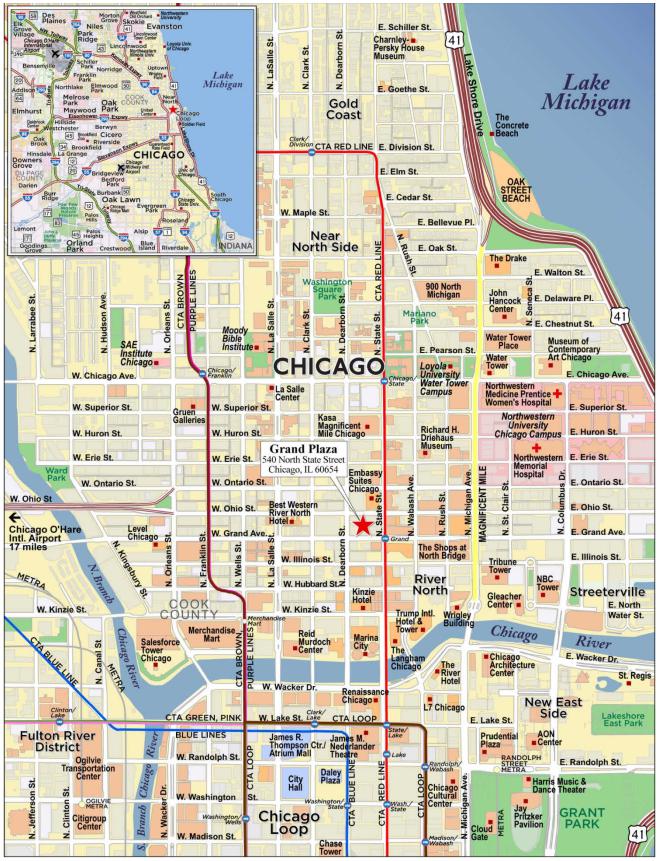
| A-3-2 |
| Mortgage Loan No. 1 – Grand Plaza |
| Mortgage Loan Information | Property Information | ||||||
| Mortgage Loan Seller: | MSMCH | Single Asset/Portfolio: | Single Asset | ||||
| Original Balance(1): | $93,000,000 | Location: | Chicago, IL 60654 | ||||
| Cut-off Date Balance(1): | $93,000,000 | General Property Type: | Multifamily | ||||
| % of Initial Pool Balance: | 9.95% | Detailed Property Type: | High Rise | ||||
| Loan Purpose: | Refinance | Title Vesting: | Fee | ||||
| Borrower Sponsor: | Treeview Real Estate Advisors LP | Year Built/Renovated: | 2003/2023 | ||||
| Guarantor: | (2) | Size: | 481 Units | ||||
| Mortgage Rate: | 5.5600% | Cut-off Date Balance per Unit(1): | $332,640 | ||||
| Note Date: | 2/26/2025 | Maturity Date Balance per Unit(1): | $332,640 | ||||
| Maturity Date: | 3/7/2030 | Property Manager: | D&K Real Estate Service Corporation | ||||
| Term to Maturity: | 60 months | (borrower-related) | |||||
| Amortization Term: | 0 months | Underwriting and Financial Information | |||||
| IO Period: | 60 months | UW NOI: | $12,464,027 | ||||
| Seasoning: | 0 months | UW NCF: | $12,285,877 | ||||
| Prepayment Provisions: | L(24),D(29),O(7) | UW NOI Debt Yield(1): | 7.8% | ||||
| Lockbox/Cash Mgmt Status: | Hard/In Place | UW NCF Debt Yield(1): | 7.7% | ||||
| Additional Debt Type(1): | Pari Passu | UW NOI Debt Yield at Maturity(1): | 7.8% | ||||
| Additional Debt Balance(1): | $67,000,000 | UW NCF DSCR(1): | 1.36x | ||||
| Future Debt Permitted (Type): | No (NAP) | Most Recent NOI: | $12,410,287 (12/31/2024) | ||||
| 2nd Most Recent NOI: | $11,573,018 (12/31/2023) | ||||||
| 3rd Most Recent NOI: | $11,701,522 (12/31/2022) | ||||||
| Most Recent Occupancy: | 98.8% (2/13/2025) | ||||||
| Reserves(3) | 2nd Most Recent Occupancy: | 93.9% (12/31/2023) | |||||
| Type | Initial | Monthly | Cap | 3rd Most Recent Occupancy: | 91.7% (12/31/2022) | ||
| RE Taxes: | $469,613 | $469,613 | NAP | Appraised Value (as of): | $241,200,000 (1/22/2025) | ||
| Insurance: | $0 | Springing | NAP | Appraised Value per Unit: | $501,455 | ||
| Replacement Reserve: | $0 | $11,238 | NAP | Cut-off Date LTV Ratio(1): | 66.3% | ||
| TI/LC Reserve: | $3,493 | $3,493 | $83,830 | Maturity Date LTV Ratio(1): | 66.3% | ||
| Sources and Uses | ||||||
| Sources | Proceeds | % of Total | Uses | Proceeds | % of Total | |
| Whole Loan Amount: | $160,000,000 | 82.6% | Loan Payoff: | $182,965,018 | 94.5% | |
| Sponsor Equity: | $33,593,500 | 17.4% | Closing Costs: | $10,155,377 | 5.2% | |
| Reserves: | $473,106 | 0.2% | ||||
| Total Sources: | $193,593,500 | 100.0% | Total Uses: | $193,593,500 | 100.0% | |
| (1) | The Grand Plaza Mortgage Loan (as defined below) is part of the Grand Plaza Whole Loan (as defined below), with an aggregate original principal amount of $160,000,000. The Cut-off Date Balance Per Unit, Maturity Date Balance Per Unit, UW NOI Debt Yield, UW NCF Debt Yield, UW NOI Debt Yield at Maturity, UW NCF DSCR, Cut-off Date LTV Ratio and Maturity Date LTV Ratio numbers presented above are based on the Grand Plaza Whole Loan. |
| (2) | There is no non-recourse carveout guarantor or separate environmental indemnitor for the Grand Plaza Whole Loan. |
| (3) | See “Escrows and Reserves” below for further discussion of reserve information. |
The Mortgage Loan. The largest mortgage loan (the “Grand Plaza Mortgage Loan”) is part of a whole loan (the “Grand Plaza Whole Loan”) evidenced by five pari passu promissory notes with an aggregate original principal amount of $160,000,000. The Grand Plaza Whole Loan is secured by a first priority fee mortgage encumbering a 481-unit multifamily property located in Chicago, Illinois (the “Grand Plaza Property”). The Grand Plaza Mortgage Loan is evidenced by the controlling Note A-1 and the non-controlling Note A-4 with an aggregate original principal amount of $93,000,000. The Grand Plaza Whole Loan will be serviced pursuant to the pooling and servicing agreement for the MSBAM 2025-5C1 securitization trust. See “Description of the Mortgage Pool—The Whole Loans—The Serviced Pari Passu Whole Loans”, and “Pooling and Servicing Agreement” in the prospectus.
| A-3-3 |
| Multifamily – High Rise | Loan #1 | Cut-off Date Balance: | $93,000,000 | |
| 540 North State Street | Grand Plaza | Cut-off Date LTV: | 66.3% | |
| Chicago, IL 60654 | U/W NCF DSCR: | 1.36x | ||
| U/W NOI Debt Yield: | 7.8% |
The table below summarizes the promissory notes that comprise the Grand Plaza Whole Loan.
| Grand Plaza Loan Summary | ||||
| Note | Original Balance | Cut-off Date Balance | Note Holder | Controlling Note |
| A-1 | $73,000,000 | $73,000,000 | MSBAM 2025-5C1 | Yes |
| A-2(1) | $30,000,000 | $30,000,000 | MSBNA | No |
| A-3(1) | $30,000,000 | $30,000,000 | MSBNA | No |
| A-4 | $20,000,000 | $20,000,000 | MSBAM 2025-5C1 | No |
| A-5(1) | $7,000,000 | $7,000,000 | MSBNA | No |
| Total | $160,000,000 | $160,000,000 | ||
| (1) | Expected to be contributed to one or more future securitization transactions or may otherwise be transferred at any time. |
The Borrower and the Borrower Sponsor. The borrower for the Grand Plaza Whole Loan is Grand Plaza Owner LLC, a single-purpose Delaware limited liability company, with two independent directors in its organizational structure. The borrower sponsor for the Grand Plaza Whole Loan is Treeview Real Estate Advisors LP (“Treeview”). Founded in 2010, Treeview provides full-service investment advisory and real estate portfolio and asset management services to high-net-worth individuals, families, and other private investors. Treeview advises on and/or manages a portfolio of commercial real estate investments in the United States and abroad. There is no non-recourse carveout guarantor or separate environmental indemnitor for the Grand Plaza Whole Loan.
The Property. The Grand Plaza Property is a 56-floor, 481-unit luxury, multifamily property located on a 1.8-acre site in Chicago, Illinois. The Grand Plaza Property is part of a larger tower building (the “Grand Plaza Building”), which consists of two multifamily towers attached to a nine-story base, containing two floors of retail space (the “Grand Plaza Retail Component”), a parking garage, and a shared amenity level (the 9th floor). The Grand Plaza Property is comprised of the larger 481-unit east tower, and the building base. The west tower, containing residential condominium units, is not part of the collateral. The Grand Plaza Property was originally built in 2003. The relationship between the owners of the collateral portions of the Grand Plaza Building and the non-collateral portions of the Grand Plaza Building is governed by a declaration of covenants, conditions, restrictions and easements. Since 2014, approximately $12.3 million has been invested in the property to renovate the apartment units, with 93.0% of the units in the building renovated thus far, and the remainder expected to be renovated upon tenants vacating. Such renovations are not required or reserved for under the Grand Plaza Whole Loan documents. Since 2020, the borrower sponsor has invested an additional approximately $6.0 million for unit renovations, the parking garage, and other amenities.
The residential units at the Grand Plaza Property consist of 41 studio units averaging 690 SF and leased at rents between $1,865 and $2,328 per month, with an average of $2,122 per month, 41 convertible units (larger studio units that can be converted to a one-bedroom with a flex wall), averaging 735 SF and leased at rents between $2,104 and $2,541 per month, with an average of $2,356 per month, 252 one-bedroom, one-bathroom units averaging 844 SF and leased at rents between $2,159 and $3,458 per month, with an average of $2,646 per month, 143 two-bedroom, two-bathroom units averaging 1,345 SF and leased at rents between $3,005 and $7,611 per month with an average of $3,832 per month, and 4 three-bedroom units (two with two bathrooms, two with three bathrooms) averaging 2,159 SF and leased at rents between $5,151 and $6,000 per month with an average of $5,715 per month. The 9th floor of the Grand Plaza Property includes 50,000 SF of amenities, featuring a fitness center, basketball court, party room, club house, outdoor dog park, outdoor running track cybercafé, 24-hour business center, outdoor kitchen and dining area, and outdoor pool. The parking garage at the Grand Plaza Property contains 100 garage parking spaces (0.21 spaces per unit). The parking garage is operated by LAZ Parking Chicago, LLC through a Parking Facility Management Agreement, which collects revenue from parking spaces from a mix of both transient customers and monthly residents. As of February 13, 2025, the 481 multifamily units at the Grand Plaza Property were 98.8% occupied.
The Grand Plaza Retail Component contains 106,565 SF of commercial space, and is currently 60.7% occupied by four tenants. The Grand Plaza Retail Component is anchored by Jewel Food Stores (22,399 SF of retail space, 9,197 SF of basement storage space).
The following table presents detailed information with respect to the units at the Grand Plaza Property:
| Apartment Unit Mix(1) | ||||||
| Unit Mix / Type | Total Units | Leased Units | % Leased | Average SF per Unit | Monthly Average Rent per Unit | Monthly Wtd. Average Rent PSF |
| Studio | 41 | 41 | 100.0% | 690 | $2,122 | $3.08 |
| Convertible | 41 | 41 | 100.0% | 735 | $2,356 | $3.21 |
| 1 BR | 252 | 250 | 99.2% | 844 | $2,646 | $3.13 |
| 2 BR | 143 | 140 | 97.9% | 1,345 | $3,832 | $2.84 |
| 3 BR | 4 | 3 | 75.0% | 2,159 | $5,715 | $2.50 |
| Total/ Wtd. Average | 481 | 475 | 98.8% | 982 | $2,945 | $3.01 |
| (1) | Information is based on the underwritten rent roll dated February 13, 2025. |
| A-3-4 |
| Multifamily – High Rise | Loan #1 | Cut-off Date Balance: | $93,000,000 | |
| 540 North State Street | Grand Plaza | Cut-off Date LTV: | 66.3% | |
| Chicago, IL 60654 | U/W NCF DSCR: | 1.36x | ||
| U/W NOI Debt Yield: | 7.8% |
The following table presents a summary regarding the retail tenants at the Grand Plaza Property:
| Tenant Summary(1) | |||||||||||
| Tenant Name |
Credit Rating (Fitch/Moody’s/ S&P)(2) |
Tenant SF | Approx.% of SF | Annual UW Base Rent | % of Total Annual UW Base Rent | Annual UW Base Rent PSF | Lease Expiration | Renewal Options | Term. Option (Y/N) | ||
| Jewel Food Stores | NR/NR/NR | 31,596 | (3) | 29.6% | $1,231,945 | 43.4% | $55.00 | (3) | 10/16/2032 | 2 x 5 year | N |
| Instituto Cervantes of Chicago | NR/NR/NR | 19,862 | 18.6% | $541,835 | 19.1% | $27.28 | 2/29/2032 | 1 x 5 year | N | ||
| Rush University Medical Center | NR/NR/NR | 10,248 | 9.6% | $835,724 | 29.5% | $81.55 | 12/31/2025 | 2 x 5 year | N | ||
| Chipotle | NR/NR/NR |
2,944 |
|
2.8% |
$226,688 |
8.0% |
$77.00 |
|
12/31/2028 | 4 x 5 year | N |
| Occupied Subtotal/Wtd. Avg. | 64,650 | 60.7% | $2,836,193 | 100.0% | $51.15 | (3) | |||||
| Vacant Space |
41,915 |
|
39.3% |
||||||||
| Total/Wtd. Avg. | 106,565 | 100.0% | |||||||||
| (1) | Information is based on the underwritten rent roll dated February 13, 2025. |
| (2) | Certain ratings are those of the parent company whether or not the parent company guarantees the lease. |
| (3) | Jewel Food Stores is comprised of 22,399 SF of retail space and 9,197 SF of basement storage space. The 9,197 SF basement storage space does not have rent associated with it, and is excluded from Annual UW Base Rent PSF. |
The Market. The Grand Plaza Property is located in Chicago, Illinois, in the Chicago multifamily market. The Grand Plaza Property is located in Chicago’s River North submarket, a short walk from the Loop and Magnificent Mile, and surrounded by the city’s museums, parks, shopping, restaurants, and entertainment, with many additional attractions in bordering neighborhoods. The Grand Plaza Property’s location has a walk score of 99 according to a website that evaluates walkability, and its location provides access to the area’s extensive transportation network. Downtown Chicago is comprised of one of the fastest growing population centers in the nation. From 2010 to 2020, the Loop, defined in the census data as the neighborhood between the Chicago River to the north and west, Lake Michigan to the east, and Roosevelt Road to the south, grew by 44%. The Grand Plaza Property is centrally located in the River North Neighborhood of Chicago, the third largest metropolitan area in the United States and one of the largest economic centers in the world. As the largest metropolitan area and a cultural, commercial, transportation, and financial center of the Midwest, Chicago has a large and well-diversified economic structure. The property is a ten minute walk from the Loop’s Lake Station, which is served by the majority of the “L” system, including the Red, Green, Pink, Brown, Purple and Orange Lines. According to the appraisal, as of the fourth quarter of 2024, the vacancy rate in the Chicago multifamily market was 4.8%, with average asking rents of $1,701 per unit and an inventory of approximately 751,639 units. According to the appraisal, as of the fourth quarter of 2024, the vacancy rate in the River North multifamily submarket was 6.3%, with average asking rents of $3,135 per unit and an inventory of approximately 11,068 units. According to the appraisal, the estimated 2024 population within a one-, three-, and five-mile radius of the Grand Plaza Property was 117,462, 384,624 and 810,875, respectively. According to the appraisal, the 2024 average household income within the same radii was $187,176, $177,132 and $154,705, respectively.
The following table presents certain information relating to multifamily rental properties comparable to the Grand Plaza Property:
| Comparable Rental Properties | |||||
| Property | Year Built | # Total Units | Unit Mix | Unit Size (SF) | Average Monthly Rent per Unit |
|
Grand Plaza Property(subject)(1) 540 North State Street Chicago, IL |
2003 | 481 |
Studio Convertible 1 BR 2 BR 3 BR |
690 735 844 1,345 2,159 |
$2,122 $2,356 $2,646 $3,832 $5,715 |
|
The Gallery on Wells 637 North Wells Street Chicago, IL |
2017 | 442 |
Studio 1 BR 2 BR 3 BR |
590 766 1,150 1,573 |
$2,358 $2,635 $4,461 $5,855 |
|
Aston Chicago 200 East Illinois Street Chicago, IL |
2013 | 325 |
1 BR 2 BR 3 BR |
835 1,172 1,585 |
$2,862 $4,295 $5,987 |
|
AMLI River North 71 West Hubbard Street Chicago, IL |
2013 | 409 |
Studio 1 BR 2 BR 3 BR |
602 918 1,250 1,752 |
$2,248 $3,316 $4,373 $6,430 |
|
3Eleven 311 West Illinois Street Chicago, IL |
2018 | 245 |
Studio 1 BR 2 BR 3 BR |
565 766 1,170 1,473 |
$2,265 $2,829 $4,002 $5,792 |
|
Flair Tower 222 West Erie Street Chicago, IL |
2010 | 198 |
1 BR 2 BR 3 BR |
766 1,174 1,748 |
$2,505 $3,620 $6,099 |
|
Env Chicago 161 West Kinzie Street Chicago, IL |
2010 | 249 |
Studio 1 BR 2 BR |
555 896 1,213 |
$2,109 $2,868 $4,143 |
Source: Appraisal, unless otherwise indicated.
| (1) | Based on the underwritten rent roll dated February 13, 2025, other than Year Built. |
| A-3-5 |
| Multifamily – High Rise | Loan #1 | Cut-off Date Balance: | $93,000,000 | |
| 540 North State Street | Grand Plaza | Cut-off Date LTV: | 66.3% | |
| Chicago, IL 60654 | U/W NCF DSCR: | 1.36x | ||
| U/W NOI Debt Yield: | 7.8% |
The following table presents certain information relating to the appraisal’s market rent conclusions for the Grand Plaza Property:
| Market Rent Summary | ||||||
| Unit Mix/Type | Units(1) | Average Size (SF) (1) | Avg. Monthly Rent per Unit(1) | Avg. Monthly Rent PSF(1) | Avg. Monthly Market Rent per Unit | Avg. Monthly Market Rent PSF |
| Studio(2) | 82 | 713 | $2,239 | $3.14 | $2,292 | $3.22 |
| 1 BR | 252 | 844 | $2,646 | $3.13 | $2,742 | $3.24 |
| 2 BR | 143 | 1,345 | $3,832 | $2.84 | $4,082 | $3.02 |
| 3 BR | 4 | 2,159 | $5,715 | $2.50 | $7,200 | $3.34 |
| Total/ Wtd. Average | 481 | 982 | $2,945 | $3.01 | $3,092 | $3.15 |
Source: Appraisal
| (1) | Based on the underwritten rent roll dated February 13, 2025. |
| (2) | Includes both Studio and Convertible units at the Grand Plaza Property. |
Appraisal. The appraisal concluded to an “as-is” value for the Grand Plaza Property of $241,200,000 as of January 22, 2025.
Environmental Matters. According to the Phase I environmental site assessment dated January 21, 2025, there was no evidence of any recognized environmental conditions at the Grand Plaza Property; however, there was a controlled recognized environmental condition relating to a heating oil above-ground storage tank located in a previous building on the Grand Plaza Property. See “Description of the Mortgage Pool—Environmental Considerations” in the prospectus.
Operating History and Underwritten Net Cash Flow. The following table presents certain information relating to the historical operating performance and Underwritten Net Cash Flow for the Grand Plaza Property:
| Cash Flow Analysis | ||||||
| 2022 | 2023 | 2024 | UW | UW per Unit | ||
| Gross Potential Rent(1) | $16,219,244 | $17,417,977 | $17,602,767 | $17,862,168 | $37,135 | |
| Retail Income | $3,019,272 | $2,745,480 | $2,799,820 | $2,836,193 | $5,896 | |
| Net Garage Rent | $2,475,231 | $2,594,316 | $2,574,846 | $2,574,846 | $5,353 | |
| Misc. Apartment Income | $249,736 | $336,266 | $335,237 | $335,237 | $697 | |
| Reimbursements | $2,971,637 | $2,729,314 | $3,047,338 | $3,047,338 | $6,335 | |
| Bad Debt Expense/ Concessions | ($293,898) | ($394,656) | ($274,776) | ($274,776) | ($571) | |
| Apartment Utility Fees | $605,824 | $648,245 | $683,124 | $683,124 | $1,420 | |
| Vacancy & Credit Loss |
($1,187,809) |
($1,642,889) |
($1,446,287) |
|
($1,530,562) |
($3,182) |
| Effective Gross Income | $24,059,237 | $24,434,053 | $25,322,069 | $25,533,568 | $53,084 | |
| Real Estate Taxes | $4,869,264 | $5,282,073 | $5,635,350 | $5,602,702 | $11,648 | |
| Insurance | $312,584 | $336,693 | $327,312 | $294,748 | $613 | |
| Other Expenses |
$7,175,867 |
$7,242,269 |
$6,949,120 |
|
$7,172,090 |
$14,911 |
| Total Expenses | $12,357,715 | $12,861,035 | $12,911,782 | $13,069,540 | $27,172 | |
| Net Operating Income | $11,701,522 | $11,573,018 | $12,410,287 | $12,464,027 | $25,913 | |
| Replacement Reserve | $0 | $0 | $0 | $120,250 | $250 | |
| Capital Expenditures | $0 | $0 | $0 | $15,985 | $0.15(2) | |
| TI/LC |
$0 |
$0 |
$0 |
|
$41,915 |
$0.39(2) |
| Net Cash Flow | $11,701,522 | $11,573,018 | $12,410,287 | $12,285,877 | $25,542 | |
| Occupancy % | 91.7% | 93.9% | 98.8% | (3) | 95.0% | |
| NOI DSCR(4) | 1.30x | 1.28x | 1.38x | 1.38x | ||
| NCF DSCR(4) | 1.30x | 1.28x | 1.38x | 1.36x | ||
| NOI Debt Yield(4) | 7.3% | 7.2% | 7.8% | 7.8% | ||
| NCF Debt Yield(4) | 7.3% | 7.2% | 7.8% | 7.7% | ||
| (1) | UW Gross Potential Rent has been underwritten based on the contractual rent in place based on the underwritten rent roll dated February 13, 2025. |
| (2) | Represents PSF of retail space. |
| (3) | 2024 Occupancy % represents the current in place occupancy based on the underwritten rent roll dated February 13, 2025. |
| (4) | DSCRS and Debt Yields are based on the Grand Plaza Whole Loan. |
| A-3-6 |
| Multifamily – High Rise | Loan #1 | Cut-off Date Balance: | $93,000,000 | |
| 540 North State Street | Grand Plaza | Cut-off Date LTV: | 66.3% | |
| Chicago, IL 60654 | U/W NCF DSCR: | 1.36x | ||
| U/W NOI Debt Yield: | 7.8% |
Escrows and Reserves.
Real Estate Tax Escrows – On the loan origination date, the borrower was required to make an upfront deposit of $469,613 into a reserve for real estate taxes. In addition, the borrower is required to deposit into a real estate tax reserve, on a monthly basis, an amount equal to 1/12th of the annual estimated tax payments (which currently equates to $469,613).
Insurance Escrows – The borrower will not be required to make the monthly deposits into an insurance reserve provided that (i) no monetary event of default or event of default relating to any required insurance is continuing, (ii) the liability and casualty policies maintained by the borrower are part of a blanket or umbrella policy approved by the lender, and (iii) the borrower provides the lender evidence of renewal of such policy prior to its expiration date, and paid receipts for the payment of insurance premiums as the same become due and payable. If such conditions are not satisfied, the borrower is required to deposit into an insurance reserve, on a monthly basis, an amount equal to 1/12th of the annual estimated insurance premiums.
Replacement Reserve – On a monthly basis, the borrower is required to deposit (i) an amount equal to approximately $10,021 for the residential portion of the Grand Plaza Property and (ii) an amount equal to approximately $1,217 for the retail portion of the property, into a reserve for capital expenditures.
TI/LC Reserve – On the loan origination date, the borrower was required to make an upfront deposit of $3,493, and on a monthly basis the borrower is required to deposit $3,493, in each case into a reserve for future tenant improvements and leasing commissions, capped at $83,830.
Lockbox / Cash Management. The Grand Plaza Whole Loan is structured with a hard lockbox and in place cash management. In connection with the origination of the Grand Plaza Whole Loan, the borrower was required to establish and maintain a lockbox account for the benefit of the lender. The borrower is required to direct all tenants at the Grand Plaza Property to pay rents directly into the lockbox account. In addition, the borrower is required to deposit all rents and any other revenue received by the borrower or any of its affiliates into the lockbox account within two business days of receipt. All amounts in the lockbox account are required to be transferred to a lender-controlled cash management account on each business day and, provided no event of default is continuing under the Grand Plaza Whole Loan documents, are required to be applied in the following order of priority: (i) to make the monthly deposits into the real estate tax reserve and insurance reserve, if any, as described above under “Escrows and Reserves,” (ii) to pay debt service on the Grand Plaza Whole Loan, (iii) to make the monthly deposits into the TI/LC reserve and replacement reserve, if any, as described above under “Escrows and Reserves,” (iv) during a Trigger Period (as defined below) to pay operating expenses set forth in the annual budget (which is required to be approved by the lender during a Trigger Period) and lender approved (or deemed approved) extraordinary expenses and (v) (x) if a Trigger Period is continuing, to deposit any remaining amounts in the cash management account into an excess cash flow account to be held as additional collateral for the Grand Plaza Whole Loan during the continuance of the Trigger Period (provided that the lender is required to disburse funds in such account upon request of the borrower to pay budgeted operating expenses, emergency expenses, non-discretionary expenses and permitted budget variance of up to 5% per line item and any other expenses approved by the lender), and (y) if no Trigger Period is continuing, to be disbursed to the borrower.
“Trigger Period” means a period: (i) commencing upon an event of default under the Grand Plaza Whole Loan documents, and ending upon the cure or waiver of such event of default; or (ii) commencing upon the debt service coverage ratio of the Grand Plaza Whole Loan being less than 1.10x for two consecutive calendar quarters (a “DSCR Event”) and ending upon the date such debt service coverage ratio is equal to or greater than 1.10x for two consecutive calendar quarters.
In addition, the borrower may cure a Trigger Period caused by a DSCR Event by delivering either cash or a letter of credit meeting the requirements of the Grand Plaza Whole Loan documents, in each case in an amount that, if applied to the reduction of the principal amount of the Grand Plaza Whole Loan would cause the debt service coverage ratio to be equal to or greater than 1.10x.
Terrorism Insurance. The Grand Plaza Whole Loan documents require that the borrower obtain and maintain an “all risk” or “special form” insurance policy that provides coverage for loss caused by acts of terrorism in an amount equal to the full replacement cost of the Grand Plaza Property, as well as business interruption insurance covering no less than the 18 month period following the occurrence of a casualty event, together with an extended period of indemnity of up to 12 months. For so long as the Terrorism Risk Insurance Act of 2002, as extended and modified by the Terrorism Risk Insurance Program Reauthorization Act of 2015 (“TRIPRA”) (including any extensions thereof or if another federal governmental program is in effect relating to “acts of terrorism” which provides substantially similar protections) is in effect, the lender is required to accept terrorism insurance which covers against “covered acts” as defined by TRIPRA (or such other program), so long as TRIPRA (or such other program) continues to cover both domestic and foreign acts of terrorism.
| A-3-7 |
| Industrial – Warehouse/Distribution | Loan #2 | Cut-off Date Balance: | $90,000,000 | |
| 440 and 480 William F McClellan Highway | Logan Cargo Park | Cut-off Date LTV: | 56.2% | |
| East Boston, MA 02128 | UW NCF DSCR: | 1.26x | ||
| UW NOI Debt Yield: | 9.1% |
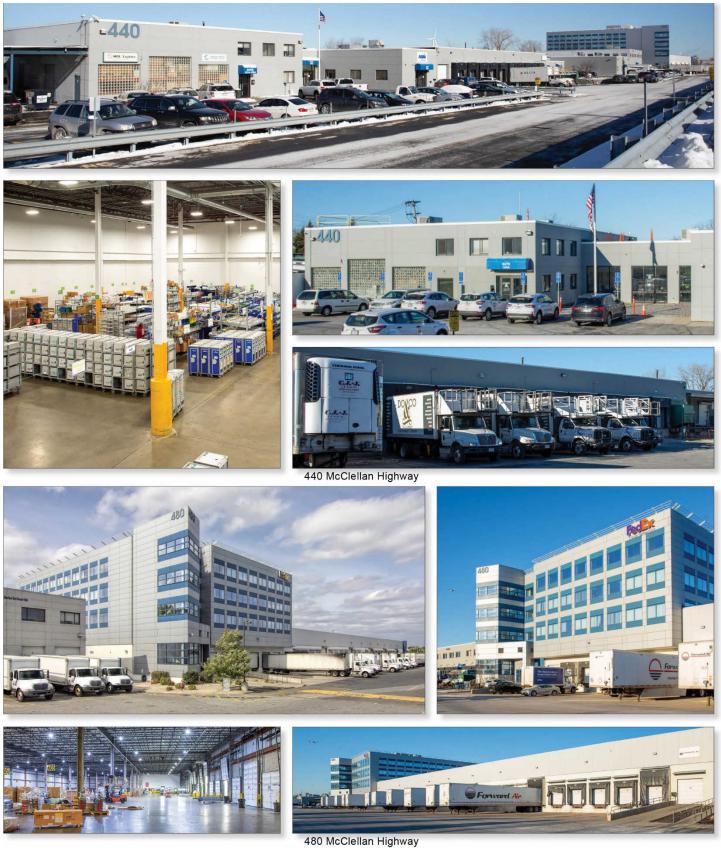
| A-3-8 |
| Industrial – Warehouse/Distribution | Loan #2 | Cut-off Date Balance: | $90,000,000 | |
| 440 and 480 William F McClellan Highway | Logan Cargo Park | Cut-off Date LTV: | 56.2% | |
| East Boston, MA 02128 | UW NCF DSCR: | 1.26x | ||
| UW NOI Debt Yield: | 9.1% |
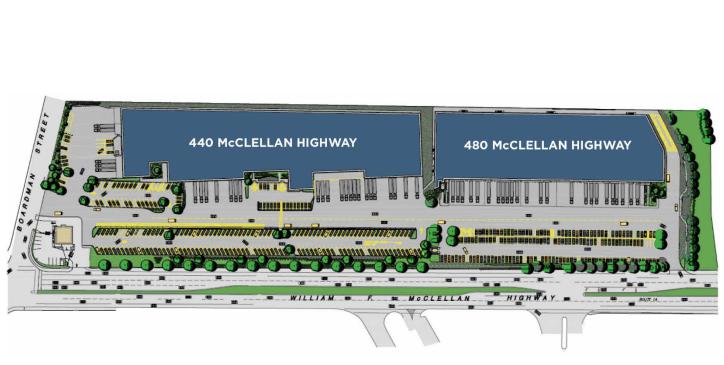
| A-3-9 |
| Industrial – Warehouse/Distribution | Loan #2 | Cut-off Date Balance: | $90,000,000 | |
| 440 and 480 William F McClellan Highway | Logan Cargo Park | Cut-off Date LTV: | 56.2% | |
| East Boston, MA 02128 | UW NCF DSCR: | 1.26x | ||
| UW NOI Debt Yield: | 9.1% |
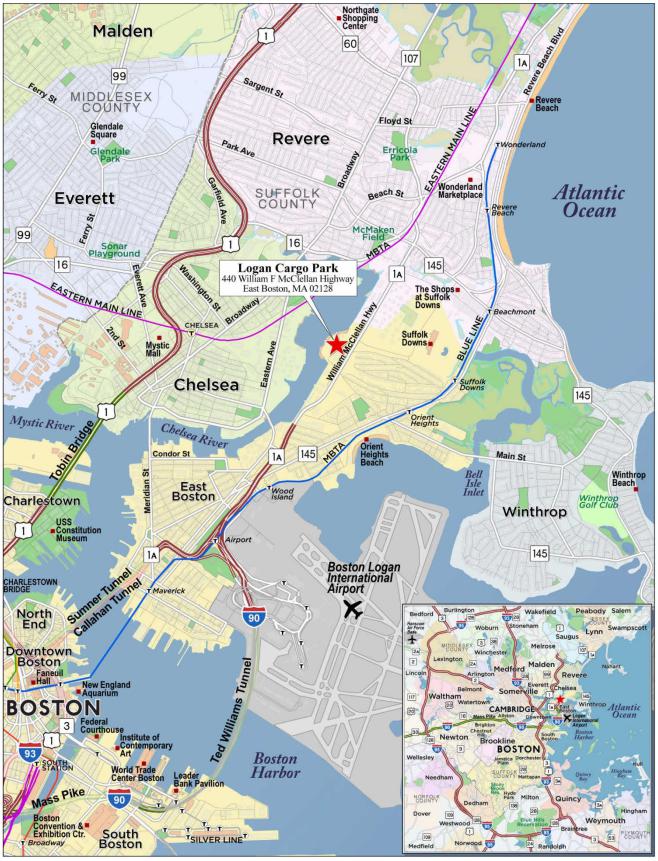
| A-3-10 |
| Mortgage Loan No. 2 – Logan Cargo Park |
| Mortgage Loan Information | Property Information | |||||
| Mortgage Loan Seller: | MSMCH | Single Asset/Portfolio: | Single Asset | |||
| Original Balance(1): | $90,000,000 | Location: | East Boston, MA 02128 | |||
| Cut-off Date Balance(1): | $90,000,000 | General Property Type: | Industrial | |||
| % of Initial Pool Balance: | 9.6% | Detailed Property Type: | Warehouse/Distribution | |||
| Loan Purpose: | Refinance | Title Vesting: | Fee and Leasehold | |||
| Borrower Sponsor: | Cargo Ventures | Year Built/Renovated: | 1965, 2005/2022 | |||
| Guarantor: | Christopher M. Jeffries | Size: | 266,690 SF | |||
| Mortgage Rate: | 6.9000% | Cut-off Date Balance PSF(1): | $450 | |||
| Note Date: | 2/27/2025 | Maturity Date Balance PSF(1): | $450 | |||
| Maturity Date: | 3/7/2030 | Property Manager: | Cargo Ventures LLC | |||
| Term to Maturity: | 60 months | (borrower-related) | ||||
| Amortization Term: | 0 months | Underwriting and Financial Information | ||||
| IO Period: | 60 months | UW NOI(3): | $10,917,452 | |||
| Seasoning: | 0 months | UW NCF: | $10,597,424 | |||
| Prepayment Provisions: | L(24),D(29),O(7) | UW NOI Debt Yield(1): | 9.1% | |||
| Lockbox/Cash Mgmt Status: | Hard/In Place | UW NCF Debt Yield(1): | 8.8% | |||
| Additional Debt Type(1): | Pari Passu | UW NOI Debt Yield at Maturity(1): | 9.1% | |||
| Additional Debt Balance(1): | $30,000,000 | UW NCF DSCR: | 1.26x | |||
| Future Debt Permitted (Type): | No (NAP) | Most Recent NOI(3): | $7,495,610 (12/31/2024) | |||
| 2nd Most Recent NOI: | $7,305,215 (12/31/2023) | |||||
| Reserves(2) | 3rd Most Recent NOI: | $5,802,539 (12/31/2022) | ||||
| Type | Initial | Monthly | Cap | Most Recent Occupancy: | 95.2% (2/25/2025) | |
| RE Tax: | $137,869 | $137,869 | NAP | 2nd Most Recent Occupancy: | 94.1% (12/31/2023) | |
| Insurance: | $0 | $27,017 | NAP | 3rd Most Recent Occupancy: | 93.7% (12/31/2022) | |
| Replacement Reserve: | $0 | $5,556 | $62,500 | Appraised Value (as of): | $213,400,000 (1/24/2025) | |
| TI/LC Reserve: | $350,000 | $11,112 | $125,000 | Appraised Value PSF: | $800 | |
| Ground Rent Reserve: | $0 | $39,455 | NAP | Cut-off Date LTV Ratio(1): | 56.2% | |
| Delta Reserve: | $6,070,703 | $0 | NAP | Maturity Date LTV Ratio(1): | 56.2% | |
| Sources and Uses | ||||||
| Sources | Proceeds | % of Total | Uses | Proceeds | % of Total | |
| Whole Loan Amount: | $120,000,000 | 100.0% | Loan Payoff: | $96,781,961 | 80.7% | |
| Return of Equity: | $14,477,699 | 12.1% | ||||
| Reserves: | $6,558,572 | 5.5% | ||||
| Closing Costs: | $2,181,769 | 1.8% | ||||
| Total Sources: | $120,000,000 | 100.0% | Total Uses: | $120,000,000 | 100.0% | |
| (1) | The Logan Cargo Park Mortgage Loan (as defined below) is part of the Logan Cargo Park Whole Loan (as defined below), with an aggregate original principal amount of $120,000,000. The Cut-off Date Balance PSF, Maturity Date Balance PSF, UW NOI Debt Yield, UW NCF Debt Yield, UW NOI Debt Yield at Maturity, UW NCF DSCR, Cut-off Date LTV Ratio and Maturity Date LTV Ratio numbers presented above are based on the Logan Cargo Park Whole Loan. |
| (2) | See “Escrows and Reserves” below for further discussion of reserve information. |
| (3) | UW NOI includes rent steps of $3,064,007 from the Delta Air Lines Inc. lease through April 2027. See “Escrows and Reserves—Delta Reserve” below. The increase from Most Recent NOI to UW NOI is due to the inclusion of the Delta rent steps. Delta currently is required to pay $30.03 PSF annually, and beginning in April 2027, will be required to pay $65.85 PSF through its lease expiration date on March 31, 2032. The borrower reserved $6,070,703 with the lender at origination for Delta’s rent differential through March 2027. |
The Mortgage Loan. The second largest mortgage loan (the “Logan Cargo Park Mortgage Loan”) is part of a whole loan (the “Logan Cargo Park Whole Loan”) evidenced by five pari passu promissory notes with an aggregate original principal amount of $120,000,000. The Logan Cargo Park Whole Loan is secured by a first priority fee and leasehold mortgage encumbering a 266,690 SF industrial property located in East Boston, Massachusetts (the “Logan Cargo Park Property”). The Logan Cargo Park Mortgage Loan is evidenced by the controlling Note A-1 and the non-controlling Note A-2 with an aggregate original principal amount of $90,000,000. The Logan Cargo Park Whole Loan will be serviced pursuant to the pooling and servicing agreement for the MSBAM 2025-5C1 securitization trust. See “Description of the Mortgage Pool—The Whole Loans—The Serviced Pari Passu Whole Loans”, and “Pooling and Servicing Agreement” in the prospectus.
| A-3-11 |
| Industrial – Warehouse/Distribution | Loan #2 | Cut-off Date Balance: | $90,000,000 | |
| 440 and 480 William F McClellan Highway | Logan Cargo Park | Cut-off Date LTV: | 56.2% | |
| East Boston, MA 02128 | UW NCF DSCR: | 1.26x | ||
| UW NOI Debt Yield: | 9.1% |
The table below summarizes the promissory notes that comprise the Logan Cargo Park Whole Loan.
| Logan Cargo Park Loan Summary | ||||
| Note | Original Balance | Cut-off Date Balance | Note Holder | Controlling Note |
| A-1 | $70,000,000 | $70,000,000 | MSBAM 2025-5C1 | Yes |
| A-2 | $20,000,000 | $20,000,000 | MSBAM 2025-5C1 | No |
| A-3(1) | $10,000,000 | $10,000,000 | MSBNA | No |
| A-4(1) | $10,000,000 | $10,000,000 | MSBNA | No |
| A-5(1) | $10,000,000 | $10,000,000 | MSBNA | No |
| Total | $120,000,000 | $120,000,000 | ||
| (1) | Expected to be contributed to one or more future securitization transactions or may otherwise be transferred at any time. |
The Borrowers and Borrower Sponsor. The borrowers for the Logan Cargo Park Whole Loan are 440 McClellan LLC and 480 McClellan LLC, each a single-purpose Delaware limited liability company with two independent directors in its organizational structure. The borrower sponsor is Cargo Ventures, a full-service real estate development, investment, and management company, bringing together expertise from pre-development planning and construction. Cargo Ventures has undertaken logistics related projects in the United States and Europe totaling in excess of 3.9 million SF. Cargo Ventures focuses on developing, owning and operating industrial facilities in close proximity to major transportation gateways and is focused on managing and growing its Boston Airport centric properties. The chief executive officer and founder of Cargo Ventures is Jacob Citrin, who owns a 19.8% indirect stake in the borrower. Cargo Ventures manages both the Logan Cargo Park Whole Loan borrower, and the Logan Cargo Park Property.
The non-recourse carveout guarantor for the Logan Cargo Park Whole Loan is Christopher M. Jeffries, who is an American real estate developer, owner and philanthropist. He is the founder of Millennium Partners, a national real estate development firm. Founded in 1992, Millennium Partners has developed more than 3,200 luxury condominiums, eight five-star hotels, two extended-stay luxury hotels, 2.0 million SF of office space, 1.0 million SF of retail space, 4,150 parking spaces, five Loews Cineplex theaters and five health clubs. Today, Millennium Partners owns and operates a portfolio reportedly worth more than $5 billion. Christopher M. Jeffries owns a 57.8% interest in the borrower.
The Logan Cargo Park Whole Loan documents permit transfers of equity, including controlling interests in the related borrowers, to the following specified entities: Delaware Life Insurance Company, Declaration Partners Real Estate LLC, and Massachusetts Mutual Life Insurance, as well as their affiliates, provided certain conditions are satisfied.
The Property. The Logan Cargo Park Property consists of two-adjacent industrial warehouse/distribution buildings (the “440 William F McClellan Highway Building” and the “480 William F McClellan Highway Building”) comprising 266,690 SF in East Boston, Massachusetts, located approximately 2.0 miles from the entrance to Logan International Airport. The Logan Cargo Park Property sits within the only immediate industrial area in Logan International Airport, serving the airport’s passenger and freight carriers. The operations at the Logan Cargo Park Property include the airport’s two largest carriers, Delta and JetBlue, and are important for the day-to-day airline operations. The borrower sponsor has invested approximately $6.5 million into the Logan Cargo Park Property since 2021. As of February 25, 2025, the Logan Cargo Park Property was 95.2% occupied.
The 440 William F McClellan Highway Building was originally constructed in 1965, expanded in 1977 and 1991, and was renovated in 1985, 2006, and 2022. The interior is largely comprised of industrial space with a mix of food processing/preparation areas, cold storage, and dry storage. The building also features a portion of second floor mezzanine area that is primarily built out with office finish. At the front of the site is a freestanding Starbucks leased building with a drive-through. The two largest tenants at the 440 William F McClellan Highway Building, Delta and JetBlue, comprise 94.3% of NRA, with one additional office tenant, two additional industrial tenants, and Starbucks as the sole retail tenant. As of February 25, 2025, the 440 William F McClellan Highway Building was 98.9% occupied.
The 480 William F McClellan Highway Building was constructed in 2005 and is situated on a 5.1-acre site that is ground leased from the Massachusetts Port Authority. The building includes a four-story office component and an 80,810 SF single-story industrial component leased to Forward Air and JetBlue. Forward Air and JetBlue comprise 62.2% of NRA of the 480 William F McClellan Highway Building, with an additional 10 office tenants located at the property. As of February 25, 2025, the 480 William Highway Building was 91.9% occupied, with only office space contributing to the vacant space.
Major Tenants.
Delta Air Lines, Inc. (85,539 SF, 32.1% of NRA, 30.5% of underwritten rent). Delta Air Lines, Inc. (“Delta”) is a major airline in the United States, headquartered in Atlanta, Georgia. Founded in 1925, Delta is the United States’ oldest operating airline, and the seventh oldest operating airline worldwide. Delta operates over 5,400 flights daily and serves 325 destinations in 52 countries on six continents. Delta employs approximately 103,000 employees worldwide. Delta’s current lease expires in March, 2027, and Delta is currently required to pay $30.03 PSF. Delta has executed its renewal option, and will be required to pay $65.85 PSF from April 2027 through its lease renewal expiration date of March 31, 2032. As such, a $3,064,007 rent increase was underwritten through March, 2027. The borrower reserved $6,070,703 with the lender at origination for Delta’s rent differential through March 2027. Delta has occupied 85,539 SF of industrial space at the 440 William F McClellan Highway Building since 2022, has a lease expiration date of March 31, 2032, and has one, five-year renewal option remaining.
Forward Air (62,216 SF, 23.3% of NRA, 32.7% of underwritten rent). Forward Air provides surface transportation and related logistics services to the air freight market. The company provides scheduled surface transportation of cargo as an alternative to air transportation, and brokerage transportation services. The wholesale transportation community logistics companies, freight forwarders, integrated air cargo carriers, passenger cargo airlines, and non-traditional shippers utilize Forward Air as a single-source provider. Forward Air has occupied 62,216 SF of industrial space at the 480 William F McClellan Highway Building since 2009, has a lease expiration date of January 31, 2032, and has one, five-year renewal option remaining.
JetBlue (57,872 SF, 21.7% of NRA, 19.9% of underwritten rent). JetBlue is a major airline in the United States, headquartered in Long Island City in Queens, New York, with corporate offices in Utah and Florida. JetBlue operates over 1,000 flights daily and serves over 100 domestic and international network destinations in the Americas and Europe. The airline operates out of six hubs, with its primary being New York’s JFK International Airport. JetBlue was founded in 1998, and employs over 23,000 employees. JetBlue has occupied 31,322 SF of industrial space at the 440 William F McClellan Highway
| A-3-12 |
| Industrial – Warehouse/Distribution | Loan #2 | Cut-off Date Balance: | $90,000,000 | |
| 440 and 480 William F McClellan Highway | Logan Cargo Park | Cut-off Date LTV: | 56.2% | |
| East Boston, MA 02128 | UW NCF DSCR: | 1.26x | ||
| UW NOI Debt Yield: | 9.1% |
Building since 2018, has a lease expiration date of August 31, 2028, and has one, five-year renewal option remaining. JetBlue has occupied 18,594 SF of industrial space with an additional 7,956 SF of office space at the 480 William F McClellan Highway Building since 2018, has a lease expiration date of July 31, 2028, and has one, five-year renewal option remaining.
The following table presents certain information relating to the tenants at the Logan Cargo Park Property:
| Tenant Summary(1) | |||||||||||
| Tenant Name |
Credit Rating (Fitch/ Moody's/S&P) |
Building | Tenant SF | Approx.% of SF | Annual UW Base Rent | Annual UW Base Rent PSF | % of Total Annual UW Base Rent |
Lease Expiration | Renewal Option | Term. Option (Y/N) | |
| Delta Air Lines Inc. | BBB/Baa1/BBB- | 440 William F McClellan Highway |
85,539 | 32.1% | $3,720,443 | $43.49 | 30.5% | 3/31/2032 | 1 x 5 year | N | |
| Forward Air | B/NR/B | 480 William F McClellan Highway |
62,216 | 23.3% | $3,987,267 | $64.09 | 32.7% | 1/31/2032 | 1 x 5 year | N | |
| JetBlue | BB/B3/B- | 440 William F McClellan Highway / 480 William F McClellan Highway |
57,872 | 21.7% | $2,431,997 | $42.02 | 19.9% | Various(2) | 1 x 5 year | N | |
| FedEx Trade Networks | NR/NR/NR | 480 William F McClellan Highway |
9,967 | 3.7% | $369,445 | $37.07 | 3.0% | 10/31/2026 | 2 x 3 year | N | |
| Kyon Pharma | NR/NR/NR | 480 William F McClellan Highway |
7,766 | 2.9% | $273,436 | $35.21 | 2.2% | 11/30/2025 | 1 x 5 year | N | |
| Subtotal/Wtd. Avg. | 223,360 | 83.8% | $10,782,589 | $48.27 | 88.4% | ||||||
| Other Tenants | 30,410 | 11.4% | $1,408,904 | $46.33 | 11.6% | ||||||
| Vacant Space |
12,920 |
4.8% |
$0 |
$0.00 |
|
0.0% |
|||||
| Total/Wtd. Avg. | 266,690 | 100.0% | $12,191,492 | $48.04 | (3) | 100.0% | |||||
| (1) | Information is based on the underwritten rent roll dated February 25, 2025. |
| (2) | JetBlue has 31,322 SF of industrial space at the 440 William F McClellan Highway Building that has a lease expiration date of August 31, 2028, and has 18,594 SF of industrial space with an additional 7,956 SF of office space at the 480 William F McClellan Highway that has a lease expiration date of July 31, 2028. |
| (3) | Excludes Vacant Space |
The following table presents certain information relating to the lease rollover schedule at the Logan Cargo Park Property:
| Lease Rollover Schedule(1) | |||||||||
| Year | # of Leases Rolling | SF Rolling | UW Base Rent PSF Rolling | Approx. % of Total SF Rolling | Approx. Cumulative % of SF Rolling | Total UW Base Rent Rolling | Approx. % of Total Rent Rolling | Approx. Cumulative % of Total Rent Rolling | |
| MTM | 0 | 0 | $0.00 | 0.0% | 0.0% | $0 | 0.0% | 0.0% | |
| 2025 | 5 | 12,375 | $33.96 | 4.6% | 4.6% | $420,269 | 3.4% | 3.4% | |
| 2026 | 3 | 12,587 | $36.47 | 4.7% | 9.4% | $459,074 | 3.8% | 7.2% | |
| 2027 | 6 | 9,071 | $39.65 | 3.4% | 12.8% | $359,689 | 3.0% | 10.2% | |
| 2028 | 4 | 59,572 | $44.84 | 22.3% | 35.1% | $2,671,330 | 21.9% | 32.1% | |
| 2029 | 0 | 0 | $0.00 | 0.0% | 35.1% | $0 | 0.0% | 32.1% | |
| 2030(3) | 1 | 12,410 | $46.21 | 4.7% | 39.8% | $573,420 | 4.7% | 36.8% | |
| 2031 | 0 | 0 | $0.00 | 0.0% | 39.8% | $0 | 0.0% | 36.8% | |
| 2032 | 2 | 147,755 | $52.17 | 55.4% | 95.2% | $7,707,710 | 63.2% | 100.0% | |
| 2033 | 0 | 0 | $0.00 | 0.0% | 95.2% | $0 | 0.0% | 100.0% | |
| 2034 | 0 | 0 | $0.00 | 0.0% | 95.2% | $0 | 0.0% | 100.0% | |
| 2035 | 0 | 0 | $0.00 | 0.0% | 95.2% | $0 | 0.0% | 100.0% | |
| 2036 & Beyond | 0 | 0 | $0.00 | 0.0% | 95.2% | $0 | 0.0% | 100.0% | |
| Vacant | 0 | 12,920 | $0.00 | 4.8% | 100.0% | $0 | 0.0% | 100.0% | |
| Total/Wtd. Avg. | 21 | 266,690 | $48.04 | (3) | 100.0% | $12,191,492 | 100.0% | ||
| (1) | Information is based on the underwritten rent roll dated February 25, 2025. |
| (2) | The maturity date of the Logan Cargo Park Whole Loan is March 7, 2030. |
| (3) | Excludes Vacant Space |
| A-3-13 |
| Industrial – Warehouse/Distribution | Loan #2 | Cut-off Date Balance: | $90,000,000 | |
| 440 and 480 William F McClellan Highway | Logan Cargo Park | Cut-off Date LTV: | 56.2% | |
| East Boston, MA 02128 | UW NCF DSCR: | 1.26x | ||
| UW NOI Debt Yield: | 9.1% |
The Market. The Logan Cargo Park Property is located in East Boston, Massachusetts, approximately 2.0 miles from the Logan International Airport entrance, and located within the urban submarket of the Greater Boston Metro industrial market. According to the appraisal, as of the fourth quarter of 2024, the vacancy rate in the Greater Boston Metro industrial market was 7.5%, with average asking rents of $15.30 PSF, and an inventory of approximately 315.8 million SF. According to the appraisal, as of the fourth quarter of 2024, the vacancy rate in the urban submarket was 5.0%, with average asking rents of $26.49 PSF and an inventory of approximately 14.3 million SF. According to the appraisal, the estimated 2024 population within a one-, three-, and five-mile radius of the 440 William F McClellan Highway Building was 32,163, 240,876 and 592,439, respectively. According to the appraisal, the 2024 average household income within the same radii was $105,540, $120,686, and $153,299, respectively. According to the appraisal, the estimated 2024 population within a one-, three-, and five-mile radius of the 480 William F McClellan Highway Building was 33,009, 234,874 and 580,392, respectively. According to the appraisal, the 2024 average household income within the same radii was $105,485, $117,473 and $153,065, respectively.
The following table presents certain information relating to the appraisal’s market rent conclusions for the Logan Cargo Park Property:
| Market Rent Summary | ||||||
| Category | Market Rent (PSF) | Lease Term (Yrs) | Rental Increase Projection | Tenant Improvements (New / Renewals) | Leasing Commissions (New / Renewals) | Reimbursements |
| Industrial Warehouse: | $65.00 | 5 | 3% per annum | $5.00 / $2.00 | 6.0% / 6.0% | NNN |
| Office: | $30.00 | 5 | 3% per annum | $25.00 / $2.00 | 6.0% / 6.0% | OFF MG |
| Retail: | $130.00 | 10 | 3% per annum | $5.00 / $5.00 | 6.0% / 6.0% | NNN |
Source: Appraisal.
The following table presents certain information relating to industrial leases comparable to the Logan Cargo Park Property:
| Comparable Industrial Lease Summary | |||||||
| Property Name/Location | Year Built / Renovated | Total SF | Tenant Name | Lease SF | Lease Term (yrs.) | Rent PSF | Lease Type |
|
Logan Cargo Park (subject) (1) 440 William F McClellan Highway East Boston, MA |
1965 / 2022 | 123,956 | Delta Air Lines Inc. | 85,539 | 10.0 | $43.49 | NNN |
|
Logan Cargo Park (subject)(1) 480 William F McClellan Highway East Boston, MA |
2005 / NAP | 142,734 | Forward Air | 62,216 | 10.0 | $64.09 | NNN |
|
370 McClellan Highway East Boston, MA |
1986 / NAP | 19,461 | Patriot Logistics | 15,700 | 7.3 | $43.00 | NNN |
|
310 McClellan Highway East Boston, MA |
1980 / NAP | 16,219 | HG Bos Duty Free | 11,278 | 12.5 | $40.00 | NNN |
|
580 & 467 Chelsea Street Boston, MA |
1965 / 2005 | 103,687 | AirTime Express | 18,421 | 5.0 | $40.00 | NNN |
|
New Bedford Foss Marine Terminal 13 Pine Street New Bedford, MA |
2024 / NAP | 200,000 |
Southcoast Wind Vineyard Offshore |
30,000 30,000 |
20.0 20.0 |
$80.05 $86.78 |
Gross Gross |
|
Logan Airport Industrial Building 13 One Harborside Drive East Boston, MA |
NAV | 24,682 | Confidential | 24,682 | 5.0 | $73.09 | NNN |
Source: Appraisal, unless otherwise noted.
| (1) | Information is based on the underwritten rent roll dated February 25, 2025, other than Year Built / Renovated and Lease Type. |
| A-3-14 |
| Industrial – Warehouse/Distribution | Loan #2 | Cut-off Date Balance: | $90,000,000 | |
| 440 and 480 William F McClellan Highway | Logan Cargo Park | Cut-off Date LTV: | 56.2% | |
| East Boston, MA 02128 | UW NCF DSCR: | 1.26x | ||
| UW NOI Debt Yield: | 9.1% |
The following table presents certain information relating to office/retail leases comparable to the Logan Cargo Park Property:
| Comparable Office/Retail Lease Summary | |||||||
| Property Name/Location | Year Built / Renovated | Total SF | Tenant Name | Lease SF | Lease Term (yrs.) | Rent PSF | Lease Type |
|
Logan Cargo Park (subject) (1) 440 William F McClellan Highway East Boston, MA |
1965 / 2022 | 123,956 | Starbucks Corporation | 1,700 | 10 | $140.78 | NNN |
|
Logan Cargo Park (subject)(1) 480 William F McClellan Highway East Boston, MA |
2005 / NAP | 142,734 |
Kyon Pharma Gandara Mental Health |
7,766 2,373 |
Various(2) 3.0 |
$35.21 $33.61 |
OFF MG OFF MG |
|
Commerce Place 350 Main Street Malden, MA |
1989 / NAP | 169,800 |
Cambridge Health Alliance Berlin Packaging Spaulding Rehab |
69,592 5,088 10,750 |
5.3 7.2 5.0 |
$28.75 $31.00 $29.00 |
Base Year Stop Modified Gross NNN |
|
The Schrafft Center 529 Main Street Charlestown, MA |
1928 / 1986 | 609,536 |
Bevi Accion Systems |
13,364 13,457 |
7.4 3.0 |
$38.00 $40.00 |
Base Year Stop Base Year Stop |
|
Starbucks 25A American Legion Highway Revere, MA |
2023 / NAP | 2,200 | Starbucks | 2,200 | 10.0 | $90.00 | NNN |
|
Starbucks 399 Union Street Ashland, MA |
2024 / NAP | 2,575 | Starbucks | 2,575 | 10.0 | $67.96 | NNN |
|
Dunkin Donuts 620 & 632 Main Street Wakefield, MA |
1999 / NAP | 1,888 | Dunkin’ Donuts | 1,888 | 20.0 | $79.45 | Absolute Net |
|
Starbucks 1207 North 91st Avenue Tolleson, AZ |
2024 / NAP | 1,470 | Starbucks | 1,470 | 15.0 | $127.55 | Absolute Net |
|
Starbucks 2536 Highland Avenue Highland, CA |
2024 / NAP | 1,020 | Starbucks | 1,020 | 10.0 | $182.96 | NNN |
Source: Appraisal, unless otherwise noted.
| (1) | Information is based on the underwritten rent roll February 25, 2025, other than Year Built / Renovated and Lease Type. |
| (2) | 1,639 SF of the Kyon Pharma space has a lease term of 4.0 years. 6,127 SF of the Kyon Pharma space has a lease term of 7.2 years. |
Appraisal. The appraisal concluded to an “As-is” value for the Logan Cargo Park Property of $213,400,000 as of January 24, 2025.
Environmental Matters. According to the Phase I environmental site assessments dated January 30, 2025, there was no evidence of any recognized environmental conditions at the Logan Cargo Park Property. The Phase I for the 480 McClellan Property identified a controlled recognized environmental condition relating to oil related polycyclic aromatic hydrocarbons and related activity and use limitations. See “Description of the Mortgage Pool—Environmental Considerations” in the prospectus.
| A-3-15 |
| Industrial – Warehouse/Distribution | Loan #2 | Cut-off Date Balance: | $90,000,000 | |
| 440 and 480 William F McClellan Highway | Logan Cargo Park | Cut-off Date LTV: | 56.2% | |
| East Boston, MA 02128 | UW NCF DSCR: | 1.26x | ||
| UW NOI Debt Yield: | 9.1% |
Operating History and Underwritten Net Cash Flow. The following table presents certain information relating to the historical operating performance and Underwritten Net Cash Flow at the Logan Cargo Park Property:
| Cash Flow Analysis | |||||||
| 2021 | 2022 | 2023 | 2024 | UW | UW PSF | ||
| Gross Potential Rent(1) | $4,870,775 | $7,233,463 | $8,369,452 | $8,829,051 | $12,223,097 | $45.83 | |
| Reimbursement | $1,971,853 | $2,529,068 | $2,869,599 | $3,003,183 | $3,162,182 | $11.86 | |
| Solar Income | $0 | $0 | $0 | $0 | $44,555 | $0.17 | |
| Parking/Miscellaneous Income | $16,083 | $39,348 | $7,320 | $3,587 | $3,677 | $0.01 | |
| Billboard Income | $20,425 | $34,093 | $34,908 | $11,880 | $55,000 | $0.21 | |
| Less Vacancy & Credit Loss |
$0 |
$0 |
$0 |
$0 |
$0 |
|
$0.00 |
| Effective Gross Income | $6,879,136 | $9,835,972 | $11,281,279 | $11,847,701 | $15,488,511 | $58.08 | |
| Real Estate Taxes | $1,179,160 | $1,287,863 | $1,536,846 | $1,560,614 | $1,654,427 | $6.20 | |
| Insurance | $171,896 | $190,402 | $229,542 | $268,413 | $280,249 | $1.05 | |
| Ground Rent | $473,457 | $473,457 | $473,457 | $473,457 | $528,694 | $1.98 | |
| Other Operating Expenses |
$1,822,907 |
$2,081,711 |
$1,736,218 |
$2,049,606 |
$2,107,689 |
|
$7.90 |
| Total Operating Expenses | $3,647,419 | $4,033,433 | $3,976,063 | $4,352,091 | $4,571,059 | $17.14 | |
| Net Operating Income(1) | $3,231,717 | $5,802,539 | $7,305,215 | $7,495,610 | $10,917,452 | $40.94 | |
| Capital Expenditures | $0 | $0 | $0 | $0 | $53,338 | $0.20 | |
| TI/LC |
$0 |
$0 |
$0 |
$0 |
$266,690 |
|
$1.00 |
| Net Cash Flow | $3,231,717 | $5,802,539 | $7,305,215 | $7,495,610 | $10,597,424 | $39.74 | |
| Occupancy % | 88.6% | 93.7% | 94.1% | 95.2% | 95.2% | (2) | |
| NOI DSCR(3) | 0.38x | 0.69x | 0.87x | 0.89x | 1.30x | ||
| NCF DSCR(3) | 0.38x | 0.69x | 0.87x | 0.89x | 1.26x | ||
| NOI Debt Yield(3) | 2.7% | 4.8% | 6.1% | 6.2% | 9.1% | ||
| NCF Debt Yield(3) | 2.7% | 4.8% | 6.1% | 6.2% | 8.8% | ||
| (1) | UW Gross Potential Rent is based on the rent roll as of February 25, 2025 and includes rent steps of $3,064,007 from the Delta Air Lines Inc. lease through April 2027. See “Escrows and Reserves—Delta Reserve” below. The increase from Most Recent NOI to UW NOI is due to the inclusion of the Delta rent steps. Delta currently is required to pay $30.03 PSF annually, and beginning in April 2027, will be required to pay $65.85 PSF through its lease expiration date on March 31, 2032. The borrower reserved $6,070,703 with the lender at origination for Delta’s rent differential through March 2027. |
| (2) | UW Occupancy % represents economic occupancy. |
| (3) | DSCRs and Debt Yields are based on the Logan Cargo Park Whole Loan. |
Escrows and Reserves.
Real Estate Tax Escrows – On the loan origination date, the borrowers were required to make an upfront deposit of $137,869 into a reserve for real estate taxes. In addition, the borrowers are required to deposit into a real estate tax reserve, on a monthly basis, an amount equal to 1/12th of the annual estimated tax payments that are not the responsibility of tenants pursuant to leases that are not then in default, including but not limited to assessments due in connection with the C-PACE Loans (as defined below) (which currently equates to $137,869).
Insurance Escrows –The borrowers are required to deposit into an insurance reserve, on a monthly basis, an amount equal to 1/12th of the annual estimated insurance premiums (which currently equates to $27,017). However, the borrowers will not be required to make the monthly insurance reserve deposit provided that (i) no event of default is continuing, (ii) a blanket insurance policy satisfying the requirements of the loan documents is maintained by an affiliate of the borrowers, and (iii) the insurance premiums are current and paid in a timely manner.
Replacement Reserve – On a monthly basis, the borrowers are required to deposit approximately $5,556 into a reserve for capital expenditures. Notwithstanding the foregoing, the borrowers will not be required to make deposits into such reserve at any time that the amount in such reserve is equal to or greater than $62,500.
TI/LC Reserve – On the loan origination date, the borrowers were required to make an upfront deposit of $350,000 into a reserve for outstanding tenant improvements and leasing commissions. In addition, on a monthly basis the borrowers are required to deposit into a reserve for future tenant improvements and leasing commissions an amount equal to $11,112. Notwithstanding the foregoing, the borrowers will not be required to make deposits into such reserve at any time that the amount in such reserve (excluding the upfront deposit), is equal to or greater than $125,000.
Ground Rent Funds – The borrowers are required to deposit into a ground rent reserve, on each monthly payment date, the ground rent that is payable under the ground lease for the 480 William McClellan Highway Building in the month in which such monthly payment date occurs (currently $39,455).
Delta Reserve – On the loan origination date, the borrowers were required to make an upfront deposit of $6,070,703, which amount is equal to (x) the aggregate amount of hypothetical base rent payable by Delta pursuant to its lease at an assumed monthly base rent of $469,395.26 for the period commencing on the origination date through April 1, 2027 (such period, the “Delta Stepped Rental Period”), minus (y) the aggregate amount of actual base rent payable by Delta pursuant to the terms of its lease during the Delta Stepped Rental Period, which reserve is required to be applied to pay such monthly differential provided that no event of default, Cash Management Sweep Period (as defined below) or event of default under the Delta lease exists.
| A-3-16 |
| Industrial – Warehouse/Distribution | Loan #2 | Cut-off Date Balance: | $90,000,000 | |
| 440 and 480 William F McClellan Highway | Logan Cargo Park | Cut-off Date LTV: | 56.2% | |
| East Boston, MA 02128 | UW NCF DSCR: | 1.26x | ||
| UW NOI Debt Yield: | 9.1% |
Lockbox / Cash Management. The Logan Cargo Park Whole Loan is structured with a hard lockbox and in place cash management. In connection with the origination of the Logan Cargo Park Whole Loan, the borrower was required to establish and maintain a lockbox account for the benefit of the lender. The borrower is required to direct all tenants at the Logan Cargo Park Property to pay rents directly into the lockbox account. In addition, the borrower is required to deposit all rents and any other revenue received by the borrower or any of its affiliates into the lockbox account within one business day of receipt. All amounts in the lockbox account are required to be transferred to a lender-controlled cash management account on each business day and, provided no event of default is continuing under the Logan Cargo Park Whole Loan documents, are required to be applied in the following order of priority: (i) to make the monthly deposits into the ground rent reserve, real estate tax reserve and insurance reserve, if any, as described above under “Escrows and Reserves,” (ii) to pay debt service on the Logan Cargo Park Whole Loan, (iii) to make the monthly deposits into the TI/LC reserve and replacement reserve, if any, as described above under “Escrows and Reserves,” (iv) during a Cash Management Sweep Period to pay operating expenses set forth in the annual budget (which is required to be approved by the lender during a Cash Management Sweep Period) and lender approved extraordinary expenses and (v) (x) if a Cash Management Sweep Period is continuing, to deposit any remaining amounts in the cash management account into an excess cash flow account to be held as additional collateral for the Logan Cargo Park Whole Loan during the continuance of the Cash Management Sweep Period (provided that such funds may be used by the borrower to pay capital expenditures, tenant improvements and leasing commissions incurred in connection with the terms and provisions of the loan agreement), and (y) if no Cash Management Sweep Period is continuing, to be disbursed to the borrower.
“Cash Management Sweep Period” means a period: (i) commencing upon an event of default under the Logan Cargo Park Whole Loan documents, and ending upon the cure of such event of default; or (ii) commencing upon the debt service coverage ratio of the Logan Cargo Park Whole Loan being less than 1.10x as of the end of any calendar quarter (a “DSCR Event”) and ending upon the date such debt service coverage ratio is equal to or greater than 1.10x for one calendar quarter.
In addition, the borrower may cure a Cash Management Sweep Period caused by a DSCR Event by voluntarily defeasing a portion of the Logan Cargo Park Whole Loan documents, in the amount by which the principal balance of the Logan Cargo Park Whole Loan exceeds the principal balance necessary to achieve a debt service coverage ratio equal to or greater than 1.10x.
Ground Lease. The borrower’s interest in the 480 William McClellan Highway Building consists of a ground leasehold interest under a ground lease between the Massachusetts Port Authority and the related borrower. The ground lease has a term expiring on May 26, 2120, with no extension options. The ground lease provides for rent of $473,460 annually through May 26, 2025, which increases by 20% every ten years, commencing May 27, 2025. The ground lease contains certain restrictions on transfers and subleases of the ground leasehold estate, and the entities which may hold a mortgage on such estate. In particular, while the ground lessor’s consent is not required for an assignment of the leasehold estate as a result of foreclosure or deed in lieu thereof, further assignments require the ground lessor’s consent, not to be unreasonably withheld, conditioned or delayed. See “Description of the Mortgage Pool—Fee & Leasehold Estates—Ground Leases” for further information regarding the ground lease.
Letters of Credit. The borrowers are permitted to deliver letters of credit meeting the requirements of the Logan Cargo Park Whole Loan documents in lieu of, or to replace, deposits to any reserve fund, other than the excess cash flow account. The aggregate amount of any letter of credit and cash on deposit with respect to the Delta reserve, the TI/LC reserve and the replacement reserve is required to at all times be at least equal to the aggregate amount which the borrowers are required to have on deposit in such reserve funds pursuant to the loan agreement. The aggregate amount of any letter of credit and cash on deposit with respect to the real estate tax reserve and insurance reserve is required at all times to be at least equal to the aggregate amount which the borrowers are required to deposit in such reserves over the next twelve month period.
C-PACE Loans. The borrowers have incurred two loans aggregating $1,906,478 pursuant to the Massachusetts Commercial Property Assessed Clean Energy Program (the “C-PACE Loans”). The C-PACE Loans are paid through tax assessments and are secured by tax liens which are superior to the lien of the Logan Cargo Park Whole Loan documents.
Terrorism Insurance. The Logan Cargo Park Whole Loan documents require that the borrower obtain and maintain an “all risk” or “special form” insurance policy that provides coverage for losses caused by perils of terrorism and acts of terrorism in an amount equal to the full replacement cost of the Logan Cargo Park Property, as well as business interruption insurance covering no less than the 24 month period following the occurrence of a casualty event, together with an extended period of indemnity of up to 12 months. For so long as the Terrorism Risk Insurance Act of 2002, as extended and modified by the Terrorism Risk Insurance Program Reauthorization Act of 2015 (“TRIPRA”) (including any extensions thereof or if another federal governmental program is in effect relating to “acts of terrorism” which provides substantially similar protections) is in effect, the lender is required to accept terrorism insurance which covers against “covered acts” as defined by TRIPRA (or such other program), so long as TRIPRA (or such other program) continues to cover both domestic and foreign acts of terrorism. Notwithstanding the foregoing, the borrowers will not be obligated to expend for terrorism insurance an amount in excess of two times the amount of the annual insurance premium that is payable at such time with respect to the “all risk” or “special hazard” and business interruption insurance (without giving effect to the cost of earthquake or terrorism components of such policies).
| A-3-17 |
| Various – Various | Loan #3 | Cut-off Date Balance: | $69,000,000 | |
| Various | Project Midway | Cut-off Date LTV: | 41.1% | |
| Various | U/W NCF DSCR: | 2.23x | ||
| U/W NOI Debt Yield: | 14.9% |

| A-3-18 |
| Various – Various | Loan #3 | Cut-off Date Balance: | $69,000,000 | |
| Various | Project Midway | Cut-off Date LTV: | 41.1% | |
| Various | U/W NCF DSCR: | 2.23x | ||
| U/W NOI Debt Yield: | 14.9% |
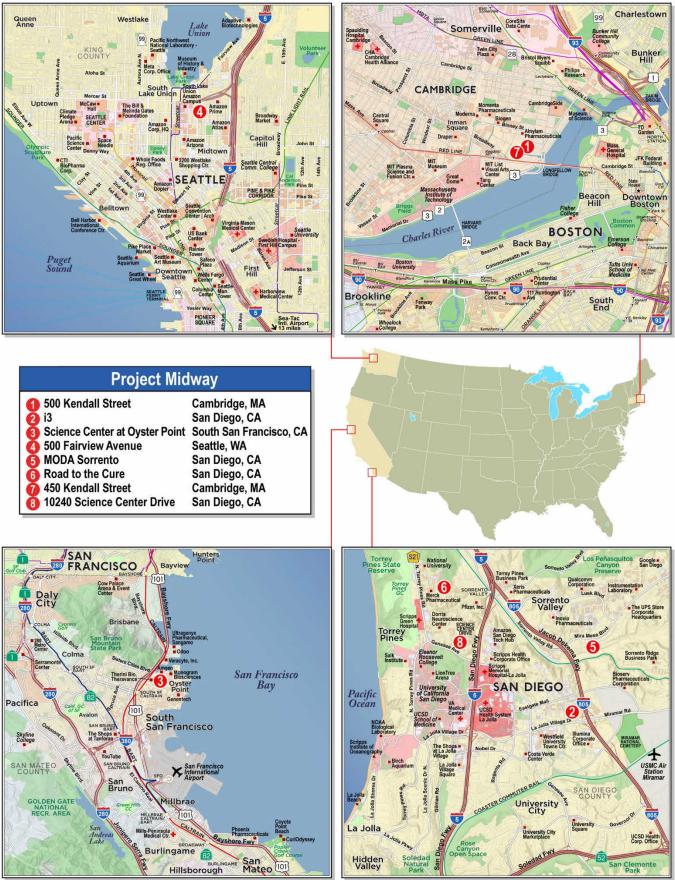
| A-3-19 |
| Mortgage Loan No. 3 – Project Midway |
| Mortgage Loan Information | Property Information | ||||||
| Mortgage Loan Seller: | MSMCH | Single Asset/Portfolio: | Portfolio | ||||
| Original Balance(1): | $69,000,000 | Location(6): | Various, Various | ||||
| Cut-off Date Balance(1): | $69,000,000 | General Property Type(6): | Various | ||||
| % of Initial Pool Balance: | 7.4% | Detailed Property Type(6): | Various | ||||
| Loan Purpose: | Refinance | Title Vesting(6): | Fee / Leasehold | ||||
| Borrower Sponsor: | BRE Edison L.P. | Year Built/Renovated(6): | Various/Various | ||||
| Guarantor(2): | BRE Edison L.P. | Size: | 1,280,399 SF | ||||
| Mortgage Rate: | 5.911647%(3) | Cut-off Date Balance per SF(1): | $414 | ||||
| Note Date: | 2/6/2025 | Maturity Date Balance per SF(1): | $414 | ||||
| Maturity Date: | 2/6/2030 | Property Manager: | BioMed Realty LLC | ||||
| Term to Maturity: | 60 months | (borrower-related) | |||||
| Amortization Term: | 0 months | Underwriting and Financial Information | |||||
| IO Period: | 60 months | UW NOI: | $78,894,828 | ||||
| Seasoning: | 1 month | UW NCF: | $77,934,529 | ||||
| Prepayment Provisions: | YM1(25),DorYM1(28),O(7) | UW NOI Debt Yield(1): | 14.9% | ||||
| Lockbox/Cash Mgmt Status: | Hard/Springing | UW NCF Debt Yield(1): | 14.7% | ||||
| Additional Debt Type(1): | Pari Passu / B-Notes | UW NOI Debt Yield at Maturity(1): | 14.9% | ||||
| Additional Debt Balance(1): | $461,000,000 / $235,000,000 | UW NCF DSCR(1): | 2.23x | ||||
| Future Debt Permitted (Type)(4): | Yes (Mezzanine) | Most Recent NOI: | $73,837,657 (11/30/2024 TTM) | ||||
| 2nd Most Recent NOI: | $71,478,126 (12/31/2023) | ||||||
| 3rd Most Recent NOI: | $69,116,914 (12/31/2022) | ||||||
| Reserves(5) | Most Recent Occupancy: | 93.6% (2/7/2025) | |||||
| Type | Initial | Monthly | Cap | 2nd Most Recent Occupancy: | 99.1% (12/31/2023) | ||
| RE Taxes: | $0 | Springing | NAP | 3rd Most Recent Occupancy: | 99.1% (12/31/2022) | ||
| Insurance: | $0 | Springing | NAP | Appraised Value (as of): | $1,290,000,000 (Various)(7) | ||
| TI/LC Reserve: | $0 | Springing | $1,280,399 | Appraised Value per SF: | $1,007 | ||
| Unfunded Obligations: | $15,452,130 | $0 | NAP | Cut-off Date LTV Ratio(1): | 41.1% | ||
| Ground Lease Reserve: | $0 | Springing | NAP | Maturity Date LTV Ratio(1): | 41.1% | ||
| Sources and Uses | ||||||
| Sources | Proceeds | % of Total | Uses | Proceeds | % of Total | |
| Senior Loan Amount: | $530,000,000 | 48.7% | Loan Payoff: | $1,056,493,006 | 97.2% | |
| Subordinate Loan Amount: | $235,000,000 | 21.6% | Reserves: | $15,452,130 | 1.4% | |
| Sponsor Equity | $322,245,136 | 29.6% | Closing Costs: | $15,300,000 | 1.4% | |
| Total Sources: | $1,087,245,136 | 100.0% | Total Uses: | $1,087,245,136 | 100.00% | |
| (1) | The Project Midway Mortgage Loan (as defined below) is part of the Project Midway Whole Loan (as defined below) with an aggregate principal balance of $765,000,000 evidenced by 17 senior pari passu promissory notes with an aggregate principal balance of $530,000,000 (the “Project Midway Senior Notes”) and three junior promissory notes with an aggregate balance of $235,000,000 (the “Project Midway Junior Notes”). The Cut-off Date Balance Per SF, Maturity Date Balance Per SF, UW NOI Debt Yield, UW NCF Debt Yield, UW NOI Debt Yield at Maturity, UW NCF DSCR, Cut-off Date LTV Ratio and Maturity Date LTV Ratio numbers presented above are based on the Project Midway Senior Loan (and in the case of UW NCF DSCR is based on the weighted average interest rate for the Project Midway Senior Notes, as set forth in footnote (3) below). The Cut-off Date Balance Per SF, Maturity Date Balance Per SF, UW NOI Debt Yield, UW NCF Debt Yield, UW NOI Debt Yield at Maturity, UW NCF DSCR, Cut-off Date LTV Ratio and Maturity Date LTV Ratio based on the Project Midway Whole Loan is $597, $597, 10.3%, 10.2%, 10.3%, 1.51x, 59.3% and 59.3%, respectively (and in the case of UW NCF DSCR is based on the weighted average interest rate for the Project Midway Whole Loan, as set forth in footnote (3) below). |
| (2) | The liability of the non-recourse guarantor for bankruptcy related recourse events is capped at 15% of the outstanding amount of the Project Midway Whole Loan (and, without duplication, expenses payable to the lender in accordance with the enforcement of the recourse carveout guaranty). In addition, there is no separate environmental indemnitor with respect to the Project Midway Whole Loan. |
| (3) | 5.911647% represents the per annum interest rate associated with the Project Midway Mortgage Loan. The weighted average interest rate for the Project Midway Senior Loan is 6.512978886792450% per annum and the weighted average interest rate for the Project Midway Whole Loan is 6.65459975163399% per annum. |
| (4) | See “Permitted Future Subordinate or Mezzanine Debt” below. |
| (5) | See “Escrows and Reserves” below for further discussion of reserve information. |
| (6) | See “The Properties” below. |
| (7) | Based on appraisals dated from September 23, 2024 to October 29, 2024. |
The Mortgage Loan. The third largest mortgage loan (the “Project Midway Mortgage Loan”) part of a whole loan (the “Project Midway Whole Loan”) with an aggregate principal balance of $765,000,000 evidenced by the 17 pari passu Project Midway Senior Notes and three Project Midway Junior Notes. The Project Midway Whole Loan is secured by the borrowers’ fee and leasehold interests in a portfolio of seven mixed use assets located in Cambridge, Massachusetts, San Diego, California, South San Francisco, California, and Seattle, Washington, as well as an office asset in San Diego, California (each, individually, a “Project Midway Portfolio Property” and, collectively, the “Project Midway Portfolio Properties”). The Project Midway Whole Loan was co-originated by German American Capital Corporation (“GACC”), Citi Real Estate Funding Inc. (“CREFI”) and Morgan Stanley Bank, N.A. on February 6, 2025. The Project Midway Mortgage Loan is evidenced by the non-controlling Note A-8 and A-9, with an aggregate principal balance of $69,000,000. The Project Midway Whole Loan will be serviced pursuant to the trust and servicing agreement for the BX 2025-BIO3 securitization. See “Description of the Mortgage Pool—The Whole Loans— The Project Midway Pari Passu-A/B Whole Loan” and “The Pooling and Servicing Agreement” in the prospectus.
| A-3-20 |
| Various – Various | Loan #3 | Cut-off Date Balance: | $69,000,000 | |
| Various | Project Midway | Cut-off Date LTV: | 41.1% | |
| Various | U/W NCF DSCR: | 2.23x | ||
| U/W NOI Debt Yield: | 14.9% |
The table below summarizes the promissory notes that comprise the Project Midway Whole Loan:
| Project Midway Whole Loan Summary | ||||
| Note | Original Balance | Cut-off Date Balance | Note Holder | Controlling Note |
| A-1 | $120,000,000 | $120,000,000 | BX 2025-BIO3 | No |
| A-2 | $90,000,000 | $90,000,000 | BX 2025-BIO3 | No |
| A-3 | $90,000,000 | $90,000,000 | BX 2025-BIO3 | No |
| A-4-1(1) | $26,000,000 | $26,000,000 | Bank of Montreal | No |
| A-4-2(1) | $20,000,000 | $20,000,000 | Bank of Montreal | No |
| A-5-1 | $20,000,000 | $20,000,000 | BBCMS 2025-5C33 | No |
| A-5-2-1 | $10,000,000 | $10,000,000 | BBCMS 2025-5C33 | No |
| A-5-2-2(1) | $5,000,000 | $5,000,000 | GACC | No |
| A-5-3(1) | $11,000,000 | $11,000,000 | GACC | No |
| A-6-1 | $12,000,000 | $12,000,000 | BBCMS 2025-5C33 | No |
| A-6-2 | $10,000,000 | $10,000,000 | BBCMS 2025-5C33 | No |
| A-6-3(1) | $10,000,000 | $10,000,000 | CREFI | No |
| A-6-4(1) | $3,000,000 | $3,000,000 | CREFI | No |
| A-7-1(1) | $24,000,000 | $24,000,000 | CREFI | No |
| A-7-2(1) | $10,000,000 | $10,000,000 | CREFI | No |
| A-8 | $50,000,000 | $50,000,000 | MSBAM 2025-5C1 | No |
| A-9 | $19,000,000 | $19,000,000 | MSBAM 2025-5C1 | No |
| Senior Loan | $530,000,000 | $530,000,000 | ||
| B-1 | $94,000,000 | $94,000,000 | BX 2025-BIO3 | Yes(2) |
| B-2 | $70,500,000 | $70,500,000 | BX 2025-BIO3 | No |
| B-3 | $70,500,000 | $70,500,000 | BX 2025-BIO3 | No |
| Whole Loan | $765,000,000 | $765,000,000 | ||
| (1) | Expected to be contributed to one or more future securitization trusts. |
| (2) | The controlling note B-1 has been contributed to the BX 2025-BIO3 securitization. |
The Borrowers and the Borrower Sponsor. The borrowers for the Project Midway Whole Loan are BMR-i3 LLC, BMR-500 Fairview Avenue LLC, BMR-10240 Science Center Drive LP, BMR-Moda Sorrento LP, BMR-Road to the Cure LP, BMR-180 Oyster Point LP, BMR-200 Oyster Point LP, BMR-450 Kendall Street LLC and BMR-500 Kendall Street LLC, each a Delaware limited liability company or limited partnership and special purpose entity with two independent directors. Legal counsel to the borrowers provided a non-consolidation opinion in connection with the origination of the Project Midway Whole Loan. The borrower sponsor and non-recourse carve-out guarantor is BRE Edison L.P., a Delaware limited partnership indirectly controlled by certain parallel partnerships and other Blackstone fund entities. The liability of the non-recourse guarantor for bankruptcy related recourse events is capped at 15% of the outstanding amount of the Project Midway Whole Loan (and, without duplication, expenses payable to the lender in accordance with the enforcement of the recourse carveout guaranty). In addition, there is no separate environmental indemnitor with respect to the Project Midway Whole Loan.
The Properties. The Project Midway Portfolio Properties consist of eight high-quality lab/lab capable assets totaling 1,280,399 square feet diversified across the top life science markets in the United States, including Boston/Cambridge, San Francisco Bay Area, San Diego and Seattle. As of February 7, 2025, the Project Midway Portfolio Properties were 93.6% leased to 25 tenants, with no single tenant accounting for more than 26.8% of the total net rentable area. The Project Midway Portfolio Properties exhibit a weighted average remaining lease term of 6.0 years and 81.5% of UW Base Rent is derived from investment grade tenants. Based on borrower sponsor identified market rents, the Project Midway Portfolio Properties are leased 19.6% below market. The Project Midway Portfolio Properties have been consistently occupied at an average occupancy of approximately 98% dating back to 2021.
| A-3-21 |
| Various – Various | Loan #3 | Cut-off Date Balance: | $69,000,000 | |
| Various | Project Midway | Cut-off Date LTV: | 41.1% | |
| Various | U/W NCF DSCR: | 2.23x | ||
| U/W NOI Debt Yield: | 14.9% |
The following table presents certain information relating to the Project Midway Portfolio Properties:
| Portfolio Summary | |||||||||
| Property Name | City, State | Year Built / Renovated | SF | Occupancy(1) | Allocated Whole Loan Cut-off Date Balance | % of Allocated Loan Cut-off Date Balance | Appraised Value | UW NOI(1) | % of UW NOI |
| 500 Kendall Street | Cambridge, MA | 2002 / 2019 | 349,325 | 100.0% | $318,500,000 | 41.6% | $455,000,000 | $34,132,482 | 43.3% |
| i3 | San Diego, CA | 2017 / NAP | 316,262 | 100.0% | $127,900,000 | 16.7% | $248,700,000 | $13,603,132 | 17.2% |
| Science Center at Oyster Point |
South San Francisco, CA | 2009, 2010 / NAP | 204,887 | 100.0% | $107,200,000 | 14.0% | $216,600,000 | $9,808,874 | 12.4% |
| 500 Fairview Avenue |
Seattle, WA | 2015 / NAP | 123,838 | 75.8% | $56,700,000 | 7.4% | $101,800,000 | $5,903,805 | 7.5% |
| MODA Sorrento | San Diego, CA | 1984 / 2014 | 104,577 | 64.3% | $49,800,000 | 6.5% | $91,000,000 | $4,423,009 | 5.6% |
| Road to the Cure | San Diego, CA | 1978 / 2014 | 67,998 | 100.0% | $48,300,000 | 6.3% | $73,100,000 | $5,128,254 | 6.5% |
| 450 Kendall Street | Cambridge, MA | 2015 / 2020 | 63,520 | 100.0% | $45,200,000 | 5.9% | $70,300,000 | $4,826,104 | 6.1% |
| 10240 Science Center Drive |
San Diego, CA | 2002 / NAP |
49,992 |
69.7% |
$11,400,000 |
1.5% |
$33,500,000 |
$1,069,170 |
1.4% |
| Total/Wtd. Avg. | 1,280,399 | 93.6% | $765,000,000 | 100.0% | $1,290,000,000 | $78,894,828 | 100.0% | ||
Source: Appraisals, unless otherwise noted
| (1) | Occupancy and UW NOI is based on the underwritten rent roll dated February 7, 2025. |
500 Kendall Street Property
The 500 Kendall Street Property is the largest asset of the Project Midway Portfolio Properties, representing 43.3% of underwritten net operating income. The 500 Kendall Street Property is a lab/office facility that is 98.2% leased to Shire Human Genetic Therapies, a subsidiary of Takeda Pharmaceuticals U.S.A., Inc. (“Takeda”). Takeda is in the process of creating a unified Cambridge campus in Kendall Square, which is expected to serve as their United States forward base of operations. Takeda is investing significantly in Kendall Square and recently extended their lease at the 500 Kendall Street Property by eight years and executed a 600,000 square foot lease to occupy 100% of 585 Third Street (non-collateral), a ground up development. In addition, Takeda, which occupies space at the nearby 650 Kendall Street (non-collateral), has a right of first offer on the to-be-vacated laboratory space at the 450 Kendall Street Property. The 500 Kendall Square Property is located adjacent to MIT, Harvard, Massachusetts General Hospital and several pharmaceutical companies.
i3 Property
The i3 Property is a three-building lab/office campus 100% leased to Illumina, Inc. The i3 Property is located near La Jolla Village Drive with access to I-805 in the University Town Centre submarket of San Diego. The i3 Property has amenities including a restaurant, fitness center, conference facility, event lawn, bocce courts, ping pong courts, a herb garden and a dining terrace. Within each structure, a central scientific lab zone has been designed with an emphasis on modularity, flexibility and adaptability. The i3 Property holds a LEED Platinum certification, featuring sustainable designs and facilities including on-site fuel cells, bio-filtration systems, green rooftops with heat and drought tolerant plants and water recycling systems.
Science Center at Oyster Point Property
The Science Center at Oyster Point Property is a Class A lab/office property located in South San Francisco, California, consisting of two buildings that are 100% leased to Life Technologies Corp., a subsidiary of Thermo Fisher Scientific. The Science Center at Oyster Point Property acts as a campus for Life Technologies Corp. and has state-of-the-art building systems, a cafeteria, bay and mountain views, secured subterranean parking, modern HVAC systems, 16 foot floor-to-floor heights and a modern fitness center. Life Technologies Corp. uses the asset for its Genetic Sequencing department, which helps with vaccine development and research, and has over 700 employees that are actively utilizing the asset.
500 Fairview Avenue Property
The 500 Fairview Avenue Property is a seven-story lab/office facility located in the growing hub of Seattle’s life science community in South Lake Union. The 500 Fairview Avenue Property is one of the two buildings (along with 530 Fairview Avenue, non-collateral) that make up the Vue Research Center and is certified LEED Gold. The 500 Fairview Avenue Property has been designed to meet the specific criteria of life science organizations while adhering to the principles of sustainable design. The 500 Fairview Avenue Property is subject to a ground lease that expires in January 2088. The current ground rent is $61,165 per month and increases annually by the higher of 2.0% or Seattle’s cost of living adjustment, but not exceeding 5.0%.
MODA Sorrento Property
The MODA Sorrento Property is a 104,577 square foot, research and lab/office four-building campus with 74,250 and 30,327 square feet of lab and office space, respectively. The MODA Sorrento Property was designed with a unique indoor/outdoor meeting area and includes a market leasing amenity package with a fitness center, conference space, tenant lounge with a café and ping pong, foosball and bocce ball tables. The Class A MODA Sorrento Property has been featured in several architectural magazines and publications to highlight its build out and amenity package.
Road to the Cure Property
The Road to the Cure Property is a 67,998 square foot lab/office strategically located adjacent to Johnson & Johnson’s San Diego headquarters, and walking distance from the University of California, San Diego campus. The amenities at the Road to the Cure Property include a conference center, fitness room and vivarium. The borrower sponsor reports that it is planning to invest an additional $1.1 million ($16.18 per square foot) for any requested tenant improvements and leasing costs as tenants renew or roll.
450 Kendall Street Property
The 450 Kendall Street Property is a LEED Gold, lab/office and research facility located in a 10-acre master-planned development in the center of the top life science market in the United States. The master-planned development features a community of office and lab space, multifamily apartments, restaurants and retail shopping.
| A-3-22 |
| Various – Various | Loan #3 | Cut-off Date Balance: | $69,000,000 | |
| Various | Project Midway | Cut-off Date LTV: | 41.1% | |
| Various | U/W NCF DSCR: | 2.23x | ||
| U/W NOI Debt Yield: | 14.9% |
10240 Science Center Drive Property
The 10240 Science Center Drive Property is an office property located in the heart of the University Town Centre submarket and is surrounded by research institutions, government agencies and biotech companies. The 10240 Science Center Drive Property is situated on Science Center Drive near Genesee Avenue and I-5, which provides easy access to the greater San Diego market and proximity to the airport.
Major Tenants.
Shire Human Genetic Therapies (343,000 square feet; 26.8% of portfolio NRA; 40.5% of portfolio underwritten base rent). Acquired by Takeda (NYSE: TAK; Moody’s / Fitch / S&P: Baa1 / NR / BBB+) in 2019, Shire Human Genetic Therapies (“Shire”) is a global biotechnology company focusing on rare diseases and other highly specialized conditions. Founded in 1781, Takeda is a leading pharmaceutical corporation focused on R&D, manufacturing, sales, and import/export of pharmaceutical drugs. Takeda employs over 49,000 people globally.
Illumina, Inc. (316,262 square feet; 24.7% of portfolio NRA; 17.3% of portfolio underwritten base rent). Illumina, Inc. (“Illumina”; Nasdaq: ILMN; Moody’s / Fitch / S&P: Baa3 / BBB / BBB) is a leader in DNA sequencing and array-based technologies, with a focus on seeking advancements in life sciences, oncology, reproductive health, genetic disease, agriculture, microbiology, and other emerging segments. Illumina employs over 9,250 people. Illumina vacated their space at the i3 Property in August 2023 due to corporate downsizing and is current on all rent and reimbursements due under its lease as of January 1, 2025. The borrower sponsor has begun marketing the space for rent and the appraisal concluded a 12-month lease-up period after the conclusion of the Illumina lease in December 2027.
Life Technologies Corp. (204,887 square feet; 16.0% of portfolio NRA; 12.6% of portfolio underwritten base rent). Life Technologies Corp. is a biotech company founded in 2008 and currently owned by Thermo Fisher Scientific, Inc. (“Thermo Fisher”; NYSE: TMO; Moody’s / Fitch / S&P: A3 / A- / A-). Thermo Fisher is a leader in serving science with approximately 50,000 employees across 50 countries. Thermo Fisher delivers innovative technologies, purchasing convenience and pharmaceutical services through brands including Thermo Scientific, Applied Biosystems, Invitrogen, Fisher Scientific, Unity Lab Services, Patheon, and PPD. As of November 2024, Thermo Fisher has a market capitalization of $211.7 billion.
Eli Lilly and Company (47,061 square feet; 3.7% of portfolio NRA; 5.8% of portfolio underwritten base rent). Eli Lilly and Company (“Eli Lilly”; NYSE: LLY; Moody’s/ Fitch / S&P: Aa3 / NR / A+) is a biotechnology company focused on neuroscience, cardiometabolic health, cancer and immunology. As of January 1, 2025, Eli Lilly is dark and not utilizing its space at the 450 Kendall Street Property. Eli Lilly has not given notice of intent to vacate the space. Takeda, which occupies space at the nearby 650 Kendall Street property (non-collateral) and the 500 Kendall Street Property, has a right of first offer on the to-be-vacated laboratory space at the 450 Kendall Property.
Bruker Corporation, Inc. (40,542 square feet; 3.2% of portfolio NRA; 3.5% of portfolio underwritten base rent). Bruker Spatial Biology, Inc. is a subsidiary of Bruker Corporation, Inc. (“Bruker”; Nasdaq: BRKR), which develops high-performance scientific instruments and high-value analytical and diagnostic solutions that enables scientists to explore life and materials at molecular, cellular, and microscopic levels. Bruker employs over 9,700 people across 90 locations.
| A-3-23 |
| Various – Various | Loan #3 | Cut-off Date Balance: | $69,000,000 | |
| Various | Project Midway | Cut-off Date LTV: | 41.1% | |
| Various | U/W NCF DSCR: | 2.23x | ||
| U/W NOI Debt Yield: | 14.9% |
The following table presents a summary regarding the major tenants at the Project Midway Portfolio Properties:
| Tenant Summary(1) | ||||||||||
| Tenant Name | Property |
Credit Rating (Fitch/Moody’s/ S&P)(2) |
Tenant SF | Approx.% of SF | Annual UW Rent(3) | % of Total Annual UW Rent(3) |
Annual UW Rent PSF(3) |
Lease Expiration | Renewal Options | Term. Option (Y/N) |
| Shire | 500 Kendall Street | Baa1/NR/BBB+ | 343,000 | 26.8% | $30,273,180 | 40.5% | $88.26 | 1/31/2039 | 2 x 5 year | N |
| Illumina, Inc.(3) | i3 | Baa3/BBB/BBB | 316,262 | 24.7% | $12,960,393 | 17.3% | $40.98 | 12/31/2027 | 3 x 5 year | N |
| Life Technologies Corp. | Science Center at Oyster Point | NR/BBB/NR | 204,887 | 16.0% | $9,460,349 | 12.6% | $46.17 | 3/31/2028 | 2 x 5 year | N |
| Eli Lilly and Company(3) | 450 Kendall Street | Aa3/NR/A+ | 47,061 | 3.7% | $4,322,578 | 5.8% | $91.85 | 3/31/2026 | 1 x 5 year | N |
| Bruker Corporation, Inc. | 500 Fairview Avenue | NR/NR/NR | 40,542 | 3.2% | $2,642,898 | 3.5% | $65.19 | 2/12/2026 | 2 x 5 year | N |
| Lyell Immunopharma, Inc. | 500 Fairview Avenue | NR/NR/NR | 33,832 | 2.6% | $2,544,544 | 3.4% | $75.21 | 12/31/2028 | 2 x 5 year | N |
| Eurofins Advantar Laboratories, Inc. | MODA Sorrento | Baa3/BBB-/NR | 28,577 | 2.2% | $2,350,573 | 3.1% | $82.25 | 11/30/2026 | None | N |
| Aspen Neuroscience, Inc. | Road to the Cure | NR/NR/NR | 30,791 | 2.4% | $2,188,274 | 2.9% | $71.07 | 9/15/2027 | 2 x 5 year | N |
| Mozart Therapeutics, Inc. | 500 Fairview Avenue | NR/NR/NR | 19,459 | 1.5% | $1,548,304 | 2.1% | $79.57 | 4/30/2030 | 2 x 5 year | N |
| Lundbeck La Jolla Research Center | Road to the Cure | NR/NR/BBB- | 17,403 | 1.4% | $1,185,315 | 1.6% | $68.11 | 10/4/2032 | None | Y(4) |
| Subtotal/Wtd. Avg.redit R | 1,081,814 | 84.5% | $69,476,407 | 92.8% | $64.22 | |||||
| Other Tenants | 116,053 | 9.1% | $5,350,555 | 7.2% | $46.10 | |||||
| Occupied Subtotal/Wtd. Avg. | 1,197,867 | 93.6% | $74,826,962 | 100.0% | $62.47 | |||||
| Vacant Space | 82,532 | 6.4% | ||||||||
| Total/Wtd. Avg. | 1,280,399 | 100.0% | ||||||||
| (1) | Based on the underwritten rent roll dated February 7, 2025. |
| (2) | In certain instances, ratings provided are those of the parent company of the entity shown, whether or not the parent company guarantees the lease. |
| (3) | Illumina, Inc. and Eli Lilly and Company are dark but current with respect to all obligations under their respective leases as of January 1, 2025. |
| (4) | Lundbeck La Jolla Research Center has the one-time option to terminate its lease effective as of May 4, 2030 by delivering to the landlord on or before May 4, 2029, written notice and a termination fee of $876,771.82. |
The following table presents certain information relating to the lease rollover at the Project Midway Portfolio Properties:
| Lease Rollover Schedule(1)(2) | ||||||||
| Year | # of Leases Rolling | SF Rolling | Approx. % of SF Rolling | Approx. Cumulative % of SF Rolling | Total UW Rent Rolling | Approx. % of Total UW Rent Rolling | Approx. Cumulative % of Total UW Rent Rolling | UW Rent PSF Rolling |
| 2025 & MTM | 4 | 9,052 | 0.7% | 0.7% | $192,138 | 0.3% | 0.3% | $21.23 |
| 2026 | 9 | 159,528 | 12.5% | 13.2% | $10,935,828 | 14.6% | 14.9% | $68.55 |
| 2027 | 5 | 392,819 | 30.7% | 43.8% | $17,446,237 | 23.3% | 38.2% | $44.41 |
| 2028 | 2 | 238,719 | 18.6% | 62.5% | $12,004,893 | 16.0% | 54.2% | $50.29 |
| 2029 | 0 | 0 | 0.0% | 62.5% | $0 | 0.0% | 54.2% | $0.00 |
| 2030(3) | 1 | 19,459 | 1.5% | 64.0% | $1,548,304 | 2.1% | 56.3% | $79.57 |
| 2031 | 0 | 0 | 0.0% | 64.0% | $0 | 0.0% | 56.3% | $0.00 |
| 2032 | 3 | 35,290 | 2.8% | 66.8% | $2,426,384 | 3.2% | 59.5% | $68.76 |
| 2033 | 0 | 0 | 0.0% | 66.8% | $0 | 0.0% | 59.5% | $0.00 |
| 2034 | 0 | 0 | 0.0% | 66.8% | $0 | 0.0% | 59.5% | $0.00 |
| 2035 | 0 | 0 | 0.0% | 66.8% | $0 | 0.0% | 59.5% | $0.00 |
| 2036 & Thereafter | 1 | 343,000 | 26.8% | 93.6% | $30,273,180 | 40.5% | 100.0% | $88.26 |
| Vacant | 0 | 82,532 | 6.4% | 100.0% | $0 | 0.0% | 100.0% | $0.00 |
| Total/Wtd. Avg. | 25 | 1,280,399 | 100.0% | $74,826,962 | 100.0% | $62.47(4) | ||
| (1) | Based on the underwritten rent roll dated February 7, 2025. |
| (2) | Certain tenants may have termination or contraction options (which may become exercisable prior to the originally stated expiration date of the tenant lease) that are not considered in the above Lease Rollover Schedule. |
| (3) | The maturity date of the Project Midway Whole Loan is February 6, 2030. |
| (4) | Excludes vacant SF. |
| A-3-24 |
| Various – Various | Loan #3 | Cut-off Date Balance: | $69,000,000 | |
| Various | Project Midway | Cut-off Date LTV: | 41.1% | |
| Various | U/W NCF DSCR: | 2.23x | ||
| U/W NOI Debt Yield: | 14.9% |
The Market. The Project Midway Portfolio Properties are located in three states across four major markets including Boston/Cambridge (49.4% of portfolio underwritten NOI), San Diego (30.7% of portfolio underwritten NOI), San Francisco Bay Area (12.4% of portfolio underwritten NOI) and Seattle (7.5% of portfolio underwritten NOI).
Boston is home to elite academic and research institutions, as well as renowned medical facilities. The top three National Institutes of Health (“NIH”) funded hospitals are located in the Cambridge submarket including Massachusetts General Hospital, Brigham and Women’s Hospital and Boston Children’s Hospital. The Boston economy has experienced faster growth than the overall United States economy for several years, driven by a highly educated workforce that supports the area’s knowledge-oriented industries. In Boston, over 51% of adults aged 25 or older hold at least a bachelor’s degree, higher than the national average of 36.7%. Life sciences employment accounts for 4.5% of the regions total employment and added over 5,000 new jobs in the first four months of 2024. Anchored in Cambridge, biotechnology research is a strength of the Boston economy. AstraZeneca, Moderna, Sanofi, Takeda and Vertex Pharmaceuticals are among the established and emerging firms that helped Boston’s economy to grow by over 116% from 2017 to 2021. Cambridge recorded 214,500 square feet of positive absorption for life science properties in the second quarter of 2024. Containing nearly 20 million square feet of existing lab inventory, Cambridge and Kendall Square remain centers of global life sciences research, with asking rents over $110 PSF NNN in East Cambridge and $90 PSF NNN in West Cambridge.
More than 80 research institutes are located in San Diego, including the Scripps Research Institute and Salk Institute for Biological studies. In the second quarter of 2024, the San Diego laboratory market recorded over 200,000 square feet of positive net absorption, producing the largest net absorption figure since the second quarter of 2022. San Diego leasing activity has seen over 740,000 square feet of activity in 2024. The second quarter of 2024 saw an increase in life sciences jobs with 68,500 posted in March. Additionally, jobs are up 12.9% since February 2020, reflecting ongoing life sciences growth. Torrey Pines / UTC acts as the heart of San Diego’s life science clusters with a low vacancy rate of 5.0% and leading leasing activity. Significant lease transactions are clustered in Torrey Pines and Sorrento Mesa, with over 310,854 and 367,443 square feet of recent lease transactions, respectively.
The San Francisco Bay Area is considered to be the birthplace of the life sciences sector and is home to well-known companies in the industry. The life sciences industry benefits from the talent pool fostered by leading universities with specialties in biology and biomedical fields including Stanford, UCSF and University of California, Berkeley. Life sciences companies continued to add headcount during the second quarter of 2024, growing by 992 jobs, bringing the overall employment for the sector to 146,731. At the close of the second quarter of 2024, total inventory of life sciences facilities in the Bay Area stood at 41.6 million square feet.
The Seattle life sciences market continually ranks in the top 10 nationally in venture capital and NIH funding, as well as patents issued, demonstrating its position as an innovation hub. Seattle’s population grew 1.2% over the past year, compared to 0.5% nationally. Life science employment grew from below 30,000 jobs to over 35,000 jobs between 2020 and 2023. Seattle saw the largest increase of any metropolitan area in NIH funding, increasing 30% to $1.4 billion in 2022. Life science asking rents grew rapidly in 2020 and continue to remain just below $70 per square foot as of the third quarter of 2023, with 8% vacancy rates.
The following table presents certain information relating to the Project Midway Portfolio Properties:
| Market Rent Summary | ||||||
| Property | UW Rental Rate PSF(1) | Occupancy(1) | Properties | Allocated Whole Loan Amount | Submarket Rent PSF | Submarket Vacancy |
| Boston/Cambridge | $85.85 | 100.0% | 2 | $363,700,000 | $83.89 | 10.8% |
| San Diego | $47.69 | 90.3% | 4 | $237,400,000 | $50.50 | 10.1% |
| San Francisco Bay Area | $46.17 | 100.0% | 1 | $107,200,000 | $55.41 | 12.1% |
| Seattle | $71.78 | 75.8% | 1 | $56,700,000 | $41.46 | 13.0% |
Source: Appraisals, unless otherwise indicated.
| (1) | Based on the underwritten rent roll dated February 7, 2025. |
Appraisal. The appraisal concluded to an “as-is” value for the 500 Kendall Street Property of $455,000,000 as of October 28, 2024. The appraisal concluded to an “as-is” value for the i3 Property of $248,700,000 as of October 29, 2024. The appraisal concluded to an “as-is” value for the Science Center at Oyster Point Property of $216,600,000 as of September 23, 2024. The appraisal concluded to an “as-is” value for the 500 Fairview Avenue Property of $101,800,000 as of September 25, 2024. The appraisal concluded to an “as-is” value for the MODA Sorrento Property of $91,000,000 as of September 26, 2024. The appraisal concluded to an “as-is” value for the Road to the Cure Property of $73,100,000 as of September 26, 2024. The appraisal concluded to an “as-is” value for the 450 Kendall Street Property of $70,300,000 as of September 23, 2024. The appraisal concluded to an “as-is” value for the 10240 Science Center Drive Property of $33,500,000 as of September 26, 2024.
Together, the Project Midway Portfolio Properties have an “as-is” value of $1,290,000,000.
Environmental Matters. According to Phase I environmental reports dated from April 8, 2024 to December 3, 2024, there was no evidence of any recognized environmental conditions at the Project Midway Portfolio Properties. The Phase I environmental reports identified controlled recognized environmental conditions at the 500 Kendall Street Property and the Science Center at Oyster Point Property.
| A-3-25 |
| Various – Various | Loan #3 | Cut-off Date Balance: | $69,000,000 | |
| Various | Project Midway | Cut-off Date LTV: | 41.1% | |
| Various | U/W NCF DSCR: | 2.23x | ||
| U/W NOI Debt Yield: | 14.9% |
Operating History and Underwritten Net Cash Flow. The following table presents certain information relating to the historical operating performance and Underwritten Net Cash Flow for the Project Midway Portfolio Properties
| Cash Flow Analysis | ||||||
| 2021 | 2022 | 2023 | 11/30/2024 TTM | UW | UW PSF | |
| Gross Potential Rent(1) | $67,772,822 | $69,773,104 | $72,381,673 | $75,043,972 | $87,237,487 | $68.13 |
| Other Income | $1,101,715 | $1,151,012 | $1,176,809 | $1,180,147 | $1,180,147 | $0.92 |
| Discounts Concessions | $22,800,637 | $22,196,696 | $24,011,968 | $24,411,973 | $24,365,611 | $19.03 |
| Vacancy & Credit Loss |
$0 |
$0 |
$0 |
$0 |
($7,040,442) |
($5.50) |
| Effective Gross Income | $91,675,173 | $93,120,812 | $97,570,450 | $100,636,093 | $105,742,803 | $82.59 |
| $0.00 | ||||||
| Real Estate Taxes | $9,603,330 | $10,409,834 | $10,807,284 | $11,109,187 | $11,109,187 | $8.68 |
| Insurance | $930,436 | $848,226 | $903,902 | $1,149,889 | $1,113,933 | $0.87 |
| Other Expenses(2) |
$13,768,368 |
$12,745,838 |
$14,381,137 |
$14,539,359 |
$14,624,855 |
$11.42 |
| Total Expenses | $24,302,134 | $24,003,898 | $26,092,324 | $26,798,435 | $26,847,975 | $20.97 |
| $0.00 | ||||||
| Net Operating Income | $67,373,039 | $69,116,914 | $71,478,126 | $73,837,657 | $78,894,828 | $61.62 |
| Capital Expenditures | $0 | $0 | $0 | $0 | $320,100 | $0.25 |
| TI/LCs |
$0 |
$0 |
$0 |
$0 |
$640,200 |
$0.50 |
| Net Cash Flow | $67,373,039 | $69,116,914 | $71,478,126 | $73,837,657 | $77,934,529 | $60.87 |
| Occupancy % | 99.5% | 99.1% | 99.1% | 93.6%(3) | 93.8%(4) | |
| NOI DSCR(5) | 1.93x | 1.97x | 2.04x | 2.11x | 2.25x | |
| NCF DSCR(5) | 1.93x | 1.97x | 2.04x | 2.11x | 2.23x | |
| NOI Debt Yield(5) | 12.7% | 13.0% | 13.5% | 13.9% | 14.9% | |
| NCF Debt Yield(5) | 12.7% | 13.0% | 13.5% | 13.9% | 14.7% | |
| (1) | UW Gross Potential Rent is based on the underwritten rent roll dated February 7, 2025 and includes rent steps through February 6, 2026 totaling $2,477,573, and Credit Tenant Straight Line Rent of $2,892,509. |
| (2) | Include management fees, utilities, general and administrative, common area maintenance, non-recoverable expenses, and ground rent. |
| (3) | Reflects current occupancy, based on the underwritten rent roll February 7, 2025. |
| (4) | Represents Economic Occupancy. |
| (5) | DSCRs and Debt Yields are based on the Project Midway Senior Loan and exclude the Project Midway Junior Loan. |
Escrows and Reserves.
At origination, the borrowers were required to deposit $15,452,130 into an unfunded obligations reserve related to outstanding free rent, tenant improvement allowances and leasing commissions outstanding as of the origination date under certain leases identified in the Project Midway Whole Loan agreement.
Tax and Insurance Escrows – Waived except during a Cash Sweep Period (as defined below). During a Cash Sweep Period, the borrowers are required to deposit: (i) 1/12th of the amount reasonably estimated by the mortgage lender to be payable, during the next 12 months in order to accumulate sufficient funds to pay taxes levied or assessed or imposed against the Project Midway Portfolio Properties or any part thereof payable in full 30 days prior to their respective due dates (exclusive of any taxes payable by tenants), and (ii) 1/12th of the insurance premiums reasonably estimated by the lender to be payable for the renewal of the coverage afforded by the insurance policies upon the expiration thereof in order to accumulate sufficient funds to pay such insurance premiums in full 30 days prior to the expiration of the policies, provided that so long as no Project Midway Whole Loan event of default is continuing, to the extent any of the required insurance is effected under one or more blanket insurance policies reasonably acceptable to the lender, the borrowers will not be required to make insurance premium deposits with respect to the insurance premiums applicable to such blanket policy.
TI/LC Reserves – Waived except during a Cash Sweep Period. During a Cash Sweep Period, the borrowers are required to deposit on each Project Midway Whole Loan payment date an amount equal to 1/12th of the aggregate square footage of the Project Midway Portfolio Properties multiplied by $1.00 (the “Monthly Rollover Reserve Deposit”), capped at 12 times such amount.
Ground Lease Reserve – Waived except during a Cash Sweep Period. During a Cash Sweep Period, the borrowers are required to deposit on each Project Midway Whole Loan payment date an amount equal to 1/12th of the ground rent due during the next 12 months in order to accumulate sufficient funds to pay all such ground rent at least 30 days prior to the respective due dates.
Lockbox and Cash Management. The Project Midway Whole Loan is structured with a hard lockbox and springing cash management during a Cash Sweep Period. The borrowers or property manager, as applicable, are required to instruct the tenants of the Project Midway Portfolio Properties to directly deposit all rents into the lockbox accounts controlled by the lender. The borrowers have obtained from the lockbox bank its agreement to transfer (A) to a concentration account, all amounts on deposit in each lockbox account on the terms and frequency set forth in the lockbox account agreement and (B) to the cash management account upon notice from the lender to lockbox bank of a Cash Sweep Period (the “Cash Sweep Period Instructions”), all amounts on deposit in the concentration account (other than the reasonable fees of the lockbox bank to the extent required by the lockbox bank, and as more particularly described in the lockbox account agreement) in accordance with the Cash Sweep Period Instructions, which Cash Sweep Period Instructions may require up to two transfers per week to the cash management account to be applied and disbursed in accordance with the Project Midway Whole Loan documents.
| A-3-26 |
| Various – Various | Loan #3 | Cut-off Date Balance: | $69,000,000 | |
| Various | Project Midway | Cut-off Date LTV: | 41.1% | |
| Various | U/W NCF DSCR: | 2.23x | ||
| U/W NOI Debt Yield: | 14.9% |
“Cash Sweep Period” means, with respect to the Project Midway Whole Loan, a period:
| (A) | commencing upon the earliest of: (i) the occurrence of a Project Midway Whole Loan event of default; (ii) the occurrence of certain bankruptcy or insolvency events with respect to the borrowers; (iii) the debt yield falling below 7.00% for two consecutive calendar quarters immediately preceding the applicable debt yield determination date set forth in the Project Midway Whole Loan documents (a “Debt Yield Trigger Event”) or (iv) the occurrence of a Mezzanine Loan (as defined below) default; and |
| (B) | expiring upon the first date on which, with regard to any Cash Sweep Period commenced in connection with: (w) clause (A)(i) above, the Project Midway Whole Loan event of default, is no longer continuing; (x) clause (A)(ii) above, in the event of an involuntary bankruptcy action that was not consented to by a borrower or its general partner or managing member, as applicable, such bankruptcy action is discharged, stayed or dismissed within 90 days of the filing of such bankruptcy action; (y) clause (A)(iii) above, (1) the debt yield is equal to or greater than 7.00% on the first day of each of two consecutive calendar quarters, (2) immediately upon the borrowers’ and/or the mezzanine borrower’s prepayment of the Project Midway Whole Loan and/or the Mezzanine Loan, as applicable, on a pro rata basis in an amount (the “Trigger Prepayment Amount”) such that the debt yield is equal to 7.00% without any obligation to wait two consecutive quarters, (3) the Borrowers deliver to the lender cash or a letter of credit in an amount equal to the amount by which net operating income would need to increase in order to achieve a debt yield equal to 7.00% (as applicable, the “Debt Yield Cure Collateral”), which such Debt Yield Cure Collateral will be held by the lender in escrow as additional collateral for the Project Midway Whole Loan and the mezzanine borrower delivers to the mezzanine lender cash or a letter of credit in an amount equal to the lender’s allocation of the Debt Yield Cure Collateral Amount (the “Mezzanine Debt Yield Cure Collateral”), which Debt Yield Cure Collateral will be held by the mezzanine lender in escrow as additional collateral for the Mezzanine Loan, and is required to be returned to the Borrowers by the lender and be returned to the mezzanine borrower by the mezzanine lender upon the earlier of (x) the occurrence of a Debt Yield Trigger Event cure pursuant to clause (1) or (2) above or (4) below (provided that no other Cash Sweep Period is then in effect), and (y) the repayment of the Project Midway Whole Loan or the Mezzanine Loan debt, as applicable, in full or (4) the guarantor delivers to the lender a guaranty in an amount equal to the lender’s allocation of the Trigger Prepayment Amount and (z) clause (A)(iv) above, the Mezzanine Loan default is no longer continuing. For the avoidance of doubt, the Debt Yield Cure Collateral cannot be applied by the lender to satisfy any portion of the Project Midway Whole Loan other than during the continuance of a Priority Payment Cessation Event (as defined below). In the event the Debt Yield Trigger Event Cure is achieved by delivery of the Debt Yield Cure Collateral to the lender and delivery of the Mezzanine Debt Yield Cure Collateral to the mezzanine lender, the applicable Debt Yield Trigger Event will cease upon delivery of such Debt Yield Cure Collateral to the lender and such Mezzanine Debt Yield Cure Collateral to the mezzanine lender without any obligation to wait two consecutive calendar quarters. |
“Priority Payment Cessation Event” means (a) the acceleration of the Project Midway Whole Loan during the continuance of a Project Midway Whole Loan event of default, (b) the initiation of (x) judicial or nonjudicial foreclosure proceedings, (y) proceedings for appointment of a receiver or (z) similar remedies permitted by the Project Midway Whole Loan agreement or the other Project Midway Whole Loan documents relating to all or a material portion of the applicable individual Project Midway Portfolio Property, and/or (c) the imposition of a stay, an injunction or a similar judicially imposed device that has the effect of preventing the lender from exercising its remedies under the Project Midway Whole Loan agreement or the other Project Midway Whole Loan documents.
Subordinate and Mezzanine Debt. The subordinate debt is evidenced by controlling note B-1 and non-controlling notes B-2 and B-3, totaling $235,000,000.
Permitted Future Subordinate or Mezzanine Debt. The borrowers have a one-time right without the consent of the lender to cause a mezzanine borrower to incur additional indebtedness in the form of one or more mezzanine loans after the earlier of (i) 120 days from origination, which occurred on February 6, 2025, and (ii) securitization of the Project Midway Whole Loan (the “Mezzanine Loan”), subject to the satisfaction of certain conditions precedent set forth in the Project Midway Whole Loan documents, including that no Project Midway Whole Loan event of default is then continuing and the principal amount of the Mezzanine Loan which, after giving effect thereto, yields (a) an aggregate loan-to- value ratio not greater than 59.3% and (b) a debt yield not less than 9.96%.
Partial Release. The borrowers may obtain the release of one or more individual Project Midway Portfolio Properties from the lien of the Project Midway Whole Loan upon satisfaction of the terms and conditions set forth in the Project Midway Whole Loan documents, which include but are not limited to: (i) the prepayment or defeasance of a release price equal to the lesser of (a) the outstanding principal balance of the Project Midway Whole Loan, together with all interest accrued and unpaid and (b) the applicable individual property release price as set forth in the Project Midway Whole Loan documents (the “Release Amount”), together with, in the case of prepayment, if prior to the open prepayment date, the greater of a yield maintenance premium and 1.00% of the amount prepaid, and (ii) after giving effect to such release, the debt yield is greater than or equal to 9.96% (the “Release Debt Yield Test”), provided that in order to satisfy such Release Debt Yield Test, the borrowers may prepay the Project Midway Whole Loan in an amount that would satisfy the Release Debt Yield Test or deposit cash or a letter of credit with the lender in such amount; provided, further, that other than in connection with a release of the 500 Kendall Street Property, if the Release Debt Yield Test is not satisfied and such release is in connection with an arms-length transaction to a third-party purchaser who is not an affiliate of the borrowers, the borrowers may obtain the release of such Project Midway Portfolio Property upon the payment to the lender of an amount equal to the lesser of (x) 100% of the net sales proceeds and (y) the greater of (i) the Release Amount for such Project Midway Portfolio Property and (ii) an amount necessary to satisfy the Release Debt Yield Test. In no event may the 500 Kendall Street Property be released for less than its Release Amount as set forth in the Project Midway Whole Loan documents.
The Release Amount for each Property is a dollar amount that as of the origination date equates to (i) 105% of the allocated whole loan amount for the Road to the Cure, MODA Sorrento and 500 Kendall Street Properties, (ii) 110% of the allocated whole loan amount for the 10240 Science Center Drive and 450 Kendall Street Properties, (iii) 115% of the allocated whole loan amount for the 500 Fairview Avenue Property, (iv) 120% of the allocated whole loan amount for the i3 Property and (v) 125% of the allocated whole loan amount for the Science Center at Oyster Point Property.
Right of First Offer/Right of First Refusal. Provided that Illumina, the sole tenant at the i3 Property, is not in default under its lease, such tenant has a right of first refusal in the event of a proposed transfer of such property or any portion thereof. The right of first refusal has been subordinated to the Project Midway Whole Loan and is not applicable to the lender's exercise of its right of foreclosure under the mortgage or a conveyance by the borrower to the lender or its nominee by deed-in-lieu of foreclosure, or to the first transfer of title by the lender or its nominee subsequent to any such foreclosure or deed in lieu of foreclosure.
| A-3-27 |
| Various – Various | Loan #3 | Cut-off Date Balance: | $69,000,000 | |
| Various | Project Midway | Cut-off Date LTV: | 41.1% | |
| Various | U/W NCF DSCR: | 2.23x | ||
| U/W NOI Debt Yield: | 14.9% |
Ground Lease. The 500 Fairview Avenue Property is subject to a ground lease between the related borrower, as ground tenant, and Nelchina Point Limited Partnership, an Alaska limited partnership, as ground lessor. The ground lease has an expiration date of January 31, 2088 with two extension options of 20 years each remaining. The ground lease payment is subject to an annual adjustment equal to the greater of (i) 2% of the monthly rent or (ii) the lesser of (A) a consumer price index cost-of-living adjustment and (B) 5%.
| A-3-28 |
| Multifamily - Garden | Loan #4 | Cut-off Date Balance: | $62,500,000 | |
| 3125 Crestdale Drive | Waterford Grove Apartments | Cut-off Date LTV: | 66.8% | |
| Houston, TX 77080 | UW NCF DSCR: | 1.54x | ||
| UW NOI Debt Yield: | 10.5% |
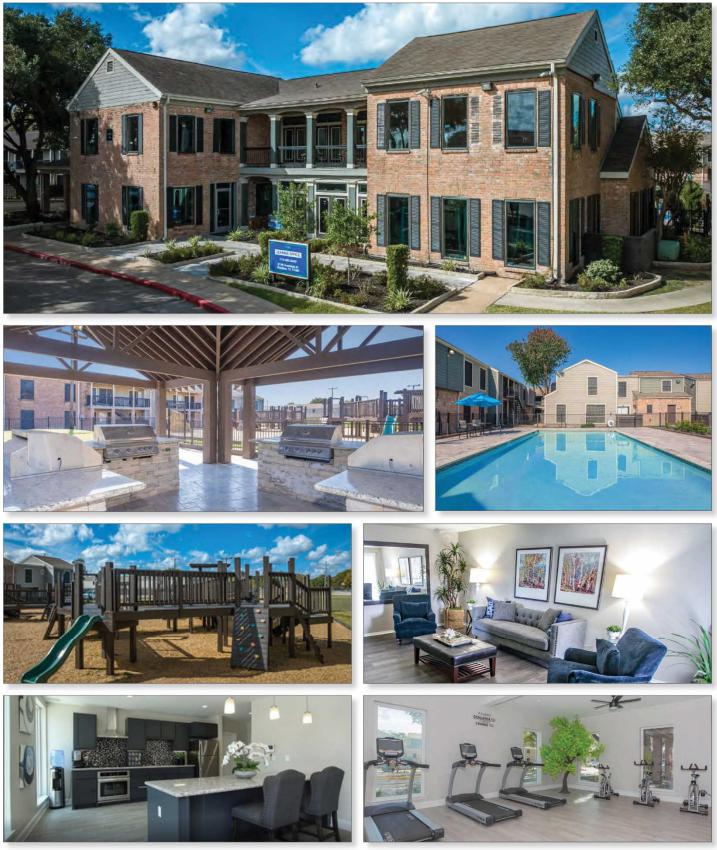
| A-3-29 |
| Multifamily - Garden | Loan #4 | Cut-off Date Balance: | $62,500,000 | |
| 3125 Crestdale Drive | Waterford Grove Apartments | Cut-off Date LTV: | 66.8% | |
| Houston, TX 77080 | UW NCF DSCR: | 1.54x | ||
| UW NOI Debt Yield: | 10.5% |
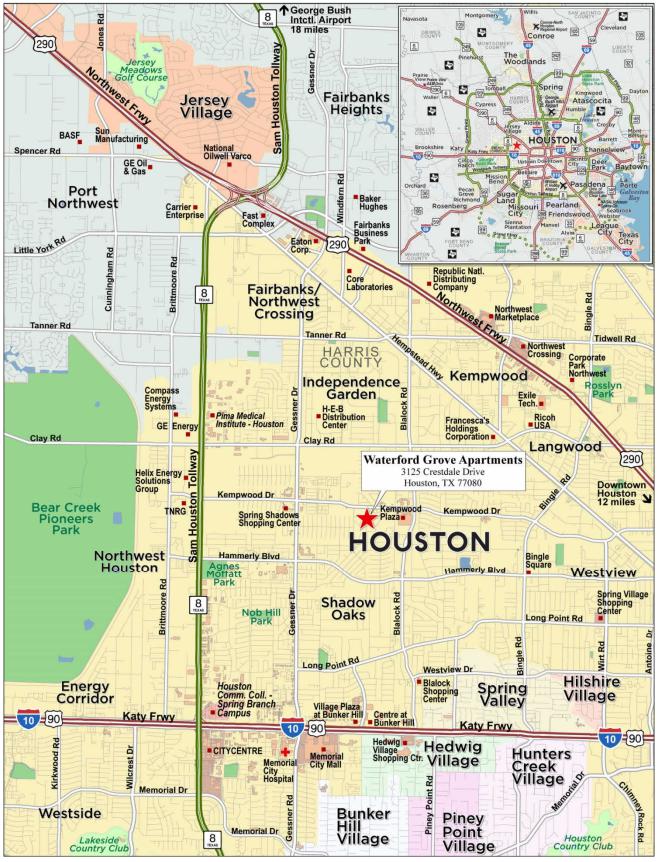
| A-3-30 |
| Mortgage Loan No. 4 – Waterford Grove Apartments |
| Mortgage Loan Information | Mortgaged Property Information | |||||
| Mortgage Loan Seller: | AREF2 | Single Asset/Portfolio: | Single Asset | |||
| Original Balance: | $62,500,000 | Location: | Houston, TX 77080 | |||
| Cut-off Date Balance: | $62,500,000 | General Property Type: | Multifamily | |||
| % of Initial Pool Balance: | 6.7% | Detailed Property Type: | Garden | |||
| Loan Purpose: | Refinance | Title Vesting(2): | Fee/Leasehold | |||
| Borrower Sponsors: | Timothy Bratz and Ash Shah | Year Built/Renovated: | 1973/2021-2024 | |||
| Guarantors: | Timothy Bratz and Ash Shah | Size: | 584 Units | |||
| Mortgage Rate: | 6.56700% | Cut-off Date Balance per Unit: | $107,021 | |||
| Note Date: | 2/14/2025 | Maturity Date Balance per Unit: | $107,021 | |||
| Maturity Date: | 3/6/2030 | Property Manager: | Q10 Property Advisors, LLC | |||
| Term to Maturity: | 60 months | Underwriting and Financial Information | ||||
| Amortization Term: | 0 months | UW NOI(3): | $6,554,781 | |||
| IO Period: | 60 months | UW NCF: | $6,408,781 | |||
| Seasoning: | 0 months | UW NOI Debt Yield: | 10.5% | |||
| Prepayment Provisions: | L(24),D(32),O(4) | UW NCF Debt Yield: | 10.3% | |||
| Lockbox/Cash Mgmt Status: | Soft/Springing | UW NOI Debt Yield at Maturity: | 10.5% | |||
| Additional Debt Type: | NAP | UW NCF DSCR: | 1.54x | |||
| Additional Debt Balance: | NAP | Most Recent NOI(3): | $4,215,803 (12/31/2024) | |||
| Future Debt Permitted (Type): | No (NAP) | 2nd Most Recent NOI: | $709,141 (12/31/2023) | |||
| 3rd Most Recent NOI: | $2,032,371 (12/31/2022) | |||||
| Reserves(1) | Most Recent Occupancy: | 88.7% (1/24/2025) | ||||
| Type | Initial | Monthly | Cap | 2nd Most Recent Occupancy: | 70.0% (12/31/2023) | |
| RE Tax: | $312,986 | $104,329 | NAP | 3rd Most Recent Occupancy: | 85.6% (12/31/2022) | |
| Insurance: | $166,691 | $55,564 | NAP | Appraised Value (as of)(4): | $93,500,000 (1/2/2025) | |
| Replacement Reserve: | $0 | $12,167 | NAP | Appraised Value per Unit: | $160,103 | |
| Deferred Maintenance: | $579,738 | $0 | NAP | Cut-off Date LTV Ratio(4): | 66.8% | |
| HFC Payments Subaccount: | $0 | Springing | NAP | Maturity Date LTV Ratio(4): | 66.8% | |
| Sources and Uses | ||||||
| Sources | Proceeds | % of Total | Uses | Proceeds | % of Total | |
| Mortgage Loan Amount: | $62,500,000 | 96.9% | Loan Payoff(5): | $58,941,441 | 91.4% | |
| Sponsor Equity: | $1,998,046 | 3.1% | Closing Costs(6): | $4,497,191 | 7.0% | |
| Reserves: | $1,059,415 | 1.6% | ||||
| Total Sources: | $64,498,046 | 100.0% | Total Uses: | $64,498,046 | 100.0% | |
| (1) | See “Escrows and Reserves” below for further discussion of reserve requirements. |
| (2) | The Waterford Grove Apartments Property (as defined below) is encumbered by a 99-year ground lease as part of the Housing Finance Corporation program (the “HFC Program”). The Waterford Grove Apartments Mortgage Loan (as defined below) is secured by the borrower’s leasehold interest and the Edcouch Housing Finance Corporation’s (“EHFC”) fee interest in the Waterford Grove Apartments Property. See “The Property” and “Ground Lease” below for further information. |
| (3) | The increase in UW NOI from Most Recent NOI is primarily due to the anticipated real estate tax savings related to the admission of the Waterford Grove Apartments Property into the HFC Program and an increase in occupancy from an average of 82.1% in the trailing 12-months endings December 31, 2024 to the occupancy as of January 24, 2025 of 88.7%. |
| (4) | The Appraised Value, Cut-off Date LTV Ratio and Maturity Date LTV Ratio are based on the “Hypothetical Market Value with Restricted Rents” value of the leasehold interest in the Waterford Grove Apartments Property, which assumes the Waterford Grove Apartments Property is encumbered by a ground lease as part of the HFC Program, whereby certain units at the Waterford Grove Apartments Property are restricted for rent to tenants whose income does not exceed specified percentages of the area median income and that the ongoing payments due in connection with being a part of the HFC Program are subordinate to the Waterford Grove Apartments Mortgage Loan. The market-based “As Is” appraised value as of January 2, 2025, which assumes no Tax Exemption (as defined below) is granted for the Waterford Grove Apartments Property, $81,100,000, which results in a Cut-off Date LTV Ratio and Maturity Date LTV Ratio of 77.1% and 77.1%, respectively. See “The Property” below for further information. |
| (5) | Loan Payoff includes $4,000,000 to repay an existing mezzanine loan. |
| (6) | Closing Costs include a $2,343,750 origination fee and approximately $540,000 in upfront fees and related legal costs associated with entering the HFC Program. |
The Mortgage Loan. The fourth largest mortgage loan (the “Waterford Grove Apartments Mortgage Loan”) is evidenced by a promissory note in the original principal balance of $62,500,000 and secured by the borrower’s leasehold interest and the HFC’s fee simple interest in a 584-unit garden-style multifamily property in Houston, Texas (the “Waterford Grove Apartments Property”).
The Borrower and the Borrower Sponsors. The borrower is Waterford Grove Leasehold, LLC, a single-purpose Delaware limited liability company. The borrower sponsors and non-recourse carveout guarantors are Timothy Bratz and Ash Shah. Timothy Bratz is the CEO and Founder of Legacy Wealth Holdings, a real estate investment firm based in Cleveland, Ohio that specializes in brokerage services, construction and development and property management. Legacy Wealth Holdings has transacted on over 6,000 rental units and its current portfolio consists of over 3,000 rental units valued at over $350 million. Ash Shah is the CEO of IMPEX Capital Group, a commercial real estate investment firm based in Houston, TX. IMPEX Capital Group owns and manages over $1.8 billion in various properties across the United States, including approximately $800 million in Texas.
The Property. The Waterford Grove Apartments Property is a 584-unit garden-style multifamily complex located in Houston, Texas approximately 14-miles northwest of downtown Houston. The Waterford Grove Apartments Property was constructed in 1973, most recently renovated between 2021 and 2024 and consists of 101 two-story apartment buildings and a two-story leasing office situated on a 27.11-acre site. The Waterford Grove Apartments Property offers amenities such as an event room with kitchen, two community pools, splash pad, grilling area, fitness center, dog park, outdoor soccer field and playground. Unit amenities include an appliance package consisting of an electric range/oven, refrigerator, garbage disposal, dishwasher and a
| A-3-31 |
| Multifamily - Garden | Loan #4 | Cut-off Date Balance: | $62,500,000 | |
| 3125 Crestdale Drive | Waterford Grove Apartments | Cut-off Date LTV: | 66.8% | |
| Houston, TX 77080 | UW NCF DSCR: | 1.54x | ||
| UW NOI Debt Yield: | 10.5% |
private patio or balcony. The unit mix includes 76 one-bedroom floorplans, 191 two-bedroom floorplans, 268 three-bedroom floorplans and 49 four-bedroom floorplans with a weighted average unit size of 1,209 square feet. Since acquiring the Waterford Grove Apartments Property in 2021, the borrower sponsors have invested approximately $6.1 million (approximately $10,500 per unit) in capital expenditure projects, including approximately $1.2 million on exterior work including updates to the plumbing, electrical and HVAC, and approximately $4.9 million on unit interiors including carpeting, paint, kitchen and bathroom refinishes and new appliances. The Waterford Grove Apartments Property features 1,000 surface parking spaces, resulting in a parking ratio of 1.71 spaces per unit.
After acquiring the Waterford Grove Apartments Property in 2021, the borrower sponsor replaced the prior property manager in May 2023, with a focus on increasing occupancy, improving tenant credit quality and evicting delinquent tenants. Occupancy of the Waterford Grove Apartments increased from an average of 85.6% in 2022 to the current occupancy of 88.7% as of January 24, 2025, and credit loss improved from 14.3% of rent in 2022 to 1.6% of rent in the trailing twelve-months ending December 2024.
The Waterford Grove Apartments Property unit mix is further summarized in the table below:
| Unit Mix(1) | |||||||
| Unit Mix / Type | Units | Occupied Units | % Occupied | Average SF per Unit | Total SF | Monthly Average Rent per Unit(2) | Monthly Average Market Rent per Unit(3) |
| One Bedroom | 76 | 69 | 90.8% | 678 | 51,533 | $958 | $966 |
| Two Bedroom | 191 | 172 | 90.1% | 1,051 | 200,714 | $1,258 | $1,284 |
| Three Bedroom | 268 | 237 | 88.4% | 1,400 | 375,150 | $1,488 | $1,501 |
| Four Bedroom | 49 | 40 | 81.6% | 1,600 | 78,400 | $1,763 | $1,767 |
| Total/Wtd. Avg. | 584 | 518 | 88.7% | 1,209 | 705,797 | $1,362 | $1,382 |
| (1) | Based on the underwritten rent roll dated January 24, 2025. |
| (2) | Monthly Average Rent per Unit is based on occupied units. |
| (3) | Source: Appraisal. |
Pursuant to the HFC Program, a property will be exempt from all property taxes (the “Tax Exemption”) if it meets certain conditions including, among other things, (i) a portion of the property is utilized for the purpose of affordable housing and (ii) the fee interest to the property is owned by the governing body overseeing the HFC Program and is leased back to the borrower under a ground lease. In order to receive the Tax Exemption, 292 of the 584 residential units at the Waterford Grove Apartments Property must be reserved for or rented to tenants whose household income is less than 80% of the area median family income (“AMI”), with a maximum monthly rent of 1/12th of 80% of the AMI multiplied by 30%. Additionally, 234 of the residential units (not including the 292 units reserved for households making less than 80% of AMI) at the Waterford Grove Apartments Property must be reserved for or rented to tenants whose household income is less than 140% of the AMI, with a maximum monthly rent of 1/12th of 140% of the AMI multiplied by 30%. The remaining 58 units will be market rate.
At origination, the borrower entered into a 99-year ground lease between EHFC, as ground lessor, and the borrower, as ground lessee (see “Ground Lease” below). The Waterford Grove Apartments Mortgage Loan is secured by the borrower’s leasehold interest and EHFC’s fee interest in the Waterford Grove Apartments Property. The appraisal concluded that the in-place rents at the Waterford Grove Apartments Property currently comply with the rent limits under the HFC Program documents.
Concurrent with the origination of the Waterford Grove Apartments Mortgage Loan, all necessary documentation for admission into the HFC Program was effectuated and as such, the Waterford Grove Apartments Property is part of the HFC Program managed by EHFC; however, the Tax Exemption has not yet been granted by the applicable central appraisal district. Once issued, the Tax Exemption is expected to be retroactive to the date fee ownership in the Waterford Grove Apartments Property was transferred by the borrower to EHFC (on or about February 14, 2025) and continues for the term of the related ground lease or until its earlier termination. No real estate taxes were underwritten due to entry into the HFC Program.
If (i) the Tax Exemption is not granted by February 14, 2026 or (ii) the HFC Program documents are terminated, the Tax Exemption is lost and/or the borrower otherwise surrenders the leasehold estate created by the ground lease with EHFC and the borrower acquires the fee interest in the Waterford Grove Apartments Property, the Waterford Grove Apartments Mortgage Loan documents require the borrower to partially prepay (in conjunction with the applicable payment of yield maintenance premium) the Waterford Grove Apartments Mortgage Loan within 30 days in the amount necessary for the Waterford Grove Apartments Property to satisfy both a debt service coverage ratio of 1.25x and a debt yield of 8.50% (the “EHFC Prepayment Amount”). The Waterford Grove Apartments Mortgage Loan documents provide recourse to the guarantor for the EHFC Prepayment Amount and any related prepayment penalty.
Counsel for the borrower issued a legal opinion for the benefit of the lender opining that the Waterford Grove Apartments Property (including both the fee and leasehold interest therein) more likely than not will be held by the Harris Central Appraisal District to be exempt from ad valorem taxation under the Texas Property Tax Code. Until the Tax Exemption is granted, the borrower is required to make monthly deposits into a real estate tax reserve.
The Market. The Waterford Grove Apartments Property is located in Houston, Texas approximately 14 miles northwest of downtown Houston. Primary access to the Waterford Grove Apartments Property is provided by Interstate 10, Beltway 8 and US Highway 290. The Waterford Grove Apartments Property is located within the Spring Branch Independent School District, a highly ranked school district in the state of Texas, with the Waterford Grove Apartments Property being located immediately adjacent to Northbrook High School and Spring Shadows Elementary School. Other demand drivers in the neighborhood include multiple grocery-anchored retail centers featuring an H-E-B, Aldi, Kroger, Dollar Tree and LA Fitness all located within approximately one mile of the Waterford Grove Apartments Property.
According to the appraisal, the 2024 estimated population within a one-, three- and five-mile radius of the Waterford Grove Apartments Property was 20,589, 126,423 and 293,731, respectively, and the 2024 estimated average median household income within the same radii was approximately $98,021, $97,321 and $123,447, respectively.
| A-3-32 |
| Multifamily - Garden | Loan #4 | Cut-off Date Balance: | $62,500,000 | |
| 3125 Crestdale Drive | Waterford Grove Apartments | Cut-off Date LTV: | 66.8% | |
| Houston, TX 77080 | UW NCF DSCR: | 1.54x | ||
| UW NOI Debt Yield: | 10.5% |
According to the appraisal, the Waterford Grove Apartments Property is located in the Spring Branch submarket within the Houston apartment market. As of the fourth quarter of 2024, the Spring Branch apartment submarket reported a total inventory of 23,366 units, with an occupancy rate of 89.1%. The asking rental rate in the submarket stood at $1,217 per unit, a decrease from $1,225 per unit as of the previous quarter. The appraisal concluded to market rents of $961-$971 for one-bedroom units, $1,181-$1,328 for two-bedroom units, $1,377-$1,585 for three-bedroom units and $1,767 for four-bedroom units.
The following table presents recent multifamily leasing data at comparable properties with respect to the Waterford Grove Apartments Property:
| Competitive Rental Properties Summary(1) | |||||
| Property Name/Location | Year Built/Renovated | # Units | Occupancy | Unit Mix | In-Place Monthly Rent per Unit |
|
Waterford Grove Apartments Houston, TX |
1973/2021-2024 | 584(2) | 88.7%(2) | 1BR | $958(2) |
| 2BR | $1,258(2) | ||||
| 3BR | $1,488(2) | ||||
| 4BR | $1,763(2) | ||||
|
3 Corners East Houston, TX |
1979/2019 | 327 | 94.0% | 1BR | $866-$1,041 |
| 2BR | $1,319-$1,444 | ||||
|
Hammerly Villa Houston, TX |
1972/2017 | 174 | 99.0% | 2BR | $1,100-$1,255 |
| 3BR | $1,370-$1,385 | ||||
|
Estates at Spring Branch Houston, TX |
1968/2015 | 275 | 95.0% | 1BR | $970 |
| 2BR | $970-$1,140 | ||||
| 3BR | $1,140-$1,520 | ||||
|
Gessner Park Houston, TX |
1972/1989 | 224 | 99.0% | 1BR | $879 |
| 2BR | $1,009-$1,059 | ||||
| 3BR | $1,159-$1,229 | ||||
| 4BR | $1,339 | ||||
|
Smart Living Heights Houston, TX |
2021/NAP | 240 | 96.0% | 1BR | $1,081-$1,442 |
| 2BR | $1,216-$1,669 | ||||
| 3BR | $1,351-$2,110 | ||||
|
55 Fifty at Northwest Crossing Houston, TX |
2021/NAP | 378 | 96.0% | 1BR | $1,135-$1,250 |
| 2BR | $1,287-$1,650 | ||||
|
Tara Hall Houston, TX |
1963/2017 | 166 | 95.0% | 1BR | $830 |
| 2BR | $970 | ||||
| 3BR | $1,152 | ||||
| (1) | Source: Appraisal, unless otherwise indicated. |
| (2) | Information is based on the underwritten rent roll dated January 24, 2025. |
| A-3-33 |
| Multifamily - Garden | Loan #4 | Cut-off Date Balance: | $62,500,000 | |
| 3125 Crestdale Drive | Waterford Grove Apartments | Cut-off Date LTV: | 66.8% | |
| Houston, TX 77080 | UW NCF DSCR: | 1.54x | ||
| UW NOI Debt Yield: | 10.5% |
Appraisal. The appraisal concluded to an “as-is” value for the Waterford Grove Apartments Property of $93,500,000 as of January 2, 2025.
Environmental Matters. According to the Phase I environmental site assessment dated January 13, 2025, there was no evidence of any recognized environmental conditions at the Waterford Grove Apartments Property.
Operating History and Underwritten Net Cash Flow. The following table presents certain information relating to the historical operating performance and Underwritten Net Cash Flow at the Waterford Grove Apartments Property:
| Cash Flow Analysis | |||||
| 2022 | 2023 | 2024 | UW | UW Per Unit | |
| Gross Potential Rent | $7,043,278 | $5,867,753 | $7,717,394 | $8,468,906 | $14,502 |
| Other Income(1) | $1,210,380 | $1,148,716 | $1,981,747 | $2,358,779 | $4,039 |
| Vacancy, Credit Loss & Concessions |
($1,207,641) |
($705,131) |
($469,609) |
($475,165) |
($814) |
| Effective Gross Income | $7,046,016 | $6,311,338 | $9,229,531 | $10,352,520 | $17,727 |
| Taxes | $1,048,528 | $1,137,438 | $1,192,329 | $0 | $0 |
| Insurance | $580,735 | $514,792 | $738,163 | $666,764 | $1,142 |
| Other Operating Expenses |
$3,384,382 |
$3,949,967 |
$3,083,237 |
$3,130,975 |
$5,361 |
| Total Operating Expenses | $5,013,645 | $5,602,197 | $5,013,729 | $3,797,739 | $6,503 |
| Net Operating Income(2) | $2,032,371 | $709,141 | $4,215,803 | $6,554,781 | $11,224 |
| Capital Expenditures |
$0 |
$0 |
$0 |
$146,000 |
$250 |
| Net Cash Flow | $2,032,371 | $709,141 | $4,215,803 | $6,408,781 | $10,974 |
| Occupancy %(3) | 85.6% | 70.0% | 82.1% | 83.1% | |
| NOI DSCR | 0.49x | 0.17x | 1.01x | 1.58x | |
| NCF DSCR | 0.49x | 0.17x | 1.01x | 1.54x | |
| NOI Debt Yield | 3.3% | 1.1% | 6.7% | 10.5% | |
| NCF Debt Yield | 3.3% | 1.1% | 6.7% | 10.3% | |
| (1) | Other Income is comprised of parking revenue, utility reimbursement and other miscellaneous fees. |
| (2) | The increase from 2023 Net Operating Income to UW Net Operating Income is primarily due to the switch in property management companies in early 2023. The increase from 2024 Net Operating Income to Underwritten Net Operating Income is primarily due to the anticipated real estate tax savings related to the admission of the Waterford Grove Apartments Property into the HFC Program and an increase in occupancy from 82.1% in the trailing 12-months ending December 31, 2024 to the occupancy as of January 24, 2025 of 88.7%. |
| (3) | Occupancy % represents the average physical occupancies over each respective year. UW Occupancy % represents underwritten economic occupancy. Underwritten physical occupancy is 88.7%. |
Escrows and Reserves.
At origination, the borrower deposited approximately (i) $312,986 into a real estate tax reserve, which is equal to three months of unabated taxes, (ii) $166,691 into an insurance reserve and (iii) $579,738 into a deferred maintenance reserve.
Real Estate Taxes – The loan documents require ongoing monthly deposits into the real estate tax reserve equal to 1/12th of the taxes (taking into account any Tax Exemption in effect with respect to the Waterford Grove Apartments Property) that the lender reasonably estimates will be payable over the next 12-month period (initially estimated to be approximately $104,329), provided that the borrower will not be required to make the monthly real estate tax deposit once the Tax Exemption has been formally granted by the central appraisal district and while it remains in effect.
Insurance – The loan documents require ongoing monthly deposits into the insurance reserve equal to 1/12th of the annual insurance premium that the lender reasonably estimates will be payable over the next 12-month period (initially estimated to be approximately $55,564).
Replacement Reserve – The loan documents require ongoing monthly deposits into the replacement reserve equal to approximately $12,167 ($250 per unit annually).
HFC Payments Reserves – The lender is required to maintain a subaccount (the “HFC Payments Subaccount”) as a reserve for the HFC Payments (as defined below). The borrower is not required to make monthly deposits in the HFC Payments Subaccount in respect of the HFC Payments so long as (i) no event of default has occurred and is continuing and (ii) the borrower delivers evidence reasonably acceptable to the lender that the HFC Payments due under the HFC Program documents are paid on or prior to the applicable due date in accordance with the HFC Program documents. To the extent deposits are required, the borrower is required to pay to the lender an amount that is estimated by the lender to be sufficient to pay the next monthly or annual installment of the HFC Payments due under the HFC Program documents, and the lender will transfer such amounts to the HFC Payments Subaccount. Provided that no event of default has occurred and is continuing, the lender will apply the funds in the HFC Payments Subaccount to payments of the HFC Payments required to be made by the borrower under the HFC Program documents.
Lockbox and Cash Management. The Waterford Grove Apartments Mortgage Loan is structured with a soft lockbox and springing cash management. The borrower is required to cause all rents received by the borrower or property manager to be deposited into such lockbox account within one business day of receipt. All amounts in the lockbox account are remitted daily to the borrower at any time other than during the continuance of a Cash Management Period (as defined below). Upon the occurrence and during the continuance of a Cash Management Period, all amounts are required to be remitted to a lender-controlled cash management account daily to be applied and disbursed in accordance with the Waterford Grove Apartments Mortgage Loan
| A-3-34 |
| Multifamily - Garden | Loan #4 | Cut-off Date Balance: | $62,500,000 | |
| 3125 Crestdale Drive | Waterford Grove Apartments | Cut-off Date LTV: | 66.8% | |
| Houston, TX 77080 | UW NCF DSCR: | 1.54x | ||
| UW NOI Debt Yield: | 10.5% |
documents. During the continuance of a Cash Management Period, all available cash remaining after the required applications and disbursements will be held in a lender-controlled subaccount.
A “Cash Management Period” will commence upon the earlier of the following:
| (i) | an event of default; |
| (ii) | the debt service coverage ratio falling below 1.15x as of the end of any calendar quarter; or |
| (iii) | the Tax Exemption has not been granted by February 14, 2026. |
A Cash Management Period will end upon the occurrence of the following:
| ● | with respect to clause (i) above, the cure of such event of default; |
| ● | with respect to clause (ii) above, upon the debt service coverage ratio being at least 1.20x for two consecutive calendar quarters; or |
| ● | with respect to clause (iii) above, the earlier to occur of the Tax Exemption being granted and confirmed by the applicable central appraisal district or the borrower making the EHFC Prepayment Amount. |
Release of Property. Not permitted.
Real Estate Substitution. Not permitted.
Subordinate and Mezzanine Indebtedness. None.
Future Subordinate or Mezzanine Indebtedness. Not permitted.
Letter of Credit. None.
Right of First Offer/Right of First Refusal. Pursuant to a Purchase Option and Right of First Refusal Agreement (the “Waterford Grove Apartments Purchase Option and ROFR Agreement”), at any time during the term of the related ground lease, upon 30 days’ notice to the borrower and each of its members, EHFC has the option to purchase the Waterford Grove Apartments Property in accordance with the terms and conditions of the Waterford Grove Apartments Purchase Option and ROFR Agreement. In addition, in the event the special member of the borrower and/or a certain investor member of the borrower (each, a “Waterford Grove Apartments Transferring Member”, and collectively, the “Waterford Grove Apartments Transferring Members”) propose to transfer the leasehold estate and/or the improvements of the Waterford Grove Apartments Property to an unaffiliated third party, EHFC has a right of first refusal to acquire the leasehold estate and/or the improvements of the Waterford Grove Apartments Property on the same terms and conditions as any offer by an unaffiliated third-party acceptable to the Waterford Grove Apartments Transferring Members (the "Waterford Grove Apartments Third-Party Offer"). EHFC must exercise its right of first refusal within 30 days following receipt of notice from a Waterford Grove Apartments Transferring Member of an acceptable Waterford Grove Apartments Third-Party Offer. See “Description of the Mortgage Pool—Tenant Issues—Purchase Options and Rights of First Refusal” in the prospectus.
Ground Lease. At origination, the borrower entered into a ground lease between EHFC, as ground lessor, and the borrower, as ground lessee. Pursuant to the ground lease, which is scheduled to terminate on February 29, 2124 with no extensions, the borrower is required to pay EHFC, among other amounts, as applicable, (i) an annual compliance fee of $125 per unit (the “Compliance Payment”) and (ii) an annual fee in an amount equal to 10% of the annual property tax savings (the “Savings Fee”, and together with the Compliance Payment, the “HFC Payments”) with the HFC Payments increasing by 3% per year. EHFC and the borrower entered into a subordination agreement agreeing that for so long as the Tax Exemption remains in effect, all HFC Payments payable under the ground lease will be paid from excess distributable cash, if any, after the payment of debt service payments in connection with the Waterford Grove Apartments Mortgage Loan and operating expenses due and owing. The lender has established a reserve for the HFC Payments, provided, that absent a continuing event of default under the Waterford Grove Apartments Mortgage Loan, there is no obligation to make deposits into the HFC Payments reserve unless the borrower fails to provide evidence of timely payment.
Terrorism Insurance. The loan documents require that the “all risk” insurance policy required to be maintained by the borrower provides coverage for terrorism in an amount equal to the full replacement cost of the Waterford Grove Apartments Property, as well as business interruption insurance, together with an extended period of indemnity of up to six months. See “Risk Factors—Risks Relating to the Mortgage Loans—Terrorism Insurance May Not Be Available for All Mortgaged Properties” in the prospectus.
| A-3-35 |
| Retail – Anchored | Loan #5 | Cut-off Date Balance: | $59,500,000 | |
| 501 Gateway Drive | Gateway Center North | Cut-off Date LTV: | 67.7% | |
| Brooklyn, NY 11239 | UW NCF DSCR: | 1.20x | ||
| UW NOI Debt Yield: | 8.5% |
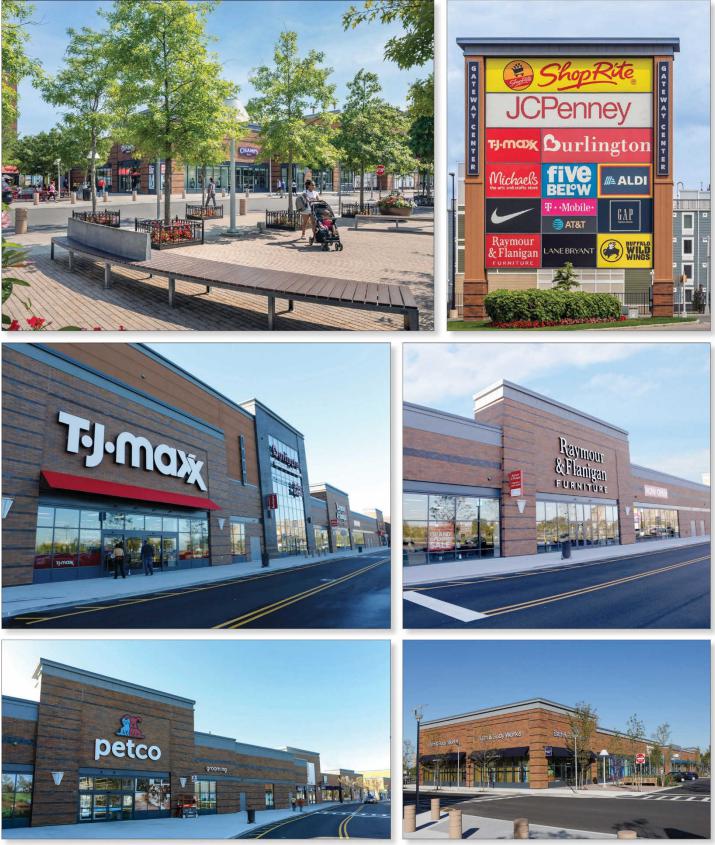
| A-3-36 |
| Retail – Anchored | Loan #5 | Cut-off Date Balance: | $59,500,000 | |
| 501 Gateway Drive | Gateway Center North | Cut-off Date LTV: | 67.7% | |
| Brooklyn, NY 11239 | UW NCF DSCR: | 1.20x | ||
| UW NOI Debt Yield: | 8.5% |
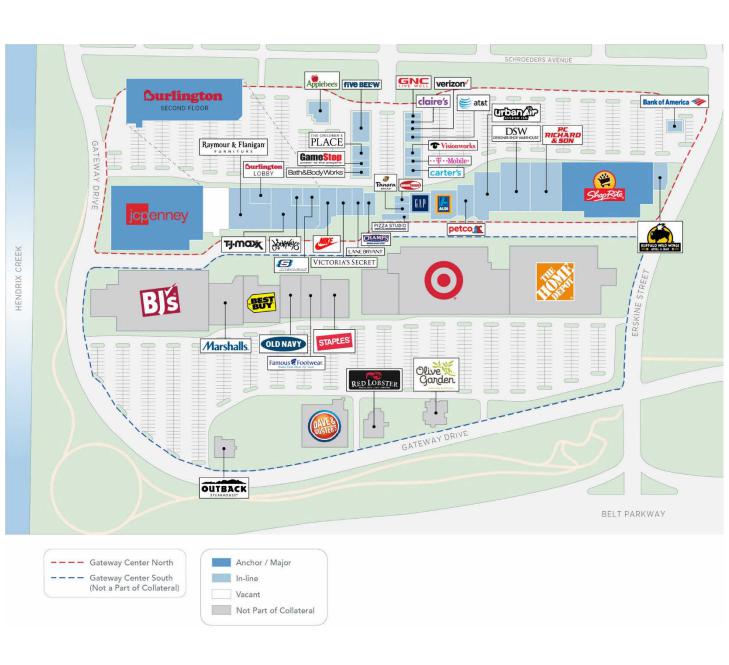
| A-3-37 |
| Retail – Anchored | Loan #5 | Cut-off Date Balance: | $59,500,000 | |
| 501 Gateway Drive | Gateway Center North | Cut-off Date LTV: | 67.7% | |
| Brooklyn, NY 11239 | UW NCF DSCR: | 1.20x | ||
| UW NOI Debt Yield: | 8.5% |
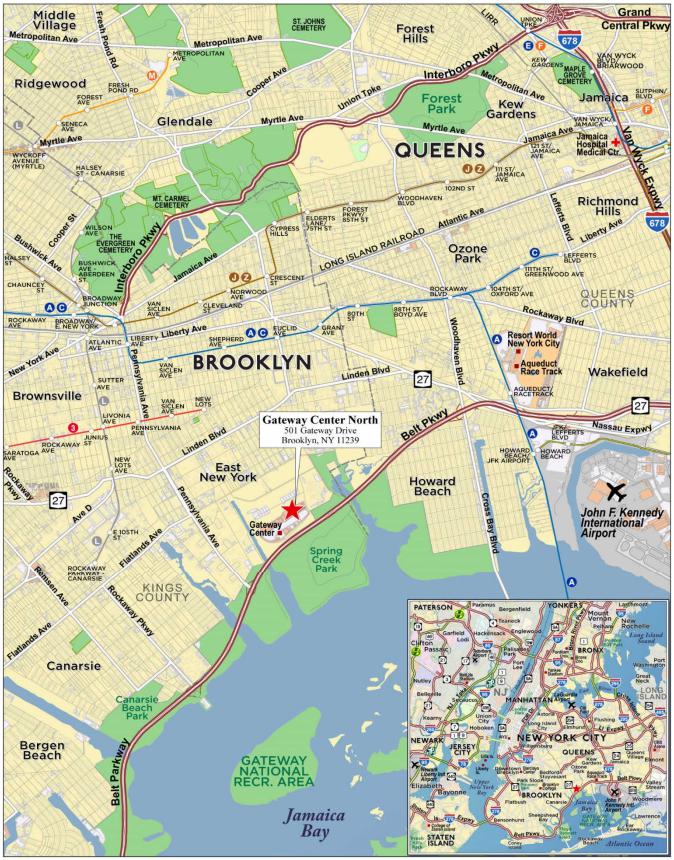
| A-3-38 |
| Mortgage Loan No. 5 – Gateway Center North |
| Mortgage Loan Information | Property Information | |||||
| Mortgage Loan Seller: | BANA | Single Asset/Portfolio: | Single Asset | |||
| Original Balance(1): | $59,500,000 | Location: | Brooklyn, NY 11239 | |||
| Cut-off Date Balance(1): | $59,500,000 | General Property Type: | Retail | |||
| % of Initial Pool Balance: | 6.4% | Detailed Property Type: | Anchored | |||
| Loan Purpose: | Refinance | Title Vesting: | Fee | |||
| Borrower Sponsor: | The Related Companies, L.P. | Year Built/Renovated: | 2014/NAP | |||
| Guarantor: | The Related Companies, L.P. | Size: | 601,212 SF | |||
| Mortgage Rate: | 6.8270% | Cut-off Date Balance PSF(1): | $499 | |||
| Note Date: | 10/22/2024 | Maturity Date Balance PSF(1): | $499 | |||
| Maturity Date: | 11/6/2029 | Property Manager: | Related Gateway Phase II, LLC | |||
| Original Term to Maturity: | 60 months | (borrower-related) | ||||
| Original Amortization Term: | 0 months | Underwriting and Financial Information | ||||
| IO Period: | 60 months | UW NOI: | $25,481,475 | |||
| Seasoning: | 4 months | UW NCF: | $24,931,003 | |||
| Prepayment Provisions(2): | L(23),YM1(5),DorYM1(25),O(7) | UW NOI Debt Yield(1): | 8.5% | |||
| Lockbox/Cash Mgmt Status: | Hard/Springing | UW NCF Debt Yield(1): | 8.3% | |||
| Additional Debt Type(1): | Pari Passu | UW NOI Debt Yield at Maturity(1): | 8.5% | |||
| Additional Debt Balance(1): | $240,500,000 | UW NCF DSCR(1): | 1.20x | |||
| Future Debt Permitted (Type): | No (NAP) | Most Recent NOI: | $25,542,737 (8/31/2024 TTM) | |||
| 2nd Most Recent NOI: | $24,988,506 (12/31/2023) | |||||
| 3rd Most Recent NOI: | $24,542,492 (12/31/2022) | |||||
| Reserves(3) | Most Recent Occupancy: | 96.3% (9/3/2024) | ||||
| Type | Initial | Monthly | Cap | 2nd Most Recent Occupancy: | 100.0% (12/31/2023) | |
| RE Taxes: | $0 | Springing | NAP | 3rd Most Recent Occupancy: | 99.6% (12/31/2022) | |
| Insurance: | $0 | Springing | NAP | Appraised Value (as of): | $443,000,000 (9/6/2024) | |
| Replacement Reserve: | $0 | Springing | $143,599 | Appraised Value PSF: | $737 | |
| TI/LC Reserve: | $0 | Springing | $957,344 | Cut-off Date LTV Ratio(1): | 67.7% | |
| Other Reserves(4): | $3,084,213 | $0 | NAP | Maturity Date LTV Ratio(1): | 67.7% | |
| Sources and Uses | ||||||
| Sources | Proceeds | % of Total | Uses | Proceeds | % of Total | |
| Whole Loan Amount: | $300,000,000 | 97.9% | Loan Payoff: | $301,105,790 | 98.2% | |
| Borrower Sponsor Equity: | $6,527,983 | 2.1% | Reserves: | $3,084,213 | 1.0% | |
| Closing Costs: | $2,337,979 | 0.8% | ||||
| Total Sources: | $306,527,983 | 100.0% | Total Uses: | $306,527,983 | 100.0% | |
| (1) | The Gateway Center North Mortgage Loan (as defined below) is part of the Gateway Center North Whole Loan (as defined below), which is evidenced by seven pari passu promissory notes with an aggregate principal balance of $300,000,000. The information presented is based on the aggregate principal balance of the promissory notes comprising the Gateway Center North Whole Loan. |
| (2) | Defeasance of the Gateway Center North Whole Loan is permitted at any time after the earlier to occur of (a) the end of the two-year period commencing on the closing date of the securitization of the last portion of the Gateway Center North Whole Loan to be securitized and (b) December 6, 2027. The assumed defeasance lockout period of 28 payments is based on the closing date of this transaction in March 2025. |
| (3) | See “Escrows and Reserves” below for further discussion information. |
| (4) | Other Reserves include upfront landlord obligations reserve of $1,353,710 and a gap rent reserve of $1,730,503 for the sixth largest tenant, Urban Air. |
The Mortgage Loan. The fifth largest mortgage loan (the “Gateway Center North Mortgage Loan”) is part of a whole loan (the “Gateway Center North Whole Loan”) that is evidenced by seven pari passu promissory notes in the aggregate original principal amount of $300,000,000 and secured by a first priority fee mortgage encumbering a 601,212 SF anchored retail center located in Brooklyn, New York (the “Gateway Center North Property”). The Gateway Center North Mortgage Loan is evidenced by the non-controlling Note A-2 with an original principal balance of $59,500,000. The remaining promissory notes comprising the Gateway Center North Whole Loan are summarized in the below table. The Gateway Center North Whole Loan is being serviced pursuant to the pooling and servicing agreement for the BANK5 2024-5YR11 securitization trust. The relationship between the holders of the Gateway Center North Whole Loan is governed by a co-lender agreement. See “Description of the Mortgage Pool—The Whole Loans—The Non-Serviced Pari Passu Whole Loans” and “Pooling and Servicing Agreement—Servicing of the Non-Serviced Mortgage Loans” in the prospectus.
| A-3-39 |
| Retail – Anchored | Loan #5 | Cut-off Date Balance: | $59,500,000 | |
| 501 Gateway Drive | Gateway Center North | Cut-off Date LTV: | 67.7% | |
| Brooklyn, NY 11239 | UW NCF DSCR: | 1.20x | ||
| UW NOI Debt Yield: | 8.5% |
| Gateway Center North Whole Loan Summary | ||||
Note |
Original Balance | Cut-off Date Balance | Note Holder | Controlling Note |
| A-1 | $77,000,000 | $77,000,000 | BANK5 2024-5YR11 | Yes |
| A-2 | $59,500,000 | $59,500,000 | MSBAM 2025-5C1 | No |
| A-3 | $53,500,000 | $53,500,000 | BANK5 2025-5YR13 | No |
| A-4 | $50,000,000 | $50,000,000 | BANK5 2024-5YR12 | No |
| A-5(1) | $25,000,000 | $25,000,000 | Bank of America, N.A. | No |
| A-6 | $20,000,000 | $20,000,000 | BANK5 2025-5YR13 | No |
| A-7 | $15,000,000 | $15,000,000 | BANK5 2024-5YR12 | No |
| Whole Loan | $300,000,000 | $300,000,000 | ||
| (1) | Expected to be contributed to one or more future securitization transactions or may otherwise be transferred at any time. |
The Borrower and the Borrower Sponsor. The borrower for the Gateway Center North Whole Loan is Gateway Center Properties Phase II Owner, LLC, a Delaware limited liability company and single purpose entity with two independent directors. The non-recourse carveout guarantor and borrower sponsor for the Gateway Center North Whole Loan is The Related Companies, L.P. (“Related”).
Founded in 1972, Related is a privately-owned, fully integrated global real estate and lifestyle company with experience in development, acquisition, management, finance, marketing and sales. Headquartered in New York City, Related has offices and major developments in Boston, Chicago, Los Angeles, San Francisco, Austin, West Palm Beach, Miami, Washington, D.C., Abu Dhabi and London, with a team of approximately 4,000 professionals. Related’s assets include the 28-acre Hudson Yards neighborhood on Manhattan’s West Side, The Square in Downtown West Palm Beach, The Grand LA, Related Santa Clara in California and The 78 in Chicago.
The Property. The Gateway Center North Property consists of a 601,212 SF anchored retail power center situated on 40.49 acres in Brooklyn, New York. The Gateway Center North Property is comprised of eight one- and two-story buildings and three pad sites. The Gateway Center North Property has a total of 1,542 parking spaces, resulting in a ratio of approximately 2.56 spaces per 1,000 SF. The Gateway Center North Property was constructed by the borrower sponsor in 2014 and is anchored by JCPenney, as the tenant under a ground lease, ShopRite, and Burlington Coat Factory, which account for 47.6% of the rentable area and 26.7% of the underwritten base rent. The Gateway Center North Property was the second phase expansion to Gateway Center South (not part of the collateral), which was originally developed and opened by the borrower sponsor in 2002, and is currently owned by the borrower sponsor. Gateway Center South is 100.0% leased and is anchored by BJ’s Wholesale Club, Home Depot, and Target, and together with the Gateway Center North Property, makes up Gateway Center, which serves as the primary retail location within the Brooklyn market.
The Gateway Center North Property has a granular rent roll, with no tenant contributing greater than 11.4% of the total underwritten rent. The top 10 tenants at the Gateway Center North Property represent 77.5% of total SF and generate 60.3% of total underwritten rent. There are six investment-grade rated tenants at the Gateway Center North Property representing 13.8% of underwritten rent. The Gateway Center North Property has averaged 99.0% occupancy since 2020. As of September 3, 2024, the Gateway Center North Property was 96.3% leased to 35 tenants.
Major Tenants.
JCPenney (122,473 SF, 20.4% of NRA, 4.7% of underwritten base rent). JCPenney was founded in Wyoming in 1902 and has been one of the United States’ largest retailers of apparel, home, jewelry and beauty merchandise, with a growing portfolio of national brands. JCPenney has more than 650 stores across the United States and Puerto Rico and employs more than 50,000 people worldwide. JCPenney has been wholly owned and operated by Brookfield Asset Management and Simon Property Group since emerging from Chapter 11 bankruptcy in 2020. JCPenney has been a tenant at the Gateway Center North Property since 2014. JCPenney is the tenant under a ground lease that has a current expiration of August 31, 2034, with eleven five-year renewal options remaining, and no termination options. JCPenney currently pays a base rent of $10.23 PSF, increasing to $11.05 PSF effective September 1, 2029. JCPenney reported sales of $146 PSF, $146 PSF, and $139 PSF in 2022, 2023 and TTM August 2024.
ShopRite (89,774 SF, 14.9% of NRA, 10.6% of underwritten base rent). ShopRite is a grocery chain owned by the parent company Wakefern Food Corporation. ShopRite started in the 1940’s, when eight mom-and-pop grocers came together to start Wakefern Food Corporation. ShopRite has grown into the largest cooperative in the United States and the largest employer in New Jersey. ShopRite operates 50 individually-owned and 365 affiliate-owned stores, all under its corporate and distribution arm, Wakefern Food Corporation, in nine states: Connecticut, Delaware, Maryland, New Jersey, New York, Pennsylvania, Massachusetts, New Hampshire and Rhode Island. ShopRite has been a tenant at the Gateway Center North Property since 2014. ShopRite operates under a lease that has a current expiration of October 31, 2034, with five five-year renewal options and one three year and eleven month renewal option. ShopRite currently pays a base rent of $31.48 PSF effective November 1, 2024. ShopRite is not required to report sales.
Burlington Coat Factory (73,864 SF, 12.3% of NRA, 11.4% of underwritten base rent). Burlington Coat Factory (S&P: BB+) started approximately 50 years ago as a business selling off-price coats out of a factory building. The company sells an assortment of low priced brand name ladies, men’s, and kids/baby apparel and accessories, home décor and various other products. Burlington Coat Factory operates more than 1,000 stores in 46 states and Puerto Rico, with its corporate headquarters located in Burlington Township, New Jersey. Burlington Coat Factory has been a tenant at the Gateway Center North Property since 2014 and currently has a lease expiration date of February 28, 2030, with three five-year renewal options. Burlington Coat Factory currently pays a base rent of $41.14 PSF and pays 3.0% of annual sales over a $31,281,404 ($424 PSF) sales breakpoint. Burlington Coat Factory reported sales of $419 PSF in 2022 and $427 PSF in 2023.
| A-3-40 |
| Retail – Anchored | Loan #5 | Cut-off Date Balance: | $59,500,000 | |
| 501 Gateway Drive | Gateway Center North | Cut-off Date LTV: | 67.7% | |
| Brooklyn, NY 11239 | UW NCF DSCR: | 1.20x | ||
| UW NOI Debt Yield: | 8.5% |
The following table presents sales information for certain tenants at the Gateway Center North Property:
| Tenant Sales(1) | |||||
| TTM August 2024 | |||||
| Tenant | SF | 2022 Sales(2) | 2023 Sales(2) | Sales | Sales PSF |
| JCPenney (Ground Lease) | 122,473 | $17,936,910 | $17,862,294 | $17,012,579 | $139 |
| Burlington Coat Factory | 73,864 | $30,930,333 | $31,525,577 | NAV | NAV |
| DSW Shoe Warehouse | 20,088 | $5,705,268 | $3,947,682 | NAV | NAV |
| Petco | 12,117 | $3,896,310 | $2,913,461 | NAV | NAV |
| Nike | 11,940 | $9,698,923 | $11,059,264 | $9,412,061 | $788 |
| Buffalo Wild Wings | 8,002 | $4,109,414 | $2,630,923 | NAV | NAV |
| Applebee's | 7,881 | $7,300,506 | $5,409,442 | NAV | NAV |
| Victoria's Secret | 7,401 | $2,218,993 | $4,475,645 | $4,137,535 | $559 |
| Lane Bryant | 5,909 | $2,022,821 | $1,917,178 | NAV | NAV |
| Panera Bread | 4,208 | $2,506,574 | $3,365,669 | NAV | NAV |
| Carter's Retail | 4,041 | $2,213,071 | $1,934,224 | $1,825,254 | $452 |
| Bath & Body Works | 3,502 | $5,895,523 | $5,887,539 | $5,962,095 | $1,702 |
| Smashburger | 2,155 | $3,180,694 | $3,240,034 | $3,030,106 | $1,406 |
| Davis Visionworks | 1,919 | $1,714,925 | $1,782,552 | NAV | NAV |
| Pizza Studio | 1,156 | $1,333,908 | $504,742 | NAV | NAV |
| (1) | Tenant Sales were provided by the borrower sponsor and represent all tenants that report sales data. |
| (2) | Shown as of December 31 of each respective year. |
| A-3-41 |
| Retail – Anchored | Loan #5 | Cut-off Date Balance: | $59,500,000 | |
| 501 Gateway Drive | Gateway Center North | Cut-off Date LTV: | 67.7% | |
| Brooklyn, NY 11239 | UW NCF DSCR: | 1.20x | ||
| UW NOI Debt Yield: | 8.5% |
The following table presents certain information relating to the tenancy at the Gateway Center North Property:
| Tenant Summary(1) | ||||||||||||
| August 2024 TTM Sales(3) | ||||||||||||
| Tenant Name | Credit Rating (Fitch/ Moody’s/ S&P)(2) | Tenant SF | % of Total SF | Annual UW Rent | %
of Total Annual UW Rent |
Annual UW Rent PSF | Sales $ | Sales PSF | Occ Cost | Lease Exp | Renewal Option | Term. Option |
| Anchor Tenants | ||||||||||||
| JCPenney (Ground Lease)(4) | NR/NR/NR | 122,473 | 20.4% | $1,253,465 | 4.7% | $10.23 | $17,012,579 | $139 | 7.4% | 8/31/2034 | 11 x 5 yr | None |
| ShopRite | NR/NR/NR | 89,774 | 14.9% | $2,826,086 | 10.6% | $31.48 | NAV | NAV | NAV | 10/31/2034 | (5) | None |
| Burlington Coat Factory | NR/NR/BB+ | 73,864 | 12.3% | $3,038,765 | 11.4% | $41.14 | $31,525,577 | $427 | 9.6% | 2/28/2030 | 3 x 5 yr | None |
| Anchor Tenants Subtotal/Wtd. Avg. |
286,111 |
47.6% |
$7,118,316 |
26.7% |
$24.88 |
|||||||
| Junior Anchors | ||||||||||||
| P.C. Richard & Son | NR/NR/NR | 33,593 | 5.6% | $1,274,854 | 4.8% | $37.95 | NAV | NAV | NAV | 1/31/2027 | (6) | None |
| T.J. Maxx | NR/A2/A | 32,960 | 5.5% | $1,595,264 | 6.0% | $48.40 | NAV | NAV | NAV | 8/31/2029 | 2 x 5 yr | None |
| Urban Air(7) | NR/NR/NR | 32,718 | 5.4% | $1,730,503 | 6.5% | $52.89 | NAV | NAV | NAV | 10/1/2034 | 2 x 5 yr | None |
| Raymour & Flanigan | NR/NR/NR | 31,479 | 5.2% | $1,752,121 | 6.6% | $55.66 | NAV | NAV | NAV | 7/31/2027 | 3 x 5 yr | None |
| DSW Shoe Warehouse | NR/NR/NR | 20,088 | 3.3% | $775,000 | 2.9% | $38.58 | $3,947,682 | $197 | 19.6% | 1/31/2030 | 1 x 5 yr | None |
| Aldi | NR/NR/NR | 16,859 | 2.8% | $925,650 | 3.5% | $54.91 | NAV | NAV | NAV | 11/30/2033 | 4 x 5 yr | None |
| Petco | NR/B3/B |
12,117 |
2.0% |
$911,198 |
3.4% |
$75.20 |
$2,913,461 | $240 | 31.3% | 9/30/2027 | 3 x 5 yr | None |
| Junior Anchors Subtotal/Wtd. Avg. | 179,814 | 29.9% | $8,964,591 | 33.6% | $49.85 | |||||||
| Other Tenants | 112,771 | 18.8% | $10,609,318 | 39.7% | $94.08 | |||||||
| Occupied Collateral Total / Wtd. Avg. |
578,696 |
96.3% |
$26,692,225 |
100.0% |
$46.12 |
|||||||
| Vacant Space |
22,516 |
3.7% |
||||||||||
| Total/Wtd. Avg. | 601,212 | 100.0% | ||||||||||
| (1) | Based on the underwritten rent roll dated September 3, 2024, inclusive of rent steps through October 2025. |
| (2) | Certain ratings are those of the parent company whether or not the parent guarantees the lease. |
| (3) | All sales information is based upon information provided by the borrower sponsor. In certain instances, sales figures represent estimates because the tenants are not required to report, or otherwise may not have reported, sales information on a timely basis. Further, because sales are self-reported by tenants, such information is not independently verified by the borrower sponsor. Sales information for Burlington Coat Factory, DSW Shoe Warehouse and Petco is as of year-end 2023. |
| (4) | JCPenney operates under a ground lease and owns its own improvements. |
| (5) | ShopRite has five five-year renewal options and one three-year and eleven month renewal option. |
| (6) | P.C. Richard & Son has 5 extension periods of 3 years for the first extension, 5 years for the second, third and fourth extensions, and 2 years for the fifth extension. |
| (7) | Urban Air executed its lease in October 2024 and is currently building out its space and is expected to commence rent payments in October 2025. All outstanding landlord obligations and gap rent for twelve months was reserved at origination. We cannot assure you that the tenant will take occupancy or commence paying rent. |
| A-3-42 |
| Retail – Anchored | Loan #5 | Cut-off Date Balance: | $59,500,000 | |
| 501 Gateway Drive | Gateway Center North | Cut-off Date LTV: | 67.7% | |
| Brooklyn, NY 11239 | UW NCF DSCR: | 1.20x | ||
| UW NOI Debt Yield: | 8.5% |
The following table presents certain information relating to the lease rollover schedule at the Gateway Center North Property:
| Lease Rollover Schedule(1)(2) | |||||||||
| Year | # of Leases Rolling | SF Rolling | Approx. % of SF Rolling | Approx. Cumulative % of SF Rolling | Total UW Rent Rolling | Approx. % of Total UW Rent Rolling | Approx. Cumulative % of Total UW Rent Rolling | UW Rent PSF Rolling | |
| MTM | 0 | 0 | 0.0% | 0.0% | $0 | 0.0% | 0.0% | $0.00 | |
| 2025 | 1 | 4,208 | 0.7% | 0.7% | $336,640 | 1.3% | 1.3% | $80.00 | |
| 2026 | 4 | 21,212 | 3.5% | 4.2% | $1,459,035 | 5.5% | 6.7% | $68.78 | |
| 2027 | 6 | 94,525 | 15.7% | 20.0% | $5,834,770 | 21.9% | 28.6% | $61.73 | |
| 2028 | 1 | 8,002 | 1.3% | 21.3% | $577,500 | 2.2% | 30.8% | $72.17 | |
| 2029(3) | 7 | 63,186 | 10.5% | 31.8% | $4,500,743 | 16.9% | 47.6% | $71.23 | |
| 2030 | 6 | 102,684 | 17.1% | 48.9% | $4,823,644 | 18.1% | 65.7% | $46.98 | |
| 2031 | 1 | 6,006 | 1.0% | 49.9% | $420,420 | 1.6% | 67.3% | $70.00 | |
| 2032 | 1 | 7,401 | 1.2% | 51.1% | $592,080 | 2.2% | 69.5% | $80.00 | |
| 2033 | 2 | 19,018 | 3.2% | 54.3% | $1,206,320 | 4.5% | 74.0% | $63.43 | |
| 2034 | 6 | 252,454 | 42.0% | 96.3% | $6,941,074 | 26.0% | 100.0% | $27.49 | |
| 2035 & Thereafter | 0 | 0 | 0.0% | 96.3% | $0 | 0.0% | 100.0% | $0.00 | |
| Vacant | 0 | 22,516 | 3.7% | 100.0% | $0 | 0.0% | 100.0% | $0.00 | |
| Total/Wtd. Avg. | 35 | 601,212 | 100.0% | $26,692,225 | 100.0% | $46.12 | (4) | ||
| (1) | Based on the underwritten rent roll dated September 3, 2024, inclusive of rent steps through October 2025. |
| (2) | Certain tenants may have lease termination options that are exercisable prior to the originally stated expiration date of the related lease and are not considered in the rollover schedule. |
| (3) | The Gateway Center North Mortgage Loan has a maturity date of November 6, 2029. |
| (4) | Wtd. Avg. UW Rent PSF Rolling excludes vacant space. |
The Market. The Gateway Center North Property is located in Brooklyn, New York, along Gateway Drive just north of the Belt Parkway, a major regional expressway. The Gateway Center North Property is visible from the Belt Parkway and is located five miles west of John F. Kennedy International Airport. The area surrounding the Gateway Center North Property is primarily residential, with commercial and industrial development serving the needs of the local population of over 525,000 residents.
The Gateway Center North Property is located in the New York retail market and the North Brooklyn submarket, which includes the neighborhoods of Greenpoint, Williamsburg, Park Slope, Crown Heights, and East New York. According to the appraisal, as of the second quarter of 2024, the New York retail market contains approximately 645.8 million SF of space and the North Brooklyn submarket contains approximately 51.3 million SF, or 7.94% of the total market’s inventory. As of the second quarter of 2024, the overall vacancy rate for the market was 4.03%, with asking rents of $47.56 PSF, and the North Brooklyn submarket had a vacancy rate of 3.05% with asking rents of $54.45 PSF.
According to the appraisal, the 2024 population within a 1-, 3- and 5-mile radius of the Gateway Center North Property was 40,386, 560,297 and 1,732,087, respectively. The 2024 average household income within the same radii was $66,933, $89,647 and $105,003, respectively.
The following table presents certain information relating to the appraisal’s market rent conclusion for the Gateway Center North Property:
| Market Rent Summary | |||
| Space Type | Market Rent PSF | Lease Term (Years) | Rent Increase Projection |
| Anchor | $40.00 | 10 | 10% Yr. 5 |
| Jr. Anchor | $50.00 | 10 | 10% Yr. 5 |
| In-Line (>10,000 SF) | $65.00 | 10 | 10% Yr. 5 |
| In-Line (5,000 - 10,000 SF) | $80.00 | 10 | 10% Yr. 5 |
| In-Line (<5,000 SF) | $125.00 | 10 | 10% Yr. 5 |
| Outparcel - Restaurant | $85.00 | 10 | 10% Yr. 5 |
| Outparcel - Bank | $200.00 | 10 | 10% Yr. 5 |
| A-3-43 |
| Retail – Anchored | Loan #5 | Cut-off Date Balance: | $59,500,000 | |
| 501 Gateway Drive | Gateway Center North | Cut-off Date LTV: | 67.7% | |
| Brooklyn, NY 11239 | UW NCF DSCR: | 1.20x | ||
| UW NOI Debt Yield: | 8.5% |
The following table presents information regarding certain competitive properties to the Gateway Center North Property:
| Competitive Retail Center Summary(1) | |||||
| Property Name/Location |
Year Built/ Renovated |
Total NRA (SF) | Total Occupancy | Distance to Subject | Major Tenants |
|
Gateway Center North 501 Gateway Drive Brooklyn, NY |
2014/NAP | 601,212(2) | 96.3%(2) | NAP | JCPenney, ShopRite, Burlington Coat Factory, P.C. Richard & Son, T.J.Maxx(2) |
|
Shops at Atlantic Center 625 Atlantic Ave Brooklyn, NY |
1996/NAP | 482,550 | 92.2% | 7.1 miles | Burlington, Marshalls, Old Navy, Stop & Shop |
|
Gateway Center South(3) 339-579 Gateway Dr Brooklyn, NY |
2001/NAP | 669,293 | 100.0% | 0.2 miles | The Home Depot, Target, BJ’s |
|
Kings Plaza Shopping Center 5100 Kings Plaza Brooklyn, NY |
1970/2018 | 1,146,000 | 100.0% | 5.0 miles | Burlington, Lowe’s, Macy’s |
|
Green Acres Mall 1150-2034 Green Acres Mall Valley Stream, NY |
1956/2016 | 2,042,000 | 95.8% | 8.6 miles | BJ’s, Macy’s, Walmart |
|
Five Towns Shopping Center 253-01 Rockaway Blvd Rosedale, NY |
1968/1990 | 408,096 | 99.0% | 8.2 miles | Lowe’s, Party City, T.J.Maxx |
|
The Shops at Atlas Park 8000 Cooper Ave Glendale, NY |
2006/NAP | 509,068 | 93.5% | 6.0 miles | Burlington, Marshalls, Old Navy, Stop & Shop |
| (1) | Source: Third party report, unless otherwise indicated. |
| (2) | Information is based on the underwritten rent roll dated September 3, 2024. |
| (3) | Gateway Center South is also owned by the borrower sponsor. |
Appraisal. The appraisal concluded to an “as-is” value for the Gateway Center North Property of $443,000,000 as of September 6, 2024.
Environmental Matters. According to the Phase I environmental site assessment dated September 19, 2024, there was no evidence of any recognized environmental conditions at the Gateway Center North Property.
| A-3-44 |
| Retail – Anchored | Loan #5 | Cut-off Date Balance: | $59,500,000 | |
| 501 Gateway Drive | Gateway Center North | Cut-off Date LTV: | 67.7% | |
| Brooklyn, NY 11239 | UW NCF DSCR: | 1.20x | ||
| UW NOI Debt Yield: | 8.5% |
Operating History and Underwritten Net Cash Flow. The following table presents certain information relating to the historical operating performance and underwritten net cash flow at the Gateway Center North Property:
| Cash Flow Analysis | ||||||||
| 2021 | 2022 | 2023 | 8/31/2024 TTM | UW | UW PSF | |||
| Base Rental Income(1) | $25,317,063 | $25,398,637 | $25,943,888 | $26,383,569 | $27,818,025 | $46.27 | ||
| Straight Line Rent(2) | $0 | $0 | $0 | $0 | $2,616 | $0.00 | ||
| Percentage Rent(3) | $436,246 | $290,290 | $86,412 | $109,523 | $57,476 | $0.10 | ||
| Expense Reimbursements | $7,853,283 | $8,161,537 | $8,203,391 | $8,325,205 | $8,614,796 | $14.33 | ||
| Deferred Rent Repay/Abatements |
($182,186) |
$0 |
$0 |
$0 |
|
$0 |
|
$0.00 |
| Net Rental Income | $33,424,407 | $33,850,465 | $34,233,691 | $34,818,297 | $36,492,912 | $60.70 | ||
| (Vacancy & Credit Loss) | $0 | $0 | $0 | $0 | ($1,470,739) | ($2.45) | ||
| Direct Billed Income | $299,728 | $187,180 | $226,992 | $242,864 | $198,320 | $0.33 | ||
| Other Income(4) |
$472,736 |
$441,596 |
$388,014 |
$390,231 |
|
$420,104 |
|
$0.70 |
| Effective Gross Income | $34,196,870 | $34,479,241 | $34,848,697 | $35,451,392 | $35,640,597 | $59.28 | ||
| Real Estate Taxes(5) | $3,882,864 | $4,046,170 | $4,035,096 | $4,049,038 | $4,186,595 | $6.96 | ||
| Insurance | $251,891 | $298,571 | $368,493 | $402,043 | $377,939 | $0.63 | ||
| Other Operating Expenses |
$6,195,429 |
$5,592,007 |
$5,456,601 |
$5,457,574 |
|
$5,594,587 |
|
$9.31 |
| Total Operating Expenses | $10,330,185 | $9,936,749 | $9,860,190 | $9,908,655 | $10,159,122 | $16.90 | ||
| Net Operating Income | $23,866,686 | $24,542,492 | $24,988,506 | $25,542,737 | $25,481,475 | $42.38 | ||
| Replacement Reserves | $0 | $0 | $0 | $0 | $71,801 | $0.12 | ||
| TI/LC |
$0 |
$0 |
$0 |
$0 |
|
$478,672 |
|
$0.80 |
| Net Cash Flow | $23,866,686 | $24,542,492 | $24,988,506 | $25,542,737 | $24,931,003 | $41.47 | ||
| Occupancy % | 100.0% | 99.6% | 100.0% | 96.3% | (6) | 94.7% | (7) | |
| NOI DSCR(8) | 1.15x | 1.18x | 1.20x | 1.23x | 1.23x | |||
| NCF DSCR(8) | 1.15x | 1.18x | 1.20x | 1.23x | 1.20x | |||
| NOI Debt Yield(8) | 8.0% | 8.2% | 8.3% | 8.5% | 8.5% | |||
| NCF Debt Yield(8) | 8.0% | 8.2% | 8.3% | 8.5% | 8.3% | |||
| (1) | Base Rental Income is based on the underwritten rent roll dated September 3, 2024, inclusive of rent steps through October 2025 and rent for Urban Air, which executed its lease in October 2024 and is expected to commence paying rent in October 2025. All outstanding landlord obligations and gap rent for twelve months was reserved at origination. We cannot assure you that the tenant will take occupancy or commence paying rent. |
| (2) | UW Straight Line Rent includes rent averaged over the loan term for T-Mobile and Bank of America. |
| (3) | UW Percentage Rent is based on the terms of applicable leases using TTM August 2024 sales figures. |
| (4) | Other income is based on the borrower sponsor’s budget and includes income from solar lease, storage income, late fees, vending income and other miscellaneous income. |
| (5) | The Gateway North Center Property currently benefits from a 25-year ICAP Tax Abatement, which has been in place since the 2015/2016 tax year and will continue through the 2040/2041 tax year. The tax abatement for the 2024/2025 tax year is approximately $8.0 million and the underwritten real estate taxes and expense reimbursements shown above are net of the abatement. |
| (6) | Represents occupancy per the underwritten rent roll dated September 3, 2024. |
| (7) | Based on the economic vacancy of 5.3%. |
| (8) | DSCRs and Debt Yields are based on the Gateway Center North Whole Loan. |
Escrows and Reserves. At origination, the borrower deposited into escrow (i) $1,353,710 for tenant improvement allowances and leasing commissions related to Urban Air and (ii) $1,730,503 for a gap rent reserve related to Urban Air.
Real Estate Taxes – During a Cash Sweep Event Period (as defined below), the borrower is required make monthly deposits equal to 1/12th of the annual estimated tax payments during the ensuing 12 months.
Insurance – During a Cash Sweep Event Period, the borrower is required to make monthly deposits equal to 1/12th of the annual estimated insurance premiums; however, provided no event of default is continuing, the borrower will not be required to make monthly deposits so long as the Gateway Center North Property is insured under a blanket policy and the borrower provides evidence of renewal and proof of payment of insurance premiums.
Replacement Reserve – During a Cash Sweep Event Period, the borrower is required to make monthly deposits of approximately $5,983 for capital expenditures, capped at approximately $143,599.
TI/LC Reserve – During a Cash Sweep Event Period, the borrower is required to make monthly deposits of approximately $39,889 for tenant improvements and leasing commissions, capped at $957,344.
Lockbox and Cash Management. The Gateway Center North Whole Loan is structured with a hard lockbox and springing cash management. The borrower is required to cause all tenants at the Gateway Center North Property to pay rents directly into the account controlled by the lender (the “Lockbox Account”), and to deposit any rents otherwise received by the borrower or property manager into such Lockbox Account within two business days after receipt. If a Cash Sweep Event Period is not in effect, all funds in the Lockbox Account will be swept daily to the borrower’s operating account. During a Cash Sweep Event Period, all funds deposited into the Lockbox Account are required to be swept each business day into a cash management account controlled by the lender to be applied and disbursed in accordance with the Gateway Center North Whole Loan documents.
| A-3-45 |
| Retail – Anchored | Loan #5 | Cut-off Date Balance: | $59,500,000 | |
| 501 Gateway Drive | Gateway Center North | Cut-off Date LTV: | 67.7% | |
| Brooklyn, NY 11239 | UW NCF DSCR: | 1.20x | ||
| UW NOI Debt Yield: | 8.5% |
A “Cash Sweep Event Period” will commence upon the occurrence of any of the following events:
| (i) | an event of default; |
| (ii) | the borrower filing for bankruptcy; or |
| (iii) | the net cash flow debt service coverage ratio (“NCF DSCR”) on the Gateway Center North Whole Loan being less than 1.10x, tested quarterly. |
A “Cash Sweep Event Period” will end upon:
| ● | with respect to clause (i) above, the cure of such event of default; |
| ● | with respect to clause (ii) above, the bankruptcy proceeding being discharged; or |
| ● | with respect to clause (iii) above, the NCF DSCR being greater than 1.10x for one calendar quarter. |
For purposes of the NCF DSCR test, the net cash flow is the difference between (A) the annualized amount of all operating income including (i) leases with rent commencing during the succeeding 12 months provided all rent abatements have been reserved by the lender and (ii) contractual rent escalations during the succeeding 12 months, and excluding disqualified leases and non-recurring revenue minus (B) actual costs and expenses paid for operations, maintenance and management for the trailing twelve months, adjusted for (i) known increases in taxes and insurance premiums, TI/LCs equal to $0.35 PSF (the “TI Deduction”) and capital expenditures equal to $0.10 PSF and (ii) excluding one-time expenses, extraordinary expenses, non-cash items, debt service and contributions to any reserve accounts. The TI Deduction will be reduced by 1/10th the positive difference of the amount deposited to the TI/LC reserve minus the amount disbursed (so long as the related tenant’s rent is included in operating income in clause (A) above). The NCF DSCR on the Gateway Center North Whole Loan at the time of loan origination was 1.20x.
Terrorism Insurance. The Gateway Center North Whole Loan documents require that the “all risk” insurance policy required to be maintained by the borrower provides coverage for terrorism in an amount equal to the full replacement cost of the property, as well as business interruption insurance covering no less than the 24-month period following the occurrence of a casualty event plus a 6-month extended period of indemnity (provided that if the Terrorism Risk Insurance Program Reauthorization Act of 2007 or a similar statute is not in effect, the borrower will not be obligated to pay terrorism insurance premiums in excess of two times the then-applicable annual premium for the property insurance coverage). The Gateway Center North Whole Loan documents allow Relsure Vermont Inc., a licensed captive insurance company (“RVI”), to provide terrorism coverage, so long as (i) the policy issued by RVI has (A) no aggregate limit, and (B) a deductible of no greater than $250,000, and (ii) certain conditions are satisfied, including that RVI obtains reinsurance with a cut through endorsement acceptable to the lender and the rating agencies from an insurance company meeting the rating requirements set forth in the related loan documents for the remaining portion of terrorism coverage not subject to the applicable federal backstop percentage, the Terrorism Risk Insurance Program Reauthorization Act of 2007 or a similar statute is in effect and except with respect to the $250,000 deductible permitted, those covered losses which are not reinsured by the federal government under the Terrorism Risk Insurance Program Reauthorization Act of 2007 and paid to RVI will be reinsured with a cut through endorsement acceptable to the lender and the rating agencies by insurance companies that are qualified insurers or maintain such higher rating as may be required by a rating agency, not to exceed “AA-” with S&P and “A2” with Moody’s. The related loan documents also allow the borrower to utilize a “Retention Amount” which is funded by RVI in addition to the required deductible for all losses, excluding wind and earthquake related losses, so long as (1) the retention amount is aggregated annually, (2) the retention amount remain prefunded at all times during the term of the Gateway Center North Whole Loan and (3) the borrower has submitted evidence satisfactory to the lender and rating agencies of such prefunded arrangement at the request of the lender or a rating agency. The “Retention Amount” is $5,000,000 aggregate deductible, subject to a $2,500,000 per occurrence deductible. See “Risk Factors—Risks Relating to the Mortgage Loans—Terrorism Insurance May Not Be Available for All Mortgaged Properties” in the prospectus.
| A-3-46 |
| Various | Loan #6 | Cut-off Date Balance: | $53,600,000 | |
| Various | Figueroa Tower & Residence Inn Costa Mesa | Cut-off Date LTV: | 60.9% | |
| Various, CA | UW NCF DSCR: | 2.08x | ||
| UW NOI Debt Yield: | 17.4% |

| A-3-47 |
| Various | Loan #6 | Cut-off Date Balance: | $53,600,000 | |
| Various | Figueroa Tower & Residence Inn Costa Mesa | Cut-off Date LTV: | 60.9% | |
| Various, CA | UW NCF DSCR: | 2.08x | ||
| UW NOI Debt Yield: | 17.4% |
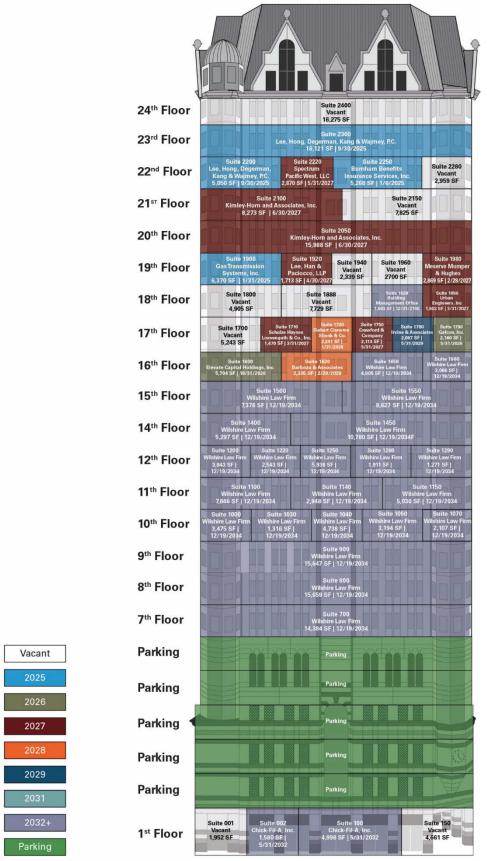
| A-3-48 |
| Various | Loan #6 | Cut-off Date Balance: | $53,600,000 | |
| Various | Figueroa Tower & Residence Inn Costa Mesa | Cut-off Date LTV: | 60.9% | |
| Various, CA | UW NCF DSCR: | 2.08x | ||
| UW NOI Debt Yield: | 17.4% |
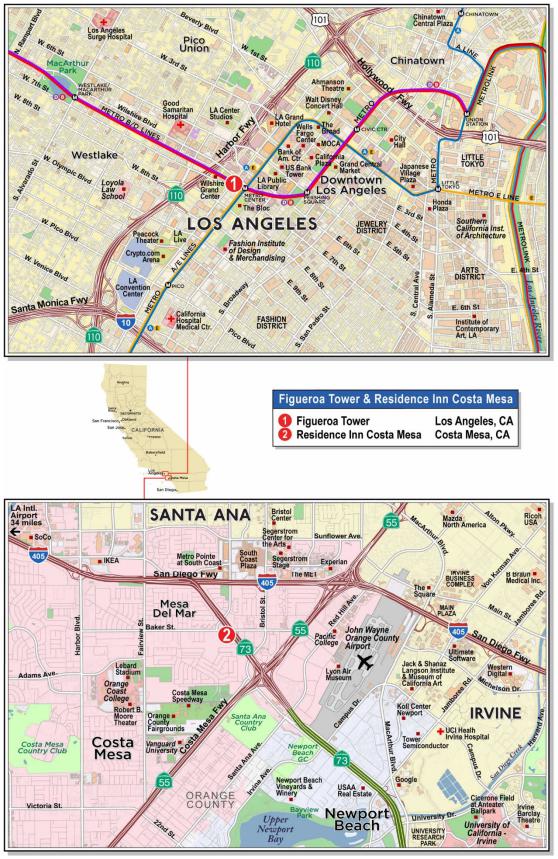
| A-3-49 |
| Mortgage Loan No. 6 – Figueroa Tower & Residence Inn Costa Mesa |
| Mortgage Loan Information | Mortgaged Property Information | |||||
| Mortgage Loan Seller: | AREF2 | Single Asset/Portfolio: | Portfolio | |||
| Original Balance: | $53,600,000 | Location: | Various, CA | |||
| Cut-off Date Balance: | $53,600,000 | General Property Type: | Various | |||
| % of Initial Pool Balance: | 5.7% | Detailed Property Type: | Various | |||
| Loan Purpose: | Acquisition | Title Vesting: | Fee | |||
| Borrower Sponsor: | Bobby B. Saadian | Year Built/Renovated: | Various | |||
| Guarantor: | Bobby B. Saadian | Size(3): | 370,931 SF | |||
| Mortgage Rate: | 7.5190% | Cut-off Date Balance per SF: | $145 | |||
| Note Date: | 12/20/2024 | Maturity Date Balance per SF: | $145 | |||
| Maturity Date: | 1/6/2030 | Property Manager(4): | Various | |||
| Term to Maturity: | 60 months | |||||
| Amortization Term: | 0 months | |||||
| IO Period: | 60 months | Underwriting and Financial Information | ||||
| Seasoning: | 2 months | UW NOI(5): | $9,324,146 | |||
| Prepayment Provisions: | L(26),D(27),O(7) | UW NCF: | $8,511,633 | |||
| Lockbox/Cash Mgmt Status: | Hard/Springing | UW NOI Debt Yield: | 17.4% | |||
| Additional Debt Type: | NAP | UW NCF Debt Yield: | 15.9% | |||
| Additional Debt Balance: | NAP | UW NOI Debt Yield at Maturity: | 17.4% | |||
| Future Debt Permitted (Type): | No (NAP) | UW NCF DSCR: | 2.08x | |||
| Most Recent NOI(5)(6): | $4,667,943 (Various) | |||||
| Reserves(1) | 2nd Most Recent NOI(5): | $4,937,779 (12/31/2023) | ||||
| Type | Initial | Monthly | Cap | 3rd Most Recent NOI: | $7,097,337 (12/31/2022) | |
| RE Tax: | $716,002 | $143,200 | NAP | Most Recent Occupancy(5)(7)(8): | 80.7% (Various) | |
| Insurance: | $58,040 | $29,020 | NAP | 2nd Most Recent Occupancy(5)(8): | 56.0% (12/31/2023) | |
| Replacement Reserve: | $0 | $5,882 | NAP | 3rd Most Recent Occupancy(8): | 57.8% (12/31/2022) | |
| TI/LC Reserve: | $0 | $23,528 | NAP | Appraised Value (as of)(9): | $88,000,000 (Various) | |
| PIP Reserve(2): | $2,000,000 | $235,025 | NAP | Appraised Value per SF: | $237 | |
| Free Rent Reserve: | $396,634 | $0 | NAP | Cut-off Date LTV Ratio: | 60.9% | |
| Outstanding TI/LC Reserve: | $6,550 | $0 | NAP | Maturity Date LTV Ratio: | 60.9% | |
| Sources and Uses | ||||||
| Sources | Proceeds | % of Total | Uses | Proceeds | % of Total | |
| Mortgage Loan Amount: | $53,600,000 | 61.9% | Purchase Price(10): | $83,499,974 | 96.5% | |
| Sponsor Equity: | $32,923,530 | 38.1% | Closing Costs: | $1,846,330 | 2.1% | |
| Reserves(2): | $1,177,226 | 1.4% | ||||
| Total Sources: | $86,523,530 | 100.0% | Total Uses: | $86,523,530 | 100.0% | |
| (1) | See “Escrows and Reserves” below for further discussion of reserve requirements. |
| (2) | The related borrower posted a $2,000,000 letter of credit at closing in lieu of a cash deposit for the upfront PIP Reserve. A $235,025 monthly PIP deposit is required from 2/6/2025 through 7/6/2025, after which, the PIP deposit becomes springing and will only be required if a new PIP is instituted. |
| (3) | The Residence Inn Costa Mesa Property (as defined below) is comprised of 144 rooms. |
| (4) | The Residence Inn Costa Mesa Property is managed pursuant to a management agreement with Residence Inn by Marriott, LLC that expires in December 2038. The Figueroa Tower Property (as defined below) is managed pursuant to a management agreement with Jones Lang Lasalle Americas, Inc. that expires in December 2025. |
| (5) | The increase in UW NOI from Most Recent NOI and the increase in Most Recent Occupancy from 2nd Most Recent Occupancy is primarily due to the lease with Wilshire Law Firm (54.9% of underwritten base rent and 46.6% of NRA for Figueroa Tower), a borrower-sponsor affiliated tenant, that commenced in December 2024. |
| (6) | Most Recent NOI is as of the trailing 12-month period ending July 31, 2024 and October 31, 2024 for the Figueroa Tower Property and the Residence Inn Costa Mesa Property, respectively. |
| (7) | Most Recent Occupancy is as of September 9, 2024 and October 31, 2024 for the Figueroa Tower Property and the Residence Inn Costa Mesa Property, respectively. |
| (8) | Occupancies represent a weighted average of the two properties based on square footage. |
| (9) | The As-Is Appraised Value is as of November 8, 2024 and November 12, 2024 for the Figueroa Tower Property ($48,500,000) and the Residence Inn Costa Mesa Property ($39,500,000), respectively. The appraisal concluded to an As-Stabilized appraised value of $47,000,000 as of November 1, 2026 for the Residence Inn Costa Mesa Property, which assumes the stabilization of the Residence Inn Costa Mesa Property after the completion of the property improvement plan. |
| (10) | The purchase prices for Figueroa Tower Property and Residence Inn Costa Mesa Property are $44 million and $39.5 million, respectively. |
The Mortgage Loan. The sixth largest mortgage loan (the “Figueroa Tower & Residence Inn Costa Mesa Mortgage Loan”) is evidenced by a promissory note in the original principal balance of $53,600,000 and secured by a first-priority fee mortgage encumbering a 282,331 square foot office property in Los Angeles, California (the “Figueroa Tower Property”) and a 144-room extended stay hospitality property in Costa Mesa, California (the “Residence Inn Costa Mesa Property”).
The Borrowers and the Borrower Sponsor. The borrowers are 660 Fig LLC and Ladera Linda, LLC, both single-purpose Delaware limited liability companies with one independent director. The borrower sponsor and the non-recourse carveout guarantor is Bobby B. Saadian. Bobby Saadian is the founding partner of Wilshire Law Firm, PLC, a law firm based in California. Bobby Saadian’s real estate portfolio is comprised of 10 properties with an estimated market value of $112 million, comprised of 7 multifamily properties in and around the Los Angeles market, a development property and two single-family rentals. Bobby Saadian’s real estate portfolio is operated by a separate family office known as Legacy Strata.
| A-3-50 |
| Various | Loan #6 | Cut-off Date Balance: | $53,600,000 | |
| Various | Figueroa Tower & Residence Inn Costa Mesa | Cut-off Date LTV: | 60.9% | |
| Various, CA | UW NCF DSCR: | 2.08x | ||
| UW NOI Debt Yield: | 17.4% |
The Properties. The Figueroa Tower Property is comprised of a 282,331 square foot Central Business District office tower and the Residence Inn Costa Mesa Property is comprised of a 144-room extended stay hotel.
The Figueroa Tower and Residence Inn Costa Mesa Properties are further summarized in the table below:
| Portfolio Summary | ||||||||
| Property Name / Location | Property Type | Year Built/ Renovated | Units | Allocated Mortgage Loan Cut-off Date Balance | Allocated Mortgage Loan Cut-off Date Balance Per Unit | As-Is Appraised Value(1) | Cut-off Date LTV | % of UW NOI |
| Figueroa Tower | Office / CBD | 1987/NAP | 282,331 SF | $27,600,000 | $98 | $48,500,000 | 56.9% | 60.2% |
| Los Angeles, CA | ||||||||
| Residence Inn Costa Mesa | Hospitality / Extended Stay |
1986/2016- 2020 |
144 Rooms | $26,000,000 | $180,556 | $39,500,000 | 65.8% | 39.8% |
| Costa Mesa, CA | ||||||||
| Total/Weighted Average | $53,600,000 | $88,000,000 | 60.9% | 100.0% | ||||
| (1) | The As-Is Appraised Value is as of November 8, 2024 and November 12, 2024 for the Figueroa Tower Property and Residence Inn Costa Mesa Property, respectively. The Residence Inn Costa Mesa Property has an As-Stabilized appraised value of $47,000,000 as of November 1, 2026 which assumes the stabilization of the Residence Inn Costa Mesa Property after the completion of the property improvement plan. |
Figueroa Tower Property. The Figueroa Tower Property is a 24-story, Class A, Central Business District office tower located in downtown Los Angeles directly above the 7th Street Metro Center Station (a regional rail facility). Originally constructed in 1987, the Figueroa Tower Property is comprised of 272,781 square feet of office space (96.6% of net rentable area), 4,998 square feet of retail space (1.8% of net rentable area) and 4,552 square feet of storage space (1.6% of net rentable area). The seller invested approximately $15.1 million into renovating the Figueroa Tower Property in the past 10 years, including tenant improvements, common area improvements, building systems, valet and construction of a sky lobby. The Figueroa Tower Property is served by a total of 11 elevators and features a 120-space, five-level parking garage resulting in a parking ratio of 0.43 space per 1,000 square feet of net rentable area.
As of September 9, 2024, the Figueroa Tower Property was 78.6% leased by 17 tenants. The largest tenant, Wilshire Law Firm (“Wilshire”) (46.6% of net rentable area and 54.9% of underwritten base rent), a borrower sponsor-affiliated entity, recently signed a 10-year lease that commenced in December 2024. The firm relocated its headquarters to the Figueroa Tower Property from another office property two miles away as it required more space due to an increase in employee count, while remaining in close proximity to courthouses, government agencies and other legal offices. Wilshire is leasing floors 7 through 16.
The following table presents certain information relating to the historical and current occupancy of the Figueroa Tower Property:
| Historical and Current Occupancy(1) | |||
| 2021(1) | 2022(1) | 2023(1) | Current(2) |
| 52.7% | 48.8% | 46.6% | 78.6% |
| (1) | Historical occupancies represent the occupancy as of December 31 for each respective year. |
| (2) | Current occupancy is as of September 9, 2024. |
Major Tenants.
Wilshire Law Firm (131,598 SF, 46.6% of NRA, 54.9% of underwritten base rent). Founded in 2007, Wilshire is a law firm specializing in personal injury, sexual abuse, employee rights and consumer class action. Wilshire has recovered more than $1 billion in damages for clients. Wilshire consists of over 650 team members and over 110 attorneys and reported income from operations and net income of $29.9 million and $31.8 million, respectively in 2023. Wilshire has been headquartered at the Figueroa Tower Property since December 2024, when it commenced a 10-year lease. Wilshire is affiliated with the borrower sponsor, who founded the law firm in 2007. Wilshire’s lease has no renewal or early termination options.
Kimley-Horn and Associates, Inc. (24,261 SF, 8.6% of NRA, 12.6% of underwritten base rent). Kimley-Horn and Associates, Inc. (“KHA”) is a North Carolina-based planning, surveying, engineering and design consulting firm serving a wide range of disciplines including transportation, aviation, land development, transit, urban planning, landscape architecture and water resources. KHA operates with over 8,000 staff across more than 120 offices in the United States. KHA has been a tenant at the Figueroa Tower Property since October 2012, when it signed a 14.75-year lease for 15,988 square feet of space. In December 2020, the tenant expanded its space at the Figueroa Tower Property, signing a lease for an additional 8,273 square feet of space with the same expiration date as its original lease of June 2027. The tenant has the one-time option to terminate its lease on the expansion premises (8,273 square feet), exercisable in December 2025 with 180 days’ prior written notice. KHA has one five-year renewal option remaining.
Lee, Hong, Degerman, Kang, & Waimey, P.C. (21,171 SF, 7.5% of NRA, 8.6% of underwritten base rent). Lee, Hong, Degerman, Kang, and Waimey, P.C. (“LHDK&W”) is a law firm practicing intellectual property, automative regulatory and litigation, international arbitration and dispute resolution, product liability, real estate transactions and more. LHDK&W originally took occupancy at the Figueroa Tower Property in June 2011, when it signed a lease for 5,050 square feet of space through September 2025. In June 2014, the tenant expanded its space by 16,121 square feet with an expiration in September 2025. The tenant has one, five-year renewal option remaining and no early termination options.
| A-3-51 |
| Various | Loan #6 | Cut-off Date Balance: | $53,600,000 | |
| Various | Figueroa Tower & Residence Inn Costa Mesa | Cut-off Date LTV: | 60.9% | |
| Various, CA | UW NCF DSCR: | 2.08x | ||
| UW NOI Debt Yield: | 17.4% |
The following table presents a summary regarding the tenants at the Figueroa Tower Property:
| Figueroa Tower Tenant Summary(1) | |||||||||
| Tenant Name | Credit Rating (Fitch/Moody’s/S&P)(2) | Tenant SF | Approx. % of SF | Annual UW Rent | % of Total Annual UW Rent | Annual UW Rent PSF | Lease Expiration | Term. Option (Y/N) | Renewal Options |
| Wilshire Law Firm(3) | NR/NR/NR | 131,598 | 46.6% | $4,737,528 | 54.9% | $36.00 | 12/19/2034 | N | None |
| Kimley-Horn and Associates, Inc.(4) | NR/NR/NR | 24,261 | 8.6% | $1,085,960 | 12.6% | $44.76 | 6/30/2027 | Y | 1 x 5 Yr |
| Lee, Hong, Degerman, Kang, & Waimey, P.C. | NR/NR/NR | 21,171 | 7.5% | $667,008 | 7.7% | $31.51 | 9/30/2025 | N | 1 x 5 Yr |
| Chick-Fil-A, Inc. | NR/NR/NR | 6,578 | 2.3% | $554,243 | 6.4% | $84.26 | 5/31/2032 | N | 3 x 5 Yr |
| Gas Transmissions Systems, Inc. | NR/NR/NR |
6,370 |
2.3% |
$276,922 |
3.2% |
$43.47 |
1/31/2025 | N | 1 x 5 Yr |
| Subtotal/Wtd. Avg. | 189,978 | 67.3% | $7,321,660 | 84.9% | $38.54 | ||||
| Other Tenants |
31,876 |
11.3% |
$1,306,001 |
15.1% |
$40.97 |
||||
| Total Occupied Space | 221,854 | 78.6% | $8,627,661 | 100.0% | $38.89 | ||||
| Vacant Space |
60,477 |
21.4% |
|||||||
| Total/Wtd. Avg. | 282,331 | 100.0% | |||||||
| (1) | Information is based on the underwritten rent roll dated September 9, 2024, inclusive of rent steps taken through October 2025. |
| (2) | Certain ratings are those of the parent company, whether or not the parent guarantees the lease. |
| (3) | The tenant is an affiliate of the borrower sponsor. |
| (4) | KHA has the option to terminate its lease for its expansion premises (8,273 square feet), exercisable in December 2025 with 180 days’ prior written notice. |
The following table presents certain information with respect to the lease rollover at the Figueroa Tower Property:
| Figueroa Tower Lease Rollover Schedule(1)(2) | ||||||||
| Year | # of Leases Rolling | SF Rolling | % of SF Rolling | Cumulative % of SF Rolling | Total UW Rent Rolling | % of Total UW Rent Rolling | Cumulative % of Total UW Rent Rolling | UW Rent PSF Rolling |
| MTM | 2 | 11,638 | 4.1% | 4.1% | $497,229 | 5.8% | 5.8% | $42.72 |
| 2025 | 1 | 21,171 | 7.5% | 11.6% | $667,008 | 7.7% | 13.5% | $31.51 |
| 2026 | 2 | 7,864 | 2.8% | 14.4% | $366,396 | 4.2% | 17.7% | $46.59 |
| 2027 | 6 | 34,229 | 12.1% | 26.5% | $1,502,035 | 17.4% | 35.2% | $43.88 |
| 2028 | 2 | 4,576 | 1.6% | 28.2% | $196,530 | 2.3% | 37.4% | $42.95 |
| 2029 | 1 | 2,697 | 1.0% | 29.1% | $106,692 | 1.2% | 38.7% | $39.56 |
| 2030(3) | 0 | 0 | 0.0% | 29.1% | $0 | 0.0% | 38.7% | $0.00 |
| 2031 | 0 | 0 | 0.0% | 29.1% | $0 | 0.0% | 38.7% | $0.00 |
| 2032 | 1 | 6,578 | 2.3% | 31.4% | $554,243 | 6.4% | 45.1% | $84.26 |
| 2033 | 0 | 0 | 0.0% | 31.4% | $0 | 0.0% | 45.1% | $0.00 |
| 2034 | 1 | 131,598 | 46.6% | 78.0% | $4,737,528 | 54.9% | 100.0% | $36.00 |
| 2035 | 0 | 0 | 0.0% | 78.0% | $0 | 0.0% | 100.0% | $0.00 |
| 2036 & Thereafter | 1 | 1,503 | 0.5% | 78.6% | $0 | 0.0% | 100.0% | $0.00 |
| Vacant | 0 | 60,477 | 21.4% | 100.0% | $0 | 0.0% | 100.0% | $0.00 |
| Total/Wtd. Avg. | 17 | 282,331 | 100.0% | $8,627,661 | 100.0% | $38.89(4) | ||
| (1) | Information is based on the underwritten rent roll dated September 9, 2024, inclusive of rent steps taken through October 2025. |
| (2) | Certain tenants may have lease termination options that are exercisable prior to the originally stated expiration date of the subject lease and that are not considered in the Lease Rollover Schedule. |
| (3) | The Figueroa Tower & Residence Inn Costa Mesa Mortgage Loan has a maturity date of January 6, 2030. |
| (4) | Total/Wtd. Avg. UW Rent PSF Rolling excludes vacant space. |
Residence Inn Costa Mesa Property. The Residence Inn Costa Mesa Property is a 144-room extended stay hotel located in Costa Mesa, California and was originally constructed in 1986. From 2016 through 2020, approximately $4.4 million was spent on renovations, including guest rooms upgrades in 2016 and common area / gatehouse renovations in 2020. The Residence Inn Costa Mesa Property is comprised of 19 two-story buildings with guest rooms accessed via exterior entry. Each guest room includes a flat screen TV with cable/satellite, hairdryer, microwave, electric stovetop, refrigerator, dishwasher, ironing board, and a coffee/tea maker. Amenities include an outdoor pool, hot tub, fitness center, sundries shop, meeting space, complimentary breakfast, basketball court, guest laundry and dry-cleaning service, and business center. The Residence Inn Costa Mesa Property features 146 surface parking spaces, resulting in a parking ratio of 1.01 spaces per room. Demand segmentation consists of approximately 49% commercial, 36% leisure, and 15% meeting and group. The commercial segment draws demand from nearby employers such as the University of California, Irvine, EPL Intermediate, Inc., Experian Information Solutions, Inc., and Deloitte, while benefitting from close proximity to John Wayne Airport, which is located approximately three miles from the Residence Inn Costa Mesa Property.
| A-3-52 |
| Various | Loan #6 | Cut-off Date Balance: | $53,600,000 | |
| Various | Figueroa Tower & Residence Inn Costa Mesa | Cut-off Date LTV: | 60.9% | |
| Various, CA | UW NCF DSCR: | 2.08x | ||
| UW NOI Debt Yield: | 17.4% |
The Residence Inn Costa Mesa Property is expected to undergo a $3,554,680 ($24,685 per room) Property Improvement Plan (“PIP”) that will cover architectural and façade work, parking, landscaping, outdoor furniture, upgrades to the pool and fitness center, guestroom upgrades, bathroom upgrades, and painting. At origination, the related borrower posted a $2.0 million letter of credit for an upfront PIP Reserve and is also required to deposit $235,025 monthly into the PIP Reserve for the first six months of the loan term. Additionally, as required in the Management Agreement (as defined below) the Manager (as defined below) collects an ongoing FF&E Reserve equal to 5.0% of gross revenues. As of origination, the balance in the FF&E reserve held by the Manager was approximately $900,000. The Figueroa Tower & Residence Inn Costa Mesa Mortgage Loan documents require the PIP to be completed by June 30, 2026 and the borrower sponsor provided a completion guaranty for the PIP. The Residence Inn Costa Mesa Property is encumbered by a management agreement (the “Management Agreement”) with Residence Inn by Marriott, LLC (the “Manager”) that expires in December 2038.
The following table presents certain information relating to the historical performance of the Residence Inn Costa Mesa Property:
| Historical Occupancy, ADR, RevPAR(1) | |||||||||
| Residence Inn Costa Mesa | Competitive Set(2) | Penetration Factor | |||||||
| Year | Occupancy | ADR | RevPAR | Occupancy | ADR | RevPAR | Occupancy | ADR | RevPAR |
| 2021 | 80.6% | $149.13 | $120.15 | 58.5% | $113.83 | $66.61 | 137.7% | 131.0% | 180.4% |
| 2022 | 86.6% | $185.53 | $160.62 | 70.7% | $139.16 | $98.40 | 122.4% | 133.3% | 163.2% |
| 2023 | 85.8% | $190.93 | $163.77 | 72.9% | $147.45 | $107.45 | 117.7% | 129.5% | 152.4% |
| 9/30/2024 TTM | 86.8% | $188.67 | $163.67 | 71.7% | $146.74 | $105.22 | 121.0% | 128.6% | 155.6% |
| (1) | Information obtained from industry reports dated September 2024, December 2023, December 2022, and December 2021. |
| (2) | The competitive set includes Crowne Plaza Costa Mesa Orange County, Sonesta Simply Suites Orange County Irvine East, Embassy Suites by Hilton Irvine Orange County Airport, Hilton Orange County Costa Mesa and Extended Stay America Orange County - John Wayne Airport. |
The Markets.
The Figueroa Tower Property. The Figueroa Tower Property is located in downtown Los Angeles on the corner of South Figueroa Street and West 7th Street. Direct access to the Figueroa Tower Property is provided by the Harbor Freeway (Interstate 110), located two blocks away. The 7th Street/Metro Center rail station serving the Red, Purple, Blue and Expo Metro Lines is located directly underneath the Figueroa Tower Property. The Figueroa Tower Property is located within walking distance to multiple major venues such as Crypto.com Arena, LA Live, Fig at 7th, and The Bloc. Additionally, the Figueroa Tower Property is located across the street from the $1.2 billion development of the Wilshire Grand Ballroom, the tallest building in the western United States featuring approximately 67,000 square feet of retail space, 677,000 square feet of office space, and an 889-room hotel.
According to the appraisal, the 2024 estimated population within a one-, three- and five-mile radius of the Figueroa Tower Property was 94,854, 525,502, and 1,189,696, respectively; and the 2024 estimated average household income within the same radii was approximately $95,702, $84,768, and $93,183, respectively.
According to the appraisal, the Figueroa Tower Property is located in the Downtown Los Angeles office submarket within the Los Angeles office market. As of the third quarter of 2024, the Los Angeles office market reported a total inventory of approximately 466.7 million SF, an approximately 15.9% vacancy rate, and an average asking rent of $40.74 per square foot. As of the third quarter of 2024, the Downtown Los Angeles office submarket reported a total inventory of approximately 71.5 million SF with an approximately 21.6% vacancy rate, and an average asking rent of $36.23 PSF.
The following table presents certain information relating to the appraisal’s market rent conclusion for the Figueroa Tower Property:
| Figueroa Tower Market Rent Summary(1) | |||
| Office | Retail | Storage | |
| Property SF(2) | 272,781 | 4,998 | 4,552 |
| Market Rent (PSF) | $39.00 | $60.00 | $18.00 |
| Lease Term (Years) | 7 | 10 | 1 |
| Lease Type (Reimbursements) | FSG | NNN | Gross |
| Rent Increase Projection (per Year) | 3% | 3% | N/A |
| New Tenant Improvements (PSF) | $25.00 | $100.00 | N/A |
| Renewal Tenant Improvements (PSF) | $15.00 | $50.00 | N/A |
| (1) | Source: Appraisal, unless otherwise indicated. | |
| (2) | Based on the underwritten rent roll dated September 9, 2024. |
| A-3-53 |
| Various | Loan #6 | Cut-off Date Balance: | $53,600,000 | |
| Various | Figueroa Tower & Residence Inn Costa Mesa | Cut-off Date LTV: | 60.9% | |
| Various, CA | UW NCF DSCR: | 2.08x | ||
| UW NOI Debt Yield: | 17.4% |
The following table presents recent leasing data at comparable office properties with respect to the Figueroa Tower Property:
| Comparable Office Leases(1) | |||||||
| Property Name/Location | Year Built/ Renovated | Total GLA (SF) | Tenant | Tenant Size (SF) | Lease Start Date | Lease Term (months) | Annual Base Rent PSF |
|
Figueroa Tower Los Angeles, CA |
1987/NAP | 282,331(2) | Wilshire Law Firm | 131,598(2) | Dec-24(2) | 120(2) | $36.00(2) |
|
800 Wilshire Boulevard Los Angeles, CA |
1972/2008 | 220,767 | Bespoke Treatment | 1,414 | May-24 | 65 | $35.40 |
|
600 Wilshire Boulevard Los Angeles, CA |
1980/2003 | 314,494 | Local Initiatives | 2,337 | Oct-24 | 40 | $34.20 |
|
888 S Figueroa Los Angeles, CA |
1985/NAP | 403,424 | Pathways LA | 16,888 | May-24 | 91 | $36.00 |
|
The Bloc Los Angeles, CA |
1973/NAP | 721,693 | Rodenbeck | 5,460 | Nov-24 | 66 | $43.80 |
|
801 South Grand Los Angeles, CA |
1986/2014 | 215,097 | REDF | 2,421 | Aug-23 | 42 | $39.00 |
| (1) | Source: Appraisal, unless otherwise indicated. |
| (2) | Information is based on the underwritten rent roll dated September 9, 2024. |
The Residence Inn Costa Mesa Property. The Residence Inn Costa Mesa Property is located in Costa Mesa, California within Orange County. Costa Mesa is bordered by Newport Beach to the south, Huntington Beach to the west, Irvine to the east, and Santa Ana to the north, positioning it approximately 40 miles south of Los Angeles and 90 miles north of San Diego. Primary access to the Residence Inn Costa Mesa Property is provided by the San Diego Freeway (Interstate 405) and the Costa Mesa Freeway (California 55). The Residence Inn Costa Mesa Property benefits from its proximity to leisure attractions including beaches, the Orange County Fairgrounds, Disneyland and Segerstrom Center for the Performing Arts. Other demand drivers nearby include the University of California, Irvine (three miles away), Chapman University (seven miles away), John Wayne Airport (three miles away), and South Coast Plaza (1.3 miles away), the largest shopping center on the West Coast of the United States. According to the appraisal, there are no proposed hotels anticipated to enter the immediate area that are considered to be competitive with the Residence Inn Costa Mesa Property. While a moderate amount of other new supply is expected to enter the overall surrounding area over the next several years, most of the proposed new supply is considered speculative and consists of properties that are not anticipated to directly compete with the Residence Inn Costa Mesa Property.
Appraisal. The appraisal concluded to an “as-is” value for the Figueroa Tower Property of $48,500,000 as of November 8, 2024 and an “as-is” value for the Residence Inn Costa Mesa Property of $39,500,000 as of November 12, 2024. The appraisal concluded to an “as-stabilized” appraised value of $47,000,000 as of November 1, 2026 for the Residence Inn Costa Mesa Property which assumes the stabilization of the Residence Inn Costa Mesa Property after the completion of the property improvement plan.
Environmental Matters. According to the Phase I environmental site assessment dated October 2, 2024, there was no evidence of any recognized environmental conditions at the Figueroa Tower Property. According to the Phase I environmental site assessment dated November 8, 2024, there was no evidence of any recognized environmental conditions at the Residence Inn Costa Mesa Property.
| A-3-54 |
| Various | Loan #6 | Cut-off Date Balance: | $53,600,000 | |
| Various | Figueroa Tower & Residence Inn Costa Mesa | Cut-off Date LTV: | 60.9% | |
| Various, CA | UW NCF DSCR: | 2.08x | ||
| UW NOI Debt Yield: | 17.4% |
Operating History and Underwritten Net Cash Flow. The following table presents certain information relating to the historical operating performance and underwritten net cash flow at the Figueroa Tower & Residence Inn Costa Mesa Property:
| Portfolio Cash Flow Analysis | ||||||
| 2021 | 2022 | 2023 | TTM(1) | UW | UW PSF | |
| Room Revenue | $6,314,986 | $8,442,344 | $8,607,763 | $8,671,215 | $8,647,523 | $23.31 |
| Other Hotel Revenue | $271,248 | $379,638 | $481,249 | $545,951 | $544,459 | $1.47 |
| Commercial Revenue(2) | $6,026,154 | $6,894,635 | $5,124,066 | $4,900,016 | $11,855,956 | $31.96 |
| Vacancy/Credit Loss |
($229,213) |
($107,538) |
($123,567) |
($105,533) |
($2,399,700) |
($6.47) |
| Total Revenue | $12,383,175 | $15,609,079 | $14,089,511 | $14,011,649 | $18,648,238 | $50.27 |
| Management Fee | $621,781 | $830,023 | $824,230 | $800,729 | $1,019,965 | $2.75 |
| Real Estate Taxes | $1,475,571 | $1,436,087 | $1,567,259 | $1,700,150 | $1,069,435 | $2.88 |
| Insurance | $328,847 | $380,184 | $577,320 | $577,385 | $348,240 | $0.94 |
| Rooms Expense | $1,236,943 | $1,565,879 | $1,742,473 | $1,838,075 | $1,833,053 | $4.94 |
| Other Hotel Expense | $1,581,527 | $2,021,365 | $2,092,584 | $2,248,223 | $2,282,483 | $6.15 |
| Other Commercial Expenses |
$2,521,967 |
$2,278,203 |
$2,347,866 |
$2,179,143 |
$2,770,915 |
$7.47 |
| Total Expenses | $7,766,636 | $8,511,742 | $9,151,732 | $9,343,706 | $9,324,093 | $25.14 |
| Net Operating Income(3) | $4,616,540 | $7,097,337 | $4,937,779 | $4,667,943 | $9,324,146 | $25.14 |
| FF&E | $0 | $0 | $0 | $460,858 | $459,599 | $1.24 |
| TI/LC | $0 | $0 | $0 | $0 | $282,331 | $0.76 |
| Capital Expenditures |
$0 |
$0 |
$0 |
$0 |
$70,583 |
$0.19 |
| Net Cash Flow | $4,616,540 | $7,097,337 | $4,937,779 | $4,207,084 | $8,511,633 | $22.95 |
| Occupancy %(4) | 59.4% | 57.8% | 56.0% | 30.5% | 80.9% | |
| NOI DSCR | 1.13x | 1.74x | 1.21x | 1.14x | 2.28x | |
| NCF DSCR | 1.13x | 1.74x | 1.21x | 1.03x | 2.08x | |
| NOI Debt Yield | 8.6% | 13.2% | 9.2% | 8.7% | 17.4% | |
| NCF Debt Yield | 8.6% | 13.2% | 9.2% | 7.8% | 15.9% | |
| (1) | TTM dates are as of July 31, 2024 and October 31, 2024 for Figueroa Tower and Residence Inn Costa Mesa, respectively. |
| (2) | Underwritten commercial revenue is inclusive of rent steps taken through October 2025. |
| (3) | The increase from TTM NOI to UW NOI is primarily due to the lease executed with the borrower sponsor-affiliated tenant Wilshire Law Firm (54.9% of underwritten base rent) in December 2024. |
| (4) | Occupancy % is as of December 31 of each respective year except for TTM, which reflects occupancy as of July 31, 2024 and October 31, 2024 for Figueroa Tower and Residence Inn Costa Mesa, respectively. Occupancies represent a weighted average of the two properties based on square footage. |
| Figueroa Tower Cash Flow Analysis | ||||||
| 2021 | 2022 | 2023 | 7/31/2024 TTM | UW | UW PSF | |
| Gross Potential Rent(1) | $5,730,847 | $6,078,543 | $4,650,044 | $4,530,638 | $11,356,578 | $40.22 |
| Other Income | $295,307 | $816,091 | $474,022 | $369,378 | $499,378 | $1.77 |
| Vacancy, Credit Loss & Concessions |
($229,213) |
($107,538) |
($123,567) |
($105,533) |
($2,399,700) |
($8.50) |
| Effective Gross Income | $5,796,941 | $6,787,097 | $5,000,499 | $4,794,483 | $9,456,256 | $33.49 |
| Taxes | $1,114,750 | $1,117,278 | $1,152,638 | $1,180,399 | $655,435 | $2.32 |
| Insurance | $142,412 | $138,436 | $265,199 | $269,282 | $130,199 | $0.46 |
| Management Fee | $94,224 | $122,944 | $96,200 | $79,316 | $283,688 | $1.00 |
| Other Operating Expenses |
$2,521,967 |
$2,278,203 |
$2,347,866 |
$2,179,143 |
$2,770,915 |
$9.81 |
| Total Operating Expenses | $3,873,353 | $3,656,862 | $3,861,903 | $3,708,140 | $3,840,237 | $13.60 |
| Net Operating Income(2) | $1,923,589 | $3,130,236 | $1,138,595 | $1,086,343 | $5,616,019 | $19.89 |
| TI/LC | $0 | $0 | $0 | $0 | $282,331 | $1.00 |
| Capital Expenditures |
$0 |
$0 |
$0 |
$0 |
$70,583 |
$0.25 |
| Net Cash Flow | $1,923,589 | $3,130,236 | $1,138,595 | $1,086,343 | $5,263,106 | $18.64 |
| (1) | Underwritten Gross Potential Rent is inclusive of rent steps taken through October 2025. |
| (2) | The increase from TTM NOI to UW NOI is primarily due to the lease executed with the borrower sponsor-affiliated tenant Wilshire Law Firm (54.9% of underwritten base rent) in December 2024. |
| A-3-55 |
| Various | Loan #6 | Cut-off Date Balance: | $53,600,000 | |
| Various | Figueroa Tower & Residence Inn Costa Mesa | Cut-off Date LTV: | 60.9% | |
| Various, CA | UW NCF DSCR: | 2.08x | ||
| UW NOI Debt Yield: | 17.4% |
| Residence Inn Costa Mesa Cash Flow Analysis | ||||||
| 2021 | 2022 | 2023 | 10/31/2024 TTM | UW | UW per Room(1) | |
| Occupancy | 80.6% | 86.6% | 85.8% | 87.4% | 87.4% | |
| ADR | $149.13 | $185.53 | $190.93 | $188.29 | $188.29 | |
| RevPAR | $120.15 | $160.62 | $163.77 | $164.53 | $164.53 | |
| Room Revenue | $6,314,986 | $8,442,344 | $8,607,763 | $8,671,215 | $8,647,523 | $60,052 |
| Food & Beverage | $50,835 | $70,086 | $73,931 | $56,353 | $56,200 | $390 |
| Other Departmental Income |
$220,413 |
$309,552 |
$407,318 |
$489,597 |
$488,260 |
$3,391 |
| Total Revenue | $6,586,234 | $8,821,981 | $9,089,012 | $9,217,166 | $9,191,982 | $63,833 |
| Room Expense | $1,236,943 | $1,565,879 | $1,742,473 | $1,838,075 | $1,833,053 | $12,730 |
| Food & Beverage Expense | $22,960 | $30,096 | $27,414 | $23,368 | $23,304 | $162 |
| Management Fee | $527,557 | $707,079 | $728,030 | $721,413 | $736,278 | $5,113 |
| Real Estate Taxes | $360,821 | $318,809 | $414,621 | $519,751 | $414,000 | $2,875 |
| Insurance | $186,435 | $241,748 | $312,121 | $308,103 | $218,041 | $1,514 |
| Other Expenses |
$1,558,567 |
$1,991,270 |
$2,065,171 |
$2,224,855 |
$2,259,180 |
$15,689 |
| Total Expenses | $3,893,283 | $4,854,880 | $5,289,828 | $5,635,566 | $5,483,856 | $38,082 |
| Net Operating Income | $2,692,951 | $3,967,101 | $3,799,184 | $3,581,600 | $3,708,126 | $25,751 |
| FF&E |
$0 |
$0 |
$0 |
$460,858 |
$459,599 |
$3,192 |
| Net Cash Flow | $2,692,951 | $3,967,101 | $3,799,184 | $3,120,741 | $3,248,527 | $22,559 |
| (1) | UW Per Room is based on 144 rooms. |
Escrows and Reserves.
At origination, the borrowers, collectively or individually, as applicable, deposited approximately (i) $716,002 into a real estate tax reserve, (ii) $58,040 into an insurance reserve, (iii) $396,634 into a rent abatement reserve and (iv) $6,550 for outstanding TI/LC expenses. Additionally, the related borrower provided a $2,000,000 letter of credit in lieu of a cash deposit for an upfront PIP reserve.
Real Estate Taxes – The loan documents require ongoing monthly deposits into the real estate tax reserve equal to 1/12th of the taxes that the lender reasonably estimates will be payable over the next 12-month period (initially estimated to be approximately $143,200).
Insurance – The loan documents require ongoing monthly deposits into the insurance reserve equal to 1/12th of the annual insurance premiums that the lender reasonably estimates will be payable over the next 12-month period (initially estimated to be approximately $29,020).
TI/LC Reserve – The loan documents require ongoing monthly deposits into the TI/LC reserve equal to approximately $23,528 ($1.00 per square foot of commercial space annually).
Replacement Reserve – The loan documents require ongoing monthly deposits into the replacement reserve equal to approximately $5,882 ($0.25 per square foot of commercial space annually).
FF&E Reserve – The loan documents require ongoing monthly deposits into a furniture, fixtures and equipment (“FF&E”) reserve, in an amount equal to 1/12th of the greater of (i) 4% of the gross revenues at the Residence Inn Costa Mesa Property and (ii) the amount required to be reserved for FF&E pursuant to the management agreement with Marriott. The monthly deposits into the FF&E reserve have been conditionally waived so long as the Management Agreement remains in place and the Manager holds a reserve for the payment of FF&E pursuant to the terms of the management agreement. The Management Agreement currently requires collections equal to 5% of annual gross revenue. The lender does not have a security interest in the FF&E Reserve maintained by the Manager.
PIP Reserve – The loan documents require on each monthly payment date occurring in February 2025 through July 2025, an ongoing deposit into the PIP reserve equal to $235,025. Additionally, if at any time a new replacement franchisor requires a PIP to be instituted in conjunction with an existing or replacement franchise agreement, the related borrower is required to deposit an amount equal to 110% of the estimated cost of the PIP into the PIP reserve.
Lockbox and Cash Management
The Figueroa Tower & Residence Inn Costa Mesa Mortgage Loan is structured with a hard lockbox and springing cash management. The related borrower is required to cause the following to be transferred into a lender-controlled lockbox account: (x) all rents to be transmitted directly by tenants at the Figueroa Tower Property; and (y) any excess gross revenues due to the borrower under the Management Agreement at the Residence Inn Costa Mesa Property, after taking into account certain deductions incurred by the Manager for, among other things, (i) cost of sales, including compensations for employees, cost of inventories and supplies consumed during the operation of the hotel and such other costs reasonably necessary for the operation of the hotel, (ii) a management fee, payable to the Manager, in an amount equal to 3% of annual gross revenues, (iii) a fee payable to the Manager for services offered under the “Residence Inn” trade name, in an amount equal to 5.01% of annual gross revenues and (iv) amounts transferred by the Manager into the FF&E Reserve, such amounts equal to 5% of gross revenues for each four-week period. In addition, the related borrower is required to cause all rents received by the borrower or by Manager with respect to any commercial lease at the Residence Inn Costa Mesa Property, as applicable, to be deposited into such
| A-3-56 |
| Various | Loan #6 | Cut-off Date Balance: | $53,600,000 | |
| Various | Figueroa Tower & Residence Inn Costa Mesa | Cut-off Date LTV: | 60.9% | |
| Various, CA | UW NCF DSCR: | 2.08x | ||
| UW NOI Debt Yield: | 17.4% |
lockbox account within two business days of receipt. All amounts in the lockbox account are remitted on a daily basis to the related borrower at any time other than during the continuance of a Cash Management Period (as defined below). Upon the occurrence and during the continuance of a Cash Management Period, all amounts are required to be remitted to a lender-controlled cash management account on a daily basis to be applied and disbursed in accordance with the Figueroa Tower & Residence Inn Costa Mesa Mortgage Loan documents. During the continuance of a Cash Management Period, all available cash remaining after the required applications and disbursements will be held in a lender-controlled cash collateral subaccount (or in the case of a Trigger Lease Sweep Period (as defined below), into a lender-controlled rollover reserve subaccount); provided, during a Cash Management Period continuing solely as a result of clause (viii) in the definition of Trigger Lease Sweep Period below, 50% of available cash will be deposited into a lender-controlled rollover reserve subaccount and 50% of available cash will be released to the related borrower.
A “Cash Management Period” will commence upon the earlier of the following:
| (i) | an event of default; |
| (ii) | the debt service coverage ratio falling below 1.30x as of the end of any calendar quarter; |
| (iii) | 12 months prior to the expiration of the Management Agreement or any replacement franchise or management agreement; |
| (iv) | a Franchise Trigger Event (as defined below); |
| (v) | a future PIP is required by the in-place franchise or management agreement and the related borrower fails to make the required deposit into the PIP reserve; or |
| (vi) | the commencement of a Trigger Lease Sweep Period. |
A Cash Management Period will end upon the occurrence of the following:
| ● | with respect to clause (i) above, the cure (if applicable) of such event of default; |
| ● | with respect to clause (ii) above, upon the debt service coverage ratio being at least 1.30x for two consecutive calendar quarters; |
| ● | with respect to clause (iii) above, the Management Agreement is extended to a date that is five years after the stated maturity date or the borrower has satisfied the New License Conditions (as defined below); |
| ● | with respect to clause (iv) above, borrower has satisfied the New License Conditions; |
| ● | with respect to clause (v) above, the related borrower deposits the required funds into the PIP reserve or all required improvements under the PIP have been completed; or |
| ● | with respect to clause (vi) above, the Trigger Lease Sweep Period has ended. |
“New License Conditions” means the delivery to the lender of (i) a replacement management or franchise agreement or the extension of the existing Management Agreement for a term of at least five years beyond the stated maturity date; or (ii) a tri-party agreement or comfort letter issued by the manager relating to the extension of the existing Management Agreement or replacement agreement described in (i) above; or (iii) the completion of the PIP or the deposit of the PIP deposit amount.
A "Trigger Lease Sweep Period" will commence upon the occurrence of any of the following:
(i) the date that is 12 months prior to the end of the term of any Trigger Lease (as defined below) (including any renewal terms);
(ii) the date required under a Trigger Lease by which the applicable tenant under the Trigger Lease is required to give notice of its exercise of a renewal option thereunder or the date that any tenant under a Trigger Lease gives written notice of its intention not to renew or extend its lease;
(iii) any Trigger Lease (or any material portion thereof) is surrendered, cancelled or terminated prior to its then current expiration date or any tenant under a Trigger Lease gives written notice of its intention to terminate, surrender or cancel its Trigger Lease (or any material portion thereof);
(iv) any tenant under a Trigger Lease discontinues its business in any material portion of its premises (i.e., "goes dark") or gives written notice that it intends to do the same;
(v) the occurrence and continuance (beyond any applicable notice and cure periods) of a default under any Trigger Lease by the applicable tenant thereunder;
(vi) the occurrence of an insolvency proceeding by a tenant under a Trigger Lease;
(vii) the net income for Wilshire Law Firm is less than $5,000,000 for the trailing 12-month period, tested on the payment dates occurring in January and July of each year; or
(viii) the net income for Wilshire Law Firm is less than $7,500,000 for the trailing 12-month period, tested on the payment dates occurring in January and July of each year.
A Trigger Lease Sweep Period will end upon the earlier to occur of (x) the lender’s determination that sufficient funds have been accumulated in the special rollover reserve subaccount to pay for all anticipated expenses in connection with the re-letting of the space under the applicable lease(s) that gave rise to the subject Trigger Lease Sweep Period, including brokerage commissions and tenant improvements, and any anticipated shortfalls of payments required during any period of time that rents are insufficient as a result of down-time or free rent periods, and (y) any of the following events:
| ● | with respect to a matter described in clauses (i), (ii), (iii) or (iv) above, upon the earlier to occur of the date on which (A) the subject tenant irrevocably exercises any renewal or extension option (or otherwise enters into an extension agreement with the related borrower that is acceptable to the lender) with respect to all of the space demised under its Trigger Lease, and in the lender’s reasonable judgment, sufficient funds have been accumulated in the special rollover reserve subaccount (during the continuance of the subject Trigger Lease Sweep Period) to pay for all anticipated approved leasing expenses for such Trigger Lease and any other anticipated expenses in connection with such renewal or extension, or (B) all of the space demised under the subject Trigger Lease that gave rise to the subject Trigger Lease Sweep Period has been fully leased pursuant to a replacement lease or replacement leases approved by the lender, and all approved leasing expenses (and any other expenses in connection with the re-tenanting of such space) have been paid in full; |
| ● | with respect to clause (v) above, if the subject tenant default has been cured and no other tenant default has occurred for a period of six consecutive months following such cure; |
| ● | with respect to a matter described in clause (vi) above, if the applicable insolvency proceeding has terminated and the applicable Trigger Lease has been affirmed, assumed or assigned in a manner reasonably satisfactory to the lender; |
| ● | with respect to clause (vii) above, upon the net income for Wilshire Law Firm for the trailing twelve months exceeding $5,000,000; or |
| ● | with respect to clause (viii) above, upon the net income for Wilshire Law Firm for the trailing twelve months exceeding $7,500,000. |
| A-3-57 |
| Various | Loan #6 | Cut-off Date Balance: | $53,600,000 | |
| Various | Figueroa Tower & Residence Inn Costa Mesa | Cut-off Date LTV: | 60.9% | |
| Various, CA | UW NCF DSCR: | 2.08x | ||
| UW NOI Debt Yield: | 17.4% |
A “Franchise Trigger Event” shall occur (i) if the Manager gives notice of its intention to terminate or not renew the Management Agreement, (ii) if an event of default occurs under the Management Agreement or (iii) upon the bankruptcy or insolvency of Manager.
A “Trigger Lease” means the Wilshire Law Firm lease and any other lease that covers 20% or more of the net rentable area at the Figueroa Tower Property.
Release of Property. Not permitted.
Real Estate Substitution. Not permitted.
Subordinate and Mezzanine Indebtedness. None.
Future Subordinate or Mezzanine Indebtedness. Not permitted.
Letter of Credit. At origination, the related borrower provided a $2,000,000 letter of credit in lieu of a cash deposit for the upfront PIP reserve.
Right of First Offer/Right of First Refusal. None.
Ground Lease. None.
Terrorism Insurance. The loan documents require that the “all risk” insurance policy required to be maintained by the borrowers provide coverage for terrorism in an amount equal to the full replacement cost of the Figueroa Tower & Residence Inn Costa Mesa Properties, as well as 18 months of business interruption insurance, together with an extended period of indemnity of up to six months. See “Risk Factors—Risks Relating to the Mortgage Loans—Terrorism Insurance May Not Be Available for All Mortgaged Properties” in the prospectus.
| A-3-58 |
| Multifamily – Garden | Loan #7 | Cut-off Date Balance: | $43,000,000 | |
| 3001 East Jefferson Boulevard | Prosper South Bend Apartments | Cut-off Date LTV: | 69.1% | |
| South Bend, IN 46615 | UW NCF DSCR: | 1.28x | ||
| UW NOI Debt Yield: | 9.1% |

| A-3-59 |
| Multifamily – Garden | Loan #7 | Cut-off Date Balance: | $43,000,000 | |
| 3001 East Jefferson Boulevard | Prosper South Bend Apartments | Cut-off Date LTV: | 69.1% | |
| South Bend, IN 46615 | UW NCF DSCR: | 1.28x | ||
| UW NOI Debt Yield: | 9.1% |
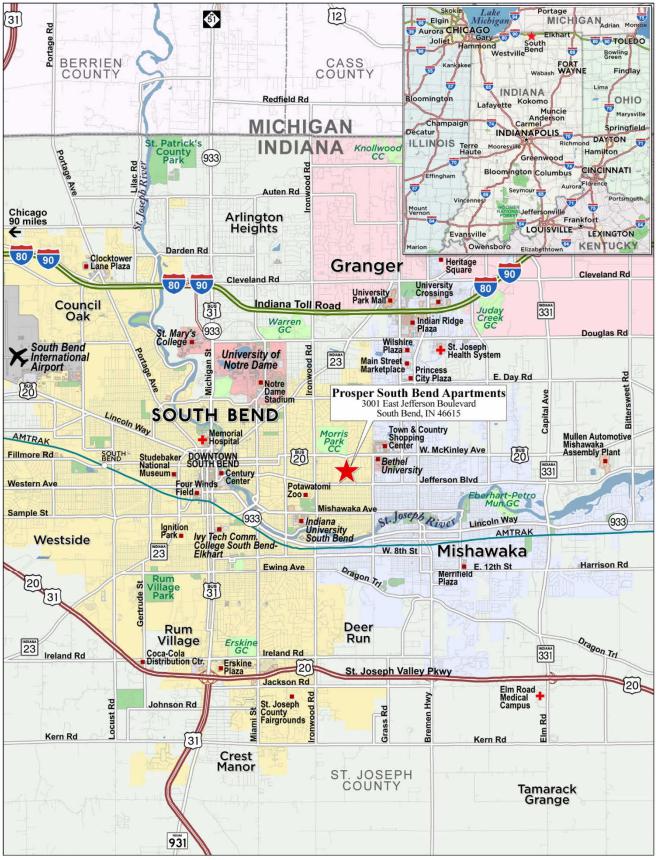
| A-3-60 |
| Mortgage Loan No. 7 – Prosper South Bend Apartments |
| Mortgage Loan Information | Property Information | |||||
| Mortgage Loan Seller: | MSMCH | Single Asset/Portfolio: | Single Asset | |||
| Original Balance(1): | $43,000,000 | Location: | South Bend, IN 46615 | |||
| Cut-off Date Balance(1): | $43,000,000 | General Property Type: | Multifamily | |||
| % of Initial Pool Balance: | 4.6% | Detailed Property Type: | Garden | |||
| Loan Purpose: | Refinance | Title Vesting: | Fee | |||
| Borrower Sponsor: | Avrohom Klor | Year Built/Renovated: | 1968-1970 / 2022 | |||
| Guarantor: | Avrohom Klor | Size: | 710 Units | |||
| Mortgage Rate: | 6.8200% | Cut-off Date Balance Per Unit(1): | $91,549 | |||
| Note Date: | 2/20/2025 | Maturity Date Balance Per Unit(1): | $91,549 | |||
| Maturity Date: | 3/1/2030 | Property Manager: | H&A Property Management, LLC | |||
| Term to Maturity: | 60 months | Underwriting and Financial Information | ||||
| Amortization Term: | 0 months | UW NOI: | $5,926,821 | |||
| IO Period: | 60 months | UW NCF: | $5,749,321 | |||
| Seasoning: | 0 months | UW NOI Debt Yield(1): | 9.1% | |||
| Prepayment Provisions: | L(24),D(29),O(7) | UW NCF Debt Yield(1): | 8.8% | |||
| Lockbox/Cash Mgmt Status: | Soft/Springing | UW NOI Debt Yield at Maturity(1): | 9.1% | |||
| Additional Debt Type(1): | Pari Passu | UW NCF DSCR(1): | 1.28x | |||
| Additional Debt Balance(1): | $22,000,000 | Most Recent NOI: | $5,982,111 (11/30/2024 TTM) | |||
| Future Debt Permitted (Type): | No (NAP) | 2nd Most Recent NOI: | $4,108,316 (12/31/2023) | |||
| 3rd Most Recent NOI: | $2,785,958 (12/31/2022) | |||||
| Reserves(2) | Most Recent Occupancy: | 92.8% (1/7/2025) | ||||
| Type | Initial | Monthly | Cap | 2nd Most Recent Occupancy: | 90.3% (12/31/2023) | |
| RE Taxes: | $78,951 | $26,317 | NAP | 3rd Most Recent Occupancy: | 70.7% (12/31/2022) | |
| Insurance: | $158,876 | $39,719 | NAP | Appraised Value (as of): | $94,000,000 (12/9/2024) | |
| Deferred Maintenance: | $229,363 | $0 | NAP | Appraised Value Per Unit: | $132,394 | |
| Replacement Reserve: | $0 | $14,792 | NAP | Cut-off Date LTV Ratio(1): | 69.1% | |
| Environmental Reserve: | $11,250 | $0 | NAP | Maturity Date LTV Ratio(1): | 69.1% | |
| Sources and Uses | ||||||
| Sources | Proceeds | % of Total | Uses | Proceeds | % of Total | |
| Whole Loan Amount: | $65,000,000 | 100.0% | Loan Payoff: | $62,177,609 | 95.7% | |
| Return of Equity: | $691,443 | 1.1% | ||||
| Closing Costs: | $1,652,508 | 2.5% | ||||
| Reserves: | $478,440 | 0.7% | ||||
| Total Sources: | $65,000,000 | 100.0% | Total Uses: | $65,000,000 | 100.0% | |
| (1) | The Prosper South Bend Apartments Mortgage Loan (as defined below) is part of the Prosper South Bend Apartments Whole Loan (as defined below), with an aggregate original principal amount of $65,000,000. The Cut-off Date Balance Per Unit, Maturity Date Balance Per Unit, UW NOI Debt Yield, UW NCF Debt Yield, UW NOI Debt Yield at Maturity, UW NCF DSCR, Cut-off Date LTV Ratio and Maturity Date LTV Ratio numbers presented above are based on the Prosper South Bend Apartments Whole Loan. |
| (2) | See “Escrows and Reserves” below. |
The Mortgage Loan. The seventh largest mortgage loan (the “Prosper South Bend Apartments Mortgage Loan”) is part of a whole loan (the “Prosper South Bend Apartments Whole Loan”) evidenced by two pari passu promissory notes with an aggregate original principal amount of $65,000,000. The Prosper South Bend Apartments Whole Loan is secured by a first priority fee mortgage encumbering a 710-unit multifamily property located in South Bend, Indiana (the “Prosper South Bend Apartments Property”). The Prosper South Bend Apartments Mortgage Loan is evidenced by the controlling Note A-1, with an original principal balance of $43,000,000. The Prosper South Bend Apartments Whole Loan will be serviced pursuant to the pooling and servicing agreement for the MSBAM 2025-5C1 transaction. See “Description of the Mortgage Pool—The Serviced Pari Passu Whole Loans” and “Pooling and Servicing Agreement” in the prospectus.
The table below summarizes the promissory notes that comprise the Prosper South Bend Apartments Whole Loan.
| Prosper South Bend Apartments Loan Summary | ||||
| Note | Original Balance | Cut-off Date Balance | Note Holder | Controlling Note |
| A-1 | $43,000,000 | $43,000,000 | MSBAM 2025-5C1 | Yes |
| A-2(1) | $22,000,000 | $22,000,000 | MSBNA | No |
| Total | $65,000,000 | $65,000,000 | ||
| (1) | Expected to be contributed to one or more future securitization transactions or may otherwise be transferred at any time. |
| A-3-61 |
| Multifamily – Garden | Loan #7 | Cut-off Date Balance: | $43,000,000 | |
| 3001 East Jefferson Boulevard | Prosper South Bend Apartments | Cut-off Date LTV: | 69.1% | |
| South Bend, IN 46615 | UW NCF DSCR: | 1.28x | ||
| UW NOI Debt Yield: | 9.1% |
The Borrower and the Borrower Sponsor. The borrower for the Prosper South Bend Apartments Mortgage Loan is H&A Prosper LLC, a single-purpose Indiana limited liability company with one independent director in its organizational structure. The borrower is wholly owned by Strategic SBN LLC, which is 87.5% owned by the borrower sponsor and non-recourse carve-out guarantor, Avrohom Klor. Avrohom Klor is the co-founder and chief executive officer of The H&A Group, a real estate and alternative asset investment firm that was founded in 2017 and is headquartered in South Bend Indiana. The H&A Group has a portfolio of approximately 2.0 million SF. Prior to co-founding The H&A Group, Avrohom Klor held various leadership roles in other organizations, including Vice President of Operations at Strategic Properties of North America (SPNA), where he oversaw the Midwest Portfolio’s growth. The Prosper South Bend Apartments Mortgage Loan is 20% recourse to the borrower sponsor for the entire loan term.
The Property. The Prosper South Bend Apartments Property is comprised of a 710-unit garden multifamily property located in South Bend, Indiana. Built between 1968 and 1970, the Prosper South Bend Apartments Property consists of 28 two-story apartment buildings and one amenity building, with 1,256 parking spaces (1.8 per unit). The borrower sponsor purchased the Prosper South Bend Apartments Property in 2021 for $53.3 million, and since that time through 2022, has invested approximately $14.4 million on property improvements, including the renovation of 216 units, common area and amenity space renovations, and façade repairs and upgrades. Common amenities at the Prosper South Bend Apartments Property include a clubhouse, theater room, billiards room, lounge, fitness center, tanning bed, indoor pool, playground, dog park, on-site management/maintenance, and security patrol service. Each unit has a balcony or patio and is equipped with an electric oven/range combination, garbage disposal, dishwasher, and refrigerator/freezer. Appliances in the renovated units are stainless steel, while the classic units have standard appliances. The Prosper South Bend Apartments Property’s renovated units include quartz countertops, while the non-renovated units have laminate countertops. The Prosper South Bend Apartments Property offers common area laundry facilities, with 37 units containing in-unit stackable washer/dryers. As of January 7, 2025, the Prosper South Bend Apartments Property was 92.8% occupied. Currently, there are 163 tenants who use Section 8 vouchers through the South Bend Housing Authority to pay all or a portion of their rent. Additionally, there are various local companies that lease 33 units to house their workers and there are three organizations that lease 29 units for transitional housing.
The following table presents detailed information with respect to the units at the Prosper South Bend Apartments Property:
| Apartment Unit Mix(1) | ||||||
| Unit Mix / Type | Total Units | Leased Units | % Leased | Average SF per Unit | Monthly Average Rent per Unit | Monthly Wtd. Average Rent PSF |
| 1 BR / 1 BA | 244 | 237 | 97.1% | 678 | $958 | $1.41 |
| 2 BR / 1 BA | 267 | 239 | 89.5% | 933 | $1,120 | $1.20 |
| 2 BR / 1.5 BA | 169 | 154 | 91.1% | 969 | $1,134 | $1.17 |
| 2 BR / 2 BA | 24 | 23 | 95.8% | 1010 | $1,204 | $1.19 |
| 3 BR / 1.5 BA | 6 | 6 | 100.0% | 1,101 | $1,467 | $1.33 |
| Total/ Wtd. Average | 710 | 659 | 92.8% | 858 | $1,071 | $1.25 |
| (1) | Information is based on the borrower rent roll dated January 7, 2025. |
The Market. The Prosper South Bend Apartments Property is located in South Bend, Indiana, within the South Bend multifamily market, within the South Bend-Mishawaka metropolitan statistical area. The Prosper South Bend Apartments Property is located in a suburban neighborhood along East Jefferson Boulevard, a local thoroughfare. Route US 20 is immediately north of the Prosper South Bend Apartments Property, and US 31 and Interstate 90 are located within four miles of the Prosper South Bend Apartments Property. There are single family homes surrounding the Prosper South Bend Apartments Property and a shopping center located approximately 1.1 miles northeast of the Prosper South Bend Apartments Property that includes a Kroger grocery store. Additionally, other supporting retail properties within a three-mile radius of the Prosper South Bend Apartments Property include a Trader Joe’s and Martin’s Super Market.
South Bend’s top attractions, including University Park Mall, Potawatomi Zoo, South Bend Farmer’s Market, Eddy Street Commons, and Four Winds Casino are located within a few minutes’ drive from the Prosper South Bend Apartments Property. The Prosper South Bend Apartments Property is a 10-minute drive to downtown South Bend and provides easy access to the city’s various dining options, nightlife attractions and shopping destinations. Additionally, the South Bend International Airport is a 20-minute drive from the Prosper South Bend Apartments Property. The Prosper South Bend Apartments Property is also just a 10-minute drive to the University of Notre Dame and is easily accessible to other major employers and schools such as Bethel University, Indiana University South Bend, Innovation Park, and Beacon Health System.
According to the appraisal, as of the third quarter of 2024, the vacancy rate in the South Bend multifamily market was approximately 5.8%, with average asking rents of $970 per unit, and inventory of approximately 13,923 units. According to the appraisal, the 2024 population within a one-, three- and five-mile radius of the Prosper South Bend Apartments Property is 14,493, 94,153 and 175,097, respectively. The 2024 average household income within the same one-, three-, and five-mile radius was $67,466, $72,785, and $78,882, respectively.
| A-3-62 |
| Multifamily – Garden | Loan #7 | Cut-off Date Balance: | $43,000,000 | |
| 3001 East Jefferson Boulevard | Prosper South Bend Apartments | Cut-off Date LTV: | 69.1% | |
| South Bend, IN 46615 | UW NCF DSCR: | 1.28x | ||
| UW NOI Debt Yield: | 9.1% |
The following table presents certain information relating to multifamily rental properties comparable to the Prosper South Bend Apartments Property:
| Comparable Rental Properties | ||||||
| Property | Year Built / Renovated | # Total Units | Unit Mix | Units | Unit Size (SF) | Average Monthly Rent per Unit |
|
Prosper South Bend Apartments 3001 East Jefferson Boulevard South Bend, IN |
1968-1970 / 2022 |
710 |
1 BR / 1 BA 2 BR / 1 BA 2 BR / 1.5 BA 2 BR / 2 BA 3 BR / 1.5 BA |
244 267 169 24 6 |
678 933 969 1,010 1,101 |
$958 $1,120 $1,134 $1,204 $1,467 |
|
Williamsburg on The Lake Mishawaka 302 Village Drive Mishawaka, IN |
1974 / NAP | 300 |
1 BR / 1 BA 2 BR / 1 BA 2 BR / 1.5 BA 3 BR / 1.5 BA |
120 88 60 32 |
700 900 1,000 1,200 |
$1,008 $1,117 $1,425 $1,932 |
|
University Park Apartments 5630 University Park Drive Mishawaka, IN |
1980 / NAP | 164 |
1 BR / 1 BA 2 BR / 1 BA 2 BR / 1.5 BA 3 BR / 1.5 BA |
48 32 50 34 |
700 905 1,000 1,200 |
$1,116 $1,336 $1,750 $1,913 |
|
Runaway Bay 302 Runaway Bay Circle Mishawaka, IN |
1986 / NAP | 264 |
1 BR / 1 BA 2 BR / 1 BA 2 BR / 2 BA |
104 24 136 |
752 848 1,035 |
$1055 $1,190 $1,260 |
|
Castle Point Apartments 18011 Cleveland Road South Bend, IN |
1975 / 2020 | 739 |
1 BR / 1 BA 2 BR / 1 BA 2 BR / 1.5 BA 3 BR / 1.5 BA |
362 106 212 59 |
834 1,025 1,108 1,340 |
$1,079 $1,180 $1,251 $1,570 |
|
Indian Lakes Apartments 5726 Seneca Drive Mishawaka, IN |
1994 / NAP | 924 |
1 BR / 1 BA 2 BR / 1 BA 2 BR / 2 BA |
556 168 200 |
752 890 958 |
$1,402 $1,466 $1,530 |
|
The Element at St. Andrews 3902 Saint Andrews Circle Mishawaka, IN |
1986 / 2012 | 310 |
1 BR / 1 BA 2 BR / 1.5 BA 3 BR / 2 BA 3 BR / 2.5 BA |
50 232 16 12 |
753 1,017 1,160 1,430 |
$1,035 $1,282 $1,450 $1,709 |
Source: Appraisal, unless otherwise indicated.
| (1) | Based on the borrower rent roll dated January 7, 2025, other than Year Built. |
The following table presents certain information relating to the appraisal’s market rent conclusions for the Prosper South Bend Apartments Property:
| Market Rent Summary | ||||||
| Unit Mix/Type | Units(1) | Average Size (SF) (1) | Avg. Monthly Rent per Unit(1) | Avg. Monthly Rent PSF(1) | Avg. Monthly Market Rent per Unit(2) | Avg. Monthly Market Rent PSF(2) |
| 1 BR | 244 | 678 | $958 | $1.41 | $1,031 | $1.32 |
| 2 BR | 460 | 950 | $1,130 | $1.19 | $1,269 | $1.28 |
| 3 BR | 6 | 1,101 | $1,467 | $1.33 | $1,642 | $1.31 |
| Total/ Wtd. Average | 710 | 858 | $1,071 | $1.25 | $1,190 | $1.39 |
| (1) | Based on the borrower rent roll dated January 7, 2025. |
| (2) | Based on the appraisal. |
| A-3-63 |
| Multifamily – Garden | Loan #7 | Cut-off Date Balance: | $43,000,000 | |
| 3001 East Jefferson Boulevard | Prosper South Bend Apartments | Cut-off Date LTV: | 69.1% | |
| South Bend, IN 46615 | UW NCF DSCR: | 1.28x | ||
| UW NOI Debt Yield: | 9.1% |
Appraisal. The appraisal concluded to an “as-is” value for the Prosper South Bend Apartments Property of $94,000,000 as of December 9, 2024.
Environmental Matters. According to the Phase I environmental site assessment dated December 10, 2024, there was no evidence of any recognized environmental conditions at the Prosper South Bend Apartments Property.
Operating History and Underwritten Net Cash Flow. The following table presents certain information relating to the historical operating performance and the Underwritten Net Cash Flow at the Prosper South Bend Apartments Property:
| Cash Flow Analysis(1) | ||||||
| 2022 | 2023 | TTM 11/30/2024 | UW | UW per Unit | ||
| Gross Potential Rent | $5,759,018 | $8,790,463 | $9,104,378 | $9,200,102 | $12,957.89 | |
| Discounts Concessions | $0 | $0 | $0 | $0 | $0.00 | |
| Other Income | $558,405 | $574,182 | $682,611 | $682,611 | $961.42 | |
| Vacancy & Credit Loss |
$0 |
($2,059,753) |
($899,246) |
|
($1,012,011) |
($1,425.37) |
| Effective Gross Income | $6,317,423 | $7,304,892 | $8,887,744 | $8,870,702 | $12,493.95 | |
| Real Estate Taxes | $325,500 | $318,102 | $316,300 | $399,266 | $562.35 | |
| Insurance | $619,888 | $659,684 | $551,388 | $462,743 | $651.75 | |
| Other Expenses |
$2,586,077 |
$2,218,790 |
$2,037,945 |
|
$2,081,872 |
$2,932.21 |
| Total Expenses | $3,531,465 | $3,196,576 | $2,905,632 | $2,943,882 | $4,146.31 | |
| Net Operating Income | $2,785,958 | $4,108,316 | $5,982,111 | $5,926,821 | $8,347.63 | |
| Capital Expenditures |
$0 |
$0 |
$0 |
|
$177,500 |
$250.00 |
| Net Cash Flow | $2,785,958 | $4,108,316 | $5,982,111 | $5,749,321 | $8,097.63 | |
| Occupancy % | 70.7% | 90.3% | 92.8% | (2) | 89.0% | |
| NOI DSCR(3) | 0.62x | 0.91x | 1.33x | 1.32x | ||
| NCF DSCR(3) | 0.62x | 0.91x | 1.33x | 1.28x | ||
| NOI Debt Yield(3) | 4.3% | 6.3% | 9.2% | 9.1% | ||
| NCF Debt Yield(3) | 4.3% | 6.3% | 9.2% | 8.8% | ||
| (1) | UW Gross Potential Rent has been underwritten based on the contractual rent in place based on the borrower rent roll dated January 7, 2025. |
| (2) | Represents current in-place occupancy based off the borrower rent roll dated January 7, 2025. |
| (3) | DSCRs and Debt Yields are based on the Prosper South Bend Apartments Whole Loan. |
Escrows and Reserves.
Real Estate Tax Escrows – On the loan origination date, the borrower was required to make an upfront deposit of $78,951 into a reserve for real estate taxes. In addition, the borrower is required to deposit into a real estate tax reserve, on a monthly basis, an amount equal to 1/12th of the annual estimated tax payments (which currently equates to $26,317).
Insurance Escrows – On the loan origination date, the borrower was required to make an upfront deposit of $158,876 into a reserve for insurance premiums. In addition, the borrower is required to deposit into an insurance reserve, on a monthly basis, an amount equal to 1/12th of the annual estimated insurance premiums (which currently equates to $39,719). However, the borrower will not be required to make the monthly insurance reserve deposit provided that (i) no event of default is continuing, (ii) the liability and casualty policies maintained by the borrower are part of a blanket or umbrella policy approved by the lender, and (iii) the borrower provides the lender evidence of renewal of such policy and paid receipts for the insurance premiums at least 10 days prior to the expiration date of such policy.
Replacement Reserve – On a monthly basis, the borrower is required to deposit $14,792 into a reserve for capital expenditures.
Deferred Maintenance Reserve – On the loan origination date, the borrower was required to make an upfront deposit of $229,363 into a reserve for required repairs at the Prosper South Bend Apartments Property.
Environmental Reserve – On the loan origination date, the borrower was required to make an upfront deposit of $11,250 for retesting and mitigation (if required) radon at certain buildings on the Prosper South Bend Apartments Property.
Lockbox / Cash Management. The Prosper South Bend Apartments Whole Loan is structured with a soft lockbox and springing cash management. In connection with the origination of the Prosper South Bend Apartments Whole Loan, the borrower was required to establish and maintain a lockbox account for the benefit of the lender and to deposit all rents and any other revenue received by the borrower or manager into such lockbox account within two business days of receipt. In addition, upon the occurrence of a Cash Sweep Event Period (as defined below), the lender is required to establish and the borrower is required to cooperate with the lender to establish, a lender-controlled cash management account. During the continuance of a Cash Sweep Event Period, the lender will have the right, at its option, to direct the lockbox account bank to disburse all available funds then and thereafter on deposit in the lockbox account to the cash management account and, provided no event of default is continuing under the Prosper South Bend Apartments Whole Loan documents, all funds on deposit in the cash management account on each monthly payment date are required to be applied in the following order of priority: (i) to make the monthly deposits into the real estate tax reserve and insurance reserve, if any, as described above under “Escrows and Reserves,” (ii) to pay debt service on the Prosper South Bend Apartments Whole Loan, (iii) to make the monthly deposits into the replacement reserve, if any, as described above under “Escrows and Reserves,” (iv) to pay operating expenses set forth in the lender-approved annual budget and lender approved
| A-3-64 |
| Multifamily – Garden | Loan #7 | Cut-off Date Balance: | $43,000,000 | |
| 3001 East Jefferson Boulevard | Prosper South Bend Apartments | Cut-off Date LTV: | 69.1% | |
| South Bend, IN 46615 | UW NCF DSCR: | 1.28x | ||
| UW NOI Debt Yield: | 9.1% |
extraordinary expenses and (v) to deposit any remaining amounts in the cash management account into an excess cash flow account to be held as additional collateral for the Prosper South Bend Apartments Whole Loan, during the continuance of a Cash Sweep Event Period, and upon the termination of any Cash Sweep Event Period, to be disbursed to the borrower.
“Cash Sweep Event Period” means a period: (i) commencing upon an event of default under the Prosper South Bend Apartments Whole Loan documents, and ending upon the cure (if applicable) of such event of default; or (ii) commencing upon the debt service coverage ratio of the Prosper South Bend Apartments Whole Loan being less than 1.10x at the end of any calendar quarter and ending upon the date such debt service coverage ratio is equal to or greater than 1.10x for two consecutive calendar quarters.
Terrorism Insurance. The Prosper South Bend Apartments Whole Loan documents require that the borrower obtain and maintain an “all risk” or “special form” insurance policy that provides coverage for loss caused by acts of terrorism in an amount equal to the full replacement cost of the Prosper South Bend Apartments Property, as well as business interruption insurance covering no less than the 18-month period following the occurrence of a casualty event, together with a 12-month extended period of indemnity. For so long as the Terrorism Risk Insurance Act of 2002, as extended and modified by the Terrorism Risk Insurance Program Reauthorization Act of 2015 (“TRIPRA”) (including any extensions thereof or if another federal governmental program is in effect relating to “acts of terrorism” which provides substantially similar protections) is in effect, the lender is required to accept terrorism insurance which covers against “covered acts” as defined by TRIPRA (or such other program), so long as TRIPRA (or such other program) continues to cover both domestic and foreign acts of terrorism.
| A-3-65 |
| Various – Various | Loan #8 | Cut-off Date Balance: | $35,000,000 | |
| Various | Cord Meyer Retail Portfolio | Cut-off Date LTV: | 42.5% | |
| Various | UW NCF DSCR: | 1.63x | ||
| UW NOI Debt Yield: | 12.0% |
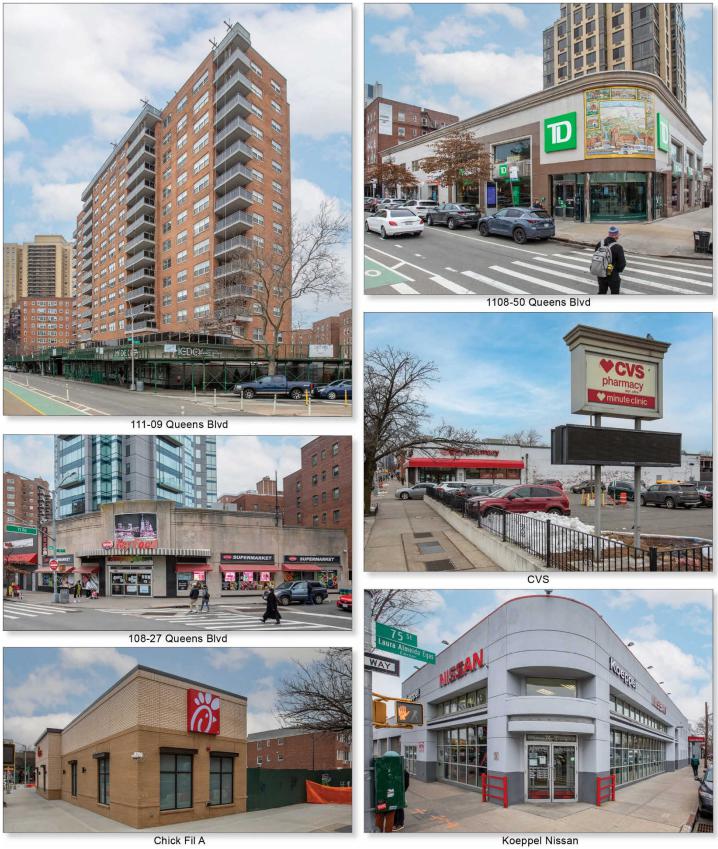
| A-3-66 |
| Various – Various | Loan #8 | Cut-off Date Balance: | $35,000,000 | |
| Various | Cord Meyer Retail Portfolio | Cut-off Date LTV: | 42.5% | |
| Various | UW NCF DSCR: | 1.63x | ||
| UW NOI Debt Yield: | 12.0% |
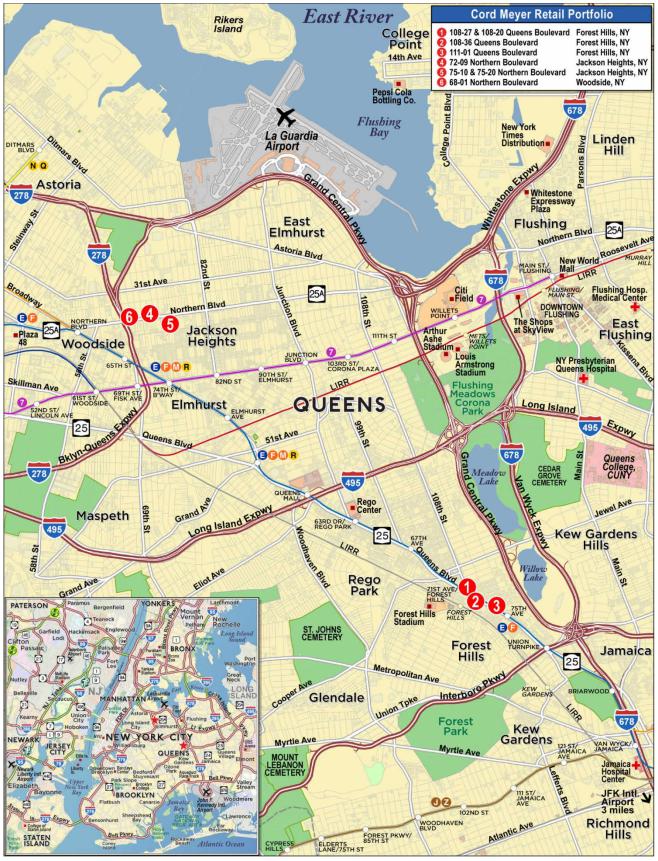
| A-3-67 |
| Mortgage Loan No. 8 – Cord Meyer Retail Portfolio |
| Mortgage Loan Information | Mortgaged Property Information | ||||||
| Mortgage Loan Seller: | MSMCH | Single Asset/Portfolio: | Portfolio | ||||
| Original Balance: | $35,000,000 | Location: | Various, NY | ||||
| Cut-off Date Balance: | $35,000,000 | General Property Type: | Various | ||||
| % of Initial Pool Balance: | 3.7% | Detailed Property Type: | Various | ||||
| Loan Purpose: | Refinance | Title Vesting: | Fee | ||||
| Borrower Sponsor: | Cord Meyer Development Company | Year Built/Renovated: | Various/Various | ||||
| Guarantor: | Cord Meyer Development LLC | Size: | 145,633 SF | ||||
| Mortgage Rate: | 6.6000% | Cut-off Date Balance Per SF: | $240 | ||||
| Note Date: | 2/14/2025 | Maturity Date Balance Per SF: | $240 | ||||
| Maturity Date: | 3/1/2030 | Property Manager: | Self-Managed | ||||
| Term to Maturity: | 60 months | ||||||
| Amortization Term: | 0 months | ||||||
| IO Period: | 60 months | ||||||
| Seasoning: | 0 months | Underwriting and Financial Information | |||||
| Prepayment Provisions: | L(24),D(29),O(7) | UW NOI: | $4,213,431 | ||||
| Lockbox/Cash Mgmt Status: | Soft/Springing | UW NCF: | $3,813,561 | ||||
| Additional Debt Type: | NAP | UW NOI Debt Yield: | 12.0% | ||||
| Additional Debt Balance: | NAP | UW NCF Debt Yield: | 10.9% | ||||
| Future Debt Permitted (Type): | No (NAP) | UW NOI Debt Yield at Maturity: | 12.0% | ||||
| UW NCF DSCR: | 1.63x | ||||||
| Reserves(1) | Most Recent NOI: | $4,418,624 (12/31/2024) | |||||
| Type | Initial | Monthly | Cap | 2nd Most Recent NOI: | $4,580,896 (12/31/2023) | ||
| RE Taxes: | $270,927 | $90,309 | NAP | 3rd Most Recent NOI: | $4,799,140 (12/31/2022) | ||
| Insurance: | $0 | Springing | NAP | Most Recent Occupancy: | 86.2% (1/1/2025) | ||
| Deferred Maintenance: | $72,710 | $0 | NAP | 2nd Most Recent Occupancy: | 94.8% (12/31/2023) | ||
| Replacement Reserve: | $290,000 | $1,780 | NAP | 3rd Most Recent Occupancy: | 96.7% (12/31/2022) | ||
| TI/LC Reserve: | $0 | $15,704 | NAP | Appraised Value (as of): | $82,350,000 (12/17/2024) | ||
| Outstanding Tenant Allowance Reserve: | $749,835 | $0 | NAP | Appraised Value per SF: | $565 | ||
| Environmental Reserve: | $25,000 | $0 | NAP | Cut-off Date LTV Ratio: | 42.5% | ||
| Condominium Reserve: | $0 | Springing | NAP | Maturity Date LTV Ratio: | 42.5% | ||
| Sources and Uses | ||||||
| Sources | Proceeds | % of Total | Uses | Proceeds | % of Total | |
| Mortgage Loan Amount: | $35,000,000 | 100.0% | Return of Equity: | $31,853,649 | 91.0% | |
| Closing Costs: | $1,737,879 | 5.0% | ||||
| Reserves: | $1,408,472 | 4.0% | ||||
| Total Sources: | $35,000,000 | 100.0% | Total Uses: | $35,000,000 | 100.0% | |
| (1) | See “Escrows and Reserves” below for further discussion of reserve information. |
The Mortgage Loan. The eighth largest mortgage loan (the “Cord Meyer Retail Portfolio Mortgage Loan”) is evidenced by a promissory note in the original principal amount $35,000,000 and secured by a first priority mortgage encumbering the borrowers’ fee interests in six office, retail, and parking lot properties totaling 145,633 SF located across Queens County, New York (the “Cord Meyer Retail Portfolio Properties”).
The Borrowers and the Borrower Sponsor. The borrowers for the Cord Meyer Retail Portfolio Mortgage Loan are 10827 QB LLC, 10836 QB LLC, 6801 Northern LLC, 7209 Northern LLC, 7510 Northern LLC, 11101 Queens LLC and Building 389 LLC, each a single purpose New York limited liability company with one independent director in its organizational structure. The borrowers are wholly owned and managed by Cord Meyer Development LLC, the non-recourse carveout guarantor, which in turn is wholly owned and managed by the borrower sponsor, Cord Meyer Development Company. Cord Meyer Development Company has a board of directors made up of 10 individuals, which includes Matthew Whalen, the president and chief executive officer.
Cord Meyer Development Company is a commercial real estate owner and operator throughout the New York metropolitan area. The company was founded in 1904 by Cord Meyer Jr. and his brothers, and has been in operation for over 120 years. The company has deep ties in the Forest Hills neighborhood in Queens and has completed many residential and commercial development projects. Cord Meyer Development Company has a current portfolio of 18 commercial properties and vacant land throughout New York City and Long Island.
In January 1998, Cord Meyer Development Company reorganized and Cord Meyer Development LLC was created, into which substantially all the operating assets and liabilities of Cord Meyer Development Company were transferred, including consolidated operating properties and real estate under development and two unconsolidated properties.
| A-3-68 |
| Various – Various | Loan #8 | Cut-off Date Balance: | $35,000,000 | |
| Various | Cord Meyer Retail Portfolio | Cut-off Date LTV: | 42.5% | |
| Various | UW NCF DSCR: | 1.63x | ||
| UW NOI Debt Yield: | 12.0% |
The Properties. The Cord Meyer Retail Portfolio Properties comprise a 145,633 SF portfolio of six retail, office and parking lot properties located throughout the Forest Hills, Jackson Heights and Woodside neighborhoods of Queens, New York. The Cord Meyer Retail Portfolio Properties are located in two separate clusters, with three multi-tenant properties located along Queens Boulevard in Forest Hills, Queens, New York (the “108-27 & 108-20 Queens Boulevard Property”, the “108-36 Queens Boulevard Property” and the “111-01 Queens Boulevard Property”) and three single-tenant properties located along Northern Boulevard in Jackson Heights and Woodside, Queens (the “72-09 Northern Boulevard Property”, the “75-10 Northern Boulevard Property”, and the “68-15 Northern Boulevard Property”). As of January 1, 2025, the Cord Meyer Retail Portfolio Properties are currently 86.2% occupied by 16 different tenants.
108-27 & 108-20 Queens Boulevard Property
The 108-27 & 108-20 Queens Boulevard Property is a neighborhood retail property consisting of two conjoined buildings, located in Forest Hills, New York. CVS (9,360 SF) occupies one building, while Key Food (8,439 SF) occupies the other, totaling 17,799 SF. The 108-27 & 108-20 Queens Boulevard Property was built in 1942, renovated in 1975, and CVS in 2013, and is situated on an approximately 0.62-acre site. As of January 1, 2025, the 108-27 & 108-20 Queens Boulevard Property was 100.0% leased. The CVS parcel is a commercial condominium unit within a condominium known as the Aston Condominium, which also includes 99 non-collateral residential condominium units. The CVS condominium unit represents an approximately 4.6659% interest in the Aston Condominium and the related common elements, and has the right to appoint one member of a five member board of managers of the Aston Condominium. Accordingly, the related borrower does not control the Aston Condominium.
108-36 Queens Boulevard Property
The 108-36 Queens Boulevard Property is a multi-tenant retail/office property totaling 26,584 SF, located in Forest Hills, New York. The 108-36 Queens Boulevard Property was built in 1950, renovated in 1972 and 1996, and is situated on an approximately 0.32-acre site. As of January 1, 2025, the 108-36 Queens Boulevard Property was 58.7% leased to four corner retail tenants, and one office tenant.
111-01 Queens Boulevard Property
The 111-01 Queens Boulevard Property is a multi-tenant, mixed-use property totaling 63,250 SF, located in Forest Hills, New York. The 111-01 Queens Boulevard Property was built in 1966 and is situated on a 0.31-acre site. The largest tenant at the 111-01 Queens Boulevard Property is Sylvan Forester Garage Corp, which operates a 29,346 SF parking garage unit, containing approximately 121 parking spaces. In addition to the parking garage unit, the 111-01 Queens Boulevard Property is comprised of four first floor retail units (20,288 SF) and seven second floor office units (13,616 SF). As of January 1, 2025, the 111-01 Queens Boulevard Property was 85.5% leased to nine tenants. The 111-01 Queens Boulevard Property consists of condominium units in a condominium known as the Forester Condominium, which also includes non-collateral residential units. The 111-01 Queens Boulevard Property represents a 30% interest in the Forester Condominium and the related common elements, and has the right to appoint one member of a three member board of managers of the Forester Condominium. Accordingly, the related borrower does not control the Forester Condominium.
72-09 Northern Boulevard Property
The 72-09 Northern Boulevard Property is a single-tenant retail building, totaling 13,200 SF, located in Jackson Heights, Queens, New York. The 72-09 Northern Boulevard Property was built in 1970, renovated in 1994, and is situated on an approximately 0.69-acre site, with 30 surface parking spaces (2.3 spaces per 1,000 SF). As of January 1, 2025, the 72-09 Northern Boulevard Property was 100.0% ground leased to the sole tenant, CVS.
75-10 Northern Boulevard Property
The 75-10 Northern Boulevard Property is a paved parking lot, totaling 20,000 SF of land area on an approximately 0.46-acre site in Jackson Heights, Queens, New York. The 75-10 Northern Boulevard Property was built in 1996, with 17 surface parking spaces. The 75-10 Northern Boulevard Property is leased by the single tenant, Koeppel Nissan, which uses the property to store its used car fleet. Koeppel Nissan has a dealership across the street from the 75-10 Northern Boulevard Property. As of January 1, 2025, the 75-10 Northern Boulevard Property was 100.0% leased to Koeppel Nissan.
68-15 Northern Boulevard Property
The 68-15 Northern Boulevard Property is a single-tenant retail building, totaling 4,800 SF, located in Woodside, Queens, New York. The 68-15 Northern Boulevard Property was built in 2025 and is situated on an approximately 0.48-acre site, with 20 surface parking spaces (4.2 spaces per 1,000 SF). As of January 1, 2025, the 68-15 Northern Boulevard Property was 100.0% ground leased to the sole tenant, Chick-Fil-A.
The following table presents certain information relating to the Cord Meyer Retail Portfolio Properties.
| Portfolio Summary | ||||||||
| Property Name | City, State | Year Built / Renovated | Tenant SF(1) | Occupancy(1) | Allocated Mortgage Loan Cut-off Date Balance | % of Allocated Mortgage Loan Cut-off Date Balance | Appraised Value | % of Appraised Value |
| 108-27 & 108-20 Queens Boulevard | Forest Hills, NY | 1942, 2013 / 1975 | 17,799 | 100.0% | $8,880,000 | 25.4% | $20,900,000 | 25.4% |
| 108-36 Queens Boulevard | Forest Hills, NY | 1950 / 1972, 1996 | 26,584 | 58.7% | $8,370,000 | 23.9% | $19,700,000 | 23.9% |
| 111-01 Queens Boulevard | Forest Hills, NY | 1966 / NAP | 63,250 | 85.5% | $6,760,000 | 19.3% | $15,900,000 | 19.3% |
| 72-09 Northern Boulevard | Jackson Heights, NY | 1970 / 1994 | 13,200 | 100.0% | $4,190,000 | 12.0% | $9,850,000 | 12.0% |
| 75-10 Northern Boulevard | Jackson Heights, NY | 1996 / NAP | 20,000 | 100.0% | $3,460,000 | 9.9% | $8,150,000 | 9.9% |
| 68-15 Northern Boulevard | Woodside, NY | 2025 / NAP |
4,800 |
100.0% |
$3,340,000 |
9.5% |
$7,850,000 |
9.5% |
| Total/Wtd. Avg. | 145,633 | 86.2% | $35,000,000 | 100.0% | $82,350,000 | 100.0% | ||
Source: Appraisals, unless otherwise noted
| (1) | Information is based on the underwritten rent roll dated January 1, 2025. |
| A-3-69 |
| Various – Various | Loan #8 | Cut-off Date Balance: | $35,000,000 | |
| Various | Cord Meyer Retail Portfolio | Cut-off Date LTV: | 42.5% | |
| Various | UW NCF DSCR: | 1.63x | ||
| UW NOI Debt Yield: | 12.0% |
Major Tenants.
CVS (22,560 SF, 15.5% of NRA, 22.6% of underwritten rent). CVS Pharmacy Inc. is an American retail chain, that is the largest pharmacy chain in the United States, with over 9,000 pharmacy locations in all 50 states. CVS Pharmacy Inc. is a subsidiary of CVS Health, and is headquartered in Woonsocket, Rhode Island. The company was founded in 1963 in Lowell, Massachusetts. CVS has occupied 13,200 SF of the 72-09 Northern Boulevard Property since 1994, has a lease expiration date of January 31, 2030, and has no renewal options remaining. CVS has occupied 9,360 SF of the 108-27 & 108-20 Queens Boulevard Property since 2014, has a lease expiration date of January 31, 2030, and has three, 5-year renewal options remaining.
TD Bank (5,610 SF, 3.9% of NRA, 15.4% of underwritten rent). TD Bank is an American national bank, and the United States subsidiary of the Canadian multinational TD Bank Group. TD Bank is one of the 10 largest banks in the United States, providing over 9.9 million customers with a full range of retail, small business and commercial banking products and services at more than 1,100 locations throughout the Northeast, Mid-Atlantic, metropolitan D.C., the Carolinas, and Florida. TD Bank also offers customized private banking and wealth services through TD Wealth. TD Bank is headquartered in Cherry Hill, New Jersey. TD Bank has occupied the 108-36 Queens Boulevard Property since 2004, has a lease expiration date of September 7, 2033, and has two, 5-year renewal options remaining.
Medex (18,808 SF, 12.9% of NRA, 13.6% of underwritten rent). Medex Diagnostic & Treatment Center (“Medex”) in the Forest Hills neighborhood of Queens is a multispecialty clinic with a large team of experienced doctors ready to help patients, providing care for all ages over 15 years old. The medical team includes doctors of many specialties including cardiology, dermatology, ear nose and throat, gastroenterology, internal medicine, podiatry, psychiatry, urology, allergies, and gynecology. Medex is also an approved location for the United States Citizenship and Naturalization Services civil service medical exam. Medex has occupied the 16,938 SF of retail space at the 111-01 Queens Boulevard Property since 1996, has a lease expiration date of January 31, 2035, and has one, 10-year renewal option remaining. Additionally, Medex has occupied 1,870 SF of office space at the 111-01 Queens Boulevard Property since 2016, has a lease expiration date of December 31, 2025, and has one, 20-year renewal option remaining.
The following table presents a summary regarding the tenants at the Cord Meyer Retail Portfolio Properties:
| Tenant Summary(1) | ||||||||||
| Tenant Name | Property |
Credit Rating (Fitch/Moody’s/ S&P)(2) |
Tenant SF | Approx.% of SF | Annual UW Rent | % of Total Annual UW Rent | Annual UW Rent PSF | Lease Expiration | Renewal Options | Term. Option (Y/N) |
| Major Tenants | ||||||||||
| CVS | 72-09 Northern Boulevard / 108-27 & 108-20 Queens Boulevard | BBB/Baa3/BBB | 22,560 | 15.5% | $1,235,031 | 22.6% | $54.74 | 1/31/2030 | (3) | N |
| TD Bank | 108-36 Queens Boulevard | AA-/A2/A- | 5,610 | 3.9% | $841,500 | 15.4% | $150.00 | 9/7/2033 | 2 x 5 yr | N |
| Medex | 111-01 Queens Boulevard | NR/NR/NR | 18,808 | 12.9% | $743,719 | 13.6% | $39.54 | 1/31/2035(4) | 1 x 10 yr(4) | N |
| Chick-Fil-A | 68-15 Northern Boulevard | NR/NR/NR | 4,800 | 3.3% | $400,000 | 7.3% | $83.33 | 5/31/2044 | 2 x 5 yr | N |
| Koeppel Nissan | 75-10 Northern Boulevard | BBB-/Baa3/BB+ | 20,000 | 13.7% | $310,000 | 5.7% | $15.50 | 1/31/2027 | None | N |
| Sylvan Forester Garage Corp | 111-01 Queens Boulevard | NR/NR/NR |
29,346 |
20.2% |
$298,700 |
5.5% |
$10.18 |
2/28/2034 | 1 x 5 yr | N |
| Major Tenants Subtotal/Wtd. Avg. | 101,124 | 69.4% | 3,828,950 | 70.0% | $37.86 | |||||
| Other Tenants |
24,385 |
16.7% |
$1,637,828 |
30.0% |
$67.17 |
|||||
| Occupied Subtotal/Wtd. Avg. | 125,509 | 86.2% | $5,466,778 | 100.0% | $43.56 | |||||
| Vacant Space |
20,124 |
13.8% |
||||||||
| Total/Wtd. Avg. | 145,633 | 100.0% | ||||||||
| (1) | Information is based on the underwritten rent roll dated January 1, 2025. |
| (2) | Certain ratings are those of the parent company, whether or not the parent company guarantees the lease. |
| (3) | The CVS occupying the 72-09 Northern Boulevard Property (13,200 SF) has no renewal options remaining. The CVS occupying the 108-27 & 108-20 Queens Boulevard Property (9,360 SF) has three, 5-year renewal options remaining. |
| (4) | Medex occupies 16,938 of retail space ($38.16 PSF) that has a lease expiration of January 31, 2035, and 1,870 SF of office space ($52.06 PSF) that has a lease expiration date of December 31, 2025, and has one, 20-year renewal option remaining. |
| A-3-70 |
| Various – Various | Loan #8 | Cut-off Date Balance: | $35,000,000 | |
| Various | Cord Meyer Retail Portfolio | Cut-off Date LTV: | 42.5% | |
| Various | UW NCF DSCR: | 1.63x | ||
| UW NOI Debt Yield: | 12.0% |
The following table presents certain information with respect to the lease rollover at the Cord Meyer Retail Portfolio Properties:
| Lease Rollover Schedule(1) | |||||||||
| Year | # of Leases Rolling | SF Rolling | Approx. % of SF Rolling |
Approx. Cumulative % of SF Rolling |
Total UW Rent Rolling |
Approx. % of Total UW Rent Rolling |
Approx. Cumulative % of Total UW Rent Rolling |
UW Rent PSF Rolling | |
| MTM | 0 | 0 | 0.0% | 0.0% | $0 | 0.0% | 0.0% | $0.00 | |
| 2025 | 3 | 3,296 | 2.3% | 2.3% | $149,726 | 2.7% | 2.7% | $45.43 | |
| 2026 | 0 | 0 | 0.0% | 2.3% | $0 | 0.0% | 2.7% | $0.00 | |
| 2027 | 2 | 28,439 | 19.5% | 21.8% | $952,714 | 17.4% | 20.2% | $33.50 | |
| 2028 | 0 | 0 | 0.0% | 21.8% | $0 | 0.0% | 20.2% | $0.00 | |
| 2029 | 1 | 1,180 | 0.8% | 22.6% | $53,171 | 1.0% | 21.1% | $45.06 | |
| 2030(2) | 2 | 22,560 | 15.5% | 38.1% | $1,235,031 | 22.6% | 43.7% | $54.74 | |
| 2031 | 2 | 3,520 | 2.4% | 40.5% | $172,929 | 3.2% | 46.9% | $49.13 | |
| 2032 | 0 | 0 | 0.0% | 40.5% | $0 | 0.0% | 46.9% | $0.00 | |
| 2033 | 4 | 11,111 | 7.6% | 48.1% | $1,337,455 | 24.5% | 71.4% | $120.37 | |
| 2034 | 3 | 33,665 | 23.1% | 71.3% | $519,383 | 9.5% | 80.9% | $15.43 | |
| 2035 | 1 | 16,938 | 11.6% | 82.9% | $646,370 | 11.8% | 92.7% | $38.16 | |
| 2036 & Thereafter | 1 | 4,800 | 3.3% | 86.2% | $400,000 | 7.3% | 100.0% | $83.33 | |
| Vacant | 0 | 20,124 | 13.8% | 100.0% | $0 | 0.0% | 100.0% | $0.00 | |
| Total/Wtd. Avg. | 19 | 145,633 | 100.0% | $5,466,778 | 100.0% | $43.56 | (3) | ||
| (1) | Information is based on the underwritten rent roll dated January 1, 2025. Certain tenants may have lease termination options that are not reflected in the Lease Rollover Schedule. |
| (2) | The Cord Meyer Retail Portfolio Mortgage Loan has a maturity date of March 1, 2030. |
| (3) | Excludes Vacant Space. |
The Market. The Cord Meyer Retail Portfolio Properties are located in two separate clusters, with the 108-27 & 108-20 Queens Boulevard Property, the 108-36 Queens Boulevard Property and the 111-01 Queens Boulevard Property located along Queens Boulevard in Forest Hills, New York and the 72-09 Northern Boulevard Property, 75-10 Northern Boulevard Property and the 68-15 Northern Boulevard Property located along Northern Boulevard in Jackson Heights and Woodside, New York. The 108-27 & 108-20 Queens Boulevard Property is located in the 11375-zip code retail submarket of the Queens retail market. According to the appraisal, as of the third quarter of 2024, the vacancy rate in the 11375-zip code retail submarket was 3.0%, with average asking rents of $93.85 PSF and inventory of approximately 2.6 million SF. The 108-36 Queens Boulevard Property and 111-01 Queens Boulevard Property are located in the Central Queens retail and office submarkets of the Long Island retail and office markets. According to the appraisal, as of the third quarter of 2024, the Central Queens retail submarket had a vacancy rate of 4.6%, with average asking rents of $46.67 PSF and an inventory of approximately 18.7 million SF, and the Central Queens office submarket had a vacancy rate of 4.2%, with average asking rents of $44.23 PSF and an inventory of approximately 5.1 million SF. According to the appraisal, as of the third quarter of 2024, the Long Island retail submarket had a vacancy rate of 4.0%, with asking rents of $32.04 PSF and an inventory of approximately 157.4 million SF, while the Long Island office submarket had a vacancy rate of 8.8%, with average asking rents of $29.48 PSF and an inventory of approximately 100.7 million SF. The 72-09 Northern Boulevard Property, 75-10 Northern Boulevard Property and the 68-15 Northern Boulevard Property are located within the local zip code retail submarket of the Queens retail market. According to the appraisal, as of the third quarter of 2024, the vacancy rate in the local zip code retail submarket was 1.6%, with average asking rents of $64.53 PSF and inventory of approximately 2.1 million SF. According to the appraisal, as of the third quarter of 2024, the Queens retail market had a vacancy rate of 3.7%, with average asking rents of $52.31 PSF and inventory of approximately 82.9 million SF.
The following table presents certain information relating to the appraisal’s market rent conclusions for the 108-36 Queens Boulevard Property:
| Market Rent Summary | ||||||
| Tenant Type | Market Rent (PSF) | Reimbursements | Rent Escalation | Lease Term (years) | Tenant Improvements (PSF) (New/Renewal) | Leasing Commissions (New/Renewal) |
| Retail: | $95.00 | Net | 2.5% per annum | 10 | $75.00 / $0.00 | Varies / Varies |
| Retail Corner: | $120.00 | Net Taxes and Net Utilities | 2.5% per annum | 10 | $75.00 / $0.00 | Varies / Varies |
| Office: | $45.00 | BY Taxes and Net Utilities | 2.5% per annum | 10 | $100.00 / $50.00 | Varies / Varies |
The following table presents certain information relating to the appraisal’s market rent conclusions for the 111-01 Queens Boulevard Property:
| Market Rent Summary | ||||||
| Tenant Type | Market Rent (PSF) | Reimbursements | Rent Escalation | Lease Term (years) | Tenant Improvements (PSF) (New/Renewal) | Leasing Commissions (New/Renewal) |
| Small Retail: | $75.00 | BY Taxes and Net Utilities | 2.5% per annum | 10 | $75.00 / $0.00 | Varies / Varies |
| Large Retail: | $65.00 | BY Taxes and Net Utilities | 2.5% per annum | 10 | $75.00 / $0.00 | Varies / Varies |
| Large Office: | $35.00 | BY Taxes and Net Utilities | 2.5% per annum | 10 | $100.00 / $50.00 | Varies / Varies |
| Small Office: | $45.00 | Net Utilities | 2.5% per annum | 10 | $100.00 / $50.00 | Varies / Varies |
| Parking Garage | $10.00 | BY Taxes and Net Utilities | 2.5% per annum | 20 | $0.00 / $0.00 | None / None |
| A-3-71 |
| Various – Various | Loan #8 | Cut-off Date Balance: | $35,000,000 | |
| Various | Cord Meyer Retail Portfolio | Cut-off Date LTV: | 42.5% | |
| Various | UW NCF DSCR: | 1.63x | ||
| UW NOI Debt Yield: | 12.0% |
The following table presents recent pharmacy space leasing data at comparable retail properties with respect to the 108-27 & 108-20 Queens Boulevard Property and the 72-09 Northern Boulevard Property:
| Comparable Leases Summary | |||||||
| Property/Location | Year Built / Renovated | SF | Tenant Name | Tenant Size (SF) | Lease Date | Rent PSF | Lease Type |
|
108-27 & 108-20 Queens Boulevard (subject)(1) Forest Hills, NY |
1942, 2013 / 1975 | 17,799 | CVS | 9,360 | Jul. 2014 | $72.00 | NNN |
|
Walgreens 6628 18th Avenue Brooklyn, NY |
1931 / 2008 | 12,753 | Walgreens | 12,753 | May 2022 | $76.66 | NNN |
|
CVS 120 5th Avenue Brooklyn, NY |
2024 / NAP | 300,000 | CVS Pharmacy | 13,690 | Oct. 2022 | $65.74 | NNN |
|
CVS 85 Jay Street Brooklyn, NY |
2022 / NAP | 1,053,108 | CVS Pharmacy | 9,300 | Feb. 2023 | $75.87 | NNN |
|
Rite Aid 5224 5th Avenue Brooklyn, NY |
1950 / NAP | 31,308 | Rite Aid | 6,000 | Sep. 2021 | $68.00 | MG |
|
Pharmacy 5902 Kissena Boulevard Flushing, NY |
1952 / NAP | 8,100 | Walgreens | 1,800 | May 2021 | $55.56 | MG |
Source: Appraisal, unless otherwise indicated.
| (1) | Information based on the underwritten rent roll dated January 1, 2025, other than Year Built / Renovated. |
The following table presents recent supermarket space leasing data at comparable retail properties with respect to the 108-27 & 108-20 Queens Boulevard Property:
| Comparable Leases Summary | |||||||
| Property/Location | Year Built / Renovated | SF | Tenant Name | Tenant Size (SF) | Lease Date | Rent PSF | Lease Type |
|
108-27 & 108-20 Queens Boulevard (subject)(1) Forest Hills, NY |
1942, 2013 / 1975 | 17,799 | Key Food | 8,439 | Oct. 2017 | $76.16 | MG |
|
101 Clinton Street Brooklyn, NY |
1930 / NAP | 69,000 | Food Town | 10,100 | Nov. 2023 | $53.47 | MG |
|
130 Court Street Brooklyn, NY |
1924 / 2000 | 28,000 | Trader Joe’s | 14,450 | Oct. 2023 | $103.10 | NNN |
|
283 East 204th Street Bronx, NY |
1925 / NAP | 13,500 | Food Town | 4,000 | Jul. 2022 | $50.00 | MG |
|
17633-17647 Union Turnpike Fresh Meadows, NY |
1952 / NAP | 4,519 | Salt & Pepper Organic Market | 2,200 | Sep. 2024 | $70.00 | MG |
|
115-02 Merrick Boulevard Jamaica, NY |
1968 / NAP | 14,000 | Johns Farm Market | 10,000 | Mar. 2024 | $50.00 | MG |
|
22 Chapel Street Brooklyn, NY |
2022 / NAP | 166,976 | Chapel Deli & Market | 2,030 | Apr. 2023 | $92.00 | MG |
Source: Appraisal, unless otherwise indicated.
| (1) | Information based on the underwritten rent roll dated January 1, 2025, other than Year Built / Renovated. |
The following table presents recent retail space leasing data at comparable retail properties with respect to the 108-36 Queens Boulevard Property:
| Comparable Leases Summary | |||||||
| Property/Location | Year Built / Renovated | SF | Tenant Name | Tenant Size (SF) | Lease Date | Rent PSF | Lease Type |
|
108-36 Queens Boulevard (subject)(1) Forest Hills, NY |
1950 / 1972, 1996 | 26,584 |
TD Bank True North Urgent Care |
5,610 2,451 |
Sep. 2023 Sep. 2023 |
$150.00 $97.71 |
NNN MG |
|
88-02 Queens Boulevard Rego Park, NY |
1967 / NAP | 9,810 | Sleepy’s LLC | 5,000 | Dec. 2024 | $83.00 | MG |
|
107-06 Queens Boulevard Forest Hills, NY |
2019 / NAP | 93,738 | New York Blood Center | 3,820 | Jun. 2024 | $90.00 | NNN |
|
107-22 Continental Avenue Forest Hills, NY |
1930 / 1969 | 108,282 | Confidential | 1,375 | Feb. 2024 | $140.00 | NNN |
|
12080 Queens Boulevard Kew Gardens, NY |
1951 / NAP | 22,211 | Subway | 900 | Jan. 2024 | $136.00 | MG |
|
107-48 Queens Boulevard Forest Hills, NY |
1939 / NAP | 1,620 | T-Bone Diner & Deli | 1,620 | Jan. 2023 | $111.11 | NNN |
|
108-22 Queens Boulevard Forest Hills, NY |
1940 / 1998 | 47,250 | N/Av | 1,100 | Oct. 2022 | $85.00 | MG |
Source: Appraisal, unless otherwise indicated.
| (1) | Information based on the underwritten rent roll dated January 1, 2025, other than Year Built / Renovated. |
| A-3-72 |
| Various – Various | Loan #8 | Cut-off Date Balance: | $35,000,000 | |
| Various | Cord Meyer Retail Portfolio | Cut-off Date LTV: | 42.5% | |
| Various | UW NCF DSCR: | 1.63x | ||
| UW NOI Debt Yield: | 12.0% |
The following table presents recent office space leasing data at comparable office properties with respect to the 108-36 Queens Boulevard Property and the 111-01 Queens Boulevard Property:
| Comparable Leases Summary | |||||||
| Property/Location | Year Built / Renovated | SF | Tenant Name | Tenant Size (SF) | Lease Date | Rent PSF | Lease Type |
|
108-36 Queens Boulevard (subject)(1) Forest Hills, NY |
1950 / 1972, 1996 | 26,584 | National VIP Centers Mgmt | 2,539 | Sep. 2024 | $46.35 | MG |
|
111-01 Queens Boulevard (subject)(1) Forest Hills, NY |
1966/ NAP | 63,250 | I & G Pediatrics | 1,180 | Apr. 2024 | $45.06 | Base Year |
|
102-02 Queens Boulevard Forest Hills, NY |
2002 / NAP | 20,000 | N/Av | 1,500 | Oct. 2024 | $50.40 | MG |
|
125-10 Queens Boulevard Kew Gardens, NY |
1960 / NAP | 419,528 | Jewish Community Council of Greater Coney Island |
1,539 | Jan. 2024 | $37.82 | FSG |
|
98-11 Queens Boulevard Rego Park, NY |
1938 / 2016 | 255,400 | Home Care | 676 | Jan. 2024 | $36.00 | MG |
|
123-20 82nd Avenue Kew Gardens, NY |
1996 / NAP | 12,905 | N/Av | 1,000 | Dec. 2023 | $40.00 | - |
|
71-01 Austin Street Forest Hills, NY |
1925 / NAP | 8,500 | N/Av | 900 | Dec. 2023 | $55.00 | MG |
|
75-52 113th Street Forest Hills, NY |
2007 / NAP | 12,318 | N/Av | 600 | Sep. 2023 | $38.00 | MG |
Source: Appraisal, unless otherwise indicated.
| (1) | Information based on the underwritten rent roll dated January 1, 2025, other than Year Built / Renovated. |
The following table presents recent retail space leasing data at comparable retail properties with respect to the 111-01 Queens Boulevard Property:
| Comparable Leases Summary | |||||||
| Property/Location | Year Built / Renovated | SF | Tenant Name | Tenant Size (SF) | Lease Date | Rent PSF | Lease Type |
|
111-01 Queens Boulevard (subject)(1) Forest Hills, NY |
1966 / NAP | 63,250 |
Medex Hands of Hope |
16,938 1,780 |
Feb. 2020 Nov. 2024 |
$38.16 $57.87 |
MG MG |
|
88-02 Queens Boulevard Rego Park, NY |
1967 / NAP | 9,810 | Sleepy’s LLC | 5,000 | Dec. 2024 | $83.00 | MG |
|
107-06 Queens Boulevard Forest Hills, NY |
2019 / NAP | 93,738 | New York Blood Center | 3,820 | Jun. 2024 | $90.00 | - |
|
96-18 Queens Boulevard Rego Park, NY |
1941 / 2004 | 27,900 | Carpet Co | 2,800 | Jan. 2024 | $63.00 | MG |
|
103-09 Queens Boulevard Forest Hills, NY |
1949 /1998 | 12,850 | Cigar & Vapes | 900 | May 2023 | $73.33 | MG |
|
107-48 Queens Boulevard Forest Hills, NY |
1939 / NAP | 1,620 | T-Bone Diner & Deli | 1,620 | Jan. 2023 | $111.11 | NNN |
|
108-22 Queens Boulevard Forest Hills, NY |
1940 / 1998 | 47,250 | N/Av | 1,100 | Oct. 2022 | $85.00 | MG |
Source: Appraisal, unless otherwise indicated.
| (1) | Information based on the underwritten rent roll dated January 1, 2025, other than Year Built / Renovated. |
The following table presents recent land lease leasing data at comparable retail properties with respect to the 75-10 Northern Boulevard Property:
| Comparable Leases Summary | |||||||
| Property/Location | Year Built / Renovated | SF | Tenant Name | Tenant Size (SF) | Lease Date | Annual Rent | Lease Type |
|
75-10 Northern Boulevard (subject)(1) Jackson Heights, NY |
1996 / NAP | 20,000 | Koeppel Nissan | 20,000 | Jan. 2025 | $310,000 | NNN |
|
33-20 55th Street Woodside, NY |
1966 / 2015 | 23,544 | Queens Motor Cars | 7,000 | Jan. 2023 | $119,980 | MG |
|
5838 47th Street Maspeth, NY |
NAV | 90.000 | J&J Farms Creamery | 90,000 | Nov. 2022 | $1,800,000 | NNN |
|
512 Gardner Avenue Brooklyn, NY |
NAV | 394,376 | Old Dominion Freight Line | 20,250 | Feb. 2023 | $306,180 | NNN |
|
Northern Boulevard East Elmhurst, NY |
2025 | 21,025 | Chick-Fil-A | 21,025 | Feb. 2025 | $399,896 | NNN |
Source: Appraisal, unless otherwise indicated.
| (1) | Information based on the underwritten rent roll dated January 1, 2025, other than Year Built / Renovated. |
| A-3-73 |
| Various – Various | Loan #8 | Cut-off Date Balance: | $35,000,000 | |
| Various | Cord Meyer Retail Portfolio | Cut-off Date LTV: | 42.5% | |
| Various | UW NCF DSCR: | 1.63x | ||
| UW NOI Debt Yield: | 12.0% |
The following table presents recent fast food ground lease space leasing data at comparable retail properties with respect to the 68-15 Northern Boulevard Property:
| Comparable Leases Summary | ||||||
| Property/Location | Year Built / Renovated | Tenant Name | Tenant Size (SF) | Lease Date | Rent PSF | Lease Type |
|
68-15 Northern Boulevard (subject)(1) Woodside, NY |
2025 / NAP | Chick-Fil-A | 4,800 | Oct. 2023 | $83.33 | NNN |
|
7416 Tonnelle Avenue North Bergen, NJ |
2021 / NAP | Chick-Fil-A | 4,235 | Jan. 2021 | $52.06 | NNN |
|
88-08 Northern Boulevard Jackson Heights, NY |
NAV | Popeyes | 1,999 | Jan. 2023 | $118.80 | NNN |
|
1560 St Georges Avenue Woodbridge Township, NJ |
NAV | Chipotle | 2,850 | Jun. 2023 | $71.17 | NNN |
|
575 Portion Road Lake Ronkonkoma, NY |
2024 | Chick-Fil-A | 4,843 | Oct. 2024 | $46.46 | NNN |
|
2 East Park Avenue Long Beach, NY |
NAV | Starbucks | 3,019 | Aug. 2024 | $79.49 | NNN |
Source: Appraisal, unless otherwise indicated.
| (1) | Information based on the underwritten rent roll dated January 1, 2025, other than Year Built / Renovated. |
Appraisal. The appraisal concluded to an “as-is” value for the 108-27 & 108-20 Queens Boulevard Property of $20,900,000 as of December 17, 2024. The appraisal concluded to an “as-is” value for the 108-36 Queens Boulevard Property of $19,700,000 as of December 17, 2024. The appraisal concluded to an “as-is” value for the 111-01 Queens Boulevard Property of $15,900,000 as of December 17, 2024. The appraisal concluded to an “as-is” value for the 72-09 Northern Boulevard Property of $9,850,000 as of December 17, 2024. The appraisal concluded to an “as-is” value for the 75-10 Northern Boulevard Property of $8,150,000 as of December 17, 2024. The appraisal concluded to an “as-is” value for the 68-15 Northern Boulevard Property of $7,850,000 as of December 17, 2024.
Together, the Cord Meyer Retail Portfolio Properties have an “as-is” value of $82,350,000.
Environmental Matters. According to the Phase I environmental site assessments dated December 19, 2024, there was no evidence of any recognized environmental conditions at the Cord Meyer Retail Portfolio Properties.
Operating History and Underwritten Net Cash Flow. The following table presents certain information relating to the historical operating performance and Underwritten Net Cash Flow at the Cord Meyer Retail Portfolio Properties:
| Cash Flow Analysis | |||||
| 2022 | 2023 | 2024 | UW | UW PSF | |
| Gross Potential Rent(1) | $5,784,647 | $5,427,440 | $5,462,193 | $6,404,098 | $43.97 |
| Reimbursements | $1,346,979 | $1,498,497 | $796,283 | $1,404,983 | $9.65 |
| Other Income | $0 | $0 | $0 | $0 | $0.00 |
| (Vacancy / Credit Loss) |
$0 |
$0 |
$0 |
($937,320) |
($6.44) |
| Effective Gross Income | $7,131,626 | $6,925,937 | $6,258,476 | $6,871,761 | $47.19 |
| 0 | |||||
| Real Estate Taxes | $1,680,651 | $1,731,377 | $1,199,564 | $1,776,183 | $12.20 |
| Insurance | $113,256 | $76,250 | $125,627 | $85,580 | $0.59 |
| Other Operating Expenses |
$538,578 |
$537,414 |
$514,661 |
$796,568 |
$5.47 |
| Total Operating Expenses | $2,332,486 | $2,345,040 | $1,839,852 | $2,658,330 | $18.25 |
| 0 | |||||
| Net Operating Income | $4,799,140 | $4,580,896 | $4,418,624 | $4,213,431 | $28.93 |
| Replacement Reserves | $0 | $0 | $0 | $21,358 | $0.15 |
| TI/LC |
$0 |
$0 |
$0 |
$378,512 |
$2.60 |
| Net Cash Flow | $4,799,140 | $4,580,896 | $4,418,624 | $3,813,561 | $26.19 |
| Occupancy (%)(2) | 96.7% | 94.8% | 86.2% | 85.4% | |
| NOI DSCR | 2.05x | 1.96x | 1.89x | 1.80x | |
| NCF DSCR | 2.05x | 1.96x | 1.89x | 1.63x | |
| NOI Debt Yield | 13.7% | 13.1% | 12.6% | 12.0% | |
| NCF Debt Yield | 13.7% | 13.1% | 12.6% | 10.9% | |
| (1) | UW Gross Potential Rent is based on the underwritten rent roll dated January 1, 2025, and includes rent steps underwritten through February 2026 totaling $42,127. |
| (2) | UW Occupancy (%) represents economic occupancy. Historical occupancies represent physical occupancies. 2024 Occupancy (%) is based on the underwritten rent roll dated January 1, 2025. |
| A-3-74 |
| Various – Various | Loan #8 | Cut-off Date Balance: | $35,000,000 | |
| Various | Cord Meyer Retail Portfolio | Cut-off Date LTV: | 42.5% | |
| Various | UW NCF DSCR: | 1.63x | ||
| UW NOI Debt Yield: | 12.0% |
Escrows and Reserves.
Deferred Maintenance – The Cord Meyer Retail Portfolio Mortgage Loan documents provide for an upfront reserve of $72,710 for required repairs.
Real Estate Taxes – The Cord Meyer Retail Portfolio Mortgage Loan documents provide for an upfront reserve of $270,927 for taxes, and ongoing monthly reserves equal to 1/12th of the real taxes the lender estimates will be payable during the next twelve months (initially estimated to be $90,309).
Notwithstanding the foregoing, the monthly deposit into the tax reserve will exclude taxes payable in respect of (x) the 68-15 Northern Boulevard Property (y) the 72-09 Northern Boulevard Property, and/or (z) the 75-10 Northern Boulevard Property, provided (i) no event of default is continuing, (ii) the tenants at the applicable property are paying the entirety of the taxes for such property directly to the relevant government authority pursuant to their leases, and (iii) the borrowers provide the lender receipts for the payment of such taxes after payment of the same by the tenants.
Insurance – The Cord Meyer Retail Portfolio Mortgage Loan documents do not require monthly reserves for insurance premiums as long as (i) no event of default is continuing under the Cord Meyer Retail Portfolio Mortgage Loan, (ii) the liability and casualty insurance coverage for the Cord Meyer Retail Portfolio Properties is included in a blanket or umbrella policy approved by the lender in its reasonable discretion, and (iii) the borrowers provide the lender with evidence of renewal of such policies and paid receipts for insurance premiums no later than 10 days prior to the expiration dates of the policies. If such conditions are not satisfied, the Cord Meyer Retail Portfolio Mortgage Loan documents provide for ongoing monthly reserves for insurance premiums in an amount equal to 1/12th of the insurance premiums that the lender estimates will be payable for the renewal of the insurance coverage.
Replacement Reserve – The Cord Meyer Retail Portfolio Mortgage Loan documents provide for an upfront reserve of $290,000 for roof repairs at the 108-27 & 108-20 Queens Boulevard Property, and ongoing monthly reserves of approximately $1,780 for annual capital expenditures reasonably approved by the lender.
TI/LC Reserve – The Cord Meyer Retail Portfolio Mortgage Loan documents provide for ongoing monthly deposits of $15,704 for future tenant improvements and leasing commissions.
Condominium Reserve – During the continuance of a Cash Sweep Event Period (as defined below) the borrowers are required to make monthly deposits into a condominium reserve in an amount equal to 1/12th of the condominium assessments reasonably estimated by the lender to be payable during the next 12 months. In addition, on the first payment date during the continuance of a Cash Sweep Event Period, the borrowers are required to make an up-front payment which (together with the ongoing monthly deposits described above) will be sufficient to pay the condominium assessments when due.
Outstanding Tenant Allowance Reserve – The Cord Meyer Retail Portfolio Mortgage Loan documents provide for an upfront reserve of $749,835 for outstanding tenant allowances for the tenants Chick-Fil-A, Inc. ($226,000) and North Shore Community Services, Inc. ($523,835).
Environmental Reserve – The Cord Meyer Retail Portfolio Mortgage Loan documents provide for an upfront reserve of $25,000 to be used to provide a site management plan in a form reasonably acceptable to the lender and from a qualified environmental firm reasonably acceptable to the lender for the 75-10 Northern Boulevard Property.
Lockbox and Cash Management. The Cord Meyer Retail Portfolio Mortgage Loan is structured with a soft lockbox (which becomes a hard lockbox upon a Cash Sweep Event Period) and springing cash management. At origination, the borrowers were required to establish a lender-controlled lockbox account, and to deposit all rents into such lockbox account within three business days of receipt. In addition, at origination the borrowers were required to deliver to the lender letters directing each tenant under each lease to deposit all payments due with respect to the Cord Meyer Retail Portfolio Properties into the lockbox account, which letters are required to be held in escrow by the lender until a Cash Sweep Event Period occurs, in which event the lender has the right to deliver such letters to the tenants. If, notwithstanding the foregoing direction, following a Cash Sweep Event Period the borrowers receive any rents or revenues from the Cord Meyer Retail Portfolio Properties, they are required to deposit such amounts into the lockbox account within one business day of receipt. In addition, upon the occurrence of a Cash Sweep Event Period (as defined below) the lender is required to establish, and the borrowers are required to cooperate to establish, a lender-controlled cash management account, into which all funds on deposit in the lockbox account will be required to be transferred, and applied, provided no event of default is continuing under the Cord Meyer Retail Portfolio Mortgage Loan, (i) to fund the required tax and insurance reserve deposits, if any, as described above under “Escrows and Reserves,” (ii) to fund the payment of debt service on the Cord Meyer Retail Portfolio Mortgage Loan, (iii) to fund the required monthly deposits into the capital expenditure reserve, the rollover reserve and the condominium reserve, as described above under “Escrows and Reserves,” (iv) to pay operating expenses set forth in the annual budget (which is required to be approved by the lender during a Cash Sweep Event Period) and lender-approved extraordinary expenses, and (v) to deposit all remaining amounts in the cash management account into an excess cash flow account to be held as additional collateral for the Cord Meyer Retail Portfolio Mortgage Loan during the continuance of a Cash Sweep Event Period.
A “Cash Sweep Event Period” means a period:
| (A) | commencing upon the earlier of: |
| (i) | the occurrence of an event of default under the Cord Meyer Retail Portfolio Mortgage Loan; or |
| (ii) | the debt service coverage ratio being less than 1.25x at the end of any calendar quarter (a “DSCR Event”); |
and (B) expiring upon:
| (i) | regarding any Cash Sweep Event Period commenced in connection with clause (A)(i) above, the cure (if applicable) of such event of default; or |
| (ii) | regarding any DSCR Event, the date that the debt service coverage ratio is equal to or greater than 1.25x for two consecutive calendar quarters; |
provided that the borrower may deposit cash with the lender or deliver to the lender a letter of credit, in each case in the DSCR Cure Amount (as defined below), in order to cure a DSCR Event, provided that such delivery may not cure a DSCR Event lasting longer than eight consecutive calendar quarters.
“DSCR Cure Amount” means (i) with respect to a DSCR Event that continues for up to four consecutive calendar quarters, $1,500,000, and (ii) with respect to a DSCR Event that continues for more than four consecutive calendar quarters but less than nine consecutive calendar quarters, $3,000,000.
| A-3-75 |
| Various – Various | Loan #8 | Cut-off Date Balance: | $35,000,000 | |
| Various | Cord Meyer Retail Portfolio | Cut-off Date LTV: | 42.5% | |
| Various | UW NCF DSCR: | 1.63x | ||
| UW NOI Debt Yield: | 12.0% |
Right of First Refusal. The tenant Medex at the 111-01 Queens Boulevard Property has a right of first refusal to purchase its leased premises from the borrower.
Terrorism Insurance. The Cord Meyer Retail Portfolio Mortgage Loan documents require that the borrowers maintain comprehensive “all risk” or “special form” insurance in an amount equal to 100% of full replacement cost and 18 months of business income/loss of rents insurance with an extended period of indemnity of up to 12 months, which includes coverage for acts of terrorism. If “acts of terrorism” or other similar acts or events or “fire following” such acts or events are excluded from such policies, the borrowers are required to obtain an endorsement to such policy or policies, or a separate policy, insuring against all such excluded acts or events and “fire following” in the amounts set forth above. Notwithstanding the foregoing, for so long as the Terrorism Risk Insurance Act of 2002, as extended and modified by the Terrorism Risk Insurance Program Reauthorization Act of 2015 (“TRIPRA”) (including any extensions thereof or if another federal governmental program is in effect relating to “acts of terrorism” which provides substantially similar protections as TRIPRA) is in effect, and continues to cover both domestic and foreign acts of terrorism, the lender is required to accept terrorism insurance which covers against “covered acts” as defined by TRIPRA (or such other program). See “Risk Factors—Risks Relating to the Mortgage Loans—Terrorism Insurance May Not Be Available for All Mortgaged Properties” in the prospectus.
| A-3-76 |
| Retail – Anchored | Loan #9 | Cut-off Date Balance: | $35,000,000 | |
| 5757 Pacific Avenue | Stonecreek Village | Cut-off Date LTV: | 59.8% | |
| Stockton, CA 95207 | U/W NCF DSCR: | 1.37x | ||
| U/W NOI Debt Yield: | 11.0% |
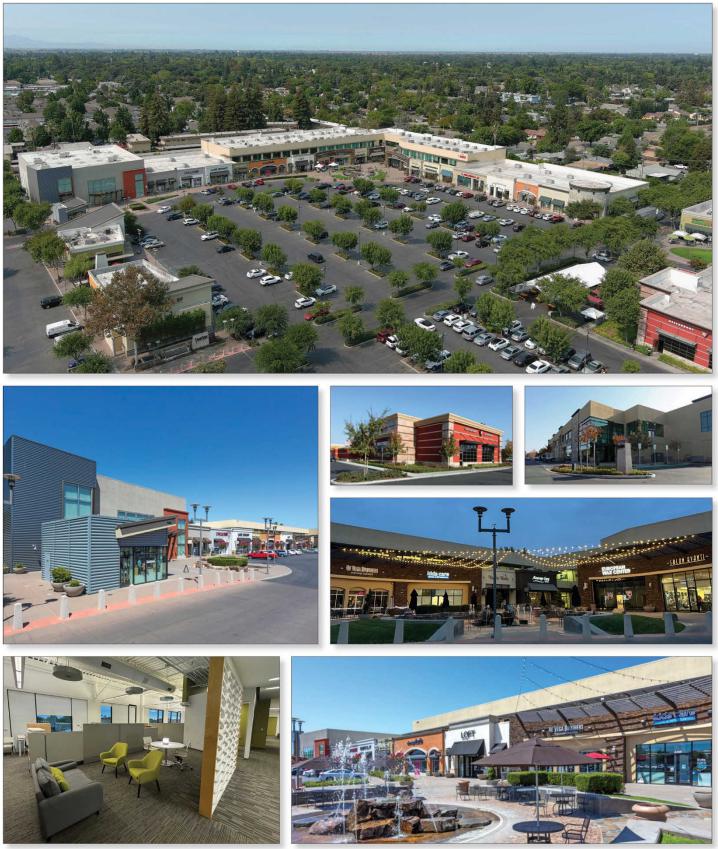
| A-3-77 |
| Retail – Anchored | Loan #9 | Cut-off Date Balance: | $35,000,000 | |
| 5757 Pacific Avenue | Stonecreek Village | Cut-off Date LTV: | 59.8% | |
| Stockton, CA 95207 | U/W NCF DSCR: | 1.37x | ||
| U/W NOI Debt Yield: | 11.0% |
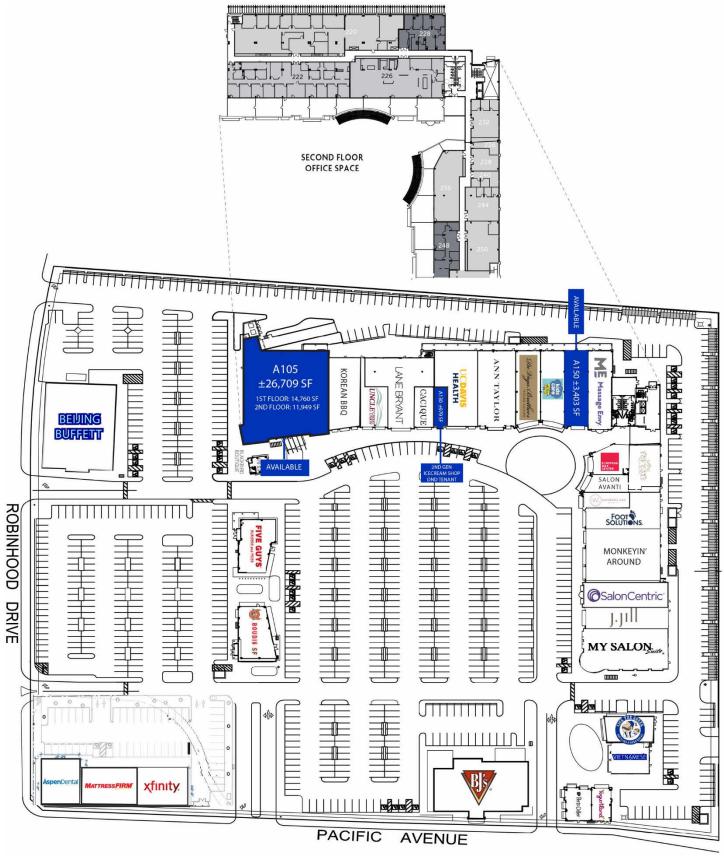
| A-3-78 |
| Retail – Anchored | Loan #9 | Cut-off Date Balance: | $35,000,000 | |
| 5757 Pacific Avenue | Stonecreek Village | Cut-off Date LTV: | 59.8% | |
| Stockton, CA 95207 | U/W NCF DSCR: | 1.37x | ||
| U/W NOI Debt Yield: | 11.0% |
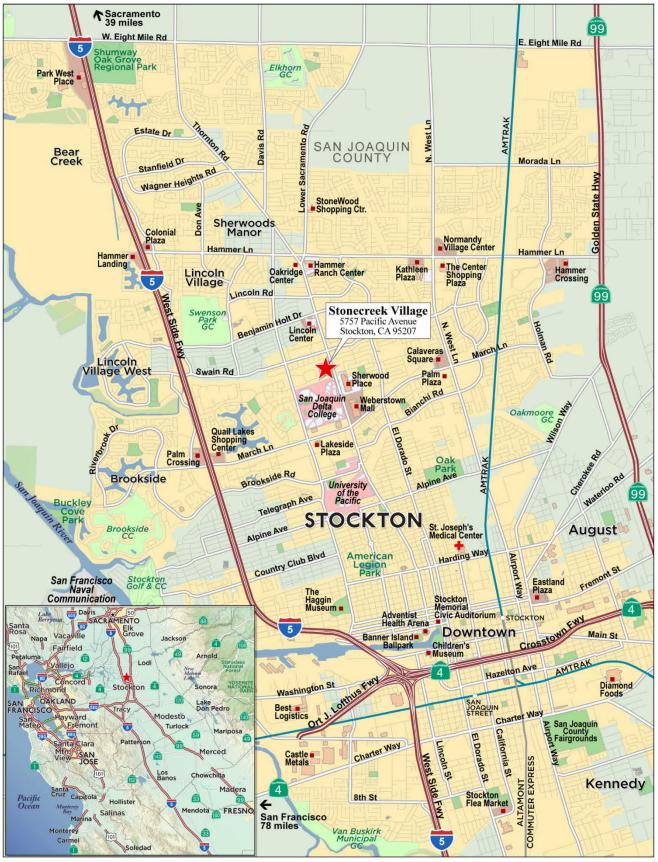
| A-3-79 |
| Mortgage Loan No. 9 – Stonecreek Village |
| Mortgage Loan Information | Mortgaged Property Information | |||||
| Mortgage Loan Seller: | AREF2 | Single Asset/Portfolio: | Single Asset | |||
| Original Balance: | $35,000,000 | Location: | Stockton, CA 95207 | |||
| Cut-off Date Balance: | $35,000,000 | General Property Type: | Retail | |||
| % of Initial Pool Balance: | 3.7% | Detailed Property Type: | Anchored | |||
| Loan Purpose: | Refinance | Title Vesting: | Fee | |||
| Borrower Sponsor: | Jeffrey Seltzer | Year Built/Renovated: | 1969, 2008, 2022 / NAP | |||
| Guarantor: | Jeffrey Seltzer | Size: | 177,088 SF | |||
| Mortgage Rate: | 7.4880% | Cut-off Date Balance per SF: | $198 | |||
| Note Date: | 1/10/2025 | Maturity Date Balance per SF: | $198 | |||
| Maturity Date: | 2/6/2030 | Property Manager: | Highpoint Property Management, | |||
| Term to Maturity: | 60 months | Inc. (borrower-related) | ||||
| Amortization Term: | 0 months | Underwriting and Financial Information | ||||
| IO Period: | 60 months | UW NOI(2): | $3,863,751 | |||
| Seasoning: | 1 month | UW NCF: | $3,642,391 | |||
| Prepayment Provisions: | L(24),YM1(29),O(7) | UW NOI Debt Yield: | 11.0% | |||
| Lockbox/Cash Mgmt Status: | Hard/Springing | UW NCF Debt Yield: | 10.4% | |||
| Additional Debt Type: | NAP | UW NOI Debt Yield at Maturity: | 11.0% | |||
| Additional Debt Balance: | NAP | UW NCF DSCR: | 1.37x | |||
| Future Debt Permitted (Type): | No (NAP) | Most Recent NOI(2): | $3,023,832 (10/31/2024 TTM) | |||
| 2nd Most Recent NOI: | $2,632,431 (12/31/2023) | |||||
| Reserves(1) | 3rd Most Recent NOI: | $2,111,016 (12/31/2022) | ||||
| Type | Initial | Monthly | Cap | Most Recent Occupancy: | 82.5% (12/26/2024) | |
| RE Taxes: | $128,439 | $21,406 | NAP | 2nd Most Recent Occupancy: | 82.0% (12/31/2023) | |
| Insurance: | $51,400 | Springing | NAP | 3rd Most Recent Occupancy: | 69.0% (12/31/2022) | |
| Replacement Reserve: | $0 | $3,689 | $132,816 | Appraised Value (as of): | $58,500,000 (11/17/2024) | |
| TI/LC Reserve: | $500,000 | $14,757 | $531,264 | Appraised Value per SF: | $330 | |
| Outstanding TI/LC Reserve: | $339,350 | $0 | NAP | Cut-off Date LTV Ratio: | 59.8% | |
| Rent Abatement Reserve: | $88,725 | $0 | NAP | Maturity Date LTV Ratio: | 59.8% | |
| Sources and Uses | ||||||
| Sources | Proceeds | % of Total | Uses | Proceeds | % of Total | |
| Mortgage Loan Amount: | $35,000,000 | 100.0% | Return of Equity: | $16,505,498 | 47.2% | |
| Loan Payoff: | $14,714,685 | 42.0% | ||||
| Closing Costs: | $2,671,903 | 7.6% | ||||
| Reserves: | $1,107,914 | 3.2% | ||||
| Total Sources: | $35,000,000 | 100.0% | Total Uses: | $35,000,000 | 100.0% | |
| (1) | See “Escrows and Reserves” below for further discussion of reserve requirements. |
| (2) | The increase from Most Recent NOI to UW NOI is primarily due to the increase in recoveries as two new triple-net leases were signed in the fourth quarter of 2024, in addition to renewal leases signed in 2024 being converted from modified gross to triple-net reimbursement structures. |
The Mortgage Loan. The ninth largest mortgage loan (the “Stonecreek Village Mortgage Loan”) is evidenced by a promissory note in the original principal balance of $35,000,000 and secured by a first-priority fee mortgage encumbering a 177,088 square foot retail property in Stockton, California (the “Stonecreek Village Property”).
The Borrower and the Borrower Sponsor. The borrower is HPC Stonecreek III LLC, a single-purpose Delaware limited liability company with one independent director. The borrower sponsor and the non-recourse carveout guarantor is Jeffrey Seltzer. Jeffrey Seltzer is the chief executive officer of Highpoint Capital Group, LLC, a real estate investment firm specializing in acquisitions primarily in the southern and western United States. The company currently owns and operates over 20 commercial properties, primarily multi-tenant retail, with a combined total square footage of over 2.8 million square feet and a total value of approximately $400 million.
The Property. The Stonecreek Village Property is a 177,088 square foot retail center located in Stockton, California. The Stonecreek Village Property consists of seven parcels and nine buildings (including three pad sites). Seven of the nine buildings were built in 2008, one pad building containing 10,200 square feet (5.8% of NRA) (currently occupied by Hibachi Grill) was built in 1969 and a new pad building containing 11,805 square feet (6.7% of NRA) was recently completed in 2022 (“New Pad”) and is leased to three tenants. Since acquiring the Stonecreek Village Property in 2018, the borrower sponsor has invested approximately $8.5 million on capital expenditures including the demolition and reconstruction of the New Pad in 2022. Overall, the Stonecreek Village Property is comprised of 144,314 square feet of retail space (81.5% of NRA) and 32,774 square feet of second-floor office space (18.5% of NRA). The Stonecreek Village Property also features 1,020 surface parking spaces, resulting in a parking ratio of 5.76 spaces per 1,000 square feet of NRA.
| A-3-80 |
| Retail – Anchored | Loan #9 | Cut-off Date Balance: | $35,000,000 | |
| 5757 Pacific Avenue | Stonecreek Village | Cut-off Date LTV: | 59.8% | |
| Stockton, CA 95207 | U/W NCF DSCR: | 1.37x | ||
| U/W NOI Debt Yield: | 11.0% |
As of December 26, 2024, the Stonecreek Village Property was 82.5% occupied by 35 tenants. The vacancy consists of one anchor space (26,654 square feet) and two inline retail suites totaling 4,382 square feet. The anchor space contains two-stories including a mezzanine area of 11,949 square feet. REI, an apparel company, occupied the space but vacated in 2018. The office space at the Stonecreek Village Property was 100.0% occupied by six tenants including a law firm, financial advisor, architecture firm, armed forces recruitment and two medical offices. Since acquiring the Stonecreek Village Property in 2018, the borrower sponsor signed 33 leases, 18 of which were new leases and increased net operating income from $1.1 million to $3.0 million as of the trailing 12-month period ending October 2024. The Stonecreek Village Property is managed by Highpoint Property Management, Inc., an affiliate of the borrower sponsor.
Major Tenants.
Hibachi Grill (10,200 SF, 5.8% of NRA, 4.9% of underwritten base rent). Hibachi Grill is a restaurant serving Asian cuisine. Hibachi Grill occupies an outparcel suite at the Stonecreek Village Property and has been a tenant since October 2022, when it signed a 10-year lease. The tenant has one 10-year renewal option remaining.
Kaiser Permanente (8,991 SF, 5.1% of NRA, 6.4% of underwritten base rent). Kaiser Permanente is a medical care provider that was founded in 1945 and currently operates 40 hospitals and 614 medical offices across the United States. The tenant occupies a second-floor medical office suite at the Stonecreek Village Property and has been a tenant since May 2019, when it signed a lease for 88 months. The tenant has two, 5-year renewal options remaining.
BJ’s Restaurant (8,793 SF, 5.0% of NRA, 4.9% of underwritten base rent). BJ’s Restaurant is a restaurant chain founded in 1978 with 216 locations across 30 states. BJ’s Restaurant ground leases an outparcel suite at the Stonecreek Village Property and has occupied its space since October 2006, when it signed a 20-year ground lease. The ground lease features one five-year renewal option. As of the trailing 12-month period ending November 2024, the tenant reported sales of $8.3 million or $946 per square foot which represents an occupancy cost on gross rent of 3.8%.
The following table presents certain information relating to the tenancy at the Stonecreek Village Property:
| Tenant Summary(1) | ||||||||||
| Tenant Name | Credit Rating (Fitch/Moody’s/S&P)(2) | Tenant SF | Approx. % of SF | Annual UW Rent | % of Total Annual UW Rent | Annual UW Rent PSF | Lease Expiration | Termination Option (Y/N) | Renewal Options | |
| Hibachi Grill | NR/NR/NR | 10,200 | 5.8% | 200,625 | 4.9% | $19.67 | 10/31/2032 | No | 1 x 10 Yr | |
| Kaiser Permanente | AA-/NR/AA- | 8,991 | 5.1% | 262,450 | 6.4% | $29.19 | 1/31/2027 | No | 2 x 5 Yr | |
| BJ's Restaurant(3) | NR/NR/NR | 8,793 | (3) | 5.0% | 199,650 | 4.9% | $22.71 | 9/30/2027 | No | 1 x 5 Yr |
| Armed Forces(4) | NR/NR/NR | 8,487 | 4.8% | 254,610 | 6.2% | $30.00 | MTM(4) | No | None | |
| Lane Bryant | NR/NR/NR | 7,432 | 4.2% | 166,243 | 4.0% | $22.37 | 1/31/2028 | No | None | |
| Subtotal/Wtd. Avg. | 43,903 | 24.8% | $1,083,578 | 26.4% | $24.68 | |||||
| Other Tenants |
102,149 |
|
57.7% |
$3,024,219 |
73.6% |
$29.61 |
||||
| Total Occupied Space | 146,052 | 82.5% | $4,107,796 | 100.0% | $28.13 | |||||
| Vacant Space |
31,036 |
|
17.5% |
|||||||
| Total/Wtd. Avg. | 177,088 | 100.0% | ||||||||
| (1) | Information is based on the underwritten rent roll dated December 26, 2024 with rent steps taken through January 2026. |
| (2) | Certain ratings are those of the parent company or government, whether or not the parent guarantees the lease. |
| (3) | BJ’s Restaurant leases its premises via a ground lease and owns the improvements. |
| (4) | Armed Forces leases its premises on a month-to-month basis. The tenant has been in occupancy since February 2019. |
| A-3-81 |
| Retail – Anchored | Loan #9 | Cut-off Date Balance: | $35,000,000 | |
| 5757 Pacific Avenue | Stonecreek Village | Cut-off Date LTV: | 59.8% | |
| Stockton, CA 95207 | U/W NCF DSCR: | 1.37x | ||
| U/W NOI Debt Yield: | 11.0% |
The following table presents certain information with respect to the lease rollover at the Stonecreek Village Property:
| Lease Rollover Schedule(1)(2) | ||||||||
| Year | # of Leases Rolling | SF Rolling | % of SF Rolling | Cumulative % of SF Rolling | Total UW Rent Rolling | % of Total UW Rent Rolling | Cumulative % of Total UW Rent Rolling | UW Rent PSF Rolling |
| MTM & 2025 | 3 | 11,223 | 6.3% | 6.3% | $335,840 | 8.2% | 8.2% | $29.92 |
| 2026 | 0 | 0 | 0.0% | 6.3% | $0 | 0.0% | 8.2% | $0.00 |
| 2027 | 8 | 46,717 | 26.4% | 32.7% | $1,250,543 | 30.4% | 38.6% | $26.77 |
| 2028 | 7 | 29,055 | 16.4% | 49.1% | $792,734 | 19.3% | 57.9% | $27.28 |
| 2029 | 7 | 17,479 | 9.9% | 59.0% | $488,387 | 11.9% | 69.8% | $27.94 |
| 2030(3) | 2 | 4,514 | 2.5% | 61.5% | $136,128 | 3.3% | 73.1% | $30.16 |
| 2031 | 1 | 2,186 | 1.2% | 62.8% | $83,210 | 2.0% | 75.1% | $38.07 |
| 2032 | 2 | 13,700 | 7.7% | 70.5% | $361,625 | 8.8% | 83.9% | $26.40 |
| 2033 | 2 | 10,536 | 5.9% | 76.5% | $292,564 | 7.1% | 91.1% | $27.77 |
| 2034 | 3 | 10,642 | 6.0% | 82.5% | $366,766 | 8.9% | 100.0% | $34.46 |
| 2035 | 0 | 0 | 0.0% | 82.5% | $0 | 0.0% | 100.0% | $0.00 |
| 2036 & Thereafter | 0 | 0 | 0.0% | 82.5% | $0 | 0.0% | 100.0% | $0.00 |
| Vacant | 0 | 31,036 | 17.5% | 100.0% | $0 | 0.0% | 100.0% | $0.00 |
| Total/Wtd. Avg. | 35 | 177,088 | 100.0% | $4,107,796 | 100.0% | $28.13(4) | ||
| (1) | Information is based on the underwritten rent roll dated December 26, 2024 with rent steps taken through January 2026. |
| (2) | Certain tenants may have lease termination options that are exercisable prior to the originally stated expiration date of the subject lease and that are not considered in the Lease Rollover Schedule. |
| (3) | The Stonecreek Village Mortgage Loan has a maturity date of February 6, 2030. |
| (4) | Total/Wtd. Avg. UW Rent PSF Rolling excludes vacant space. |
The Market. The Stonecreek Village Property is located in Stockton, California, approximately four miles north of downtown Stockton. Primary access to the neighborhood is provided by Interstate 5 and Highway 99, which are both located within two miles of the Stonecreek Village Property. The Stockton metropolitan statistical area is centrally located between San Francisco and Sacramento, which has allowed the city to grow as a commercial center due to its strategic location. Stockton is considered a regional business hub that greatly benefits from the Port of Stockton. The Stonecreek Village Property is located in the central portion of Stockton, near the University of the Pacific west of Highway 99 and east of Interstate 5. The immediate area is primarily developed with industrial developments. Retail and office uses are located along major arterials that are interspersed with residential development in surrounding neighborhoods.
According to the appraisal, the 2024 estimated population within a one-, three- and five-mile radius of the Stonecreek Village Property was 20,155, 183,512 and 295,157, respectively; and the 2024 estimated median household income within the same radii was approximately $63,133, $75,797 and $75,995, respectively.
According to the appraisal, the Stonecreek Village Property is situated within the Stockton retail submarket. As of the third quarter of 2024, the Stockton retail submarket reported a total inventory of approximately 15.7 million square feet, a vacancy rate of 5.6%, and a monthly rent per square foot of $1.20. A total of 3,877 square feet was under construction spread across two projects within the submarket.
The following table presents certain information relating to the appraisal’s market rent conclusion for the Stonecreek Village Property:
| Market Rent Summary(1) | |||||||
| Inline | Anchor | Large Restaurant | Large Inline | Office | Pad | Restaurant | |
| Property SF(2) | 40,575 | 26,654 | 18,993 | 32,059 | 32,774 | 11,805 | 14,228 |
| Market Rent (PSF per year) | $25.80 | $13.80 | $20.40 | $24.00 | $30.00 | $42.00 | $42.00 |
| Lease Term (Years) | 5 | 10 | 10 | 5 | 5 | 5 | 5 |
| Lease Type (Reimbursements) | NNN | NNN | NNN | NNN | FSG | NNN | NNN |
| New Tenant Improvements (PSF) | $15.00 | $10.00 | $10.00 | $10.00 | $10.00 | $10.00 | $20.00 |
| Renewal Tenant Improvements (PSF) | $10.00 | $5.00 | $5.00 | $5.00 | $5.00 | $5.00 | $10.00 |
| (1) | Source: Appraisal, unless otherwise indicated. |
| (2) | Information is based on the underwritten rent roll dated December 26, 2024. |
| A-3-82 |
| Retail – Anchored | Loan #9 | Cut-off Date Balance: | $35,000,000 | |
| 5757 Pacific Avenue | Stonecreek Village | Cut-off Date LTV: | 59.8% | |
| Stockton, CA 95207 | U/W NCF DSCR: | 1.37x | ||
| U/W NOI Debt Yield: | 11.0% |
The following table presents recent leasing data at comparable retail properties with respect to the Stonecreek Village Property:
| Comparable Retail Leases(1) | |||||||
| Property Name/Location | Year Built/ Renovated | Total GLA (SF) | Tenant | Tenant Size (SF) | Lease Start Date | Lease Term (months) | Annual Base Rent PSF |
|
Stonecreek Village Stockton, CA |
1969, 2008, 2022/NAP | 177,088(2) | Mattress Firm(2) | 4,333(2) | October-24(2) | 120(2) | $52.60(2) |
|
Wood Colony Plaza Modesto, CA |
1992/NAP | 133,000 | Planet Fitness | 19,082 | September-24 | 120 | $15.00 |
|
Florin Towne Centre Sacramento, CA |
2008/NAP | 7,799 | Mattress Firm | 5,511 | March-23 | 120 | $27.00 |
|
Crocker Village Sacramento, CA |
2019/NAP | 109,240 | Great Greek | 2,200 | June-23 | 120 | $51.00 |
|
Wells Fargo Bank Stockton, CA |
2024/NAP | 4,250 | Wells Fargo | 4,250 | July-24 | 180 | $47.52 |
|
Folsom Ranch Folsom, CA |
2023/2024/NAP | 21,004 | Nail Chateau | 2,500 | February-24 | 120 | $42.24 |
| (1) | Source: Appraisal, unless otherwise indicated. |
| (2) | Information is based on the underwritten rent roll dated December 26, 2024. |
Appraisal. The appraisal concluded to an “as-is” value for the Stonecreek Village Property of $58,500,000 as of November 17, 2024.
Environmental Matters. According to the Phase I environmental site assessment dated December 2, 2024, there was no evidence of any recognized environmental conditions at the Stonecreek Village Property.
Operating History and Underwritten Net Cash Flow. The following table presents certain information relating to the historical operating performance and underwritten net cash flow at the Stonecreek Village Property:
| Cash Flow Analysis(1) | ||||||
| 2021 | 2022 | 2023 | 10/31/2024 TTM | UW | UW PSF | |
| Gross Potential Rent | $2,340,393 | $2,783,451 | $3,305,314 | $3,828,087 | $4,638,494 | $26.19 |
| Recovery Income | $460,533 | $498,127 | $716,637 | $881,631 | $1,298,558 | $7.33 |
| Other Income | $469 | $54,486 | $15,942 | $0 | $0 | $0.00 |
| Vacancy and Concessions |
($30,665) |
($122,062) |
($81,083) |
($22,914) |
($480,881) |
($2.72) |
| Effective Gross Income | $2,770,730 | $3,214,003 | $3,956,810 | $4,686,804 | $5,456,171 | $30.81 |
| Taxes | $228,934 | $217,293 | $235,605 | $353,518 | $420,000 | $2.37 |
| Insurance | $118,973 | $125,651 | $193,762 | $193,762 | $205,600 | $1.16 |
| Other Operating Expenses |
$688,883 |
$760,042 |
$895,012 |
$1,115,692 |
$966,820 |
$5.46 |
| Total Operating Expenses | $1,036,790 | $1,102,987 | $1,324,379 | $1,662,971 | $1,592,420 | $8.99 |
| Net Operating Income | $1,733,941 | $2,111,016 | $2,632,431 | $3,023,832 | $3,863,751 | $21.82 |
| TI/LC | $0 | $0 | $0 | $0 | $177,088 | $1.00 |
| Capital Expenditures |
$0 |
$0 |
$0 |
$0 |
$44,272 |
$0.25 |
| Net Cash Flow(2) | $1,733,941 | $2,111,016 | $2,632,431 | $3,023,832 | $3,642,391 | $20.57 |
| Occupancy %(3) | 71.0% | 69.0% | 82.0% | 82.5% | 91.9% | |
| NOI DSCR | 0.65x | 0.79x | 0.99x | 1.14x | 1.45x | |
| NCF DSCR | 0.65x | 0.79x | 0.99x | 1.14x | 1.37x | |
| NOI Debt Yield | 5.0% | 6.0% | 7.5% | 8.6% | 11.0% | |
| NCF Debt Yield | 5.0% | 6.0% | 7.5% | 8.6% | 10.4% | |
| (1) | Information is based on the underwritten rent roll dated December 26, 2024 with rent steps taken through January 2026. |
| (2) | The increase from 10/31/2024 TTM Net Operating Income to UW Net Operating Income is primarily due to the increase in recoveries as two new triple-net leases were signed in the fourth quarter of 2024 in addition to renewal leases signed in 2024 being converted from modified gross to triple-net reimbursement structures. |
| (3) | Occupancy % is as of December 31 of each respective year except for 10/31/2024 TTM. UW Occupancy % represents underwritten economic occupancy. |
| A-3-83 |
| Retail – Anchored | Loan #9 | Cut-off Date Balance: | $35,000,000 | |
| 5757 Pacific Avenue | Stonecreek Village | Cut-off Date LTV: | 59.8% | |
| Stockton, CA 95207 | U/W NCF DSCR: | 1.37x | ||
| U/W NOI Debt Yield: | 11.0% |
Escrows and Reserves.
At origination, the borrower deposited approximately (i) $128,439 for property taxes, (ii) $51,400 for insurance, (iii) $500,000 for future tenant improvements and leasing commissions, (iv) $339,350 for outstanding tenant improvements and leasing commissions and (v) $88,725 for outstanding free rent.
Real Estate Taxes – On a monthly basis, the borrower is required to reserve 1/12th of the estimated annual property taxes (currently approximately $21,406).
Insurance Premiums - On a monthly basis, the borrower is required to escrow 1/12th of the estimated annual insurance premium. Such reserve has been conditionally waived so long as the borrower maintains a blanket policy meeting the requirements of the Stonecreek Village Mortgage Loan documents.
Replacements Reserve – On a monthly basis, the borrower is required to reserve $3,689 for replacement reserves, subject to a cap of $132,816.
TI/LC Reserve - On a monthly basis, the borrower is required to reserve $14,757 for future tenant improvements and leasing commissions, subject to a cap of $531,264.
Lockbox and Cash Management. The Stonecreek Village Mortgage Loan is structured with a hard lockbox and springing cash management. The borrower is required to cause all rents to be transmitted directly by tenants at the Stonecreek Village Property into a lender-controlled lockbox account. In addition, the borrower is required to cause all rents received by the borrower or the property manager, as applicable, to be deposited into such lockbox account within one business day of receipt. All amounts in the lockbox account are remitted on a daily basis to the borrower at any time other than during the continuance of a Cash Management Period (as defined below). Upon the occurrence and during the continuance of a Cash Management Period, all amounts are required to be remitted to a lender-controlled cash management account on a daily basis to be applied and disbursed in accordance with the Stonecreek Village Mortgage Loan documents. During the continuance of a Cash Management Period, all available cash remaining after the required applications and disbursements will be held in a lender-controlled subaccount, provided, during a Cash Management Period continuing solely as a result of a Trigger Lease Sweep Period (as defined below), all available cash will be held in a special rollover reserve subaccount.
A “Cash Management Period” will commence upon the earlier of the following:
| (i) | an event of default; |
| (ii) | the debt service coverage ratio falling below 1.20x as of the end of any calendar quarter; or |
| (iii) | the commencement of a Trigger Lease Sweep Period. |
A Cash Management Period will end upon the occurrence of the following:
| ● | with respect to clause (i) above, the cure (if applicable) of such event of default; |
| ● | with respect to clause (ii) above, upon the debt service coverage ratio being at least 1.20x for two consecutive calendar quarters; or |
| ● | with respect to clause (iii) above, the Trigger Lease Sweep Period has ended. |
A "Trigger Lease Sweep Period" will commence upon the occurrence of any of the following, provided, the borrower may prevent the occurrence of a Trigger Lease Sweep Period by depositing at least $81,627 into a special rollover reserve on each monthly payment date until such Trigger Lease Sweep Period would have otherwise ended;
(i) the date that is 12 months prior to the end of the term of any Trigger Lease (as defined below) (including any renewal terms) or the date a tenant under a Trigger Lease actually gives notice of its intention not to renew or extend;
(ii) the date required under a Trigger Lease by which the applicable tenant under the Trigger Lease is required to give notice of its exercise of a renewal option thereunder or the date that any tenant under a Trigger Lease gives written notice of its intention not to renew or extend its lease;
(iii) any Trigger Lease (or any material portion thereof) is surrendered, cancelled or terminated prior to its then current expiration date or any tenant under a Trigger Lease gives written notice of its intention to terminate, surrender or cancel its Trigger Lease (or any material portion thereof);
(iv) any tenant under a Trigger Lease discontinues its business in any material portion of its premises (i.e., "goes dark") or gives written notice that it intends to do the same;
(v) the occurrence and continuance (beyond any applicable notice and cure periods) of a default under any Trigger Lease by the applicable tenant thereunder; or
(vi) the occurrence of an insolvency proceeding by a tenant under a Trigger Lease.
A Trigger Lease Sweep Period will end upon the earlier to occur of (x) the lender’s determination that sufficient funds have been accumulated in the special rollover reserve subaccount to pay for all anticipated expenses in connection with the re-letting of the space under the applicable lease(s) that gave rise to the subject Trigger Lease Sweep Period, including brokerage commissions and tenant improvements, and any anticipated shortfalls of payments required during any period of time that rents are insufficient as a result of down-time or free rent periods, and (y) any of the following events:
| ● | with respect to a matter described in clauses (i), (ii), (iii) or (iv) above, upon the earlier to occur of the date on which (A) the subject tenant irrevocably exercises any renewal or extension option (or otherwise enters into an extension agreement with the borrower that is acceptable to the lender) with respect to all of the space demised under its Trigger Lease, and in the lender’s reasonable judgment, sufficient funds have been accumulated in the special rollover reserve subaccount (during the continuance of the subject Trigger Lease Sweep Period) to pay for all anticipated approved leasing expenses for such Trigger Lease and any other anticipated expenses in connection with such renewal or extension, or (B) all of the space demised under the subject Trigger Lease that gave rise to the subject Trigger Lease Sweep Period has been fully leased pursuant to a replacement lease or replacement leases approved by the lender, and all approved leasing expenses (and any other expenses in connection with the re-tenanting of such space) have been paid in full; |
| ● | with respect to clause (v) above, if the subject tenant default has been cured and no other tenant default has occurred for a period of six consecutive months following such cure; or |
| ● | with respect to a matter described in clause (vi) above, if the applicable insolvency proceeding has terminated and the applicable Trigger Lease has been affirmed, assumed or assigned in a manner reasonably satisfactory to the lender. |
A “Trigger Lease” means any lease that covers 25,000 or more square feet at the Stonecreek Village Property.
| A-3-84 |
| Retail – Anchored | Loan #9 | Cut-off Date Balance: | $35,000,000 | |
| 5757 Pacific Avenue | Stonecreek Village | Cut-off Date LTV: | 59.8% | |
| Stockton, CA 95207 | U/W NCF DSCR: | 1.37x | ||
| U/W NOI Debt Yield: | 11.0% |
Additional Secured Indebtedness (not including trade debts). None.
Mezzanine Loan and Preferred Equity. Not permitted.
Release of Property. Not permitted.
Letter of Credit. None.
Right of First Offer/Right of First Refusal. None.
Ground Lease. None.
Terrorism Insurance. The borrower is required to obtain and maintain property insurance that covers perils of terrorism and acts of terrorism in an amount equal to the full replacement cost of the Stonecreek Village Property and business interruption insurance for 18 months with a six-month extended period of indemnity. See “Risk Factors—Risks Relating to the Mortgage Loans—Terrorism Insurance May Not Be Available for All Mortgaged Properties” in the prospectus.
| A-3-85 |
| Retail – Anchored | Loan #10 | Cut-off Date Balance: | $30,500,000 | |
| 140 West 87th Street | Chatham Ridge Shopping Center | Cut-off Date LTV: | 64.6% | |
| Chicago, IL 60620 | UW NCF DSCR: | 1.55x | ||
| UW NOI Debt Yield: | 11.7% |
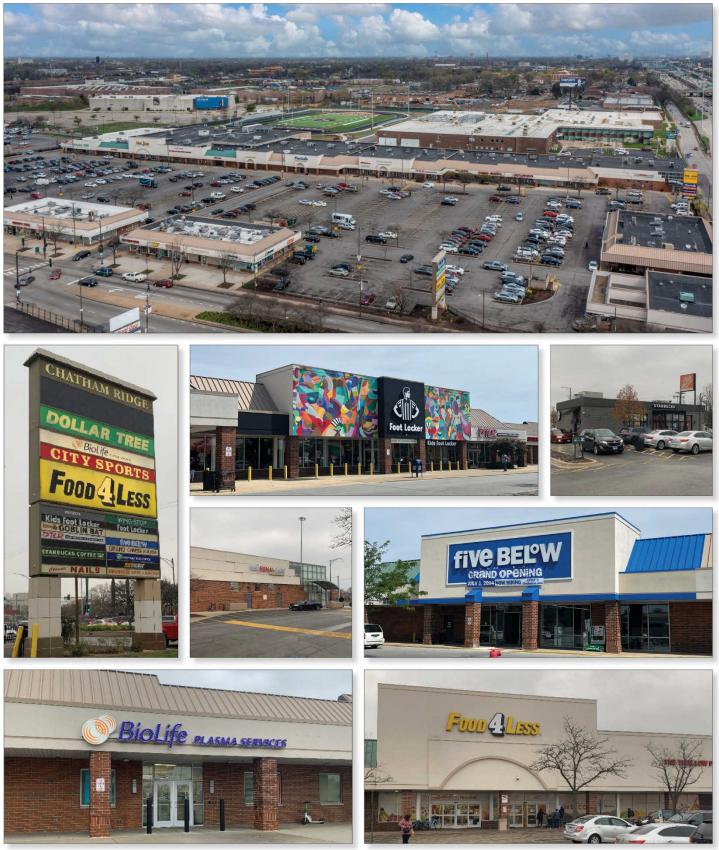
| A-3-86 |
| Retail – Anchored | Loan #10 | Cut-off Date Balance: | $30,500,000 | |
| 140 West 87th Street | Chatham Ridge Shopping Center | Cut-off Date LTV: | 64.6% | |
| Chicago, IL 60620 | UW NCF DSCR: | 1.55x | ||
| UW NOI Debt Yield: | 11.7% |
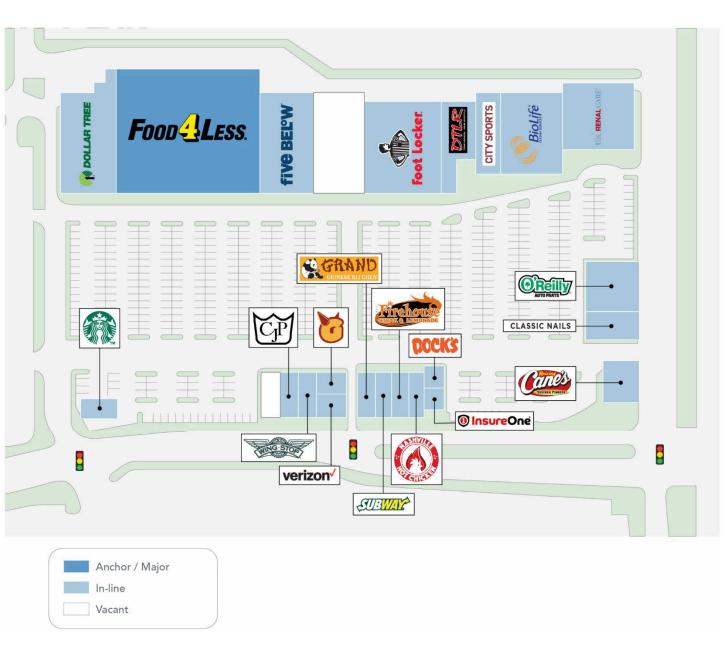
| A-3-87 |
| Retail – Anchored | Loan #10 | Cut-off Date Balance: | $30,500,000 | |
| 140 West 87th Street | Chatham Ridge Shopping Center | Cut-off Date LTV: | 64.6% | |
| Chicago, IL 60620 | UW NCF DSCR: | 1.55x | ||
| UW NOI Debt Yield: | 11.7% |
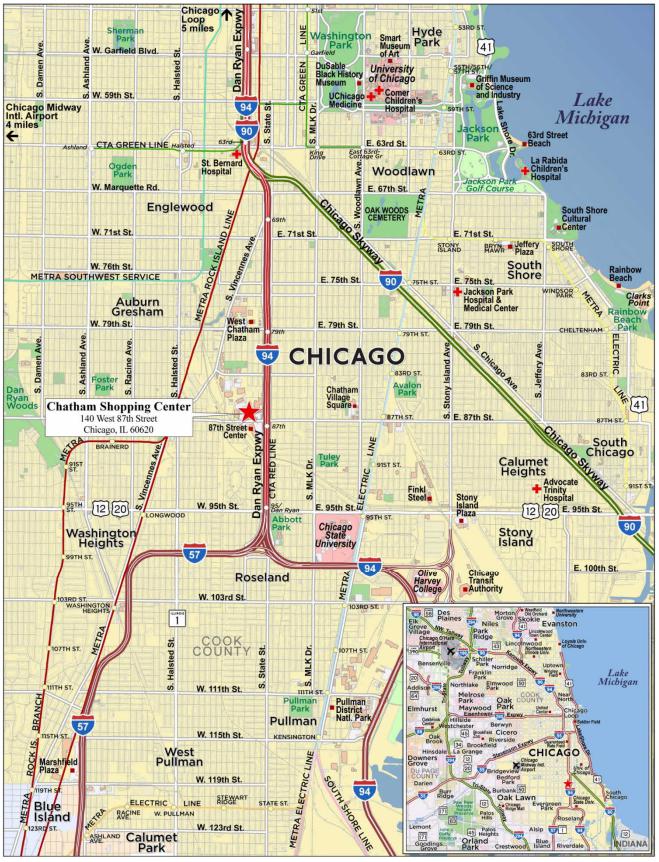
| A-3-88 |
| Mortgage Loan No. 10 – Chatham Ridge Shopping Center |
| Mortgage Loan Information | Property Information | ||||||
| Mortgage Loan Seller: | MSMCH | Single Asset/Portfolio: | Single Asset | ||||
| Original Balance: | $30,500,000 | Location: | Chicago, IL 60620 | ||||
| Cut-off Date Balance: | $30,500,000 | General Property Type: | Retail | ||||
| % of Initial Pool Balance: | 3.3% | Detailed Property Type: | Anchored | ||||
| Loan Purpose: | Refinance | Title Vesting: | Fee | ||||
| Borrower Sponsor: | Tabani Group | Year Built/Renovated: | 1990/NAP | ||||
| Guarantor: | TK Realty Holdings, LLC | Size: | 176,230 SF | ||||
| Mortgage Rate: | 6.8100% | Cut-off Date Balance Per SF: | $173 | ||||
| Note Date: | 1/9/2025 | Maturity Date Balance Per SF: | $173 | ||||
| Maturity Date: | 2/6/2030 | Property Manager: | AZT Corporation | ||||
| Term to Maturity: | 60 months | ||||||
| Amortization Term: | 0 months | Underwriting and Financial Information | |||||
| IO Period: | 60 months | UW NOI(2): | $3,564,658 | ||||
| Seasoning: | 1 month | UW NCF: | $3,268,606 | ||||
| Prepayment Provisions: | L(23),YM1(30),O(7) | UW NOI Debt Yield: | 11.7% | ||||
| Lockbox/Cash Mgmt Status: | Hard/Springing | UW NCF Debt Yield: | 10.7% | ||||
| Additional Debt Type: | NAP | UW NOI Debt Yield at Maturity: | 11.7% | ||||
| Additional Debt Balance: | NAP | UW NCF DSCR: | 1.55x | ||||
| Future Debt Permitted (Type): | No (NAP) | Most Recent NOI(2): | $2,961,335 (7/31/2024 TTM) | ||||
| 2nd Most Recent NOI(2): | $2,795,002 (12/31/2023) | ||||||
| Reserves(1) | 3rd Most Recent NOI(2): | $3,673,565 (12/31/2022) | |||||
| Type | Initial | Monthly | Cap | Most Recent Occupancy(2): | 91.1% (11/12/2024) | ||
| RE Taxes: | $142,995 | $142,995 | NAP | 2nd Most Recent Occupancy(2): | 83.8% (12/31/2023) | ||
| Insurance: | $0 | Springing | NAP | 3rd Most Recent Occupancy(2): | 98.5% (12/31/2022) | ||
| Deferred Maintenance: | $23,575 | $0 | NAP | Appraised Value (as of): | $47,200,000 (10/23/2024) | ||
| Replacement Reserve: | $0 | $2,203 | NAP | Appraised Value Per SF: | $268 | ||
| TI/LC Reserve: | $0 | $22,029 | $660,863 | Cut-off Date LTV Ratio: | 64.6% | ||
| Gap Rent Reserve: | $157,500 | $0 | NAP | Maturity Date LTV Ratio: | 64.6% | ||
| Sources and Uses | ||||||
| Sources | Proceeds | % of Total | Uses | Proceeds | % of Total | |
| Mortgage Loan Amount: | $30,500,000 | 100.0% | Loan Payoff: | $23,209,880 | 76.1% | |
| Return of Equity: | $5,529,852 | 18.1% | ||||
| Closing Costs: | $1,436,198 | 4.7% | ||||
| Reserves: | $324,070 | 1.1% | ||||
| Total Sources: | $30,500,000 | 100.0% | Total Uses: | $30,500,000 | 100.0% | |
| (1) | See “Escrows and Reserves” below for further discussion of reserve requirements. |
| (2) | The decrease in NOI and occupancy from 2022 to 2023 and the increase in NOI and occupancy from 2023, 7/31/2024 TTM and UW was primarily due to Marshall’s vacating the Chatham Ridge Shopping Center Property (as defined below) in 2023, and the subsequent backfilling of half the Marshall’s space by Five Below in October 2024. |
The Mortgage Loan. The tenth largest mortgage loan (the “Chatham Ridge Shopping Center Mortgage Loan”) is evidenced by a promissory note in the original principal amount of $30,500,000 and secured by a first priority fee mortgage encumbering a 176,230 SF anchored retail property in Chicago, Illinois (the “Chatham Ridge Shopping Center Property”).
The Borrower and the Borrower Sponsor. The borrower for the Chatham Ridge Shopping Center Mortgage Loan is T Chatham Ridge SRF IL, LLC, a single purpose Delaware limited liability company with one independent director in its organizational structure. The borrower is 100% owned by Tabani Holdings IL, LLC, which is 99.99% owned by the non-recourse carveout guarantor, TK Realty Holdings, LLC. The borrower sponsor is Tabani Group, a full-service commercial real estate company with over 10 million SF of commercial, hotel and residential real estate nationwide. Founded in 1981 by Zaffar Tabani, the Tabani Group focuses on making capital improvements to its portfolio, increasing occupancy with professional targeted marketing, and leveraging strategic management to both grow and develop its portfolio.
The Property. The Chatham Ridge Shopping Center Property is comprised of a fee interest in six single-story buildings encompassing a 176,230 SF anchored retail property on an approximately 13.6-acre site in Chicago, Illinois that includes 622 surface parking spaces (3.5 spaces per 1,000 SF). The Chatham Ridge Shopping Center Property was built in 1990 and was acquired by the borrower sponsor in June 2021 for $30.5 million and has invested an additional $5.7 million since. As of November 12, 2024, the Chatham Ridge Shopping Center Property is 91.1% leased to 22 tenants. The Chatham Ridge Shopping Center Property is anchored by Food 4 Less (Kroger guaranteed), with other national retailers including Five Below, U.S. Renal Care, Biolife Plasma Services, LP, Foot Locker, Dollar Tree and Starbucks. Additionally, the Chatham Ridge Shopping Center Property is shadow anchored by The Home Depot. The rent roll is granular, with no tenants other than Food 4 Less and Foot Locker occupying more than 7.0% of NRA or 10.9% of underwritten rent. Historical occupancy has averaged 93% over the last five years, remaining above 90% since the borrower sponsor purchased the Chatham Ridge Shopping Center Property, with the exception of 2023 when it dropped to 83.8% due to Marshall’s vacating. Occupancy quickly recovered to the current 91.1% with Five Below backfilling half of the Marshall’s space.
| A-3-89 |
| Retail – Anchored | Loan #10 | Cut-off Date Balance: | $30,500,000 | |
| 140 West 87th Street | Chatham Ridge Shopping Center | Cut-off Date LTV: | 64.6% | |
| Chicago, IL 60620 | UW NCF DSCR: | 1.55x | ||
| UW NOI Debt Yield: | 11.7% |
Major Tenants.
Food 4 Less (63,743 SF, 36.2% of NRA, 17.0% of underwritten base rent). Food 4 Less is an American grocery chain owned by Kroger. Kroger operates Food 4 Less stores in the Chicago metropolitan area (Illinois and Indiana) and in Southern California, operating 101 stores across the United States. Kroger is an American retail company that operates (either directly or through its subsidiaries) supermarkets and multi-department stores throughout the United States. Founded in 1883 and headquartered in Cincinnati, Ohio, Kroger operates 2,750 grocer retail stores in 35 states under two dozen banners. Subsidiaries of Kroger that Kroger operates as include Kroger, Ralphs, Food 4 Less, Dillons, Pick’n Save, Mariano’s, Metro Market, Smith’s Food and Drug, Gerbes, and Fry’s. Kroger ranks as one of the world’s largest retailers, with annual sales of more than $150.0 billion. Food 4 Less has anchored the Chatham Ridge Shopping Center Property since 2009, has a lease expiration date of January 31, 2029, and has eight, five-year renewal options remaining.
Foot Locker (13,907 SF, 7.9% of NRA, 13.0% of underwritten base rent). Foot Locker, Inc. (NYSE: FL) is an American multinational footwear retailer headquartered in Midtown Manhattan, New York City. Foot Locker was founded in 1974 by F. W. Woolworth and Santiago Lopez and currently operates over 2,500 retail stores across 26 countries. Foot Locker is a leading footwear and apparel retailer that sells sneakers, footwear and apparel for men, women and kids. Foot Locker owns a portfolio of brands including Foot Locker, Kids Foot Locker, Champs Sports, WSS and atmos. Foot Locker has been a tenant at the Chatham Ridge Shopping Center Property since 2016, has a lease expiration date of July 31, 2033, and has two, five-year renewal options remaining.
Five Below (12,329 SF, 7.0% of NRA, 7.1% of underwritten base rent). Five Below, Inc. is an American chain of specialty discount stores that prices most of its products at $5 or less, plus a smaller assortment of products priced beyond $5. The company was founded in 2002 and operates more than 1,700 stores across 43 states. The chain is aimed at selling apparel, games, fashion accessories, bath and body, candy and beverages, room décor and storage, stationery and school supplies, books, and novelty items aimed at teens and tweens. Five Below has been a tenant at the Chatham Ridge Shopping Center Property since October 2024, has a lease expiration date of January 31, 2035, and has three, five-year renewal options remaining.
The following table presents a summary regarding the major stores at the Chatham Ridge Shopping Center Property:
| Tenant Summary(1) | |||||||||
| Tenant Name | Credit Rating (Fitch/Moody’s/ S&P)(2) |
Tenant SF | Approx.% of SF | Annual UW Base Rent | % of Total Annual UW Base Rent | Annual UW Base Rent PSF | Lease Expiration | Renewal Options | Term. Option (Y/N) |
| Major Tenants | |||||||||
| Food 4 Less | NR/Baa1/BBB | 63,743 | 36.2% | $682,688 | 17.0% | $10.71 | 1/31/2029 | 8 x 5 year | N |
| Foot Locker | NR/Ba3/BB | 13,907 | 7.9% | $520,878 | 13.0% | $37.45 | 7/31/2033 | 2 x 5 year | N |
| Five Below | NR/NR/NR | 12,329 | 7.0% | $286,033 | 7.1% | $23.20 | 1/31/2035 | 3 x 5 year | N |
| U.S. Renal Care | NR/NR/NR | 12,096 | 6.9% | $319,334 | 8.0% | $26.40 | 9/30/2027 | 2 x 5 year | N |
| BioLife Plasma Services, L.P | NR/NR/NR | 11,783 | 6.7% | $435,971 | 10.9% | $37.00 | 5/31/2033 | 3 x 5 year | N |
| Subtotal/Wtd. Avg. | 113,858 | 64.6% | $2,244,904 | 55.9% | $19.72 | ||||
| Other Tenants | 46,725 | 26.5% | $1,768,956 | 44.1% | $37.86 | ||||
| Occupied Subtotal/Wtd. Avg. | 160,583 | 91.1% | $4,013,860 | 100.0% | $25.00 | ||||
| Vacant Space | 15,647 | 8.9% | |||||||
| Total/Wtd. Avg. | 176,230 | 100.0% | |||||||
| (1) | Information is based on the underwritten rent roll dated November 12, 2024. |
| (2) | Certain ratings are those of the parent company whether or not the parent company guarantees the lease. |
| A-3-90 |
| Retail – Anchored | Loan #10 | Cut-off Date Balance: | $30,500,000 | |
| 140 West 87th Street | Chatham Ridge Shopping Center | Cut-off Date LTV: | 64.6% | |
| Chicago, IL 60620 | UW NCF DSCR: | 1.55x | ||
| UW NOI Debt Yield: | 11.7% |
The following table presents certain information relating to the lease rollover at the Chatham Ridge Shopping Center Property:
| Lease Rollover Schedule(1)(2) | ||||||||
| Year | #
of Leases Rolling |
SF Rolling | Approx. % of SF Rolling | Approx. Cumulative % of SF Rolling | Total UW Rent Rolling | Approx. % of Total UW Rent Rolling | Approx. Cumulative % of Total UW Rent Rolling | Total UW Rent PSF Rolling |
| MTM | 0 | 0 | 0.0% | 0.0% | $0 | 0.0% | 0.0% | $0.00 |
| 2025 | 3 | 4,140 | 2.3% | 2.3% | $161,748 | 4.0% | 4.0% | $39.07 |
| 2026 | 3 | 10,200 | 5.8% | 8.1% | $336,000 | 8.4% | 12.4% | $32.94 |
| 2027 | 5 | 24,042 | 13.6% | 21.8% | $742,049 | 18.5% | 30.9% | $30.86 |
| 2028 | 0 | 0 | 0.0% | 21.8% | $0 | 0.0% | 30.9% | $0.00 |
| 2029 | 2 | 69,788 | 39.6% | 61.4% | $857,993 | 21.4% | 52.3% | $12.29 |
| 2030(3) | 0 | 0 | 0.0% | 61.4% | $0 | 0.0% | 52.3% | $0.00 |
| 2031 | 0 | 0 | 0.0% | 61.4% | $0 | 0.0% | 52.3% | $0.00 |
| 2032 | 1 | 848 | 0.5% | 61.9% | $53,271 | 1.3% | 53.6% | $62.82 |
| 2033 | 5 | 33,111 | 18.8% | 80.6% | $1,208,158 | 30.1% | 83.7% | $36.49 |
| 2034 | 1 | 1,740 | 1.0% | 81.6% | $90,959 | 2.3% | 86.0% | $52.28 |
| 2035 | 1 | 12,329 | 7.0% | 88.6% | $286,033 | 7.1% | 93.1% | $23.20 |
| 2036 & Thereafter | 2 | 4,385 | 2.5% | 91.1% | $277,650 | 6.9% | 100.0% | $63.32 |
| Vacant | 0 | 15,647 | 8.9% | 100.0% | $0 | 0.0% | 100.0% | $0.00 |
| Total/Wtd. Avg.(4) | 23 | 176,230 | 100.0% | $4,013,860 | 100.0% | $25.00 | ||
| (1) | Information is based on the underwritten rent roll dated November 12, 2024. |
| (2) | Certain tenants may have lease termination options that are exercisable prior to the stated expiration date of the subject lease or leases which are not considered in the Lease Rollover Schedule. |
| (3) | The maturity date of the Chatham Ridge Shopping Center Mortgage Loan is February 6, 2030. |
| (4) | Total/Wtd. Avg. Total UW Rent PSF Rolling excludes vacant space. |
The Market. The Chatham Ridge Shopping Center Property is located in Chicago, Illinois, within the South Chicago retail submarket of the Chicago retail market. The Chatham Ridge Shopping Center Property is located at the intersection of West 87th Street and I-94, approximately 10 miles south of the Loop. The 87th Street Red Line Chicago Transit Authority Station, is located adjacent to the Chatham Ridge Shopping Center Property. The immediate location serves as the major retail corridor on the South Side of Chicago, with Home Depot as a shadow anchor and Jewel-Osco, Aldo, Walmart, Lowes Home Improvement, Floor and Décor, and several other retailers and restaurants all located within the immediate area of the Chatham Ridge Shopping Center Property. Additionally, the Chatham Ridge Shopping Center Property is adjacent to Perspectives Middle School, which has an enrollment of 1,705 students. According to the appraisal, as of the second quarter of 2024, the vacancy rate in the South Chicago retail submarket was approximately 11.7%, with average asking rents of $21.73 PSF and inventory of approximately 6.9 million SF. According to the appraisal, as of the second quarter of 2024, the vacancy rate in the Chicago retail market was approximately 13.2%, with average asking rents of $20.99 PSF and inventory of approximately 106.4 million SF. According to the appraisal, the 2023 population within a one-, three- and five-mile radius of the Chatham Ridge Shopping Center Property is 22,336, 243,808, and 621,721, respectively. The 2023 average household income within the same one-, three- and five-mile radius was $69,193, $60,668, and $64,580, respectively.
The following table presents recent grocery anchor space leasing data at comparable retail properties with respect to the Chatham Ridge Shopping Center Property:
| Comparable Leases Summary | |||||||
| Property/Location | Year Built / Renovated | SF | Tenant Name | Tenant Size (SF) | Lease Date | Rent PSF | Lease Type |
|
Chatham Ridge Shopping Center Property (subject)(1) 140 West 87th Street Chicago, IL |
1990 / NAP | 176,230 | Food 4 Less | 63,743 | Feb. 2009 | $10.71 | NNN |
|
Shoppes at Mill Creek 13000 South LaGrange Road Palos Park, IL |
1989 / NAP | 102,422 | Jewel/Osco | 64,938 | Sep. 2024 | $10.84 | Net |
|
Jewel-Osco 507 East Woodlawn Avenue LA Grange Park, IL |
1964 / 2007 | 46,637 | Jewel-Osco | 46,637 | Jun. 2024 | $11.00 | Net |
|
Shops of Heatherfield 2502-2332 Waukegan Road Glenview, IL |
1998 / NAP | 89,243 | Jewel-Osco | 70,848 | Jan. 2023 | $12.25 | Net |
|
Norridge Commons 4101-4275 North Harlem Avenue Norridge, IL |
1977 / 2008 | 331,979 | Amazon Fresh | 50,000 | Mar. 2022 | $16.25 | Net |
Source: Appraisal.
| (1) | Information is based on the underwritten rent roll dated November 12, 2024 other than Year Built. |
| A-3-91 |
| Retail – Anchored | Loan #10 | Cut-off Date Balance: | $30,500,000 | |
| 140 West 87th Street | Chatham Ridge Shopping Center | Cut-off Date LTV: | 64.6% | |
| Chicago, IL 60620 | UW NCF DSCR: | 1.55x | ||
| UW NOI Debt Yield: | 11.7% |
The following table presents recent junior anchor space leasing data at comparable retail properties with respect to the Chatham Ridge Shopping Center Property:
| Comparable Leases Summary | |||||||
| Property/Location | Year Built / Renovated | SF | Tenant Name | Tenant Size (SF) | Lease Date | Rent PSF | Lease Type |
|
Chatham Ridge Shopping Center Property (subject)(1) 140 West 87th Street Chicago, IL |
1990 / NAP | 176,230 |
Foot Locker Five Below |
13,907 12,329 |
Jul. 2023 Oct. 2024 |
$37.45 $23.20 |
NNN NNN |
|
North Aurora Towne Center 1610 Orchard Gateway Boulevard North Aurora, IL |
2006 / NAP | 85,758 | Kids Empire | 10,004 | Jan. 2024 | $19.00 | Net |
|
Norridge Commons 4101-4275 North Harlem Avenue Norridge, IL |
1977 / 2008 | 331,979 | Petco | 16,500 | Sep. 2023 | $26.00 | Net |
|
Downers Park Plaza 7349 Lemont Road Downers Grove, IL |
1979 / 2000 | 141,702 | Party City | 12,720 | Feb. 2023 | $17.60 | Net |
|
Park Center Plaza 15910 South Harlem Avenue Tinley Park, IL |
1988 / NAP | 132,193 | Chuck E. Cheese | 15,010 | Aug. 2022 | $18.95 | Net |
|
North & Kinsbury 1574 North Kingsbury Street Chicago, IL |
2004 / NAP | 37,700 | Backcountry | 13,000 | Jul. 2022 | $55.00 | Net |
Source: Appraisal.
| (1) | Information is based on the underwritten rent roll dated November 12, 2024 other than Year Built. |
The following table presents recent small and mid-size space leasing data at comparable retail properties with respect to the Chatham Ridge Shopping Center Property:
| Comparable Leases Summary | |||||||
| Property/Location | Year Built | SF | Tenant Name | Tenant Size (SF) | Lease Date | Rent PSF | Lease Type |
|
Chatham Ridge Shopping Center Property (subject)(1) 140 West 87th Street Chicago, IL |
1990 | 176,230 |
Starbucks Corporation Caribbean Jerk Palace |
1,780 1,740 |
Jul. 2016 Jul. 2024 |
$67.50 $52.28 |
NNN NNN |
|
Bloomingdale Court 364 West Army Trial Road Bloomingdale, IL |
1985 | 491,619 | Sephora | 6,068 | Feb. 2025 | $38.00 | Net |
|
The Maxwell 1100 South Canal Street Chicago, IL |
2014 | 240,074 |
X Golf Men’s Warehouse Potbelly Sandwich |
7,698 5,844 1,996 |
Sep. 2024 Aug. 2024 Jul. 2024 |
$20.00 $48.00 $48.50 |
Net Net Net |
|
Retail Condominium 220 West Washington Street Chicago, IL |
1899 | 4,050 | Loop Currency | 1,110 | Aug. 2024 | $50.00 | Gross |
|
Strip Center 1323 East Golf Road Schaumburg, IL |
2023 | 7,500 | Aspen Dental | 3,500 | Jul. 2024 | $50.00 | Net |
|
Marketplace of Rolling Meadows 1450 West Golf Road Rolling Meadows, IL |
1999 | 10,011 | Chipotle | 2,775 | Jan. 2024 | $55.00 | Net |
|
Woodfield Village Green 1430-1570 East Golf Road Schaumburg, IL |
1993 | 396,859 | J. Crew | 5,765 | Jul. 2023 | $38.50 | Net |
Source: Appraisal.
| (1) | Information is based on the underwritten rent roll dated November 12, 2024 other than Year Built. |
| A-3-92 |
| Retail – Anchored | Loan #10 | Cut-off Date Balance: | $30,500,000 | |
| 140 West 87th Street | Chatham Ridge Shopping Center | Cut-off Date LTV: | 64.6% | |
| Chicago, IL 60620 | UW NCF DSCR: | 1.55x | ||
| UW NOI Debt Yield: | 11.7% |
The following table presents recent ground lease leasing data at comparable retail properties with respect to the Chatham Ridge Shopping Center Property:
| Comparable Leases Summary | |||||||
| Property/Location | Year Built | SF | Tenant Name | Tenant Size (SF) | Lease Date | Annual Rent | Lease Type |
|
Chatham Ridge Shopping Center Property (subject)(1) 140 West 87th Street Chicago, IL |
1990 / NAP | 176,230 | Raising Cane’s (Ground Lease) | 2,605 | Mar. 2025 | $157,500 | NNN |
|
Raising Cane’s 5250 South 76th Street Glendale, WI |
2024 | 47,916 | Raising Cane’s (Ground Lease) | 3,600 | Jun. 2024 | $140,000 | Net |
|
Raising Cane’s 1416 Scenic Highway Snellville, GA |
2024 | 68,389 | Raising Cane’s (Ground Lease) | 2,813 | May 2024 | $195,000 | Net |
|
Raising Cane’s 4835 East Bay Drive Clearwater, FL |
2023 | 57,499 | Raising Cane’s (Ground Lease) | 3,378 | Jan. 2023 | $165,000 | Net |
|
Raising Cane’s 3300 Buford Drive Buford, GA |
2022 | 46,174 | Raising Cane’s (Ground Lease) | 3,331 | Jun. 2022 | $185,000 | Net |
Source: Appraisal.
| (1) | Information is based on the underwritten rent roll dated November 12, 2024 other than Year Built. |
The following table presents information relating to the appraisal’s market rent conclusion for the Chatham Ridge Shopping Center Property:
| Market Rent Summary | ||||
| Market Rent | Escalations | Term (years) | Reimbursements | |
| Anchor | $14.00 | 10.0% mid-term | 10 | Net |
| Junior Major | $24.00 | 10.0% mid-term | 10 | Net |
| Inline – Mid Size | $30.00 | 2.5% / year | 5 | Net |
| Small Shop | $50.00 | 2.5% / year | 10 | Net |
| Ground Lease | $170,000 | 10.0% every 5 years | 15 | Net |
Source: Appraisal.
Appraisal. The appraisal concluded to an “As-is” value for the Chatham Ridge Shopping Center Property of $47,200,000 as of October 23, 2024.
Environmental Matters. According to the Phase I environmental site assessment dated November 1, 2024, there was no evidence of any recognized environmental conditions at the Chatham Ridge Shopping Center Property.
| A-3-93 |
| Retail – Anchored | Loan #10 | Cut-off Date Balance: | $30,500,000 | |
| 140 West 87th Street | Chatham Ridge Shopping Center | Cut-off Date LTV: | 64.6% | |
| Chicago, IL 60620 | UW NCF DSCR: | 1.55x | ||
| UW NOI Debt Yield: | 11.7% |
Operating History and Underwritten Net Cash Flow. The following table presents certain information relating to the historical operating performance and the Underwritten Net Cash Flow at the Chatham Ridge Shopping Center Property:
| Cash Flow Analysis(1) | |||||
| 2022 | 2023 | 7/31/2024 TTM | UW | UW PSF | |
| Gross Potential Rent(2) | $3,622,357 | $3,877,507 | $4,082,750 | $4,436,188 | $25.17 |
| Reimbursements | $3,450,770 | $2,514,150 | $2,442,343 | $2,787,682 | $15.82 |
| Other Income | $20,305 | $18,364 | $18,333 | $18,333 | $0.10 |
| (Vacancy / Credit Loss) |
($385,109) |
($715,892) |
($584,742) |
($687,404) |
($3.90) |
| Effective Gross Income | $6,708,324 | $5,694,129 | $5,958,684 | $6,554,800 | $37.19 |
| Real Estate Taxes | $1,859,170 | $1,626,855 | $1,712,398 | $1,777,961 | $10.09 |
| Insurance | $60,395 | $68,449 | $74,164 | $76,489 | $0.43 |
| Other Operating Expenses |
$1,115,193 |
$1,203,823 |
$1,210,786 |
$1,135,692 |
$6.44 |
| Total Operating Expenses | $3,034,758 | $2,899,127 | $2,997,349 | $2,990,142 | $16.97 |
| Net Operating Income | $3,673,565 | $2,795,002 | $2,961,335 | $3,564,658 | $20.23 |
| Replacement Reserves | $0 | $0 | $0 | $26,435 | $0.15 |
| TI/LC |
$0 |
$0 |
$0 |
$269,617 |
$1.53 |
| Net Cash Flow | $3,673,565 | $2,795,002 | $2,961,335 | $3,268,606 | $18.55 |
| Occupancy (%)(3) | 98.5% | 83.8% | 91.1% | 90.5% | |
| NOI DSCR | 1.74x | 1.33x | 1.41x | 1.69x | |
| NCF DSCR | 1.74x | 1.33x | 1.41x | 1.55x | |
| NOI Debt Yield | 12.0% | 9.2% | 9.7% | 11.7% | |
| NCF Debt Yield | 12.0% | 9.2% | 9.7% | 10.7% | |
| (1) | The decrease in NOI and occupancy from 2022 to 2023 and the increase in NOI and occupancy from 2023 to 7/31/2024 TTM and UW was primarily due to Marshall’s vacating the Chatham Ridge Shopping Center Property in 2023, and the subsequent backfilling of half the Marshall’s space by Five Below in October 2024. |
| (2) | UW Gross Potential Rent is based on the underwritten rent roll dated November 12, 2024 and includes rent steps underwritten through December 2025 totaling $21,832. |
| (3) | UW Occupancy (%) represents economic occupancy. 7/31/2024 TTM Occupancy (%) is based on the underwritten rent roll dated November 12, 2024. |
Escrows and Reserves.
Deferred Maintenance – The Chatham Ridge Shopping Center Mortgage Loan documents provide for an upfront reserve of $23,575 for required repairs.
Real Estate Taxes – The Chatham Ridge Shopping Center Mortgage Loan documents provide for an upfront reserve of $142,995 for taxes, and ongoing monthly reserves equal to 1/12th of the real taxes the lender estimates will be payable during the next twelve months (initially estimated to be $142,995).
Insurance – The Chatham Ridge Shopping Center Mortgage Loan documents do not require monthly reserves for insurance premiums as long as (i) no event of default is continuing under the Chatham Ridge Shopping Center Mortgage Loan, (ii) the liability and casualty insurance coverage for the Chatham Ridge Shopping Center Property is included in a blanket or umbrella policy approved by the lender in its reasonable discretion, and (iii) the borrower provides the lender with evidence of renewal of such policies and paid receipts for insurance premiums no later than 10 days prior to the expiration dates of the policies. If such conditions are not satisfied, the Chatham Ridge Shopping Center Mortgage Loan documents provide for ongoing monthly reserves for insurance premiums in an amount equal to 1/12th of the insurance premiums that the lender estimates will be payable for the renewal of the insurance coverage.
Replacement Reserve – The Chatham Ridge Shopping Center Mortgage Loan documents provide for ongoing monthly reserves of approximately $2,203 for annual capital expenditures approved by the lender in its reasonable discretion.
TI/LC Reserve – The Chatham Ridge Shopping Center Mortgage Loan documents provide for ongoing monthly deposits of $22,029 for tenant improvements and leasing commissions, up to a cap of approximately $660,863.
Gap Rent Reserve – The Chatham Ridge Shopping Center Mortgage Loan documents provide for an upfront reserve of $157,500, representing the amount of rent abatement given to the Raising Canes tenant.
Lockbox and Cash Management. The Chatham Ridge Shopping Center Mortgage Loan is structured with a hard lockbox and springing cash management. At origination, the borrower was required to establish a lender-controlled deposit account, and to direct each tenant under each lease to deposit all payments due with respect to the Chatham Ridge Shopping Center Property into the deposit account. If, notwithstanding the foregoing direction, the borrower or property manager receives any rents or revenues from the Chatham Ridge Shopping Center Property, they are required to deposit such amounts into the deposit account within one business day of receipt. In addition, upon the occurrence of a Cash Sweep Event Period (as defined below) the lender is required to establish, and the borrower is required to cooperate to establish, a lender-controlled cash management account, into which all funds on deposit in the lockbox account will be required to be transferred, and applied, provided no event of default is continuing under the Chatham Ridge Shopping Center Mortgage Loan, (i) to fund the required tax and insurance reserve deposits, if any, as described above under “Escrows and Reserves,” (ii) to fund the payment of debt service on the Chatham Ridge Shopping Center Mortgage Loan, (iii) to fund the required monthly deposits into the capital expenditure reserve and the rollover reserve, as described above under “Escrows and Reserves,” (iv) to pay operating expenses set forth in the lender-approved annual budget and lender-approved extraordinary expenses, and (v) to deposit all remaining amounts in the cash management
| A-3-94 |
| Retail – Anchored | Loan #10 | Cut-off Date Balance: | $30,500,000 | |
| 140 West 87th Street | Chatham Ridge Shopping Center | Cut-off Date LTV: | 64.6% | |
| Chicago, IL 60620 | UW NCF DSCR: | 1.55x | ||
| UW NOI Debt Yield: | 11.7% |
account into an excess cash flow account to be held as additional collateral for the Chatham Ridge Shopping Center Mortgage Loan during the continuance of a Cash Sweep Event Period (provided that lender is required to disburse funds in such account to pay operating expenses and capital expenditures pursuant to the lender-approved annual budget).
A “Cash Sweep Event Period” means a period:
| (A) | commencing upon the earliest of: |
| (i) | the occurrence of an event of default under the Chatham Ridge Shopping Center Mortgage Loan; |
| (ii) | the debt service coverage ratio being less than 1.25x at the end of any calendar quarter; |
| (iii) | the occurrence of a Major Tenant Credit Event (as defined below); or |
| (iv) | the occurrence of a Major Tenant Lease Expiration Event (as defined below), unless such Major Tenant (as defined below) has renewed or extended its lease on terms acceptable to the lender prior to six months before the expiration of the Major Tenant’s lease, or at least 90% of such Major Tenant’s space has been re-let to a replacement tenant (or tenants) on terms approved by the lender and the borrower has delivered an estoppel certificate stating that the replacement tenant is in occupancy of the applicable portion of the related space, open for business and paying full contractual rent; |
and (B) expiring upon:
| (i) | regarding any Cash Sweep Event Period commenced in connection with clause (A)(i) above, the cure (if applicable) of such event of default; |
| (ii) | regarding any Cash Sweep Event Period commenced in connection with clause (A)(ii) above, the date that the debt service coverage ratio is equal to or greater than 1.25x for two consecutive calendar quarters; |
| (iii) | regarding any Cash Sweep Event Period commenced in connection with clause (A)(iii) above, the related lease being affirmed in bankruptcy, the subject tenant being open for business and in occupancy of all of its space, or the subject space being re-leased to a new tenant or new tenants on terms approved by the lender in its sole discretion; or |
| (iv) | regarding any Cash Sweep Event Period commenced in connection with clause (A)(iv) above, the Major Tenant renewing or extending its lease on terms approved by the lender, or at least 90% of such Major Tenant’s space has been re-let to a replacement tenant (or tenants) on terms approved by the lender and the borrower has delivered an estoppel certificate stating that the replacement tenant is in occupancy of all the related space, open for business and paying full contractual rent; |
and provided that the borrower may deposit cash with the lender or deliver to the lender a letter of credit, in each case in the amount of $625,000, in order to cure or prevent any Cash Sweep Event Period caused by clause (A)(iii) or (A)(iv) above.
“Major Tenant” means Food 4 Less and any replacement tenant.
“Major Tenant Credit Event” means (i) the Major Tenant has made a voluntary bankruptcy filing, (ii) the Major Tenant has been the subject of an involuntary bankruptcy filing that has not been vacated within ninety days, or (iii) a Major Tenant Vacancy Event (as defined below) has occurred with respect to the Major Tenant.
“Major Tenant Lease Expiration Event” means the earlier of (i) the date the Major Tenant gives written notice to vacate and (ii) the date six months prior to the expiration of the then applicable term of the Major Tenant’s lease.
“Major Tenant Vacancy Event” means that the Major Tenant has either permanently vacated its space, or “gone dark”, meaning that it has failed to continuous operated its space for ninety consecutive days, excluding temporary closures due to inventory management, capital expenditure projects, space refurbishment, tenant improvement work, casualty or condemnation, or government mandates related to health or human safety issues.
Right of First Refusal. The tenant Raising Cane’s has a right of first refusal to purchase the parcel that it ground leases from the borrower. Such right does not apply to a foreclosure, deed in lieu or other proceeding brought to enforce a deed or trust or mortgage in favor of the landlord’s lender.
Terrorism Insurance. The Chatham Ridge Shopping Center Mortgage Loan documents require that the borrowers maintain comprehensive “all risk” or “special form” insurance in an amount equal to 100% of full replacement cost and 18 months of business income/loss of rents insurance with an extended period of indemnity of up to 12 months, which includes coverage for acts of terrorism. If “acts of terrorism” or other similar acts or events or “fire following” such acts or events are excluded from such policies, the borrower is required to obtain an endorsement to such policy or policies, or a separate policy, insuring against all such excluded acts or events and “fire following” in the amounts set forth above. Notwithstanding the foregoing, for so long as the Terrorism Risk Insurance Act of 2002, as extended and modified by the Terrorism Risk Insurance Program Reauthorization Act of 2015 (“TRIPRA”) (including any extensions thereof or if another federal governmental program is in effect relating to “acts of terrorism” which provides substantially similar protections as TRIPRA) is in effect, and continues to cover both domestic and foreign acts of terrorism, the lender is required to accept terrorism insurance which covers against “covered acts” as defined by TRIPRA (or such other program). See “Risk Factors—Risks Relating to the Mortgage Loans—Terrorism Insurance May Not Be Available for All Mortgaged Properties” in the prospectus.
| A-3-95 |
Mortgage Loan No. 11 – Wilshire Office Portfolio |
| Mortgage Loan Information | Property Information | ||||||
| Mortgage Loan Seller: | BANA | Single Asset/Portfolio: | Portfolio | ||||
| Original Balance(1): | $30,000,000 | Location: | Various, CA Various | ||||
| Cut-off Date Balance(1): | $30,000,000 | General Property Type: | Office | ||||
| % of Initial Pool Balance: | 3.2% | Detailed Property Type: | CBD | ||||
| Loan Purpose: | Refinance | Title Vesting: | Fee | ||||
| Borrower Sponsors: | Creative Media & Community Trust | Year Built/Renovated: | Various/Various | ||||
| Corporation and CIM Group Investments, LLC | Size: | 351,464 SF | |||||
| Guarantors: | Creative Media & Community Trust | Cut-off Date Balance per SF: | $299 | ||||
| Corporation and CIM Group Investments, LLC | Maturity Balance per SF: | $299 | |||||
| Mortgage Rate: | 7.4130% | Property Manager: | CIM Management, Inc. | ||||
| Note Date: | 12/27/2024 | (borrower-sponsors related) | |||||
| Maturity Date: | 1/11/2030 | ||||||
| Original Term to Maturity: | 60 months | ||||||
| Original Amortization Term: | 0 months | ||||||
| IO Period: | 60 months | Underwriting and Financial Information(1) | |||||
| Seasoning: | 2 months | UW NOI(4): | $13,813,785 | ||||
| Prepayment Provisions(2): | L(26),DorYM1(27),O(7) | UW NCF: | $13,648,594 | ||||
| Lockbox/Cash Mgmt Status: | Soft/Springing | UW NOI Debt Yield: | 13.2% | ||||
| Additional Debt Type(1): | Pari Passu | UW NCF Debt Yield: | 13.0% | ||||
| Additional Debt Balance(1): | $75,000,000 | UW NOI Debt Yield at Maturity: | 13.2% | ||||
| Future Debt Permitted (Type): | No (NAP) | UW NCF DSCR: | 1.73x | ||||
| Most Recent NOI(4): | $12,382,146 (8/31/2024 TTM) | ||||||
| 2nd Most Recent NOI(4): | $11,335,735 (12/31/2023) | ||||||
| Reserves | 3rd Most Recent NOI(4): | $10,151,699 (12/31/2022) | |||||
| Type | Initial | Monthly | Cap | Most Recent Occupancy: | 82.3% (12/2/2024) | ||
| RE Taxes: | $1,126,644 | $281,661 | NAP | 2nd Most Recent Occupancy: | 84.2% (12/31/2023) | ||
| Insurance: | $0 | Springing(3) | NAP | 3rd Most Recent Occupancy: | 71.8% (12/31/2022) | ||
| Replacement Reserve: | $0 | $13,766 | $495,573 | Appraised Value (as of)(5): | $202,400,000 (Various) | ||
| TI/LC Reserve: | $9,000,000 | $73,222 | NAP | Appraised Value per SF(5): | $576 | ||
| Existing TI/LC Reserve: | $8,396,806 | $0 | NAP | Cut-off Date LTV Ratio(5): | 51.9% | ||
| Rent Concessions Reserve: | $1,990,340 | $0 | NAP | Maturity Date LTV Ratio(5): | 51.9% | ||
| Sources and Uses | ||||||
| Sources | Proceeds | % of Total | Uses | Proceeds | % of Total | |
| Whole Loan Amount(1): | $105,000,000 | 99.1% | Loan Payoff: | $82,681,287 | 78.1% | |
| Borrower Sponsor Equity | $933,392 | 0.9% | Reserves: | $20,513,790 | 19.4% | |
| Closing Costs: | $2,738,314 | 2.6% | ||||
| Total Sources: | $105,933,392 | 100.0% | Total Uses: | $105,933,392 | 100.0% | |
| (1) | The Wilshire Office Portfolio Mortgage Loan (as defined below) is part of a whole loan evidenced by three pari passu promissory notes with an aggregate original principal balance of $105,000,000. The information presented is based on the Wilshire Office Portfolio Whole Loan (as defined below). |
| (2) | Prepayment with yield maintenance is permitted at any time in connection with a partial release. See “Release of Property” below. |
| (3) | The loan documents require an ongoing monthly deposit into an insurance reserve equal to 1/12th of the insurance premiums that the lender reasonably estimates will be payable during the next 12 months (unless no event of default is continuing and the borrowers maintain insurance coverage for the Wilshire Office Portfolio Properties (as defined below) as part of a blanket policy). |
| (4) | The increase in NOI was primarily due to an increase in occupancy. Since 2022, the borrower sponsors executed 48 new, renewal, relocation, or expansion leases totaling 173,252 SF. |
| (5) | Appraised Value includes a hypothetical as-is value for the 9460 Wilshire Boulevard Property (as defined below) of $107,600,000, which assumes the outstanding tenant improvement allowances owed to O’Gara Coach Company, L.L.C. have been paid. Such amounts owed were reserved in full by the lender. The aggregate value of the Wilshire Office Portfolio Properties using the appraisal’s as-is values is $194,000,000 as of October 14, 2024 and October 17, 2024, which results in a Cut-off Date LTV Ratio and Maturity Date LTV Ratio of 54.1%. |
The Mortgage
Loan. The eleventh largest mortgage loan (the “Wilshire Office Portfolio Mortgage Loan”) is part of a whole loan
(the “Wilshire Office Portfolio Whole Loan”) evidenced by three pari passu promissory notes with an aggregate original
principal amount of $105,000,000. The Wilshire Office Portfolio Whole Loan is secured by a first priority fee mortgage encumbering the
borrowers’ fee interests in three office properties totaling 351,464 SF of net rentable area located in Beverly Hills and Los Angeles,
California (collectively the “Wilshire Office Portfolio Properties”). The Wilshire Office Portfolio Mortgage Loan is evidenced
by the non-controlling Note A-2 with an original principal balance of $30,000,000. The Wilshire Office Portfolio Whole Loan is being
serviced pursuant to the pooling and servicing agreement for the WFCM 2025-5C3 transaction. The relationship between the holders of the
Wilshire Office Portfolio Whole Loan is governed by a co-lender agreement. See “Description of the Mortgage Pool—The Whole
Loans—The Non-Serviced Pari Passu Whole Loans” and “Pooling and Servicing Agreement—Servicing of the Non-Serviced
Mortgage Loans” in the prospectus.
| A-3-96 |
| Office – CBD | Loan #11 | Cut-off Date Balance: | $30,000,000 | |
| Various | Wilshire Office Portfolio | Cut-off Date LTV: | 51.9% | |
| Various, CA Various | UW NCF DSCR: | 1.73x | ||
| UW NOI Debt Yield: | 13.2% |
| Wilshire Office Portfolio Whole Loan Summary | ||||
| Note | Original Balance | Cut-off Date Balance | Note Holder | Controlling Note |
| A-1 | $48,750,000 | $48,750,000 | WFCM 2025-5C3 | Yes |
| A-2 | $30,000,000 | $30,000,000 | MSBAM 2025-5C1 | No |
| A-3 | $26,250,000 | $26,250,000 | WFCM 2025-5C3 | No |
| Total | $105,000,000 | $105,000,000 | ||
The Borrowers and the Borrower Sponsors. The borrowers are 9460 Wilshire Boulevard (BH) Owner, L.P., CIM/11600 Wilshire (Los Angeles), LP and CIM/11620 Wilshire (Los Angeles), LP, each a single-purpose, Delaware limited partnership with two independent directors.
The borrower sponsors and non-recourse carveout guarantors are Creative Media & Community Trust Corporation and CIM Group Investments, LLC (collectively, “CIM”). CIM Group Investments, LLC is a non-recourse carve-out guarantor for bankruptcy-related carve-out events only, subject to certain CIM-related entities being in control of the borrowers at the time of the triggering event. CIM is a full-service private equity real estate investment firm which specializes in high-density urban communities with approximately $29 billion of assets owned and operated across its various funds. Each borrower is ultimately controlled by the three co-founders/principals of CIM: Shaul Kuba, Richard Ressler, and Avi Shemesh, and are 100% owned by CIM’s publicly-traded REIT, Creative Media & Community Trust Corporation (Nasdaq: CMCT).
The Properties. The Wilshire Office Portfolio Properties comprise three office properties totaling 351,464 SF, inclusive of 116,081 SF of medical office space (33.0% of net rentable area; 31.0% of underwritten base rent) and 39,121 SF of ground floor retail space (11.1% of net rentable area; 22.5% of underwritten base rent), which are located in Beverly Hills and Los Angeles, California. As of December 2, 2024, the portfolio was 82.3% leased to 78 tenants, with no tenant representing more than 7.8% of the net portfolio rentable area, and has averaged 82.0% occupancy since 2019.
9460 Wilshire Boulevard
The 9460 Wilshire Boulevard Property is a 9-story office building totaling 97,655 SF located approximately 0.1 miles southeast of Rodeo Drive in Beverly Hills, California (the “9460 Wilshire Boulevard Property”). The 9460 Wilshire Boulevard Property includes 33,000 SF of ground floor retail space, which is leased to two tenants: U.S. Bank National Association and O’Gara Coach Company, L.L.C. O’Gara Coach Company, L.L.C. is currently building out its space as a new flagship Rolls-Royce Motor Cars showroom that the borrower sponsor expects to open for business in April 2025. The 9460 Wilshire Boulevard Property was built in 1959 and renovated between 2019 and 2024. The borrower sponsors have invested approximately $2.4 million in capital improvements and approximately $5.3 million in TI/LCs since 2018. Situated on a 0.77-acre site, the 9460 Wilshire Boulevard Property includes an onsite parking garage with 235 parking spaces (2.41 spaces per 1,000 SF). As of December 2, 2024, the 9460 Wilshire Boulevard Property was 91.6% leased to 11 tenants and has averaged 81.2% occupancy since 2019.
11620 Wilshire Boulevard
The 11620 Wilshire Boulevard Property is an 11-story office building totaling 196,928 SF, inclusive of 60,265 SF of medical office space, located in Los Angeles, California (the “11620 Wilshire Boulevard Property”). The 11620 Wilshire Property was built in 1976 and renovated in 2002. The borrower sponsors have invested approximately $4.5 million in capital improvements and approximately $18.6 million in TI/LCs since 2010. Situated on a 1.13-acre site, the 11620 Wilshire Boulevard Property includes an onsite parking garage totaling 617 parking spaces of which 135 spaces have been provided by easement to the 11600 Wilshire Boulevard Property, resulting in a net 482 total parking spaces available to the 11620 Wilshire Boulevard Property (2.45 spaces per 1,000 SF). As of December 2, 2024, the 11620 Wilshire Boulevard Property was 80.3% leased to 38 tenants and has averaged 81.4% occupancy since 2019.
11600 Wilshire Boulevard
The 11600 Wilshire Boulevard
Property is a 5-story medical office building totaling 56,881 SF located in Los Angeles, California (the “11600 Wilshire Boulevard
Property”). The 11600 Wilshire Boulevard Property was built in 1960 and renovated in 2000. The borrower sponsors have invested
approximately $2.4 million in capital improvements and approximately $4.3 million in TI/LCs since 2010. Situated on a 0.57-acre site,
the 11600 Wilshire Boulevard Property includes an onsite parking garage with 31 parking spaces. Together with the 135 spaces provided
by easement at the 11600 Wilshire Boulevard Property, there are 166 total parking spaces available to the 11600 Wilshire Boulevard Property
(2.92 spaces per 1,000 SF). As of December 2, 2024, the 11600 Wilshire Boulevard Property was 73.4% leased to 29 tenants and has averaged
85.1% occupancy since 2019.
| A-3-97 |
| Office – CBD | Loan #11 | Cut-off Date Balance: | $30,000,000 | |
| Various | Wilshire Office Portfolio | Cut-off Date LTV: | 51.9% | |
| Various, CA Various | UW NCF DSCR: | 1.73x | ||
| UW NOI Debt Yield: | 13.2% |
The following table presents certain information relating to the Wilshire Office Portfolio Properties:
| Wilshire Office Portfolio Property Summary | |||||||||
| Property Name / Location | Allocated Whole Loan Cut-off Date Balance | % of Portfolio Cut-off Date Balance | Occupancy(1) | Year Built/ Renovated(2) | Net Rentable Area (SF)(1) | Appraised Value(2) | Allocated Cut-off Date LTV | UW NOI(1) | % of UW NOI(1) |
|
9460 Wilshire Boulevard Beverly Hills, CA |
$52,863,911 | 50.3% | 91.6% | 1959/2019-2024 | 97,655 | $107,600,000(3) | 49.1% | $6,954,769 | 50.3% |
|
11620 Wilshire Boulevard Los Angeles, CA |
$39,077,548 | 37.2% | 80.3% | 1976/2002 | 196,928 | $65,800,000 | 59.4% | $5,141,037 | 37.2% |
|
11600 Wilshire Boulevard Los Angeles, CA |
$13,058,541 | 12.4% | 73.4% | 1960/2000 | 56,881 | $29,000,000 | 45.0% | $1,717,980 | 12.4% |
| Total/Weighted Average | $105,000,000 | 100.0% | 82.3% | 351,464 | $202,400,000(3) | 51.9% | $13,813,785 | 100.0% | |
| (1) | Information based on the underwritten rent roll dated December 2, 2024 |
| (2) | Source: Appraisal. |
| (3) | The total Appraised Value for the Wilshire Office Portfolio Properties includes a hypothetical as-is value for the 9460 Wilshire Boulevard Property of $107,600,000, which assumes the outstanding tenant improvement allowances owed to O’Gara Coach Company, L.L.C. have been paid. Such amounts have been fully reserved by the lender. The aggregate value of the Wilshire Office Portfolio Properties using the as-is values is $194,000,000 as of October 14, 2024, and October 17, 2024. |
Major Tenants.
U.S. Bank National Association (27,569 SF; 7.8% of net portfolio rentable area; 19.3% of portfolio underwritten base rent). U.S. Bank National Association (“USB”) is an American bank based in Minneapolis, Minnesota. Founded in 1863, USB has more than 70,000 employees and over 2,000 branches in 26 states. USB’s space includes 14,843 SF of retail space (53.8% of USB net rentable area) and 12,726 SF of office space (46.2% of USB net rentable area). Additionally, USB has exterior building signage at the top of the property. USB has been a tenant at the 9460 Wilshire Boulevard Property since 1990 and most recently renewed its lease in 2019 for a 10-year term. The tenant’s lease expires on July 31, 2029, with two five-year renewal options and no termination options.
3 Arts Entertainment, L.L.C. (27,112 SF; 7.7% of net portfolio rentable area; 10.7% of portfolio underwritten base rent). 3 Arts Entertainment, L.L.C. (“3 Arts Entertainment”) is an American production company and talent management agency. Founded in 1991, 3 Arts Entertainment is headquartered in Beverly Hills at the 9460 Wilshire Boulevard Property. 3 Arts Entertainment has produced TV shows including The Office, Parks and Recreation, Brooklyn Nine-Nine, and It's Always Sunny in Philadelphia. 3 Arts Entertainment is currently owned by Lionsgate, an American film and television production and distribution conglomerate based in Santa Monica, California. 3 Arts Entertainment has been a tenant at the 9460 Wilshire Boulevard property since 1994 and most recently renewed its lease in 2023. The tenant’s lease expires on February 28, 2026, with one five-year renewal options and no termination options.
Rexford Industrial Realty, L.P. (24,693 SF; 7.0% of net portfolio rentable area; 5.5% of portfolio underwritten base rent). Rexford Industrial Realty, L.P. (“Rexford”) (NYSE: REXR) is a REIT focused on infill industrial properties in southern California. Founded in 2001, Rexford is headquartered in Los Angeles at the 11620 Wilshire Boulevard Property. As of October 15, 2024, Rexford owns 424 properties consisting of 720 buildings totaling 50 million SF. The tenant’s lease expires on April 30, 2028, with one three-year renewal options and no termination options.
| A-3-98 |
| Office – CBD | Loan #11 | Cut-off Date Balance: | $30,000,000 | |
| Various | Wilshire Office Portfolio | Cut-off Date LTV: | 51.9% | |
| Various, CA Various | UW NCF DSCR: | 1.73x | ||
| UW NOI Debt Yield: | 13.2% |
The following table presents certain information relating to the tenancy at the Wilshire Office Portfolio Properties:
| Tenant Summary | ||||||||||
| Tenant Name | Space Type | Credit Rating (Fitch/Moody's/ S&P)(1) | Tenant SF | % of Total SF | Annual UW Rent(2) | % of Total Annual UW Rent | Annual UW Rent PSF(2) | Lease Expiration | Term. Option (Y/N) | Renewal Options |
| U.S. Bank National Association | Retail/Office | A+/A3/A | 27,569(3) | 7.8% | $3,628,415 | 19.3% | $131.61 | 7/31/2029 | N | 2 x 5 Yr |
| 3 Arts Entertainment, L.L.C.(4) | Office | NR/NR/NR | 27,112 | 7.7% | $2,010,900 | 10.7% | $74.17 | 2/28/2026 | N | 1 x 5 Yr |
| Rexford Industrial Realty, L.P. | Office | BBB+/NR/BBB+ | 24,693 | 7.0% | $1,037,106 | 5.5% | $42.00 | 4/30/2028 | N | 1 x 3 Yr |
| Rolls Royce Motor Cars Beverly Hills (O’Gara Coach Company, L.L.C.)(5) |
Retail | NR/NR/NR | 18,157 | 5.2% | $1,808,559 | 9.6% | $99.61 | 5/31/2043 | N | 2 x 5 Yr |
| City of Los Angeles Building & Safety | Office | AAA/Aa2/AA |
10,614 |
3.0% |
$508,198 |
2.7% |
$47.88 |
11/30/2027 | N | 1 x 3 Yr |
| Subtotal/Wtd. Avg. | 108,145 | 30.8% | $8,993,178 | 47.9% | $83.16 | |||||
| Other Tenants |
181,247 |
51.6% |
$9,793,746 |
52.1% |
$54.04 |
|||||
| Total Occupied Space | 289,392 | 82.3% | $18,786,924 | 100.0% | $64.92 | |||||
| Vacant Space |
62,072 |
17.7% |
||||||||
| Total/Wtd. Avg. | 351,464 | 100.0% | ||||||||
| (1) | Credit Ratings are those of the parent company, whether or not the parent company guarantees the lease. |
| (2) | The Annual UW Rent and Annual UW Rent PSF includes rent steps through December 2025 totaling $147,691. |
| (3) | U.S. Bank National Association SF includes 14,843 SF of retail space and 12,726 SF of office space. |
| (4) | 3 Arts Entertainment, L.L.C. is subleasing a portion of Suite 500 to an affiliated company, 42 US Inc. on a lease through September 1, 2024, which has been extended on a month-to-month basis, with a base rent of $26,600 per month. 3 Arts Entertainment, L.L.C. and 42 US Inc. are sister companies that work together through a TV partnership with Lionsgate, which acquired a stake in 42 US Inc. in 2022. |
| (5) | O’Gara Coach Company, L.L.C. is currently building out its space as a new flagship Rolls-Royce Motor Cars showroom and is expected to open for business in April 2025. |
The following table presents certain information relating to the lease rollover schedule at the Wilshire Office Portfolio Properties:
| Lease Rollover Schedule(1) | ||||||||
| Year | # of Leases Rolling | SF Rolling | Approx. % of SF Rolling | Approx. Cumulative % of SF Rolling | Total UW Rent Rolling | Approx. % of Total UW Rent Rolling | Approx. Cumulative % of Total UW Rent Rolling | UW Rent PSF Rolling |
| MTM/2025 | 11 | 23,644 | 6.7% | 6.7% | $1,119,423 | 6.0% | 6.0% | $47.34 |
| 2026 | 23 | 83,251 | 23.7% | 30.4% | $4,876,599 | 26.0% | 31.9% | $58.58 |
| 2027 | 13 | 33,317 | 9.5% | 39.9% | $1,920,780 | 10.2% | 42.1% | $57.65 |
| 2028 | 11 | 58,286 | 16.6% | 56.5% | $3,020,428 | 16.1% | 58.2% | $51.82 |
| 2029 | 7 | 39,091 | 11.1% | 67.6% | $4,269,917 | 22.7% | 80.9% | $109.23 |
| 2030(2) | 8 | 17,175 | 4.9% | 72.5% | $924,789 | 4.9% | 85.9% | $53.85 |
| 2031 | 2 | 12,533 | 3.6% | 76.1% | $557,883 | 3.0% | 88.8% | $44.51 |
| 2032 | 1 | 932 | 0.3% | 76.3% | $43,618 | 0.2% | 89.1% | $46.80 |
| 2033 | 0 | 0 | 0.0% | 76.3% | $0 | 0.0% | 89.1% | $0.00 |
| 2034 | 1 | 3,006 | 0.9% | 77.2% | $244,929 | 1.3% | 90.4% | $81.48 |
| 2035 | 0 | 0 | 0.0% | 77.2% | $0 | 0.0% | 90.4% | $0.00 |
| Thereafter | 1 | 18,157 | 5.2% | 82.3% | $1,808,559 | 9.6% | 100.0% | $99.61 |
| Vacant | 0 | 62,072 | 17.7% | 100.0% | $0 | 0.0% | 100.0% | $0.00 |
| Total/Wtd. Avg. | 78 | 351,464 | 100.0% | $18,786,924 | 100.0% | 64.92(3) | ||
| (1) | Information is based on the underwritten rent roll dated December 2, 2024. |
| (2) | The maturity date of the Wilshire Office Portfolio Whole Loan is January 11, 2030. |
| (3) | Total/Wtd. Avg. Annual UW Rent PSF Rolling excludes vacant space. |
The Market. The 9460 Wilshire Boulevard Property is located approximately 0.1 miles southeast of Rodeo Drive in Beverly Hills and approximately 11.5 miles west of downtown Los Angeles, California. The 9460 Wilshire Boulevard Property is located approximately 14.3 miles west of the Los Angeles International Airport and 8.3 miles south of The Universal Studios Hollywood.
9460 Wilshire Boulevard
According to the appraisal, the estimated 2024 population within a one-, three- and five-mile radius of the 9460 Wilshire Boulevard Property was approximately 32,023, 272,572, and 703,680, respectively and the estimated 2024 average household income within the same radii was approximately $172,625, $165,239, and $152,835, respectively.
| A-3-99 |
| Office – CBD | Loan #11 | Cut-off Date Balance: | $30,000,000 | |
| Various | Wilshire Office Portfolio | Cut-off Date LTV: | 51.9% | |
| Various, CA Various | UW NCF DSCR: | 1.73x | ||
| UW NOI Debt Yield: | 13.2% |
According to the appraisal, the 9460 Wilshire Boulevard Property is situated within the Beverly Hills Golden Triangle office submarket within the greater Los Angeles office market. As of the second quarter of 2024, the submarket reported a total inventory of approximately 3.5 million SF with a 14.0% vacancy rate and an average asking rent of $81.36 PSF.
11600 Wilshire Boulevard and 11620 Wilshire Boulevard
The 11600 Wilshire Boulevard and 11620 Wilshire Boulevard Properties are located in Los Angeles, California, approximately 14.4 miles west of downtown Los Angeles. The 11600 Wilshire Boulevard and 11620 Wilshire Boulevard Properties are located approximately 14.5 miles west of the Los Angeles International Airport. In addition, the Pacific Coast Highway is situated approximately 3.5 miles west of the 11600 Wilshire Boulevard and 11620 Wilshire Boulevard Properties.
According to the appraisal, the estimated 2024 population within a one-, three- and five-mile radius of the 11620 Wilshire Boulevard Property was approximately 52,154, 243,847, and 532,666, respectively and the estimated 2024 average household income within the same radii was approximately $166,991, $180,887, and $178,210, respectively.
According to the appraisal, the estimated 2024 population within a one-, three- and five-mile radius of the 11600 Wilshire Boulevard Property was approximately 52,981, 244,716, and 534,977, respectively and the estimated 2024 average household income within the same radii was approximately $166,909, $180,244, and $178,260, respectively.
According to the appraisals, the 11600 Wilshire Boulevard and 11620 Wilshire Boulevard Properties are situated within the Brentwood office submarket within the greater Los Angeles office market. As of the second quarter of 2024, the submarket reported a total inventory of approximately 3.5 million SF with a 21.0% vacancy rate and an average asking rent of $53.64 PSF.
The following table presents certain information relating to the appraisals’ market rent conclusions for the Wilshire Office Portfolio Properties:
| Market Rent Summary | ||||||
| 9460 Wilshire Boulevard | 11620 Wilshire Boulevard | 11600 Wilshire Boulevard | ||||
| Office | Retail | Office | Medical Office | Medical Office (Basement) | Medical Office | |
| Market Rent (PSF) | $75.00 | $120.00 | $45.00 | $54.00 | $45.00 | $55.20 |
| Lease Term (Years) | 5 | 10 | 5 | 5 | 5 | 5 |
| Lease Type | BY Stop | Net | BY Stop | BY Stop | FSG | FSG |
| Rent Increase Projection | 3% per annum | 3% per annum | 3% per annum | 3% per annum | 3% per annum | 3% per annum |
| Tenant Improvements (New) | $40 PSF | $100 PSF | $20 PSF | $20 PSF | $20 PSF | $20 PSF |
| Leasing Commissions (New) | 6.0% | 6.0% | 6.0% | 6.0% | 6.00% | 6.00% |
| Free Rent (New) | NAP | NAP | NAP | NAP | NAP | NAP |
Appraisal. The appraisals concluded to an Appraised Value for the Wilshire Office Portfolio Properties of $202,400,000, including a hypothetical as-is value for the 9460 Wilshire Boulevard Property of $107,600,000 which assumes the outstanding tenant improvement allowances owed to O’Gara Coach Company, L.L.C. have been paid. Such amount was fully reserved by the lender. The aggregate “as-is” Appraised Value for the Wilshire Office Portfolio Properties is $194,000,000 as of October 14, 2024, and October 17, 2024.
Environmental Matters. According to the Phase I environmental site assessments dated November 5, 2024 and October 25, 2024, there was no evidence of any recognized environmental conditions at the 9460 Wilshire Boulevard Property or the 11620 Wilshire Boulevard Property.
The Phase I environmental site assessment for the 11600 Wilshire Boulevard Property dated October 25, 2024 identified a recognized environmental condition (“REC”) due to the property formerly being occupied by a gas station between 1934 and 1958 and lack of availability of information regarding the former on-site activities. The 11600 Wilshire Boulevard Property was since redeveloped and on-site soils were excavated and removed one level below grade which did not indicate the presence of any environmental concerns. No further action was recommended. See “Description of the Mortgage Pool—Environmental Considerations” in the prospectus.
| A-3-100 |
| Office – CBD | Loan #11 | Cut-off Date Balance: | $30,000,000 | |
| Various | Wilshire Office Portfolio | Cut-off Date LTV: | 51.9% | |
| Various, CA Various | UW NCF DSCR: | 1.73x | ||
| UW NOI Debt Yield: | 13.2% |
Operating History and Underwritten Net Cash Flow. The following table presents certain information relating to the historical operating performance and underwritten net cash flow at the Wilshire Office Portfolio Properties:
| Cash Flow Analysis | ||||||
| 2021 | 2022 | 2023 | TTM 8/31/2024 | UW | UW PSF | |
| Base Rent | $15,941,271 | $16,065,291 | $17,146,628 | $18,231,210 | $18,786,924(1) | $53.45 |
| Grossed Up Vacant Space |
$0 |
$0 |
$0 |
$0 |
$3,224,704 |
$9.18 |
| Gross Potential Rent | $15,941,271 | $16,065,291 | $17,146,628 | $18,231,210 | $22,011,628 | $62.63 |
| Total Recoveries | $1,214,604 | $1,485,553 | $1,542,313 | $1,860,816 | $1,908,233 | $5.43 |
| Other Income | $836,400 | $858,538 | $1,007,855 | $1,019,170 | $1,019,170 | $2.90 |
| Parking/Garage/Other | $1,436,619 | $1,596,139 | $1,813,742 | $1,851,677 | $1,851,677 | $5.27 |
| Straight Line Rent(2) | $0 | $0 | $0 | $0 | $52,839 | $0.15 |
| Less: Free Rent Adjustment | ($807,324) | ($1,189,399) | ($1,094,314) | ($929,202) | $0 | $0.00 |
| (Vacancy & Credit Loss) |
$0 |
$0 |
$0 |
$0 |
($3,224,704) |
($9.18) |
| Effective Gross Income | $18,621,570 | $18,816,121 | $20,416,224 | $22,033,671 | $23,618,844 | $67.20 |
| Management Fee | $565,855 | $556,883 | $573,716 | $623,018 | $708,565 | $2.02 |
| Real Estate Taxes | $2,980,491 | $3,009,358 | $3,100,541 | $3,169,911 | $3,218,988 | $9.16 |
| Insurance | $279,830 | $301,630 | $346,918 | $413,403 | $432,313 | $1.23 |
| Other Operating Expenses |
$4,354,298 |
$4,796,551 |
$5,059,314 |
$5,445,193 |
$5,445,193 |
$15.49 |
| Total Expenses | $8,180,475 | $8,664,422 | $9,080,489 | $9,651,524 | $9,805,059 | $27.90 |
| Net Operating Income | $10,441,095 | $10,151,699(3) | $11,335,735(3) | $12,382,146(3) | $13,813,785(3) | $39.30 |
| Replacement Reserves | $0 | $0 | $0 | $0 | $165,191 | $0.47 |
| TI/LC | $0 | $0 | $0 | $0 | $900,000 | $2.56 |
| TI/LC Reserve |
$0 |
$0 |
$0 |
$0 |
($900,000)(4) |
($2.56) |
| Net Cash Flow | $10,441,095 | $10,151,699 | $11,335,735 | $12,382,146 | $13,648,594 | $38.83 |
| Occupancy % | 77.8% | 71.8% | 84.2% | 82.3%(5) | 85.3%(5) | |
| NOI DSCR(6) | 1.32x | 1.29x | 1.44x | 1.57x | 1.75x | |
| NCF DSCR(6) | 1.32x | 1.29x | 1.44x | 1.57x | 1.73x | |
| NOI Debt Yield(6) | 9.9% | 9.7% | 10.8% | 11.8% | 13.2% | |
| NCF Debt Yield(6) | 9.9% | 9.7% | 10.8% | 11.8% | 13.0% | |
| (1) | UW Base Rent includes rent steps through December 2025 totaling $147,691. |
| (2) | Represents straight line rent averaging for investment grade tenants. |
| (3) | The increase in Net Operating Income from 2022 to UW was primarily due to an increase in occupancy from 71.8% to 82.3%. From 2022 to UW the borrower sponsors executed 48 new and renewal, relocation or expansion leases totaling 173,252 SF. |
| (4) | Represents a credit for 10% of the upfront TI/LC reserve of $9,000,000. |
| (5) | The underwritten economic vacancy is 14.7%. The Wilshire Office Portfolio Properties were 82.3% physically occupied as of December 2, 2024. |
| (6) | The information presented is based on the Wilshire Office Portfolio Whole Loan. |
Release of Property. The borrower is permitted to obtain the release of either or both of the 11620 Wilshire Boulevard Property and the 11600 Wilshire Boulevard Property from the lien of the mortgage in connection with a bona fide sale to an unaffiliated third party provided: (a) the loan defeased in the amount of (or if released prior to the expiration of the defeasance lockout period prepaid in such amount, together with payment of the yield maintenance premium) equal to the greater of (y) 100% of the net proceeds of such sale or (z) 115% of the respective allocated loan amount, and (b) after giving effect to the release, (1) the debt service coverage ratio of the remaining property must be not less than the debt service coverage ratio for all properties prior to the release; (2) the debt yield of the remaining property must be not less than the debt yield for all properties prior to the release; and (3) the loan-to value ratio of the remaining property must be not more than the loan-to value ratio of all properties prior to the release.
| A-3-101 |
| Mortgage Loan No. 12 – Abington & Cypress |
| Loan Information | Property Information | ||||||
| Loan Seller: | SMC | Single Asset/Portfolio: | Portfolio | ||||
| Original Balance(1): | $30,000,000 | Location: | Various | ||||
| Cut-off Date Balance(1): | $30,000,000 | General Property Type: | Multifamily | ||||
| % of Initial Pool Balance: | 3.2% | Detailed Property Type: | Garden | ||||
| Loan Purpose: | Refinance | Title Vesting(5): | Fee | ||||
| Borrower Sponsors: | Pinchos D. Shemano and | Year Built/Renovated: | Various/Various | ||||
| Heyme Bleier | Size: | 715 Units | |||||
| Guarantors: | Pinchos D. Shemano and | Cut-off Date Balance per Unit(1): | $63,846 | ||||
| Heyme Bleier | Maturity Date Balance per Unit(1): | $63,846 | |||||
| Mortgage Rate: | 7.0900% | Property Manager: | Multi-South Management Services, LLC | ||||
| Note Date: | 2/25/2025 | and Multi-South Management Services | |||||
| Maturity Date: | 3/6/2030 | of Missouri, LLC | |||||
| Original Term to Maturity: | 60 months | Underwriting and Financial Information | |||||
| Original Amortization Term: | 0 months | UW NOI(6): | $4,519,087 | ||||
| IO Period: | 60 months | UW NCF(6): | $4,316,027 | ||||
| Seasoning: | 0 months | UW NOI Debt Yield(1): | 9.9% | ||||
| Prepayment Provisions(2): | L(24),D(32),O(4) | UW NCF Debt Yield(1): | 9.5% | ||||
| Lockbox/Cash Mgmt Status: | Soft/Springing | UW NOI Debt Yield at Maturity(1): | 9.9% | ||||
| Additional Debt Type(1)(3): | Pari Passu | UW NCF DSCR(1): | 1.32x | ||||
| Additional Debt Balance(1)(3): | $15,650,000 | Most Recent NOI(6): | $4,212,820 (10/31/2024 TTM) | ||||
| Future Debt Permitted (Type): | No (NAP) | 2nd Most Recent NOI(6): | $3,782,899 (12/31/2023) | ||||
| 3rd Most Recent NOI: | $3,829,645 (12/31/2022) | ||||||
Reserves |
Most Recent Occupancy: | 91.9% (12/13/2024) | |||||
| Type | Initial | Monthly | Cap | 2nd Most Recent Occupancy: | 87.8% (12/31/2023) | ||
| RE Tax: | $122,561 | $29,794 | NAP | 3rd Most Recent Occupancy: | 91.3% (12/31/2022) | ||
| Insurance: | $235,725 | $42,394 | NAP | Appraised Value (as of): | $65,600,000 (Various) | ||
| Recurring Replacements(4): | $500,000 | $29,792 | NAP | Appraised Value per Unit: | $91,748 | ||
| Deferred Maintenance: | $169,054 | $0 | NAP | Cut-off Date LTV Ratio(1): | 69.6% | ||
| Limited Use Replacement Reserve: | $1,000,000 | $0 | NAP | Maturity Date LTV Ratio(1): | 69.6% | ||
| Sources and Uses | ||||||
| Sources | Proceeds | % of Total | Uses | Proceeds | % of Total | |
| Whole Loan Amount: | $45,650,000 | 88.9% | Loan Payoff: | $47,247,604 | 92.0% | |
| Other Sources(7): | $5,654,042 | 11.0% | Closing Costs: | $2,088,958 | 4.1% | |
| Sponsor Equity: | $59,858 | 0.1% | Reserves: | $2,027,340 | 3.9% | |
| Total Sources: | $51,363,901 | 100.0% | Total Uses: | $51,363,901 | 100.0% | |
| (1) | The Abington & Cypress Mortgage Loan (as defined below) is part of the Abington & Cypress Whole Loan (as defined below), which is evidenced by two pari passu promissory notes with an aggregate original principal balance of $45,650,000. The Cut-off Date Balance per Unit, Maturity Date Balance per Unit, UW NOI Debt Yield, UW NCF Debt Yield, UW NOI Debt Yield at Maturity, UW NCF DSCR, Cut-off Date LTV Ratio and Maturity Date LTV Ratio numbers presented above are based on the aggregate principal balance of the promissory notes comprising the Abington & Cypress Whole Loan. |
| (2) | Defeasance of the Abington & Cypress Whole Loan is permitted at any time after the earlier to occur of (i) the end of the two-year period commencing on the closing date of the securitization of the last Abington & Cypress Whole Loan promissory note to be securitized or (ii) February 25, 2028. The assumed defeasance lockout period of 24 payments is based on the closing date of this transaction in March 2025. |
| (3) | See “The Loan” for further discussion of additional debt. |
| (4) | The borrowers are required to make monthly deposits into the replacement reserve equal to approximately (i) $29,792 through and including the monthly payment date in March 2026 and (ii) $13,705 thereafter. |
| (5) | The Abington property benefits from a Payment In Lieu of Taxes (“PILOT”) program with The Health, Educational and Housing Facility Board of the City of Memphis, Tennessee (“HEHFB”) that runs through May 14, 2032. Pursuant to the PILOT lease, HEHFB holds the fee interest and the related borrowers hold the leasehold interest for The Abington property. The Abington & Cypress Whole Loan is secured by the related borrowers’ fee interest in the Cypress Village Apartments property and the related borrowers’ leasehold interest in The Abington property, as well as HEHFB’s overlapping fee interest in The Abington property. |
| (6) | The increase in historical NOI is due in part to an increase of rents driven by the borrowers’ ongoing capital expenditure project at the Abington & Cypress Properties. The increase in UW NOI is driven by a lower UW vacancy/bad debt/concessions figure. The Abington property currently has 17 down units that are required to be brought back online by June 25, 2025. At origination of the Abington & Cypress Whole Loan, the borrower escrowed approximately $169,054 (inclusive of 110% of the engineer’s estimate to bring the down units back online) for required repairs. |
| (7) | The Abington & Cypress Properties, along with a third non-collateral property known as The Reserve at Winding Creek, were previously collateral to a loan securitized in both CF 2019-CF1 and MSC 2019-L2. The Reserve at Winding Creek property suffered severe flooding and was subsequently closed. The previous lender held approximately $5,654,042 in insurance proceeds and reserves in connection with the previous loan, which proceeds and reserves were released and used in conjunction with the origination of the Abington & Cypress Whole Loan. |
The Loan. The twelfth largest mortgage loan (the “Abington & Cypress Mortgage Loan”) is part of a whole loan (the “Abington & Cypress Whole Loan”) evidenced by two pari passu promissory notes in the aggregate original principal amount of $45,650,000, secured by a first priority fee mortgage encumbering two garden-style multifamily properties located in Saint Ann, Missouri and Memphis, Tennessee (the “Abington & Cypress Properties”). The controlling Note A-1, in the original principal amount of $30,000,000, evidences the Abington & Cypress Mortgage Loan and will be contributed to the MSBAM 2025-5C1 transaction.
The non-controlling Note A-2, in the original principal amount of $15,650,000 (the “Abington & Cypress Pari Passu Companion Loan”) is expected to be contributed to one or more future commercial mortgage securitization transactions or otherwise be transferred at any time. The Abington & Cypress Whole Loan will be serviced pursuant to the pooling and servicing agreement for the MSBAM 2025-5C1 securitization trust. See “Description of the Mortgage Pool—The Whole Loans—The Serviced Pari Passu Whole Loans”, and “Pooling and Servicing Agreement” in the prospectus.
| A-3-102 |
| Multifamily – Garden | Loan #12 | Cut-off Date Balance: | $30,000,000 | |
| Various | Abington & Cypress | Cut-off Date LTV: | 69.6% | |
| Various | U/W NCF DSCR: | 1.32x | ||
| Various | U/W NOI Debt Yield: | 9.9% |
The proceeds of the Abington & Cypress Whole Loan, along with approximately $5,713,901 of sponsor equity, insurance proceeds and lender-held reserves, were primarily used to repay prior debt, pay closing costs and fund reserves.
| Abington & Cypress Whole Loan Summary | ||||
Notes |
Original Balance | Cut-off Date Balance | Note Holder | Controlling Interest |
| A-1 | $30,000,000 | $30,000,000 | MSBAM 2025-5C1 | Yes |
| A-2 | $15,650,000 | $15,650,000 | Starwood Mortgaged Funding II LLC(1) | No |
| Total | $45,650,000 | $45,650,000 | ||
| (1) | Expected to be contributed to one or more future commercial securitizations or otherwise be transferred at any time. |
The Borrower and the Borrower Sponsor. The borrowers are Parkview 2016 LLC (a Tennessee limited liability company); Ridge Point LLC (a New York limited liability company); Cypress 2017 LLC (a Delaware limited liability company); PS MCII Cypress LLC (a Delaware limited liability company); CS Cypress LLC (a Delaware limited liability company) and HB Cypress LLC (a Delaware limited liability company), each structured to be bankruptcy-remote with two independent directors. The borrowers under the Abington & Cypress Whole Loan are tenants-in-common.
The borrower sponsors and nonrecourse carve-out guarantors for the Abington & Cypress Mortgage Loan are Pinchos D. Shemano and Heyme Bleier. Mr. Shemano is the head of Stern Management, an owner and operator of multifamily properties based out of Brooklyn, New York. Mr. Shemano controls and manages 25 properties and over 1,500 units. The borrower sponsors acquired the Abington & Cypress Properties in 2017 for a combined cost of $26,938,000 and subsequently spent approximately $12,400,000 in capital expenditures. The borrower sponsors have a total cost basis of approximately $48,300,000 inclusive of closing costs and reserves in connection with the Abington & Cypress Whole Loan.
The Properties. The Abington & Cypress Properties are comprised of two properties totaling 715 units known as the Cypress Village Apartments property and The Abington property.
The following table presents detailed information with respect to each of the Abington & Cypress Properties:
| Abington & Cypress Properties Summary | |||||||||
| Property Name / Location | Year Built/ Renovated |
Units | Occupancy(1) | Allocated Cut-off Date Loan Amount (“ALA”)(2) | % of ALA |
Appraised Value | % of Appraised Value | 10/31/2024TTM NOI | % of 10/31/2024 TTM NOI |
| Cypress Village Apartments 4225 Cypress Road and 11330 Cypress Village Drive Saint Ann, MO |
1967 / 2017 | 331 | 97.9% | $15,870,756 | 52.9% | $34,300,000 | 52.3% | $2,388,554 | 56.7% |
| The Abington 4616 Scott Crossing Drive Memphis, TN |
1974 / 2015 | 384 | 86.7% | $14,129,244 | 47.1% | $31,300,000 | 47.7% | $1,824,266 | 43.3% |
| Total | 715 | 91.9% | $30,000,000 | 100.0% | $65,600,000 | 100.0% | $4,212,820 | 100.0% | |
| (1) | Based on the borrower rent roll dated December 13, 2024. |
| (2) | The Abington & Cypress Whole Loan documents do not permit the release of any of the Abington & Cypress Properties. |
The Cypress Village Apartments property is a 331-unit, garden-style multifamily complex, located in Saint Ann, Missouri. The Cypress Village Apartments property was originally constructed in 1967 and purchased by the borrower sponsors in 2017 for $14,938,000. Since acquisition of the Cypress Village Apartments property, the borrower sponsors have spent approximately $5,909,801 on capital expenditures including exterior work, interior work and soft costs. The Cypress Village Apartments property’s unit mix includes 85 one-bedroom units averaging 742 SF, 223 two-bedroom units averaging 1,604 SF and 23 three-bedroom units averaging 1,950 SF. Community amenities include a swimming pool, a fitness center, on-site maintenance and storage space. In-unit amenities include air conditioning, washer/dryer, dishwasher, refrigerator and patios. As of December 13, 2024, the Cypress Village Apartments property was 97.9% occupied with an average monthly rent of $1,023.
| A-3-103 |
| Multifamily – Garden | Loan #12 | Cut-off Date Balance: | $30,000,000 | |
| Various | Abington & Cypress | Cut-off Date LTV: | 69.6% | |
| Various | U/W NCF DSCR: | 1.32x | ||
| Various | U/W NOI Debt Yield: | 9.9% |
The following table presents detailed information with respect to the multifamily units at the Cypress Village Apartments property:
| Cypress Village Apartments Unit Summary | |||||||||
| Unit Type | No. of Units(1) | % of Total | No. of Occupied Units(1) | Occupancy %(1) | Average Unit Size (SF)(1) | Average Monthly Rental Rate(1) | Average Monthly Rental Rate per SF(1) | Average Monthly Market Rental Rate(2) | Average Monthly Market Rental Rate per SF(2) |
| 1 BR / 1 BA | 65 | 19.6% | 63 | 96.9% | 720 | $865 | $1.20 | $875 | $1.22 |
| 1 BR / 1 BA | 20 | 6.0 | 20 | 100.0 | 810 | $930 | $1.15 | $930 | $1.15 |
| 2 BR / 1 BA | 77 | 23.3 | 75 | 97.4 | 1,033 | $1,003 | $0.97 | $1,025 | $0.99 |
| 2 BR / 1.5 BA | 146 | 44.1 | 144 | 98.6 | 1,080 | $1,076 | $1.00 | $1,075 | $1.00 |
| 3 BR / 1.5 BA | 23 | 6.9 | 22 | 95.7 | 1,950 | $1,287 | $0.66 | $1,550 | $0.79 |
| Total/Wtd. Avg. | 331 | 100.0% | 324 | 97.9% | 1,043 | $1,023 | $0.98 | $1,048 | $1.02 |
| (1) | Based on the borrower rent roll dated December 13, 2024. |
| (2) | Source: Appraisal. |
The Abington property is a 384-unit, garden-style multifamily complex, located in Memphis, Tennessee. The Abington property was originally constructed in 1974 and purchased by the borrower sponsors in 2017 for $12,000,000. Since acquisition of The Abington property, the borrower sponsors have spent approximately $6,493,246 on capital expenditures including exterior work, interior work and soft costs. The Abington property’s unit mix includes 384 two-bedroom units averaging 900 SF. Amenities include air conditioning, on-site maintenance, a playground, a fitness center, a swimming pool, off-street parking and patios/balconies. As of December 13, 2024, The Abington property was 86.7% occupied with an average monthly rent of $811.
The Abington property benefits from a PILOT program with the HEHFB that runs through May 14, 2032. The ten year PILOT program originally started in 2012 and was renewed in 2022 for an additional ten years in exchange for a number of upgrades at The Abington property that were completed at the time of the renewal and are included in the historical capital expenditures figure. The PILOT lease creates a leasehold estate for The Abington property. Under the PILOT agreement, 40% of the units are set aside for tenants who are earning at or below the 60% of AMI. The remainder of the units are not income restricted. The rental rates at The Abington property are not restricted. Taxes for The Abington property were underwritten to the most recent PILOT payment of $40,302.65 versus the appraiser’s estimated 2025 unabated taxes of $361,386.
The following table presents detailed information with respect to the multifamily units at The Abington property:
| The Abington Unit Summary | |||||||||
| Unit Type | No. of Units(1) | % of Total | No. of Occupied Units(1) | Occupancy %(1) | Average Unit Size (SF)(1) | Average Monthly Rental Rate(1) | Average Monthly Rental Rate per SF(1) | Average Monthly Market Rental Rate(2) | Average Monthly Market Rental Rate per SF(2) |
| 2 BR / 2 BA | 384 | 100.0% | 333 | 86.7% | 900 | $811 | $0.90 | $800 | $0.89 |
| Total/Wtd. Avg. | 384 | 100.0% | 333 | 86.7% | 900 | $811 | $0.90 | $800 | $0.89 |
| (1) | Based on the borrower rent roll dated December 13, 2024. |
| (2) | Source: Appraisal. |
The Markets. According to the appraisal, the Cypress Village Apartments property is located in the St. Louis, MO-IL metro apartment market. According to the appraisal, the St. Louis, MO-IL metro apartment market has a vacancy rate of approximately 5.7% and average monthly asking rents of $1.49 per SF as of the third quarter of 2024. Additionally, the Cypress Village Apartments property is located in the Northeast St. Louis County apartment submarket. According to the appraisal, the Northeast St. Louis County apartment submarket has a vacancy rate of approximately 7.9% and average monthly asking rents of $1.00 per SF as of the third quarter of 2024. Within a one-, three- and five-mile radius of the Cypress Village Apartments property, the 2023 population was 7,985, 63,960 and 181,375, respectively. Within the same radii, the 2023 average annual household income is $65,352, $76,296 and $83,842, respectively.
| A-3-104 |
| Multifamily – Garden | Loan #12 | Cut-off Date Balance: | $30,000,000 | |
| Various | Abington & Cypress | Cut-off Date LTV: | 69.6% | |
| Various | U/W NCF DSCR: | 1.32x | ||
| Various | U/W NOI Debt Yield: | 9.9% |
The following table presents certain information relating to multifamily rental properties comparable to the Cypress Village Apartments property:
| Comparable Rental Summary(1) | |||||||
| Property Address | Year Built / Renovated | Occupancy | # Units | Unit Mix | Average SF per Unit | Average Rent per SF | Average Rent per Unit |
|
Cypress Village Apartments(2) 4225 Cypress Road and 11330 Saint Ann, MO |
1967 / 2017 | 97.9% | 331 |
1BR / 1BA 1BR / 1BA 2BR / 1BA 2BR / 1.5BA 3BR / 1.5BA |
720 810 1,033 1,080 1,950 |
$1.20 $1.15 $0.97 $1.00 $0.66 |
$865 $930 $1,003 $1076 $1,287 |
|
Cabana Club Apartments 10145 Cabana Club Drive Saint Ann, MO |
1969 / NAV | 89.1% | 231 |
1BR / 1BA 2BR / 1BA |
600 885 |
$1.22 $1.10 |
$730 $976 |
|
Carrollton Village 4216 Carrollton Drive Bridgeton, MO |
1960 / NAV | 98.6% | 212 |
2BR / 1BA 2BR / 1BA 2BR / 1.5BA 3BR / 1.5BA |
850 960 1,330 1,600 |
$1.35 $1.33 $1.10 $1.11 |
$1,148 $1,275 $1,465 $1,775 |
|
Warson Village 1000 Darwick Court St. Louis, MO |
1966 / NAV | 93.0% | 142 |
1BR / 1BA 2BR / 1.5BA 2BR / 1.5BA 3BR / 1.5BA 3BR / 1.5BA |
875 1,150 1,350 1,600 1,650 |
$1.41 $1.22 $1.21 $1.09 $1.02 |
$1,235 $1,407 $1,636 $1,749 $1,688 |
|
Westpark Apartments 11409 Tivoli Lane St. Louis, MO |
1996 / NAV | 97.0% | 212 |
1BR / 1BA 2BR / 2BA 2BR / 1BA 2BR / 2BA 3BR / 2BA 2BR / 1.5BA 3BR / 2.5BA 2BR / 1.5BA |
790 875 976 1,077 1,100 1,650 2,010 1,870 |
$1.34 $1.31 $1.24 $1.19 $1.28 $0.95 $0.86 $0.88 |
$1,060 $1,145 $1,210 $1,285 $1,405 $1,570 $1,735 $1,650 |
|
San Rafael 8456 San Rafael Place St. Louis, MO |
1969 / NAV | 98.1% | 213 |
1BR / 1BA 2BR / 1.5BA 3BR / 1.5BA |
690 960 1,100 |
$1.17 $0.99 $1.12 |
$809 $952 $1,228 |
|
Imperial Gardens Apartments 3630 Imperial Gardens Drive St. Louis, MO |
1964 / NAV | 99.6% | 144 |
1BR / 1BA 2BR / 1BA |
710 780 |
$1.01 $1.24 |
$720 $970 |
| (1) | Source: Appraisal. |
| (2) | Based on the borrower rent roll dated December 13, 2024. |
According to the appraisal, The Abington property is located in the Memphis, TN-MS-AR metro apartment market. According to the appraisal, the Memphis, TN-MS-AR metro apartment market has a vacancy rate of approximately 8.0% and average monthly asking rents of $1.25 per SF as of the third quarter of 2024. Additionally, The Abington property is located in the North Memphis apartment submarket. According to the appraisal, the North Memphis apartment submarket has a vacancy rate of approximately 8.7% and average monthly asking rents of $1.00 per SF as of the third quarter of 2024. Within a one-, three- and five-mile radius of The Abington property, the 2023 population was 6,427, 73,892 and 191,839, respectively. Within the same radii, the 2023 average annual household income is $53,735, $60,298 and $71,384, respectively.
The following table presents certain information relating to multifamily rental properties comparable to The Abington property:
| Comparable Rental Summary(1) | |||||||
| Property Address | Year Built / Renovated | Occupancy | # Units | Unit Mix | Average SF per Unit | Average Rent per SF | Average Rent per Unit |
|
The Abington(2) 4616 Scott Crossing Drive Memphis, TN |
1974 / 2015 | 86.7% | 384 | 2BR / 2BA | 900 | $0.90 | $811 |
|
Lakes at Epping Way 2690 Drury Way Lane Memphis, TN |
1976 / 2018 | 100.0% | 182 | 2BR / 2BA | 1,120 | $0.78 | $870 |
|
Jamesbridge 3815 North Advantage Way Memphis, TN |
1986 / 2000 | 97.0% | 414 |
2BR / 1BA 2BR / 2BA |
826 950 |
$0.99 $0.89 |
$821 $850 |
|
Covington Hills 4800 Raleigh LaGrange Memphis, TN |
1987 / 2017 | 90.0% | 224 |
2BR / 1BA 2BR / 2BA |
968 968 |
$0.85 $0.91 |
$825 $880 |
|
Huntington Hills 2872 Coach Drive Memphis, TN |
1973 / 2005 | 92.0% | 121 | 2BR / 1BA | 809 | $1.04 | $841 |
|
Avery Park Apartments 4845 Bontura Drive Memphis, TN |
1974 / NAP | 98.0% | 223 |
2BR / 1BA 2BR / 1.5BA |
768 872 |
$1.04 $0.94 |
$795 $820 |
|
Meridian Apartments 4787 Garden Grove Cove Memphis, TN |
1975 / 2022 | 93.4% | 151 | 2BR / 2BA | 1,000 | $1.00 | $996 |
| (1) | Source: Appraisal. |
| (2) | Based on the borrower rent roll dated December 13, 2024. |
| A-3-105 |
| Multifamily – Garden | Loan #12 | Cut-off Date Balance: | $30,000,000 | |
| Various | Abington & Cypress | Cut-off Date LTV: | 69.6% | |
| Various | U/W NCF DSCR: | 1.32x | ||
| Various | U/W NOI Debt Yield: | 9.9% |
Appraisals. The appraisals concluded an “as-is” value for the Abington & Cypress Properties of $65,600,000 as of November 6, 2024 and November 8, 2024.
Environmental Matters. According to the Phase I environmental site assessments dated November 11, 2024, there was no evidence of any recognized environmental conditions at the Abington & Cypress Properties.
Operating History and Underwritten Net Cash Flow. The following table presents certain information relating to the historical operating performance and Underwritten Net Cash Flow at the Abington & Cypress Properties:
| Cash Flow Analysis | ||||||
| 2021 | 2022 | 2023 | 10/31/2024 TTM | UW | UW Per Unit | |
| Gross Potential Rent | $6,832,537 | $6,871,357 | $7,234,865 | $7,625,157 | $7,800,972 | $10,910.45 |
| Other Income(1) | $768,669 | $787,495 | $843,411 | $903,209 | $903,209 | $1,263.23 |
| Vacancy/Bad Debt/Concessions |
($762,651) |
($684,974) |
($1,010,966) |
($992,626) |
($808,781) |
($1,131.16) |
| Effective Gross Income | $6,838,556 | $6,973,878 | $7,067,310 | $7,535,740 | $7,895,400 | $11,042.52 |
| Taxes(2) | $335,554 | $315,765 | $316,725 | $315,974 | $344,180 | $481.37 |
| Insurance | $348,966 | $409,235 | $467,114 | $494,324 | $508,723 | $711.50 |
| Other Operating Expenses |
$2,423,730 |
$2,419,232 |
$2,500,572 |
$2,512,622 |
$2,523,411 |
$3,529.25 |
| Total Operating Expenses | $3,108,251 | $3,144,233 | $3,284,412 | $3,322,920 | $3,376,314 | $4,722.12 |
| Net Operating Income(2) | $3,730,305 | $3,829,645 | $3,782,899 | $4,212,820 | $4,519,087 | $6,320.40 |
| Capital Expenditures |
$0 |
$0 |
$0 |
$0 |
$203,060 |
$284.00 |
| Net Cash Flow | $3,730,305 | $3,829,645 | $3,782,899 | $4,212,820 | $4,316,027 | $6,036.40 |
| Occupancy %(3) | 97.3% | 91.3% | 87.8% | 91.9% | 89.6% | |
| NOI DSCR | 1.14x | 1.17x | 1.15x | 1.28x | 1.38x | |
| NCF DSCR | 1.14x | 1.17x | 1.15x | 1.28x | 1.32x | |
| NOI Debt Yield | 8.2% | 8.4% | 8.3% | 9.2% | 9.9% | |
| NCF Debt Yield | 8.2% | 8.4% | 8.3% | 9.2% | 9.5% | |
| (1) | Other Income is comprised of water/sewer income, renter’s liability income, onsite washer/dryer rental, administration and application fees, late fees, etc. |
| (2) | Taxes for The Abington property were underwritten to the most recent PILOT payment of $40,302.65 versus the appraiser’s estimated 2025 unabated taxes of $361,386. Taxes for the Cypress Village Apartments property were underwritten to the most recent tax bills. |
| (3) | The increase in historical Net Operating Income is due in part to an increase of rents driven by the borrowers’ ongoing capital expenditure project at the Abington & Cypress Properties. The increase in UW Net Operating Income is driven by a lower UW Vacancy/Bad Debt/Concessions figure. The Abington property currently has 17 down units that are required to be brought back online by June 25, 2025. At origination of the Abington & Cypress Whole Loan, the borrower escrowed approximately $169,054 (inclusive of 110% of the engineer’s estimate to bring the down units back online) for required repairs. |
| (4) | Occupancy % is the average for each respective year. 10/31/2024 TTM Occupancy % is as of December 13, 2024. UW Occupancy % represents underwritten economic occupancy. |
| A-3-106 |
| Mortgage Loan No. 13 – The Spiral |
| Mortgage Loan Information | Property Information | ||||||
| Mortgage Loan Seller: | BANA | Single Asset/Portfolio: | Single Asset | ||||
| Original Balance(1): | $25,500,000 | Location: | New York, NY 10001 | ||||
| Cut-off Date Balance(1): | $25,500,000 | General Property Type: | Office | ||||
| % of Initial Pool Balance: | 2.7% | Detailed Property Type: | CBD | ||||
| Loan Purpose: | Refinance | Title Vesting: | Fee(7) | ||||
| Borrower Sponsor: | Tishman Speyer Crown Equities | Year Built/Renovated: | 2022/NAP | ||||
| 2007 LLC | Size: | 2,844,343 SF | |||||
| Guarantor: | NAP | Cut-off Date Balance PSF(1): | $730 | ||||
| Mortgage Rate(2): | 5.499691075% | Maturity Date Balance PSF(1): | $730 | ||||
| Note Date: | 1/9/2025 | Property Manager: | Tishman Speyer Properties, L.L.C. | ||||
| Maturity Date: | 1/9/2030 | (borrower-affiliate) | |||||
| Term to Maturity: | 60 months | Underwriting and Financial Information | |||||
| Amortization Term: | 0 months | UW NOI(6): | $236,785,998 | ||||
| IO Period: | 60 months | UW NCF | $230,528,443 | ||||
| Seasoning: | 2 months | UW NOI Debt Yield(1): | 11.4% | ||||
| Prepayment Provisions(3): | L(26),D(27),O(7) | UW NCF Debt Yield(1): | 11.1% | ||||
| Lockbox/Cash Mgmt Status: | Hard/Springing | UW NOI Debt Yield at Maturity(1): | 11.4% | ||||
| Additional Debt Type(1): | Pari Passu / Subordinate | UW NCF DSCR(1): | 1.99x | ||||
| Additional Debt Balance(1): | $2,051,200,000 / $773,300,000 | Most Recent NOI(7): | $72,123,305 (11/30/2024 TTM) | ||||
| Future Debt Permitted (Type)(4): | Yes (Mezzanine) | 2nd Most Recent NOI(7): | NAV (NAV) | ||||
| 3rd Most Recent NOI(7): | NAV (NAV) | ||||||
| Reserves | Most Recent Occupancy: | 93.8% (1/1/2025) | |||||
| Type | Initial | Monthly | Cap | 2nd Most Recent Occupancy(7): | NAV (NAV) | ||
| RE Taxes: | $0 | Springing(5) | NAP | 3rd Most Recent Occupancy(7): | NAV (NAV) | ||
| Insurance: | $0 | Springing(5) | NAP | Appraised Value (as of)(8): | $4,600,000,000 (12/1/2026) | ||
| Replacement Reserve: | $0 | Springing(5) | $853,308 | Appraised Value PSF: | $1,617 | ||
| Leasing Reserve: | $0 | Springing(5) | (5) | Cut-off Date LTV Ratio(1)(8): | 45.1% | ||
| Specified Tenant Reserve: | $220,726,391 | $0 | NAP | Maturity Date LTV Ratio(1)(8): | 45.1% | ||
| Sources and Uses | ||||||
| Sources | Proceeds | % of Total | Uses | Proceeds | % of Total | |
| Whole Loan Amount: | $2,076,700,000 | 72.9% | Loan Payoff: | $1,561,081,096 | 54.8% | |
| Subordinate Debt: | $773,300,000 | 27.1% | Return of Equity: | $990,913,460 | 34.8% | |
| Reserves: | $220,726,391 | 7.7% | ||||
| Closing Costs: | $77,279,053 | 2.7% | ||||
| Total Sources: | $2,850,000,000 | 100.0% | Total Uses: | $2,850,000,000 | 100.0% | |
| (1) | The Spiral Mortgage Loan (as defined below) is part of The Spiral Whole Loan (as defined below), which is comprised of 15 pari passu senior promissory notes and four pari passu junior promissory notes, with an aggregate original principal balance and Cut-off Date Balance of $2,850,000,000. The Cut-off Date Balance PSF, Maturity Date Balance PSF, UW NOI Debt Yield, UW NCF Debt Yield, UW NOI Debt Yield at Maturity, UW NCF DSCR, Cut-off Date LTV Ratio and Maturity Date LTV Ratio presented above are based on the principal balance of The Spiral Senior Notes (as defined below). For The Spiral Whole Loan, the Cut-off Date Balance PSF, Maturity Date Balance PSF, UW NOI Debt Yield, UW NCF Debt Yield, UW NOI Debt Yield at Maturity, UW NCF DSCR (based on a weighted average interest rate of 5.73551255157895% per annum (the weighted average interest rate for all components (A-E) of The Spiral Whole Loan)), Cut-off Date LTV Ratio and Maturity Date LTV Ratio are $1,002, $1,002, 8.3%, 8.1%, 8.3%, 1.39x, 62.0% and 62.0%, respectively. |
| (2) | Mortgage Rate represents the weighted average interest rate of Component A and Component B (each as defined in the prospectus) of The Spiral Whole Loan applicable to the Notes A-5-1, A-5-2, A-6-1, A-6-2, A-7, A-8-1, A-8-2, A-9, A-10, A-11 and A-12 (“The Spiral Senior Companion Notes”), weighted on the basis of the respective principal balances of The Spiral Senior Companion Notes. Component A has an interest rate of 5.469840% per annum and Component B has an interest rate of 5.761070% per annum. The Mortgage Rate does not represent the weighted average interest rate of Component A or Component B applicable to the Notes A-1, A-2, A-3 and A-4 or Component C, Component D, Component E and Component F (each as defined in the prospectus) applicable to the subordinate companion Notes B-1, B-2, B-3, and B-4. Note that the Mortgage Rate of The Spiral Mortgage Loan may change if voluntary or involuntary prepayments occur. See defined term “Weighted Average Interest Rate” set forth under “Description of the Mortgage Pool—Definitions” in the prospectus. |
| (3) | Defeasance of The Spiral Whole Loan is permitted at any time after the date that is the earliest to occur of (i) two years after the closing date of the securitization that includes the last note to be securitized and (ii) February 9, 2028. The assumed defeasance lockout period of 26 payments is based on the anticipated closing date of the MSBAM 2025-5C1 securitization trust in March 2025. The actual defeasance lockout period may be longer. |
| (4) | The borrower is permitted to obtain mezzanine financing from a mezzanine lender acceptable to the lender, provided certain conditions are met including, without limitation, the following: (a) the mezzanine financing does not exceed $142,500,000, (b) the combined Spiral Whole Loan and mezzanine LTV does not exceed 62.0%, (c) the combined Spiral Whole Loan and mezzanine DSCR is not less than 1.35x, (d) the combined Spiral Whole Loan and mezzanine debt yield is not less than 8.1%. |
| (5) | During a Cash Trap Event Period, the borrower is required to deposit monthly (i) 1/12th of the amount of annual estimated taxes, (ii) 1/12th of the annual estimated insurance payments, unless no event of default is continuing and The Spiral Property (as defined below) is insured under a blanket policy, (iii) $47,406 (or such lesser amount which would cause the amounts on deposit in the replacement reserve account to equal $853,308), and (iv) $474,057 towards the leasing reserve cap equal to $150 PSF on the applicable rentable area. A “Cash Trap Event Period” means the period commencing upon the occurrence of (i) an event of default under The Spiral Whole Loan documents or the mezzanine loan if applicable, (ii) the debt yield of The Spiral Whole Loan being less than 7.00% on a trailing 12-month basis, (iii) the debt service coverage ratio of The Spiral Whole Loan being less than 1.10x on a trailing 12-month basis, or (iv) a lease sweep period. |
| (6) | The increase in NOI from TTM 11/30/2024 to UW is primarily attributable to recently executed office leases including TPG Global, LLC (302,432 SF), HSBC Bank USA, National Association (301,260 SF) and AllianceBernstein L.P. (166,525 SF) and burn-off of associated free rent. |
| (7) | Due to The Spiral Property’s recent construction and initial leasing, further historical NOI and occupancy information is not available. |
| (8) | Appraised Value of $4,600,000,000 represents the appraisal’s concluded “As Stabilized” value as of December 1, 2026 and assumes The Spiral Property (as defined below) has achieved a stabilized income by December 1, 2026, when The Spiral Property has no further free rent and tenant improvements and leasing commissions owed in connection with leases executed to date. The appraisal’s concluded “As Is” value as of November 20, 2024 for The Spiral Property is $4,175,000,000 which results in a Cut-off Date LTV Ratio and Maturity Date LTV Ratio for The Spiral Whole Loan of 68.3% and 68.3%, respectively and a Cut-off Date LTV Ratio and Maturity Date LTV Ratio for The Spiral Senior Notes of 49.7% and 49.7%, respectively. |
| A-3-107 |
| Office – CBD | Loan #13 | Cut-off Date Balance: | $25,500,000 | |
| 66 Hudson Boulevard | The Spiral | Cut-off Date LTV: | 45.1% | |
| New York, NY 10001 | UW NCF DSCR: | 1.99x | ||
| UW NOI Debt Yield: | 11.4% |
The Mortgage Loan. The thirteenth largest mortgage loan is part of a whole loan with an aggregate outstanding balance of $2,850,000,000 (the “Spiral Whole Loan”) and is comprised of (i) 15 pari passu senior notes with an aggregate outstanding balance of $2,076,700,000 inclusive of Notes A-1, A-2, A-3 and A-4 (the “Spiral Senior SASB Notes”) and Notes A-5-1, A-5-2, A-6-1, A-6-2, A-7, A-8-1, A-8-2, A-9, A-10, A-11 and A-12 (the “Spiral Senior Companion Notes” and, together with the Spiral Senior SASB Notes, the “Spiral Senior Notes”) and (ii) four pari passu junior notes with an outstanding balance of $773,300,000 (the “Spiral Junior Notes”). Among the Spiral Senior Companion Notes are the non-controlling Notes A-6-2 and A-10, with an aggregate initial principal balance of $25,500,000, which will be contributed to the MSBAM 2025-5C1 securitization trust (“The Spiral Mortgage Loan”). The Spiral Junior Notes are generally subordinate in right of payment to the Spiral Senior Notes. The Spiral Whole Loan was co-originated by JPMorgan Chase Bank, National Association, Bank of America, National Association (“BANA”), Goldman Sachs Bank USA (“GS Bank”) and Wells Fargo Bank, National Association (“WFB”). The Spiral Whole Loan is secured by a first priority fee mortgage encumbering a 66-story, Class A office tower totaling approximately 2.8 million SF located in New York, NY ("The Spiral Property”). The Spiral Whole Loan is serviced pursuant to the trust and servicing agreement for the Hudson Yards 2025-SPRL securitization. See “Description of the Mortgage Pool—The Whole Loans—The Non-Serviced AB Whole Loan” and “Pooling and Servicing Agreement” in the prospectus. The relationship between the holders of the Spiral Whole Loan is governed by a co-lender agreement as described under “Description of the Mortgage Pool—The Whole Loans— The Non-Serviced Pari Passu Whole Loans” and “The Pooling and Servicing Agreement-Servicing of the Non-Serviced Mortgage Loans” in the prospectus.
The promissory notes comprising The Spiral Whole Loan are summarized in the below table.
| The Spiral Whole Loan Summary | ||||
Note |
Original Balance | Cut-off Date Balance | Note Holder | Controlling Piece |
| A-1 | $469,175,000 | $469,175,000 | Hudson Yards 2025-SPRL | Yes |
| A-2 | $469,175,000 | $469,175,000 | Hudson Yards 2025-SPRL | No |
| A-3 | $469,175,000 | $469,175,000 | Hudson Yards 2025-SPRL | No |
| A-4 | $469,175,000 | $469,175,000 | Hudson Yards 2025-SPRL | No |
| A-5-1 | $24,500,000 | $24,500,000 | BANK5 2025-5YR13 | No |
| A-5-2(1) | $500,000 | $500,000 | JPMCB | No |
| A-6-1 | $24,500,000 | $24,500,000 | BANK5 2025-5YR13 | No |
| A-6-2 | $500,000 | $500,000 | MSBAM 2025-5C1 | No |
| A-7 | $10,000,000 | $10,000,000 | Benchmark 2025-V13 | No |
| A-8-1 | $24,500,000 | $24,500,000 | BANK5 2025-5YR13 | No |
| A-8-2(1) | $500,000 | $500,000 | WFB | No |
| A-9(1) | $25,000,000 | $25,000,000 | JPMCB | No |
| A-10 | $25,000,000 | $25,000,000 | MSBAM 2025-5C1 | No |
| A-11(1) | $40,000,000 | $40,000,000 | GS Bank | No |
| A-12(1) | $25,000,000 | $25,000,000 | WFB | No |
| Total Senior Notes | $2,076,700,000 | $2,076,700,000 | ||
| B-1(2) | $193,325,000 | $193,325,000 | Hudson Yards 2025-SPRL | No |
| B-2(2) | $193,325,000 | $193,325,000 | Hudson Yards 2025-SPRL | No |
| B-3(2) | $193,325,000 | $193,325,000 | Hudson Yards 2025-SPRL | No |
| B-4(2) | $193,325,000 | $193,325,000 | Hudson Yards 2025-SPRL | No |
| Total Junior Notes | $773,300,000 | $773,300,000 | ||
| Whole Loan | $2,850,000,000 | $2,850,000,000 | ||
| (1) | Expected to be contributed to one or more future securitization transactions or may otherwise be transferred at any time. |
| (2) | The Spiral Junior Notes are subordinate in right of payment to The Spiral Senior Notes. |
The Borrower and the Borrower Sponsor. The borrower is 509 W 34, L.L.C., a Delaware limited liability company and single purpose entity with one independent director indirectly owned and controlled by Tishman Speyer Crown Equities 2007 LLC (the “Borrower Sponsor”) and indirectly owned by other investment vehicles managed and controlled by one or more affiliates of Tishman Speyer. There is no separate non-recourse carveout guarantor, and the borrower is the sole indemnitor under the related environmental indemnity agreement. See “Description of the Mortgage Pool—Non Recourse Carveout Limitations” in the prospectus for additional information.
Tishman Speyer is a leading owner, developer, operator and fund manager of first-class real estate. Founded in 1978, Tishman Speyer is active across the United States, Europe, Latin America and Asia, building and managing premier office, residential, life science, industrial, data center and retail space in over 37 key global markets for industry-leading tenants. Signature assets include New York City's Rockefeller Center, The Springs in Shanghai, Paris Bourse in Paris and Frankfurt’s OpernTurm and TaunusTurm. As of September 30, 2024, Tishman Speyer operated and owned a portfolio of over 83 million SF and currently owns and/or manages 20 assets in the New York metropolitan area totaling approximately 24.7 million SF. Tishman Speyer has major projects in various phases of predevelopment or development in Austin, greater Seattle, Boston, Beijing, Dusseldorf, Hamburg, Los Angeles, Madrid, New York City, Rio de Janeiro, San Diego, San Francisco, São Paulo, Shanghai, Shenzhen and Washington, D.C.
| A-3-108 |
| Office – CBD | Loan #13 | Cut-off Date Balance: | $25,500,000 | |
| 66 Hudson Boulevard | The Spiral | Cut-off Date LTV: | 45.1% | |
| New York, NY 10001 | UW NCF DSCR: | 1.99x | ||
| UW NOI Debt Yield: | 11.4% |
The Property. The Spiral Property is a 1,031-foot tall, 66-story, Class A office tower totaling approximately 2.8 million SF, delivered by the borrower sponsor in 2022. The Spiral Property was designed by the Bjarke Ingels Group and offers greenery with accessible gardens and fresh air on each tower floor, emphasizing sustainable design with LEED Gold and Fitwel 2-star certifications received in 2023. The Spiral Property is the only building in its competitive set with a dedicated tenant amenity space on the top floor, featuring the 13,967 SF ZO Clubhouse, a tenant exclusive lounge and workspace with an open-air terrace, offering panoramic city views, meeting rooms, event space and a state-of-the-art conference space. ZO Clubhouse also features Café Llama which serves breakfast, lunch, dinner and drinks, and curated social events. The Spiral Property caters to multiple large, high-density tenants with vast, nearly column-free floor plates (35,391 SF to 75,471 SF), slab-to-slab heights of 14-18 feet and floor-to-ceiling windows allowing natural light to fill each floor. The podium floors, located on floors 2 through 5, have 18-foot slab heights and set The Spiral Property apart from other Hudson Yards office buildings, which have either no or smaller podium floors. Ground-level amenities include 24/7 executive valet parking available to both tenants and the public and an on-site bike room complete with a changing room and private showers. Additionally, The Spiral Property features 13,864 SF (0.5% of NRA) of ground floor retail space leased to three restaurant concepts. Papa San is a Peruvian-Japanese upscale restaurant operated under a 15-year management agreement by The Llama Group, which is jointly owned and run by Juan Correa and Chef Erik Ramirez, who have previously earned 3/4-star reviews from the New York Times and a James Beard Foundation recognition. Michelin award winning Chef Gabriel Kreuther is expected to open two new restaurants at The Spiral Property in late 2025, each subject to a 15-year management agreement: an expansive Alsatian brasserie and a European-inspired grab-and-go café.
The borrower sponsor acquired the land parcels for The Spiral Property in 2014 and subsequently signed a lease with anchor tenant Pfizer, Inc. (“Pfizer”) in April 2018, and Debevoise & Plimpton LLP (“Debevoise”) and AllianceBernstein L.P. (“AB”) in 2019, bringing the pre-delivery leasing total to 51.5% of NRA. As these leases were signed prior to 2020, the associated in-place base rents are at a discount to market rents as determined by the appraiser. The borrower sponsor has maintained strong post-COVID leasing momentum and has executed 572,234 SF (20.1% of NRA) of new leases since January 2023, including TPG Global, LLC (“TPG”). TPG’s space represents an expansion of approximately 94,000 SF from its two prior Midtown Manhattan locations and will be the largest TPG-occupied space globally.
As of January 1, 2025, The Spiral Property was 93.8% leased to a tenant roster of 22 tenants with a weighted average remaining lease term of 16.7 years across multiple industries. The Spiral Property generates 84.4% of UW Base Rent (77.2% of NRA) from investment-grade rated tenants and Debevoise, a top 50 law firm by gross revenue in 2024. Due to The Spiral Property’s recent delivery, the current rent roll offers long term and durable cash flow, with 91.4% of underwritten base rent attributable to leases expiring beyond 2035. Several of the largest tenants signed 15+ year leases, with none of the top 10 largest tenants’ office space rolling prior to 2034. Additionally, only four office tenants have leases expiring prior to maturity of The Spiral Whole Loan in January 2030 (2.0% of UW Base Rent / 1.4% of NRA) and only 10 office tenants have leases expiring for office space before 2036 (8.6% of underwritten base rent / 7.5% of NRA). Eleven tenants have either their global or U.S. headquarters at The Spiral Property. Pfizer announced in April 2018 that it would be moving its new headquarters to The Spiral Property, leasing floors 7 through 20 for approximately 2,500 employees. Debevoise opened its headquarters at The Spiral Property in January 2023 to take advantage of the custom-designed space to meet its future needs.
Major Tenants.
Pfizer Inc. (766,586 SF; 27.0% of NRA; 25.3% of underwritten base rent). Pfizer Inc. (NYSE: PFE), a global leader in the pharmaceutical industry, has its global headquarters strategically located at The Spiral. Pfizer was founded by Charles Pfizer and Charles Erhart in 1849 and has grown to become one of the world’s largest research-based pharmaceuticals firms. The United States is Pfizer’s largest market and accounts for about half of all revenues. The company operates in more than 90 international markets, including Japan, Australia, Canada, Finland and South Korea. Major manufacturing facilities are located in several locations including China, Germany, Italy and Japan. Pfizer sells its products in over 125 countries globally. Pfizer is ranked 38th on the Fortune 500 and 39th in the Forbes’ Global 2000. Pfizer’s lease expires in August 2042, with renewal and termination options as detailed in “Tenant Summary” below. Pfizer has subleased the entire 20th floor (50,554 SF) to The Segal Company (Eastern States), Inc. pursuant to a sublease executed on August 21, 2023, expiring on July 30, 2042.
Debevoise & Plimpton LLP (531,211 SF; 18.7% of NRA; 21.0% of underwritten base rent). Debevoise is an international law firm based in New York City, founded in 1931. Debevoise specializes in areas such as private equity, financial services transactions, private funds and international arbitration. The firm operates globally, with approximately 855 lawyers across nine offices, including locations in New York, Washington D.C., London, Hong Kong, Shanghai and Luxembourg. Debevoise's practice is divided into three main areas: Corporate, Litigation and Tax. Debevoise is ranked on a legal publication’s 2024 A-List and No. 18 in a website’s 2024 rankings of prestigious law firms. Debevoise is ranked No. 1 on a legal publication’s "10-Year A-List" for its consistent performance in revenue, pro bono service, associate satisfaction and diversity. Debevoise’s lease expires in October 2042, with renewal and termination options as detailed in “Tenant Summary” below.
TPG Global, LLC (302,432 SF; 10.6% of NRA; 16.3% of underwritten base rent). TPG Global, LLC (NASDAQ: TPG) was founded in 1992 and has grown to become one of the largest alternative asset managers globally, with $239 billion in AUM as of November 4, 2024. TPG is based in Fort Worth, Texas, managing funds in growth capital, venture capital, public equity and debt investments. It invests across a variety of sectors, including consumer goods, media, telecommunications, technology, healthcare and more. TPG employs over 1,800 professionals globally and is responsible for actively managing over 300 active portfolio companies. Additionally, since 2017, TPG has appointed 400 diverse directors to their portfolio companies. TPG’s lease expires in July 2041, with renewal and termination options as detailed in “Tenant Summary” below.
| A-3-109 |
| Office – CBD | Loan #13 | Cut-off Date Balance: | $25,500,000 | |
| 66 Hudson Boulevard | The Spiral | Cut-off Date LTV: | 45.1% | |
| New York, NY 10001 | UW NCF DSCR: | 1.99x | ||
| UW NOI Debt Yield: | 11.4% |
The following table presents certain information relating to the tenancy at The Spiral Property:
| Tenant Summary(1)(2) | |||||||||
| Tenant Name | Credit Rating (Moody's/S&P/ Fitch)(3) | Tenant SF | Approx % of Total SF | Annual UW Rent | % of Total Annual UW Rent | Annual UW Rent PSF | Lease Expiration | Renewal Options | Term. Option (Y/N) |
| Major Tenants | |||||||||
| Pfizer Inc.(4) | A2/A/NR | 766,586 | 27.0% | $71,006,943 | 25.3% | $92.63 | 8/31/2042 | (5) | Y(5) |
| Debevoise & Plimpton LLP | (6) | 531,211 | 18.7% | $58,997,355 | 21.0% | $111.06 | 10/31/2042 | (7) | Y(7) |
| TPG Global, LLC | A3/BBB+/BBB+ | 302,432 | 10.6% | $45,703,151 | 16.3% | $151.12 | 7/31/2041 | 2 x 5 yr | Y(8) |
| HSBC Bank USA, National Association | Aa3/A+/AA- | 301,260 | 10.6% | $30,834,900 | 11.0% | $102.35 | 4/30/2045 | (9) | Y(9) |
| AllianceBernstein L.P. | A2/NR/NR | 166,525 | 5.9% | $17,449,950 | 6.2% | $104.79 | 12/31/2044 | (10) | Y(10) |
| Marshall Wace North America L.P. | NR/NR/NR | 89,120 | 3.1% | $10,307,604 | 3.7% | $115.66 | 7/31/2037 | 1 x 5 yr | Y(11) |
| The Turner Corporation | NR/NR/NR | 86,944 | 3.1% | $8,172,736 | 2.9% | $94.00 | 5/31/2034 | (12) | N |
| The New York and Presbyterian Hospital | Aa2/NR/AA | 75,138 | 2.6% | $7,102,508 | 2.5% | $94.53 | 12/31/2043 | 1 x 10 yr | N |
| Eisler Capital (US) LLC | NR/NR/NR | 35,391 | 1.2% | $7,078,200 | 2.5% | $200.00 | 5/31/2041 | 2 x 5 yr | Y(13) |
| Centiva HQH, LLC | NR/NR/NR |
38,479 |
1.4% |
$5,579,455 |
2.0% |
$145.00 |
1/31/2037 | 1 x 5 yr | Y(14) |
| Subtotal/Wtd. Avg. | 2,393,086 | 84.1% | $262,232,802 | 93.3% | $109.58 | ||||
| Other Occupied Tenants | 261,306 | 9.2% | $18,826,812 | 6.7% | $72.05 | ||||
| Amenity Space |
13,967 |
0.5% |
$0 |
0.0% |
$0.00 |
||||
| Occupied Collateral Total(14) | 2,668,359 | 93.8% | $281,059,614 | 100.0% | $105.33 | ||||
| Vacant Space |
175,984 |
6.2% |
|||||||
| Total/Wtd. Avg. | 2,844,343 | 100.0% | |||||||
| (1) | Based on the underwritten rent roll as of January 1, 2025. |
| (2) | Certain tenants have storage space and/or retail space in addition to the floor(s) listed. Debevoise has storage space with a lease expiration date in February 2035. This storage space is not considered in Lease Expiration. |
| (3) | In certain instances, ratings provided are those of the parent company of the entity shown, whether or not the parent company guarantees the lease. |
| (4) | Pfizer Inc. has subleased the entire 20th floor (50,554 SF) to The Segal Company (Eastern States), Inc. pursuant to a sublease executed on August 21, 2023, expiring on July 30, 2042. |
| (5) | Pfizer Inc. has the option to renew its lease for either (a) two renewal terms of 10 years each or (b) four renewal terms of five years each. Pfizer Inc. has a one-time right to terminate its lease with respect to certain ancillary spaces on the ground and mezzanine floors, effective at any time from and after September 1, 2032 upon 12-months’ prior notice with no termination fee. |
| (6) | Debevoise & Plimpton LLP is a private law firm and does not have a credit rating. It is ranked by a legal industry publication as #37 of the largest 100 law firms in the United States. |
| (7) | Debevoise & Plimpton LLP has the option to renew its lease for either (a) one renewal term of 10 years or (b) two renewal terms of five years each. Debevoise & Plimpton LLP has termination options after the maturity date of The Spiral Whole Loan: (a) a one-time right to terminate no more than one full floor effective as of October 1, 2031 or October 1, 2036, and (b) a one-time right to terminate its lease with respect to the entire premises effective on April 1, 2038. |
| (8) | TPG Global, LLC has the right to terminate its lease with respect to the lobby on the later of (i) 18 months after the notice to the landlord and (ii) August 1, 2029, with the payment of a termination fee equal to unamortized costs and expenses. TPG Global, LLC also has (a) a one-time right to terminate its lease in whole or in part effective on August 1, 2036 (after the maturity date of The Spiral Whole Loan), (b) a one-time right to terminate any full floor with at least 20 months’ notice and the payment of unamortized costs and expenses with respect to the applicable space, and (c) a one-time right to terminate its lease with respect to the 57th floor, with notice on or prior to March 31, 2025, with an estimated termination fee of $7,713,362. |
| (9) | HSBC Bank USA, National Association has the option to renew its lease for either (a) one renewal term of 10 years or (b) two renewal terms of five years each. HSBC Bank USA, National Association has termination options on all or a portion of its premises after the maturity date of The Spiral Whole Loan: effective as of May 1, 2032, May 1, 2035, or May 1, 2037. |
| (10) | AllianceBernstein L.P. has the option to renew its lease for either (a) two renewal terms of 10 years each or (b) two renewal terms of five years each. AllianceBernstein L.P. has termination options after the maturity date of The Spiral Whole Loan: (a) a one-time right to terminate the highest floor and any partial floor contiguous, effective as of December 31, 2034, and (b) the right to terminate its lease in whole or in part effective as of January 1, 2040. |
| (11) | Marshall Wace North America L.P. has the right to terminate its expansion space on the 33rd floor as of July 1, 2030, with 15 months’ prior notice and the payment of a termination fee equal to $1,695,046. |
| (12) | The Turner Corporation has the option to renew its lease for either (a) one renewal term of 10 years or (b) two renewal terms of five years each. |
| (13) | Eisler Capital (US) LLC has a one-time right to terminate its entire lease after the maturity date of The Spiral Whole Loan, effective as of June 1, 2036. |
| (14) | Centiva HQH, LLC has a one-time right to terminate its entire lease after the maturity date of The Spiral Whole Loan, effective as of November 18, 2031, provided it has not exercised its option under the lease to also lease part or all of the 56th floor. |
| (15) | Tenant SF attributable to the ZO Clubhouse, Studio and the three restaurants, representing a combined
4.4% of NRA, is included in occupied NRA calculations despite having no Annual UW Rent attributable to such spaces. |
| A-3-110 |
| Office – CBD | Loan #13 | Cut-off Date Balance: | $25,500,000 | |
| 66 Hudson Boulevard | The Spiral | Cut-off Date LTV: | 45.1% | |
| New York, NY 10001 | UW NCF DSCR: | 1.99x | ||
| UW NOI Debt Yield: | 11.4% |
The following table presents certain information relating to the lease rollover schedule at The Spiral Property:
| Lease Rollover Schedule(1)(2) | ||||||||
| Year | # of Leases Rolling | SF Rolling(3) | Approx. % of Total SF Rolling | Approx. Cumulative % of SF Rolling | Total UW Rent Rolling | Approx. % of Total Rent Rolling | Approx. Cumulative % of Total Rent Rolling | UW Rent PSF Rolling |
| MTM/2025 | 0 | 0 | 0.0% | 0.0% | $0 | 0.0% | 0.0% | $0.00 |
| 2026 | 0 | 0 | 0.0% | 0.0% | $0 | 0.0% | 0.0% | $0.00 |
| 2027 | 2 | 15,560 | 0.5% | 0.5% | $2,168,200 | 0.8% | 0.8% | $139.34 |
| 2028 | 2 | 25,043 | 0.9% | 1.4% | $3,416,313 | 1.2% | 2.0% | $136.42 |
| 2029 | 0 | 0 | 0.0% | 1.4% | $0 | 0.0% | 2.0% | $0.00 |
| 2030(4) | 1 | 8,373 | 0.3% | 1.7% | $1,423,410 | 0.5% | 2.5% | $170.00 |
| 2031 | 0 | 0 | 0.0% | 1.7% | $0 | 0.0% | 2.5% | $0.00 |
| 2032 | 0 | 0 | 0.0% | 1.7% | $0 | 0.0% | 2.5% | $0.00 |
| 2033 | 3 | 63,782 | 2.2% | 4.0% | $7,357,033 | 2.6% | 5.1% | $115.35 |
| 2034(3) | 2 | 101,750 | 3.6% | 7.5% | $9,890,232 | 3.5% | 8.6% | $97.20 |
| 2035 | 1 | 489 | 0.0% | 7.6% | $34,915 | 0.0% | 8.6% | $71.40 |
| 2036 & Thereafter | 13 | 2,439,395 | 85.8% | 93.3% | $256,769,511 | 91.4% | 100.0% | $105.26 |
| Vacant | 0 | 175,984 | 6.2% | 99.5% | $0 | 0.0% | 100.0% | $0.00 |
| Amenity Space(3) | 0 | 13,967 | 0.5% | 100.0% | $0 | 0.0% | 100.0% | $0.00 |
| Total/Wtd. Avg. | 24 | 2,844,343 | 100.0% | $281,059,614 | 100.0% | $105.33(5) | ||
| (1) | Based on the underwritten rent roll as of January 1, 2025. |
| (2) | Certain tenants may have lease termination options that are exercisable prior to the originally stated expiration date of the related lease that are not considered in the Lease Rollover Schedule. |
| (3) | SF Rolling attributable to the ZO Clubhouse, Studio and the three restaurants, representing a combined 4.4% NRA, is included in NRA and is treated as being occupied by tenants for purposes of occupancy calculations despite having no UW Rent Rolling attributable to such spaces. The tenants at those spaces or related leases are included in the rollover schedule above. |
| (4) | The maturity date of the Spiral Whole Loan is January 9, 2030. |
| (5) | UW Rent PSF Rolling excludes vacant space. |
The Market. The Spiral Property is located in the Penn Plaza/Garment District office submarket and within the Hudson Yards micro-market in Manhattan, New York. According to a third-party research report, Manhattan office leasing velocity has built on second quarter of 2024 positive momentum, totaling 9.5 million SF in the third quarter of 2024, the strongest quarter of leasing since the fourth quarter of 2019. Leasing volume now totals 25.0 million SF through the first three quarters of 2024, putting Manhattan on track for its strongest leasing year since the start of the pandemic. Blackstone’s 1.1 million SF renewal and expansion at 345 Park Avenue was the largest lease executed in the third quarter of 2024, with three other leases by Christie’s, Willkie Farr & Gallagher and Ares Management all topping 300,000 SF. Financial Services tenants were active in the third quarter of 2024, accounting for 38.8% of all leasing volume, including four of the top ten largest leases.
According to a third-party research report, tenant preference for best-in-class space shows no sign of diminishing. In the third quarter of 2024, the Class A availability rate declined 0.7% from the second quarter of 2024 to 19.3%, while Class B/C availability held flat at 20.1%. This continued divergence was pronounced in Midtown where Class A availability dropped 0.6% to 16.0%. Available sublet space decreased by 1.0 million SF in the third quarter of 2024 to 19.7 million SF, Manhattan’s lowest level since the end of 2021. Direct available space dropped as well, falling 900,000 SF on the quarter, the first decline in two years.
Average asking rents in Manhattan overall increased 0.5% from the first quarter of 2024 to $76.63 PSF, but rent movement varied significantly by location and space type. Midtown Class A asking rents rebounded from their drop in the first quarter of 2024, growing 2.6% on the quarter to $93.27 PSF and reflecting the outsized demand for well-located, high-end product in that part of the market. This compares to a 1.4% increase for Class A rents in Manhattan overall. Meanwhile, Class B/C asking rents fell 3.3% on the quarter in Midtown and 0.9% in Manhattan overall.
According to a third-party research report, the Hudson Yards office micro-market contains only eight properties that (i) are Class A, (ii) have a 2010+ vintage or have been recently renovated and (iii) total more than 1.0 million SF. The Hudson Yards Class A, trophy micro-market includes 17.4 million SF of inventory and boasts a low average vacancy rate of 4.0% and average asking rent of $137 PSF. In comparison, the greater Penn Plaza/Garment District office submarket has a vacancy rate of 16.9% and average asking rent of $69 PSF. Excluding 2 Manhattan West, which is currently in its initial lease-up phase, the micro-market's weighted average vacancy rate stands at just 2.5%.
| A-3-111 |
| Office – CBD | Loan #13 | Cut-off Date Balance: | $25,500,000 | |
| 66 Hudson Boulevard | The Spiral | Cut-off Date LTV: | 45.1% | |
| New York, NY 10001 | UW NCF DSCR: | 1.99x | ||
| UW NOI Debt Yield: | 11.4% |
The following table presents certain information relating to the appraisal’s office market rent conclusions for The Spiral Property:
| Market Rent Summary(1) | ||||||
| Market Rent (PSF) | Reimbursement Type | Average Lease Term (Years) | Escalations | Tenant Improvements (New/Renewal) | Leasing Commissions (New/Renewal) | |
| Office Major (2-5) | $100.00 | Modified Gross | 15 plus free rent | 8.50% every 5 years | $160 / 80 | 3.50% / 1.75% |
| Office Major (6-10) | $105.00 | Modified Gross | 15 plus free rent | 8.50% every 5 years | $160 / 80 | 3.50% / 1.75% |
| Office Major (11-15) | $110.00 | Modified Gross | 15 plus free rent | 8.50% every 5 years | $160 / 80 | 3.50% / 1.75% |
| Office Major (16-20) | $115.00 | Modified Gross | 15 plus free rent | 8.50% every 5 years | $160 / 80 | 3.50% / 1.75% |
| Office Major (21-24) | $120.00 | Modified Gross | 15 plus free rent | 8.50% every 5 years | $160 / 80 | 3.50% / 1.75% |
| Office Minor (21-24) | $120.00 | Modified Gross | 10 plus free rent | 8.50% every 5 years | $150 / 75 | 4.00% / 2.00% |
| Office Major (25-28) | $125.00 | Modified Gross | 15 plus free rent | 8.50% every 5 years | $160 / 80 | 3.50% / 1.75% |
| Office Minor (25-28) | $125.00 | Modified Gross | 10 plus free rent | 8.50% every 5 years | $150 / 75 | 4.00% / 2.00% |
| Office Major (29-30) | $135.00 | Modified Gross | 15 plus free rent | 8.50% every 5 years | $160 / 80 | 3.50% / 1.75% |
| Office Major (31-36) | $130.00 | Modified Gross | 15 plus free rent | 8.50% every 5 years | $160 / 80 | 3.50% / 1.75% |
| Office Minor (31-36) | $130.00 | Modified Gross | 10 plus free rent | 8.50% every 5 years | $150 / 75 | 4.00% / 2.00% |
| Office Major (40-45) | $140.00 | Modified Gross | 15 plus free rent | 8.50% every 5 years | $160 / 80 | 3.50% / 1.75% |
| Office Major (46-50) | $150.00 | Modified Gross | 15 plus free rent | 8.50% every 5 years | $160 / 80 | 3.50% / 1.75% |
| Office Major (51-55) | $160.00 | Modified Gross | 15 plus free rent | 8.50% every 5 years | $160 / 80 | 3.50% / 1.75% |
| Office Minor (51-55) | $160.00 | Modified Gross | 10 plus free rent | 8.50% every 5 years | $150 / 75 | 4.00% / 2.00% |
| Office Major (56-59) | $165.00 | Modified Gross | 15 plus free rent | 8.50% every 5 years | $160 / 80 | 3.50% / 1.75% |
| Office Minor (56-59) | $165.00 | Modified Gross | 10 plus free rent | 8.50% every 5 years | $150 / 75 | 4.00% / 2.00% |
| Office Major (60-62) | $175.00 | Modified Gross | 15 plus free rent | 8.50% every 5 years | $160 / 80 | 3.50% / 1.75% |
| Office Major (63-65) | $200.00 | Modified Gross | 15 plus free rent | 8.50% every 5 years | $160 / 80 | 3.50% / 1.75% |
| Office Minor (63-65) | $200.00 | Modified Gross | 10 plus free rent | 8.50% every 5 years | $150 / 75 | 4.00% / 2.00% |
| (1) | Information obtained from appraisal. |
The following table presents information relating to comparable sales pertaining to The Spiral Property:
| Sales Comparable(1) | ||||||
| Property Name/Location | Year Built/Renovated | Size (SF) | Occupancy | Sale Date | Sale Price | Sale Price (PSF) |
|
The Spiral New York, NY |
2022/NAP | 2,844,343(2) | 93.8%(2) | Dec-26(3) | $4,600,000,000(3) | $1,617.25(3) |
|
799 Broadway New York, NY |
2022/NAP | 177,535 | 71.0% | Nov-24 | $255,000,000 | $1,436.34 |
|
One Vanderbilt Avenue New York, NY |
2020/NAP | 1,653,445 | 100.0% | Nov-24 | $4,700,000,000 | $2,842.55 |
|
245 Park Avenue New York, NY |
1965/2000 | 1,776,217 | 84.9% | Jun-23 | $2,000,000,000 | $1,125.99 |
|
200 Fifth Avenue New York, NY |
1909/2007 | 868,904 | 92.0% | Nov-22 | $1,050,000,000 | $1,208.42 |
|
450 Park Avenue New York, NY |
1972/2006 | 336,871 | 80.0% | Jun-22 | $433,000,000 | $1,285.36 |
| (1) | Information obtained from appraisal. |
| (2) | Information is based on the underwritten rent roll as of January 1, 2025. |
| (3) | Reflects the appraisal’s concluded “As Stabilized” value as of December 1, 2026. The appraisal’s concluded “As Is” value of $4,175,000,000 as of November 20, 2024 results in a Sale Price (PSF) of $1,467.83. |
| A-3-112 |
| Office – CBD | Loan #13 | Cut-off Date Balance: | $25,500,000 | |
| 66 Hudson Boulevard | The Spiral | Cut-off Date LTV: | 45.1% | |
| New York, NY 10001 | UW NCF DSCR: | 1.99x | ||
| UW NOI Debt Yield: | 11.4% |
The following table presents certain information relating to the comparable office leases for The Spiral Property:
| Comparable Office Leases(1) | |||||||
| Property Name/Location | Year Built/Renovated | Total NRA (SF) | Tenant Name | Tenant Size (SF) | Lease Date | Rent PSF | Lease Term (years) |
|
The Spiral New York, NY |
2022/NAP | 2,844,343(2) | Pfizer Inc.(2) | 766,586(2) | May-21(2) | $92.63(2)(3) | 17.57(2) |
|
1 Penn New York, NY |
1972/2020 | 2,072,136 | Roivant Sciences | 54,702 | Oct-24 | $130.00 | 16.75 |
|
50 Hudson Yards New York, NY |
2022/NAP | 2,866,692 | Diameter Capital | 26,619 | Sept-24 | $175.00 | 9.17 |
|
50 Hudson Yards New York, NY |
2022/NAP | 2,866,692 | OMERS | 49,183 | Jun-24 | $210.00 | 16.75 |
|
50 Hudson Yards New York, NY |
2022/NAP | 2,866,692 | LIV Golf | 27,846 | May-24 | $160.00 | 8.67 |
|
Penn 2 New York, NY |
1968/2023 | 1,842,678 | Major League Soccer | 125,013 | Apr-24 | $90.00 | 16.75 |
|
50 Hudson Yards New York, NY |
2022/NAP | 2,866,692 | Viatris | 22,604 | Mar-24 | $150.00 | 16.00 |
|
2 Manhattan West New York, NY |
2023/NAP | 1,930,985 | PGIM Real Estate | 36,166 | Feb-24 | $149.00 | 11.67 |
|
55 Hudson Yards New York, NY |
2019/NAP | 1,411,528 | Point72 Asset Management | 56,858 | Nov-23 | $135.00 | 10.50 |
| (1) | Source: Appraisal. |
| (2) | Based on the underwritten rent roll as of January 1, 2025. |
| (3) | Represents the weighted average Rent PSF of all occupied suites. |
Appraisal. The appraisal concluded to an “As Stabilized” value for The Spiral Property of $4,600,000,000 as of December 1, 2026 and assumes The Spiral Property has achieved a stabilized income by December 1, 2026, when The Spiral Property has no further free rent and tenant improvements and leasing commissions owed in connection with leases executed as of the appraisal date. The appraisal concluded to an “As Is” value as of November 20, 2024 for The Spiral Property of $4,175,000,000.
Environmental Matters. According to the Phase I environmental site assessment dated November 18, 2024, there was no evidence of any recognized environmental conditions at The Spiral Property.
| A-3-113 |
| Office – CBD | Loan #13 | Cut-off Date Balance: | $25,500,000 | |
| 66 Hudson Boulevard | The Spiral | Cut-off Date LTV: | 45.1% | |
| New York, NY 10001 | UW NCF DSCR: | 1.99x | ||
| UW NOI Debt Yield: | 11.4% |
Operating History and Underwritten Net Cash Flow. The following table presents certain information relating to the historical operating performance and underwritten net cash flow at The Spiral Property:
| Cash Flow Analysis | |||
| TTM 11/30/2024 | UW | UW PSF | |
| Rents in Place | $223,834,575 | $281,059,614 | $98.81 |
| Rent Steps(1) | $0 | $71,021 | $0.02 |
| IG Rent Steps(2) | $0 | $15,024,990 | $5.28 |
| Vacant Income(3) |
$0 |
$25,117,360 |
$8.83 |
| Gross Potential Rent | $223,834,575 | $321,272,985 | $112.95 |
| CAM |
$2,527,573 |
$5,767,376 |
$2.03 |
| Gross Potential Income | $226,362,148 | $327,040,362 | $114.98 |
| Restaurant Income | $0 | $1,806,776 | $0.64 |
| Other Income(4) | $14,864,496 | $21,572,398 | $7.58 |
| (Free Rent) | ($79,175,365) | $0 | $0.00 |
| (Vacancy & Credit Loss)(3) |
$0 |
($19,150,880) |
($6.73) |
| Effective Gross Income | $162,051,278 | $331,268,656 | $116.47 |
| Real Estate Taxes(5) | $39,721,826 | $46,931,656 | $16.50 |
| Insurance | $2,224,456 | $2,901,542 | $1.02 |
| Management Fee | $2,352,869 | $1,000,000 | $0.35 |
| Other Operating Expenses |
$45,628,822 |
$43,649,460 |
$15.35 |
| Total Expenses | $89,927,973 | $94,482,658 | $33.22 |
| Net Operating Income(6) | $72,123,305 | $236,785,998 | $83.25 |
| Replacement Reserves | $0 | $568,869 | $0.20 |
| TI/LC |
$0 |
$5,688,686 |
$2.00 |
| Net Cash Flow | $72,123,305 | $230,528,443 | $81.05 |
| Occupancy % | 93.4% | 95.4%(3) | |
| NOI DSCR(7) | 0.62x | 2.04x(6) | |
| NCF DSCR(7) | 0.62x | 1.99x(6) | |
| NOI Debt Yield(7) | 3.5% | 11.4%(6) | |
| NCF Debt Yield(7) | 3.5% | 11.1%(6) | |
| (1) | Rent Steps shown above includes contractual rent steps through January 2026. |
| (2) | IG Rent Steps represents the net present value of rent through the lease term for all investment grade tenants and Debevoise. |
| (3) | The vacancy was underwritten to an economic vacancy of 6.0%, which is above the micro market vacancy of 4.0% as of November 2024 according to a third party market data provider. The Spiral Property was 93.8% leased as of January 1, 2025 and continues to stabilize as evidenced by recent leasing. |
| (4) | Other Income includes among other items, rental income from the 23rd and 24th floor “Studio” amenity space that was nearly 100% leased as of October 2024. |
| (5) | In connection with the development of The Spiral Property, the borrower entered into a “Straight-Lease Transaction” payment in lieu of taxes (“PILOT”) arrangement with the New York City Industrial Development Agency (“NYCIDA”), pursuant to which the borrower leases the entire The Spiral Property to the NYCIDA, and the NYCIDA subleases The Spiral Property back to the borrower. The PILOT commenced in the 2022/23 tax year and expires in the 2041/42 tax year. See “Description of the Mortgage Pool—Real Estate and Other Tax Considerations” in the prospectus. |
| (6) | The increase in Net Operating Income from TTM 11/30/2024 to UW is primarily attributable to recently executed office leases including TPG Global, LLC (302,432 SF), HSBC Bank USA, National Association (301,260 SF) and Alliance Bernstein L.P. (166,525 SF) and burn-off of associated free rent. |
| (7) | The NOI DSCR, NCF DSCR, NOI Debt Yield and NCF Debt Yield presented above are based on the principal balance of The Spiral Senior Notes and exclude The Spiral Junior Notes. |
| A-3-114 |
| Mortgage Loan No. 14 – Empire Shopping Center |
| Mortgage Loan Information | Property Information | ||||||
| Mortgage Loan Seller: | BANA | Single Asset/Portfolio: | Single Asset | ||||
| Original Balance: | $23,750,000 | Location: | Antioch, CA 94531 | ||||
| Cut-off Date Balance: | $23,750,000 | General Property Type: | Retail | ||||
| % of Initial Pool Balance: | 2.5% | Detailed Property Type: | Anchored | ||||
| Loan Purpose: | Acquisition | Title Vesting: | Fee | ||||
| Borrower Sponsor: | Peter W. Doerken | Year Built/Renovated: | 2004/NAP | ||||
| Guarantor: | PWD Holdings, LLC | Size: | 123,124 SF | ||||
| Mortgage Rate: | 6.2220% | Cut-off Date Balance PSF: | $193 | ||||
| Note Date: | 1/30/2025 | Maturity Date Balance PSF: | $193 | ||||
| Maturity Date: | 2/1/2030 | Property Manager: | DPI Retail, LLC | ||||
| Original Term to Maturity: | 60 months | (borrower-related) | |||||
| Original Amortization Term: | 0 months | Underwriting and Financial Information | |||||
| IO Period: | 60 months | UW NOI: | $2,606,374 | ||||
| Seasoning: | 1 month | UW NCF: | $2,426,055 | ||||
| Prepayment Provisions: | L(25),YM1(28),O(7) | UW NOI Debt Yield: | 11.0% | ||||
| Lockbox/Cash Mgmt Status: | Hard/Springing | UW NCF Debt Yield: | 10.2% | ||||
| Additional Debt Type: | NAP | UW NOI Debt Yield at Maturity: | 11.0% | ||||
| Additional Debt Balance: | NAP | UW NCF DSCR: | 1.62x | ||||
| Future Debt Permitted (Type): | No (NAP) | Most Recent NOI: | $2,169,685 (10/31/2024 TTM) | ||||
| 2nd Most Recent NOI: | $2,350,400 (12/31/2023) | ||||||
| Reserves | 3rd Most Recent NOI: | $2,436,256 (12/31/2022) | |||||
| Type | Initial | Monthly | Cap | Most Recent Occupancy: | 90.5% (12/31/2024) | ||
| RE Taxes: | $0 | $37,351 | NAP | 2nd Most Recent Occupancy: | 88.0% (12/31/2023) | ||
| Insurance(1): | $0 | Springing | NAP | 3rd Most Recent Occupancy: | 93.0% (12/31/2022) | ||
| Replacement Reserve: | $0 | $2,155 | $80,000 | Appraised Value (as of): | $37,700,000 (12/18/2024) | ||
| TI/LC Reserve(2): | $300,000 | Springing | $300,000 | Appraised Value PSF: | $306 | ||
| Deferred Maintenance: | $380,206 | $0 | NAP | Cut-off Date LTV Ratio: | 63.0% | ||
| Other Reserves(3): | $338,000 | $0 | NAP | Maturity Date LTV Ratio: | 63.0% | ||
| Sources and Uses | ||||||
| Sources | Proceeds | % of Total | Uses | Proceeds | % of Total | |
| Loan Amount: | $23,750,000 | 63.6% | Purchase Price: | $34,825,000 | 93.3% | |
| Borrower Sponsor Equity: | $13,588,944 | 36.4% | Closing Costs: | $1,495,738 | 4.0% | |
| Reserves: | $1,018,206 | 2.7% | ||||
| Total Sources: | $37,338,944 | 100.0% | Total Uses: | $37,338,944 | 100.0% | |
| (1) | Monthly deposits for insurance premiums are waived as long as an approved blanket policy is in place. |
| (2) | Upon the balance of the TI/LC reserve falling below $300,000, the borrowers are required to make monthly deposits of $10,260, subject to a cap of $300,000. |
| (3) | Other Reserves consist of a tenant improvement allowance for Office Depot ($338,000). |
The Mortgage Loan. The fourteenth largest mortgage loan (the “Empire Shopping Center Mortgage Loan”) is evidenced by a single promissory note in the original principal amount of $23,750,000 and secured by the borrowers’ fee interest in a 123,124 SF anchored retail property located in Antioch, California (the “Empire Shopping Center Property”).
The Borrower and the Borrower Sponsor. The borrowers are Empire Center Partners, LLC, Empire Ashman, LLC and Empire Duersch, LLC, each a California limited liability company and single purpose entity, and own the Empire Shopping Center Property as tenants-in-common. The borrower sponsor is Peter W. Doerken, as trustee of the Peter W. Doerken Living Trust, and the non-recourse carveout guarantor is PWD Holdings, LLC.
PWD Holdings, LLC is solely owned by Peter W. Doerken as trustee of the Peter W. Doerken Living Trust. Peter W. Doerken founded DPI Retail in 1972 and has over 50 years of experience in the real estate development industry. Through his various investment entities and trust, he has ownership interests in several commercial properties including more than ten shopping centers across California, with additional properties in Michigan, Nevada and, Utah.
The Property. The Empire Shopping Center Property is a 123,124 SF anchored retail center located in Antioch, California. The Empire Shopping Center Property, situated on 12.64 acres, was developed in 2004 and consists of nine, one-story buildings. The Empire Shopping Center Property has a total of 786 parking spaces, resulting in a ratio of approximately 6.38 spaces per 1,000 SF.
The tenant roster includes a diverse mix of retail tenants. PetSmart, Office Depot, and Old Navy are all original anchors to the Empire Shopping Center Property, and Dollar Tree opened as an anchor tenant in 2021. Inline tenants include national tenants such as Bright Now! Dental, Great Clips, Mattress Firm and Panera as well as local service, restaurant and retail businesses. The Empire Shopping Center Property has a granular rent roll, with no tenant contributing greater than 14.7% of the total underwritten rent. The Empire Shopping Center Property has an average 5-year historical occupancy of 89.7%. As of December 31, 2024, the Empire Shopping Center Property was 90.5% occupied with an average in-place lease term of approximately 7 years.
| A-3-115 |
| Retail – Anchored | Loan # 14 | Cut-off Date Balance: | $23,750,000 | |
| 5865-5897 Lone Tree Way | Empire Shopping Center | Cut-off Date LTV: | 63.0% | |
| Antioch, CA 94531 | UW NCF DSCR: | 1.62x | ||
| UW NOI Debt Yield: | 11.0% |
The following table presents certain information relating to the tenant sales at the Empire Shopping Center Property:
| Tenant Sales(1) | ||||||
| 2024(3) | ||||||
| Tenant | SF | 2021 Sales(2) | 2022 Sales(2) | 2023 Sales(2) | Sales | Sales PSF |
| PetSmart | 19,181 | $14,335,676 | $15,272,216 | $15,845,091 | NAV | NAV |
| Old Navy(4) | 14,200 | $4,568,519 | $4,366,942 | $4,446,890 | $4,730,052 | $333 |
| Panera | 5,200 | $3,818,359 | $4,216,914 | $4,134,837 | $3,811,236 | $733 |
| Mattress Firm | 4,005 | NAV | $1,081,985 | $1,351,424 | NAV | NAV |
| Country Waffles | 3,300 | $1,123,263 | $1,368,233 | $1,485,085 | $1,461,350 | $443 |
| Lumpy's Diner | 2,500 | $1,264,603 | $1,709,880 | $1,820,377 | $1,875,551 | $750 |
| Cutie Pie Hair Salon | 1,102 | $170,565 | $207,600 | $268,508 | $274,136 | $249 |
| K & K Jewelers | 1,092 | $603,181 | $550,791 | $736,690 | $761,708 | $698 |
| Dad's BBQ | 1,001 | $980,603 | $935,911 | $935,798 | $898,586 | $898 |
| Great Clips | 1,000 | $326,064 | $512,086 | $601,222 | $641,649 | 642 |
| (1) | Tenant Sales were provided by the borrower sponsor and represent all tenants that report sales data. |
| (2) | Shown as of December 31 of each respective year. |
| (3) | 2024 Sales are based upon TTM through the most recent month available, which varies by tenant. |
| (4) | Old Navy 2024 Sales reflect the last 12 months of provided sales by the borrower sponsor (April – Oct 2024, August 2023 – December 2023). |
Major Tenants.
PetSmart (19,181 SF, 15.6% of NRA, 14.7% of underwritten base rent). Founded in 1987, PetSmart (S&P/Moody’s: B+/B2) is a privately held American chain of pet superstores, which sell pet products, services, and small pets. The company is headquartered in Phoenix, Arizona and has more than 1,680 locations in the United States, Canada and Puerto Rico. PetSmart has been a tenant at the Empire Shopping Center Property since 2005 and most recently extended its lease for five years through February 2030 with one 5-year and one 4-year renewal option remaining. PetSmart currently pays a base rent of $22.48 PSF, with no further increases until the renewal terms. The tenant reported sales of $826 PSF in 2023, $796 PSF in 2022 and $747 PSF in 2021. The nearest PetSmart store is located approximately eight miles northwest in Pittsburg, California.
Office Depot (18,388 SF, 14.9% of NRA, 13.3% of underwritten base rent). Office Depot is an American office supply retailer that was founded in 1986 and is headquartered in Boca Raton, Florida. The company operates 1,400 retail stores in the United States under the Office Depot and OfficeMax brands as well as e-commerce sites and a business-to-business sales organization. The company has combined annual sales of approximately $11 billion. Office Depot has been a tenant at the Empire Shopping Center Property since 2005 and most recently extended its lease for 10 years through June 2035 with one 5-year renewal option remaining. Office Depot currently pays a base rent of $17.51 PSF, which increases to $21.19 PSF in July 2025. Office Depot has an early termination right in June 2030 if sales for that lease year are less than $3,500,000. While Office Depot is not required to regularly report sales, according to a third-party research report, the Office Depot at the Empire Shopping Center Property is ranked in the top 6% of stores nationally. The nearest Office Depot/Office Max store is located approximately 25 miles west in Walnut Creek, California.
Old Navy (14,200 SF, 11.5% of NRA, 7.3% of underwritten base rent). Old Navy is an American clothing and accessories retailing company owned by multinational corporation Gap, Inc. (S&P/Moody’s: BB/Ba3). Old Navy opened its first store in 1994 and was the fastest retailer to reach $1 billion in sales within four years. Old Navy is one of the largest apparel brands in the world, serving as a budget-friendly alternative to Gap’s flagship brand. Old Navy has been a tenant at the Empire Shopping Center Property since 2005 and most recently extended its lease for five years through March 2030 with one 5-year renewal option remaining. Old Navy currently pays a base rent of $15.00 PSF, which increases to $15.50 PSF in April 2026. Old Navy reported sales of $333 PSF over the last 12 months of provided sales, $313 PSF in 2023, $308 PSF in 2022 and $322 PSF in 2021. The nearest Old Navy store is located approximately 23 miles west in Concord, California.
Dollar Tree (12,651 SF, 10.3% of NRA, 6.0%
of underwritten base rent). Dollar Tree is an American chain of discount variety stores headquartered in Chesapeake, Virginia. Ranked
137 on the Fortune 500 list, Dollar Tree, Inc. consists of two brands, Dollar Tree and Family Dollar. Serving North America for more
than 63 years, Dollar Tree currently operates over 16,000 stores throughout the 48 contiguous United States and Canada. Its stores are
supported by a nationwide logistics network of 25 distribution centers and more than 211,000 employees. Dollar Tree has been a tenant
at the Empire Shopping Center Property since 2021 and its lease expires on February 29, 2032, with two, 5-year renewal options remaining.
Dollar Tree currently pays a base rent of $14.00 PSF, which increases to $14.50 PSF in November 2026. Dollar Tree is not required to
report sales. The nearest Dollar Tree store is located approximately 5 miles northwest in Antioch, California.
| A-3-116 |
| Retail – Anchored | Loan # 14 | Cut-off Date Balance: | $23,750,000 | |
| 5865-5897 Lone Tree Way | Empire Shopping Center | Cut-off Date LTV: | 63.0% | |
| Antioch, CA 94531 | UW NCF DSCR: | 1.62x | ||
| UW NOI Debt Yield: | 11.0% |
The following table presents certain information relating to the tenancy at the Empire Shopping Center Property:
| Tenant Summary(1) | ||||||||||||
| 2024 Sales(3) | ||||||||||||
| Tenant Name | Credit Rating (Fitch/ Moody’s/ S&P)(2) | Tenant SF | % of Total SF | Annual UW Rent | %
of Total Annual UW Rent |
Annual UW Rent PSF | Sales $ | Sales PSF | Occ Cost | Lease Exp | Renewal Options | Term. Option |
| Anchor Tenants | ||||||||||||
| PetSmart(4) | NR/B2/B+ | 19,181 | 15.6% | $431,188 | 14.7% | $22.48 | $15,845,091 | $826 | 2.7% | 2/28/2030 |
1 x 5 yr, 1 x 4 yr |
None |
| Office Depot | NR/NR/NR | 18,388 | 14.9% | $389,712 | 13.3% | $21.19 | NAV | NAV | NAV | 6/30/2035 | 1 x 5 yr | (5) |
| Old Navy(6) | NR/Ba3/BB | 14,200 | 11.5% | $213,000 | 7.3% | $15.00 | $4,730,052 | $333 | 4.5% | 3/31/2030 | 1 x 5 yr | None |
| Dollar Tree | NR/Baa2/BBB |
12,651 |
10.3% |
$177,114 |
6.0% |
$14.00 |
NAV | NAV | NAV | 2/29/2032 | 2 x 5 yr | None |
| Major Tenants Subtotal/Wtd. Avg. | 64,420 | 52.3% | $1,211,014 | 41.3% | $18.80 | |||||||
| Inline Tenants | 47,047 | 38.2% | $1,719,463 | 58.7% | $36.55 | |||||||
| Occupied Collateral Total / Wtd. Avg. |
111,467 |
90.5% |
$2,930,477 |
100.0% |
$26.29 |
|||||||
| Vacant Space |
11,657 |
9.5% |
||||||||||
| Total/Wtd. Avg. | 123,124 | 100.0% | ||||||||||
| (1) | Based on the underwritten rent roll dated December 31, 2024, inclusive of rent steps through March 1, 2026. |
| (2) | Certain ratings are those of the parent company whether or not the parent guarantees the lease. |
| (3) | All sales information is provided by the borrower sponsor and is based upon TTM through the most recent month available, which varies by tenant. In certain instances, sales figures represent estimates because the tenants are not required to report, or otherwise may not have reported, sales information on a timely basis. Further, because sales are self-reported by tenants, such information is not independently verified by the borrower sponsors. |
| (4) | PetSmart sales reflect 2023 figures. |
| (5) | Office Depot has an early termination right in June 2030 if sales for that lease year are less than $3,500,000. |
| (6) | Old Navy sales reflect the last 12 months of provided sales (April – Oct 2024, August 2023 – December 2023). |
The following table presents certain information relating to the lease rollover schedule at the Empire Shopping Center Property:
| Lease Rollover Schedule(1)(2) | ||||||||
| Year | # of Leases Rolling | SF Rolling | Approx. % of SF Rolling | Approx. Cumulative % of SF Rolling | Total UW Rent Rolling | Approx. % of Total UW Rent Rolling | Approx. Cumulative % of Total UW Rent Rolling | UW Rent PSF Rolling |
| MTM/2025 | 1 | 1,000 | 0.8% | 0.8% | $43,000 | 1.5% | 1.5% | $43.00 |
| 2026 | 4 | 10,074 | 8.2% | 9.0% | $331,516 | 11.3% | 12.8% | $32.91 |
| 2027 | 3 | 7,199 | 5.8% | 14.8% | $198,329 | 6.8% | 19.5% | $27.55 |
| 2028 | 2 | 4,093 | 3.3% | 18.2% | $144,139 | 4.9% | 24.5% | $35.22 |
| 2029 | 4 | 7,682 | 6.2% | 24.4% | $255,875 | 8.7% | 33.2% | $33.31 |
| 2030(3) | 5 | 42,882 | 34.8% | 59.2% | $1,062,445 | 36.3% | 69.5% | $24.78 |
| 2031 | 0 | 0 | 0.0% | 59.2% | $0 | 0.0% | 69.5% | $0.00 |
| 2032 | 2 | 12,651 | 10.3% | 69.5% | $210,714 | 7.2% | 76.6% | $16.66 |
| 2033 | 2 | 3,998 | 3.2% | 72.8% | $112,347 | 3.8% | 80.5% | $28.10 |
| 2034 | 1 | 3,500 | 2.8% | 75.6% | $122,400 | 4.2% | 84.7% | $34.97 |
| 2035 | 1 | 18,388 | 14.9% | 90.5% | $389,712 | 13.3% | 98.0% | $21.19 |
| 2036 & Thereafter | 1 | 0 | 0.0% | 90.5% | $60,000 | 2.0% | 100.0% | $0.00 |
| Vacant | 0 | 11,657 | 9.5% | 100.0% | $0 | 0.0% | 100.0% | $0.00 |
| Total/Wtd. Avg. | 26 | 123,124 | 100.0% | $2,930,477 | 100.0% | $26.29(4) | ||
| (1) | Based on the underwritten rent roll dated December 31, 2024, inclusive of rent steps through March 1, 2026. |
| (2) | Certain tenants may have lease termination options that are exercisable prior to the originally stated expiration date of the related lease and are not considered in the rollover schedule. |
| (3) | The Empire Shopping Center Mortgage Loan has a maturity date of February 1, 2030. |
| (4) | Total/Wtd. Avg. UW Rent PSF Rolling excludes vacant space. |
| A-3-117 |
| Retail – Anchored | Loan # 14 | Cut-off Date Balance: | $23,750,000 | |
| 5865-5897 Lone Tree Way | Empire Shopping Center | Cut-off Date LTV: | 63.0% | |
| Antioch, CA 94531 | UW NCF DSCR: | 1.62x | ||
| UW NOI Debt Yield: | 11.0% |
The Market. The Empire Shopping Center Property is located in the eastern portion of the City of Antioch, County of Contra Costa, within the East Bay region of the greater San Francisco Bay area, supported by a transportation network provided by the Bay Area Rapid Transit system and interstate highways. The general area includes Pittsburg to the west and Brentwood and Oakley to the east, and is bounded by the Sacramento Delta on the north and Mount Diablo to the south. The Empire Shopping Center Property is located at the intersection of Lone Tree Way and Empire Avenue, near the path of Highway 4. Antioch is a suburban community with a mix of neighborhood and community shopping centers along Lone Tree Way. This retail corridor includes national tenants such as Target, Walmart, Home Depot, Marshalls, Trader Joes, Lowes, WinCo and Kohls.
The largest employment sectors in Contra Costa Country are Education & Health Services (21%), Trade, Transportation & Utilities (16.5%) and Professional & Business Services (15.2%). The Empire Shopping Center Property is part of the East Contra Costa retail submarket which had an inventory of 3.1 million SF with vacancy of 6.8% and average asking rental rates of $25.00 PSF as of the third quarter of 2024.
According to the appraisal, the 2023 population within a 1-, 3- and 5-mile radius of the Empire Shopping Center Property was 10,575, 113,222 and 182,657, respectively. The 2023 average household income within the same radii was $162,221, $139,488 and $134,565, respectively.
The following table presents information regarding comparable leases to the Empire Shopping Center Property:
| Summary of Comparable Leases | ||||||||
| Property / Location |
Year Built/ Year Renov. |
Distance from Subject | Tenant | Lease Date | Term (Yrs.) | Size (SF) | Initial Rent PSF (NNN) |
TI per SF / Free Rent (mos.) / Rent Steps |
|
Empire Shopping Center 5865-5897 Lone Tree Way Antioch, CA |
2004/NAP | - | Dollar Tree(1) | Oct-21(1) | 10.4(1) | 12,651(1) | $14.00(1) |
$0 / 0 / 3.6% Yr 6 |
|
Marketplace at Birdcage 6110 Sunrise Boulevard Citrus Heights, CA |
1976/2010 | 76.4 Miles | HomeGoods | Oct-24 | 10.1 | 25,040 | $14.50 | $120 / 1 / Flat |
|
Hayward Center 26231 Mission Boulevard Hayward, CA |
1973/2024 | 46.5 Miles | Ross | Sept-24 | 10.0 | 22,615 | $24.88 | $27 / 0 / 2.3% Yr 6 |
|
111 South Maag Avenue Oakdale, CA |
1993/NAP | 61.9 Miles | Dollar Tree | Feb-24 | 5.0 | 10,750 | $14.28 | $0 / 0 / NAV |
|
South Shore Center 2201 South Shore Center Alameda, CA |
1973/2026 | 46.7 Miles | HomeGoods | Oct-23 | 10.0 | 28,000 | $22.00 | $0 / 0 / 8% mid term |
|
Ridge at Creekside/Creekside Plaza 1112-1164 Galleria Boulevard Roseville, CA |
2002/2007 | 80.4 Miles | World Market | Sept-23 | 10.3 | 20,177 | $19.75 | $0 / 0 / 10% Yr 6 |
|
West Valley Mall 3150 Naglee Road Tracy, CA |
1995/NAP | 24.5 Miles | Burlington Coat Factory | Sept-23 | 10.0 | 27,990 | $14.85 | $0 / 0 / $0.50 PSF Yr 6 |
|
Tracy Pavilion 2461-2477 N Naglee Road Tracy, CA |
2003/NAP | 24.7 Miles | Staples | June-22 | 5.0 | 15,152 | $13.80 | $13 / 0 / Flat |
Source: Appraisal
| (1) | Information is based on the underwritten rent roll dated December 31, 2024. |
The following table presents certain information relating to the appraisal’s market rent conclusion for the Empire Shopping Center Property:
| Market Rent Summary | |||
| Space Type | Market Rent PSF | Lease Term (Years) | Rent Increase Projection |
| Anchors | $18.00 | 10 | 10% Yr. 6 |
| Corner Retail | $40.00 | 10 | 3.5% Annual |
| Retail | $30.00 | 5 | 3.5% Annual |
Appraisal. The appraiser concluded to an “as-is” value for the Empire Shopping Center Property of $37,700,000 as of December 18, 2024.
Environmental Matters. According to the Phase I environmental site assessment dated November 26, 2024, there was no evidence of any recognized environmental conditions at the Empire Shopping Center Property.
| A-3-118 |
| Retail – Anchored | Loan # 14 | Cut-off Date Balance: | $23,750,000 | |
| 5865-5897 Lone Tree Way | Empire Shopping Center | Cut-off Date LTV: | 63.0% | |
| Antioch, CA 94531 | UW NCF DSCR: | 1.62x | ||
| UW NOI Debt Yield: | 11.0% |
Operating History and Underwritten Net Cash Flow. The following table presents certain information relating to the historical operating performance and underwritten net cash flow at the Empire Shopping Center Property:
| Cash Flow Analysis | |||||
| 2022 | 2023 | 10/31/2024 TTM | UW | UW PSF | |
| Gross Potential Rent(1) | $2,781,502 | $2,740,614 | $2,712,346 | $3,280,187 | $26.64 |
| Free Rent | ($25,000) | ($13,470) | ($8,250) | $0 | $0.00 |
| Reimbursements |
$1,061,179 |
$1,063,458 |
$1,179,087 |
$1,174,811 |
$9.54 |
| Net Rental Income | $3,817,681 | $3,790,602 | $3,883,183 | $4,454,998 | $36.18 |
| (Vacancy & Credit Loss) | $0 | $0 | $0 | ($483,766) | ($3.93) |
| Other Income |
$21,573 |
$51,500 |
$2,533 |
$0 |
$0.00 |
| Effective Gross Income | $3,839,254 | $3,842,102 | $3,885,716 | $3,971,232 | $32.25 |
| Real Estate Taxes | $456,295 | $380,594 | $460,672 | $430,967 | $3.50 |
| Insurance | $66,720 | $139,478 | $150,404 | $65,338 | $0.53 |
| Other Operating Expenses |
$879,983 |
$971,630 |
$1,104,955 |
$868,553 |
$7.05 |
| Total Operating Expenses | $1,402,998 | $1,491,702 | $1,716,031 | $1,364,858 | $11.09 |
| Net Operating Income | $2,436,256 | $2,350,400 | $2,169,685 | $2,606,374 | $21.17 |
| Replacement Reserves | $44,943 | $57,627 | $150,477 | $25,951 | $0.21 |
| TI/LC |
$0 |
$0 |
$9,087 |
$154,368 |
$1.25 |
| Net Cash Flow | $2,391,313 | $2,292,773 | $2,010,121 | $2,426,055 | $19.70 |
| Occupancy % | 93.0% | 88.0% | 90.5%(2) | 85.3%(3) | |
| NOI DSCR | 1.63x | 1.57x | 1.45x | 1.74x | |
| NCF DSCR | 1.60x | 1.53x | 1.34x | 1.62x | |
| NOI Debt Yield | 10.3% | 9.9% | 9.1% | 11.0% | |
| NCF Debt Yield | 10.1% | 9.7% | 8.5% | 10.2% | |
| (1) | Gross Potential Rent is based on the underwritten rent roll dated December 31, 2024, inclusive of rent steps through March 1, 2026. |
| (2) | Represents occupancy per the underwritten rent roll dated December 31, 2024. |
| (3) | Based on the economic vacancy of 14.7%. |
| A-3-119 |
| Mortgage Loan No. 15 – Lakes at West Covina |
| Mortgage Loan Information | Property Information | |||||||
| Mortgage Loan Seller: | BANA | Single Asset/Portfolio: | Single Asset | |||||
| Original Balance: | $23,700,000 | Location: | West Covina, CA 91790 | |||||
| Cut-off Date Balance: | $23,700,000 | General Property Type: | Office | |||||
| % of Initial Pool Balance: | 2.5% | Detailed Property Type: | Suburban | |||||
| Loan Purpose: | Refinance | Title Vesting: | Fee | |||||
| Borrower Sponsors: | Brookfield Asset Management and | Year Built/Renovated: | 1989/2019 | |||||
| Waterford Property Company | Size: | 174,986 SF | ||||||
| Guarantors: | John Drachman and Sean Rawson | Cut-off Date Balance Per SF: | $135 | |||||
| Mortgage Rate: | 7.3070% | Maturity Date Balance Per SF: | $135 | |||||
| Note Date: | 2/21/2025 | Property Manager: | The Larchmont Group | |||||
| Maturity Date: | 3/1/2030 | |||||||
| Term to Maturity: | 60 months | Underwriting and Financial Information | ||||||
| Amortization Term: | 0 months | UW NOI: | $3,307,240 | |||||
| IO Period: | 60 months | UW NCF: | $3,009,763 | |||||
| Seasoning: | 0 months | UW NOI Debt Yield: | 14.0% | |||||
| Prepayment Provisions: | L(24),D(29),O(7) | UW NCF Debt Yield: | 12.7% | |||||
| Lockbox/Cash Mgmt Status: | Hard/Springing | UW NOI Debt Yield at Maturity: | 14.0% | |||||
| Additional Debt Type: | NAP | UW NCF DSCR: | 1.71x | |||||
| Additional Debt Balance: | NAP | Most Recent NOI: | $3,170,888 (12/31/2024) | |||||
| Future Debt Permitted (Type): | No (NAP) | 2nd Most Recent NOI: | $3,454,607 (12/31/2023) | |||||
| 3rd Most Recent NOI: | $2,764,553 (12/31/2022) | |||||||
| Reserves | Most Recent Occupancy: | 96.9% (1/31/2025) | ||||||
| Type | Initial | Monthly | Cap | 2nd Most Recent Occupancy: | 94.7% (12/31/2024) | |||
| RE Taxes: | $0 | $46,910 | NAP | 3rd Most Recent Occupancy: | 91.5% (12/31/2023) | |||
| Insurance: | $0 | Springing | NAP | Appraised Value (as of): | $36,800,000 (12/10/2024) | |||
| Replacement Reserve: | $315,000 | $2,916 | NAP | Appraised Value PSF: | $210 | |||
| TI/LC Reserve: | $300,000 | $21,873 | $393,719 | Cut-off Date LTV Ratio: | 64.4% | |||
| Other Reserves(1): | $985,128 | $0 | NAP | Maturity Date LTV Ratio: | 64.4% | |||
| Sources and Uses | ||||||
| Sources | Proceeds | % of Total | Uses | Proceeds | % of Total | |
| Loan Amount: | $23,700,000 | 81.5% | Loan Payoff: | $26,620,628 | 91.6% | |
| Borrower Sponsor Equity: | $5,372,644 | 18.5% | Reserves: | $1,600,128 | 5.5% | |
| Closing Costs: | $851,888 | 2.9% | ||||
| Total Sources: | $29,072,644 | 100.0% | Total Uses: | $29,072,644 | 100.0% | |
| (1) | Other Reserves consist of an Unfunded Obligations Reserve ($616,528) and Free Rent Reserve ($368,599). |
The Mortgage Loan. The fifteenth largest mortgage loan (the “Lakes at West Covina Mortgage Loan”) is evidenced by a promissory note in the original principal amount of $23,700,000 and secured by a first priority fee mortgage encumbering a 174,986 SF office property located in West Covina, California (the “Lakes at West Covina Property”).
The Borrower and the Borrower Sponsor. The borrower is Lakes Property Owner LLC, a Delaware limited liability company and a single purpose entity with one independent director. The borrower sponsor is a joint venture between affiliates of Brookfield Asset Management (“Brookfield”) (95%) and Waterford Property Company (“Waterford”) (5%). The non-recourse carveout guarantors for the Lakes at West Covina Mortgage Loan are John Drachman and Sean Rawson.
Brookfield is a global asset manager with over $1 trillion dollars of assets under management as of February 2025. The Lakes at West Covina Property is owned within Brookfield Real Estate Income Trust (“Brookfield REIT”) which is a public, non-listed, perpetual-life real estate investment trust that invests in a diversified, global portfolio of real estate and debt investments. Brookfield REIT reports a gross asset value of $2.3 billion and net asset value of nearly $1.1 billion. Brookfield acquired a 95% interest in the Lakes at West Covina Property in February 2020.
Waterford is a diversified real estate investment and development company that delivers housing solutions. Waterford is involved in land development and entitlements as well as in the acquisition, management, and repositioning of multifamily and commercial properties. Its founders, Sean Rawson and John Drachman have collectively acquired or managed over $2.8 billion in projects throughout California. Waterford acquired the Lakes at West Covina Property in 2015.
The Property. The Lakes at West Covina Property is a 174,986 SF suburban office property located in West Covina, California. Situated on two adjacent parcels totaling 2.07 acres, the Lakes at West Covina Property consists of two, four-story office buildings originally developed in 1989 and renovated in 2019. The Lakes at West Covina Property has a granular rent roll with no tenant occupying more than 12.6% of NRA or generating more than 12.9% of underwritten rent. The tenancy at the Lakes at West Covina Property is made up of a diverse mix across a variety of medical, law, insurance, financial services and wealth management firms, and insurance agencies. Three of the top five tenants at the Lakes at West Covina Property have a weighted average lease term of 20 years. As of January 31, 2025, the Lakes at West Covina Property was leased to 43 tenants representing 96.9% of NRA.
| A-3-120 |
| Office – Suburban | Loan #15 | Cut-off Date Balance: | $23,700,000 | |
| 1000 and 1050 Lakes Drive South | Lakes at West Covina | Cut-off Date LTV: | 64.4% | |
| West Covina, CA 91790 | UW NCF DSCR: | 1.71x | ||
| UW NOI Debt Yield: | 14.0% |
Parking at the Lakes at West Covina Property is provided by two garages and a surface lot located on adjacent parcels owned by the West Covina Parking Authority. The spaces in the structures are available in perpetuity to the office owner through a perpetual non-exclusive easement. The Lakes at West Covina Property has access to a total of 600 parking spaces via the foregoing arrangements, resulting in a ratio of approximately 3.43 spaces per 1,000 SF.
Major Tenants.
GSA-United States of America (FBI) (22,034 SF, 12.6% of NRA, 12.1% of UW Rent). Founded in 1908 and headquartered in Washington D.C., the Federal Bureau of Investigation (“FBI”) enforces federal law, and investigates a variety of criminal activity including terrorism, cybercrime, white collar crimes, public corruption, civil rights violations, and other major crimes. The agency currently has approximately 38,000 employees offering support to more than 350 satellite offices, 55 field offices, specialized field installations, and over 60 international liaison offices. The FBI has been a tenant at the Lakes at West Covina Property since 1999 and its current lease extends through September 14, 2026, with no renewal options. According to the borrower sponsors, the tenant is currently in early negotiations to extend its lease for an additional 15 years. We cannot assure you that the FBI will extend its lease. The FBI currently pays a rent of $32.58 PSF and has the right to terminate its lease in whole or in part with at least 60 days’ written notice.
Wells Fargo Bank (21,696 SF, 12.4% of NRA, 12.9% of UW Rent). Wells Fargo Bank is the personal and commercial banking subsidiary of Wells Fargo & Company, a multinational diversified financial services company. Founded in 1852 and headquartered in San Francisco, Wells Fargo Bank serves approximately one in three households in the United States. In 2023, the company was ranked 47th on the Fortune 500 List. In fiscal year 2023, the company reported a total revenue of roughly $82.6 billion. Wells Fargo Bank has been a tenant at the Lakes at West Covina Property since 1997 and leases two spaces: a retail space consisting of 8,252 SF and an office space consisting of 13,444 SF. The retail space was renewed in October 2024 and expires on May 31, 2031 and requires a current base rent of $37.82 PSF, decreasing to $34.80 PSF on January 1, 2026. The office space was renewed in March 2023 and expires on August 31, 2028 and requires a current base rent of $35.65 PSF. Wells Fargo Bank has two 5-year renewal options remaining on both its retail and office space. The tenant has a one-time right to terminate its lease on the retail space on January 31, 2030 and the office space on June 30, 2026, with 9 months’ notice plus a termination fee equal to the unamortized value of leasing costs, rent abatements, brokerage commissions, improvement allowance and the cost of any subsequent leasehold improvements, plus interest on associated costs at the rate of 8% per annum.
RGN-West Covina I, LLC (14,820 SF, 8.5% of NRA, 8.8% of UW Rent). RGN-West Covina I, LLC is an affiliate of International Workplace Group, a multinational provider of serviced offices, co-working spaces, business lounges, virtual offices, meeting rooms, and video teleconferencing services with over 4,000 locations in more than 120 countries, serving over 8 million individual clients. The firm was founded in 1989 and is currently based in Switzerland, trading on the London Stock Exchange under ticker IWG and is a member of the FTSE 250 Index. RGN-West Covina I, LLC offers short term office leases, shared common areas and amenities including business lounges meeting rooms for individuals and small companies and has been a tenant at the Lakes at West Covina Property since 2016. In December 2023, RGN-West Covina I, LLC extended its lease through October 31, 2030, and has one 5-year renewal option remaining. RGN-West Covina I, LLC currently pays a rent of $33.99 PSF, increasing to $35.01 PSF on December 1, 2025, with no termination options.
The following table presents certain information relating to the tenancy at the Lakes at West Covina Property:
| Tenant Summary(1) | |||||||||
| Tenant Name | Credit Rating (Moody’s/ Fitch/S&P)(2) | Tenant SF | Approx. % of SF | Annual UW Rent | % of Total Annual UW Rent | Annual UW Rent PSF | Lease Exp. | Renewal Options (Y/N) |
Term. Option (Y/N) |
| Major Tenants | |||||||||
| GSA-United States of America (FBI) | Aaa/AA+/AA+ | 22,034 | 12.6% | $717,799 | 12.1% | $32.58 | 9/14/2026 | N | Y(3) |
| Wells Fargo Bank | A1/A+/BBB+ | 21,696 | 12.4% | $766,398 | 12.9% | $35.32 | (4) | 2 x 5 yr | Y(5) |
| RGN-West Covina I, LLC | NR/BBB/NR | 14,820 | 8.5% | $518,844 | 8.8% | $35.01 | 10/31/2030 | 1 x 5 yr | N |
| Department of Justice (DOJ) | Aaa/AA+/AA+ | 8,596 | 4.9% | $301,485 | 5.1% | $35.07 | 8/31/2025 | N | Y(3) |
| GSA-DCAA | Aaa/AA+/AA+ |
8,347 |
4.8% |
$231,218 |
3.9% |
$27.70 |
5/15/2028 | N | Y(3) |
| Major Tenants Subtotal/Wtd. Avg. | 75,493 | 43.1% | $2,535,743 | 42.8% | $33.59 | ||||
| Other Tenants | 94,129 | 53.8% | $3,391,718 | 57.2% | $36.03 | ||||
| Occupied Subtotal/Wtd. Avg. |
169,622 |
96.9% |
$5,927,461 |
100.0% |
$34.95 |
||||
| Vacant Space |
5,364 |
3.1% |
|||||||
| Total/Wtd. Avg. | 174,986 | 100.0% | |||||||
| (1) | Information is based on the underwritten rent roll dated January 31, 2025 and is inclusive of rent steps through February 1, 2026 and straight-lined rent through the loan term for investment grade tenants. |
| (2) | Certain ratings are those of the parent company or the United States government whether or not the parent or the government guarantees the lease. |
| (3) | GSA-United States of America (FBI) and Department of Justice (DOJ) have the right to terminate in whole or in part with at least 60 days’ written notice. GSA DCAA has the right to terminate in whole or in part with at least 30 days’ written notice. |
| (4) | Wells Fargo leases 13,444 SF of office space expiring on August 31, 2028 and 8,252 SF of retail space expiring on May 31, 2031. |
| (5) | Wells Fargo has a one-time right to terminate its lease on the retail space on January 31, 2030 and the office space on June 30, 2026, with 9 months’ notice plus a termination fee equal to the unamortized value of leasing costs, rent abatement, brokerage commissions, improvement allowance and the cost of any subsequent leasehold improvements, plus interest on associated costs at the rate of 8% per annum. |
| A-3-121 |
| Office – Suburban | Loan #15 | Cut-off Date Balance: | $23,700,000 | |
| 1000 and 1050 Lakes Drive South | Lakes at West Covina | Cut-off Date LTV: | 64.4% | |
| West Covina, CA 91790 | UW NCF DSCR: | 1.71x | ||
| UW NOI Debt Yield: | 14.0% |
The following table presents certain information relating to the lease rollover schedule at the Lakes at West Covina Property:
| Lease Rollover Schedule(1) | ||||||||
| Year | # of Leases Rolling | SF Rolling | Approx. % of SF Rolling | Approx. Cumulative % of SF Rolling | Total UW Rent Rolling | Approx. % of Total UW Rent Rolling | Approx. Cumulative % of Total UW Rent Rolling | UW Rent PSF Rolling |
| MTM/2025 | 8 | 21,744 | 12.4% | 12.4% | $784,806 | 13.2% | 13.2% | $36.09 |
| 2026 | 5 | 29,420 | 16.8% | 29.2% | $993,229 | 16.8% | 30.0% | $33.76 |
| 2027 | 6 | 7,955 | 4.5% | 33.8% | $308,247 | 5.2% | 35.2% | $38.75 |
| 2028 | 8 | 39,327 | 22.5% | 56.3% | $1,346,529 | 22.7% | 57.9% | $34.24 |
| 2029 | 7 | 16,035 | 9.2% | 65.4% | $571,881 | 9.6% | 67.6% | $35.66 |
| 2030(2) | 6 | 32,074 | 18.3% | 83.8% | $1,127,703 | 19.0% | 86.6% | $35.16 |
| 2031 | 3 | 16,084 | 9.2% | 92.9% | $555,038 | 9.4% | 96.0% | $34.51 |
| 2032 | 0 | 0 | 0.0% | 92.9% | $0 | 0.0% | 96.0% | $0.00 |
| 2033 | 0 | 0 | 0.0% | 92.9% | $0 | 0.0% | 96.0% | $0.00 |
| 2034 | 0 | 0 | 0.0% | 92.9% | $0 | 0.0% | 96.0% | $0.00 |
| 2035 | 1 | 6,983 | 4.0% | 96.9% | $240,028 | 4.0% | 100.0% | $34.37 |
| 2036 & Thereafter | 1 | 0 | 0.0% | 96.9% | $0 | 0.0% | 100.0% | $0.00 |
| Vacant | 0 | 5,364 | 3.1% | 100.0% | $0 | 0.0% | 100.0% | $0.00 |
| Total/Wtd. Avg. | 45 | 174,986 | 100.0% | $5,927,461 | 100.0% | $34.95(3) | ||
| (1) | Information is based on the underwritten rent roll dated January 31, 2025 and is inclusive of rent steps through February 1, 2026 and straight-lined rent through the loan term for investment grade tenants. |
| (2) | Lakes at West Covina Mortgage Loan has a maturity date of March 1, 2030. |
| (3) | Total/Wtd. Avg. UW Rent PSF Rolling excludes vacant space. |
The Market. The Lakes at West Covina Property is located in West Covina, California and is bound to the north by Interstate-10, to the east by South Azusa Avenue, to the west by West Cameron Avenue, and to the south by East Cameron Avenue. The Lakes at West Covina Property is in close proximity to several educational institutions including the California Institute of Technology and California State Polytechnic University, Pomona. Additionally, the Lakes at West Covina Property is located approximately 0.4 miles from Plaza West Covina, the largest retail center in the area, anchored by big box retailers including Best Buy, JCPenney, and Macy's.
The Lakes at West Covina Property is located within the San Gabriel Valley office market and the Eastern San Gabriel Valley office submarket. As of the third quarter of 2024, the San Gabriel Valley office market had an existing supply of approximately 36.4 million SF, an average vacancy of 6.0% and an average rent of $31.44 PSF. The Eastern San Gabriel Valley office submarket had an existing supply of approximately 20.1 million SF, an average vacancy of 5.4% and an average rent of $31.44 PSF. As of January 2025, the unemployment rates were 5.4% and 5.5% for the city of West Covina and the State of California, respectively.
According to the appraisal, the estimated 2024 population within a one-, three- and five-mile radius of the Lakes at West Covina Property was 23,525, 216,652 and 468,107, respectively. The estimated 2024 average household income within the same radii was $128,334, $118,680 and $118,619 respectively.
| A-3-122 |
| Office – Suburban | Loan #15 | Cut-off Date Balance: | $23,700,000 | |
| 1000 and 1050 Lakes Drive South | Lakes at West Covina | Cut-off Date LTV: | 64.4% | |
| West Covina, CA 91790 | UW NCF DSCR: | 1.71x | ||
| UW NOI Debt Yield: | 14.0% |
The following table presents recent leasing data at comparable properties with respect to the Lakes at West Covina Property:
| Summary of Comparable Leases | |||||||
| Property / Location | Tenant | Lease Date | Term (Yrs.) | Size (SF) | Rent PSF |
TIs PSF / Free Rent / Escalations |
Lease Type |
|
Lakes at West Covina 1000 and 1050 Lakes Drive South West Covina, CA |
JEC Custom House Brokerage, Inc. DBA WSI(1) |
Dec-24(1) | 4.0(1) | 5,714 (1) | $34.20(1) |
$8.67 / 4 mos. / 3.2%
|
FSG |
|
101 N Brand Boulevard Glendale, CA |
State of California/DSS Kohs Group |
Apr-24 Apr-24 |
8.0 5.4 |
36,938 3,498 |
$40.44 $38.04 |
$10.00 / 0 mos. / 3.2% $5.00 / 5 mos. / 3.0% |
FSG FSG |
|
222 S Harbor Boulevard Anaheim, CA |
DB Insurance | Apr-24 | 5.0 | 9,769 | $30.00 | $2.00 / 0 mos. / NAV | FSG |
|
225 S Lake Avenue Pasadena, CA |
Wiss, Janney, Elstner Associates Premier Tech Feinberg Mindel Brant Klein Wedbush Securities |
Aug-25 Mar-24 Jan-24 Jan-26 |
10.8 3.3 5.4 9.3 |
11,189 2,750 3,068 19,267 |
$53.28 $40.20 $45.00 $46.80 |
$115.00 / 10 mos. / 3.0% $20.00 / 3 mos. / 3.0% $40.00 / 5 mos. / 3.0% $105.00 / 8 mos. / 3.0% |
FSG FSG FSG FSG |
|
35 N Lake Avenue Pasadena, CA |
Kennedy/Jenks Consultants | Feb-24 | 5.4 | 2,775 | $44.64 | $10.00 / 5 mos. / 3.0% | FSG |
|
1000 N Barranca Street West Covina, CA |
NAV NAV NAV NAV NAV |
Sep-24 Aug-24 Apr-24 Apr-24 Apr-24 |
NAV NAV NAV NAV NAV |
5,433 1,424 1,091 1,648 1,450 |
$27.00 $28.20 $27.00 $27.00 $28.20 |
NAV NAV NAV NAV NAV |
FSG FSG FSG FSG FSG |
|
800 S Barranca Avenue Covina, CA |
NAV NAV |
Apr-24 Apr-24 |
NAV NAV |
2,269 2,967 |
$28.20 $28.20 |
NAV NAV |
FSG |
|
100 N Citrus Street West Covina, CA |
Vargas Law Group NAV Succession Legal NAV |
Jul-24 Jun-24 Mar-24 Feb-24 |
4.3 NAV NAV NAV |
4,408 1,899 1,618 1,421 |
$28.20 $27.00 $28.80 $28.20 |
NAV NAV NAV NAV |
FSG FSG FSG FSG |
Source: Appraisal
| (1) | Information is based on the underwritten rent roll dated January 31, 2025. |
The following table presents certain information relating to the appraisal’s market rent conclusion for the Lakes at West Covina Property:
| Market Rent Summary | |||
| Space Type | Market Rent PSF | Lease Term (Years) | Rent Increase Projection |
| Office | $34.20 | 5 | 3.0% per annum |
Appraisal. The appraisal concluded to an “as-is” appraised value of $36,800,000 as of December 10, 2024.
Environmental Matters. According to the Phase I environmental site assessment dated January 23, 2025, there was no evidence of any recognized environmental conditions at the Lakes at West Covina Property.
| A-3-123 |
| Office – Suburban | Loan #15 | Cut-off Date Balance: | $23,700,000 | |
| 1000 and 1050 Lakes Drive South | Lakes at West Covina | Cut-off Date LTV: | 64.4% | |
| West Covina, CA 91790 | UW NCF DSCR: | 1.71x | ||
| UW NOI Debt Yield: | 14.0% |
Operating History and Underwritten Net Cash Flow. The following table presents certain information relating to the historical operating performance and the underwritten net cash flow at the Lakes at West Covina Property:
| Cash Flow Analysis | ||||||
| 2021 | 2022 | 2023 | 2024 | UW | UW PSF | |
| In-Place Rent(1) | $4,682,948 | $4,977,700 | $5,420,436 | $5,532,128 | $6,110,910 | $34.92 |
| Straight-lined IG Rent(2) | $0 | $0 | $0 | $0 | $34,550 | $0.20 |
| Expense Reimbursements |
$265,871 |
$356,313 |
$444,143 |
$327,163 |
$464,881 |
$2.66 |
| Net Rentable Income | $4,948,819 | $5,334,013 | $5,864,579 | $5,859,291 | $6,610,341 | $37.78 |
| (Vacancy / Credit Loss) | $0 | $0 | $0 | $0 | ($330,517) | ($1.89) |
| Termination Fees | $13,100 | $0 | $299,445 | $14,956 | $0 | $0.00 |
| Other Income |
$15,730 |
$5,897 |
$2,015 |
$9,395 |
$0 |
$0.00 |
| Effective Gross Income | $4,977,650 | $5,339,910 | $6,166,039 | $5,883,642 | $6,279,824 | $35.89 |
| Real Estate Taxes | $516,913 | $530,745 | $527,463 | $538,298 | $551,598 | $3.15 |
| Insurance | $99,522 | $95,295 | $110,946 | $141,046 | $283,698 | $1.62 |
| Other Operating Expenses |
$1,687,292 |
$1,949,318 |
$2,073,025 |
$2,033,410 |
$2,137,289 |
$12.21 |
| Total Operating Expenses | $2,303,727 | $2,575,357 | $2,711,433 | $2,712,753 | $2,972,584 | $16.99 |
| Net Operating Income | $2,673,922 | $2,764,553 | $3,454,607 | $3,170,888 | $3,307,240 | $18.90 |
| Replacement Reserves | $0 | $0 | $0 | $0 | $34,997 | $0.20 |
| TI/LC |
$0 |
$0 |
$0 |
$0 |
$262,479 |
$1.50 |
| Net Cash Flow | $2,673,922 | $2,764,553 | $3,454,607 | $3,170,888 | $3,009,763 | $17.20 |
| Occupancy (%) | 89.7% | 90.6% | 91.5% | 96.9%(3) | 95.0%(4) | |
| NOI DSCR | 1.52x | 1.57x | 1.97x | 1.81x | 1.88x | |
| NCF DSCR | 1.52x | 1.57x | 1.97x | 1.81x | 1.71x | |
| NOI Debt Yield | 11.3% | 11.7% | 14.6% | 13.4% | 14.0% | |
| NCF Debt Yield | 11.3% | 11.7% | 14.6% | 13.4% | 12.7% | |
| (1) | Based on the underwritten rent roll as of January 31, 2025 and includes rent steps through February 1, 2026. |
| (2) | Represents straight-lined rent through the earlier of the loan or lease term for investment grade tenants. |
| (3) | Based on the underwritten rent roll as of January 31, 2025. |
| (4) | Represents 5.0% underwritten vacancy. |
| A-3-124 |
Annex B
FORM OF DISTRIBUTION DATE STATEMENT
| B-1 |
[THIS PAGE INTENTIONALLY LEFT BLANK]
| Distribution Date: | 04/17/25 | Morgan Stanley Bank of America Merrill Lynch Trust 2025-5C1 |  |
| Determination Date: | 04/11/25 | ||
| Record Date: | 03/31/25 |
Commercial Mortgage Pass Through Certificates Series 2025-5C1 | |
| Table of Contents | |
| Section | Pages |
| Certificate Distribution Detail | 2 |
| Certificate Factor Detail | 3 |
| Certificate Interest Reconciliation Detail | 4 |
| Exchangeable Certificate Detail | 5 |
| Exchangeable Certificate Factor Detail | 6 |
| Additional Information | 7 |
| Bond / Collateral Reconciliation - Cash Flows | 8 |
| Bond / Collateral Reconciliation - Balances | 9 |
| Current Mortgage Loan and Property Stratification | 10-14 |
| Mortgage Loan Detail (Part 1) | 15 |
| Mortgage Loan Detail (Part 2) | 16 |
| Principal Prepayment Detail | 17 |
| Historical Detail | 18 |
| Delinquency Loan Detail | 19 |
| Collateral Stratification and Historical Detail | 20 |
| Specially Serviced Loan Detail - Part 1 | 21 |
| Specially Serviced Loan Detail - Part 2 | 22 |
| Modified Loan Detail | 23 |
| Historical Liquidated Loan Detail | 24 |
| Historical Bond / Collateral Loss Reconciliation Detail | 25 |
| Interest Shortfall Detail - Collateral Level | 26 |
| Supplemental Notes | 27 |
| Contacts | |||
| Role | Party and Contact Information | ||
| Depositor | Morgan Stanley Capital I Inc. | ||
| Attention: Jane Lam | jane.lam@morganstanley.com; cmbs_notices@morganstanley.com | ||
| 1585 Broadway | New York, NY 10036 | United States | |||
| Certificate Administrator | Computershare Trust Company, N.A. | ||
| Corporate Trust Services (CMBS) | cctcmbsbondadmin@computershare.com; trustadministrationgroup@computershare.com | ||
| 9062 Old Annapolis Road | Columbia, MD 21045 | United States | |||
| Servicer | Midland Loan Services, a Division of PNC Bank, N.A. | ||
| Attention: Executive Vice President – Division Head | NoticeAdmin@midlandls.com | ||
| 10851 Mastin Street, Suite 700 | Overland Park, KS 66210 | United States | |||
| Trustee | Computershare Trust Company, N.A. | ||
| Corporate Trust Services (CMBS) | cctcmbsbondadmin@computershare.com; trustadministrationgroup@computershare.com | ||
| 9062 Old Annapolis Road | Columbia, MD 21045 | United States | |||
| Operating Advisor & Asset Representations Reviewer | BellOak, LLC | ||
| Attention: Reporting | Reporting@belloakadvisors.com | ||
| 200 N. Pacific Coast Highway, Suite 1400 | El Segundo, CA 90245 | United States | |||
| Special Servicer | Argentic Services Company LP | ||
| Andrew Hundertmark | ahundertmark@argenticservices.com | ||
| 500 North Central Expressway, Suite 261 | Plano, TX 75074 | United States | |||
| Directing Certificateholder | Argentic Securities Income USA 2 LLC | ||
| - | |||
| This report is compiled by Computershare Trust Company, N.A. from information provided by third parties. Computershare Trust Company, N.A. has not independently confirmed the accuracy of the information. | |
| Please visit www.ctslink.com for additional information and if applicable, any special notices and any credit risk retention notices. In addition, certificate holders may register online for email notification when special notices are posted. For information or assistance please call 866-846-4526. |
| © 2021 Computershare. All rights reserved. Confidential. | Page 1 of 27 |
| Distribution Date: | 04/17/25 | Morgan Stanley Bank of America Merrill Lynch Trust 2025-5C1 | |
| Determination Date: | 04/11/25 | ||
| Record Date: | 03/31/25 |
Commercial Mortgage Pass Through Certificates Series 2025-5C1 | |
| Certificate Distribution Detail | |||||||||||||
| Class | CUSIP | Pass-Through Rate (2) | Original Balance | Beginning Balance | Principal Distribution | Interest Distribution | Prepayment Penalties | Realized Losses | Total Distribution | Ending Balance | Current Credit Support¹ | Original Credit Support¹ | |
| Regular Certificates | |||||||||||||
| A-1 | 0.000000% | 0.00 | 0.00 | 0.00 | 0.00 | 0.00 | 0.00 | 0.00 | 0.00 | 0.00% | 0.00% | ||
| A-2 | 0.000000% | 0.00 | 0.00 | 0.00 | 0.00 | 0.00 | 0.00 | 0.00 | 0.00 | 0.00% | 0.00% | ||
| A-3 | 0.000000% | 0.00 | 0.00 | 0.00 | 0.00 | 0.00 | 0.00 | 0.00 | 0.00 | 0.00% | 0.00% | ||
| A-S | 0.000000% | 0.00 | 0.00 | 0.00 | 0.00 | 0.00 | 0.00 | 0.00 | 0.00 | 0.00% | 0.00% | ||
| B | 0.000000% | 0.00 | 0.00 | 0.00 | 0.00 | 0.00 | 0.00 | 0.00 | 0.00 | 0.00% | 0.00% | ||
| C | 0.000000% | 0.00 | 0.00 | 0.00 | 0.00 | 0.00 | 0.00 | 0.00 | 0.00 | 0.00% | 0.00% | ||
| D | 0.000000% | 0.00 | 0.00 | 0.00 | 0.00 | 0.00 | 0.00 | 0.00 | 0.00 | 0.00% | 0.00% | ||
| E | 0.000000% | 0.00 | 0.00 | 0.00 | 0.00 | 0.00 | 0.00 | 0.00 | 0.00 | 0.00% | 0.00% | ||
| F | 0.000000% | 0.00 | 0.00 | 0.00 | 0.00 | 0.00 | 0.00 | 0.00 | 0.00 | 0.00% | 0.00% | ||
| G-RR | 0.000000% | 0.00 | 0.00 | 0.00 | 0.00 | 0.00 | 0.00 | 0.00 | 0.00 | 0.00% | 0.00% | ||
| H-RR | 0.000000% | 0.00 | 0.00 | 0.00 | 0.00 | 0.00 | 0.00 | 0.00 | 0.00 | 0.00% | 0.00% | ||
| V | 0.000000% | 0.00 | 0.00 | 0.00 | 0.00 | 0.00 | 0.00 | 0.00 | 0.00 | 0.00% | 0.00% | ||
| R | 0.000000% | 0.00 | 0.00 | 0.00 | 0.00 | 0.00 | 0.00 | 0.00 | 0.00 | 0.00% | 0.00% | ||
| Regular SubTotal | 0.00 | 0.00 | 0.00 | 0.00 | 0.00 | 0.00 | 0.00 | 0.00 | |||||
| Notional Certificates | |||||||||||||
| X-A | 0.000000% | 0.00 | 0.00 | 0.00 | 0.00 | 0.00 | 0.00 | 0.00 | 0.00 | ||||
| X-B | 0.000000% | 0.00 | 0.00 | 0.00 | 0.00 | 0.00 | 0.00 | 0.00 | 0.00 | ||||
| X-D | 0.000000% | 0.00 | 0.00 | 0.00 | 0.00 | 0.00 | 0.00 | 0.00 | 0.00 | ||||
| X-F | 0.000000% | 0.00 | 0.00 | 0.00 | 0.00 | 0.00 | 0.00 | 0.00 | 0.00 | ||||
| Notional SubTotal | 0.00 | 0.00 | 0.00 | 0.00 | 0.00 | 0.00 | 0.00 | 0.00 | |||||
| Deal Distribution Total | 0.00 | 0.00 | 0.00 | 0.00 | 0.00 | ||||||||
| * | Denotes the Controlling Class (if required) | ||||||||||||
| (1) | Calculated by taking (A) the sum of the ending certificate balance of all classes in a series less (B) the sum of (i) the ending certificate balance of the designated class and (ii) the ending certificate balance of all classes which are not subordinate to the designated class and dividing the result by (A). | ||||||||||||
| (2) | Pass-Through Rates with respect to any Class of Certificates on next month's Payment Date is expected to be the same as the current respective Pass-Through Rate, subject to any modifications on the underlying loans, any change in certificate or pool balance, any change in the underlying index (if and as applicable), and any other matters provided in the governing documents. | ||||||||||||
| © 2021 Computershare. All rights reserved. Confidential. | Page 2 of 27 |
| Distribution Date: | 04/17/25 | Morgan Stanley Bank of America Merrill Lynch Trust 2025-5C1 | |
| Determination Date: | 04/11/25 | ||
| Record Date: | 03/31/25 |
Commercial Mortgage Pass Through Certificates Series 2025-5C1 | |
| Certificate Factor Detail | ||||||||||
| Class | CUSIP | Beginning Balance | Principal Distribution | Interest Distribution | Interest Shortfalls / (Paybacks) | Cumulative Interest Shortfalls | Prepayment Penalties | Losses | Total Distribution | Ending Balance |
| Regular Certificates | ||||||||||
| A-1 | 0.00000000 | 0.00000000 | 0.00000000 | 0.00000000 | 0.00000000 | 0.00000000 | 0.00000000 | 0.00000000 | 0.00000000 | |
| A-2 | 0.00000000 | 0.00000000 | 0.00000000 | 0.00000000 | 0.00000000 | 0.00000000 | 0.00000000 | 0.00000000 | 0.00000000 | |
| A-3 | 0.00000000 | 0.00000000 | 0.00000000 | 0.00000000 | 0.00000000 | 0.00000000 | 0.00000000 | 0.00000000 | 0.00000000 | |
| A-S | 0.00000000 | 0.00000000 | 0.00000000 | 0.00000000 | 0.00000000 | 0.00000000 | 0.00000000 | 0.00000000 | 0.00000000 | |
| B | 0.00000000 | 0.00000000 | 0.00000000 | 0.00000000 | 0.00000000 | 0.00000000 | 0.00000000 | 0.00000000 | 0.00000000 | |
| C | 0.00000000 | 0.00000000 | 0.00000000 | 0.00000000 | 0.00000000 | 0.00000000 | 0.00000000 | 0.00000000 | 0.00000000 | |
| D | 0.00000000 | 0.00000000 | 0.00000000 | 0.00000000 | 0.00000000 | 0.00000000 | 0.00000000 | 0.00000000 | 0.00000000 | |
| E | 0.00000000 | 0.00000000 | 0.00000000 | 0.00000000 | 0.00000000 | 0.00000000 | 0.00000000 | 0.00000000 | 0.00000000 | |
| F | 0.00000000 | 0.00000000 | 0.00000000 | 0.00000000 | 0.00000000 | 0.00000000 | 0.00000000 | 0.00000000 | 0.00000000 | |
| G-RR | 0.00000000 | 0.00000000 | 0.00000000 | 0.00000000 | 0.00000000 | 0.00000000 | 0.00000000 | 0.00000000 | 0.00000000 | |
| H-RR | 0.00000000 | 0.00000000 | 0.00000000 | 0.00000000 | 0.00000000 | 0.00000000 | 0.00000000 | 0.00000000 | 0.00000000 | |
| V | 0.00000000 | 0.00000000 | 0.00000000 | 0.00000000 | 0.00000000 | 0.00000000 | 0.00000000 | 0.00000000 | 0.00000000 | |
| R | 0.00000000 | 0.00000000 | 0.00000000 | 0.00000000 | 0.00000000 | 0.00000000 | 0.00000000 | 0.00000000 | 0.00000000 | |
| Notional Certificates | ||||||||||
| X-A | 0.00000000 | 0.00000000 | 0.00000000 | 0.00000000 | 0.00000000 | 0.00000000 | 0.00000000 | 0.00000000 | 0.00000000 | |
| X-B | 0.00000000 | 0.00000000 | 0.00000000 | 0.00000000 | 0.00000000 | 0.00000000 | 0.00000000 | 0.00000000 | 0.00000000 | |
| X-D | 0.00000000 | 0.00000000 | 0.00000000 | 0.00000000 | 0.00000000 | 0.00000000 | 0.00000000 | 0.00000000 | 0.00000000 | |
| X-F | 0.00000000 | 0.00000000 | 0.00000000 | 0.00000000 | 0.00000000 | 0.00000000 | 0.00000000 | 0.00000000 | 0.00000000 | |
| © 2021 Computershare. All rights reserved. Confidential. | Page 3 of 27 |
| Distribution Date: | 04/17/25 | Morgan Stanley Bank of America Merrill Lynch Trust 2025-5C1 | |
| Determination Date: | 04/11/25 | ||
| Record Date: | 03/31/25 |
Commercial Mortgage Pass Through Certificates Series 2025-5C1 | |
| Certificate Interest Reconciliation Detail | |||||||||||||
| Class | Accrual Period | Accrual Days | Prior Cumulative Interest Shortfalls | Accrued Certificate Interest | Net Aggregate Prepayment Interest Shortfall | Distributable Certificate Interest | Interest Shortfalls / (Paybacks) | Payback of Prior Realized Losses | Additional Interest Distribution Amount | Interest Distribution | Cumulative Interest Shortfalls | ||
| A-1 | MM/DD/YY-MM/DD/YY | 0 | 0.00 | 0.00 | 0.00 | 0.00 | 0.00 | 0.00 | 0.00 | 0.00 | 0.00 | ||
| A-2 | MM/DD/YY-MM/DD/YY | 0 | 0.00 | 0.00 | 0.00 | 0.00 | 0.00 | 0.00 | 0.00 | 0.00 | 0.00 | ||
| A-3 | MM/DD/YY-MM/DD/YY | 0 | 0.00 | 0.00 | 0.00 | 0.00 | 0.00 | 0.00 | 0.00 | 0.00 | 0.00 | ||
| X-A | MM/DD/YY-MM/DD/YY | 0 | 0.00 | 0.00 | 0.00 | 0.00 | 0.00 | 0.00 | 0.00 | 0.00 | 0.00 | ||
| X-B | MM/DD/YY-MM/DD/YY | 0 | 0.00 | 0.00 | 0.00 | 0.00 | 0.00 | 0.00 | 0.00 | 0.00 | 0.00 | ||
| A-S | MM/DD/YY-MM/DD/YY | 0 | 0.00 | 0.00 | 0.00 | 0.00 | 0.00 | 0.00 | 0.00 | 0.00 | 0.00 | ||
| B | MM/DD/YY-MM/DD/YY | 0 | 0.00 | 0.00 | 0.00 | 0.00 | 0.00 | 0.00 | 0.00 | 0.00 | 0.00 | ||
| C | MM/DD/YY-MM/DD/YY | 0 | 0.00 | 0.00 | 0.00 | 0.00 | 0.00 | 0.00 | 0.00 | 0.00 | 0.00 | ||
| X-D | MM/DD/YY-MM/DD/YY | 0 | 0.00 | 0.00 | 0.00 | 0.00 | 0.00 | 0.00 | 0.00 | 0.00 | 0.00 | ||
| X-F | MM/DD/YY-MM/DD/YY | 0 | 0.00 | 0.00 | 0.00 | 0.00 | 0.00 | 0.00 | 0.00 | 0.00 | 0.00 | ||
| D | MM/DD/YY-MM/DD/YY | 0 | 0.00 | 0.00 | 0.00 | 0.00 | 0.00 | 0.00 | 0.00 | 0.00 | 0.00 | ||
| E | MM/DD/YY-MM/DD/YY | 0 | 0.00 | 0.00 | 0.00 | 0.00 | 0.00 | 0.00 | 0.00 | 0.00 | 0.00 | ||
| F | MM/DD/YY-MM/DD/YY | 0 | 0.00 | 0.00 | 0.00 | 0.00 | 0.00 | 0.00 | 0.00 | 0.00 | 0.00 | ||
| G-RR | MM/DD/YY-MM/DD/YY | 0 | 0.00 | 0.00 | 0.00 | 0.00 | 0.00 | 0.00 | 0.00 | 0.00 | 0.00 | ||
| H-RR | MM/DD/YY-MM/DD/YY | 0 | 0.00 | 0.00 | 0.00 | 0.00 | 0.00 | 0.00 | 0.00 | 0.00 | 0.00 | ||
| Totals | 0.00 | 0.00 | 0.00 | 0.00 | 0.00 | 0.00 | 0.00 | 0.00 | 0.00 | ||||
| © 2021 Computershare. All rights reserved. Confidential. | Page 4 of 27 |
| Distribution Date: | 04/17/25 | Morgan Stanley Bank of America Merrill Lynch Trust 2025-5C1 | |
| Determination Date: | 04/11/25 | ||
| Record Date: | 03/31/25 |
Commercial Mortgage Pass Through Certificates Series 2025-5C1 | |
| Exchangeable Certificate Detail | ||||||||||
| Class | CUSIP | Pass-Through Rate | Maximum Initial Balance | Beginning Balance | Principal Distribution | Interest Distribution | Prepayment Penalties | Realized Losses | Total Distribution | Ending Balance |
| Exchangeable Certificate Details | ||||||||||
| A-2 (Exch) | N/A | 0.00 | 0.00 | 0.00 | 0.00 | 0.00 | 0.00 | 0.00 | 0.00 | |
| A-2-1 | N/A | 0.00 | 0.00 | 0.00 | 0.00 | 0.00 | 0.00 | 0.00 | 0.00 | |
| A-2-2 | N/A | 0.00 | 0.00 | 0.00 | 0.00 | 0.00 | 0.00 | 0.00 | 0.00 | |
| A-2-X1 | N/A | 0.00 | 0.00 | 0.00 | 0.00 | 0.00 | 0.00 | 0.00 | 0.00 | |
| A-2-X2 | N/A | 0.00 | 0.00 | 0.00 | 0.00 | 0.00 | 0.00 | 0.00 | 0.00 | |
| A-3 (Exch) | N/A | 0.00 | 0.00 | 0.00 | 0.00 | 0.00 | 0.00 | 0.00 | 0.00 | |
| A-3-1 | N/A | 0.00 | 0.00 | 0.00 | 0.00 | 0.00 | 0.00 | 0.00 | 0.00 | |
| A-3-2 | N/A | 0.00 | 0.00 | 0.00 | 0.00 | 0.00 | 0.00 | 0.00 | 0.00 | |
| A-3-X1 | N/A | 0.00 | 0.00 | 0.00 | 0.00 | 0.00 | 0.00 | 0.00 | 0.00 | |
| A-3-X2 | N/A | 0.00 | 0.00 | 0.00 | 0.00 | 0.00 | 0.00 | 0.00 | 0.00 | |
| A-S (Exch) | N/A | 0.00 | 0.00 | 0.00 | 0.00 | 0.00 | 0.00 | 0.00 | 0.00 | |
| A-S-1 | N/A | 0.00 | 0.00 | 0.00 | 0.00 | 0.00 | 0.00 | 0.00 | 0.00 | |
| A-S-2 | N/A | 0.00 | 0.00 | 0.00 | 0.00 | 0.00 | 0.00 | 0.00 | 0.00 | |
| A-S-X1 | N/A | 0.00 | 0.00 | 0.00 | 0.00 | 0.00 | 0.00 | 0.00 | 0.00 | |
| A-S-X2 | N/A | 0.00 | 0.00 | 0.00 | 0.00 | 0.00 | 0.00 | 0.00 | 0.00 | |
| B (Exch) | N/A | 0.00 | 0.00 | 0.00 | 0.00 | 0.00 | 0.00 | 0.00 | 0.00 | |
| B-1 | N/A | 0.00 | 0.00 | 0.00 | 0.00 | 0.00 | 0.00 | 0.00 | 0.00 | |
| B-2 | N/A | 0.00 | 0.00 | 0.00 | 0.00 | 0.00 | 0.00 | 0.00 | 0.00 | |
| B-X1 | N/A | 0.00 | 0.00 | 0.00 | 0.00 | 0.00 | 0.00 | 0.00 | 0.00 | |
| B-X2 | N/A | 0.00 | 0.00 | 0.00 | 0.00 | 0.00 | 0.00 | 0.00 | 0.00 | |
| C (Exch) | N/A | 0.00 | 0.00 | 0.00 | 0.00 | 0.00 | 0.00 | 0.00 | 0.00 | |
| C-1 | N/A | 0.00 | 0.00 | 0.00 | 0.00 | 0.00 | 0.00 | 0.00 | 0.00 | |
| C-2 | N/A | 0.00 | 0.00 | 0.00 | 0.00 | 0.00 | 0.00 | 0.00 | 0.00 | |
| C-X1 | N/A | 0.00 | 0.00 | 0.00 | 0.00 | 0.00 | 0.00 | 0.00 | 0.00 | |
| C-X2 | N/A | 0.00 | 0.00 | 0.00 | 0.00 | 0.00 | 0.00 | 0.00 | 0.00 | |
| Exchangeable Certificates Total | 0.00 | 0.00 | 0.00 | 0.00 | 0.00 | 0.00 | 0.00 | 0.00 | ||
| © 2021 Computershare. All rights reserved. Confidential. | Page 5 of 27 |
| Distribution Date: | 04/17/25 | Morgan Stanley Bank of America Merrill Lynch Trust 2025-5C1 | |
| Determination Date: | 04/11/25 | ||
| Record Date: | 03/31/25 |
Commercial Mortgage Pass Through Certificates Series 2025-5C1 | |
| Exchangeable Certificate Factor Detail | ||||||||||
| Class | CUSIP | Beginning Balance | Principal Distribution | Interest Distribution | Interest Shortfalls / (Paybacks) | Cumulative Interest Shortfalls | Prepayment Penalties | Losses | Total Distribution | Ending Balance |
| Regular Certificates | ||||||||||
| A-2 (Exch) | 0.00000000 | 0.00000000 | 0.00000000 | 0.00000000 | 0.00000000 | 0.00000000 | 0.00000000 | 0.00000000 | 0.00000000 | |
| A-2-1 | 0.00000000 | 0.00000000 | 0.00000000 | 0.00000000 | 0.00000000 | 0.00000000 | 0.00000000 | 0.00000000 | 0.00000000 | |
| A-2-2 | 0.00000000 | 0.00000000 | 0.00000000 | 0.00000000 | 0.00000000 | 0.00000000 | 0.00000000 | 0.00000000 | 0.00000000 | |
| A-3 (Exch) | 0.00000000 | 0.00000000 | 0.00000000 | 0.00000000 | 0.00000000 | 0.00000000 | 0.00000000 | 0.00000000 | 0.00000000 | |
| A-3-1 | 0.00000000 | 0.00000000 | 0.00000000 | 0.00000000 | 0.00000000 | 0.00000000 | 0.00000000 | 0.00000000 | 0.00000000 | |
| A-3-2 | 0.00000000 | 0.00000000 | 0.00000000 | 0.00000000 | 0.00000000 | 0.00000000 | 0.00000000 | 0.00000000 | 0.00000000 | |
| A-S (Exch) | 0.00000000 | 0.00000000 | 0.00000000 | 0.00000000 | 0.00000000 | 0.00000000 | 0.00000000 | 0.00000000 | 0.00000000 | |
| A-S-1 | 0.00000000 | 0.00000000 | 0.00000000 | 0.00000000 | 0.00000000 | 0.00000000 | 0.00000000 | 0.00000000 | 0.00000000 | |
| A-S-2 | 0.00000000 | 0.00000000 | 0.00000000 | 0.00000000 | 0.00000000 | 0.00000000 | 0.00000000 | 0.00000000 | 0.00000000 | |
| B (Exch) | 0.00000000 | 0.00000000 | 0.00000000 | 0.00000000 | 0.00000000 | 0.00000000 | 0.00000000 | 0.00000000 | 0.00000000 | |
| B-1 | 0.00000000 | 0.00000000 | 0.00000000 | 0.00000000 | 0.00000000 | 0.00000000 | 0.00000000 | 0.00000000 | 0.00000000 | |
| B-2 | 0.00000000 | 0.00000000 | 0.00000000 | 0.00000000 | 0.00000000 | 0.00000000 | 0.00000000 | 0.00000000 | 0.00000000 | |
| C (Exch) | 0.00000000 | 0.00000000 | 0.00000000 | 0.00000000 | 0.00000000 | 0.00000000 | 0.00000000 | 0.00000000 | 0.00000000 | |
| C-1 | 0.00000000 | 0.00000000 | 0.00000000 | 0.00000000 | 0.00000000 | 0.00000000 | 0.00000000 | 0.00000000 | 0.00000000 | |
| C-2 | 0.00000000 | 0.00000000 | 0.00000000 | 0.00000000 | 0.00000000 | 0.00000000 | 0.00000000 | 0.00000000 | 0.00000000 | |
| Notional Certificates | ||||||||||
| A-2-X1 | 0.00000000 | 0.00000000 | 0.00000000 | 0.00000000 | 0.00000000 | 0.00000000 | 0.00000000 | 0.00000000 | 0.00000000 | |
| A-2-X2 | 0.00000000 | 0.00000000 | 0.00000000 | 0.00000000 | 0.00000000 | 0.00000000 | 0.00000000 | 0.00000000 | 0.00000000 | |
| A-3-X1 | 0.00000000 | 0.00000000 | 0.00000000 | 0.00000000 | 0.00000000 | 0.00000000 | 0.00000000 | 0.00000000 | 0.00000000 | |
| A-3-X2 | 0.00000000 | 0.00000000 | 0.00000000 | 0.00000000 | 0.00000000 | 0.00000000 | 0.00000000 | 0.00000000 | 0.00000000 | |
| A-S-X1 | 0.00000000 | 0.00000000 | 0.00000000 | 0.00000000 | 0.00000000 | 0.00000000 | 0.00000000 | 0.00000000 | 0.00000000 | |
| A-S-X2 | 0.00000000 | 0.00000000 | 0.00000000 | 0.00000000 | 0.00000000 | 0.00000000 | 0.00000000 | 0.00000000 | 0.00000000 | |
| B-X1 | 0.00000000 | 0.00000000 | 0.00000000 | 0.00000000 | 0.00000000 | 0.00000000 | 0.00000000 | 0.00000000 | 0.00000000 | |
| B-X2 | 0.00000000 | 0.00000000 | 0.00000000 | 0.00000000 | 0.00000000 | 0.00000000 | 0.00000000 | 0.00000000 | 0.00000000 | |
| C-X1 | 0.00000000 | 0.00000000 | 0.00000000 | 0.00000000 | 0.00000000 | 0.00000000 | 0.00000000 | 0.00000000 | 0.00000000 | |
| C-X2 | 0.00000000 | 0.00000000 | 0.00000000 | 0.00000000 | 0.00000000 | 0.00000000 | 0.00000000 | 0.00000000 | 0.00000000 | |
| © 2021 Computershare. All rights reserved. Confidential. | Page 6 of 27 |
| Distribution Date: | 04/17/25 | Morgan Stanley Bank of America Merrill Lynch Trust 2025-5C1 | |
| Determination Date: | 04/11/25 | ||
| Record Date: | 03/31/25 |
Commercial Mortgage Pass Through Certificates Series 2025-5C1 | |
| Additional Information |
| Total Available Distribution Amount (1) | 0.00 |
| (1) | The Available Distribution Amount includes any Prepayment Premiums. |
| © 2021 Computershare. All rights reserved. Confidential. | Page 7 of 27 |
| Distribution Date: | 04/17/25 | Morgan Stanley Bank of America Merrill Lynch Trust 2025-5C1 | |
| Determination Date: | 04/11/25 | ||
| Record Date: | 03/31/25 |
Commercial Mortgage Pass Through Certificates Series 2025-5C1 | |
Bond / Collateral Reconciliation - Cash Flows
| Total Funds Collected |
| Interest | |||
| Interest Paid or Advanced | 0.00 | ||
| Interest Reductions due to Nonrecoverability Determination | 0.00 | ||
| Interest Adjustments | 0.00 | ||
| Deferred Interest | 0.00 | ||
| ARD Interest | 0.00 | ||
| Net Prepayment Interest Excess / (Shortfall) | 0.00 | ||
| Extension Interest | 0.00 | ||
| Interest Reserve Withdrawal | 0.00 | ||
| Total Interest Collected | 0.00 | ||
| Principal | |||
| Scheduled Principal | 0.00 | ||
| Unscheduled Principal Collections | |||
| Principal Prepayments | 0.00 | ||
| Collection of Principal after Maturity Date | 0.00 | ||
| Recoveries From Liquidations and Insurance Proceeds | 0.00 | ||
| Excess of Prior Principal Amounts Paid | 0.00 | ||
| Curtailments | 0.00 | ||
| Negative Amortization | 0.00 | ||
| Principal Adjustments | 0.00 | ||
| Total Principal Collected | 0.00 | ||
| Other | |||
| Prepayment Penalties / Yield Maintenance | 0.00 | ||
| Gain on Sale / Excess Liquidation Proceeds | 0.00 | ||
| Borrower Option Extension Fees | 0.00 | ||
| Total Other Collected | 0.00 | ||
| Total Funds Collected | 0.00 |
| Total Funds Distributed |
| Fees | |||
| Master Servicing Fee | 0.00 | ||
| Certificate Administrator Fee | 0.00 | ||
| Trustee Fee | 0.00 | ||
| CREFC® Intellectual Property Royalty License Fee | 0.00 | ||
| Operating Advisor Fee | 0.00 | ||
| Asset Representations Reviewer Fee | 0.00 | ||
| Total Fees | 0.00 | ||
| Expenses/Reimbursements | |||
| Reimbursement for Interest on Advances | 0.00 | ||
| ASER Amount | 0.00 | ||
| Special Servicing Fees (Monthly) | 0.00 | ||
| Special Servicing Fees (Liquidation) | 0.00 | ||
| Special Servicing Fees (Work Out) | 0.00 | ||
| Legal Fees | 0.00 | ||
| Rating Agency Expenses | 0.00 | ||
| Taxes Imposed on Trust Fund | 0.00 | ||
| Non-Recoverable Advances | 0.00 | ||
| Workout Delayed Reimbursement Amounts | 0.00 | ||
| Other Expenses | 0.00 | ||
| Total Expenses/Reimbursements | 0.00 | ||
| Interest Reserve Deposit | 0.00 |
| Payments to Certificateholders and Others | |||
| Interest Distribution | 0.00 | ||
| Principal Distribution | 0.00 | ||
| Prepayment Penalties / Yield Maintenance | 0.00 | ||
| Total Payments to Certificateholders and Others | 0.00 | ||
| Total Funds Distributed | 0.00 |
| © 2021 Computershare. All rights reserved. Confidential. | Page 8 of 27 |
| Distribution Date: | 04/17/25 | Morgan Stanley Bank of America Merrill Lynch Trust 2025-5C1 | |
| Determination Date: | 04/11/25 | ||
| Record Date: | 03/31/25 |
Commercial Mortgage Pass Through Certificates Series 2025-5C1 | |
Bond / Collateral Reconciliation - Balances
| Collateral Reconciliation |
| Total | ||||
| Beginning Scheduled Collateral Balance | 0.00 | 0.00 | ||
| (-) Scheduled Principal Collections | 0.00 | 0.00 | ||
| (-) Unscheduled Principal Collections | 0.00 | 0.00 | ||
| (-) Principal Adjustments (Cash) | 0.00 | 0.00 | ||
| (-) Principal Adjustments (Non-Cash) | 0.00 | 0.00 | ||
| (-) Realized Losses from Collateral | 0.00 | 0.00 | ||
| (-) Other Adjustments² | 0.00 | 0.00 | ||
| Ending Scheduled Collateral Balance | 0.00 | 0.00 | ||
| Beginning Actual Collateral Balance | 0.00 | 0.00 | ||
| Ending Actual Collateral Balance | 0.00 | 0.00 | ||
| Certificate Reconciliation |
| Total | ||
| Beginning Certificate Balance | 0.00 | |
| (-) Principal Distributions | 0.00 | |
| (-) Realized Losses | 0.00 | |
| Realized Loss and Realized Loss Adjustments on Collateral | 0.00 | |
| Current Period NRA¹ | 0.00 | |
| Current Period WODRA¹ | 0.00 | |
| Principal Used to Pay Interest | 0.00 | |
| Non-Cash Principal Adjustments | 0.00 | |
| Certificate Other Adjustments** | 0.00 | |
| Ending Certificate Balance | 0.00 | |
| NRA/WODRA Reconciliation | ||
| Non-Recoverable Advances (NRA) from Principal | Workout Delayed Reimbursement of Advances (WODRA) from Principal | |
| Beginning Cumulative Advances | 0.00 | 0.00 |
| Current Period Advances | 0.00 | 0.00 |
| Ending Cumulative Advances | 0.00 | 0.00 |
| Under / Over Collateralization Reconciliation | |
| Beginning UC / (OC) | 0.00 |
| UC / (OC) Change | 0.00 |
| Ending UC / (OC) | 0.00 |
| Net WAC Rate | 0.00% |
| UC / (OC) Interest | 0.00 |
| (1) | Current Period NRA and WODRA displayed will represent the portion applied as Realized Losses to the bonds. |
| (2) | Other Adjustments value will represent miscellaneous items that may impact the Scheduled Balance of the collateral. |
| ** | A negative value for Certificate Other Adjustments represents the payback of prior Principal Shortfalls, if any. |
| © 2021 Computershare. All rights reserved. Confidential. | Page 9 of 27 |
| Distribution Date: | 04/17/25 | Morgan Stanley Bank of America Merrill Lynch Trust 2025-5C1 | |
| Determination Date: | 04/11/25 | ||
| Record Date: | 03/31/25 |
Commercial Mortgage Pass Through Certificates Series 2025-5C1 | |
Current Mortgage Loan and Property Stratification
Aggregate Pool
| Scheduled Balance | ||||||
Scheduled Balance |
# Of Loans |
Scheduled Balance |
% Of Agg. Bal. |
WAM² | WAC | Weighted Avg DSCR¹ |
| Totals | ||||||
| Debt Service Coverage Ratio¹ | ||||||
Debt Service Coverage Ratio |
# Of Loans |
Scheduled Balance |
% Of Agg. Bal. |
WAM² | WAC | Weighted Avg DSCR¹ |
| Totals | ||||||
| (1) | Debt Service Coverage Ratios are updated periodically as new NOI figures become available from borrowers on an asset level. In all cases the most current DSCR provided by the Servicer is used. To the extent that no DSCR is provided by the Servicer, information from the offering document is used. The debt service coverage ratio information was provided to the Certificate Administrator by the Master Servicer and the Certificate Administrator has not independently confirmed the accuracy of such information. |
| (2) | Anticipated Remaining Term and WAM are each calculated based upon the term from the current month to the earlier of the Anticipated Repayment Date, if applicable, and the Maturity Date. |
| (3) | Data in this table was calculated by allocating pro-rata the current loan information to the properties based upon the Cut Off Date Balance of each property as disclosed in the offering document. The Scheduled Balance Totals reflect the aggregate balances of all pooled loans as reported in the CREFC Loan Periodic Update File. To the extent that the Scheduled Balance Total figure for the "State" and "Property" stratification tables is not equal to the sum of the scheduled balance figures for each state or property, the difference is explained by loans that have been modified into a split loan structure. The "State" and "Property" stratification tables do not include the balance of the subordinate note (sometimes called the B-piece or a "hope note") of a loan that has been modified into a split-loan structure. Rather, the scheduled balance for each state or property only reflects the balance of the senior note (sometimes called the A-piece) of a loan that has been modified into a split-loan structure. |
| © 2021 Computershare. All rights reserved. Confidential. | Page 10 of 27 |
| Distribution Date: | 04/17/25 | Morgan Stanley Bank of America Merrill Lynch Trust 2025-5C1 | |
| Determination Date: | 04/11/25 | ||
| Record Date: | 03/31/25 |
Commercial Mortgage Pass Through Certificates Series 2025-5C1 | |
Current Mortgage Loan and Property Stratification
Aggregate Pool
| State³ | ||||||
| State | # Of Properties |
Scheduled Balance |
% Of Agg. Bal. |
WAM² | WAC | Weighted Avg DSCR¹ |
| Totals | ||||||
| Property Type³ | ||||||
| Property Type | # Of Properties |
Scheduled Balance |
% Of Agg. Bal. |
WAM² | WAC | Weighted Avg DSCR¹ |
| Totals | ||||||
Note: Please refer to footnotes on the next page of the report.
| © 2021 Computershare. All rights reserved. Confidential. | Page 11 of 27 |
| Distribution Date: | 04/17/25 | Morgan Stanley Bank of America Merrill Lynch Trust 2025-5C1 | |
| Determination Date: | 04/11/25 | ||
| Record Date: | 03/31/25 |
Commercial Mortgage Pass Through Certificates Series 2025-5C1 | |
Current Mortgage Loan and Property Stratification
Aggregate Pool
| Note Rate | ||||||
| Note Rate | # Of Loans |
Scheduled Balance |
% Of Agg. Bal. |
WAM² | WAC | Weighted Avg DSCR¹ |
| Totals | ||||||
| Seasoning | ||||||
| Seasoning | # Of Loans |
Scheduled Balance |
% Of Agg. Bal. |
WAM² | WAC | Weighted Avg DSCR¹ |
| Totals | ||||||
| (1) | Debt Service Coverage Ratios are updated periodically as new NOI figures become available from borrowers on an asset level. In all cases the most current DSCR provided by the Servicer is used. To the extent that no DSCR is provided by the Servicer, information from the offering document is used. The debt service coverage ratio information was provided to the Certificate Administrator by the Master Servicer and the Certificate Administrator has not independently confirmed the accuracy of such information. |
| (2) | Anticipated Remaining Term and WAM are each calculated based upon the term from the current month to the earlier of the Anticipated Repayment Date, if applicable, and the Maturity Date. |
| (3) | Data in this table was calculated by allocating pro-rata the current loan information to the properties based upon the Cut Off Date Balance of each property as disclosed in the offering document. The Scheduled Balance Totals reflect the aggregate balances of all pooled loans as reported in the CREFC Loan Periodic Update File. To the extent that the Scheduled Balance Total figure for the "State" and "Property" stratification tables is not equal to the sum of the scheduled balance figures for each state or property, the difference is explained by loans that have been modified into a split loan structure. The "State" and "Property" stratification tables do not include the balance of the subordinate note (sometimes called the B-piece or a "hope note") of a loan that has been modified into a split-loan structure. Rather, the scheduled balance for each state or property only reflects the balance of the senior note (sometimes called the A-piece) of a loan that has been modified into a split-loan structure. |
| © 2021 Computershare. All rights reserved. Confidential. | Page 12 of 27 |
| Distribution Date: | 04/17/25 | Morgan Stanley Bank of America Merrill Lynch Trust 2025-5C1 | |
| Determination Date: | 04/11/25 | ||
| Record Date: | 03/31/25 |
Commercial Mortgage Pass Through Certificates Series 2025-5C1 | |
Current Mortgage Loan and Property Stratification
Aggregate Pool
| Anticipated Remaining Term (ARD and Balloon Loans) | ||||||
Anticipated Remaining Term |
# Of Loans |
Scheduled Balance |
% Of Agg. Bal. |
WAM² | WAC | Weighted Avg DSCR¹ |
| Totals | ||||||
| Remaining Amortization Term (ARD and Balloon Loans) | ||||||
Remaining Amortization Term |
# Of Loans |
Scheduled Balance |
% Of Agg. Bal. |
WAM² | WAC | Weighted Avg DSCR¹ |
| Totals | ||||||
| (1) | Debt Service Coverage Ratios are updated periodically as new NOI figures become available from borrowers on an asset level. In all cases the most current DSCR provided by the Servicer is used. To the extent that no DSCR is provided by the Servicer, information from the offering document is used. The debt service coverage ratio information was provided to the Certificate Administrator by the Master Servicer and the Certificate Administrator has not independently confirmed the accuracy of such information. |
| (2) | Anticipated Remaining Term and WAM are each calculated based upon the term from the current month to the earlier of the Anticipated Repayment Date, if applicable, and the Maturity Date. |
| (3) | Data in this table was calculated by allocating pro-rata the current loan information to the properties based upon the Cut Off Date Balance of each property as disclosed in the offering document. The Scheduled Balance Totals reflect the aggregate balances of all pooled loans as reported in the CREFC Loan Periodic Update File. To the extent that the Scheduled Balance Total figure for the "State" and "Property" stratification tables is not equal to the sum of the scheduled balance figures for each state or property, the difference is explained by loans that have been modified into a split loan structure. The "State" and "Property" stratification tables do not include the balance of the subordinate note (sometimes called the B-piece or a "hope note") of a loan that has been modified into a split-loan structure. Rather, the scheduled balance for each state or property only reflects the balance of the senior note (sometimes called the A-piece) of a loan that has been modified into a split-loan structure. |
| © 2021 Computershare. All rights reserved. Confidential. | Page 13 of 27 |
| Distribution Date: | 04/17/25 | Morgan Stanley Bank of America Merrill Lynch Trust 2025-5C1 | |
| Determination Date: | 04/11/25 | ||
| Record Date: | 03/31/25 |
Commercial Mortgage Pass Through Certificates Series 2025-5C1 | |
Current Mortgage Loan and Property Stratification
Aggregate Pool
| Age of Most Recent NOI | ||||||
Age of Most Recent NOI |
# Of Loans |
Scheduled Balance |
% Of Agg. Bal. |
WAM² | WAC | Weighted Avg DSCR¹ |
| Totals | ||||||
| Remaining Stated Term (Fully Amortizing Loans) | ||||||
Age of Most Recent NOI |
# Of Loans |
Scheduled Balance |
% Of Agg. Bal. |
WAM² | WAC | Weighted Avg DSCR¹ |
| Totals | ||||||
| (1) | Debt Service Coverage Ratios are updated periodically as new NOI figures become available from borrowers on an asset level. In all cases the most current DSCR provided by the Servicer is used. To the extent that no DSCR is provided by the Servicer, information from the offering document is used. The debt service coverage ratio information was provided to the Certificate Administrator by the Master Servicer and the Certificate Administrator has not independently confirmed the accuracy of such information. |
| (2) | Anticipated Remaining Term and WAM are each calculated based upon the term from the current month to the earlier of the Anticipated Repayment Date, if applicable, and the Maturity Date. |
| (3) | Data in this table was calculated by allocating pro-rata the current loan information to the properties based upon the Cut Off Date Balance of each property as disclosed in the offering document. The Scheduled Balance Totals reflect the aggregate balances of all pooled loans as reported in the CREFC Loan Periodic Update File. To the extent that the Scheduled Balance Total figure for the "State" and "Property" stratification tables is not equal to the sum of the scheduled balance figures for each state or property, the difference is explained by loans that have been modified into a split loan structure. The "State" and "Property" stratification tables do not include the balance of the subordinate note (sometimes called the B-piece or a "hope note") of a loan that has been modified into a split-loan structure. Rather, the scheduled balance for each state or property only reflects the balance of the senior note (sometimes called the A-piece) of a loan that has been modified into a split-loan structure. |
| © 2021 Computershare. All rights reserved. Confidential. | Page 14 of 27 |
| Distribution Date: | 04/17/25 | Morgan Stanley Bank of America Merrill Lynch Trust 2025-5C1 | |
| Determination Date: | 04/11/25 | ||
| Record Date: | 03/31/25 |
Commercial Mortgage Pass Through Certificates Series 2025-5C1 | |
| Mortgage Loan Detail (Part 1) | ||||||||||||||||
| Pros ID | Loan ID | Loan Group | Prop Type | City | State | Interest Accrual Type | Gross Rate | Scheduled Interest | Scheduled Principal | Principal Adjustments | Anticipated Repay Date | Original Maturity Date | Adjusted Maturity Date | Beginning Scheduled Balance | Ending Scheduled Balance | Paid Through Date |
| Totals | ||||||||||||||||
| 1 Property Type Codes | |||||
| HC - Health Care | MU - Mixed Use | WH - Warehouse | MF - Multi-Family | ||
| SS - Self Storage | LO - Lodging | RT - Retail | SF - Single Family Rental | ||
| 98 - Other | IN - Industrial | OF - Office | MH - Mobile Home Park | ||
| SE - Securities | CH - Cooperative Housing | ZZ - Missing Information/Undefined | |||
| © 2021 Computershare. All rights reserved. Confidential. | Page 15 of 27 |
| Distribution Date: | 04/17/25 | Morgan Stanley Bank of America Merrill Lynch Trust 2025-5C1 | |
| Determination Date: | 04/11/25 | ||
| Record Date: | 03/31/25 |
Commercial Mortgage Pass Through Certificates Series 2025-5C1 | |
| Mortgage Loan Detail (Part 2) | |||||||||||||
| Pros ID | Loan Group | Most Recent Fiscal NOI | Most Recent NOI | Most Recent NOI Start Date | Most Recent NOI End Date | Appraisal Reduction Date | Appraisal Reduction Amount | Cumulative ASER | Current P&I Advances | Cumulative P&I Advances | Cumulative Servicer Advances | Current NRA/WODRA from Principal | Defease Status |
| Totals | |||||||||||||
| © 2021 Computershare. All rights reserved. Confidential. | Page 16 of 27 |
| Distribution Date: | 04/17/25 | Morgan Stanley Bank of America Merrill Lynch Trust 2025-5C1 | |
| Determination Date: | 04/11/25 | ||
| Record Date: | 03/31/25 |
Commercial Mortgage Pass Through Certificates Series 2025-5C1 | |
| Principal Prepayment Detail | |||||||
| Unscheduled Principal | Prepayment Premiums | ||||||
| Pros ID | Loan Number | Loan Group |
Amount | Prepayment / Liquidation Code | Prepayment Premium Amount | Yield Maintenance Amount | |
| Totals | |||||||
| Note: Principal Prepayment Amount listed here may include Principal Adjustment Amounts on the loan in addition to the Unscheduled Principal Amount. |
| © 2021 Computershare. All rights reserved. Confidential. | Page 17 of 27 |
| Distribution Date: | 04/17/25 | Morgan Stanley Bank of America Merrill Lynch Trust 2025-5C1 | |
| Determination Date: | 04/11/25 | ||
| Record Date: | 03/31/25 |
Commercial Mortgage Pass Through Certificates Series 2025-5C1 | |
| Historical Detail | |||||||||||||||||||
| Delinquencies¹ | Prepayments | Rate and Maturities | |||||||||||||||||
| 30-59 Days | 60-89 Days | 90 Days or More | Foreclosure | REO | Modifications | Curtailments | Payoff | Next Weighted Avg. | |||||||||||
| Distribution Date | # | Balance | # | Balance | # | Balance | # | Balance | # | Balance | # | Balance | # | Amount | # | Amount | Coupon | Remit | WAM¹ |
| (1) | Foreclosure and REO Totals are included in the delinquencies aging categories. |
| © 2021 Computershare. All rights reserved. Confidential. | Page 18 of 27 |
| Distribution Date: | 04/17/25 | Morgan Stanley Bank of America Merrill Lynch Trust 2025-5C1 | |
| Determination Date: | 04/11/25 | ||
| Record Date: | 03/31/25 |
Commercial Mortgage Pass Through Certificates Series 2025-5C1 | |
| Delinquency Loan Detail | |||||||||||||
| Pros ID | Loan ID | Paid Through Date | Months Delinquent | Mortgage Loan Status¹ |
Current P&I Advances | Outstanding P&I Advances | Outstanding Servicer Advances |
Actual Principal Balance | Servicing Transfer Date |
Resolution Strategy Code² |
Bankruptcy Date | Foreclosure Date | REO Date |
| Totals | |||||||||||||
| 1 Mortgage Loan Status | ||||
| A - Payment Not Received But Still in Grace Period | 0 - Current | 4 - Performing Matured Balloon | ||
| B - Late Payment But Less Than 30 days Delinquent | 1 - 30-59 Days Delinquent | 5 - Non Performing Matured Balloon | ||
| 2 - 60-89 Days Delinquent | 6 - 121+ Days Delinquent | |||
| 3 - 90-120 Days Delinquent | ||||
| 2 Resolution Strategy Code | ||||
| 1 - Modification | 6 - DPO | 10 - Deed in Lieu of Foreclosures | ||
| 2 - Foreclosure | 7 - REO | 11- Full Payoff | ||
| 3 - Bankruptcy | 8 - Resolved | 12 - Reps and Warranties | ||
| 4 - Extension | 9 - Pending Return to Master Servicer | 13 - TBD | ||
| 5 - Note Sale | 98 - Other | |||
| Note: Outstanding P & I Advances include the current period advance. |
| © 2021 Computershare. All rights reserved. Confidential. | Page 19 of 27 |
| Distribution Date: | 04/17/25 | Morgan Stanley Bank of America Merrill Lynch Trust 2025-5C1 | |
| Determination Date: | 04/11/25 | ||
| Record Date: | 03/31/25 |
Commercial Mortgage Pass Through Certificates Series 2025-5C1 | |
Collateral Stratification and Historical Detail
| Maturity Dates and Loan Status¹ |
| Total | Performing | Non-Performing | REO/Foreclosure | |
 |
 |
 | ||
| Past Maturity | 0 | 0 | 0 | 0 |
| 0 - 6 Months | 0 | 0 | 0 | 0 |
| 7 - 12 Months | 0 | 0 | 0 | 0 |
| 13 - 24 Months | 0 | 0 | 0 | 0 |
| 25 - 36 Months | 0 | 0 | 0 | 0 |
| 37 - 48 Months | 0 | 0 | 0 | 0 |
| 49 - 60 Months | 0 | 0 | 0 | 0 |
| > 60 Months | 0 | 0 | 0 | 0 |
| Historical Delinquency Information |
| Total | Current | 30-59 Days | 60-89 Days | 90+ Days | REO/Foreclosure | |
 |
 |
 |
 |
 | ||
| Apr-25 | 0 | 0 | 0 | 0 | 0 | 0 |
| Mar-25 | 0 | 0 | 0 | 0 | 0 | 0 |
| Feb-25 | 0 | 0 | 0 | 0 | 0 | 0 |
| Jan-25 | 0 | 0 | 0 | 0 | 0 | 0 |
| Dec-24 | 0 | 0 | 0 | 0 | 0 | 0 |
| Nov-24 | 0 | 0 | 0 | 0 | 0 | 0 |
| Oct-24 | 0 | 0 | 0 | 0 | 0 | 0 |
| Sep-24 | 0 | 0 | 0 | 0 | 0 | 0 |
| Aug-24 | 0 | 0 | 0 | 0 | 0 | 0 |
| Jul-24 | 0 | 0 | 0 | 0 | 0 | 0 |
| Jun-24 | 0 | 0 | 0 | 0 | 0 | 0 |
| May-24 | 0 | 0 | 0 | 0 | 0 | 0 |
| (1) | Maturity dates used in this chart are based on the dates provided by the Master Servicer in the Loan Periodic File. |
| © 2021 Computershare. All rights reserved. Confidential. | Page 20 of 27 |
| Distribution Date: | 04/17/25 | Morgan Stanley Bank of America Merrill Lynch Trust 2025-5C1 | |
| Determination Date: | 04/11/25 | ||
| Record Date: | 03/31/25 |
Commercial Mortgage Pass Through Certificates Series 2025-5C1 | |
| Specially Serviced Loan Detail - Part 1 | ||||||||||
| Pros ID | Loan ID | Ending Scheduled Balance | Actual Balance | Appraisal Value | Appraisal Date | Net Operating Income | DSCR | DSCR Date | Maturity Date | Remaining Amort Term |
| Totals | ||||||||||
| © 2021 Computershare. All rights reserved. Confidential. | Page 21 of 27 |
| Distribution Date: | 04/17/25 | Morgan Stanley Bank of America Merrill Lynch Trust 2025-5C1 | |
| Determination Date: | 04/11/25 | ||
| Record Date: | 03/31/25 |
Commercial Mortgage Pass Through Certificates Series 2025-5C1 | |
| Specially Serviced Loan Detail - Part 2 | ||||||
| Pros ID | Loan ID | Property Type¹ | State | Servicing Transfer Date |
Resolution Strategy Code² | Special Servicing Comments |
| ||||||
| 1 Property Type Codes | ||||
| HC - Health Care | MU - Mixed Use | WH - Warehouse | ||
| MF - Multi-Family | SS - Self Storage | LO - Lodging | ||
| RT - Retail | SF - Single Family Rental | 98 - Other | ||
| IN - Industrial | OF - Office | MH - Mobile Home Park | ||
| SE - Securities | CH - Cooperative Housing | ZZ - Missing Information/Undefined | ||
| 2 Resolution Strategy Code | ||||
| 1 - Modification | 6 - DPO | 10 - Deed in Lieu of Foreclosures | ||
| 2 - Foreclosure | 7 - REO | 11- Full Payoff | ||
| 3 - Bankruptcy | 8 - Resolved | 12 - Reps and Warranties | ||
| 4 - Extension | 9 - Pending Return to Master Servicer | 13 - TBD | ||
| 5 - Note Sale | 98 - Other | |||
| © 2021 Computershare. All rights reserved. Confidential. | Page 22 of 27 |
| Distribution Date: | 04/17/25 | Morgan Stanley Bank of America Merrill Lynch Trust 2025-5C1 | |
| Determination Date: | 04/11/25 | ||
| Record Date: | 03/31/25 |
Commercial Mortgage Pass Through Certificates Series 2025-5C1 | |
Modified Loan Detail
| Pre-Modification | Post-Modification | Modification | Modification | |||||||
| Pros ID | Loan Number | Balance | Rate | Balance | Rate | Modification Code¹ |
Modification Booking Date |
Closing Date |
Effective Date | |
| Totals | ||||||||||
| 1 Modification Codes | ||||
| 1 - Maturity Date Extension | 5 - Temporary Rate Reduction | 8 - Other | ||
| 2 - Amortization Change | 6 - Capitalization on Interest | 9 - Combination | ||
| 3 - Principal Write-Off | 7 - Capitalization on Taxes | 10 - Forbearance | ||
| Note: Please refer to Servicer Reports for modification comments. |
| © 2021 Computershare. All rights reserved. Confidential. | Page 23 of 27 |
| Distribution Date: | 04/17/25 | Morgan Stanley Bank of America Merrill Lynch Trust 2025-5C1 | |
| Determination Date: | 04/11/25 | ||
| Record Date: | 03/31/25 |
Commercial Mortgage Pass Through Certificates Series 2025-5C1 | |
| Historical Liquidated Loan Detail | |||||||||||||
| Pros ID¹ |
Loan Number |
Dist.Date |
Loan Beginning Scheduled Balance |
Most Recent Appraised Value or BPO |
Gross Sales Proceeds or Other Proceeds |
Fees, Advances, and Expenses |
Net Proceeds Received on Liquidation |
Net Proceeds Available for Distribution |
Realized Loss to Loan |
Current Period Adjustment to Loan |
Cumulative Adjustment to Loan |
Loss to Loan with Cumulative Adjustment |
Percent of Original Loan Balance |
| Current Period Totals | |||||||||||
| Cumulative Totals |
| Note: Fees, Advances and Expenses also include outstanding P & I advances and unpaid fees (servicing, trustee, etc.). |
| © 2021 Computershare. All rights reserved. Confidential. | Page 24 of 27 |
| Distribution Date: | 04/17/25 | Morgan Stanley Bank of America Merrill Lynch Trust 2025-5C1 | |
| Determination Date: | 04/11/25 | ||
| Record Date: | 03/31/25 |
Commercial Mortgage Pass Through Certificates Series 2025-5C1 | |
| Historical Bond / Collateral Loss Reconciliation Detail | |||||||||||
| Pros ID |
Loan Number |
Distribution Date |
Certificate Interest Paid from Collateral Principal Collections |
Reimb of Prior Realized Losses from Collateral Interest Collections |
Aggregate Realized Loss to Loan |
Loss Covered by Credit Support/Deal Structure |
Loss Applied to Certificate Interest Payment |
Loss Applied to Certificate Balance |
Non-Cash Principal Adjustment |
Realized Losses from NRA/WODRA |
Total Loss Applied to Certificate Balance |
| Current Period Totals | |||||||||||
| Cumulative Totals | |||||||||||
| © 2021 Computershare. All rights reserved. Confidential. | Page 25 of 27 |
| Distribution Date: | 04/17/25 | Morgan Stanley Bank of America Merrill Lynch Trust 2025-5C1 | |
| Determination Date: | 04/11/25 | ||
| Record Date: | 03/31/25 |
Commercial Mortgage Pass Through Certificates Series 2025-5C1 | |
Interest Shortfall Detail - Collateral Level
| Pros ID |
Interest Adjustments |
Deferred Interest Collected |
Special Servicing Fees | ASER | PPIS / (PPIE) |
Non- Recoverable Interest |
Interest on Advances |
Reimbursement of Advances from Interest |
Other Shortfalls / (Refunds) |
Modified Interest Reduction / (Excess) | ||
| Monthly | Liquidation | Work Out | ||||||||||
| Total | ||||||||||||
| Note: Interest Adjustments listed for each loan do not include amounts that were used to adjust the Weighted Average Net Rate of the mortgage loans. | Collateral Shortfall Total | 0.00 | ||||||||||
| © 2021 Computershare. All rights reserved. Confidential. | Page 26 of 27 |
| Distribution Date: | 04/17/25 | Morgan Stanley Bank of America Merrill Lynch Trust 2025-5C1 | |
| Determination Date: | 04/11/25 | ||
| Record Date: | 03/31/25 |
Commercial Mortgage Pass Through Certificates Series 2025-5C1 | |
Supplemental Notes
| None |
| © 2021 Computershare. All rights reserved. Confidential. | Page 27 of 27 |
Annex C
FORM OF OPERATING ADVISOR ANNUAL REPORT1
Report Date: This report will be delivered no later than [INSERT DATE], pursuant to the terms and conditions of the Pooling and Servicing Agreement, dated as of March 1, 2025 (the “Pooling and Servicing Agreement”).
Transaction: Morgan Stanley Bank of America Merrill Lynch Trust 2025-5C1, Commercial Mortgage Pass-Through Certificates, Series 2025-5C1
Operating Advisor: BellOak, LLC
Special Servicer: Argentic Services Company LP
| I. | Population of Mortgage Loans that Were Considered in Compiling this Report |
| 1. | The Special Servicer has notified the Operating Advisor that [●] Specially Serviced Loans were transferred to special servicing in the prior calendar year [INSERT YEAR]. |
| (a) | [●] of those Specially Serviced Loans are still being analyzed by the Special Servicer as part of the development of a Final Asset Status Report. |
| (b) | Final Asset Status Reports were issued with respect to [●] of such Specially Serviced Loans. This report is based only on the Specially Serviced Loans in respect of which a Final Asset Status Report has been issued. The Final Asset Status Reports may not yet be implemented. |
| 2. | The Special Servicer has notified the Operating Advisor that it has completed a Major Decision with respect to [●] Specially Serviced Loans [INSERT AFTER AN OPERATING ADVISOR CONSULTATION EVENT: and [●] non-Specially Serviced Loans], and provided to the Operating Advisor the Major Decision Reporting Package or Final Asset Status Report with respect to [●] Specially Serviced Loans [INSERT AFTER AN OPERATING ADVISOR CONSULTATION EVENT: and [●] non-Specially Serviced Loans] to the operating advisor. |
| II. | Executive Summary |
Based on the requirements and qualifications set forth in the Pooling and Servicing Agreement, as well as the items listed below, the Operating Advisor (in accordance with the Operating Advisor’s analysis requirements outlined in the Pooling and Servicing Agreement) has undertaken a limited review of the Special Servicer’s reported actions on the loans identified in this report. Based solely on such limited review and subject to the assumptions, limitations and qualifications set forth herein, the Operating Advisor believes, in its sole discretion exercised in good faith, that the Special Servicer [is/is not] operating in compliance with the Servicing Standard with respect to its performance of its duties under
1This report is an indicative report and does not reflect the final form of annual report to be used in any particular year. The Operating Advisor will have the ability to modify or alter the organization and content of any particular report, subject to the compliance with the terms of the Pooling and Servicing Agreement, including, without limitation, provisions relating to Privileged Information.
| C-1-1 |
the Pooling and Servicing Agreement during the prior calendar year. [The Operating Advisor believes, in its sole discretion exercised in good faith, that the Special Servicer has failed to materially comply with the Servicing Standard as a result of the following material deviations.]
| ● | [LIST OF MATERIAL DEVIATION ITEMS] |
In addition, the Operating Advisor notes the following: [PROVIDE SUMMARY OF ANY ADDITIONAL MATERIAL INFORMATION].
[ADD RECOMMENDATION OF REPLACEMENT OF SPECIAL SERVICER, IF APPLICABLE]
| III. | List of Items that Were Considered in Compiling this Report |
In rendering our assessment herein, we examined and relied upon the accuracy and completeness of the items listed below:
| 1. | Any Major Decision Reporting Packages received from the Special Servicer. |
| 2. | Reports by the Special Servicer made available to Privileged Persons that are posted on the certificate administrator’s website that are relevant to the operating advisor’s obligations under the PSA and certain information it has reasonably requested from the special servicer and each [INSERT IF PRIOR TO AN OPERATING ADVISOR CONSULTATION EVENT: Final] Asset Status Report. |
| 3. | The Special Servicer’s assessment of compliance report, attestation report by a third party regarding the Special Servicer’s compliance with its obligations, and non-discretionary portions of net present value calculations. |
| 4. | [LIST OTHER REVIEWED INFORMATION] |
| 5. | [INSERT IF AFTER AN OPERATING ADVISOR CONSULTATION EVENT:] Consulted with the Special Servicer as provided under the Pooling and Servicing Agreement with respect to Major Decisions. |
| 6. | [INSERT IF AFTER AN OPERATING ADVISOR CONSULTATION EVENT:] During the prior year, the Operating Advisor consulted with the Special Servicer regarding its strategy plan for a limited number of issues related to the following Specially Serviced Loans: [LIST]. The Operating Advisor participated in discussions and made strategic observations and recommended alternative courses of action to the extent it deemed such observations and recommendations appropriate. |
NOTE: The Operating Advisor’s review of the above materials should be considered a limited review and not be considered a full or limited audit, legal review or legal conclusion. For instance, we did not review each page of the Special Servicer’s policy and procedure manuals (including amendments and appendices), review underlying lease agreements or similar underlying documents, re-engineer the quantitative aspects of their net present value calculation, visit any related property, visit the Special Servicer, visit the Directing Certificateholder or interact with any borrower. In addition, our review of the net present value calculations and the corresponding application of the non-discretionary portions of the applicable formulas, and as such, does not take into account the reasonableness of the discretionary portions of such formulas. In the course of such review, the following calculations of the special servicer were initially disputed by the Operating Advisor and [DISCUSS RESOLUTION].
| C-1-2 |
| IV. | Qualifications and Disclaimers Related to the Work Product Undertaken and Opinions Related to this Report |
| 1. | As provided in the Pooling and Servicing Agreement, the Operating Advisor (i) is not required to report on instances of non-compliance with, or deviations from, the Servicing Standard or the special servicer’s obligations under the Pooling and Servicing Agreement that the Operating Advisor determines, in its sole discretion exercised in good faith, to be immaterial and (ii) will not be required to provide or obtain a legal opinion, legal review or legal conclusion. |
| 2. | In rendering our assessment herein, we have assumed that all executed factual statements, instruments, and other documents that we have relied upon in rendering this assessment have been executed by persons with legal capacity to execute such documents. |
| 3. | Except as may have been reflected in any Major Decision Reporting Package or Asset Status Report that is delivered or made available to the Operating Advisor pursuant to the terms of the Pooling and Servicing Agreement, the Operating Advisor did not participate in, or have access to, the Special Servicer’s and Directing Certificateholder’s discussion(s) regarding any Specially Serviced Loan. The Operating Advisor does not have authority to speak with the Directing Certificateholder or borrower directly. As such, the Operating Advisor relied upon the information delivered to it by the Special Servicer as well as its interaction with the Special Servicer, if any, in gathering the relevant information to generate this report. The services that we perform are not designed and cannot be relied upon to detect fraud or illegal acts should any exist. |
| 4. | The Special Servicer has the legal authority and responsibility to service any Specially Serviced Loans pursuant to the Pooling and Servicing Agreement. The Operating Advisor has no responsibility or authority to alter the standards set forth therein or the actions of the Special Servicer. |
| 5. | There are many tasks that the Special Servicer undertakes on an ongoing basis related to Specially Serviced Loans. These include, but are not limited to, assumptions, ownership changes, collateral substitutions, capital reserve changes, etc. To the extent that review of such actions is not required by law or by the transaction documents, the Operating Advisor does not participate in any discussions regarding such actions. As such, the Operating Advisor has not assesses the Special Servicer's operational compliance with respect to those types of actions. |
| 6. | Confidentiality and other contractual limitations limit the Operating Advisor’s ability to outline the details or substance of any communication held between it and the Special Servicer regarding any Specially Serviced Loans and certain information it reviewed in connection with its duties under the Pooling and Servicing Agreement. As a result, this report may not reflect all the relevant information that the Operating Advisor is given access to by the Special Servicer. |
| 7. | The Operating Advisor is not empowered to speak with any investors directly. If the investors have questions regarding this report, they should address such questions to the certificate administrator through the certificate administrator’s website. |
| 8. | This report does not constitute recommendations to buy, sell or hold any security, nor does the Operating Advisor take into account market prices of securities or |
| C-1-3 |
financial markets generally when performing its limited review of the Special Servicer as described above. The Operating Advisor does not have a fiduciary relationship with any Certificateholder or any other party or individual. Nothing is intended to or should be construed as creating a fiduciary relationship between the Operating Advisor and any Certificateholder, party or individual.
Terms used but not defined herein have the meaning set forth in the
Pooling and Servicing Agreement.
| C-1-4 |
Annex D-1
MORTGAGE LOAN REPRESENTATIONS AND WARRANTIES
Each sponsor will make, as of the date specified in the MLPA or such other date as set forth below, with respect to each Mortgage Loan sold by it that we include in the issuing entity, representations and warranties generally to the effect set forth below. The exceptions to the representations and warranties set forth below are identified on Annex D-2 to this prospectus. Solely for purposes of this Annex D-1 and Annex D-2, the term “Mortgage Loans” will refer to such mortgage loans (or portions thereof) sold by the applicable mortgage loan seller. Capitalized terms used but not otherwise defined in this Annex D-1 will have the meanings set forth in this prospectus or, if not defined in this prospectus, in the related MLPA.
Each MLPA, together with the related representations and warranties, serves to contractually allocate risk between the related sponsor, on the one hand, and the issuing entity, on the other. We present the related representations and warranties set forth below for the sole purpose of describing some of the terms and conditions of that risk allocation. The presentation of representations and warranties below is not intended as statements regarding the actual characteristics of the Mortgage Loans, the Mortgaged Properties or other matters. We cannot assure you that the Mortgage Loans actually conform to the statements made in the representations and warranties that we present below. The representations, warranties and exceptions have been provided to you for informational purposes only and prospective investors should not rely on the representations, warranties and exceptions as a basis for any investment decision. For disclosure regarding the characteristics, risks and other information regarding the Mortgage Loans, Mortgaged Properties and the certificates, you should read and rely solely on the prospectus. None of the depositor or the underwriters or their respective affiliates makes any representation regarding the accuracy or completeness of the representations, warranties and exceptions.
1. Intentionally Omitted.
2. Whole Loan; Ownership of Mortgage Loans. Except with respect to a Mortgage Loan that is part of a Whole Loan, each Mortgage Loan is a whole loan and not a participation interest in a mortgage loan. At the time of the sale, transfer and assignment to the Depositor, no mortgage note or mortgage was subject to any assignment (other than assignments to the Mortgage Loan Seller or (with respect to any Non-Serviced Mortgage Loan) to the related Non-Serviced Trustee), participation (it being understood that a Mortgage Loan that is part of a Whole Loan does not constitute a participation) or pledge, and the Mortgage Loan Seller had good title to, and was the sole owner of, each Mortgage Loan free and clear of any and all liens, charges, pledges, encumbrances, participations (other than with respect to agreements among noteholders with respect to a Whole Loan), any other ownership interests and other interests on, in or to such Mortgage Loan other than any servicing rights appointment, subservicing or similar agreement. The Mortgage Loan Seller has full right and authority to sell, assign and transfer each Mortgage Loan, and the assignment to the depositor constitutes a legal, valid and binding assignment of such Mortgage Loan free and clear of any and all liens, pledges, charges or security interests of any nature encumbering such Mortgage Loan.
3. Loan Document Status. Each related mortgage note, mortgage, Assignment of Leases (if a separate instrument), guaranty and other agreement executed by or on behalf of the related Mortgagor, guarantor or other obligor in connection with such Mortgage Loan is the legal, valid and binding obligation of the related Mortgagor, guarantor or other obligor
| D-1-1 |
(subject to any non-recourse provisions contained in any of the foregoing agreements and any applicable state anti-deficiency or market value limit deficiency legislation), as applicable, and is enforceable in accordance with its terms, except as such enforcement may be limited by (i) bankruptcy, insolvency, fraudulent transfer, reorganization, moratorium or other similar laws affecting the enforcement of creditors’ rights generally and (ii) general principles of equity (regardless of whether such enforcement is considered in a proceeding in equity or at law) and except that certain provisions in such Mortgage Loan documents (including, without limitation, provisions requiring the payment of default interest, late fees or prepayment premium/yield maintenance charge) may be further limited or rendered unenforceable by applicable law, but (subject to the limitations set forth above) such limitations or unenforceability will not render such Mortgage Loan documents invalid as a whole or materially interfere with the mortgagee’s realization of the principal benefits and/or security provided thereby (clauses (i) and (ii) collectively, the “Standard Qualifications”).
Except as set forth in the immediately preceding sentence, there is no valid offset, defense, counterclaim or right of rescission available to the related Mortgagor with respect to any of the related mortgage notes, mortgages or other Mortgage Loan documents, including, without limitation, any such valid offset, defense, counterclaim or right based on intentional fraud by Mortgage Loan Seller in connection with the origination of the Mortgage Loan, that would deny the mortgagee the principal benefits intended to be provided by the mortgage note, mortgage or other Mortgage Loan documents.
4. Mortgage Provisions. The Mortgage Loan documents for each Mortgage Loan, together with applicable state law, contain provisions that render the rights and remedies of the holder thereof adequate for the practical realization against the Mortgaged Property of the principal benefits of the security intended to be provided thereby, including realization by judicial or, if applicable, non-judicial foreclosure subject to the limitations set forth in the Standard Qualifications.
5. Intentionally Omitted.
6. Mortgage Status; Waivers and Modifications. Since origination and except by written instruments set forth in the related mortgage file or as otherwise provided in the related Mortgage Loan documents (a) the material terms of such mortgage, mortgage note, Mortgage Loan guaranty and related Mortgage Loan documents have not been waived, impaired, modified, altered, satisfied, canceled, subordinated or rescinded in any respect which materially interferes with the security intended to be provided by such mortgage; (b) no related Mortgaged Property or any portion thereof has been released from the lien of the related mortgage in any manner which materially interferes with the security intended to be provided by such mortgage or the use or operation of the remaining portion of such Mortgaged Property; and (c) neither the Mortgagor nor the guarantor has been released from its material obligations under the Mortgage Loan. With respect to each Mortgage Loan, except as contained in a written document included in the mortgage file, there have been no modifications, amendments or waivers, that could be reasonably expected to have a material adverse effect on such Mortgage Loan consented to by the Mortgage Loan Seller on or after the Cut-off Date.
7. Lien; Valid Assignment. Subject to the Standard Qualifications, each endorsement or assignment of mortgage and assignment of Assignment of Leases from the Mortgage Loan Seller or its affiliate is in recordable form (but for the insertion of the name of the assignee and any related recording information which is not yet available to the Mortgage Loan Seller) and constitutes a legal, valid and binding endorsement or assignment from the Mortgage Loan Seller, or its affiliate, as applicable. Each related mortgage and Assignment
| D-1-2 |
of Leases is freely assignable without the consent of the related Mortgagor. Each related mortgage is a legal, valid and enforceable first lien on the related Mortgagor’s fee (or if identified on the Mortgage Loan Schedule, leasehold) interest in the Mortgaged Property in the principal amount of such Mortgage Loan or allocated loan amount (subject only to Permitted Encumbrances (as defined below) and the exceptions to paragraph 8 below (each such exception, a “Title Exception”)), except as the enforcement thereof may be limited by the Standard Qualifications. Such Mortgaged Property (subject to Permitted Encumbrances and Title Exceptions) as of origination and, to the Mortgage Loan Seller’s knowledge, as of the Cut-off Date, is free and clear of any recorded mechanics’ or materialmen’s liens and other recorded encumbrances that would be prior to or equal with the lien of the related Mortgage (which lien secures the related Whole Loan, in the case of a Mortgage Loan that is part of a Whole Loan), except those which are bonded over, escrowed for or insured against by the applicable Title Policy (as described below), and as of origination and, to the Mortgage Loan Seller’s knowledge, as of the Cut-off Date, no rights exist which under law could give rise to any such lien or encumbrance that would be prior to or equal with the lien of the related mortgage, except those which are bonded over, escrowed for or insured against by the applicable Title Policy. Notwithstanding anything herein to the contrary, no representation is made as to the perfection of any security interest in rents or other personal property to the extent that possession or control of such items or actions other than the filing of Uniform Commercial Code financing statements is required to effect such perfection.
8. Permitted Liens; Title Insurance. Each Mortgaged Property securing a Mortgage Loan is covered by an American Land Title Association loan title insurance policy or a comparable form of loan title insurance policy approved for use in the applicable jurisdiction (or, if such policy is yet to be issued, by a pro forma policy, a preliminary title policy or a “marked up” commitment, in each case with escrow instructions and binding on the title insurer) (the “Title Policy”) in the original principal amount of such Mortgage Loan (or with respect to a Mortgage Loan secured by multiple properties, an amount equal to at least the allocated loan amount with respect to the Title Policy for each such property) after all advances of principal (including any advances held in escrow or reserves), that insures for the benefit of the owner of the indebtedness secured by the mortgage, the first priority lien of the mortgage (which lien secures the related Whole Loan, in the case of a Mortgage Loan that is part of a Whole Loan), which lien is subject only to (a) the lien of current real property taxes, water charges, sewer rents and assessments not yet due and payable; (b) covenants, conditions and restrictions, rights of way, easements and other matters of public record specifically identified in the Title Policy; (c) the exceptions (general and specific) and exclusions set forth in such Title Policy; (d) other matters to which like properties are commonly subject; (e) the rights of tenants (as tenants only) under leases (including subleases) pertaining to the related Mortgaged Property; (f) if the related Mortgage Loan constitutes a cross-collateralized Mortgage Loan, the lien of the mortgage for another Mortgage Loan contained in the same cross-collateralized group of Mortgage Loans, and (g) condominium declarations of record and identified in such Title Policy, provided that none of clauses (a) through (g), individually or in the aggregate, materially and adversely interferes with the value or principal use of the Mortgaged Property, the security intended to be provided by such mortgage, or the current ability of the related Mortgaged Property to generate net cash flow sufficient to service the related Mortgage Loan or the Mortgagor’s ability to pay its obligations when they become due (collectively, the “Permitted Encumbrances”). For purposes of clause (a) of the immediately preceding sentence, any such taxes, assessments and other charges shall not be considered due and payable until the date on which interest and/or penalties would be payable thereon. Except as contemplated by clause (f) of the second preceding sentence none of the Permitted Encumbrances are mortgage liens that are senior to or coordinate and co-equal with the lien
| D-1-3 |
of the related mortgage. Such Title Policy (or, if it has yet to be issued, the coverage to be provided thereby) is in full force and effect, all premiums thereon have been paid and no claims have been made by the Mortgage Loan Seller thereunder and no claims have been paid thereunder. Neither the Mortgage Loan Seller, nor to the Mortgage Loan Seller’s knowledge, any other holder of the Mortgage Loan, has done, by act or omission, anything that would materially impair the coverage under such Title Policy. Each Title Policy contains no exclusion for, or affirmatively insures (except for any Mortgaged Property located in a jurisdiction where such affirmative insurance is not available in which case such exclusion may exist), (a) that the Mortgaged Property shown on the survey is the same as the property legally described in the mortgage and (b) to the extent that the Mortgaged Property consists of two or more adjoining parcels, such parcels are contiguous.
9. Junior Liens. It being understood that B notes secured by the same mortgage as a Mortgage Loan are not subordinate mortgages or junior liens, except for any Mortgage Loan that is cross-collateralized and cross-defaulted with another Mortgage Loan, as of the Cut-off Date there are no subordinate mortgages or junior mortgage liens encumbering the related Mortgaged Property other than Permitted Encumbrances, mechanics’ or materialmen’s liens (which are the subject of the representation in paragraph 7 above), and equipment and other personal property financing. The Mortgage Loan Seller has no knowledge of any mezzanine debt secured directly by interests in the related Mortgagor other than as set forth on Schedule D-1 to this Annex D-1.
10. Assignment of Leases and Rents. There exists as part of the related mortgage file an Assignment of Leases (either as a separate instrument or incorporated into the related mortgage). Subject to the Permitted Encumbrances and Title Exceptions (and, in the case of a Mortgage Loan that is part of a Whole Loan, subject to the related assignment of leases constituting security for the entire Whole Loan), each related Assignment of Leases creates a valid first-priority collateral assignment of, or a valid first-priority lien or security interest in, rents and certain rights under the related lease or leases, subject only to a license granted to the related Mortgagor to exercise certain rights and to perform certain obligations of the lessor under such lease or leases, including the right to operate the related leased property, except as the enforcement thereof may be limited by the Standard Qualifications. The related mortgage or related Assignment of Leases, subject to applicable law and the Standard Qualifications, provides that, upon an event of default under the Mortgage Loan, a receiver may be appointed for the collection of rents or for the related mortgagee to enter into possession to collect the rents or for rents to be paid directly to the mortgagee.
11. Financing Statements. Subject to the Standard Qualifications, each Mortgage Loan or related security agreement establishes a valid security interest in, and a UCC-1 financing statement has been filed and/or recorded (or, in the case of fixtures, the mortgage constitutes a fixture filing) in all places necessary at the time of the origination of the Mortgage Loan (or, if not filed and/or recorded, has submitted or caused to be submitted in proper form for filing and/or recording) to perfect a valid security interest in, the personal property (creation and perfection of which is governed by the UCC) owned by the Mortgagor and necessary to operate such Mortgaged Property in its current use other than (1) non-material personal property, (2) personal property subject to purchase money security interests and (3) personal property that is leased equipment. Each UCC-1 financing statement, if any, filed with respect to personal property constituting a part of the related Mortgaged Property and each UCC-3 assignment, if any, filed with respect to such financing statement was in suitable form for filing in the filing office in which such financing statement was filed. Notwithstanding anything herein to the contrary, no representation is made as to the perfection of any security interest in rents or other personal property to the extent that
| D-1-4 |
possession or control of such items or actions other than the filing of Uniform Commercial Code financing statements is required to effect such perfection.
12. Condition of Property. The Mortgage Loan Seller or the originator of the Mortgage Loan inspected or caused to be inspected each related Mortgaged Property within six months of origination of the Mortgage Loan and within twelve months of the Cut-off Date.
An engineering report or property condition assessment was prepared in connection with the origination of each Mortgage Loan no more than twelve months prior to the Cut-off Date. To the Mortgage Loan Seller’s knowledge, based solely upon due diligence customarily performed in connection with the origination of comparable mortgage loans, as of the Closing Date, each related Mortgaged Property was free and clear of any material damage (other than (i) deferred maintenance for which escrows were established at origination and (ii) any damage fully covered by insurance) that would affect materially and adversely the use or value of such Mortgaged Property as security for the Mortgage Loan.
13. Taxes and Assessments. As of the date of origination and, to the Mortgage Loan Seller’s knowledge, as of the Cut-off Date, all taxes, governmental assessments and other outstanding governmental charges (including, without limitation, water and sewage charges) due with respect to the Mortgaged Property (excluding any related personal property) securing a Mortgage Loan that is or could become a lien on the related Mortgaged Property that became due and owing prior to the Cut-off Date with respect to each related Mortgaged Property have been paid, or, if the appropriate amount of such taxes or charges is being appealed or is otherwise in dispute, the unpaid taxes or charges are covered by an escrow of funds or other security sufficient to pay such tax or charge and reasonably estimated interest and penalties, if any, thereon. For purposes of this representation and warranty, any such taxes, assessments and other charges shall not be considered due and payable until the date on which interest and/or penalties would be payable thereon.
14. Condemnation. As of the date of origination and to the Mortgage Loan Seller’s knowledge as of the Cut-off Date, there is no proceeding pending and, to the Mortgage Loan Seller’s knowledge as of the date of origination and as of the Cut-off Date, there is no proceeding threatened for the total or partial condemnation of such Mortgaged Property that would have a material adverse effect on the value, use or operation of the Mortgaged Property.
15. Actions Concerning Mortgage Loan. To the Mortgage Loan Seller’s knowledge, based on evaluation of the Title Policy (as defined in paragraph 8), an engineering report or property condition assessment as described in paragraph 12, applicable local law compliance materials as described in paragraph 26, and the ESA (as defined in paragraph 43), as of origination there was no pending or filed action, suit or proceeding, arbitration or governmental investigation involving any Mortgagor, guarantor, or Mortgagor’s interest in the Mortgaged Property, an adverse outcome of which would reasonably be expected to materially and adversely affect (a) such Mortgagor’s title to the Mortgaged Property, (b) the validity or enforceability of the mortgage, (c) such Mortgagor’s ability to perform under the related Mortgage Loan, (d) such guarantor’s ability to perform under the related guaranty, (e) the principal benefit of the security intended to be provided by the Mortgage Loan documents, or (f) the current principal use of the Mortgaged Property.
16. Escrow Deposits. All escrow deposits and escrow payments currently required to be escrowed with the Mortgagee pursuant to each Mortgage Loan (including capital improvements and environmental remediation reserves) are in the possession, or under the control, of the Mortgage Loan Seller or its servicer, and there are no delinquencies (subject to any applicable grace or cure periods) in connection therewith, and all such escrows and
| D-1-5 |
deposits (or the right thereto) that are required under the related Mortgage Loan documents are being conveyed by the Mortgage Loan Seller to the depositor or its servicer (or, in the case of a Non-Serviced Mortgage Loan, to the related depositor under the Non-Serviced PSA or the related Non-Serviced Master Servicer).
17. No Holdbacks. The principal amount of the Mortgage Loan stated on the Mortgage Loan Schedule has been fully disbursed as of the Closing Date and there is no requirement for future advances thereunder (except in those cases where the full amount of the Mortgage Loan has been disbursed but a portion thereof is being held in escrow or reserve accounts pending the satisfaction of certain conditions relating to leasing, repairs, occupancy, performance or other matters with respect to the related Mortgaged Property, the Mortgagor or other considerations determined by the Mortgage Loan Seller to merit such holdback).
18. Insurance. Each related Mortgaged Property is, and is required pursuant to the related mortgage to be, insured by a property insurance policy providing coverage for loss in accordance with coverage found under a “special cause of loss form” or “all risk form” that includes replacement cost valuation issued by an insurer or insurers meeting the requirements of the related Mortgage Loan documents and having a claims-paying or financial strength rating meeting the Insurance Ratings Requirements (as defined below), in an amount (subject to customary deductibles) not less than the lesser of (1) the original principal balance of the Mortgage Loan and (2) the full insurable value on a replacement cost basis of the improvements, furniture, furnishings, fixtures and equipment owned by the Mortgagor included in the Mortgaged Property (with no deduction for physical depreciation), but, in any event, not less than the amount necessary or containing such endorsements as are necessary to avoid the operation of any coinsurance provisions with respect to the related Mortgaged Property.
“Insurance Ratings Requirements” means either (1) a claims paying or financial strength rating of at least “A-:VIII” from A.M. Best Company (“A.M. Best”) or “A3” (or the equivalent) from Moody’s Investors Service, Inc. (“Moody’s”) or “A-” from S&P Global Ratings (“S&P”) or (2) the Syndicate Insurance Ratings Requirements. “Syndicate Insurance Ratings Requirements” means insurance provided by a syndicate of insurers, as to which (i) if such syndicate consists of 5 or more members, at least 60% of the coverage is provided by insurers that meet the Insurance Ratings Requirements (under clause (1) of the definition of such term) and up to 40% of the coverage is provided by insurers that have a claims paying or financial strength rating of at least “BBB-” by S&P or at least “Baa3” by Moody’s, and (ii) if such syndicate consists of 4 or fewer members, at least 75% of the coverage is provided by insurers that meet the Insurance Ratings Requirements (under clause (1) of the definition of such term) and up to 25% of the coverage is provided by insurers that have a claims paying or financial strength rating of at least “BBB-” by S&P or at least “Baa3” by Moody’s.
Each related Mortgaged Property is also covered, and required to be covered pursuant to the related Mortgage Loan documents, by business interruption or rental loss insurance which (subject to a customary deductible) covers a period of not less than 12 months (or with respect to each Mortgage Loan on a single asset with a principal balance of $50 million or more, 18 months).
If any material part of the improvements, exclusive of a parking lot, located on a Mortgaged Property is in an area identified in the Federal Register by the Federal Emergency Management Agency as having special flood hazards, the related Mortgagor is required to maintain insurance in an amount equal to the least of (A) the maximum amount available under the National Flood Insurance Program, plus such additional excess flood coverage in
| D-1-6 |
an amount as is generally required by prudent institutional commercial mortgage lenders originating mortgage loans for securitization, (B) the outstanding principal amount of the Mortgage Loan and (C) the insurable value of the Mortgaged Property.
If the Mortgaged Property is located within 25 miles of the coast of the Gulf of Mexico or the Atlantic coast of Florida, Georgia, South Carolina or North Carolina, the related Mortgagor is required to maintain coverage for windstorm and/or windstorm related perils and/or “named storms” issued by an insurer or insurers meeting the Insurance Ratings Requirements or endorsement covering damage from windstorm and/or windstorm related perils and/or named storms, in an amount not less than the lesser of (1) the original principal balance of the Mortgage Loan and (2) the full insurable value on a replacement cost basis of the improvements, furniture, furnishings, fixtures and equipment owned by the Mortgagor and included in the Mortgaged Property (with no deduction for physical depreciation), but, in any event, not less than the amount necessary or containing such endorsements as are necessary to avoid the operation of any coinsurance provisions with respect to the related Mortgaged Property by an insurer or insurers meeting the Insurance Ratings Requirements.
The Mortgaged Property is covered, and required to be covered pursuant to the related Mortgage Loan documents, by a commercial general liability insurance policy issued by an insurer or insurers meeting the Insurance Ratings Requirements including coverage for property damage, contractual damage and personal injury (including bodily injury and death) in amounts as are generally required by the Mortgage Loan Seller for similar commercial and multifamily loans intended for securitization, and in any event not less than $1 million per occurrence and $2 million in the aggregate.
An architectural or engineering consultant has performed an analysis of each of the Mortgaged Properties located in seismic zones 3 or 4 in order to evaluate the seismic condition of such property, for the sole purpose of assessing the probable maximum loss or scenario expected loss (“PML”) for the Mortgaged Property in the event of an earthquake. In such instance, the PML was based on a 475-year return period, an exposure period of 50 years and a 10% probability of exceedance. If the resulting report concluded that the PML would exceed 20% of the amount of the replacement costs of the improvements, earthquake insurance on such Mortgaged Property was obtained from an insurer or insurers meeting the Insurance Ratings Requirements (provided that for this purpose (only), the A.M. Best Company minimum rating referred to in the definition of Insurance Ratings Requirements will be deemed to be at least “A:VIII”) in an amount not less than 100% of the PML.
The Mortgage Loan documents require insurance proceeds (or an amount equal to such insurance proceeds) in respect of a property loss to be applied either (a) to the repair or restoration of all or part of the related Mortgaged Property, with respect to all property losses in excess of 5% of the then-outstanding principal amount of the related Mortgage Loan or Whole Loan, as applicable, the Mortgagee (or a trustee appointed by it) having the right to hold and disburse such proceeds as the repair or restoration progresses, or (b) to the payment of the outstanding principal balance of such Mortgage Loan together with any accrued interest thereon.
All premiums on all insurance policies referred to in this section that are required by the Mortgage Loan documents to be paid as of the Cut-off Date have been paid, and such insurance policies name the Mortgagee under the Mortgage Loan and its successors and assigns as a loss payee under a mortgagee endorsement clause or, in the case of the general liability insurance policy, as named or additional insured. Such insurance policies will inure to the benefit of the trustee (or, in the case of a Non-Serviced Mortgage Loan, the
| D-1-7 |
applicable Non-Serviced Trustee). Each related Mortgage Loan obligates the related Mortgagor to maintain all such insurance and, at such Mortgagor’s failure to do so, authorizes the Mortgagee to maintain such insurance at the Mortgagor’s cost and expense and to charge such Mortgagor for related premiums. All such insurance policies (other than commercial liability policies) require at least 10 days’ prior notice to the Mortgagee of termination or cancellation arising because of nonpayment of a premium and at least 30 days’ prior notice to the Mortgagee of termination or cancellation (or such lesser period, not less than 10 days, as may be required by applicable law) arising for any reason other than non-payment of a premium and no such notice has been received by the Mortgage Loan Seller.
19. Access; Utilities; Separate Tax Parcels. Based solely on evaluation of the Title Policy (as defined in paragraph 8) and survey, if any, an engineering report or property condition assessment as described in paragraph 12, applicable local law compliance materials as described in paragraph 26, and the ESA (as defined in paragraph 43), each Mortgaged Property (a) is located on or adjacent to a public road and has direct legal access to such road, or has permanent access from a recorded easement or right of way permitting ingress and egress to/from a public road, (b) is served by or has access rights to public or private water and sewer (or well and septic) and other utilities necessary for the current use of the Mortgaged Property, all of which are adequate for the current use of the Mortgaged Property, and (c) constitutes one or more separate tax parcels which do not include any property which is not part of the Mortgaged Property or is subject to an endorsement under the related Title Policy insuring the Mortgaged Property, or in certain cases, an application has been made or is required to be made to the applicable governing authority for creation of separate tax parcels (or the Mortgage Loan documents so require such application in the future), in which case the Mortgage Loan requires the Mortgagor to escrow an amount sufficient to pay taxes for the existing tax parcel of which the Mortgaged Property is a part until the separate tax parcels are created.
20. No Encroachments. To the Mortgage Loan Seller’s knowledge based solely on surveys obtained in connection with origination and the Title Policy obtained in connection with the origination of each Mortgage Loan, and except for encroachments that do not materially and adversely affect the current marketability or principal use of the Mortgaged Property: (a) all material improvements that were included for the purpose of determining the appraised value of the related Mortgaged Property at the time of the origination of such Mortgage Loan are within the boundaries of the related Mortgaged Property, except for encroachments that are insured against by the applicable Title Policy; (b) no material improvements on adjoining parcels encroach onto the related Mortgaged Property except for encroachments that are insured against by the applicable Title Policy; and (c) no material improvements encroach upon any easements except for encroachments that are insured against by the applicable Title Policy.
21. No Contingent Interest or Equity Participation. No Mortgage Loan has a shared appreciation feature, any other contingent interest feature or a negative amortization feature (except that an ARD Loan may provide for the accrual of the portion of interest in excess of the rate in effect prior to the Anticipated Repayment Date) or an equity participation by the Mortgage Loan Seller.
22. REMIC. The Mortgage Loan is a “qualified mortgage” within the meaning of Section 860G(a)(3) of the Code (but determined without regard to the rule in Treasury Regulations Section 1.860G-2(f)(2) that treats certain defective mortgage loans as qualified mortgages), and, accordingly, (A) the issue price of the Mortgage Loan to the related Mortgagor at origination did not exceed the non-contingent principal amount of the Mortgage Loan and (B) either: (a) such Mortgage Loan is secured by an interest in real
| D-1-8 |
property (including permanently affixed buildings and distinct structural components, such as wiring, plumbing systems and central heating and air conditioning systems, that are integrated into such buildings, serve such buildings in their passive functions and do not produce or contribute to the production of income other than consideration for the use or occupancy of space, but excluding personal property) having a fair market value (i) at the date the Mortgage Loan was originated at least equal to 80% of the adjusted issue price of the Mortgage Loan (together with any related Pari Passu Companion Loans) on such date or (ii) at the Closing Date at least equal to 80% of the adjusted issue price of the Mortgage Loan (together with any related Pari Passu Companion Loans) on such date, provided that for purposes hereof, the fair market value of the real property interest must first be reduced by (A) the amount of any lien on the real property interest that is senior to the Mortgage Loan and (B) a proportionate amount of any lien that is in parity with the Mortgage Loan; or (b) substantially all of the proceeds of such Mortgage Loan were used to acquire, improve or protect the real property which served as the only security for such Mortgage Loan (other than a recourse feature or other third-party credit enhancement within the meaning of Treasury Regulations Section 1.860G-2(a)(1)(ii)). If the Mortgage Loan was “significantly modified” prior to the Closing Date so as to result in a taxable exchange under Section 1001 of the Code, it either (x) was modified as a result of the default or reasonably foreseeable default of such Mortgage Loan or (y) satisfies the provisions of either sub-clause (B)(a)(i) above (substituting the date of the last such modification for the date the Mortgage Loan was originated) or sub-clause (B)(a)(ii), including the proviso thereto. Any prepayment premiums and yield maintenance charges applicable to the Mortgage Loan constitute “customary prepayment penalties” within the meaning of Treasury Regulations Section 1.860G-1(b)(2). All terms used in this paragraph shall have the same meanings as set forth in the related Treasury Regulations.
23. Compliance with Usury Laws. The mortgage rate (exclusive of any default interest, late charges, yield maintenance charge or prepayment premium) of such Mortgage Loan complied as of the date of origination with, or was exempt from, applicable state or federal laws, regulations and other requirements pertaining to usury.
24. Authorized to do Business. To the extent required under applicable law, as of the Cut-off Date or as of the date that such entity held the mortgage note, each holder of the mortgage note was authorized to transact and do business in the jurisdiction in which each related Mortgaged Property is located, or the failure to be so authorized does not materially and adversely affect the enforceability of such Mortgage Loan by the Trust.
25. Trustee under Deed of Trust. With respect to each mortgage which is a deed of trust, as of the date of origination and, to the Mortgage Loan Seller’s knowledge, as of the Closing Date, a trustee, duly qualified under applicable law to serve as such, currently so serves and is named in the deed of trust or has been substituted in accordance with the mortgage and applicable law or may be substituted in accordance with the mortgage and applicable law by the related mortgagee.
26. Local Law Compliance. To the Mortgage Loan Seller’s knowledge, based upon any of a letter from any governmental authorities, a legal opinion, an architect’s letter, a zoning consultant’s report, an endorsement to the related Title Policy, a survey, or other affirmative investigation of local law compliance consistent with the investigation conducted by the Mortgage Loan Seller for similar commercial and multifamily mortgage loans intended for securitization, the improvements located on or forming part of each Mortgaged Property securing a Mortgage Loan are in material compliance with applicable laws, zoning ordinances, rules, covenants, and restrictions (collectively “Zoning Regulations”) governing the occupancy, use, and operation of such Mortgaged Property or constitute a legal non-conforming use or structure and any non-conformity with zoning laws constitutes a
| D-1-9 |
legal non-conforming use or structure which does not materially and adversely affect the use, operation or value of such Mortgaged Property. In the event of casualty or destruction, (a) the Mortgaged Property may be restored or repaired to the full extent necessary to maintain the use of the structure immediately prior to such casualty or destruction, (b) law and ordinance insurance coverage has been obtained for the Mortgaged Property in amounts customarily required by the Mortgage Loan Seller for similar commercial and multifamily loans intended for securitization, (c) title insurance policy coverage has been obtained with respect to any non-conforming use or structure, or (d) the inability to restore the Mortgaged Property to the full extent of the use or structure immediately prior to the casualty would not materially and adversely affect the use or operation of such Mortgaged Property. The Mortgage Loan documents require the related Mortgagor to be qualified to do business in the jurisdiction in which the related Mortgaged Property is located.
27. Licenses and Permits. Each Mortgagor covenants in the Mortgage Loan documents that it shall keep all material licenses, permits, franchises, certificates of occupancy and applicable governmental approvals necessary for the operation of the Mortgaged Property in full force and effect, and to the Mortgage Loan Seller’s knowledge based upon any of a letter from any government authorities, zoning consultant’s report or other affirmative investigation of local law compliance consistent with the investigation conducted by the Mortgage Loan Seller for similar commercial and multifamily mortgage loans intended for securitization; all such material licenses, permits, franchises, certificates of occupancy and applicable governmental approvals are in effect or the failure to obtain or maintain such material licenses, permits, franchises or certificates of occupancy and applicable governmental approvals does not materially and adversely affect the use and/or operation of the Mortgaged Property as it was used and operated as of the date of origination of the Mortgage Loan or the rights of a holder of the related Mortgage Loan. The Mortgage Loan documents require the related Mortgagor to comply in all material respects with all applicable regulations, zoning and building laws.
28. Recourse Obligations. The Mortgage Loan documents for each Mortgage Loan (a) provide that such Mortgage Loan becomes full recourse to the Mortgagor and guarantor (which is a natural person or persons, or an entity or entities distinct from the Mortgagor (but may be affiliated with the Mortgagor) that collectively, as of the date of origination of the related Mortgage Loan, have assets other than equity in the related Mortgaged Property that are not de minimis) in any of the following events (or negotiated provisions of substantially similar effect): (i) if any petition for bankruptcy, insolvency, dissolution or liquidation pursuant to federal bankruptcy law, or any similar federal or state law, shall be filed by, consented to, or acquiesced in by, the Mortgagor; (ii) the Mortgagor or guarantor shall have solicited or caused to be solicited petitioning creditors to cause an involuntary bankruptcy filing with respect to the Mortgagor or (iii) voluntary transfers of either the Mortgaged Property or controlling equity interests in the Mortgagor made in violation of the Mortgage Loan documents; and (b) contains provisions for recourse against the Mortgagor and guarantor (which is a natural person or persons, or an entity or entities distinct from the Mortgagor (but may be affiliated with the Mortgagor) that collectively, as of the date of origination of the related Mortgage Loan, have assets other than equity in the related Mortgaged Property that are not de minimis), for losses and damages resulting from the following (or negotiated provisions of substantially similar effect): (i) the Mortgagor’s misappropriation of rents after an event of default, security deposits, insurance proceeds, or condemnation awards; (ii) the Mortgagor’s fraud or intentional material misrepresentation; (iii) breaches of the environmental covenants in the Mortgage Loan documents; or (iv) the Mortgagor’s commission of intentional material physical waste at the Mortgaged Property (but, in some cases, only to the extent there is sufficient cash flow generated by the related Mortgaged Property to prevent such waste).
| D-1-10 |
29. Mortgage Releases. The terms of the related mortgage or related Mortgage Loan documents do not provide for release of any material portion of the Mortgaged Property from the lien of the mortgage except (a) a partial release, accompanied by principal repayment, or partial defeasance (as described in paragraph 34) of not less than a specified percentage at least equal to 110% of the related allocated loan amount of such portion of the Mortgaged Property, (b) upon payment in full of such Mortgage Loan, (c) upon a Defeasance (defined in paragraph 34 below), (d) releases of out-parcels that are unimproved or other portions of the Mortgaged Property which will not have a material adverse effect on the underwritten value of the Mortgaged Property and which were not afforded any material value in the appraisal obtained at the origination of the Mortgage Loan and are not necessary for physical access to the Mortgaged Property or compliance with zoning requirements, or (e) as required pursuant to an order of condemnation. With respect to any partial release under the preceding clauses (a) or (d), either: (x) such release of collateral (i) would not constitute a “significant modification” of the subject Mortgage Loan within the meaning of Treasury Regulations Section 1.860G-2(b)(2) and (ii) would not cause the subject Mortgage Loan to fail to be a “qualified mortgage” within the meaning of Section 860G(a)(3)(A) of the Code; or (y) the mortgagee or servicer can, in accordance with the related Mortgage Loan documents, condition such release of collateral on the related Mortgagor’s delivery of an opinion of tax counsel to the effect specified in the immediately preceding clause (x). For purposes of the preceding clause (x), if the fair market value of the real property constituting such Mortgaged Property (reduced by (1) the amount of any lien on the real property that is senior to the Mortgage Loan and (2) a proportionate amount of any lien on the real property that is in parity with the Mortgage Loan) after the release is not equal to at least 80% of the principal balance of the Mortgage Loan (together with any related Pari Passu Companion Loans) outstanding after the release, the Mortgagor is required to make a payment of principal in an amount not less than the amount required by the REMIC Provisions.
In the case of any Mortgage Loan, in the event of a taking of any portion of a Mortgaged Property by a State or any political subdivision or authority thereof, whether by legal proceeding or by agreement, unless an opinion of counsel is delivered as specified in clause (y) of the preceding paragraph, the Mortgagor can be required to pay down the principal balance of the Mortgage Loan (together with any related Pari Passu Companion Loans) in an amount not less than the amount required by the REMIC Provisions and, to such extent, the award from any such taking may not be required to be applied to the restoration of the Mortgaged Property or released to the Mortgagor, if, immediately after the release of such portion of the Mortgaged Property from the lien of the mortgage (but taking into account the planned restoration) the fair market value of the real property constituting the remaining Mortgaged Property (reduced by (1) the amount of any lien on the real property that is senior to the Mortgage Loan and (2) a proportionate amount of any lien on the real property that is in parity with the Mortgage Loan) is not equal to at least 80% of the remaining principal balance of the Mortgage Loan (together with any related Pari Passu Companion Loans).
No such Mortgage Loan that is secured by more than one Mortgaged Property or that is cross-collateralized with another Mortgage Loan permits the release of cross-collateralization of the related Mortgaged Properties or a portion thereof, including due to a partial condemnation, other than in compliance with the REMIC Provisions.
30. Financial Reporting and Rent Rolls. Each Mortgage Loan requires the Mortgagor to provide the owner or holder of the Mortgage Loan with (a) quarterly (other than for single-tenant properties) and annual operating statements, (b) quarterly (other than for
| D-1-11 |
single-tenant properties) rent rolls for properties that have any individual lease which accounts for more than 5% of the in-place base rent, and (c) annual financial statements.
31. Acts of Terrorism Exclusion. With respect to each Mortgage Loan over $20 million, and to the Mortgage Loan Seller’s knowledge with respect to each Mortgage Loan of $20 million or less, as of origination the related special-form all-risk insurance policy and business interruption policy (issued by an insurer or insurers meeting the Insurance Ratings Requirements) do not specifically exclude Acts of Terrorism, as defined in the Terrorism Risk Insurance Act of 2002, as amended (collectively referred to as “TRIPRA”), from coverage, or if such coverage is excluded, it is covered by a separate terrorism insurance policy. With respect to each Mortgage Loan, the related Mortgage Loan documents do not expressly waive or prohibit the mortgagee from requiring coverage for Acts of Terrorism, as defined in TRIPRA, or damages related thereto, except to the extent that any right to require such coverage may be limited by commercial availability on commercially reasonable terms, or as otherwise indicated on Annex D-2; provided that if TRIPRA or a similar or subsequent statute is not in effect, then, provided that terrorism insurance is commercially available, the Mortgagor under each Mortgage Loan is required to carry terrorism insurance, but in such event the Mortgagor shall not be required to spend on terrorism insurance coverage more than two times the amount of the insurance premium that is payable in respect of the property and business interruption/rental loss insurance required under the related Mortgage Loan documents (without giving effect to the cost of terrorism and earthquake components of such casualty and business interruption/rental loss insurance) at the time of the origination of the Mortgage Loan, and if the cost of terrorism insurance exceeds such amount, the Mortgagor is required to purchase the maximum amount of terrorism insurance available with funds equal to such amount.
32. Due on Sale or Encumbrance. Subject to specific exceptions set forth below, each Mortgage Loan contains a “due-on-sale” or other such provision for the acceleration of the payment of the unpaid principal balance of such Mortgage Loan if, without the consent of the holder of the mortgage (which consent, in some cases, may not be unreasonably withheld) and/or complying with the requirements of the related Mortgage Loan documents (which provide for transfers without the consent of the Mortgagee which are customarily acceptable to the Mortgage Loan Seller, including, but not limited to, transfers of worn-out or obsolete furnishings, fixtures, or equipment promptly replaced with property of equivalent value and functionality and transfers by leases entered into in accordance with the Mortgage Loan documents), (a) the related Mortgaged Property, or any equity interest of greater than 50% in the related Mortgagor, is directly or indirectly pledged, transferred or sold (in each case a “Transfer”), other than as related to (i) family and estate planning Transfers or Transfers upon death or legal incapacity, (ii) Transfers to certain affiliates as defined in the related Mortgage Loan documents, (iii) Transfers of less than, or other than, a controlling interest in a Mortgagor, (iv) Transfers to another holder of direct or indirect equity in the Mortgagor, a specific Person designated in the related Mortgage Loan documents or a Person satisfying specific criteria identified in the related Mortgage Loan documents, (v) Transfers of common stock in publicly traded companies, (vi) a substitution or release of collateral within the parameters of paragraphs 29 and 34 herein, or (vii) by reason of any mezzanine debt that existed at the origination of the related Mortgage Loan as set forth on Schedule D-1 to this Annex D-1, or future permitted mezzanine debt as set forth on Schedule D-2-1 to this Annex D-1, or (b) the related Mortgaged Property is encumbered with a subordinate lien or security interest against the related Mortgaged Property, other than (i) any Companion Loan of any Mortgage Loan or any subordinate debt that existed at origination and is permitted under the related Mortgage Loan documents, (ii) purchase money security interests, (iii) any Mortgage Loan that is cross-collateralized and cross-defaulted with another Mortgage Loan as set forth on Schedule D-3 to this Annex
| D-1-12 |
D-1, or (iv) Permitted Encumbrances. The Mortgage or other Mortgage Loan documents provide that to the extent any Rating Agency fees are incurred in connection with the review of and consent to any transfer or encumbrance, the Mortgagor is responsible for such payment along with all other reasonable fees and expenses incurred by the Mortgagee relative to such transfer or encumbrance.
33. Single-Purpose Entity. Each Mortgage Loan requires the Mortgagor to be a Single-Purpose Entity for at least as long as the Mortgage Loan is outstanding. Each Mortgage Loan with a Cut-off Date Balance of $30 million or more has a counsel’s opinion regarding non-consolidation of the Mortgagor. For this purpose, a “Single-Purpose Entity” shall mean an entity, other than an individual, whose organizational documents and the related Mortgage Loan documents (or if the Mortgage Loan has a Cut-off Date Balance equal to $10 million or less, its organizational documents or the related Mortgage Loan documents) provide substantially to the effect that it was formed or organized solely for the purpose of owning and operating one or more of the Mortgaged Properties and prohibit it from engaging in any business unrelated to such Mortgaged Property or Mortgaged Properties, and whose organizational documents further provide, or which entity represented in the related Mortgage Loan documents, substantially to the effect that it does not have any assets other than those related to its interest in and operation of such Mortgaged Property or Mortgaged Properties, or any indebtedness other than as permitted by the related mortgage(s) or the other related Mortgage Loan documents, that it has its own books and records and accounts separate and apart from those of any other person (other than a Mortgagor for a Mortgage Loan that is cross-collateralized and cross-defaulted with the related Mortgage Loan), and that it holds itself out as a legal entity, separate and apart from any other person or entity.
34. Defeasance. With respect to any Mortgage Loan that, pursuant to the Mortgage Loan documents, can be defeased (a “Defeasance”), (i) the Mortgage Loan documents provide for defeasance as a unilateral right of the Mortgagor, subject to satisfaction of conditions specified in the Mortgage Loan documents; (ii) the Mortgage Loan cannot be defeased within two years after the Closing Date; (iii) the Mortgagor is permitted to pledge only United States “government securities” within the meaning of Treasury Regulations Section 1.860G-2(a)(8)(ii), the revenues from which will be sufficient to make all scheduled payments under the Mortgage Loan when due, including the entire remaining principal balance on the maturity date (or on or after the first date on which payment may be made without payment of a yield maintenance charge or prepayment premium) or, if the Mortgage Loan is an ARD Loan, the entire principal balance outstanding on the Anticipated Repayment Date (or on or after the first date on which payment may be made without payment of a yield maintenance charge or prepayment premium), and if the Mortgage Loan permits partial releases of real property in connection with partial defeasance, the revenues from the collateral will be sufficient to pay all such scheduled payments calculated on a principal amount equal to a specified percentage at least equal to 110% of the allocated loan amount for the real property to be released; (iv) the defeasance collateral is not permitted to be subject to prepayment, call, or early redemption; (v) the Mortgagor is required to provide a certification from an independent certified public accountant that the collateral is sufficient to make all scheduled payments under the mortgage note as set forth in clause (iii) above; (vi) the defeased note and the defeasance collateral are required to be assumed by a Single-Purpose Entity; (vii) the Mortgagor is required to provide an opinion of counsel that the trustee has a perfected security interest in such collateral prior to any other claim or interest; and (viii) the Mortgagor is required to pay all rating agency fees associated with defeasance (if rating confirmation is a specific condition precedent thereto) and all other reasonable expenses associated with defeasance, including, but not limited to, accountant’s fees and opinions of counsel.
| D-1-13 |
35. Fixed Interest Rates. Each Mortgage Loan bears interest at a rate that remains fixed throughout the remaining term of such Mortgage Loan, except in the case of ARD Loans and in situations where default interest is imposed.
36. Ground Leases. For purposes of this Annex D-1, a “Ground Lease” shall mean a lease creating a leasehold estate in real property where the fee owner as the ground lessor conveys for a term or terms of years its entire interest in the land and buildings and other improvements, if any, comprising the premises demised under such lease to the ground lessee (who may, in certain circumstances, own the building and improvements on the land), subject to the reversionary interest of the ground lessor as fee owner.
With respect to any Mortgage Loan where the Mortgage Loan is secured by a Ground Leasehold estate in whole or in part, and the related mortgage does not also encumber the related lessor’s fee interest in such Mortgaged Property, based upon the terms of the Ground Lease and any estoppel or other agreement received from the ground lessor in favor of Mortgage Loan Seller, its successors and assigns (collectively, the “Ground Lease and Related Documents”), Mortgage Loan Seller represents and warrants that:
(a) The Ground Lease or a memorandum regarding such Ground Lease has been duly recorded or submitted for recordation in a form that is acceptable for recording in the applicable jurisdiction. The Ground Lease and Related Documents permit the interest of the lessee to be encumbered by the related mortgage and do not restrict the use of the related Mortgaged Property by such lessee, its successors or assigns in a manner that would materially adversely affect the security provided by the related mortgage. No material change in the terms of the Ground Lease had occurred since its recordation, except by any written instruments which are included in the related mortgage file;
(b) The lessor under such Ground Lease has agreed in a writing included in the related mortgage file (or in such Ground Lease and Related Documents) that the Ground Lease may not be amended, modified, canceled or terminated by agreement of lessor and lessee without the prior written consent of the Mortgagee and that any such action without such consent is not binding on the Mortgagee, its successors or assigns, provided that the Mortgagee has provided lessor with notice of its lien in accordance with the terms of the Ground Lease;
(c) The Ground Lease has an original term (or an original term plus one or more optional renewal terms, which, under all circumstances, may be exercised, and will be enforceable, by either the Mortgagor or the Mortgagee) that extends not less than 20 years beyond the stated maturity of the related Mortgage Loan, or 10 years past the stated maturity if such Mortgage Loan fully amortizes by the stated maturity (or with respect to a Mortgage Loan that accrues on an actual 360 basis, substantially amortizes);
(d) The Ground Lease either (i) is not subject to any interests, estates, liens or encumbrances superior to, or of equal priority with, the mortgage, except for the related fee interest of the ground lessor and the Permitted Encumbrances and Title Exceptions; or (ii) is the subject of a subordination, non-disturbance and attornment agreement or similar agreement to which the mortgagee on the lessor’s fee interest is subject;
(e) Subject to the notice requirements of the Ground Lease and Related Documents, the Ground Lease does not place commercially unreasonable restrictions on the identity of the mortgagee and the Ground Lease is assignable to the holder of the Mortgage Loan and its successors and assigns without the consent of the lessor thereunder (or, if such consent is required it either has been obtained or cannot be unreasonably withheld, provided that such Ground Lease has not been terminated and all amounts due thereunder have been paid),
| D-1-14 |
and in the event it is so assigned, it is further assignable by the holder of the Mortgage Loan and its successors and assigns without the consent of the lessor (or, if such consent is required it either has been obtained or cannot be unreasonably withheld, provided that such Ground Lease has not been terminated and all amounts due thereunder have been paid);
(f) The Mortgage Loan Seller has not received any written notice of material default under or notice of termination of such Ground Lease. To the Mortgage Loan Seller’s knowledge, there is no material default under such Ground Lease and no condition that, but for the passage of time or giving of notice, would result in a material default under the terms of such Ground Lease and to the Mortgage Loan Seller’s knowledge, such Ground Lease is in full force and effect as of the Closing Date;
(g) The Ground Lease and Related Documents require the lessor to give to the Mortgagee written notice of any default and provide that no notice of default or termination is effective against the Mortgagee unless such notice is given to the Mortgagee;
(h) A Mortgagee is permitted a reasonable opportunity (including, where necessary, sufficient time to gain possession of the interest of the lessee under the Ground Lease through legal proceedings) to cure any default under the Ground Lease which is curable after the Mortgagee’s receipt of notice of any default before the lessor may terminate the Ground Lease;
(i) The Ground Lease does not impose any restrictions on subletting that would be viewed as commercially unreasonable by the Mortgage Loan Seller in connection with the origination of similar commercial or multifamily loans intended for securitization;
(j) Under the terms of the Ground Lease and Related Documents, any related insurance proceeds or the portion of the condemnation award allocable to the ground lessee’s interest (other than in respect of a total or substantially total loss or taking as addressed in subpart (k)) will be applied either to the repair or to restoration of all or part of the related Mortgaged Property with (so long as such proceeds are in excess of the threshold amount specified in the related Mortgage Loan documents) the Mortgagee or a trustee appointed by it having the right to hold and disburse such proceeds as repair or restoration progresses, or to the payment of the outstanding principal balance of the Mortgage Loan, together with any accrued interest;
(k) In the case of a total or substantially total taking or loss, under the terms of the Ground Lease and Related Documents, any related insurance proceeds, or portion of the condemnation award allocable to ground lessee’s interest in respect of a total or substantially total loss or taking of the related Mortgaged Property to the extent not applied to restoration, will be applied first to the payment of the outstanding principal balance of the Mortgage Loan, together with any accrued interest; and
(l) Provided that the Mortgagee cures any defaults which are susceptible to being cured, the ground lessor has agreed to enter into a new lease with the Mortgagee upon termination of the Ground Lease for any reason, including rejection of the Ground Lease in a bankruptcy proceeding.
37. Servicing. The servicing and collection practices used by the Mortgage Loan Seller with respect to the Mortgage Loan have been, in all respects legal and have met with customary industry standards for servicing of commercial loans for conduit loan programs.
38. Origination and Underwriting. The origination practices of the Mortgage Loan Seller (or the related originator if the Mortgage Loan Seller was not the originator) with respect to
| D-1-15 |
each Mortgage Loan have been, in all material respects, legal and as of the date of its origination, such Mortgage Loan and the origination thereof complied in all material respects with, or was exempt from, all requirements of federal, state or local law relating to the origination of such Mortgage Loan; provided that such representation and warranty does not address or otherwise cover any matters with respect to federal, state or local law otherwise covered in this Annex D-1.
39. Intentionally Omitted.
40. No Material Default; Payment Record. No Mortgage Loan has been more than 30 days delinquent, without giving effect to any grace or cure period, in making required payments in the prior 12 months (or since origination if such Mortgage Loan has been originated within the past 12 months), and as of the Cut-off Date, no Mortgage Loan is delinquent (beyond any applicable grace or cure period) in making required payments. To the Mortgage Loan Seller’s knowledge, there is (a) no material default, breach, violation or event of acceleration existing under the related Mortgage Loan, or (b) no event (other than payments due but not yet delinquent) which, with the passage of time or with notice and the expiration of any grace or cure period, would constitute a material default, breach, violation or event of acceleration, which default, breach, violation or event of acceleration in the case of either clause (a) or clause (b), materially and adversely affects the value of the Mortgage Loan or the value, use or operation of the related Mortgaged Property; provided, however, that this representation and warranty does not cover any default, breach, violation or event of acceleration that specifically pertains to or arises out of an exception scheduled to any other representation and warranty made by the Mortgage Loan Seller in this Annex D-1. No person other than the holder of such Mortgage Loan may declare any event of default under the Mortgage Loan or accelerate any indebtedness under the Mortgage Loan documents.
41. Bankruptcy. As of the date of origination of the related Mortgage Loan and to the Mortgage Loan Seller’s knowledge as of the Cut-off Date, neither the Mortgaged Property (other than any tenants of such Mortgaged Property), nor any portion thereof, is the subject of, and no Mortgagor, guarantor or tenant occupying a single-tenant property is a debtor in state or federal bankruptcy, insolvency or similar proceeding.
42. Organization of Mortgagor. With respect to each Mortgage Loan, in reliance on certified copies of the organizational documents of the Mortgagor delivered by the Mortgagor in connection with the origination of such Mortgage Loan, the Mortgagor is an entity organized under the laws of a state of the United States of America, the District of Columbia or the Commonwealth of Puerto Rico. Except with respect to any Mortgage Loan that is cross-collateralized and cross-defaulted with another Mortgage Loan, and other than as set forth on Schedule D-4 to this Annex D-1, no Mortgage Loan has a Mortgagor that is an Affiliate of a Mortgagor with respect to another Mortgage Loan. An “Affiliate” for purposes of this paragraph (42) means, a Mortgagor that is under direct or indirect common ownership and control with another Mortgagor.
43. Environmental Conditions. A Phase I environmental site assessment (or update of a previous Phase I and or Phase II environmental site assessment) and, with respect to certain Mortgage Loans, a Phase II environmental site assessment (collectively, an “ESA”) meeting ASTM requirements was conducted by a reputable environmental consultant in connection with such Mortgage Loan within 12 months prior to its origination date (or an update of a previous ESA was prepared), and such ESA (i) did not identify the existence of recognized environmental conditions (as such term is defined in ASTM E1527-13 or its successor, hereinafter “Environmental Condition”) at the related Mortgaged Property or the need for further investigation, or (ii) if the existence of an Environmental Condition or need
| D-1-16 |
for further investigation was indicated in any such ESA, then at least one of the following statements is true: (A) an amount reasonably estimated by a reputable environmental consultant to be sufficient to cover the estimated cost to cure any material noncompliance with applicable Environmental Laws or the Environmental Condition has been escrowed by the related Mortgagor and is held or controlled by the related Mortgagee; (B) if the only Environmental Condition relates to the presence of asbestos-containing materials, radon in indoor air, lead based paint or lead in drinking water, the only recommended action in the ESA is the institution of such a plan, an operations or maintenance plan has been required to be instituted by the related Mortgagor that can reasonably be expected to mitigate the identified risk; (C) the Environmental Condition identified in the related environmental report was remediated or abated or contained in all material respects prior to the date hereof, and, if and as appropriate, a no further action, completion or closure letter or its equivalent was obtained from the applicable governmental regulatory authority (or the environmental issue affecting the related Mortgaged Property was otherwise listed by such governmental authority as “closed” or a reputable environmental consultant has concluded that no further action is required); (D) an environmental policy or a lender’s pollution legal liability insurance policy that covers liability for the identified circumstance or condition was obtained from an insurer rated no less than “A-” (or the equivalent) by Moody’s, S&P, Fitch Ratings, Inc. and/or A.M. Best; (E) a party not related to the Mortgagor was identified as the responsible party for such condition or circumstance and such responsible party has financial resources reasonably estimated to be adequate to address the situation; or (F) a party related to the Mortgagor having financial resources reasonably estimated to be adequate to address the situation is required to take action. To the Mortgage Loan Seller’s knowledge, except as set forth in the ESA, there is no Environmental Condition (as such term is defined in ASTM E1527-13 or its successor) at the related Mortgaged Property.
44. Intentionally Omitted.
45. Appraisal. The servicing file contains an appraisal of the related Mortgaged Property with an appraisal date within 6 months of the Mortgage Loan origination date, and within 12 months of the Cut-off Date. The appraisal is signed by an appraiser that (i) (A) is a Member of the Appraisal Institute or (B) has a comparable professional designation and possesses the level of experience required to evaluate commercial real estate collateral and (ii) to the Mortgage Loan Seller’s knowledge, had no interest, direct or indirect, in the Mortgaged Property or the Mortgagor or in any loan made on the security thereof, and whose compensation is not affected by the approval or disapproval of the Mortgage Loan. Each appraiser has represented in such appraisal or in a supplemental letter that the appraisal satisfies the requirements of the “Uniform Standards of Professional Appraisal Practice” as adopted by the Appraisal Standards Board of the Appraisal Foundation.
46. Mortgage Loan Schedule. The information pertaining to each Mortgage Loan which is set forth in the Mortgage Loan Schedule attached as an exhibit to the related MLPA is true and correct in all material respects as of the Cut-off Date and contains all information required by the Pooling and Servicing Agreement to be contained therein.
47. Cross-Collateralization. No Mortgage Loan is cross-collateralized or cross-defaulted with any other mortgage loan that is outside the Mortgage Pool, except in the case of a Mortgage Loan that is part of a Whole Loan.
48. Advance of Funds by the Mortgage Loan Seller. Except for loan proceeds advanced at the time of loan origination or other payments contemplated by the Mortgage Loan documents, no advance of funds has been made by the Mortgage Loan Seller to the related Mortgagor, and no funds have been received from any person other than the related Mortgagor or an affiliate, directly, or, to the knowledge of the Mortgage Loan Seller,
| D-1-17 |
indirectly for, or on account of, payments due on the Mortgage Loan. Neither the Mortgage Loan Seller nor any affiliate thereof has any obligation to make any capital contribution to any Mortgagor under a Mortgage Loan, other than contributions made on or prior to the date hereof.
49. Compliance with Anti-Money Laundering Laws. The Mortgage Loan Seller has complied in all material respects with all applicable anti-money laundering laws and regulations, including without limitation the USA Patriot Act of 2001 with respect to the origination of the Mortgage Loan.
For purposes of this Annex D-1, “Mortgagee” means the mortgagee, grantee or beneficiary under any Mortgage, any holder of legal title to any portion of any Mortgage Loan or, if applicable, any agent or servicer on behalf of such party.
For purposes of this Annex D-1, “Mortgagor” means the obligor or obligors on a Mortgage Note, including without limitation, any person that has acquired the related Mortgaged Property and assumed the obligations of the original obligor under the Mortgage Note and including in connection with any Mortgage Loan that utilizes an indemnity deed of trust structure, the borrower and the Mortgaged Property owner/payment guarantor/mortgagor individually and collectively, as the context may require.
For purposes of this Annex D-1, the phrases “the sponsor’s knowledge” or “the sponsor’s belief” and other words and phrases of like import mean, except where otherwise expressly set forth in these representations and warranties, the actual state of knowledge or belief of the sponsor, its officers and employees directly responsible for the underwriting, origination, servicing or sale of the Mortgage Loans regarding the matters expressly set forth in these representations and warranties in each case without having conducted any independent inquiry into such matters and without any obligation to have done so (except (i) having sent to the servicers servicing the Mortgage Loans on behalf of the sponsor, if any, specific inquiries regarding the matters referred to and (ii) as expressly set forth in these representations and warranties). All information contained in documents which are part of or required to be part of a Mortgage File (to the extent such documents exist) shall be deemed within the sponsor’s knowledge.
| D-1-18 |
[THIS PAGE INTENTIONALLY LEFT BLANK]
| D-1-19 |
Schedule D-1 to Annex D-1
MORTGAGE LOANS WITH EXISTING MEZZANINE DEBT
None.
| D-1-20 |
Schedule D-2 to Annex D-1
MORTGAGE LOANS WITH RESPECT TO WHICH MEZZANINE
DEBT
IS PERMITTED IN THE FUTURE
| Mortgage Loan Number as Identified on Annex A-1 |
Morgan Stanley Mortgage Capital Holdings LLC Mortgage Loans | Argentic Real Estate Finance 2 LLC Mortgage Loans | Bank of America, National Association Mortgage Loans | Starwood Mortgage Capital LLC Mortgage Loans |
| 3 | Project Midway | |||
| 13 | The Spiral |
| D-1-21 |
Schedule D-3 to Annex D-1
CROSS-COLLATERALIZED MORTGAGE LOANS
None.
| D-1-22 |
Schedule D-4 to Annex D-1
MORTGAGE LOANS WITH AFFILIATED BORROWERS
| Mortgage Loan Number as Identified on Annex A-1 |
Morgan Stanley Mortgage Capital Holdings LLC Mortgage Loans | Argentic Real Estate Finance 2 LLC Mortgage Loans | Bank of America, National Association Mortgage Loans | Starwood Mortgage Capital LLC Mortgage Loans |
| 9 and 18 | Stonecreek Village and Palmdale Gateway Center | |||
| 31, 32 and 37 |
King Street MHC, Tri-State Tracy Acres MHC and Bonita Springs MHP | |||
| 34 and 38 | 2316 Grand Avenue and 845 Crotona Park North | |||
| 35 and 40 | Blue Mound Business Park and Tri-State Commercial Park |
| D-1-23 |
[THIS PAGE INTENTIONALLY LEFT BLANK]
Annex D-2
EXCEPTIONS TO MORTGAGE LOAN REPRESENTATIONS AND WARRANTIES
| Morgan Stanley Mortgage Capital Holdings LLC | ||||
| Rep. No. on Annex D-1 |
Mortgage Loan and Number as Identified on Annex A-1 |
Description of the Exception | ||
| 7;8 | Grand Plaza (Loan No. 1) |
The tenant Instituto Cervantes of Chicago has a right to purchase a fee interest in the portion of the Mortgaged Property constituting its leased premises at a purchase price equal to (i) the annual base rent in effect at the time of the closing of such purchase divided by .06. The purchase right would require the Mortgagor to submit the property to a condominium and requires all consents and approvals from lenders that would be required to permit the sale. However the tenant has not executed a subordination non-disturbance and attornment agreement (“SNDA”) acknowledging the lender as a “lender” for purposes of such provision. In the event that such an SNDA is not received within 30 days after the origination date, the title policy for the Mortgage Loan will not cover losses relating to the foregoing purchase right. | ||
| 7; 8; 9; 32 | Logan Cargo Park (Loan No. 2) |
Both the 440 William F McClellan Highway parcel (the “440 Property”) and the 280 William F McClellan Highway parcel (the “480 Property”) are encumbered by liens (superior in priority to those of a first mortgage) created pursuant to the Massachusetts Commercial Property Assessed Clean Energy Program established pursuant to M.G.L. Ch 23M (the “PACE Act”). The installment of certain commercial energy improvements at each of the properties was funded by Greenworks Lending LLC (“Capital Provider”), subject to the imposition of a betterment assessment and corresponding lien on the 440 or 480 Property, as applicable, by the City of Boston (the “Municipality”), and the assignment of the same ultimately to Capital Provider as security for the financing, all in accordance with the PACE Act. The PACE Betterment Assessment is collected by the Municipality in installments on the property tax bill, in the same manner as and subject to the same penalties, fees and lien priorities as real property taxes assessed against the applicable property. The PACE Betterment Assessments are repaid over a 20 year period beginning February 1, 2023. The “Total Financed Amount” for the 440 Property was $787,523; for the 480 Property, the Total Financed Amount was $1,118,955. For both loans, that Total Financed Amount bears interest at 5.9%. A failure by the applicable owner to make an annual Assessment Installment Payment within 30 days of its due date is an event of default under the financing agreements with Capital Provider. For such a payment default, Capital Provider has the right to enforce the lien in the same manner as any private party holding a lien on real property, including foreclosure. | ||
| 7; 8 | Project Midway (Loan No. 3) |
Provided that the sole tenant at the i3 Mortgaged Property, Illumina Inc., is not in default under its lease, such tenant has a right of first refusal in the event of a proposed transfer of the Mortgaged Property or any portion thereof. The right of first refusal has been subordinated to the mortgage and is not applicable to the | ||
| D-2-1 |
| Morgan Stanley Mortgage Capital Holdings LLC | ||||
| Rep. No. on Annex D-1 |
Mortgage Loan and Number as Identified on Annex A-1 |
Description of the Exception | ||
| Mortgagee’s exercise of its right of foreclosure under the mortgage or a conveyance by the Mortgagor to the Mortgagee or its nominee by deed-in-lieu of foreclosure, or to the first transfer of title by the Mortgagee or its nominee subsequent to any such foreclosure or deed in lieu of foreclosure, but would apply to subsequent transfers. | ||||
| 7; 8 | Project Midway (Loan No. 3) |
The lender may (i) sell or otherwise transfer the Whole Loan as an entire loan or sell or otherwise transfer or syndicate, or sell participations in, all or any portion of the Whole Loan and the Whole Loan documents, except that any such sale, transfer, syndication or participation (but not a Securitization, as defined below) may only be to an eligible assignee as more fully described in the Whole Loan documents or (ii) consummate one or more private or public securitizations of rated or unrated single-class or multi-class securities secured by or evidencing ownership interests in all or any portion of the Mortgage Loan and the Mortgage Loan documents (a “Securitization”). | ||
| 7; 8 | Cord Meyer Retail Portfolio (Loan No. 8) |
The tenant Medex has a right of first refusal to purchase its leased premises if the landlord receives a bona fide offer for such premises from an unaffiliated third party. The lease is silent on whether such right would apply to a foreclosure or deed in lieu of foreclosure. | ||
| 7; 8 | Chatham Ridge Shopping Center (Loan No. 10) |
The tenant Raising Cane’s has a right of first refusal to purchase its ground leased parcel. Such right does not apply to a foreclosure, deed in lieu or other proceeding brought to enforce a deed of trust or mortgage in favor of the landlord’s lender, but would apply to subsequent transfers. | ||
| 15 | Cord Meyer Retail Portfolio (Loan No. 8) |
The borrower with respect to the 108-27 & 108-20 Queens Boulevard Mortgaged Property, Building 389 LLC (the “Building 389 Borrower”), is subject to litigation initiated in the Supreme Court of the State of New York in New York County by the Board of Aston Condominium, which condominium includes as a unit a portion of the 108-27 & 108-20 Queens Boulevard Mortgaged Property. The Building 389 Borrower was the sponsor of the Aston Condominium offering. The complaint alleges against the Building 389 Borrower, and certain individuals identified as principals of the Building 389 Borrower under the condominium offering plan, among other things, breach of contract and fraud in connection with the condominium offering plan and initial offering, relating to construction deficiencies, including defects in the HVAC system and leaks and other waterproofing issues, as well as misrepresentations regarding parking at the related condominium, the duration of the warranties of the building’s hot water heaters and the quality of the appliances provided in each unit. The plaintiffs seek damages of not less than $10,000,000 for each of three causes of action (which include a claim against the Building 389 Borrower for breach of contract and a claim against all defendants for fraud in the inducement, as well as a claim for breach of fiduciary duty against the individual defendants). An adverse judgment would not be covered by insurance. | ||
| D-2-2 |
| Morgan Stanley Mortgage Capital Holdings LLC | ||||
| Rep. No. on Annex D-1 |
Mortgage Loan and Number as Identified on Annex A-1 |
Description of the Exception | ||
| 18 | All MSMCH Mortgage Loans (Loan Nos. 1, 2, 3, 7, 8, 10, 20, 21, 23, 24, 26, 27, 29, 30, 31, 32, 33, 35, 36, 37 and 39) |
The Mortgage Loan documents may allow the Mortgagor to obtain insurance from an insurer that does not meet the required rating if it obtains a “cut through endorsement” from an insurance company that meets the required rating. The Mortgage Loan documents may also allow the Mortgagor to obtain insurance from an insurer that does not meet the required rating if a parent company that owns at least 51% of the insurer has the required rating and use of such insurance is approved by the rating agencies. The threshold for the lender having the right to hold and disburse insurance proceeds may be based on 5% of the original principal amount rather than 5% of the outstanding principal amount. The Mortgage Loan documents may provide that the Mortgagor may obtain insurance that does not meet the requirements otherwise set forth in the Mortgage Loan documents, and may not meet the requirements of Representation 18, provided that approval of the lender or rating confirmation is obtained for such non-compliant insurance. In addition, all exceptions to Representation 31 set forth herein for all MSMCH Mortgage Loans are also exceptions to this Representation 18. | ||
| 26; 27 | Logan Cargo Park (Loan No. 2) |
The use of the related Mortgaged Property for warehouse or distribution centers is a legal non-conforming use, as such use was changed to a conditional use after the date of construction of the Mortgaged Property. According to the related zoning report, the related rebuildability clause states that “no structure or land shall be used or occupied, and no structure or part thereof shall be erected, reconstructed, extended, or altered except in conformity with the regulations specified in this code for the district in which it is located; provided, however, that nothing in this code shall prevent the strengthening or restoring to a safe condition of any portion of a structure declared unsafe by the building commissioner or any other board or officer authorized by law to do so”. | ||
| 26; 27 | Cord Meyer Retail Portfolio (Loan No. 8) |
With respect to the 111-01 Queens Boulevard Mortgaged Property, the use of such Mortgaged Property for retail and office use is a legal non-conforming use. Under the related zoning ordinances, the Mortgagors may not be able to continue the use or the current configurations of the Mortgaged Property in certain circumstances, including but not limited to if the use is discontinued or abandoned for a specified period, if there is a casualty above a specified threshold, or if the zoning ordinance requires the use to be discontinued after a specified period. | ||
| 26; 27 | Patriot Communities Portfolio, High Plains Ranch, King Street MHC, Tri-State Tracy Acres MHC and Bonita Springs MHC (Loan Nos. 23, 26, 31, 32, and 37) | With respect to each such Mortgage Loan, the use of the related Mortgaged Property or Mortgaged Properties is legal non-conforming, and the related improvements may also be legal non-conforming. With respect to each of the related Mortgaged Properties, as to which a legal non-conforming use or legal nonconforming improvements exist, under the related zoning ordinances, the Mortgagors may not be able to continue the use or the current | ||
| D-2-3 |
| Morgan Stanley Mortgage Capital Holdings LLC | ||||
| Rep. No. on Annex D-1 |
Mortgage Loan and Number as Identified on Annex A-1 |
Description of the Exception | ||
| configurations of the Mortgaged Properties in certain circumstances, including but not limited to if the use is discontinued or abandoned for a specified period, if there is a casualty above a specified threshold (or in the case of certain Mortgaged Properties, if there is any casualty), or if the zoning ordinance requires the use to be discontinued after a specified period. The insurable value and land value of such Mortgaged Properties is materially and substantially less than the principal amount of the related Mortgage Loan (or in the case of a Mortgage Loan secured by multiple Mortgaged Properties, the related allocated loan amounts), and would be insufficient to repay the Mortgage Loan or such allocated loan amounts (as applicable) if the use were unable to be continued or the Mortgaged Property could not be constructed to the same configuration. | ||||
| 26; 27 | 25 West 36th Street (Loan No. 27) |
The Mortgaged Property has open violations relating to the building’s façade work (Local Law 11) and its sprinkler system. Pursuant to a post-closing agreement, the borrower is required to cause the sprinkler violations to be satisfied and discharged of record within 60 days of the origination date and the façade violations to be satisfied and discharged of record within 90 days of the origination date provided if the borrower provides evidence satisfactory to the lender that it is diligently working on satisfying such violations, the lender may provide additional time to cure. | ||
| 28 | Grand Plaza (Loan No. 1) |
There is no non-recourse carveout guarantor or separate environmental indemnitor with respect to the Mortgage Loan. | ||
| 28 | Logan Cargo Park (Loan No. 2) |
The Mortgage Loan documents do not provide for recourse for the commission of material physical waste at the Mortgaged Property. | ||
| 28 | Project Midway (Loan No. 3) |
Clause (a)(ii) is limited to affirmative collusion in writing. Clause (a)(iii) is not a full recourse item (but loss recourse). The non-recourse carveout guarantor’s liability with respect to the items in clause (a)(i) and (a)(ii) are limited to 15% of the outstanding Whole Loan amount, plus costs of enforcement. Clause (b)(i) is limited such that it will not be deemed misappropriation to the extent such amounts are applied to pay costs and expenses incurred in connection with the ownership, operation or management of the Mortgaged Properties in accordance with the terms of the Whole Loan documents or applied to pay other obligations required to be paid pursuant to the Whole Loan documents, or otherwise delivered to the lender. With respect to clause (b)(iii), the environmental covenants do not trigger recourse to the non-recourse carveout guarantor, except, subject to a cap equal to the aggregated PLL Policy Limit, to the extent that the Mortgagors obtain pollution legal liability policies (“PLL Policies”) that do not run for terms of at least two years past the then Current maturity date of the Whole Loan (the “Required PLL Period”) and the Mortgagors fail to renew, replace or extend such PLL Policy through the Required PLL Period as required under the Whole | ||
| D-2-4 |
| Morgan Stanley Mortgage Capital Holdings LLC | ||||
| Rep. No. on Annex D-1 |
Mortgage Loan and Number as Identified on Annex A-1 |
Description of the Exception | ||
|
Loan documents, any liability pursuant to the related environmental indemnity that first arises after the expiration of such PLL Policy and that would have otherwise been covered by the PLL Policy had it been renewed, replaced or extended through the Required PLL Period, except to the extent such loss is caused by or results from the gross negligence or willful misconduct of the lender. As used herein, “PLL Policy Limit” means minimum coverage limits of (1) $5,000,000 per incident and $10,000,000 in the aggregate for the Road to the Cure, MODA Sorrento, 10240 Science Center Drive and 500 Fairview Avenue Mortgaged Properties, or (2) $20,000,000 per incident and $25,000,000 in the aggregate for the Science Center at Oyster Point, 450 Kendall Street, 500 Kendall Street and I3 Mortgaged Properties. | ||||
| 28 | All MSMCH Mortgage Loans (Loan Nos. 1, 2, 3, 7, 8, 10, 20, 21, 23, 24, 26, 27, 29, 30, 31, 32, 33, 35, 36, 37 and 39) |
The environmental indemnity agreements or other Mortgage Loan documents may contain provisions to the effect that, if an environmental insurance policy reasonably acceptable to the lender is obtained with respect to the Mortgaged Property, the lender and other indemnified parties (or, if applicable, the indemnitors) are required to first make a claim under such environmental insurance policy, or to allow the environmental indemnitors to make such a claim, and may not make a claim against the environmental indemnitors, except to the extent that such environmental insurance policy does not cover the losses suffered and/or does not fully cover the costs of such losses or of any remediation or the lender or other indemnified parties have been unable to recover under such environmental insurance policy with respect to all or a portion of such costs or losses within a reasonable period of time despite good faith efforts to do so (or in certain cases, within a specified time period after the date the lender or other indemnified parties (or the indemnitors, if applicable) commenced efforts to collect such environmental losses). The Mortgage Loan documents may provide that there will not be recourse for voluntary transfers of either the Mortgaged Property or equity interests in the Mortgagor made in violation of the Mortgage Loan documents to the extent of failure to comply with administrative requirements of notice and updated organizational charts for what would otherwise constitute permitted transfers. | ||
| 29 | Logan Cargo Park (Loan No. 2) |
In the event of a termination of the 480 Property ground lease upon the dissolution of the ground lessor as described under the exceptions to Representation 36(b) and 36(c), the 480 Property may be released for an amount that is less than 110% of its allocated loan amount. | ||
| 29 | Project Midway (Loan No. 3) |
The related Mortgagors may at any time obtain the release of an individual Mortgaged Property from the lien of the Whole Loan and the release of the applicable Mortgagor’s obligations under the Whole Loan documents with respect to the released Mortgaged Property, subject to the satisfaction of certain conditions, including, among other conditions, (i) prepayment or defeasance of the applicable | ||
| D-2-5 |
| Morgan Stanley Mortgage Capital Holdings LLC | ||||
| Rep. No. on Annex D-1 |
Mortgage Loan and Number as Identified on Annex A-1 |
Description of the Exception | ||
|
Release Amount, where “Release Amount” means the lesser of (a) the outstanding principal amount of the Whole Loan (plus interest and any other amounts that may be due) and (b) the product of the allocated mortgage loan amount (“Mortgage ALA”) for such Mortgaged Property (as adjusted pursuant to the Whole Loan documents, if applicable), multiplied by (1) 105%, for the Road to the Cure, MODA Sorrento and 500 Kendall (Kendall D) Mortgaged Properties, (2) 110% for the 10240 Science Center and 450 Kendall Mortgaged Properties, (3) 115% for the 500 Fairview Mortgaged Property, (4) 120% for the i3 Mortgaged Property and (5) 125% for the Science Center at Oyster Point Mortgaged Property, and (ii) satisfaction of REMIC related requirements. In addition, if the debt yield requirement in connection with a partial release is not satisfied and the release of an individual Mortgaged Property is in connection with an arms-length transaction to a third party (provided that if a Blackstone entity controls the related Mortgagor, such transfer may be to an affiliate in certain circumstances), or pursuant to a tenant purchase option, the Mortgagors may obtain the release of such Mortgaged Property upon payment to the lender of an amount equal to the lesser of (i) 100% of the net sales proceeds derived from the sale of such individual Mortgaged Property and (ii) the greater of (x) the applicable Release Amount for such individual Mortgaged Property together with any yield maintenance premium then required and (y) an amount necessary to, after giving effect to such release, satisfy the foregoing debt yield requirement, together with any yield maintenance premium then required. Such provision may result in a Mortgaged Property being released upon prepayment or defeasance of an amount that is less than its Mortgage ALA, subject to satisfaction of REMIC related requirements. | ||||
| 29 | Project Midway (Loan No. 3) |
The Mortgage Loan documents provide that in the event of a condemnation or taking of any portion of the Mortgaged Property by a state or any political subdivision or authority thereof, whether by legal proceeding or by agreement, the Mortgagor may not be required to pay down the principal balance of the Mortgage Loan in an amount not less than the amount required by the REMIC Provisions if the Mortgagor delivers an opinion of counsel to the effect that the failure to make such pay down will not cause such REMIC to fail to qualify as a REMIC. | ||
| 30 | Project Midway (Loan No. 3) |
With respect to annual financial statements, the Mortgagor must provide a complete copy of the Mortgagor’s (or, at the Mortgagor’s election, any direct or indirect owner of the Mortgagor; provided that as of the date of such annual financial statements the aggregate square footage accounts for 80% or more of the aggregate rentable square footage at all properties owned directly or indirectly by such entity) annual financial statements audited by a Big Four accounting firm or other independent certified public accountant reasonably approved by the lender and prepared in accordance with Approved | ||
| D-2-6 |
| Morgan Stanley Mortgage Capital Holdings LLC | ||||
| Rep. No. on Annex D-1 |
Mortgage Loan and Number as Identified on Annex A-1 |
Description of the Exception | ||
| Accounting Principles (as defined in the loan agreement). | ||||
| 31 | Project Midway (Loan No. 3) |
The Mortgage Loan documents permit terrorism insurance to be written by a non-rated captive insurer owned by Gryphon Core, LLC through one of its protective cells (“Gryphon”), subject to satisfaction of the conditions set forth in the Mortgage Loan documents, including that covered losses which are not reinsured by the federal government under TRIPRA and paid to Gryphon will be reinsured with a cut through endorsement acceptable to the Mortgagee and the rating agencies by insurance companies which satisfy the rating requirements set forth in the Mortgage Loan agreement. | ||
| 31 | All MSMCH Mortgage Loans (Loan Nos. 1, 2, 3, 7, 8, 10, 20, 21, 23, 24, 26, 27, 29, 30, 31, 32, 33, 35, 36, 37 and 39) |
The Mortgage Loan documents may allow terrorism insurance to be obtained from an insurer that is rated at least investment grade (i.e. “BBB-”) by S&P and also rated at least “BBB-” by Fitch, and/or “Baa3” by Moody’s (if such rating agencies rate any securitization of such mortgage loans and also rate the insurer). In addition, with respect to terrorism insurance, the Mortgage Loan documents may provide for 12 months, rather than 18 months, of business interruption coverage, even if the Mortgage Loan is in excess of $50,000,000. In addition, the Mortgage Loan documents may provide that if TRIPRA or a similar statute is not in effect, the related Mortgagor will not be required to spend on the premium for terrorism insurance coverage more than two (2) times the premium then currently payable in respect of the property and business interruption/loss of rents insurance required under the Mortgage Loan documents (without giving effect to the cost of terrorism, earthquake, and in some cases, flood and/or windstorm components of such insurance at the time terrorism coverage is excluded from any insurance policy). All exceptions to Representation 18 set forth herein for all MSMCH Mortgage Loans are also exceptions to this Representation 31. | ||
| 32 | Project Midway (Loan No. 3) |
The Whole Loan documents permit free transfers or pledges of interests in an Excluded Entity. “Excluded Entity” is defined as any entity comprising Initial Sponsor or any other Approved Sponsor Entity or any direct or indirect legal or beneficial owner (including, without limitation, any shareholder, partner, member and/or nonmember manager) of any entity comprising Initial Sponsor or any other Approved Sponsor Entity. “Initial Sponsor” means certain Blackstone funds specified or described in the loan agreement. “Approved Sponsor Entity” means any entity comprising Initial Sponsor and/or certain Blackstone funds specified or described in the loan agreement, as well as Blackstone Real Estate Income Trust, Inc and BREIT Operating Partnership L.P. The Whole Loan documents provide that none of the Mortgagor, any mezzanine borrower, or any other direct or indirect equity holder in the Mortgagor up to the first direct or indirect holder that has substantial assets other than its indirect interest in the Mortgaged Properties (each, a Restricted Pledge Party”), other than the Mortgagor or any future mezzanine borrower, may be restricted from | ||
| D-2-7 |
| Morgan Stanley Mortgage Capital Holdings LLC | ||||
| Rep. No. on Annex D-1 |
Mortgage Loan and Number as Identified on Annex A-1 |
Description of the Exception | ||
|
any sale or pledge of its direct or indirect assets, provided such assets are not encumbered or required to be encumbered by the Whole Loan or any mezzanine loan. Upon satisfaction of certain conditions set forth in the Whole Loan documents, certain transfers are permitted without the lender’s consent, including, without limitation, after giving effect to such sale or pledge, (A) one or more of the, among other entities, initial sponsor and any Blackstone Fund Entity (each, an “Approved Sponsor Entity”) must individually or collectively, directly or indirectly, own the applicable Required Ownership Interest, where “Required Ownership Interest” means (i) for so long as one or more Approved Sponsor Entities individually or collectively controls the Mortgagor and the related mezzanine borrower, not less than 5% of the ultimate direct or indirect interests in the Mortgagor and any mezzanine borrower, or (ii) in the event that an Approved Sponsor Entity does not individually or collectively control the Mortgagor and the related mezzanine borrower, not less than 15% of the ultimate direct or indirect interests in the Mortgagor and any mezzanine borrower. | ||||
| 33 | Cord Meyer Retail Portfolio (Loan No. 8) | A portion of the 108-27 & 108-20 Queens Boulevard Mortgaged Property is a condominium unit in a condominium known as the Aston Condominium, which also includes 99 retail units. The borrower with respect to such Mortgaged Property, Building 389 LLC, was the sponsor of the Aston Condominium and previously owned residential condominium units in connection with that role. | ||
| 34 | Grand Plaza (Loan No. 1) |
The Mortgage Loan caps fees payable by the Mortgagor to the servicer in connection with a total defeasance event at $35,000. | ||
| 36 | Logan Cargo Park (Loan No. 2) |
36(b) and (c). The ground lease for the 480 Property provides that if the ground lessor (i.e. the Massachusetts Port Authority) is dissolved or its properties transferred to the Commonwealth of Massachusetts, the ground lease will still continue, but if the ground lessor is dissolved by the General Court of the Commonwealth of Massachusetts and either the General Court or the successor agency is successful in terminating the ground lease, in addition to whatever remedies the ground lessee has, the termination will be deemed a default by the ground lessor, and the ground lessee will be entitled to liquidated damages in an amount equal to the greater of (i) the fair market value of the entire leasehold estate at the time of the termination, determined pursuant to an appraisal process and (ii) the sum of all then outstanding indebtedness under permitted leasehold mortgages. Under the terms of the loan agreement for the Logan Cargo Park Mortgage Loan, the borrower is required to provide any amount paid to the borrower by the ground lessor as consideration for termination of the ground lease to be applied by the lender toward the debt in such order, priority and proportions as the lender in its sole discretion deems proper. For the purpose of this provision, the 480 Property has been given an allocated loan amount of $47,800,000. | ||
| D-2-8 |
| Morgan Stanley Mortgage Capital Holdings LLC | ||||
| Rep. No. on Annex D-1 |
Mortgage Loan and Number as Identified on Annex A-1 |
Description of the Exception | ||
|
36(e). The ground lessor’s consent is not required for an assignment of the leasehold estate as a result of foreclosure or deed in lieu thereof. Further assignments require the ground lessor’s consent, not to be unreasonably withheld, conditioned or delayed. The ground lease requires that a lender on the ground leasehold interest must be a bank, trust company, savings and loan association, pension fund endowment or insurance company or a government authority empowered to make loans or issue bonds or any other lender engaged in the making of loans or equity investments (A) which is not an affiliate of the ground lessee and has not less than $100,000,000 in assets or (B) has otherwise been reasonably approved by the ground lessor in advance 36(i). Subleases (i.e. leases to space tenants) are permitted only if they are to a creditworthy tenant on customary and reasonable terms and at fair market rent, and on an approved form which is attached as an exhibit to the ground lessor’s estoppel; otherwise subleases require the ground lessor’s consent. 36(j) and (k). In the event that the ground lessee fails to restore following a casualty, the ground lease provides that insurance proceeds are paid to the ground lessor. The ground lease provides that excess proceeds after restoration are paid to the ground lessee, and pursuant to the loan agreement, excess proceeds will be paid to the Mortgagor (not the lender), provided no event of default is continuing. | ||||
| D-2-9 |
| Argentic Real Estate Finance 2 LLC | ||||
| Rep. No. on Annex D-1 |
Mortgage Loan and Number as Identified on Annex A-1 |
Description of the Exception | ||
| 7 | Waterford Grove Apartments (Loan No. 4) |
Pursuant to a Purchase Option and Right of First Refusal Agreement (the “Waterford Grove Apartments Purchase Option and ROFR Agreement”), at any time during the term of the related ground lease, upon 30 days’ notice to the Mortgagor and each of its members, Edcouch Housing Finance Corporation (“Edcouch HFC”) has the option to purchase the Mortgaged Property in accordance with the terms and conditions of the Waterford Grove Apartments Purchase Option and ROFR Agreement. In addition, in the event the special member of the Mortgagor and/or a certain investor member of the Mortgagor (each, a “Waterford Grove Apartments Transferring Member”, and collectively, the “Waterford Grove Apartments Transferring Members”) propose to transfer the leasehold estate and/or the improvements of the Mortgaged Property to an unaffiliated third party, Edcouch HFC has a right of first refusal to acquire the leasehold estate and/or the improvements of the Mortgaged Property on the same terms and conditions as any offer by an unaffiliated third-party acceptable to the Waterford Grove Apartments Transferring Members (the "Waterford Grove Apartments Third-Party Offer"). Edcouch HFC must exercise its right of first refusal within 30 days following receipt of notice from a Waterford Grove Apartments Transferring Member of an acceptable Waterford Grove Apartments Third-Party Offer. If Edcouch HFC declines to exercise such right of first refusal and the improvements are permitted to be transferred pursuant to a Waterford Grove Apartments Third-Party Offer, Edcouch HFC must cause the ground lease to be terminated and the fee interest to be transferred to the Mortgagor prior to effecting such transfer of the improvements. Under the Waterford Grove Apartments Purchase Option and ROFR Agreement, Edcouch HFC has agreed that (i) its rights, title and interests in and to the Mortgaged Property are subject to the lien of the Mortgage Loan, (ii) any right to require a termination of the related ground lease shall not apply to an acquisition of the Mortgaged Property by the Mortgagee or its designee in connection with a foreclosure, deed-in-lieu of foreclosure or other exercise of the Mortgagee’s remedies and (iii) its right of first refusal will terminate in connection with a foreclosure, deed-in-lieu of foreclosure or other exercise of the Mortgagee’s remedies. | ||
| 7 | Aspenwood (Loan No. 16) |
Pursuant to a Purchase Option and Right of First Refusal Agreement (the “Aspenwood Purchase Option and ROFR Agreement”), at any time during the term of the related ground lease, upon 60 days’ notice to the Mortgagor and each of its members, Pecos Housing Finance Corporation, a Texas public facility corporation and the ground lessor (“Pecos HFC”), has the option to purchase the Mortgaged Property subject to the terms and conditions of the Aspenwood Purchase Option and ROFR Agreement. In addition, in the event the special member of the Mortgagor (the "Aspenwood Special Member") proposes to transfer the leasehold estate and/or the improvements of the Mortgaged Property to an unaffiliated third party, the Mortgagor has granted Pecos HFC a right of first refusal to | ||
| D-2-10 |
| Argentic Real Estate Finance 2 LLC | ||||
| Rep. No. on Annex D-1 |
Mortgage Loan and Number as Identified on Annex A-1 |
Description of the Exception | ||
| acquire the leasehold estate and/or the improvements of the Mortgaged Property on the same terms and conditions as any offer by an unaffiliated third-party acceptable to the Aspenwood Special Member (the "Aspenwood Third-Party Offer"). To exercise such right, Pecos HFC is required to deliver written notice to the Aspenwood Special Member of its intent to exercise the right of first refusal and purchase the leasehold estate and/or the improvements for the purchase price equal to the amount of the Aspenwood Third-Party Offer, within 30 days following the date the Aspenwood Special Member notifies Pecos HFC of the acceptable Aspenwood Third-Party Offer. If Pecos HFC declines to exercise such right of first refusal and the improvements are permitted to be transferred pursuant to an Aspenwood Third-Party Offer, Pecos HFC must cause the ground lease to be terminated and the fee interest to be transferred to the Mortgagor prior to effecting such transfer of the improvements. Pecos HFC has agreed that (i) its rights, title and interests in and to the Mortgaged Property are subject to the lien of the Mortgage Loan, (ii) any right to require a termination of the ground lease shall not apply to an acquisition of the Mortgaged Property by Mortgagee or its designee in connection with a foreclosure, deed-in-lieu of foreclosure or other exercise of the Mortgagee’s remedies and (iii) its right of first refusal will terminate in connection with a foreclosure, deed-in-lieu of foreclosure or other exercise of the Mortgagee’s remedies. | ||||
| 7 | 2525 State Street (Loan No. 19) |
The sole tenant at the Mortgaged Property, US Dorel Juvenile, has a right of first refusal (“ROFR”) to purchase the Mortgaged Property if Mortgagor receives a bona fide third-party offer to purchase the Mortgaged Property. Upon receipt of notice from the Mortgagor of a bona fide third-party offer, US Dorel Juvenile will have 10 days to exercise its ROFR. | ||
| 8 | Waterford Grove Apartments (Loan No. 4) |
In connection with a prospective property tax exemption, the Mortgagor has, among other things, (i) transferred the fee interest in the Mortgaged Property to Edcouch HFC, (ii) entered into a ground lease with Edcouch HFC, pursuant to which Edcouch HFC has leased the Mortgaged Property back to the Mortgagor and (iii) entered into a certain land use restriction agreement with respect to the Mortgaged Property pursuant to which the Mortgaged Property is required to reserve at least 90% of the residential units at the Mortgaged Property to individuals or households whose aggregate incomes do not exceed 140% of the area median income, which includes (i) 292 units required to be reserved for individuals and households whose aggregate incomes do not exceed 80% of the area median income and (ii) 234 units required to be reserved for individuals and households whose aggregate incomes do not exceed 140% of the area median income, subject to certain rent restrictions. Notwithstanding the foregoing, the related property tax exemption has not yet been granted pending final approval of the applicable governmental authority. In addition, see exception to Representation and Warranty No. 7, | ||
| D-2-11 |
| Argentic Real Estate Finance 2 LLC | ||||
| Rep. No. on Annex D-1 |
Mortgage Loan and Number as Identified on Annex A-1 |
Description of the Exception | ||
|
above. | ||||
| 8 | Aspenwood (Loan No. 16) |
In connection with a prospective property tax exemption, the Mortgagor has, among other things, (i) transferred the fee interest in the Mortgaged Property to Pecos HFC, (ii) entered into a ground lease with Pecos HFC, pursuant to which Pecos HFC has leased the Mortgaged Property back to the Mortgagor and (iii) entered into a certain land use restriction agreement with respect to the Mortgaged Property pursuant to which the Mortgaged Property is required to reserve (a) at least 90% of the units to tenants earning less than 140% of the area median income and (b) at least 50% of the units to tenants earning less than 80% of the area median income, subject to certain rent restrictions. Notwithstanding the foregoing, the related property tax exemption has not yet been granted pending final approval of the applicable governmental authority. In addition, see exception to Representation and Warranty No. 7, above. | ||
| 8 | 2525 State Street (Loan No. 19) |
See exception to Representation and Warranty No. 7. | ||
| 18 | 2525 State Street (Loan No. 19) |
Pursuant to the Mortgage Loan documents, the Mortgagor is required to obtain and maintain, or cause the sole tenant to obtain and maintain, the insurance policies required thereunder. The tenant is currently maintaining insurance consistent with the Mortgagee’s requirements set forth in the Mortgage Loan documents. | ||
| 26 | Waterford Grove Apartments (Loan No. 4) |
Certain fire and/or building code violations are open at the Mortgaged Property. The Mortgage Loan documents require the Mortgagor to obtain evidence from the applicable governmental authority that all such violations have been cleared within 60 days of origination, subject to any extensions granted by the Mortgagee in its reasonable discretion upon request from the Mortgagor. | ||
| 26 | Figueroa Tower & Residence Inn Costa Mesa (Loan No. 6) |
The use of the Residence Inn Costa Mesa Mortgaged Property as a hotel is legal non-conforming under the current zoning code. The zoning code permits any lawful non-conforming use to continue and any non-conforming structure to be rebuilt, provided that, among other requirements, (i) the destruction or damage to the property is in an amount equal to or less than 50% of the market value of the property, (ii) the reconstructed structure is of an equal or lesser degree of non-conformity and (iii) reconstruction begins within one year from the date the property is damaged or destroyed. The Mortgage Loan documents provide recourse to the Mortgagor and the guarantor for any losses to the Mortgagee resulting from the inability to rebuild, replace or restore the improvements following a casualty or condemnation in compliance with all legal requirements (a) to the same use, (b) to contain at least the same number of guest rooms as existed immediately prior to the casualty or condemnation and (c) in a manner that does not materially and adversely affect the value of the Residence Inn Costa Mesa Mortgaged Property from the state it was in prior to casualty. The Mortgage Loan documents require, and | ||
| D-2-12 |
| Argentic Real Estate Finance 2 LLC | ||||
| Rep. No. on Annex D-1 |
Mortgage Loan and Number as Identified on Annex A-1 |
Description of the Exception | ||
| the Mortgagor obtained, law and ordinance insurance. | ||||
| 26 | Figueroa Tower & Residence Inn Costa Mesa (Loan No. 6) |
Certain fire and/or building code violations are open at the Residence Inn Costa Mesa Mortgaged Property. The Mortgage Loan documents require the Mortgagor to correct all such violations within 90 days of origination and obtain evidence from the applicable governmental authority that each such violation has been cleared not later than 60 days from the date any related corrective work was completed, subject to the any extensions granted by the Mortgagee in its reasonable discretion on request from the Mortgagor. | ||
| 28 | Aspenwood (Loan No. 16) |
The related Mortgage Loan documents do provide for recourse against the Mortgagor and the guarantor for intentional physical waste in compliance with Representation and Warranty No. 28, except to the extent that such physical waste is due to the failure of the Mortgagee to make funds available for maintenance and repair purposes that would have otherwise prevented such waste where the Mortgagee has unrestricted access to sufficient funds that are on deposit in the required repairs subaccount, the capital expense reserve subaccount or the cash collateral subaccount. | ||
| D-2-13 |
| Bank of America, National Association | ||||
|
Rep. No.
|
|
Mortgage
Loan and |
|
Description of the Exception |
| 7 | Gateway Center North (Loan No. 5) |
J.C. Penney Properties, Inc., as ground lessee, has a right of first refusal (ROFR) under the related ground lease to purchase its pad site if a bona fide offer is received from a third party to purchase its pad site that the borrower is otherwise willing to accept. The ROFR is not extinguished by foreclosure; however, the ROFR does not apply to foreclosure or deed-in-lieu thereof. | ||
| 7 | Wilshire Office Portfolio (Loan No. 11) |
With the exception of (i) a loan default that has occurred and is continuing, or (ii) the securitization of the loan or any portion thereof, the loan documents provide that the lender parties (including their successors and assigns) are restricted from selling the loan or any portion thereof as a whole loan or selling participation interests in the loan to certain restricted parties (Fortress, Cerberus, Elliott management, Och-Ziff, Washington Holdings, Wayzata Investment Partners and Five Mile Capital Partners). | ||
| 7 | Tops & Kroger Portfolio (Loan No. 17) |
The related Mortgage Loan documents provide that the lender consents to the material business terms set forth in the letter of intent for a proposed new lease at the Cheektowaga Plaza Mortgaged Property and such letter of intent includes a right of first refusal (ROFR) such that the related tenant has a ROFR to buy the Cheektowaga Plaza Mortgaged Property upon the same terms and conditions as offered to the Mortgagor by an unrelated bona fide third party in an “arm's-length” transaction. The related Mortgage Loan documents provide that the ROFR in the letter of intent will not apply to an acquisition of title to all or any portion of the Cheektowaga Plaza Property by the lender by foreclosure, deed in lieu thereof or otherwise, or to a subsequent sale thereafter. | ||
| 7 |
TownePlace Suites Titusville Courtyard by Marriott Cleveland Airport South (Loan No. 25) |
The related franchisor, Marriott International, Inc., has a right of first refusal (the “Marriott ROFR”) to acquire the related Mortgaged Property if there is a transfer of the hotel or a controlling direct or indirect interest in the related Mortgagor to a franchisor or licensor of a competing brand of hotels. The Marriott ROFR is not extinguished by foreclosure or deed-in-lieu thereof, and if the proposed transfer is to a competitor by foreclosure, or if the franchisee or its affiliates become a competitor, the franchisor has a right to purchase the hotel upon notice to the franchisee. | ||
| 8 |
Gateway Center North Wilshire Office Portfolio Tops & Kroger Portfolio |
See exception to Representation No. 7. | ||
| 8 |
Wilshire Office Portfolio
|
The Mortgage Loan is secured by three properties, including 11620 Wilshire Boulevard Mortgaged Property (having an allocated loan amount of $39,077,548 or 37.2% of the original principal balance), which is improved with non-ductile concrete structures that are | ||
| D-2-14 |
| Bank of America, National Association | ||||
|
Rep. No.
|
|
Mortgage
Loan and |
|
Description of the Exception |
|
|
subject to the City of Los Angeles seismic retrofit ordinance. The City of Los Angeles issued an Order to Comply, dated December 18, 2017, including a Phase I requirement that the owner provide a Non-Ductile Concrete Building Checklist for the review and approval by the City’s Department of Building and Safety (the “LADBS”) within three years of the compliance notice. That checklist was submitted April 6, 2020, and the LADBS has determined that the subject property is subject to the seismic retrofit ordinance requirements. The borrower is required to comply with the Phase II requirement (submission of a structural analysis and plans for a proposed structural alteration of the building to satisfy ordinance requirements) by November 16, 2030, and the Phase III requirement (completion of seismic retrofit work) by November 12, 2045. The loan matures on January 11, 2030. The Mortgage Loan documents provide that the borrower and applicable guarantor have personal liability for losses related to non-compliance with the seismic retrofit ordinance requirements. Based on the seismic study prepared in connection with loan origination, the 11620 Wilshire Boulevard Mortgaged Property office tower had a PML of 21% and the adjacent parking garage had a PML of 17%. Blanket insurance for the three collateral properties is in-place that includes earthquake insurance in the amount of $25,000,000, subject to a 10% deductible. | |||
| 9 | The Spiral (Loan No. 13) |
Subject to customary conditions, including without limitation, execution of a lender-approved intercreditor agreement and rating agency confirmation, the Mortgagor has a one-time right to obtain a mezzanine financing secured by 100% of the direct or indirect ownership interests in the Mortgagor from an mezzanine lender that is not an affiliate of the Mortgagor and otherwise approved by the lender in accordance with the Whole Loan documents, not to exceed the lesser of $142,500,000 and such amount which, when added to the principal balance of the Whole Loan will result in (a) a combined loan to value ratio of no more than 62.0%, (b) a combined debt service coverage ratio of not less than 1.35x, and (c) a combined debt yield of not less than 8.1%. | ||
| 18 | All Bank of America Loans (Loan Nos. 5, 11, 13, 14, 15, 17, 22 and 25) |
All exceptions to Representation 31 set forth below for all Bank of America mortgage loans are also exceptions to this Representation 18. | ||
| D-2-15 |
| Bank of America, National Association | ||||
|
Rep. No.
|
|
Mortgage
Loan and |
|
Description of the Exception |
| 18 | Gateway Center North (Loan No. 5) |
The related Mortgage Loan documents permit the related Mortgagor to maintain a portion of the coverage required under the related loan documents with insurance companies which do not meet the insurance requirements (“Otherwise Rated Insurers”) in their current participation amounts and positions within the syndicate of insurers; provided that (1) in the event that S&P is rating any securitization in which any portion of such Whole Loan is allocated, the related Mortgagor is required to replace the Otherwise Rated Insurers at renewal with insurance companies meeting the rating requirements set forth in the related Mortgage Loan agreement and (2) if, prior to renewal, the current AM Best rating of any such Otherwise Rated Insurer is withdrawn or downgraded, such Mortgagor is required to replace any Otherwise Rated Insurer. The related loan documents provide that the threshold at which the lender retains the right to hold and disburse insurance proceeds to be applied for repair or restoration is $12,000,000. The related Mortgage Loan documents permit borrower to utilize a “Retention Amount” funded by Relsure Vermont Inc., a licensed captive insurance company owned by affiliates of The Related Companies, L.P., in addition to the required deductible, for all losses, excluding wind and earthquake related losses, so long as (1) the Retention Amount is aggregated annually, (2) the Retention Amount remain prefunded at all times during the Mortgage Loan term and (3) the related Mortgagee has submitted evidence satisfactory to the Mortgagee and rating agencies of such prefunded arrangement at the request of the Mortgagee or a Rating Agency. The Retention Amount is a $5,000,000 aggregate deductible, subject to a $2,500,000 per occurrence deductible. | ||
| 18 | Wilshire Office Portfolio (Loan No. 11) |
The related Mortgage Loan documents provide that the related restoration threshold is based on 5% of the outstanding principal balance of the “Allocated Loan Amount” attributable to the related “Individual Property” rather than 5% of the then-outstanding principal amount of the related Mortgage Loan. | ||
| 18 | The Spiral (Loan No. 13) |
The related Mortgage Loan documents permit the related Mortgagor to maintain a portion of the coverage required under the related loan documents with insurance companies which do not meet the insurance requirements (“Otherwise Rated Insurers”) in their current participation amounts and positions within the syndicate of insurers; provided that (1) in the event that S&P is rating any securitization in which any portion of such Whole Loan is allocated, the related Mortgagor is required to replace the Otherwise Rated Insurers at renewal with insurance companies meeting the rating requirements set forth in the related Mortgage Loan agreement and (2) if, prior to renewal, the current AM Best rating of any such Otherwise Rated Insurer is withdrawn or downgraded, such Mortgagor is required to replace any Otherwise Rated Insurer. | ||
| D-2-16 |
| Bank of America, National Association | ||||
|
Rep. No.
|
|
Mortgage
Loan and |
|
Description of the Exception |
| 18 | The Spiral (Loan No. 13) |
With respect to multi-layered policies, the related Mortgage Loan documents permit coverage with more than one insurance company as follows: (A) if four (4) or fewer insurance companies issue the insurance policies, then at least 75% of the insurance coverage represented by the insurance policies must be provided by insurance companies with a claims paying ability rating of “A-” or better by S&P, “A2” or better by Moody’s (to the extent Moody’s rates the insurance company and is rating the securities secured by the related Mortgage Loan secured by the related Mortgage Loan secured by the related Mortgage Loan) of the insurance coverage represented by the insurance policies must be provided by insurance companies with a claims paying ability rating of “A-” or better by S&P, “A2” or better by Moody’s, if Moody’s rates the insurance company and is rating the securities secured by the related Mortgage Loan secured by the related Mortgage Loan, and “A” or better by Fitch, to the extent Fitch rates the insurance companies and is rating the securities secured by the related Mortgage Loan secured by the related Mortgage Loan, with no remaining carrier below “BBB” by S&P, “Baa2” by Moody’s, if Moody’s rates the insurance company and is rating the securities secured by the related Mortgage Loan secured by the related Mortgage Loan, and “BBB” by Fitch, to the extent Fitch rates the insurance companies and is rating the securities secured by the related Mortgage Loan secured by the related Mortgage Loan or (B) if five (5) or more insurance companies issue the insurance policies, then at least 60% of the insurance coverage represented by the insurance policies must be provided by insurance companies with a claims paying ability rating of “A-” or better by S&P or “A2” or better by Moody’s, if Moody’s rates the insurance company and is rating the securities secured by the related Mortgage Loan, and “A” or better by Fitch, to the extent Fitch rates the insurance company and is rating the securities secured by the related Mortgage Loan with no remaining carrier below “BBB” by S&P, “Baa2” by Moody’s, if Moody’s rates the insurance company and is rating the securities secured by the related Mortgage Loan secured by the related Mortgage Loan, and “BBB” by Fitch, to the extent Fitch rates the insurance companies and is rating the securities secured by the related Mortgage Loan secured by the related Mortgage Loan. | ||
| 18 | Empire Shopping Center (Loan No. 14) | The related Mortgage Loan documents provide that the related restoration threshold is $1,175,000 rather than 5% of the then-outstanding principal amount of the related Mortgage Loan. | ||
| 18 | Lakes at West Covina (Loan No. 15) |
The related Mortgage Loan documents provide that the threshold at which the lender retains the right to hold and disburse insurance proceeds to be applied for repair or restoration is 7.5% of the principal balance of the related Mortgage Loan. | ||
| 18 | Lakes at West Covina (Loan No. 15) |
The related Mortgage Loan agreement permits an insurance deductible not to exceed $250,000, except windstorm/named storm, | ||
| D-2-17 |
| Bank of America, National Association | ||||
|
Rep. No.
|
|
Mortgage
Loan and |
|
Description of the Exception |
| flood and earthquake, providing for a deductible not to exceed 5% of the total insurable value of the related Mortgaged Property, with respect to the required comprehensive “special perils” insurance and an insurance deductible or self-insured retention not to exceed $250,000, with respect to the required commercial general liability insurance. | ||||
| 18 | Lakes at West Covina (Loan No. 15) |
The related Mortgage Loan documents permit the related Mortgagor to maintain a portion of the coverage required under the related loan documents with insurance companies which do not meet the insurance requirements (“Otherwise Rated Insurers”) in their current participation amounts and positions within the syndicate of insurers; provided that if, prior to renewal, the current AM Best rating, Fitch rating or S&P rating of any such Otherwise Rated Insurer is withdrawn or downgraded, such Mortgagor is required to replace any Otherwise Rated Insurer. | ||
| 18 | Lakes at West Covina (Loan No. 15) |
With respect to multi-layered policies, the related Mortgage Loan documents permit coverage with more than one insurance company as follows: (A) if four (4) or fewer insurance companies issue the insurance policies, then at least 75% of the insurance coverage represented by the insurance policies must be provided by insurance companies with a rating of “A-” or better by S&P and “A2” or better by Moody’s (or if Moody’s does not rate the applicable insurance company, “A:VIII” or better by AM Best) and “A” or better by Fitch (to the extent Fitch rates the applicable insurance carrier and rates the Certificates), with no remaining carrier below “BBB+” by S&P and “Baa1” or better by Moody’s (or if Moody’s does not rate the applicable insurance company, “A:VIII” or better by AM Best) and “A” or better by Fitch (to the extent Fitch rates the applicable insurance carrier and rates the Certificates), or (B) if five (5) or more insurance companies issue the insurance policies, then at least sixty percent (60%) of the insurance coverage represented by the insurance policies must be provided by insurance companies with a rating of “A” or better by S&P and “A2” or better by Moody’s (or if Moody’s does not rate the applicable insurance company, “A:VIII” or better by AM Best), and “A” or better by Fitch (to the extent Fitch rates the applicable insurance carrier and rates the Certificates), with no remaining carrier below “BBB+” by S&P and “Baa1” or better by Moody’s (or if Moody’s does not rate the applicable insurance company, “A:VIII” or better by AM Best), and “BBB+” by Fitch (to the extent Fitch rates the applicable insurance carrier and rates the Certificates). | ||
| 26 | Tops & Kroger Portfolio (Loan No. 17) | Certain fire or building code violations are open at the Panorama Plaza Property and the Cheektowaga Property. The Mortgage Loan documents require each Mortgagor to provide evidence reasonably satisfactory to the Mortgagee, within 60 days of the origination date, that the applicable code violations, including payment of any associated fees or charges, have been cured and closed with the | ||
| D-2-18 |
| Bank of America, National Association | ||||
|
Rep. No.
|
|
Mortgage
Loan and |
|
Description of the Exception |
| applicable governmental authority, subject to an automatic 60-day extension (i) if no enforcement action has been taken by the applicable governmental authority and (ii) such Mortgagor is diligently pursuing the required evidence and, upon the Mortgagee’s reasonable request from time to time, such Mortgagor provides reasonable evidence of the same. | ||||
| 28 | All Bank of America Mortgage Loans (Loan Nos. 5, 11, 13, 14, 15, 17, 22 and 25) | The related Mortgage Loan documents do not use the exact phrase “intentional material physical waste at the Mortgaged Property” and the recourse liability of the related guarantor with respect to waste is generally limited to when there is sufficient cash flow from the operation of the related Mortgaged Property to avoid such waste from occurring. | ||
| 28 | The Spiral (Loan No. 13) |
The Mortgage Loan has no separate non-recourse carveout guarantor, and the borrower is the sole indemnitor under the related environmental indemnity agreement. The borrower is required under the Mortgage Loan documents to maintain a pollution legal liability insurance with a minimum limit of liability of $35,000,000 for each incident and $35,000,000 in the aggregate with a self-insured retention or deductible not to exceed $100,000 for each incident (“PLL Policy”) throughout the term of the Mortgage Loan. In connection with the loan origination, the borrower obtained a PLL Policy satisfying the requirements under the Mortgage Loan documents. The obligations of the Mortgagor, as environmental indemnitor, under the related environmental indemnity agreement will terminate and be of no further force and effect on the 3rd anniversary of the date on which the Whole Loan is paid in full in the ordinary course, provided that the Mortgagor, at its sole cost and expense, delivers to the indemnitee an environmental assessment report relating to the Mortgaged Property, in form and substance reasonably acceptable to the indemnitee and otherwise in accordance with the environmental indemnity agreement. | ||
| 28 | The Spiral (Loan No. 13) |
The losses carveout for misappropriation of rents after an event of default and insurance proceeds or condemnation awards is limited to intentional misappropriation or conversion by the related borrower. | ||
| 31 | Gateway Center North (Loan No. 5) |
The related Mortgage Loan documents permit borrower to utilize a “Retention Amount” funded by Relsure Vermont Inc., a licensed captive insurance company owned by affiliates of The Related Companies, L.P., in addition to the required deductible, for all losses, excluding wind and earthquake related losses, so long as (1) the Retention Amount is aggregated annually, (2) the Retention Amount remain prefunded at all times during the Mortgage Loan term and (3) the related Mortgagee has submitted evidence satisfactory to the Mortgagee and rating agencies of such prefunded arrangement at the request of the Mortgagee or a rating agency. The Retention Amount is a $5,000,000 aggregate deductible, | ||
| D-2-19 |
| Bank of America, National Association | ||||
|
Rep. No.
|
|
Mortgage
Loan and |
|
Description of the Exception |
| subject to a $2,500,000 per occurrence deductible. | ||||
| 31 |
Wilshire Office Portfolio The Spiral Lakes at West Covina |
If the Terrorism Risk Insurance Program Reauthorization Act of 2019 (as the same may be further modified, amended, or extended) is not in effect, then the related Mortgagor will not be required to pay annual insurance premiums in excess of the Terrorism Insurance Cap (defined below) in order to obtain the terrorism coverage (but the related Mortgagor is obligated to purchase the maximum amount of terrorism coverage available with funds equal to the Terrorism Insurance Cap). As used above, “Terrorism Insurance Cap” means an amount equal to two (2) times the premium of the annual insurance premium that is payable at such time with respect to “Special” or “All Risks” and rental loss and/or business interruption insurance required under the related Mortgage Loan documents (without giving effect to the cost of terrorism insurance components of such insurance policies). | ||
| 31 |
Lakes at West Covina (Loan No. 15) |
The Mortgage Loan documents permit a terrorism insurance deductible of up to $1,000,000. Such deductible may not be considered customary. In addition, the Mortgage Loan documents permit terrorism insurance to be obtained through a captive insurance program with Liberty IC Casualty LLC, subject to satisfaction of the conditions set forth in the Mortgage Loan documents, including that covered losses which are not reinsured by the federal government under TRIPRA and paid to Liberty IC Casualty LLC must be reinsured with a cut through endorsement acceptable to the lender and the rating agencies by insurance companies which satisfy the rating requirements set forth in the Mortgage Loan documents. | ||
| 33 |
Gateway Center North The Spiral Lakes at West Covina Tops & Kroger Portfolio TownePlace Suites Titusville Courtyard by Marriott Cleveland Airport South |
Each related Mortgagor is a recycled single-purpose entity, however, such Mortgagor made standard representations and warranties, including backwards representations and warranties where required to complete coverage, and the recourse carveout guaranty includes coverage with respect to violations of such single-purpose entity representations and warranties. | ||
| 34 | Gateway Center North (Loan No. 5) |
In connection with a defeasance, the borrower’s obligation to pay servicing and trustee fees is capped at 5 basis points of the outstanding principal balance of the related Whole Loan (which had an original principal balance of $300,000,000), and will only be paid upon successful closing of the defeasance. | ||
| D-2-20 |
| Bank of America, National Association | ||||
|
Rep. No.
|
|
Mortgage
Loan and |
|
Description of the Exception |
| 37 | The Spiral (Loan No. 13) |
The Mortgagor is responsible for (a) special servicer fees not to exceed 0.25% of the outstanding Whole Loan amount per annum (and not to exceed $2,250,000 per annum), (b) workout fees not to exceed 0.50% of the amounts collected (and not to exceed $4,000,000 per occurrence), and (c) liquidation fees not to exceed 0.50% of the liquidation proceeds (and not to exceed $4,000,000 per occurrence). | ||
| D-2-21 |
Starwood Mortgage Capital LLC | ||||
| Rep. No. on Annex D-1 |
Mortgage Loan and Number as Identified on Annex A-1 |
Description of the Exception | ||
| 18 | Abington & Cypress (Loan No. 12) |
The roofs at The Abington Mortgaged Property are insured at actual cash value rather than at replacement cost. | ||
| 26 | 754 Grand Street (Loan No. 28) |
The Mortgaged Property is the subject of a certain housing code violation. | ||
| D-2-22 |
[THIS PAGE INTENTIONALLY LEFT BLANK]
No dealer, salesman or other person is authorized to give any information or to represent anything not contained in this prospectus. You must not rely on any unauthorized information or representations. This prospectus is an offer to sell only the securities offered hereby, but only under circumstances and in jurisdictions where it is lawful to do so. The information contained in this prospectus is current only as of its date.
TABLE OF CONTENTS
| Summary of Certificates | 3 |
| Important Notice Regarding the Offered Certificates | 14 |
| Important Notice About Information Presented in this Prospectus | 15 |
| Summary of Terms | 23 |
| Summary of Risk Factors | 63 |
| Risk Factors | 65 |
| Description of the Mortgage Pool | 175 |
| Transaction Parties | 284 |
| Credit Risk Retention | 347 |
| Description of the Certificates | 354 |
| Description of the Mortgage Loan Purchase Agreements | 403 |
| Pooling and Servicing Agreement | 416 |
| Certain Legal Aspects of Mortgage Loans | 553 |
| Certain Affiliations, Relationships and Related Transactions Involving Transaction Parties | 574 |
| Pending Legal Proceedings Involving Transaction Parties | 576 |
| Use of Proceeds | 576 |
| Yield and Maturity Considerations | 576 |
| Material Federal Income Tax Considerations | 594 |
| Certain State and Local Tax Considerations | 610 |
| Plan of Distribution (Conflicts of Interest) | 610 |
| Incorporation of Certain Information by Reference | 614 |
| Where You Can Find More Information | 614 |
| Financial Information | 614 |
| Certain ERISA Considerations | 615 |
| Legal Investment | 619 |
| Legal Matters | 620 |
| Ratings | 620 |
| Index of Defined Terms | 623 |
Until ninety days after the date of this prospectus, all dealers that buy, sell or trade the offered certificates, whether or not participating in this offering, may be required to deliver a prospectus. This is in addition to the dealers’ obligation to deliver a prospectus when acting as underwriters and with respect to their unsold allotments or subscriptions.
$834,138,000
(Approximate)
Morgan
Stanley Capital I
Inc.
Depositor
Morgan
Stanley Bank of
America Merrill Lynch Trust
2025-5C1
Issuing Entity
Commercial
Mortgage Pass-Through
Certificates,
Series 2025-5C1
| Class A-1 | $430,000 | Class A-S-1 | $0 |
| Class A-2 | $138,675,000 | Class A-S-2 | $0 |
| Class A-2-1 | $0 | Class A-S-X1 | $0 |
| Class A-2-2 | $0 | Class A-S-X2 | $0 |
| Class A-2-X1 | $0 | Class B | $47,898,000 |
| Class A-2-X2 | $0 | Class B-1 | $0 |
| Class A-3 | $515,121,000 | Class B-2 | $0 |
| Class A-3-1 | $0 | Class B-X1 | $0 |
| Class A-3-2 | $0 | Class B-X2 | $0 |
| Class A-3-X1 | $0 | Class C | $35,048,000 |
| Class A-3-X2 | $0 | Class C-1 | $0 |
| Class X-A | $654,226,000 | Class C-2 | $0 |
| Class X-B | $179,912,000 | Class C-X1 | $0 |
| Class A-S | $96,966,000 | Class C-X2 | $0 |
PROSPECTUS
Morgan
Stanley
Co-Lead Manager and Joint Bookrunner
BofA Securities
Co-Lead Manager and Joint Bookrunner
Academy Securities, Inc.
Co-Manager
AmeriVet Securities
Co-Manager
March 12, 2025