Exhibit D
CURRENT DESCRIPTION OF THE REPUBLIC
TABLE OF CONTENTS
| INTRODUCTION |
D-4 | |||
| MAP OF BRAZIL |
D-4 | |||
| SUMMARY |
D-5 | |||
| RECENT DEVELOPMENTS |
D-7 | |||
| THE FEDERATIVE REPUBLIC OF BRAZIL |
D-7 | |||
| Political Developments |
D-7 | |||
| Public Health |
D-11 | |||
| Foreign Affairs, International Organizations, and International Economic Cooperation |
D-12 | |||
| Employment and Labor |
D-12 | |||
| Social Security |
D-13 | |||
| Environment |
D-13 | |||
| THE BRAZILIAN ECONOMY |
D-16 | |||
| Economy in 2025 |
D-16 | |||
| Gross Domestic Product |
D-16 | |||
| Principal Sectors of the Economy |
D-17 | |||
| FINANCIAL SYSTEM |
D-17 | |||
| Monetary Policy and Money Supply |
D-17 | |||
| Foreign Exchange Rates |
D-17 | |||
| Financial Institutions |
D-18 | |||
| Banking Supervision |
D-18 | |||
| BALANCE OF PAYMENTS |
D-18 | |||
| PUBLIC FINANCE |
D-18 | |||
| PUBLIC DEBT |
D-23 | |||
| Public Debt Indicators |
D-23 | |||
| Public Debt Management |
D-24 | |||
| External Public Debt |
D-24 | |||
| Regional Public Debt (State and Municipal) |
D-24 | |||
| Rating Agencies |
D-25 | |||
| THE FEDERATIVE REPUBLIC OF BRAZIL |
D-26 | |||
| Geography and Population |
D-26 | |||
| Form of Government |
D-27 | |||
| Political Developments |
D-28 | |||
| Foreign Affairs, International Organizations and International Economic Cooperation |
D-34 | |||
| Employment and Labor |
D-35 | |||
| Social Security |
D-35 | |||
| State-Owned Enterprises |
D-35 | |||
| Environment |
D-36 | |||
| Education |
D-41 | |||
| Public Health |
D-41 | |||
| Wealth and Income Distribution |
D-42 | |||
| Antitrust |
D-42 | |||
| Anticorruption Laws |
D-43 | |||
| Incentives for Private Investment |
D-43 | |||
| THE BRAZILIAN ECONOMY |
D-44 | |||
| Historical Background |
D-44 | |||
| COVID-19 |
D-44 | |||
| Economy in 2024 |
D-44 |
D-1
| Principal Sectors of the Economy |
D-47 | |||
| THE FINANCIAL SYSTEM |
D-51 | |||
| General |
D-51 | |||
| Monetary Policy and Money Supply |
D-52 | |||
| Foreign Exchange Rates and Exchange Controls |
D-53 | |||
| Financial Institutions |
D-54 | |||
| Banking Supervision |
D-55 | |||
| Securities Markets |
D-57 | |||
| BALANCE OF PAYMENTS |
D-58 | |||
| Current Account |
D-58 | |||
| Financial Account |
D-64 | |||
| Reserve Assets |
D-65 | |||
| PUBLIC FINANCE |
D-67 | |||
| General |
D-67 | |||
| Budget Process |
D-68 | |||
| Budget |
D-69 | |||
| Federal Government Programs |
D-70 | |||
| Taxation and Revenue Sharing Systems |
D-70 | |||
| Fiscal Responsibility Law |
D-71 | |||
| Fiscal Crime Law |
D-71 | |||
| PUBLIC DEBT |
D-72 | |||
| General |
D-72 | |||
| Public Debt Indicators |
D-72 | |||
| Public Debt Management |
D-75 | |||
| Internal Public Debt |
D-75 | |||
| External Public Debt |
D-76 | |||
| Regional Public Debt (State and Municipal) |
D-77 | |||
| External Debt Restructuring and Debt Record |
D-78 | |||
| Rating Agencies |
D-78 | |||
| TABLES AND SUPPLEMENTARY INFORMATION |
D-79 |
D-2
Exhibit D
LIST OF TABLES
| Table No. 1 Selected Brazilian Economic Indicators |
D-5 | |||
| Table No. 2 Primary Balance of the Central Government |
D-18 | |||
| Table No. 3 Federal Government Expenditures by Function |
D-19 | |||
| Table No. 4 Principal 2025 Budget Assumptions – 2025 Budgetary Guidelines Bill |
D-20 | |||
| Table No. 5 Principal 2025 Budget Assumptions – September 2025 Assessment of Primary Revenues and Expenditures Report |
D-21 | |||
| Table No. 6 Principal 2026 Budget Assumptions – 2026 Budgetary Guidelines Bill |
D-21 | |||
| Table No. 7 Principal 2026 Budget Assumptions – 2026 Annual Budget Bill |
D-22 | |||
| Table No. 8 Federal Public Debt Profile |
D-23 | |||
| Table No. 9 Federal Public Debt Results and 2025 Annual Borrowing Plan |
D-24 | |||
| Table No. 10 Brazilian Population Distribution by Age and Gender |
D-26 | |||
| Table No. 11 Social Indicators |
D-27 | |||
| Table No. 12 GDP at Current Prices – Demand Side |
D-45 | |||
| Table No. 13 GDP at Current Prices – Supply Side |
D-46 | |||
| Table No. 14 Real Growth (or Decline) at Current Prices by Sector |
D-46 | |||
| Table No. 15 Annual Changes in Industry Production |
D-47 | |||
| Table No. 16 Broad National Consumer Price Index (IPCA) |
D-52 | |||
| Table No. 17 Percentage Increases/Decreases in Monetary Base and Money Supply |
D-53 | |||
| Table No. 18 Foreign Exchange Transactions |
D-54 | |||
| Table No. 19 Commercial Exchange Rates |
D-54 | |||
| Table No. 20 Market Activity on B3 |
D-57 | |||
| Table No. 21 Balance of Payments |
D-58 | |||
| Table No. 22 Principal Foreign Trade Indicators |
D-59 | |||
| Table No. 23 Exports by Region (FOB Brazil) |
D-59 | |||
| Table No. 24 Brazilian Exports (FOB) |
D-60 | |||
| Table No. 25 Exports (FOB Brazil) |
D-61 | |||
| Table No. 26 Imports by Region (FOB Brazil) |
D-62 | |||
| Table No. 27 Brazilian Imports (FOB) |
D-63 | |||
| Table No. 28 Imports (FOB Brazil) |
D-63 | |||
| Table No. 29 Foreign Direct and Portfolio Investment in Brazil |
D-64 | |||
| Table No. 30 External Financing Needs |
D-65 | |||
| Table No. 31 International Reserves (International Liquidity Metric) |
D-65 | |||
| Table No. 32 International Reserves (Cash Metric) |
D-66 | |||
| Table No. 33 Public Sector Borrowing Requirements |
D-68 | |||
| Table No. 34 Income Tax Rates for 2024 |
D-70 | |||
| Table No. 35 Public Sector Debt |
D-73 | |||
| Table No. 36 Federal Public Debt Indicators |
D-74 | |||
| Table No. 37 Federal Public Debt Results and 2024 Annual Borrowing Plan |
D-75 | |||
| Table No. 38 External Federal Public Debt |
D-76 | |||
| Table No. 39 External Direct Debt of the Federal Government |
D-79 | |||
| Table No. 40 External Debt Guaranteed by the Federal Government |
D-81 | |||
| Table No. 41 Internal Securities Debt of the Republic |
D-82 |
D-3
INTRODUCTION
In this report, references to “dollars”, “U.S. Dollars”, “US$” and “$” are to United States dollars, and references to “Real”, “Reais” and “R$” are to Brazilian Reais. References herein to “nominal” data are to data expressed in Reais that have not been adjusted to inflation, and references to “real” data are to data expressed in Reais that have been adjusted to inflation. The fiscal year of the federal government of Brazil (the “Federal Government”) ends December 31 of each year. The fiscal year ended December 31, 2024, is referred to herein as “2024”, and other years are referred to similarly. Tables herein may not add up due to rounding.
The information included herein reflects the most recent information available at the time of filing.
MAP OF BRAZIL
D-4
SUMMARY
The following is a summary of Brazil’s economic indicators for the period 2020–2024. The following summary does not purport to be complete and is qualified in its entirety by the more detailed information appearing elsewhere herein:
Table No. 1
Selected Brazilian Economic Indicators
| 2020 | 2021 | 2022 | 2023 | 2024 | ||||||||||||||||
| Gross Domestic Product (“GDP”): |
||||||||||||||||||||
| (in billions of current R$) |
R$ | 7,609.6 | R$ | 9,012.1 | R$ | 10,079.7 | R$ | 10.943.3 | R$ | 11,744.7 | ||||||||||
| (in US$ billions current prices)(1) |
US$ | 1,475.5 | US$ | 1,670.5 | US$ | 1,951.6 | US$ | 2,191.0 | US$ | 2,178.4 | ||||||||||
| Real GDP Growth (or decline)(2) |
(3.3 | )% | 4.8 | % | 3.0 | % | 3.2 | % | 3.4 | % | ||||||||||
| Population (million)(3) |
211.8 | 213.3 | 203.1 | n/a | 212.6 | |||||||||||||||
| GDP Per Capita (in US$ current prices) |
US$ | 7,054.4 | US$ | 7,950.8 | US$ | 9,255.2 | US$ | 10,349.8 | US$ | 10,247.3 | ||||||||||
| Unemployment Rate(4) |
13.8 | % | 13.2 | % | 9.3 | % | 8.0 | % | 6.9 | % | ||||||||||
| IPCA Rate(5) |
4.5 | % | 10.1 | % | 5.8 | % | 4.6 | % | 4.8 | % | ||||||||||
| IGP-DI Rate(6) |
23.1 | % | 17.7 | % | 5.0 | % | (3.3 | %) | 6.9 | % | ||||||||||
| Nominal Exchange Rate Change(7) |
28.9 | % | 7.4 | % | (6.5 | %) | (7.2 | %) | 27.9 | % | ||||||||||
| Domestic Real Interest Rate(8) |
(1.7 | %) | (5.1 | %) | 6.2 | % | 8.0 | % | 5.8 | % | ||||||||||
| Balance of Payments (in US$ billions) |
||||||||||||||||||||
| Exports |
210.7 | 284.0 | 340.2 | 343.8 | 339.9 | |||||||||||||||
| Imports |
175.0 | 241.7 | 288.7 | 251.5 | 274.0 | |||||||||||||||
| Current Account |
(24.9 | ) | (40.4 | ) | (42.2 | ) | (27.9 | ) | (57.9 | ) | ||||||||||
| Capital Account |
0.8 | (5.7 | ) | (7.1 | ) | (11.4 | ) | (16.3 | ) | |||||||||||
| Financial Account |
(16.3 | ) | (50.2 | ) | (48.0 | ) | (37.9 | ) | (83.6 | ) | ||||||||||
| Reserve Assets |
(14.2 | ) | 14.0 | (7.3 | ) | 21.4 | (26.4 | ) | ||||||||||||
| Total Official Reserves(15) |
362.0 | 363.7 | 337.7 | 355.0 | 344.7 | |||||||||||||||
| Public Finance (% of GDP)(9) |
||||||||||||||||||||
| Central Government Primary Balance(10) |
9.8 | % | 0.4 | % | (0.6 | %) | 2.4 | % | 0.4 | % | ||||||||||
| Consolidated Public Sector Primary Balance(11) |
9.2 | % | (0.7 | %) | (1.3 | %) | 2.3 | % | 0.4 | % | ||||||||||
| Federal Public Debt (in R$ billions) |
||||||||||||||||||||
| Domestic Federal Public Debt (DFPD or DPMFi) |
R$ | 4,766.2 | R$ | 5,348.9 | R$ | 5,699.0 | R$ | 6,268.9 | R$ | 6,966.9 | ||||||||||
| External Federal Public Debt (EFPD or DPFe) |
R$ | 243.5 | R$ | 264.7 | R$ | 252.5 | R$ | 251.5 | R$ | 349.2 | ||||||||||
| Federal Public Debt as % of Nominal GDP |
65.8 | % | 62.3 | % | 59.0 | % | 59.6 | % | 62.3 | % | ||||||||||
| Total Federal Public Debt (in R$ billions)(12) |
R$ | 5,009.6 | R$ | 5,613.7 | R$ | 5,951.4 | R$ | 6,520.3 | R$ | 7,316.1 | ||||||||||
| General Government Gross and Net |
||||||||||||||||||||
| General Government Gross Debt (GGGD or DBGG) (in R$ billions)(13) |
R$ | 6,615.8 | R$ | 6,966.9 | R$ | 7,224.9 | R$ | 8,079.3 | R$ | 8,984.2 | ||||||||||
| DBGG as % of GDP |
86.9 | % | 77.3 | % | 71.7 | % | 73.8 | % | 76.5 | % | ||||||||||
| Public Sector Net Debt (NPSD or DLSP) (in R$ billions)(14) |
R$ | 4,670.0 | R$ | 4,966.9 | R$ | 5,658.0 | R$ | 6,612.8 | R$ | 7,220.7 | ||||||||||
| DLSP as % of GDP |
61.4 | % | 55.1 | % | 56.1 | % | 60.4 | % | 61.5 | % | ||||||||||
Note: Numbers may not total due to rounding.
| (1) | Converted into U.S. dollars based on the weighted average exchange rate for each applicable year, estimated as of December of each year. |
| (2) | Cumulative over four quarters per year. |
D-5
| (3) | Except for 2022, the values of which are from the 2022 census, figures are estimated. Estimates for the years in which there is no census are based on the last available census. The 2010 census predicted an average annual population growth rate of 0.7%, although the actual annual growth rate observed in the 2022 census was 0.52%, the lowest historical value. As such, the population growth rate estimates in 2021 were based on the prediction in the 2010 census. As the actual population growth rate has been lower than predicted, the actual population size, as shown in the 2022 census, is lower than projected between 2010 and 2021. Additionally, and quite importantly, the estimate in 2021 did not account for the deaths caused by the COVID-19 pandemic. |
| (4) | Annual average unemployment rate. |
| (5) | Broad National Consumer Price Index (Índice de Preços ao Consumidor Amplo or IPCA, for its acronym in Portuguese), as reported by the National Bureau of Geography and Statistics (Instituto Brasileiro de Geografia e Estatística or IBGE, for its acronym in Portuguese). |
| (6) | The General Price Index-Domestic Supply (Índice Geral de Preços-Disponibilidade Interna or IGP-DI, for its acronym in Portuguese) is one of multiple inflation indicators used in Brazil (IGP-DI being one of the most widely used). The IGP-DI is calculated by the Getúlio Vargas Foundation, an independent research organization. |
| (7) | Year-over-year percentage change of the nominal exchange rate: (+) depreciation or (-) appreciation of the Real against the U.S. Dollar (sell side). |
| (8) | “Domestic Real Interest Rate” represents the accumulated Selic rate (Sistema Especial de Liquidação e Custódia or Selic, for its acronym in Portuguese), adjusted to exclude the effects of IPCA. |
| (9) | Calculated using the “below the line” financial method, concerning changes in the public sector’s total net debt (domestic or external). Surpluses are represented by negative numbers and deficits are represented by positive numbers. |
| (10) | “Central Government” includes (i) the National Treasury (Secretaria do Tesouro Nacional); (ii) the Social Security System (Sistema da Previdência Social); and (iii) the Central Bank. “Primary Balance” represents revenues minus expenditures, excluding interest expenditures on public debt. |
| (11) | “Consolidated Public Sector” includes (i) the Central Government, Regional Governments (including state and municipal governments); and (ii) the state-owned enterprises, except for Petróleo Brasileiro S.A. — Petrobras (“Petrobras”) and Centrais Elétricas Brasileiras S.A.—Eletrobras (“Eletrobras”), which was partially privatized in 2022. “Primary Balance” represents revenues minus expenditures, excluding interest expenditures on public debt. |
| (12) | Total Federal Public Debt (Dívida Pública Federal or DPF, for its acronym in Portuguese) (“FPD”), as reported by the National Treasury. |
| (13) | “General Government Gross Debt” (Dívida Bruta do Governo Geral or DBGG, for its acronym in Portuguese) is defined as private- and public-sector financial debt of the federal, state, and municipal governments, except for (i) state-owned companies’ debt (at all government levels); and (ii) Central Bank’s liabilities. |
| (14) | “Public Sector Net Debt” (Dívida Líquida do Setor Público or DLSP, for its acronym in Portuguese) refers to total liabilities of the non-financial public sector as deducted from public sector financial assets held by (i) non-financial private agents; (ii) public financial agents; and (iii) private financial agents. The DLSP includes the Central Bank’s assets and liabilities including international reserves and the monetary base. |
| (15) | As of December 31 of the year indicated. |
Source: IBGE; Getúlio Vargas Foundation; Central Bank; National Treasury.
D-6
RECENT DEVELOPMENTS
THE FEDERATIVE REPUBLIC OF BRAZIL
Political Developments
U.S. Trade Tariffs
On March 12, 2025, the United States government imposed a 25% tariff on imports of iron, steel and aluminum, revoking tariff exemptions previously granted to major suppliers, including Brazil. In 2024, Brazilian exports of these products to the U.S. accounted for only 1.9% of Brazil’s total export value but represented approximately 40.8% of the country’s total exports of iron, steel, and aluminum.
In an official joint statement issued on March 12, 2025, Brazil’s Ministry of Development, Industry, Trade and Services (Ministério do Desenvolvimento, Indústria, Comércio e Serviços or MDIC, for its acronym in Portuguese) and Ministry of Foreign Affairs (Ministério das Relações Exteriores or MRE, for its acronym in Portuguese) expressed regret over the U.S. decision to impose a 25% tariff on metallurgical imports and reaffirmed the Federal Government’s commitment to defending the interests of national producers. In coordination with the private sector, the Federal Government announced it would engage in dialogue with U.S. authorities and consider all appropriate trade policy instruments — including multilateral mechanisms such as the World Trade Organization (“WTO”) — to mitigate the negative impacts of the tariff and safeguard Brazil’s legitimate rights under international trade agreements.
On April 2, 2025, the United States government also announced that it would impose a 10% baseline tariff on all imports, including Brazilian products. In a second joint statement on April 3, 2025, the Federal Government reiterated its concern over the adoption of unilateral measures incompatible with multilateral trade rules. Although the U.S. claimed in its April 2, 2025 announcement that the tariffs were a reciprocal measure, Brazil’s April 3, 2025 statement underscored that the tariff is not a measure of reciprocity. In 2024, the U.S. registered a US$7 billion trade surplus in goods with Brazil, which rises to US$28.6 billion when including services—its third-largest bilateral trade surplus globally. Over the past 15 years, this cumulative surplus has reached approximately US$410 billion. In its second statement, the Federal Government reaffirmed its intention to defend the legitimate interests of national producers and exporters, and to seek, in consultation with the private sector, all appropriate avenues under international trade law to counter the harmful effects of the U.S. measures, including possible action within the WTO.
On May 28, 2025, the U.S. Court of International Trade ruled that the Trump administration exceeded its authority in issuing the 10% baseline tariff and effectively mandated the termination of the baseline tariff. The decision did not address the 25% tariff on iron, steel and aluminum. An appeal was immediately filed by the Trump administration in the U.S. Court of Appeals for the Federal Circuit, which granted an administrative stay temporarily maintaining the 10% baseline tariff. On August 29, 2025, the U.S. Court of Appeals for the Federal Circuit issued a decision affirming the prior decision of the U.S. Court of International Trade. In a separate order on the same day, the appellate court granted a stay which maintains the 10% baseline tariffs through October 14, 2025. On September 3, 2025, the Trump administration appealed the appellate court’s decision to the U.S. Supreme Court.
On May 30, 2025, President Trump announced that he would double the tariff on metallurgical imports from 25% to 50%. President Trump posted on social media that the tariffs would go into effect on June 4, 2025, and signed an executive order to that effect on June 3, 2025.
On July 30, 2025, the United States government issued an Executive Order imposing a 50% tariff on selected Brazilian exports. However, 44.6% of Brazil’s exports to the U.S. were excluded from this measure, including key products such as aircraft, pulp, orange juice, oil, and iron ore.
According to preliminary data from the Foreign Trade Secretariat of the MDIC (SECEX/MDIC), 35.9% of Brazilian exports to the U.S. are subject to the new 50% tariff, while 44.6% are exempt from the increased tariff (without prejudice to the 10% baseline tariff which remains applicable). The exports now subject to the 50% tariff amounted to US$14.5 billion in 2024, while the exports now subject to the 10% baseline tariff amounted to US$18 billion in 2024.
Additionally, the July 30, 2025 Executive Order provided a grace period for the increased tariffs. Goods shipped from Brazil within seven days from the date in which the order was issued were not subject to the increased tariffs so long as they meet the conditions specified in the order.
On August 6, 2025, the Federal Government, through the MDIC and the MRE, formally requested consultations with the United States under the WTO Dispute Settlement System. The request challenges the tariffs imposed by the United States pursuant to the two Executive Orders issued on April 2, 2025 and July 30, 2025, which result in tariffs of up to 50% on a broad range of Brazilian exports. Brazil argues that these actions violate key commitments assumed by the United States within the WTO, particularly the most-favored-nation principle and the agreed ceiling for tariffs. The consultations represent the initial step in the WTO dispute resolution process, and the Federal Government reaffirmed its willingness to negotiate and expects that the consultations will contribute to a constructive resolution.
D-7
On August 13, 2025, the Federal Government launched the Sovereign Brazil Plan through Provisional Measure (Medida Provisória or MPV, for its acronym in Portuguese) No. 1,309/2025, an initial set of measures aiming to mitigate the economic impact of the import tariffs announced by the United States government. The plan consists of actions divided into three categories: strengthening the productive sector; protecting workers; and promoting commercial diplomacy and multilateralism. These measures include allocating R$30 billion from the Export Guarantee Fund (Fundo de Garantia à Exportação or FGE, for its acronym in Portuguese) for affordable credit, expanding export lines of credit, prolonging the suspension of taxes for exporting companies, increasing federal tax refund percentages via Reintegra (a tax rebate program for exporters), and facilitating food purchases by public entities.
Between July 14, 2025, when it was established, and August 20, 2025, the Interministerial Committee for Economic and Trade Negotiations and Countermeasures (Comitê Interministerial de Negociações e Contramedidas Econômicas e Comerciais), coordinated by Vice President and Minister Geraldo Alckmin, has engaged in direct dialogue with the productive sector. Thirty-nine meetings have been held with approximately 400 representatives of companies and/or private entities, industry federations, governors, and sectors such as manufacturing, agriculture, technology, mining, big tech, healthcare, food, footwear, furniture, among others, as well as U.S. companies.
New Brazil-China Agreements
On May 13, 2025, Brazil and China signed 20 agreements following a four-day visit by President Lula to Beijing. The deals included three agreements that secured Brazilian producers’ access to five new agricultural markets in China by authorizing Brazilian exports of duck meat, turkey meat, chicken offal, corn ethanol byproducts and peanut meat into China. These three agreements also included significant advances in sanitary and phytosanitary cooperation between the two countries. Other agreements focused on increased technological cooperation between the two countries and stressed both countries’ commitment to a cooperative and multipolar world.
On August 11, 2025, the Minister of Integration and Regional Development, Waldez Góes, and the Vice Minister of the National Development and Reform Commission of the People’s Republic of China, Wang Changlin, signed a Memorandum of Understanding establishing new grounds for the exchange of experiences and cooperation in regional development policies between the two countries.
Investigations into Anti-democratic Acts
On January 8, 2023, demonstrators invaded the Planalto Presidential Palace, the National Congress and the Federal Supreme Court (Supremo Tribunal Federal or STF, for its acronym in Portuguese) in Brasília, the capital of Brazil, protesting the defeat of then-president Jair Bolsonaro in the 2022 Brazilian general election and the inauguration of his successor Luiz Inácio Lula da Silva. Police managed to regain control of the buildings and subdue the rioters three hours later.
On September 13, 2023, the STF began to try defendants who were criminally charged for their alleged involvement in the events of January 8, 2023. The STF analyzes and judges each criminal offense individually based on the charges presented by the Prosecutor General’s Office (Procuradoria-Geral da República or PGR, for its acronym in Portuguese). As of August 13, 2025, 1,190 people had been tried, convicted and sentenced to up to 17 years of imprisonment in cases involving the most serious crimes.
“Operation Counter-Coup”
On November 19, 2024, the Federal Police conducted “Operation Counter-Coup” (Operação Contragolpe), aimed at dismantling the criminal organization responsible for planning a coup d’état to prevent the elected government from taking office following the 2022 election. The Federal Police indicted 34 people, amongst them former president Jair Bolsonaro, as well as various former high-ranking officials from his administration.
On February 18, 2025, the PGR filed charges before the STF against former President Jair Bolsonaro and 33 others for alleged crimes including attempted coup d’état, violent abolition of the democratic rule of law, and criminal organization.
High-ranking military officials were also charged for their role in the alleged attempted coup d’état, including Walter Braga Netto, former Minister of the Civil House and Defense, and Mauro Cid, former presidential aide.
On March 26, 2025, the STF unanimously accepted the charges and formally indicted Jair Bolsonaro and seven others. They stood trial before the STF for the crimes of armed criminal organization, attempted violent abolition of the democratic rule of law, coup d’état, aggravated damage by violence and threat, and damage to protected public property. With the opening of criminal proceedings, the defendants were entitled to present witnesses and request additional evidence during the evidentiary phase. Between May 19, 2025 and June 2, 2025, the STF heard testimony from 52 witnesses. Witness hearings were concluded on June 2, 2025, and the presiding Justice, Alexandre de Moraes, scheduled defendant examinations to begin on June 9, 2025. The defendants’ examinations were concluded on June 10, 2025. The trial by STF’s First Panel (Primeira Turma) began on September 2, 2025, with four additional sessions scheduled, and ended on September 11, 2025. The STF’s First Panel convicted Jair Bolsonaro and six other defendants for the crimes of attempted violent abolition of the democratic rule of law, coup d’etat, armed criminal organization,
D-8
aggravated damage, and damage to protected public property by four votes to one. The eighth defendant, Alexandre Ramagem, was convicted for the crimes of attempted violent abolition of the democratic rule of law, coup d’etat, and armed criminal organization. Jair Bolsonaro was sentenced to 27 years and three months in prison. The defendants can still appeal the decision.
On May 26, 2025, STF Justice Alexandre de Moraes authorized an inquiry into Congressman Eduardo Bolsonaro, the son of former president Jair Bolsonaro, for alleged crimes of coercion during legal proceedings, obstruction of investigations involving a criminal organization, and attempted violent abolition of the democratic rule of law. The investigation was prompted by the PGR, which cited Eduardo Bolsonaro’s public statements and social media posts advocating for the United States government to impose sanctions on STF justices and members of the PGR and the Federal Police, actions perceived as attempts to intimidate and interfere with ongoing legal processes. The inquiry also investigates whether the financial support provided by former president Jair Bolsonaro to his son during his stay in the U.S. could be evidence that Eduardo Bolsonaro’s advocacy was to influence legal processes to benefit his father.
On July 18, 2025, following a request from the Federal Police, supported by the PGR, Justice Alexandre de Moraes ordered precautionary measures against former president Jair Bolsonaro, citing evidence that he and his son, Eduardo Bolsonaro, engaged in efforts to persuade foreign governments – particularly the United States government – to impose sanctions on Brazilian officials, with the alleged purpose of obstructing justice and coercing the STF. The precautionary measures included: house arrest during nighttime and weekends; electronic ankle monitoring; prohibition from contacting foreign diplomats or approaching embassies and consulates; and a ban on using social media, whether directly or through third parties. Justice Alexandre de Moraes also ordered the Federal Police to seize all mobile phones, computers, tablets, and storage devices in former president Jair Bolsonaro’s possession.
On August 4, 2025, due to the violation of precautionary measures previously imposed by the STF (namely, the ban on using social media), Justice Alexandre de Moraes ordered full-time house arrest for former president Jair Bolsonaro and prohibited him from using mobile phones, whether directly or through third parties, without prejudice to the other precautionary measures previously imposed. Additionally, Jair Bolsonaro was prohibited from receiving visitors, except duly appointed lawyers and individuals pre-approved by the STF.
On August 20, 2025, the Federal Police announced the indictment of former president Jair Bolsonaro and his son, Eduardo Bolsonaro, for alleged crimes of coercion during legal proceedings and attempted abolition of the democratic rule of law. The indictment was filed after the Federal Police concluded its investigation into Eduardo Bolsonaro’s engagement with the administration of U.S. President Donald Trump to advocate for retaliatory measures against the Federal Government and STF justices.
On September 23, 2025, the Lower House’s Ethics Council initiated disciplinary proceedings against Congressman Eduardo Bolsonaro, following a complaint filed by the Workers’ Party (PT, for its acronym in Portuguese) seeking to have the lawmaker stripped of his office. In the complaint, Eduardo Bolsonaro is accused of violating parliamentary decorum through a series of actions, including making verbal attacks against democratic institutions such as the STF, and advocating for foreign authorities to impose sanctions on Brazil.
U.S. Sanctions
On July 18, 2025, the U.S. Department of State announced visa revocations for STF Justice Alexandre de Moraes and other STF justices associated with Justice Alexandre de Moraes, as well as their immediate family members.
On July 30, 2025, the U.S. Department of the Treasury imposed sanctions on STF Justice Alexandre de Moraes, accusing him of using his position to authorize arbitrary detentions and suppress free speech. These sanctions were enacted under the Global Magnitsky Human Rights Accountability Act, blocking his assets in the U.S. or in the possession or control of U.S. persons. All transactions by U.S. persons or within (or transiting) the United States that involve any property or interests in property of Justice Alexandre de Moraes were also prohibited.
On August 13, 2025, the U.S. Department of State revoked the visas of Mozart Julio Tabosa Sales, Secretary of Specialized Health Care at the Ministry of Health, and Alberto Kleiman, a former foreign affairs advisor at the Ministry of Health, due to their involvement in the implementation of the Mais Médicos program. The Mais Médicos program was created in 2013 aiming to address Brazil’s shortage of doctors in remote and underserved areas by offering benefits designed to attract physicians to small towns, rural regions, and indigenous communities, thereby expanding access to primary healthcare across the country.
On August 15, 2025, the visa revocation was extended to the Minister of Health, Alexandre Padilha, and his family members.
On September 22, 2025, the United States government announced visa revocations against Brazil’s Attorney General, Jorge Rodrigo Araujo Messias, and five other current or former Brazilian judicial officials. On the same day, the U.S. Department of the Treasury designated Viviane Barci de Moraes, the wife of STF Justice Alexandre de Moraes, and the Lex Institute, an institute associated with the family of STF Justice Alexandre de Moraes, under the Global Magnitsky Act. The Brazilian government has publicly criticized the actions, framing them as a violation of Brazil’s sovereignty. STF Justice Alexandre de Moraes also criticized the U.S. government’s sanctions against his wife, Viviane Barci de Moraes, under the Global Magnitsky Act. He described the sanctions as “illegal and regrettable,” asserting that they contrast with the United States’ history of defending fundamental rights. Moraes reaffirmed his commitment to carrying out his constitutional duties with independence and impartiality.
Cabinet Changes
On January 14, 2025, Sidônio Palmeira was sworn in as Minister of the Secretariat for Social Communication (Secretaria de Comunicação Social da Presidência da República or SECOM/PR), replacing Paulo Pimenta.
On March 10, 2025, Gleisi Hoffmann was sworn in as Minister of the Secretariat for Institutional Relations, succeeding Alexandre Padilha who, on the same day, took office as Minister of Health, replacing former Minister Nísia Trindade.
D-9
On April 24, 2025, Frederico de Siqueira Filho took office as the Minister of Communications, replacing former Minister Juscelino Filho.
On May 2, 2025, Minister of Social Security Carlos Lupi resigned from office, and was succeeded by Wolney Queiroz, former Executive Secretary of the Minister of Social Security. The resignation occurred while the Federal Police was pursuing an investigation into the Ministry of Social Security on the basis of potential social security fraud, although former Minister Lupi has not been implicated in the investigation. For more information, see “Recent Developments—Social Security”.
On May 5, 2025, Márcia Lopes was sworn in as Minister of Women, succeeding Cida Gonçalves.
National Congress
On February 1, 2025, Senator Davi Alcolumbre (União Brasil political party—State of Amapá) was elected President of the Federal Senate for the 2025-2027 term, having secured 73 out of 81 Senate votes in the first round of voting. This will be Senator Alcolumbre’s second tenure as Senate President, having previously served from 2019 to 2021. He succeeded Senator Rodrigo Pacheco (Partido Social Democrático political party—State of Minas Gerais).
On the same day, Congressman Hugo Motta (Republicanos political party—State of Paraíba) was elected President of the Lower House for the 2025-2027 term. Congressman Motta was elected in the first round with 444 out of 494 votes. He succeeds Congressman Arthur Lira (Progressistas political party—State of Alagoas).
Federal Supreme Court
On August 13, 2025, Edson Fachin was elected Chief Justice of the STF, and Alexandre de Moraes was elected as Deputy Chief Justice. They are scheduled to assume such offices on September 29, 2025, each for a two-year term.
On August 18, 2025, STF Justice Flávio Dino issued a ruling in the context of a constitutional challenge (Arguição de Descumprimento de Preceito Fundamental or ADPF, for its acronym in Portuguese) filed by Instituto Brasileiro de Mineração (Ibram) in connection with claims made by municipalities in foreign jurisdictions seeking indemnification for damages suffered in Brazil. In his ruling, Justice Dino suspended the effectiveness of judicial decisions, laws, decrees and executive order from foreign governments in Brazil unless they have been homologated or otherwise recognized under Brazilian law. Justice Dino also determined that the Central Bank and the Federation of Brazilian Banks (Federação Brasileira de Bancos or Febraban, for its acronym in Portuguese), among other associations representing entities of the Brazilian financial system, should be notified to comply with his ruling.
Legislative Reforms
Tax Reform
On December 20, 2023, President Lula enacted Constitutional Amendment (Emenda Constitucional or EC, for its acronym in Portuguese) No. 132/2023, which had been approved by the National Congress. EC No. 132/2023 reforms taxes on consumption, replacing indirect taxes on goods and services for value-added taxes. However, EC No. 132/2023 requires complementary legislation to regulate the new forms of taxation contemplated by the amendment.
On April 25, 2024, the Federal Government submitted Bill No. 68/2024, regulating aspects of the previously adopted tax reform EC No. 132/2023, to the National Congress for consideration. The bill provides for a “cashback” or rebate mechanism for low-income families on certain goods and services such as cooking gas, electricity and water. The bill also provides for a “split payment” system, which electronically splits tax payments relating to transactions by recipient. On July 10, 2024, the bill was approved by the Lower House and further remitted to the Senate for consideration. The Senate then approved the bill on December 12, 2024, with some changes. In light of the Senate modifications, the bill had to return to the Lower House, where it was approved on December 17, 2024. On January 16, 2025, President Lula enacted the bill as Complementary Law (Lei Complementar or LC, for its acronym in Portuguese) No. 214/2025.
On June 5, 2024, the Federal Government submitted Bill No. 108/2024 — the second complementary law regulating aspects of the tax reform — to the National Congress. The bill establishes the IBS Steering Committee (Comitê Gestor do Imposto sobre Bens e Serviços or CG-IBS, for its acronym in Portuguese), and sets out rules for its administrative procedures, as well as for the collection and distribution of the Tax on Goods and Services (Imposto sobre Bens e Serviços or IBS, for its acronym in Portuguese) and the transition to the new tax system. On October 20, 2024, the bill was approved by the Lower House and remitted to the Senate. In August 2025, the Constitution, Justice and Citizenship Committee (Comissão de Constituição, Justiça e Cidadania or CCJ, for its acronym in Portuguese) of the Senate conducted public hearings on the proposal and amendments to the bill were proposed. The rapporteur, Senator Eduardo Braga, expressed his intention to enable a vote in the Senate’s CCJ in the beginning of September 2025. On September 17, 2025, the Senate’s CCJ approved the report of Senator Eduardo Braga on Bill No. 108/2024. The bill has yet to be voted on by the Senate.
On March 18, 2025, the Federal Government submitted Bill No. 1,087/2025 to the National Congress, proposing an increase in the monthly income tax exemption threshold to R$5,000 starting in 2026. To offset the estimated annual revenue loss of
D-10
R$25.8 billion, the bill introduces a minimum tax rate for individuals earning over R$600,000 per year, with minimum rates increasing from 2.54% to up to 10% for those whose income is above R$1.2 million. Additionally, the Federal Government proposed amendments to the 2025 Budgetary Guidelines Law (Lei de Diretrizes Orçamentárias or LDO, for its acronym in Portuguese) to allow the income tax exemption to become permanent, as current legislation limits such benefits to a five-year period. On July 16, 2025, the bill was approved in a special committee in the Lower House, following the report presented by Congressman Arthur Lira (Progressistas political party—State of Alagoas), which raised the threshold for a partial tax reduction from the initially proposed R$7,000 to R$7,350. On August 21, 2025, the Lower House approved an urgency regime for the bill. The President of the Lower House, Hugo Motta (Republicanos political party—State of Paraíba), announced that the draft prepared by Arthur Lira would be discussed on the Lower House floor on a date to be determined with party leaders. On August 27, 2025, the Lower House’s Agriculture, Livestock, Supply and Rural Development Committee (Comissão de Agricultura, Pecuária, Abastecimento e Desenvolvimento Rural) approved a requirement to present amendments to Bill No. 1,087/2025.
Other Legislation
On June 19, 2024, the Senate’s CCJ approved Bill No. 2,234/2022, which would authorize the operation of casinos and legalize gambling in Brazil. On July 8, 2025, Senate President Davi Alcolumbre withdrew the bill from the Senate’s agenda. As of September 2025, the bill remained pending a full Senate vote, which had not yet been scheduled.
On March 12, 2025, the Federal Government issued MPV No. 1,292 establishing the Crédito do Trabalhador (Workers’ Credit) program. This initiative expands access to payroll-deductible loans (crédito consignado) to private-sector employees, including domestic workers, rural laborers, and employees of micro-entrepreneurs (Microempreendedor Individual or MEIs, for its acronym in Portuguese), who were previously excluded from such credit lines. The program allows these workers to obtain loans with lower interest rates by using up to 10% of their Severance Indemnity Fund (Fundo de Garantia do Tempo de Serviço or FGTS, for its acronym in Portuguese) balance and 100% of the severance fine paid to workers upon dismissal as collateral. Loan operations commenced on March 21, 2025, through the Digital Work Card (Carteira de Trabalho Digital) application, enabling workers to receive and compare loan offers from participating financial institutions within 24 hours. Repayment installments are deducted directly from the worker’s paycheck via the e-Social system, with a maximum of 35% of the monthly salary allocated for loan repayment.
MPV No. 1,292 was approved by the Lower House on June 25, 2025, and by the Senate on July 2, 2025. On July 25, 2025, President Lula enacted the MPV as Law No. 15,179/2025.
On April 23, 2025, President Lula submitted the Constitutional Amendment Bill (Proposta de Emenda Constitucional or PEC, for its acronym in Portuguese) on Public Security to the National Congress. The PEC seeks to grant constitutional status to the Unified Public Security System (Sistema Único de Segurança Pública or SUSP, for its acronym in Portuguese), which was originally established in 2018 through ordinary legislation. The SUSP strengthens the role of the Federal Government in combating organized crime by, for example, enabling the Federal Government to establish general guidelines for public safety, including regarding the penitentiary system, and creates national funds for public safety. On July 15, 2025, the PEC on Public Security was approved by the Lower House’s CCJ. The bill will be discussed by a special committee before being remitted to the Lower House floor.
Public Health
COVID-19
Despite a February 6, 2025 warning by the Oswaldo Cruz Foundation (Fundação Oswaldo Cruz or Fiocruz, for its acronym in Portuguese) regarding regional increases in SARS cases linked to COVID-19 in five northern states (Amapá, Amazonas, Pará, Rondônia and Tocantins), national data indicates a downward trend in COVID-19 cases and deaths. According to the Ministry of Health, 2024 saw the lowest number of COVID-19 cases and deaths since the pandemic began, with a 54.1% reduction in reported cases and a 59.6% decrease in deaths compared to 2023. Data for 2025 suggests that this downward trend continues, as new infections continue to decrease over recent epidemiological weeks in comparison with last year. The Ministry of Health attributes this improvement to enhanced prevention and control measures, including the inclusion of the COVID-19 vaccine in the national immunization schedule and the establishment of coordinated guidelines with states and municipalities.
Dengue
Since 2023, the Federal Government has intensified its efforts to combat dengue by restocking insecticides and larvicides, investing R$30 million in the release of Aedes mosquitoes with Wolbachia bacteria in six additional municipalities, and allocating R$256 million to support health infrastructure in states and municipalities. On February 2, 2024, the Federal Government established the Arbovirus Health Emergency Operations Center, which is responsible for planning, organizing and leading the Federal Government’s response to dengue and other arbovirus emergencies, as well as for coordinating with public agencies and with state, district, and municipal managers of the Unified Health System (Sistema Único de Saúde or SUS, for its acronym in Portuguese), and for disseminating relevant information to the population. In 2024, the Federal Government also provided R$79 million in emergency funding to affected regions. An additional R$300 million was allocated to replenish the Basic Component of Pharmaceutical Assistance, supporting the purchase of medicines for dengue symptom management.
D-11
In February 2024, the SUS began a dengue vaccination campaign in select municipalities where the disease was considered endemic. While the campaign has gradually expanded to new areas, specifically municipalities with large populations and high transmission rates in the last 10 years and/or high infection rates in recent months, vaccination uptake has remained low.
Despite lower-than-expected vaccination rates, the Federal Government reported a total of 1.5 million potential dengue infections from January 2025 to September 2025, representing a reduction of approximately 75.9% compared to the same period in 2024, when 6.4 million potential infections were reported.
Foreign Affairs, International Organizations, and International Economic Cooperation
On December 12, 2024, the Federal Government announced the conclusion of negotiations for the Mercosur–European Union Association Agreement. The final agreement reflects commitments to sustainable development, fair labor practices, and increased commerce between the two blocs. The agreement includes the eventual elimination of tariffs on the automotive sector over a period of 30 years, the removal of certain environmental barriers to trade, the creation of multi-lateral labor and environmental regimes, and initiatives to increase the production of sustainable products, particularly aimed at small producers, cooperatives and indigenous communities. The next steps include legal revision, translation into all official languages of the parties, formal signature, internal approval processes – including Congressional approval in Brazil – ratification, and eventual entry into force. The agreement allows for bilateral implementation, meaning it can take effect between the EU and any individual Mercosur country once both parties complete ratification. On June 7, 2025, President Lula expressed his intention to sign the Mercosur–European Union Association Agreement in the second half of 2025.
On July 2, 2025, the Mercosur and the European Free Trade Association (“EFTA”), which is composed of Switzerland, Norway, Iceland, and Liechtenstein, announced the conclusion of negotiations for a Free Trade Agreement between the two blocs during the 66th Mercosur Summit in Buenos Aires, Argentina.
On January 1, 2025, Brazil assumed the rotating presidency of the BRICS. On January 6, 2025, Indonesia officially joined the BRICS as a full member. On January 17, 2025, Brazil, as the BRICS’ president, released a Conceptual Note (Nota Conceitual) outlining its priorities for the bloc. The document emphasized Brazil’s commitment to advancing initiatives that facilitate trade among BRICS nations using local currencies, aiming to reduce dependency on the U.S. dollar.
On February 13, 2025, U.S. President Donald Trump stated that BRICS member countries could face 100% tariffs if they pursued alternatives to the U.S. dollar for trade settlements.
On February 18, 2025, Brazil’s National Energy Policy Council (Conselho Nacional de Política Energética or CNPE, for its acronym in Portuguese) approved Resolution No. 5/2025, endorsing the country’s participation in three strategic international energy forums: the International Energy Agency (“IEA”) and the International Renewable Energy Agency (“IRENA”), in which Brazil would participate as a member state, and the Cooperation Charter between Oil Producing Countries (“CoC”), in which Brazil would be a participating country. This engagement aims to strengthen Brazil’s role in global energy transition discussions, enhance energy security planning, and promote sustainable practices aligned with the National Energy Plan 2050 and the country’s updated Nationally Determined Contribution (“NDC”). The Ministry of Mines and Energy (Ministério de Minas e Energia or MME, for its acronym in Portuguese), in collaboration with the MRE, will oversee the formal accession processes.
On July 29, 2025, the Minister of Foreign Affairs Mauro Vieira and the Minister of Mines and Energy Alexandre Silveira formalized, in a letter to the Director General of the IEA, the Federal Government’s decision to begin procedures for Brazil’s accession to the agency as a full member. The official request followed the approval of Resolution No. 5/2025 by the CNPE, which declared Brazil’s accession to the IAE to be in the interest of the National Energy Policy.
In July 2025, Brazil hosted the 17th BRICS Summit in Rio de Janeiro. In its Final Declaration issued on July 6, 2025, the group reaffirmed its commitment to the Paris Agreement and COP30. The countries also advocated for peace in response to global conflicts and wars, and emphasized the need to deepen economic cooperation among BRICS members, unite in the face of the climate crisis, and promote human, social and cultural development.
Employment and Labor
Employment Levels
From July 1, 2025 through July 31, 2025, formal employment increased by 0.27%, with the net creation of 129,775 jobs in the period, compared to an increase of 0.40% from July 1, 2024 through July 31, 2024, when 188,021 jobs were created.
D-12
During the first quarter of 2025, the unemployment rate was 7.0%, a decrease of 0.9 percentage point compared to the first quarter of 2024. During the second quarter of 2025, the unemployment rate fell to 5.8%, a decrease of 1.1 percentage point compared to the second quarter of 2024, and a decrease of 1.2 percentage point compared to the first quarter of 2025. The numbers for the first and the second quarters of 2025 represent the lowest unemployment rates for the respective periods since 2012.
Wages
On April 15, 2024, the Federal Government submitted the 2025 Budgetary Guidelines Bill (Projeto de Lei de Diretrizes Orçamentárias or PLDO, for its acronym in Portuguese) to the National Congress, forecasting a 6.37% increase in the monthly minimum wage from R$1,412 to R$1,502. The estimate was revised to R$1,509 – an increase of 6.87% – in the 2025 Annual Budget Bill (Projeto de Lei Orçamentária Anual or PLOA, for its acronym in Portuguese) submitted to the National Congress on August 30, 2024. Finally, on December 30, 2024, President Lula signed a decree establishing the minimum wage at R$1,518, a 7.5% increase over the 2024 level.
This adjustment aligns with the new rule established by Law No. 15,077/2024, which formalized a minimum wage indexation formula based on the sum of the previous year’s inflation, measured by the National Consumer Price Index (Índice Nacional de Preços ao Consumidor or INPC, for its acronym in Portuguese) and the real GDP growth rate from the prior two years. However, the law introduced a cap on real increases, limiting them to a maximum of 2.5% above inflation between 2025 and 2030, in accordance with the fiscal framework.
On April 15, 2025, the Federal Government submitted the 2026 PLDO to the National Congress, forecasting an estimated monthly minimum wage of R$1,630 for 2026. Such forecast considered an inflation rate of 4.76% for 2025, measured in accordance with the INPC, and a 2.5% increase in real terms compared to the monthly minimum wage in effect in 2025.
Social Security
As of January 1, 2025, the monthly lower and upper limits of social security pensions paid to private sector retirees were R$1,518.00 and R$8,157.41, respectively.
On April 23, 2025, the Federal Police and the General Comptroller Office (Controladoria-Geral da União or CGU, for its acronym in Portuguese) launched operation “No Discount,” to dismantle a nationwide scheme involving unauthorized deductions from the retirement and pension benefits of National Social Security Institute (Instituto Nacional do Seguro Social or INSS, for its acronym in Portuguese) beneficiaries. Investigations revealed that between 2019 and 2024, approximately R$6.3 billion was illicitly deducted from over six million retirees and pensioners through fraudulent agreements between class entities, such as associations and unions, and the INSS. The operation to uncover the fraudulent scheme involved the execution of 211 search and seizure warrants and six temporary arrest warrants across fourteen states and the Federal District. Seized assets were valued at over R$1 billion. Six public servants, including the then-president of the INSS, were removed from their positions.
In response, the Federal Government suspended all Technical Cooperation Agreements (Acordos de Cooperação Técnica or ACTs, for its acronym in Portuguese) between the INSS and the implicated entities. Additionally, the Attorney General’s Office (Advocacia Geral da União or AGU, for its acronym in Portuguese) initiated proceedings to recover approximately R$2.56 billion from the involved entities. The Federal Government expects that all affected individuals will be fully reimbursed by December 31, 2025.
On July 17, 2025, the Federal Government issued MPV No. 1,306/2025, opening an extraordinary credit line of R$3.3 billion in the Federal Government’s budget to compensate retirees and pensioners who were affected by fraudulent deductions in their INSS benefits.
As of August 11, 2025, around 1.6 million retirees and pensioners had been reimbursed, in an aggregate amount of R$1.084 billion.
On August 20, 2025, the National Congress opened a parliamentary probe (Comissão Parlamentar Mista de Inquérito or CPMI, for its acronym in Portuguese) to investigate the fraudulent deductions involving INSS benefits.
As of July 31, 2025, the total monthly benefits paid by the Brazilian Social Security System over the preceding 12-month period increased by 1.0% compared to the immediately prior 12-month period (in real terms). The benefits paid by the Brazilian Social Security System in the one-month period ended July 31, 2025 increased by 26.8% when compared to the one-month period ended July 31, 2024 (in real terms).
Environment
On February 22, 2022, the Lower House approved PEC No. 39/2011, which aims to transfer ownership of marine lands (terrenos de marinha), meaning lands bordering rivers and the sea, from the Federal Government to its occupants. The transfer would be free of charge if the land is occupied by states and municipalities, and subject to payment if occupied by private businesses or individuals. After 11 years in the Lower House, the proposal was sent to the Senate, where it was renumbered as PEC No. 3/2022. On May 27, 2024, the Senate’s CCJ resumed discussions on the matter. However, on December 4, 2024, following a request for further review, the Committee postponed the vote, with no new date scheduled for its resumption. As of August 2025, the Committee had not yet scheduled a date to vote on the bill.
D-13
On May 30, 2023, the Lower House approved Bill No. 490/2007, later enacted as Law No. 14,701/2023. This law introduced the “marco temporal” (time frame) principle, limiting the recognition of indigenous lands to those territories proven to have been occupied by indigenous peoples as of October 5, 1988. On September 21, 2023, the STF ruled that the “marco temporal” principle was unconstitutional. However, on September 27, 2023, the bill was approved by the Senate and on October 23, 2023, President Lula vetoed it almost entirely, including the “marco temporal” provision. On December 14, 2023, the National Congress overrode the presidential veto on this matter. There are five appeals against Law No. 14,701/2023 awaiting judgment by the STF. On August 5, 2024, the STF began conciliation hearings on these appeals jointly with a special committee formed by representatives of the federal, state and municipal governments, the National Congress, civil society and indigenous populations. These developments underscore the ongoing legal and societal debates surrounding the “marco temporal” and the demarcation of indigenous lands in Brazil. On June 23, 2025, the STF held the last meeting of the special conciliation committee convened on the “marco temporal” for demarcating indigenous lands. After nine months of work, a draft was prepared with suggestions for a preliminary bill that will be sent to the National Congress to amend Law No. 14,701/2023. No changes were proposed on the “marco temporal” principle because the committee could not reach a consensus in this respect.
On January 20, 2023, the Federal Government declared a public health emergency in the Yanomami Indigenous Territory (Terra Indígena Yanomami or TIY, for its acronym in Portuguese), as the Yanomami people were severely impacted by illegal mining activities that prevented them from cultivating their land and faced high rates of death from illnesses such as malaria and dysentery, due to a lack of access to essential medicines. Since January 2023, the Federal Government has implemented a comprehensive strategy to combat illegal mining and address the humanitarian crisis in the TIY. This plan includes coordinated actions across health, security, and territorial protection, with an investment of R$1.7 billion. Key outcomes include a 94% reduction in active illegal mining areas—from 4,570 hectares in March 2024 to 269 hectares in February 2025—and a 68% decrease in deaths due to malnutrition in the first half of 2024 compared to the same period in 2023.
On January 30, 2025, the Federal Government inaugurated the Special Border Detachment (Destacamento Especial de Fronteira or DEF, for its acronym in Portuguese) in Waikás, in the TIY, enhancing the Federal Government’s permanent presence and operational capacity in the region. This facility supports integrated air and river surveillance and facilitates rapid response to illegal activities.
In August 2024, extensive wildfires in Brazil’s Amazon and Pantanal regions led to significant smoke dispersion, adversely affecting air quality across 10 Brazilian states. The United Nations Children’s Fund (UNICEF) issued a health warning on August 12, 2024, advising the public to take necessary precautions in response to the deteriorating air quality. By September 15, 2024, authorities had registered 820 fires across the Amazon, the Cerrado and the Pantanal regions of which 71% were extinguished or controlled. In addition, 58% of the national territory was affected by droughts in 2024. As of September 6, 2024, the Federal Government had sent 1,468 firefighters to the Amazon, and 907 firefighters to the Pantanal region, along with four helicopters, eight planes and 44 boats. The Federal Government also commissioned five additional helicopters to fight fires in the Pantanal region.
In response to growing wildfire risks, the National Congress approved Law No. 14,944, which President Lula enacted in July 2024, establishing the National Integrated Fire Management Policy (Política Nacional de Manejo Integrado do Fogo). The law provides for a planned and coordinated approach to the controlled and responsible use of fire, with the goal of preventing and combating wildfires, conserving ecosystems, and respecting traditional practices. On February 26, 2025, the National Committee for Integrated Fire Management (Comitê Nacional de Manejo Integrado do Fogo or COMIF, for its acronym in Portuguese) issued a resolution pursuant to Law No. 14,944. The resolution sets guidelines for the development of Integrated Fire Management Plans (Planos de Manejo Integrado do Fogo or PMIFs, for its acronym in Portuguese) at various levels of state and local government and makes PMIFs mandatory for conservation units classified as high risk and for rural properties where controlled burns are conducted for agricultural purposes. The resolution establishes a two-year deadline for states to develop their PMIFs, which must cover either the entire territory or areas at highest risk. Municipalities and municipal consortia, as well as indigenous territories and traditional communities—especially in critical or high-priority areas—are encouraged to prepare their own PMIFs. On February 27, 2025, Minister Marina Silva signed an ordinance that automatically sets environmental emergency status in specific regions during certain periods due to wildfire risk. The ordinance identifies vulnerable areas across the country and highlights periods of heightened risk, enabling the emergency hiring of federal firefighting brigades. It also sets parameters for prioritizing state-level wildfire prevention efforts.
In May 2023, Brazil’s environmental agency, the Institute of the Environment and Renewable National Resources (Instituto Brasileiro do Meio Ambiente e dos Recursos Naturais Renováveis or Ibama, for its acronym in Portuguese), denied Petrobras’ request to drill an exploratory well in the Amazon Mouth Basin, part of the Equatorial Margin, citing technical shortcomings and the absence of a Sedimentary Area Environmental Assessment (Avaliação Ambiental de Área Sedimentar or AAAS, for its acronym in Portuguese). Petrobras appealed the decision, and in February 2025, Ibama’s president requested additional information, despite internal technical recommendations for definitive rejection. On May 19, 2025, Ibama approved Petrobras’ oil spill emergency response plan, authorizing
D-14
practical response simulations, including wildlife rescue drills. However, Ibama clarified that this approval does not constitute a drilling license, which remains subject to further environmental review. On August 13, 2025, Senate President Davi Alcolumbre and Senator Randolfe Rodrigues announced that Petrobras and Ibama had reached an agreement to conduct a Pre-Operational Assessment (Avaliação Pré-Operacional or APO, for its acronym in Portuguese) in the Amazon Mouth Basin on August 24, 2025. The APO was performed in the FZA-M-59 offshore block and was concluded on August 27, 2025. Ibama is currently reviewing the APO’s results in order to issue its assessment on the tests performed.
On June 17, 2025, the National Oil, Gas and Biofuels Agency (Agência Nacional do Petróleo, Gás Natural e Biocombustíveis or ANP, for its acronym in Portuguese) held an auction of drilling exploration areas, in which 34 oil exploration blocks were sold, and 19 of them were in the Equatorial Margin.
On April 28, 2025, the Federal Government announced the launch of the second Eco Invest Brasil auction. The Eco Invest Brasil program auction aims to mobilize resources to finance projects for the restoration of degraded land and to promote the conversion of those degraded areas into sustainable, productive systems. The second auction of the Eco Invest Brasil program attracted the participation of 11 financial institutions and represented a demand for R$17.3 billion in catalytic capital, with the potential to unlock R$31.4 billion in total investments – combining public and private resources – for the restoration of degraded areas across the country.
On May 21, 2025, the Senate approved Bill No. 2,159/2021, the General Environmental Licensing Law (Lei Geral de Licenciamento Ambiental or LGLA, for its acronym in Portuguese), standardizing environmental licensing procedures nationwide and simplifying the issuance of licenses for low-impact projects. As the draft approved by the Senate contained certain changes in relation to the draft previously approved by the Lower House, the bill returned to the Lower House, where it was approved on July 17, 2025. President Lula enacted the LGLA on August 8, 2025, with 63 vetoes.
On August 7, 2025, the Ministry of Environment and Climate Change announced that, from August 2024 to July 2025, the areas under risk of deforestation in the Amazon increased by 4% compared to the previous period (from August 2023 to July 2024). The increase was driven by the fires that occurred in the region in the second half of 2024. Nevertheless, the total area under risk of deforestation in the Amazon from August 2024 to July 2025 was the second lowest in the time series maintained by the Federal Government.
Ecological Transformation Plan
The Brazilian Greenhouse Gas Emissions Trading System (Sistema Brasileiro de Comércio de Emissões de Gases de Efeito Estufa or SBCE, for its acronym in Portuguese) was instituted by Law No. 15,042/2024 as part of the Ecological Transformation Plan. The implementation of the SBCE will occur in five phases. As of September 2025, the SBCE is in its first phase of implementation, focused on establishing a regulatory framework, including the creation of a managing authority and the definition of the sectors subject to regulation. Phase I is expected to be concluded between 2025 and 2026, and the SBCE is expected to be fully implemented between 2028 and 2029. In order to foster the SBCE, Law No. 15,042/2024 granted tax benefits for carbon market transactions by exempting revenues arising from such transactions from certain federal taxes and allowing that eligible expenditures are deducted from taxable earnings by certain taxpayers.
See “The Federative Republic of Brazil—Ecological Transformation Plan” for more information.
Sustainable Taxonomy
In December 2023, during COP28 in Dubai, Brazil’s Ministry of Finance unveiled the Action Plan for the Brazilian Sustainable Taxonomy. The taxonomy introduces a classification system designed to identify economic and financial activities that are environmentally and socially sustainable. It aims to direct both public and private investments toward green and inclusive projects, promote sustainable technological advancements, and ensure transparent reporting on sustainable financial flows. The taxonomy encompasses 11 climate, environmental, and social objectives, covering sectors such as agriculture, extractive industries, manufacturing, energy, water and sanitation, construction, transportation, and select social services. Notably, it emphasizes Brazil’s unique environmental and social challenges while aligning with international standards to facilitate global interoperability.
From November 2024 to March 2025, the draft technical framework of the Brazilian Sustainable Taxonomy underwent public consultation. The inputs received were reviewed by sectoral and thematic working groups and the Advisory Committee. Final approval and publication of the technical framework is still pending.
COP30
The 30th United Nations Climate Change Conference (“COP30”) will be held in Belém, Brazil, from November 10 to 21, 2025, marking the first time the event will take place in the Amazon region. The Federal Government is investing approximately R$4.7 billion in infrastructure projects to prepare the city for the arrival of around 60,000 participants, including world leaders, diplomats, investors, and activists.
D-15
Amazon Fund
On November 3, 2022, the STF determined that the Federal Government should reactivate the Amazon Fund, originally created to raise funds and finance measures to protect the environment in the region. The fund was created in 2008 and receives donations from international institutions and governments to finance actions to prevent and combat deforestation in the Amazon. Since the 2022 STF decision mandating its reactivation, the Amazon Fund has significantly accelerated its impact. In 2024, it set a new record with approximately R$882 million in project approvals – surpassing levels in prior years. In the first half of 2025, project approvals topped R$1.19 billion, marking the strongest six-month period in the Fund’s history. The Fund also broadened its geographic and thematic reach: it approved up to R$150 million for wildfire prevention and firefighting in the Cerrado and Pantanal biomes and allocated resources for agroecology and sustainable production benefiting vulnerable communities. It also launched new initiatives in states such as Rondônia and Acre.
THE BRAZILIAN ECONOMY
Economy in 2025
Growth Acceleration Program
According to the 2025 Annual Budget Law (Lei Orçamentária Anual or LOA, for its acronym in Portuguese), the new growth acceleration program (Novo Programa de Aceleração do Crescimento or PAC, for its acronym in Portuguese) is expected to receive R$57.6 billion from the Federal Government in 2025.
Industrial Policy Plan – Nova Indústria Brasil
On January 22, 2024, the Federal Government launched the Nova Indústria Brasil program, aiming to boost national industry through 2033. The program uses traditional public policy instruments such as subsidies, loans with reduced interest rates, and increased federal investments. The program also uses tax incentives and special funds to stimulate certain sectors of the economy. The program has six goals, or missions, related to expanding autonomy, ecological transition, and modernizing Brazil’s industrial sector. Among the sectors that will receive assistance are agribusiness, healthcare, urban infrastructure, information technology, bioeconomy, and defense. Most of the resources come from financing provided by the National Bank for Economic and Social Development (Banco Nacional de Desenvolvimento Econômico e Social or BNDES, for its acronym in Portuguese), the Financing Agency for Studies and Projects (Financiadora de Estudos e Projetos or Finep, for its acronym in Portuguese), and the Brazilian Industrial Research and Innovation Company (Empresa Brasileira de Pesquisa e Inovação Industrial or Embrapii, for its acronym in Portuguese).
On February 12, 2025, during an event celebrating one year of the Nova Indústria Brasil program, the Federal Government announced that the sixth program mission would focus on strategic technologies for national sovereignty and defense.
On May 26, 2025, BNDES President Aloizio Mercadante announced an increase in funding for the Nova Indústria Brasil program from the initially planned R$259 billion to R$300 billion. Between January 2023 and June 2025, BNDES approved financings in the aggregate amount of R$220 billion – approximately 73.3% of the new target set through 2026.
On August 25, 2025, President Lula announced that BNDES and Finep would increase funding available to support the dissemination of Industry 4.0 machinery and equipment across the Brazilian economy as part of the Nova Indústria Brasil program. The total amount available for the Industry 4.0 credit line in 2025 is R$12 billion.
See “The Brazilian Economy—Economy in 2024” for more information.
Gross Domestic Product
In the first quarter of 2025, GDP increased by 1.4% compared to the previous quarter. This result was mainly driven by agriculture (12.2%). The services sector also contributed to this increase (growing by 0.3%) while industry showed no significant change (-0.1%). In the first quarter of 2025, GDP grew by 2.9%, reflecting increases of 10.2% in agricultural output, 2.4% in industry, and 2.1% in services compared to the first quarter of 2024. On a 12-month accumulated basis ending March 31, 2025, GDP grew by 3.5%. This rate reflected increases of 3.2% in value added at basic prices and 5.2% in net taxes on production. The increase in value added occurred due to the following sectoral growth rates: agriculture (1.8%), industry (3.1%), and services (3.3%).
On August 18, 2025, the Central Bank published its Economic Activity Index (Índice de Atividade Econômica do Banco Central or IBC-Br, for its acronym in Portuguese), which registered 0.3% growth in the second quarter of 2025. The IBC-Br is generally considered a preview of the GDP.
D-16
In the second quarter of 2025, GDP increased by 0.4% compared to the previous quarter. Services and industry grew by 0.6% and 0.5%, respectively, while agriculture showed no significant change (0.1%). Compared to the second quarter of 2024, GDP grew by 2.2%, with an increase in agriculture (10.1%), industry (1.1%) and services (2.0%). On a 12-month accumulated basis ending June 2025, GDP grew by 3.2%. This rate resulted from increases of 3.0% in value added at basic prices and 4.2% in net taxes on production. The increase in value added occurred due to the following sectoral growth rates: agriculture (5.8%), industry (2.4%) and services (2.9%).
Principal Sectors of the Economy
Public Utilities
In December 2024, the National Electric Energy Agency (Agência Nacional de Energia Elétrica or ANEEL, for its acronym in Portuguese) activated the green flag tariff, meaning that no additional charges were imposed on electricity bills, due to the persistent favorable conditions for energy generation across the country with the start of the rainy season, which lasted until May 2025. In May 2025, the yellow tariff flag was activated, meaning additional charges are imposed on electricity bills, due to reduced rainfall associated with the transition from the wet to the dry season. In June and July 2025, the level one red tariff flag was activated, meaning an additional charge of R$4.46 per 100 kWh consumed was imposed on electricity bills. In August 2025, the level two red tariff flag was activated due to the continued below-average rainfall, resulting in an additional charge of R$7.87 per 100 kWh consumed.
For more information on the flag tariffs, see “The Brazilian Economy—Principal Sectors of the Economy.”
On March 6, 2025, the Federal Government announced a package of measures to reduce food prices. These measures included eliminating import tariffs on nine food items, strengthening regulatory stocks managed by the National Supply Company (CONAB, for its acronym in Portuguese), and prioritizing staple foods in the upcoming Harvest Plan.
The Harvest Plan is a Federal Government’s program that aims to provide funding for agricultural activities, mainly through lines of credit and agricultural policies.
FINANCIAL SYSTEM
Monetary Policy and Money Supply
Selic
On January 29, 2025, the Central Bank Monetary Policy Committee (Comitê de Política Monetária or COPOM, for its acronym in Portuguese) increased the Selic interest rate to 13.25% per annum. On March 19, 2025, the COPOM increased the Selic interest rate to 14.25% per annum, and on May 7, 2025 increased it to 14.75% per annum. On June 18, 2025, the COPOM increased the Selic interest rate to 15.00% per annum, and on July 30, 2025, it maintained the Selic interest rate at the same level.
Inflation
In August 2025, domestic inflation (measured by the IPCA) decreased to -0.11%, 0.37 percentage point below the inflation rate for July 2025 (0.26%). With respect to the 12-month period ending August 31, 2025, the inflation index decreased to 5.13%, compared to 5.23% for the 12-month period ending July 31, 2025.
COPOM publishes a few inflation projections based on different hypothetical scenarios in the COPOM Statements. In the July 2025 statement, the reference scenario, which assumes the Selic rate of the Focus survey (a survey of market expectations for economic indicators carried out by the Central Bank) and an exchange rate starting at R$5.55/US$1.00 and evolving according to the purchasing power parity (PPP), inflation projections stood at 4.9% for 2025 and 3.6% for 2026.
Foreign Exchange Rates
The Brazilian Real-U.S. Dollar exchange rate, as published by the Central Bank, was R$5.30 to US$1.00 (sell side) on September 17, 2025.
The Brazilian Real-U.S. Dollar exchange rate decreased from a R$6.10/US$1.00 monthly average in December 2024 to a R$5.53/US$1.00 monthly average in July 2025, a 9.3% appreciation of the Real.
D-17
Financial Institutions
BNDES
On June 30, 2025, the Central Bank announced that the long-term interest rate (Taxa de Juros de Longo Prazo or TJLP, for its acronym in Portuguese), used for loans granted by BNDES prior to December 31, 2017, would increase to 8.96% per annum for the third quarter of 2025.
For August 2025, the long-term rate (Taxa de Longo Prazo or TLP, for its acronym in Portuguese) applicable for loans granted by BNDES from January 1, 2018 onward, increased to IPCA plus 7.51% per annum.
For more information on the TJLP and the TLP interest rates, see “The Brazilian Economy–The Financial System–Financial Institutions.”
Banking Supervision
Loan Loss Reserves
As of July 31, 2025, the percentage of 90 days past due loans in the Brazilian national financial system stood at 3.8%, an increase of 0.2% compared to June 2025. As of July 31, 2025, in the non-earmarked segment, 90 days past due loans reached 5.2% of the portfolio, a 0.2 percentage point increase compared to June 2025. As of July 31, 2025, in the non-earmarked corporate segment, 90 days past due loans reached 3.3% in the month, while in the non-earmarked household segment, 90 days past due loans reached 6.5% of the portfolio.
BALANCE OF PAYMENTS
For the 12-month period ended July 31, 2025, the current account registered a deficit of US$75.3 billion (3.5% of GDP). For the same period, (i) the capital account registered a deficit of approximately US$14.2 billion, (ii) the financial account registered a deficit of US$91.4 billion, and (iii) foreign direct investment amounted to US$68.2 billion (3.17% of GDP).
As of August 31, 2025, international reserves totaled US$350.8 billion, down from US$369.2 billion as of August 31, 2024.
PUBLIC FINANCE
The following table sets forth revenues and expenditures of the Federal Government from 2021 through 2024 and the budgeted amounts for 2025:
Table No. 2
Primary Balance of the Central Government(1)
(in billions of Reais)
| 2021(5) | 2022(5) | 2023(5) | 2024(5) | 2025 Budget(6) |
||||||||||||||||
| 1 – Total Revenues |
2,351.6 | 2,579.9 | 2,509.1 | 2,736.1 | 2,924.2 | |||||||||||||||
| 1.1 – RFB Revenues(2) |
1,456.9 | 1,551.5 | 1,535.3 | 1,726.9 | 1,866.6 | |||||||||||||||
| 1.2 – Fiscal Incentives |
(0.2 | ) | (0.1 | ) | (0.1 | ) | — | — | ||||||||||||
| 1.3 – Social Security Net Revenues |
561.3 | 596.7 | 631.2 | 654.2 | 710.5 | |||||||||||||||
| 1.4 – Non-RFB Revenues |
333.6 | 431.7 | 342.7 | 355.1 | 347.1 | |||||||||||||||
| 2 – Transfers by Sharing Revenue |
430.2 | 509.7 | 481.8 | 528.7 | 580.6 | |||||||||||||||
| 3 – Total Net Revenue |
1,921.4 | 2,070.2 | 2,027.2 | 2,207.5 | 2,343.6 | |||||||||||||||
| 4 – Total Expenditures |
1,965.4 | 2,016.1 | 2,267.1 | 2,251.4 | 2,417.1 | |||||||||||||||
| 4.1 – Social Security Benefits |
865.5 | 887.8 | 957.5 | 958.8 | 1,029.2 | |||||||||||||||
| 4.2 – Personnel and Social Charges |
401.0 | 376.6 | 387.3 | 375.0 | 409.0 | |||||||||||||||
| 4.3 – Other Mandatory Expenditures |
373.5 | 338.6 | 379.9 | 366.3 | 364.8 | |||||||||||||||
| 4.4 – Discretionary expenditures – Executive branch |
325.4 | 413.1 | 542.4 | 551.3 | 210.0 | |||||||||||||||
| 5 – Primary Balance(3) |
(44.1 | ) | 54.1 | (239.9 | ) | (44.0 | ) | (73.5 | ) | |||||||||||
| 6 – Methodological Adjustment |
(0.4 | ) | 9.2 | (34.7 | ) | (0.4 | ) | — | ||||||||||||
| 7 – Statistical Discrepancy |
(0.5 | ) | 0.3 | (3.4 | ) | (2.0 | ) | — | ||||||||||||
| 8 – Central Government Primary Balance(4) |
(45.0 | ) | 63.6 | (277.9 | ) | (46.4 | ) | (73.5 | ) | |||||||||||
| 9– Nominal Interest |
(492.5 | ) | (558.5 | ) | (655.0 | ) | (872.5 | ) | — | |||||||||||
| 10 – Central Government Nominal Balance(4) |
(537.6 | ) | (494.9 | ) | (932.9 | ) | (918.9 | ) | — | |||||||||||
D-18
Note: Numbers may not total due to rounding.
| (1) | Consolidated accounts of (i) the National Treasury, (ii) Social Security System and (iii) the Central Bank. |
| (2) | Brazilian Federal Tax Authority (Receita Federal do Brasil or RFB, for its acronym in Portuguese). |
| (3) | Calculated using the “above the line” method, with respect to the difference between the revenues and expenditures of the public sector. |
| (4) | Calculated using the “below the line” financial method, with respect to changes in public sector’s total net debt (domestic or external). Surpluses are represented by positive numbers and deficits are represented by negative numbers. |
| (5) | Numbers from 2021 to 2024 were escalated according to inflation through December 2024. |
| (6) | Estimates in the September 2025 Assessment of Primary Revenues and Expenditures Report, Annex IV. |
Source: Federal Budget Secretariat (Secretaria de Orçamento Federal) and National Treasury.
The table below sets forth the expenditures of the Federal Government by function for 2021 through 2024 and the budgeted amounts for 2025. The figures in the table below are not directly comparable to those set forth in Table No. 2 above, entitled “Primary Balance of the Central Government”, because the expenditures set forth in Table No. 2 were calculated in accordance with the International Monetary Fund (“IMF”) methodology, which does not include, among other things, debt service expenditures and certain financial investments (which, in turn, are accounted for in the numbers set forth in Table No. 3 below).
Table No. 3
Federal Government Expenditures by Function
(in millions of Reais)
| 2021 | 2022 | 2023 | 2024 | 2025 Budget(1) |
||||||||||||||||
| Legislative |
6,428.5 | 6,633.8 | 7,365.9 | 8,179.0 | 11,757.2 | |||||||||||||||
| Judiciary |
31,549.4 | 34,872.3 | 37,498.9 | 42,933.2 | 50,134.4 | |||||||||||||||
| Essential to Justice |
6,663.2 | 7,091.9 | 7,997.3 | 8,608.0 | 10,431.2 | |||||||||||||||
| Administration and Planning |
22,503.6 | 23,632.6 | 24,683.6 | 24,607.9 | 33,854.4 | |||||||||||||||
| National Defense |
78,191.7 | 81,277.2 | 82,384.2 | 87,214.8 | 95,890.8 | |||||||||||||||
| Public Security |
9,613.5 | 10,981.9 | 12,396.6 | 16,048.9 | 17,280.7 | |||||||||||||||
| Foreign Affairs |
3,652.3 | 3,725.9 | 3,735.1 | 4,617.6 | 4,631.0 | |||||||||||||||
| Social Assistance |
161,127.0 | 196,869.6 | 265,421.4 | 283,135.5 | 282,895.9 | |||||||||||||||
| Social Security |
804,532.0 | 894,750.2 | 973,468.9 | 1,046,816.0 | 1,086,556.7 | |||||||||||||||
| Health |
161,392.8 | 136,174.1 | 160,708.5 | 194,760.7 | 234,345.8 | |||||||||||||||
| Labor |
65,833.2 | 92,364.2 | 95,331.6 | 108,934.1 | 121,919.2 | |||||||||||||||
| Education |
90,093.9 | 104,466.7 | 125,343.3 | 132,550.5 | 175,414.2 | |||||||||||||||
| Culture |
584.9 | 591.4 | 2,287.3 | 2,017.3 | 2,904.3 | |||||||||||||||
| Citizenship Rights |
597.6 | 662.3 | 792.2 | 1,231.3 | 2,916.3 | |||||||||||||||
| Urban Planning |
1,123.5 | 1,407.0 | 1,194.4 | 1,686.2 | 9,541.9 | |||||||||||||||
| Housing |
2.1 | 2.6 | 0.0 | 13.5 | 760.7 | |||||||||||||||
| Sanitation |
445.5 | 316.9 | 150.0 | 249.6 | 1,736.1 | |||||||||||||||
| Environmental Management |
2,894.1 | 2,851.6 | 3,826.5 | 14,151.9 | 29,131.4 | |||||||||||||||
| Science and Technology |
4,728.7 | 8,111.6 | 12,482.2 | 14,758.9 | 22,293.9 | |||||||||||||||
| Agriculture |
16,036.7 | 21,496.4 | 21,063.5 | 20,355.5 | 34,476.2 | |||||||||||||||
| Agricultural Organization |
983.3 | 1,403.2 | 2,493.7 | 2,612.5 | 4,612.5 | |||||||||||||||
D-19
| Industry |
1,471.1 | 1,560.2 | 1,838.3 | 1,928.4 | 2,436.7 | |||||||||||||||
| Commerce and Services |
1,683.3 | 1,574.5 | 2,084.6 | 3,030.0 | 6,041.4 | |||||||||||||||
| Communications |
1,961.2 | 3,023.8 | 2,371.2 | 2,266.4 | 3,429.4 | |||||||||||||||
| Energy |
1,568.1 | 1,241.1 | 1,019.4 | 988.8 | 1,249.8 | |||||||||||||||
| Transportation |
6,432.2 | 7,625.9 | 12,739.4 | 14,897.7 | 17,364.3 | |||||||||||||||
| Sports and Leisure |
213.9 | 293.0 | 350.7 | 267.7 | 2,769.9 | |||||||||||||||
| Special Charges(2) |
1,009,336.7 | 1,030,754.8 | 1,091,106.2 | 1,397,525.9 | 3,355,578.8 | |||||||||||||||
| Contingency Reserve(3) |
— | — | — | — | 100,040.0 | |||||||||||||||
| Subtotal |
2,491,644.2 | 2,675,756.7 | 2,952,134.8 | 3,436,387.6 | 5,722,394.9 | |||||||||||||||
| Refinancing Charges |
1,399,617.9 | 1,425,069.6 | 1,467,362.8 | 1,273,811.6 | — | |||||||||||||||
| Total |
3,891,262.1 | 4,100,826.2 | 4,419,497.6 | 4,710,199.2 | 5,722,394.9 |
Note: Numbers may not total due to rounding.
| (1) | Estimates in the 2025 LOA. |
| (2) | Special Charges includes expenses that cannot be associated with goods or services generated in the functioning of the Federal Government, including with respect to debt service, debt refinancing, reimbursements, indemnifications and other similar expenses. |
| (3) | The Contingency Reserve is outlined in the LOA and may be used for additional lines of credit related to contingent liabilities, unexpected fiscal events and other unexpected events or risks. |
Source: National Treasury.
2025 Budgetary Guidelines
The 2025 PLDO was sent to the National Congress on April 15, 2024. The bill was approved by the National Congress on December 18, 2024, and enacted by President Lula into law on December 31, 2024. The 2025 LDO forecasts a R$29.07 billion deficit (0.23% of GDP) for the central government in 2025, a R$14.37 billion deficit (0.11% of GDP) in 2026, a R$70.66 billion surplus (0.50% of GDP) in 2027, and a R$150.68 billion surplus (1.00% of GDP) in 2028. However, judicial decisions (ADIs No. 7064 and 7047) allow for the deduction from the fiscal target of R$39.85 billion in 2025 and R$47.46 billion in 2026. Considering these deductions, fiscal results for the central government are expected to present a surplus of R$10.78 billion (0.09% of GDP) in 2025 and a surplus of R$33.09 billion (0.25% of GDP) in 2026.
The table below sets forth the assumptions that were considered under the 2025 LDO, estimated when the 2025 PLDO was sent to the National Congress. There is no assurance that such assumptions will prevail, and it is likely that outcomes will vary from the assumptions.
Table No. 4
Principal 2025 Budget Assumptions
2025 Budgetary Guidelines Bill
| As of December 31, 2024 |
||||
| Gross Domestic Product |
||||
| Nominal GDP (billions of Reais) |
R$ | 12,388.00 | ||
| Real GDP Growth |
2.80 | % | ||
| Inflation |
||||
| Domestic Inflation (IPCA) |
3.10 | % | ||
Source: Federal Budget Secretariat (Secretaria de Orçamento Federal) and Economic Policy Secretariat (Secretaria de Política Econômica).
2025 Annual Budget
On August 30, 2024, the Federal Government sent the 2025 PLOA to the National Congress for consideration. The bill was approved by the National Congress on March 20, 2025, and enacted by President Lula into law on April 10, 2025. The 2025 LOA estimates a R$14.5 billion surplus after deductions, complying with the neutral primary balance target set in the 2025 LDO and the spending limits set by the sustainable fiscal framework established by LC No. 200/2023.
D-20
The Assessment of Primary Revenues and Expenditures Report for July and August 2025, published in September 2025, indicated a decrease of R$1.9 billion in the Federal Government’s net primary revenue projection for 2025 compared to the projection assessed for May and June 2025. Primary expenditure estimates also decreased by R$3.3 billion for 2025. As a result, the estimated primary result for 2025 increased by R$1.5 billion, representing a margin of R$781 million above the lower limit of the 2025 primary result target.
The table below sets forth the most recent assumptions for the 2025 Annual Budget, estimated in the September 2025 Assessment of Primary Revenues and Expenditures Report. There is no assurance that such assumptions will prevail, and it is likely that outcomes will vary from the assumptions.
Table No. 5
Principal 2025 Budget Assumptions
September 2025 Assessment of Primary Revenues and Expenditures Report
| As of September 23, 2025 |
||||
| Gross Domestic Product |
||||
| Nominal GDP (billions of Reais) |
R$ | 12,745.52 | ||
| Real GDP Growth |
2.34 | % | ||
| Inflation |
||||
| Domestic Inflation (IPCA) |
4.84 | % | ||
Source: Federal Budget Secretariat (Secretaria de Orçamento Federal) and Economic Policy Secretariat (Secretaria de Política Econômica).
2026 Budgetary Guidelines
The 2026 PLDO was sent to the National Congress on April 15, 2025. The bill forecasts a R$16.90 billion deficit (0.12% of GDP) for the central government in 2026, a R$73.41 billion surplus (0.50% of GDP) in 2027, a R$157.25 billion surplus (1.00% of GDP) in 2028, and a R$210.68 billion surplus (1.25% of GDP) in 2029. However, judicial decisions (ADIs No. 7064 and 7047) allow for the deduction from the fiscal target of R$55.09 billion in 2026. Considering this deduction, fiscal results for the central government are expected to present a surplus of R$38.20 billion (0.28% of GDP) in 2026.
The table below sets forth the assumptions that were considered under the 2026 PLDO, estimated when the 2026 PLDO was sent to the National Congress. There is no assurance that such assumptions will prevail, and it is likely that outcomes will vary from the assumptions.
Table No. 6
Principal 2026 Budget Assumptions
2026 Budgetary Guidelines Bill
| As of April 15, 2025 |
||||
| Gross Domestic Product |
||||
| Nominal GDP (billions of Reais) |
R$ | 13,705.80 | ||
| Real GDP Growth |
2.50 | % | ||
| Inflation |
||||
| Domestic Inflation (IPCA) |
3.50 | % | ||
Source: Federal Budget Secretariat (Secretaria de Orçamento Federal) and Economic Policy Secretariat (Secretaria de Política Econômica).
D-21
The president of the Joint Budget Committee (Comissão Mista de Orçamento) in the National Congress stated that the final vote on the 2026 PLDO was scheduled for early September 2025. However, due to the significant number of proposed amendments — 2,465 in total — a vote by the Joint Budget Committee was postponed to allow the rapporteur, Congressman Gervásio Maia (Partido Socialista Brasileiro political party—State of Paraíba), more time to finalize his report. The Joint Budget Committee resumed discussions on the 2026 PLDO on September 9, 2025. On September 23, 2025, Congressman Gervásio Maia presented to the Joint Budget Committee his report on the 2026 PLDO. The Joint Budget Committee is now expected to vote on Congressman Gervásio Maia’s report on September 30, 2025.
2026 Annual Budget
On August 29, 2025, the Federal Government sent the 2026 PLOA to the National Congress for consideration. The bill projects a primary result target of 0.25% of GDP (R$34.3 billion) for 2026, in line with the sustainable fiscal framework. The bill projects a monthly minimum wage of R$1,631, a nominal increase of 7.45% over the 2025 monthly minimum wage.
The table below sets forth the assumptions that were considered under the 2026 PLOA, estimated when the bill was sent to the National Congress. There is no assurance that such assumptions will prevail, and it is likely that outcomes will vary from the assumptions.
Table No. 7
Principal 2026 Budget Assumptions
2026 Annual Budget Bill
| As of August 29, 2025 |
||||
| Gross Domestic Product |
||||
| Nominal GDP (billions of Reais) |
R$ | 13,826.29 | ||
| Real GDP Growth |
2.44 | % | ||
| Inflation |
||||
| Domestic Inflation (IPCA) |
3.60 | % | ||
Source: Federal Budget Secretariat (Secretaria de Orçamento Federal) and Economic Policy Secretariat (Secretaria de Política Econômica).
Fiscal Balance
In July 2025, the consolidated public sector registered a primary deficit of R$66.6 billion, compared to a deficit of R$21.3 billion in July 2024. For the 12-month period ended July 31, 2025, the consolidated public sector registered an accumulated primary deficit of R$27.3 billion (0.22% of GDP), compared to a primary surplus of R$17.9 billion (0.15% of GDP) in the 12-month period ended June 30, 2025. For the 12-month period ended July 31, 2025, the accumulated fiscal (nominal) balance, which includes the primary balance and accrued nominal interest, registered a deficit of R$968.5 billion (7.86% of GDP), compared to a nominal deficit of R$894.4 billion (7.30% of GDP) in the 12-month period ended June 30, 2025.
In July 2025, the Brazilian Social Security System registered a deficit of R$42.68 billion, 80.64% higher (in real terms) than the deficit registered in July 2024. For the 12-month period ended July 31, 2025, the deficit of the Brazilian Social Security System totaled R$328.58 billion (in real terms). At current market prices, the deficit accumulated in the preceding 12-month period ended July 31, 2025 reached R$323.05 billion.
On May 22, 2025, the Ministry of Finance announced a set of fiscal measures aimed at ensuring compliance with the 2025 primary result target. The measures included a R$10.6 billion spending block (bloqueio de gastos) and a R$20.7 billion expenditure freeze (contingenciamento) to prevent discretionary outlays from exceeding revenue projections. According to the Ministry of Finance, the actions were intended to maintain fiscal discipline and reinforce consistency between fiscal and monetary policy in the context of inflation control and exchange rate stabilization. On the same day, the Federal Government announced changes to the rules regarding the Financial Transactions Tax (Imposto sobre Operações de Crédito, Câmbio e Seguro ou relativas a Títulos ou Valores Mobiliários or IOF, for its acronym in Portuguese). Key changes included the introduction of a 5% IOF rate on monthly contributions exceeding R$50,000 to life insurance plans with survival coverage, while maintaining the exemption for contributions below that threshold. The IOF framework for certain foreign exchange operations was also revised to address distortions and enhance tax neutrality across similar operations. Most of the changes took effect on May 23, 2025, with specific provisions – such as the IOF on reverse factoring (risco sacado) – coming into force on June 1, 2025.
D-22
In response to market feedback, the Ministry of Finance announced on May 23, 2025 that the zero IOF rate for investments in foreign countries made by Brazilian investment funds would be reinstated. This revision was intended to avoid creating unintended barriers to investments in foreign countries.
On June 11, 2025, the Federal Government published a set of fiscal measures related to the IOF, through Decree No. 12,499/2025 and MPV No. 1,303/2025. The focus is on correcting distortions, building tax equality and maintaining Brazil’s fiscal balance. The MPV is currently being discussed in a special committee in the National Congress.
Golden Rule
Based on the most recent Assessment of Primary Revenues and Expenditures Report, published on September 23, 2025, a surplus under the Golden Rule is expected for 2025, in the aggregate amount of R$14.5 billion. The materialization of this scenario by the end of the 2025 fiscal year depends on the approval of supplementary credit by an absolute majority in the National Congress. The scenario may change depending on the financial execution performance and/or the availability of other sources of funding for debt payment.
See “Public Debt—Golden Rule” for more information about the Golden Rule.
PUBLIC DEBT
Public Debt Indicators
Public Sector Net Debt
As of July 31, 2025, the DLSP was R$7,851.12 billion (63.6% of GDP) compared to R$6,962.60 billion (61.1% of GDP) as of July 31, 2024.
General Government Gross Debt
As of July 31, 2025, the DBGG was R$9,555.16 billion (77.5% of GDP) compared R$8,826.38 billion (77.5% of GDP) as of July 31, 2024.
Federal Public Debt
The following table presents Brazil’s FPD profile as of the dates referenced below:
Table No. 8
Federal Public Debt Profile
| As of July 31, 2025 | As of June 30, 2025 | As of July 31, 2024 | ||||||||||||||||||||||
|
|
% |
|
% |
|
% | |||||||||||||||||||
| Federal Public Debt (R$ billons) |
R$ | 7,939.0 | 100.0 | % | R$ | 7,883.2 | 100.0 | % | R$ | 7,139.7 | 100.0 | % | ||||||||||||
| Domestic |
R$ | 7,631.0 | 96.1 | % | R$ | 7,581.1 | 96.2 | % | R$ | 6,822.0 | 95.6 | % | ||||||||||||
| Fixed-rate |
R$ | 1,595.9 | 20.1 | % | R$ | 1,695.1 | 21.5 | % | R$ | 1,518.0 | 21.3 | % | ||||||||||||
| Inflation-linked |
R$ | 2,121.4 | 26.7 | % | R$ | 2,085.3 | 26.5 | % | R$ | 2,090.7 | 29.3 | % | ||||||||||||
| Selic rate |
R$ | 3,909.8 | 49.2 | % | R$ | 3,796.9 | 48.2 | % | R$ | 3,209.4 | 45.0 | % | ||||||||||||
| FX |
R$ | 3.9 | 0.0 | % | R$ | 3.8 | 0.0 | % | R$ | 3.9 | 0.1 | % | ||||||||||||
| Other |
R$ | 0.0 | 0.0 | % | R$ | 0.0 | 0.0 | % | R$ | 0.0 | 0.0 | % | ||||||||||||
| External (RS billions) |
R$ | 308.1 | 3.9 | % | R$ | 302.1 | 3.8 | % | R$ | 317.6 | 4.4 | % | ||||||||||||
| Maturity Profile |
||||||||||||||||||||||||
| Average Maturity (years) |
4.2 | 4.1 | 4.0 | |||||||||||||||||||||
| Maturing in 12 months (R$ billions) |
R$ | 1,327.6 | R$ | 1,236.0 | R$ | 1,472.5 | ||||||||||||||||||
| Maturing in 12 months (%) |
16.7 | % | 15.7 | % | 20.6 | % | ||||||||||||||||||
Source: National Treasury.
D-23
Public Debt Management
In managing the FPD, the National Treasury seeks to meet the Public Sector Borrowing Requirements (as defined in “Public Finance—Fiscal Balance”) at the lowest possible long-term financing cost, while maintaining adequate risk levels. Since 2001, the National Treasury has published an Annual Borrowing Plan, including guidelines for managing the FPD, such as (i) gradually replacing floating rate bonds with fixed rate or inflation-linked instruments; (ii) consolidating the share of exchange rate-linked instruments of outstanding debt, in accordance with long-term limits; (iii) relaxing the maturity structure, with special attention to short-term debt; (iv) increasing the average maturity of the outstanding debt; (v) developing the yield curve in both domestic and external markets (i.e., to issue benchmark bonds in the internal and external markets to provide price references to markets and enhance liquidity in the primary and secondary markets); (vi) increasing the liquidity of federal public securities on the secondary market; (vii) broadening the investor base; and (viii) improving the external FPD profile through issuances of benchmark securities, buybacks and structured operations.
The 2025 Annual Borrowing Plan, like the previous Annual Borrowing Plans, focuses on the replacement of floating-rate securities with fixed-rate and inflation-linked securities.
The following table sets forth the federal debt results for each of the years indicated below, and the reference limits provided in the 2025 Annual Borrowing Plan:
Table No. 9
Federal Public Debt Results and 2025 Annual Borrowing Plan
| As of December 31, 2023 | As of December 31, 2024 | Reference Limits for 2025 | ||||||||||||||
| Minimum | Maximum | |||||||||||||||
| Stock of FPD (in R$ billions) |
||||||||||||||||
| FPD |
6,520.3 | 7,316.1 | 8,100.0 | 8,500.0 | ||||||||||||
| Composition—% |
||||||||||||||||
| Fixed Rate |
26.5 | % | 22.0 | % | 19.0 | % | 23.0 | % | ||||||||
| Inflation Linked |
29.8 | % | 27.0 | % | 24.0 | % | 28.0 | % | ||||||||
| Floating Rate |
39.7 | % | 46.3 | % | 48.0 | % | 52.0 | % | ||||||||
| Exchange Rate |
4.1 | % | 4.8 | % | 3.0 | % | 7.0 | % | ||||||||
| Maturity Profile |
||||||||||||||||
| Average Maturity (years) |
4.0 | 4.0 | 3.8 | 4.2 | ||||||||||||
| % Maturing in 12 months |
20.1 | % | 17.9 | % | 16.0 | % | 20.0 | % | ||||||||
Source: National Treasury.
External Public Debt
Securities Offerings in 2025
On February 18, 2025, the Federal Government issued US$2.5 billion of its 6.625% Global Bonds due 2035.
On June 4, 2025, the Federal Government issued US$1.5 billion of its 5.500% Global Bonds due 2030 and US$1.25 billion of its 6.625% Global Bonds due 2035.
On September 2, 2025, the Federal Government issued US$750 million of its 5.500% Global Bonds due 2030 and US$2.5 billion of its 7.250% Global Bonds due 2056.
Regional Public Debt (State and Municipal)
Federal Government Guarantees
The Federal Government guarantees certain loans to Brazilian sub-national governments. These loans are counter-guaranteed by collateral, including permitted transfers and the sub-national government’s revenues. As of August 31, 2025, the Federal Government had paid a total of R$82.43 billion in liabilities incurred by states and municipalities since 2016. The largest payments were attributed to (i) the State of Rio de Janeiro (R$43.13 billion), (ii) the State of Minas Gerais (R$21.92 billion), (iii) the State of Goiás (R$6.36 billion), (iv) the State of Rio Grande do Sul (R$4.78 billion), (v) the State of Maranhão (R$1.51 billion), and (vi) the State of Pernambuco (R$1.44 billion).
D-24
Special Recovery Regime
As of August 22, 2025, the states in the Special Recovery Regime were Goiás, Rio de Janeiro, Rio Grande do Sul, and Minas Gerais. Under the Special Recovery Regime, the Federal Government may pay certain liabilities incurred by the states participating in the Special Recovery Regime without recovering on counter-guarantees granted by such states.
See “Public Debt—Special Recovery Regime” for more information about the Special Recovery Regime.
Rating Agencies
On May 30, 2025, Moody’s reaffirmed the Ba1 rating for Brazil’s sovereign long-term debt and revised the outlook from positive to stable.
On June 5, 2025, the rating agency S&P reaffirmed Brazil’s sovereign long-term debt rating at BB, with a stable outlook.
On June 25, 2025, the rating agency Fitch reaffirmed Brazil’s sovereign long-term debt rating at BB, with a stable outlook.
D-25
THE FEDERATIVE REPUBLIC OF BRAZIL
Geography and Population
Brazil is the fifth largest country in the world and occupies nearly half of the land area of South America, sharing borders with every country in South America except for Chile and Ecuador. Brazil is divided into 26 states and the Federal District, where the country’s capital, Brasília, is located. Brazil’s official language is Portuguese.
According to the 2022 demographic census conducted by IBGE from August 2022 through May 2023, Brazil’s estimated population was 203.1 million as of December 31, 2022.
According to the 2022 demographic census, the median age of the Brazilian population was 35 years in 2022. The following table sets forth the age distribution of the Brazilian population as of 2022:
Table No. 10
Brazilian Population Distribution by Age and Gender
| Age |
Number of Men | Percentage of Men | Number of Women | Percentage of Women | ||||||||||||
| 0-4 years |
6,461,689 | 3.18 | % | 6,243,171 | 3.07 | % | ||||||||||
| 5-9 years |
7,011,282 | 3.45 | % | 6,738,158 | 3.32 | % | ||||||||||
| 10-14 years |
6,992,746 | 3.44 | % | 6,682,215 | 3.29 | % | ||||||||||
| 15-19 years |
7,317,515 | 3.60 | % | 7,058,427 | 3.48 | % | ||||||||||
| 20-24 years |
7,767,306 | 3.82 | % | 7,699,157 | 3.79 | % | ||||||||||
| 25-29 years |
7,627,458 | 3.76 | % | 7,842,265 | 3.86 | % | ||||||||||
| 30-34 years |
7,537,285 | 3.71 | % | 7,935,832 | 3.91 | % | ||||||||||
| 35-39 years |
7,827,333 | 3.85 | % | 8,345,458 | 4.11 | % | ||||||||||
| 40-44 years |
7,781,059 | 3.83 | % | 8,291,111 | 4.08 | % | ||||||||||
| 45-49 years |
6,549,109 | 3.22 | % | 7,091,003 | 3.49 | % | ||||||||||
| 50-54 years |
6,014,391 | 2.96 | % | 6,584,190 | 3.24 | % | ||||||||||
| 55-59 years |
5,419,505 | 2.67 | % | 6,149,601 | 3.03 | % | ||||||||||
| 60-64 years |
4,605,834 | 2.27 | % | 5,338,555 | 2.63 | % | ||||||||||
| 65-69 years |
3,588,052 | 1.77 | % | 4,288,180 | 2.11 | % | ||||||||||
| 70-74 years |
2,615,350 | 1.29 | % | 3,243,186 | 1.60 | % | ||||||||||
| 75-79 years |
1,657,786 | 0.82 | % | 2,189,593 | 1.08 | % | ||||||||||
| 80-84 years |
1,009,852 | 0.50 | % | 1,465,178 | 0.72 | % | ||||||||||
| 85-89 years |
493,649 | 0.24 | % | 835,554 | 0.41 | % | ||||||||||
| 90-94 years |
194,341 | 0.10 | % | 385,388 | 0.19 | % | ||||||||||
| 95-99 years |
50,319 | 0.02 | % | 114,859 | 0.06 | % | ||||||||||
| Over 100 years |
10,570 | 0.01 | % | 27,244 | 0.01 | % | ||||||||||
|
|
|
|||||||||||||||
| Total Brazil |
203,080,756 | |||||||||||||||
Source: IBGE.
D-26
According to the United Nations’ Human Development Report, published by the United Nations Development Programme, over the past three decades, Brazil has made significant progress in improving social welfare, measured by the Human Development Index (HDI). From 1990 to 2023, (i) life expectancy increased by 15.0% from 65.9 years in 1990 to 75.8 years in 2023; (ii) expected years of schooling and mean years of schooling increased, respectively, by 12.1% and 127.0%, from, respectively, 14.1 years and 3.7 in 1990 to 15.8 and 8.4 in 2023; and (iii) Gross National Income (GNI) per capita increased by 47.9%, from $12,178 in 1990 to $18,011 in 2023 (both measured in 2017 purchasing power parity dollars).
According to the World Bank, real GDP per capita adjusted for purchasing power parity rose by approximately 234% from US$6,687.92 in 1990 and by 44.4% from US$15,463.74 in 2018, to an estimated US$22,333.41 in 2024. Infant mortality decreased by 76% from 52.5 per 1,000 live births in 1990 and by 6.7% from 13.4 per 1,000 live births in 2018, to 12.50 per 1,000 live births in 2023. In addition, the reduction in inflation under the Federal Government’s stabilization program, the Plano Real, and the consequent reduction in the rate of erosion of purchasing power have improved the social welfare of many lower-income Brazilians, despite a slight deterioration between 2014 and 2016.
The following table sets forth comparative GDP per capita figures and other selected comparative social indicators:
Table No. 11
Social Indicators
| Brazil | Chile | Colombia | Mexico | U.S. | ||||||||||||||||
| Real GDP per capita(1) |
$ | 22,333.4 | $ | 34,637.1 | $ | 21,494.6 | $ | 25,688.1 | $ | 85,809.9 | ||||||||||
| Life Expectancy at Birth (Years)(2) |
75.8 | 81.2 | 77.7 | 75.1 | 78.4 | |||||||||||||||
| Infant Mortality Rate (Per 1,000 Births)(2) |
12.5 | 6.2 | 10.9 | 10.8 | 5.5 | |||||||||||||||
| Adult literacy rate(3) |
94.7 | % | 97.2 | % | 95.6 | % | 95.2 | % | n.a. | |||||||||||
| (1) | GDP per capita estimates here are derived from purchasing power parity (PPP) calculations with current international dollars. PPP GDP is gross domestic product converted to international dollars using purchasing power parity rates. An international dollar has the same purchasing power over GDP as the U.S. dollar has in the United States. Current values. Data refers to 2024. |
| (2) | Data refers to the most recent year available: 2023. |
| (3) | Data refers to the most recent year available (2022 for Brazil and Chile and 2020 for Colombia and Mexico). |
Source: World Bank.
Form of Government
Brazil is a democratic federative republic. Its Constitution, enacted in 1988, grants broad powers to the Federal Government. Brazil’s 26 states and the federal district are designated as autonomous entities within the federative union and have all powers that the Constitution does not preempt. The Constitution reserves to the Federal Government the exclusive power to legislate in certain areas, such as monetary systems, foreign affairs and trade, social security, and national defense.
The Government
The Constitution provides for three independent branches of government: an executive branch, a bicameral legislative branch, and a judicial branch.
The executive branch is headed by the president, who is elected by direct vote for a four-year term and may only be re-elected for one subsequent term. Section II, Article 84, of the Constitution confers the President powers to appoint ministers and key executives in selected administrative positions. According to Articles 62 and 84 of the Constitution, the president may also issue executive orders (medidas provisórias), with the same scope and effect as legislation enacted by the National Congress. Executive orders (medidas provisórias) have immediate force of law for 60 days extendable for a single period of 60 days but are subject to National Congress confirmation. If confirmed by the National Congress, such orders are enacted as law. Executive orders (medidas provisórias) may not be used for certain matters, such as the implementation of multi-year plans and budgets, the seizure of financial or other assets, and any matters that the Constitution specifically requires the National Congress to regulate through law.
The legislative branch of the Federal Government consists of a bicameral National Congress composed of the Senate and the Lower House. The Senate is composed of 81 senators, elected for staggered eight-year terms. Each state and the Federal District may elect three senators. The Lower House has 513 deputies, elected for concurrent four-year terms. The number of deputies from each state is proportional to the size of its population, with each state (including the Federal District) entitled to a minimum of eight deputies and a maximum of 70 deputies, regardless of population size.
D-27
Judicial power is exercised by the STF, the federal regional courts, military courts, labor courts, electoral courts, and several lower-level courts. The STF has ultimate appellate jurisdiction over decisions rendered by lower federal and state courts on constitutional matters. The Superior Court of Justice (Superior Tribunal de Justiça or STJ, for its acronym in Portuguese) is responsible for standardizing the interpretation of federal law. The members of the STF and the STJ are appointed by the president and ratified by the Senate.
At the state level, executive power is exercised by governors elected for four-year terms, legislative power is exercised by state deputies also elected for four-year terms, and judicial power is vested in state courts, with the possibility of appeals being filed with the STJ and STF. At the local level, municipalities also hold certain autonomy and hold elections for four-year terms for both executive and legislative powers. Legislative power is exercised by local councils mostly concerning matters of local interest.
Political Developments
2022 Federal and State Elections
On July 18, 2022, during the election campaign period, former president Jair Bolsonaro held and broadcast through government media a meeting with foreign ambassadors in which he made allegations raising suspicions about the reliability of the vote-counting process.
On September 7, 2022, during the election campaign period, former president Jair Bolsonaro took part in the Brazilian Independence Day events in Brasilia. On September 9, 2022, Superior Electoral Court (Tribunal Superior Eleitoral or TSE, for its acronym in Portuguese) judge Benedito Gonçalves accepted an indictment by the Democratic Workers’ Party (PDT, for its acronym in Portuguese) that the former president’s participation in these events characterized abuse of political and economic power.
On October 30, 2022, in a second round of voting, Luiz Inácio Lula da Silva of the Workers’ Party (PT, for its acronym in Portuguese) was elected for a third term as president of the Republic of Brazil, an office he last held in 2010. In the Lower House, the Liberal Party (PL, for its acronym in Portuguese) elected the largest number of deputies winning 99 seats, followed by the coalition between PT, Green Party (PV, for its acronym in Portuguese) and Brazilian Communist Party (PC do B, for its acronym in Portuguese) with 81 deputies. In the Senate, the Social Democrat Party (PSD, for its acronym in Portuguese) elected the largest number of senators (15), followed by PL (13), and the Brazilian Democratic Movement party (MDB, for its acronym in Portuguese) (10). Both the PT coalition and União Brasil elected 9 senators.
On October 31, 2022, in the aftermath of the elections, supporters of former president Jair Bolsonaro protested against the election results with roadblocks and vandalism. On that same day, STF Justice Alexandre de Moraes ordered the Highway Police to clear roadways and public streets under roadblocks. On November 3, 2022, the Highway Police stated that all the federal roadways had been unblocked.
On November 22, 2022, former president Jair Bolsonaro’s party, PL, challenged the election results alleging problems in electronic voting machines. The TSE refused the lawsuit, characterizing the allegations as fraudulent, and fined the party R$22.9 million.
2024 Municipal Elections
On October 6, 2024, Brazilian municipalities held elections for mayors and city council members. A second round of voting took place on October 27, 2024 in the 51 municipalities with constituencies of more than 200,000 voters in which none of the mayoral candidates obtained more than half of the valid votes (excluding blank and invalid votes) in the first round. The elected mayors and city council members were sworn into office on January 1, 2025.
Investigations into Anti-democratic Acts
On January 8, 2023, demonstrators invaded the Planalto Presidential Palace, the National Congress and the STF in Brasilia, the capital of Brazil, protesting the defeat of then-president Jair Bolsonaro in the 2022 Brazilian general election and the inauguration of his successor, Luiz Inácio Lula da Silva. Police managed to regain control of the buildings and subdue the rioters three hours later.
On January 9, 2023, Ibaneis Rocha, governor of the Federal District, was removed from office for a period of 90 days amid allegations that local forces under his control had intentionally failed to stop the invasion of key government buildings during the January 8, 2023 riot. On March 15, 2023, STF Justice Alexandre de Moraes authorized Ibaneis Rocha to return to office. Investigations into his behavior are ongoing under Inquérito 4923.
In March 2025, the STF Justice Alexandre de Moraes accepted a recommendation from the PGR to archive Inquérito No. 4923 in relation to Governor Ibaneis Rocha.
On January 14, 2023, the former Federal District Security Secretary, Anderson Torres, was arrested by the Federal Police on allegations of collaboration in the anti-democratic acts. On May 11, 2023, STF Justice Alexandre de Moraes authorized Torres’ release from prison. Investigations into the allegations against him are ongoing under Inquérito 4923. The criminal case continues, and as of September 11, 2025, Anderson Torres was convicted by the STF’s First Panel in Ação Penal 2668 and sentenced to 24 years in prison, plus fines, for his part in planning a coup after the 2022 election and other associated offenses.
D-28
On February 10, 2023, STF Justice Cármen Lúcia referred five lawsuits against former president Jair Bolsonaro to the Federal Regional Court of the 1st Region in the Federal District. The lawsuits, presented by members of the National Congress and civil society organizations, called for the investigation of the former president for statements threatening the judicial branch and promoting an institutional rupture in the country during Independence Day celebrations on September 7, 2022.
On February 14, 2023, the Federal Police began the sixth phase of investigation “Lesa Pátria” (or “crimes against the State”). This investigation seeks to identify who participated, financed or in some way encouraged the acts of vandalism that culminated in the plundering of the National Congress, Planalto Presidential Palace and the STF buildings on January 8, 2023. The persons suspected of these acts may be charged with crimes such as attempting a coup d’etat, qualified damage to property (dano qualificado), criminal association, and criminal incitement.
On March 20, 2023, the PGR identified to the STF over 150 people accused of participating in the anti-democratic acts of January 8, 2023. The new complaint accuses 16 of executing a crime and 134 of instigating a crime.
On May 25, 2023, the National Congress opened a parliamentary probe (Comissão Parlamentar Mista de Inquérito or CPMI, for its acronym in Portuguese) to investigate malfeasance and involvement in the January 8, 2023 anti-democratic acts.
On June 30, 2023, the TSE deemed former president Jair Bolsonaro ineligible to hold office for eight years. The former president was convicted for abuse of political power and misuse of media for holding, and broadcasting by government media, a meeting with foreign ambassadors on July 18, 2022, in which he made allegations raising suspicions about the reliability of the vote-counting process. On October 11, 2023, STF Justice Dias Toffoli rejected two appeals presented by former president Jair Bolsonaro and the PL party against the R$20,000 fine imposed by the TSE because of this conviction.
On August 18, 2023, the Federal Police and the PGR launched the Incúria Operation to investigate the conduct of Federal District authorities during the January 8, 2023 anti-democratic acts. Among the officers preventively detained during the operation were the then-commander of the Military Police of the Federal District, Colonel Klepter Rosa Gonçalves, and his predecessor in office, Colonel Fábio Augusto Vieira, who was in command on January 8, 2023.
On September 13, 2023, the STF began the trial of criminal charges against defendants allegedly involved in the January 8, 2023 anti-democratic acts. The STF analyzes and judges each criminal offense individually based on the charges presented by the PGR. As of January 7, 2025, the STF had held 898 individuals criminally responsible, including 371 convictions, mostly for serious crimes such as attempted abolition of the democratic rule of law, coup d’état, qualified property damage, armed criminal association, and destruction of protected heritage—and 527 plea agreements for less severe conduct.
On October 18, 2023, the CPMI approved the commission’s final report, calling for the indictment of 61 people, including former president Jair Bolsonaro. The report was forwarded to the AGU, the PGR, the Federal Police, the STF, the TSE, the Federal Audit Court (Tribunal de Contas da União or TCU, for its acronym in Portuguese) and the CGU, in each case to deepen investigations and determine responsibilities.
On October 31, 2023, the TSE convicted former president Jair Bolsonaro and Walter Braga Netto, candidates for the Presidency and Vice-Presidency in the 2022 elections, for abuse of political and economic power in the Independence Day celebrations held on September 7, 2022 in Brasilia and Rio de Janeiro. The decision deems them both ineligible to hold office for eight years, starting from the 2022 election day. The TSE also convicted them for conduct incompatible with their official duties, imposing fines of R$425,640 on Jair Bolsonaro and R$212,820 on Walter Braga Netto.
On February 8, 2024, the Federal Police launched Operation Tempus Veritatis to investigate a criminal organization accused of planning a coup d’état and the abolition of the democratic rule of law to keep then-President Jair Bolsonaro in power. According to the investigation, the group operated in coordinated cells to allege electoral fraud in the 2022 presidential elections – even before voting took place – in order to justify and legitimize a military intervention through a “digital militia” strategy. One front focused on creating and spreading false claims of vulnerabilities in the electronic voting system, a narrative repeated since 2019 and maintained even after the runoff results in 2022. Another front involved actions aimed at enabling the abolition of the democratic rule of law through a coup, with support from military personnel trained in special-forces tactics in a politically sensitive environment.
On February 21, 2024, the STF accepted the charges presented by the PGR against seven officers from the Federal District Military Police, including former members of the police department’s top leadership, for negligence during the anti-democratic acts.
On June 5, 2024, TSE judge Raul Araújo annulled one of the three convictions that had led to Jair Bolsonaro and Braga Netto’s ineligibility, but the other two decisions remain in force, so the eight-year ban from holding office is still applicable.
On May 15, 2024, the PGR requested that the STF include on the Interpol wanted list five fugitives, who were being investigated for anti-democratic acts on January 8, 2023 and are suspected of having fled Brazil. On October 16, 2024, STF Justice Alexandre de Moraes ordered the extradition of about 60 defendants for crimes related to the anti-democratic acts who fled after tampering their electronic ankle monitors. Other details were not disclosed as the case is subject to judicial secrecy.
D-29
For more information on this topic, see “Recent Developments—Investigations into Anti-democratic Acts.”
“Operation Counter-Coup”
On November 19, 2024, the Federal Police launched the Counter-Coup Operation (Operação Contragolpe), aimed at dismantling the criminal organization responsible for planning a coup d’ état to prevent the elected government from taking office following the 2022 election. The Federal Police indicted 37 people, amongst them former president Jair Bolsonaro, as well as various former high-ranking officials from his time in office.
Cabinet Changes
On January 1, 2023, Luíz Inácio Lula da Silva took office as president and swore in the cabinet officials listed below, each of whom holds minister status:
Sônia Guajajara – Ministry of Indigenous Peoples
Rui Costa – Office of the President’s Chief of Staff
Flávio Dino – Ministry of Justice and Public Security
Fernando Haddad – Ministry of Finance
Simone Tebet – Ministry of Planning and Budget
Anielle Franco – Ministry of Racial Equality
Cida Gonçalves – Ministry of Women
José Múcio Monteiro – Ministry of Defense
Mauro Vieira – Ministry of Foreign Relations
Renan Filho – Ministry of Transportation
Jader Barbalho Filho – Ministry of Cities
Nísia Trindade – Ministry of Health
Margareth Menezes – Ministry of Culture
Ana Moser – Ministry of Sports
Carlos Fávaro – Ministry of Agriculture and Livestock
Camilo Santana – Ministry of Education
Alexandre Silveira – Ministry of Mines and Energy
André de Paula – Ministry of Fishing and Aquaculture
Luciana Santos – Ministry of Science, Technology, and Innovation
Marina Silva – Ministry of Environment and Climate Change
Esther Dweck – Ministry of Management and Innovation in Public Services
Carlos Lupi – Ministry of Social Security
Waldez Góes – Ministry of Integration and Regional Development
Alexandre Padilha – Secretariat of Institutional Relations
Paulo Pimenta – Secretariat of Social Communications
Daniela Carneiro – Ministry of Tourism
Silvio Almeida – Ministry of Human Rights
Márcio França – Ministry of Ports and Airports
Luiz Paulo Teixeira – Ministry of Agricultural Development and Family Agriculture
Juscelino Filho – Ministry of Communications
Wellington Dias – Ministry of Social Development
D-30
Luiz Marinho – Ministry of Labor and Employment
Márcio Macêdo – Office of the President’s Secretariat-General
Vinícius Marques Carvalho – General Comptroller Office
Jorge Messias – Attorney General’s Office
Gonçalves Dias – Institutional Security Bureau (Gabinete de Segurança Institucional, or GSI for its acronym in Portuguese)
Geraldo Alckmin – Ministry of Development, Industry, Trade, and Services
On April 19, 2023, Gonçalves Dias, head of the GSI, resigned after footage leaked of him in the Planalto Presidential Palace during the January 8, 2023 riot. On May 4, 2023, Marcos Antonio Amaro dos Santos took office as the new head of the GSI.
On May 24, 2023, the National Congress modified the executive order organizing President Lula’s cabinet. The modifications included reassigning indigenous land demarcation responsibility from the Ministry of Indigenous Peoples to the Ministry of Justice and reassigning rural land registry responsibility from the Ministry of Environment and Climate Change to the Ministry of Agriculture. The move shifts the socio-environmental administrative structure of President Lula’s administration by stripping the authority of the Ministry of Indigenous Peoples to demarcate, or legally recognize, indigenous territories.
On July 14, 2023, Celso Sabino took office as Tourism Minister, replacing former Minister Daniela Carneiro.
On August 29, 2023, President Lula announced the creation of a new Ministry for Small and Medium Enterprises, the 38th Ministry in his administration. The Ministry will have the mandate to foster and strengthen small entrepreneurship in Brazil.
On September 13, 2023, Márcio França, former Ports and Airports Minister, took office as Minister of the newly created Ministry of Entrepreneurship, Microenterprise and Small Business. Silvio Costa Filho replaced Márcio França as Ports and Airports Minister, and André Fufuca took office as Sports Minister, replacing former Minister Ana Moser.
On December 18, 2023, Paulo Gonet took office as General Prosecutor of the Republic replacing former General Prosecutor Augusto Aras.
On February 1, 2024, former STF Justice Ricardo Lewandowski took office as the new Minister of Justice, replacing Flavio Dino, who took office as an STF justice on February 22, 2024, replacing Justice Rosa Weber, who retired.
On June 19, 2024, Magda Chambriard took office as the new president of Petrobras, replacing former president Jean Paul Prates.
On September 6, 2024, President Lula appointed Esther Dweck, then-current Minister of Public Sector Management and Innovation, as acting Minister of Human Rights and Citizenship, replacing Silvio Almeida, who had been removed from office amid allegations of sexual harassment. On September 9, 2024, President Lula appointed Macaé Maria Evaristo dos Santos as the new Minister of Human Rights and Citizenship, replacing former minister Silvio Almeida on a definitive basis.
For more information on this topic, see “Recent Developments—Cabinet Changes.”
Federal Supreme Court
On August 3, 2023, Cristiano Zanin Martins took office as a justice of the STF replacing Justice Ricardo Lewandowski, who retired.
On September 30, 2023, STF Justice Rosa Weber retired.
Former Minister of Justice Flavio Dino took office as STF Justice on February 22, 2024, replacing former Justice Rosa Weber.
For more information on this topic, see “Recent Developments—Federal Supreme Court”.
Corruption Investigations
Multiple investigations into public corruption have been ongoing since 2014. The investigations, which initially targeted an alleged bribery, money laundering, and embezzlement scheme involving the provision of goods and services to Petrobras, a majority state-owned company, grew in scope to encompass wide-reaching anti-corruption investigations in many stages and later extended to other investigations involving the construction of sports arenas and other public contracts. Those investigations are still ongoing and could result in further developments.
On February 1, 2021, the Car Wash Operation (Operação Lava Jato) was incorporated into the Special Task Force to Combat Organized Crime (Grupo de Atuação Especial de Combate ao Crime Organizado or GAECO for its acronym in Portuguese) of the Federal Public Prosecutor’s Office (Ministério Público Federal or MPF, for its acronym in Portuguese). The GAECOs are permanent groups ready to assist members of the MPF responsible for major cases and complex investigations into criminal organizations, money laundering, corruption, international drug and arms trafficking, and illegal deforestation, among others.
D-31
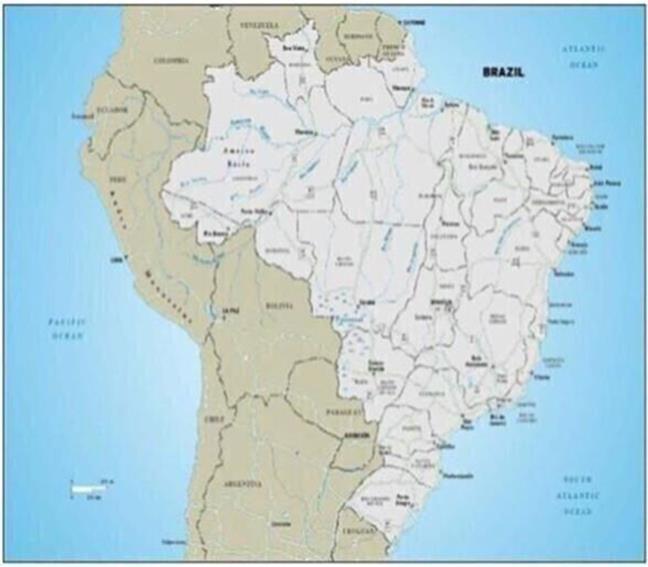
On January 27, 2022, the Federal Court of the Federal District (Brasília) granted a motion to close pending criminal proceedings against then former President Lula relating to an apartment located in Guarujá, São Paulo (the “Triplex Case”), under which then-former president Lula was accused of the charges of money laundering and active and passive corruption within the scope of the Car Wash Operation. The Triplex Case was dismissed by the Federal Court of the Federal District as a consequence of the annulment by the STF of all acts taken by then federal judge Sérgio Moro in the Car Wash Operation.
On March 28, 2022, then-Minister of Education, Milton Ribeiro, asked for exoneration after the Federal Police (Policia Federal) initiated an inquiry into alleged favoritism in the release of funds from the National Fund for the Development of Education (FNDE, for its acronym in Portuguese). On June 22, 2022, the Federal Police initiated Operation Paid Access (Operação Acesso Pago), culminating in an investigation against former Minister Ribeiro. A separate probe on this case, including alleged interference in Federal Police by former president Jair Bolsonaro, is ongoing under confidentiality measures in the STF (Inquérito 4896).
On August 11, 2023, the Federal Police launched Operation Lucas 12:2, an investigation into alleged criminal embezzlement and money laundering incidents. The individuals under investigation are suspected of using their positions to sell goods abroad illegally, which had been delivered by foreign authorities to representatives of the Federal Government in their official capacities. As part of the investigation, on August 17, 2023, STF Justice Alexandre de Moraes authorized access to banking and other confidential information of former president Jair Bolsonaro and his wife Michelle Bolsonaro. On July 4, 2024, the Federal Police indicted former president Jair Bolsonaro and other 11 suspects for using their positions to illegally sell goods abroad which had been delivered by foreign authorities to representatives of the Federal Government in their official capacities. The indictment is currently being reviewed by the PGR, which will decide whether to present criminal charges against the suspects to the STF.
On September 9, 2023, STF Justice Alexandre de Moraes approved the plea agreement of Mauro Cid, former assistant to former president Jair Bolsonaro, who had been under arrest since May 3, 2023, for an alleged criminal association to falsify official COVID-19 immunization records. He has also been investigated for involvement in illegally selling goods abroad.
On September 20, 2024, the Federal Government concluded the renegotiation of leniency agreements with seven construction companies involved in the Car Wash Operation and submitted the renegotiated terms to the STF for approval. The renegotiation was ordered by STF Justice André Mendonça, in response to an ADPF filed in March 2023 by the following political parties: Partido Socialismo e Liberdade, Partido Comunista do Brasil, and Solidariedade.
Legislative Reforms
Tax Measures
On July 7, 2023, the Lower House passed a bill changing tax trial rules within Brazil’s Federal Administrative Council of Tax Appeals (Carf, for its acronym in Portuguese), which hears taxpayers’ administrative cases. The bill returns the final decision-making authority in cases of a tied vote between members of the initial panel hearing a case to the Ministry of Finance representative on the Carf tax appeal board. In April 2020, with the approval of Law No. 13,988/20, the power had been awarded to the appealing taxpayer. On August 30, 2023, the bill was approved by the Senate, and on September 21, 2023, it was enacted by President Lula as Law No. 14,689/2023.
On December 12, 2023, President Lula enacted Law No. 14,754/23, which alters rules on taxation to tax or increase the rates levied on exclusive funds (investment funds with a single shareholder) and investments in offshore funds. The initial version of the bill, proposed by the Federal Government, estimated that the measure would provide an increase of R$20 billion in revenues in 2024 but with the alterations made by the Lower House, this amount is expected to be lower. The Brazilian Federal Tax Authority will be responsible for the regulation necessary to implement the law.
On December 20, 2023, the National Congress enacted a tax reform, through Amendment 132. The main features of the reform include (i) merging four levies into value-added tax (VAT) rates managed in a dual format (partially federal and partially regional), and (ii) changing tax collection from a tax on production to a tax on consumption. The reform also provides for reduced tax rates on certain sectors of the economy, sets the ground for a cashback system, and increases tax rates on luxury vehicles and inheritances. Some of the matters provided for in the tax reform require further regulation by complementary laws (leis complementares) and ordinary laws.
On April 25, 2024, the Federal Government submitted Bill No. 68/2024, regulating aspects of the previously adopted tax reform Amendment 132, to the National Congress for consideration. On July 10, 2024, the bill was approved by the Lower House and further remitted to the Senate for consideration. The Senate then approved the bill on December 12, 2024, with some changes. In light of the Senate modifications, the bill had to return to the Lower House, where it was approved on December 17, 2024. On January 16, 2025, President Lula enacted the bill as LC No. 214/2025.
D-32
On June 5, 2024, the Federal Government submitted Bill No. 108/2024, the second complementary law regulating aspects of the tax reform, to the National Congress. The bill establishes the IBS Steering Committee (Comitê Gestor do Imposto sobre Bens e Serviços or CG-IBS, for its acronym in Portuguese), and sets out rules for its administrative procedures, as well as for the collection and distribution of the Tax on Goods and Services (Imposto sobre Bens e Serviços or IBS, for its acronym in Portuguese) and the transition to the new tax system. On October 30, 2024, the bill was approved by the Lower House and remitted to the Senate.
Other Legislation
On January 7, 2022, a law establishing a new regulatory framework for fluvial transportation in Brazil went into effect. This new law seeks to (i) diversify Brazil’s transportation services through increased incentives, (ii) encourage further competition in transportation services, (iii) expand Brazil’s fleet for navigation, (iv) stimulate the development of the national naval industry, and (v) provide incentives for investments from operations in port facilities.
On June 23, 2022, then President Jair Bolsonaro enacted LC No. 194, limiting ICMS tax rates to 17% or 18% for essential products and services, namely goods and services related to fuel, natural gas, electric energy, communications and public transportation. The law determined that states are entitled to financial compensation of tax collection losses deriving from these measures through (i) discount on their refinanced debt (owed to the Federal Government) installments and (ii) resources from the Federal Government share of the Financial Compensation for the Exploitation of Mineral Resources (Compensação Financeira pela Exploração de Recursos Minerais or CFEM, for its acronym in Portuguese). The latter is valid only for states that are regularly paying their debts towards the National Treasury, as well as any debts guaranteed by the National Treasury.
On July 14, 2022, the National Congress enacted EC No. 123 which granted the Federal Government a R$41.25 billion waiver on the 2022 spending ceiling to increase social benefits (mainly Auxílio Brasil and Gas Aid), implement an aid program for truck and taxi drivers, increase spending on food provided for low-income people, and reduce ethanol taxes.
In July 2022, the National Congress enacted EC No. 124, establishing provisions for regulation of nursing professionals’ minimum wage level. In August 2022, Law No. 14,434 established minimum monthly wages of R$4,750 for nurses, R$3,325 for nursing technicians and R$2,375 for nursing assistants and midwives. In September 2022, the STF suspended the law alleging that the source of funds for the expenditures was not properly determined by Law No. 14,434 as required by the Fiscal Responsibility Law. In December 2022, the National Congress enacted EC No. 127 determining that the Federal Government would transfer Social Fund resources to regional governments to provide funding to comply with minimum wage payments to nursing professionals. To address the STF’s ruling that EC No. 127 was still insufficient to meet the requirements provided in the Fiscal Responsibility Law, the National Congress approved Law No. 14,518/2023, which created an extraordinary credit of R$7.3 billion to fund these expenses.
On December 19, 2022, the STF declared the “Secret Budget,” a mechanism that authorized the budget rapporteur to allocate budget resources for unidentified lawmakers at their discretion, unconstitutional.
On December 21, 2022, the National Congress approved PEC No. 126, also known as the “Transition PEC.” The law authorized a R$145 billion increase in the Federal Government’s spending ceiling limit to fund expenses such as Bolsa Família, Gas Aid, Popular Pharmacy, and other public policies. This amount was also excluded from the golden rule compliance (which requires approval by the National Congress) and from the primary balance target. Three other expenditures were also exempted from the spending ceiling: (i) expenses with socio-environmental projects or related to climate change, such as those of the Amazon Fund, to be funded with donations from Norway and Germany, and with projects funded by resources obtained due to judicial or extrajudicial agreements related to environmental disasters (for example, the Brumadinho case); (ii) expenses of federal educational institutions and Scientific, Technological and Innovation Institutions (ICTs) funded by such institutions’ revenues, donations or agreements and contracts signed with states and municipalities or private entities; (iii) Federal Government expenses related to engineering works and services funded with resources provided by states and municipalities, such as works carried out by the Army engineering battalion on highways administered by regional governments.
The Transition PEC also exempted Bolsa Família and Gas Aid from the Fiscal Responsibility Law in 2023. The Fiscal Responsibility Law requires that the President, when proposing to increase government expenses, submit to the National Congress an estimate of the budgetary-financial impact of the suggested increase, as well as a proposed reduction in other expenses, or increase in other revenue streams, in order to guarantee macroeconomic stability and create the proper conditions for socioeconomic growth.
During this session, party leaders also agreed on the allocation of funds from the 2023 “Secret Budget”, which was deemed unconstitutional by the STF on December 19, 2022. The law determined that the funds, totaling R$19.4 billion, would be distributed as follows: R$9.85 billion (50.77%) of the budget, to be applied exclusively to public policy spending, and the remaining R$9.55 billion (49.23%) to be applied to individual amendments. The law also increased the total volume of parliamentary amendments from 1.2% to 2% of the Federal Government net current revenue beginning with the 2024 budget.
On January 1, 2023, President Lula signed a series of decrees and executive orders that changed gun control policy, changed policies on deforestation, maintained the federal tax exemption on fuels, restructured the Presidency of the Republic and its ministries, and kept the allowance under the Bolsa Família income transfer program at a monthly amount of R$600 per person, plus R$150 per child up to six years of age.
D-33
On March 31, 2023, the Minister of Finance, Fernando Haddad, announced a proposal for a new fiscal framework which aimed to bring the fiscal deficit to zero by 2024. The proposal would limit the spending growth in each year to 70% of the variation in primary revenue over the previous 12 months. Moreover, the increase in real public expenditures would be limited between 0.6% and 2.5% per year.
The proposal for a new fiscal framework was approved by the National Congress on August 22, 2023, and on August 31, 2023, it was enacted by President Lula. The new fiscal rule replaced the spending cap rule. For more information on the former spending cap, see “Public Finance” in this Exhibit D. This new framework combines a spending limit that is more flexible than the spending cap with a primary result target (result of public accounts net of interest on government debt). The increase in expenditures will be limited to a range between 0.6% and 2.5% above inflation each year and limited to 70% of the variation in primary revenue over the previous 12 months.
On September 13, 2023, the Lower House approved a bill that regulates sports betting, including increasing and redistributing tax and licensing revenues levied from these activities. On December 30, 2023, President Lula enacted the bill into law.
On September 4, 2024, the Senate approved Bill No. 528/2020 known as the “Fuels of the Future” initiative, aimed at decarbonizing Brazil’s energy matrix, creating national programs for green diesel, sustainable aviation fuel and biomethane, and increasing the ethanol and biodiesel blending percentage in gasoline and diesel, respectively. The Lower House then approved the bill on September 11, 2024. On October 8, 2024, President Lula enacted the bill as Law No. 14,993/2024. The law establishes the National Program for Green Diesel (Programa Nacional de Diesel Verde or PNDV, for its acronym in Portuguese), the National Program for Sustainable Aviation Fuel (Programa Nacional de Combustível Sustentável de Aviação or ProBioQAV, for its acronym in Portuguese), and the National Program for the Decarbonization of Natural Gas Producers and Importers and for the Promotion of Biogas (Programa de Descarbonização do Produtor e Importador de Gás Natural e de Incentivo ao Biometano), while setting new minimum blend requirements for ethanol in gasoline and for biodiesel in diesel.
In 2025, the CNPE approved increases in mandatory biofuel blending, raising ethanol in gasoline from 27% to 30% and biodiesel in diesel from 14% to 15%, effective August 1, 2025. The ANP advanced regulatory studies on carbon capture, utilization and storage, while the MME reported that 39 regulatory acts are still required for the full implementation of Law No. 14,993/2024.
On June 19, 2024, the Senate’s CCJ approved Bill No. 2,234/2022, which would authorize the operation of casinos and legalize gambling in Brazil. However, a full Senate vote is still pending.
For more information on this topic, see “Recent Developments—Other Legislation.”
Foreign Affairs, International Organizations, and International Economic Cooperation
Brazil maintains diplomatic and trade relations with almost every nation in the world. It has been a member of the United Nations since 1945 and is an original member of the IMF, the World Bank, the World Trade Organization, the Inter-American Development Bank, the African Development Bank Group, the New Development Bank and the International Fund for Agricultural Development.
In addition, Brazil is a member of several other organizations, including, but not limited to, the Group of Twenty (G-20), Mercosur, BRICS, and the Paris Club. Brazil also has several international bilateral agreements in place that promote economic cooperation.
On March 29, 2023, the Central Bank of Brazil agreed with the Central Bank of China to permit commercial transactions between the two countries to be settled in Chinese currency.
Brazil is currently negotiating to become a full Organization for Economic Cooperation and Development (OECD) member.
On January 1, 2024, the BRICS admitted five new members: Saudi Arabia, Egypt, United Arab Emirates, Ethiopia, and Iran.
Brazil held the presidency of the G20 from December 2023 to November 2024, and it hosted the G-20 Summit on November 18, and 19, 2024, in Rio de Janeiro. The final declaration of the G-20 Leaders’ Summit reaffirms the member countries’ commitment to the main guidelines of the Paris Agreement, while also emphasizing the need for enhanced international collaboration and support to increase public and private climate finance and investment. During the Summit, the Global Alliance against Hunger and Poverty was launched, at the initiative of the Federal Government.
On December 12, 2024, the Federal Government announced the conclusion of negotiations for the Mercosur–European Union Association Agreement. The final agreement reflects commitments to sustainable development, fair labor practices, and increased commerce between the two blocks. The agreement includes the eventual elimination of tariffs on the automotive sector over a period of 30 years, the removal of certain environmental barriers to trade, the creation of multi-lateral labor and environmental regimes, and initiatives to increase the production of sustainable products, particularly aimed at small producers, cooperatives and indigenous communities. The next steps include legal revision, translation into all official languages of the parties, formal signature, internal approval processes—including congressional approval in Brazil—ratification, and eventual entry into force. The agreement allows for bilateral implementation, meaning it can take effect between the EU and any individual Mercosur country once both parties complete ratification.
D-34
For more information on this topic, see “Recent Developments—Foreign Affairs, International Organizations, and International Economic Cooperation.”
Employment and Labor
Employment Levels
The Ministry of Labor (Ministério do Trabalho) reports Brazilian employment statistics regarding formal employment. Formal employment comprises employment that is registered with the Ministry of Labor, including temporary jobs. According to the Ministry of Labor Statistics Report, formal employment in Brazil increased by 16.5% during 2024 (with a net creation of 1,693,673 jobs) as compared to 2023.
The average unemployment rate for 2024 was 6.9%, a decrease of 1.1 percentage point compared to the average unemployment rate for 2023 (8.0%).
Wages
On August 28, 2023, Law No. 14,663, establishing a rule for real minimum wage adjustments, was enacted. Under the new rule, beginning January 1, 2024, minimum wages will be adjusted by the previous year’s inflation plus the GDP growth of two years prior.
On April 15, 2024, the Federal Government submitted the 2025 PLDO to the National Congress, forecasting a 6.37% increase in the monthly minimum wage from R$1,412 to R$1,502. The estimate was revised to R$1,509 — an increase of 6.87% — in the 2025 LOA submitted to the National Congress on August 30, 2024. Finally, on December 30, 2024, President Lula signed a decree establishing the minimum wage at R$1,518, a 7.5% increase over the 2024 level.
This adjustment aligns with the new rule established by Law No. 15,077 of December 2024, which formalized a minimum wage indexation formula based on the sum of the previous year’s inflation (measured by the INPC) and the real GDP growth rate from two years earlier. However, the law introduced a cap on real increases, limiting them to a maximum of 2.5% above inflation between 2025 and 2030, in accordance with the fiscal framework.
The real average monthly income for the fourth quarter of 2024 was R$3,307, which showed an increase compared to the third quarter of 2024 (R$3,264) and an increase compared to the fourth quarter of 2023 (R$3,179).
Social Security
The law providing for reform of the Brazilian Social Security System went into effect on November 12, 2019, by EC No. 103. EC No. 103/2019 established new minimum retirement age requirements, a new minimum contribution period, transition rules, and other significant changes. The minimum retirement age was set at 65 for men and 62 for women in urban areas, and 60 for men and 55 for women in rural areas. The minimum contribution period was set at 20 years for men and 15 years for women in urban areas, and 15 years for both men and women in rural areas. To protect workers close to retirement, the EC introduced transition mechanisms, including a points system (combining age and contribution time), progressive minimum age, and progressive contribution time. These changes aimed to ensure the long-term fiscal sustainability of the Social Security System.
Under Brazil’s state-operated social security and pension system, employers are generally required to contribute 20% of each employee’s wages to the system monthly. In 2024, monthly benefits paid by Brazil’s state-operated social security and pension system increased by 0.13% compared to 2023.
As of January 1, 2024, the monthly lower and upper limits of social security pensions paid to private sector retirees were R$1,412.00 and R$7,786.02, respectively.
State-Owned Enterprises
Corporate Enterprises
Brazil has two types of state-owned enterprises: public enterprises and mixed-ownership companies. Public enterprises, which can exist in any legally permissible corporate form, are wholly owned by the states or the Federal Government and are created by specific laws to carry out economic activities. Examples of federal public enterprises are BNDES and the Federal Savings Bank (Caixa Econômica Federal or CEF, for its acronym in Portuguese). Mixed-ownership companies are corporations majority-owned by the Federal Government or state governments. Petrobras and Banco do Brasil are examples of mixed-ownership companies.
Autonomous Institutions and Public Foundations
Brazil has autonomous institutions and public foundations. Autonomous institutions, such as the Central Bank and the Brazilian Securities Commission (Comissão de Valores Mobiliários or CVM, for its acronym in Portuguese), carry out public functions that require decentralized financial and operational management. Public foundations are public non-profit entities with administrative autonomy that manage their own assets. Their expenses are financed by the Federal Government and other sources.
D-35
Privatizations
On July 12, 2021, the law authorizing the privatization of the state-owned electricity holding company Eletrobras (Law No. 14,182/2021 or the “Eletrobras Privatization Law”) went into effect. Eletrobras is considered the largest electricity company in Latin America. On February 15, 2022, the privatization was approved by the Federal Audit Court (Tribunal de Contas da União or TCU, for its acronym in Portuguese) and on February 22, 2022, Eletrobras’s shareholders approved the privatization model proposed by the company’s management, which involved a public offering of the company’s shares in Brazil and abroad to reduce the Federal Government’s participation in the voting capital to a percentage equal or lower than 45%. On May 18, 2022, the TCU also approved, by 7 votes to 1, the privatization model of Eletrobras. This was the last pending step for the Federal Government to be able to carry out the privatization process of the company.
On June 9, 2022, Eletrobras priced its public offering of 697,476,856 common shares, including 9,783,100 American Depositary Shares (“ADSs”), without taking into consideration the overallotment option. The price per share to the public was set at R$42.00. The ADSs were offered and sold to the public at a price of U.S.$8.58 per ADS (including an ADS issuance fee of U.S.$0.05 per ADS). In addition, BNDES Participações S.A. (“BNDESPAR”), as a shareholder of Eletrobras, conducted a secondary offering of 69,801,516 shares owned by BNDESPAR at the same price as the primary offering. Settlement of the offerings occurred on June 14, 2022. As a result of these offerings, the Federal Government’s share in Eletrobras’s voting capital declined from 72% to 43% (considering direct control and other forms of participation). On June 14, 2022, the privatization of Eletrobras was officially completed with a ceremony at the B3 stock exchange.
Private Parties
Under Brazilian law, private parties may only engage in public activities with authorization of the Federal Government. Through public concessions, the Federal Government has authorized private parties to participate in areas formerly reserved to the Federal Government under the Constitution, including broadcasting and telecommunications, electric power service and facilities and hydroelectric power generation. Nuclear energy, as well as mining and processing of radioactive ores, minerals and their by-products, remain under the Federal Government’s monopoly. However, on December 29, 2022, then President Jair Bolsonaro approved Law No. 14,514, which introduced changes in the circumstances in which private companies may conduct activities involving nuclear minerals in association with the state-owned company Indústrias Nucleares do Brasil, including the extension of exploration license terms and allowing for more types of mineral rights to be used as collateral in financing transactions.
Environment
The Constitution grants citizens the right to a clean environment. It imposes duties on the Federal Government, the states, the Federal District and municipalities to protect the environment, take measures against pollution and protect fauna and flora. At the federal level, the Ministry of the Environment and Climate Change (Ministério do Meio Ambiente e Mudança do Clima) formulates and implements environmental policies, the National Council on the Environment (Conselho Nacional do Meio Ambiente or CONAMA, for its acronym in Portuguese) prepares environmental regulations, and the Ibama supervises and oversees the application of environmental regulations.
Over the past four decades, Brazil has increased its efforts to improve the environment and ensure long-term sustainable economic development. The Federal Government’s efforts have focused on combating deforestation, promoting the recovery and reasonable use of biological diversity and expanding protected areas. The Brazilian Forest Code (Código Florestal Brasileiro), enacted in 2012, establishes rules designed to restore lands damaged due to non-compliance with preservation rules, in addition to legal reserves (portions of privately-owned land preserved for natural resources) and permanent preservation areas, which are subject to certain preservation requirements.
Sustainable development is also at the core of Brazilian foreign policy. In its initial NDCs presented in 2015, Brazil committed to reducing greenhouse gas emissions from 2005 levels by 37% by 2025 and 43% by 2030. In its 2021 NDC update, the country reaffirmed the 37% reduction target for 2025, increased the 2030 target to a 50% reduction, and committed to achieving net-zero emissions by 2050. In November 2024, Brazil submitted a new NDC to the United Nations Framework Convention on Climate Change, setting an absolute target for 2035 in the range of 850 million to 1.05 billion tons of CO2 equivalent—representing a 59–67% reduction from 2005 levels. Implementation will be supported by the Plano Clima, a set of sectoral mitigation plans to be concluded in the first half of 2025, and by the SBCE, established by Law No. 15,042/2024, which will regulate carbon credit generation, trading, and compliance obligations across key sectors.
Brazil has one of the world’s largest reserves of tropical rainforest and freshwater biodiversity, and, according to the MME, one of the cleanest energy consumption profiles in the industrialized world, with 89% of all energy capacity production derived from renewable sources as of December 2024.
D-36
Brazil is also the world’s second-leading producer of ethanol fuel.
On April 4, 2014, BP Energy do Brasil requested Ibama’s authorization to carry out oil and gas drilling tests in an offshore area located 500km from the mouth of the Amazon River, close to the states of Amapá and Pará. In December 2020, the exploratory rights of this block were transferred to Petrobras. Ibama denied the request, citing, among other reasons, that the documentation presented would not ensure the protection of the region’s biological diversity or the safety of indigenous communities. On May 25, 2023, Petrobras submitted a request to Ibama for a new evaluation. In May 2023, Ibama denied Petrobras’ request to drill an exploratory well in the Amazon Mouth Basin, part of the Equatorial Margin, citing technical shortcomings and the absence of an AAAS. Petrobras appealed the decision.
For more information, see “Recent Developments—Environment.”
On February 22, 2022, the Lower House approved PEC No. 39/11, which transfers ownership of marine land from the Federal Government to its occupants. The transfer would be free of charge if the land is occupied by states and municipalities, and subject to payment if occupied by private businesses or individuals. On May 27, 2024, the Senate’s CCJ resumed discussion of the PEC. After 11 years in the Lower House, the proposal was sent to the Senate, where it was renumbered as PEC No. 3/2022. On May 27, 2024, the Senate’s CCJ resumed discussions on the matter. However, on December 4, 2024, following a request for further review, the Committee postponed the vote, with no new date scheduled for its resumption.
On November 3, 2022, the STF determined that the Federal Government should reactivate the Amazon Fund (Fundo Amazônia), originally created to raise funds and finance measures to protect the environment in the region. The fund was created in 2008 and receives donations from international institutions and governments to finance actions to prevent and combat deforestation in the Amazon. Since the 2022 STF decision mandating its reactivation, the Amazon Fund has significantly accelerated its impact. In 2024, it set a new record with approximately R$882 million in project approvals – surpassing levels in prior years.
On January 31, 2023, the Federal Government published a decree determining actions to face the emergency in public health and combat illegal mining in the indigenous Yanomami territory. The decree authorized the Ministries of Defense, Health, Development and Social Assistance, Family and Fight against Hunger, and Indigenous Peoples to take measures and mobilize resources to address the situation. On February 10, 2023, the Federal Police began implementing actions to interrupt the logistics of and eradicate illegal mining in indigenous Yanomami lands. On January 9, 2024, the Federal Government announced that it planned to establish a permanent presence in the Yanomami territory, in the state of Roraima, to fight illegal mining and guarantee protection to the region’s indigenous people. After the emergency measures adopted in 2023, which included providing food, medical aid and healthcare assistance combined with Ibama operations to destroy illegal mining areas, seize equipment and block the flow of illegal mining supplies, the new phase has a budget of R$1.2 billion in actions oriented to strengthen public health, surveillance and territorial control.
On March 30, 2023, the Federal Revenue Service of Brazil published Normative Instruction No. 2,138, which makes the issuance of an electronic receipt for gold financial assets mandatory. This document registers operations with gold as a financial asset or exchange instrument. On April 4, 2023, the STF suspended, on a precautionary basis, a section of Law No. 12,844/2013 that had a presumption of legality of gold traded in Brazil and good faith of gold buyers. These measures are considered major advances in the fight against financial support for illegal gold mining activities, especially in regions such as the Amazon, and are expected to curb illegal actions that harm the environment, the Brazilian people and the country’s economy.
On May 30, 2023, the Lower House approved Bill No. 490/2007, later enacted as Law No. 14,701/2023. This law introduced the “marco temporal” (time frame) principle, limiting the recognition of Indigenous lands to those territories proven to have been occupied by Indigenous peoples as of October 5, 1988. On September 21, 2023, the STF ruled that the “marco temporal” principle was unconstitutional. However, on September 27, 2023, the bill was approved by the Senate and on October 23, 2023, President Lula vetoed it almost entirely, including the “marco temporal” provision. On December 14, 2023, the National Congress overrode the presidential veto on this matter. There are five appeals against Law No. 14,701/2023 awaiting judgment by the STF. On August 5, 2024, the STF began conciliation hearings on these appeals jointly with a special committee formed by representatives of the Federal, state and municipal governments, the National Congress, civil society and indigenous populations. These developments underscore the ongoing legal and societal debates surrounding the “marco temporal” and the demarcation of indigenous lands in Brazil.
On August 8, 2023, President Lula and seven other Amazonian country members of the Amazonian Cooperation Treaty signed the Belém Declaration. The document contains 113 guidelines agreed by the signing nations and aims to play a central role in implementing the Amazon cooperation agenda.
On October 3, 2023, the Federal Government announced measures to mitigate the socio-environmental impact of the drought in the Amazonian region, caused by climate change. An amount of R$628 million was allocated for the dredging of the Madeira and Solimões rivers and providing humanitarian aid and reinforcement of firefighting, among other actions.
On November 29, 2023, the Lower House approved a bill that sets a regulatory framework for the exploration of offshore wind energy production and concessions. On December 12, 2024, the Senate approved the bill, and on January 10, 2025, President Lula enacted it as Law No. 15,097. Among other matters governed by Law No. 15,097/2025, it established that the Federal Government
D-37
will be responsible to determine the maritime areas that may be used for energy generation, as well as the legal regime under which such areas may be explored, whether through concessions or authorization mechanisms. The law also prohibited offshore wind energy production in certain areas, such as navigation routes, military zones, and protected cultural and natural heritage sites. Additionally, the law mandated that contracts for the use of these areas undergo two phases: an evaluation phase to assess economic and environmental feasibility, and an execution phase for implementation and operation.
On November 11, 2024, the Ministry of Environment and Climate Change announced that from August 2023 to July 2024, the rate of deforestation in the Amazon decreased by 30.63% relative to the previous period (from August 2022 to July 2023), representing the largest drop in 15 years.
Ecological Transformation Plan
In May 2023, the Federal Government initiated a project to develop a national sustainable taxonomy. In the first phase of the project, interministerial working groups defined priority topics and guidelines for the taxonomy and established an Action Plan, which was published in November 2023 and launched in December 2023 in at the 2023 United Nations Conference on Climate Change (“COP28”).
The 2023/2024 Harvest (Safra) Plan is a Federal Government program which supports the agricultural sector, offering lines of credit, incentives and agricultural policies for rural producers, from family farmers to mega producers. To incentivize the strengthening of environmentally sustainable production systems, the Safra Plan offered a reduction in interest rates for the recovery of pastures and rewards for rural producers who adopt practices sustainable agricultural practices. The 2023/2024 Safra plan offered 26.8% more resources than the previous year’s plan.
On August 11, 2023, the Ministry of Finance presented the Ecological Transformation Plan, which aims to propel structural changes to the Brazilian economy and environment. The plan was coordinated by the Ministry of Finance and had the contribution and direct involvement of other ministries, such as the Ministry of Environment and Climate Change. The main measures of the Plan are the creation of a regulated carbon market, the issuance of sustainable sovereign bonds, the creation of a national taxonomy for sustainability, and the reformulation of the Climate Fund to finance activities involving technological innovation and sustainability. On December 1, 2023, the Minister of Finance publicized the Plan at COP28.
On August 16, 2023, the Federal Government issued Decree No. 11,635, recreating the Environmental Conservation Support Program (Bolsa Verde). Originally established by Law No. 12,512 on October 14, 2011, the program was deactivated in 2016. In the new version of the program, Bolsa Verde will make quarterly payments of R$600.00 to families living in sustainable use conservation units (extractive reserves, national forests, and sustainable development reserves), in environmentally differentiated settlements of agrarian reform (forestry, agroextractive, and sustainable development) and in territories occupied by traditional peoples and communities, such as riverside communities, extractive communities, indigenous peoples, quilombolas, and others. Beneficiaries commit to taking care of the region where they live, using natural resources sustainably, and preserving the forest, in addition to helping monitor and protect these areas. In addition to the payments, they will have access to technical assistance, socio-environmental rural extension, environmental conservation, and socio-productive inclusion actions.
As part of the Ecological Transformation Plan, on December 21, 2023, the Lower House approved Bill No. 2,148/15 to create and regulate the carbon market in Brazil. The bill provides for creating the SBCE, which is responsible for setting ceilings for emissions and establishing a carbon credit securities market. Since the bill was an addition of a Lower House proposal to a bill already approved by the Senate, it was sent to the Senate for another round of approval and is waiting for analysis.
On December 30, 2023, the Federal Government issued MPV No. 1,205/2023, which launched the Green Mobility and Innovation Program (the “Mover” Program) for decarbonization in the transportation sector as part of the Ecological Transformation Plan. The Mover Program increases sustainability requirements for the automotive industry and stimulates the production of new technologies in the areas of mobility and logistics. As an executive order, the validity was immediate, but it required legislative approval within 60 days to remain in force. The Federal Government therefore submitted the Mover Program for legislative approval through Bill No. 914/2024. During the discussion of the bill, congressmen added a provision for the creation of a 20% tax on purchases made abroad of up to US$50.00, which are currently exempt from import tax, and 60% tax on international purchases from US$50.00 to US$3,000.00, with a US$20.00 discount in the total tax payment. The bill was approved by the National Congress on June 11, 2024, and enacted by the President on June 27, 2024.
On February 26, 2024, the Ministry of Finance and Ministry of Environment and Climate Change announced the creation of the External Private Capital Mobilization and Currency Hedge Program (Eco Invest Brasil). The initiative, part of Brazil’s Ecological Transformation Plan, aims to encourage foreign investment in sustainable projects in Brazil and offer exchange rate hedge solutions to mitigate currency risk. On April 22, 2024, the program was officially launched by MPV No. 1,213/2024. On June 11, 2024, the Ministry of Finance issued Portaria MF No. 964 setting the eligibility criteria for investments to benefit from the Eco Invest Brasil program and providing further regulation of the program. Although MPV No. 1,213/2024 ceased to be valid on August 21, 2024, the Lower House approved Bill No. 1,725/2024 to replace it. Following the approval by the Lower House, Bill No. 1,725/2024 was sent to the Senate for consideration, where it was approved on September 18, 2024. On October 10, 2024, President Lula enacted Bill No. 1,725/2024 as Law No. 14,995.
D-38
On June 18, 2024, the Federal Government launched Brazil’s green seal program (Programa Selo Verde Brasil) through Decree No. 12,063/2024. The program aims to determine Brazil’s national guidelines for the standardization and certification of sustainable products and services.
On August 2, 2024, President Lula enacted Law No. 14,948/2024, which created a legal framework for the production of low-carbon-emission hydrogen in Brazil and set tax incentives for the sector.
Law No. 15,042, enacted on December 11, 2024, instituted the SBCE. The SBCE introduced a cap-and-trade mechanism, setting greenhouse gas emission limits for regulated sectors and allowing the trading of emission allowances known as Brazilian Emission Quotas (Cotas Brasileiras de Emissão, or CBEs), a fungible, tradable asset representing the right to emit 1tCO2e (one ton of carbon dioxide equivalent). In addition to CBEs, the SBCE also recognized Certificates of Verified Emission Reduction or Removal (Certificados de Redução ou Remoção Verificada de Emissões, or CRVEs). While CBEs are emission allowances allocated under the regulatory cap, CRVEs represent verified emissions reductions or removals achieved through eligible projects. CRVEs can be used for compliance purposes within the SBCE and are also tradable, providing flexibility to regulated entities and fostering investment in decarbonization initiatives.
The implementation of the SBCE will occur in five phases. In the first phase, which will last 12 months and may be extended once for an equal period, a regulatory framework will be established, including the creation of a managing authority and the definition of the sectors subject to regulation. In the second phase, also lasting 12 months, the monitoring, reporting, and verification system will be operationalized, and regulated entities will be required to begin submitting standardized emissions data. The third phase, with a duration of 24 months, will require companies to submit both verified emission reports and monitoring plans on a mandatory basis. In the fourth phase, the system will initiate its first allocation cycle, distributing CBEs through a National Allocation Plan. Finally, in the fifth phase, the full carbon market will become operational, including the holding of greenhouse gas quota auctions and the establishment of a regulated secondary market for CBEs.
Brazil’s Sovereign Sustainable Bond Framework
The Federal Government established, through Decree No. 11,532, on May 16, 2023, the Sovereign Sustainable Finance Committee (CFSS, for its acronym in Portuguese), a permanent panel under the purview of the Ministry of Finance. On September 5, 2023, Brazil approved its sovereign sustainable bond framework (“Brazil’s Sovereign Sustainable Bond Framework” or the “Framework”), which contemplates that amounts at least equivalent to the net proceeds of sustainable sovereign bonds issued under the Framework may be allocated, through virtual allocation, to eligible expenditures in one of the following categories (subcategories defined in the Framework):
Environmental:
| (i) | pollution prevention and control; |
| (ii) | renewable energy; |
| (iii) | energy efficiency; |
| (iv) | clean transport; |
| (v) | sustainable management of living and natural resources and land use; |
| (vi) | terrestrial and aquatic biodiversity; |
| (vii) | sustainable management of water and effluents; |
| (viii) | adaptation to climate change; and |
| (ix) | circular economy adapted products, production technologies and processes. |
Social:
| (i) | social-economic development and empowerment; |
| (ii) | food security and sustainable food systems; |
| (iii) | employment generation; |
| (iv) | access to affordable housing; and |
| (v) | access to basic infrastructure. |
D-39
These categories have been defined in line with the International Capital Market Association’s (“ICMA”) Green Bond Principles 2021, Social Bond Principles 2023, and Sustainability Bond Guidelines 2021. The Framework also provides that any expenditures related to the following activities will be excluded from eligible categories:
| (i) | government assistance and subsidies given to civil and military servants (housing assistance, pensions, retirement, medical and health plans, indemnity benefits); |
| (ii) | public utility advertising; |
| (iii) | indemnities or penalties linked to compliance with court decisions; |
| (iv) | alcohol for consumption, arms, tobacco or gambling industry; |
| (v) | weapons industry; |
| (vi) | planning or construction of airport infrastructure; |
| (vii) | planning or construction of maritime port infrastructure and maritime transport; |
| (viii) | highway planning or construction; |
| (ix) | mining; |
| (x) | inorganic or synthetic fertilizers, pesticides, or herbicides; |
| (xi) | extraction, transport, trade or generation of energy from mineral coal; |
| (xii) | extraction, transport, trade, generation of energy or production of fuels from oil, natural gas and derivatives; |
| (xiii) | construction, or generation of energy, from nuclear power plants; |
| (xiv) | any project or activity that directly or indirectly violates the rights of indigenous peoples, and traditional peoples and communities; |
| (xv) | any project or activity that is directly or indirectly linked to human rights violations, child labor and forced labor; |
| (xvi) | direct waste incineration; and |
| (xvii) | production or commercialization of any product or activity considered illegal under national or international laws or regulations, conventions and agreements signed by Brazil. |
The Federal Government, through the CFSS, will publish updated information on the allocation of an amount equal to the net proceeds of any sustainable bonds issued under the Framework through allocation and impact reports, as well as continuous monitoring of the assessment of eligible projects’ adherence to the Framework, as further indicated in the Framework.
In line with international market standards for issuances of sustainable bonds, the Federal Government submitted the Framework to external review by Morningstar Sustainalytics (“Sustainalytics”) to confirm its alignment with ICMA principles and guidelines. Sustainalytics is a company specializing in providing second-party opinions (“SPO”) for issuances of green, social and/or sustainability bonds. The SPO on this Framework is available on the National Treasury website.
On November 13, 2023, the Federal Government issued US$2.0 billion of its 6.250% Global Bonds due 2031, the first issuance of a sustainable bond by the Republic.
On June 20, 2024, the Federal Government issued US$2.0 billion of its 6.375% Global Bonds due 2032, the second issuance of a sustainable bond by the Republic.
Rio Grande do Sul Floods
From late April 2024 to late May 2024, torrential rains caused widespread flooding in the state of Rio Grande do Sul. At its peak, the flooding displaced around 626,000 people from their homes, affecting 471 municipalities and taking the lives of 169 people. To address the impacts caused by this extreme climatic event, the Federal Government organized a task force and put in place several measures to aid the state. As of September 10, 2024, a total of R$98.7 billion had been allocated for emergency measures, and the Federal Government granted a three-year deferral for the state of Rio Grande do Sul of its debt service, providing financial relief of R$11 billion in principal and R$12 billion in interest. As of 2021, Rio Grande do Sul had the fourth highest state GDP in the country, representing around 6.5% of total national GDP. The Federal Government estimated that the floods could have a negative impact of 0.25 percentage points on GDP in 2024, but any such impact is expected to be neutralized by the positive impact of government support measures, estimated between 0.2 and 0.3 percentage points.
D-40
The Inter-American Development Bank, together with the Economic Commission for Latin America and the Caribbean and the World Bank, published a report in November 2024 titled “Avaliação dos efeitos e impactos das inundações Rio Grande do Sul” (Evaluation of the Effects and Impacts of the Rio Grande do Sul Floods). The report estimates the financial effects of the floods in the municipalities of Rio Grande do Sul in 2024 at R$88.9 billion and a negative impact on Rio Grande do Sul’s GDP of an estimated 1.3% in 2024. The report highlights the importance of Federal Government support measures, which reduced the impact to around 1.1% of state GDP.
Education
The Federal Government provides centralized guidelines for public and private education at all levels and coordinates the National Board of Education, which evaluates and sets general rules on education. State and municipal governments are responsible for funding free public education for all children up to the completion of secondary education.
Primary and Secondary Education
Primary education has become almost universal for children in Brazil, according to the Ministry of Education (Ministério da Educação), and it continues to improve in terms of both quality and access. In primary schools, students have access to various support programs to ensure student retention, including the Family Grant (Bolsa Família), a conditional cash allowance program linked in part to school attendance. Public schools also provide free meals, textbooks, healthcare, and transportation. As of December 31, 2024, 26.0 million students attended the primary school system, and 7.8 million students attended the secondary school system.
In November 2023, the Federal Government launched the Pé-de-meia program, a financial and educational incentive program for Bolsa Família beneficiary students enrolled in public high schools. The program is aimed at promoting the completion of school and reducing social inequality among young people, stimulating social mobility. Upon proof of enrollment and attendance, students receive a monthly incentive payment of R$200 into a savings account, which can be withdrawn at any time, plus deposits of R$1,000 at the end of each year completed, which can only be withdrawn from the savings account after high school graduation. The program also provides an additional R$200 deposit for students who take the national exam for higher education admission (Exame Nacional do Ensino Médio or Enem, for its acronym in Portuguese). Considering the ten incentive installments, the annual deposits, and the additional R$200 for taking the Enem exam, the amounts can reach up to R$9,200 per student.
Higher Education
The University for All Program (Programa Universidade para Todos or PROUNI, for its acronym in Portuguese) awards full and partial scholarships to low-income students to attend institutions of higher education. Since its inception in 2004, PROUNI has granted 6.0 million scholarships.
Public Health
COVID-19
The Federal Government began administering a bivalent COVID-19 vaccine on February 27, 2023. This vaccine improves immunity against the original strain virus and against the Omicron variant. The vaccine has a safety and efficacy profile similar to that of monovalent vaccines. The bivalent booster doses were first given to people at higher risk of developing severe forms of COVID-19, such as persons over 60 years of age and people with disabilities. On April 24, 2023, it was extended to citizens older than 18 years old.
In May 2024, the Federal Government received the first delivery of a COVID-19 vaccine updated to cover the XBB.1.5 variant and began distribution to states and municipalities, which were granted autonomy to start administering it immediately.
According to the Ministry of Health, 2024 saw the lowest number of COVID-19 cases and deaths since the pandemic began, with a 54.1% reduction in reported cases and a 59.6% decrease in deaths compared to 2023. However, in December 2024, Fiocruz reported an upward trend in Severe Acute Respiratory Syndrome (“SARS”) cases associated with COVID-19 in some Brazilian states.
Dengue
On December 21, 2023, the Ministry of Health incorporated the dengue vaccine into the SUS.
Since 2023, the Federal Government has intensified its efforts to combat dengue by restocking insecticides and larvicides, investing R$30 million in the release of Aedes mosquitoes with Wolbachia bacteria in six additional municipalities, and allocating R$256 million to support health infrastructure in states and municipalities. On February 2, 2024, the Federal Government established the Arbovirus Health Emergency Operations Center, which is responsible for planning, organizing and leading the Federal Government’s response to dengue and other arbovirus emergencies, as well as for coordinating with public agencies and with state, district, and municipal managers of the SUS, and for disseminating relevant information to the population. In 2024, the Federal Government also provided R$79 million in emergency funding to affected regions. An additional R$300 million was allocated to replenish the Basic Component of Pharmaceutical Assistance, supporting the purchase of medicines for dengue symptom management.
D-41
In February 2024, the SUS began a dengue vaccination campaign in selected municipalities where the disease was considered endemic. While the campaign has gradually expanded to new areas, specifically municipalities with large populations and high transmission rates in the last 10 years and/or high infection rates in recent months, vaccination uptake has remained low.
Wealth and Income Distribution
The stabilization of Brazil’s economy and lower inflation levels since 1994 have contributed to an increase in the purchasing power of the lower-income population in Brazil, despite a slight deterioration since 2014.
Brazil’s main social welfare program to address poverty is Bolsa Família. The program includes income transfer mechanisms, access to public services and initiatives for job placement. Until April 2022, the program focused on families with a monthly income per capita between R$89 and R$178. From 2003 to 2021, this conditional allowance program provided a monthly cash income to approximately 14.7 million families, subject to compliance with certain statutory requirements. In August 2021, the Federal Government launched Auxílio Brasil, a new flagship program for social transfers that replaced Bolsa Família. From November 2021 through December 2022, Auxílio Brasil covered around 18 million households and provided a basic monthly income of at least R$400.0 to each family included in the program, compared to an average of R$217.0 per family as of November 2021 under the former version of the Bolsa Família program. Cash transfers under Auxílio Brasil totaled R$69.5 billion in 2022.
On December 21, 2022, the National Congress enacted EC No. 126/2022, also known as the “Transition PEC.” This EC added R$145 billion to the spending ceiling, R$70 billion of which was to be used as funding for the Auxílio Brasil (renamed back to Bolsa Família in 2023), adjusting the monthly allowance to R$600 per family with an additional R$150 per child under six years of age. Cash transfers under Bolsa Família totaled R$163.5 billion in 2024.
In February 2023, the Federal Government published an act resuming the Minha Casa, Minha Vida program, which had been replaced by the Casa Verde e Amarela program since August 2020. Minha Casa, Minha Vida is a housing initiative for low-income families. Minha Casa Minha Vida generated contracts of 6.1 million houses and delivered approximately 5.1 million houses at a total cost of R$552.8 billion between 2009 and September 2020. From 2019 to October 2022, about 1 million houses were delivered under the Casa Verde e Amarela initiative. In 2023, approximately 21 thousand houses were delivered and another 22 thousand houses that had their construction halted previously were resumed. In 2024, the program exceeded its target by 25%, contracting 1.25 million housing units over the year. Additionally, construction of another 49 thousand housing units, previously halted due to various issues, was resumed in 2024, benefiting approximately 190 thousand people.
The Luz Para Todos Program aims to accelerate access to electricity services as part of government initiatives to combat energy poverty and promote a fair and inclusive energy transition. Between 2003 and February 29, 2024, the Luz Para Todos Program provided 3.7 million electricity connections, benefitting 17.4 million persons in rural residences and remote Amazonian regions. In 2023 alone, 64.5 thousand families benefited from the program with investments of R$1.4 billion. Between January 2023 and December 16, 2024, the program benefited more than 115 thousand families, providing electricity connections for approximately 17.5 million people since its creation in 2003.
Antitrust
Under Brazil’s antitrust legislation (the “Antitrust Law”), anticompetitive-conduct investigations, merger and acquisition controls and final antitrust regulatory approval are centralized in a single independent agency, the Administrative Council of Economic Defense (Conselho Administrativo de Defesa Econômica or CADE, for its acronym in Portuguese). The Antitrust Law sets forth general criteria for determining anti-competitive behavior, such as price fixing, predatory pricing, exclusive dealing arrangements and resale price maintenance.
All acts or transactions (regardless of form) are required to be submitted for antitrust approval if the act or transaction involves an entity or group with more than R$750 million in revenues in Brazil in the preceding fiscal year and a second entity or group with more than R$75 million in revenues in Brazil in the preceding fiscal year.
Anticompetitive practices may subject an entity to fines between 0.1% and 20% of the entity’s gross revenue for the fiscal year preceding the start of an antitrust investigation. If a company’s gross revenue cannot be assessed, it may be subject to a fine between R$50,000 and R$2.0 billion.
D-42
Anticorruption Laws
The Anticorruption Law, also known as the Clean Company Act, was enacted in 2013 to provide civil and administrative accountability of companies engaging in fraud, bribery and other corrupt practices. The principal innovations of the Anticorruption Law were: (i) companies can be held liable in cases of corruption, regardless of intent; (ii) significant administrative and judicial penalties may be imposed; (iii) fines may be reduced if companies cooperate in relevant investigations; and (iv) the law may be enforced by all levels of government and covers Brazilian companies acting abroad.
National Strategy to Combat Corruption and Money Laundering – ENCCLA
The ENCCLA program, coordinated by the Ministry of Justice and Public Security (Ministério da Justiça e Segurança Pública), seeks to prevent money laundering and corruption in general. The ENCCLA is made up of over 90 agencies, members of the three branches of government, public prosecutors and civilians acting directly and indirectly to prevent corruption and money laundering. The ENCCLA encourages joint action, collaboration and expertise-sharing among entities through its yearly plenary session and the creation of working groups to implement specific goals and targets. The program has led to several developments in the fight against money laundering and corrupt practices, including the modernization of money laundering legislation, the creation of various registries such as the Registry of the Financial System Clients managed by the Central Bank, the institution of nationwide training programs, the optimization of technology networks and the improvement of publicly available resources for combating money-laundering and corruption.
Financial Action Task Force
Brazil is a member of the Financial Action Task Force (“FATF”), a global body that sets international standards for fighting money laundering and the financing of drug trafficking, terrorism, arms trading, and cyber frauds, among other crimes. In February 2019, to comply with FATF recommendations, Brazil passed Law No. 13,810 (complemented by Decree No. 9,825 in June 2019) which altered the framework for freezing assets belonging to individuals and legal entities under United Nations Security Council sanctions, which includes, among other criminals, terrorist defendants (or their financial supporters) and persons involved in financing the proliferation of weapons of mass destruction. In November 2019, the STF confirmed the legitimacy of financial intelligence sharing of information in criminal investigations, suspending a previous provisional injunction that limited the use to judicially authorized lawsuits.
The Anti-Crime Law
In December 2019, a law with the aim of improving Brazil’s criminal, procedural and legislative framework (the “Anti-Crime Law”) was passed by the National Congress and enacted by the President. The Anti-Crime Law went into effect on January 23, 2020. The legislation increased the maximum sentence period from 30 to 40 years and extended retention of prisoners in federal prisons from 360 days to three years, renewable for another three years. It also set new rules for plea bargain agreements and the provision for immediate imprisonment after conviction by a jury.
For more information on corruption investigations, see “The Federative Republic of Brazil—Corruption Investigations.”
Incentives for Private Investment
Technology
The Innovation Act (enacted in 2004 and updated in January 2016) encourages economic efficiency and the development and diffusion of technologies that have the potential to induce economic activity and improve competitiveness in international trade.
Intellectual Property
The Intellectual Property Law (enacted in 1996) regulates rights and obligations related to intellectual property and provides for the protection of these rights while counterbalancing social interest and technological and economic development. The statute protects inventions and utility models, industrial designs and trademarks.
Public-Private Partnerships
Brazilian law provides for two types of public-private partnerships: (i) contracts for concessions of public works or utility services and (ii) contracts for rendering services under which a public sector entity is the end-user. Public-private partnership contracts must be valued at a minimum of R$10 million, and their terms vary between five and thirty-five years, including any term extension. All contracts are awarded through a public bidding process.
National Policy for Regional Development
The National Policy for Regional Development (Política Nacional de Desenvolvimento Regional or PNDR, for its acronym in Portuguese) addresses regional inequalities by providing instruments to promote sustainable economic growth, income generation and improvement in the population’s quality of life. The PNDR’s main source of financing comes from regional development funds and the Federal Government. The PNDR is monitored by the National Information System for Regional Development (Sistema Nacional de Informações do Desenvolvimento Regional) and is coordinated by the Ministry for Regional Development (Ministério da Integração e do Desenvolvimento Regional).
D-43
THE BRAZILIAN ECONOMY
Historical Background
In December 1993, with the aim of addressing the high inflation levels of the late 80s and early 90s, the Federal Government enacted the Plano Real economic program, which was highly successful in curtailing inflation, building a foundation for sustained economic growth and adopting fiscal austerity. The Plano Real was also designed to address persistent deficits in the Federal Government’s accounts, expansive credit policies and widespread, backward-looking indexation.
The Federal Government formally adopted inflation targeting as its monetary policy framework in 1999 in an environment shaped by the uncertainty of the impact of the devaluation of the Real in the Brazilian economy. Under the inflation-targeting regime, achievement of inflation targets is the main objective of the Central Bank’s monetary policy decisions.
In 2016, aiming to restore fiscal balance, a public spending cap was also adopted. In 2023, the spending cap was replaced by the sustainable fiscal framework. The new rules seek to keep expenses below revenues each year and require that any surpluses be used only for investments.
For more information, see “Financial System—Monetary Policy and Money Supply.” and “Public Finance—Public Spending Caps.”
COVID-19
After COVID-19 infections were reported in December 2019, the COVID-19 pandemic had a significant adverse impact on the global and Brazilian economy.
During the COVID-19 pandemic, Brazil adopted several measures in response to the COVID-19 outbreak aimed at preventing mass contagion and overcrowding of Brazilian health service facilities, including, among others, granting decision-making authority to local governmental entities (i.e., states and municipalities) with respect to measures to be taken in response to the outbreak and the coordination of repatriation flights for Brazilian residents abroad. Brazilian states and municipalities took extensive measures to limit the spread of the outbreak, including severe restrictions on business and economic activity. In April 2022, the Ministry of Health declared the end of the state of Public Health Emergency on the national level due to COVID-19, which had been in force since February 2020.
The Republic adopted several economic stimulus measures in reaction to the COVID-19 crisis. The expenditures related to such measures amounted to R$20.8 billion in 2022, R$121.4 billion in 2021 and R$524.0 billion in 2020. These measures included, among other things, (i) financial assistance to individuals and companies; (ii) the allocation of resources for medical treatment for Brazilian citizens and investments in appropriate protective equipment; (iii) the implementation of a plan for the purchase and administration of COVID-19 vaccines; (iv) adopting measures to support cash flows of Brazilian companies; (iv) granting support to local governments; and (v) strengthening and increasing credit lines to individuals and companies.
Economy in 2024
Towards the end of 2023, market estimates pointed to GDP growth of about 1.5% in 2024. However, economic activity presented strong growth in the first three quarters of 2024, and for the third consecutive year, the Brazilian economy grew close to 3.0% in 2024. Unlike 2023, where GDP growth was mainly related to export sectors such as agriculture and extractive industry, GDP growth in 2024 was mainly driven by domestic demand, with a significant increase in household consumption pointing to a solid labor market.
The 12-month accumulated IPCA, which had dropped to 3.7% in April 2024, reached 4.8% by the end of 2024, surpassing the inflation target and its tolerance interval. Increased economic activity and tight labor market conditions influenced the inflation rate, which registered price variations above the target throughout the year. The variation in the IPCA experienced a disinflationary process in the first half of 2024, with a slowdown in the variation of core inflation measures. However, from mid-2024 onwards, inflation accelerated due to pressure from non-regulated prices, particularly in the food and beverages sector. In addition to increased economic activity, other factors that influenced inflation included commodity prices, which contributed to disinflation in early 2024, and currency depreciation.
Domestic economic activity growth slightly increased in 2024, with a 3.4% increase in GDP (after 3.2% growth in 2023 and 3.0% in 2022). These values followed a strong rebound in 2021 (a 4.8% increase in GDP compared to 2020) from the downturn in 2020 (a 3.3% decrease in GDP compared to 2019). The 2020 downturn was caused primarily by the economic and social impact of the COVID-19 pandemic. Previously, the Brazilian economy had recorded three consecutive years of moderate GDP growth (1.2% in 2019, 1.8% in 2018 and 1.3% in 2017).
In the first quarter of 2024, Brazil’s GDP increased at a rate of 1.0%, as compared to the fourth quarter of 2023. In the second and third quarters of 2024, GDP increased by 1.5% and 0.8% respectively, as compared to the corresponding previous quarter. In the fourth quarter of 2024, GDP increased at a rate of 0.1%, as compared to the previous quarter.
D-44
Industrial Policy Plan – Nova Indústria Brasil
On January 22, 2024, the Federal Government launched the Nova Indústria Brasil program, aiming to boost national industry through 2033. The program uses traditional public policy instruments such as subsidies, loans with reduced interest rates, and increased federal investments. The program also uses tax incentives and special funds to stimulate certain sectors of the economy. The program has six goals, or missions, related to expanding autonomy, ecological transition, and modernizing Brazil’s industrial sector. Among the sectors that will receive assistance are agribusiness, healthcare, urban infrastructure, information technology, bioeconomy, and defense. Most of the resources come from financing provided by BNDES, Finep, and Embrapii.
Novo PAC
On August 11, 2023, President Lula launched the PAC, which is expected to invest R$1.7 trillion across all Brazilian states, R$1.4 trillion of which is to be invested from 2023 through 2026, and the remaining R$0.3 trillion is to be invested after 2026. These investments are composed of (i) R$371 billion in Federal Government resources; (ii) R$343 billion in state-owned companies’ resources; (iii) R$362 billion in financing; and (iv) R$612 billion in private sector resources. The program intends to foster joint and committed efforts towards ecological transition, neo-industrialization, socially inclusive growth, and environmental sustainability.
Gross Domestic Product
GDP is an aggregate measure of production equal to the sum of the market values of all final goods and services in a determined period of time.
In 2024, Brazil’s GDP grew by 3.4% compared to 2023. GDP per capita grew by 3.0% compared to 2023. The 3.4% GDP growth in 2024 was primarily due, on the supply side, to an increase in the services (3.7%) and industry (3.3%) sectors, while agriculture recorded a decline of 3.2%, largely due to adverse weather conditions that weakened harvests. Among the key industry subsectors in 2024, the construction sector led with 4.3% growth, followed by manufacturing (3.8%) and electricity and utilities (3.6%).
On the demand side, gross fixed capital formation (7.3% growth) was the main driver of GDP growth. Household consumption increased (4.8%), and government consumption increased (1.9%). Exports rose 2.9%, and imports grew 14.7%, contributing negatively to net external demand. The negative contribution of the external sector to GDP was offset by the positive performance of domestic demand.
The following table sets forth Brazil’s GDP at current prices and expenditures for each of the years indicated:
Table No. 12
GDP at Current Prices – Demand Side
(In billions of Reais (R$), except percentages(1))
| 2020 | 2021 | 2022 | 2023 | 2024 | ||||||||||||||||||||||||||||||||||||
| R$ | % | R$ | % | R$ | % | R$ | % | R$ | % | |||||||||||||||||||||||||||||||
| Final Consumption |
6,337.2 | 83.3 | % | 7,202.1 | 79.9 | % | 8,211.5 | 81.5 | % | 8,969.9 | 82.0 | % | 9,700.2 | 82.6 | % | |||||||||||||||||||||||||
| Gross Capital Formation |
1,226.3 | 16.1 | % | 1,759.3 | 19.5 | % | 1,823.2 | 18.1 | % | 1,724.7 | 15.8 | % | 1,986.0 | 16.9 | % | |||||||||||||||||||||||||
| Gross Fixed Capital Formation |
1,260.2 | 16.6 | % | 1,614.8 | 17.9 | % | 1,794.2 | 17.8 | % | 1,795.9 | 16.4 | % | 2,000.5 | 17.0 | % | |||||||||||||||||||||||||
| Changes in Inventories |
(33.9 | ) | (0.4 | %) | 144.6 | 1.6 | % | 29.0 | 0.3 | % | (71.2 | ) | (0.7 | %) | (14.5 | ) | (0.1 | %) | ||||||||||||||||||||||
| Exports of Goods and Services |
1,252.0 | 16.5 | % | 1,722.2 | 19.1 | % | 1,978.7 | 19.6 | % | 1,966.4 | 18.0 | % | 2,115.8 | 18.0 | % | |||||||||||||||||||||||||
| Imports of Goods and Services |
1,206.0 | 15.8 | % | 1,671.5 | 18.5 | % | 1,933.8 | 19.2 | % | 1,717.8 | 15.7 | % | 2,057.3 | 17.5 | % | |||||||||||||||||||||||||
| Gross Domestic Product |
7,609.6 | 100 | % | 9,012.1 | 100 | % | 10,079.7 | 100 | % | 10,943.3 | 100 | % | 11,744.7 | 100 | % | |||||||||||||||||||||||||
Note: Numbers may not total due to rounding.
| (1) | Percentages of total GDP. |
Source: IBGE.
D-45
The following tables set forth the share of GDP by sector at current prices and real growth at current prices by sector for each of the years indicated:
Table No. 13
GDP at Current Prices – Supply Side
(In Billions of Reais (R$), Except Percentages(1))
| 2020 | 2021 | 2022 | 2023 | 2024 | ||||||||||||||||||||||||||||||||||||
| R$ | % | R$ | % | R$ | % | R$ | % | R$ | % | |||||||||||||||||||||||||||||||
| Agriculture |
434.6 | 5.7 | 591.1 | 6.6 | 581.3 | 5.8 | 659.1 | 6.0 | 655.3 | 5.6 | ||||||||||||||||||||||||||||||
| Industry |
1,484.3 | 19.5 | 1,993.8 | 22.1 | 2,300.1 | 22.8 | 2,423.3 | 22.1 | 2,504.9 | 21.3 | ||||||||||||||||||||||||||||||
| Mining, Oil and Gas |
193.6 | 2.5 | 424.9 | 4.7 | 476.7 | 4.7 | 402.3 | 3.7 | 427.3 | 3.6 | ||||||||||||||||||||||||||||||
| Manufacturing |
813.7 | 10.7 | 1,072.8 | 11.9 | 1,317.8 | 13.1 | 1,450.3 | 13.3 | 1,454.1 | 12.4 | ||||||||||||||||||||||||||||||
| Construction |
267.9 | 3.5 | 275.1 | 3.1 | 294.0 | 2.9 | 328.1 | 3.0 | 359.5 | 3.1 | ||||||||||||||||||||||||||||||
| Public Utilities |
209.1 | 2.7 | 221.0 | 2.5 | 211.6 | 2.1 | 242.6 | 2.2 | 264.0 | 2.2 | ||||||||||||||||||||||||||||||
| Services |
4,676.0 | 61.4 | 5,129.1 | 56.9 | 5,855.0 | 58.1 | 6,476.2 | 59.2 | 6,966.3 | 59.3 | ||||||||||||||||||||||||||||||
| Retail Services |
825.3 | 10.8 | 965.7 | 10.7 | 1,117.7 | 11.1 | 1,145.5 | 10.5 | 1,219.3 | 10.4 | ||||||||||||||||||||||||||||||
| Transportation |
273.2 | 3.6 | 304.0 | 3.4 | 279.4 | 2.8 | 337.2 | 3.1 | 366.3 | 3.1 | ||||||||||||||||||||||||||||||
| Communications |
237.6 | 3.1 | 264.5 | 2.9 | 291.2 | 2.9 | 323.0 | 3.0 | 354.6 | 3.0 | ||||||||||||||||||||||||||||||
| Financial Services(2) |
454.6 | 6.0 | 447.0 | 5.0 | 609.4 | 6.0 | 716.5 | 6.5 | 732.0 | 6.2 | ||||||||||||||||||||||||||||||
| Other Services |
1,082.4 | 14.2 | 1,229.4 | 13.6 | 1,421.3 | 14.1 | 1,598.7 | 14.6 | 1,771.9 | 15.1 | ||||||||||||||||||||||||||||||
| Rental Services |
656.0 | 8.6 | 699.5 | 7.8 | 770.2 | 7.6 | 839.0 | 7.7 | 895.1 | 7.6 | ||||||||||||||||||||||||||||||
| Government(3) |
1,146.9 | 15.1 | 1,219.0 | 13.5 | 1,365.8 | 13.6 | 1,516.3 | 13.9 | 1,627.2 | 13.9 | ||||||||||||||||||||||||||||||
| Value Added at Basic Prices |
6,594.9 | 86.7 | 7,714.0 | 85.6 | 8,736.5 | 86.7 | 9,558.6 | 87.3 | 10,126.6 | 86.2 | ||||||||||||||||||||||||||||||
| Taxes |
1,014.7 | 13.3 | 1,298.1 | 14.4 | 1,343.2 | 13.3 | 1,384.8 | 12.7 | 1,618.1 | 13.8 | ||||||||||||||||||||||||||||||
| GDP |
7,609.6 | 100.0 | 9,012.1 | 100.0 | 10,079.7 | 100.0 | 10,943.3 | 100.0 | 11,744.7 | 100.0 | ||||||||||||||||||||||||||||||
Note: Numbers may not total due to rounding.
| (1) | Percentages of total GDP. |
| (2) | “Financial Services” includes financial intermediation, complementary social security and related services. |
| (3) | “Government Services” includes public education, health and administration services. |
Source: IBGE.
Table No. 14
Real Growth (or Decline) at Current Prices by Sector
| 2020 | 2021 | 2022 | 2023 | 2024 | ||||||||||||||||
| Real GDP |
(3.3 | %) | 4.8 | % | 3.0 | % | 3.2 | % | 3.4 | % | ||||||||||
| Agriculture and Livestock |
4.2 | % | 0.0 | % | (1.1 | %) | 16.3 | % | (3.2 | %) | ||||||||||
| Industry |
(3.0 | %) | 5.0 | % | 1.5 | % | 1.7 | % | 3.3 | % | ||||||||||
| Mining, Oil and Gas |
0.9 | % | 3.6 | % | (1.4 | %) | 9.2 | % | 0.5 | % | ||||||||||
| Manufacturing |
(4.7 | %) | 3.8 | % | (0.5 | %) | (1.3 | %) | 3.8 | % | ||||||||||
| Construction |
(2.1 | %) | 12.6 | % | 6.8 | % | (0.3 | %) | 4.3 | % | ||||||||||
| Public Utilities |
(1.0 | %) | 1.5 | % | 10.5 | % | 5.8 | % | 3.6 | % | ||||||||||
| Services |
(3.7 | %) | 4.8 | % | 4.3 | % | 2.8 | % | 3.7 | % | ||||||||||
| Retail Services |
(1.5 | %) | 4.5 | % | 0.9 | % | 0.8 | % | 3.8 | % | ||||||||||
| Transport |
(12.7 | %) | 6.5 | % | 8.1 | % | 2.4 | % | 1.9 | % | ||||||||||
| Communications |
2.1 | % | 13.9 | % | 5.2 | % | 2.9 | % | 6.2 | % | ||||||||||
| Financial Intermediation |
3.3 | % | (0.7 | %) | (0.2 | %) | 7.5 | % | 3.7 | % | ||||||||||
| Other Services |
(9.3 | %) | 9.0 | % | 11.4 | % | 3.4 | % | 5.3 | % | ||||||||||
| Rental Services |
1.7 | % | 1.9 | % | 1.9 | % | 3.0 | % | 3.3 | % | ||||||||||
| Government |
(4.5 | %) | 2.6 | % | 1.6 | % | 1.6 | % | 1.8 | % | ||||||||||
Source: IBGE.
D-46
Principal Sectors of the Economy
The principal sectors of the Brazilian economy are industry, services, and agriculture and livestock.
Industry
The industrial sector includes the mining, oil and gas, manufacturing, construction, and public utilities subsectors. The industrial sector expanded 3.3% in 2024, as compared to 1.7% in 2023.
As of December 31, 2024, the industrial sector represented 21.3% of Brazil’s GDP, a decrease of 3.7% as compared to 2023, when it represented 22.1% of Brazil’s GDP.
The following table sets forth the annual changes in industry production by category of use for the periods indicated:
Table No. 15
Annual Changes in Industry Production
(By Category of Use)
| 2020 | 2021 | 2022 | 2023 | 2024 | ||||||||||||||||
| Capital Goods |
(9.6 | ) | 27.8 | (0.3 | ) | (11.7 | ) | 9.1 | ||||||||||||
| Intermediate Goods |
(1.0 | ) | 3.2 | (0.7 | ) | 0.4 | 2.5 | |||||||||||||
| Consumer Goods |
(9.0 | ) | 0.1 | (0.8 | ) | 1.9 | 3.5 | |||||||||||||
| Durable Goods |
(19.8 | ) | 2.0 | (3.3 | ) | 1.3 | 10.7 | |||||||||||||
| Nondurable Goods |
(3.0 | ) | (0.1 | ) | (0.4 | ) | 0.4 | 0.4 | ||||||||||||
Source: IBGE.
Mining, Oil and Gas
The mining, oil and gas subsector grew 0.5% in 2024, after increasing by 9.2% in 2023. This subsector represented 3.6% of GDP in 2024.
I. Oil and Gas
The ANP is an independent regulatory agency linked to the MME, which regulates the oil and gas industries in Brazil. The ANP is responsible for conducting public tender offers for drilling, oil and gas concessions in defined areas or blocks. The concession regime covers roughly 98% of the Brazilian sedimentary basin.
In 2010, the Federal Government implemented a mixed regime for Brazilian oil and gas production, regulating concessions and production-sharing agreements. The Federal Government (i) granted Petrobras the right to explore up to five billion barrels of oil equivalent (“BOE”) in certain areas of the pre-salt fields not subject to concession; and (ii) established a production-sharing regime for oil and gas exploration and production in pre-salt fields not under concession and other areas designated as strategic areas by the Federal Government (the “Production Sharing Regime”). Prior to 2016, Petrobras was required to be the exclusive operator of any pre-salt deep-water field, subject to a minimum 30% Petrobras participation interest. Under the Production Sharing Regime, CNPE, prior to conducting a public bid, gives Petrobras a preference right to act as the operator of any pre-salt deep-water field at a minimum consortium interest of 30%. If Petrobras does not exercise its preference right, exploration and production rights for the blocks are subsequently offered under public bids. Winning bids are determined based on which bidder offers the Federal Government the highest share of excess oil, also known as “profit oil.”
On April 9, 2021, the new regulatory framework for natural gas, which establishes a competitive market for natural gas with the aim of attracting new investments to the sector, reducing costs, and reducing the consumption of natural gas, became effective.
Brazilian production was approximately 1,229.0 million barrels of oil and 56.1 billion cubic meters of natural gas in 2024, which represents a decrease of 1.0% in oil production and an increase of 2.5% in natural gas production compared to 2023.
Between 2009 and 2024, oil production grew by 72.6%, while natural gas production grew by 165.2%. The significant increase in oil and gas production can be attributed to the discovery of new production areas, which led to an increase in proven reserves.
In 2024, the average annual oil and natural gas production was 4.322 million barrels of oil equivalent per day (boe/d), remaining stable compared to 2023. There was a 0.5% decrease in 2024 relative to the previous year’s record of 4.344 million boe/d.
D-47
In 2024, most of the production came from pre-salt reservoirs, which accounted for an average of 78.3% of Brazil’s oil and natural gas production, measured in barrels of oil equivalent. Post-salt and onshore production were responsible for an average of 16.3% and 5.4%, respectively, of the country’s output.
In 2024, there was an 8.5% increase in revenues from oil and gas royalties, when compared to 2023. Revenues from exploration and production of oil and gas increased 62.3% compared to 2023.
II. Ethanol and Biodiesel
As the world’s largest producer of sugarcane ethanol, and with the largest fleet of flexible-fuel vehicles, Brazil stands out as a world reference in bioenergy. The Federal Government has continuously supported the development, production, and distribution of ethanol fuel as an alternative to petroleum. In 2017, a law was approved launching a National Biofuel Policy (RenovaBio) to promote biofuels and contribute to commitments undertaken by Brazil as part of the Paris Agreement.
The ANP also regulates ethanol production and distribution in Brazil. Ethanol production requires several activities such as development of special sugarcane varieties, crop techniques, flexible-fuel engine technology, processing, storage, and distribution. Recently, research has been focused on the development of sugarcane varieties, second-generation ethanol, and optimization of agricultural and industrial production processes. In 2024, national production of anhydrous and hydrated ethanol reached 37.0 million cubic meters, an increase of 4.2% compared to production in 2023. In 2023, national production of anhydrous and hydrated ethanol reached 35.5 million cubic meters, an increase of 15.6% compared to production in 2022.
The Federal Government also promotes biodiesel production and its use as a sustainable energy source through the National Program for the Production and Use of Biodiesel (Programa Nacional de Produção e Uso do Biodiesel). Biodiesel production reached 9.0 million cubic meters in 2024, an increase of 20.4% when compared to production in 2023. Biodiesel production reached 7.5 million cubic meters in 2023, an increase of 20.4% when compared to production in 2022.
Manufacturing
The manufacturing subsector grew by 3.8% in 2024, following a 1.3% contraction in 2023. The manufacturing expansion was driven by increased manufacturing in the automotive industry and of transport equipment, electrical machinery and equipment, food products and furniture. The manufacturing subsector represented 12.4% of GDP in 2024, a 0.9 percentage point decrease when compared to 2023, when the manufacturing subsector represented 13.3% of GDP.
Public Utilities
Electricity prices are regulated by the Brazilian Electricity Regulatory Agency (Agência Nacional de Energia Elétrica or ANEEL, for its acronym in Portuguese) following a tariff flag system for electricity generation. The green, yellow, or red flags (levels 1 and 2) indicate whether energy will cost more or less depending on the generation conditions. The green flag corresponds to regular tariff price charged under regular hydrological conditions, and the yellow and red flags result in additional charges on top of regular tariffs, in case of moderate or severe water scarcity conditions.
On December 27, 2024, ANEEL decided to maintain the green flag tariff for January 2025, which means that no additional charges have been imposed on electricity bills.
On September 19, 2024, the National Operator of the Electrical System (Operador Nacional do Sistema Elétrico or ONS, for its acronym in Portuguese) recommended the reintroduction of daylight saving time in Brazil due to historically low national rainfall levels, which triggered a drought affecting hydroelectric power generation. As a result, the country had to rely more heavily on costlier thermoelectric plants and energy imports, raising electricity costs. The Federal Government decided not to reinstate daylight saving time in 2024. On October 16, 2024, Minister of Mines and Energy Alexandre Silveira stated that the Federal Government did not anticipate any energy supply risks that would justify the measure. He added that the possibility of resuming daylight saving time would be reassessed after the Southern Hemisphere summer.
The public utilities subsector (electricity and gas, water, sewage, and urban cleaning) maintained strong growth of 8.8% in 2024 after expanding by 14.7% in 2023, corresponding to 2.2% of GDP in 2024.
On July 12, 2023, after negotiations with the National Congress, President Lula issued a series of decrees revoking earlier decrees which had modified the Sanitation and Sewage Regulatory framework adopted in 2020. Among the controversial points of the earlier decrees had been the expansion of the possibility of private investment in basic sanitation projects due to the end of a 25% limit on private participation in undertakings in public sanitation projects. The new decrees reestablished the 25% limit and also allowed state-owned companies to intervene without bidding in metropolitan regions.
D-48
Construction
The construction subsector experienced a 9.6% expansion in 2024, following 11.6% growth in 2023. The construction subsector represented 3.1% of GDP in 2024.
Services
Services, which includes retail, transportation, communications, financial services, rental services, and government subsectors such as public education, public health and public services in general, represented 59.3% of Brazil’s GDP in 2024. The services sector expanded by 7.6% in 2024, after growing by 10.6% in 2023.
I. Transportation.
i. Roads
Brazil has a road network of approximately 1.7 million kilometers, of which approximately 12.4% is paved, according to the National Confederation of Transportation (Confederação Nacional do Transporte). Most paved roads are maintained by federal and state authorities, while the vast majority of unpaved roads are under the responsibility of municipal authorities.
ii. Railroad
Between 2009 and 2024, freight traffic on railways in Brazil increased from 245.5 billion paid metric tons times kilometers travelled (Revenue Tonne Kilometres or RTK, for its acronym in Portuguese) to 398.3 billion RTKs, an increase of 62.2%. Brazil’s railway system currently consists of approximately 30.7 thousand kilometers.
On December 23, 2021, Law No. 14,273 establishing a new regulatory framework for rail transportation went into effect. This law was designed to facilitate private investments in the construction of railways, in the use of idle railway networks and in the provision of rail transport services. The main modification was the provision for authorization contracts in railway concessions.
iii. Air
Major Brazilian cities are served by both domestic and international airlines, and many smaller communities benefit from scheduled service by domestic airlines. Infraero is a state-owned enterprise that manages airports that are not granted under concessions to private companies.
In 2024, Brazilian civil aviation had one of its best years, with 118.3 million passengers transported across domestic and international markets combined. This result is second only to 2019, when 118.6 million passengers were recorded, but it surpasses the post-pandemic figures of COVID-19.The National Civil Aviation Agency (Agência Nacional de Aviação Civil) is responsible for monitoring the airports and managing airport concession contracts. In 2011, a government program was designed to improve and revamp the airport infrastructure of the country. Through that program, the Federal Government has granted concessions to private companies to run the major airports in the country.
iv. Water
In 2024, around 1.32 billion tons of products passed through Brazilian ports, an 1.3% increase in comparison to 2023. In 2023, around 1.31 billion tons of products passed through Brazilian ports, a 6.9% increase in comparison to 2022. Brazil’s main ports are located in the cities of Rio de Janeiro, Santos, Paranaguá, Rio Grande and São Sebastião. Of the 36 maritime public ports managed by the Ministry of Ports and Airports (Ministério dos Portos e Aeroportos), 18 are supervised by, granted to or operated by state and municipal governments. The other 17 are administered directly by companies that are majority-owned by the Federal Government plus the port of Ladário, which is in the process of being granted to the state of Mato Grosso.
II. Telecommunications.
The Brazilian Telecommunication Regulatory Agency (Agência Nacional de Telecomunicações or ANATEL, for its acronym in Portuguese) is the agency responsible for regulating the telecommunications sector. Although linked to the Ministry of Communications, ANATEL is administratively independent and financially autonomous. The telecommunications sector includes telecommunications services (including fixed-line and mobile telephony and internet access providers), computer services (including software development and data processing), audiovisual services (including cable TV programming and advertising and merchandising for TV and radio) and other services.
As of December 31, 2024, an aggregate amount of 348.3 million in telecommunications service contracts were active, representing an increase of 1.8% as compared to 2023. As of December 31, 2023, an aggregate amount of 342.1 million in telecommunications service contracts were active, representing a increase of 1.1% as compared to 2022. Mobile telephone service contracts represented the majority (75.6%) of telecommunications service contracts in 2024.
D-49
Agriculture and Livestock
Brazil’s agriculture and livestock sector is among the most productive and competitive in the world, according to the United States Department of Agriculture (“USDA”). According to data from the Food and Agriculture Organization of the United Nations (“FAO”), in 2023 Brazil was the world’s largest producer and exporter of coffee, soybeans and raw sugarcane. It is also the leading exporter of boneless cattle and chicken meat. In 2024, Brazil has become the world’s largest cotton producer and exporter.
The agriculture and livestock sector, which represented approximately 5.6% of Brazil’s GDP in 2024, contracted by 0.6% in 2024, after an expansion of 13.4% in 2023. The decline in agricultural GDP in 2024 was mainly due to adverse weather effects, particularly the severe drought that impacted the productivity of crops such as corn and soybeans, as well as the depreciation of key commodities such as corn, and soybeans.
In 2024, agricultural exports amounted to approximately US$164.3 billion, accounting for 48.7% of Brazil’s total exports. In 2023, agricultural exports amounted to US$166.5 billion or 49.0% of Brazil’s total exports. Among the main products exported in 2024, soybeans accounted for 16.0% of Brazil’s total exports; meats accounted for 7.8% and forest products accounted for 5.1%.
D-50
THE FINANCIAL SYSTEM
General
Brazil’s financial system consists of public- and private-sector financial institutions. As of December 31, 2024, the Brazilian financial system included 130 private multi-service banks, 17 private commercial banks, 9 private investment banks, and numerous savings and loan, brokerage and leasing financial institutions. A significant portion of the activities of federal and state banks involves lending Federal Government funds to industrial, agricultural and building development companies.
The main authorities that regulate Brazilian financial institutions are: (i) the National Monetary Council (Conselho Monetário Nacional or CMN, for its acronym in Portuguese), the highest-level federal agency responsible for Brazil’s monetary and credit policies; (ii) the Central Bank, responsible for the implementation of CMN’s regulations and policies, and the regulation and supervision of the Brazilian financial system; and (iii) the Brazilian Securities and Exchange Commission (Comissão de Valores Mobiliários or CVM, for its acronym in Portuguese), responsible for the supervision, regulation, and development of the Brazilian capital markets.
In 2024, the average leverage of the Brazilian banking system was approximately 4.5 times shareholders’ equity, and Brazilian private sector financial institutions were generally well capitalized. Public sector banks, which play an important role in the Brazilian banking industry, accounted for 40.8% of the banking system’s total demand deposits and 37.3% of total assets as of December 2024.
Institutional Framework
Brazilian monetary and credit policies are formulated by the CMN with the principal objective of promoting Brazilian monetary stability, in addition to economic and social development. The CMN issues general guidelines for the operation of the national financial system and is responsible for (i) adapting the volume of money supply to the conditions of the economy; (ii) regulating the internal and external value of currency and the equilibrium of the balance of payments; (iii) guiding investments of funds of financial institutions; (iv) promoting the improvement of institutions and financial instruments; (v) ensuring liquidity and solvency of financial institutions; (vi) coordinating monetary, credit, budgetary and internal and external public debts; and (viii) setting inflation targets and tolerance intervals. The CMN is managed by its three members: the Minister of Finance, the Minister of Planning and Budget, and the President of the Central Bank.
The Central Bank is responsible for ensuring the stability of the Brazilian Real’s purchasing power and a solid and efficient financial system, and it implements the monetary, currency, and credit policies established by the CMN. Within the Central Bank, the COPOM establishes the guidelines for monetary policy and sets the short-term interest rate target. The Central Bank is managed by a board of directors. The President of the Central Bank and directors are appointed by the president of the Republic, subject to confirmation by the Senate. On February 24, 2021, LC No. 179, known as the Central Bank Independence Law, which was intended to limit political interference over the Central Bank, became effective. LC No. 179 established four-year terms for the President of the Central Bank and directors in cycles that do not coincide with the President of the Republic’s term. Thus, the President of the Central Bank appointed by the President takes office on January 1st of the third year in office of the President of the Republic, after approval by the Senate. The eight directors appointed by the President, subject to Senate approval, take office in staggered terms, with two appointments per year, starting on the first year of the President of the Republic’s term.
Central Bank Board
On July 12, 2023, Gabriel Muricca Galípolo and Ailton de Aquino Santos took office at the Central Bank as Monetary Policy Director and Director of Supervision, respectively.
On October 30, 2023, Minister of Finance Fernando Haddad announced the appointment of Rodrigo Alves Teixeira to the position of Relationship, Citizenship and Conduct Supervision Director; and Paulo Picchetti to the position of International Affairs Director on the Central Bank board.
On January 2, 2024, Paulo Picchetti and Rodrigo Alves Teixeira took office as directors of the Central Bank.
Gabriel Galípolo, then Director of Monetary Policy, was nominated for the presidency of the Central Bank on August 28, 2024, with his nomination approved by the Senate on October 8, 2024. On December 30, 2024, President Lula formally signed Gabriel Galípolo’s instrument of appointment as the new president of Brazil’s Central Bank for the 2025-2028 term.
Besides Galípolo, three new Central Bank board directors were also confirmed: Nilton José Schneider (Monetary Policy Board); Izabela Moreira Correa (Relationship, Citizenship, and Conduct Supervision Board); and Gilneu Astolfi Vivan (Regulation Board). The Senate approved the appointments on December 10, 2024.
D-51
Monetary Policy and Money Supply
Selic
The federal funds rate in Brazil is the Selic interest rate, which is the average interest rate on overnight inter-bank loans backed by government securities registered in the Special System of Clearance and Custody (Selic).
The Selic interest rate is the main monetary policy instrument available to the Central Bank. The monetary policy transmission mechanisms are the channels through which changes in the Selic affect the behavior of other economic variables, mainly prices and output. Monetary policy affects prices in the economy by influencing (i) the decision between consumption and investment by families and companies, (ii) the exchange rate, (iii) the price of assets, and (iv) credit availability, among others.
When the Selic rate rises, real interest rates also tend to rise. The increase in the real interest rate, in turn, can lead to a decrease in investments by companies and a decrease in consumption by families—which, in turn, tends to reduce the demand for goods and services in the economy, contributing to lower inflation.
The COPOM sets the target for the Selic rate, and it is up to the Central Bank’s open market desk to keep the daily Selic rate at the target level.
In 2024, the Selic rate began at 11.75% and was reduced during the first quarter, reaching 10.75% by March and then dropping to its yearly low of 10.5% in May. The rate was held steady at this level through August, marking the end of the easing cycle. In September, the Central Bank reversed course with its first hike back to 10.75%, followed by further increases in November and December. The Selic ultimately closed the year at 12.25%, higher than where it started, reflecting a shift from monetary easing to tightening as inflationary and fiscal pressures resurfaced in the second half of the year.
For more information on this topic, see “Recent Developments—Selic.”
Inflation
Brazil adopted an inflation-targeting monetary policy framework in 1999. The CMN sets annual inflation targets and tolerance intervals based on the IPCA, Brazil’s principal inflation index, while the Central Bank uses monetary policy instruments, mainly the Selic rate, to achieve the inflation targets.
The following table sets forth the IPCA for the periods indicated:
Table No. 16
Broad National Consumer Price Index (IPCA)
(Trailing Twelve Months)
| December 2020 |
4.52 | |||
| December 2021 |
10.06 | |||
| December 2022 |
5.79 | |||
| December 2023 |
4.62 | |||
| December 2024 |
4.83 |
Source: IBGE.
As of December 31, 2024, the accumulated IPCA for the previous 12 months was 4.8%, which is 21 basis points above the accumulated IPCA of 4.6% registered in 2023. The 2024 result was mainly influenced by food and beverages, which increased by 7.7% and accounted for 1.6 percentage point of total inflation. Health and personal care prices rose 6.1%, contributing 0.8 percentage point, while transportation increased 3.3%, with an impact of 0.7 percentage point on the annual IPCA. Together, these three groups were responsible for about 65.0% of inflation in 2024. As a result, official inflation was above the target set by the CMN for 2024, which was 3.0%, with a tolerance range of 1.5%-4.5%.
From 2006 to 2018, the CMN established an inflation target of 4.5%, with a tolerance range of plus or minus 2.00 percentage points, which was narrowed in 2017 to plus or minus 1.5 percentage points. From 2018 to 2024, inflation targets were set to be reduced by 0.3 percentage points, annually, from 4.5% in 2018 to 3.0% in 2024. The inflation target for 2025 was set at 3.0%. Historically, the Central Bank met its inflation targets, except for the years of 2001, 2002, 2003, 2015, 2017, 2021, 2022 and 2024.
D-52
Open Market Operations
The Central Bank periodically intervenes in the overnight funds market to provide liquidity and maintain the Selic rate near the target rate. Among other strategies to control liquidity levels, the Central Bank performs open market transactions, including definitive or resale and repurchase agreements (operações compromissadas), which are indexed to the Selic rate.
Open market operations totaled R$ 1,250,516 million (10.6% of GDP) in 2024, compared to R$ 1,205,385 million (11.1% of GDP) in 2023.
Swap Transactions
As part of its mandate to preserve the floating exchange rate regime and financial stability, the Central Bank may intervene occasionally to ensure the smooth functioning of the foreign exchange market by conducting foreign exchange swaps auctions. Since 2002, these auctions are all cleared or registered with the B3 S.A. for transparency. For more information on B3 S.A., see “Securities Markets—Brazilian Stock Exchange.” The Central Bank generally enters into two types of swap contracts: (i) exchange swaps with periodic adjustments (Swap Cambial com Ajuste Periódico), which are based on the difference between the effective interest rate of interbank deposits and the Brazilian Real-U.S. Dollar exchange rate; and (ii) exchange swaps with periodic adjustments based on one-day repurchase agreements, which are based on the difference between the Selic rate and the Brazilian Real-U.S. Dollar exchange rate. B3 assumes all credit risk arising from these swap transactions.
The volume of swaps increased to R$624.0 billion in December 2024 from R$478.2 billion in December 2023.
Reserve Requirements and Money Supply
The Central Bank sets mandatory reserve requirements for all depositary institutions, commercial banks, multi-service banks, investment banks, development banks and savings and loan financial institutions. These reserve requirements are applied to a wide range of banking activities and transactions, such as demand deposits, savings deposits, time deposits, debt assumption transactions, automatic reinvestment deposits, funding transactions, repurchase agreements and export notes. For example, financial institutions are generally required to deposit 21% of their average daily balance of demand deposits in excess of R$500 million in a non-interest-bearing account with the Central Bank.
The following table sets forth selected information regarding changes in the monetary base and money supply for the periods indicated:
Table No. 17
Percentage Increases/Decreases in Monetary Base and Money Supply
| 2020 | 2021 | 2022 | 2023 | 2024 | ||||||||||||||||
| Monetary Base(1) |
36.3 | % | (5.2 | %) | 2.6 | % | 0.7 | % | 6.7 | % | ||||||||||
| M1(2) |
43.2 | % | 1.9 | % | (1.2 | %) | (0.2 | %) | 5.1 | % | ||||||||||
| M2(3) |
29.0 | % | 8.1 | % | 18.2 | % | 15.7 | % | 12.8 | % | ||||||||||
| (1) | “Monetary Base” represents Central Bank liabilities, including, but not limited to, currency and deposits held by commercial banks. |
| (2) | “M1” represents currency plus demand deposits. |
| (3) | M2 is M1 plus savings accounts and private securities, bank certificates of deposit (“CDBs”), mortgage bills (letras hipotecárias), real estate bills (letras imobiliárias), bills of exchange (letras de câmbio), and foreign exchange deposits and other accepted instruments. |
Source: Central Bank.
Foreign Exchange Rates and Exchange Controls
Foreign Exchange Policy
In Brazil, the CMN sets the foreign exchange policy to be implemented by the Central Bank. The CMN establishes the guidelines for the financial relationships between Brazil and the rest of the world, the foreign exchange market operations, the rules for the flow of international capital to the country, and the management of international reserves.
D-53
On December 30, 2021, a new legal framework for the Foreign Exchange Market went into effect, aiming to improve the business environment in Brazil, to expand the use of Brazilian currency in international transactions and to open space for Brazilian banks and financial institutions to invest in funds in Brazil or abroad.
One of the mechanisms through which the Federal Government influences inflows of foreign capital is the IOF. The IOF is levied on credit transactions, foreign exchange transactions, insurance transactions and transactions involving securities at varying rates.
The following table sets forth certain information regarding Brazil’s foreign exchange transactions:
Table No. 18
Foreign Exchange Transactions
(In Millions of U.S. Dollars)
| 2020 | 2021 | 2022 | 2023 | 2024 | ||||||||||||||||
| Commercial |
26,857 | 15,221 | 29,879 | 61,120 | 69,031 | |||||||||||||||
| Financial |
(54,780 | ) | (10,797 | ) | (33,112 | ) | (49,629 | ) | (87,595 | ) | ||||||||||
| Total |
(27,923 | ) | 4,423 | (3,233 | ) | 11,491 | (18,564 | ) | ||||||||||||
Note: Numbers may not total due to rounding.
Source: Central Bank.
Foreign Exchange Rates
In 1999, the Federal Government adopted a floating exchange rate for the Real. The following table sets forth certain exchange rate information reported by the Central Bank for the sale of U.S. Dollars, expressed in nominal Reais, for the periods indicated:
Table No. 19
Commercial Exchange Rates
(R$/US$1.00 (Sell Side))
| 2020 | 2021 | 2022 | 2023 | 2024 | ||||||||||||||||
| Average for Period(1) |
5.16 | 5.40 | 5.17 | 5.00 | 5.39 | |||||||||||||||
| End of Period |
5.20 | 5.58 | 5.22 | 4.84 | 6.19 | |||||||||||||||
| % Change (End of Period) |
28.9 | % | 7.4 | % | (6.5 | %) | (7.2 | %) | 27.9 | % | ||||||||||
Note: Numbers may not total due to rounding.
| (1) | Weighted average of the exchange rates on business days during the period. |
Source: Central Bank.
The Federal Reserve Bank of New York reports an average noon buying rate for the Real. The Federal Reserve has indicated that Brazil’s average exchange rates for 2024 and 2023 were R$5.3872 per US$1.00 and R$4.9946 per US$1.00, respectively. Further, the 2022 and 2021 rates were R$5.1605 per US$1.00 and R$5.3958 per US$1.00, respectively. See “Recent Developments—Financial System—Foreign Exchange Rates” for information on 2025 exchange rates.
Financial Institutions
Public Sector Financial Institutions
Brazil’s main public sector financial institutions are Banco do Brasil, BNDES and CEF.
Banco do Brasil. Banco do Brasil, one of Brazil’s largest multi-service banks, is a mixed-ownership company, with the Federal Government holding a majority of its voting shares. It primarily functions as a private multi-service bank, but also has some lending programs that implement certain public policies. It is also the principal mechanism through which the Federal Government implements its rural credit policy. On December 31, 2024, Banco do Brasil (i) had assets of R$2.3 trillion; (ii) had shareholders’ equity of R$180.9 billion; and (iii) was the second largest bank in Latin America as measured by total assets.
D-54
BNDES. BNDES, a development bank wholly owned by the Federal Government, is primarily engaged in providing long-term financing to the Brazilian private sector. BNDES is the main recipient of loans from the National Treasury and also receives loans from governmental funds, such as the Merchant Marine Fund (Fundo da Marinha Mercante) and the Amazônia Fund (Fundo Amazônia). As of December 31, 2024, BNDES and entities under its control had assets of approximately R$835.9 billion and shareholders’ equity of approximately R$158.4 billion. In 2024, BNDES prepaid R$2.1 billion of its outstanding loans to the National Treasury. The ordinary payments including principal and interest totaled R$4.32 billion in 2024.
Beginning January 1, 2018, the BNDES contracts reference rate changed from TJLP (Taxa de Juros de Longo Prazo) to TLP (Taxa de Longo Prazo). The TLP is composed of the sum of a fixed rate with the underlying inflation measured by the IPCA. This fixed rate is calculated monthly based on the three-month average real rate of the 5-year domestic inflation-linked bond of the Republic (the NTN-B). TJLP will remain applicable for the contracts related to the operations approved by the BNDES Board before January 1, 2018, until the maturity of the relevant loans. Thus, TJLP is still calculated and disclosed quarterly by the Central Bank at the last business day of the month prior to each quarter of the calendar year.
CEF. CEF is a savings bank, wholly owned by the Federal Government. It is primarily involved in deposit-taking and financing for housing and related infrastructure and may be used by the Federal Government to provide social services. Its main activities relate to raising funds through savings accounts, escrow and time deposits and investment in loans substantially linked to housing. CEF’s assets as of December 31, 2024, were approximately R$2.0 trillion and its shareholders’ equity was approximately R$104.0 billion.
Other Federal Financial Institutions
Other federal financial institutions include the Bank of the Amazon (Banco da Amazônia), with the mission of promoting development in the Amazon region, and the Bank of the Northeast of Brazil (Banco do Nordeste do Brasil), which is almost wholly owned by the Federal Government and has the mission of promoting sustainable development in northeastern Brazil.
Private Sector Financial Institutions
Brazil permits the establishment of multi-service banks, which are licensed to provide a full range of commercial banking, investment banking (including securities underwriting and trading), consumer financing and other services, including fund management and real estate finance.
Brazil’s private sector financial institutions include commercial banks, investment banks, multi-service banks and other financial institutions. Brazil’s 17 private sector commercial banks and 130 private multi-service banks with commercial portfolios are engaged in wholesale and retail banking. They are particularly active in taking demand deposits and lending for short-term working capital purposes. Brazil’s 9 private investment banks are engaged primarily in collecting time deposits, specialized lending and underwriting securities. As of December 31, 2024, the combined shareholders’ equity of the private sector banking institutions in Brazil was R$814.8 billion.
Banking Supervision
The Central Bank implements the CMN’s currency and credit policies and supervises financial institutions according to the following objectives: (i) evaluate risks assumed by, and management capacity of, financial institutions; (ii) verify compliance with applicable norms and laws; (iii) stimulate the dissemination of information by financial institutions; and (iv) supervise conduct with the objective of combating financing of terrorists and preventing money laundering.
Along with public and private banking institutions, the Central Bank supervises credit, finance, and investment companies; savings banks and credit unions, including stock exchanges; insurance and capitalization companies; and individuals or entities who carry out activities performed by financial institutions, among others. The Central Bank also oversees the operations of the national rural credit system and of the housing finance system, monitors the registration of foreign capital and exchange transactions and monitors the granting of credit to the public sector.
In addition, the Central Bank is responsible for maintaining financial stability in Brazilian markets. In 2011, the Central Bank created the Financial Stability Committee (Comitê de Estabilidade Financeira) with the main objective of monitoring financial stability and establishing guidelines and strategies to mitigate risks to the financial system.
Financial System Solvency
Since 2010, the Central Bank has issued several resolutions and guidelines to implement the most recent recommendations of the Basel Committee on Banking Supervision regarding the capital structure of financial institutions (“Basel III”). Implementation of the new capital structure in Brazil commenced on October 1, 2013, and has been following the agreed international schedule for the process.
D-55
Results through 2024 of the Central Bank’s periodic stress tests of the Brazilian financial system indicate that it maintains adequate shock absorbing capacity as a result of its present capital levels.
Derivatives and Investment Securities
Derivatives and investment securities are subject to various financial reporting requirements issued by the Central Bank. Securities held by financial institutions are required to be classified into certain categories, with such classifications determining mark to market requirements and accounting treatment. Financial institutions are also subject to specific hedge accounting rules regarding derivatives transactions, including monthly mark-to-market (“OTC”) requirements, classification requirements, and requirements to disclose certain information, including strategy. The CMN authorizes financial institutions to enter a wide range of non-standard options in the over-the-counter market as long as the derivative is registered in the OTC market or in a system organized by authorized institutions.
Deposit Insurance
Since 1995, Brazil has maintained a deposit insurance system through the Credit Guarantee Fund (Fundo Garantidor de Crédito or FGC, for its acronym in Portuguese), a non-profit civil association that provides guaranties. The deposit insurance system protects creditors in the event of intervention, non-judicial liquidation, bankruptcy, or other insolvency of an institution. Except for credit cooperatives, the participants in the FGC are all financial institutions and savings and loan associations.
The FGC, which guarantees up to R$250,000 per person of covered claims, protects demand deposits, savings deposits, time deposits (in both book entry and certificated form), bills of exchange, real estate bonds, mortgage bonds and agribusiness credit bills, among other liabilities.
The CMN also allows financial institutions to issue Time Deposits with Special Guarantee (Depósitos a Prazo com Garantia Especial or DPGE, for its acronym in Portuguese), which are guaranteed by the FGC by up to R$40 million. The DPGEs serve as a key source of funds used by small- and medium-sized banks in Brazil.
As of December 31, 2024, the total equity of the FGC was R$140.4 billion.
Loan Loss Reserves
The CMN has a nine-category classification system for loans and other extensions of credit, which are assigned ratings ranging from AA to H based on perceived credit risk of the borrower or guarantor and the nature of the credit transaction. The ratings are initially assigned when the extension of credit is made and thereafter are re-evaluated on a monthly basis.
As of December 31, 2024, credit operations in arrears for over 90 days were at 3.0%, a 0.2 percentage point decrease compared to December 31, 2023 (3.2%). As of December 31, 2024, credit operations in arrears with respect to credits granted to families were at 3.5%, a 0.1 percentage point decrease compared to December 31, 2023 (3.6%). As of December 31, 2024, credit operations in arrears with respect to credits provided to legal entities were at 2.0%, a 0.4 percentage point decrease compared to December 31, 2023 (2.4%).
On June 5, 2023, the Federal Government launched Desenrola Brasil, a debt renegotiation program for low-income individuals aiming to reduce delinquency rates. The program was executed in three phases. Phases 1 and 2 began on June 17, 2023, and Phase 3 began on October 9, 2023. Phase 1 was targeted at individuals whose income was no more than twice the minimum monthly wage or people who were enrolled in social benefits programs such as Bolsa Familia. In this phase, debts were grouped and auctioned in a platform where financial institutions who offered the highest bid would have debts paid or renegotiated with a government guarantee. Phase 2 was targeted at individuals with monthly income up to R$20,000.00 and did not depend on a government guarantee. Instead, in exchange for debt discounts, financial institutions were authorized to use presumed tax credits. During Phase 3, a platform was launched for the refinancing of bank and consumer debts of up to R$5,000 for debtors earning up to two minimum monthly wages. On December 11, 2023, the program was extended through March 31, 2024.
For more information on this topic, see “Recent Developments.”
Foreign Currency Loans
Financial institutions in Brazil are permitted to borrow foreign currency-denominated funds in the international markets either through direct loans or through the issuance of debt securities. Central Bank Resolution No. 278, dated December 31, 2022, regulates the entry of foreign capital into Brazil, which must be registered with the Central Bank. Pursuant to the Central Bank resolution, financial institutions may borrow foreign currency-denominated funds in the international markets for the purpose of investment in the domestic market, without regard to minimum periods of amortization and retention of the funds in Brazil. Instead, other measures, such as changing the IOF tax rates, may also be used by the Federal Government to influence short-term capital flows.
D-56
Payment Settlement System
Payment orders in the Reserves Transfer System (Sistema de Transferência de Reservas) cannot be processed unless there is a sufficient balance in the paying institution’s reserve account. To avoid payment interruptions, the Central Bank introduced an intra-day credit line backed by National Treasury securities. There is no financial cost for this line, as long as repayment is made on the same day; payments not made on the same day are treated as overnight loans for which a penalty rate is charged to the institution with the overdraft. This real-time gross settlement system is intended to prevent intra-day overdrafts from being created in the payment system.
Foreign Banks
Currently, foreign banks may only operate in Brazil with prior authorization by the Central Bank. Foreign banks are subject to the same rules, regulations, and requirements applicable to Brazilian financial institutions.
As of December 31, 2024, there were 69 foreign-controlled or foreign-affiliated banks operating in Brazil and 20 other banks in Brazil with significant foreign participation. As of December 2024, foreign bank participation reached 15.8% in total assets and 15.2% in shareholders’ equity of the Brazilian financial system.
Securities Markets
Securities Regulation
The CVM, an autonomous, independent and decentralized agency linked to the Federal Government, implements the policies of the CMN relating to the organization and operation of the Brazilian securities market. It is responsible for regulating Brazil’s stock exchanges, protecting investors and shareholders against fraud or manipulation with respect to securities traded on Brazilian stock exchanges and promulgating accounting and reporting rules to ensure public access to information on issuers and their traded securities. The CVM’s main objectives are to: (i) promote the development of the stock market; (ii) promote the efficiency and regular operation of the stock and over-the-counter markets; (iii) protect the holders of securities and market investors against irregularities in the issuance of securities; (iv) ensure public access to information on traded securities and issuers; and (v) continuously monitor the activities and services of the securities market.
Brazilian Stock Exchange
B3 S.A. – The Brasil, Bolsa, Balcão (formerly BM&FBOVESPA) stock exchange is one of the world’s largest financial market infrastructure providers by market value. B3 was established in March 2017 when the securities, commodities and futures exchange activities of BM&FBOVESPA were combined with the activities of Cetip, a provider of financial services for the organized OTC market.
The table below sets forth certain indicators of market activity on B3:
Table No. 20
Market Activity on B3
| 2020 | 2021 | 2022 | 2023 | 2024 | ||||||||||||||||
| Number of Listed Companies |
407 | 463 | 448 | 446 | 429 | |||||||||||||||
| Market Capitalization (in billions of U.S. Dollars) |
U$ | 878.1 | U$ | 876.1 | U$ | 854.7 | U$ | 887.6 | U$ | 820.5 | ||||||||||
| Market Volume(1) (in billions of U.S. Dollars) |
U$ | 1,325.2 | U$ | 1,583.1 | U$ | 1,444.4 | U$ | 1,946.8 | U$ | 1,119.9 | ||||||||||
| (1) | Exchange rate (sell side) at December 31 of each year. |
Source: B3.
D-57
BALANCE OF PAYMENTS
The balance of payments records a country’s economic transactions with the rest of the world over a one-year period. The following table sets forth information regarding Brazil’s balance of payments for each of the periods indicated:
Table No. 21
Balance of Payments(1)
(In Millions of U.S. Dollars)
| 2020 | 2021 | 2022 | 2023 | 2024 | ||||||||||||||||
| Current Account |
(24,914 | ) | (40,409 | ) | (42,157 | ) | (27,933 | ) | (57,890 | ) | ||||||||||
| Balance on Goods |
32,370 | 36,363 | 51,522 | 92,275 | 65,842 | |||||||||||||||
| Exports |
210,691 | 283,965 | 340,201 | 343,819 | 339,857 | |||||||||||||||
| Imports |
175,027 | 241,653 | 288,679 | 251,544 | 274,014 | |||||||||||||||
| Services |
(24,657 | ) | (26,957 | ) | (40,890 | ) | (43,278 | ) | (54,981 | ) | ||||||||||
| Primary Income Balance |
(38,264 | ) | (58,971 | ) | (56,530 | ) | (79,488 | ) | (72,063 | ) | ||||||||||
| Secondary Income Balance |
2,344 | 3,207 | 3,742 | 2,558 | 3,313 | |||||||||||||||
| Capital Account(2) |
847 | (5,724 | ) | (7,124 | ) | (11,366 | ) | (16,270 | ) | |||||||||||
| Financial Account |
(16,260 | ) | (50,168 | ) | (48,033 | ) | (37,950 | ) | (83,554 | ) | ||||||||||
| Direct Investment |
(41,737 | ) | (30,201 | ) | (41,252 | ) | (37,294 | ) | (44,731 | ) | ||||||||||
| Net acquisition of financial assets |
(3,467 | ) | 16,239 | 33,355 | 25,148 | 26,339 | ||||||||||||||
| Net incurrence of liabilities |
38,270 | 46,441 | 74,606 | 62,442 | 71,069 | |||||||||||||||
| Portfolio Investments |
12,882 | (7,881 | ) | 2,919 | (9,301 | ) | (2,629 | ) | ||||||||||||
| Net acquisition of financial assets |
11,002 | 15,382 | (142 | ) | 4,511 | 7,101 | ||||||||||||||
| Net incurrence of liabilities |
(1,881 | ) | 23,263 | (3,061 | ) | 13,813 | 9,730 | |||||||||||||
| Financial derivatives and employee stock options |
5,397 | (960 | ) | (2,031 | ) | (7,994 | ) | 2,176 | ||||||||||||
| Other Investments |
21,430 | (25,092 | ) | (385 | ) | (4,733 | ) | (11,979 | ) | |||||||||||
| Net acquisition of financial assets |
1,628 | 10,805 | 23,402 | 4,342 | (721 | ) | ||||||||||||||
| Net incurrence of liabilities |
(19,802 | ) | 35,898 | 23,787 | 9,075 | 11,258 | ||||||||||||||
| Reserve Assets |
(14,232 | ) | 13,967 | (7,284 | ) | 21,372 | (26,392 | ) | ||||||||||||
| Net Errors and Omissions |
7,806 | (4,035 | ) | 1,248 | 1,349 | (9,394 | ) | |||||||||||||
Note: Numbers may not total due to rounding.
| (1) | Figures calculated in accordance with methodology set forth in the International Monetary Fund—Balance of Payments and International Investment Position Manual—Sixth Edition (“IMF BPM6”). |
| (2) | Includes migrant remittances. |
Source: Central Bank.
Current Account
Brazil has had current account deficits since 2007. In 2024, the current account deficit represented 2.66% of GDP, an increase from the 1.27% of GDP deficit registered in 2023.
The increase of US$31.4 billion in the deficit was due to a reduction of US$26.1 billion in the trade balance surplus and a rise of US$9.8 billion in the services deficit, partially offset by a decrease of US$4.1 billion in the primary income deficit and an increase of US$367 million in the secondary income surplus.
D-58
Balance of Goods
The following table provides information on the principal foreign trade indicators for the periods specified:
Table No. 22
Principal Foreign Trade Indicators
| 2020 | 2021 | 2022 | 2023 | 2024 | ||||||||||||||||
| Exports |
||||||||||||||||||||
| $ in millions |
210,691 | 283,965 | 340,201 | 343,819 | 339,857 | |||||||||||||||
| % change(1) |
(6.7 | %) | 34.8 | % | 19.8 | % | 1.1 | % | (1.2 | %) | ||||||||||
| % of GDP |
14.6 | % | 17.7 | % | 17.4 | % | 15.7 | % | 15.6 | % | ||||||||||
| 1,000 tons |
697,447 | 700,387 | 740,648 | 801,976 | 809,835 | |||||||||||||||
| % change(3) |
2.9 | % | 0.4 | % | 5.7 | % | 8.3 | % | 1.0 | % | ||||||||||
| Imports |
||||||||||||||||||||
| $ in millions |
175,027 | 241,653 | 288,679 | 251,544 | 274,014 | |||||||||||||||
| % change(1) |
(10.5 | %) | 38.9 | % | 19.5 | % | (12.9 | %) | 8.9 | % | ||||||||||
| % of GDP |
12.3 | % | 15.4 | % | 14.8 | % | 11.5 | % | 12.6 | % | ||||||||||
| 1,000 tons |
143,980 | 178,411 | 173,485 | 169,353 | 185,124 | |||||||||||||||
| % change(3) |
(6.1 | %) | 23.9 | % | (2.8 | %) | (2.4 | %) | 9.3 | % | ||||||||||
| Exports/Imports(2) |
(1.18 | ) | 1.15 | 1.18 | 1.37 | 1.24 | ||||||||||||||
| Trade Balance |
||||||||||||||||||||
| $ in millions |
32,370 | 36,364 | 51,522 | 92,275 | 65,842 | |||||||||||||||
| % change(1) |
21.9 | % | 12.3 | % | 41.7 | % | 79.1 | % | (28.6 | %) | ||||||||||
| % of GDP |
2.2 | % | 2.3 | % | 2.6 | % | 4.2 | % | 3.0 | % | ||||||||||
| GDP ($ in millions) |
1,475,529 | 1,670,493 | 1,951,572 | 2,190,991 | 2,178,416 | |||||||||||||||
Note: Numbers may not total due to rounding.
| (1) | Percentage change from previous year. |
| (2) | Percentage change in volume, by weight. |
| (3) | Exports divided by imports. |
Source: Central Bank and MDIC.
Exports
Since 2009, the largest market for Brazilian products has been Asia, followed by the European Union. The following table sets forth certain information regarding the destination of Brazil’s exports for the periods indicated:
Table No. 23
Exports by Region (FOB Brazil)(1)
(In Millions of U.S. Dollars, Except for Percentages(2))
| 2020 | 2021 | 2022 | 2023 | 2024 | ||||||||||||||||||||||||||||||||||||
| Asia (ex-Middle East) |
99,253 | 47.4 | % | 130,336 | 46.4 | % | 139,616 | 41.8 | % | 152,443 | 44.9 | % | 144,347 | 42.8 | % | |||||||||||||||||||||||||
| China, Hong Kong and Macau |
70,121 | 33.5 | % | 89,944 | 32.0 | % | 90,771 | 27.2 | % | 105,766 | 31.1 | % | 95,925 | 28.5 | % | |||||||||||||||||||||||||
| ASEAN (3) |
14,183 | 6.8 | % | 19,330 | 6.9 | % | 23,903 | 7.2 | % | 24,395 | 7.2 | % | 26,364 | 7.8 | % | |||||||||||||||||||||||||
| Others |
7,060 | 3.4 | % | 9,852 | 3.5 | % | 12,116 | 3.6 | % | 10,021 | 3.0 | % | 10,977 | 3.3 | % | |||||||||||||||||||||||||
| Japan |
4,127 | 2.0 | % | 5,539 | 2.0 | % | 6,620 | 2.0 | % | 6,620 | 1.9 | % | 5,578 | 1.7 | % | |||||||||||||||||||||||||
| South Korea |
3,762 | 1.8 | % | 5,671 | 2.0 | % | 6,206 | 1.9 | % | 5,641 | 1.7 | % | 5,503 | 1.6 | % | |||||||||||||||||||||||||
| Europe |
37,317 | 17.8 | % | 48,295 | 17.2 | % | 63,307 | 18.9 | % | 57,631 | 17.0 | % | 59,990 | 17.8 | % | |||||||||||||||||||||||||
| European Union |
27,642 | 13.2 | % | 36,533 | 13.0 | % | 50,893 | 15.2 | % | 46,299 | 13.6 | % | 48,277 | 14.3 | % | |||||||||||||||||||||||||
| Others |
8,152 | 3.9 | % | 10,175 | 3.6 | % | 10,455 | 3.1 | % | 9,989 | 2.9 | % | 10,263 | 3.0 | % | |||||||||||||||||||||||||
| Russia |
1,524 | 0.7 | % | 1,587 | 0.6 | % | 1,959 | 0.6 | % | 1,343 | 0.4 | % | 1,450 | 0.4 | % | |||||||||||||||||||||||||
D-59
| 2020 | 2021 | 2022 | 2023 | 2024 | ||||||||||||||||||||||||||||||||||||
| South America |
22,659 | 10.8 | % | 34,052 | 12.1 | % | 43,951 | 13.2 | % | 42,922 | 12.6 | % | 36,967 | 11.0 | % | |||||||||||||||||||||||||
| Mercosur |
12,403 | 5.9 | % | 16,990 | 6.1 | % | 21,764 | 6.5 | % | 23,562 | 6.9 | % | 20,238 | 6.0 | % | |||||||||||||||||||||||||
| Andean Community of Nations |
4,681 | 2.2 | % | 8,224 | 2.9 | % | 10,693 | 3.2 | % | 9,433 | 2.8 | % | 8,244 | 2.4 | % | |||||||||||||||||||||||||
| Others |
5,575 | 2.7 | % | 8,839 | 3.1 | % | 11,494 | 3.4 | % | 9,927 | 2.9 | % | 8,485 | 2.5 | % | |||||||||||||||||||||||||
| North America |
29,530 | 14.1 | % | 41,628 | 14.8 | % | 49,886 | 14.9 | % | 51,259 | 15.1 | % | 54,488 | 16.2 | % | |||||||||||||||||||||||||
| United States of America |
21,471 | 10.3 | % | 31,145 | 11.1 | % | 37,438 | 11.2 | % | 36,915 | 10.9 | % | 40,369 | 12.0 | % | |||||||||||||||||||||||||
| Mexico |
3,829 | 1.8 | % | 5,560 | 2.0 | % | 7,051 | 2.1 | % | 8,572 | 2.5 | % | 7,802 | 2.3 | % | |||||||||||||||||||||||||
| Canada |
4,230 | 2.0 | % | 4,922 | 1.8 | % | 5,397 | 1.6 | % | 5,772 | 1.7 | % | 6,317 | 1.9 | % | |||||||||||||||||||||||||
| Middle East |
8,797 | 4.2 | % | 12,074 | 4.3 | % | 17,147 | 5.1 | % | 15,002 | 4.4 | % | 17,897 | 5.3 | % | |||||||||||||||||||||||||
| Africa |
7,865 | 3.8 | % | 9,479 | 3.4 | % | 12,758 | 3.8 | % | 13,168 | 3.9 | % | 15,854 | 4.7 | % | |||||||||||||||||||||||||
| Central America and Caribbean |
2,937 | 1.4 | % | 3,979 | 1.4 | % | 6,012 | 1.8 | % | 5,698 | 1.7 | % | 5,845 | 1.7 | % | |||||||||||||||||||||||||
| Non- declared |
10 | 0.0 | % | 2 | 0.0 | % | 144 | 0.0 | % | 389 | 0.1 | % | 575 | 0.2 | % | |||||||||||||||||||||||||
| Oceania |
812 | 0.4 | % | 969 | 0.3 | % | 1,314 | 0.4 | % | 1,181 | 0.3 | % | 1,083 | 0.3 | % | |||||||||||||||||||||||||
| Total |
209,180 | 100.0 | % | 280,815 | 100.0 | % | 334,136 | 100.0 | % | 339,696 | 100.0 | % | 337,046 | 100.0 | % | |||||||||||||||||||||||||
Note: Numbers may not total due to rounding.
| (1) | According to the MERCOSUL Common Nomenclature (Nomenclatura Comum do MERCOSUL or NCM, for its acronym in Portuguese). |
| (2) | Percentages of total exports. |
| (3) | Association of Southeast Asian Nations. |
Source: MDIC.
The following table sets forth certain information regarding exports by product categories for the periods indicated:
Table No. 24
Brazilian Exports (FOB)(1)
(In Millions of U.S. Dollars, except for percentages(2))
| 2020 | 2021 | 2022 | 2023 | 2024 | ||||||||||||||||||||||||||||||||||||
| Agriculture |
45,155 | 21.6 | % | 55,141 | 19.6 | % | 74,787 | 22.4 | % | 81,485 | 24.0 | % | 72,480 | 21.5 | % | |||||||||||||||||||||||||
| Mining and quarrying |
49,052 | 23.4 | % | 80,046 | 28.5 | % | 76,199 | 22.8 | % | 78,973 | 23.2 | % | 81,036 | 24.0 | % | |||||||||||||||||||||||||
| Manufacturing |
114,073 | 54.5 | % | 144,127 | 51.3 | % | 181,401 | 54.3 | % | 177,076 | 52.1 | % | 181,768 | 53.9 | % | |||||||||||||||||||||||||
| Other Products |
901 | 0.4 | % | 1,501 | 0.5 | % | 1,748 | 0.5 | % | 2,161 | 0.6 | % | 1,763 | 0.5 | % | |||||||||||||||||||||||||
| Total |
209,180 | 100.0 | % | 280,815 | 100.0 | % | 334,136 | 100.0 | % | 339,696 | 100.0 | % | 337,046 | 100.0 | % | |||||||||||||||||||||||||
Note: Numbers may not total due to rounding.
| (1) | According to the Brazilian adoption of the International Standard Industrial Classification of All Economic Activities (ISIC). |
| (2) | Percentages of total exports. |
Source: MDIC.
D-60
The following table sets forth certain information regarding exports by major commodity groups for the periods indicated:
Table No. 25
Exports (FOB Brazil)(1)
(In Millions of U.S. Dollars, Except for Percentages(2))
| 2020 | 2021 | 2022 | 2023 | 2024 | ||||||||||||||||||||||||||||||||||||
| Livestock and animal products |
17,198 | 8.2 | % | 19,734 | 7.0 | % | 25,663 | 7.7 | % | 24,053 | 7.1 | % | 27,119 | 6.9 | % | |||||||||||||||||||||||||
| Vegetable products |
42,307 | 20.2 | % | 51,999 | 18.5 | % | 71,337 | 21.3 | % | 78,481 | 23.1 | % | 67,058 | 17.1 | % | |||||||||||||||||||||||||
| Oils, fat and waxes of animals and plants |
1,215 | 0.6 | % | 2,753 | 1.0 | % | 4,972 | 1.5 | % | 3,573 | 1.1 | % | 2,327 | 0.6 | % | |||||||||||||||||||||||||
| Food, beverage and tobacco |
22,767 | 10.9 | % | 25,335 | 9.0 | % | 32,977 | 9.9 | % | 39,608 | 11.7 | % | 41,882 | 10.7 | % | |||||||||||||||||||||||||
| Mineral products |
54,339 | 26.0 | % | 87,802 | 31.3 | % | 90,312 | 27.0 | % | 91,509 | 26.9 | % | 93,307 | 23.8 | % | |||||||||||||||||||||||||
| Chemical products and derivatives |
8,943 | 4.3 | % | 11,433 | 4.1 | % | 14,012 | 4.2 | % | 12,193 | 3.6 | % | 12,729 | 3.2 | % | |||||||||||||||||||||||||
| Plastic and rubber, and derivatives |
3,858 | 1.8 | % | 5,233 | 1.9 | % | 5,856 | 1.8 | % | 4,913 | 1.4 | % | 48,840 | 12.5 | % | |||||||||||||||||||||||||
| Fur, leather and derivatives |
1,040 | 0.5 | % | 1,497 | 0.5 | % | 1,301 | 0.4 | % | 1,197 | 0.4 | % | 1,325 | 0.3 | % | |||||||||||||||||||||||||
| Wood, wood charcoal and derivatives |
3,140 | 1.5 | % | 4,496 | 1.6 | % | 4,727 | 1.4 | % | 3,421 | 1.0 | % | 3,664 | 0.9 | % | |||||||||||||||||||||||||
| Paste of wood, paper and derivatives |
7,773 | 3.7 | % | 8,698 | 3.1 | % | 11,194 | 3.4 | % | 10,415 | 3.1 | % | 13,146 | 3.4 | % | |||||||||||||||||||||||||
| Textile materials and derivatives |
4,039 | 1.9 | % | 4,477 | 1.6 | % | 4,833 | 1.4 | % | 4,039 | 1.2 | % | 6,078 | 1.5 | % | |||||||||||||||||||||||||
| Shoes, hats, etc. |
746 | 0.4 | % | 1,054 | 0.4 | % | 1,484 | 0.4 | % | 1,277 | 0.4 | % | 1,084 | 0.3 | % | |||||||||||||||||||||||||
| Articles of stone, ceramic, glass, etc. |
1,586 | 0.8 | % | 2,170 | 0.8 | % | 2,207 | 0.7 | % | 1,928 | 0.6 | % | 1,944 | 0.5 | % | |||||||||||||||||||||||||
| Natural pearls, precious stones, etc. |
5,469 | 2.6 | % | 6,265 | 2.2 | % | 5,637 | 1.7 | % | 4,085 | 1.2 | % | 4,455 | 1.1 | % | |||||||||||||||||||||||||
| Common metals and derivatives |
12,189 | 5.8 | % | 19,018 | 6.8 | % | 22,443 | 6.7 | % | 20,439 | 6.0 | % | 18,002 | 4.6 | % | |||||||||||||||||||||||||
| Machineries and equipment, electric materials, etc. |
11,299 | 5.4 | % | 14,440 | 5.1 | % | 16,740 | 5.0 | % | 18,597 | 5.5 | % | 17,784 | 4.5 | % | |||||||||||||||||||||||||
| Transport materials |
9,286 | 4.4 | % | 11,671 | 4.2 | % | 15,527 | 4.6 | % | 16,755 | 4.9 | % | 17,008 | 4.3 | % | |||||||||||||||||||||||||
| Scientific instruments and equipment |
675 | 0.3 | % | 863 | 0.3 | % | 986 | 0.3 | % | 1,174 | 0.3 | % | 12,466 | 3.2 | % | |||||||||||||||||||||||||
| Weapons and ammunition |
314 | 0.2 | % | 377 | 0.1 | % | 443 | 0.1 | % | 590 | 0.2 | % | 528 | 0.1 | % | |||||||||||||||||||||||||
| Goods and diverse products |
937 | 0.4 | % | 1,324 | 0.5 | % | 1,277 | 0.4 | % | 1,187 | 0.3 | % | 1,196 | 0.3 | % | |||||||||||||||||||||||||
| Objects of art, collection and antiques |
60 | 0.0 | % | 175 | 0.1 | % | 207 | 0.1 | % | 263 | 0.1 | % | 280 | 0.1 | % | |||||||||||||||||||||||||
| Special transactions |
0 | 0.0 | % | 0 | 0.0 | % | 0 | 0.0 | % | 0 | 0.0 | % | 0 | 0.0 | % | |||||||||||||||||||||||||
| Total |
209,180 | 100.0 | % | 280,815 | 100.0 | % | 334,136 | 100.0 | % | 339,696 | 100.0 | % | 392,221 | 100.0 | % | |||||||||||||||||||||||||
Note: Numbers may not total due to rounding.
| (1) | According to the NCM. |
| (2) | Percentages of total exports. |
Source: MDIC.
In 2024, soy product exports represented 12.7% of all Brazilian exports, and petroleum and bituminous minerals and crude oils represented 13.3% of all Brazilian exports. These items are exported to a wide range of commercial partners, with China being the most significant in value.
D-61
To provide export financing under the terms and conditions prevailing in the international market, the Federal Government established the Export Financing Program (Programa de Financiamento às Exportações or PROEX, for its acronym in Portuguese). There are two forms of credit assistance available under the program: direct financing and interest rate equalization. Direct financing can be provided to Brazilian exporters (supplier’s credit) or to foreign importers (buyer’s credit); direct financing may also be provided for the production of goods and services for export. Interest rate equalization is a form of credit assistance through which PROEX pays for part of the charges associated with a loan granted by another financial institution through equalization payments, making the net financial burden of the loan compatible with those available on the international market. The financing period of the program ranges from 180 days to 15 years.
The PROEX budget for 2024 is R$3.25 billion, the same as in 2023.
Imports
The following table sets forth certain information regarding the sources of Brazil’s imports for the periods indicated:
Table No. 26
Imports by Region (FOB Brazil)(1)
(In Millions of U.S. Dollars, Except for Percentages(2))
| 2020 | 2021 | 2022 | 2023 | 2024 | ||||||||||||||||||||||||||||||||||||
| Asia (ex-Middle East) |
57,930 | 36.5 | % | 78,158 | 35.6 | % | 94,501 | 34.7 | % | 83,304 | 34.6 | % | 96,632 | 36.8 | % | |||||||||||||||||||||||||
| China, Hong Kong and Macau |
35,371 | 22.3 | % | 48,341 | 22.0 | % | 61,572 | 22.6 | % | 53,922 | 22.4 | % | 64,647 | 24.6 | % | |||||||||||||||||||||||||
| ASEAN(3) |
7,276 | 4.6 | % | 9,536 | 4.3 | % | 9,957 | 3.7 | % | 9,267 | 3.8 | % | 10,839 | 4.1 | % | |||||||||||||||||||||||||
| Others |
6,595 | 4.2 | % | 10,027 | 4.6 | % | 12,209 | 4.5 | % | 10,160 | 4.2 | % | 10,558 | 4.0 | % | |||||||||||||||||||||||||
| Japan |
4,191 | 2.6 | % | 5,146 | 2.3 | % | 5,300 | 1.9 | % | 5,129 | 2.1 | % | 5,431 | 2.1 | % | |||||||||||||||||||||||||
| South Korea |
4,497 | 2.8 | % | 5,108 | 2.3 | % | 5,463 | 2.0 | % | 4,827 | 2.0 | % | 5,157 | 2.0 | % | |||||||||||||||||||||||||
| Europe |
39,342 | 24.8 | % | 51,483 | 23.5 | % | 60,330 | 22.1 | % | 63,352 | 26.3 | % | 66,929 | 25.5 | % | |||||||||||||||||||||||||
| European Union |
30,318 | 19.1 | % | 38,262 | 17.4 | % | 44,263 | 16.2 | % | 45,423 | 18.9 | % | 47,261 | 18.0 | % | |||||||||||||||||||||||||
| Others |
6,276 | 4.0 | % | 7,522 | 3.4 | % | 8,214 | 3.0 | % | 7,916 | 3.3 | % | 8,703 | 3.3 | % | |||||||||||||||||||||||||
| Russia |
2,747 | 1.7 | % | 5,699 | 2.6 | % | 7,853 | 2.9 | % | 10,013 | 4.2 | % | 10,965 | 4.2 | % | |||||||||||||||||||||||||
| South America |
18,180 | 11.4 | % | 26,617 | 12.1 | % | 29,844 | 10.9 | % | 28,296 | 11.8 | % | 30,681 | 11.7 | % | |||||||||||||||||||||||||
| Mercosur |
11,980 | 7.5 | % | 17,363 | 7.9 | % | 18,572 | 6.8 | % | 17,090 | 7.1 | % | 19,314 | 7.3 | % | |||||||||||||||||||||||||
| Andean Community of Nations |
2,989 | 1.9 | % | 4,591 | 2.1 | % | 5,550 | 2.0 | % | 5,712 | 2.4 | % | 6,239 | 2.4 | % | |||||||||||||||||||||||||
| Others |
3,211 | 2.0 | % | 4,664 | 2.1 | % | 5,721 | 2.1 | % | 5,494 | 2.3 | % | 5,128 | 2.0 | % | |||||||||||||||||||||||||
| North America |
33,662 | 21.2 | % | 46,521 | 21.2 | % | 61,753 | 22.7 | % | 46,876 | 19.5 | % | 49,203 | 18.7 | % | |||||||||||||||||||||||||
| United States of America |
27,876 | 17.6 | % | 39,385 | 18.0 | % | 51,304 | 18.8 | % | 37,959 | 15.8 | % | 40,652 | 15.5 | % | |||||||||||||||||||||||||
| Mexico |
3,862 | 2.4 | % | 4,561 | 2.1 | % | 5,283 | 1.9 | % | 5,541 | 2.3 | % | 5,767 | 2.2 | % | |||||||||||||||||||||||||
| Canada |
1,923 | 1.2 | % | 2,575 | 1.2 | % | 5,165 | 1.9 | % | 3,376 | 1.4 | % | 2,784 | 1.1 | % | |||||||||||||||||||||||||
| Middle East |
4,337 | 2.7 | % | 7,330 | 3.3 | % | 13,236 | 4.9 | % | 8,226 | 3.4 | % | 7,552 | 2.9 | % | |||||||||||||||||||||||||
| Africa |
3,664 | 2.3 | % | 6,432 | 2.9 | % | 8,523 | 3.1 | % | 7,194 | 3.0 | % | 8,381 | 3.2 | % | |||||||||||||||||||||||||
| Central America and Caribbean |
787 | 0.5 | % | 1,293 | 0.6 | % | 1,375 | 0.5 | % | 1,099 | 0.5 | % | 1,487 | 0.6 | % | |||||||||||||||||||||||||
| Non- declared |
249 | 0.2 | % | 346 | 0.2 | % | 305 | 0.1 | % | 355 | 0.1 | % | 546 | 0.2 | % | |||||||||||||||||||||||||
| Oceania |
636 | 0.4 | % | 1,229 | 0.6 | % | 2,745 | 1.0 | % | 2,090 | 0.9 | % | 1,458 | 0.6 | % | |||||||||||||||||||||||||
| Total |
158,787 | 100.0 | % | 219,408 | 100.0 | % | 272,611 | 100.0 | % | 240,793 | 100.0 | % | 262,870 | 100.0 | % | |||||||||||||||||||||||||
Note: Numbers may not total due to rounding.
| (1) | According to the NCM. |
| (2) | Percentages of total imports. |
| (3) | Association of Southeast Asian Nations. |
Source: MDIC.
D-62
By virtue of being a member country of Mercosur, Brazil imposes a tariff that can vary 2 percentage points from 0% up to 20% on imported goods from non-Mercosur countries (Tarifa Externa Comum or TEC, for its acronym in Portuguese). However, member countries are entitled to a list of products that, at their discretion, will temporarily not be subject to the TEC. The list of exceptions allowed to each member country are as follows: Argentina, up to 100 products until December 31, 2028; Brazil, up to 100 products until December 31, 2028; Paraguay, up to 649 products until December 31, 2030; and Uruguay, up to 225 products until December 31, 2029. For such products included on the list of exceptions, each member country may impose higher or lower tariffs, as compared to the TEC. The maximum import tariff imposed by Brazil on products included on the list of exceptions was 55%. Up to 20% of the products on the list can be changed every six months. Venezuela has been suspended from Mercosur since August 5, 2017.
The following table sets forth certain information regarding imports by end-use category for the periods indicated:
Table No. 27
Brazilian Imports (FOB)(1)
(In Millions of U.S. Dollars, Except for Percentages(2))
| 2020 | 2021 | 2022 | 2023 | 2024 | ||||||||||||||||||||||||||||||||||||
| Capital goods |
24,174 | 15.2 | % | 24,368 | 11.1 | % | 28,080 | 10.3 | % | 29,577 | 12.3 | % | 35,754 | 13.6 | % | |||||||||||||||||||||||||
| Consumption goods |
21,201 | 13.4 | % | 24,017 | 10.9 | % | 27,931 | 10.2 | % | 32,793 | 13.6 | % | 40,458 | 15.4 | % | |||||||||||||||||||||||||
| Oil and Fuel |
13,935 | 8.8 | % | 26,093 | 11.9 | % | 43,988 | 16.1 | % | 32,227 | 13.4 | % | 30,011 | 11.4 | % | |||||||||||||||||||||||||
| Intermediate goods |
99,416 | 62.6 | % | 144,851 | 66.0 | % | 172,461 | 63.3 | % | 146,071 | 60.7 | % | 156,544 | 59.6 | % | |||||||||||||||||||||||||
| Others |
61 | 0.0 | % | 80 | 0.0 | % | 150 | 0.1 | % | 125 | 0.1 | % | 102 | 0.0 | % | |||||||||||||||||||||||||
| Total |
158,787 | 100.0 | % | 219,408 | 100.0 | % | 272,611 | 100.0 | % | 240,793 | 100.0 | % | 262,870 | 100.0 | % | |||||||||||||||||||||||||
Note: Numbers may not total due to rounding.
| (1) | According to the NCM. |
| (2) | Percentages of total imports. |
Source: Central Bank, with underlying information provided by MDIC.
The following table sets forth certain information regarding imports by major commodity groups for the periods indicated:
Table No. 28
Imports (FOB Brazil)(1)
(In Millions of U.S. Dollars, Except for Percentages(2))
| 2020 | 2021 | 2022 | 2023 | 2024 | ||||||||||||||||||||||||||||||||||||
| Livestock and animal products |
1,929 | 1.2 | % | 2,244 | 1.0 | % | 2,801 | 1.0 | % | 3,114 | 1.3 | % | 3,252 | 1.2 | % | |||||||||||||||||||||||||
| Vegetable products |
4,649 | 2.9 | % | 5,610 | 2.6 | % | 6,110 | 2.2 | % | 5,380 | 2.2 | % | 6,467 | 2.5 | % | |||||||||||||||||||||||||
| Oils, fat and waxes of animals and plants |
1,226 | 0.8 | % | 1,591 | 0.7 | % | 1,781 | 0.7 | % | 1,464 | 0.6 | % | 1,875 | 0.7 | % | |||||||||||||||||||||||||
| Food, beverage and tobacco |
2,966 | 1.9 | % | 3,124 | 1.4 | % | 3,256 | 1.2 | % | 3,372 | 1.4 | % | 3,970 | 1.5 | % | |||||||||||||||||||||||||
| Mineral products |
16,839 | 10.6 | % | 32,305 | 14.7 | % | 51,595 | 18.9 | % | 38,429 | 16.0 | % | 35,745 | 13.6 | % | |||||||||||||||||||||||||
| Chemical products and derivatives |
35,635 | 22.4 | % | 51,627 | 23.5 | % | 70,612 | 25.9 | % | 52,951 | 22.0 | % | 54,263 | 20.6 | % | |||||||||||||||||||||||||
| Plastic and rubber, and derivatives |
9,288 | 5.8 | % | 13,859 | 6.3 | % | 14,733 | 5.4 | % | 13,357 | 5.5 | % | 15,525 | 5.9 | % | |||||||||||||||||||||||||
| Fur, leather and derivatives |
307 | 0.2 | % | 401 | 0.2 | % | 575 | 0.2 | % | 648 | 0.3 | % | 735 | 0.3 | % | |||||||||||||||||||||||||
| Wood, wood charcoal and derivatives |
120 | 0.1 | % | 151 | 0.1 | % | 139 | 0.1 | % | 151 | 0.1 | % | 164 | 0.1 | % | |||||||||||||||||||||||||
| Paste of wood, paper and derivatives |
968 | 0.6 | % | 1,153 | 0.5 | % | 1,229 | 0.5 | % | 1,245 | 0.5 | % | 1,328 | 0.5 | % | |||||||||||||||||||||||||
D-63
| 2020 | 2021 | 2022 | 2023 | 2024 | ||||||||||||||||||||||||||||||||||||
| Textile materials and derivatives |
4,345 | 2.7 | % | 5,178 | 2.4 | % | 5,952 | 2.2 | % | 5,799 | 2.4 | % | 6,656 | 2.5 | % | |||||||||||||||||||||||||
| Shoes, hats, etc. |
427 | 0.3 | % | 451 | 0.2 | % | 566 | 0.2 | % | 652 | 0.3 | % | 708 | 0.3 | % | |||||||||||||||||||||||||
| Articles of stone, ceramic, glass, etc. |
1,237 | 0.8 | % | 1,647 | 0.8 | % | 1,753 | 0.6 | % | 1,773 | 0.7 | % | 1,825 | 0.7 | % | |||||||||||||||||||||||||
| Natural pearls, precious stones, etc. |
731 | 0.5 | % | 1,032 | 0.5 | % | 972 | 0.4 | % | 691 | 0.3 | % | 794 | 0.3 | % | |||||||||||||||||||||||||
| Common metals and derivatives |
9,811 | 6.2 | % | 16,067 | 7.3 | % | 15,773 | 5.8 | % | 16,088 | 6.7 | % | 17,708 | 6.7 | % | |||||||||||||||||||||||||
| Machineries and equipment, electric materials, etc. |
45,253 | 28.5 | % | 56,962 | 26.0 | % | 65,475 | 24.0 | % | 63,328 | 26.3 | % | 72,116 | 27.4 | % | |||||||||||||||||||||||||
| Transport materials |
15,883 | 10.0 | % | 17,419 | 7.9 | % | 19,693 | 7.2 | % | 22,003 | 9.1 | % | 27,895 | 10.6 | % | |||||||||||||||||||||||||
| Scientific instruments and equipment |
5,397 | 3.4 | % | 6,385 | 2.9 | % | 7,140 | 2.6 | % | 7,714 | 3.2 | % | 8,722 | 3.3 | % | |||||||||||||||||||||||||
| Weapons and ammunition |
132 | 0.1 | % | 159 | 0.1 | % | 208 | 0.1 | % | 185 | 0.1 | % | 256 | 0.1 | % | |||||||||||||||||||||||||
| Goods and diverse |
1,636 | 1.0 | % | 2,037 | 0.9 | % | 2,236 | 0.8 | % | 2,425 | 1.0 | % | 2,829 | 1.1 | % | |||||||||||||||||||||||||
| Objects of art, collection and antiques |
8 | 0.0 | % | 7 | 0.0 | % | 13 | 0.0 | % | 25 | 0.0 | % | 37 | 0.0 | % | |||||||||||||||||||||||||
| Total |
158,787 | 100 | % | 219,408 | 100 | % | 272,611 | 100 | % | 240,792 | 100 | % | 262,870 | 100 | % | |||||||||||||||||||||||||
Note: Numbers may not total due to rounding.
| (1) | According to the NCM. |
| (2) | Percentages of total imports. |
Source: MDIC.
Financial Account
Foreign Investment
In 2024, foreign direct investment in Brazil totaled US$71.1 billion (3.24% of GDP) compared to US$62.4 billion (2.85% of GDP) in 2023.
The following table sets forth information regarding foreign direct and portfolio investment in Brazil for each of the years indicated:
Table No. 29
Foreign Direct and Portfolio Investment in Brazil(1)
(In Millions of U.S. Dollars)
| 2020 | 2021 | 2022 | 2023 | 2024 | ||||||||||||||||
| Portfolio |
||||||||||||||||||||
| Net acquisition of financial assets |
11,002 | 15,382 | (142 | ) | 4,511 | 7,101 | ||||||||||||||
| Net incurrence of liabilities |
(1,881 | ) | 23,263 | (3,061 | ) | 13,813 | 9,730 | |||||||||||||
| Total |
12,882 | (7,881 | ) | 2,919 | (9,301 | ) | (2,629 | ) | ||||||||||||
| Direct |
||||||||||||||||||||
| Net acquisition of financial assets |
(3,467 | ) | 16,239 | 33,355 | 25,148 | 26,339 | ||||||||||||||
| Net incurrence of liabilities |
38,270 | 46,441 | 74,606 | 62,442 | 71,069 | |||||||||||||||
| Total |
(41,737 | ) | (30,201 | ) | (41,252 | ) | (37,294 | ) | (44,731 | ) | ||||||||||
Note: Numbers may not total due to rounding.
| (1) | Figures calculated in accordance with methodology set forth in the IMF BPM6. |
Source: Central Bank.
D-64
Other than in 2010, and from 2012 through 2014, external financing needs (which are defined as the difference between the current account deficit and net foreign direct investment) have generally been negative since January 2002, as rising foreign direct investments have been greater than the current account deficit.
The following table sets forth the external financing needs of Brazil for each of the years indicated:
Table No. 30
External Financing Needs
(In Millions of U.S. Dollars)
| 2020 | 2021 | 2022 | 2023 | 2024 | ||||||||||||||||
| Current Account Deficit |
24,914 | 40,409 | 42,157 | 27,933 | 57,890 | |||||||||||||||
| Foreign Direct Investment |
38,270 | 46,441 | 74,606 | 62,442 | 71,069 | |||||||||||||||
| External Financial Needs |
(13,357 | ) | (6,032 | ) | (32,450 | ) | (34,509 | ) | (13,179 | ) | ||||||||||
Note: Numbers may not total due to rounding.
Source: Central Bank.
Reserve Assets
International Reserves
The Central Bank publishes the volume of international reserves using two metrics: cash (the most widely used metric) and international liquidity. The international liquidity metric includes, in addition to the assets considered in the cash metric: (i) securities repurchase agreements (introduced in January 2002); and (ii) U.S. Dollars receivable by the Central Bank from banks as a result of loans that the Central Bank issued in foreign currency to provide liquidity.
The following table sets forth Brazil’s international reserves, according to the international liquidity metric for calculating international reserves, for each of the years indicated below:
Table No. 31
International Reserves (International Liquidity Metric)
(In Millions of U.S. Dollars)
| 2020 | 2021 | 2022 | 2023 | 2024 | ||||||||||||||||
| Total Official Reserves |
362,020 | 363,704 | 337,703 | 355,034 | 344,730 | |||||||||||||||
Source: Central Bank.
According to the cash metric for calculating international reserves, Brazil’s total official reserves decreased from US$355.0 billion in 2023 to US$329.7 billion in 2024. The following table sets forth certain information regarding Brazil’s international reserves, according to the cash metric for calculating international reserves, for each of the years indicated below:
D-65
Table No. 32
International Reserves (Cash Metric)
(In Millions of U.S. Dollars)
| As of December 31, 2024 | ||||||||||||||||||||
| 2020 | 2021 | 2022 | 2023 | 2024 | ||||||||||||||||
| Convertible Currency Reserves |
332,000 | 309,370 | 271,893 | 316,992 | 282,717 | |||||||||||||||
| Bills/Bonds |
313,463 | 294,405 | 263,905 | 300,304 | 263,986 | |||||||||||||||
| Money and deposits |
18,537 | 14,965 | 7,988 | 16,689 | 18,731 | |||||||||||||||
| Balance of Reserves at the IMF |
4,578 | 4,474 | 4,413 | 4,146 | 3,613 | |||||||||||||||
| Gold(1) |
4,101 | 7,581 | 7,585 | 8,609 | 10,874 | |||||||||||||||
| Special Drawing Rights |
4,234 | 19,284 | 18,853 | 19,189 | 18,591 | |||||||||||||||
| Other reserve assets(2) |
10,706 | 21,495 | 21,959 | 6,098 | 13,936 | |||||||||||||||
| Total Official Reserves(3) |
355,620 | 362,204 | 324,703 | 355,034 | 329,730 | |||||||||||||||
Note: Numbers may not total due to rounding.
| (1) | Includes available financial gold inventory plus time deposits. |
| (2) | Includes financial derivatives, loans to nonbank nonresidents (includes export credit), reverse repo (securities borrowed with other securities used as collateral) and others. |
| (3) | Calculated according to cash metric. |
Source: Central Bank.
D-66
PUBLIC FINANCE
General
Brazil’s consolidated public sector account includes the accounts of the three tiers of government (federal, state, and municipal), the Central Bank and the public Social Security System.
Consolidated Public Sector Fiscal Performance
The primary goals of the Federal Government’s fiscal policy are to promote the balanced management of public resources, to ensure the maintenance of economic stability and sustained growth, and to be socially equitable. To fulfill its goals, acting in accordance with its monetary, credit and exchange policies, the Federal Government seeks to create the necessary conditions for the gradual decline of Brazil’s DLSP to GDP ratio, the reduction of Brazil’s interest rates, and the improvement of Brazil’s public debt profile. Accordingly, every year, a primary balance target is established with the goal of ensuring the economic conditions necessary for the maintenance of sustained growth, which includes the long-term sustainability of public debt. The primary balance targets are fixed in nominal terms.
The 2024 LDO set a nominal primary deficit limit of R$7.3 billion and a primary deficit for the lower band of R$36.1 billion for the Federal Government and R$28.8 billion for the lower band for the central government, except that the following expenses, in the aggregate amount of R$33.79 billion, were exempt for the purposes of the nominal primary deficit of the central government: R$29.0 billion from public calamity in the state of Rio Grande do Sul; R$1.4 billion from climate emergency; R$1.3 billion from Federal Court of Accounts (TCU) Ruling No. 1103/2024; R$124.0 million from forgone revenue; and R$1.9 billion from PAC adjustment.
Regarding fiscal target compliance, Decree No. 11,811/2023 predicted a primary result for the Federal Government with a deficit of R$202.9 billion accumulated up to the third quarter of 2023, of which R$198.4 billion corresponded to the central government’s deficit and R$4.5 billion corresponded to the deficit of state-owned companies. Laws No. 14,436/2022 (LDO 2023), LC No. 101/2000 (Fiscal Responsibility Law – LRF) and EC No. 126/2022 provided for the possibility of deducting from the primary result target the impacts arising from: (i) transactions involving court-ordered debt (precatórios) referred to in §11 and § 21 of art. 100 of the Federal Constitution, (ii) federal transfers to states and municipalities to face the social and economic consequences in the cultural sector arising from public calamities or pandemics, and (iii) the expenses resulting from the increase in the limit for primary expenses of the Executive Branch by R$145.0 billion for the 2023 financial year. Considering these expenses resulted in an estimated deduction of R$149.2 billion for the purposes of determining the Federal Government’s primary result target for 2023. However, these deductions were further increased by R$92.4 billion through the judgment of ADIs No. 7,064 and No. 7,047 and the approval of an extraordinary credit by MPV No. 1,200, on December 20, 2023, for the payment of precatórios equivalent to the liabilities generated in 2022 and 2023 and the forecasted values for 2024. By the end of December 2023, the Federal Government presented a primary deficit of R$265.2 billion (R$30.1 billion less than the deficit forecast by Decree No. 11,811/2023 of R$295.3 billion). Of this difference, R$26.3 billion is due to a lower primary deficit for the Central Government, while R$3.8 billion is due to a lower deficit for federal state-owned companies. When analyzing the results in comparison to the target established by LDO 2023 (deficit of R$68.9 billion) combined with the total deductions (R$241.3 billion), the Federal Government presented a fiscal result of R$45.0 billion above target.
Fiscal Balance
Brazil measures both an overall balance and a primary balance, calculated according to the official statistical guidelines of the IMF. The overall balance is the difference between Brazil’s aggregate revenue (including investments) and total expenditures (including interest costs) in a given period (“Public Sector Borrowing Requirements”). The primary balance is the overall balance excluding nominal interest payments levied on net debt.
The following table sets forth the Public Sector Borrowing Requirements for the five-year period ending on December 31, 2024:
D-67
Table No. 33
Public Sector Borrowing Requirements(1)
(In Billions of Reais (R$), Except Percentages(2))
| 2020 | 2021 | 2022 | 2023 | 2024 | ||||||||||||||||||||||||||||||||||||
| R$ | % of GDP |
R$ | % of GDP |
R$ | % of GDP |
R$ | % of GDP |
R$ | % of GDP |
|||||||||||||||||||||||||||||||
| Overall |
1,015.4 | 13.3 | % | 383.7 | 4.3 | % | 460.4 | 4.6 | % | 967.4 | 8.8 | % | 998.0 | 8.5 | % | |||||||||||||||||||||||||
| Central Government |
1,011.9 | 13.3 | % | 443.2 | 4.9 | % | 448.3 | 4.4 | % | 879.1 | 8.0 | % | 900.6 | 7.7 | % | |||||||||||||||||||||||||
| Federal Government(3) |
1,029.9 | 13.5 | % | 428.3 | 4.8 | % | 431.0 | 4.3 | % | 813.6 | 7.4 | % | 692.5 | 5.9 | % | |||||||||||||||||||||||||
| Central Bank |
(17.9 | ) | (0.2 | %) | 14.9 | 0.2 | % | 17.3 | 0.2 | % | 65.5 | 0.6 | % | 208.1 | 1.8 | % | ||||||||||||||||||||||||
| Regional Governments |
1.1 | 0.0 | % | (61.8 | ) | (0.7 | %) | 13.6 | 0.1 | % | 80.7 | 0.7 | % | 84.6 | 0.7 | % | ||||||||||||||||||||||||
| Public Enterprises(4) |
2.4 | 0.0 | % | 2.3 | 0.0 | % | (1.5 | ) | (0.0 | %) | 7.7 | 0.1 | % | 12.8 | 0.1 | % | ||||||||||||||||||||||||
| Nominal interest |
312.4 | 4.1 | % | 448.4 | 5.0 | % | 586.4 | 5.8 | % | 718.3 | 6.6 | % | 950.4 | 8.1 | % | |||||||||||||||||||||||||
| Central Government |
266.7 | 3.5 | % | 407.3 | 4.5 | % | 503.2 | 5.0 | % | 614.5 | 5.6 | % | 855.2 | 7.3 | % | |||||||||||||||||||||||||
| Federal Government(3) |
285.2 | 3.7 | % | 393.0 | 4.4 | % | 486.4 | 4.8 | % | 549.5 | 5.0 | % | 648.4 | 5.5 | % | |||||||||||||||||||||||||
| Central Bank |
(18.5 | ) | (0.2 | %) | 14.3 | 0.2 | % | 16.8 | 0.2 | % | 65.0 | 0.6 | % | 206.8 | 1.8 | % | ||||||||||||||||||||||||
| Regional Governments |
39.8 | 0.5 | % | 35.9 | 0.4 | % | 78.6 | 0.8 | % | 98.3 | 0.9 | % | 90.5 | 0.8 | % | |||||||||||||||||||||||||
| Public enterprises(4) |
6.0 | 0.1 | % | 5.2 | 0.1 | % | 4.6 | 0.0 | % | 5.4 | 0.0 | % | 4.8 | 0.0 | % | |||||||||||||||||||||||||
| Primary |
703.0 | 9.2 | % | (64.7 | ) | (0.7 | %) | (126.0 | ) | (1.2 | %) | 249.1 | 2.3 | % | 47.6 | 0.4 | % | |||||||||||||||||||||||
| Central Government |
745.3 | 9.8 | % | 35.9 | 0.4 | % | (54.9 | ) | (0.5 | %) | 264.5 | 2.4 | % | 45.4 | 0.4 | % | ||||||||||||||||||||||||
| Federal Government |
485.6 | 6.4 | % | (212.1 | ) | (2.4 | %) | (316.7 | ) | (3.1 | %) | (42.1 | ) | (0.4 | %) | (253.2 | ) | (2.2 | %) | |||||||||||||||||||||
| Central Bank |
0.5 | 0.0 | % | 0.6 | 0.0 | % | 0.5 | 0.0 | % | 0.5 | 0.0 | % | 1.2 | 0.0 | % | |||||||||||||||||||||||||
| Social Security |
259.1 | 3.4 | % | 247.3 | 2.7 | % | 261.3 | 2.6 | % | 306.2 | 2.8 | % | 297.4 | 2.5 | % | |||||||||||||||||||||||||
| Regional Governments |
(38.7 | ) | (0.5 | %) | (97.7 | ) | (1.1 | %) | (64.9 | ) | (0.6 | %) | (17.7 | ) | (0.2 | %) | (5.9 | ) | (0.1 | %) | ||||||||||||||||||||
| Public Enterprises(4) |
(3.6 | ) | (0.0 | %) | (2.9 | ) | (0.0 | %) | (6.1 | ) | (0.1 | %) | 2.3 | 0.0 | % | 8.1 | 0.1 | % | ||||||||||||||||||||||
| GDP ($) |
7,609.6 | — | 9,012.1 | — | 10,079.7 | — | 10,943.3 | — | 11,744.7 | — | ||||||||||||||||||||||||||||||
Note: Numbers may not total due to rounding.
| (1) | Calculated using the “below the line” financial method, with respect to changes in public sector’s total net debt (domestic or external). Surpluses are represented by negative numbers and deficits are represented by positive numbers. |
| (2) | Percentages of GDP. |
| (3) | Includes Social Security System. |
| (4) | Excludes Petrobras and Eletrobras. |
Source: Central Bank.
Public Spending Caps
On August 31, 2023, after approval by the National Congress, a new fiscal framework was enacted by President Lula. The new fiscal rule replaces the spending cap rule. This new framework combines a spending limit that is more flexible than the spending cap with a primary result target (result of public accounts net of interest on government debt). The increase in expenditures is limited to a range between 0.6% and 2.5% above inflation per year and limited to 70% of the increase in revenue over the previous 12 months.
On December 16, 2021, the National Congress enacted EC No. 114/21 altering some of the fiscal responsibility rules and paying scheme of precatórios. Precatórios are court-ordered debt. The EC allowed the payment of precatórios in installments and established an annual limit for precatórios payments from 2022 through 2026. Once the cap is reached, precatórios payments are rolled over to the following fiscal years. All precatórios issued, however, continue to be due. On November 30, 2023, the STF granted authorization to the Federal Government to take out an extraordinary credit to pay overdue accumulated court-ordered debt (precatórios), the estimate of which ranged between R$90 billion and R$95 billion. According to the legislation, extraordinary credits, normally used to cover emergency expenses, are outside the spending limit of the new fiscal framework. The STF also authorized the exclusion of these payments from the calculation of the primary result target.
Budget Process
The Constitution guarantees the funding of three types of government expenditures: revenue-sharing with states and municipalities; salaries and pensions for government employees; and repayment of public debt.
D-68
The Constitution requires that three laws be passed as part of the budget process: the Multi-Year Plan (Plano Plurianual), the Budgetary Guidelines (Lei de Diretrizes Orçamentárias) and the Annual Budget (Lei Orçamentária Anual). The budget processes at the state and municipal levels are substantially similar.
Multi-Year Plan
The Multi-Year Plan sets government priorities for a four-year period and must contain the Federal Government’s expenditure goals. The Multi-Year Plan is initiated by the executive branch. The Multi-Year Plan proposal must be submitted to the National Congress by August 31 of the first year of a presidential term. It becomes effective in the second year of the presidential term and expires in the first year of the next presidential term.
The Multi-Year Plan for the years 2024 through 2027 was enacted on January 11, 2024. The plan is anchored in six priorities under which are 88 programs oriented by the view of “a democratic, fair, developed and environmentally sustainable country, where all people live with quality, dignity and respect for diversity.” During the four years, total spending is estimated to amount to R$13.2 trillion. The financing of this investment would come from the Annual Budget, the state-owned enterprises investment budget and other sources of funds such as tax waivers, global expenditure plans, government credit agencies and public-private partnerships.
Budgetary Guidelines
The Budgetary Guidelines set the macroeconomic and fiscal targets for the Federal Government and non-financial enterprises. Additionally, the Budgetary Guidelines include historical data about how the budget was executed in the preceding two fiscal years and projections for the following two years.
The Budgetary Guidelines are initiated by the Federal Budget Secretariat (Secretaria de Orçamento Federal or SOF, for its acronym in Portuguese) in the Ministry of Planning and Budget, and are then sent to the President for potential revisions. The proposal must be submitted to the National Congress by April 15 of each year. The National Congress may approve the proposal or alter any item before the Budgetary Guidelines are submitted to the President by July 17 of each year. The President may veto any provision, but the National Congress may override the Presidential veto by a two-thirds majority vote.
Annual Budget
The Budgetary Guidelines provide a basis for preparing the Annual Budget. After conferral with each ministry, the SOF finalizes a federal budget proposal and submits it to the President, who may revise the proposal. The President must submit the Annual Budget proposal to the National Congress by August 31 of each year. By December 22 of each year, the National Congress must submit to the President its approved budget. It may propose revisions but may not alter items relating to the payment of external debt incurred by the Federal Government. The President is granted 15 days to review and sign the budget, and the approved Annual Budget becomes effective as of January 1st of the following year. The presidential veto process mirrors the veto process for the Budgetary Guidelines.
The President must issue a budget implementation decree (Decreto de Programação Orçamentário-Financeiro) within 30 days of National Congress’ enactment of the annual budget. The implementation decree provides a monthly schedule of revenues and expenditures, which can be subsequently revised every two months in light of actual revenues. Within 30 days after the end of each two-month period, the Federal Government publishes a summary report of the budget execution and an evaluation report on revenues and expenditures. If the Federal Government finds that certain budgeted amounts may prevent achievement of the primary balance target, it will limit expenditures accordingly.
Petrobras and Eletrobras
Petrobras, the state-controlled oil company, was removed from the calculation of the primary balance beginning in 2009. Eletrobras, the state-controlled electricity holding company (partially privatized in 2022), was also removed from the calculation of the primary balance in 2010. Petrobras and Eletrobras were removed because they follow corporate governance rules similar to private publicly listed companies, with autonomy to raise capital in foreign and domestic markets.
Budget
For information on the budgets for 2025 and 2026, see “—2025 Budgetary Guidelines,” “—2025 Annual Budget,” “—2026 Budgetary Guidelines,” and “—2026 Annual Budget” in “Recent Developments.”
D-69
Federal Government Programs
Investment Partnership Program
The Investment Partnership Program (Programa de Parcerias de Investimentos or PPI, for its acronym in Portuguese) was created by Law No. 13,334 in 2016 and executes high priority infrastructure projects, whereby partnerships between the Federal Government and private investors and operators are fostered.
As of August 2025, the PPI has concluded 280 projects.
Taxation and Revenue Sharing Systems
The Federal Government collects taxes on personal and corporate income, industrial products (through the Imposto sobre Produtos Industrializados or IPI, for its acronym in Portuguese), rural property (through the Imposto sobre a Propriedade Territorial Rural or ITR, for its acronym in Portuguese), financial transactions (through the IOF), Social Security and import and export tariffs. States and the Federal District collect taxes on motor vehicles, circulation of goods and services and transfers of property rights, while municipalities collect taxes on urban property, services and transfers of property rights.
The gross tax burden in 2024 was 32.32% of GDP, as compared to 30.26% of GDP in 2023. The total amount of tax revenue collected in 2024 was R$3,796.2 billion. Of this amount, 66.3% was collected by the Federal Government, 26.3% was collected by the states and 7.4% was collected by municipalities.
Taxes in 2024 were derived mainly from taxes on goods and services (13.9%), taxes on income, profits and capital gains (9.1%), social contributions (6.7%), taxes on property (1.7%), and other taxes (1.0%).
Income Tax
For corporate and other legal entities, the basic tax rate is 15%. The surtax on taxable net income exceeding R$20,000 is 10%. The tax related to social welfare (Contribuição Social Sobre o Lucro Líquido or CSLL, for its acronym in Portuguese) levied on net profit is 9% with respect to business entities in general. For financial institutions, CSLL levied on net profit is 15%.
For financial transactions on the fixed and variable income market, the income tax rates for Brazilian citizens are progressive at the following rates: 15% for investments with terms longer than 720 days; 17.5% for investments with terms of up to 720 days; 20% for investments with terms of up to 360 days and 22.5% for investments with terms of up to 180 days.
Tax treatment of non-resident investors in Brazilian financial and capital investments differs depending on the origin of the funds. Investors from countries that do not have “favored taxation” status will have the right to Brazilian tax benefits, provided they fulfill the conditions established by the regulations of the CMN. Income tax in these cases follows specific rules, and income tax rates range from 0% to 15%. In the case of investments from countries that are not subject to an income tax of 20% or more, the above-mentioned tax benefits do not apply. Instead, such investments are subject to the same rules governing domestic investors.
On May 1, 2024, President Lula enacted Law No. 14,848, which determined that income tax rates for individuals were to be adjusted for February 2024 forward in accordance with the following table:
Table No. 34
Income Tax Rates for 2024
| Annual Income | Tax Rate | |||
| Up to R$24,511.92 |
0.0 | |||
| From R$24,511.93 up to R$33,919.80 |
7.5 | |||
| From R$33,919.81 up to R$45,012.60 |
15.0 | |||
| From R$45,012.61 up to R$55,976.16 |
22.5 | |||
| Above R$55,976.16 |
27.5 | |||
Source: Brazilian Federal Tax Authority (Receita Federal do Brasil).
Simples Nacional
Small companies are eligible to participate in Simples Nacional, which enables them to pay a single unified tax based on their level of gross revenues, rather than paying several different taxes. The Simples Nacional became effective on July 1, 2007, and it merged six different federal taxes (Corporate Income Tax, IPI, CSLL, COFINS, PIS and Social Security), one state tax (ICMS) and one municipal tax (Imposto Sobre Serviço or ISS, for its acronym in Portuguese).
D-70
Revenue Sharing
The Federal Government is required by the Constitution to transfer 50% of the proceeds from the IPI and Corporate Income Tax as follows: (i) 21.5% to the states and Federal District Participation Funds; (ii) 25.5% to the municipalities participation funds; and (iii) 3% to the financing programs for the productive sectors in the North, Northeast and Central West Regions. The Federal Government must also transfer 10% of the proceeds of the IPI to the states and Federal District, pro rata, according to their respective exports of manufactured products.
The Constitution also mandates the sharing with states and municipalities of certain other types of taxes collected by the Federal Government, such as the income tax or the ITR. Likewise, states must share revenue from certain taxes with municipalities, such as automobile and property taxes. In addition, all of the revenues derived from IOF levied on transactions in gold as a financial asset are allocated among municipalities (70%) and the state, Federal District or federal territory of origin (30%).
Required Investment in Education and Health
The Federal Government must dedicate at least 18% of annual tax revenues to education. States, municipalities, and the Federal District must invest at least 25% of their annual tax revenues in education.
The Federal Government must allocate at least the same amount to public health investments and services as it did in the previous fiscal year. It is also required to increase funding for public health by an amount corresponding to the difference between the GDP in the prior year and the projected GDP for the new fiscal year. States and the Federal District must contribute at least 12% of their annual revenues to health investments. Municipalities must contribute at least 15% of their annual revenues to health investments. For as long as the current ceiling on public spending is in place, the minimum limits of investment in education and health will be increased by the inflation of the previous year.
Fiscal Responsibility Law
The Fiscal Responsibility Law (enacted in 2000) establishes a comprehensive framework intended to prevent fiscal imbalances. The law applies to each level of government, as well as to government-controlled funds, quasi-sovereign entities, and state-owned enterprises.
The Fiscal Responsibility Law requires bi-monthly evaluations of fiscal targets, with non-compliance triggering cuts in expenditure authorizations. Increases in expenditures must be accompanied by estimates of their budgetary and financial impact, a declaration of compliance with the multi-year plan, budgetary guidelines and annual budget, and a description of the means through which the expenditures will be financed. Tax exemptions must also be accompanied by estimates of their budgetary and financial impact. Personnel expenditures are limited as a percentage of net current revenues to 50% for the Federal Government, 60% for the states and 60% for municipalities.
Exceptions to the Fiscal Responsibility Law are severely limited. Limits on public sector debt and on borrowing are subject to review by the President in the case of economic instability or monetary and foreign exchange shocks. Deadlines to re-establish equilibrium will be extended in the case of shortfalls in economic growth. In case of an officially recognized state of emergency, the limits will be temporarily suspended.
A Senate resolution passed in 2001 defined the global limits for the consolidated net indebtedness of states and municipalities. Specifically, a state’s debt cannot be higher than 200% of its net current revenue and a municipality’s debt cannot exceed 120% of its net current revenue.
Fiscal Crime Law
The Fiscal Crime Law (Lei de Crimes Fiscais), also enacted in 2000 to complement the Fiscal Responsibility Law, amended Brazil’s Penal Code and certain other laws to provide penalties for borrowing in excess of authorized limits, ordering expenditures not authorized by law and administrative infractions concerning public finance laws.
D-71
PUBLIC DEBT
General
Public debt in Brazil is regulated by the Fiscal Responsibility Law and other laws issued by the Federal Government, which provide the structural framework for public finance and debt management in Brazil. The Annual Budget, adopted in accordance with the Budgetary Guidelines, provides additional regulations for the applicable fiscal year.
The Constitution grants the Senate broad powers to regulate public debt. All external financial transactions of the Federal Government, the states, the Federal District and municipalities are required to be authorized by the Senate, which also sets global limits for the amount of consolidated public debt and debt securities of the Federal District, the states and municipalities, in addition to limits for domestic and external loans and guarantees by the Republic. The Constitution also empowers the Senate to provide terms and conditions of internal and external financial transactions of the Federal Government, among others. State constitutions and municipal constitutions (lei orgânica municipal) set public debt limits at the regional level and authorize legislative branches at various levels of government to further limit public debt.
The Ministry of Finance has overall responsibility to manage the Federal Government’s domestic and external public debt through the National Treasury, which manages securities operations and issues rules governing the auction of public securities. Pursuant to the Fiscal Responsibility Law, the Ministry of Finance is required to verify compliance of all public loan facilities with their terms and conditions.
The National Treasury is the sole issuer of public bonds in Brazil and is authorized, under a program issued by the Senate, to issue an aggregate of US$100.0 billion in foreign debt securities or liability management transactions, such as repurchases, exchanges and financial derivatives, the proceeds of which are used solely for payment of the National Treasury’s FPD. In addition, the Central Bank, which is prohibited from issuing public bonds under the terms of the Fiscal Responsibility Law, buys and sells FPD securities on the secondary market using National Treasury bonds as collateral, exclusively for the purpose of conducting monetary policy.
Public Debt Indicators
There are three principal indicators of public debt reported in Brazil: (i) the General Government Gross Debt (Dívida Bruta do Governo Geral or DBGG, for its acronym in Portuguese), published by the Central Bank; (ii) the Public Sector Net Debt (Dívida Líquida do Setor Público or DLSP, for its acronym in Portuguese), also published by the Central Bank; and (iii) the Federal Public Debt (Dívida Pública Federal or DPF, for its acronym in Portuguese) (“FPD”), published by the National Treasury.
The overall public sector account balance reached 8.5% of GDP in 2024, with interest on debt corresponding to 8.1% of GDP.
Public Sector Net Debt (DLSP)
The DLSP includes domestic and external debt incurred by (i) the Federal Government (including the Central Bank); (ii) state and municipal governments; and (iii) non-financial state-owned enterprises (excluding Petrobras and Eletrobras, which was partially privatized in 2022), each net of international reserves. The Federal Government relies on the DLSP as the principal measure of indebtedness used to make economic policy decisions, as it most closely reflects the status of public sector indebtedness and the Federal Government’s fiscal policies.
General Government Gross Debt (DBGG)
The DBGG, the majority of which is comprised of domestic debt, includes debt incurred by the Federal Government and state and municipal governments, whether owed to the private sector or to the financial public sector. This category excludes debt incurred by state-owned enterprises and the Central Bank (other than open-market transactions in the financial sector). The DBGG also excludes liabilities owed by any governmental entity to another entity whose liabilities are otherwise included in the DBGG. As a result, debt represented by public securities held by agencies, federal public funds and other federal entities are disregarded.
In 2024, domestic debt constituted 86.6% of the DBGG.
In 2024, net external assets were R$722.4 billion (6.2% of GDP), as compared to R$658.5 billion (6.1% of GDP) in 2023.
D-72
The following table sets forth the DLSP and the DBGG for each of the periods indicated below:
Table No. 35
Public Sector Debt
(In Billions of Reais (R$), Except Percentages(1))
| 2020 | 2021 | 2022 | 2023 | 2024 | ||||||||||||||||||||||||||||||||||||
| Net public sector debt (A= B+K+L) |
4,670.0 | 61.4 | % | 4,966.9 | 55.1 | % | 5,658.0 | 56.1 | % | 6,612.8 | 60.4 | % | 7,220.7 | 61.5 | % | |||||||||||||||||||||||||
| Net general government debt (B=C+F+I+J)(2) |
4,973.1 | 65.4 | % | 5,359.7 | 59.5 | % | 5,691.8 | 56.5 | % | 6,521.4 | 59.6 | % | 7,445.2 | 63.4 | % | |||||||||||||||||||||||||
| Gross general government debt (C=D+E)(3) |
6,615.8 | 86.9 | % | 6,966.9 | 77.3 | % | 7,224.9 | 71.7 | % | 8,079.3 | 73.8 | % | 8,984.2 | 76.5 | % | |||||||||||||||||||||||||
| Domestic debt (D) |
5,793.3 | 76.1 | % | 5,998.9 | 66.6 | % | 6,320.0 | 62.7 | % | 7,119.7 | 65.1 | % | 7,780.1 | 66.2 | % | |||||||||||||||||||||||||
| Securities debt market(4) |
4,325.5 | 56.8 | % | 4,774.8 | 53.0 | % | 5,154.0 | 51.1 | % | 5,655.0 | 51.7 | % | 6,236.5 | 53.1 | % | |||||||||||||||||||||||||
| Central Bank repo operations(5) |
1,235.8 | 16.2 | % | 981.4 | 10.9 | % | 919.6 | 9.1 | % | 1,205.4 | 11.0 | % | 1,250.5 | 10.6 | % | |||||||||||||||||||||||||
| Other debts |
232.1 | 3.0 | % | 242.7 | 2.7 | % | 246.4 | 2.4 | % | 259.4 | 2.4 | % | 293.0 | 2.5 | % | |||||||||||||||||||||||||
| External debt (E) |
822.4 | 10.8 | % | 968.0 | 10.7 | % | 904.9 | 9.0 | % | 959.6 | 8.8 | % | 1,204.2 | 10.3 | % | |||||||||||||||||||||||||
| Federal government |
654.4 | 8.6 | % | 795.9 | 8.8 | % | 749.6 | 7.4 | % | 820.5 | 7.5 | % | 1,031.5 | 8.8 | % | |||||||||||||||||||||||||
| States government |
147.8 | 1.9 | % | 149.6 | 1.7 | % | 133.7 | 1.3 | % | 116.9 | 1.1 | % | 140.9 | 1.2 | % | |||||||||||||||||||||||||
| Local governments |
20.3 | 0.3 | % | 22.5 | 0.2 | % | 21.6 | 0.2 | % | 22.1 | 0.2 | % | 31.8 | 0.3 | % | |||||||||||||||||||||||||
| Asset of general government (F=G+H) |
(2,332.6 | ) | (30.7 | %) | (2,655.2 | ) | (29.5 | %) | (2,768.9 | ) | (27.5 | %) | (2,671.1 | ) | (24.4 | %) | (2,806.1 | ) | (23.9 | %) | ||||||||||||||||||||
| Domestic assets (G) |
(2,332.4 | ) | (30.7 | %) | (2,654.8 | ) | (29.5 | %) | (2,768.7 | ) | (27.5 | %) | (2,670.9 | ) | (24.4 | %) | (2,805.8 | ) | (23.9 | %) | ||||||||||||||||||||
| Of federal government in Central Bank |
(1,452.6 | ) | (19.1 | %) | (1,736.5 | ) | (19.3 | %) | (1,830.7 | ) | (18.2 | %) | (1,654.8 | ) | (15.1 | %) | (1,632.3 | ) | (13.9 | %) | ||||||||||||||||||||
| Credits with official financial institutions(6) |
(217.2 | ) | (2.9 | %) | (146.0 | ) | (1.6 | %) | (70.7 | ) | (0.7 | %) | (67.8 | ) | (0.6 | %) | (102.1 | ) | (0.9 | %) | ||||||||||||||||||||
| Worker assistance fund (FAT) |
(316.9 | ) | (4.2 | %) | (348.1 | ) | (3.9 | %) | (372.9 | ) | (3.7 | %) | (402.5 | ) | (3.7 | %) | (448.2 | ) | (3.8 | %) | ||||||||||||||||||||
| Other assets |
(345.7 | ) | (4.5 | %) | (424.2 | ) | (4.7 | %) | (494.5 | ) | (4.9 | %) | (545.8 | ) | (5.0 | %) | (623.2 | ) | (5.3 | %) | ||||||||||||||||||||
| External assets (H) |
(0.2 | ) | (0.0 | %) | (0.4 | ) | (0.0 | %) | (0.2 | ) | (0.0 | %) | (0.2 | ) | (0.0 | %) | (0.3 | ) | (0.0 | %) | ||||||||||||||||||||
| Available Central Bank portfolio (I)(7) |
690.0 | 9.1 | % | 1,048.0 | 11.6 | % | 1,235.9 | 12.3 | % | 1,113.2 | 10.2 | % | 1,267.0 | 10.8 | % | |||||||||||||||||||||||||
| Exchange Equalization (J)(8) |
— | — | — | — | — | — | — | — | — | — | ||||||||||||||||||||||||||||||
| Central Bank net debt (K) |
(367.2 | ) | (4.8 | %) | (449.5 | ) | (5.0 | %) | (88.7 | ) | (0.9 | %) | 44.0 | 0.4 | % | (267.1 | ) | (2.3 | %) | |||||||||||||||||||||
| Debt |
3,478.8 | 45.7 | % | 3,534.6 | 39.2 | % | 3,715.6 | 36.9 | % | 4,008.3 | 36.6 | % | 4,184.1 | 35.6 | % | |||||||||||||||||||||||||
| Monetary Base |
410.2 | 5.4 | % | 409.2 | 4.5 | % | 419.7 | 4.2 | % | 422.7 | 3.9 | % | 451.2 | 3.8 | % | |||||||||||||||||||||||||
| Repo operations |
1,235.8 | 16.2 | % | 981.4 | 10.9 | % | 919.6 | 9.1 | % | 1,205.4 | 11.0 | % | 1,250.5 | 10.6 | % | |||||||||||||||||||||||||
| Commercial bank deposits |
380.1 | 5.0 | % | 407.5 | 4.5 | % | 545.7 | 5.4 | % | 725.4 | 6.6 | % | 850.0 | 7.2 | % | |||||||||||||||||||||||||
| National Treasury operating account |
1,452.6 | 19.1 | % | 1,736.5 | 19.3 | % | 1,830.7 | 18.2 | % | 1,654.8 | 15.1 | % | 1,632.3 | 13.9 | % | |||||||||||||||||||||||||
| Assets |
(3,845.9 | ) | (50.5 | %) | (3,984.1 | ) | (44.2 | %) | (3,804.3 | ) | (37.7 | %) | (3,964.3 | ) | (36.2 | %) | (4,451.1 | ) | (37.9 | %) | ||||||||||||||||||||
| Federal securities in Bacen |
(1,925.8 | ) | (25.3 | %) | (2,029.4 | ) | (22.5 | %) | (2,155.5 | ) | (21.4 | %) | (2,318.6 | ) | (21.2 | %) | (2,517.5 | ) | (21.4 | %) | ||||||||||||||||||||
| External assets |
(1,826.1 | ) | (24.0 | %) | (1,915.8 | ) | (21.3 | %) | (1,600.4 | ) | (15.9 | %) | (1,631.0 | ) | (14.9 | %) | (1,932.7 | ) | (16.5 | %) | ||||||||||||||||||||
| Other assets |
(94.0 | ) | (1.2 | %) | (39.0 | ) | (0.4 | %) | (48.5 | ) | (0.5 | %) | (14.7 | ) | (0.1 | %) | (0.9 | ) | (0.0 | %) | ||||||||||||||||||||
| Public enterprises net debt (L)(9) |
64.1 | 0.8 | % | 56.7 | 0.6 | % | 54.9 | 0.5 | % | 47.4 | 0.4 | % | 42.6 | 0.4 | % | |||||||||||||||||||||||||
| Domestic debt |
67.9 | 0.9 | % | 69.3 | 0.8 | % | 79.0 | 0.8 | % | 71.4 | 0.7 | % | 72.0 | 0.6 | % | |||||||||||||||||||||||||
| Domestic assets |
(22.9 | ) | (0.3 | %) | (29.3 | ) | (0.3 | %) | (39.3 | ) | (0.4 | %) | (37.2 | ) | (0.3 | %) | (35.8 | ) | (0.3 | %) | ||||||||||||||||||||
| Net external debt |
19.1 | 0.3 | % | 16.7 | 0.2 | % | 15.2 | 0.2 | % | 13.2 | 0.1 | % | 6.5 | 0.1 | % | |||||||||||||||||||||||||
| GDP(10) |
7,609.6 | — | 9,012.1 | — | 10,079.7 | — | 10,943.3 | — | 11,744.7 | — | ||||||||||||||||||||||||||||||
D-73
Note: Numbers may not total due to rounding.
| (1) | Percentages of GDP. |
| (2) | Includes federal, states and local governments debt with other economic agents. |
| (3) | Excludes FPD securities in the Central Bank and includes Central Bank repo operations. |
| (4) | Includes FPD held by the National Treasury as well as other securitized credits. Excludes investments within and among government levels and any securities under the Exports Guarantee. |
| (5) | Includes repo operations carried out in the extra-market segment. |
| (6) | Includes credits granted to BNDES. |
| (7) | Stock of FPD securities available for sale equals the difference between the FPD securities held by the Central Bank and outstanding repo operations. |
| (8) | Equalization of the financial result of exchange reserves operations and foreign exchange derivatives operations carried out by the Central Bank. |
| (9) | Excludes Petrobras and Eletrobras (partially privatized in 2022). |
| (10) | Accumulated GDP in the previous 12 months, in current prices. |
Source: Central Bank.
Federal Public Debt (FPD)
The FPD measures domestic and external debt incurred by the Federal Government only. It is comprised of (i) domestic FPD (Dívida Pública Mobiliária Federal Interna or DPMFi, for its acronym in Portuguese) (“DFPD”), issued in local currency; and (ii) external FPD (Dívida Pública Federal Externa or DPFe, for its acronym in Portuguese) (“EFPD”), issued in foreign markets, mainly in foreign currency.
The following table sets forth the FPD for each of the periods indicated below:
Table No. 36
Federal Public Debt Indicators(1)
| 2020 | 2021 | 2022 | 2023 | 2024 | ||||||||||||||||
| Stock of FPD Held By Public (R$ Billion) |
5,009.6 | 5,613.7 | 5,951.4 | 6,520.3 | 7,316.1 | |||||||||||||||
| Domestic |
4,766.2 | 5,348.9 | 5,699.0 | 6,268.9 | 6,966.9 | |||||||||||||||
| External |
243.5 | 264.7 | 252.5 | 251.5 | 349.2 | |||||||||||||||
| Stock of FPD Held By Public (% of GDP) |
||||||||||||||||||||
| Domestic |
62.6 | % | 59.4 | % | 56.5 | % | 57.3 | % | 59.3 | % | ||||||||||
| External |
3.2 | % | 2.9 | % | 2.5 | % | 2.3 | % | 3.0 | % | ||||||||||
| FPD Profile (%) |
||||||||||||||||||||
| Fixed Rate |
34.8 | % | 28.9 | % | 27.0 | % | 26.5 | % | 22.0 | % | ||||||||||
| Inflation Linked |
25.3 | % | 29.3 | % | 30.3 | % | 29.8 | % | 27.0 | % | ||||||||||
| Floating Rate |
34.8 | % | 36.8 | % | 38.3 | % | 39.7 | % | 46.3 | % | ||||||||||
| Exchange Rate |
5.1 | % | 5.0 | % | 4.5 | % | 4.1 | % | 4.8 | % | ||||||||||
| FPD Maturity Structure |
||||||||||||||||||||
| Average Maturity (Years) |
3.6 | 3.8 | 3.9 | 4.0 | 4.0 | |||||||||||||||
| Average Life (Years) |
4.8 | 5.2 | 5.2 | 5.3 | 5.4 | |||||||||||||||
| Percentage Maturing in 12 Months (%) |
27.6 | % | 21.0 | % | 22.1 | % | 20.1 | % | 17.9 | % | ||||||||||
| GDP (R$ Billion) |
7,609.6 | 9,012.1 | 10,079.7 | 10,943.3 | 11,744.7 | |||||||||||||||
Note: Numbers may not total due to rounding.
| (1) | Includes National Treasury’s domestic and external debt. |
Source: Ministry of Finance and National Treasury.
D-74
Public Debt Management
In managing the FPD, the National Treasury seeks to meet the Public Sector Borrowing Requirements at the lowest possible long-term financing cost, while maintaining adequate risk levels. Since 2001, it has published an Annual Borrowing Plan, including guidelines for managing the FPD, such as (i) gradually replacing floating rate bonds with fixed rate or inflation-linked instruments; (ii) consolidating the share of exchange rate-linked instruments of outstanding debt, in accordance with long-term limits; (iii) relaxing the maturity structure, with special attention to short-term debt; (iv) increasing the average maturity of the outstanding debt; (v) developing the yield curve in both domestic and external markets (i.e. to issue benchmark bonds in the internal and external markets to provide price references to markets and enhance liquidity in the primary and secondary markets); (vi) increasing the liquidity of federal public securities on the secondary market; (vii) broadening the investor base; and (viii) improving the EFPD profile through issuances of benchmark securities, buybacks and structured operations.
The 2024 Annual Borrowing Plan, like the previous Annual Borrowing Plans, focused on the replacement of floating-rate securities with fixed-rate and inflation-linked securities.
The following table sets forth the federal debt results for each of the years indicated below, and the reference limits provided in the 2024 Annual Borrowing Plan:
Table No. 37
Federal Public Debt Results and 2024 Annual Borrowing Plan
| As of December 31, 2023 | As of December 31, 2024 | Reference Limits for 2024 | ||||||||||||||
| Minimum | Maximum | |||||||||||||||
| Stock of FPD (R$ Billion) |
||||||||||||||||
| FPD |
6,520.3 | 7,316.1 | 7,000.0 | 7,400.0 | ||||||||||||
| Composition—% |
||||||||||||||||
| Fixed Rate |
26.5 | % | 22.0 | % | 22.0 | % | 26.0 | % | ||||||||
| Inflation Linked |
29.8 | % | 27.0 | % | 25.0 | % | 29.0 | % | ||||||||
| Floating Rate |
39.7 | % | 46.3 | % | 43.0 | % | 47.0 | % | ||||||||
| Exchange Rate |
4.1 | % | 4.8 | % | 3.0 | % | 7.0 | % | ||||||||
| Maturity Profile |
||||||||||||||||
| Average Maturity (years) |
4.0 | 4.0 | 3.8 | 4.2 | ||||||||||||
| % Maturing in 12 months |
20.1 | % | 17.9 | % | 17.0 | % | 21.0 | % | ||||||||
Note: Numbers may not total due to rounding.
Source: National Treasury.
Golden Rule
The Golden Rule is a fiscal rule used widely in the public finance context that only allows debt issuances to finance capital spending, and not current expenses (“Golden Rule”). The purpose of this rule is to prevent future generations from carrying the financial burden of current ones.
The Golden Rule is provided for in the Constitution (Article 167, item III), including the prerogative of the Federal Government to request the opening of additional or special credits in exceptional circumstances, in each case to be approved by an absolute majority in National Congress. In addition, noncompliance with the Golden Rule may be considered a crime of responsibility by the President. Compliance with the Golden Rule is verified at the end of the fiscal year.
In 2024, the Federal Government complied with the Golden Rule with a surplus of R$76.4 billion.
Internal Public Debt
Internal Public Debt Policy
The National Treasury monitors market conditions with the goal of ensuring the proper functioning of the Federal Government bond market. During periods of high volatility in the financial markets, the National Treasury may conduct offerings to purchase government debt securities in order to stabilize the market, including through auction processes.
Internal Public Debt Levels
In 2024, issuances totaled R$1,457.1 billion and redemptions totaled R$1,432.3 billion, leading to net emissions of R$24.8 billion. As a result, the outstanding domestic debt increased by 11.1% to R$6,966.9 billion as of December 2024 from R$6,268.9 billion as of December 2023.
D-75
The aggregate amount of federal domestic securities debt held by the Central Bank increased from R$2,318.6 billion (21.2% of GDP) in 2023 to R$2,517.5 billion (21.4% of GDP) in 2024. A significant portion of this portfolio was used as collateral in Central Bank repurchase operations, amounting to R$1,250.5 billion (10.6% of GDP) in 2024.
For more information, see “The Financial System—Monetary Policy and Money Supply.”
External Public Debt
External Public Debt Policy
The current macroeconomic fundamentals and a comfortable volume of external reserves have allowed the National Treasury to adopt a qualitative approach to the external debt strategy, which translates into actively seeking to improve the external debt yield curve by issuing and consolidating ten- and thirty-year benchmark bonds in the USD global market, with increasing liquidity and lower costs for the Republic. The National Treasury has an early buyback program for external debt securities (“Early Buyback Program”), pursuant to which bonds that do not adequately reflect current borrowing costs are taken out of circulation. This strategy also mitigates the refinancing risk of such debt. The National Treasury has not made any repurchases pursuant to the Early Buyback Program in recent years (compared to repurchases between 2007 and 2014 averaging US$2.3 billion in face value annually). The decrease in repurchases is primarily related to the reduction in the outstanding amount of these securities over the past several years and the reduced frequency of external issuances by the National Treasury, which are natural consequences of the maintenance of a qualitative external debt strategy.
Through issuances in international markets and advanced purchases of foreign currency, the National Treasury expects to have sufficient cash to cover all external debt maturities in 2025.
External Public Debt Levels
In 2024, the outstanding amount of the EFPD reached R$349.2 billion (US$56.4 billion), of which R$293.6 billion (US$47.4 billion) was debt securities and R$55.6 billion (US$9.0 billion) was contractual debt. The variation was mainly due to the depreciation of the Real against the basket of currencies that make up the stock of external debt.
The following table sets forth a summary of the EFPD for the periods indicated:
Table No. 38
External Federal Public Debt
(In Billions of Reais (R$), Except Percentages)
| 2020 | 2021 | 2022 | 2023 | 2024 | ||||||||||||||||
| External Federal Public Debt(1) |
243.5 | 264.7 | 252.5 | 251.5 | 349.2 | |||||||||||||||
| EFPD (% of GDP) |
3.2 | % | 2.9 | % | 2.5 | % | 2.3 | % | 3.0 | % | ||||||||||
| Securities |
222.7 | 228.6 | 212.2 | 207.6 | 293.6 | |||||||||||||||
| Global US$ |
205.4 | 217.8 | 203.8 | 199.2 | 288.6 | |||||||||||||||
| Euro |
6.5 | — | — | — | — | |||||||||||||||
| Global BRL |
10.8 | 10.8 | 8.4 | 8.4 | 5.1 | |||||||||||||||
| Contractual |
20.8 | 36.1 | 40.3 | 43.9 | 55.6 | |||||||||||||||
| Multilateral Organizations |
4.0 | 18.5 | 23.0 | 26.4 | 34.0 | |||||||||||||||
| Private Financial Institutions/Gov. Agencies |
16.7 | 17.6 | 17.3 | 17.5 | 21.6 | |||||||||||||||
Note: Numbers may not total due to rounding.
| (1) | Values first converted to US$ and then converted to R$ at the spot foreign exchange rate as of the last day of the relevant month. |
Source: National Treasury.
Global Securities Offerings in 2024
On January 22, 2024, the Federal Government issued US$2.25 billion of its 6.125% coupon Global Bonds due 2034 and US$2.25 billion of its 7.125% coupon Global Bonds due 2054.
On June 20, 2024, the Federal Government issued its second sustainable bonds in an amount of US$2.0 billion of its 6.125% coupon Global Bonds due 2032.
D-76
According to Brazil’s Sovereign Sustainable Bond Framework, the allocation and impact reports will be published annually until the full allocation of the net proceeds of the sustainable bonds or their maturity, with the first publication within one year after the issuance and the subsequent every 12 months.
Regional Public Debt (State and Municipal)
Management
In 1997, after the deterioration of the financial situation of the states and state banks in the aftermath of the launch of the Plano Real, the Federal Government established a fiscal consolidation program for subnational governments. The fiscal consolidation program provided criteria for the consolidation, refinancing and bailout of subnational debt (state or municipal) and established targets that regional governments are required to follow with regards to financial debt, primary result, personnel expenses, investments, revenues and privatizations. Payments for renegotiated debt are guaranteed by the tax revenues of regional governments collected by the Federal Government and voluntary transfers from the Federal Government to regional governments. Upon a default by a subnational entity to the Federal Government, the Federal Government can enforce guarantees by withholding transfers of tax revenues or voluntary transfers.
The CMN has taken various measures to limit expansion of credit in the public sector, including by limiting the ability of state-level public sector financial entities to access additional indebtedness.
LC No. 156, enacted on December 28, 2016, authorized restructuring of debt owed by states to the Federal Government under the following circumstances: (i) extension of the maturity of the relevant state debt for up to 20 years; (ii) granting a six-month grace period for the payment of interest; and (iii) gradually increasing the total amount for each installment due after the grace period. The impact in revenue loss for the Federal Government as of 2023 amounts to R$359.5 billion, in constant prices, adjusted by the December 2023 CPI.
Special Recovery Regime
In May 2017, regulation aimed at helping states facing serious fiscal imbalances was enacted (the “Special Recovery Regime”). The Special Recovery Regime contemplates the creation of a plan for each such state that (i) identifies the fiscal situation of the state; (ii) details relevant adjustment measures to be implemented; (iii) assesses the impact of the relevant measures; and (iv) sets forth deadlines for the adoption of such plan. Each plan has a maximum term of three years and may only be extended once.
The main benefit provided to the states by the Special Recovery Regime is a grace period and favorable conditions for the payment of their financial debt for a period of up to nine years. Relevant adjustment measures may include limiting primary expenses, conducting a privatization program, reduction of tax benefits and increase in social security contributions.
In January 2021, the rules of the Special Recovery Regime were updated by LC No. 178 of 2021. The updates included changes to the rules of eligibility for obtaining debt waivers, the benefits received, and the fiscal adjustment measures required. Under LC No. 178 eligibility rules, the program is available to states that cumulatively present (i) consolidated debt above net current revenue; (ii) current expenses greater than 95% of current revenue; and (iii) liability stock larger than cash position.
As a result of the innovations implemented by LC No. 178, the States of Rio de Janeiro, Goiás and Rio Grande do Sul completed the process of joining the Special Recovery Regime and are executing the respective Tax Recovery Plans. On August 29, 2024, STF Justice Nunes Marques homologated the agreement for the State of Minas Gerais to enter the Special Recovery Regime.
Federal Government Guarantees
The Federal Government also guarantees certain loans to Brazilian sub-national governments. These loans are counter-guaranteed by collateral, including permitted transfers and the sub-national government’s revenues. The outstanding balance of guarantees granted by the Federal Government increased to R$333.9 billion in 2024 from R$269.3 billion in 2023. Factors such as loan agreement disbursements, price indexes (for domestic debt) and exchange rate variation have an impact on the outstanding balance of guarantees.
As of December 31, 2024, the Federal Government had paid liabilities incurred by the states and municipalities in the approximate amount of R$75.4billion, of which (i) R$2.4 billion was paid in 2016; (ii) R$4.1 billion was paid in 2017; (iii) R$4.8 billion was paid in 2018; (iv) R$8.4 billion was paid in 2019; (v) R$13.3 billion was paid in 2020; (vi) R$9.0 billion was paid in 2021; (vii) R$9.8 billion was paid in 2022; (viii) R$12.3 billion was paid in 2023; and (ix) R$11.5 billion was paid in 2024. For additional information on this topic, see “Recent Developments—Public Debt— Regional Public Debt (State and Municipal)—Federal Government Guarantees.”
On July 26, 2023, the Ministry of Finance launched the New Federative Cooperation Cycle (Novo Ciclo de Cooperação Federativa), a set of measures aiming to strengthen the relationship between federal and local governments. The initiative includes, among other measures, (i) adjustments to the CAPAG, the credit rating methodology, which is used to assess financial sustainability
D-77
status of subnational governments that seek to qualify to obtain a National Treasury guarantee for new borrowings; (ii) reduction of the minimum population requirement for adhesion to the Plan of Fiscal Balance Progress (Plano de Promoção do Equilíbrio Fiscal or PEF, for its acronym in Portuguese) from 1 million inhabitants to 200 thousand inhabitants, so that smaller municipalities can benefit from PEF, which grants National Treasury guarantees in exchange for the municipality’s commitment to and compliance with fiscal consolidation measures; (iii) reduction of the minimum limit to guaranteed credit operations from R$30 million to R$20 million, or R$10 million in the case of public-private partnerships; (iv) incentives to financial institutions that provide credit guaranteed by the Federal Government to subnational governments; (v) improvements in the Fiscal Recovery Regime including incentives for early exit of the regime, waivers for real growth of expenditures in case of compliance with the fiscal targets of the previous year, increasing of credit operations limits aimed at liability management, granting of Federal Government guarantees for public-private partnerships that reduce existing costs and the possibility of extending the regime from 9 to 12 years; (vi) altering Article 35 of the Fiscal Responsibility Law to allow public banks to grant full guarantees to public-private partnership financial commitments instead of only for the amortization; and (vii) improvements in the Fiscal Responsibility Law to adopt prudential measures in case of cash mismatch by subnational governments.
Contingent Liabilities
In addition to regular federal domestic securities debt issuances, the Federal Government may assume and restructure liabilities resulting from the disposal or winding-up of state-owned enterprises, subsidies and adjustments made prior to privatization processes. In the past, such liabilities have been restructured to synchronize their maturity dates with the payment capacity of the National Treasury, as well as to lengthen the maturity of public debt and to make transactions more transparent.
The Federal Government closely monitors its contingent liabilities. As required by the Fiscal Responsibility Law, the Budgetary Guidelines Law for each year contains an annex that provides information regarding fiscal risks and projections for the subsequent two years in terms of primary balances, debt stock, and revenue and expenditure aggregates.
The main contingent liability monitored by the Federal Government concerns the Compensation Fund for Salary Fluctuation (Fundo de Compensação de Variações Salariais or FCVS, for its acronym in Portuguese). The creditors of this debt are the agents of the Housing Financial System (or their assignees) who signed financing agreements with mortgagees, especially in the 1970s and 1980s. Such agreements held salary equivalence clauses and coverage of the FCVS debtor balance.
External Debt Restructuring and Debt Record
Since its Brady Plan style restructuring on April 15, 1994, thirty-one years ago, Brazil has timely serviced its external debt without defaults.
Rating Agencies
On July 26, 2023, the credit rating agency Fitch upgraded Brazil’s long-term foreign currency sovereign credit rating from BB- to BB, with a stable outlook.
On July 28, 2023, DBRS Inc. (DBRS Morningstar) upgraded Brazil’s long-term foreign currency sovereign credit rating to BB from BB (low) with a stable trend.
On December 19, 2023, the rating agency Standard & Poor’s upgraded Brazil’s sovereign long-term debt rating from BB- to BB with a stable outlook.
On May 1, 2024, the rating agency Moody’s changed Brazil’s sovereign long-term debt outlook from stable to positive, maintaining the credit rating at Ba2. On October 1, 2024, the rating agency Moody’s upgraded Brazil’s sovereign long-term debt rating from Ba2 to Ba1, maintaining a positive outlook.
On June 27, 2024, the rating agency Fitch maintained Brazil’s long term foreign currency sovereign credit rating at BB, with a stable outlook.
On July 9, 2024, R&I maintained Brazil’s long term foreign currency sovereign credit rating at BBB- and revised the outlook from negative to stable.
For more information on this topic, see “Recent Developments—Rating Agencies.”
D-78
TABLES AND SUPPLEMENTARY INFORMATION
Table No. 39
External Direct Debt of the Federal Government(1)
(In Millions of Currency of Denomination)
| Type |
Interest |
Issue Date(2) |
Final Maturity |
Currencies(3) |
Principal Amount(2) Outstanding at Dec 31, 2024 |
Interest | ||||||||||
| Multilateral Organizations |
||||||||||||||||
| World Bank |
Variable | 20-Feb-09 | 1-Aug-23 | USD | 0.4 | 0.03 | % | |||||||||
| World Bank |
Variable | 10-Feb-10 | 1-Feb-37 | USD | 21.7 | 1.48 | % | |||||||||
| World Bank |
Variable | 13-Jan-11 | 1-Dec-39 | USD | 54.4 | 3.71 | % | |||||||||
| World Bank |
Variable | 22-Jun-10 | 1-Dec-38 | USD | 2.7 | 0.19 | % | |||||||||
| World Bank |
Variable | 12-Apr-12 | 1-Nov-41 | USD | 137.3 | 9.36 | % | |||||||||
| World Bank |
Variable | 31-May-11 | 1-May-40 | USD | 26.1 | 1.78 | % | |||||||||
| World Bank |
Variable | 20-Nov-12 | 1-Jun-41 | USD | 15.6 | 1.06 | % | |||||||||
| World Bank |
Variable | 25-Sep-12 | 1-Sep-29 | USD | 33.5 | 2.28 | % | |||||||||
| World Bank |
Variable | 28-Dec-17 | 1-Mar-62 | USD | 6.2 | 0.42 | % | |||||||||
| World Bank |
Variable | 9-Jan-19 | 1-Dec-37 | USD | 3.0 | 0.20 | % | |||||||||
| World Bank |
Variable | 19-Nov-18 | 1-Jun-43 | USD | 168.1 | 11.45 | % | |||||||||
| World Bank |
Variable | 10-Dec-21 | 1-Jun-42 | USD | 0.7 | 0.05 | % | |||||||||
| World Bank |
Variable | 17-Aug-21 | 1-Mar-31 | USD | 997.5 | 67.99 | % | |||||||||
| Total (World Bank) | 1,467.1 | |||||||||||||||
| IDB |
Variable | 22-Feb-08 | 1-Jul-25 | USD | 6.4 | 0.42 | % | |||||||||
| IDB |
Variable | 22-Feb-08 | 1-Jul-26 | USD | 14.8 | 0.97 | % | |||||||||
| IDB |
Variable | 9-Jul-09 | 1-Mar-30 | USD | 0.8 | 0.05 | % | |||||||||
| IDB |
Variable | 8-Nov-10 | 1-Sep-30 | USD | 2.2 | 0.14 | % | |||||||||
| IDB |
Variable | 3-Nov-10 | 1-Dec-32 | USD | 3.1 | 0.20 | % | |||||||||
| IDB |
Variable | 9-May-13 | 1-Jan-32 | USD | 2.7 | 0.18 | % | |||||||||
| IDB |
Variable | 20-Dec-10 | 1-Dec-30 | USD | 76.8 | 5.02 | % | |||||||||
| IDB |
Variable | 8-Feb-11 | 1-Jun-30 | USD | 1.6 | 0.11 | % | |||||||||
| IDB |
Variable | 14-Mar-14 | 1-Nov-32 | USD | 4.2 | 0.28 | % | |||||||||
| IDB |
Variable | 11-Jul-14 | 1-Sep-33 | USD | 7.0 | 0.46 | % | |||||||||
| IDB |
Variable | 9-Mar-15 | 1-Jun-28 | USD | 3.8 | 0.25 | % | |||||||||
| IDB |
Variable | 15-Dec-14 | 1-Nov-28 | USD | 6.3 | 0.41 | % | |||||||||
| IDB |
Variable | 17-Jul-18 | 1-Dec-42 | USD | 101.3 | 6.63 | % | |||||||||
| IDB |
Variable | 18-Feb-20 | 1-Jun-25 | USD | 95.6 | 6.25 | % | |||||||||
| IDB |
Variable | 7-Dec-20 | 1-Nov-47 | USD | 1.8 | 0.12 | % | |||||||||
| IDB |
Variable | 23-Jun-21 | 1-Sep-45 | USD | 1,000.0 | 65.43 | % | |||||||||
| IDB |
Variable | 24-Jun-22 | 1-Sep-46 | USD | 200.0 | 13.09 | % | |||||||||
| Total (IDB) | 1,528.5 | |||||||||||||||
| Others |
Variable | 20-Feb-15 | 01-Dec-38 | USD | 1.6 | 0.12 | % | |||||||||
| Others |
Variable | 24-Feb-15 | 01-May-40 | EUR | 6.4 | 0.47 | % | |||||||||
| Others |
Variable | 03-Feb-21 | 01-Dec-40 | USD | 347.0 | 25.66 | % | |||||||||
| Others |
Variable | 05-Feb-21 | 01-Mar-50 | USD | 997.5 | 73.75 | % | |||||||||
| Total Others (from Multilateral Organizations) | 1,352.6 | |||||||||||||||
| Total (Multilateral Organizations) |
4,348.1 | |||||||||||||||
| Foreign governments |
||||||||||||||||
| Governments Agencies |
Variable | 20-Oct-10 | 1-Apr-28 | JPY | 7.9 | 0.31 | % | |||||||||
D-79
| Governments Agencies |
Variable | 8-Oct-19 | 1-Oct-39 | USD | 58.7 | 2.30 | % | |||||||||
| Governments Agencies |
Variable | 8-Oct-19 | 1-Oct-39 | SEK | 696.2 | 27.24 | % | |||||||||
| Governments Agencies |
Variable | 8-Oct-19 | 1-Oct-39 | USD | 38.6 | 1.51 | % | |||||||||
| Governments Agencies |
Variable | 8-Oct-19 | 1-Oct-39 | SEK | 1,167.1 | 45.67 | % | |||||||||
| Governments Agencies |
Variable | 24-Jun-21 | 1-Sep-40 | EUR | 213.5 | 8.35 | % | |||||||||
| Governments Agencies |
Variable | 11-Nov-22 | 1-May-37 | EUR | 373.6 | 14.62 | % | |||||||||
| Total (Foreign Governments) |
2,555.6 | |||||||||||||||
| BONDS |
||||||||||||||||
| Bonds (GLOBAL) |
||||||||||||||||
| Global 23 |
2.63% | 29-Aug-22 | 1-Jan-23 | USD | 2,150.0 | 5.79 | % | |||||||||
| Global 24 |
8.88% | 22-Mar-01 | 1-Apr-24 | USD | 1,071.2 | 2.88 | % | |||||||||
| Global 25 |
8.75% | 27-Oct-15 | 1-Feb-25 | USD | 740.7 | 1.99 | % | |||||||||
| Global 25B |
4.25% | 20-Sep-22 | 1-Jan-25 | USD | 4,300.0 | 11.58 | % | |||||||||
| Global 25C |
2.88% | 10-Jun-20 | 1-Jun-25 | USD | 1,654.5 | 4.45 | % | |||||||||
| Global 26 |
6.00% | 22-Sep-22 | 1-Apr-26 | USD | 2,176.2 | 5.86 | % | |||||||||
| Global 27 |
10.13% | 9-Jun-97 | 1-May-27 | USD | 280.9 | 0.76 | % | |||||||||
| Global 27 |
10.13% | 27-Mar-98 | 1-May-27 | USD | 585.9 | 1.58 | % | |||||||||
| Global 28 |
4.63% | 13-Oct-17 | 1-Jan-28 | USD | 2,878.0 | 7.75 | % | |||||||||
| Global 29 |
4.50% | 28-Mar-19 | 1-May-29 | USD | 1,859.8 | 5.01 | % | |||||||||
| Global 30 |
12.25% | 22-Sep-22 | 1-Jan-30 | USD | 237.6 | 0.64 | % | |||||||||
| Global 30B |
3.88% | 10-Jun-20 | 1-Jun-30 | USD | 3,044.8 | 8.20 | % | |||||||||
| Global 34 |
8.25% | 22-Oct-14 | 1-Jan-34 | USD | 1,540.4 | 4.15 | % | |||||||||
| Global 37 |
7.13% | 9-Nov-15 | 1-Jan-37 | USD | 1,703.3 | 4.59 | % | |||||||||
| Global 41 |
5.63% | 6-Mar-15 | 1-Jan-41 | USD | 1,883.8 | 5.07 | % | |||||||||
| Global 45 |
5.00% | 1-Aug-14 | 1-Jan-45 | USD | 2,454.8 | 6.61 | % | |||||||||
| Global 47 |
5.63% | 28-Jul-16 | 21-Feb-47 | USD | 2,789.3 | 7.51 | % | |||||||||
| Global 50 |
4.75% | 14-Nov-19 | 1-Jan-50 | USD | 2,798.6 | 7.53 | % | |||||||||
| Global BRL 22 |
12.50% | 13-Sep-06 | 1-Dec-22 | BRL | 8.1 | 0.02 | % | |||||||||
| Global BRL 24 |
8.50% | 27-Apr-12 | 1-Jan-24 | BRL | 577.2 | 1.55 | % | |||||||||
| Global BRL 28 |
10.25% | 29-Sep-22 | 1-Jan-28 | BRL | 913.2 | 2.46 | % | |||||||||
| Global 31 |
3.75% | 7-Jul-21 | 1-Sep-31 | USD | 1,500.0 | 4.04 | % | |||||||||
| Total (“Globals”) |
37,148.1 | |||||||||||||||
| TOTAL (BONDS) |
37,148.1 | |||||||||||||||
| Commercial Banks |
||||||||||||||||
| Import Financing Credits with Guarantee of Foreign Governments |
5.10% | 21-Oct-10 | 1-Jun-27 | EUR | 206.4 | 31.22 | % | |||||||||
| Import Financing Credits without Guarantee of Foreign Governments |
5.50% | 8-Nov-10 | 1-May-28 | EUR | 448.0 | 67.77 | % | |||||||||
| Import Financing Credits without Guarantee of Foreign Governments |
0.00% | 18-Jul-05 | 1-Dec-24 | USA | 6.6 | 1.00 | % | |||||||||
| Loans |
Variable | 1-Sep-00 | 1-Apr-35 | GBP | 0.1 | 0.01 | % | |||||||||
| Total (Commercial Banks) |
661.1 | |||||||||||||||
| Others |
||||||||||||||||
| Import Financing Credits without Guarantee of Foreign Governments |
8.42% | 15-Apr-97 | 1-May-27 | USD | 5.8 | 100.00 | % | |||||||||
| Total (Others) |
5.8 | |||||||||||||||
| Total |
Total Amount | 44,718.7 | ||||||||||||||
Note: Numbers may not total due to rounding.
| (1) | Does not include debt incurred by the Central Bank. |
D-80
| (2) | In the case of multiple tranches, the date refers to the first issuance of the security. |
| (3) | Currencies other than U.S. dollars translated into U.S. dollars by the exchange rate (selling) as of December 31, 2024. |
| (4) | In the case of variable rates, the interest rate refers to the last coupon paid. |
Source: Central Bank.
Table No. 40
External Debt Guaranteed by the Federal Government(1)
(In Millions of U.S. Dollars)
| Principal Amount | ||||||||||||||||
| Type |
Interest |
Issue Date |
Final Maturity |
Currencies |
Amount Disbursed |
Outstanding as of Dec 31, 2024 |
||||||||||
| I. To Public Entities |
||||||||||||||||
| Multilateral Organizations |
||||||||||||||||
| World Bank |
Various | Various | Various | Various | 18,380 | 14,392 | ||||||||||
| Inter-American Development Bank (IDB) |
Floating Rate | Various | Various | Various | 20,253 | 12,672 | ||||||||||
| International Monetary Fund (IMF) |
Floating Rate | Various | Various | SDR | 4,029 | 17,926 | ||||||||||
| Others |
Various | Various | Various | Various | 3,150 | 1,957 | ||||||||||
| Total (Multilateral Organizations) | 46,947 | |||||||||||||||
| Foreign Governments |
||||||||||||||||
| Import Financing Credits |
Fixed Rate | Various | Various | Various | 228 | 37 | ||||||||||
| Original Loans |
Various | Various | Various | Various | 2,322 | 1,292 | ||||||||||
| Total (Foreign Governments) | 1,329 | |||||||||||||||
| Commercial Banks |
||||||||||||||||
| Import Financing Credits without Guarantee of Foreign Governments |
Floating Rate | Various | Various | Various | 471 | 17 | ||||||||||
| Loans |
Floating Rate | Various | Various | Various | 238 | 270 | ||||||||||
| Total (Commercial Banks) | 287 | |||||||||||||||
| Total for Public Entities | 48,563 | |||||||||||||||
| II. To Private Companies |
||||||||||||||||
| Loans(2) |
Various | Various | Various | Various | 0 | 0 | ||||||||||
| III. Intercompany Loans |
||||||||||||||||
| Various | Various | Various | Various | 0 | 0 | |||||||||||
| Total for Private Entities | 0 | |||||||||||||||
| Total for Public and Private Entities | 48,563 | |||||||||||||||
Note: Numbers may not total due to rounding.
| (1) | Currencies other than U.S. Dollars are translated into U.S. Dollars with reference to the exchange rate (sell side) on December 31, 2024. |
| (2) | Includes privatized companies. |
Source: Central Bank.
D-81
Table No. 41
Internal Securities Debt of the Republic
(In Millions of U.S. Dollars(1))
| Name |
Index(2) | Interest Rate |
Issuance Date |
Final Maturity |
Outstanding as of Dec 31, 2024 |
|||||||||||
| National Treasury Letters (NTL) |
Fixed | — | (3) | Various (Feb 2020-Jul 2024) | Various (Jan 2025-Jan 2031) | 176,661 | ||||||||||
| National Treasury Notes (NTN) |
||||||||||||||||
| B Series |
IPCA | 6.00 | % | Various (Nov 2001-Jan 2024) | Various (Feb 2025-Aug 2060) | 303,172 | ||||||||||
| B1 Series |
IPCA | — | (3) | Various (Jan 2023-Feb 2024) | Various (Jan 2026-Dec 2084) | 761 | ||||||||||
| C Series |
IGP-M | 6% and 12 | % | (Jan 2001) | (Jan 2031) | 13,230 | ||||||||||
| F Series |
Fixed | 0.1 | Various (Jan 2014-Jan 2022) | Various (Jan 2025-Jan 2035) | 82,325 | |||||||||||
| I Series |
$ | 0% and 12 | % | (Apr 2001) | Various (Jan 2025-Jul 2037) | 335 | ||||||||||
| P Series |
TR | 0.06 | Various (Jan 2008-Jan 2014) | Various (Jan 2025-Jan 2030) | 44 | |||||||||||
| Financial Treasury Letters (FTL) |
Overnight | — | Various (Oct 2018-Oct 2024) | Various (Mar 2025-Dec 2030) | 545,635 | |||||||||||
| Financial Treasury Certificate (CFT) |
||||||||||||||||
| A Series |
IGP-DI | 6% and 12 | % | (Sep 1998) | (Sep 2028) | 300 | ||||||||||
| B Series |
TR | 6 | % | (Jan 2015) | (Jan 2030) | 4 | ||||||||||
| D Series |
$ | 0% and 6 | % | Various (May 2001-Apr 2002) | (May 2031) | 362 | ||||||||||
| E Series |
IGP-M | Various | Various (Dec 2000-Jan 2018) | Various (Dec 2030-Jan 2048) | 1,060 | |||||||||||
| Securitized Credits |
IGP-DI | Various | (Jan 1992) | (Jul 2040) | 1 | |||||||||||
| TR | Various | (Jan 1997) | Various (Jan 2025-Jan 2027) | 1,149 | ||||||||||||
| Public Debt Certificate (CDP) |
TR | Various | Various (Mar 1998-Mar 2002) | Various (Mar 2028-Mar 2032) | 0 | |||||||||||
| Agrarian Debt Securities (TDA) |
TR | Various | Various | Various (Jan 2025-May 2035) | 48 | |||||||||||
| Total |
1,125,088 | |||||||||||||||
Note: Numbers may not total due to rounding.
| (1) | Amounts in Reais are translated into U.S. Dollars with reference to the exchange rate (sell side) on December 31, 2024. |
| (2) | Securities indexed to each indicated rate/index: Overnight = Central Bank’s overnight rate; IPCA = Extended National Consumer Price Index; IGP-M = General Price Index (market based); $ = U.S. dollar exchange rate; TR = Index based on average daily rate of certificates of deposit issued by certain major Brazilian banks; and IGP-DI = General Price Index (internal availability). |
| (3) | Zero-coupon securities issued at a discount from their face amount. |
Source: National Treasury.
D-82