SEC. File Nos. 002-98199
811-04318
UNITED STATES
SECURITIES AND EXCHANGE COMMISSION
Washington, D.C. 20549
FORM
Registration Statement
Under
the Securities Act of 1933
Post-Effective Amendment No. 71
and
Registration Statement
Under
the Investment Company Act of 1940
Amendment No. 70
(Exact Name of Registrant as Specified in Charter)
333 South Hope Street
Los Angeles, California 90071-1406
(Address of Principal Executive Offices)
Registrant's telephone number, including area code:
(213) 486-9200
Courtney R. Taylor, Secretary
The American Funds Income Series
333 South Hope Street
Los Angeles, California 90071-1406
(Name and Address of Agent for Service)
Copies to:
Lea Anne Copenhefer
Morgan, Lewis & Bockius LLP
One Federal Street
Boston, MA 02110-1726
(Counsel for the Registrant)
Approximate date of proposed public offering:
It is proposed that this filing become effective on November 1, 2025, pursuant to paragraph (b) of Rule 485.
|
Prospectus |
 |
| Class | A | C | T | F-1 | F-2 | F-3 | 529-A | 529-C | 529-E | 529-T | 529-F-1 |
| AMUSX | UGSCX | TUSGX | UGSFX | GVTFX | USGFX | CGTAX | CGTCX | CGTEX | TSUGX | CGTFX | |
| Class | 529-F-2 | 529-F-3 | R-1 | R-2 | R-2E | R-3 | R-4 | R-5E | R-5 | R-6 | |
| FSUGX | FSUUX | RGVAX | RGVBX | RGEVX | RGVCX | RGVEX | RGVJX | RGVFX | RGVGX |
Table of contents
| Investment objective | 1 |
| Fees and expenses of the fund | 1 |
| Principal investment strategies | 4 |
| Principal risks | 5 |
| Investment results | 9 |
| Management | 11 |
| Purchase and sale of fund shares | 11 |
| Tax information | 11 |
| Payments to broker-dealers and other financial intermediaries | 11 |
| Investment objective, strategies and risks | 12 |
| Management and organization | 20 |
| Shareholder information | 22 |
| Purchase, exchange and sale of shares | 23 |
| How to sell shares | 29 |
| Distributions and taxes | 33 |
| Choosing a share class | 34 |
| Sales charges | 36 |
| Sales charge reductions and waivers | 40 |
| Rollovers from retirement plans to IRAs | 48 |
| Plans of distribution | 50 |
| Other compensation to dealers | 51 |
| Fund expenses | 53 |
| Financial highlights | 55 |
| Appendix | 61 |
| The U.S. Securities and Exchange Commission has not approved or disapproved of these securities. Further, it has not determined that this prospectus is accurate or complete. Any representation to the contrary is a criminal offense. |
| Share class: | A | 529-A | C
and 529-C |
529-E | T
and 529-T |
All F and 529-F share classes | All
R share classes |
| Maximum sales charge (load) imposed on purchases (as a percentage of offering price) | |||||||
| Maximum deferred sales charge (load) (as a percentage of the amount redeemed) | |||||||
| Maximum sales charge (load) imposed on reinvested dividends | |||||||
| Redemption or exchange fees | |||||||
1 U.S. Government Securities Fund / Prospectus
| Share class: | A | C | T | F-1 | F-2 | F-3 | 529-A |
| Management fees | |||||||
| Distribution and/or service (12b-1) fees | |||||||
| Other expenses | |||||||
| Total annual fund operating expenses | |||||||
| Fee waiver2 | |||||||
| Total annual fund operating expenses after fee waiver | |||||||
| Share class: | 529-C | 529-E | 529-T | 529-F-1 | 529-F-2 | 529-F-3 | R-1 |
| Management fees | |||||||
| Distribution and/or service (12b-1) fees | |||||||
| Other expenses | |||||||
| Total annual fund operating expenses | |||||||
| Fee waiver2 | |||||||
| Total annual fund operating expenses after fee waiver |
| Share class: | R-2 | R-2E | R-3 | R-4 | R-5E | R-5 | R-6 |
| Management fees | |||||||
| Distribution and/or service (12b-1) fees | |||||||
| Other expenses | |||||||
| Total annual fund operating expenses | |||||||
| Fee waiver2 | |||||||
| Total annual fund operating expenses after fee waiver |
1
2
U.S. Government Securities Fund / Prospectus 2
The example
assumes that you invest $10,000 in the fund for the time periods indicated and then redeem or hold all of your shares at the end of those
periods. The example also assumes that your investment has a 5% return each year and that the fund’s operating expenses remain
the same. The example reflects the fee waiver described above through the expiration date of such waiver and total annual fund operating
expenses thereafter. You may be required to pay brokerage commissions on your purchases and sales of Class F-2, F-3, 529-F-2 or 529-F-3
shares of the fund, which are not reflected in the example.
| Share class: | A | C | T | F-1 | F-2 | F-3 | 529-A | 529-C | 529-E | 529-T | 529-F-1 | 529-F-2 | 529-F-3 | R-1 |
| 1 year | $ |
$ |
$ |
$ |
$ |
$ |
$ |
$ |
$ |
$ |
$ |
$ |
$ |
$ |
| 3 years | ||||||||||||||
| 5 years | ||||||||||||||
| 10 years |
| Share class: | R-2 | R-2E | R-3 | R-4 | R-5E | R-5 | R-6 | Share class: | C | 529-C | |
| 1 year | $ |
$ |
$ |
$ |
$ |
$ |
$ |
1 year | $ |
$ | |
| 3 years | 3 years | ||||||||||
| 5 years | 5 years | ||||||||||
| 10 years | 10 years |
3 U.S. Government Securities Fund / Prospectus
The fund may invest in inflation-linked bonds issued by U.S. and non-U.S. governments, their agencies or instrumentalities, and corporations. Inflation-linked bonds are structured to protect against inflation by linking the bond’s principal and interest payments to an inflation index, such as the Consumer Price Index for Urban Consumers, so that principal and interest adjust to reflect changes in the index.
The fund may invest in futures contracts and swaps, which are types of derivatives. A derivative is a financial contract, the value of which is based on the value of an underlying financial asset (such as a stock, bond or currency), a reference rate or a market index.
The investment adviser uses a system of multiple portfolio managers in managing the fund’s assets. Under this approach, the portfolio of the fund is divided into segments managed by individual managers.
The fund relies on the professional judgment of its investment adviser to make decisions about the fund’s portfolio investments. The basic investment philosophy of the investment adviser is to seek to invest in attractively priced securities that, in its opinion, represent good, long-term investment opportunities. Securities may be sold when the investment adviser believes that they no longer represent relatively attractive investment opportunities.
U.S. Government Securities Fund / Prospectus 4
Principal
risks This section describes the principal risks
associated with investing in the fund.
Market conditions — The prices of, and the income generated by, the securities held by the fund may decline – sometimes rapidly or unpredictably – due to various factors, including events or conditions affecting the general economy or particular industries or companies; overall market changes; local, regional or global political, social or economic instability; governmental, governmental agency or central bank responses to economic conditions; levels of public debt and deficits; changes in inflation rates; and currency exchange rate, interest rate and commodity price fluctuations.
Economies and financial markets throughout the world are highly interconnected. Economic, financial or political events, trading and tariff arrangements, wars, terrorism, cybersecurity events, natural disasters, public health emergencies (such as the spread of infectious disease), bank failures and other circumstances in one country or region, including actions taken by governmental or quasi-governmental authorities in response to any of the foregoing, could have impacts on global economies or markets. As a result, whether or not the fund invests in securities of issuers located in or with significant exposure to the countries affected, the value and liquidity of the fund’s investments may be negatively affected by developments in other countries and regions.
Issuer risks — The prices of, and the income generated by, securities held by the fund may decline in response to various factors directly related to the issuers of such securities, including reduced demand for an issuer’s goods or services, poor management performance, major litigation, investigations or other controversies related to the issuer, changes in the issuer’s financial condition or credit rating, changes in government regulations affecting the issuer or its competitive environment and strategic initiatives such as mergers, acquisitions or dispositions and the market response to any such initiatives. An individual security may also be affected by factors relating to the industry or sector of the issuer or the securities markets as a whole, and conversely an industry or sector or the securities markets may be affected by a change in financial condition or other event affecting a single issuer.
Investing in debt instruments — The prices of, and the income generated by, bonds and other debt securities held by the fund may be affected by factors such as the interest rates, maturities and credit quality of these securities.
Rising interest rates will generally cause the prices of bonds and other debt securities to fall. Also, when interest rates rise, issuers of debt securities that may be prepaid at any time, such as mortgage- or other asset-backed securities, are less likely to refinance existing debt securities, causing the average life of such securities to extend. A general change in interest rates may cause investors to sell debt securities on a large scale, which could also adversely affect the price and liquidity of debt securities and could also result in increased redemptions from the fund. Falling interest rates may cause an issuer to redeem, call or refinance a debt security before its stated maturity, which may result in the fund having to reinvest the proceeds in lower yielding securities. Longer maturity debt securities generally have greater sensitivity to changes in interest rates and may be subject to greater price fluctuations than shorter maturity debt securities.
Bonds and other debt securities are also subject to credit risk, which is the possibility that the credit strength of an issuer or guarantor will weaken or be perceived to be weaker,
5 U.S. Government Securities Fund / Prospectus
and/or an issuer of a debt security will fail to make timely payments of principal or interest and the security will go into default. Changes in actual or perceived creditworthiness may occur quickly. A downgrade or default affecting any of the fund’s securities could cause the value of the fund’s shares to decrease. Credit risk is gauged, in part, by the credit ratings of the debt securities in which the fund invests. However, ratings are only the opinions of the rating agencies issuing them and are not guarantees as to credit quality or an evaluation of market risk. The fund’s investment adviser relies on its own credit analysts to research issuers and issues in assessing credit and default risks.
Investing in securities backed by the U.S. government — U.S. government securities are subject to market risk, interest rate risk and credit risk. Securities backed by the U.S. Treasury or the full faith and credit of the U.S. government are guaranteed only as to the timely payment of interest and principal when held to maturity. Accordingly, the current market values for these securities will fluctuate with changes in interest rates and the credit rating of the U.S. government. Notwithstanding that these securities are backed by the full faith and credit of the U.S. government, circumstances could arise that would prevent or delay the payment of interest or principal on these securities, which could adversely affect their value and cause the fund to suffer losses. Such an event could lead to significant disruptions in U.S. and global markets.
Securities issued by U.S. government-sponsored entities and federal agencies and instrumentalities that are not backed by the full faith and credit of the U.S. government are neither issued nor guaranteed by the U.S. government.
Investing in mortgage-related and other asset-backed securities — Mortgage-related securities, such as mortgage-backed securities, and other asset-backed securities, include debt obligations that represent interests in pools of mortgages or other income-bearing assets, such as consumer loans or receivables. While such securities are subject to the risks associated with investments in debt instruments generally (for example, credit, extension and interest rate risks), they are also subject to other and different risks. Mortgage-backed and other asset-backed securities are subject to changes in the payment patterns of borrowers of the underlying debt, potentially increasing the volatility of the securities and the fund’s net asset value. When interest rates fall, borrowers are more likely to refinance or prepay their debt before its stated maturity. This may result in the fund having to reinvest the proceeds in lower yielding securities, effectively reducing the fund’s income. Conversely, if interest rates rise and borrowers repay their debt more slowly than expected, the time in which the mortgage-backed and other asset-backed securities are paid off could be extended, reducing the fund’s cash available for reinvestment in higher yielding securities. Mortgage-backed securities are also subject to the risk that underlying borrowers will be unable to meet their obligations and the value of property that secures the mortgages may decline in value and be insufficient, upon foreclosure, to repay the associated loans. Investments in asset-backed securities are subject to similar risks.
Investments in future delivery contracts — The fund may enter into transactions involving future delivery contracts, such as to-be-announced (TBA) contracts and mortgage dollar rolls. These contracts involve the purchase or sale of mortgage-backed securities for settlement at a future date and predetermined price. When the fund enters into a TBA commitment for the sale of mortgage-backed securities (which may be referred to as having a short position in such TBA securities), the fund may or may not hold the types of
U.S. Government Securities Fund / Prospectus 6
mortgage-backed securities required to be delivered. The fund may choose to roll these transactions in lieu of settling them.
When the fund rolls the purchase of these types of future delivery transactions, the fund simultaneously sells the mortgage-backed securities for delivery in the current month and repurchases substantially similar securities for delivery at a future date at a predetermined price. When the fund rolls the sale of these transactions rather than settling them, the fund simultaneously purchases the mortgage-backed securities for delivery in the current month and sells substantially similar securities for delivery at a future date at a predetermined price. Such roll transactions can increase the turnover rate of the fund and may increase the risk that market prices may move unfavorably between the original and new contracts, potentially resulting in losses or reduced returns for the fund.
Investing in inflation-linked bonds — The values of inflation-linked bonds generally fluctuate in response to changes in real interest rates — i.e., rates of interest after factoring in inflation. A rise in real interest rates may cause the prices of inflation-linked securities to fall, while a decline in real interest rates may cause the prices to increase. Inflation-linked bonds may experience greater losses than other debt securities with similar durations when real interest rates rise faster than nominal interest rates. There can be no assurance that the value of an inflation-linked security will be directly correlated to changes in interest rates; for example, if interest rates rise for reasons other than inflation, the increase may not be reflected in the security’s inflation measure.
Investing in inflation-linked bonds may also reduce the fund’s distributable income during periods of deflation. If prices for goods and services decline throughout the economy, the principal and income on inflation-linked securities may decline and result in losses to the fund.
Investing in derivatives — The use of derivatives involves a variety of risks, which may be different from, or greater than, the risks associated with investing in traditional securities, such as stocks and bonds. Changes in the value of a derivative may not correlate perfectly with, and may be more sensitive to market events than, the underlying asset, rate or index, and a derivative instrument may cause the fund to lose significantly more than its initial investment. Derivatives may be difficult to value, difficult for the fund to buy or sell at an opportune time or price and difficult, or even impossible, to terminate or otherwise offset. The fund’s use of derivatives may result in losses to the fund, and investing in derivatives may reduce the fund’s returns and increase the fund’s price volatility. The fund’s counterparty to a derivative transaction (including, if applicable, the fund’s clearing broker, the derivatives exchange or the clearinghouse) may be unable or unwilling to honor its financial obligations in respect of the transaction. In certain cases, the fund may be hindered or delayed in exercising remedies against or closing out derivative instruments with a counterparty, which may result in additional losses. Derivatives are also subject to operational risk (such as documentation issues, settlement issues and systems failures) and legal risk (such as insufficient documentation, insufficient capacity or authority of a counterparty, and issues with the legality or enforceability of a contract).
Management — The investment adviser to the fund actively manages the fund’s investments. Consequently, the fund is subject to the risk that the methods and analyses, including models, tools and data, employed by the investment adviser in this process
7 U.S. Government Securities Fund / Prospectus
may be flawed or incorrect and may not produce the desired results. This could cause the fund to lose value or its investment results to lag relevant benchmarks or other funds with similar objectives.
It is important to note that neither your investment in the fund nor the fund’s yield is guaranteed by the U.S. government.
U.S. Government Securities Fund / Prospectus 8
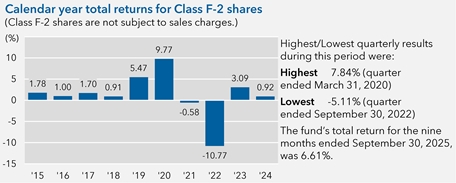
9 U.S. Government Securities Fund / Prospectus
| Share class | Inception date | 1 year | 5 years | 10 years | Lifetime |
| F-2 − Before taxes | |||||
| − After taxes on distributions | – |
– |
N/A | ||
| − After taxes on distributions and sale of fund shares | – |
N/A | |||
| Share classes (before taxes) | Inception date | 1 year | 5 years | 10 years | Lifetime |
| A (with maximum sales charge) | – |
– |
|||
| C | – |
– |
|||
| F-1 | – |
||||
| F-3 | N/A | ||||
| 529-A (with maximum sales charge) | – |
– |
|||
| 529-C | – |
– |
|||
| 529-E | – |
||||
| 529-F-1 | |||||
| 529-F-2 | N/A | N/A | – | ||
| 529-F-3 | N/A | N/A | – | ||
| R-1 | – |
– |
|||
| R-2 | – |
– |
|||
| R-2E | – |
||||
| R-3 | – |
||||
| R-4 | |||||
| R-5E | N/A | ||||
| R-5 | |||||
| R-6 |
| Indexes | 1 year | 5 years | 10 years | Lifetime (from Class F-2 inception) |
| Bloomberg U.S. Aggregate Index (reflects no deductions for sales charges, account fees, expenses or U.S. federal income taxes) | – |
|||
| Bloomberg U.S. Government/Mortgage-Backed Securities Index (reflects no deductions for sales charges, account fees, expenses or U.S. federal income taxes) | – |
|||
(For current yield information, please call American Funds Service Company at | ||||
U.S. Government Securities Fund / Prospectus 10
Management
Investment
adviser Capital Research and Management Company
Portfolio managers The
individuals primarily responsible for the portfolio management of the fund are:
| Portfolio
manager/ Fund title (if applicable) |
Portfolio
manager in this fund since: |
Primary
title with investment adviser |
| David J. Betanzos | 2015 | Partner – Capital Fixed Income Investors |
| Fergus N. MacDonald President | 2010 | Partner – Capital Fixed Income Investors |
| Pratyoosh Pratyoosh | 2025 | Partner – Capital Fixed Income Investors |
| Ritchie Tuazon | 2015 | Partner – Capital Fixed Income Investors |
Purchase and sale of fund shares The minimum amount to establish an account for all share classes is normally $250 and the minimum to add to an account is $50. For a payroll deduction retirement plan account, payroll deduction savings plan account or employer-sponsored 529 account, the minimum is $25 to establish or add to an account. For accounts with Class F-3 shares held and serviced by the fund’s transfer agent, the minimum investment amount is $1 million.
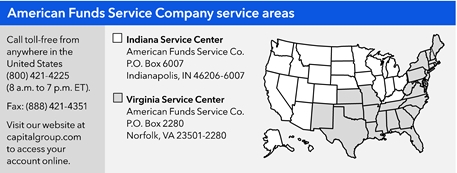
If you are a retail investor, you may sell (redeem) shares on any business day through your dealer or financial professional or by writing to American Funds Service Company® at P.O. Box 6007, Indianapolis, Indiana 46206-6007; telephoning American Funds Service Company at (800) 421-4225; faxing American Funds Service Company at (888) 421-4351; or accessing our website at capitalgroup.com. Please contact your plan administrator or recordkeeper to sell (redeem) shares from your retirement plan.
Tax information Dividends and capital gain distributions you receive from the fund are subject to federal income taxes and may also be subject to state and local taxes, unless you are tax-exempt or your account is tax-favored (in which case you may be taxed later, upon withdrawal of your investment from such account).
Payments to broker-dealers and other financial intermediaries If you purchase shares of the fund through a broker-dealer or other financial intermediary (such as a bank), the fund and the fund’s distributor or its affiliates may pay the intermediary for the sale of fund shares and related services. These payments may create a conflict of interest by influencing the broker-dealer or other intermediary and your individual financial professional to recommend the fund over another investment. Ask your individual financial professional or visit your financial intermediary’s website for more information.
11 U.S. Government Securities Fund / Prospectus
Investment objective, strategies and risks The fund’s investment objective is to provide a high level of current income consistent with prudent investment risk and preservation of capital. While it has no present intention to do so, the fund's board may change the fund's investment objective without shareholder approval upon 60 days' prior written notice to shareholders.
Normally at least 80% of the fund’s assets will be invested in securities that are guaranteed or sponsored by the U.S. government, its agencies and instrumentalities, including bonds and other debt securities denominated in U.S. dollars, which may be represented by derivatives. The fund may also invest in mortgage-backed securities issued by federal agencies and instrumentalities that are not backed by the full faith and credit of the U.S. government. Though investment decisions regarding the fund’s portfolio may be informed by investment themes on a range of macroeconomic factors, the fund may invest in debt securities of any maturity or duration. Duration is a measure used to determine the sensitivity of a security's price to changes in interest rates. The longer a security's duration, the more sensitive it will be to changes in interest rates.
The fund may invest in inflation-linked bonds issued by U.S. and non-U.S. governments, their agencies or instrumentalities, and corporations. Inflation-linked bonds are structured to protect against inflation by linking the bond’s principal and interest payments to an inflation index, such as the Consumer Price Index for Urban Consumers, so that principal and interest adjust to reflect changes in the index.
The fund may invest in futures contracts and swaps, which are types of derivatives. A derivative is a financial contract, the value of which is based on the value of an underlying financial asset (such as a stock, bond or currency), a reference rate or a market index.
The fund may invest in futures contracts and interest rate swaps in order to seek to manage the fund’s sensitivity to interest rates. A futures contract is a standardized exchange-traded agreement to buy or sell a specific quantity of an underlying asset, rate or index at an agreed-upon price at a stipulated future date. An interest rate swap is an agreement between two parties to exchange or swap payments based on changes in one or more interest rates, one of which is typically fixed and the other of which is typically a floating rate based on a designated short-term interest rate, such as the Secured Overnight Financing Rate, prime rate or other benchmark.
The fund may also hold cash or cash equivalents, including commercial paper and short-term securities issued by the U.S. government, its agencies and instrumentalities. The percentage of the fund invested in such holdings varies and depends on various factors, including market conditions and purchases and redemptions of fund shares. The investment adviser may determine that it is appropriate to invest a substantial portion of the fund’s assets in such instruments in response to certain circumstances, such as periods of market turmoil. For temporary defensive purposes, the fund may invest without limitation in such instruments. A larger percentage of such holdings could moderate the fund’s investment results in a period of rising market prices. Consistent with the fund’s preservation of capital objective, a larger percentage of such holdings could reduce the magnitude of the fund’s loss in a period of falling market prices and provide liquidity to make additional investments or to meet redemptions.
The fund may invest in certain other funds managed by the investment adviser or its affiliates (“Central Funds”) to more effectively invest in a diversified set of securities in a specific asset class such as money market instruments, bonds and other securities.
U.S. Government Securities Fund / Prospectus 12
Shares of Central Funds are only offered for purchase to the fund’s investment adviser and its affiliates and other funds, investment vehicles and accounts managed by the fund’s investment adviser and its affiliates. Central Funds do not charge management fees. As a result, the fund does not bear additional management fees when investing in Central Funds, but the fund does bear its proportionate share of Central Fund expenses. The investment results of the portions of the fund’s assets invested in the Central Funds will be based upon the investment results of the Central Funds.
The fund relies on the professional judgment of its investment adviser to make decisions about the fund’s portfolio investments. The basic investment philosophy of the investment adviser is to seek to invest in attractively priced securities that, in its opinion, represent good, long-term investment opportunities. The investment adviser believes that an important way to accomplish this is by analyzing various factors, which may include the credit strength of the issuer, prices of similar securities issued by comparable issuers, anticipated changes in interest rates, general market conditions and other factors pertinent to the particular security being evaluated. Securities may be sold when the investment adviser believes that they no longer represent relatively attractive investment opportunities.
The investment adviser may consider environmental, social and governance (“ESG”) factors that, depending on the facts and circumstances, are material to the value of an issuer or instrument. ESG factors may include, but are not limited to, environmental issues (e.g., water use, emission levels, waste, environmental remediation), social issues (e.g., human capital, health and safety, changing customer behavior) or governance issues (e.g., board composition, executive compensation, shareholder dilution).
The following are principal risks associated with investing in the fund.
Market conditions — The prices of, and the income generated by, the securities held by the fund may decline – sometimes rapidly or unpredictably – due to various factors, including events or conditions affecting the general economy or particular industries or companies; overall market changes; local, regional or global political, social or economic instability; governmental, governmental agency or central bank responses to economic conditions; levels of public debt and deficits; changes in inflation rates; and currency exchange rate, interest rate and commodity price fluctuations.
Economies and financial markets throughout the world are highly interconnected. Economic, financial or political events, trading and tariff arrangements, wars, terrorism, cybersecurity events, natural disasters, public health emergencies (such as the spread of infectious disease), bank failures and other circumstances in one country or region, including actions taken by governmental or quasi-governmental authorities in response to any of the foregoing, could have impacts on global economies or markets. As a result, whether or not the fund invests in securities of issuers located in or with significant exposure to the countries affected, the value and liquidity of the fund’s investments may be negatively affected by developments in other countries and regions.
Issuer risks — The prices of, and the income generated by, securities held by the fund may decline in response to various factors directly related to the issuers of such securities, including reduced demand for an issuer’s goods or services, poor management performance, major litigation, investigations or other controversies related to the issuer, changes in the issuer’s financial condition or credit rating, changes in government regulations affecting the issuer or its competitive environment and strategic
13 U.S. Government Securities Fund / Prospectus
initiatives such as mergers, acquisitions or dispositions and the market response to any such initiatives. An individual security may also be affected by factors relating to the industry or sector of the issuer or the securities markets as a whole, and conversely an industry or sector or the securities markets may be affected by a change in financial condition or other event affecting a single issuer. The fund’s portfolio managers invest in issuers based on their level of investment conviction. At times, the fund may invest more significantly in a single issuer, which could increase the risk of loss arising from the factors described above.
Investing in debt instruments — The prices of, and the income generated by, bonds and other debt securities held by the fund may be affected by factors such as the interest rates, maturities and credit quality of these securities.
Rising interest rates will generally cause the prices of bonds and other debt securities to fall. Also, when interest rates rise, issuers of debt securities that may be prepaid at any time, such as mortgage- or other asset-backed securities, are less likely to refinance existing debt securities, causing the average life of such securities to extend. A general change in interest rates may cause investors to sell debt securities on a large scale, which could also adversely affect the price and liquidity of debt securities and could also result in increased redemptions from the fund. Falling interest rates may cause an issuer to redeem, call or refinance a debt security before its stated maturity, which may result in the fund having to reinvest the proceeds in lower yielding securities. Longer maturity debt securities generally have greater sensitivity to changes in interest rates and may be subject to greater price fluctuations than shorter maturity debt securities.
Bonds and other debt securities are also subject to credit risk, which is the possibility that the credit strength of an issuer or guarantor will weaken or be perceived to be weaker, and/or an issuer of a debt security will fail to make timely payments of principal or interest and the security will go into default. Changes in actual or perceived creditworthiness may occur quickly. A downgrade or default affecting any of the fund’s securities could cause the value of the fund’s shares to decrease. Credit risk is gauged, in part, by the credit ratings of the debt securities in which the fund invests. However, ratings are only the opinions of the rating agencies issuing them and are not guarantees as to credit quality or an evaluation of market risk. The fund’s investment adviser relies on its own credit analysts to research issuers and issues in assessing credit and default risks.
Investing in securities backed by the U.S. government — U.S. government securities are subject to market risk, interest rate risk and credit risk. Securities backed by the U.S. Treasury or the full faith and credit of the U.S. government are guaranteed only as to the timely payment of interest and principal when held to maturity. Accordingly, the current market values for these securities will fluctuate with changes in interest rates and the credit rating of the U.S. government. Notwithstanding that these securities are backed by the full faith and credit of the U.S. government, circumstances could arise that would prevent or delay the payment of interest or principal on these securities, which could adversely affect their value and cause the fund to suffer losses. Such an event could lead to significant disruptions in U.S. and global markets.
Securities issued by U.S. government-sponsored entities and federal agencies and instrumentalities that are not backed by the full faith and credit of the U.S. government are neither issued nor guaranteed by the U.S. government.
U.S. Government Securities Fund / Prospectus 14
Investing in mortgage-related and other asset-backed securities — Mortgage-related securities, such as mortgage-backed securities, and other asset-backed securities, include debt obligations that represent interests in pools of mortgages or other income-bearing assets, such as residential mortgage loans, home equity loans, mortgages on commercial buildings, consumer loans and equipment leases. While such securities are subject to the risks associated with investments in debt instruments generally (for example, credit, extension and interest rate risks), they are also subject to other and different risks. Mortgage-backed and other asset-backed securities are subject to changes in the payment patterns of borrowers of the underlying debt, potentially increasing the volatility of the securities and the fund’s net asset value. When interest rates fall, borrowers are more likely to refinance or prepay their debt before its stated maturity. This may result in the fund having to reinvest the proceeds in lower yielding securities, effectively reducing the fund’s income. Conversely, if interest rates rise and borrowers repay their debt more slowly than expected, the time in which the mortgage-backed and other asset-backed securities are paid off could be extended, reducing the fund’s cash available for reinvestment in higher yielding securities. Mortgage-backed securities are also subject to the risk that underlying borrowers will be unable to meet their obligations and the value of property that secures the mortgages may decline in value and be insufficient, upon foreclosure, to repay the associated loans. Investments in asset-backed securities are subject to similar risks, as well as additional risks associated with the assets underlying those securities.
Investments in future delivery contracts — The fund may enter into transactions involving future delivery contracts, such as to-be-announced (TBA) contracts and mortgage dollar rolls. These contracts involve the purchase or sale of mortgage-backed securities for settlement at a future date and predetermined price. When the fund enters into a TBA commitment for the sale of mortgage-backed securities (which may be referred to as having a short position in such TBA securities), the fund may or may not hold the types of mortgage-backed securities required to be delivered. The fund may choose to roll these transactions in lieu of settling them.
When the fund rolls the purchase of these types of future delivery transactions, the fund simultaneously sells the mortgage-backed securities for delivery in the current month and repurchases substantially similar securities for delivery at a future date at a predetermined price. When the fund rolls the sale of these transactions rather than settling them, the fund simultaneously purchases the mortgage-backed securities for delivery in the current month and sells substantially similar securities for delivery at a future date at a predetermined price. Such roll transactions can increase the turnover rate of the fund and may increase the risk that market prices may move unfavorably between the original and new contracts, potentially resulting in losses or reduced returns for the fund.
Investing in inflation-linked bonds — The values of inflation-linked bonds generally fluctuate in response to changes in real interest rates — i.e., rates of interest after factoring in inflation. A rise in real interest rates may cause the prices of inflation-linked securities to fall, while a decline in real interest rates may cause the prices to increase. Inflation-linked bonds may experience greater losses than other debt securities with similar durations when real interest rates rise faster than nominal interest rates. There can be no assurance that the value of an inflation-linked security will be directly correlated to
15 U.S. Government Securities Fund / Prospectus
changes in interest rates; for example, if interest rates rise for reasons other than inflation, the increase may not be reflected in the security’s inflation measure.
Investing in inflation-linked bonds may also reduce the fund’s distributable income during periods of deflation. If prices for goods and services decline throughout the economy, the principal and income on inflation-linked securities may decline and result in losses to the fund.
Investing in derivatives — The use of derivatives involves a variety of risks, which may be different from, or greater than, the risks associated with investing in traditional securities, such as stocks and bonds. Changes in the value of a derivative may not correlate perfectly with, and may be more sensitive to market events than, the underlying asset, rate or index, and a derivative instrument may cause the fund to lose significantly more than its initial investment. Derivatives may be difficult to value, difficult for the fund to buy or sell at an opportune time or price and difficult, or even impossible, to terminate or otherwise offset. The fund’s use of derivatives may result in losses to the fund, and investing in derivatives may reduce the fund’s returns and increase the fund’s price volatility. The fund’s counterparty to a derivative transaction (including, if applicable, the fund’s clearing broker, the derivatives exchange or the clearinghouse) may be unable or unwilling to honor its financial obligations in respect of the transaction. In certain cases, the fund may be hindered or delayed in exercising remedies against or closing out derivative instruments with a counterparty, which may result in additional losses. Derivatives are also subject to operational risk (such as documentation issues, settlement issues and systems failures) and legal risk (such as insufficient documentation, insufficient capacity or authority of a counterparty, and issues with the legality or enforceability of a contract).
Management — The investment adviser to the fund actively manages the fund’s investments. Consequently, the fund is subject to the risk that the methods and analyses, including models, tools and data, employed by the investment adviser in this process may be flawed or incorrect and may not produce the desired results. This could cause the fund to lose value or its investment results to lag relevant benchmarks or other funds with similar objectives.
It is important to note that neither your investment in the fund nor the fund’s yield is guaranteed by the U.S. government.
The following are additional risks associated with investing in the fund.
Interest rate risk — The values and liquidity of the securities held by the fund may be affected by changing interest rates. For example, the values of these securities may decline when interest rates rise and increase when interest rates fall. Longer maturity debt securities generally have greater sensitivity to changes in interest rates and may be subject to greater price fluctuations than shorter maturity debt securities. The fund may invest in variable and floating rate securities. When the fund holds variable or floating rate securities, a decrease in market interest rates will adversely affect the income received from such securities and the net asset value of the fund’s shares. Although the values of such securities are generally less sensitive to interest rate changes than those of other debt securities, the value of variable and floating rate securities may decline if their interest rates do not rise as quickly, or as much, as market interest rates. Conversely, floating rate securities will not generally increase in value if interest rates decline. During periods of extremely low short-term interest rates, the fund may not be able to maintain
U.S. Government Securities Fund / Prospectus 16
a positive yield or total return and, in relatively low interest rate environments, there are heightened risks associated with rising interest rates.
Investing in futures contracts — In addition to the risks generally associated with investing in derivative instruments, futures contracts are subject to the creditworthiness of the clearing organizations, exchanges and futures commission merchants with which the fund transacts. Additionally, although futures require only a small initial investment in the form of a deposit of initial margin, the amount of a potential loss on a futures contract could greatly exceed the initial amount invested. While futures contracts are generally liquid instruments, under certain market conditions futures may be deemed to be illiquid. For example, the fund may be temporarily prohibited from closing out its position in a futures contract if intraday price change limits or limits on trading volume imposed by the applicable futures exchange are triggered. If the fund is unable to close out a position on a futures contract, the fund would remain subject to the risk of adverse price movements until the fund is able to close out the futures position. The ability of the fund to successfully utilize futures contracts may depend in part upon the ability of the fund’s investment adviser to accurately forecast interest rates and other economic factors and to assess and predict the impact of such economic factors on the futures in which the fund invests. If the investment adviser incorrectly forecasts economic developments or incorrectly predicts the impact of such developments on the futures in which it invests, the fund could suffer losses.
Investing in swaps — Swaps, including interest rate swaps and credit default swap indices, or CDSIs, are subject to many of the risks generally associated with investing in derivative instruments. Additionally, although swaps require no initial investment or only a small initial investment in the form of a deposit of initial margin, the amount of a potential loss on a swap could greatly exceed the initial amount invested. The use of swaps involves the risk that the investment adviser will not accurately predict anticipated changes in interest rates or other economic factors, which may result in losses to the fund. If the fund enters into a bilaterally negotiated swap, the counterparty may fail to perform in accordance with the terms of the swap. If a counterparty defaults on its obligations under a swap, the fund may lose any amount it expected to receive from the counterparty, potentially including amounts in excess of the fund’s initial investment. Certain swaps are subject to mandatory central clearing or may be eligible for voluntary central clearing. Although clearing interposes a central clearinghouse as the ultimate counterparty to each participant’s swap, central clearing will not eliminate (but may decrease) counterparty risk relative to uncleared bilateral swaps. Some swaps, such as CDSIs, may be dependent on both the individual credit of the fund’s counterparty and on the credit of one or more issuers of any underlying assets. If the fund does not correctly evaluate the creditworthiness of its counterparty and, where applicable, of issuers of any underlying reference assets, the fund’s investment in a swap may result in losses to the fund.
Exposure to country, region, industry or sector — Subject to the fund’s investment limitations, the fund may have significant exposure to a particular country, region, industry or sector. Such exposure may cause the fund to be more impacted by risks relating to and developments affecting the country, region, industry or sector, and thus its net asset value may be more volatile, than a fund without such levels of exposure. For example, if the fund has significant exposure in a particular country, then social,
17 U.S. Government Securities Fund / Prospectus
economic, regulatory or other issues that negatively affect that country may have a greater impact on the fund than on a fund that is more geographically diversified.
Liquidity risk — Certain fund holdings may be or may become difficult or impossible to sell, particularly during times of market turmoil. Liquidity may be impacted by the lack of an active market for a holding, legal or contractual restrictions on resale, or the reduced number and capacity of market participants to make a market in such holding. Market prices for less liquid or illiquid holdings may be volatile or difficult to determine, and reduced liquidity may have an adverse impact on the market price of such holdings. Additionally, the sale of less liquid or illiquid holdings may involve substantial delays (including delays in settlement) and additional costs and the fund may be unable to sell such holdings when necessary to meet its liquidity needs or to try to limit losses, or may be forced to sell at a loss.
Portfolio turnover — The fund may engage in frequent and active trading of its portfolio securities. Higher portfolio turnover may involve correspondingly greater transaction costs in the form of dealer spreads, brokerage commissions and other transaction costs on the sale of securities and on reinvestment in other securities. The sale of portfolio securities may also result in the realization of net capital gains, which are taxable when distributed to shareholders, unless the shareholder is exempt from taxation or his or her account is tax-favored. These costs and tax effects may adversely affect the fund’s returns to shareholders. The fund’s portfolio turnover rate may vary from year to year, as well as within a year.
Cybersecurity breaches — The fund may be subject to operational and information security risks through breaches in cybersecurity. Cybersecurity breaches can result from deliberate attacks or unintentional events, including “ransomware” attacks, the injection of computer viruses or malicious software code, the use of vulnerabilities in code to gain unauthorized access to digital information systems, networks or devices, or external attacks such as denial-of-service attacks on the investment adviser’s or an affiliate’s website that could render the fund’s network services unavailable to intended end-users. These breaches may, among other things, lead to the unauthorized release of confidential information, misuse of the fund’s assets or sensitive information, the disruption of the fund’s operational capacity, the inability of fund shareholders to transact business, or the destruction of the fund’s physical infrastructure, equipment or operating systems. These events could cause the fund to violate applicable privacy and other laws and could subject the fund to reputational damage, additional costs associated with corrective measures and/or financial loss. The fund may also be subject to additional risks if its third-party service providers, such as the fund’s investment adviser, transfer agent, custodian, administrators and other financial intermediaries, experience similar cybersecurity breaches and potential outcomes. Cybersecurity risks may also impact issuers of securities in which the fund invests, which may cause the fund’s investments in such issuers to lose value.
Large shareholder transactions risk — The fund may experience adverse effects when shareholders, including other funds or accounts advised by the investment adviser, purchase or redeem, individually or in the aggregate, large amounts of shares relative to the size of the fund. For example, when the investment adviser changes allocations in other funds and accounts it manages, such changes may result in shareholder transactions in the fund that are large relative to the size of the fund. Such large shareholder redemptions may cause the fund to sell portfolio securities at times when it
U.S. Government Securities Fund / Prospectus 18
would not otherwise do so, which may negatively impact the fund’s net asset value and liquidity. Similarly, large fund share purchases may adversely affect the fund’s performance to the extent that the fund is delayed in investing new cash and is required to maintain a larger cash position than it ordinarily would. These transactions may also accelerate the realization of taxable income to shareholders if such sales of investments resulted in gains, and may also increase transaction costs. In addition, a large redemption could result in the fund’s current expenses being allocated over a smaller asset base, leading to an increase in the fund’s expense ratio. These risks are heightened when the fund is small.
In addition to the principal investment strategies described above, the fund has other investment practices that are described in the statement of additional information, which includes a description of other risks related to the fund’s principal investment strategies and other investment practices. The fund’s investment results will depend on the ability of the fund’s investment adviser to navigate the risks discussed above as well as those described in the statement of additional information.
Fund comparative indexes The investment results table in this prospectus shows how the fund’s average annual total returns compare with a broad measure of market results and, if applicable, other measures of market results that reflect the fund’s investment universe. The Bloomberg U.S. Aggregate Index represents the U.S. investment-grade fixed-rate bond market. This index is unmanaged, and its results include reinvested dividends and/or distributions but do not reflect the effect of sales charges, commissions, account fees, expenses or U.S. federal income taxes. The Bloomberg U.S. Government/Mortgage-Backed Securities Index is a market-value-weighted index that covers fixed-rate, publicly placed, dollar-denominated obligations issued by the U.S. Treasury, U.S. government agencies, quasi-federal corporations, corporate or foreign debt guaranteed by the U.S. government, and the mortgage-backed pass-through securities of the Federal National Mortgage Association, the Federal Home Loan Mortgage Corporation and the Government National Mortgage Association. This index is unmanaged and its results include reinvested distributions but do not reflect the effect of sales charges, commissions, account fees, expenses or U.S. federal income taxes.
Fund results All fund results in this prospectus reflect the reinvestment of dividends and capital gain distributions, if any. Unless otherwise noted, fund results reflect any fee waivers and/or expense reimbursements in effect during the periods presented.
Portfolio holdings Portfolio holdings information for the fund is available on our website at capitalgroup.com. A description of the fund’s policies and procedures regarding disclosure of information about its portfolio holdings is available in the statement of additional information.
19 U.S. Government Securities Fund / Prospectus
Management and organization
Investment adviser Capital Research and Management Company, an experienced investment management organization founded in 1931, serves as the investment adviser to the fund and other funds, including the American Funds. Capital Research and Management Company is a wholly owned subsidiary of The Capital Group Companies, Inc. and is located at 333 South Hope Street, Los Angeles, California 90071. Capital Research and Management Company manages the investment portfolio and business affairs of the fund. The total management fee paid by the fund to its investment adviser for the most recent fiscal year, as a percentage of average net assets, appears in the Annual Fund Operating Expenses table under “Fees and expenses of the fund.” The management fee is based on the daily net assets of the fund and the fund’s monthly gross investment income. Please see the statement of additional information for further details. A discussion regarding the basis for approval of the fund’s Investment Advisory and Service Agreement by the fund’s board of trustees is contained in the fund’s Form N-CSR for the fiscal year ended August 31, 2025.
Capital Research and Management Company manages equity assets through three equity investment divisions and fixed income assets through its fixed income investment division, Capital Fixed Income Investors. The three equity investment divisions — Capital International Investors, Capital Research Global Investors and Capital World Investors — make investment decisions independently of one another.
The equity investment divisions may, in the future, be incorporated as wholly owned subsidiaries of Capital Research and Management Company. In that event, Capital Research and Management Company would continue to be the investment adviser, and day-to-day investment management of equity assets would continue to be carried out through one or more of these subsidiaries. Although not currently contemplated, Capital Research and Management Company could incorporate its fixed income investment division in the future and engage it to provide day-to-day investment management of fixed income assets. Capital Research and Management Company and each of the funds it advises have received an exemptive order from the U.S. Securities and Exchange Commission that allows Capital Research and Management Company to use, upon approval of the fund’s board, its management subsidiaries and affiliates to provide day-to-day investment management services to the fund, including making changes to the management subsidiaries and affiliates providing such services. The fund’s shareholders have approved this arrangement; however, there is no assurance that Capital Research and Management Company will incorporate its investment divisions or exercise any authority granted to it under the exemptive order.
U.S. Government Securities Fund / Prospectus 20
The Capital SystemTM Capital Research and Management Company uses a system of multiple portfolio managers in managing mutual fund assets. Under this approach, the portfolio of a fund is divided into segments managed by individual managers. In addition, Capital Research and Management Company’s investment analysts may make investment decisions with respect to a portion of a fund’s portfolio. Investment decisions are subject to a fund’s objective(s), policies and restrictions and the oversight of the appropriate investment-related committees of Capital Research and Management Company and its investment divisions.
Certain senior members of Capital Fixed Income Investors, the investment adviser’s fixed income investment division, serve on the Portfolio Strategy Group. The group utilizes a research-driven process with input from the investment adviser’s analysts, portfolio managers and economists to define investment themes on a range of macroeconomic factors, including duration, yield curve and sector allocation. The investment decisions made by the fund’s portfolio managers are informed by the investment themes discussed by the group.
The table below shows the investment experience and role in management of the fund for each of the fund’s primary portfolio managers.
| Portfolio manager | Investment experience |
Portfolio
manager in this fund since: |
Role
in management of the fund |
| David J. Betanzos | Investment professional since 1998 (with Capital Research and Management Company or affiliate since 2001) | 2015 | Serves as a fixed income portfolio manager |
| Fergus N. MacDonald | Investment professional since 1992 (with Capital Research and Management Company or affiliate since 2003) | 2010 | Serves as a fixed income portfolio manager |
| Pratyoosh Pratyoosh | Investment professional since 2006 (with Capital Research and Management Company or affiliate since 2013) |
2025, and previously an investment analyst for the fund since 2018 |
Serves as a fixed income portfolio manager |
| Ritchie Tuazon | Investment professional since 2000 (with Capital Research and Management Company or affiliate since 2011) | 2015 | Serves as a fixed income portfolio manager |
Information regarding the portfolio managers’ compensation, their ownership of securities in the fund and other accounts they manage is in the statement of additional information.
21 U.S. Government Securities Fund / Prospectus
Certain privileges and/or services described on the following pages of this prospectus and in the statement of additional information may not be available to you, depending on your investment dealer or retirement plan recordkeeper. Please see your financial professional or retirement plan recordkeeper for more information.
Shareholder information
Shareholder services American Funds Service Company, the fund’s transfer agent, offers a wide range of services that you can use to alter your investment program should your needs or circumstances change. These services may be terminated or modified at any time upon 60 days’ prior written notice.
A more detailed description of policies and services is included in the fund’s statement of additional information and the owner’s guide sent to new American Funds shareholders entitled Welcome. Class 529 shareholders should also refer to the applicable program description for information on policies and services relating specifically to their account(s). These documents are available by writing to or calling American Funds Service Company.
U.S. Government Securities Fund / Prospectus 22
Unless otherwise noted or unless the context requires otherwise, references on the following pages to (i) Class A, C, T or F shares also refer to the corresponding Class 529-A, 529-C, 529-T or 529-F shares, (ii) Class F shares refer to Class F-1, F-2 and F-3 shares and (iii) Class R shares refer to Class R-1, R-2, R-2E, R-3, R-4, R-5E, R-5 and R-6 shares.
Purchase, exchange and sale of shares The fund’s transfer agent, on behalf of the fund and Capital Client Group, Inc., the fund’s distributor, is required by law to obtain certain personal information from you or any other person(s) acting on your behalf in order to verify your identity or such other person’s identity. If you do not provide the information, the transfer agent may not be able to open your account. If the transfer agent is unable to verify your identity or that of any other person(s) authorized to act on your behalf, or believes it has identified potentially criminal activity, the fund and Capital Client Group, Inc. reserve the right to close your account or take such other action they deem reasonable or required by law.
When purchasing shares, you should designate the fund or funds in which you wish to invest. Subject to the exception below, if no fund is designated, your money will be held uninvested (without liability to the transfer agent for loss of income or appreciation pending receipt of proper instructions) until investment instructions are received, but for no more than three business days. Your investment will be made at the net asset value (plus any applicable sales charge, in the case of Class A or Class T shares) next determined after investment instructions are received and accepted by the transfer agent. If investment instructions are not received, your money will be invested in Class A shares (or, if you are investing through a financial intermediary who offers only Class T shares, in Class T shares) of American Funds® U.S. Government Money Market Fund on the third business day after receipt of your investment.
If the amount of your cash investment is $10,000 or less, no fund is designated, and you made a cash investment (excluding exchanges) within the last 16 months, your money will be invested in the same proportion and in the same fund or funds and in the same class of shares in which your last cash investment was made. If you only have one open fund, the money will be invested into such fund on the day received if the investment is otherwise in good order.
Different procedures may apply to certain employer-sponsored arrangements, including, but not limited to, SEP plans, SIMPLE IRA plans and CollegeAmerica accounts.
23 U.S. Government Securities Fund / Prospectus
Valuing shares The net asset value of each share class of the fund is the value of a single share of that class. Net asset value is computed by adding a class’s share of the value of a fund’s investments, cash and other assets, subtracting the class’s share of the fund’s liabilities allocated to the class, and dividing the result by the number of shares of that class that are outstanding. Realized investment income and gain is included in the fund’s net asset value until the ex-dividend date, when the declared dividend amount is treated as a fund liability. The net asset value per share is calculated once daily as of the close of regular trading on the New York Stock Exchange, normally 4 p.m. New York time, each day the New York Stock Exchange is open. If the New York Stock Exchange makes a scheduled (e.g., the day after Thanksgiving) or an unscheduled close prior to 4 p.m. New York time, the net asset value of the fund will be determined at approximately the time the New York Stock Exchange closes on that day. If on such a day market quotations and prices from third-party pricing services are not based as of the time of the early close of the New York Stock Exchange but are as of a later time (up to approximately 4 p.m. New York time), for example because the market remains open after the close of the New York Stock Exchange, those later market quotations and prices will be used in determining the fund’s net asset value.
Equity securities are valued primarily on the basis of market quotations, and debt securities are valued primarily on the basis of prices from third-party pricing services due to the lack of market quotations. Futures contracts are valued primarily on the basis of settlement prices. The fund’s portfolio investments are valued in accordance with procedures for making fair value determinations if market quotations are not readily available, including procedures to determine the representativeness of third-party vendor prices, or in the event market quotations or third-party vendor prices are not considered reliable. For example, if events occur between the close of markets outside the United States and the close of regular trading on the New York Stock Exchange that, in the opinion of the investment adviser, materially affect the value of any of the fund’s equity securities that trade principally in those international markets, those securities will be valued in accordance with fair value procedures. Similarly, fair value procedures will be employed if an issuer defaults on its debt securities and there is no market for its securities. Use of these procedures is intended to result in more appropriate net asset values and, where applicable, to reduce potential arbitrage opportunities otherwise available to short-term investors.
Your shares will be purchased at the net asset value (plus any applicable sales charge, in the case of Class A or Class T shares) or sold at the net asset value next determined after American Funds Service Company receives your request, provided that your request contains all information and legal documentation necessary to process the transaction. Orders in good order received after the New York Stock Exchange closes (scheduled or unscheduled) will be processed at the net asset value (plus any applicable sales charge) calculated on the following business day. A contingent deferred sales charge may apply at the time you sell certain Class A and C shares.
U.S. Government Securities Fund / Prospectus 24
Purchase of Class A and C shares You may generally open an account and purchase Class A and C shares by contacting any financial professional (who may impose transaction charges in addition to those described in this prospectus) authorized to sell the fund’s shares. You may purchase additional shares in various ways, including through your financial professional and by mail, telephone, the Internet and bank wire.
Automatic conversion of Class C and Class 529-C shares Class C shares automatically convert to Class A shares in the month of the 8-year anniversary of the purchase date. Class 529-C shares automatically convert to Class 529-A shares, in the month of the 5-year anniversary of the purchase date. The Internal Revenue Service currently takes the position that such automatic conversions are not taxable. Should its position change, the automatic conversion feature may be suspended. If this were to happen, you would have the option of converting your Class C shares to Class A shares or your Class 529-C shares to Class 529-A shares at the anniversary date described above. This exchange would be based on the relative net asset values of the two classes in question, without the imposition of a sales charge or fee, but you might face certain tax consequences as a result.
Purchase of Class F shares You may generally open an account and purchase Class F shares only through fee-based programs of investment dealers that have special agreements with the fund’s distributor, through financial intermediaries that have been approved by, and that have special agreements with, the fund’s distributor to offer Class F shares to self-directed investment brokerage accounts that may charge a transaction fee, through certain registered investment advisors and through other intermediaries approved by the fund’s distributor. These intermediaries typically charge ongoing fees for services they provide. Intermediary fees are not paid by the fund and normally range from .75% to 1.50% of assets annually, depending on the services offered.
Class F-2, F-3, 529-F-2 and 529-F-3 shares may also be available on brokerage platforms of firms that have agreements with the fund’s distributor to offer such shares solely when acting as an agent for the investor. An investor transacting in Class F-2, F-3, 529-F-2 or 529-F-3 shares in these programs may be required to pay a commission and/or other forms of compensation to the broker. Shares of the fund are available in other share classes that have different fees and expenses.
In addition, upon approval by an officer of the fund’s investment adviser, Class F-3 shares (but not Class 529-F-3 shares) are available to institutional investors, which include, but are not limited to, charitable organizations, governmental institutions, corporations and financial intermediaries. For accounts held and serviced by the fund’s transfer agent the minimum investment amount is $1 million.
Purchase of Class 529 shares Class 529 shares may be purchased only through an account established with a 529 college savings plan managed by Capital Research and Management Company. You may open this type of account and purchase Class 529 shares by contacting any financial professional (who may impose transaction charges in addition to those described in this prospectus) authorized to sell such an account. You may purchase additional shares in various ways, including through your financial professional and by mail, telephone, the Internet and bank wire.
Class 529-E shares may be purchased only by employees participating through an eligible employer plan.
25 U.S. Government Securities Fund / Prospectus
Accounts holding Class 529 shares are subject to a $10 account setup fee and an annual $10 account maintenance fee. These fees are waived until further notice.
Investors residing in any state may purchase Class 529 shares through an account established with a 529 college savings plan managed by Capital Research and Management Company. Class 529-A, 529-C, 529-T and 529-F shares are structured similarly to the corresponding Class A, C, T and F shares.
Purchase of Class R shares Class R shares are generally available only to retirement plans established under Internal Revenue Code Sections 401(a), 403(b) or 457, and to nonqualified deferred compensation plans and certain voluntary employee benefit association and post-retirement benefit plans. Class R shares also are generally available only to retirement plans for which plan level or omnibus accounts are held on the books of the fund. Class R-5E, R-5 and R-6 shares are generally available only to fee-based programs or through retirement plan intermediaries. Class R-3 and Class R-5E shares are available through the American Funds SIMPLE IRA Plus Program and other similar programs. In addition, Class R-5 and R-6 shares are available for investment by other registered investment companies and collective investment trusts approved by the fund’s investment adviser or distributor. Except as otherwise provided in this prospectus, Class R shares are generally not available for purchase to retail nonretirement accounts; traditional and Roth individual retirement accounts (IRAs); Coverdell Education Savings Accounts; SEPs, SARSEPs and SIMPLE IRAs held in brokerage accounts; and 529 college savings plans. Class R-6 shares are available to employer-sponsored SEPs, SARSEPs and SIMPLE IRAs held in fee-based programs that are serviced through retirement plan recordkeepers.
Purchases by employer-sponsored retirement plans Eligible retirement plans generally may open an account and purchase Class A or R shares by contacting any investment dealer (who may impose transaction charges in addition to those described in this prospectus) authorized to sell these classes of the fund’s shares. Some or all R share classes may not be available through certain investment dealers. Additional shares may be purchased through a plan’s administrator or recordkeeper.
Class A shares are generally not available for retirement plans using the PlanPremier® or Recordkeeper Direct® recordkeeping programs. These programs are proprietary recordkeeping solutions for small retirement plans.
Employer-sponsored retirement plans that are eligible to purchase Class R shares may instead purchase Class A shares and pay the applicable Class A sales charge, provided that their recordkeepers can properly apply a sales charge on plan investments. These plans are not eligible to make initial purchases at the net asset value breakpoint in Class A shares and thereby invest in Class A shares without a sales charge, nor are they eligible to establish a statement of intention that qualifies them to purchase Class A shares without a sales charge. More information about statements of intention can be found under “Sales charge reductions and waivers” in this prospectus. Plans investing in Class A shares with a sales charge may purchase additional Class A shares in accordance with the sales charge table in this prospectus.
Employer-sponsored retirement plans that invested in American Funds Class A shares without any sales charge before April 1, 2004, and that continue to meet the eligibility requirements in effect as of that date for purchasing Class A shares at net asset value,
U.S. Government Securities Fund / Prospectus 26
may continue to purchase American Funds Class A shares without any initial or contingent deferred sales charge.
A 403(b) plan may not invest in American Funds Class A or C shares unless it was invested in Class A or C shares before January 1, 2009.
Purchase minimums and maximums Purchase minimums described in this prospectus may be waived in certain cases. Minimums are currently waived for purchases of Class F-2 and F-3 shares held under fee-based programs. In addition, the fund reserves the right to redeem the shares of any shareholder for their then current net asset value per share if the shareholder’s aggregate investment in the fund falls below the fund’s minimum initial investment amount. See the statement of additional information for details.
For accounts established with an automatic investment plan, the initial purchase minimum of $250 may be waived if the purchases (including purchases through exchanges from another fund) made under the plan are sufficient to reach $250 within five months of account establishment.
The effective purchase maximums for Class 529-A, 529-C, 529-E, 529-T and 529-F shares will reflect the maximum applicable contribution limits under state law. See the applicable program description for more information.
If you have significant Capital Group Funds holdings, you may not be eligible to invest in Class C or 529-C shares. Specifically, you may not purchase Class C or 529-C shares if you are eligible to purchase Class A or 529-A shares at net asset value. See “Sales charge reductions and waivers” in this prospectus and the statement of additional information for more details regarding sales charge discounts.
Exchange Except for Class T shares or as otherwise described in this prospectus, you may exchange your shares for shares of the same class of other Capital Group Funds without a sales charge. Notwithstanding the foregoing, Class A-2 shares of Capital Group KKR Public-Private+ Funds may not be exchanged for shares of the American Funds or Emerging Markets Equities Fund, Inc. Class A, C, T or F shares of any American Fund (other than American Funds U.S. Government Money Market Fund, as described below) may be exchanged for the corresponding 529 share class without a sales charge. Exchanges from Class A, C, T or F shares to the corresponding 529 share class, particularly in the case of Uniform Gifts to Minors Act or Uniform Transfers to Minors Act custodial accounts, may result in significant legal and tax consequences, as described in the applicable program description. Please consult your financial professional before making such an exchange.
Except as indicated above, Class T shares are not eligible for exchange privileges. Accordingly, an exchange of your Class T shares for Class T shares of any other American Funds will normally be subject to any applicable sales charges.
Exchanges of shares from American Funds U.S. Government Money Market Fund initially purchased without a sales charge to shares of other Capital Group Funds will be subject to the appropriate sales charge applicable to the other fund, unless the American Funds U.S. Government Money Market Fund shares were acquired by an exchange from a fund having a sales charge or by reinvestment or cross-reinvestment of dividends or capital gain distributions. For purposes of computing the contingent deferred sales charge on Class C shares, the length of time you have owned your shares will be measured from
27 U.S. Government Securities Fund / Prospectus
the first day of the month in which shares were purchased and will not be affected by any permitted exchange.
Exchanges have the same tax consequences as ordinary sales and purchases. For example, to the extent you exchange shares held in a taxable account that are worth more now than what you paid for them, the gain will be subject to taxation.
See “Transactions by telephone, fax or the Internet” in the section “How to sell shares” of this prospectus for information regarding electronic exchanges.
Please see the statement of additional information for details and limitations on moving investments in certain share classes to different share classes and on moving investments held in certain accounts to different accounts.
U.S. Government Securities Fund / Prospectus 28
How to sell shares
You may sell (redeem) shares in any of the following ways:
Employer-sponsored retirement plans
Shares held in eligible retirement plans may be sold through the plan’s administrator or recordkeeper.
Through your dealer or financial advisor (certain charges may apply)
· Shares held for you in your dealer’s name must be sold through the dealer.
· Class F shares must be sold through intermediaries such as dealers or financial advisors.
Writing to American Funds Service Company
· Requests must be signed by the registered shareholder(s).
· A signature guarantee is required if the redemption is:
— more than $250,000;
— made payable to someone other than the registered shareholder(s); or
— sent to an address other than the address of record or to an address of record that has been changed within the previous 10 days.
· American Funds Service Company reserves the right to require signature guarantee(s) on any redemption.
· Additional documentation may be required for redemptions of shares held in corporate, partnership or fiduciary accounts.
Telephoning or faxing American Funds Service Company
· Redemptions by telephone or fax are limited to $250,000 per American Funds shareholder each day.
· Checks must be made payable to the registered shareholder.
· Checks must be mailed to an address of record that has been used with the account for at least 10 days.
Self service using the Internet (capitalgroup.com) or Interactive Voice Response (IVR)
· Redemptions by IVR or the Internet (capitalgroup.com) are limited to $125,000 per American Funds shareholder each day.
· Checks must be made payable to the registered shareholder.
· Checks must be mailed to an address of record that has been used with the account for at least 10 days.
The fund typically expects to remit redemption proceeds one business day following receipt and acceptance of a redemption order, regardless of the method the fund uses to make such payment (e.g., check, wire or automated clearing house transfer). However, payment may take longer than one business day and may take up to seven days as generally permitted by the Investment Company Act of 1940, as amended (the “1940 Act”). Under the 1940 Act, the fund may be permitted to pay redemption proceeds beyond seven days under certain limited circumstances. In addition, if you recently purchased shares and subsequently request a redemption of those shares, the fund will pay the available redemption proceeds once a sufficient period of time has passed to
29 U.S. Government Securities Fund / Prospectus
reasonably ensure that checks or drafts, including certified or cashier’s checks, for the shares purchased have cleared (normally seven business days from the purchase date).
Under normal conditions, the fund typically expects to meet shareholder redemptions from a reserve of highly liquid assets, such as cash or cash equivalents. The fund may use additional methods to meet shareholder redemptions, if they become necessary. These methods may include, but are not limited to, the sale of portfolio assets, the use of overdraft protection afforded by the fund’s custodian bank, borrowing from a line of credit or from other funds advised by the investment adviser or its affiliates, and making payment with fund securities or other fund assets rather than in cash (as further discussed in the following paragraph).
Although payment of redemptions normally will be in cash, the fund’s declaration of trust permits payment of the redemption price wholly or partly with portfolio securities or other fund assets under conditions and circumstances determined by the fund’s board of trustees. On the same redemption date, some shareholders may be paid in whole or in part in securities (which may differ among those shareholders), while other shareholders may be paid entirely in cash. In general, in-kind redemptions to affiliated shareholders will as closely as practicable represent the affiliated shareholder’s pro rata share of the fund’s securities, subject to certain exceptions. Securities distributed in-kind to unaffiliated shareholders will be selected by the investment adviser in a manner the investment adviser deems to be fair and reasonable to the fund’s shareholders. The disposal of the securities received in-kind may be subject to brokerage costs and, until sold, such securities remain subject to market risk and liquidity risk, including the risk that such securities are or become difficult to sell. If the fund pays your redemption with illiquid or less liquid securities, you will bear the risk of not being able to sell such securities.
Transactions by telephone, fax or the Internet Generally, you are automatically eligible to redeem or exchange shares by telephone, fax or the Internet, unless you notify us in writing that you do not want any or all of these services. You may reinstate these services at any time.
Unless you decide not to have telephone, fax or Internet services on your account(s), you agree to hold the fund, American Funds Service Company, any of its affiliates or mutual funds managed by such affiliates, and each of their respective directors, trustees, officers, employees and agents harmless from any losses, expenses, costs or liabilities (including attorney fees) that may be incurred in connection with the exercise of these privileges, provided that American Funds Service Company employs reasonable procedures to confirm that the instructions received from any person with appropriate account information are genuine. If reasonable procedures are not employed, American Funds Service Company and/or the fund may be liable for losses due to unauthorized or fraudulent instructions.
U.S. Government Securities Fund / Prospectus 30
Frequent trading of fund shares The fund and Capital Client Group, Inc. reserve the right to reject any purchase order for any reason. The fund is not designed to serve as a vehicle for frequent trading. Frequent trading of fund shares may lead to increased costs to the fund and less efficient management of the fund’s portfolio, potentially resulting in dilution of the value of the shares held by long-term shareholders. Accordingly, purchases, including those that are part of exchange activity, that the fund or Capital Client Group, Inc. has determined could involve actual or potential harm to the fund may be rejected.
The fund, through its transfer agent, American Funds Service Company, maintains surveillance procedures that are designed to detect frequent trading in fund shares. Under these procedures, various analytics are used to evaluate factors that may be indicative of frequent trading. For example, transactions in fund shares that exceed certain monetary thresholds may be scrutinized. American Funds Service Company also may review transactions that occur close in time to other transactions in the same account or in multiple accounts under common ownership or influence. Trading activity that is identified through these procedures or as a result of any other information available to the fund will be evaluated to determine whether such activity might constitute frequent trading. These procedures may be modified from time to time as appropriate to improve the detection of frequent trading, to facilitate monitoring for frequent trading in particular retirement plans or other accounts and to comply with applicable laws.
Under the fund’s frequent trading policy, certain trading activity will not be treated as frequent trading, such as:
· transactions in Class 529 shares;
· purchases and redemptions by investment companies managed or sponsored by the fund’s investment adviser or its affiliates, including reallocations and transactions allowing the investment company to meet its redemptions and purchases;
· retirement plan contributions, loans and distributions (including hardship withdrawals) identified as such on the retirement plan recordkeeper’s system;
· purchase transactions involving in-kind transfers of shares of the fund, rollovers, Roth IRA conversions and IRA recharacterizations, if the entity maintaining the shareholder account is able to identify the transaction as one of these types of transactions;
· transactions by certain intermediaries in accordance with established hedging programs approved by the fund’s investment adviser; and
· systematic redemptions and purchases, if the entity maintaining the shareholder account is able to identify the transaction as a systematic redemption or purchase.
Generally, purchases and redemptions will not be considered “systematic” unless the transaction is prescheduled for a specific date.
American Funds Service Company will work with certain intermediaries (such as investment dealers holding shareholder accounts in street name, retirement plan recordkeepers, insurance company separate accounts and bank trust companies) to apply their own procedures, provided that American Funds Service Company believes the intermediary’s procedures are reasonably designed to enforce the frequent trading policies of the fund. You should refer to disclosures provided by the intermediaries with
31 U.S. Government Securities Fund / Prospectus
which you have an account to determine the specific trading restrictions that apply to you.
If American Funds Service Company identifies any activity that may constitute frequent trading, it reserves the right to contact the intermediary and request that the intermediary either provide information regarding an account owner’s transactions or restrict the account owner’s trading. If American Funds Service Company is not satisfied that the intermediary has taken appropriate action, American Funds Service Company may terminate the intermediary’s ability to transact in fund shares.
There is no guarantee that all instances of frequent trading in fund shares will be prevented.
Notwithstanding the fund’s surveillance procedures described above, all transactions in fund shares remain subject to the right of the fund, Capital Client Group, Inc. and American Funds Service Company to restrict potentially abusive trading generally, including the types of transactions described above that will not be prevented. See the statement of additional information for more information about how American Funds Service Company may address other potentially abusive trading activity in American Funds.
U.S. Government Securities Fund / Prospectus 32
Distributions and taxes
Dividends and distributions The fund declares daily dividends from net investment income and distributes the accrued dividends, which may fluctuate, to you each month. Generally, dividends begin accruing on the day payment for shares is received by the fund or American Funds Service Company.
Capital gains, if any, are usually distributed in December. When a capital gain is distributed, the net asset value per share is reduced by the amount of the payment.
You may elect to reinvest dividends and/or capital gain distributions to purchase additional shares of this fund or other American Funds, or you may elect to receive them in cash. Dividends and capital gain distributions for 529 share classes and retirement plan shareholders will be reinvested automatically.
Taxes on dividends and distributions For federal tax purposes, dividends and distributions of short-term capital gains are taxable as ordinary income. If you are an individual and meet certain holding period requirements with respect to your fund shares, you may be eligible for reduced tax rates on “qualified dividend income,” if any, distributed by the fund to you. The fund’s distributions of net long-term capital gains are taxable as long-term capital gains. Any dividends or capital gain distributions you receive from the fund will normally be taxable to you when made, regardless of whether you reinvest dividends or capital gain distributions or receive them in cash.
Dividends and capital gain distributions that are automatically reinvested in a tax-favored retirement or education savings account do not result in federal or state income tax at the time of reinvestment.
Taxes on transactions Your redemptions, including exchanges, may result in a capital gain or loss for federal tax purposes. A capital gain or loss on your investment is the difference between the cost of your shares, including any sales charges, and the amount you receive when you sell them.
Exchanges within a tax-favored retirement plan account will not result in a capital gain or loss for federal or state income tax purposes. With limited exceptions, distributions from a retirement plan account are taxable as ordinary income.
Shareholder fees Fees borne directly by the fund normally have the effect of reducing a shareholder’s taxable income on distributions.
Please see your tax advisor for more information. Holders of Class 529 shares should refer to the applicable program description for more information regarding the tax consequences of selling Class 529 shares.
33 U.S. Government Securities Fund / Prospectus
Choosing a share class The fund offers different classes of shares through this prospectus. The services or share classes available to you may vary depending upon how you wish to purchase shares of the fund.
Each share class represents an investment in the same portfolio of securities, but each class has its own sales charge and expense structure, allowing you to choose the class that best fits your situation. For example, while Class F-1 shares are subject to 12b-1 fees and subtransfer agency fees payable to third-party service providers, Class F-2 shares are subject only to subtransfer agency fees payable to third-party service providers (and not 12b-1 fees) and Class F-3 shares are not subject to any such additional fees. The different fee structures allow the investor to choose how to pay for advisory platform expenses. Class R shares offer different levels of 12b-1 and recordkeeping fees so that a plan can choose the class that best meets the cost associated with obtaining investment related services and participant level recordkeeping for the plan. When you purchase shares of the fund for an individual-type account, you should choose a share class. If none is chosen, your investment will be made in Class A shares or, in the case of a 529 plan investment, Class 529-A shares (or, if you are investing through a financial intermediary who offers only Class T and 529-T shares, your investment will be made in Class T or Class 529-T shares, as applicable).
Factors you should consider when choosing a class of shares include:
· how long you expect to own the shares;
· how much you intend to invest;
· total expenses associated with owning shares of each class;
· whether you qualify for any reduction or waiver of sales charges (for example, Class A or 529-A or Class T or 529-T shares may be a less expensive option over time, particularly if you qualify for a sales charge reduction or waiver);
· whether you want or need the flexibility to effect exchanges among Capital Group Funds without the imposition of a sales charge (for example, while Class A shares offer such exchange privileges, Class T shares do not);
· whether you plan to take any distributions in the near future (for example, the contingent deferred sales charge will not be waived if you sell your Class 529-C shares to cover higher education expenses); and
· availability of share classes:
— Class C shares are not available to retirement plans that do not currently invest in such shares and that are eligible to invest in Class R shares, including retirement plans established under Internal Revenue Code Sections 401(a) (including 401(k) plans), 403(b) or 457;
— Class F and 529-F shares are available, as applicable, (i) to fee-based programs of investment dealers that have special agreements with the fund’s distributor, (ii) to financial intermediaries that have been approved by, and that have special agreements with, the fund’s distributor to offer Class F and 529-F shares to self-directed investment brokerage accounts that may charge a transaction fee, (iii) to certain registered investment advisors and (iv) to other intermediaries approved by the fund’s distributor;
— Class F-3 shares (but not Class 529-F-3 shares) are also available to institutional investors, which include, but are not limited to, charitable organizations, governmental institutions, corporations and financial intermediaries. For accounts
U.S. Government Securities Fund / Prospectus 34
held and serviced by the fund’s transfer agent the minimum investment amount is $1 million; and
— Class R shares are available (i) to retirement plans established under Internal Revenue Code Sections 401(a) (including 401(k) plans), 403(b) or 457, (ii) to nonqualified deferred compensation plans and certain voluntary employee benefit association and post-retirement benefit plans, (iii) to certain institutional investors (including, but not limited to, certain charitable organizations), (iv) to certain registered investment companies approved by the fund’s investment adviser or distributor and (v) to other institutional-type accounts.
Each investor’s financial considerations are different. You should speak with your financial professional to help you decide which share class is best for you.
35 U.S. Government Securities Fund / Prospectus
Sales charges
Class A and 529-A shares The initial sales charge you pay each time you buy Class A or 529-A shares differs depending upon the amount you invest and may be reduced or eliminated for larger purchases as indicated below. The “offering price,” the price you pay to buy shares, includes any applicable sales charge, which will be deducted directly from your investment. Shares acquired through reinvestment of dividends or capital gain distributions are not subject to an initial sales charge.
Class A shares
| Sales charge as a percentage of: | |||
| Investment | Offering price | Net
amount invested |
Dealer
commission as a percentage of offering price |
| Less than $100,000 | 3.75% | 3.90% | 3.00% |
| $100,000 but less than $250,000 | 3.50 | 3.63 | 2.75 |
| $250,000 but less than $500,000 | 2.50 | 2.56 | 2.00 |
| $500,000 or more and certain other investments described below | none | none | see below |
Class 529-A shares
| Sales
charge as a percentage of: |
|||
| Investment | Offering price | Net
amount invested |
Dealer
commission as a percentage of offering price |
| Less than $250,000 | 3.50% | 3.63% | 2.75% |
| $250,000 but less than $500,000 | 2.50 | 2.56 | 2.00 |
| $500,000 but less than $750,000 | 2.00 | 2.04 | 1.60 |
| $750,000 but less than $1 million | 1.50 | 1.52 | 1.20 |
| $1
million or more and certain other investments described below |
none | none | see below |
The sales charge, expressed as a percentage of the offering price or the net amount invested, may be higher or lower than the percentages described in the table above due to rounding. This is because the dollar amount of the sales charge is determined by subtracting the net asset value of the shares purchased from the offering price, which is calculated to two decimal places using standard rounding criteria. The impact of rounding will vary with the size of the investment and the net asset value of the shares. Similarly, any contingent deferred sales charge paid by you on investments in Class A or 529-A shares may be higher or lower than the 1% charge described below due to rounding.
Except as provided below, investments in Class A shares of $500,000 or more will be subject to a 0.75% contingent deferred sales charge if the shares are sold within 18 months of purchase. Investments in Class 529-A shares of $1 million or more will be subject to a 1.00% contingent deferred sales charge if the shares are sold within 18 months of purchase. The contingent deferred sales charge is based on the original purchase cost or the current market value of the shares being sold, whichever is less.
U.S. Government Securities Fund / Prospectus 36
Class A share purchases not subject to sales charges The following investments are not subject to any initial or contingent deferred sales charge if American Funds Service Company is properly notified of the nature of the investment:
· investments made by accounts that are part of qualified fee-based programs that purchased Class A shares before the discontinuation of the relevant investment dealer’s load-waived Class A share program with American Funds and that continue to be held through fee-based programs;
· rollover investments from retirement plans to IRAs that are described in the “Rollovers from retirement plans to IRAs” section of this prospectus;
· investments made by accounts held at American Funds Service Company that are no longer associated with a financial professional may invest in Class A shares without a sales charge. This includes retirement plans investing in Class A shares, where the plan is no longer associated with a financial professional. SIMPLE IRAs and 403(b) custodial accounts that are aggregated at the plan level for Class A sales charge purposes are not eligible to invest without a sales charge under this policy; and
· Investments made by accounts held through banks and bank trust companies that charge a fee for custodial services and do not have a financial professional assigned to the account.
The distributor may pay dealers a commission of up to 1% on investments made in Class A shares with no initial sales charge. The fund may reimburse the distributor for these payments through its plans of distribution (see “Plans of distribution” in this prospectus).
A transfer from the Virginia Prepaid Education ProgramSM or the Virginia Education Savings TrustSM to a CollegeAmerica account will be made with no sales charge. No commission will be paid to the dealer on such a transfer. Investment dealers will be compensated solely with an annual service fee that begins to accrue immediately.
If requested, American Funds Class A shares will be sold at net asset value to:
(1) currently registered representatives and assistants directly employed by such representatives, retired registered representatives with respect to accounts established while active, or full-time employees (collectively, “Eligible Persons”) (and their (a) spouses or equivalents if recognized under local law, (b) parents and children, including parents and children in step and adoptive relationships, sons-in-law and daughters-in-law, and (c) parents-in-law, if the Eligible Persons or the spouses, children or parents of the Eligible Persons are listed in the account registration with the parents-in-law) of dealers who have sales agreements with Capital Client Group, Inc. (or who clear transactions through such dealers), plans for the dealers, and plans that include as participants only the Eligible Persons, their spouses, parents and/or children;
(2) the supervised persons of currently registered investment advisory firms (“RIAs”) and assistants directly employed by such RIAs, retired supervised persons of RIAs with respect to accounts established while a supervised person (collectively, “Eligible Persons”) (and their (a) spouses or equivalents if recognized under local law, (b) parents and children, including parents and children in step and adoptive relationships, sons-in-law and daughters-in-law and (c) parents-in-law, if the Eligible Persons or the spouses, children or parents
37 U.S. Government Securities Fund / Prospectus
of the Eligible Persons are listed in the account registration with the parents-in-law) of RIA firms that are authorized to sell shares of the funds, plans for the RIA firms, and plans that include as participants only the Eligible Persons, their spouses, parents and/or children;
(3) insurance company separate accounts;
(4) accounts managed by subsidiaries of The Capital Group Companies, Inc.;
(5) an individual or entity with a substantial business relationship with The Capital Group Companies, Inc. or its affiliates, or an individual or entity related or relating to such individual or entity;
(6) wholesalers and full-time employees directly supporting wholesalers involved in the distribution of insurance company separate accounts whose underlying investments are managed by any affiliate of The Capital Group Companies, Inc.;
(7) full-time employees of banks that have sales agreements with Capital Client Group, Inc. who are solely dedicated to directly supporting the sale of mutual funds; and
(8) current or former clients of Capital Group Private Client Services and their family members who purchase their shares through Capital Group Private Client Services or American Funds Service Company.
Shares are offered at net asset value to these persons and organizations due to anticipated economies in sales effort and expense. Once an account is established under this net asset value privilege, additional investments can be made at net asset value for the life of the account. Depending on the financial intermediary holding your account, these privileges may be unavailable. Investors should consult their financial intermediary for further information.
Certain other investors may qualify to purchase shares without a sales charge, such as employees of The Capital Group Companies, Inc. and its affiliates. Please see the statement of additional information for further details.
Class C shares Class C shares are sold without any initial sales charge. Capital Client Group, Inc. pays 1% of the amount invested to dealers who sell Class C shares. A contingent deferred sales charge of 1% applies if Class C shares are sold within one year of purchase. The contingent deferred sales charge is eliminated one year after purchase.
Any contingent deferred sales charge paid by you on sales of Class C shares, expressed as a percentage of the applicable redemption amount, may be higher or lower than the percentages described above due to rounding.
U.S. Government Securities Fund / Prospectus 38
Class T shares The initial sales charge you pay each time you buy Class T shares differs depending upon the amount you invest and may be reduced for larger purchases as indicated below. The “offering price,” the price you pay to buy shares, includes any applicable sales charge, which will be deducted directly from your investment. Shares acquired through reinvestment of dividends or capital gain distributions are not subject to an initial sales charge.
| Sales
charge as a percentage of: | ||
| Investment | Offering price | Net
amount invested |
| Less than $250,000 | 2.50% | 2.56% |
| $250,000 but less than $500,000 | 2.00 | 2.04 |
| $500,000 but less than $1 million | 1.50 | 1.52 |
| $1 million or more | 1.00 | 1.01 |
The sales charge, expressed as a percentage of the offering price or the net amount invested, may be higher or lower than the percentages described in the table above due to rounding. This is because the dollar amount of the sales charge is determined by subtracting the net asset value of the shares purchased from the offering price, which is calculated to two decimal places using standard rounding criteria. The impact of rounding will vary with the size of the investment and the net asset value of the shares.
Class 529-E and Class F shares Class 529-E and Class F shares (including Class 529-F shares) are sold without any initial or contingent deferred sales charge.
Class R shares Class R shares are sold without any initial or contingent deferred sales charge. The distributor will pay dealers annually asset-based compensation of up to 1.00% for sales of Class R-1 shares, up to .75% for Class R-2 shares, up to .60% for Class R-2E shares, up to .50% for Class R-3 shares and up to .25% for Class R-4 shares. No dealer compensation is paid from fund assets on sales of Class R-5E, R-5 or R-6 shares. The fund may reimburse the distributor for these payments through its plans of distribution.
See “Plans of distribution” in this prospectus for ongoing compensation paid to your financial professional for all share classes.
Contingent deferred sales charges Shares acquired through reinvestment of dividends or capital gain distributions are not subject to a contingent deferred sales charge. In addition, the contingent deferred sales charge may be waived in certain circumstances. See “Contingent deferred sales charge waivers” in the “Sales charge reductions and waivers” section of this prospectus. For purposes of determining the contingent deferred sales charge, if you sell only some of your shares, shares that are not subject to any contingent deferred sales charge will be sold first, followed by shares that you have owned the longest.
39 U.S. Government Securities Fund / Prospectus
Sales charge reductions and waivers To receive a reduction in your Class A initial sales charge, you must let your financial professional or American Funds Service Company know at the time you purchase shares that you qualify for such a reduction. If you do not let your financial professional or American Funds Service Company know that you are eligible for a reduction, you may not receive the sales charge discount to which you are otherwise entitled. In order to determine your eligibility to receive a sales charge discount, it may be necessary for you to provide your financial professional or American Funds Service Company with information and records (including account statements) of all relevant accounts invested in eligible shares of Capital Group Funds. You may need to invest directly through American Funds Service Company in order to receive the sales charge waivers described in this prospectus. Investors should consult their financial intermediary for further information. Certain financial intermediaries that distribute shares of American Funds may impose different sales charge waivers than those described in this prospectus. Such variations in sales charge waivers are described in an appendix to this prospectus titled “Sales charge waivers.” Note that such sales charge waivers and discounts offered through a particular intermediary, as set forth in the appendix to this prospectus, are implemented and administered solely by that intermediary. Please contact the applicable intermediary to ensure that you understand the steps you must take in order to qualify for any available waivers or discounts.
In addition to the information in this prospectus, you may obtain more information about share classes, sales charges and sales charge reductions and waivers through a link on the home page of our website at capitalgroup.com, from the statement of additional information or from your financial professional.
Reducing your Class A initial sales charge Consistent with the policies described in this prospectus, you and your “immediate family” (your spouse — or equivalent, if recognized under local law, your children under the age of 21 or disabled adult dependents covered by ABLE accounts) may combine all of your Capital Group Funds investments to reduce Class A sales charges. In addition, two or more retirement plans of an employer or an employer’s affiliates may combine all of their Capital Group Funds investments to reduce Class A sales charges. However, for this purpose, investments representing direct purchases of American Funds U.S. Government Money Market Fund Class A shares are excluded. Following are different ways that you may qualify for a reduced Class A sales charge:
Aggregating accounts To receive a reduced Class A sales charge, investments in Capital Group Funds made by you and your immediate family (see above) may be aggregated if made for your own account(s) and/or certain other accounts, such as:
· individual-type employee benefit plans, such as an IRA, single-participant Keogh-type plan, or a participant account of a 403(b) plan that is treated as an individual-type plan for sales charge purposes (see “Purchases by certain 403(b) plans” under “Rollovers from retirement plans to IRAs” below);
· SEP plans and SIMPLE IRA plans established after November 15, 2004, by an employer adopting any plan document other than a prototype plan produced by Capital Client Group, Inc.;
· business accounts solely controlled by you or your immediate family (for example, you own the entire business);
U.S. Government Securities Fund / Prospectus 40
· trust accounts established by you or your immediate family (for trusts with only one primary beneficiary, upon the trustor’s death the trust account may be aggregated with such beneficiary’s own accounts; for trusts with multiple primary beneficiaries, upon the trustor’s death the trustees of the trust may instruct American Funds Service Company to establish separate trust accounts for each primary beneficiary; each primary beneficiary’s separate trust account may then be aggregated with such beneficiary’s own accounts);
· endowments or foundations established and controlled by you or your immediate family; or
· 529 accounts, which will be aggregated at the account owner level (Class 529-E accounts may only be aggregated with an eligible employer plan).
Individual purchases by a trustee(s) or other fiduciary(ies) may also be aggregated if the investments are:
· for a single trust estate or fiduciary account, including employee benefit plans other than the individual-type employee benefit plans described above;
· made for two or more employee benefit plans of a single employer or of affiliated employers as defined in the 1940 Act, excluding the individual-type employee benefit plans described above;
· for a diversified common trust fund or other diversified pooled account not specifically formed for the purpose of accumulating fund shares;
· for nonprofit, charitable or educational organizations, or any endowments or foundations established and controlled by such organizations, or any employer-sponsored retirement plans established for the benefit of the employees of such organizations, their endowments, or their foundations;
· for participant accounts of a 403(b) plan that is treated as an employer-sponsored plan for sales charge purposes (see “Purchases by certain 403(b) plans” under “Rollovers from retirement plans to IRAs” below), or made for participant accounts of two or more such plans, in each case of a single employer or affiliated employers as defined in the 1940 Act; or
· for a SEP or SIMPLE IRA plan established after November 15, 2004, by an employer adopting a prototype plan produced by Capital Client Group, Inc.
Purchases made for nominee or street name accounts (securities held in the name of an investment dealer or another nominee such as a bank trust department instead of the customer) may not be aggregated with those made for other accounts and may not be aggregated with other nominee or street name accounts unless otherwise qualified as described above.
Joint accounts may be aggregated with other accounts belonging to the primary owner and/or his or her immediate family. The primary owner of a joint account is the individual responsible for taxes on the account.
Investments made through employer-sponsored retirement plan accounts will not be aggregated with individual-type accounts.
41 U.S. Government Securities Fund / Prospectus
Class A-2 shares of Capital Group KKR Public-Private+ Funds are not eligible for aggregation with shares of the American Funds or Emerging Markets Equities Fund, Inc.
Concurrent purchases You may reduce your Class A sales charge by combining simultaneous purchases (including, upon your request, purchases for gifts) of all eligible classes of shares in Capital Group Funds. Shares of American Funds U.S. Government Money Market Fund purchased through an exchange, reinvestment or cross-reinvestment from a fund having a sales charge also qualify. However, direct purchases of American Funds U.S. Government Money Market Fund Class A shares are excluded. If you currently have individual holdings in American Legacy variable annuity contracts or variable life insurance policies that were established on or before March 31, 2007, you may continue to combine purchases made under such contracts and policies to reduce your Class A sales charge.
Rights of accumulation Subject to the limitations described in the aggregation policy, you may take into account your accumulated holdings in all eligible share classes of Capital Group Funds to determine your sales charge on investments in accounts eligible to be aggregated. Direct purchases of American Funds U.S. Government Money Market Fund Class A shares are excluded. Subject to your investment dealer’s or recordkeeper’s capabilities, your accumulated holdings will be calculated as the higher of (a) the current value of your existing holdings (the “market value”) as of the day prior to your American Funds investment or (b) the amount you invested (including reinvested dividends and capital gains, but excluding capital appreciation) less any withdrawals (the “cost value”). Depending on the entity on whose books your account is held, the value of your holdings in that account may not be eligible for calculation at cost value. For example, accounts held in nominee or street name may not be eligible for calculation at cost value and instead may be calculated at market value for purposes of rights of accumulation.
The value of all of your holdings in accounts established in calendar year 2005 or earlier will be assigned an initial cost value equal to the market value of those holdings as of the last business day of 2005. Thereafter, the cost value of such accounts will increase or decrease according to actual investments or withdrawals. You must contact your financial professional or American Funds Service Company if you have additional information that is relevant to the calculation of the value of your holdings.
When determining your American Funds Class A sales charge, if your investment is not in an employer-sponsored retirement plan, you may also continue to take into account the market value (as of the day prior to your American Funds investment) of your individual holdings in various American Legacy variable annuity contracts and variable life insurance policies that were established on or before March 31, 2007. An employer-sponsored retirement plan may also continue to take into account the market value of its investments in American Legacy Retirement Investment Plans that were established on or before March 31, 2007.
You may not purchase Class C or 529-C shares if such combined holdings cause you to be eligible to purchase Class A or 529-A shares at the $1 million or more sales charge discount rate (i.e., at net asset value).
U.S. Government Securities Fund / Prospectus 42
If you make a gift of American Funds Class A shares, upon your request, you may purchase the shares at the sales charge discount allowed under rights of accumulation of all of your Capital Group Funds and applicable American Legacy accounts.
You should retain any records necessary to substantiate the historical amounts you have invested.
Statement of intention You may reduce your Class A sales charge by establishing a statement of intention. A statement of intention is a nonbinding commitment that allows you to combine all purchases of all eligible Capital Group Funds share classes (excluding American Funds U.S. Government Money Market Fund) that you intend to make over a 13-month period to determine the applicable sales charge; however, purchases made under a right of reinvestment, appreciation of your holdings, and reinvested dividends and capital gains do not count as purchases made during the statement period. Your accumulated holdings (as described and calculated under “Rights of accumulation” above) eligible to be aggregated as of the day immediately before the start of the statement period may be credited toward satisfying the statement. A portion of your account may be held in escrow to cover additional Class A sales charges that may be due if your total purchases over the statement period do not qualify you for the applicable sales charge reduction. Employer-sponsored retirement plans are restricted from establishing statements of intention. See the discussion regarding employer-sponsored retirement plans under “Purchase, exchange and sale of shares” in this prospectus for more information.
The statement of intention period starts on the date on which your first purchase made toward satisfying the statement of intention is processed. Your accumulated holdings (as described above under “Rights of accumulation”) eligible to be aggregated as of the day immediately before the start of the statement of intention period may be credited toward satisfying the statement of intention.
You may revise the commitment you have made in your statement of intention upward at any time during the statement of intention period. If your prior commitment has not been met by the time of the revision, the statement of intention period during which purchases must be made will remain unchanged. Purchases made from the date of the revision will receive the reduced sales charge, if any, resulting from the revised statement of intention. If your prior commitment has been met by the time of the revision, your original statement of intention will be considered met and a new statement of intention will be established.
The statement of intention will be considered completed if the shareholder dies within the 13-month statement of intention period. Commissions to dealers will not be adjusted or paid on the difference between the statement of intention amount and the amount actually invested before the shareholder’s death.
When a shareholder elects to use a statement of intention, shares equal to 5% of the dollar amount specified in the statement of intention may be held in escrow in the shareholder’s account out of the initial purchase (or subsequent purchases, if necessary) by American Funds Service Company. All dividends and any capital gain distributions on shares held in escrow will be credited to the shareholder’s account in shares (or paid in cash, if requested). If the intended investment is not completed within the specified statement of intention period the investments made during the statement period will be adjusted to reflect the difference between the sales charge
43 U.S. Government Securities Fund / Prospectus
actually paid and the sales charge which would have been paid if the total of such purchases had been made at a single time. Any dealers assigned to the shareholder’s account at the time a purchase was made during the statement period will receive a corresponding commission adjustment if appropriate.
In addition, if you currently have individual holdings in American Legacy variable annuity contracts or variable life insurance policies that were established on or before March 31, 2007, you may continue to apply purchases under such contracts and policies to a statement of intention.
Shareholders purchasing shares at a reduced sales charge under a statement of intention indicate their acceptance of these terms and those in the prospectus with their first purchase.
Reducing your Class T initial sales charge Consistent with the policies described in this prospectus, the initial sales charge you pay each time you buy Class T shares may differ depending upon the amount you invest and may be reduced for larger purchases. Additionally, Class T shares acquired through reinvestment of dividends or capital gain distributions are not subject to an initial sales charge. Sales charges on Class T shares are applied on a transaction-by-transaction basis, and, accordingly, Class T shares are not eligible for any other sales charge waivers or reductions, including through the aggregation of Class T shares concurrently purchased by other related accounts or in other American Funds. The sales charge applicable to Class T shares may not be reduced by establishing a statement of intention, and rights of accumulation are not available for Class T shares.
Right of reinvestment If you notify American Funds Service Company prior to the time of reinvestment, you may reinvest proceeds from a redemption, dividend payment or capital gain distribution without a sales charge in the same fund or other American Funds or Capital Group KKR Public-Private+ Funds, provided that the reinvestment occurs within 90 days after the date of the redemption, dividend payment or distribution and is made into the same account from which you redeemed the shares or received the dividend payment or distribution. If the account has been closed, you may reinvest without a sales charge if the new receiving account has the same registration as the closed account and the reinvestment is made within 90 days after the date of redemption, dividend payment or distribution.
Proceeds from a redemption and all dividend payments and capital gain distributions will be reinvested in the same share class from which the original redemption, dividend payment or distribution was made. Any contingent deferred sales charge on Class A or C shares will be credited to your account. Redemption proceeds of Class A shares representing direct purchases in American Funds U.S. Government Money Market Fund that are reinvested in other American Funds or Capital Group KKR Public-Private+ Funds will be subject to a sales charge.
Proceeds will be reinvested at the next calculated net asset value after your request is received by American Funds Service Company, provided that your request contains all information and legal documentation necessary to process the transaction. For purposes of this “right of reinvestment policy,” automatic transactions (including, for example, automatic purchases, withdrawals and payroll deductions) and ongoing retirement plan contributions are not eligible for investment without a sales charge. This paragraph does not apply to certain rollover investments as described under “Rollovers from retirement
U.S. Government Securities Fund / Prospectus 44
plans to IRAs” in this prospectus. Depending on the financial intermediary holding your account, your reinvestment privileges may be unavailable or differ from those described in this prospectus. Investors should consult their financial intermediary for further information.
Contingent deferred sales charge waivers The contingent deferred sales charge on Class A and C shares will be waived in the following cases:
· permitted exchanges of shares, except if shares acquired by exchange are then redeemed within the period during which a contingent deferred sales charge would apply to the initial shares purchased;
· tax-free returns of excess contributions to IRAs;
· redemptions due to death or postpurchase disability of the shareholder (this generally excludes accounts registered in the names of trusts and other entities);
· in the case of joint tenant accounts, if one joint tenant dies, a surviving joint tenant, at the time he or she notifies American Funds Service Company of the other joint tenant’s death and removes the decedent’s name from the account, may redeem shares from the account without incurring a contingent deferred sales charge; however, redemptions made after American Funds Service Company is notified of the death of a joint tenant will be subject to a contingent deferred sales charge;
· for 529 share classes only, redemptions due to a beneficiary’s death, postpurchase disability or receipt of a scholarship (to the extent of the scholarship award);
· redemptions due to the complete termination of a trust upon the death of the trustor/grantor or beneficiary, but only if such termination is specifically provided for in the trust document;
· shares redeemed at the discretion of American Funds Service Company for accounts that do not meet the fund’s minimum investment requirements, as described in this prospectus; and
· the following types of transactions, if they do not exceed 12% of the value of an account annually:
— required minimum distributions taken from retirement accounts in accordance with IRS regulations; and
— redemptions through an automatic withdrawal plan (“AWP”) (see “Automatic withdrawals” under “Shareholder account services and privileges” in the statement of additional information). For each AWP payment, assets that are not subject to a contingent deferred sales charge, such as shares acquired through reinvestment of dividends and/or capital gain distributions, will be redeemed first and will count toward the 12% limit. If there is an insufficient amount of assets not subject to a contingent deferred sales charge to cover a particular AWP payment, shares subject to the lowest contingent deferred sales charge will be redeemed next until the 12% limit is reached. Any dividends and/or capital gain distributions taken in cash by a shareholder who receives payments through an AWP will also count toward the 12% limit. In the case of an AWP, the 12% limit is calculated at the time an automatic redemption is first made, and is recalculated at the time each additional automatic redemption is made. Shareholders who establish an AWP should be aware that the amount of a payment not subject to a contingent deferred sales charge may vary over time
45 U.S. Government Securities Fund / Prospectus
depending on fluctuations in the value of their accounts. This privilege may be revised or terminated at any time.
For purposes of this paragraph, “account” means your investment in the applicable class of shares of the particular fund from which you are making the redemption.
The contingent deferred sales charge on American Funds Class A shares may be waived in cases where the fund’s transfer agent determines the benefit to the fund of collecting the contingent deferred sales charge would be outweighed by the cost of applying it.
Contingent deferred sales charge waivers are allowed only in the cases listed here and in the statement of additional information. For example, contingent deferred sales charge waivers will not be allowed on redemptions of Class 529-C shares due to termination of CollegeAmerica; a determination by the Internal Revenue Service that CollegeAmerica does not qualify as a qualified tuition program under the Code; proposal or enactment of law that eliminates or limits the tax-favored status of CollegeAmerica; or elimination of the fund by Commonwealth Savers PlanSM (formerly, Virginia529) as an option for additional investment within CollegeAmerica.
To have your Class A or C contingent deferred sales charge waived, you must inform your financial professional or American Funds Service Company at the time you redeem shares that you qualify for such a waiver.
Other sales charge waivers Purchases of Class A shares through a self-clearing broker-dealer firm generally incur a sales charge. However, self-clearing broker-dealer firms may extend the 90 day right of reinvestment to allow reinvestment in Class A shares without a sales charge in cases where fund shareholders request reinvestment of a required minimum distribution from an Individual Retirement Account if such requirement is waived by regulation or legislation (“waived RMD reinvestment”), provided that the self-clearing broker-dealer firm has specific language in this prospectus to such effect. If a self-clearing firm does not have their own policies listed in the prospectus, waived RMD reinvestments are not available without a sales charge. Firm specific language is located in the appendix to the prospectus. A self-clearing broker-dealer firm is a firm that holds some or all of the assets in your account, executes trades for the assets held on its platform internally rather than through the fund’s transfer agent or a third-party clearing firm and provides account statements and tax reporting to you. The largest broker-dealer firms are typically self-clearing. For all other broker-dealer firms, shares purchased through a waived RMD reinvestment are available at net asset value. For accounts held with the fund’s transfer agent, waived RMD reinvestments in Class A shares are not subject to sales charges.
Purchases of Class 529-A shares through (i) a rollover from another 529 plan or (ii) a recontribution of a refunded qualified education expense are not subject to sales charges.
If you have any questions, ask your financial professional whether Class A or 529-A shares purchased through these policies are available without a sales charge. Recontributions or waived RMD investments distributed from Class 529-C or Class C shares will be reinvested in the same share class from which the distribution was made. In addition, any contingent deferred sales charge paid on Class 529-A/Class A and Class 529-C/Class C share distributions under these policies will be credited to your account when reinvested.
U.S. Government Securities Fund / Prospectus 46
Waivers of all or a portion of the contingent deferred sales charge on Class C and 529-C shares and the sales charge on Class A and 529-A shares will be granted for transactions requested by financial intermediaries as a result of (i) pending or anticipated regulatory matters that require investor accounts to be moved to a different share class or (ii) conversions of IRAs from brokerage to advisory accounts investing in Class F shares in cases where new investments in brokerage IRA accounts have been restricted by the intermediary.
Rollovers from CollegeAmerica to Roth IRAs Proceeds of a CollegeAmerica plan account may be rolled over in a direct trustee-to-trustee transfer to the plan beneficiary’s Capital Bank and Trust Roth IRA and invested in Class A shares without a sales charge, provided that such rollover is intended to satisfy the requirements of the Internal Revenue Code. If you hold CollegeAmerica or Roth IRA accounts through a financial intermediary its policies may differ.
47 U.S. Government Securities Fund / Prospectus
Rollovers from retirement plans to IRAs Assets from retirement plans may be invested in Class A, C or F shares through an IRA rollover, subject to the other provisions of this prospectus. Class C shares are not available if the assets are being rolled over from investments held in American Funds Recordkeeper Direct and PlanPremier retirement plan recordkeeping programs.
Rollovers to IRAs from retirement plans that are rolled into Class A shares will be subject to applicable sales charges. The following rollovers to Class A shares will be made without a sales charge:
· rollovers to IRAs with Capital Bank and Trust Company as custodian if the assets were invested in any fund managed by the investment adviser or its affiliates at the time of distribution;
· rollovers to IRAs from 403(b) plans with Capital Bank and Trust Company as custodian;
· rollovers to IRAs with Capital Bank and Trust Company as custodian from investments held in American Funds Recordkeeper Direct and PlanPremier retirement plan recordkeeping programs; and
· rollovers to IRAs with Capital Bank and Trust Company as custodian if at the time of distribution the assets were invested in any fund or account with a name that includes American Funds, Capital Group, or the name of a fund managed by the investment adviser or its affiliates and such fund or account was established pursuant to an agreement with the investment adviser or its affiliates.
IRA rollover assets that roll over without a sales charge as described above will not be subject to a contingent deferred sales charge, and investment dealers will be compensated solely with an annual service fee that begins to accrue immediately. All other rollovers invested in Class A shares, as well as future contributions to the IRA, will be subject to sales charges and to the terms and conditions generally applicable to Class A share investments as described in this prospectus and in the statement of additional information.
Purchases by SEP plans and SIMPLE IRA plans Participant accounts in a Simplified Employee Pension (SEP) plan or a Savings Incentive Match Plan for Employees of Small Employers IRA (SIMPLE IRA) will be aggregated at the plan level for Class A sales charge purposes if an employer adopts a prototype plan produced by Capital Client Group, Inc. or (a) the employer or plan sponsor submits all contributions for all participating employees in a single contribution transmittal or the contributions are identified as related to the same plan; (b) each transmittal is accompanied by checks or wire transfers and generally must be submitted through the transfer agent’s automated contribution system if held on the fund’s books; and (c) if the fund is expected to carry separate accounts in the name of each plan participant and (i) the employer or plan sponsor notifies the funds’ transfer agent or the intermediary holding the account that the separate accounts of all plan participants should be linked and (ii) all new participant accounts are established by submitting the appropriate documentation on behalf of each new participant. Participant accounts in a SEP or SIMPLE plan that are eligible to aggregate their assets at the plan level may not also aggregate the assets with their individual accounts.
Purchases by certain 403(b) plans A 403(b) plan may not invest in American Funds Class A or C shares unless such plan was invested in Class A or C shares before January 1, 2009.
U.S. Government Securities Fund / Prospectus 48
Participant accounts of a 403(b) plan that invested in American Funds Class A or C shares and were treated as an individual-type plan for sales charge purposes before January 1, 2009, may continue to be treated as accounts of an individual-type plan for sales charge purposes. Participant accounts of a 403(b) plan that invested in American Funds Class A or C shares and were treated as an employer-sponsored plan for sales charge purposes before January 1, 2009, may continue to be treated as accounts of an employer-sponsored plan for sales charge purposes. Participant accounts of a 403(b) plan that was established on or after January 1, 2009, are treated as accounts of an employer-sponsored plan for sales charge purposes.
Moving between accounts American Funds investments by certain account types may be moved to other account types without incurring additional Class A sales charges. These transactions include:
· redemption proceeds from a non-retirement account (for example, a joint tenant account) used to purchase fund shares in an IRA or other individual-type retirement account;
· required minimum distributions from an IRA or other individual-type retirement account used to purchase fund shares in a non-retirement account; and
· death distributions paid to a beneficiary’s account that are used by the beneficiary to purchase fund shares in a different account.
These privileges are generally available only if your account is held directly with the fund’s transfer agent or if the financial intermediary holding your account has the systems, policies and procedures to support providing the privileges on its systems. Investors should consult their financial intermediary for further information.
49 U.S. Government Securities Fund / Prospectus
Plans of distribution The fund has plans of distribution, or “12b-1 plans,” for certain share classes under which it may finance activities intended primarily to sell shares, provided that the categories of expenses are approved in advance by the fund’s board of trustees. The plans provide for payments, based on annualized percentages of average daily net assets, of:
| Up to: | Share class(es) |
| 0.30% | Class A shares |
| 0.50% | Class T, F-1, 529-A, 529-T, 529-F-1 and R-4 shares |
| 0.75% | Class 529-E and R-3 shares |
| 0.85% | Class R-2E shares |
| 1.00% | Class C, 529-C, R-1 and R-2 shares |
For all share classes indicated above, up to .25% may be used to pay service fees to qualified dealers for providing certain shareholder services. The amount remaining for each share class, if any, may be used for distribution expenses.
The 12b-1 fees paid by each applicable share class of the fund, as a percentage of average net assets for the most recent fiscal year, are indicated in the Annual Fund Operating Expenses table under “Fees and expenses of the fund” in this prospectus. Since these fees are paid out of the fund’s assets on an ongoing basis, over time they may cost you more than paying other types of sales charges or service fees and reduce the return on your investment. The higher fees for Class C shares may cost you more over time than paying the initial sales charge for Class A or T shares.
U.S. Government Securities Fund / Prospectus 50
Other compensation to dealers Capital Client Group, Inc., at its expense, provides additional compensation to investment dealers. These payments may be made, at the discretion of Capital Client Group, Inc., to no more than the top 60 dealers (or their affiliates) with which it has a substantive distribution relationship involving the sale of American Funds. The amount will be determined using a formula applied consistently to dealers based on their assets under management. The level of payments made to a qualifying firm under the formula will not exceed .035% of eligible American Funds assets attributable to that dealer. Eligible assets are all American Funds assets other than Class R shares, Class F-3 shares, Class F shares held in IRAs and shares held in certain retirement accounts. Dealers may direct Capital Client Group, Inc. to exclude additional assets. In addition to the asset-based payment, Capital Client Group, Inc. provides $5 million to certain firms based on their engagement with Capital Client Group, Inc. and the level of American Funds assets under management at each such firm to recognize the commitment each of those firms has made to collaborating with Capital Client Group, Inc. on achieving advisor training and education objectives. In the prior calendar year, Capital Client Group, Inc. paid this amount to the following firms:
| Edward Jones | Morgan Stanley Wealth Management |
| LPL Financial LLC | Raymond James Group |
| Merrill Lynch, Pierce, Fenner & Smith | Wells Fargo Advisors |
Capital Client Group, Inc. compensates the firms to support various efforts, including, among other things, to:
· help defray the costs incurred by qualifying dealers in connection with efforts to educate financial professionals about American Funds so that they can make recommendations and provide services that are suitable and meet shareholder needs;
· help defray the costs associated with the dealer firms’ provision of account related services and activities and support the dealer firms’ distribution activities;
· support meetings, conferences or other training and educational events hosted by the firm, and obtain relevant data regarding financial professional activities to facilitate Capital Client Group, Inc.’s training and education activities; and
· make the American Funds available through firm distribution platforms and related sales infrastructure.
Capital Client Group, Inc. will, on an annual basis, determine the advisability of continuing these payments. Firms receiving additional compensation payments must sign a letter acknowledging the purpose of the payment and generally requiring the firms to (1) perform the due diligence necessary to include American Funds on their platform, (2) not provide financial professionals, branch managers or associated persons with any financial incentives to promote the sales of one approved fund group over another approved group, (3) provide opportunities for their clients to obtain individualized advice, (4) provide Capital Client Group, Inc. broad access to their financial professionals and product platforms and work together on mutual business objectives, and (5) work with the fund’s transfer agent to promote operational efficiencies and to facilitate necessary communication between American Funds and the firm’s clients who own shares of American Funds.
51 U.S. Government Securities Fund / Prospectus
Separately, Capital Client Group, Inc. makes payments to certain financial intermediaries and other firms for services including:
· making the American Funds available through firm distribution platforms including self-directed platforms for the public as well as clearing, custody and recordkeeping services for other intermediaries and related sales infrastructure;
· account maintenance and support, statement preparation, transaction processing and operational improvements; and
· training, education and marketing opportunities, support for transaction fees, technology costs and data (including fees to obtain information on financial professionals to better tailor training, education and marketing opportunities).
A list of firms receiving additional compensation (as described above) in an amount exceeding $100,000 in the prior calendar year is included in the statement of additional information.
Capital Client Group, Inc. pays certain recordkeepers for product services, platform consideration, participation at recordkeeper-sponsored events and co-branding and other marketing services. A list of recordkeepers receiving additional compensation (as described above) in an amount exceeding $100,000 in the prior calendar year is included in the statement of additional information.
If investment advisers, distributors or other affiliates of mutual funds pay additional compensation or other incentives to investment dealers in differing amounts, dealer firms and their financial professionals may have financial incentives for recommending a particular mutual fund over other mutual funds or investments, creating a potential conflict of interest. You should consult with your financial professional and review carefully any disclosure by your financial professional’s firm as to compensation received.
U.S. Government Securities Fund / Prospectus 52
Fund expenses Note that, unless otherwise stated, references to Class A, C, T and F shares in this “Fund expenses” section do not include the corresponding Class 529 shares.
In periods of market volatility, assets of the fund may decline significantly, causing total annual fund operating expenses (as a percentage of the value of your investment) to become higher than the numbers shown in the Annual Fund Operating Expenses table under “Fees and expenses of the fund” in this prospectus.
For all share classes, “Other expenses” items in the Annual Fund Operating Expenses table in this prospectus include fees for administrative services provided by the fund’s investment adviser and its affiliates. Administrative services are provided by the investment adviser and its affiliates to help assist third parties providing non-distribution services to fund shareholders. These services include providing in-depth information on the fund and market developments that impact fund investments. Administrative services also include, but are not limited to, coordinating, monitoring and overseeing third parties that provide services to fund shareholders. The Administrative Services Agreement between the fund and the investment adviser provides the fund the ability to charge an administrative services fee of .05% for all share classes. The fund’s investment adviser receives an administrative services fee at the annual rate of .03% of the average daily net assets of the fund attributable to Class A, C, T, F, R and 529 shares (which could be increased as noted above) for its provision of administrative services.
The “Other expenses” items in the Annual Fund Operating Expenses table also include custodial, legal and transfer agent (and, if applicable, subtransfer agent/recordkeeping) payments and various other expenses applicable to all share classes.
53 U.S. Government Securities Fund / Prospectus
Subtransfer agency and recordkeeping fees Subtransfer agent/recordkeeping payments may be made to third parties (including affiliates of the fund’s investment adviser) that provide subtransfer agent, recordkeeping and/or shareholder services with respect to certain shareholder accounts in lieu of the transfer agent providing such services. The amount paid for subtransfer agent/recordkeeping services varies depending on the share class and services provided, and typically ranges from $3 to $18 per account. Although Class F-3 and Class 529-F-3 shares are not subject to any subtransfer agency or recordkeeping fees, Class F-1 and F-2 shares (and the corresponding Class 529 shares) are subject to subtransfer agency fees of up to .12% of fund assets.
For employer-sponsored retirement plans, the amount paid for subtransfer agent/ recordkeeping services varies depending on the share class selected. The table below shows the maximum payments to entities providing these services to retirement plans.
| Payments | |
| Class A | 0.05%
of assets or $12 per participant position* |
| Class R-1 | 0.10% of assets |
| Class R-2 | 0.35% of assets |
| Class R-2E | 0.20% of assets |
| Class R-3 | 0.15% of assets |
| Class R-4 | 0.10% of assets |
| Class R-5E | 0.15% of assets |
| Class R-5 | 0.05% of assets |
| Class R-6 | none |
* Payment amount depends on the date services commenced.
Fee to Commonwealth Savers Plan For Class 529 shares, an expense of up to a maximum of .09% paid to a state or states for oversight and administrative services is included as an “Other expenses” item.
U.S. Government Securities Fund / Prospectus 54
Financial highlights The Financial Highlights table is intended to help you understand the fund’s results for the past five fiscal years (or, if shorter, the period of operations). Certain information reflects financial results for a single share of a particular class. The total returns in the table represent the rate that an investor would have earned or lost on an investment in the fund (assuming reinvestment of all dividends and capital gain distributions). Where indicated, figures in the table reflect the impact, if any, of certain waivers/reimbursements from Capital Research and Management Company. For more information about these waivers/reimbursements, see the fund’s statement of additional information and Form N-CSR. The information in the Financial Highlights table has been audited by Deloitte & Touche LLP, whose current report, along with the fund’s financial statements, is included in the statement of additional information, which is available upon request.
| Income (loss) from investment operations1 | Dividends and distributions | |||||||||||||||||||||||||
| Year ended | Net
asset value, beginning of year |
Net investment income (loss) |
Net
gains (losses) on securities (both realized and unrealized) |
Total
from investment operations |
Dividends (from net investment income) |
Distributions (from capital gains) |
Total dividends and distributions |
Net
asset value, end of year |
Total return2, 3 | Net
assets, end of year (in millions) |
Ratio
of expenses to average net assets before waivers/ reimburse- ments4 |
Ratio
of expenses to average net assets after waivers/ reimburse- ments3, 4 |
Ratio
of net income (loss) to average net assets3 | |||||||||||||
| Class A: | ||||||||||||||||||||||||||
| 8/31/2025 | $12.16 | $.47 | $(.05 | ) | $.42 | $(.49 | ) | $— | $(.49 | ) | $12.09 | 3.54 | % | $2,670 | .68 | % | .65 | % | 3.96 | % | ||||||
| 8/31/2024 | 11.93 | .49 | .23 | .72 | (.49 | ) | — | (.49 | ) | 12.16 | 6.21 | 2,745 | .70 | .66 | 4.12 | |||||||||||
| 8/31/2023 | 12.78 | .32 | (.84 | ) | (.52 | ) | (.33 | ) | — | (.33 | ) | 11.93 | (4.13 | ) | 2,879 | .65 | .65 | 2.62 | ||||||||
| 8/31/2022 | 14.21 | .28 | (1.40 | ) | (1.12 | ) | (.31 | ) | — | (.31 | ) | 12.78 | (7.98 | ) | 3,317 | .61 | .61 | 2.08 | ||||||||
| 8/31/2021 | 14.95 | .09 | (.15 | ) | (.06 | ) | (.12 | ) | (.56 | ) | (.68 | ) | 14.21 | (.37 | ) | 4,038 | .61 | .61 | .61 | |||||||
| Class C: | ||||||||||||||||||||||||||
| 8/31/2025 | 12.08 | .38 | (.05 | ) | .33 | (.40 | ) | — | (.40 | ) | 12.01 | 2.78 | 55 | 1.41 | 1.38 | 3.23 | ||||||||||
| 8/31/2024 | 11.85 | .40 | .23 | .63 | (.40 | ) | — | (.40 | ) | 12.08 | 5.46 | 69 | 1.42 | 1.39 | 3.39 | |||||||||||
| 8/31/2023 | 12.70 | .23 | (.84 | ) | (.61 | ) | (.24 | ) | — | (.24 | ) | 11.85 | (4.82 | ) | 98 | 1.38 | 1.38 | 1.85 | ||||||||
| 8/31/2022 | 14.14 | .18 | (1.40 | ) | (1.22 | ) | (.22 | ) | — | (.22 | ) | 12.70 | (8.65 | ) | 129 | 1.35 | 1.35 | 1.30 | ||||||||
| 8/31/2021 | 14.90 | (.02 | ) | (.13 | ) | (.15 | ) | (.05 | ) | (.56 | ) | (.61 | ) | 14.14 | (1.11 | ) | 176 | 1.31 | 1.31 | (.11 | ) | |||||
| Class T: | ||||||||||||||||||||||||||
| 8/31/2025 | 12.16 | .50 | (.05 | ) | .45 | (.52 | ) | — | (.52 | ) | 12.09 | 3.81 | 5 | — | 6 | .41 | 5 | .38 | 5 | 4.21 | 5 | |||||
| 8/31/2024 | 11.93 | .52 | .23 | .75 | (.52 | ) | — | (.52 | ) | 12.16 | 6.53 | 5 | — | 6 | .39 | 5 | .35 | 5 | 4.42 | 5 | ||||||
| 8/31/2023 | 12.78 | .37 | (.85 | ) | (.48 | ) | (.37 | ) | — | (.37 | ) | 11.93 | (3.80 | )5 | — | 6 | .31 | 5 | .31 | 5 | 2.98 | 5 | ||||
| 8/31/2022 | 14.21 | .32 | (1.41 | ) | (1.09 | ) | (.34 | ) | — | (.34 | ) | 12.78 | (7.74 | )5 | — | 6 | .36 | 5 | .36 | 5 | 2.37 | 5 | ||||
| 8/31/2021 | 14.95 | .13 | (.15 | ) | (.02 | ) | (.16 | ) | (.56 | ) | (.72 | ) | 14.21 | (.11 | )5 | — | 6 | .35 | 5 | .35 | 5 | .89 | 5 | |||
| 55 U.S. Government Securities Fund / Prospectus |
| Income (loss) from investment operations1 | Dividends and distributions | |||||||||||||||||||||||||
| Year ended | Net
asset value, beginning of year |
Net investment income (loss) |
Net
gains (losses) on securities (both realized and unrealized) |
Total
from investment operations |
Dividends (from net investment income) |
Distributions (from capital gains) |
Total dividends and distributions |
Net
asset value, end of year |
Total return2, 3 | Net
assets, end of year (in millions) |
Ratio
of expenses to average net assets before waivers/ reimburse- ments4 |
Ratio
of expenses to average net assets after waivers/ reimburse- ments3, 4 |
Ratio
of net income (loss) to average net assets3 | |||||||||||||
| Class F-1: | ||||||||||||||||||||||||||
| 8/31/2025 | $12.16 | $.47 | $(.06 | ) | $.41 | $(.48 | ) | $— | $(.48 | ) | $12.09 | 3.50 | % | $72 | .72 | % | .69 | % | 3.92 | % | ||||||
| 8/31/2024 | 11.93 | .48 | .24 | .72 | (.49 | ) | — | (.49 | ) | 12.16 | 6.19 | 90 | .72 | .69 | 4.09 | |||||||||||
| 8/31/2023 | 12.78 | .33 | (.85 | ) | (.52 | ) | (.33 | ) | — | (.33 | ) | 11.93 | (4.14 | ) | 121 | .66 | .66 | 2.65 | ||||||||
| 8/31/2022 | 14.21 | .28 | (1.41 | ) | (1.13 | ) | (.30 | ) | — | (.30 | ) | 12.78 | (8.01 | ) | 132 | .65 | .65 | 2.08 | ||||||||
| 8/31/2021 | 14.95 | .07 | (.13 | ) | (.06 | ) | (.12 | ) | (.56 | ) | (.68 | ) | 14.21 | (.38 | ) | 142 | .62 | .62 | .46 | |||||||
| Class F-2: | ||||||||||||||||||||||||||
| 8/31/2025 | 12.16 | .51 | (.06 | ) | .45 | (.52 | ) | — | (.52 | ) | 12.09 | 3.75 | 929 | .39 | .36 | 4.25 | ||||||||||
| 8/31/2024 | 11.93 | .52 | .23 | .75 | (.52 | ) | — | (.52 | ) | 12.16 | 6.63 | 842 | .39 | .36 | 4.42 | |||||||||||
| 8/31/2023 | 12.78 | .36 | (.85 | ) | (.49 | ) | (.36 | ) | — | (.36 | ) | 11.93 | (3.85 | ) | 745 | .36 | .36 | 2.94 | ||||||||
| 8/31/2022 | 14.21 | .32 | (1.41 | ) | (1.09 | ) | (.34 | ) | — | (.34 | ) | 12.78 | (7.73 | ) | 758 | .35 | .35 | 2.36 | ||||||||
| 8/31/2021 | 14.95 | .13 | (.14 | ) | (.01 | ) | (.17 | ) | (.56 | ) | (.73 | ) | 14.21 | (.09 | ) | 866 | .32 | .32 | .91 | |||||||
| Class F-3: | ||||||||||||||||||||||||||
| 8/31/2025 | 12.17 | .52 | (.07 | ) | .45 | (.53 | ) | — | (.53 | ) | 12.09 | 3.87 | 867 | .28 | .25 | 4.36 | ||||||||||
| 8/31/2024 | 11.93 | .54 | .24 | .78 | (.54 | ) | — | (.54 | ) | 12.17 | 6.74 | 931 | .28 | .25 | 4.53 | |||||||||||
| 8/31/2023 | 12.79 | .37 | (.85 | ) | (.48 | ) | (.38 | ) | — | (.38 | ) | 11.93 | (3.82 | ) | 802 | .25 | .25 | 3.01 | ||||||||
| 8/31/2022 | 14.22 | .36 | (1.43 | ) | (1.07 | ) | (.36 | ) | — | (.36 | ) | 12.79 | (7.56 | ) | 879 | .24 | .24 | 2.64 | ||||||||
| 8/31/2021 | 14.95 | .15 | (.14 | ) | .01 | (.18 | ) | (.56 | ) | (.74 | ) | 14.22 | .02 | 718 | .21 | .21 | 1.05 | |||||||||
| Class 529-A: | ||||||||||||||||||||||||||
| 8/31/2025 | 12.16 | .47 | (.05 | ) | .42 | (.49 | ) | — | (.49 | ) | 12.09 | 3.54 | 155 | .68 | .66 | 3.95 | ||||||||||
| 8/31/2024 | 11.93 | .49 | .23 | .72 | (.49 | ) | — | (.49 | ) | 12.16 | 6.20 | 151 | .71 | .68 | 4.11 | |||||||||||
| 8/31/2023 | 12.78 | .32 | (.84 | ) | (.52 | ) | (.33 | ) | — | (.33 | ) | 11.93 | (4.14 | ) | 152 | .67 | .67 | 2.61 | ||||||||
| 8/31/2022 | 14.21 | .28 | (1.41 | ) | (1.13 | ) | (.30 | ) | — | (.30 | ) | 12.78 | (8.00 | ) | 177 | .63 | .63 | 2.06 | ||||||||
| 8/31/2021 | 14.95 | .09 | (.14 | ) | (.05 | ) | (.13 | ) | (.56 | ) | (.69 | ) | 14.21 | (.36 | ) | 216 | .60 | .60 | .62 | |||||||
| Class 529-C: | ||||||||||||||||||||||||||
| 8/31/2025 | 12.06 | .38 | (.07 | ) | .31 | (.39 | ) | — | (.39 | ) | 11.98 | 2.65 | 5 | 1.46 | 1.43 | 3.18 | ||||||||||
| 8/31/2024 | 11.83 | .39 | .24 | .63 | (.40 | ) | — | (.40 | ) | 12.06 | 5.43 | 6 | 1.45 | 1.42 | 3.36 | |||||||||||
| 8/31/2023 | 12.68 | .22 | (.83 | ) | (.61 | ) | (.24 | ) | — | (.24 | ) | 11.83 | (4.88 | ) | 8 | 1.44 | 1.44 | 1.81 | ||||||||
| 8/31/2022 | 14.12 | .17 | (1.39 | ) | (1.22 | ) | (.22 | ) | — | (.22 | ) | 12.68 | (8.70 | ) | 10 | 1.40 | 1.40 | 1.22 | ||||||||
| 8/31/2021 | 14.89 | (.02 | ) | (.14 | ) | (.16 | ) | (.05 | ) | (.56 | ) | (.61 | ) | 14.12 | (1.10 | ) | 14 | 1.34 | 1.34 | (.14 | ) | |||||
| U.S. Government Securities Fund / Prospectus 56 |
| Income (loss) from investment operations1 | Dividends and distributions | |||||||||||||||||||||||||
| Year ended | Net
asset value, beginning of year |
Net investment income (loss) |
Net
gains (losses) on securities (both realized and unrealized) |
Total
from investment operations |
Dividends (from net investment income) |
Distributions (from capital gains) |
Total dividends and distributions |
Net
asset value, end of year |
Total return2, 3 | Net
assets, end of year (in millions) |
Ratio
of expenses to average net assets before waivers/ reimburse- ments4 |
Ratio
of expenses to average net assets after waivers/ reimburse- ments3, 4 |
Ratio
of net income (loss) to average net assets3 | |||||||||||||
| Class 529-E: | ||||||||||||||||||||||||||
| 8/31/2025 | $12.16 | $.45 | $(.07 | ) | $.38 | $(.46 | ) | $— | $(.46 | ) | $12.08 | 3.23 | % | $6 | .90 | % | .87 | % | 3.74 | % | ||||||
| 8/31/2024 | 11.92 | .46 | .24 | .70 | (.46 | ) | — | (.46 | ) | 12.16 | 6.08 | 7 | .91 | .87 | 3.91 | |||||||||||
| 8/31/2023 | 12.78 | .30 | (.86 | ) | (.56 | ) | (.30 | ) | — | (.30 | ) | 11.92 | (4.43 | ) | 8 | .88 | .88 | 2.41 | ||||||||
| 8/31/2022 | 14.21 | .25 | (1.40 | ) | (1.15 | ) | (.28 | ) | — | (.28 | ) | 12.78 | (8.18 | ) | 9 | .85 | .85 | 1.81 | ||||||||
| 8/31/2021 | 14.95 | .06 | (.15 | ) | (.09 | ) | (.09 | ) | (.56 | ) | (.65 | ) | 14.21 | (.58 | ) | 12 | .82 | .82 | .39 | |||||||
| Class 529-T: | ||||||||||||||||||||||||||
| 8/31/2025 | 12.16 | .50 | (.06 | ) | .44 | (.51 | ) | — | (.51 | ) | 12.09 | 3.75 | 5 | — | 6 | .47 | 5 | .45 | 5 | 4.16 | 5 | |||||
| 8/31/2024 | 11.92 | .51 | .24 | .75 | (.51 | ) | — | (.51 | ) | 12.16 | 6.52 | 5 | — | 6 | .49 | 5 | .46 | 5 | 4.32 | 5 | ||||||
| 8/31/2023 | 12.78 | .36 | (.86 | ) | (.50 | ) | (.36 | ) | — | (.36 | ) | 11.92 | (3.94 | )5 | — | 6 | .36 | 5 | .36 | 5 | 2.93 | 5 | ||||
| 8/31/2022 | 14.21 | .32 | (1.42 | ) | (1.10 | ) | (.33 | ) | — | (.33 | ) | 12.78 | (7.79 | )5 | — | 6 | .40 | 5 | .40 | 5 | 2.33 | 5 | ||||
| 8/31/2021 | 14.95 | .12 | (.15 | ) | (.03 | ) | (.15 | ) | (.56 | ) | (.71 | ) | 14.21 | (.16 | )5 | — | 6 | .40 | 5 | .40 | 5 | .84 | 5 | |||
| Class 529-F-1: | ||||||||||||||||||||||||||
| 8/31/2025 | 12.16 | .49 | (.05 | ) | .44 | (.51 | ) | — | (.51 | ) | 12.09 | 3.71 | 5 | — | 6 | .51 | 5 | .48 | 5 | 4.12 | 5 | |||||
| 8/31/2024 | 11.93 | .51 | .23 | .74 | (.51 | ) | — | (.51 | ) | 12.16 | 6.40 | 5 | — | 6 | .51 | 5 | .48 | 5 | 4.29 | 5 | ||||||
| 8/31/2023 | 12.78 | .35 | (.85 | ) | (.50 | ) | (.35 | ) | — | (.35 | ) | 11.93 | (3.96 | )5 | — | 6 | .48 | 5 | .48 | 5 | 2.82 | 5 | ||||
| 8/31/2022 | 14.21 | .31 | (1.41 | ) | (1.10 | ) | (.33 | ) | — | (.33 | ) | 12.78 | (7.83 | )5 | — | 6 | .46 | 5 | .46 | 5 | 2.28 | 5 | ||||
| 8/31/2021 | 14.95 | .08 | (.11 | ) | (.03 | ) | (.15 | ) | (.56 | ) | (.71 | ) | 14.21 | (.17 | )5 | — | 6 | .35 | 5 | .35 | 5 | .52 | 5 | |||
| Class 529-F-2: | ||||||||||||||||||||||||||
| 8/31/2025 | 12.17 | .51 | (.07 | ) | .44 | (.52 | ) | — | (.52 | ) | 12.09 | 3.74 | 29 | .40 | .38 | 4.23 | ||||||||||
| 8/31/2024 | 11.93 | .52 | .24 | .76 | (.52 | ) | — | (.52 | ) | 12.17 | 6.59 | 24 | .42 | .39 | 4.39 | |||||||||||
| 8/31/2023 | 12.79 | .37 | (.86 | ) | (.49 | ) | (.37 | ) | — | (.37 | ) | 11.93 | (3.90 | ) | 23 | .33 | .33 | 2.97 | ||||||||
| 8/31/2022 | 14.22 | .32 | (1.41 | ) | (1.09 | ) | (.34 | ) | — | (.34 | ) | 12.79 | (7.74 | ) | 24 | .36 | .36 | 2.38 | ||||||||
| 8/31/20217, 8 | 14.89 | .11 | (.09 | ) | .02 | (.13 | ) | (.56 | ) | (.69 | ) | 14.22 | .18 | 9 | 27 | .38 | 10 | .38 | 10 | .94 | 10 | |||||
| Class 529-F-3: | ||||||||||||||||||||||||||
| 8/31/2025 | 12.17 | .52 | (.07 | ) | .45 | (.53 | ) | — | (.53 | ) | 12.09 | 3.83 | — | 6 | .31 | .29 | 4.32 | |||||||||
| 8/31/2024 | 11.93 | .53 | .24 | .77 | (.53 | ) | — | (.53 | ) | 12.17 | 6.69 | — | 6 | .33 | .29 | 4.48 | ||||||||||
| 8/31/2023 | 12.79 | .37 | (.86 | ) | (.49 | ) | (.37 | ) | — | (.37 | ) | 11.93 | (3.88 | ) | — | 6 | .31 | .31 | 2.99 | |||||||
| 8/31/2022 | 14.22 | .33 | (1.41 | ) | (1.08 | ) | (.35 | ) | — | (.35 | ) | 12.79 | (7.68 | ) | — | 6 | .30 | .30 | 2.44 | |||||||
| 8/31/20217, 8 | 14.89 | .12 | (.08 | ) | .04 | (.15 | ) | (.56 | ) | (.71 | ) | 14.22 | .25 | 9 | — | 6 | .36 | 10 | .29 | 10 | 1.04 | 10 | ||||
| 57 U.S. Government Securities Fund / Prospectus |
| Income (loss) from investment operations1 | Dividends and distributions | |||||||||||||||||||||||||
| Year ended | Net
asset value, beginning of year |
Net investment income (loss) |
Net
gains (losses) on securities (both realized and unrealized) |
Total
from investment operations |
Dividends (from net investment income) |
Distributions (from capital gains) |
Total dividends and distributions |
Net
asset value, end of year |
Total return2, 3 | Net
assets, end of year (in millions) |
Ratio
of expenses to average net assets before waivers/ reimburse- ments4 |
Ratio
of expenses to average net assets after waivers/ reimburse- ments3, 4 |
Ratio
of net income (loss) to average net assets3 | |||||||||||||
| Class R-1: | ||||||||||||||||||||||||||
| 8/31/2025 | $12.09 | $.39 | $(.06 | ) | $.33 | $(.40 | ) | $— | $(.40 | ) | $12.02 | 2.84 | % | $8 | 1.36 | % | 1.33 | % | 3.28 | % | ||||||
| 8/31/2024 | 11.86 | .41 | .23 | .64 | (.41 | ) | — | (.41 | ) | 12.09 | 5.52 | 8 | 1.36 | 1.33 | 3.45 | |||||||||||
| 8/31/2023 | 12.71 | .24 | (.84 | ) | (.60 | ) | (.25 | ) | — | (.25 | ) | 11.86 | (4.77 | ) | 7 | 1.33 | 1.33 | 1.98 | ||||||||
| 8/31/2022 | 14.15 | .19 | (1.40 | ) | (1.21 | ) | (.23 | ) | — | (.23 | ) | 12.71 | (8.62 | ) | 7 | 1.31 | 1.31 | 1.37 | ||||||||
| 8/31/2021 | 14.91 | — | 11 | (.15 | ) | (.15 | ) | (.05 | ) | (.56 | ) | (.61 | ) | 14.15 | (1.02 | ) | 10 | 1.28 | 1.28 | (.01 | ) | |||||
| Class R-2: | ||||||||||||||||||||||||||
| 8/31/2025 | 12.08 | .39 | (.06 | ) | .33 | (.40 | ) | — | (.40 | ) | 12.01 | 2.76 | 67 | 1.35 | 1.32 | 3.29 | ||||||||||
| 8/31/2024 | 11.85 | .41 | .23 | .64 | (.41 | ) | — | (.41 | ) | 12.08 | 5.61 | 70 | 1.36 | 1.33 | 3.45 | |||||||||||
| 8/31/2023 | 12.71 | .24 | (.85 | ) | (.61 | ) | (.25 | ) | — | (.25 | ) | 11.85 | (4.86 | ) | 77 | 1.34 | 1.34 | 1.94 | ||||||||
| 8/31/2022 | 14.15 | .19 | (1.40 | ) | (1.21 | ) | (.23 | ) | — | (.23 | ) | 12.71 | (8.62 | ) | 89 | 1.32 | 1.32 | 1.37 | ||||||||
| 8/31/2021 | 14.91 | (.01 | ) | (.14 | ) | (.15 | ) | (.05 | ) | (.56 | ) | (.61 | ) | 14.15 | (1.04 | ) | 107 | 1.30 | 1.30 | (.09 | ) | |||||
| Class R-2E: | ||||||||||||||||||||||||||
| 8/31/2025 | 12.15 | .43 | (.06 | ) | .37 | (.44 | ) | — | (.44 | ) | 12.08 | 3.13 | 7 | 1.08 | 1.05 | 3.57 | ||||||||||
| 8/31/2024 | 11.92 | .44 | .23 | .67 | (.44 | ) | — | (.44 | ) | 12.15 | 5.80 | 7 | 1.09 | 1.06 | 3.73 | |||||||||||
| 8/31/2023 | 12.77 | .27 | (.84 | ) | (.57 | ) | (.28 | ) | — | (.28 | ) | 11.92 | (4.51 | ) | 8 | 1.06 | 1.06 | 2.23 | ||||||||
| 8/31/2022 | 14.21 | .22 | (1.41 | ) | (1.19 | ) | (.25 | ) | — | (.25 | ) | 12.77 | (8.40 | ) | 9 | 1.05 | 1.05 | 1.60 | ||||||||
| 8/31/2021 | 14.95 | .03 | (.14 | ) | (.11 | ) | (.07 | ) | (.56 | ) | (.63 | ) | 14.21 | (.75 | ) | 12 | 1.02 | 1.02 | .19 | |||||||
| Class R-3: | ||||||||||||||||||||||||||
| 8/31/2025 | 12.16 | .44 | (.06 | ) | .38 | (.46 | ) | — | (.46 | ) | 12.08 | 3.21 | 103 | .92 | .89 | 3.72 | ||||||||||
| 8/31/2024 | 11.92 | .46 | .24 | .70 | (.46 | ) | — | (.46 | ) | 12.16 | 6.06 | 101 | .93 | .90 | 3.89 | |||||||||||
| 8/31/2023 | 12.78 | .29 | (.85 | ) | (.56 | ) | (.30 | ) | — | (.30 | ) | 11.92 | (4.45 | ) | 104 | .91 | .90 | 2.38 | ||||||||
| 8/31/2022 | 14.21 | .25 | (1.41 | ) | (1.16 | ) | (.27 | ) | — | (.27 | ) | 12.78 | (8.21 | ) | 114 | .89 | .89 | 1.80 | ||||||||
| 8/31/2021 | 14.95 | .05 | (.14 | ) | (.09 | ) | (.09 | ) | (.56 | ) | (.65 | ) | 14.21 | (.62 | ) | 137 | .87 | .87 | .34 | |||||||
| Class R-4: | ||||||||||||||||||||||||||
| 8/31/2025 | 12.17 | .48 | (.07 | ) | .41 | (.49 | ) | — | (.49 | ) | 12.09 | 3.51 | 98 | .63 | .60 | 4.02 | ||||||||||
| 8/31/2024 | 11.93 | .50 | .24 | .74 | (.50 | ) | — | (.50 | ) | 12.17 | 6.37 | 107 | .63 | .60 | 4.19 | |||||||||||
| 8/31/2023 | 12.79 | .33 | (.86 | ) | (.53 | ) | (.33 | ) | — | (.33 | ) | 11.93 | (4.15 | ) | 106 | .60 | .60 | 2.72 | ||||||||
| 8/31/2022 | 14.22 | .29 | (1.41 | ) | (1.12 | ) | (.31 | ) | — | (.31 | ) | 12.79 | (7.95 | ) | 105 | .59 | .59 | 2.11 | ||||||||
| 8/31/2021 | 14.95 | .09 | (.13 | ) | (.04 | ) | (.13 | ) | (.56 | ) | (.69 | ) | 14.22 | (.25 | ) | 129 | .56 | .56 | .62 | |||||||
| U.S. Government Securities Fund / Prospectus 58 |
| Income (loss) from investment operations1 | Dividends and distributions | |||||||||||||||||||||||||
| Year ended | Net
asset value, beginning of year |
Net investment income (loss) |
Net
gains (losses) on securities (both realized and unrealized) |
Total
from investment operations |
Dividends (from net investment income) |
Distributions (from capital gains) |
Total dividends and distributions |
Net
asset value, end of year |
Total return2, 3 | Net
assets, end of year (in millions) |
Ratio
of expenses to average net assets before waivers/ reimburse- ments4 |
Ratio
of expenses to average net assets after waivers/ reimburse- ments3, 4 |
Ratio
of net income (loss) to average net assets3 | |||||||||||||
| Class R-5E: | ||||||||||||||||||||||||||
| 8/31/2025 | $12.16 | $.50 | $(.05 | ) | $.45 | $(.52 | ) | $— | $(.52 | ) | $12.09 | 3.80 | % | $43 | .43 | % | .40 | % | 4.21 | % | ||||||
| 8/31/2024 | 11.93 | .52 | .23 | .75 | (.52 | ) | — | (.52 | ) | 12.16 | 6.49 | 42 | .43 | .40 | 4.38 | |||||||||||
| 8/31/2023 | 12.78 | .36 | (.85 | ) | (.49 | ) | (.36 | ) | — | (.36 | ) | 11.93 | (3.89 | ) | 40 | .41 | .40 | 2.94 | ||||||||
| 8/31/2022 | 14.21 | .32 | (1.41 | ) | (1.09 | ) | (.34 | ) | — | (.34 | ) | 12.78 | (7.77 | ) | 39 | .39 | .39 | 2.35 | ||||||||
| 8/31/2021 | 14.95 | .15 | (.17 | ) | (.02 | ) | (.16 | ) | (.56 | ) | (.72 | ) | 14.21 | (.12 | ) | 40 | .36 | .36 | 1.08 | |||||||
| Class R-5: | ||||||||||||||||||||||||||
| 8/31/2025 | 12.17 | .52 | (.07 | ) | .45 | (.53 | ) | — | (.53 | ) | 12.09 | 3.81 | 56 | .33 | .30 | 4.31 | ||||||||||
| 8/31/2024 | 11.93 | .53 | .24 | .77 | (.53 | ) | — | (.53 | ) | 12.17 | 6.68 | 49 | .34 | .30 | 4.48 | |||||||||||
| 8/31/2023 | 12.79 | .38 | (.87 | ) | (.49 | ) | (.37 | ) | — | (.37 | ) | 11.93 | (3.87 | ) | 50 | .31 | .31 | 3.06 | ||||||||
| 8/31/2022 | 14.22 | .32 | (1.40 | ) | (1.08 | ) | (.35 | ) | — | (.35 | ) | 12.79 | (7.68 | ) | 46 | .29 | .29 | 2.32 | ||||||||
| 8/31/2021 | 14.95 | .14 | (.14 | ) | — | 11 | (.17 | ) | (.56 | ) | (.73 | ) | 14.22 | (.03 | ) | 64 | .27 | .27 | .96 | |||||||
| Class R-6: | ||||||||||||||||||||||||||
| 8/31/2025 | 12.16 | .52 | (.06 | ) | .46 | (.53 | ) | — | (.53 | ) | 12.09 | 3.96 | 18,263 | .28 | .25 | 4.36 | ||||||||||
| 8/31/2024 | 11.93 | .54 | .23 | .77 | (.54 | ) | — | (.54 | ) | 12.16 | 6.65 | 16,988 | .28 | .25 | 4.53 | |||||||||||
| 8/31/2023 | 12.78 | .38 | (.85 | ) | (.47 | ) | (.38 | ) | — | (.38 | ) | 11.93 | (3.75 | ) | 13,879 | .26 | .25 | 3.09 | ||||||||
| 8/31/2022 | 14.21 | .33 | (1.40 | ) | (1.07 | ) | (.36 | ) | — | (.36 | ) | 12.78 | (7.64 | ) | 13,117 | .24 | .24 | 2.46 | ||||||||
| 8/31/2021 | 14.95 | .15 | (.15 | ) | — | 11 | (.18 | ) | (.56 | ) | (.74 | ) | 14.21 | .03 | 16,161 | .21 | .21 | 1.07 | ||||||||
| 59 U.S. Government Securities Fund / Prospectus |
| Year ended August 31, | |||||
| Portfolio turnover rate for all share classes12 | 2025 | 2024 | 2023 | 2022 | 2021 |
| Excluding mortgage dollar roll transactions | 50% | 50% | 95% | 73% | 96% |
| Including mortgage dollar roll transactions | 309% | 570% | 795% | 488% | 631% |
1 Based on average shares outstanding.
2 Total returns exclude any applicable sales charges, including contingent deferred sales charges.
3 This column reflects the impact of certain waivers and/or reimbursements from Capital Research and Management Company and/or American Funds Service Company, if any.
4 Ratios do not include expenses of any Central Funds. The fund indirectly bears its proportionate share of the expenses of any Central Funds.
5 All or a significant portion of assets in this class consisted of seed capital invested by Capital Research and Management Company and/or its affiliates. Fees for distribution services are not charged or accrued on these seed capital assets. If such fees were paid by the fund on seed capital assets, fund expenses would have been higher and net income and total return would have been lower.
6 Amount less than $1 million.
7 Based on operations for a period that is less than a full year.
8 Class 529-F-2 and 529-F-3 shares began investment operations on October 30, 2020.
9 Not annualized.
10 Annualized.
11 Amount less than $.01.
12 Rates do not include the fund’s portfolio activity with respect to any Central Funds.
| U.S. Government Securities Fund / Prospectus 60 |
Appendix
Sales charge waivers
The availability of certain sales charge waivers and discounts will depend on whether you purchase your shares directly from the fund or through a financial intermediary. Intermediaries may have different policies and procedures regarding the availability of front-end sales charge waivers or contingent deferred (back-end) sales charge (“CDSC”) waivers, which are discussed below. In all instances, it is the purchaser’s responsibility to notify the fund or the purchaser’s financial intermediary at the time of purchase of any relationship or other facts qualifying the purchaser for sales charge waivers or discounts. Please contact the applicable intermediary with any questions regarding how the intermediary applies the policies described below and to ensure that you understand what steps you must take to qualify for any available waivers or discounts. For waivers and discounts not available through a particular intermediary, shareholders will have to purchase fund shares directly from the fund or through another intermediary to receive these waivers or discounts. If you change intermediaries after you purchase fund shares, the policies and procedures of the new service provider (either your new intermediary or the fund’s transfer agent) will apply to your account. Those policies may be more or less favorable than those offered by the intermediary through which you purchased your fund shares. You should review any policy differences before changing intermediaries.
Front-end sales charge reductions on Class A shares purchased through Ameriprise Financial
Shareholders purchasing Class A shares of the fund through an Ameriprise Financial platform or account are eligible only for the following sales charge reductions, which may differ from those disclosed elsewhere in this prospectus or the SAI. Such shareholders can reduce their initial sales charge on the purchase of Class A shares as follows:
· Transaction size breakpoints, as described in this prospectus or the SAI
· Rights of accumulation (ROA), as described in this prospectus or the SAI
· Letter of intent, as described in this prospectus or the SAI
Front-end sales charge waivers on Class A shares purchased through Ameriprise Financial
Shareholders purchasing Class A shares of the fund through an Ameriprise Financial platform or account are eligible only for the following sales charge waivers, which may differ from those disclosed elsewhere in this prospectus or the SAI. Such shareholders may purchase Class A shares at NAV without payment of a sales charge as follows:
· Shares purchased by employer-sponsored retirement plans established prior to April 1, 2004 and that continue to meet the eligibility requirements in effect as of that date for purchasing Class A shares at net asset value (e.g., 401(k) plans, 457 plans, employer- sponsored 403(b) plans, profit sharing and money purchase pension plans and defined benefit plans). For purposes of this provision, employer-sponsored retirement plans do not include SEP IRAs, SIMPLE IRAs or SARSEPs
· Shares purchased through reinvestment of capital gains and dividend reinvestment when purchasing shares of the same fund (but not any other fund within the same fund family)
· Shares exchanged from Class C shares of the same fund in the month of or following the seven-year anniversary of the purchase date. To the extent that this prospectus
61 U.S. Government Securities Fund / Prospectus
elsewhere provides for a waiver with respect to such shares following a shorter holding period, that waiver will apply to exchanges following such shorter period. To the extent that this prospectus elsewhere provides for a waiver with respect to exchanges of Class C shares for load waived shares, that waiver will also apply to such exchanges
· Shares purchased by employees and registered representatives of Ameriprise Financial or its affiliates and their immediate family members
· Shares purchased by or through qualified accounts (including IRAs, Coverdell Education Savings Accounts, 401(k)s, 403(b) TSCAs subject to ERISA and defined benefit plans) that are held by a covered family member, defined as an Ameriprise Financial advisor and/or the advisor's spouse, advisor's lineal ascendant (mother, father, grandmother, grandfather, great grandmother, great grandfather), advisor's lineal descendant (son, step-son, daughter, step-daughter, grandson, granddaughter, great grandson, great granddaughter) or any spouse of a covered family member who is a lineal descendant
· Shares purchased from the proceeds of redemptions within the same fund family, provided (1) the repurchase occurs within 90 days following the redemption, (2) the redemption and purchase occur in the same account, and (3) redeemed shares were subject to a front-end or deferred sales load (i.e. Rights of Reinstatement)
· Purchases of Class 529-A shares through a rollover from another 529 plan
· Purchases of Class 529 shares made for recontribution of refunded amounts
CDSC waivers on Class A and C shares purchased through Ameriprise Financial
Fund shares purchased through an Ameriprise Financial platform or account are eligible only for the following CDSC waivers, which may differ from those disclosed elsewhere in this prospectus or the SAI:
· Redemptions due to death or disability of the shareholder
· Shares sold as part of a systematic withdrawal plan as described in this prospectus or the SAI
· Redemptions made in connection with a return of excess contributions from an IRA account
· Shares purchased through a Right of Reinstatement (as defined above)
· Redemptions made as part of a required minimum distribution for IRA and retirement accounts pursuant to the Internal Revenue Code
D.A. Davidson & Co. (“D.A. Davidson”)
Front-end sales charge waivers on Class A shares available at D.A. Davidson (effective January 1, 2020)
· Shares purchased within the same fund family through a systematic reinvestment of capital gains and dividend distributions
· Employees and registered representatives of D.A. Davidson or its affiliates and their family members as designated by D.A. Davidson
· Shares purchased from the proceeds of redemptions within the same fund family, provided (1) the repurchase occurs within 90 days following the redemption, (2) the redemption and purchase occur in the same account, and (3) redeemed shares were subject to a front-end or deferred sales charge (known as Rights of Reinstatement)
U.S. Government Securities Fund / Prospectus 62
· A shareholder in the fund’s Class C shares will have their shares converted at net asset value to Class A shares (or the appropriate share class) of the fund if the shares are no longer subject to a CDSC and the conversion is consistent with D.A. Davidson’s policies and procedures
· D.A. Davidson has the authority to allow the purchase of Class A shares at net asset value for (1) rollovers to IRAs from investments held in American Funds Recordkeeper Direct and PlanPremier retirement plan recordkeeping programs, (2) rollovers to IRAs from 403(b) plans with Capital Bank and Trust Company as custodian, or (3) IRA purchases so long as the proceeds are from the sale of shares from an American Funds Recordkeeper Direct retirement plan, PlanPremier retirement plan or 403(b) plan with Capital Bank and Trust Company as custodian and are used to make a purchase within 60 days of the redemption, if the shares held are ineligible to be rolled over to an IRA
CDSC Waivers on Classes A and C shares available at D.A. Davidson
• Death or disability of the shareholder
· Shares sold as part of a systematic withdrawal plan as described in the fund’s prospectus
· Return of excess contributions from an IRA Account
· Shares sold as part of a required minimum distribution for IRA and retirement accounts pursuant to the Internal Revenue Code
· Shares acquired through a right of reinstatement
Front-end sales charge discounts available at D.A. Davidson: breakpoints, rights of accumulation and/or letters of intent
· Breakpoints as described in this prospectus
· Rights of accumulation which entitle shareholders to breakpoint discounts will be automatically calculated based on the aggregated holding of fund family assets held by accounts within the purchaser’s household at D.A. Davidson. Eligible fund family assets not held at D.A. Davidson may be included in the calculation of rights of accumulation only if the shareholder notifies his or her financial advisor about such assets
· Letters of intent which allow for breakpoint discounts based on anticipated purchases within a fund family, over a 13-month time period. Eligible fund family assets not held at D.A. Davidson may be included in the calculation of letters of intent only if the shareholder notifies his or her financial advisor about such assets
Edward D. Jones & Co., L.P. (“Edward Jones”)
Policies Regarding Transactions Through Edward Jones
The following information has been provided by Edward Jones:
Clients of Edward Jones (also referred to as “shareholders”) purchasing fund shares on the Edward Jones commission and fee-based platforms are eligible only for the following sales charge discounts (also referred to as “breakpoints”) and waivers, which can differ from discounts and waivers described elsewhere in the mutual fund prospectus or statement of additional information (“SAI”) or through another broker-dealer. In all instances, it is the shareholder's responsibility to inform Edward Jones at the time of purchase of any relationship, holdings of American Funds, or other facts qualifying the purchaser for discounts or waivers. Edward Jones can ask for documentation of such circumstance. Shareholders should contact Edward Jones if they have questions regarding their eligibility for these discounts and waivers.
63 U.S. Government Securities Fund / Prospectus
| Breakpoints |
· Breakpoint pricing, otherwise known as volume pricing, at dollar thresholds as described in the prospectus
Rights of Accumulation (“ROA”)
· The applicable sales charge on a purchase of Class A shares is determined by taking into account all share classes (except certain money market funds and any assets held in group retirement plans) of American Funds held by the shareholder or in an account grouped by Edward Jones with other accounts for the purpose of providing certain pricing considerations (“pricing groups”). If grouping assets as a shareholder, this includes all share classes held on the Edward Jones platform and/or held on another platform. The inclusion of eligible fund family assets in the ROA calculation is dependent on the shareholder notifying Edward Jones of such assets at the time of calculation. Money market funds are included only if such shares were sold with a sales charge at the time of purchase or acquired in exchange for shares purchased with a sales charge
· The employer maintaining a SEP IRA plan and/or SIMPLE IRA plan may elect to establish or change ROA for the IRA accounts associated with the plan to a plan-level grouping as opposed to including all share classes at a shareholder or pricing group level
· ROA is determined by calculating the higher of cost minus redemptions or market value (current shares x NAV)
Letter of Intent (“LOI”)
· Through a LOI, shareholders can receive the sales charge and breakpoint discounts for purchases shareholders intend to make over a 13-month period from the date Edward Jones receives the LOI. The LOI is determined by calculating the higher of cost or market value of qualifying holdings at LOI initiation in combination with the value that the shareholder intends to buy over a 13-month period to calculate the front-end sales charge and any breakpoint discounts. Each purchase the shareholder makes during that 13-month period will receive the sales charge and breakpoint discount that applies to the total amount. The inclusion of eligible fund family assets in the LOI calculation is dependent on the shareholder notifying Edward Jones of such assets at the time of calculation. Purchases made before the LOI is received by Edward Jones are not adjusted under the LOI and will not reduce the sales charge previously paid. Sales charges will be adjusted if LOI is not met
· If the employer maintaining a SEP IRA plan and/or SIMPLE IRA plan has elected to establish or change ROA for the IRA accounts associated with the plan to a plan-level grouping, LOIs will also be at the plan-level and may only be established by the employer
Sales Charge Waivers
Sales charges are waived for the following shareholders and in the following situations:
· Associates of Edward Jones and its affiliates and other accounts in the same pricing group (as determined by Edward Jones under its policies and procedures) as the associate. This waiver will continue for the remainder of the associate's life if the associate retires from Edward Jones in good-standing and remains in good standing pursuant to Edward Jones' policies and procedures
· Shares purchased in an Edward Jones fee-based program
U.S. Government Securities Fund / Prospectus 64
· Shares purchased through reinvestment of capital gains distributions and dividend reinvestment
· Shares purchased from the proceeds of redeemed shares of the same fund family so long as the following conditions are met: the proceeds are from the sale of shares within 60 days of the purchase, the sale and purchase are made from a share class that charges a front end load and one of the following (“Right of Reinstatement“):
— The redemption and repurchase occur in the same account
— The redemption proceeds are used to process an: IRA contribution, excess contributions, conversion, recharacterizing of contributions, or distribution, and the repurchase is done in an account within the same Edward Jones grouping for ROA
The Right of Reinstatement excludes systematic or automatic transactions including, but not limited to, purchases made through payroll deductions, liquidations to cover account fees, and reinvestments from non-mutual fund products.
· Shares exchanged into Class A shares from another share class so long as the exchange is into the same fund and was initiated at the discretion of Edward Jones. Edward Jones is responsible for any remaining CDSC due to the fund company, if applicable. Any future purchases are subject to the applicable sales charge as disclosed in the prospectus
· Exchanges from Class C shares to Class A shares of the same fund, generally, in the 84th month following the anniversary of the purchase date or earlier at the discretion of Edward Jones
· Purchases of Class 529-A shares through a rollover from either another education savings plan or a security used for qualified distributions
· Purchases of Class 529-A shares made for recontribution of refunded amounts
Contingent Deferred Sales Charge (“CDSC”) Waivers
If the shareholder purchases shares that are subject to a CDSC and those shares are redeemed before the CDSC is expired, the shareholder is responsible to pay the CDSC except in the following conditions:
· The death or disability of the shareholder
· Systematic withdrawals with up to 10% per year of the account value
· Return of excess contributions from an Individual Retirement Account (IRA)
· Shares redeemed as part of a required minimum distribution for IRA and retirement accounts if the redemption is taken in or after the year the shareholder reaches qualified age based on applicable IRS regulations
· Shares redeemed to pay Edward Jones fees or costs in such cases where the transaction is initiated by Edward Jones
· Shares exchanged in an Edward Jones fee-based program
· Shares acquired through NAV reinstatement
· Shares redeemed at the discretion of Edward Jones for Minimum Balances, as described below
Other Important Information Regarding Transactions Through Edward Jones
Minimum Purchase Amounts
· Initial purchase minimum: $250
65 U.S. Government Securities Fund / Prospectus
· Subsequent purchase minimum: none
Minimum Balances
· Edward Jones has the right to redeem at its discretion fund holdings with a balance of $250 or less. The following are examples of accounts that are not included in this policy:
— A fee-based account held on an Edward Jones platform
— A 529 account held on an Edward Jones platform
— An account with an active systematic investment plan or LOI
Exchanging Share Classes
· At any time it deems necessary, Edward Jones has the authority to exchange at NAV a shareholder's holdings in a fund to Class A shares of the same fund, or Class R-4 shares for retirement plans, so long as the shareholder is eligible to purchase the Class A or R-4 shares pursuant to the prospectus.
Class A Sales Charge Waivers Available Through Farmers Financial Solutions
Farmers Financial Solutions has the authority to either (1) rollover shares from an employer sponsored retirement plan to Class A shares in an Individual Retirement Account (IRA) at net asset value or (2) allow the purchase of Class A shares at net asset value, so long as the proceeds are from the sale of shares from an employer sponsored retirement plan and are used to make a purchase within 60 days of the redemption, if the shares held are ineligible to be rolled over to an IRA.
Janney Montgomery Scott LLC (“Janney”)
If you purchase fund shares through a Janney brokerage account, you will be eligible for the following load waivers (front-end sales charge waivers and contingent deferred sales charge (“CDSC”), or back-end sales charge, waivers) and discounts, which may differ from those disclosed elsewhere in this fund’s Prospectus or SAI.
Front-end sales charge* waivers on Class A shares available at Janney
· Shares purchased through reinvestment of capital gains distributions and dividend reinvestment when purchasing shares of the same fund (but not any other fund within the fund family)
· Shares purchased by employees and registered representatives of Janney or its affiliates and their family members as designated by Janney
· Shares purchased from the proceeds of redemptions within the same fund family, provided (1) the repurchase occurs within ninety (90) days following the redemption, (2) the redemption and purchase occur in the same account, and (3) redeemed shares were subject to a front-end or deferred sales load (i.e., right of reinstatement)
· Shares acquired through a right of reinstatement
· Class C shares that are no longer subject to a contingent deferred sales charge and are converted to Class A shares of the same fund pursuant to Janney’s policies and procedures
CDSC waivers on Class A and C shares available at Janney
· Shares sold upon the death or disability of the shareholder
· Shares sold as part of a systematic withdrawal plan as described in the fund’s Prospectus
· Shares purchased in connection with a return of excess contributions from an IRA Account
U.S. Government Securities Fund / Prospectus 66
· Shares sold as part of a required minimum distribution for IRA and other retirement accounts due to the shareholder reaching the qualified age based on applicable IRS regulations as described in the fund’s Prospectus
· Shares sold to pay Janney fees but only if the transaction is initiated by Janney
· Shares acquired through a right of reinstatement
· Shares exchanged into the same share class of a different fund unless otherwise provided in the Prospectus
Front-end sales charge* discounts available at Janney: breakpoints, rights of accumulation, and/or letters of intent
· Breakpoints as described in the fund’s Prospectus
· Rights of accumulation (“ROA”), which entitle shareholders to breakpoint discounts, will be automatically calculated based on the aggregated holding of fund family assets held by accounts within the purchaser’s household at Janney. Eligible fund family assets not held at Janney may be included in the ROA calculation only if the shareholder notifies his or her financial advisor about such assets
· Letters of intent which allow for breakpoint discounts based on anticipated purchases within a fund family, over a 13-month time period. Eligible fund family assets not held at Janney may be included in the calculation of letters of intent only if the shareholder notifies his or her financial advisor about such assets
*Also referred to as an “initial sales charge.”
JP Morgan Securities LLC
Investors purchasing through JP Morgan Securities LLC may invest in Class 529-A shares at net asset value.
If you purchase or hold fund shares through an applicable JP Morgan Securities LLC brokerage account, you will be eligible for the following sales charge waivers (front-end sales charge waivers and contingent deferred sales charge (“CDSC”), or back-end sales charge, waivers), share class conversion policy and discounts, which may differ from those disclosed elsewhere in this fund’s prospectus or statement of additional information.
Front-end sales charge waivers on Class A shares available at JP Morgan Securities LLC
· Shares exchanged from Class C (i.e., level-load) shares of the same fund pursuant to JP Morgan Securities LLC’s policies relating to sales load discounts and waivers
· Shares purchased through rights of reinstatement
· Shares purchased through reinvestment of capital gains distributions and dividend reinvestment when purchasing shares of the same fund (but not any other fund within the fund family)
· Shares purchased by employees and registered representatives of JP Morgan Securities LLC or its affiliates and their spouse or financial dependent
Class C to Class A share conversion
· A shareholder in the fund’s Class C shares will have their shares converted to Class A shares (or the appropriate share class) of the same fund if the shares are no longer subject to a CDSC and the conversion is consistent with JP Morgan Securities LLC’s policies and procedures
67 U.S. Government Securities Fund / Prospectus
JP Morgan Securities LLC Class R-4 share employer-sponsored retirement plan eligibility
· Qualified employer-sponsored defined contribution and defined benefit retirement plans, nonqualified deferred compensation plans, other employee benefit plans and trusts used to fund those plans. For purposes of this provision, such plans do not include SEP IRAs, SIMPLE IRAs, SARSEPs or 501(c)(3) accounts
CDSC waivers on Class A and Class C shares available at JP Morgan Securities LLC
· Shares sold upon the death or disability of the shareholder
· Shares sold as part of a systematic withdrawal plan as described in the fund’s prospectus
· Shares purchased in connection with a return of excess contributions from an IRA account
· Shares sold as part of a required minimum distribution for IRA and retirement accounts pursuant to the Internal Revenue Code
· Shares acquired through a right of reinstatement
Front-end load discounts available at JP Morgan Securities LLC: breakpoints, rights of accumulation & letters of intent
· Breakpoints as described in the prospectus
· Rights of Accumulation (“ROA”) which entitle shareholders to breakpoint discounts as described in the fund’s prospectus will be automatically calculated based on the aggregated holding of fund family assets held by accounts within the purchaser’s household at JP Morgan Securities LLC. Eligible fund family assets not held at JP Morgan Securities LLC (including 529 program holdings, where applicable) may be included in the ROA calculation only if the shareholder notifies their financial advisor about such assets
· Letters of Intent (“LOI”) which allow for breakpoint discounts based on anticipated purchases within a fund family, through JP Morgan Securities LLC, over a 13-month period of time (if applicable)
Merrill Lynch, Pierce, Fenner & Smith (“Merrill Lynch”)
Purchases or sales of front-end (i.e., Class A) or level-load (i.e., Class C) mutual fund shares through a Merrill Lynch platform or account will be eligible only for the following sales load waivers (front-end, contingent deferred, or back-end waivers) and discounts, which differ from those disclosed elsewhere in this fund’s prospectus. Purchasers will have to buy mutual fund shares directly from the mutual fund company or through another intermediary to be eligible for waivers or discounts not listed below.
It is the client’s responsibility to notify Merrill Lynch at the time of purchase or sale of any relationship or other facts that qualify the transaction for a waiver or discount. A Merrill Lynch representative may ask for reasonable documentation of such facts and Merrill Lynch may condition the granting of a waiver or discount on the timely receipt of such documentation.
Additional information on waivers and discounts is available in the Merrill Lynch Sales Load Waiver and Discounts Supplement (the “Merrill Lynch SLWD Supplement") and in the Mutual Fund Investing at Merrill Lynch pamphlet at ml.com/funds. Clients are encouraged to review these documents and speak with their financial advisor to determine whether a transaction is eligible for a waiver or discount.
U.S. Government Securities Fund / Prospectus 68
Front-end load waivers available at Merrill Lynch
· Employer-sponsored retirement, deferred compensation and employee benefit plans (including health savings accounts) and trusts used to fund those plans, provided that the shares are not held in a commission-based brokerage account and shares are held for the benefit of the plan. Except as provided below, Class A shares are not currently available to new plans described in this waiver. Plans that invested in Class A shares of any of the funds without any sales charge before April 1, 2004, and that continue to meet the eligibility requirements in effect as of that date for purchasing Class A shares at net asset value, may continue to purchase American Funds Class A shares without any initial or contingent deferred sales charge
· Shares purchased through a Merrill Lynch investment advisory program. Class A shares are not currently available in the programs described in this waiver
· Brokerage class shares exchanged from advisory class shares due to the holdings moving from a Merrill Lynch investment advisory program to a Merrill Lynch brokerage account
· Shares purchased through the systematic reinvestment of capital gains distributions and dividend reinvestment when purchasing shares of the same mutual fund in the same account
· Shares exchanged from level-load shares to front-end load shares of the same mutual fund in accordance with the description in the Merrill Lynch SLWD Supplement
· Shares purchased by eligible employees of Merrill Lynch or its affiliates and their family members who purchase shares in accounts within the employee’s Merrill Lynch Household (as defined in the Merrill Lynch SLWD Supplement)
· Shares purchased by eligible persons associated with the fund as defined in this prospectus (e.g., the fund’s officers or trustees)
· Shares purchased from the proceeds of a mutual fund redemption in front-end load shares provided (1) the repurchase is in a mutual fund within the same fund family; (2) the repurchase occurs within 90 calendar days from the redemption trade date; and (3) the redemption and purchase occur in the same account (known as Rights of Reinstatement). Automated transactions (i.e., systematic purchases and withdrawals) and purchases made after shares are automatically sold to pay Merrill Lynch’s account maintenance fees are not eligible for Rights of Reinstatement
Contingent Deferred Sales Charge (“CDSC”) waivers on front-end, back-end, and level load shares available at Merrill Lynch
· Shares sold due to the client’s death or disability (as defined by Internal Revenue Code Section 22(e)(3))
· Shares sold pursuant to a systematic withdrawal program subject to Merrill Lynch’s maximum systematic withdrawal limits as described in the Merrill Lynch SLWD Supplement
· Shares sold due to return of excess contributions from an IRA account
· Shares sold as part of a required minimum distribution for IRA and retirement accounts due to the investor reaching the qualified age based on applicable IRS regulations
· Front-end or level-load shares held in commission-based, non-taxable retirement brokerage accounts (e.g., traditional, Roth, rollover, SEP IRAs, SIMPLE IRAs, SARSEPs or
69 U.S. Government Securities Fund / Prospectus
Keogh plans) that are transferred to fee-based accounts or platforms and exchanged for a lower cost share class of the same mutual fund
Front-end load discounts available at Merrill Lynch: breakpoints, rights of accumulation & letters of intent
· Breakpoint discounts, as described in this prospectus, where the sales load is at or below the maximum sales load that Merrill Lynch permits to be assessed to a front-end load purchase, as described in the Merrill Lynch SLWD Supplement
· Rights of Accumulation (ROA), as described in the Merrill Lynch SLWD Supplement, which entitle clients to breakpoint discounts based on the aggregated holdings of mutual fund family assets held in accounts in their Merrill Lynch Household
· Letters of Intent (LOI), which allow for breakpoint discounts on eligible new purchases based on anticipated future eligible purchases within a fund family at Merrill Lynch, in accounts within your Merrill Lynch Household, as further described in the Merrill Lynch SLWD Supplement
CollegeAmerica accounts
If clients establish or hold their CollegeAmerica 529 Plan (Plan) accounts on the Merrill Lynch omnibus platform, the features and policies related to share class sales charges (including contingent deferred sales charges (CDSC), if any), share class sales charge waivers or discounts, letters of intent (LOI) and reinstatement privileges, and Class 529-C share conversion period will be different than referenced in this document and will be governed by the Merrill Lynch 529 Account Unit Class Disclosure and Terms and Conditions (T&Cs) provided to clients by Merrill Lynch prior to establishing their Plan account.
Except as described in this Merrill Lynch specific section of this document and the T&Cs, Merrill Lynch does not offer any initial sales charge discounts, CDSC waivers, LOI or reinstatement privileges in the 529 plans offered on the Merrill Lynch omnibus platform (the “529 Discounts, Waivers and Privileges”). To receive the 529 Discounts, Waivers, and Privileges not offered by Merrill Lynch, clients will have to invest in the Plan directly or through another intermediary.
Before investing in the Plan through Merrill Lynch, clients should consider the potential benefits and importance to them of such 529 Discounts, Waivers, and Privileges.
For additional information on the Discounts, Waivers, and Privileges and Merrill Lynch’s policies, clients are encouraged to contact their financial advisor or refer to the T&C.
If clients establish or hold their Plan accounts on the Merrill Lynch omnibus platform, then the share class (described as unit class in the T&Cs) their account will purchase will generally be based on their eligible assets or meeting other eligibility criteria as set forth in the T&Cs. The Plan offered by Merrill Lynch on its omnibus platform will have two share classes – Class 529-A share and Class 529-C share–each with its own fee and expense structure. Each account will purchase a specific share class when an initial or subsequent contribution is credited to the account. The share class will be automatically determined at the time of the contribution based on the participant’s eligible assets and/or meeting other eligibility criteria. Clients will not be able to select the share class. Among other things, Class 529-C shares will be automatically converted to Class 529-A shares (not subject to an initial sales charge) after four years from their respective dates of purchase. If the Plan
U.S. Government Securities Fund / Prospectus 70
permits Class 529-C shares’ conversion sooner than four years, such earlier conversion date will automatically apply.
For additional information, clients are encouraged to contact their financial advisor or refer to the T&Cs.
Morgan Stanley Wealth Management (“Morgan Stanley”)
Morgan Stanley Class A share front-end sales charge waiver
Morgan Stanley clients purchasing or converting to Class A shares of the fund through Morgan Stanley transactional brokerage accounts are entitled to a waiver of the front-end load in the following additional circumstances:
· Morgan Stanley employee and employee-related accounts according to Morgan Stanley’s account linking rules
· Shares purchased through reinvestment of dividends and capital gains distributions when purchasing shares of the same fund
· Class C (level load) share positions that are no longer subject to a contingent deferred sales charge and are converted to a Class A share in the same fund pursuant to Morgan Stanley’s share class conversion program
· Morgan Stanley, on your behalf, can convert Class F-1 shares to Class A shares without a front-end sales charge if they were initially transferred to the transactional brokerage account or converted from Class C shares
· Shares purchased from the proceeds of redemptions within the same fund family under a Rights of Reinstatement provision, provided the repurchase occurs within 90 days following the redemption, the redemption and purchase occur in the same account, and redeemed shares were subject to a front-end or deferred sales load. This waiver is not available for 529 Plan accounts maintained through Morgan Stanley. Investors wishing to utilize this privilege will need to do so through an account held directly with the Plan or a financial intermediary that supports this feature
· Investors purchasing through a Morgan Stanley self-directed brokerage account and/or E*TRADE from Morgan Stanley may invest in Class A shares without a front-end sales charge
Morgan Stanley clients purchasing or converting to Class 529-A shares of the fund through Morgan Stanley transactional brokerage accounts are entitled to a waiver of the front-end load in the following additional circumstances:
· Shares purchased through a rollover from another 529 plan
· Recontribution(s) of a refunded qualified higher education expense
Unless specifically described above, no other front-end load waivers are available to mutual fund purchases by Morgan Stanley clients.
Morgan Stanley Class R-4 share employer-sponsored retirement plan eligibility
Employer-sponsored retirement plans (e.g., 401(k) plans, 457 plans, employer-sponsored 403(b) plans, profit sharing and money purchase pension plans and defined benefit plans). For purposes of this provision, employer-sponsored retirement plans do not include SEP IRAs, SIMPLE IRAs, SARSEPs or Keogh plans.
Northwestern Mutual Investment Services, LLC (“NMIS”)
71 U.S. Government Securities Fund / Prospectus
Rights of accumulation on SIMPLE IRAs held at NMIS
Effective March 31, 2022, for SIMPLE IRA plans where the plan is held on the SIMPLE IRA platform at NMIS through its clearing firm, Pershing LLC, each linked participant account will be aggregated at either the plan level or the individual level for rights of accumulation (ROA), depending on which aggregation method results in a greater breakpoint discount on front-end sales charges for the participant.
Class A and C share purchases in owner-only 401(k) plans held at NMIS
For 401(k) plans held at NMIS through its clearing firm, Pershing LLC, that cover only owners and their spouses and are not subject to ERISA, participants may purchase Class A shares with the applicable front-end sales charge or Class C shares with the applicable contingent deferred sales charge, in accordance with NMIS’s share class policies applicable to such plans.
Oppenheimer & Co., Inc. (“OPCO”)
Effective June 1, 2020, shareholders purchasing fund shares through an OPCO platform or account are eligible only for the following load waivers (front-end sales charge waivers and contingent deferred, or back-end, sales charge waivers) and discounts, which may differ from those disclosed elsewhere in this fund’s prospectus or SAI.
Front-end sales load waivers on Class A shares available at OPCO
· Shares purchased through reinvestment of capital gains distributions and dividend reinvestment when purchasing shares of the same fund (but not any other fund within the fund family)
· Shares purchased from the proceeds of redemptions within the same fund family, provided (1) the repurchase occurs within 90 days following the redemption, (2) the redemption and purchase occur in the same account, and (3) redeemed shares were subject to a front-end or deferred sales load (known as Rights of Restatement)
· A shareholder in the fund’s Class C shares will have their shares converted at net asset value to Class A shares (or the appropriate share class) of the fund if the shares are no longer subject to a CDSC and the conversion is in line with the policies and procedures of OPCO
· Employees and registered representatives of OPCO or its affiliates and their family members
· Directors or trustees of the fund, and employees of the fund’s investment adviser or any of its affiliates, as described in this prospectus
CDSC waivers on Class A and C shares available at OPCO
· Death or disability of the shareholder
· Shares sold as part of a systematic withdrawal plan as described in the fund’s prospectus
· Return of excess contributions from an IRA Account
· Shares sold as part of a required minimum distribution for IRA and retirement accounts due to the shareholder reaching the qualified age based on applicable IRS regulations as described in the prospectus
· Shares sold to pay OPCO fees but only if the transaction is initiated by OPCO
· Shares acquired through a right of reinstatement
U.S. Government Securities Fund / Prospectus 72
Front-end load discounts available at OPCO: breakpoints, rights of accumulation and letters of intent
· Breakpoints as described in this prospectus
· Rights of accumulation (ROA) which entitle shareholders to breakpoint discounts will be automatically calculated based on the aggregated holding of fund family assets held by accounts within the purchaser’s household at OPCO. Eligible fund family assets not held at OPCO may be included in the ROA calculation only if the shareholder notifies his or her financial advisor about such assets
Raymond James & Associates, Inc., Raymond James Financial Services, Inc., and each entity’s affiliates (“Raymond James”)
Shareholders purchasing fund shares through a Raymond James platform or account, or through an introducing broker-dealer or independent registered investment adviser for which Raymond James provides trade execution, clearance, and/or custody services, will be eligible only for the following sales charge waivers (front-end sales charge waivers and contingent deferred, or back-end, sales charge waivers) and discounts, which may differ from those disclosed elsewhere in this fund’s prospectus or SAI.
Front-end sales charge waivers on Classes A and 529-A shares available at Raymond James
· Shares purchased within the same fund family through a systematic reinvestment of capital gains and dividend distributions
· Employees and registered representatives of Raymond James or its affiliates and their family members as designated by Raymond James
· Shares purchased from the proceeds of redemptions within the same fund family, provided (1) the repurchase occurs within 90 days following the redemption, (2) the redemption and purchase occur in the same account, and (3) redeemed shares were subject to a front-end or deferred sales charge (known as Rights of Reinstatement)
· A shareholder in the Fund’s Class C shares will have their shares converted at net asset value to Class A shares (or the appropriate share class) of the Fund if the shares are no longer subject to a CDSC and the conversion is in line with the policies and procedures of Raymond James
· Purchases of Class 529-A shares through a rollover from another 529 plan
CDSC waivers on Classes A and C shares available at Raymond James
· Death or disability of the shareholder
· Shares sold as part of a systematic withdrawal plan as described in the fund’s prospectus
· Return of excess contributions from an IRA Account
· Shares sold as part of a required minimum distribution for IRA and retirement accounts due to the shareholder reaching the qualified age based on applicable IRS regulations as described in the fund’s prospectus
· Shares sold to pay Raymond James fees but only if the transaction is initiated by Raymond James
· Shares acquired through a right of reinstatement
Front-end sales charge discounts available at Raymond James: breakpoints, rights of accumulation and/or letters of intent
73 U.S. Government Securities Fund / Prospectus
· Breakpoints as described in this prospectus
· Rights of accumulation which entitle shareholders to breakpoint discounts will be automatically calculated based on the aggregated holding of fund family assets held by accounts within the purchaser’s household at Raymond James. Eligible fund family assets not held at Raymond James may be included in the calculation of rights of accumulation only if the shareholder notifies his or her financial advisor about such assets
· Letters of intent which allow for breakpoint discounts based on anticipated purchases within a fund family, over a 13-month time period. Eligible fund family assets not held at Raymond James may be included in the calculation of letters of intent only if the shareholder notifies his or her financial advisor about such assets
Robert W. Baird & Co. Incorporated (“Baird”)
Shareholders purchasing fund shares through a Baird platform or account will only be eligible for the following sales charge waivers (front-end sales charge waivers and CDSC waivers) and discounts, which may differ from those disclosed elsewhere in this prospectus or the SAI.
Front-end sales charge waivers on Class A shares available at Baird
· Shares purchased through reinvestment of capital gains distributions and dividend reinvestment when purchasing shares of the same fund
· Shares purchased by employees and registered representatives of Baird or its affiliate and their family members as designated by Baird
· Shares purchased from the proceeds of redemptions from another fund, provided (1) the repurchase occurs within 90 days following the redemption, (2) the redemption and purchase occur in the same accounts, and (3) redeemed shares were subject to a front-end or deferred sales charge (known as rights of reinstatement)
· A shareholder in the fund’s Class C shares will have their shares converted at net asset value to Class A shares of the fund if the shares are no longer subject to CDSC and the conversion is in line with the policies and procedures of Baird
· Charitable accounts in a transactional brokerage account at Baird
CDSC waivers on Class A and C shares available at Baird
· Shares sold due to death or disability of the shareholder
· Shares sold as part of a systematic withdrawal plan as described in the fund’s prospectus
· Shares bought due to returns of excess contributions from an IRA Account
· Shares sold as part of a required minimum distribution for IRA and retirement accounts due to the shareholder reaching the qualified age based on applicable IRS regulations as described in the fund’s prospectus
· Shares sold to pay Baird fees but only if the transaction is initiated by Baird
· Shares acquired through a right of reinstatement
Front-end sales charge discounts available at Baird: breakpoints and/or rights of accumulation
· Breakpoints as described in this prospectus
· Rights of accumulation which entitles shareholders to breakpoint discounts will be automatically calculated based on the aggregated holding of fund family assets held by accounts within the purchaser’s household at Baird. Eligible fund family assets not held at
U.S. Government Securities Fund / Prospectus 74
Baird may be included in the rights of accumulation calculation only if the shareholder notifies his or her financial advisor about such assets
· Letters of intent (LOI) allow for breakpoint discounts based on anticipated purchases of fund family assets through Baird, over a 13-month period of time
Stifel, Nicolaus & Company, Incorporated (“Stifel”) and its broker dealer affiliates
Shareholders purchasing or holding fund shares, including existing fund shareholders, through a Stifel or affiliated platform that provides trade execution, clearance, and/or custody services, will be eligible for the following sales charge load waivers (including front-end sales charge waivers and contingent deferred, or back-end, sales charge (“CDSC”) waivers) and discounts, which may differ from those disclosed elsewhere in the fund’s prospectus or SAI.
Class A Shares
As described elsewhere in this prospectus, Stifel may receive compensation out of the front-end sales charge if you purchase Class A shares through Stifel.
Rights of accumulation
· Rights of accumulation (“ROA”) that entitle shareholders to breakpoint discounts on front-end sales charges will be calculated by Stifel based on the aggregated holding of eligible assets in the American Funds held by accounts within the purchaser’s household at Stifel. Ineligible assets include Class A money market funds not assessed a sales charge. Fund family assets not held at Stifel may be included in the calculation of ROA only if the shareholder notifies his or her financial advisor about such assets
· The employer maintaining a SEP IRA plan and/or SIMPLE IRA plan may elect to establish or change ROA for the IRA accounts associated with the plan to a plan-level grouping as opposed to including all share classes at a shareholder or pricing group level
Front-end sales charge waivers on Class A shares available at Stifel
Sales charges may be waived for the following shareholders and in the following situations:
· Class C shares that have been held for more than seven (7) years may be converted to Class A or other Front-end share class(es) of the same fund pursuant to Stifel's policies and procedures. To the extent that this prospectus elsewhere provides for a waiver with respect to the exchange or conversion of such shares following a shorter holding period, those provisions shall continue to apply
· Shares purchased by employees and registered representatives of Stifel or its affiliates and their family members as designated by Stifel
· Shares purchased in a Stifel fee-based advisory program, often referred to as a “wrap” program
· Shares purchased through reinvestment of capital gains distributions and dividend reinvestment when purchasing shares of the same or other fund within the fund family
· Shares purchased from the proceeds of redeemed shares of the same fund family so long as the proceeds are from the sale of shares from an account with the same owner/beneficiary within 90 days of the purchase. For the absence of doubt, automated transactions (i.e., systematic purchases, including salary deferral transactions and withdrawals) and purchases made after shares are sold to cover Stifel’s account maintenance fees are not eligible for rights of reinstatement
· Shares from rollovers into Stifel custodied IRA from retirement plans
75 U.S. Government Securities Fund / Prospectus
· Shares exchanged into Class A shares from another share class so long as the exchange is into the same fund and was initiated at the direction of Stifel. Stifel is responsible for any remaining CDSC due to the fund company, if applicable. Any future purchases are subject to the applicable sales charge as disclosed in the prospectus
· Purchases of Class 529-A shares through a rollover from another 529 plan
· Purchases of Class 529-A shares made for reinvestment of refunded amounts
CDSC Waivers on Class A and C Shares
· Death or disability of the shareholder or, in the case of 529 plans, the account beneficiary
· Shares sold as part of a systematic withdrawal plan not to exceed 12% annually
· Return of excess contributions from an IRA Account
· Shares sold as part of a required minimum distribution for IRA and retirement accounts due to the shareholder reaching the qualified age based on applicable IRS regulations.
· Shares acquired through a right of reinstatement
· Shares sold to pay Stifel fees or costs in such cases where the transaction is initiated by Stifel
Share Class Conversions in Advisory Accounts
Stifel continually looks to provide our clients with the lowest cost share class available based on account type. Stifel reserves the right to convert shares to the lowest cost share class available at Stifel upon transfer of shares into an advisory program.
U.S. Bancorp Investments, Inc.
Class C to Class A share conversions at U.S. Bancorp Investments, Inc.
Effective November 30, 2020, a shareholder in the fund’s Class C shares will have their shares systematically converted at net asset value to Class A shares of the same fund in the month of the six-year anniversary of the purchase date, if the shares are no longer subject to a CDSC and the conversion is consistent with U.S. Bancorp Investments, Inc. share class exchange policy. This policy does not apply to accounts held with the fund’s transfer agent. Accounts held with the fund’s transfer agent will convert pursuant to the fund’s policy described in this prospectus.
U.S. Government Securities Fund / Prospectus 76
| For shareholder services and 24-hour information |
American
Funds Service Company capitalgroup.com |
||
| For retirement plan services | Call your employer or plan administrator | ||
| For 529 plans | American
Funds Service Company (800) 421-4225, ext. 529 |
||
| Telephone calls you have with Capital Group may be monitored or recorded for quality assurance, verification and recordkeeping purposes. By speaking to Capital Group on the telephone, you consent to such monitoring and recording. | |||
Multiple translations This prospectus may be translated into other languages. If there is any inconsistency or ambiguity as to the meaning of any word or phrase in a translation, the English text will prevail. Liability is not limited as a result of any material misstatement or omission introduced in the translation.
Annual/Semi-annual report to shareholders and Form N-CSR Additional information about the fund’s investments is available in the fund’s annual and semi-annual reports to shareholders and in the Form N-CSR on file with the U.S. Securities and Exchange Commission (“SEC”). In the fund’s annual report, you will find a summary discussion of the key market conditions and investment strategies that significantly affected the fund’s performance during its last fiscal year. In Form N-CSR, you will find the fund’s annual and semi-annual financial statements.
Program description The CollegeAmerica 529 program description contains additional information about the policies and services related to 529 plan accounts.
Statement of additional information (SAI) and codes of ethics The current SAI, as amended from time to time, contains more detailed information about the fund, including the fund’s financial statements, and is incorporated by reference into this prospectus. This means that the current SAI, for legal purposes, is part of this prospectus. The codes of ethics describe the personal investing policies adopted by the fund, the fund’s investment adviser and its affiliated companies.
The codes of ethics and current SAI are on file with the SEC. These and other related materials about the fund are available for review on the EDGAR database on the SEC’s website at sec.gov or, after payment of a duplicating fee, via email request to publicinfo@sec.gov. The codes of ethics, current SAI, shareholder reports and other information such as the fund’s financial statements are also available, free of charge, on our website, capitalgroup.com.
E-delivery and household mailings Each year you are automatically sent an updated summary prospectus and annual and semi-annual reports for the fund. You may also occasionally receive proxy statements for the fund. In order to reduce the volume of mail you receive, when possible, only one copy of these documents will be sent to shareholders who are part of the same family and share the same household address. You may elect to receive these documents electronically in lieu of paper form by enrolling in e-delivery on our website, capitalgroup.com.
If you would like to opt out of household-based mailings or receive a complimentary copy of the current SAI, codes of ethics, annual/semi-annual report to shareholders or applicable program description, please call American Funds Service Company at (800) 421-4225 or write to the secretary of the fund at 333 South Hope Street, Los Angeles, California 90071-1406.
Securities Investor Protection Corporation (SIPC) Shareholders may obtain information about SIPC® on its website at sipc.org or by calling (202) 371-8300.
 |
MFGEPRX-022-1125P
Litho in USA CGD/TM/8010 Investment Company File No. 811-04318 |
THE FUND MAKES AVAILABLE A SPANISH TRANSLATION OF THE ABOVE PROSPECTUS IN CONNECTION WITH THE PUBLIC OFFERING AND SALE OF ITS SHARES. THE ENGLISH LANGUAGE PROSPECTUS ABOVE IS A FAIR AND ACCURATE REPRESENTATION OF THE SPANISH EQUIVALENT.
| /s/ | COURTNEY R. TAYLOR |
| COURTNEY R. TAYLOR | |
| SECRETARY |
The American Funds Income Series®
(U.S. Government Securities Fund)®
Part
B
Statement
of Additional Information
November 1, 2025
This document is not a prospectus but should be read in conjunction with the current prospectus of U.S. Government Securities Fund (the “fund”) dated November 1, 2025. You may obtain a prospectus from your financial professional, by calling American Funds Service Company® at (800) 421-4225 or by writing to the fund at the following address:
The
American Funds Income Series
(U.S.
Government Securities Fund)
Attention: Secretary
333
South Hope Street
Los
Angeles, California 90071
Certain privileges and/or services described below may not be available to all shareholders (including shareholders who purchase shares at net asset value through eligible retirement plans) depending on the shareholder’s investment dealer or retirement plan recordkeeper. Please see your financial professional, investment dealer, plan recordkeeper or employer for more information.
|
Class A |
AMUSX |
Class 529-A |
CGTAX |
Class R-1 |
RGVAX |
|
Class C |
UGSCX |
Class 529-C |
CGTCX |
Class R-2 |
RGVBX |
|
Class T |
TUSGX |
Class 529-E |
CGTEX |
Class R-2E |
RGEVX |
|
Class F-1 |
UGSFX |
Class 529-T |
TSUGX |
Class R-3 |
RGVCX |
|
Class F-2 |
GVTFX |
Class 529-F-1 |
CGTFX |
Class R-4 |
RGVEX |
|
Class F-3 |
USGFX |
Class 529-F-2 |
FSUGX |
Class R-5E |
RGVJX |
|
Class 529-F-3 |
FSUUX |
Class R-5 |
RGVFX | ||
|
Class R-6 |
RGVGX |
Table of Contents
|
Item |
Page no. |
|
Certain investment limitations and guidelines |
2 |
|
Description of certain securities, investment techniques and risks |
3 |
|
Fund policies |
21 |
|
Management of the fund |
23 |
|
Execution of portfolio transactions |
51 |
|
Disclosure of portfolio holdings |
55 |
|
Price of shares |
57 |
|
Taxes and distributions |
60 |
|
Purchase and exchange of shares |
64 |
|
Sales charges |
69 |
|
Sales charge reductions and waivers |
72 |
|
Selling shares |
77 |
|
Shareholder account services and privileges |
78 |
|
General information |
81 |
|
Appendix |
93 |
Investment
portfolio
Financial
statements
U.S. Government Securities Fund — Page 1
Certain investment limitations and guidelines
The following limitations and guidelines are considered at the time of purchase, under normal circumstances, and are based on a percentage of the fund’s net assets unless otherwise noted. This summary is not intended to reflect all of the fund’s investment limitations.
· The fund will invest at least 80% of its assets in securities (including cash equivalents) guaranteed or sponsored by the U.S. government, its agencies and instrumentalities, including bonds and other debt securities. For purposes of this investment guideline, investments may be represented by derivative instruments, such as futures contracts and swaps.
· Securities (excluding cash equivalents) not guaranteed or sponsored by the U.S. government, its agencies or instrumentalities held by the fund will be rated AAA or Aaa by Nationally Recognized Statistical Rating Organizations designated by the fund’s investment adviser or unrated securities determined to be of equivalent quality by the fund’s investment adviser.
· The fund currently intends to consider the ratings from Moody’s Investors Service, S&P Global Ratings and Fitch Ratings. If agency ratings of a security differ, the security will be considered to have received the highest of these ratings, consistent with the fund's investment policies.
· All securities held by the fund will be denominated in U.S. dollars.
* * * * * *
The fund may experience difficulty liquidating certain portfolio securities during significant market declines or periods of heavy redemptions.
U.S. Government Securities Fund — Page 2
Description of certain securities, investment techniques and risks
The descriptions below are intended to supplement the material in the prospectus under “Investment objective, strategies and risks.”
Market conditions – The value of, and the income generated by, the securities in which the fund invests may decline, sometimes rapidly or unpredictably, due to factors affecting certain issuers, particular industries or sectors, or the overall markets. Rapid or unexpected changes in market conditions could cause the fund to liquidate holdings at inopportune times or at a loss or depressed value. The value of a particular holding may decrease due to developments related to that issuer, but also due to general market conditions, including real or perceived economic developments such as changes in interest rates, credit quality, inflation, or currency rates or generally adverse investor sentiment. The value of a holding may also decline due to factors that negatively affect a particular industry or sector, such as labor shortages, increased production costs, or competitive conditions.
Global economies and financial markets are highly interconnected, and conditions and events in one country, region or financial market may adversely impact issuers in a different country, region or financial market. Furthermore, local, regional and global events such as war, acts of terrorism, trading and tariff arrangements, social unrest, natural disasters, the spread of infectious illness or other public health threats, or bank failures could also adversely impact issuers, markets and economies, including in ways that cannot necessarily be foreseen. The fund could be negatively impacted if the value of a portfolio holding were harmed by such conditions or events.
Significant market disruptions, such as those caused by pandemics, natural or environmental disasters, war, acts of terrorism, bank failures or other events, can adversely affect local and global markets and normal market operations. Market disruptions may exacerbate political, social, and economic risks. Additionally, market disruptions may result in increased market volatility; regulatory trading halts; closure of domestic or foreign exchanges, markets, or governments; or market participants operating pursuant to business continuity plans for indeterminate periods of time. Such events can be highly disruptive to economies and markets and significantly impact individual companies, sectors, industries, markets, currencies, interest and inflation rates, credit ratings, investor sentiment, and other factors affecting the value of the fund’s investments and operation of the fund. These events could disrupt businesses that are integral to the fund’s operations or impair the ability of employees of fund service providers to perform essential tasks on behalf of the fund.
Governmental and quasi-governmental authorities may take a number of actions designed to support local and global economies and the financial markets in response to economic disruptions. Such actions may include a variety of significant fiscal and monetary policy changes, including, for example, direct capital infusions into companies, new monetary programs and significantly lower interest rates. These actions have resulted in significant expansion of public debt and may result in greater market risk. Additionally, an unexpected or quick reversal of these policies, or the ineffectiveness of these policies, could negatively impact overall investor sentiment and further increase volatility in securities markets.
Obligations backed by the “full faith and credit” of the U.S. government — U.S. government obligations include the following types of securities:
U.S. Treasury securities — U.S. Treasury securities include direct obligations of the U.S. Treasury, such as Treasury bills, notes and bonds. For these securities, the payment of principal and interest is unconditionally guaranteed by the U.S. government, and thus they are of high credit quality.
U.S. Government Securities Fund — Page 3
Federal agency securities — The securities of certain U.S. government agencies and government-sponsored entities are guaranteed as to the timely payment of principal and interest by the full faith and credit of the U.S. government. Such agencies and entities include, but are not limited to, the Federal Financing Bank (“FFB”), the Government National Mortgage Association (“Ginnie Mae”), the U.S. Department of Veterans Affairs (“VA”), the Federal Housing Administration (“FHA”), the Export-Import Bank of the United States (“Exim Bank”), the U.S. International Development Finance Corporation (“DFC”), the Commodity Credit Corporation (“CCC”) and the U.S. Small Business Administration (“SBA”).
Such securities are subject to variations in market value due to fluctuations in interest rates and in government policies, among other things, but, if held to maturity, are expected to be paid in full (either at maturity or thereafter). However, from time to time, a high national debt level, and uncertainty regarding negotiations to increase the U.S. government’s debt ceiling and periodic legislation to fund the government, could increase the risk that the U.S. government may default on its obligations and/or lead to a downgrade of the credit rating of the U.S. government. Such an event could adversely affect the value of investments in securities backed by the full faith and credit of the U.S. government, cause the fund to suffer losses and lead to significant disruptions in U.S. and global markets. Regulatory or market changes or conditions could increase demand for U.S. government securities and affect the availability of such instruments for investment and the fund's ability to pursue its investment strategies.
Other federal agency obligations — Additional federal agency securities are neither direct obligations of, nor guaranteed by, the U.S. government. These obligations include securities issued by certain U.S. government agencies and government-sponsored entities. However, they generally involve some form of federal sponsorship: some operate under a congressional charter; some are backed by collateral consisting of “full faith and credit” obligations as described above; some are supported by the issuer’s right to borrow from the Treasury; and others are supported only by the credit of the issuing government agency or entity. These agencies and entities include, but are not limited to: the Federal Home Loan Banks, the Federal Home Loan Mortgage Corporation (“Freddie Mac”), the Federal National Mortgage Association (“Fannie Mae”), the Tennessee Valley Authority and the Federal Farm Credit Bank System.
In 2008, Freddie Mac and Fannie Mae were placed into conservatorship by their new regulator, the Federal Housing Finance Agency (“FHFA”). Simultaneously, the U.S. Treasury made a commitment of indefinite duration to maintain the positive net worth of both firms. As conservator, the FHFA has the authority to repudiate any contract either firm has entered into prior to the FHFA’s appointment as conservator (or receiver should either firm go into default) if the FHFA, in its sole discretion determines that performance of the contract is burdensome and repudiation would promote the orderly administration of Fannie Mae’s or Freddie Mac’s affairs. While the FHFA has indicated that it does not intend to repudiate the guaranty obligations of either entity, doing so could adversely affect holders of their mortgage-backed securities. For example, if a contract were repudiated, the liability for any direct compensatory damages would accrue to the entity’s conservatorship estate and could only be satisfied to the extent the estate had available assets. As a result, if interest payments on Fannie Mae or Freddie Mac mortgage-backed securities held by the fund were reduced because underlying borrowers failed to make payments or such payments were not advanced by a loan servicer, the fund’s only recourse might be against the conservatorship estate, which might not have sufficient assets to offset any shortfalls.
The FHFA, in its capacity as conservator, has the power to transfer or sell any asset or liability of Fannie Mae or Freddie Mac. The FHFA has indicated it has no current intention to do this; however, should it do so a holder of a Fannie Mae or Freddie Mac mortgage-backed security would have to rely on another party for satisfaction of the guaranty obligations and would be exposed to the credit risk of that party.
U.S. Government Securities Fund — Page 4
Certain rights provided to holders of mortgage-backed securities issued by Fannie Mae or Freddie Mac under their operative documents may not be enforceable against the FHFA, or enforcement may be delayed during the course of the conservatorship or any future receivership. For example, the operative documents may provide that upon the occurrence of an event of default by Fannie Mae or Freddie Mac, holders of a requisite percentage of the mortgage-backed security may replace the entity as trustee. However, under the Federal Housing Finance Regulatory Reform Act of 2008, holders may not enforce this right if the event of default arises solely because a conservator or receiver has been appointed.
Debt instruments — Debt securities, also known as “fixed income securities,” are used by issuers to borrow money. Bonds, notes, debentures, asset-backed securities (including those backed by mortgages), and loan participations and assignments are common types of debt securities. Generally, issuers pay investors periodic interest and repay the amount borrowed either periodically during the life of the security and/or at maturity. Some debt securities, such as zero coupon bonds, do not pay current interest, but are purchased at a discount from their face values and their values accrete over time to face value at maturity. Some debt securities bear interest at rates that are not fixed, but that vary with changes in specified market rates or indices. The market prices of debt securities fluctuate depending on such factors as interest rates, credit quality and maturity. In general, market prices of debt securities decline when interest rates rise and increase when interest rates fall. These fluctuations will generally be greater for longer-term debt securities than for shorter-term debt securities. Prices of these securities can also be affected by financial contracts held by the issuer or third parties (such as derivatives) relating to the security or other assets or indices. Borrowers that are in bankruptcy or restructuring may never pay off their indebtedness, or they may pay only a small fraction of the amount owed. Direct indebtedness of countries, particularly emerging markets, also involves a risk that the governmental entities responsible for the repayment of the debt may be unable, or unwilling, to pay interest and repay principal when due.
Certain additional risk factors relating to debt securities are discussed below:
Sensitivity to interest rate and economic changes — Debt securities may be sensitive to economic changes, political and corporate developments, and interest rate changes. In addition, during an economic downturn or a period of rising interest rates, issuers that are highly leveraged may experience increased financial stress that could adversely affect their ability to meet projected business goals, to obtain additional financing and to service their principal and interest payment obligations. Periods of economic change and uncertainty also can be expected to result in increased volatility of market prices and yields of certain debt securities and derivative instruments. As discussed under “Market conditions” above in this statement of additional information, governments and quasi-governmental authorities may take actions to support local and global economies and financial markets during periods of economic crisis, including direct capital infusions into companies, new monetary programs and significantly lower interest rates. Such actions may expose fixed income markets to heightened volatility and may reduce liquidity for certain investments, which could cause the value of the fund’s portfolio to decline.
Payment expectations — Debt securities may contain redemption or call provisions. If an issuer exercises these provisions in a lower interest rate market, the fund may have to replace the security with a lower yielding security, resulting in decreased income to investors. If the issuer of a debt security defaults on its obligations to pay interest or principal or is the subject of bankruptcy proceedings, the fund may incur losses or expenses in seeking recovery of amounts owed to it.
Liquidity and valuation — There may be little trading in the secondary market for particular debt securities, which may affect adversely the fund’s ability to value accurately or dispose of
U.S. Government Securities Fund — Page 5
such debt securities. Adverse publicity and investor perceptions, whether or not based on fundamental analysis, may decrease the value and/or liquidity of debt securities.
Credit ratings for debt securities provided by rating agencies reflect an evaluation of the safety of principal and interest payments, not market value risk. The rating of an issuer is a rating agency’s view of past and future potential developments related to the issuer and may not necessarily reflect actual outcomes. There can be a lag between the time of developments relating to an issuer and the time a rating is assigned and updated. The investment adviser considers these ratings of securities as one of many criteria in making its investment decisions.
Bond rating agencies may assign modifiers (such as +/–) to ratings categories to signify the relative position of a credit within the rating category. Investment policies that are based on ratings categories should be read to include any security within that category, without giving consideration to the modifier except where otherwise provided. See the appendix to this statement of additional information for more information about credit ratings.
Pass-through securities — The fund may invest in various debt obligations backed by pools of mortgages. Principal and interest payments made on the underlying asset pools backing these obligations are typically passed through to investors, net of any fees paid to any insurer or any guarantor of the securities. Pass-through securities may have either fixed or adjustable coupons. The risks of an investment in these obligations depend in part on the type of the collateral securing the obligations and the class of the instrument in which the fund invests. These securities include:
Mortgage-backed securities — These securities may be issued by U.S. government agencies and government-sponsored entities, such as Ginnie Mae, Fannie Mae and Freddie Mac. The payment of interest and principal on mortgage-backed obligations issued by U.S. government agencies may be guaranteed by the full faith and credit of the U.S. government (in the case of Ginnie Mae), or may be guaranteed by the issuer (in the case of Fannie Mae and Freddie Mac). However, these guarantees do not apply to the market prices and yields of these securities, which vary with changes in interest rates.
Collateralized mortgage obligations (CMOs) — CMOs are also backed by a pool of mortgages or mortgage loans, which are divided into two or more separate bond issues. CMOs issued by U.S. government agencies are backed by agency mortgages. Payments of principal and interest are passed through to each bond issue at varying schedules resulting in bonds with different coupons, effective maturities and sensitivities to interest rates. Some CMOs may be structured in a way that when interest rates change, the impact of changing prepayment rates on the effective maturities of certain issues of these securities is magnified. CMOs may be less liquid or may exhibit greater price volatility than other types of mortgage or asset-backed securities.
Commercial mortgage-backed securities — These securities are backed by mortgages on commercial property, such as hotels, office buildings, retail stores, hospitals and other commercial buildings. These securities may have a lower prepayment uncertainty than other mortgage-related securities because commercial mortgage loans generally prohibit or impose penalties on prepayments of principal. In addition, commercial mortgage-related securities often are structured with some form of credit enhancement to protect against potential losses on the underlying mortgage loans. Many of the risks of investing in commercial mortgage-backed securities reflect the risks of investing in the real estate securing the underlying mortgage loans, including the effects of local and other economic conditions on real estate markets, the ability of tenants to make rental payments and the ability of a property to attract and retain tenants. Commercial mortgage-backed securities may be less liquid or exhibit
U.S. Government Securities Fund — Page 6
greater price volatility than other types of mortgage or asset-backed securities and may be more difficult to value.
Asset-backed securities — These securities are backed by other assets such as credit card, automobile or consumer loan receivables, retail installment loans or participations in pools of leases. Credit support for these securities may be based on the underlying assets and/or provided through credit enhancements by a third party. The values of these securities are sensitive to changes in the credit quality of the underlying collateral, the credit strength of the credit enhancement, changes in interest rates and at times the financial condition of the issuer. Obligors of the underlying assets also may make prepayments that can change effective maturities of the asset-backed securities. These securities may be less liquid and more difficult to value than other securities.
Collateralized bond obligations (CBOs) and collateralized loan obligations (CLOs) — A CBO is a trust typically backed by a diversified pool of fixed-income securities, which may include high risk, lower rated securities. A CLO is a trust typically collateralized by a pool of loans, which may include, among others, senior secured loans, senior unsecured loans, and subordinate corporate loans, including lower rated loans. CBOs and CLOs may charge management fees and administrative expenses.
For both CBOs and CLOs, the cash flows from the trust are split into two or more portions, called tranches, varying in risk and yield. The riskiest and highest yielding portion is the “equity” tranche which bears the bulk of any default by the bonds or loans in the trust and is constructed to protect the other, more senior tranches from default. Since they are partially protected from defaults, the more senior tranches typically have higher ratings and lower yields than the underlying securities in the trust and can be rated investment grade. Despite the protection from the equity tranche, the more senior tranches can still experience substantial losses due to actual defaults of the underlying assets, increased sensitivity to defaults due to impairment of the collateral or the more junior tranches, market anticipation of defaults, as well as potential general aversions to CBO or CLO securities as a class. Normally, these securities are privately offered and sold, and thus, are not registered under the securities laws. CBOs and CLOs may be less liquid, may exhibit greater price volatility and may be more difficult to value than other securities.
Inflation-linked bonds — The fund may invest in inflation-linked bonds issued by governments, their agencies or instrumentalities and corporations.
The principal amount of an inflation-linked bond is adjusted in response to changes in the level of an inflation index, such as the Consumer Price Index for Urban Consumers (“CPURNSA”). If the index measuring inflation falls, the principal value or coupon of these securities will be adjusted downward. Consequently, the interest payable on these securities will be reduced. Also, if the principal value of these securities is adjusted according to the rate of inflation, the adjusted principal value repaid at maturity may be less than the original principal. In the case of U.S. Treasury Inflation-Protected Securities (“TIPS”), currently the only inflation-linked security that is issued by the U.S. Treasury, the principal amounts are adjusted daily based upon changes in the rate of inflation (as currently represented by the non-seasonally adjusted CPURNSA, calculated with a three-month lag). TIPS may pay interest semi-annually, equal to a fixed percentage of the inflation-adjusted principal amount. The interest rate on these bonds is fixed at issuance, but over the life of the bond this interest may be paid on an increasing or decreasing principal amount that has been adjusted for inflation. The current market value of TIPS is not guaranteed and will fluctuate. However, the U.S. government guarantees that, at maturity, principal will be repaid at the higher of the original face value of the security (in the event of deflation) or the inflation adjusted value.
U.S. Government Securities Fund — Page 7
Other non-U.S. sovereign governments also issue inflation-linked securities that are tied to their own local consumer price indexes and that offer similar deflationary protection. In certain of these non-U.S. jurisdictions, the repayment of the original bond principal upon the maturity of an inflation-linked bond is not guaranteed, allowing for the amount of the bond repaid at maturity to be less than par. Corporations also periodically issue inflation-linked securities tied to CPURNSA or similar inflationary indexes. While TIPS and non-U.S. sovereign inflation-linked securities are currently the largest part of the inflation-linked market, the fund may invest in corporate inflation-linked securities.
The value of inflation-linked securities is expected to change in response to the changes in real interest rates. Real interest rates, in turn, are tied to the relationship between nominal interest rates and the rate of inflation. If inflation were to rise at a faster rate than nominal interest rates, real interest rates would decline, leading to an increase in value of the inflation-linked securities. In contrast, if nominal interest rates were to increase at a faster rate than inflation, real interest rates might rise, leading to a decrease in value of inflation-linked securities. There can be no assurance, however, that the value of inflation-linked securities will be directly correlated to the changes in interest rates. If interest rates rise due to reasons other than inflation, investors in these securities may not be protected to the extent that the increase is not reflected in the security’s inflation measure.
The interest rate for inflation-linked bonds is fixed at issuance as a percentage of this adjustable principal. Accordingly, the actual interest income may both rise and fall as the principal amount of the bonds adjusts in response to movements of the consumer price index. For example, typically interest income would rise during a period of inflation and fall during a period of deflation.
The market for inflation-linked securities may be less developed or liquid, and more volatile, than certain other securities markets. There is a limited number of inflation-linked securities currently available for the fund to purchase, making the market less liquid and more volatile than the U.S. Treasury and agency markets.
Forward commitment, when issued and delayed delivery transactions — The fund may enter into commitments to purchase or sell securities at a future date. When the fund agrees to purchase such securities, it assumes the risk of any decline in value of the security from the date of the agreement, and when the fund agrees to sell such securities, it assumes the risk of any increase in value of the security. If the other party to such a transaction fails to deliver or pay for the securities, the fund could miss a favorable price or yield opportunity, or could experience a loss.
The fund may roll such transactions in lieu of taking physical delivery of the contract’s underlying assets on the settlement date. When rolling the purchase of these types of transactions, the fund sells mortgage-backed securities for delivery in the current month and simultaneously contracts to repurchase substantially similar (same type, coupon, and maturity) securities on a specified future date, at a pre-determined price. When rolling the sale of these types of transactions, the fund purchases mortgage-backed securities for delivery in the current month and simultaneously contracts to sell substantially similar (same type, coupon, and maturity) securities on a specified future date, at a pre-determined price.
When rolling these types of transactions, during the period between the initial sale (or purchase) and subsequent repurchase (or sale) (the “roll period”), the fund forgoes principal and interest paid on the mortgage-backed securities. The fund is compensated by the price differential between the original and new contracts (often referred to as the “drop”), if any, as well as by the interest earned on the cash proceeds of any sales. The fund also takes the risk that market prices or characteristics of the underlying mortgage-backed securities may move unfavorably between the original and new contracts. The fund could suffer a loss if the contracting party fails to perform the future transaction and the fund is therefore unable to buy or sell back the mortgage-backed securities it initially either
U.S. Government Securities Fund — Page 8
sold or purchased, respectively. These transactions are accounted for as purchase and sale transactions, which contribute to the fund’s portfolio turnover rate.
With TBA transactions, the particular securities (i.e., specified mortgage pools) to be delivered or received are not identified at the trade date, but are “to be announced” at a later settlement date. However, securities to be delivered must meet specified criteria, including face value, coupon rate and maturity, and be within industry-accepted “good delivery” standards. The fund will not use these transactions for the purpose of leveraging. Although these transactions will not be entered into for leveraging purposes, the fund temporarily could be in a leveraged position (because it may have an amount greater than its net assets subject to market risk). Should market values of the fund’s portfolio securities decline while the fund is in a leveraged position, greater depreciation of its net assets would likely occur than if it were not in such a position. After a transaction is entered into, the fund may still dispose of or renegotiate the transaction. Additionally, prior to receiving delivery of securities as part of a transaction, the fund may sell such securities.
When the fund enters into a TBA commitment for the sale of mortgage-backed securities for a fixed price, with payment and delivery on an agreed upon future settlement date (which may be referred to as having a short position in such TBA securities), the fund may or may not hold the types of mortgage-backed securities required to be delivered. To the extent the fund has sold such a security on a when-issued, delayed delivery, or forward commitment basis, the fund would not participate in future gains or losses with respect to the security if the fund holds such security. If the other party to a transaction fails to pay for the securities, the fund could suffer a loss. Additionally, when selling a security on a when-issued, delayed delivery or forward commitment basis without owning the security, the fund will incur a loss if the security’s price appreciates in value such that the security’s price is above the agreed-upon price on the settlement date.
Under the SEC’s rule applicable to the fund’s use of derivatives, when issued, forward-settling and nonstandard settlement cycle securities, as well as TBAs and roll transactions, will be treated as derivatives unless the fund intends to physically settle these transactions and the transactions will settle within 35 days of their respective trade dates.
Unfunded commitment agreements — The fund may enter into unfunded commitment agreements to make certain investments, including unsettled bank loan purchase transactions. Under the SEC’s rule applicable to the fund’s use of derivatives, unfunded commitment agreements are not derivatives transactions. The fund will only enter into such unfunded commitment agreements if the fund reasonably believes, at the time it enters into such agreement, that it will have sufficient cash and cash equivalents to meet its obligations with respect to all of its unfunded commitment agreements as they come due.
Repurchase agreements — The fund may enter into repurchase agreements, or “repos”, under which the fund buys a security and obtains a simultaneous commitment from the seller to repurchase the security at a specified time and price. Because the security purchased constitutes collateral for the repurchase obligation, a repo may be considered a loan by the fund that is collateralized by the security purchased. Repos permit the fund to maintain liquidity and earn income over periods of time as short as overnight.
The seller must maintain with a custodian collateral equal to at least the repurchase price, including accrued interest. In tri-party repos and centrally cleared or “sponsored” repos, a third-party custodian, either a clearing bank in the case of tri-party repos or a central clearing counterparty in the case of centrally cleared repos, facilitates repo clearing and settlement, including by providing collateral management services. In bilateral repos, the parties themselves are responsible for settling transactions.
U.S. Government Securities Fund — Page 9
The fund will only enter into repos involving securities of the type in which it could otherwise invest. If the seller under the repo defaults, the fund may incur a loss if the value of the collateral securing the repo has declined and may incur disposition costs and delays in connection with liquidating the collateral. If bankruptcy proceedings are commenced with respect to the seller, realization of the collateral by the fund may be delayed or limited.
Derivatives — In pursuing its investment objective(s), the fund may invest in derivative instruments. A derivative is a financial instrument, the value of which depends on, or is otherwise derived from, another underlying variable. Most often, the variable underlying a derivative is the price of a traded asset, such as a traditional cash security (e.g., a stock or bond), a currency or a commodity; however, the value of a derivative can be dependent on almost any variable, from the level of an index or a specified rate to the occurrence (or non-occurrence) of a credit event with respect to a specified reference asset. The fund may take positions in futures contracts and options on futures contracts and swaps, each of which is a derivative instrument described in greater detail below.
Derivative instruments may be distinguished by the manner in which they trade: some are standardized instruments that trade on an organized exchange while others are individually negotiated and traded in the over-the-counter (“OTC”) market. Derivatives also range broadly in complexity, from simple derivatives to more complex instruments. As a general matter, however, all derivatives — regardless of the manner in which they trade or their relative complexities — entail certain risks, some of which are different from, and potentially greater than, the risks associated with investing directly in traditional cash securities.
As is the case with traditional cash securities, derivative instruments are generally subject to counterparty credit risk; however, in some cases, derivatives may pose counterparty risks greater than those posed by cash securities. The use of derivatives involves the risk that a loss may be sustained by the fund as a result of the failure of the fund’s counterparty to make required payments or otherwise to comply with its contractual obligations. For some derivatives, though, the value of — and, in effect, the return on — the instrument may be dependent on both the individual credit of the fund’s counterparty and on the credit of one or more issuers of any underlying assets. If the fund does not correctly evaluate the creditworthiness of its counterparty and, where applicable, of issuers of any underlying reference assets, the fund’s investment in a derivative instrument may result in losses. Further, if a fund’s counterparty were to default on its obligations, the fund’s contractual remedies against such counterparty may be subject to applicable bankruptcy and insolvency laws, which could affect the fund’s rights as a creditor and delay or impede the fund’s ability to receive the net amount of payments that it is contractually entitled to receive. Derivative instruments are subject to additional risks, including operational risk (such as documentation issues, settlement issues and systems failures) and legal risk (such as insufficient documentation, insufficient capacity or authority of a counterparty, and issues with the legality or enforceability of a contract).
The value of some derivative instruments in which the fund invests may be particularly sensitive to changes in prevailing interest rates, currency exchange rates or other market conditions. Like the fund’s other investments, the ability of the fund to successfully utilize such derivative instruments may depend in part upon the ability of the fund’s investment adviser to accurately forecast interest rates and other economic factors. The success of the fund’s derivative investment strategy will also depend on the investment adviser’s ability to assess and predict the impact of market or economic developments on the derivative instruments in which the fund invests, in some cases without having had the benefit of observing the performance of a derivative under all possible market conditions. If the investment adviser incorrectly forecasts such factors and has taken positions in derivative instruments contrary to prevailing market trends, or if the investment adviser incorrectly predicts the impact of developments on a derivative instrument, the fund could suffer losses.
Certain derivatives may also be subject to liquidity and valuation risks. The potential lack of a liquid secondary market for a derivative (and, particularly, for an OTC derivative, including swaps and OTC
U.S. Government Securities Fund — Page 10
options) may cause difficulty in valuing or selling the instrument. If a derivative transaction is particularly large or if the relevant market is illiquid, as is often the case with many privately-negotiated OTC derivatives, the fund may not be able to initiate a transaction or to liquidate a position at an advantageous time or price. Particularly when there is no liquid secondary market for the fund’s derivative positions, the fund may encounter difficulty in valuing such illiquid positions. The value of a derivative instrument does not always correlate perfectly with its underlying asset, rate or index, and many derivatives, and OTC derivatives in particular, are complex and often valued subjectively. Improper valuations can result in increased cash payment requirements to counterparties or a loss of value to the fund.
Because certain derivative instruments may obligate the fund to make one or more potential future payments, which could significantly exceed the value of the fund’s initial investments in such instruments, derivative instruments may also have a leveraging effect on the fund’s portfolio. Certain derivatives have the potential for unlimited loss, irrespective of the size of the fund’s investment in the instrument. When a fund leverages its portfolio, investments in that fund will tend to be more volatile, resulting in larger gains or losses in response to market changes.
The fund’s compliance with the SEC’s rule applicable to the fund’s use of derivatives may limit the ability of the fund to use derivatives as part of its investment strategy. The rule requires that a fund that uses derivatives in more than a limited manner, which is currently the case for the fund, adopt a derivatives risk management program, appoint a derivatives risk manager and comply with an outer limit on leverage based on value at risk, or “VaR”. VaR is an estimate of an instrument’s or portfolio’s potential losses over a given time horizon (i.e., 20 trading days) and at a specified confidence level (i.e., 99%). VaR will not provide, and is not intended to provide, an estimate of an instrument’s or portfolio’s maximum potential loss amount. For example, a VaR of 5% with a specified confidence level of 99% would mean that a VaR model estimates that 99% of the time a fund would not be expected to lose more than 5% of its total assets over the given time period. However, 1% of the time, the fund would be expected to lose more than 5% of its total assets, and in such a scenario the VaR model does not provide an estimate of the extent of this potential loss. The derivatives rule may not be effective in limiting the fund’s risk of loss, as measurements of VaR rely on historical data and may not accurately measure the degree of risk reflected in the fund’s derivatives or other investments. A fund is generally required to satisfy the rule’s outer limit on leverage by limiting the fund’s VaR to 200% of the VaR of a designated reference portfolio that does not utilize derivatives each business day. If a fund does not have an appropriate designated reference portfolio in light of the fund’s investments, investment objectives and strategy, a fund must satisfy the rule’s outer limit on leverage by limiting the fund’s VaR to 20% of the value of the fund’s net assets each business day.
Options — The fund may invest in option contracts, including options on futures and options on currencies, as described in more detail under “Futures and Options on Futures” and “Currency Transactions,” respectively. An option contract is a contract that gives the holder of the option, in return for a premium payment, the right to buy from (in the case of a call) or sell to (in the case of a put) the writer of the option the reference instrument underlying the option (or the cash value of the instrument underlying the option) at a specified exercise price. The writer of an option on a security has the obligation, upon exercise of the option, to cash settle or deliver the underlying currency or instrument upon payment of the exercise price (in the case of a call) or to cash settle or take delivery of the underlying currency or instrument and pay the exercise price (in the case of a put).
By purchasing a put option, the fund obtains the right (but not the obligation) to sell the currency or instrument underlying the option (or to deliver the cash value of the instrument underlying the option) at a specified exercise price, which is also referred to as the strike price. In return for this right, the fund pays the current market price, or the option premium, for the option. The fund may terminate its position in a put option by allowing the option to expire or by exercising the option. If the option is allowed to expire, the fund will lose the entire amount
U.S. Government Securities Fund — Page 11
of the option premium paid. If the option is exercised, the fund completes the sale of the underlying instrument (or cash settles) at the strike price. The fund may also terminate a put option position by entering into opposing close-out transactions in advance of the option expiration date.
As a buyer of a put option, the fund can expect to realize a gain if the price of the underlying currency or instrument falls substantially. However, if the price of the underlying currency or instrument does not fall enough to offset the cost of purchasing the option, the fund can expect to suffer a loss, albeit a loss limited to the amount of the option premium plus any applicable transaction costs.
The features of call options are essentially the same as those of put options, except that the purchaser of a call option obtains the right (but not the obligation) to purchase, rather than sell, the underlying currency or instrument (or cash settle) at the specified strike price. The buyer of a call option typically attempts to participate in potential price increases of the underlying currency or instrument with risk limited to the cost of the option if the price of the underlying currency or instrument falls. At the same time, the call option buyer can expect to suffer a loss if the price of the underlying currency or instrument does not rise sufficiently to offset the cost of the option.
The writer of a put or call option takes the opposite side of the transaction from the option purchaser. In return for receipt of the option premium, the writer assumes the obligation to pay or receive the strike price for the option’s underlying currency or instrument if the other party to the option chooses to exercise it. The writer may seek to terminate a position in a put option before exercise by entering into opposing close-out transactions in advance of the option expiration date. If the market for the relevant put option is not liquid, however, the writer must be prepared to pay the strike price while the option is outstanding, regardless of price changes.
If the price of the underlying currency or instrument rises, a put writer would generally expect to profit, although its gain would be limited to the amount of the premium it received. If the price of the underlying currency or instrument remains the same over time, it is likely that the writer would also profit because it should be able to close out the option at a lower price. This is because an option’s value decreases with time as the currency or instrument approaches its expiration date. If the price of the underlying currency or instrument falls, the put writer would expect to suffer a loss. This loss should be less than the loss from purchasing the underlying currency or instrument directly, however, because the premium received for writing the option should mitigate the effects of the decline.
Writing a call option obligates the writer to, upon exercise of the option, deliver the option’s underlying currency or instrument in return for the strike price or to make a net cash settlement payment, as applicable. The characteristics of writing call options are similar to those of writing put options, except that writing call options is generally a profitable strategy if prices remain the same or fall. The potential gain for the option seller in such a transaction would be capped at the premium received.
Several risks are associated with transactions in options on currencies, securities and other instruments (referred to as the “underlying instruments”). For example, there may be significant differences between the underlying instruments and options markets that could result in an imperfect correlation between these markets, which could cause a given transaction not to achieve its objectives. When a put or call option on a particular underlying instrument is purchased to hedge against price movements in a related underlying instrument,
U.S. Government Securities Fund — Page 12
for example, the price to close out the put or call option may move more or less than the price of the related underlying instrument.
Options prices can diverge from the prices of their underlying instruments for a number of reasons. Options prices are affected by such factors as current and anticipated short-term interest rates, changes in the volatility of the underlying instrument, and the time remaining until expiration of the contract, which may not affect security prices in the same way. Imperfect correlation may also result from differing levels of demand in the options markets and the markets for the underlying instruments, from structural differences in how options and underlying instruments are traded, or from imposition of daily price fluctuation limits or trading halts. The fund may purchase or sell options contracts with a greater or lesser value than the underlying instruments it wishes to hedge or intends to purchase in order to attempt to compensate for differences in volatility between the contract and the underlying instruments, although this may not be successful. If price changes in the fund’s options positions are less correlated with its other investments, the positions may fail to produce anticipated gains or result in losses that are not offset by gains in other investments.
There is no assurance that a liquid market will exist for any particular options contract at any particular time. Options may have relatively low trading volumes and liquidity if their strike prices are not close to the current prices of the underlying instruments. In addition, exchanges may establish daily price fluctuation limits for exchange-traded options contracts and may halt trading if a contract’s price moves upward or downward more than the limit in a given day. On volatile trading days when the price fluctuation limit is reached or a trading halt is imposed, it may be impossible to enter into new positions or to close out existing positions. If the market for a contract is not liquid because of price fluctuation limits or otherwise, it could prevent prompt liquidation of unfavorable positions and could potentially require the fund to hold a position until delivery or expiration regardless of changes in its value.
Combined positions involve purchasing and writing options in combination with each other, or in combination with futures or forward contracts, in order to adjust the risk and return profile of the fund’s overall position. For example, purchasing a put option and writing a call option on the same underlying instrument could construct a combined position with risk and return characteristics similar to selling a futures contract (but with leverage embedded). Another possible combined position would involve writing a call option at one strike price and buying a call option at a lower strike price to reduce the risk of the written call option in the event of a substantial price increase. Because such combined options positions involve multiple trades, they result in higher transaction costs and may be more difficult to open and close out.
Futures and options on futures — The fund may enter into futures contracts and options on futures contracts to seek to manage the fund’s interest rate sensitivity by increasing or decreasing the duration of the fund or a portion of the fund’s portfolio. A futures contract is an agreement to buy or sell a security or other financial instrument (the “reference asset”) for a set price on a future date. An option on a futures contract gives the holder of the option the right to buy or sell a position in a futures contract from or to the writer of the option, at a specified price on or before the specified expiration date. Futures contracts and options on futures contracts are standardized, exchange-traded contracts, and, when such contracts are bought or sold, the fund will incur brokerage fees and will be required to maintain margin deposits.
Unlike when the fund purchases or sells a security, such as a stock or bond, no price is paid or received by the fund upon the purchase or sale of a futures contract. When the fund enters into a futures contract, the fund is required to deposit with its futures broker, known as a futures commission merchant (“FCM”), a specified amount of liquid assets in a segregated account in the name of the FCM at the applicable derivatives clearinghouse or exchange. This amount, known as initial margin, is set by the futures exchange on which the contract is traded
U.S. Government Securities Fund — Page 13
and may be significantly modified during the term of the contract. The initial margin is in the nature of a performance bond or good faith deposit on the futures contract, which is returned to the fund upon termination of the contract, assuming all contractual obligations have been satisfied. Additionally, on a daily basis, the fund pays or receives cash, or variation margin, equal to the daily change in value of the futures contract. Variation margin does not represent a borrowing or loan by the fund but is instead a settlement between the fund and the FCM of the amount one party would owe the other if the futures contract expired. In computing daily net asset value, the fund will mark-to-market its open futures positions. A fund is also required to deposit and maintain margin with an FCM with respect to put and call options on futures contracts written by the fund. Such margin deposits will vary depending on the nature of the underlying futures contract (and related initial margin requirements), the current market value of the option, and other futures positions held by the fund. In the event of the bankruptcy or insolvency of an FCM that holds margin on behalf of the fund, the fund may be entitled to return of margin owed to it only in proportion to the amount received by the FCM’s other customers, potentially resulting in losses to the fund. An event of bankruptcy or insolvency at a clearinghouse or exchange holding initial margin could also result in losses for the fund.
When the fund invests in futures contracts and options on futures contracts and deposits margin with an FCM, the fund becomes subject to so-called “fellow customer” risk – that is, the risk that one or more customers of the FCM will default on their obligations and that the resulting losses will be so great that the FCM will default on its obligations and margin posted by one customer, such as the fund, will be used to cover a loss caused by a different defaulting customer. Applicable Commodity Futures Trading Commission (“CFTC”) rules generally prohibit the use of one customer’s funds to meet the obligations of another customer and limit the ability of an FCM to use margin posed by non-defaulting customers to satisfy losses caused by defaulting customers. As a general matter, an FCM is required to use its own funds to meet a defaulting customer’s obligations. While a customer’s loss would likely need to be substantial before non-defaulting customers would be exposed to loss on account of fellow customer risk, applicable CFTC rules nevertheless permit the commingling of margin and do not limit the mutualization of customer losses from investment losses, custodial failures, fraud or other causes. If the loss is so great that, notwithstanding the application of an FCM’s own funds, there is a shortfall in the amount of customer funds required to be held in segregation, the FCM could default and be placed into bankruptcy. Under these circumstances, bankruptcy law provides that non-defaulting customers will share pro rata in any shortfall. A shortfall in customer segregated funds may also make the transfer of the accounts of non-defaulting customers to another FCM more difficult.
Although certain futures contracts, by their terms, require actual future delivery of and payment for the reference asset, in practice, most futures contracts are usually closed out before the delivery date by offsetting purchases or sales of matching futures contracts. Closing out an open futures contract purchase or sale is effected by entering into an offsetting futures contract sale or purchase, respectively, for the same aggregate amount of the identical reference asset and the same delivery date. If the offsetting purchase price is less than the original sale price (in each case taking into account transaction costs, including brokerage fees), the fund realizes a gain; if it is more, the fund realizes a loss. Conversely, if the offsetting sale price is more than the original purchase price (in each case taking into account transaction costs, including brokerage fees), the fund realizes a gain; if it is less, the fund realizes a loss.
The fund may purchase and write call and put options on futures. A futures option gives the holder the right, in return for the premium paid, to assume a long position (call) or short position (put) in a futures contract at a specified exercise price at any time during the period of the option. Upon exercise of a call option, the holder acquires a long position in the futures contract, and the writer is assigned the opposite short position. The opposite is true in the case of a put option. A call option is “in the money” if the value of the futures contract that is the
U.S. Government Securities Fund — Page 14
subject of the option exceeds the exercise price. A put option is “in the money” if the exercise price exceeds the value of the futures contract that is the subject of the option. See also “Options” above for a general description of investment techniques and risks relating to options.
The value of a futures contract tends to increase and decrease in tandem with the value of its underlying reference asset. Purchasing futures contracts will, therefore, tend to increase the fund’s exposure to positive and negative price fluctuations in the reference asset, much as if the fund had purchased the reference asset directly. When the fund sells a futures contract, by contrast, the value of its futures position will tend to move in a direction contrary to the market for the reference asset. Accordingly, selling futures contracts will tend to offset both positive and negative market price changes, much as if the reference asset had been sold.
There is no assurance that a liquid market will exist for any particular futures or futures options contract at any particular time. Futures exchanges may establish daily price fluctuation limits for futures contracts and may halt trading if a contract’s price moves upward or downward more than the limit in a given day. On volatile trading days, when the price fluctuation limit is reached and a trading halt is imposed, it may be impossible to enter into new positions or close out existing positions. If the market for a futures contract is not liquid because of price fluctuation limits or other market conditions, the fund may be prevented from promptly liquidating unfavorable futures positions and the fund could be required to continue to hold a position until delivery or expiration regardless of changes in its value, potentially subjecting the fund to substantial losses. Additionally, the fund may not be able to take other actions or enter into other transactions to limit or reduce its exposure to the position. Under such circumstances, the fund would remain obligated to meet margin requirements until the position is cleared. As a result, the fund’s access to other assets posted as margin for its futures positions could also be impaired.
Although futures exchanges generally operate similarly in the United States and abroad, foreign futures exchanges may follow trading, settlement and margin procedures that are different than those followed by futures exchanges in the United States. Futures and futures options contracts traded outside the United States may not involve a clearing mechanism or related guarantees and may involve greater risk of loss than U.S.-traded contracts, including potentially greater risk of losses due to insolvency of a futures broker, exchange member, or other party that may owe initial or variation margin to the fund. Margin requirements on foreign futures exchanges may be different than those of futures exchanges in the United States, and, because initial and variation margin payments may be measured in foreign currency, a futures or futures options contract traded outside the United States may also involve the risk of foreign currency fluctuations.
Swaps — The fund may enter into swaps, which are two-party contracts entered into primarily by institutional investors for a specified time period. In a typical swap, two parties agree to exchange the returns earned or realized from one or more underlying assets or rates of return.
Swaps can be traded on a swap execution facility (“SEF”) and cleared through a central clearinghouse (cleared), traded OTC and cleared, or traded bilaterally and not cleared. For example, standardized interest rate swaps and standardized credit default swap indices are traded on SEFs and cleared. Other forms of swaps, such as total return swaps and certain types of interest rate swaps and credit default swap indices are entered into on a bilateral basis. Because clearing interposes a central clearinghouse as the ultimate counterparty to each participant’s swap, and margin is required to be exchanged under the rules of the clearinghouse, central clearing is intended to decrease (but not eliminate) counterparty risk relative to uncleared bilateral swaps. To the extent the fund enters into bilaterally negotiated swaps, the fund will enter into swaps only with counterparties that meet certain credit
U.S. Government Securities Fund — Page 15
standards and have agreed to specific collateralization procedures; however, if the counterparty’s creditworthiness deteriorates rapidly and the counterparty defaults on its obligations under the swap or declares bankruptcy, the fund may lose any amount it expected to receive from the counterparty. In addition, bilateral swaps are subject to certain regulatory margin requirements that mandate the posting and collection of minimum margin amounts, which may result in the fund and its counterparties posting higher margin amounts for bilateral swaps than would otherwise be the case.
The term of a swap can be days, months or years and certain swaps may be less liquid than others. If a swap is particularly large or if the relevant market is illiquid, it may not be possible to initiate a transaction or liquidate a position at an advantageous time or price, which may result in significant losses.
Swaps can take different forms. The fund may enter into the following types of swaps:
Interest rate swaps — The fund may enter into interest rate swaps to seek to manage the interest rate sensitivity of the fund by increasing or decreasing the duration of the fund or a portion of the fund’s portfolio. An interest rate swap is an agreement between two parties to exchange or swap payments based on changes in an interest rate or rates. Typically, one interest rate is fixed and the other is variable based on a designated short-term interest rate such as the Secured Overnight Financing Rate (“SOFR”), prime rate or other benchmark, or on an inflation index such as the U.S. Consumer Price Index (which is a measure that examines the weighted average of prices of a basket of consumer goods and services and measures changes in the purchasing power of the U.S. dollar and the rate of inflation). In other types of interest rate swaps, known as basis swaps, the parties agree to swap variable interest rates based on different designated short-term interest rates. Interest rate swaps generally do not involve the delivery of securities or other principal amounts. Rather, cash payments are exchanged by the parties based on the application of the designated interest rates to a notional amount, which is the predetermined dollar principal of the trade upon which payment obligations are computed. Accordingly, the fund’s current obligation or right under the swap is generally equal to the net amount to be paid or received under the swap based on the relative value of the position held by each party.
In addition to the risks of entering into swaps discussed above, the use of interest rate swaps involves the risk of losses if interest rates change.
Total return swaps — The fund may enter into total return swaps in order to gain exposure to a market or security without owning or taking physical custody of such security or investing directly in such market. A total return swap is an agreement in which one party agrees to make periodic payments to the other party based on the change in market value of the assets underlying the contract during the specified term in exchange for periodic payments based on a fixed or variable interest rate or the total return from other underlying assets. The asset underlying the contract may be a single security, a basket of securities or a securities index. Like other swaps, the use of total return swaps involves certain risks, including potential losses if a counterparty defaults on its payment obligations to the fund or the underlying assets do not perform as anticipated. There is no guarantee that entering into a total return swap will deliver returns in excess of the interest costs involved and, accordingly, the fund’s performance may be lower than would have been achieved by investing directly in the underlying assets.
U.S. Government Securities Fund — Page 16
Restricted or illiquid securities — The fund may purchase securities subject to restrictions on resale. Restricted securities may only be sold pursuant to an exemption from registration under the Securities Act of 1933, as amended (the “1933 Act”), or in a registered public offering. Where registration is required, the holder of a registered security may be obligated to pay all or part of the registration expense and a considerable period may elapse between the time it decides to seek registration and the time it may be permitted to sell a security under an effective registration statement. Difficulty in selling such securities may result in a loss to the fund or cause it to incur additional administrative costs.
Some fund holdings (including some restricted securities) may be deemed illiquid if the fund expects that a reasonable portion of the holding cannot be sold in seven calendar days or less without the sale significantly changing the market value of the investment. The determination of whether a holding is considered illiquid is made by the fund’s adviser under a liquidity risk management program adopted by the fund’s board and administered by the fund’s adviser. The fund may incur significant additional costs in disposing of illiquid securities.
Cash and cash equivalents — The fund may hold cash or invest in cash equivalents. Cash equivalents include, but are not limited to: (a) shares of money market or similar funds managed by the investment adviser or its affiliates; (b) shares of other money market funds; (c) commercial paper; (d) short-term bank obligations (for example, certificates of deposit, bankers’ acceptances (time drafts on a commercial bank where the bank accepts an irrevocable obligation to pay at maturity)) or bank notes; (e) savings association and savings bank obligations (for example, bank notes and certificates of deposit issued by savings banks or savings associations); (f) securities of the U.S. government, its agencies or instrumentalities that mature, or that may be redeemed, in one year or less; and (g) higher quality corporate bonds and notes that mature, or that may be redeemed, in one year or less.
Commercial paper — The fund may purchase commercial paper. Commercial paper refers to short-term promissory notes issued by a corporation to finance its current operations. Such securities normally have maturities of thirteen months or less and, though commercial paper is often unsecured, commercial paper may be supported by letters of credit, surety bonds or other forms of collateral. Maturing commercial paper issuances are usually repaid by the issuer from the proceeds of new commercial paper issuances. As a result, investment in commercial paper is subject to rollover risk, or the risk that the issuer cannot issue enough new commercial paper to satisfy its outstanding commercial paper. Like all fixed income securities, commercial paper prices are susceptible to fluctuations in interest rates. If interest rates rise, commercial paper prices will decline and vice versa. However, the short-term nature of a commercial paper investment makes it less susceptible to volatility than many other fixed income securities because interest rate risk typically increases as maturity lengths increase. Commercial paper tends to yield smaller returns than longer-term corporate debt because securities with shorter maturities typically have lower effective yields than those with longer maturities. As with all fixed income securities, there is a chance that the issuer will default on its commercial paper obligations and commercial paper may become illiquid or suffer from reduced liquidity in these or other situations.
Commercial paper in which the fund may invest includes commercial paper issued in reliance on the exemption from registration afforded by Section 4(a)(2) of the Securities Act of 1933, as amended (the “1933 Act”). Section 4(a)(2) commercial paper has substantially the same price and liquidity characteristics as commercial paper generally, except that the resale of Section 4(a)(2) commercial paper is limited to institutional investors who agree that they are purchasing the paper for investment purposes and not with a view to public distribution. Technically, such a restriction on resale renders Section 4(a)(2) commercial paper a restricted security under the 1933 Act. In practice, however, Section 4(a)(2) commercial paper typically can be resold as easily as any other unrestricted security held by the fund. Accordingly, Section 4(a)(2) commercial paper has been generally determined to be liquid under procedures adopted by the fund’s board of trustees.
U.S. Government Securities Fund — Page 17
Variable and floating rate obligations — The interest rates payable on certain securities and other instruments in which the fund may invest may not be fixed but may fluctuate based upon changes in market interest rates or credit ratings. Variable and floating rate obligations bear coupon rates that are adjusted at designated intervals, based on the then current market interest rates or credit ratings. The rate adjustment features tend to limit the extent to which the market value of the obligations will fluctuate. When the fund holds variable or floating rate securities, a decrease in market interest rates will adversely affect the income received from such securities and the net asset value of the fund’s shares.
Adjustment of maturities — The investment adviser seeks to anticipate movements in interest rates and may adjust the maturity distribution of the portfolio accordingly, keeping in mind the fund’s objective(s).
Cybersecurity risks — With the increased use of technologies such as the Internet to conduct business, the fund has become potentially more susceptible to operational and information security risks through breaches in cybersecurity. In general, a breach in cybersecurity can result from either a deliberate attack or an unintentional event. Cybersecurity breaches may involve, among other things, “ransomware” attacks, injection of computer viruses or malicious software code, or the use of vulnerabilities in code to gain unauthorized access to digital information systems, networks or devices that are used directly or indirectly by the fund or its service providers through “hacking” or other means. Cybersecurity risks also include the risk of losses of service resulting from external attacks that do not require unauthorized access to the fund’s systems, networks or devices. For example, denial-of-service attacks on the investment adviser’s or an affiliate’s website could effectively render the fund’s network services unavailable to fund shareholders and other intended end-users. Any such cybersecurity breaches or losses of service may, among other things, cause the fund to lose proprietary information, suffer data corruption or lose operational capacity, or may result in the misappropriation, unauthorized release or other misuse of the fund’s assets or sensitive information (including shareholder personal information or other confidential information), the inability of fund shareholders to transact business, or the destruction of the fund’s physical infrastructure, equipment or operating systems. These, in turn, could cause the fund to violate applicable privacy and other laws and incur or suffer regulatory penalties, reputational damage, additional costs (including compliance costs) associated with corrective measures and/or financial loss. While the fund and its investment adviser have established business continuity plans and risk management systems designed to prevent or reduce the impact of cybersecurity attacks, there are inherent limitations in such plans and systems due in part to the ever-changing nature of technology and cybersecurity attack tactics, and there is a possibility that certain risks have not been adequately identified or prepared for.
In addition, cybersecurity failures by or breaches of the fund’s third-party service providers (including, but not limited to, the fund’s investment adviser, transfer agent, custodian, administrators and other financial intermediaries) may disrupt the business operations of the service providers and of the fund, potentially resulting in financial losses, the inability of fund shareholders to transact business with the fund and of the fund to process transactions, the inability of the fund to calculate its net asset value, violations of applicable privacy and other laws, rules and regulations, regulatory fines, penalties, reputational damage, reimbursement or other compensatory costs and/or additional compliance costs associated with implementation of any corrective measures. The fund and its shareholders could be negatively impacted as a result of any such cybersecurity breaches, and there can be no assurance that the fund will not suffer losses relating to cybersecurity attacks or other informational security breaches affecting the fund’s third-party service providers in the future, particularly as the fund cannot control any cybersecurity plans or systems implemented by such service providers.
Cybersecurity risks may also impact issuers of securities in which the fund invests, which may cause the fund’s investments in such issuers to lose value.
U.S. Government Securities Fund — Page 18
Inflation/Deflation risk — The fund may be subject to inflation and deflation risk. Inflation risk is the risk that the present value of assets or income from investments will be less in the future as inflation decreases the value of money. As inflation increases, the present value of the fund‘s assets can decline. Deflation risk is the risk that prices throughout the economy decline over time. Deflation or inflation may have an adverse effect on the creditworthiness of issuers and may make issuer default more likely, which may result in a decline in the value of the fund‘s assets.
Interfund borrowing and lending — Pursuant to an exemptive order issued by the U.S. Securities and Exchange Commission, the fund may lend money to, and borrow money from, other funds advised by Capital Research and Management Company or its affiliates. The fund will borrow through the program only when the costs are equal to or lower than the costs of bank loans. The fund will lend through the program only when the returns are higher than those available from an investment in repurchase agreements. Interfund loans and borrowings normally extend overnight, but can have a maximum duration of seven days. Loans may be called on one day's notice. The fund may have to borrow from a bank at a higher interest rate if an interfund loan is called or not renewed. Any delay in repayment to a lending fund could result in a lost investment opportunity or additional borrowing costs.
Affiliated investment companies — The fund may purchase shares of certain other investment companies managed by the investment adviser or its affiliates (“Central Funds”). The risks of owning another investment company are similar to the risks of investing directly in the securities in which that investment company invests. Investments in other investment companies could allow the fund to obtain the benefits of a more diversified portfolio than might otherwise be available through direct investments in a particular asset class, and will subject the fund to the risks associated with the particular asset class or asset classes in which an underlying fund invests. However, an investment company may not achieve its investment objective or execute its investment strategy effectively, which may adversely affect the fund’s performance. Any investment in another investment company will be consistent with the fund’s objective(s) and applicable regulatory limitations. Central Funds do not charge management fees. As a result, the fund does not bear additional management fees when investing in Central Funds, but the fund does bear its proportionate share of Central Fund expenses.
* * * * * *
U.S. Government Securities Fund — Page 19
Portfolio turnover — Portfolio changes will be made without regard to the length of time particular investments may have been held. Short-term trading profits are not the fund’s objective, and changes in its investments are generally accomplished gradually, though short-term transactions may occasionally be made. Higher portfolio turnover may involve correspondingly greater transaction costs in the form of dealer spreads or brokerage commissions. It may also result in the realization of net capital gains, which are taxable when distributed to shareholders, unless the shareholder is exempt from taxation or his or her account is tax-favored.
Fixed income securities are generally traded on a net basis and usually neither brokerage commissions nor transfer taxes are involved. Transaction costs are usually reflected in the spread between the bid and asked price. Certain investments, such as to be announced contracts and mortgage dollar rolls increase a fund’s portfolio turnover rate.
The fund’s portfolio turnover rates for the fiscal years ended August 31, 2025 and 2024 were 309% and 570%, respectively. The fund’s portfolio turnover rates excluding mortgage dollar roll transactions for the fiscal years ended August 31, 2025 and 2024 were 50% and 50%, respectively. See "Forward commitment, when issued and delayed delivery transactions" above for more information on mortgage dollar rolls. Variations in turnover rates are due to changes in trading activity during the period. The portfolio turnover rate would equal 100% if each security in a fund’s portfolio were replaced once per year.
U.S. Government Securities Fund — Page 20
Fund policies
All percentage limitations in the following fund policies are considered at the time securities are purchased and are based on the fund’s net assets unless otherwise indicated. None of the following policies involving a maximum percentage of assets will be considered violated unless the excess occurs immediately after, and is caused by, an acquisition by the fund. In managing the fund, the fund’s investment adviser may apply more restrictive policies than those listed below.
Fundamental policies — The fund has adopted the following policies, which may not be changed without approval by holders of a majority of its outstanding shares. Such majority is currently defined in the Investment Company Act of 1940, as amended (the “1940 Act”), as the vote of the lesser of (a) 67% or more of the voting securities present at a shareholder meeting, if the holders of more than 50% of the outstanding voting securities are present in person or by proxy, or (b) more than 50% of the outstanding voting securities.
1. Except as permitted by (i) the 1940 Act and the rules and regulations thereunder, or other successor law governing the regulation of registered investment companies, or interpretations or modifications thereof by the U.S. Securities and Exchange Commission (“SEC”), SEC staff or other authority of competent jurisdiction, or (ii) exemptive or other relief or permission from the SEC, SEC staff or other authority of competent jurisdiction, the fund may not:
a. Borrow money;
b. Issue senior securities;
c. Underwrite the securities of other issuers;
d. Purchase or sell real estate or commodities;
e. Make loans; or
f. Purchase the securities of any issuer if, as a result of such purchase, the fund’s investments would be concentrated in any particular industry.
2. The fund may not invest in companies for the purpose of exercising control or management.
Nonfundamental policies — The following policy may be changed without shareholder approval:
The fund may not acquire securities of open-end investment companies or unit investment trusts registered under the 1940 Act in reliance on Sections 12(d)(1)(F) or 12(d)(1)(G) of the 1940 Act.
U.S. Government Securities Fund — Page 21
Additional information about the fund‘s policies — The information below is not part of the fund’s fundamental or nonfundamental policies. This information is intended to provide a summary of what is currently required or permitted by the 1940 Act and the rules and regulations thereunder, or by the interpretive guidance thereof by the SEC or SEC staff, for particular fundamental policies of the fund. Information is also provided regarding the fund’s current intention with respect to certain investment practices permitted by the 1940 Act.
For purposes of fundamental policy 1a, the fund may borrow money in amounts of up to 33-1/3% of its total assets from banks for any purpose. Additionally, the fund may borrow up to 5% of its total assets from banks or other lenders for temporary purposes (a loan is presumed to be for temporary purposes if it is repaid within 60 days and is not extended or renewed). The percentage limitations in this policy are considered at the time of borrowing and thereafter.
For purposes of fundamental policies 1a and 1e, the fund may borrow money from, or loan money to, other funds managed by Capital Research and Management Company or its affiliates to the extent permitted by applicable law and an exemptive order issued by the SEC.
For purposes of fundamental policy 1b, a senior security does not include any promissory note or evidence of indebtedness if such loan is for temporary purposes only and in an amount not exceeding 5% of the value of the total assets of the fund at the time the loan is made (a loan is presumed to be for temporary purposes if it is repaid within 60 days and is not extended or renewed). Further, the fund is permitted to enter into derivatives and certain other transactions, notwithstanding the prohibitions and restrictions on the issuance of senior securities under the 1940 Act, in accordance with current SEC rules and interpretations.
For purposes of fundamental policy 1c, the policy will not apply to the fund to the extent the fund may be deemed an underwriter within the meaning of the 1933 Act in connection with the purchase and sale of fund portfolio securities in the ordinary course of pursuing its investment objective(s) and strategies.
For purposes of fundamental policy 1e, the fund may not lend more than 33-1/3% of its total assets, provided that this limitation shall not apply to the fund’s purchase of debt obligations.
For purposes of fundamental policy 1f, the fund may not invest more than 25% of its total assets in the securities of issuers in a particular industry. This policy does not apply to investments in securities of the U.S. government, its agencies or U.S. government sponsored enterprises or repurchase agreements with respect thereto. For purposes of this policy, with respect to a private activity municipal bond the principal and interest payments of which are derived primarily from the assets and revenues of a non-governmental entity, the fund will look to such non-governmental entity to determine the industry to which the investment should be allocated.
U.S. Government Securities Fund — Page 22
Management of the fund
Board of trustees and officers
Independent trustees1
The fund’s nominating and governance committee and board select independent trustees with a view toward constituting a board that, as a body, possesses the qualifications, skills, attributes and experience to appropriately oversee the actions of the fund’s service providers, decide upon matters of general policy and represent the long-term interests of fund shareholders. In doing so, they consider the qualifications, skills, attributes and experience of the current board members, with a view toward maintaining a board that is diverse in viewpoint, experience, education and skills.
The fund seeks independent trustees who have high ethical standards and the highest levels of integrity and commitment, who have inquiring and independent minds, mature judgment, good communication skills, and other complementary personal qualifications and skills that enable them to function effectively in the context of the fund’s board and committee structure and who have the ability and willingness to dedicate sufficient time to effectively fulfill their duties and responsibilities.
Each independent trustee has a significant record of accomplishments in governance, business, not-for-profit organizations, government service, academia, law, accounting or other professions. Although no single list could identify all experience upon which the fund’s independent trustees draw in connection with their service, the following table summarizes key experience for each independent trustee. These references to the qualifications, attributes and skills of the trustees are pursuant to the disclosure requirements of the SEC, and shall not be deemed to impose any greater responsibility or liability on any trustee or the board as a whole. Notwithstanding the accomplishments listed below, none of the independent trustees is considered an “expert” within the meaning of the federal securities laws with respect to information in the fund’s registration statement.
U.S. Government Securities Fund — Page 23
|
Name,
year of birth |
Principal |
Number
of |
Other
|
Other relevant experience |
|
Francisco
G. Cigarroa, MD, 1957 |
Professor of Surgery, University of Texas Health San Antonio; Trustee, Ford Foundation; Clayton Research Scholar, Clayton Foundation for Biomedical Research |
101 |
None |
· Corporate board experience · Service on boards of community and nonprofit organizations · MD |
|
Nariman
Farvardin, 1956 |
President, Stevens Institute of Technology |
106 |
None |
· Senior management experience, educational institution · Corporate board experience · Professor, electrical and computer engineering · Service on advisory boards and councils for educational, nonprofit and governmental organizations · MS, PhD, electrical engineering |
|
Jennifer
C. Feikin, 1968 |
Independent corporate board member; previously held positions at Google, AOL, 20th Century Fox and McKinsey & Company |
126 |
Hertz Global Holdings, Inc. |
· Senior corporate management experience · Corporate board experience · Business consulting experience · Service on advisory and trustee boards for charitable and nonprofit organizations · JD |
U.S. Government Securities Fund — Page 24
|
Name,
year of birth |
Principal |
Number
of |
Other
|
Other relevant experience |
|
Leslie
Stone Heisz, 1961 |
Former Managing Director, Lazard (retired, 2010); Director, Kaiser Permanente (California public benefit corporation); former Lecturer, UCLA Anderson School of Management |
126 |
Edwards Lifesciences; Ingram Micro Holding Corporation (information technology products and services) Former director of Public Storage, Inc. (until 2024) |
· Senior corporate management experience, investment banking · Business consulting experience · Corporate board experience · Service on advisory and trustee boards for charitable and nonprofit organizations · MBA |
|
Mary
Davis Holt, 1950 |
Principal, Mary Davis Holt Enterprises, LLC (leadership development consulting); former COO, Time Life Inc. (1993–2003) |
102 |
None |
· Service as chief operations officer, global media company · Senior corporate management experience · Corporate board experience · Service on advisory and trustee boards for educational, business and nonprofit organizations · MBA |
|
Merit
E. Janow, 1958 |
Dean Emerita and Professor of Practice, International Economic Law & International Affairs, Columbia University, School of International and Public Affairs |
113 |
Aptiv (autonomous and green vehicle technology); Mastercard Incorporated Former director of Trimble Inc. (software, hardware and services technology) (until 2021) |
· Service with Office of the U.S. Trade Representative and U.S. Department of Justice · Corporate board experience · Service on advisory and trustee boards for charitable, educational and nonprofit organizations · Experience as corporate lawyer · JD |
U.S. Government Securities Fund — Page 25
|
Name,
year of birth |
Principal |
Number
of |
Other
|
Other relevant experience |
|
Margaret
Spellings, 1957 |
President and CEO, Bipartisan Policy Center; former President and CEO, Texas 2036 |
106 |
None |
· Former U.S. Secretary of Education, U.S. Department of Education · Former Assistant to the President for Domestic Policy, The White House · Former senior advisor to the Governor of Texas · Service on advisory and trustee boards for charitable and nonprofit organizations |
|
Alexandra
Trower, 1964 |
Former Executive Vice President, Global Communications and Corporate Officer, The Estée Lauder Companies |
101 |
None |
· Service on trustee boards for charitable and nonprofit organizations · Senior corporate management experience · Branding |
|
Paul
S. Williams, 1959 |
Former Partner/Managing Director, Major, Lindsey & Africa (executive recruiting firm) (2005-2018) |
101 |
Public Storage, Inc. Former director of Romeo Power, Inc. (manufacturer of batteries for electric vehicles) (until 2022); Compass Minerals, Inc. (producer of salt and specialty fertilizers) (until 2023); Air Transport Services Group, Inc. (aircraft leasing and air cargo transportation) (until 2025) |
· Senior corporate management experience · Corporate board experience · Corporate governance experience · Service on trustee boards for charitable and educational nonprofit organizations · Securities law expertise · JD |
U.S. Government Securities Fund — Page 26
Interested trustee(s)4,5
Interested trustees have similar qualifications, skills and attributes as the independent trustees. Interested trustees are senior executive officers and/or directors of Capital Research and Management Company or its affiliates. Such management roles with the fund‘s service providers also permit the interested trustees to make a significant contribution to the fund’s board.
|
Name,
year of birth |
Principal
occupation(s) |
Number
of |
Other
|
|
Michael
C. Gitlin, 1970 |
Partner – Capital Fixed Income Investors, Capital Research and Management Company; President, Chief Executive Officer and Director, The Capital Group Companies, Inc.; Director, Capital Research and Management Company |
101 |
None |
|
Karl
J. Zeile, 1966 |
Partner – Capital Fixed Income Investors, Capital Research and Management Company |
27 |
None |
U.S. Government Securities Fund — Page 27
Other officers5
|
Name,
year of birth |
Principal
occupation(s) during the past five years |
|
Fergus
N. MacDonald, 1969 |
Partner – Capital Fixed Income Investors, Capital Research and Management Company; Partner – Capital Fixed Income Investors, Capital Bank and Trust Company* |
|
Kristine
M. Nishiyama, 1970 |
Senior Vice President – Legal and Compliance Group, Capital Research and Management Company; Chair, Senior Vice President, General Counsel and Director, Capital Bank and Trust Company* |
|
Michael
W. Stockton, 1967 |
Senior Vice President – Legal and Compliance Group, Capital Research and Management Company |
|
Courtney
R. Taylor, 1975 |
Assistant Vice President – Legal and Compliance Group, Capital Research and Management Company |
|
Becky
L. Park, 1979 |
Vice President – Investment Operations, Capital Research and Management Company |
|
Jane
Y. Chung, 1974 |
Associate – Legal and Compliance Group, Capital Research and Management Company |
|
Brian
C. Janssen, 1972 |
Senior Vice President – Investment Operations, Capital Research and Management Company |
|
Sandra
Chuon, 1972 |
Vice President – Investment Operations, Capital Research and Management Company |
* Company affiliated with Capital Research and Management Company.
1 The term independent trustee refers to a trustee who is not an “interested person” of the fund within the meaning of the 1940 Act.
2 Trustees and officers of the fund serve until their resignation, removal or retirement.
3 This includes all directorships/trusteeships (other than those in the American Funds or other funds managed by Capital Research and Management Company or its affiliates) that are held by each trustee as a director/trustee of a public company or a registered investment company. Unless otherwise noted, all directorships/trusteeships are current.
4 The term interested trustee refers to a trustee who is an “interested person” of the fund within the meaning of the 1940 Act, on the basis of his or her affiliation with the fund’s investment adviser, Capital Research and Management Company, or affiliated entities (including the fund’s principal underwriter).
5 All of the trustees and/or officers listed are officers and/or directors/trustees of one or more of the other funds for which Capital Research and Management Company serves as investment adviser.
The address for all trustees and officers of the fund is 333 South Hope Street, 55th Floor, Los Angeles, California 90071, Attention: Secretary.
U.S. Government Securities Fund — Page 28
Fund shares owned by trustees as of December 31, 2024:
|
Name |
Dollar
range1 |
Aggregate |
Dollar |
Aggregate |
|
Independent trustees | ||||
|
Francisco G. Cigarroa |
None |
None |
N/A |
Over $100,000 |
|
Nariman Farvardin |
None |
Over $100,000 |
N/A |
Over $100,000 |
|
Jennifer C. Feikin |
None |
Over $100,000 |
N/A |
Over $100,000 |
|
Leslie Stone Heisz |
None |
Over $100,000 |
N/A |
N/A |
|
Mary Davis Holt |
None |
Over $100,000 |
N/A |
N/A |
|
Merit E. Janow |
None |
Over $100,000 |
N/A |
Over $100,000 |
|
Margaret Spellings |
None |
Over $100,000 |
N/A |
Over $100,000 |
|
Alexandra Trower |
None |
Over $100,000 |
N/A |
Over $100,000 |
|
Paul S. Williams |
None |
Over $100,000 |
N/A |
Over $100,000 |
|
Name |
Dollar
range1 |
Aggregate in same family of investment companies as the fund |
|
Interested trustees | ||
|
Michael C. Gitlin |
Over $100,000 |
Over $100,000 |
|
Karl J. Zeile |
Over $100,000 |
Over $100,000 |
1 Ownership disclosure is made using the following ranges: None; $1 – $10,000; $10,001 – $50,000; $50,001 – $100,000; and Over $100,000. The amounts listed for interested trustees include shares owned through The Capital Group Companies, Inc. retirement plan and 401(k) plan.
2 N/A indicates that the listed individual, as of December 31, 2024, was not a trustee of the fund (or, as applicable, other funds in the same family of investment companies as the fund), did not allocate deferred compensation to the fund, or did not participate in the deferred compensation plan.
3 Eligible trustees may defer their compensation under a nonqualified deferred compensation plan. Amounts deferred by the trustee accumulate at an earnings rate determined by the total return of one or more American Funds as designated by the trustee.
U.S. Government Securities Fund — Page 29
Trustee compensation — No compensation is paid by the fund to any officer or trustee who is a director, officer or employee of the investment adviser or its affiliates. Except for the independent trustees listed in the “Board of trustees and officers — Independent trustees” table under the “Management of the fund” section in this statement of additional information, all other officers and trustees of the fund are directors, officers or employees of the investment adviser or its affiliates. The board typically meets either individually or jointly with the boards of one or more other such funds with substantially overlapping board membership (in each case referred to as a “board cluster”). The fund typically pays each independent trustee an annual retainer fee based primarily on the total number of board clusters which that independent trustee serves. Board and committee chairs receive additional fees for their services.
The fund and the other funds served by each independent trustee each pay a portion of these fees.
No pension or retirement benefits are accrued as part of fund expenses. Generally, independent trustees may elect, on a voluntary basis, to defer all or a portion of their fees through a deferred compensation plan in effect for the fund. The fund also reimburses certain expenses of the independent trustees.
Trustee compensation earned during the fiscal year ended August 31, 2025:
|
Name |
Aggregate
compensation |
Total
compensation (including |
|
Francisco G. Cigarroa2 |
$10,648 |
$358,000 |
|
Nariman Farvardin2 |
6,797 |
548,000 |
|
Jennifer C. Feikin2 |
10,648 |
463,000 |
|
Leslie Stone Heisz |
10,648 |
463,000 |
|
Mary Davis Holt |
8,210 |
428,000 |
|
Merit E. Janow2 |
6,872 |
575,500 |
|
Margaret Spellings2 |
7,987 |
538,000 |
|
Alexandra Trower2 |
10,946 |
368,000 |
|
Paul S. Williams2 |
10,946 |
368,000 |
1 Amounts may be deferred by eligible trustees under a nonqualified deferred compensation plan adopted by the fund in 1993. Deferred amounts accumulate at an earnings rate determined by the total return of one or more American Funds as designated by the trustees. Compensation shown in this table for the fiscal year ended August 31, 2025 does not include earnings on amounts deferred in previous fiscal years. See footnote 2 to this table for more information.
2 Since the deferred compensation plan’s adoption, the total amount of deferred compensation accrued by the fund (plus earnings thereon) through the end of the 2025 fiscal year for participating trustees is as follows: Francisco G. Cigarroa ($27,163), Nariman Farvardin ($87,596), Jennifer C. Feikin ($33,573), Merit E. Janow ($8,707), Margaret Spellings ($41,855), Alexandra Trower ($120,538) and Paul S. Williams ($18,623). Amounts deferred and accumulated earnings thereon are not funded and are general unsecured liabilities of the fund until paid to the trustees.
U.S. Government Securities Fund — Page 30
Fund organization and the board of trustees — The fund, an open-end, diversified management investment company, was organized as a Massachusetts business trust on May 8, 1985, and reorganized as a Delaware statutory trust on November 1, 2010. All fund operations are supervised by the fund’s board of trustees which meets periodically and performs duties required by applicable state and federal laws.
Delaware law charges trustees with the duty of managing the business affairs of the trust. Trustees are considered to be fiduciaries of the trust and owe duties of care and loyalty to the trust and its shareholders.
Independent board members are paid certain fees for services rendered to the fund as described above. They may elect to defer all or a portion of these fees through a deferred compensation plan in effect for the fund.
The fund has several different classes of shares. Shares of each class represent an interest in the same investment portfolio. Each class has pro rata rights as to voting, redemption, dividends and liquidation, except that each class bears different distribution expenses and may bear different transfer agent fees and other expenses properly attributable to the particular class as approved by the board of trustees and set forth in the fund’s rule 18f-3 Plan. Each class’ shareholders have exclusive voting rights with respect to the respective class’ rule 12b-1 plans adopted in connection with the distribution of shares and on other matters in which the interests of one class are different from interests in another class. Shares of all classes of the fund vote together on matters that affect all classes in substantially the same manner. Each class votes as a class on matters that affect that class alone. Note that 529 college savings plan account owners invested in Class 529 shares are not shareholders of the fund and, accordingly, do not have the rights of a shareholder, such as the right to vote proxies relating to fund shares. As the legal owner of the fund’s Class 529 shares, Commonwealth Savers PlanSM (formerly, Virginia529) will vote any proxies relating to the fund’s Class 529 shares. In addition, the trustees have the authority to establish new series and classes of shares, and to split or combine outstanding shares into a greater or lesser number, without shareholder approval.
The fund does not hold annual meetings of shareholders. However, significant matters that require shareholder approval, such as certain elections of board members or a change in a fundamental investment policy, will be presented to shareholders at a meeting called for such purpose. Shareholders have one vote per share owned.
The fund’s declaration of trust and by-laws, as well as separate indemnification agreements with independent trustees, provide in effect that, subject to certain conditions, the fund will indemnify its officers and trustees against liabilities or expenses actually and reasonably incurred by them relating to their service to the fund. However, trustees are not protected from liability by reason of their willful misfeasance, bad faith, gross negligence or reckless disregard of the duties involved in the conduct of their office.
Removal of trustees by shareholders — At any meeting of shareholders, duly called and at which a quorum is present, shareholders may, by the affirmative vote of the holders of two-thirds of the votes entitled to be cast, remove any trustee from office and may elect a successor or successors to fill any resulting vacancies for the unexpired terms of removed trustees. In addition, the trustees of the fund will promptly call a meeting of shareholders for the purpose of voting upon the removal of any trustees when requested in writing to do so by the record holders of at least 10% of the outstanding shares.
Leadership structure — The board’s chair is currently an independent trustee who is not an “interested person” of the fund within the meaning of the 1940 Act. The board has determined that an independent chair facilitates oversight and enhances the effectiveness of the board. The independent chair’s duties include, without limitation, generally presiding at meetings of the board, approving
U.S. Government Securities Fund — Page 31
board meeting schedules and agendas, leading meetings of the independent trustees in executive session, facilitating communication with committee chairs, and serving as the principal independent trustee contact for fund management and counsel to the independent trustees and the fund.
Risk oversight — Day-to-day management of the fund, including risk management, is the responsibility of the fund’s contractual service providers, including the fund’s investment adviser, principal underwriter/distributor and transfer agent. Each of these entities is responsible for specific portions of the fund’s operations, including the processes and associated risks relating to the fund‘s investments, integrity of cash movements, financial reporting, operations and compliance. The board of trustees oversees the service providers’ discharge of their responsibilities, including the processes they use to manage relevant risks. In that regard, the board receives reports regarding the operations of the fund’s service providers, including risks. For example, the board receives reports from investment professionals regarding risks related to the fund‘s investments and trading. The board also receives compliance reports from the fund’s and the investment adviser’s chief compliance officers addressing certain areas of risk.
Committees of the fund’s board, which are comprised of independent board members, none of whom is an “interested person” of the fund within the meaning of the 1940 Act, as well as joint committees of independent board members of funds managed by Capital Research and Management Company, also explore risk management procedures in particular areas and then report back to the full board. For example, the fund’s audit committee oversees the processes and certain attendant risks relating to financial reporting, valuation of fund assets, and related controls. Similarly, a joint review and advisory committee oversees certain risk controls relating to the fund’s transfer agency services.
Not all risks that may affect the fund can be identified or processes and controls developed to eliminate or mitigate their effect. Moreover, it is necessary to bear certain risks (such as investment-related risks) to achieve the fund‘s objectives. As a result of the foregoing and other factors, the ability of the fund’s service providers to eliminate or mitigate risks is subject to limitations.
Committees of the board of trustees — The fund has an audit committee comprised of Francisco G. Cigarroa, Leslie Stone Heisz, Mary Davis Holt and Paul S. Williams. The committee provides oversight regarding the fund’s accounting and financial reporting policies and practices, its internal controls and the internal controls of the fund’s principal service providers. The committee acts as a liaison between the fund’s independent registered public accounting firm and the full board of trustees. The audit committee held five meetings during the 2025 fiscal year.
The fund has a contracts committee comprised of all of its independent board members. The committee’s principal function is to request, review and consider the information deemed necessary to evaluate the terms of certain agreements between the fund and its investment adviser or the investment adviser’s affiliates, such as the Investment Advisory and Service Agreement, Principal Underwriting Agreement, Administrative Services Agreement and Plans of Distribution adopted pursuant to rule 12b-1 under the 1940 Act, that the fund may enter into, renew or continue, and to make its recommendations to the full board of trustees on these matters. The contracts committee held one meeting during the 2025 fiscal year.
The fund has a nominating and governance committee comprised of Nariman Farvardin, Jennifer C. Feikin, Merit E. Janow, Margaret Spellings and Alexandra Trower. The committee periodically reviews such issues as the board’s composition, responsibilities, committees, compensation and other relevant issues, and recommends any appropriate changes to the full board of trustees. The committee also coordinates annual self-assessments of the board and evaluates, selects and nominates independent trustee candidates to the full board of trustees. While the committee normally is able to identify from its own and other resources an ample number of qualified candidates, it will consider shareholder suggestions of persons to be considered as nominees to fill future vacancies on the board. Such
U.S. Government Securities Fund — Page 32
suggestions must be sent in writing to the nominating and governance committee of the fund, addressed to the fund’s secretary, and must be accompanied by complete biographical and occupational data on the prospective nominee, along with a written consent of the prospective nominee for consideration of his or her name by the committee. The nominating and governance committee held two meetings during the 2025 fiscal year.
The independent board members of the fund have oversight responsibility for the fund and certain other funds managed by the investment adviser. As part of their oversight responsibility for these funds, each independent board member sits on one of three fund review committees comprised solely of independent board members. The three committees are divided by portfolio type. Each committee functions independently and is not a decision making body. The purpose of the committees is to assist the board of each fund in the oversight of the investment management services provided by the investment adviser. In addition to regularly monitoring and reviewing investment results, investment activities and strategies used to manage the fund’s assets, the committees also receive reports from the investment adviser’s Principal Investment Officers for the funds, portfolio managers and other investment personnel concerning efforts to achieve the fund’s investment objective(s). Each committee reports to the full board of the fund.
Proxy voting procedures and principles — The fund’s investment adviser, in consultation with the fund’s board, has adopted Proxy Voting Procedures and Principles (the “Principles”) with respect to voting proxies of securities held by the fund and other funds advised by the investment adviser or its affiliates. The Principles are reasonably designed to ensure that proxies are voted solely in accordance with the financial interest of the clients of the investment adviser or its affiliates and the shareholders of the funds advised or managed by the investment adviser or its affiliates. The complete text of the Principles is available at capitalgroup.com. Final voting authority is held by a committee of the appropriate equity investment division of the investment adviser under authority delegated by the funds’ boards. The boards of funds advised by Capital Research and Management Company and its affiliates, including American Funds and Capital Group exchange-traded funds, have established a Joint Proxy Committee (“JPC”) composed of independent board members from each applicable fund board. The JPC’s role is to facilitate appropriate oversight of the proxy voting process and provide valuable input on corporate governance and related matters.
The Principles provide an important framework for analysis and decision-making by all funds. However, they are not exhaustive and do not address all potential issues. The Principles provide a certain amount of flexibility so that all relevant facts and circumstances can be considered in connection with every vote. As a result, each proxy received is voted on a case-by-case basis considering the specific circumstances of each proposal. The voting process reflects the funds’ understanding of the company’s business, its management and its relationship with shareholders over time. In all cases, long-term value creation and the investment objectives and policies of the funds managed by the investment adviser remain the focus.
The investment adviser seeks to vote all U.S. proxies. Proxies for companies outside the United States are also voted where there is sufficient time and information available, taking into account distinct market practices, regulations and laws, and types of proposals presented in each country. Where there is insufficient proxy and meeting agenda information available, the investment adviser will generally vote against such proposals in the interest of encouraging improved disclosure for investors. The investment adviser may not exercise its voting authority if voting would impose costs on clients, including opportunity costs. For example, certain regulators have granted investment limit relief to the investment adviser and its affiliates, conditioned upon limiting voting power to specific voting ceilings. To comply with these voting ceilings, the investment adviser will scale back its votes across all funds and accounts it manages on a pro rata basis based on assets. In addition, certain countries impose restrictions on the ability of shareholders to sell shares during the proxy solicitation period. The investment adviser may choose, due to liquidity issues, not to expose the funds and accounts it manages to such restrictions and may not vote some (or all) shares. Finally, the investment adviser may
U.S. Government Securities Fund — Page 33
determine not to recall securities on loan to exercise its voting rights when it determines that the cost of doing so would exceed the benefits to clients or that the vote would not have a material impact on the investment. Proxies with respect to securities on loan through client-directed lending programs are not available to vote and therefore are not voted.
After a proxy statement is received, the investment adviser’s stewardship and engagement team prepares a summary of the proposals contained in the proxy statement.
Investment analysts are generally responsible for making voting recommendations for their investment division on significant votes that relate to companies in their coverage areas. Analysts also have the opportunity to review initial recommendations made by the investment adviser’s stewardship and engagement team. Depending on the vote recommendation, a second opinion may be made by a proxy coordinator (an investment professional with experience in corporate governance and proxy voting matters) within the appropriate investment division, based on knowledge of the Principles and familiarity with proxy-related issues. Each of the investment adviser’s equity investment divisions has its own proxy voting committee, which is made up of investment professionals within each division. Each division’s proxy voting committee retains final authority for voting decisions made by such division. In cases where a fund is co-managed and a security is held by more than one of the investment adviser’s equity investment divisions, the divisions may develop different voting recommendations for individual ballot proposals. If this occurs, and if permitted by local market conventions, the fund’s position will generally be voted proportionally by divisional holding, according to their respective decisions. Otherwise, the outcome will be determined by the equity investment division or divisions with the larger position in the security as of the record date for the shareholder meeting.
In addition to its proprietary proxy voting, governance and executive compensation research, Capital Research and Management Company may utilize research provided by third-party advisory firms on a case-by-case basis. It does not, as a policy, follow the voting recommendations provided by these firms. It periodically assesses the information provided by the advisory firms and reports to the applicable governance committees that provide oversight of the application of the Principles.
From time to time, the investment adviser may vote proxies issued by, or on proposals sponsored or publicly supported by, (a) a client with substantial assets managed by the investment adviser or its affiliates, (b) an entity with a significant business relationship with The Capital Group Companies, Inc. or its affiliates, or (c) a company with a director of an American Fund on its board (each referred to as an “Interested Party”). Other persons or entities may also be deemed an Interested Party if facts or circumstances appear to give rise to a potential conflict.
The investment adviser has developed procedures to identify and address instances when a vote could appear to be influenced by such a relationship. Each equity investment division of the investment adviser has established a Special Review Committee (“SRC”) of senior investment professionals and legal and compliance professionals with oversight of potentially conflicted matters.
If a potential conflict is identified according to the procedure above, the SRC will take appropriate steps to address the conflict of interest. These steps may include engaging an independent third party to review the proxy and using the Principles to provide an independent voting recommendation to the investment adviser for vote execution. The investment adviser will generally follow the third party’s recommendation, except when it believes the recommendation is inconsistent with the investment adviser’s fiduciary duty to its clients. Occasionally, it may not be feasible to engage the third party to review the matter due to compressed timeframes or other operational issues. In this case, the SRC will take appropriate steps to address the conflict of interest, including reviewing the proxy after being provided with a summary of any relevant communications with the Interested Party, the rationale for the voting decision, information on the organization’s relationship with the Interested Party and any other pertinent information.
U.S. Government Securities Fund — Page 34
Information regarding how the fund voted proxies relating to portfolio securities during the 12-month period ended June 30 of each year will be available on or about September 1 of such year (a) without charge, upon request by calling American Funds Service Company at (800) 421-4225, (b) on the Capital Group website and (c) on the SEC’s website at sec.gov.
The following summary sets forth the general positions of the investment adviser on various proposals. A copy of the full Principles is available upon request, free of charge, by calling American Funds Service Company or visiting the Capital Group website.
Director matters — The election of a company’s slate of nominees for director generally is supported. Votes may be withheld for some or all of the nominees if this is determined to be in the best interest of shareholders or if, in the opinion of the investment adviser, such nominee has not fulfilled his or her fiduciary duty. In making this determination, the investment adviser considers, among other things, a nominee’s potential conflicts of interest, track record (whether in the current board seat or in previous executive or director roles) with respect to shareholder protection and value creation as well as their capacity for full engagement on board matters. The investment adviser generally supports a breadth of experience and perspectives among board members, and the separation of the chairman and CEO positions.
Governance provisions — Proposals to declassify a board (elect all directors annually) generally are supported based on the belief that this increases the directors’ sense of accountability to shareholders. Proposals for cumulative voting generally are supported in order to promote management and board accountability and an opportunity for leadership change. Proposals designed to make director elections more meaningful, either by requiring a majority vote or by requiring any director receiving more withhold votes than affirmative votes to tender his or her resignation, generally are supported.
Shareholder rights — Proposals to repeal an existing poison pill generally are supported. (There may be certain circumstances, however, when a proxy voting committee of a fund or an investment division of the investment adviser believes that a company needs to maintain anti-takeover protection.) Proposals to eliminate the right of shareholders to act by written consent or to take away a shareholder’s right to call a special meeting typically are not supported.
Compensation and benefit plans — Equity incentive plans are complicated, and many factors are considered in evaluating a plan. Each plan is evaluated based on protecting shareholder interests and a knowledge of the company and its management. Considerations include the pricing (or repricing) of options awarded under the plan and the impact of dilution on existing shareholders from past and future equity awards. Compensation packages should be structured to attract, motivate and retain existing employees and qualified directors; in addition, they should be aligned with the long-term success of the company and the enhancement of shareholder value.
Routine matters — The ratification of auditors, procedural matters relating to the annual meeting and changes to company name are examples of items considered routine. Such items generally are voted in favor of management’s recommendations unless circumstances indicate otherwise.
Shareholder proposals on environmental and social issues — The investment adviser believes environmental and social issues present investment risks and opportunities that can shape a company’s long-term financial sustainability. Shareholder proposals, including those relating to social and environmental issues, are evaluated in terms of their materiality to the company and its ability to generate long-term value in light of the company’s business model specific operating context. The investment adviser generally supports transparency and standardized
U.S. Government Securities Fund — Page 35
disclosure, particularly that which leverages existing regulatory reporting or industry best practices. With respect to environmental matters, this includes disclosures aligned with industry standards and reporting on sustainability issues that are material to investment analysis. With respect to social matters, the investment adviser encourages companies to disclose the composition of the workforce in a regionally appropriate manner. The investment adviser supports relevant reporting and disclosure that is consistent with broadly applicable standards.
U.S. Government Securities Fund — Page 36
Principal fund shareholders — The following table identifies those investors who own of record, or are known by the fund to own beneficially, 5% or more of any class of its shares as of the opening of business on October 1, 2025. Unless otherwise indicated, the ownership percentages below represent ownership of record rather than beneficial ownership.
|
Name and address |
Ownership |
Ownership percentage | |
|
Edward D. Jones & Co. |
Record |
Class A |
40.85% |
|
For the benefit of its customers |
|
Class F-3 |
37.65% |
|
St. Louis, MO |
|
Class 529-A |
14.17% |
|
|
|
Class 529-C |
15.83% |
|
|
|
|
|
|
Raymond James |
Record |
Class C |
11.27% |
|
Omnibus for Mutual Funds House Account |
|
Class 529-C |
8.99% |
|
St. Petersburg, FL |
|
|
|
|
|
|
|
|
|
Morgan Stanley Smith Barney, LLC |
Record |
Class C |
9.55% |
|
For the benefit of its customers |
|
Class F-2 |
6.84% |
|
New York, NY |
|
Class 529-A |
10.51% |
|
|
|
Class 529-C |
25.60% |
|
|
|
Class 529-E |
8.97% |
|
|
|
|
|
|
LPL Financial |
Record |
Class C |
8.88% |
|
Omnibus customer account |
|
Class F-2 |
23.45% |
|
San Diego, CA |
|
|
|
|
|
|
|
|
|
Pershing, LLC |
Record |
Class C |
8.80% |
|
Jersey City, NJ |
|
Class F-1 |
6.39% |
|
|
|
Class F-2 |
10.86% |
|
|
|
Class F-3 |
27.46% |
|
|
|
Class 529-F-2 |
6.83% |
|
|
|
Class R-5 |
6.23% |
|
|
|
|
|
|
Wells Fargo Clearing Services LLC |
Record |
Class C |
5.96% |
|
Special Custody Account for the exclusive Benefit of Customers |
|
Class F-2 |
6.35% |
|
Saint Louis, MO |
|
|
|
|
|
|
|
|
|
National Financial Services, LLC |
Record |
Class F-1 |
33.12% |
|
For the exclusive benefit of our customers |
|
Class F-2 |
15.81% |
|
Jersey City, NJ |
|
Class F-3 |
12.31% |
|
|
|
|
|
|
Charles Schwab & Co., Inc. |
Record |
Class F-1 |
11.98% |
|
Account 1 |
|
|
|
|
San Francisco, CA |
|
|
|
|
|
|
|
|
|
MLPF&S |
Record |
Class F-1 |
5.24% |
|
for the Sole benefit of its customers |
|
Class R-4 |
20.61% |
|
Jacksonville, FL |
|
Class R-5 |
56.65% |
|
|
|
|
|
|
American Enterprise Investment SVC |
Record |
Class F-2 |
8.17% |
|
Account 1 |
|
|
|
|
Minneapolis, MN |
|
|
|
|
|
|
|
|
U.S. Government Securities Fund — Page 37
|
Name and address |
Ownership |
Ownership percentage | |
|
Charles Schwab & Co., Inc. |
Record |
Class F-3 |
10.02% |
|
Account 2 |
|
|
|
|
San Francisco, CA |
|
|
|
|
|
|
|
|
|
SEI Private Trust Company |
Record |
Class F-3 |
6.34% |
|
C/O Company Account 1 |
|
|
|
|
Oaks, PA |
|
|
|
|
|
|
|
|
|
Capital Research & Management Company |
Record |
Class 529-F-1 |
100.00% |
|
Corporate Account |
|
Class 529-F-3 |
100.00% |
|
Irvine, CA |
|
|
|
|
|
|
|
|
|
National Financial Services LLC |
Record |
Class R-1 |
20.61% |
|
Account 1 |
|
|
|
|
Jersey City, NJ |
|
|
|
|
|
|
|
|
|
Matrix Trust Company as agent for |
Record |
Class R-1 |
16.26% |
|
Advisor Trust, Inc. |
|
|
|
|
Aspire-Investlink |
|
|
|
|
Denver, CO |
|
|
|
|
|
|
|
|
|
Matrix Trust Company Trustee FBO |
Record |
Class R-1 |
13.20% |
|
ABC Rail Products Corporation Medic |
|
|
|
|
Phoenix, AZ |
|
|
|
|
|
|
|
|
|
Isaac Nussbaum Companies LLC |
Record |
Class R-1 |
8.30% |
|
Retirement Plan |
Beneficial |
|
|
|
New York, NY |
|
|
|
|
|
|
|
|
|
Empower Trust Company LLC |
Record |
Class R-2 |
12.57% |
|
FBO 401k Retirement Plan |
Beneficial |
Class R-2E |
69.44% |
|
Greenwood Village, CO |
|
Class R-3 |
19.50% |
|
|
|
Class R-4 |
21.79% |
|
|
|
Class R-5E |
72.95% |
|
|
|
Class R-5 |
7.50% |
|
|
|
|
|
|
State Street Bank and Trust |
Record |
Class R-2E |
28.95% |
|
as Trustee and/or Custodian FBO |
Beneficial |
|
|
|
ADP Access Product 401k |
|
|
|
|
Boston, MA |
|
|
|
|
|
|
|
|
|
DCGT Trustee & or Custodian |
Record |
Class R-3 |
6.18% |
|
FBO PLIC Various Retirement Plans Omnibus |
|
|
|
|
Des Moines, IA |
|
|
|
|
|
|
|
|
|
TIAA Trust, N.A as Cust/TTEE of Retirement Plans |
Record |
Class R-5 |
6.79% |
|
Charlotte, NC |
Beneficial |
|
|
|
|
|
|
|
|
American Funds 2035 Target Date |
Record |
Class R-6 |
13.81% |
|
Retirement fund |
|
|
|
|
Norfolk, VA |
|
|
|
|
|
|
|
|
U.S. Government Securities Fund — Page 38
|
Name and address |
Ownership |
Ownership percentage | |
|
American Funds 2030 Target Date |
Record |
Class R-6 |
13.41% |
|
Retirement fund |
|
|
|
|
Norfolk, VA |
|
|
|
|
|
|
|
|
|
American Funds 2040 Target Date |
Record |
Class R-6 |
13.07% |
|
Retirement fund |
|
|
|
|
Norfolk, VA |
|
|
|
|
|
|
|
|
|
American Funds 2045 Target Date |
Record |
Class R-6 |
11.70% |
|
Retirement fund |
|
|
|
|
Norfolk, VA |
|
|
|
|
|
|
|
|
|
American Funds 2050 Target Date |
Record |
Class R-6 |
10.64% |
|
Retirement fund |
|
|
|
|
Norfolk, VA |
|
|
|
|
|
|
|
|
|
American Funds 2025 Target Date |
Record |
Class R-6 |
8.81% |
|
Retirement fund |
|
|
|
|
Norfolk, VA |
|
|
|
|
|
|
|
|
|
American Funds 2055 Target Date |
Record |
Class R-6 |
7.70% |
|
Retirement fund |
|
|
|
|
Norfolk, VA |
|
|
|
Because Class T and Class 529-T shares are not currently offered to the public, Capital Research and Management Company, the fund’s investment adviser, owns 100% of the fund‘s outstanding Class T and Class 529-T shares.
As of October 1, 2025, the officers and trustees of the fund, as a group, owned beneficially or of record less than 1% of the outstanding shares of the fund.
Unless otherwise noted, references in this statement of additional information to Class F shares, Class R shares or Class 529 shares refer to all F share classes, all R share classes or all 529 share classes, respectively.
U.S. Government Securities Fund — Page 39
Investment adviser — Capital Research and Management Company, the fund’s investment adviser, founded in 1931, maintains research facilities in the United States and abroad (Geneva, Hong Kong, London, Los Angeles, Mumbai, New York, San Francisco, Singapore, Tokyo, Toronto and Washington, D.C.). These facilities are staffed with experienced investment professionals. The investment adviser is located at 333 South Hope Street, Los Angeles, CA 90071. It is a wholly owned subsidiary of The Capital Group Companies, Inc., a holding company for several investment management subsidiaries. Capital Research and Management Company manages equity assets through three equity investment divisions and fixed income assets through its fixed income investment division, Capital Fixed Income Investors. The three equity investment divisions — Capital World Investors, Capital Research Global Investors and Capital International Investors — make investment decisions independently of one another. Portfolio managers in Capital International Investors rely on a research team that also provides investment services to institutional clients and other accounts advised by affiliates of Capital Research and Management Company. The investment adviser, which is deemed under the Commodity Exchange Act (the “CEA”) to be the operator of the fund, has claimed an exclusion from the definition of the term commodity pool operator under the CEA with respect to the fund and, therefore, is not subject to registration or regulation as such under the CEA with respect to the fund.
The investment adviser has adopted policies and procedures that address issues that may arise as a result of an investment professional’s management of the fund and other funds and accounts. Potential issues could involve allocation of investment opportunities and trades among funds and accounts, use of information regarding the timing of fund trades, investment professional compensation and voting relating to portfolio securities. The investment adviser believes that its policies and procedures are reasonably designed to address these issues.
Compensation of investment professionals — As described in the prospectus, the investment adviser uses a system of multiple portfolio managers in managing fund assets. In addition, Capital Research and Management Company’s investment analysts may make investment decisions with respect to a portion of a fund’s portfolio within their research coverage.
Portfolio managers and investment analysts are paid competitive salaries by Capital Research and Management Company. In addition, they may receive bonuses based on their individual portfolio results. Investment professionals also may participate in profit-sharing plans. The relative mix of compensation represented by bonuses, salary and profit-sharing plans will vary depending on the individual’s portfolio results, contributions to the organization and other factors.
To encourage a long-term focus, bonuses based on investment results are calculated by comparing total investment returns to relevant benchmarks over the most recent one-, three-, five- and eight-year periods, with increasing weight placed on each succeeding measurement period. For portfolio managers, benchmarks may include measures of the marketplaces in which the fund invests and measures of the results of comparable mutual funds. For investment analysts, benchmarks may include relevant market measures and appropriate industry or sector indexes reflecting their areas of expertise. Capital Research and Management Company makes periodic subjective assessments of analysts’ contributions to the investment process and this is an element of their overall compensation. The investment results of each of the fund’s portfolio managers may be measured against one or more benchmarks, depending on his or her investment focus, such as Bloomberg U.S. Government/Mortgage-Backed Securities Index and a custom average consisting of funds that disclose investment objectives and strategies comparable to those of the fund. From time to time, Capital Research and Management Company may adjust or customize these benchmarks to better reflect the investment objective(s) of the fund and/or the universe of comparably managed funds of competitive investment management firms.
U.S. Government Securities Fund — Page 40
Portfolio manager fund holdings and other managed accounts — As described below, portfolio managers may personally own shares of the fund. In addition, portfolio managers may manage portions of other registered investment companies or accounts advised by Capital Research and Management Company or its affiliates.
The following table reflects information as of August 31, 2025:
|
Portfolio |
Dollar
range |
Number |
Number |
Number | |||
|
David J. Betanzos |
$100,001 – $500,000 |
3 |
$13.9 |
2 |
$4.38 |
None | |
|
Fergus N. MacDonald |
$100,001 – $500,000 |
9 |
$267.3 |
6 |
$8.47 |
None | |
|
Pratyoosh Pratyoosh |
$500,001 - $1,000,000 |
3 |
$13.9 |
2 |
$4.38 |
None | |
|
Ritchie Tuazon |
$100,001 – $500,000 |
4 |
$292.6 |
5 |
$13.99 |
None | |
1 Ownership disclosure is made using the following ranges: None; $1 – $10,000; $10,001 – $50,000; $50,001 – $100,000; $100,001 – $500,000; $500,001 – $1,000,000; and Over $1,000,000.
2 Indicates other RIC(s), PIV(s) or other accounts managed by Capital Research and Management Company or its affiliates for which the portfolio manager also has significant day to day management responsibilities. Assets noted are the total net assets of the RIC(s), PIV(s) or other accounts and are not the total assets managed by the individual, which is a substantially lower amount. No RIC, PIV or other account has an advisory fee that is based on the performance of the RIC, PIV or other account, unless otherwise noted.
3 Personal brokerage accounts of portfolio managers and their families are not reflected.
The fund’s investment adviser has adopted policies and procedures to mitigate material conflicts of interest that may arise in connection with a portfolio manager’s management of the fund, on the one hand, and investments in the other pooled investment vehicles and other accounts, on the other hand, such as material conflicts relating to the allocation of investment opportunities that may be suitable for both the fund and such other accounts.
U.S. Government Securities Fund — Page 41
Investment Advisory and Service Agreement — The Investment Advisory and Service Agreement (the “Agreement”) between the fund and the investment adviser will continue in effect until April 30, 2026, unless sooner terminated, and may be renewed from year to year thereafter, provided that any such renewal has been specifically approved at least annually by (a) the board of trustees, or by the vote of a majority (as defined in the 1940 Act) of the outstanding voting securities of the fund, and (b) the vote of a majority of trustees who are not parties to the Agreement or interested persons (as defined in the 1940 Act) of any such party, in accordance with applicable laws and regulations. The Agreement provides that the investment adviser has no liability to the fund for its acts or omissions in the performance of its obligations to the fund not involving willful misconduct, bad faith, gross negligence or reckless disregard of its obligations under the Agreement. The Agreement also provides that either party has the right to terminate it, without penalty, upon 60 days’ written notice to the other party, and that the Agreement automatically terminates in the event of its assignment (as defined in the 1940 Act). In addition, the Agreement provides that the investment adviser may delegate all, or a portion of, its investment management responsibilities to one or more subsidiary advisers approved by the fund’s board, pursuant to an agreement between the investment adviser and such subsidiary. Any such subsidiary adviser will be paid solely by the investment adviser out of its fees.
In addition to providing investment advisory services, the investment adviser furnishes the services and pays the compensation and travel expenses of persons to perform the fund’s executive, administrative, clerical and bookkeeping functions, and provides suitable office space, necessary small office equipment and utilities, general purpose accounting forms, supplies and postage used at the fund’s offices. The fund pays all expenses not assumed by the investment adviser, including, but not limited to: custodian, stock transfer and dividend disbursing fees and expenses; shareholder recordkeeping and administrative expenses; costs of the designing, printing and mailing of reports, prospectuses, proxy statements and notices to its shareholders; taxes; expenses of the issuance and redemption of fund shares (including stock certificates, registration and qualification fees and expenses); expenses pursuant to the fund’s plans of distribution (described below); legal and auditing expenses; compensation, fees and expenses paid to independent trustees; association dues; costs of stationery and forms prepared exclusively for the fund; and costs of assembling and storing shareholder account data.
U.S. Government Securities Fund — Page 42
Under the Agreement, the investment adviser receives a management fee based on the following annualized rates and daily net asset levels:
|
Rate |
Net asset level | |
|
In excess of |
Up to | |
|
0.155% |
$ 0 |
$ 15,000,000,000 |
|
0.13 |
15,000,000,000 |
21,000,000,000 |
|
0.12 |
21,000,000,000 |
|
Management fees are paid monthly and accrued daily.
The Agreement also provides for fees based on monthly gross investment income at the following annualized rates:
|
Rate |
Monthly gross investment income | |
|
In excess of |
Up to | |
|
3.00% |
$ 0 |
$3,333,333 |
|
2.25 |
3,333,333 |
8,333,333 |
|
2.00 |
8,333,333 |
|
For the purposes of such computations under the Agreement, the fund’s gross investment income is determined in accordance with generally accepted accounting principles and does not reflect any net realized gains or losses on the sale of portfolio securities.
For the fiscal years ended August 31, 2025, 2024 and 2023, the investment adviser earned from the fund management fees of $54,241,000, $50,176,000 and $41,620,000, respectively. The investment adviser voluntarily waived a portion of its management fees derived from the fund's gross investment income during the fiscal years ended August 31, 2025 and 2024. In March 2023, the fund's board of trustees approved an amended Investment Advisory and Service Agreement, pursuant to which the annualized rate payable to the investment adviser on daily net assets in excess of certain levels would be decreased. The investment adviser voluntarily waived management fees to give effect to the approved rate in advance of the May 2023 effective date of the amended Agreement. Accordingly, after giving effect to the voluntary fee waivers described above, the fund paid the investment adviser management fees of $47,756,000 (a reduction of $6,485,000), $43,663,000 (a reduction of $6,513,000) and $41,190,000 (a reduction of $430,000) for the fiscal years ended August 31, 2025, 2024 and 2023, respectively.
U.S. Government Securities Fund — Page 43
Administrative services — The investment adviser and its affiliates provide certain administrative services for shareholders of the fund’s Class A, C, T, F, R and 529 shares. Administrative services are provided by the investment adviser and its affiliates to help assist third parties providing non-distribution services to fund shareholders. These services include providing in-depth information on the fund and market developments that impact fund investments. Administrative services also include, but are not limited to, coordinating, monitoring and overseeing third parties that provide services to fund shareholders.
These services are provided pursuant to an Administrative Services Agreement (the “Administrative Agreement”) between the fund and the investment adviser relating to the fund’s Class A, C, T, F, R and 529 shares. The Administrative Agreement will continue in effect until April 30, 2026, unless sooner renewed or terminated, and may be renewed from year to year thereafter, provided that any such renewal has been specifically approved by the vote of a majority of the members of the fund’s board who are not parties to the Administrative Agreement or interested persons (as defined in the 1940 Act) of any such party. The fund may terminate the Administrative Agreement at any time by vote of a majority of independent board members. The investment adviser has the right to terminate the Administrative Agreement upon 60 days’ written notice to the fund. The Administrative Agreement automatically terminates in the event of its assignment (as defined in the 1940 Act).
The Administrative Services Agreement between the fund and the investment adviser provides the fund the ability to charge an administrative services fee of .05% for all share classes. The fund’s investment adviser receives an administrative services fee at the annual rate of .03% of the average daily net assets of the fund attributable to each of the share classes (which could be increased as noted above) for its provision of administrative services. Administrative services fees are paid monthly and accrued daily.
During the 2025 fiscal year, administrative services fees were:
|
Administrative services fee | |
|
Class A |
$800,000 |
|
Class C |
18,000 |
|
Class T |
—* |
|
Class F-1 |
24,000 |
|
Class F-2 |
266,000 |
|
Class F-3 |
274,000 |
|
Class 529-A |
45,000 |
|
Class 529-C |
2,000 |
|
Class 529-E |
2,000 |
|
Class 529-T |
—* |
|
Class 529-F-1 |
—* |
|
Class 529-F-2 |
8,000 |
|
Class 529-F-3 |
—* |
|
Class R-1 |
2,000 |
|
Class R-2 |
20,000 |
|
Class R-2E |
2,000 |
|
Class R-3 |
30,000 |
|
Class R-4 |
30,000 |
|
Class R-5E |
12,000 |
|
Class R-5 |
16,000 |
|
Class R-6 |
5,212,000 |
* Amount less than $1,000.
U.S. Government Securities Fund — Page 44
Principal Underwriter and plans of distribution — Capital Client Group, Inc. (the “Principal Underwriter”) is the principal underwriter of the fund’s shares. The Principal Underwriter is located at 333 South Hope Street, Los Angeles, CA 90071; 6455 Irvine Center Drive, Irvine, CA 92618; 3500 Wiseman Boulevard, San Antonio, TX 78251; 12811 North Meridian Street, Carmel, IN 46032; 399 Park Avenue, 34th Floor, New York, NY 10022; and 444 W. Lake Street, Suite 4600, Chicago, IL 60606.
The Principal Underwriter receives revenues relating to sales of the fund’s shares, as follows:
· For Class A and 529-A shares, the Principal Underwriter receives commission revenue consisting of the balance of the Class A and 529-A sales charge remaining after the allowances by the Principal Underwriter to investment dealers.
· For Class C and 529-C shares, the Principal Underwriter receives any contingent deferred sales charges that apply during the first year after purchase.
In addition, the fund reimburses the Principal Underwriter for advancing immediate service fees to qualified dealers and financial professionals upon the sale of Class C and 529-C shares. The fund also reimburses the Principal Underwriter for service fees (and, in the case of Class 529-E shares, commissions) paid on a quarterly basis to intermediaries, such as qualified dealers or financial professionals, in connection with investments in Class T, F-1, 529-E, 529-T, 529-F-1, R-1, R-2, R-2E, R-3 and R-4 shares.
Commissions, revenue or service fees retained by the Principal Underwriter after allowances or compensation to dealers were:
|
Fiscal year |
Commissions, |
Allowance
or | |
|
Class A |
2025 |
$232,000 |
$886,000 |
|
2024 |
256,000 |
977,000 | |
|
2023 |
385,000 |
1,366,000 | |
|
Class C |
2025 |
9,000 |
79,000 |
|
2024 |
— |
81,000 | |
|
2023 |
— |
104,000 | |
|
Class 529-A |
2025 |
18,000 |
75,000 |
|
2024 |
25,000 |
91,000 | |
|
2023 |
23,000 |
89,000 | |
|
Class 529-C |
2025 |
— |
17,000 |
|
2024 |
2,000 |
17,000 | |
|
2023 |
— |
19,000 |
Plans of distribution — The fund has adopted plans of distribution (the “Plans”) pursuant to rule 12b-1 under the 1940 Act. The Plans permit the fund to expend amounts to finance any activity primarily intended to result in the sale of fund shares, provided the fund’s board of trustees has approved the category of expenses for which payment is being made.
Each Plan is specific to a particular share class of the fund. As the fund has not adopted a Plan for Class F-2, F-3, 529-F-2, 529-F-3, R-5E, R-5 or R-6, no 12b-1 fees are paid from Class F-2, F-3, 529-F-2, 529-F-3, R-5E, R-5 or R-6 share assets and the following disclosure is not applicable to these share classes.
Payments under the Plans may be made for service-related and/or distribution-related expenses. Service-related expenses include paying service fees to qualified dealers. Distribution-related expenses include commissions paid to qualified dealers. The amounts actually paid under the Plans for
U.S. Government Securities Fund — Page 45
the past fiscal year, expressed as a percentage of the fund’s average daily net assets attributable to the applicable share class, are disclosed in the prospectus under “Fees and expenses of the fund.” Further information regarding the amounts available under each Plan is in the “Plans of Distribution” section of the prospectus.
Following is a brief description of the Plans:
Class A and 529-A — For Class A and 529-A shares, up to .25% of the fund’s average daily net assets attributable to such shares is reimbursed to the Principal Underwriter for paying service-related expenses, and the balance available under the applicable Plan may be paid to the Principal Underwriter for distribution-related expenses. The fund may annually expend up to .30% for Class A shares and up to .50% for Class 529-A shares under the applicable Plan; however, for Class 529-A shares, the board of trustees has approved payments to the Principal Underwriter of up to .30% of the fund’s average daily net assets, in the aggregate, for paying service- and distribution-related expenses.
Distribution-related expenses for Class A and 529-A shares include dealer commissions and wholesaler compensation paid on sales of shares of $1 million or more purchased without a sales charge. Commissions on these “no load” purchases (which are described in further detail under the “Sales Charges” section of this statement of additional information) in excess of the Class A and 529-A Plan limitations and not reimbursed to the Principal Underwriter during the most recent fiscal quarter are recoverable for 15 months, provided that the reimbursement of such commissions does not cause the fund to exceed the annual expense limit. After 15 months, these commissions are not recoverable.
Class T and 529-T — For Class T and 529-T shares, the fund may annually expend up to .50% under the applicable Plan; however, the fund’s board of trustees has approved payments to the Principal Underwriter of up to .25% of the fund’s average daily net assets attributable to Class T and 529-T shares for paying service-related expenses.
Other share classes — The Plans for each of the other share classes that have adopted Plans provide for payments to the Principal Underwriter for paying service-related and distribution-related expenses of up to the following amounts of the fund’s average daily net assets attributable to such shares:
|
Share class |
Service |
Distribution |
Total |
|
Class C |
0.25% |
0.75% |
1.00% |
|
Class F-1 |
0.25 |
— |
0.50 |
|
Class 529-C |
0.25 |
0.75 |
1.00 |
|
Class 529-E |
0.25 |
0.25 |
0.75 |
|
Class 529-F-1 |
0.25 |
— |
0.50 |
|
Class R-1 |
0.25 |
0.75 |
1.00 |
|
Class R-2 |
0.25 |
0.50 |
1.00 |
|
Class R-2E |
0.25 |
0.35 |
0.85 |
|
Class R-3 |
0.25 |
0.25 |
0.75 |
|
Class R-4 |
0.25 |
— |
0.50 |
1 Amounts in these columns represent the amounts approved by the board of trustees under the applicable Plan.
2 The fund may annually expend the amounts set forth in this column under the current Plans with the approval of the board of trustees.
U.S. Government Securities Fund — Page 46
Payment of service fees — For purchases of less than $1 million, payment of service fees to investment dealers generally begins accruing immediately after establishment of an account in Class A, C, 529-A or 529-C shares. For purchases of $1 million or more, payment of service fees to investment dealers generally begins accruing 12 months after establishment of an account in Class A or 529-A shares. Service fees are not paid on certain investments made at net asset value including accounts established by registered representatives and their family members as described in the “Sales charges” section of the prospectus.
During the 2025 fiscal year, 12b-1 expenses accrued and paid, and if applicable, unpaid, were:
|
12b-1 expenses |
12b-1
unpaid liability | |
|
Class A |
$6,937,000 |
$496,000 |
|
Class C |
602,000 |
63,000 |
|
Class T |
— |
— |
|
Class F-1 |
198,000 |
24,000 |
|
Class 529-A |
330,000 |
22,000 |
|
Class 529-C |
54,000 |
5,000 |
|
Class 529-E |
29,000 |
3,000 |
|
Class 529-T |
— |
— |
|
Class 529-F-1 |
— |
— |
|
Class R-1 |
74,000 |
8,000 |
|
Class R-2 |
499,000 |
116,000 |
|
Class R-2E |
43,000 |
9,000 |
|
Class R-3 |
500,000 |
100,000 |
|
Class R-4 |
246,000 |
43,000 |
Approval of the Plans — As required by rule 12b-1 and the 1940 Act, the Plans (together with the Principal Underwriting Agreement) have been approved by the full board of trustees and separately by a majority of the independent trustees of the fund who have no direct or indirect financial interest in the operation of the Plans or the Principal Underwriting Agreement. In addition, the selection and nomination of independent trustees of the fund are committed to the discretion of the independent trustees during the existence of the Plans.
Potential benefits of the Plans to the fund and its shareholders include enabling shareholders to obtain advice and other services from a financial professional at a reasonable cost, the likelihood that the Plans will stimulate sales of the fund benefiting the investment process through growth or stability of assets and the ability of shareholders to choose among various alternatives in paying for sales and service. The Plans may not be amended to materially increase the amount spent for distribution without shareholder approval. Plan expenses are reviewed quarterly by the board of trustees and the Plans must be renewed annually by the board of trustees.
A portion of the fund’s 12b-1 expense is paid to financial professionals to compensate them for providing ongoing services. If you have questions regarding your investment in the fund or need assistance with your account, please contact your financial professional. If you need a financial professional, please call Capital Client Group, Inc. at (800) 421-4120 for assistance.
U.S. Government Securities Fund — Page 47
Fee to Commonwealth Savers Plan — Class 529 shares are offered to certain American Funds by Commonwealth Savers Plan through CollegeAmerica and Class ABLE shares are offered to certain American Funds by Commonwealth Savers Plan through ABLEAmerica, a tax-advantaged savings program for individuals with disabilities. As compensation for its oversight and administration of the CollegeAmerica and ABLEAmerica savings plans, Commonwealth Savers Plan is entitled to receive a quarterly fee based on the combined net assets invested in Class 529 shares and Class ABLE shares across all American Funds. The quarterly fee is accrued daily and calculated at the annual rate of .09% on the first $20 billion of net assets invested in American Funds Class 529 shares and Class ABLE shares, .05% on net assets between $20 billion and $75 billion and .03% on net assets over $75 billion. The fee for any given calendar quarter is accrued and calculated on the basis of average net assets of American Funds Class 529 and Class ABLE shares for the last month of the prior calendar quarter. Commonwealth Savers Plan is currently waiving that portion of its fee attributable to Class ABLE shares. Such waiver is expected to remain in effect until the earlier of (a) the date on which total net assets invested in Class ABLE shares reach $300 million and (b) June 30, 2028.
U.S. Government Securities Fund — Page 48
Other compensation to dealers — As of March 1, 2025, the top firms (or their affiliates) that Capital Client Group, Inc. anticipates will receive additional compensation (as described in the prospectus) are listed below.
|
Dealers: |
|
|
Ameriprise |
|
|
Ameriprise Financial Services LLC |
|
|
Ameriprise Financial Services, Inc. |
|
|
Atria Wealth Solutions |
|
|
Cadaret, Grant & Co., Inc. |
|
|
CUSO Financial Services, L.P. |
|
|
Grove Point Investments LLC |
|
|
NEXT Financial Group, Inc. |
|
|
SCF Securities, Inc. |
|
|
Sorrento Pacific Financial, LLC |
|
|
Western International Securities, Inc. |
|
|
Avantax Investment Services, Inc |
|
|
Cambridge |
|
|
Cambridge Investment Research Advisors Inc |
|
|
Cambridge Investment Research, Inc. |
|
|
Cetera Financial Group |
|
|
Cetera Advisor Networks LLC |
|
|
Cetera Advisors LLC |
|
|
Cetera Financial Specialists LLC |
|
|
Cetera Investment Advisers LLC |
|
|
Cetera Investment Services LLC |
|
|
Charles Schwab Network |
|
|
Charles Schwab & Co., Inc. |
|
|
Charles Schwab Trust Bank |
|
|
Commonwealth |
|
|
Commonwealth Financial Network |
|
|
Edward Jones |
|
|
Equitable Advisors |
|
|
Equitable Advisors LLC |
|
|
Fidelity |
|
|
Fidelity Investments |
|
|
Fidelity Retirement Network |
|
|
National Financial Services LLC |
|
|
J.P. Morgan Chase Banc One |
|
|
J.P. Morgan Securities LLC |
|
|
JP Morgan Chase Bank, N.A. |
|
|
Janney Montgomery Scott |
|
|
Janney Montgomery Scott LLC |
|
|
Kestra |
|
|
Kestra Investment Services LLC |
|
|
LPL Group |
|
|
LPL Enterprise LLC |
|
|
LPL Financial LLC |
U.S. Government Securities Fund — Page 49
|
Merrill |
|
|
Bank Of America |
|
|
Bank Of America Private Bank |
|
|
Merrill Lynch, Pierce, Fenner & Smith Incorporated |
|
|
MML Investors Services |
|
|
MML Distributors LLC |
|
|
MML Investors Services, LLC |
|
|
Morgan Stanley Wealth Management |
|
|
Northwestern Mutual (NM) |
|
|
Northwestern Mutual Investment Services LLC |
|
|
Osaic (Advisor Group) |
|
|
Osaic FA Inc |
|
|
Osaic FS Inc |
|
|
Osaic Institutions Inc |
|
|
Osaic Wealth Inc |
|
|
Raymond James Group |
|
|
Raymond James & Associates, Inc. |
|
|
Raymond James Financial Services Inc. |
|
|
RBC |
|
|
RBC Capital Markets LLC |
|
|
Robert W. Baird |
|
|
Robert W. Baird & Co. Incorporated |
|
|
Stifel Nicolaus & Co |
|
|
Stifel Independent Advisors LLC |
|
|
Stifel, Nicolaus & Company, Incorporated |
|
|
UBS |
|
|
UBS Financial Services Inc. |
|
|
Wells Fargo Network |
|
|
Wells Fargo Advisors Financial Network, LLC |
|
|
Wells Fargo Advisors LLC |
|
|
Wells Fargo Bank, N.A. |
|
|
Wells Fargo Clearing Services LLC |
|
|
Wells Fargo Community Bank Advisors |
|
|
Wells Fargo Securities, LLC |
|
|
Recordkeepers: |
|
|
Ascensus |
|
|
Empower (Great West Life & Annuity Insurance Company) |
|
|
John Hancock |
|
|
Nationwide |
|
|
Principal |
|
|
Transamerica |
|
|
Voya |
U.S. Government Securities Fund — Page 50
Execution of portfolio transactions
The investment adviser places orders with broker-dealers for the fund’s portfolio transactions. Purchases and sales of equity securities on a securities exchange or an over-the-counter market are effected through broker-dealers who receive commissions for their services. Generally, commissions relating to securities traded on foreign exchanges will be higher than commissions relating to securities traded on U.S. exchanges and may not be subject to negotiation. Equity securities may also be purchased from underwriters at prices that include underwriting fees. Purchases and sales of fixed income securities are generally made with an issuer or a primary market maker acting as principal with no stated brokerage commission. The price paid to an underwriter for fixed income securities includes underwriting fees. Prices for fixed income securities in secondary trades usually include undisclosed compensation to the market maker reflecting the spread between the bid and ask prices for the securities.
In selecting broker-dealers, the investment adviser strives to obtain “best execution” (the most favorable total price reasonably attainable under the circumstances) for the fund’s portfolio transactions, taking into account a variety of factors. These factors include the size and type of transaction, the nature and character of the markets for the security to be purchased or sold, the cost, quality, likely speed and reliability of execution and settlement, the broker-dealer’s or execution venue’s ability to offer liquidity and anonymity and the trade-off between market impact and opportunity costs. The investment adviser considers these factors, which involve qualitative judgments, when selecting broker-dealers and execution venues for fund portfolio transactions. The investment adviser views best execution as a process that should be evaluated over time as part of an overall relationship with particular broker-dealer firms. The investment adviser and its affiliates negotiate commission rates with broker-dealers based on what they believe is reasonably necessary to obtain best execution. They seek, on an ongoing basis, to determine what the reasonable levels of commission rates for execution services are in the marketplace, taking various considerations into account, including the extent to which a broker-dealer has put its own capital at risk, historical commission rates and commission rates that other institutional investors are paying. The fund does not consider the investment adviser as having an obligation to obtain the lowest commission rate available for a portfolio transaction to the exclusion of price, service and qualitative considerations. Brokerage commissions are only a small part of total execution costs and other factors, such as market impact and speed of execution, contribute significantly to overall transaction costs.
The investment adviser may execute portfolio transactions with broker-dealers who provide certain brokerage and/or investment research services to it but only when in the investment adviser’s judgment the broker-dealer is capable of providing best execution for that transaction. The investment adviser makes decisions for procurement of research separately and distinctly from decisions on the choice of brokerage and execution services. The receipt of these research services permits the investment adviser to supplement its own research and analysis and makes available the views of, and information from, individuals and the research staffs of other firms. Such views and information may be provided in the form of written reports, telephone contacts and meetings with securities analysts. These services may include, among other things, reports and other communications with respect to individual companies, industries, countries and regions, economic, political and legal developments, as well as scheduling meetings with corporate executives and seminars and conferences related to relevant subject matters. Research services that the investment adviser receives from broker-dealers may be used by the investment adviser in servicing the fund and other funds and accounts that it advises; however, not all such services will necessarily benefit the fund.
The investment adviser bears the cost of all third-party investment research services for all client accounts it advises. However, in order to compensate certain U.S. broker-dealers for research consumed, and valued, by the investment adviser’s investment professionals, the investment adviser continues to operate a limited commission sharing arrangement with commissions on equity trades for certain registered investment companies it advises. The investment adviser voluntarily reimburses such
U.S. Government Securities Fund — Page 51
registered investment companies for all amounts collected into the commission sharing arrangement. In order to operate the commission sharing arrangement, the investment adviser may cause such registered investment companies to pay commissions in excess of what other broker-dealers might have charged for certain portfolio transactions in recognition of brokerage and/or investment research services. In this regard, the investment adviser has adopted a brokerage allocation procedure consistent with the requirements of Section 28(e) of the Securities Exchange Act of 1934. Section 28(e) permits the investment adviser and its affiliates to cause an account to pay a higher commission to a broker-dealer to compensate the broker-dealer or another service provider for certain brokerage and/or investment research services provided to the investment adviser and its affiliates, if the investment adviser and each affiliate makes a good faith determination that such commissions are reasonable in relation to the value of the services provided by such broker-dealer to the investment adviser and its affiliates in terms of that particular transaction or the investment adviser’s overall responsibility to the fund and other accounts that it advises. Certain brokerage and/or investment research services may not necessarily benefit all accounts paying commissions to each such broker-dealer; therefore, the investment adviser and its affiliates assess the reasonableness of commissions in light of the total brokerage and investment research services provided to the investment adviser and its affiliates. Further, investment research services may be used by all investment associates of the investment adviser and its affiliates, regardless of whether they advise accounts with trading activity that generates eligible commissions.
In accordance with their internal brokerage allocation procedure, the investment adviser and its affiliates periodically assess the brokerage and investment research services provided by each broker-dealer and each other service provider from which they receive such services. As part of its ongoing relationships, the investment adviser and its affiliates routinely meet with firms to discuss the level and quality of the brokerage and research services provided, as well as the value and cost of such services. In valuing the brokerage and investment research services the investment adviser and its affiliates receive from broker-dealers and other research providers in connection with its good faith determination of reasonableness, the investment adviser and its affiliates take various factors into consideration, including the quantity, quality and usefulness of the services to the investment adviser and its affiliates. Based on this information and applying their judgment, the investment adviser and its affiliates set an annual research budget.
Research analysts and portfolio managers periodically participate in a research poll to determine the usefulness and value of the research provided by individual broker-dealers and research providers. Based on the results of this research poll, the investment adviser and its affiliates may, through commission sharing arrangements with certain broker-dealers, direct a portion of commissions paid to a broker-dealer by the fund and other registered investment companies managed by the investment adviser or its affiliates to be used to compensate the broker-dealer and/or other research providers for research services they provide. While the investment adviser and its affiliates may negotiate commission rates and enter into commission sharing arrangements with certain broker-dealers with the expectation that such broker-dealers will be providing brokerage and research services, none of the investment adviser, any of its affiliates or any of their clients incurs any obligation to any broker-dealer to pay for research by generating trading commissions. The investment adviser and its affiliates negotiate prices for certain research that may be paid through commission sharing arrangements or by themselves with cash.
When executing portfolio transactions in the same equity security for the funds and accounts, or portions of funds and accounts, over which the investment adviser, through its equity investment divisions, has investment discretion, each investment division within the adviser and its affiliates normally aggregates its respective purchases or sales and executes them as part of the same transaction or series of transactions. When executing portfolio transactions in the same fixed income security for the fund and the other funds or accounts over which it or one of its affiliated companies has investment discretion, the investment adviser normally aggregates such purchases or sales and executes them as part of the same transaction or series of transactions. The objective of aggregating
U.S. Government Securities Fund — Page 52
purchases and sales of a security is to allocate executions in an equitable manner among the funds and other accounts that have concurrently authorized a transaction in such security. The investment adviser and its affiliates serve as investment adviser for certain accounts that are designed to be substantially similar to another account. This type of account will often generate a large number of relatively small trades when it is rebalanced to its reference fund due to differing cash flows or when the account is initially started up. The investment adviser may not aggregate program trades or electronic list trades executed as part of this process. Non-aggregated trades performed for these accounts will be allocated entirely to that account. This is done only when the investment adviser believes doing so will not have a material impact on the price or quality of other transactions.
The investment adviser currently owns a minority interest in IEX Group and alternative trading systems, Luminex ATS and LeveL ATS (through a minority interest in their common parent holding company). The investment adviser, or brokers with which the investment adviser places orders, may place orders on these or other exchanges or alternative trading systems in which it, or one of its affiliates, has an ownership interest, provided such ownership interest is less than five percent of the total ownership interests in the entity. The investment adviser is subject to the same best execution obligations when trading on any such exchange or alternative trading systems.
Purchase and sale transactions may be effected directly among and between certain funds or accounts advised by the investment adviser or its affiliates, including the fund. The investment adviser maintains cross-trade policies and procedures and places a cross-trade only when such a trade is in the best interest of all participating clients and is not prohibited by the participating funds’ or accounts’ investment management agreement or applicable law.
The investment adviser may place orders for the fund’s portfolio transactions with broker-dealers who have sold shares of the funds managed by the investment adviser or its affiliated companies; however, it does not consider whether a broker-dealer has sold shares of the funds managed by the investment adviser or its affiliated companies when placing any such orders for the fund’s portfolio transactions.
Purchases and sales of futures contracts for the fund will be effected through executing brokers and FCMs that specialize in the types of futures contracts that the fund expects to hold. The investment adviser will use reasonable efforts to choose executing brokers and FCMs capable of providing the services necessary to obtain the most favorable price and execution available. The full range and quality of services available will be considered in making these determinations. The investment adviser will monitor the executing brokers and FCMs used for purchases and sales of futures contracts for their ability to execute trades based on many factors, such as the sizes of the orders, the difficulty of executions, the operational facilities of the firm involved and other factors.
Forward currency contracts are traded directly between currency traders (usually large commercial banks) and their customers. The cost to the fund of engaging in such contracts varies with factors such as the currency involved, the length of the contract period and the market conditions then prevailing. Because such contracts are entered into on a principal basis, their prices usually include undisclosed compensation to the market maker reflecting the spread between the bid and ask prices for the contracts. The fund may incur additional fees in connection with the purchase or sale of certain contracts.
No brokerage commissions were paid by the fund on portfolio transactions for the fiscal years ended August 31, 2025, 2024 and 2023.
The fund is required to disclose information regarding investments in the securities of its “regular” broker-dealers (or parent companies of its regular broker-dealers) that derive more than 15% of their revenue from broker-dealer, underwriter or investment adviser activities. A regular broker-dealer is (a) one of the 10 broker-dealers that received from the fund the largest amount of brokerage
U.S. Government Securities Fund — Page 53
commissions by participating, directly or indirectly, in the fund’s portfolio transactions during the fund’s most recently completed fiscal year; (b) one of the 10 broker-dealers that engaged as principal in the largest dollar amount of portfolio transactions of the fund during the fund’s most recently completed fiscal year; or (c) one of the 10 broker-dealers that sold the largest amount of securities of the fund during the fund’s most recently completed fiscal year.
At the end of the fund’s most recently completed fiscal year, the fund did not have investments in securities of any of its regular broker-dealers.
U.S. Government Securities Fund — Page 54
Disclosure of portfolio holdings
The fund’s investment adviser, on behalf of the fund, has adopted policies and procedures with respect to the disclosure of information about fund portfolio securities. These policies and procedures have been reviewed by the fund’s board of trustees, and compliance will be periodically assessed by the board in connection with reporting from the fund’s Chief Compliance Officer.
Under these policies and procedures, the fund’s complete list of portfolio holdings available for public disclosure, dated as of the end of each calendar quarter, is permitted to be posted on the Capital Group website no earlier than the 10th day after such calendar quarter. In practice, the publicly disclosed portfolio is typically posted on the Capital Group website within 30 days after the end of the calendar quarter. The publicly disclosed portfolio may exclude certain securities when deemed to be in the best interest of the fund as permitted by applicable regulations. In addition, the fund’s list of top 10 portfolio holdings measured by percentage of net assets, dated as of the end of each calendar month, is permitted to be posted on the Capital Group website no earlier than the 10th day after such month for equity securities, and no earlier than the 30th day after such month for fixed income securities. The fund’s list of top 10 portfolio holdings for equity and fixed income securities is permitted to be posted no earlier than the 10th day after the final month of each calendar quarter. For multi-asset funds, the fund’s list of top 10 portfolio holdings for equity and fixed income securities is permitted to be posted each month, no earlier than the 10th day after such month. Such portfolio holdings information may be disclosed to any person pursuant to an ongoing arrangement to disclose portfolio holdings information to such person no earlier than one day after the day on which the information is posted on the Capital Group website. The investment adviser may disclose individual holdings more frequently on the Capital Group website if it determines it is in the best interest of the fund.
Certain intermediaries are provided additional information about the fund’s management team, including information on the fund’s portfolio securities they have selected. This information is provided to larger intermediaries that require the information to make the fund available for investment on the firm’s platform. Intermediaries receiving the information are required to keep it confidential and use it only to analyze the fund.
The fund’s custodian, outside counsel, auditor, financial printers, proxy voting and class action claims processing service providers, pricing information vendors, consultants or agents operating under a contract with the investment adviser or its affiliates, co-litigants (such as in connection with a bankruptcy proceeding related to a fund holding) and certain other third parties described below, each of which requires portfolio holdings information for legitimate business and fund oversight purposes, may receive fund portfolio holdings information earlier. See the “General information” section in this statement of additional information for further information about the fund’s custodian, outside counsel and auditor.
The fund‘s portfolio holdings, dated as of the end of each calendar month, are made available to up to 20 key broker-dealer relationships and up to 10 key global consulting firms with research departments to help them evaluate the fund for eligibility on approved lists or in model portfolios. These firms include certain of those listed under the “Other compensation to dealers” section of this statement of additional information and certain broker-dealer firms that offer trading platforms for registered investment advisers. Monthly holdings may be provided to these intermediaries no earlier than the 10th day after the end of the calendar month. In practice, monthly holdings are provided within 30 days after the end of the calendar month. Holdings may also be disclosed more frequently to certain statistical and data collection agencies including Morningstar, Lipper, Inc., Value Line, Vickers Stock Research, Bloomberg and Thomson Financial Research. Intermediaries receiving the information are required to keep it confidential and use it only to analyze the fund.
U.S. Government Securities Fund — Page 55
Affiliated persons of the fund, including officers of the fund and employees of the investment adviser and its affiliates, who receive portfolio holdings information are subject to restrictions and limitations on the use and handling of such information pursuant to applicable codes of ethics, including requirements not to trade in securities based on confidential and proprietary investment information, to maintain the confidentiality of such information, and to pre-clear securities trades and report securities transactions activity, as applicable. For more information on these restrictions and limitations, please see the “Code of ethics” section in this statement of additional information and the Code of Ethics. Third-party service providers of the fund and other entities, as described in this statement of additional information, receiving such information are subject to confidentiality obligations and obligations that would prohibit them from trading in securities based on such information. When portfolio holdings information is disclosed other than through the Capital Group website to persons not affiliated with the fund, such persons will be bound by agreements (including confidentiality agreements) or fiduciary or other obligations that restrict and limit their use of the information to legitimate business uses only. None of the fund, its investment adviser or any of their affiliates receives compensation or other consideration in connection with the disclosure of information about portfolio securities.
Subject to board policies, the authority to disclose a fund’s portfolio holdings, and to establish policies with respect to such disclosure, resides with the appropriate investment-related committees of the fund’s investment adviser. In exercising their authority, the committees determine whether disclosure of information about the fund’s portfolio securities is appropriate and in the best interest of fund shareholders. The investment adviser has implemented policies and procedures to address conflicts of interest that may arise from the disclosure of fund holdings. For example, the investment adviser’s code of ethics specifically requires, among other things, the safeguarding of information about fund holdings and contains prohibitions designed to prevent the personal use of confidential, proprietary investment information in a way that would conflict with fund transactions. In addition, the investment adviser believes that its current policy of not selling portfolio holdings information and not disclosing such information to unaffiliated third parties until such holdings have been made public on the Capital Group website (other than to certain fund service providers and other third parties for legitimate business and fund oversight purposes) helps reduce potential conflicts of interest between fund shareholders and the investment adviser and its affiliates.
The fund’s investment adviser and its affiliates provide investment advice to individuals and financial intermediaries that have investment objectives that may be substantially similar to those of the fund. These clients also may have portfolios consisting of holdings substantially similar to those of the fund and generally have access to current portfolio holdings information for their accounts. These clients do not owe the fund’s investment adviser or the fund a duty of confidentiality with respect to disclosure of their portfolio holdings.
U.S. Government Securities Fund — Page 56
Price of shares
Shares are purchased at the offering price or sold at the net asset value price next determined after the purchase or sell order is received by the fund or the Transfer Agent provided that your request contains all information and legal documentation necessary to process the transaction. The Transfer Agent may accept written orders for the sale of fund shares on a future date. These orders are subject to the Transfer Agent’s policies, which generally allow shareholders to provide a written request to sell shares at the net asset value on a specified date no more than five business days after receipt of the order by the Transfer Agent. Any request to sell shares on a future date will be rejected if the request is not in writing, if the requested transaction date is more than five business days after the Transfer Agent receives the request or if the request does not contain all information and legal documentation necessary to process the transaction.
The offering or net asset value price is effective for orders received prior to the time of determination of the net asset value and, in the case of orders placed with dealers or their authorized designees, accepted by the Principal Underwriter, the Transfer Agent, a dealer or any of their designees. In the case of orders sent directly to the fund or the Transfer Agent, an investment dealer should be indicated. The dealer is responsible for promptly transmitting purchase and sell orders to the Principal Underwriter.
Prices that appear in newspapers and websites do not always indicate prices at which you will be purchasing and redeeming shares of the fund, since such prices generally reflect the previous day’s closing price, while purchases and redemptions are made at the next calculated price. The price you pay for shares, the offering price, is based on the net asset value per share, which is calculated once daily as of the close of regular trading on the New York Stock Exchange, normally 4 p.m. New York time, each day the New York Stock Exchange is open. If the New York Stock Exchange makes a scheduled (e.g., the day after Thanksgiving) or an unscheduled close prior to 4 p.m. New York time, the net asset value of the fund will be determined at approximately the time the New York Stock Exchange closes on that day. If on such a day market quotations and prices from third-party pricing services are not based as of the time of the early close of the New York Stock Exchange but are as of a later time (up to approximately 4 p.m. New York time), for example because the market remains open after the close of the New York Stock Exchange, those later market quotations and prices will be used in determining the fund’s net asset value.
Orders in good order received after the New York Stock Exchange closes (scheduled or unscheduled) will be processed at the net asset value (plus any applicable sales charge) calculated on the following business day. The New York Stock Exchange is currently closed on weekends and on the following holidays: New Year’s Day; Martin Luther King Jr. Day; Presidents’ Day; Good Friday; Memorial Day; Juneteenth National Independence Day; Independence Day; Labor Day; Thanksgiving Day; and Christmas Day. Each share class of the fund has a separately calculated net asset value (and share price).
Orders received by the investment dealer or authorized designee, the Transfer Agent or the fund after the time of the determination of the net asset value will be entered at the next calculated offering price. Note that investment dealers or other intermediaries may have their own rules about share transactions and may have earlier cut-off times than those of the fund. For more information about how to purchase through your intermediary, contact your intermediary directly.
All portfolio securities of funds managed by Capital Research and Management Company (other than American Funds U.S. Government Money Market Fund) are valued, and the net asset values per share for each share class are determined, as indicated below. The fund follows standard industry practice by typically reflecting changes in its holdings of portfolio securities on the first business day following a portfolio trade.
U.S. Government Securities Fund — Page 57
Equity securities, including depositary receipts, exchange-traded funds, and certain convertible preferred stocks that trade on an exchange or market, are generally valued at the official closing price of, or the last reported sale price on, the exchange or market on which such securities are traded, as of the close of business on the day the securities are being valued or, lacking any sales, at the last available bid price. Prices for each security are taken from the principal exchange or market on which the security trades.
Exchange-traded options and futures are generally valued at the official closing price for options and official settlement price for futures on the exchange or market on which such instruments are traded, as of the close of business on the day such instruments are being valued.
Fixed income securities, including short-term securities, are generally valued at evaluated prices obtained from third-party pricing vendors. Vendors value such securities based on one or more inputs that may include, among other things, benchmark yields, transactions, bids, offers, quotations from dealers and trading systems, new issues, underlying equity of the issuer, interest rate volatilities, spreads and other relationships observed in the markets among comparable securities and proprietary pricing models such as yield measures calculated using factors such as cash flows, prepayment information, default rates, delinquency and loss assumptions, financial or collateral characteristics or performance, credit enhancements, liquidation value calculations, specific deal information and other reference data.
Forward currency contracts are valued based on the spot and forward exchange rates obtained from a third-party pricing vendor.
Futures contracts are generally valued at the official settlement price of, or the last reported sale price on, the principal exchange or market on which such instruments are traded, as of the close of business on the day the contracts are being valued or, lacking any sales, at the last available bid price.
Swaps, including interest rate swaps, total return swaps and positions in credit default swap indices, are generally valued using evaluated prices obtained from third-party pricing vendors who calculate these values based on market inputs that may include yields of the indices referenced in the instrument and the relevant curve, dealer quotes, default probabilities and recovery rates, other reference data, and terms of the contract.
Options are valued using market quotations or valuations provided by one or more pricing vendors. Similar to futures, options may also be valued at the official settlement price if listed on an exchange.
Securities and other assets for which representative market quotations are not readily available or are considered unreliable by the investment adviser are valued at fair value as determined in good faith under fair value guidelines adopted by the investment adviser and approved by the fund’s board. Subject to board oversight, the fund’s board has designated the fund’s investment adviser to make fair valuation determinations, which are directed by a valuation committee established by the fund’s investment adviser. The board receives regular reports describing fair valued securities and the valuation methods used.
As a general principle, these guidelines consider relevant company, market and other data and considerations to determine the price that the fund might reasonably expect to receive if such fair valued securities were sold in an orderly transaction. Fair valuations may differ materially from valuations that would have been used had greater market activity occurred. The investment adviser’s valuation committee considers relevant indications of value that are reasonably and timely available to it in determining the fair value to be assigned to a particular security, such as the type and cost of the security, restrictions on resale of the security, relevant financial or business developments of the issuer, actively traded similar or related securities and transactions, dealer or broker quotes, conversion or
U.S. Government Securities Fund — Page 58
exchange rights on the security, related corporate actions, significant events occurring after the close of trading in the security and changes in overall market conditions. The valuation committee employs additional fair value procedures to address issues related to equity securities that trade principally in markets outside the United States. Such securities may trade in markets that open and close at different times, reflecting time zone differences. If significant events occur after the close of a market (and before the fund’s net asset values are next determined) which affect the value of equity securities held in the fund’s portfolio, appropriate adjustments from closing market prices may be made to reflect these events. Events of this type could include, for example, earthquakes and other natural disasters or significant price changes in other markets (e.g., U.S. stock markets).
Certain short-term securities, such as variable rate demand notes or repurchase agreements involving securities fully collateralized by cash or U.S. government securities, are valued at par.
Assets and liabilities, including investment securities, denominated in currencies other than U.S. dollars are translated into U.S. dollars, prior to the next determination of the net asset value of the fund’s shares, at the exchange rates obtained from a third-party pricing vendor.
Each class of shares represents interests in the same portfolio of investments and is identical in all respects to each other class, except for differences relating to distribution, service and other charges and expenses, certain voting rights, differences relating to eligible investors, the designation of each class of shares, conversion features and exchange privileges. Expenses attributable to the fund, but not to a particular class of shares, are borne by each class pro rata based on the relative aggregate net assets of the classes. Expenses directly attributable to a class of shares are borne by that class of shares. Liabilities attributable to particular share classes, such as liabilities for repurchase of fund shares, are deducted from total assets attributable to such share classes.
Net assets so obtained for each share class are then divided by the total number of shares outstanding of that share class, and the result, rounded to the nearest cent, is the net asset value per share for that class.
U.S. Government Securities Fund — Page 59
Taxes and distributions
Disclaimer: Some of the following information may not apply to certain shareholders, including those holding fund shares in a tax-favored account, such as a retirement plan or education savings account. Shareholders should consult their tax advisors about the application of federal, state and local tax law in light of their particular situation.
Taxation as a regulated investment company — The fund intends to qualify each year as a “regulated investment company” under Subchapter M of the Internal Revenue Code of 1986, as amended (the “Code”), so that it will not be liable for federal tax on income and capital gains distributed to shareholders. In order to qualify as a regulated investment company, and avoid being subject to federal income taxes, the fund intends to distribute substantially all of its net investment income and realized net capital gains on a fiscal year basis, and intends to comply with other tests applicable to regulated investment companies under Subchapter M.
The Code includes savings provisions allowing the fund to cure inadvertent failures of certain qualification tests required under Subchapter M. However, should the fund fail to qualify under Subchapter M, the fund would be subject to federal, and possibly state, corporate taxes on its taxable income and gains.
Amounts not distributed by the fund on a timely basis in accordance with a calendar year distribution requirement may be subject to a nondeductible 4% excise tax. Unless an applicable exception applies, to avoid the tax, the fund must distribute during each calendar year an amount equal to the sum of (a) at least 98% of its ordinary income (not taking into account any capital gains or losses) for the calendar year, (b) at least 98.2% of its capital gains in excess of its capital losses for the twelve month period ending on October 31, and (c) all ordinary income and capital gains for previous years that were not distributed during such years and on which the fund paid no U.S. federal income tax.
Dividends paid by the fund from ordinary income or from an excess of net short-term capital gain over net long-term capital loss are taxable to shareholders as ordinary income dividends. Shareholders of the fund that are individuals and meet certain holding period requirements with respect to their fund shares may be eligible for reduced tax rates on “qualified dividend income,” if any, distributed by the fund to such shareholders.
The fund may declare a capital gain distribution consisting of the excess of net realized long-term capital gains over net realized short-term capital losses. Net capital gains for a fiscal year are computed by taking into account any capital loss carryforward of the fund.
The fund may retain a portion of net capital gain for reinvestment and may elect to treat such capital gain as having been distributed to shareholders of the fund. Shareholders may receive a credit for the tax that the fund paid on such undistributed net capital gain and would increase the basis in their shares of the fund by the difference between the amount of includible gains and the tax deemed paid by the shareholder.
Distributions of net capital gain that the fund properly reports as a capital gain distribution generally will be taxable as long-term capital gain, regardless of the length of time the shares of the fund have been held by a shareholder. Any loss realized upon the redemption of shares held at the time of redemption for six months or less from the date of their purchase will be treated as a long-term capital loss to the extent of any capital gain distributions (including any undistributed amounts treated as distributed capital gains, as described above) during such six-month period.
Capital gain and income distributions by the fund result in a reduction in the net asset value of the fund’s shares. Investors should consider the tax implications of buying shares prior to a distribution.
U.S. Government Securities Fund — Page 60
The price of shares purchased at that time may include the amount of a forthcoming distribution. Those purchasing fund shares at a time when the fund has realized but not yet distributed income or capital gains that is reflected in the price of the shares will subsequently receive a partial return of their investment capital upon payment of the distribution, which will be taxable to them as a dividend or other fund distribution, as described above.
Certain distributions reported by the fund as Section 163(j) interest dividends may be treated as interest income by shareholders for purposes of the tax rules applicable to interest expense limitations under Section 163(j) of the Code. Such treatment by the shareholder is generally subject to holding period requirements and other potential limitations, although the holding period requirements are generally not applicable to dividends declared by money market funds and certain other funds that declare dividends daily and pay such dividends on a monthly or more frequent basis. The amount that the fund is eligible to report as a Section 163(j) dividend for a tax year is generally limited to the excess of the fund’s business interest income over the sum of the fund’s (i) business interest expense and (ii) other deductions properly allocable to the fund’s business interest income.
Individuals (and certain other non-corporate entities) are generally eligible for a 20% deduction with respect to taxable ordinary REIT dividends through 2025. Applicable Treasury regulations allow the fund to pass through to its shareholders such taxable ordinary REIT dividends. Accordingly, individual (and certain other non-corporate) shareholders of the fund that have received such taxable ordinary REIT dividends may be able to take advantage of this 20% deduction with respect to any such amounts passed through.
Redemptions and exchanges of fund shares — Redemptions of shares, including exchanges for shares of other American Funds, may result in federal, state and local tax consequences (gain or loss) to the shareholder.
Any loss realized on a redemption or exchange of shares of the fund will be disallowed to the extent substantially identical shares are reacquired within the 61-day period beginning 30 days before and ending 30 days after the shares are disposed of. Any loss disallowed under this rule will be added to the shareholder’s tax basis in the new shares purchased.
If a shareholder exchanges or otherwise disposes of shares of the fund within 90 days of having acquired such shares, and if, as a result of having acquired those shares, the shareholder subsequently pays a reduced or no sales charge for shares of the fund, or of a different fund acquired before January 31st of the year following the year the shareholder exchanged or otherwise disposed of the original fund shares, the sales charge previously incurred in acquiring the fund’s shares will not be taken into account (to the extent such previous sales charges do not exceed the reduction in sales charges) for the purposes of determining the amount of gain or loss on the exchange, but will be treated as having been incurred in the acquisition of such other fund(s).
Tax consequences of investing in non-U.S. securities — Dividend and interest income received by the fund from sources outside the United States may be subject to withholding and other taxes imposed by such foreign jurisdictions. Tax conventions between certain countries and the United States, however, may reduce or eliminate these foreign taxes. Some foreign countries impose taxes on capital gains with respect to investments by foreign investors.
If more than 50% of the value of the total assets of the fund at the close of the taxable year consists of securities of foreign corporations, the fund may elect to pass through to shareholders the foreign taxes paid by the fund. If such an election is made, shareholders may claim a credit or deduction on their federal income tax returns for, and will be required to treat as part of the amounts distributed to them, their pro rata portion of qualified taxes paid by the fund to foreign countries. The application of the foreign tax credit depends upon the particular circumstances of each shareholder.
U.S. Government Securities Fund — Page 61
Foreign currency gains and losses, including the portion of gain or loss on the sale of debt securities attributable to fluctuations in foreign exchange rates, are generally taxable as ordinary income or loss. These gains or losses may increase or decrease the amount of dividends payable by the fund to shareholders. A fund may elect to treat gain and loss on certain foreign currency contracts as capital gain and loss instead of ordinary income or loss.
If the fund invests in stock of certain passive foreign investment companies (PFICs), the fund intends to mark-to-market these securities and recognize any gains at the end of its fiscal and excise tax years. Deductions for losses are allowable only to the extent of any previously recognized gains. Both gains and losses will be treated as ordinary income or loss, and the fund is required to distribute any resulting income. If the fund is unable to identify an investment as a PFIC security and thus does not make a timely mark-to-market election, the fund may be subject to adverse tax consequences.
Tax consequences of investing in derivatives — The fund may enter into transactions involving derivatives, such as futures, swaps, options and forward contracts. Special tax rules may apply to these types of transactions that could defer losses to the fund, accelerate the fund’s income, alter the holding period of certain securities or change the classification of capital gains. These tax rules may therefore impact the amount, timing and character of fund distributions.
Discount — Certain bonds acquired by the fund, such as zero coupon bonds, may be treated as bonds that were originally issued at a discount. Original issue discount represents interest for federal income tax purposes and is generally defined as the difference between the price at which a bond was issued (or the price at which it was deemed issued for federal income tax purposes) and its stated redemption price at maturity. Original issue discount is treated for federal income tax purposes as tax exempt income earned by a fund over the term of the bond, and therefore is subject to the distribution requirements of the Code. The annual amount of income earned on such a bond by a fund generally is determined on the basis of a constant yield to maturity which takes into account the semiannual compounding of accrued interest (including original issue discount). Certain bonds acquired by the fund may also provide for contingent interest and/or principal. In such a case, rules similar to those for original issue discount bonds would require the accrual of income based on an assumed yield that may exceed the actual interest payments on the bond.
Some of the bonds may be acquired by a fund on the secondary market at a discount which exceeds the original issue discount, if any, on such bonds. This additional discount constitutes market discount for federal income tax purposes. Any gain recognized on the disposition of any bond having market discount generally will be treated as taxable ordinary income to the extent it does not exceed the accrued market discount on such bond (unless a fund elects to include market discount in income in the taxable years to which it is attributable). Realized accrued market discount on obligations that pay tax-exempt interest is nonetheless taxable. Generally, market discount accrues on a daily basis for each day the bond is held by a fund at a constant rate over the time remaining to the bond’s maturity. In the case of any debt instrument having a fixed maturity date of not more than one year from date of issue, the gain realized on disposition will be treated as short-term capital gain. Some of the bonds acquired by a fund with a fixed maturity date of one year or less from the date of their issuance may be treated as having original issue discount or, in certain cases, “acquisition discount” (generally, the excess of a bond’s stated redemption price at maturity over its acquisition price). A fund will be required to include any such original issue discount or acquisition discount in taxable ordinary income. The rate at which such acquisition discount and market discount accrues, and is thus included in a fund’s investment company taxable income, will depend upon which of the permitted accrual methods the fund elects.
Other tax considerations — After the end of each calendar year, individual shareholders holding fund shares in taxable accounts will receive a statement of the federal income tax status of all distributions. Shareholders of the fund also may be subject to state and local taxes on distributions received from the fund.
U.S. Government Securities Fund — Page 62
For fund shares acquired on or after January 1, 2012, the fund is required to report cost basis information for redemptions, including exchanges, to both shareholders and the IRS.
Shareholders may obtain more information about cost basis online at capitalgroup.com/costbasis.
Under the backup withholding provisions of the Code, the fund generally will be required to withhold federal income tax on all payments made to a shareholder if the shareholder either does not furnish the fund with the shareholder’s correct taxpayer identification number or fails to certify that the shareholder is not subject to backup withholding. Backup withholding also applies if the IRS notifies the shareholder or the fund that the taxpayer identification number provided by the shareholder is incorrect or that the shareholder has previously failed to properly report interest or dividend income.
The foregoing discussion of U.S. federal income tax law relates solely to the application of that law to U.S. persons (i.e., U.S. citizens and legal residents and U.S. corporations, partnerships, trusts and estates). Each shareholder who is not a U.S. person should consider the U.S. and foreign tax consequences of ownership of shares of the fund, including the possibility that such a shareholder may be subject to U.S. withholding taxes.
U.S. Government Securities Fund — Page 63
Unless otherwise noted, all references in the following pages to Class A, C, T or F shares also refer to the corresponding Class 529-A, 529-C, 529-T or 529-F shares. Class 529 shareholders should also refer to the applicable program description for information on policies and services specifically relating to these accounts. Shareholders holding shares through an eligible retirement plan should contact their plan’s administrator or recordkeeper for information regarding purchases, sales and exchanges.
Purchase and exchange of shares
Purchases by individuals — As described in the prospectus, you may generally open an account and purchase fund shares by contacting a financial professional or investment dealer authorized to sell the fund’s shares. You may make investments by any of the following means:
Contacting your financial professional — Deliver or mail a check to your financial professional.
By mail — For initial investments, you may mail a check, made payable to the fund, directly to the address indicated on the account application. Please indicate an investment dealer on the account application. You may make additional investments by filling out the “Account Additions” form at the bottom of a recent transaction confirmation and mailing the form, along with a check made payable to the fund, using the envelope provided with your confirmation.
The amount of time it takes for us to receive regular U.S. postal mail may vary and there is no assurance that we will receive such mail on the day you expect. Mailing addresses for regular U.S. postal mail can be found in the prospectus. To send investments or correspondence to us via overnight mail or courier service, use either of the following addresses:
American Funds
12711 North Meridian Street
Carmel, IN 46032-9181
American Funds
5300 Robin Hood Road
Norfolk, VA 23513-2407
By telephone — Calling American Funds Service Company. Please see the “Shareholder account services and privileges” section of this statement of additional information for more information regarding this service.
By Internet — Using capitalgroup.com. Please see the “Shareholder account services and privileges” section of this statement of additional information for more information regarding this service.
U.S. Government Securities Fund — Page 64
By wire — If you are making a wire transfer, instruct your bank to wire funds to:
Wells Fargo Bank
ABA Routing No. 121000248
Account No. 4600-076178
Your bank should include the following information when wiring funds:
For credit to the account of:
American Funds Service Company
(fund’s name)
For further credit to:
(shareholder’s fund account number)
(shareholder’s name)
You may contact American Funds Service Company at (800) 421-4225 if you have questions about making wire transfers.
Other purchase information — Class 529 shares may be purchased only through CollegeAmerica by investors establishing qualified higher education savings accounts. Class 529-E shares may be purchased only by investors participating in CollegeAmerica through an eligible employer plan. American Funds state tax-exempt funds are qualified for sale only in certain jurisdictions, and tax-exempt funds in general should not serve as retirement plan investments. In addition, the fund and the Principal Underwriter reserve the right to reject any purchase order.
Class R-5 and R-6 shares may be made available to certain charitable foundations organized and maintained by The Capital Group Companies, Inc. or its affiliates. Class R-6 shares are also available to corporate investment accounts established by The Capital Group Companies, Inc. and its affiliates.
Class R-5 and R-6 shares may also be made available to Commonwealth Savers Plan for use in the Virginia Education Savings Trust and the Virginia Prepaid Education Program and other registered investment companies approved by the fund’s investment adviser or distributor. Class R-6 shares are also available to other post employment benefits plans.
Purchase minimums and maximums — All investments are subject to the purchase minimums and maximums described in the prospectus. As noted in the prospectus, purchase minimums may be waived or reduced in certain cases.
In the case of American Funds non-tax-exempt funds, the initial purchase minimum of $250 may be waived for the following account types:
· Payroll deduction retirement plan accounts (such as, but not limited to, 403(b), 401(k), SIMPLE IRA, SARSEP and deferred compensation plan accounts); and
· Employer-sponsored CollegeAmerica accounts.
U.S. Government Securities Fund — Page 65
The following account types may be established without meeting the initial purchase minimum:
· Retirement accounts that are funded with employer contributions; and
· Accounts that are funded with monies set by court decree.
The following account types may be established without meeting the initial purchase minimum, but shareholders wishing to invest in two or more funds must meet the normal initial purchase minimum of each fund:
· Accounts that are funded with (a) transfers of assets, (b) rollovers from retirement plans, (c) rollovers from 529 college savings plans or (d) required minimum distribution automatic exchanges; and
· American Funds U.S. Government Money Market Fund accounts registered in the name of clients of Capital Group Private Client Services.
Certain accounts held on the fund’s books, known as omnibus accounts, contain multiple underlying accounts that are invested in shares of the fund. These underlying accounts are maintained by entities such as financial intermediaries and are subject to the applicable initial purchase minimums as described in the prospectus and this statement of additional information. However, in the case where the entity maintaining these accounts aggregates the accounts’ purchase orders for fund shares, such accounts are not required to meet the fund’s minimum amount for subsequent purchases.
Exchanges — With the exception of Class T shares, for which rights of exchange are not generally available, you may only exchange shares without a sales charge into other American Funds, Capital Group KKR Public-Private+ Funds, or Emerging Markets Equities Fund, Inc. (collectively “Capital Group Funds”) within the same share class; however, Class A, C, T or F shares may also generally be exchanged without a sales charge for the corresponding 529 share class. Clients of Capital Group Private Client Services may exchange the shares of the fund for those of any other fund(s) managed by Capital Research and Management Company or its affiliates. Class A-2 shares of Capital Group KKR Public-Private+ Funds may not be exchanged for shares of the American Funds or Emerging Markets Equities Fund, Inc.
Notwithstanding the above, exchanges from Class A shares of American Funds U.S. Government Money Market Fund may be made to Class C shares of other American Funds for dollar cost averaging purposes.
Exchange purchases are subject to the minimum investment requirements of the fund purchased and no sales charge generally applies. However, exchanges of shares from American Funds U.S. Government Money Market Fund are subject to applicable sales charges, unless the American Funds U.S. Government Money Market Fund shares were acquired by an exchange from a fund having a sales charge, or by reinvestment or cross-reinvestment of dividends or capital gain distributions.
Exchanges of Class F shares generally may only be made through fee-based programs of investment firms that have special agreements with the fund’s distributor and certain registered investment advisors.
You may exchange shares of other classes by contacting your financial professional by calling American Funds Service Company at (800) 421-4225 or using capitalgroup.com, or faxing (see “American Funds Service Company service areas” in the prospectus for the appropriate fax numbers) the Transfer Agent. For more information, see “Shareholder account services and privileges” in this statement of additional information. These transactions have the same tax consequences as ordinary sales and purchases.
U.S. Government Securities Fund — Page 66
Shares held in employer-sponsored retirement plans may be exchanged into other Capital Group Funds by contacting your plan administrator or recordkeeper. Exchange redemptions and purchases are processed simultaneously at the share prices next determined after the exchange order is received (see “Price of shares” in this statement of additional information).
Conversion — Class C shares of the fund automatically convert to Class A shares in the month of the 8-year anniversary of the purchase date. Class 529-C shares of the fund automatically convert to Class 529-A shares in the month of the 5-year anniversary of the purchase date. The board of trustees of the fund reserves the right at any time, without shareholder approval, to amend the conversion features of the Class C and Class 529-C shares, including without limitation, providing for conversion into a different share class or for no conversion. In making its decision, the board of trustees will consider, among other things, the effect of any such amendment on shareholders.
Frequent trading of fund shares — As noted in the prospectus, certain redemptions may trigger a restriction under the fund’s “frequent trading policy.” Under this policy, systematic redemptions will not trigger a restriction and systematic purchases will not be prevented if the entity maintaining the shareholder account is able to identify the transaction as a systematic redemption or purchase. For purposes of this policy, systematic redemptions include, for example, regular periodic automatic redemptions and statement of intention escrow share redemptions. Systematic purchases include, for example, regular periodic automatic purchases and automatic reinvestments of dividends and capital gain distributions. Generally, purchases and redemptions will not be considered “systematic” unless the transaction is prescheduled for a specific date.
Potentially abusive activity — American Funds Service Company will monitor for the types of activity that could potentially be harmful to the American Funds — for example, short-term trading activity in multiple funds. When identified, American Funds Service Company will request that the shareholder discontinue the activity. If the activity continues, American Funds Service Company will freeze the shareholder account to prevent all activity other than redemptions of fund shares.
Moving between share classes
If you wish to “move” your investment between share classes (within the same fund or between different funds), we generally will process your request as an exchange of the shares you currently hold for shares in the new class or fund. Below is more information about how sales charges are handled for various scenarios.
Exchanging Class C shares for Class A or Class T shares — If you exchange Class C shares for Class A or Class T shares, you are still responsible for paying any Class C contingent deferred sales charges and applicable Class A or Class T sales charges.
Exchanging Class C shares for Class F shares — If you are part of a qualified fee-based program or approved self-directed platform and you wish to exchange your Class C shares for Class F shares to be held in the program, you are still responsible for paying any applicable Class C contingent deferred sales charges.
Exchanging Class F shares for Class A shares — You can exchange Class F shares held in a qualified fee-based program for Class A shares without paying an initial Class A sales charge if you are leaving or have left the fee-based program. Your financial intermediary can also convert Class F-1 shares to Class A shares without a sales charge if they are held in a brokerage account and they were initially transferred to the account or converted from Class C shares. You can exchange Class F shares received in a conversion from Class C shares for Class A shares at any time without paying an initial Class A sales charge if you notify American Funds Service Company of the conversion when you make your request. If you have already
U.S. Government Securities Fund — Page 67
redeemed your Class F shares, the foregoing requirements apply and you must purchase Class A shares within 90 days after redeeming your Class F shares to receive the Class A shares without paying an initial Class A sales charge.
Exchanging Class A or Class T shares for Class F shares — If you are part of a qualified fee-based program or approved self-directed platform and you wish to exchange your Class A or Class T shares for Class F shares to be held in the program, any Class A or Class T sales charges (including contingent deferred sales charges) that you paid or are payable will not be credited back to your account.
Exchanging Class A shares for Class R shares — Provided it is eligible to invest in Class R shares, a retirement plan currently invested in Class A shares may exchange its shares for Class R shares. Any Class A sales charges that the retirement plan previously paid will not be credited back to the plan’s account. No contingent deferred sales charge will be assessed as part of the share class conversion.
Moving between Class F shares — If you are part of a qualified fee-based program that offers Class F shares, you may exchange your Class F shares for any other Class F shares to be held in the program. For example, if you hold Class F-2 shares, you may exchange your shares for Class F-1 or Class F-3 shares to be held in the program.
Moving between other share classes — If you desire to move your investment between share classes and the particular scenario is not described in this statement of additional information, please contact American Funds Service Company at (800) 421-4225 for more information.
Non-reportable transactions — Automatic conversions described in the prospectus will be non-reportable for tax purposes. In addition, an exchange of shares from one share class of a fund to another share class of the same fund will be treated as a non-reportable exchange for tax purposes, provided that the exchange request is received in writing by American Funds Service Company and processed as a single transaction. However, a movement between a 529 share class and a non-529 share class of the same fund will be reportable.
U.S. Government Securities Fund — Page 68
Sales charges
Class A purchases
Purchases by certain 403(b) plans
A 403(b) plan may not invest in American Funds Class A or C shares unless such plan was invested in Class A or C shares before January 1, 2009.
Participant accounts of a 403(b) plan that invested in American Funds Class A or C shares and were treated as an individual-type plan for sales charge purposes before January 1, 2009, may continue to be treated as accounts of an individual-type plan for sales charge purposes. Participant accounts of a 403(b) plan that invested in American Funds Class A or C shares and were treated as an employer-sponsored plan for sales charge purposes before January 1, 2009, may continue to be treated as accounts of an employer-sponsored plan for sales charge purposes. Participant accounts of a 403(b) plan that was established on or after January 1, 2009, are treated as accounts of an employer-sponsored plan for sales charge purposes.
Purchases by SEP plans and SIMPLE IRA plans
Participant accounts in a Simplified Employee Pension (SEP) plan or a Savings Incentive Match Plan for Employees of Small Employers IRA (SIMPLE IRA) will be aggregated at the plan level for Class A sales charge purposes if an employer adopts a prototype plan produced by Capital Client Group, Inc. or (a) the employer or plan sponsor submits all contributions for all participating employees in a single contribution transmittal or the contributions are identified as related to the same plan; (b) each transmittal is accompanied by checks or wire transfers and generally must be submitted through the transfer agent’s automated contribution system if held on the fund’s books; and (c) if the fund is expected to carry separate accounts in the name of each plan participant and (i) the employer or plan sponsor notifies the funds’ transfer agent or the intermediary holding the account that the separate accounts of all plan participants should be linked and (ii) all new participant accounts are established by submitting the appropriate documentation on behalf of each new participant. Participant accounts in a SEP or SIMPLE plan that are eligible to aggregate their assets at the plan level may not also aggregate the assets with their individual accounts.
U.S. Government Securities Fund — Page 69
Other purchases
In addition, American Funds Class A and Class 529-A shares may be offered at net asset value to companies exchanging securities with the fund through a merger, acquisition or exchange offer and to certain individuals meeting the criteria described above who invested in Class A and Class 529-A shares before Class F-2 and Class 529-F-2 shares were made available under this privilege.
Transfers to CollegeAmerica — A transfer from the Virginia Prepaid Education ProgramSM or the Virginia Education Savings TrustSM to a CollegeAmerica account will be made with no sales charge. No commission will be paid to the dealer on such a transfer. Investment dealers will be compensated solely with an annual service fee that begins to accrue immediately.
Class F-2 and Class 529-F-2 purchases
If requested, American Funds Class F-2 and Class 529-F-2 shares will be sold to:
|
(1) |
current or retired directors, trustees, officers and advisory board members of, and certain lawyers who provide services to the funds managed by Capital Research and Management Company, current or retired employees of The Capital Group Companies, Inc. and its affiliated companies, certain family members of the above persons, and trusts or plans primarily for such persons; and | |
|
(2) |
The Capital Group Companies, Inc. and its affiliated companies. |
Once an account in Class F-2 or Class 529-F-2 is established under this privilege, additional investments can be made in Class F-2 or Class 529-F-2 for the life of the account. Depending on the financial intermediary holding your account, these privileges may be unavailable. Investors should consult their financial intermediary for further information.
Moving between accounts — American Funds investments by certain account types may be moved to other account types without incurring additional Class A sales charges. These transactions include:
· redemption proceeds from a non-retirement account (for example, a joint tenant account) used to purchase fund shares in an IRA or other individual-type retirement account;
· required minimum distributions from an IRA or other individual-type retirement account used to purchase fund shares in a non-retirement account; and
· death distributions paid to a beneficiary’s account that are used by the beneficiary to purchase fund shares in a different account.
Investors may not move investments from a Capital Bank & Trust Company SIMPLE IRA Plus to a Capital Bank & Trust Company SIMPLE IRA unless it is part of a plan transfer or to a current employer’s Capital Bank & Trust Company SIMPLE IRA plan.
These privileges are generally available only if your account is held directly with the fund’s transfer agent or if the financial intermediary holding your account has the systems, policies and procedures to support providing the privileges on its systems. Investors should consult their financial intermediary for further information.
Loan repayments — Repayments on loans taken from a retirement plan are not subject to sales charges if American Funds Service Company is notified of the repayment.
U.S. Government Securities Fund — Page 70
Dealer commissions and compensation — Commissions (up to .75%) are paid to dealers who initiate and are responsible for certain Class A share purchases not subject to initial sales charges. These purchases consist of a) purchases of $500,000 or more, and b) purchases by employer-sponsored defined contribution-type retirement plans investing $1 million or more or with 100 or more eligible employees. Commissions on such investments (other than IRA rollover assets that roll over at no sales charge under the fund’s IRA rollover policy as described in the prospectus) are paid to dealers at the following rates: .75% on amounts of less than $10 million, .50% on amounts of at least $10 million but less than $25 million and .25% on amounts of at least $25 million. Commissions are based on cumulative investments over the life of the account with no adjustment for redemptions, transfers, or market declines. For example, if a shareholder has accumulated investments in excess of $10 million (but less than $25 million) and subsequently redeems all or a portion of the account(s), purchases following the redemption will generate a dealer commission of .50%.
A dealer concession of up to 1% may be paid by the fund under its Class A plan of distribution to reimburse the Principal Underwriter in connection with dealer and wholesaler compensation paid by it with respect to investments made with no initial sales charge.
U.S. Government Securities Fund — Page 71
Sales charge reductions and waivers
Reducing your Class A sales charge — As described in the prospectus, there are various ways to reduce your sales charge when purchasing Class A shares. Additional information about Class A sales charge reductions is provided below. Class A-2 shares of Capital Group KKR Public-Private+ Funds are not eligible for the sales charge reductions noted below.
Statement of intention — By establishing a statement of intention (the "Statement"), you enter into a nonbinding commitment to purchase eligible shares of Capital Group Funds (excluding American Funds U.S. Government Money Market Fund) over a 13-month period and receive the same sales charge (expressed as a percentage of your purchases) as if all shares had been purchased at once, unless the Statement is upgraded as described below.
The Statement period starts on the date on which your first purchase made toward satisfying the Statement is processed. Your accumulated holdings (as described in the paragraph below titled “Rights of accumulation”) eligible to be aggregated as of the day immediately before the start of the Statement period may be credited toward satisfying the Statement.
You may revise the commitment you have made in your Statement upward at any time during the Statement period. If your prior commitment has not been met by the time of the revision, the Statement period during which purchases must be made will remain unchanged. Purchases made from the date of the revision will receive the reduced sales charge, if any, resulting from the revised Statement. If your prior commitment has been met by the time of the revision, your original Statement will be considered met and a new Statement will be established.
The Statement will be considered completed if the shareholder dies within the 13-month Statement period. Commissions to dealers will not be adjusted or paid on the difference between the Statement amount and the amount actually invested before the shareholder’s death.
When a shareholder elects to use a Statement, shares equal to 5% of the dollar amount specified in the Statement may be held in escrow in the shareholder’s account out of the initial purchase (or subsequent purchases, if necessary) by the Transfer Agent. All dividends and any capital gain distributions on shares held in escrow will be credited to the shareholder’s account in shares (or paid in cash, if requested). If the intended investment is not completed within the specified Statement period the investments made during the statement period will be adjusted to reflect the difference between the sales charge actually paid and the sales charge which would have been paid if the total of such purchases had been made at a single time. Any dealers assigned to the shareholder’s account at the time a purchase was made during the Statement period will receive a corresponding commission adjustment if appropriate.
In addition, if you currently have individual holdings in American Legacy variable annuity contracts or variable life insurance policies that were established on or before March 31, 2007, you may continue to apply purchases under such contracts and policies to a Statement.
Shareholders purchasing shares at a reduced sales charge under a Statement indicate their acceptance of these terms and those in the prospectus with their first purchase.
The Statement period may be extended in cases where the fund’s distributor determines it is appropriate to do so; for example in periods when there are extenuating circumstances such as a natural disaster that may limit an individual’s ability to meet the investment required under the Statement.
U.S. Government Securities Fund — Page 72
Aggregation — Qualifying investments for aggregation include purchases of eligible classes of shares of the Capital Group Funds made by you and your “immediate family” as defined in the prospectus, if all parties are purchasing shares for their own accounts and/or:
· individual-type employee benefit plans, such as an IRA, single-participant Keogh-type plan, or a participant account of a 403(b) plan that is treated as an individual-type plan for sales charge purposes (see “Purchases by certain 403(b) plans” under “Sales charges” in this statement of additional information);
· SEP plans and SIMPLE IRA plans established after November 15, 2004, by an employer adopting any plan document other than a prototype plan produced by Capital Client Group, Inc.;
· business accounts solely controlled by you or your immediate family (for example, you own the entire business);
· trust accounts established by you or your immediate family (for trusts with only one primary beneficiary, upon the trustor’s death the trust account may be aggregated with such beneficiary’s own accounts; for trusts with multiple primary beneficiaries, upon the trustor’s death the trustees of the trust may instruct American Funds Service Company to establish separate trust accounts for each primary beneficiary; each primary beneficiary’s separate trust account may then be aggregated with such beneficiary’s own accounts);
· endowments or foundations established and controlled by you or your immediate family; or
· 529 accounts, which will be aggregated at the account owner level (Class 529-E accounts may only be aggregated with an eligible employer plan).
Individual purchases by a trustee(s) or other fiduciary(ies) may also be aggregated if the investments are:
· for a single trust estate or fiduciary account, including employee benefit plans other than the individual-type employee benefit plans described above;
· made for two or more employee benefit plans of a single employer or of affiliated employers as defined in the 1940 Act, excluding the individual-type employee benefit plans described above;
· for a diversified common trust fund or other diversified pooled account not specifically formed for the purpose of accumulating fund shares;
· for nonprofit, charitable or educational organizations, or any endowments or foundations established and controlled by such organizations, or any employer-sponsored retirement plans established for the benefit of the employees of such organizations, their endowments, or their foundations;
· for participant accounts of a 403(b) plan that is treated as an employer-sponsored plan for sales charge purposes (see “Purchases by certain 403(b) plans” under “Sales charges” in this statement of additional information), or made for participant accounts of two or more such plans, in each case of a single employer or affiliated employers as defined in the 1940 Act; or
· for a SEP or SIMPLE IRA plan established after November 15, 2004, by an employer adopting a prototype plan produced by Capital Client Group, Inc.
Purchases made for nominee or street name accounts (securities held in the name of an investment dealer or another nominee such as a bank trust department instead of the
U.S. Government Securities Fund — Page 73
customer) may not be aggregated with those made for other accounts and may not be aggregated with other nominee or street name accounts unless otherwise qualified as described above.
Joint accounts may be aggregated with other accounts belonging to the primary owner and/or his or her immediate family. The primary owner of a joint account is the individual responsible for taxes on the account.
Concurrent purchases — As described in the prospectus, you may reduce your Class A sales charge by combining simultaneous purchases of all eligible classes of shares in Capital Group Funds. Shares of American Funds U.S. Government Money Market Fund purchased through an exchange, reinvestment or cross-reinvestment from a fund having a sales charge also qualify. However, direct purchases of American Funds U.S. Government Money Market Fund Class A shares are excluded. If you currently have individual holdings in American Legacy variable annuity contracts or variable life insurance policies that were established on or before March 31, 2007, you may continue to combine purchases made under such contracts and policies to reduce your Class A sales charge.
Rights of accumulation — Subject to the limitations described in the aggregation policy, you may take into account your accumulated holdings in all eligible share classes of Capital Group Funds to determine your sales charge on investments in accounts eligible to be aggregated. Direct purchases of American Funds U.S. Government Money Market Fund Class A shares are excluded. Subject to your investment dealer’s or recordkeeper’s capabilities, your accumulated holdings will be calculated as the higher of (a) the current value of your existing holdings (the “market value”) as of the day prior to your Capital Group Funds investment or (b) the amount you invested (including reinvested dividends and capital gains, but excluding capital appreciation) less any withdrawals (the “cost value”). Depending on the entity on whose books your account is held, the value of your holdings in that account may not be eligible for calculation at cost value. For example, accounts held in nominee or street name may not be eligible for calculation at cost value and instead may be calculated at market value for purposes of rights of accumulation.
The value of all of your holdings in accounts established in calendar year 2005 or earlier will be assigned an initial cost value equal to the market value of those holdings as of the last business day of 2005. Thereafter, the cost value of such accounts will increase or decrease according to actual investments or withdrawals.
You must contact your financial professional or American Funds Service Company if you have additional information that is relevant to the calculation of the value of your holdings.
When determining your Class A sales charge, if your investment is not in an employer-sponsored retirement plan, you may also continue to take into account the market value (as of the day prior to your investment) of your individual holdings in various American Legacy variable annuity contracts and variable life insurance policies that were established on or before March 31, 2007. An employer-sponsored retirement plan may also continue to take into account the market value of its investments in American Legacy Retirement Investment Plans that were established on or before March 31, 2007.
You may not purchase Class C or 529-C shares if such combined holdings cause you to be eligible to purchase Class A or 529-A shares at the $1 million or more sales charge discount rate (i.e., at net asset value).
U.S. Government Securities Fund — Page 74
If you make a gift of Class A shares, upon your request, you may purchase the shares at the sales charge discount allowed under rights of accumulation of all of your Capital Group Funds and applicable American Legacy accounts.
Reducing your Class T sales charge — As described in the prospectus, the initial sales charge you pay each time you buy Class T shares may differ depending upon the amount you invest and may be reduced for larger purchases. Additionally, Class T shares acquired through reinvestment of dividends or capital gain distributions are not subject to an initial sales charge. Sales charges on Class T shares are applied on a transaction-by-transaction basis, and, accordingly, Class T shares are not eligible for any other sales charge waivers or reductions, including through the aggregation of Class T shares concurrently purchased by other related accounts or in other American Funds. The sales charge applicable to Class T shares may not be reduced by establishing a statement of intention, and rights of accumulation are not available for Class T shares.
U.S. Government Securities Fund — Page 75
CDSC waivers for Class A and C shares — As noted in the prospectus, a contingent deferred sales charge (“CDSC”) will be waived for redemptions due to death or post-purchase disability of a shareholder (this generally excludes accounts registered in the names of trusts and other entities). In the case of joint tenant accounts, if one joint tenant dies, a surviving joint tenant, at the time he or she notifies the Transfer Agent of the other joint tenant’s death and removes the decedent’s name from the account, may redeem shares from the account without incurring a CDSC. Redemptions made after the Transfer Agent is notified of the death of a joint tenant will be subject to a CDSC.
In addition, a CDSC will be waived for the following types of transactions, if they do not exceed 12% of the value of an “account” (defined below) annually (the “12% limit”):
· Required minimum distributions taken from retirement accounts in accordance with IRS regulations.
· Redemptions through an automatic withdrawal plan (“AWP”) (see “Automatic withdrawals” under “Shareholder account services and privileges” in this statement of additional information). For each AWP payment, assets that are not subject to a CDSC, such as shares acquired through reinvestment of dividends and/or capital gain distributions, will be redeemed first and will count toward the 12% limit. If there is an insufficient amount of assets not subject to a CDSC to cover a particular AWP payment, shares subject to the lowest CDSC will be redeemed next until the 12% limit is reached. Any dividends and/or capital gain distributions taken in cash by a shareholder who receives payments through an AWP will also count toward the 12% limit. In the case of an AWP, the 12% limit is calculated at the time an automatic redemption is first made, and is recalculated at the time each additional automatic redemption is made. Shareholders who establish an AWP should be aware that the amount of a payment not subject to a CDSC may vary over time depending on fluctuations in the value of their accounts. This privilege may be revised or terminated at any time.
For purposes of this paragraph, “account” means your investment in the applicable class of shares of the particular fund from which you are making the redemption.
The CDSC on American Funds Class A shares may be waived in cases where the fund’s transfer agent determines the benefit to the fund of collecting the CDSC would be outweighed by the cost of applying it.
CDSC waivers are allowed only in the cases listed here and in the prospectus. For example, CDSC waivers will not be allowed on redemptions of Class 529-C shares due to termination of CollegeAmerica; a determination by the Internal Revenue Service that CollegeAmerica does not qualify as a qualified tuition program under the Code; proposal or enactment of law that eliminates or limits the tax-favored status of CollegeAmerica; or elimination of the fund by Commonwealth Savers Plan as an option for additional investment within CollegeAmerica.
U.S. Government Securities Fund — Page 76
Selling shares
The methods for selling (redeeming) shares are described more fully in the prospectus. If you wish to sell your shares by contacting American Funds Service Company directly, any such request must be signed by the registered shareholders. To contact American Funds Service Company via overnight mail or courier service, see “Purchase and exchange of shares.”
A signature guarantee may be required for certain redemptions. In such an event, your signature may be guaranteed by a domestic stock exchange or the Financial Industry Regulatory Authority, bank, savings association or credit union that is an eligible guarantor institution. The Transfer Agent reserves the right to require a signature guarantee on any redemptions.
Additional documentation may be required for sales of shares held in corporate, partnership or fiduciary accounts. You must include with your written request any shares you wish to sell that are in certificate form.
If you sell Class A or C shares and request a specific dollar amount to be sold, we will sell sufficient shares so that the sale proceeds, after deducting any applicable CDSC, equals the dollar amount requested.
If you hold multiple American Funds and a CDSC applies to the shares you are redeeming, the CDSC will be calculated based on the applicable class of shares of the particular fund from which you are making the redemption.
Redemption proceeds will not be mailed until sufficient time has passed to provide reasonable assurance that checks or drafts (including certified or cashier’s checks) for shares purchased have cleared (normally seven business days from the purchase date). Except for delays relating to clearance of checks for share purchases or in extraordinary circumstances (and as permissible under the 1940 Act), the fund typically expects to pay redemption proceeds one business day following receipt and acceptance of a redemption order. Interest will not accrue or be paid on amounts that represent uncashed distribution or redemption checks.
U.S. Government Securities Fund — Page 77
Shareholder account services and privileges
The following services and privileges are generally available to all shareholders. However, certain services and privileges described in the prospectus and this statement of additional information may not be available for Class 529 shareholders or if your account is held with an investment dealer or through an employer-sponsored retirement plan.
Automatic investment plan — An automatic investment plan enables you to make monthly or quarterly investments in American Funds through automatic debits from your bank account. To set up a plan, you must fill out an account application and specify the amount that you would like to invest and the date on which you would like your investments to occur. The plan will begin within 30 days after your account application is received. Your bank account will be debited on the day or a few days before your investment is made, depending on the bank’s capabilities. The Transfer Agent will then invest your money into the fund you specified on or around the date you specified. If the date you specified falls on a weekend or holiday, your money will be invested on the following business day. However, if the following business day falls in the next month, your money will be invested on the business day immediately preceding the weekend or holiday. If your bank account cannot be debited due to insufficient funds, a stop-payment or the closing of the account, the plan may be terminated and the related investment reversed. You may change the amount of the investment or discontinue the plan at any time by contacting the Transfer Agent.
Automatic reinvestment — Dividends and capital gain distributions are reinvested in additional shares of the same class and fund at net asset value unless you indicate otherwise on the account application. You also may elect to have dividends and/or capital gain distributions paid in cash by informing the fund, the Transfer Agent or your investment dealer. Dividends and capital gain distributions paid to retirement plan shareholders or shareholders of the 529 share classes will be automatically reinvested.
If you have elected to receive dividends and/or capital gain distributions in cash, and the postal or other delivery service is unable to deliver checks to your address of record, or you do not respond to mailings from American Funds Service Company with regard to uncashed distribution checks, your distribution option may be automatically converted to having all dividends and other distributions reinvested in additional shares.
Cross-reinvestment of dividends and distributions — For all share classes, except Class T shares and the 529 classes of shares, you may cross-reinvest dividends and capital gains (distributions) into other American Funds in the same share class at net asset value, subject to the following conditions:
(1) the aggregate value of your account(s) in the fund(s) paying distributions equals or exceeds $5,000 (this is waived if the value of the account in the fund receiving the distributions equals or exceeds that fund’s minimum initial investment requirement);
(2) if the value of the account of the fund receiving distributions is below the minimum initial investment requirement, distributions must be automatically reinvested; and
(3) if you discontinue the cross-reinvestment of distributions, the value of the account of the fund receiving distributions must equal or exceed the minimum initial investment requirement. If you do not meet this requirement within 90 days of notification, the fund has the right to automatically redeem the account.
Depending on the financial intermediary holding your account, your reinvestment privileges may be unavailable or differ from those described in this statement of additional information. Investors should consult their financial intermediary for further information.
U.S. Government Securities Fund — Page 78
Automatic exchanges — For all share classes other than Class T shares, you may automatically exchange shares of the same class in amounts of $50 or more among any Capital Group Funds on any day (or preceding business day if the day falls on a nonbusiness day) of each month you designate.
Automatic withdrawals — Depending on the type of account, for all share classes except R shares, you may automatically withdraw shares from any of the American Funds or Emerging Markets Equities Fund, Inc. You can make automatic withdrawals of $50 or more. You can designate the day of each period for withdrawals and request that checks be sent to you or someone else. Withdrawals may also be electronically deposited to your bank account. The Transfer Agent will withdraw your money from the fund you specify on or around the date you specify. If the date you specified falls on a weekend or holiday, the redemption will take place on the previous business day. However, if the previous business day falls in the preceding month, the redemption will take place on the following business day after the weekend or holiday. You should consult with your financial professional or intermediary to determine if your account is eligible for automatic withdrawals.
Withdrawal payments are not to be considered as dividends, yield or income. Generally, automatic investments may not be made into a shareholder account from which there are automatic withdrawals. Withdrawals of amounts exceeding reinvested dividends and distributions and increases in share value would reduce the aggregate value of the shareholder’s account. The Transfer Agent arranges for the redemption by the fund of sufficient shares, deposited by the shareholder with the Transfer Agent, to provide the withdrawal payment specified.
Redemption proceeds from an automatic withdrawal plan are not eligible for reinvestment without a sales charge.
Account statements — Your account is opened in accordance with your registration instructions. Transactions in the account, such as additional investments, will be reflected on regular confirmation statements from the Transfer Agent. Dividend and capital gain reinvestments, purchases through automatic investment plans and certain retirement plans, as well as automatic exchanges and withdrawals, will be confirmed at least quarterly.
American Funds Service Company and capitalgroup.com — You may check your share balance, the price of your shares or your most recent account transaction or redeem or exchange shares by calling American Funds Service Company at (800) 421-4225 or using capitalgroup.com. Redemptions and exchanges through American Funds Service Company and capitalgroup.com are subject to the conditions noted above and in “Telephone and Internet purchases, redemptions and exchanges” below. You will need your fund number (see the list of American Funds under the “General information — fund numbers” section in this statement of additional information), personal identification number (generally the last four digits of your Social Security number or other tax identification number associated with your account) and account number.
Generally, all shareholders are automatically eligible to use these services. However, if you are not currently authorized to do so, please contact American Funds Service Company for assistance. Once you establish this privilege, you, your financial professional or any person with your account information may use these services.
Telephone and Internet purchases, redemptions and exchanges — By using the telephone or the Internet (including capitalgroup.com), or fax purchase, redemption and/or exchange options, you agree to hold the fund, the Transfer Agent, any of its affiliates or mutual funds managed by such affiliates, and each of their respective directors, trustees, officers, employees and agents harmless from any losses, expenses, costs or liabilities (including attorney fees) that may be incurred in connection with the exercise of these privileges. Generally, all shareholders are automatically eligible to use these services. However, you may elect to opt out of these services by writing the Transfer Agent (you may
U.S. Government Securities Fund — Page 79
also reinstate them at any time by writing the Transfer Agent). If the Transfer Agent does not employ reasonable procedures to confirm that the instructions received from any person with appropriate account information are genuine, it and/or the fund may be liable for losses due to unauthorized or fraudulent instructions. In the event that shareholders are unable to reach the fund by telephone because of technical difficulties, market conditions or a natural disaster, redemption and exchange requests may be made in writing only.
Redemption of shares — The fund’s declaration of trust permits the fund to direct the Transfer Agent to redeem the shares of any shareholder for their then current net asset value per share if at such time the shareholder of record owns shares having an aggregate net asset value of less than the minimum initial investment amount required of new shareholders as set forth in the fund’s current registration statement under the 1940 Act, and subject to such further terms and conditions as the board of trustees of the fund may from time to time adopt.
While payment of redemptions normally will be in cash, the fund’s declaration of trust permits payment of the redemption price wholly or partly with portfolio securities or other fund assets under conditions and circumstances determined by the fund’s board of trustees. For example, redemptions could be made in this manner if the board determined that making payments wholly in cash over a particular period would be unfair and/or harmful to other fund shareholders.
Share certificates — Shares are credited to your account. The fund does not issue share certificates.
U.S. Government Securities Fund — Page 80
General information
Custodian of assets — Securities and cash owned by the fund, including proceeds from the sale of shares of the fund and of securities in the fund’s portfolio, are held by JP Morgan Chase Bank N.A., 270 Park Avenue, New York, NY 10017-2070, as custodian. If the fund holds securities of issuers outside the United States, the custodian may hold these securities pursuant to subcustodial arrangements in banks outside the United States or branches of U.S. banks outside the United States.
Transfer agent services — American Funds Service Company, a wholly owned subsidiary of the investment adviser, maintains the records of shareholder accounts, processes purchases and redemptions of the fund’s shares, acts as dividend and capital gain distribution disbursing agent, and performs other related shareholder service functions. The principal office of American Funds Service Company is located at 6455 Irvine Center Drive, Irvine, CA 92618. Transfer agent fees are paid according to a fee schedule, based on the number of accounts serviced or a percentage of fund assets, contained in a Shareholder Services Agreement between the fund and American Funds Service Company.
In the case of certain shareholder accounts, third parties who may be unaffiliated with the investment adviser provide transfer agency and shareholder services in place of American Funds Service Company. These services are rendered under agreements with American Funds Service Company or its affiliates and the third parties receive compensation according to such agreements. Compensation for transfer agency and shareholder services, whether paid to American Funds Service Company or such third parties, is ultimately paid from fund assets and is reflected in the expenses of the fund as disclosed in the prospectus.
During the 2025 fiscal year, transfer agent fees, gross of any payments made by American Funds Service Company to third parties, were:
|
Transfer agent fee | |
|
Class A |
$3,899,000 |
|
Class C |
87,000 |
|
Class T |
—* |
|
Class F-1 |
158,000 |
|
Class F-2 |
1,012,000 |
|
Class F-3 |
3,000 |
|
Class 529-A |
204,000 |
|
Class 529-C |
7,000 |
|
Class 529-E |
5,000 |
|
Class 529-T |
—* |
|
Class 529-F-1 |
—* |
|
Class 529-F-2 |
20,000 |
|
Class 529-F-3 |
— |
|
Class R-1 |
7,000 |
|
Class R-2 |
222,000 |
|
Class R-2E |
15,000 |
|
Class R-3 |
148,000 |
|
Class R-4 |
101,000 |
|
Class R-5E |
64,000 |
|
Class R-5 |
29,000 |
|
Class R-6 |
59,000 |
* Amount less than $1,000.
U.S. Government Securities Fund — Page 81
Independent registered public accounting firm — During the fiscal year ended August 31, 2025, Deloitte & Touche LLP ("D&T"), 695 Town Center Drive, Costa Mesa, CA 92626, served as the fund’s independent registered public accounting firm, providing audit services and review of certain documents to be filed with the SEC. During the fiscal year ended August 31, 2025, Deloitte Tax LLP prepared tax returns for the fund. The financial statements and financial highlights of the fund included in this statement of additional information that are from the fund's Form N-CSR for the most recent fiscal year have been audited by D&T, an independent registered public accounting firm, as stated in their report appearing herein. Such financial statements and financial highlights are included in reliance upon the report of such firm given upon their authority as experts in accounting and auditing. The selection of the fund’s independent registered public accounting firm is reviewed and determined annually by the board of trustees.
On July 3, 2025, D&T was dismissed and PricewaterhouseCoopers LLP (“PwC”) was appointed as the fund’s independent registered public accounting firm for the fiscal year August 31, 2026 audit. The change in the fund’s independent registered public accounting firm was approved by the fund’s board of trustees, including a majority of the independent trustees, upon recommendation of the audit committee, as part of a broader effort to update board oversight and fund operations. At no point during the fund’s fiscal years ended August 31, 2024 and August 31, 2025 and the subsequent interim period through October 10, 2025 were there any disagreements between management and D&T on any matter of accounting principles or practices, financial statement disclosure or auditing scope or procedure.
Independent legal counsel — Morgan, Lewis & Bockius LLP, One Federal Street, Boston, MA 02110-1726, serves as independent legal counsel (“counsel”) for the fund and for independent trustees in their capacities as such. A determination with respect to the independence of the fund’s counsel will be made at least annually by the independent trustees of the fund, as prescribed by applicable 1940 Act rules.
Prospectuses, reports to shareholders and proxy statements — The fund’s fiscal year ends on August 31. Shareholders are provided updated summary prospectuses annually and at least semi-annually with reports showing the fund’s expenses, key statistics, holdings information and investment results (annual report only). Shareholders may request a copy of the fund’s current prospectus at no cost by calling (800) 421-4225 or by sending an email request to prospectus@americanfunds.com. Shareholders may also access the fund’s current summary prospectus, prospectus, statement of additional information and shareholder reports at capitalgroup.com/prospectus. The fund’s annual financial statements for the fiscal year ended August 31, 2025 were audited by the fund’s then-independent registered public accounting firm, D&T. As noted above, PwC will serve as the fund’s auditor beginning with the fiscal year ending August 31, 2026. In addition, shareholders may also receive proxy statements for the fund. In an effort to reduce the volume of mail shareholders receive from the fund when a household owns more than one account, the Transfer Agent has taken steps to eliminate duplicate mailings of summary prospectuses, shareholder reports and proxy statements. To receive additional copies of a summary prospectus, report or proxy statement, shareholders should contact the Transfer Agent.
Shareholders may also elect to receive updated summary prospectuses, annual reports and semi-annual reports electronically by signing up for electronic delivery on our website, capitalgroup.com. Shareholders who elect to receive documents electronically will receive such documents in electronic form and will not receive documents in paper form by mail. A shareholder who elects electronic delivery is able to cancel this service at any time and return to receiving updated summary prospectuses and other reports in paper form by mail.
Summary prospectuses, prospectuses, annual reports and semi-annual reports that are mailed to shareholders by the Capital Group organization are printed with ink containing soy and/or vegetable oil on paper containing recycled fibers.
U.S. Government Securities Fund — Page 82
Codes of ethics — The fund and Capital Research and Management Company and its affiliated companies, including the fund’s Principal Underwriter, have adopted codes of ethics that allow for personal investments, including securities in which the fund may invest from time to time. These codes include a ban on acquisitions of securities pursuant to an initial public offering; restrictions on acquisitions of private placement securities; preclearance and reporting requirements; review of duplicate confirmation statements; annual recertification of compliance with codes of ethics; blackout periods on personal investing for certain investment personnel; ban on short-term trading profits for investment personnel; limitations on service as a director of publicly traded companies; disclosure of personal securities transactions; and policies regarding political contributions.
U.S. Government Securities Fund — Page 83
Determination of net asset value, redemption price and maximum offering price per share for Class A shares — August 31, 2025
|
Net
asset value and redemption price per share |
$12.09 |
|
Maximum
offering price per share |
$12.56 |
Other information — The fund reserves the right to modify the privileges described in this statement of additional information at any time.
The fund’s financial statements, including the investment portfolio and the report of the fund’s independent registered public accounting firm contained in the fund’s Form N-CSR, are included in this statement of additional information.
U.S. Government Securities Fund — Page 84
Fund numbers — Here are the fund numbers for use when making share transactions:
|
Fund numbers | ||||||||
|
Fund |
Class |
Class |
Class |
Class |
Class |
Class |
Class |
Class |
|
Stock and stock/fixed income funds |
||||||||
|
AMCAP Fund® |
002 |
N/A |
N/A |
302 |
43002 |
402 |
602 |
702 |
|
American Balanced Fund® |
011 |
N/A |
N/A |
311 |
43011 |
411 |
611 |
711 |
|
American Funds® Developing World Growth and Income Fund |
30100 |
N/A |
N/A |
33100 |
43100 |
34100 |
36100 |
37100 |
|
American Funds® Global Balanced Fund |
037 |
N/A |
N/A |
337 |
43037 |
437 |
637 |
737 |
|
American Funds® Global Insight Fund |
30122 |
N/A |
N/A |
33122 |
43122 |
34122 |
36122 |
37122 |
|
American Funds® International Vantage Fund |
30123 |
N/A |
N/A |
33123 |
43123 |
34123 |
36123 |
37123 |
|
American Mutual Fund® |
003 |
N/A |
N/A |
303 |
43003 |
403 |
603 |
703 |
|
Capital Income Builder® |
012 |
N/A |
N/A |
312 |
43012 |
412 |
612 |
712 |
|
Capital World Growth and Income Fund® |
033 |
N/A |
N/A |
333 |
43033 |
433 |
633 |
733 |
|
EUPAC Fund™ |
016 |
N/A |
N/A |
316 |
43016 |
416 |
616 |
716 |
|
Fundamental Investors® |
010 |
N/A |
N/A |
310 |
43010 |
410 |
610 |
710 |
|
The Growth Fund of America® |
005 |
N/A |
N/A |
305 |
43005 |
405 |
605 |
705 |
|
The Income Fund of America® |
006 |
N/A |
N/A |
306 |
43006 |
406 |
606 |
706 |
|
International Growth and Income Fund |
034 |
N/A |
N/A |
334 |
43034 |
434 |
634 |
734 |
|
The Investment Company of America® |
004 |
N/A |
N/A |
304 |
43004 |
404 |
604 |
704 |
|
The New Economy Fund® |
014 |
N/A |
N/A |
314 |
43014 |
414 |
614 |
714 |
|
New Perspective Fund® |
007 |
N/A |
N/A |
307 |
43007 |
407 |
607 |
707 |
|
New World Fund® |
036 |
N/A |
N/A |
336 |
43036 |
436 |
636 |
736 |
|
SMALLCAP World Fund® |
035 |
N/A |
N/A |
335 |
43035 |
435 |
635 |
735 |
|
Washington Mutual Investors Fund |
001 |
N/A |
N/A |
301 |
43001 |
401 |
601 |
701 |
|
Fixed income funds |
||||||||
|
American Funds® Core Plus Bond Fund |
30410 |
N/A |
N/A |
33410 |
N/A |
34410 |
36410 |
37410 |
|
American Funds Emerging Markets Bond Fund ® |
30114 |
N/A |
N/A |
33114 |
43114 |
34114 |
36114 |
37114 |
|
American Funds Corporate Bond Fund ® |
032 |
N/A |
N/A |
332 |
43032 |
432 |
632 |
732 |
|
American Funds Inflation Linked Bond Fund® |
060 |
N/A |
N/A |
360 |
43060 |
460 |
660 |
760 |
|
American Funds Mortgage Fund® |
042 |
N/A |
N/A |
342 |
43042 |
442 |
642 |
742 |
|
American Funds® Multi-Sector Income Fund |
30126 |
N/A |
N/A |
33126 |
43126 |
34126 |
36126 |
37126 |
|
American
Funds Short-Term Tax-Exempt |
039 |
N/A |
N/A |
N/A |
43039 |
439 |
639 |
739 |
|
American Funds® Strategic Bond Fund |
30112 |
N/A |
N/A |
33112 |
43112 |
34112 |
36112 |
37112 |
|
American
Funds Tax-Exempt Fund of |
041 |
N/A |
N/A |
341 |
43041 |
441 |
641 |
741 |
|
American High-Income Municipal Bond Fund® |
040 |
N/A |
N/A |
340 |
43040 |
440 |
640 |
740 |
|
American High-Income Trust® |
021 |
N/A |
N/A |
321 |
43021 |
421 |
621 |
721 |
|
The Bond Fund of America® |
008 |
N/A |
N/A |
308 |
43008 |
408 |
608 |
708 |
|
Capital Group KKR Core Plus+ |
30400 |
39400 |
61400 |
N/A |
N/A |
N/A |
36400 |
37400 |
|
Capital Group KKR Multi-Sector+ |
30401 |
39401 |
61401 |
N/A |
N/A |
N/A |
36401 |
37401 |
|
Capital World Bond Fund® |
031 |
N/A |
N/A |
331 |
43031 |
431 |
631 |
731 |
|
Intermediate Bond Fund of America® |
023 |
N/A |
N/A |
323 |
43023 |
423 |
623 |
723 |
|
Limited
Term Tax-Exempt Bond Fund |
043 |
N/A |
N/A |
343 |
43043 |
443 |
643 |
743 |
|
Short-Term Bond Fund of America® |
048 |
N/A |
N/A |
348 |
43048 |
448 |
648 |
748 |
|
The Tax-Exempt Bond Fund of America® |
019 |
N/A |
N/A |
319 |
43019 |
419 |
619 |
719 |
|
The Tax-Exempt Fund of California® |
020 |
N/A |
N/A |
320 |
43020 |
420 |
620 |
720 |
|
U.S. Government Securities Fund® |
022 |
N/A |
N/A |
322 |
43022 |
422 |
622 |
722 |
U.S. Government Securities Fund — Page 85
|
Fund numbers | ||||||||
|
Fund |
Class |
Class |
Class |
Class |
Class |
Class |
Class |
Class |
|
Money market fund |
||||||||
|
American
Funds® U.S. Government |
059 |
N/A |
N/A |
359 |
43059 |
459 |
659 |
759 |
|
Fund numbers | |||||||||
|
Fund |
Class
|
Class |
Class |
Class |
Class |
Class |
Class |
Class |
Class |
|
Stock and stock/fixed income funds |
|||||||||
|
AMCAP Fund |
1002 |
1302 |
1502 |
46002 |
1402 |
1602 |
1702 |
N/A |
N/A |
|
American Balanced Fund |
1011 |
1311 |
1511 |
46011 |
1411 |
1611 |
1711 |
N/A |
N/A |
|
American Funds Developing World Growth and Income Fund |
10100 |
13100 |
15100 |
46100 |
14100 |
16100 |
17100 |
N/A |
N/A |
|
American Funds Global Balanced Fund |
1037 |
1337 |
1537 |
46037 |
1437 |
1637 |
1737 |
N/A |
N/A |
|
American Funds Global Insight Fund |
10122 |
13122 |
15122 |
46122 |
14122 |
16122 |
17122 |
N/A |
N/A |
|
American Funds International Vantage Fund |
10123 |
13123 |
15123 |
46123 |
14123 |
16123 |
17123 |
N/A |
N/A |
|
American Mutual Fund |
1003 |
1303 |
1503 |
46003 |
1403 |
1603 |
1703 |
N/A |
N/A |
|
Capital Income Builder |
1012 |
1312 |
1512 |
46012 |
1412 |
1612 |
1712 |
N/A |
N/A |
|
Capital World Growth and Income Fund |
1033 |
1333 |
1533 |
46033 |
1433 |
1633 |
1733 |
N/A |
N/A |
|
EUPAC Fund |
1016 |
1316 |
1516 |
46016 |
1416 |
1616 |
1716 |
N/A |
N/A |
|
Fundamental Investors |
1010 |
1310 |
1510 |
46010 |
1410 |
1610 |
1710 |
N/A |
N/A |
|
The Growth Fund of America |
1005 |
1305 |
1505 |
46005 |
1405 |
1605 |
1705 |
N/A |
N/A |
|
The Income Fund of America |
1006 |
1306 |
1506 |
46006 |
1406 |
1606 |
1706 |
N/A |
N/A |
|
International Growth and Income Fund |
1034 |
1334 |
1534 |
46034 |
1434 |
1634 |
1734 |
N/A |
N/A |
|
The Investment Company of America |
1004 |
1304 |
1504 |
46004 |
1404 |
1604 |
1704 |
N/A |
N/A |
|
The New Economy Fund |
1014 |
1314 |
1514 |
46014 |
1414 |
1614 |
1714 |
N/A |
N/A |
|
New Perspective Fund |
1007 |
1307 |
1507 |
46007 |
1407 |
1607 |
1707 |
N/A |
N/A |
|
New World Fund |
1036 |
1336 |
1536 |
46036 |
1436 |
1636 |
1736 |
N/A |
N/A |
|
SMALLCAP World Fund |
1035 |
1335 |
1535 |
46035 |
1435 |
1635 |
1735 |
N/A |
N/A |
|
Washington Mutual Investors Fund |
1001 |
1301 |
1501 |
46001 |
1401 |
1601 |
1701 |
N/A |
N/A |
|
Fixed income funds |
|||||||||
|
American Funds® Core Plus Bond Fund |
10410 |
13410 |
15410 |
N/A |
14410 |
16410 |
17410 |
N/A |
N/A |
|
American Funds Emerging Markets Bond Fund |
10114 |
13114 |
15114 |
46114 |
14114 |
16114 |
17114 |
N/A |
N/A |
|
American Funds Corporate Bond Fund |
1032 |
1332 |
1532 |
46032 |
1432 |
1632 |
1732 |
N/A |
N/A |
|
American Funds Inflation Linked Bond Fund |
1060 |
1360 |
1560 |
46060 |
1460 |
1660 |
1760 |
N/A |
N/A |
|
American Funds Mortgage Fund |
1042 |
1342 |
1542 |
46042 |
1442 |
1642 |
1742 |
N/A |
N/A |
|
American Funds Multi-Sector Income Fund |
10126 |
13126 |
15126 |
46126 |
14126 |
16126 |
17126 |
N/A |
N/A |
|
American Funds Strategic Bond Fund |
10112 |
13112 |
15112 |
46112 |
14112 |
16112 |
17112 |
N/A |
N/A |
|
American High-Income Trust |
1021 |
1321 |
1521 |
46021 |
1421 |
1621 |
1721 |
N/A |
N/A |
|
The Bond Fund of America |
1008 |
1308 |
1508 |
46008 |
1408 |
1608 |
1708 |
N/A |
N/A |
|
Capital World Bond Fund |
1031 |
1331 |
1531 |
46031 |
1431 |
1631 |
1731 |
N/A |
N/A |
|
Intermediate Bond Fund of America |
1023 |
1323 |
1523 |
46023 |
1423 |
1623 |
1723 |
N/A |
N/A |
|
Short-Term Bond Fund of America |
1048 |
1348 |
1548 |
46048 |
1448 |
1648 |
1748 |
N/A |
N/A |
|
U.S. Government Securities Fund |
1022 |
1322 |
1522 |
46022 |
1422 |
1622 |
1722 |
N/A |
N/A |
|
Money market fund |
|
||||||||
|
American
Funds U.S. Government |
1059 |
1359 |
1559 |
46059 |
1459 |
1659 |
1759 |
48059 |
60059 |
U.S. Government Securities Fund — Page 86
|
Fund numbers | ||||||||
|
Fund |
Class |
Class |
Class |
Class |
Class |
Class |
Class |
Class |
|
Stock and stock/fixed income funds |
||||||||
|
AMCAP Fund |
2102 |
2202 |
4102 |
2302 |
2402 |
2702 |
2502 |
2602 |
|
American Balanced Fund |
2111 |
2211 |
4111 |
2311 |
2411 |
2711 |
2511 |
2611 |
|
American Funds Developing World Growth and Income Fund |
21100 |
22100 |
41100 |
23100 |
24100 |
27100 |
25100 |
26100 |
|
American Funds Global Balanced Fund |
2137 |
2237 |
4137 |
2337 |
2437 |
2737 |
2537 |
2637 |
|
American Funds Global Insight Fund |
21122 |
22122 |
41122 |
23122 |
24122 |
27122 |
25122 |
26122 |
|
American Funds International Vantage Fund |
21123 |
22123 |
41123 |
23123 |
24123 |
27123 |
25123 |
26123 |
|
American Mutual Fund |
2103 |
2203 |
4103 |
2303 |
2403 |
2703 |
2503 |
2603 |
|
Capital Income Builder |
2112 |
2212 |
4112 |
2312 |
2412 |
2712 |
2512 |
2612 |
|
Capital World Growth and Income Fund |
2133 |
2233 |
4133 |
2333 |
2433 |
2733 |
2533 |
2633 |
|
EUPAC Fund |
2116 |
2216 |
4116 |
2316 |
2416 |
2716 |
2516 |
2616 |
|
Fundamental Investors |
2110 |
2210 |
4110 |
2310 |
2410 |
2710 |
2510 |
2610 |
|
The Growth Fund of America |
2105 |
2205 |
4105 |
2305 |
2405 |
2705 |
2505 |
2605 |
|
The Income Fund of America |
2106 |
2206 |
4106 |
2306 |
2406 |
2706 |
2506 |
2606 |
|
International Growth and Income Fund |
2134 |
2234 |
41034 |
2334 |
2434 |
27034 |
2534 |
2634 |
|
The Investment Company of America |
2104 |
2204 |
4104 |
2304 |
2404 |
2704 |
2504 |
2604 |
|
The New Economy Fund |
2114 |
2214 |
4114 |
2314 |
2414 |
2714 |
2514 |
2614 |
|
New Perspective Fund |
2107 |
2207 |
4107 |
2307 |
2407 |
2707 |
2507 |
2607 |
|
New World Fund |
2136 |
2236 |
4136 |
2336 |
2436 |
2736 |
2536 |
2636 |
|
SMALLCAP World Fund |
2135 |
2235 |
4135 |
2335 |
2435 |
2735 |
2535 |
2635 |
|
Washington Mutual Investors Fund |
2101 |
2201 |
4101 |
2301 |
2401 |
2701 |
2501 |
2601 |
|
Fixed income funds |
||||||||
|
American Funds® Core Plus Bond Fund |
21410 |
22410 |
41410 |
23410 |
24410 |
27410 |
25410 |
26410 |
|
American Funds Emerging Markets Bond Fund |
21114 |
22114 |
41114 |
23114 |
24114 |
27114 |
25114 |
26114 |
|
American Funds Corporate Bond Fund |
2132 |
2232 |
4132 |
2332 |
2432 |
2732 |
2532 |
2632 |
|
American Funds Inflation Linked Bond Fund |
2160 |
2260 |
4160 |
2360 |
2460 |
2760 |
2560 |
2660 |
|
American Funds Mortgage Fund |
2142 |
2242 |
4142 |
2342 |
2442 |
2742 |
2542 |
2642 |
|
American Funds Multi-Sector Income Fund |
21126 |
22126 |
41126 |
23126 |
24126 |
27126 |
25126 |
26126 |
|
American Funds Strategic Bond Fund |
21112 |
22112 |
41112 |
23112 |
24112 |
27112 |
25112 |
26112 |
|
American High-Income Trust |
2121 |
2221 |
4121 |
2321 |
2421 |
2721 |
2521 |
2621 |
|
The Bond Fund of America |
2108 |
2208 |
4108 |
2308 |
2408 |
2708 |
2508 |
2608 |
|
Capital Group KKR Core Plus+ |
N/A |
N/A |
N/A |
N/A |
N/A |
N/A |
N/A |
26400 |
|
Capital Group KKR Multi-Sector+ |
N/A |
N/A |
N/A |
N/A |
N/A |
N/A |
N/A |
26401 |
|
Capital World Bond Fund |
2131 |
2231 |
4131 |
2331 |
2431 |
2731 |
2531 |
2631 |
|
Intermediate Bond Fund of America |
2123 |
2223 |
4123 |
2323 |
2423 |
2723 |
2523 |
2623 |
|
Short-Term Bond Fund of America |
2148 |
2248 |
4148 |
2348 |
2448 |
2748 |
2548 |
2648 |
|
U.S. Government Securities Fund |
2122 |
2222 |
4122 |
2322 |
2422 |
2722 |
2522 |
2622 |
|
Money market fund |
||||||||
|
American
Funds U.S. Government |
2159 |
2259 |
4159 |
2359 |
2459 |
2759 |
2559 |
2659 |
U.S. Government Securities Fund — Page 87
|
Fund numbers | ||||||
|
Fund |
Class A |
Class C |
Class T |
Class F-1 |
Class F-2 |
Class F-3 |
|
American Funds Target Date Retirement Series® |
||||||
|
American Funds® 2070 Target Date Retirement Fund |
30187 |
33187 |
43187 |
34187 |
36187 |
37187 |
|
American Funds® 2065 Target Date Retirement Fund |
30185 |
33185 |
43185 |
34185 |
36185 |
37185 |
|
American Funds 2060 Target Date Retirement Fund® |
083 |
383 |
43083 |
483 |
683 |
783 |
|
American Funds 2055 Target Date Retirement Fund® |
082 |
382 |
43082 |
482 |
682 |
782 |
|
American Funds 2050 Target Date Retirement Fund® |
069 |
369 |
43069 |
469 |
669 |
769 |
|
American Funds 2045 Target Date Retirement Fund® |
068 |
368 |
43068 |
468 |
668 |
768 |
|
American Funds 2040 Target Date Retirement Fund® |
067 |
367 |
43067 |
467 |
667 |
767 |
|
American Funds 2035 Target Date Retirement Fund® |
066 |
366 |
43066 |
466 |
36066 |
766 |
|
American Funds 2030 Target Date Retirement Fund® |
065 |
365 |
43065 |
465 |
665 |
765 |
|
American Funds 2025 Target Date Retirement Fund® |
064 |
364 |
43064 |
464 |
664 |
764 |
|
American Funds 2020 Target Date Retirement Fund® |
063 |
363 |
43063 |
463 |
663 |
763 |
|
American Funds 2015 Target Date Retirement Fund® |
062 |
362 |
43062 |
462 |
662 |
762 |
|
American Funds 2010 Target Date Retirement Fund® |
061 |
361 |
43061 |
461 |
661 |
761 |
U.S. Government Securities Fund — Page 88
|
Fund numbers | ||||||||
|
Fund |
Class |
Class |
Class |
Class |
Class |
Class |
Class |
Class |
|
American Funds Target Date Retirement Series® |
||||||||
|
American
Funds® 2070 |
21187 |
22187 |
41187 |
23187 |
24187 |
27187 |
25187 |
26187 |
|
American
Funds® 2065 |
21185 |
22185 |
41185 |
23185 |
24185 |
27185 |
25185 |
26185 |
|
American
Funds 2060 |
2183 |
2283 |
4183 |
2383 |
2483 |
2783 |
2583 |
2683 |
|
American
Funds 2055 |
2182 |
2282 |
4182 |
2382 |
2482 |
2782 |
2582 |
2682 |
|
American
Funds 2050 |
2169 |
2269 |
4169 |
2369 |
2469 |
2769 |
2569 |
2669 |
|
American
Funds 2045 |
2168 |
2268 |
4168 |
2368 |
2468 |
2768 |
2568 |
2668 |
|
American
Funds 2040 |
2167 |
2267 |
4167 |
2367 |
2467 |
2767 |
2567 |
2667 |
|
American
Funds 2035 |
2166 |
2266 |
4166 |
2366 |
2466 |
2766 |
2566 |
2666 |
|
American
Funds 2030 |
2165 |
2265 |
4165 |
2365 |
2465 |
2765 |
2565 |
2665 |
|
American
Funds 2025 |
2164 |
2264 |
4164 |
2364 |
2464 |
2764 |
2564 |
2664 |
|
American
Funds 2020 |
2163 |
2263 |
4163 |
2363 |
2463 |
2763 |
2563 |
2663 |
|
American
Funds 2015 |
2162 |
2262 |
4162 |
2362 |
2462 |
2762 |
2562 |
2662 |
|
American
Funds 2010 |
2161 |
2261 |
4161 |
2361 |
2461 |
2761 |
2561 |
2661 |
U.S. Government Securities Fund — Page 89
|
Fund numbers | |||||||
|
Fund |
Class
|
Class
|
Class
|
Class
|
Class
|
Class
|
Class
|
|
American Funds College Target Date Series® |
|||||||
|
American Funds® College 2042 Fund |
10144 |
13144 |
15144 |
46144 |
14144 |
16144 |
17144 |
|
American Funds® College 2039 Fund |
10136 |
13136 |
15136 |
46136 |
14136 |
16136 |
17136 |
|
American Funds® College 2036 Fund |
10125 |
13125 |
15125 |
46125 |
14125 |
16125 |
17125 |
|
American Funds College 2033 Fund® |
10103 |
13103 |
15103 |
46103 |
14103 |
16103 |
17103 |
|
American Funds College 2030 Fund® |
1094 |
1394 |
1594 |
46094 |
1494 |
1694 |
1794 |
|
American Funds College 2027 Fund® |
1093 |
1393 |
1593 |
46093 |
1493 |
1693 |
1793 |
|
American Funds College Enrollment Fund® |
1088 |
1388 |
1588 |
46088 |
1488 |
1688 |
1788 |
U.S. Government Securities Fund — Page 90
|
Fund numbers | ||||||
|
Fund |
Class A |
Class C |
Class T |
Class F-1 |
Class F-2 |
Class F-3 |
|
American Funds® Portfolio Series |
||||||
|
American Funds® Global Growth Portfolio |
055 |
355 |
43055 |
455 |
655 |
755 |
|
American Funds® Growth Portfolio |
053 |
353 |
43053 |
453 |
653 |
753 |
|
American Funds® Growth and Income Portfolio |
051 |
351 |
43051 |
451 |
651 |
751 |
|
American Funds® Moderate Growth and Income Portfolio |
050 |
350 |
43050 |
450 |
650 |
750 |
|
American Funds® Conservative Growth and Income Portfolio |
047 |
347 |
43047 |
447 |
647 |
747 |
|
American
Funds® Tax-Aware Conservative |
046 |
346 |
43046 |
446 |
646 |
746 |
|
American Funds® Preservation Portfolio |
045 |
345 |
43045 |
445 |
645 |
745 |
|
American Funds® Tax-Exempt Preservation Portfolio |
044 |
344 |
43044 |
444 |
644 |
744 |
|
Fund numbers | |||||||||
|
Fund |
Class |
Class |
Class |
Class |
Class |
Class |
Class |
Class |
Class |
|
American Funds Global Growth Portfolio |
1055 |
1355 |
1555 |
46055 |
1455 |
1655 |
1755 |
48055 |
60055 |
|
American Funds Growth Portfolio |
1053 |
1353 |
1553 |
46053 |
1453 |
1653 |
1753 |
48053 |
60053 |
|
American Funds Growth and Income Portfolio |
1051 |
1351 |
1551 |
46051 |
1451 |
1651 |
1751 |
48051 |
60051 |
|
American Funds Moderate Growth and Income Portfolio |
1050 |
1350 |
1550 |
46050 |
1450 |
1650 |
1750 |
48050 |
60050 |
|
American Funds Conservative Growth and Income Portfolio |
1047 |
1347 |
1547 |
46047 |
1447 |
1647 |
1747 |
48047 |
60047 |
|
American Funds Tax-Aware Conservative Growth and Income Portfolio |
N/A |
N/A |
N/A |
N/A |
N/A |
N/A |
N/A |
N/A |
N/A |
|
American Funds Preservation Portfolio |
1045 |
1345 |
1545 |
46045 |
1445 |
1645 |
1745 |
48045 |
60045 |
|
American Funds Tax-Exempt Preservation Portfolio |
N/A |
N/A |
N/A |
N/A |
N/A |
N/A |
N/A |
N/A |
N/A |
|
Fund numbers | ||||||||
|
Fund |
Class |
Class |
Class |
Class |
Class |
Class |
Class |
Class |
|
American Funds Global Growth Portfolio |
2155 |
2255 |
4155 |
2355 |
2455 |
2755 |
2555 |
2655 |
|
American Funds Growth Portfolio |
2153 |
2253 |
4153 |
2353 |
2453 |
2753 |
2553 |
2653 |
|
American Funds Growth and Income Portfolio |
2151 |
2251 |
4151 |
2351 |
2451 |
2751 |
2551 |
2651 |
|
American Funds Moderate Growth and Income Portfolio |
2150 |
2250 |
4150 |
2350 |
2450 |
2750 |
2550 |
2650 |
|
American Funds Conservative Growth and Income Portfolio |
2147 |
2247 |
4147 |
2347 |
2447 |
2747 |
2547 |
2647 |
|
American
Funds Tax-Aware Conservative |
N/A |
N/A |
N/A |
N/A |
N/A |
N/A |
N/A |
N/A |
|
American Funds Preservation Portfolio |
2145 |
2245 |
4145 |
2345 |
2445 |
2745 |
2545 |
2645 |
|
American Funds Tax-Exempt Preservation Portfolio |
N/A |
N/A |
N/A |
N/A |
N/A |
N/A |
N/A |
N/A |
U.S. Government Securities Fund — Page 91
|
Fund numbers | ||||||
|
Fund |
Class A |
Class C |
Class T |
Class F-1 |
Class F-2 |
Class F-3 |
|
American Funds® Retirement Income Portfolio Series |
||||||
|
American Funds® Retirement Income Portfolio – Conservative |
30109 |
33109 |
43109 |
34109 |
36109 |
37109 |
|
American Funds® Retirement Income Portfolio – Moderate |
30110 |
33110 |
43110 |
34110 |
36110 |
37110 |
|
American Funds® Retirement Income Portfolio – Enhanced |
30111 |
33111 |
43111 |
34111 |
36111 |
37111 |
|
Fund numbers | ||||||||
|
Fund |
Class |
Class |
Class |
Class |
Class |
Class |
Class |
Class |
|
American Funds Retirement Income Portfolio – Conservative |
21109 |
22109 |
41109 |
23109 |
24109 |
27109 |
25109 |
26109 |
|
American Funds Retirement Income Portfolio – Moderate |
21110 |
22110 |
41110 |
23110 |
24110 |
27110 |
25110 |
26110 |
|
American Funds Retirement Income Portfolio – Enhanced |
21111 |
22111 |
41111 |
23111 |
24111 |
27111 |
25111 |
26111 |
U.S. Government Securities Fund — Page 92
Appendix
The following descriptions of debt security ratings are based on information provided by Moody’s Investors Service, S&P Global Ratings and Fitch Ratings, Inc.
Description of bond ratings
Moody’s
Long-term
rating scale
Aaa
Obligations
rated Aaa are judged to be of the highest quality, subject to the lowest level of credit risk.
Aa
Obligations
rated Aa are judged to be of high quality and are subject to very low credit risk.
A
Obligations
rated A are considered upper-medium grade and are subject to low credit risk.
Baa
Obligations
rated Baa are judged to be medium-grade and subject to moderate credit risk and as such may possess certain speculative characteristics.
Ba
Obligations
rated Ba are judged to be speculative and are subject to substantial credit risk.
B
Obligations
rated B are considered speculative and are subject to high credit risk.
Caa
Obligations
rated Caa are judged to be speculative and of poor standing and are subject to very high credit risk.
Ca
Obligations
rated Ca are highly speculative and are likely in, or very near, default, with some prospect of recovery of principal and interest.
C
Obligations
rated C are the lowest rated and are typically in default, with little prospect for recovery of principal or interest.
Note: Moody’s appends numerical modifiers 1, 2, and 3 to each generic rating classification from Aa through Caa. The modifier 1 indicates that the obligation ranks in the higher end of its generic rating category; the modifier 2 indicates a mid-range ranking; and the modifier 3 indicates a ranking in the lower end of that generic rating category. Additionally, a “(hyb)” indicator is appended to all ratings of hybrid securities issued by banks, insurers, finance companies and securities firms.
U.S. Government Securities Fund — Page 93
S&P
Global Ratings
Long-term
issue credit ratings
AAA
An
obligation rated AAA has the highest rating assigned by S&P Global Ratings. The obligor’s capacity to meet its financial commitments
on the obligation is extremely strong.
AA
An
obligation rated AA differs from the highest-rated obligations only to a small degree. The obligor’s capacity to meet its financial
commitments on the obligation is very strong.
A
An
obligation rated A is somewhat more susceptible to the adverse effects of changes in circumstances and economic conditions than obligations
in higher-rated categories. However, the obligor’s capacity to meet its financial commitments on the obligation is still strong.
BBB
An
obligation rated BBB exhibits adequate protection parameters. However, adverse economic conditions or changing circumstances are more
likely to weaken the obligor’s capacity to meet its financial commitments on the obligation.
BB, B, CCC, CC, and C
Obligations rated BB, B, CCC, CC, and C are regarded as having significant speculative characteristics. BB indicates the least degree of speculation and C the highest. While such obligations will likely have some quality and protective characteristics, these may be outweighed by large uncertainties or major exposures to adverse conditions.
BB
An
obligation rated BB is less vulnerable to nonpayment than other speculative issues. However, it faces major ongoing uncertainties or exposure
to adverse business, financial, or economic conditions which could lead to the obligor’s inadequate capacity to meet its financial
commitments on the obligation.
B
An
obligation rated B is more vulnerable to nonpayment than obligations rated BB, but the obligor currently has the capacity to meet its
financial commitments on the obligation. Adverse business, financial, or economic conditions will likely impair the obligor’s capacity
or willingness to meet its financial commitments on the obligation.
CCC
An
obligation rated CCC is currently vulnerable to nonpayment and is dependent upon favorable business, financial, and economic conditions
for the obligor to meet its financial commitments on the obligation. In the event of adverse business, financial, or economic conditions,
the obligor is not likely to have the capacity to meet its financial commitments on the obligation.
CC
An
obligation rated CC is currently highly vulnerable to nonpayment. The CC rating is used when a default has not occurred, but S&P Global
Ratings expects default to be a virtual certainty, regardless of the anticipated time to default.
U.S. Government Securities Fund — Page 94
C
An
obligation rated C is currently highly vulnerable to nonpayment, and the obligation is expected to have lower relative seniority or lower
ultimate recovery compared with obligations that are rated higher.
D
An
obligation rated D is in default or in breach of an imputed promise. For non-hybrid capital instruments, the D rating category is used
when payments on an obligation are not made on the date due, unless S&P Global Ratings believes that such payments will be made within
the next five business days in the absence of a stated grace period or within the earlier of the stated grace period or the next 30 calendar
days. The D rating also will be used upon the filing of a bankruptcy petition or the taking of similar action and where default on an
obligation is a virtual certainty, for example due to automatic stay provisions. A rating on an obligation is lowered to D if it is subject
to a distressed debt restructuring.
Plus (+) or minus (–)
The ratings from AA to CCC may be modified by the addition of a plus or minus sign to show relative standing within the major rating categories.
NR
Indicates that a rating has not been assigned or is no longer assigned.
U.S. Government Securities Fund — Page 95
Fitch
Ratings, Inc.
Long-term
credit ratings
AAA
Highest
credit quality. AAA ratings denote the lowest expectation of default risk. They are assigned only in case of exceptionally strong capacity
for payment of financial commitments. This capacity is highly unlikely to be adversely affected by foreseeable events.
AA
Very
high credit quality. AA ratings denote expectations of very low default risk. They indicate very strong capacity for payment of financial
commitments. This capacity is not significantly vulnerable to foreseeable events.
A
High
credit quality. A ratings denote expectations of low default risk. The capacity for payment of financial commitments is considered strong.
This capacity may, nevertheless, be more vulnerable to changes in circumstances or in economic conditions than is the case for higher
ratings.
BBB
Good
credit quality. BBB ratings indicate that expectations of default risk are low. The capacity for payment of financial commitments is considered
adequate but adverse changes in circumstances and economic conditions are more likely to impair this capacity.
BB
Speculative.
BB ratings indicate an elevated vulnerability to default risk, particularly in the event of adverse changes in business or economic conditions
over time; however, business or financial flexibility exists which supports the servicing of financial commitments.
B
Highly
speculative. B ratings indicate that material default risk is present, but a limited margin of safety remains. Financial commitments are
currently being met; however, capacity for continued payment is vulnerable to deterioration in the business and economic environment.
CCC
Substantial
credit risk. Default is a real possibility.
CC
Very
high levels of credit risk. Default of some kind appears probable.
C
Exceptionally
high levels of credit risk. Default is imminent or inevitable, or the issuer is in standstill. Conditions that are indicative of a C category
rating for an issuer include:
· The issuer has entered into a grace or cure period following nonpayment of a material financial obligation;
· The issuer has entered into a temporary negotiated waiver or standstill agreement following a payment default on a material financial obligation; or
· Fitch Ratings otherwise believes a condition of RD or D to be imminent or inevitable, including through the formal announcement of a distressed debt exchange.
U.S. Government Securities Fund — Page 96
RD
Restricted
default. RD ratings indicate an issuer that in Fitch Ratings’ opinion has experienced an uncured payment default on a bond, loan
or other material financial obligation but which has not entered into bankruptcy filings, administration, receivership, liquidation or
other formal winding up procedure, and which has not otherwise ceased operating. This would include:
· The selective payment default on a specific class or currency of debt;
· The uncured expiry of any applicable grace period, cure period or default forbearance period following a payment default on a bank loan, capital markets security or other material financial obligation;
· The extension of multiple waivers or forbearance periods upon a payment default on one or more material financial obligations, either in series or in parallel; or
· Execution of a distressed debt exchange on one or more material financial obligations.
D
Default.
D ratings indicate an issuer that in Fitch Ratings’ opinion has entered into bankruptcy filings, administration, receivership, liquidation
or other formal winding up procedure, or which has otherwise ceased business.
Default ratings are not assigned prospectively to entities or their obligations; within this context, nonpayment on an instrument that contains a deferral feature or grace period will generally not be considered a default until after the expiration of the deferral or grace period, unless a default is otherwise driven by bankruptcy or other similar circumstance, or by a distressed debt exchange.
Imminent default typically refers to the occasion where a payment default has been intimated by the issuer, and is all but inevitable. This may, for example, be where an issuer has missed a scheduled payment, but (as is typical) has a grace period during which it may cure the payment default. Another alternative would be where an issuer has formally announced a distressed debt exchange, but the date of the exchange still lies several days or weeks in the immediate future.
In all cases, the assignment of a default rating reflects the agency’s opinion as to the most appropriate rating category consistent with the rest of its universe of ratings, and may differ from the definition of default under the terms of an issuer’s financial obligations or local commercial practice.
Note: The modifiers “+” or “–” may be appended to a rating to denote relative status within major rating categories. Such suffixes are not added to the AAA long-term rating category, or to categories below B.
U.S. Government Securities Fund — Page 97
Description of commercial paper ratings
Moody’s
Global short-term rating scale
P-1
Issuers (or supporting institutions) rated Prime-1 have a superior ability to repay short-term debt obligations.
P-2
Issuers (or supporting institutions) rated Prime-2 have a strong ability to repay short-term debt obligations.
P-3
Issuers (or supporting institutions) rated Prime-3 have an acceptable ability to repay short-term obligations.
NP
Issuers (or supporting institutions) rated Not Prime do not fall within any of the Prime rating categories.
S&P Global Ratings
Commercial paper ratings (highest three ratings)
A-1
A short-term obligation rated A-1 is rated in the highest category by S&P Global Ratings. The obligor’s capacity to meet its financial commitments on the obligation is strong. Within this category, certain obligations are designated with a plus sign (+). This indicates that the obligor’s capacity to meet its financial commitments on these obligations is extremely strong.
A-2
A short-term obligation rated A-2 is somewhat more susceptible to the adverse effects of changes in circumstances and economic conditions than obligations in higher rating categories. However, the obligor’s capacity to meet its financial commitments on the obligation is satisfactory.
A-3
A short-term obligation rated A-3 exhibits adequate protection parameters. However, adverse economic conditions or changing circumstances are more likely to weaken an obligor's capacity to meet its financial commitments on the obligation.
U.S. Government Securities Fund — Page 98
|
Bonds,
notes & other debt instruments 88.80% |
|
Principal amount
(000)
|
Value
(000)
| |
|
Mortgage-backed
obligations 45.51% | ||||
|
Federal
agency mortgage-backed obligations 45.45% | ||||
|
Fannie
Mae Pool #256708 6.50% 3/1/2027 (a)
|
USD2
|
$2
| ||
|
Fannie
Mae Pool #256993 6.50% 11/1/2027 (a)
|
28
|
29
| ||
|
Fannie
Mae Pool #257055 6.50% 12/1/2027 (a)
|
54
|
56
| ||
|
Fannie
Mae Pool #AL9870 6.50% 2/1/2028 (a)
|
4
|
4
| ||
|
Fannie
Mae Pool #AD0329 6.50% 9/1/2028 (a)
|
1
|
1
| ||
|
Fannie
Mae Pool #AL5156 6.50% 2/1/2029 (a)
|
74
|
76
| ||
|
Fannie
Mae Pool #AY1948 3.50% 1/1/2030 (a)
|
57
|
56
| ||
|
Fannie
Mae Pool #AZ0554 3.50% 10/1/2030 (a)
|
85
|
84
| ||
|
Fannie
Mae Pool #735571 8.00% 11/1/2031 (a)
|
8
|
8
| ||
|
Fannie
Mae Pool #555254 6.50% 1/1/2033 (a)
|
—
(b)
|
—
(b)
| ||
|
Fannie
Mae Pool #CA1442 3.00% 3/1/2033 (a)
|
279
|
272
| ||
|
Fannie
Mae Pool #BJ5302 3.00% 3/1/2033 (a)
|
231
|
224
| ||
|
Fannie
Mae Pool #695412 5.00% 6/1/2033 (a)
|
1
|
1
| ||
|
Fannie
Mae Pool #BN1085 4.00% 1/1/2034 (a)
|
4
|
4
| ||
|
Fannie
Mae Pool #BO6247 2.50% 12/1/2034 (a)
|
2,887
|
2,736
| ||
|
Fannie
Mae Pool #FM2499 2.50% 2/1/2035 (a)
|
8,098
|
7,681
| ||
|
Fannie
Mae Pool #AD3566 5.00% 10/1/2035 (a)
|
11
|
11
| ||
|
Fannie
Mae Pool #AS6870 4.00% 3/1/2036 (a)
|
1,228
|
1,215
| ||
|
Fannie
Mae Pool #MA2588 4.00% 4/1/2036 (a)
|
2,713
|
2,690
| ||
|
Fannie
Mae Pool #MA2717 4.00% 8/1/2036 (a)
|
2,358
|
2,338
| ||
|
Fannie
Mae Pool #MA2746 4.00% 9/1/2036 (a)
|
2,398
|
2,377
| ||
|
Fannie
Mae Pool #MA2787 4.00% 10/1/2036 (a)
|
4,748
|
4,694
| ||
|
Fannie
Mae Pool #898565 6.50% 10/1/2036 (a)
|
—
(b)
|
—
(b)
| ||
|
Fannie
Mae Pool #CB2247 2.50% 11/1/2036 (a)
|
1,780
|
1,671
| ||
|
Fannie
Mae Pool #CB2248 2.50% 11/1/2036 (a)
|
152
|
143
| ||
|
Fannie
Mae Pool #MA2819 4.00% 11/1/2036 (a)
|
268
|
266
| ||
|
Fannie
Mae Pool #MA2856 4.00% 12/1/2036 (a)
|
7
|
7
| ||
|
Fannie
Mae Pool #FS7802 2.50% 3/1/2037 (a)
|
1,204
|
1,130
| ||
|
Fannie
Mae Pool #MA4583 2.50% 4/1/2037 (a)
|
651
|
611
| ||
|
Fannie
Mae Pool #888372 6.50% 4/1/2037 (a)
|
11
|
11
| ||
|
Fannie
Mae Pool #MA4628 2.50% 6/1/2037 (a)
|
2,035
|
1,911
| ||
|
Fannie
Mae Pool #MA4665 2.50% 7/1/2037 (a)
|
952
|
894
| ||
|
Fannie
Mae Pool #256810 6.50% 7/1/2037 (a)
|
22
|
23
| ||
|
Fannie
Mae Pool #256828 7.00% 7/1/2037 (a)
|
12
|
13
| ||
|
Fannie
Mae Pool #MA3099 4.00% 8/1/2037 (a)
|
2,142
|
2,122
| ||
|
Fannie
Mae Pool #256860 6.50% 8/1/2037 (a)
|
30
|
31
| ||
|
Fannie
Mae Pool #888873 6.50% 8/1/2037 (a)
|
—
(b)
|
—
(b)
| ||
|
Fannie
Mae Pool #MA4773 2.50% 10/1/2037 (a)
|
161
|
151
| ||
|
Fannie
Mae Pool #947337 6.50% 10/1/2037 (a)
|
—
(b)
|
—
(b)
| ||
|
Fannie
Mae Pool #888698 7.00% 10/1/2037 (a)
|
35
|
37
| ||
|
Fannie
Mae Pool #954832 6.50% 1/1/2038 (a)
|
1
|
1
| ||
|
Fannie
Mae Pool #970343 6.00% 2/1/2038 (a)
|
28
|
29
| ||
|
Fannie
Mae Pool #889388 7.00% 3/1/2038 (a)
|
102
|
107
| ||
|
Fannie
Mae Pool #AL1308 6.50% 5/1/2039 (a)
|
1
|
1
| ||
|
Fannie
Mae Pool #AC0794 5.00% 10/1/2039 (a)
|
80
|
81
| ||
|
Fannie
Mae Pool #932606 5.00% 2/1/2040 (a)
|
28
|
29
| ||
|
Fannie
Mae Pool #MA5713 6.00% 5/1/2040 (a)
|
524
|
542
| ||
|
Fannie
Mae Pool #MA5747 6.00% 6/1/2040 (a)
|
2,593
|
2,678
| ||
|
Fannie
Mae Pool #MA5773 6.00% 7/1/2040 (a)
|
965
|
996
| ||
|
Fannie
Mae Pool #MA4093 2.00% 8/1/2040 (a)
|
2,375
|
2,067
| ||
|
Fannie
Mae Pool #MA4152 2.00% 10/1/2040 (a)
|
2,684
|
2,356
| ||
|
Fannie
Mae Pool #AH0351 4.50% 2/1/2041 (a)
|
171
|
171
| ||
|
Fannie
Mae Pool #MA4333 2.00% 5/1/2041 (a)
|
25,338
|
21,787
| ||
|
Fannie
Mae Pool #AI1862 5.00% 5/1/2041 (a)
|
468
|
476
| ||
|
Fannie
Mae Pool #AI3510 5.00% 6/1/2041 (a)
|
245
|
250
| ||
|
Fannie
Mae Pool #AE1248 5.00% 6/1/2041 (a)
|
125
|
127
| ||
|
Fannie
Mae Pool #FM7690 2.00% 7/1/2041 (a)
|
11,956
|
10,281
| ||
|
Fannie
Mae Pool #BT5941 2.00% 7/1/2041 (a)
|
4,682
|
4,026
| ||
|
Fannie
Mae Pool #MA4387 2.00% 7/1/2041 (a)
|
1,636
|
1,406
| ||
|
Fannie
Mae Pool #MA4407 2.00% 8/1/2041 (a)
|
90,127
|
77,495
| ||
|
Fannie
Mae Pool #FM8120 2.00% 8/1/2041 (a)
|
8,165
|
7,021
| ||
|
Fannie
Mae Pool #AJ0704 5.00% 9/1/2041 (a)
|
218
|
222
| ||
|
1
|
U.S.
Government Securities Fund |
|
Bonds,
notes & other debt instruments (continued)
|
|
Principal amount
(000)
|
Value
(000)
| |
|
Mortgage-backed
obligations (continued) | ||||
|
Federal
agency mortgage-backed obligations (continued) | ||||
|
Fannie
Mae Pool #AJ1873 4.00% 10/1/2041 (a)
|
USD137
|
$133
| ||
|
Fannie
Mae Pool #AJ5391 5.00% 11/1/2041 (a)
|
123
|
125
| ||
|
Fannie
Mae Pool #AE1277 5.00% 11/1/2041 (a)
|
53
|
54
| ||
|
Fannie
Mae Pool #MA4501 2.00% 12/1/2041 (a)
|
35,628
|
30,397
| ||
|
Fannie
Mae Pool #AE1283 5.00% 12/1/2041 (a)
|
33
|
33
| ||
|
Fannie
Mae Pool #AJ9327 3.50% 1/1/2042 (a)
|
18
|
17
| ||
|
Fannie
Mae Pool #MA4540 2.00% 2/1/2042 (a)
|
6,217
|
5,346
| ||
|
Fannie
Mae Pool #MA4586 2.00% 4/1/2042 (a)
|
2,689
|
2,310
| ||
|
Fannie
Mae Pool #AR1512 3.50% 1/1/2043 (a)
|
223
|
210
| ||
|
Fannie
Mae Pool #AT0412 3.50% 3/1/2043 (a)
|
103
|
97
| ||
|
Fannie
Mae Pool #AT0300 3.50% 3/1/2043 (a)
|
39
|
37
| ||
|
Fannie
Mae Pool #AT3954 3.50% 4/1/2043 (a)
|
55
|
52
| ||
|
Fannie
Mae Pool #AT5898 3.00% 6/1/2043 (a)
|
6,336
|
5,790
| ||
|
Fannie
Mae Pool #AL3829 3.50% 6/1/2043 (a)
|
953
|
897
| ||
|
Fannie
Mae Pool #AT7161 3.50% 6/1/2043 (a)
|
217
|
203
| ||
|
Fannie
Mae Pool #DC2376 6.50% 8/1/2044 (a)
|
980
|
1,018
| ||
|
Fannie
Mae Pool #MA5482 6.50% 9/1/2044 (a)
|
2,580
|
2,685
| ||
|
Fannie
Mae Pool #AX8521 3.50% 12/1/2044 (a)
|
140
|
131
| ||
|
Fannie
Mae Pool #AY1829 3.50% 12/1/2044 (a)
|
65
|
61
| ||
|
Fannie
Mae Pool #BE5009 3.50% 1/1/2045 (a)
|
287
|
268
| ||
|
Fannie
Mae Pool #BE5017 3.50% 2/1/2045 (a)
|
562
|
524
| ||
|
Fannie
Mae Pool #FM9416 3.50% 7/1/2045 (a)
|
109,818
|
102,339
| ||
|
Fannie
Mae Pool #AS8310 3.00% 11/1/2046 (a)
|
107
|
96
| ||
|
Fannie
Mae Pool #MA2833 3.00% 12/1/2046 (a)
|
5,310
|
4,744
| ||
|
Fannie
Mae Pool #BD2440 3.50% 1/1/2047 (a)
|
318
|
294
| ||
|
Fannie
Mae Pool #AS8804 3.50% 2/1/2047 (a)
|
8,687
|
8,039
| ||
|
Fannie
Mae Pool #BM1179 3.00% 4/1/2047 (a)
|
111
|
100
| ||
|
Fannie
Mae Pool #BE8740 3.50% 5/1/2047 (a)
|
479
|
443
| ||
|
Fannie
Mae Pool #BE8742 3.50% 5/1/2047 (a)
|
133
|
123
| ||
|
Fannie
Mae Pool #BH2846 3.50% 5/1/2047 (a)
|
67
|
62
| ||
|
Fannie
Mae Pool #BH2848 3.50% 5/1/2047 (a)
|
61
|
57
| ||
|
Fannie
Mae Pool #BH2847 3.50% 5/1/2047 (a)
|
12
|
11
| ||
|
Fannie
Mae Pool #BH3122 4.00% 6/1/2047 (a)
|
34
|
33
| ||
|
Fannie
Mae Pool #CA0770 3.50% 11/1/2047 (a)
|
7,457
|
6,851
| ||
|
Fannie
Mae Pool #BJ5015 4.00% 12/1/2047 (a)
|
751
|
716
| ||
|
Fannie
Mae Pool #BJ4901 3.50% 3/1/2048 (a)
|
351
|
325
| ||
|
Fannie
Mae Pool #BK5232 4.00% 5/1/2048 (a)
|
440
|
419
| ||
|
Fannie
Mae Pool #BK6840 4.00% 6/1/2048 (a)
|
588
|
561
| ||
|
Fannie
Mae Pool #BK9743 4.00% 8/1/2048 (a)
|
174
|
165
| ||
|
Fannie
Mae Pool #BK9761 4.50% 8/1/2048 (a)
|
89
|
88
| ||
|
Fannie
Mae Pool #BN1172 4.50% 11/1/2048 (a)
|
135
|
132
| ||
|
Fannie
Mae Pool #CA2850 4.00% 12/1/2048 (a)
|
1,064
|
1,020
| ||
|
Fannie
Mae Pool #FM2656 3.50% 1/1/2049 (a)
|
1,848
|
1,710
| ||
|
Fannie
Mae Pool #BF0320 5.50% 1/1/2049 (a)
|
2,649
|
2,746
| ||
|
Fannie
Mae Pool #FM3280 3.50% 5/1/2049 (a)
|
28,347
|
26,437
| ||
|
Fannie
Mae Pool #BN6708 3.50% 6/1/2049 (a)
|
8,804
|
8,153
| ||
|
Fannie
Mae Pool #FM1062 3.50% 6/1/2049 (a)
|
3,605
|
3,343
| ||
|
Fannie
Mae Pool #FM1220 3.50% 7/1/2049 (a)
|
2,498
|
2,302
| ||
|
Fannie
Mae Pool #BJ8411 3.50% 8/1/2049 (a)
|
933
|
863
| ||
|
Fannie
Mae Pool #FM1505 3.00% 9/1/2049 (a)
|
8,798
|
7,770
| ||
|
Fannie
Mae Pool #CA4151 3.50% 9/1/2049 (a)
|
4,764
|
4,416
| ||
|
Fannie
Mae Pool #FM1443 3.50% 9/1/2049 (a)
|
2,647
|
2,449
| ||
|
Fannie
Mae Pool #BO2890 3.00% 11/1/2049 (a)
|
1,837
|
1,625
| ||
|
Fannie
Mae Pool #FM2179 3.00% 1/1/2050 (a)
|
8,899
|
7,891
| ||
|
Fannie
Mae Pool #FM2389 3.50% 2/1/2050 (a)
|
1,479
|
1,360
| ||
|
Fannie
Mae Pool #FM2822 3.00% 3/1/2050 (a)
|
5,949
|
5,254
| ||
|
Fannie
Mae Pool #FM2777 3.00% 3/1/2050 (a)
|
2,914
|
2,573
| ||
|
Fannie
Mae Pool #FM2793 3.00% 3/1/2050 (a)
|
41
|
36
| ||
|
Fannie
Mae Pool #CA5968 2.50% 6/1/2050 (a)
|
1,914
|
1,622
| ||
|
Fannie
Mae Pool #CA6593 2.50% 8/1/2050 (a)
|
8,772
|
7,436
| ||
|
Fannie
Mae Pool #BP6715 2.00% 9/1/2050 (a)
|
3
|
3
| ||
|
Fannie
Mae Pool #FM7195 2.50% 9/1/2050 (a)
|
427
|
355
| ||
|
Fannie
Mae Pool #BQ1607 2.50% 9/1/2050 (a)
|
149
|
124
| ||
|
Fannie
Mae Pool #CA7052 3.00% 9/1/2050 (a)
|
327
|
286
| ||
|
Fannie
Mae Pool #CA7325 2.00% 10/1/2050 (a)
|
3,754
|
3,040
| ||
|
Fannie
Mae Pool #BK5659 2.00% 10/1/2050 (a)
|
3,627
|
2,891
| ||
|
U.S.
Government Securities Fund |
2 |
|
Bonds,
notes & other debt instruments (continued)
|
|
Principal amount
(000)
|
Value
(000)
| |
|
Mortgage-backed
obligations (continued) | ||||
|
Federal
agency mortgage-backed obligations (continued) | ||||
|
Fannie
Mae Pool #CA7257 2.50% 10/1/2050 (a)
|
USD1,862
|
$1,579
| ||
|
Fannie
Mae Pool #BQ6356 2.00% 11/1/2050 (a)
|
2,029
|
1,615
| ||
|
Fannie
Mae Pool #CA7739 2.50% 11/1/2050 (a)
|
20,886
|
17,558
| ||
|
Fannie
Mae Pool #BQ7564 2.50% 11/1/2050 (a)
|
80
|
67
| ||
|
Fannie
Mae Pool #FM4783 2.00% 12/1/2050 (a)
|
10,791
|
8,602
| ||
|
Fannie
Mae Pool #MA4208 2.00% 12/1/2050 (a)
|
2,304
|
1,849
| ||
|
Fannie
Mae Pool #BQ9314 2.00% 12/1/2050 (a)
|
2,033
|
1,616
| ||
|
Fannie
Mae Pool #FS9792 4.50% 12/1/2050 (a)
|
380
|
373
| ||
|
Fannie
Mae Pool #MA4237 2.00% 1/1/2051 (a)
|
892
|
716
| ||
|
Fannie
Mae Pool #FM6471 2.00% 2/1/2051 (a)
|
9,193
|
7,310
| ||
|
Fannie
Mae Pool #FS7385 2.00% 2/1/2051 (a)
|
2,562
|
2,042
| ||
|
Fannie
Mae Pool #FM5848 2.00% 2/1/2051 (a)
|
2,204
|
1,768
| ||
|
Fannie
Mae Pool #FM6332 2.00% 2/1/2051 (a)
|
615
|
489
| ||
|
Fannie
Mae Pool #CA8828 2.50% 2/1/2051 (a)
|
7,976
|
6,740
| ||
|
Fannie
Mae Pool #CA8871 3.00% 2/1/2051 (a)
|
7,000
|
6,071
| ||
|
Fannie
Mae Pool #CA9308 3.00% 2/1/2051 (a)
|
208
|
180
| ||
|
Fannie
Mae Pool #FM6548 2.00% 3/1/2051 (a)
|
9,284
|
7,527
| ||
|
Fannie
Mae Pool #BR0441 2.50% 3/1/2051 (a)
|
748
|
622
| ||
|
Fannie
Mae Pool #CB0290 2.00% 4/1/2051 (a)
|
6,377
|
5,110
| ||
|
Fannie
Mae Pool #BR7191 2.00% 4/1/2051 (a)
|
279
|
222
| ||
|
Fannie
Mae Pool #BR3771 2.00% 4/1/2051 (a)
|
252
|
201
| ||
|
Fannie
Mae Pool #MA4305 2.00% 4/1/2051 (a)
|
109
|
87
| ||
|
Fannie
Mae Pool #BR7222 2.50% 4/1/2051 (a)
|
19,099
|
15,877
| ||
|
Fannie
Mae Pool #BN9135 2.50% 4/1/2051 (a)
|
1,258
|
1,045
| ||
|
Fannie
Mae Pool #CB0041 3.00% 4/1/2051 (a)
|
27,620
|
24,529
| ||
|
Fannie
Mae Pool #CB0047 3.00% 4/1/2051 (a)
|
955
|
829
| ||
|
Fannie
Mae Pool #CB0381 2.00% 5/1/2051 (a)
|
1,222
|
972
| ||
|
Fannie
Mae Pool #BR1035 2.00% 5/1/2051 (a)
|
65
|
52
| ||
|
Fannie
Mae Pool #CB0457 2.50% 5/1/2051 (a)
|
5,074
|
4,258
| ||
|
Fannie
Mae Pool #CB0396 2.50% 5/1/2051 (a)
|
775
|
644
| ||
|
Fannie
Mae Pool #FM7408 2.50% 5/1/2051 (a)
|
178
|
148
| ||
|
Fannie
Mae Pool #FM8114 2.00% 6/1/2051 (a)
|
21,187
|
16,847
| ||
|
Fannie
Mae Pool #CB0844 2.50% 6/1/2051 (a)
|
753
|
626
| ||
|
Fannie
Mae Pool #FM7687 3.00% 6/1/2051 (a)
|
2,403
|
2,129
| ||
|
Fannie
Mae Pool #CB1186 2.00% 7/1/2051 (a)
|
19,513
|
15,611
| ||
|
Fannie
Mae Pool #MA4378 2.00% 7/1/2051 (a)
|
152
|
122
| ||
|
Fannie
Mae Pool #BR2095 2.50% 7/1/2051 (a)
|
16,964
|
14,205
| ||
|
Fannie
Mae Pool #FM9530 2.50% 7/1/2051 (a)
|
2,397
|
1,993
| ||
|
Fannie
Mae Pool #FM7900 2.50% 7/1/2051 (a)
|
1,841
|
1,559
| ||
|
Fannie
Mae Pool #CB1134 2.50% 7/1/2051 (a)
|
970
|
806
| ||
|
Fannie
Mae Pool #BT1288 2.50% 7/1/2051 (a)
|
447
|
372
| ||
|
Fannie
Mae Pool #BT1314 2.50% 7/1/2051 (a)
|
224
|
187
| ||
|
Fannie
Mae Pool #FM8434 2.00% 8/1/2051 (a)
|
352
|
280
| ||
|
Fannie
Mae Pool #CB1394 2.50% 8/1/2051 (a)
|
16,132
|
13,410
| ||
|
Fannie
Mae Pool #FM8422 2.50% 8/1/2051 (a)
|
1,878
|
1,563
| ||
|
Fannie
Mae Pool #CB1408 3.00% 8/1/2051 (a)
|
660
|
575
| ||
|
Fannie
Mae Pool #CB1304 3.00% 8/1/2051 (a)
|
279
|
243
| ||
|
Fannie
Mae Pool #CB1527 2.50% 9/1/2051 (a)
|
6,859
|
5,753
| ||
|
Fannie
Mae Pool #FM9086 2.50% 10/1/2051 (a)
|
157
|
130
| ||
|
Fannie
Mae Pool #MA4465 2.00% 11/1/2051 (a)
|
3,581
|
2,862
| ||
|
Fannie
Mae Pool #FS0965 2.00% 11/1/2051 (a)
|
494
|
395
| ||
|
Fannie
Mae Pool #FM9492 2.50% 11/1/2051 (a)
|
11,799
|
9,997
| ||
|
Fannie
Mae Pool #FM9694 2.50% 11/1/2051 (a)
|
5,550
|
4,720
| ||
|
Fannie
Mae Pool #CB2092 2.50% 11/1/2051 (a)
|
1,893
|
1,574
| ||
|
Fannie
Mae Pool #BT6033 2.50% 11/1/2051 (a)
|
676
|
562
| ||
|
Fannie
Mae Pool #CB2292 3.00% 11/1/2051 (a)
|
16,438
|
14,505
| ||
|
Fannie
Mae Pool #FM9632 3.00% 11/1/2051 (a)
|
12,173
|
10,694
| ||
|
Fannie
Mae Pool #FM9631 3.00% 11/1/2051 (a)
|
5,289
|
4,659
| ||
|
Fannie
Mae Pool #CB2096 3.00% 11/1/2051 (a)
|
1,000
|
868
| ||
|
Fannie
Mae Pool #FM9350 3.00% 11/1/2051 (a)
|
792
|
688
| ||
|
Fannie
Mae Pool #BU7817 2.00% 12/1/2051 (a)
|
2,088
|
1,661
| ||
|
Fannie
Mae Pool #MA4492 2.00% 12/1/2051 (a)
|
1,604
|
1,282
| ||
|
Fannie
Mae Pool #CB2361 2.00% 12/1/2051 (a)
|
373
|
297
| ||
|
Fannie
Mae Pool #FS0433 2.50% 12/1/2051 (a)
|
34,853
|
29,825
| ||
|
Fannie
Mae Pool #FM9672 2.50% 12/1/2051 (a)
|
16,268
|
13,530
| ||
|
Fannie
Mae Pool #CB2286 2.50% 12/1/2051 (a)
|
12,250
|
10,341
| ||
|
3
|
U.S.
Government Securities Fund |
|
Bonds,
notes & other debt instruments (continued)
|
|
Principal amount
(000)
|
Value
(000)
| |
|
Mortgage-backed
obligations (continued) | ||||
|
Federal
agency mortgage-backed obligations (continued) | ||||
|
Fannie
Mae Pool #FM9804 2.50% 12/1/2051 (a)
|
USD6,061
|
$5,146
| ||
|
Fannie
Mae Pool #CB2319 2.50% 12/1/2051 (a)
|
2,623
|
2,218
| ||
|
Fannie
Mae Pool #FS2824 2.50% 12/1/2051 (a)
|
2,616
|
2,174
| ||
|
Fannie
Mae Pool #CB2372 2.50% 12/1/2051 (a)
|
1,260
|
1,064
| ||
|
Fannie
Mae Pool #BT9510 2.50% 12/1/2051 (a)
|
989
|
838
| ||
|
Fannie
Mae Pool #BT9483 2.50% 12/1/2051 (a)
|
988
|
836
| ||
|
Fannie
Mae Pool #FM9905 2.50% 12/1/2051 (a)
|
732
|
608
| ||
|
Fannie
Mae Pool #CB2414 3.00% 12/1/2051 (a)
|
35,978
|
31,783
| ||
|
Fannie
Mae Pool #FM9976 3.00% 12/1/2051 (a)
|
8,200
|
7,273
| ||
|
Fannie
Mae Pool #BU3024 3.00% 12/1/2051 (a)
|
2,894
|
2,513
| ||
|
Fannie
Mae Pool #CB2293 3.00% 12/1/2051 (a)
|
1,564
|
1,378
| ||
|
Fannie
Mae Pool #BU1450 2.00% 1/1/2052 (a)
|
228
|
182
| ||
|
Fannie
Mae Pool #FS0392 2.50% 1/1/2052 (a)
|
2,257
|
1,876
| ||
|
Fannie
Mae Pool #FS3549 2.50% 1/1/2052 (a)
|
222
|
185
| ||
|
Fannie
Mae Pool #FS0502 2.50% 1/1/2052 (a)
|
187
|
156
| ||
|
Fannie
Mae Pool #BU1430 2.50% 1/1/2052 (a)
|
183
|
152
| ||
|
Fannie
Mae Pool #FS0174 2.50% 1/1/2052 (a)
|
179
|
149
| ||
|
Fannie
Mae Pool #FS5613 2.50% 1/1/2052 (a)
|
24
|
20
| ||
|
Fannie
Mae Pool #CB2544 3.00% 1/1/2052 (a)
|
17,392
|
15,271
| ||
|
Fannie
Mae Pool #BU9641 3.00% 1/1/2052 (a)
|
299
|
260
| ||
|
Fannie
Mae Pool #CB2667 3.00% 1/1/2052 (a)
|
45
|
39
| ||
|
Fannie
Mae Pool #MA4547 2.00% 2/1/2052 (a)
|
7,100
|
5,657
| ||
|
Fannie
Mae Pool #CB2765 2.00% 2/1/2052 (a)
|
6,666
|
5,342
| ||
|
Fannie
Mae Pool #BV3076 2.00% 2/1/2052 (a)
|
4,571
|
3,644
| ||
|
Fannie
Mae Pool #BT2177 2.00% 2/1/2052 (a)
|
2,048
|
1,633
| ||
|
Fannie
Mae Pool #CB2927 2.00% 2/1/2052 (a)
|
46
|
37
| ||
|
Fannie
Mae Pool #FS0523 2.50% 2/1/2052 (a)
|
1,985
|
1,674
| ||
|
Fannie
Mae Pool #FS0546 2.50% 2/1/2052 (a)
|
1,393
|
1,158
| ||
|
Fannie
Mae Pool #FS1080 2.50% 2/1/2052 (a)
|
1,286
|
1,069
| ||
|
Fannie
Mae Pool #BT6607 2.50% 2/1/2052 (a)
|
153
|
127
| ||
|
Fannie
Mae Pool #BT1892 2.50% 2/1/2052 (a)
|
91
|
76
| ||
|
Fannie
Mae Pool #FS0647 3.00% 2/1/2052 (a)
|
4,981
|
4,395
| ||
|
Fannie
Mae Pool #FS0674 3.00% 2/1/2052 (a)
|
703
|
610
| ||
|
Fannie
Mae Pool #FS1507 3.00% 2/1/2052 (a)
|
117
|
101
| ||
|
Fannie
Mae Pool #CB3040 2.00% 3/1/2052 (a)
|
16,172
|
12,905
| ||
|
Fannie
Mae Pool #CB3095 2.00% 3/1/2052 (a)
|
9,813
|
7,803
| ||
|
Fannie
Mae Pool #BV4128 2.00% 3/1/2052 (a)
|
2,345
|
1,876
| ||
|
Fannie
Mae Pool #BV3101 2.00% 3/1/2052 (a)
|
1,665
|
1,327
| ||
|
Fannie
Mae Pool #MA4562 2.00% 3/1/2052 (a)
|
1,654
|
1,321
| ||
|
Fannie
Mae Pool #FS1742 2.00% 3/1/2052 (a)
|
1,621
|
1,295
| ||
|
Fannie
Mae Pool #FS1978 2.50% 3/1/2052 (a)
|
13,299
|
11,056
| ||
|
Fannie
Mae Pool #BV7761 2.50% 3/1/2052 (a)
|
434
|
361
| ||
|
Fannie
Mae Pool #CB3050 2.50% 3/1/2052 (a)
|
157
|
131
| ||
|
Fannie
Mae Pool #BV4199 3.00% 3/1/2052 (a)
|
13,425
|
11,643
| ||
|
Fannie
Mae Pool #BV4201 3.00% 3/1/2052 (a)
|
6,000
|
5,211
| ||
|
Fannie
Mae Pool #FS5083 3.00% 3/1/2052 (a)
|
1,000
|
873
| ||
|
Fannie
Mae Pool #CB3140 4.00% 3/1/2052 (a)
|
724
|
678
| ||
|
Fannie
Mae Pool #MA4577 2.00% 4/1/2052 (a)
|
20,487
|
16,355
| ||
|
Fannie
Mae Pool #FS7498 2.00% 4/1/2052 (a)
|
7,285
|
5,816
| ||
|
Fannie
Mae Pool #CB3353 2.50% 4/1/2052 (a)
|
760
|
631
| ||
|
Fannie
Mae Pool #FS4712 2.50% 4/1/2052 (a)
|
232
|
193
| ||
|
Fannie
Mae Pool #CB3365 3.00% 4/1/2052 (a)
|
1,000
|
868
| ||
|
Fannie
Mae Pool #CB3247 3.00% 4/1/2052 (a)
|
293
|
254
| ||
|
Fannie
Mae Pool #BV6683 3.50% 4/1/2052 (a)
|
693
|
626
| ||
|
Fannie
Mae Pool #CB3379 4.00% 4/1/2052 (a)
|
1,217
|
1,140
| ||
|
Fannie
Mae Pool #FS9189 2.00% 5/1/2052 (a)
|
2,796
|
2,235
| ||
|
Fannie
Mae Pool #FS4815 3.00% 5/1/2052 (a)
|
1,466
|
1,272
| ||
|
Fannie
Mae Pool #BV5578 3.00% 5/1/2052 (a)
|
783
|
680
| ||
|
Fannie
Mae Pool #CB3496 3.00% 5/1/2052 (a)
|
22
|
19
| ||
|
Fannie
Mae Pool #FS7329 2.00% 6/1/2052 (a)
|
1,230
|
981
| ||
|
Fannie
Mae Pool #FS6788 3.00% 6/1/2052 (a)
|
8,807
|
7,644
| ||
|
Fannie
Mae Pool #FS3546 3.50% 6/1/2052 (a)
|
678
|
614
| ||
|
Fannie
Mae Pool #MA4625 3.50% 6/1/2052 (a)
|
25
|
23
| ||
|
Fannie
Mae Pool #CB3774 4.00% 6/1/2052 (a)
|
31,453
|
29,423
| ||
|
Fannie
Mae Pool #MA4626 4.00% 6/1/2052 (a)
|
30,689
|
28,710
| ||
|
Fannie
Mae Pool #CB4021 4.00% 6/1/2052 (a)
|
2,547
|
2,384
| ||
|
U.S.
Government Securities Fund |
4 |
|
Bonds,
notes & other debt instruments (continued)
|
|
Principal amount
(000)
|
Value
(000)
| |
|
Mortgage-backed
obligations (continued) | ||||
|
Federal
agency mortgage-backed obligations (continued) | ||||
|
Fannie
Mae Pool #BW3570 4.00% 6/1/2052 (a)
|
USD461
|
$431
| ||
|
Fannie
Mae Pool #FS6986 2.00% 7/1/2052 (a)
|
2,530
|
2,017
| ||
|
Fannie
Mae Pool #MA4750 2.00% 7/1/2052 (a)
|
1,402
|
1,118
| ||
|
Fannie
Mae Pool #FS7879 2.50% 7/1/2052 (a)
|
3,876
|
3,224
| ||
|
Fannie
Mae Pool #FS3806 2.50% 7/1/2052 (a)
|
745
|
619
| ||
|
Fannie
Mae Pool #FS6631 2.50% 7/1/2052 (a)
|
95
|
79
| ||
|
Fannie
Mae Pool #BW7290 3.00% 7/1/2052 (a)
|
2,356
|
2,045
| ||
|
Fannie
Mae Pool #BV7832 3.00% 7/1/2052 (a)
|
21
|
19
| ||
|
Fannie
Mae Pool #BT7848 3.50% 7/1/2052 (a)
|
51
|
47
| ||
|
Fannie
Mae Pool #CB4118 4.00% 7/1/2052 (a)
|
270
|
253
| ||
|
Fannie
Mae Pool #CB4020 4.00% 7/1/2052 (a)
|
36
|
34
| ||
|
Fannie
Mae Pool #BW6180 4.00% 8/1/2052 (a)
|
239
|
224
| ||
|
Fannie
Mae Pool #BV8976 5.00% 8/1/2052 (a)
|
4,225
|
4,208
| ||
|
Fannie
Mae Pool #FS2805 2.50% 9/1/2052 (a)
|
160
|
133
| ||
|
Fannie
Mae Pool #FS9324 3.50% 9/1/2052 (a)
|
926
|
837
| ||
|
Fannie
Mae Pool #MA4732 4.00% 9/1/2052 (a)
|
3,160
|
2,956
| ||
|
Fannie
Mae Pool #BW6230 4.00% 9/1/2052 (a)
|
1,151
|
1,075
| ||
|
Fannie
Mae Pool #BV0951 4.00% 9/1/2052 (a)
|
916
|
856
| ||
|
Fannie
Mae Pool #BW7713 4.00% 9/1/2052 (a)
|
525
|
491
| ||
|
Fannie
Mae Pool #BW7794 4.00% 9/1/2052 (a)
|
440
|
412
| ||
|
Fannie
Mae Pool #BW6236 4.00% 9/1/2052 (a)
|
305
|
285
| ||
|
Fannie
Mae Pool #BW1135 4.00% 9/1/2052 (a)
|
62
|
58
| ||
|
Fannie
Mae Pool #BW8874 4.00% 9/1/2052 (a)
|
53
|
49
| ||
|
Fannie
Mae Pool #CB5378 4.00% 9/1/2052 (a)
|
38
|
36
| ||
|
Fannie
Mae Pool #BW7701 4.00% 9/1/2052 (a)
|
34
|
32
| ||
|
Fannie
Mae Pool #BW1192 4.50% 9/1/2052 (a)
|
8,112
|
7,823
| ||
|
Fannie
Mae Pool #BW8497 4.50% 9/1/2052 (a)
|
5,621
|
5,426
| ||
|
Fannie
Mae Pool #BW1258 3.00% 10/1/2052 (a)
|
27
|
23
| ||
|
Fannie
Mae Pool #CB4818 4.00% 10/1/2052 (a)
|
5,037
|
4,712
| ||
|
Fannie
Mae Pool #BX0391 4.00% 10/1/2052 (a)
|
3,606
|
3,374
| ||
|
Fannie
Mae Pool #BW7750 4.00% 10/1/2052 (a)
|
2,303
|
2,153
| ||
|
Fannie
Mae Pool #BW8736 4.00% 10/1/2052 (a)
|
1,072
|
1,003
| ||
|
Fannie
Mae Pool #BX0506 4.00% 10/1/2052 (a)
|
721
|
675
| ||
|
Fannie
Mae Pool #FS3393 4.00% 10/1/2052 (a)
|
140
|
131
| ||
|
Fannie
Mae Pool #MA4783 4.00% 10/1/2052 (a)
|
97
|
90
| ||
|
Fannie
Mae Pool #BX1202 4.00% 10/1/2052 (a)
|
87
|
81
| ||
|
Fannie
Mae Pool #CB4958 4.00% 10/1/2052 (a)
|
63
|
59
| ||
|
Fannie
Mae Pool #CB4819 4.00% 10/1/2052 (a)
|
47
|
44
| ||
|
Fannie
Mae Pool #BW1289 5.50% 10/1/2052 (a)
|
7,875
|
7,960
| ||
|
Fannie
Mae Pool #BW1243 5.50% 10/1/2052 (a)
|
7,169
|
7,248
| ||
|
Fannie
Mae Pool #MA4820 6.50% 10/1/2052 (a)
|
211
|
220
| ||
|
Fannie
Mae Pool #BX0466 4.00% 11/1/2052 (a)
|
847
|
792
| ||
|
Fannie
Mae Pool #BX1334 4.00% 11/1/2052 (a)
|
314
|
294
| ||
|
Fannie
Mae Pool #CB6165 4.00% 11/1/2052 (a)
|
222
|
208
| ||
|
Fannie
Mae Pool #FS5635 4.00% 11/1/2052 (a)
|
95
|
89
| ||
|
Fannie
Mae Pool #BW1299 4.00% 11/1/2052 (a)
|
61
|
57
| ||
|
Fannie
Mae Pool #BX3994 4.00% 11/1/2052 (a)
|
37
|
34
| ||
|
Fannie
Mae Pool #BX5584 4.00% 11/1/2052 (a)
|
30
|
28
| ||
|
Fannie
Mae Pool #FS5554 4.50% 11/1/2052 (a)
|
38,484
|
37,160
| ||
|
Fannie
Mae Pool #MA4805 4.50% 11/1/2052 (a)
|
347
|
335
| ||
|
Fannie
Mae Pool #FS3526 4.00% 12/1/2052 (a)
|
2,294
|
2,145
| ||
|
Fannie
Mae Pool #BW5055 4.00% 12/1/2052 (a)
|
2,286
|
2,135
| ||
|
Fannie
Mae Pool #BW6960 4.00% 12/1/2052 (a)
|
998
|
936
| ||
|
Fannie
Mae Pool #BW1377 4.00% 12/1/2052 (a)
|
719
|
673
| ||
|
Fannie
Mae Pool #CB5400 4.00% 12/1/2052 (a)
|
406
|
379
| ||
|
Fannie
Mae Pool #MA4842 5.50% 12/1/2052 (a)
|
11,584
|
11,723
| ||
|
Fannie
Mae Pool #BX2476 5.50% 12/1/2052 (a)
|
739
|
746
| ||
|
Fannie
Mae Pool #CB5778 6.00% 12/1/2052 (a)
|
242
|
249
| ||
|
Fannie
Mae Pool #BX1070 6.00% 12/1/2052 (a)
|
89
|
91
| ||
|
Fannie
Mae Pool #BW5122 4.00% 1/1/2053 (a)
|
7,769
|
7,261
| ||
|
Fannie
Mae Pool #FS4947 4.00% 1/1/2053 (a)
|
2,288
|
2,140
| ||
|
Fannie
Mae Pool #BX5662 4.00% 1/1/2053 (a)
|
1,029
|
962
| ||
|
Fannie
Mae Pool #BW5062 4.00% 1/1/2053 (a)
|
59
|
55
| ||
|
Fannie
Mae Pool #FS5520 4.50% 1/1/2053 (a)
|
5,301
|
5,118
| ||
|
Fannie
Mae Pool #BT8034 4.50% 1/1/2053 (a)
|
134
|
130
| ||
|
Fannie
Mae Pool #MA4894 6.00% 1/1/2053 (a)
|
30,981
|
31,773
| ||
|
5
|
U.S.
Government Securities Fund |
|
Bonds,
notes & other debt instruments (continued)
|
|
Principal amount
(000)
|
Value
(000)
| |
|
Mortgage-backed
obligations (continued) | ||||
|
Federal
agency mortgage-backed obligations (continued) | ||||
|
Fannie
Mae Pool #BX6121 6.00% 1/1/2053 (a)
|
USD11,173
|
$11,514
| ||
|
Fannie
Mae Pool #BX5931 6.00% 1/1/2053 (a)
|
562
|
576
| ||
|
Fannie
Mae Pool #CB5545 6.50% 1/1/2053 (a)
|
1,979
|
2,075
| ||
|
Fannie
Mae Pool #MA4916 4.00% 2/1/2053 (a)
|
2,281
|
2,131
| ||
|
Fannie
Mae Pool #BY1411 4.00% 2/1/2053 (a)
|
367
|
343
| ||
|
Fannie
Mae Pool #MA4917 4.50% 2/1/2053 (a)
|
851
|
823
| ||
|
Fannie
Mae Pool #MA4919 5.50% 2/1/2053 (a)
|
14,926
|
15,085
| ||
|
Fannie
Mae Pool #FS3759 6.00% 2/1/2053 (a)
|
8,535
|
8,857
| ||
|
Fannie
Mae Pool #MA4920 6.00% 2/1/2053 (a)
|
2,051
|
2,106
| ||
|
Fannie
Mae Pool #BX7703 6.50% 2/1/2053 (a)
|
3,560
|
3,704
| ||
|
Fannie
Mae Pool #MA4999 3.00% 3/1/2053 (a)
|
1,000
|
867
| ||
|
Fannie
Mae Pool #MA4963 3.50% 3/1/2053 (a)
|
56
|
50
| ||
|
Fannie
Mae Pool #CB5882 4.00% 3/1/2053 (a)
|
2,687
|
2,512
| ||
|
Fannie
Mae Pool #BW5268 4.00% 3/1/2053 (a)
|
1,106
|
1,033
| ||
|
Fannie
Mae Pool #BT8069 4.00% 3/1/2053 (a)
|
1,093
|
1,022
| ||
|
Fannie
Mae Pool #BW5000 4.00% 3/1/2053 (a)
|
623
|
583
| ||
|
Fannie
Mae Pool #CB5986 5.00% 3/1/2053 (a)
|
266
|
264
| ||
|
Fannie
Mae Pool #BX7779 5.50% 3/1/2053 (a)
|
5,293
|
5,345
| ||
|
Fannie
Mae Pool #BX9431 5.50% 3/1/2053 (a)
|
5,183
|
5,235
| ||
|
Fannie
Mae Pool #FS4152 5.50% 3/1/2053 (a)
|
3,654
|
3,693
| ||
|
Fannie
Mae Pool #FS4191 5.50% 3/1/2053 (a)
|
444
|
450
| ||
|
Fannie
Mae Pool #FS4774 5.50% 3/1/2053 (a)
|
388
|
392
| ||
|
Fannie
Mae Pool #CB5919 6.00% 3/1/2053 (a)
|
9,610
|
9,856
| ||
|
Fannie
Mae Pool #CB5912 6.00% 3/1/2053 (a)
|
7,189
|
7,415
| ||
|
Fannie
Mae Pool #BX6803 6.00% 3/1/2053 (a)
|
5,746
|
5,890
| ||
|
Fannie
Mae Pool #MA4942 6.00% 3/1/2053 (a)
|
1,460
|
1,499
| ||
|
Fannie
Mae Pool #MA5026 3.50% 4/1/2053 (a)
|
60
|
55
| ||
|
Fannie
Mae Pool #FS4444 4.00% 4/1/2053 (a)
|
1,840
|
1,721
| ||
|
Fannie
Mae Pool #BX9358 4.00% 4/1/2053 (a)
|
314
|
294
| ||
|
Fannie
Mae Pool #MA4977 4.50% 4/1/2053 (a)
|
1,010
|
975
| ||
|
Fannie
Mae Pool #MA4979 5.50% 4/1/2053 (a)
|
34,457
|
34,817
| ||
|
Fannie
Mae Pool #BX8556 5.50% 4/1/2053 (a)
|
6,816
|
6,876
| ||
|
Fannie
Mae Pool #BY0007 5.50% 4/1/2053 (a)
|
5,615
|
5,671
| ||
|
Fannie
Mae Pool #BX9116 5.50% 4/1/2053 (a)
|
1,451
|
1,466
| ||
|
Fannie
Mae Pool #MA4980 6.00% 4/1/2053 (a)
|
9,707
|
9,975
| ||
|
Fannie
Mae Pool #CB6597 6.00% 4/1/2053 (a)
|
7,215
|
7,412
| ||
|
Fannie
Mae Pool #CB6106 6.50% 4/1/2053 (a)
|
4,584
|
4,813
| ||
|
Fannie
Mae Pool #BW4938 2.50% 5/1/2053 (a)
|
531
|
442
| ||
|
Fannie
Mae Pool #FS4919 2.50% 5/1/2053 (a)
|
205
|
171
| ||
|
Fannie
Mae Pool #FS5335 4.00% 5/1/2053 (a)
|
858
|
802
| ||
|
Fannie
Mae Pool #CB6985 4.00% 5/1/2053 (a)
|
72
|
67
| ||
|
Fannie
Mae Pool #MA5027 4.00% 5/1/2053 (a)
|
48
|
45
| ||
|
Fannie
Mae Pool #MA5009 5.00% 5/1/2053 (a)
|
12,634
|
12,521
| ||
|
Fannie
Mae Pool #FS4563 5.00% 5/1/2053 (a)
|
4,306
|
4,281
| ||
|
Fannie
Mae Pool #MA5010 5.50% 5/1/2053 (a)
|
10,142
|
10,256
| ||
|
Fannie
Mae Pool #BY0204 5.50% 5/1/2053 (a)
|
5,503
|
5,594
| ||
|
Fannie
Mae Pool #BY0091 5.50% 5/1/2053 (a)
|
1,464
|
1,478
| ||
|
Fannie
Mae Pool #FS4840 5.50% 5/1/2053 (a)
|
275
|
277
| ||
|
Fannie
Mae Pool #BY0849 5.50% 5/1/2053 (a)
|
55
|
56
| ||
|
Fannie
Mae Pool #MA5011 6.00% 5/1/2053 (a)
|
125,330
|
128,793
| ||
|
Fannie
Mae Pool #BY2260 6.00% 5/1/2053 (a)
|
315
|
322
| ||
|
Fannie
Mae Pool #BY2061 6.00% 5/1/2053 (a)
|
289
|
297
| ||
|
Fannie
Mae Pool #FS4736 6.50% 5/1/2053 (a)
|
8,012
|
8,330
| ||
|
Fannie
Mae Pool #FS6257 4.00% 6/1/2053 (a)
|
253
|
237
| ||
|
Fannie
Mae Pool #CB6455 4.00% 6/1/2053 (a)
|
73
|
68
| ||
|
Fannie
Mae Pool #CB6471 4.50% 6/1/2053 (a)
|
3,208
|
3,093
| ||
|
Fannie
Mae Pool #MA5038 5.00% 6/1/2053 (a)
|
170
|
168
| ||
|
Fannie
Mae Pool #MA5039 5.50% 6/1/2053 (a)
|
47,666
|
48,091
| ||
|
Fannie
Mae Pool #FS5192 5.50% 6/1/2053 (a)
|
19,316
|
19,520
| ||
|
Fannie
Mae Pool #MA5040 6.00% 6/1/2053 (a)
|
55,610
|
57,059
| ||
|
Fannie
Mae Pool #CB6485 6.00% 6/1/2053 (a)
|
36,943
|
37,829
| ||
|
Fannie
Mae Pool #CB6486 6.00% 6/1/2053 (a)
|
23,079
|
23,705
| ||
|
Fannie
Mae Pool #CB6465 6.00% 6/1/2053 (a)
|
16,954
|
17,487
| ||
|
Fannie
Mae Pool #FS4775 6.00% 6/1/2053 (a)
|
5,808
|
5,958
| ||
|
Fannie
Mae Pool #BY4224 6.00% 6/1/2053 (a)
|
1,045
|
1,078
| ||
|
Fannie
Mae Pool #BW5303 6.00% 6/1/2053 (a)
|
140
|
143
| ||
|
U.S.
Government Securities Fund |
6 |
|
Bonds,
notes & other debt instruments (continued)
|
|
Principal amount
(000)
|
Value
(000)
| |
|
Mortgage-backed
obligations (continued) | ||||
|
Federal
agency mortgage-backed obligations (continued) | ||||
|
Fannie
Mae Pool #CB6491 6.50% 6/1/2053 (a)
|
USD25,277
|
$26,435
| ||
|
Fannie
Mae Pool #CB6490 6.50% 6/1/2053 (a)
|
9,230
|
9,604
| ||
|
Fannie
Mae Pool #CB6468 6.50% 6/1/2053 (a)
|
6,754
|
7,059
| ||
|
Fannie
Mae Pool #FS7823 2.00% 7/1/2053 (a)
|
5,542
|
4,426
| ||
|
Fannie
Mae Pool #MA5131 3.50% 7/1/2053 (a)
|
45
|
41
| ||
|
Fannie
Mae Pool #MA5089 4.00% 7/1/2053 (a)
|
9,813
|
9,173
| ||
|
Fannie
Mae Pool #FS6638 4.00% 7/1/2053 (a)
|
240
|
225
| ||
|
Fannie
Mae Pool #MA5070 4.50% 7/1/2053 (a)
|
10,703
|
10,322
| ||
|
Fannie
Mae Pool #CB6719 4.50% 7/1/2053 (a)
|
3,799
|
3,660
| ||
|
Fannie
Mae Pool #MA5071 5.00% 7/1/2053 (a)
|
2,214
|
2,191
| ||
|
Fannie
Mae Pool #BU4112 5.00% 7/1/2053 (a)
|
135
|
134
| ||
|
Fannie
Mae Pool #MA5072 5.50% 7/1/2053 (a)
|
85,727
|
86,477
| ||
|
Fannie
Mae Pool #FS5343 6.00% 7/1/2053 (a)
|
3,727
|
3,825
| ||
|
Fannie
Mae Pool #FS5517 6.00% 7/1/2053 (a)
|
2,990
|
3,085
| ||
|
Fannie
Mae Pool #MA5073 6.00% 7/1/2053 (a)
|
365
|
374
| ||
|
Fannie
Mae Pool #CB6853 4.50% 8/1/2053 (a)
|
6,023
|
5,803
| ||
|
Fannie
Mae Pool #MA5107 5.50% 8/1/2053 (a)
|
90
|
91
| ||
|
Fannie
Mae Pool #BY8355 6.00% 8/1/2053 (a)
|
7,852
|
8,040
| ||
|
Fannie
Mae Pool #BY8293 6.00% 8/1/2053 (a)
|
1,414
|
1,449
| ||
|
Fannie
Mae Pool #CB7122 6.00% 9/1/2053 (a)
|
30,750
|
31,535
| ||
|
Fannie
Mae Pool #MA5139 6.00% 9/1/2053 (a)
|
931
|
953
| ||
|
Fannie
Mae Pool #DA0030 6.50% 9/1/2053 (a)
|
123
|
129
| ||
|
Fannie
Mae Pool #CB7316 4.00% 10/1/2053 (a)
|
72
|
67
| ||
|
Fannie
Mae Pool #MA5166 6.00% 10/1/2053 (a)
|
8,981
|
9,207
| ||
|
Fannie
Mae Pool #CB7341 6.00% 10/1/2053 (a)
|
4,126
|
4,251
| ||
|
Fannie
Mae Pool #CB7242 6.50% 10/1/2053 (a)
|
8,128
|
8,470
| ||
|
Fannie
Mae Pool #MA5167 6.50% 10/1/2053 (a)
|
1,983
|
2,056
| ||
|
Fannie
Mae Pool #DA3541 6.50% 10/1/2053 (a)
|
694
|
726
| ||
|
Fannie
Mae Pool #MA5207 4.00% 11/1/2053 (a)
|
9,245
|
8,637
| ||
|
Fannie
Mae Pool #BY1418 4.00% 11/1/2053 (a)
|
84
|
79
| ||
|
Fannie
Mae Pool #FS7252 5.00% 11/1/2053 (a)
|
24,093
|
23,864
| ||
|
Fannie
Mae Pool #MA5190 5.50% 11/1/2053 (a)
|
3,314
|
3,340
| ||
|
Fannie
Mae Pool #FS6838 5.50% 11/1/2053 (a)
|
1,041
|
1,051
| ||
|
Fannie
Mae Pool #CB7438 6.00% 11/1/2053 (a)
|
32,967
|
33,814
| ||
|
Fannie
Mae Pool #CB7480 6.00% 11/1/2053 (a)
|
23,135
|
23,729
| ||
|
Fannie
Mae Pool #MA5191 6.00% 11/1/2053 (a)
|
10,678
|
10,959
| ||
|
Fannie
Mae Pool #CB7510 6.50% 11/1/2053 (a)
|
8,440
|
8,807
| ||
|
Fannie
Mae Pool #CB7426 6.50% 11/1/2053 (a)
|
3,970
|
4,135
| ||
|
Fannie
Mae Pool #DA5064 6.50% 11/1/2053 (a)
|
737
|
776
| ||
|
Fannie
Mae Pool #FS6601 3.50% 12/1/2053 (a)
|
950
|
859
| ||
|
Fannie
Mae Pool #MA5215 5.50% 12/1/2053 (a)
|
2,375
|
2,396
| ||
|
Fannie
Mae Pool #FS6668 5.50% 12/1/2053 (a)
|
242
|
244
| ||
|
Fannie
Mae Pool #MA5216 6.00% 12/1/2053 (a)
|
8,154
|
8,368
| ||
|
Fannie
Mae Pool #CB7617 6.00% 12/1/2053 (a)
|
5,071
|
5,197
| ||
|
Fannie
Mae Pool #CB7624 6.50% 12/1/2053 (a)
|
159,484
|
165,928
| ||
|
Fannie
Mae Pool #CB7626 6.50% 12/1/2053 (a)
|
3,605
|
3,762
| ||
|
Fannie
Mae Pool #CB7862 6.00% 1/1/2054 (a)
|
19,574
|
20,065
| ||
|
Fannie
Mae Pool #MA5247 6.00% 1/1/2054 (a)
|
12,524
|
12,812
| ||
|
Fannie
Mae Pool #FS6873 6.50% 1/1/2054 (a)
|
20,102
|
20,864
| ||
|
Fannie
Mae Pool #FS6767 6.50% 1/1/2054 (a)
|
16,897
|
17,642
| ||
|
Fannie
Mae Pool #FS6763 6.50% 1/1/2054 (a)
|
1,053
|
1,100
| ||
|
Fannie
Mae Pool #FS9507 4.50% 2/1/2054 (a)
|
29,656
|
28,611
| ||
|
Fannie
Mae Pool #FS6809 5.50% 2/1/2054 (a)
|
752
|
759
| ||
|
Fannie
Mae Pool #CB8003 6.00% 2/1/2054 (a)
|
60,292
|
61,690
| ||
|
Fannie
Mae Pool #CB7932 6.00% 2/1/2054 (a)
|
26,018
|
26,664
| ||
|
Fannie
Mae Pool #FS7031 6.00% 2/1/2054 (a)
|
6,938
|
7,156
| ||
|
Fannie
Mae Pool #FS7503 6.00% 2/1/2054 (a)
|
892
|
912
| ||
|
Fannie
Mae Pool #CB7933 6.50% 2/1/2054 (a)
|
21,859
|
22,686
| ||
|
Fannie
Mae Pool #FS7162 6.50% 2/1/2054 (a)
|
4,359
|
4,548
| ||
|
Fannie
Mae Pool #MA5320 4.00% 3/1/2054 (a)
|
6,931
|
6,475
| ||
|
Fannie
Mae Pool #FS9508 4.50% 3/1/2054 (a)
|
18,637
|
17,973
| ||
|
Fannie
Mae Pool #CB8143 5.50% 3/1/2054 (a)
|
15,923
|
16,078
| ||
|
Fannie
Mae Pool #CB8148 5.50% 3/1/2054 (a)
|
10,689
|
10,809
| ||
|
Fannie
Mae Pool #MA5296 5.50% 3/1/2054 (a)
|
6,382
|
6,431
| ||
|
Fannie
Mae Pool #CB8168 6.00% 3/1/2054 (a)
|
27,343
|
28,009
| ||
|
Fannie
Mae Pool #CB8153 6.00% 3/1/2054 (a)
|
25,616
|
26,428
| ||
|
7
|
U.S.
Government Securities Fund |
|
Bonds,
notes & other debt instruments (continued)
|
|
Principal amount
(000)
|
Value
(000)
| |
|
Mortgage-backed
obligations (continued) | ||||
|
Federal
agency mortgage-backed obligations (continued) | ||||
|
Fannie
Mae Pool #CB8163 6.00% 3/1/2054 (a)
|
USD7,549
|
$7,787
| ||
|
Fannie
Mae Pool #CB8226 6.50% 3/1/2054 (a)
|
33,120
|
34,572
| ||
|
Fannie
Mae Pool #FS7653 6.50% 3/1/2054 (a)
|
3,382
|
3,536
| ||
|
Fannie
Mae Pool #CB8328 5.50% 4/1/2054 (a)
|
31,966
|
32,406
| ||
|
Fannie
Mae Pool #CB8337 5.50% 4/1/2054 (a)
|
6,993
|
7,049
| ||
|
Fannie
Mae Pool #CB8387 6.50% 4/1/2054 (a)
|
16,619
|
17,407
| ||
|
Fannie
Mae Pool #DB2495 6.00% 5/1/2054 (a)
|
1,232
|
1,260
| ||
|
Fannie
Mae Pool #CB8507 6.50% 5/1/2054 (a)
|
22,754
|
23,772
| ||
|
Fannie
Mae Pool #MA5388 5.50% 6/1/2054 (a)
|
17,300
|
17,431
| ||
|
Fannie
Mae Pool #FS8153 6.00% 6/1/2054 (a)
|
4,248
|
4,375
| ||
|
Fannie
Mae Pool #FS8223 6.00% 6/1/2054 (a)
|
2,802
|
2,870
| ||
|
Fannie
Mae Pool #FS8219 6.00% 6/1/2054 (a)
|
2,436
|
2,513
| ||
|
Fannie
Mae Pool #CB8755 6.00% 6/1/2054 (a)
|
2,246
|
2,315
| ||
|
Fannie
Mae Pool #DB6878 6.00% 6/1/2054 (a)
|
997
|
1,021
| ||
|
Fannie
Mae Pool #DB5480 6.50% 6/1/2054 (a)
|
2,675
|
2,778
| ||
|
Fannie
Mae Pool #CB8725 6.50% 6/1/2054 (a)
|
2,650
|
2,759
| ||
|
Fannie
Mae Pool #BU4699 5.50% 7/1/2054 (a)
|
2,803
|
2,831
| ||
|
Fannie
Mae Pool #DB5213 5.50% 7/1/2054 (a)
|
1,752
|
1,763
| ||
|
Fannie
Mae Pool #MA5421 6.00% 7/1/2054 (a)
|
20,589
|
21,049
| ||
|
Fannie
Mae Pool #CB8858 6.00% 7/1/2054 (a)
|
8,400
|
8,642
| ||
|
Fannie
Mae Pool #FS8591 6.00% 7/1/2054 (a)
|
8,221
|
8,482
| ||
|
Fannie
Mae Pool #FS8318 6.00% 7/1/2054 (a)
|
6,237
|
6,435
| ||
|
Fannie
Mae Pool #BU4700 6.00% 7/1/2054 (a)
|
5,402
|
5,546
| ||
|
Fannie
Mae Pool #DB5214 6.00% 7/1/2054 (a)
|
3,276
|
3,359
| ||
|
Fannie
Mae Pool #DB7039 6.00% 7/1/2054 (a)
|
2,005
|
2,059
| ||
|
Fannie
Mae Pool #BU4707 6.00% 7/1/2054 (a)
|
1,314
|
1,345
| ||
|
Fannie
Mae Pool #DB6901 6.00% 7/1/2054 (a)
|
619
|
634
| ||
|
Fannie
Mae Pool #FS8619 6.50% 7/1/2054 (a)
|
27,619
|
28,836
| ||
|
Fannie
Mae Pool #FS8607 6.50% 7/1/2054 (a)
|
6,498
|
6,784
| ||
|
Fannie
Mae Pool #CB8872 6.50% 7/1/2054 (a)
|
4,102
|
4,282
| ||
|
Fannie
Mae Pool #CB8876 6.50% 7/1/2054 (a)
|
2,794
|
2,915
| ||
|
Fannie
Mae Pool #FS8786 6.50% 7/1/2054 (a)
|
2,409
|
2,505
| ||
|
Fannie
Mae Pool #FS8317 6.50% 7/1/2054 (a)
|
1,073
|
1,120
| ||
|
Fannie
Mae Pool #MA5445 6.00% 8/1/2054 (a)
|
10,197
|
10,425
| ||
|
Fannie
Mae Pool #FS8757 6.00% 8/1/2054 (a)
|
5,494
|
5,655
| ||
|
Fannie
Mae Pool #DC0299 6.00% 8/1/2054 (a)
|
5,048
|
5,161
| ||
|
Fannie
Mae Pool #DB7692 6.00% 8/1/2054 (a)
|
4,891
|
5,008
| ||
|
Fannie
Mae Pool #FS8758 6.00% 8/1/2054 (a)
|
3,115
|
3,190
| ||
|
Fannie
Mae Pool #FS8795 6.00% 8/1/2054 (a)
|
2,913
|
2,979
| ||
|
Fannie
Mae Pool #BU4916 6.00% 8/1/2054 (a)
|
2,674
|
2,739
| ||
|
Fannie
Mae Pool #FS8792 6.00% 8/1/2054 (a)
|
2,428
|
2,482
| ||
|
Fannie
Mae Pool #FS8756 6.00% 8/1/2054 (a)
|
2,201
|
2,265
| ||
|
Fannie
Mae Pool #DB7687 6.00% 8/1/2054 (a)
|
1,047
|
1,078
| ||
|
Fannie
Mae Pool #DB7690 6.00% 8/1/2054 (a)
|
866
|
891
| ||
|
Fannie
Mae Pool #DB7792 6.00% 8/1/2054 (a)
|
826
|
846
| ||
|
Fannie
Mae Pool #DC0296 6.00% 8/1/2054 (a)
|
819
|
842
| ||
|
Fannie
Mae Pool #BU4968 6.00% 8/1/2054 (a)
|
571
|
584
| ||
|
Fannie
Mae Pool #CB9071 6.50% 8/1/2054 (a)
|
13,613
|
14,232
| ||
|
Fannie
Mae Pool #FS8762 6.50% 8/1/2054 (a)
|
2,285
|
2,383
| ||
|
Fannie
Mae Pool #FS8783 6.50% 8/1/2054 (a)
|
415
|
434
| ||
|
Fannie
Mae Pool #CB9210 5.50% 9/1/2054 (a)
|
14,348
|
14,447
| ||
|
Fannie
Mae Pool #MA5470 5.50% 9/1/2054 (a)
|
9,947
|
10,021
| ||
|
Fannie
Mae Pool #CB9146 5.50% 9/1/2054 (a)
|
8,294
|
8,375
| ||
|
Fannie
Mae Pool #FS9001 5.50% 9/1/2054 (a)
|
4,640
|
4,713
| ||
|
Fannie
Mae Pool #FS9025 5.50% 9/1/2054 (a)
|
4,098
|
4,151
| ||
|
Fannie
Mae Pool #BU4946 5.50% 9/1/2054 (a)
|
111
|
112
| ||
|
Fannie
Mae Pool #DC2313 5.50% 9/1/2054 (a)
|
39
|
39
| ||
|
Fannie
Mae Pool #FS8866 6.00% 9/1/2054 (a)
|
5,442
|
5,591
| ||
|
Fannie
Mae Pool #BU5048 6.00% 9/1/2054 (a)
|
4,005
|
4,119
| ||
|
Fannie
Mae Pool #DC3262 6.00% 9/1/2054 (a)
|
2,045
|
2,091
| ||
|
Fannie
Mae Pool #FS9004 6.00% 9/1/2054 (a)
|
1,176
|
1,208
| ||
|
Fannie
Mae Pool #DC3459 6.00% 9/1/2054 (a)
|
1,045
|
1,068
| ||
|
Fannie
Mae Pool #DC1873 6.00% 9/1/2054 (a)
|
631
|
647
| ||
|
Fannie
Mae Pool #DC1349 6.50% 9/1/2054 (a)
|
7,350
|
7,631
| ||
|
Fannie
Mae Pool #DC2687 4.00% 10/1/2054 (a)
|
1,654
|
1,545
| ||
|
Fannie
Mae Pool #DC6519 6.00% 10/1/2054 (a)
|
896
|
916
| ||
|
U.S.
Government Securities Fund |
8 |
|
Bonds,
notes & other debt instruments (continued)
|
|
Principal amount
(000)
|
Value
(000)
| |
|
Mortgage-backed
obligations (continued) | ||||
|
Federal
agency mortgage-backed obligations (continued) | ||||
|
Fannie
Mae Pool #BU5049 6.50% 10/1/2054 (a)
|
USD3,851
|
$4,042
| ||
|
Fannie
Mae Pool #MA5530 5.00% 11/1/2054 (a)
|
14,367
|
14,180
| ||
|
Fannie
Mae Pool #BU5165 5.50% 11/1/2054 (a)
|
8,009
|
8,086
| ||
|
Fannie
Mae Pool #MA5531 5.50% 11/1/2054 (a)
|
5,209
|
5,243
| ||
|
Fannie
Mae Pool #DC5696 6.00% 11/1/2054 (a)
|
32,458
|
33,218
| ||
|
Fannie
Mae Pool #CB9432 6.00% 11/1/2054 (a)
|
11,936
|
12,266
| ||
|
Fannie
Mae Pool #MA5552 5.00% 12/1/2054 (a)
|
11,520
|
11,370
| ||
|
Fannie
Mae Pool #BU5361 5.00% 12/1/2054 (a)
|
6,520
|
6,450
| ||
|
Fannie
Mae Pool #CB9616 5.50% 12/1/2054 (a)
|
5,071
|
5,119
| ||
|
Fannie
Mae Pool #BU5234 5.50% 12/1/2054 (a)
|
2,687
|
2,713
| ||
|
Fannie
Mae Pool #BU5358 6.00% 12/1/2054 (a)
|
3,319
|
3,407
| ||
|
Fannie
Mae Pool #DC7035 6.00% 12/1/2054 (a)
|
1,461
|
1,493
| ||
|
Fannie
Mae Pool #DC7823 6.00% 12/1/2054 (a)
|
836
|
854
| ||
|
Fannie
Mae Pool #DC8825 6.50% 12/1/2054 (a)
|
532
|
555
| ||
|
Fannie
Mae Pool #CB9736 4.50% 1/1/2055 (a)
|
976
|
939
| ||
|
Fannie
Mae Pool #CB9737 5.00% 1/1/2055 (a)
|
12,577
|
12,443
| ||
|
Fannie
Mae Pool #MA5586 5.50% 1/1/2055 (a)
|
1,243
|
1,251
| ||
|
Fannie
Mae Pool #CB9821 6.00% 1/1/2055 (a)
|
12,856
|
13,173
| ||
|
Fannie
Mae Pool #MA5587 6.00% 1/1/2055 (a)
|
9,571
|
9,786
| ||
|
Fannie
Mae Pool #DD0835 6.00% 1/1/2055 (a)
|
1,356
|
1,386
| ||
|
Fannie
Mae Pool #DC8604 6.00% 1/1/2055 (a)
|
722
|
738
| ||
|
Fannie
Mae Pool #MA5612 4.50% 2/1/2055 (a)
|
4,623
|
4,452
| ||
|
Fannie
Mae Pool #FA0608 5.50% 2/1/2055 (a)
|
9,813
|
9,878
| ||
|
Fannie
Mae Pool #MA5615 6.00% 2/1/2055 (a)
|
27,187
|
27,795
| ||
|
Fannie
Mae Pool #DD0783 6.00% 2/1/2055 (a)
|
151
|
155
| ||
|
Fannie
Mae Pool #MA5644 4.50% 3/1/2055 (a)
|
1,470
|
1,415
| ||
|
Fannie
Mae Pool #MA5646 5.50% 3/1/2055 (a)
|
11,630
|
11,704
| ||
|
Fannie
Mae Pool #MA5647 6.00% 3/1/2055 (a)
|
12,437
|
12,712
| ||
|
Fannie
Mae Pool #MA5671 4.50% 4/1/2055 (a)
|
3,267
|
3,145
| ||
|
Fannie
Mae Pool #MA5674 6.00% 4/1/2055 (a)
|
15,478
|
15,820
| ||
|
Fannie
Mae Pool #FA1162 6.00% 4/1/2055 (a)
|
2,613
|
2,671
| ||
|
Fannie
Mae Pool #DD4459 6.00% 4/1/2055 (a)
|
1,533
|
1,567
| ||
|
Fannie
Mae Pool #DD8109 6.00% 4/1/2055 (a)
|
130
|
133
| ||
|
Fannie
Mae Pool #DD6085 6.50% 4/1/2055 (a)
|
64
|
67
| ||
|
Fannie
Mae Pool #MA5699 5.00% 5/1/2055 (a)
|
2,835
|
2,798
| ||
|
Fannie
Mae Pool #MA5701 6.00% 5/1/2055 (a)
|
33,379
|
34,117
| ||
|
Fannie
Mae Pool #MA5734 5.00% 6/1/2055 (a)
|
1,417
|
1,399
| ||
|
Fannie
Mae Pool #DD7303 5.50% 6/1/2055 (a)
|
910
|
916
| ||
|
Fannie
Mae Pool #MA5761 6.00% 7/1/2055 (a)
|
12,310
|
12,582
| ||
|
Fannie
Mae Pool #DE2192 6.00% 7/1/2055 (a)
|
8,596
|
8,786
| ||
|
Fannie
Mae Pool #DD9889 6.00% 7/1/2055 (a)
|
78
|
80
| ||
|
Fannie
Mae Pool #CC0859 5.50% 8/1/2055 (a)
|
1,239
|
1,257
| ||
|
Fannie
Mae Pool #MA5793 6.00% 8/1/2055 (a)
|
16,982
|
17,358
| ||
|
Fannie
Mae Pool #CC0879 6.00% 8/1/2055 (a)
|
4,935
|
5,091
| ||
|
Fannie
Mae Pool #BF0133 4.00% 8/1/2056 (a)
|
11,967
|
11,211
| ||
|
Fannie
Mae Pool #BF0141 5.50% 9/1/2056 (a)
|
345
|
356
| ||
|
Fannie
Mae Pool #BF0379 3.50% 4/1/2059 (a)
|
15,711
|
14,106
| ||
|
Fannie
Mae Pool #BM6693 3.50% 8/1/2059 (a)
|
6,146
|
5,517
| ||
|
Fannie
Mae Pool #BF0481 3.50% 6/1/2060 (a)
|
10,016
|
8,991
| ||
|
Fannie
Mae Pool #BF0480 3.50% 6/1/2060 (a)
|
6,443
|
5,783
| ||
|
Fannie
Mae Pool #BF0497 3.00% 7/1/2060 (a)
|
21,368
|
18,444
| ||
|
Fannie
Mae Pool #BF0546 2.50% 7/1/2061 (a)
|
17,460
|
13,904
| ||
|
Fannie
Mae Pool #BF0585 4.50% 12/1/2061 (a)
|
4,147
|
3,994
| ||
|
Fannie
Mae Pool #BF0762 3.00% 9/1/2063 (a)
|
7,192
|
6,092
| ||
|
Fannie
Mae Pool #BF0765 3.50% 9/1/2063 (a)
|
5,336
|
4,743
| ||
|
Fannie
Mae Pool #BF0784 3.50% 12/1/2063 (a)
|
4,365
|
3,880
| ||
|
Fannie
Mae Pool #BF0786 4.00% 12/1/2063 (a)
|
7,195
|
6,677
| ||
|
Fannie
Mae, Series 2001-25, Class ZA, 6.50% 6/25/2031 (a)
|
43
|
43
| ||
|
Fannie
Mae, Series 2006-65, Class PF, (30-day Average USD-SOFR + 0.394%) 4.743% 7/25/2036 (a)(c)
|
175
|
173
| ||
|
Fannie
Mae, Series 1999-T2, Class A1, 7.382% 1/19/2039 (a)(c)
|
60
|
62
| ||
|
Fannie
Mae, Series 2001-T10, Class A1, 7.00% 12/25/2041 (a)
|
21
|
22
| ||
|
Fannie
Mae, Series 2006-56, Class OG, principal only, 0% 7/25/2036 (a)
|
156
|
138
| ||
|
Fannie
Mae, Series 2006-83, Class AO, principal only, 0% 9/25/2036 (a)
|
224
|
201
| ||
|
Freddie
Mac Pool #QS0124 1.50% 11/1/2030 (a)
|
249
|
236
| ||
|
Freddie
Mac Pool #ZS1044 6.50% 2/1/2036 (a)
|
1
|
1
| ||
|
Freddie
Mac Pool #ZI5486 6.50% 9/1/2036 (a)
|
2
|
2
| ||
|
9
|
U.S.
Government Securities Fund |
|
Bonds,
notes & other debt instruments (continued)
|
|
Principal amount
(000)
|
Value
(000)
| |
|
Mortgage-backed
obligations (continued) | ||||
|
Federal
agency mortgage-backed obligations (continued) | ||||
|
Freddie
Mac Pool #C91909 4.00% 11/1/2036 (a)
|
USD43
|
$43
| ||
|
Freddie
Mac Pool #1H1354 6.903% 11/1/2036 (a)(c)
|
36
|
37
| ||
|
Freddie
Mac Pool #SB0649 2.50% 4/1/2037 (a)
|
762
|
715
| ||
|
Freddie
Mac Pool #SB1452 6.00% 4/1/2040 (a)
|
944
|
976
| ||
|
Freddie
Mac Pool #SB8386 6.00% 5/1/2040 (a)
|
956
|
988
| ||
|
Freddie
Mac Pool #RR0004 6.00% 6/1/2040 (a)
|
2,264
|
2,338
| ||
|
Freddie
Mac Pool #RR0011 6.00% 7/1/2040 (a)
|
1,252
|
1,293
| ||
|
Freddie
Mac Pool #SC0113 2.00% 12/1/2040 (a)
|
2,222
|
1,917
| ||
|
Freddie
Mac Pool #G06459 5.00% 5/1/2041 (a)
|
862
|
880
| ||
|
Freddie
Mac Pool #SC0169 2.00% 6/1/2041 (a)
|
3,987
|
3,429
| ||
|
Freddie
Mac Pool #RB5118 2.00% 7/1/2041 (a)
|
53,170
|
45,427
| ||
|
Freddie
Mac Pool #RB5121 2.00% 8/1/2041 (a)
|
82,923
|
71,301
| ||
|
Freddie
Mac Pool #SC0175 2.00% 9/1/2041 (a)
|
7,674
|
6,599
| ||
|
Freddie
Mac Pool #QK1181 2.00% 11/1/2041 (a)
|
6,102
|
5,246
| ||
|
Freddie
Mac Pool #RB5138 2.00% 12/1/2041 (a)
|
32,055
|
27,562
| ||
|
Freddie
Mac Pool #RB5145 2.00% 2/1/2042 (a)
|
7,920
|
6,810
| ||
|
Freddie
Mac Pool #RB5148 2.00% 3/1/2042 (a)
|
17,030
|
14,548
| ||
|
Freddie
Mac Pool #RB5154 2.50% 4/1/2042 (a)
|
106,776
|
94,208
| ||
|
Freddie
Mac Pool #Q15874 4.00% 2/1/2043 (a)
|
22
|
21
| ||
|
Freddie
Mac Pool #Q17696 3.50% 4/1/2043 (a)
|
232
|
218
| ||
|
Freddie
Mac Pool #Q18236 3.50% 5/1/2043 (a)
|
310
|
292
| ||
|
Freddie
Mac Pool #Q19133 3.50% 6/1/2043 (a)
|
238
|
223
| ||
|
Freddie
Mac Pool #G61082 3.00% 7/1/2043 (a)
|
2,690
|
2,468
| ||
|
Freddie
Mac Pool #Q28558 3.50% 9/1/2044 (a)
|
1,205
|
1,128
| ||
|
Freddie
Mac Pool #RB5317 6.50% 10/1/2044 (a)
|
894
|
928
| ||
|
Freddie
Mac Pool #760012 5.121% 4/1/2045 (a)(c)
|
560
|
567
| ||
|
Freddie
Mac Pool #760013 5.154% 4/1/2045 (a)(c)
|
389
|
391
| ||
|
Freddie
Mac Pool #760014 4.288% 8/1/2045 (a)(c)
|
538
|
538
| ||
|
Freddie
Mac Pool #G60238 3.50% 10/1/2045 (a)
|
6,475
|
6,048
| ||
|
Freddie
Mac Pool #Z40130 3.00% 1/1/2046 (a)
|
1,185
|
1,088
| ||
|
Freddie
Mac Pool #G60744 3.50% 7/1/2046 (a)
|
1,540
|
1,430
| ||
|
Freddie
Mac Pool #G67700 3.50% 8/1/2046 (a)
|
2,419
|
2,248
| ||
|
Freddie
Mac Pool #760015 3.682% 1/1/2047 (a)(c)
|
1,242
|
1,215
| ||
|
Freddie
Mac Pool #Q47615 3.50% 4/1/2047 (a)
|
449
|
410
| ||
|
Freddie
Mac Pool #Q51622 3.50% 10/1/2047 (a)
|
451
|
411
| ||
|
Freddie
Mac Pool #Q52069 3.50% 11/1/2047 (a)
|
635
|
585
| ||
|
Freddie
Mac Pool #ZT0538 3.50% 3/1/2048 (a)
|
1,302
|
1,200
| ||
|
Freddie
Mac Pool #Q54709 3.50% 3/1/2048 (a)
|
442
|
408
| ||
|
Freddie
Mac Pool #Q54701 3.50% 3/1/2048 (a)
|
437
|
401
| ||
|
Freddie
Mac Pool #Q54700 3.50% 3/1/2048 (a)
|
367
|
337
| ||
|
Freddie
Mac Pool #Q55056 3.50% 3/1/2048 (a)
|
354
|
327
| ||
|
Freddie
Mac Pool #Q54781 3.50% 3/1/2048 (a)
|
296
|
274
| ||
|
Freddie
Mac Pool #Q54782 3.50% 3/1/2048 (a)
|
210
|
194
| ||
|
Freddie
Mac Pool #Q54699 3.50% 3/1/2048 (a)
|
195
|
179
| ||
|
Freddie
Mac Pool #Q54831 3.50% 3/1/2048 (a)
|
124
|
115
| ||
|
Freddie
Mac Pool #Q54698 3.50% 3/1/2048 (a)
|
115
|
106
| ||
|
Freddie
Mac Pool #G67711 4.00% 3/1/2048 (a)
|
15,214
|
14,525
| ||
|
Freddie
Mac Pool #Q55060 3.50% 4/1/2048 (a)
|
108
|
99
| ||
|
Freddie
Mac Pool #Q55971 4.00% 5/1/2048 (a)
|
418
|
396
| ||
|
Freddie
Mac Pool #Q56175 4.00% 5/1/2048 (a)
|
303
|
290
| ||
|
Freddie
Mac Pool #Q55970 4.00% 5/1/2048 (a)
|
187
|
177
| ||
|
Freddie
Mac Pool #Q56590 3.50% 6/1/2048 (a)
|
248
|
230
| ||
|
Freddie
Mac Pool #Q56589 3.50% 6/1/2048 (a)
|
135
|
125
| ||
|
Freddie
Mac Pool #Q56591 3.50% 6/1/2048 (a)
|
105
|
97
| ||
|
Freddie
Mac Pool #Q56599 4.00% 6/1/2048 (a)
|
614
|
585
| ||
|
Freddie
Mac Pool #Q57242 4.50% 7/1/2048 (a)
|
266
|
261
| ||
|
Freddie
Mac Pool #Q58411 4.50% 9/1/2048 (a)
|
1,081
|
1,062
| ||
|
Freddie
Mac Pool #Q58436 4.50% 9/1/2048 (a)
|
525
|
517
| ||
|
Freddie
Mac Pool #Q58378 4.50% 9/1/2048 (a)
|
342
|
334
| ||
|
Freddie
Mac Pool #ZN4636 3.00% 10/1/2048 (a)
|
7,924
|
7,041
| ||
|
Freddie
Mac Pool #Z40273 4.50% 10/1/2048 (a)
|
587
|
576
| ||
|
Freddie
Mac Pool #ZA6700 3.50% 4/1/2049 (a)
|
8,462
|
7,765
| ||
|
Freddie
Mac Pool #QA0284 3.50% 6/1/2049 (a)
|
1,346
|
1,245
| ||
|
Freddie
Mac Pool #SD7502 3.50% 7/1/2049 (a)
|
5,692
|
5,223
| ||
|
Freddie
Mac Pool #QA1442 3.50% 8/1/2049 (a)
|
3,267
|
3,011
| ||
|
Freddie
Mac Pool #RA1339 3.00% 9/1/2049 (a)
|
1,375
|
1,215
| ||
|
U.S.
Government Securities Fund |
10 |
|
Bonds,
notes & other debt instruments (continued)
|
|
Principal amount
(000)
|
Value
(000)
| |
|
Mortgage-backed
obligations (continued) | ||||
|
Federal
agency mortgage-backed obligations (continued) | ||||
|
Freddie
Mac Pool #QA2748 3.50% 9/1/2049 (a)
|
USD396
|
$366
| ||
|
Freddie
Mac Pool #RA1580 3.50% 10/1/2049 (a)
|
3,376
|
3,130
| ||
|
Freddie
Mac Pool #RA1463 3.50% 10/1/2049 (a)
|
3,259
|
3,022
| ||
|
Freddie
Mac Pool #SD7513 3.50% 4/1/2050 (a)
|
58,158
|
53,677
| ||
|
Freddie
Mac Pool #QB0758 3.00% 6/1/2050 (a)
|
952
|
827
| ||
|
Freddie
Mac Pool #RA3384 3.00% 8/1/2050 (a)
|
328
|
287
| ||
|
Freddie
Mac Pool #RA3528 2.50% 9/1/2050 (a)
|
173
|
144
| ||
|
Freddie
Mac Pool #SD8106 2.00% 11/1/2050 (a)
|
11,896
|
9,547
| ||
|
Freddie
Mac Pool #QB5838 2.50% 11/1/2050 (a)
|
162
|
135
| ||
|
Freddie
Mac Pool #QB6579 2.00% 12/1/2050 (a)
|
4,413
|
3,509
| ||
|
Freddie
Mac Pool #QB7243 2.00% 1/1/2051 (a)
|
2,888
|
2,296
| ||
|
Freddie
Mac Pool #SD8128 2.00% 2/1/2051 (a)
|
376
|
301
| ||
|
Freddie
Mac Pool #SD8134 2.00% 3/1/2051 (a)
|
626
|
501
| ||
|
Freddie
Mac Pool #RA4982 2.00% 4/1/2051 (a)
|
4,318
|
3,433
| ||
|
Freddie
Mac Pool #QC1187 2.50% 4/1/2051 (a)
|
17,863
|
14,872
| ||
|
Freddie
Mac Pool #RA5288 2.00% 5/1/2051 (a)
|
23,775
|
19,175
| ||
|
Freddie
Mac Pool #RA5155 2.00% 5/1/2051 (a)
|
343
|
273
| ||
|
Freddie
Mac Pool #RA5259 2.50% 5/1/2051 (a)
|
4,942
|
4,147
| ||
|
Freddie
Mac Pool #RA5275 2.50% 5/1/2051 (a)
|
688
|
573
| ||
|
Freddie
Mac Pool #RA5435 2.50% 6/1/2051 (a)
|
723
|
601
| ||
|
Freddie
Mac Pool #SI2032 2.50% 6/1/2051 (a)
|
223
|
186
| ||
|
Freddie
Mac Pool #QC3551 2.50% 7/1/2051 (a)
|
3,920
|
3,280
| ||
|
Freddie
Mac Pool #QC4231 2.50% 7/1/2051 (a)
|
38
|
32
| ||
|
Freddie
Mac Pool #QC4305 3.00% 7/1/2051 (a)
|
5,819
|
5,050
| ||
|
Freddie
Mac Pool #SD7544 3.00% 7/1/2051 (a)
|
1,319
|
1,171
| ||
|
Freddie
Mac Pool #SD0718 2.50% 8/1/2051 (a)
|
969
|
806
| ||
|
Freddie
Mac Pool #QC5857 3.00% 8/1/2051 (a)
|
9,294
|
8,064
| ||
|
Freddie
Mac Pool #SD7545 2.50% 9/1/2051 (a)
|
5,412
|
4,593
| ||
|
Freddie
Mac Pool #QC7739 2.50% 9/1/2051 (a)
|
219
|
182
| ||
|
Freddie
Mac Pool #QC7486 3.00% 9/1/2051 (a)
|
6,000
|
5,204
| ||
|
Freddie
Mac Pool #RA5971 3.00% 9/1/2051 (a)
|
1,733
|
1,528
| ||
|
Freddie
Mac Pool #QD0086 2.00% 10/1/2051 (a)
|
1,472
|
1,170
| ||
|
Freddie
Mac Pool #RA5995 2.50% 10/1/2051 (a)
|
1,379
|
1,147
| ||
|
Freddie
Mac Pool #RA6136 2.50% 10/1/2051 (a)
|
742
|
617
| ||
|
Freddie
Mac Pool #QC9256 2.50% 10/1/2051 (a)
|
191
|
160
| ||
|
Freddie
Mac Pool #QC7814 2.50% 10/1/2051 (a)
|
191
|
159
| ||
|
Freddie
Mac Pool #SD0734 3.00% 10/1/2051 (a)
|
443
|
391
| ||
|
Freddie
Mac Pool #RA6406 2.00% 11/1/2051 (a)
|
4,839
|
3,871
| ||
|
Freddie
Mac Pool #SD1385 2.50% 11/1/2051 (a)
|
5,177
|
4,382
| ||
|
Freddie
Mac Pool #SD7548 2.50% 11/1/2051 (a)
|
3,716
|
3,153
| ||
|
Freddie
Mac Pool #RA6499 2.00% 12/1/2051 (a)
|
2,276
|
1,814
| ||
|
Freddie
Mac Pool #SD8182 2.00% 12/1/2051 (a)
|
801
|
640
| ||
|
Freddie
Mac Pool #SD0778 2.50% 12/1/2051 (a)
|
369
|
307
| ||
|
Freddie
Mac Pool #QD3209 3.00% 12/1/2051 (a)
|
7,181
|
6,234
| ||
|
Freddie
Mac Pool #QD3120 3.00% 12/1/2051 (a)
|
23
|
20
| ||
|
Freddie
Mac Pool #QD5035 2.00% 1/1/2052 (a)
|
13,687
|
10,884
| ||
|
Freddie
Mac Pool #SD2629 2.50% 1/1/2052 (a)
|
9,904
|
8,245
| ||
|
Freddie
Mac Pool #SD7552 2.50% 1/1/2052 (a)
|
2,658
|
2,248
| ||
|
Freddie
Mac Pool #QD6127 2.50% 1/1/2052 (a)
|
1,254
|
1,042
| ||
|
Freddie
Mac Pool #QD5042 3.00% 1/1/2052 (a)
|
15,000
|
13,028
| ||
|
Freddie
Mac Pool #QD5189 3.00% 1/1/2052 (a)
|
3,000
|
2,605
| ||
|
Freddie
Mac Pool #SD0813 3.00% 1/1/2052 (a)
|
832
|
732
| ||
|
Freddie
Mac Pool #QD3812 3.00% 1/1/2052 (a)
|
534
|
463
| ||
|
Freddie
Mac Pool #RA6913 2.00% 2/1/2052 (a)
|
415
|
331
| ||
|
Freddie
Mac Pool #RA6114 2.00% 2/1/2052 (a)
|
384
|
307
| ||
|
Freddie
Mac Pool #QD7087 2.00% 2/1/2052 (a)
|
283
|
225
| ||
|
Freddie
Mac Pool #QD6848 2.50% 2/1/2052 (a)
|
191
|
159
| ||
|
Freddie
Mac Pool #QE0849 2.50% 2/1/2052 (a)
|
174
|
145
| ||
|
Freddie
Mac Pool #SD2962 2.50% 2/1/2052 (a)
|
50
|
41
| ||
|
Freddie
Mac Pool #RA6806 3.00% 2/1/2052 (a)
|
1,000
|
867
| ||
|
Freddie
Mac Pool #SD0873 3.50% 2/1/2052 (a)
|
24,410
|
22,464
| ||
|
Freddie
Mac Pool #QD7089 3.50% 2/1/2052 (a)
|
1,748
|
1,592
| ||
|
Freddie
Mac Pool #SD8199 2.00% 3/1/2052 (a)
|
50,165
|
39,977
| ||
|
Freddie
Mac Pool #RA6973 2.00% 3/1/2052 (a)
|
9,019
|
7,196
| ||
|
Freddie
Mac Pool #QD8711 2.00% 3/1/2052 (a)
|
6,099
|
4,849
| ||
|
Freddie
Mac Pool #SD5343 2.00% 3/1/2052 (a)
|
1,818
|
1,452
| ||
|
11
|
U.S.
Government Securities Fund |
|
Bonds,
notes & other debt instruments (continued)
|
|
Principal amount
(000)
|
Value
(000)
| |
|
Mortgage-backed
obligations (continued) | ||||
|
Federal
agency mortgage-backed obligations (continued) | ||||
|
Freddie
Mac Pool #QD8820 2.00% 3/1/2052 (a)
|
USD254
|
$202
| ||
|
Freddie
Mac Pool #SD1450 2.50% 3/1/2052 (a)
|
2,103
|
1,779
| ||
|
Freddie
Mac Pool #QD9973 2.50% 3/1/2052 (a)
|
725
|
603
| ||
|
Freddie
Mac Pool #QD8807 2.50% 3/1/2052 (a)
|
221
|
184
| ||
|
Freddie
Mac Pool #SD3226 2.50% 3/1/2052 (a)
|
213
|
177
| ||
|
Freddie
Mac Pool #QE0588 2.50% 3/1/2052 (a)
|
161
|
134
| ||
|
Freddie
Mac Pool #SD7553 3.00% 3/1/2052 (a)
|
14,756
|
13,002
| ||
|
Freddie
Mac Pool #QD8673 3.00% 3/1/2052 (a)
|
1,644
|
1,428
| ||
|
Freddie
Mac Pool #QD8337 3.00% 3/1/2052 (a)
|
189
|
164
| ||
|
Freddie
Mac Pool #QD8689 3.50% 3/1/2052 (a)
|
960
|
868
| ||
|
Freddie
Mac Pool #SD8204 2.00% 4/1/2052 (a)
|
1,667
|
1,331
| ||
|
Freddie
Mac Pool #SD3478 2.50% 4/1/2052 (a)
|
3,757
|
3,123
| ||
|
Freddie
Mac Pool #SD7554 2.50% 4/1/2052 (a)
|
1,193
|
1,010
| ||
|
Freddie
Mac Pool #QD9868 3.50% 4/1/2052 (a)
|
24
|
22
| ||
|
Freddie
Mac Pool #SL0316 2.00% 5/1/2052 (a)
|
10,138
|
8,095
| ||
|
Freddie
Mac Pool #8D0226 2.545% 5/1/2052 (a)(c)
|
5,410
|
4,963
| ||
|
Freddie
Mac Pool #SD8213 3.00% 5/1/2052 (a)
|
57,488
|
49,949
| ||
|
Freddie
Mac Pool #QE4101 3.50% 5/1/2052 (a)
|
47
|
42
| ||
|
Freddie
Mac Pool #QE2358 3.50% 5/1/2052 (a)
|
40
|
37
| ||
|
Freddie
Mac Pool #QE1719 4.00% 5/1/2052 (a)
|
750
|
701
| ||
|
Freddie
Mac Pool #SD6496 2.00% 6/1/2052 (a)
|
2,928
|
2,340
| ||
|
Freddie
Mac Pool #SD8219 2.50% 6/1/2052 (a)
|
232
|
194
| ||
|
Freddie
Mac Pool #SD8220 3.00% 6/1/2052 (a)
|
20,763
|
18,040
| ||
|
Freddie
Mac Pool #SD6203 3.00% 6/1/2052 (a)
|
1,451
|
1,259
| ||
|
Freddie
Mac Pool #QE8299 3.00% 6/1/2052 (a)
|
955
|
830
| ||
|
Freddie
Mac Pool #QE5303 3.50% 6/1/2052 (a)
|
61
|
55
| ||
|
Freddie
Mac Pool #SD1124 3.50% 6/1/2052 (a)
|
60
|
54
| ||
|
Freddie
Mac Pool #QE3824 3.50% 6/1/2052 (a)
|
23
|
20
| ||
|
Freddie
Mac Pool #RA7556 4.50% 6/1/2052 (a)
|
12,947
|
12,500
| ||
|
Freddie
Mac Pool #SD8225 3.00% 7/1/2052 (a)
|
30,562
|
26,548
| ||
|
Freddie
Mac Pool #QE8121 3.00% 7/1/2052 (a)
|
4,559
|
3,956
| ||
|
Freddie
Mac Pool #QE6074 4.00% 7/1/2052 (a)
|
305
|
285
| ||
|
Freddie
Mac Pool #QE5611 4.00% 7/1/2052 (a)
|
98
|
91
| ||
|
Freddie
Mac Pool #QE4998 4.00% 7/1/2052 (a)
|
85
|
80
| ||
|
Freddie
Mac Pool #SD1502 4.00% 7/1/2052 (a)
|
48
|
45
| ||
|
Freddie
Mac Pool #SD1406 2.00% 8/1/2052 (a)
|
1,632
|
1,301
| ||
|
Freddie
Mac Pool #SD8235 3.00% 8/1/2052 (a)
|
488
|
424
| ||
|
Freddie
Mac Pool #SD7346 3.00% 8/1/2052 (a)
|
82
|
71
| ||
|
Freddie
Mac Pool #QE8105 3.50% 8/1/2052 (a)
|
1,793
|
1,621
| ||
|
Freddie
Mac Pool #SD1343 4.00% 8/1/2052 (a)
|
480
|
449
| ||
|
Freddie
Mac Pool #QE8992 4.00% 8/1/2052 (a)
|
326
|
305
| ||
|
Freddie
Mac Pool #SD1441 4.00% 8/1/2052 (a)
|
186
|
174
| ||
|
Freddie
Mac Pool #SD1382 4.00% 8/1/2052 (a)
|
56
|
53
| ||
|
Freddie
Mac Pool #QE6678 4.00% 8/1/2052 (a)
|
26
|
24
| ||
|
Freddie
Mac Pool #QE8579 4.50% 8/1/2052 (a)
|
2,303
|
2,233
| ||
|
Freddie
Mac Pool #SD8251 5.50% 8/1/2052 (a)
|
764
|
772
| ||
|
Freddie
Mac Pool #QE9618 4.00% 9/1/2052 (a)
|
2,469
|
2,308
| ||
|
Freddie
Mac Pool #QE9610 4.00% 9/1/2052 (a)
|
2,313
|
2,163
| ||
|
Freddie
Mac Pool #QE9349 4.00% 9/1/2052 (a)
|
878
|
821
| ||
|
Freddie
Mac Pool #QF0105 4.00% 9/1/2052 (a)
|
634
|
593
| ||
|
Freddie
Mac Pool #QE9564 4.00% 9/1/2052 (a)
|
483
|
452
| ||
|
Freddie
Mac Pool #QF0666 4.00% 9/1/2052 (a)
|
296
|
277
| ||
|
Freddie
Mac Pool #QF1655 4.00% 9/1/2052 (a)
|
52
|
49
| ||
|
Freddie
Mac Pool #QE9805 4.00% 9/1/2052 (a)
|
29
|
27
| ||
|
Freddie
Mac Pool #QF0212 4.50% 9/1/2052 (a)
|
10,379
|
10,023
| ||
|
Freddie
Mac Pool #SD8245 4.50% 9/1/2052 (a)
|
3,645
|
3,529
| ||
|
Freddie
Mac Pool #QE9497 4.50% 9/1/2052 (a)
|
2,602
|
2,522
| ||
|
Freddie
Mac Pool #SD1608 4.50% 9/1/2052 (a)
|
1,537
|
1,484
| ||
|
Freddie
Mac Pool #RA7938 5.00% 9/1/2052 (a)
|
49,111
|
48,762
| ||
|
Freddie
Mac Pool #SD8256 4.00% 10/1/2052 (a)
|
5,072
|
4,744
| ||
|
Freddie
Mac Pool #QF1730 4.00% 10/1/2052 (a)
|
546
|
511
| ||
|
Freddie
Mac Pool #QF1221 4.00% 10/1/2052 (a)
|
403
|
377
| ||
|
Freddie
Mac Pool #QF1575 4.00% 10/1/2052 (a)
|
260
|
243
| ||
|
Freddie
Mac Pool #QF1925 4.00% 10/1/2052 (a)
|
228
|
213
| ||
|
Freddie
Mac Pool #QF1236 4.50% 10/1/2052 (a)
|
15,060
|
14,542
| ||
|
Freddie
Mac Pool #SD2465 4.50% 10/1/2052 (a)
|
1,029
|
997
| ||
|
U.S.
Government Securities Fund |
12 |
|
Bonds,
notes & other debt instruments (continued)
|
|
Principal amount
(000)
|
Value
(000)
| |
|
Mortgage-backed
obligations (continued) | ||||
|
Federal
agency mortgage-backed obligations (continued) | ||||
|
Freddie
Mac Pool #SD8258 5.00% 10/1/2052 (a)
|
USD14,007
|
$13,888
| ||
|
Freddie
Mac Pool #SD1968 4.00% 11/1/2052 (a)
|
43,321
|
40,532
| ||
|
Freddie
Mac Pool #QF2443 4.00% 11/1/2052 (a)
|
1,965
|
1,838
| ||
|
Freddie
Mac Pool #QF4190 4.00% 11/1/2052 (a)
|
440
|
411
| ||
|
Freddie
Mac Pool #QF3165 4.00% 11/1/2052 (a)
|
272
|
254
| ||
|
Freddie
Mac Pool #QF3906 4.00% 11/1/2052 (a)
|
226
|
211
| ||
|
Freddie
Mac Pool #QF3985 4.00% 11/1/2052 (a)
|
30
|
28
| ||
|
Freddie
Mac Pool #SD1895 4.50% 11/1/2052 (a)
|
17,350
|
17,082
| ||
|
Freddie
Mac Pool #SD8266 4.50% 11/1/2052 (a)
|
822
|
796
| ||
|
Freddie
Mac Pool #SD2948 5.50% 11/1/2052 (a)
|
24,992
|
25,251
| ||
|
Freddie
Mac Pool #QF4668 4.00% 12/1/2052 (a)
|
497
|
464
| ||
|
Freddie
Mac Pool #QF5391 4.00% 12/1/2052 (a)
|
30
|
28
| ||
|
Freddie
Mac Pool #SD8276 5.00% 12/1/2052 (a)
|
20,139
|
19,966
| ||
|
Freddie
Mac Pool #QF4188 5.50% 12/1/2052 (a)
|
786
|
794
| ||
|
Freddie
Mac Pool #QF4136 5.50% 12/1/2052 (a)
|
296
|
298
| ||
|
Freddie
Mac Pool #SD8281 6.50% 12/1/2052 (a)
|
54,779
|
57,165
| ||
|
Freddie
Mac Pool #QF5422 4.00% 1/1/2053 (a)
|
1,066
|
997
| ||
|
Freddie
Mac Pool #SD8286 4.00% 1/1/2053 (a)
|
101
|
94
| ||
|
Freddie
Mac Pool #SD8287 4.50% 1/1/2053 (a)
|
570
|
550
| ||
|
Freddie
Mac Pool #SD8288 5.00% 1/1/2053 (a)
|
193,215
|
191,556
| ||
|
Freddie
Mac Pool #SD8290 6.00% 1/1/2053 (a)
|
148,680
|
152,529
| ||
|
Freddie
Mac Pool #QF6121 6.00% 1/1/2053 (a)
|
544
|
560
| ||
|
Freddie
Mac Pool #QF7852 4.00% 2/1/2053 (a)
|
4,247
|
3,971
| ||
|
Freddie
Mac Pool #SD2238 4.00% 2/1/2053 (a)
|
1,815
|
1,697
| ||
|
Freddie
Mac Pool #QF7144 5.50% 2/1/2053 (a)
|
9,202
|
9,293
| ||
|
Freddie
Mac Pool #SD8301 6.00% 2/1/2053 (a)
|
9,497
|
9,757
| ||
|
Freddie
Mac Pool #RJ0150 4.00% 3/1/2053 (a)
|
599
|
560
| ||
|
Freddie
Mac Pool #QF8351 5.50% 3/1/2053 (a)
|
1,584
|
1,600
| ||
|
Freddie
Mac Pool #RA8748 6.00% 3/1/2053 (a)
|
10,515
|
10,849
| ||
|
Freddie
Mac Pool #QG1221 4.00% 4/1/2053 (a)
|
2,925
|
2,733
| ||
|
Freddie
Mac Pool #SD2738 4.00% 4/1/2053 (a)
|
916
|
857
| ||
|
Freddie
Mac Pool #QG2329 4.00% 4/1/2053 (a)
|
53
|
50
| ||
|
Freddie
Mac Pool #SD8314 4.50% 4/1/2053 (a)
|
712
|
687
| ||
|
Freddie
Mac Pool #SD2716 5.00% 4/1/2053 (a)
|
6,571
|
6,534
| ||
|
Freddie
Mac Pool #SD8315 5.00% 4/1/2053 (a)
|
446
|
441
| ||
|
Freddie
Mac Pool #SD8316 5.50% 4/1/2053 (a)
|
11,201
|
11,315
| ||
|
Freddie
Mac Pool #QG1653 6.00% 4/1/2053 (a)
|
10,343
|
10,617
| ||
|
Freddie
Mac Pool #QG0259 6.00% 4/1/2053 (a)
|
5,288
|
5,424
| ||
|
Freddie
Mac Pool #SD3450 3.50% 5/1/2053 (a)
|
22
|
20
| ||
|
Freddie
Mac Pool #RA8647 4.50% 5/1/2053 (a)
|
1,037
|
1,001
| ||
|
Freddie
Mac Pool #SD8323 5.00% 5/1/2053 (a)
|
6,592
|
6,521
| ||
|
Freddie
Mac Pool #SD8324 5.50% 5/1/2053 (a)
|
15,024
|
15,177
| ||
|
Freddie
Mac Pool #SD3369 5.50% 5/1/2053 (a)
|
5,073
|
5,126
| ||
|
Freddie
Mac Pool #QG3365 5.50% 5/1/2053 (a)
|
4,661
|
4,722
| ||
|
Freddie
Mac Pool #QG2197 5.50% 5/1/2053 (a)
|
4,048
|
4,110
| ||
|
Freddie
Mac Pool #QG1875 5.50% 5/1/2053 (a)
|
1
|
1
| ||
|
Freddie
Mac Pool #SD8325 6.00% 5/1/2053 (a)
|
89,413
|
91,744
| ||
|
Freddie
Mac Pool #QG3763 6.00% 5/1/2053 (a)
|
10,493
|
10,776
| ||
|
Freddie
Mac Pool #SD8329 5.00% 6/1/2053 (a)
|
154
|
152
| ||
|
Freddie
Mac Pool #SD8331 5.50% 6/1/2053 (a)
|
64,701
|
65,287
| ||
|
Freddie
Mac Pool #QG4632 5.50% 6/1/2053 (a)
|
33,638
|
33,924
| ||
|
Freddie
Mac Pool #QG5136 5.50% 6/1/2053 (a)
|
520
|
528
| ||
|
Freddie
Mac Pool #QG4732 5.50% 6/1/2053 (a)
|
38
|
39
| ||
|
Freddie
Mac Pool #SD8332 6.00% 6/1/2053 (a)
|
217,158
|
222,771
| ||
|
Freddie
Mac Pool #QG5227 6.00% 6/1/2053 (a)
|
10,162
|
10,420
| ||
|
Freddie
Mac Pool #RA9279 6.00% 6/1/2053 (a)
|
5,156
|
5,310
| ||
|
Freddie
Mac Pool #RA9283 6.00% 6/1/2053 (a)
|
4,488
|
4,606
| ||
|
Freddie
Mac Pool #RA9281 6.00% 6/1/2053 (a)
|
3,093
|
3,190
| ||
|
Freddie
Mac Pool #RA9284 6.00% 6/1/2053 (a)
|
2,487
|
2,585
| ||
|
Freddie
Mac Pool #SD3240 6.00% 6/1/2053 (a)
|
2,140
|
2,195
| ||
|
Freddie
Mac Pool #RA9294 6.50% 6/1/2053 (a)
|
9,666
|
10,094
| ||
|
Freddie
Mac Pool #RA9292 6.50% 6/1/2053 (a)
|
8,598
|
8,979
| ||
|
Freddie
Mac Pool #RA9289 6.50% 6/1/2053 (a)
|
8,124
|
8,530
| ||
|
Freddie
Mac Pool #RA9288 6.50% 6/1/2053 (a)
|
8,094
|
8,514
| ||
|
Freddie
Mac Pool #RA9287 6.50% 6/1/2053 (a)
|
5,606
|
5,909
| ||
|
Freddie
Mac Pool #RA9290 6.50% 6/1/2053 (a)
|
4,314
|
4,522
| ||
|
13
|
U.S.
Government Securities Fund |
|
Bonds,
notes & other debt instruments (continued)
|
|
Principal amount
(000)
|
Value
(000)
| |
|
Mortgage-backed
obligations (continued) | ||||
|
Federal
agency mortgage-backed obligations (continued) | ||||
|
Freddie
Mac Pool #RA9291 6.50% 6/1/2053 (a)
|
USD2,690
|
$2,798
| ||
|
Freddie
Mac Pool #RA9295 6.50% 6/1/2053 (a)
|
2,627
|
2,786
| ||
|
Freddie
Mac Pool #SD8341 5.00% 7/1/2053 (a)
|
133
|
132
| ||
|
Freddie
Mac Pool #SD8342 5.50% 7/1/2053 (a)
|
248,112
|
250,739
| ||
|
Freddie
Mac Pool #SD3386 5.50% 7/1/2053 (a)
|
9,102
|
9,191
| ||
|
Freddie
Mac Pool #SD3356 6.00% 7/1/2053 (a)
|
23,954
|
24,559
| ||
|
Freddie
Mac Pool #SD3432 6.00% 7/1/2053 (a)
|
140
|
144
| ||
|
Freddie
Mac Pool #RA9381 6.50% 7/1/2053 (a)
|
18,203
|
19,044
| ||
|
Freddie
Mac Pool #SL0707 3.50% 8/1/2053 (a)
|
49
|
44
| ||
|
Freddie
Mac Pool #SD8357 4.00% 8/1/2053 (a)
|
6,964
|
6,508
| ||
|
Freddie
Mac Pool #SD3620 5.50% 8/1/2053 (a)
|
13,827
|
14,068
| ||
|
Freddie
Mac Pool #SD8350 6.00% 8/1/2053 (a)
|
247,800
|
254,098
| ||
|
Freddie
Mac Pool #QG9159 6.00% 8/1/2053 (a)
|
10,473
|
10,797
| ||
|
Freddie
Mac Pool #RA9636 6.00% 8/1/2053 (a)
|
3,455
|
3,540
| ||
|
Freddie
Mac Pool #SD3512 6.00% 8/1/2053 (a)
|
1,143
|
1,172
| ||
|
Freddie
Mac Pool #SD8362 5.50% 9/1/2053 (a)
|
18,212
|
18,386
| ||
|
Freddie
Mac Pool #RA9857 6.00% 9/1/2053 (a)
|
21,684
|
22,222
| ||
|
Freddie
Mac Pool #QH0857 6.50% 9/1/2053 (a)
|
45
|
47
| ||
|
Freddie
Mac Pool #SL1763 3.00% 10/1/2053 (a)
|
2,106
|
1,828
| ||
|
Freddie
Mac Pool #SD4053 6.00% 10/1/2053 (a)
|
57,611
|
59,087
| ||
|
Freddie
Mac Pool #SD4546 6.00% 10/1/2053 (a)
|
24,759
|
25,390
| ||
|
Freddie
Mac Pool #RJ0108 6.50% 10/1/2053 (a)
|
34,908
|
36,473
| ||
|
Freddie
Mac Pool #SD8370 4.50% 11/1/2053 (a)
|
9,193
|
8,853
| ||
|
Freddie
Mac Pool #SD4977 5.00% 11/1/2053 (a)
|
15,018
|
14,845
| ||
|
Freddie
Mac Pool #SD8373 6.00% 11/1/2053 (a)
|
11,078
|
11,354
| ||
|
Freddie
Mac Pool #RJ0326 6.50% 11/1/2053 (a)
|
5,597
|
5,835
| ||
|
Freddie
Mac Pool #SD8374 6.50% 11/1/2053 (a)
|
69
|
72
| ||
|
Freddie
Mac Pool #RJ0325 6.50% 11/1/2053 (a)
|
69
|
72
| ||
|
Freddie
Mac Pool #QH7176 6.50% 12/1/2053 (a)
|
86
|
89
| ||
|
Freddie
Mac Pool #SD6284 2.00% 1/1/2054 (a)
|
3,001
|
2,393
| ||
|
Freddie
Mac Pool #SD4699 6.00% 1/1/2054 (a)
|
48,051
|
49,272
| ||
|
Freddie
Mac Pool #SD8396 6.00% 1/1/2054 (a)
|
16,591
|
16,998
| ||
|
Freddie
Mac Pool #SD4730 6.00% 1/1/2054 (a)
|
6,240
|
6,438
| ||
|
Freddie
Mac Pool #SD4614 6.50% 1/1/2054 (a)
|
4,828
|
5,037
| ||
|
Freddie
Mac Pool #RJ0854 6.50% 1/1/2054 (a)
|
4,593
|
4,776
| ||
|
Freddie
Mac Pool #SD4693 6.50% 1/1/2054 (a)
|
4,392
|
4,571
| ||
|
Freddie
Mac Pool #QH8689 6.50% 1/1/2054 (a)
|
2,817
|
2,935
| ||
|
Freddie
Mac Pool #SD8398 7.00% 1/1/2054 (a)
|
—
(b)
|
—
(b)
| ||
|
Freddie
Mac Pool #QI0001 4.00% 2/1/2054 (a)
|
1,985
|
1,853
| ||
|
Freddie
Mac Pool #SD8401 5.50% 2/1/2054 (a)
|
2,046
|
2,063
| ||
|
Freddie
Mac Pool #SD4906 6.00% 2/1/2054 (a)
|
15,062
|
15,535
| ||
|
Freddie
Mac Pool #RJ0940 6.00% 2/1/2054 (a)
|
13,370
|
13,699
| ||
|
Freddie
Mac Pool #SD4975 6.00% 2/1/2054 (a)
|
4,210
|
4,310
| ||
|
Freddie
Mac Pool #SD4964 6.00% 2/1/2054 (a)
|
3,421
|
3,525
| ||
|
Freddie
Mac Pool #SD8402 6.00% 2/1/2054 (a)
|
3,105
|
3,175
| ||
|
Freddie
Mac Pool #RJ0856 6.50% 2/1/2054 (a)
|
19,363
|
20,147
| ||
|
Freddie
Mac Pool #SD8408 5.50% 3/1/2054 (a)
|
25,812
|
26,009
| ||
|
Freddie
Mac Pool #RJ1066 5.50% 3/1/2054 (a)
|
16,245
|
16,440
| ||
|
Freddie
Mac Pool #SD5117 6.00% 3/1/2054 (a)
|
38,101
|
39,252
| ||
|
Freddie
Mac Pool #RJ1076 6.00% 3/1/2054 (a)
|
1,932
|
1,978
| ||
|
Freddie
Mac Pool #RJ1015 6.50% 3/1/2054 (a)
|
5,337
|
5,545
| ||
|
Freddie
Mac Pool #RJ1216 5.50% 4/1/2054 (a)
|
7,719
|
7,825
| ||
|
Freddie
Mac Pool #RJ1215 5.50% 4/1/2054 (a)
|
1,284
|
1,294
| ||
|
Freddie
Mac Pool #SD5303 6.00% 4/1/2054 (a)
|
1,639
|
1,688
| ||
|
Freddie
Mac Pool #QI3333 6.00% 4/1/2054 (a)
|
1,217
|
1,251
| ||
|
Freddie
Mac Pool #RJ1348 6.00% 4/1/2054 (a)
|
908
|
935
| ||
|
Freddie
Mac Pool #SD5221 6.50% 4/1/2054 (a)
|
4,814
|
5,034
| ||
|
Freddie
Mac Pool #QI4365 6.50% 4/1/2054 (a)
|
2,059
|
2,141
| ||
|
Freddie
Mac Pool #RJ1419 5.50% 5/1/2054 (a)
|
6,731
|
6,785
| ||
|
Freddie
Mac Pool #RJ1429 6.00% 5/1/2054 (a)
|
7,948
|
8,166
| ||
|
Freddie
Mac Pool #SD5692 6.00% 5/1/2054 (a)
|
1,526
|
1,574
| ||
|
Freddie
Mac Pool #SD8432 6.00% 5/1/2054 (a)
|
10
|
10
| ||
|
Freddie
Mac Pool #SD5404 6.50% 5/1/2054 (a)
|
29,279
|
30,503
| ||
|
Freddie
Mac Pool #RJ1535 6.50% 5/1/2054 (a)
|
14,828
|
15,492
| ||
|
Freddie
Mac Pool #SD5419 6.50% 5/1/2054 (a)
|
3,874
|
4,033
| ||
|
Freddie
Mac Pool #RJ1855 5.00% 6/1/2054 (a)
|
7,894
|
7,812
| ||
|
U.S.
Government Securities Fund |
14 |
|
Bonds,
notes & other debt instruments (continued)
|
|
Principal amount
(000)
|
Value
(000)
| |
|
Mortgage-backed
obligations (continued) | ||||
|
Federal
agency mortgage-backed obligations (continued) | ||||
|
Freddie
Mac Pool #RJ1857 5.50% 6/1/2054 (a)
|
USD1,893
|
$1,917
| ||
|
Freddie
Mac Pool #RJ1785 6.00% 6/1/2054 (a)
|
4,062
|
4,181
| ||
|
Freddie
Mac Pool #RJ1779 6.00% 6/1/2054 (a)
|
2,850
|
2,938
| ||
|
Freddie
Mac Pool #QI7562 6.00% 6/1/2054 (a)
|
135
|
139
| ||
|
Freddie
Mac Pool #SD8439 6.00% 6/1/2054 (a)
|
4
|
4
| ||
|
Freddie
Mac Pool #RJ1797 6.50% 6/1/2054 (a)
|
61,361
|
63,750
| ||
|
Freddie
Mac Pool #RJ1792 6.50% 6/1/2054 (a)
|
33,956
|
35,552
| ||
|
Freddie
Mac Pool #RJ1726 6.50% 6/1/2054 (a)
|
12,679
|
13,249
| ||
|
Freddie
Mac Pool #RJ1725 6.50% 6/1/2054 (a)
|
7,808
|
8,179
| ||
|
Freddie
Mac Pool #SD5701 6.50% 6/1/2054 (a)
|
4,534
|
4,734
| ||
|
Freddie
Mac Pool #QI9079 6.50% 6/1/2054 (a)
|
2,068
|
2,145
| ||
|
Freddie
Mac Pool #SD8446 5.50% 7/1/2054 (a)
|
15,736
|
15,853
| ||
|
Freddie
Mac Pool #QI8872 5.50% 7/1/2054 (a)
|
1,397
|
1,411
| ||
|
Freddie
Mac Pool #RJ1964 6.00% 7/1/2054 (a)
|
18,711
|
19,358
| ||
|
Freddie
Mac Pool #SD5949 6.00% 7/1/2054 (a)
|
13,146
|
13,464
| ||
|
Freddie
Mac Pool #RJ1975 6.00% 7/1/2054 (a)
|
12,862
|
13,202
| ||
|
Freddie
Mac Pool #SD8447 6.00% 7/1/2054 (a)
|
6,003
|
6,145
| ||
|
Freddie
Mac Pool #SD5813 6.00% 7/1/2054 (a)
|
5,740
|
5,918
| ||
|
Freddie
Mac Pool #SD5873 6.00% 7/1/2054 (a)
|
4,199
|
4,301
| ||
|
Freddie
Mac Pool #SD5896 6.00% 7/1/2054 (a)
|
2,323
|
2,381
| ||
|
Freddie
Mac Pool #QI8874 6.00% 7/1/2054 (a)
|
2,240
|
2,297
| ||
|
Freddie
Mac Pool #QJ0957 6.00% 7/1/2054 (a)
|
783
|
801
| ||
|
Freddie
Mac Pool #RJ1986 6.50% 7/1/2054 (a)
|
84,893
|
88,202
| ||
|
Freddie
Mac Pool #SD5905 6.50% 7/1/2054 (a)
|
3,979
|
4,154
| ||
|
Freddie
Mac Pool #RJ2200 5.50% 8/1/2054 (a)
|
5,348
|
5,392
| ||
|
Freddie
Mac Pool #SD6286 5.50% 8/1/2054 (a)
|
4,380
|
4,441
| ||
|
Freddie
Mac Pool #RJ2206 5.50% 8/1/2054 (a)
|
3,386
|
3,414
| ||
|
Freddie
Mac Pool #RJ2243 5.50% 8/1/2054 (a)
|
3,075
|
3,102
| ||
|
Freddie
Mac Pool #RJ2203 5.50% 8/1/2054 (a)
|
569
|
574
| ||
|
Freddie
Mac Pool #RJ2210 6.00% 8/1/2054 (a)
|
40,068
|
41,071
| ||
|
Freddie
Mac Pool #RJ2216 6.00% 8/1/2054 (a)
|
18,227
|
18,668
| ||
|
Freddie
Mac Pool #SD8454 6.00% 8/1/2054 (a)
|
3,799
|
3,885
| ||
|
Freddie
Mac Pool #SD6029 6.00% 8/1/2054 (a)
|
3,391
|
3,484
| ||
|
Freddie
Mac Pool #RJ2212 6.00% 8/1/2054 (a)
|
1,629
|
1,680
| ||
|
Freddie
Mac Pool #QJ3296 6.00% 8/1/2054 (a)
|
1,143
|
1,169
| ||
|
Freddie
Mac Pool #SD6530 6.50% 8/1/2054 (a)
|
51,199
|
53,557
| ||
|
Freddie
Mac Pool #RJ2222 6.50% 8/1/2054 (a)
|
27,764
|
28,988
| ||
|
Freddie
Mac Pool #RJ2247 6.50% 8/1/2054 (a)
|
10,250
|
10,706
| ||
|
Freddie
Mac Pool #SD6034 6.50% 8/1/2054 (a)
|
10,112
|
10,558
| ||
|
Freddie
Mac Pool #RJ2228 6.50% 8/1/2054 (a)
|
5,870
|
6,103
| ||
|
Freddie
Mac Pool #SD6047 6.50% 8/1/2054 (a)
|
3,682
|
3,853
| ||
|
Freddie
Mac Pool #SD6035 6.50% 8/1/2054 (a)
|
2,593
|
2,707
| ||
|
Freddie
Mac Pool #QJ1576 6.50% 8/1/2054 (a)
|
997
|
1,036
| ||
|
Freddie
Mac Pool #SD8462 5.50% 9/1/2054 (a)
|
15,664
|
15,775
| ||
|
Freddie
Mac Pool #RJ2422 5.50% 9/1/2054 (a)
|
8,428
|
8,496
| ||
|
Freddie
Mac Pool #SD6328 5.50% 9/1/2054 (a)
|
8,174
|
8,283
| ||
|
Freddie
Mac Pool #RJ2415 5.50% 9/1/2054 (a)
|
3,544
|
3,594
| ||
|
Freddie
Mac Pool #RJ2408 5.50% 9/1/2054 (a)
|
3,199
|
3,227
| ||
|
Freddie
Mac Pool #QJ3044 5.50% 9/1/2054 (a)
|
226
|
228
| ||
|
Freddie
Mac Pool #RJ2314 6.00% 9/1/2054 (a)
|
11,901
|
12,198
| ||
|
Freddie
Mac Pool #RJ2312 6.00% 9/1/2054 (a)
|
6,487
|
6,664
| ||
|
Freddie
Mac Pool #RJ2308 6.00% 9/1/2054 (a)
|
5,970
|
6,160
| ||
|
Freddie
Mac Pool #RJ2306 6.00% 9/1/2054 (a)
|
5,672
|
5,855
| ||
|
Freddie
Mac Pool #RJ2309 6.00% 9/1/2054 (a)
|
3,662
|
3,751
| ||
|
Freddie
Mac Pool #SD6578 6.00% 9/1/2054 (a)
|
2,681
|
2,756
| ||
|
Freddie
Mac Pool #SD6271 6.50% 9/1/2054 (a)
|
24,512
|
25,482
| ||
|
Freddie
Mac Pool #RJ2474 6.50% 9/1/2054 (a)
|
8,354
|
8,686
| ||
|
Freddie
Mac Pool #RJ2411 6.50% 9/1/2054 (a)
|
5,760
|
6,007
| ||
|
Freddie
Mac Pool #RJ2320 6.50% 9/1/2054 (a)
|
3,273
|
3,417
| ||
|
Freddie
Mac Pool #QJ3334 6.50% 9/1/2054 (a)
|
3,232
|
3,353
| ||
|
Freddie
Mac Pool #RJ2470 6.50% 9/1/2054 (a)
|
2,864
|
2,977
| ||
|
Freddie
Mac Pool #RJ2325 6.50% 9/1/2054 (a)
|
1,745
|
1,820
| ||
|
Freddie
Mac Pool #QJ4693 6.50% 9/1/2054 (a)
|
174
|
182
| ||
|
Freddie
Mac Pool #QJ4654 6.50% 9/1/2054 (a)
|
13
|
14
| ||
|
Freddie
Mac Pool #QJ6847 4.00% 10/1/2054 (a)
|
782
|
731
| ||
|
Freddie
Mac Pool #RJ2664 5.00% 10/1/2054 (a)
|
180
|
178
| ||
|
15
|
U.S.
Government Securities Fund |
|
Bonds,
notes & other debt instruments (continued)
|
|
Principal amount
(000)
|
Value
(000)
| |
|
Mortgage-backed
obligations (continued) | ||||
|
Federal
agency mortgage-backed obligations (continued) | ||||
|
Freddie
Mac Pool #SD8469 5.50% 10/1/2054 (a)
|
USD17,981
|
$18,100
| ||
|
Freddie
Mac Pool #RJ2625 5.50% 10/1/2054 (a)
|
13,800
|
13,926
| ||
|
Freddie
Mac Pool #SD6686 6.00% 10/1/2054 (a)
|
409
|
419
| ||
|
Freddie
Mac Pool #SD6733 6.50% 10/1/2054 (a)
|
8,432
|
8,767
| ||
|
Freddie
Mac Pool #SD8484 4.00% 11/1/2054 (a)
|
6,345
|
5,926
| ||
|
Freddie
Mac Pool #RJ2851 4.50% 11/1/2054 (a)
|
8,032
|
7,735
| ||
|
Freddie
Mac Pool #RJ2860 5.00% 11/1/2054 (a)
|
4,820
|
4,757
| ||
|
Freddie
Mac Pool #RJ2836 5.00% 11/1/2054 (a)
|
261
|
257
| ||
|
Freddie
Mac Pool #SD8475 5.50% 11/1/2054 (a)
|
44,623
|
44,916
| ||
|
Freddie
Mac Pool #RJ2917 5.50% 11/1/2054 (a)
|
11,427
|
11,508
| ||
|
Freddie
Mac Pool #QX0310 5.50% 11/1/2054 (a)
|
1,274
|
1,283
| ||
|
Freddie
Mac Pool #RJ3017 5.00% 12/1/2054 (a)
|
11,154
|
11,017
| ||
|
Freddie
Mac Pool #RJ3163 5.00% 12/1/2054 (a)
|
8,433
|
8,350
| ||
|
Freddie
Mac Pool #QX1743 5.00% 12/1/2054 (a)
|
5,570
|
5,511
| ||
|
Freddie
Mac Pool #RJ3012 5.00% 12/1/2054 (a)
|
3,596
|
3,561
| ||
|
Freddie
Mac Pool #SD8491 5.00% 12/1/2054 (a)
|
3,441
|
3,396
| ||
|
Freddie
Mac Pool #QX2834 5.00% 12/1/2054 (a)
|
1,840
|
1,820
| ||
|
Freddie
Mac Pool #SD8493 5.50% 12/1/2054 (a)
|
2,552
|
2,569
| ||
|
Freddie
Mac Pool #QX1414 5.50% 12/1/2054 (a)
|
1,811
|
1,823
| ||
|
Freddie
Mac Pool #QX1881 6.00% 12/1/2054 (a)
|
3,217
|
3,300
| ||
|
Freddie
Mac Pool #QX0923 6.50% 12/1/2054 (a)
|
5,627
|
5,847
| ||
|
Freddie
Mac Pool #SD8494 5.50% 1/1/2055 (a)
|
10,405
|
10,473
| ||
|
Freddie
Mac Pool #RJ3240 6.00% 1/1/2055 (a)
|
46,433
|
47,580
| ||
|
Freddie
Mac Pool #RJ3305 6.00% 1/1/2055 (a)
|
13,128
|
13,499
| ||
|
Freddie
Mac Pool #QX4065 6.00% 1/1/2055 (a)
|
919
|
939
| ||
|
Freddie
Mac Pool #RJ3264 4.50% 2/1/2055 (a)
|
23,905
|
23,017
| ||
|
Freddie
Mac Pool #SD8506 5.50% 2/1/2055 (a)
|
11
|
11
| ||
|
Freddie
Mac Pool #SD8507 6.00% 2/1/2055 (a)
|
10,425
|
10,658
| ||
|
Freddie
Mac Pool #QX7714 6.00% 2/1/2055 (a)
|
188
|
193
| ||
|
Freddie
Mac Pool #QX6647 6.00% 2/1/2055 (a)
|
159
|
162
| ||
|
Freddie
Mac Pool #QX6698 6.50% 2/1/2055 (a)
|
496
|
514
| ||
|
Freddie
Mac Pool #QX6697 6.50% 2/1/2055 (a)
|
32
|
33
| ||
|
Freddie
Mac Pool #SD8515 5.50% 3/1/2055 (a)
|
398
|
401
| ||
|
Freddie
Mac Pool #SD8516 6.00% 3/1/2055 (a)
|
10,568
|
10,804
| ||
|
Freddie
Mac Pool #QX8785 6.50% 3/1/2055 (a)
|
139
|
144
| ||
|
Freddie
Mac Pool #SL1094 5.00% 4/1/2055 (a)
|
1,204
|
1,188
| ||
|
Freddie
Mac Pool #SD8525 6.00% 4/1/2055 (a)
|
48,109
|
49,172
| ||
|
Freddie
Mac Pool #SL0796 6.00% 4/1/2055 (a)
|
2,648
|
2,707
| ||
|
Freddie
Mac Pool #QY2186 6.50% 4/1/2055 (a)
|
2,084
|
2,161
| ||
|
Freddie
Mac Pool #SD8532 5.00% 5/1/2055 (a)
|
2,553
|
2,520
| ||
|
Freddie
Mac Pool #SD8533 5.50% 5/1/2055 (a)
|
16,637
|
16,743
| ||
|
Freddie
Mac Pool #SD8534 6.00% 5/1/2055 (a)
|
33,877
|
34,626
| ||
|
Freddie
Mac Pool #QY2990 6.00% 5/1/2055 (a)
|
778
|
795
| ||
|
Freddie
Mac Pool #RQ0012 5.00% 6/1/2055 (a)
|
9,430
|
9,306
| ||
|
Freddie
Mac Pool #RQ0013 5.50% 6/1/2055 (a)
|
11,058
|
11,128
| ||
|
Freddie
Mac Pool #RQ0028 6.00% 7/1/2055 (a)
|
112,406
|
114,891
| ||
|
Freddie
Mac Pool #QY7784 6.00% 7/1/2055 (a)
|
10,587
|
10,826
| ||
|
Freddie
Mac Pool #RQ0041 6.00% 8/1/2055 (a)
|
15,991
|
16,344
| ||
|
Freddie
Mac Pool #RQ0050 6.00% 9/1/2055 (a)
|
3,224
|
3,295
| ||
|
Freddie
Mac, Series 3156, Class PF, (30-day Average USD-SOFR + 0.364%) 4.707% 5/15/2036 (a)(c)
|
332
|
328
| ||
|
Freddie
Mac, Series K058, Class A2, Multi Family, 2.653% 8/25/2026 (a)
|
3,507
|
3,455
| ||
|
Freddie
Mac, Series K065, Class A2, Multi Family, 3.243% 4/25/2027 (a)
|
1,370
|
1,353
| ||
|
Freddie
Mac, Series K074, Class A2, Multi Family, 3.60% 1/25/2028 (a)
|
560
|
556
| ||
|
Freddie
Mac, Series K751, Class A2, Multi Family, 4.412% 3/25/2030 (a)
|
50,000
|
50,730
| ||
|
Freddie
Mac, Series 3146, Class PO, principal only, 0% 4/15/2036 (a)
|
121
|
107
| ||
|
Freddie
Mac, Series 3156, Class PO, principal only, 0% 5/15/2036 (a)
|
279
|
245
| ||
|
Freddie
Mac, Series 3213, Class OG, principal only, 0% 9/15/2036 (a)
|
96
|
89
| ||
|
Freddie
Mac Seasoned Credit Risk Transfer Trust, Series 2017-1, Class HA, 3.00% 1/25/2056 (a)(c)
|
12,273
|
11,564
| ||
|
Freddie
Mac Seasoned Credit Risk Transfer Trust, Series 2017-3, Class MT, 3.00% 7/25/2056 (a)
|
8,603
|
7,405
| ||
|
Freddie
Mac Seasoned Credit Risk Transfer Trust, Series 2017-3, Class HT, 3.25% 7/25/2056 (a)
|
1,727
|
1,534
| ||
|
Freddie
Mac Seasoned Credit Risk Transfer Trust, Series 2017-2, Class MA, 3.00% 8/25/2056 (a)
|
14,117
|
13,231
| ||
|
Freddie
Mac Seasoned Credit Risk Transfer Trust, Series 2017-2, Class HA, 3.00% 8/25/2056 (a)(c)
|
13,925
|
13,070
| ||
|
Freddie
Mac Seasoned Credit Risk Transfer Trust, Series 2018-1, Class HT, 3.00% 5/25/2057 (a)
|
9,049
|
7,761
| ||
|
Freddie
Mac Seasoned Credit Risk Transfer Trust, Series 2017-4, Class HT, 3.25% 6/25/2057 (a)(c)
|
9,349
|
8,486
| ||
|
Freddie
Mac Seasoned Credit Risk Transfer Trust, Series 2017-4, Class MT, 3.50% 6/25/2057 (a)
|
5,290
|
4,831
| ||
|
Freddie
Mac Seasoned Credit Risk Transfer Trust, Series 2018-3, Class MA, 3.50% 8/25/2057 (a)
|
2,823
|
2,743
| ||
|
U.S.
Government Securities Fund |
16 |
|
Bonds,
notes & other debt instruments (continued)
|
|
Principal amount
(000)
|
Value
(000)
| |
|
Mortgage-backed
obligations (continued) | ||||
|
Federal
agency mortgage-backed obligations (continued) | ||||
|
Freddie
Mac Seasoned Credit Risk Transfer Trust, Series 2018-2, Class MT, 3.50% 11/25/2057 (a)
|
USD10,130
|
$9,101
| ||
|
Freddie
Mac Seasoned Credit Risk Transfer Trust, Series 2018-4, Class MT, 3.50% 11/25/2057 (a)
|
1,480
|
1,320
| ||
|
Freddie
Mac Seasoned Credit Risk Transfer Trust, Series 2018-2, Class MA, 3.50% 11/26/2057 (a)
|
2,202
|
2,140
| ||
|
Freddie
Mac Seasoned Credit Risk Transfer Trust, Series 2019-1, Class MT, 3.50% 7/25/2058 (a)
|
7,506
|
6,690
| ||
|
Freddie
Mac Seasoned Credit Risk Transfer Trust, Series 2019-1, Class MA, 3.50% 7/25/2058 (a)
|
2,625
|
2,549
| ||
|
Freddie
Mac Seasoned Credit Risk Transfer Trust, Series 2019-2, Class MA, 3.50% 8/25/2058 (a)
|
15,768
|
15,235
| ||
|
Freddie
Mac Seasoned Credit Risk Transfer Trust, Series 2019-2, Class MT, 3.50% 8/26/2058 (a)
|
8,630
|
7,714
| ||
|
Freddie
Mac Seasoned Credit Risk Transfer Trust, Series 2019-3, Class MT, 3.50% 10/25/2058 (a)
|
3,811
|
3,421
| ||
|
Freddie
Mac Seasoned Credit Risk Transfer Trust, Series 2019-3, Class MA, 3.50% 10/25/2058 (a)
|
354
|
344
| ||
|
Freddie
Mac Seasoned Credit Risk Transfer Trust, Series 2019-4, Class MA, 3.00% 2/25/2059 (a)
|
9,630
|
8,969
| ||
|
Freddie
Mac Seasoned Loan Structured Transaction Trust, Series 2018-1, Class A1, 3.50% 6/25/2028 (a)
|
9,473
|
9,272
| ||
|
Freddie
Mac Seasoned Loan Structured Transaction Trust, Series 2018-2, Class A1, 3.50% 11/25/2028 (a)
|
47,602
|
46,634
| ||
|
Freddie
Mac Seasoned Loan Structured Transaction Trust, Series 2019-2, Class A1C, 2.75% 9/25/2029 (a)
|
31,094
|
29,740
| ||
|
Freddie
Mac Seasoned Loan Structured Transaction Trust, Series 2019-3, Class A1C, 2.75% 11/25/2029 (a)
|
16,501
|
15,765
| ||
|
Freddie
Mac Seasoned Loan Structured Transaction Trust, Series 2020-1, Class A1D, 2.00% 7/25/2030 (a)
|
11,631
|
10,747
| ||
|
Freddie
Mac Seasoned Loan Structured Transaction Trust, Series 2020-1, Class A2D, 2.00% 7/25/2030 (a)
|
4,381
|
3,871
| ||
|
Freddie
Mac Seasoned Loan Structured Transaction Trust, Series 2022-1, Class A1, 3.50% 5/25/2032 (a)
|
42,981
|
41,752
| ||
|
Government
National Mortgage Assn. 3.50% 9/1/2055 (a)(d)
|
23,509
|
21,402
| ||
|
Government
National Mortgage Assn. 4.00% 9/1/2055 (a)(d)
|
64,353
|
60,045
| ||
|
Government
National Mortgage Assn. Pool #754335 6.50% 8/20/2029 (a)
|
52
|
53
| ||
|
Government
National Mortgage Assn. Pool #754334 6.50% 10/20/2032 (a)
|
145
|
148
| ||
|
Government
National Mortgage Assn. Pool #AH5901 3.75% 11/20/2034 (a)
|
641
|
628
| ||
|
Government
National Mortgage Assn. Pool #754319 6.50% 1/20/2037 (a)
|
57
|
59
| ||
|
Government
National Mortgage Assn. Pool #782365 6.00% 7/15/2038 (a)
|
86
|
91
| ||
|
Government
National Mortgage Assn. Pool #004182 5.50% 7/20/2038 (a)
|
10
|
10
| ||
|
Government
National Mortgage Assn. Pool #700778 5.50% 10/15/2038 (a)
|
32
|
33
| ||
|
Government
National Mortgage Assn. Pool #738836 6.50% 11/20/2038 (a)
|
56
|
58
| ||
|
Government
National Mortgage Assn. Pool #754287 6.50% 11/20/2038 (a)
|
50
|
52
| ||
|
Government
National Mortgage Assn. Pool #AA4873 6.50% 12/20/2038 (a)
|
46
|
46
| ||
|
Government
National Mortgage Assn. Pool #754314 6.50% 1/20/2039 (a)
|
385
|
404
| ||
|
Government
National Mortgage Assn. Pool #741910 4.00% 2/15/2039 (a)
|
90
|
86
| ||
|
Government
National Mortgage Assn. Pool #004367 4.00% 2/20/2039 (a)
|
11
|
10
| ||
|
Government
National Mortgage Assn. Pool #698406 5.00% 7/15/2039 (a)
|
174
|
177
| ||
|
Government
National Mortgage Assn. Pool #783690 6.00% 9/20/2039 (a)
|
500
|
530
| ||
|
Government
National Mortgage Assn. Pool #004636 4.50% 2/20/2040 (a)
|
315
|
315
| ||
|
Government
National Mortgage Assn. Pool #783689 5.50% 2/20/2040 (a)
|
754
|
779
| ||
|
Government
National Mortgage Assn. Pool #736089 5.00% 6/15/2040 (a)
|
119
|
120
| ||
|
Government
National Mortgage Assn. Pool #736084 5.00% 6/15/2040 (a)
|
95
|
96
| ||
|
Government
National Mortgage Assn. Pool #005040 5.00% 4/20/2041 (a)
|
25
|
26
| ||
|
Government
National Mortgage Assn. Pool #783688 5.00% 6/20/2041 (a)
|
1,401
|
1,419
| ||
|
Government
National Mortgage Assn. Pool #005112 6.50% 7/20/2041 (a)
|
44
|
45
| ||
|
Government
National Mortgage Assn. Pool #005157 4.00% 8/20/2041 (a)
|
79
|
73
| ||
|
Government
National Mortgage Assn. Pool #005187 5.50% 9/20/2041 (a)
|
60
|
59
| ||
|
Government
National Mortgage Assn. Pool #754636 3.50% 11/20/2041 (a)
|
407
|
372
| ||
|
Government
National Mortgage Assn. Pool #783687 4.50% 12/20/2041 (a)
|
3,282
|
3,209
| ||
|
Government
National Mortgage Assn. Pool #754591 4.00% 1/20/2042 (a)
|
862
|
823
| ||
|
Government
National Mortgage Assn. Pool #754637 4.00% 1/20/2042 (a)
|
350
|
334
| ||
|
Government
National Mortgage Assn. Pool #AA2589 3.50% 3/20/2043 (a)
|
523
|
474
| ||
|
Government
National Mortgage Assn. Pool #MA5332 5.00% 7/20/2048 (a)
|
9
|
9
| ||
|
Government
National Mortgage Assn. Pool #MA6042 5.00% 7/20/2049 (a)
|
17
|
18
| ||
|
Government
National Mortgage Assn. Pool #MA6994 2.00% 11/20/2050 (a)
|
9,660
|
7,923
| ||
|
Government
National Mortgage Assn. Pool #BZ3978 2.50% 11/20/2050 (a)
|
4,207
|
3,579
| ||
|
Government
National Mortgage Assn. Pool #MA7051 2.00% 12/20/2050 (a)
|
10,939
|
8,972
| ||
|
Government
National Mortgage Assn. Pool #MA7534 2.50% 8/20/2051 (a)
|
24,432
|
20,850
| ||
|
Government
National Mortgage Assn. Pool #785575 2.50% 8/20/2051 (a)
|
4,194
|
3,539
| ||
|
Government
National Mortgage Assn. Pool #785659 2.50% 10/20/2051 (a)
|
8,163
|
6,905
| ||
|
Government
National Mortgage Assn. Pool #786706 2.50% 12/20/2051 (a)
|
44,493
|
37,526
| ||
|
Government
National Mortgage Assn. Pool #785847 2.50% 1/20/2052 (a)
|
16,143
|
13,655
| ||
|
Government
National Mortgage Assn. Pool #786502 2.50% 2/20/2052 (a)
|
38,002
|
32,346
| ||
|
Government
National Mortgage Assn. Pool #MA7881 2.50% 2/20/2052 (a)
|
5,152
|
4,397
| ||
|
Government
National Mortgage Assn. Pool #786647 2.50% 3/20/2052 (a)
|
19,777
|
16,901
| ||
|
Government
National Mortgage Assn. Pool #786701 2.50% 3/20/2052 (a)
|
11,837
|
10,101
| ||
|
Government
National Mortgage Assn. Pool #785998 2.50% 3/20/2052 (a)
|
9,560
|
8,099
| ||
|
Government
National Mortgage Assn. Pool #MA7937 3.00% 3/20/2052 (a)
|
4,834
|
4,286
| ||
|
Government
National Mortgage Assn. Pool #MA7988 3.00% 4/20/2052 (a)
|
3,652
|
3,237
| ||
|
Government
National Mortgage Assn. Pool #MA8044 3.50% 5/20/2052 (a)
|
24,564
|
22,440
| ||
|
17
|
U.S.
Government Securities Fund |
|
Bonds,
notes & other debt instruments (continued)
|
|
Principal amount
(000)
|
Value
(000)
| |
|
Mortgage-backed
obligations (continued) | ||||
|
Federal
agency mortgage-backed obligations (continued) | ||||
|
Government
National Mortgage Assn. Pool #MA8147 2.50% 7/20/2052 (a)
|
USD281
|
$240
| ||
|
Government
National Mortgage Assn. Pool #MA8199 3.50% 8/20/2052 (a)
|
4,546
|
4,151
| ||
|
Government
National Mortgage Assn. Pool #MA8266 3.50% 9/20/2052 (a)
|
24,268
|
22,167
| ||
|
Government
National Mortgage Assn. Pool #MA8346 4.00% 10/20/2052 (a)
|
39,323
|
37,014
| ||
|
Government
National Mortgage Assn. Pool #MA8567 4.00% 1/20/2053 (a)
|
4,522
|
4,260
| ||
|
Government
National Mortgage Assn. Pool #MA8723 4.00% 3/20/2053 (a)
|
2,867
|
2,696
| ||
|
Government
National Mortgage Assn. Pool #MA9015 4.50% 7/20/2053 (a)
|
34,203
|
33,112
| ||
|
Government
National Mortgage Assn. Pool #MA9104 4.50% 8/20/2053 (a)
|
37,571
|
36,319
| ||
|
Government
National Mortgage Assn. Pool #MA9169 4.50% 9/20/2053 (a)
|
14,449
|
13,960
| ||
|
Government
National Mortgage Assn. Pool #MA9776 4.00% 7/20/2054 (a)
|
13,997
|
13,138
| ||
|
Government
National Mortgage Assn. Pool #MB0024 4.50% 11/20/2054 (a)
|
16,892
|
16,282
| ||
|
Government
National Mortgage Assn. Pool #MB0144 4.00% 1/20/2055 (a)
|
94,393
|
88,109
| ||
|
Government
National Mortgage Assn. Pool #MB0147 5.50% 1/20/2055 (a)
|
6,999
|
7,057
| ||
|
Government
National Mortgage Assn. Pool #MB0202 4.00% 2/20/2055 (a)
|
46,807
|
43,691
| ||
|
Government
National Mortgage Assn. Pool #MB0205 5.50% 2/20/2055 (a)
|
2,366
|
2,385
| ||
|
Government
National Mortgage Assn. Pool #MB0256 4.00% 3/20/2055 (a)
|
20,895
|
19,504
| ||
|
Government
National Mortgage Assn. Pool #MB0421 4.00% 6/20/2055 (a)
|
91,919
|
85,800
| ||
|
Government
National Mortgage Assn. Pool #MB0424 5.50% 6/20/2055 (a)
|
18,998
|
19,156
| ||
|
Government
National Mortgage Assn. Pool #MB0485 5.50% 7/20/2055 (a)
|
21,521
|
21,699
| ||
|
Government
National Mortgage Assn. Pool #892950 5.208% 7/20/2060 (a)(c)
|
19
|
19
| ||
|
Government
National Mortgage Assn. Pool #710074 4.72% 4/20/2061 (a)
|
2
|
1
| ||
|
Government
National Mortgage Assn. Pool #710077 4.70% 5/20/2061 (a)
|
10
|
10
| ||
|
Government
National Mortgage Assn. Pool #751409 4.95% 7/20/2061 (a)
|
1
|
1
| ||
|
Government
National Mortgage Assn. Pool #795471 5.192% 2/20/2062 (a)
|
—
(b)
|
—
(b)
| ||
|
Government
National Mortgage Assn. Pool #759735 4.765% 3/20/2062 (a)
|
—
(b)
|
—
(b)
| ||
|
Government
National Mortgage Assn. Pool #767610 4.592% 11/20/2062 (a)
|
—
(b)
|
—
(b)
| ||
|
Government
National Mortgage Assn. Pool #767641 4.451% 5/20/2063 (a)
|
—
(b)
|
—
(b)
| ||
|
Government
National Mortgage Assn. Pool #795533 4.817% 5/20/2063 (a)
|
—
(b)
|
—
(b)
| ||
|
Government
National Mortgage Assn. Pool #894475 6.682% 10/20/2063 (a)(c)
|
229
|
233
| ||
|
Government
National Mortgage Assn. Pool #AG8068 4.816% 1/20/2064 (a)
|
1
|
1
| ||
|
Government
National Mortgage Assn. Pool #894482 6.643% 2/20/2064 (a)(c)
|
348
|
357
| ||
|
Government
National Mortgage Assn. Pool #AG8149 4.831% 6/20/2064 (a)(c)
|
20
|
20
| ||
|
Government
National Mortgage Assn. Pool #AG8150 4.902% 7/20/2064 (a)
|
2
|
2
| ||
|
Government
National Mortgage Assn. Pool #AG8155 5.171% 7/20/2064 (a)
|
1
|
1
| ||
|
Government
National Mortgage Assn. Pool #AG8171 5.20% 7/20/2064 (a)
|
—
(b)
|
—
(b)
| ||
|
Government
National Mortgage Assn. Pool #AG8156 5.27% 7/20/2064 (a)(c)
|
4
|
4
| ||
|
Government
National Mortgage Assn. Pool #AG8194 4.228% 9/20/2064 (a)
|
4
|
4
| ||
|
Government
National Mortgage Assn. Pool #AG8189 5.192% 9/20/2064 (a)
|
1
|
1
| ||
|
Government
National Mortgage Assn. Pool #AL7438 4.694% 1/20/2065 (a)
|
1
|
1
| ||
|
Government
National Mortgage Assn., Series 2003-46, Class NB, 5.00% 6/20/2033 (a)
|
35
|
35
| ||
|
Government
National Mortgage Assn., Series 2012-H12, Class FT, (1-year UST Yield Curve Rate T Note Constant
Maturity
+ 0.70%) 4.68% 5/20/2062 (a)(c)
|
73
|
73
| ||
|
Government
National Mortgage Assn., Series 2012-H20, Class PT, 4.946% 7/20/2062 (a)(c)
|
68
|
68
| ||
|
Government
National Mortgage Assn., Series 2012-H23, Class FI, interest only, 0.871% 10/20/2062 (a)(c)
|
63
|
1
| ||
|
Government
National Mortgage Assn., Series 2021-2, Class AH, 1.50% 6/16/2063 (a)
|
5,417
|
4,042
| ||
|
Uniform
Mortgage-Backed Security 2.00% 9/1/2040 (a)(d)
|
27,041
|
24,818
| ||
|
Uniform
Mortgage-Backed Security 2.50% 9/1/2040 (a)(d)
|
15,421
|
14,475
| ||
|
Uniform
Mortgage-Backed Security 4.00% 9/1/2040 (a)(d)
|
7,125
|
6,996
| ||
|
Uniform
Mortgage-Backed Security 2.00% 10/1/2040 (a)(d)
|
2,059
|
1,891
| ||
|
Uniform
Mortgage-Backed Security 4.00% 10/1/2040 (a)(d)
|
8,875
|
8,711
| ||
|
Uniform
Mortgage-Backed Security 5.00% 10/1/2040 (a)(d)
|
10,000
|
10,100
| ||
|
Uniform
Mortgage-Backed Security 2.00% 9/1/2055 (a)(d)
|
61,126
|
48,561
| ||
|
Uniform
Mortgage-Backed Security 2.50% 9/1/2055 (a)(d)
|
85,389
|
70,912
| ||
|
Uniform
Mortgage-Backed Security 3.50% 9/1/2055 (a)(d)
|
45,571
|
41,174
| ||
|
Uniform
Mortgage-Backed Security 4.00% 9/1/2055 (a)(d)
|
6,737
|
6,288
| ||
|
Uniform
Mortgage-Backed Security 4.50% 9/1/2055 (a)(d)
|
38
|
36
| ||
|
Uniform
Mortgage-Backed Security 5.50% 9/1/2055 (a)(d)
|
27,685
|
27,845
| ||
|
Uniform
Mortgage-Backed Security 6.00% 9/1/2055 (a)(d)
|
4,463
|
4,560
| ||
|
Uniform
Mortgage-Backed Security 6.50% 9/1/2055 (a)(d)
|
36,636
|
37,971
| ||
|
Uniform
Mortgage-Backed Security 7.00% 9/1/2055 (a)(d)
|
123,401
|
129,832
| ||
|
Uniform
Mortgage-Backed Security 2.50% 10/1/2055 (a)(d)
|
101,848
|
84,568
| ||
|
Uniform
Mortgage-Backed Security 3.50% 10/1/2055 (a)(d)
|
212,843
|
192,233
| ||
|
Uniform
Mortgage-Backed Security 4.50% 10/1/2055 (a)(d)
|
4,146
|
3,984
| ||
|
U.S.
Government Securities Fund |
18 |
|
Bonds,
notes & other debt instruments (continued)
|
|
Principal amount
(000)
|
Value
(000)
| |
|
Mortgage-backed
obligations (continued) | ||||
|
Federal
agency mortgage-backed obligations (continued) | ||||
|
Uniform
Mortgage-Backed Security 6.00% 10/1/2055 (a)(d)
|
USD12,165
|
$12,418
| ||
|
Uniform
Mortgage-Backed Security 6.50% 10/1/2055 (a)(d)
|
846,497
|
876,837
| ||
|
Uniform
Mortgage-Backed Security 7.00% 10/1/2055 (a)(d)
|
96,683
|
101,717
| ||
|
|
|
|
|
10,649,983
|
|
| ||||
|
Collateralized
mortgage-backed obligations 0.06% | ||||
|
FARM
Mortgage Trust, Series 2024-1, Class A, 4.693% 10/1/2053 (a)(c)(e)
|
13,341
|
13,011
| ||
|
Total
mortgage-backed obligations |
|
10,662,994
| ||
|
U.S.
Treasury bonds & notes 42.46% | ||||
|
U.S.
Treasury 38.26% | ||||
|
U.S.
Treasury 3.00% 10/31/2025
|
2,665
|
2,660
| ||
|
U.S.
Treasury 4.50% 11/15/2025
|
456
|
456
| ||
|
U.S.
Treasury 4.25% 12/31/2025
|
235,000
|
235,110
| ||
|
U.S.
Treasury 4.25% 1/31/2026
|
114,000
|
114,060
| ||
|
U.S.
Treasury 4.625% 2/28/2026
|
130,000
|
130,376
| ||
|
U.S.
Treasury 4.50% 3/31/2026
|
50,000
|
50,145
| ||
|
U.S.
Treasury 0.75% 4/30/2026
|
11,220
|
10,987
| ||
|
U.S.
Treasury 4.875% 4/30/2026
|
130,000
|
130,749
| ||
|
U.S.
Treasury 0.875% 6/30/2026
|
51,500
|
50,242
| ||
|
U.S.
Treasury 4.50% 7/15/2026
|
32,658
|
32,824
| ||
|
U.S.
Treasury 4.375% 7/31/2026
|
595,000
|
597,533
| ||
|
U.S.
Treasury 0.75% 8/31/2026
|
22,810
|
22,123
| ||
|
U.S.
Treasury 1.375% 8/31/2026
|
2,500
|
2,440
| ||
|
U.S.
Treasury 4.625% 9/15/2026
|
51,444
|
51,852
| ||
|
U.S.
Treasury 0.875% 9/30/2026
|
400
|
388
| ||
|
U.S.
Treasury 3.50% 9/30/2026
|
136,000
|
135,519
| ||
|
U.S.
Treasury 2.00% 11/15/2026
|
50,000
|
48,956
| ||
|
U.S.
Treasury 4.25% 11/30/2026
|
3,678
|
3,698
| ||
|
U.S.
Treasury 4.375% 12/15/2026
|
114,366
|
115,219
| ||
|
U.S.
Treasury 1.25% 12/31/2026
|
35,000
|
33,870
| ||
|
U.S.
Treasury 4.25% 12/31/2026
|
32,704
|
32,904
| ||
|
U.S.
Treasury 4.125% 1/31/2027
|
51,000
|
51,259
| ||
|
U.S.
Treasury 4.125% 2/15/2027
|
6,600
|
6,636
| ||
|
U.S.
Treasury 1.875% 2/28/2027
|
18,463
|
17,973
| ||
|
U.S.
Treasury 4.50% 4/15/2027
|
48,461
|
49,070
| ||
|
U.S.
Treasury 0.50% 4/30/2027
|
16,800
|
15,950
| ||
|
U.S.
Treasury 3.75% 4/30/2027
|
45,034
|
45,085
| ||
|
U.S.
Treasury 2.375% 5/15/2027
|
48,800
|
47,770
| ||
|
U.S.
Treasury 2.625% 5/31/2027
|
30,980
|
30,439
| ||
|
U.S.
Treasury 3.875% 5/31/2027
|
56,788
|
56,983
| ||
|
U.S.
Treasury 0.50% 6/30/2027
|
14,000
|
13,230
| ||
|
U.S.
Treasury 3.25% 6/30/2027
|
176,919
|
175,692
| ||
|
U.S.
Treasury 3.75% 6/30/2027
|
418,582
|
419,323
| ||
|
U.S.
Treasury 4.375% 7/15/2027
|
10,360
|
10,495
| ||
|
U.S.
Treasury 2.75% 7/31/2027
|
56,000
|
55,086
| ||
|
U.S.
Treasury 3.875% 7/31/2027
|
28,432
|
28,556
| ||
|
U.S.
Treasury 0.50% 8/31/2027
|
33,320
|
31,338
| ||
|
U.S.
Treasury 3.625% 8/31/2027
|
7,404
|
7,406
| ||
|
U.S.
Treasury 3.375% 9/15/2027
|
30,000
|
29,865
| ||
|
U.S.
Treasury 0.375% 9/30/2027
|
45,000
|
42,115
| ||
|
U.S.
Treasury 4.125% 9/30/2027
|
3,100
|
3,132
| ||
|
U.S.
Treasury 3.875% 10/15/2027
|
2,427
|
2,439
| ||
|
U.S.
Treasury 0.50% 10/31/2027
|
18,790
|
17,586
| ||
|
U.S.
Treasury 4.125% 11/15/2027
|
5,057
|
5,112
| ||
|
U.S.
Treasury 0.625% 11/30/2027
|
3,100
|
2,903
| ||
|
U.S.
Treasury 3.875% 11/30/2027
|
44,000
|
44,253
| ||
|
U.S.
Treasury 3.875% 12/31/2027
|
166,000
|
167,031
| ||
|
U.S.
Treasury 4.25% 1/15/2028
|
7,682
|
7,794
| ||
|
U.S.
Treasury 4.25% 2/15/2028 (f)
|
605,000
|
614,240
| ||
|
U.S.
Treasury 4.00% 2/29/2028
|
46,435
|
46,888
| ||
|
U.S.
Treasury 1.25% 3/31/2028
|
390
|
368
| ||
|
U.S.
Treasury 1.25% 5/31/2028
|
6,300
|
5,919
| ||
|
U.S.
Treasury 3.625% 5/31/2028
|
53,200
|
53,254
| ||
|
19
|
U.S.
Government Securities Fund |
|
Bonds,
notes & other debt instruments (continued)
|
|
Principal amount
(000)
|
Value
(000)
| |
|
U.S.
Treasury bonds & notes (continued)
| ||||
|
U.S.
Treasury (continued) | ||||
|
U.S.
Treasury 1.25% 6/30/2028
|
USD59,360
|
$55,673
| ||
|
U.S.
Treasury 4.00% 6/30/2028
|
84,653
|
85,619
| ||
|
U.S.
Treasury 4.125% 7/31/2028
|
224,000
|
227,334
| ||
|
U.S.
Treasury 3.625% 8/15/2028
|
5,093
|
5,100
| ||
|
U.S.
Treasury 1.125% 8/31/2028
|
50,000
|
46,533
| ||
|
U.S.
Treasury 4.375% 8/31/2028
|
16,000
|
16,358
| ||
|
U.S.
Treasury 4.375% 11/30/2028
|
220,840
|
226,076
| ||
|
U.S.
Treasury 1.75% 1/31/2029
|
25,000
|
23,526
| ||
|
U.S.
Treasury 4.00% 1/31/2029
|
1,417
|
1,435
| ||
|
U.S.
Treasury 2.625% 2/15/2029
|
40,000
|
38,745
| ||
|
U.S.
Treasury 4.625% 4/30/2029
|
12,620
|
13,055
| ||
|
U.S.
Treasury 4.50% 5/31/2029
|
208,643
|
215,000
| ||
|
U.S.
Treasury 3.25% 6/30/2029
|
25,000
|
24,668
| ||
|
U.S.
Treasury 2.625% 7/31/2029
|
63,533
|
61,235
| ||
|
U.S.
Treasury 4.00% 7/31/2029
|
188,000
|
190,512
| ||
|
U.S.
Treasury 3.875% 9/30/2029
|
9,600
|
9,687
| ||
|
U.S.
Treasury 4.125% 10/31/2029
|
99,341
|
101,157
| ||
|
U.S.
Treasury 4.125% 11/30/2029
|
128,106
|
130,483
| ||
|
U.S.
Treasury 3.875% 12/31/2029
|
6,000
|
6,053
| ||
|
U.S.
Treasury 4.375% 12/31/2029
|
294,852
|
303,271
| ||
|
U.S.
Treasury 3.50% 1/31/2030
|
74,905
|
74,419
| ||
|
U.S.
Treasury 4.00% 2/28/2030
|
126,000
|
127,787
| ||
|
U.S.
Treasury 4.00% 3/31/2030
|
32,613
|
33,066
| ||
|
U.S.
Treasury 3.875% 4/30/2030
|
20,426
|
20,602
| ||
|
U.S.
Treasury 0.625% 5/15/2030
|
30,880
|
26,845
| ||
|
U.S.
Treasury 3.75% 5/31/2030
|
35,000
|
35,100
| ||
|
U.S.
Treasury 4.00% 5/31/2030
|
3,549
|
3,599
| ||
|
U.S.
Treasury 4.00% 7/31/2030
|
23,355
|
23,666
| ||
|
U.S.
Treasury 0.625% 8/15/2030
|
14,510
|
12,505
| ||
|
U.S.
Treasury 4.625% 9/30/2030
|
193,819
|
201,913
| ||
|
U.S.
Treasury 4.875% 10/31/2030
|
119,277
|
125,679
| ||
|
U.S.
Treasury 4.375% 11/30/2030
|
24,897
|
25,653
| ||
|
U.S.
Treasury 3.75% 12/31/2030
|
1,956
|
1,957
| ||
|
U.S.
Treasury 4.25% 2/28/2031
|
8,000
|
8,194
| ||
|
U.S.
Treasury 1.625% 5/15/2031
|
29,550
|
26,310
| ||
|
U.S.
Treasury 4.25% 6/30/2031
|
120,000
|
122,794
| ||
|
U.S.
Treasury 4.125% 10/31/2031
|
1,112
|
1,129
| ||
|
U.S.
Treasury 1.375% 11/15/2031
|
56,000
|
48,396
| ||
|
U.S.
Treasury 4.125% 11/30/2031
|
42,310
|
42,948
| ||
|
U.S.
Treasury 4.50% 12/31/2031
|
4,814
|
4,985
| ||
|
U.S.
Treasury 4.375% 1/31/2032
|
20,000
|
20,565
| ||
|
U.S.
Treasury 1.875% 2/15/2032
|
16,949
|
15,019
| ||
|
U.S.
Treasury 4.125% 2/29/2032
|
40,000
|
40,569
| ||
|
U.S.
Treasury 4.00% 4/30/2032
|
5,100
|
5,131
| ||
|
U.S.
Treasury 4.125% 5/31/2032
|
137,460
|
139,205
| ||
|
U.S.
Treasury 4.00% 6/30/2032
|
215,000
|
216,100
| ||
|
U.S.
Treasury 2.75% 8/15/2032
|
7,514
|
6,976
| ||
|
U.S.
Treasury 3.875% 8/15/2033
|
44,841
|
44,384
| ||
|
U.S.
Treasury 4.00% 2/15/2034
|
34,006
|
33,813
| ||
|
U.S.
Treasury 4.375% 5/15/2034
|
36,116
|
36,833
| ||
|
U.S.
Treasury 3.875% 8/15/2034
|
26,014
|
25,510
| ||
|
U.S.
Treasury 4.25% 11/15/2034
|
170,978
|
172,140
| ||
|
U.S.
Treasury 4.25% 5/15/2035
|
6,887
|
6,911
| ||
|
U.S.
Treasury 4.25% 8/15/2035
|
67,000
|
67,141
| ||
|
U.S.
Treasury 5.00% 5/15/2037
|
1,500
|
1,594
| ||
|
U.S.
Treasury 4.625% 2/15/2040
|
580
|
581
| ||
|
U.S.
Treasury 1.125% 5/15/2040
|
3,660
|
2,279
| ||
|
U.S.
Treasury 1.125% 8/15/2040
|
33,890
|
20,864
| ||
|
U.S.
Treasury, interest only, 0% 11/15/2040 (f)
|
15,000
|
7,104
| ||
|
U.S.
Treasury 1.375% 11/15/2040
|
33,948
|
21,636
| ||
|
U.S.
Treasury 1.875% 2/15/2041
|
22,549
|
15,502
| ||
|
U.S.
Treasury 4.75% 2/15/2041
|
6,330
|
6,384
| ||
|
U.S.
Treasury 2.25% 5/15/2041
|
34,863
|
25,270
| ||
|
U.S.
Treasury 1.75% 8/15/2041 (f)
|
93,380
|
61,864
| ||
|
U.S.
Treasury 3.125% 11/15/2041
|
100
|
82
| ||
|
U.S.
Treasury 3.25% 5/15/2042
|
39,623
|
32,581
| ||
|
U.S.
Government Securities Fund |
20 |
|
Bonds,
notes & other debt instruments (continued)
|
|
Principal amount
(000)
|
Value
(000)
| |
|
U.S.
Treasury bonds & notes (continued)
| ||||
|
U.S.
Treasury (continued) | ||||
|
U.S.
Treasury 3.375% 8/15/2042
|
USD2,850
|
$2,377
| ||
|
U.S.
Treasury 2.75% 11/15/2042
|
30,021
|
22,694
| ||
|
U.S.
Treasury 3.875% 2/15/2043
|
11,970
|
10,635
| ||
|
U.S.
Treasury 2.875% 5/15/2043
|
10,880
|
8,322
| ||
|
U.S.
Treasury 3.875% 5/15/2043
|
19,985
|
17,715
| ||
|
U.S.
Treasury 4.375% 8/15/2043
|
9,360
|
8,849
| ||
|
U.S.
Treasury 4.50% 2/15/2044
|
78,000
|
74,764
| ||
|
U.S.
Treasury 3.375% 5/15/2044
|
5,278
|
4,301
| ||
|
U.S.
Treasury 4.625% 11/15/2044
|
3,317
|
3,218
| ||
|
U.S.
Treasury 2.50% 2/15/2045
|
60,000
|
41,813
| ||
|
U.S.
Treasury 4.75% 2/15/2045
|
2,482
|
2,444
| ||
|
U.S.
Treasury 3.00% 5/15/2045
|
3,350
|
2,540
| ||
|
U.S.
Treasury 5.00% 5/15/2045
|
101,555
|
103,245
| ||
|
U.S.
Treasury 2.875% 8/15/2045
|
100
|
74
| ||
|
U.S.
Treasury 4.875% 8/15/2045
|
4,549
|
4,554
| ||
|
U.S.
Treasury 2.50% 2/15/2046
|
8,997
|
6,170
| ||
|
U.S.
Treasury 2.25% 8/15/2046
|
15,360
|
9,950
| ||
|
U.S.
Treasury 3.00% 2/15/2047
|
20,802
|
15,449
| ||
|
U.S.
Treasury 2.75% 8/15/2047
|
14,222
|
10,016
| ||
|
U.S.
Treasury 2.75% 11/15/2047
|
7,375
|
5,179
| ||
|
U.S.
Treasury 3.00% 2/15/2048
|
15,529
|
11,394
| ||
|
U.S.
Treasury 3.125% 5/15/2048
|
6,500
|
4,868
| ||
|
U.S.
Treasury 3.00% 8/15/2048
|
27,802
|
20,295
| ||
|
U.S.
Treasury 2.25% 8/15/2049
|
13,076
|
8,069
| ||
|
U.S.
Treasury 2.375% 11/15/2049
|
17,921
|
11,341
| ||
|
U.S.
Treasury 2.00% 2/15/2050
|
61,360
|
35,426
| ||
|
U.S.
Treasury 1.25% 5/15/2050 (f)
|
124,750
|
58,818
| ||
|
U.S.
Treasury 1.375% 8/15/2050
|
71,480
|
34,539
| ||
|
U.S.
Treasury 1.625% 11/15/2050 (f)
|
292,196
|
150,778
| ||
|
U.S.
Treasury 1.875% 2/15/2051
|
42,054
|
23,133
| ||
|
U.S.
Treasury 2.375% 5/15/2051
|
100,450
|
62,405
| ||
|
U.S.
Treasury 2.00% 8/15/2051
|
72,003
|
40,631
| ||
|
U.S.
Treasury 1.875% 11/15/2051
|
20,830
|
11,339
| ||
|
U.S.
Treasury 2.25% 2/15/2052
|
500
|
299
| ||
|
U.S.
Treasury 2.875% 5/15/2052
|
29,000
|
19,996
| ||
|
U.S.
Treasury 4.00% 11/15/2052
|
19,214
|
16,483
| ||
|
U.S.
Treasury 3.625% 2/15/2053
|
7,855
|
6,287
| ||
|
U.S.
Treasury 4.125% 8/15/2053 (f)
|
36,908
|
32,327
| ||
|
U.S.
Treasury 4.75% 11/15/2053
|
70,653
|
68,677
| ||
|
U.S.
Treasury 4.25% 2/15/2054
|
4,300
|
3,847
| ||
|
U.S.
Treasury 4.625% 5/15/2054
|
71,042
|
67,673
| ||
|
U.S.
Treasury 4.25% 8/15/2054
|
18,662
|
16,696
| ||
|
U.S.
Treasury 4.50% 11/15/2054
|
6,580
|
6,142
| ||
|
U.S.
Treasury 4.625% 2/15/2055
|
90,000
|
85,795
| ||
|
U.S.
Treasury 4.75% 5/15/2055
|
1,998
|
1,943
| ||
|
U.S.
Treasury 4.75% 8/15/2055
|
132,000
|
128,463
| ||
|
|
|
|
|
8,964,379
|
|
| ||||
|
U.S.
Treasury inflation-protected securities 4.20% | ||||
|
U.S.
Treasury Inflation-Protected Security 0.625% 1/15/2026 (g)
|
—
(b)
|
—
(b)
| ||
|
U.S.
Treasury Inflation-Protected Security 0.125% 4/15/2026 (g)
|
43,804
|
43,526
| ||
|
U.S.
Treasury Inflation-Protected Security 0.125% 10/15/2026 (g)
|
98,627
|
98,076
| ||
|
U.S.
Treasury Inflation-Protected Security 0.125% 4/15/2027 (g)
|
46,835
|
46,228
| ||
|
U.S.
Treasury Inflation-Protected Security 1.625% 10/15/2029 (g)
|
455,104
|
466,879
| ||
|
U.S.
Treasury Inflation-Protected Security 0.125% 1/15/2032 (g)
|
61,188
|
56,506
| ||
|
U.S.
Treasury Inflation-Protected Security 1.875% 7/15/2034 (g)
|
88,088
|
89,289
| ||
|
U.S.
Treasury Inflation-Protected Security 0.625% 2/15/2043 (f)(g)
|
47,542
|
35,341
| ||
|
U.S.
Treasury Inflation-Protected Security 0.25% 2/15/2050 (g)
|
1,964
|
1,117
| ||
|
U.S.
Treasury Inflation-Protected Security 0.125% 2/15/2051 (g)
|
—
(b)
|
—
(b)
| ||
|
U.S.
Treasury Inflation-Protected Security 1.50% 2/15/2053 (g)
|
10,449
|
8,083
| ||
|
U.S.
Treasury Inflation-Protected Security 2.125% 2/15/2054 (g)
|
37,291
|
33,342
| ||
|
U.S.
Treasury Inflation-Protected Security 2.375% 2/15/2055 (g)
|
112,561
|
106,426
| ||
|
|
|
|
|
984,813
|
|
Total
U.S. Treasury bonds & notes |
|
9,949,192
| ||
|
21
|
U.S.
Government Securities Fund |
|
Bonds,
notes & other debt instruments (continued)
|
|
Principal amount
(000)
|
Value
(000)
| |
|
Federal
agency bonds & notes 0.83% | ||||
|
Export-Import
Bank of the United States-Guaranteed, Ethiopian Leasing 2012, LLC 2.646% 5/12/2026
|
USD137
|
$136
| ||
|
Fannie
Mae 0.75% 10/8/2027
|
21,700
|
20,442
| ||
|
Fannie
Mae 7.125% 1/15/2030
|
5,000
|
5,685
| ||
|
Fannie
Mae 0.875% 8/5/2030
|
63,500
|
55,439
| ||
|
Federal
Home Loan Bank 3.25% 11/16/2028
|
56,500
|
55,930
| ||
|
Federal
Home Loan Bank 5.50% 7/15/2036
|
1,000
|
1,090
| ||
|
Tennessee
Valley Authority 2.875% 2/1/2027
|
5,000
|
4,937
| ||
|
Tennessee
Valley Authority 4.875% 5/15/2035
|
30,000
|
30,682
| ||
|
Tennessee
Valley Authority 4.65% 6/15/2035
|
4,480
|
4,568
| ||
|
Tennessee
Valley Authority 5.88% 4/1/2036
|
3,625
|
4,020
| ||
|
Tennessee
Valley Authority, Series 2008, Class A, 4.875% 1/15/2048
|
3,300
|
3,109
| ||
|
Tennessee
Valley Authority, Southaven Combined Cycle Generation, LLC, 3.846% 8/15/2033
|
1,162
|
1,119
| ||
|
U.S.
Department of Housing and Urban Development, Series 2015-A-12, 3.10% 8/1/2026
|
747
|
739
| ||
|
U.S.
Department of Housing and Urban Development, Series 2015-A-13, 3.15% 8/1/2027
|
3,430
|
3,376
| ||
|
U.S.
Department of Housing and Urban Development, Series 2015-A-14, 3.25% 8/1/2028
|
990
|
974
| ||
|
U.S.
Department of Housing and Urban Development, Series 2015-A-15, 3.35% 8/1/2029
|
650
|
637
| ||
|
U.S.
Department of Housing and Urban Development, Series 2015-A-16, 3.50% 8/1/2030
|
585
|
569
| ||
|
U.S.
Department of Housing and Urban Development, Series 2015-A-17, 3.55% 8/1/2031
|
705
|
678
| ||
|
U.S.
Department of Housing and Urban Development, Series 2015-A-18, 3.60% 8/1/2032
|
720
|
681
| ||
|
U.S.
Department of Housing and Urban Development, Series 2015-A-19, 3.65% 8/1/2033
|
545
|
512
| ||
|
|
|
|
|
195,323
|
|
Total
bonds, notes & other debt instruments (cost:
$21,185,450,000) |
|
20,807,509
| ||
|
Short-term
securities 18.35% |
Weighted
average yield
at acquisition
|
|
| |
|
U.S.
Treasury bills 11.21% | ||||
|
U.S.
Treasury 9/23/2025
|
3.978
% |
100,000
|
99,752
| |
|
U.S.
Treasury 10/9/2025
|
4.189
|
150,000
|
149,354
| |
|
U.S.
Treasury 10/28/2025
|
4.096
|
550,000
|
546,456
| |
|
U.S.
Treasury 11/6/2025
|
4.087
|
300,000
|
297,790
| |
|
U.S.
Treasury 11/20/2025
|
4.112
|
700,000
|
693,781
| |
|
U.S.
Treasury 12/4/2025
|
4.075
|
350,000
|
346,372
| |
|
U.S.
Treasury 12/18/2025
|
4.102
|
500,000
|
494,043
| |
|
|
|
|
|
2,627,548
|
|
|
|
Shares
|
| |
|
Money
market investments 6.71% | ||||
|
Capital
Group Central Cash Fund 4.29% (h)(i)
|
15,727,410
|
1,572,898
| ||
|
|
|
Principal amount
(000)
|
| |
|
Federal
agency bills & notes 0.43% | ||||
|
|
|
Coupon rate
|
|
|
|
Interest
bearing bills & notes 0.43% | ||||
|
Federal
Home Loan Bank 9/25/2025
|
4.210
|
USD100,000
|
99,730
| |
|
|
|
|
|
99,730
|
|
Total
federal agency bills & notes |
|
|
99,730
| |
|
Total
short-term securities (cost: $4,299,070,000)
|
|
|
4,300,176
| |
|
U.S.
Government Securities Fund |
22 |
|
Options
purchased (equity style) 0.00% |
|
|
Value
(000)
| |
|
Options
purchased (equity style)*
|
|
|
|
$1,236
|
|
Total options
purchased (equity style) (cost: $9,451,000)
|
|
|
|
1,236
|
|
Total
investment securities 107.15%
(cost: $25,493,971,000) |
|
|
|
25,108,921
|
|
Total
options written†
0.00% (premium received: $337,000) |
|
|
|
(112
) |
|
Other
assets less liabilities (7.15)% |
|
|
|
(1,675,925
) |
|
Net assets
100.00% |
|
|
|
$23,432,884
|
|
Description
|
Number
of
contracts
|
Expiration
date
|
Exercise
price
|
Notional
amount
(000)
|
Value
at
8/31/2025
(000)
|
|
Call
|
|
|
|
|
|
|
3
Month SOFR Futures Option |
18,000
|
9/12/2025
|
USD96.12
|
USD4,500,000
|
$225
|
|
3
Month SOFR Futures Option |
7,547
|
9/12/2025
|
97.00
|
1,886,750
|
47
|
|
3
Month SOFR Futures Option |
16,374
|
9/12/2025
|
98.00
|
4,093,500
|
102
|
|
3
Month SOFR Futures Option |
1,318
|
12/12/2025
|
96.50
|
329,500
|
190
|
|
3
Month SOFR Futures Option |
1,318
|
12/12/2025
|
97.00
|
329,500
|
66
|
|
3
Month SOFR Futures Option |
1,318
|
12/12/2025
|
97.50
|
329,500
|
33
|
|
3
Month SOFR Futures Option |
10,150
|
12/12/2025
|
98.00
|
2,537,500
|
127
|
|
|
|
|
|
|
$790
|
|
Put
|
|
|
|
|
|
|
10
Year U.S. Treasury Note Futures Option |
1,050
|
9/5/2025
|
USD112.00
|
USD105,000
|
$147
|
|
3
Month SOFR Futures Option |
47,840
|
12/12/2025
|
95.69
|
11,960,000
|
299
|
|
|
|
|
|
|
$446
|
|
|
|
|
|
|
$1,236
|
|
Description
|
Number
of
contracts
|
Expiration
date
|
Exercise
price
|
Notional
amount
(000)
|
Value
at
8/31/2025
(000)
|
|
Call
|
|
|
|
|
|
|
3
Month SOFR Futures Option |
18,000
|
9/12/2025
|
USD96.25
|
USD(4,500,000)
|
$(112
) |
|
Contracts
|
Type
|
Number
of
contracts
|
Expiration
date
|
Notional
amount
(000)
|
Value
and
unrealized
appreciation
(depreciation)
at
8/31/2025
(000)
|
|
30
Day Federal Funds Futures |
Long
|
7,632
|
9/2/2025
|
USD3,042,549
|
$(249
) |
|
3
Month SOFR Futures |
Long
|
32,545
|
9/17/2025
|
7,781,103
|
(6,116
) |
|
3
Month SOFR Futures |
Long
|
3,207
|
3/18/2026
|
771,524
|
163
|
|
3
Month SOFR Futures |
Long
|
193
|
6/17/2026
|
46,554
|
(241
) |
|
2
Year U.S. Treasury Note Futures |
Long
|
52,389
|
1/6/2026
|
10,925,153
|
14,277
|
|
5
Year U.S. Treasury Note Futures |
Long
|
39,515
|
1/6/2026
|
4,325,658
|
15,659
|
|
10
Year U.S. Treasury Note Futures |
Long
|
9,079
|
12/31/2025
|
1,021,387
|
6,189
|
|
10
Year Ultra U.S. Treasury Note Futures |
Short
|
2,232
|
12/31/2025
|
(255,355
) |
(1,224
) |
|
23
|
U.S.
Government Securities Fund |
|
Contracts
|
Type
|
Number
of
contracts
|
Expiration
date
|
Notional
amount
(000)
|
Value
and
unrealized
appreciation
(depreciation)
at
8/31/2025
(000)
|
|
20
Year U.S. Treasury Note Futures |
Long
|
3,009
|
12/31/2025
|
USD343,778
|
$960
|
|
30
Year Ultra U.S. Treasury Note Futures |
Short
|
198
|
12/31/2025
|
(23,079
) |
76
|
|
|
|
|
|
|
$29,494
|
|
Receive
|
Pay
|
Expiration
date
|
Notional
amount
(000)
|
Value
at
8/31/2025
(000)
|
Upfront
premium
paid
(received)
(000)
|
Unrealized
appreciation
(depreciation)
at
8/31/2025
(000)
| ||
|
Rate
|
Payment
frequency
|
Rate
|
Payment
frequency
| |||||
|
SOFR
|
Annual
|
4.63358%
|
Annual
|
10/31/2025
|
USD17,242
|
$(6
) |
$—
|
$(6
) |
|
4.2045%
|
Annual
|
SOFR
|
Annual
|
1/10/2026
|
13,496
|
—
(b)
|
—
|
—
(b)
|
|
4.2035%
|
Annual
|
SOFR
|
Annual
|
1/10/2026
|
51,352
|
(1
) |
—
|
(1
) |
|
4.184%
|
Annual
|
SOFR
|
Annual
|
1/10/2026
|
51,352
|
(4
) |
—
|
(4
) |
|
4.27%
|
Annual
|
SOFR
|
Annual
|
2/16/2026
|
118,860
|
77
|
—
|
77
|
|
4.265%
|
Annual
|
SOFR
|
Annual
|
2/16/2026
|
58,987
|
37
|
—
|
37
|
|
4.3035%
|
Annual
|
SOFR
|
Annual
|
2/17/2026
|
35,408
|
29
|
—
|
29
|
|
4.2675%
|
Annual
|
SOFR
|
Annual
|
2/17/2026
|
34,181
|
22
|
—
|
22
|
|
4.2515%
|
Annual
|
SOFR
|
Annual
|
2/17/2026
|
35,064
|
20
|
—
|
20
|
|
4.3005%
|
Annual
|
SOFR
|
Annual
|
2/17/2026
|
24,555
|
19
|
—
|
19
|
|
4.288%
|
Annual
|
SOFR
|
Annual
|
2/17/2026
|
24,945
|
18
|
—
|
18
|
|
4.568%
|
Annual
|
SOFR
|
Annual
|
3/1/2026
|
368,500
|
843
|
—
|
843
|
|
4.56%
|
Annual
|
SOFR
|
Annual
|
3/1/2026
|
375,000
|
843
|
—
|
843
|
|
4.6275%
|
Annual
|
SOFR
|
Annual
|
3/20/2026
|
680,000
|
2,054
|
—
|
2,054
|
|
4.9005%
|
Annual
|
SOFR
|
Annual
|
4/17/2026
|
197,200
|
1,073
|
—
|
1,073
|
|
4.815%
|
Annual
|
SOFR
|
Annual
|
5/6/2026
|
439,800
|
2,447
|
—
|
2,447
|
|
4.723%
|
Annual
|
SOFR
|
Annual
|
5/7/2026
|
425,655
|
2,122
|
—
|
2,122
|
|
4.659%
|
Annual
|
SOFR
|
Annual
|
5/17/2026
|
560,900
|
2,752
|
—
|
2,752
|
|
SOFR
|
Annual
|
3.848%
|
Annual
|
11/15/2026
|
49,153
|
(114
) |
—
|
(114
) |
|
SOFR
|
Annual
|
3.8045%
|
Annual
|
12/15/2026
|
25,400
|
(60
) |
—
|
(60
) |
|
3.53%
|
Annual
|
SOFR
|
Annual
|
1/23/2027
|
96,800
|
(74
) |
—
|
(74
) |
|
3.5405%
|
Annual
|
SOFR
|
Annual
|
1/23/2027
|
160,200
|
(99
) |
—
|
(99
) |
|
3.535%
|
Annual
|
SOFR
|
Annual
|
1/23/2027
|
173,500
|
(120
) |
—
|
(120
) |
|
SOFR
|
Annual
|
4.186%
|
Annual
|
2/18/2027
|
682,600
|
(6,067
) |
—
|
(6,067
) |
|
3.7645%
|
Annual
|
SOFR
|
Annual
|
2/20/2027
|
320,800
|
956
|
—
|
956
|
|
3.761%
|
Annual
|
SOFR
|
Annual
|
2/20/2027
|
160,600
|
471
|
—
|
471
|
|
4.5895%
|
Annual
|
SOFR
|
Annual
|
5/6/2027
|
316,985
|
5,668
|
—
|
5,668
|
|
SOFR
|
Annual
|
3.41338%
|
Annual
|
6/30/2027
|
103,747
|
22
|
—
|
22
|
|
SOFR
|
Annual
|
3.62%
|
Annual
|
6/30/2027
|
99,122
|
(339
) |
—
|
(339
) |
|
3.45%
|
Annual
|
SOFR
|
Annual
|
2/1/2028
|
166,200
|
406
|
—
|
406
|
|
3.47%
|
Annual
|
SOFR
|
Annual
|
2/2/2028
|
43,700
|
127
|
—
|
127
|
|
3.6475%
|
Annual
|
SOFR
|
Annual
|
2/27/2028
|
268,700
|
2,579
|
—
|
2,579
|
|
3.16%
|
Annual
|
SOFR
|
Annual
|
6/20/2028
|
39,600
|
(161
) |
—
|
(161
) |
|
U.S.
EFFR |
Annual
|
2.32625%
|
Annual
|
4/18/2029
|
60,500
|
1,890
|
—
|
1,890
|
|
SOFR
|
Annual
|
3.528%
|
Annual
|
1/29/2030
|
52,400
|
(456
) |
—
|
(456
) |
|
SOFR
|
Annual
|
3.529%
|
Annual
|
1/29/2030
|
64,000
|
(560
) |
—
|
(560
) |
|
SOFR
|
Annual
|
3.5485%
|
Annual
|
1/29/2030
|
69,600
|
(665
) |
—
|
(665
) |
|
U.S.
EFFR |
Annual
|
0.5385%
|
Annual
|
3/26/2030
|
233,200
|
26,816
|
—
|
26,816
|
|
3.18%
|
Annual
|
SOFR
|
Annual
|
4/17/2030
|
33,200
|
(204
) |
—
|
(204
) |
|
3.275%
|
Annual
|
SOFR
|
Annual
|
4/18/2030
|
33,200
|
(69
) |
—
|
(69
) |
|
3.353%
|
Annual
|
SOFR
|
Annual
|
4/19/2030
|
33,200
|
42
|
—
|
42
|
|
3.342%
|
Annual
|
SOFR
|
Annual
|
4/19/2030
|
33,200
|
26
|
—
|
26
|
|
3.344%
|
Annual
|
SOFR
|
Annual
|
4/20/2030
|
33,200
|
28
|
—
|
28
|
|
3.128%
|
Annual
|
SOFR
|
Annual
|
4/28/2030
|
33,200
|
(281
) |
—
|
(281
) |
|
3.285%
|
Annual
|
SOFR
|
Annual
|
5/1/2030
|
33,200
|
(57
) |
—
|
(57
) |
|
U.S.
Government Securities Fund |
24 |
Interest rate swaps (continued)
|
Receive
|
Pay
|
Expiration
date
|
Notional
amount
(000)
|
Value
at
8/31/2025
(000)
|
Upfront
premium
paid
(received)
(000)
|
Unrealized
appreciation
(depreciation)
at
8/31/2025
(000)
| ||
|
Rate
|
Payment
frequency
|
Rate
|
Payment
frequency
| |||||
|
3.259%
|
Annual
|
SOFR
|
Annual
|
5/1/2030
|
USD33,100
|
$(94
) |
$—
|
$(94
) |
|
3.186%
|
Annual
|
SOFR
|
Annual
|
5/9/2030
|
33,100
|
(200
) |
—
|
(200
) |
|
3.215%
|
Annual
|
SOFR
|
Annual
|
5/10/2030
|
33,200
|
(159
) |
—
|
(159
) |
|
3.29%
|
Annual
|
SOFR
|
Annual
|
5/19/2030
|
39,700
|
(64
) |
—
|
(64
) |
|
3.31%
|
Annual
|
SOFR
|
Annual
|
6/9/2030
|
203,200
|
(173
) |
—
|
(173
) |
|
2.665%
|
At
maturity |
U.S.
Urban CPI |
At
maturity |
8/18/2030
|
74,780
|
(204
) |
—
|
(204
) |
|
2.625%
|
At
maturity |
U.S.
Urban CPI |
At
maturity |
8/21/2030
|
104,880
|
(470
) |
—
|
(470
) |
|
2.625%
|
At
maturity |
U.S.
Urban CPI |
At
maturity |
8/22/2030
|
74,582
|
(331
) |
—
|
(331
) |
|
2.6825%
|
At
maturity |
U.S.
Urban CPI |
At
maturity |
8/27/2030
|
74,172
|
(111
) |
—
|
(111
) |
|
2.755%
|
At
maturity |
U.S.
Urban CPI |
At
maturity |
8/29/2030
|
74,100
|
148
|
—
|
148
|
|
U.S.
EFFR |
Annual
|
0.666%
|
Annual
|
11/19/2030
|
111,300
|
13,955
|
—
|
13,955
|
|
SOFR
|
Annual
|
4.1615%
|
Annual
|
5/15/2033
|
4,500
|
(192
) |
—
|
(192
) |
|
SOFR
|
Annual
|
4.15%
|
Annual
|
5/15/2033
|
10,800
|
(453
) |
—
|
(453
) |
|
SOFR
|
Annual
|
3.10%
|
Annual
|
6/20/2033
|
21,400
|
637
|
—
|
637
|
|
4.0135%
|
Annual
|
SOFR
|
Annual
|
8/21/2033
|
15,000
|
488
|
—
|
488
|
|
SOFR
|
Annual
|
3.6038%
|
Annual
|
1/8/2034
|
61,600
|
(123
) |
—
|
(123
) |
|
SOFR
|
Annual
|
3.7175%
|
Annual
|
8/8/2035
|
14,824
|
(42
) |
—
|
(42
) |
|
SOFR
|
Annual
|
3.175%
|
Annual
|
2/1/2038
|
92,000
|
5,732
|
—
|
5,732
|
|
3.065%
|
Annual
|
SOFR
|
Annual
|
4/7/2040
|
16,700
|
(1,647
) |
—
|
(1,647
) |
|
3.616%
|
Annual
|
SOFR
|
Annual
|
8/5/2044
|
69,500
|
(4,138
) |
—
|
(4,138
) |
|
3.561%
|
Annual
|
SOFR
|
Annual
|
8/9/2044
|
59,700
|
(3,997
) |
—
|
(3,997
) |
|
SOFR
|
Annual
|
3.41%
|
Annual
|
7/28/2045
|
172,600
|
15,866
|
—
|
15,866
|
|
SOFR
|
Annual
|
3.01413%
|
Annual
|
1/12/2053
|
17,216
|
3,080
|
—
|
3,080
|
|
SOFR
|
Annual
|
3.02%
|
Annual
|
1/12/2053
|
17,200
|
3,060
|
—
|
3,060
|
|
SOFR
|
Annual
|
2.974%
|
Annual
|
4/17/2053
|
10,400
|
1,937
|
—
|
1,937
|
|
SOFR
|
Annual
|
3.044%
|
Annual
|
4/18/2053
|
10,500
|
1,833
|
—
|
1,833
|
|
SOFR
|
Annual
|
3.0875%
|
Annual
|
4/19/2053
|
10,500
|
1,757
|
—
|
1,757
|
|
SOFR
|
Annual
|
3.1035%
|
Annual
|
4/19/2053
|
10,500
|
1,729
|
—
|
1,729
|
|
SOFR
|
Annual
|
3.0895%
|
Annual
|
4/20/2053
|
10,500
|
1,754
|
—
|
1,754
|
|
SOFR
|
Annual
|
2.9405%
|
Annual
|
4/28/2053
|
10,600
|
2,034
|
—
|
2,034
|
|
SOFR
|
Annual
|
3.0535%
|
Annual
|
5/1/2053
|
21,100
|
3,652
|
—
|
3,652
|
|
SOFR
|
Annual
|
3.085%
|
Annual
|
5/9/2053
|
10,600
|
1,779
|
—
|
1,779
|
|
SOFR
|
Annual
|
3.1135%
|
Annual
|
5/10/2053
|
10,600
|
1,729
|
—
|
1,729
|
|
SOFR
|
Annual
|
3.1605%
|
Annual
|
5/19/2053
|
12,800
|
1,988
|
—
|
1,988
|
|
SOFR
|
Annual
|
3.6765%
|
Annual
|
2/20/2054
|
28,973
|
2,010
|
—
|
2,010
|
|
SOFR
|
Annual
|
3.6815%
|
Annual
|
2/20/2054
|
27,800
|
1,905
|
—
|
1,905
|
|
SOFR
|
Annual
|
3.7205%
|
Annual
|
2/21/2054
|
23,227
|
1,438
|
—
|
1,438
|
|
SOFR
|
Annual
|
3.47875%
|
Annual
|
8/5/2054
|
53,000
|
5,464
|
—
|
5,464
|
|
SOFR
|
Annual
|
3.415%
|
Annual
|
8/9/2054
|
45,400
|
5,175
|
—
|
5,175
|
|
SOFR
|
Annual
|
3.9745%
|
Annual
|
8/5/2055
|
7,275
|
127
|
—
|
127
|
|
SOFR
|
Annual
|
3.95%
|
Annual
|
8/6/2055
|
2,651
|
61
|
—
|
61
|
|
|
|
|
|
|
|
$108,990
|
$—
|
$108,990
|
|
|
Value
at
9/1/2024
(000)
|
Additions
(000)
|
Reductions
(000)
|
Net
realized
gain
(loss)
(000)
|
Net
unrealized
appreciation
(depreciation)
(000)
|
Value
at
8/31/2025
(000)
|
Dividend
or
interest
income
(000)
|
|
Short-term
securities 6.71% |
|
|
|
|
|
|
|
|
Money
market investments 6.71% |
|
|
|
|
|
|
|
|
Capital
Group Central Cash Fund 4.29% (h)
|
$2,702,154
|
$12,406,403
|
$13,535,415
|
$310
|
$(554
) |
$1,572,898
|
$87,471
|
|
25
|
U.S.
Government Securities Fund |
|
(a)
|
Principal
payments may be made periodically. Therefore, the effective maturity date may be earlier than the stated maturity date. |
|
(b)
|
Amount
less than one thousand. |
|
(c)
|
Coupon
rate may change periodically. Reference rate and spread are as of the most recent information available. Some coupon rates are determined
by the
issuer
or agent based on current market conditions; therefore, the reference rate and spread are not available.
|
|
(d)
|
Represents
securities transacted on a TBA basis. |
|
(e)
|
Acquired
in a transaction exempt from registration under Rule 144A or, for commercial paper, Section 4(a)(2) of the Securities Act of 1933. May
be resold in the
U.S.
in transactions exempt from registration, normally to qualified institutional buyers. The total value of all such securities was $13,011,000,
which represented
0.06%
of the net assets of the fund. |
|
(f)
|
All
or a portion of this security was pledged as collateral. The total value of pledged collateral was $187,138,000, which represented
0.80% of the net assets of
the
fund. |
|
(g)
|
Index-linked
bond whose principal amount moves with a government price index.
|
|
(h)
|
Rate
represents the seven-day yield at 8/31/2025. |
|
(i)
|
Part
of the same “group of investment companies“ as the fund as defined under the Investment Company Act of 1940, as amended.
|
|
Key
to abbreviation(s) |
|
Assn.
= Association |
|
CPI
= Consumer Price Index |
|
EFFR
= Effective Federal Funds Rate |
|
SOFR
= Secured Overnight Financing Rate |
|
TBA
= To be announced |
|
USD
= U.S. dollars |
|
UST
= U.S. Treasury |
|
U.S.
Government Securities Fund |
26 |
|
Assets:
|
|
|
|
Investment
securities, at value: |
|
|
|
Unaffiliated
issuers (cost: $23,921,341) |
$23,536,023
|
|
|
Affiliated
issuers (cost: $1,572,630) |
1,572,898
|
$25,108,921
|
|
Cash
|
|
943
|
|
Cash
collateral pledged for swap contracts |
|
20
|
|
Receivables
for: |
|
|
|
Sales
of investments |
1,335,493
|
|
|
Sales
of fund’s shares |
13,959
|
|
|
Dividends
and interest |
120,460
|
|
|
Variation
margin on futures contracts |
2,736
|
|
|
Variation
margin on centrally cleared swap contracts |
6,635
|
1,479,283
|
|
|
|
26,589,167
|
|
Liabilities:
|
|
|
|
Options
written, at value (premium received: $337) |
|
112
|
|
Payables
for: |
|
|
|
Purchases
of investments |
3,131,451
|
|
|
Repurchases
of fund’s shares |
10,293
|
|
|
Dividends
on fund’s shares |
1,262
|
|
|
Investment
advisory services |
4,607
|
|
|
Services
provided by related parties |
1,500
|
|
|
Trustees’
deferred compensation |
458
|
|
|
Variation
margin on futures contracts |
3,060
|
|
|
Variation
margin on centrally cleared swap contracts |
3,515
|
|
|
Other
|
25
|
3,156,171
|
|
Net
assets at August 31, 2025 |
|
$23,432,884
|
|
Net
assets consist of: |
|
|
|
Capital
paid in on shares of beneficial interest |
|
$26,615,634
|
|
Total
distributable earnings (accumulated loss) |
|
(3,182,750
)
|
|
Net
assets at August
31, 2025 |
|
$23,432,884
|
|
27
|
U.S.
Government Securities Fund |
(dollars and shares in thousands, except per-share amounts)
unlimited shares authorized (1,938,447 total shares outstanding)
|
|
Net assets
|
Shares
outstanding
|
Net
asset value
per
share |
|
Class
A |
$2,669,557
|
220,814
|
$12.09
|
|
Class
C |
55,271
|
4,603
|
12.01
|
|
Class
T |
9
|
1
|
12.09
|
|
Class
F-1 |
72,110
|
5,966
|
12.09
|
|
Class
F-2 |
928,939
|
76,834
|
12.09
|
|
Class
F-3 |
866,896
|
71,697
|
12.09
|
|
Class
529-A |
155,109
|
12,830
|
12.09
|
|
Class
529-C |
5,029
|
420
|
11.98
|
|
Class
529-E |
5,796
|
480
|
12.08
|
|
Class
529-T |
11
|
1
|
12.09
|
|
Class
529-F-1 |
10
|
1
|
12.09
|
|
Class
529-F-2 |
29,461
|
2,437
|
12.09
|
|
Class
529-F-3 |
10
|
1
|
12.09
|
|
Class
R-1 |
7,509
|
625
|
12.02
|
|
Class
R-2 |
67,143
|
5,590
|
12.01
|
|
Class
R-2E |
7,017
|
581
|
12.08
|
|
Class
R-3 |
102,793
|
8,507
|
12.08
|
|
Class
R-4 |
97,908
|
8,096
|
12.09
|
|
Class
R-5E |
42,806
|
3,541
|
12.09
|
|
Class
R-5 |
56,093
|
4,638
|
12.09
|
|
Class
R-6 |
18,263,407
|
1,510,784
|
12.09
|
|
U.S.
Government Securities Fund |
28 |
|
Investment
income: |
|
|
|
Income:
|
|
|
|
Interest
from unaffiliated issuers |
$951,656
|
|
|
Dividends
from affiliated issuers |
87,471
|
$1,039,127
|
|
Fees
and expenses*: |
|
|
|
Investment
advisory services |
54,241
|
|
|
Distribution
services |
9,512
|
|
|
Transfer
agent services |
6,040
|
|
|
Administrative
services |
6,763
|
|
|
529
plan services |
102
|
|
|
Reports
to shareholders |
247
|
|
|
Registration
statement and prospectus |
827
|
|
|
Trustees’
compensation |
144
|
|
|
Auditing
and legal |
40
|
|
|
Custodian
|
56
|
|
|
Other
|
34
|
|
|
Total
fees and expenses before waivers and/or reimbursements |
78,006
|
|
|
Less
waivers and/or reimbursements of fees and expenses: |
|
|
|
Investment
advisory services waiver |
6,485
|
|
|
Total
fees and expenses after waivers and/or reimbursements |
|
71,521
|
|
Net
investment income |
|
967,606
|
|
Net
realized gain (loss) and unrealized appreciation (depreciation): |
|
|
|
Net
realized gain (loss) on: |
|
|
|
Investments:
|
|
|
|
Unaffiliated
issuers |
(61,277
) |
|
|
Affiliated
issuers |
310
|
|
|
Options
written |
4,763
|
|
|
Futures
contracts |
(54,625
) |
|
|
Swap
contracts |
31,196
|
(79,633
) |
|
Net
unrealized appreciation (depreciation) on: |
|
|
|
Investments:
|
|
|
|
Unaffiliated
issuers |
(40,082
) |
|
|
Affiliated
issuers |
(554
) |
|
|
Options
written |
1,111
|
|
|
Futures
contracts |
45,427
|
|
|
Swap
contracts |
(14,200
) |
(8,298
)
|
|
Net
realized gain (loss) and unrealized appreciation (depreciation) |
|
(87,931
)
|
|
Net
increase (decrease) in net assets resulting from operations |
|
$879,675
|
|
29
|
U.S.
Government Securities Fund |
|
|
Year ended
August 31, | |
|
|
2025 |
2024
|
|
|
| |
|
Operations:
|
|
|
|
Net
investment income |
$967,606
|
$905,341
|
|
Net
realized gain (loss) |
(79,633
) |
(376,530
) |
|
Net
unrealized appreciation (depreciation) |
(8,298
) |
817,458
|
|
Net
increase (decrease) in net assets resulting from operations |
879,675
|
1,346,269
|
|
Distributions paid or accrued to shareholders
|
(993,558
) |
(906,905
) |
|
Net
capital share transactions |
1,309,354
|
2,690,953
|
|
Total
increase (decrease) in net assets
|
1,195,471
|
3,130,317
|
|
Net
assets: |
|
|
|
Beginning
of year |
22,237,413
|
19,107,096
|
|
End
of year |
$23,432,884
|
$22,237,413
|
|
U.S.
Government Securities Fund |
30 |
|
Share
class |
Initial
sales charge |
Contingent
deferred sales
charge
upon redemption |
Conversion
feature |
|
Class
A |
Up
to 3.75% |
None
(except 0.75% for certain
redemptions
within 18 months of purchase
without
an initial sales charge) |
None
|
|
Class
529-A |
Up
to 3.50% |
None
(except 1.00% for certain
redemptions
within 18 months of purchase
without
an initial sales charge) |
None
|
|
Classes
C and 529-C |
None
|
1.00%
for redemptions within one year of
purchase
|
Class
C converts to Class A
after
eight years and Class 529-C
converts
to Class 529-A after five years |
|
Class
529-E |
None
|
None
|
None
|
|
Classes
T and 529-T* |
Up
to 2.50% |
None
|
None
|
|
Classes
F-1, F-2, F-3, 529-F-1,
529-F-2
and 529-F-3 |
None
|
None
|
None
|
|
Classes
R-1, R-2, R-2E, R-3, R-4,
R-5E,
R-5 and R-6 |
None
|
None
|
None
|
|
31
|
U.S.
Government Securities Fund |
|
Fixed-income
class |
Examples
of standard inputs |
|
All
|
Benchmark
yields, transactions, bids, offers, quotations from dealers and
trading
systems, new issues, spreads and other relationships observed in
the
markets among comparable securities; and proprietary pricing models
such
as yield measures calculated using factors such as cash flows, financial
or
collateral performance and other reference data (collectively referred to
as
“standard inputs”) |
|
Bonds
& notes of governments & government agencies |
Standard
inputs and interest rate volatilities |
|
Mortgage-backed;
asset-backed obligations |
Standard
inputs and cash flows, prepayment information, default rates,
delinquency
and loss assumptions, collateral characteristics, credit
enhancements
and specific deal information |
|
U.S.
Government Securities Fund |
32 |
|
|
Investment
securities | |||
|
|
Level 1 |
Level 2 |
Level 3 |
Total
|
|
Assets:
|
|
|
|
|
|
Bonds,
notes & other debt instruments: |
|
|
|
|
|
Mortgage-backed
obligations |
$—
|
$10,662,994
|
$—
|
$10,662,994
|
|
U.S.
Treasury bonds & notes |
—
|
9,949,192
|
—
|
9,949,192
|
|
Federal
agency bonds & notes |
—
|
195,323
|
—
|
195,323
|
|
Short-term
securities
|
1,572,898
|
2,727,278
|
—
|
4,300,176
|
|
Options
purchased on futures (equity style) |
1,236
|
—
|
—
|
1,236
|
|
Total
|
$1,574,134
|
$23,534,787
|
$—
|
$25,108,921
|
|
|
Other investments*
| |||
|
|
Level 1 |
Level 2 |
Level 3 |
Total
|
|
Assets:
|
|
|
|
|
|
Unrealized
appreciation on futures contracts |
$37,324
|
$—
|
$—
|
$37,324
|
|
Unrealized
appreciation on centrally cleared interest rate swaps |
—
|
130,725
|
—
|
130,725
|
|
Liabilities:
|
|
|
|
|
|
Value
of options written (equity style) |
(112
) |
—
|
—
|
(112
) |
|
Unrealized
depreciation on futures contracts |
(7,830
) |
—
|
—
|
(7,830
) |
|
Unrealized
depreciation on centrally cleared interest rate swaps |
—
|
(21,735
) |
—
|
(21,735
) |
|
Total
|
$29,382
|
$108,990
|
$—
|
$138,372
|
|
33
|
U.S.
Government Securities Fund |
|
U.S.
Government Securities Fund |
34 |
|
35
|
U.S.
Government Securities Fund |
|
U.S.
Government Securities Fund |
36 |
|
37
|
U.S.
Government Securities Fund |
|
|
|
Assets |
Liabilities
| ||
|
Contracts
|
Risk
type |
Location
on statement of
assets
and liabilities |
Value
|
Location
on statement of
assets
and liabilities |
Value
|
|
Options
purchased
(equity
style) |
Interest
|
Investment
securities |
$1,236
|
Investment
securities |
$—
|
|
Options
written
(equity
style) |
Interest
|
Options
written, at value |
—
|
Options
written, at value |
112
|
|
Futures
|
Interest
|
Unrealized
appreciation* |
37,324
|
Unrealized
depreciation* |
7,830
|
|
Swap
(centrally
cleared)
|
Interest
|
Unrealized
appreciation* |
130,725
|
Unrealized
depreciation* |
21,735
|
|
|
|
|
$169,285
|
|
$29,677
|
|
|
|
Net realized gain (loss)
|
Net unrealized appreciation
(depreciation) | ||
|
Contracts
|
Risk
type |
Location
on statement of operations |
Value
|
Location
on statement of operations |
Value
|
|
Options
purchased
(equity
style) |
Interest
|
Net
realized gain (loss) on investments |
$(9,841
) |
Net
unrealized appreciation (depreciation)
on
investments |
$(11,898
) |
|
Options
written
(equity
style) |
Interest
|
Net
realized gain (loss) on options written |
4,763
|
Net
unrealized appreciation (depreciation)
on
options written |
1,111
|
|
Futures
|
Interest
|
Net
realized gain (loss) on futures contracts |
(54,625
) |
Net
unrealized appreciation (depreciation)
on
futures contracts |
45,427
|
|
Swap
|
Interest
|
Net
realized gain (loss) on swap contracts |
31,196
|
Net
unrealized appreciation (depreciation)
on
swap contracts |
(14,200
) |
|
|
|
|
$(28,507
) |
|
$20,440
|
|
U.S.
Government Securities Fund |
38 |
|
Undistributed
ordinary income |
$7,395
|
|
Capital
loss carryforward* |
(2,888,504
) |
|
Gross
unrealized appreciation on investments |
368,411
|
|
Gross
unrealized depreciation on investments |
(657,977
) |
|
Net
unrealized appreciation (depreciation) on investments |
(289,566
) |
|
Cost
of investments |
25,536,859
|
|
39
|
U.S.
Government Securities Fund |
|
|
Year ended August 31,
| |
|
Share
class |
2025
|
2024
|
|
Class
A |
$108,606
|
$112,840
|
|
Class
C |
2,021
|
2,737
|
|
Class
T |
—
†
|
—
†
|
|
Class
F-1 |
3,267
|
4,363
|
|
Class
F-2 |
38,615
|
34,759
|
|
Class
F-3 |
40,829
|
38,256
|
|
Class
529-A |
6,153
|
6,173
|
|
Class
529-C |
179
|
234
|
|
Class
529-E |
230
|
295
|
|
Class
529-T |
1
|
—
†
|
|
Class
529-F-1 |
—
†
|
—
†
|
|
Class
529-F-2 |
1,165
|
1,001
|
|
Class
529-F-3 |
—
†
|
—
†
|
|
Class
R-1 |
252
|
255
|
|
Class
R-2 |
2,282
|
2,516
|
|
Class
R-2E |
266
|
256
|
|
Class
R-3 |
3,831
|
3,942
|
|
Class
R-4 |
4,072
|
4,474
|
|
Class
R-5E |
1,803
|
1,716
|
|
Class
R-5 |
2,296
|
2,135
|
|
Class
R-6 |
777,690
|
690,953
|
|
Total
|
$993,558
|
$906,905
|
|
U.S.
Government Securities Fund |
40 |
|
Share
class |
Currently approved
limits |
Plan
limits |
|
Class
A |
0.30
% |
0.30
% |
|
Class
529-A |
0.30
|
0.50
|
|
Classes
C, 529-C and R-1 |
1.00
|
1.00
|
|
Class
R-2 |
0.75
|
1.00
|
|
Class
R-2E |
0.60
|
0.85
|
|
Classes
529-E and R-3 |
0.50
|
0.75
|
|
Classes
T, F-1, 529-T, 529-F-1 and R-4 |
0.25
|
0.50
|
|
41
|
U.S.
Government Securities Fund |
|
Share
class |
Distribution
services |
Transfer agent
services |
Administrative
services |
529 plan
services
|
|
Class
A |
$6,937
|
$3,899
|
$800
|
Not
applicable |
|
Class
C |
602
|
87
|
18
|
Not
applicable |
|
Class
T |
—
|
—
* |
—
* |
Not
applicable |
|
Class
F-1 |
198
|
158
|
24
|
Not
applicable |
|
Class
F-2 |
Not applicable
|
1,012
|
266
|
Not
applicable |
|
Class
F-3 |
Not applicable
|
3
|
274
|
Not
applicable |
|
Class
529-A |
330
|
204
|
45
|
$82
|
|
Class
529-C |
54
|
7
|
2
|
3
|
|
Class
529-E |
29
|
5
|
2
|
3
|
|
Class
529-T |
—
|
—
* |
—
* |
—
* |
|
Class
529-F-1 |
—
|
—
* |
—
* |
—
* |
|
Class
529-F-2 |
Not applicable
|
20
|
8
|
14
|
|
Class
529-F-3 |
Not applicable
|
—
|
—
* |
—
* |
|
Class
R-1 |
74
|
7
|
2
|
Not
applicable |
|
Class
R-2 |
499
|
222
|
20
|
Not
applicable |
|
Class
R-2E |
43
|
15
|
2
|
Not
applicable |
|
Class
R-3 |
500
|
148
|
30
|
Not
applicable |
|
Class
R-4 |
246
|
101
|
30
|
Not
applicable |
|
Class
R-5E |
Not applicable
|
64
|
12
|
Not
applicable |
|
Class
R-5 |
Not applicable
|
29
|
16
|
Not
applicable |
|
Class
R-6 |
Not applicable
|
59
|
5,212
|
Not
applicable |
|
|
|
|
|
|
|
Total
class-specific expenses |
$9,512
|
$6,040
|
$6,763
|
$102
|
|
U.S.
Government Securities Fund |
42 |
|
|
Sales* |
Reinvestments of
distributions |
Repurchases* |
Net increase
(decrease) | ||||
|
Share
class |
Amount
|
Shares
|
Amount
|
Shares
|
Amount
|
Shares
|
Amount
|
Shares
|
|
Year
ended August 31, 2025 | ||||||||
|
Class
A |
$458,135
|
38,323
|
$106,973
|
8,931
|
$(621,626
) |
(52,116
) |
$(56,518
) |
(4,862
) |
|
Class
C |
15,517
|
1,304
|
1,982
|
167
|
(30,363
) |
(2,562
) |
(12,864
) |
(1,091
) |
|
Class
T |
—
|
—
|
—
|
—
|
—
|
—
|
—
|
—
|
|
Class
F-1 |
15,839
|
1,322
|
3,196
|
267
|
(35,866
) |
(3,009
) |
(16,831
) |
(1,420
) |
|
Class
F-2 |
410,066
|
34,316
|
36,472
|
3,045
|
(355,311
) |
(29,784
) |
91,227
|
7,577
|
|
Class
F-3 |
322,674
|
26,969
|
38,095
|
3,180
|
(417,211
) |
(34,976
) |
(56,442
) |
(4,827
) |
|
Class
529-A |
48,035
|
4,019
|
6,120
|
511
|
(48,681
) |
(4,079
) |
5,474
|
451
|
|
Class
529-C |
2,575
|
218
|
178
|
15
|
(3,810
) |
(323
) |
(1,057
) |
(90
) |
|
Class
529-E |
1,373
|
116
|
228
|
19
|
(3,050
) |
(255
) |
(1,449
) |
(120
) |
|
Class
529-T |
—
|
—
|
—
†
|
—
†
|
—
|
—
|
—
†
|
—
†
|
|
Class
529-F-1 |
—
|
—
|
—
†
|
—
†
|
—
|
—
|
—
†
|
—
†
|
|
Class
529-F-2 |
15,136
|
1,264
|
1,156
|
97
|
(11,020
) |
(924
) |
5,272
|
437
|
|
Class
529-F-3 |
—
|
—
|
—
†
|
—
†
|
—
|
—
|
—
†
|
—
†
|
|
Class
R-1 |
1,161
|
98
|
251
|
21
|
(1,485
) |
(124
) |
(73
) |
(5
) |
|
Class
R-2 |
16,831
|
1,419
|
2,264
|
190
|
(22,014
) |
(1,855
) |
(2,919
) |
(246
) |
|
Class
R-2E |
3,025
|
253
|
265
|
22
|
(3,276
) |
(273
) |
14
|
2
|
|
Class
R-3 |
31,779
|
2,654
|
3,804
|
317
|
(32,795
) |
(2,752
) |
2,788
|
219
|
|
Class
R-4 |
31,125
|
2,610
|
4,041
|
337
|
(43,700
) |
(3,653
) |
(8,534
) |
(706
) |
|
Class
R-5E |
13,315
|
1,116
|
1,796
|
150
|
(14,286
) |
(1,198
) |
825
|
68
|
|
Class
R-5 |
25,036
|
2,093
|
2,270
|
190
|
(19,857
) |
(1,664
) |
7,449
|
619
|
|
Class
R-6 |
2,982,555
|
250,361
|
777,624
|
64,932
|
(2,407,187
) |
(201,222
) |
1,352,992
|
114,071
|
|
Total
net increase (decrease) |
$4,394,177
|
368,455
|
$986,715
|
82,391
|
$(4,071,538
) |
(340,769
) |
$1,309,354
|
110,077
|
|
43
|
U.S.
Government Securities Fund |
|
|
Sales* |
Reinvestments of
distributions |
Repurchases* |
Net increase
(decrease) | ||||
|
Share
class |
Amount
|
Shares
|
Amount
|
Shares
|
Amount
|
Shares
|
Amount
|
Shares
|
|
Year
ended August 31, 2024 | ||||||||
|
Class
A |
$368,630
|
31,063
|
$110,990
|
9,379
|
$(664,335
) |
(56,150
) |
$(184,715
) |
(15,708
) |
|
Class
C |
14,408
|
1,224
|
2,675
|
228
|
(46,903
) |
(3,995
) |
(29,820
) |
(2,543
) |
|
Class
T |
—
|
—
|
—
|
—
|
—
|
—
|
—
|
—
|
|
Class
F-1 |
21,527
|
1,832
|
4,284
|
362
|
(57,919
) |
(4,933
) |
(32,108
) |
(2,739
) |
|
Class
F-2 |
433,843
|
36,816
|
32,620
|
2,754
|
(387,649
) |
(32,783
) |
78,814
|
6,787
|
|
Class
F-3 |
362,690
|
30,635
|
36,542
|
3,085
|
(289,875
) |
(24,455
) |
109,357
|
9,265
|
|
Class
529-A |
40,248
|
3,387
|
6,138
|
519
|
(50,847
) |
(4,273
) |
(4,461
) |
(367
) |
|
Class
529-C |
2,771
|
234
|
233
|
20
|
(4,655
) |
(396
) |
(1,651
) |
(142
) |
|
Class
529-E |
1,015
|
86
|
294
|
25
|
(2,308
) |
(195
) |
(999
) |
(84
) |
|
Class
529-T |
—
|
—
|
—
†
|
—
†
|
—
|
—
|
—
†
|
—
†
|
|
Class
529-F-1 |
—
|
—
|
—
†
|
—
†
|
—
|
—
|
—
†
|
—
†
|
|
Class
529-F-2 |
8,119
|
685
|
995
|
84
|
(8,431
) |
(705
) |
683
|
64
|
|
Class
529-F-3 |
—
|
—
|
—
†
|
—
†
|
—
|
—
|
—
†
|
—
†
|
|
Class
R-1 |
2,886
|
250
|
254
|
21
|
(2,588
) |
(221
) |
552
|
50
|
|
Class
R-2 |
15,754
|
1,337
|
2,492
|
212
|
(26,166
) |
(2,227
) |
(7,920
) |
(678
) |
|
Class
R-2E |
1,658
|
140
|
255
|
21
|
(2,843
) |
(239
) |
(930
) |
(78
) |
|
Class
R-3 |
28,839
|
2,435
|
3,906
|
330
|
(37,626
) |
(3,177
) |
(4,881
) |
(412
) |
|
Class
R-4 |
37,502
|
3,164
|
4,439
|
375
|
(43,031
) |
(3,626
) |
(1,090
) |
(87
) |
|
Class
R-5E |
9,926
|
835
|
1,710
|
144
|
(10,098
) |
(855
) |
1,538
|
124
|
|
Class
R-5 |
13,809
|
1,160
|
2,116
|
179
|
(17,848
) |
(1,501
) |
(1,923
) |
(162
) |
|
Class
R-6 |
2,930,797
|
246,751
|
690,817
|
58,338
|
(851,107
) |
(71,912
) |
2,770,507
|
233,177
|
|
Total
net increase (decrease) |
$4,294,422
|
362,034
|
$900,760
|
76,076
|
$(2,504,229
) |
(211,643
) |
$2,690,953
|
226,467
|
if any, of $58,741,095,000 and $60,840,882,000, respectively, during the year ended August 31, 2025.
|
U.S.
Government Securities Fund |
44 |
|
|
|
Income (loss) from investment
operations1 |
Dividends and distributions
|
|
|
|
|
|
| ||||
|
Year
ended |
Net
asset
value,
beginning
of
year |
Net
investment
income
(loss)
|
Net
gains
(losses)
on
securities
(both
realized
and
unrealized)
|
Total
from
investment
operations
|
Dividends
(from
net
investment
income)
|
Distributions
(from
capital
gains)
|
Total
dividends
and
distributions
|
Net
asset
value,
end
of
year |
Total
return2,3
|
Net
assets,
end
of
year
(in
millions) |
Ratio
of
expenses
to
average
net
assets
before
waivers/
reimburse-
ments4
|
Ratio
of
expenses
to
average
net
assets
after
waivers/
reimburse-
ments3,4
|
Ratio
of
net
income
(loss)
to
average
net
assets3
|
|
| |||||||||||||
|
Class
A: | |||||||||||||
|
8/31/2025
|
$12.16
|
$.47
|
$(.05
) |
$.42
|
$(.49
) |
$—
|
$(.49
) |
$12.09
|
3.54
% |
$2,670
|
.68
% |
.65
% |
3.96
% |
|
8/31/2024
|
11.93
|
.49
|
.23
|
.72
|
(.49
) |
—
|
(.49
) |
12.16
|
6.21
|
2,745
|
.70
|
.66
|
4.12
|
|
8/31/2023
|
12.78
|
.32
|
(.84
) |
(.52
) |
(.33
) |
—
|
(.33
) |
11.93
|
(4.13
) |
2,879
|
.65
|
.65
|
2.62
|
|
8/31/2022
|
14.21
|
.28
|
(1.40
) |
(1.12
) |
(.31
) |
—
|
(.31
) |
12.78
|
(7.98
) |
3,317
|
.61
|
.61
|
2.08
|
|
8/31/2021
|
14.95
|
.09
|
(.15
) |
(.06
) |
(.12
) |
(.56
) |
(.68
) |
14.21
|
(.37
) |
4,038
|
.61
|
.61
|
.61
|
|
Class
C: | |||||||||||||
|
8/31/2025
|
12.08
|
.38
|
(.05
) |
.33
|
(.40
) |
—
|
(.40
) |
12.01
|
2.78
|
55
|
1.41
|
1.38
|
3.23
|
|
8/31/2024
|
11.85
|
.40
|
.23
|
.63
|
(.40
) |
—
|
(.40
) |
12.08
|
5.46
|
69
|
1.42
|
1.39
|
3.39
|
|
8/31/2023
|
12.70
|
.23
|
(.84
) |
(.61
) |
(.24
) |
—
|
(.24
) |
11.85
|
(4.82
) |
98
|
1.38
|
1.38
|
1.85
|
|
8/31/2022
|
14.14
|
.18
|
(1.40
) |
(1.22
) |
(.22
) |
—
|
(.22
) |
12.70
|
(8.65
) |
129
|
1.35
|
1.35
|
1.30
|
|
8/31/2021
|
14.90
|
(.02
) |
(.13
) |
(.15
) |
(.05
) |
(.56
) |
(.61
) |
14.14
|
(1.11
) |
176
|
1.31
|
1.31
|
(.11
) |
|
Class
T: | |||||||||||||
|
8/31/2025
|
12.16
|
.50
|
(.05
) |
.45
|
(.52
) |
—
|
(.52
) |
12.09
|
3.81
5
|
—
6
|
.41
5
|
.38
5
|
4.21
5
|
|
8/31/2024
|
11.93
|
.52
|
.23
|
.75
|
(.52
) |
—
|
(.52
) |
12.16
|
6.53
5
|
—
6
|
.39
5
|
.35
5
|
4.42
5
|
|
8/31/2023
|
12.78
|
.37
|
(.85
) |
(.48
) |
(.37
) |
—
|
(.37
) |
11.93
|
(3.80
)5
|
—
6
|
.31
5
|
.31
5
|
2.98
5
|
|
8/31/2022
|
14.21
|
.32
|
(1.41
) |
(1.09
) |
(.34
) |
—
|
(.34
) |
12.78
|
(7.74
)5
|
—
6
|
.36
5
|
.36
5
|
2.37
5
|
|
8/31/2021
|
14.95
|
.13
|
(.15
) |
(.02
) |
(.16
) |
(.56
) |
(.72
) |
14.21
|
(.11
)5
|
—
6
|
.35
5
|
.35
5
|
.89
5
|
|
Class
F-1: | |||||||||||||
|
8/31/2025
|
12.16
|
.47
|
(.06
) |
.41
|
(.48
) |
—
|
(.48
) |
12.09
|
3.50
|
72
|
.72
|
.69
|
3.92
|
|
8/31/2024
|
11.93
|
.48
|
.24
|
.72
|
(.49
) |
—
|
(.49
) |
12.16
|
6.19
|
90
|
.72
|
.69
|
4.09
|
|
8/31/2023
|
12.78
|
.33
|
(.85
) |
(.52
) |
(.33
) |
—
|
(.33
) |
11.93
|
(4.14
) |
121
|
.66
|
.66
|
2.65
|
|
8/31/2022
|
14.21
|
.28
|
(1.41
) |
(1.13
) |
(.30
) |
—
|
(.30
) |
12.78
|
(8.01
) |
132
|
.65
|
.65
|
2.08
|
|
8/31/2021
|
14.95
|
.07
|
(.13
) |
(.06
) |
(.12
) |
(.56
) |
(.68
) |
14.21
|
(.38
) |
142
|
.62
|
.62
|
.46
|
|
Class
F-2: | |||||||||||||
|
8/31/2025
|
12.16
|
.51
|
(.06
) |
.45
|
(.52
) |
—
|
(.52
) |
12.09
|
3.75
|
929
|
.39
|
.36
|
4.25
|
|
8/31/2024
|
11.93
|
.52
|
.23
|
.75
|
(.52
) |
—
|
(.52
) |
12.16
|
6.63
|
842
|
.39
|
.36
|
4.42
|
|
8/31/2023
|
12.78
|
.36
|
(.85
) |
(.49
) |
(.36
) |
—
|
(.36
) |
11.93
|
(3.85
) |
745
|
.36
|
.36
|
2.94
|
|
8/31/2022
|
14.21
|
.32
|
(1.41
) |
(1.09
) |
(.34
) |
—
|
(.34
) |
12.78
|
(7.73
) |
758
|
.35
|
.35
|
2.36
|
|
8/31/2021
|
14.95
|
.13
|
(.14
) |
(.01
) |
(.17
) |
(.56
) |
(.73
) |
14.21
|
(.09
) |
866
|
.32
|
.32
|
.91
|
|
Class
F-3: | |||||||||||||
|
8/31/2025
|
12.17
|
.52
|
(.07
) |
.45
|
(.53
) |
—
|
(.53
) |
12.09
|
3.87
|
867
|
.28
|
.25
|
4.36
|
|
8/31/2024
|
11.93
|
.54
|
.24
|
.78
|
(.54
) |
—
|
(.54
) |
12.17
|
6.74
|
931
|
.28
|
.25
|
4.53
|
|
8/31/2023
|
12.79
|
.37
|
(.85
) |
(.48
) |
(.38
) |
—
|
(.38
) |
11.93
|
(3.82
) |
802
|
.25
|
.25
|
3.01
|
|
8/31/2022
|
14.22
|
.36
|
(1.43
) |
(1.07
) |
(.36
) |
—
|
(.36
) |
12.79
|
(7.56
) |
879
|
.24
|
.24
|
2.64
|
|
8/31/2021
|
14.95
|
.15
|
(.14
) |
.01
|
(.18
) |
(.56
) |
(.74
) |
14.22
|
.02
|
718
|
.21
|
.21
|
1.05
|
|
Class
529-A: | |||||||||||||
|
8/31/2025
|
12.16
|
.47
|
(.05
) |
.42
|
(.49
) |
—
|
(.49
) |
12.09
|
3.54
|
155
|
.68
|
.66
|
3.95
|
|
8/31/2024
|
11.93
|
.49
|
.23
|
.72
|
(.49
) |
—
|
(.49
) |
12.16
|
6.20
|
151
|
.71
|
.68
|
4.11
|
|
8/31/2023
|
12.78
|
.32
|
(.84
) |
(.52
) |
(.33
) |
—
|
(.33
) |
11.93
|
(4.14
) |
152
|
.67
|
.67
|
2.61
|
|
8/31/2022
|
14.21
|
.28
|
(1.41
) |
(1.13
) |
(.30
) |
—
|
(.30
) |
12.78
|
(8.00
) |
177
|
.63
|
.63
|
2.06
|
|
8/31/2021
|
14.95
|
.09
|
(.14
) |
(.05
) |
(.13
) |
(.56
) |
(.69
) |
14.21
|
(.36
) |
216
|
.60
|
.60
|
.62
|
|
45
|
U.S.
Government Securities Fund |
|
|
|
Income (loss) from investment
operations1 |
Dividends and distributions
|
|
|
|
|
|
| ||||
|
Year
ended |
Net
asset
value,
beginning
of
year |
Net
investment
income
(loss)
|
Net
gains
(losses)
on
securities
(both
realized
and
unrealized)
|
Total
from
investment
operations
|
Dividends
(from
net
investment
income)
|
Distributions
(from
capital
gains)
|
Total
dividends
and
distributions
|
Net
asset
value,
end
of
year |
Total
return2,3 |
Net
assets,
end
of
year
(in
millions) |
Ratio
of
expenses
to
average
net
assets
before
waivers/
reimburse-
ments4
|
Ratio
of
expenses
to
average
net
assets
after
waivers/
reimburse-
ments3,4
|
Ratio
of
net
income
(loss)
to
average
net
assets3 |
|
Class
529-C: | |||||||||||||
|
8/31/2025
|
$12.06
|
$.38
|
$(.07
) |
$.31
|
$(.39
) |
$—
|
$(.39
) |
$11.98
|
2.65
% |
$5
|
1.46
% |
1.43
% |
3.18
% |
|
8/31/2024
|
11.83
|
.39
|
.24
|
.63
|
(.40
) |
—
|
(.40
) |
12.06
|
5.43
|
6
|
1.45
|
1.42
|
3.36
|
|
8/31/2023
|
12.68
|
.22
|
(.83
) |
(.61
) |
(.24
) |
—
|
(.24
) |
11.83
|
(4.88
) |
8
|
1.44
|
1.44
|
1.81
|
|
8/31/2022
|
14.12
|
.17
|
(1.39
) |
(1.22
) |
(.22
) |
—
|
(.22
) |
12.68
|
(8.70
) |
10
|
1.40
|
1.40
|
1.22
|
|
8/31/2021
|
14.89
|
(.02
) |
(.14
) |
(.16
) |
(.05
) |
(.56
) |
(.61
) |
14.12
|
(1.10
) |
14
|
1.34
|
1.34
|
(.14
) |
|
Class
529-E: | |||||||||||||
|
8/31/2025
|
12.16
|
.45
|
(.07
) |
.38
|
(.46
) |
—
|
(.46
) |
12.08
|
3.23
|
6
|
.90
|
.87
|
3.74
|
|
8/31/2024
|
11.92
|
.46
|
.24
|
.70
|
(.46
) |
—
|
(.46
) |
12.16
|
6.08
|
7
|
.91
|
.87
|
3.91
|
|
8/31/2023
|
12.78
|
.30
|
(.86
) |
(.56
) |
(.30
) |
—
|
(.30
) |
11.92
|
(4.43
) |
8
|
.88
|
.88
|
2.41
|
|
8/31/2022
|
14.21
|
.25
|
(1.40
) |
(1.15
) |
(.28
) |
—
|
(.28
) |
12.78
|
(8.18
) |
9
|
.85
|
.85
|
1.81
|
|
8/31/2021
|
14.95
|
.06
|
(.15
) |
(.09
) |
(.09
) |
(.56
) |
(.65
) |
14.21
|
(.58
) |
12
|
.82
|
.82
|
.39
|
|
Class
529-T: | |||||||||||||
|
8/31/2025
|
12.16
|
.50
|
(.06
) |
.44
|
(.51
) |
—
|
(.51
) |
12.09
|
3.75
5
|
—
6
|
.47
5
|
.45
5
|
4.16
5
|
|
8/31/2024
|
11.92
|
.51
|
.24
|
.75
|
(.51
) |
—
|
(.51
) |
12.16
|
6.52
5
|
—
6
|
.49
5
|
.46
5
|
4.32
5
|
|
8/31/2023
|
12.78
|
.36
|
(.86
) |
(.50
) |
(.36
) |
—
|
(.36
) |
11.92
|
(3.94
)5
|
—
6
|
.36
5
|
.36
5
|
2.93
5
|
|
8/31/2022
|
14.21
|
.32
|
(1.42
) |
(1.10
) |
(.33
) |
—
|
(.33
) |
12.78
|
(7.79
)5
|
—
6
|
.40
5
|
.40
5
|
2.33
5
|
|
8/31/2021
|
14.95
|
.12
|
(.15
) |
(.03
) |
(.15
) |
(.56
) |
(.71
) |
14.21
|
(.16
)5
|
—
6
|
.40
5
|
.40
5
|
.84
5
|
|
Class
529-F-1: | |||||||||||||
|
8/31/2025
|
12.16
|
.49
|
(.05
) |
.44
|
(.51
) |
—
|
(.51
) |
12.09
|
3.71
5
|
—
6
|
.51
5
|
.48
5
|
4.12
5
|
|
8/31/2024
|
11.93
|
.51
|
.23
|
.74
|
(.51
) |
—
|
(.51
) |
12.16
|
6.40
5
|
—
6
|
.51
5
|
.48
5
|
4.29
5
|
|
8/31/2023
|
12.78
|
.35
|
(.85
) |
(.50
) |
(.35
) |
—
|
(.35
) |
11.93
|
(3.96
)5
|
—
6
|
.48
5
|
.48
5
|
2.82
5
|
|
8/31/2022
|
14.21
|
.31
|
(1.41
) |
(1.10
) |
(.33
) |
—
|
(.33
) |
12.78
|
(7.83
)5
|
—
6
|
.46
5
|
.46
5
|
2.28
5
|
|
8/31/2021
|
14.95
|
.08
|
(.11
) |
(.03
) |
(.15
) |
(.56
) |
(.71
) |
14.21
|
(.17
)5
|
—
6
|
.35
5
|
.35
5
|
.52
5
|
|
Class
529-F-2: | |||||||||||||
|
8/31/2025
|
12.17
|
.51
|
(.07
) |
.44
|
(.52
) |
—
|
(.52
) |
12.09
|
3.74
|
29
|
.40
|
.38
|
4.23
|
|
8/31/2024
|
11.93
|
.52
|
.24
|
.76
|
(.52
) |
—
|
(.52
) |
12.17
|
6.59
|
24
|
.42
|
.39
|
4.39
|
|
8/31/2023
|
12.79
|
.37
|
(.86
) |
(.49
) |
(.37
) |
—
|
(.37
) |
11.93
|
(3.90
) |
23
|
.33
|
.33
|
2.97
|
|
8/31/2022
|
14.22
|
.32
|
(1.41
) |
(1.09
) |
(.34
) |
—
|
(.34
) |
12.79
|
(7.74
) |
24
|
.36
|
.36
|
2.38
|
|
8/31/20217,8
|
14.89
|
.11
|
(.09
) |
.02
|
(.13
) |
(.56
) |
(.69
) |
14.22
|
.18
9
|
27
|
.38
10
|
.38
10
|
.94
10
|
|
Class
529-F-3: | |||||||||||||
|
8/31/2025
|
12.17
|
.52
|
(.07
) |
.45
|
(.53
) |
—
|
(.53
) |
12.09
|
3.83
|
—
6
|
.31
|
.29
|
4.32
|
|
8/31/2024
|
11.93
|
.53
|
.24
|
.77
|
(.53
) |
—
|
(.53
) |
12.17
|
6.69
|
—
6
|
.33
|
.29
|
4.48
|
|
8/31/2023
|
12.79
|
.37
|
(.86
) |
(.49
) |
(.37
) |
—
|
(.37
) |
11.93
|
(3.88
) |
—
6
|
.31
|
.31
|
2.99
|
|
8/31/2022
|
14.22
|
.33
|
(1.41
) |
(1.08
) |
(.35
) |
—
|
(.35
) |
12.79
|
(7.68
) |
—
6
|
.30
|
.30
|
2.44
|
|
8/31/20217,8
|
14.89
|
.12
|
(.08
) |
.04
|
(.15
) |
(.56
) |
(.71
) |
14.22
|
.25
9
|
—
6
|
.36
10
|
.29
10
|
1.04
10
|
|
Class
R-1: | |||||||||||||
|
8/31/2025
|
12.09
|
.39
|
(.06
) |
.33
|
(.40
) |
—
|
(.40
) |
12.02
|
2.84
|
8
|
1.36
|
1.33
|
3.28
|
|
8/31/2024
|
11.86
|
.41
|
.23
|
.64
|
(.41
) |
—
|
(.41
) |
12.09
|
5.52
|
8
|
1.36
|
1.33
|
3.45
|
|
8/31/2023
|
12.71
|
.24
|
(.84
) |
(.60
) |
(.25
) |
—
|
(.25
) |
11.86
|
(4.77
) |
7
|
1.33
|
1.33
|
1.98
|
|
8/31/2022
|
14.15
|
.19
|
(1.40
) |
(1.21
) |
(.23
) |
—
|
(.23
) |
12.71
|
(8.62
) |
7
|
1.31
|
1.31
|
1.37
|
|
8/31/2021
|
14.91
|
—
11
|
(.15
) |
(.15
) |
(.05
) |
(.56
) |
(.61
) |
14.15
|
(1.02
) |
10
|
1.28
|
1.28
|
(.01
) |
|
U.S.
Government Securities Fund |
46 |
|
|
|
Income (loss) from investment
operations1 |
Dividends and distributions
|
|
|
|
|
|
| ||||
|
Year
ended |
Net
asset
value,
beginning
of
year |
Net
investment
income
(loss)
|
Net
gains
(losses)
on
securities
(both
realized
and
unrealized)
|
Total
from
investment
operations
|
Dividends
(from
net
investment
income)
|
Distributions
(from
capital
gains)
|
Total
dividends
and
distributions
|
Net
asset
value,
end
of
year |
Total
return2,3 |
Net
assets,
end
of
year
(in
millions) |
Ratio
of
expenses
to
average
net
assets
before
waivers/
reimburse-
ments4
|
Ratio
of
expenses
to
average
net
assets
after
waivers/
reimburse-
ments3,4
|
Ratio
of
net
income
(loss)
to
average
net
assets3 |
|
Class
R-2: | |||||||||||||
|
8/31/2025
|
$12.08
|
$.39
|
$(.06
) |
$.33
|
$(.40
) |
$—
|
$(.40
) |
$12.01
|
2.76
% |
$67
|
1.35
% |
1.32
% |
3.29
% |
|
8/31/2024
|
11.85
|
.41
|
.23
|
.64
|
(.41
) |
—
|
(.41
) |
12.08
|
5.61
|
70
|
1.36
|
1.33
|
3.45
|
|
8/31/2023
|
12.71
|
.24
|
(.85
) |
(.61
) |
(.25
) |
—
|
(.25
) |
11.85
|
(4.86
) |
77
|
1.34
|
1.34
|
1.94
|
|
8/31/2022
|
14.15
|
.19
|
(1.40
) |
(1.21
) |
(.23
) |
—
|
(.23
) |
12.71
|
(8.62
) |
89
|
1.32
|
1.32
|
1.37
|
|
8/31/2021
|
14.91
|
(.01
) |
(.14
) |
(.15
) |
(.05
) |
(.56
) |
(.61
) |
14.15
|
(1.04
) |
107
|
1.30
|
1.30
|
(.09
) |
|
Class
R-2E: | |||||||||||||
|
8/31/2025
|
12.15
|
.43
|
(.06
) |
.37
|
(.44
) |
—
|
(.44
) |
12.08
|
3.13
|
7
|
1.08
|
1.05
|
3.57
|
|
8/31/2024
|
11.92
|
.44
|
.23
|
.67
|
(.44
) |
—
|
(.44
) |
12.15
|
5.80
|
7
|
1.09
|
1.06
|
3.73
|
|
8/31/2023
|
12.77
|
.27
|
(.84
) |
(.57
) |
(.28
) |
—
|
(.28
) |
11.92
|
(4.51
) |
8
|
1.06
|
1.06
|
2.23
|
|
8/31/2022
|
14.21
|
.22
|
(1.41
) |
(1.19
) |
(.25
) |
—
|
(.25
) |
12.77
|
(8.40
) |
9
|
1.05
|
1.05
|
1.60
|
|
8/31/2021
|
14.95
|
.03
|
(.14
) |
(.11
) |
(.07
) |
(.56
) |
(.63
) |
14.21
|
(.75
) |
12
|
1.02
|
1.02
|
.19
|
|
Class
R-3: | |||||||||||||
|
8/31/2025
|
12.16
|
.44
|
(.06
) |
.38
|
(.46
) |
—
|
(.46
) |
12.08
|
3.21
|
103
|
.92
|
.89
|
3.72
|
|
8/31/2024
|
11.92
|
.46
|
.24
|
.70
|
(.46
) |
—
|
(.46
) |
12.16
|
6.06
|
101
|
.93
|
.90
|
3.89
|
|
8/31/2023
|
12.78
|
.29
|
(.85
) |
(.56
) |
(.30
) |
—
|
(.30
) |
11.92
|
(4.45
) |
104
|
.91
|
.90
|
2.38
|
|
8/31/2022
|
14.21
|
.25
|
(1.41
) |
(1.16
) |
(.27
) |
—
|
(.27
) |
12.78
|
(8.21
) |
114
|
.89
|
.89
|
1.80
|
|
8/31/2021
|
14.95
|
.05
|
(.14
) |
(.09
) |
(.09
) |
(.56
) |
(.65
) |
14.21
|
(.62
) |
137
|
.87
|
.87
|
.34
|
|
Class
R-4: | |||||||||||||
|
8/31/2025
|
12.17
|
.48
|
(.07
) |
.41
|
(.49
) |
—
|
(.49
) |
12.09
|
3.51
|
98
|
.63
|
.60
|
4.02
|
|
8/31/2024
|
11.93
|
.50
|
.24
|
.74
|
(.50
) |
—
|
(.50
) |
12.17
|
6.37
|
107
|
.63
|
.60
|
4.19
|
|
8/31/2023
|
12.79
|
.33
|
(.86
) |
(.53
) |
(.33
) |
—
|
(.33
) |
11.93
|
(4.15
) |
106
|
.60
|
.60
|
2.72
|
|
8/31/2022
|
14.22
|
.29
|
(1.41
) |
(1.12
) |
(.31
) |
—
|
(.31
) |
12.79
|
(7.95
) |
105
|
.59
|
.59
|
2.11
|
|
8/31/2021
|
14.95
|
.09
|
(.13
) |
(.04
) |
(.13
) |
(.56
) |
(.69
) |
14.22
|
(.25
) |
129
|
.56
|
.56
|
.62
|
|
Class
R-5E: | |||||||||||||
|
8/31/2025
|
12.16
|
.50
|
(.05
) |
.45
|
(.52
) |
—
|
(.52
) |
12.09
|
3.80
|
43
|
.43
|
.40
|
4.21
|
|
8/31/2024
|
11.93
|
.52
|
.23
|
.75
|
(.52
) |
—
|
(.52
) |
12.16
|
6.49
|
42
|
.43
|
.40
|
4.38
|
|
8/31/2023
|
12.78
|
.36
|
(.85
) |
(.49
) |
(.36
) |
—
|
(.36
) |
11.93
|
(3.89
) |
40
|
.41
|
.40
|
2.94
|
|
8/31/2022
|
14.21
|
.32
|
(1.41
) |
(1.09
) |
(.34
) |
—
|
(.34
) |
12.78
|
(7.77
) |
39
|
.39
|
.39
|
2.35
|
|
8/31/2021
|
14.95
|
.15
|
(.17
) |
(.02
) |
(.16
) |
(.56
) |
(.72
) |
14.21
|
(.12
) |
40
|
.36
|
.36
|
1.08
|
|
Class
R-5: | |||||||||||||
|
8/31/2025
|
12.17
|
.52
|
(.07
) |
.45
|
(.53
) |
—
|
(.53
) |
12.09
|
3.81
|
56
|
.33
|
.30
|
4.31
|
|
8/31/2024
|
11.93
|
.53
|
.24
|
.77
|
(.53
) |
—
|
(.53
) |
12.17
|
6.68
|
49
|
.34
|
.30
|
4.48
|
|
8/31/2023
|
12.79
|
.38
|
(.87
) |
(.49
) |
(.37
) |
—
|
(.37
) |
11.93
|
(3.87
) |
50
|
.31
|
.31
|
3.06
|
|
8/31/2022
|
14.22
|
.32
|
(1.40
) |
(1.08
) |
(.35
) |
—
|
(.35
) |
12.79
|
(7.68
) |
46
|
.29
|
.29
|
2.32
|
|
8/31/2021
|
14.95
|
.14
|
(.14
) |
—
11
|
(.17
) |
(.56
) |
(.73
) |
14.22
|
(.03
) |
64
|
.27
|
.27
|
.96
|
|
Class
R-6: | |||||||||||||
|
8/31/2025
|
12.16
|
.52
|
(.06
) |
.46
|
(.53
) |
—
|
(.53
) |
12.09
|
3.96
|
18,263
|
.28
|
.25
|
4.36
|
|
8/31/2024
|
11.93
|
.54
|
.23
|
.77
|
(.54
) |
—
|
(.54
) |
12.16
|
6.65
|
16,988
|
.28
|
.25
|
4.53
|
|
8/31/2023
|
12.78
|
.38
|
(.85
) |
(.47
) |
(.38
) |
—
|
(.38
) |
11.93
|
(3.75
) |
13,879
|
.26
|
.25
|
3.09
|
|
8/31/2022
|
14.21
|
.33
|
(1.40
) |
(1.07
) |
(.36
) |
—
|
(.36
) |
12.78
|
(7.64
) |
13,117
|
.24
|
.24
|
2.46
|
|
8/31/2021
|
14.95
|
.15
|
(.15
) |
—
11
|
(.18
) |
(.56
) |
(.74
) |
14.21
|
.03
|
16,161
|
.21
|
.21
|
1.07
|
|
47
|
U.S.
Government Securities Fund |
|
Portfolio
turnover rate for all share classes12,13
|
Year ended August 31,
| ||||
|
2025
|
2024
|
2023
|
2022
|
2021
| |
|
Excluding
mortgage dollar roll transactions |
50
% |
50
% |
95
% |
73
% |
96
% |
|
Including
mortgage dollar roll transactions |
309
% |
570
% |
795
% |
488
% |
631
% |
|
1
|
Based
on average shares outstanding. |
|
2
|
Total
returns exclude any applicable sales charges, including contingent deferred sales charges. |
|
3
|
This
column reflects the impact of certain waivers and/or reimbursements from CRMC and/or AFS, if any. |
|
4
|
Ratios
do not include expenses of any Central Funds. The fund indirectly bears its proportionate share of the expenses of any Central Funds.
|
|
5
|
All
or a significant portion of assets in this class consisted of seed capital invested by CRMC and/or its affiliates. Fees for distribution
services are not charged or
accrued
on these seed capital assets. If such fees were paid by the fund on seed capital assets, fund expenses would have been higher and net
income and total
return
would have been lower.
|
|
6
|
Amount
less than $1 million. |
|
7
|
Based
on operations for a period that is less than a full year. |
|
8
|
Class
529-F-2 and 529-F-3 shares began investment operations on October 30, 2020. |
|
9
|
Not
annualized. |
|
10
|
Annualized.
|
|
11
|
Amount
less than $.01. |
|
12
|
Refer
to Note 5 for more information on mortgage dollar rolls. |
|
13
|
Rates
do not include the fund’s portfolio activity with respect to any Central Funds. |
|
U.S.
Government Securities Fund |
48 |
|
49
|
U.S.
Government Securities Fund |
The American Funds Income Series
(U.S. Government Securities Fund)
Part C
Other Information
| Item 28. | Exhibits for Registration Statement (1940 Act No. 811-04318 and 1933 Act No. 002-98199) |
| (a) | Articles of Incorporation – Certificate of Trust dated 8/20/09 – previously filed (see P/E Amendment No. 41 filed 10/29/10); and Amended and Restated Agreement and Declaration of Trust dated 9/13/17 – previously filed (see P/E Amendment No. 60 filed 10/31/17) |
| (b) | By-laws – Amended and Restated By-laws effective 8/29/18 – previously filed (see P/E Amendment No. 62 filed 10/31/18) |
| (c) | Instruments Defining Rights of Security Holders – Form of Share Certificate – previously filed (see P/E Amendment No. 25 filed 3/8/01) |
| (d) | Investment Advisory Contracts – Amended and Restated Investment Advisory and Service Agreement dated 5/1/23 – previously filed (see P/E Amendment No. 69 filed 10/31/23) |
| (e) | Underwriting Contracts – Amended and Restated Principal Underwriting Agreement dated 5/1/21 – previously filed (see P/E Amendment No. 67 Filed 10/29/21); Form of Selling Group Agreement – previously filed (see P/E Amendment No. 60 filed 10/31/17); Form of Bank/Trust Company Selling Group Agreement – previously filed (see P/E Amendment No. 60 filed 10/31/17); Form of Class F Share Participation Agreement – previously filed (see P/E Amendment No. 60 filed 10/31/17); and Form of Bank/Trust Company Participation Agreement for Class F Shares – previously filed (see P/E Amendment No. 60 filed 10/31/17) |
| (f) | Bonus or Profit Sharing Contracts – Deferred Compensation Plan effective 1/1/20 – previously filed (see P/E Amendment No. 66 filed 10/29/20) |
| (g) | Custodian Agreements – Global Custody Agreement dated 12/21/06 – previously filed (see P/E Amendment No. 35 filed 10/31/07); and Form of Amendment to Global Custody Agreement effective 7/1/15 – previously filed (see P/E Amendment No. 52 filed 10/29/15) |
| (h-1) | Other Material Contracts – Form of Indemnification Agreement – previously filed (see P/E Amendment No. 41 filed 10/29/10); Form of Agreement and Plan of Reorganization dated 8/24/09 – previously filed (see P/E Amendment No. 41 filed 10/29/10); Form of Fund of Funds Investment Agreement – American Funds (Rule 12d-1-4) – previously filed (see P/E Amendment No. 68 filed 10/31/22); and Amended and Restated Shareholder Services Agreement dated 1/1/23 – previously filed (see P/E Amendment No. 69 filed 10/31/23) |
| (h-2) | Amended and Restated Administrative Services Agreement dated 9/9/25 |
| (i) | Legal Opinion – Legal Opinion – previously filed (see P/E Amendment No. 41 filed 10/29/10; P/E Amendment No. 48 filed 8/28/14; P/E Amendment No. 52 filed 10/29/15; P/E Amendment No. 56 filed 12/29/16; P/E Amendment No. 58 filed 4/6/17; and P/E Amendment No. 66 filed 10/29/20) |
| (j) | Other Opinions – Consent of Independent Registered Public Accounting Firm |
(k) Omitted Financial Statements - None
| (l) | Initial capital agreements - previously filed (see P/E Amendment No.19 filed 10/29/97) |
| (m) | Rule 12b-1 Plan – Amended and Restated Plans of Distribution for Class A, C, T, F-1, 529-A, 529-C, 529-E, 529-T, 529-F-1, R-1, R-2, R-2E, R-3 and R-4 shares dated 5/1/21 – previously filed (see P/E Amendment No. 67 filed 10/29/21) |
| (n) | Rule 18f-3 Plan – Amended and Restated Multiple Class Plan dated 1/1/21 – previously filed (see P/E/ Amendment No. 67 filed 10/29/21) |
(o) Reserved
| (p) | Code of Ethics – Code of Ethics for The Capital Group Companies dated May 2025; and Code of Ethics for Registrant |
| Item 29. | Persons Controlled by or Under Common Control with the Fund |
None
| Item 30. | Indemnification |
The Registrant is a joint-insured under Investment Advisor/Mutual Fund Errors and Omissions Policies, which insure its officers and trustees against certain liabilities. However, in no event will Registrant maintain insurance to indemnify any such person for any act for which Registrant itself is not permitted to indemnify the individual.
Article 8 of the Registrant’s Declaration of Trust as well as the indemnification agreements that the Registrant has entered into with each of its trustees who is not an “interested person” of the Registrant (as defined under the Investment Company Act of 1940, as amended), provide in effect that the Registrant will indemnify its officers and trustees against any liability or expenses actually and reasonably incurred by such person in any proceeding arising out of or in connection with his or her service to the Registrant, to the fullest extent permitted by applicable law, subject to certain conditions. In accordance with Section 17(h) and 17(i) of the Investment Company Act of 1940, as amended, and their respective terms, these provisions do not protect any person against any liability to the
Registrant or its shareholders to which such person would otherwise be subject by reason of willful misfeasance, bad faith, gross negligence, or reckless disregard of the duties involved in the conduct of his or her office.
Insofar as indemnification for liability arising under the Securities Act of 1933 may be permitted to trustees, officers and controlling persons of the Registrant pursuant to the foregoing provisions, or otherwise, the Registrant has been advised that in the opinion of the U.S. Securities and Exchange Commission such indemnification is against public policy as expressed in the Act and is, therefore, unenforceable. In the event that a claim for indemnification against such liabilities (other than the payment by the Registrant of expenses incurred or paid by a trustee, officer or controlling person of the Registrant in the successful defense of any action, suit or proceeding) is asserted by such trustee, officer or controlling person in connection with the securities being registered, the Registrant will, unless in the opinion of its counsel the matter has been settled by controlling precedent, submit to a court of appropriate jurisdiction the question whether such indemnification by it is against public policy as expressed in the Act and will be governed by the final adjudication of such issue.
Registrant will comply with the indemnification requirements contained in the Investment Company Act of 1940, as amended, and Release Nos. 7221 (June 9, 1972) and 11330 (September 4, 1980).
| Item 31. | Business and Other Connections of the Investment Adviser |
None
| Item 32. | Principal Underwriters |
(a) Capital Client Group, Inc. is the Principal Underwriter of shares of: AMCAP Fund, American Balanced Fund, American Funds College Target Date Series, American Funds Core Plus Bond Fund, American Funds Corporate Bond Fund, American Funds Developing World Growth and Income Fund, American Funds Emerging Markets Bond Fund, American Funds Fundamental Investors, American Funds Global Balanced Fund, American Funds Global Insight Fund, The American Funds Income Series, American Funds Inflation Linked Bond Fund, American Funds International Vantage Fund, American Funds Mortgage Fund, American Funds Multi-Sector Income Fund, American Funds Portfolio Series, American Funds Retirement Income Portfolio Series, American Funds Short-Term Tax-Exempt Bond Fund, American Funds Strategic Bond Fund, American Funds Target Date Retirement Series, American Funds Tax-Exempt Fund of New York, The American Funds Tax-Exempt Series II, American Funds U.S. Government Money Market Fund, American Funds U.S. Small and Mid Cap Equity Fund, American High-Income Municipal Bond Fund, American High-Income Trust, American Mutual Fund, The Bond Fund of America, Capital Group Completion Fund Series, Capital Group Conservative Equity ETF, Capital Group Core Balanced ETF, Capital Group Core Equity ETF, Capital Group Dividend Growers ETF, Capital Group Dividend Value ETF, Capital Group Equity ETF Trust I, Capital Group Fixed Income ETF Trust, Capital Group Global Equity ETF, Capital Group Global Growth Equity ETF, Capital Group Growth ETF, Capital Group International Core Equity ETF, Capital Group International Equity ETF, Capital Group International Focus Equity ETF, Capital Group KKR Core Plus+, Capital
Group KKR Multi-Sector+, Capital Group New Geography Equity ETF, Capital Group Private Client Services Funds, Capital Group U.S. Equity Fund, Capital Income Builder, Capital World Bond Fund, Capital World Growth and Income Fund, Emerging Markets Equities Fund, Inc., EUPAC Fund, The Growth Fund of America, The Income Fund of America, Intermediate Bond Fund of America, International Growth and Income Fund, The Investment Company of America, Limited Term Tax-Exempt Bond Fund of America, The New Economy Fund, New Perspective Fund, New World Fund, Inc., Short-Term Bond Fund of America, SMALLCAP World Fund, Inc., The Tax-Exempt Bond Fund of America and Washington Mutual Investors Fund
(b)
|
(1) Name and Principal Business Address |
(2) Positions and Offices with Underwriter |
(3) Positions and Offices with Registrant | |
| LAO | Katherine Abbott | Vice President | None |
| CHO |
Chatelaine Achterberg |
Assistant Vice President | None |
| LAO | Alex J. Adair | Regional Vice President | None |
| LAO | Samuel Adams | Regional Vice President | None |
| LAO | Anuj K. Agarwal | Vice President | None |
| LAO | Albert Aguilar, Jr. | Director, Vice President and Chief Compliance Officer | None |
| SNO | David A. Ajluni | Regional Vice President | None |
| LAO | C. Thomas Akin II | Senior Vice President | None |
| LAO | Anthony Albano | Regional Vice President | None |
| LAO | Mark G. Alteri | Regional Vice President | None |
| LAO | Jeremy Alyea | Regional Vice President | None |
| LAO | Colleen M. Ambrose | Vice President | None |
| LAO | Christopher S. Anast | Senior Vice President, Capital Group Institutional Investment Services Division | None |
| LAO | Blake J. Anderson | Assistant Vice President | None |
| LAO | Dion T. Angelopoulos | Assistant Vice President | None |
| CHO | Erik J. Applegate | Vice President, Capital Group Institutional Investment Services Division | None |
| LAO | Luis F. Arocha | Vice President | None |
| LAO | Keith D. Ashley | Regional Vice President | None |
| LAO | Julie A. Asher | Assistant Vice President | None |
| LAO | Curtis A. Baker | Senior Vice President, Capital Group Institutional Investment Services Division | None |
| LAO | T. Patrick Bardsley | Senior Vice President | None |
| SNO | Mark C. Barile | Vice President | None |
| LAO | Shakeel A. Barkat | Senior Vice President | None |
| LAO | Antonio M. Bass | Senior Vice President | None |
| LAO | Andrew Z. Bates | Assistant Vice President | None |
| LAO | Katherine A. Beattie | Senior Vice President | None |
| LAO | Scott G. Beckerman | Senior Vice President | None |
| LAO | Jeb M. Bent | Senior Vice President | None |
| LAO | Matthew D. Benton | Senior Vice President | None |
| LAO | Jerry R. Berg | Senior Vice President | None |
| LAO | Joseph W. Best, Jr. | Senior Vice President, Capital Group Institutional Investment Services Division | None |
| LAO | Matthew F. Betley | Vice President | None |
| LAO | Roger J. Bianco, Jr. | Senior Vice President | None |
| LAO | Ryan M. Bickle | Senior Vice President, Capital Group Institutional Investment Services Division | None |
| LAO | Joseph Bilello | Regional Vice President | None |
| LAO | Jay A. Binstock | Assistant Vice President | None |
| LAO | Peter D. Bjork | Regional Vice President | None |
| DCO | Bryan K. Blankenship | Senior Vice President | None |
| LAO | Marek Blaskovic | Vice President | None |
| LAO | Matthew C. Bloemer | Regional Vice President | None |
| LAO | Erick K. Bodge | Regional Vice President | None |
| LAO | Gerard M. Bockstie, Jr. | Senior Vice President | None |
| LAO | Jon T. Boldt | Vice President | None |
| LAO | Ainsley J. Borel | Senior Vice President, Capital Group Institutional Investment Services Division | None |
| LAO | Jill M. Boudreau | Senior Vice President, Capital Group Institutional Investment Services Division | None |
| LAO | Andre W. Bouvier | Senior Vice President, Capital Group Institutional Investment Services Division | None |
| LAO | Jordan C. Bowers | Regional Vice President | None |
| LAO | David H. Bradin | Senior Vice President | None |
| LAO | William J. Brady | Regional Vice President | None |
| LAO | William P. Brady | Senior Vice President | None |
| LAO | Andrew A. Bredholt | Regional Vice President | None |
| LAO | William G. Bridge | Senior Vice President | None |
| LAO | Siobhan M. Broadbery | Regional Vice President | None |
| LAO | Lorena B. Brockman | Vice President | None |
| LAO | Kevin G. Broulette | Vice President, Capital Group Institutional Investment Services Division | None |
| LAO | E. Chapman Brown, Jr. | Senior Vice President | None |
| LAO | Elizabeth S. Brownlow | Vice President | None |
| LAO | Gary D. Bryce | Senior Vice President | None |
| LAO | Christopher Bucci | Regional Vice President | None |
| NYO | Melissa Buccilli | Senior Vice President | None |
| SNO | Dylan J. Burdick | Regional Vice President | None |
| LAO | Kenneth D. Burdick | Assistant Vice President | None |
| LAO | Carmen A. Burke | Vice President | None |
| IND | Jennifer L. Butler | Assistant Vice President | None |
| LAO | Steven Calabria | Senior Vice President | None |
| LAO | Thomas E. Callahan | Senior Vice President | None |
| LAO | Kelly V. Campbell | Senior Vice President | None |
| LAO | Patrick C. Campbell III | Regional Vice President | None |
| LAO | Anthon S. Cannon III | Vice President | None |
| SNO | Antonio G. Capobianco | Regional Vice President | None |
| LAO | Kevin J. Carevic | Vice President | None |
| LAO | Jason S. Carlough | Senior Vice President | None |
| LAO | Kim R. Carney | Senior Vice President | None |
| LAO | Damian F. Carroll | Senior Vice President | None |
| LAO | David C. Carson, Jr. | Vice President | None |
| LAO | James D. Carter | Senior Vice President | None |
| LAO | Stephen L. Caruthers | Senior Vice President, Capital Group Institutional Investment Services Division | None |
| SFO | James G. Carville | Senior Vice President, Capital Group Institutional Investment Services Division | None |
| LAO | Philip L. Casciano | Vice President | None |
| LAO | Christopher M. Cefalo | Senior Vice President | None |
| IND |
Alexzania N. Chambers |
Assistant Vice President | None |
| LAO | Kent W. Chan | Senior Vice President, Capital Group Institutional Investment Services Division | None |
| SNO | Marcus L. Chaves | Assistant Vice President | None |
| LAO | Si J. Chen | Vice President | None |
| LAO | Daniel A. Chodosch | Senior Vice President | None |
| LAO | Wellington Choi | Senior Vice President, Capital Group Institutional Investment Services Division | None |
| LAO | Peter J. Chong | Assistant Vice President | None |
| LAO | Cheryl L. Christian | Assistant Vice President | None |
| LAO | Andrew T. Christos | Vice President | None |
| LAO | Robert S. Chu | Assistant Vice President | None |
| LAO | Paul A. Cieslik | Senior Vice President | None |
| LAO | Andrew R. Claeson | Vice President | None |
| LAO | Michael J. Clark | Regional Vice President | None |
| LAO | Jamie A. Claypool | Senior Vice President | None |
| LAO | Kyle R. Coffey | Regional Vice President | None |
| LAO | Natalie S. Cole | Vice President | None |
| NYO | Jayme E. Colosimo | Vice President | None |
| IND | Timothy J. Colvin | Regional Vice President | None |
| LAO | Frances Coombes | Senior Vice President | None |
| IRV | Erin K. Concepcion | Assistant Vice President | None |
| SNO | Brandon J. Cone | Vice President | None |
| LAO | Christopher M. Conwell | Vice President | None |
| LAO | C. Jeffrey Cook | Senior Vice President, Capital Group Institutional Investment Services Division | None |
| LAO | Megan Costa | Senior Vice President | None |
| LAO | Joseph G. Cronin | Senior Vice President | None |
| LAO | D. Erick Crowdus | Senior Vice President | None |
| SNO | Zachary A. Cutkomp | Regional Vice President | None |
| LAO | Hanh M. Dao | Senior Vice President | None |
| LAO | Alex L. DaPron | Regional Vice President | None |
| LAO | William F. Daugherty | Senior Vice President | None |
| LAO | Alexandria B. Davis | Regional Vice President | None |
| SNO | Bradley C. Davis | Assistant Vice President | None |
| LAO | Scott T. Davis | Senior Vice President | None |
| LAO | Shehan N. De Silva | Assistant Vice President | None |
| LAO | Adam DeAngelis | Regional Vice President | None |
| LAO | Peter J. Deavan | Senior Vice President | None |
| LAO | Kristofer J. DeBonville | Regional Vice President | None |
| LAO | Guy E. Decker | Senior Vice President | None |
| LAO | Mark A. Dence | Senior Vice President | None |
| SNO | Brian M. Derrico | Vice President | None |
| LAO | Stephen Deschenes | Senior Vice President | None |
| LAO | Maddi L. Dessner | Director and Senior Vice President | None |
| LAO | James G. DiGiuseppe | Senior Vice President | None |
| LAO | Alexander J. Diorio | Vice President | None |
| LAO | Mario P. DiVito | Senior Vice President | None |
| LAO | Kevin F. Dolan | Senior Vice President | None |
| LAO | John H. Donovan IV | Vice President | None |
| LAO | Ronald Q. Dottin | Senior Vice President | None |
| LAO | Joseph B. Dowd | Vice President | None |
| LAO | John J. Doyle | Senior Vice President, Capital Group Institutional Investment Services Division | None |
| LAO | Ryan T. Doyle | Senior Vice President | None |
| LAO | Craig Duglin | Senior Vice President | None |
| LAO | Alan J. Dumas | Vice President | None |
| LAO | John E. Dwyer IV | Senior Vice President, Capital Group Institutional Investment Services Division | None |
| LAO | Christopher P. Dziubasik | Assistant Vice President | None |
| IND | Karyn B. Dzurisin | Senior Vice President | None |
| LAO | Kevin C. Easley | Senior Vice President | None |
| LAO | Shirley Ecklund | Senior Vice President | None |
| LAO | Damian Eckstein | Senior Vice President | None |
| LAO | Matthew J. Eisenhardt | Senior Vice President | None |
| IRV | Jessica Eng | Assistant Vice President | None |
| LAO | Joseph Epstein | Regional Vice President | None |
| LAO | Wayne C. Ewan | Vice President | None |
| LAO | Bryan R. Favilla | Senior Vice President | None |
| LAO | Joseph M. Fazio | Regional Vice President | None |
| LAO | Mark A. Ferraro | Senior Vice President | None |
| LAO | Christopher Fetchet | Regional Vice President | None |
| LAO | Brandon J. Fetta | Vice President | None |
| LAO | John P. Finneran III | Vice President | None |
| LAO | Layne M. Finnerty | Senior Vice President, Capital Group Institutional Investment Services Division | None |
| SNO | Coenraad F. Fletcher | Vice President | None |
| LAO | Kevin H. Folks | Senior Vice President | None |
| IND | Kelly B. Fonderoli | Assistant Vice President | None |
| LAO | William E. Ford | Senior Vice President | None |
| IRV | Robert S. Forshee | Assistant Vice President | None |
| LAO | Mark D. Foster | Regional Vice President | None |
| LAO | Steven M. Fox | Vice President | None |
| LAO | Holly C. Framsted | Senior Vice President | None |
| LAO | Megan France | Regional Vice President | None |
| LAO | Rusty A. Frauhiger | Vice President | None |
| LAO | Vincent C. Fu | Assistant Vice President | None |
| LAO | Tyler L. Furek | Vice President | None |
| LAO | Myles Gaines | Regional Vice President | None |
| LAO | Jignesh D. Gandhi | Vice President | None |
| LAO | J. Gregory Garrett | Senior Vice President, Capital Group Institutional Investment Services Division | None |
| SNO | Edward S. Garza | Vice President | None |
| LAO | Brian K. Geiger | Senior Vice President, Capital Group Institutional Investment Services Division | None |
| LAO | Leslie B. Geller | Senior Vice President | None |
| LAO | Jacob M. Gerber | Senior Vice President | None |
| LAO | Michele Giangrande | Vice President | None |
| LAO | Travis Gilberg | Vice President | None |
| LAO | Pamela A. Gillett | Senior Vice President | None |
| LAO | William F. Gilmartin | Senior Vice President | None |
| IND | Brenda L. Goeken | Assistant Vice President | None |
| LAO | Kathleen D. Golden | Vice President | None |
| NYO | Joshua H. Gordon | Vice President, Capital Group Institutional Investment Services Division | None |
| SNO | Craig B. Gray | Assistant Vice President | None |
| LAO | Robert E. Greeley, Jr. | Senior Vice President | None |
| LAO | Jameson R. Greenstone | Senior Vice President | None |
| LAO | Eric M. Grey | Senior Vice President | None |
| LAO | Karen M. Griffin | Vice President | None |
| LAO | E. Renee Grimm | Senior Vice President | None |
| LAO | Scott A. Grouten | Senior Vice President | None |
| SNO | John S. Gryniewicz | Regional Vice President | None |
| LAO | Sam S. Gumma | Vice President | None |
| LAO | Jan S. Gunderson | Senior Vice President | None |
| LAO | Ryan A. Gundrum | Assistant Vice President | None |
| SNO | Lori L. Guy | Vice President | None |
| LAO | Janna C. Hahn | Senior Vice President | None |
| LAO | Philip E. Haning | Senior Vice President | None |
| LAO | Katy L. Hanke | Senior Vice President | None |
| LAO | Brandon S. Hansen | Senior Vice President | None |
| LAO | Julie O. Hansen | Vice President | None |
| SNO | Nicholas Hargreaves | Assistant Vice President | None |
| LAO | John R. Harley | Senior Vice President | None |
| LAO | Calvin L. Harrelson III | Senior Vice President, Capital Group Institutional Investment Services Division | None |
| LAO | Craig W. Hartigan | Senior Vice President | None |
| LAO | Janis Harrison | Assistant Vice President | None |
| LAO | James Hayes | Regional Vice President | None |
| LAO | Jennifer Hayes | Regional Vice President | None |
| LAO | Alan M. Heaton | Senior Vice President, Capital Group Institutional Investment Services Division | None |
| LAO | Clifford W. “Webb” Heidinger | Senior Vice President | None |
| LAO | Brock A. Hillman | Senior Vice President | None |
| IND | Kristin S. Himsel | Senior Vice President | None |
| SNO | Emilia A. Holt | Assistant Vice President | None |
| LAO | Dennis L. Hooper | Regional Vice President | None |
| IND | Ryan D. Hoover | Regional Vice President | None |
| LAO | Jessica K. Hooyenga | Vice President | None |
| LAO | Scott W. Hoyer | Regional Vice President | None |
| LAO | David R. Hreha | Senior Vice President | None |
| LAO | Frederic J. Huber | Senior Vice President | None |
| LAO | Michael S. Hukriede | Regional Vice President | None |
| LAO | Jeffrey K. Hunkins | Senior Vice President | None |
| LAO | Angelia G. Hunter | Senior Vice President | None |
| LAO | Christa M. Iacono | Vice President | None |
| LAO | Marc G. Ialeggio | Senior Vice President | None |
| LAO | Maurice E. Jadah | Regional Vice President | None |
| LAO | Asad K. Jamil | Regional Vice President | None |
| LAO | W. Chris Jenkins | Senior Vice President | None |
| LAO | Daniel J. Jess II | Senior Vice President | None |
| IND | Jameel S. Jiwani | Vice President | None |
| CHO | Allison S. Johnston | Assistant vice President | None |
| LAO | Brendan M. Jonland | Senior Vice President | None |
| LAO | Kathryn H. Jordan | Vice President | None |
| LAO | David G. Jordt | Senior Vice President | None |
| LAO | Michael Kamell | Senior Vice President | None |
| LAO | Eric J. Kamin | Regional Vice President | None |
| IND | Teodor P. Karnakov | Assistant Vice President | None |
| LAO | Wassan M. Kasey | Senior Vice President | None |
| IND | Joel A. Kaul | Assistant Vice President | None |
| LAO | John P. Keating | Senior Vice President | None |
| LAO | David B. Keib | Senior Vice President | None |
| LAO | Brian G. Kelly | Senior Vice President | None |
| LAO | Christopher J. Kennedy | Vice President | None |
| LAO | Jason A. Kerr | Senior Vice President | None |
| LAO | Ryan C. Kidwell | Senior Vice President | None |
| LAO | Charles A. King | Senior Vice President, Capital Group Institutional Investment Services Division | None |
| IND | Eric M. Kirkman | Vice President | None |
| LAO | Kelsei Q. Kirland | Vice President | None |
| IND | Morgann B. Klaus | Assistant Vice President | None |
| LAO | Stephen J. Knutson | Assistant Vice President | None |
| LAO | Michael J. Koch | Vice President | None |
| IND | Philip A. Kojich | Assistant Vice President | None |
| LAO | Christina Kramer | Regional Vice President | None |
| LAO | James M. Kreider | Vice President | None |
| LAO | Jacob A. Kuchta | Regional Vice President | None |
| SNO | David D. Kuncho | Vice President | None |
| NYO | Joseph Lai | Senior Vice President | None |
| LAO | Jialing Lang | Assistant Vice President | None |
| LAO | Richard M. Lang | Senior Vice President, Capital Group Institutional Investment Services Division | None |
| SNO | Theodore J. Larsen | Assistant Vice President | None |
| LAO | Andrew P. Laskowski | Senior Vice President | None |
| LAO | Armand Leaks | Vice President | None |
| LAO | Matthew N. Leeper | Senior Vice President | None |
| LAO | Victor J. LeMay | Regional Vice President | None |
| SNO | Matthew T. Levene | Assistant Vice President | None |
| LAO | Clay M. Leveritt | Senior Vice President | None |
| LAO | Emily R. Liao | Senior Vice President | None |
| LAO | Lauren C. Liebes | Regional Vice President | None |
| LAO | Chris H. Lin | Assistant Vice President | None |
| IND | Justin L. Linder | Vice President | None |
| LAO | Louis K. Linquata | Senior Vice President | None |
| LAO | Damien X. Lona | Regional Vice President | None |
| LAO | Rainey Lord | Vice President | None |
| LAO | Omar J. Love | Senior Vice President, Capital Group Institutional Investment Services Division | None |
| SNO | Adam C. Lozano | Assistant Vice President | None |
| LAO | Dillon W. Lull | Regional Vice President | None |
| LAO | Reid A. Luna | Vice President, Capital Group Institutional Investment Services Division | None |
| LAO | Joe P. Lynch | Regional Vice President | None |
| CHO | Karin A. Lystad | Assistant Vice President, Capital Group Institutional Investment Services Division | None |
| LAO | Brandon Y. Ma | Regional Vice President | None |
| LAO | Justin Maddox | Regional Vice President | None |
| NYO | Catherine M. Magyera | Vice President | None |
| LAO | James M. Maher | Senior Vice President | None |
| LAO | Brendan T. Mahoney | Senior Vice President | None |
| LAO | Nathan G. Mains | Senior Vice President | None |
| LAO | Jeffrey N. Malbasa | Senior Vice President | None |
| LAO | Usma A. Malik | Senior Vice President | None |
| LAO | Chantal M. Manseau Guerdat | Senior Vice President, Capital Group Institutional Investment Services Division | None |
| LAO | Arran M. Maran | Regional Vice President | None |
| LAO | Seema Manek | Vice President | None |
| LAO | Brooke M. Marrujo | Senior Vice President | None |
| CHO | James M. Mathenge | Vice President, Capital Group Institutional Investment Services Division | None |
| SNO | Duane R. Mattson | Assistant Vice President | None |
| LAO | Stephen B. May | Vice President | None |
| LAO | Barnabas T. Mbigha | Senior Vice President | None |
| LAO | Joseph A. McCreesh, III | Senior Vice President | None |
| LAO | Ross M. McDonald | Senior Vice President | None |
| LAO | Clinton S. McCurry | Regional Vice President | None |
| LAO | Jennifer L. McGrath | Regional Vice President | None |
| LAO | Timothy W. McHale | Secretary | None |
| SNO | Michael J. McLaughlin | Assistant Vice President | None |
| LAO | Max J. McQuiston | Senior Vice President | None |
| LAO | Curtis D. Mc Reynolds | Vice President | None |
| LAO | Marin B. Meaney | Regional Vice President | None |
| IND | Melissa M. Meade | Assistant Vice President | None |
| LAO | Paulino Medina | Vice President | None |
| LAO | Britney L. Melvin | Vice President | None |
| LAO | Davina J. Merrell | Regional Vice President | None |
| LAO | David A. Merrill | Assistant Vice President | None |
| SNO | Lauren A. Merriweather | Assistant Vice President | None |
| LAO | Conrad F. Metzger | Senior Vice President | None |
| LAO | Carl B. Meyer | Regional Vice President | None |
| LAO | Benjamin J. Miller | Vice President | None |
| LAO | Jennifer M. Miller | Vice President | None |
| LAO | Lauren D. Miller | Assistant Vice President | None |
| LAO | Tammy H. Miller | Vice President | None |
| LAO | William T. Mills | Senior Vice President | None |
| LAO | Sean C. Minor | Senior Vice President | None |
| LAO | Louis W. Minora | Vice President | None |
| LAO | James R. Mitchell III | Senior Vice President | None |
| LAO | Charles L. Mitsakos | Senior Vice President | None |
| IND | Eric E. Momcilovich | Assistant Vice President | None |
| SNO | Christopher Moore | Assistant Vice President | None |
| IND | Jonathan L. Moran | Regional Vice President | None |
| LAO | Rex Morgan | Vice President | None |
| LAO | Nathaniel Morris | Regional Vice President | None |
| LAO | David H. Morrison | Vice President | None |
| LAO | Andrew J. Moscardini | Senior Vice President, Capital Group Institutional Investment Services Division | None |
| LAO | Stanley Moy | Assistant Vice President | None |
| LAO | Joseph M. Mulcahy | Regional Vice President | None |
| LAOW | Ryan D. Murphy | Senior Vice President | None |
| NYO | Timothy J. Murphy | Senior Vice President | None |
| IND | Valynda J. Murray | Vice President | None |
| LAO | Zahid Nakhooda | Regional Vice President |
None |
| IND | Kristen L. Nelson | Regional Vice President | None |
| LAO | Jon C. Nicolazzo | Senior Vice President | None |
| LAO | Earnest M. Niemi | Senior Vice President | None |
| LAO | Matthew P. O’Connor | Director, Chairman and Chief Executive Officer; Senior Vice President, Capital Group Institutional Investment Services Division | None |
| IND | Jody L. O’Dell | Assistant Vice President | None |
| LAO | Jonathan H. O’Flynn | Senior Vice President | None |
| LAO | Bradley D. Olalde | Assistant Vice President | None |
| LAO | Arthur B. Oliver | Vice President | None |
| LAO | Peter A. Olsen | Senior Vice President | None |
| IND | Kevin G. Olson | Assistant Vice President | None |
| LAO | Thomas A. O’Neil | Senior Vice President | None |
| LAO | Cimber L. Nuessle | Assistant Vice President | None |
| LAO | Michael Orlando | Vice President | None |
| IRV | Paula A. Orologas | Vice President | None |
| LAO | Vincent A. Ortega | Vice President, Capital Group Institutional Investment Services Division | None |
| NYO | Gregory H. Ortman | Senior Vice President | None |
| LAO | Shawn M. O’Sullivan | Senior Vice President | None |
| IND | Lance T. Owens | Senior Vice President | None |
| LAO | Kristina E. Page | Vice President | None |
| LAO | Jeffrey C. Paguirigan | Senior Vice President | None |
| NYO | Christine M. Papa | Assistant Vice President | None |
| LAO | Rodney Dean Parker II | Senior Vice President | None |
| LAO | Ingrid S. Parl | Vice President | None |
| LAO | William D. Parsley | Regional Vice President | None |
| LAO | Timothy C. Patterson | Vice President | None |
| LAO | W. Burke Patterson, Jr. | Senior Vice President | None |
| SNO | Adam P. Peach | Vice President | None |
| LAO | Robert J. Peche | Senior Vice President | None |
| LAO | Elena M. Peerson | Regional Vice President | None |
| IRV | Grace L. Pelczynski | Assistant Vice President | None |
| LAO | Sejal U. Penkar | Vice President | None |
| LAO | Harry A. Phinney | Senior Vice President | None |
| LAO | Adam W. Phillips | Vice President | None |
| LAO | Joseph M. Piccolo | Senior Vice President | None |
| LAO | Sally L. Picota De Holte | Regional Vice President | None |
| LAO | Keith A. Piken | Senior Vice President and Director | None |
| SFO | Eugene Podkaminer | Senior Vice President | None |
| LAO | David T. Polak | Senior Vice President, Capital Group Institutional Investment Services Division | None |
| LAO | Chloe E. Pollara | Assistant Vice President | None |
| LAO | Michael E. Pollgreen | Vice President | None |
| LAO | Charles R. Porcher | Senior Vice President | None |
| SNO | Robert B. Potter III | Assistant Vice President | None |
| LAO | Darrell W. Pounders | Vice President | None |
| LAOW | Colyar W. Pridgen | Vice President | None |
| LAO | Michelle L. Pullen | Vice President | None |
| LAO | Victoria M. Quach | Vice President | None |
| LAO | Steven J. Quagrello | Senior Vice President | None |
| IND | Kelly S. Quick | Assistant Vice President | None |
| LAO | Michael R. Quinn | Senior Vice President | None |
| LAO | Mary K. Radloff | Regional Vice President | None |
| LAO | Ryan E. Radtke | Senior Vice President | None |
| LAO | James R. Raker | Senior Vice President, Capital Group Institutional Investment Services Division | None |
| LAO | Rachel M. Ramos | Vice President | None |
| SNO | Eddie A. Rascon | Regional Vice President | None |
| LAO | Rene M. Reincke | Vice President, Treasurer and Director | None |
| LAO | Lesley P. Reinhart | Vice President | None |
| LAO |
Michael D. Reynaert |
Senior Vice President | None |
| LAO | Christopher J. Richardson | Senior Vice President | None |
| LAO | James Robelotto | Assistant Vice President | None |
| SNO | Stephanie A. Robichaud | Vice President | None |
| LAO | Jeffrey J. Robinson | Senior Vice President | None |
| LAO | Matthew M. Robinson | Senior Vice President | None |
| LAO | Jennifer R. Rocci | Regional Vice President | None |
| LAO | Rochelle C. Rodriguez | Senior Vice President | None |
| LAO | Melissa B. Roe | Senior Vice President | None |
| LAO | Stephen Ross | Regional Vice President | None |
| LAO | Thomas W. Rose | Senior Vice President, Capital Group Institutional Investment Services Division | None |
| LAO | Rome D. Rottura | Senior Vice President | None |
| IND | Jennah N. Ruddick | Assistant Vice President | None |
| LAO | Leah O. Ryan | Vice President | None |
| LAO | William M. Ryan | Senior Vice President | None |
| IND | Brenda S. Rynski | Regional Vice President | None |
| LAO | Richard A. Sabec, Jr. | Senior Vice President | None |
| SNO | Richard R. Salinas | Vice President | None |
| LAOW | Erica Salvay | Vice President | None |
| LAO | Benjamin F. Samuels | Assistant Vice President | None |
| LAO | Michael C. Santangelo | Regional Vice President | None |
| LAO | Paul V. Santoro | Senior Vice President | None |
| LAO | David E. Saunders II | Vice President, Capital Group Institutional Investment Services Division | None |
| LAO | Keith A. Saunders | Senior Vice President | None |
| LAO | Joe D. Scarpitti | Senior Vice President | None |
| IND | Broderic C. Schoen | Assistant Vice President | None |
| LAO | Jackson T. Schuette | Regional Vice President | None |
| LAO | Domenic A. Sciarra | Assistant Vice President | None |
| LAO | Keon F. Scott | Regional Vice President | None |
| LAO | Mark A. Seaman | Senior Vice President, Capital Group Institutional Investment Services Division | None |
| LAO | James J. Sewell III | Senior Vice President | None |
| LAO | Arthur M. Sgroi | Senior Vice President | None |
| LAO | Erin C. Sheehan | Regional Vice President | None |
| LAO | Puja V. Sheth | Assistant Vice President | None |
| LAO | Kelly S. Simon | Senior Vice President, Capital Group Institutional Investment Services Division | None |
| LAOW | Anmol Sinha | Senior Vice President | None |
| SNO | Julia M. Sisente | Assistant Vice President | None |
| LAO | Melissa A. Sloane | Senior Vice President | None |
| LAO | Jason C. Smith | Regional Vice President | None |
| LAO | Joshua J. Smith | Regional Vice President | None |
| LAO | Taylor D. Smith | Regional Vice President | None |
| LAO | Stephanie L. Smolka | Vice President | None |
| LAO | J. Eric Snively | Senior Vice President | None |
| LAO | John A. Sobotowski | Assistant Vice President | None |
| SNO | Chadwick R. Solano | Assistant Vice President | None |
| LAO | Charles V. Sosa | Vice President | None |
| LAO | Alexander T. Sotiriou | Vice President | None |
| LAO | Steven J. Sperry | Assistant Vice President | None |
| LAO | Margaret V. Steinbach | Senior Vice President | None |
| LAO | Michael P. Stern | Senior Vice President | None |
| LAO | Andrew J. Strandquist | Senior Vice President | None |
| LAO | Allison M. Straub | Vice President | None |
| LAO | Valerie B. Stringer | Vice President | None |
| LAO | Jamie J. Suh | Assistant Vice President | None |
| LAO | John R. Sulzicki | Vice President | None |
| LAO | Jack Swigle | Regional Vice President | None |
| LAO | Peter D. Thatch | Senior Vice President | None |
| LAO | John B. Thomas | Senior Vice President | None |
| LAO | Cynthia M. Thompson | Senior Vice President, Capital Group Institutional Investment Services Division | None |
| SNO | Mark D. Thompson | Assistant Vice President | None |
| HRO | Stephen B. Thompson | Regional Vice President | None |
| LAO | Ryan D. Tiernan | Senior Vice President | None |
| LAO | Luke N. Trammell | Senior Vice President | None |
| LAO | Jordan A. Trevino | Senior Vice President | None |
| LAO | Michael J. Triessl | Director | None |
| LAO | Michael Trujillo | Vice President | None |
| CHO | Polina S. Tsybrovska | Assistant Vice President | None |
| LAO | Shaun C. Tucker | Senior Vice President | None |
| IRV | Sean M. Tupy | Vice President | None |
| SNO | Corey W. Tyson | Regional Vice President | None |
| IND | Ryan C. Tyson | Assistant Vice President | None |
| LAO | Jason A. Uberti | Vice President | None |
| LAO | David E. Unanue | Senior Vice President | None |
| LAO | John W. Urbanski | Regional Vice President | None |
| LAO | Veronica Vasquez | Vice President | None |
| LAO-W | Gerrit Veerman III | Senior Vice President, Capital Group Institutional Investment Services | None |
| LAO | Cynthia G. Velazquez | Assistant Vice President | None |
| LAO | Spilios Venetsanopoulos | Senior Vice President | None |
| LAO | J. David Viale | Senior Vice President | None |
| LAO | Austin J. Vierra | Senior Vice President, Capital Group Institutional Investment Services Division | None |
| LAO | Robert D. Vigneaux III | Senior Vice President, Capital Group Institutional Investment Services Division | None |
| LAO | Julie A. Vogel | Senior Vice President | None |
| IRV | Thu A. Vu | Assistant Vice President | None |
| LAO | Adam Waclawsky | Vice President | None |
| LAO | Jon N. Wainman | Vice President | None |
| LAO | Hudson Walker | Regional Vice President | None |
| ATO | Jason C. Wallace | Senior Vice President | None |
| LAO | Sherrie S. Walling | Vice President | None |
| LAO | Brian M. Walsh | Senior Vice President | None |
| LAO | Susan O. Walton | Senior Vice President, Capital Group Institutional Investment Services Division | None |
| LAO | Justin N. Wang | Regional Vice President | None |
| IND | Kristen M. Weaver | Vice President | None |
| LAO | Timothy S. Wei | Vice President | None |
| LAO | Sheraton Welch | Regional Vice President | None |
| SNO | Gordon S. Wells | Regional Vice President | None |
| LAO | George J. Wenzel | Senior Vice President | None |
| LAO | Jason M. Weybrecht | Senior Vice President, Capital Group Institutional Investment Services Division | None |
| LAO | Adam B. Whitehead | Senior Vice President | None |
| LAO | Gregory D. Williams II | Assistant Vice President | None |
| LAO | Ashley L. Wilson | Regional Vice President | None |
| LAO | Jonathan D. Wilson | Regional Vice President | None |
| LAO | Steven Wilson | Senior Vice President | None |
| LAO | Steven C. Wilson | Vice President | None |
| LAO | Anthony J. Wingate | Vice President | None |
| LAO | Benjamin Wirtshafter | Senior Vice President | None |
| LAO | Kimberly D. Wood | Senior Vice President, Capital Group Institutional Investment Services Division | None |
| IND | Benjamin T. Wooden | Regional Vice President | None |
| LAO | Jennifer N. Woodward | Assistant Vice President | None |
| IND | Matthew A. Wooten | Assistant Vice President | None |
| LAO | Elizabeth D. Yakes | Assistant Vice President | None |
| NYO | Mila I. Yankova | Senior Vice President | None |
| LAO | Jason P. Young | Senior Vice President | None |
| LAO | Jonathan A. Young | Senior Vice President | None |
| LAO | Lauren E. Zappia | Regional Vice President | None |
| LAO | Raul Zarco, Jr. | Vice President, Capital Group Institutional Investment Services Division | None |
| LAO | Heidi H. Zhang | Assistant Vice President | None |
| NYO | Tanya Zolotarevskiy | Vice President, Capital Group Institutional Investment Services Division | None |
__________
| HRO | Business Address, 5300 Robin Hood Road, Norfolk, VA 23513 |
| IND | Business Address, 12811 North Meridian Street, Carmel, IN 46032 |
| IRV | Business Address, 6455 Irvine Center Drive, Irvine, CA 92618 |
| LAO | Business Address, 333 South Hope Street, Los Angeles, CA 90071 |
| LAO-W | Business Address, 11100 Santa Monica Blvd., 18th Floor, Los Angeles, CA 90025 |
| NYO | Business Address, 399 Park Avenue, 34th Floor, New York, NY 10022 |
| SFO | Business Address, One Market Street, Suite 1800, San Francisco, CA 94105 |
| SNO | Business Address, 3500 Wiseman Boulevard, San Antonio, TX 78251 |
(c) None
| Item 33. | Location of Accounts and Records |
Accounts, books and other records required by Rules 31a-1 and 31a-2 under the Investment Company Act of 1940, as amended, are maintained and kept in the offices of the Registrant’s investment adviser, Capital Research and Management Company, 333 South Hope Street, Los Angeles, California 90071; 6455 Irvine Center Drive, Irvine, California 92618; and/or 5300 Robin Hood Road, Norfolk, Virginia 23513.
Registrant’s records covering shareholder accounts are maintained and kept by its transfer agent, American Funds Service Company, 6455 Irvine Center Drive, Irvine, California 92618, 12811 North Meridian Street, Carmel, Indiana 46032, 3500 Wiseman Boulevard, San Antonio, Texas 78251 and 5300 Robin Hood Road, Norfolk, Virginia 23513.
Registrant’s records covering portfolio transactions are maintained and kept by its custodian, JPMorgan Chase Bank, N.A., 270 Park Avenue, New York, New York 10017-2070.
| Item 34. | Management Services |
None
| Item 35. | Undertakings |
n/a
SIGNATURES
Pursuant to the requirements of the Securities Act of 1933 and the Investment Company Act of 1940, the Registrant certifies that it meets all of the requirements for effectiveness of this Registration Statement under rule 485(b) under the Securities Act of 1933 and has duly caused this Registration Statement to be signed on its behalf by the undersigned, duly authorized, in the City of Los Angeles, and State of California, on the 29th day of October, 2025.
THE AMERICAN FUNDS INCOME SERIES
(U.S. GOVERNMENT SECURITIES FUND)
By: /s/ Kristine M. Nishiyama
(Kristine M. Nishiyama, Principal Executive Officer)
Pursuant to the requirements of the Securities Act of 1933, this Registration Statement has been signed below on October 29, 2025, by the following persons in the capacities indicated.
| Signature | Title | ||
| (1) | Principal Executive Officer: | ||
|
/s/ Kristine M. Nisihiyama |
Principal Executive Officer | ||
| (Kristine M. Nishiyama) | |||
| (2) | Principal Financial Officer and Principal Accounting Officer: | ||
|
/s/ Becky L. Park |
Treasurer | ||
| (Becky L. Park) | |||
| (3) | Trustees: | ||
| Francisco G. Cigarroa* | Trustee | ||
| Nariman Farvardin* | Trustee | ||
| Jennifer C. Feikin* | Trustee | ||
| Michael C. Gitlin* | Trustee | ||
| Leslie Stone Heisz* | Trustee | ||
| Mary Davis Holt* | Trustee | ||
| Merit E. Janow* | Trustee | ||
| Margaret Spellings* | Chair of the Board (Independent and Non-Executive) | ||
| Alexandra Trower* | Trustee | ||
| Paul S. Williams* | Trustee | ||
| Karl J. Zeile* | Trustee | ||
|
*By: /s/ Courtney R. Taylor |
|||
| (Courtney R. Taylor, pursuant to a power of attorney filed herewith) | |||
Counsel represents that this amendment does not contain disclosures that would make the amendment ineligible for effectiveness under the provisions of Rule 485(b).
/s/ Clara Kang
(Clara Kang, Counsel)
POWER OF ATTORNEY
I, Francisco G. Cigarroa, the undersigned Board member of the following registered investment companies (collectively, the “Funds”):
| - | American Funds College Target Date Series (File No. 333-180729, File No. 811-22692) |
| - | American Funds Core Plus Bond Fund (File No. 333-286599, File No. 811-24077) |
| - | American Funds Corporate Bond Fund (File No. 333-183929, File No. 811-22744) |
| - | American Funds Emerging Markets Bond Fund (File No. 333-208636; File No. 811-23122) |
| - | The American Funds Income Series – U.S. Government Securities Fund (File No. 002-98199, File No. 811-04318) |
| - | American Funds Inflation Linked Bond Fund (File No. 333-183931, File No. 811-22746) |
| - | American Funds Insurance Series (File No. 002-86838, File No. 811-03857) |
| - | American Funds Insurance Series |
| - | American Funds Mortgage Fund (File No. 333-168595, File No. 811-22449) |
| - | American Funds Multi-Sector Income Fund (File No. 333-228995, File No. 811-23409) |
| - | American Funds Portfolio Series (File No. 333-178936, File No. 811-22656) |
| - | American Funds Retirement Income Portfolio Series (File No. 333-203797, File No. 811-23053) |
| - | American Funds Short-Term Tax-Exempt Bond Fund (File No. 033-26431, File No. 811-05750) |
| - | American Funds Strategic Bond Fund (File No. 333-207474, File No. 811-23101) |
| - | American Funds Target Date Retirement Series (File No. 333-138648, File No. 811-21981) |
| - | American Funds Tax-Exempt Fund of New York (File No. 333-168594, File No. 811-22448) |
| - | The American Funds Tax-Exempt Series II – The Tax-Exempt Fund of California (File No. 033-06180, File No. 811-04694) |
| - | American Funds U.S. Government Money Market Fund (File No. 333-157162, File No. 811-22277) |
| - | American High-Income Municipal Bond Fund (File No. 033-80630, File No. 811-08576) |
| - | American High-Income Trust (File No. 033-17917, File No. 811-05364) |
| - | The Bond Fund of America (File No. 002-50700, File No. 811-02444) |
| - | Capital Group Central Fund Series – Capital Group Central Cash Fund (File No. 811-23391) |
| - | Capital Group Central Fund Series II (File No. 811-23633) |
| - | Capital Group Completion Fund Series (File No. 333-278929, File No. 811-23959) |
| - | Capital Group Private Client Services Funds (File No. 333-163115, File No. 811-22349) |
| - | Capital World Bond Fund (File No. 033-12447, File No. 811-05104) |
| - | Intermediate Bond Fund of America (File No. 033-19514, File No. 811-05446) |
| - | Limited Term Tax-Exempt Bond Fund of America (File No. 033-66214, File No. 811-07888) |
| - | Short-Term Bond Fund of America (File No. 333-135770, File No. 811-21928) |
| - | The Tax-Exempt Bond Fund of America (File No. 002-49291, File No. 811-02421) |
hereby revoke all previous powers of attorney I have signed and otherwise act in my name and behalf in matters involving the Funds and do hereby constitute and appoint
|
Randall F. Buonviri Jennifer L. Butler Patrick C. Castellani Jane Y. Chung Sandra Chuon Mariah L. Coria Susan K. Countess Brian C. Janssen Julie E. Lawton Hong T. Le |
Melissa B. Leyva Timothy W. McHale Gregory F. Niland Marilyn Paramo Becky L. Park W. Michael Pattie Michael W. Stockton Courtney R. Taylor Michael R. Tom
|
each of them singularly, my true and lawful attorneys-in-fact, with full power of substitution, and with full power to each of them, to sign for me and in my name in the appropriate capacities, all Registration Statements of the Funds on Form N-1A, any and all subsequent Amendments, or Post-Effective Amendments to said Registration Statement on Form N-1A or any successor thereto, and any supplements or other instruments in connection therewith, and generally to do all such things in my name and behalf in connection therewith as said attorneys-in-fact deem necessary or appropriate, to comply with the provisions of the Securities Act of 1933 and the Investment Company Act of 1940, as amended, and all related requirements of the U.S. Securities and Exchange Commission. I hereby ratify and confirm all that said attorneys-in-fact or their substitutes may do or cause to be done by virtue hereof.
EXECUTED at San Antonio, Texas, on June 12, 2025.
(City, State)
/s/ Francisco G. Cigarroa
Francisco G. Cigarroa, Board member
POWER OF ATTORNEY
I, Nariman Farvardin, the undersigned Board member of the following registered investment companies (collectively, the “Funds”):
| - | American Balanced Fund (File No. 002-10758, File No. 811-00066) |
| - | American Funds College Target Date Series (File No. 333-180729, File No. 811-22692) |
| - | American Funds Core Plus Bond Fund (File No. 333-286599, File No. 811-24077) |
| - | American Funds Corporate Bond Fund (File No. 333-183929, File No. 811-22744) |
| - | American Funds Developing World Growth and Income Fund (File No. 333-190913, File No. 811-22881) |
| - | American Funds Emerging Markets Bond Fund (File No. 333-208636; File No. 811-23122) |
| - | The American Funds Income Series – U.S. Government Securities Fund (File No. 002-98199, File No. 811-04318) |
| - | American Funds Inflation Linked Bond Fund (File No. 333-183931, File No. 811-22746) |
| - | American Funds Insurance Series (File No. 002-86838, File No. 811-03857) |
| - | American Funds Insurance Series |
| - | American Funds Mortgage Fund (File No. 333-168595, File No. 811-22449) |
| - | American Funds Multi-Sector Income Fund (File No. 333-228995, File No. 811-23409) |
| - | American Funds Portfolio Series (File No. 333-178936, File No. 811-22656) |
| - | American Funds Retirement Income Portfolio Series (File No. 333-203797, File No. 811-23053) |
| - | American Funds Short-Term Tax-Exempt Bond Fund (File No. 033-26431, File No. 811-05750) |
| - | American Funds Strategic Bond Fund (File No. 333-207474, File No. 811-23101) |
| - | American Funds Target Date Retirement Series (File No. 333-138648, File No. 811-21981) |
| - | American Funds Tax-Exempt Fund of New York (File No. 333-168594, File No. 811-22448) |
| - | The American Funds Tax-Exempt Series II – The Tax-Exempt Fund of California (File No. 033-06180, File No. 811-04694) |
| - | American Funds U.S. Government Money Market Fund (File No. 333-157162, File No. 811-22277) |
| - | American High-Income Municipal Bond Fund (File No. 033-80630, File No. 811-08576) |
| - | American High-Income Trust (File No. 033-17917, File No. 811-05364) |
| - | The Bond Fund of America (File No. 002-50700, File No. 811-02444) |
| - | Capital Group Central Fund Series – Capital Group Central Cash Fund (File No. 811-23391) |
| - | Capital Group Central Fund Series II (File No. 811-23633) |
| - | Capital Group Completion Fund Series (File No. 333-278929, File No. 811-23959) |
| - | Capital Group Private Client Services Funds (File No. 333-163115, File No. 811-22349) |
| - | Capital World Bond Fund (File No. 033-12447, File No. 811-05104) |
| - | The Income Fund of America (File No. 002-33371, File No. 811-01880) |
| - | Intermediate Bond Fund of America (File No. 033-19514, File No. 811-05446) |
| - | International Growth and Income Fund (File No. 333-152323, File No. 811-22215) |
| - | Limited Term Tax-Exempt Bond Fund of America (File No. 033-66214, File No. 811-07888) |
| - | Short-Term Bond Fund of America (File No. 333-135770, File No. 811-21928) |
| - | The Tax-Exempt Bond Fund of America (File No. 002-49291, File No. 811-02421) |
| - | Washington Mutual Investors Fund (File No. 002-11051, File No. 811-00604) |
hereby revoke all previous powers of attorney I have signed and otherwise act in my name and behalf in matters involving the Funds and do hereby constitute and appoint
|
Randall F. Buonviri Jennifer L. Butler Patrick C. Castellani Jane Y. Chung Sandra Chuon Mariah L. Coria Susan K. Countess Brian C. Janssen Julie E. Lawton Hong T. Le |
Melissa B. Leyva Timothy W. McHale Gregory F. Niland Marilyn Paramo Becky L. Park W. Michael Pattie Michael W. Stockton Courtney R. Taylor Michael R. Tom
|
each of them singularly, my true and lawful attorneys-in-fact, with full power of substitution, and with full power to each of them, to sign for me and in my name in the appropriate capacities, all Registration Statements of the Funds on Form N-1A, any and all subsequent Amendments, or Post-Effective Amendments to said Registration Statement on Form N-1A or any successor thereto, and any supplements or other instruments in connection therewith, and generally to do all such things in my name and behalf in connection therewith as said attorneys-in-fact deem necessary or appropriate, to comply with the provisions of the Securities Act of 1933 and the Investment Company Act of 1940, as amended, and all related requirements of the U.S. Securities and Exchange Commission. I hereby ratify and confirm all that said attorneys-in-fact or their substitutes may do or cause to be done by virtue hereof.
EXECUTED at New York , on June 12, 2025.
(City, State)
/s/ Nariman Farvardin
Nariman Farvardin, Board member
POWER OF ATTORNEY
I, Jennifer C. Feikin, the undersigned Board member of the following registered investment companies (collectively, the “Funds”):
| - | American Funds College Target Date Series (File No. 333-180729, File No. 811-22692) |
| - | American Funds Core Plus Bond Fund (File No. 333-286599, File No. 811-24077) |
| - | American Funds Corporate Bond Fund (File No. 333-183929, File No. 811-22744) |
| - | American Funds Emerging Markets Bond Fund (File No. 333-208636; File No. 811-23122) |
| - | The American Funds Income Series – U.S. Government Securities Fund (File No. 002-98199, File No. 811-04318) |
| - | American Funds Inflation Linked Bond Fund (File No. 333-183931, File No. 811-22746) |
| - | American Funds Insurance Series (File No. 002-86838, File No. 811-03857) |
| - | American Funds Insurance Series |
| - | American Funds Mortgage Fund (File No. 333-168595, File No. 811-22449) |
| - | American Funds Multi-Sector Income Fund (File No. 333-228995, File No. 811-23409) |
| - | American Funds Portfolio Series (File No. 333-178936, File No. 811-22656) |
| - | American Funds Retirement Income Portfolio Series (File No. 333-203797, File No. 811-23053) |
| - | American Funds Short-Term Tax-Exempt Bond Fund (File No. 033-26431, File No. 811-05750) |
| - | American Funds Strategic Bond Fund (File No. 333-207474, File No. 811-23101) |
| - | American Funds Target Date Retirement Series (File No. 333-138648, File No. 811-21981) |
| - | American Funds Tax-Exempt Fund of New York (File No. 333-168594, File No. 811-22448) |
| - | The American Funds Tax-Exempt Series II – The Tax-Exempt Fund of California (File No. 033-06180, File No. 811-04694) |
| - | American Funds U.S. Government Money Market Fund (File No. 333-157162, File No. 811-22277) |
| - | American High-Income Municipal Bond Fund (File No. 033-80630, File No. 811-08576) |
| - | American High-Income Trust (File No. 033-17917, File No. 811-05364) |
| - | The Bond Fund of America (File No. 002-50700, File No. 811-02444) |
| - | Capital Group Central Fund Series – Capital Group Central Cash Fund (File No. 811-23391) |
| - | Capital Group Central Fund Series II (File No. 811-23633) |
| - | Capital Group Completion Fund Series (File No. 333-278929, File No. 811-23959) |
| - | Capital Group Conservative Equity ETF (File No. 333-276928, File No. 811-23933) |
| - | Capital Group Core Balanced ETF (File No. 333-271211, File No. 811-23867) |
| - | Capital Group Core Equity ETF (File No. 333-259021, File No. 811-23735) |
| - | Capital Group Dividend Growers ETF (File No. 333-271210, File No. 811-23866) |
| - | Capital Group Dividend Value ETF (File No. 333-259023, File No. 811-23736) |
| - | Capital Group Equity ETF Trust I (File No.333-281924, File No. 811-24000) |
| - | Capital Group Fixed Income ETF Trust (File No. 333-259025, File No. 811-23738) |
| - | Capital Group Global Equity ETF (File No. 333-276927, File No. 811-23934) |
| - | Capital Group Global Growth Equity ETF (File No. 333-259024, File No. 811-23737) |
| - | Capital Group Growth ETF (File No. 333-259020, File No. 811-23733) |
| - | Capital Group International Core Equity ETF (File No. 333-276930, File No. 811-23935) |
| - | Capital Group International Equity ETF (File No. 333-271212, File No. 811-23865) |
| - | Capital Group International Focus Equity ETF (File No. 333-259022, File No. 811-23734) |
| - | Capital Group New Geography Equity ETF (File No. 333-276931, File No. 811-23936) |
| - | Capital Group Private Client Services Funds (File No. 333-163115, File No. 811-22349) |
| - | Capital World Bond Fund (File No. 033-12447, File No. 811-05104) |
| - | Intermediate Bond Fund of America (File No. 033-19514, File No. 811-05446) |
| - | Limited Term Tax-Exempt Bond Fund of America (File No. 033-66214, File No. 811-07888) |
| - | Short-Term Bond Fund of America (File No. 333-135770, File No. 811-21928) |
| - | The Tax-Exempt Bond Fund of America (File No. 002-49291, File No. 811-02421) |
hereby revoke all previous powers of attorney I have signed and otherwise act in my name and behalf in matters involving the Funds and do hereby constitute and appoint
|
Randall F. Buonviri Jennifer L. Butler Patrick C. Castellani Jane Y. Chung Sandra Chuon Mariah L. Coria Susan K. Countess Brian C. Janssen Julie E. Lawton Hong T. Le |
Melissa B. Leyva Timothy W. McHale Gregory F. Niland Marilyn Paramo Becky L. Park W. Michael Pattie Michael W. Stockton Courtney R. Taylor Michael R. Tom
|
each of them singularly, my true and lawful attorneys-in-fact, with full power of substitution, and with full power to each of them, to sign for me and in my name in the appropriate capacities, all Registration Statements of the Funds on Form N-1A, any and all subsequent Amendments, or Post-Effective Amendments to said Registration Statement on Form N-1A or any successor thereto, and any supplements or other instruments in connection therewith, and generally to do all such things in my name and behalf in connection therewith as said attorneys-in-fact deem necessary or appropriate, to comply with the provisions of the Securities Act of 1933 and the Investment Company Act of 1940, as amended, and all related requirements of the U.S. Securities and Exchange Commission. I hereby ratify and confirm all that said attorneys-in-fact or their substitutes may do or cause to be done by virtue hereof.
EXECUTED at New York, New York , on June 12, 2025.
(City, State)
/s/ Jennifer C. Feikin
Jennifer C. Feikin, Board member
POWER OF ATTORNEY
I, Michael C. Gitlin, the undersigned Board member of the following registered investment companies (collectively, the “Funds”):
| - | American Funds College Target Date Series (File No. 333-180729, File No. 811-22692) |
| - | American Funds Core Plus Bond Fund (File No. 333-286599, File No. 811-24077) |
| - | American Funds Corporate Bond Fund (File No. 333-183929, File No. 811-22744) |
| - | American Funds Emerging Markets Bond Fund (File No. 333-208636; File No. 811-23122) |
| - | The American Funds Income Series – U.S. Government Securities Fund (File No. 002-98199, File No. 811-04318) |
| - | American Funds Inflation Linked Bond Fund (File No. 333-183931, File No. 811-22746) |
| - | American Funds Insurance Series (File No. 002-86838, File No. 811-03857) |
| - | American Funds Insurance Series |
| - | American Funds Mortgage Fund (File No. 333-168595, File No. 811-22449) |
| - | American Funds Multi-Sector Income Fund (File No. 333-228995, File No. 811-23409) |
| - | American Funds Portfolio Series (File No. 333-178936, File No. 811-22656) |
| - | American Funds Retirement Income Portfolio Series (File No. 333-203797, File No. 811-23053) |
| - | American Funds Short-Term Tax-Exempt Bond Fund (File No. 033-26431, File No. 811-05750) |
| - | American Funds Strategic Bond Fund (File No. 333-207474, File No. 811-23101) |
| - | American Funds Target Date Retirement Series (File No. 333-138648, File No. 811-21981) |
| - | American Funds Tax-Exempt Fund of New York (File No. 333-168594, File No. 811-22448) |
| - | The American Funds Tax-Exempt Series II – The Tax-Exempt Fund of California (File No. 033-06180, File No. 811-04694) |
| - | American Funds U.S. Government Money Market Fund (File No. 333-157162, File No. 811-22277) |
| - | American High-Income Municipal Bond Fund (File No. 033-80630, File No. 811-08576) |
| - | American High-Income Trust (File No. 033-17917, File No. 811-05364) |
| - | The Bond Fund of America (File No. 002-50700, File No. 811-02444) |
| - | Capital Group Central Fund Series – Capital Group Central Cash Fund (File No. 811-23391) |
| - | Capital Group Central Fund Series II (File No. 811-23633) |
| - | Capital Group Completion Fund Series (File No. 333-278929, File No. 811-23959) |
| - | Capital Group Private Client Services Funds (File No. 333-163115, File No. 811-22349) |
| - | Capital World Bond Fund (File No. 033-12447, File No. 811-05104) |
| - | Intermediate Bond Fund of America (File No. 033-19514, File No. 811-05446) |
| - | Limited Term Tax-Exempt Bond Fund of America (File No. 033-66214, File No. 811-07888) |
| - | Short-Term Bond Fund of America (File No. 333-135770, File No. 811-21928) |
| - | The Tax-Exempt Bond Fund of America (File No. 002-49291, File No. 811-02421) |
hereby revoke all previous powers of attorney I have signed and otherwise act in my name and behalf in matters involving the Funds and do hereby constitute and appoint
|
Randall F. Buonviri Jennifer L. Butler Patrick C. Castellani Jane Y. Chung Sandra Chuon Mariah L. Coria Susan K. Countess Brian C. Janssen Julie E. Lawton Hong T. Le |
Melissa B. Leyva Timothy W. McHale Gregory F. Niland Marilyn Paramo Becky L. Park W. Michael Pattie Michael W. Stockton Courtney R. Taylor Michael R. Tom
|
each of them singularly, my true and lawful attorneys-in-fact, with full power of substitution, and with full power to each of them, to sign for me and in my name in the appropriate capacities, all Registration Statements of the Funds on Form N-1A, any and all subsequent Amendments, or Post-Effective Amendments to said Registration Statement on Form N-1A or any successor thereto, and any supplements or other instruments in connection therewith, and generally to do all such things in my name and behalf in connection therewith as said attorneys-in-fact deem necessary or appropriate, to comply with the provisions of the Securities Act of 1933 and the Investment Company Act of 1940, as amended, and all related requirements of the U.S. Securities and Exchange Commission. I hereby ratify and confirm all that said attorneys-in-fact or their substitutes may do or cause to be done by virtue hereof.
EXECUTED at New York, NY , on June 12, 2025.
(City, State)
/s/ Michael C. Gitlin
Michael C. Gitlin, Board member
POWER OF ATTORNEY
I, Leslie Stone Heisz, the undersigned Board member of the following registered investment companies (collectively, the “Funds”):
| - | American Funds College Target Date Series (File No. 333-180729, File No. 811-22692) |
| - | American Funds Core Plus Bond Fund (File No. 333-286599, File No. 811-24077) |
| - | American Funds Corporate Bond Fund (File No. 333-183929, File No. 811-22744) |
| - | American Funds Emerging Markets Bond Fund (File No. 333-208636; File No. 811-23122) |
| - | The American Funds Income Series – U.S. Government Securities Fund (File No. 002-98199, File No. 811-04318) |
| - | American Funds Inflation Linked Bond Fund (File No. 333-183931, File No. 811-22746) |
| - | American Funds Insurance Series (File No. 002-86838, File No. 811-03857) |
| - | American Funds Insurance Series |
| - | American Funds Mortgage Fund (File No. 333-168595, File No. 811-22449) |
| - | American Funds Multi-Sector Income Fund (File No. 333-228995, File No. 811-23409) |
| - | American Funds Portfolio Series (File No. 333-178936, File No. 811-22656) |
| - | American Funds Retirement Income Portfolio Series (File No. 333-203797, File No. 811-23053) |
| - | American Funds Short-Term Tax-Exempt Bond Fund (File No. 033-26431, File No. 811-05750) |
| - | American Funds Strategic Bond Fund (File No. 333-207474, File No. 811-23101) |
| - | American Funds Target Date Retirement Series (File No. 333-138648, File No. 811-21981) |
| - | American Funds Tax-Exempt Fund of New York (File No. 333-168594, File No. 811-22448) |
| - | The American Funds Tax-Exempt Series II – The Tax-Exempt Fund of California (File No. 033-06180, File No. 811-04694) |
| - | American Funds U.S. Government Money Market Fund (File No. 333-157162, File No. 811-22277) |
| - | American High-Income Municipal Bond Fund (File No. 033-80630, File No. 811-08576) |
| - | American High-Income Trust (File No. 033-17917, File No. 811-05364) |
| - | The Bond Fund of America (File No. 002-50700, File No. 811-02444) |
| - | Capital Group Central Fund Series – Capital Group Central Cash Fund (File No. 811-23391) |
| - | Capital Group Central Fund Series II (File No. 811-23633) |
| - | Capital Group Completion Fund Series (File No. 333-278929, File No. 811-23959) |
| - | Capital Group Conservative Equity ETF (File No. 333-276928, File No. 811-23933) |
| - | Capital Group Core Balanced ETF (File No. 333-271211, File No. 811-23867) |
| - | Capital Group Core Equity ETF (File No. 333-259021, File No. 811-23735) |
| - | Capital Group Dividend Growers ETF (File No. 333-271210, File No. 811-23866) |
| - | Capital Group Dividend Value ETF (File No. 333-259023, File No. 811-23736) |
| - | Capital Group Equity ETF Trust I (File No.333-281924, File No. 811-24000) |
| - | Capital Group Fixed Income ETF Trust (File No. 333-259025, File No. 811-23738) |
| - | Capital Group Global Equity ETF (File No. 333-276927, File No. 811-23934) |
| - | Capital Group Global Growth Equity ETF (File No. 333-259024, File No. 811-23737) |
| - | Capital Group Growth ETF (File No. 333-259020, File No. 811-23733) |
| - | Capital Group International Core Equity ETF (File No. 333-276930, File No. 811-23935) |
| - | Capital Group International Equity ETF (File No. 333-271212, File No. 811-23865) |
| - | Capital Group International Focus Equity ETF (File No. 333-259022, File No. 811-23734) |
| - | Capital Group New Geography Equity ETF (File No. 333-276931, File No. 811-23936) |
| - | Capital Group Private Client Services Funds (File No. 333-163115, File No. 811-22349) |
| - | Capital World Bond Fund (File No. 033-12447, File No. 811-05104) |
| - | Intermediate Bond Fund of America (File No. 033-19514, File No. 811-05446) |
| - | Limited Term Tax-Exempt Bond Fund of America (File No. 033-66214, File No. 811-07888) |
| - | Short-Term Bond Fund of America (File No. 333-135770, File No. 811-21928) |
| - | The Tax-Exempt Bond Fund of America (File No. 002-49291, File No. 811-02421) |
hereby revoke all previous powers of attorney I have signed and otherwise act in my name and behalf in matters involving the Funds and do hereby constitute and appoint
|
Randall F. Buonviri Jennifer L. Butler Patrick C. Castellani Jane Y. Chung Sandra Chuon Mariah L. Coria Susan K. Countess Brian C. Janssen Julie E. Lawton Hong T. Le |
Melissa B. Leyva Timothy W. McHale Gregory F. Niland Marilyn Paramo Becky L. Park W. Michael Pattie Michael W. Stockton Courtney R. Taylor Michael R. Tom
|
each of them singularly, my true and lawful attorneys-in-fact, with full power of substitution, and with full power to each of them, to sign for me and in my name in the appropriate capacities, all Registration Statements of the Funds on Form N-1A, any and all subsequent Amendments, or Post-Effective Amendments to said Registration Statement on Form N-1A or any successor thereto, and any supplements or other instruments in connection therewith, and generally to do all such things in my name and behalf in connection therewith as said attorneys-in-fact deem necessary or appropriate, to comply with the provisions of the Securities Act of 1933 and the Investment Company Act of 1940, as amended, and all related requirements of the U.S. Securities and Exchange Commission. I hereby ratify and confirm all that said attorneys-in-fact or their substitutes may do or cause to be done by virtue hereof.
EXECUTED at New York, NY, on June 12, 2025.
(City, State)
/s/ Leslie Stone Heisz
Leslie Stone Heisz, Board member
POWER OF ATTORNEY
I, Mary Davis Holt, the undersigned Board member of the following registered investment companies (collectively, the “Funds”):
| - | American Funds College Target Date Series (File No. 333-180729, File No. 811-22692) |
| - | American Funds Core Plus Bond Fund (File No. 333-286599, File No. 811-24077) |
| - | American Funds Corporate Bond Fund (File No. 333-183929, File No. 811-22744) |
| - | American Funds Emerging Markets Bond Fund (File No. 333-208636; File No. 811-23122) |
| - | The American Funds Income Series – U.S. Government Securities Fund (File No. 002-98199, File No. 811-04318) |
| - | American Funds Inflation Linked Bond Fund (File No. 333-183931, File No. 811-22746) |
| - | American Funds Insurance Series (File No. 002-86838, File No. 811-03857) |
| - | American Funds Insurance Series |
| - | American Funds Mortgage Fund (File No. 333-168595, File No. 811-22449) |
| - | American Funds Multi-Sector Income Fund (File No. 333-228995, File No. 811-23409) |
| - | American Funds Portfolio Series (File No. 333-178936, File No. 811-22656) |
| - | American Funds Retirement Income Portfolio Series (File No. 333-203797, File No. 811-23053) |
| - | American Funds Short-Term Tax-Exempt Bond Fund (File No. 033-26431, File No. 811-05750) |
| - | American Funds Strategic Bond Fund (File No. 333-207474, File No. 811-23101) |
| - | American Funds Target Date Retirement Series (File No. 333-138648, File No. 811-21981) |
| - | American Funds Tax-Exempt Fund of New York (File No. 333-168594, File No. 811-22448) |
| - | The American Funds Tax-Exempt Series II – The Tax-Exempt Fund of California (File No. 033-06180, File No. 811-04694) |
| - | American Funds U.S. Government Money Market Fund (File No. 333-157162, File No. 811-22277) |
| - | American High-Income Municipal Bond Fund (File No. 033-80630, File No. 811-08576) |
| - | American High-Income Trust (File No. 033-17917, File No. 811-05364) |
| - | The Bond Fund of America (File No. 002-50700, File No. 811-02444) |
| - | Capital Group Central Fund Series – Capital Group Central Cash Fund (File No. 811-23391) |
| - | Capital Group Central Fund Series II (File No. 811-23633) |
| - | Capital Group Completion Fund Series (File No. 333-278929, File No. 811-23959) |
| - | Capital Group Private Client Services Funds (File No. 333-163115, File No. 811-22349) |
| - | Capital World Bond Fund (File No. 033-12447, File No. 811-05104) |
| - | Intermediate Bond Fund of America (File No. 033-19514, File No. 811-05446) |
| - | Limited Term Tax-Exempt Bond Fund of America (File No. 033-66214, File No. 811-07888) |
| - | Short-Term Bond Fund of America (File No. 333-135770, File No. 811-21928) |
| - | The Tax-Exempt Bond Fund of America (File No. 002-49291, File No. 811-02421) |
| - | Washington Mutual Investors Fund (File No. 002-11051, File No. 811-00604) |
hereby revoke all previous powers of attorney I have signed and otherwise act in my name and behalf in matters involving the Funds and do hereby constitute and appoint
|
Randall F. Buonviri Jennifer L. Butler Patrick C. Castellani Jane Y. Chung Sandra Chuon Mariah L. Coria Susan K. Countess Brian C. Janssen Julie E. Lawton Hong T. Le |
Melissa B. Leyva Timothy W. McHale Gregory F. Niland Marilyn Paramo Becky L. Park W. Michael Pattie Michael W. Stockton Courtney R. Taylor Michael R. Tom
|
each of them singularly, my true and lawful attorneys-in-fact, with full power of substitution, and with full power to each of them, to sign for me and in my name in the appropriate capacities, all Registration Statements of the Funds on Form N-1A, any and all subsequent Amendments, or Post-Effective Amendments to said Registration Statement on Form N-1A or any successor thereto, and any supplements or other instruments in connection therewith, and generally to do all such things in my name and behalf in connection therewith as said attorneys-in-fact deem necessary or appropriate, to comply with the provisions of the Securities Act of 1933 and the Investment Company Act of 1940, as amended, and all related requirements of the U.S. Securities and Exchange Commission. I hereby ratify and confirm all that said attorneys-in-fact or their substitutes may do or cause to be done by virtue hereof.
EXECUTED at New York, NY, on June 12, 2025.
(City, State)
/s/ Mary Davis Holt
Mary Davis Holt, Board member
POWER OF ATTORNEY
I, Merit E. Janow, the undersigned Board member of the following registered investment companies (collectively, the “Funds”):
| - | AMCAP Fund (File No. 002-26516, File No. 811-01435) |
| - | American Funds College Target Date Series (File No. 333-180729, File No. 811-22692) |
| - | American Funds Core Plus Bond Fund (File No. 333-286599, File No. 811-24077) |
| - | American Funds Corporate Bond Fund (File No. 333-183929, File No. 811-22744) |
| - | American Funds Emerging Markets Bond Fund (File No. 333-208636; File No. 811-23122) |
| - | American Funds Global Balanced Fund (File No. 333-170605, File No. 811-22496) |
| - | American Funds Global Insight Fund (File No. 333-233375, File No. 811-23468) |
| - | The American Funds Income Series – U.S. Government Securities Fund (File No. 002-98199, File No. 811-04318) |
| - | American Funds Inflation Linked Bond Fund (File No. 333-183931, File No. 811-22746) |
| - | American Funds Insurance Series (File No. 002-86838, File No. 811-03857) |
| - | American Funds Insurance Series |
| - | American Funds International Vantage Fund (Fund No. 333-233374, File No. 811-23467) |
| - | American Funds Mortgage Fund (File No. 333-168595, File No. 811-22449) |
| - | American Funds Multi-Sector Income Fund (File No. 333-228995, File No. 811-23409) |
| - | American Funds Portfolio Series (File No. 333-178936, File No. 811-22656) |
| - | American Funds Retirement Income Portfolio Series (File No. 333-203797, File No. 811-23053) |
| - | American Funds Short-Term Tax-Exempt Bond Fund (File No. 033-26431, File No. 811-05750) |
| - | American Funds Strategic Bond Fund (File No. 333-207474, File No. 811-23101) |
| - | American Funds Target Date Retirement Series (File No. 333-138648, File No. 811-21981) |
| - | American Funds Tax-Exempt Fund of New York (File No. 333-168594, File No. 811-22448) |
| - | The American Funds Tax-Exempt Series II – The Tax-Exempt Fund of California (File No. 033-06180, File No. 811-04694) |
| - | American Funds U.S. Government Money Market Fund (File No. 333-157162, File No. 811-22277) |
| - | American Funds U.S. Small and Mid Cap Equity Fund (File No. 333-280621, File No. 811-23979) |
| - | American High-Income Municipal Bond Fund (File No. 033-80630, File No. 811-08576) |
| - | American High-Income Trust (File No. 033-17917, File No. 811-05364) |
| - | American Mutual Fund (File No. 002-10607, File No. 811-00572) |
| - | The Bond Fund of America (File No. 002-50700, File No. 811-02444) |
| - | Capital Group Central Fund Series – Capital Group Central Cash Fund (File No. 811-23391) |
| - | Capital Group Central Fund Series II (File No. 811-23633) |
| - | Capital Group Completion Fund Series (File No. 333-278929, File No. 811-23959) |
| - | Capital Group Private Client Services Funds (File No. 333-163115, File No. 811-22349) |
| - | Capital Group U.S. Equity Fund (File No. 333-233376, File No. 811-23469) |
| - | Capital Income Builder (File No. 033-12967, File No. 811-05085) |
| - | Capital World Bond Fund (File No. 033-12447, File No. 811-05104) |
| - | Capital World Growth and Income Fund (File No. 033-54444, File No. 811-07338) |
| - | Emerging Markets Equities Fund, Inc. (File No. 333-74995, File No. 811-04692) |
| - | Intermediate Bond Fund of America (File No. 033-19514, File No. 811-05446) |
| - | The Investment Company of America (File No. 002-10811, File No. 811-00116) |
| - | Limited Term Tax-Exempt Bond Fund of America (File No. 033-66214, File No. 811-07888) |
| - | The New Economy Fund (File No. 002-83848, File No. 811-03735) |
| - | Short-Term Bond Fund of America (File No. 333-135770, File No. 811-21928) |
| - | The Tax-Exempt Bond Fund of America (File No. 002-49291, File No. 811-02421) |
hereby revoke all previous powers of attorney I have signed and otherwise act in my name and behalf in matters involving the Funds and do hereby constitute and appoint
|
Randall F. Buonviri Jennifer L. Butler Patrick C. Castellani Jane Y. Chung Sandra Chuon Mariah L. Coria Susan K. Countess Brian C. Janssen Julie E. Lawton Hong T. Le |
Melissa B. Leyva Timothy W. McHale Gregory F. Niland Marilyn Paramo Becky L. Park W. Michael Pattie Michael W. Stockton Courtney R. Taylor Michael R. Tom
|
each of them singularly, my true and lawful attorneys-in-fact, with full power of substitution, and with full power to each of them, to sign for me and in my name in the appropriate capacities, all Registration Statements of the Funds on Form N-1A, any and all subsequent Amendments, or Post-Effective Amendments to said Registration Statement on Form N-1A or any successor thereto, and any supplements or other instruments in connection therewith, and generally to do all such things in my name and behalf in connection therewith as said attorneys-in-fact deem necessary or appropriate, to comply with the provisions of the Securities Act of 1933 and the Investment Company Act of 1940, as amended, and all related requirements of the U.S. Securities and Exchange Commission. I hereby ratify and confirm all that said attorneys-in-fact or their substitutes may do or cause to be done by virtue hereof.
EXECUTED at New York, NY , on June 12, 2025.
(City, State)
/s/ Merit E. Janow
Merit E. Janow, Board member
POWER OF ATTORNEY
I, Margaret Spellings, the undersigned Board member of the following registered investment companies (collectively, the “Funds”):
| - | American Balanced Fund (File No. 002-10758, File No. 811-00066) |
| - | American Funds College Target Date Series (File No. 333-180729, File No. 811-22692) |
| - | American Funds Core Plus Bond Fund (File No. 333-286599, File No. 811-24077) |
| - | American Funds Corporate Bond Fund (File No. 333-183929, File No. 811-22744) |
| - | American Funds Developing World Growth and Income Fund (File No. 333-190913, File No. 811-22881) |
| - | American Funds Emerging Markets Bond Fund (File No. 333-208636; File No. 811-23122) |
| - | The American Funds Income Series – U.S. Government Securities Fund (File No. 002-98199, File No. 811-04318) |
| - | American Funds Inflation Linked Bond Fund (File No. 333-183931, File No. 811-22746) |
| - | American Funds Insurance Series (File No. 002-86838, File No. 811-03857) |
| - | American Funds Insurance Series |
| - | American Funds Mortgage Fund (File No. 333-168595, File No. 811-22449) |
| - | American Funds Multi-Sector Income Fund (File No. 333-228995, File No. 811-23409) |
| - | American Funds Portfolio Series (File No. 333-178936, File No. 811-22656) |
| - | American Funds Retirement Income Portfolio Series (File No. 333-203797, File No. 811-23053) |
| - | American Funds Short-Term Tax-Exempt Bond Fund (File No. 033-26431, File No. 811-05750) |
| - | American Funds Strategic Bond Fund (File No. 333-207474, File No. 811-23101) |
| - | American Funds Target Date Retirement Series (File No. 333-138648, File No. 811-21981) |
| - | American Funds Tax-Exempt Fund of New York (File No. 333-168594, File No. 811-22448) |
| - | The American Funds Tax-Exempt Series II – The Tax-Exempt Fund of California (File No. 033-06180, File No. 811-04694) |
| - | American Funds U.S. Government Money Market Fund (File No. 333-157162, File No. 811-22277) |
| - | American High-Income Municipal Bond Fund (File No. 033-80630, File No. 811-08576) |
| - | American High-Income Trust (File No. 033-17917, File No. 811-05364) |
| - | The Bond Fund of America (File No. 002-50700, File No. 811-02444) |
| - | Capital Group Central Fund Series – Capital Group Central Cash Fund (File No. 811-23391) |
| - | Capital Group Central Fund Series II (File No. 811-23633) |
| - | Capital Group Completion Fund Series (File No. 333-278929, File No. 811-23959) |
| - | Capital Group Private Client Services Funds (File No. 333-163115, File No. 811-22349) |
| - | Capital World Bond Fund (File No. 033-12447, File No. 811-05104) |
| - | The Income Fund of America (File No. 002-33371, File No. 811-01880) |
| - | Intermediate Bond Fund of America (File No. 033-19514, File No. 811-05446) |
| - | International Growth and Income Fund (File No. 333-152323, File No. 811-22215) |
| - | Limited Term Tax-Exempt Bond Fund of America (File No. 033-66214, File No. 811-07888) |
| - | Short-Term Bond Fund of America (File No. 333-135770, File No. 811-21928) |
| - | The Tax-Exempt Bond Fund of America (File No. 002-49291, File No. 811-02421) |
| - | Washington Mutual Investors Fund (File No. 002-11051, File No. 811-00604) |
hereby revoke all previous powers of attorney I have signed and otherwise act in my name and behalf in matters involving the Funds and do hereby constitute and appoint
|
Randall F. Buonviri Jennifer L. Butler Patrick C. Castellani Jane Y. Chung Sandra Chuon Mariah L. Coria Susan K. Countess Brian C. Janssen Julie E. Lawton Hong T. Le |
Melissa B. Leyva Timothy W. McHale Gregory F. Niland Marilyn Paramo Becky L. Park W. Michael Pattie Michael W. Stockton Courtney R. Taylor Michael R. Tom
|
each of them singularly, my true and lawful attorneys-in-fact, with full power of substitution, and with full power to each of them, to sign for me and in my name in the appropriate capacities, all Registration Statements of the Funds on Form N-1A, any and all subsequent Amendments, or Post-Effective Amendments to said Registration Statement on Form N-1A or any successor thereto, and any supplements or other instruments in connection therewith, and generally to do all such things in my name and behalf in connection therewith as said attorneys-in-fact deem necessary or appropriate, to comply with the provisions of the Securities Act of 1933 and the Investment Company Act of 1940, as amended, and all related requirements of the U.S. Securities and Exchange Commission. I hereby ratify and confirm all that said attorneys-in-fact or their substitutes may do or cause to be done by virtue hereof.
EXECUTED at New York, NY, on June 12, 2025.
(City, State)
/s/ Margaret Spellings
Margaret Spellings, Board member
POWER OF ATTORNEY
I, Alexandra Trower, the undersigned Board member of the following registered investment companies (collectively, the “Funds”):
| - | American Funds College Target Date Series (File No. 333-180729, File No. 811-22692) |
| - | American Funds Core Plus Bond Fund (File No. 333-286599, File No. 811-24077) |
| - | American Funds Corporate Bond Fund (File No. 333-183929, File No. 811-22744) |
| - | American Funds Emerging Markets Bond Fund (File No. 333-208636; File No. 811-23122) |
| - | The American Funds Income Series – U.S. Government Securities Fund (File No. 002-98199, File No. 811-04318) |
| - | American Funds Inflation Linked Bond Fund (File No. 333-183931, File No. 811-22746) |
| - | American Funds Insurance Series (File No. 002-86838, File No. 811-03857) |
| - | American Funds Insurance Series |
| - | American Funds Mortgage Fund (File No. 333-168595, File No. 811-22449) |
| - | American Funds Multi-Sector Income Fund (File No. 333-228995, File No. 811-23409) |
| - | American Funds Portfolio Series (File No. 333-178936, File No. 811-22656) |
| - | American Funds Retirement Income Portfolio Series (File No. 333-203797, File No. 811-23053) |
| - | American Funds Short-Term Tax-Exempt Bond Fund (File No. 033-26431, File No. 811-05750) |
| - | American Funds Strategic Bond Fund (File No. 333-207474, File No. 811-23101) |
| - | American Funds Target Date Retirement Series (File No. 333-138648, File No. 811-21981) |
| - | American Funds Tax-Exempt Fund of New York (File No. 333-168594, File No. 811-22448) |
| - | The American Funds Tax-Exempt Series II – The Tax-Exempt Fund of California (File No. 033-06180, File No. 811-04694) |
| - | American Funds U.S. Government Money Market Fund (File No. 333-157162, File No. 811-22277) |
| - | American High-Income Municipal Bond Fund (File No. 033-80630, File No. 811-08576) |
| - | American High-Income Trust (File No. 033-17917, File No. 811-05364) |
| - | The Bond Fund of America (File No. 002-50700, File No. 811-02444) |
| - | Capital Group Central Fund Series – Capital Group Central Cash Fund (File No. 811-23391) |
| - | Capital Group Central Fund Series II (File No. 811-23633) |
| - | Capital Group Completion Fund Series (File No. 333-278929, File No. 811-23959) |
| - | Capital Group Private Client Services Funds (File No. 333-163115, File No. 811-22349) |
| - | Capital World Bond Fund (File No. 033-12447, File No. 811-05104) |
| - | Intermediate Bond Fund of America (File No. 033-19514, File No. 811-05446) |
| - | Limited Term Tax-Exempt Bond Fund of America (File No. 033-66214, File No. 811-07888) |
| - | Short-Term Bond Fund of America (File No. 333-135770, File No. 811-21928) |
| - | The Tax-Exempt Bond Fund of America (File No. 002-49291, File No. 811-02421) |
hereby revoke all previous powers of attorney I have signed and otherwise act in my name and behalf in matters involving the Funds and do hereby constitute and appoint
|
Randall F. Buonviri Jennifer L. Butler Patrick C. Castellani Jane Y. Chung Sandra Chuon Mariah L. Coria Susan K. Countess Brian C. Janssen Julie E. Lawton Hong T. Le |
Melissa B. Leyva Timothy W. McHale Gregory F. Niland Marilyn Paramo Becky L. Park W. Michael Pattie Michael W. Stockton Courtney R. Taylor Michael R. Tom
|
each of them singularly, my true and lawful attorneys-in-fact, with full power of substitution, and with full power to each of them, to sign for me and in my name in the appropriate capacities, all Registration Statements of the Funds on Form N-1A, any and all subsequent Amendments, or Post-Effective Amendments to said Registration Statement on Form N-1A or any successor thereto, and any supplements or other instruments in connection therewith, and generally to do all such things in my name and behalf in connection therewith as said attorneys-in-fact deem necessary or appropriate, to comply with the provisions of the Securities Act of 1933 and the Investment Company Act of 1940, as amended, and all related requirements of the U.S. Securities and Exchange Commission. I hereby ratify and confirm all that said attorneys-in-fact or their substitutes may do or cause to be done by virtue hereof.
EXECUTED at New York, NY, on June 12, 2025.
(City, State)
/s/ Alexandra Trower
Alexandra Trower, Board member
POWER OF ATTORNEY
I, Paul S. Williams, the undersigned Board member of the following registered investment companies (collectively, the “Funds”):
| - | American Funds College Target Date Series (File No. 333-180729, File No. 811-22692) |
| - | American Funds Core Plus Bond Fund (File No. 333-286599, File No. 811-24077) |
| - | American Funds Corporate Bond Fund (File No. 333-183929, File No. 811-22744) |
| - | American Funds Emerging Markets Bond Fund (File No. 333-208636; File No. 811-23122) |
| - | The American Funds Income Series – U.S. Government Securities Fund (File No. 002-98199, File No. 811-04318) |
| - | American Funds Inflation Linked Bond Fund (File No. 333-183931, File No. 811-22746) |
| - | American Funds Insurance Series (File No. 002-86838, File No. 811-03857) |
| - | American Funds Insurance Series |
| - | American Funds Mortgage Fund (File No. 333-168595, File No. 811-22449) |
| - | American Funds Multi-Sector Income Fund (File No. 333-228995, File No. 811-23409) |
| - | American Funds Portfolio Series (File No. 333-178936, File No. 811-22656) |
| - | American Funds Retirement Income Portfolio Series (File No. 333-203797, File No. 811-23053) |
| - | American Funds Short-Term Tax-Exempt Bond Fund (File No. 033-26431, File No. 811-05750) |
| - | American Funds Strategic Bond Fund (File No. 333-207474, File No. 811-23101) |
| - | American Funds Target Date Retirement Series (File No. 333-138648, File No. 811-21981) |
| - | American Funds Tax-Exempt Fund of New York (File No. 333-168594, File No. 811-22448) |
| - | The American Funds Tax-Exempt Series II – The Tax-Exempt Fund of California (File No. 033-06180, File No. 811-04694) |
| - | American Funds U.S. Government Money Market Fund (File No. 333-157162, File No. 811-22277) |
| - | American High-Income Municipal Bond Fund (File No. 033-80630, File No. 811-08576) |
| - | American High-Income Trust (File No. 033-17917, File No. 811-05364) |
| - | The Bond Fund of America (File No. 002-50700, File No. 811-02444) |
| - | Capital Group Central Fund Series – Capital Group Central Cash Fund (File No. 811-23391) |
| - | Capital Group Central Fund Series II (File No. 811-23633) |
| - | Capital Group Completion Fund Series (File No. 333-278929, File No. 811-23959) |
| - | Capital Group Private Client Services Funds (File No. 333-163115, File No. 811-22349) |
| - | Capital World Bond Fund (File No. 033-12447, File No. 811-05104) |
| - | Intermediate Bond Fund of America (File No. 033-19514, File No. 811-05446) |
| - | Limited Term Tax-Exempt Bond Fund of America (File No. 033-66214, File No. 811-07888) |
| - | Short-Term Bond Fund of America (File No. 333-135770, File No. 811-21928) |
| - | The Tax-Exempt Bond Fund of America (File No. 002-49291, File No. 811-02421) |
hereby revoke all previous powers of attorney I have signed and otherwise act in my name and behalf in matters involving the Funds and do hereby constitute and appoint
|
Randall F. Buonviri Jennifer L. Butler Patrick C. Castellani Jane Y. Chung Sandra Chuon Mariah L. Coria Susan K. Countess Brian C. Janssen Julie E. Lawton Hong T. Le |
Melissa B. Leyva Timothy W. McHale Gregory F. Niland Marilyn Paramo Becky L. Park W. Michael Pattie Michael W. Stockton Courtney R. Taylor Michael R. Tom
|
each of them singularly, my true and lawful attorneys-in-fact, with full power of substitution, and with full power to each of them, to sign for me and in my name in the appropriate capacities, all Registration Statements of the Funds on Form N-1A, any and all subsequent Amendments, or Post-Effective Amendments to said Registration Statement on Form N-1A or any successor thereto, and any supplements or other instruments in connection therewith, and generally to do all such things in my name and behalf in connection therewith as said attorneys-in-fact deem necessary or appropriate, to comply with the provisions of the Securities Act of 1933 and the Investment Company Act of 1940, as amended, and all related requirements of the U.S. Securities and Exchange Commission. I hereby ratify and confirm all that said attorneys-in-fact or their substitutes may do or cause to be done by virtue hereof.
EXECUTED at New York, NY , on June 12, 2025.
(City, State)
/s/ Paul S. Williams
Paul S. Williams, Board member
POWER OF ATTORNEY
I, Karl J. Zeile, the undersigned Board member of the following registered investment companies (collectively, the “Funds”):
| - | American Funds Core Plus Bond Fund (File No. 333-286599, File No. 811-24077) |
| - | American Funds Corporate Bond Fund (File No. 333-183929, File No. 811-22744) |
| - | American Funds Emerging Markets Bond Fund (File No. 333-208636; File No. 811-23122) |
| - | The American Funds Income Series – U.S. Government Securities Fund (File No. 002-98199, File No. 811-04318) |
| - | American Funds Inflation Linked Bond Fund (File No. 333-183931, File No. 811-22746) |
| - | American Funds Mortgage Fund (File No. 333-168595, File No. 811-22449) |
| - | American Funds Multi-Sector Income Fund (File No. 333-228995, File No. 811-23409) |
| - | American Funds Short-Term Tax-Exempt Bond Fund (File No. 033-26431, File No. 811-05750) |
| - | American Funds Strategic Bond Fund (File No. 333-207474, File No. 811-23101) |
| - | American Funds Tax-Exempt Fund of New York (File No. 333-168594, File No. 811-22448) |
| - | The American Funds Tax-Exempt Series II – The Tax-Exempt Fund of California (File No. 033-06180, File No. 811-04694) |
| - | American Funds U.S. Government Money Market Fund (File No. 333-157162, File No. 811-22277) |
| - | American High-Income Municipal Bond Fund (File No. 033-80630, File No. 811-08576) |
| - | American High-Income Trust (File No. 033-17917, File No. 811-05364) |
| - | The Bond Fund of America (File No. 002-50700, File No. 811-02444) |
| - | Capital Group Central Fund Series – Capital Group Central Cash Fund (File No. 811-23391) |
| - | Capital Group Central Fund Series II (File No. 811-23633) |
| - | Capital Group Completion Fund Series (File No. 333-278929, File No. 811-23959) |
| - | Capital Group Private Client Services Funds (File No. 333-163115, File No. 811-22349) |
| - | Capital World Bond Fund (File No. 033-12447, File No. 811-05104) |
| - | Intermediate Bond Fund of America (File No. 033-19514, File No. 811-05446) |
| - | Limited Term Tax-Exempt Bond Fund of America (File No. 033-66214, File No. 811-07888) |
| - | Short-Term Bond Fund of America (File No. 333-135770, File No. 811-21928) |
| - | The Tax-Exempt Bond Fund of America (File No. 002-49291, File No. 811-02421) |
hereby revoke all previous powers of attorney I have signed and otherwise act in my name and behalf in matters involving the Funds and do hereby constitute and appoint
|
Randall F. Buonviri Jennifer L. Butler Patrick C. Castellani Jane Y. Chung Sandra Chuon Mariah L. Coria Susan K. Countess Brian C. Janssen Julie E. Lawton Hong T. Le |
Melissa B. Leyva Timothy W. McHale Gregory F. Niland Marilyn Paramo Becky L. Park W. Michael Pattie Michael W. Stockton Courtney R. Taylor Michael R. Tom
|
each of them singularly, my true and lawful attorneys-in-fact, with full power of substitution, and with full power to each of them, to sign for me and in my name in the appropriate capacities, all Registration Statements of the Funds on Form N-1A, any and all subsequent Amendments, or Post-Effective Amendments to said Registration Statement on Form N-1A or any successor thereto, and any supplements or other instruments in connection therewith, and generally to do all such things in my name and behalf in connection therewith as said attorneys-in-fact deem necessary or appropriate, to comply with the provisions of the Securities Act of 1933 and the Investment Company Act of 1940, as amended, and all related requirements of the U.S. Securities and Exchange Commission. I hereby ratify and confirm all that said attorneys-in-fact or their substitutes may do or cause to be done by virtue hereof.
EXECUTED at New York, NY , on June 12, 2025.
(City, State)
/s/ Karl J. Zeile
Karl J. Zeile, Board member