The Fund employs a “passive management” – or indexing – investment approach designed to track the performance of the Index.
The SRH U.S. Quality GARP Index
The Index is intended to capture the performance of U.S. companies that exhibit consistent and moderate revenue growth but do not trade at excessive valuations. The creator of the Index, SRH Advisors, LLC (the “Index Provider”), has designed the Index to provide exposure to a diversified portfolio of U.S. companies featuring value, growth, and quality characteristics while maintaining overall market exposure close to that of widely-followed, broad-based U.S. equity benchmarks.
The Index is constructed through the application of an objective, rules-based methodology created by the Index Provider, which involves first defining the investable universe of securities, then screening the securities in the investable universe using value, growth, and quality metrics based on company valuation, revenue growth, and variability of such growth, respectively. Securities in the investable universe that pass each of these screens are included in the Index and are equal-weighted.
Defining the Index’s Investable Universe
The Index’s investable universe is first defined by the Index Provider to include the common stock of the top 1,000 U.S. domiciled companies (as determined by market capitalization as of testing date or any of the prior four quarter-ends from the testing date) listed on a major U.S. exchange. Only securities with over $1 million in median daily trading value over the prior 30 days are deemed eligible for the Index, while securities of Real Estate Investment Trusts (“REITs”), Master Limited partnerships (“MLPs”), American Depositary Receipts (“ADRs”), Preferred Stocks, investment companies, Business Development Companies (“BDCs”) and Special Purpose Acquisition Companies (“SPACs”) are excluded from the Index’s investable universe.
Application of Value, Growth, and Quality Criterion Screens
Once the constituents of the Index’s investable universe have been established, they are next screened through the following value, growth, and quality screening criterions developed by the Index Provider.
The Index’s value criterion removes companies from the investable universe that exhibit an excessively high market valuation compared to their fundamental value, as measured by the ratio of a company’s enterprise value (equal to its market capitalization plus total debt, minus cash and cash equivalents) to its trailing 12-month free-cash-flow. To limit turnover in the Index and allow for appreciation of the securities, the Index utilizes a time buffer when applying this criterion, meaning a company is not excluded if it satisfies the free-cash-flow ratio test as of any of (i) the testing date or (ii) any of the prior six quarter-ends from the testing date.
The Index’s growth criterion removes companies from the investable universe that do not exhibit at least moderate long-term revenue growth, as measured by a company’s 5-year average revenue growth rate. To limit turnover in the Index, the Index utilizes a time buffer when applying this criterion, meaning a company is not excluded if it satisfies the revenue growth rate test as of any of (i) the testing date or (ii) the date one-year prior to the testing date.
The Index’s quality criterion removes companies from the investable universe that exhibit excessive or inconsistent growth that may be unsustainable. The Index excludes a company if it recorded an annual revenue growth rate in any of the past five years that exceeded an annual growth rate limit set by the Index.
Additional Information Regarding the Index
Following a final adjustment to exclude any companies subject to a pending acquisition transaction, the companies remaining are those that constitute the Index. The Index is equally weighted and is rebalanced and reconstituted annually.
The Index’s methodology is not constrained by specific market capitalization ranges or sectors. The Index’s constituents are typically characterized as mid-capitalization (defined as those with a market capitalization of $2 billion up to $10 billion) or large-capitalization companies (market capitalization of $10 billion or greater) but may include small capitalization companies. As of October 31, 2025, there were 59 companies in the Index, of which 33 were large-cap, 25 medium-cap, and 1 small-cap. At that point, the Index’s largest industry exposure allocation was to the Technology sector, but this may change following each Index reconstitution or rebalance.
The Fund’s Investment Strategy
The Fund attempts to invest all, or substantially all, of its assets in the common stocks that make up the Index. The Fund will generally use a “replication” strategy to achieve its investment objective, meaning it will invest in all of the component securities of the Index. The Fund, may use a “representative sampling” strategy, meaning it may invest in a sample of the securities in the Index whose risk, return and other characteristics closely resemble the risk, return and other characteristics of the Index as a whole, when Vident Asset Management (“Vident” or the “Sub-Adviser”), the Fund’s investment sub-adviser, believes it is in the best interests of the Fund.
Under normal circumstances, the Fund invests at least 80% of its net assets, plus borrowings for investment purposes, in the component securities of the Index. Paralel Advisors LLC (“Paralel” or the “Adviser”), the Fund’s investment adviser, expects that, over time, the correlation between the Fund’s performance and that of the Index, before fees and expenses, will be 95% or better. The Index Provider has an indirect, non-controlling interest in the parent company of the Adviser.
Under normal circumstances, the Fund invests at least 80% of its net assets, plus borrowings for investment purposes, in securities of issuers that are principally traded in the United States. To the extent the Index concentrates (i.e., holds more than 25% of its total assets) in the securities of a particular industry or group of related industries, the Fund will concentrate its investments to approximately the same extent as the Index.
Under normal circumstances, the Fund invests at least 80% of its net assets in Real Estate Investment Trusts (“REITs”) that are publicly traded on domestic stock exchanges. In addition, the Fund strategically implements an option strategy consisting of writing (selling) U.S. exchange-traded covered call options on the REITs in the Fund’s portfolio.
REIT Portfolio
SRH Advisors, LLC (the “Sub-Adviser”), a sub-adviser to the Fund, will select approximately 20-30 REITs for inclusion in the Fund’s portfolio based on several quantitative and qualitative factors to isolate candidates likely to provide long-term capital appreciation and annual distribution growth. These factors include the REIT’s organic net operating income growth (defined as the net operating income growth attributable to the REIT’s existing businesses, excluding any income derived as a result of corporate activities, such as mergers and asset acquisitions), the estimated fair value of its underlying real estate properties, the quality of its underlying real estate properties, and the Sub-Adviser’s assessment of the REIT’s managerial team’s investment strategy (i.e. management’s stated strategy in regards to the management and operation of the REIT’s portfolio), experience, and alignment of incentives with that strategy. In addition, the Sub-Adviser considers the REIT’s subsector focus (such as residential, self-storage, infrastructure, office, etc.) in the context of prevailing macroeconomic and industry trends when selecting REITs for the Fund’s portfolio.
REITs may be sold when the Sub-Adviser observes a significant negative change in one of the selection factors such as a change in management or management strategy, the organic growth slows, or the valuation of the underlying assets declines. Additionally, in connection with the option strategy discussed below, a REIT may be sold if a call option written by the Fund on that specific REIT is exercised.
Option Strategy
The Fund also employs an option strategy by writing U.S. exchange-traded covered call options on select securities in the REIT portfolio with the goal of generating additional income and selective repurchase of such options. A call option written (sold) by the Fund gives the holder (buyer) the right to buy a certain security at a predetermined strike price from the Fund. The strategy generates income for the Fund from the price (premium) paid by the buyer for the option contract. The intention of the Fund is to reduce risk and enhance total return by tactically selling call options on some or all of the securities in the REIT portfolio. The call options may not correspond to approximately 100% of the value of the securities held by the Fund, therefore representing a partially covered strategy. The Fund is not obligated to write call options on every REIT in the portfolio and at times, it may have very few call option positions. The Sub-Adviser determines to sell a covered call on a particular security based on a variety of criteria, including, but not limited to, the premiums available, liquidity of the option contract or underlying REIT, the prospective capital appreciation of the security, and the market environment. The call options written (sold) may either be traditional exchange-listed options or FLexible EXchange (“FLEX”) options. The implications of the written (sold) FLEX call options are describe in more detail here:
Call Options – When the Fund sells a call option, the Fund receives a premium in exchange for an obligation to sell shares of a reference asset at a strike price on the expiration date if the buyer of the call option exercises it. If the reference asset closes above the strike price as of the expiration date and the buyer exercises the call option, the Fund will have to pay the difference between the value of the reference asset and the strike price. If the reference asset closes below the strike price as of the expiration date, the call option may end up worthless and the Fund retains the premium.
FLEX Options – FLEX options are options guaranteed by the Options Clearing Corporation (OCC), that allow investors to customize key contract terms, including expiration date, exercise style, and exercise price, and expanded position limits. Because FLEX options may not trade regularly, a model-based valuation for the FLEX options that references the quoted prices for listed options may be used to value the FLEX options.
The Fund is an actively managed ETF that aims to provide the benefits of partial equity exposure while mitigating the risk posed by a decline in U.S. equity markets. The adviser’s strategy is designed to achieve the Fund’s goals, typically, over rolling three-month periods. This strategy potentially results in growth with lower volatility and mitigated downside equity market risk (sometimes referred to as “tail risk”). The Fund seeks to achieve its goals by combining: (1) an investment of substantially all its assets in a portfolio of short-term income-generating debt securities with (2) a modest investment in call options on securities or indexes that are representative of U.S. large capitalization companies. Over the long-term, the adviser expects income from the debt securities and capital gains from call options to combine to fulfill the “total return” aspect of the Fund’s investment objective.
Income Component
The Fund seeks income through a strategy focused on high-quality short-term fixed income debt securities. The Fund anticipates a typical maturity of three months for its income portfolio but may invest in securities with a duration of one-year or less. The Fund invests without restriction as to issuer type but anticipates investing primarily in securities of the U.S. Government, its agencies, instrumentalities and sponsored enterprises; fixed-income ETFs; and corporations.
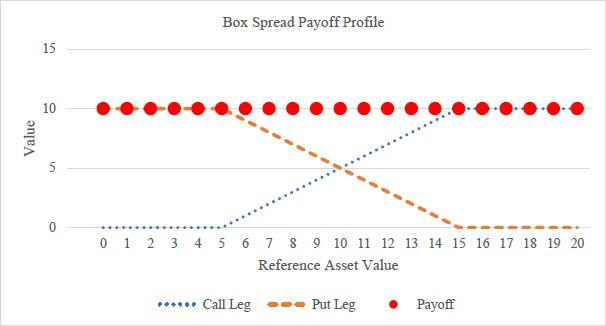
To generate higher income, the Fund may also employ an option box spread strategy. While gains from options are capital gains, this options strategy is commonly referred to as an income producer and, therefore, is included in the Fund’s income component description. A box spread is a four-part, same expiration date, option portfolio with a maturity payout that does not vary and is considered a form of synthetic money market instrument. For example, the four parts of a box spread could be composed of (i) a long $5 in-the-money call option position paired with (ii) a written $5 out-of-the-money call option position; and (iii) a long $5 in-the-money put option position paired with (iv) a written $5 out-of-the-money put option position. At expiration of the options, no matter what the price of the underlying reference asset is, the payout to the Fund will be $10. If the Fund can construct this portfolio for less than $10 it will be profitable at expiration.
The chart below illustrates the $10 payout that results from the example above. As the call leg increases in value, the put leg decreases in value such that, in total, the payoff is always $10.
When the call options and income-generating investments carry matching maturities, an amount equal to the yield from the income strategy, net of the Fund’s management fee, is deployed to trade call options. If the income-generating investments carry a duration longer than the call positions, the amount invested in call options will be an amount equal to annualized income net of management fee and divided by the number of three-month segments remaining until maturity and capped at that amount for each rolling three-month period. At times, the presence of an extreme low-rate environment could make generating income more challenging, which may result in the Fund utilizing a maximum of one percent (net of the Fund’s management fee) of portfolio principal per three-month rolling period to implement the call options strategy.
Call Options Component
The Fund invests a modest portion of its portfolio in standardized exchange-listed options or in exchange-traded FLexible EXchange Options® (“FLEX Options”), which are customized exchange-traded option contracts available through the Chicago Board Option Exchange (“Cboe”) that are guaranteed for settlement by The Options Clearing Corporation (“OCC”). The adviser selects options on securities, indexes, or ETFs that it believes are representative of U.S. large capitalization companies. The Fund defines large- capitalization companies as those with market capitalizations above $10 billion at the time of measurement, and defines U.S. companies as those organized in the U.S.; having a class of securities whose principal securities market is in the U.S.; or derives 50% or more of its total revenues or earnings from goods produced, sales made, or services provided in the U.S., or maintains 50% or more of its employees, assets, investments, operations, or other business activity in the U.S.
A call option gives the owner the right, but not the obligation, to buy a reference asset at a specified price (strike price) within or at the end of a specific time period. In the event the reference asset declines in value, the value of a call option generally will decrease, whereas the value of a call option will generally increase if the reference asset appreciates in value. Under normal circumstances, the Fund anticipates trading options on rolling three-month periods (i.e., quarterly); however, the Fund may trade options with expiration dates that are modestly longer or shorter than three months for a number of reasons such as if market volatility renders them more cost- effective.
At the beginning of each three-month period, the Fund purchases out of the money (above current market price) or at-the-money call options. The adviser evaluates the relative prices of at-the-money and out-of-the money options and selects those with the highest expected return in light of then-recent U.S. large capitalization equity market volatility. The partial amount of equity upside the Fund captures is dictated by the adviser’s strategy of targeting investments in call options to an amount approximately equal to the amount of income generated by the Fund’s portfolio. Using this strategy, based on recent market conditions, the adviser anticipates that the Fund will capture 20% to 40% of U.S. large capitalization equity market gains on a quarter-to-quarter basis.
Substantial Protection of Principal
The income component of the Fund’s portfolio is expected to represent at least 98% of its assets on a quarter-to-quarter basis, which the adviser believes will fulfil the “substantial protection of principal” aspect of the Fund’s investment objective. For example, even if a 2% call options component of the Fund’s portfolio expired worthless, the Fund would still have at least 98% of its value preserved by the high-quality short-term fixed income debt securities portfolio. Actual value preserved is expected to be somewhat higher than 98% because interest earned is expected to be higher than Fund expenses. The adviser believes that protection of at least 98% of principal on a quarter-to-quarter basis, even in adverse low-rate environments, would be considered substantial protection by most investors.
TrueShares Quarterly Bear Hedge ETF
The Fund is an actively managed ETF that aims to provide substantial protection of principal and generation of interest income while maintaining the potential to create positive returns in the event of a decline in U.S. equity markets. The adviser’s strategy is designed to achieve the Fund’s goals, typically, over rolling three-month periods. This strategy potentially results in capital gains during high volatility environments. The Fund seeks to achieve these goals by combining: (1) an investment of substantially all its assets in a portfolio of short-term income-generating debt securities with (2) a modest investment in put options on securities or indexes that are representative of U.S. large capitalization companies. Over the long-term, the adviser expects income from the debt securities and capital gains from put options to combine to fulfill the “total return” aspect of the Fund’s investment objective.
Substantial Protection of Principal
The income component of the Fund’s portfolio is expected to represent at least 98% of its assets on a quarter-to-quarter basis, which the adviser believes will fulfil the “substantial protection of principal” aspect of the Fund’s investment objective. For example, even if a 2% put options component of the Fund’s portfolio expired worthless, the Fund would still have at least 98% of its value preserved by the high-quality short-term fixed income debt securities portfolio. Actual value preserved is expected to be somewhat higher than 98% because interest earned is expected to be higher than Fund expenses. The adviser believes that protection of at least 98% of principal on a quarter-to-quarter basis, even in adverse low-rate environments, would be considered substantial protection by most investors.
Income Component
The Fund seeks income through a strategy focused on high-quality short-term fixed income debt securities. The Fund anticipates a typical maturity of three months for its income portfolio but may invest in securities with a duration of one-year or less. The Fund invests without restriction as to issuer type but anticipates investing primarily in securities of the U.S. Government, its agencies, instrumentalities and sponsored enterprises; fixed-income ETFs; and corporations.
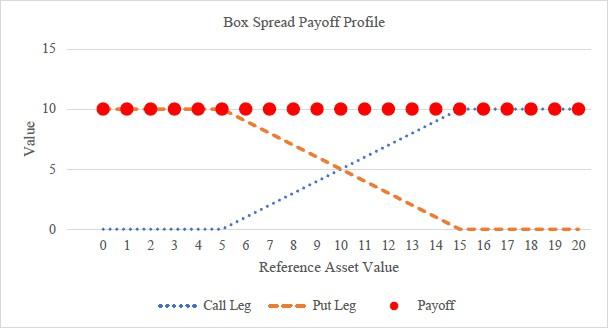
To generate higher income, the Fund may also employ an option box spread strategy. While gains from options are capital gains, this options strategy is commonly referred to as an income producer and, therefore, is included in the Fund’s income component description. A box spread is a four-part, same expiration date, option portfolio with a maturity payout that does not vary and is considered a form of synthetic money market instrument. For example, the four parts of a box spread could be composed of (i) a long $5 in-the-money call option position paired with (ii) a written $5 out-of-the-money call option position; and (iii) a long $5 in-the-money put option position paired with (iv) a written $5 out-of-the-money put option position. At expiration of the options, no matter what the price of the underlying reference asset is, the payout to the Fund will be $10. If the Fund can construct this portfolio for less than $10 it will be profitable at expiration.
The chart below illustrates the $10 payout that results from the example above. As the call leg increases in value, the put leg decreases in value such that, in total, the payoff is always $10.
When the put options and income-generating investments carry matching maturities, an amount equal to the yield from the income strategy, net of the Fund’s management fee, is deployed to trade put options. If the income-generating investments carry a duration longer than the put positions, the amount invested in put options will be an amount equal to annualized income utilized net of management fee and divided by the number of three-month segments remaining until maturity and capped at that amount for each rolling three-month period. At times, the presence of an extreme low-rate environment could make generating income more challenging. In these circumstances, the Fund may utilize a maximum of one percent (net of the Fund’s management fee) of portfolio principal per three-month rolling period to implement the put options strategy.
Put Options Component
The Fund invests a modest portion of its portfolio in standardized exchange-listed options or in exchange-traded FLexible EXchange Options® (“FLEX Options”), which are customized exchange-traded option contracts available through the Chicago Board Option Exchange (“Cboe”) that are guaranteed for settlement by The Options Clearing Corporation (“OCC”). The adviser selects options on securities, indexes, or ETFs that it believes are representative of the performance of U.S. large capitalization companies. The Fund defines large-capitalization companies as those with market capitalizations above $10 billion at the time of measurement, and defines U.S. companies as those organized in the U.S.; having a class of securities whose principal securities market is in the U.S.; or derives 50% or more of its total revenues or earnings from goods produced, sales made, or services provided in the U.S., or maintains 50% or more of its employees, assets, investments, operations, or other business activity in the U.S.
When the Fund purchases a put option, the Fund has the right, but not the obligation, to sell a reference asset at a specified price (strike price) within or at the end of a specific time period. In the event the reference asset declines in value, the value of a put option generally will increase. In the event the reference asset appreciates in value, the value of a put option generally will decrease and may become worthless. Under normal circumstances, the Fund anticipates trading options on rolling three-month periods (i.e., quarterly); however, the Fund may trade options with expiration dates that are modestly longer or shorter than three months for a number of reasons such as if market volatility renders them more cost-effective.
At the beginning of each three-month period, the Fund purchases out-of-the money (above current market price) or at-the-money put options. The adviser evaluates the relative prices of at-the-money and out-of-the money options and selects those with the highest expected return in light of then-recent U.S. large capitalization equity market volatility.
The Fund’s strategy is designed to benefit from meaningful declines in the domestic large cap equity market (sometimes referred to as “tail risk”). The Fund’s equity market risk is limited to the risk that the put options will expire worthless. If, however, the value of the reference asset falls below the put option’s strike price, the option finishes “in-the-money” and the option seller pays the Fund the difference between the strike price and the value of the reference asset. In such an instance, employing the put option strategy may generate a positive return. Because puts increase in value when the reference asset declines, the Fund benefits from a market decline. Using this strategy, based on recent market conditions, the adviser anticipates that the Fund could reap a positive benefit equal to 20% to 40% of U.S. large capitalization equity market declines on a quarter-to-quarter basis.
The Fund is an actively managed exchange-traded fund (“ETF”) that seeks to achieve its investment objective by using a fund-of-funds approach. The Fund’s investment adviser, TrueMark Investments, LLC, invests in a portfolio of ETFs with returns (before fees and expenses) linked to a broad-based securities market price index representing 500 U.S. predominantly large capitalization companies (the “Index”) and ETFs with an investment strategy significantly exposed to securities or indexes that are representative of U.S. large capitalization companies. The Fund defines large-capitalization companies as those with market capitalizations above $10 billion at the time of investment. As of November 29, 2024, a significant portion of the Index is represented by securities of companies in the technology sector. The components of the Index are likely to change over time. The Index-linked ETFs employ a buffered strategy and the other ETFs employ a general hedging strategy.
Buffered refers to a strategy that uses options to seek to mitigate losses. The Buffered ETFs (defined below) selected by the adviser employ a “buffer protect” options strategy that uses options on the Index or an ETF that seeks to track the performance of the Index to seek to achieve exposure to the upside performance of the Index over a 12-month period (an “Investment Period”) (before fees and expenses) while seeking to protect against the first 8% to 12% of Index losses (before fees and expenses) over the duration of the Investment Period. However, the Buffered ETFs will bear all Index losses exceeding their respective buffer. The buffer is designed to provide the stated protection only if shares of a Buffered ETF are purchased on the first day of an Investment Period (an “Initial Investment Day”) and held until the last day of the Investment Period. The Buffered ETFs’ performance during an Investment Period may not provide the protection of the buffer. At the conclusion of each one-year Investment Period, a new one-year Investment Period begins and the buffer is reset. Due to the fees and expenses of the Buffered ETFs, and partially due to the cost of the options used by the Buffered ETFs, a Buffered ETF’s performance is expected to be less than that of the Index, and could be substantially less. Each Buffered ETF also invests in U.S. Treasury bills or money market funds that invest in U.S. Treasury bills, which contributes income and partial principal protection to each Buffered ETF’s return profile. Unlike the Buffered ETFs, the Fund itself does not pursue a buffered strategy. The buffer is only provided by the Buffered ETFs and the Fund itself does not provide any stated buffer against losses.
Laddered in the Fund’s name refers to the adviser’s selection of a portfolio of the Buffered ETFs that, in total, represent a reset in each of the 12 months, January through December. The adviser believes this time ladder approach will help reduce the risk of single-month unfavorable outcomes. It creates diversification of investment time periods compared to the risk of acquiring or disposing of any one Buffered ETF at any one time, which mitigates the risk of failing to benefit from the buffer of a single Buffered ETF due to the timing of investment in such Buffered ETF. Depending on when the Fund acquires shares of a Buffered ETF, even with a laddered approach, the buffer of a Buffered ETF may be exhausted and the Fund may receive no benefit from the buffer unless the Fund acquires shares of the Buffered ETF on an Initial Investment Day. The Fund does not typically buy shares on the Initial Investment Day nor sell shares at the end of an Investment Period. Because of the timing of the Fund’s purchases and sales of the Buffered ETFs, the Fund will likely not receive the full benefit of the Buffered ETFs’ buffers.
The Hedged ETFs (the TrueShares Quarterly Bull Hedge ETF (the “Bull ETF”) and the TrueShares Quarterly Bear Hedge ETF (the “Bear ETF”)) selected by the adviser employ a more general hedging strategy to protect against market losses, typically over rolling three-month periods. The Bull ETF aims to provide the benefits of partial equity exposure while mitigating the risk posed by a decline in U.S. equity markets and the Bear ETF aims to provide substantial protection of principal and generation of interest income while maintaining the potential to create positive returns in the event of a decline in U.S. equity markets. Each Hedged ETF seeks to achieve its goals by investing substantially all its assets in a portfolio of high quality short-term fixed-income income debt securities. The Hedged ETFs anticipate a typical maturity of three months for their income portfolio but may invest in securities with a duration of one-year or less. The Hedged ETFs also invest without restriction as to issuer type but anticipate investing primarily in securities of the U.S. Government, its agencies, instrumentalities and sponsored enterprises; fixed-income ETFs; and corporations. The Bull ETF combines this income component with a modest investment in call options on securities or indexes that are representative of U.S. large capitalization companies, whereas the Bear ETF combines the income component with a modest investment in put options on securities or indexes that are representative of U.S. large capitalization companies. The Hedged ETFs are designed to provide protection of at least 98% of principal on a quarter-to-quarter basis. The Hedged ETFs and Buffered ETFs are each an “Underlying ETF.”
The adviser adjusts the Fund’s portfolio monthly based upon its proprietary historical seasonality ratings scale, which incorporates the historical monthly performance tendencies of U.S. large cap equities beginning in 1927. This rating scale assigns each month an expected performance rank from 1 to 12. Based on a month’s expected performance, the adviser will adjust the Fund’s portfolio among the 14 constituent Underlying ETFs. The adviser considers the amount of equity upside each Underlying ETF is expected to capture in an attempt to optimize the expected gains of the Fund’s portfolio as a whole. For example, an Underlying ETF that had its buffer set when U.S. large cap equity prices were higher, would tend to rise less than U.S. large cap equity prices in general. That is, it would have less than one-for-one “upside sensitivity” to U.S. large cap equity prices. Each month, the adviser evaluates the upside sensitivity of each Underlying ETF and maximizes exposure for months with the highest expected performance rank, subject to certain minimum and maximum limits on each Underlying ETF. The Fund invests between 4.0% and 12.5% in each Buffered ETF and between 2.5% and 11.25% in each Hedged ETF. The Fund intends only to acquire shares of Underlying ETFs in the secondary market.
Under normal market conditions, the adviser anticipates that the Fund will invest 85-90% of its assets in the Buffered ETFs and 10-15% of its assets in the Hedged ETFs. The adviser believes that the Fund’s link to the Index will support the capital appreciation aspect of the Fund’s investment objective in rising markets, while the buffered and hedged dimension will support the lower volatility aspect of the Fund’s investment objective.
The buffered ETFs in which the Fund typically invests are the TrueShares Structured Outcome (January) ETF, TrueShares Structured Outcome (February) ETF, TrueShares Structured Outcome (March) ETF, TrueShares Structured Outcome (April) ETF, TrueShares Structured Outcome (May) ETF, TrueShares Structured Outcome (June) ETF, TrueShares Structured Outcome (July) ETF, TrueShares Structured Outcome (August) ETF, TrueShares Structured Outcome (September) ETF, TrueShares Structured Outcome (October) ETF, TrueShares Structured Outcome (November) ETF, and TrueShares Structured Outcome (December) ETF (each a “Buffered ETF” and collectively, the “Buffered ETFs”). The hedging ETFs in which the Fund invests are the Bull ETF and the Bear ETF (collectively, the “Hedged ETFs”). The adviser to the Fund also serves as the investment adviser to the Buffered ETFs and Hedged ETFs.
The Fund is classified as a “non-diversified” investment company under the Investment Company Act of 1940, as amended, which means that the Fund may invest a higher percentage of its assets in a fewer number of issuers than is permissible for a “diversified” fund.
The Fund may engage in frequent trading of the Underlying ETFs’ shares.
The Fund is an actively-managed ETF that seeks to achieve its investment objective by investing, under normal circumstances, at least 80% of its net assets, plus borrowings for investment purposes, in securities of dividend-paying companies.
The Fund’s portfolio typically consists of 40-60 companies that pay dividends and that the sub-adviser, Opal Capital LLC (“Opal”), expects will grow the dividends over time and are trading at attractive valuations at the time of the investment. The sub-adviser seeks companies that are established businesses with high cash flow, stable revenue streams, and disciplined capital reinvestment programs that may, as a result, experience lower volatility relative to the overall international equity market.
The Fund invests in non-U.S. companies with market capitalizations greater than $8 billion, but may include companies with market capitalizations of less than $8 billion if their dividend yields are above the market average. The Fund typically invests in non-U.S. companies through sponsored and/or unsponsored American Depositary Receipts (“ADRs”) and Global Depositary Receipts (“GDRs”) but may directly invest in such companies on foreign exchanges. The sub-adviser makes its initial identification of potential portfolio securities based on its assessment of a company’s ability and commitment to sustain and grow its dividends. The sub-adviser next identifies “high quality companies,” which are generally defined as companies with a sustainable competitive advantage, offering stable and growing free cash flows, and quality management teams that have the capital discipline to distribute dividends to shareholders. The sub-adviser then selects companies whose stock is trading at a valuation that it believes offers an opportunity to generate above average returns over time.
The Fund invests at least 40% of its net assets in securities of companies that are economically tied to a country or countries outside the U.S., including emerging markets, meaning the company (i) is organized outside of the U.S.; (ii) has a class of securities whose principal securities market is outside of the U.S.; (iii) derives more than 50% of total revenues or earnings from goods produced, sales made, or services provided outside of the U.S.; or (iv) maintains more than 50% of its employees, assets, investments, operations, or other business activity outside of the U.S.
The MSCI ACWI ex USA High Dividend Yield Total Return Index (the “Index”) referenced in the objective of the Fund is designed to reflect the performance of equities in the MSCI ACWI ex USA (excluding REITs) with higher dividend income and quality characteristics than average dividend yields that are both sustainable and persistent. The Index also applies quality screens and reviews 12-month past performance to omit stocks with potentially deteriorating fundamentals that could force them to cut or reduce dividends.
The Fund is classified as a “non-diversified” investment company under the Investment Company Act of 1940, as amended, which means that the Fund may invest a higher percentage of its assets in a fewer number of issuers than is permissible for a “diversified” fund.
The Fund is an actively managed exchange-traded fund (“ETF”) that aims to provide the benefits of partial U.S. large cap equity market exposure while mitigating a meaningful portion of the risk posed by a decline in U.S. large cap equity markets. The adviser’s strategy is designed to achieve the Fund’s goals, typically, through the use of annual (one-year) option positions laddered across rolling three-month periods. This strategy potentially results in capital appreciation with lower volatility and mitigated downside equity market risk. The Fund’s first “ladder” of options positions will have four sets of expiration dates set at approximately at one-quarter, two-quarters, three-quarters, and one-year from the date the Fund commences operations. Approximately one-fourth of the Fund’s option positions will expire quarterly and will be replaced with one-year options.
The Fund seeks to achieve these goals by combining: (1) an investment of substantially all its assets in a portfolio of income-generating securities with (2) an investment in a combination of written put options and purchased call options on securities or indexes that are representative of U.S. large capitalization companies. Additionally, “ConVequity” in the Fund’s name is a combination word reference to the expected accelerated (i.e. convex) returns from the Fund’s equity-linked call options portfolio. The adviser expects that the options portfolio will contribute to capital appreciation, but with lower volatility relative to the broader U.S. large cap equity market.
Income Component
The Fund seeks income through a strategy focused primarily on a variety of income-producing securities. The Fund invests primarily in: (i) U.S. Treasuries; (ii) U.S. government and corporate bonds; (iii) AAA rated tranches of collateralized loan obligations (“CLOs”); (iv) preferred stock; (v) pre-merger special purpose acquisition companies (“SPACs”); (vi) investment company debt; and (vii) income-producing ETFs. CLOs are a type of special purpose vehicle that issue securities generally backed by an asset or a pool of assets that serve as collateral. Most CLOs are issued in multiple tranches, offering investors various maturity and credit risk characteristics, often categorized as senior, mezzanine and subordinated/equity according to their degree of risk. The Fund invests in only the highest-rated AAA senior tranches of CLOs. A SPAC is a “blank check” company with no commercial operations that is designed to raise capital via an initial public offering for the purpose of engaging in a merger, acquisition, reorganization, or similar business combination with one or more operating companies. Pre-merger SPACs are SPACs that are either seeking a target for a business combination or have not yet completed a combination with an identified target. However, pre-merger SPACs do not typically pay dividends or other forms of income, rather they are purchased at a discount and accrue interest much like a zero coupon bond.
The Fund invests without restriction as to the maturity of any individual debt instrument, but anticipates a typical average maturity of less than five years for the debt instrument portion of its income portfolio. The Fund restricts credit quality to investment grade debt instruments, at the time of purchase. The Fund defines investment grade debt as that rated BBB- or higher by S&P Global Ratings (formerly known as Standard & Poor’s Ratings Services) or similarly by another nationally recognized statistical rating organization, or, if unrated, determined by the adviser to be of equivalent quality. Generally, the adviser constructs this portion of the Fund’s portfolio to maximize yield within the constraints described above. The adviser focuses on a buy and hold approach but may sell a security when a more attractive security becomes available.
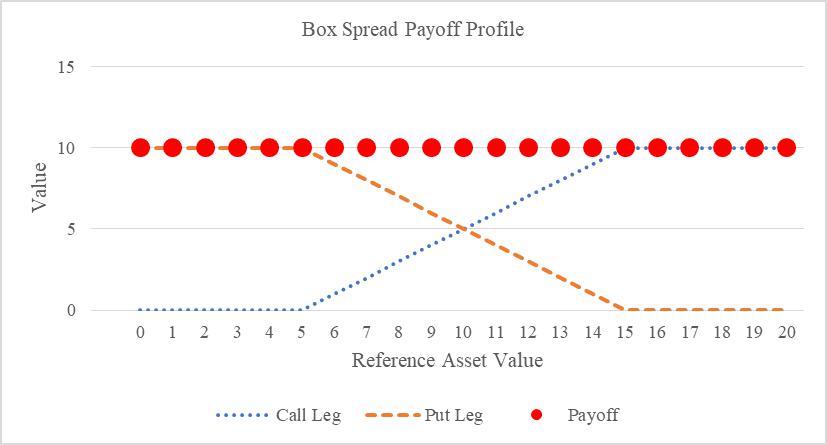
To generate higher income, the Fund may also employ an option box spread strategy. While gains from options are capital gains, this options strategy is commonly referred to as an income producer and, therefore, is included in the Fund’s income component description. A box spread is a four-part, same expiration date, option portfolio with a maturity payout that does not vary and is considered a form of synthetic money market instrument. For example, the four parts of a box spread could be composed of (i) a long $5 in-the-money call option position paired with (ii) a written $5 out-of-the-money call option position; and (iii) a long $5 in-the-money put option position paired with (iv) a written $5 out-of-the-money put option position. At expiration of the options, no matter what the price of the underlying reference asset is, the payout to the Fund will be $10. If the Fund can construct this portfolio for less than $10 it will be profitable at expiration.
The chart below illustrates the $10 payout that results from the example above. As the call leg increases in value, the put leg decreases in value such that, in total, the payoff is always $10.
Options Component
The Fund seeks partial U.S. large cap equity exposure by investing in standardized exchange-listed options or in exchange-traded FLexible EXchange Options® (“FLEX Options”), which are customized exchange-traded option contracts available through the Chicago Board Option Exchange (“Cboe”) that are guaranteed for settlement by The Options Clearing Corporation (“OCC”). The adviser selects options on securities, indexes, or ETFs that it believes are representative of U.S. large capitalization companies. The Fund defines large-capitalization companies as those with market capitalizations above $10 billion at the time of measurement, and defines U.S. companies as those organized in the U.S.; having a class of securities whose principal securities market is in the U.S.; or derives 50% or more of its total revenues or earnings from goods produced, sales made, or services provided in the U.S., or maintains 50% or more of its employees, assets, investments, operations, or other business activity in the U.S.
A call option gives the owner the right, but not the obligation, to buy a reference asset at a specified price (strike price) within or at the end of a specific time period. In the event the reference asset declines in value, the value of a call option generally will decrease, whereas the value of a call option will generally increase if the reference asset appreciates in value. A put option gives the owner the right, but not the obligation, to sell a reference asset at a specified price (strike price) within or at the end of a specific time period. In the event the reference asset declines in value, the value of a put option generally will increase, whereas the value of a put option will generally decrease if the reference asset appreciates in value. Under normal circumstances, the Fund anticipates trading annual (one-year) options laddered across rolling three-month periods (i.e., quarterly); however, the Fund may trade options with expiration dates that are modestly longer or shorter for a number of reasons such as if market volatility renders them more cost-effective. “Laddered” in this context refers to the Fund trading one-year options positions at the beginning of each quarter so that the expiration dates of the overall options portfolio are staggered (i.e., three-months apart). The goal of this laddered approach is to mitigate timing risks associated with the entire options portfolio expiring at a time when the relative price of the reference asset is unfavorable.
To generate partial exposure to U.S. large capitalization companies, the Fund writes a put option that is modestly in-the-money (e.g. strike price of $104 when the reference asset is at $100); while also purchasing a modestly out-of-the-money call option (e.g. strike price of $106 when the reference asset is at $100). The Fund may also use a ladder of call options (i.e., purchasing call options with varying strike prices that are modestly out-of-the-money) when the adviser believes this is a more economically efficient means to capture U.S. large cap equity market gains. The Fund writes put options that collectively represent approximately 50% of notional portfolio exposure, while utilizing the call options (that collectively represent approximately 100% of notional portfolio exposure) to provide significant exposure to the U.S. large cap equity market. The adviser’s selection of option strike prices is dependent on an analysis of the complex interaction between strike price, interest rates, maturity, and volatility. By using this combination of options, the Fund intends to capture a significant portion of U.S. large cap equity market gains if the option strike price is breached while only exposing the Fund to approximately half of U.S. large cap equity market losses.
The Fund is classified as a “non-diversified” investment company under the Investment Company Act of 1940, as amended, which means that the Fund may invest a higher percentage of its assets in a fewer number of issuers than is permissible for a “diversified” fund.
The Fund is an actively managed exchange-traded fund (“ETF”) that seeks to achieve its investment objective by purchasing securities that Clough Capital Partners L.P. (the “Adviser”), the Fund’s investment adviser, believes:
| ● | have above-average financial characteristics such as return on invested capital, profit margins, debt-to-equity ratio, or revenue and earnings growth as identified in financial statements, relative to the broader equity market; |
| ● | are undervalued based on valuation metrics such as (i) enterprise value to sales, (ii) enterprise value to earnings before interest, taxes, depreciation, and amortization, or (iii) price to earnings ratios; or |
| ● | have higher growth potential as indicated by sales growth, earnings growth, or free cash flow growth. |
The Fund primarily invests in U.S.-listed equity securities and sponsored depositary receipts, including American Depositary Receipts (“ADRs”), European Depositary Receipts (“EDRs”) and Global Depositary Receipts (“GDRs”). While the Fund’s equity exposure strategy focuses on investments in U.S. equity securities, the Fund’s strategy also includes investments in companies organized in the U.S. but deriving revenue from international markets, including emerging markets. The Fund makes investments in emerging markets using U.S.-listed securities of companies domiciled in emerging market countries. The Fund defines emerging markets as countries experiencing rapid economic growth, increasing per capita income, developing financial systems, and potential for high growth. A short sale is a transaction in which the Fund sells a security it does not own, typically in anticipation of a decline in the market price of that security based on an analysis of market expectations, valuation multiples, or the likelihood of a contraction in the stock’s valuation multiple. While the Adviser seeks companies it believes will outperform over a full market cycle (typically 5-11 years), the Fund may experience higher portfolio turnover in the short term as the Fund responds to changing market conditions or when the Adviser identifies new opportunities. The Adviser seeks to manage the Fund in a tax-aware manner in order to enhance after tax returns without compromising the duty to maximize risk-adjusted returns.
The Adviser's investment process is built on seeking to identify and capitalize on industry or economic trends that other investors have not yet recognized, while maintaining overall portfolio volatility that is lower than that experienced by the broader market. The Fund views the Bloomberg World All-Cap Equal Weight TR Index (“WLSEQT”) as a representation of the broader market because WLSEQT includes a broad spectrum of global equity securities across various market capitalizations. The Adviser believes that it can identify industry or economic trends by analyzing industry and economic related information such as capital flows that effect natural resource scarcity, technological innovations which have the potential to disrupt traditional industries, impacts of demographic shifts, and changes in profit or credit cycles. The Adviser then interprets the information analyzed to identify emerging patterns or changes in various sectors of the economy and develops a strategy for the Fund to allocate its capital into investible securities.
The Adviser identifies investible securities through rigorous research, including analysis of public company filings, customer preferences, relevant supply chains, and additional publicly available company information. The investment process focuses on a number of significant global investment themes identified by the Adviser through its research process. Global investment themes include industry or economic trends that the Adviser believes will significantly impact multiple sectors or regions of the global economy. The Adviser believes that the Fund can invest in companies affected by an attractive global investment theme which the Adviser anticipates will result in positive investment returns. For instance, an attractive global investment theme could be the emergence of artificial intelligence (“AI”) as a transformative technology. The Adviser might identify this theme by observing increased investment in AI research and development, analyzing the growing demand for advanced semiconductor chips, and studying the proliferation of AI-powered applications across various industries. This theme could result in far-reaching implications for semiconductor manufacturers, companies throughout the semiconductor supply chain, consumer electronics producers, software developers, and numerous other sectors that stand to benefit from or be negatively impacted by AI technology.
When such a theme is identified, the Adviser then conducts bottom-up research to find specific companies that are well-positioned to benefit from this trend. In the AI example, this research might uncover potential investments in leading chip designers, manufacturers of specialized AI hardware, cloud computing providers offering AI services, or software companies developing innovative AI applications. This approach allows the Fund to invest in the global trends identified by selecting individual securities that the Adviser believes will offer the best potential for positive returns.
Individual security positions are selected after an evaluation of various company characteristics, such as an assessment of a company’s market position compared to its competitors, which would involve analyzing company specific factors including market share, product differentiation, and brand strength. The Adviser also evaluates the quality of company management by examining its track record, strategic decisions, and ability to execute business plans effectively. The company selection assessment also includes analyzing a company’s financial performance metrics, reviewing a company’s public statements and interviews, and evaluating a company’s reputation within its industry. The Adviser also analyzes a company’s earnings, cash flow, and balance sheet to assess its financial stability and potential for positive investment returns. In addition, the Adviser evaluates whether a company’s market share, profitability and market valuation is justified and likely to persist over time, compared to both its own and peer historical metrics. The evaluation process involves analysis of various financial ratios and metrics, including price-to-earnings, earnings per share, return on equity, and debt-to-equity ratios, to determine if a company’s stock price accurately reflects its fundamental value and growth potential.
The Adviser employs a tax-aware approach to managing investments across three dimensions. First, the Fund’s ETF structure provides inherent tax efficiency through in-kind creation/redemption mechanisms that defer capital gains. Second, the long/short strategy can create natural tax efficiency, as market advances may generate gains in the long positions and corresponding losses in the short positions, while market declines may produce gains in the short positions and offsetting losses in the long positions, allowing these net realized results to partially offset each other and may reduce net taxable gains while maintaining targeted exposure. Finally, the Adviser employs systematic monthly monitoring of gains and losses to identify offset opportunities, and use of tax-lot accounting, to strategically harvest losses when consistent with investment objectives. These tax-aware procedures are intended to enhance after-tax returns without compromising the primary duty to maximize risk-adjusted returns, which the Adviser believes makes the Fund suitable for both taxable and tax-advantaged accounts.
The Fund’s portfolio construction is driven by the Adviser’s bottom-up research process, which seeks to identify the most compelling investment opportunities across various sectors. The Fund’s equity stock position concentrations will be higher in sectors such as energy, technology, consumer, industrial, and healthcare at times, and the Fund does not adhere to strict sector weighting parameters. This approach allows the Fund to invest in companies that have the greatest potential for returns, regardless of sector. The Fund typically maintains a diversified portfolio of 30 to 50 long positions and 10 to 50 short positions. This range allows for meaningful exposure to high-conviction ideas while maintaining a level of diversification to manage overall portfolio risk. Under normal circumstances, at least 80% of the Fund’s net assets, plus borrowings for investment purposes, are invested long or short in equity securities, including common stocks and sponsored depositary receipts.
The Fund employs a hedging strategy that utilizes options and index futures to manage risk and enhance returns. The Fund generally maintains a net long exposure of between 30%-70% of its net assets. The Fund buys put options or write (sell) call options on securities it believes are overvalued, aiming to profit from potential price declines or to protect existing long positions. Conversely, the Fund buys call options or writes put options on securities identified through the Adviser’s research process as undervalued, seeking to benefit from potential price appreciation or to gain exposure to attractive investments at a lower initial cost. In addition to options, the Fund uses futures contracts on stock indices, which allow the Fund to invest in one instrument to gain exposure to a group of companies that a futures contract represents, rather than investing in each individual company. The Fund also uses futures contracts to hedge portfolio risks, such as buying or selling an index future when the broader market appears to be overbought based on evaluation of historical valuation metrics. Investments in options and futures allow the Fund to respond to changing market conditions or to implement investment views without directly buying or selling the underlying securities. The Adviser employs a flexible approach to determine the optimal duration for each option or futures instrument that the Fund invests in, and option or futures position durations are generally less than two years. The duration decision is based on careful evaluation of several factors, including transaction costs, the timing of potential catalysts that may alter the broader markets stock prices, and other relevant considerations typical in derivative transactions. The Fund’s goal of investing in options and futures is to strike a balance between hedging portfolio risks or capturing desired market exposure and managing the costs and risks associated with such instruments. This flexible approach allows the Fund to adapt its derivative strategy to changing market conditions and specific investment opportunities.
The use of options and futures strategies are used to hedge and enhance the returns of the Fund’s core equity portfolio, and such strategies are not used to replace the core equity portfolio.
The Fund is an actively managed exchange-traded fund (“ETF”) that seeks to achieve its investment objective by purchasing securities that Clough Capital Partners L.P. (the “Adviser”), the Fund’s investment adviser, believes:
| ● | have above-average financial characteristics such as return on invested capital, profit margins, debt-to-equity ratio, or revenue and earnings growth as identified in financial statements, relative to the broader equity market; |
| ● | are undervalued based on valuation metrics such as (i) enterprise value to sales, (ii) enterprise value to earnings before interest, taxes, depreciation, and amortization, or (iii) price to earnings ratios; or |
| ● | have higher growth potential as indicated by sales growth, earnings growth, or free cash flow growth. |
The Fund primarily invests in U.S.-listed equity securities and sponsored depositary receipts, including American Depositary Receipts (“ADRs”), European Depositary Receipts (“EDRs”) and Global Depositary Receipts (“GDRs”). While the Fund’s equity exposure strategy focuses on investments in U.S. equity securities, the Fund’s strategy also includes investments in companies organized in the U.S. but deriving revenue from international markets, including emerging markets. The Fund will make investments in emerging markets using U.S.-listed securities of companies domiciled in emerging market countries. The Fund defines emerging markets as countries experiencing rapid economic growth, increasing per capita income, developing financial systems, and potential for high growth. While the Adviser seeks companies it believes will outperform over a full market cycle (typically 5-11 years), the Fund may experience higher portfolio turnover in the short term as the Fund responds to changing market conditions or when the Adviser identifies new opportunities. The Adviser seeks to manage the Fund in a tax-aware manner in order to enhance after tax returns without compromising the duty to maximize risk-adjusted returns.
The Adviser’s investment process is built on seeking to identify and capitalize on industry or economic trends that other investors have not yet recognized. The Adviser believes that it can identify industry or economic trends by analyzing industry and economic related information such as capital flows that effect natural resource scarcity, technological innovations which have the potential to disrupt traditional industries, impacts of demographic shifts, and changes in profit or credit cycles. The Adviser then interprets the information analyzed to identify emerging patterns or changes in various sectors of the economy and develops a strategy for the Fund to allocate its capital into investible securities.
The Adviser identifies investible securities through rigorous research, including analysis of public company filings, customer preferences, relevant supply chains, and additional publicly available company information. The investment process focuses on a number of significant global investment themes identified by the Adviser through its research process. Global investment themes include industry or economic trends that the Adviser believes will significantly impact multiple sectors or regions of the global economy. The Adviser believes that the Fund can invest in companies affected by an attractive global investment theme which the Adviser anticipates will result in positive investment returns. For instance, an attractive global investment theme could be the emergence of artificial intelligence (AI) as a transformative technology. The Adviser might identify this theme by observing increased investment in AI research and development, analyzing the growing demand for advanced semiconductor chips, and studying the proliferation of AI-powered applications across various industries. This theme could result in far-reaching implications for semiconductor manufacturers, companies throughout the semiconductor supply chain, consumer electronics producers, software developers, and numerous other sectors that stand to benefit from or be negatively impacted by AI technology.
When such a theme is identified, the Adviser then conducts bottom-up research to find specific companies that are well-positioned to benefit from this trend. In the AI example, this research might uncover potential investments in leading chip designers, manufacturers of specialized AI hardware, cloud computing providers offering AI services, or software companies developing innovative AI applications. This approach allows the Fund to invest in the global trends identified by selecting individual securities that the Adviser believes will offer the best potential for positive returns. Individual security positions are selected after an evaluation of various company characteristics, such as an assessment of a company's market position compared to its competitors, which would involve analyzing company specific factors including market share, product differentiation, and brand strength. The Adviser also evaluates the quality of company management by examining its track record, strategic decisions, and ability to execute business plans effectively. The company selection assessment also includes analyzing a company’s financial performance metrics, reviewing a company’s public statements and interviews, and evaluating a company’s reputation within its industry. The Adviser also analyzes a company’s earnings, cash flow, and balance sheet to assess its financial stability and potential for positive investment returns. In addition, the Adviser evaluates whether a company’s market share, profitability and market valuation is justified and likely to persist over time, compared to both its own and peer historical metrics. The evaluation process involves analysis of various financial ratios and metrics, including price-to-earnings, earnings per share, return on equity, and debt-to-equity ratios, to determine if a company’s stock price accurately reflects its fundamental value and growth potential.
The Adviser employs a tax-aware approach to managing investments across two dimensions. First, the Fund’s ETF structure provides inherent tax efficiency through in-kind creation/redemption mechanisms that defer capital gains. Second, the Adviser employs systematic monthly monitoring of gains and losses to identify offset opportunities, and use of tax-lot accounting, to strategically harvest losses when consistent with investment objectives. These tax-aware procedures are intended to enhance after-tax returns without compromising the primary duty to maximize risk-adjusted returns, which the Adviser believes makes the Fund suitable for both taxable and tax-advantaged accounts.
The Fund’s portfolio construction is driven by the Adviser’s bottom-up research process, which seeks to identify the most compelling investment opportunities across various sectors. The Fund’s equity stock position concentrations will be higher in sectors such as energy, technology, consumer, industrial, and healthcare at times, and the Fund does not adhere to strict sector weighting parameters. This approach allows the Fund to invest in companies that have the greatest potential for returns, regardless of sector. The Fund will typically maintain a diversified portfolio of 20-40 positions. This range allows for meaningful exposure to high-conviction ideas while maintaining a level of diversification to manage overall portfolio risk. Under normal circumstances, at least 80% of the Fund’s net assets, plus borrowings for investment purposes, will be invested in equity securities, including common stocks and sponsored depositary receipts.