
Exhibit 99.1
ANNUAL INFORMATION FORM
ALMONTY INDUSTRIES INC.
100 King Street West, Suite 5700
Toronto, Ontario M5X 1C7
Canada
Tel: +1 647 438-9766
Fax: +1 416 628-2516
E-mail: info@almonty.com
FOR THE YEAR ENDED DECEMBER 31, 2025
March 18, 2026
Table of Contents
| CORPORATE STRUCTURE | 6 | |
| GENERAL DEVELOPMENT OF THE BUSINESS | 8 | |
| DESCRIPTION OF BUSINESS | 11 | |
| RISK FACTORS | 18 | |
| MINERAL PROJECTS | 48 | |
| DIVIDENDS | 48 | |
| DESCRIPTION OF CAPITAL STRUCTURE | 48 | |
| MARKET FOR SECURITIES | 49 | |
| DIRECTORS AND OFFICERS | 51 | |
| AUDIT COMMITTEE | 57 | |
| CONFLICTS OF INTEREST | 59 | |
| LEGAL PROCEEDINGS | 59 | |
| INTERESTS OF MANAGEMENT AND OTHERS IN MATERIAL TRANSACTIONS | 60 | |
| TRANSFER AGENT AND REGISTRAR | 60 | |
| MATERIAL CONTRACTS | 60 | |
| INTERESTS OF EXPERTS | 62 | |
| ADDITIONAL INFORMATION | 62 | |
| Mineral PROJECTS | A-1 | |
| AUDIT AND RISK MANAGEMENT COMMITTEE CHARTER | B-1 |
| -2- |
PRESENTATION OF INFORMATION AND FORWARD-LOOKING STATEMENTS
Except where the context otherwise requires, all references in this Annual Information Form (this “AIF”) to the “Company”, “Almonty”, “we”, “us”, “our” or similar are to Almonty Industries Inc. and its subsidiaries, taken together.
Unless otherwise indicated, all dollar amounts in this AIF are expressed in Canadian dollars.
This AIF contains “forward-looking statements” and “forward-looking information” within the meaning of applicable securities laws.
All statements, other than statements of present or historical facts, are forward-looking statements. Forward-looking statements involve known and unknown risks, uncertainties and assumptions and accordingly, actual results could differ materially from those expressed or implied in such statements.
You are hence cautioned not to place undue reliance on forward-looking statements. Forward-looking statements are typically identified by words such as “plan”, “development”, “growth”, “continued”, “intentions”, “expectations”, “emerging”, “evolving”, “strategy”, “opportunities”, “anticipated”, “trends”, “potential”, “outlook”, “ability”, “additional”, “on track”, “prospects”, “viability”, “estimated”, “reaches”, “enhancing”, “strengthen”, “target”, “believes”, “next steps” or variations of such words and phrases or statements that certain actions, events or results “may”, “could”, “would”, “might” or “will” be taken, occur or be achieved. Forward-looking statements in this AIF include, but are not limited to, statements with respect to: demand for tungsten; tungsten prices; tungsten recovery and production; reductions in operating and unit production costs; currency and interest rate fluctuations; expectations regarding impairments of the Company’s mineral properties; improvements in efficiencies or reduction in dilution; future remediation and reclamation activities; expectations regarding the further exploration, development and life of mine of the Company’s mineral projects, including the Sangdong Mine, the Panasqueira Mine and the Gentung Tungsten Project (as such terms are defined herein); plans and expectations regarding the Company’s mineral projects, including the re-opening of the Los Santos Mine (as defined herein), the potential of the Sangdong Molybdenum Project (as defined herein), the potential production profile of the Gentung Tungsten Project and the development of and production at the Gentung Tungsten Project; the estimation of mineral reserves and mineral resources; the realization of mineral reserve and mineral resource estimates; the timing of activities; the amount of estimated revenues and expenses; the success of exploration activities; permitting timelines; the success of mine development and construction activities; the success of future mine operations; the success of other future business operations; the U.S. Domestication (as defined herein), litigation risks; changes to governmental laws and regulations; and requirements for additional capital and sources and uses of funds.
| -3- |
Forward-looking statements are based upon certain assumptions and other important factors that, if untrue, could cause actual results to be materially different from future results expressed or implied by such statements. There can be no assurance that forward-looking statements will prove to be accurate. Key assumptions upon which the Company’s forward-looking information is based include, without limitation: the absence of material adverse changes in the Company’s industry or the global economy including interest rate fluctuations, inflationary pressures, supply chain disruptions, and commodity market volatility; trends in the Company’s industry and markets, including the competitive environment; the ability of the Company to maintain its interests in its mineral projects, including with respect to title, access, and permitting matters; the Company’s ability to manage risks normally incidental to the exploration, development and operation of mineral properties; the performance and results of Phase I operations at the Sangdong Mine; the Company’s ability to proceed with Phase II expansion of the Sangdong Mine; the Company’s ability to maintain good business relationships with key stakeholders, including customers, suppliers, lenders, regulators, and local communities; the Company’s ability to manage its growth effectively, both organically and through acquisitions; the Company’s ability to effectively integrate acquisitions and realize anticipated benefits; the Company’s ability to manage potential uncertainties in the interpretation of geological data, drill results and market data, including data related to pricing trends, demand forecasts, and competitive positioning; the Company’s ability to manage the possibility that future exploration, development or mining results may not be consistent with its expectations; the accuracy of the Company’s mineral resource and reserve estimates and their underlying assumptions, including with respect to cut-off grades, recovery rates, and long-term commodity prices; the adequacy and availability of infrastructure (including power, water, roads, and processing capacity) at or near the mineral properties; the timely receipt and maintenance of necessary governmental and third-party approvals, permits, licenses, authorizations and regulatory compliance obligations; the Company’s ability to comply with current and future environmental, health and safety, and other regulatory requirements and to timely obtain and maintain required regulatory approvals, licenses and permits; the Company’s expectation that its operations will not be significantly disrupted as a result of political instability, pandemics and communicable diseases, nationalization, terrorism, sabotage, social or political activism, breakdown, natural disasters, governmental or political actions, litigation or arbitration proceedings, equipment or infrastructure failure, labour shortages, transportation disruptions or accidents, or other development or exploration risks; the Company’s ability to execute construction and development activities on schedule and within budget; the Company’s ability to recruit, retain and engage qualified personnel and contractors in all required jurisdictions; the Company’s ability to raise sufficient debt or equity financing to support its continued growth; the Company’s ability to continue to have sufficient working capital to fund its operations; the performance of counterparties under offtake agreements, supply arrangements, financing agreements, and other material contracts; that input costs, including energy, labour, equipment, and materials, will not increase materially beyond current expectations; that the price of tungsten and other metals and commodities will not decline significantly or for a protracted period of time; that the global financial markets and general economic conditions (including trade and monetary policies, currency exchange rates and rates of inflation) will be stable and conducive to business in the future; the Company’s ability to maintain the security and integrity of its information technology systems and mitigate the impact of any potential cybersecurity threats; and the Company’s ability to meet increasing expectations regarding environmental, social and governance (“ESG”) matters from regulators, investors, and other stakeholders.
| -4- |
Forward-looking statements are also subject to risks and uncertainties facing the Company’s business, including, without limitation: the negative cash flow from the Company’s operations; the adequacy of the Company’s disclosure control and procedures and internal controls over financial reporting; the price of metals; the Company’s economic dependency on few customers; fluctuation in foreign currency; fluctuation in interest rates; inflation; tax-related risks; the risk of default under any of the Company’s credit agreements; future financing; the Company’s liquidity and level of indebtedness; risks associated with the Company’s business being carried on through foreign subsidiaries; credit risk; the Company’s ability to continue as a going concern; risks relating to the development of the Sangdong Mine, including risks relating to the start-up of commercial production, commissioning, ramp-up and process performance risk, financing risk, construction risks, risk relating to the offtake agreements for the Sangdong Mine, availability of infrastructure and skilled labour, and risks related to the implementation of technological innovations at the Sangdong Mine; risks relating to the Tungsten Oxide Facility (as defined herein), including project financing and capital cost overrun risk, execution and construction risk, and permitting and regulatory risk; the Company’s production; the Company’s mineral reserve and mineral resource estimates; the Company’s dependence on key personnel; the Company’s competition; trade risks and supply chain disruptions (including as a result of geopolitical tensions); the cost of raw materials; energy supply and power grid reliability; water supply and management; infrastructure and operational risks; the Company’s impairment of assets; risks related to property title; laws and regulations; licenses and permits; mining risks and insurance limitations; legal systems; mineral reserve and mineral resource depletion; risks related to underground stope stability; reputational risks; geopolitical risks in key operating regions; public allegations, regulatory investigations, or litigation; capital market structure and dilution risk; environmental and global climate change risks; risks related to costs of land reclamation; technological obsolescence; management of growth; cybersecurity and data protection; opposition to mining; costs and compliance risks as a result of being a public company; acquisitions and synergies; anti-corruption and anti-bribery laws; Canada’s Extractive Sector Transparency Measures Act; health and pandemic risks; and risks related to the Company’s proposed redomiciling to the United States, including disruptions to the Company’s business, Canadian corporate tax risk.
Any of these risks could have a material adverse effect on the Company’s business, financial condition, results of operations and growth prospects. Readers should consider reviewing the detailed risk discussion under the heading “Risk Factors” of this AIF for a fuller understanding of the risks and uncertainties that affect the Company’s business and operations and that could cause the Company’s actual results, performance or achievements to be materially different from any anticipated results, performance or achievements expressed or implied by forward-looking statements.
Although Almonty has attempted to identify important factors that could cause actual results, level of activity, performance or achievements to differ materially from those contained in forward-looking statements, there may be other factors that cause results, level of activity, performance or achievements not to be as anticipated, estimated or intended. There can be no assurance that forward-looking statements will prove to be accurate and even if events or results described in the forward-looking statements are realized or substantially realized, there can be no assurance that they will have the expected consequences to, or effects on, Almonty. Accordingly, readers should not place undue reliance on forward-looking statements and are cautioned that actual outcomes may vary.
| -5- |
Investors are cautioned against attributing undue certainty to forward-looking statements. Almonty cautions that the foregoing list of material factors is not exhaustive. When relying on Almonty’s forward- looking statements and information to make decisions, investors and others should carefully consider the foregoing factors and other uncertainties and potential events. Almonty has also assumed that material factors will not cause any forward-looking statements and information to differ materially from actual results or events. However, the list of these factors is not exhaustive and is subject to change and there can be no assurance that such assumptions will reflect the actual outcome of such items or factors.
THE FORWARD-LOOKING INFORMATION CONTAINED IN THIS AIF REPRESENTS THE EXPECTATIONS OF ALMONTY AS OF THE DATE OF THIS AIF AND, ACCORDINGLY, IS SUBJECT TO CHANGE AFTER SUCH DATE. READERS SHOULD NOT PLACE UNDUE IMPORTANCE ON FORWARD-LOOKING INFORMATION AND SHOULD NOT RELY UPON THIS INFORMATION AS OF ANY OTHER DATE. WHILE ALMONTY MAY ELECT TO, IT DOES NOT UNDERTAKE TO UPDATE THIS INFORMATION AT ANY PARTICULAR TIME, WHETHER AS A RESULT OF NEW INFORMATION, FUTURE EVENTS OR OTHERWISE, EXCEPT AS REQUIRED IN ACCORDANCE WITH APPLICABLE LAWS.
CORPORATE STRUCTURE
Almonty is a corporation continued under the Canada Business Corporations Act (the “CBCA”). The common shares of Almonty (the “Common Shares”) are listed and posted for trading on the Nasdaq Capital Market (the “Nasdaq”) in the United States under the symbol “ALM” and also trade on the Toronto Stock Exchange (the “TSX”) under the symbol “AII”, on the Australian Securities Exchange (the “ASX”) as CHESS Depositary Interests (“CDIs”), at a ratio of one CDI to one Common Share, under the symbol “AII” and on the Börse Frankfurt (Frankfurt Stock Exchange) in Germany under the symbol “ALI1”.
Almonty was incorporated on September 28, 2009 under the Business Corporations Act (British Columbia) (the “BCBCA”) under the name RCG Capital Inc. as a Capital Pool Company. On September 23, 2011, the Company completed its qualifying transaction (the “Qualifying Transaction”), whereby all of the issued and outstanding securities of 7887523 Canada Inc. were acquired in exchange for securities of the Company on a one-for-one basis and the Company changed its name to “Almonty Industries Inc.”.
On March 27, 2012, Almonty filed articles of continuance and was continued from British Columbia to the CBCA.
On July 3, 2025, Almonty filed articles of amendment for the purpose of effecting a 1.5-to-1 consolidation of its Common Shares (the “Share Consolidation”) and its Common Shares commenced trading on a post-consolidated basis on July 7, 2025. The Share Consolidation was approved by Almonty’s shareholders on April 30, 2025 at its annual general and special meeting of shareholders. No fractional Common Shares were issued in connection with the Share Consolidation and, in the event that a shareholder would otherwise be entitled to a fractional Common Share upon such consolidation, such shareholder had such fractional share cancelled. Except where otherwise noted, all information in this AIF gives effect to the Share Consolidation.
| -6- |
On July 15, 2025, the Company closed its initial public offering of 20,000,000 Common Shares in the United States at a price of US$4.50 per Common Share for gross proceeds of US$90 million, which common shares commenced trading on the Nasdaq on July 14, 2025 under the ticker symbol “ALM” (the “Nasdaq IPO”).
Almonty’s head and registered office is located at 100 King Street West, Suite 5700, Toronto, Ontario, M5X 1C7.
For the purposes of waivers granted by the ASX to the Company from ASX Listing Rules 7.1, 10.11 and 10.14, the Company hereby confirms that it remains subject to, and continues to comply with, the requirements of the Toronto Stock Exchange with respect to the new issue of securities.
Intercorporate Relationships
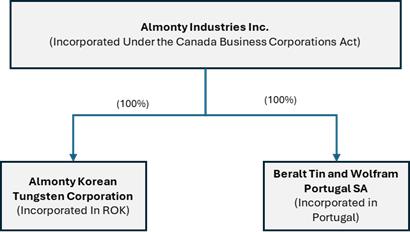
The following diagram illustrates the intercorporate relationships between the Company and its significant subsidiaries and sets out the respective jurisdictions of existence of such subsidiaries and the percentage of their voting securities owned, controlled or directed, directly or indirectly, by the Company as at the date hereof. Some of the Company’s subsidiaries, for which the subsidiary’s total assets did not exceed 10% of the consolidated assets of the Company as at December 31, 2025, and for which the subsidiary’s revenue did not exceed 10% of the consolidated revenue of the Company as at December 31, 2025, have been omitted from the diagram below. The omitted subsidiaries, taken as a whole, accounted for less than 20% of the consolidated assets and less than 20% of the consolidated revenue of the Company as at December 31, 2025.
| -7- |
GENERAL DEVELOPMENT OF THE BUSINESS
Three-Year History
2023
| ● | On July 11, 2023, Almonty announced the collaboration between Almonty Korea Tungsten Corporation (“AKTC”), an indirect wholly-owned subsidiary of Almonty, which owns a 100% interest in the Sangdong Mine (as defined herein), and Korea Telecom (“KT”), which is introducing cutting-edge Mine Safety DX technology. Developed in partnership with KT, this innovative solution aims to enhance worker safety and promote efficient mining practices. The communication infrastructure established by KT and AKTC at the Sangdong Mine is based on Long Term Evolution technology. This infrastructure offers superior coverage and simultaneous access, surpassing the capabilities of Wi-Fi and radios traditionally used in mine communication. By utilizing “leaky coaxial cables” and “mining designated line amplifiers,” seamless communication is possible even in deep underground sections of the mine, ensuring communication and monitoring capabilities. In addition to improving safety standards, the Mine Safety DX technology also contributes to the efficient functioning of mining operations. By establishing a robust communication infrastructure, AKTC aims to enhance mining efficiency and productivity. The collaboration between AKTC and KT aligns with the South Korean Ministry of Trade, Industry and Energy’s Comprehensive Mine Safety Plan and supports the government’s goal of providing long-distance wide-area communication capabilities by 2027. |
2024
| ● | On February 24, 2024, Almonty announced that it had commenced development of Level 4 (“L4”) at the Panasqueira Mine (as defined herein). The development of L4 represents a planned extension of existing underground operations and is expected to provide continued access to mineralized material and has the potential to enhance the contribution of the mine to the Company’s operations with its potential and low-risk profile. A comprehensive scoping study has paved the way for this ambitious project, positioning it for advancement pending ore resources confirmation and financing completion. By capitalizing on existing surface infrastructure and focusing on underground development, the L4 opening is poised to significantly enhance production capacity, projecting an increase on the annual output plus the extension of the life of the mine. | |
| ● | In April 2024, Almonty negotiated the refinancing of the Unicredit Bank US$15,650,000 term loan with KfW IPEX-Bank GmbH (“KfW”), thus extending the maturity date of this loan from March 31, 2024 to March 31, 2027. | |
| ● | On July 11, 2024, Almonty announced that AKTC signed a memorandum of understanding (the “MOU”) with the Yeongwol County Office in South Korea to secure the location of a non tungsten oxide downstream processing plant in South Korea near the Sangdong Mine (the “Tungsten Oxide Facility”). Yeongwol is located approximately 30 kms from the Sangdong Tungsten Mine and is expected to be a hub for high-tech industries utilizing local mineral resources. Key terms of the MOU include that AKTC proposes to establish a factory of about 60,000 square meters within the Yeongwol County Opportunity Development Special Zone to produce refined and smelted tungsten, and tungsten alloys. Yeongwol County announced that it will provide full legal and institutional support to Almonty. During the process, AKTC proposes to invest approximately 100 billion won (approximately US$72 million) in the construction of the Tungsten Oxide Facility, and an additional 40 billion won (approximately US$29 million) in processing plant facility upgrades required to increase tungsten concentrate production at the Sangdong Mine. As a result, Yeongwol-gun will serve as an outpost for South Korea’s core industrial belt after facing a new era of regional economic development and job creation according to the mining and plant construction sectors. |
| -8- |
2025
| ● | On January 9, 2025, Almonty announced that it received its final drawdown of US$906,000 of the US$75.1 million KfW project loan facility (the “KfW Facility”) related to the construction of the Sangdong Mine, a milestone that marked the culmination of a strong and collaborative partnership with KfW. | |
| ● | On January 20, 2025, Almonty announced its intention to change its jurisdiction of incorporation from Canada to the State of Delaware (the “U.S. Domestication”) while maintaining its listings for now on the Toronto Stock Exchange and the ASX. The U.S. Domestication reflects the growing importance of the United States in Almonty’s strategic positioning, and with its robust regulatory framework for critical materials like tungsten and molybdenum and the evolving global economic landscape, the United States presents a compelling jurisdiction for Almonty. The U.S. Domestication was approved by Almonty’s shareholders at a special meeting held on February 27, 2025 and remains under consideration as of the date of this AIF. It is possible that, if the board of directors of Almonty (the “Board”) is, among other factors, not satisfied that the U.S. Domestication is in Almonty’s best interest due to anticipated Canadian tax or other consequences, Almonty may not proceed with the U.S. Domestication. | |
| ● | On January 29, 2025 Almonty announced that it entered into an exclusive offtake agreement with SeAH M&S Corp. (“SeAH”), the largest processor of molybdenum products in South Korea and the second largest molybdenum oxide smelter in the world, pursuant to which SeAH has agreed to purchase 100% of the material produced from the Sangdong Molybdenum Project (as defined herein) for life of mine. SeAH is building a US$110 million metals and fabrication facility in Temple, Texas, that is slated to provide fabricated metal products to Space Exploration Technologies Corp. and to the U.S. defense and civilian aerospace sectors. | |
| ● | On March 20, 2025, General Gustave F. Perna (U.S. Army, Retired) was appointed to the Board. | |
| ● | On May 30, 2025, Mr. Alan Estevez, former United States Under Secretary of Commerce for Industry and Security, was appointed to the Board. | |
| ● | On June 2, 2025, Almonty announced it had received bipartisan recognition from the U.S. House Select Committee on the Strategic Competition Between the United States and the Chinese Communist Party (the “Committee”). The Committee acknowledged Almonty’s role in supporting U.S. efforts to strengthen domestic supply chains for critical minerals, highlighting the strategic relevance of the Sangdong Mine and the Company’s contemplated U.S. Domestication. The Committee also expressed interest in ongoing engagement and potential collaboration with Almonty to support the U.S. defense industrial base, including supply chain integration with American defense contractors and potential contributions to the U.S. National Defense Stockpile. |
| -9- |
| ● | On June 30, 2025, Almonty announced that the Common Shares had been added to the S&P/TSX Global Mining Index, effective as of market open on June 23, 2025. The S&P/TSX Global Mining Index serves as a benchmark for globally traded mining companies. Management believes Almonty’s inclusion in the S&P/TSX Global Mining Index reflects Almonty’s growing profile in the global mining sector and ongoing momentum in the tungsten industry. | |
| ● | On July 3, 2025, Almonty effected the Share Consolidation. | |
| ● | On July 3, 2025, Almonty announced that, following a reassessment of its mining portfolio conducted by Almonty, Almonty concluded that, on the basis of its current strategy, including management’s focus and the deployment of resources on the Sangdong Mine and the expected economic importance to Almonty of the expected production at Phase I relative to its other properties, as well as the expected timing and significant potential production increase of Phase II, the Sangdong Mine is the only mineral project on a property that is material to the Company for the purposes of National Instrument 43-101 – Standards of Disclosure for Mineral Projects (“NI 43-101”). In connection with the reassessment, the Company filed the Technical Report (as defined in Schedule A of this AIF) related to the Sangdong Mine. | |
| ● | On July 15, 2025, Almonty completed the Nasdaq IPO. | |
| ● | On July 29, 2025, Almonty announced the appointment of Mr. Brian Fox, CPA as Chief Financial Officer. | |
| ● | On November 17, 2025, the Company completed its acquisitions of U.S. Tungsten Inc., a U.S.-based privately-owned minerals explorer with the exclusive right to explore, develop and mine the Gentung Tungsten Project (as defined herein), and a privately held Montana corporation holding a number of assets including, but not limited to, a plant permit, water rights and tungsten mining equipment for use in the processing of tungsten from the Gentung Tungsten Project. | |
| ● | On December 1, 2025, Almonty announced the appointment of Brigadier General (Retired) Steven L. Allen as Chief Operating Officer to optimize tungsten deliveries at the Sangdong Mine and Panasqueira Mine, as well as accelerate the development of the Sangdong Molybdenum Project and the Gentung Tungsten Project. | |
| ● | On December 10, 2025, announced the closing of its upsized underwritten offering of Common Shares in the United States (the “Offering”), including the full exercise of the underwriters’ over-allotment option, for aggregate gross proceeds of US$129,375,000. Almonty intends to use the net proceeds from the Offering to fund exploration and development work at the Gentung Tungsten Project, expansion work at the Panasqueira Mine, exploration work at the Sangdong Molybdenum Project and for working capital and general corporate purposes. |
| -10- |
| ● | On December 15, 2025, Almonty announced the voluntary withdrawal of its short form base shelf prospectus dated October 31, 2025 (the “Shelf Prospectus”) and the corresponding registration statement on Form F-10 (the “Registration Statement”) because, following the successful completion of the Offering, Almonty did not intend to complete further offerings under the Base Prospectus or Registration Statement. | |
| ● | On December 16, 2025, Almonty announced the first truckload of ore has been successfully delivered to the ROM (Run-of-Mine) pad at the Sangdong Mine, a pivotal transition from early-stage mine development to active mining operations and the final step before commencement of commercial production. The ROM pad functions as a staging area for ore that has just been brought out of the ground. Ore is first obtained inside the mine gallery through controlled blasting, then collected and transported through the haulage system. From there, a truck delivers it to the ROM pad, where it is stockpiled by grade before processing begins. |
2026 to Date
| ● | On January 6, 2026, Almonty announced the appointment of Guillaume Wiesenbach de Lamaziere, CFA as Chief Development Officer to spearhead key corporate development strategy and execution. |
DESCRIPTION OF BUSINESS
General
Almonty is a leading producer of tungsten concentrate, primarily for the defense industry, with plans to vertically integrate into oxide production, and Almonty holds an additional deposit of molybdenum. The Company’s flagship asset, the Sangdong tungsten mine (the “Sangdong Mine”) in South Korea, is one of the world’s largest tungsten deposits by Inferred Mineral Resource and provides tungsten of superior grade compared with global peers, and is currently in commissioning.
Almonty also has a molybdenum project with significant Inferred Mineral Resources on a separate property adjacent to the tungsten orebody at the Sangdong Mine (the “Sangdong Molybdenum Project”). This molybdenum opportunity provides access to another critical material used in aerospace alloys, energy infrastructure and nuclear defense.
The Company also owns and operates the Panasqueira tungsten mine (the “Panasqueira Mine”) in Covilha, Castelo Branco, Portugal, one of the world’s longest-producing tungsten mines, which has been operating for over a century and is renowned for its high-grade, low-impurity tungsten concentrate. Almonty’s Spanish assets include the Valtreixal tungsten mine project (“the Valtreixal Mine”) located in the province of Zamora, in Western Spain, which is currently under development, and the Los Santos tungsten mine (the “Los Santos Mine”) located near Salamanca, Spain, which is currently in care and maintenance. In addition, the Company has the exclusive right to explore, develop and mine certain unpatented tungsten mining claims located in Beaverhead County, Montana in the United States (the “Gentung Tungsten Project”).
| -11- |
Production, Principal Markets and Distribution Methods
The production of Almonty is currently concentrated in the Panasqueira Mine. At the Panasqueira Mine, Almonty refines tungsten ore in its milling circuits using a combination of gravity separation (spiral banks, shaking tables etc.) after the ore is crushed in a primary crusher. The milling circuit at the Panasqueira Mine processes tungsten ore into a primary concentrate product typically grading 70% or greater WO3 concentrate or higher. The WO3 concentrate output of the Sangdong Mine is expected to achieve grades of approximately 65% WO3.
The principal markets for the Company’s tungsten concentrates are the United States of America, Western Europe and Japan. These regions represent significant portions of global tungsten consumption, driven by defense, high-tech manufacturing, aerospace and industrial tooling sectors. Currently, most of the revenue earned by the Company’s operations is sold to the Customer (as defined herein) in accordance with supply agreements. The Customer is located in the United States of America. Contract terms for Almonty’s sale of WO3 in concentrate (WO3 concentrate) allow for a price adjustment based on final assay results of the WO3 concentrate by the Customer to determine the final content. Recognition of sales revenue for WO3 concentrate is based on the most recently determined estimate of WO3 concentrate (based on initial assay results carried out by Almonty) and the contract price at the date of shipment, with a subsequent adjustment made upon final determination between Almonty and the Customer after receipt of the WO3 concentrate. If the Customer disputes the invoiced amount based on a difference of assayed values of WO3 concentrate, then the dispute is settled by an independent third-party assaying service whose findings are binding on both parties.
The terms of WO3 concentrate sales contracts with third parties contain provisional pricing arrangements for all material not subject to a fixed price contract, whereby the selling price for WO3 concentrate is calculated based on the adjusted prevailing monthly average price per metric tonne unit (“MTU”) of ammonium para tungstate (“APT”) as published by London Metal Bulletin on the date of shipment to the Customer.
All WO3 concentrate produced by the Panasqueira Mine is loaded into one-tonne bags and stored on site until a minimum of 20 bags has been accumulated. Once 20 bags have accumulated on site, Almonty then arranges for an independent logistics company to procure a 20-tonne shipping container to site where 20 one-tonne bags are then immediately loaded into the container and the container is sealed by logistics company personnel and transported by truck to the nearest port. The container is held in a bonded location in the port while awaiting shipping via ocean freighter to the destination port of the Customer. Almonty has a distribution agreement with a European customer and a distribution agreement with a Japanese customer with production facilities in New York in the United States. Under these agreements, Almonty ships material and receives partial payment within five to seven days of shipment.
Revenues
Gross revenue for the year ended December 31, 2025 totalled $32.514 million ($28.836 million for the year ended December 31, 2024).
| -12- |
Specialized Skills and Knowledge
The number of persons skilled in the construction, operation, development and exploration of mining properties, and in particular tungsten mineral projects, is limited and competition for such persons is intense. The Company competes with mining and other companies on a global basis to attract and retain employees at all levels with appropriate technical skills and operating experience necessary to operate its mines. In particular, the continued development of the Sangdong Mine will depend on the availability of a skilled workforce, including, but not limited to, mining and mineral, metallurgical and geological engineers, geologists, environmental and safety specialists, and mining operators to explore and develop the project. Thus far, the Company believes that it has been successful in attracting and retaining employees at all levels with the appropriate technical skills, operating experience and knowledge to operate its mines and overall business.
Competitive Conditions
The Company sells tungsten concentrates at prices determined by world markets over which the Company has no influence or control. These markets are cyclical. The Company’s competitive position is determined by its costs compared to those of other producers throughout the world and by the Company’s ability to maintain financial strength through the tungsten concentrate price cycle despite currency fluctuations. Costs are governed principally by the location, grade and nature of the ore bodies and mineral deposits, and the Company’s cost of labour, power and supplies, and, as well, by operating and management skill. Over the long term, the Company’s competitive position is determined by its ability to develop economic ore bodies and replace current production. In this regard, the Company also competes with other mining companies for mineral properties.
At present, there are a limited number of competitors producing tungsten concentrates in the Western world. The world’s largest producing country of tungsten concentrates is China. The Company competes specifically with other mining and industrial operations located in the Iberian Peninsula, and the European Union in general, in obtaining skilled labour and mining supplies.
APT pricing increased significantly during fiscal 2025, with mid-market prices rising from US$330 per MTU in January 2025 to US$862.5 per MTU by the end of fiscal 2025. In February 2025, China implemented export controls on certain rare metal products, including tungsten, contributing to tightening market supply conditions. Around the same time, increased military spending in the United States, Germany, France, Japan, the United Kingdom and among NATO member states has been associated with increased demand for tungsten in defense applications.
Near the end of fiscal 2025 and into the first quarter of fiscal 2026, APT prices increased significantly, with average mid-prices rising from US$862.5 per MTU in early January 2026 to approximately US$2,250 per MTU as at March 13, 2026, based on market quotations. APT prices have shown an upward trend since the fourth quarter of 2024. The upward trend continued into fiscal 2026. There can be no assurance that this pricing trend will continue in the future. See “Risk Factors—Financial Risks—Price of Metals”.
Management believes that the limited quantities of spot concentrate available in the market, combined with increasing strategic demand, may support continued strength in pricing over the near to mid-term. The recent pricing environment is expected to be relevant to future production from the Sangdong Mine and is reflected in the renewed contracts signed at the Panasqueira Mine.
| -13- |
Growth Strategy
Almonty’s objective is to build a secure, Western-focused tungsten and molybdenum supply chain capable of displacing reliance on China and meeting the escalating needs of Western industries. Given our multi-decade resource visibility, access to high-grade and recovering material, our expertise in tungsten processing, our long-term offtake agreements and experienced management team, Almonty is well-positioned to become a leading strategic supplier of “conflict-free” tungsten and molybdenum for key industries, including defense, semiconductor, and battery markets. Almonty aims to expand its global relevance and meet the needs of various industries through strategic growth and ongoing resource development.
The Company’s growth strategy is focused on the development of the Sangdong Mine in South Korea and the ongoing operations of the Panasqueira Mine in Portugal. Almonty has implemented a planned closure of the operations of Daytal Resources Spain, S.L. (“Daytal”), an indirect wholly-owned subsidiary of Almonty, which owns a 100% interest in the Los Santos Mine, by placing the Los Santos Mine into care and maintenance in February 2020. The Company is planning to re-open the Los Santos Mine to restart production from tailings inventories in late 2026, pending completion of internal planning and certain external processes, including those related to operational readiness and regulatory matters. The project pipeline also includes the Valtreixal Mine, which is under exploration and development. Almonty also has a significant molybdenum resource on a separate property adjacent to the tungsten orebody at the Sangdong Mine. Due to distinct geological and spatial characteristics, the molybdenum and tungsten zones are considered separate, standalone projects. Additionally, in November 2025, the Company acquired U.S. Tungsten Inc., a U.S.-based privately-owned minerals explorer with the exclusive right to explore, develop and mine the Gentung Tungsten Project, and a privately held Montana corporation holding a number of assets including, but not limited to, a plant permit, water rights and tungsten mining equipment for use in the processing of tungsten from the Gentung Tungsten Project. The Gentung Tungsten Project is at an advanced exploration and development stage, and the Company is evaluating a potential path toward production, subject to further technical work, permitting and financing.
The current mine and processing plant construction at the Sangdong Mine (Phase I) began commercial mining in December 2025. The processing plant is in commissioning and expected to be complected in due course. Once fully operational, the targeted ore throughput capacity is expected to reach around 640,000 tonnes per year. The Company expects to increase its throughput capacity up to 1.2 million tonnes through the Phase II planned expansion. This expansion is fully permitted under existing Phase I approvals, and during the development of Phase I, some components have been built which may support a higher throughput or expansion. It is expected that, subject to positive operating results from Phase I and prevailing market conditions, Phase II could be completed in 2027, and first ore production under Phase II could commence that same year. This would involve initiating detailed engineering and permitting activities, followed by potential construction and commissioning. The Phase II expansion is expected to unlock scale economies and support margin enhancement. Advancement to Phase II is contingent upon a formal decision point following the evaluation of Phase I performance. Any additional tungsten concentrate produced as part of the Phase II expansion could be directed to the Tungsten Oxide Facility, which the Company is currently assessing as a potential vertical integration opportunity.
| -14- |
Additionally, Almonty is planning an extension of the Panasqueira Mine, with the potential to extend the life of the mine and significantly increase production capacity. Key objectives of this extension include increased ore throughput and improved average head grade, while continuing to serve customers who rely on the mine’s concentrate.
The Company is continuously in the process of seeking additional potential offtake partners and evaluating new opportunities to expand our commercial partnerships. As we increase our production, we expect to sign new offtake contracts with customers with favorable economics. These offtake contracts are anticipated to supply, among others, end-use customers in the defense and military sector.
Seasonality
There is no seasonality to the Company’s mining operations. The Company sells tungsten concentrates and upgraded tungsten products at prices determined by world markets over which the Company has no influence or control. These markets are cyclical. See “Description of the Business—Competitive Conditions” for additional information on the cyclicality of the APT commodity price.
Economic Dependence
Beralt Tin & Wolfram (Portugal) S.A., an indirect wholly-owned subsidiary of Almonty, which owns a 100% interest in the Panasqueira Mine, is party to a Supply Agreement with a customer who participates in the global tungsten business (the “Customer”). Currently, the majority of the revenue earned by the Company’s operations is sold to the Customer. Almonty is economically dependent on the revenue received from the Customer in order to be able to meet its current obligations and is subject to the pricing terms set out in the Supply Agreements.
Changes to Contracts
The Company renegotiates and renews a number of its commercial agreements, including offtake agreements, in the ordinary course. The Company does not expect its business to be materially affected by the renegotiation or renewal of contracts or sub-contracts in the current financial year.
Environmental Protection
The Company’s policy and a primary business objective is to minimize the potential environmental impact of mine development on the surrounding environment, from exploration through to post-closure commitments.
As part of its business planning, the Company identifies environmental risks and reviews and updates the closure costs for each property to account for additional knowledge acquired with respect to a property, or for changes in applicable laws or regulations. This process ensures that the Company properly budgets for the costs associated with closure, and the costs associated with implementing appropriate sustainability management measures.
| -15- |
The financial and operational effects of environmental protection requirements on the capital expenditures and earnings for each of the Company’s mines is not significantly different than that of similar sized mines and therefore, are not expected to significantly impact the Company’s competitive position in the future.
The Company’s total liability for reclamation and closure cost obligations, including restoration guarantees and bond premiums, as at December 31, 2025 was approximately $22.654 million.
Employees
As at December 31, 2025, the Company had 3 full-time, non-unionized employees, 5 full-time consultants and 1 part-time consultant working at the corporate office; 82 full-time employees and 4 full-time consultants at the Sangdong Mine in South Korea; 101 unionized full-time employees, 144 full time employees and 6 full-time consultants at the Panasqueira Mine; 10 non-unionized full-time employees at the Los Santos Mine; 1 part-time consultant at the Valtreixal Mine in Spain; 1 full-time employee and 1 full-time consultant at the Gentung Tungsten Project in Montana.
Foreign Operations
Almonty’s functional currency is the Canadian dollar ($), but it advances funds to subsidiaries in the functional currency of the subsidiary to which funds are advanced. As such, Almonty’s consolidated balance sheet and profit or loss can be significantly affected by movements in various currencies ($, US$, KRW and €).
As at December 31, 2025 the Company had the following financial instruments denominated in foreign currencies, in 000’s:
| Currency | Carrying Value | |||||
| Cash | US$ | 258,898 | ||||
| Cash | AUS$ | 294 | ||||
| Cash | € | 770 | ||||
| Accounts payable and accrued liabilities | US$ | 3,583 | ||||
| Accounts payable and accrued liabilities | AUS$ | 378 | ||||
| Accounts payable and accrued liabilities | KRW | 9,133 | ||||
| Long-term debt | US$ | 111,899 | ||||
| Long-term debt | € | 36,300 | ||||
A 5% change in the value of the Canadian dollar relative to the above currencies would have an impact on net loss for the year ended December 31, 2025 of approximately $4.9 million.
| -16- |
The Company’s Korean Won functional currency businesses have the following financial instruments denominated in foreign currencies, in 000s:
| Currency | Carrying Value | |||||
| Long-term debt | US$ | 123,218 | ||||
A 5% change in the value of the Korean Won relative to the above currencies would change net income for the year ended December 31, 2025 by approximately $6.2 million.
Almonty’s wholly-owned indirect subsidiaries, BTW and Daytal, operate in Portugal and Spain, respectively, both of which use Euros (€) as their functional currency. Their output is a commodity that is primarily priced in United States dollars (US$), which is different than the functional currency of the Company and its subsidiaries and the Company and its subsidiaries may also incur costs or obtain indebtedness in a currency that is different from their functional currency.
The Company’s Euro functional currency businesses have the following financial instruments denominated in foreign currencies, in 000’s:
| Currency | Carrying Value | |||||
| Cash | US$ | 667 | ||||
| Trade receivables | US$ | 1,660 | ||||
| Accounts payable and accrued liabilities | US$ | 276 | ||||
A 5% change in the value of the Euro relative to the above currencies would have an impact on net loss for the year ended December 31, 2025 of approximately $103,000.
Social or Environmental Policies
The Company is committed to maintaining high standards of environmental protection and care in the conduct of all aspects of its business. The Company’s mining, exploration and development activities are subject to various levels of South Korean, Portuguese, Spanish and U.S. federal, provincial, territorial and state laws and regulations relating to the protection of the environment, including requirements for closure and reclamation of mining properties.
The Company’s approach to environmental management includes maintaining compliance with all applicable legislation, regulations and authorizations, implementing proactive strategies for environmental protection, achieving continuous improvement in performance and encouraging open communications with governments, the general public and stakeholders.
Almonty is committed to the promotion of environmental awareness and stewardship amongst employees and contractors at its mining and exploration sites by providing accurate information and responsible environmental management that ensures safety, due diligence and compliance.
Responsible environmental management is key to Almonty’s success. The Company ensures that cost-effective, best management practices are utilized in assessing, planning, constructing and operating its facilities in compliance with all applicable legislation and regulations. The Company works together with various government agencies and the public to enhance communications and understanding of Almonty’s operations and its environmental stewardship.
Almonty’s guiding environmental principles are built into the management of its daily activities and its philosophy is included in all work procedures and protocols. Every employee is committed to, and responsible for, the integrity of Almonty’s environmental management.
| -17- |
RISK FACTORS
The Company operates in the mining industry, which presents a variety of risks and uncertainties, many of which could materially and adversely affect the Company’s business, financial condition and results of operations and could cause actual events to differ materially from those described in the Company’s forward-looking statements. While some exposures may be reduced by the Company’s risk management strategies, many risks are driven by external factors beyond the Company’s control or are of a nature which cannot be eliminated.
The risks described therein and herein may not be the only risks faced by Almonty. Other risks which currently do not exist, or which are deemed immaterial, may surface and have a material adverse impact on Almonty’s results of operations and financial condition.
Financial Risks
Negative Cash Flows from Operations
For the 12 months ended December 31, 2025, the Company has sustained net losses from operations and has had a negative cash flow from operating activities of $19.136 million. The Company may have negative cash flow in any future period and, as a result, the Company will need to use available cash to fund any such negative cash flow.
The Company anticipates increased cash flow from operating activities as production increases at the Sangdong Mine, meaning any delay would impact the Company’s ability to be cash flow positive. The Company may, in the future, seek further financing through long-term debt from financial institutions, debt or equity financing through capital markets, or private placements. The availability of this capital is subject to general economic conditions and lender and investor interest in the Company’s projects and there can be no assurance that additional capital or financing will be available if needed or that, if available, the terms of such financings will be acceptable to the Company. Any changes in these estimates or adverse developments in the availability of capital could materially impact the Company’s financial performance and results of operations.
Weaknesses in Disclosure Control and Procedures and Financial Disclosures
In its assessment of the effectiveness of internal control over financial reporting in connection with the year ended December 31, 2019, the Company determined it had a material weakness in the design and implementation of internal controls over the financial statement close and disclosure process, including regarding assertions about the completeness, existence and accuracy of the financial information. Due to this material weakness, management concluded that internal controls over financial reporting (“ICFR”) were not effective as of December 31, 2019 and are not effective as of December 31, 2025.
| -18- |
A material weakness is a significant deficiency, or combination of significant deficiencies, that results in more than a remote likelihood that a material misstatement of the annual or interim financial statements will occur and not be detected by management before the financial statements are published. Controls can potentially be circumvented by the individual acts of some persons, by collusion of two or more people or by management override of the control. The design of any system of controls is also based in part upon certain assumptions about the likelihood of future events, and there can be no assurance that any design will succeed in achieving its stated goals under all potential future conditions. Over time, control may become inadequate because of changes in conditions, or the degree of compliance with the policies or procedures may deteriorate. Because of the inherent limitations in a cost-effective control system, misstatements due to error or fraud may occur and not be detected.
In light of the aforementioned material weakness, management, with the assistance of an external firm, continues to assess ICFR effectiveness and work to address material weaknesses and deficiencies as necessary. While remediation efforts are ongoing, management continues to monitor and enhance internal processes and controls designed to ensure the reliability of the Company’s financial reporting. Accordingly, management has conducted a thorough review of all significant or non-routine adjustments for the fifteen months ended December 31, 2019, for the year ended December 31, 2020, for the year ended December 31, 2021, for the year ended December 31, 2022, for the year ended December 31, 2023, for the year ended December 31, 2024 and for the year ended December 31, 2025. As a result of this review, management believes that there were no material inaccuracies or omissions of material fact and, to the best of its knowledge, believes that the consolidated financial statements for the fifteen months ended December 31, 2019, for the year ended December 31, 2020, for the year ended December 31, 2021, for the year ended December 31, 2022, for the year ended December 31, 2023, for the year ended December 31, 2024 and for the year ended December 31, 2025 fairly present in all material respects the financial condition and results of operations for the Company in conformity with International Financial Reporting Standards.
Management, including the CEO and CFO, believes that any disclosure controls and procedures (“DC&P”) or ICFR, no matter how well conceived and operated, can provide only reasonable, not absolute assurance that the objectives of the control system are met, and, as such, management continues to evaluate and, as necessary, implement additional remediation measures. The Company’s current controls and procedures and any new controls and procedures that the Company develops may also become inadequate because of various factors, including changes in the Company’s business and increased complexity resulting from any international expansion. Any failure to develop or maintain effective controls and procedures or any difficulties encountered in their implementation or improvement could result in the Company’s inability to produce accurate financial statements on a timely basis, could increase the Company’s operating costs and harm the Company’s business, could result in the Company’s failure to meet the Company’s reporting and/or listing obligations, could result in a restatement of the Company’s financial statements for prior periods, could undermine investor confidence in the Company and could adversely affect the trading price of the Company’s common shares. In addition, investors’ perceptions that the Company’s internal controls and procedures are inadequate or that the Company is unable to produce accurate financial statements on a timely basis may harm the Company’s stock price.
Please refer to the section entitled “Disclosure Control and Procedures and Internal Control of Financial Reporting” in the Company’s management’s discussion and analysis dated March 18, 2026 (“MD&A”) for the fiscal years ended December 31, 2025 and December 31, 2024 for a discussion related to the establishment and maintenance of the Company’s DC&P and ICFR, including an update on the Company’s final remediation plan with respect to the aforementioned material weakness in the Company’s ICFR.
| -19- |
The Company remains committed to continuous improvement in its control environment and to ensuring a sustainable and transparent financial reporting framework going forward.
Price of Metals
The Company’s earnings are directly related to commodity prices, as revenues are derived from the sale of tungsten. In common with other commodities, tungsten markets are cyclical and may be volatile.
Almonty’s policy is to maintain exposure to commodity price movements at its mining operations. The Company sells WO3 concentrate that is denominated in US$ per MTU. Every +/- US$10.00 movement in the average price of one MTU of European APT as quoted on the Fastmarkets MB exchange impacts the Company’s revenue by +/- approximately US$8.90 per MTU of WO3 concentrate.
Tungsten prices fluctuate and are affected by factors including demand from industrial sectors such as defense, aerospace, and energy, international economic and political trends, expectations of inflation, expectations of economic activity, the exchange rate of the U.S. dollar to other major currencies, political and economic conditions including international trade disputes and the imposition of tariffs, interest rates, global or regional consumption and demand patterns, speculative activities and increased production due to improved mining and production methods, production costs in major tungsten-producing regions, speculative positions taken by investors or traders in tungsten, wars and other conflicts, changes in supply and changing investor or consumer sentiment (including in connection with the transition to a low-carbon economy, investor interest in cryptocurrencies and other investment alternatives) as well as competition from alternative materials, all of which are beyond the Company’s control. Tungsten prices may also be negatively affected by any slowing of the global economy, increases in exports from one market economy countries, notably China, unfavourable shifts in tungsten demand in key markets such as Asia, Europe, and North America, and the release of tungsten concentrate onto the market from the U.S. National Defense Stockpile. The aggregate effect of these factors is impossible to predict with accuracy. There is thus no assurance that a profitable market will continue to exist for the sale of tungsten. Fluctuations in tungsten prices may materially adversely affect the Company’s financial performance or results of operations. If the market price of tungsten concentrates falls below the Company’s realized or anticipated all-in sustaining costs per MTU of production at one or more of its mines, projects or other properties and remains so for any sustained period, the Company may experience losses and/or may curtail or suspend some or all of its mining, exploration or development activities at such mines, projects or other property or at other mines or projects. A fall in the market price of tungsten concentrate may affect the Company’s ability to generate positive cash flow from operations. The Company’s current mine plans and mineral reserve and mineral resource estimates for the Sangdong Mine are generally based on an APT price of US$450 per MTU. If the price of tungsten falls below such level, the Sangdong Mine may be rendered uneconomic and production may be suspended. In addition, lower tungsten prices may require the mine plans to be changed, which may result in reduced production, higher costs than anticipated, or both, and the estimate of mineral reserves for the Sangdong Mine and mineral resources may be reduced. Also, increased volatility in the price of tungsten may result in the Company delaying or abandoning some of its growth projects.
| -20- |
From time to time, the Company enters into supply agreements with customers which fix the price of the product it sells for periods of time the Company deems appropriate.
Economic Dependency
Although the Company sells its tungsten concentrate to Japanese, European and North American customers, the majority of the revenue earned by the Company’s current operations is derived from sales to two customers and their affiliates under short-term supply agreements for the minerals produced at the Panasqueira Mine (the “Panasqueira Customers”). BTW, an indirect wholly-owned subsidiary of the Company, is a party to such agreements, which are typically renewed on an annual basis. AKTC has also entered into an Amended and Restated Supply Agreement (the “Amended and Restated Supply Agreement”), dated December 4, 2020, with Global Tungsten & Powders Corp. (“GTP”) and Plansee Holding AG (“Plansee”), parent company to GTP, for the tungsten concentrate to be mined and processed at the Sangdong Mine. Almonty is economically dependent on the revenue received from the Panasqueira Customers in order to be able to meet its current obligations and will be economically dependent on the revenue received from GTP pursuant to the Amended and Restated Supply Agreement once the Sangdong Mine reaches commercial production. There is no guarantee that Almonty would be able to find alternative customers on terms similarly advantageous in the future should the Panasqueira Customers or GTP cease operations or become unable to pay Almonty.
Foreign Currency Risk
Fluctuations in foreign currency exchange rates may adversely affect the Company’s results of operations.
The Company’s operating results and cash flow are significantly affected by changes in exchange rates. Almonty’s wholly owned subsidiary, BTW, operates in Portugal, which uses € as its functional currency. Its output is a commodity that is primarily priced in US$ which is different than the functional currency of the Company and its subsidiaries, and the Company and its subsidiaries may also incur costs or obtain indebtedness in a currency that is different from their functional currency. Additionally, Daytal’s current care and maintenance expenses, as well as any potential future operating costs, are primarily denominated in Euros, which exposes the Company to currency fluctuations between the Euro and its reporting currency. Almonty’s functional currency is the Canadian dollar but it advances funds to subsidiaries in the functional currency of the subsidiary to which funds are advanced. As such, the Company’s financial performance can be significantly affected by movements in various currencies (C$, US$, € and KRW).
The U.S. dollar/Canadian dollar exchange rate has fluctuated significantly over the last several years. From January 1, 2025 to December 31, 2025, the U.S. dollar/Canadian dollar exchange rate (as reported by the Bank of Canada) fluctuated from a high of C$1.46 per US$1.00 to a low of C$1.36 per US$1.00. Historical fluctuations in the U.S. dollar/Canadian dollar exchange rate are not necessarily indicative of future exchange rate fluctuations.
| -21- |
In addition, the majority of the Company’s operating costs at the Panasqueira Mine as well as the care and maintenance costs at the Los Santos Mine are incurred in euros, and a significant portion of development costs and operating expenses at the Sangdong Mine are incurred in KRW. Each of these currencies has also fluctuated significantly against the U.S. dollar over the past several years. The Company may engage in mitigating transactions to limit its exposure to such risks, but there can be no assurance that any mitigating strategy will, if entered into, be successful. There can be no assurance that foreign exchange fluctuations will not materially adversely affect the Company’s financial performance and results of operations.
Interest Rate Risk
Almonty’s exposure to the risk of changes in market interest rates relates to cash at banks and long-term debt with a floating interest rate. Of the long-term debt, $127.878 million is subject to floating interest rates and $46.750 million is subject to fixed interest rates. A portion of the floating-rate debt totaling $25.505 million is subject to a fixed spread over the six- and 12-month Euro Interbank Offered Rate (“EURIBOR”). A change of 100 basis points (1.0%) in the EURIBOR would result in a $255,000 change in annual interest costs. The remaining floating rate debt of $102.373 million is based on a fixed spread over the three-month secured overnight financing rate (“SOFR”). A change of 100 basis points (1.0%) in the three-month SOFR would result in a $1.024 million change in annual interest costs. All figures provided in this risk factor are as at December 31, 2025.
The Company may in the future become a borrower of an additional material amount of funds or repay its existing outstanding long-term debt at any time without penalty. The Company’s primary operations are located in Korea, Spain, and Portugal. The ongoing uncertainty in the financial markets may have a negative impact on both the Company’s future borrowing costs and its ability to obtain debt financing.
Inflation
The Company is also affected by inflationary pressures. Inflation rates in the jurisdictions in which the Company operates have increased significantly since 2021. A significant portion of the upward pressure on prices has been attributed to the rising costs of labour and energy. These inflationary pressures have affected the Company’s labour, commodity and other input costs and such pressures may or may not be transitory. Any continued inflation or increase in the inflation rate for the Company’s inputs, including as a result of increased tariffs affecting countries in which the Company operates or that are part of the Company’s supply chains may have a material adverse effect on the Company’s operating costs, capital expenditures for the development of its projects as well as its financial condition and results of operations.
Canadian Corporate Tax Risk
For Canadian tax purposes, on the date Almonty completes the U.S. Domestication, it will be deemed to have a year end and to have disposed of all of the Company’s property for proceeds equal to the fair market value of that property. The Company will also be subject to an additional corporate emigration tax imposed on the amount, if any, by which the fair market value of the Company’s property, net of certain liabilities, exceeds the paid-up capital of the Company’s issued and outstanding common shares.
| -22- |
The quantum of tax payable, if any, by the Company upon the U.S. Domestication will depend upon a number of considerations including whether the Company reorganizes and/or winds up one or more of its subsidiaries prior to the U.S. Domestication becoming effective, the valuation of the Company’s assets, the amount of its liabilities, its shareholder composition, as well as certain Canadian tax amounts, accounts and balances of the Company, each as of the time of the U.S. Domestication. There could be material adverse tax consequences that result from the U.S. Domestication or the transactions completed in relation to the U.S. Domestication in Canada. In addition, it is possible that following the U.S. Domestication, the Canada Revenue Agency may disagree with the Company’s determination of the fair market value of its properties at the relevant time and/or the Company’s determination of any of its tax accounts or tax attributes. As a result, the quantum of Canadian tax payable by the Company may materially exceed the Company’s estimates at that time. Any such adverse tax consequences could materially adversely affect the Company and its share price. For additional information on the Canadian federal income tax consequences of the U.S. Domestication, see the section entitled “Certain Canadian Federal Income Tax Considerations Related To The Arrangement” of the management information circular of the Company dated January 31, 2025 and filed on February 4, 2025, prepared for the purposes of the special meeting of the shareholders of the Company held on February 27, 2025.
Default Risk
The Company’s term loans and convertible debentures include various positive and negative covenants as well as cross-default clauses. Events beyond the Company’s control, including changes in general economic and business conditions and global health crises or pandemics, may affect the Company’s ability to satisfy these covenants, which could cause several defaults in the event the Company is in default on any of its loan agreements.
In addition, as of the date of this AIF, the Company has pledged certain of its assets as security in order to obtain additional capital through loans. Should Almonty fail to comply with its covenants, pay any outstanding amount or remedy an event of default (as defined under the loan agreements), the lender may, among other things, have the right to demand immediate repayment of the outstanding debt or to seize and dispose of the secured assets.
Future Financing
The success of exploration programs, development programs and other transactions related to concessions could have a significant impact on the need for capital. If Almonty decides to develop one of its properties, it must ensure that it has access to the required capital. The Company could finance its need for capital by using working capital, by arranging partnerships or other arrangements with other companies, through equity financing, by taking on short-term and/or long-term debt or any combination thereof. To fund its future growth plans, the Company may become dependent on securing the necessary capital through loans or permanent capital. The availability of this capital is subject to general economic conditions and lender and investor interest in the Company’s projects and there can be no assurance that additional capital or financing will be available if needed or that, if available, the terms of such financings will be acceptable to the Company. To facilitate the availability of capital, the Company maintains an investor relations program to inform all shareholders and potential investors of the Company’s developments.
| -23- |
Liquidity Risk
Liquidity risk is the risk that an entity will encounter difficulty in raising funds to meet commitments associated with financial instruments. As at December 31, 2025, the Company held cash of $268.41 million (of which $2.46 million represented cash restricted for use for the development of the Sangdong Mine) and a working capital position of $213.18 million (deficiency of $36.81 million as at December 31, 2024). Although Almonty has been successful in repaying liabilities in the past and issuing new debt securities, there can be no assurance that it can continue to do so. In addition, Almonty may assume additional liability in future periods or reduce its holdings of cash in connection with funding future acquisitions, existing operations, capital expenditures, dividends or in pursuing other business opportunities.
The Company’s level of indebtedness could have important consequences for its operations, including:
| ● | Almonty may need to use a large portion of its cash flow to repay the principal and pay interest on its debt, which will reduce the amount of funds available to finance its operations and other business activities; and | |
| ● | Almonty’s debt level may limit its ability to pursue other business opportunities, borrow money for operations or capital expenditures in the future or implement its business strategy. |
As of December 31, 2025, Almonty had approximately $27.27 million (December 31, 2024 – $21.89 million) in debt maturing within the next 12 months.
In addition to future cash flow from operations, potential divestment and the creation of new joint ventures and partnerships, Almonty’s potential other sources of liquidity for the payment of its expenses and principal and interest payable on its debt in 2025 include issuing additional equity or unsecured debt. Almonty’s ability to reduce its indebtedness and meet its payment obligations will depend on its future financial performance, which will be impacted by financial, business, economic and other factors. Almonty will not be able to control many of these factors, such as economic conditions in the markets in which it operates. Almonty cannot be certain that its existing capital resources and future cash flow from operations will be sufficient to allow it to pay principal and interest on Almonty’s debt and meet its other obligations. If these amounts are insufficient or if there is a contravention of its debt covenants, Almonty may be required to refinance all or part of its existing debt, sell assets, borrow more money or issue additional equity. The ability of Almonty to access the bank, public debt or equity capital markets on an efficient basis may be constrained by a dislocation in the credit markets and/or capital and/or liquidity constraints in the banking, debt and/or equity markets at the time of issuance.
Almonty is also exposed to liquidity and various counterparty risks including, but not limited to: (i) Almonty’s lenders and other banking counterparties; (ii) Almonty’s insurance providers; (iii) financial institutions that hold Almonty’s cash; (iv) companies that have payables to Almonty; and (v) companies that have received deposits from Almonty for the future delivery of equipment.
| -24- |
Foreign Subsidiaries
All of Almonty’s business is carried on through its foreign subsidiaries. Accordingly, any limitation on the transfer of cash or other assets between the parent corporation and such entities, or among such entities, including restrictions or costs on dividends or repatriation of earnings under applicable local law or any tax obligations, monetary transfer restrictions and foreign currency exchange regulations in the jurisdictions in which the subsidiaries operate or are incorporated, could restrict the Company’s ability to fund its operations and projects efficiently and the Company’s growth may be inhibited unless it is able to obtain additional equity or debt financing on acceptable terms. In the event of a subsidiary’s liquidation, the Company may lose all or a portion of its investment in that subsidiary. Any such limitations, or the perception that such limitations may exist now or in the future, could have an adverse impact on Almonty’s valuation and stock price.
Credit Risk
Credit risk is the risk that one party to a financial instrument will fail to discharge an obligation and cause the other party to incur a financial loss. Financial instruments that potentially subject the Company to credit risk consist of cash, trade receivables and deposits. The Company manages credit risk by depositing surplus cash with major banks of high-quality credit standing, in interest-bearing accounts that earn interest at floating rates. Trade receivables represent amounts receivable related to delivery of concentrate that have not been settled and are with the Company’s customers, all of whom have good credit ratings and the Company has not experienced any credit issues with any of its customers. Other assets include deposits. The carrying value of the cash, trade receivables and deposits totalling $271.547 million as at December 31, 2025 represents Almonty’s maximum exposure to credit risk.
Ability to Continue as a Going Concern
The Company faces risks related to its ability to continue as a going concern. The Company’s financial stability is contingent upon its ability to manage substantial long-term debt, secure additional financing, and generate sufficient cash flows from its operations. Notably, the Company’s operations and development projects, including the Sangdong Mine, are capital-intensive and subject to various risks, including delays, cost overruns, and regulatory challenges. Any adverse developments in these projects could impact the Company’s cash flow and ability to meet its financial obligations. While the Company has been actively managing its financial position and securing necessary financing to support its operations and its current forecast indicates that it will have sufficient cash flows from operations and from financings to continue as a going concern and settle obligations as they come due, any changes in these estimates or adverse developments in the Company’s operations or financing activities could materially impact its ability to continue as a going concern.
Risks Relating to the Development of the Sangdong Mine
Uncertainties and Risks Relating to the Start-Up of the Sangdong Mine
The Company’s ability to maintain current, or achieve forecast, tungsten production levels is dependent on the successful development and potential expansion of the Sangdong Mine. There are many risks and unknowns inherent in all projects. For example, the economic feasibility of projects is based upon many factors, including:
| ● | the accuracy of mineral reserve estimates; |
| -25- |
| ● | metallurgical recoveries; | |
| ● | capital and operating costs of such projects; | |
| ● | the timetables for the construction, commissioning and ramp-up of such projects and any delays or interruptions; | |
| ● | the reliability of construction designs and accuracy of engineering; | |
| ● | changes in scope; | |
| ● | the ability to manage large-scale construction; and | |
| ● | the future prices of commodities. |
Unforeseen circumstances, including those related to the amount and nature of the mineralization at the development site, technological impediments to extraction and processing, legal requirements, governmental intervention, infrastructure limitations, transport issues, environmental issues, and local community relations or other events, could result in the development of the Sangdong Mine becoming impractical or uneconomic. Further, actual costs and economic returns may differ materially from the Company’s estimates, or the Company may fail or be delayed in obtaining the governmental permits and approvals necessary in connection with the project, in which case, the project may not proceed either on its anticipated timing or at all.
Frequently, new and/or expanded mining operations experience unexpected problems during the start-up phase, and delays can often occur prior to production reaching its expected steady-state levels. The Company may also experience actual capital and operating costs and operating results that differ materially from those anticipated. In addition, experience from actual mining or processing operations may identify new or unexpected conditions that could reduce production below, or increase capital or operating costs above, current estimates. Accordingly, the Company cannot provide assurance that its activities will result in profitable mining operations at the Sangdong Mine.
Commissioning, Ramp-Up and Process-Performance Risk
Although the Company’s flagship Sangdong Mine has entered its production phase, there can be no assurance that initial throughput, grades or metallurgical recoveries will meet design expectations or assumptions underlying the Company’s technical and financial projections. Variability in early-stage ore domains, blending ratios, reagent consumption, wear rates and replacement schedules, as well as contractor performance and other factors may result in delays or shortfalls in achieving design recoveries or concentrate specifications.
| -26- |
Any such delays or operational under-performance could have an effect on related project milestones, including the commissioning of ancillary systems such as water-management, paste-backfill and tailings-storage facilities. These factors could in turn affect the timing of offtake deliveries and adversely impact projected cash flows and operating margins. The Company may be required to incur additional capital expenditures or extend ramp-up timelines to attain full design capacity and process efficiency. There can be no assurance that such measures would be successful or that they would not materially and adversely affect the Company’s business, financial condition or results of operations.
Financing Risk
The development of the Sangdong Mine is heavily reliant on the KfW Facility, a government-backed lender that operates as part of the German state-owned KfW Group. The loan bears interest at the rate of SOFR plus 2.3%, capitalized quarterly, with repayment of principal quarterly over a 6.25-year period commencing in the third quarter of 2026. In addition, the Company has received an additional US$20 million in loan funding from Plansee (as defined herein).
Any delays in the achievement of production at the Sangdong Mine could impact the Company’s ability to comply with its repayment obligations with respect to the foregoing loans. The Company may also be unable to comply with its repayment obligations in the event of lower-than-expected metallurgical recoveries or future commodity prices.
Construction Risks
As a result of the substantial expenditures involved in development projects, developments are prone to material cost overruns versus budget. The capital expenditures and time required to develop new mines are considerable and changes in cost or construction schedules can significantly increase both the time and capital required to build the project.
Construction costs and timelines can be impacted by a wide variety of factors, many of which are beyond the control of the Company. It is common in new mining operations to experience such unexpected costs, problems and delays during construction, development and mine start-up. These include, but are not limited to, weather conditions, ground conditions, performance of the mining fleet, availability of appropriate material required for construction, availability and performance of contractors and suppliers, delivery and installation of equipment, design changes, accuracy of estimates and availability of accommodations for the workforce.
Project development schedules are also dependent on obtaining the governmental approvals and inspections necessary for the operation of a project. The timeline to obtain these government approvals is often beyond the control of the Company. A delay in start-up or commercial production would increase capital costs and delay receipt of revenues.
| -27- |
Offtake Agreement
The Company has entered into the Amended and Restated Supply Agreement with GTP and Plansee for the tungsten concentrate to be mined and processed at the Sangdong Mine. See “Material Contracts—Amended and Restated Supply Agreement” for additional information on this contract. The realization of the benefits of the Amended and Restated Supply Agreement is contingent upon Almonty’s ability to meet its obligations to deliver tungsten concentrate in accordance with the terms of the agreement. Any failure to comply with the obligations under the Amended and Restated Supply Agreement, including failure to deliver the required quantities or quality of tungsten concentrate, could result in penalties, reduced revenues, or the termination of the agreement. The variable costs of shipping and production over the term of the contract may also affect the profitability of the agreement. Fluctuations in these costs may be influenced by factors such as fuel prices, labour costs, and regulatory changes. GTP’s failure to purchase the tungsten concentrate as agreed may also have a material impact on Almonty’s revenue. As a result, there is no guarantee that the Company will realize the revenues contemplated under the terms of the Amended and Restated Supply Agreement.
Availability of Infrastructure
The continued development of the Sangdong Mine will require access to and an ability to maintain adequate and reliable infrastructure, including roads, power sources and water systems. If the required infrastructure is not readily available, it may have to be built, and there is no assurance that it can be built in a timely manner or at all. There is no assurance that the Company can access and maintain the infrastructure needed, or, where necessary, obtain rights of way, government authorizations and permits to construct, or upgrade the same at a reasonable cost, in a timely manner, or at all. Access to infrastructure may also be interrupted by natural causes, such as drought, floods, earthquakes, landslides and other weather phenomena, or man-made causes, such as blockades, sabotage, conflicts, government issues, political events, protests, rationing or competing uses, as well as global pandemics. Inadequate, inconsistent or costly infrastructure could compromise many aspects of the project’s feasibility, viability and profitability, including, but not limited to the construction schedule, capital and operating costs.
Availability of Skilled Labour
The continued development of the Sangdong Mine will depend on the availability of a skilled workforce, including, but not limited to, mining and mineral, metallurgical and geological engineers, geologists, environmental and safety specialists, and mining operators to explore and develop the project. Inadequate access to an available skilled workforce could compromise many aspects of the project’s feasibility, viability and profitability, including, but not limited to, the construction and production schedules, capital and operating costs.
Technological and Innovation Risk
The development and operation of the Sangdong Mine involve advanced technologies, such as the Mine Safety DX technology developed with KT. The successful implementation of this technology relies on the integration of advanced communication infrastructure. Any technical issues or delays in installation and operation could hinder communication and monitoring capabilities. This could lead to operational disruptions, increased costs, and production delays, negatively impacting the profitability of the Sangdong Mine.
Risks Relating to the Tungsten Oxide Facility
Project Financing and Capital Cost Overrun Risk
The Company has not yet secured all of the financing required to construct and commission its projected development of the Tungsten Oxide Facility. While a non-binding letter of intent has been entered into with KfW for up to $50 million in project financing, the finalization of this financing facility and any additional required funding remains subject to various conditions including due diligence, negotiation of definitive agreements and satisfaction of conditions precedent, such as receipt of all necessary permits.
| -28- |
The estimated capital cost of the Tungsten Oxide Facility is based on preliminary engineering studies and may be subject to significant change as the project advances. Unanticipated increases in construction, equipment, labour, or regulatory compliance costs could result in a funding shortfall. There can be no assurance that the Company will be able to secure the necessary project financing on acceptable terms or at all. Failure to obtain sufficient financing or to control capital costs could delay, suspend, or prevent the construction and commissioning of the Tungsten Oxide Facility, which could have a material adverse effect on the Company’s growth strategy, financial condition, and results of operations.
Execution and Construction Risk
The Tungsten Oxide Facility is a large-scale, technically complex project that remains in the pre-construction stage. The successful completion of the project is subject to numerous risks, including but not limited to: design and engineering challenges, procurement and delivery of specialized equipment, contractor and labour availability, construction delays, cost overruns, and unforeseen technical or environmental issues. Any material delay, technical failure, or increase in costs could adversely affect the project’s economics and the Company’s financial position. There can be no assurance that the Tungsten Oxide Facility will be completed on schedule, within budget, or at all, or that it will operate as intended.
Permitting and Regulatory Risk
The development and operation of the Tungsten Oxide Facility are subject to obtaining and maintaining various permits, licenses, and regulatory approvals from local, regional, and national authorities in Korea. The permitting process can be lengthy, complex, and subject to change, and there is no guarantee that all necessary approvals will be obtained in a timely manner or at all.
Operational Risks
Production
Almonty prepares estimates of future production, total cash costs and capital costs of production for particular operations. No assurance can be given that such estimates will be achieved. Failure to achieve production or cost estimates or material increases in costs could have an adverse impact on Almonty’s future cash flows, profitability, results of operations and financial condition.
Almonty’s actual production and costs may vary from estimates for a variety of reasons, including: actual ore mined varying from estimates of grade, tonnage, dilution and metallurgical and other characteristics; short-term operating factors relating to mineral or ore reserves, such as the need for sequential development of ore bodies and the processing of new or different ore grades; revisions to mine plans; unusual or unexpected ore body formations; risks and hazards associated with mining; natural phenomena, such as inclement weather conditions, increased incidence of extreme weather events, water availability, floods, and earthquakes; and unexpected labour shortages or strikes. Production may also be impacted by delays or inefficiencies in the commissioning or operation of the flotation and chemical processing plant at the Sangdong Mine. Costs of production may also be affected by a variety of factors, including: changing waste-to-ore ratios, ore grade metallurgy, labour costs, the cost of commodities, general inflationary pressures and currency exchange rates.
| -29- |
Accuracy of Mineral Reserve and Mineral Resource Estimates
The mineral reserves and mineral resources published by the Company are estimates and no assurance can be given that the anticipated production will be achieved or that the indicated level of recovery of tungsten will be realized. Mineral reserve and mineral resource estimates are often based on tungsten recoveries in small-scale laboratory tests and may not be indicative of the mineralization in the entire orebody and the Company may not be able to achieve similar results in larger scale tests under on-site conditions or during production. Large-scale continuity and character of the Company’s deposits will only be determined once significant additional drilling and sampling have been completed and analyzed. Actual mineralization or formations may be different from those predicted. No assurance can be given that any part or all of Almonty’s mineral resources constitute or will be converted into reserves. The ore grade actually recovered by the Company may also differ from the estimated grades of the mineral reserves and mineral resources.
Reserve and resource estimates are materially dependent on prevailing metal prices and the cost of recovering and processing minerals at the individual mine sites.
Prolonged declines in the market price of tungsten may render mineral reserves containing relatively lower grades of mineralization uneconomical to recover and could materially reduce the Company’s mineral reserves. Should such reductions occur, the Company may be required to take a material write-down of its investment in mining properties, reduce the carrying value of one or more of its assets or delay or discontinue production or the development of new projects, resulting in increased net losses and reduced cash flow. The Company estimates the recoverable amount of long-lived assets and goodwill using assumptions and if the carrying value of an asset or goodwill is then determined to be greater than its actual recoverable amount, an impairment would be recognized by reducing the Company’s earnings. Market price fluctuations of tungsten, as well as increased production costs or reduced recovery rates, may render mineral reserves containing relatively lower grades of mineralization uneconomical to recover and may ultimately result in a restatement of mineral resources. Short-term factors relating to the mineral reserve, such as the need for orderly development of ore bodies or the processing of new or different grades, the technical complexity of orebody, unusual or unexpected orebody formations, ore dilution or varying metallurgical and other ore characteristics may impair the profitability of a mine in any particular period. Failure to obtain or maintain necessary permits or government approvals, or changes to applicable tax and customs regimes or applicable legislation, could also cause the Company to reduce its mineral reserves.
Mineral resource estimates for properties that have not commenced production or at deposits that have not yet been exploited are based, in most instances, on very limited and widely spaced drill hole information, which is not necessarily indicative of conditions between and around the drill holes. Accordingly, such mineral resource estimates may require revision as more drilling information becomes available or as production experience is gained.
| -30- |
The estimated mineral resources and mineral reserves provided by Almonty should thus not be interpreted as assurances of commercial viability or potential or of the profitability of any future operations. Investors are cautioned not to place undue reliance on these estimates.
Dependence on Key Personnel and Employees
Recruiting and retaining appropriately qualified personnel is critical to the Company’s success. The number of persons skilled in the construction, operation, development and exploration of mining properties is limited and competition for such persons is intense. The Company competes with mining and other companies on a global basis to attract and retain employees at all levels with appropriate technical skills and operating experience necessary to operate its mines. Additionally, as the Company becomes a larger company and given that it is a publicly listed in the U.S., the Company may be required to recruit additional personnel to assist the Company in complying with new reporting requirements, listing standards and other applicable rules and regulations. The Company may not be able to fill new positions or vacancies created by expansion or turnover or attract and retain qualified personnel. Relationships between the Company and its employees may be affected by changes in the scheme of employee relations that may be introduced by relevant government authorities in the jurisdictions that the Company operates. Changes in applicable legislation or in the relationship between the Company and its employees or contractors may have a material adverse effect on the Company’s business, results of operations and financial condition.
The loss of the services of one or more of such key management personnel, including Lewis Black, the Company’s chairman, president and CEO and Brian Fox, the Company’s CFO, could have a material adverse effect on the Company. The Company’s ability to manage its operating, development, exploration and financing activities will depend in large part on the efforts of these individuals.
The Company believes that it has been successful in recruiting the necessary personnel to meet its corporate objectives but, as the Company’s business activity grows, it will require additional key financial, operational, technical, mining and management personnel, as well as additional staff on the operations side. There can be no assurance that the Company will be able to continue to attract and retain such personnel.
Competition
The mineral exploration, development and production industry is intensely competitive in all of its phases and the Company must compete in all aspects of its operations with a substantial number of large established mining companies with greater liquidity, greater access to credit and other financial resources, newer or more efficient equipment, lower-cost structures, more effective risk management policies and procedures and/or greater ability than the Company to withstand losses.
There is also a limited supply of desirable mineral properties available for claim staking, leasing, exploration or acquisition in the areas where the Company contemplates conducting activities. Many companies and individuals are engaged in the mining business and, as a result, the competition for these properties is intense. The Company may be at a competitive disadvantage in acquiring ore, talent or mining properties, as it must compete with these companies and individuals, some of which may have greater financial resources and larger technical staff than the Company or be able to leverage synergies that are not available to the Company.
| -31- |
The Company’s competitors may be able to respond more quickly to new laws or regulations or emerging technologies or devote greater resources to the expansion of their operations, than the Company can. In addition, current and potential competitors may make strategic acquisitions or establish cooperative relationships among themselves or with third parties. Accordingly, there can be no assurance that the Company will be able to compete successfully for new mining properties.
As global efforts to reduce dependency on Chinese tungsten increase, competition among non-Chinese producers may also intensify. This could impact pricing dynamics, market share, and long-term profitability. Failure to maintain cost competitiveness or secure strategic partnerships may adversely affect the Company’s market position.
Trade Risks
The Company operates in jurisdictions that may be subject to heightened geopolitical tensions and trade policy uncertainties and is dependent on global supply chains for certain critical inputs, including reagents and specialized equipment. Geopolitical tensions and trade policy uncertainties, including trade disputes, particularly those affecting China, Europe, and the United States, may impact the availability and pricing of tungsten. With China accounting for a significant share of global tungsten supply, any changes in laws and regulations, export restrictions, licensing requirements, quotas, tariffs, sanctions, or other trade restrictions could create volatility in the market and materially disrupt pricing, concentrate availability and counterparty behaviour, which may in turn affect the Company’s offtake agreements and revenue streams and could limit the Company’s ability to source materials or compete effectively.
Since the inauguration of Donald J. Trump as President of the United States of America on January 20, 2025, tariffs have been announced on goods imported to the United States from a lengthy list of countries around the world, including Canada, Korea, Spain, and Portugal. Almonty has determined that its tungsten ore, concentrates, oxide, and related materials are not subject to these tariffs. The imposition of any tariff on tungsten ore, concentrates, oxide, and related materials produced and sold by the Company and its subsidiaries may adversely affect the Company’s business, financial condition and results of operations.
The current U.S. administration has demonstrated a willingness to rapidly and unilaterally alter trade policy, including the imposition, increase, reduction, or removal of tariffs—sometimes at extreme levels and with limited advance notice. This highly dynamic and often unpredictable approach to trade regulation has created significant uncertainty for global markets. The imposition of these tariffs by the U.S. administration, any retaliatory tariffs and the resulting trade disputes between the United States and certain other nations, including China, as well as the effectiveness of the United States-Mexico-Canada Agreement and significant modification or termination of the North American Free Trade Agreement, could have a material adverse effect on international trade, the United States’ economy and the global economy and a multi-country trade war against the U.S. may develop. The economic impact of tariffs or a broader trade war on the Canadian economy, the U.S. economy and the global economy could negatively impact capital markets, commodity prices and the Company’s ability to raise funds to undertake capital expenditures. A Canada-U.S. or a broader trade war also has the potential to adversely impact global supply chains and make supplies that are required for the conduct of the Company’s activities more expensive, harder to obtain or unavailable. Scarcity in the global supply chain would likely increase the cost of supplies required generally, which could impair the Company’s ability to operate. The indirect effects of tariffs imposed by the U.S. or by counter tariffs in response are difficult to assess, but the potential for continued tariffs represents a risk and may adversely affect the Company’s business, financial condition and results of operations. Further, the recent enactment of the One Big Beautiful Bill Act has eliminated certain tax incentives for critical minerals, including tungsten, which may adversely affect the Company’s business, financial condition and results of operations.
| -32- |
Supply Chain Disruptions
Natural resource exploration, development, processing and mining activities are dependent on the availability of mining, drilling and related equipment in the particular areas where such activities are conducted. Prolonged disruptions to the procurement of equipment, or the flow of materials, supplies and services to the Company could have an adverse impact on its operating costs, capital expenditures and construction and production schedules and ability to meet production and delivery targets. These disruptions may be the result of matters outside of the Company’s control or ability to mitigate, such as from natural disasters, trade disputes, imposition of tariffs, transportation disruptions, economic instability, global pandemics or other health emergencies, international sanctions, including those imposed in the context of the invasion of Ukraine by Russia, and geopolitical concerns, such as the conflicts in the Middle East and ongoing conflict in Ukraine. Supply chain disruptions may also be manifested as rising costs or shortages of certain commodities. Furthermore, concentration of key inputs or logistics through a limited number of suppliers or geographies may exacerbate trade and geopolitical risks in the event of a supply chain interruption.
Raw Materials Cost
Unexpected increases in raw material costs could significantly impair Almonty’s profitability. Almonty’s mining operations use significant amounts of steel, petroleum products and other raw materials in various pieces of mining equipment, supplies and materials. If the price of steel, petroleum products or other input materials increases, Almonty’s operational expenses will increase, which could have a significant negative impact on its profitability.
Energy Supply and Power Grid Reliability
Mining operations are highly dependent on reliable and cost-effective energy supplies. Disruptions to the power grid, including outages, price volatility, or infrastructure failures, could significantly impact production timelines and increase operating costs. Additionally, reliance on regional energy sources may expose the Company to regulatory changes or shortages in energy supply. Any significant disruption to energy availability or cost increases could adversely affect operational efficiency and profitability.
Water Supply and Management
Water is a critical input to the Company’s present and planned mining operations, and the amount of water resources in the regions in which the Company operates requires the Company to consider current and future conditions in its management of water resources. Current and long-term risks include those that arise as a result of the Company’s operations and events that are out of the Company’s control such as extreme weather and other physical risks associated with climate change such as changes in rainfall and water availability.
| -33- |
Changes in the quantity of water in regions where the Company operates, whether excessive or deficient amounts, may affect exploration and development activities, mining and processing operations, water management and treatment facilities, tailings storage facilities, closure and reclamation efforts, and may increase levels of dust in dry conditions and land erosion and slope stability in case of prolonged wet conditions.
Water shortages may also result from environmental and climate events that are out of the Company’s control and ability to manage. For example, inadequate rainfall or the occurrence of drought may stop operations, which could materially affect production. Conversely, excessive rainfall or flooding may also result in operational difficulties, including geotechnical instability, increased dewatering demands, and additional water management requirements. In addition, the Company cannot predict the potential outcome of pending or future legal proceedings or negotiations related to water rights, claims, contracts and uses, which may impact the Company’s operations. The loss of water rights for any of the Company’s mines, in whole or in part, or shortages of water to which the Company has established rights, could impact existing operations or prevent future exploration. Further, laws and regulations may be introduced in the jurisdictions in which the Company operates which could limit its access to sufficient water resources. Additionally, failure to manage water discharge or contamination risks could lead to environmental liabilities and reputational damage.
Any of the foregoing could have a material adverse effect on the Company’s results of operations and financial performance.
Infrastructure and Operational Risks
The Company’s operations depend on the effective maintenance and operation of its mining infrastructure, much of which, in Portugal and Spain, has been in service for many years. Aging infrastructure may result in increased maintenance costs, unexpected equipment failures, or operational disruptions. Additionally, delays or interruptions in the transportation of tungsten concentrate to global markets, whether caused by logistical bottlenecks, weather-related events, or third-party disruptions, could adversely affect operations.
Impairment of Assets
The Company conducts annual impairment assessments of goodwill and, at the end of each reporting period, the Company assesses whether there is any indication that long-lived assets (such as mining properties and plant and equipment) may be impaired. If an indicator of impairment exists, the recoverable amount of the asset is calculated in order to determine if any impairment loss is required. Testing for impairment involves a comparison of the recoverable amount of the cash-generating unit to its’ carrying value. An impairment charge is recognized for any excess of the carrying amount of the asset group or reporting unit over its recoverable amount.
| -34- |
The assessment for impairment is subjective and requires management to make estimates and assumptions for a number of factors including estimates of production levels, mineral reserves and mineral resources, operating costs and capital expenditures reflected in the Company’s life-of-mine plans, as well as economic factors beyond management’s control, such as tungsten prices and observable net asset value multiples. Should management’s estimates and assumptions regarding these factors be incorrect, the Company may be required to realize impairment charges, which will reduce the Company’s earnings. The timing and amount of such impairment charges is difficult to predict.
Risks Related to Property Titles
The acquisition of title to mineral properties is a very precise and time-consuming process. Although the Company has taken reasonable measures to ensure that its property titles are valid, including receiving a title opinion from Korean counsel with respect to certain mineral rights, there is no certainty that the property titles will not be challenged or questioned. Third parties may have valid claims on underlying portions of the Company’s interests, including prior unregistered liens, agreements, transfers or claims, including land claims to the lands immediately adjacent to the Company’s leased lands, and title may be affected by, among other things, undetected defects. In addition, the Company may be unable to conduct its operations on one or more of its properties as currently anticipated or permitted or to enforce its rights in respect of its properties.
Laws and Regulations
The Company’s mining and mineral processing operations, exploration activities and properties are subject to the laws and regulations of federal, provincial, territorial, state and local governments in the jurisdictions in which the Company operates and the receipt of, and compliance with, applicable permits. These laws, regulations and permits are extensive and govern prospecting, exploration, development, production, exports, taxes, labour standards, occupational health and safety, waste disposal and tailings management, toxic substances, environmental protection, mine safety, reporting of payments to governments and other matters. Compliance with such laws, regulations and permits can be extremely time-consuming, and may increase the costs of planning, designing, drilling, developing, constructing, operating, managing, closing, reclaiming and rehabilitating mines and other facilities.
Parties engaged in mining operations may be required to compensate those suffering loss or damage by reason of the mining activities and may be liable for civil or criminal fines or penalties imposed for violations of applicable laws or regulations. The Company cannot give any assurances that such notices, notices received in the future or other regulatory actions will not result in material fines or require or otherwise result in the Company taking actions that have a material effect on its business, financial condition or results of operations.
Amendments to current laws, regulations and permitting requirements, or more stringent application of existing laws, could have a material adverse effect on Almonty and cause increases in capital expenditures or production costs or reductions in levels of production at producing properties or require abandonment or delays in development of properties.
| -35- |
In addition, current laws and regulations are subject to change from time to time. Any change in laws and government regulations or the implementation of new regulations or the modification of existing regulations affecting tungsten and the mining industry more generally could require significant expenditures, cause a reduction in the levels of production, or reduce demand for tungsten and other minerals and increase Almonty’s costs, any of which may have a material adverse effect on Almonty’s business, financial condition and results of operations. Changes in these regulations or in their application are beyond the control of Almonty and could adversely affect its operations, business and results of operations.
Licenses and Permits
The Company’s current and anticipated future operations, including further exploration, development and production activities on the Company’s properties, require permits from various national, state/provincial and local governmental authorities. The Company may not be able to obtain all necessary licenses and permits that may be required to carry out exploration, development and mining operations at their projects. In addition, the grant of required licenses and permits may be delayed for reasons outside the Company’s control. Failure to obtain such licenses and permits on a timely basis, or failure to comply with the terms of any such licenses and permits that the Company does obtain, may adversely affect their respective business as the Company would be unable to legally conduct its intended exploration, development, production of a commercially viable material, processing facility construction or mining work, which may result in increased costs, delay in activities or the Company losing its interest in its mineral properties.
Mining companies must obtain numerous permits, licenses and approvals that strictly regulate environmental, health, safety, access and other matters in connection with mining. Regulatory authorities exercise considerable discretion in whether or not to issue permits, licenses and approvals and the timing of such issuances. Almonty believes it (or its subsidiaries) presently holds all necessary licenses and permits to carry on the activities at its mineral properties, and that it is presently complying in all material respects with the terms of such licenses and permits. Almonty’s properties may be held in the form of permits, licenses and leases and working interests in permits, licenses and leases. There can be no guarantee, however, that Almonty or its subsidiaries will be able to obtain and maintain, at all times, all necessary licenses and permits required in connection with its mineral properties or any exploration or development activity or to place its properties into commercial production and to operate mining facilities thereon. If Almonty or the holder of any such permit, license or lease fails to meet the specific requirement of such permit, license or lease, the permit, license or lease, as applicable, may terminate or expire. There can be no assurance that any of the obligations required to maintain each permit, license or lease will be met. The termination or expiration of such permits, licenses or leases or the working interests relating to a permit, license or lease may have a material adverse effect on Almonty’s results of operations and business.
Private individuals and the public at large often possess rights to comment on and otherwise engage in the permitting, licensing and approval processes, including through intervention in the courts. Accordingly, new permits, licenses and approvals required by Almonty to fully exploit its properties may not be issued, or if issued, may not be issued in a timely fashion, or may contain requirements which restrict Almonty’s ability to conduct its mining operations or to do so in a profitable manner.
| -36- |
As at December 31, 2025, there is a restoration provision of $3.436 million (December 31, 2024 – $3.161 million) with respect to the Sangdong Mine based on the amount assessed by the relevant local government authorities. Actual costs may exceed the provision amount due to unforeseen circumstances, changes in regulatory requirements, or inaccuracies in the local government authorities’ initial assessment.
In addition to authorizations required in connection with its mineral properties, other mines that may be acquired by Almonty will require governmental authorizations and permits before these properties can be developed and brought into production. Access to such lands for mining purposes may be restricted by present or future legislation. Accordingly, there can be no assurance that Almonty will be able to obtain the necessary authorizations to further develop its mineral properties or other resource properties that it may acquire in the future.
To the extent such authorizations are required and not obtained, Almonty may be restricted or prohibited from proceeding with planned exploration, development and production activities.
Mining Risks and Insurance Limitations
Almonty’s exploration, development and mining operations are subject to significant risks beyond the control of management that can delay tungsten mining or delivery, or increase the cost of mining. Such risks include environmental hazards (including relating to regulated substances), industrial accidents, unusual or unexpected rock formations, changes in the regulatory environment, seismicity, cave-ins, rock bursts, rock falls, pit wall failures, flooding and ore losses (from theft or otherwise). Such risks could result in, among other things, damage to, or destruction of, mineral properties or production infrastructures and facilities, personal injury or death, environmental damage, delays in mining, monetary losses and legal liability.
Additionally, risks may arise with respect to the management of tailings and waste rock, mine closure, rehabilitation and management of closed mine sites (whether the Company operated the mine site or acquired it after operations were conducted by others). Additionally, risks may arise with respect to the management of tailings and waste rock, mine closure, rehabilitation and management of closed mine sites (whether the Company operated the mine site or acquired it after operations were conducted by others). While rare, a failure of one of the Company’s large tailings storage facilities, which are effectively large dams that must be engineered, constructed and monitored to assure structural stability and avoid leakages or structural collapse, could lead to property damage, environmental harm, or pose safety risks.
In the course of exploration, development, and production of mineral properties, several risks may be encountered, particularly those involving unexpected or unusual geological or operating conditions. It is not always possible to fully insure against such risks, and Almonty may decide not to take out insurance against certain risks due to high premiums or other reasons. Should such liabilities arise, they could reduce or eliminate any future profitability and result in an increase in costs and a decline in the value of Almonty’s securities.
| -37- |
While the Company maintains insurance coverage against various risks, including operational and environmental hazards, such coverage may not adequately protect against all potential liabilities. Certain risks, including rock bursts, slides, fires, earthquakes or other adverse environmental occurrences, industrial accidents, labour disputes, political and social instability, technical difficulties due to unusual or unexpected geological formations, failures of pit walls, shafts, head frames, and/or underground workings, flooding and periodic interruptions due to inclement or hazardous weather conditions, and geopolitical events, may not be fully insurable (if at all) or may result in coverage limits being exceeded. In these circumstances, the Company may incur significant costs that could have a material adverse effect on its financial performance and results of operations. Financial assurances may also be required with respect to closure and rehabilitation costs, may increase significantly over time and reserved amounts may not be sufficient to address actual obligations at the time of decommissioning and rehabilitation. Insurance against certain risks may not be available to Almonty at reasonable economic rates or at all. To the extent that Almonty is subject to liabilities that are not economically or otherwise insurable, the payment of such liabilities would reduce the funds available to Almonty.
Legal Systems
As civil law jurisdictions, Korea, Spain, and Portugal have legal systems which are different from the common law jurisdictions of Canada, Australia, and the United States. Standard legal practices in civil law jurisdictions may result in risks such as (i) a higher degree of discretion on the part of governmental authorities; (ii) the lack of judicial or administrative guidance on interpreting applicable rules and regulations, particularly where those rules and regulations are the result of recent legislative changes or have been recently adopted; (iii) inconsistencies or conflicts between and within various laws, regulations, decrees, orders and resolutions; and (iv) relative inexperience of the judiciary and courts in such matters. In the case of foreign entities such as the Company doing business in civil law jurisdictions, effective legal redress in the courts of such jurisdictions, whether in respect of a breach of law or regulation or in an ownership dispute, may be more difficult to obtain. Additionally, legislation and regulations may be susceptible to revision or cancellation and legal redress may be uncertain or delayed. There can be no assurance that joint ventures, licenses, license applications or other legal arrangements will not be adversely affected by changes in governments, the actions of government authorities or others, or the effectiveness and enforcement of such arrangements.
Reserve and Resource Depletion
The Company’s mineral reserves must be replaced to maintain production levels over the long-term. Mineral reserves can be replaced by expanding known ore bodies, locating new deposits or making acquisitions. Exploration is highly speculative in nature and identifying new ore bodies is difficult. The Company’s exploration projects involve many risks and may be unsuccessful. Mineral exploration and development involve substantial expenses and a high degree of risk, which even a combination of experience, knowledge and careful evaluation may not be able to adequately mitigate. There is no assurance that additional commercial quantities of ore will be discovered on any of the Company’s properties. There is also no assurance that, even if commercial quantities of ore are discovered, a mineral property will be brought into commercial production. The discovery of mineral deposits is dependent upon a number of factors, not the least of which is the technical skill of the exploration personnel involved. The commercial viability of a mineral deposit, once discovered, is also dependent upon a number of factors, some of which are the particular attributes of the deposit, such as size, grade and proximity to infrastructure, metal prices and government regulations, including regulations relating to royalties, allowable production, importing and exporting of minerals, and environmental protection.
| -38- |
In addition, assuming the discovery of a commercial ore body, depending on the type of mining operation involved, it may take a substantial amount of time from the initial phases of drilling until production is possible, during which time the economic feasibility of production may change. Substantial expenditures are required to establish proven and probable mineral reserves. As a result, there is no assurance that current or future exploration programs will be successful or that new commercially viable deposits or extensions of deposits will be discovered or developed. Depletion of mineral reserves may not be offset by discoveries or acquisitions and divestitures of assets may lead to lower mineral reserves. Reserves estimated in accordance with NI 43-101 may also decrease due to economic factors such as the use of lower metal price assumptions or increased costs assumptions. The Company’s future profitability may be affected if mineral reserves are mined without adequate replacement and the Company may not be able to sustain production to or beyond the currently contemplated mine lives based on current production rates.
Risks Related to Underground Stope Stability
The stability of underground stopes is a critical factor in ensuring the safety and efficiency of mining operations. Stope collapses or ground failures could lead to operational delays, equipment damage, safety hazards, or loss of access to ore bodies. Factors such as unexpected geological conditions, inadequate ground support systems, or seismic activity may increase the risk of collapse. The occurrence of such events could result in significant operational disruptions and financial losses.
Reputational Risk
Damage to the Company’s reputation can be the result of its actual or perceived actions or inactions and a variety of events and circumstances, and could result in negative publicity, whether or not true. Occurrences that may have an adverse effect on the Company’s reputation include the Company’s handling of matters relating to the environment (including tailings and tailings failures), employee relations, mine safety and security and dealings with local community organizations or individuals.
The Company may not be able to resolve such matters before they become public knowledge or become the subject of legal or regulatory proceedings. The growing use of social media to generate, publish and discuss community news and issues and to connect with others has made it significantly easier, among other things, for individuals and groups to share their opinions of the Company and its activities, whether true or not. The Company does not have direct control over how it is perceived by others. In the future, certain matters may affect the Company’s reputation in the view of its stakeholders. Such matters, once publicized, may negatively affect the Company’s reputation. Any damage to the Company’s reputation could result in, among other things, a decrease in the trading price of the common shares, decreased investor confidence, challenges in maintaining positive relationships with the communities in which it operates and other important stakeholders, and increased risks in obtaining permits, financing or social license for the Company’s operations, any of which could have a material adverse effect on the Company’s earnings, cash flows, financial condition or results of operations.
| -39- |
Geopolitical Risks in Key Operating Regions
The Company’s operations are subject to political and geopolitical risks that could adversely affect its business, financial condition, and results of operations. These risks include changes in government policies, political instability, civil unrest, trade restrictions, expropriation, and the outbreak of war or other hostilities in the regions where the Company operates, including South Korea, Spain, and Portugal and are beyond the Company’s control and may adversely affect the Company’s operations. Additionally, shifts in political attitudes or changes in mining or investment policies in these regions could impact the Company’s profitability and ability to meet its strategic objectives. This could include disruptions to supply chains, regulatory challenges, or increased costs. In particular, relations between South Korea and North Korea have been tense throughout Korea’s modern history. The level of tension between North and South Korea has fluctuated and may increase or change abruptly because of current and future events. In recent years, there have been heightened security concerns stemming from North Korea’s nuclear weapons and long-range missile programs and increased uncertainty regarding North Korea’s actions, particularly considering the recent leadership change, and possible responses from the international community. Tensions have escalated on the Korean peninsula, and there can be no assurance that the level of tension will not escalate further in the future. Any further increase in tensions, which may occur, for example, if military hostilities occur or North Korea experiences a leadership or economic crisis, could lead to infrastructure disruptions and workforce mobility constraints in addition to security escalations, any of which could have a material adverse effect on the Company’s operations, including with respect to construction, commissioning and ramp-up of the Company’s mineral projects in South Korea, and the market value of its common shares.
Furthermore, there can be no assurance that the political and economic policies of neighbouring countries, including China, Russia and North Korea, in relation to South Korea, will not have adverse economic effects on the development of the Company’s mining projects, including its ability to access power, transport (including across borders) and sell its products and access construction labour, supplies and materials.
Failure to comply strictly with applicable laws, regulations, and local practices relating to mineral rights applications and tenure could also result in substantial fines, loss, reduction, or expropriation of entitlements. While the Company operates in politically stable regions, the mining industry is inherently exposed to these risks, which could impact profitability or delay projects.
Public Allegations, Regulatory Investigations or Litigation
The Company at one time conducted exploration and mining operations in a number of jurisdictions and, as a result of such activities and operations or current or future activities and operations, may be subject to governmental or regulatory investigations and claims in or regarding those jurisdictions, including jurisdictions in which it is not currently active. A serious allegation, formal investigation by regulatory authorities or other legal claim (in each case, regardless of the ultimate decision) could have a material adverse impact on the Company, its reputation and its share price.
| -40- |
All industries, including the mining industry, are subject to legal claims, with and without merit. The Company has in the past and may in the future be involved in various legal proceedings. The causes of potential future litigation cannot be known and may arise from, among other things, business activities, environmental laws, volatility in stock price or failure or alleged failure to comply with disclosure obligations. The Company may be required to defend against any such public allegations, regulatory investigations or other claims that are asserted against it, or may deem it necessary or advisable to initiate legal proceedings to protect its rights. The expense and distraction of any such public allegations, regulatory investigations or other claims or proceedings, even with respect to claims that have no merit and whether or not resolved in the Company’s favour, could materially and adversely affect its business, operating results, and financial condition. There may also be considerable cost and disruption in responding to allegations, investigations or claims and taking any remedial action. Further, if an investigation, claim or proceeding were resolved against the Company or if it were to settle any such dispute, the Company may be required to pay damages and costs or refrain from certain activities, any of which could have a material adverse impact on the Company’s business, operating results, and financial condition.
The results of litigation cannot be predicted with certainty. While the Company is not aware of any possible legal proceedings that could have a material adverse effect on its financial position, future cash flow or results of operations of the Company. If the Company cannot resolve disputes favourably, or if there is significant reputational damage as a result of any real or frivolous claim, the Company may face increased costs or liabilities to third parties, impairment of assets, lost revenues and the Company’s activities and operations, financial condition, results of operations, future prospects and share price may be adversely affected.
Capital-Market Structure and Dilution Risk
The Company’s capital structure includes a number of outstanding warrants, stock options, RSUs, convertible instruments and shares represented by CDIs across multiple jurisdictions. The exercise or conversion of these securities, or any future equity or equity financing, may result in material dilution to existing shareholders. In addition, such financings or conversions could contribute to increased share-price volatility, reduced trading liquidity, or a perceived or actual overhang in the market for the Company’s shares. There can be no assurance that the Company will be able to raise additional capital on acceptable terms or that the market will absorb future issuances without adverse impact on the trading price of the Company’s shares.
Environmental and Global Climate Change Risks
Almonty’s operations are subject to numerous environmental laws and regulations, all of which can impose substantial costs and liabilities on the Company. Violations of environmental requirements or permits may result in fines, sanctions, orders to install pollution control equipment, or even suspension of operations. These regulations, often mandating standards for waste disposal, emissions, and land reclamation, can increase operational costs and complexity. Frequent amendments or new legislation may adversely affect the Company’s operations, financial condition, or competitive position. The Company may face costly claims and lawsuits by authorities and third parties relating to environmental matters.
| -41- |
Additionally, the potential impacts of global climate change amplify many of these environmental risks. Various governments have adopted or are considering regulations to mitigate climate change. These regulations may impose stricter emission limits, carbon taxes, or other measures that could require Almonty to incur substantial additional costs. The resulting increase in expenditures for pollution control, monitoring systems, and compliance reporting could harm the Company’s cost competitiveness. Inconsistent regulatory frameworks may complicate compliance efforts and impact the Company’s financial performance.
Heightened public awareness of climate change may generate more intense scrutiny of Almonty’s activities. Even in the absence of formal mandates, stakeholders such as investors, customers, and local communities may expect the Company to demonstrate robust sustainability practices. Failure to meet expectations or negative publicity could harm the Company’s reputation, limit financing, or reduce marketability. Physical effects of climate change, such as extreme weather, changing rainfall, water shortages, or wildfires, could disrupt operations, damage equipment, and introduce safety risks. Geographical vulnerabilities at each site compound these uncertainties and may require adaptation measures. Costs for insurance, repairs, shutdowns, and slower production cycles could increase, eroding earnings and investor confidence.
These environmental and climate-related uncertainties, regulations, and compliance efforts could negatively impact the Company’s production, operating results, and financial condition. Evolving environmental obligations and climate change challenges may require Almonty to revise strategies, allocate resources to compliance, and adopt new technologies. Inability to anticipate or respond to changes, obtain regulatory approvals, or maintain community support could affect Almonty’s access to resources, output levels, and long-term competitiveness.
Costs of Land Reclamation
Reclamation is the responsibility of the mine operator and in some cases the Company is responsible for early-stage exploration reclamation. Given the Company’s mix of producing, developing, and care-and-maintenance assets in multiple jurisdictions, it is difficult to determine the exact amounts which will be required to complete all land reclamation activities in connection with the properties in which the Company holds an interest. Reclamation bonds and other forms of financial assurance represent only a portion of the total amount of money that will be spent on reclamation activities over the life of a mine. Accordingly, it may be necessary to revise planned expenditures and operating plans in order to fund reclamation activities. Such revisions could be required on a site-specific basis, particularly where operational plans or mine life estimates are modified. Such costs may have a material adverse impact upon the financial condition and results of operations of the Company.
Technological Obsolescence
The Company’s ability to remain competitive depends on the adoption of advanced mining and processing technologies. Failure to innovate or integrate new technologies could lead to inefficiencies, higher costs, and diminished competitiveness. The capital-intensive nature of technological upgrades poses additional financial risks, especially if investments do not yield the expected returns.
| -42- |
Management of Growth
Almonty may be subject to growth-related risks including capacity constraints and pressure on its internal systems and controls. The ability of Almonty to manage growth effectively will require it to continue to implement and improve its operational and financial systems and to expand, train and manage its employee base. The inability of Almonty to deal with this growth could have a material adverse effect on its business, operations and prospects.
Cybersecurity and Data Protection
The Company relies on its information technology systems, including its networks, equipment, hardware, software, telecommunications and other information technology (collectively, “IT Systems”), and the IT Systems of its vendors and third-party service providers, to operate its business. IT Systems are subject to an increasing threat of risks from sources including computer viruses, cyber-attacks, ransomware, malware, security breaches, power loss, system disruptions, natural disasters, defects in design and other manipulation or improper use. These risks are evolving as IT Systems and cybersecurity attacks or breaches become more sophisticated and prevalent. These cyber-attacks are also becoming increasingly sophisticated through the use of artificial intelligence and machine learning tools and tactics and are often well-funded, including in some cases by state sponsors. These disruptions may also occur for non-malicious reasons, such as the widespread server-related outages. Any of these occurrences may result in, among other things, unauthorized access or damage to, or temporary or permanent disruption or failure of, one or more of the Company’s IT Systems (collectively, “IT Disruptions”).
The Company’s operations depend on the timely maintenance, upgrade and replacement of its IT Systems, as well as expenditures to mitigate cybersecurity risks and the possibility of IT Disruptions. Increasingly, the operating and control systems at the Company’s mines and projects rely on IT Systems to monitor and optimize performance, as the Company continues to adopt remotely controlled mining techniques and electrify its equipment. The Company’s financial control and accounting systems depend on its IT Systems and its workforce increasingly works remotely, which has further increased the Company’s reliance on its IT Systems and associated risks. Adoption of new technology that promotes operational efficiency, such as the use of artificial intelligence, fleet electrification and autonomous vehicles, may further expose the Company’s IT Systems to risk. As the Company’s use of IT Systems increases and evolves and cybersecurity attacks become more sophisticated or pervasive, the Company may have to incur significant costs to upgrade its IT Systems to protect against IT Disruptions. New or improved IT Systems that the Company procures may have defects, not be installed properly or not integrate with its other IT Systems.
Third-party vendors and service providers (including information technology service providers) may themselves be victims of IT Disruptions which may have an adverse consequential impact on the Company and its operations. For example, in July 2024, many companies experienced significant operational issues as a result of server-related outages caused by CrowdStrike’s defective software update.
The occurrence of one or more IT Disruptions could have effects, including damage to the Company’s equipment, including mining equipment, production downtimes, operational delays, loss or corruption of data, compromise of confidential or otherwise protected information, delay in the delivery of supplies and services, increased health and safety risks, increases in capital expenditures, loss of production, accidental discharge of regulated materials, expensive remediation efforts, distraction of management, damage to the Company’s reputation and events of non-compliance, which could lead to regulatory fines or penalties, or ransom payments. Any of the foregoing could have a material adverse effect on the Company’s results of operations and financial performance. There can be no assurance that the Company will not incur losses related to IT Disruptions in the future.
| -43- |
Opposition to Mining
Almonty’s business may be affected by environmental activists who engage in activities intended to disrupt Almonty’s business operations. As a result, there could be delays or losses in transportation and deliveries of minerals to Almonty’s customers, decreased sales of Almonty’s minerals and extension of time for payment of accounts receivable from Almonty’s customers, which could have a material adverse effect on Almonty’s business, financial condition and results of operations.
Costs and Compliance Risks as a Result of Being a Public Company
Legal, accounting and other expenses associated with public company reporting requirements have increased significantly in the past few years. Almonty anticipates that general and administrative costs associated with regulatory compliance will continue to increase with recently adopted or amended corporate governance requirements. The additional demands associated with being a public company may also disrupt regular operations of the Company’s business by diverting the attention of some of its senior management team away from revenue-producing activities to management and administrative oversight, adversely affecting the Company’s ability to attract and complete business opportunities and increasing the difficulty in both retaining professionals and managing and growing the Company’s businesses. In addition, failure to comply with any laws or regulations applicable to the Company as a public company may result in legal proceedings and/or regulatory investigations, and may cause reputational damage. Any of these effects could harm the Company’s business, financial condition and results of operations.
As a public company, particularly after the Company is no longer an “emerging growth company” as defined under the JOBS Act, the Company will incur significant legal, accounting and other expenses that the Company did not incur prior to being listed in the United States. In addition, the Sarbanes-Oxley Act, and rules implemented by the Securities and Exchange Commission and the Nasdaq, impose various other requirements on public companies, and the Company will need to spend time and resources to ensure compliance with reporting obligations under Canadian securities laws, Australian securities laws, as well as obligations in the U.S.
Acquisitions and Synergies
The Company actively considers the acquisition of exploration, development and production assets in a manner that is consistent with its acquisition and growth strategy. From time to time, it may also acquire securities of, or other interests in, companies with respect to which it may enter into acquisitions or other transactions. Acquisition transactions involve inherent risks, including:
| ● | accurately assessing the value, strengths, weaknesses, contingent and other liabilities and potential profitability of acquisition candidates; |
| -44- |
| ● | ability to achieve identified and anticipated operating and financial synergies; | |
| ● | unanticipated costs; | |
| ● | diversion of management attention from existing business; | |
| ● | potential loss of its key employees or the key employees of any business that the Company acquires; | |
| ● | unanticipated changes in business, industry or general economic conditions that affect the assumptions underlying the acquisition; and | |
| ● | decline in the value of acquired properties, companies or securities. |
Any one or more of these factors or other risks could cause the Company not to realize the benefits anticipated to result from the acquisition of properties or companies and could have a material adverse effect on its ability to grow and on its financial condition.
An important factor in the success of an acquisition is the ability of the acquirer’s management in managing the Company’s business and that of the acquired company and, if appropriate, integrating all or part of that company’s business with that of the acquirer. The integration of two businesses can result in unanticipated operational problems and interruptions, expenses and liabilities, the diversion of management attention and the loss of key employees and their knowledge.
There can be no assurance that a business integration will be successful or that it will not adversely affect the business, results of operations, financial condition or operating results of the acquirer and, as a result, the price of the Company’s publicly traded securities. In addition, the Company may incur charges related to the acquisition of the acquired company and related to integrating the two companies. There can be no assurance that the Company, in the case of its recent acquisitions, will not incur additional material charges in the future to reflect additional costs associated with the acquisition or that all of the benefits expected from the acquisitions will be realized.
While the Company continues to seek acquisition opportunities consistent with its acquisition and growth strategy, it cannot be certain that it will be able to identify additional suitable acquisition candidates available for sale at reasonable prices, to consummate any acquisition or to integrate any acquired business into its operations successfully. Acquisitions may involve a number of special risks, circumstances or legal liabilities. These and other risks related to acquiring and to operating acquired properties and companies could have a material adverse effect on results of operations and financial condition. In addition, to acquire properties and companies, the Company may need to use available cash, incur debt, and issue common shares or other securities, or a combination of any one or more of these. This could limit its flexibility to raise capital, to operate, explore and develop its properties and to make additional acquisitions, and could further dilute and decrease the trading price of the common shares. When evaluating an acquisition opportunity, the Company cannot be certain that it will have correctly identified and managed the risks and costs inherent in the business that it is acquiring.
While at the present time the Company has no binding agreements, it is actively considering potential acquisitions. The Company can provide no assurance that any potential transaction will be successfully completed, and, if completed, that the business acquired will be successfully integrated into its operations. The Company also cannot provide any assurance that if it issues equity securities in connection with an acquisition, such issuance will not be dilutive. If the Company fails to manage its acquisition and growth strategy successfully, it could have a material adverse effect on its business, results of operations and financial condition.
| -45- |
Anti-Corruption and Anti-Bribery Laws
The Company’s operations are governed by, and involve interactions with, various levels of government in numerous countries. The Company is required to comply with anti-corruption, anti-bribery and sanctions laws, including the Corruption of Foreign Public Officials Act (Canada), the Criminal Code Act (Australia) and Corporations Act (Australia) and the United States’ Foreign Corrupt Practices Act, as well as similar laws in the countries in which the Company or its contractual counterparties conduct their business. There has been a general increase in the frequency of enforcement and the severity of penalties under such laws, resulting in greater scrutiny and punishment of companies convicted of violating these laws. The Company may be found liable for violations by not only its employees, but also by its third-party agents. Measures that the Company has adopted in attempt to mitigate these risks may not be effective in ensuring that the Company, its employees or third-party agents will comply strictly with such laws. If the Company is subject to an enforcement action or is found to be in violation of such laws, this may result in significant penalties, fines and/or sanctions imposed on the Company which could result in a material adverse effect on the Company’s reputation, financial performance and results of operations. If the Company chooses to operate in additional foreign jurisdictions in the future, it may become subject to additional anti-corruption, anti-bribery and sanctions laws in such jurisdictions.
Canada’s Extractive Sector Transparency Measures Act
The Extractive Sector Transparency Measures Act (Canada) (“ESTMA”) requires public disclosure of certain payments to governments by companies engaged in the commercial development of minerals which are publicly listed in Canada. Mandatory annual reporting is required for extractive companies with respect to payments made to foreign and domestic governments, including aboriginal groups. ESTMA requires reporting on the payments of any taxes, royalties, fees, production entitlements, bonuses, dividends, infrastructure reporting or structuring payments to avoid reporting. If the Company becomes subject to an enforcement action or is in violation of ESTMA, this may result in significant penalties or sanctions which may also have a material adverse effect on the Company’s reputation.
Health and Pandemic Risks
Global health crises, such as pandemics or epidemics, can disrupt the Company’s operations by impacting employee availability, supply chains, and demand for end products. Restrictions on movement, mandatory quarantines, or other government-imposed measures may delay project timelines, increase costs, or limit access to critical infrastructure. Additionally, health crises could expose the Company to unforeseen liabilities or require additional expenditures to ensure workplace safety.
| -46- |
In addition, the actual or threatened spread of a pandemic or other health emergency globally, and responses of governments and others to such actual or threatened consequences, could also have a material adverse effect on the global economy, could negatively affect financial markets, including the price of tungsten and the trading price of the Company’s common shares, could adversely affect the Company’s ability to raise capital, and could cause interest rate volatility and movements that could make obtaining financing or refinancing debt obligations more challenging or more expensive. If the price of tungsten declines, the Company’s revenues from its operations will also decline. Any of these developments, and others, could have a material adverse effect on the Company’s business and results of operations.
Risks Related to the U.S. Domestication
As disclosed previously, Almonty announced the U.S. Domestication. There are certain risks related to such redomiciling and the arrangement pursuant to which the redomiciling will be accomplished (the “Arrangement”).
Disruptions to the Company’s Business
If the Company effects the U.S. Domestication, the Company anticipates significant increases in legal, accounting and other expenses. Such redomiciling may require a significant amount of time, cost and focus from management and other employees, which may divert attention from the Company’s commercial activities. In addition to shareholder approval, such redomiciling will require approval by the Nasdaq. As a U.S. public company, the Company would no longer be able to take advantage of Canadian rules and would be subject to additional governance and disclosure requirements, including Nasdaq requirements and the reporting requirements of the Exchange Act and the Sarbanes-Oxley Act. If any reincorporation activities that the Company undertakes in the future fail to achieve some or all of the expected benefits therefrom, the Company’s business, results of operations and financial condition could be materially and adversely affected.
Canadian Corporate Tax Risk
For Canadian tax purposes, on the date of the Arrangement the Company will be deemed to have a year end and to have disposed of all of the Company’s property for proceeds equal to the fair market value of that property. The Company will also be subject to an additional corporate emigration tax imposed on the amount, if any, by which the fair market value of the Company’s property, net of certain liabilities, exceeds the paid-up capital of the Company’s issued and outstanding common shares.
The quantum of tax payable, if any, by the Company upon the Arrangement will depend upon a number of considerations including whether the Company reorganizes and/or winds up one or more of its subsidiaries prior to the Arrangement becoming effective, the valuation of the Company’s assets, the amount of its liabilities, its shareholder composition, as well as certain Canadian tax amounts, accounts and balances of the Company, each as of the time of the Arrangement. There could be material adverse tax consequences that result from the Arrangement or the transactions completed in relation to the Arrangement in Canada. In addition, it is possible that following the Arrangement, the Canada Revenue Agency may disagree with the Company’s determination of the fair market value of its properties at the relevant time and/or the Company’s determination of any of its tax accounts or tax attributes. As a result, the quantum of Canadian tax payable by the Company may materially exceed the Company’s estimates at that time. Any such adverse tax consequences could materially adversely affect the Company and its share price. For additional information on the Canadian federal income tax consequences of the Arrangement, see the section entitled “Certain Canadian Federal Income Tax Considerations Related To The Arrangement” of the management information circular of the Company dated January 31, 2025 and filed on February 4, 2025, prepared for the purposes of the special meeting of the shareholders of the Company held on February 27, 2025.
| -47- |
MINERAL PROJECTS
The general characteristics of the Sangdong Mine are summarized in Schedule A of this AIF and are further detailed in the Technical Report (as defined in Schedule A of this AIF). Scientific and technical information contained in this AIF relating to the Sangdong Mine and the Technical Report is based upon information prepared by or under the supervision of, or approved by, Adam Wheeler, B.Sc., M.Sc., C. Eng. (the “Qualified Person”), a “qualified person” within the meaning of NI 43-101, and such scientific and technical information is included in this AIF with the consent of the Qualified Person.
After reassessing its mineral projects in light of its current business strategy, the Company has determined that the Sangdong Mine is currently its only material mineral project for the purposes of NI 43-101. This mineral project is currently the main focus of the Company and the Company anticipates it will devote the majority of its resources on the development of this property in the coming years.
The Company is also involved in the operation and development of smaller mineral projects. See “Mineral Projects—Other Mineral Projects” in Schedule A of this AIF.
DIVIDENDS
The Company has not paid any dividends on the Common Shares for the past three most recently completed fiscal years. Any future determination to pay dividends will be at the discretion of the Board and will depend upon the Company’s results of operations, capital requirements and other relevant factors.
DESCRIPTION OF CAPITAL STRUCTURE
Almonty is authorized to issue an unlimited number of Common Shares without par value. Holders of the Common Shares are entitled to receive notice of and to attend all meetings of the shareholders of the Company. Each Common Share carries one vote. In the event of the liquidation, dissolution or winding up of the Company, whether voluntary or involuntary, or any other distribution of its assets among its shareholders for the purpose of winding up its affairs, the holders of the Common Shares are entitled to receive the remaining property and assets of the Company on a pro rata basis. The shareholders are entitled to receive pro rata such dividends as may be declared by the Board out of funds legally available for such purpose.
As of the date of this AIF, the Company had 281,938,231 Common Shares issued and outstanding.
| -48- |
Additionally, as of the date of this AIF, the Company has outstanding 1,196,702 warrants to acquire Common Shares (“Warrants”), 184,812 CDI options to acquire Common Shares (“CDI Options”), 6,997,979 stock options (“Options”) and 3,317,329 restricted share units (“RSUs”).
There are also 5,666,075 Common Shares issuable upon the exercise of the Company’s convertible debentures as of the date of this AIF at a weighted average exercise price of $1.85 per Common Share.
MARKET FOR SECURITIES
Trading Volume and Price
The following table sets forth the high and low sale prices and volumes traded on the TSX as reported by such exchange for the fiscal year ended December 31, 2025:
| Actual | As Adjusted (1) | |||||||||||||||||||||||
| Month | High ($) | Low ($) | Volume | High ($) | Low ($) | Volume | ||||||||||||||||||
| January 2025 | 1.29 | 0.91 | 7,853,549 | 1.94 | 1.37 | 5,235,699 | ||||||||||||||||||
| February 2025 | 2.22 | 1.17 | 13,626,656 | 3.33 | 1.76 | 9,084,437 | ||||||||||||||||||
| March 2025 | 2.61 | 1.46 | 12,598,663 | 3.92 | 2.19 | 8,399,109 | ||||||||||||||||||
| April 2025 | 2.69 | 1.85 | 10,346,658 | 4.04 | 2.78 | 6,897,772 | ||||||||||||||||||
| May 2025 | 2.65 | 2.24 | 8,181,928 | 3.98 | 3.36 | 5,454,619 | ||||||||||||||||||
| June 2025 | 4.70 | 2.65 | 16,087,754 | 7.05 | 3.98 | 10,725,169 | ||||||||||||||||||
| July 1 to 4, 2025 | 4.70 | 4.06 | 3,288,989 | 7.05 | 6.09 | 2,192,658 | ||||||||||||||||||
| July 7 to 31, 2025 (2) | 8.66 | 4.36 | 13,213,942 | - | - | - | ||||||||||||||||||
| August 2025 (2) | 6.52 | 5.01 | 7,689,683 | - | - | - | ||||||||||||||||||
| September 2025 (2) | 8.81 | 5.48 | 7,957,534 | - | - | - | ||||||||||||||||||
| October 2025 (2) | 14.99 | 8.12 | 17,646,625 | - | - | - | ||||||||||||||||||
| November 2025 (2) | 10.29 | 7.70 | 12,662,075 | - | - | - | ||||||||||||||||||
| December 2025 (2) | 13.01 | 8.61 | 19,219,900 | - | - | - | ||||||||||||||||||
(1) As adjusted figures are adjusted to reflect the Share Consolidation.
(2) Reflects trading of the Common Shares on a post-consolidation basis.
| -49- |
Prior Sales
The following table summarizes details of the securities (other than Common Shares or CDIs) issued by the Company during the fiscal year ended December 31, 2025:
| Date of Grant | Number
and Type of Securities Issued (actual) | Issue/Exercise Price per Security (actual) | Number and Type of Securities Issued (as adjusted) (1) | Issue/Exercise Price per Security (as adjusted) (1) | ||||||||||
| January 14, 2025 | 7,500,000 CDI Options | A$ | 1.25 | 5,000,000 CDI Options | A$ | 1.875 | ||||||||
| January 31, 2025 | 2,527,000 Warrants | $ | 1.14 | 1,684,666 Warrants | $ | 1.71 | ||||||||
| February 4, 2025 | 250,000 Options | $ | 1.195 | 166,666 Options | $ | 1.7925 | ||||||||
| February 7, 2025 | 3,333,333 CDI Options | A$ | 1.25 | 2,222,222 CDI Options | A$ | 1.875 | ||||||||
| February 24, 2025 | 200,000 Options | $ | 1.915 | 133,333 Options | $ | 2.8725 | ||||||||
| March 7, 2025 | 522,000 Options | $ | 1.89 | 348,000 Options | $ | 2.835 | ||||||||
| March 14, 2025 | 150,000 Options | $ | 1.62 | 100,000 Options | $ | 2.43 | ||||||||
| March 24, 2025 | 100,000 RSUs | $ | 2.23 | 66,666 RSUs | $ | 3.345 | ||||||||
| March 26, 2025 | 813,400 RSUs | $ | 2,34 | 542,266 RSUs | $ | 3.51 | ||||||||
| April 2, 2025 | 1,000,000 RSUs | $ | 2,18 | 666,666 RSUs | $ | 3.27 | ||||||||
| April 23, 2025 | 150,000 Options | $ | 2.57 | 100,000 Options | $ | 3.855 | ||||||||
| April 30, 2025 | 2,275,000 Options | $ | 2.50 | 1,516,666 Options | $ | 3.75 | ||||||||
| June 9, 2025 | 100,000 RSUs | $ | 2.988 | 66,666 RSUs | $ | 4.482 | ||||||||
| July 1, 2025 | 100,000 RSUs | $ | 2.46 | 66,666 RSUs | $ | 3.69 | ||||||||
| September 11, 2025 | 666,666 RSUs | $ | 6.20 | - | - | |||||||||
| October 7, 2025 | 66,666 RSUs | US$ | 6.37 | - | - | |||||||||
| November 27, 2025 | 200,000 Options | $ | 8.93 | - | - | |||||||||
| December 1, 2025 | 5,812 RSUs | $ | 5.911 | - | - | |||||||||
| December 1, 2025 | 7,044 RSUs | $ | 4.8113 | - | - | |||||||||
| December 1, 2025 | 5,330 RSUs | US$ | l4.69 | - | - | |||||||||
(1) As adjusted figures are adjusted to reflect the Share Consolidation.
| -50- |
DIRECTORS AND OFFICERS
Names, Occupations and Security Holdings
The following table sets out, as at the date of this AIF, for each of the directors and executive officers of the Company, the person’s name, province and country of residence, their respective positions and offices held, the date on which the person became a director, his or her principal occupation and previously held positions for the last five years, and the number and percentage of Common Shares beneficially owned, controlled or directed, directly or indirectly, on a non-diluted basis (based on information furnished by the directors and executive officers and from insider reports available under the Company’s System for Electronic Disclosure by Insiders (SEDI) at www.sedi.ca).
| Name, residence, office(s) held, committee(s) and date first became a director or officer | Current principal occupation, business or employment and for last five years, and education | Shares beneficially owned, or controlled or directed, directly or indirectly | ||
Lewis
Black Chairman, President, Chief Executive Officer and Director Director since September 23, 2011 |
Mr. Black is currently the Chairman, President and Chief Executive Officer of the Company. He is also currently a partner of Almonty Partners, LLC, a privately held company specializing in tungsten mining investments. Mr. Black previously served as Chairman and Chief Executive Officer of Primary Metals Inc., a tungsten mining company formerly listed on the TSX Venture Exchange, from 2005 to 2007. Prior to that, he was head of sales and marketing for SC Mining Tungsten Thailand. Mr. Black holds a B.A. (Honours) from Manchester University and is a former Vice President of the International Tungsten Industry Association. | 24,364,921 (1) (2) | ||
Daniel
D’Amato Director Director since September 23, 2011 |
Mr. D’Amato is currently a partner of Almonty Partners, LLC, a privately held company specializing in tungsten mining investments. He has held this position since 2005. Mr. D’Amato previously served on the board of directors of Primary Metals Inc., a tungsten mining company formerly listed on the TSX Venture Exchange, from 2005 to 2007. He began his career on Wall Street with Bear Stearns where over nearly a decade he became Managing Director. Mr. D’Amato holds a B.Sc. from Siena College. | 12,701,728 (1) (2) |
| -51- |
| Name, residence, office(s) held, committee(s) and date first became a director or officer | Current principal occupation, business or employment and for last five years, and education | Shares beneficially owned, or controlled or directed, directly or indirectly |
Mark
Trachuk Lead
Director Director since September 23, 2011 |
Mr. Trachuk is General Counsel and Corporate Secretary at WildBrain Ltd. (TSX: WILD), a global leader in kids’ and family entertainment. Prior to WildBrain, Mr. Trachuk served as counsel at Norton Rose Fulbright Canada LLP, where he practiced corporate and securities law with an emphasis on mergers, acquisitions, strategic alliances and corporate governance. Mr. Trachuk is also a former General Counsel and director of Entertainment One, Ltd. (LSE: ETO), a global entertainment studio that was a constituent member of the FTSE 250. Prior to joining Entertainment One, he was a senior partner in the Business Law Group at Osler, Hoskin & Harcourt LLP, a Canadian-based law firm, where he practised from 1989 to 2018. Mr. Trachuk was also previously Lead Director of Thunderbird Entertainment Inc. (TSXV: TBRD) and Chairman of the Board of Playmaker Capital Inc. (TSXV: PMKR). Mr. Trachuk holds a B.A. in Economics from Carleton University, a J.D. from the University of Ottawa and an LL.M. in Corporate Law from the London School of Economics. Mr. Trachuk also holds the ICD.D designation from the Institute of Corporate Directors through the University of Toronto Rotman School of Management. Mr. Trachuk is called to the bar in the provinces of Ontario and British Columbia and is a qualified solicitor in England and Wales. | 1,159,558 | ||
Dr.
Thomas Gutschlag Director Audit Committee, Compensation and Corporate Governance Committee Director since September 15, 2015 |
Dr. Gutschlag is the Chairman of Deutsche Rohstoff AG, a public company listed on the Frankfurt Stock Exchange which identifies, develops and divests attractive resource projects in North America, Australia and Europe, with a focus is on the development of oil and gas opportunities within the United States, as well as metals such as gold, copper, rare earth elements, tungsten and tin. Dr. Gutschlag co-founded Deutsche Rohstoff AG in 2006 and was its Chief Executive Officer until June 2022, and, prior thereto, its Chief Financial Officer. Dr. Gutschlag is a qualified economist with a degree in economics from the University of Heidelberg and a doctorate from the University of Mannheim. | 730,839 |
| -52- |
| Name, residence, office(s) held, committee(s) and date first became a director or officer | Current principal occupation, business or employment and for last five years, and education | Shares beneficially owned, or controlled or directed, directly or indirectly |
Andrew Frazer Dalkeith, Western Australia, Australia Director Audit Committee Director since May 28, 2021 |
Mr. Frazer is currently a representative of RM Corporate Finance Pty Ltd. Mr. Frazer previously held positions as a consultant at Azure Capital, a stockbroker with Hartley Poynton, Patersons Securities and Morgan Stanley. Mr. Frazer graduated from the University of Western Australia with a Bachelor of Commerce – Honours, Bachelor of Jurisprudence and a Bachelor of Laws. Mr. Frazer also obtained his CFA Charter, along with a Diploma from the Securities Institute of the ASX. | 70,666 | ||
David Hanick Toronto, Ontario, Canada Director Director since June 26, 2023 |
Mr. Hanick is a partner of KIN Asset Management Inc. and served as the Chief Operating Officer of Spotlight Development Inc., a real estate developer based in Toronto, Canada and specialized in mixed-use, co-op, multi-residential rental, and condominium projects, until June 2025. Mr. Hanick previously held the position of Chief Legal Officer and member of the Investment Committee at Starlight Investments, a leading global real estate investment and asset management firm. Prior to joining Starlight Investments, Mr. Hanick was a corporate partner and co-head of the Mining and Natural Resources Group in the Toronto office of Osler, Hoskin & Harcourt LLP where he focused on public and private mergers and acquisitions as well as capital markets transactions acting for issuers, underwriters and private equity firms. He has more than 20 years of legal, capital markets, mergers and acquisitions and corporate governance expertise. Mr. Hanick has served on the board of directors of Process Fusion Inc., a software and cloud computing organization and as corporate secretary for each of Starlight Western Canada Multi-Family (No. 2) Fund, Starlight U.S. Multi-Family (No. 2) Core Plus Fund (TSXV: SCPT.A / SCPT.U) and Starlight U.S. Residential Fund (TSXV: SURF.A / SURF.U). Mr. Hanick was awarded the 2020 and 2021 Law Department Leader of the Year Excellence Award by Canada Law Awards and was a finalist for the 2021 Canadian General Counsel Awards in the Business Achievement category. Mr. Hanick is a member of the Law Society of Ontario and holds a joint Master of Business Administration from the Schulich School of Business and Bachelor of Laws from Osgoode Hall Law School. | Nil |
| -53- |
| Name, residence, office(s) held, committee(s) and date first became a director or officer | Current principal occupation, business or employment and for last five years, and education | Shares beneficially owned, or controlled or directed, directly or indirectly | ||
Gustave F. Perna Crane Hill, Alabama, USA Director Director since March 20, 2025 |
General Perna retired from the United States Army in July 2021 as the Chief Operating Officer of Operation Warp Speed, the U.S. national initiative focused on the rapid research, development, production and distribution of vaccines and therapeutics to combat COVID-19. From 2016 to 2020, General Perna served as Commander of the U.S. Army Materiel Command (AMC), comprising over 190,000 soldiers, civilians, and contractors. General Perna has held several high-ranking positions during his military career, including serving as Deputy Chief of Staff, G-4 (SVP for Logistics) for the Department of the Army (2014–2016), Commanding General (CEO) of the Joint Munitions Command (2010–2012), and Director, J-4, United States Forces – Iraq (2009–2010), overseeing multinational logistics during Operation Iraqi Freedom/New Dawn. He also led as Commanding General (CEO) of the Defense Supply Center – Philadelphia within the Defense Logistics Agency (2008–2009). General Perna holds an Associate degree in Business Administration from Valley Forge Military Academy and a Bachelors degree in business management from the University of Maryland and was awarded a Master’s degree in Logistics Management from the Florida Institute of Technology. | 15,793 | ||
Alan
Estevez Director Director since May 30, 2025 |
Mr. Estevez served as Under Secretary of Commerce for Industry and Security from 2022 to 2025, overseeing U.S. export controls and implementation of national security-related trade measures. From 2013 to 2017, he held the position of Principal Deputy Under Secretary of Defense for Acquisition, Technology and Logistics, following his 2011–2013 tenure as Assistant Secretary of Defense for Logistics and Materiel Readiness—the first career civilian to hold that role. Earlier in his career, Mr. Estevez held multiple leadership roles at the U.S. Department of Defense and Army, focusing on acquisition, supply chain, and logistics operations. He later served as a national security and logistics advisor at Deloitte. Mr. Estevez holds a B.A. in Political Science from Rutgers University and an M.S. in National Resource Strategy from the National Defense University. His public service has been recognized with numerous honors, including three DoD Distinguished Public Service Medals, the Presidential Rank Award, and the Service to America Medal. | 5,812 |
| -54- |
| Name, residence, office(s) held, committee(s) and date first became a director or officer | Current principal occupation, business or employment and for last five years, and education | Shares beneficially owned, or controlled or directed, directly or indirectly |
Brian
Fox Chief Financial Officer Officer since August 25, 2025 |
Mr. Fox most recently served as Chief Financial & Operating Officer at CBIZ Marks Paneth, a top-tier U.S. accounting and advisory firm, where he played a key role in strategic growth initiatives and post-merger integration. His prior experience includes leadership roles at Loureiro Engineering and United Subcontractors, as well as senior audit work at Arthur Andersen. He holds a Master’s degree in Management from Harvard University and a Bachelor of Science in Accounting from the University of Connecticut and is a Chartered Professional Accountant. | 44,444 | ||
Steven
L. Allen Chief Operating Officer Officer since December 1, 2025 |
Brigadier General (Retired) Allen brings over three decades of distinguished leadership and operations experience in United States Army sustainment and logistics, where he spearheaded multinational logistics operations. Most recently, Brigadier General Allen served as Commanding General of the 19th Expeditionary Sustainment Command, Director of Logistics for U.S. Forces Korea and United Nations Command-Korea, Deputy Director of Logistics for Combined Forces Command, and Commandant of the U.S. Army Ordnance School. Brigadier General Allen holds a Bachelor of Science in Industrial Technology from the University of North Dakota, a Master of Science in Administration from Central Michigan University, a Master of Business Administration from the Florida Institute of Technology, and a Master of Strategic Studies from the U.S. Army War College. His awards include the Defense Superior Service Medal, Legion of Merit, Bronze Star Medal, Meritorious Service Medal, and the Combat Infantryman Badge. | 20,000 |
| -55- |
| Name, residence, office(s) held, committee(s) and date first became a director or officer | Current principal occupation, business or employment and for last five years, and education | Shares beneficially owned, or controlled or directed, directly or indirectly |
Guillaume
Alain Wiesenbach de Lamaziere Chief Development Officer Officer since January 12, 2026 |
Guillaume Wiesenbach de Lamaziere is a seasoned financial and capital markets executive with over 30 years of experience leading complex and large-scale, cross-border projects in banking and asset management. As CEO and COO/CFO of AIG Asset Management Europe Ltd., London, he successfully led the global-wide project of consolidating the management of assets of the largest AIG insurance companies located in 40+ countries with over $37 billion AUM and upgraded control and risk functions. As CEO and COO/CFO of Banque AIG, Paris, he led the orderly de-licensing of Banque AIG in less than four years, reducing the portfolio of “toxic” assets, mainly derivatives and structured products, from $300 billion to $1 billion at no loss to AIG, and returning over $2 billion of capital to the parent company. Previously, he held financial management roles at Natixis Capital Markets, Goldman Sachs, and Arthur Andersen. He holds an MBA from Texas A&M University and Finance degree from Burgundy School of Business, France, Graduate School of Management, and is a Chartered Financial Analyst. | 25,500 |
Notes:
| (1) | Almonty Partners LLC, a privately-held company specializing in tungsten mining investments, holds 9,262,613 Common Shares or approximately 3.29% of the issued and outstanding Common Shares as of the date hereof, on a non-diluted basis. Lewis Black and Daniel D’Amato are each partners of Almonty Partners LLC. |
| (2) | Daniel D’Amato individually owns 3,439,115 Common Shares, and Lewis Black individually owns 15,102,308 Common Shares, on a non-diluted basis. |
Each of Almonty’s directors hold office until the end of the next annual meeting of shareholders or until his successor is duly elected or appointed, unless his office earlier becomes vacant by resignation, death, removal or other cause.
Director and Executive Officer Aggregate Ownership of Common Shares
Our directors and executive officers, as a group, beneficially own, or control, or direct, directly or indirectly, a total of 29,876,648 Common Shares, representing 10.60% of the total outstanding Common Shares as of the date of this AIF, on a non-diluted basis.
| -56- |
Cease Trade Orders, Bankruptcies, Penalties and Sanctions
No director or executive officer of the Company is, as at the date of this AIF, or was within 10 years before the date of this AIF, a director, chief executive officer or chief financial officer of any company (including the Company), that:
| (a) | was subject to a cease trade order, an order similar to a cease trade order or an order that denied the relevant company access to any exemption under securities legislation, in each case that was in effect for a period of more than 30 consecutive days (each, an “Order”), that was issued while the director or executive officer was acting in the capacity as director, chief executive officer or chief financial officer; or | |
| (b) | was subject to an Order that was issued after the director or executive officer ceased to be a director, chief executive officer or chief financial officer and which resulted from an event that occurred while that person was acting in the capacity as director, chief executive officer or chief financial officer. |
No director or executive officer of the Company, or shareholder of the Company holding a sufficient number of securities of the Company to affect materially the control of the Company:
| (a) | is, as at the date of this AIF, or has been within the 10 years before the date of this AIF, a director or executive officer of any company (including the Company) that, while that person was acting in that capacity, or within a year of that person ceasing to act in that capacity, became bankrupt, made a proposal under any legislation relating to bankruptcy or insolvency or was subject to or instituted any proceedings, arrangement or compromise with creditors or had a receiver, receiver manager or trustee appointed to hold its assets; or | |
| (b) | has, within the 10 years before the date of this AIF, become bankrupt, made a proposal under any legislation relating to bankruptcy or insolvency, or become subject to or instituted any proceedings, arrangement or compromise with creditors, or had a receiver, receiver manager or trustee appointed to hold the assets of the director, executive officer or shareholder; or | |
| (c) | has been subject to any penalties or sanctions imposed by a court relating to securities legislation or by a securities regulatory authority or has entered into a settlement agreement with a securities regulatory authority, or any other penalties or sanctions imposed by a court or regulatory body that would likely be considered important to a reasonable investor in making an investment decision. |
AUDIT COMMITTEE
Audit Committee Charter
The audit committee of the Board (the “Audit Committee”) operates under a written charter that outlines its role and objectives, composition, meeting requirements, and duties and responsibilities. The full text of the charter is set out in Schedule B of this AIF.
| -57- |
Composition of the Audit Committee
The Audit Committee is currently comprised of Mark Trachuk (Chair), Dr. Thomas Gutschlag and Andrew Frazer, all of whom are considered independent as such term is defined in National Instrument 52-110 – Audit Committees (“NI 52-110”).
Relevant Education and Experience
All three current members of the Audit Committee are “financially literate”, as that term is defined in NI 52-110. Each has the ability to read and understand financial statements that present a breadth and level of complexity of accounting issues that are generally comparable to the breadth and complexity of issues that can reasonably be expected to be raised by the Company’s financial statements.
For a description regarding the relevant education and experience of Mr. Trachuk, Dr. Gutschlag and Andrew Frazer, see the table under “Directors and Officers – Name, Occupation and Security Holdings”, above.
As a result of their education and experience, each current member of the Audit Committee has the education or experience necessary to provide each with:
| ● | an understanding of the accounting principles used by the Company to prepare its financial statements; | |
| ● | the ability to assess the general application of such accounting principles in connection with the accounting for estimates, accruals and provisions; | |
| ● | experience preparing, auditing, analyzing or evaluating financial statements that present a breadth and level of complexity of accounting issues that are generally comparable to the breadth and complexity of issues that can reasonably be expected to be raised by the Company’s financial statements, or experience actively supervising one or more individuals engaged in such activities; and | |
| ● | an understanding of internal controls and procedures for financial reporting. |
Pre-Approval Policies and Procedures
The Audit Committee’s charter requires it to pre-approve all non-audit services to be provided to the Company by its external auditors. However, the Audit Committee has not adopted any specific procedures for assessing whether or not such pre-approval should be granted in any particular case. The Audit Committee does, however, consider on an ad hoc basis the potential impact of any such non-audit services on the independence of the Company’s external auditors in light of the circumstances as they exist at that time.
| -58- |
External Auditor’s Fees
As set out in the Audit Committee’s charter (attached as Schedule B to this AIF), the Audit Committee is responsible for pre-approving all non-audit services to be provided to the Company by its external auditor and has pre-approved the non-audit services as set out below.
The table below sets out the aggregate fees billed by the Company’s external auditors for the fiscal year ended December 31, 2025:
Year ended December 31, 2025 ($) | Year ended December 31, 2024 ($) | |||||||
| Audit Fees(1) | 723,084 | 337,500 | ||||||
| Audit-Related Fees(2) | Nil | Nil | ||||||
| Tax Fees(3) | 52,000 | 32,000 | ||||||
| All Other Fees(4) | Nil | Nil | ||||||
| Total | 775,084 | 369,500 | ||||||
| (1) | “Audit Fees” include fees necessary to perform the annual audit and quarterly reviews of the Company’s financial statements. Audit Fees include fees for review of tax provisions and for accounting consultations on matters reflected in the financial statements. Audit Fees also include audit or other attest services required by legislation or regulation, such as comfort letters, consents, reviews of securities filings and statutory audits. |
| (2) | “Audit-Related Fees” include services that are traditionally performed by the auditor. These audit-related services include employee benefit audits, due diligence assistance, accounting consultations on proposed transactions, internal control reviews and audit or attest services not required by legislation or regulation. |
| (3) | “Tax Fees” include fees for all tax services other than those included in “Audit Fees” and “Audit-Related Fees”. This category includes fees for tax compliance, tax planning and tax advice. Tax planning and tax advice includes assistance with tax audits and appeals, tax advice related to mergers and acquisitions, and requests for rulings or technical advice from tax authorities. |
| (4) | “All Other Fees” includes all other non-audit services. |
CONFLICTS OF INTEREST
Certain directors and officers of the Company are, and may continue to be, involved in the mining and mineral business through their direct and indirect participation in corporations, partnerships, or joint ventures, which are potential competitors of the Company. Situations may arise in connection with potential acquisitions in investments where the other interests of these directors and officers may conflict with the interests of the Company. Directors and officers of the Company with conflicts of interest will be subject to and will follow the procedures set out in applicable corporate and securities legislation, regulations, rules and policies.
LEGAL PROCEEDINGS
The Company is involved in certain claims and litigation arising out of the ordinary course and conduct of business. Management assesses such claims and, if considered likely to result in a loss and, when the amount of the loss is quantifiable, provisions for loss are made, based on management’s assessment of the most likely outcome. Management does not provide claims for which the outcome is not determinable or claims where the amount of the loss cannot be reasonably estimated. Any settlements or awards under such claims are provided for when reasonably determinable. The Company is not currently a party to, or has any of its property as the subject of, legal proceedings which would be material to the Company’s financial condition or results of operations.
| -59- |
INTERESTS OF MANAGEMENT AND OTHERS IN MATERIAL TRANSACTIONS
Except as noted below, no director or executive officer of the Company, person or company that beneficially owns or controls or directs, directly or indirectly, more than 10% of the Common Shares, or associate or affiliate of any of such persons or companies had any material interest, direct or indirect, in any transaction within the three most recently completed fiscal years or during the current fiscal year that has materially affected or is reasonably expected to materially affect the Company other than the following:
During the financial year ended December 31, 2024:
| ● | the Company entered into a debt settlement agreement with Plansee, parent company to GTP, then an insider of the Company by virtue of holding 10 percent or more of the Company’s issued and outstanding shares. Pursuant to the debt settlement, the Company issued to Plansee 2,583,316 Common Shares at a deemed price of $0.54 per Common Share. |
During the financial year ended December 31, 2023:
| ● | the Company entered into a debt settlement agreement with Plansee. Pursuant to the debt settlement, the Company issued to Plansee 3,649,006 Common Shares at a deemed price of $0.70 per Common Share and 852,834 Common Shares at a deemed price of $0.86 per Common Share; |
TRANSFER AGENT AND REGISTRAR
The transfer agent and registrar for the Common Shares in Canada is Computershare Investor Services Inc. at its offices at 3rd Floor – 510 Burrard Street, Vancouver, British Columbia, Canada, V6C 3B9, and in the United States is Computer Share Trust Company N.A. at its officers at 150 Royall Street, Canton, Massachusetts, United States, 02021.
MATERIAL CONTRACTS
The Company has entered into the following material contracts during the financial year ended December 31, 2025, or before such year but which remain in effect. All material contracts of the Company have been filed on the System for Electronic Data Analysis and Retrieval + (“SEDAR+”) and are available under the Company’s profile at www.sedarplus.ca.
| -60- |
Amended and Restated Supply Agreement
AKTC is party to the Amended and Restated Supply Agreement dated December 4, 2020 with GTP and Plansee. This agreement sets out the terms and conditions of the supply and delivery of tungsten concentrates from the Sangdong Mine by AKTC, as seller, to GTP, as purchaser. Subject to certain exceptions, the term of the agreement is 15 years from the date of first delivery of Scheelite mined and processed pursuant to the terms of the agreement (“Material”). The total contracted quantity of Material under the agreement is 3,150,000 MTU. For each month during the term of the agreement, AKTC may, subject to GTP’s right of last refusal (described below), sell tungsten-containing products from the Sangdong Mine to other parties after delivery of all applicable minimum volumes to GTP for such month. In the event that AKTC offers to sell Material or other tungsten-containing product to a third party at lower prices than the price then in effect with Buyer under the agreement, AKTC shall then offer such Material or other tungsten-containing product to GTP for purchase on the same terms.
Amendment and Restatement and Waiver Agreement (including the Amended and Restated Facility Agreement)
AKTC and Almonty are party to an Amendment and Restatement and Waiver Agreement (including the Amended and Restated Facility Agreement) dated June 30, 2022 with Plansee, KfW, and the Lenders party thereto from time to time. This agreement sets out the terms and conditions of the KfW Facility provided by KfW, the export and project finance arm of German state-owned KfW Group, which is backed by the Federal Republic of Germany. The loan bears interest at SOFR plus 2.3% and provides for principal repayment on a quarterly basis over a 6.25-year term.
2023 Amendment Agreement
ATKC is party to an Amendment Agreement dated October 16, 2023 with KfW and the Lenders party thereto from time to time, which amends the availability of the KfW Facility.
September 2024 Amendment Agreement
ATKC is party to an Amendment Agreement dated September 18, 2024 with KfW and the Lenders party thereto from time to time, which extends the availability period of the KfW Facility.
November 2024 Amendment Agreement
AKTC is party to an Amendment Agreement dated November 11, 2024 with KfW and the Lenders party thereto from time to time, which extends the availability period of the KfW Facility.
Molybdenum Offtake Agreement
Almonty is party to a Molybdenum Offtake Agreement dated January 21, 2025 with SeAH. The agreement is an offtake agreement with a floor price structure for the purchase of all of Almonty’s potential molybdenum production at the Sangdong Molybdenum Project. The term of the agreement is ongoing until exhaustion of molybdenum reserves at the Sangdong Molybdenum Project.
| -61- |
2025 Amendment Agreement
ATKC is party to an Amendment Agreement dated January 22, 2025 with KfW and the Lenders party thereto from time to time, which extends the availability period of the KfW Facility.
Offtake Agreement
BTW is party to an Offtake Agreement dated January 1, 2026 with Sumitomo Electric Industries, Ltd. for a significant percentage of the wolframite concentrate produced at the Panasqueira Mine. The term of the agreement is until December 31, 2026.
Contract for Tungsten Wolframite Concentrates
BTW is party to a Contract for Tungsten Wolframite Concentrates dated January 16, 2026 with Wolfram Bergbau und Hütten AG for a significant percentage of the tungsten produced at the Panasqueira Mine. The term of the agreement is until January 31, 2027.
2026 Amendment Agreement
ATKC is party to an Amendment Agreement dated January 22, 2026 with KfW and the Lenders party thereto from time to time, which extends the availability period of the KfW Facility.
INTERESTS OF EXPERTS
The audited annual consolidated financial statements of the Company for the fiscal years ended December 31, 2025 and December 31, 2024 filed under National Instrument 51-102 – Continuous Disclosure Obligations have been audited by Zeifmans LLP.
The auditors of the Company, Zeifmans LLP, report that they are independent of the Company in accordance with the rules of professional conduct under the professional standards of the Institute of Chartered Professional Accountants of Ontario.
The Technical Report (as defined in Schedule A of this AIF) was prepared by Adam Wheeler, a “qualified person” within the meaning of NI 43-101. Mr. Wheeler does not own any securities of the Company nor does he otherwise have any interest in the Company.
ADDITIONAL INFORMATION
Copies of this AIF and additional information and documentation relating to the Company may be found under the Company’s profile on SEDAR+ at www.sedarplus.ca.
Additional information regarding the Company’s directors’ and officers’ remuneration and indebtedness, principal holders of securities and securities authorized for issuance under equity compensation plans is contained in the Company’s management information circular dated March 21, 2025 and filed on SEDAR+ on March 26, 2025, prepared for the purposes of the annual general and special meeting of the shareholders of the Company held on April 30, 2025.
Additional financial information is available in the Company’s audited annual consolidated financial statements and MD&A for the fiscal years ended December 31, 2025 and December 31, 2024.
The information referred to in this AIF may also be obtained from www.almonty.com or by contacting:
Almonty Industries Inc.
100 King Street West, Suite 5700
Toronto, Ontario
M5X 1C7
Phone: (647) 438-9766
| -62- |
SCHEDULE A
Mineral PROJECTS
Sangdong Mine
Current Technical Report
The most recent technical report on the Sangdong Mine (the “Technical Report”) is entitled “NI 43-101 Technical Report on the Mineral Resources and Reserves of the Sangdong Project, South Korea”, dated June 23, 2025 and effective February 28, 2025, authored by the Qualified Person, a “qualified person” within the meaning of NI 43-101, and filed in accordance with NI 43-101. The Technical Report has been filed on SEDAR+ and can be accessed under the Company’s profile at www.sedarplus.ca.
All capitalized terms and measurement abbreviations used but not otherwise defined in the summary of the Sangdong Mine below have the meanings given to them in the Technical Report. All references to tables and figures under the heading “Sangdong Mine” are to tables and figures in the Technical Report.
Project Description, Location and Access
The Sangdong Mine is located at Sangdong in the south-eastern Korean Peninsula, approximately 170 km east-southeast of Seoul, the capital city of South Korea, 25 km south-west of Taebaek and 55 km south-east of Wonju, in Yeongwol County, Kangwon-Do Province on the eastern side of South Korea (37°08’N latitude and 128°50’E longitude), as shown in Figures 4-1 and 4-2 below. The main adit of the Sangdong Mine is at the head of a short, south-flowing tributary of the Oktong-ch’on river. Sangdong is a small rural village with a population of approximately 600 situated 2 km to the south of the Sangdong Mine.
| -A-1- |
Figure 4-1 – Sangdong Project Location Map
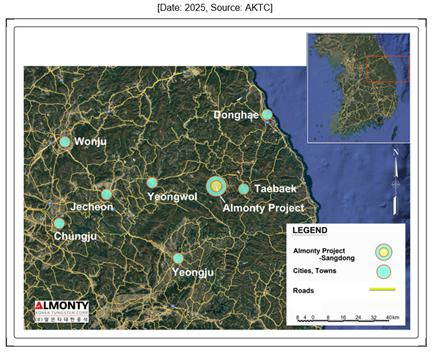
Figure 4-2 – Sangdong Mine Area
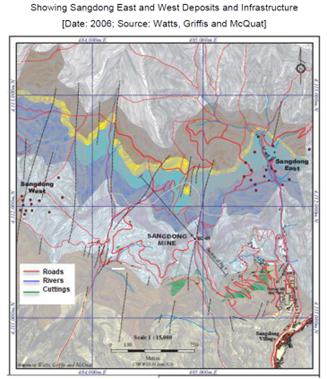
| -A-2- |
Sangdong is easily reached by paved roads from all directions and is a 3.5-hour drive from Seoul. The Sangdong Mine is well served by the Yeondong Expressway 50 from Seoul, the Jungang Expressway 55 from Wonju, Highway 38 from Jechon to Yeongwol then Highway 31 to Sangdong. A bus journey from Dong Seoul Bus Terminal typically takes 4 hours to Taebaek. Taebaek (population of over 50,000) is located approximately 25 km to the east of Sangdong by paved road and is an established coal mining town with most modern facilities, including good accommodation facilities and some mining equipment support.
The national rail network system services the region. The train journey takes 4.5 hours to Taebaek from Seoul Station. The closest railhead is situated at Yemi, 5 km north of Sangdong.
Access throughout the Sangdong Mine area is generally very good, with sealed roads forming a network throughout the district, together with numerous unsealed farm tracks up the river valleys.
Almonty owns a 100% indirect ownership interest in the Sangdong Mine through its subsidiaries. Almonty’s interest in the Sangdong Mine is held by AKTC, which owns a 100% direct interest in the Sangdong Mine. AKTC is a wholly-owned direct subsidiary of Woulfe Mining Corp. (“Woulfe”), itself a wholly-owned direct subsidiary of Almonty.
The Sangdong Mine comprises 12 mining rights with an aggregate area of 3,173 ha, held in the name of AKTC. The mining rights areas are shown in Figure 4-3 below and details of the licenses are indicated in Table 4-1 below.
Figure 4-3 – Sangdong Project: Mining Rights Areas
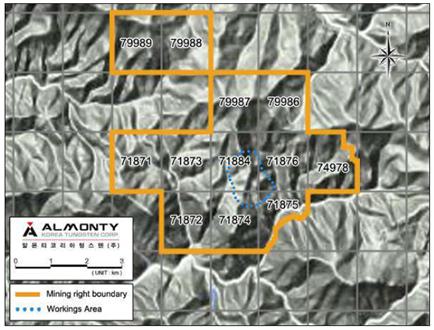
| -A-3- |
Table 4-1 – Sangdong Project – Mining Rights’ Details
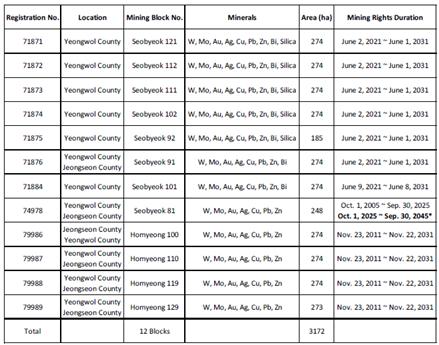
Note:
* AKTC received a 20-year extension for License No. 74978 on May 13, 2025.
The existing exploration and mining permits cover all the active exploration and mining areas encompassing the Sangdong Mine. The exploration permits provide the right to carry out all contemplated exploration activities with no additional permitting required. Exploration permits are subject to exploration rights usage fees (a fixed annual charge) and applicable taxes. The mining permits give the right to carry out full mining and mineral processing operations in conjunction with safety and environmental certificates.
Approval for installation of mining facilities (Sangdong Portal, Woulfe Portal, Taebaek Portal, Baegun Portal and nearby quartzite mine) have been issued by East Mine Registration Office of the Ministry of Trade, Industry & Energy. Environmental certificates (Temporary Forest Land Use) have been issued by the Department of Environmental Forest of Yeongwol County.
Surface rights for mining purposes are not included in the Sangdong Mine’s permits, but AKTC have leased some of the land used for mining and processing plant activities by effecting payment of a purchase fee based on the appraised value of the land. The rest of the necessary lands for mining, waste disposal and processing plant activities (processing plant, offices and accommodations, etc.) were guaranteed by Yeongwol County, through written official documentation. The expiration date of the land leases for the site leased from Yeongwol County is December 31, 2028.
South Korea has an established Mining Industry Act which defines the mining rights guaranteed by the government of South Korea.
| -A-4- |
Except for relatively small areas in the south in the main river valley and a few small areas of vegetable farms, the Sangdong Mine is on government land. On government (i.e., non-private) land, an environmental security bond must be lodged. On private land, access must be negotiated with the individual landowner(s). In the case of mining, there is no formal mediated process for land disturbance, and the purchase or lease of the surface rights would have to be negotiated with the landowner(s).
There are no royalties, overrides, back-in rights, payments or other similar agreements or encumbrances to which the Sangdong Mine is subject.
South Korea applies a 10% value-added tax (“VAT”) on domestic sales of goods and services, including the sale of concentrates and imports. However, exports of concentrates are zero-rated for VAT purposes, meaning no VAT is charged and input VAT may be recoverable. The standard corporate income tax rate is 21%, with an additional local surtax of 10% on the national tax, resulting in a combined effective rate of approximately 23.1%. In addition, a 0.5% local resource and facility tax is levied on the value of mined minerals and paid to the local government. There is no VAT surtax on sales.
There are no significant factors or risks that might affect access or title to, or the right or ability to perform work on, the Sangdong Mine known at this time.
History
Earliest Operations (1916–1949)
Tungsten mineralization was discovered on the property comprising the Sangdong Mine in 1916 and mining took place at two locations: the Doyeop Mine and the Sungyeong Mine for several years, but then ceased. Tungsten grades at the Doyeop Mine averaged 3.3% WO3 and ranged from 0.8% to 5.86% WO3. Tungsten grades at the Sungyeong Mine averaged 7.55% WO3 and ranged from 2.50% to 17.12% WO3. Operations at both locations recommenced in 1933 and the main Sangdong deposit was discovered during the period 1939 to 1940. In 1941, the company Kobayashi Mining Corporation (“Kobayashi”) bought both mines and integrated operations into the overall Sangdong Mine. The Sungyeong Mine owners, in order of succession, were Ogama Fusajiro, Kondo Shinjiro, Shibuya Yoshihide and then Kobayashi. Apart from acquiring the Doyeop Mine and the Sungyeong Mine, Kobayashi also expanded the mining rights area for the Sangdong Mine to include tungsten, bismuth and molybdenite. The smelting plant for Kobayashi was in Seoul.
The Sangdong Mine was operated during the Second World War by Sorim Resources Co. and, during the period 1946 to 1949, under the jurisdiction of the United States military government office. With the end of the Second World War in 1945, all property owned by Japanese nationals in Korea was taken over by the United States Army Military Government in Korea (“USAMGIK”), including Kobayashi’s mines. Along with 5–6 Japanese employees, Kobayashi’s president stayed for some time as an advisor to USAMGIK for tungsten mining development, but soon returned to Japan in October 1945.
| -A-5- |
In 1946, the U.S. Army restarted the tungsten mining operations for export to the United States. In 1947, Korea’s tungsten ore was exported for the first time to the world market, branded with the name of the Republic of Korea. The tungsten concentrate was first exported through exchanges between the Korean and U.S. governments.
On November 1, 1947, the Sangdong Mine suffered a fire caused by an electrical leak at the processing site, which had just begun operation. The processing plant was completely burned down, which seriously hindered production. Despite that, the Sangdong Mine produced 939 tonnes of tungsten during that year. The operation of the processing site at the Sangdong Mine restarted in November 1948.
Korea Tungsten Mining Company Ltd. (1949–1994)
In 1948, the USAGMIK control system ended and a governance system of company presidents started, with Kim Hyun Gyung being appointed as the first president of the Korea Tungsten Mining Company.
In 1949, the Korean Tungsten Mining Company, a government agency, assumed control and operated Sangdong Mine until 1951. In 1952, the Korean Tungsten Mining Company changed its name to Korea Tungsten Mining Co. Ltd. (“KTMC”) and resumed mining, producing tungsten and scheelite, bismuth and molybdenum concentrates. There were various disruptions with the Korean War from 1950–1951, including being occupied for some of that time by North Korea. In 1951, 639 tonnes of tungsten concentrate were produced, with a monthly production rate of approximately 10,000 tonnes of ore, at a grade of 1.2–1.7% WO3.
In 1953, mechanized equipment was installed, including slushers, loaders and mining cars. In 1954, mechanization of mine transportation started with tram operations, as well as three underground compressors. In 1957, the mining operations were downsized, going from 1,567 to 400 people at the mine site. A chemical treatment plant was started in 1959 and other significant milestones were achieved over the next 17 years.
The Sangdong Mine operated until 1994, with annual rates of production of up to 750,200 tonnes of ore. By the time of closure, the mine had been developed on 20 levels, between the elevations of 242 and 755 metres above sea level, with a cumulative length of 20 km of workings in addition to six inclines totalling 3.8 km, a ventilation incline and a 450-metre vertical shaft. The mine had tracked haulage ways.
Historical mining employed underground room and pillar methods and concentrated on four main tungsten horizons: the Upper (H1), Main (M1), Lower II (F2) and Lower III (F3) listed in stratigraphic order. Mining occurred mostly on the M1 horizon, with lesser operations on H1 and only very minor workings on F2 and F3.
Production figures over the life of the mine are not available for every year, having either been lost or having never been fully documented. During the period 1952 to 1987, annual production of tungsten concentrate varied between 994 tonnes (1955) and 3,268 tonnes (1961) and total production was 74,911 tonnes. There are indications that in the period between 1987 and 1992, mine production was limited and concentrate production was derived from toll treatment. Various quantities of APT, tungsten metal and tungsten steel were also produced.
| -A-6- |
Between 1961 and 1987, 2,930 tonnes of bismuth were recovered. Also, 2,725 tonnes of paramolybdate or molybdenum oxide were produced during the period 1967 to 1987. Gold and silver were also recovered, with maximum annual production rates of 37 kg of gold (1987) and 531 kg of silver (1974), apparently from the bismuth concentrate.
Based on tabulated data on longitudinal sections from the beginning of 1981 to the end of 1988, it is evident that the great proportion of the ore-grade mineralization was produced from the 3.5 m to 5 m thick Main horizon: 3.918 Mt. During the same period of time, about 2.041 Mt were mined from the Hangingwall (Upper) horizon in widely spaced stopes as deep as the -8 level. Data suggest that little, if any, production came from the horizon prior to that period.
From 1981 to 1988, about 88,000 tonnes of ore came from the Footwall (Lower) II horizon, mostly in the upper three levels, and 167,000 tonnes of ore from the Footwall (Lower) III horizon, also mostly in the three upper levels of the mine.
Although no statistics are available for production from the various individual horizons, it is evident from the 1989 longitudinal sections that there appear to be only pillars remaining at most levels in the core of the mine area, to at least the -15 level. Most of the remaining resources at that time were in peripheral, and probably lower grade, parts of the deposit and in the Main East orebody.
Statistics for the period from 1987 to the mine’s closure in 1992 are unavailable; however, there are indications that mine production was limited and concentrate production was derived from toll treatment. Various quantities of APT, tungsten metal and tungsten steel were also produced.
In 1959, a synthetic scheelite plant began operation, improving the grade and recovery of concentrates. In 1961, a bismuth refining plant was opened, producing 99.9% bismuth metal. The following year, a plant to produce tungsten metal was commissioned and, in 1972, an APT plant was built.
Towards the end of the 1960s, it was clear to KTMC that it was become increasingly difficult to maintain the production of extremely rich (plus 1.5% WO3) grades from the Main zone, forcing them to make a number of important changes to the company’s operations.
From 1974 to 1987, up to 1,182 tonnes of APT was produced annually, totalling 10,624 tonnes, but between 1978 and 1987, less than 170 tonnes of tungsten metal and steels were produced. The drop in tungsten prices in the mid-1980s caused the mine to reduce production and eventually shut down in 1992. KTMC was finally dissolved in 1998.
Mr. Jae Youl Sim (Se Woo Mining Co. Ltd. (“Se Woo”)) acquired 23 mining rights over the Sangdong deposit in June 2001.
| -A-7- |
Woulfe Mining Corporation (formerly Oriental Minerals Inc.) (2006–2015)
On October 19, 2006, Oriental Minerals Inc. (“Oriental”) entered into an agreement with Se Woo, a private company based in Seoul, Republic of Korea, whereby Oriental could earn up to 100% interest in 23 mining rights with a total area of 5,924 ha (59.24 km2).
Ownership of the 23 mining rights was transferred to Oriental, a 100%-owned Korean subsidiary of Oriental Hard Metals Korea Co., Ltd. upon closing of the transaction contemplated in the Sangdong Purchase Agreement and acceptance by the TSX Venture Exchange on January 7, 2007.
On the February 25, 2010, Oriental changed its name to Woulfe Mining Corp. Subsequently, the project area was reduced to 12 mining rights with an aggregate area of 3,173 ha. In November 2011, Woulfe gained a 100% interest in the property.
Sangdong Mine Development by AKTC (2015–2024)
Almonty acquired a 100% ownership interest in Woulfe on September 11, 2015 by way of a plan of arrangement. Woulfe, through its wholly owned subsidiary, AKTC, owns a 100% interest in the Sangdong Mine.
A critical milestone in the redevelopment of the Sangdong Mine was securing adequate financing to support construction and operational activities. In 2020, Almonty achieved this by finalizing a US$75.1 million project finance loan with KfW IPEX-Bank, a German financial institution.
Following the approval of project financing in early 2020, Almonty initiated a multi-year, meticulously planned construction and development program at the Sangdong Mine. The program reflects a combination of engineering precision, ESG-aligned project management and a commitment to building the largest non-Chinese source of tungsten globally. Below is a detailed breakdown of the key phases and milestones in the development of the Sangdong Mine.
2020 – Pre-construction and Engineering
| ● | January 2020: Binding commitment for project financing secured for US$75.1 million. | |
| ● | February 2020: Revised 15-year offtake agreement signed, increasing minimum revenue floor to C$750 million. | |
| ● | May 2020: |
| ○ | Metso Corporation (“Metso”) completes delivery of the basic engineering package for the crushing and grinding circuit. | |
| ○ | Collaboration with the Gangwon Provincial Government and Yeongwol County formalized through a memorandum of understanding, confirming local support, infrastructure provisioning and regulatory facilitation. |
| ● | July–September 2020: |
| ○ | Backfill plant design and location finalized at 730 m elevation for gravity-based tailings pumping. | |
| ○ | Long-lead items such as flotation cells and mill components specified for procurement. |
| -A-8- |
2021 – Formal Start of Construction
| ● | Q1 2021: Concrete batch plant completed on site to support all civil works and underground construction. | |
| ● | Q2 2021: |
| ○ | Renovation of the Sangdong town administration office into a local headquarters and community contact point. | |
| ○ | Major cost optimization achieved by bundling site levelling, road building and drainage diversion. |
| ● | May 2021: Groundbreaking ceremony held at the Sangdong Mine, marking the official start of surface construction. | |
| ● | Q3–Q4 2021: Preparatory works and mobilization continue; underground engineering and design for portals and haulage confirmed. |
2022 – Ramp-up of Equipment Procurement and Civil Works
| ● | January–June 2022: |
| ○ | Completion of several conditions precedent for the project finance agreement. | |
| ○ | Memorandum of understanding signed with Korean Mine Rehabilitation and Resource Corp. (“KOMIR”) and Hannae For T, Ltd for rare-metal recycling and value-add processing in South Korea. |
| ● | Q3 2022: |
| ○ | First and second disbursements received to fund civil works and equipment orders. | |
| ○ | Procurement of semi-autogenous grinding mill, ball mill, protection screens, reclaim feeders and other processing equipment. | |
| ○ | Basic and detailed engineering finalized for site-wide process layout and backfill plant. |
| ● | July–September 2022: |
| ○ | Drawings and schematics reviewed and approved. | |
| ○ | Underground development work begins, focusing on ramp access and portal clearance. |
2023 – Structural Construction, Power and Underground Access
| ● | April 2023: Fourth project finance drawdown received; cumulative investment surpasses US$32 million. | |
| ● | Q2–Q3 2023: |
| ○ | Powerline upgrade completed and tied into the national grid. | |
| ○ | Delivery of ball mill, flotation cells and other critical path equipment to site. | |
| ○ | Installation of foundations for crushing and grinding building begins. |
| ● | July–November 2023: |
| ○ | Drawdowns 5 and 6 support above-ground construction and final procurement. | |
| ○ | Delivery of flotation systems and pastefill support structures. | |
| ○ | Guest accommodations and logistics base finalized to host rotating personnel. |
| -A-9- |
2024–2025 – Transition Toward Commissioning
| ● | Q1–Q2 2024: |
| ○ | Early earthworks for processing plant commence; steel and mechanical installation begin. | |
| ○ | Ore development begins underground, initially targeting stope areas validated by prior drilling campaigns. | |
| ○ | Safety protocols integrated in partnership with KT Telecom, introducing artificial intelligence-based safety monitoring (Mine Safety DX). |
| ● | Q3 2024: |
| ○ | Surface infrastructure near completion; final installation of mechanical components. | |
| ○ | Integration of electrical and automation systems begins. |
| ● | Q1 2025: |
| ○ | Final drawdown received in January 2025, confirming full funding allocation. | |
| ○ | Substantial progress of underground mine development and advancement of processing plant construction to support production readiness. |
| ● | December 2025: |
| ○ | First truckload of ore successfully delivered to the run-of-mine (“ROM”) pad. | |
| ○ | Commercial mining started |
Historical Resource Estimates
KTMC Historical Estimates
Two historic tungsten Mineral Resource estimates (see Table 6-3 below) were prepared for the Sangdong Mine, in 1985 and 1989. The 1985 estimate, prepared by the mine staff, contained a total of about 20 Mt at a grade of 0.5% WO3. The 1989 estimate, prepared by Korea Resources Corp., contained about 18.8 Mt at an average grade of 0.5% WO3.
The second estimate includes about 1.4 Mt attributed to the Sangdong East deposit and therefore the difference between the two estimates does not represent the tonnage mined in the interim. These were polygonal estimates and used a relative density of 2.9. Tungsten mineralization in Sangdong East is lower-grade than in the main mine area. Drillhole data indicated that the Hangingwall (Upper) horizon typically ranges from approximately 1.5–11 m in thickness and contains 0.01–0.24% WO3 in grade. The partially mined Main horizon is approximately 1 m to 8.8 m in thickness and contains 0.01–0.65% WO3. Low-molybdenum, blue-fluorescent scheelite is dominant.
| -A-10- |
Table 6-3 – Historic Resource Estimates, Sangdong Mine
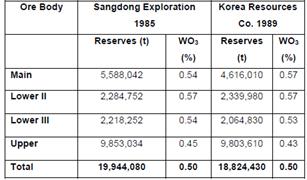
West (W) Sangdong was estimated to contain 2.3 Mt at an average grade of 0.5% WO3 but no details of the estimation process or the number of holes employed in the estimate are known. It is unknown on how many drillholes this was based, but because of the wide spacing of the drillholes (200m or more), the Mineral Resource could at best be considered Inferred under currently accepted resource evaluation methodologies.
Drill intercepts in the Main horizon varied from 0.24-0.8% WO3 across 0.8–2.8m. Other intersections included 0.11–0.28% WO3 across 2.3–6.8m in the Upper vein; and 0.1–3.0% WO3 across 0.6–2.0 m in the Lower vein. In drill hole 86-6 in the Hwajeolchi area, a roughly 15 m interval in the Hangingwall (Upper) horizon of interlayered limestone and calc-silicate rock (about 50% each) was intersected, with one 3.5 m interval containing 0.32% WO3.
A large molybdenite-quartz vein stockwork deposit located above a granitic intrusion was identified and drilled between 1980 and 1987 (22 vertical holes; 12,390 m core drilling). Up to 1987, all Mineral Resource or Mineral Reserve estimates predate both NI 43-101 and Woulfe’s involvement in the Sangdong Mine, and should not be considered to be material.
Woulfe Historical Estimates
Tetra Tech (Wardrop) (2012)
The 2012 global Mineral Resource estimate (see Table 6-4 below) estimated by Tetra Tech (“TT”) focused on the data acquired from the 2006–2008 drilling programmes, completed by Woulfe, as well as the compilation of historical data for the upper quarter of the known dip length of the mine, i.e., the section from surface to just below the water level.
The historical drilling data used in the TT(Wardrop)/Woulfe April 2010 scoping study was not used for the 2012 estimate, meaning that any down-dip extension of the mineralized zones was not represented as a Mineral Resource. The classification conformed to the Canadian Institute of Mining, Metallurgy and Petroleum (“CIM”) Definition Standards on Mineral Resources and Mineral Reserves, adopted by the CIM Council, as amended (the “CIM Definition Standards”). The Mineral Resource was split into two sections by elevation, representing the down-dip potential of the deposit below current waterline.
| -A-11- |
Table 6-4 – Sangdong, 2012 Global Resource Estimate
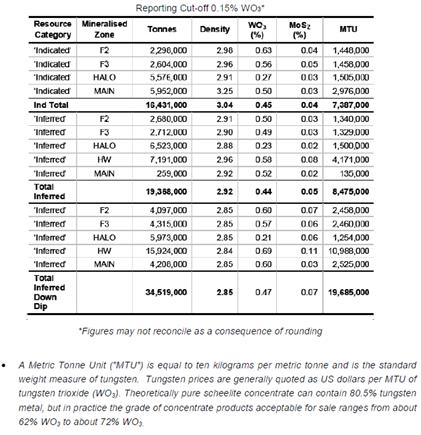
The previous estimate in the Wardrop 2010 scoping study was made on a very different basis to the 2012 estimate, the former relying on the holes drilled underground by KTMC and on a coarse geological interpretation of the mineralized zones; the 2010 Mineral Resource was classified as Inferred.
The 2012 estimate relied entirely on the more recent drilling programmes with associated sample quality control; however, it only covered approximately the upper quarter of the known dip length of the mineralized zones, and therefore the comparison of the two estimates would be unreliable.
In order to estimate the down-dip resource potential at the Sangdong Mine (see Table 6-4 above), TT (Wardrop) completed a separate estimation of the down-dip resource using all available samples, including those samples which could not be included in the up-dip “Indicated” Mineral Resource. Due to the unreliability of the historic data described above the Mineral Resource was classified as “Inferred” but was included in order to reconcile the 2010 and 2012 estimates.
AMC Consultants Pty Ltd (2014)
Mineral Resources were estimated using a block modelling approach, with three-dimensional (“3D”) ordinary kriging and Datamine’s™ dynamic anisotropy application being employed.
| -A-12- |
Table 6-5 below shows the Mineral Resource estimate and metal content for the Sangdong Mine as of September 15, 2014. The cut-off grade of 0.4% WO3 was provided by WMC and was based on an assumed mining method, production rate, metallurgical recovery and metal prices. AMC Consultants Pty Ltd (“AMC”) reviewed these assumptions and considered that they met the requirement of reasonable prospects of eventual economic extraction. It appears that AMC used some results from the pre-2006 drilling in the Mineral Resource estimation.
Table 6-5 – AMC 2014 Mineral Resource Estimate
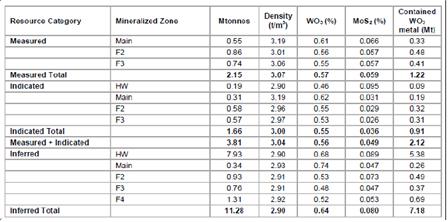
Changes that occurred between the 2012 and the 2014 Mineral Resource estimates included:
| ● | 11,348 m additional Mineral Resource definition drilling. | |
| ● | Change in the estimation method from modelling the volume and geometry of mineralization using the underground development surveys (TT), to using the actual drill hole intersections (AMC). | |
| ● | Change in the estimation method from assigning grades to each mineralization zone using the mineralization coding in the database (TT), to using the spatially referenced drill hole intersections in 3D to estimate grade for each mineralization zone (AMC). | |
| ● | Change in the estimation method from a single mineralization grade threshold of 0.15% WO3 (TT), to splitting the mineralization into three grade thresholds and estimating each independently (AMC). | |
| ● | Using the interpreted faults to constrain the Mineral Resource estimate. | |
| ● | Significant additional underground mapping carried out and incorporation of these data in the Mineral Resource estimate. | |
| ● | Change in the definition of the Mineral Resource categories. | |
| ● |
Table 6-6 below compares the TT 2012 estimate with the AMC 2014 estimate. Both estimates are reported at 0.15% WO3 cut-off grade in this table for comparison purposes.
The following observations were made from the comparison table:
| ● | Approximately half of the Indicated tonnes in the previous estimate were converted to Measured Mineral Resources due to the increased drilling and improved understanding of the geology gained through underground mapping. |
| -A-13- |
| ● | Measured plus Indicated tonnes increased by 12% overall, while the Inferred tonnes increased by 5% overall between the two estimates. | |
| ● | The change in density is not significant. | |
| ● | Measured plus Indicated grades decreased by 46%, while Inferred grades decreased by between 68% between the two estimates. | |
| ● | The net result in the Measured plus Indicated categories was a decrease in the contained tungsten metal of 29%. | |
| ● | The net result in the Inferred category represents a decrease in the contained tungsten metal of 59%. |
AMC considered that the decrease in grades was mainly due to the previous method (TT) of creating the mineralization volumes from the underground development surveys, and then estimating grade into those volumes from the coded intersections in the database. The coding in the database is not based on a 3D interpretation but is interpreted on a drill hole-by-drill hole basis.
Table 6-6 – Comparison of 2012 and 2014 Mineral Resource Estimates
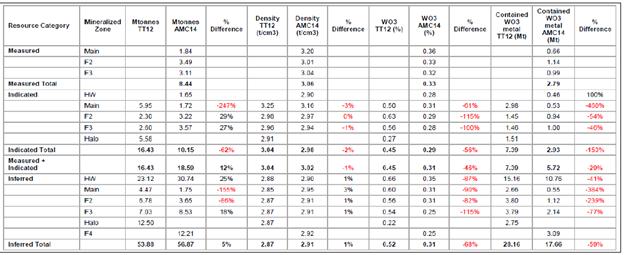
A-Z Mining Professionals Ltd./TT (Wardrop) Feasibility Study (June 2015)
In 2014, AMC was commissioned by Woulfe to develop a resource block model completely independent of the TT geology block models. On an A-Z Mining review of the completed AMC model, A-Z Mining and Woulfe decided not to retain the AMC resource model due to the technical methodology employed.
The Feasibility Study relied on the TT 2015 updated resource block model, which included the 2013 Phase 4 drilling programme (7,200 m of additional definition drilling to significantly increase confidence in the resources).
The Indicated Mineral Resource in the TT phase 4 updated model is shown in Table 6-7 below reported at 0.15% WO3 cut-off grade above 600 mRL. The resource is only reported above -3 level (600 mRL).
| -A-14- |
The TT reported resources were limited to the -3 level (594 mRL).
Table 6-7 – Tetra Tech Sangdong Resources, June 2015
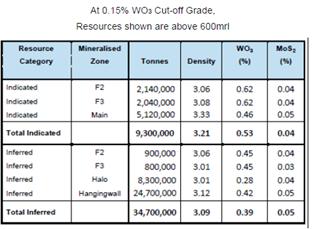
The phase 4 Mineral Resource Estimate update included changes from previous estimates, specifically the 2012 TT Feasibility Estimate:
| ● | The hangingwall ground conditions were better understood up-dip, so a greater proportion of the hangingwall was reclassified in Inferred, rather than just the bottom 3 levels above the current waterline. | |
| ● | The Halo mineralization surrounding the Footwall Zone had reduced in importance with better definition of the Footwall 2 and Footwall 3 zones from the phase 4 drilling and this is reflected in the resource categories. | |
| ● | The Indicated Main and Footwall zones’ Mineral Resources were largely unchanged from the previous estimate as the Phase 4 infill programme had not changed the results significantly. |
The Mineral Reserves (derived from the Mineral Resource block model Measured and Indicated Mineral Resources) were identified as being economically extractable, incorporating mining loses and the addition of mining dilution, by A-Z Consultants. Measured and Indicated Mineral Resources were outlined from the -2 to Taebaek levels as almost all resources below -2 Level Mineral Resources were Inferred. The Measured and Indicated Mineral Resources were further separated into the F2/F3 and Main Zones. The resources in a 50 m surface pillar allowance were subsequently removed.
Using an average processing plant recovery of 81%, a concentrate quality of 65% WO3 and revenue per tonne of concentrate of US$15,000, a cut-off grade of 0.275% WO3 was determined.
Mining recoveries of 100% in primary (rock walls, floor and back) stopes and 95% in secondary stopes (backfill on both sides of stope) were assigned, based on industry norms and experience in mining in these types of conditions.
| -A-15- |
Dilution for the stopes included waste inside the stope outlines in the stopes, and backfill sloughing from primary stopes in the secondary stopes. Backfill dilution was included at 5% at a 0% WO3 grade. Development ore was not separated from stoping ore in the reserves.
The Proven and Probable Mineral Reserves in the combined F2 and F3 Zones were estimated to be 3.9 Mt with a grade of 0.610% WO3. The Proven and Probable Mineral Reserves in the Main Zone were 2.0 Mt at a grade of 0.492% WO3.
AKTC Historical Estimates
The A-Z Feasibility Study was updated during 2015, with a NI 43-101 technical report produced by the Qualified Person in December 2015. At a 0.15% WO3 cut-off grade, Indicated Mineral Resources of 5.18 Mt were reported, along with Inferred Mineral Resources of 52.8 Mt. Mineral Reserves were determined of 4.7 Mt, at a grade of 0.42% WO3.
The Qualified Person produced an updated NI 43-101 technical report for the end of July 2016. At a 0.15% WO3 cutoff grade, Indicated Mineral Resources of 8.0 Mt were reported, at a grade of 0.51% WO3, along with Inferred Mineral Resources of 50.7 Mt, at a grade of 0.43% WO3. Mineral Reserves were determined of 7.9 Mt, at a grade of 0.45% WO3.
The Qualified Person produced a Mineral Resources-only NI 43-101 technical report, related to the Molybdenum Stockwork, for the end of May 2022. At a 0.19% MoS2 cut-off grade, Inferred Mineral Resources of 21.5 Mt were reported, at a grade of 0.26% MoS2.
Geological Setting, Mineralization and Deposit Types
The Korean Peninsula is situated on the eastern margin of the North China-Korea Platform, which corresponds to a craton composed of three blocks: Archean metamorphic rocks, the Nangrim-Pyeongnam Block and the Gyeonggi and the Yeongnam Massifs. These blocks are separated by the northeast-trending Imjingang and Okcheon mobile belts of Phanerozoic age. The Sangdong Mine is located within the northern sector of the Okcheon Fold Belt, occupying the Cambro-Ordovician Joseon Supergroup of the Taebaek Basin.
The Sangdong Mine is situated on the gently dipping southern limb of the east-west orientated Triassic-age Hambaek Syncline. This structure consists of a thick sequence of sedimentary rocks of the Taebaek Series, composed of Cambro-Ordovician interlayered limestones, shales and quartzites of the Joseon System. This sequence is unconformably overlying the Pre-Cambrian schist and gneiss basement of the Yulri Group of the Yeongnam massif. The stratigraphy in the Sangdong area is mainly composed of the basal Jangsan quartzite, Myobong slate and the overlying Pungchon limestone formations with Cambrian age, which belong to the Joseon Supergroup.
The tungsten mineralization of the Sangdong deposit is contained in several tabular, bedding-conformable skarns in the Myobong Shale formation. The ore deposit is strata-bound, with the strike and dip of the hosting formations. These skarns have been interpreted as comprising carbonate-bearing horizons that were hydrothermally altered and mineralized by fluids ascending from the underlying Sangdong Granite.
| -A-16- |
From uppermost to lowermost, the mineralized horizons are termed as Hangingwall, Main, and Footwall horizons, as shown in Figures 7-4 and 7-5 below. The Footwall and Main horizons have thicknesses that typically range from 1 to 4 m. As well as the main mineralization on these beds, there are often thin calc-silicate layers developed on the upper and lower contacts of the Main and Footwall horizons.
The Hangingwall horizon is located near the upper contact of the Myobong shale and varies in thickness from approximately 5.0 to 30.0 m because of the irregular boundary of the shale with the overlying Pungchon Limestone. This zone has a strike length of about 600 m and a down-dip extent of about 800 m. Above the most highly altered portion of the Main horizon, the Hangingwall horizon is not tabular, but extends steeply and irregularly into the overlying limestone. The base of the Hangingwall horizon is approximately 14 m above the upper contact of the Main horizon.
The Main horizon strikes about 100° and dips northerly between 15° and 30°. The strike length is in excess of 1,300 m and thickness varies from 5.0–6.0 m. Hydrothermal alteration (skarnification) within the Main horizon forms three concentric, roughly circular zones: the inner biotite-muscovite-quartz zone, the intermediate biotite-hornblende-quartz zone and the marginal garnet-diopside zone.
The Footwall horizons comprise multiple layers: Footwall Zone 1 (F1) normally occurs 1 m below the Main horizon and can be approximately 2 m thick; Footwall Zones 2 and 3 (F2, F3) are situated approximately 35 m to 40 m below the Main horizon and average thickness is from 3 m to 4 m. Furthermore, usually smaller, Footwall Zones have been identified beyond F3 and are collectively referred to as F4 and F5, both situated not far from the contact with the underlying Jangsan quartzite formation.
| -A-17- |
Figure 7-4 – Schematic Section of the Sangdong Deposit
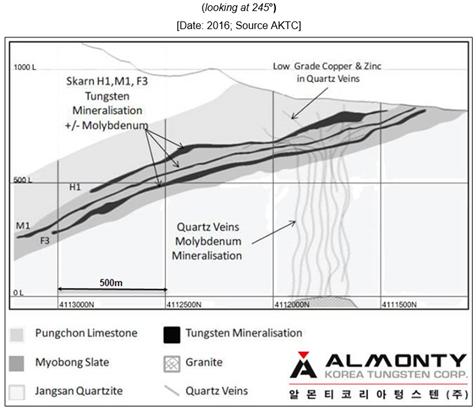
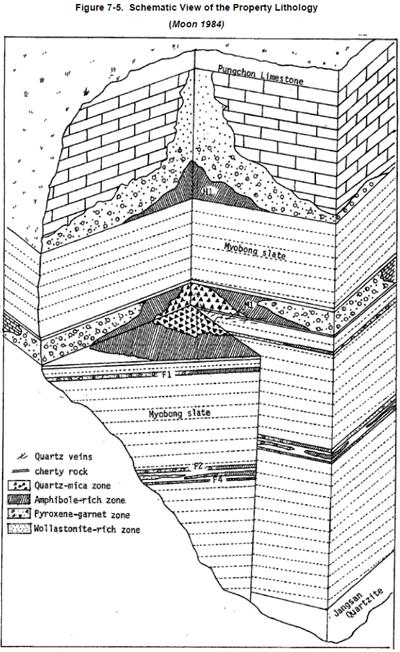
Local Geology
The Sangdong Mine is situated within the northern sector of the Okcheon Fold Belt in South Korea, a region that hosts Cambro-Ordovician sedimentary sequences known as the Joseon Supergroup. The deposit lies along the south-dipping southern limb of the east-west trending Hambaek Syncline and is structurally and stratigraphically controlled. The local stratigraphy consists primarily of the basal Jangsan Quartzite, overlain by the Myobong Slate, and capped by the Pungchon Limestone—units which collectively form the Joseon Supergroup. The tungsten mineralization is hosted within several tabular, bedding-conformable skarn horizons (Hangingwall, Main, and Footwall), developed through metasomatic replacement of carbonate-rich layers in the Myobong Slate and Pungchon Limestone. These zones are characterized by alternating garnet-, pyroxene-, and quartz-bearing assemblages, consistent with classic calc-silicate skarn systems. Structural controls, lithological boundaries, and proximity to the granite source collectively govern the geometry and grade distribution within the deposit.
| -A-18- |
Tungsten Skarns
The Sangdong Mine contains a tungsten skarn deposit. Skarns are contact metasomatic deposits, exploited for tungsten, with accessory molybdenum, copper, tin and zinc. They typically form in continental marginal settings, associated with syn-orogenic plutonnes that intrude and metamorphose deeply buried sequences of carbonate-shale sedimentary sequences. Skarn mineralization is typically hosted by pure and impure limestones, calcareous to carbonaceous pelites.
Due to their contact metamorphic nature, mineralization has a close spatial association with calc-alkaline granitic intrusives (tonalite, granodiorite, quartz monzonite and granites). Skarn deposits form stratiform, tabular and lens-like deposits, which can be continuous for hundreds of metres along intrusive contacts.
Principal and subordinate mineralogy comprises scheelite ± molybdenite ± chalcopyrite ± pyrrhotite ± sphalerite ± arsenopyrite ± pyrite ± powellite. Traces of wolframite, fluorite, cassiterite, galena, marcasite and bornite also occur. Reduced types are characterized by pyrrhotite, magnetite, bismuthinite, native bismuth and high pyrrhotite:pyrite ratios. Variable amounts of quartz-veining (with local molybdenite) can cut both the exo- and endoskarn.
Exoskarns occur at, and outside the granite which produced them, and comprise alterations of wall rocks. Endoskarns, including greisens, form within the granite mass itself, usually late in the intrusive emplacement and consist of cross-cutting stockworks, cooling joints and around the margins and uppermost sections of the granite itself.
Exoskarns display the following alteration zonation: an innermost zone of massive quartz may be present; an inner zone of diopside-hedenbergite ± grossular-andradite ± biotite ± vesuvianite; and an outer barren wollastonite-bearing zone.
There is commonly a late-stage alteration assemblage, comprising spessartine ± almandine ± biotite ± amphibole ± plagioclase ± phlogopite ± epidote ± fluorite ± sphene. Reduced types are characterized by hedenbergitic pyroxene, iron-rich biotite, fluorite, vesuvianite, scapolite and low garnet: pyroxene ratios, whereas oxidized types are characterized by salitic pyroxene, epidote and andraditic garnet and high garnet: pyroxene ratios. The exoskarn envelope can be associated with extensive areas of biotite hornfels.
Endoskarn alteration exhibits the following: pyroxene ± garnet ± biotite ± epidote ± amphibole ± muscovite ± plagioclase ± pyrite ±pyrrhotite ± trace tourmaline and scapolite; and local greisen developed.
The location of mineralization is usually controlled by: the presence of carbonate rocks in extensive thermal aureoles of intrusions; gently-inclined bedding and intrusive contacts; and structural and/or stratigraphic traps in sedimentary rocks and irregular parts of the pluton/country rock contacts.
| -A-19- |
Granite Related Molybdenum
Due to the paucity of information about the molybdenum-mineralized system beneath the Sangdong underground workings, it is difficult to characterize a model for this mineralization. However, important molybdenum mineralization falls into two classes: porphyry-type and granite-related molybdenum-tungsten-tin systems. There is some overlap between the two.
The tungsten mineralization of the Sangdong deposit is contained within a series of tabular skarn horizons within the Myobong Slate. Calcium carbonate horizons within the slate have undergone metasomatic replacement to mineralized skarn by hydrothermal fluids. The source of these fluids is thought to be the underlying Sangdong Granite. K-Ar age determination of phyllites within the Myobong Formation are consistent with the age of the granite below.
Swarms of quartz veins have ascended upward through the Jangsan Quartzite into the Myobong Formation where they can be seen to follow the bedding planes and also crosscut the formation. There is a correlation between the presence of quartz veins and the grade of mineralization.
Although hydrothermal alteration (skarn formation) is widespread in the Sangdong area from Sangdong West to Sangdong East and beyond, there is no evidence of a pervasive porphyry-style alteration system. Country rock above the Sangdong granite is hornfelsed, but not pervasively altered.
Vein- and greisen-type hydrothermal molybdenum-tungsten or tin-tungsten mineralization is connected with shallow-seated, highly differentiated, relatively K-rich granites. Regional zoning of tin, tungsten and molybdenum may be apparent. Where greisen is absent, mineralization may be within a sheeted or stockwork system contained within the apical portion of a granite body, or in overlying country rocks. Veins may vary from subhorizontal to vertical and replacement (skarn) bodies may be present in the wallrocks. Fluorine is an important constituent and bismuth minerals may also be present. There is no recorded alteration system (i.e., greisen) at Sangdong, and therefore the deep molybdenum mineralization is likely to comprise a system of sheeted or stockwork veins.
Exploration
It was stated by Klepper (1947) that exploration in 1939 and 1940 led to the discovery of the Sangdong scheelite body, although no further details are available.
Mineral Resource definition drilling is the only form of exploration that has been completed by Woulfe and AKTC at the Sangdong Mine after becoming operators in 2006, and there is no record of exploration other than drilling by previous operators.
An aeromagnetic map of the area was reproduced in a scoping report by Sennitt (2007), but the origin is unknown.
| -A-20- |
Drilling
KTMC Drilling
A summary of the different KTMC drilling campaigns is shown in Table 10-1 below. Between 1980 and 1985, 15 holes (8,940 aggregate metres) were drilled to investigate the East Tungsten mineralized zone, now referred to as Sangdong East, approximately 1 km to the east of the main Sangdong Mine and the deposit was further investigated with a drift approximately 1 km long. About 100,000 tonnes of ore were mined here in 1990. No additional work has been completed in this area to date.
Table 10-1 – KTMC Drillhole Summary
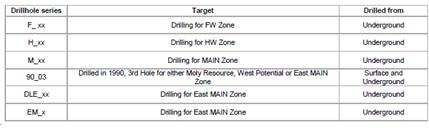
Between 1979 and 1989, 18 holes (16,502 aggregate metres) were drilled in the West Tungsten mineralized zone, now referred to as Sangdong West, approximately 2 km northwest of the Sangdong Mine area. This zone has not been further explored. Between 1980 and 1987, 22 vertical holes (12,390 aggregate metres) were drilled underground from the Sangdong Mine workings to investigate the extent of molybdenum mineralization in the quartzite unit that underlies the main skarn zone. No additional work has been completed in this area to date.
During an unknown period, about 780 holes with an aggregate length of 30,000 m were drilled underground to explore the mineralized zones. These historical holes were used in the 2010 scoping study.
Interpretation of Relevant Drilling Results
The drilling completed between 2006 and 2016 confirmed the presence, of the three principal skarn horizons at the Sangdong Mine: the Hangingwall (Upper), Main, and Footwall (Lower) zones. The 2016 Phase 7 underground drilling program, consisting of 20 drillholes totaling over 1,004 metres, was carried out from drill chambers in Level 2 of the underground workings and targeted the Hangingwall zone.
Mineralization in the Main and Hangingwall zones occurs to be skarn hosted in the upper Myobong Formation. The drilling confirmed the continuity in the targeted zones and contained scheelite as the primary tungsten-bearing mineral. Results were validated through extensive quality assurance/quality control, including field duplicates, blank samples, certified reference materials, and laboratory duplicates. These data supported the current Mineral Resource estimate and are considered suitable by the Qualified Person for use in resource modeling.
| -A-21- |
This data set does not have associated QA/QC information for the assay results, nor is the collar or downhole survey information adequately documented. Comparison of grade values in pre-Woulfe drillholes with nearby Woulfe drillholes showed significant differences that were considered (by AMC in 2014) as unlikely to be a result of natural variability only. Therefore, the results suggested that the pre-Woulfe location information and/or grade values were inaccurate.
AMC used the KTMC drillholes in their Mineral Resource estimate to determine the grade and tonnes below -3 level (594 mRL) only where Woulfe had not completed any drilling. This uncertainty in the location and/or grade below -3 level is reflected in the current Mineral Resource classification.
Woulfe Drilling
The exploration work undertaken by Woulfe at the Sangdong Mine was the surface drilling programme completed between November 2006 and July 2008. From June 2010, an underground resource definition drilling programme was designed and the first phase completed.
2006–2008 Drilling Programme
Woulfe (as Oriental) conducted a drill programme at the Sangdong Mine between November 2006 and July 2008. Ninety HQ/NQ surface core holes were completed, with an aggregate length of 22,800 m. HQ and NQ cores are nominally 63.5 mm and 47.6 mm in diameter, respectively.
The holes were largely drilled within the area of the former underground Sangdong tungsten deposit. Analyses for WO3, MoS2, bismuth and other minerals were completed and this dataset comprises some 20,355 analyses.
The holes were all drilled in the south-eastern portion of the deposit, where the mineralization occurs near surface or is outcropping, on a bearing of 135°, parallel or nearly so, to geological strike; about 30% were drilled on the opposite bearing of 315°.
The majority were drilled at a dip of 70°, although several were vertical or at a dip of about 80°. The holes were designed to test all three principal horizons of mineralization and, with several accidental exceptions, almost all penetrated well into the Jangsan Quartzite that underlies the host Myobong Formation. Difficulty was often experienced in penetrating the lower horizons due to the mined out areas of the skarn mineralization.
The drill hole collar locations were surveyed by global positioning survey (GPS; sub 0.2 m accuracy) and the down-hole positions of the holes were measured at 50 m intervals when possible. There were some uncertainties with regard to the collar elevations and Woulfe subsequently undertook additional surveying work to resolve the situation and consolidate the survey of the site in general.
Holes drilled on bearings of both 135° and 315° intersected strata and mineralization obliquely, the intersected thickness of mineralization being about a 30% greater than the true thickness.
| -A-22- |
2009–2014 Drilling Programmes
Once access was gained to the underground workings, Woulfe began a programme of infill and resource definition drilling. The drilling was largely completed from the underground workings supplemented by additional surface holes where underground access was not possible.
Underground drilling was either NQ core from a Sandvik Onram 1000 wireline rig, or BQ core from 3 Kempe pneumatic screwdrive open hole core rigs. Orientations vary based on access and the need to intersect all three ore horizons. Conical drilling patterns are common as a result of fanning out in all directions from the underground drilling platforms. Collar locations were surveyed using a Leica 1203 (total station with sub-decimetre accuracy). Downhole surveys were conducted approximately at the end of hole, as the majority of holes are less than 30 m in length. A Camteq™ multiple shot camera was used, with a stated accuracy of ± 0.5° on azimuth and ± 0.2° on dip. The downhole camera was routinely calibrated to ensure maximum performance, using a purpose designed jig.
2016 Drilling Programme
AKTC have completed a Phase 7 underground drilling campaign in 2016. This was focused in improving the resource categorization of the HW Zone (allowing some conversion of Inferred to Indicated Mineral Resources) and consisted of 20 holes, drilling just over a 1,000 m in total.
Drilling Summary
All of the recorded drillholes at Sangdong are summarized in Table 10-2.
Table 10-2 – Summary of Sangdong Drilling
[Date: 2016, Source: A. Wheeler]
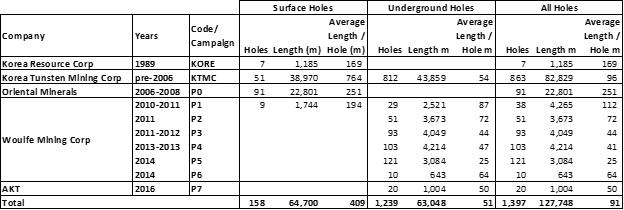
| -A-23- |
Drilling Results
Table 10-3 below summarizes the mineralized intersections from the drilling programmes completed between 2012 and 2014.
Table 10-3 – Summary of Mineralized Intersections from Drilling 2012 – 2014
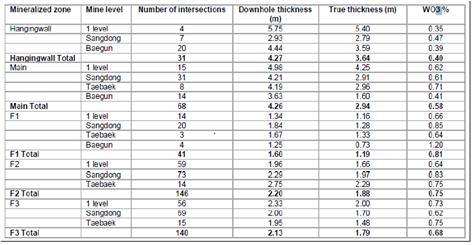
Sampling, Analysis and Data Verification
Sample Preparation
An overall summary of quality control samples taken during drilling campaigns from 2010 onwards is shown in Table 11-1 below.
Table 11-1 – Summary of Quality Control Samples
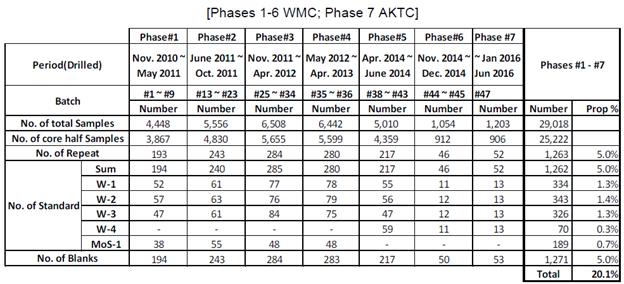
| -A-24- |
Sample preparation from core to pulps for analysis is completed on site. Core is sawed in half, half placed in a plastic sample bag and half replaced in the core box for archival storage. Sample tags are placed in the core box and in the sample bag and the sample number is written on the sample bag as well. Standards are placed into the sample stream at this point in the sampling process, in accordance with a sample list that has been drawn up by the geologist responsible for logging the hole.
Core samples are dried, split, crushed and pulverized on site by Woulfe personnel in a preparation lab that was purchased as a modular unit from Marc Technologies in Perth, Australia. Equipment is cleaned by brushing and the use of compressed air between each sample. Woulfe staff employed in the sample preparation facility have been trained by SGS Australia Pty Ltd. (“SGS Australia”) in Perth, Australia.
An approximately 50 g split portion of the pulverized sample is sent to SGS Australia in Perth, Australia for analysis. Blanks are inserted one in every 20 samples to ensure there is no contamination.
Analyses
From 2006 to 2008, samples were analyzed at the ALS laboratory in Brisbane, Australia, by inductively coupled plasma mass spectrometry (ICP-MS) for 41 elements and for ore grade quantities of specific elements by aqua regia or four-acid digestion followed by ICP analysis.
From 2010, molybdenum, tin and tungsten were analyzed at the SGS Australia laboratory in Perth, Australia, by X-ray fluorescence (XRF). The sample is fused in a platinum crucible using lithium metaborate/tetraborate flux and the resultant glass bead is irradiated with X-rays and the elements of interest quantified. All quantities are reported in parts per million (ppm). Both ALS and SGS laboratories are independent of the Company and AKTC.
Sample Security and Chain of Custody
The sample preparation facility comprised a fenced area beside the Woulfe accommodation facility. Sample tags are placed in the sample bag and the sample number is written on the sample bag as well. A split portion of the pulp from each sample and coarse rejects is retained in a locked facility at the project site. The pulps are placed in brown paper envelopes by the sample preparation manager, then packed in cardboard boxes, sealed and sent by DHL courier to SGS Australia in Perth by a Woulfe geologist.
Precision, Accuracy and Blank Results
Precision
Precision is the measure of variability or repeatability of an assay result. Knowing the precision of a set of assays allows for correction to any bias or accuracy problems that may occur. A lack of precision may be the result of the sample collection process, laboratory preparation process and/or the analytical process, influencing negatively the Mineral Resource Estimation.
| -A-25- |
Internal laboratory duplicates are two split pulps of the same pulverized sample. These laboratory duplicates are considered to demonstrate good precision if the absolute relative paired difference (“RPD”) is < 10%, 90% of the time. Internal laboratory duplicates quantify the precision of the chain of laboratory sample preparation and analytical procedures.
During the January 2012–September 2014 reporting period, 819 samples were re-assayed. Tungsten internal laboratory duplicate summary statistics are presented in Table 11-4 below. Molybdenum internal laboratory duplicate summary statistics are presented in Table 11-5.
Table 11-4 – Tungsten Laboratory Duplicate Summary
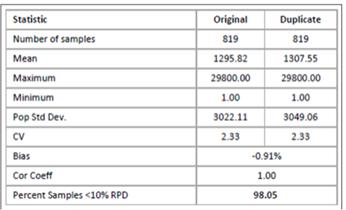
Table 11-5 – Molybdenum Laboratory Duplicate Samples
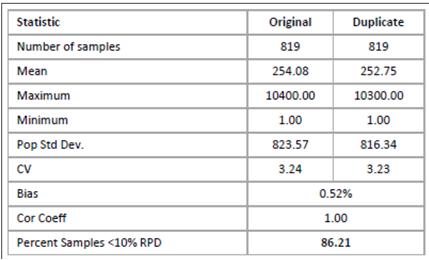
The correlation coefficient for both tungsten and molybdenum shows excellent agreement between the original and duplicate assays. The tungsten RPD results also show excellent agreement between the original and duplicate assays with 98% of samples below the 10% RPD threshold. The molybdenum RPD results show poorer agreement between the original and duplicate assays with 86% of samples below the 10% RPD threshold. This is less than the 90% threshold. The scatterplots show three outliers in the tungsten results and one outlier in the molybdenum results.
| -A-26- |
TT considered that the outliers were not material to the Mineral Resource Estimation and that the duplicate results demonstrate the precision of the tungsten assay results and that they supported the use of the SGS Australia results in Mineral Resource Estimation.
Independent re-assaying of selected pulps from the primary sample by a second laboratory provided a measure of both precision and accuracy. Woulfe sent 133 samples previously assayed by SGS Australia in Perth, Australia to Bureau Veritas Laboratory (“BV”) in Perth, Australia, as an external laboratory check. These external laboratory duplicates are considered to demonstrate good precision if the absolute RPD is < 20%, 90% of the time.
Tungsten duplicate summary statistics, for the January 2012–September 2014 reporting period, are presented in Table 11-6 below.
Table 11-6 – Tungsten External Laboratory Duplicate Summary
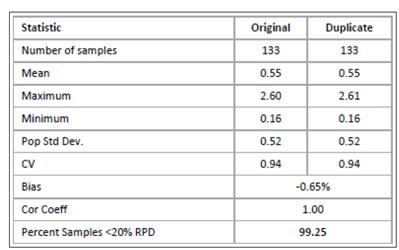
The correlation coefficient shows excellent agreement between the two laboratories. The RPD results also show excellent agreement between the two laboratories with 99% of samples below the 20% RPD threshold. The scatterplot shows one outlier.
The outliers are not considered material for the Mineral Resource estimate.
The BV results demonstrate the precision and accuracy of the SGS Australia assay results and that they support the use of the SGS Australia results in Mineral Resource Estimation.
Accuracy
Accuracy is the measure of how close the assay is to the actual sample grade. Poor accuracy can be caused by various sampling or analytical problems, including issues with analytical equipment or procedures such as machine calibrations. These situations can occur at any time. Accuracy of the analytical process must be quantified on a batch by batch basis to enable samples to be re-assayed over time periods by inserting assay certified reference material (“CRM”) standards into each batch of samples and monitoring the results.
| -A-27- |
A CRM is a standard sample that has been manufactured by a certified company and is itself certified. The manufacturing process creates a homogenized sample that has undergone an extensive and rigorous certification process. This process generates an expected value and acceptable limits for all elements in the sample.
Laboratories use CRMs to ensure that their analytical processes are accurate between calibrations of the machines. Where drift is observed, it is normal procedure for a machine to be recalibrated. It is possible for internal laboratory CRM assay results to be altered and it is now industry standard for laboratory clients to submit their own CRM samples, in order to be able to monitor the accuracy of the laboratory.
Four CRMs for tungsten and one for molybdenum are in use by Woulfe. These, along with a blank and a re-split coarse duplicate are inserted routinely at every 20th sample interval. The CRMs were produced by CDN Resource Laboratories, Canada. A summary of the CRMs is given in Table 11-7 below. Note that CRM values are reported here as W% or Mo ppm, not WO3 or MoS2%. If a CRM falls outside the 1SD range, re-analyses of 10 samples before and 10 samples after the failed CRM sample are requested from SGS Australia.
Table 11-7 – CRM Summary
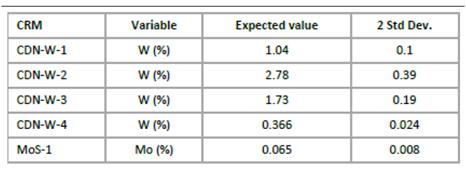
The CRM results for the reporting period January 30, 2012 to September 15, 2014 demonstrate that: the CRMs show good compliance for the reporting period; CRMs CDN-W1, CDN-W2 and CDN-W3 display a slight high bias in the middle third of the reporting period of up to approximately 5% but still well under 1 standard deviation of the lab mean; no significant bias is observed for the rest of the reporting period or for the other CRMs; and the molybdenum CRM is too close to the detection limit to be a useful CRM for the Sangdong Mine.
TT considered that the bias observed in the CRM plots is not material for the Mineral Resource estimate, but recommended continuous monitoring of CRM performance by batch. The results demonstrated the accuracy of the assay results and support their use in Mineral Resource Estimation.
The Qualified Person, after also checking the Phase 7 results, considers these results to be demonstrating the same accuracy as previously, which therefore supports their use in Mineral Resource Estimation.
| -A-28- |
Blank Results
Blanks are required to be inserted into the sample sequence by both the laboratory and the laboratory client. Laboratory blanks are usually flux or pure silica and are a test for cleanliness within the laboratory, where poor cleaning of equipment may result in sample contamination.
The coarse crystalline feldspar blank material used by Woulfe during the period to test for contamination during the sample preparation was certified to contain no metal. TT considered assays of blank material to be acceptable if they were less than three times the practical detection limit of the laboratory.
The tungsten bank results for the January 2012–September 2024 reporting period show three blank values out of 822 that are above the acceptable limits while the molybdenum results show two blank values out of 822 that are above the acceptable limits. TT considers that the blank value results are acceptable and demonstrate adequate care is taken by Woulfe staff during sample preparation and the lab employs correct cleanliness procedures. There were also no unacceptable blank values for the Phase 6 blank results.
The Qualified Person considers that the sample preparation, security, analytical procedures and supporting QA/QC results that were used to inform the Sangdong Mine block model estimate were collected in line with industry good practice as defined in the CIM Exploration Best Practice Guidelines and the CIM Mineral Resource, Mineral Reserve Best Practice Guidelines (the “CIM Guidelines”).
Quality Assurance/Quality Control
The QA/QC protocol included the insertion of the following control samples in the assay batches:
| ● | Pulp duplicates (one in 50, or 2%), consisting of second splits of the pulverized samples that are submitted to the primary laboratory for analysis in the same batches as the original samples, but with different numbers. | |
| ● | CRMs (three in 50, or 6%). | |
| ● | Coarse blanks (one in 50, or 2%) and fine blanks (one in 50, or 2%), consisting of coarse (approximately 1” diameter) and pulverized material, respectively, whose blank character was demonstrated by analysis conducted at SGS Australia laboratories in Australia. Initially ground glass was used as blank for Phases #1 to #4 drilling, but was subsequently changed to coarse crystalline feldspar for Phase #5 drilling. | |
| ● | Check samples (two in 50, or 4%), collected from pulps that were previously assayed at the primary laboratory, are resubmitted to BV in Perth, Australia for external control. The check sample batch includes an appropriate proportion of control samples (pulp duplicates, CRMs and fine blanks). | |
| ● | In addition, the QA/QC protocol includes independent granulometric checks on crushed and pulverized samples (one in 20 for each type, or 5% each) that are conducted by geological personnel. |
| -A-29- |
Data Verification
The data verification procedures applied by various qualified persons at the Sangdong Mine since 2006 are summarized below.
Watts, Griffis and McQuat (2006)
The Sangdong Mine underground workings were either inaccessible or, if open, of unknown condition. This restricted Watts, Griffis and McQuat’s (“WGM’s”) independent sampling to low-grade outcrops and waste dump material. Given the long-documented record of tungsten production at the mine, the sampling done during WGM’s site visit on November 20, 2006 was clearly not intended to be definitive, rather simply to independently confirm that economically significant grades of tungsten, in particular, were present.
All samples were put into bags and closed with uniquely numbered, locking plastic ties; they remained under lock and key or in WGM’s possession during their representative’s time in South Korea. They were taken as personal baggage to Mississauga, Ontario and shipped by courier to SGS Mineral Services (“SGS Canada”) in Lakefield, Ontario. Samples were assayed for tungsten (reported as %WO3) and molybdenum.
SGS Canada normally inserted one blank per batch of 100 (maximum) samples, one duplicate per 20 samples and one reference standard every 20 samples.
After drying, if necessary, the samples were crushed to 75% passing 9 mesh (2 mm), and riffle split to produce a reject portion and a smaller portion which was pulverized to 85% passing 200 mesh (74 μm). A 0.2g charge of each pulverized sample was roasted for 20 minutes and mixed with 5 g of potassium pyrosulphate. The mixture was then fused, ground and pressed into a disk. Samples were analyzed by the wavelength dispersion X-ray fluorescence (WD-XRF) method having detection limits of 0.05% for each of W and Mo. The XRF method was chosen because normal ICP methods have an upper detection limit of 1% W, and it was suspected that at least two of the Sangdong samples contained appreciably more than this amount of tungsten.
| -A-30- |
Analytical results for the independent WGM samples, together with location and sample descriptions, are presented in Table 12-1 below.
Table 12-1 – Analytical Results from Independent WGM Sampling
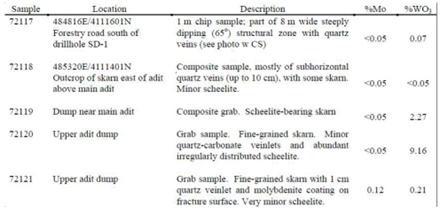
Significant amounts of blue-white-fluorescing scheelite were observed in two dump samples from the upper and main adit levels (72119 and 72120) and lesser amounts from a third (72121), confirmed upon analysis. All samples were of compact, fine-grained dark green (amphibole-rich) skarn. The coarse character of the scheelite in sample 72120 is noteworthy.
The outcrop sampled near the upper adit portal consists of diopside-garnet skarn with subhorizontal quartz veins. There was a minor amount of local scheelite.
The most surprising result of 0.07% WO3 was from an 8 m wide, steeply dipping (about -65°) structural zone, with multiple quartz veins, in Myobong Shale on the forestry road. Mineralized quartz veins cutting across skarn-type mineralization are documented in the Sangdong Mine, but apparently at not such a steep inclination. Other similar structural (fault or shear) zones were observed by WGM on the forestry road south of the set-up for drill hole SD-1.
Sennitt (2007)
The Sangdong project database, residing in MS ACCESS database files, includes all drill collar location, assay, quality assurance and geological data, as well as core recovery, visual estimates of key minerals and bulk density data.
The collar, assay, geological (rock type codes only) and core recovery data were extracted and input into the GEMCOM® modelling software system.
As a test of data integrity, checking of 10% of the data was made against original assay certificates. Collar coordinates were checked against the original survey forms. Results from the data checks showed zero error rate. It was concluded that the assay and survey database used for the mineral resource update was sufficiently free of error to be adequate for resource estimation.
| -A-31- |
Tetra Tech/Wardrop (2012)
Verification activities conducted during the site visit included:
| ● | Multiple site visits to the Sangdong Mine, the last in October 2011, inspection of the exposed host skarn, veining and associated lithologies. | |
| ● | Core logging (lithology, mineralization) of selected Sangdong diamond drill holes from the latest drilling programme, at the Sangdong facilities. | |
| ● | Observation and review of core storage, core logging, core sampling, core cutting and sample preparation procedures, standard reference sample and reject sample storage facilities at the Sangdong facilities. | |
| ● | Detailed discussion with Woulfe staff was undertaken during the visit to the Sangdong facilities. |
Verification activities subsequent to the site visit included the selection of between 5% and 10% of the Sangdong drill holes for verification of handwritten geological logs, original field sample sheets and original ALS assay certificates against corresponding records in the Sangdong database supplied. Copies and scans of original data were supplied by Woulfe in order to carry out the verification exercise off-site.
Very minor discrepancies and errors were encountered during these processes and referred to Woulfe for clarification or correction.
Overall it was concluded by TT/Wardrop that appropriate care and attention in data entry, validation and QA/QC procedures had been applied by Woulfe and that analytical issues were identified and appropriate remedial action taken. A possible exception related to downhole surveys of relatively short drillholes, but otherwise industry standard practices had been followed and the quality of the Sangdong database meets NI 43-101 standards and CIM Guidelines.
TT/Wardrop concluded that the combination of the latest sampling and understanding derived from the wealth of historical mining data provided adequate information for the purpose of their resource estimation and technical report.
TT/Wardrop did not complete any independent exploration work, drill any holes or perform any programme of sampling and assaying on the property. During the field visit (October 2011), Wardrop did not collect any samples from the Sangdong project, but was satisfied from visual inspection of the presence of mineralization at Sangdong.
Tetra Tech/A-Z Mining Professionals Ltd. (2013)
From August 17, 2013 to September 1, 2013, inclusive, TT full-time employee and qualified person Mr. Joe Hirst made a personal inspection of the Sangdong Mine and undertook the following data verification steps:
Discussions with site geologists regarding:
| ● | sample collection; | |
| ● | sample preparation; | |
| ● | sample storage; | |
| ● | QA/QC; | |
| ● | data validation procedures; |
| -A-32- |
| ● | underground mapping procedures; | |
| ● | survey procedures; | |
| ● | geological interpretation; | |
| ● | exploration strategy; | |
| ● | a review of underground back and wall mapping (drifts and rises); | |
| ● | an inspection of the core sheds and some recent drill core intersections from the Sangdong Mine; and | |
| ● | 100 random cross-checks of the mineralized assay results in the database with original assay results from the reporting period. |
Tetra-Tech made the following observations: site geologists are appropriately trained and are conscious of the specific sampling requirements of disseminated mineralization with high-grade lenses; and cross-checking the database with the original assay results did not uncover any errors.
AMC (2014)
Between August 5–15, 2014, AMC full-time employee and qualified person Dr. A. P. Fowler visited the Sangdong Mine; the data verification steps and conclusions were identical to those summarized in the TT (2013) section above.
Adam Wheeler Site Visits
The Qualified Person visited the Sangdong site during August 24–26, 2015, October 17–28, 2016 as well as from April 1–4, 2025. These visits included discussion with site geologists all aspects of sample collection, preparation and storage, as well as visiting the core storage and sample preparation areas. The updated sample database was also reviewed in 2015 and 2016, and during the resource estimation process, many aspects of the drill hole data were checked by communication with the Sangdong geologists.
In the Qualified Peron’s opinion, the geological data used to inform the Sangdong Mine block model estimates were collected in line with industry good practice as defined in the CIM Guidelines and were suitable for use in the estimation of Mineral Resources.
Mineral Processing and Metallurgical Testing
Beneficiation of Scheelite Ore from the Sangdong Mine (South Korea (U.S. Department of the Interior), 1954)
Extensive metallurgical test work has been conducted on Sangdong scheelite ore over the course of several years to de-risk the processing flowsheet and confirm economic recoverability. The test work included: (i) laboratory-based bulk sulphide flotation and multiple stage cleaning tests, (ii) locked cycle tests conducted at KIGAM to establish recovery and concentrate grade projections, and (iii) pilot plant trials conducted at Laboratório Nacional de Energia e Geologia (“LNEG”) in Portugal to confirm the viability of the full processing regime. These programs tested different reagent grades and water sources under various test conditions. Test work results confirmed that the Sangdong ore is amenable to producing high-grade tungsten concentrates using the selected flotation regime, and that recovery levels and product specifications are consistent with historical results. This test work underpins the process guarantees granted by Metso Outotec. Additional historical and third-party test results are summarized under “Mineral Processing and Metallurgical Testing” in this document.
| -A-33- |
Several processing factors and potential deleterious elements were identified during the metallurgical test programs on the Sangdong scheelite ore. Scheelite liberation is constrained in coarser fractions, requiring fine grinding (to 80% <65 μm) to ensure efficient flotation recovery. The presence of sulphide minerals such as molybdenite, bismuthinite, and chalcopyrite necessitates bulk sulphide flotation prior to scheelite recovery, as these can impact concentrate quality. Test work also indicated that excessive backfill material in the feed (approaching 10%) can negatively affect sulphide flotation efficiency. Water quality is another factor; flotation with softened mine or river water proved effective, while untreated water may interfere with reagent performance. Lastly, while earlier test work relied on a proprietary Chinese collector, subsequent trials confirmed comparable or superior performance from an alternative South African reagent, reducing sourcing risk. Overall, no critical deleterious element or processing factor has been identified that would prevent the production of market-grade scheelite concentrate, assuming appropriate process controls.
From the test work on the Sangdong scheelite ore, the following conclusions were drawn:
| ● | By crushing and grinding through 28-mesh in equipment selected to produce a minimum of fines, enough scheelite can be liberated to warrant concentration by shaking tables. Removal of the scheelite from the circuit in as coarse a size as possible reduces grinding and subsequent slime loss. Gravity concentration allows direct recovery of approximately 40% of the total tungsten values. Such a gravity concentrate is readily cleaned to market grade, whereas a flotation concentrate (the alternative) is not. The table concentrate can be cleaned simply by sulphide flotation and magnetic separation. It was demonstrated that the sulphur, bismuth, and molybdenum contents of the scheelite table concentrate were effectively removed by sulphide flotation. | |
| ● | A bismuth-bearing by-product could be made by cleaning the scheelite table concentrate and selectively floating the table tails. | |
| ● | After proper grinding (90 to 95% minus 200 mesh) a scavenger flotation operation recovered a major portion of the sulphide minerals and the remaining scheelite in two selective concentrates. The tungsten flotation concentrate was of low grade (approximately 14% tungsten trioxide); however, such a concentrate is suitable for beneficiation by hydrometallurgical methods. | |
| ● | The scheelite in the ore submitted was locked with the gangue to the extent of 50% in the minus 20 mesh plus 200 mesh fraction, and 100% in the plus 20 mesh fraction. The grind for flotation work demonstrated good liberation of scheelite below 200 mesh. |
The test work on the Sangdong low-grade scheelite concentrate indicated the feasibility of a soda-ash roast-leach extraction of sodium tungstate to precipitate an artificial scheelite product. The product made from the first part of this calcium chloride precipitation met market specifications in both tungstic oxide content and maximum molybdenum content allowable. The subsequent precipitation products were high in molybdenum, even though the minimum grade for tungstic oxide was met.
| -A-34- |
Separation of the molybdenum from the tungsten in the pregnant solution was not attempted, as it was beyond the scope of the investigation. However, a process was used by U.S. Vanadium Co. to make this molybdenum tungsten-separation.
A calculated combination of the results of these two beneficiation procedures was made. This calculation was made to demonstrate the results possibly obtainable if a sample of the Sangdong scheelite ore were treated by tabling, flotation, magnetic separation and roasting and leaching of low-grade scheelite concentrates for reprecipitation of artificial scheelite products, as indicated by the test work. The hypothetical results indicated that the following marketable products might be prepared:
| ● | A combined natural and artificial scheelite of 63.4% tungstic oxide and 0.65% molybdenum, accounting for 73.6% of the tungstic oxide. | |
| ● | A bismuth by-product of 11.1% bismuth and 0.57 and 2.8 oz/t of gold and silver, respectively, with recovery of 46.3%. | |
| ● | Further detailed beneficiation study probably would improve the overall metallurgical results. This applies particularly to the scavenger flotation circuit where 18.9% of the tungsten was lost in a tailing containing 0.23% tungstic oxide. It is also probable that cleaning of the table concentrate by sulphide flotation would yield a final tungsten product acceptably free of molybdenum, bismuth and sulphides and at the same time increase the bismuth recovery in the bismuth by-product. |
Part of the molybdenum should be recoverable from the sulphide flotation concentrates. The portion entering the pregnant solution may be precipitated with sodium sulphide solution and filtered off before tungsten precipitates. Neither of these steps was attempted, since they were not part of existing metallurgical technology; the latter technique has been applied to Korean concentrates, and it was therefore simply assumed that these methods would apply to this ore. These conjectures point to the possibility of better metallurgical results; however, the beneficiation work done has demonstrated that the Sangdong scheelite ore, as approximated by the sample submitted for beneficiation, is amenable to concentration into marketable grade products by a combination of tabling, flotation, magnetic separation, and chemical treatment.
Tetra Tech/Woulfe (2010 Scoping Study)
The following is a summary, extracted from the Mineral Resource Estimate (TT/Woulfe 2012), of the mineral processing and metallurgical testing completed during the 2010 Scoping Study.
Mineralogical studies and preliminary metallurgical test work have been conducted on four composite core samples taken from the Sangdong deposit by SGS Mineral Services Europe (“SGS Europe”). The samples represented the four historical mineralized horizons, namely A, B, C and D+E combined (although not stated the horizons are assumed to correspond to the Hangingwall, Main and Footwall (F1, F2 and F3) horizons).
The key points arising from SGS Europe test work were:
| ● | The primary economic minerals in the ore are scheelite and molybdenite. | |
| ● | The sample average head grades were 0.22% WO3 and 0.03% MoS2. |
| -A-35- |
| ● | Fluorite, rhenium, gold, silver, copper and bismuth are present but at sub-economic levels. | |
| ● | The bond work index was determined as 18.7 kW/h/t and the ore is classified as medium hard. | |
| ● | Scheelite becomes increasingly liberated below 500 μm with ultimate liberation at approximately 50 μm. | |
| ● | Scheelite is not associated with molybdenite or bismuthinite. Provided the ore minerals are sufficiently liberated from the host rock silicates then separation should be relatively straightforward. | |
| ● | The relative density of the ore falls between 2.87 and 3.03 and averages 2.90. | |
| ● | Preconcentration by gravity has been shown to give recoveries of 63% for tungsten and 55% for molybdenum. |
Although theoretical grade and recovery curves were established as part of the quantitative mineralogical programme, process grade and recovery data remained to be established.
A-Z Mining Professionals Ltd./Woulfe
Since publication of the TT Feasibility Study in 2012 a pilot plant scale test was completed on a bulk sample from the Sangdong deposit in late 2012. The pilot plant testwork was carried out by the GRINM. The results of this pilot plant testwork are summarized below:
| ● | Though the grade of the sample processed was lower than that used in bench scale testing, comprehensive recovery can still be achieved. All products can be separated into saleable products by processing or hydrometallurgy. | |
| ● | The strong magnetic minerals in the ore should be removed to prevent adverse effects on scheelite concentrate grade. | |
| ● | The advised grinding fineness was recommended to be 78–80% -75 μm for the Main Zone and 90% -75 μm for the FW Zone. | |
| ● | The pilot plant testwork on the Main Zone used a 78.5% -75 μm grind and a molybdenum flotation-sulphide flotation-scheelite rougher flotation. The scheelite concentrate using rougher flotation and heated floatation is produced with a mass yield of 9.13% assaying 65.26% WO3 with an overall recovery of 81.13%. FW Zone testwork used a 95% -75μm grind and a molybdenum flotation-sulphide flotation-scheelite rougher flotation. The scheelite concentrate using rougher flotation and heated flotation is produced with a mass yield of 8.95% assaying 66.07% WO3 with an overall recovery of 78.81%. | |
| ● | Main and FW Zones mineralogy are similar with the same flowsheet recommended for the two ore types. |
The overall conclusion from the pilot plant testwork was that the flowsheet proposed by TT in the 2012 Feasibility Study and technological conditions provided by the pilot plant test could be used as the design basis for the processing plant.
| -A-36- |
Chinese Collector Alternative
In the pilot plant testwork by the GRINM in China, a proprietary Chinese collector, GYWA, was used in the plant. Because of security of supply concerns an alternative to this collector was sourced and tested. The conclusions from testing the R3-3F unit from South Africa were:
| ● | Scouting tests showed each collector capable of producing high grade (circa 20% WO3) WO3 rougher concentrates, albeit at non-optimized recoveries. | |
| ● | Overall better rougher flotation results were achieved with the R3-3F collector than with GYWA, probably due to the reagent dosages selected. | |
| ● | Heated cleaner flotation tests had yet to be conducted; however, rougher WO3 grades are approximately double those achieved in China. | |
| ● | Mo and Bi recoveries to the Mo and sulphide concentrates (which are independent of the WO3 collector used) were low at 17.3 to 19.6% Mo and 29.2 to 32.0% Bi recovery. Mo and sulphide flotation requires optimization. Losses of WO3 to these concentrates were correspondingly low at 0.5 to 0.8% of the WO3, although these losses will increase slightly when these circuits are optimized. | |
| ● | Future work will proceed to optimise the Mo and sulphide circuits ahead of maximising WO3 recovery into the WO3 rougher concentrate. | |
| ● | Heated cleaner flotation will follow to achieve sales grade WO3 concentrates and confirm this can be achieved with the Chinese collector and the South African collector. |
The validity of the TT flowsheet and the projected tungsten recovery were confirmed by the pilot plant and collector alternative testwork, in addition to the original metallurgical testwork presented in the TT report.
The testwork also de-risked the processing plant flowsheet and reagents used.
AKTC (2016–Onwards)
Continuing the de-risking strategy from the beginning of 2016, in terms of the plant flowsheet and reagents used, Almonty signed an agreement with the Korean Institute of Geoscience and Mineral Resources (“KIGAM”) to jointly develop a suitable method to recover the scheelite at the Sangdong Mine. This method should provide results not inferior to those reported in 2012 by the GRINM.
Since this agreement has been signed, a very significant number of metallurgical tests have been done on Sangdong mineralized material, especially on the footwall lodes. Multiple stage cleaning tests have been done in very different conditions: control tests with tap water and laboratory reagents, tests with softened mine water, tests with industrial grade reagents and tests including in the feed a portion of backfill material. To arrive at a metallurgical projection, locked cycle tests (“LCT”) were made. For the purpose of the process guaranties, granted by Metso Outotec, pilot plant trials have also been completed. In general, all these tests present results that are not inferior to those reported by the GRINM.
Until 2019, laboratory-based tests were done: multiple stage cleaning tests and LCT. KIGAM laboratories were used for this purpose. After 2021, the laboratorial tests were conducted at the Tungsten Technological Centre (“TTC”), in Portugal, at Panasqueira Mine. The pilot plant trials, concluded in 2023, took place at the LNEG installations, also in Portugal, in Porto.
| -A-37- |
The principal metallurgical tests done by Almonty at the Sangdong Mine are described in the following sections.
Bulk Sulphide Flotation
Prior to flotation of scheelite, it is necessary to remove sulphides, also by flotation, into a bulk concentrate. In Table 13-4 and Table 13-5 below, the results of two bulk sulphide flotation tests are given. The rougher sulphide concentrate was cleaned in two stages, in order to reduce the losses in WO3 to the final sulphide concentrate, as demonstrated by the results Table 13-4 below. The conditions selected to float the sulphides ensure good recoveries in Mo, Bi and Cu. The head grades presented in Table 13-4 below are typical of most of the samples that were tested. The much higher head grades presented in Table 13-5 below are an exception. Laboratorial metallurgical tests for the possible recovery of Mo and Bi, and also of Au and Ag, are scheduled for 2025 at the TTC.
Table 13-4 – Bulk Sulphide Flotation Test – KIGAM (2019)
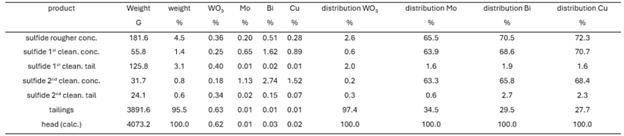
Table 13-5 – Bulk Sulphide Flotation Test – Industrial Grade Reagents – TTC (2025)
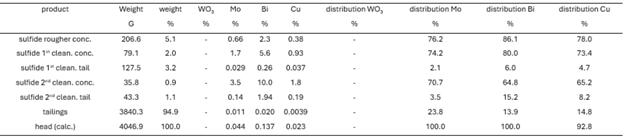
Multiple Stage Cleaning Tests
Presented here are five multiple stage cleaning tests done in different phases of the project development. In Table 13-6 below, a test is presented that was used as preparation for the LCT (see the next section). This achieved 78.6% WO3 in the final scheelite concentrate, confirming that the production of high-grade tungsten concentrates is possible. In Table 13-7 and Table 13-8 below are presented the results of two tests that were done in the context of establishing the compatibility between the flotation process and the lime-soda process for softening water. It can be concluded that both processes are compatible. In this way, groundwater and river water, collected near Sangdong, can be used in flotation after softening. In Table 13-9 and Table 13-10 below are given the results of two tests done in the context of selecting industrial grade reagents to replace the laboratory reagents (sodium carbonate, sodium silicate, etc.). It can be concluded that the chemical industry (outside China) can produce, in quality and quantity, the reagents needed to operate the Sangdong Mine processing plant.
| -A-38- |
Bearing in mind the main purpose of a multiple stage cleaning test, from the five tests that were presented, it can be concluded that a high-grade tungsten concentrate can be produced with the proposed flotation regime, being the stage recoveries of the cleaning process always very high. Multiple stage cleaning tests were also done to measure the tolerance of sulphide and scheelite flotation to the presence of backfill material in the feed. Tests have been conducted with backfill percentages ranging from a few percent to 10%. For the lower percentages of backfill, it was concluded that neither the sulphide flotation nor the scheelite flotation suffered an impact. Only near to the upper limit was noticed some impact on sulphide flotation, characterized by an increase in mass pull.
The flotation regime applied in the multiple stage cleaning tests, and, in general, applied in the LCT and pilot plant trials, is well-known in the mining industry. It is based on the use of sodium carbonate as pH regulator, sodium silicate as depressor, and TOFA as the main scheelite collector, conducting the flotation in lukewarm water. Grinding to 80% below 65 μm seems suitable for Sangdong ore, independently from its origin in the mine.
Table 13-6 – Multiple-Stage Cleaning Test – KIGAM (2019)
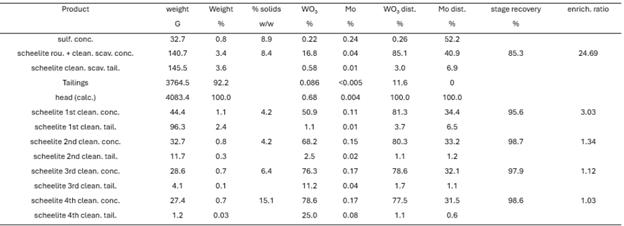
| -A-39- |
Table 13-7 – Multiple-Stage Cleaning Test – Tap Water Control Test – TTC (2021)
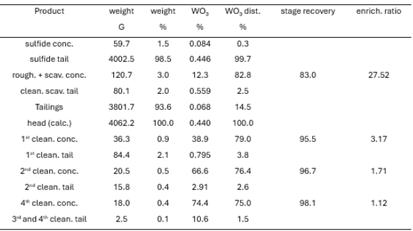
Table 13-8 – Multiple-Stage Cleaning Test – Softened Mine Water – TTC (2021)
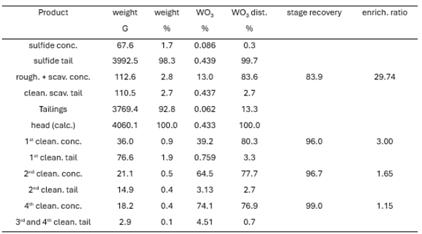
| -A-40- |
Table 13-9 – Multiple-Stage Control Test – Laboratory Reagents – TTC (2025)
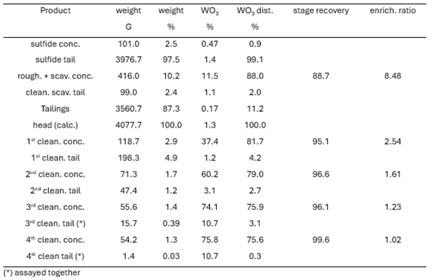
Table 13-10 – Multiple-Stage Cleaning Test – Industrial Grade Reagents – TTC (2025)
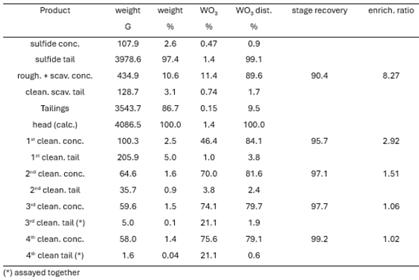
Locked Cycle Tests
This section presents two LCT, which were made at KIGAM, that allow making a first metallurgical projection, that is, to estimate the value of the recovery and concentrate grade, with all the internal fluxes recycling. For both tests are presented the weights and assays of each product that does not recycle (Table 13-11 and Table 13-15 below), the cycle-by-cycle balance for each complete cycle of the test (Table 13-12 and Table 13-16 below), and, finally, the metallurgical projection, based on the last two cycles of each test, following two different procedures (Table 13-13, Table 13-14, Table 13-17 and Table 13-18 below). Table 13-11 and Table 13-15 below show the assays of other elements: Mo, Cu and P.
| -A-41- |
As mentioned previously, two different procedures were used in the metallurgical projection. In the first procedure, the two concentrates and the two tailings are projected as the average weights and assays for these products in cycles E and F. The feed for the test is then calculated as the sum of the products. For test no. 1, the first procedure gives a recovery of 83.7% for a final concentrate grade of 73.2% WO3. For test no. 2, this first procedure gives a recovery of 85.4% for a final concentrate grade of 62.4% WO3.
In the second procedure, the final concentrates are projected in the same way. However, the total tailings are then calculated as the difference between the feed and the final concentrates. In this case, the average feed is computed based on all the products presented in Table 13-11 and Table 13-15 below. For test no. 1 of the second procedure, the recovery is 83.6% for a final concentrate grade of 73.2% WO3. For test no. 2 of the second procedure, the recovery is 85.0% for a final concentrate grade of 62.4% WO3. The similarity between the results of both procedures ensures the quality of the projections.
Table 13-11 – Results of LCT No. 1 – KIGAM (2019)
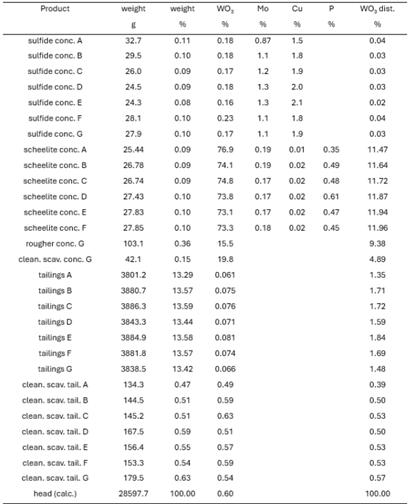
| -A-42- |
Table 13-12 – Cycle by Cycle Mass Balance for LCT No. 1 – KIGAM (2019)
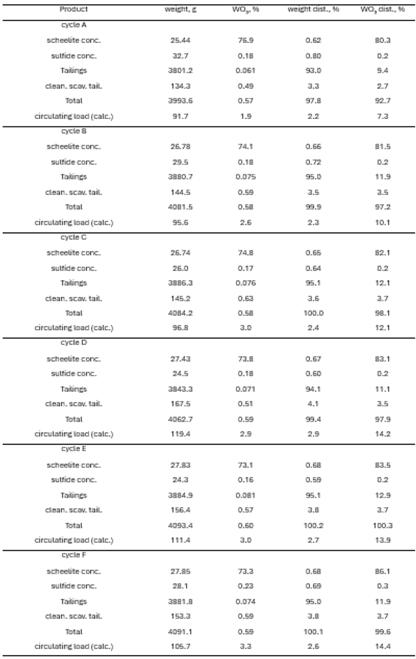
| -A-43- |
Table 13-13 – Metallurgical Projection – LCT 1/ Procedure 1 – KIGAM (2019)
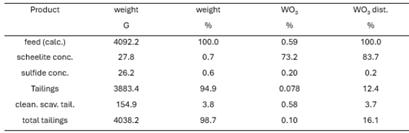
Table 13-14 – Metallurgical Projection – LCT 1/ Procedure 2 – KIGAM (2019)
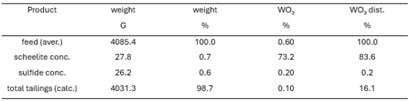
Table 13-15 – Results of Locked Cycle Test No. 2 – KIGAM (2019)
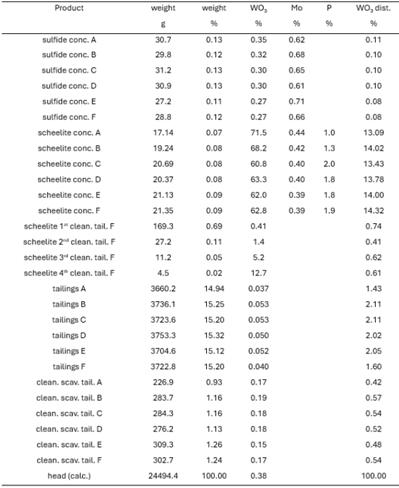
| -A-44- |
Table 13-16 – Cycle by Cycle Mass Balance for LCT No. 2 – KIGAM (2019)
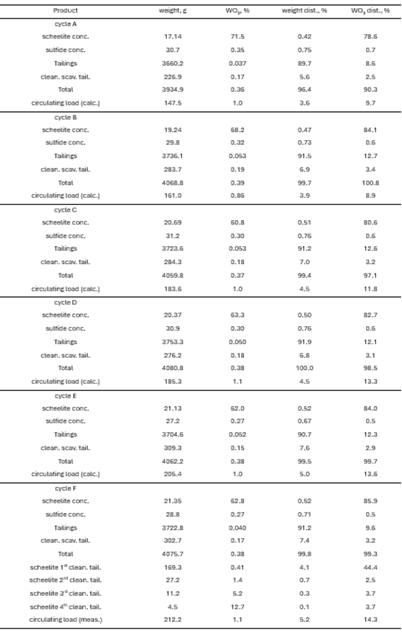
Table 13-17 – Metallurgical Projection for LCT No. 2 – Procedure 1
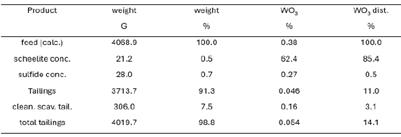
| -A-45- |
Table 13-18 – Metallurgical Projection for LCT No. 2 – Procedure 2
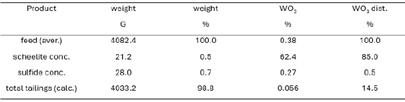
Pilot Plant Trials
In order to have a metallurgical projection in conditions more similar to those that will be found in practice in the future plant, and as a demand to get the process guaranties from Metso Outotec, several pilot plant trials were completed at the laboratories of LNEG in Porto, Portugal. For these particular campaigns, the ore was blasted in a development mine gallery in the F3 zone of the footwall of Sangdong Mine. Due to practical constraints, connected with the minimum volume for a pilot plant flotation cell, it was only possible to do four cleaning stages.
This section presents the results of the last pilot plant trials done in LNEG, in September 2023, based on which the process guaranties were granted. These last trials had a duration of four days, operating the pilot plant for a period of approximately 10 hours each day. Timed samples of the feed, sulphide concentrate, scheelite concentrate and tailings were collected on an hourly basis. During the last hour of operation, samples of all internal streams were carefully collected, so as not to disturb the circuit. All these samples were assayed in WO3 at the TTC (see the list of streams in Table 13-19 below). Based on these assays, and on the flowrates estimated from the timed samples, it was possible, by writing the equations of mass balance, to compute the complete mass balance in terms of total mass and mass of WO3. In Table 13-20 below are given the mass balances for each day of operation. It is clear that during these four days the results here are very similar, with a slight tendency to get better in terms of recovery and concentrate grade, as the days passed. For day 1, the complete mass balance gave a recovery of 81.8% for a concentrate grade of 62.40% WO3; for day 2, a recovery of 82.4% and a concentrate grade of 61.70% WO₃; for day 3, a recovery of 82.4% and a concentrate grade of 64.48% WO3; and, for day 4, a recovery of 82.5% and a concentrate grade of 67.46% WO3.
The pilot plant trial results indicate that the metallurgical projection is slightly worse than that from the locked cycle tests. However, the practical limitations imposed by LNEG’s pilot plant must be taken into consideration. Not only was the number of cleaning stages only four instead of five, which limited the final concentrate grade, but the aeration rate of the rougher and scavenger banks was deficient, which limited the recovery. The cells of these banks were old Denver no. 7 cells, of sub-A type, without the possibility of increasing the speed of the rotors. In this way, the metallurgical projection based on the locked cycle tests is considered more accurate and should be used in defining the economic model.
During 2025, as mentioned above, LNEG’s pilot plant is scheduled to explore the possibility of producing by-product concentrates of Mo and Bi/Au/Ag. It will also be given continuity to the effort of de-risking, by exploring other collectors recognized as suitable for scheelite flotation.
| -A-46- |
Table 13-19 – List of Streams for the Pilot Plant – LNEG (2023)
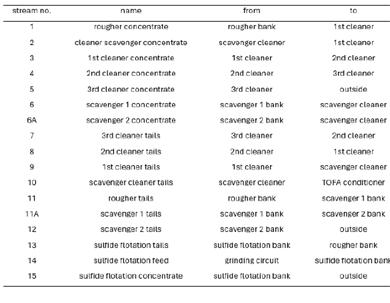
Table 13-20 – Mass Balance for Plant Trials – Days 1 - 4 – LNEF (2023)
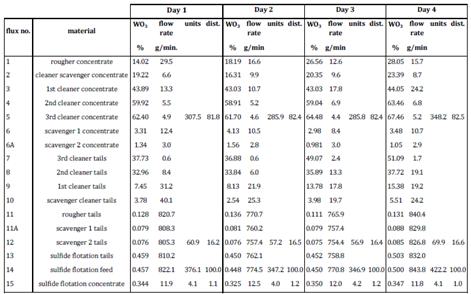
Conclusion
Considering the results of all tests, it can be concluded that mill recovery will likely range from 83.6% to 85.0% and the final concentrate grade, considering the average between test no. 1 and test no. 2, will be around 67–68% WO3.
For the current study, AKTC has decided to assume an overall global mill recovery of 85%, along with a concentrate grade of 65% WO3.
| -A-47- |
Mineral Resource and Mineral Reserve Estimates
The evaluation work with respect to the Mineral Resource and Mineral Reserve estimates was carried out and prepared in compliance with NI 43-101. The Mineral Resources and Mineral Reserves in this estimate were calculated using the CIM Definition Standards prepared by the CIM Standing Committee on Reserve Definitions and adopted by the CIM Council on May 19, 2014.
Mineral Resource Estimate
The effective date of the Mineral Resource estimate is February 28, 2025.
The quantity, grade and quality of each category of Mineral Resources is indicated in Table 1-1 below.
Table 1-1 – Sangdong Mine – Mineral Resources
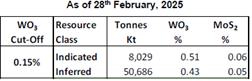
| ● | CIM Definitions followed for Mineral Resource estimate. |
| ● | Rounding may result in apparent summation differences between tonnes, grades and metal content; not considered material. |
| ● | Mineral Resources are not Mineral Reserves and do not have demonstrated economic viability. |
The key assumptions, parameters and methods used to estimate the Mineral Resources include:
| 1. | WO₃ and MoS₂ grades were estimated using ordinary kriging. |
| 2. | The block model is based on a parent block size of 10 m x 10 m x 10 m. |
| 3. | A minimum mining width of 2.2 m was applied. |
| 4. | The applied cut-off grade of 0.15% WO₃ is based on an ammonium paratungstate (APT) price of US$450/MTU, a processing recovery of 85%, and a total operating cost of approximately US$45.8 per tonne of ore. |
Other than discussed herein, the Qualified Person is not aware of any known environmental, permitting, legal, title, taxation, socio-economic, marketing, political, or other relevant factors that could materially affect the Mineral Resource estimates. There are no known mining, metallurgical, infrastructure, or other factors that materially affect the Mineral Resource estimate, at this time.
Mineral Reserve Estimate
The effective date of the Mineral Reserve estimate is February 28, 2025.
| -A-48- |
To start the mine operations, the blocked-out stopes have enabled a Mineral Reserve evaluation to be made. The quantity and grade of Mineral Reserves is indicated in Table 1-2 below.
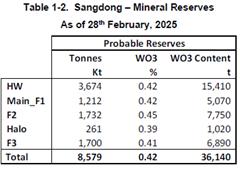
| ● | CIM Definitions were followed for Mineral Reserve estimate. |
| ● | Rounding may result in apparent summation differences between tonnes, grades and metal content, but the differences are not considered material. |
The key assumptions, parameters, and methods used to estimate the mineral reserves include:
| 1. | The reserve estimation is based on a full 3D design of development and stopes, using a minimum mining thickness of 3 m. |
| 2. | The cut-off grades used for mine planning and reserve evaluation purposes were as follows: |
| - | HW zone stopes | 0.16% WO3 | |
| - | FW/Main zone stopes | 0.17% WO3 | |
| - | Development | 0.18% WO3 |
| 3. | Cut-off grades are supported by an APT price of US$450/MTU WO3, a processing recovery of 85%, and operating costs reflecting different orebodies and mining methods. |
The updated mine planning calculations have identified Probable Mineral Reserves of 8.6 Mt, which, with an assumed mill capacity of 640 ktpa, will sustain a mining operation for approximately 14 years.
The Mineral Reserves were derived from the Mineral Resource block model described above. The Mineral Reserves are those Indicated Mineral Resources (there are no Measured Resources in the current estimate) that have been identified as being economically extractable and which incorporate mining losses and the addition of mining dilution. The Mineral Reserves form the basis for the mine plan described below.
Reference breakeven cut-off grades were derived, for reference during stope planning, as summarized in Table 15-1 below. The base case reserve price of US$450/MTU WO3 stems from the information presented below. Different cut-offs were derived for different stope heading sizes and different support requirements. The development cut-off relates to waste development, for headings which need to be mined regardless of whether or not they are economic as ore. The development mining cost is therefore not applied in the development cut-off calculation.
| -A-49- |
The applied reserve cut-offs are higher than the derived breakeven cut-off grades, due to additional mill feed grade requirements.
Table 15-1 – Mineral Reserve Cut-off Grades
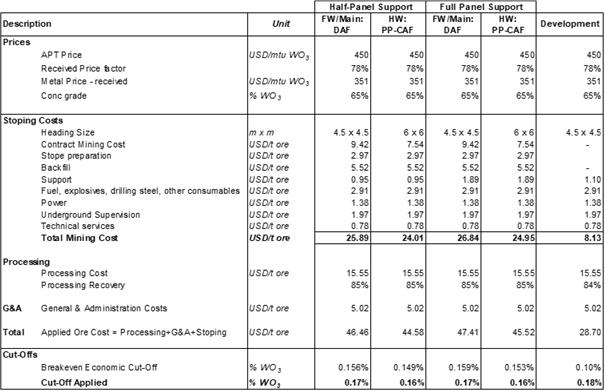
The Qualified Person is not aware of any known environmental, permitting, legal, title, taxation, socio-economic, marketing, political, or other relevant factors that could materially affect the Mineral Reserve estimate, other than discussed herein. There are no known mining, metallurgical, infrastructure, or other factors that materially affect the Mineral Reserve estimate at this time.
Mining Operations
The current mine plan for the Sangdong Mine is based on the use of two stoping methods, each selected based on the geometry and characteristics of the mineralized zones:
| 1. | Stepped Drift-and-Fill (DAF): Applied to thinner ore zones including the F2, Halo, F3, and Main beds. This method uses external stope ramps and stepwise vertical panel lifts of ~2 m to match the ~22° average dip of these beds. It supports high mining recoveries, multiple panel access, and adaptability to local variations in dip and ore geometry. Paste fill is used between stope lifts, with cement content ranging from 1% to 7% depending on stope status. | |
| 2. | Post-Pillar Cut-and-Fill (PP-CAF): Applied to thicker zones, predominantly in the Hangingwall horizon, where vertical thickness exceeds 5 m. Mining occurs in 6 m lifts, leaving 5 m x 5 m post-pillars in a regular grid to support subsequent operations. This method minimizes internal waste mining and suits the orebody geometry while allowing high productivity and efficient backfill placement. |
| -A-50- |
These mining methods were selected and designed following geotechnical assessments and are tailored to ensure high recovery and ground stability across varying bed dips and thicknesses.
Stepped Drill and Fill
Previous DAF designs made for the FW zones (January 2018) used internal stope ramps, which were developed on apparent dip within each bed. However, this design test work made clear various disadvantages:
| ● | High dilution with the internal stope ramp itself. | |
| ● | High losses with pillar wall next to stope ramp. | |
| ● | Very difficult drive intersections with stope ramp, in areas of lower dip. |
In the stepped drift-and-fill method, single drift-and-fill headings will be extended along strike, close to horizontal, with inclined shanty backs so as to reduce dilution at the hanging wall contact. DAF headings will be developed with width from 3 m to 6 m. DAF panel lifts will be stepped up in approximately 2 m vertical intervals, which corresponds with the average 22° degree dip of the F2, F3 and Main beds.
The method will use external stope ramps, located on the footwall side of the ore zones, approximately 20 m below the bottom bed. Due to the low orebody dip, this means at any particular elevation, the ramp will be approximately 70 m horizontally to the south of the F3 bed. At the bottom level elevation, a stope crosscut will be developed from the ramp, going northwards until it intersects the first ore horizon (generally the F3). For the F2/F3 area, the stope crosscut can be approximately horizontal, and will then normally be extended on to also intersect the F2 bed. This will often allow four production faces, which can be developed along the F2 and F3 beds at that elevation. The stope drives will need to be of a variable width, from 3m to 6m, so as to have the floor of the next (higher) stope drive located approximately 2 m higher.
In most cases, with the average 22° degree dip of the ore zones, one drive heading of 5 m width can be made at the design elevation, and the next lift will then be 2 m higher. However, there is likely to be local variations in dip. If the orebody dip falls below 18°, then two or more drive headings may be required at the same elevation, before stepping up to the next 2 m lift.
The stope drives will be developed along strike in both the NW and SE directions, to a designed extent, generally approximately a maximum of 100 m, the limit of forced duct ventilation. The total stoping length, with two faces on the same bed and same elevation, will generally be approximately 200 m.
| -A-51- |
The mined stope drives will then be backfilled with paste fill. This will first require removal of any infrastructure from the mined stope drives and then installation of backfilling piping. Backfilling barricades will then need to be built at the start of each stope drive. This filling operation will need to be tight-filled as much as possible. The planned cement content for different stoping situations is summarized below.
| ● | Old stopes – 1%. | |
| ● | Active stopes – 3.5%. | |
| ● | Any undercut stopes – 7%. |
The emplaced backfill will need a minimum of four-days’ curing time, before mining operations can continue.
The end of the stope access crosscut with then need to be elevated, by a limited slashing of the back leaving enough waste to make a new ramp floor over a small length, so as to provide a new stope access approximately 2 m higher than previously. The next stope drives can then be developed, with one sidewall being ore, and the other sidewall being the backfill from the mining of the previous lift.
For the F2/F3 stoping areas, this stoping cycle will be repeated for generally three lifts from the same stope access crosscut. For the next lift, a new stope access crosscut will be developed from the stope ramp, approximately 35 m along-strike from the previous crosscut. In areas of the south zone, when the Halo zone also occurs between the F2 and F3 zones, this can give up to six available faces on the same stope lift.
For the Main East zone, which has a much more limited strike extent, of approximately 215 m, different stope ramps have been designed to provide stope access crosscuts into the central area of the stoping zone. These stope access crosscuts have often been designed with a downward gradient, to a maximum of 13%. This will allow repetitive roof slashing of the stope ramps, so as to provide more stope access on progressive 2m lifts. Much better recoveries are attainable by using DAF in the Main East zone. The advantages of this DAF mining method include:
| ● | High mining recoveries (minimal loss in ore pillars). | |
| ● | High productivities, as multiple primary panels can be accessed simultaneously. | |
| ● | Flexibility, with changes possible in panels due to variations in orebody geometry or faulting. |
In some very few localized areas, the bed thickness can be more than 6 m, particularly in the Main East zone, and occasionally up to 8 m. In these parts the first lower part of these panels can be mined out with a 3 m height and then backfilled. Short stope ramps will then be created longitudinally, and upper panels will then be mined out with inclined roofs at top orebody contact.
Post-Pillar Cut-and-Fill
This method has been designed in those areas which generally have a vertical thickness greater than 5 m, which is the majority of the HW zone. Broadly, these zones will be mined from the bottom-up in 6 m vertical lifts. Each lift will be mined out according to a regular mine-wide grid of 6 m wide stoping panels, leaving non-recoverable 5 m x 5 m post-pillars. The panels on the bottom-most lift of each stope block will require a higher cement backfill, so as to provide a stable roof when stopes in the future are mined up from below.
| -A-52- |
Although the HW zone is well-mineralized, there are erratic patches on internal waste. Based on this criteria, and previous studies involving the application of a DAF method, it was decided to apply a PP-CAF method, with relatively large (6 m x 6 m) stope headings, around a regular pattern of 5 m x 5 m non-recoverable post-pillars. This PP-CAF method offers the following advantages:
| ● | Minimal mining of internal waste. | |
| ● | High productivity with a basic large 6 m x 6 m round size, and many faces available at any time. | |
| ● | The method is well-suited to the overall dimensions of orebody. | |
| ● | Improved mining recovery near orebody contacts, with shanty-backs and mining floor adjustments. | |
| ● | Good overall support provided by post-pillars. | |
| ● | Backfill placement operations can be done on a much larger scale and with many fewer fill fences. |
The 6 m wide rooms and 5 m post-pillar have been recommended by Turner Mining and Geotechnical Pty Ltd.
Access to each stope will be via inclined ramps generally going down from the level galleries in the hanging wall. These ramps will allow access to the lower-most 6 m lift of each stope block. The initial stope panels will then generally be developed from the hanging wall contact to the footwall contact. A number of panel faces may then be started and mined simultaneously, providing many faces for drilling and blasting. Backfill placement operations will be done as logical mined sections can be easily partitioned off.
Once all the PP-CAF panels have been mined and backfilled for an entire lift, the stope ramp access can then be back-slashed, so as to provide access to the next 6 m lift above. This sequence can then be repeated lift-by-lift. Generally, three to four 6 m lifts can be accessed from the same original level crosscut access.
Processing and Recovery Operations
The current process flowsheet and plant design are based on comprehensive basic engineering conducted by Metso Outotec in February 2022. These designs reflect current production goals and operational efficiencies. Extensive testing, simulations and industry best practices have informed these updated configurations.
Process Design
The optimized flowsheet for effectively recovering scheelite from Sangdong ore relies on a structured flotation processes. The goal of this process is to produce a high-quality final concentrate containing approximately 65% WO3. Pilot plant testing supports an overall average tungsten recovery rate of approximately 85%. The processing facility has been designed to operate at a nominal feed rate of 80 tph, with provisions allowing a design capacity extension up to 100 tph.
| -A-53- |
The processing plant was designed by Metso, along with AKTC technical personnel and external consultants. Process design criteria stemmed from Metso engineering data.
Overall Process Summary
The main process steps for treating the Sangdong ore are primary, secondary and tertiary crushing and stockpiling; grinding; flotation divided into two (2) sub-circuits (sulphide flotation and tungsten flotation); thickening; filtration and packaging section; a waste water treatment facility; and services section. Further details of these sections include:
| ● | Primary crushing and ore stockpiling, ensuring a steady feed to subsequent processes. | |
| ● | Core (pebble) crushing for semi-autogenous (“SAG”) oversize, for +25 mm material. | |
| ● | Two-stage grinding utilizing SAG and Ball milling (SABC), ensuring precise particle size control. | |
| ● | A comprehensive flotation section, divided into sulphide flotation for gangue mineral removal and scheelite flotation for tungsten recovery. | |
| ● | Dedicated scheelite concentrate thickening and filtration facilities. | |
| ● | Robust tailings thickening management. | |
| ● | Advanced wastewater treatment facilities. | |
| ● | Comprehensive reagent preparation, handling, and distribution systems. | |
| ● | Fully integrated general plant services to support overall plant operations. |
Crushing and Stockpiling
ROM ore, initially delivered by 15-tonne trucks. Ore will be either directly fed into the primary crushing system or placed onto a blending stockpile, aimed at a consistent feed quality. There is a second ROM stockpile area of 7,000 tonnes capacity about 250 m north of the crushing area, as well as a reinforced stockpile area, also having a capacity of 7,000 tonnes, which is next to the crusher feed and immediately next to the Monty B mine portal. A plan of the different stockpile areas is shown in Figure 17-1 below.
| -A-54- |
Figure 17-1 – Plan of Surface Stockpile Areas
(Date: April 2025; Source: AKTC)
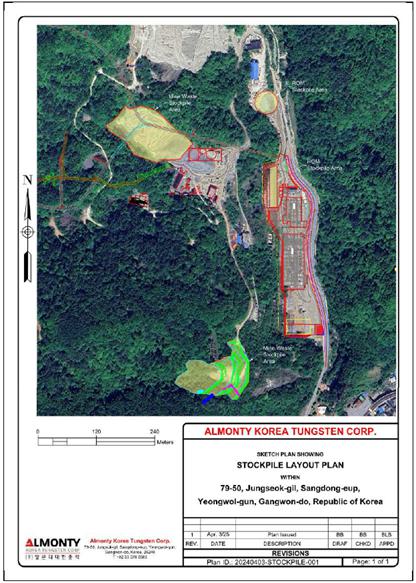
Ore from the mine will be dumped into a feed hopper. The ore will be extracted from the feed hopper by an apron feeder down to an inclined 600 mm square opening grizzly. A rock breaker will be used to bring the grizzly oversize down to 600 mm. The blended ore, nominally sized at -400 mm, will undergo primary crushing through a jaw crusher.
Scalping through precision vibrating screens will control the crushed size distribution. Crushed ore will be monitored and conveyed underneath magnets and metal detectors, to remove metallic fragments. The crushing plant is designed to process ore at rates of up to 270 dmt/h, producing a product with a nominal P80 of 100 mm. Dust suppression and collection systems will be installed to minimize environmental impact and maintain occupational health standards. Ultimately, crushed ore will be transported via conveyor systems to a covered coarse ore stockpile, with a capacity of 10,000 dmt, for sustained feed to downstream operations.
| -A-55- |
Grinding
Ore from the coarse stockpile will be reclaimed using variable-speed reclaim feeders and fed into the grinding circuit. There is a two-stage grinding configuration, consisting of SAG mills and ball mills. SAG mill oversize material will be crushed in a cone (pebble) crusher and recirculated. Precision controls will include belt scales and automated water addition. The particle size target will be a P80 of 65 microns to meet the scheelite flotation criteria. Classification systems utilizing cyclones and ultrafine screens are aimed at preventing overgrinding.
Flotation
The sulphide flotation circuit consists of a rougher flotation stage followed by two cleaner flotation stages, designed for removal of sulphide. Initially, ground pulp will be conditioned in a dedicated tank for about seven minutes, where Aero 3473 collector and MIBC frother will be introduced to enhance sulphide mineral attachment to bubbles. Subsequently, the pulp will be pumped to a bank of three 30 m³ flotation cells, configured sequentially to improve sulphide recovery. Rougher concentrate from these cells will then be pumped to the first cleaner flotation cells (four OK1.5 cells), where additional purification occurs. The concentrate from the first cleaner will then progress to the second cleaner flotation stage, utilizing four smaller OK0.5 flotation cells. Cleaner concentrate, after this two-stage cleaning process, will be directed to the final tailings pump box. Inline samplers will allow continuous sampling for analytical quality control.
The scheelite rougher flotation circuit will receive conditioned pulp following the sulphide flotation stage. The circuit consists of two sequential conditioning tanks, each designed to provide mixing and contact time of approximately 11 minutes. The first conditioning tank adjusts pulp pH and introduces critical flotation reagents such as sodium carbonate and sodium silicate, while the second tank dilutes pulp density to around 35% solids. Following conditioning, pulp will be transferred to a scheelite rougher flotation bank consisting of four 30 m³ flotation cells. Reagents, specifically TOFA as a primary collector, will be added to promote efficient scheelite mineral attachment. Rougher concentrate will proceed to the cleaner flotation circuit, while rougher tailings will be directed to scavenger flotation cells for further recovery.
Tailings from the scheelite rougher flotation circuit will be pumped to the scavenger circuit, consisting of two separate banks of four 30 m³ flotation cells each. Before entering the scavenger flotation cells, the pulp will undergo additional conditioning where reagents, primarily TOFA, will be reintroduced to improve flotation effectiveness. The scavenger flotation stage is designed to capture scheelite particles that were not recovered in the initial rougher stage, to enhance overall tungsten recovery. Scavenger tailings, after passing through an inline sampler for continuous monitoring, will be considered final tailings and pumped to the tailings thickener for dewatering and disposal. The scavenger circuit is very important in minimizing tungsten losses.
| -A-56- |
The scheelite cleaning circuit provides a multi-stage flotation process for the final upgrading of scheelite concentrates derived from rougher and scavenger flotation stages. This circuit comprises four sequential cleaning stages. Cleaner stage 1 consists of three 5 m³ flotation cells, while cleaner stage 2 utilizes two OK1.5 flotation cells. The final two cleaning stages (cleaner stages 3 and 4) will each utilize two OK0.5 flotation cells arranged sequentially. Throughout the cleaner stages, sodium silicate will be continually dosed as a depressant to prevent unwanted mineral flotation, to produce high purity scheelite concentrate. Temperature-controlled conditions (approximately 30–32.5°C) will be maintained using a heated water system to assist flotation performance. Concentration from the final cleaner stage, after upgrading, is directed towards concentrate thickening and filtration processes, in order to achieve the required market specifications of approximately 65% WO3.
Final Tails Management
The final tailings from the concentrator plant, along with effluent from the paste plant, will be collected into a feedbox, for a 20 m diameter High-Rate Thickener (HRT). The thickener feedwell will be equipped with auto-dilution capabilities to adjust feed slurry density from around 20% solids to an optimum 12%. Overflow from the thickener will be directed to an overflow tank and subsequently pumped to the water treatment plant. The thickener underflow, with approximately 50% solids, will be transferred to a buffer tank. A diaphragm pumping system, with an additional standby set, will move tailings to the paste plant. Coagulants and flocculants will be added into the thickener to enhance settling and clarity of the overflow. Spillage around the thickener area will be collected and pumped back to the thickener feedbox.
Fresh Water Quality
Fresh water will be provided to critical points within the flotation and reagent preparation areas of the plant. Heated fresh water from the water heating system will be provided for reagent mixing, related to flotation and thickener reagents. Unheated fresh water will be provided to the flotation section for analyzer and multiplexer operation, for process monitoring. Service water will also provided for hose-down and cleaning purposes within the flotation and dewatering sections. All water inputs, including fresh water, heated fresh water, and service water, will be centrally controlled and monitored via the plant Distributed Control System (DCS). The heated fresh water supply will support critical processes, maintaining optimal temperatures for flotation and reagent effectiveness.
Waste Water Treatment
Wastewater from the plant will primarily consist of flotation chemical residues and tailings thickener overflow. This water will be directed to dedicated water treatment facilities designed within Almonty’s operational scope. Mechanical aeration processes in constructed lagoons will provide aeration to effectively reduce organic contaminants. The thickener overflow, containing residual reagents and suspended solids, will gravitate to an overflow tank and be subsequently pumped for further treatment.
Water quality will be managed to comply with the environmental discharge standards. Although mechanical aeration will significantly reduce organic compounds, sodium ions introduced by flotation chemicals will remain relatively unchanged. Regular monitoring will be used to ensure the treated water quality meets environmental regulatory requirements before discharge.
| -A-57- |
Infrastructure, Permitting and Compliance Activities
Infrastructure and Logistics
KTMC operated the Sangdong Mine from 1949 to 1994. Existing infrastructure from KTMC, as well as other public infrastructure which can still be used, includes the access road to the site; site roads; powerline and stepdown sub-station; potable water supply; and communications and Internet service. It also includes some old KTMC buildings that will be reused and the KTMC slope support at the zone of the plant and water treatment plant.
In the mine, there is an extensive infrastructure that can be reused, which includes:
| ● | West Ventilation Shaft. This connects the surface to all mine levels until the -10 level and then through raises down to the -16 level. This shaft has two top openings (one inclined and another vertical) and all of them are ventilating. This shaft was inspected from surface to the -1 level and is in perfect condition. | |
| ● | Old Vertical Extraction Shaft. This concrete lined shaft, of 4 m diameter, is currently being used for ventilation in between the Baegun and -1 levels. It gives access to the water stored in the mine down to the -16 level. This shaft is in very good condition and could be considered for hoisting use in the latter phases of the mine exploitation. | |
| ● | Gallery Network. An extensive network of old base galleries can be used for multiple purposes, which include escape routes, ventilation and drainage. | |
| ● | Mined Stopes. Extensive mined stopes can be used for backfill storage. | |
| ● | Drainage system, on the -1 level. | |
| ● | Ramp System. This connects Sangdong level with the -16 level. Dependent of its conditions below the -1 level, and following mine dewatering, this could allow access to the lower levels for exploration drilling access. |
To return the Sangdong Mine to operation, the existing Sangdong infrastructure will be reconfigured and supplemented by new facilities as required. To accommodate the new waste storage facility, the former buildings at the Sangdong portal level were demolished to allow for placement of waste from mine development. New site infrastructure is being built in the valley, on the footprint of old KTMC installations (see Figure 18-1 below). This infrastructure will include a new assay laboratory, warehouse, maintenance shop, recreational facilities for employees, fuel storage and water reticulation system. The mine backfill plant will be placed at Taebaek Terrace, along with a geotechnical laboratory.
A new mine/administration office complex has now already been set up in the centre of the Sangdong village. This is an old post office which has been totally refurbished by AKTC.
| -A-58- |
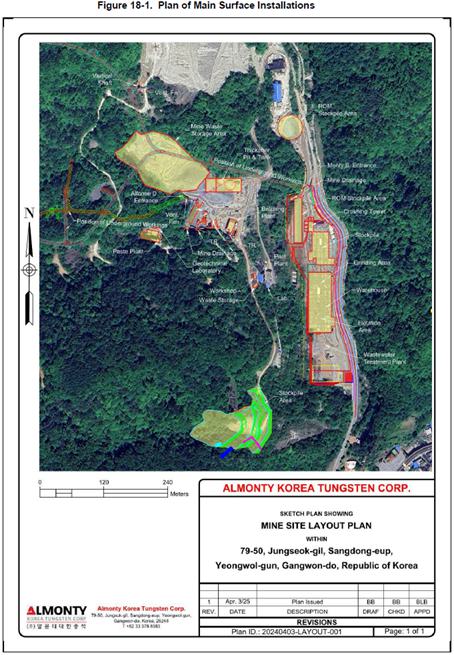
An on-site explosives magazine is not required, and removes the need for additional guards and security. All mines in South Korea use a daily supply from explosives companies, and this has proven to be reliable. This system has worked very well during the last three years of underground development work at the Sangdong Mine.
The project will be powered by one 22.9 KV overhead line, which was installed in 2020, and which supplies two main substations. One will be installed in the immediate vicinity of the plant and the other at the Sangdong terrace. The substations will mainly be composed of step-down transformers of 10 MVA (22.9/6.6 kV). One substation will supply power to the mine and non-processing plant facilities while the second will be dedicated to providing power to the processing plant.
| -A-59- |
The Sangdong Mine will require approximately 40,000 m3 per year of potable water, which will be supplied from the local town water supply. The site is already connected to the Sangdong town water supply.
Environmental Baseline Studies
In 2011, Woulfe initiated environmental baseline studies for the project including water sources and quality, climate, flora and fauna, air quality, noise, heritage, land use and water quality.
As well as providing information for the Feasibility Study, the studies provided the comprehensive environmental information required in preparing the Environmental Impact Assessment (EIA) Report.
The proposed operations (i.e. preferred alternatives) were selected based on technical and economic viability, as well as minimization of potential environmental and social impacts.
Surface Water
Several permanent streams run thought the site. These streams drain to Okdong Creek, which flows through the town of Sangdong. The water is generally of good quality, based on the analytical results for “Living Environment” items (pH, biochemical oxygen demand, suspended solids and dissolved oxygen). Water quality is classified as first grade at all sampling points except at one site where results for pH and suspended solids exceed the standards.
However, analytical results for total coliforms (an indicator of potential human and animal waste present in water) were high 10–22,000 total coliforms/100 ml. In accordance with these results, water quality is classified as fourth grade for the “Living Environment” standards. It is assumed that slash-and-burn-fields around the stream contribute substantially to total coliforms concentrations.
Strategies to prevent degradation of the surface waters of the project site include:
| ● | sediment settling dams to reduce the volume of sediment, derived from mined and disturbed land, from entering the natural river systems of the area; | |
| ● | storm water will be diverted around mining operations as much as practicable, and where contact occurs with disturbed areas, water will be collected, monitored and treated as appropriate; | |
| ● | all spills of chemicals or fuels will be cleaned up immediately and contaminated areas remediated in accordance with the relevant guidelines and standards; and | |
| ● | any potentially acid-forming material will be blended or encapsulated in the waste rock storage facility to prevent possible contamination. |
Groundwater
Groundwater is expressed as springs where there is contact between the limestone and either skarn or shale. For example, there are three springs, near the old mine buildings where there is a limestone outcrop with a strike of approximately 300° and a dip of 80° north. Elsewhere to the west of the site, springs occur where there is contact between limestone and shale. Flows from the springs are in the order of 2 to 20l/s.
| -A-60- |
Ground water varied in quality. Total coliforms were above the established quality criteria. Nitrates were also found in concentrations above the South Korean drinking water standards. Exhaustive testing for arsenic in water during 2014 was performed and concentrations were found to be well within those for South Korean drinking water standards. Elevated nitrate concentrations are likely to be a result of the application of nitrogenous fertilisers both for forestry and agriculture, while the heavily mineralized region around Sangdong will lead to elevated concentrations of arsenic in ground waters.
Potential groundwater quality impacts from Sangdong Mine activities may include contamination of groundwater by process water spillage and chemical spills on site. Based upon a review of the water quality of the existing tailings dams, leachate from tails is expected to be of good quality. It should be noted that Sangdong does not own or have any liability for the old tailings dams.
Mitigation strategies to minimize impacts on groundwater include:
| ● | monitoring of groundwater levels and quality at springs/established bores around infrastructure areas and the waste rock storage facility to determine background water quality and any change in quality that may be due to the project operations; | |
| ● | clean-up of any process water or chemical spills immediately; and | |
| ● | all areas will be bunded to prevent any spills within the processing plant. |
Flora and Fauna
Two flora and fauna surveys were completed in the spring and summer of 2007. 183 species of fauna were identified. No endangered or endemic species were found. There are no areas requiring special protection or significant natural environmental resources or wildlife habitats in the area surrounding the Sangdong Mine site.
The land affected by the Sangdong Mine is not likely to become part of a protected area estate or subject to any treaty. In making this statement, consideration has been given to national parks, conservation parks, fish habitat areas, wilderness areas, aquatic reserves, national estates, world heritage listings and sites covered by international treaties or agreements, and scientific reserves.
Air Quality
The area surrounding the proposed mine is predominantly forestry and agricultural land. The main sources of ambient dust in the region are likely to be due to grass seeds, pollens and wind erosion of exposed soil surfaces particular during tree harvesting.
Modelling of dust from the site originating from the waste rock storage facility, processing, and truck movements showed that dust increases were minimal in the community and will meet Korean air quality standards.
| -A-61- |
Air quality issues associated with the Sangdong Mine include:
| ● | dust emissions associated with clearing vegetation, extracting and transporting small quantities of waste rock and ore, blasting and stockpiles; | |
| ● | dust emissions associated with the transport of ore via conveyor and stockpiling; | |
| ● | dust emissions associated with the crushing and milling processes at the ore processing plant; and | |
| ● | windblown dust from erosion of disturbed and cleared areas on the project site. |
Mitigation strategies to minimize impacts of air emissions include:
| ● | truck watering operations; | |
| ● | minimization of vegetation disturbance; and | |
| ● | covers over conveyors and dust control as required. |
Noise
Several households at Sangdong are considered to be sensitive receptors that may be impacted upon by mine operations. Households located adjacent to the road network had noise readings 12 to 15 dBa higher than rural areas during the day and 6 dBa higher at night.
Noise modelling of truck movements and the milling and processing activities showed a small increase in noise at the nearest community receptors, while still meeting Korean noise standards. The mountainous terrain surrounding the mine acts as a significant barrier to noise propagation, assisting in noise reduction from the site.
The following mitigation strategies will be adopted by the Sangdong Mine to minimize noise from operations:
| ● | purchase mining equipment which favours noise reduction in the design; | |
| ● | mine vehicles to be maintained in good condition to prevent unnecessary noise; and | |
| ● | maintain diesel generators, lights, and other equipment in proper working order to prevent unnecessary noise being emitted. |
The following mitigation strategies will be adopted to minimize impacts from blasting on the project: (i) blasting will be underground; and (ii) a blasting strategy will be maintained to meet vibration regulatory requirements.
Waste Material
The major sources of waste generation from the Sangdong Mine are waste rock, tailings, process/storm water and solid and liquid wastes (e.g., waste oil, tyres, batteries and plastics).
A waste management plan was developed prior to the commencement of mining. The waste management strategy of the Project follows a four-tiered waste management strategy according to practicalities and available markets, in preferential order: (i) waste minimization; (ii) waste reuse and/or recycling; (iii) waste treatments; and (iv) waste disposal.
| -A-62- |
Waste Rock
Waste rock material will be stacked in two waste rock stockpiles at the site. Over a 12-year period, 950,000 t of waste rock will be produced, the majority of which will be accumulated in the early phase of mining. There may be the opportunity to backfill waste in the historic underground workings and it is expected that a relevant portion may be used as a building material. The remaining waste rock will be stored on site in two waste rock storage facilities: one next to the Sangdong Portal and at the other in a small valley, approximately 300 m to the south.
Some waste material from internal dilution control with UV lamp can be stored inside the mine in neighbouring active stopes and mixed with backfill. The pre-production amount of waste will be approximately 100,000 t, that will be stored in the secondary valley. This zone has a reduced thickness of topsoil and will require the transportation of topsoil from other zones in the final restoration of this area.
68 waste rock samples were collected to determine the potential for acid rock drainage. The samples were sourced from core samples across the ore body and are representative of all profiles of all geological units encountered in the deposit.
Acid-base and net acid generation testing indicated that 61 samples were classified as non-acid forming and 7 of the samples were potentially acid-forming.
The results of the waste rock assessment indicate the proportion of material which will be potentially acid-forming is relatively small at approximately 10% of the total waste volume.
Historically, there has been no acid rock drainage from the existing well-vegetated waste rock storage facility on site, or from the existing tailings dams. This trend is expected to continue. However, during operations continuing assessment of all waste rock will be conducted to confirm if any potentially acid-forming material is present and, if required, this material will be encapsulated to reduce the likelihood of acid rock drainage.
Project Permitting Requirements and Status of Permit Applications
A number of permits have been granted. These include approvals for:
| ● | Exclusive use of a mountain area. The period of the mountain area temporary use permit and the lease period of the Yeongwol County land have been continuously extended and currently expire at the end of December 2028. | |
| ● | Temporary use of a mountain area. The term of AKTC’s mining plan is related to the temporary use period of a mountain area. AKTC has continuously extended the term of the permit for the temporary use of a mountain area, which currently expires December 31, 2028. AKTC intends to keep extending the term of the permit for the temporary use of a mountain area as required. | |
| ● | Approval for construction of an installation for a mining facility, to build the Sangdong adit, on July 9, 2011, by the Eastern Mining Safety Office. | |
| ● | Approval for construction of an installation for a mining facility, to build the Woulfe adit, on November 13, 2012, by the Eastern Mining Safety Office. |
| -A-63- |
| ● | Approval for construction of and installation for a mining facility, to build Taebaek and Baegun adits, on September 29, 2014, by the Eastern Mining Safety Office. | |
| ● | Approval for construction of and installation for a mining facility, to build Monty B adit, on July 20 2018, by the Eastern Mining Safety Office and received approval for the change on September 25, 2020. | |
| ● | Approval for construction of and installation for a mining facility, to install the crushing facilities, on August 7, 2024, by the Eastern Mining Safety Office. | |
| ● | Approval for construction of and installation for a mining facility, to install the flotation facilities, on August 8, 2024, by the Eastern Mining Safety Office. |
The permits/approvals related to construction are summarized in Table 20-3 below.
Table 20-3 – Summary of Construction Permits
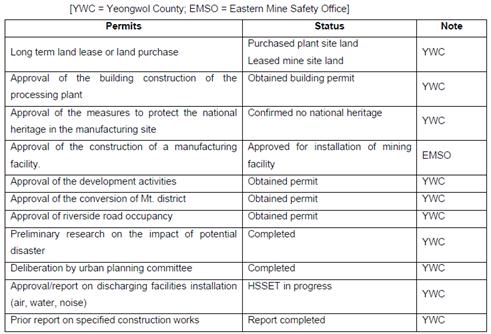
Cultural Resources
A cultural property survey was conducted during July 2007 by ERM. According to previous investigations undertaken for a cultural property survey, no state designated cultural properties exist in Sangdong-eup area.
Five historical sites were reviewed according to the Cultural Asset Map Book. Of these sites, two were natural caves, one is a historical temple ruin, one is a significant fossil discovery and one is a Monument of Loyalty and Filial Piety.
Social Environment
The town of Sangdong is located 2 km from the mine site. The population of the town is approximately 500 people. Sangdong was once a regional centre for the district’s agricultural and mining industries, when the Sangdong Mine was operable, with mining supporting 40,000 inhabitants (thereby acquiring the title Sangdong-eup).
Sangdong has elementary and high schools, supermarkets, shops, a service station, a post office, a police station, a fire station, a bank agency, a snow clearing centre, a community centre, churches, restaurants, and road and transport links. AKTC intends to house 95 full-time employees in the town and the surrounding region. Certain other staff will live in a camp on site.
A community consultation programme was undertaken and included discussions with landholders, government departments, and other stakeholders. There is overwhelming favourable support for the Sangdong Mine from the community.
Economic Environment
The economic flow-on benefits to Sangdong and the towns and cities of the county include increases in the following service industries:
| ● | fuel supply and transport; | |
| ● | supply and transport services for mining supplies, reagents and machinery; | |
| ● | light vehicle servicing; | |
| ● | bus and air services; | |
| ● | training and personnel management services; | |
| ● | plant maintenance and fabrication services; and | |
| ● | hospitality, accommodation, and domestic supplies. |
The Sangdong Mine is expected to directly employ up to a maximum of 300 people during the construction phase, reducing to approximately 200 people during operations.
The number of current AKTC employees is shown in Table 20-2. Of these, eight are working in Seoul and 43 in the Sangdong area.
Table 20-2 – Number of Current AKTC Employees
| Office | Mine & Plant | Total | ||
| 27 | 55 | 82 |
Employee count as of December 31, 2025
The flow-on benefits in terms of employment vary between three to four people for each permanent employee, so the direct employment benefits are in the order of another 600–800 people.
During the initial phase, the Sangdong Mine concentrate product will be transported by road to one of the neighbouring harbours for export to the U.S. and potentially a few years later, to the tungsten oxide plant located 22 km from the mine.
| -A-64- |
The local county and Sangdong regions have predominantly elderly populations, which in general are declining. The re-opening of the Sangdong Mine will provide a number of employment opportunities for both unskilled and skilled trades, with resulting economic benefits locally, regionally and nationally.
Sangdong Community Relations
The relationship between AKTC and the Sangdong community is strong. AKTC has been an active member of the Sangdong community since 2009. Because of these strong local connections, public consultation has been undertaken both informally and formally, particularly with the local Sangdong township and Yeongwol County. Because many members of the workforce are locally based, there is a high degree of awareness and anticipation of the project coming to fruition.
The site manager has strong contacts within the Sangdong community and site visits are encouraged for local community members. There has been widespread support for the Sangdong Mine to date. There has been good local consultation with government staff related to day-to-day issues with the exploration programme at the Sangdong Mine. The relationship with the surrounding land holders is good.
Discussions between AKTC and the town of Sangdong are extremely positive, particularly in view of the fact, that the operation will be community-based and the Sangdong Mine can help support and improve local services. This strategy by AKTC supports the town of Sangdong and Yeongwol County in establishing long-term regional development plans, with a focus on reversing population decline, increasing employment opportunities, revitalizing the local economy and providing appropriate support services.
In order to promote co-prosperity with the local community and implement sustainable ESG management, AKTC is holding regular public information sessions in Sangdong throughout the Sangdong Mine development planning process. These sessions are intended to enhance the local residents’ understanding of the project and serve as a channel for continuous communication. To foster long-term relationships, AKTC has signed a memorandum of understanding with high schools in the Yeongwol area to provide employment opportunities for graduates. In addition, AKTC has been actively engaged in various community activities, including providing annual financial support for the Sangdong High School baseball team, which was established to prevent the school’s closure. Through these efforts, AKTC continues to build a united and harmonious relationship with the Sangdong community.
Capital and Operating Costs
Direct Costs
Direct costs have been allocated as all costs associated with permanent facilities. These include mine development openings, equipment and material costs, as well as construction and installation costs.
Mine infrastructure costs are those associated with maintenance shops, mine dewatering, refuge stations, etc. Wherever possible, equipment and materials’ quotes and contractor installation costs have been used.
| -A-65- |
Other major equipment expenditure estimates are based on quotes obtained from suppliers and installation costs estimated as part of this study.
During the pre-production and sustaining development periods, all materials and equipment pricing have been based on quotes obtained from local South Korean suppliers or European and international suppliers, where South Korean suppliers do not exist. Processing plant equipment pricing is based on the equipment list, specifications and process flow diagrams. Budgetary prices were obtained from vendors of major equipment and in-house data was used from similar projects for items not quoted. Estimated costs for plate work were based on local data, associated with remaining equipment: tanks, bins and chutes. Costs for installation of equipment are based on unit man-hour requirements.
All major equipment expenditures include freight only. Applicable taxes and duties have not been included in the capital expenditure estimates.
Other direct costs are based on actual local costs for earthwork/site work, concrete, structural steel, buildings and architectural, electrical, instrumental and controls, and piping.
Commodity pricing for earthwork, concrete, steel, architectural and piping were provided by local contractors based in South Korea. Labour rates and equipment usage rates used throughout the estimate were provided by the same source as the commodity prices. It was assumed that rock required for site preparation and the tailings will be provided at no cost during the preproduction stage. Only costs for placement have been allowed for in estimates.
Labour rates generally reflect industry-wide South Korean and international levels for the types of work performed, and in some cases adjusted for locally applied rates. The mine labour costs are based on three types of estimates:
| ● | Quoted contractor prices for undertaking the tasks associated with constructing a specific installation; | |
| ● | Average industry rates a contractor would be expected to charge for performing specific tasks; | |
| ● | Lateral and raise development rates, developed and based on expected productivity and labour, materials and equipment costs for such an underground development program. |
All labour costs include local South Korean government mandated contributions and the costs for the company-provided benefits.
Indirect Costs
The indirect costs cover all the costs associated with temporary construction facilities and services, construction support, freight, vendor representatives, spare parts, initial fills and inventory, owner’s costs, engineering, procurement and construction management (“EPCM”), commissioning and start-up assistance.
The costs for construction facilities include all temporary facilities, services and operation, site office operations, security buildings and services, construction warehousing and material management, construction power and utilities, site transportation, medical facilities and services, garbage collection and disposal, and surveying.
| -A-66- |
The costs for spare parts have been factored in, based on equipment costs where vendors did not provide cost for spares needed for the first year of operations.
The estimated cost for initial fills of reagents is based on three months of operating requirements. Budget quotations were obtained for reagent pricing.
The freight costs were either provided by vendors or estimated based on weights and typically include for containerized and break-bulk shipping, and each are respectively divided into ocean freight and inland freight. For imported equipment, the cost of freight and export packing, ex-works to a local port, is included with the cost of the equipment. Freight insurance is included in the owner’s cost.
The requirement for vendor representatives to supervise the installation of equipment or to conduct a checkout of the equipment prior to start-up of the equipment as deemed necessary for equipment guarantees or warranties has been included in the estimate. Typically, the cost for this item is inclusive of salary and travel.
Taxes and duties have been excluded.
EPCM costs have been calculated based on AKTC project managing development and construction, using consultants for processing plant and some aspects of mining and infrastructure design.
Capital Costs
Capital expenditures estimates exclude: sunk costs; taxes and duties; deferred capital; financing and interest during construction; additional exploration drilling; escalation; corporate withholding taxes; legal costs; metallurgical testing costs; and condemnation testing.
The cost estimates are to Feasibility Study level accuracy. All expenditure estimates are in 2025 constant USD. Costs derived from KRW figures have been converted at a rate of US$1 = KRW1,467.
All pre-production capital expenditures, up to the end of August 2025, are summarized in Table 21-1 below. Beyond August 2025, the major capital costs incurred are waste development costs, which have been determined from current contractor rates.
| -A-67- |
Table 21-1 – Summary of Pre-Production Capital Expenditure
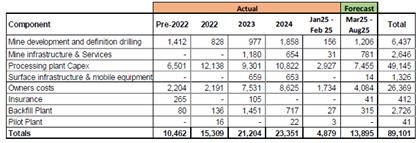
Note: All figures expressed in ‘000 USD
In the current cashflow calculations, a 5% contingency has been added onto all capital expenditure after March 2025.
Mining
All mining development work has been and is being executed by local contractors, with some materials supplied by AKTC. Mine capital expenditures are primarily related to underground infrastructure, stope development and mine services. As existing development can be extensively utilized, the underground development costs are relatively low. The development costs are also lower due to the large number of mining contractors in South Korea and the competition between them. Sangdong Mine capital expenditures do not include closure expenses, as it is not expected for the project to be restricted to the actual reserves. They also do not include the value(s) of existing assets.
Processing Plant
The processing plant capital expenditures are based on actual costs incurred as well as expected equipment costs from Metso (a major processing equipment supplier), which has provided all major processing equipment except for conveyors and thickeners. These capital estimates cover all remaining aspects of the processing plant building and installations.
Infrastructure and Support
Major expenditure components are for power distribution, an office/shop/warehouse complex, camp and catering facilities and water supply and treatment.
Project Indirect and Owners’ Costs
Project indirect procurement and construction management and owners’ costs also include manpower recruitment and training during the pre-production period and all equivalent general and administration (“G&A”) costs that have and will be incurred during the construction phase.
| -A-68- |
Working Capital
A working capital allowance, in addition to capital expenditures, of US$2.17 million has been included in the cashflow model. This represents one to two months of operating costs, which would be incurred before the first revenue is realized. The working capital requirement is less than would normally be expected, as payment for the Sangdong Mine product is expected immediately after concentrate has been shipped.
Sustaining Capital
Additional sustaining capital of approximately US$5 million for each of the first three years has also been allowed for in the overall cashflow model. This is for ongoing primary development and continuation of the Sangdong gallery, as well as extension of the mine’s underground.
Operating Costs
Basis for Cost Estimation
Project operating costs are based on efficiencies and productivities that have been achieved within actual mine development work as well as using parameters considered generally achievable in South Korea. The overall performance objectives are conservative by European standards.
Project departmental operating costs were divided into two components: consumables/maintenance parts and labour. The consumables component includes all materials and parts needed for mining, processing and surface facilities and the operation and maintenance of equipment for these areas. Costs for consumables were obtained from multiple sources in Korea and Europe as well as from international suppliers. Costs for maintenance parts and consumables are based on prices provided by South Korean-based and international equipment suppliers. The total mine labour force complements and salaries were calculated on a total yearly basis. The labour component was combined with the materials component to produce the yearly departmental operating cost estimates.
The G&A cost components include the materials and supplies used by the administration and surface services groups. These costs comprise office supplies, computer supplies and computer and software upgrades, light vehicle and surface equipment operating and maintenance consumables, camp accommodation operational costs, business travel inside the Republic of Korea and internationally, fees for consultants and communications costs.
Labour costs and salaries for all services labour and mine staff have been estimated on a yearly total cost basis.
Critical operating cost components are based on the following long-term base case costs: (i) the diesel fuel price is assumed to be US$1.011/litre; and (ii) the electrical power cost is assumed to be US$113.8 per MW.
Labour costs for the operating period are based on the manpower schedules presented for each department and the associated labour costs. The costs include a burden component of approximately 35%. Labour rates are based on local rates where available and/or contractor costs in the region and country, for similar types of work. Where costs were not available, costs from other similar projects were used. The rates used include all cost and profit components payable to contractors. All costs are quoted in constant 2025 USD.
| -A-69- |
Mine Development
The unit mine development cost is summarized in Table 21-2 below.
Table 21-2 – Mine Development Unit Cost

This total development rate corresponds well with the actual costs during the last two months prior to the date of the Technical Report and includes the costs of explosives, reinforcement, fuel, drill steel and other consumables.
Stoping
Individual costs for mining have been estimated for manpower, equipment operating, maintenance and materials consumptions, based on a mining contractor developing and operating the Sangdong Mine. The average stope mining unit cost has been estimated as US$25.36 per tonne of ore, as summarized in Table 21-3 below.
Table 21-3 – Stope Operating Costs
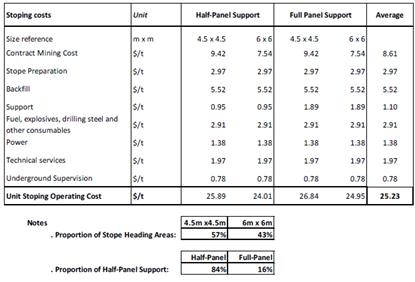
Mine services and overheads costs include all other non-direct stoping costs for the mine. Mine services operating costs are associated with maintaining underground facilities and services (power, water supply, etc.), operating and maintaining ventilations fans, supplies for safety and training, including personal protective equipment and mine, rescue and operating and maintaining all support mobile and track haulage equipment used in the mine.
| -A-70- |
The DAF stoping method will mostly employ approximately 4.5 m x 4.5 m headings, whereas the PP-CAF stopes in the HW zone will mostly employ 6 m x 6 m headings. The proportions applied in the averaging process reflect the applied stoping methods for the current reserves.
Processing
The total processing plant and tailings operating cost is estimated to be approximately US$15.55 per tonne of ore, as shown in Table 21-4 below. These costs have been derived from the updated processing configuration and corresponding estimates of reagents and power consumption, maintenance and unit costs reflecting 2025 USD.
Table 21-4 – Processing Plant and Tailings Operating Costs
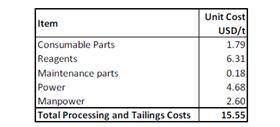
General and Administration Costs
The estimates for G&A costs encompass all operating costs associated with operating the offices and providing materials and supplies for staff functions. Administration operating costs include costs and taxes for maintaining the property in good standing, land taxes, and resource usage fees (water, etc.).
The total yearly G&A costs are estimated to be approximately US$3.2 million, as summarized in Table 21-5 below. Employee burdens account for approximately 35% of the total salary for each employee.
Annualized site G&A costs, at an annual production rate of 640,000 tonnes per year of ore, are estimated at US$5.02 per tonne (including environmental costs) of ore.
The mine management and administration components of G&A contemplate the employment of 27 people in this area, most of which would be staff positions. They would be responsible for the management, administration, personnel, accounting, purchasing needs and distribution of material to the operation, site security, health and safety, and environmental issues.
| -A-71- |
Table 21-5 – Breakdown of G&A Costs
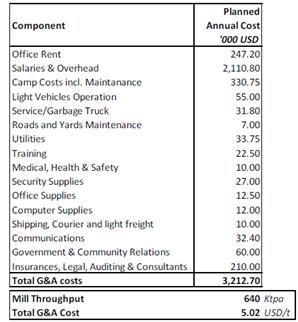
Total Operating Costs
The estimated total average operating cost, over the life of the Sangdong Mine, to produce a 65% WO3 concentrate from the mine, is approximately US$47.51 per tonne of ore, as summarized in Table 21-6 below.
Table 21-6 – Project Operating Cost Summary
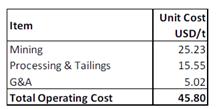
For the purpose of this estimate, value-added taxes and other taxes, along with import duty costs, have not been included. Exploration costs and all costs associated with areas beyond the property limits have also not been included.
Economic Analysis
The economic analysis presented below is based on a cashflow forecast on an annual basis using the current mineral reserves and corresponding annual production schedule for the life of the project. A summary of the life of mine plan parameters is shown in Table 22-1 below. The main assumed parameters for the economic analysis are summarized in Table 22-2 below.
| -A-72- |
Assumptions
All costs and economic results are reported in USD unless otherwise noted. APT pricing is also reported in USD.
Table 22-1 – LOM Plan Summary
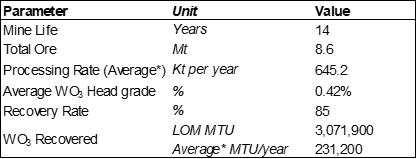
*Excluding Year 14
Table 22-2 – Assumed Parameters for Economic Analysis
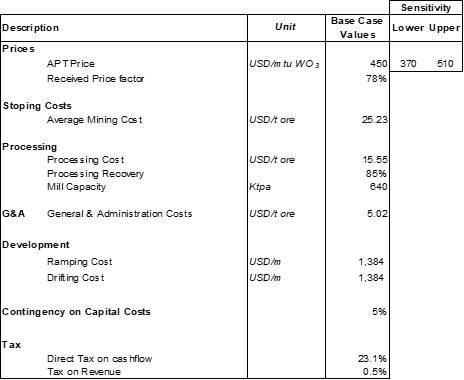
Other economic factors used in the economic analysis include the following:
| ● | discount rate of 5% (sensitivity using an 8% discount rate has been calculated); | |
| ● | no inflation; |
| -A-73- |
| ● | numbers are presented on a 100% ownership basis and do not include management fees or financing costs; | |
| ● | revenues, costs and taxes are calculated for each period in which they occur rather than actual outgoing/incoming payments; | |
| ● | exclusion of all pre-development and sunk costs (i.e. exploration and resource definition costs, engineering fieldwork and studies costs, environmental baseline studies, etc.); and | |
| ● | an exchange rate of KRW1,467 per US$1 has been applied to convert the relevant operating and capital cost items into USD. |
Taxes & Royalties
A corporate income tax rate of 21% has been applied, along with a local income tax rate of 2.1%, which gives a total rate of 23.1%. These are applied to the total cashflow. An additional revenue tax has also been applied of 0.5%. AKTC incurred approximately US$15.34 million in capital expenditures in the year prior to production (Year -1). In addition, AKTC has recognized approximately US$22.5 million in tax loss carry-forwards up to December 31, 2024 and anticipates utilizing US$4.6 million in tax loss carry-forwards during the 2025 fiscal year, subject to final tax filings and regulatory confirmation.
There are neither Royalties imposed on minerals by government agencies in South Korea nor by third parties.
Results
The overall results from the financial analysis have been evaluated in the form of net present value (“NPV”), internal rate of revenue (“IRR”) and payback values, as shown in Table 22-3 below. NPVs have also been determined for the whole project, starting from project commencement in 2021, as well for part of the project from 2025 onwards (“Onwards Only”).
The whole project is economically viable with an after-tax IRR of 49.5% and a net present value at 5% (NPV5%) of US$271.37 million. The Onwards-Only scenario is economically viable with a net present value at 5% (NPV5%) of US$343.7 million. Figure 22-1 below shows the projected cash flows resulting from the economic analysis. Table 22-3 below shows the detailed results of this evaluation.
| -A-74- |
Figure 22-1 – Annual and Cumulative After-Tax Cash Flows; Onwards Only
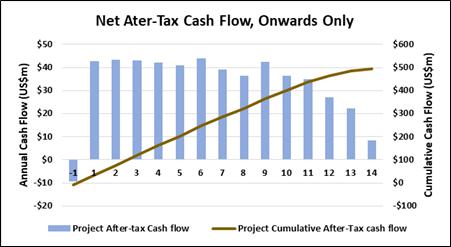
Table 22-3 – Summary of Sangdong Project Economic Results
| Category | Unit | Value | ||||
| Net Revenues | USD Million | 1,078.2 | ||||
| Operating Costs | USD Million | 389.5 | ||||
| Cash Flow from Operations*** | USD Million | 688.7 | ||||
| Cash Costs**** | USD/MTU | 126.8 | ||||
| All-in Sustaining Costs***** | USD/MTU | 136.3 | ||||
| Pre-Tax Project Cash Flows* | USD Million | 643.8 | ||||
| Pre-Tax NPV5%* | USD Million | 447.4 | ||||
| Pre-Tax IRR** | % | 62.5 | ||||
| After-Tax Project Cash Flows* | USD Million | 493.6 | ||||
| After-Tax NPV5%* | USD Million | 343.7 | ||||
| After-Tax IRR** | % | 49.5 | ||||
| After-Tax Payback* | Years | 1.77 | ||||
* Onwards Only
** Whole project
*** Cash Flow from Operations Formula: (Revenue – Operating Costs)
**** Cash Cost Formula: Operating Cost / Recovered MTUs
***** All-In Sustaining Cost Formula: (Operating Costs + Sustaining Capex (= Capex Y1-14)) / Recovered MTUs
| -A-75- |
Sensitivities
A sensitivity analysis was performed to test the Onwards Only project value drivers on the project’s net present value using a 5% discount rate. The result of this analysis is demonstrated in Table 22-4 below and can be visualized in Figure 22-2 below. The project proved to be most sensitive to changes in the APT price, followed by the combined operating expenses (“Opex”) (mining costs, processing costs as well as G&A costs) followed by the individual Opex costs as well as the capital expenditures.
Table 22-4 – After-tax NPV5% Sensitivity Results (Onward Only)
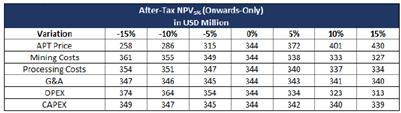
Figure 22-2 – After-tax NPV5% Sensitivity (Onward Only)
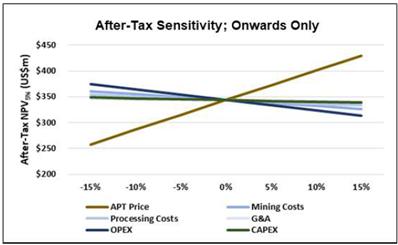
The base case results (stemming from the assumptions shown in Table 22-2 above), as well as sensitivity results for different WO3 prices, of the derived project NPVs, are shown in Table 22-5 below. The lowest price used was US$370/mtu APT and the highest price was US$510/mtu APT.
| -A-76- |
Table 22-5 – Sensitivities – NPVs Calculated at Different APT Prices
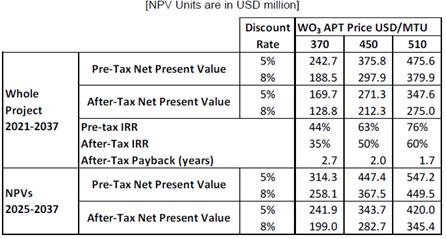
Key aspects of these results include:
| ● | The results for prices for US$450/mtu APT, as compared to US$370/mtu, show an overall increase in the after-tax NPV5% of approximately 60%, and increase in the after-tax IRR from 35 to 49%. | |
| ● | The results for prices for US$510/mtu APT, as compared to US$450mtu, show an overall increase in the after-tax NPV5% of approximately 28%, and increase in the after-IRR from 49 to 60%. | |
| ● | For base case price of US$450/mtu APT, the post-tax NPV rises by approximately 22% in going from an 8% to a 5% discount rate. The Payback period is approximately 2 years. |
Life-of-Mine Cash Flow Summary
The base case APT price used was US$450/mtu. The discounted cashflow analysis has been based on 2025 constant USD values. The production schedule is based on processing approximately 570 kt for Year 1 (effectively 2026), increasing to a steady state rate of 640 ktpa from Year 2 onwards. The economic model results for the base case scenario are shown in Table 22-6 below.
| -A-77- |
Table 22-6 – Economic Analysis – Base Case Price US$450/mtu WO3
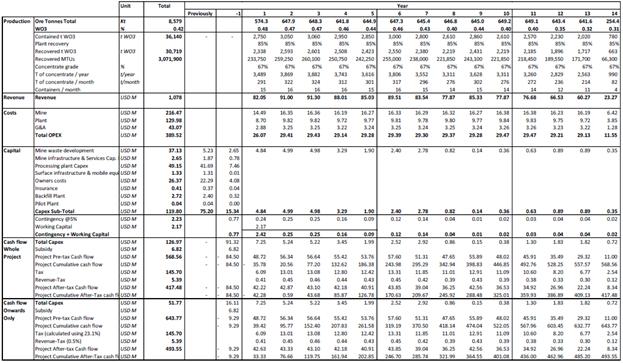
Exploration, Development, and Production
The principal existing and planned pre-production development is shown in Figure 16-29 below. This plan also includes backfill piping, electrical distribution system, water pumping system and ventilation fans.
The pre-production development program is based on starting with two work faces: one developing the ramp between the Sangdong and -1 Levels, and another continuing a new gallery through the Sangdong Level. The Sangdong Level gallery, a principal underground development horizon located at approximately 657m RL, provides access to key stoping zones including the F2, F3, and Main horizons. After finishing the development of the ramp, the new portal can be started on -1 Level from the surface and its connection to the -1 Level.
The Sangdong Level development will continue through a new gallery, to link to the ventilation shaft in the west sector of the mine. Preparation will also start for the stopes that will be accessed from Sangdong Level. One of these stope ramps will also connect up with the new portal on the -1 level. This will link the -1 Level with the Sangdong Level and will provide ventilation for the entire exploitable areas accessible from -1 Level.
Initial mining will focus on F2/F3/Main ore from the -1 Level and Sangdong levels.
Additional planned development includes completion of backfill distribution infrastructure, installation of a water pumping system, and construction of new air ventilation raise-bore holes and fans. Development access drives will be extended across the Main, F3, F2, and Halo horizons for future stoping. In selected areas, test stopes may be initiated to evaluate operational performance and backfill sequencing under full-scale conditions. Some access galleries will also be pre-fitted with services such as electrical distribution lines and dewatering pumps.
| -A-78- |
Figure 16-29 – Principal Mine Development and Infrastructure
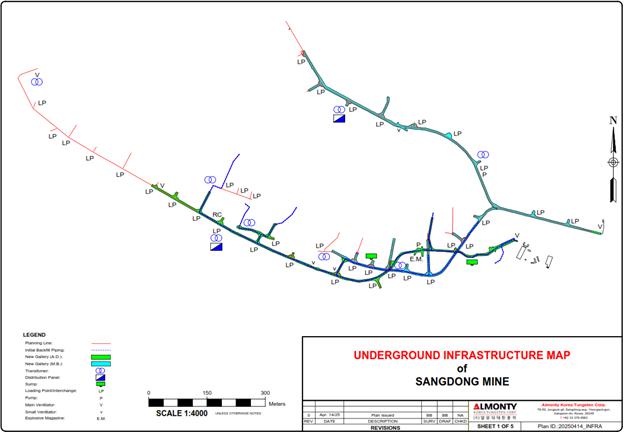
Other Mineral Projects
The Sangdong Mine is the only mineral project on a property that is material to the Company for the purposes of NI 43-101. While the Company is also engaged in the operation and development of other mineral properties, including the Panasqueira Mine, Los Santos Mine, the Valtreixal Mine, the Sangdong Molybdenum Project and the Gentung Tungsten Project, none of these are considered material for the purposes of NI 43-101.
Panasqueira Mine
The Panasqueira Mine is located in Covilhã, Castelo Branco, Portugal, on the southern edge of the Serra da Estrela, a Portuguese mountain range, approximately 300 km northeast of Lisbon, the capital of Portugal, and 200 km southeast of the port city of Porto, Portugal, as shown in the figure below.
| -A-79- |
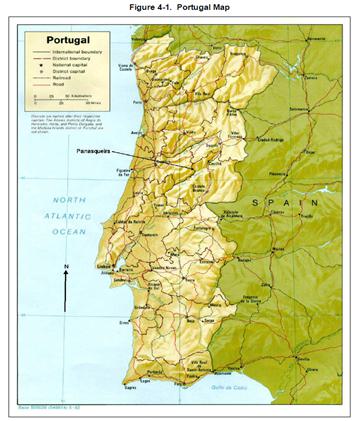
The first prospecting license at Panasqueira was granted in 1886 and the first reference to wolframite was two years later. A mining company was founded in 1896 to mine tungsten at Panasqueira, and the underground Panasqueira Mine has been operating more or less continuously since that time, except for a brief period at the end of the Second World War and a second closure in the mid-1990s.
Almonty acquired the Panasqueira Mine in 2016 and owns a 100% indirect ownership interest in the Panasqueira Mine through its subsidiaries. Almonty’s interest in the Panasqueira Mine is held by BTW, which owns 100% of the various rights and interests comprising the Panasqueira Mine and operates the mine. BTW is a wholly-owned direct subsidiary of Beralt Ventures Inc. (“BVI”), itself a wholly-owned direct subsidiary of Almonty.
The Company currently generates revenue from the Panasqueira Mine through the sale of tungsten, tin and copper concentrate pursuant to a variety of off-take, distribution and supply agreements. In 2024, production at the Panasqueira Mine increased by 9.1% compared to production achieved during the financial year 2023. Mined grades slightly declined during 2025 compared to 2024 for tungsten, copper and tin and the tungsten recovery rates remained stable from 2022 to the fourth quarter of 2025, averaging 80%.
The first pumping of tailings to the new tailings dam began during fiscal 2021 when the remaining capacity of the old tailings dam was fully consumed. The new tailings dam is designed for the second phase expansion for an additional four years by placing a surrounding 10-meter height retaining wall. A further phase three is now planned to increase capacity by a further 10 years. Thus, a total of 20 years additional capacity is anticipated after the completion of all three phases.
| -A-80- |
Almonty is also planning an extension of the Panasqueira Mine, the “L4 Extension”, with the potential to extend the life of the mine and increase production capacity. The L4 Extension is focused on accessing deeper ore zones below the current mining levels, primarily starting from Level 3.
Key objectives of the L4 Extension include:
| ● | Increased Ore Throughput: Plans to raise the processing capacity from 600,000 tonnes to 800,000 tonnes. | |
| ● | Improved Grade: An anticipated increase in average head grade to 0.19%, enhancing overall economic output. | |
| ● | Exploration Synergies: Advanced drilling campaigns will upgrade Inferred Mineral Resources, providing a clearer picture of the deposit’s potential at depth. |
On February 24, 2024, Almonty announced that it had commenced development of Level 4 at the Panasqueira Mine, with initial works focused on accessing deeper ore zones through exploration galleries and new ramps. The Panasqueira mining concession named “Contract of Exploitation No. C-18” is owned and operated by BTW. It covers an irregular, roughly “keyhole” shaped area trending NW-SE and is approximately 7.5 km in length and 1.5 km wide at the south-eastern end and 5.0km at the northwestern end where the mine workings and mill facilities are located. The total area of the Panasqueira concession, Contract of Exploitation No. C-18, is 1913.5983 ha, as shown in the figure below.
| -A-81- |
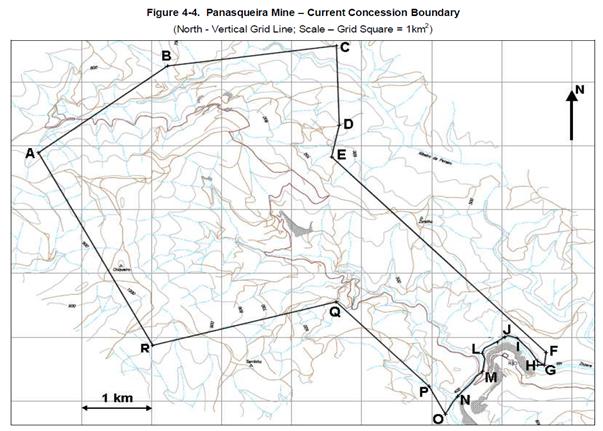
The exploitation concession grants Almonty the right to exploit the geological resources in the area. The initial period of the concession is 60 years as from the date of signing the contract being December 16, 1992. The term may be extended for two successive periods of up to 30 years per extension.
Los Santos Mine
The Los Santos Mine is located approximately 50 km from Salamanca in western Spain, as shown in the figure below, and produces tungsten concentrate. The Los Santos Mine covers an area of 38 mining grids. The Los Santos Mine has been identified with significant underground mine potential and its underground mine potential was exploited in the deepening of the Los Santos Sur pit and Los Santos Sur South-West pit.
| -A-82- |
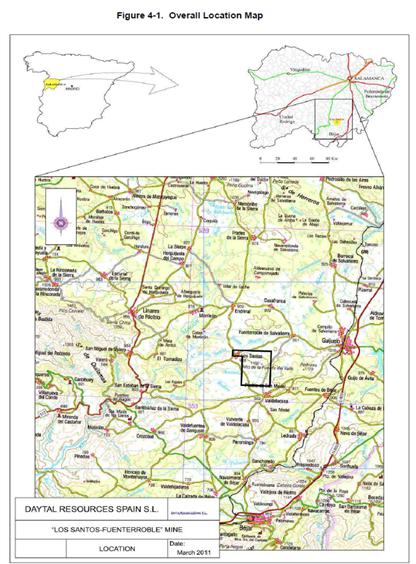
Almonty has an exploitation concession over the Los Santos Mine which grants it the right to use the resource or resources marked within the perimeter of the Los Santos Mine. Almonty’s concession term is for 30 years with an option to extend for another two periods of the same duration, with a maximum total length of over 45 years based on the Phase II expansion.
The Los Santos Mine has been in production since 2008. The mine was opened in June 2008 and commissioned in July 2010 by its former owner. Almonty acquired the Los Santos Mine in September 2011 through its wholly owned subsidiary Daytal.
Almonty owns a 100% indirect ownership interest in the Los Santos Mine through its subsidiaries. Almonty’s interest in the Los Santos Mine is held by Daytal, which owns a 100% direct interest in the Los Santos Mine. Daytal is a wholly-owned direct subsidiary of 7887523 Canada Inc., itself a wholly-owned direct subsidiary of Almonty.
| -A-83- |
In February 2020, as a result of additional testing work, Almonty decided to place the Los Santos Mine into care and maintenance. The Company is planning to re-open operations in the near future once it has finalized plans to modify the plant’s infrastructure, through an approximately €1,000,000 capital expenditure, which is expected to result in improved recovery rates from the future processing of its tailings inventory. Modifications to the processing plant to facilitate tailings reprocessing are expected to be implemented late 2026.
Valtreixal Mine
The Valtreixal Mine is a potential open pit operation, and is located in the northwest part of the Zamora province, in the Castilla de Leon region of Spain, as shown in the figure below. The Valtreixal Mine is located approximately 250 km from the Los Santos Mine and 185 km from Salamanca, Spain.
The Valtreixal Mine has been explored with underground development since the late 1800s, and limited tin exploitation occurred sporadically in the late 1900s. Between 2006 and 2012, SIEMCALSA conducted extensive underground and surface exploration, trenching, and mineralogical studies at the Valtreixal Mine. From 2013 to 2015, Daytal expanded upon this work through additional drilling, metallurgical testing, and environmental and planning studies. These efforts have been continued to date by Valtreixal Resources Spain S.L. (“Valtreixal Resources”), a wholly owned subsidiary of Almonty. The principal potential products are tungsten and tin.
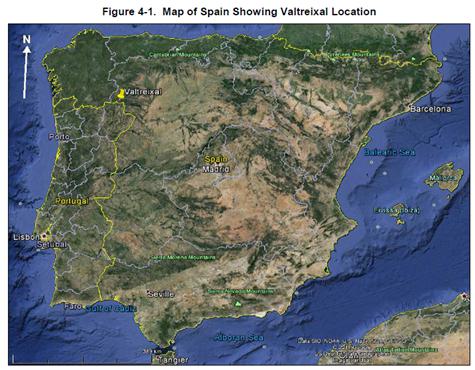
Almonty owns a 100% indirect ownership interest in the Valtreixal Mine through its subsidiaries. Almonty’s interest in the Valtreixal Mine is held by Valtreixal Resources, which owns a 100% direct interest in the Valtreixal Mine. Valtreixal Resources is a wholly-owned direct subsidiary of 9046739 Canada Inc., itself a wholly-owned direct subsidiary of Almonty.
| -A-84- |
On June 10, 2020, the Municipality of Pedralba de la Pradería in Spain approved a new land classification for the Valtreixal Mine designating the property as suitable for extraction activities. The official publication of this reclassification appeared in the Boletín Oficial de Castilla y León (BOCYL) on September 4, 2020. This new land classification will allow the Company to complete the mining permitting process and to move forward with the completion of an open pit mine plan for the property. It is expected this permitting process to be finished in 2026.
Sangdong Molybdenum Project
The Sangdong Molybdenum Project is located in Yeongwol County, Gangwon Province, South Korea, approximately 175 km east-southeast of Seoul. The project lies within the same licensed mining concession as the Sangdong Mine and is situated beneath the central tungsten skarn zones. It is focused on molybdenum-bearing quartz veins hosted in the Jangsan Quartzite formation.
Almonty holds a 100% indirect ownership interest in the Sangdong Molybdenum Project through its subsidiary AKTC, which holds the mining rights. AKTC is a wholly owned subsidiary of Woulfe Mining Corp., which is wholly owned by Almonty.
On January 29, 2025, Almonty announced that it had entered into an exclusive offtake agreement with SeAH M&S, the largest processor of molybdenum products in South Korea and one of the largest molybdenum oxide smelters globally. Under the agreement, SeAH has committed to purchase 100% of the molybdenum concentrate produced from the Sangdong Molybdenum Project over the life of the mine. The agreement includes a floor price of US$19.00 per pound of contained molybdenum and is structured as a long-term supply arrangement. The project is fully permitted for both mining and environmental activities. SeAH is also constructing a US$110 million manufacturing facility in Temple, Texas.
Despite the proximity of the Sangdong Molybdenum Project to the Sangdong Mine, for the purposes of NI 43-101, they are considered by the Company to be on two different properties. This conclusion is based on the fact that the two projects are comprised of entirely distinct mineral deposits, each of which will be developed independently without shared common infrastructure. Specifically, the Sangdong Molybdenum Project is expected to be a standalone mining operation, featuring its own dedicated underground mine infrastructure, including a separate mining shaft or portal, and its own processing facilities. These operational distinctions underscore that the Sangdong Molybdenum Project will function as a different mine, wholly independent from the Sangdong Project, and the Company does not, on the date hereof, anticipate significant synergies between the projects. Production at the Sangdong Molybdenum Project is anticipated in the coming years, with a production capacity that is currently under review by Almonty.
Gentung Tungsten Project
On November 17, 2025, the Company completed its acquisitions of U.S. Tungsten Inc., a U.S.-based privately-owned minerals explorer with the exclusive right to explore, develop and mine the Gentung Tungsten Project, and a privately held Montana corporation holding a number of assets including, but not limited to, a plant permit, water rights and tungsten mining equipment for use in the processing of tungsten from the Gentung Tungsten Project.
The Gentung Tungsten Project is among the most advanced undeveloped tungsten assets in the U.S. and is positioned for near-term production. Significant work was completed by the previous owners of the project over the years to prepare the site for production. The project is located in a historic U.S. tungsten district that once supplied the U.S. national strategic stockpile and offers existing road access and infrastructure, supporting a relatively expeditious path to initial production.
| -A-85- |
SCHEDULE B
ALMONTY INDUSTRIES INC.
AUDIT AND RISK MANAGEMENT COMMITTEE CHARTER
May 28, 2021
Policy Statement
It is the policy of Almonty Industries Inc. (the “Corporation”) to establish and maintain an Audit and Risk Management Committee to assist the Board of Directors of the Corporation (the “Board”) in carrying out their oversight responsibility for the Corporation’s internal controls, financial reporting and risk management processes. The Committee will be provided with resources commensurate with the duties and responsibilities assigned to it by the Board including administrative support. If determined necessary by the Committee, it will have the discretion to institute investigations of improprieties, or suspected improprieties, within the scope of its responsibilities, including the standing authority to retain special counsel or experts.
Composition of the Committee
| 1. | The Committee shall consist of at least three directors, each of whom shall be “independent” (determined in accordance with National Instrument 52-110 Audit Committees of the Canadian Securities Administrators or under the requirements or guidelines established under the applicable rules of any stock exchange on which the Corporation’s securities are listed for trading). The Board shall appoint the members of the Committee annually and each member of the Committee shall remain on the Committee until the next annual meeting of shareholders of the Corporation after his or her appointment or until his or her successor shall be duly appointed and qualified. The Board shall appoint one member of the Committee to be the Chair of the Committee. |
| 2. | Each member of the Committee shall be “financially literate”. In order to be financially literate, a director must have the ability to read and understand a set of financial statements that present a breadth and level of complexity of accounting issues that are generally comparable to the breadth and complexity of issues that can be reasonably expected to be raised by the Corporation’s financial statements. |
| 3. | A director appointed by the Board to the Committee shall be a member of the Committee until replaced by the Board at any time or until his or her resignation. A member of the Committee shall automatically cease to be a member of the Committee upon ceasing to be a director. |
| 4. | The Board may fill vacancies on the Committee by appointing another director to the Committee. The Board shall fill any vacancy if the membership of the Committee is less than three directors. Whenever there is a vacancy on the Committee, the remaining members may exercise all of the Committee’s powers as long as a quorum remains in office. |
Meetings of the Committee
| 1. | The Committee shall convene a minimum of four times each year at such times and places as may be designated by the Chair of the Committee and whenever a meeting is requested by the Board, a member of the Committee, the external auditors, or a senior officer of the Corporation. Meetings of the Committee shall correspond with the review of the quarterly financial statements of the Corporation and management’s discussion and analysis thereon. |
| 2. | Notice of each meeting of the Committee shall be given to each member of the Committee and to the external auditors of the Corporation, who shall be entitled to attend each meeting of the Committee and shall attend whenever requested to do so by a member of the Committee. |
| -B-1- |
| 3. | Notice of a meeting of the Committee shall: |
| (a) | be in writing; | |
| (b) | state the nature of the business to be transacted at the meeting in reasonable detail; | |
| (c) | to the extent practicable, be accompanied by copies of the documentation to be considered at the meeting; and | |
| (d) | be given at least two business days prior to the time stipulated for the meeting or such shorter period as the members of the Committee may permit. |
| 4. | A quorum for the transaction of business at a meeting of the Committee shall be the majority of the members of the Committee. However, it shall be the practice of the Committee to require review, and, if necessary, approval of certain important matters by all members of the Committee. |
| 5. | A member or members of the Committee may participate in a meeting of the Committee by means of such telephonic, electronic or other communication facilities as permits all persons participating in the meeting to communicate adequately with each other. A member participating in such a meeting by any such means is deemed to be present at the meeting. |
| 6. | In the absence of the Chair of the Committee, the members of the Committee shall choose one of the members present to be Chair of the meeting. In addition, the members of the Committee shall choose one of the persons present to be the Secretary of the meeting. |
| 7. | The Chair of the Board, senior management of the Corporation and other parties may attend meetings of the Committee; however the Committee (i) shall meet with the external auditors independent of management as necessary, in the sole discretion of the Committee, and (ii) may meet separately with management. |
| 8. | The Committee shall provide the Board with a summary of all meetings together with a copy of the minutes from such meetings. Where minutes have not yet been prepared, the Chair of the Committee shall provide the Board with oral reports on the activities of the Committee. All information reviewed and discussed by the Committee at any meeting shall be retained and made available for examination by the Board upon request to the Chair of the Committee. Minutes of the proceedings of the Committee shall be kept in a minute book provided for that purpose. The minutes of the Committee meetings shall accurately record the discussions of and decisions made by the Committee, including all recommendations to be made by the Committee to the Board and shall be distributed to all Committee members. |
Duties and Responsibilities of the Committee
Audit and Financial Reporting
The Committee’s primary duties and responsibilities with respect to oversight of audit and financial reporting are to:
| (a) | identify and monitor the management of the principal risks that could impact the financial reporting of the Corporation; | |
| (b) | monitor the integrity of the Corporation’s financial reporting process and system of internal controls regarding financial reporting and accounting compliance; | |
| (c) | monitor the independence and performance of the Corporation’s external auditors; | |
| (d) | deal directly with the external auditors to approve external audit plans, other services (if any) and fees; |
| -B-2- |
| (e) | directly oversee the external audit process and results and resolve any disagreements between management and the external auditor regarding financial reporting; | |
| (f) | provide an avenue of communication among the external auditors, management and the Board; and | |
| (g) | establish a Whistleblower Policy for the Corporation to ensure that an effective “whistle blowing” procedure exists to permit stakeholders to express any concerns regarding accounting or financial matters to an appropriately independent individual. |
Risk Management:
The Committee’s primary duties and responsibilities with respect to risk management are to:
| (a) | reviewing and making recommendations to the Board in relation to the adequacy of the Corporation’s processes for managing risks, including: |
| (i) | in relation to any incident involving fraud or other deficiency of the Corporation’s internal controls; | |
| (ii) | in relation to the Corporation’s insurance program, having regard to the Corporation’s business and the insurable risks associated, review the amount and terms of any insurance to be obtained or maintained by the Corporation with respect to risks inherent in its operations and potential liabilities incurred by the directors or officers in the discharge of their duties and responsibilities; |
| (b) | ensuring the development of an appropriate risk management policy framework that will provide guidance to the senior executives in implementing appropriate risk management practices throughout the Corporation’s operations, practices and systems and overseeing this framework; | |
| (c) | defining and periodically reviewing risk management as it applies to the Corporation and clearly identifying all stakeholders; | |
| (d) | reviewing how the Corporation communicates it’s risk management philosophy, policies and strategies to Directors, senior executives, employees, consultants, contractors and appropriate stakeholders; | |
| (e) | ensuring that the Board and Management establish a risk aware culture which reflects the Corporation’s risk policies and philosophies; | |
| (f) | reviewing methods of identifying broad areas of risk and setting parameters or guidelines for business risk reviews; |
Other Duties of the Committee
| 1. | The Committee shall have the authority to: |
| (a) | inspect any and all of the books and records of the Corporation, its subsidiaries and affiliates; | |
| (b) | discuss with the management and senior staff of the Corporation, its subsidiaries and affiliates, any affected party and the external auditors, such accounts, records and other matters as any member of the Committee considers necessary and appropriate; | |
| (c) | engage independent counsel and other advisors as it determines necessary to carry out its duties; and | |
| (d) | set and pay the compensation for any advisors employed by the Committee. |
| -B-3- |
| 2. | The Committee shall, at the earliest opportunity after each meeting, report to the Board the results of its activities and any reviews undertaken and make recommendations to the Board as deemed appropriate. |
| 3. | The Committee shall: |
| (a) | evaluate the independence and performance of the external auditors and annually recommend to the Board the appointment of the external auditor and the compensation of the external auditors; | |
| (b) | consider the recommendations of management in respect of the appointment of the external auditors; | |
| (c) | review the audit plan with the Corporation’s external auditors and with management; | |
| (d) | discuss with management and the external auditors any proposed changes in major accounting policies or principles, the presentation and impact of significant risks and uncertainties and key estimates and judgments of management that may be material to financial reporting; | |
| (e) | review with management and with the external auditors significant financial reporting issues arising during the most recent fiscal period and the resolution or proposed resolution of such issues; | |
| (f) | review and resolve any problems experienced or concerns expressed by the external auditors in performing an audit, including any restrictions imposed by management or significant accounting issues on which there was a disagreement with management; | |
| (g) | review with senior management the process of identifying, monitoring and reporting the principal risks affecting financial reporting; | |
| (h) | consider and review with management, the internal control memorandum or management letter containing the recommendations of the external auditors and management’s response, if any, including an evaluation of the adequacy and effectiveness of the internal financial controls of the Corporation and subsequent follow-up to any identified weaknesses; | |
| (i) | review and recommend for approval by the Board, the audited annual financial statements, management’s discussion and analysis and related documents in conjunction with the report of the external auditors; | |
| (j) | review and recommend for approval by the Board, the quarterly unaudited financial statements, management’s discussion and analysis and related documents; | |
| (k) | before release, review and recommend for approval by the Board, all public disclosure documents containing audited or unaudited financial information, including annual and quarterly financial statements, management’s discussion and analysis, annual reports, annual information forms and press releases; | |
| (l) | oversee any of the financial affairs of the Corporation, its subsidiaries and affiliates, and, if deemed appropriate, make recommendations to the Board, external auditors or management; | |
| (m) | pre-approve all non-audit services to be provided to the Corporation, its subsidiaries and affiliates by the external auditors; | |
| (n) | approve the engagement letter for non-audit services to be provided by the external auditors or affiliates, together with estimated fees, and considering the potential impact of such services on the independence of the external auditors; | |
| (o) | when there is to be a change of external auditors, review all issues and provide documentation related to the change, including the information to be included in the Change of Auditors Notice and documentation required pursuant to National Instrument 51-102 – Continuous Disclosure Obligations (or any successor legislation) and the planned steps for an orderly transition period; |
| -B-4- |
| (p) | review all reportable events, including disagreements, unresolved issues and consultations, as defined by applicable securities laws, on a routine basis, whether or not there is to be a change of external auditors; and | |
| (q) | review with management at least annually, the financing strategy and plans of the Corporation. |
| 4. | The Committee shall review the appointments of the Chief Financial Officer and any key financial managers who are involved in the financial reporting process. |
| 5. | The Committee shall enquire into and determine the appropriate resolution of any conflict of interest in respect of audit or financial matters, which are directed to the Committee by any member of the Board, a securityholder of the Corporation, the external auditors, or senior management. |
| 6. | The Committee shall periodically review with management the need for an internal audit function. |
| 7. | The Committee shall review the Corporation’s accounting and reporting of environmental costs, liabilities and contingencies. |
| 8. | The Committee shall establish and maintain procedures for: |
| (a) | the receipt, retention and treatment of complaints received by the Corporation regarding accounting controls, or auditing matters; and | |
| (b) | the confidential, anonymous submission by employees of the Corporation of concerns regarding questionable accounting or auditing matters. |
| 9. | The Committee shall review and approve the Corporation’s hiring policies regarding employees and former employees of the present and former external auditors. |
| 10. | The Committee shall review with the Corporation’s legal counsel as required, but at least annually, any legal matter that could have a significant impact on the Corporation’s financial statements and any enquiries received from regulators or government agencies. |
| 11. | The Committee shall assess, on an annual basis, the adequacy of this Charter and the performance of the Committee. |
| Last Update: | May 28, 2021 |
| Approved by: | Audit and Risk Management Committee | |
| Board of Directors |
| -B-5- |