The Fund invests primarily in shares of other registered investment companies, including those whose shares trade on a stock exchange (exchange traded funds or “ETFs”) (the “underlying funds”). The Fund will be diversified among a number of asset classes and its allocation among underlying funds will be based on an asset allocation model developed by Madison Asset Management, LLC (“Madison”), the Fund’s investment adviser. Under normal circumstances, the Fund’s total net assets will be allocated among various asset classes and underlying funds, with target allocations over time of approximately 35% equity investments (including foreign equity), and 65% fixed income investments. Underlying funds in which the Fund invests may include funds advised by Madison and/or its affiliates, including the Madison Funds and Madison ETFs Trust (the “affiliated underlying funds”). Generally, Madison will not invest more than 75% of the Fund’s net assets, at the time of purchase, in affiliated underlying funds. Although actual allocations may vary, as of December 31, 2025, the Fund’s portfolio allocation as a percentage of net assets was:
| - | Bond Funds: | 62.8% |
| - | Foreign Stock Funds: | 10.2% |
| - | Short-Term Investments: | 7.7% |
| - | Stock Funds: | 24.8% |
| - | Net Other Assets and Liabilities: | (5.5)% |
With regard to investments in debt securities, Madison’s bias is toward securities with intermediate and short-term maturities. As of December 31, 2025, the weighted average duration of the Fund’s debt portfolio was 5.59 years.
Madison may employ multiple analytical approaches to determine the appropriate asset allocation for the Fund, including:
| ● | Macroeconomic analysis. This approach analyzes high frequency economic and market data across the global markets in an effort to identify attractive investment opportunities in countries, regions and/or asset classes. |
| ● | Fundamental analysis. This approach reviews fundamental asset class valuation data to determine the absolute and relative attractiveness of existing and potential investment opportunities. |
| ● | Correlation analysis. This approach considers the degree to which returns in different asset classes do or do not move together, and the Fund’s aim to achieve a favorable overall risk and return profile. |
| ● | Scenario analysis. This approach analyzes historical and expected return data to model how individual asset classes and combinations of asset classes would affect the Fund under different economic and market conditions. |
In addition, Madison has a flexible mandate which permits the Fund, at the sole discretion of Madison, to materially reduce equity risk exposures when and if conditions are deemed to warrant such an action.
The Fund’s investment strategy reflects Madison’s general “Participate and Protect®” investment philosophy. Madison’s expectation is that investors in the Fund will participate in market appreciation during bull markets and experience something less than full participation during bear markets compared with investors in portfolios holding more speculative and volatile securities; therefore, this investment philosophy is intended to represent a conservative investment strategy. There is no assurance that Madison’s expectations regarding this investment strategy will be realized.
Although the Fund expects to pursue its investment objective utilizing its principal investment strategies regardless of market conditions, the Fund may invest up to 100% in cash, money market funds, and/or money market instruments. To the extent the Fund engages in this temporary defensive position, the Fund’s ability to achieve its investment objective may be diminished.
The Fund invests primarily in shares of other registered investment companies, including those whose shares trade on a stock exchange (exchange traded funds or “ETFs”) (the “underlying funds”). The Fund will be diversified among a number of asset classes and its allocation among underlying funds will be based on an asset allocation model developed by Madison Asset Management, LLC (“Madison”), the Fund’s investment adviser. Under normal circumstances, the Fund’s total net assets will be allocated among various asset classes and underlying funds, with target allocations over time of approximately 60% equity investments (including foreign equity) and 40% fixed income investments. Underlying funds in which the Fund invests may include funds advised by Madison and/or its affiliates, including the Madison Funds and Madison ETFs Trust (the “affiliated underlying funds”). Generally, Madison will not invest more than 75% of the Fund’s net assets, at the time of purchase, in affiliated underlying funds. Although actual allocations may vary, as of December 31, 2025, the Fund’s portfolio allocation as a percentage of net assets was:
| - | Bond Funds: | 37.6% |
| - | Foreign Stock Funds: | 18.8% |
| - | Short-Term Investments: | 9.7% |
| - | Stocks Funds: | 41.9% |
| - | Net Other Assets and Liabilities: | (8.0)% |
With regard to investments in debt securities, Madison’s bias is toward securities with intermediate and short-term maturities. As of December 31, 2025, the weighted average duration of the Fund’s debt portfolio was 5.63 years.
Madison may employ multiple analytical approaches to determine the appropriate asset allocation for the Fund, including:
| ● | Macroeconomic analysis. This approach analyzes high frequency economic and market data across the global markets in an effort to identify attractive investment opportunities in countries, regions and/or asset classes. |
| ● | Fundamental analysis. This approach reviews fundamental asset class valuation data to determine the absolute and relative attractiveness of existing and potential investment opportunities. |
| ● | Correlation analysis. This approach considers the degree to which returns in different asset classes do or do not move together, and the Fund’s aim to achieve a favorable overall risk and return profile. |
| ● | Scenario analysis. This approach analyzes historical and expected return data to model how individual asset classes and combinations of asset classes would affect the Fund under different economic and market conditions. |
In addition, Madison has a flexible mandate which permits the Fund, at the sole discretion of Madison, to materially reduce equity risk exposures when and if conditions are deemed to warrant such an action.
The Fund’s investment strategy reflects Madison’s general “Participate and Protect®” investment philosophy. Madison’s expectation is that investors in the Fund will participate in market appreciation during bull markets and experience something less than full participation during bear markets compared with investors in portfolios holding more speculative and volatile securities; therefore, this investment philosophy is intended to represent a conservative investment strategy. There is no assurance that Madison’s expectations regarding this investment strategy will be realized.
Although the Fund expects to pursue its investment objective utilizing its principal investment strategies regardless of market conditions, the Fund may invest up to 100% in cash, money market funds, and/or money market instruments. To the extent the Fund engages in this temporary defensive position, the Fund’s ability to achieve its investment objective may be diminished.
The Fund invests primarily in shares of other registered investment companies, including those whose shares trade on a stock exchange (exchange traded funds or “ETFs”) (the “underlying funds”). The Fund will be diversified among a number of asset classes and its allocation among underlying funds will be based on an asset allocation model developed by Madison Asset Management, LLC (“Madison”), the Fund’s investment adviser. Under normal circumstances, the Fund’s total net assets will be allocated among various asset classes and underlying funds, with target allocations over time of approximately 80% equity investments (including foreign equity) and 20% fixed income investments. Underlying funds in which the Fund invests may include funds advised by Madison and/or its affiliates, including the Madison Funds and Madison ETFs Trust (the “affiliated underlying funds”). Generally, Madison will not invest more than 75% of the Fund’s net assets, at the time of purchase, in affiliated underlying funds. Although actual allocations may vary, as of December 31, 2025, the Fund’s portfolio allocation as a percentage of net assets was:
| - | Bond Funds: | 18.1% |
| - | Foreign Stock Funds: | 25.0% |
| - | Short-Term Investments: | 13.1% |
| - | Stocks Funds: | 55.6% |
| - | Net Other Assets and Liabilities: | (11.8)% |
With regard to investments in debt securities, Madison’s bias is toward securities with intermediate and short-term maturities. As of December 31, 2025, the weighted average duration of the Fund’s debt portfolio was 5.61 years.
Madison may employ multiple analytical approaches to determine the appropriate asset allocation for the Fund, including:
| ● | Macroeconomic analysis. This approach analyzes high frequency economic and market data across the global markets in an effort to identify attractive investment opportunities in countries, regions and/or asset classes. |
| ● | Fundamental analysis. This approach reviews fundamental asset class valuation data to determine the absolute and relative attractiveness of existing and potential investment opportunities. |
| ● | Correlation analysis. This approach considers the degree to which returns in different asset classes do or do not move together, and the Fund’s aim to achieve a favorable overall risk and return profile. |
| ● | Scenario analysis. This approach analyzes historical and expected return data to model how individual asset classes and combinations of asset classes would affect the Fund under different economic and market conditions. |
In addition, Madison has a flexible mandate which permits the Fund, at the sole discretion of Madison, to materially reduce equity risk exposures when and if conditions are deemed to warrant such an action.
The Fund’s investment strategy reflects Madison’s general “Participate and Protect®” investment philosophy. Madison’s expectation is that investors in the Fund will participate in market appreciation during bull markets and experience something less than full participation during bear markets compared with investors in portfolios holding more speculative and volatile securities; therefore, this investment philosophy is intended to represent a conservative investment strategy. There is no assurance that Madison’s expectations regarding this investment strategy will be realized.
Although the Fund expects to pursue its investment objective utilizing its principal investment strategies regardless of market conditions, the Fund may invest up to 100% in cash, money market funds, and/or money market instruments. To the extent the Fund engages in this temporary defensive position, the Fund’s ability to achieve its investment objective may be diminished.
The Fund invests primarily in shares of other registered investment companies, including those whose shares trade on a stock exchange (exchange traded funds or “ETFs”) (the “underlying funds”). The Fund will be diversified among several asset classes and its allocation among underlying funds will be based on an asset allocation model developed by Madison Asset Management (“Madison”), the Fund’s investment adviser. Under normal circumstances, the Fund’s total net assets will be allocated among various asset classes and underlying funds, with target allocations over time of approximately 50% equity investments and 50% fixed income investments. Underlying funds in which the Fund invests may include funds advised by Madison and/or its affiliates, including other Madison Funds and ETFs (the “affiliated underlying funds”). Generally, Madison will not invest more than 80% of the Fund’s net assets, at the time of purchase, in affiliated underlying funds. Although actual allocations may vary, as of December 31, 2025, the Fund’s portfolio allocation as a percentage of net assets was:
| - | Bond Funds: | 56.9% |
| - | CMOs, MBS, and Commercial MBS securities | 0.00% |
| - | Short-Term Investments: | 2.3% |
| - | Stock Funds/Common Stocks: | 42.1% |
| - | Net Other Assets and Liabilities: | (1.3)% |
With regard to investments in debt securities, Madison’s bias is toward securities with intermediate and short-term maturities. As of December 31, 2025, the weighted average duration of the Fund’s debt portfolio was 3.89 years.
Madison may employ multiple analytical approaches to determine the appropriate allocation among the underlying funds, including:
| ● | Macroeconomic analysis. This approach analyzes high frequency economic and market data across the global markets in an effort to identify attractive investment opportunities in countries, regions and/or asset classes. |
| ● | Fundamental analysis. This approach reviews fundamental asset class valuation data to determine the absolute and relative attractiveness of existing and potential investment opportunities. |
| ● | Correlation analysis. This approach considers the degree to which returns in different asset classes do or do not move together, and the Fund’s aim to achieve a favorable overall risk and return profile. |
| ● | Scenario analysis. This approach analyzes historical and expected return data to model how individual asset classes and combinations of asset classes would affect the Fund under different economic and market conditions. |
In addition, Madison has a flexible mandate that permits the Fund, at the sole discretion of Madison, to materially reduce equity risk exposures when and if conditions are deemed to warrant such an action.
The Fund’s investment strategy reflects Madison’s general “Participate and Protect®” investment philosophy. Madison’s expectation is that investors in the Fund will participate in market appreciation during bull markets and experience something less than full participation during bear markets compared with investors in portfolios holding more speculative and volatile securities; therefore, this investment philosophy is intended to represent a conservative investment strategy. There is no assurance that Madison’s expectations regarding this investment strategy will be realized.
Although the Fund expects to pursue its investment objective utilizing its principal investment strategies regardless of market conditions, the Fund may invest up to 100% in cash, money market funds, and/or money market instruments. To the extent the Fund engages in this temporary defensive position, the Fund’s ability to achieve its investment objective may be diminished.
Under normal market conditions, the Fund invests at least 80% of its net assets (including borrowings for investment purposes) in bonds. To keep current income relatively stable and to limit share price volatility, the Fund emphasizes investment grade securities and maintains an intermediate (typically 3-7 year) average portfolio duration, with the goal of being between 85-115% of the market benchmark duration (for this purpose, the benchmark used is the Bloomberg U.S. Aggregate Bond Index, the duration of which as of December 31, 2025 was 5.81 years). Duration is an approximation of the expected change in a debt security’s price given a 1% move in interest rates, using the following formula: [change in debt security value = (change in interest rates) x (duration) x (-1)]. By way of example, assume XYZ company issues a five year bond which has a duration of 4.5 years. If interest rates were to instantly increase by 1%, the bond would be expected to decrease in value by approximately 4.5%.
The Fund is managed so that, under normal market conditions, the weighted average life of the Fund will be 10 years or less. The weighted average life of the Fund as of December 31, 2025 was 8.24 years. The Fund strives to add incremental return in the portfolio by making strategic decisions relating to credit risk, sector exposure and yield curve positioning. The Fund generally holds 100-500 individual securities in its portfolio at any given time and may invest in the following instruments:
| ● | Corporate debt securities: securities issued by domestic and foreign corporations which have a rating within the four highest categories and, to a limited extent (up to 20% of its assets), in securities not rated within the four highest categories (i.e., “junk bonds”). The Fund’s investment adviser, Madison Asset Management, LLC (“Madison”), will only invest in lower-grade securities when it believes that the creditworthiness of the issuer is stable or improving, and when the potential return of investing in such securities justifies the higher level of risk; |
| ● | U.S. Government debt securities: securities issued or guaranteed by the U.S. Government or its agencies or instrumentalities; |
| ● | Foreign government debt securities: securities issued or guaranteed by a foreign (including emerging market) government or its agencies or instrumentalities, payable in U.S. dollars, which have a rating within the four highest categories; |
| ● | Non-rated debt securities: securities issued or guaranteed by corporations, financial institutions, and others which, although not rated by a national rating service, are considered by Madison to have an investment quality equivalent to those categories in which the Fund is permitted to invest (including up to 20% of the Fund’s assets in junk bonds); and |
| ● | Asset-backed, mortgage-backed and commercial mortgage-backed securities: securities issued or guaranteed by special purpose corporations and financial institutions that represent direct or indirect participation in, or are collateralized by, an underlying pool of assets. The types of assets that can be “securitized” include, among others, residential or commercial mortgages, credit card receivables, automobile loans, and other assets. |
Madison may alter the composition of the Fund with regard to quality and maturity and may sell securities prior to maturity. Under normal market conditions, however, turnover for the Fund is generally not expected to exceed 100%. Sales of Fund securities may result in capital gains. This can occur any time Madison sells a bond at a price that was higher than the purchase price, even if Madison does not engage in active or frequent trading. Madison’s intent when it sells bonds is to “lock in” any gains already achieved by that investment or, alternatively, prevent additional or potential losses that could occur if Madison continued to hold the bond. Turnover may also occur when Madison finds an investment that could generate a higher return than the investment currently held. However, increasing portfolio turnover at a time when Madison’s assessment of market performance is incorrect could lower investment performance. The Fund pays implied brokerage commissions when it purchases or sells bonds, which is the difference between the bid and ask price. As a result, as portfolio turnover increases, the cumulative effect of this may hurt Fund performance. Under normal market conditions, the Fund will not engage in active or frequent trading of its bonds. However, it is possible that Madison will determine that market conditions require a significant change to the composition of the Fund’s portfolio. For example, if interest rates begin to rise, Madison may attempt to sell bonds in anticipation of further rate increases before they lose more value. Also, if the Fund experiences large swings in shareholder purchases and redemptions, Madison may be required to sell bonds more frequently in order to generate the cash needed to pay redeeming shareholders.
Madison reserves the right to invest a portion of the Fund’s assets in short-term debt securities (i.e., those with maturities of one year or less) and to maintain a portion of Fund assets in uninvested cash. However, Madison does not intend to hold more than 35% of the Fund’s assets in such investments, unless Madison determines that market conditions warrant a temporary defensive investment position. Under such circumstances, the Fund may invest up to 100% in cash, money market funds, and/or tax-free money market instruments. To the extent the Fund engages in this temporary defensive position, the Fund’s ability to achieve its investment objective may be diminished. Short-term investments may include investment grade certificates of deposit, commercial paper and repurchase agreements. Madison might hold substantial cash reserves in seeking to reduce the Fund’s exposure to bond price depreciation during a period of rising interest rates and to maintain desired liquidity while awaiting more attractive investment conditions in the bond market.
The Fund’s investment strategy reflects Madison’s general “Participate and Protect®” investment philosophy. Madison’s expectation is that investors in the Fund will participate in market appreciation during bull markets and experience something less than full participation during bear markets compared with investors in portfolios holding more speculative and volatile securities; therefore, this investment philosophy is intended to represent a conservative investment strategy. There is no assurance that Madison’s expectations regarding this investment strategy will be realized.
The Fund will, under normal market conditions, maintain at least 80% of its net assets (including borrowings for investment purposes) in large cap stocks (generally, stocks with a market capitalization of the companies represented in the Russell 1000® Value Index -- as of the most recent reconstitution date, the low end of the range of market capitalizations included in this index was $1.30 billion). The Fund follows what is known as a “value” approach, which generally means that the Fund’s investment adviser, Madison Asset Management, LLC (“Madison”), seeks to invest in stocks at prices below their perceived intrinsic value as estimated based on fundamental analysis of the issuing company and its prospects. By investing in value stocks, the Fund attempts to limit the downside risk over time but may also produce smaller gains than other stock Funds if their intrinsic values are not realized by the market or if growth-oriented investments are favored by investors.
The Fund will diversify its holdings among various industries and among companies within those industries. The Fund may invest up to 25% of its assets in foreign securities, including American Depositary Receipts (“ADRs”) and emerging market securities, and may invest in exchange traded funds (“ETFs”) that are registered investment companies. The Fund generally holds 25-60 individual securities in its portfolio at any given time. This reflects Madison’s belief that your money should be invested in Madison’s top investment ideas, and that focusing on Madison’s best investment ideas is the best way to achieve the Fund’s investment objectives.
The Fund typically sells a stock when the fundamental expectations for buying it no longer apply, the price exceeds its intrinsic value or other stocks appear more attractively priced relative to their intrinsic values.
The Fund’s investment strategy reflects Madison’s general “Participate and Protect®” investment philosophy. Madison’s expectation is that investors in the Fund will participate in market appreciation during bull markets and experience something less than full participation during bear markets compared with investors in portfolios holding more speculative and volatile securities; therefore, this investment philosophy is intended to represent a conservative investment strategy. There is no assurance that Madison’s expectations regarding this investment strategy will be realized.
Although the Fund expects to pursue its investment objective utilizing its principal investment strategies regardless of market conditions, the Fund may invest up to 100% in cash, money market funds, and/or money market instruments. To the extent the Fund engages in this temporary defensive position, the Fund’s ability to achieve its investment objective may be diminished.
The Fund seeks to achieve its investment objective by investing primarily in common stocks of larger companies and will, under normal market conditions, maintain at least 80% of its net assets (including borrowings for investment purposes) in such large cap stocks. For this purpose, the term “large cap stock” refers to stocks with a market capitalization of the companies in the Russell 1000® Growth Index (as of the most recent reconstitution date, the low end of the range of market capitalizations included in this index was $3.7 billion). For purposes of the 80% large cap stock allocation discussed above, the stocks selected for the Fund will represent primarily well-established companies that have a demonstrated pattern of consistent growth and, to a lesser extent, less established companies that may offer more rapid growth potential. The Fund may also invest up to 35% of its assets in foreign securities (including American Depositary Receipts (“ADRs”) and emerging market securities). To the extent invested in common stocks, the Fund generally invests in 25-40 companies at any given time. This reflects the belief of the Fund’s investment adviser, Madison Asset Management, LLC (“Madison”), that your money should be invested in Madison’s top investment ideas, and that focusing on Madison’s best investment ideas is the best way to achieve the Fund’s investment objectives.
Madison follows a rigorous three-step process when evaluating companies pursuant to which Madison considers (1) the business model, (2) the management team, and (3) the valuation of each potential investment. When evaluating the business model, Madison looks for sustainable competitive advantages, metrics that demonstrate relatively high levels of profitability, stable and growing earnings, and a solid balance sheet. When assessing management, Madison evaluates its operational and capital allocation track records and the nature of its accounting practices. The final step in the process is assessing the proper valuation for the company. Madison strives to purchase securities trading at a discount to their intrinsic value as determined by discounted cash flows modeling and additional valuation methodologies. Often, Madison finds companies that clear the business model and management team hurdles, but not the valuation hurdle. Those companies are monitored for inclusion at a later date when the price may be more appropriate. Madison seeks to avoid the downside risks associated with overpriced securities.
Madison may sell stocks for a number of reasons, including: (i) the price target Madison has set for the stock has been achieved or exceeded, (ii) the fundamental business prospects for the company have materially changed, or (iii) Madison finds a more attractive alternative.
The Fund’s investment strategy reflects Madison’s general “Participate and Protect®” investment philosophy. Madison’s expectation is that investors in the Fund will participate in market appreciation during bull markets and experience something less than full participation during bear markets compared with investors in portfolios holding more speculative and volatile securities; therefore, this investment philosophy is intended to represent a conservative investment strategy. There is no assurance that Madison’s expectations regarding this investment strategy will be realized.
Although the Fund expects to pursue its investment objective utilizing its principal investment strategies regardless of market conditions, the Fund may invest up to 100% in cash, money market funds, and/or money market instruments. To the extent the Fund engages in this temporary defensive position, the Fund’s ability to achieve its investment objective may be diminished.
The Fund invests generally in common stocks, securities convertible into common stocks and related equity securities of “midsize” companies (for this purpose, “midsize” is defined as those companies with market capitalizations of between $500 million and $70 billion). Under normal market conditions, the Fund will maintain at least 80% of its net assets (including borrowings for investment purposes) in such mid cap securities. The Fund may also invest up to 25% of its assets in foreign securities (including American Depositary Receipts (“ADRs”) and emerging market securities). As a non-principal investment strategy, the Fund may also invest in exchange traded funds (“ETFs”) that are registered investment companies, warrants, preferred stocks, and debt securities, including non-investment grade convertible debt securities. The Fund generally holds 25-40 individual securities in its portfolio at any given time. This reflects the belief of the Fund’s investment adviser, Madison Asset Management, LLC (“Madison”), that your money should be invested in Madison’s top investment ideas, and that focusing on Madison’s best investment ideas is the best way to achieve the Fund’s investment objective.
The Fund seeks attractive long-term returns through bottom-up security selection based on fundamental analysis in a diversified portfolio of high-quality companies with attractive valuations. These will typically be industry leading companies in niches with strong growth prospects. The Fund’s portfolio managers believe in selecting stocks for the Fund that show steady, sustainable growth and reasonable valuation.
Madison follows a rigorous three-step process when evaluating companies pursuant to which Madison considers (1) the business model, (2) the management team, and (3) the valuation of each potential investment. When evaluating the business model, Madison looks for sustainable competitive advantages, metrics that demonstrate relatively high levels of profitability, stable and growing earnings, and a solid balance sheet. When assessing management, Madison evaluates its operational and capital allocation track records and the nature of its accounting practices. The final step in the process is assessing the proper valuation for the company. Madison strives to purchase securities trading at a discount to their intrinsic value as determined by discounted cash flows modeling and additional valuation methodologies. Often, Madison finds companies that clear the business model and management team hurdles, but not the valuation hurdle. Those companies are monitored for inclusion at a later date when the price may be more appropriate. Madison seeks to avoid the downside risks associated with overpriced securities.
Madison may sell stocks for a number of reasons, including: (i) the price target Madison has set for the stock has been achieved or exceeded, (ii) the fundamental business prospects for the company have materially changed, or (iii) Madison finds a more attractive alternative.
The Fund’s investment strategy reflects Madison’s general “Participate and Protect®” investment philosophy. Madison’s expectation is that investors in the Fund will participate in market appreciation during bull markets and experience something less than full participation during bear markets compared with investors in portfolios holding more speculative and volatile securities; therefore, this investment philosophy is intended to represent a conservative investment strategy. There is no assurance that Madison’s expectations regarding this investment strategy will be realized.
Although the Fund expects to pursue its investment objective utilizing its principal investment strategies regardless of market conditions, the Fund may invest up to 100% in cash, money market funds, and/or money market instruments. To the extent the Fund engages in this temporary defensive position, the Fund’s ability to achieve its investment objective may be diminished.
The Fund invests primarily in shares of other registered investment companies, including those whose shares trade on a stock exchange (exchange traded funds or “ETFs”) (the “underlying funds”), according to an asset allocation strategy developed by the Fund’s investment adviser, Madison Asset Management, LLC (“Madison”), for investors planning to retire in or within a few years of 2020. Over time, the Fund’s asset allocation will become more conservative until it reaches approximately 10-30% in stock funds and 70-90% in bond funds as illustrated in the chart below.
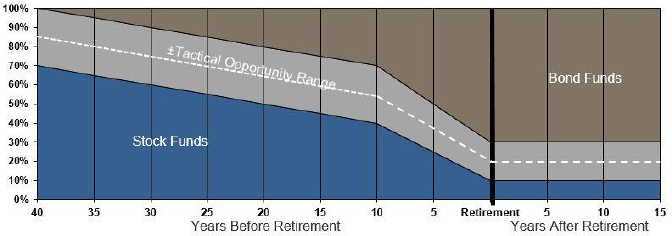
The asset allocation strategy is designed to reduce the volatility of investment returns in the later years while still providing the potential for higher total returns over the target period. Market conditions and the perceived value of securities will change as the investor moves across the glide path. Although the actual allocations may vary, as of December 31, 2025, the Fund’s portfolio allocation as a percentage of net assets was:
| - | Bond Funds: | 77.3% |
| - | Foreign Stock Funds: | 5.8% |
| - | Short-Term Investments: | 2.8% |
| - | Stock Funds: | 14.1% |
| - | Net Other Assets and Liabilities: | 0.0% |
On a periodic basis, Madison will evaluate and sometimes revise the Fund’s asset allocation, including revising the asset class weightings and adding and/or removing underlying funds. Madison will also monitor the underlying funds on an ongoing basis and may increase or decrease the Fund’s investment in one or several underlying funds. The underlying fund selections are made based on several considerations, including the Fund’s style or asset class exposures, portfolio characteristics, risk profile, and investment process.
The Fund’s investment strategy reflects Madison’s general “Participate and Protect®” investment philosophy. Madison’s expectation is that investors in the Fund will participate in market appreciation during bull markets and experience something less than full participation during bear markets compared with investors in portfolios holding more speculative and volatile securities; therefore, this investment philosophy is intended to represent a conservative investment strategy. There is no assurance that Madison’s expectations regarding this investment strategy will be realized.
Although the Fund expects to pursue its investment objective utilizing its principal investment strategies regardless of market conditions, the Fund may invest up to 100% in cash, money market funds, and/or money market instruments. To the extent the Fund engages in this temporary defensive position, the Fund’s ability to achieve its investment objective may be diminished.
The Fund invests primarily in shares of other registered investment companies, including those whose shares trade on a stock exchange (exchange traded funds or “ETFs”) (the “underlying funds”), according to an asset allocation strategy developed by the Fund’s investment adviser, Madison Asset Management, LLC (“Madison”), for investors planning to retire in or within a few years of 2030. Over time, the Fund’s asset allocation will become more conservative until it reaches approximately 10-30% in stock funds and 70-90% in bond funds as illustrated in the chart below.
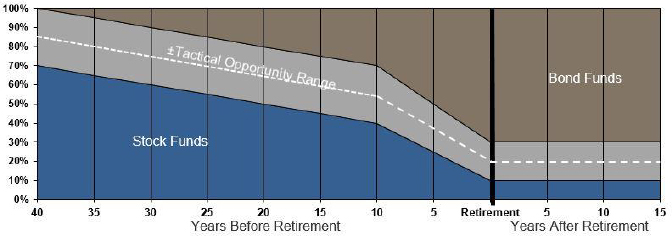
The asset allocation strategy is designed to reduce the volatility of investment returns in the later years while still providing the potential for higher total returns over the target period. Market conditions and the perceived value of securities will change as the investor moves across the glide path. Although the actual allocations may vary, as of December 31, 2025, the Fund’s portfolio allocation as a percentage of net assets was:
| - | Bond Funds: | 59.6% |
| - | Foreign Stock Funds: | 10.5% |
| - | Short-Term Investments: | 3.5% |
| - | Stock Funds: | 26.3% |
| - | Net Other Assets and Liabilities: | 0.1% |
On a periodic basis, Madison will evaluate and sometimes revise the Fund’s asset allocation, including revising the asset class weightings and adding and/or removing underlying funds. Madison will also monitor the underlying funds on an ongoing basis and may increase or decrease the Fund’s investment in one or several underlying funds. The underlying fund selections are made based on several considerations, including the Fund’s style or asset class exposures, portfolio characteristics, risk profile, and investment process.
The Fund’s investment strategy reflects Madison’s general “Participate and Protect®” investment philosophy. Madison’s expectation is that investors in the Fund will participate in market appreciation during bull markets and experience something less than full participation during bear markets compared with investors in portfolios holding more speculative and volatile securities; therefore, this investment philosophy is intended to represent a conservative investment strategy. There is no assurance that Madison’s expectations regarding this investment strategy will be realized.
Although the Fund expects to pursue its investment objective utilizing its principal investment strategies regardless of market conditions, the Fund may invest up to 100% in cash, money market funds, and/or money market instruments. To the extent the Fund engages in this temporary defensive position, the Fund’s ability to achieve its investment objective may be diminished.
The Fund invests primarily in shares of other registered investment companies, including those whose shares trade on a stock exchange (exchange traded funds or “ETFs”) (the “underlying funds”), according to an asset allocation strategy developed by the Fund’s investment adviser, Madison Asset Management, LLC (“Madison”), for investors planning to retire in or within a few years of 2040. Over time, the Fund’s asset allocation will become more conservative until it reaches approximately 10-30% in stock funds and 70-90% in bond funds as illustrated in the chart below.
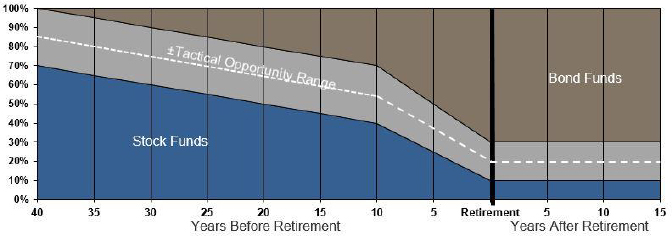
The asset allocation strategy is designed to reduce the volatility of investment returns in the later years while still providing the potential for higher total returns over the target period. Market conditions and the perceived value of securities will change as the investor moves across the glide path. Although the actual allocations may vary, as of December 31, 2025, the Fund’s portfolio allocation as a percentage of net assets was:
| - | Bond Funds: | 37.3% |
| - | Foreign Stock Funds: | 17.0% |
| - | Short-Term Investments: | 3.5% |
| - | Stock Funds: | 42.1% |
| - | Net Other Assets and Liabilities: | 0.1% |
On a periodic basis, Madison will evaluate and sometimes revise the Fund’s asset allocation, including revising the asset class weightings and adding and/or removing underlying funds. Madison will also monitor the underlying funds on an ongoing basis and may increase or decrease the Fund’s investment in one or several underlying funds. The underlying fund selections are made based on several considerations, including the Fund’s style or asset class exposures, portfolio characteristics, risk profile, and investment process.
The Fund’s investment strategy reflects Madison’s general “Participate and Protect®” investment philosophy. Madison’s expectation is that investors in the Fund will participate in market appreciation during bull markets and experience something less than full participation during bear markets compared with investors in portfolios holding more speculative and volatile securities; therefore, this investment philosophy is intended to represent a conservative investment strategy. There is no assurance that Madison’s expectations regarding this investment strategy will be realized.
Although the Fund expects to pursue its investment objective utilizing its principal investment strategies regardless of market conditions, the Fund may invest up to 100% in cash, money market funds, and/or money market instruments. To the extent the Fund engages in this temporary defensive position, the Fund’s ability to achieve its investment objective may be diminished.
The Fund invests primarily in shares of other registered investment companies, including those whose shares trade on a stock exchange (exchange traded funds or “ETFs”) (the “underlying funds”), according to an asset allocation strategy developed by the Fund’s investment adviser, Madison Asset Management, LLC (“Madison”), for investors planning to retire in or within a few years of 2050. Over time, the Fund’s asset allocation will become more conservative until it reaches approximately 10-30% in stock funds and 70-90% in bond funds as illustrated in the chart below.
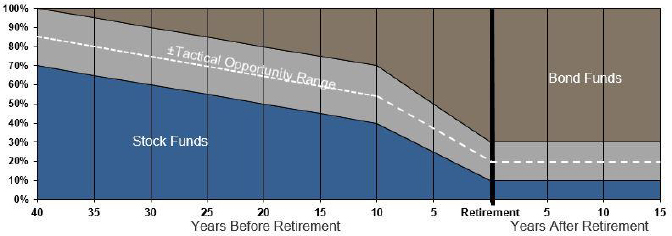
The asset allocation strategy is designed to reduce the volatility of investment returns in the later years while still providing the potential for higher total returns over the target period. Market conditions and the perceived value of securities will change as the investor moves across the glide path. Although the actual allocations may vary, as of December 31, 2025, the Fund’s portfolio allocation as a percentage of net assets was:
| - | Bond Funds: | 27.0 % |
| - | Foreign Stock Funds: | 19.7 % |
| - | Short-Term Investments: | 4.2% |
| - | Stock Funds: | 48.9% |
| - | Net Other Assets and Liabilities: | 0.2% |
On a periodic basis, Madison will evaluate and sometimes revise the Fund’s asset allocation, including revising the asset class weightings and adding and/or removing underlying funds. Madison will also monitor the underlying funds on an ongoing basis and may increase or decrease the Fund’s investment in one or several underlying funds. The underlying fund selections are made based on several considerations, including the Fund’s style or asset class exposures, portfolio characteristics, risk profile, and investment process.
The Fund’s investment strategy reflects Madison’s general “Participate and Protect®” investment philosophy. Madison’s expectation is that investors in the Fund will participate in market appreciation during bull markets and experience something less than full participation during bear markets compared with investors in portfolios holding more speculative and volatile securities; therefore, this investment philosophy is intended to represent a conservative investment strategy. There is no assurance that Madison’s expectations regarding this investment strategy will be realized.
Although the Fund expects to pursue its investment objective utilizing its principal investment strategies regardless of market conditions, the Fund may invest up to 100% in cash, money market funds, and/or money market instruments. To the extent the Fund engages in this temporary defensive position, the Fund’s ability to achieve its investment objective may be diminished.